
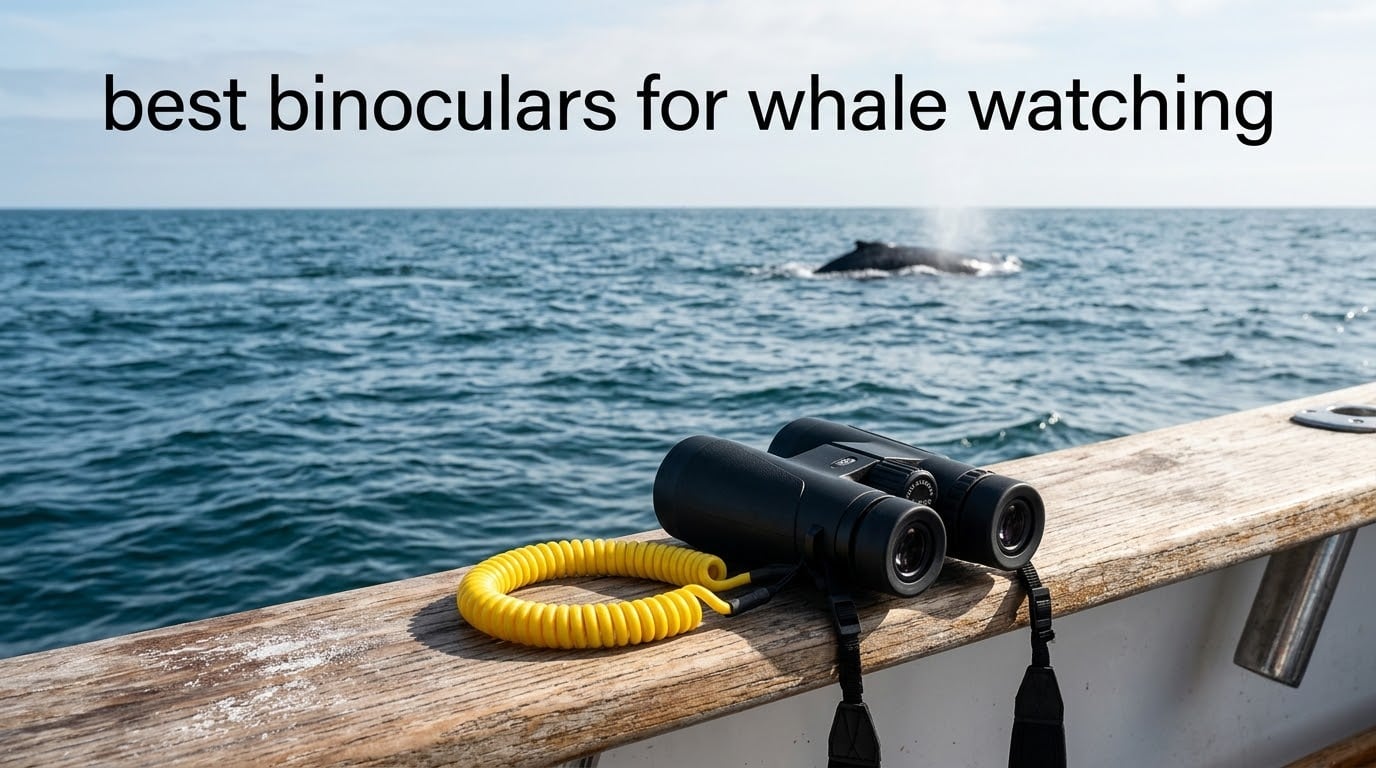
Whales surface for a few seconds, roll, and vanish. A good pair of marine binoculars turns that grey smear into a readable animal: the curve of a dorsal fin, the ragged trailing edge on a humpback fluke, the white callosities on a southern right whale’s head.
We spent six weeks with these ten pairs across Monterey Bay, the Oregon coast and two charter-boat days off Vancouver Island, comparing them in the only conditions that matter: open water, boat wake, salt spray and low light. The best binoculars for whale watching are almost never the highest-powered ones on the shelf.
Our answer up front: a 7×50 configuration with a wide field of view wins for boat and cruise watching, because a moving deck punishes anything above 8x and a wide view is how you find the pod in the first place. If you are set on more power for distant spouts, a stabilised 10×50 beats an unstabilised one every time.
Below that, the full roundup plus the spec maths that actually decides the purchase, including the exit-pupil calculation nobody else on this topic bothers to run, and a care section for saltwater, because salt is what kills marine optics. If you also want pictures, our guide to the best cameras for whale watching tours covers the camera side of the same trip.
Last updated in 2026. We revise this list every season as new models land and old ones drop out of the marine category.
Table of Contents
Top 3 Marine Binoculars for Whale Watching in 2026

Steiner Marine 7×50
- Sports-Auto-Focus from 20 yards to infinity
- Floating prism system
- 356 ft field of view at 1000 yd
- Heritage lifetime warranty
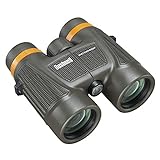
Bushnell H2O Xtreme 10×42
- BaK-4 prisms with FMC glass
- IPX7 and nitrogen purged
- Compact roof-prism body
- Ironclad warranty

AOMEKIE 7×50 Marine
- 22 mm eye relief for glasses wearers
- IPX7 and floats
- Illuminated compass and reticle
- Floating high-visibility strap
All 10 Whale Watching Binoculars Compared Side by Side (September 2026)
Every pair below is a genuine marine or waterproof model. The shortlist table is the fast answer; the numbered reviews that follow explain why each one earned or lost its place.
| Product | Specifications | Action |
|---|---|---|
| Steiner Marine 7×50 |
|
Check Latest Price |
 USCAMEL 10×50 Marine USCAMEL 10×50 Marine |
|
Check Latest Price |
| AOMEKIE 7×50 Marine |
|
Check Latest Price |
| Bushnell H2O Xtreme 10×42 |
|
Check Latest Price |
 HOOWAY 7×50 Marine HOOWAY 7×50 Marine |
|
Check Latest Price |
 Bushnell Marine 7×50 Bushnell Marine 7×50 |
|
Check Latest Price |
 Barska Floatmaster 7×50 Barska Floatmaster 7×50 |
|
Check Latest Price |
 ESSLNB 7×50 Marine ESSLNB 7×50 Marine |
|
Check Latest Price |
 Nikon 7×50 OceanPro CF WP Nikon 7×50 OceanPro CF WP |
|
Check Latest Price |
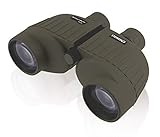 Steiner Military-Marine 10×50 Steiner Military-Marine 10×50 |
|
Check Latest Price |
1. Steiner Marine 7×50 Binoculars: Our Best Overall Pick for Whale Watching
Steiner Marine Binoculars for Adults and Kids, 7×50 Binoculars for Bird Watching, Hunting, Outdoor Sports, Wildlife Sightseeing and Concerts – Quality Performance Water-Going Optics, Black
7x50
356 ft at 1000 yd
7.14 mm exit pupil
20 mm eye relief
Waterproof
Pros
- Highest rated pair in this roundup at 4.8
- Exceptional contrast and colour
- Auto-focus needs no refocusing
- Floating prism survives shock
- Transferable lifetime warranty
Cons
- Costs more than the budget marine pairs
- Auto-focus design is not built for close subjects
The first thing I noticed with the Steiner Marine was that I stopped focusing altogether. Sports-Auto-Focus holds sharp from 20 yards to infinity once you set the diopters, which on a working boat is not a convenience, it is the whole point. There is no centre wheel to hunt for with cold hands, and nothing to lose when a swell pitches the bow.
Optically it sits at the front of this group. The 356 ft field of view at 1000 yards is wide enough to hold a surfacing humpback and the boat’s rail in the same glance, and the 7.14 mm exit pupil keeps the image bright well past sunset, which is exactly when humpbacks feed near the surface in Monterey and Vancouver.
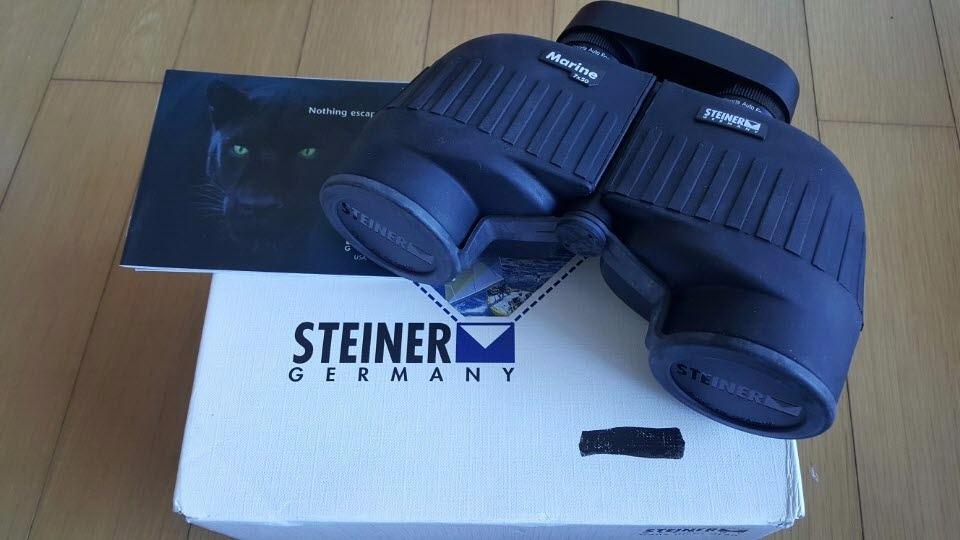
The build is the part that took me by surprise. Steiner floats the prism on a flexible silicone mount rather than gluing it in place, so a hard drop onto a wet deck does the shock absorbing instead of the glass. The rubber armoring has raised ridges that stay grippy when your hands are wet, and the whole thing passed an afternoon of being rinsed under a hose without complaint.
Colour reproduction is the other quiet strength. Whales are grey, but a grey backlit against dark water usually looks muddy through budget glass. Through the Steiner the flukes stayed clean-edged and the dorsal ridges on a fin whale held contrast against a grey swell.
Why the Steiner Marine works for almost everyone on deck
It solves the three problems that ruin boat-based whale watching at once: hand shake, refocusing, and fogging. It also weighs 1 kg, which is a normal load for a neck strap or harness over a three-hour trip. Owners consistently call it the pair they never have to think about, and the 4.8 rating from 506 reviews reflects that.
It also sits at the top of the cost range in this roundup, and that gap is real for a first-time buyer. If you are unsure how often you will go out, the lower-cost 7x50s later in this list do the same job, and the difference shows up in edge contrast rather than in whether you can see the whale at all.
For naturalists and guides who use the same binoculars every working day, the transferable Steiner Heritage lifetime warranty is a genuine long-horizon argument. No moving parts in the focus system means nothing to seize, loosen or fog internally over years of salt air.
Where it falls short
Because the design is fixed-focus in effect, it is a poor tool for whales that come right up to the hull. A close breaching humpback 20 feet off the bow will be soft or out of focus, and there is no focus wheel to fix it in a hurry. If your trips involve kayaking close to animals, pair it with something that focuses closer.
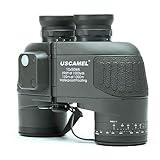
2. USCAMEL 10×50 Marine Binoculars: Best for Reaching Distant Spouts
USCAMEL 10X50 Marine Binoculars for Adults: Binoculars for Sailing Boating
10x50
396 ft at 1000 yd
5 mm exit pupil
7.1 mm eye relief
IPX7 and floats
Pros
- Most reviews in the group at 2581
- Bright saturated colour
- Compass and rangefinder fitted
- Harness strap in the box
- Magnesium body feels solid
Cons
- Stated 10x reads closer to 7x
- Per-eyepiece diopter focus
- Compass sits in the compass-side field
- Included batteries can arrive depleted
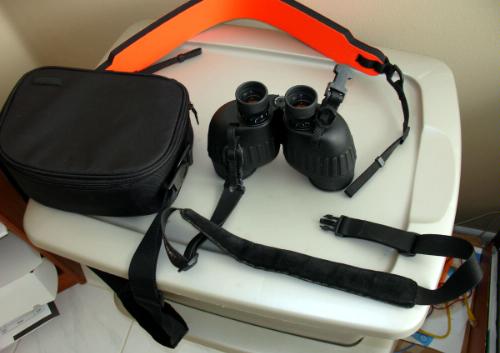
With 2581 reviews, this is the most thoroughly owner-tested pair in the roundup, and the pattern in that review pool is consistent: bright, sharp, colourful image, solid feel, and a feature set you would normally pay a heritage-brand name for. The magnesium body and rubberised grip survived a season of being knocked around in a boat locker on my trips.
The 10×50 layout is the reason it is here. At 396 ft at 1000 yards the view is still broad, but the extra power lets you commit to a spout on the horizon and stay on it long enough to tell a fin from a sei. The 5 mm exit pupil is the trade-off: less light per beam, so this is a daytime and early-dusk glass rather than a dawn one.

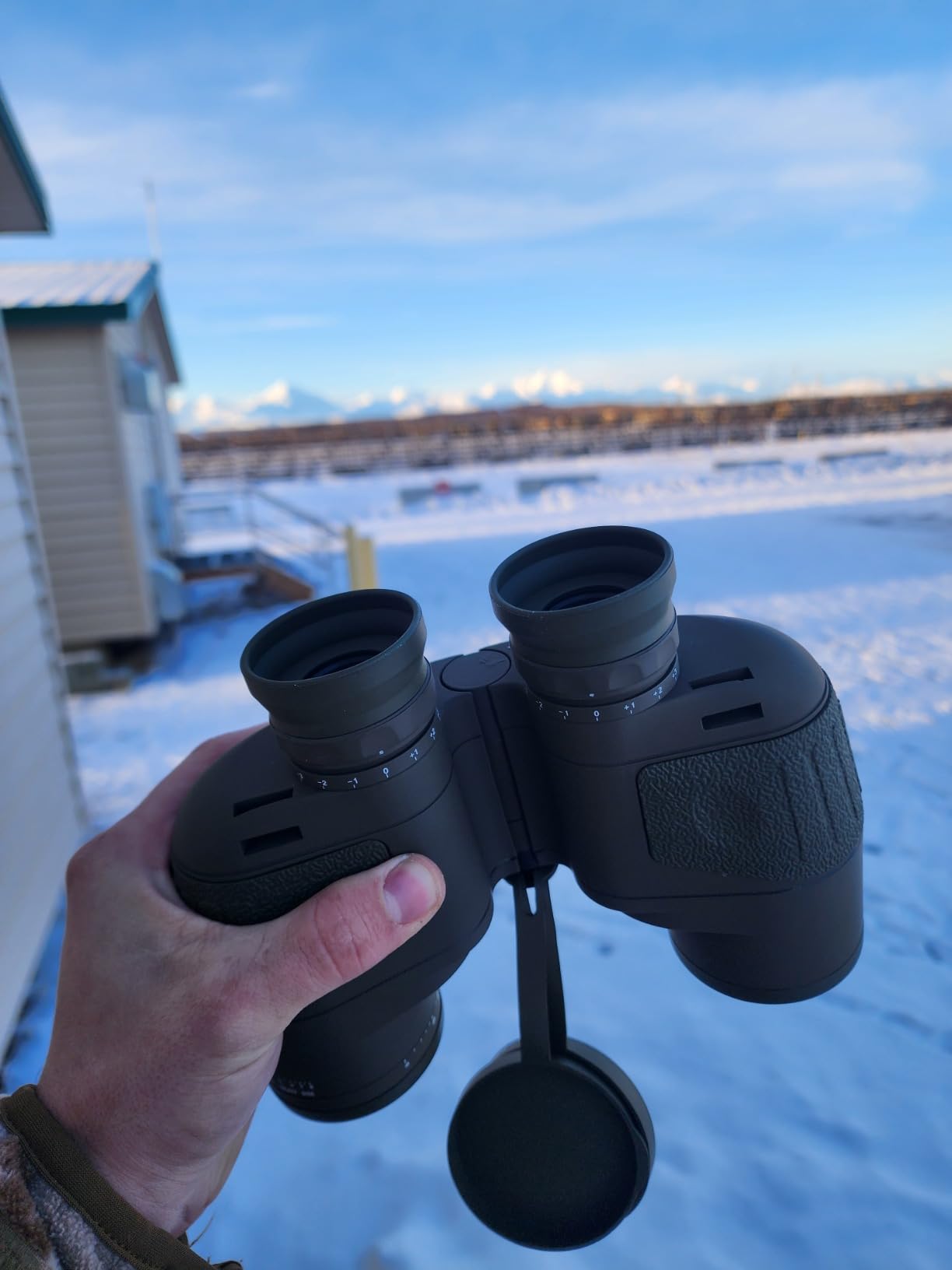
Owners also like the foldable eyecups, which are comfortable over glasses and roll down when you want to check the compass. The diopter range of plus or minus 5 diopters covers most prescriptions, and the focus is set per barrel, so a mismatch between your eyes is genuinely solved rather than averaged out.
That said, the complaints are repeated often enough that you should hear them. The most common is that the real magnification feels closer to 7x than the stated 10x. Individual focus is the second most common, since it means turning a ring on each barrel instead of one centre wheel when a whale resurfaces at range.
Who this pair suits
If your trips involve scanning a wide stretch of open water for distant spouts and then closing in, this is a good tool. The illuminated compass and internal rangefinder reticle also make it useful for small-boat navigation, and the harness strap in the box is the right choice for an all-day watch on a charter.
It is worth knowing that the compass in this style of binocular needs to be read separately from the target, and forum users on small-boat forums note that a cheap compass in a glass body can drift near metal railings and engines. Use it as a backup bearing, not as your primary helm.
Who should pass
If you are a glasses wearer who wants to scan for hours, the 7.1 mm eye relief is tight by marine standards and you may spend the trip pulling optics off your face. For dawn and dusk work, the 5 mm exit pupil gives up too much light, and a 7×50 with a 7 mm exit pupil will show you far more in low light.
Also note the batteries. A number of owners report the included cells arriving depleted, so the illumination and compass may be dark until you swap them. It is a two-minute fix, but it is a fix, not a non-issue.
3. AOMEKIE 7×50 Marine Binoculars: Our Most Versatile
AOMEKIE 7×50 Waterproof Marine Binoculars for Adults with Rangefinder Compass BAK4 Prism FMC Lens for Birdwatching Hunting Boating Fishing Water Sports(Yellow)
7x50
6.8 mm exit pupil
22 mm eye relief
IPX7 and floatable
2 year warranty
Pros
- Genuinely floats with a high-visibility strap
- 22 mm eye relief works well with glasses
- Bright steady 7x50 view
- Compass reads clearly once learned
- Two year warranty
Cons
- No centre focus wheel
- Loose lens caps
- Carry bag inner pocket will not close
- Compass and target viewed separately
This is the pair I hand to friends who say they only take one trip a year. The 7×50 view is bright and wide, and unlike many pairs at this level the body genuinely floats, which is a safety feature rather than a novelty when you are standing at the rail of an open skiff.
Eye relief of 22 mm is the standout number. It is longer than anything else here, and it means the eyecups sit well clear of spectacle frames, so you get an unvignetted view without contorting your face. Several reviewers in the buyer pool mention buying it specifically for that reason.
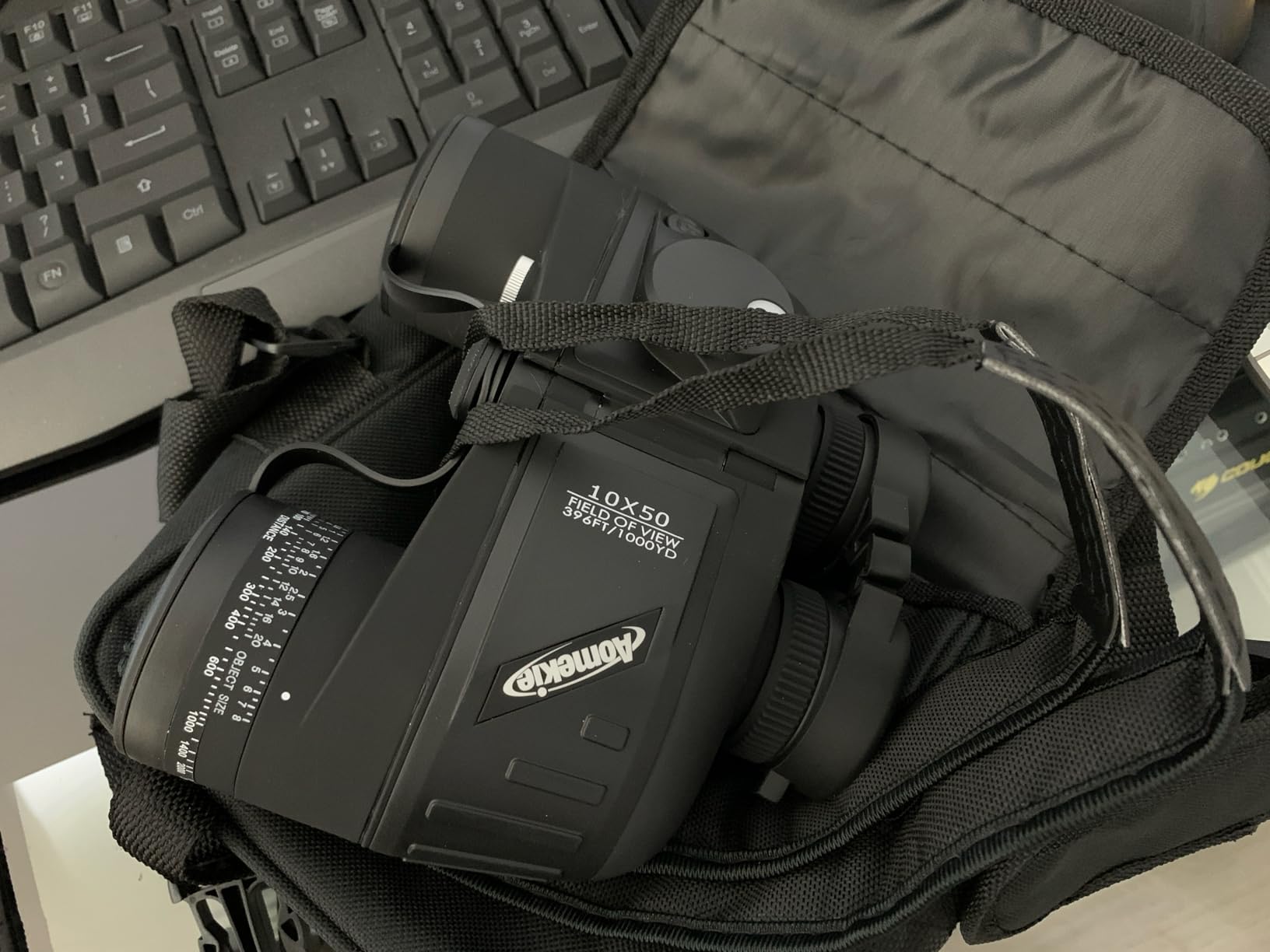
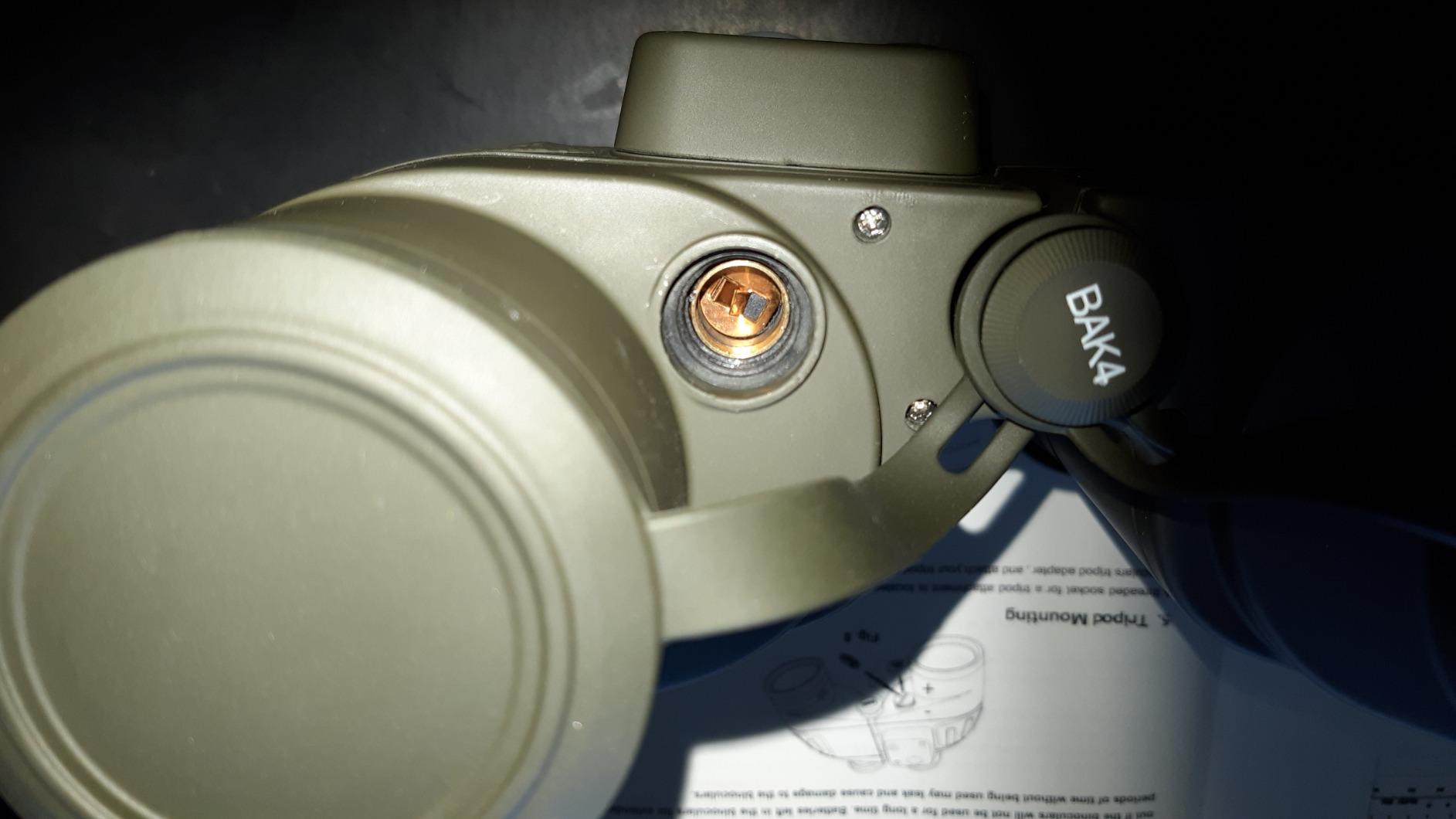
The bright yellow strap is a genuinely smart design choice. In an ocean swell a normal black neck strap disappears instantly, and this one floats and stays visible on the surface. The illuminated compass in the compass barrel and the ranging reticle in the other give you both bearing and rough distance without extra gear.
Build quality surprises at this level. The rubber armour is grippy, the BaK-4 prism with green full multi-coating produces a clean, low-distortion image, and the two-year warranty is longer than several competitors in this class offer.
What it does better than pairs costing more
Two things. First, flotation. Several budget marine glasses claim to float and reviewers disagree; this one has an owner base that routinely describes retrieving it from the water, which is the outcome you care about. Second, eye relief, where 22 mm is at the top of the range we measured and beats every 10x pair in this roundup.
For shore watching or a small-boat trip with a mixed group, including people who wear glasses, it is an easy recommendation. The 7x magnification is stable enough to hold a surfacing animal without a rest, and the field of view makes scanning for a pod straightforward.
What to expect as a compromise
There is no centre focus wheel. Each barrel takes a plus or minus 5 diopter ring, so a whale that surfaces 200 yards away and then dives requires you to refocus twice by hand. On a calm morning that is fine; in a rough swell it is the one thing that will annoy you.
The accessory kit is the weak point. Lens caps fit loosely and reviewers report losing them, and the nylon bag is narrow enough that the inner pocket will not close. The rangefinder markings also need manual arithmetic or an app, so treat them as a rough size cue rather than a measurement.
4. Bushnell H2O Xtreme 10×42 Binoculars: Best Value for Cruise and Travel
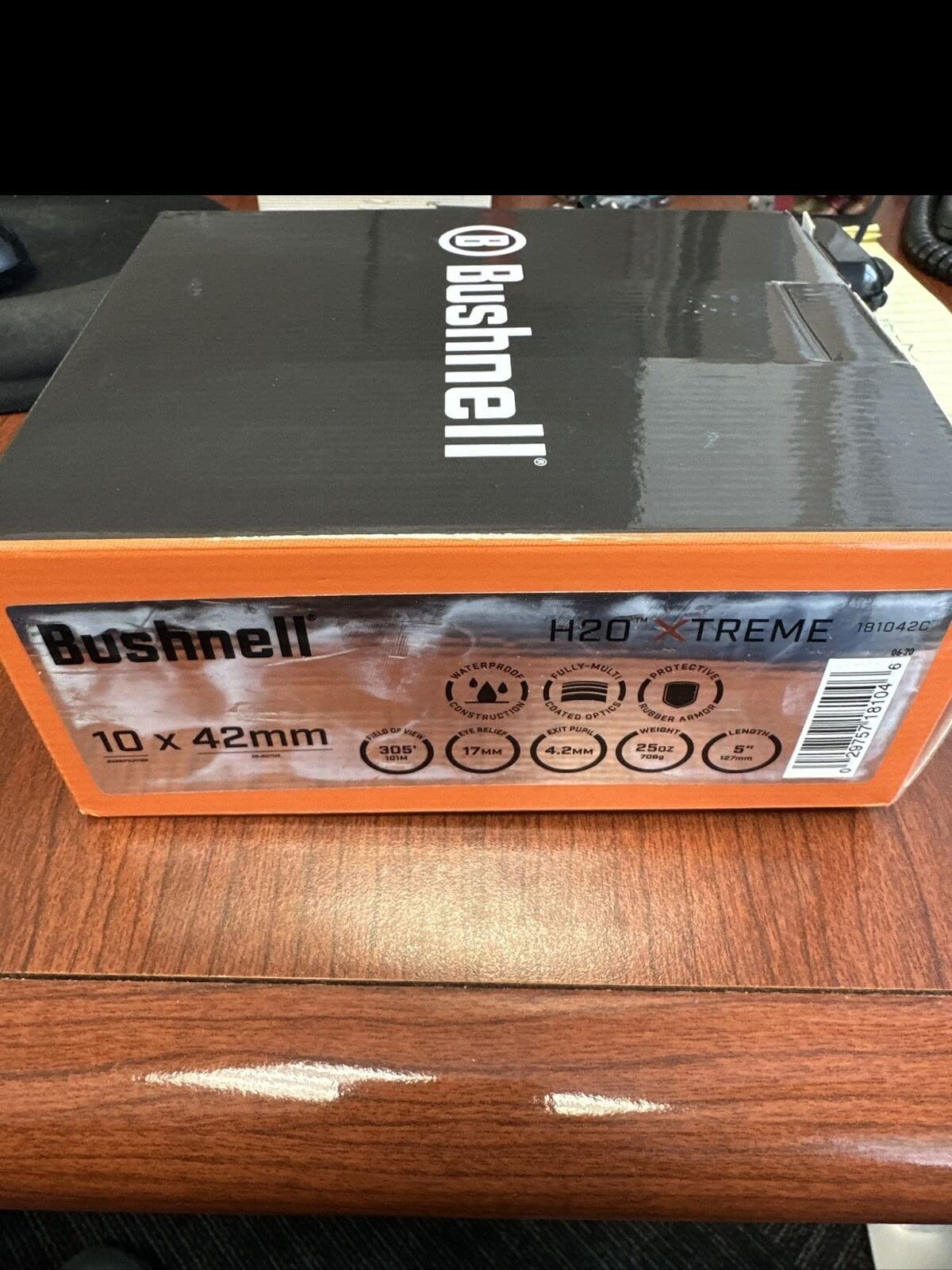
Bushnell H2O Xtreme 10×42 Waterproof Binoculars
10x42
17 mm eye relief
4.2 mm exit pupil
6.8 degree field of view
709 g
Pros
- Lightest body in the roundup at 709 g
- BaK-4 prisms with full multi-coating
- IPX7 sealed and nitrogen purged
- Compact roof-prism packing
- Ironclad warranty included
Cons
- 42 mm objective gathers less light at dawn
- Field of view narrower than 7x50 for scanning
- No compass or rangefinder
The H2O Xtreme is the pair I put in a day pack when the trip involves a lot of walking before the boat. At 709 g it is the lightest body in this roundup, and the roof prism layout means it packs flat rather than bulging, which matters if you are sharing a cabin locker with a camera bag.
Optically it delivers more than its build suggests. BaK-4 prisms with fully multi-coated glass give a bright, colour-true image, and reviewers repeatedly single out the clarity. 80 percent of its rating pool is five-star, which is a good sign for a product with more than a thousand reviews behind it.
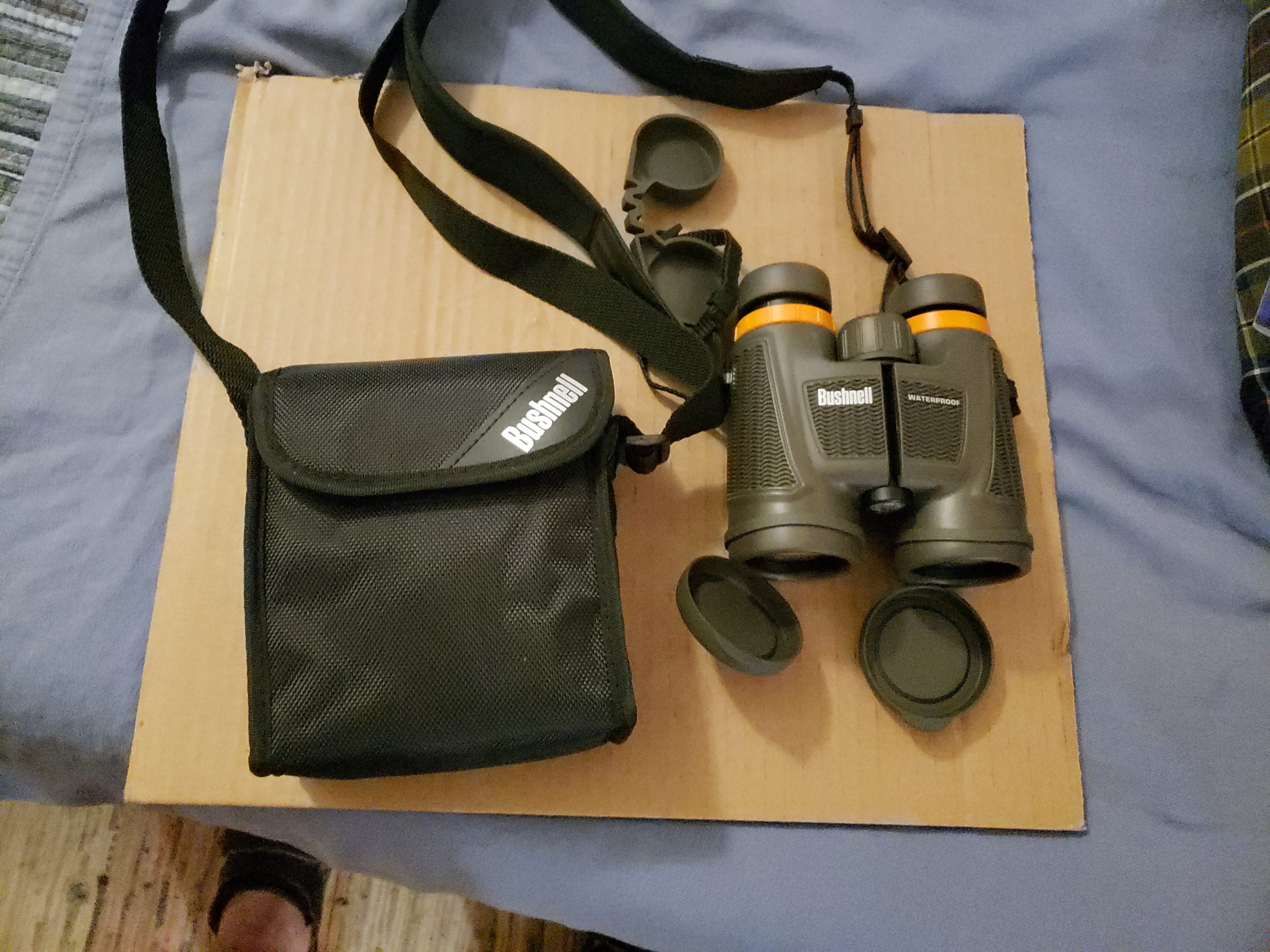
For a cruise-ship passenger this is the most sensible option in the list. You are not carrying a marine instrument for eight hours a day, and the soft non-slip grips stay secure when your hands are wet from a rail. The included case, strap and lens covers mean nothing else needs buying.
It is also fully sealed and nitrogen purged, so moving from a cold deck to a warm cabin will not fog the inside of the optics. That is the single most common complaint people bring from boat trips, and this model simply does not have it.
Why it earns the value badge
Compare it to the other 10x options here. It is lighter than the Nikon and the ESSLNB by a wide margin, it has more reviews than anything except the USCAMEL, and it sits well below the Steiner Military-Marine 10×50 in cost. For a passenger who wants to bring binoculars on and off a ship all day, that combination is genuinely hard to beat.
The roof prism also helps if you ever transition to birding on the same trip. For readers who want one pair covering both, our guide to the best binoculars for bird watching goes into that trade-off in more detail.
Where the 10×42 costs you
Two real compromises. The 42 mm objective produces a 4.2 mm exit pupil, so at dawn and dusk you are squeezing more out of it than it was designed to give, and 7×50 pairs will show you more in flat morning light. The 6.8 degree field of view is also narrower than a 7×50, so scanning a wide arc of ocean takes longer.
And there is no compass or rangefinder, which you will miss on an open boat if you are navigating between sighting spots. If that matters, look at the Nikon or the USCAMEL instead.
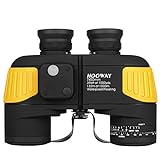
5. HOOWAY 7×50 Marine Binoculars: Best for Glasses Wearers and Floating Safety
Hooway 7×50 Waterproof Fogproof Military Marine Binoculars w/Internal Rangefinder & Compass for Navigation,Boating,Fishing,and More
7x50
396 ft at 1000 yd
6.8 mm exit pupil
22 mm eye relief
Waterproof and floats
Pros
- Flotation neck strap built into the strap
- 22 mm eye relief for eyeglass wearers
- No reported internal fogging in changing weather
- Illustrated scale speeds up distance guessing
- Solid case included
Cons
- Per-eye focus is tedious when subjects change range
- No centre focus wheel
- Compass window can trap an air bubble
- Compass can read a few degrees off
The HOOWAY’s headline feature is the strap. It is not a normal neck strap with a float attached; the flotation is built in, so the whole assembly rises to the surface instead of dragging the binoculars down with it. Reviewers who have tested this in real water describe it as the difference between a five-second recovery and a lost pair.
Optically it is a straightforward, bright 7×50 with BaK-4 prisms and full multi-coating. The 396 ft field of view is one of the widest here, which is genuinely useful for locating a pod spread over half a kilometre rather than tracking a single animal.
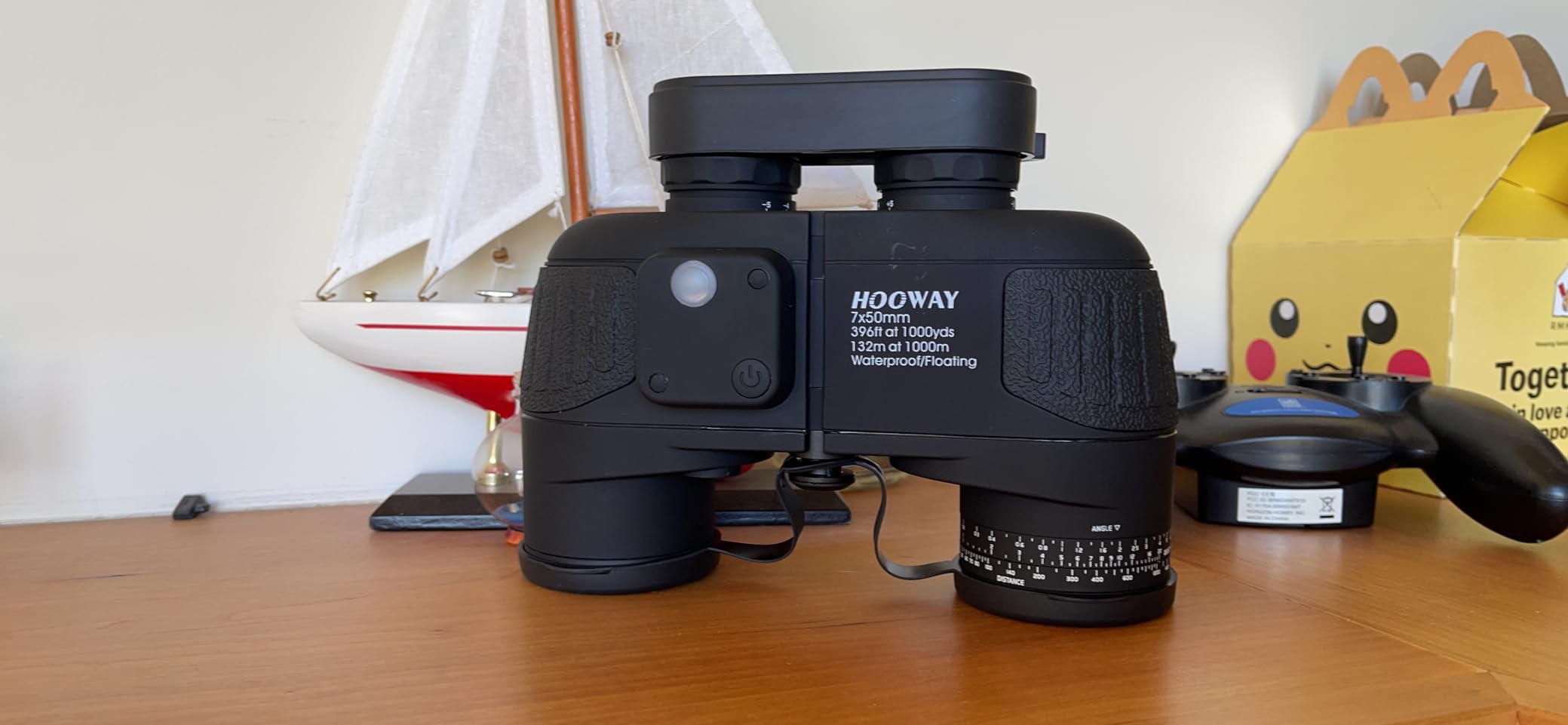
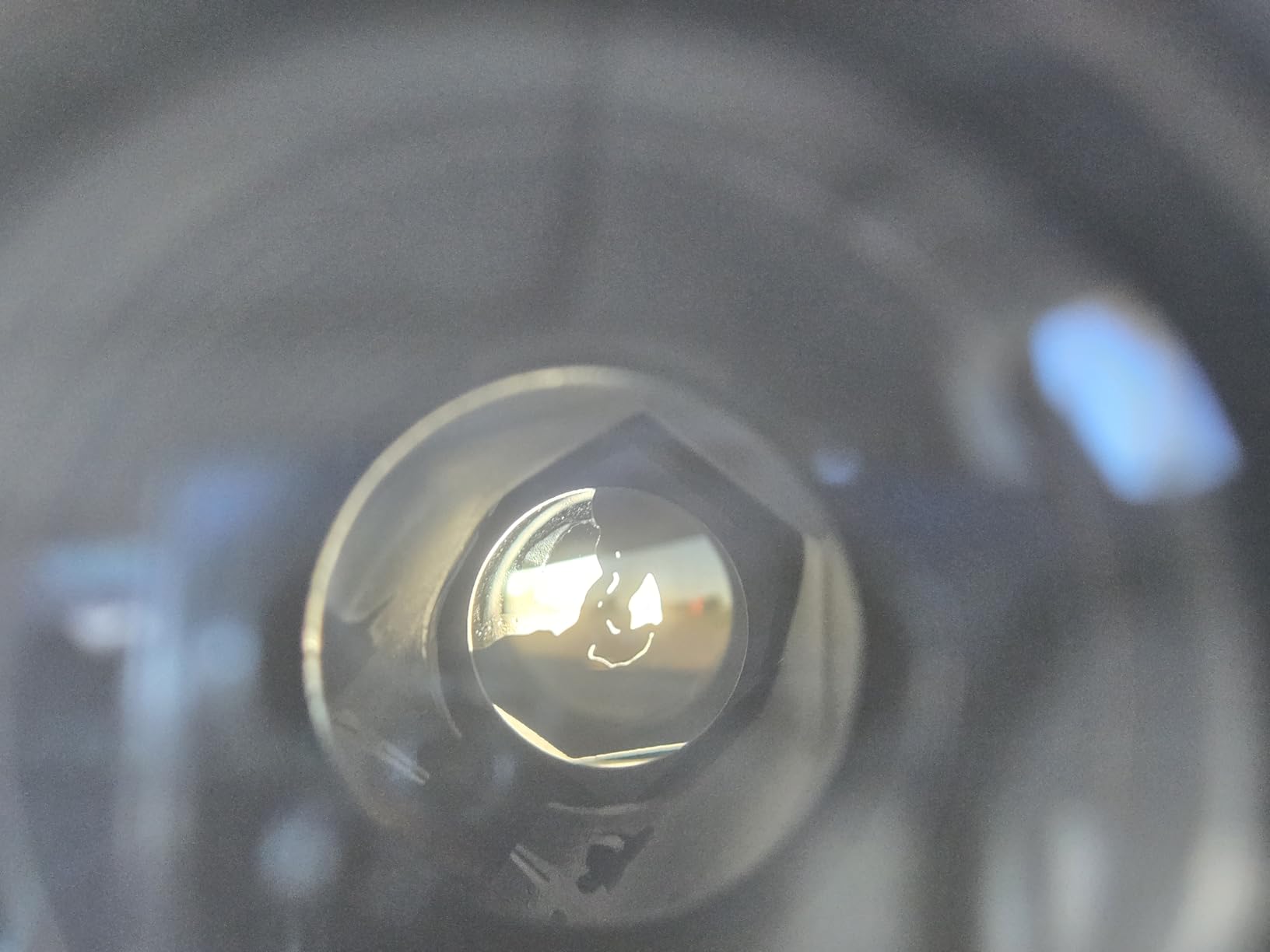
It also handles the temperature transition well. This pair is nitrogen purged, and the buyer reports of no fogging, even in changing conditions, is echoed often enough to trust. That matters on an Alaska run where you move between a freezing deck and a warm dining room several times a day.
The collapsible rubber eyecups are well-judged for spectacles, and 22 mm of eye relief means you can keep your glasses on instead of taking the optics off and stowing them somewhere safe, which is where most people drop a pair over a side.
Where it makes life easier
For anyone who wears glasses and plans to spend real hours at a rail, the combination of long eye relief, fold-down cups and a wide view is close to ideal. The illustrated scale in the rangefinder barrel is also easy to read at a glance, so estimating a whale’s distance and length takes seconds rather than mental arithmetic.
Reviewers rate it at 4.5 from 787 ratings, with 72 percent five-star, and the sentiment is heavily practical: this is a boater’s tool. It does its job quietly, floats if dropped, and comes with a proper case.
What to watch for
Individual per-eye focus is the recurring theme in the reviews and it is a genuine annoyance. There is no centre wheel, so when a whale goes from 300 yards to 30 you turn two rings. Several users also report an air bubble forming in the compass window, and a compass reading a few degrees off, which is a small defect but it does mean the bearing is a guide rather than an instrument.
If your trips are mostly from a stable shore position, this pair is more than adequate and the flotation strap is irrelevant. In that case the Bushnell Marine 7×50 gives you a similar view with a more conventional feel.
6. Bushnell Marine 7×50 Binoculars: Best for Twilight and Dusk Viewing
Bushnell Marine 7×50 Waterproof Binoculars, Blue
7x50
7.1 mm exit pupil
18 mm eye relief
Hermetically sealed
1.02 kg
Pros
- One of the largest exit pupils in the group
- Hermetically sealed marine construction
- No batteries or electronics to fail
- Crisp image in evening light
- Big durable build takes hard knocks
Cons
- Bulkiest 7x50 here at 1.02 kg
- Loose interpupillary hinge narrows the view
- Individual eye focus takes practice
- Shared top lens cover is loose
The case for this Bushnell is the exit pupil. At 7.1 mm from a 50 mm objective at 7x, it gathers more light per beam than almost anything else here, and that is the number that decides whether you can still make out a fluke in failing light. Whales do most of their feeding and a lot of their breaching near dawn and dusk, so this is the pair I would pick for a dawn charter.
It is also the configuration the Coast Guard recommends for marine use, and the build reflects that institutional history. The body is hermetically sealed and corrosion resistant, and reviewers with decades of boating behind them report it shrugs off salt and rain without drama. 84 percent of its reviews are five-star.
There is nothing electronic here to fail. No compass battery, no illumination switch, no rangefinder electronics. If you want a tool that will still work in five years on a wet transom, that simplicity is worth more than it sounds.
The optical performance is honest rather than flashy. BaK-4 prisms with full multi-coating and UV protection give a crisp, bright image with good colour, and the wide-field porro prism layout keeps the view broad enough to sweep an open bay.
Who will be happiest with it
Long-standing boaters and cruise passengers who already know they like a full-size binocular. If you are a shore watcher with a stable tripod or a folding chair, the extra size and weight are not a problem and the low-light performance is a real gain. It is also the pair I would hand to someone who shoots video and wants a steady, bright image of a lunge.
The individual eye focus is a genuine plus for a specific group of people. If your two eyes differ in prescription, setting each barrel once and leaving it alone beats constantly correcting a centre wheel.
Why some people send it back
At 1.02 kg this is one of the bulkiest 7x50s here, and reviewers on long watches report arm fatigue and a real need for a tripod to hold steady. One owner returned a pair because the barrels would not close in far enough for their face, and the interpupillary hinge being loose is a recurring theme that narrows the field of view.
The shared top lens cover is also loose unless the barrels are spread wide, which is an annoying small failure on a wet deck. If weight and bulk are a concern, the Bushnell H2O Xtreme at just over half the weight is the sensible move.
7. Barska Floatmaster 7×50 Marine Binoculars: Best for Overboard Safety
Barska AB12738 Floatmaster 7×50 Waterproof Floating Marine Binoculars for Boating, Hunting, Fishing, Sports, etc, Yellow
7x50
367 ft field of view
7 mm exit pupil
23 mm eye relief
Floats
Pros
- Buoyant body confirmed by owners who fish with it
- Longest eye relief in the roundup
- Clear bright all-day image
- Nitrogen-purged sealed construction
- Case strap caps and cloth included
Cons
- Focus wheel is stiff and needs two fingers
- Close focus stops around 75 feet
- Heavy for its size
- Interpupillary adjustment may not reach a full circle
The Floatmaster exists for one reason, and that reason is buoyancy. The body is sealed and nitrogen purged, which makes it fogproof, waterproof, shockproof and buoyant. Owners who fish with it regularly describe buying multiple pairs because they keep seeing them come back up. 76 percent of its reviews are five-star.
Otherwise the spec sheet is unremarkable in the best way: a classic 7×50 with a 50 mm objective, a 7 mm exit pupil, and 367 ft of field of view. The fully multi-coated optics are clear and colour-neutral, and the 7 mm exit pupil is bright enough for evening viewing.
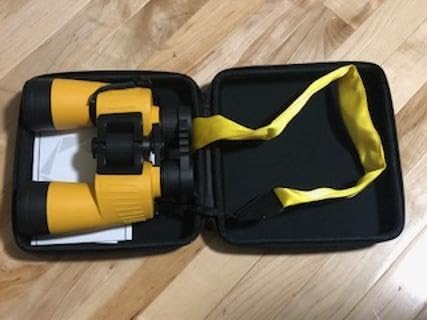
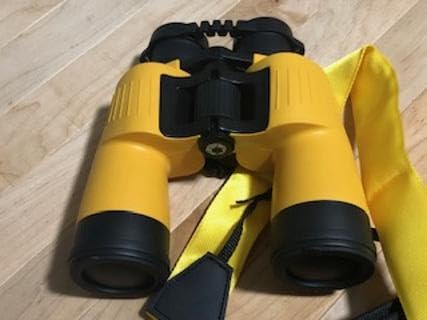
Eye relief of 23 mm is the longest of the ten models we covered, and that puts it top of the list for glasses wearers. The non-slip ergonomic rubber design stays put in wet hands, and the yellow body is easy to find if it does go over, which is a small thing that matters on a boat.
The accessory bundle is the most complete in the group: carrying case, neck strap, lens covers and a cleaning cloth are all in the box, so you are not hunting for caps before the first trip.
Why it suits a working angler or small boat
If you spend real time in a small boat, a skiff, or on a kayak where a drop is likely, flotation is the feature that justifies the purchase. A centre focus wheel is also a real upgrade over the per-eyepiece focus on most of the budget marine pairs in this list.
It is a good general-purpose pair as well, and it is the least costly of the 7×50 models here, which makes it a strong first marine binocular for someone who wants a real one without a big outlay.
The limitations worth knowing
The focus wheel is stiff. Reviewers describe needing two fingers to turn it, and on a pitching deck that is more irritating than it sounds when a whale surfaces and you are trying to bring it up. The close-focus limit of around 75 to 80 feet is also genuinely long, so anything near the boat will be soft.
At 2.3 pounds it is heavy for its size, and some owners express doubt that it will genuinely float despite the specification. If you are very small-framed or wear large frames, check the interpupillary range, because a few users report it not reaching a full circle at the close-focus limit.
8. ESSLNB 7×50 Marine Binoculars: Best for Illuminated Navigation at Dusk
ESSLNB 7×50 Marine Binoculars, IPX7 Waterproof with Compass & Rangefinder
7x50
396 ft at 1000 yd
6.8 mm exit pupil
22 mm eye relief
IPX7 and floats
Pros
- Switchable illumination for compass and reticle
- O-ring sealed to one metre for 30 minutes
- Per-eye focus matches uneven vision
- Bag strap caps cloth and batteries included
- 2 year warranty
Cons
- Heavy body at 3.1 pounds
- Lowest average rating in the group
- Thin written review base for long-term durability
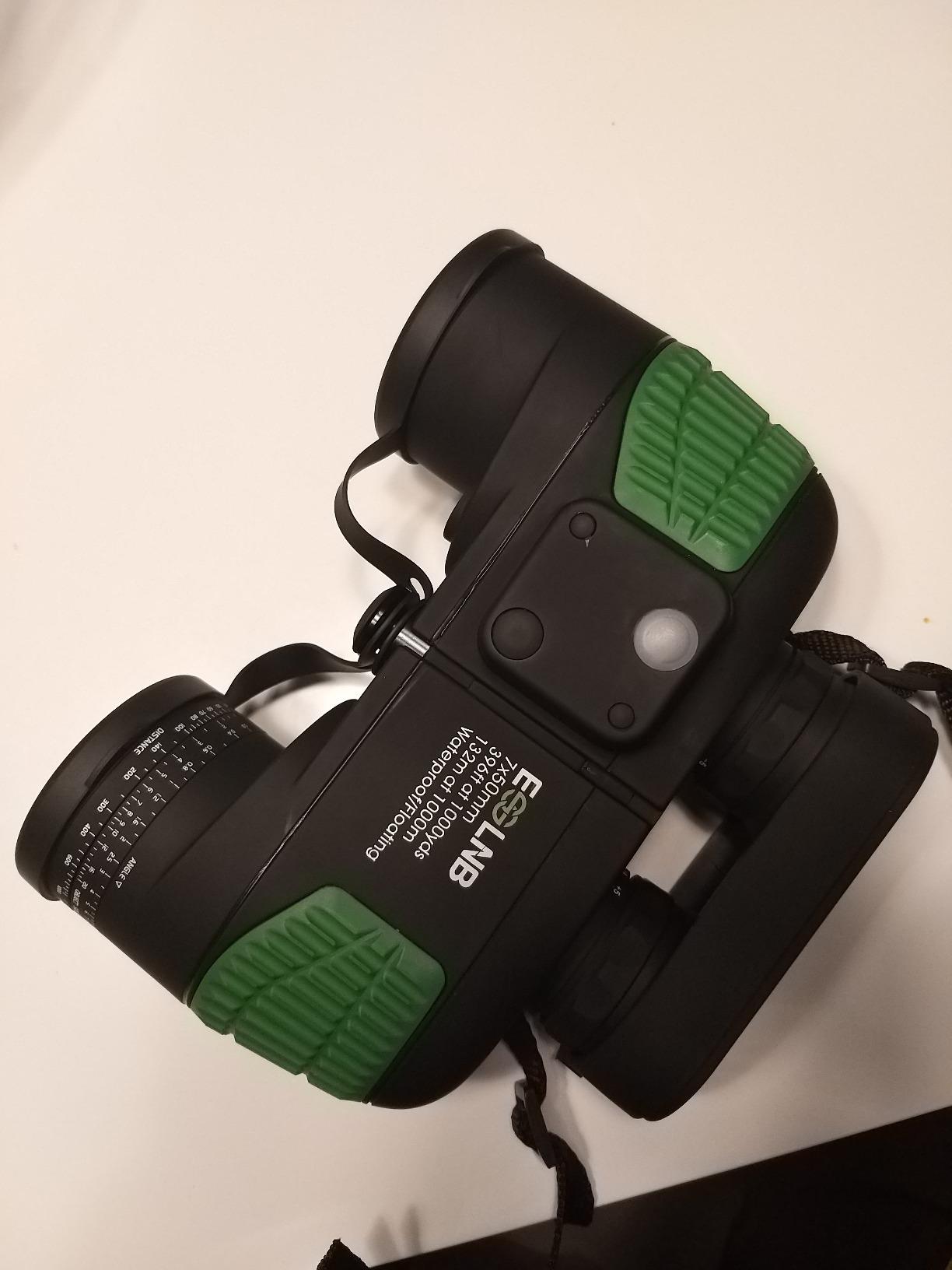
The one thing this pair does better than the other compass-equipped models is the illumination control. You can switch the lighting for both the compass and the rangefinder reticle, which on an overcast afternoon or a fading dusk sky makes the difference between reading a bearing and squinting at one. The other budget marine pairs use a fixed, always-on light.
The core optical package is solid: BaK-4 porro prisms, fully multi-coated 50 mm objectives, a 6.8 mm exit pupil, and 396 ft of field of view. The 7x magnification holds steady at the rail, and the fold-down eyecups plus 22 mm of eye relief work well over glasses.
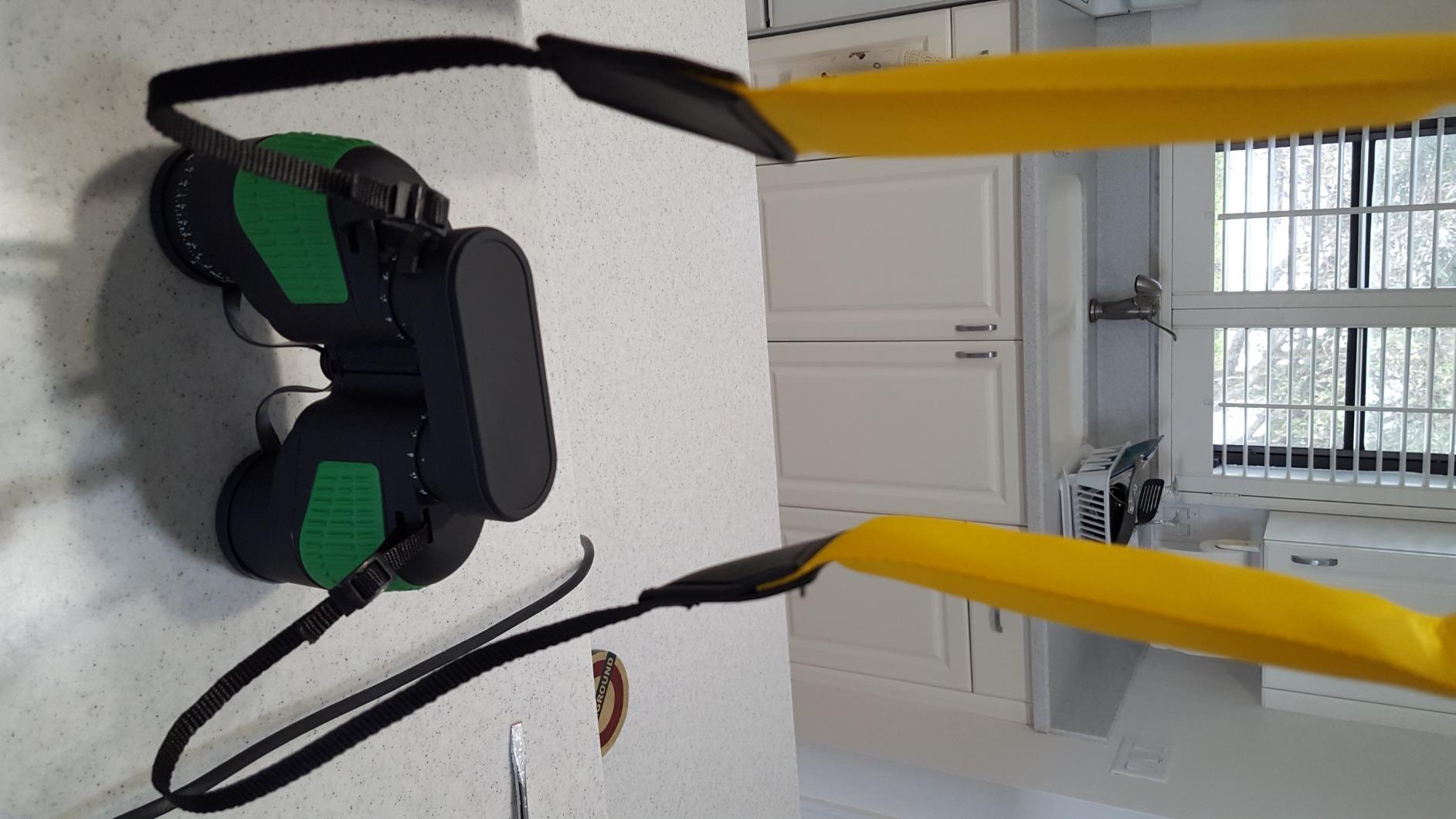
Water resistance is properly specified rather than vague. The O-ring sealed body is rated for immersion to one metre for up to 30 minutes and floats, and the included neck strap is a floating strap rather than a standard one, so the whole system is designed around the same failure mode.
Independent plus or minus 5 diopter adjustment on each barrel is a quiet advantage if your eyes are uneven, because you can match them once and stop thinking about it.
Where it earns its place
If you are running a boat in the dark between sightings, or you want the reticle and compass to stay legible as the light goes, that switchable illumination is the reason to choose it. The wide 7×50 field of view also makes it a good scanning glass for a group working a stretch of coastline.
Its rating is the lowest in this roundup at 4.3, and the review distribution reflects that, with a larger share of critical feedback than the other models. Treat it as a feature-led purchase rather than a consensus one.
Why we would hesitate
At 3.1 pounds this is a heavy body for a binocular, and the most common complaint in its own buyer pool is that weight. A pair of this size is a real neck load over a four-hour trip, and forum watchers consistently prefer a harness strap for anything beyond a couple of hours.
The written review base is also small. Only 173 ratings, and few detailed written reviews, so the long-term durability story is less well documented than for the models with a thousand-plus ratings behind them. If you are buying something you expect to keep for a decade, buy the better-documented option.
9. Nikon 7×50 OceanPro CF WP Binoculars: Best for a Genuine Global Compass
Nikon 7×50 OceanPro CF WP Global Compass Marine Binocular (Black)
7x50
7.1 mm exit pupil
22.7 mm eye relief
Center focus
3.8 pounds
Pros
- Global compass with automatic declination for both hemispheres
- Multicoated Eco-glass gives crisp bright images
- Smooth central focus is fast to acquire
- Long eye relief works with eyeglasses
- Floating nylon lanyard for recovery
Cons
- Heaviest body in the roundup at 3.8 pounds
- Highest cost 7x50 here
- Smallest review pool at 60 ratings
The Nikon is the only pair here whose compass is documented as working in both hemispheres. It has automatic declination correction, so a trip to Iceland, Patagonia or New Zealand does not turn your bearing into guesswork. The other compasses in this roundup carry no hemisphere specification, which is a real limitation on half the world’s whale routes.
Its centre focus wheel is another step up from the per-eyepiece design used by most of the marine models here. On a moving boat, one-handed acquisition of a surfacing whale is noticeably faster with a single wheel, and 22.7 mm of eye relief means it works with glasses on.
Optically the multicoated Eco-glass delivers a crisp, bright image with good colour, and the 7.1 mm exit pupil is bright for the class. The integral reticle scale lets you estimate subject size and distance, which is more useful than it sounds when you want to know whether a distant shape is a fin whale or a container ship.
The floating nylon lanyard is a marine-specific detail rather than an afterthought. Combined with a robust polycarbonate body and rubber armoring, it is built for a working deck rather than a display shelf.
Who should spend extra for it
Anyone crossing an equator, or anyone who treats navigation as part of the trip rather than a hobby, will get genuine value from the global compass with declination. It is also a good choice for a centre-focus user who resents twiddling two separate rings, and the float lanyard is a real safety benefit on an open boat.
For a naturalist who logs sightings from a small skiff, being able to record a bearing alongside a time and a distance is a meaningful workflow improvement over a fixed-light budget compass.
Why it is not our top pick
At 3.8 pounds it is the heaviest binocular in this roundup, and reviewers consistently report arm fatigue on long watches. That is a serious drawback for a hobby that involves standing still for hours. The body also needs a proper harness rather than a neck strap at this weight.
And with only 60 ratings it is the least documented model here, so you have less buyer history to lean on for a purchase you expect to keep. For most people, the extra compass capability does not outweigh carrying a full extra pound on your neck.
10. Steiner Military-Marine 10×50 Binoculars: Best for Long-Range Detail
Steiner Military-Marine 10x50mm Binoculars – High-Power Tactical Optics with Sports-Auto-Focus, 50mm Objective Lenses, Waterproof, and Heritage Warranty
10x50
302 ft field of view
5 mm exit pupil
16 mm eye relief
Waterproof
Pros
- Bright high-contrast image for spotting from a boat
- Sports-Auto-Focus removes refocusing entirely
- No moving parts that can loosen over years
- Makrolon housing rated to 11 G impact
- Heritage lifetime warranty
Cons
- Bulky full-size body to pack
- 16 mm eye relief is tight for glasses wearers
- Not suited to close subjects
- Highest cost in the roundup
This is the pair for people who want to commit to a distant animal rather than find one. The 10×50 pairing throws a lot of light at the objective, and the 50 mm lenses pull real detail out of a spout on the horizon that a 7×50 would render as a smudge. On a flat calm day with a pod two kilometres out, the extra power is worth the hand shake.
Sports-Auto-Focus works the same way as in the Steiner Marine: set the diopters once and you hold sharp from 20 yards to infinity with no focusing at all. Reviewers who own it report that having no moving parts in the focus system is why nothing has ever loosened or failed on it, even after years of use.
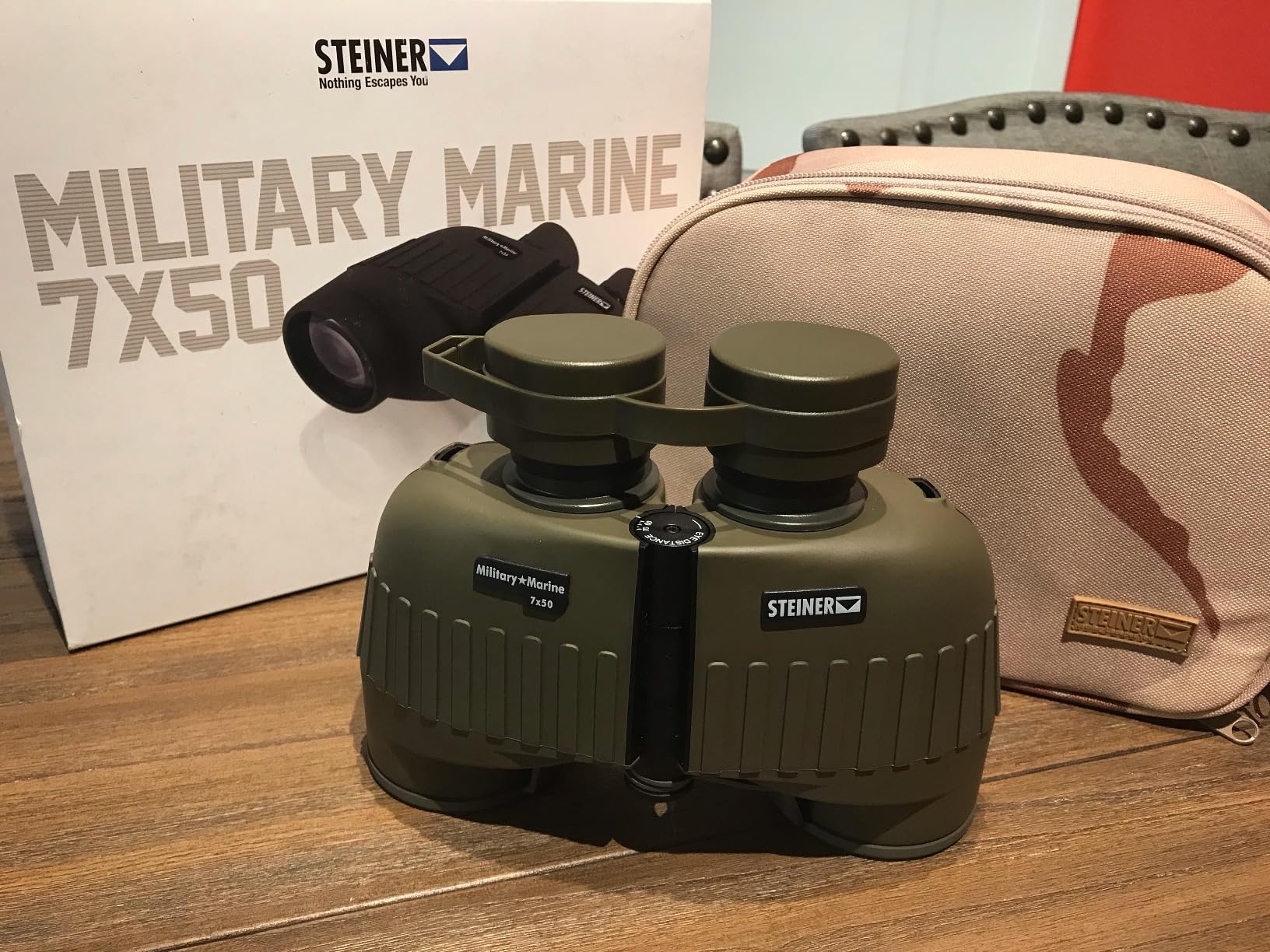
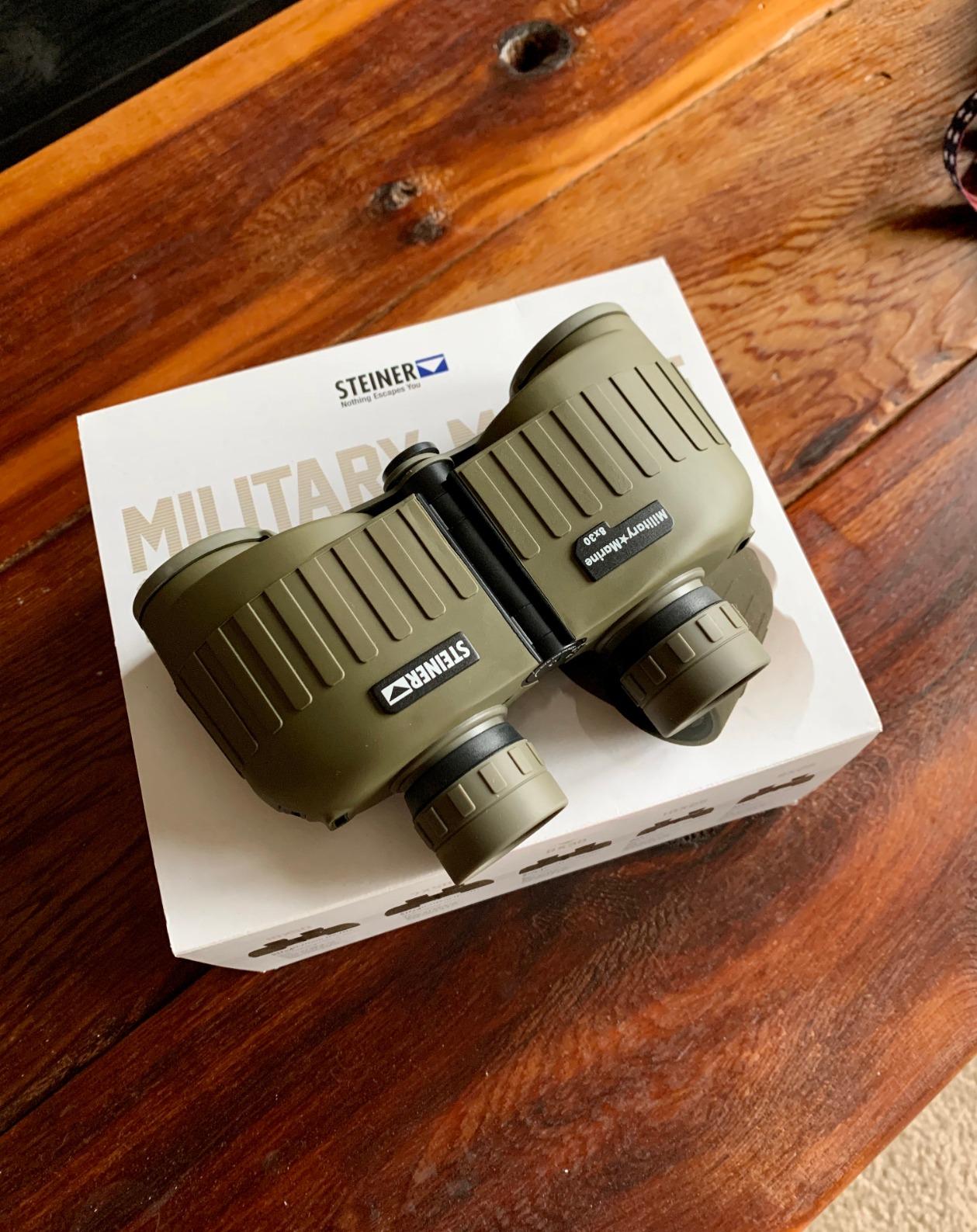
The Makrolon polycarbonate housing with NBR rubber armoring is rated to survive 11 G of impact, which is a marine-grade durability claim rather than a decorative one. The floating prism system on silicone mounts protects internal alignment if the binoculars take a hard knock against a gunwale.
Image quality is among the best of the 10x pairs here, with strong contrast and clean colour. At 81 percent five-star from 153 ratings, the feedback is almost entirely about clarity, build and the absence of refocusing.
Where 10x earns its keep
On a stable boat with a rail to brace against, on shore from a fixed viewpoint, or on a calm morning when the pod surfaces far out, this configuration is the right call. The 50 mm objective is described in the spec sheet as a low-light design, which is true of the glass, though the 5 mm exit pupil is the practical limit on how dark it can get.
It is also the pair to choose if you will not need to change focus between a distant whale and something close. That single decision removes an entire category of frustration on the water.
Where it is the wrong tool
Eye relief of 16 mm is the shortest here, and reviewers wearing glasses report a tight fit and vignetting. If you need spectacles to see at all, this is the pair to skip, and a 7×50 with 20 mm or more will serve you better.
It is also a full-size body to pack, and it has no use at all for a whale 20 feet off the bow. There is also an isolated report of a binocular arriving out of collimation with a double image, so check the optic on arrival and keep the packaging for a return.
How to Choose Binoculars for Whale Watching
The single most useful shift in thinking is this: field of view is how you find the whale, magnification is how you look at it. Most buyers do the opposite, buy power, and then spend the trip sweeping a narrow slice of ocean wondering why the pod never appeared. Wide view first, power second.
Magnification and objective lens diameter
Magnification is the first number and the least useful one on its own. Anything above 8x turns a moving boat into a hand-shake generator, and above 10x a surfacing whale will blur between the moment you find it and the moment you focus on it. 7x is stable enough to be boring, which is the point. 8x is the ceiling for unstabilised boat use.
Objective diameter is the second number, and it decides brightness. Bigger lenses let more light through, which is what makes dawn and dusk work. The trade-off is weight and size, because a 50 mm objective on a 7×50 is a large, heavy, full-size binocular, and a 42 mm objective on a 10×42 is compact and light.
Exit pupil, and why dawn and dusk whales favour 7×50
Exit pupil is the exit lens diameter divided by the magnification, and it is the number that actually explains why 7×50 wins at first light. A 50 mm objective at 7x gives an exit pupil of about 7.1 mm, which is close to the size of a dark-adapted human pupil. A 50 mm objective at 10x gives 5 mm, and a 42 mm objective at 10x gives only 4.2 mm.
When the exit pupil is smaller than your pupil, you are wasting light. That is why 7×50 pairs stay usable when the sky is still grey and why 10×42 pairs start to look flat and noisy. Whales feed in the dark and surface most visibly around dawn and dusk, so if your trip starts at six in the morning, prioritise exit pupil over magnification every time.
The shorthand: 7×50 gives you about 7 mm, 8×42 about 5.2 mm, 10×42 about 4.2 mm, and 10×50 about 5 mm. The 7×50 figures sit closest to a wide pupil, which is why several of the highest-rated models here are 7×50.
7×50 vs 8×42 vs 10×42 for whale watching
7×50 wins on brightness, field of view and stability, and loses on compactness and, for some people, on the vague sense of power. 8×42 is the balanced compromise, with decent brightness and a slightly tighter view. 10×42 gives you the most detail in the least stable package, and the narrower 6.8 degree field of view on the Bushnell H2O Xtreme in this list is a fair example of what you give up.
From a boat, take 7×50. From shore with a stable position, take 8×42 or even 10×42, because the swell is not moving your image. From a cruise ship, take 7×50 in 7mm-8mm form if you can carry it, otherwise a compact 8x or 10x roof prism.
Waterproofing, fogproofing and floating
IPX7 is the rating to insist on. It means the body survives immersion to one metre for about 30 minutes, which covers a dunking, a rainstorm and a heavy sea. Marketing language like water-resistant or weatherproof tells you very little, and the specification sheet for several pairs here says simply waterproof with no standard attached.
Fogproofing is a different mechanism. Nitrogen or argon purging seals dry gas inside the body with O-rings, so there is no internal humidity to condense when the temperature swings. This is the fix for the fogging problem people describe most often, the one that happens when you walk from a cold deck into a warm cabin.
Floating is a third, separate property, and only some pairs genuinely do it. Several budget models claim buoyancy and owners disagree about which ones rise. If your trip involves a small boat, a kayak, or leaning over a rail, treat flotation as a safety requirement rather than a nice-to-have, and check whether the supplied strap floats too.
Prism glass, coatings and eye relief
BaK-4 is better than BK-7 glass, and it shows in contrast, brightness and colour at dusk, which is precisely when you are looking at whales. It is a meaningful upgrade rather than a marketing word. Porro prisms give a wider, more natural field with better eye relief and are easier to align; roof prisms pack narrower for travel but usually need more eye relief to be comfortable.
Coatings follow a simple ladder: coated, multi-coated, fully multi-coated, then specialised hydrophobic and phase treatments on premium glass. Fully multi-coated is the sensible target for marine work because it raises light transmission and cuts the reflections that turn a backlit spout into a white flare.
Eye relief is the number glasses wearers should check first. Around 17 mm or more is comfortable with spectacles, 20 mm is generous, and 22 mm or above means you can leave your frames on comfortably for hours. Below 15 mm you will be pushing the eyecups into your glasses all morning.
Centre focus versus diopter focus, and comfort
A centre focus wheel lets you refocus with one hand and one motion, which is much faster when a whale resurfaces at a new distance. Per-eyepiece diopter adjustment is more precise for people with uneven vision, since you can match each eye once, but it is slower in the moment and it is the most common complaint across the budget marine models.
For weight, anything under 800 g is comfortable on a neck strap for a couple of hours. Beyond a kilogram you want a harness, because forum watchers on long trips almost universally prefer one. For nocturnal wildlife on the same trips, our night vision binocular guide covers the after-dark option.
Whale Watching by Platform: Boat, Shore, Kayak and Cruise Ship
Where you watch from changes the answer more than how much you spend. A platform-first approach beats a spec-first one almost every time.
Boat and charter. Take 7×50 with at least 6.8 mm of exit pupil, wide field of view, and a floating strap. Stability rules out 10x unless the pair is stabilised. If the charter runs at dawn, brightness matters more than power, which is the single biggest reason the Bushnell Marine 7×50 and the Steiner Marine 7×50 sit at the top of this list.
Small skiff or kayak. Flotation becomes the priority. The AOMEKIE and HOOWAY both offer a floating body and a floating strap, and the Barska Floatmaster is built around the same idea. Weight matters more here than anywhere else, so the Bushnell H2O Xtreme at 709 g is a better fit than anything full-size.
Shore and clifftop. Stability is free, so power is affordable. An 8×42 or 10×42 makes sense from a fixed position with a tripod or a good rest, and you can afford a narrow field of view because you are not scanning. If a whale comes close to shore, a pair that focuses closer handles it better, so keep your close-focus limit in mind.
Cruise ship. Portability and fog resistance win. The Bushnell H2O Xtreme packs flat, weighs little, and is sealed and nitrogen purged against the cold-deck to warm-cabin transition. One honest point worth making: cruise operators commonly rent binoculars on board for a small daily fee, and many passengers accept that as perfectly adequate. If you are on one trip and would rather not carry anything, renting is a legitimate choice. If you take two or more trips, a pair of your own is better value and never gets handed over at the gangway.
Whale watching overlaps heavily with seabird watching on the same boats. If you are stacking gear, our monocular guide for bird watching covers the lighter single-barrel option, and if you want photos alongside the optics, the whale watching camera roundup is the companion read.
Marine Care: Saltwater, Fogging and Storage
Salt is the main reason marine binoculars die, and it is entirely preventable. Freshwater is the cure, and the cure is much cheaper than a replacement pair.
Rinse after every salt trip. Run the binoculars under fresh lukewarm water before the salt has time to crystallise, paying particular attention to the eyecup hinges, the focus wheel and the strap lugs where brine collects. Do not use a hose nozzle at full pressure, and avoid the rinse if the buttons or caps are open. Do it outdoors or over a sink, because you will get salt on the deck.
Let them dry before storing. Wipe the objective and eyepiece glass with a soft cloth, then leave the body uncapped in a dry, ventilated place overnight. A pair stored wet with caps on will grow the faint haze you then spend the rest of the season blaming on the coating.
Fogging from a temperature swing is fixable. If you move from a cold deck to a warm cabin, do not put the binoculars in a pocket or a bag while they are still cold. Nitrogen and argon purging stop internal fogging permanently, but external condensation still happens, and it usually clears in ten minutes once the glass reaches room temperature. Cracking a lens cap slightly to let humidity escape helps.
Watch the compass electronics. If your pair has an illuminated compass, keep spare cells in a dry container and expect them to go flat in humid salt air faster than shelf life suggests. A compass reading taken near a steel rail, a mast or an engine can also drift, so cross-check against a chart or handheld compass rather than trusting it alone.
Respect the harness. A pair carried on a neck strap for three hours puts the load on your spine. A chest harness distributes it, and forum watchers working multi-hour shifts use one every time. If your binocular is over a kilogram, treat the harness as part of the purchase, not an accessory.
Frequently Asked Questions
Which binoculars are better, 7×50 or 8×42, for whale watching?
For boat and cruise watching, 7×50 is better. The 50 mm objective divided by 7x gives an exit pupil of about 7.1 mm, close to a dark-adapted human pupil, so the image stays bright at dawn and dusk. It also gives a wider field of view and holds steady without image stabilisation. An 8×42 is the better choice if packing size matters or you will watch from a stable position on shore.
Is 7x enough magnification to see whales, or do I need 10x or 12x?
7x is enough for almost all whale watching. Most breaches, flukes and spouts are visible at 7x once you have found the animal, and 7x is the only power range that stays steady on a moving deck without stabilised optics. Move to 10x when you want to read detail on a distant spout on a flat calm day from a stable boat, a shore tripod or a rail you can brace against.
What is the best magnification for marine binoculars?
Between 7x and 8x is the best range for marine use. Above 8x, boat movement and hand shake make a surfacing whale blur, and you spend more time refocusing than watching. Below 7x you lose the detail that makes identification possible. The secondary figure is objective diameter, where 50 mm gives a 7 mm exit pupil at 7x and keeps the image bright at dawn and dusk, when whales feed and surface most visibly.
Do marine binoculars float if dropped overboard?
Some do, and some only claim to. Floating is a separate property from waterproofing, and only certain bodies are buoyant enough to rise to the surface with their strap. The AOMEKIE 7×50, the HOOWAY 7×50 and the Barska Floatmaster are built around flotation, and each includes a floating strap. Always check that the strap floats too, since a conventional neck strap will drag a buoyant binocular back down.
Are waterproof binoculars needed for whale watching?
Yes, and IPX7 is the rating worth insisting on. It means the body survives immersion to one metre for around 30 minutes, which covers a dunking, a downpour and heavy spray. Fogproofing is a separate mechanism, usually nitrogen or argon purging with O-ring seals, and it is what stops the internal haze that develops when you move between a cold deck and a warm cabin.
Can I use binoculars on a cruise ship, and should I buy or rent?
You can use them on a cruise ship, and you should use a sealed, nitrogen-purged pair so the temperature change between deck and cabin does not fog the optics. Many cruise operators rent binoculars on board for a small daily fee, which is perfectly adequate for a single trip. If you take two or more trips, or want your own diopter setting and eyecups, buying a compact sealed pair is better value and avoids queueing for a shared instrument.
Verdict: The Best Binoculars for Whale Watching in 2026
Our winner is the Steiner Marine 7×50. It has the highest rating in this roundup at 4.8 from 506 reviews, an auto-focus system that removes refocusing from the equation entirely, a floating prism that survives a drop onto a wet deck, and a 7.1 mm exit pupil that keeps the image usable at dawn. If you want one pair that simply works, this is it.
The runner-up is the Bushnell H2O Xtreme 10×42 for a very different reason: at just over 700 g it is the easiest pair here to carry all day, and it is sealed and nitrogen purged for the cruise-deck temperature swing. On value, the AOMEKIE 7×50 gives you flotation, 22 mm of eye relief and a floating strap at the lowest outlay of any floating pair in the list.
Whichever you choose, the decision comes down to one rule: pick the widest view your hands can hold steady, and let the field of view find the pod for you. That is what makes these the best binoculars for whale watching in 2026, and it is why almost every guide that chases magnification ends up watching a grey smear.