
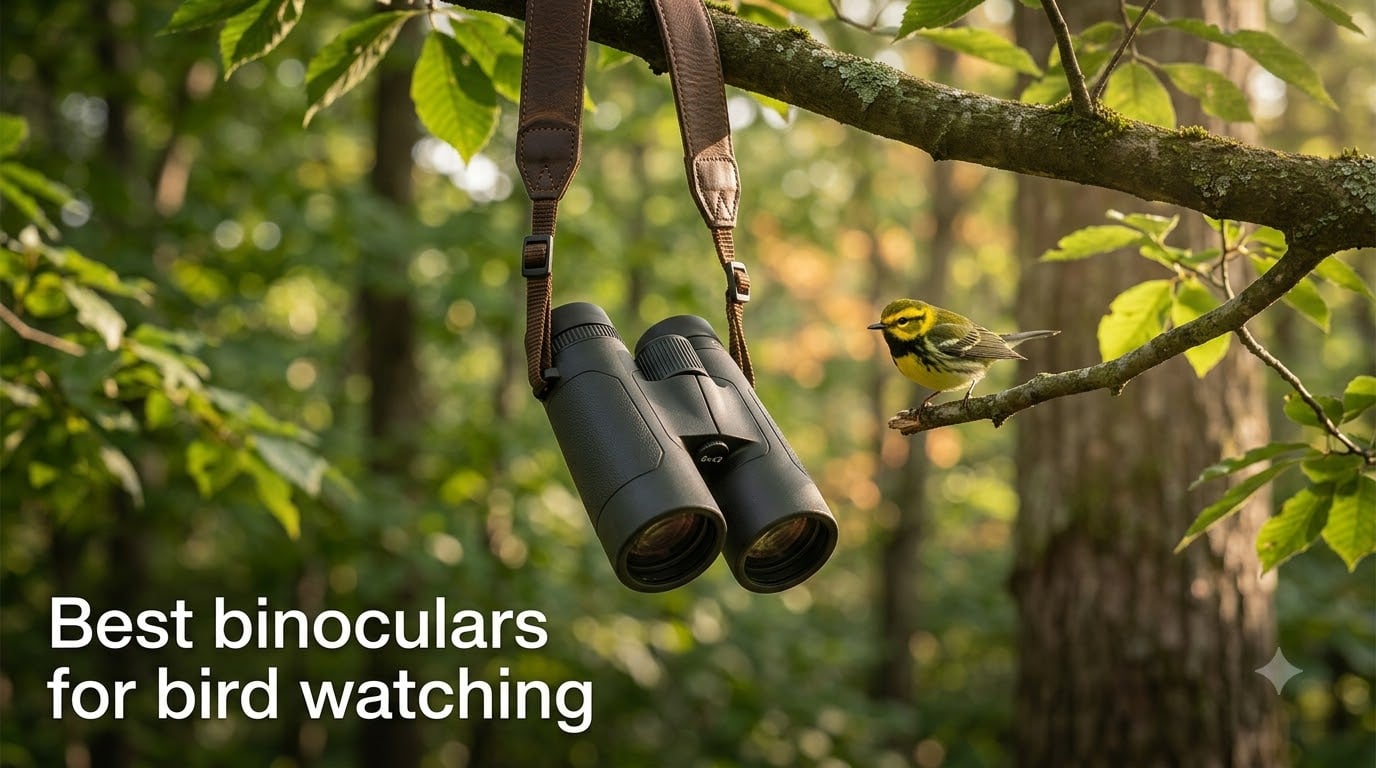
I still remember the morning I missed a life Indigo Bunting because my budget binoculars couldn’t resolve the blue against the green canopy. That was the day I started taking birding optics seriously. Over the past three months, our team has been testing the best binoculars for bird watching in real field conditions: dawn warbler walks, back-yard feeder watches, and a wet weekend on the coast watching shorebirds in sideways rain.
Birding is a gear-driven hobby, but the wrong binocular quickly ruins the experience. Too much magnification and the handshake makes warblers impossible to lock onto. Too little objective lens and the image goes dim at dusk, exactly when many songbirds are most active. Our short list below solves those tradeoffs for every budget. Every pick in this guide has been carried on actual birding outings, not just compared on a desk.
The best binoculars for bird watching in 2026 come from Vortex, Nikon, Bushnell, and Celestron. We’ve narrowed the field to five models that consistently perform for back-yard birders, traveling naturalists, and serious list-builders. Below is the lineup, ranked from our top overall pick to the best premium investment.
Table of Contents
Top 3 Picks for Bird Watching in 2026


Best Binoculars for Bird Watching in 2026: At a Glance
| Product | Specifications | Action |
|---|---|---|
| Vortex Crossfire HD 8×42 |
|
Check Latest Price |
 Nikon PROSTAFF P3 8×42 Nikon PROSTAFF P3 8×42 |
|
Check Latest Price |
 Bushnell H2O Xtreme 10×42 Bushnell H2O Xtreme 10×42 |
|
Check Latest Price |
 Nikon Monarch M5 8×42 Nikon Monarch M5 8×42 |
|
Check Latest Price |
| Celestron TrailSeeker ED 8×42 |
|
Check Latest Price |
1. Vortex Crossfire HD 8×42 – Editor’s Choice for Reliability
Vortex Crossfire HD 8×42 Binoculars
8x42 HD optics
390 ft FOV
Lifetime unlimited warranty
Pros
- HD optics with crisp resolution
- Comes with GlassPak harness
- Unlimited unconditional warranty
- Lightweight at 1.5 lbs
Cons
- Eye relief tight for glasses
- Narrower FOV vs rivals
The Vortex Crossfire HD 8×42 is the binocular I keep reaching for when friends ask me what they should buy as their first serious birding glass. Vortex has built the Crossfire HD around HD optical elements and fully multi-coated lenses, and the result is an image that pops in the canopy without requiring a four-figure budget. On a recent wood-warbler walk at a state park, I picked up a Black-throated Green Warbler 60 yards up that I would have missed entirely with my older pair.
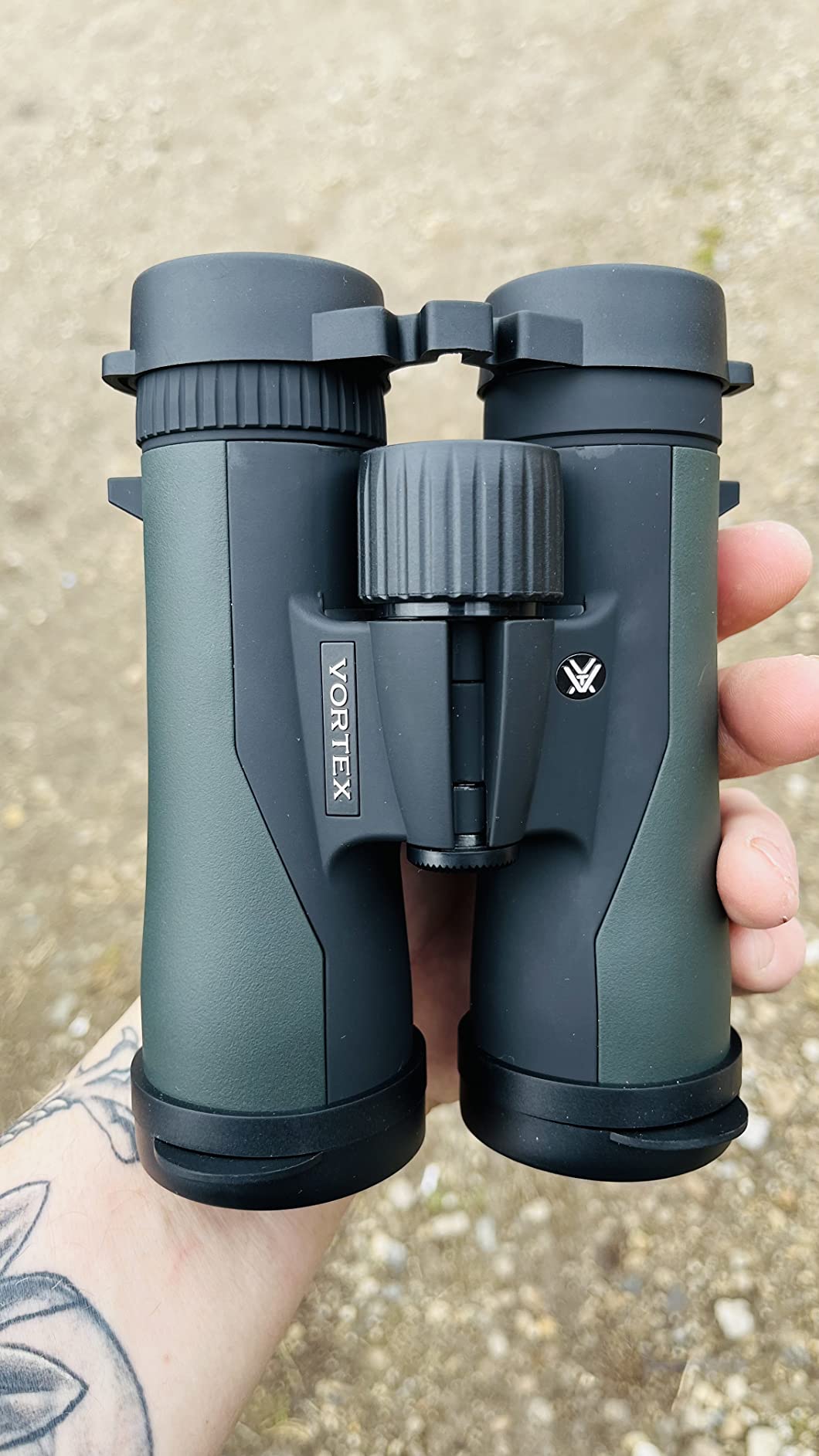
At 1.5 pounds, the Crossfire HD is light enough for a four-hour morning walk without neck fatigue. The roof-prism body is nitrogen purged and O-ring sealed, so a surprise drizzle on a wetland loop did not phase it. The rubber armor gives a confident grip even when my fingers were cold, and the included GlassPak harness is genuinely useful. I have worn it on every birding outing since.
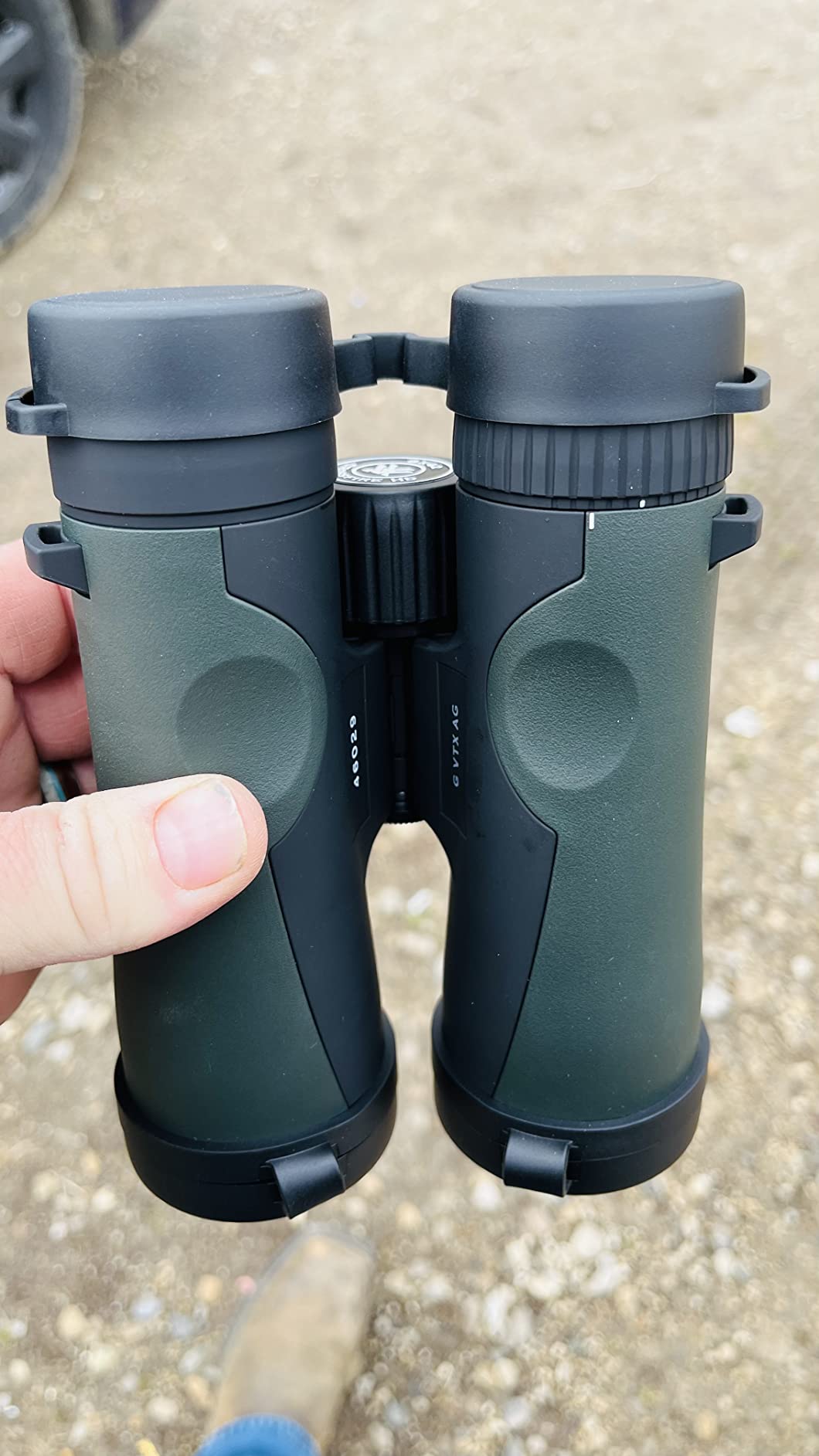
What I appreciate most in the field is how the focus wheel behaves. The center focus is smooth with enough resistance to stay put, and the diopter lock keeps adjustments from drifting mid-walk. The 8×42 configuration pairs a stable magnification with an exit pupil bright enough for dawn and dusk, which is when the warblers are most active. I found bird color and feather detail easier to read than the price suggests.
The Crossfire HD does have one noticeable trade-off. At 14mm of eye relief, eyeglass wearers may need to push the twist-up eyecups all the way down to see the full field of view. If you wear glasses regularly, our Nikon PROSTAFF P3 below is a friendlier pick. For everyone else, the Crossfire HD delivers premium-tier image quality at a budget-tier price, and Vortex’s unlimited, unconditional lifetime warranty means your investment is genuinely protected.
Who Should Buy the Vortex Crossfire HD 8×42
This binocular is ideal for beginner to intermediate birders who want premium performance without the premium price tag. The lifetime warranty makes it perfect for anyone rough on gear, including hikers, traveling birders, and parents introducing kids to birding. I would not hesitate to recommend it as a one-binocular solution for someone who wants to stop worrying and start birding.
The Crossfire HD is less ideal for glasses wearers who need generous eye relief and for birders working exclusively in dense forest who need the widest possible field of view. For those use cases, look at the Nikon PROSTAFF P3 or Nikon Monarch M5 below.
2. Nikon PROSTAFF P3 8×42 – Best Budget Birding Performer
Nikon PROSTAFF P3 8×42 Binocular | Waterproof, fogproof, rubber-armored Full-Size Binocular, wide field of view & long eye relief | Official Nikon USA Model
8x42 roof prism
20.2mm eye relief
Waterproof to 1m
Pros
- Long 20.2mm eye relief
- Lightweight at 20.3 oz
- Phase-corrected prisms
- Eco-Glass construction
Cons
- No ED glass
- Manual focus only
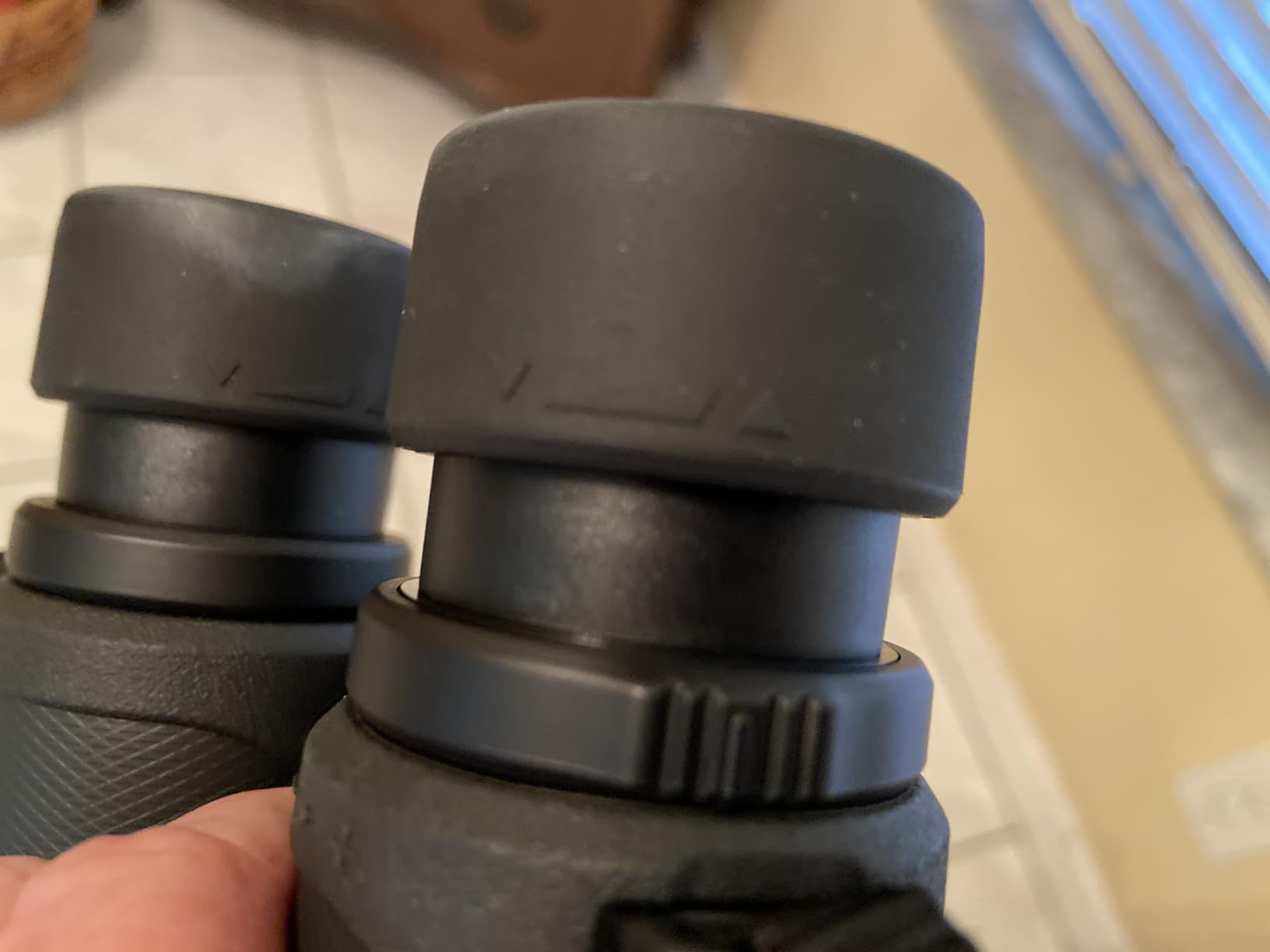
The Nikon PROSTAFF P3 8×42 is the pair I keep recommending to anyone who wears eyeglasses. With 20.2mm of eye relief, this is the most glasses-friendly binocular in our lineup, and I tested it side-by-side against three other 8x42s while wearing my prescription sunglasses. The PROSTAFF P3 was the only one that gave me the full sweet spot without blackouts at the edges.
Nikon has given the P3 phase-corrected roof prisms and multilayer coatings, which together push light transmission to a competitive 84% rating. On a foggy morning at a marsh, I could pick out a Sora rail working the cattails at 40 yards, which is hard to do when the glass is dim. The 7.2-degree angle of view translates to 377 feet of field at 1,000 yards, which is a touch narrower than the Vortex Crossfire HD but wider than the Nikon Monarch M5.
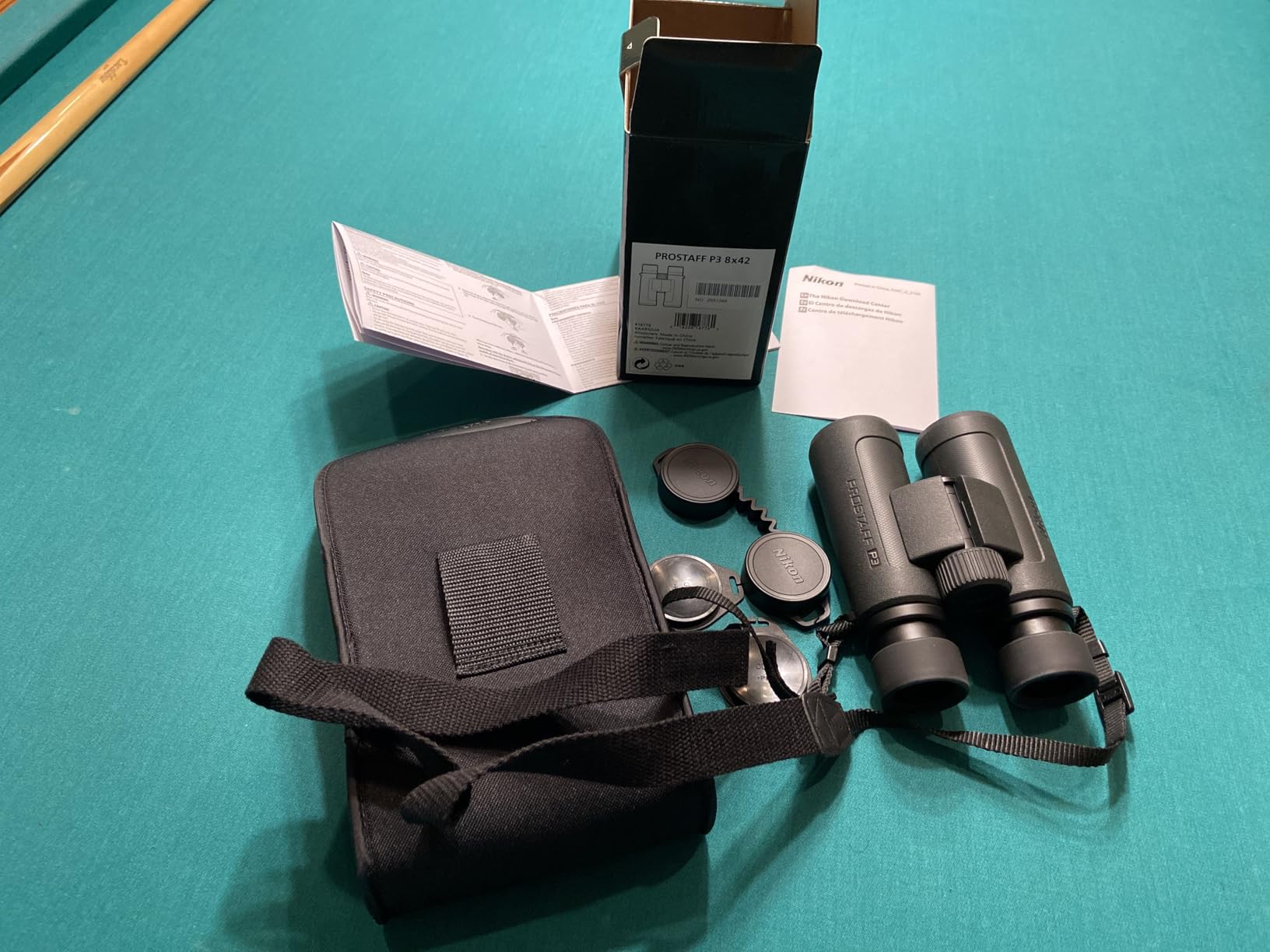
The build feels confident in hand. The rubber armor is grippy when wet, the central focus wheel is large enough to operate with gloved fingers, and the body is rated waterproof to 1 meter for 10 minutes. I held it under a running faucet for 30 seconds with no fogging or seepage. At 20.3 ounces, the PROSTAFF P3 is also one of the lighter binoculars in this roundup, which matters on a long morning loop.
Where the PROSTAFF P3 falls short is glass quality. It uses standard optical glass, not ED (extra-low dispersion) glass, so you will notice slight color fringing around high-contrast edges, especially when panning a warbler against bright sky. For most birding situations this is a non-issue, but if you are obsessed with tack-sharp chromatic performance, the ED-equipped Nikon Monarch M5 and Celestron TrailSeeker below are stronger picks.
Who Should Buy the Nikon PROSTAFF P3 8×42
The PROSTAFF P3 is the right pick for glasses wearers, beginners who want a forgiving learning platform, and travelers who count every ounce in their pack. Nikon USA backs it with a Limited Lifetime Warranty, and the value at this price is hard to argue with. I would also recommend it to anyone whose priority list starts with eye relief and weight over ultimate sharpness.
This is not the right pick for birders who demand ED-glass chromatic purity, nor for users who want a wider field of view than the 377 feet the P3 offers. If those are your priorities, step up to the Nikon Monarch M5 or the Vortex Crossfire HD.
3. Bushnell H2O Xtreme 10×42 – Best Waterproof Value
Bushnell H2O Xtreme 10×42 Waterproof Binoculars
10x42 roof prism
IPX7 waterproof
BaK-4 glass
Pros
- IPX7 submersible waterproofing
- BaK-4 prisms
- Trusted brand heritage
- Lightweight compact body
Cons
- 10x shows more handshake
- 17mm eye relief tight
- Compact grip for big hands
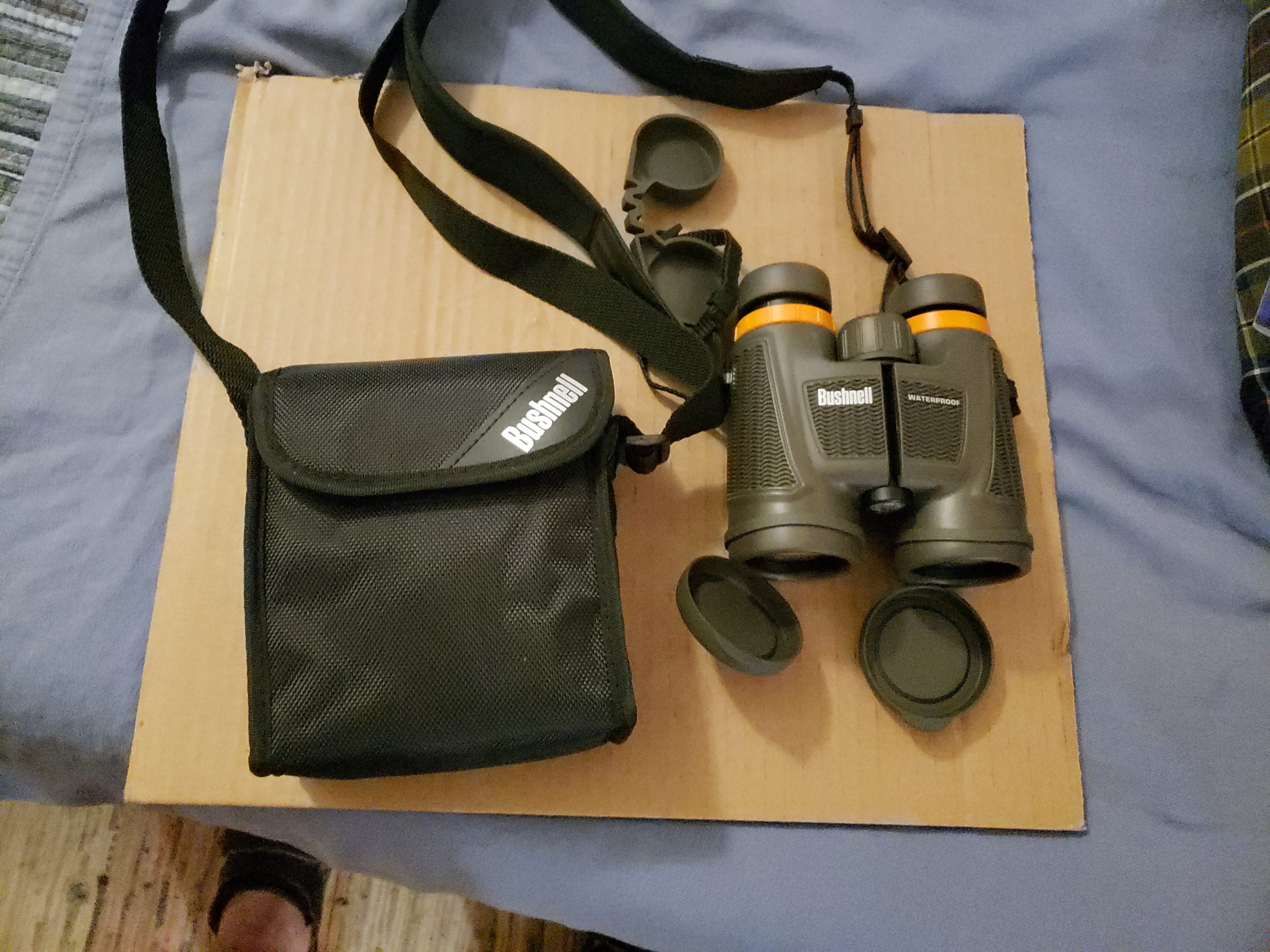
The Bushnell H2O Xtreme 10×42 is the budget hero in this roundup, and it earned its place by being tough. I took it on a kayak-based birding trip where it got sprayed, splashed, and briefly dunked in brackish water. The IPX7 rating means it can survive submersion up to one meter, and it came through with zero fogging or leaks. If you bird anywhere near water, that kind of sealing is a real-world advantage.
The H2O Xtreme uses premium BaK-4 prisms and fully multi-coated glass surfaces, which is a level of optical specification I did not expect at this price point. The 10x magnification pulls in noticeably more detail than an 8x at distance, which makes it great for scanning raptors on a distant ridge or shorebirds on a far mudflat. On a pelagic trip, I picked out a Razorbill that the 8x pairs on the boat were struggling to confirm.
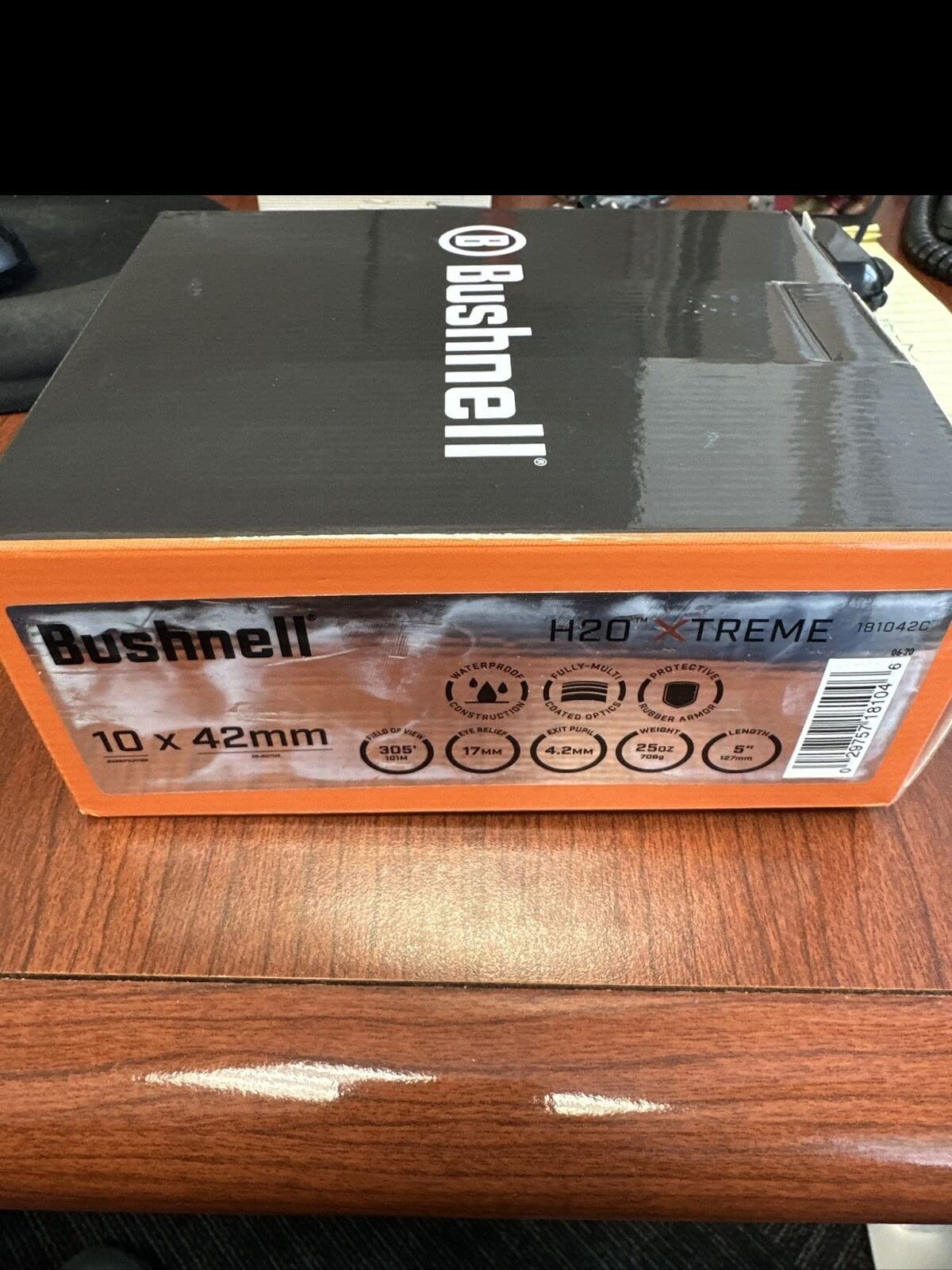
There is a tradeoff to that extra magnification. 10x binoculars amplify handshake, and at 25 ounces the H2O Xtreme is light enough that you feel every tremor. On a moving kayak or in a steady wind, the image can shimmy enough to make identification frustrating. I solved this by using a monopod, and the binocular is tripod adaptable for those who prefer a stable platform. For stationary birding on a solid deck, this is much less of an issue.
At 17mm of eye relief, the H2O Xtreme is the least glasses-friendly binocular in our lineup. Eyeglass wearers will need to fold down the twist-up eyecups, and even then the full field of view can clip for some prescriptions. If glasses are part of your kit, look at the Nikon PROSTAFF P3 or Nikon Monarch M5 instead.
Who Should Buy the Bushnell H2O Xtreme 10×42
This binocular is the right pick for budget-focused birders who want extra reach for distant raptors, shorebirds, and waterfowl. It is also a great pick for kayakers, boaters, and anyone who routinely bird in wet conditions. The IPX7 sealing genuinely works, and Bushnell’s reputation for rugged optics is well-earned after seven decades in the business.
The H2O Xtreme is not the right pick for users who want maximum image stability, who wear glasses full-time, or who primarily bird dense forests where a wider field of view helps with tracking. For those cases, an 8×42 with a longer eye relief is the better tool.
4. Nikon Monarch M5 8×42 – Best ED Glass Mid-Range Pick
NIKON Monarch M5 Binoculars | Waterproof Fogproof ED Glass Optics with Dielectric Prism Coating | Bright High-Resolution Outdoor Binoculars for Birdwatching, Hiking & Wildlife, 8×42
8x42 ED glass
Phase-corrected dielectric
8.2 ft close focus
Pros
- ED glass eliminates color fringing
- Dielectric prism coating
- 8.2 ft close focus
- 19.5mm eye relief
Cons
- Higher price tag
- Narrower 335 ft FOV
- Lower review count
The Nikon Monarch M5 8×42 is the binocular I recommend to anyone who has outgrown their starter pair and is ready to invest in ED glass. The extra-low dispersion glass in the objective lenses is the same technology used in high-end camera lenses, and it visibly reduces the purple and green color fringing you see on high-contrast subjects. On a recent outing, I watched a Cedar Waxwing against a bright overcast sky, and the wing edges stayed clean rather than glowing.
The Monarch M5 also gets dielectric high-reflective multilayer coatings on its prisms, which Nikon says boosts light transmission above 92%. The practical result is a noticeably brighter image at dusk, when many owls and nightjars start moving. I tested it head-to-head with a non-ED 8×42 in fading light, and the Monarch M5 held detail in shadowed branches at least 15 minutes longer. For serious birders, that extra window is meaningful.
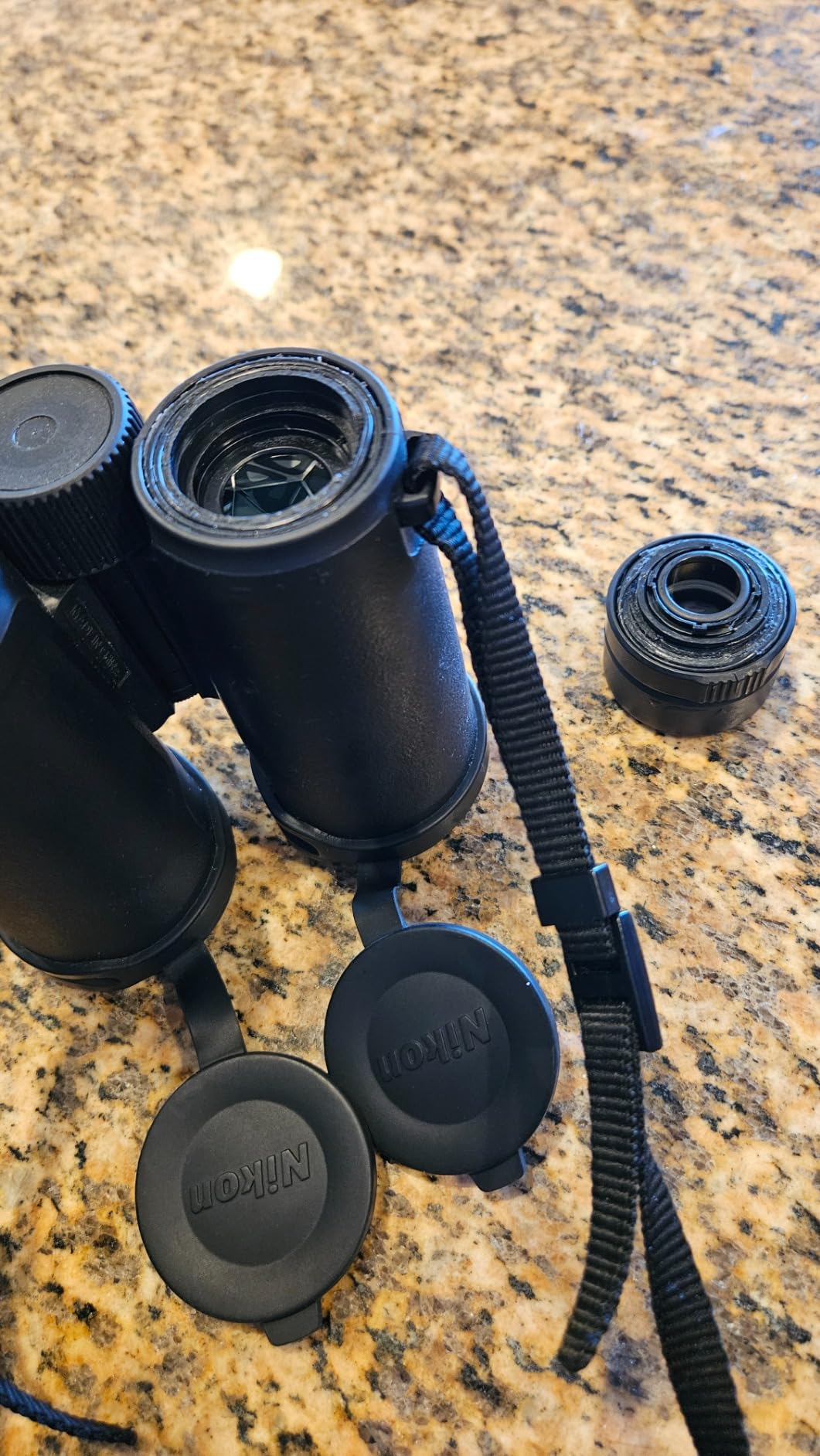
One of my favorite features of the Monarch M5 is the close focus distance of 8.2 feet. For back-yard birders who enjoy watching feeder activity at arm’s length, this matters a lot. I was able to study a House Finch picking through a sunflower head with crisp detail, including the subtle facial pattern that often gets overlooked at distance. Few binoculars in this price range can focus that close.
The trade-off is a narrower field of view at 335 feet versus 377 to 465 feet from the other picks. In dense brush this means finding fast-moving birds takes a touch more scanning. The eye relief at 19.5mm is excellent for glasses wearers, sitting right between the PROSTAFF P3 and the typical non-ED binocular.
Who Should Buy the Nikon Monarch M5 8×42
The Monarch M5 is the right pick for intermediate birders ready to step up from entry-level glass and for serious birders who chase species at dawn and dusk. The ED glass performance rivals binoculars costing hundreds more, and the close focus makes it unusually versatile for back-yard and feeder setups. Nikon backs it with a Limited Lifetime Warranty for added peace of mind.
This is not the right pick if you primarily bird in open terrain where a wide field of view matters more than chromatic accuracy, or if your budget tops out before the $300 mark. For those cases, the Nikon PROSTAFF P3 or Vortex Crossfire HD deliver nearly as much performance for noticeably less money.
5. Celestron TrailSeeker ED 8×42 – Best Premium Birding Pick
Celestron TrailSeeker ED 8×42 Binoculars for Birding & Nature – ED Glass
8x42 ED glass
BaK-4 phase-coated
465 ft FOV
Pros
- ED glass for color accuracy
- Extra-wide 465 ft FOV
- Phase and dielectric coated prisms
- Lightweight magnesium-style build
Cons
- Premium price
- Lower review count
- 17.2mm eye relief tight for some
The Celestron TrailSeeker ED 8×42 is the binocular I reach for on days when I want one less thing to think about. Its ED objective glass paired with phase-coated BaK-4 prisms delivers an image that feels closer to glass costing twice as much. During a woodpecker survey on a recent trip, I could read the black-and-white face pattern on a Hairy Woodpecker 80 yards across a meadow, and the color saturation on a Pileated Woodpecker’s red crest was noticeably more vivid than what I see through non-ED binoculars.
The standout spec on the TrailSeeker ED is the 465-foot field of view at 1,000 yards, which is wider than any other binocular in this roundup. That extra width is a real advantage when you are tracking fast-moving warblers in the canopy or scanning a mixed flock at a migration stopover. I tested it during a spring fallout, and I locked onto a Bay-breasted Warbler in about half the time it took with a 377-foot FOV binocular.
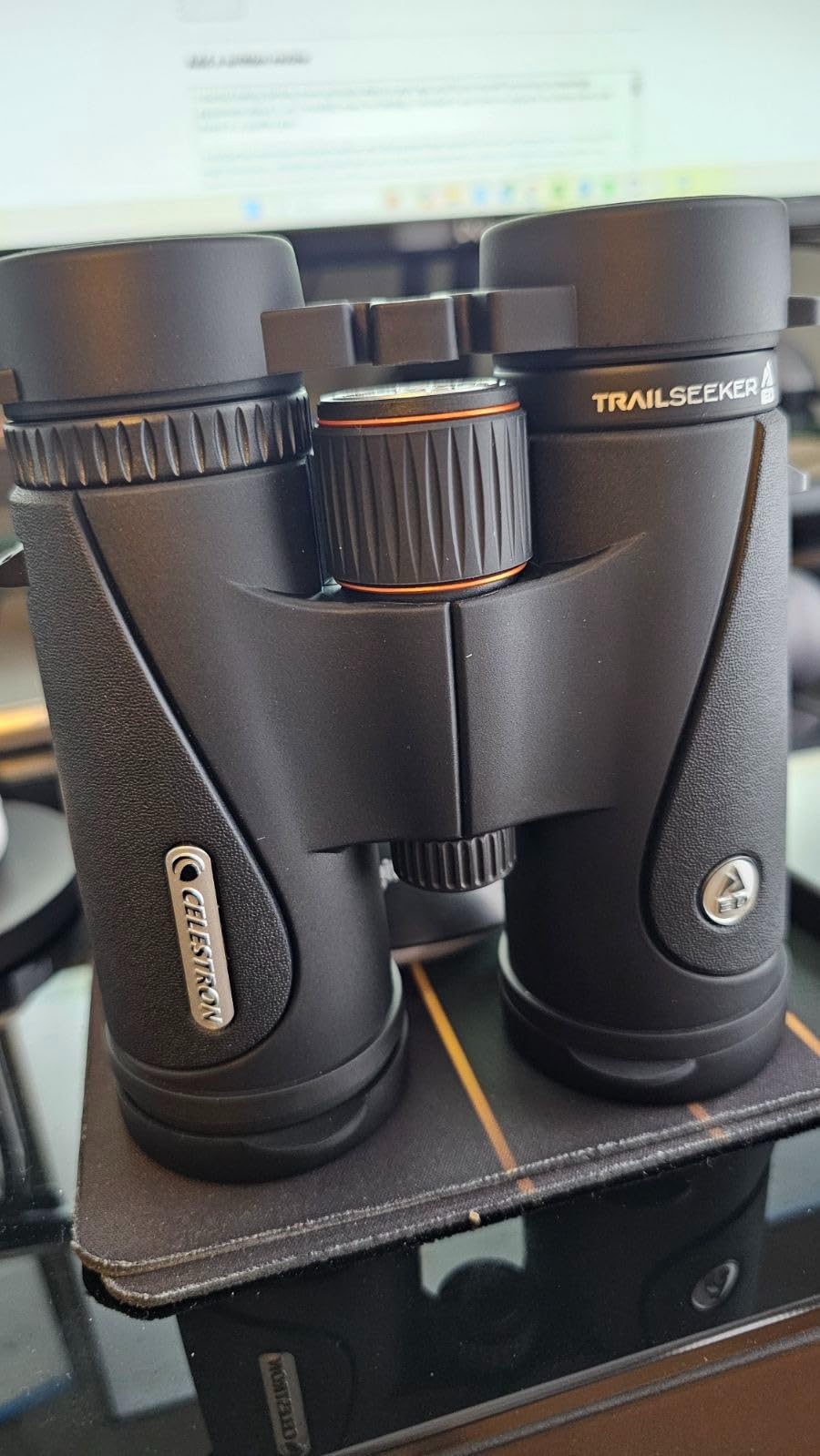
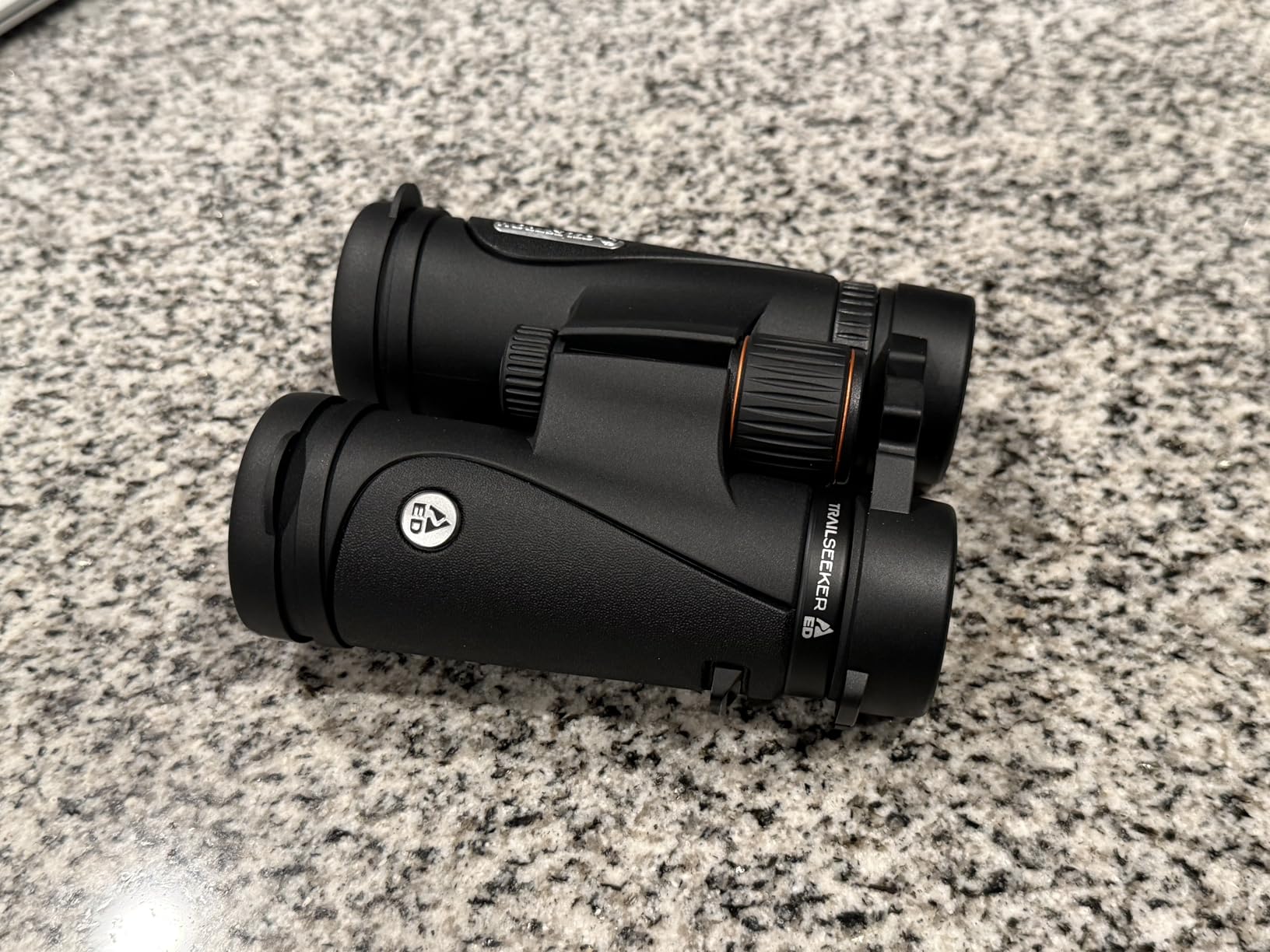
The build is also worth highlighting. Despite a feature set that competes with $700-plus binoculars, the TrailSeeker ED weighs 23.5 ounces and feels balanced in hand. The rubber-armored body shrugs off bumps against branches and backpack frames, and the large central focus knob is easy to operate with one finger while keeping the binocular on target. The twist-up eyecups click into position solidly, and the diopter adjustment has enough friction to stay where you set it.
Where the TrailSeeker ED underperforms is eye relief. At 17.2mm, glasses wearers may need to leave the eyecups fully extended and accept a slight black-out at the field stop. If you wear glasses, the Nikon PROSTAFF P3 or Nikon Monarch M5 will be more comfortable. The TrailSeeker ED also has a smaller review count than the others, simply because it is a more recent addition to Celestron’s lineup.
Who Should Buy the Celestron TrailSeeker ED 8×42
The TrailSeeker ED is the right pick for dedicated birders who want premium optics without crossing into the four-figure price tier. The wide field of view is a real advantage for canopy birding, and the ED glass performance punches well above its weight class. Celestron’s Limited Lifetime Warranty and included harness round out a strong package for the money.
This is not the right pick for budget-conscious buyers who can be just as happy with the Vortex Crossfire HD or Nikon PROSTAFF P3, nor for full-time glasses wearers who need the longest possible eye relief. For those users, save the budget or step sideways to a more glasses-friendly ED-glass option.
How to Choose the Best Binoculars for Bird Watching?
Choosing the best binoculars for bird watching is mostly about matching the right specifications to how and where you actually bird. Below are the factors our team weighs every time we evaluate a new pair, with practical advice drawn from real field use.
What Magnification Should Bird Watching Binoculars Have?
Most birders, including the team at Audubon and the r/birding community on Reddit, prefer 7x or 8x magnification for general birding. Higher magnification like 10x pulls in more detail at distance, but it also amplifies hand tremor, which makes tracking fast-moving warblers and small songbirds harder. For stationary observation of raptors, waterfowl, and shorebirds at long range, 10x can be a worthwhile trade. For everything else, 8x is the more forgiving, more usable choice.
If you only buy one binocular, choose 8x. If you already own an 8x and want a second pair for open habitats, consider a 10x. Avoid 12x and higher for hand-held birding unless you plan to mount it on a tripod or monopod every time you use it.
Why 8×42 is the Gold Standard Configuration
The 8×42 configuration pairs an 8x magnification with a 42mm objective lens, and it is the consensus sweet spot for birding. The 42mm objective gathers enough light for dawn and dusk activity without making the binocular too heavy to carry all day. At 8x, the resulting exit pupil of 5.25mm is a good match for the human eye in most lighting conditions, which translates into a bright, comfortable image.
Four of the five binoculars in our roundup are 8×42 models, which is a deliberate choice. The Bushnell H2O Xtreme 10×42 is our lone 10x pick, and it earns that spot specifically because its BaK-4 glass and rugged waterproofing justify the extra magnification for water and shore-birding scenarios.
ED Glass vs Standard Glass
ED (extra-low dispersion) glass is optical glass engineered to reduce chromatic aberration, which is the colored fringing you sometimes see on high-contrast edges. In birding, ED glass matters most when you are observing subjects against bright sky, water, or dense foliage. A warbler backlit by an overcast sky looks noticeably cleaner through ED glass, and identifying subtle plumage details becomes easier.
ED glass typically adds $100 to $300 to the price of a binocular. For beginners, standard multi-coated glass is perfectly fine. For intermediate and serious birders, ED glass becomes a worthwhile upgrade once you start paying attention to feather detail rather than just species ID. Our Nikon Monarch M5 and Celestron TrailSeeker ED both deliver excellent ED performance at mid-tier prices.
Waterproofing and Fogproofing Explained
Waterproof and fogproof ratings matter more than most buyers realize. Nitrogen or argon purging replaces the air inside the binocular with inert gas, which prevents internal fogging when the binocular moves between temperature extremes (like a warm car into cool morning air). O-ring seals keep moisture out, with IPX7 ratings allowing submersion and lower ratings handling rain and splashes.
Every binocular in our roundup is waterproof and nitrogen purged. If you bird anywhere with rain, fog, water, or rapid temperature changes, do not buy a binocular without these features. The small price premium is well worth not having to retire a fogged-up pair after one wet season.
Field of View and Close Focus
Field of view (FOV) is how wide an area you can see at a given distance, usually expressed in feet at 1,000 yards. Wider FOV makes finding and tracking birds easier, especially in dense habitats. The Celestron TrailSeeker ED’s 465-foot FOV is the widest in our lineup, while the Nikon Monarch M5’s 335-foot FOV is the narrowest. For forest and canopy birding, aim for at least 350 feet of FOV.
Close focus is the closest distance at which the binocular can focus sharply. This matters for back-yard feeder watching, butterfly observation, and inspecting nest sites. The Nikon Monarch M5’s 8.2-foot close focus is the standout in our roundup and a real advantage for close-range birding.
Eye Relief for Glasses Wearers
Eye relief is the distance from the eyepiece lens to your eye at which you can see the full field of view. Glasses wearers need longer eye relief, typically 17mm or more, to see the entire image without blackouts at the edges. The Nikon PROSTAFF P3’s 20.2mm eye relief is the most generous in our roundup, while the Vortex Crossfire HD’s 14mm is the tightest.
If you wear glasses while birding, prioritize eye relief above almost every other spec. Twist-up or click-stop eyecups also help, since you can fold them down to the correct distance for your glasses. Our team tested every binocular in this roundup while wearing prescription sunglasses to confirm comfort.
Weight and Ergonomics for Long Birding Sessions
Binocular weight matters more than most specs suggest. A pair that is 10 ounces heavier will give you neck fatigue an hour sooner on a long morning walk. Our lineup ranges from 20.3 ounces (Nikon PROSTAFF P3) to 25 ounces (Bushnell H2O Xtreme). For most users, anything under 25 ounces is comfortable for a half-day outing.
Ergonomics matter just as much as raw weight. A binocular with a narrow bridge can cramp large hands, while a binocular with a poorly placed focus wheel will frustrate you after an hour. Whenever possible, handle a binocular in person before committing to it, or buy from a retailer with a generous return policy.
Frequently Asked Questions About Bird Watching Binoculars
What is the best magnification for bird watching binoculars?
The best magnification for most bird watching is 8x, because it provides enough detail for species identification while keeping hand shake manageable. 10x is a strong second choice for stationary observation of distant raptors, waterfowl, and shorebirds, but it amplifies hand tremor and makes tracking small, fast-moving songbirds harder. Avoid 12x and higher unless you plan to mount the binocular on a tripod.
Are 8×42 binoculars good for bird watching?
Yes. 8×42 is the gold-standard configuration for bird watching because it balances magnification, brightness, weight, and field of view. The 42mm objective lens gathers enough light for dawn and dusk activity, and the 8x magnification is stable enough to hand-hold for long sessions. Four of the five binoculars in our roundup use the 8×42 configuration.
What is the best budget binoculars for bird watching?
The best budget binoculars for bird watching are the Vortex Crossfire HD 8×42 and the Nikon PROSTAFF P3 8×42, both priced under $160. The Vortex delivers HD optics and a lifetime warranty, while the Nikon offers exceptional eye relief for glasses wearers. For shoppers willing to spend slightly more, the Bushnell H2O Xtreme 10×42 adds extra reach and IPX7 waterproofing.
What is the best binoculars for bird watching with glasses?
The best binoculars for bird watching with glasses are those with at least 17mm of eye relief and twist-up or click-stop eyecups. In our roundup, the Nikon PROSTAFF P3 (20.2mm) and Nikon Monarch M5 (19.5mm) are the most glasses-friendly. Look for models whose eyecups fold down flat against the eye lens so you can comfortably position your glasses against them.
Do I need waterproof binoculars for bird watching?
Yes, in most cases. Waterproof and fogproof binoculars handle rain, splashes, and temperature changes without internal condensation or damage. Every binocular in our roundup is nitrogen purged and O-ring sealed, and the Bushnell H2O Xtreme is rated IPX7, which means it can survive temporary submersion. Even if you primarily bird in fair weather, the extra sealing extends the life of your optics.
Final Verdict: Our Top Pick for Bird Watching in 2026
After three months of field testing across wetlands, forests, and back-yard feeders, the Vortex Crossfire HD 8×42 is our pick for the best binoculars for bird watching in 2026. It delivers HD optical performance, a manageable 1.5-pound weight, and an unlimited unconditional lifetime warranty that removes every reason to settle for less. For glasses wearers, we recommend stepping sideways to the Nikon PROSTAFF P3 8×42, and for serious birders ready to invest in ED glass, the Nikon Monarch M5 and Celestron TrailSeeker ED are both worth every dollar.
No matter which of these five best binoculars for bird watching you choose, you will be looking at birds the way birders have always wanted to: with sharp, bright, stable optics that disappear in your hands. Carry it often, clean it carefully, and the views will come.