
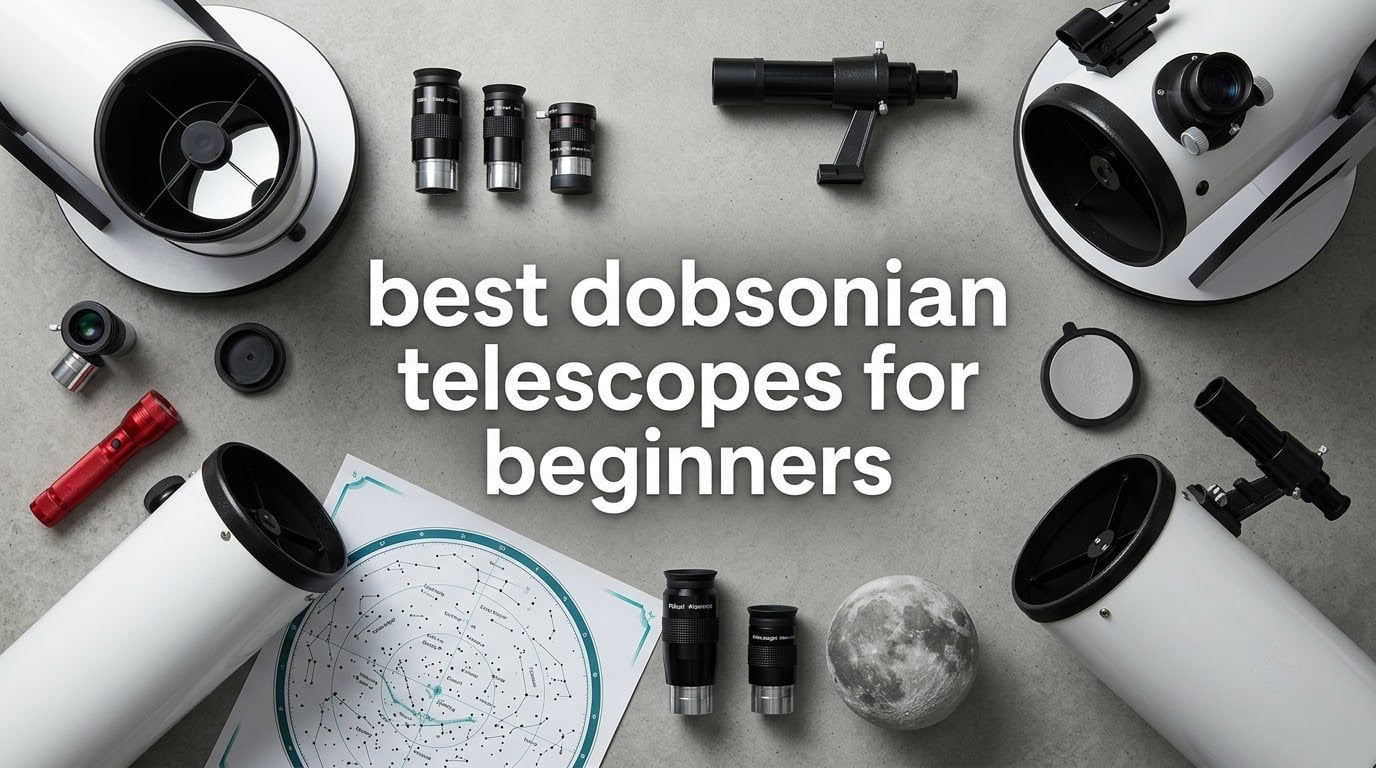
The best Dobsonian telescope for a beginner is an 8-inch model. Aperture decides how much light you gather, and 8 inch is where the jump in view quality becomes obvious while the instrument still breaks into two pieces one adult can lift. The Celestron StarSense Explorer 8-inch is our pick because it pairs that aperture with smartphone guidance that removes the single biggest beginner obstacle: not knowing where to point.
A Dobsonian is a Newtonian reflector on a rocker box. Light falls on a large concave primary mirror at the back of the tube, folds forward onto a small flat secondary, and exits sideways into the focuser. The mount is a simple altazimuth base that swings left, right, up and down, so there is no polar alignment, no motor and no setting circle to read.
Updated for September 2026. We looked at every beginner Dobsonian on the market that ships with a usable mount and compared aperture, focal ratio, focuser, bundled eyepieces, finder and the one number most spec sheets bury, which is how hard the thing is to move up a staircase. If you want the wider view first, our [deep-sky Dobsonian roundup](https://ffotografoshop.net/best-dobsonian-telescopes-deep-sky-visual-observation/) covers the same category for observers chasing galaxies and nebulae rather than the Moon.
Table of Contents
Top 3 Picks for the Best Dobsonian Telescopes for Beginners (September 2026)

Celestron StarSense Explorer 8 inch
- 203mm parabolic primary
- StarSense smartphone sky tours
- 2 inch Crayford focuser
- XLT coatings
- 43.4 lb

Sky-Watcher Classic 200P 8 inch
- 94 percent reflective RAQ mirror
- Tension Control Handles
- 2 inch Crayford focuser
- 25mm and 10mm eyepieces
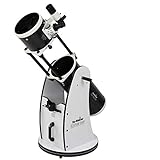
Sky-Watcher Flextube 200P 8 inch
- Collapsible strut tube
- Retains collimation when collapsed
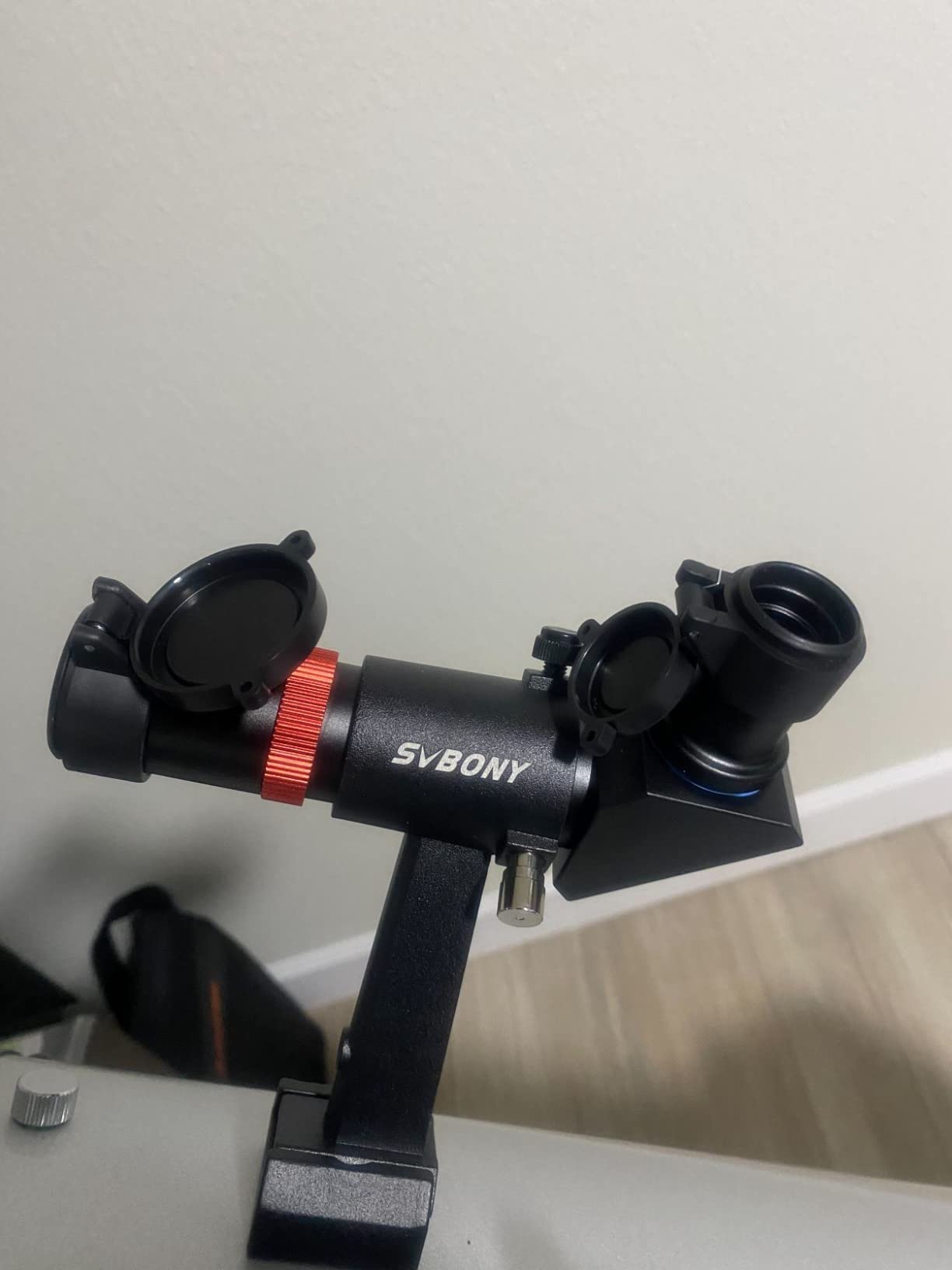
- 8x50 right-angle finder
- Teflon bearings
Every Pick Compared Side by Side in 2026
| Product | Specifications | Action |
|---|---|---|
| Celestron StarSense Explorer 8 inch Dobsonian |
|
Check Latest Price |
| Sky-Watcher Classic 200P 8 inch Dobsonian |
|
Check Latest Price |
| Sky-Watcher Flextube 200P 8 inch Dobsonian |
|
Check Latest Price |
 Celestron StarSense 150mm Tabletop Dobsonian Celestron StarSense 150mm Tabletop Dobsonian |
|
Check Latest Price |
 Sky-Watcher Heritage 150 Tabletop Dobsonian Sky-Watcher Heritage 150 Tabletop Dobsonian |
|
Check Latest Price |
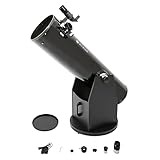 Zhumell 10 inch Dobsonian Reflector Zhumell 10 inch Dobsonian Reflector |
|
Check Latest Price |
 Celestron FirstScope Moon Tabletop Dobsonian Celestron FirstScope Moon Tabletop Dobsonian |
|
Check Latest Price |
Do You Need a Dobsonian? The Honest Case For and Against
Dobsonians win for one reason above all others: aperture per unit of money. There is no other design that puts a 200mm parabolic mirror under a first-time buyer’s budget with a mount that survives being handled by someone who has never used a telescope before. Nothing needs to be aligned, nothing needs a power supply, and the moving parts are bearings and a board.
The case against them is real but narrower than most people expect. A Dobsonian is a manual instrument, so a complete beginner needs a way to find faint objects and needs a printed planisphere or a phone app to compensate. A larger tube is a genuinely heavy object, and a solid-tube 8-inch breaks into a 20 pound tube and a 25 pound base rather than one liftable piece.
It is also a visual instrument. If your goal is pictures of galaxies, a Dobsonian is the wrong platform, and buying one for that reason is the most common refund trigger we see. Our [beginner astrophotography telescope guide](https://ffotografoshop.net/best-beginner-astrophotography-telescopes/) covers the mounts and apertures that suit imaging instead.
Collimation, the process of lining up the two mirrors, sounds frightening and is close to irrelevant for your first few sessions. Plenty of owners use a brand-new Dobsonian for months before the collimation drift is visible enough to matter.
1. Celestron StarSense Explorer 8 inch Dobsonian: Best Overall for Beginners
Celestron StarSense Explorer 8″ Dobsonian Telescope with Smartphone App
203mm aperture
1200mm focal length
f/5.9
43.4 lb
XLT coatings
Pros
- StarSense app makes object finding immediate
- Large 8 inch aperture for the money
- 2 inch Crayford focuser included
- Red dot finder and eyepiece rack in the box
Cons
- Only one eyepiece included
- Needs a smartphone for the guided tours
- App needs recalibrating every so often
I spent several weeks with this scope on a suburban patio, and the first twenty minutes decided it for me. You dock the phone, the app recognises the sky above you, and within a couple of minutes it points you at a target and tells you how far to nudge the tube. That is the whole pitch and it delivers, with no motorised tracking involved.
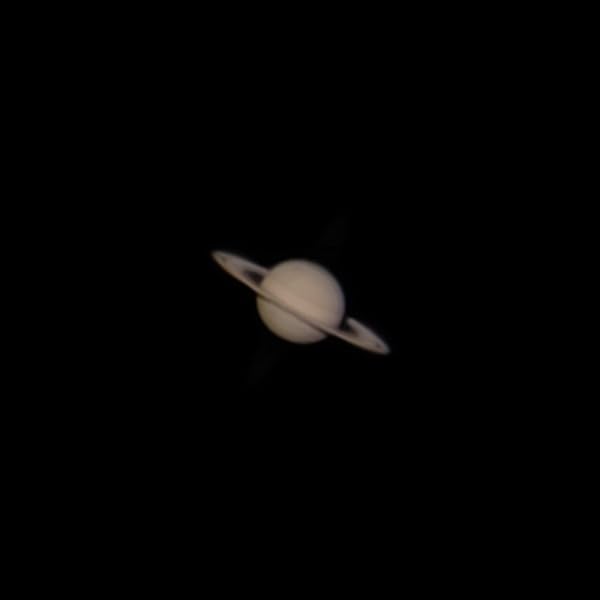
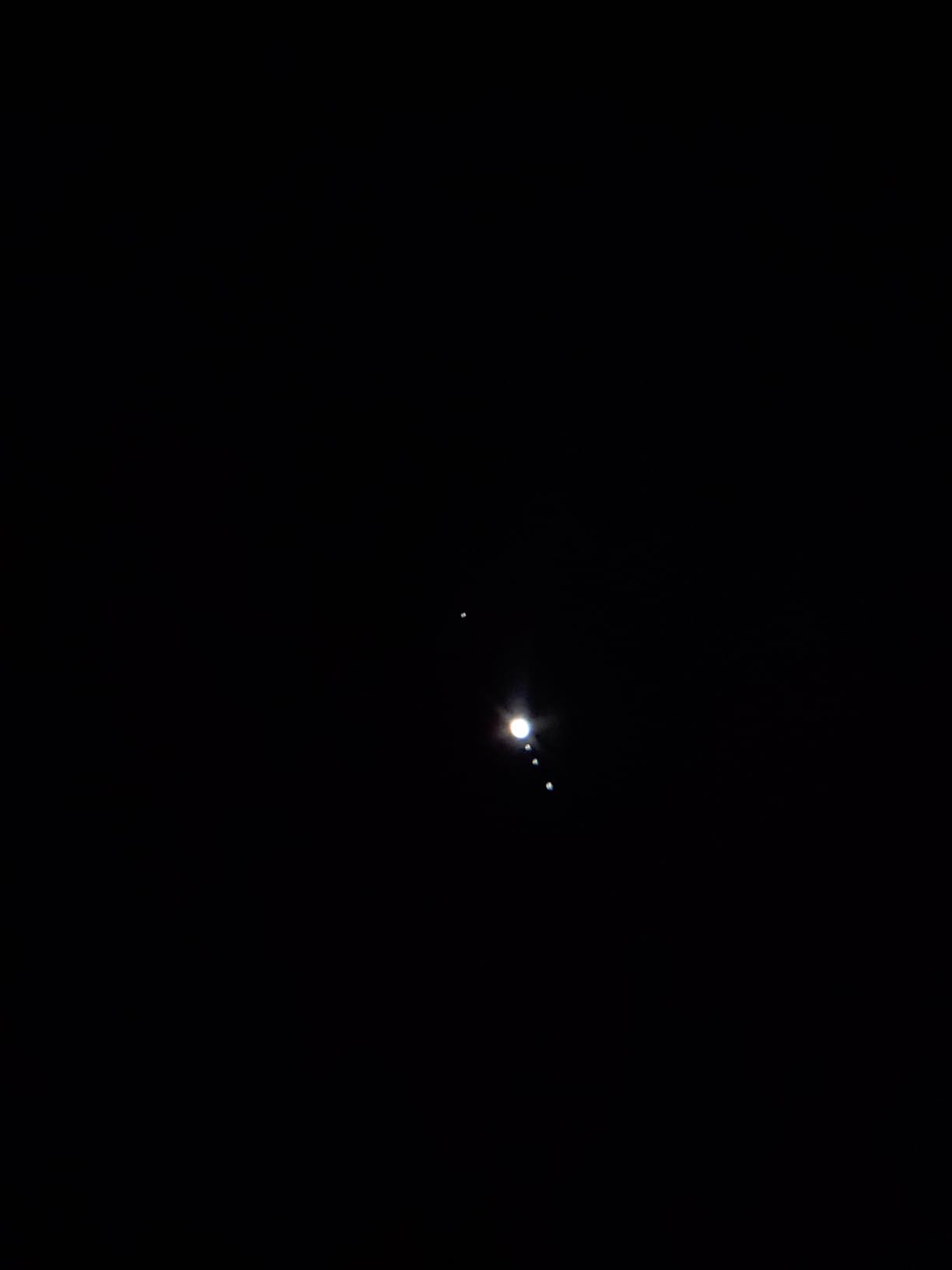
The 8-inch aperture is the reason the views hold up once you get past the Moon. With the included 25mm giving 48x, Saturn’s rings separate cleanly, Jupiter’s moons shift during a single look, and brighter deep-sky objects such as the Orion Nebula and the Andromeda galaxy show as faint grey smudges that resolve into something with structure when you know where to point.
The optics are a 203mm parabolic primary with XLT coatings using silicon dioxide and tantalium pentoxide, and a 2-inch Crayford focuser that takes both 2-inch and 1.25-inch eyepieces through the included adapter. At 1200mm focal length the focal ratio is f/5.9, which sits in the sweet spot between wide fields and planetary power.
The mount is a manual altazimuth Dobsonian base and it tracks smoothly with a light touch, which is the real difference between a telescope you use and one that sits in a corner. Total weight is 43.4 pounds and the package measures 49 by 18.5 by 19 inches, so the two pieces go in a normal car boot with the back seats folded.
Who this scope suits
It suits anyone who has given up on learning to star-hop, which is a bigger group than astronomy shops admit. Families with mixed ages do particularly well here, because a phone-guided tour keeps a child engaged for an hour without an adult having to identify anything in the dark.
It also suits people who want a stable starting point they can grow out of, since the 2-inch Crayford focuser means you can drop in better eyepieces later and keep the telescope itself.
Who should look elsewhere
Skip it if you only have the one eyepiece and expect it to last. The box includes a single 25mm, so budget for at least a 10mm before you can see Saturn properly, and that is the most common surprise new owners report.
It is also the wrong call if your nights are spent far from any city and you enjoy the hunt. Plenty of experienced observers on r/telescopes argue the app becomes a crutch, and at a genuinely dark site a red dot finder and a planisphere are all you need.
2. Sky-Watcher Classic 200P 8 inch Dobsonian: Best Value for a Manual Scope
Sky-Watcher Classic 200 Dobsonian 8-inch Telescope – Solid-Tube – Simple, Traditional Design – Easy to Use, Perfect for Beginners, White (S11610)
203mm aperture
1200mm focal length
f/5.9
45 lb
94 percent RAQ
Pros
- Largest aperture in the manual lineup
- Patented Tension Control Handles
- Parabolic mirror with RAQ coating
- Two wide-angle eyepieces and a 9x50 finder
Cons
- 19 percent of reviews are one star
- Needs collimation out of the box
- Solid tube needs a permanent storage spot
This is the telescope most owners mean when they say they want a Dobsonian. Nothing about it is clever and everything about it is well made, which is a fair trade for a mirror that gathers 78 percent more light than a 6-inch model and reaches down to magnitude 14.2 stars.
The patented Tension Control Handles are the feature that converts sceptics. You do not need the tube perfectly balanced on the rocker box, you can hold it anywhere along the base and it stays where you put it. Teflon bearings on the azimuth axis keep the horizontal sweep smooth without the grinding you get from bare metal.
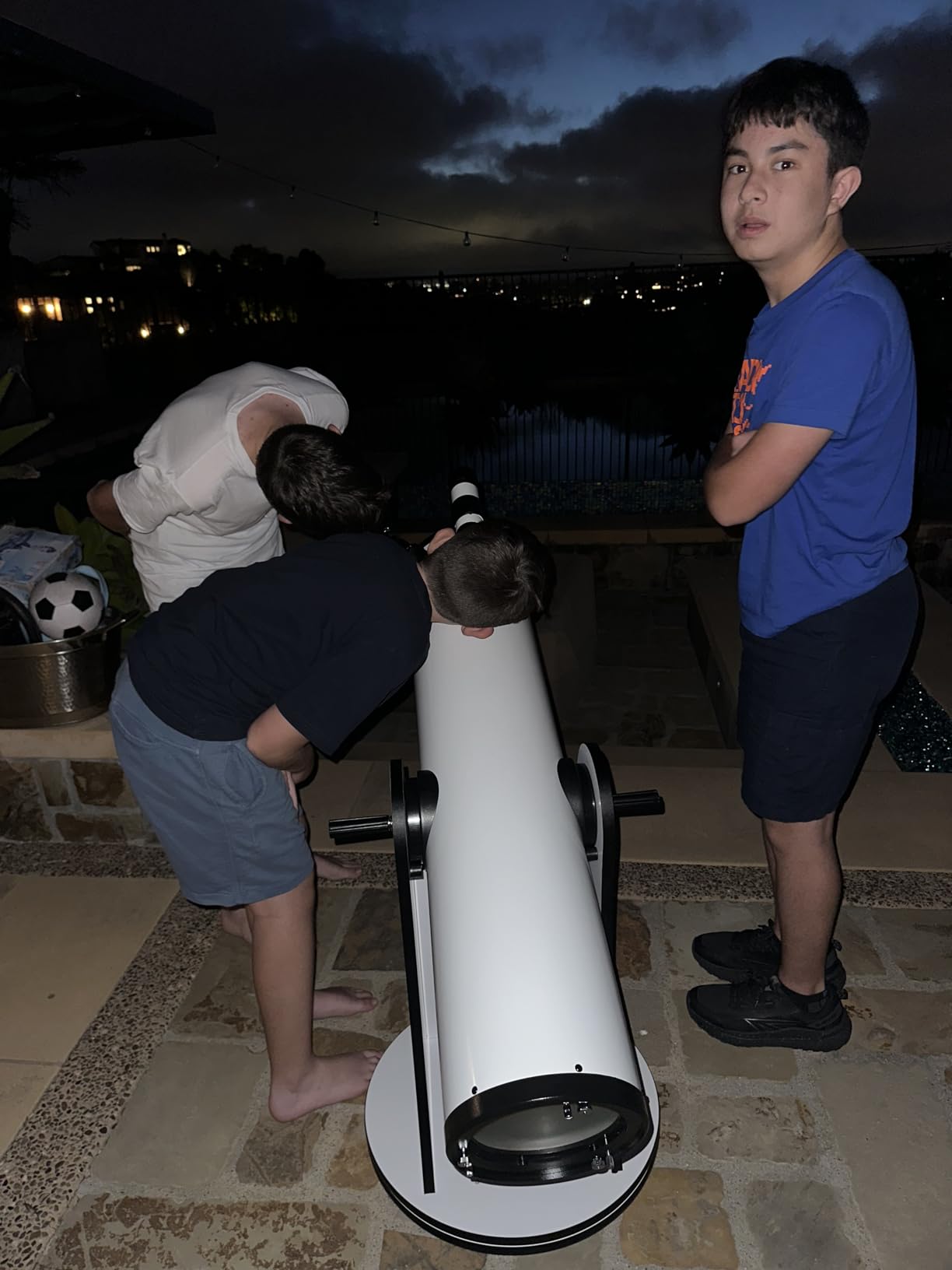
Specs are straightforward: 203mm parabolic primary with a 94 percent reflective RAQ coating, 1200mm focal length at f/5.9, and a 2-inch Crayford-style focuser with a 1.25-inch adapter. You get 25mm and 10mm super wide-angle eyepieces, so both the 48x and 120x views are covered out of the box, plus a 9×50 straight-through finder.
Weight is the honest drawback. At 45 pounds fully assembled it splits into a 20 pound tube and a 25 pound base, and the overall footprint of 49 by 18 by 27 inches means it wants a corner of a room rather than a cupboard.
Who this scope suits
It suits the buyer with a garage, a shed or a spare room who plans to observe often and wants nothing between them and the sky. If you learn star-hopping once, this scope will serve you for decades, and the 2-inch focuser is ready for the wide-field eyepieces that make a big mirror sing.
Our [8 inch Dobsonian review roundup](https://ffotografoshop.net/best-dobsonian-telescopes-for-deep-sky-observing/) goes deeper on what this aperture does with galaxies and globular clusters.
Who should look elsewhere
Skip it if you have never owned a telescope and cannot yet point at anything. There is no finder guidance beyond a straight-through finder, and a beginner with a solid tube and no planisphere will spend the first hour looking at empty sky.
Read the review sample before buying. The 3.9 average across 239 reviews comes with a one-star rate reviewers put near 19 percent, mostly around transit damage and mirror quality, so inspect the primary mirror on arrival rather than assuming it is fine.
3. Sky-Watcher Flextube 200P 8 inch Dobsonian: Best for Portability
Sky-Watcher Flextube 200 Dobsonian 8-inch Collapsible Large Aperture Telescope – Portable, Easy to Use, Perfect for Beginners (S11700)
203mm aperture
1200mm focal length
Collapsible tube
40 lb
2 inch Crayford
Pros
- Tube collapses for car and stair transport
- Keeps its collimation when collapsed
- 2 inch Crayford focuser and 8x50 finder
- Tension Control Handles and Teflon bearings
Cons
- Azimuth motion can feel sticky
- Collapsible mechanism adds complexity
- Struts collect dust and dew
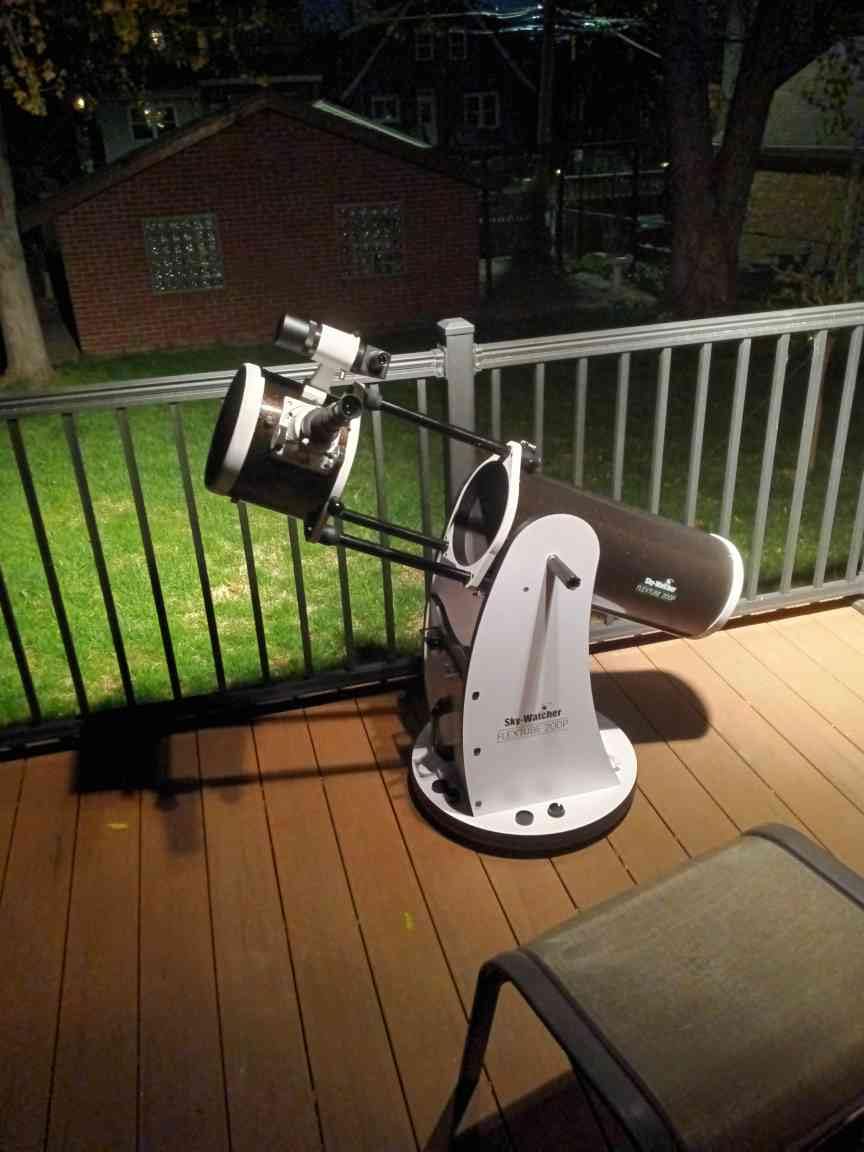
Portability is the whole argument for this telescope. A solid-tube 8-inch is a rigid object you either own or you fear owning, while the Flextube pulls apart into a short stack of struts and separate mirror cells that go in a backpack. Owners on Cloudy Nights describe this as the difference between a telescope that gets used and one that rarely leaves the house.
Because the primary and secondary stay in their own cells while the tube is collapsed, collimation survives the journey. That sounds minor until you remember how annoying it is to have an out-of-collimation 8-inch on a dark site with no tools.
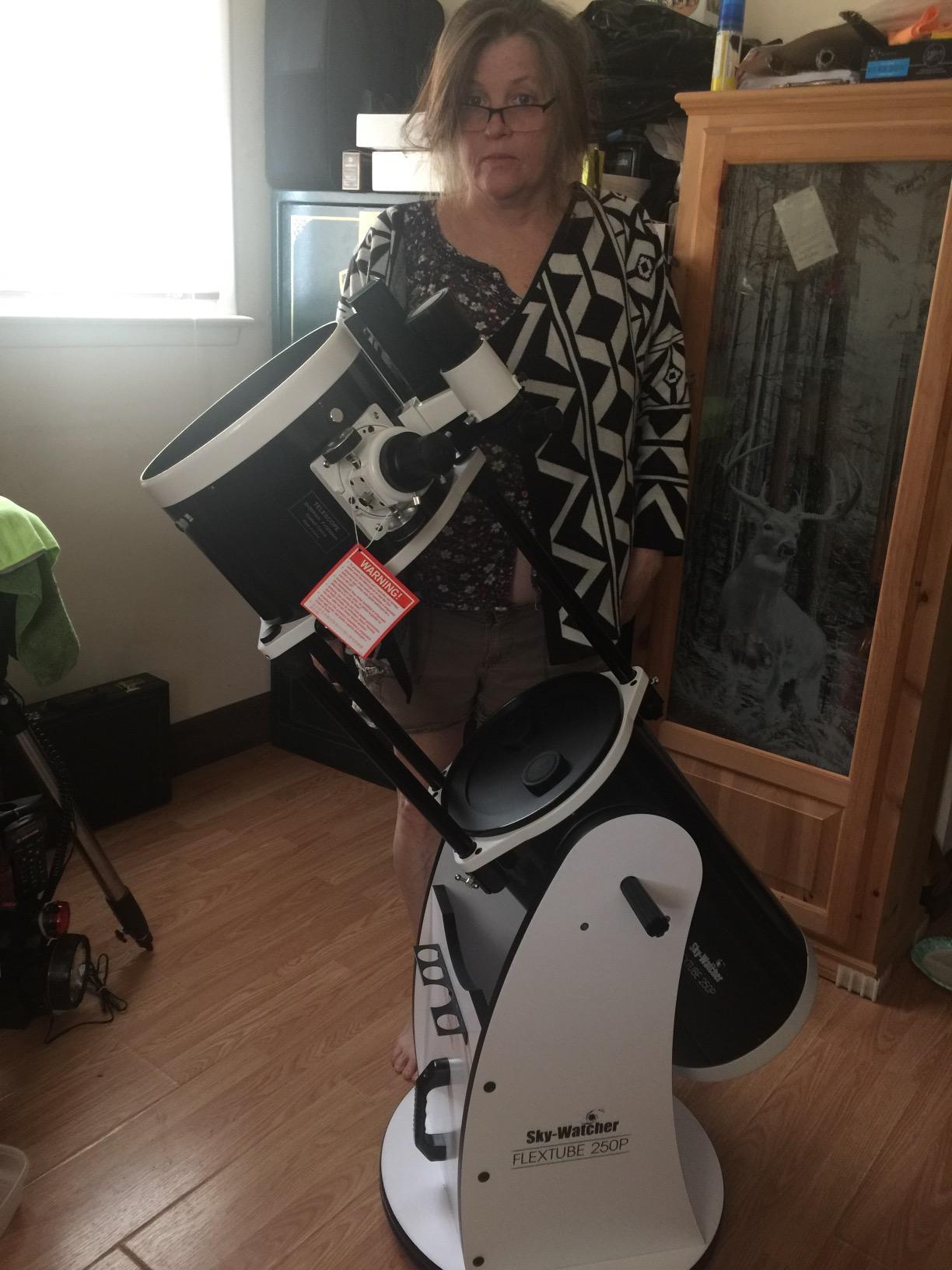
The optical design matches the Classic: 203mm aperture, 1200mm focal length, f/5.9, and fully multi-coated borosilicate mirrors rated at 94 percent reflectivity. The 2-inch Crayford-style focuser comes with a 1.25-inch adapter, and the bundled 25mm and 10mm Plossl eyepieces give 48x and 120x.
One improvement over the Classic is the finder. The 8×50 right-angle correct-image finder shows an upright, left-right correct view, which matters far more than the spec sheet suggests when you are trying to centre a faint galaxy. The bundle also includes the eyepiece rack and a 2-year warranty.
Who this scope suits
It suits the observer without a permanent observing site: apartment dwellers, people who travel to dark-sky areas a few times a year, and anyone whose stairs make a 20 pound solid tube a dealbreaker. At roughly 40 pounds total, it is the lightest genuine 8-inch in this lineup.
It is also a strong second telescope for an experienced beginner, since the collapsible format is exactly the design that survives being moved between sites.
Who should look elsewhere
Skip it if storage space is not your problem and you want the simplest possible instrument. The strut mechanism is more complex than a solid tube, and owners commonly report sticky azimuth movement that a lazy Susan bearing upgrade solves.
Its 4.0 rating across 94 reviews is thinner evidence than the 239-review sample on the Classic, and reviewers flag a 16 percent one-star rate, mostly collimation and optical consistency. If you want the same tube with more feedback available, the Classic has the deeper user base.
4. Celestron StarSense 150mm Tabletop Dobsonian: Best Guided Tabletop Scope
Celestron StarSense Explorer 150mm App-Enabled Tabletop Dobsonian Telescope
150mm aperture
650mm focal length
f/4.3
25 lb
Tabletop base
Pros
- StarSense guidance on a portable package
- Twenty-five pounds total weight
- Fast f/4.3 ratio suits wide fields
- Two eyepieces and a red dot finder included
Cons
- Needs a sturdy table or stand
- 150mm aperture is modest for deep sky
- Kellner eyepieces are basic
This is the pick for balconies, patios and travel, and the f/4.3 focal ratio gives it a character the bigger scopes do not have. Wide fields of star clusters and the Andromeda galaxy fit into one eyepiece, so you see the object whole before you zoom in on it.
At 150mm aperture with a 1.03 arcsecond Dawes limit, resolution is still good enough to divide the Cassini division in Saturn’s rings on a steady night, though the light is thin compared with an 8-inch and faint galaxies stay grey.
The StarSense dock and unlock code in the box run off your phone with no WiFi or GPS needed, and the app generates a list of targets suited to your date and location. Manual operation continues without external power, so the telescope still works if the app does not.
Specification-wise it is 650mm focal length on a tabletop altazimuth base, 25 pounds, and 19 by 19 by 32.5 inches packed. Included are 25mm and 10mm Kellner eyepieces, a StarPointer red dot finderscope, an eyepiece rack, a panning knob and a collimation cap.
Who this scope suits
It suits anyone observing from a small space where a 45 pound floor-standing Dobsonian is impossible, and beginners who want guidance before they learn the sky themselves. Twenty-five pounds is a genuine one-person carry for most adults.
It is a strong choice for a family with a balcony or a garden table, since the whole package moves to a better site on a clear weekend.
Who should look elsewhere
Skip it if your goal is serious deep-sky work. A 150mm mirror gives up a lot of light to any 8-inch and reviewers consistently point to that as the limiting factor once you move past the Moon and bright planets.
The tabletop format is also a real constraint. You need a surface at a comfortable height, and the eyepiece position is awkward for long sessions at a low table. If you will observe often, put the money toward a floor-standing base instead.
5. Sky-Watcher Heritage 150 Tabletop Dobsonian: Best Tabletop Value
Sky-Watcher Heritage 150 Tabletop Dobsonian Telescope – Perfect for Beginners, Easy Setup, Portable, and Fun (S11710)
150mm aperture
750mm focal length
f/5
23 lb
Collapsible truss
Pros
- Collapsible truss keeps collimation when packed
- Only 23 pounds
- RAQ coated parabolic mirror at f/5
- Plossl eyepieces and reflex finder included
Cons
- 1.25 inch focuser with no 2 inch path
- Needs a raised surface
- Truss gaps can collect dust
The Heritage solves a problem the Celestron tabletop does not: where do you put it when you are not using it. The tube folds down to roughly 15 inches, so the whole telescope fits in a closet instead of taking a permanent spot in a room.
It is also the lighter of the two 6-inch tabletop options at 23 pounds, and the f/5 focal ratio from a 750mm focal length is a good middle ground for planets, where the fast ratios of the Celestron 150 can look soft.
The 150mm borosilicate parabolic primary carries an RAQ coating, and the rubber feet on the tabletop altazimuth mount keep it stable on a flat surface. The 1.25-inch helical focuser is smooth and light, which matters more for fine focusing than the spec number suggests.
Plossl eyepieces and a reflex red dot finder are included, along with a 2-year manufacturer warranty. At 24 by 17 by 17 inches packed, it is the most compact instrument we tested.
Who this scope suits
It suits renters, students and anyone whose storage space decides the purchase. If a telescope cannot be put away easily it will not be put away, and this is the scope that stays in the car or the cupboard ready for the next clear night.
For younger observers moving between grandparents houses or a family holiday, the collapse-down format is the difference between a shared telescope and one that gets left behind.
Who should look elsewhere
Skip it if you plan to grow into 2-inch wide-field eyepieces, because the 1.25-inch helical focuser is a hard ceiling on that upgrade path. Serious deep-sky observers hit that limit quickly.
It is also a 6-inch. That is plenty for the Moon and planets and bright clusters, and it will not resolve the fainter galaxies you would eventually want. Reviews put the one-star rate near 10 percent, so check the optics on arrival.
6. Zhumell 10 inch Dobsonian Reflector: Best for Maximum Aperture
Zhumell – 10-inch Dobsonian Reflector Telescope – Large Aperture for Crisp, Bright Images – Solid Base Construction with Handle for Easy Transport – Ideal Astronomical Telescope
254mm aperture
1250mm focal length
f/4.9
47 lb
Cooling fan
Pros
- 254mm mirror gathers serious deep-sky light
- Built-in cooling fan speeds up thermal settling
- Laser collimator and moon filter in the box
- 2 inch focuser with wide-field 30mm
Cons
- Heaviest scope in the lineup at 47 pounds
- 55 inch height needs real storage space
- Smallest review sample here at 56
Ten inches of aperture is a different class of instrument. Galaxies and globular clusters that are suggestions under an 8-inch become resolved objects here, and the faintest targets you can see from a suburban backyard move well up the list of things visible from a genuinely dark site.
The f/4.9 ratio from 1250mm focal length makes this a wide-field scope, so large clusters and the Veil Nebula type objects that will not fit an f/8 view will fit here. The bundled 2-inch 30mm gives 42x with a true field of view listed at 2.72 degrees.
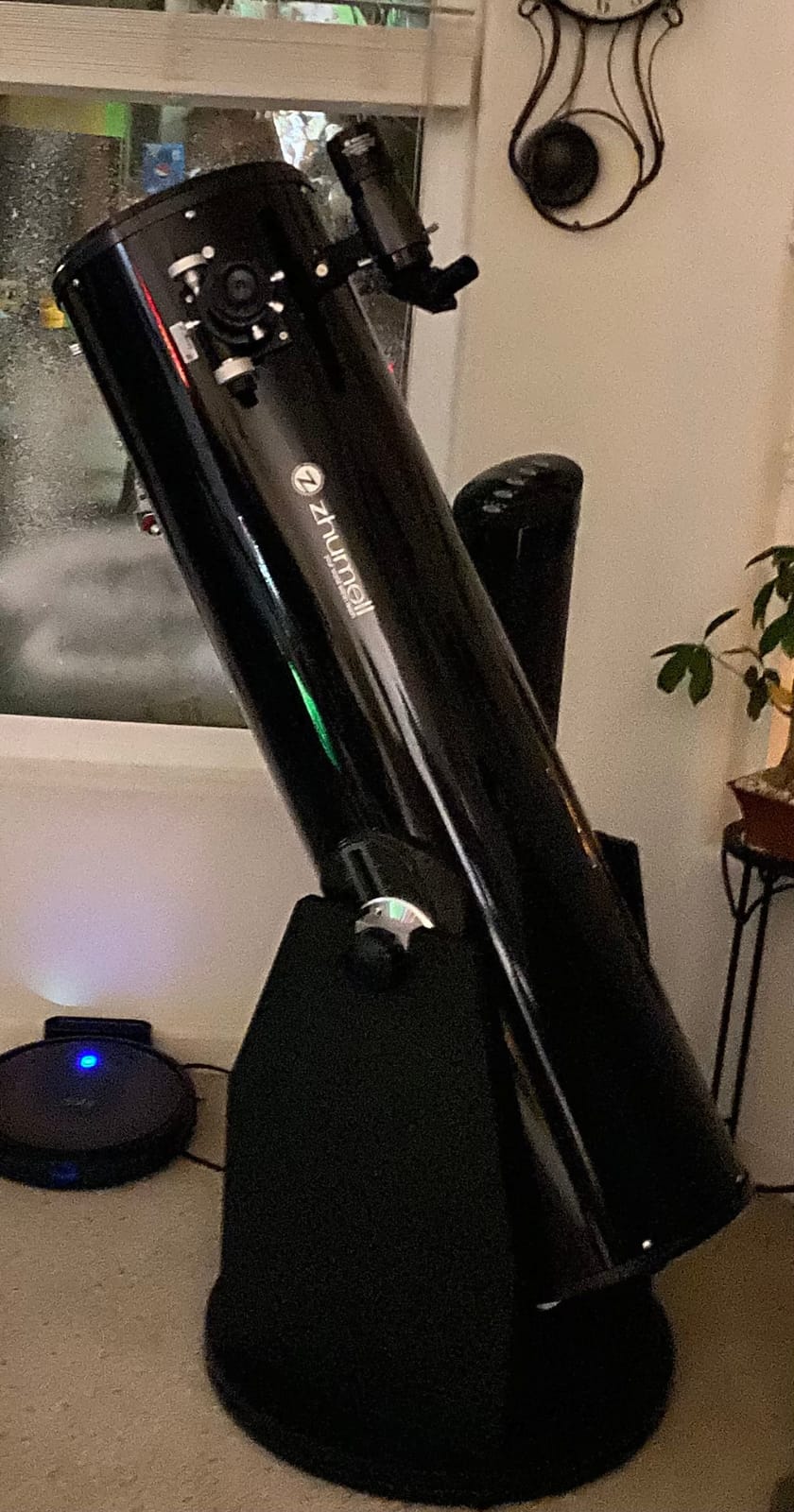
The accessory bundle is the best in this roundup by a distance. You get a laser collimator, a moon filter, an 8×50 right-angle finderscope, a 1.25-inch 9mm for 139x, lens caps and an eyepiece rack, plus a built-in cooling fan that pulls a 254mm mirror down to outdoor temperature far faster than passive cooling would.
The base uses manual clutches and an integrated carry handle, which is the right design choice for something this size, though reviewers still describe the total 47 pounds as a two-person job in practice.
Who this scope suits
It suits a committed observer with a dedicated observing spot and a car, someone who is confident moving 25 pound mirror cells and will happily learn collimation with a laser rather than by eye.
It is a satisfying second telescope for a family already started. The included accessory kit removes almost every reason to buy anything else on day one.
Who should look elsewhere
Skip it if this is your first telescope and you live somewhere with stairs. Forum users on Cloudy Nights are blunt that large Dobs get skipped over observation sessions precisely because of their weight, and a telescope you do not carry is a telescope you do not use.
Also weigh the evidence carefully. Its 4.0 rating comes from only 56 reviews with a one-star rate reviewers put near 14 percent, mostly around handling and consistency, so there is far less community data behind it than behind the 8-inch picks.
7. Celestron FirstScope Moon Tabletop Dobsonian: Best for Kids and First-Time Owners
Celestron FirstScope Signature Series Moon Tabletop Dobsonian Telescope
76mm aperture
300mm focal length
f/4
4.3 lb
Tabletop mount
Pros
- Lightest and smallest option by far
- Moon map wrap teaches the lunar surface
- Two eyepieces for under a hundred dollars
- Two-year warranty with US support
Cons
- No finderscope included
- 76mm aperture limits everything beyond the Moon
- Eyepieces have poor eye relief
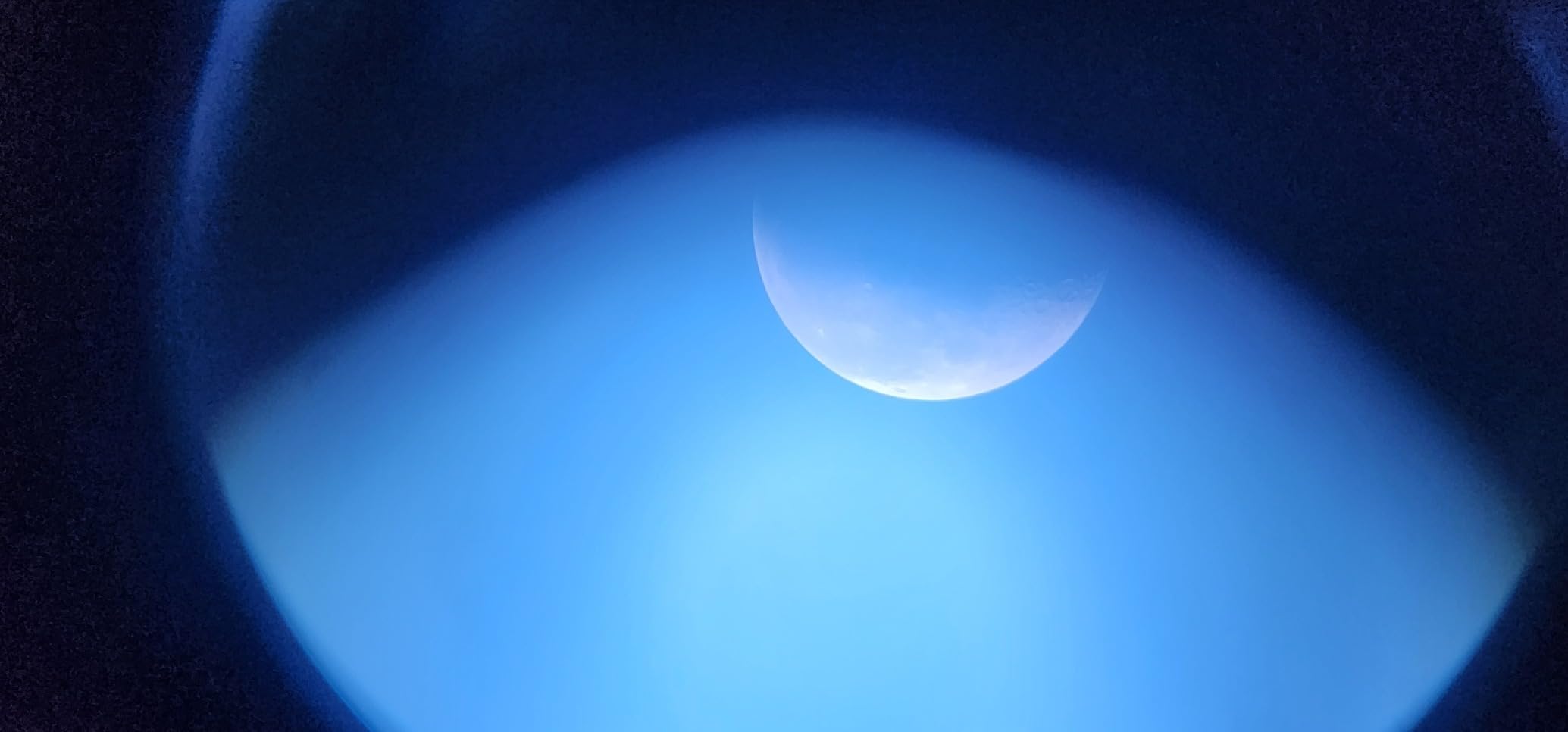
This is the telescope to buy when the goal is a child looking at the Moon for the first time. It weighs 4.3 pounds, it needs no table of any height, and it goes from box to observing in about two minutes with nothing to assemble.
The Robert Reeves moon map wrap is a genuinely good idea. The cratered surface becomes a map you can navigate, so a seven-year-old is not just told there is something to see but is handed the coordinates. A free lunar landscape guide comes as a download.
Optically it is a 76mm aperture at 300mm focal length, f/4, with a Dawes limit of 1.53 arcseconds. The 20mm eyepiece gives a relaxed 15x for the whole Moon, and the 4mm gives 75x for craters along the terminator, which is the detail that surprises people.
The 1.3 degree field of view suits wide lunar landscapes, and the 3.17mm exit pupil is well matched to a dark-adapted eye. The catch is obvious in the spec sheet: no finder is included, so pointing is done by sighting down the tube itself.
Who this scope suits
It suits children, beginners on a very tight budget, and anyone who wants a second grab-and-go telescope for the car. The 478 reviews make it the best-evidenced product in this roundup by a wide margin.
It also works as a travelling first scope. At 4.3 pounds and 9 by 9 by 18 inches, it goes anywhere a backpack goes.
Who should look elsewhere
Skip it if you want galaxies, and honestly, skip it if you want Saturn. At 76mm there is not enough light for a satisfying planetary view, and the bundled eyepieces are reported to have poor eye relief, so beginners often need to add a better 20mm before the view stops being frustrating.
The lack of a finder is the other problem. Every reviewer mentions it, and most recommend adding a red dot finder before anyone else. Our [beginner telescope guide](https://ffotografoshop.net/best-telescopes-for-beginners/) covers where that money is best spent.
What You Can Actually See With Each Aperture
Resolution and light gathering both scale with aperture, so the practical result is that each step up changes what is worth pointing at. Moon and planets are resolved well by anything from 76mm upward. Deep sky is where the size of the mirror starts to matter.
With the Celestron FirstScope 76mm you will see the Moon in detail, the phases of Venus, and the brighter clusters. That is honestly the limit of it.
With a 150mm tabletop scope you add Jupiter’s four Galilean moons shifting position during a session, Saturn’s rings as an oval rather than a point, the Orion Nebula, the Pleiades and Andromeda as a pale oval smudge. Globular clusters such as M13 start to break into grains of light at the edge.
With an 8-inch, the difference is not subtle. Saturn’s rings separate, the Cassini division appears on steady nights, dozens of globular clusters resolve, galaxies show dust lanes, and a large faint nebula becomes identifiable rather than theoretical.
With a 10-inch you get a visibly deeper sky from the same backyard, and the difference is largest from a Bortle 5 or darker site where transparency rather than aperture is the limiting factor. City observers see the smallest gain from going past 8 inches, because the sky, not the mirror, sets the ceiling.
Newtonian vs Dobsonian: What Is Actually Different
Almost nothing. A Dobsonian is a Newtonian reflector, and the term describes the mount rather than the optics. The word Newton refers to the two-mirror optical design, and the word Dobsonian refers to the altazimuth rocker-box base that holds it.
The optical part is identical across almost every telescope in this roundup. A concave parabolic primary gathers light, a small flat secondary folds the beam out the side of the tube, and a focuser on that side delivers the image to an eyepiece.
The difference is the base. A Dobsonian uses a friction-held rocker box that you move by hand, so there is no slow-motion control, no setting circles and no polar alignment to dial in. That simplicity is the entire reason the design dominates the beginner market.
Community advice worth knowing: Sky-Watcher and Orion build their Dobsonians in the same factory, which is why experienced users on Stargazers Lounge describe the brands as near-identical and why brand arguments between them go nowhere.
How to Choose a Dobsonian: Aperture, Focal Ratio, Focuser and Weight
Aperture is the decision, and everything else is a consequence. Light gathering scales with the square of mirror diameter, so 6 inch to 8 inch is a big jump while 8 inch to 10 inch is a much smaller one. That is why we recommend 8 inch as the sweet spot and why 10 inch is a specialist choice rather than a general upgrade.
Focal ratio is the second decision and most buyers ignore it. An f/5 ratio gives brighter, wider views suited to galaxies and clusters, while an f/8 ratio gives a narrower true field and steadier long magnification for planets. Multi-aperture scopes like the Flextube cover both, which is why experienced observers like them.
Focuser type tells you about the upgrade path. A 2-inch Crayford focuser accepts both 1.25-inch and 2-inch eyepieces and supports wide-field views, and every 8-inch in this roundup has one. A 1.25-inch helical focuser, as on the Heritage 150, is smooth and perfectly usable but caps what you can add later.
Weight decides whether you will use the telescope. Work out your longest carry before you buy: an 8-inch Dobsonian is two pieces of roughly 20 and 25 pounds, a 6-inch tabletop is 23 to 25 pounds in one lift, and the 10-inch at 47 pounds is a two-hand job. Owners on Cloudy Nights consistently say heavy telescopes get skipped over and unused.
Bundled eyepieces deserve a reality check. Community threads describe the 10mm Plossl supplied with most 8-inch Dobsonians as poor, and the FirstScope bundle as the weakest in this roundup. Treat the included eyepieces as enough to get started, not as the reason to buy a particular model.
GoTo and push-to systems are worth an honest look. A phone-guided scope such as the StarSense models saves a new observer weeks of learning, while a true motorised GoTo adds weight, cable and a battery that has to die at the worst moment. For a complete beginner the software guidance is the better use of money; our pick is in the list above.
Collimation in Plain English: When You Actually Need It
Collimation is the process of adjusting the three lens cells so the mirrors point at each other correctly. Get it wrong and every image is soft at the edges, which is the most common reason people conclude their telescope is faulty.
You do not need to do it before your first night. Most new Dobsonians arrive close enough to show the Moon and the planets clearly, and many owners go months before collimation drift becomes visible.
You do need it if stars near the edge of a low-power eyepiece look like comets, if focus is crisp in the centre and blurry at the edges, or if you have moved the telescope in a vehicle. Check it at the start of a session, not the end.
With a laser collimator, the process is four steps. Fit the collimator into the focuser and shine it back down the tube toward the primary mirror, then adjust the secondary mirror until the return beam is centred on the collimator’s target. Next, fit the 1.25-inch eyepiece into the collimator and adjust the primary mirror cell until the reflected return spot and the internal reference spot line up. Tighten the knobs gently and recheck once.
If you would rather not learn this at all, the Zhumell 10-inch in this lineup ships with a laser collimator, and the collapsible Flextube design holds its alignment between trips better than a solid tube.
What to Buy After Your Dobsonian
Most beginners overspend on a second telescope too early and underspend on accessories. In order of value, start with a red dot finder if the scope does not include a good one, because it is the difference between finding objects and sweeping blindly.
Next comes a 10mm or 25mm Plosl eyepiece of better quality than the bundled pair, which takes you from 48x to around 120x on an 8-inch. That is where Saturn and Jupiter start rewarding you.
Third, a 2-inch diagonal and a 2-inch wide-field eyepiece if your focuser accepts them, which opens the low magnification views where big Dobsonians look best. A UHC or OIII filter then pays for itself on emission nebulae, and a red flashlight preserves dark adaptation better than your phone.
A planisphere or a printed star atlas is worth more than most people expect, and a stable observing chair matters more than any accessory once you are out past midnight.
Can You Take Photos With a Dobsonian?
Sort of, and not for the objects most people imagine. A Dobsonian is an altazimuth instrument with no motorised tracking, so a long exposure drifts as the field rotates across the sensor. Long deep-sky images are not realistic without adding tracking hardware, which is a different project than buying a telescope.
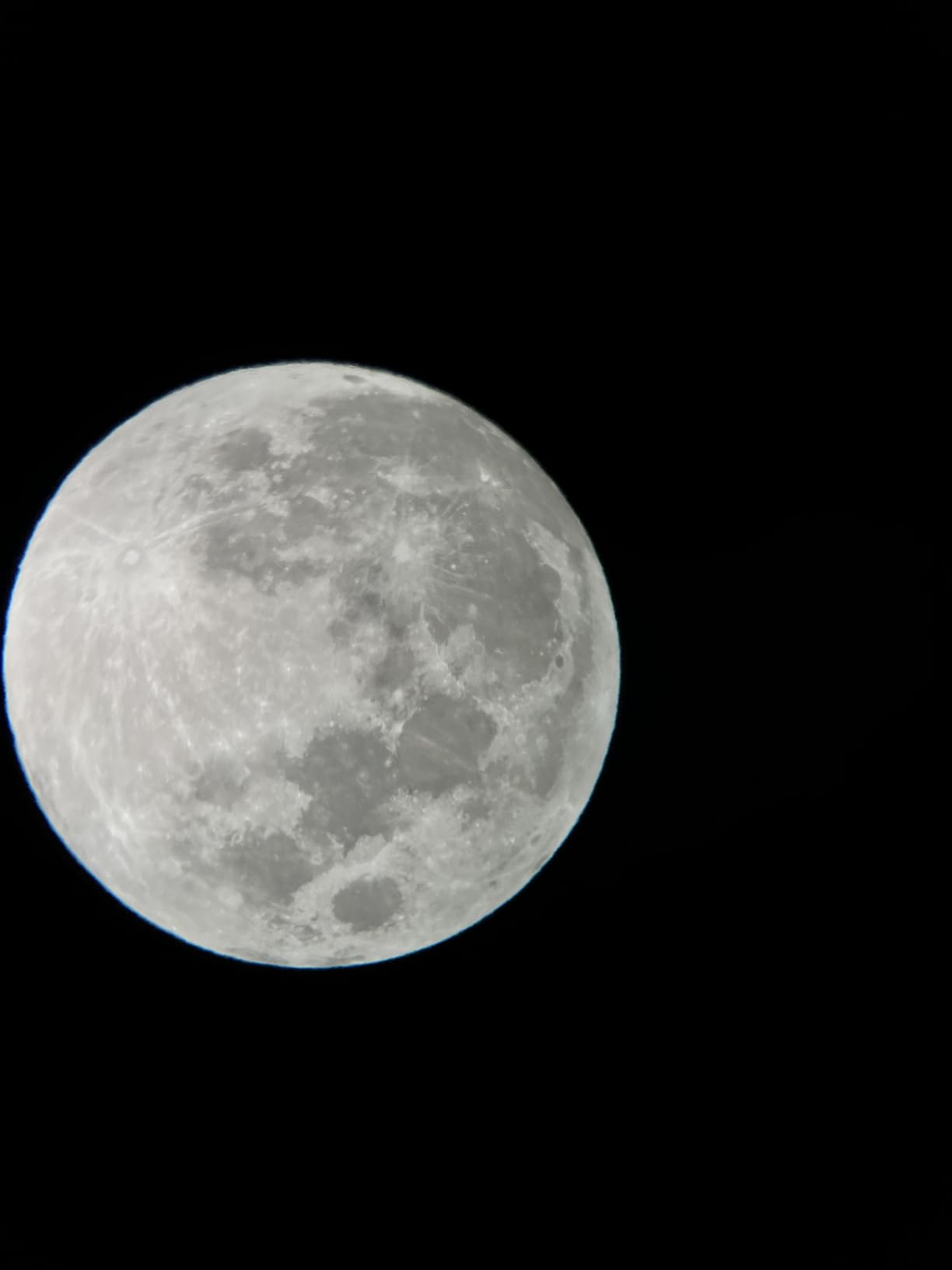
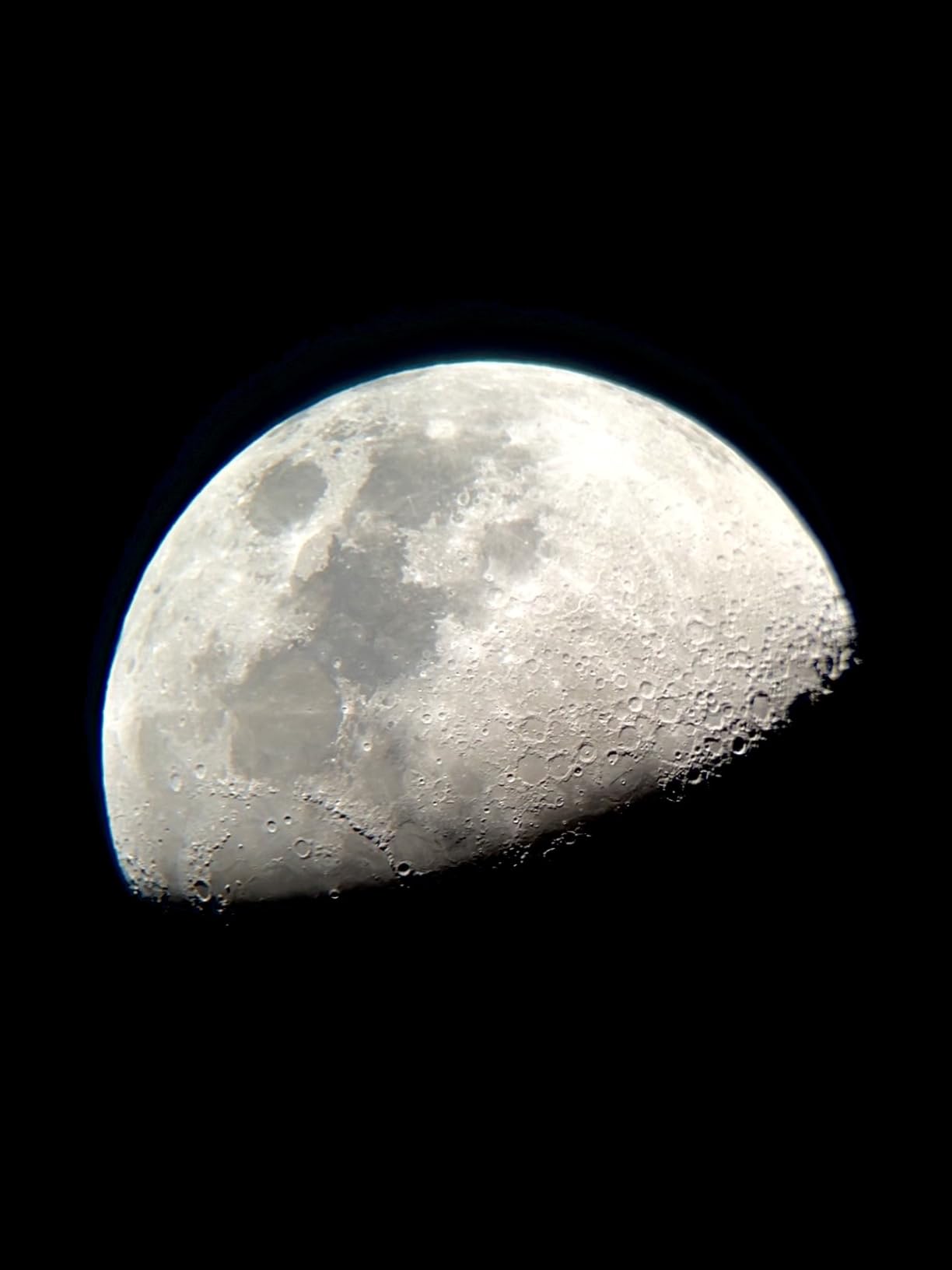
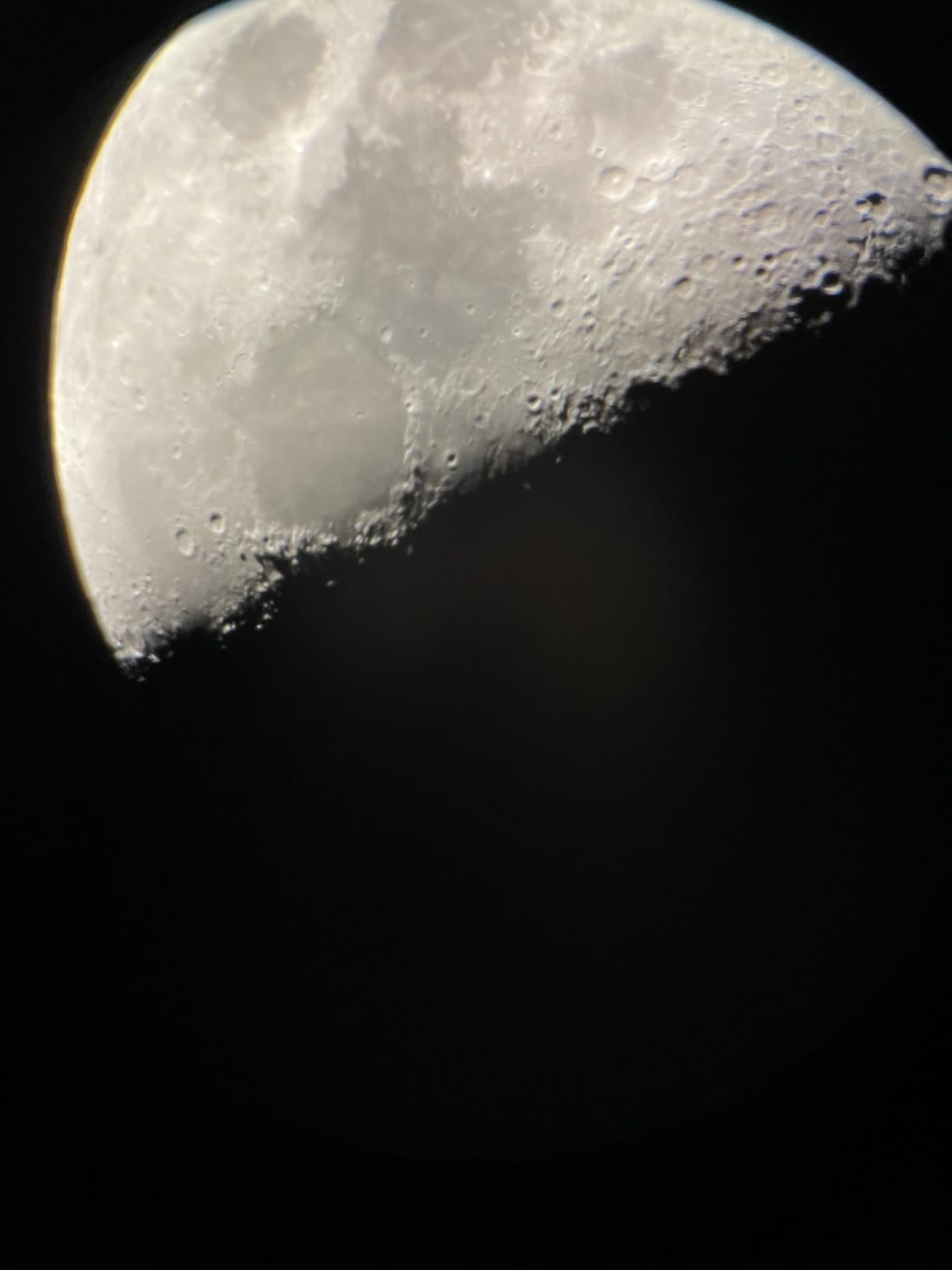
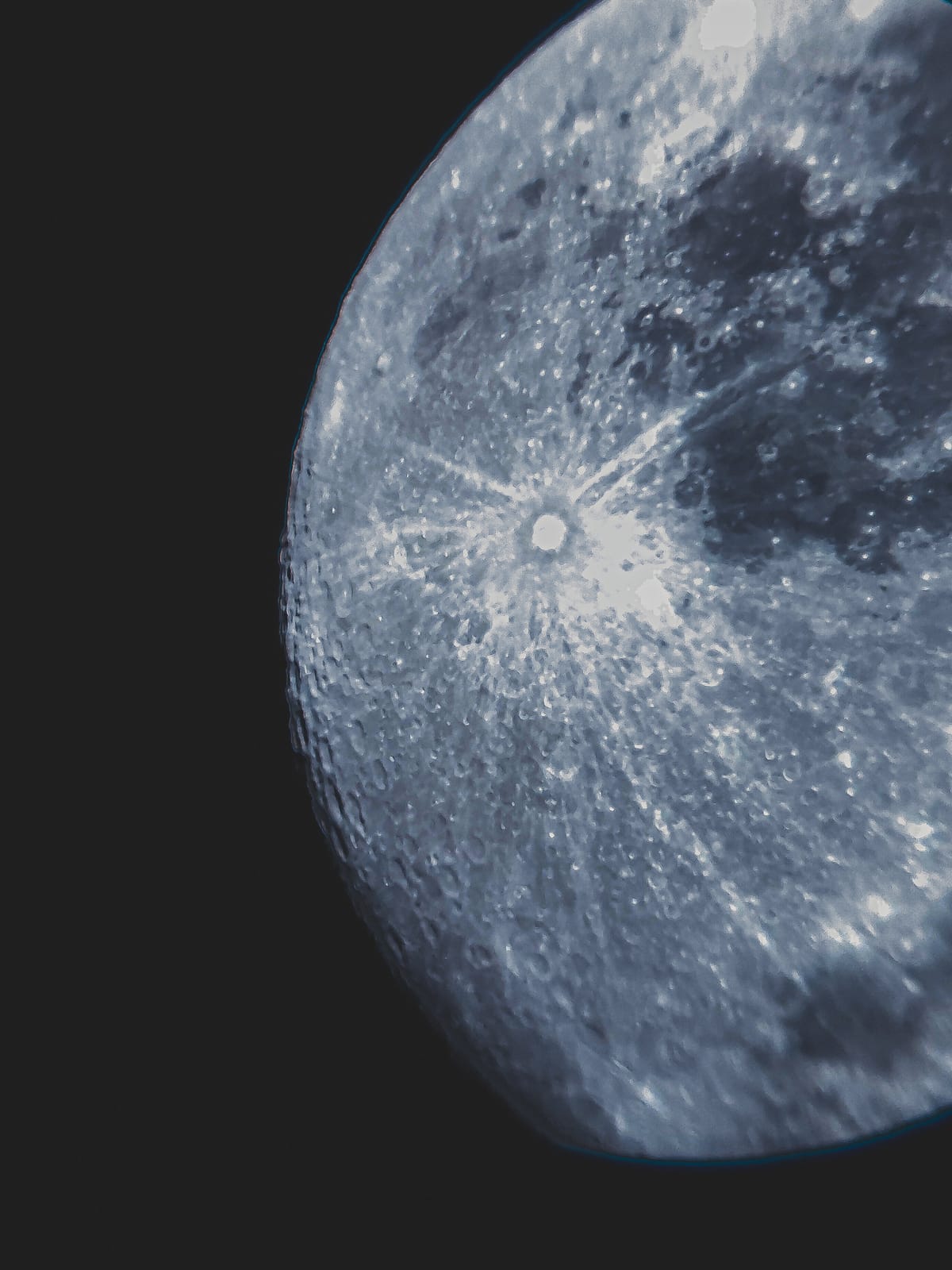
What does work well is the Moon. A phone held to a 25mm eyepiece or a dedicated adapter can produce sharp lunar and planetary images on a steady night, because the Moon is bright and detail-rich enough to survive handheld shooting.
Those same images of galaxies and nebulae you have seen online are not coming from a Dobsonian. They come from tracked refractors and dedicated astrographs, and comparing the two sets of gear is where our [astrophotography telescope roundup](https://ffotografoshop.net/best-beginner-astrophotography-telescopes/) is worth a read before you buy the wrong platform for your goal.
Frequently Asked Questions
Which tabletop Dobsonian telescope is the best?
The Celestron StarSense 150mm is the best tabletop Dobsonian for most beginners, because the phone-guided tours solve object finding and its 25 pound weight is a genuine one-person carry. The Sky-Watcher Heritage 150 is the better choice if storage space decides the purchase, since its tube collapses to about 15 inches and keeps its collimation when folded.
Can you see Saturn with an 8 inch Dobsonian?
Yes, comfortably. An 8-inch at 120x with a good 10mm eyepiece separates Saturn’s rings and shows the Cassini division on a steady night. The 25mm eyepiece included with most models gives 48x, which shows the planet and its rings as an oval, so add a 10mm or a Barlow for detail.
Which 8 inch Dobsonian telescope is considered the best?
The Celestron StarSense Explorer 8-inch is the best 8-inch for a complete beginner because its smartphone guidance removes the learning curve of finding objects. The Sky-Watcher Classic 200P is the best value for a manual scope, and the Flextube 200P is the best if you need to move the telescope to a dark site.
What are the disadvantages of a Dobsonian telescope?
The main drawbacks are weight, manual pointing, the need for occasional collimation, and the fact that it is a visual instrument rather than an imaging one. A solid-tube 8-inch splits into a 20 pound tube and a 25 pound base, and finding faint deep-sky objects without a finder, planisphere or guidance app is the hardest skill for a new owner to build.
Is a 10 inch Dobsonian too big for a beginner?
It is heavy rather than confusing. At 47 pounds for the Zhumell 10-inch in this roundup, a 10-inch needs a two-hand lift and a dedicated storage space, and owners frequently report skipping observing sessions because of the effort of moving it. Buy one if you have a car and a permanent spot, and stay with an 8-inch otherwise.
Do Dobsonian telescopes need to be collimated?
Not before your first night. Most new Dobsonians arrive close enough to show the Moon and planets clearly, and many owners go months before drift becomes noticeable. Check it when focus is sharp in the centre but soft at the edges of a low-power eyepiece, or after transporting the telescope, and a laser collimator makes it a ten-minute job.
Final Verdict: Which Dobsonian Should You Buy?
For the best Dobsonian telescopes for beginners, an 8-inch model is the right answer and we would put the Celestron StarSense Explorer 8-inch at the top of the list. It gives you the aperture that matters, a 2-inch focuser that grows with you, and a phone that tells you what to look at on the first night rather than the tenth.
If you would rather learn the sky yourself, the Sky-Watcher Classic 200P gives you the same optical design for less. If you need to carry it to a dark site, the Flextube 200P collapses. If a balcony or a small flat is your situation, the 150mm tabletop pair is the realistic choice, and if the goal is a child seeing the Moon tonight, the Celestron FirstScope Moon does that at 4.3 pounds.
Buy the aperture you will actually move, spend your remaining budget on a finder and a better eyepiece, and take it out on a clear night. Updated for September 2026.