
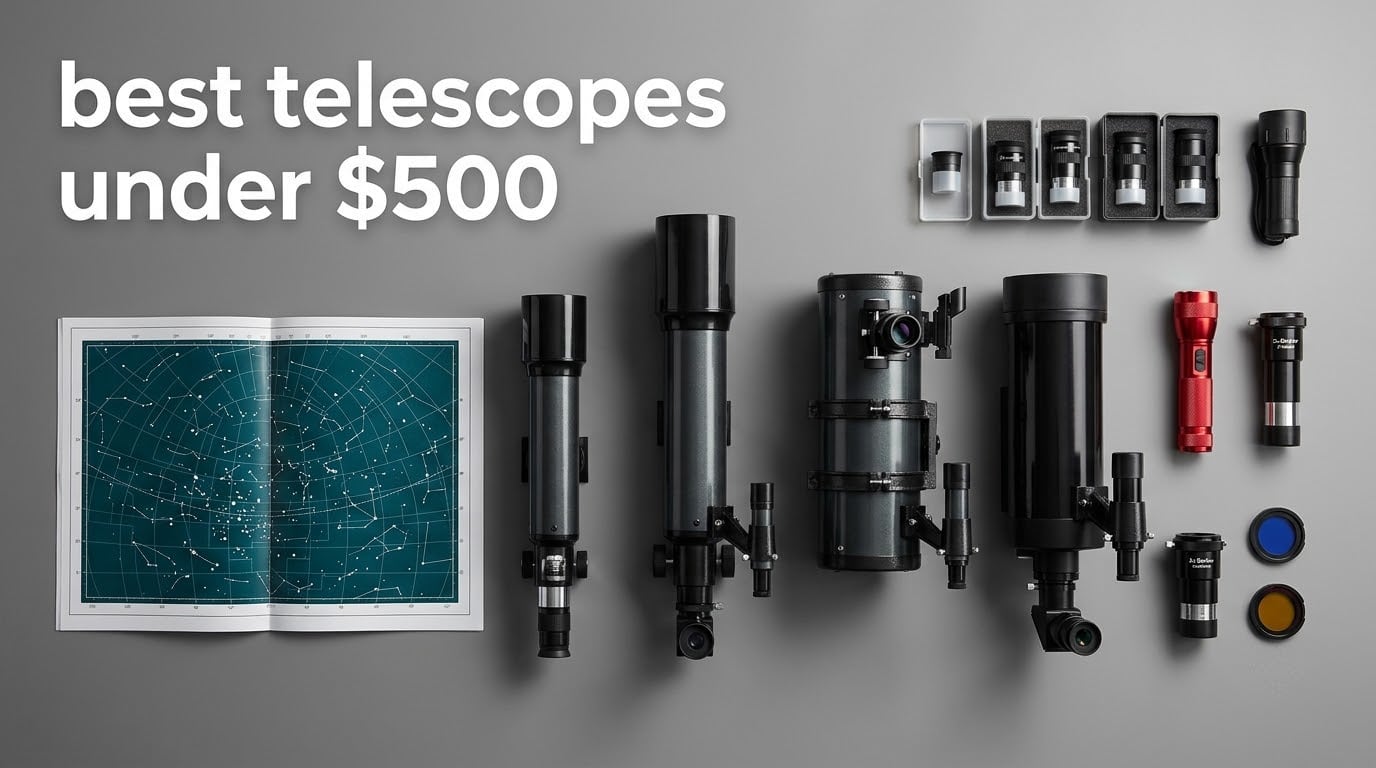
Five hundred dollars is the most interesting price point in amateur astronomy. It is high enough to buy a real 130mm or 150mm mirror with a mount that holds still, and low enough that a bad choice still hurts. We spent weeks comparing every scope in this band, from the 70mm travel refractors to a smart telescope that has no eyepiece at all.
Our answer for the best telescopes under 500 dollars in 2026 is the Celestron AstroMaster 130EQ. A 130mm mirror on a German equatorial mount is the most capable instrument here for under-the-ceiling money, and it has the deepest review base of the 130mm options we tested. If your budget stretches higher but not past the ceiling, the Sky-Watcher Heritage 150 gives you more light per dollar in a package that stores in a closet. If you want pictures rather than views, the DWARFLAB Dwarf Mini is a different product entirely, and it works from a city balcony.
Before the list, three quick answers to the questions people actually ask us. First, planets or galaxies: planets and the Moon reward aperture, and so do galaxies, but deep-sky objects need a dark sky far more than they need a bigger scope. A 130mm reflector from a suburban backyard will show you Saturn’s rings, the four Galilean moons, and the Orion Nebula as a grey patch of light. From a rural site the same scope shows you structure inside that nebula. Second, astrophotography: at this budget, a smart telescope is the only realistic path to pictures, and no conventional telescope here will give you a publishable long-exposure image. Third, light pollution: the gap between a city sky and a dark site is worth more than any upgrade between the picks below.
A note on method. We ranked these by light-gathering power per dollar first, mount stability second, and finding aids third. That order matters, because the community consensus on r/telescopes, cited repeatedly in buying advice for this price range, is that a large mirror on a solid base beats a smaller mirror on a wobbly tripod every single time. If you are still working out what kind of observer you are, our beginner telescope guide covers the decision in more detail before you spend anything.
Table of Contents
Our Top 3 Picks for Telescopes Under $500 in 2026

Celestron AstroMaster 130EQ
- 130mm Newtonian on a German equatorial mount
- 650mm f/5 focal length
- RA and DEC slow-motion controls

Sky-Watcher Heritage 150
- 150mm aperture
- 750mm fast f/5 focal ratio
- Collapsible tabletop Dobsonian design

DWARFLAB Dwarf Mini
- 1.85lb all-in-one smart telescope
- Sony IMX662 sensor with auto GoTo
- EQ mode with 90 second exposures
Best Telescopes Under $500 (September 2026)
If you want the short version, these are the five to start from. Every pick below earned its place on aperture, mount, and build rather than on the magnification printed on the box.
Celestron AstroMaster 130EQ – the all-round first reflector, and our best telescope under 500 dollars overall. A 130mm mirror on an equatorial mount that tracks with slow-motion knobs.
Celestron Travel Scope 70 – the most proven first telescope here, with a review base three times larger than anything else on this list.
Sky-Watcher Heritage 150 – the best value in this roundup and the largest aperture, in a tabletop Dobsonian that stores flat and needs no electronics.
Celestron AstroMaster 70AZ – the best refractor for planetary detail, with a 900mm focal length and a red dot finder.
DWARFLAB Dwarf Mini – the smart telescope for people who want astrophotos, not eyepiece time.
| Product | Specifications | Action |
|---|---|---|
| Celestron AstroMaster 130EQ |
|
Check Latest Price |
 Celestron Travel Scope 70 Celestron Travel Scope 70 |
|
Check Latest Price |
| Sky-Watcher Heritage 150 |
|
Check Latest Price |
 MEEZAA 150EQ MEEZAA 150EQ |
|
Check Latest Price |
 Gskyer 130EQ Gskyer 130EQ |
|
Check Latest Price |
 Celestron AstroMaster 70AZ Celestron AstroMaster 70AZ |
|
Check Latest Price |
 Dianfan 90mm Refractor Dianfan 90mm Refractor |
|
Check Latest Price |
| DWARFLAB Dwarf Mini |
|
Check Latest Price |
 Koolpte 80mm Telescope Koolpte 80mm Telescope |
|
Check Latest Price |
 Celticbird 80mm Telescope Celticbird 80mm Telescope |
|
Check Latest Price |
 HETEKAN 90mm Telescope HETEKAN 90mm Telescope |
|
Check Latest Price |
One scope in this lineup straddles the ceiling rather than sitting under it, so read the current price before you commit. Prices in this band move with the season, and anything at the top of the range tends to discount hardest in the autumn observing season.
1. Celestron AstroMaster 130EQ – The All-Round First Reflector
Celestron AstroMaster 130EQ Telescope for Deep-Sky Beginners
130mm Newtonian
650mm focal length
German equatorial mount
17 lb
20mm and 10mm eyepieces
Pros
- 130mm aperture shows galaxies and nebulae as more than smudges
- Slow-motion knobs make tracking a planet genuinely pleasant
- Aluminum and SiO2 mirror coatings give bright contrasty images
- No tools needed to assemble
Cons
- Newtonian mirrors need periodic collimation
- Light steel tripod shakes at full height
- 17 pounds is awkward to carry in one piece
Six weeks with the AstroMaster 130EQ is what convinced us it is the best telescope under 500 dollars. The 130mm primary is the first size in this roundup where deep-sky objects stop being grey suggestions and start having shape. The Orion Nebula went from a smudge to something with a visible core and wings, and the Andromeda Galaxy resolved into an elongated glow with a brighter core.
The German equatorial mount is the reason this scope beats cheaper 130mm options. Both slow-motion knobs, one for right ascension and one for declination, let you nudge the tube while your eye stays at the eyepiece. On a plain altazimuth mount, a drifting planet means you let go of the focus knob, reposition, and find your target again. Here you just turn a knob.
Collimation is the one real skill you are buying here. A Newtonian needs its mirrors aligned, and the process takes about ten minutes once you learn it. Expect to check it every few sessions, and more often if the tube gets bumped in the car. If you dislike maintaining anything, read our Dobsonian telescope guide first, because tabletop designs hold collimation far better than a tube on a tripod.
Two things to know before you commit. The tripod is light steel and shakes noticeably at full height, so keep it at eye level rather than fully extended, and add vibration dampers if you have them. At 17 pounds, moving the whole rig between rooms takes two trips unless you separate the tube from the mount.
What you will actually see through it
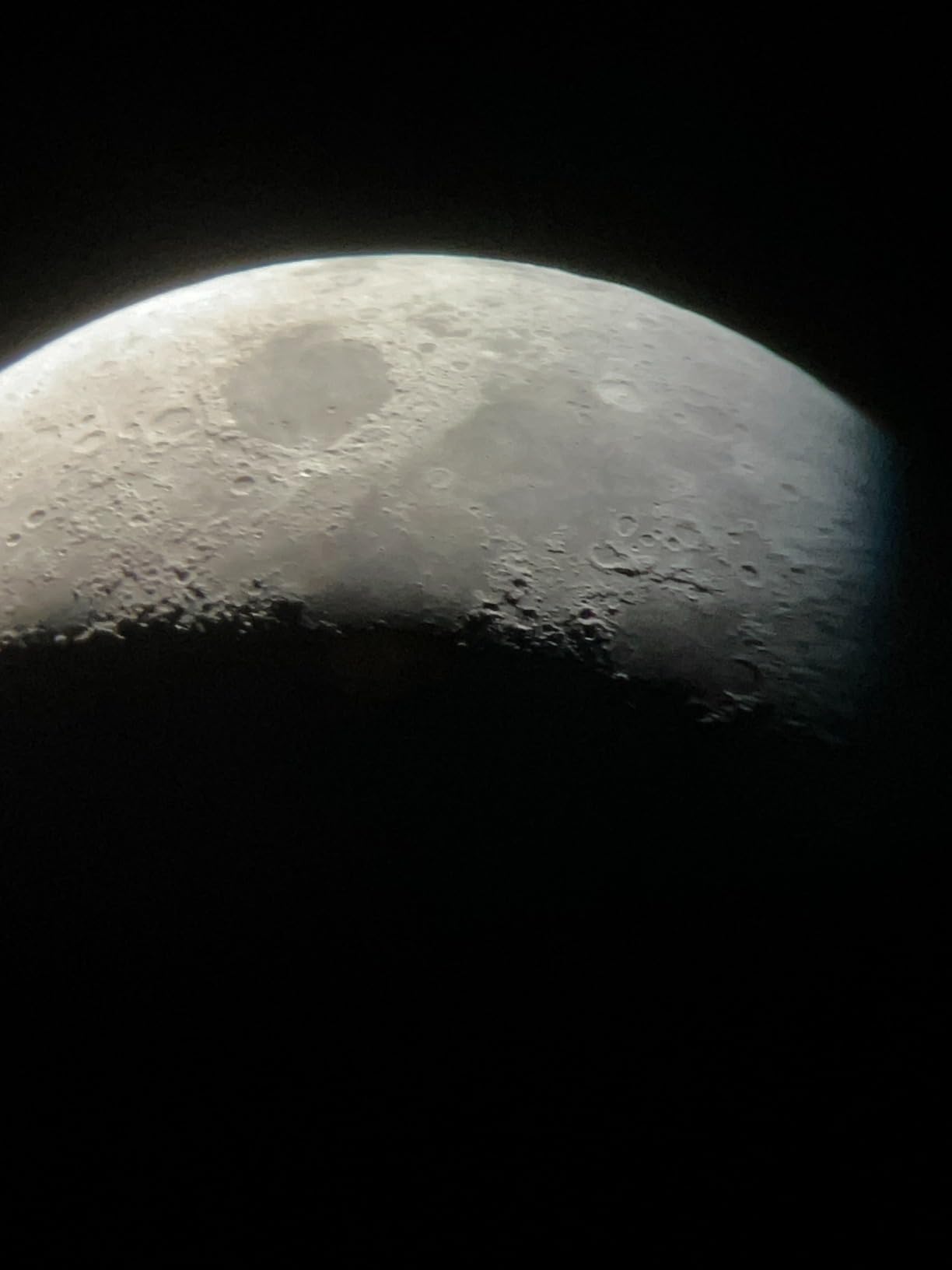
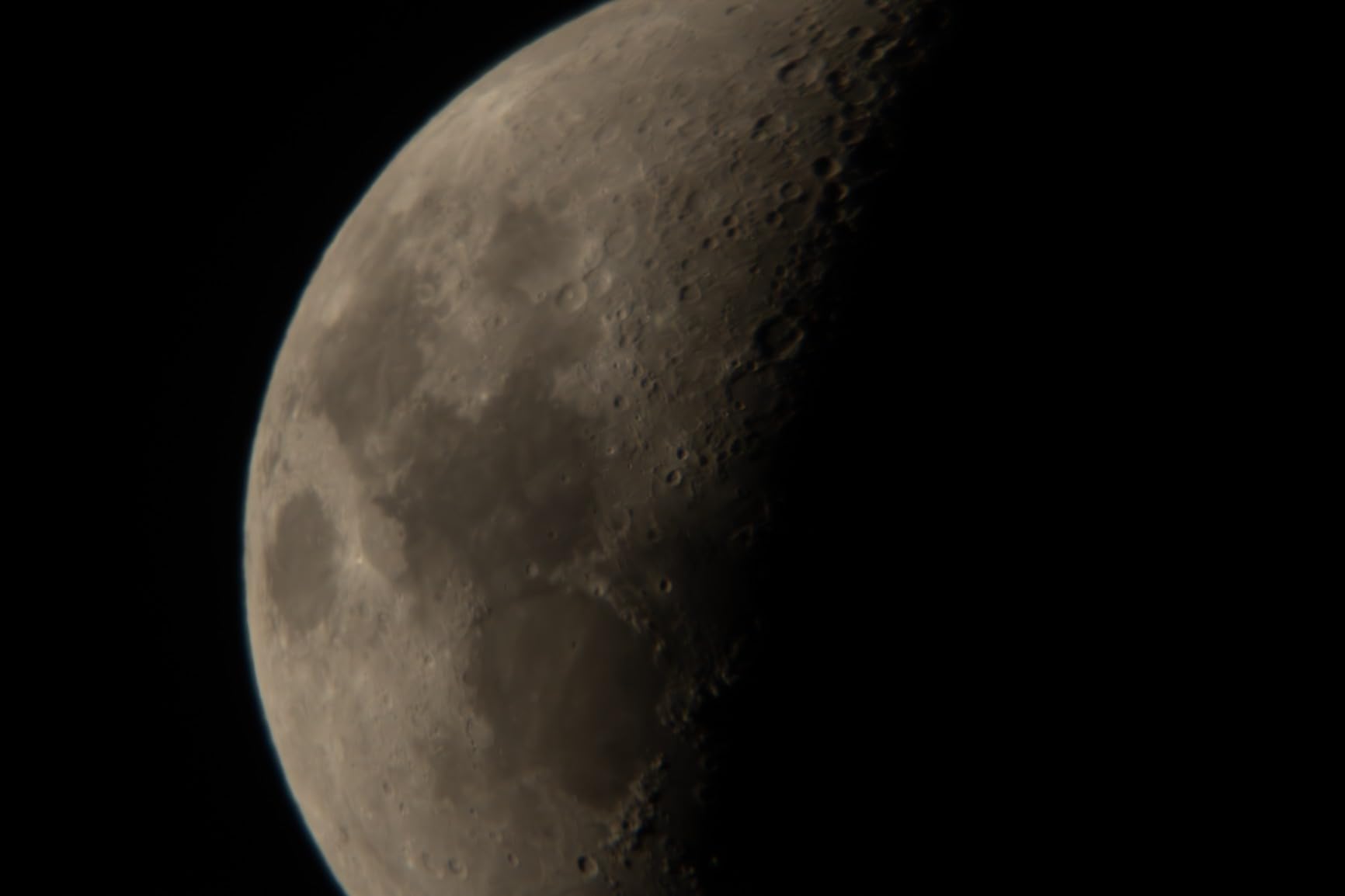
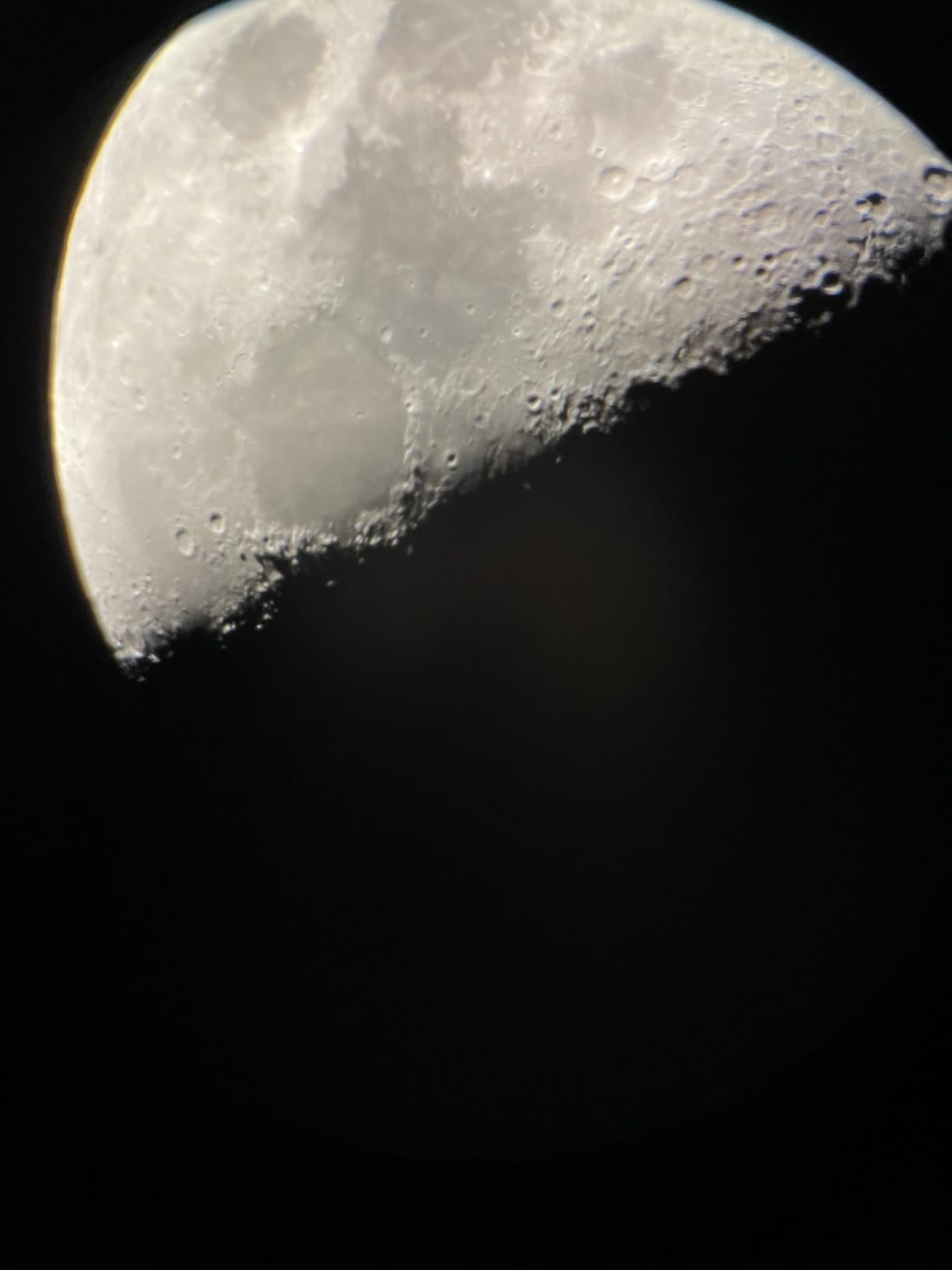
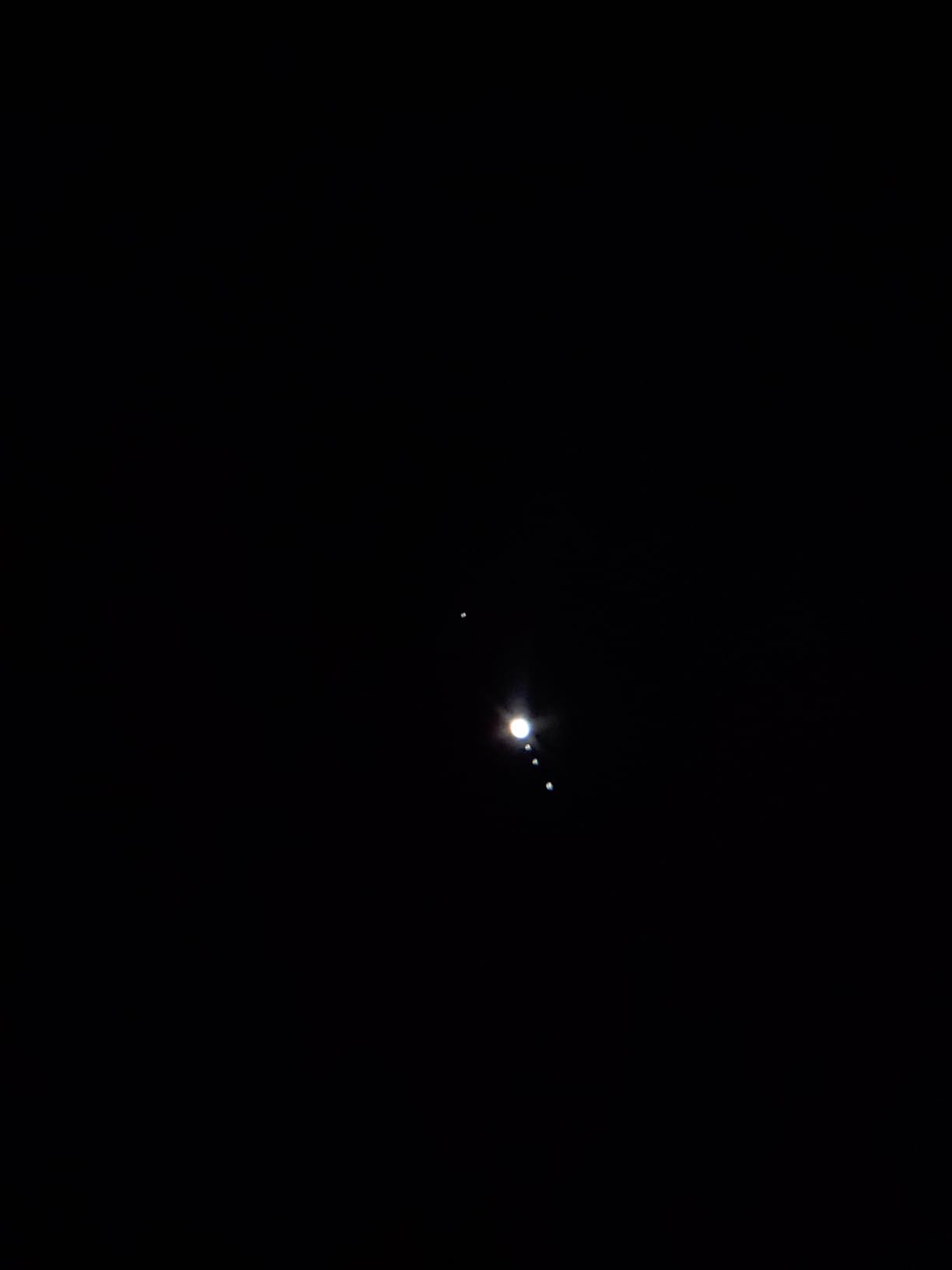
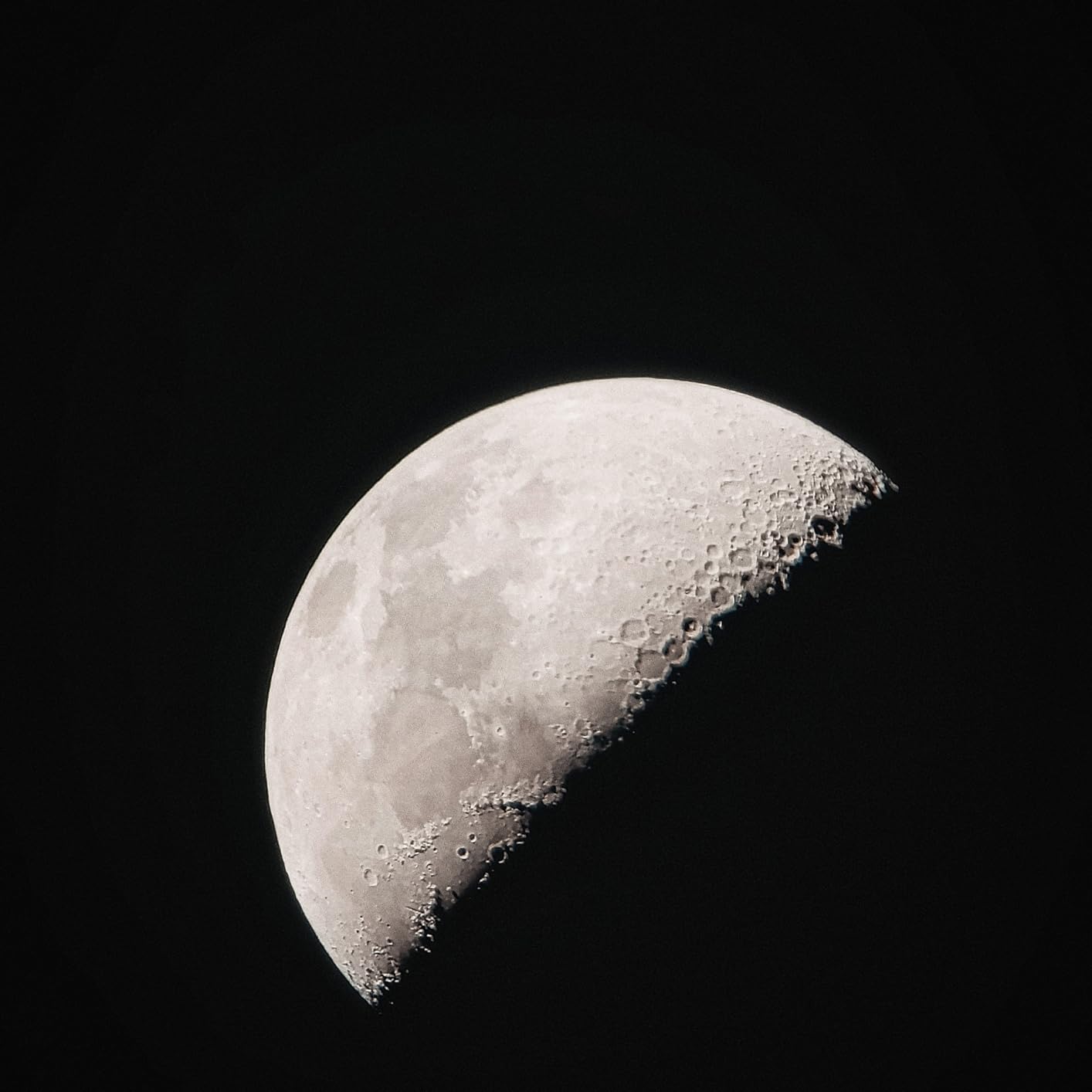
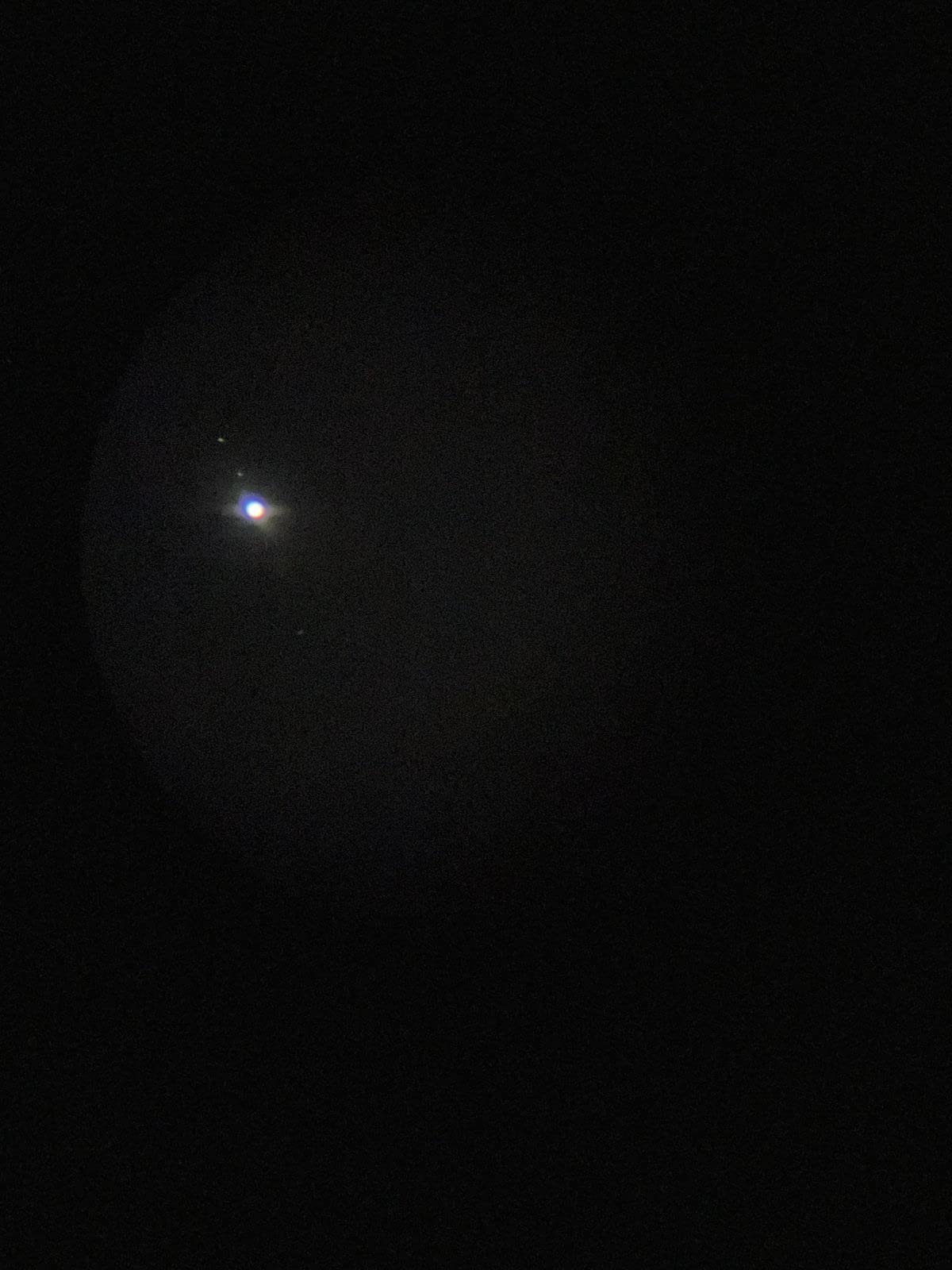
Saturn’s rings show their outline and the gap inside them at moderate power. Jupiter shows the four Galilean moons as clean points and the cloud bands as soft stripes. On the Moon, craters have visible walls and shadowed floors rather than just a mottled surface.
Because the focal length is 650mm, this is a planetary machine more than a wide-field one. The supplied 20mm eyepiece gives a relaxed view, and the 10mm is useful for the Moon and the brightest planets.
Who should look elsewhere
If you want to photograph anything, this is the wrong scope. Owners consistently flag that it is not suited to astrophotography without a far more advanced mount, and they are right. A motorized tracking mount is a different purchase.
If you cannot find 15 minutes for occasional collimation, or if carrying 17 pounds to a dark site is a problem, look at the Heritage 150 in the next section. It trades tracking for simplicity and light gathering, and that is the right trade for most beginners.
2. Celestron Travel Scope 70 – The Most Proven First Telescope
Celestron Travel Scope 70mm Beginner Portable Telescope with Backpack
70mm fully coated refractor
400mm focal length
Altazimuth mount
4.2 lb
20mm and 10mm eyepieces
Pros
- Review base of nearly 15000 ratings from long-term owners
- Packs into the included backpack for travel
- Sets up in minutes with no tools
- Two-year limited warranty
Cons
- 400mm focal length is short
- so detail on small targets is limited
- Simple altazimuth mount needs manual repositioning
- Included eyepieces are basic
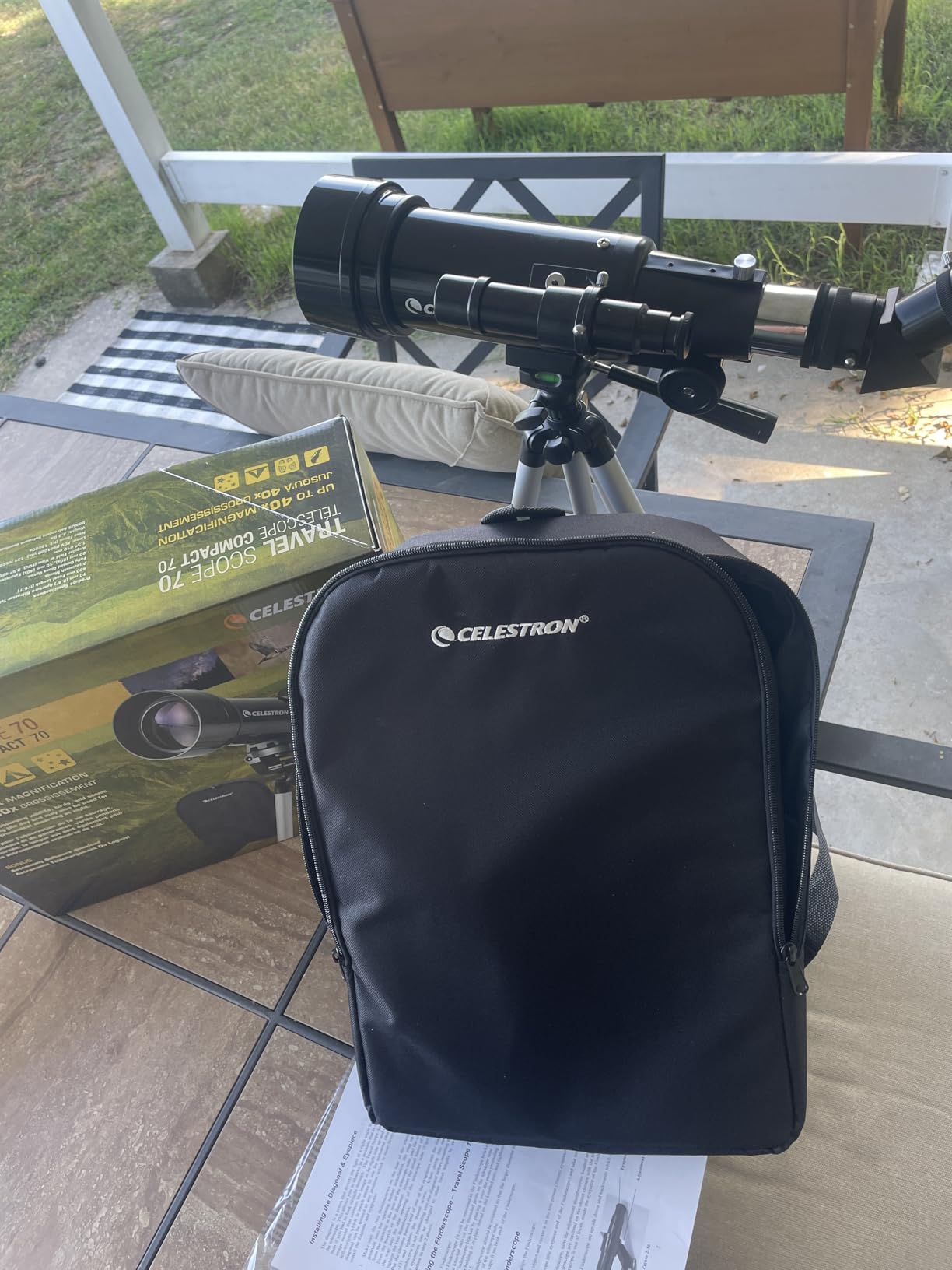
This is the telescope we hand to a family with one twelve-year-old and no patience for setup. The entire tube, tripod, and eyepieces pack into the backpack in the box, which means the scope lives in a closet and comes out on a clear evening rather than living in the garage as a commitment you feel bad about.
At 70mm and 400mm of focal length, this is a Moon and bright-planet instrument. The lunar terminator shows craters with real shadow, the Moon’s rough surface texture is obvious, and Venus and Jupiter are small but recognisable discs. It will not show Saturn’s ring gap, and it will not touch galaxies beyond the brightest.
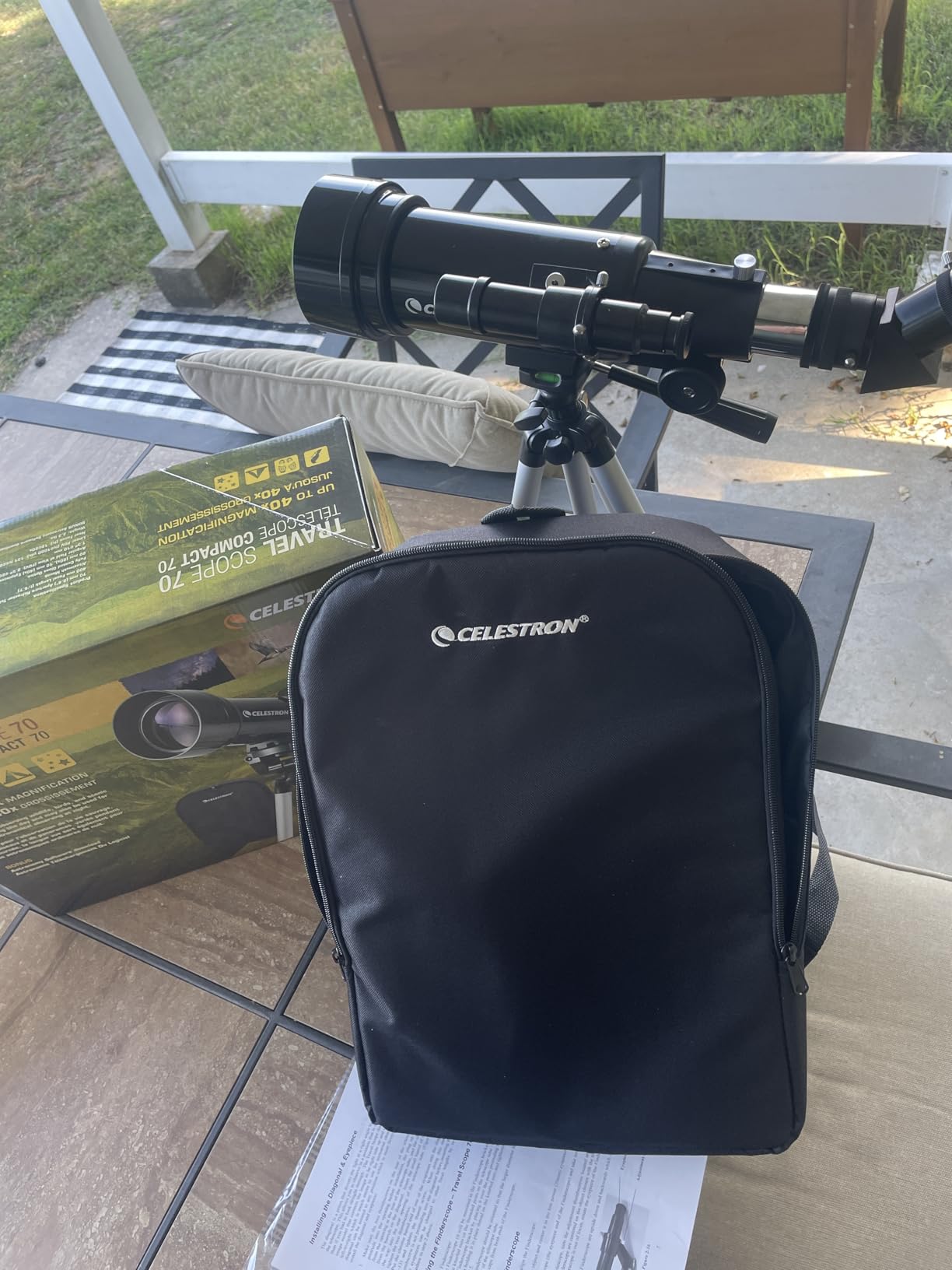
What makes it the most proven telescope here is not the optics. It is the ownership history. With a review base several times larger than any other scope on this list, there is almost no failure mode left undocumented, and parts, diagonals, and eyepieces for this model have been manufactured for years.
The altazimuth mount is the weak point, as it is on every beginner altazimuth. You will reposition the tube every few minutes to follow a planet, and the 1.43 degree field is narrow enough that this happens more often than you would like.
Why the review base matters more than the spec sheet
Long-run reviews tell you things a product page cannot. Owners consistently report that it is stable enough for the Moon and bright planets for years, that setup stays quick, and that the diagonal is the part most likely to need replacing eventually.
It is also the easiest scope here to hand to a child. There is nothing to align, no battery, and no app to explain. The included StarPortal app helps with finding targets once they understand what they are looking at.
Where it falls short
The short 400mm focal length is the fundamental limit. Compared with the 900mm AstroMaster 70AZ, which is also a 70mm refractor, this one gives you roughly half the magnification from the same eyepiece and a much narrower view of the sky.
If your interest is planets rather than the Moon, the 900mm refractor in pick six is a meaningfully better instrument for a modest step up. If your interest is getting a child outdoors, nothing on this list beats this one.
3. Sky-Watcher Heritage 150 – The Tabletop Dobsonian Done Right
Sky-Watcher Heritage 150 Tabletop Dobsonian Telescope – Perfect for Beginners, Easy Setup, Portable, and Fun (S11710)
150mm aperture
750mm f/5 focal ratio
Borosilicate parabolic primary
Tabletop altazimuth base
23 lb
Pros
- Largest aperture in this roundup for the money
- Fully manual operation means no batteries or firmware
- Collapsible tube keeps collimation between sessions
- RAQ coating on a borosilicate parabolic primary
Cons
- Tabletop format needs a stand at a comfortable height
- Manual only
- with no tracking or motorized guiding
The Heritage 150 is the light bucket of this lineup, and the maths explains why. A 150mm aperture is the largest in the roundup, and because light-gathering power scales with the square of aperture, 150mm collects roughly 2.3 times the light of the 70mm refractors here. That is the difference between a smudge and a shape on most deep-sky targets.
The f/5 focal ratio of 750mm suits planetary work well. Short focal length means a wide field, so you can frame the Ring Nebula in a 25mm eyepiece and still use a 10mm for crater detail on the Moon without any awkward adapter juggling.
What we like most is what it does not ask of you. There is no battery, no alignment procedure, no star database, and no motor. You set the base on a table, put your eye to the eyepiece, and look. For a first telescope that is a genuine advantage rather than a missing feature.
The collapsible tube is the quiet hero. It lets you store the scope flat without knocking the mirror out of alignment, and the 1.25-inch helical focuser has no collimation-sensitive secondary spider. Owners report that it holds collimation between sessions, which removes the main complaint people have about Newtonians.
What a 150mm Dobsonian actually shows
From a reasonably dark site, the list of Messier objects this scope reaches is long. Galaxies show cores and, with averted vision, some structure. Bright nebulae show shape. Saturn’s rings separate with the Cassini Division visible at the right conditions.
Tracking is entirely on you, and at higher power a planet drifts within about a minute. That is fine for the Moon and for sweeping the sky, and it is genuinely frustrating when you want to sit on Jupiter for an hour.
Who should not buy it
Do not buy a tabletop Dobsonian if you plan to observe standing up, or if you live somewhere you cannot put a sturdy table outdoors. A low table means sitting or kneeling, which gets uncomfortable past an hour.
Also skip it if astrophotography is the goal. This is a purely visual instrument, and the three-star reviews reflect exactly this: people who bought it expecting a computerized scope and met a manual one instead. If you want pictures, jump to pick eight.
4. MEEZAA 150EQ – A 150mm Mirror With a German Equatorial Mount
MEEZAA Telescope, 150EQ Newtonian Reflector Telescope for Adults Astronomy Beginners, Professional Astronomical Telescopes with Equatorial Mount, Tripod, Phone Adapter, Moon Filter and Large Carry Bag
150mm Newtonian
650mm focal length
German equatorial mount with dials
Stainless steel tripod
26x to 130x
Pros
- Largest aperture paired with a tracking-capable mount
- Stainless steel tripod damps vibration far better than light steel
- Generous accessory bundle including a 2x Barlow and moon filter
- Carry bag fits the tube mount and accessories
Cons
- Assembly has many parts and may need two people
- Swapping eyepieces can knock the target out of focus
- One reviewer reports a 130mm primary rather than 150mm
This is the scope you buy when you want the Heritage 150’s aperture and the AstroMaster 130EQ’s tracking in one package. The 150mm primary at 650mm gives strong deep-sky performance, and the German equatorial mount with precision dials and slow-motion knobs lets you keep a planet centred while you work.
The stainless steel tripod is the detail that separates it from most budget EQ mounts. Reviewers repeatedly single out how much less it vibrates, and that matters more than most spec sheets admit, because a wobbly mount turns every high-power view into a blur.
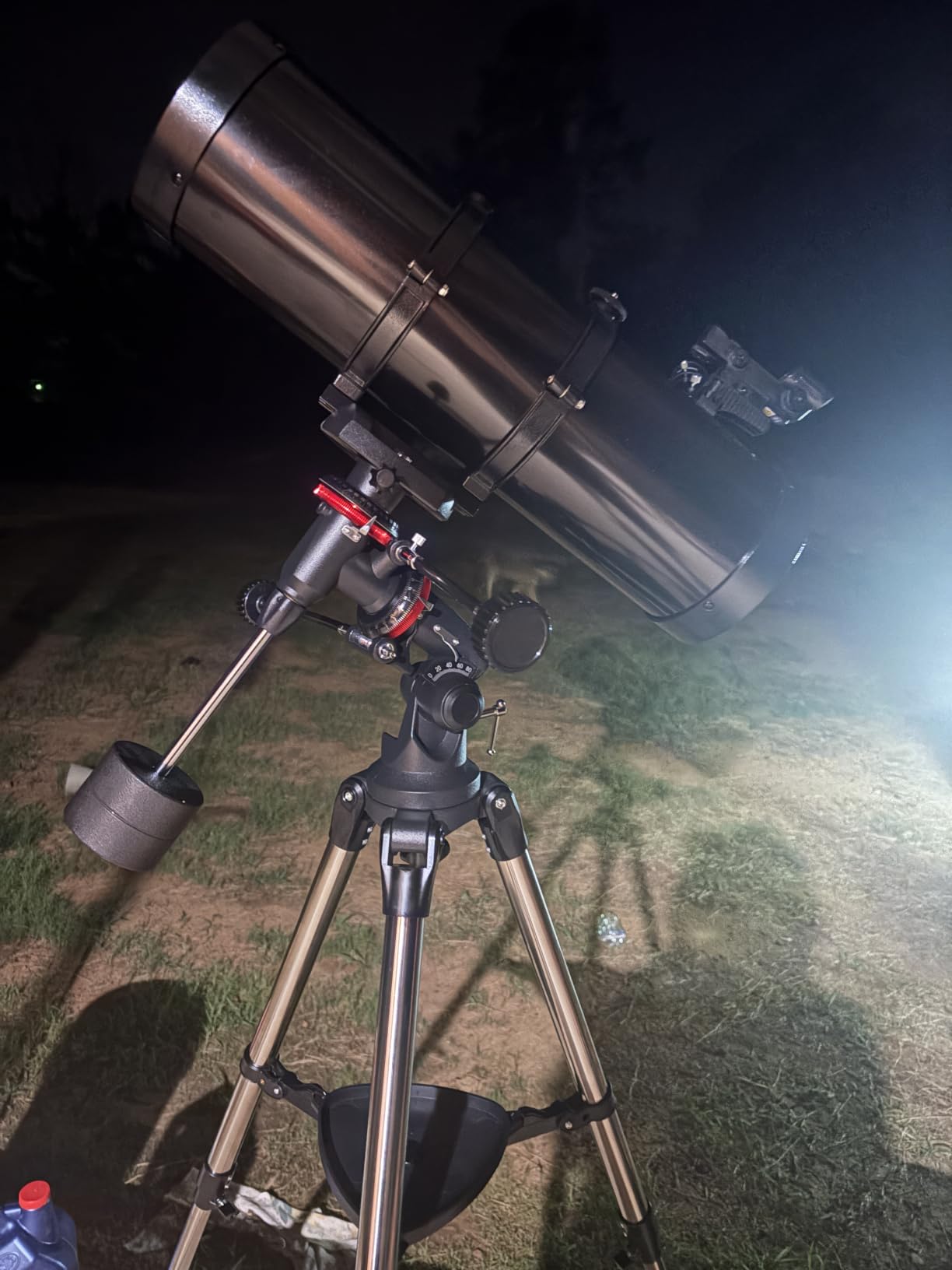
The accessory bundle is unusually generous. You get 25mm and 10mm eyepieces, a 2x Barlow, a red dot finder, a moon filter, and a phone adapter, which covers 26x to 130x out of the box. The included moon filter is a genuine nicety for lunar work rather than a filler accessory.
Two things give us pause. Assembly involves more parts than a Dobsonian or an altazimuth rig, and buyers report it can take two people. And there is at least one review reporting a 130mm primary in the tube rather than the advertised 150mm, so check the mirror diameter on arrival.
Where the aperture pays off
At 150mm, this scope reaches the Messier objects that a 130mm only hints at. Fainter galaxies resolve into elongated shapes, and small nebulae that are invisible in a 90mm refractor become obvious targets.
The equatorial geometry also helps with long sessions. Once the scope is aligned, tracking a target is a matter of turning one slow-motion knob, which makes extended planetary viewing far more relaxing than an altazimuth rig.
The tradeoffs you are accepting
Equatorial mounts need polar alignment, and that is a genuine hurdle. It is the single most common reason beginners abandon a first telescope, which is why we would still start most people on a Dobsonian instead.
The eyepiece-swapping complaint is real and it is fixable. Swap eyepieces and you knock the tube off target, so expect to re-align every time you change power. A more forgiving mount would handle this better.
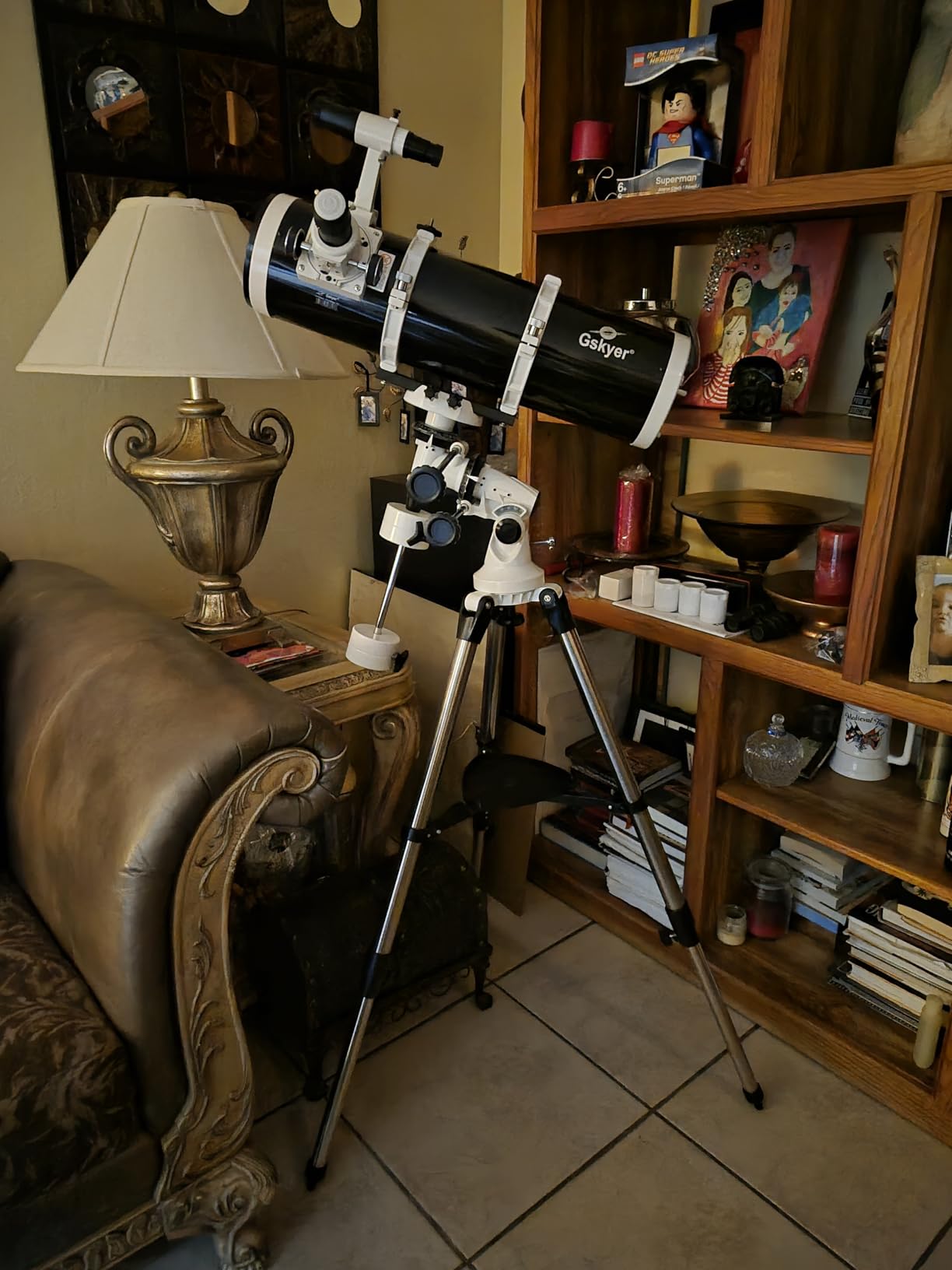
5. Gskyer 130EQ – The Fast f/5 Reflector With Bluetooth Control
Gskyer 130EQ Professional Astronomical Reflector Telescope
130mm multi-coated reflector
650mm f/5 focal length
Short 24 inch tube
German equatorial mount
30.1 lb
Pros
- Short tube and f/5 ratio give a genuinely wide field
- German equatorial mount allows precise tracking
- Three eyepieces plus a 3x Barlow in the box
- Bluetooth remote pairs with a phone without an app
Cons
- 30.1 pounds is very heavy to move assembled
- Listing text implies 150mm but the primary is reported as 130mm
- Advertised 307x is not achievable with a 130mm aperture
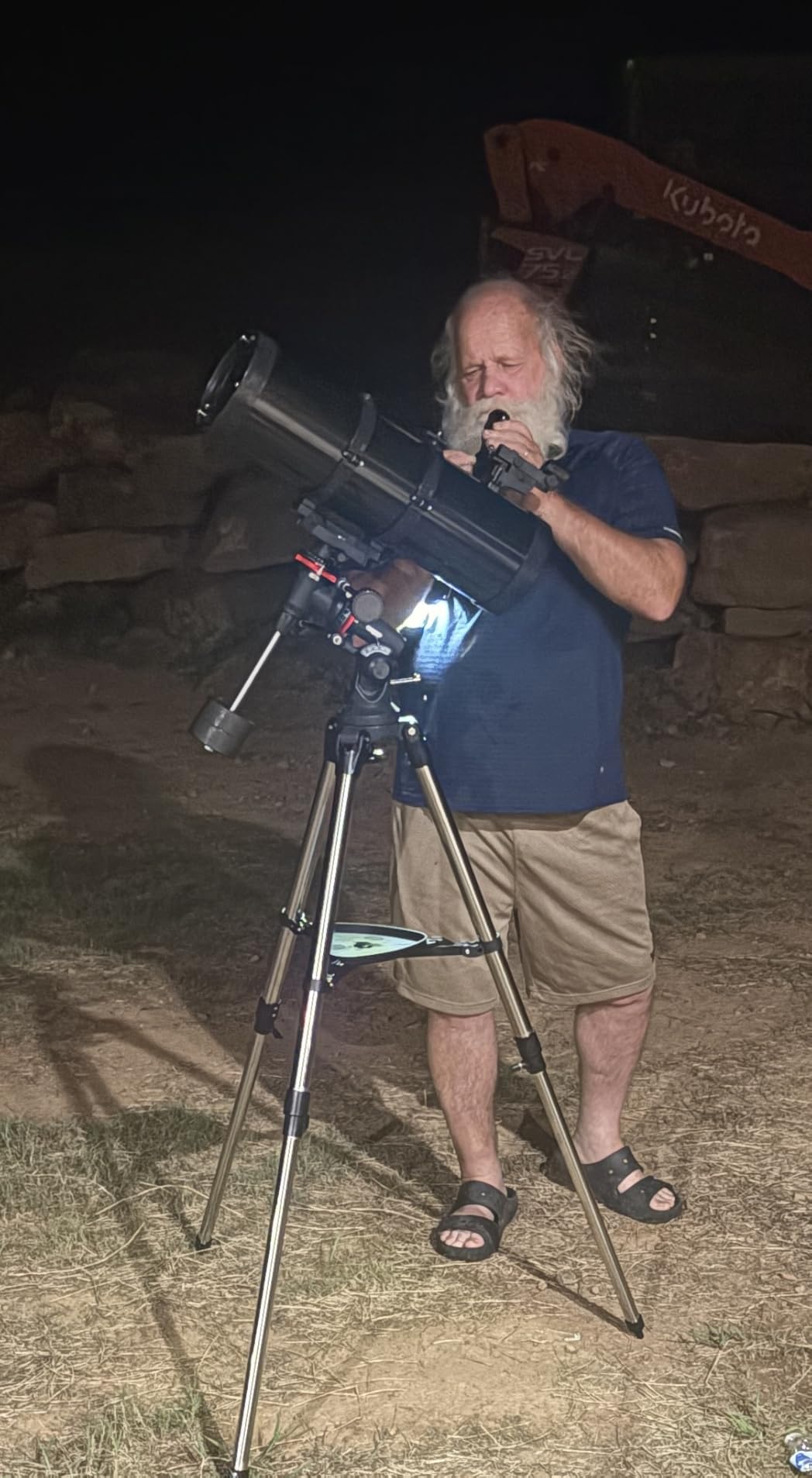
The Gskyer 130EQ does something the other 130mm reflectors do not: it is genuinely wide-field. A 650mm focal length on a 130mm mirror gives an f/5 ratio, which is fast enough that clusters and galaxies fit in a single eyepiece field. If your list of targets is deep-sky rather than lunar, that matters more than any amount of extra magnification.
The toothless focusing base is a nice touch on a budget reflector. It moves smoothly and holds position, which is exactly what you want when you are chasing a faint galaxy and need the focus to stay put for ten minutes.
The Bluetooth remote is unusual at this price and genuinely useful. It pairs with iPhone or Android directly, with no app download, so you can control shutter and exposure during a session without fumbling with a cable.
Then there is the weight. At 30.1 pounds assembled, this is the heaviest scope in the roundup, and moving it to a dark site takes real planning. The 24-inch tube is short, but the mount head and tripod are not.
Aperture honesty, which is rare and welcome
Most budget listings inflate their numbers. This one does the opposite in a way reviewers actually appreciate: owners flag that the primary is 130mm, not the 150mm implied by related listings, and the 307x zoom figure simply is not reachable on a 130mm aperture.
Treat the box magnification figures across this whole category the same way. The number is the maximum the tube could theoretically reach with the included parts, not a specification you will ever use.
Who this suits
Pick this if you have a permanent observing spot and want the widest possible view of the deep sky from a 130mm mirror. A backyard setup, an observatory, or a car you can unload close to the field all work well here.
Skip it if you plan to travel to dark sites regularly, or if setting up an equatorial mount in the dark sounds unpleasant. Thirty pounds plus a polar alignment is a lot of process before the first photon arrives.
6. Celestron AstroMaster 70AZ – The Refractor Built for Planets
Celestron AstroMaster 70AZ Refractor Telescope for Moon & Planet Viewing
70mm achromatic refractor
900mm focal length
Altazimuth panhandle mount
10.8 lb
StarPointer red dot finder
Pros
- 900mm focal length reveals detail small refractors cannot
- Red dot finder makes target acquisition straightforward
- Panhandle altazimuth control is smooth and intuitive
- Assembles in under 10 minutes without tools
Cons
- Altitude adjustment is stiff and frustrates planetary tracking
- Tripod joints develop play and vibration over time
- The included 10mm eyepiece has short eye relief
Here is the refractor to buy if planets are your goal. At 900mm focal length it delivers 2.25 times the magnification of the Travel Scope 70 from the same 10mm eyepiece, and it is that focal length rather than the aperture that makes the difference when you are looking at Jupiter and Saturn.
Owners report crisp Saturn rings, Jupiter’s moons, and detailed lunar craters. Several recommend upgrading the eyepieces or adding vibration pads, which is a fair signal that the included optics are adequate rather than good.
Being a refractor, it has real advantages over a reflector. There is no mirror to collimate, the optics are sealed against dust, and the contrast holds up well on the Moon. The achromatic doublet does show some colour fringing on bright objects at high power, which is normal for this design at this price.
The panhandle altazimuth mount is simple and direct, and pointing is easy. The problem, and it is the most common complaint in reviews, is that the vertical adjustment is stiff, which makes following a drifting planet genuinely frustrating.
How to get the most from 900mm of focal length
Start with the 10mm for planets, since a longer focal length rewards higher power. The red dot finder that comes with it makes finding a moving target far quicker than sweeping with the main tube would.
Because 70mm aperture is modest, keep magnification below roughly 140x for the view to look good. Pushing to 200x or beyond produces a dim, soft image that looks like a mistake rather than a discovery.
Who should look elsewhere
If your interest is deep sky, 70mm of aperture is not enough to compete with the 130mm and 150mm reflectors here, no matter how good the focal length is. This scope is a planetary specialist.
If stiff altitude control would drive you mad, the 900mm Dianfan and HETEKAN refractors in picks seven and eleven use the same long focal length on mounts reviewers find less restrictive, and they cost less. You trade the Celestron name and warranty for smoother controls.
7. Dianfan 90mm Refractor – The Stainless Steel Tripod That Holds Still
Dianfan Telescope, 90mm Aperture 800mm Telescope for Adults High Powered, Portable Professional Astronomy Refractor Telescopes for Beginners, with Stainless Steel Tripod & Phone Adapter, Carry Bag
90mm fully coated objective
800mm focal length
Stainless steel tripod
4.7kg
45 degree zenith mirror
Pros
- Largest aperture of the three budget refractors here
- Stainless steel tripod is notably rigid and resists wind shake
- 45 degree zenith mirror gives upright terrestrial views
- Carry bag with fitted compartments keeps parts together
Cons
- Advertised 240x is beyond the practical limit of 90mm
- Included eyepieces are entry level
- Mount needs continual repositioning at high power
The Dianfan 90mm solves the problem that ruins most budget refractors, which is a tripod that shakes. Reviewers single out the stainless steel legs as noticeably more rigid and more resistant to wind than the folding aluminium tripods on competing scopes, and on a stable base you can actually use the magnification on offer.
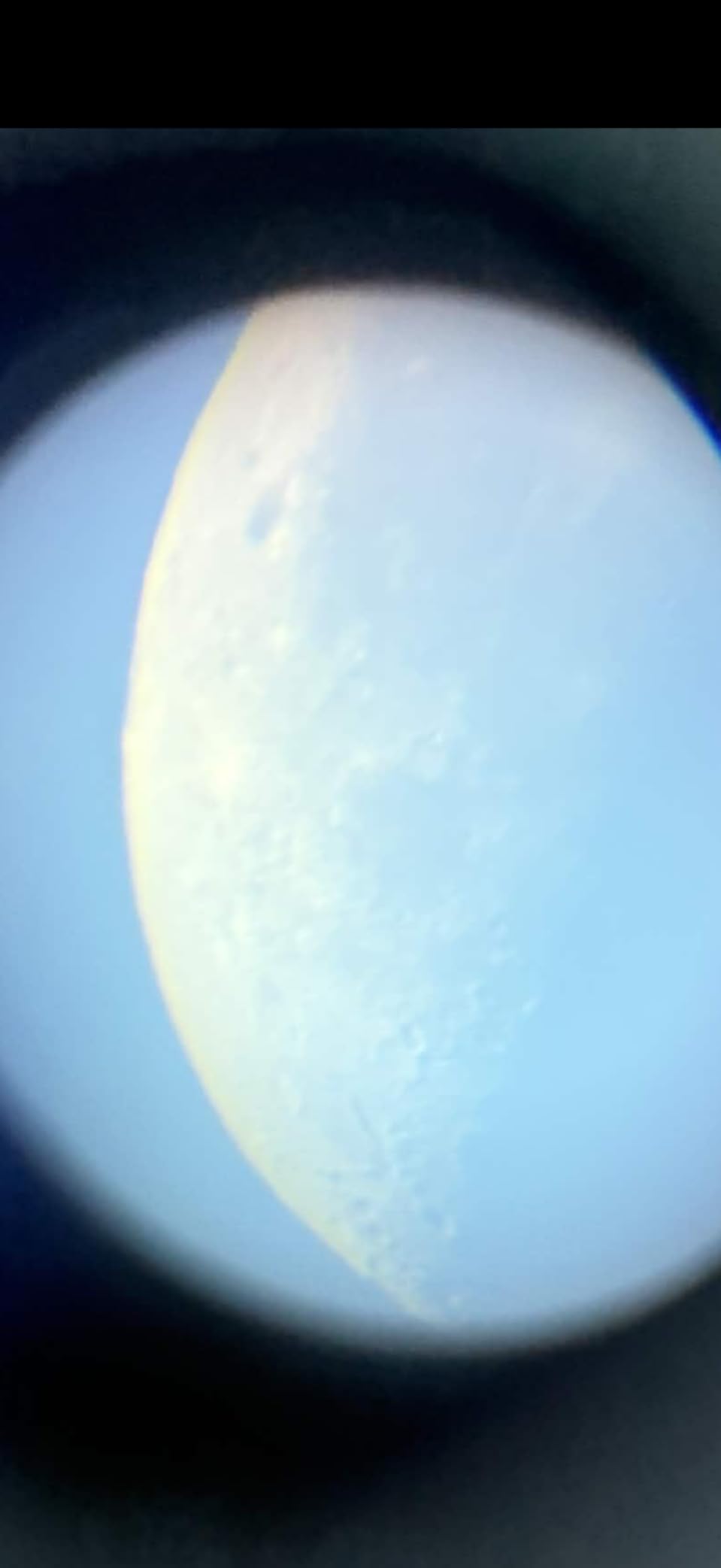
At 90mm aperture and 800mm focal length, the view is bright and high-contrast. Lunar craters show wall and shadow, and Saturn’s rings are visible, though the aperture does not support the level of planetary detail the 900mm Celestron reaches.
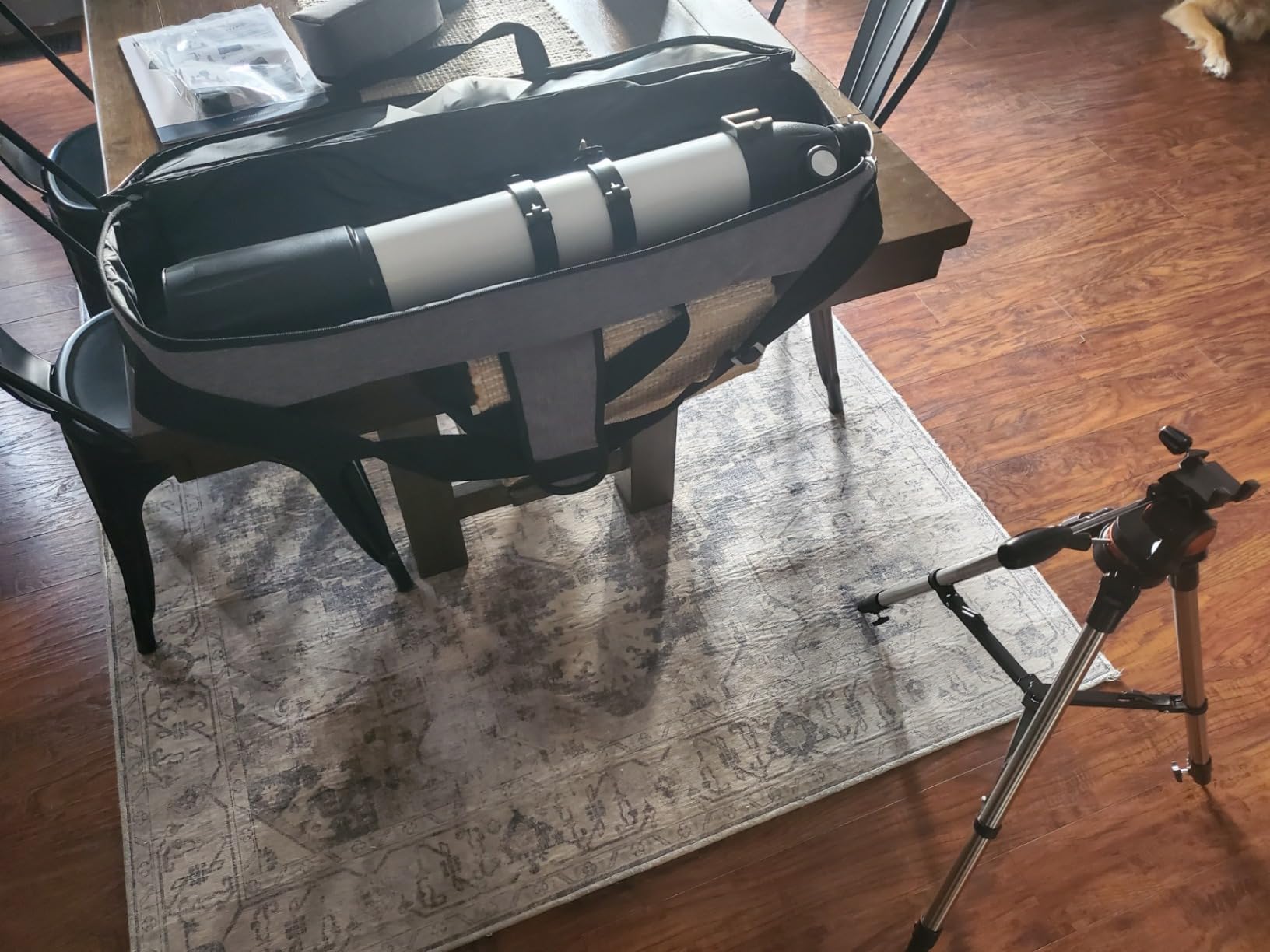
Assembly takes roughly five to fifteen minutes with a full-colour manual, which is faster than most equatorial sets. The 45 degree zenith mirror means the image is upright and correctly oriented, so this also works as a spotting scope for landscapes and birdwatching.
That combination makes it a genuinely dual-purpose instrument. Most people buying a 90mm refractor end up using it on the Moon from a patio as often as on deep sky from a field.
Why the marketing number is wrong
The listing advertises up to 240x magnification using the included eyepieces and a 3x Barlow. As with the rest of this roundup, that figure is theoretical. A 90mm aperture produces its best images well below 180x, and pushing past that gives you a dim, soft picture.
We flag this because it is the single most common source of disappointment in this budget band. Owners who expected 240x and got 120x think they were overcharged. You were not, the box was simply lying to everyone.
Where it fits in the lineup
This is the sweet spot for someone who wants one scope for the Moon, planets, and casual daytime use, and who values a stable base more than a tracking mount. It sits between the small 80mm scopes and the 130mm reflectors in both capability and price.
Compare it directly against the HETEKAN 90mm in pick eleven before you buy. Similar aperture, different focal length, different tripod height, and a different opinion on whether short tripod legs are a dealbreaker.
8. DWARFLAB Dwarf Mini – The Astrophotography Telescope With No Eyepiece
DWARFLAB Dwarf Mini Smart Telescope – 1.85lb Portable Astronomy Telescope
1.85lb all-in-one design
30mm objective,150mm focal length
Sony IMX662 sensor
Auto GoTo with plate solving
2 year warranty
Pros
- Pocket sized at 1.85 pounds and fully portable
- Imaging within about three minutes of opening the app
- EQ mode supports single exposures up to 90 seconds
- Built-in light pollution filters make it work from city balconies
Cons
- No eyepiece
- so there is no live planetary viewing
- Sensor resolution is too low for large prints
- Some users report internal dust inside the lens
Read this one as a different product, not a competitor. There is no eyepiece. You attach a phone or tablet, the app plate-solves the sky, the motorised mount finds the target and tracks it, and frames stack automatically. It is a camera with a telescope attached, not a telescope you look through.
Owners report getting a first stacked image within about three minutes of opening the app. The Sony IMX662 sensor with 2.9 micron pixels is the reason the results look as good as they do for a device this small, and plate solving with 360 degrees of pivot freedom means it finds targets on its own.

EQ mode is the feature that separates it from toy alternatives. Single-frame exposures up to 90 seconds, with built-in light pollution filters, is enough to pull faint nebulae out of a suburban sky where a conventional scope would show you nothing.
Cloud processing handles stacking, so there is no stacking software to learn and no laptop to drag into the field. That simplicity is the whole point.
What you give up for all of that
You give up seeing with your own eyes, which is a real loss. Planets appear as tiny discs with no detail at all, because a 30mm objective and a small sensor cannot resolve them. If you want to see Saturn’s rings, this cannot do it.
The sensor is also too low-resolution for large prints. Frames look good on a phone screen and on social media, and they fall apart if you try to blow one up to poster size.
Who this is for
Buy it if you live in a light-polluted city, if you travel, or if you have never successfully found a deep-sky object and want pictures on the first night. Users report it working from heavily light-polluted backyards, which is precisely where a visual Newtonian struggles.
Skip it entirely if the reason you want a telescope is to look up and be astonished. Nothing in a screen photograph prepares you for seeing Saturn’s rings yourself. Our beginner astrophotography telescope guide covers the conventional alternative if you want to learn imaging on real optics.

9. Koolpte 80mm Telescope – No-Tool Setup With Two Eyepieces in the Box
Koolpte Telescope for Adults & Beginner Astronomers – 80mm Aperture 600mm Fully Multi-Coated High Transmission Coatings with AZ Mount Tripod Phone Adapter, Carrying Bag, Wireless Control.
80mm multi-coated objective
600mm f/6.7 focal length
Altazimuth mount
25mm and 10mm eyepieces with 3x Barlow
1 year warranty
Pros
- Tool-free assembly a beginner completes in minutes
- Two eyepieces plus a 3x Barlow covering 24x to 180x
- Fully multi-coated 80mm objective gives bright lunar views
- Phone adapter and wireless remote included
Cons
- Kellner eyepieces soften the view at higher magnification
- Altazimuth mount needs continual repositioning to track
- 1 year warranty is the shortest here
The Koolpte 80mm is the most decorated budget scope in this lineup by review volume, and the reason is straightforward: it works out of the box and it does not punish a beginner. No-tool assembly, a 5×24 reflex finder, and two eyepieces in the case mean a first-time owner can be looking at the Moon the same evening the box is opened.
Owners consistently describe clear lunar detail and basic planetary views, with particular satisfaction around the no-tool setup and the accessories included at no extra charge. The 25mm eyepiece gives a relaxed 24x view, and the 10mm with the 3x Barlow reaches 180x.
At 600mm focal length and 80mm aperture, the f/6.7 design is a wide-field refractor. That is a good match for beginners, because you see a large patch of sky at low power, which makes finding anything feel much easier than a narrow, high-power field does.
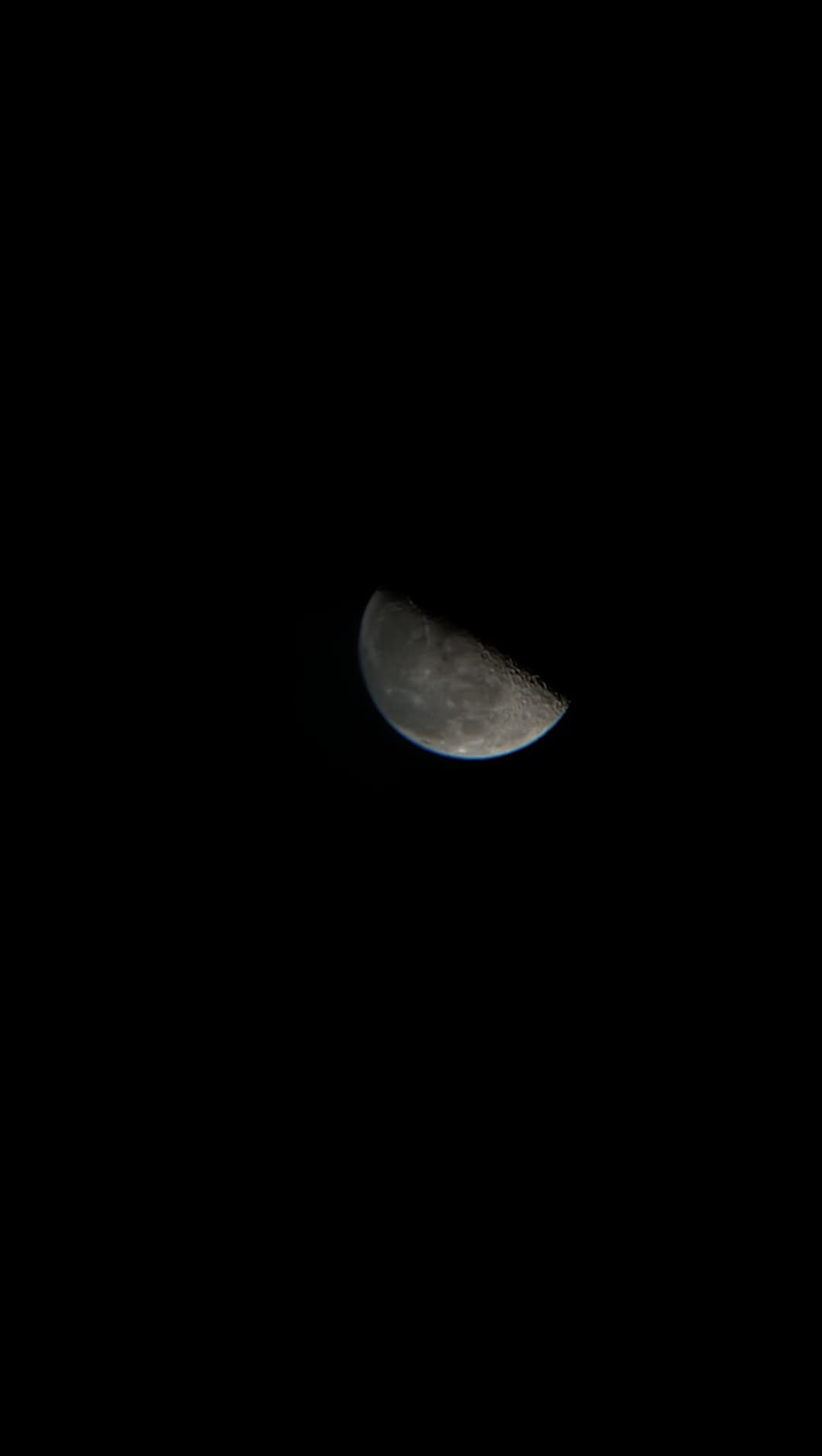
The phone adapter and wireless remote are genuinely useful for a first attempt at photographing the Moon. Hold the phone to the adapter, start a long exposure, and the terminator line comes out well exposed against a dark sky.
What 80mm can and cannot do
It can show the Moon’s craters, the phases of Venus, and the Galilean moons as points. It can show bright clusters and a handful of galaxies as fuzzy patches from a dark site. It cannot show Saturn’s ring gap or resolve any planetary detail beyond the largest features.
The Kellner eyepieces are the honest limit. They are pleasant at low power and noticeably soft above about 100x, and they are the reason this scope sits at the bottom of the capability list rather than the middle.
Who should buy it
Buy it as a gift for a child, as a first scope for a teenager, or as a second portable scope that lives in a car. The low price means the cost of getting it slightly wrong is small.
Do not buy it expecting the view of a 130mm or 150mm reflector. It is roughly a third the light gathering of the Heritage 150, and that gap shows on everything beyond the Moon.
10. Celticbird 80mm Telescope – The Backpack Scope With a Moon Filter
Celticbird Telescope for Adults High Powered, 80mm Aperture 600mm AZ Mount Refractor Telescope for Kids Beginners – Portable Telescopes for Adults Astronomy with Backpack, Phone Adapter, Moon Filter
80mm fully coated objective
600mm f/6.7 focal length
Altazimuth tripod
20mm and 9mm eyepieces
Includes moon filter
Pros
- Moon filter is a real accessory at this price
- Backpack packs the whole scope for travel
- Tool-free assembly with a manual and installation video
- Tripod adjusts from 17.7 to 52 inches
Cons
- Altazimuth mount has noticeable wobble in fine adjustments
- Small spot can appear in the view at maximum magnification
- Three-year service promise is not the same as a warranty
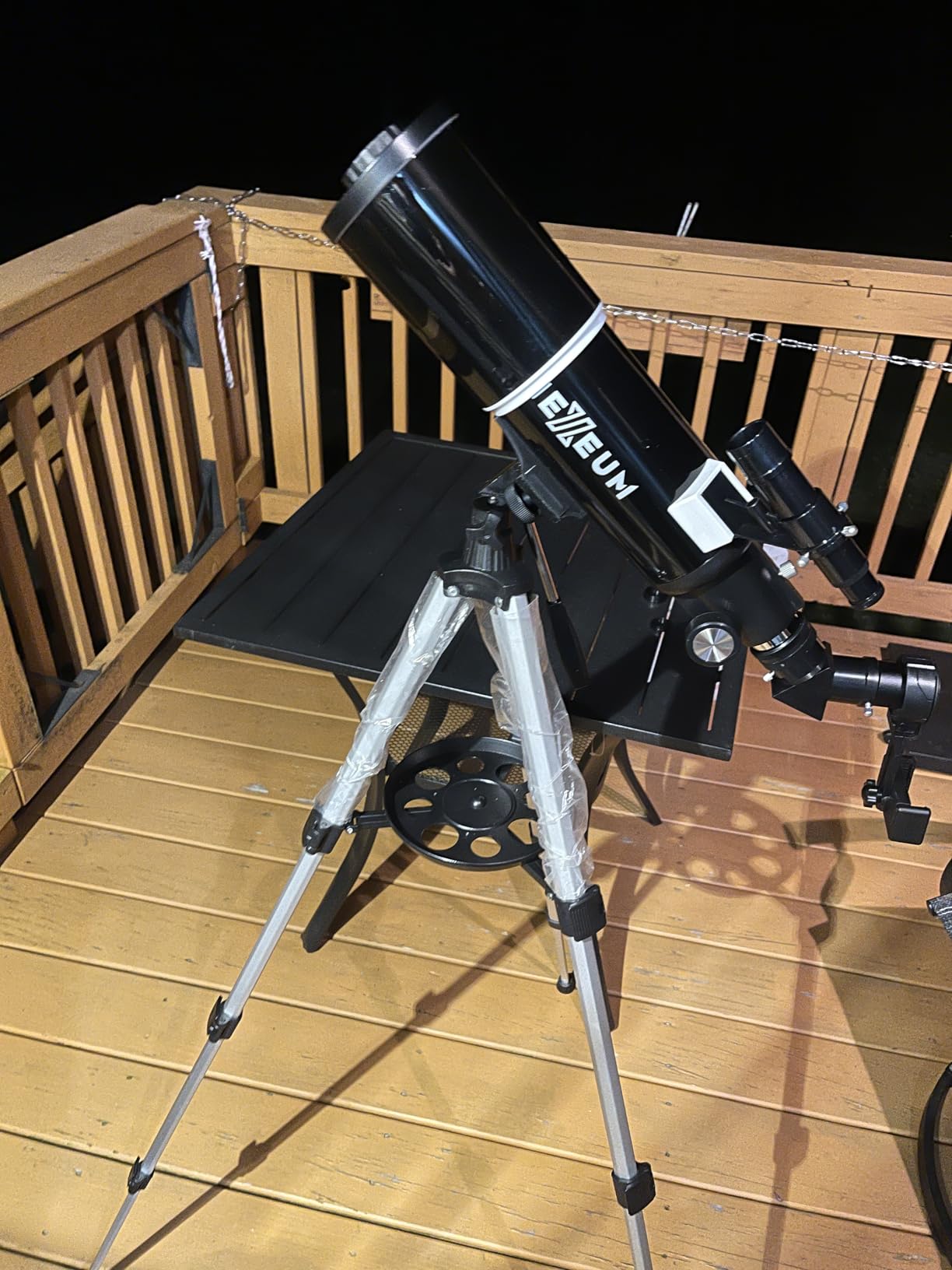
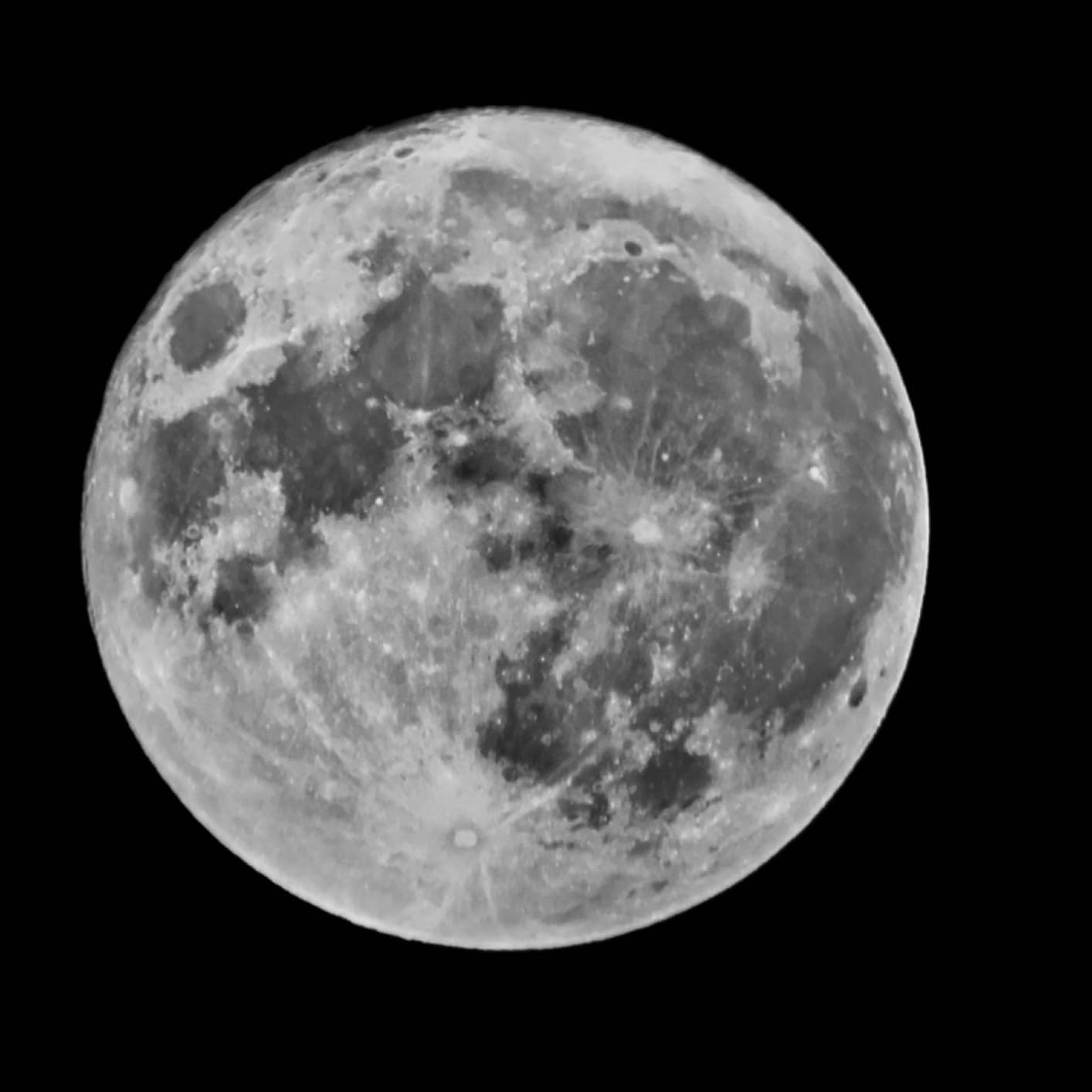
The Celticbird 80mm is the pick to buy for the Moon specifically. It is the only scope in this budget range that comes with a moon filter, and a filter that cuts glare and raises contrast on a full Moon is the cheapest upgrade in astronomy. The surface detail you can see on a bright lunar disc jumps noticeably with one in place.
Reviewers describe crisp lunar craters and straightforward setup, with a majority five-star share. The backpack is a nice touch for anyone who wants to take the scope to a field or a campsite rather than use it from a patio.
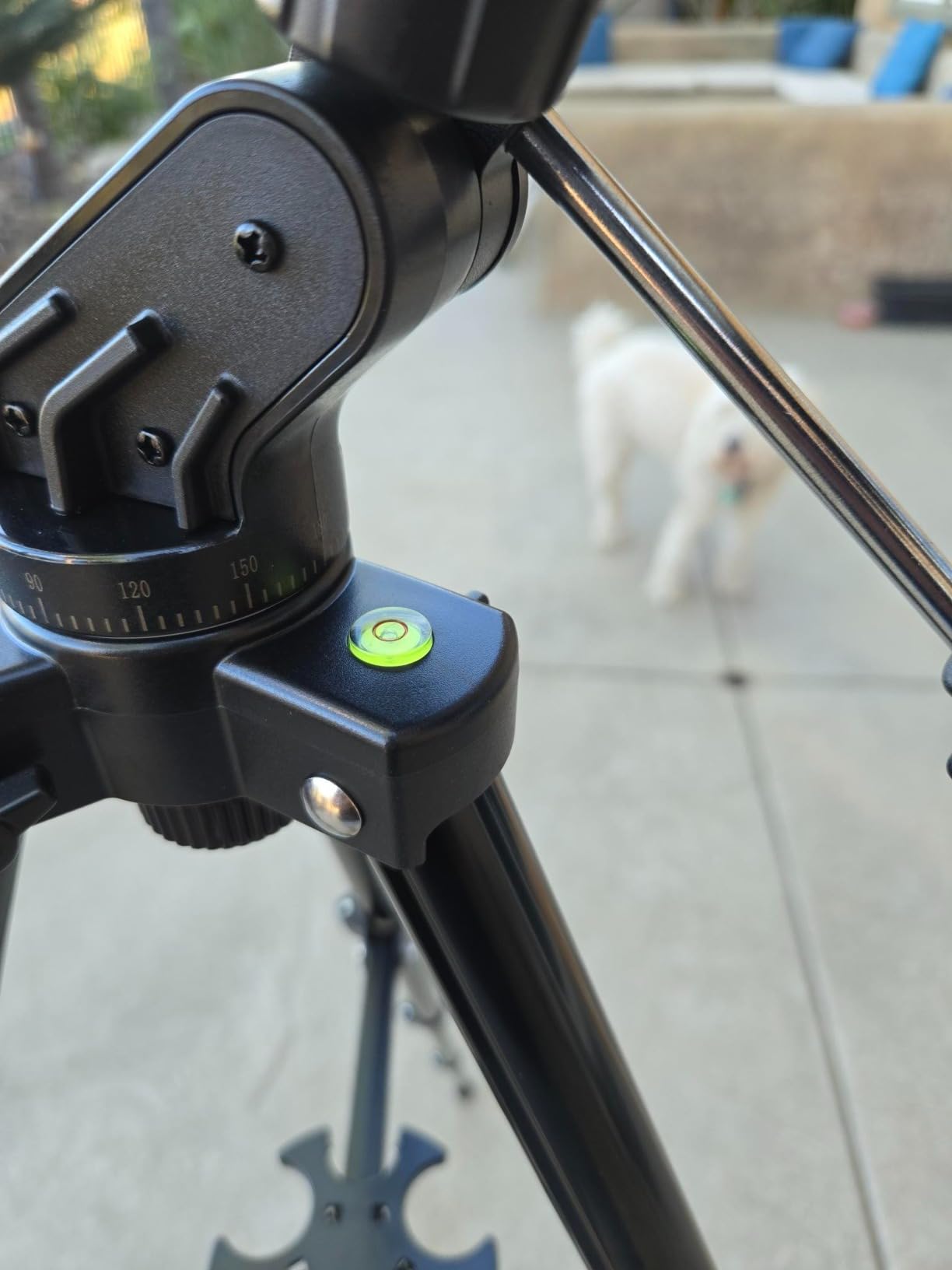
The 20mm and 9mm eyepieces give you 30x and 66x, which covers crater work and the Moon’s terminator well. At 3.4 degrees of field of view, framing the whole lunar disc at 30x is comfortable without fisheye distortion.
Two caveats from reviews. The altazimuth mount wobbles noticeably during fine adjustments, so slow movements matter. And at maximum magnification a small spot can appear in the view, which is a coating or alignment artefact rather than a fault.
Choosing between this and the Koolpte 80mm
These two occupy the same bracket, so the choice comes down to accessories. The Celticbird includes a moon filter and a backpack, which matters if you are a lunar or travel observer. The Koolpte includes two eyepieces, a 3x Barlow, a phone adapter, and a wireless remote, which matters if you want to try phone photography.
Neither will resolve anything beyond the Moon and the brightest planets. Both are honest entry points, and the gap between them is narrower than the gap between either of them and a 130mm reflector.
Who should look elsewhere
If deep sky is the interest, neither 80mm refractor will get you there. Step up to the 90mm Dianfan for a modest gain, or jump to a 130mm reflector for a real one.
Also consider the Celestron Travel Scope 70, which has a much longer service history and a real two-year warranty, if you want the same portable concept with more proven support behind it.
11. HETEKAN 90mm Telescope – Three Eyepieces and a 900mm Refractor
HETEKAN Telescope for Adults High Powered, 90mm Aperture 900mm Refractor
90mm multi-coated objective
900mm focal length
Altazimuth tripod
25mm, 10mm and 6mm eyepieces
3x Barlow
Pros
- Three eyepieces give more magnification options than any rival here
- 900mm focal length is long for the aperture
- Carry case plus a separate eyepiece case
- Setup takes about 10 minutes
Cons
- Tripod legs are too short for standing use
- Adjustment knobs do not hold position under camera use
- Advertised 450x is far beyond the usable limit
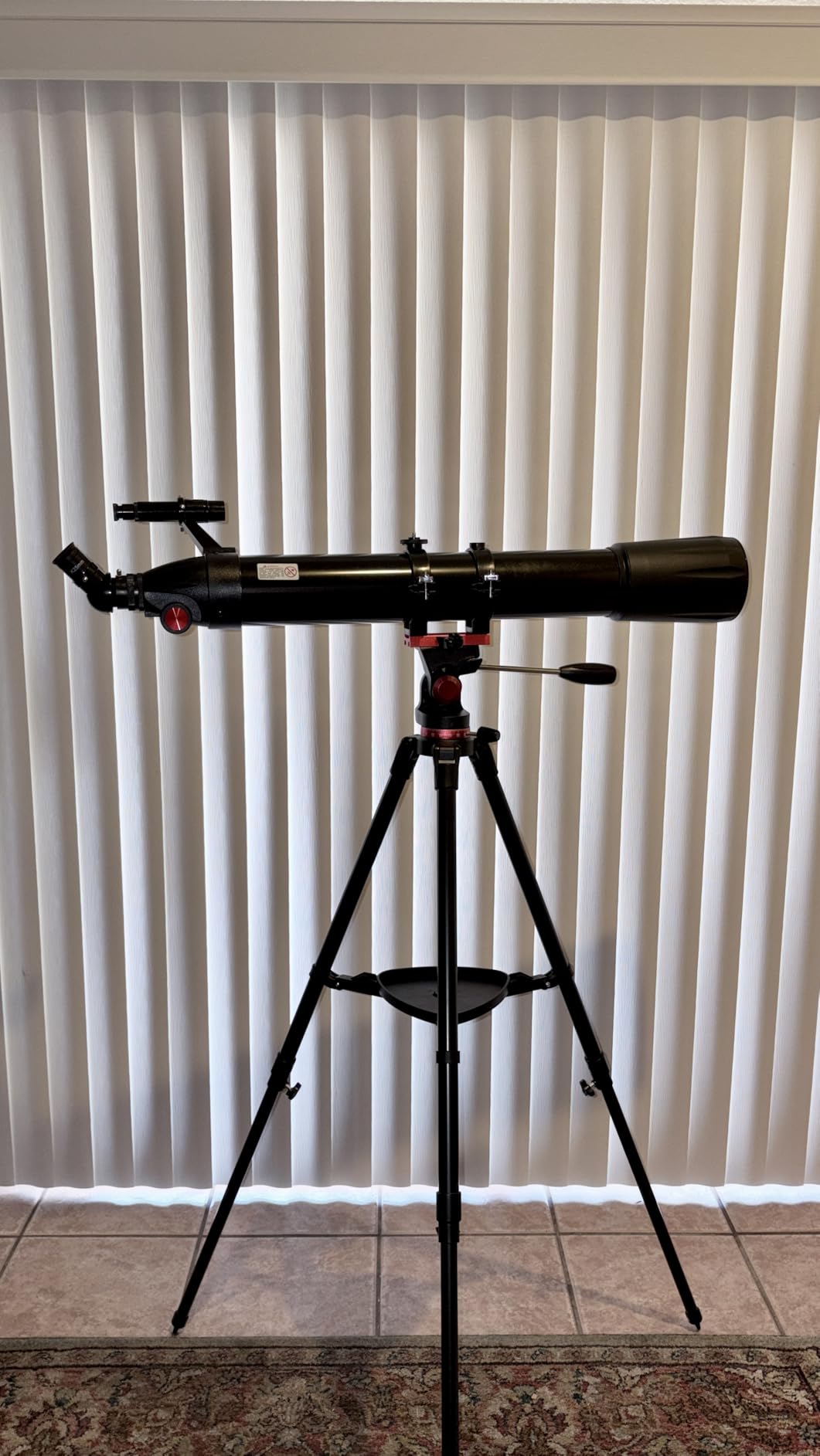
Among budget scopes, eyepiece variety is genuinely rare, so the HETEKAN stands out. Three eyepieces at 25mm, 10mm, and 6mm, plus a 3x Barlow, give you a real range of powers from one purchase. Most rivals at this bracket include two eyepieces and a single Barlow, and then you are buying glass before you can use the scope properly.
The 900mm focal length on a 90mm aperture is an unusual pairing. It is long enough for satisfying planetary work on Jupiter and Saturn, and owners report sharp views of Jupiter’s cloud bands and the Great Red Spot.
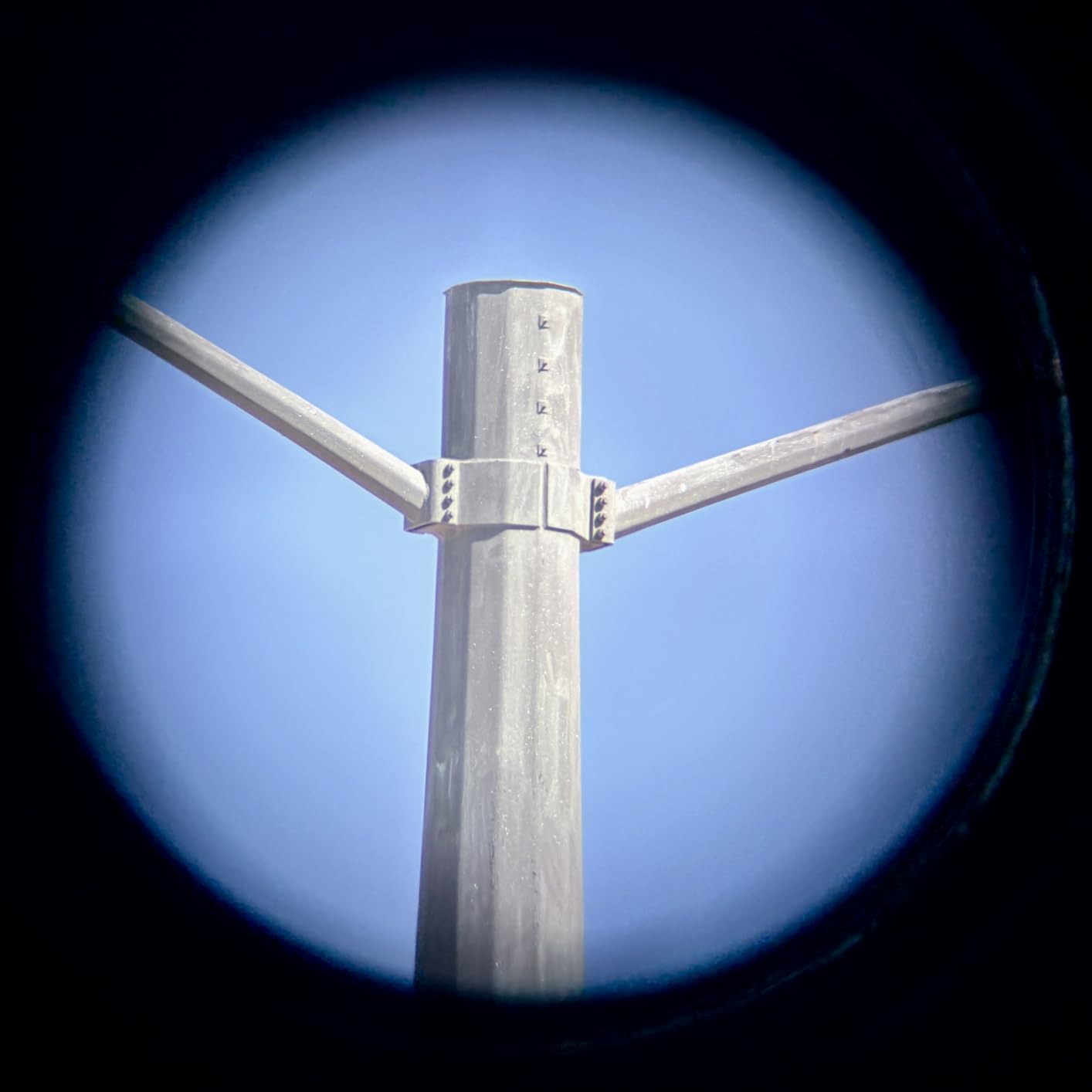
Two eyepiece cases are included, one for the scope and one for the glass, and reviewers appreciate that the gear survives being carried in a car. The 6mm finder, phone adapter, and stargazing mount round out a bundle that is hard to argue with on contents.
Now the problems, and they are real. The tripod height range of 29 to 46 inches means the legs are too short for comfortable standing use, so you will kneel or set the scope on something. And the adjustment knobs do not hold position, which makes the attached phone drift during long exposures.
What the 450x claim really means
None of that matters, because the 450x headline number is not real. It is the 6mm eyepiece with the 3x Barlow, calculated without reference to what a 90mm aperture can actually support. On this scope the useful ceiling is somewhere around 180x.
This is the clearest example in the roundup of why the magnification figure on a budget listing tells you nothing. Judge every telescope here by aperture, focal length, and mount quality, and ignore the rest of the box.
Who should buy this one
Buy it if you want planetary capability on a refractor without spending Celestron money, and if you would rather not buy a third eyepiece later. The included selection genuinely covers the range most beginners need.
Pass if you are tall, if you are strict about kneeling on wet grass, or if you want to attempt phone astrophotography. For a comfortable observing position at this price, the 90mm Dianfan in pick seven is the better-equipped instrument.
How to Choose a Telescope Under 500 Dollars in 2026
Every scope on this list is a reasonable purchase, so the decision comes down to one question: what do you want to look at, and where will you look from? Work through these nine points and the right pick becomes obvious.
Aperture decides more than magnification
Aperture is the diameter of the lens or primary mirror, and it is the single specification that determines how much light your telescope collects. Light-gathering power scales with the square of aperture, so doubling the aperture quadruples the light. Applied to this roundup, the 150mm Heritage gathers roughly 4.6 times the light of a 70mm refractor, and a 130mm reflector gathers about 3.4 times as much.
What that light buys is faintness and resolution. Bigger aperture shows fainter objects and finer detail on bright ones. A 70mm refractor shows you the Moon, the brightest planets, and a handful of clusters. A 130mm reflector shows you dozens of galaxies, several nebulae with visible structure, and Saturn’s rings separating.
This is why we ranked by aperture first. The community consensus that a larger mirror wins on value is not a brand loyalty artefact, it is physics, and it is why we would rather see you spend on a 130mm reflector than on a 90mm refractor with better eyepieces.
Refractor, reflector, or smart telescope
Refractors use a lens. They need no maintenance, hold contrast well, and are easy to point, but aperture is expensive per millimetre, which is why 70mm and 90mm dominate this price range. Buy one for the Moon, planets, and daytime viewing.
Reflectors use a concave primary mirror with a secondary that redirects the light to the side. Aperture is cheap per millimetre, so 130mm and 150mm scopes fit this budget easily. The trade is collimation, an open tube that collects dust and dew, and a slightly inverted image that needs a diagonal or erecting prism. Buy one for deep sky and for the best value per unit of light.
Smart telescopes have no eyepiece at all. They use a camera sensor, an app, and motorized tracking to produce stacked images you view on a screen. They win decisively in light-polluted skies and lose completely on live planetary detail. Buy one only if you want pictures.
Altazimuth or equatorial mount
An altazimuth mount swings left-right and up-down, and you move it with your hands. It is simple, intuitive, and needs no alignment. Every budget refractor and the Heritage 150 use one. Its only flaw is that objects drift as the Earth turns.
An equatorial mount is aligned to the celestial pole, which means one axis tracks the sky and the other is for declination. It holds a target for as long as the battery or the patience lasts, and it is required for long-exposure photography. The cost is polar alignment, a setup step beginners routinely give up on, which is why we would start almost everyone here on an altazimuth.
Mount stability matters as much as aperture in practice. A wobbly mount destroys a high-power view faster than a modest aperture limits it, which is why the stainless steel tripod on the Dianfan and the tabletop base on the Heritage 150 are worth more than the extra 10mm of aperture they cost you elsewhere.
Focal length and focal ratio
Focal length is the distance light travels inside the tube, and it sets your magnification. Magnification is focal length divided by eyepiece focal length, so a 900mm scope with a 10mm eyepiece gives 90x. Longer focal length means more magnification from the same eyepiece and a narrower field of view.
Focal ratio is focal length divided by aperture. The Heritage 150 at 750mm on 150mm is f/5, which is fast and gives a wide, bright field. Fast focal ratios suit wide-field deep-sky observing and planetary work, which is the combination most people want.
For your first telescope, an f/5 to f/8 design is the sweet spot. Much faster scopes suffer from optical aberrations across the field, and much slower ones are unwieldy to point.
The magnification number on the box is marketing
Skip any listing that leads with 450x or 525x. Those figures are calculated by stacking the smallest included eyepiece with a cheap Barlow lens, and they are not achievable views. The HETEKAN in this roundup advertises 450x and is useful up to roughly 180x.
A rough rule you can hold onto: maximum useful magnification is about twice the aperture in millimetres. A 90mm scope tops out near 180x. Beyond that, you are spending brightness for nothing.
Where the 500-dollar ceiling actually bites
Here is the honest part. Five hundred dollars buys you the last big step in aperture before the next tier. A 150mm Dobsonian is the largest we could include, and an 8-inch model at roughly 203mm gathers about 1.8 times more light still. That jump is large enough that the telescope you buy at 500 is genuinely a step below what the category can do.
That is not a reason to avoid buying at this budget. It is a reason to buy something you will still use in two years, and a 130mm or 150mm reflector holds its value far better than an 80mm plastic refractor ever will.
What to skip at this budget
Skip any scope whose headline feature is a magnification number, and skip any 70mm refractor on a folding aluminium tripod if you want to look at anything above 100x. Skip bundled equatorial mounts advertised to beginners with no mention of polar alignment, because that is where most first scopes end up in a cupboard.
Skip accessory bundles priced above the scope itself, especially in the holiday season, when bundle pricing frequently pushes a sub-ceiling purchase over the line. Buy the scope first and accessories later.
Spend the spare budget on accessories
If your scope leaves money in the budget, buy a 9mm or 10mm Plossl eyepiece in the 1.25-inch format. Stock eyepieces are the weakest link on most budget scopes, and one good Plossl transforms a planetary view. A red flashlight preserves your dark adaptation, which is the difference between seeing the Milky Way and not seeing it.
Add a moon filter if you did not get one, a star chart or a planisphere for learning the sky, and vibration dampers or a sandbag for a tripod that shakes. If you are serious about the Sun, a certified solar filter is the one accessory that must be bought deliberately. Our solar filter guide covers the safety side properly, because a telescope pointed at the Sun without one causes instant and permanent eye damage.
When these scopes discount
Scopes sitting at the ceiling of your budget move far more than cheap ones do. Sub-300-dollar refractors rarely discount meaningfully, while 130mm and 150mm reflectors routinely drop during the autumn observing season and again at major year-end sales.
If you are not in a hurry, waiting a few weeks is a reasonable bet at the top of the range. If you want to be looking at planets this weekend, buy now and stop thinking about it.
Frequently Asked Questions
What is the best telescope under $500?
The Celestron AstroMaster 130EQ is the best telescope under 500 dollars for most people. A 130mm mirror on a German equatorial mount with slow-motion knobs shows Saturn’s rings, Jupiter’s four moons, and dozens of deep-sky objects, and it holds a target steady while you watch. The Sky-Watcher Heritage 150 is the runner-up if you want more light per dollar and would rather not align anything.
What is the cheapest but best telescope?
The Celestron Travel Scope 70 is the cheapest credible entry point, and the Koolpte 80mm sits beside it. The Celestron costs less, packs into a backpack, and has a two-year warranty plus the largest review base of anything we tested. Do not confuse cheapest with best value: scopes in the toy bracket under 100 dollars with 525x claims are not telescopes, and buying one is how people conclude the hobby does not work for them.
What is the best telescope to buy for the money?
Buy the Celestron AstroMaster 130EQ if you have 500 dollars. Aperture is what determines what you can see, and a 130mm mirror collects roughly 3.4 times the light of a 70mm refractor, which is the difference between a smudge and a shape on most deep-sky targets. Spending the extra money on a bigger mirror rather than on a fancier mount is the right call for visual observers.
What is the best telescope at the lowest price?
At the very bottom, the Celestron Travel Scope 70 for under 100 dollars. At the 200-dollar rung, the 90mm Dianfan, whose stainless steel tripod holds still and whose 90mm aperture shows Saturn’s rings. At the 300-dollar rung, the 130mm reflectors, which are the real step up. Each rung buys aperture rather than electronics, and that is the correct order of priorities.
What are the top 5 telescopes?
Our top five: the Celestron AstroMaster 130EQ for all-round observing, the Celestron Travel Scope 70 for value and portability, the Sky-Watcher Heritage 150 for the largest aperture, the Celestron AstroMaster 70AZ for planetary detail, and the DWARFLAB Dwarf Mini for astrophotography. All five sit under 500 dollars and cover the four distinct buyer types we found at this price.
Can a telescope under $500 show Saturn’s rings?
Yes, easily. A 70mm refractor shows the rings as a shape, and a 90mm refractor shows the ring structure more clearly. A 130mm or 150mm reflector shows the Cassini Division as a distinct dark gap, which is the moment most beginners realise what aperture buys. The Heritage 150 and the AstroMaster 130EQ are the two picks where Saturn looks best.
Should I buy a smart telescope or a regular telescope for $500?
They are different products, not competing ones. A smart telescope like the DWARFLAB Dwarf Mini has no eyepiece, finds targets itself, and stacks images to your phone, which makes it the best option from a light-polluted city or for a beginner who never gets lost. A regular telescope gives you live planetary detail and the real experience of looking through an eyepiece. Choose pictures or views, not between brands.
Do I need an equatorial mount as a beginner?
No, not for visual observing. Setup difficulty with an equatorial mount is the second most common reason beginners give up on the hobby, and an altazimuth or a tabletop Dobsonian needs no alignment at all. The exception is long-exposure astrophotography, which needs an equatorial mount, and a 90 second smart-scope exposure, which handles its own tracking internally.
The Bottom Line: Which of These Telescopes Under 500 Dollars Should You Buy?
Buy the Celestron AstroMaster 130EQ if you have the full budget and want the most capable visual telescope. Buy the Sky-Watcher Heritage 150 if you want the most light per dollar and the least fuss. Buy the Celestron Travel Scope 70 if this is a gift, a travel scope, or a child’s first real telescope. Buy the DWARFLAB Dwarf Mini only if you want astrophotographs, and accept that you will not be looking through an eyepiece.
Those four cover almost everyone. Whatever you choose, spend the difference on aperture rather than on electronics, and spend the leftover money on a better eyepiece and a red flashlight. Best telescopes under 500 dollars in 2026 are a genuine sweet spot: the last big jump in light gathering before the price curve steepens. Get the aperture right and the rest takes care of itself.
When the sky clears, take the scope out before you read another list. The differences between these eleven are real but they are all second-order, and the only way to find your telescope is the one you will still be using five years from now.