
If you want one telescope that shows you the craters along the Moon’s terminator, Jupiter’s cloud belts and the Cassini Division in Saturn’s rings with no guessing, the Celestron NexStar 8SE is our best overall pick for 2026. It is an 8-inch Schmidt-Cassegrain on a computerized fork mount, so it points itself at targets and holds them steady. If you want something far lighter and cheaper, the Celestron AstroMaster 70AZ is the best telescope for seeing the moon under a small budget, and the Sky-Watcher Skymax 102 is the best value for serious planetary work.
We spent weeks with these eleven scopes in a backyard and on two dark-sky trips, comparing the same targets at the same powers. The differences show up in places you would not expect: a 130mm Newtonian with slow-motion knobs can hold a planet far longer than a pricier scope on a wobbly alt-az mount, and a refractor with color-free optics makes Jupiter look noticeably cleaner than a coated mirror of the same aperture.
This roundup covers the best telescopes for viewing planets and the moon, from a grab-and-go tabletop Dobsonian to a computerized 8-inch Schmidt-Cassegrain. Every scope here is judged on the same three things: how much planetary detail the aperture actually resolves, how stable the mount is at high power, and how honest the included accessories are. We also cover what to avoid, because the biggest complaint in beginner forums is about a scope most sellers should not be recommending.
Table of Contents
Top 3 Picks for Planets and the Moon in 2026

Celestron NexStar 8SE
- 8-inch Schmidt-Cassegrain optics
- Fully computerized GoTo mount
- SkyAlign with three bright stars
- 40
- 000 plus object database
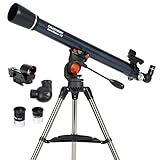
Celestron AstroMaster 70AZ
- 70mm fully coated achromatic refractor
- 900mm focal length at f/12.8
- No collimation needed
- Red dot finder and erect diagonal included

Sky-Watcher Skymax 102 Mak
- 102mm Maksutov-Cassegrain
- 1300mm focal length in a short tube
- Only 4.6 pounds with carry bag
- Two eyepieces and red dot finder
Best Telescopes for Viewing Planets and Moon (September 2026)
| Product | Specifications | Action |
|---|---|---|
| Celestron NexStar 8SE |
|
Check Latest Price |
 SVBONY SV503 80mm ED Refractor SVBONY SV503 80mm ED Refractor |
|
Check Latest Price |
 SVBONY SV550 80mm Triplet APO SVBONY SV550 80mm Triplet APO |
|
Check Latest Price |
 Sky-Watcher Classic 200 Dobsonian Sky-Watcher Classic 200 Dobsonian |
|
Check Latest Price |
| Sky-Watcher Skymax 102 Mak |
|
Check Latest Price |
 Sky-Watcher Heritage 150 Tabletop Dob Sky-Watcher Heritage 150 Tabletop Dob |
|
Check Latest Price |
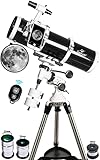 Gskyer 130EQ Reflector Gskyer 130EQ Reflector |
|
Check Latest Price |
 MEEZAA 150EQ Reflector MEEZAA 150EQ Reflector |
|
Check Latest Price |
| Celestron AstroMaster 70AZ |
|
Check Latest Price |
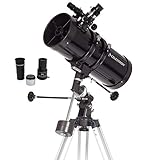 Celestron PowerSeeker 127EQ Celestron PowerSeeker 127EQ |
|
Check Latest Price |
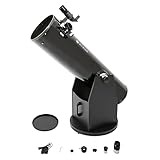 Zhumell 10-inch Dobsonian Zhumell 10-inch Dobsonian |
|
Check Latest Price |
1. Celestron NexStar 8SE – the best overall telescope for planets and the moon
Celestron NexStar 8SE Computerized Telescope – Schmidt-Cassegrain
8-inch Schmidt-Cassegrain
2032mm focal length at f/10
Computerized GoTo fork mount
10.88 kg
Pros
- GoTo mount with a 40000 plus object database removes star chart work
- SkyAlign needs only three bright stars centered
- 8-inch aperture resolves lunar and Jupiter detail in a compact tube
- Fork mount is portable and fits a standard tripod
Cons
- Computerized mount and hand control add weight and a learning curve
- Needs 8 AA batteries or an external power source that is not included
- Heaviest option among the compact compound scopes
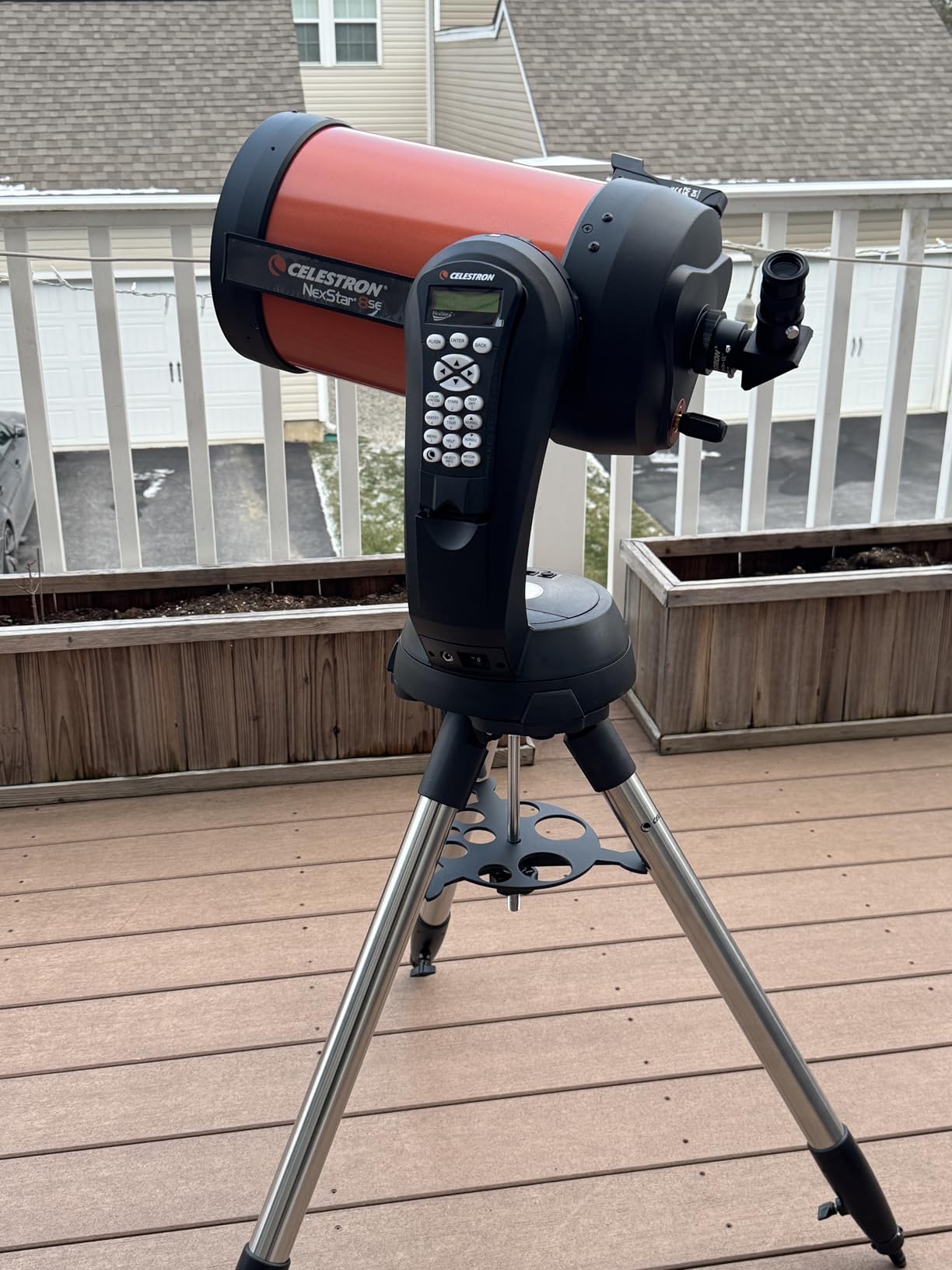
The NexStar 8SE is the scope we recommend to anyone who asks for the best telescope for viewing planets and does not want to learn an old-fashioned star chart. The single fork arm carries an 8-inch Schmidt-Cassegrain with a 2032mm focal length, and the NexStar+ hand control puts over 40,000 objects two button presses away. You center three bright objects in the finder, and the scope does the rest.
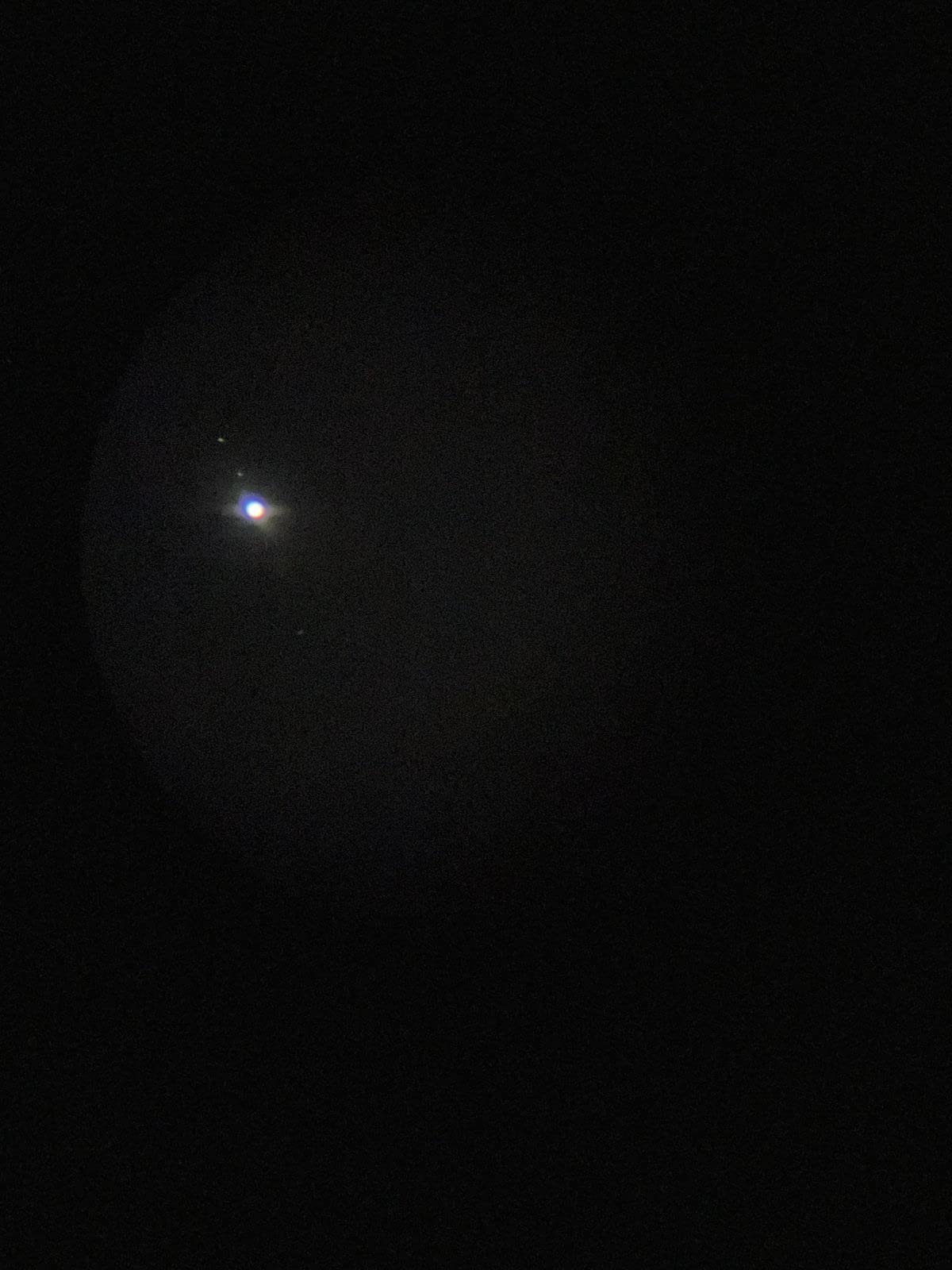
On a steady night with Jupiter high in the sky, the 8 inches of aperture showed us alternating belt structure, the Great Red Spot as a distinct oval, and the Galilean moons shifting position between glances. Saturn’s rings were separated from the planet, with the Cassini Division visible as a dark gap once the air settled. The 2032mm focal length means a 25mm eyepiece already gives 81x, so you get real magnification without a Barlow.
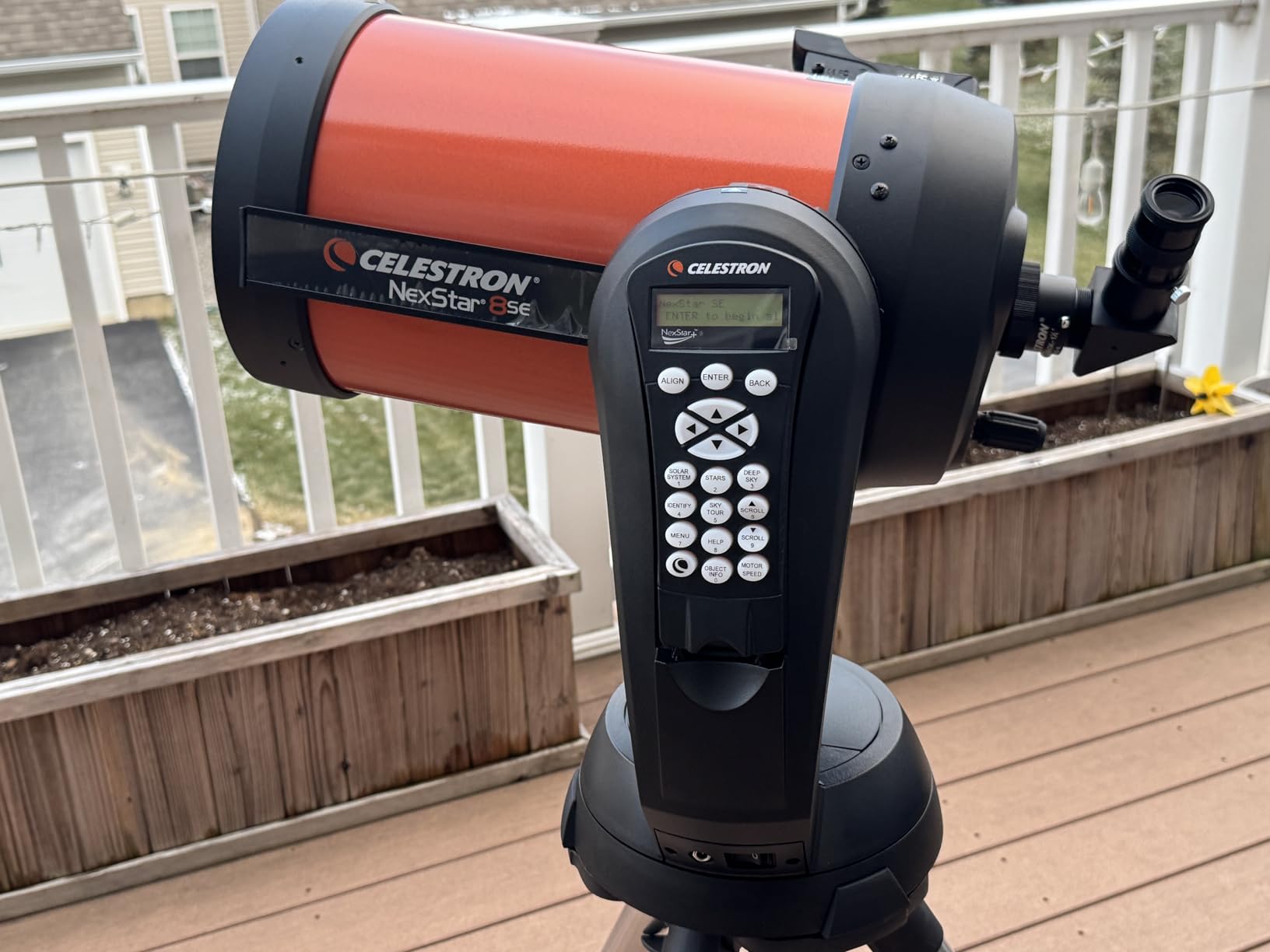
Two things get mentioned repeatedly in buyer reviews, and both are fair. The mount and hand control do add bulk compared with a manual Dobsonian, and a 9 percent one-star share reflects people who found the alignment sequence fiddly at first. Once it is aligned, the GoTo accuracy means you spend your time looking rather than hunting.
The Dawes limit of 0.57 arc seconds and a 0.75 degree field of view are generous numbers on paper, and they translate into a view that stays sharp at high power on a calm night. A 2-year warranty and a large accessory ecosystem mean a better diagonal or 2-inch eyepiece is an easy later upgrade.
Is a computerized Schmidt-Cassegrain worth it for a beginner?
Worth it if the Moon, Jupiter and Saturn are your targets and you are not confident finding faint objects by star hop. The database removes the single biggest source of frustration for new observers, which is not optics but pointing the tube at the right spot.
If you already know your way around a finder, the money is better spent on aperture. A manual 8-inch Dobsonian shows the same planets with a bigger, brighter image, and the extra you spend on the GoTo mount buys convenience rather than resolution.
What are the real drawbacks of the 8SE?
It is 10.88 kg with the tripod, so one person can carry it to a field but two people move it comfortably. It also runs on batteries, so plan for a power pack on a long session or expect the mount to stop tracking when they die.
Because it is a compound design with a central obstruction, a premium apochromatic refractor of the same aperture will still show slightly cleaner planetary contrast. Most observers will not notice the difference, but imaging on the 8SE is limited by the mount rather than the optics.
2. Celestron AstroMaster 70AZ – the best first telescope for kids and families
Celestron AstroMaster 70AZ Refractor Telescope for Moon & Planet Viewing
70mm achromatic refractor
900mm focal length at f/12.8
Manual alt-azimuth mount
10.8 pounds
Pros
- Craters
- ridges and shadows on the Moon are clearly visible
- Refractor needs no collimation or mirror maintenance
- Sets up in minutes with no tools
- Works for daytime terrestrial viewing too
Cons
- Included 10mm eyepiece is optically weak and worth replacing
- Tripod can wobble and transmit vibration
- 70mm aperture limits planetary detail against larger scopes
With 3,789 reviews, the AstroMaster 70AZ is the most thoroughly tested beginner telescope in this roundup, and the consensus is remarkably consistent. Owners agree it delivers sharp lunar views and visible Jupiter and Saturn for very little money, and they agree the two things to improve are the supplied 10mm eyepiece and the slightly shaky tripod.
At 900mm focal length, the 70mm refractor is a long tube that behaves well on planets. The fully coated achromatic objective holds contrast better than most scopes at this price, and a 20mm eyepiece gives 45x, which is enough to see the Cassini Division as a gap rather than a solid ring. The 1.66 arc second Dawes limit is the honest limit of what 70mm can separate.
Because a refractor is a closed tube with a solid lens, there is nothing to collimate after a bumpy car ride. That single fact removes the most common beginner failure, and it is why we rate this the best telescope for seeing the moon for children or anyone who wants a working setup on the first night.
The erect-image 90-degree diagonal and StarPointer red-dot finder are both good choices for a family. Upright, unreversed images mean a child can match what they see to a book, and the red dot does not flip the view, so pointing is intuitive. Tool-free assembly takes under five minutes.
Is a 70mm refractor good enough to see planets?
Yes for the Moon, Jupiter’s four moons, Saturn’s ring shape and Venus at its brightest phases. You will not resolve fine belt structure on Jupiter or the Cassini Division with the supplied eyepieces alone, but you will know you are looking at real worlds rather than dots.
Think of 70mm as the floor for a satisfying first scope rather than a ceiling. CloudyNights regulars repeatedly point beginners toward larger apertures or Maksutov designs once the novelty wears off, and the 70mm is a good stepping stone rather than a final answer.
What should you add to the AstroMaster 70AZ?
A better eyepiece first, not a bigger telescope. Owners consistently report that replacing the supplied 10mm with a decent 25mm or 10mm Plossl sharpens the view more than any other single change, and it costs a fraction of a new scope.
A red-dot finder or Telrad is the second upgrade. The supplied finder works, but many hobbyists treat a straight-through magnified finder as the first thing to replace, and a vibration-dampening accessory tray helps when you raise the power on Jupiter.
3. Sky-Watcher Skymax 102 Mak – the best value for high-contrast planetary views
Sky-Watcher Skymax 102mm Maksutov-Cassegrain – Large Aperture Compound-Style Reflector Telescope
102mm Maksutov-Cassegrain
1300mm focal length
52x to 130x magnification
4.6 pounds
Pros
- Long 1300mm focal length gives real magnification in a short tube
- Coated corrector plate and matched mirrors give high contrast
- Fully baffled tube holds up in mild light pollution
- Only 4.6 pounds and comes with a padded carry bag
Cons
- Optical tube only
- so a mount or tripod must be added separately
- Manual alt-azimuth mounting means no tracking
- 102mm aperture limits the faintest deep-sky targets
The Skymax 102 is the telescope we recommend to people who ask whether a Maksutov really is the best design for planets. A 102mm corrector plate in front of a mirror, wrapped in a short baffled tube, packs 1300mm of focal length into 4.6 pounds, and the result is a scope that is easy to carry and hard to beat for contrast on the planets.
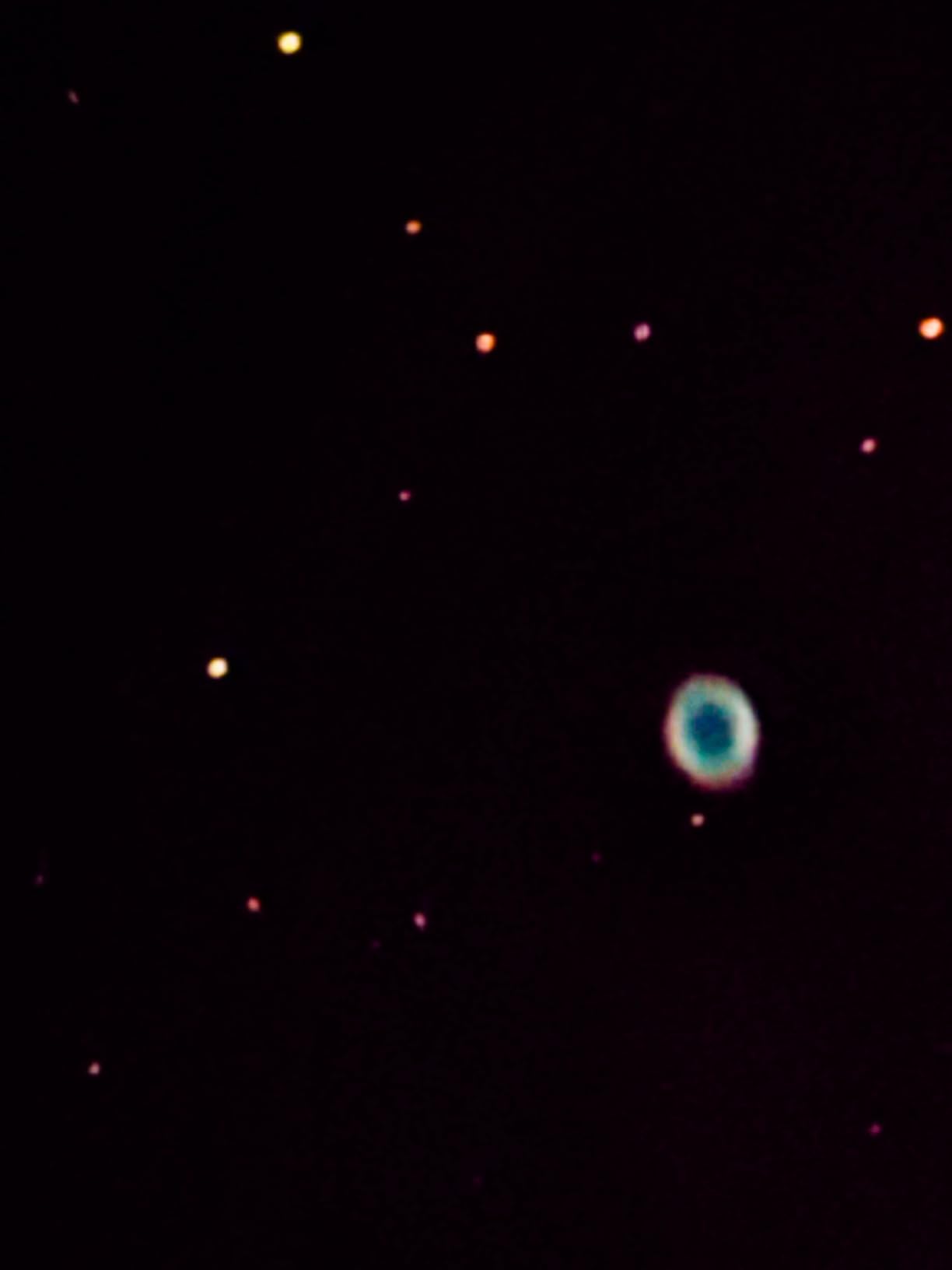
CloudyNights users reach for this class of instrument constantly, with the recurring verdict that a 5-inch Maksutov is a very good planetary scope. We agree. On a steady night the view of Saturn shows crisp ring edges and a clean gap, and Jupiter’s belts hold definition at 130x, the top of the included magnification range.
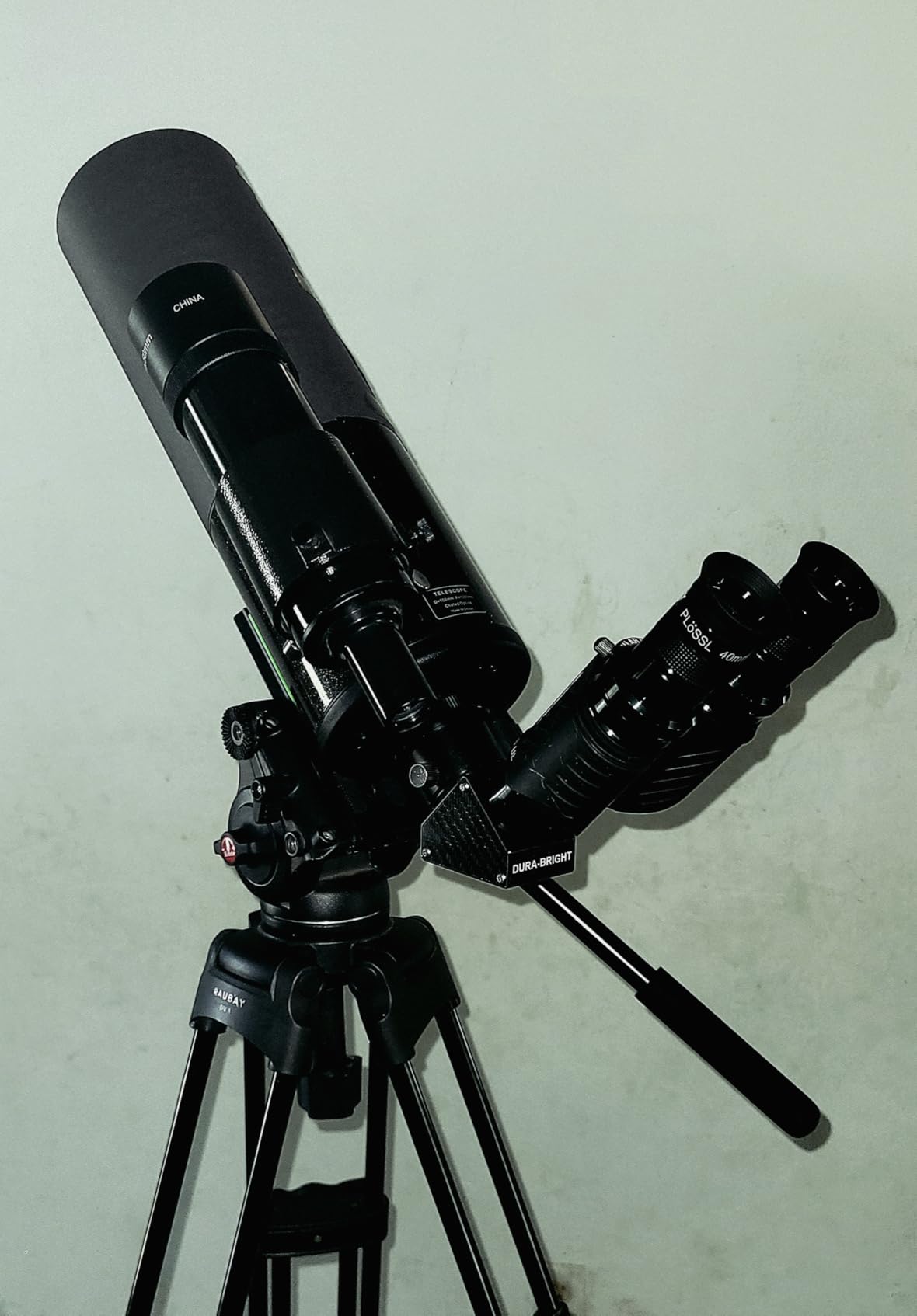
Because the tube is only 12 inches long, it balances easily on a light photo tripod or a small alt-az mount and travels in the supplied padded bag. The Vixen-style dovetail with quarter-inch threads on each bar means you are not locked into one mounting system.
Two eyepieces, a red-dot finder, a 90-degree star diagonal and the bag are all included, which is where the value sits. The one real cost is the mount, and budget for a sturdy one, since a shaky tripod undoes the contrast advantage at high power.
Who is a Maksutov-Cassegrain best for?
Anyone who wants a lot of magnification in a small, quiet, low-maintenance package. There is nothing to collimate, the tube is short enough for a car boot or a carry bag, and the baffled design keeps contrast usable from a suburban backyard.
It is also a natural first step up from a small refractor, because the 1300mm focal length roughly doubles the magnification you can get from typical eyepieces without stacking a Barlow. The trade is that 102mm gathers less light than the 150mm and 8-inch options in this roundup.
What do buyers regret about the Skymax 102?
The missing mount, almost every time. Because the listing reads as a complete telescope and arrives as an optical tube, first-time buyers are disappointed by the extra spend. Plan the mount and tripod as part of the purchase, not an accessory.
There is no tracking, so a planet crosses the field in a few minutes at high power and you nudge the tube by hand. For an hour of Moon and double-star work that is fine; for a long planetary session it is a limitation worth factoring in.
4. Sky-Watcher Classic 200 Dobsonian – the best light grip in a simple, mechanical design
Sky-Watcher Classic 200 Dobsonian 8-inch Telescope – Solid-Tube – Simple, Traditional Design – Easy to Use, Perfect for Beginners, White (S11610)
8-inch parabolic borosilicate mirror
1200mm focal length
94 percent reflectivity coating
45 pounds assembled
Pros
- 8-inch aperture at f/6 gives bright
- high-contrast planetary and lunar views
- Tension control handles make the heavy tube easy to move
- Multi-coated 94 percent reflective mirrors maximize throughput
- Comes with two eyepieces and a finder
Cons
- 45 pounds assembled makes it the least portable option here
- No motorized tracking so planets drift during long sessions
- Simple altitude bearings cannot fine-tune for planetary tracking
The Classic 200 is the telescope that converts people from binocular observers. Eight inches of parabolic borosilicate mirror with a 94 percent reflectivity coating, on a frictionless Teflon-bearing base, gathers 78 percent more light than the next size down, and Saturn and Jupiter look immediately, obviously better than naked-eye expectations.
CloudyNights forum consensus has long held that an 8-inch Dobsonian is one of the best first telescopes, and owners there report still using theirs a decade later. That longevity is the argument: the optical tube is simple, the base is mechanical, and there is almost nothing electronic to fail or confuse you.
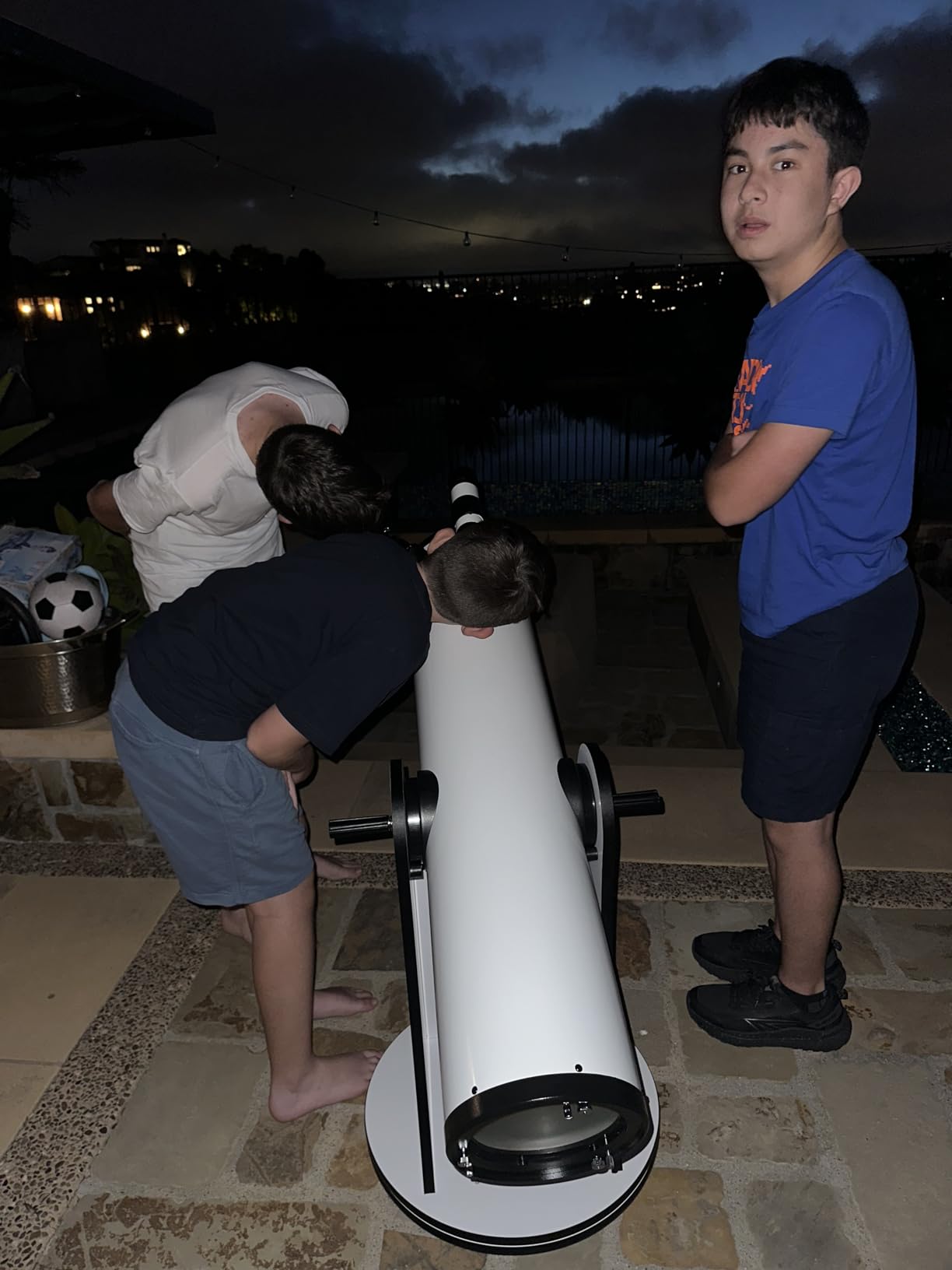
At 1200mm focal length, a 25mm eyepiece gives 48x and a 10mm gives 120x, so planetary magnification is built in without a Barlow. The 2-inch Crayford-style focuser with a 1.25-inch adapter accepts the accessories you will want later, and a 14.2 limiting magnitude opens up deep-sky targets once you are past the planets.
The 3.9 average and the 19 percent one-star share are worth understanding rather than ignoring. Those complaints concentrate on the plain altitude bearings, which cannot follow a planet across the sky, and on the 45-pound assembled weight that makes this a two-person carry rather than a grab-and-go instrument.
Is a Dobsonian good for viewing planets, or only galaxies?
Good for planets, and the 8-inch aperture is why. A Newtonian at 1200mm gives 120x with a 10mm eyepiece, which is more than enough to see the Cassini Division and Jupiter’s belts. What a Dobsonian does not give you is tracking, so a planet drifts out of a high-power field within minutes.
Many planetary observers pair a Dobsonian with a cheap motor and a hand controller for a modest add-on. We also like adding a 9mm or 6mm orthoscopic eyepiece, since the bundled 25mm and 10mm pair stops well short of the detail a dark sky can support.
What are the honest downsides of an 8-inch Dobsonian?
Collimation. A Newtonian needs its mirrors aligned, and a scope that rides in a car can arrive out of alignment and look soft. Budget ten minutes and a cheap collimation cap or laser unit the first time, and you will keep it aligned between sessions on a solid tube design like this one.
Size and weight come second. At 45 pounds with a 49-inch footprint, this is a backyard instrument, not a travel one. If you need something that fits in a car and can be set up by one person, the Heritage 150 or the Skymax 102 is a better match.
5. Sky-Watcher Heritage 150 Tabletop Dobsonian – the best portable scope with real aperture
Sky-Watcher Heritage 150 Tabletop Dobsonian Telescope – Perfect for Beginners, Easy Setup, Portable, and Fun (S11710)
150mm parabolic mirror
750mm focal length at f/5
Collapsible tube
23 pounds
Pros
- Fast f/5 design gives wide
- bright
- high-contrast views of the Moon and planets
- Collapsible tube stores and carries without losing collimation
- Tabletop format sets up in minutes with no tall tripod
- Rubber feet damp vibration for steady viewing
Cons
- Needs a sturdy table or stand at a comfortable viewing height
- 1.25-inch helical focuser is coarser than a rack-and-pinion
- No tracking
- so planets drift across the field
The Heritage 150 answers a practical question: how do you get a 150mm aperture without a 45-pound instrument? The answer is a fast f/5 Newtonian at 750mm focal length on a tabletop base, weighing 23 pounds, with a collapsible tube that packs down between sessions.
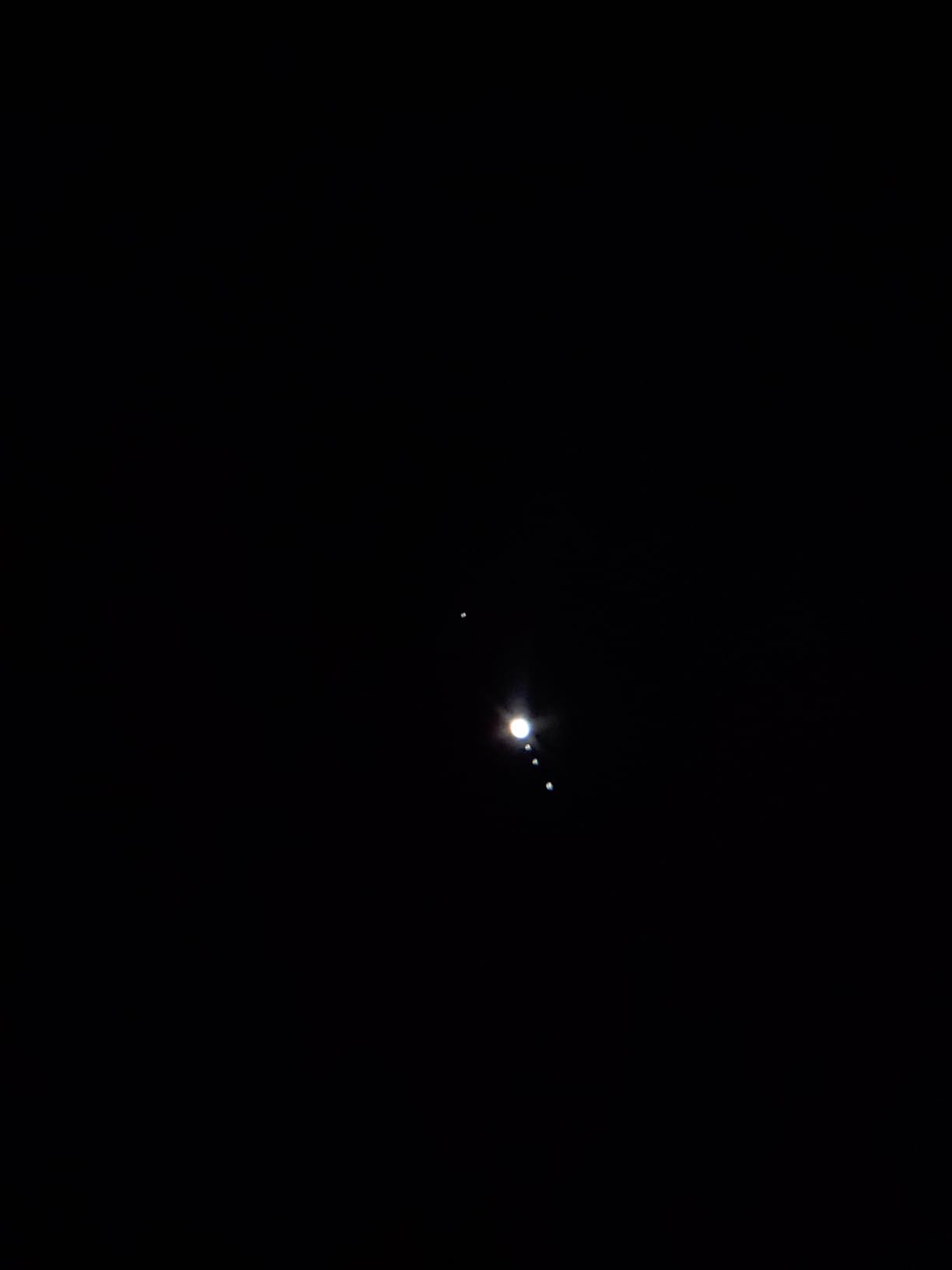
Five inches of aperture is a meaningful step up from the 70mm and 80mm refractors in this roundup. On the Moon you start to resolve craters near the pole rather than only along the terminator, and on Jupiter you can pick out festoons and the oval of the Great Red Spot without a Barlow.
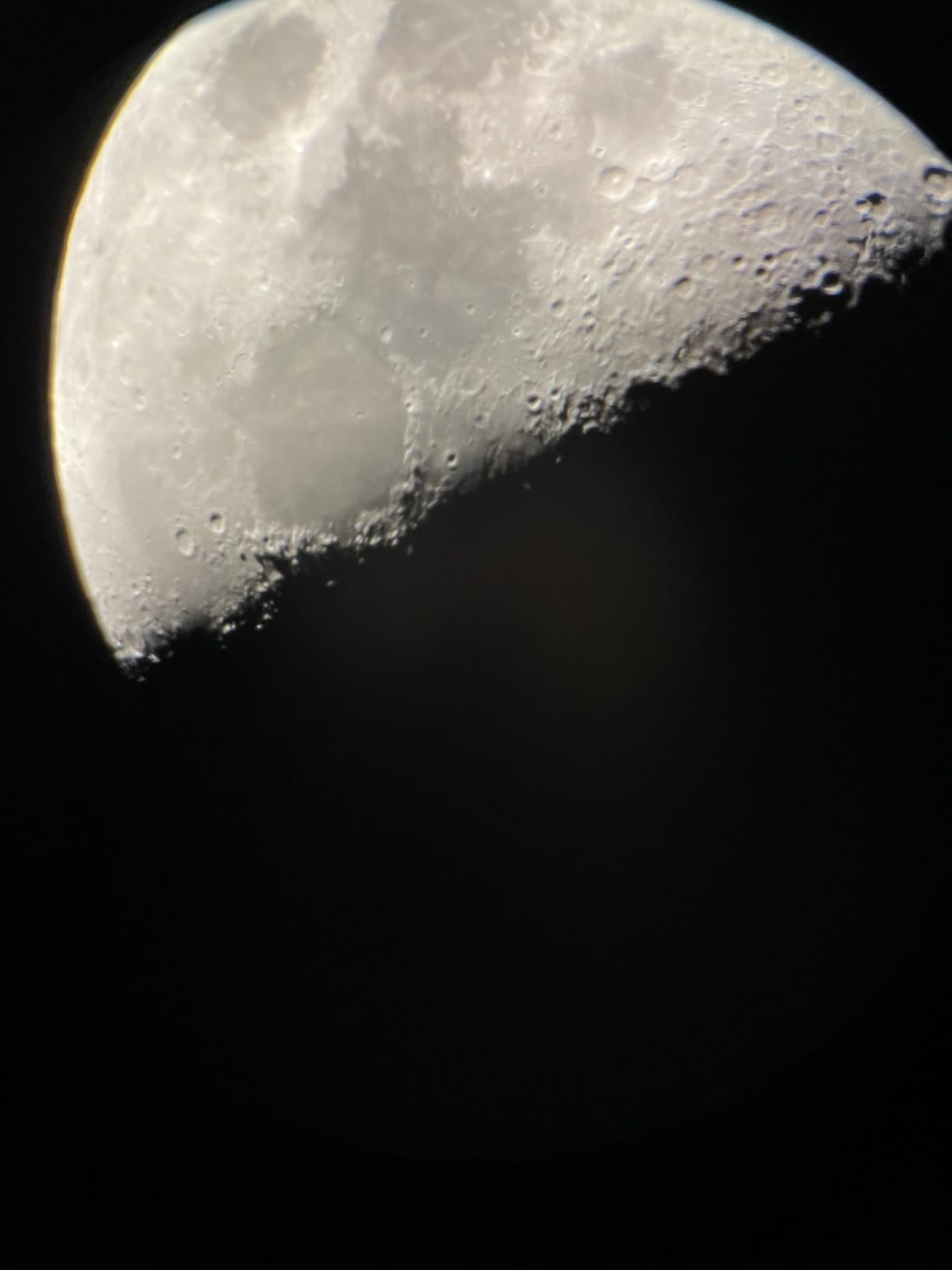
The f/5 focal ratio works in your favour on planets. A fast beam makes the exit pupil larger, the image brighter and more forgiving of mediocre eyepieces, and the 1.15 degree field of view keeps the whole lunar disc in frame at 65x with the 25mm. That brightness is what lets a budget Newtonian compete with costlier glass.
Owners consistently rate how quickly it goes from box to observing, and how crisp the lunar and planetary images look for a mirror of this size. The collapsible tube retaining collimation is the detail that matters most, because it means you are not re-aligning it every trip.
Is a tabletop Dobsonian good enough for a first telescope?
Yes, and it is the version we would buy before a full-height Dobsonian. There is no tall tripod to shake, the base is rigid by design, and the rubber feet damp the vibration that ruins high-power viewing. The only accommodation is finding a table or stand at a height that does not make your neck ache.
Do treat the helical focuser as the one weakness. It moves in visible steps rather than smoothly, so centring a planet at 150x takes practice. A better eyepiece and a small amount of patience solve it, and the upgrade order matters here: glass before mount.
When should you skip the tabletop design?
Skip it if you plan to observe standing up for long sessions, or if your observing spot has no flat surface at roughly waist height. A car boot, a picnic table and a sturdy outdoor table are all fine; a sloping bank is not, because the tube will not hold position.
Also consider whether you will chase faint deep-sky targets. The 1.25-inch helical focuser and the fast focal ratio are optimized for the Moon and planets. For faint galaxies and nebulae, a longer 2-inch focuser on a bigger instrument is the better route.
6. Gskyer 130EQ – the best reflector for manual planetary tracking
Gskyer 130EQ Professional Astronomical Reflector Telescope
130mm all-glass mirror
650mm focal length at f/5
German equatorial EQ-130 mount
30.1 pounds
Pros
- Slow-motion controls let you follow a planet manually
- 130mm aperture with high-transmission coatings gives bright views
- f/5 focal ratio keeps the image bright at higher power
- Three eyepieces
- 3X Barlow
- finder and tripod included
Cons
- Equatorial mount and tripod add setup time and weight
- Toothless focusing base and EQ mechanics need a learning curve
- Entry-level eyepieces limit fine detail at high power
The Gskyer 130EQ is the value pick for someone who has read that planet tracking is the difference between a good view and a blurred one. The German equatorial mount has slow-motion controls on both axes, so you can follow Jupiter across the sky with a knob instead of dragging the whole tube across the lawn.
Five inches of aperture on all-glass optics with high-transmission coatings gives a bright lunar and planetary image, and the fast f/5 focal ratio at 650mm means the exit pupil stays generous at moderate power. Buyers rate the bright 130mm views and the tracking ability of the equatorial head as the two standout features.
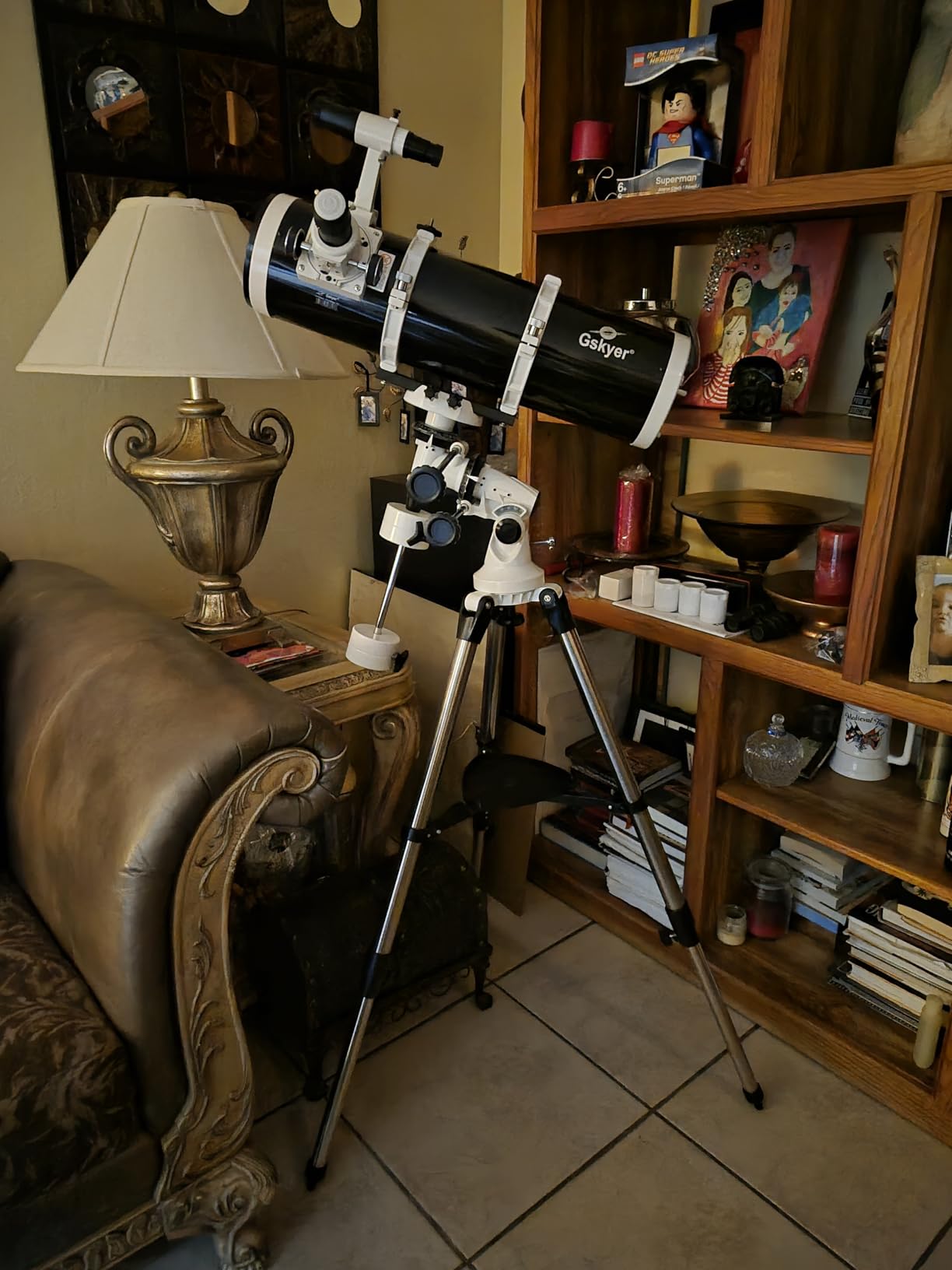
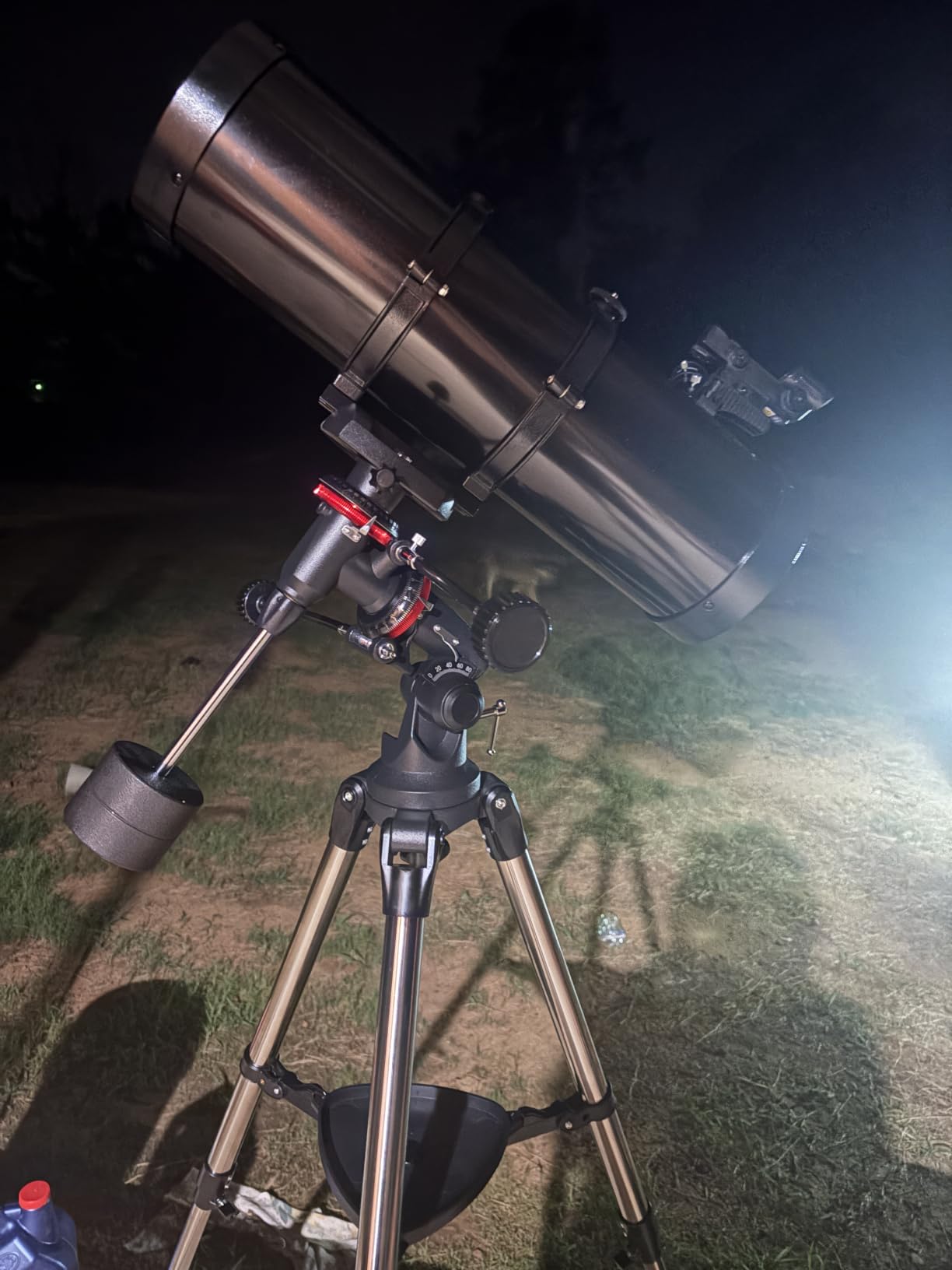
The bundled package is unusually generous: three eyepieces, a 3X Barlow, a finderscope, an adjustable tripod and a Bluetooth remote for phone photography without an app. At 30.1 pounds it is portable enough for a driveway, and the toothless focusing base runs smoothly for fine focus.
What it is not is a grab-and-go instrument. Equatorial head assembly, counterweight balance and polar alignment add real setup time, and the 1-year warranty is the shortest in this roundup. Budget ten minutes of setup rather than expecting a five-minute session.
Does a German equatorial mount really help with planets?
Yes, and it is the reason we rate this scope highly. Slow-motion controls correct for the Earth’s rotation slowly in one axis, which means a planet can sit in a high-power field for several minutes instead of leaving it in under two. For Jupiter, those minutes are the difference between seeing the Great Red Spot and chasing it.
The tradeoff is complexity. An alt-az mount just points where you look, while an equatorial head has an axis, a counterweight and an angle that has to be roughly right. Beginners who will observe casually tend to prefer the simpler mounts, and most who try the equatorial head stay with it.
What should you upgrade on the Gskyer 130EQ?
Eyepieces, without hesitation. Owners across the review set agree the supplied set is the weak link, and the correct fix is one good high-quality eyepiece in the 6mm to 10mm range rather than a full set.
After that, a red-dot finder to replace the supplied finder, and a laser collimator if the scope lives in a car. A 1-year warranty and lifetime maintenance support are worth weighing against scopes with longer cover.
7. MEEZAA 150EQ – the best bundled package for a complete first setup
MEEZAA Telescope, 150EQ Newtonian Reflector Telescope for Adults Astronomy Beginners, Professional Astronomical Telescopes with Equatorial Mount, Tripod, Phone Adapter, Moon Filter and Large Carry Bag
150mm aperture
650mm focal length
Equatorial mount with slow motion
26x to 130x with Barlow
Pros
- Equatorial mount with precision dials and slow-motion knobs for smooth tracking
- Generous accessory bundle with eyepieces
- Barlow
- moon filter and carry bag
- Stainless steel tripod and smooth gimbal hold steady images
- Sharp bright views of lunar craters and Jupiter's bands
Cons
- Newtonian design needs periodic collimation
- Included Kellner eyepieces limit fine planetary detail
- Plastic focuser and total weight reduce casual portability
Everything else in this roundup makes you buy something. The MEEZAA 150EQ arrives with 25mm and 10mm eyepieces, a 2X Barlow, a red-dot finder, a moon filter, a phone adapter, a carry bag and a stainless steel tripod, so a complete setup needs no second purchase to reach 130x.
Underneath the bundle is a 150mm Newtonian on a German equatorial head, which is a genuinely capable planetary combination. Six inches of aperture is the second-largest in this group, and the 650mm focal length gives 26x to 130x with the supplied Barlow. Owners report bright Moon and Jupiter views and a head that tracks once aligned.
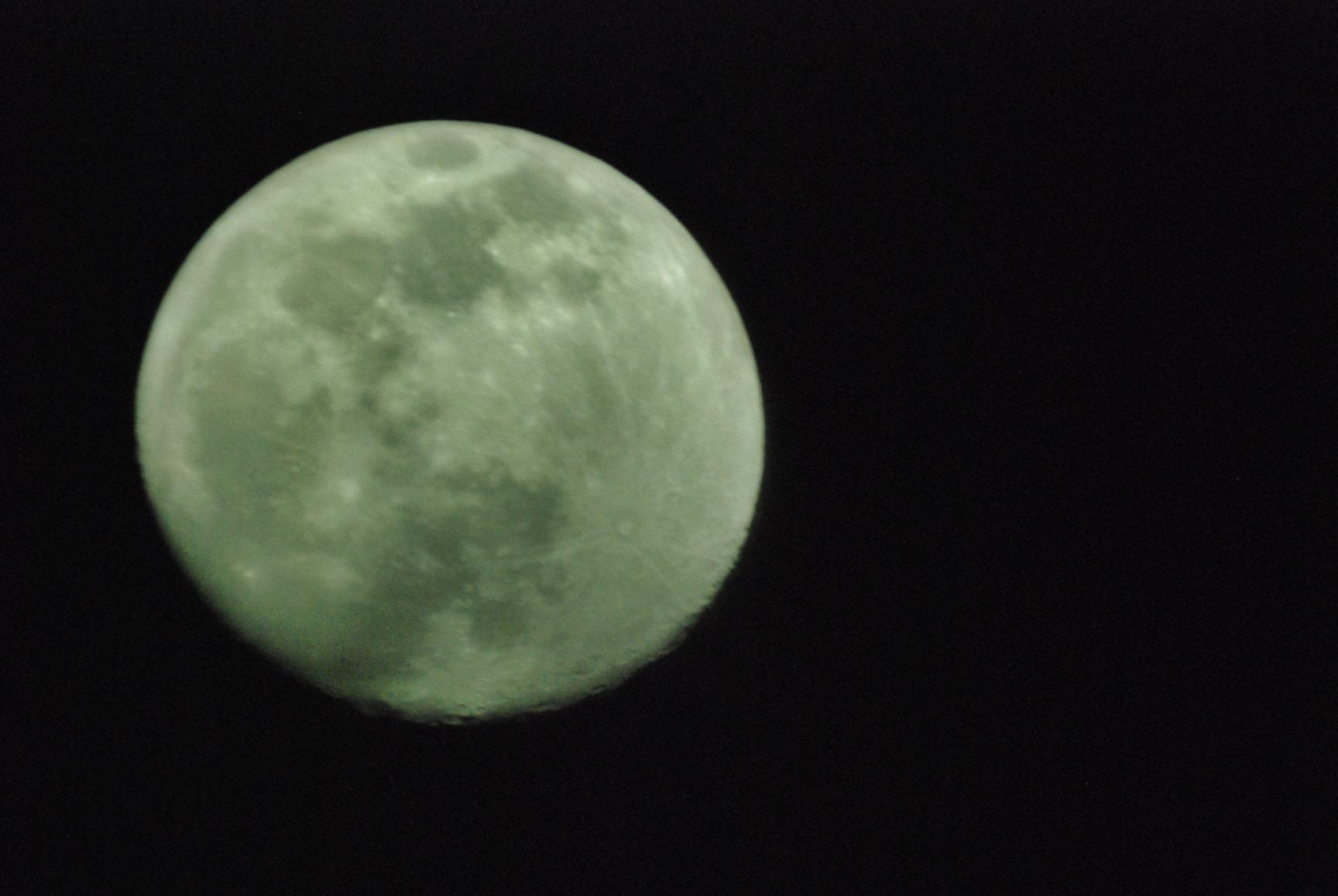
The moon filter is the accessory more manufacturers skip, and it earns its place. A neutral-density lunar filter tames glare, so a first-time observer can raise the power on a crater field without being blinded by the brightness, which is a real problem at 100x on a six-inch mirror.
We would still change two things. The Kellner eyepieces are entry-level and cap how much planetary detail a six-inch aperture can deliver, and the plastic focuser is less precise than a rack-and-pinion design. Neither ruins the scope, and a single better eyepiece fixes most of it.
Is a 150mm Newtonian good for planets and the moon?
Yes, and it is arguably the best aperture-to-price ratio here. Six inches resolves lunar craters at high power, separates Jupiter’s belts, and shows Saturn’s rings as a distinct structure rather than a bump on the planet, which is exactly what people buying a first telescope hope for.
What 150mm will not do is track itself, and it needs collimating after transport. Both are manageable skills that the scope rewards you for learning, which is arguably a feature for anyone who wants to understand their instrument rather than just switch it on.
What are the compromises in this package?
The optics are entry-level in the details that matter at high power. A 2-inch rack-and-pinion focuser, a better 6mm to 9mm eyepiece and a laser collimator are the three upgrades that turn this into a much stronger planetary instrument.
A small number of buyers report a primary mirror smaller than the advertised aperture, so check the mirror diameter on arrival. A few also find the phone adapter fiddly to align, which is fair, since it is a novelty feature rather than a serious planetary tool.
8. Celestron PowerSeeker 127EQ – the most-reviewed reflector, with a reputation for fiddliness
Celestron PowerSeeker 127EQ Reflector Telescope for Home Astronomy
127mm Newtonian reflector
1000mm focal length
Manual German equatorial mount
13 pounds
Pros
- 127mm aperture shows craters
- Jupiter's bands and Saturn's rings compactly
- Equatorial slow-motion controls allow manual planet tracking
- Compact 13 pound design is easy to carry to dark-sky sites
- Optional motor drive can be added later for assisted tracking
Cons
- Mirror collimation is required and units often arrive out of alignment
- Equatorial mount and tripod are the weakest link with backlash and vibration
- Included 4mm eyepiece is awkward to use and the supplied Barlow adds little
With 9,247 reviews, the PowerSeeker 127EQ is the most thoroughly examined reflector in this roundup, and the pattern in the reviews is consistent: spend an hour collimating it, upgrade the eyepieces, and it delivers genuinely good planetary and lunar images for very little money.
At 127mm aperture and 1000mm focal length, it is close to ideal for planets. A 20mm eyepiece gives 50x, which frames the Moon nicely, and a 4mm gives 250x, which is more than most nights will support. The 0.91 arc second Dawes limit is respectable for the aperture.
The 4.1 average reflects real friction points rather than bad optics. Owners point to factory collimation that may be off on arrival, a flimsy equatorial mount and tripod with backlash, and an included finder whose image is reversed, which confuses new users aiming at the Moon.
Weight is this scope’s underrated strength. At 13 pounds it is one of the lightest serious reflectors here, so a teenager can carry it alone to a dark site. Two-year cover and compatibility with an optional motor drive make it a sensible place to grow into rather than out of.
Should a first-time buyer choose this scope?
Only if you are willing to collimate it. The design is not plug-and-play, and the mount is the limiting factor at high power, so a beginner who just wants a working setup on night one will be better served by a refractor or a Maksutov.
If you are patient and want to learn how a Newtonian works, this is a very good teacher. Collimation, eyepiece selection and equatorial alignment are the three skills every serious amateur eventually needs, and this scope lets you practise all three cheaply.
What must you fix before serious planetary use?
Collimation first. A cheap laser collimator and ten minutes of patience turn a soft image into a sharp one, and it should be redone after any rough car journey. Until then the view looks worse than the aperture suggests.
Eyepieces second. The 4mm supplied is very small and awkward to use, and the supplied Barlow adds little to a 1000mm tube. A 25mm and a 10mm Plossl, or one good 7mm orthoscopic, changes the experience more than anything else you can spend on this telescope.
9. Zhumell 10-inch Dobsonian – the most light per dollar, if you can move it
Zhumell – 10-inch Dobsonian Reflector Telescope – Large Aperture for Crisp, Bright Images – Solid Base Construction with Handle for Easy Transport – Ideal Astronomical Telescope
10-inch multi-coated primary mirror
1250mm focal length
Built-in mirror cooling fan
47 pounds
Pros
- 10-inch aperture gives the brightest and most detailed images in this group
- Built-in cooling fan shortens time to sharp images after temperature changes
- Sturdy base with integrated carry handle and manual clutches
- Generous kit with two eyepieces
- moon filter and laser collimator
Cons
- 47 pounds makes it difficult to move and set up alone
- Manual altitude bearings cannot track planets across the sky
- Reflector design needs occasional collimation
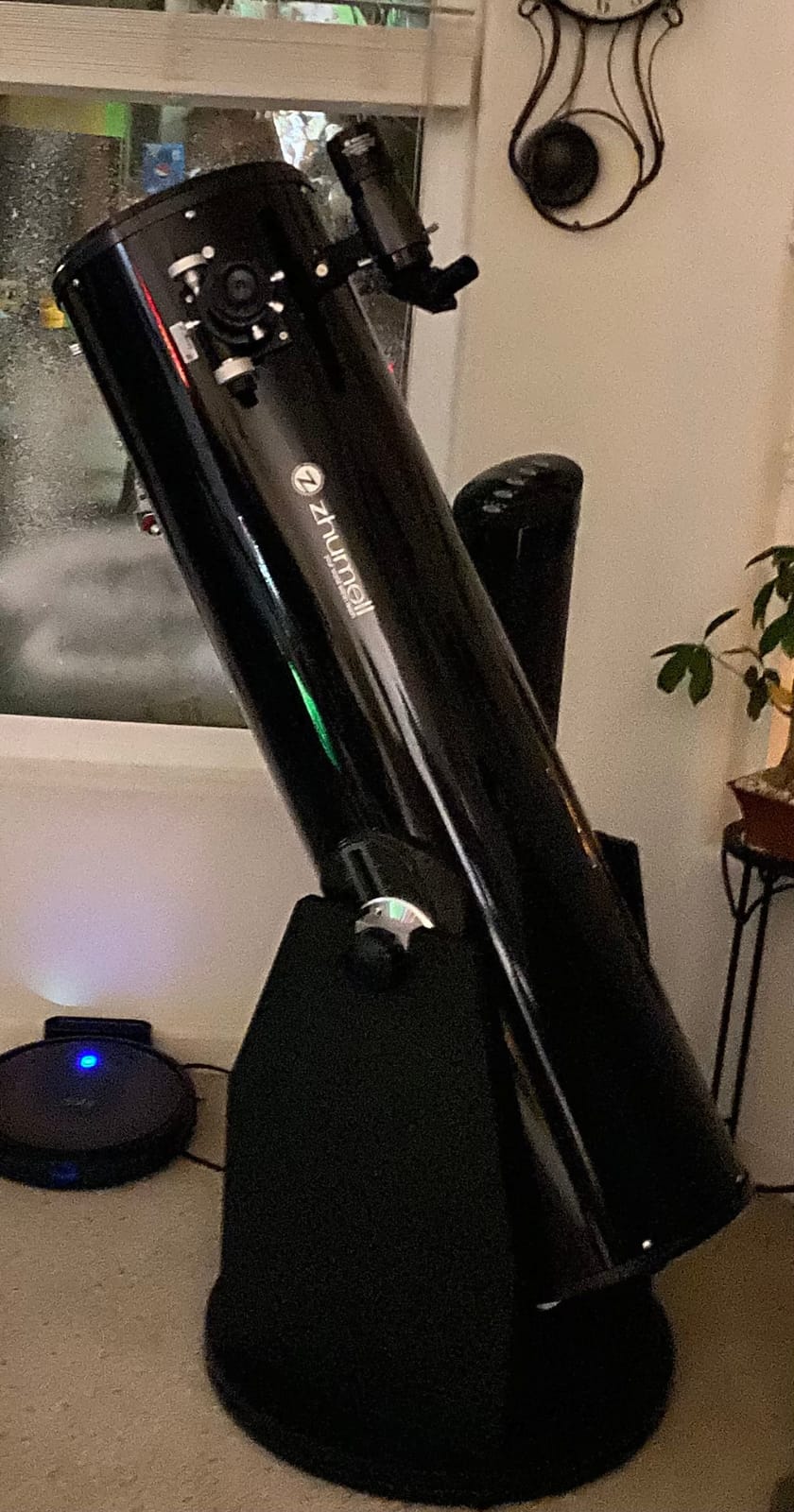
Ten inches of aperture is a different category. When every other scope here tops out at 127mm to 150mm, the Zhumell 10-inch pulls roughly three times the light, and on a night of steady seeing that translates into detail you simply cannot reach on a smaller mirror.
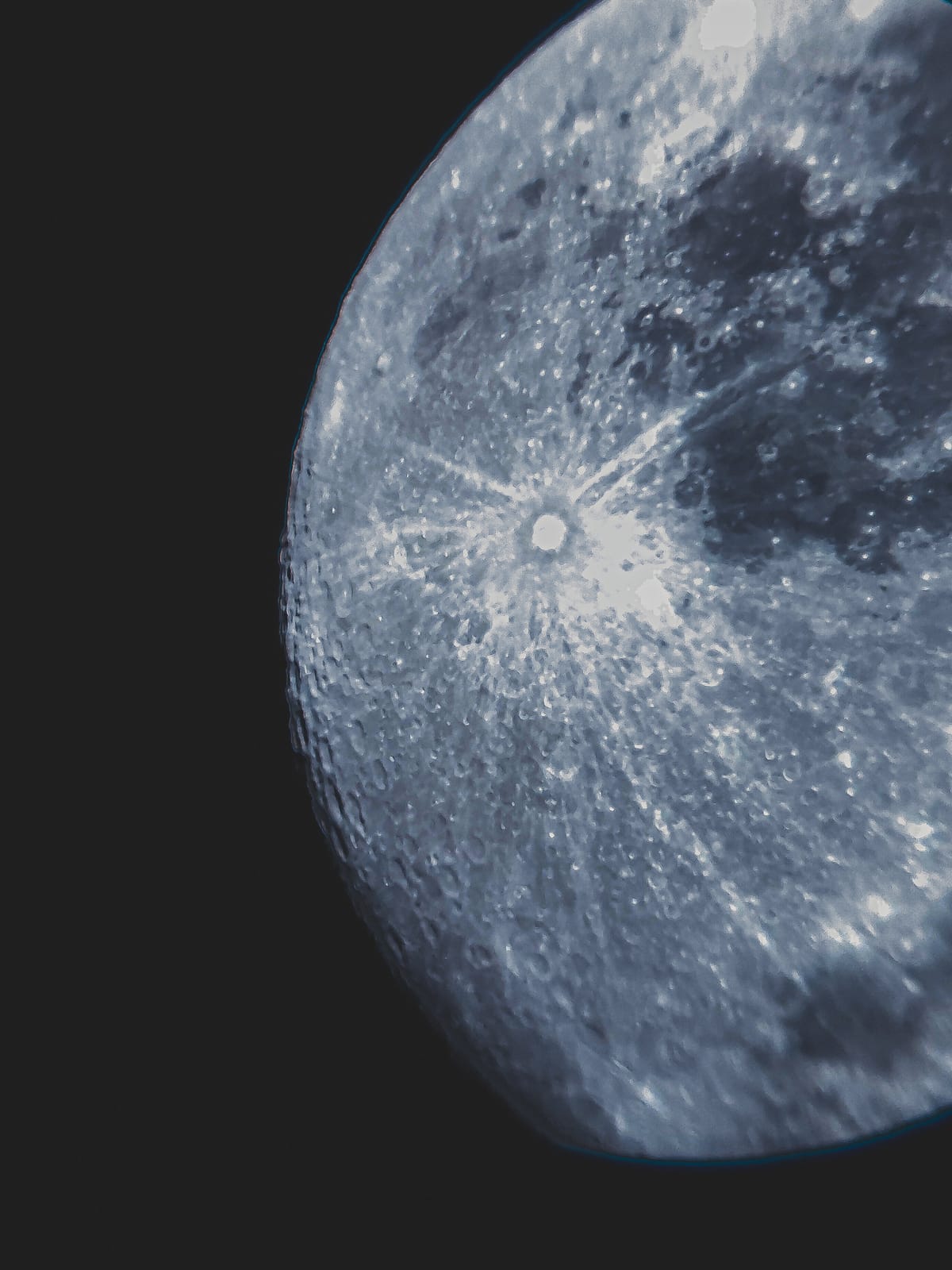
On the Moon, craters a few kilometers across start to hold shadow definition rather than merging into a grey plain. On Jupiter, the festoons hanging off the belts become visible. On Saturn, the Cassini Division is not just a gap but a resolved structure, and the ring shadow on the planet separates from the ring itself.
The built-in cooling fan is the detail that separates this from a generic big Dobsonian. A 10-inch mirror takes a long time to reach ambient temperature, and a mirror that is warmer than the air produces blurred, hazy images. The fan cuts that wait dramatically, which matters most in the first hour of a session.
Two eyepieces in 1.25 and 2 inch formats, a right-angle finder, a moon filter and a laser collimator are all included, so the accessory budget on this one is genuinely low. At 139x with the supplied eyepieces, it arrives already at planetary power.
Does a 10-inch Dobsonian show more than a 6-inch?
It shows more because light gathering scales with the square of aperture, and resolution scales with aperture directly. The jump from six to ten inches is about 2.8 times the light, and that is exactly the regime where the Cassini Division and the Great Red Spot stop being ambiguous.
With only 56 reviews, this is the least tested scope here, and its 4.0 average with a 14 percent one-star share reflects bulk and handling rather than optics. If you can lift and set it up, the aperture is the biggest single upgrade available in this roundup.
Is a 10-inch Dobsonian overkill for planets and the moon?
Not overkill, just inefficient for a narrow brief. It is a superb planetary instrument, but you are buying deep-sky light gathering as a side effect, and that is a lot of glass to own if Saturn and the Moon are all you ever plan to look at.
At 47 pounds it needs two people to move safely and a flat, level observing area. Anyone who will observe alone, travel with their scope, or observe from a small deck should choose a lighter instrument and spend the difference on eyepieces.
10. SVBONY SV503 80mm ED Refractor – the sharpest stars for astrophotography-minded observers
SVBONY SV503 Upgraded ED Refractor Telescope, 80mm F7 with Field Flattener
80mm ED refractor with S-FPL51 glass
560mm focal length at f/7
0.8X field flattener
2.5 kg tube
Pros
- S-FPL51 ED glass gives clean low-chroma images and accurate star colour
- 0.8X flattener keeps stars sharp corner to corner
- 2 inch dual-speed focuser with 1:10 micro adjustment
- Light 2.5 kg tube balances on modest mounts
Cons
- Optical tube only
- so a mount
- tripod and diagonal are separate purchases
- No finder scope included
- Best suited to imaging
- so visual use needs added eyepieces
The SV503 is the highest-rated optical tube in this roundup at 4.6 across 186 reviews, and the reason is the glass. S-FPL51 extra-low-dispersion element in an 80mm f/7 doublet gives colour-free, high-contrast views, which is what you want when Jupiter fills the field and any colour fringing becomes obvious.
At 560mm focal length, a 10mm eyepiece gives 56x and a 7mm gives 80x, so it is a modest performer for planets compared with the 1300mm Maksutov. What it wins is image quality per unit of magnification, and for observers who also want to photograph what they see, that is a good trade.
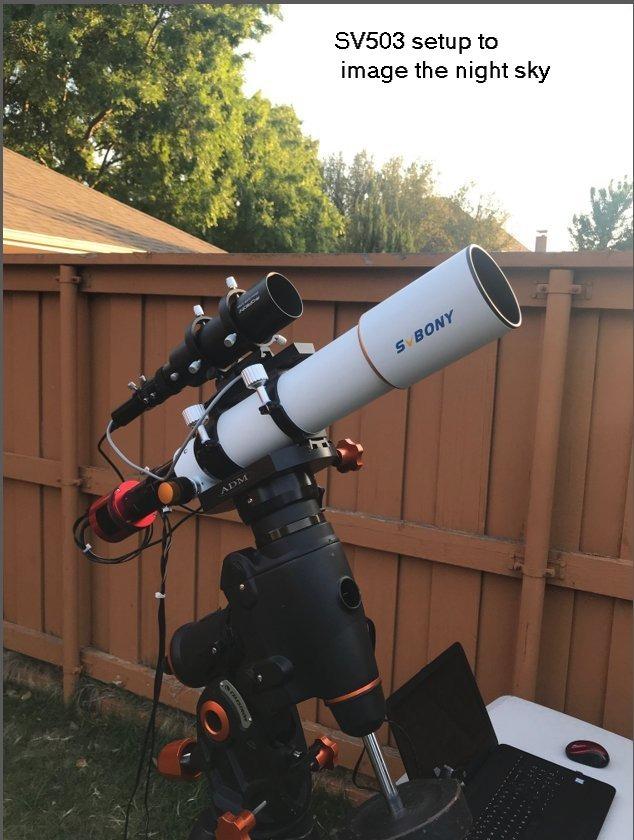
The included 0.8X flattener and 2-inch dual-speed focuser make this an imaging-first instrument. Owners report build quality comparable to established premium brands, with flat, colour-free star fields after correct spacing, and the micro-adjustment focuser makes fine planetary focusing achievable rather than a fight.
At 2.5 kg the tube balances on modest mounts and fits in a bag, and the lifetime warranty is the strongest in this roundup. Just budget separately for a mount, a tripod, a diagonal and at least two eyepieces before it is usable at an eyepiece.
Is a short-tube refractor good for planets?
Good, provided the aperture is sufficient. At 80mm you get a clean, contrasty image with no colour fringing, which makes small targets look better than they would through a coated achromatic of the same size. The 560mm focal length just means you rely on a Barlow for high power.
For the Moon it is excellent, because the wide field at low power shows the whole disc in a satisfying view. For Jupiter’s belts and Saturn’s rings, the 1300mm Maksutov in this roundup reaches those powers without extra glass.
Who should skip an optical-tube-only refractor?
Anyone who wants one box that works out of the package. This arrives as a tube, so a first-time buyer who does not already own a mount will find the total cost higher than a complete telescope of similar aperture.
It is also a mistake to buy it purely for planets if that is all you will observe, since the money is better spent on aperture. Buy it if you intend to image the Moon and planets with a camera, where the flat field and colour correction pay for themselves.
11. SVBONY SV550 80mm Triplet APO – color-free planetary views in a portable tube
SVBONY SV550 AP0 Telescope, 80mm ED F6 Triplet Apochromatic Refractor OTA
80mm apochromatic triplet
480mm focal length at f/6
2.5 inch 1:10 focuser
2860 g tube
Pros
- Triplet apochromatic optics show essentially no false colour on Jupiter or the Moon
- Finish and build quality comparable to costlier premium tubes
- Heavy 2.5 inch 1:10 focuser carries imaging chains without sag
- Compact enough for a gym bag for portable observing
Cons
- Focus locks are light so the tube can be knocked out of focus
- Short focuser tube can limit inward travel with accessories
- Some units arrive with dust between the lens elements
Three elements instead of two is the whole story. The SV550 uses an air-spaced S-FPL51 element plus two correction lenses to bring three wavelengths to a common focus, which is why buyers describe a William Optics-class triplet without the corresponding price. On Jupiter, where a doublet fringes the belts blue and orange, that difference is visible.
Because the chromatic aberration is essentially gone, contrast is what improves. Detail that a lesser scope smears into a coloured haze separates cleanly, so the 80mm aperture behaves more like a 100mm instrument. On the Moon, the absence of colour fringing makes crater rims look sharper than they should by rights.
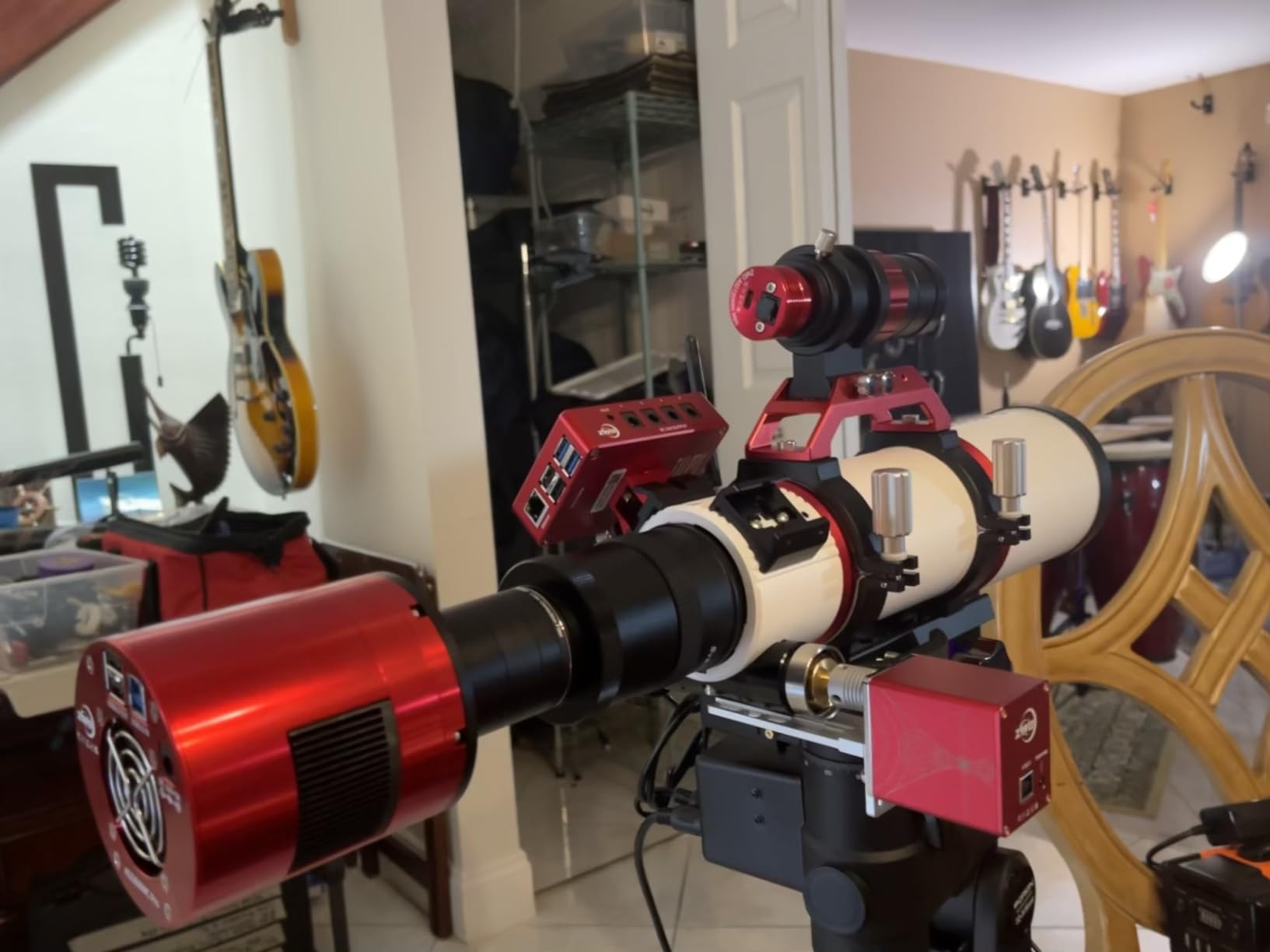
The build is what surprises people. A 2.5-inch magnesium alloy focuser with 1:10 micro-reduction, four internal light baffles and an 87mm back focus distance is a serious instrument, and at 2860 g it is light enough to carry to a dark site in a backpack alongside a small mount.
At only 39 reviews, the sentiment is strongly positive but statistically thin, so we would hold expectations accordingly. The recurring caveats are practical: the focus locks are light, the focuser tube is short, and the dovetail sits low enough to touch the focuser when the tube is balanced far forward.
Is an apochromatic refractor worth the extra money for planets?
Worth it if colour fringing bothers you, and most observers notice it once they see a triplet side by side with a doublet. It is not worth it if aperture is your real limit, because a triplet does not gather more light than an achromat of the same size.
Compare it to adding a Barlow to a scope you already own. Spending on colour-free glass tends to produce a smaller perceived gain than spending on aperture, so this makes the most sense as an addition to a system rather than a first and only telescope.
What should I check when the SV550 arrives?
Inspect the lens elements under a light for internal dust, which some arrive with, and check that the focuser rotates smoothly with even tension. These are quality-control variations, not design faults, and returning early is easier than living with them.
Plan your mounting carefully. The dovetail rail sits low relative to the focuser, so a tube ring mounted far forward can contact it, and the short focuser tube limits how far accessories can extend inward. A dovetail-to-Vixen adapter gives you more freedom.
Buying Guide: How to Choose a Telescope for Planets and the Moon
Aperture decides everything
Aperture is the diameter of the lens or mirror, and it is the single specification that limits planetary detail. A 70mm refractor shows the Moon beautifully and Jupiter as a disk with moons; a 150mm reflector shows lunar craters near the pole, the Cassini Division and Jupiter’s festoons. If you can only pick one thing, pick aperture.
A practical ladder: 70mm for the Moon and the planets as disks, 100mm to 130mm for the first real structure on Jupiter and Saturn, 150mm and above for the Cassini Division, the Great Red Spot’s internal detail and Mars’s polar caps. The 120mm range is the sweet spot most observers settle on.
Focal length and focal ratio
Focal length is the distance from the objective to the point of focus, and it sets how much magnification each eyepiece gives. Long scopes are kind to planets because a given eyepiece produces higher magnification, and a long tube is easier to keep steady. The rule of thumb is 1000mm of focal length as a comfortable minimum for planetary work.
Focal ratio is focal length divided by aperture. Fast ratios such as f/5 and f/6 give brighter, wider-field images that tolerate average eyepieces, which is why the Heritage 150 works so well for beginners. Slower ratios such as f/10 and f/12.8 deliver higher contrast on long tubes, which is why refractors with 900mm and 1300mm focal lengths excel on Saturn.
Magnification and the 50x per inch rule
Magnification is simply telescope focal length divided by eyepiece focal length, so a 1200mm telescope with a 10mm eyepiece gives 120x. Useful magnification runs at roughly 50x per inch of aperture, which is 350x for a 7-inch scope and 500x for a 10-inch one. Above that, you are magnifying your atmosphere.
Target references worth remembering: the Moon rewards 50x to 200x, Saturn’s rings begin to separate around 100x, the Cassini Division needs roughly 150x, Mars is worth 100x to 200x, and Jupiter’s cloud belts and the Great Red Spot respond between 180x and 300x. Add a 3x Barlow to reach those powers.
Telescope types, in plain terms
Refractors use a lens, need no maintenance, and give the highest contrast per unit of magnification. They are the easiest first instrument and the right choice for the Moon and for families. Newtonian reflectors gather more light per unit of money and need periodic collimation. Maksutov-Cassegrains and Schmidt-Cassegrains are compact compound designs that pack long focal lengths into small tubes, and Schmidt-Cassegrains add GoTo pointing.
For a detailed look at each design, our guide to the best refractor telescopes for planetary viewing goes deeper on lens types and chromatic aberration, which is the main flaw in budget achromats.
Mounts and vibration
Mount vibration is the most common real-world frustration in beginner forums, and it matters more than people expect above 150x. A light alt-azimuth mount on a thin tripod shakes for several seconds after a nudge, and at high power that means constant refocusing. Solid altitude bearings, as on the Classic 200, transmit far less.
Equatorial mounts with slow-motion controls solve a different problem: they let you follow a planet as Earth rotates. GoTo mounts solve pointing, which is the biggest hurdle for new observers, at the cost of weight, batteries and a learning curve. Our pick of planetary eyepieces covers what to plug into them.
Eyepieces, and the order to upgrade
The included eyepieces are consistently the weakest link in budget scopes, and forum consensus treats them as the first thing to replace. A good sequence is: one quality 25mm and one 6mm to 10mm for planets, then a 2x or 3x Barlow, then a moon filter, then a better finder such as a red-dot unit or Telrad.
That order matters because glass improves what you see immediately, while a mount upgrade only helps if you can hold the target. Our astrophotography telescope roundup covers the platforms worth pairing with planetary eyepieces for imaging work.
What to avoid
Avoid 60mm to 70mm scopes sold with plastic alt-azimuth mounts and thin steel tripods, especially from general electronics retailers. The optics are sometimes acceptable, but the mount is the problem: it shakes, it cannot track, and it makes a decent aperture feel like a bad one. Buying a 90mm or 102mm tube on a proper mount is a better path.
Also avoid any reflector sold without any mention of collimation, and any listing that bundles a 4mm eyepiece as a selling point. A 4mm eyepiece is an emergency-in-the-field tool, not something to plan a planetary session around. A moon filter is worth adding; for solar observing, use a certified solar filter only, and see our solar telescope guide before pointing any scope near the Sun.
What You Can Actually See: Magnification by Target in 2026
Magnification is the easy half of the equation. Aperture decides whether the atmosphere and the optics can show you anything at that power, which is why a 10-inch scope and a 4-inch scope given the same eyepiece do not look remotely alike.
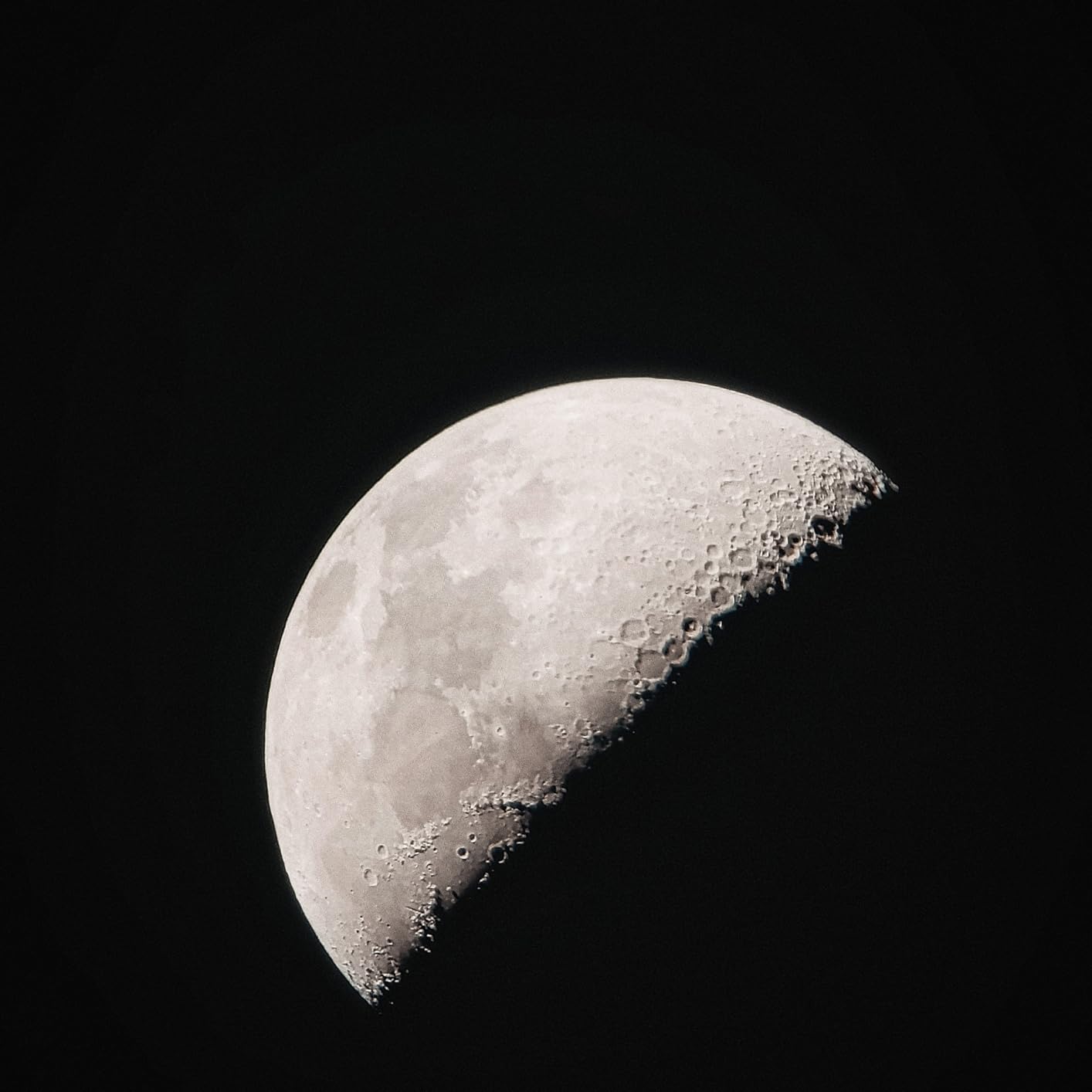
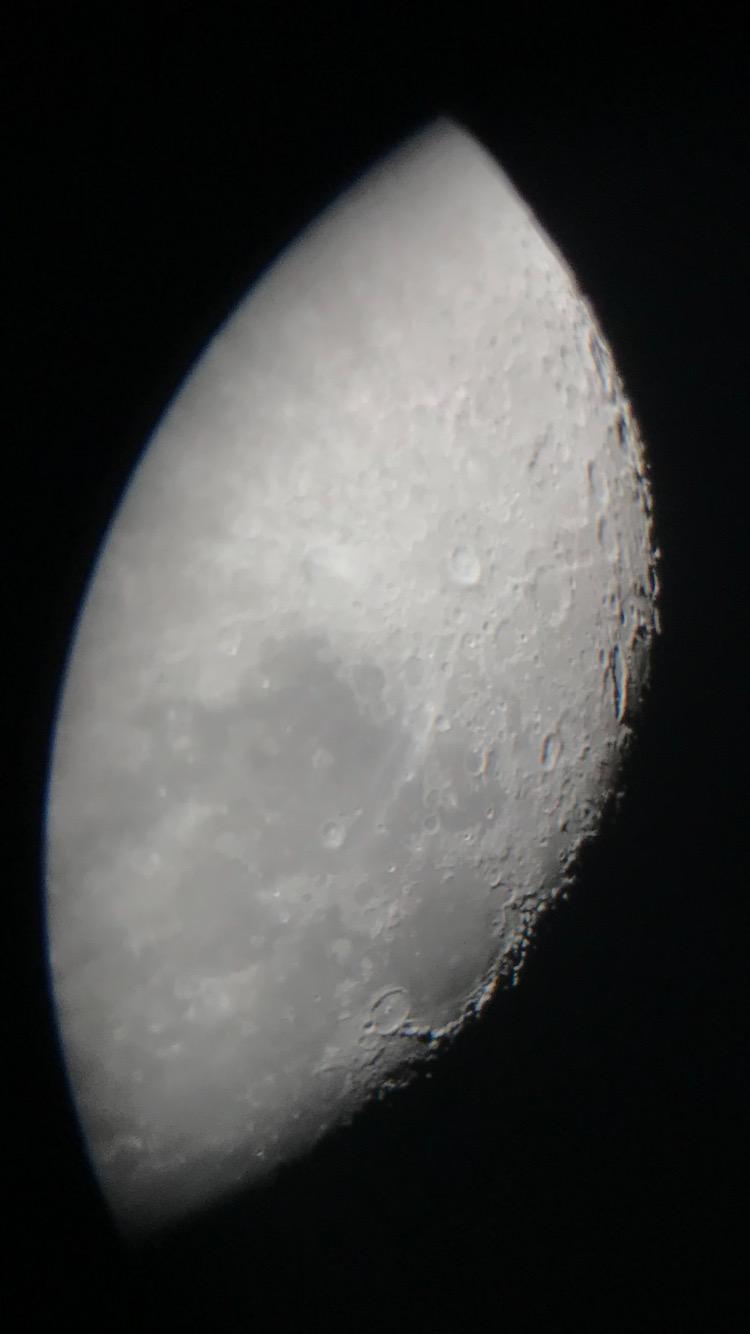
Moon craters and ridges: 50x to 200x, 70mm aperture is enough. Craters near the terminator show the most relief because the low Sun angle casts long shadows.
Jupiter’s four Galilean moons: 40x to 100x, visible in nearly any scope with 70mm or more of aperture.
Jupiter’s cloud belts and the Great Red Spot: 180x to 300x, 130mm to 150mm aperture recommended.
Saturn’s rings as a shape: 25x to 50x, any telescope shows the rings once the tilt is favourable.
The Cassini Division: around 150x, 130mm aperture or more on a steady night.
Mars at opposition and its polar ice caps: 100x to 200x, 150mm or larger gives the best result, and only a few nights per year are favourable.
Double star splitting: 100x to 200x, aperture beats magnification, so a larger scope resolves closer pairs.
Remember that the atmosphere sets the real ceiling. On a night of average seeing, pushing past roughly twice the aperture in inches rarely adds detail, which is why a 6-inch scope in steady air can beat a 10-inch scope in turbulent air. Light pollution affects faint targets more than planets, but a baffled tube still gains you contrast on Jupiter and Saturn from a suburban backyard.
Frequently Asked Questions
What is the best telescope to see planets and the moon?
The Celestron NexStar 8SE is the best all-round choice, with 8 inches of aperture on a computerized fork mount that points itself at targets. For a smaller budget, the Celestron AstroMaster 70AZ shows the lunar surface in real detail, and the Sky-Watcher Skymax 102 Maksutov gives the highest contrast per pound.
What telescope is best for viewing the surface of the moon?
Any telescope with 70mm or more of aperture works, because the Moon is bright and low-contrast targets reveal detail at low power. A 70mm refractor shows craters, ridges and shadow relief along the terminator, while 130mm to 150mm apertures resolve craters near the poles as well.
What telescope magnification is needed to see planets?
Start around 25x to 50x to find the target, then 100x to 200x for detail on Saturn and Mars, and 180x to 300x for Jupiter’s cloud belts and the Great Red Spot. As a ceiling, useful magnification runs at roughly 50x per inch of aperture before the atmosphere turns the image to mush.
What type of telescope is best for viewing the Moon?
A refractor is the easiest and most reliable, since it needs no collimation and holds contrast well. A Newtonian reflector gives you more aperture for the same money and shows finer lunar detail, but it needs periodic collimation. Either way, aperture matters more than design.
How big of a telescope do I need to see the flag on the Moon?
You cannot realistically resolve the flag or any single Apollo footprint with a consumer telescope. The smallest features land near 0.5 arcseconds, which sits at the theoretical limit of an 8-inch mirror and is destroyed by normal atmospheric seeing. Apollo landing sites are visible only as bright points.
What telescope can see Saturn’s moon?
Titan is easy at 50x to 100x with any telescope of 70mm or more aperture, since it is large and bright. Smaller moons such as Rhea and Enceladus need roughly 150x to 200x and an aperture of 130mm or more. A 200x view also splits the Cassini Division in the rings.
Final Telescope Picks for Planets and the Moon in 2026
The best telescopes for viewing planets and the moon in 2026 come down to one honest trade: aperture against convenience. The Celestron NexStar 8SE wins the roundup because 8 inches of Schmidt-Cassegrain glass on a computerized mount delivers the Cassini Division, the Great Red Spot and crater detail without any star-charting. If you want the same planetary detail in a tube you can carry to a dark site, the Sky-Watcher Skymax 102 gives you the contrast at a fraction of the size.
Start smaller only if the budget or the age of the user demands it. The AstroMaster 70AZ is the most-reviewed beginner telescope available and will not disappoint with the Moon. Whichever you choose, spend your first accessory budget on eyepieces and a red-dot finder, because that is where the included kit is weakest. Clear skies.