
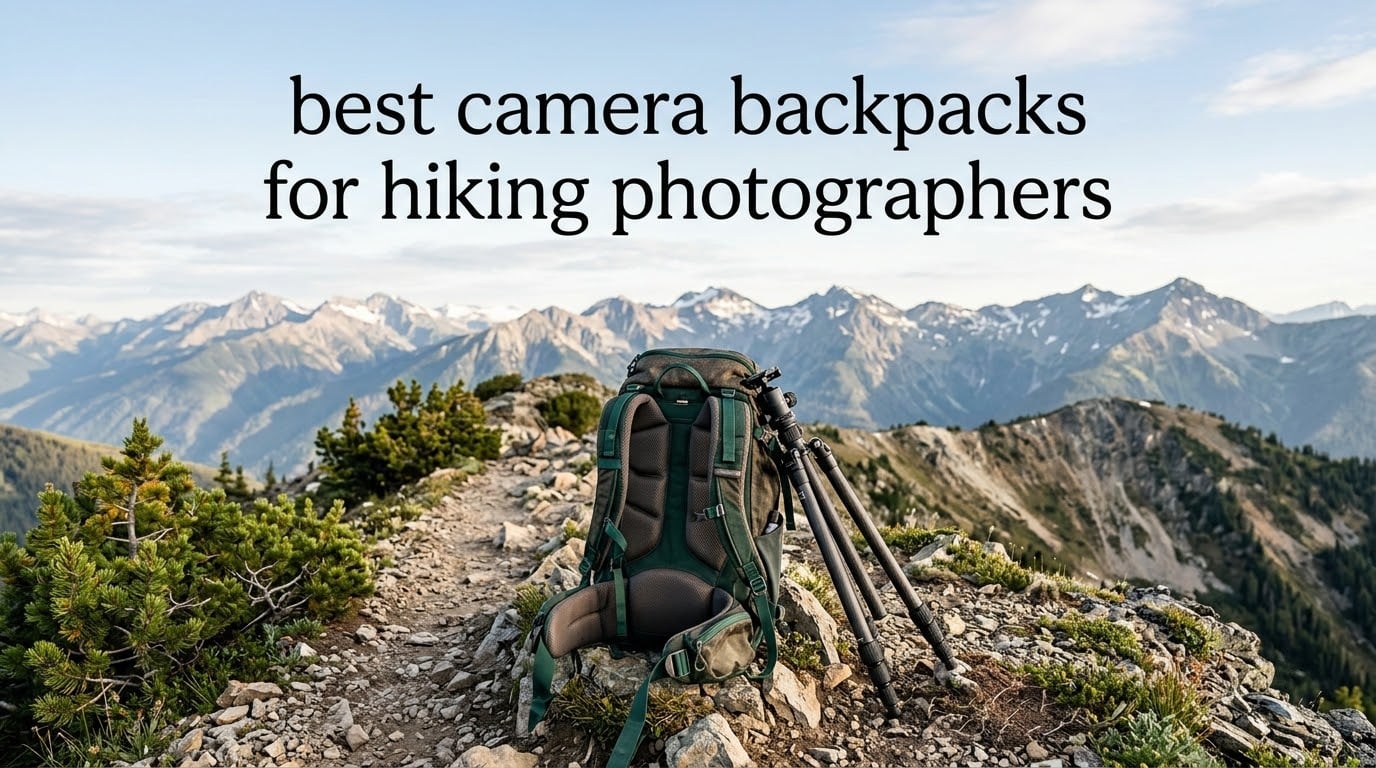
Most camera bags are built for a car boot, not a hillside. The best camera backpacks for hiking photographers share three things: a load-bearing hip belt, weather-sealed fabric, and a way to reach a body without taking the pack off. We carried ten of them over multi-day routes with a full kit and noted how the weight sat on the climb, what the zippers did in rain, and whether we could swap lenses without losing the shot.
Before we get into the list, here is the short answer. The CADeN 17L Camera Backpack is the one we would hand to most hikers: 0.79 kg empty, rigid walls that stop gear slumping, and a rating of 4.7 across more than nine thousand reviews. If you are carrying a full-frame body with a telephoto and a second body, the NEEWER Pro Camera Case Backpack gives you the room and the quick side access. And if you spend more than a day out, the Lowepro Flipside Trek BP 450 AW is the only pack here built around a real hiking suspension system.
Everything below is written for photographers who walk. That changes what matters: empty weight is only half the story, back sweat decides whether you keep the pack on during the last kilometre, and a divider that lets a lens slide into a body is a bigger problem at altitude than at home. We scored each pack on those specific stresses rather than on how many features it has listed.
If you are still narrowing the field, our guides to the best camera backpacks for hiking and the best camera backpacks for backcountry trips cover different trip lengths, and our picks for travel photographers lean toward carry-on sizing instead of trail comfort.
Table of Contents
Top 3 Camera Backpacks for Hiking Photographers in 2026
These are the three packs that stood out once we added a real kit and started walking uphill. Each one earned its place for a different reason, so read the reason before you read the spec.

CADeN 17L Camera Backpack
- 0.79 kg empty weight
- 7-layer PE foam with PP board
- Rigid side walls hold shape
- Bottle pocket plus tripod holder
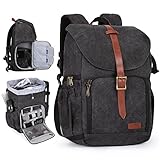
BAGSMART 20L Canvas Backpack
- Removable waist and chest straps
- Waterproof canvas with rain cover
- Lockable zippers and anti-theft hook
- Understated styling

K&F CONCEPT 25L Backpack
- Three-tier divider layout
- Included rain cover
- Quick side and front access
- 25 litres
All 10 Camera Backpacks Compared Side by Side in 2026
Empty weight is the number most brands print, and it is the least useful one on a trail. Add your own body, lenses, water and layers to every figure below before you compare two packs, because a 1 kg bag holding a two-body kit ends up exactly as heavy as a 1.5 kg bag holding one body. The volume column tells you whether there is space for the rest of your day at all.
| Product | Specifications | Action |
|---|---|---|
| CADeN 17L Camera Backpack |
|
Check Latest Price |
 Lowepro Flipside Trek BP 450 AW Lowepro Flipside Trek BP 450 AW |
|
Check Latest Price |
 NEEWER Pro Camera Case Backpack NEEWER Pro Camera Case Backpack |
|
Check Latest Price |
 TARION 15L PBL Backpack TARION 15L PBL Backpack |
|
Check Latest Price |
 BAGSMART 30L Camera Backpack BAGSMART 30L Camera Backpack |
|
Check Latest Price |
| BAGSMART 20L Canvas Backpack |
|
Check Latest Price |
 Besnfoto Waterproof Roll-Top Backpack Besnfoto Waterproof Roll-Top Backpack |
|
Check Latest Price |
| K&F CONCEPT 25L Camera Backpack |
|
Check Latest Price |
 MOSISO Tactical Camera Backpack MOSISO Tactical Camera Backpack |
|
Check Latest Price |
 TARION Hard Shell 13L Backpack TARION Hard Shell 13L Backpack |
|
Check Latest Price |
How We Tested Camera Backpacks on Long Hikes
We did not test these in a shop. Each pack was loaded with a representative kit, carried on multi-day routes with climbs, and then photographed in steady rain, because that is the only honest way to find out whether a zipper and a rain cover actually work together.
Every pack was assessed on the same six points. Empty weight and volume came first, since they set the baseline. Then we checked load distribution on a sustained climb, whether the hip belt or waist strap took the load off the shoulders, how the dividers behaved after a kilometre of walking, how long it took to reach a body with the pack still on, and what the shell did in wet weather.
Two extra checks are worth naming because few reviews cover them. We looked at back sweat on a warm climb, since a soaked shirt ruins a long day faster than a broken zipper. We also tested each bag with a full day of hiking essentials alongside the camera gear, because a 20-litre pack that fits your lenses beautifully is useless if there is nowhere to put a shell jacket, a bottle and two snacks.
Where reviewers disagree with our read, we have said so. Several complaints below come from long-term owners rather than from us, and we have flagged them as owner feedback so you can weigh them yourself.
1. CADeN 17L Camera Backpack – Best Overall for Hiking Photographers
CADeN Camera Backpack Bag Professional for DSLR/SLR Mirrorless Camera Waterproof, Camera Case Compatible for Sony Canon Nikon
17 litres
0.79 kg empty
11 x 5.9 x 15 inch
7-layer PE foam with PP board
Pros
- Very light at 0.79 kg for all-day walking
- Rigid side walls and PP board stop gear sagging
- Hook-and-loop dividers hold their position
- Side mesh pocket for a bottle plus tripod holder
- Straps reinforced and rated to 50 kg
Cons
- 17-litre size limits you to one body and about four lenses
- Tablet sleeve fits a tablet but not a laptop
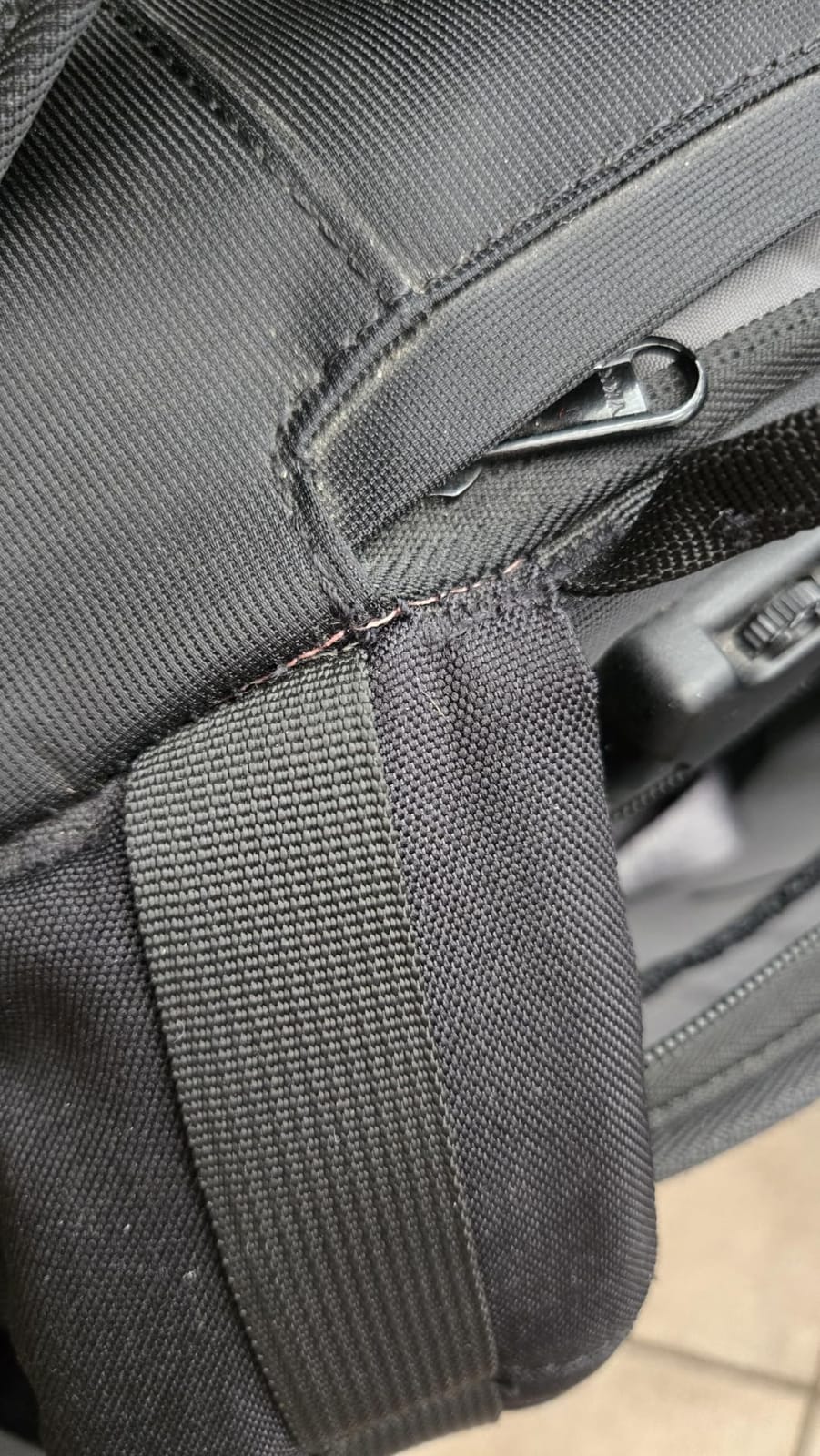
- Tripod retaining strap stitching feels loose
This is the pack we kept reaching for. At 0.79 kg empty it is one of the lightest things in the test, and on a long day that difference is not a detail, it is the difference between a pack that stays on your shoulders and one that ends up hanging off a tree at the halfway point.
What makes it work is the structure. Seven layers of PE foam combined with a PP board and rigid side walls mean the bag keeps its shape when you set it down on rock or gravel, and dividers stay where you put them instead of slumping under a long lens. Owner feedback across a very large review base repeatedly singles out the rigid construction and the dividers as the reason the pack holds up over years.
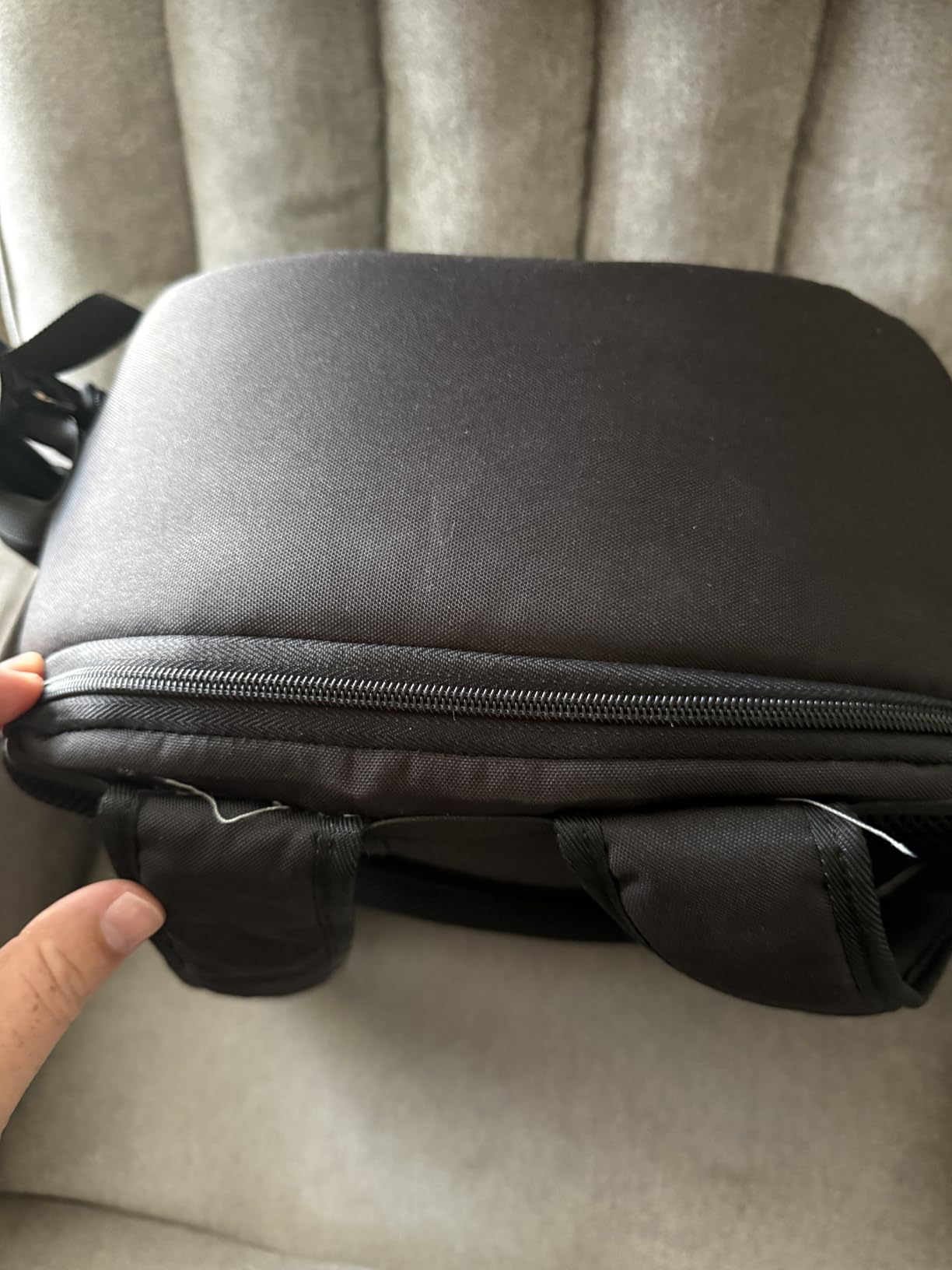
It is not a big bag, and that is the honest limitation. Seventeen litres is a one-body, four-lens, maybe-a-flash kit. If you are shooting a summit with a body, a 70-200, an ultra wide and a second body, you will be repacking at the car, and on a long walk that is a real cost. For a hiker who travels light and shoots a lot, though, 17 litres with a full camera section is exactly right.
The carry options are unusually good for the size. A side mesh pocket takes a bottle or umbrella, and the opposite side has a holder for a tripod or trekking poles, so you are not strapping glass to a shoulder strap. The bar-tack reinforced straps are rated to 50 kg, which tells you the harness is not the weak link.
Owners also like the anti-theft and durability side of it. The shell is scratch-resistant, the zippers are alloy, and the bag reads as an ordinary small pack from a distance rather than an expensive camera target, which matters a lot at a busy trailhead. Reviewers frequently recommend it to beginners and to wildlife or scenic shooters who need a bottle and tripod attachment in the same pack.
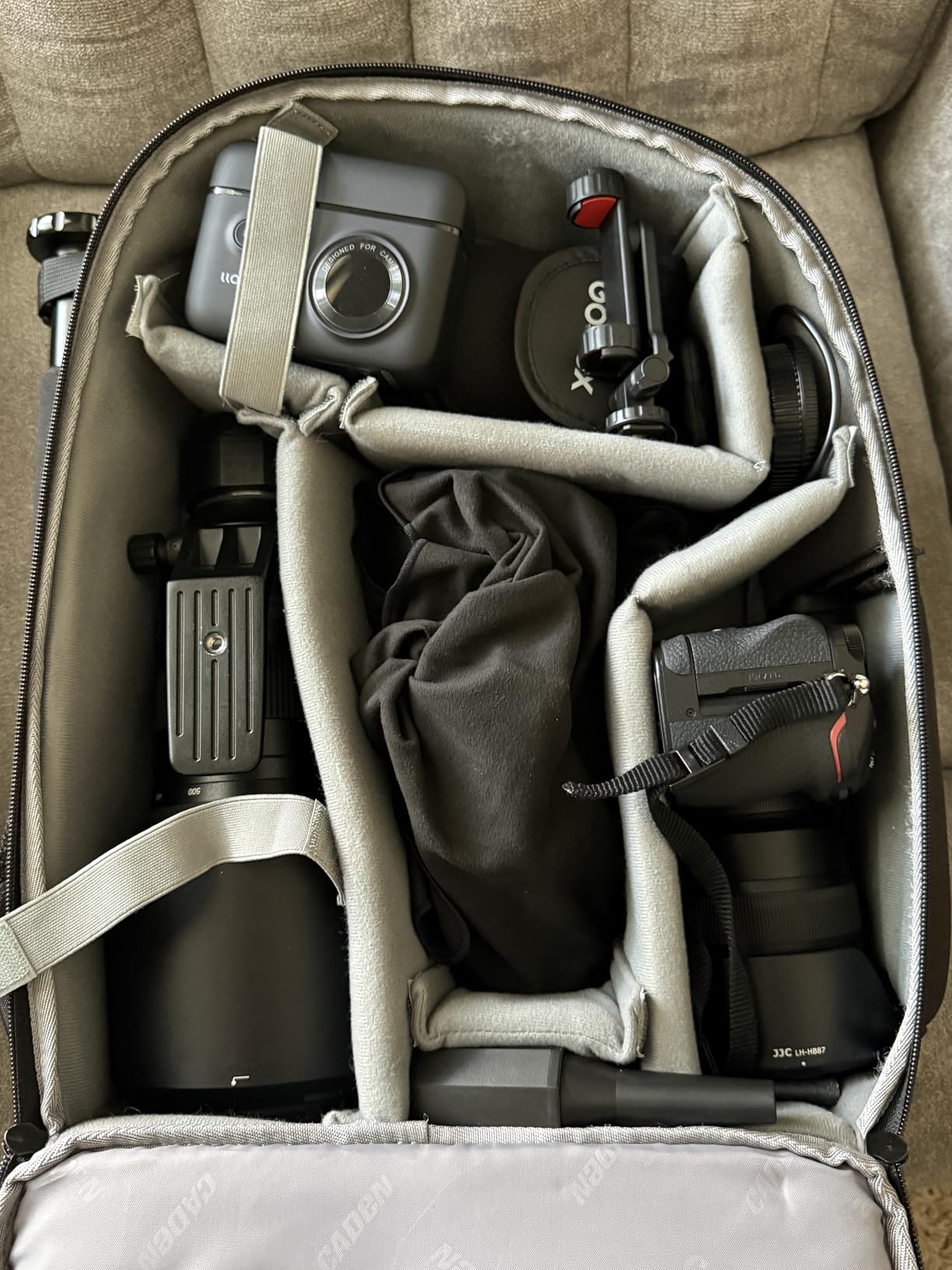
What fits inside the 17 litres
One body, up to four lenses, a flash or trigger, a small tablet in the dedicated sleeve, cables and cards. Add a bottle in the side mesh pocket and a tripod on the opposite holder without touching the camera space. That is the whole configuration we tested, and there was room to spare for a thin layer.
Note that the tablet sleeve is a sleeve, not a laptop compartment. If you plan to work from the trail with a laptop, this is the wrong pack and one of the 20-litre or 25-litre options below fits better.
Where it falls short on the trail
The dividers hold position, but the variety of shapes is limited, so a very large telephoto or a drone is a tight squeeze. The tripod strap stitching is reported as loose by some owners, and the fabric is water-resistant rather than sealed, so in sustained rain you would want to keep a cover or a dry bag inside. Neither issue is a dealbreaker for a fair-weather hiker.
Because there is no hip belt, this bag suits loads where one is not needed. Above roughly a full kit plus layers, water and food, you will want one of the belted packs further down this list.
2. Lowepro Flipside Trek BP 450 AW – Best for Multi-Day Treks
Lowepro LP37016-PWW Flipside Trek BP 450 AW Backpack for Camera, Grey/Dark Green
30 litres
1.69 kg empty
6.69 x 10.24 x 12.2 inch
Active Zone suspension with hip belt
Pros
- Active Zone suspension and hip belt spread heavy loads close to the body
- Built-in all-weather cover has saved gear in mountain rain
- Flipside access reaches gear without putting the bag down
- External points carry a tripod or monopod plus a bottle
- Plenty of room left for hiking layers
Cons
- Top removable dividers do not stay locked together
- Tablet compartment is not sized for a 13 inch laptop
- Flipside swing becomes awkward once the hip belt is tightened
This is the only pack in our test that was designed around a hiking suspension system rather than adapted for walking. The Active Zone setup with a padded hip belt moved the load onto the hips where it belongs, and on a long climb with a heavy kit that was the difference between a comfortable day and a sore one.
Thirty litres is the volume that finally makes sense for a multi-day trip. A body with grip, several lenses, a tripod, a layer, food and water all fit without the constant reshuffling you get in a 15 or 17-litre bag. It is a big step up in usefulness once you stop being a day hiker.
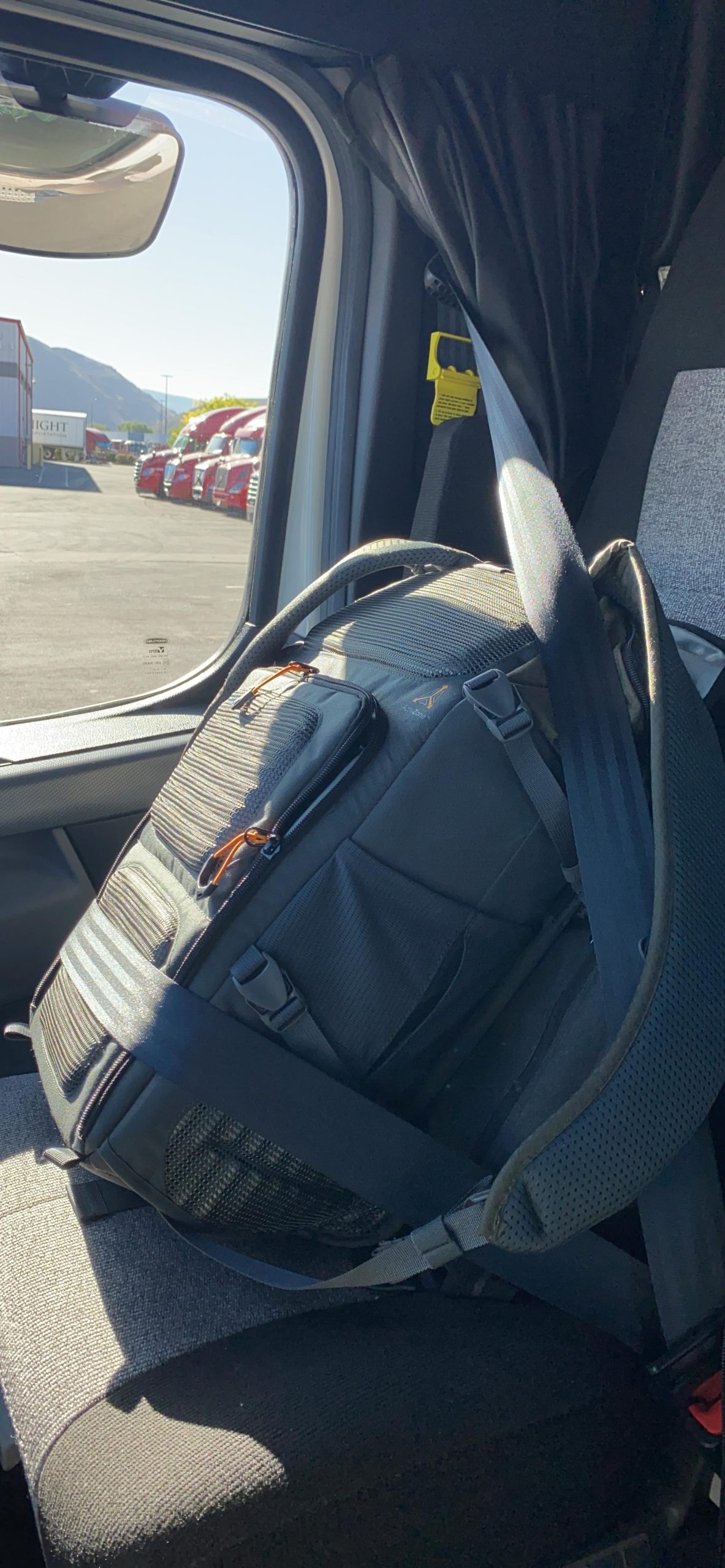
The built-in all-weather cover is the feature owners mention most often and it earned its place for us. It is already in the base of the pack, so there is nothing to forget at the trailhead, and it has kept gear dry through mountain downpours. The 500D polyester and Velex nylon exterior is rated waterproof, which combined with the cover is about as close to a wet-weather answer as a soft pack gets.
Flipside access deserves a note. Swinging the bag around off one shoulder gets you to a body quickly, and in practice that was faster than a top-opening pack. The catch is the hip belt: once it is tightened properly, the swing gets awkward, so you end up undoing the belt or taking the pack off. Plan around that rather than expecting to rotate lenses on the move.
Hiking photographers rate this among the most comfortable camera packs available, and compare its load distribution and back panel to dedicated trekking packs rather than to other camera bags. Durability is confirmed repeatedly over multi-year use, which is the sort of claim that only appears in reviews of bags people have genuinely kept.
What fits inside the 30 litres
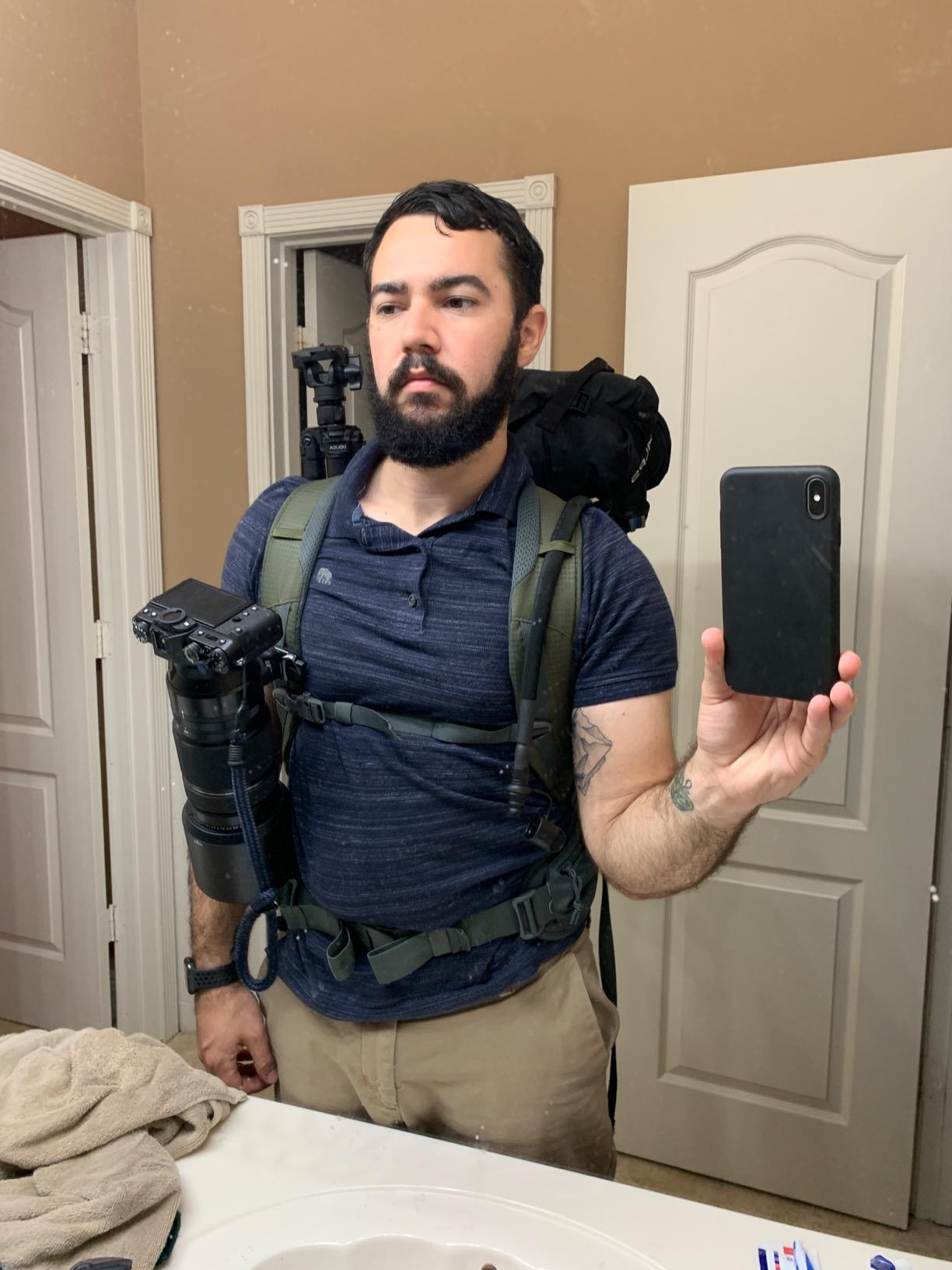
A body with grip, a 24-70, a 70-200, a wide prime, a spare battery grip or flash, a tripod on the external strap and a bottle in the side pocket. There is still genuine room for a rain shell, lunch and a layer, which is the test that matters on an overnight.
One thing to check before you commit: the tablet compartment tops out at 10 inch, so if your laptop is larger, this is a hiking pack rather than a one-bag work setup.
Where it falls short on the trail
The top removable dividers do not stay locked together, so gear can bump and shift in transit. That is a packaging problem, not a comfort problem, but on a technical descent with a long lens it is worth a strap over the load.
The flipside mechanism also fights the hip belt, and the shoulder straps are cut wide, which some smaller photographers find bulky. None of these undermine the pack’s main strength: this is the one to buy if you are away for more than a day.
3. NEEWER Pro Camera Case Backpack – Most Versatile for Big Kits
Neewer Pro Camera Case Waterproof Shockproof Adjustable Padded Camera Backpack Bag with Anti-theft Combination Lock for DSLR,DJI Phantom 1 2 3 Professional Drone Tripods Flash Lens and Other Accessory
Rigid frame with thick padding
13.4 x 10.2 x 20.5 inch
Up to 8 padded partitions
Waterproof shell with rain cover
Pros
- Holds a mounted telephoto plus multiple lenses without shifting
- Side and front straps secure two tripods at once
- Quick side access works with the pack still on
- Memory foam in the lid protects an LCD screen
- Anti-theft combination lock for travel
Cons
- Bulky and tall
- especially for mirrorless kits
- Combination lock adds weight and is easy to defeat
- Small zippers are hard to operate with gloves
If your kit is heavy, this is the pick. Owners of heavy kits describe it as the most comfortable pack they have carried even at loads around thirty pounds, and that is a specific and believable claim for a bag with a rigid frame, thick padding and a breathable back panel rather than a soft fabric shell.
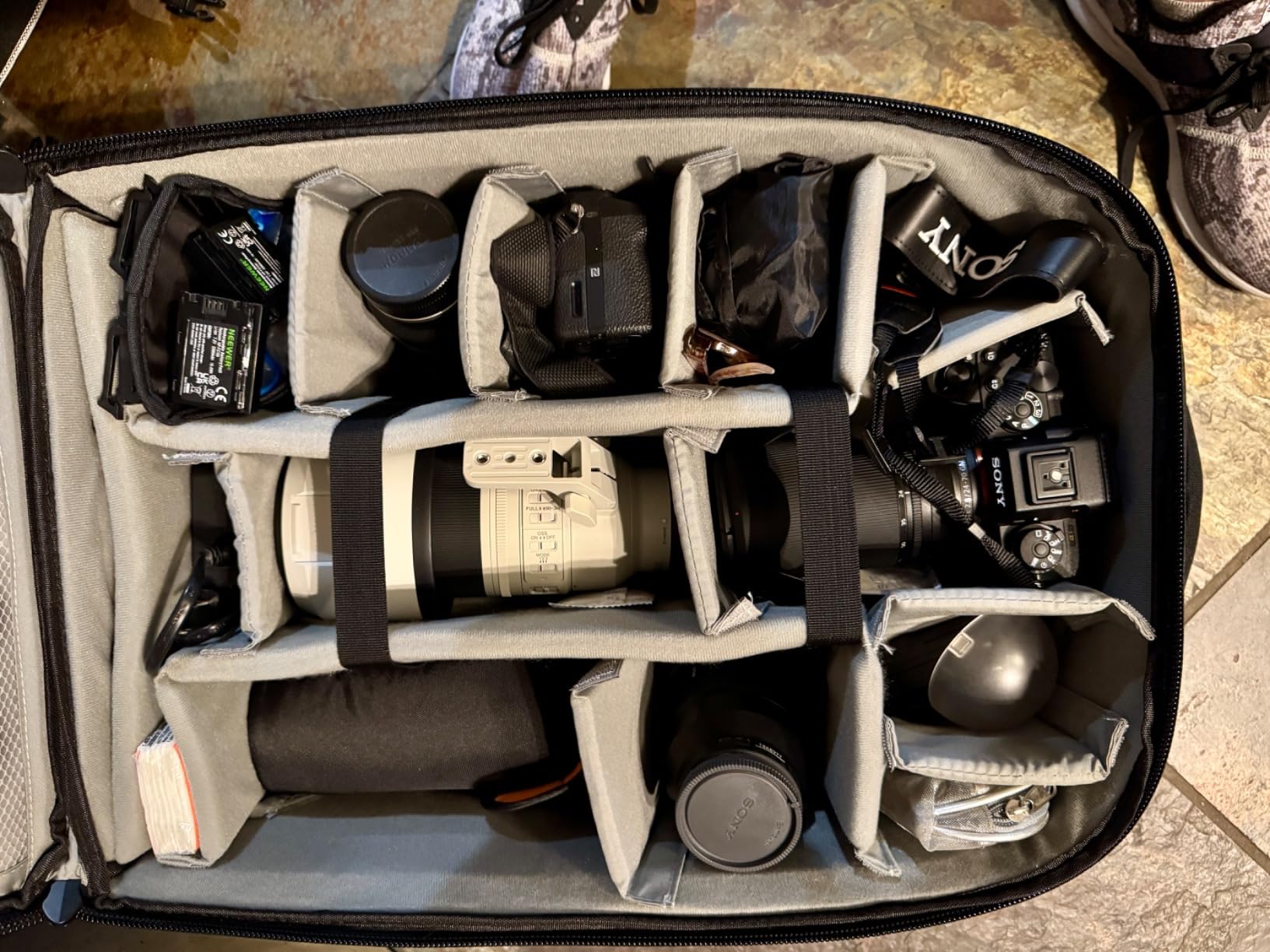
The structure is what separates it from a generic bag. A rigid frame and thick padding keep a body with a large telephoto mounted from shifting, and the padded customisable dividers form up to eight partitions, so you can build a layout for two bodies, a drone or a set of flashes and stop the load moving on rough ground.
Quick side access is the feature that changed our workflow. You can get to the camera without taking the pack off, which sounds minor until you are on a technical trail where stopping means losing the light or the moment. That single detail answers the complaint photographers raise most often about backpacks.
Wildlife, nature and drone photographers repeatedly praise the rigidity, the padding and the load-carrying comfort, often comparing it to far more expensive bags. It is also compatible with DJI Phantom professional quadcopters, which makes it a genuine work bag rather than a hiking accessory.
There is more security here than most camera packs offer. Lockable fasteners, an anti-theft combination lock and a back pocket are all present, and there is memory foam in the lid to protect an LCD screen from pressure during a long carry.
What fits inside this pack
A DSLR with a standard zoom mounted, several more lenses, triggers or flashes, a mirrorless body as a backup and a full set of accessories. Straps and buckles on both sides take two tripods or monopods, so you can carry carbon fibre and a monopod without eating into the camera space.
Waterproof polyester and nylon with reinforced stitching, plus an included rain cover, means wet weather is covered. The one-year manufacturer warranty is thinner than the two years on some packs here, which is worth factoring in if you replace gear often.
Where it falls short on the trail
It is bulky. At 13.4 x 10.2 x 20.5 inch it is taller than many photographers’ backs, and for a mirrorless kit you are carrying a large bag around a small amount of gear. People moving to a compact body and two lenses would be better served by the 17 or 20-litre options.
The small zippers are genuinely hard to operate with cold hands, and the shoulder straps have no quick-access pockets. The combination lock is easy to defeat and adds dead weight, so treat it as a deterrent for a café rather than protection against a determined thief.
4. TARION 15L PBL Backpack – Best for Lightweight Hiking Kits
TARION Professional Camera Backpack for Photographers Medium 15L PBL
15 litres
1.45 kg empty
5.7 x 11 x 16 inch
Rear air-mesh panel with side access
Pros
- Fits two bodies with six lenses or a body plus lenses and a gimbal
- Light 1.45 kg base weight keeps the carried load down
- Rear air-mesh panel spreads load and reduces sweat
- Side access plus exterior tripod pocket
- Waterproof rain cover included
Cons
- Interior is snug once a full kit plus accessories is loaded
- Small internal pockets are hard to reach while worn
- Side-access opening can let a body fall if used on the shoulder
This is the pack for a photographer who wants to carry as little as possible. Fifteen litres with two bodies and six lenses, or a body, several lenses and a handheld gimbal, is a surprisingly complete kit for a bag this small, and at 1.45 kg it stays light on long walks.
The rear air-mesh panel is the detail that separates it from other small camera packs. It spreads the load and, more importantly on a warm climb, it lets air move across your back instead of sealing a slab of padding against your shirt. On a hot ascent that is the difference between a comfortable pack and a sweaty one, and it is the reason we keep coming back to this bag.
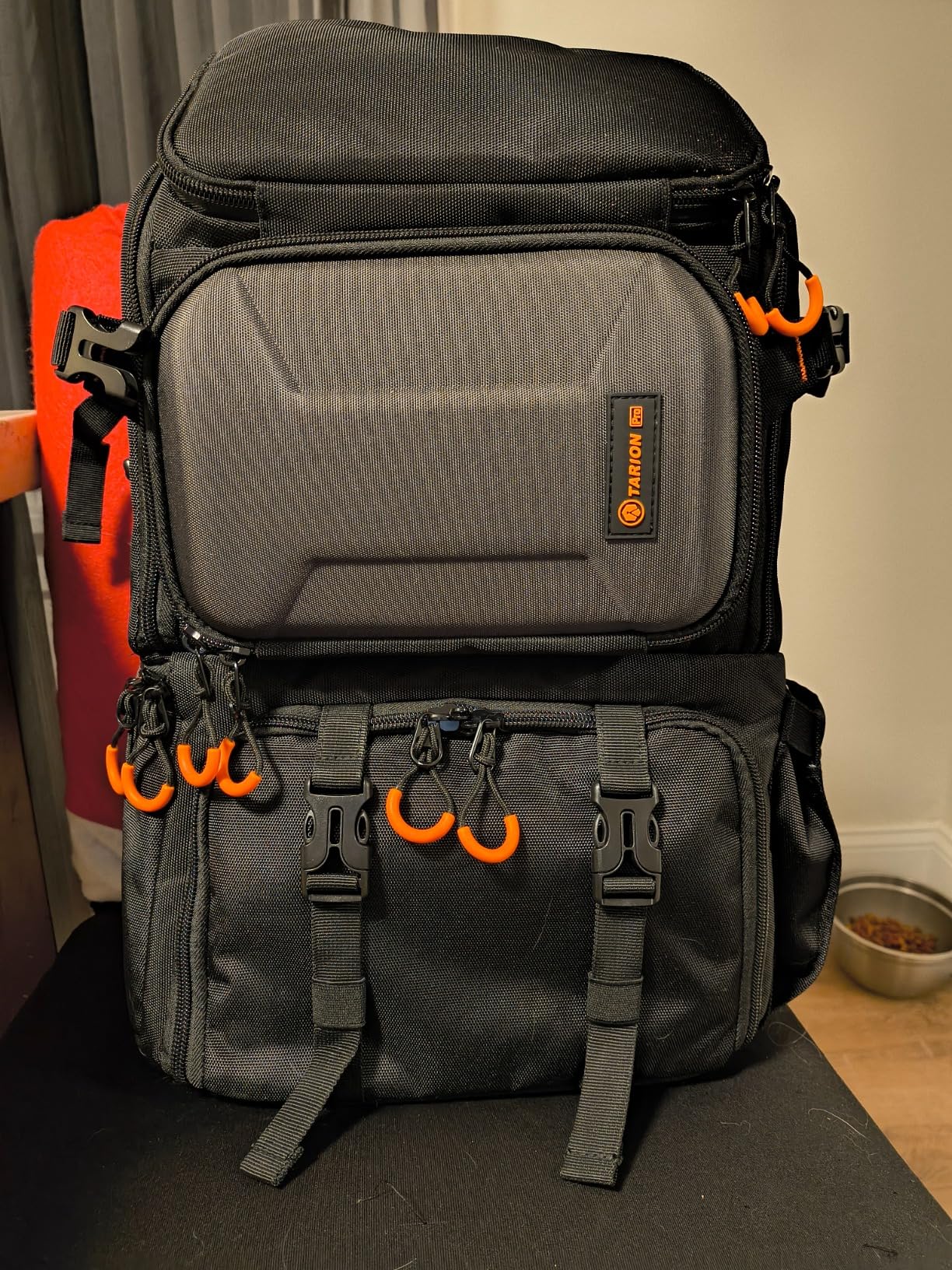
Side access gives you a body without taking the pack off, and an exterior tripod pocket with compression straps keeps carbon fibre attached to the bag rather than swinging from a strap. There is a rear 15.6-inch laptop sleeve, which is unusual at this volume and lets the pack work as a one-bag carry for the drive to the trailhead.
Photographers highlight the well-planned interior and low empty weight, and the pack is frequently described as fitting a complete 15-litre kit better than more expensive alternatives. The included waterproof rain cover and anti-tear nylon make it a credible choice for damp forest trails.
There is a two-year warranty here, and the same design is also produced in larger versions if you decide mid-season that you need more room.
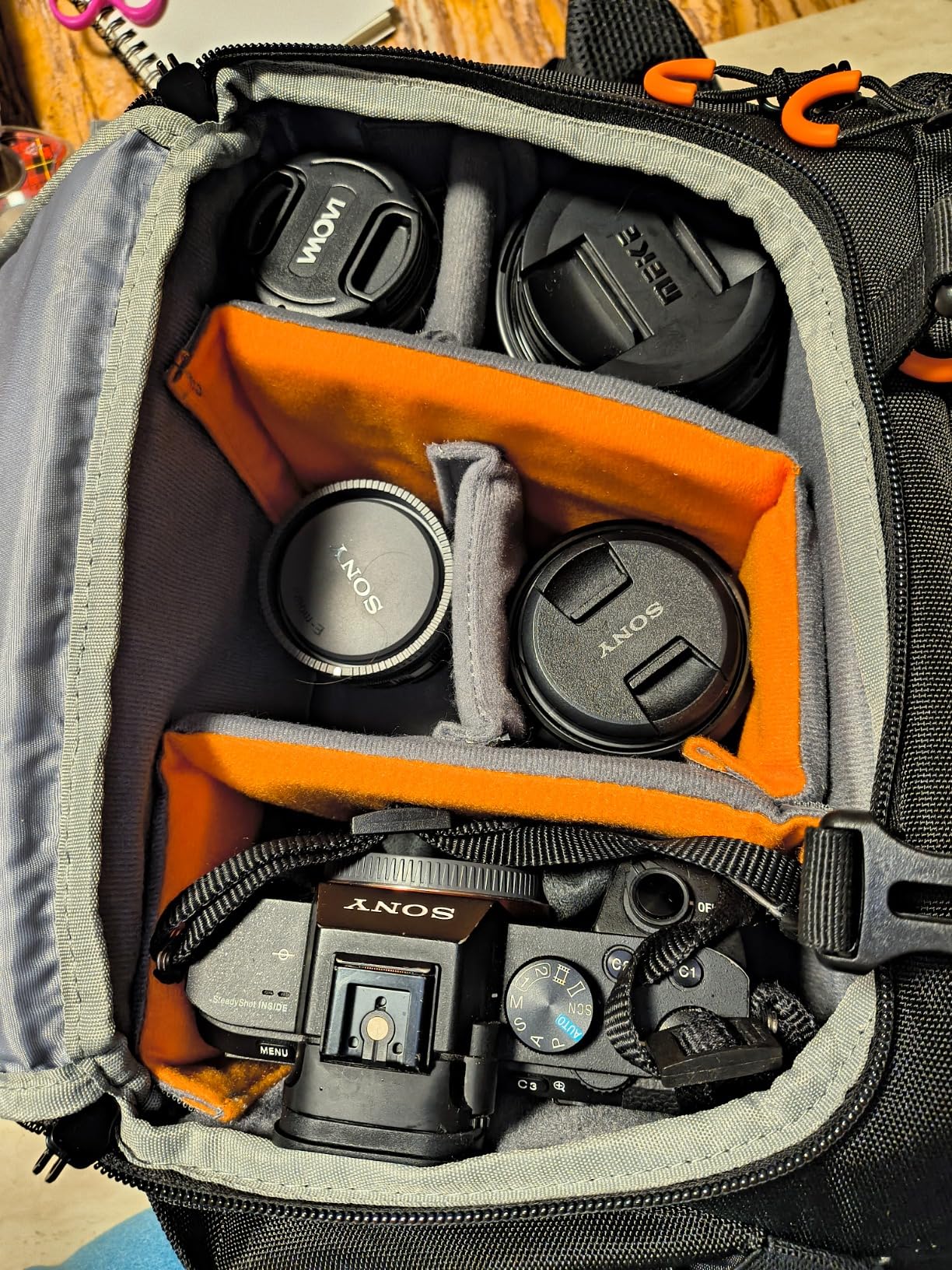
What fits inside the 15 litres
Two DSLR bodies and six lenses, or one body with five lenses and a handheld stabilizer. The camera section is efficient because the removable dividers are customisable rather than fixed, so you can build the layout around your exact kit instead of working around the bag.
The trade is clear once you add a layer, food and water. This is a walking kit bag, not an overnight bag, and for anything longer you would pair it with a small separate dry bag or move up in volume.
Where it falls short on the trail
The interior is snug once a full kit and accessories are packed, and some buyers prefer a lay-flat opening for fast access rather than the side panel. The small internal pockets are hard to reach while the bag is on your shoulders, which is exactly the situation you will be in when you want a spare battery.
One more practical note: the side-access opening can let a body fall if you use it while the bag is worn, so take the pack off or steady it against your body before you reach in. A handful of owners also reported build quality issues on arrival with a misaligned main zipper, so check the first setup carefully.
5. BAGSMART 30L Camera Backpack – Best for Travel and Airline Fit
BAGSMART Camera Backpack, DSLR SLR Camera Bag Backpack Fits 15.6 Inch Laptop,Anti-Theft Waterproof Camera Case for Photographers,Men Women,with Rain Cover,Tripod Holder,Black
30 litres
2.3 lb empty
7 x 11.8 x 16.5 inch
7 removable dividers plus 1 fixed
Pros
- Main compartment holds a DSLR with 70-200mm attached plus 3-4 lenses
- 7 removable dividers reconfigurable or strippable for laptop-only use
- Quick side access with double-way zippers
- Side stretch pocket with compression straps for a tripod
- Thickened foam wrapping the whole bag
Cons
- Rain cover is thin and suited to showers rather than sustained rain
- No buckle on the shoulder straps so the load can drift backward
- Padded straps can feel uncomfortable on all-day hikes
This is the pack to buy if your photography trips start at an airport. It is widely used for travel, safari and light hiking work, and the reason owners keep coming back to it is simple: one bag that fits under an airline seat, carries a full kit, and does not look like a camera bag.
Seven removable padded dividers plus one fixed divider give you a lot of layout freedom, and because they all come out, the pack converts to a laptop-only bag for the return flight or a working day. The main compartment is sized for a DSLR with a 70-200mm attached plus three or four more lenses, and the thickened foam wrapping the whole bag adds impact protection that a thin fabric shell does not.
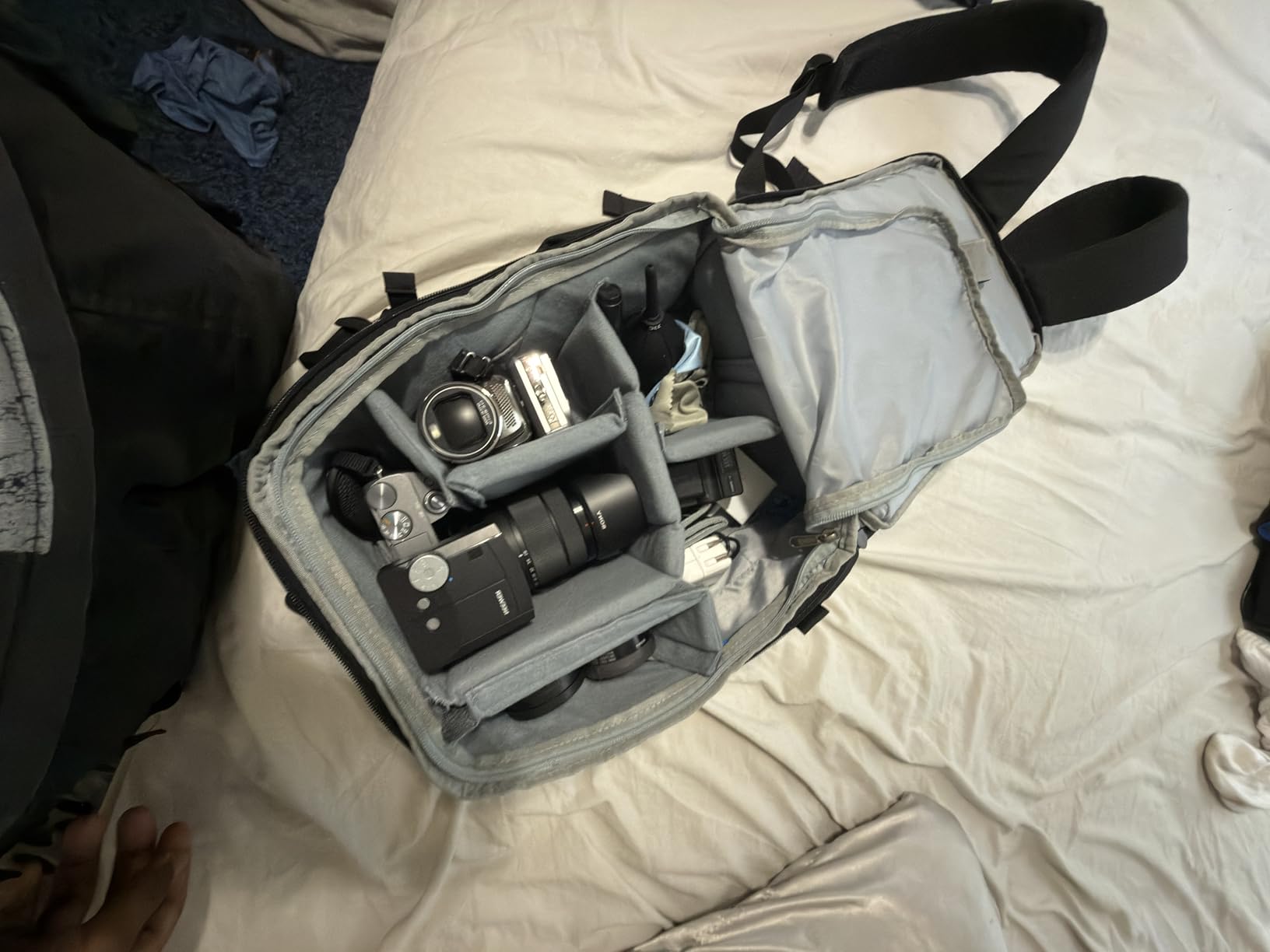
Side access with double-way zippers gets you a body in seconds, which is the feature that makes it feel like a hiking pack rather than a holdall. A side stretch pocket with compression straps holds a tripod, and a back luggage strap and top handle let you slide it onto a rolling case in an airport terminal.
Owners consistently call out the customisable dividers, the side access, the under-seat airline fit and the value. It is a pack you can hand to someone starting out with photography who wants one bag for the trail and the terminal.
Water-resistant fabric and an included rain cover handle showers. For sustained heavy rain, keep a dry bag inside, because the cover itself is thin by hiking standards.
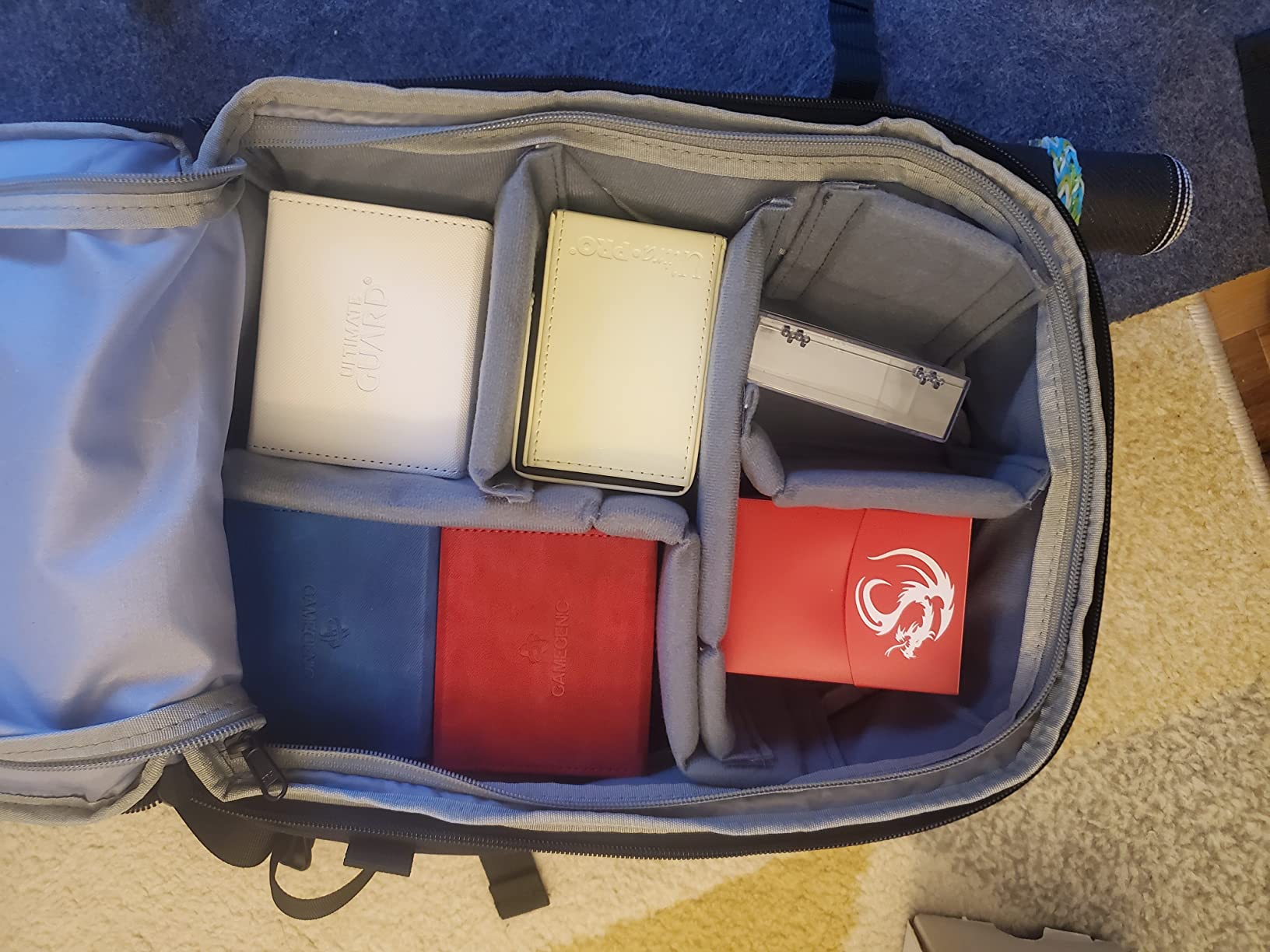
What fits inside the 30 litres
A DSLR with a 70-200mm attached, three to four additional lenses and accessories, with a 15.6-inch laptop in its own thick-padded compartment. That leaves usable room for a layer, a bottle and snacks, which makes it a genuine one-bag solution for a two or three day trip.
It is worth checking one configuration detail: the side-access zipper cannot be combined with a divider in the lower-right corner, so plan your layout around where the side door opens.
Where it falls short on the trail
There is no buckle on the shoulder straps, so over a long carry the load can drift toward your back. An adjustable chest strap is included, which helps, but a sternum buckle would help more. Several reviewers also note that the padded straps become uncomfortable on genuinely all-day hikes.
This is a light-hiking and travel pack rather than a trekking pack. If your days are long and loaded, look for something with a proper hip belt further down this list.
6. BAGSMART 20L Canvas Backpack – Best for Long Days
BAGSMART Camera Backpack DSLR Camera Bag Backpacks for Photographers
20 litres
1.45 kg empty
11.8 x 7.5 x 15.7 inch
Waterproof canvas with removable waist belt
Pros
- Removable waist and chest straps keep weight off the shoulders
- Thick canvas exterior resists abrasion and rain
- 5 padded dividers plus a zip-through divider that merges compartments
- Includes a rain cover with lockable zippers and a metal anti-theft hook
- Understated styling
Cons
- Hip belt does not adjust down far enough for smaller waists
- Water-bottle pockets are shallow and a 1L bottle can slip out
- Left-side quick-draw zipper is awkward for right-handed users
The feature that transforms this bag is the removable waist belt, and owners say so directly. Long-term users report that the waist and chest strap system is the thing that made long-day carrying possible for them, and at 1.45 kg with 20 litres it is the rare combination of a belted harness, a padded camera section and a carry-on-friendly footprint.
The construction is genuinely durable. Thick canvas has a different character from the nylon used on most camera packs, heavier in the hand but far more abrasion resistant against rock, scrub and repeated setting down. Long-term owners report the pack holding up for years in rain, snow and dirt, and the styling is deliberately understated.
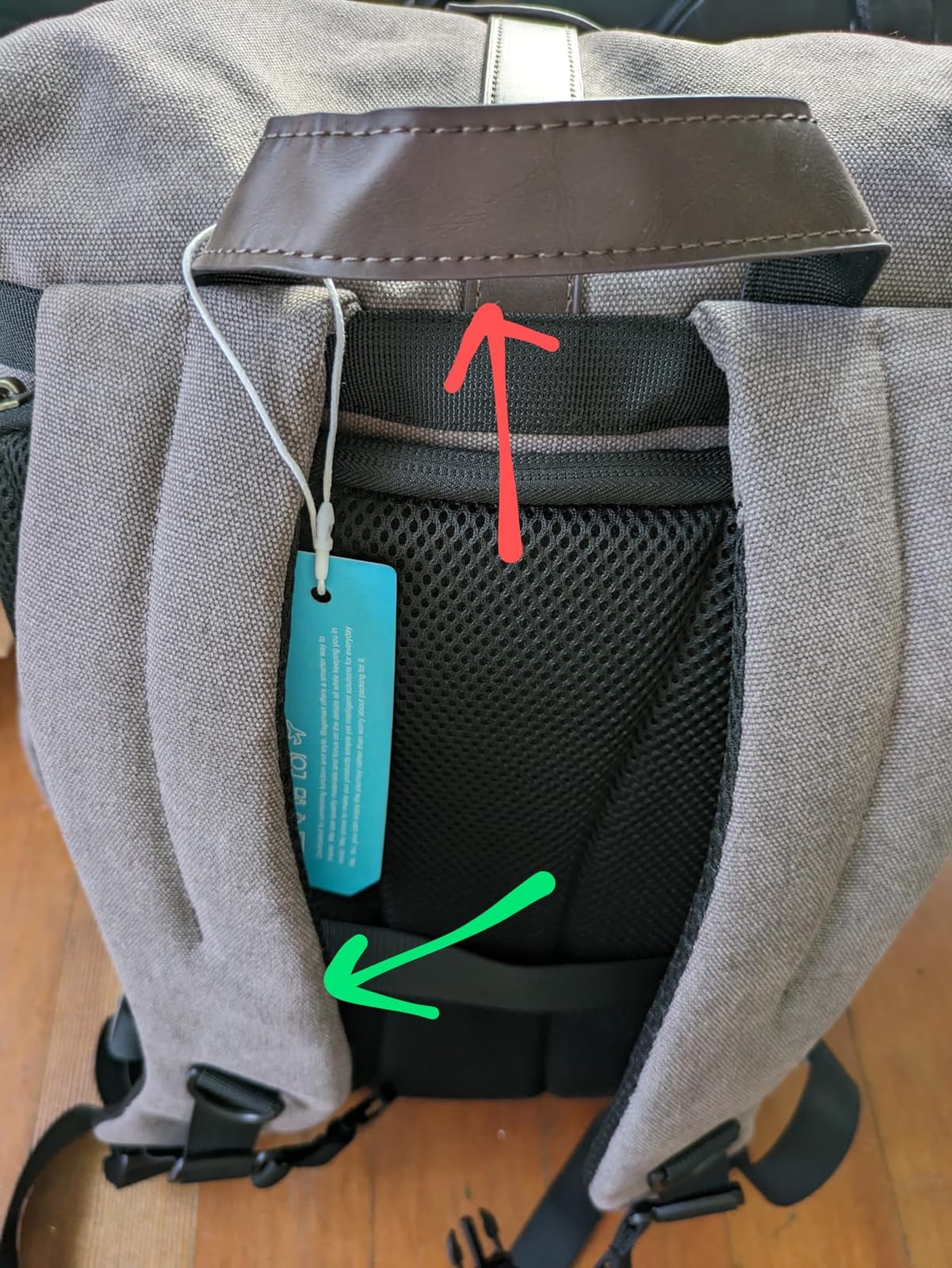
That last point deserves more weight than it usually gets. A pack that does not read as an expensive camera bag is a small security benefit at a busy trailhead and in a tourist area, and several reviewers single it out as a reason to recommend the pack.
Inside, a lower padded camera zone holds a DSLR with a 70-200mm attached plus three to five lenses and accessories, and five padded dividers let you reshape it. The zip-through divider can merge compartments so you can use the upper section for a jacket or food instead of leaving it half empty, which is a simple feature that saves a lot of volume on a day trip.
Side quick-access and a front wraparound zipper cover the two situations you hit most: grabbing a body without stopping, and packing up fast at the end of the day.
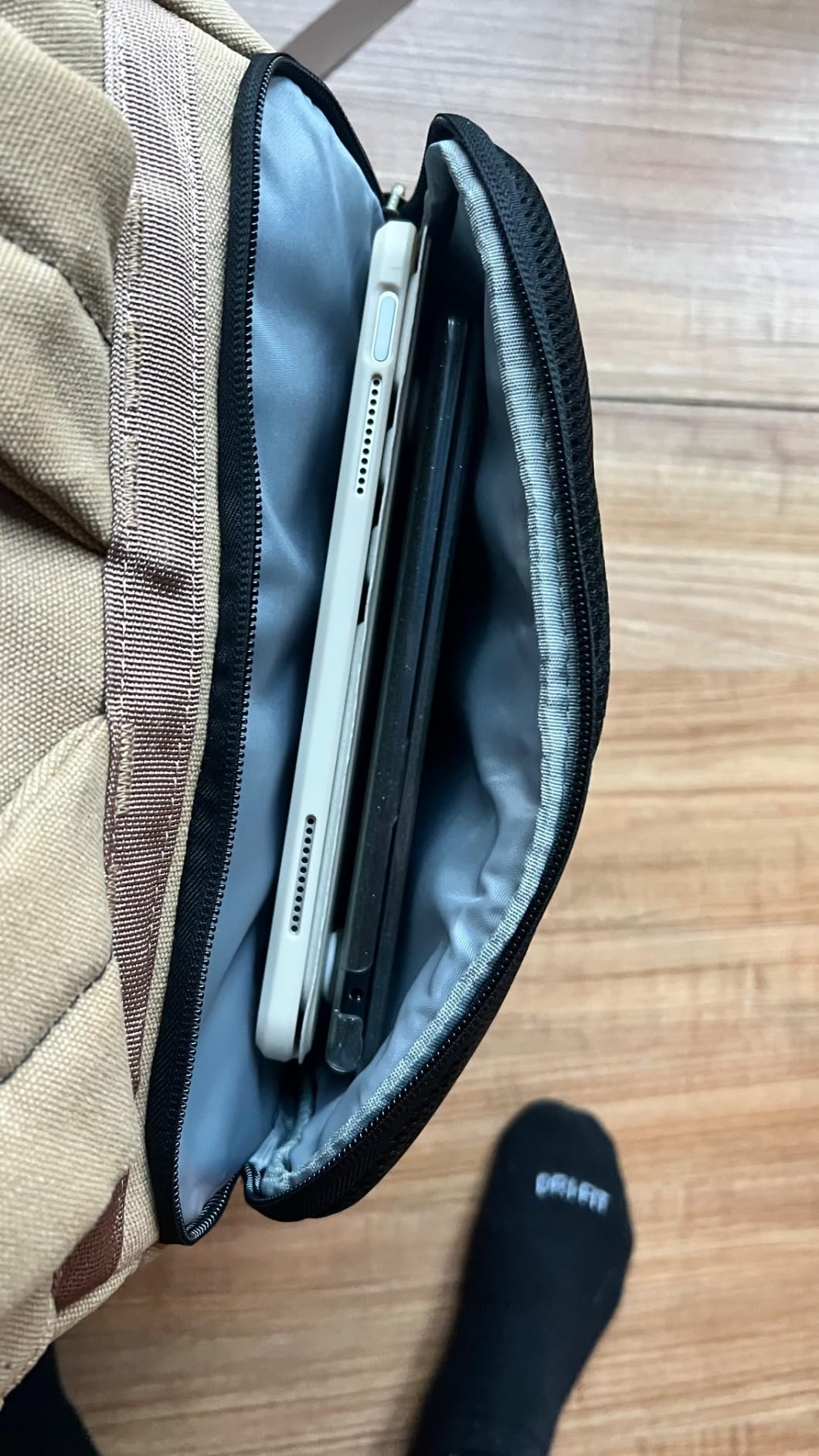
What fits inside the 20 litres
A lower padded camera zone for one body with a zoom attached, three to five lenses, accessories, and a 15-inch laptop in the padded compartment above. Double-sided stretch pockets take a water bottle or umbrella, and the removable top compartment carries personal items.
Because the top section can be removed or merged, you can choose between a tighter camera load and a more useful day-carry layout. For a photographer who wants a layer and lunch without a second bag, that flexibility is the point.
Where it falls short on the trail
The waist belt does not adjust down far enough for smaller waists, so check the strap range against your own hip measurement before you commit. The bottle pockets are shallow and a one-litre bottle can slip out on a scramble, which is a genuine problem on steep ground.
Right-handed users will find the quick-draw zipper on the wrong side, and the magnetic clasps on the top compartment need practice to line up. The rain cover is light duty, so in real rain add a dry liner.
7. Besnfoto Waterproof Roll-Top Backpack – Best for Wet-Weather Treks
Besnfoto Waterproof Camera Backpack Rolltop Laptop Bag for DSLR Mirrorless
23 litres plus roll-top expansion
1.3 kg empty
7.09 x 11.61 x 17.32 inch
Chest and waist belt with air-mesh straps
Pros
- Roll-top expansion adds roughly 5-7L for layers and snacks
- Waterproof tarpaulin shell with YKK water-resistant zips
- 7 padded dividers for 2 bodies and 4-5 lenses plus a drone
- Chest and waist belt plus air-mesh straps reduce fatigue
- Reinforced side straps carry a tripod or bottle
Cons
- Roll-top structure is stiff rather than moulding to the back
- Closing the roll-top takes practice in the field
- Large size is bulky when you only carry a mirrorless kit
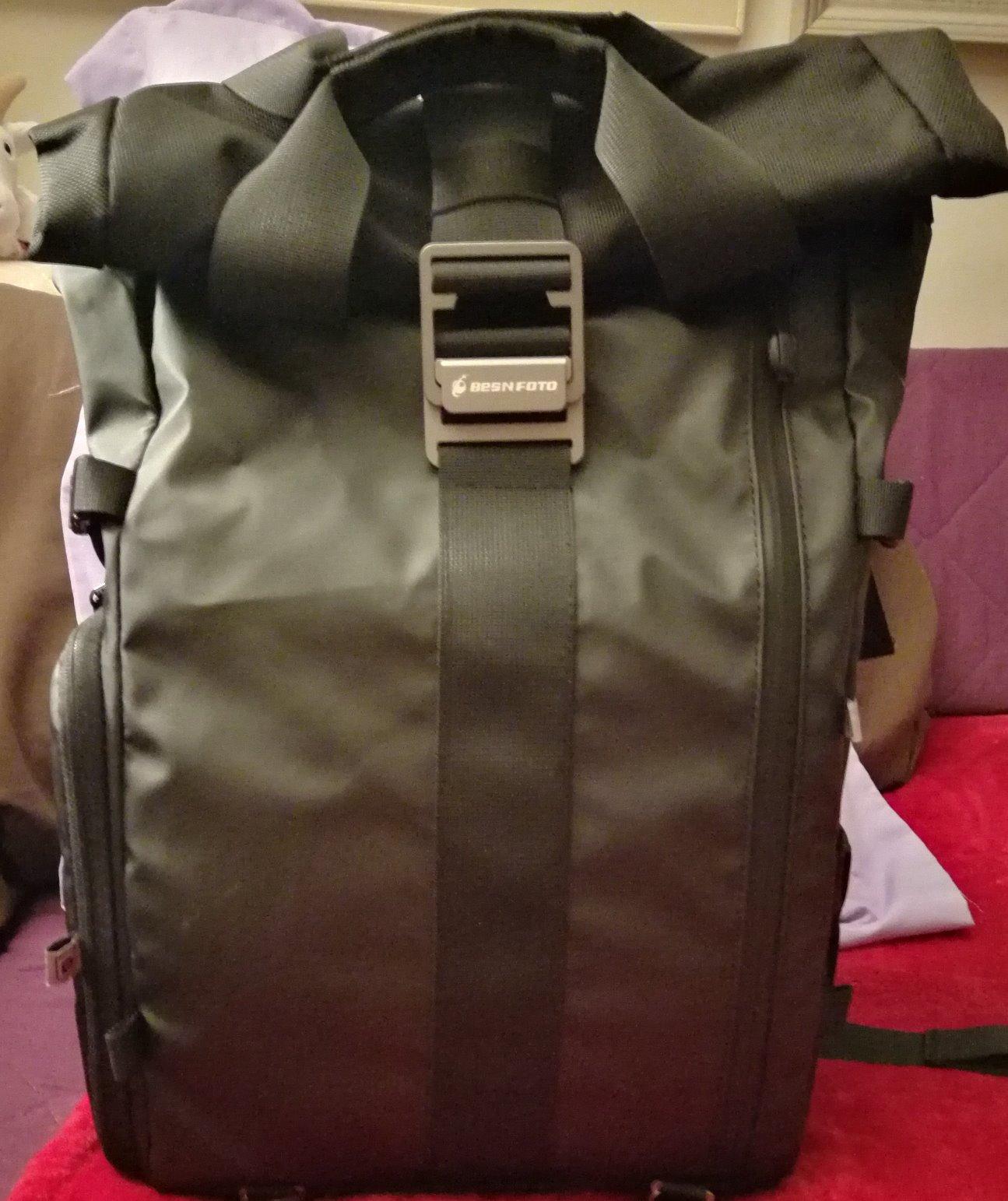
Wet weather is where this pack earns its place in the test. The shell is a high-density waterproof tarpaulin rather than coated nylon, the zips are YKK water-resistant, and a rain cover is included as backup. On a coast route or an alpine shoulder where drizzle is constant, that combination did more for us than any fabric rating on a lighter bag.
The roll-top is the interesting part. Rolled down it is a compact 23 litres; rolled open and clipped it expands by roughly five to seven litres, which is exactly the range you need for a layer, a flask and lunch on a long day. You carry the expansion only when you need it, and no other pack on this list changes volume that way.
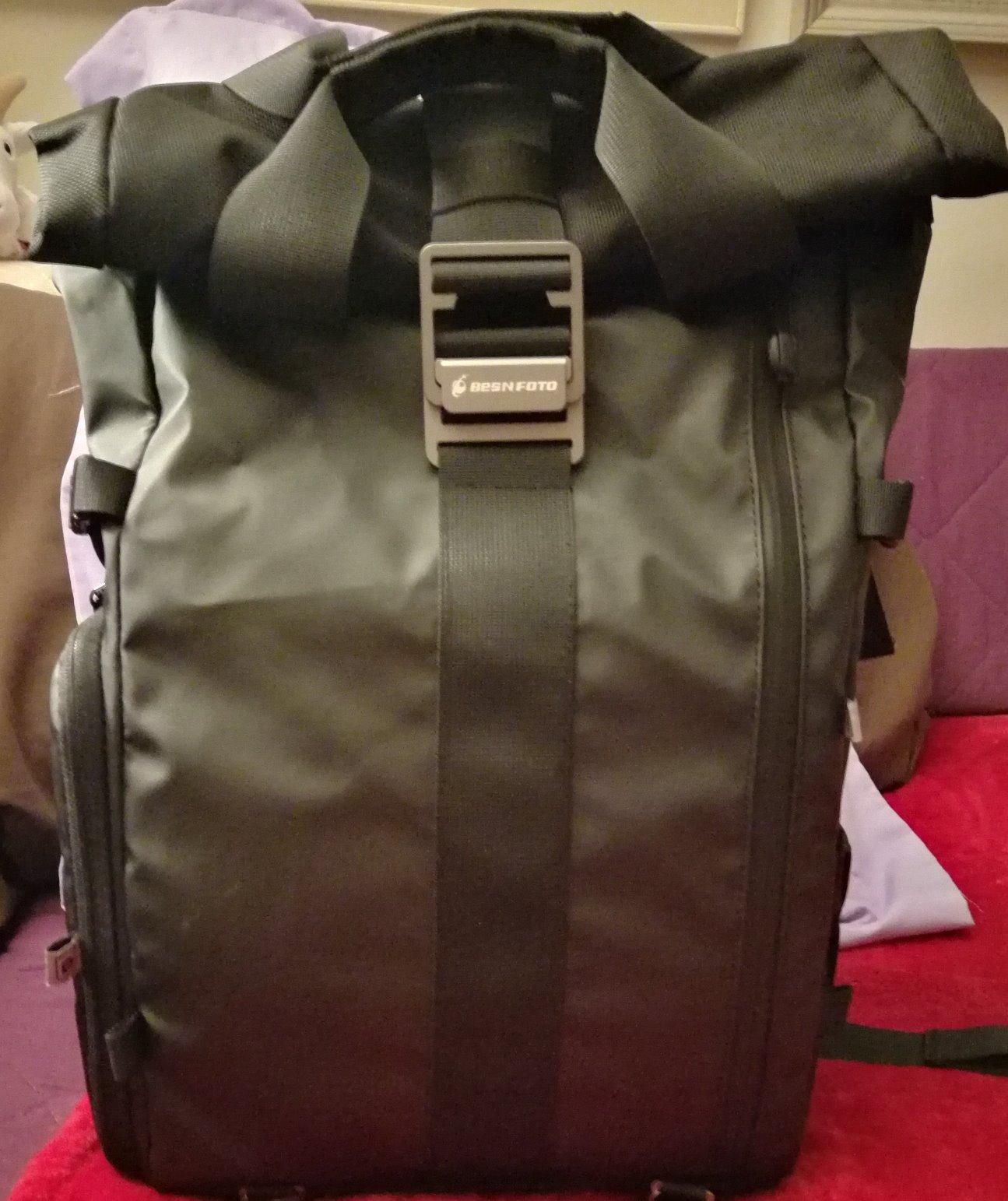
Comfort comes from the belt system. A chest strap and waist belt take load off the shoulders, and air-mesh shoulder straps stay cooler than solid padding on a warm climb. At 1.3 kg the empty weight is in the lighter half of the test, so the harness has less work to do than on the belted nylon packs.
Seven padded dividers hold two bodies, four or five lenses and a drone, and there is both a quick side-access door and a fully opening back panel. Reinforced side straps and two front accessory straps carry a tripod, a water bottle or even a camp chair, and a luggage pass-through strap makes it easy to stack on a rolling case.
Buyers treat this as a do-everything hiking pack: waterproofing, tripod carry, waist belt and roll-top capacity are the recurring wins, and reviewers like that one bag handles both camera gear and hiking essentials. It also has a padded 16-inch laptop sleeve, which makes the one-bag travel case easy.
What fits inside this pack
Two bodies, four or five lenses and a drone in the main compartment, with a 16-inch laptop in the sleeve, and the roll-top adding five to seven litres for clothing and food. The side straps take a tripod and a bottle at the same time, and the manufacturer rates the pack for loads up to 15 kg.
It is a full day plus a bit of overnight capacity, which makes it one of the more flexible options here for a single-bag hiker.
Where it falls short on the trail
The roll-top is stiff rather than naturally moulding to your back, so it feels rigid when you are moving quickly. More importantly, closing the roll-top properly takes practice. In wind or rain, fumbling with the closure while your hands are cold is a real problem, so rehearse it at home.
The large size is also bulky when you are carrying only a mirrorless kit, and five compartments with a full roll-top open is a lot of structure for a short walk. If you mostly do short day hikes, a 17 or 20-litre pack serves you better.
8. K&F CONCEPT 25L Camera Backpack – Best Value at 25 Litres
K&F CONCEPT Camera Backpack,25L Large Capacity Camera Bag for Photographers
25 litres
Three-tier divider layout
9.4 x 11.8 x 9.4 inch
Included rain cover and 15.6 inch laptop bay
Pros
- Three-tier layout with adjustable padded dividers handles a 200mm lens to a Mavic Air 2
- Included rain cover tucked into the bottom pocket
- Thick back padding stayed comfortable when fully loaded
- Quick side opening plus a full front-opening panel
- Many small pockets for SD cards and batteries and cables
Cons
- No chest strap included so shoulder load is not secured on steep ground
- Velcro dividers can loosen and let gear shift in the upper section
- Lining fabric lets dividers sag under heavier long lenses
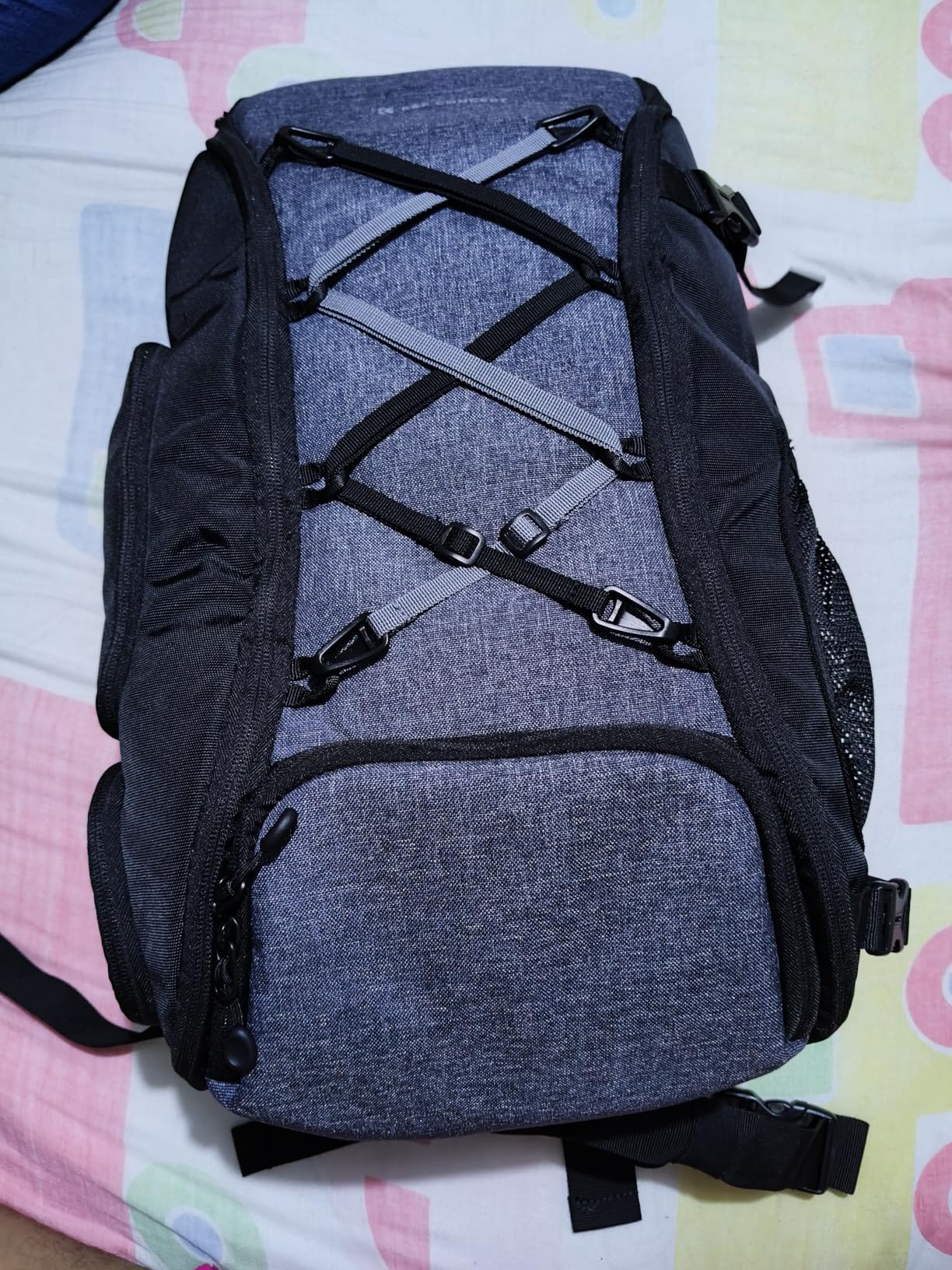
Twenty-five litres is the sweet spot for a hiker who has outgrown a small bag but does not want to carry a trekking pack. This one is well laid out for that size, with a three-tier interior that can be configured for anything from a 200mm lens to a Mavic Air 2, and a layout that is closer to the small specialist packs than to a generic travel bag.
Access is unusually good. There is a quick side opening and a full front-opening panel, so you can reach a body without taking the pack off, and the three-tier structure means you can keep a body in the top tier, lenses in the middle and accessories at the bottom rather than digging through one cavity.
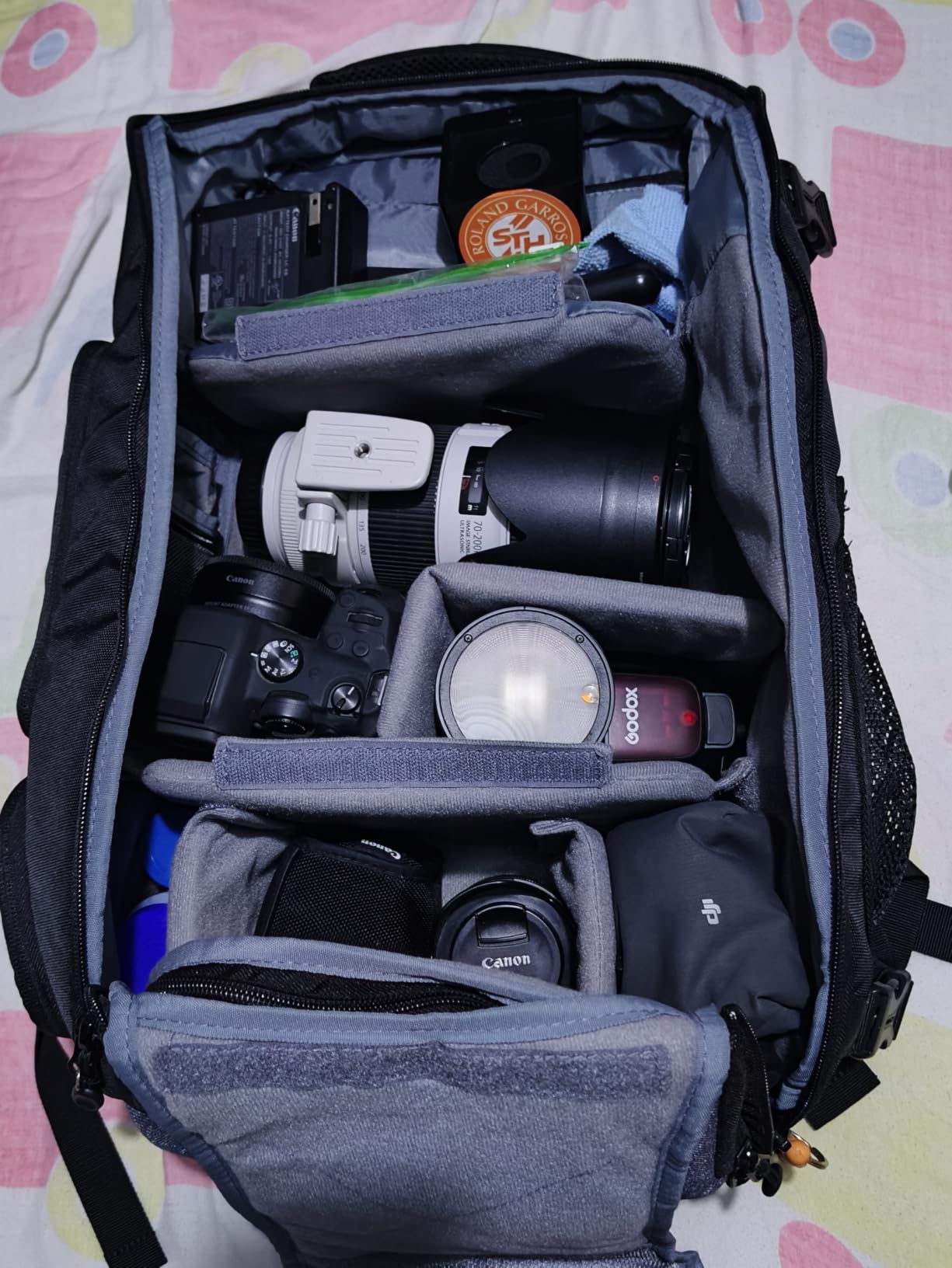
Comfort held up well under load in our testing. The thick back padding and generous shoulder straps carried a full kit comfortably, and the many small pockets for SD cards, batteries, phone, wallet and cables are the sort of detail you notice after the first trip, when you are not searching the main compartment for a spare battery.
Owners praise the configuration flexibility, the weather cover and the comfort, and it is frequently recommended as a step up from an entry kit. The included rain cover tucked into the bottom pocket proved useful on a wet hike, which is exactly where you want it.
A padded compartment fits a laptop up to 15.6 inches, and a dedicated side compartment with strap and buckle takes a tripod or a water bottle.
What fits inside the 25 litres
A body with a long lens, up to three standard lenses, a second body, a drone, and room for a layer, food and a bottle. With five compartments and four pockets you can keep the hiking items separated from the optics, which is a habit worth building early.
Water-repellent fabric plus the included rain cover handle ordinary showers, and the machine-washable shell is a practical detail when a pack has been rained on.
Where it falls short on the trail
No chest strap is included, and on steep terrain that means the shoulder load is not secured. A sternum strap costs almost nothing to add and transforms the stability of this bag, so we would fit one immediately if we owned it.
The velcro dividers can loosen and let gear shift in the upper section, and the lining fabric lets dividers sag under heavier long lenses. Both are the recurring complaint among owners and both are about retention rather than protection, so a tape wrap or a divider board is an easy fix.
9. MOSISO Tactical Camera Backpack – Best for Modular Outdoor Loadouts
MOSISO Camera Backpack, DSLR/SLR/Mirrorless Tactical Camera Bag Case
3.3 lb empty
8.27 x 11.81 x 17.13 inch
MOLLE webbing with removable inserts
Pros
- Tactical MOLLE webbing with a removable flag patch for extra gear
- Three compartments separate a camera bay from a large upper section
- Removable padded modular inserts reshape the lower compartment
- Reinforced edges and bottom with side load compression
- Breathable shaped padding reduces heat build-up
Cons
- Polyester shell is water resistant rather than waterproof and no rain cover is listed
- Heavier at 3.3 lb than most soft camera packs in this class
- No sternum strap or hip belt so heavy loads stay on the shoulders
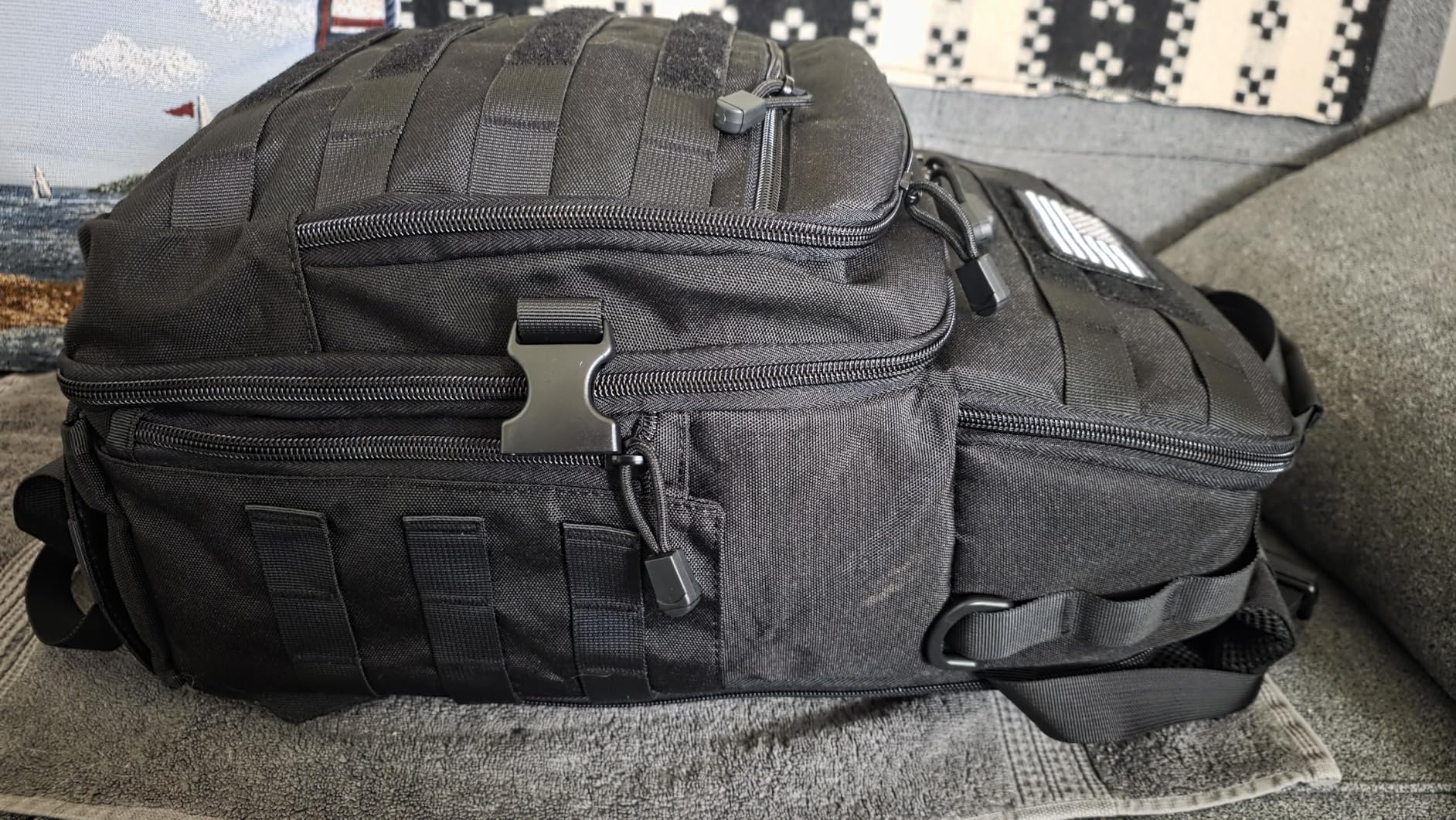
Nothing else in this test looks like this bag, and that is its point. The tactical MOLLE-style webbing with a removable flag patch gives you attachment points for a rain shell, a rope, trekking poles or a water bottle, and outdoor-oriented buyers use it for car-camping and trail shoots that need a roomy pack plus somewhere to hang extra equipment.
Three compartments do the organizing. An upper daily-carry section holds clothing and food, a lower padded camera section holds the optics, and a rear sleeve takes a laptop from 13 to 16 inch. The removable padded modular inserts let you reshape the lower compartment for bodies, flashes, lenses or a drone.
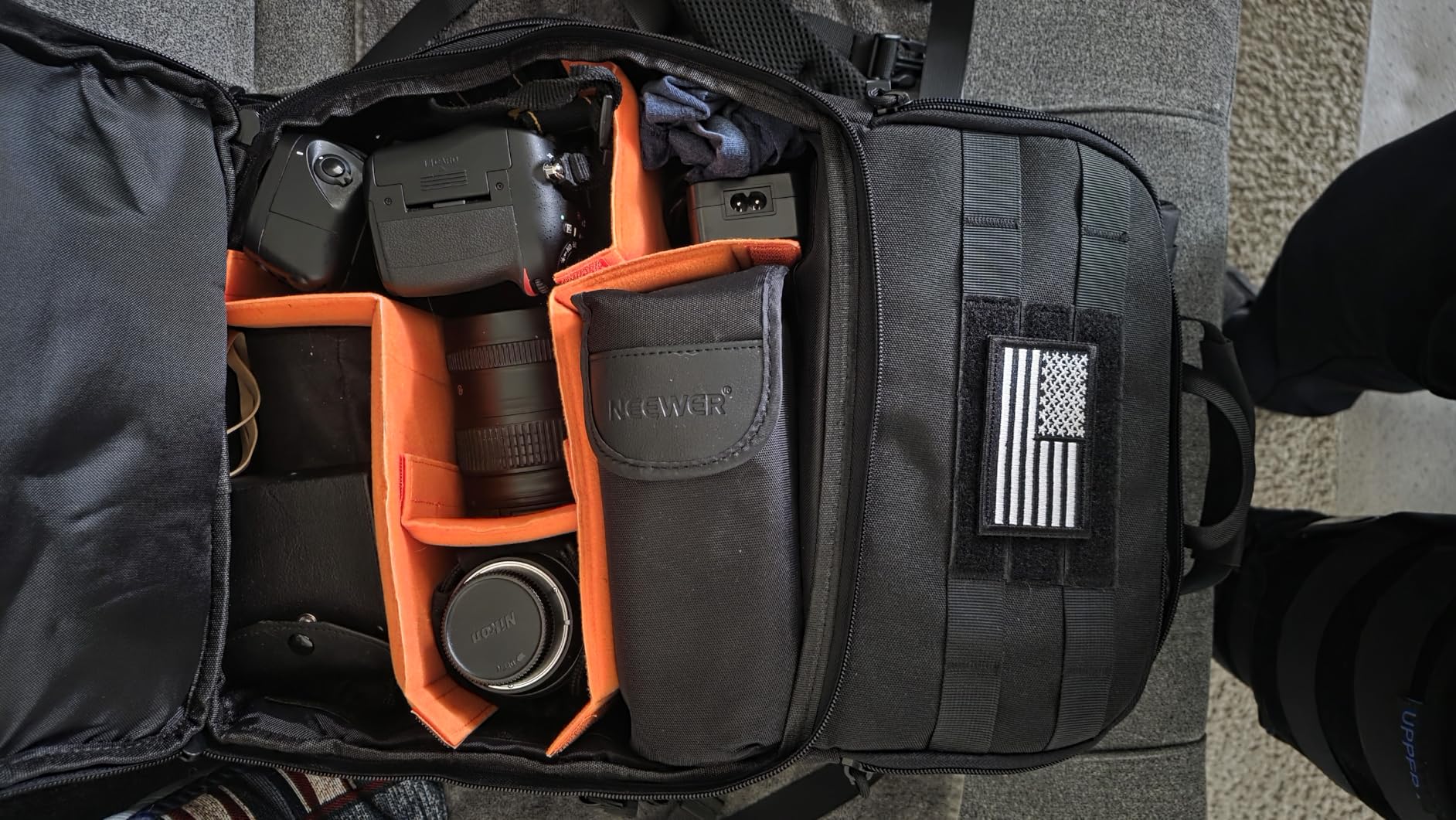
Reinforced edges and a reinforced bottom, plus a side load-compression system, mean the pack is built for being put down on rough ground. A bottom tripod or monopod holder and a side pocket for a bottle or umbrella cover the two most common trail accessories, and a back trolley belt helps on airport days.
Two front zipper pockets and a rear anti-theft zipper pocket give quick-access storage, and the shaped padded shoulder straps and back panel vent well on a warm climb, which matters more than it sounds on a full day of walking.
What fits inside this pack
A DSLR from Nikon, Canon EOS or Sony Alpha, or a DJI Mavic drone, in the lower section with the modular inserts shaped around it, and a jacket, food and water in the upper section. The laptop sleeve covers 13 to 16 inch devices, so this works as a travel bag as well as a trail bag.
The MOLLE webbing is the reason to own it. Anything with a compatible attachment interface can be clipped to the outside instead of disappearing into a pocket.
Where it falls short on the trail
There is no hip belt and no sternum strap, so a heavy load stays on your shoulders. For a short approach from a car this is fine. For a full day of walking with a big kit, it is a genuine comfort limit, and you should budget a belt or choose a belted pack instead.
At 3.3 lb it is a heavy soft pack for this class, and the shell is water resistant rather than waterproof with no rain cover listed. The bulky rectangular profile is also less packable than a slim hiking bag, which you notice when you want to stow it in a car or under a seat.
10. TARION Hard Shell 13L Backpack – Best for Security and Rigid Protection
TARION Hard Shell Camera Backpack Bag for Photographers Compact 13L TRH
12 litres
1.5 kg empty
12.2 x 5.1 x 16.5 inch
One-piece EVA hard shell
Pros
- One-piece EVA hard shell resists shock
- water and abrasion
- Camera and laptop compartments open only from the back
- Modular dividers hold 1-2 bodies with 5-6 lenses
- X-cross external straps carry a drone or sleeping bag
- Air-grille padded back panel spreads weight
- Waterproof rain cover plus a 2-year warranty
Cons
- Hard shell adds weight and rigidity compared with a soft hiking pack
- Narrow 12-13 litre interior is limiting for large telephoto zooms
- Back-only access means swinging the pack around
- Less comfortable against the back than a padded soft pack
Rear-only access is unusual in this group, and it is the reason to carry this one. There is no side door to leave open, no top zipper facing a crowded café, and nothing on the outward-facing panels worth reaching for. That changes how you carry the bag in busy places or when you walk solo.
The one-piece EVA hard shell is shockproof, water resistant and abrasion resistant, and at 1.5 kg it is still manageable for a rigid case. Owners value the crush protection, particularly when a pack ends up in a car boot or wedged under camping gear.
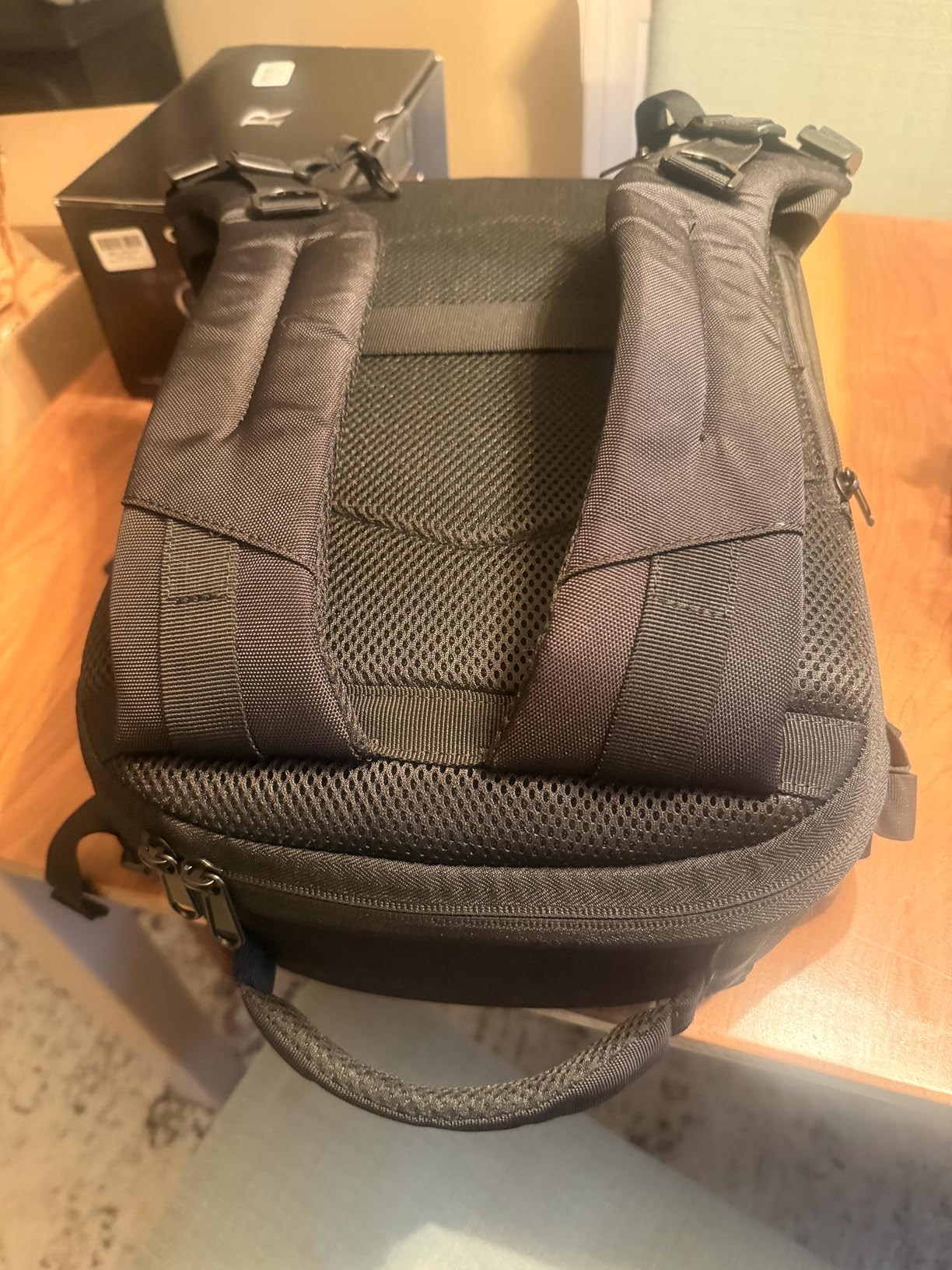
Inside, modular dividers hold one or two bodies with five or six lenses and accessories, and there is a 14.5-inch laptop sleeve with additional multipurpose pockets. The X-cross external straps with quick-release clips are unusually useful: people strap a large drone, a sleeping bag or a lens bag to the outside rather than trying to fit it inside.
The air-grille padded back panel and shoulder straps spread the weight on longer carries, a waterproof rain cover is included, and there is a two-year warranty. It is a compact, secure pack for street, travel and light outdoor photography.
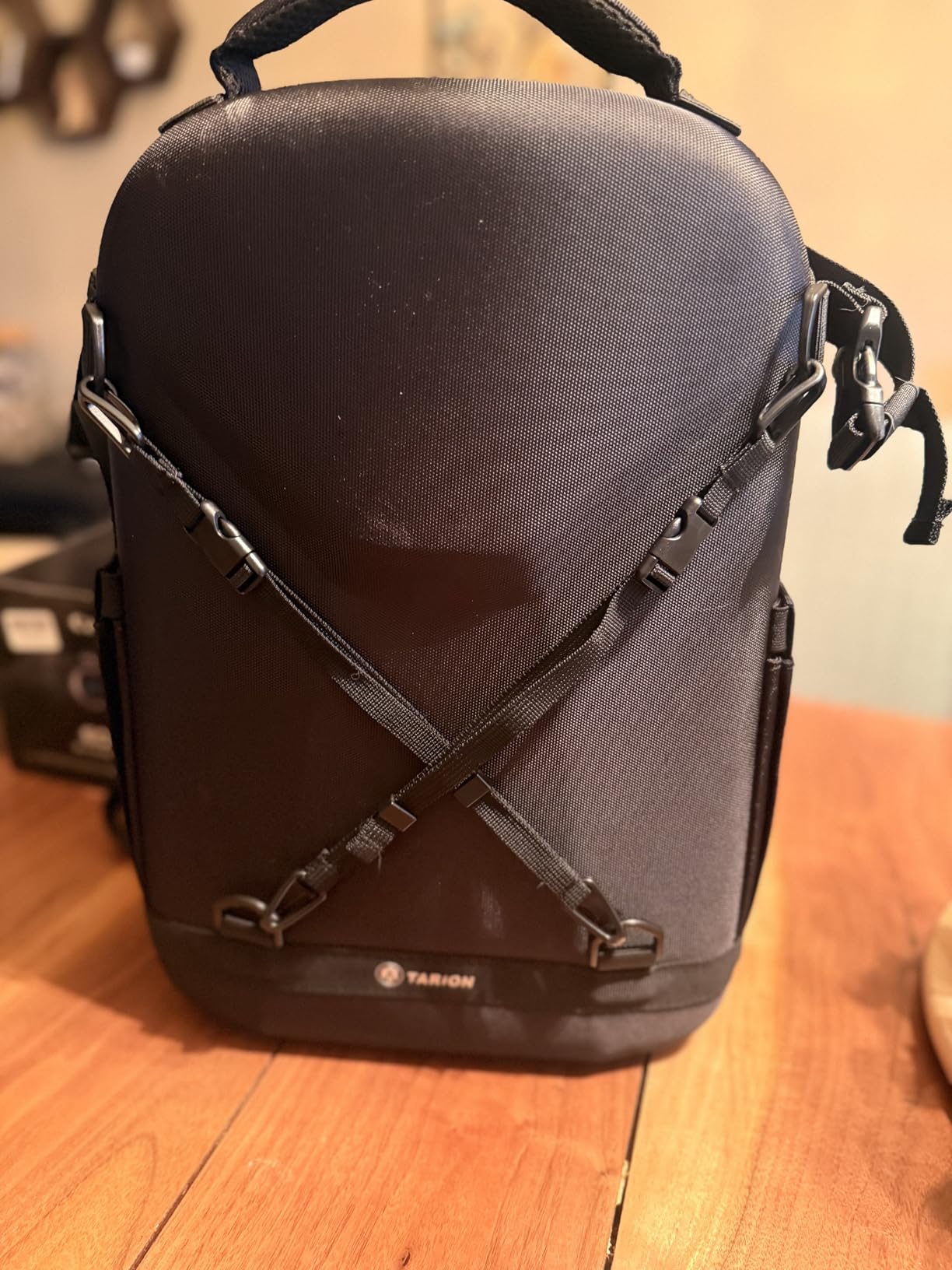
What fits inside the hard shell
One or two bodies with five or six lenses and a set of accessories, a laptop up to 14.5 inch, and two side tripod or accessory pockets with safety straps. Anything larger should go on the X-cross straps, which is a feature rather than a compromise when you are carrying a drone.
Treating it as a 12 to 13 litre pack is realistic. A 13-litre interior is not a place to force a large telephoto zoom, and the side pockets exist for exactly that reason.
Where it falls short on the trail
Back-only access means you have to swing the pack around or take it off to reach a body. On a quiet trail that is a small cost, but on a technical one it will cost you shots. The rigid edges are also less comfortable against your back than a padded soft pack, and the shell is noticeably heavier than fabric alternatives.
It is among the least flexible of the ten and that is the trade you are making: physical protection and theft resistance in exchange for comfort and speed of access.
Camera Backpack Buying Guide for Hiking Photographers
Every pack on this list will carry a camera. Only some of them will still be comfortable after six hours with a full kit, a layer, water and food. These are the six decisions that separate the two groups.
Hip belt, harness and load distribution
The single most important question is whether the load sits on your hips or your shoulders. On a hiking pack, most of the weight belongs on the pelvis, with the shoulder harness and hip belt working together to hold the bag close to your body. Above roughly eight kilograms, a pack without a belted harness becomes a shoulder workout no matter how good the padding is.
Two things to check in detail. First, the belt range: a waist belt that does not adjust down far enough is useless on a smaller frame, and this is a common complaint about otherwise well-built packs. Second, adjustability. Load lifters, the small straps at the top of the shoulder harness, pull the pack in toward your back and are the difference between a bag that rides high and stable and one that swings away from you on a descent.
For most hikers, a padded waist belt is enough. A framed suspension system only earns its extra weight when you are carrying camping gear as well as optics for several days.
Weatherproofing: welded zippers, coatings and rain covers
Water resistance is a spectrum, not a checkbox. Fabric is treated with a durable water repellent coating, seams are taped or bound, zippers may be sewn or welded, and a bag may include a cover. Bags differ across all four, and a bag can be rated waterproof and still leak through a non-welded zip.
Our rule for a hiking pack: an included rain cover that is already in the base of the bag, so there is nothing to forget. Covers stored in a separate pouch get left at the car. If you shoot in sustained rain rather than showers, a roll-top or welded-zip construction is worth more than any fabric rating.
Whichever pack you choose, keep your memory cards and a spare body in a dry bag inside the main compartment. A cover protects the outside of the pack, not the humidity inside it.
Capacity versus kit size on a multi-day trek
Match volume to the whole load, not just the camera. A one-body, three-lens kit plus water, food and a layer needs about 15 to 20 litres. Two bodies, five or six lenses, a tripod and overnight gear needs 25 to 30 litres. Above 30 litres you are into serious trekking territory and should be choosing on the harness as much as the camera section.
Oversizing is the commonest mistake. A 50-litre pack wrapped around a small mirrorless body has nothing stopping gear from moving, so the weight shifts inside and wears you out. Several photographers note that dedicated camera packs are over-engineered for compact bodies, and that is exactly this problem in reverse.
Check torso length as well as volume. A bag that is too tall for your frame puts the hip belt in the wrong place no matter how well it is built.
Access points and camera rotation
Backpack access means taking the pack off, which is why photographers complain about it. A backpack that keeps you walking with a camera in your hand is a backpack you will stop using for the shots you walked up for. Side access and top-loading designs exist to solve exactly this, and they are the reason they are worth paying for.
For a working method: keep one body in the fastest-access pocket or the top of the main section, and treat the rest of the bag as storage. Rotate lenses at stops rather than on the move, and use a shoulder-strap camera clip when you need a body permanently in hand. Owners and forum users converge on one point worth repeating: a sling is a poor answer for anything over about two hours on foot, because the weight ends up on one side of your body and your shoulder pays for it.
Back sweat and hot-climb ventilation
Almost nobody writes about this and almost everybody notices it. A sealed foam back panel against a synthetic shirt traps heat, and on a warm climb a soaked back is what ends your day early. Look for air-mesh or airmesh lumbar panels, shaped padding that channels air along the spine, and shoulder straps that sit away from the upper traps.
Packs that ventilate well tend to share two features: mesh rather than solid foam against the lumbar area, and a torso-length adjustment that lets the pack sit slightly off the small of your back. In the test, the packs with air-mesh panels and shaped padding were noticeably more bearable on steep ground in warm conditions.
Using a normal hiking pack with a camera cube insert
Forum users raise this more than any other question: whether you need a dedicated camera backpack at all, and the answer is often no. Buy the hiking pack you would choose anyway, then add a padded camera cube insert. The insert gives you the dividers, the suspension and the harness of a real trekking pack, and the cube protects the optics from impact.
This approach wins on two counts. You get a far better harness than most camera packs offer, which is where comfort on a long day actually comes from. And the cube can move between bags, so the same camera gear works for a car shoot, a city walk and a multi-day trek without repacking.
The trade is access speed and weather sealing. A cube inside a hiking pack is behind a zip you have to open, and unless the outer bag has welded zips and a cover you will get wet. If you shoot fast on technical ground, a dedicated pack is still better. If you walk first and shoot second, the cube route is the better value answer.
Frequently Asked Questions
What is the best backpack for hiking with a camera?
The CADeN 17L is our overall pick because it weighs 0.79 kg empty, keeps rigid walls so gear does not slump, and carries a bottle and tripod alongside a one-body kit. For multi-day trips, the Lowepro Flipside Trek BP 450 AW offers 30 litres and a real hiking suspension with a load-bearing hip belt. For heavy two-body kits, the NEEWER Pro gives you a rigid frame, eight padded partitions and quick side access.
What size camera backpack do I need for hiking?
Match volume to the entire load, not just the camera. One body with three lenses plus water, food and a layer needs about 15 to 20 litres. Two bodies with five or six lenses, a tripod and overnight gear needs 25 to 30 litres. Oversizing is the common mistake: extra empty volume lets gear shift inside the bag, which moves the load and wears you out faster.
Do I need a hip belt on a camera backpack?
Above roughly eight kilograms, yes. A load-bearing hip belt moves the weight off your shoulders onto your pelvis, which is what a hiking pack is designed to do. Packs without one are fine for short day hikes with a small mirrorless kit, and uncomfortable for anything longer. Check that the belt adjusts down far enough for your waist before you buy.
Are camera backpacks comfortable for hiking?
It depends entirely on the harness, not the camera features. Packs with an Active Zone suspension, a padded waist belt and load lifters spread the load the way a trekking pack does. Packs that are simply a camera bag with shoulder straps will dig in after a few hours. Also look for air-mesh or airmesh back panels, which matter on warm climbs.
What is the best way to carry my camera while hiking?
Keep one body in the fastest-access pocket or the top of the main section and treat the rest of the bag as storage. Rotate lenses at stops rather than on the move. For walks under about two hours, a sling or a shoulder-strap camera clip keeps a body in hand, but for anything longer a backpack with side or rear access is the better answer.
Can I use a regular backpack for my camera gear?
Yes, with a padded camera cube insert. The insert supplies the dividers and protection, while the hiking pack supplies the harness, frame and hip belt that carry comfort comes from. The trade is access speed and weather sealing, so this works best when you walk first and shoot second rather than shooting constantly on technical ground.
The Best Camera Backpack for Your Next Hike
The best camera backpacks for hiking photographers are not the ones with the most features, they are the ones that fit your kit, your torso and your trip length. For most hikers the CADeN 17L is the right answer because it is light, rigid and easy to carry all day. Load a full kit and add a layer and a bottle, and the Lowepro Flipside Trek BP 450 AW becomes the sensible choice with its hip belt and built-in weather cover. For heavy two-body work, take the NEEWER Pro and accept the bulk.
Check the loaded fit at home before you walk. Pack it the way you will pack it on the trail, adjust the hip belt properly, and walk up a flight of stairs. If the bag is comfortable at the bottom of your stairs, it will be comfortable at the top of the mountain in 2026.
For shorter trips or a different kind of shooting, our guides to the best camera backpacks for travel photographers and the best camera backpacks for wildlife photographers go deeper on carry-on sizing and long-lens support.