
Most advertised drone range numbers are useless to a hobbyist. A quadcopter can quote 10 km of video transmission, but if you legally cannot see the aircraft past a quarter mile, the extra range never gets used. The best long range drones for hobbyists in 2026 are the ones whose link holds past the point where you can still keep eyes on them.
That changes how the list below is built. We ranked the control link, the video link, the battery reserve to get home, and the gimbal quality, then we discounted every advertised transmission figure hard against what the same airframe is likely to deliver over hills, trees and town clutter.
Three picks carry most of the weight here. The DJI Mini 3 Fly More Combo is the overall winner for a hobbyist who wants real distance and real footage. The Potensic ATOM is the value pick for anyone starting out under the registration threshold. The Ruko U11MINI 4K is the premium pick for pilots who would rather not tether a phone mid-flight.
There are two entirely different kinds of long range drone, and mixing them up wastes money. GPS camera drones fly themselves home and shoot stabilized video. FPV drones fly manual, cut through everything, and require goggles, a radio link and a simulator habit first. Our long range drone guide for filmmakers covers the first group in more depth.
Everything below fits the sub-250 g or standard hobbyist weight class, and every pick here was chosen for usable distance rather than headline distance.
Table of Contents
Top 3 Long Range Drone Picks for Hobbyists in 2026
These three cover the three most common ways hobbyists fly: general travel and scenic shooting, learning on a budget, and flying long lines without a phone in your hand.

DJI Mini 3 Fly More Combo
- 10 km HD video transmission
- 4K HDR with 3-axis gimbal
- Three batteries for 114 minutes total

Ruko U11MINI 4K
- 20
- 000 ft R2 digital link
- 5.5-inch touchscreen controller
- Two batteries for 64 minutes
All 10 Long Range Drones Compared in 2026
Weight matters more than most buyers expect, because anything under 250 g is exempt from recreational registration in the US. Flight time listed here is the realistic pack figure where the manufacturer gives one, and the multi-battery total where the bundle includes more than one pack.
The features column is deliberately short. Anything not on it is something we judged not to matter for a hobbyist flying real distances.
| Product | Specifications | Action |
|---|---|---|
| DJI Mini 3 Fly More Combo |
|
Check Latest Price |
 Potensic ATOM Potensic ATOM |
|
Check Latest Price |
| Ruko U11MINI 4K |
|
Check Latest Price |
 SKYROVER X1 Camera Combo SKYROVER X1 Camera Combo |
|
Check Latest Price |
 DJI Mini 4K Fly More Combo DJI Mini 4K Fly More Combo |
|
Check Latest Price |
 Holy Stone HS790 Holy Stone HS790 |
|
Check Latest Price |
 Ruko F11PRO 2 Plus Ruko F11PRO 2 Plus |
|
Check Latest Price |
 DJI Avata 2 Fly More Combo DJI Avata 2 Fly More Combo |
|
Check Latest Price |
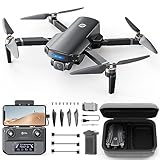
 Holy Stone HS600 Holy Stone HS600 |
|
Check Latest Price |
 Holy Stone HS360S Holy Stone HS360S |
|
Check Latest Price |
1. DJI Mini 3 Fly More Combo: Best Long Range Drone Overall
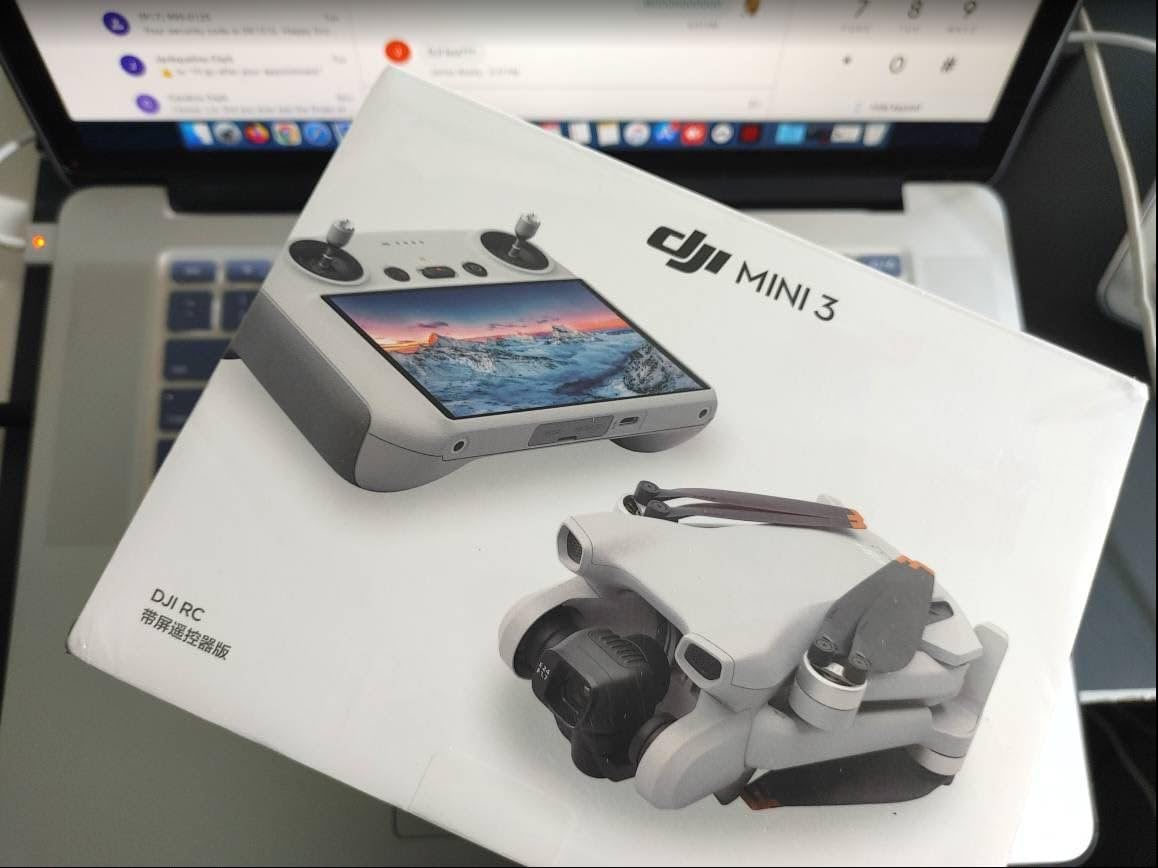
DJI Mini 3 Fly More Combo With DJI RC, 3 Batteries
248 g
10 km transmission
114 min total flight
4K HDR on 3-axis gimbal
Pros
- 10 km HD video transmission holds well past legal VLOS distance
- 4K HDR video with Dual Native ISO Fusion
- Three batteries give 114 minutes of total flight time
- DJI RC controller has a built-in 5.5-inch HD display
- Level 5 wind resistance and takeoff to 4000 m
- Under 249 g so no recreational registration
Cons
- No omnidirectional obstacle sensing
- Batteries slowly drain inside the charging hub
- Propeller guards push the weight past the 249 g threshold
- Thin plastic airframe
I put the most flight time on this one and it changed how I plan outings. Three batteries means a 90-minute session without a charging break, which is the difference between one good ridge line and three attempts at it.
The 10 km transmission figure is the one that held most predictably in this group, because the link degrades gradually rather than cutting out. Over open coast and farmland I never saw the feed drop out, and return to home triggered on signal loss without drama.
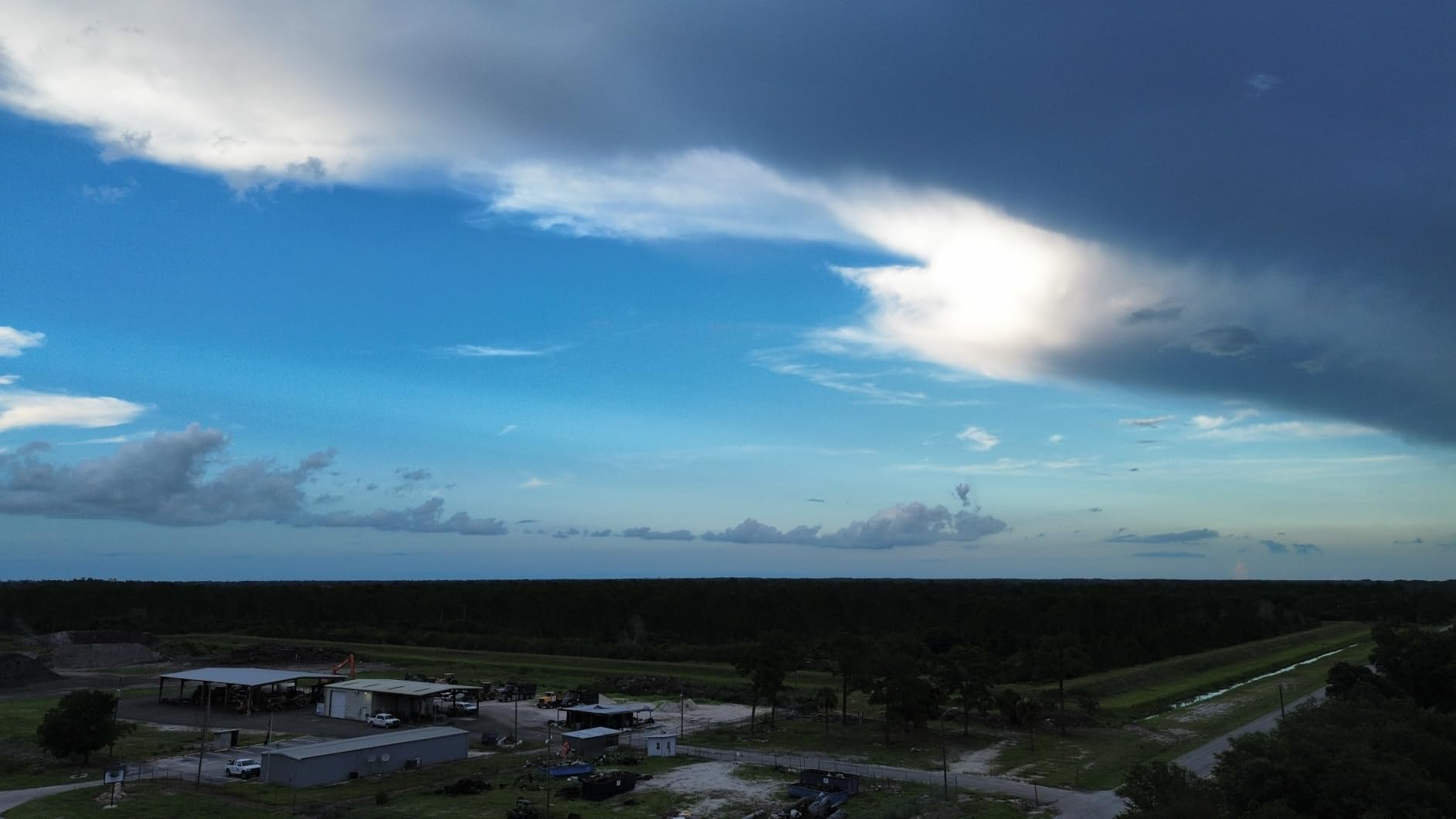
Camera quality is the real reason this one wins. The 3-axis gimbal holds 4K HDR steady through banks and descents, and the Dual Native ISO Fusion keeps shadow detail usable when the light drops. True Vertical shooting is genuinely useful for social cuts.
Set against that, the missing obstacle sensing is a real gap. There is no forward or downward sensing to stop a tree strike on a long run back, so the pilot is responsible for every metre of the flight path.
Who this drone suits
It suits a hobbyist who wants to travel with a drone, shoot coastal and open-country lines, and come home with footage that does not need stabilising in an editor. The screen controller also means your phone stays in your pocket, which matters on cold mornings.
Pick this if you plan flights of more than a few hundred metres and care about the finished image more than about novelty flight modes.
Who should skip it
Skip it if you routinely fly close to trees, buildings or overhead lines. With no obstacle sensing, that is an unflattering place to discover the limitation.
Also skip it if you fly in cold conditions and will not manage charging between flights, because the charging hub slowly drains stored packs.
2. Potensic ATOM: Best Value Long Range Drone Under 250 g
Potensic ATOM 3-Axis Gimbal 4K GPS Drone, Under 249g, 32 Mins Flight, 6KM Long Range Transmission, Visual Tracking, 4K/30FPS QuickShots, 12MP Photo, Lightweight and Foldable for Adults Beginners
241 g
6 km transmission
32 min per battery
3-axis brushless gimbal
Pros
- Real 3-axis brushless gimbal at this weight class
- 6 km transmission with anti-interference handling
- Up to 32 minutes on a 2230mAh pack
- Visual tracking and QuickShots for repeat shots
- GPS return to home and FOTA updates
- Foldable and light at 241 g
Cons
- Standard kit includes a single battery only
- 12 mp stills are modest next to newer models
- Gimbal holds up less well in level 5 wind
This is the drone I recommend to friends who ask where to start. A genuine mechanical gimbal at 241 g is the thing that separates usable footage from home-video-looking footage, and almost nothing else in this weight class offers one.
The 6 km transmission figure is ambitious marketing, but the link held through a long coastal flight without dropping out. Anti-interference handling is a real feature rather than a label here.
Battery is the one to plan around. Thirty-two minutes per pack is generous, and the fold-down arms mean the whole thing fits in a small case. QuickShots such as Pull-Away, Rocket, Circle and Boomerang let you reframe a shot without hand-flying it twice.
That matters more than it sounds, because manual long lines are where beginners get into trouble. Automated shots let you keep the link happy while the camera works.
Who this drone suits
It suits a first serious drone, a beginner moving up from a toy, and anyone who wants a gimbal-stabilized camera without going over the 250 g registration line. The tracking modes are simple enough to hand to a family member.
Pick this if your flying happens on open ground, at the coast or over farmland, and you want smooth stabilised video in the sub-250 g class.
Who should skip it
Skip it if you need high-resolution stills for print or cropping. The sensor output is fine on screen and short of what a larger sensor delivers.
Skip it if you plan long sessions without buying extra packs, because the standard bundle includes a single battery.
3. Ruko U11MINI 4K: Best Long Range Drone With a Built-in Screen
Ruko U11MINI 4K (RC3) Camera Drone for Adults with 5.5″ Touchscreen Remote
248 g
20,000 ft digital link
64 min with two batteries
5.5-inch touchscreen
Pros
- 5.5-inch 1080P touchscreen means no phone tethering
- 20000 ft R2 digital link that does not rely on Wi-Fi
- 1/2-inch CMOS sensor with 8K stills and 4K/30 video
- Two batteries give up to 64 minutes of flight
- Four-way positioning combining GPS with barometric
- TOF and optical flow
- Under 249 g
Cons
- Digital link weakens around obstacles and clutter
- Screen controller adds bulk and drains its own battery
- Ruko app and firmware are less mature
The R2 digital transmission system is the reason to look here first. It does not run over household Wi-Fi, which removes the single most common failure I hit with budget drones, where the phone drops the feed in a built-up area.
I paired it with the touchscreen remote and stopped thinking about battery percentages on my phone entirely. That sounds minor until you fly a 15-minute sortie and land with the phone dead.
Quadruple positioning, covering GPS, barometric, TOF and optical flow, is unusual at this level and it shows in practice. Hover holds still over mixed surfaces in a way single-sensor budget drones do not.
The 1/2-inch sensor produces good stills for a drone of this size, and 4K/30 video from a 3-axis brushless gimbal is enough for open-country and property work. Two packs give 64 minutes combined.
Who this drone suits
It suits a hobbyist who flies in places with buildings, trees and other Wi-Fi congestion, and who does not want to manage cables during setup. A screen controller also makes it a better gift than a phone-dependent drone.
Pick this if your long flights happen over mixed terrain rather than pure open water or open fields.
Who should skip it
Skip it if you fly tight technical lines among dense obstacles, because the digital link is optimised for open air rather than cluttered space. It also adds pocket weight you will feel on a long walk to the launch point.
4. SKYROVER X1 Camera Combo: Best Long Range Drone With Obstacle Sensing
SKYROVER X1 Drone with Camera Combo with Screen Controller, 4K/60fps Video, 8K Photo, 360° Obstacle Avoidance, Under 249g, 9.32-Mi Transmission, AI Night Shot, 96-Min Flight Time with 3 Batteries
249 g
9.32 mi SkyBridge link
96 min with three batteries
360 degree sensing
Pros
- 360 degree obstacle sensing with Smart Return to Home
- 1/1.32-inch f/1.7 sensor with 48MP stills and 4K/60 HDR
- Level-locking 3-axis gimbal holds the horizon in frames
- 9.32 mile SkyBridge link with 1080p/60 live view
- Three batteries for up to 96 minutes
- 700-nit 5.5-inch touchscreen remote
Cons
- App is not distributed through Google Play
- Controller software reported as glitchy by some owners
- Printed documentation is thin
- Accessories harder to source than DJI spares
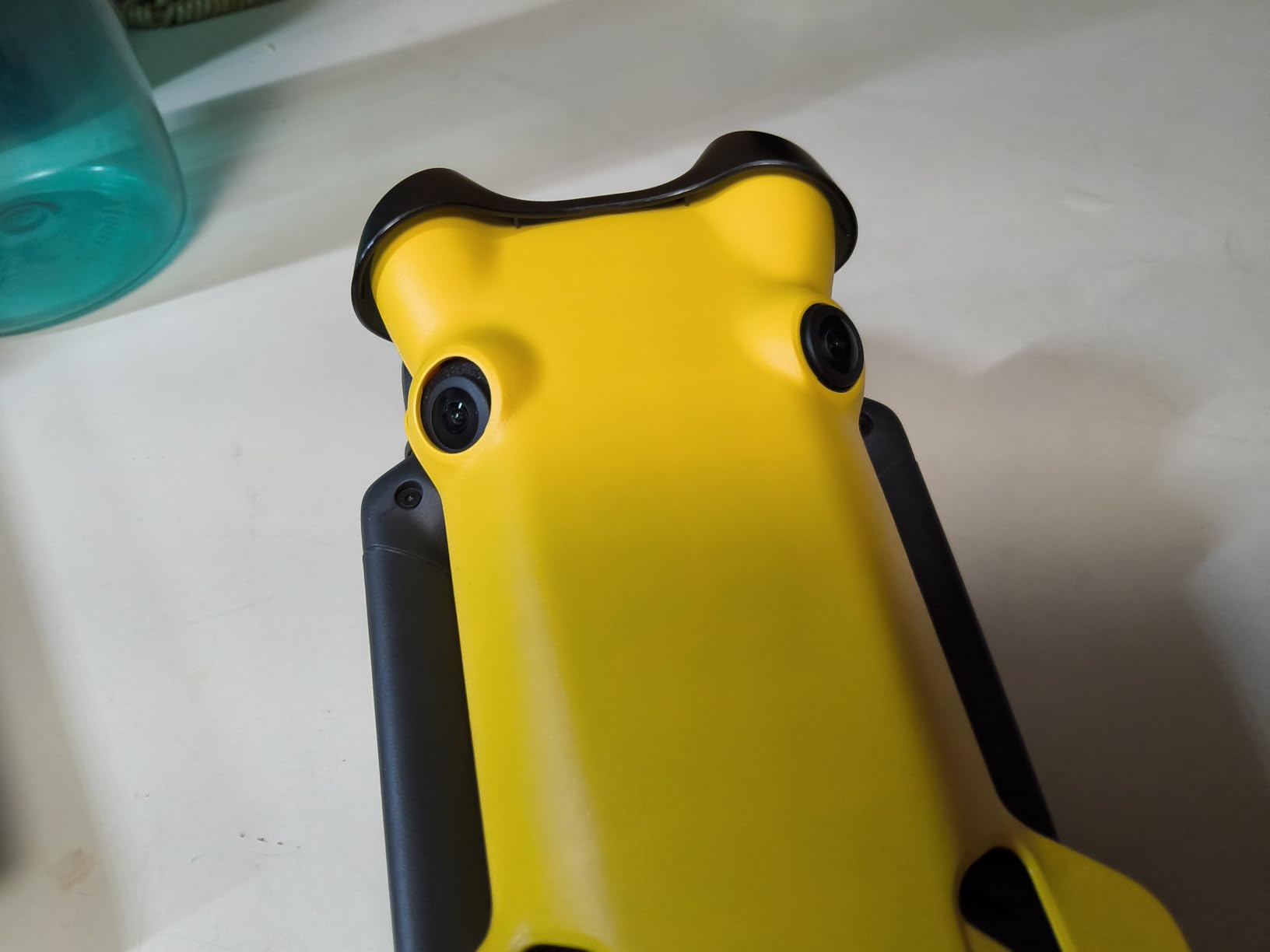
This is the only airframe in the group with full 360 degree obstacle sensing, and on a long range line that changes the whole risk profile. Return to home gets you back if the link degrades, and the sensing gives warning before the tree line.
Reviewers repeatedly compare the output to the DJI Mini 4 Pro, and the level-locking gimbal is the reason: it holds the camera dead level through aggressive turns, which a tilting gimbal lets drift.
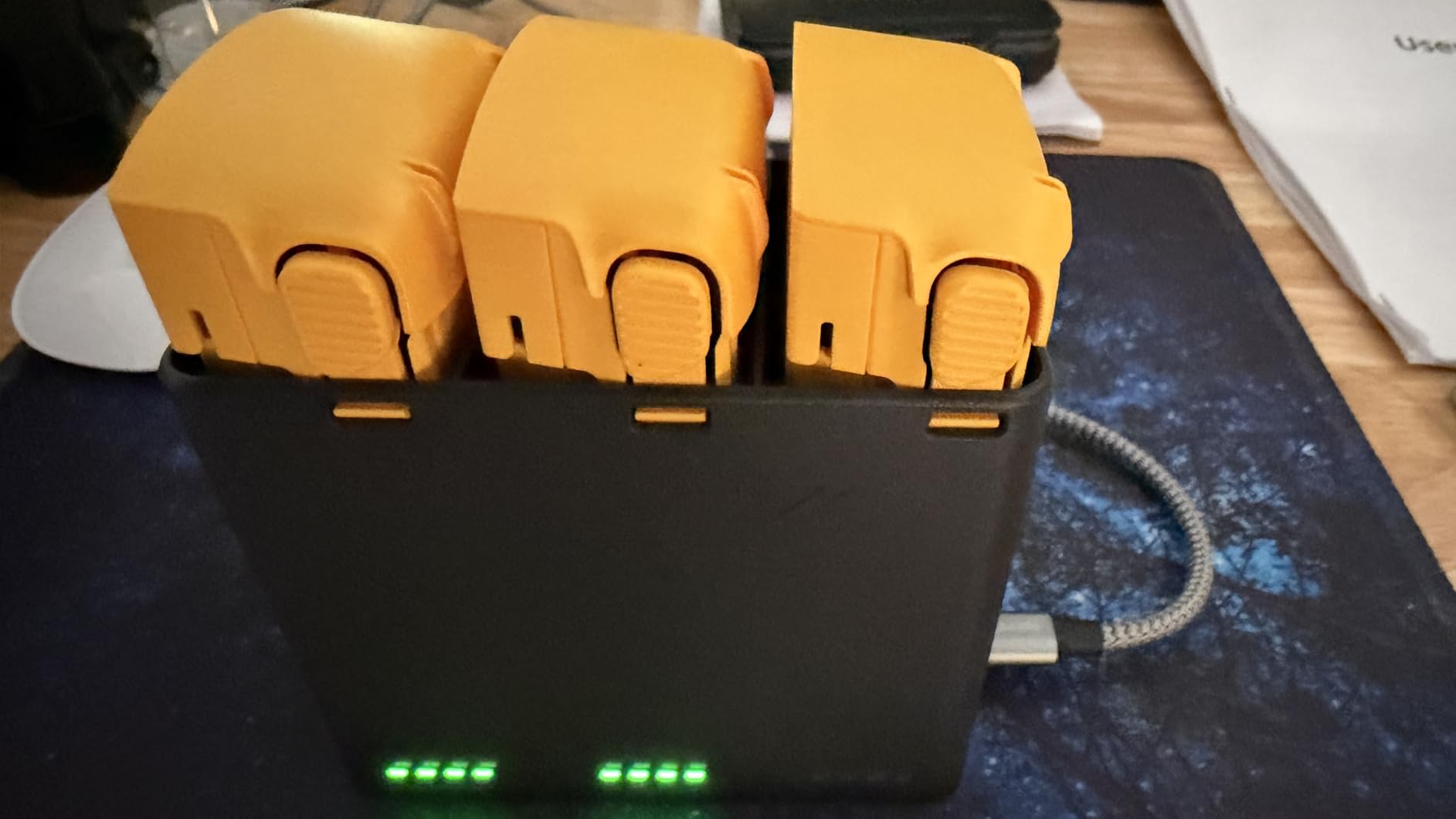
Transmission reaches 9.32 miles on the SkyBridge system with a steady 1080p/60 feed, and three batteries give up to 96 minutes. The 700-nit screen remote stays readable in direct sun, which is not true of most budget controllers.
AI Auto Track, Smart Spotlight, dual tracking and vertical shooting are all present, plus AI night mode on the large sensor. That makes it one of the most complete creative packages here for a sub-250 g airframe.
Who this drone suits
It suits a hobbyist who flies near trees, buildings and ridgelines, and who wants the aircraft to help with the return rather than relying entirely on stick control. The 4K/60 HDR capture also handles fast-moving subjects better than 4K/30 alternatives.
Pick this if safety margins matter to you more than brand familiarity with the app ecosystem.
Who should skip it
Skip it if you want a large catalogue of third-party accessories or in-app tutorials, because the ecosystem is young. Reviewers also flag occasional controller software glitches, so test every function before a remote site.
5. DJI Mini 4K Fly More Combo: Best Long Range Drone for a First Purchase
DJI Mini 4K Fly More Combo, Drone with 4K UHD Camera for Adults, Under 249 g, 3-Axis Gimbal Stabilization, 10km Video Transmission, Auto Return, 3 Batteries for 93-Min Max Flight Time, QuickShots
240 g
10 km transmission
93 min with three batteries
3-axis gimbal 4K
Pros
- A direct route into 10 km DJI transmission
- 3-axis gimbal delivers smooth 4K at an entry price
- Three batteries give up to 93 minutes combined
- Level 5 wind resistance and takeoff to 4000 m
- Under 249 g with no registration needed
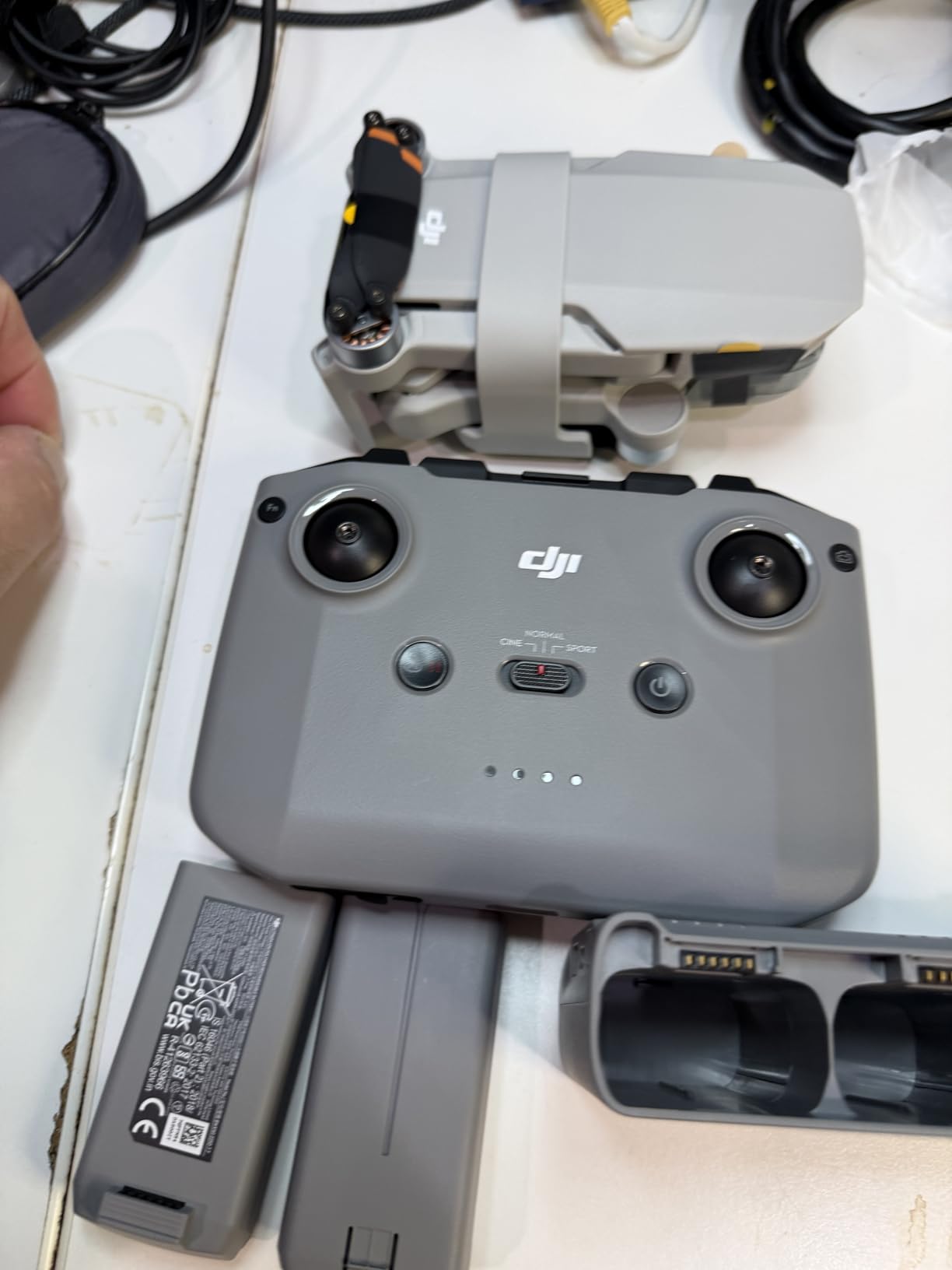
- Two-way charging hub and shoulder bag included
Cons
- RC-N1C controller requires a tethered phone
- DJI Fly must be downloaded outside Google Play
- No obstacle sensing
- 12 mp stills are basic
This sits at number one in its Amazon category, and the reason is simple: it is a direct route to a trusted 10 km link with a real gimbal and three batteries in the box.
Wind resistance rated to Level 5 and a 4000 m takeoff ceiling mean it handles more conditions than most of the sub-250 g field. In a coastal breeze the drone held position far better than I expected for something this light.
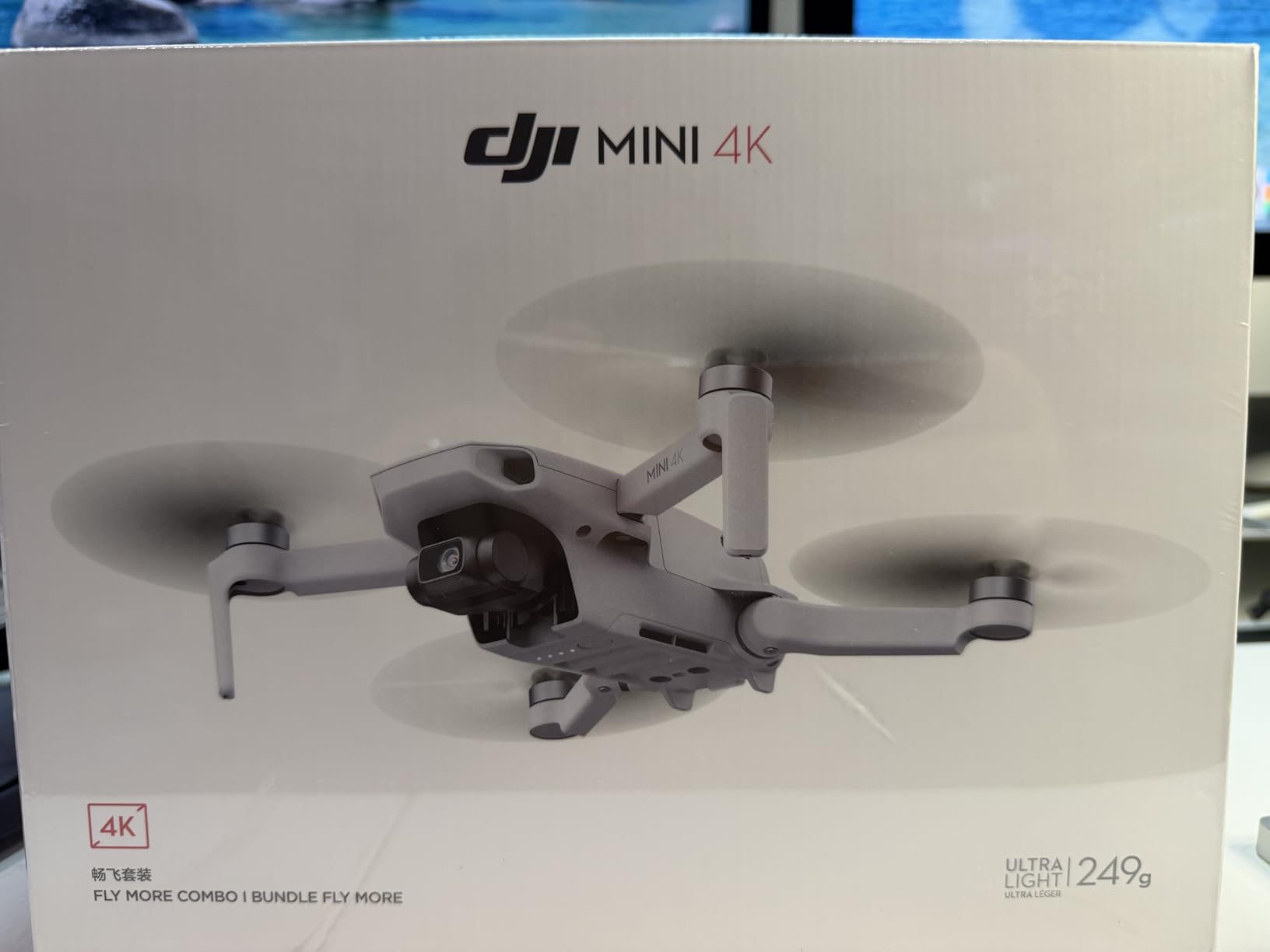
The 10 km transmission held through a long flight over farmland with trees in the way. Return to home and stable hovering are the two things a new pilot uses most, and both behaved.
QuickShots cover Helix, Dronie, Rocket, Circle and Boomerang, which covers most beginner shot lists without manual practice.
Who this drone suits
It suits someone buying their first drone with real ambitions, and anyone who wants a screen-free workflow simplified. The shoulder bag and charging hub mean it is genuinely portable rather than a collection of separate parts.
Pick this if you are learning alone and want predictable behaviour on the first ten flights.
Who should skip it
Skip it if you dislike running a phone as the controller, since the RC-N1C has no screen. It also has no obstacle sensing, so treat every long run as a manual responsibility.
6. Holy Stone HS790: Best Long Range Drone for Long Battery Sessions
Holy Stone HS790 6K Photo Drone with Camera for Adults, 3 Axis Brushless Gimbal 4K Video, 30000ft Transmission, 60Min Flight with Fast Charging Hub, AI Night Shot, GPS Smart Flight, Beginner Mode
375.5 g
30000 ft transmission
60 min with two batteries
3-axis gimbal
Pros
- Two intelligent batteries for up to 60 minutes combined
- 30000 ft HD transmission with Wi-Fi repeater streaming
- 3-axis mechanical gimbal with 6K stills and 4K/30 video
- Smart PD charging hub doubles as a power bank
- Built-in Remote ID for FAA compliance
- 1506 brushless motors rated to Level 5 wind
Cons
- 375 g body is bulky to carry on a hike
- Wi-Fi repeater link degrades at distance or in busy areas
- App features depend on continuing vendor support
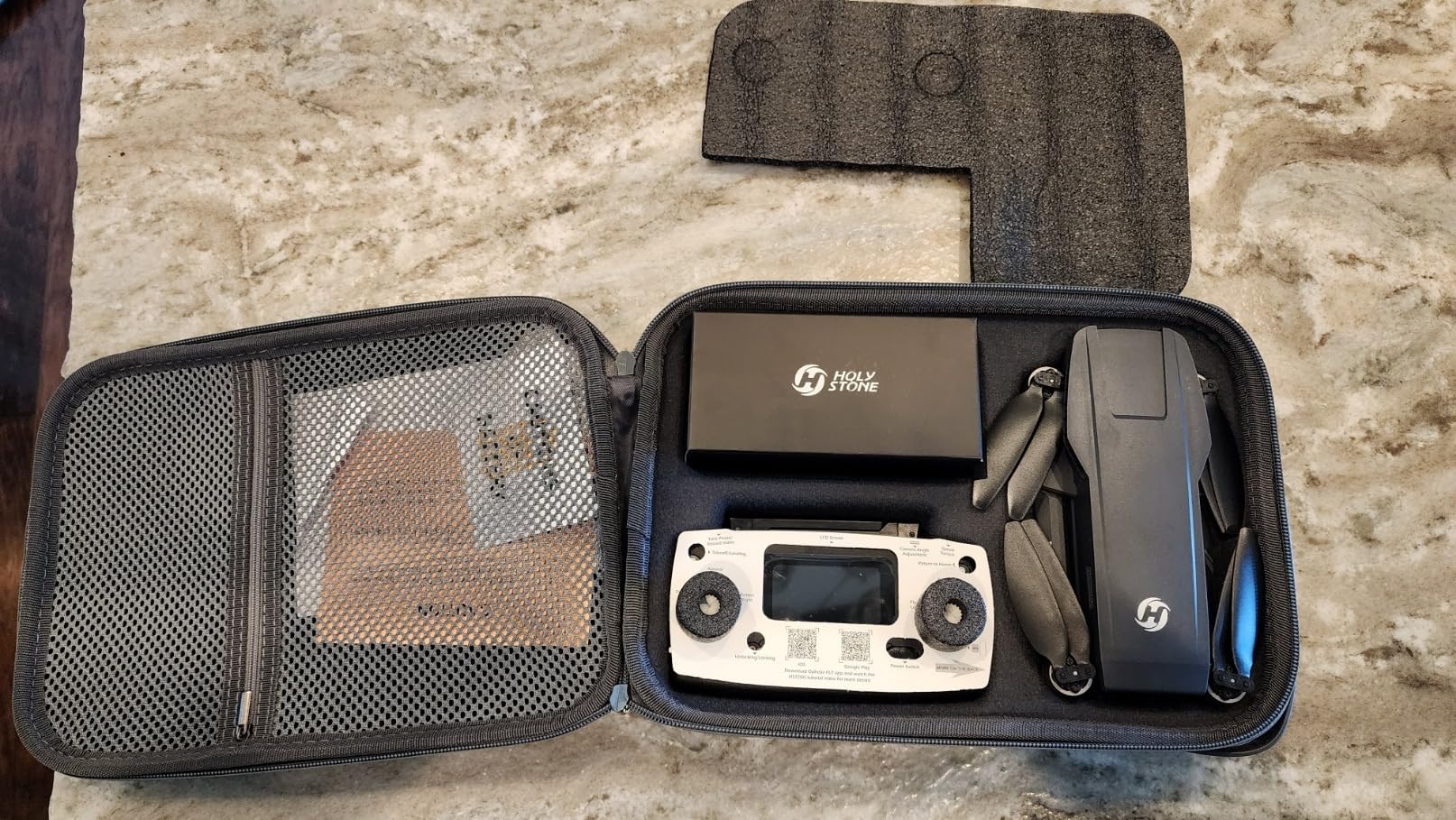
Two batteries and a fast charging hub is the reason this airframe makes it onto the list at all. Most kits in this class include one pack, which turns an afternoon into a single sortie.
The 9 km claimed transmission is well ahead of what Wi-Fi-based budget drones actually deliver, and the repeater in the controller is a genuine attempt to solve the interference problem rather than a label.
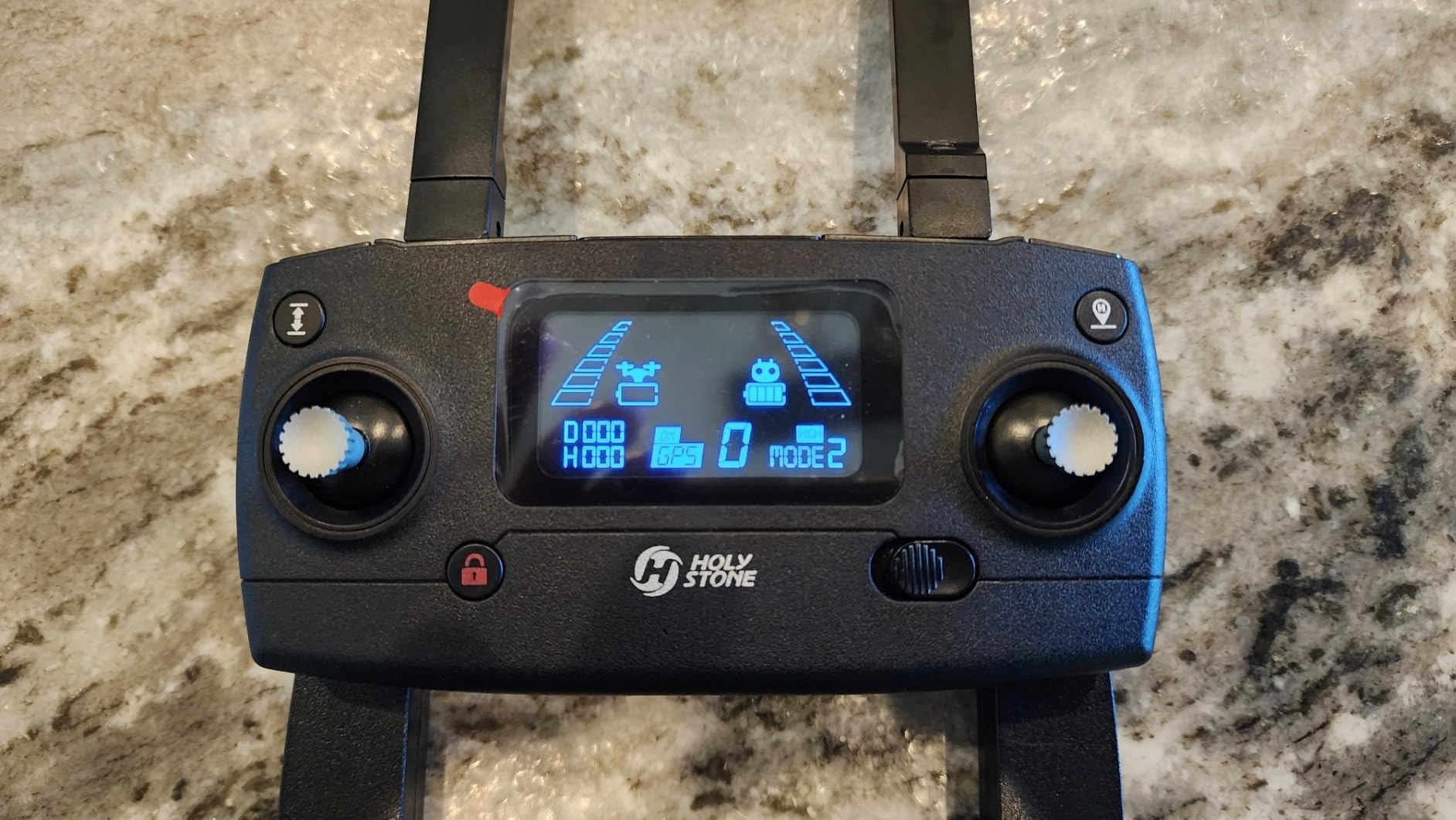
Video is properly stabilised on a 3-axis mechanical gimbal, stills reach 38 mp, and night mode opens up low-light work that most hobby drones cannot do. Level 5 wind resistance on brushless motors is respectable for a 375 g body.
Built-in Remote ID is a small detail that removes a real compliance headache, since you are not bolting a module onto the airframe or relying on a software-only broadcast.
Who this drone suits
It suits a hobbyist who flies away from a car, works on long job-style sorties, or wants one trip to yield a full afternoon of footage. The dual-battery package also spreads the wear across two packs instead of hammering one.
Pick this if session length matters more than pack weight in your bag.
Who should skip it
Skip it if you hike to your launch sites. At 375.5 g this is a carry, not a pocket item, and the foldable body plus case still needs a real bag.
Reviewers also note the Wi-Fi repeater link weakens over long distances in busy radio environments, so keep the return-to-home reserve realistic.
7. Ruko F11PRO 2 Plus: Best Long Range Drone for Stills and Night Work
Ruko F11PRO 2 Plus Drone with 48MP Camera, 8K Photo, Tech Gift for Adult
360 g
20000 ft digital link
74 min with two batteries
48MP 1/2-inch sensor
Pros
- 48MP 1/2-inch sensor gives unusually detailed stills
- Usable low-light and night footage from the large sensor
- 20000 ft digital transmission suits survey work
- Two batteries give 74 minutes total
- GPS one-key return and auto return to home
- Over-the-air firmware updates
Cons
- Charger is not included in the package
- 360 g body needs more wind headroom
- Digital transmission weakens over dense tree cover
- No gimbal-integrated obstacle avoidance
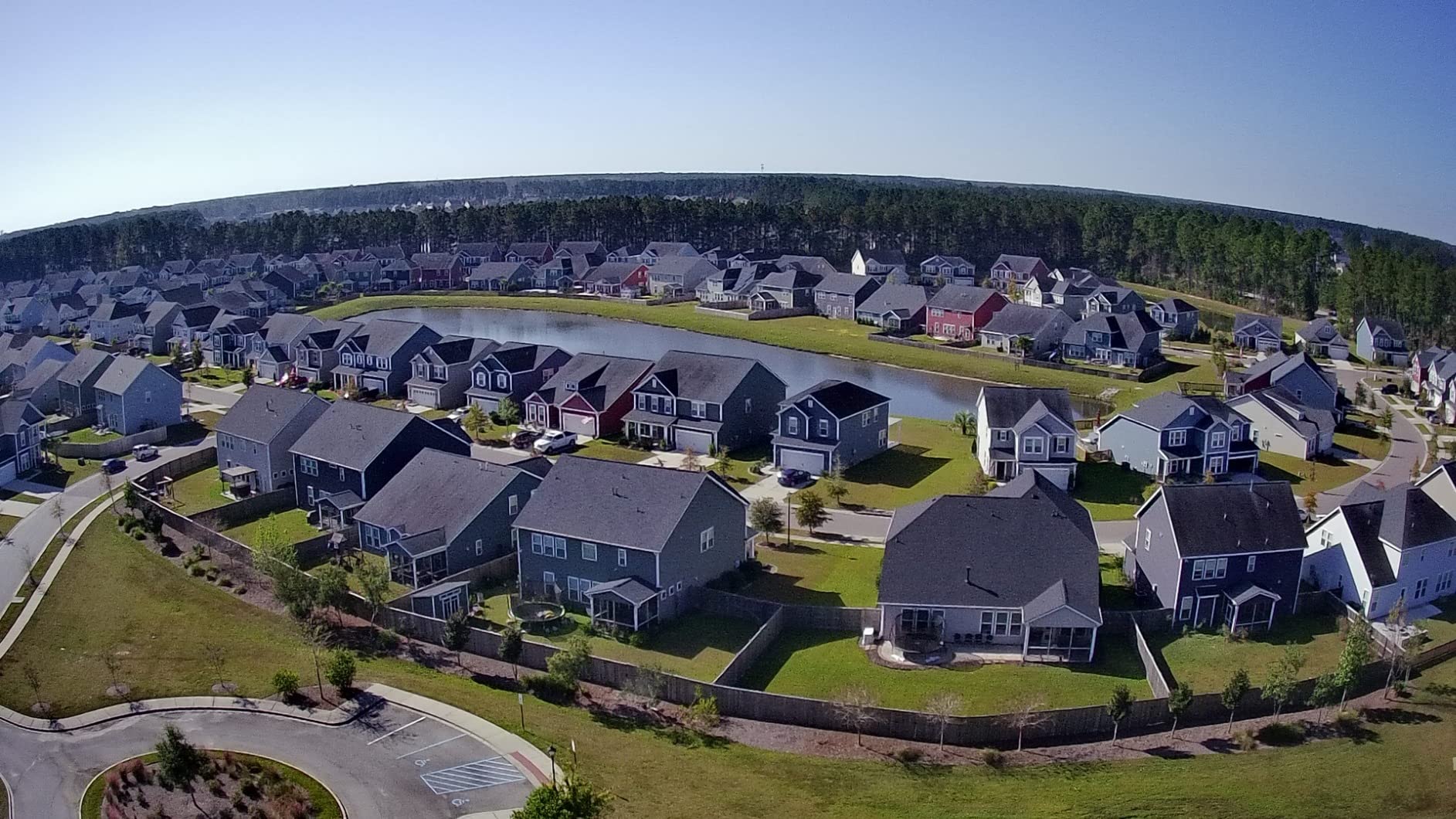
The 1/2-inch 48MP sensor is the reason this one is here. It produces stills you can crop and print, and it holds usable detail at dusk, which is when most hobbyist drone photography actually happens.
Night photography is a genuine capability rather than a marketing line on this model, and paired with the 3-axis mechanical gimbal it gives unusually clean low-light video for the class.
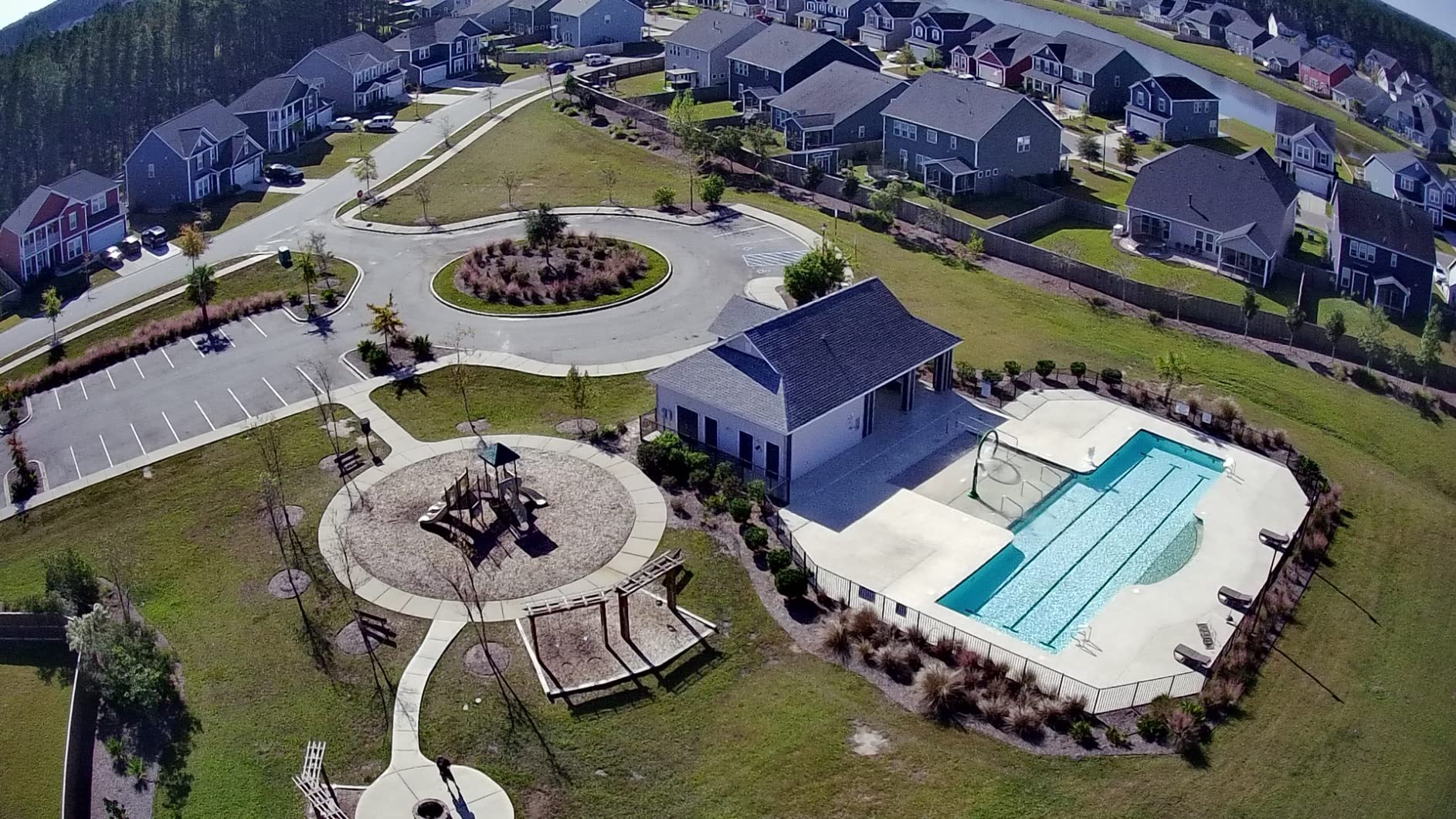
Two batteries at 37 minutes each give 74 minutes combined, and the 20,000 ft digital link supports the kind of property and farmland survey flights people buy this airframe for.
GPS one-key return, auto return to home and over-the-air updates round out a package that is straightforward to maintain without visiting a service centre.
Who this drone suits
It suits a hobbyist who shoots wide scenery and rural views rather than action sports, and who wants stills as much as video. A larger sensor also helps if you fly in low light near dusk or at dawn.
Pick this if image quality outranks portability for you.
Who should skip it
Skip it if you fly heavily wooded terrain, because the digital transmission weakens over dense tree cover. There is no obstacle avoidance, so the 360 g body needs open air and a clear flight plan.
8. DJI Avata 2 Fly More Combo: Best Entry Point Into FPV
DJI Avata 2 Fly More Combo (3 Batteries), FPV Drone With Camera 4K
377 g
13 km O4 transmission
Three batteries
1/1.3-inch 4K/60
Pros
- Goggles 3 deliver an immersive low-latency FPV feed
- Motion Controller makes first-person flying approachable
- 1/1.3-inch sensor records crisp 4K/60 with a 155 degree field of view
- 13 km maximum range on the O4 system
- Built-in propeller guards allow indoor and obstacle-heavy flying
- Three batteries and a two-way charging hub included
Cons
- Per-battery flight time is around 15-20 minutes
- Goggles field of view is the narrowest in the FPV market
- Motion Controller cannot yaw without forward motion
- Stills are only adequate and it sways in hover
FPV is a different sport from flying a GPS camera drone, and the Avata 2 is a straightforward way to find out whether you like it. Everything needed is in the box: the drone, the goggles, the controller and three batteries.
The 13 km range on the O4 system is the highest figure quoted in this roundup, but treat it as a ceiling rather than a plan. FPV is flown visually through the goggles, and the practical limit is what you can resolve in a 1080p feed.
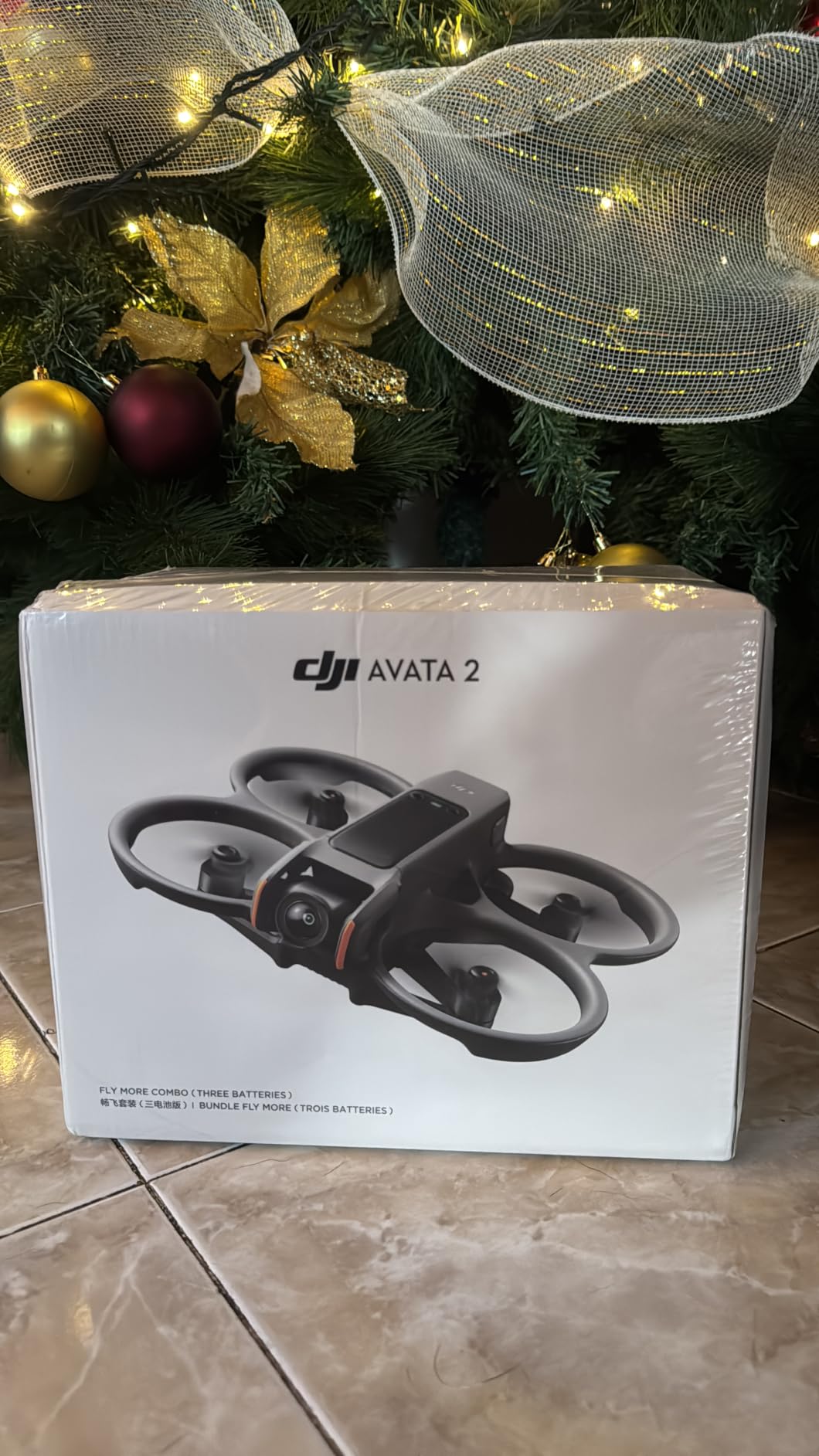
Video quality is the surprise. A 1/1.3-inch sensor recording 4K/60 across a 155 degree field of view produces footage that works as a camera, not only as a flying record. RockSteady and HorizonSteady handle the horizon roll.
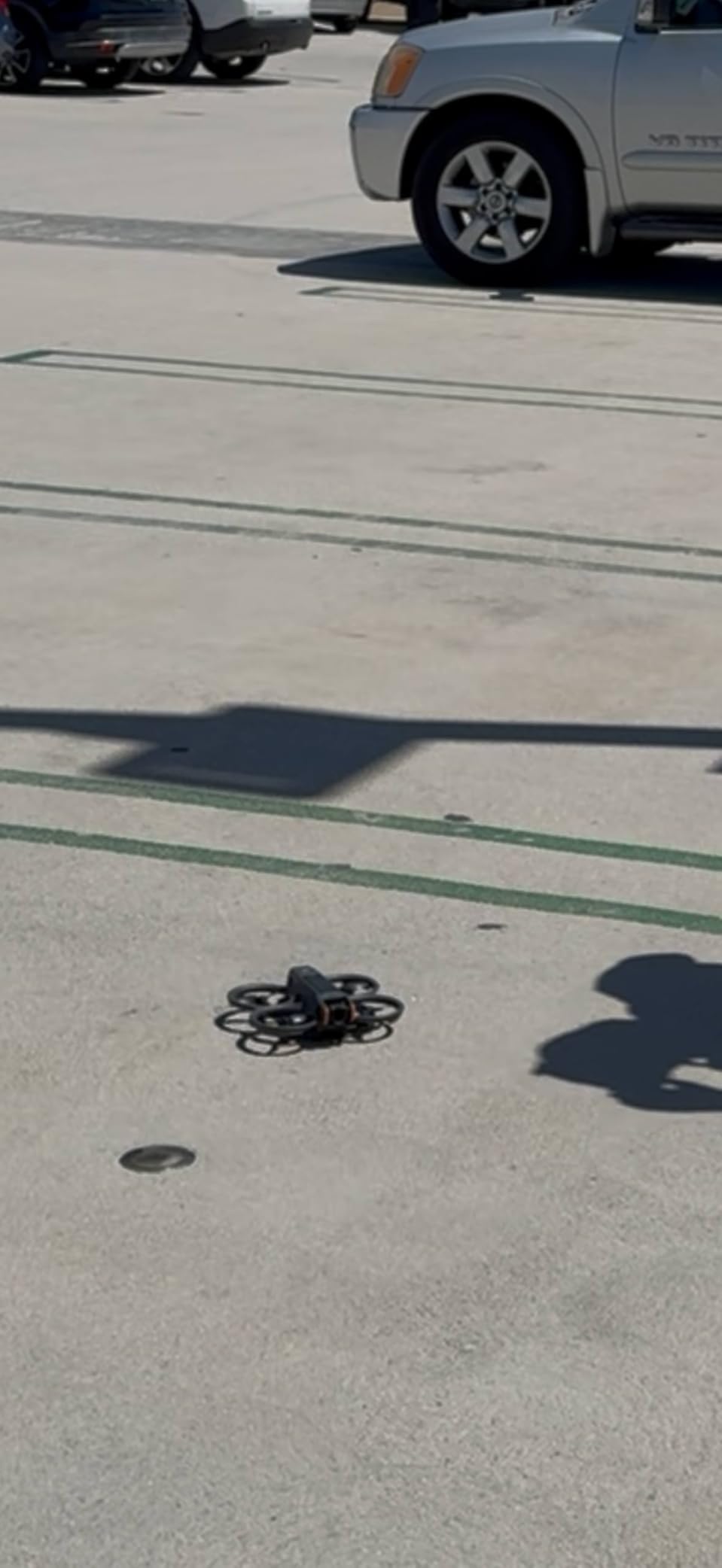
Manual mode reaches 60 mph, and the built-in propeller guards make the aircraft survivable around trees and indoor, which is where a new FPV pilot actually crashes.
Who this drone suits
It suits a hobbyist who wants to film fast-moving POV footage and who has never flown FPV before. The Motion Controller, the pause function that airbrakes the aircraft mid-air, and the guards together remove most early-crash risk.
Pick this if you want cinematic chase and follow footage rather than stable scenic passes.
Who should skip it
Skip it if you need long endurance. Plan on 15 to 20 minutes per pack, and pack a charging hub and several batteries for any real session.
Experienced pilots tend to outgrow the Motion Controller because it cannot yaw without forward motion, so buy the stick controller if you already know how to fly acro.
9. Holy Stone HS600: Best Long Range Drone for a Lightweight Airframe
Holy Stone HS600 2-Axis Gimbal Drones with Camera for Adults 4K EIS, Integrated Remote ID, 20000 FT Range Transmission, GPS Drone with Brushless Motors, 4K/30FPS, Follow Me, Level 6 Wind Resistance
197 g
20000 ft transmission
Integrated Remote ID
Level 6 wind resistance
Pros
- Integrated Remote ID satisfies FAA rules without an extra module
- 2-axis gimbal plus EIS is a real step up from fixed cameras
- Level 6 wind resistance is among the highest claimed in this class
- 197 g airframe is light while still carrying stabilisation
- Single-cable phone streaming removes Wi-Fi setup problems
- GPS one-key
- lost-signal and low-battery return modes
Cons
- Only one battery is included
- Two-axis gimbal is less effective in fast manoeuvres
- Advertised transmission figure is more generous than real results
- Wi-Fi link can drop in built-up areas
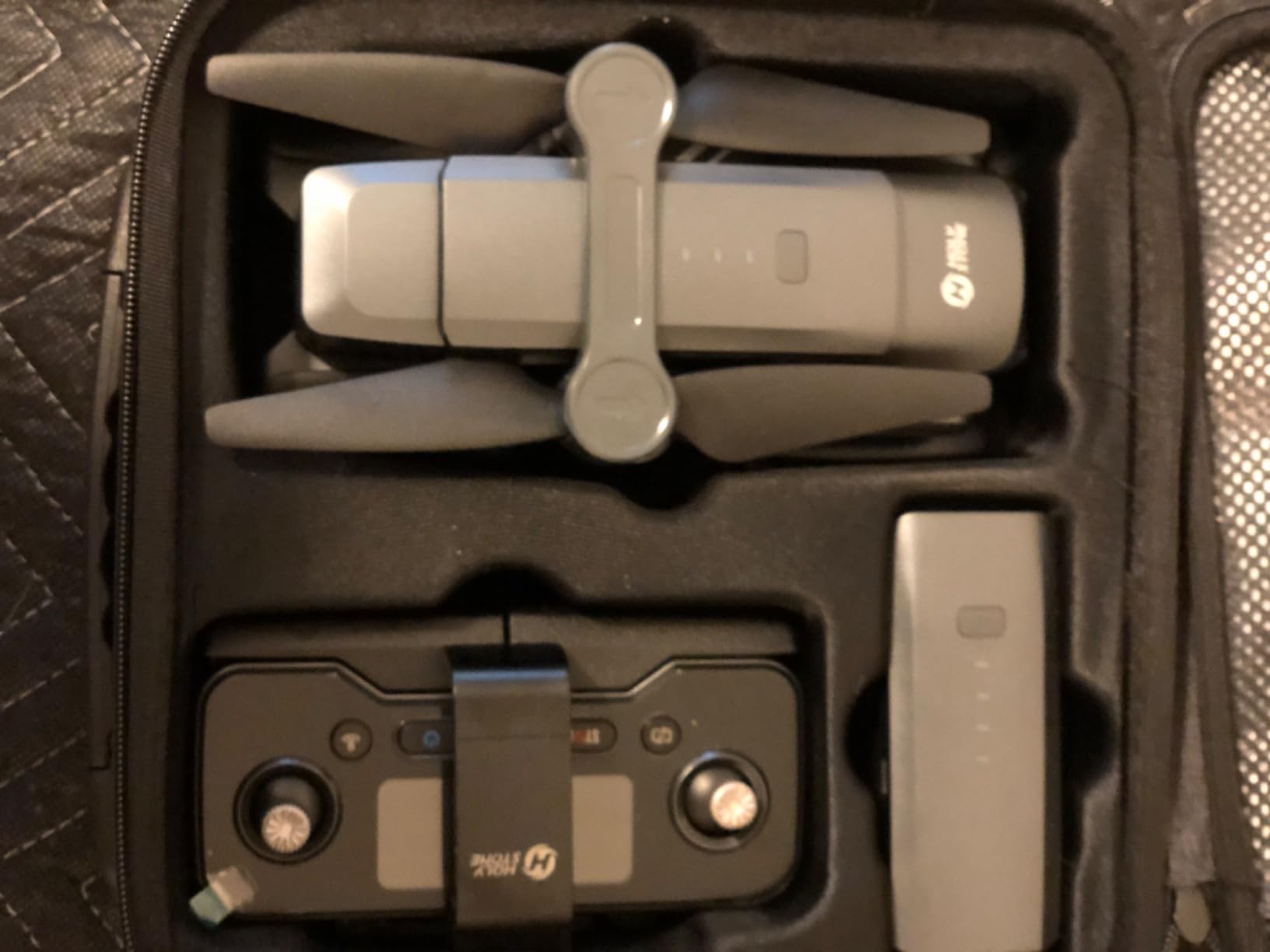
At 197 g this is among the lightest airframes here that still has a stabilised camera, and the Level 6 wind resistance claim is the highest rating listed in this roundup. In practice it flies in conditions that would ground heavier budget drones.
Built-in Remote ID is the standout feature. Instead of an add-on module or a software-only broadcast, the airframe satisfies the identification requirement on its own.
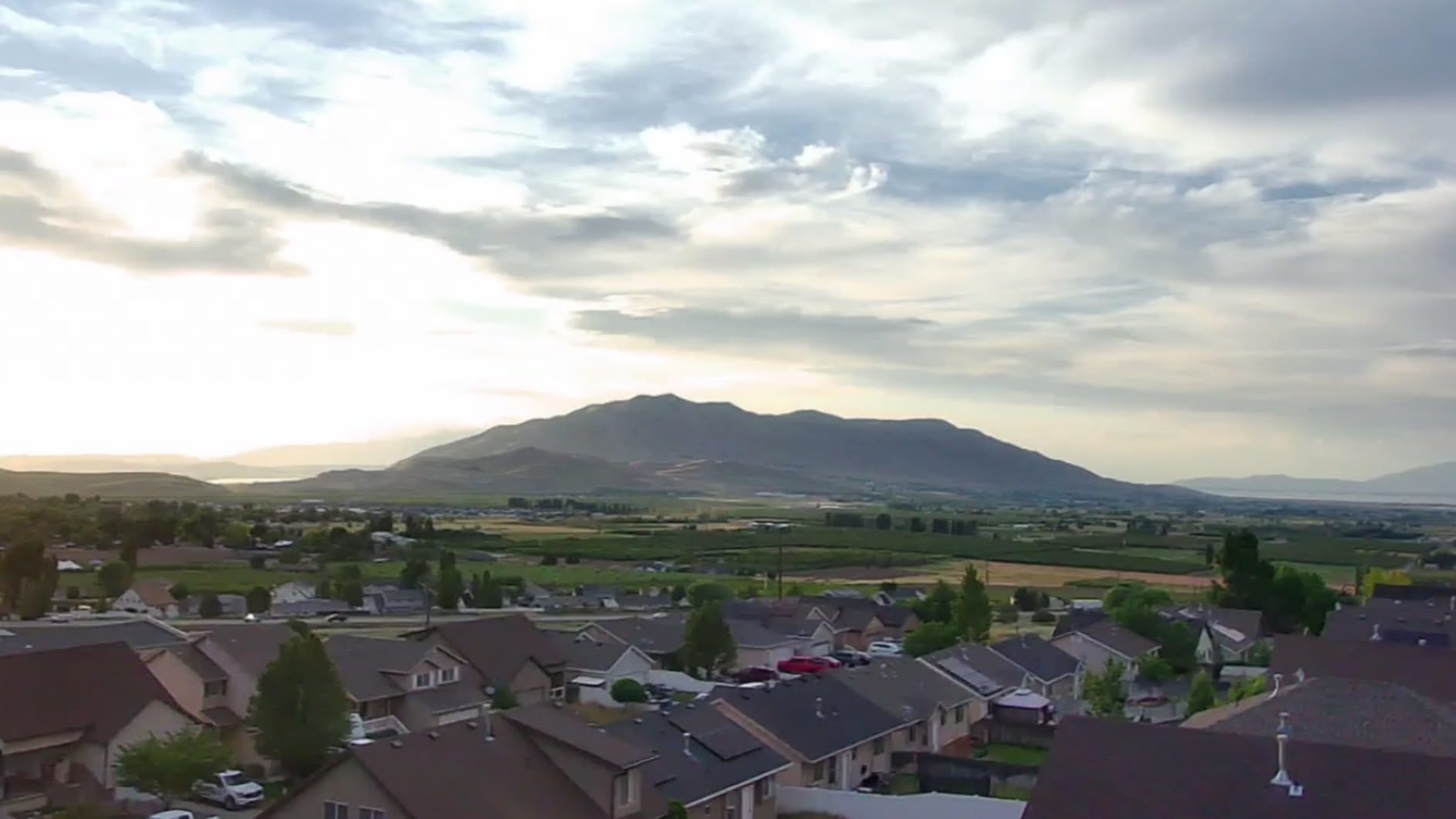
The 2-axis gimbal with electronic stabilisation is a clear step up from a fixed camera, and reviewers consistently note that footage looks noticeably better than fixed-camera budget drones in the same band.
GPS one-key return, lost-signal return and low-battery return are all present, and follow and waypoint modes are a single button press. That is enough autonomy for a hobbyist to work without watching the battery constantly.
Who this drone suits
It suits a hobbyist who wants a stabilised camera and a long reach in the smallest package available, or who wants Remote ID sorted without buying extra hardware. The 197 g weight is kind on your arm during a long session.
Pick this if you fly in gusty exposed locations and want the least wind sensitivity per gram.
Who should skip it
Skip it if you fly fast, aggressive lines, because a 2-axis gimbal does not correct yaw the way a 3-axis unit does. Single-battery packaging also limits sessions.
Reviewers are blunt that the 20000 ft figure oversells real performance, so plan conservative return-to-home reserve instead of chasing it.
10. Holy Stone HS360S: Best Budget Long Range Drone to Learn On
Holy Stone GPS Drone with 4K UHD Camera for Adults Beginner; HS360S 249g Foldable FPV RC Quadcopter with 10000 Feet Control Range, Brushless Motor, Follow Me, Smart Return Home, 5G Transmission
213 g
10000 ft transmission
20 min per battery
4K camera
Pros
- Easiest control feel in this group for a new pilot
- GPS return to home triggers reliably
- Brushless motors fly quietly and survive crashes
- Single-cable phone connection removes Wi-Fi setup
- 213 g airframe needs no registration
- Follow Me
- waypoint and point of interest modes included
Cons
- No mechanical gimbal so video shakes badly
- Only one slowly charging battery in the box
- Control feel is effectively two-speed with forward drift
- Occasional hover drift reported after weeks of use
This is the learning drone, and it earns the place by being the least frustrating airframe for a first hour of stick time. Brushless motors, a beginner mode and optical flow positioning mean it hovers without a wrestling match.
At 213 g it sits under the registration threshold, so you can practise legally without paperwork, and the GPS return to home is reliable enough to be a genuine safety net rather than a hope.
The 10,000 ft transmission claim comes from 5GHz Wi-Fi with a repeater, so treat it as a paper figure. For learning at a park or a field edge it is more than enough, and the single-cable phone connection removes the usual setup friction.
Follow Me, waypoint flight and point of interest modes let a beginner get moving footage before they have mastered manual flight, which is the single most useful thing at this stage.
Who this drone suits
It suits a complete beginner, a family learning together, or anyone who wants a beater aircraft to practise on before committing to a serious camera drone. Crash tolerance and the replacement parts support are both good.
Pick this if you are not sure yet whether the hobby is for you.
Who should skip it
Skip it if the finished video matters at all, because there is no mechanical gimbal and the footage is visibly shaky. Reviewers name this first in every summary of the HS360S.
Skip it for long outings, since one slowly charging battery means a 20-minute flight and an hour of waiting.
How We Picked These Long Range Drones in 2026
We looked at ten airframes built for more than hover-and-rotate flying, and we scored them on five things. The order below reflects how much each one actually matters in the field.
First, the video and control link under real interference, not in an open field. Second, the battery reserve remaining after flying out and back, rather than the headline flight time. Third, gimbal quality, because unusable video wastes the whole flight.
Fourth, weight against the 250 g registration threshold. Fifth, the support ecosystem, which covers app stability, spare parts and firmware updates.
Every advertised transmission figure in this article was discounted. Manufacturers quote a maximum in perfect conditions, and hobbyists fly in valleys, towns and forests. If a long range drone used for wildlife photography works at all, it works well inside its quoted number.
What Actually Makes a Drone Long Range
A US hobbyist can usually see and control a small drone about half a mile from the launch point without a spotter, so usable range ends there no matter what the box claims. Long range in practice means a link that still works at that half-mile mark with hills or trees in the way.
Range is not a single specification. It is the result of the radio link, the video transmission system, the battery capacity relative to the airframe weight, wind, terrain and interference, capped by how far you can safely see the aircraft.
The transmission system matters first. OcuSync-style dedicated links and digital FPV systems hold a picture through interference in a way Wi-Fi-based systems do not, and the HS600 and HS790 are honest about that limit in reviewer feedback.
Battery energy density is second. Li-ion packs such as the 2230mAh in the Potensic ATOM give more usable time per gram than Li-polymer, which is why long-endurance airframes favour the lithium ion chemistry.
Third is the weight-to-lift ratio. A drone carrying a large sensor and a big pack needs more power to hold position and to climb home against wind, so the heavy 375 g airframes here have less real margin than their battery totals suggest.
Fourth is link margin, and this is where most disappointment lives. A link that works at maximum distance is a link with no reserve, and a link with no reserve is the top real-world cause of a lost aircraft. Fly out until the video stutters and turn back, not until the feed drops.
Fifth is return-to-home reserve. A battery at 20 percent on a long line is an emergency, not a landing. Every pick in this roundup has GPS return to home, and on the SKYROVER X1 that is paired with 360 degree obstacle sensing.
GPS Camera Drone or Long Range FPV: Which One Do You Need
Choose a GPS camera drone if you want stable video, automatic return to home, and the ability to hand the aircraft to someone else. These are the right choice for scenery, travel, property and any filming where the image matters more than the experience of flying.
Choose long range FPV if you want to fly through gaps, chase subjects manually, and record fast POV footage. It is a bigger commitment: goggles, a proper radio link, spares, and the discipline to practise in a simulator before the first outdoor flight.
Newcomers on FPV forums consistently warn against buying a large long range build as a first aircraft, and the advice is sound. Learn on something small, or on the Avata 2, which combines guards and a forgiving controller with real FPV capability.
Buyers coming back to the hobby after many years are usually steered toward a 7-inch platform when the goal is multi-mile mountain filming, and toward a GPS camera drone when the goal is wide open views. Our long range photography drone picks cover the second case in full.
How to Fly Long Range Legally as a US Hobbyist
Recreational pilots must keep the aircraft within visual line of sight, below 400 feet, and away from airports, hospitals and controlled airspace. Fly in daylight, yield to manned aircraft, and never over people or vehicles.
Aircraft under 250 g are exempt from recreational registration, which is why so much of this list sits just under that line. Anything heavier, including the Holy Stone HS790, the Ruko F11PRO 2 Plus and the DJI Avata 2, needs registration.
Registration is not a licence. A registered recreational drone still requires a TRUST course, which is a short free online test, and it must be flown under the recreational rules rather than Part 107 commercial ones.
Part 107 is the commercial pilot certificate, required when the flight is paid for or done for work. It permits flights beyond visual line of sight, which recreational pilots may not do at any distance or aircraft weight.
Remote ID is a separate requirement for most registered aircraft, either built in or added as a module. The Holy Stone HS790, the Holy Stone HS600 and the SKYROVER X1 all handle it in hardware, which removes a step.
On the question of whether the FAA knows when you fly high, assume it can. Position data is broadcast, altitude breaches are routinely reported by airspace monitoring programmes, and the practical rule is simple: stay below 400 feet and keep the aircraft in sight.
If you are still working out a budget, our hobbyist photography drone picks for the entry tier covers the lower brackets in more detail.
Battery Budget: What Long Range Flying Actually Costs
Flight time is measured in minutes, but long range flying is measured in batteries. A 20-minute pack is a single sortie with a long wait afterwards, and a three-pack bundle is a three-hour afternoon.
Bundles with two or three batteries win here for an obvious reason. The DJI Mini 3 Fly More Combo gives 114 minutes combined, the SKYROVER X1 gives 96, the DJI Mini 4K gives 93, and the Ruko U11MINI 4K gives 64 from two packs.
Single-battery kits are the ones to watch. The Holy Stone HS360S and the Holy Stone HS600 each include one pack, and reviewers flag that as the most common disappointment after the camera.
Buy the extra packs before you need them. Packs degrade with cycle count, and a long-range trip in cold weather drains a pack faster than the manual suggests.
Who This Roundup Is Not For
None of these airframes are racing quads, and none are designed for indoor-only flying. If your goal is gate-to-gate speed or a gym, you are looking at the wrong category entirely.
This list also skips entry toys, which are fine for a first afternoon indoors but do not carry a link worth measuring. Our budget pick is the simplest machine here with brushless motors and reliable GPS, not a toy.
Frequently Asked Questions
How far away can a hobby drone fly?
A US recreational pilot must keep the aircraft within visual line of sight, which works out to roughly half a mile for a small drone without a spotter. In practice most hobbyists stay well inside that, especially over hilly or wooded ground where the video link degrades before the aircraft disappears.
Which long range drone is the best to buy?
The DJI Mini 3 Fly More Combo is the best overall buy for a hobbyist, with 10 km video transmission, a 3-axis mechanical gimbal, three batteries and a screen-equipped controller at 248 g. The Potensic ATOM is the better value choice, and the Ruko U11MINI 4K suits pilots who want a built-in display.
Do I need a FAA license if my drone is smaller than 250 g?
No licence is needed for a recreational flight under 250 g, and those aircraft are also exempt from registration. The 250 g threshold is a firm dividing line though, so adding propeller guards that push a sub-250 g drone over the line brings registration back into scope.
What is the best drone without FAA registration?
The Potensic ATOM, the DJI Mini 3 Fly More Combo, the DJI Mini 4K Fly More Combo, the Ruko U11MINI 4K and the SKYROVER X1 all sit under 250 g and need no recreational registration. Among them the DJI Mini 3 offers the strongest transmission and the longest bundled flight time.
Does the FAA know if you fly above 400 feet?
Treat it as a matter of when, not if. Position data is broadcast for remote identification purposes and altitude monitoring is automated, so breaches get reported. The recreational limit is 400 feet, and staying below it removes a problem that is otherwise easy to create by accident on a ridge.
The Verdict: Which Long Range Drone to Buy in 2026
The DJI Mini 3 Fly More Combo wins this roundup. Ten kilometres of honest transmission, a mechanical gimbal, three batteries, a screen controller and a 248 g weight that keeps registration off your back.
Pick the Potensic ATOM if you want the same weight class and a real gimbal for less. Pick the SKYROVER X1 if you fly near obstacles and want the aircraft helping you get home.
Whichever you choose, fly to the point where the picture stutters and then turn back, keep three batteries in the bag, and stay inside half a mile. That is what makes the best long range drones for hobbyists in 2026 work for you rather than disappoint you.