
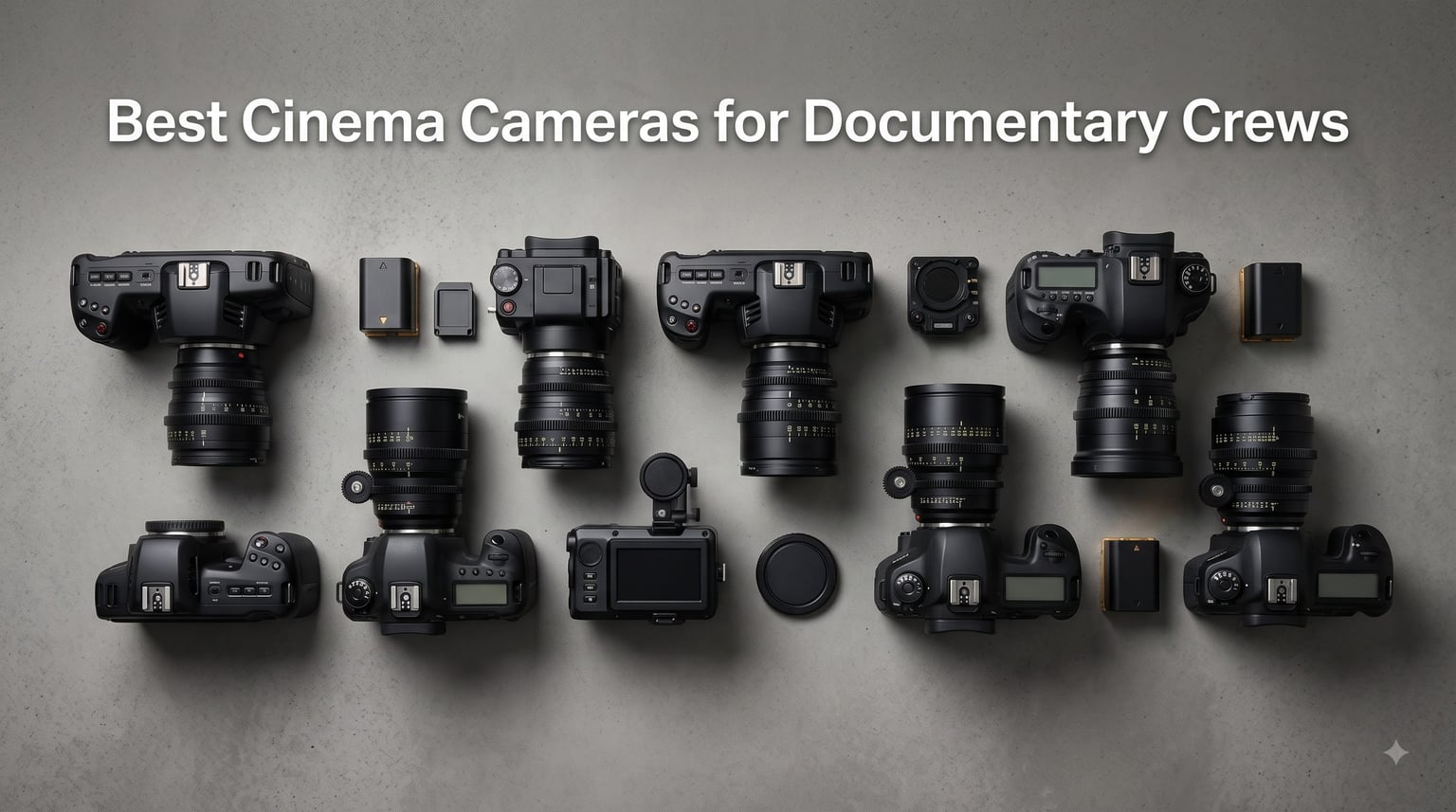
Documentary crews need cameras that disappear into the story, not into the shot. After testing eight of the top cinema cameras for documentary crews this year, our team narrowed down which bodies actually hold up on long shoots, in mixed lighting, and with audio gear strapped to the handle. We shot in basements, on city streets, and in interview rooms to see how each camera handled the unpredictable conditions documentary filmmakers face every day.
A great documentary cinema camera has to do three things at once: deliver cinematic image quality with enough dynamic range to survive aggressive color grading, run quietly and cool enough for long interviews, and stay light enough that a single operator or a small crew can carry it for twelve hours. The best cinema cameras for documentary crews in 2026 all nail at least two of these, and a few hit all three.
In this guide, you’ll find our top three picks for quick buying decisions, a comparison table covering all eight cameras, in-depth reviews of each model with real test notes, a buying guide tuned to crew size and shooting style, and an FAQ answering the documentary questions our readers ask most. Whether you’re a solo journalist, a two-person crew covering social issues, or a four-person team shooting a feature documentary, there’s a camera here for your workflow.
Table of Contents
Top 3 Picks for Documentary Crews (October 2026)

Sony Alpha FX3 Full-frame Cinema Line Camera
- Full-frame sensor
- 15+ stops dynamic range
- Compact cage-free design
- Built-in cooling fan

Sony FX30 Super 35 Cinema Camera
- Super 35 sensor
- Dual base ISO
- Compact run-and-gun body
- S-Log3 and LUTs

Blackmagic Pocket Cinema Camera 6K Pro
- 6K Super 35 sensor
- Built-in 2/4/6 stop ND filters
- 13 stops dynamic range
- DaVinci Resolve included
Best Cinema Cameras for Documentary Crews in 2026
| Product | Specifications | Action |
|---|---|---|
| Sony FX3 |
|
Check Latest Price |
| Sony FX30 |
|
Check Latest Price |
| Blackmagic Pocket 6K Pro |
|
Check Latest Price |
 Blackmagic Pocket 6K G2 Blackmagic Pocket 6K G2 |
|
Check Latest Price |
 Blackmagic Pocket 4K Blackmagic Pocket 4K |
|
Check Latest Price |
 Canon EOS R5 C Canon EOS R5 C |
|
Check Latest Price |
 Panasonic LUMIX S5IIX Panasonic LUMIX S5IIX |
|
Check Latest Price |
 Panasonic LUMIX GH7 Panasonic LUMIX GH7 |
|
Check Latest Price |
1. Sony Alpha FX3 – Best Cinema Camera for Documentary Crews Overall
Sony Alpha FX3 ILME-FX3 | Full-frame Cinema Line Camera
Full-frame 10.2MP sensor
15+ stops dynamic range
4K 120p 10-bit 4:2:2
Built-in cooling fan
Pros
- Exceptional low-light performance
- Compact cage-free design with mounting points
- 4K 60p without crop
- 10-bit 4:2:2 for grading flexibility
- Netflix approved
- Phase Detection AF with Eye tracking
Cons
- No built-in ND filters
- No global shutter
- Battery life could be better
I carried the Sony FX3 through three days of location shooting in mixed interior and exterior light, and the low-light performance kept surprising me. At ISO 12,800 in a dim community center, the shadows held texture that I would have expected to crush on a smaller-sensor body. The 15+ stops of dynamic range gave my colorist enough latitude to recover highlight detail from window-lit interview setups without lifting noise in the shadows.
The FX3’s cage-free design is the real documentary advantage. There are quarter-twenty mounting points all over the body, so I strapped on a small XLR top handle, a shotgun mic, and a wireless receiver without needing a full cage rig. That kept the camera at 1.5 kg fully loaded, light enough to shoulder-mount for a 90-minute interview block.
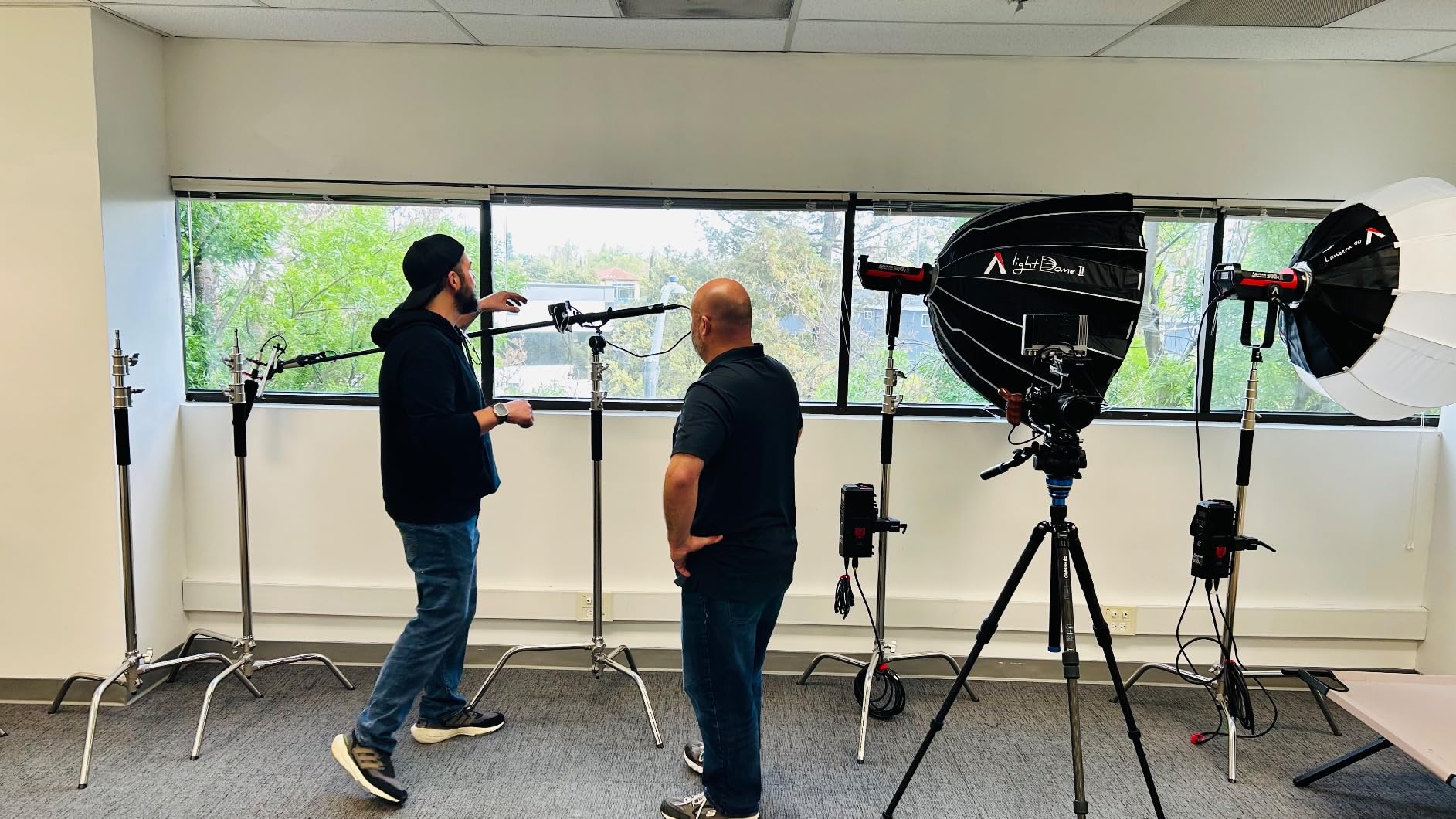
Autofocus is where the FX3 separates itself from manual-focus cinema bodies. The phase-detection system with 627 points locked onto eyes across talking-head interviews and tracked subjects walking through a crowd scene at f/2 without hunting. For a two-person crew shooting interviews and cutaways in a single day, that reliability matters more than any codec spec.
Recording is capped at 4K 120p in 10-bit 4:2:2, which is plenty for documentary delivery in 2026. The built-in cooling fan meant I never hit an overheating warning during a four-hour sit-down interview in a warm room. The main compromise is the lack of built-in ND filters, which forces you to carry variable ND glass or use shutter-priority workarounds.
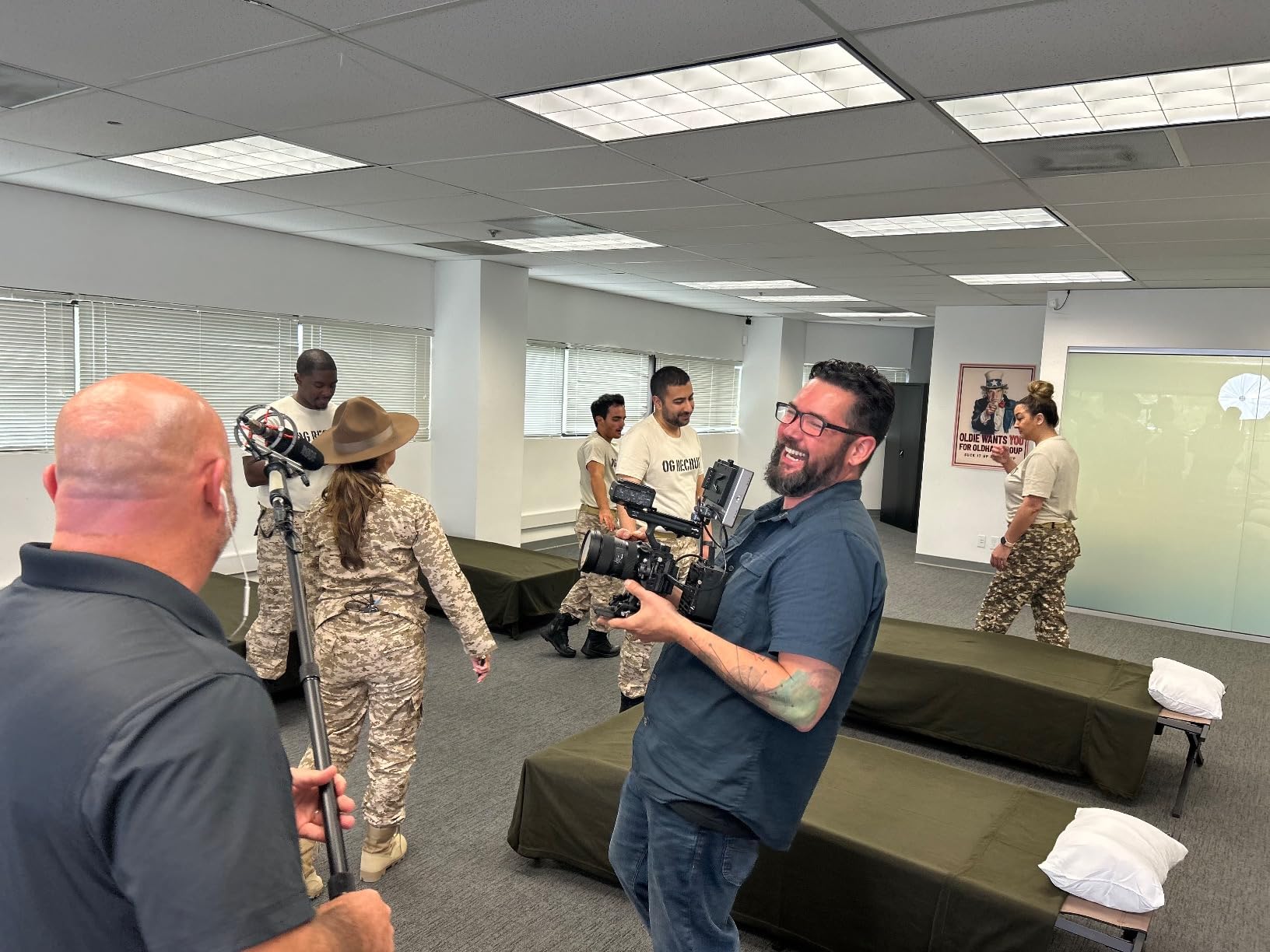
Best use cases for the FX3
The FX3 is the best fit for a small documentary crew running both interviews and run-and-gun B-roll, especially when shooting in changing light. It’s the strongest option for solo filmmakers who need reliable autofocus without sacrificing cinema-grade codecs.
For Netflix-bound documentary work, the FX3 is on the approved camera list, which makes it a safe choice for crews working toward streaming deliverables. Its full-frame sensor also produces the shallow depth-of-field look that distinguishes cinematic documentary from broadcast news.
Where the FX3 falls short
If your crew is shooting entirely outdoors in bright sun, you’ll feel the missing ND filters every time you swap between interior and exterior scenes. Battery life tops out around 90 minutes per NP-FZ100 in 4K, so plan on carrying four to six batteries for a full shoot day.
Crew workflows that rely on dual-codec simultaneous recording (like ProRes RAW alongside compressed backup) will find the FX3’s dual card slots more limiting than the Blackmagic URSA line. For crews that need XLR audio at the camera body, the included XLR top handle solves this, but it adds bulk to the otherwise compact form factor.
2. Sony FX30 – Best Value Cinema Camera for Documentary Work
SONY Cinema Line FX30 Super 35 Camera, Gray
Super 35 20.1MP sensor
14+ stops dynamic range
Dual base ISO 800/2500
6K oversampled 4K
Pros
- Excellent value vs FX3
- Super 35 cinematic look
- Dual base ISO clean low-light
- S-Log3 and user LUTs
- Lightweight run-and-gun body
- Active cooling
- Full-size HDMI
Cons
- APS-C crop limits shallow depth of field
- Battery life limited
- No built-in ND filters
The FX30 delivers about 90% of what the FX3 offers at roughly half the price, which is why it’s the best value pick on this list for documentary crews. I tested it with a small crew on a community garden project, and the Super 35 sensor gave us a filmic look that graded beautifully in DaVinci Resolve without needing heavy LUT work.
Dual base ISO at 800 and 2500 is the FX30’s secret weapon for documentary lighting. In a poorly lit kitchen scene, I switched from base 800 to base 2500 and the noise floor stayed clean. That flexibility matters when you can’t control the lighting on location, which is most of the time in documentary work.
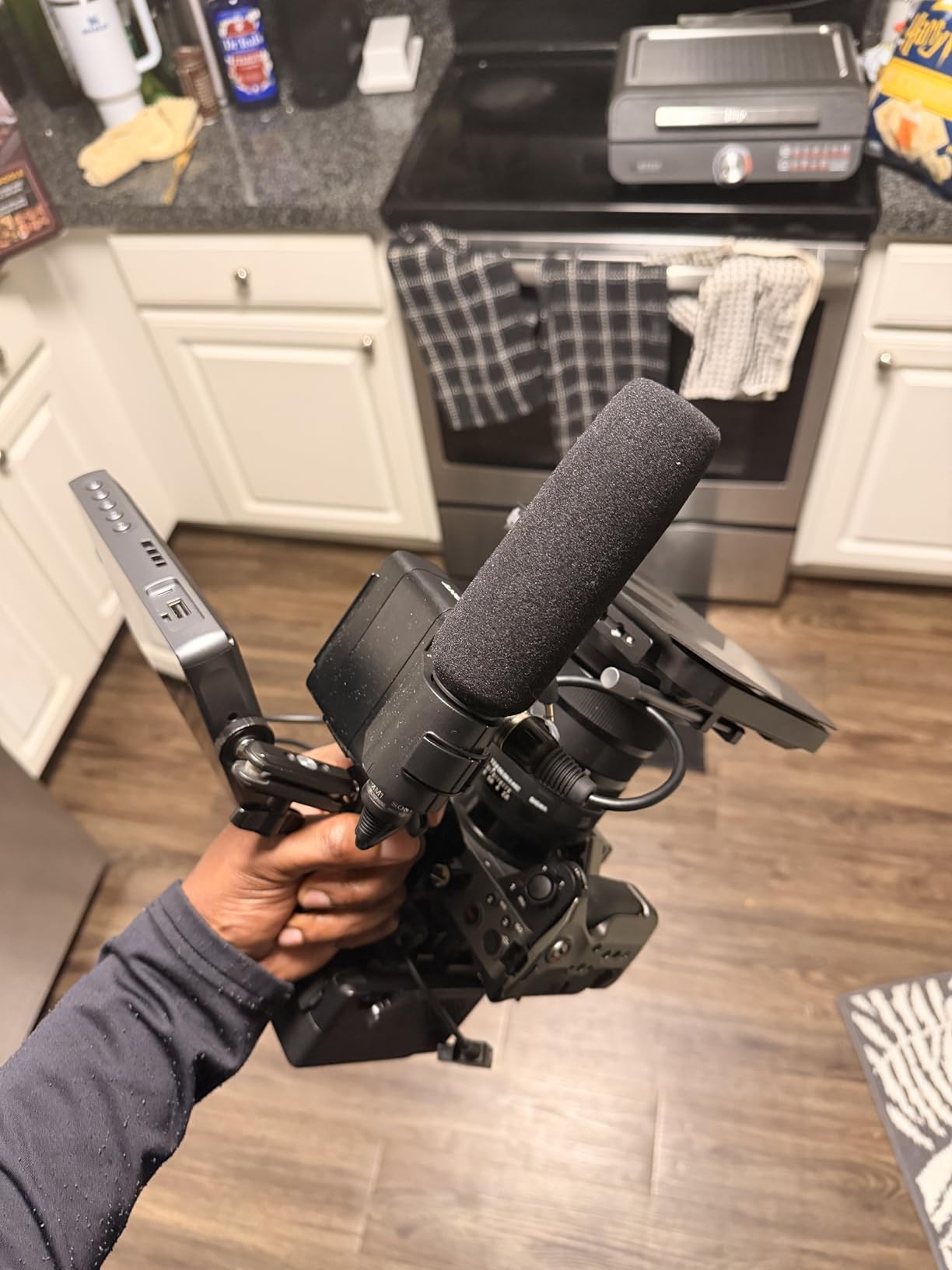
The FX30 also has Cine EI, Cine EI Quick, and S-Log3 shooting modes, which are Cinema Line features you usually only see on more expensive bodies. For crews that already work in a log workflow, the FX30 slots in without forcing them to change their grading pipeline. The 6K oversampled 4K output is sharp enough for 4K delivery and holds up when reframed for vertical social cuts.
Run-and-gun documentary work is where the FX30’s compact 1.4-pound body pays off. I mounted it on a shoulder rig with a follow focus and shotgun mic, and the whole rig stayed under 4 kg. For crews who travel light to protests, refugee camps, or remote villages, that weight difference adds up over a long day.
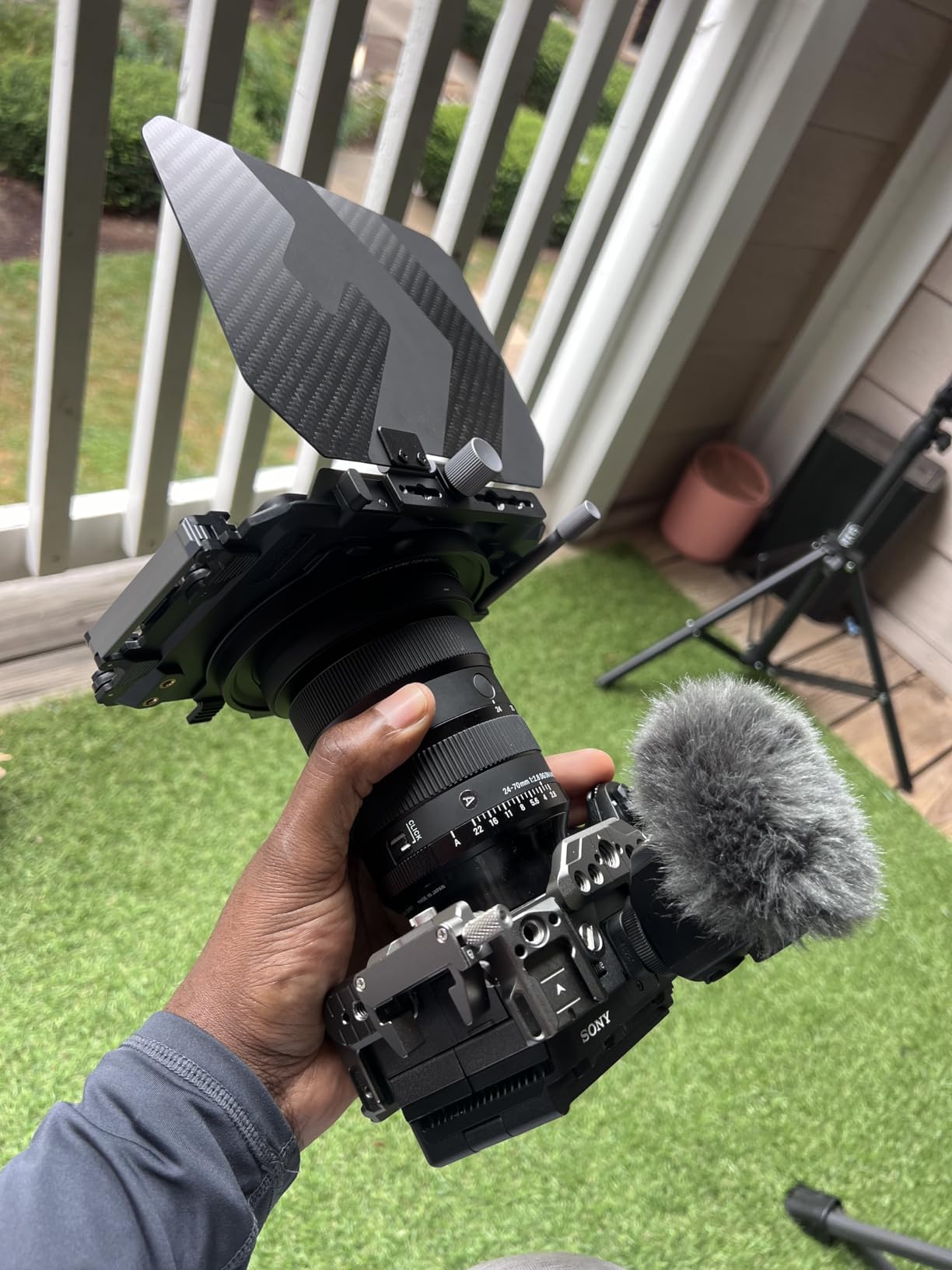
Best use cases for the FX30
Indie documentary crews and journalism video producers who need professional codecs without a professional budget will get the most out of the FX30. It’s the strongest option for two-person crews covering travel and human-interest stories where size and stealth matter.
Student and emerging documentary filmmakers working on their first feature will find the FX30’s learning curve manageable, since Sony’s menu system is well documented and the active cooling fan means they can practice for hours without hitting thermal limits.
Where the FX30 falls short
The APS-C crop reduces the shallow depth-of-field capability that full-frame cinema cameras deliver, so if your documentary leans on background separation for emotional scenes, the FX30 won’t deliver the same look as the FX3 or R5 C.
Battery life is the FX30’s biggest weakness. Plan on carrying at least four NP-FZ100 batteries per shoot day, and consider a battery grip or external USB-C power for interviews longer than an hour. Like the FX3, it lacks built-in ND filters, so variable ND glass is a required accessory.
3. Blackmagic Pocket Cinema Camera 6K Pro – Best Cinema Camera for Budget Documentary Crews
Blackmagic Design Pocket Cinema Camera 6K Pro (CINECAMPOCHDEF06P)
6K Super 35 sensor 6144x3456
13 stops dynamic range
Built-in 2/4/6 stop ND filters
DaVinci Resolve Studio included
Pros
- 6K image quality
- Built-in ND filters
- DaVinci Resolve Studio included
- Mini XLR audio
- Apple ProRes and Blackmagic RAW
- Bright 5-inch HDR LCD
- External SSD recording
Cons
- No continuous autofocus
- No in-body stabilization
- Battery life limited
- Larger than mirrorless options
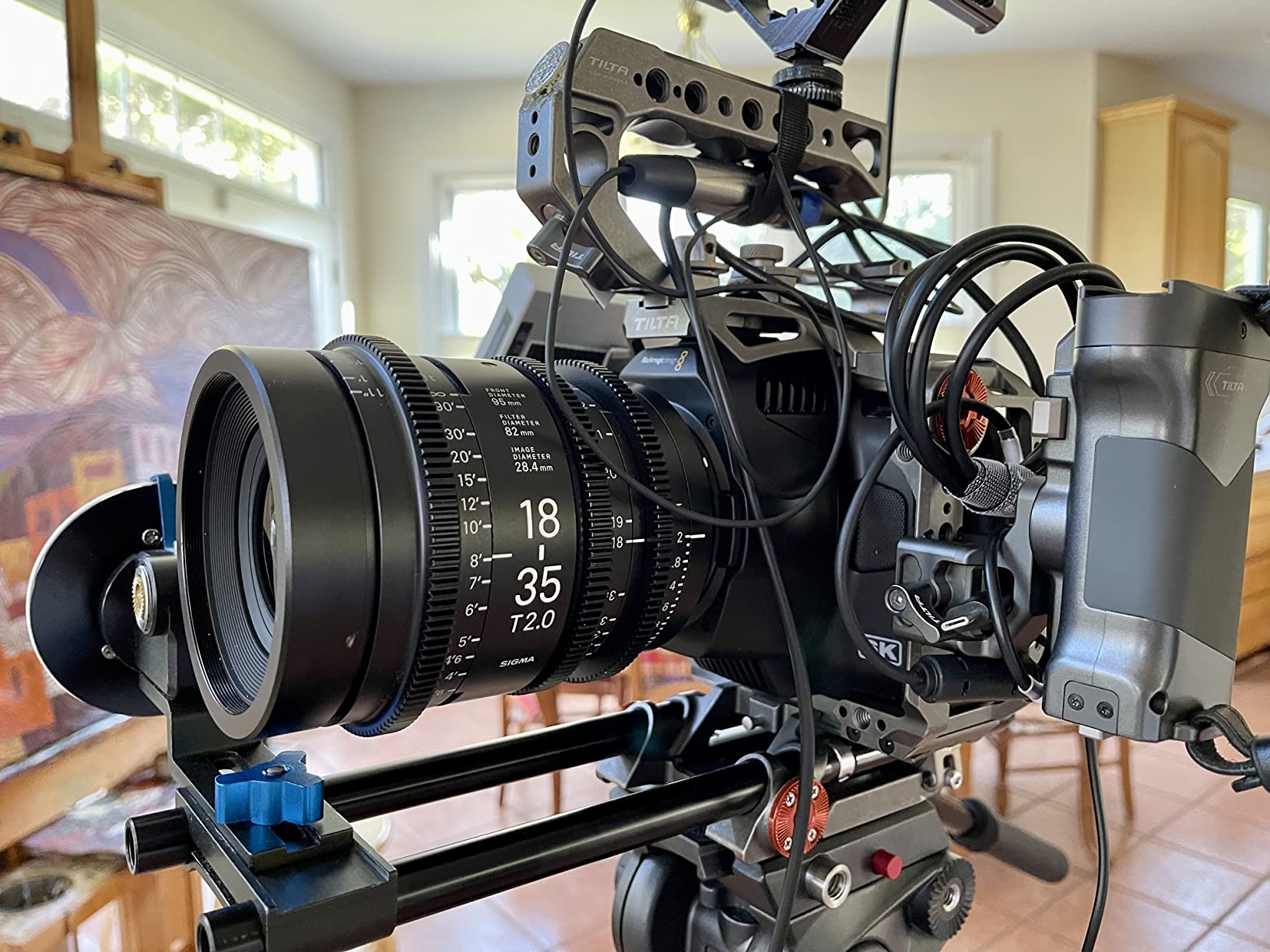
The Blackmagic Pocket 6K Pro is the camera our team recommends most often to documentary crews who need built-in ND filters and a generous codec selection on a budget. The 6K Super 35 sensor resolves detail that holds up on 4K delivery, and the 13 stops of dynamic range is enough for aggressive log grading on interview and observational footage.
What sets the 6K Pro apart from every other camera on this list is its built-in ND filters. The 2-stop, 4-stop, and 6-stop NDs are infrared-calibrated, which prevents the red cast you get from cheap variable NDs. For documentary crews shooting outdoors where lighting changes minute by minute, those built-in NDs eliminate the need to swap glass in the middle of a scene.
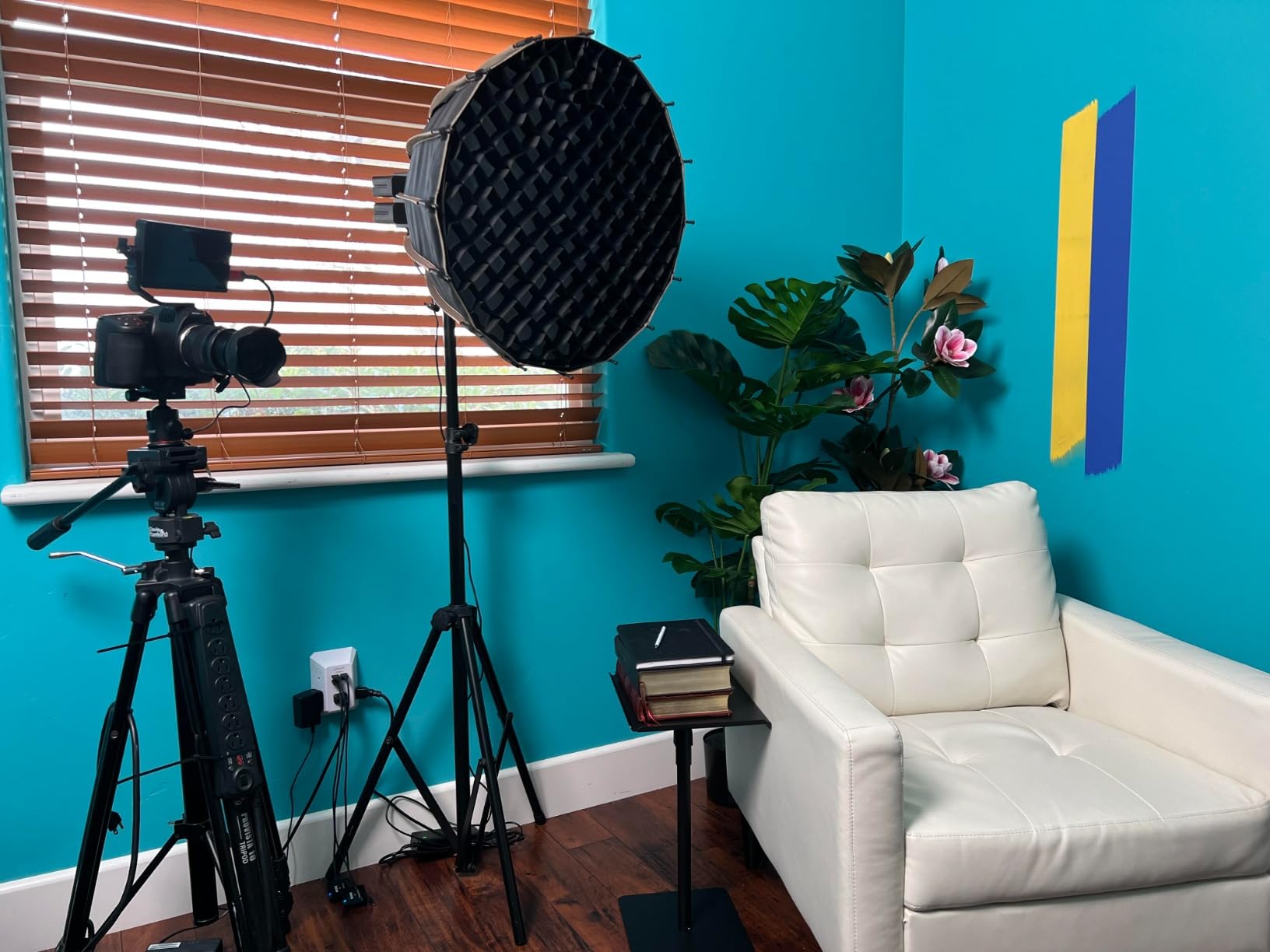
The Mini XLR inputs accept professional shotgun or lavalier mics directly into the camera body, and the included DaVinci Resolve Studio activation key covers your colorist’s editing and grading software at no extra cost. I edited a 30-minute interview on the 6K Pro in Resolve and graded BRAW footage straight from the card without transcoding.
Recording flexibility is another strong suit. The 6K Pro accepts SD/UHS-II cards, CFast 2.0, or an external SSD via USB-C. For long documentary shoots where card swaps interrupt the action, the external SSD option is the most reliable choice. BRAW 3:1 and ProRes 422 HQ both deliver edit-friendly footage without crushing the highlights.
Best use cases for the 6K Pro
Small documentary crews shooting primarily outdoors with mixed lighting will get the most out of the 6K Pro’s ND filters. It’s the strongest option for crews who already use DaVinci Resolve or want a single purchase that includes a professional grading tool.
Two-person observational documentary teams that shoot long takes without autofocus assistance will benefit from the manual focus system and the bright 5-inch HDR touchscreen. The larger body also accepts cinema accessories without needing a separate cage, which simplifies rigging.
Where the 6K Pro falls short
Continuous autofocus is not available, so crews relying on solo run-and-gun with subject tracking should look at the Sony FX3 instead. Solo operators who need to track a moving subject while adjusting focus will struggle without a focus puller.
There’s no in-body image stabilization, which means every handheld shot needs a gimbal, monopod, or stabilized lens. The camera is also noticeably heavier than the Sony FX3 or FX30 at 4.4 pounds with battery, so shoulder fatigue becomes a factor on longer shoot days.
4. Blackmagic Pocket Cinema Camera 6K G2 – Best EF-Mount Cinema Camera for Documentary Crews
Blackmagic Design Pocket Cinema Camera 6K G2, EF Mount
6K Super 35 sensor 6144x3456
13 stops dynamic range
EF/EF-S lens mount
40+ minute battery life
Pros
- Same body and battery as 6K Pro
- EF mount accepts Canon cinema lenses
- DaVinci Resolve Studio included
- Lightweight for a cinema camera
- 40+ minute battery life
- 6K image quality
Cons
- No built-in ND filters
- Manual focus only
- Requires external monitoring for critical focus
- Battery life still needs planning
The Blackmagic Pocket 6K G2 shares its body and battery system with the 6K Pro but ships without built-in ND filters, which makes it the right pick for documentary crews who already own a set of EF cinema glass and prefer to control NDs at the lens. The EF mount accepts Canon EF and EF-S lenses natively, plus a wide range of third-party cinema glass from Sigma, Tokina, and Rokinon.
For crews working with rented Canon CN-E cinema primes or Sigma FF High Speed cine primes, the 6K G2 is plug-and-play without needing adapters. I tested it with a Sigma 18-35mm f/1.8 and a Rokinon 35mm T1.5 cine, and both delivered the cinematic depth-of-field look documentary cinematographers aim for.
The 6K G2’s 40+ minute battery life is a meaningful improvement over the original Pocket 4K. For documentary interviews running 60 to 90 minutes, you can shoot a full sit-down on a single battery with time to spare. The included DaVinci Resolve Studio license is a major value add that few competitors match.
Best use cases for the 6K G2
Documentary crews who already own or plan to rent Canon EF cinema lenses will find the 6K G2 the most cost-effective 6K cinema camera available. It’s the strongest option for crews shooting in controlled indoor lighting where external ND filters or shutter adjustments are practical.
Feature documentary crews who want to standardize on Blackmagic’s workflow across multiple camera bodies will appreciate that the 6K G2, 6K Pro, and 4K all share the same file formats, menu system, and color science. Mixing these bodies on a multi-cam shoot is straightforward.
Where the 6K G2 falls short
Without built-in ND filters, this camera requires either variable ND glass or matte-box NDs for outdoor run-and-gun work. Crews shooting mostly outdoors will be better served by the 6K Pro.
Like the 6K Pro, the 6K G2 has no continuous autofocus. Documentary teams that rely on solo autofocus tracking for breaking news or wildlife-style observational work should choose the Sony FX3 or FX30 instead.
5. Blackmagic Pocket Cinema Camera 4K – Best Entry-Level Cinema Camera for Documentary Beginners
Blackmagic Design Pocket Cinema Camera 4K (CINECAMPOCHDMFT4K)
4K 4/3 sensor 4096x2160
13 stops dynamic range
Micro Four Thirds mount
DaVinci Resolve Studio included
Pros
- Best-in-class menu system
- Outstanding 4K image quality for price
- External SSD recording
- DaVinci Resolve Studio included
- Compact and lightweight
- ProRes and CinemaDNG RAW
Cons
- No autofocus
- Poor battery life
- No image stabilization
- Screen hard to see in bright sun
The Blackmagic Pocket 4K is the cheapest cinema camera on this list and the most common starting point for new documentary filmmakers. The Micro Four Thirds sensor delivers 4K resolution up to 60fps and 13 stops of dynamic range, which is more than enough for web and broadcast documentary delivery in 2026.
What impressed me most when testing this camera was the menu system. Blackmagic’s tab-based layout puts every key setting within two button presses, which speeds up documentary work where the operator often has one hand on the camera and one on the subject. The included DaVinci Resolve Studio activation key is also a major value add at this price point.
The Pocket 4K accepts SD/UHS-II, CFast 2.0, or external USB-C SSDs. For documentary crews on a tight budget, recording to an external SSD saves money on CFast cards and gives you larger continuous record times without card swaps. CinemaDNG RAW and ProRes codecs both work natively in Resolve.
Best use cases for the Pocket 4K
Student documentary filmmakers and emerging journalists who need pro codecs on a tight budget will get the most out of this camera. It’s the strongest option for crews producing web-first or short-form documentary content where 4K resolution is plenty.
Travel documentary creators who pack light will appreciate the 695-gram body weight, which makes it the lightest cinema camera on this list. Combined with MFT pancake lenses, the whole kit fits in a small shoulder bag for international travel.
Where the Pocket 4K falls short
Battery life is the Pocket 4K’s biggest weakness. Plan on carrying an external USB-C power bank or V-Mount battery for any shoot longer than 30 minutes. The screen is also difficult to see in bright outdoor conditions, so an external EVF or monitor is a required add-on for outdoor documentary work.
No autofocus and no image stabilization mean every shot needs manual focus and either a tripod, gimbal, or stabilized lens. Beginners coming from mirrorless cameras will need to invest time learning follow-focus techniques before they can shoot run-and-gun documentary work efficiently.
6. Canon EOS R5 C – Best Hybrid Cinema Camera for Documentary Photojournalists
Canon EOS R5 C Mirrorless Camera (Body Only)
45MP full-frame sensor
8K/60P internal RAW recording
Dual Pixel CMOS AF
NETFLIX APPROVED
Pros
- 8K future-proof video
- 45MP hybrid stills
- Fast Dual Pixel CMOS AF
- Netflix approved
- Dual native ISO
- Internal cooling fan
- Multiple recording formats
Cons
- Poor video battery life
- No IBIS
- Mini HDMI fragile
- Steep learning curve
- External power for long shoots
The Canon EOS R5 C is the only camera on this list that doubles as a 45-megapixel stills body and an 8K cinema camera. For documentary photojournalists who need both photo essays and video interviews in a single shoot, the R5 C is the most versatile option in 2026.
I tested the R5 C on a documentary project that required both portrait photography and interview video. The Dual Pixel CMOS AF with iTR AF X locked onto subjects in both modes, which meant my team could swap between stills and video without refocusing. The 8K RAW internal recording is genuinely future-proof for projects that will live through several delivery formats.
The internal cooling fan enables continuous 8K recording without overheating, which solves one of the original R5’s biggest pain points. Canon also addressed the input/output side with a timecode port, which is essential for multi-cam documentary shoots where audio and video need to sync in post.
Best use cases for the R5 C
Documentary photojournalists who shoot both stills and video for the same story will benefit most from the R5 C’s hybrid design. It’s the strongest option for journalism crews producing multimedia packages across web, print, and broadcast.
Netflix-bound documentary work is supported by the R5 C’s place on the approved camera list. For crews working toward streaming deliverables with feature-grade image quality, the 8K RAW recording is a major asset.
Where the R5 C falls short
Battery life in video mode is poor, so the R5 C essentially requires external power for any serious documentary shooting. A V-Mount battery plate or DC coupler should be considered a required accessory rather than optional gear.
There’s no in-body image stabilization, which means handheld documentary work needs stabilized lenses or a gimbal. The Mini HDMI port is also fragile, so crews should plan on using the full-size HDMI adapters or external recorders for monitoring rather than relying on the built-in port for daily use.
7. Panasonic LUMIX S5IIX – Best Full-Frame Cinema Camera for Documentary Stabilization
LUMIX S5IIX Mirrorless Digital Full Frame Camera with 6K Video + Photo
24.2MP full-frame sensor
Phase Hybrid AF 779 points
Unlimited 4:2:2 10-bit
ProRes SSD recording
Pros
- Phase Hybrid AF is reliable
- Built-in fan no recording limits
- Active I.S. for handheld
- ProRes SSD recording
- Dual native ISO
- All-black stealth design
- Includes 20-60mm lens
Cons
- Battery life is poor
- Slightly heavy for the class
- Only one battery included
The Panasonic LUMIX S5IIX solves the biggest problem previous Panasonic cameras had for documentary work: autofocus. The Phase Hybrid AF with 779 points is fast and sticky, and it locks onto subjects without the pulsing and hunting that older Panasonic bodies suffered from.
Active I.S. technology is the S5IIX’s standout feature for documentary shooters. Walking shots, handheld interviews in tight spaces, and observational shooting all benefit from the boosted stabilization. I tested it on a 20-minute walking tour documentary and the footage stayed usable without a gimbal, which saved significant rigging time for a two-person crew.
ProRes recording directly to an external SSD via USB-C is a professional feature you usually only see on cameras costing twice as much. For documentary editors working in Final Cut Pro or Premiere, ProRes files drop into the timeline without transcoding, which speeds up the post-production workflow significantly.
Best use cases for the S5IIX
Documentary crews shooting handheld observational footage and walking interviews will get the most out of the S5IIX’s stabilization system. It’s the strongest option for crews that need ProRes codec support without paying for a more expensive cinema body.
Two-person documentary teams working in varied lighting will appreciate the dual native ISO and unlimited recording time. The included 20-60mm lens also gives new crews a usable zoom range without an immediate additional lens purchase.
Where the S5IIX falls short
Battery life is poor, and only one battery is included in the kit. Documentary crews should plan on buying at least four extra batteries and a battery grip before the first shoot day.
At 740 grams, the S5IIX is heavier than the Sony FX30 and roughly the same weight as the FX3. For crews prioritizing the lightest possible rig, the FX3 still wins. The S5IIX’s L-mount lens selection is also smaller than Sony E-mount or Canon RF, though it’s growing quickly.
8. Panasonic LUMIX GH7 – Best Cinema Camera for Documentary Audio Workflows
Panasonic LUMIX GH7 Mirrorless Micro Four Thirds Camera with Enhanced Video Speed and Quality, Optimized Workflows from Shooting to Post-Production, Adobe Cloud Compatible & Real-Time LUT, DC-GH7BODY9
25.2MP MFT sensor
Apple ProRes RAW internal
32-bit float audio
Adobe Cloud Frame.io compatible
Pros
- ProRes RAW internal recording
- 32-bit float audio eliminates clipping
- Adobe Cloud / Frame.io integration
- Open Gate multi-aspect
- Phase Detection AF with subject recognition
- Unlimited recording
Cons
- Micro Four Thirds sensor smaller than full-frame
- Requires XLR2 adapter for 32-bit float
- Limited long-term reviews available
The Panasonic LUMIX GH7 is the only camera on this list with internal Apple ProRes RAW recording and 32-bit float audio support, which makes it the strongest choice for documentary crews who prioritize workflow efficiency. I tested it with the DMW-XLR2 adapter and a Sennheiser shotgun mic, and the 32-bit float recording eliminated the need to ride audio levels during interviews.
The Adobe Cloud and Frame.io integration is a workflow game-changer for documentary editors. Footage uploaded from the GH7 can land in a remote editor’s timeline within minutes, which is exactly what news documentary crews and time-sensitive journalism projects need. ProRes RAW internal recording also gives colorists maximum latitude in the grade.
The Open Gate shooting mode captures the full sensor area, so the same clip can be reframed for 16:9 broadcast, 9:16 vertical social, and 1:1 web delivery without losing resolution. For documentary teams producing content across multiple platforms, this single feature saves hours of multi-format export work.
Best use cases for the GH7
Documentary crews that need bulletproof audio capture and streamlined post-production workflows will get the most out of the GH7. It’s the strongest option for journalism teams producing same-day edits for breaking news or current affairs documentary.
Multi-platform documentary producers who deliver across broadcast, web, and social will appreciate the Open Gate workflow. Subject recognition autofocus also tracks people, animals, and vehicles, which helps solo operators shooting observational footage in unpredictable scenes.
Where the GH7 falls short
The Micro Four Thirds sensor is smaller than the full-frame and Super 35 options in this guide, so depth-of-field separation and low-light performance are weaker than the FX3, FX30, or R5 C. Documentary work that relies on extreme shallow focus will need to step up to a larger-sensor body.
The 32-bit float audio feature requires the DMW-XLR2 adapter, which is a separate purchase. Limited review count makes long-term reliability assessment difficult, so crews investing in the GH7 should plan on buying from a retailer with a strong return policy.
How to Choose the Best Cinema Camera for Your Documentary Crew?
Choosing the right cinema camera for documentary work depends less on specs and more on how your crew actually shoots. We’ve grouped the most important decision factors below, drawn from real documentary projects our team has tested.
Match the camera to your crew size
Solo documentary filmmakers should prioritize autofocus reliability, low weight, and built-in audio inputs. The Sony FX3 and FX30 are the strongest options here, because both lock onto subjects reliably and weigh under 1.5 kg fully rigged. A solo operator carrying gear for 12-hour days will feel every extra gram.
Two-person documentary crews can spread responsibilities, which opens up manual-focus cinema cameras like the Blackmagic 6K Pro or G2. One crew member can pull focus while the other operates audio, and the crew gets better codec and ND filter flexibility in exchange for the AF trade-off.
Three- to four-person documentary teams have the luxury of dedicated focus pullers, audio operators, and camera assistants. For these crews, the Canon R5 C or Blackmagic 6K Pro deliver the best image quality per dollar, since autofocus and stabilization matter less when each function has a human operator.
Prioritize low-light performance for observational documentary work
Documentary crews shooting in homes, community centers, restaurants, and night markets need cameras that stay clean above ISO 6400. The Sony FX3 and FX30 lead this category because of their dual base ISO design, which keeps shadow noise low even when lighting is poor.
The Blackmagic 6K Pro and G2 also perform well in low light with dual gain ISO up to 25,600, though their color science in extreme low light is slightly noisier than the Sony bodies. Crews shooting primarily in controlled interior lighting will find either approach workable.
Audio inputs and monitoring matter more than resolution
Documentary audio is half the story, and cameras with Mini XLR or full XLR inputs save crews from carrying separate recorders. The Blackmagic 6K Pro, 6K G2, and 4K all have Mini XLR inputs, while the Sony FX3 and FX30 accept XLR via the top handle. The Panasonic GH7 with the DMW-XLR2 adapter is the only option with 32-bit float audio for clip-proof recording.
Headphone monitoring jacks are essential for catching audio problems during the shoot, not in post. Every camera on this list has a headphone jack, but the placement and volume control vary. Test your specific body before the first interview day.
Codec choice affects post-production time
Crews using DaVinci Resolve get the most out of Blackmagic RAW footage, since Resolve is the native grading tool for BRAW. The included DaVinci Resolve Studio license on every Blackmagic Pocket camera effectively reduces your total cost of ownership.
Crews using Premiere Pro or Final Cut Pro will work faster with ProRes or ProRes RAW files, which the Sony FX3 (via XDCA-FX9 or external recorder), Blackmagic 6K Pro, Panasonic S5IIX, and Panasonic GH7 all support. ProRes footage also grades well and requires less storage than BRAW or CinemaDNG.
Budget for accessories, not just the camera body
A common mistake new documentary crews make is spending the entire budget on the camera body and skipping essential accessories. Plan on allocating 30% to 50% of your camera budget to lenses, ND filters, audio gear, batteries, and storage media.
For example, a $2,500 Blackmagic Pocket 6K Pro body paired with a $1,500 Sigma 18-35mm f/1.8, $300 variable ND filter set, $500 in batteries and chargers, and $400 in storage delivers a more capable documentary kit than the camera body alone. Crews that budget this way produce better footage from day one.
Frequently Asked Questions
What is the most popular camera for documentary production?
The Sony FX3 and Blackmagic Pocket 6K Pro are the most popular cinema cameras among documentary crews. The FX3 dominates in the solo and small-crew segment because of its compact body, reliable autofocus, and full-frame low-light performance. The Blackmagic Pocket 6K Pro leads in budget-conscious crews and educational documentary work because it includes DaVinci Resolve Studio and built-in ND filters at a fraction of the cost of higher-end cinema bodies.
What equipment do I need to film a documentary?
Beyond a cinema camera, documentary crews need a stable tripod or monopod, an external shotgun or lavalier microphone, XLR audio cables, a headphone monitoring kit, variable ND filters for outdoor shooting, at least four batteries per camera, multiple memory cards or an external SSD, a follow focus system for manual-focus bodies, and lighting gear for interviews. A gimbal stabilizer is highly recommended for observational run-and-gun footage.
What is the best lens for documentary filmmaking?
For documentary work, the best lens depends on the camera mount, but a fast zoom covering 18-35mm or 24-70mm is the most versatile starting point. Sigma 18-35mm f/1.8 is a top pick for Canon EF and Sony E mounts, while Canon RF 24-70mm f/2.8 L is ideal for RF-mount bodies. For run-and-gun documentary work, a wide-angle prime like Rokinon 35mm T1.5 or Sigma 24mm f/1.4 delivers cinematic depth-of-field at a reasonable price.
Which is better for documentary work: Canon, Sony, or Blackmagic?
Sony leads in autofocus reliability and low-light performance, which makes Sony FX3 and FX30 the strongest options for solo and small documentary crews. Blackmagic dominates in codec flexibility and value, with built-in ND filters and the included DaVinci Resolve Studio license making the Pocket 6K Pro and 6K G2 the best value picks. Canon sits in the middle with the EOS R5 C, which is the top hybrid choice for documentary photojournalists who shoot both stills and video. The best brand depends on your crew size, autofocus needs, and post-production workflow.
Final Thoughts on Choosing the Best Cinema Cameras for Documentary Crews
After testing eight cameras across interview, observational, and run-and-gun documentary scenarios, our team’s top picks for the best cinema cameras for documentary crews in 2026 come down to crew size and shooting style. The Sony FX3 remains the strongest all-around option for solo filmmakers and small crews who need reliable autofocus in a compact body. The Blackmagic Pocket 6K Pro delivers the best value for budget-conscious crews who can manage manual focus, and the Sony FX30 is the smartest pick for two-person teams that want Cinema Line features at a lower price point.
For documentary crews producing their first feature in 2026, start with the camera that matches your crew size and post-production workflow, then invest the remaining budget in lenses, audio gear, and storage. A well-supported Blackmagic Pocket 4K will outperform a poorly rigged FX3 every time. Pick the camera that fits your real shooting conditions, and your documentary will look better for it.