
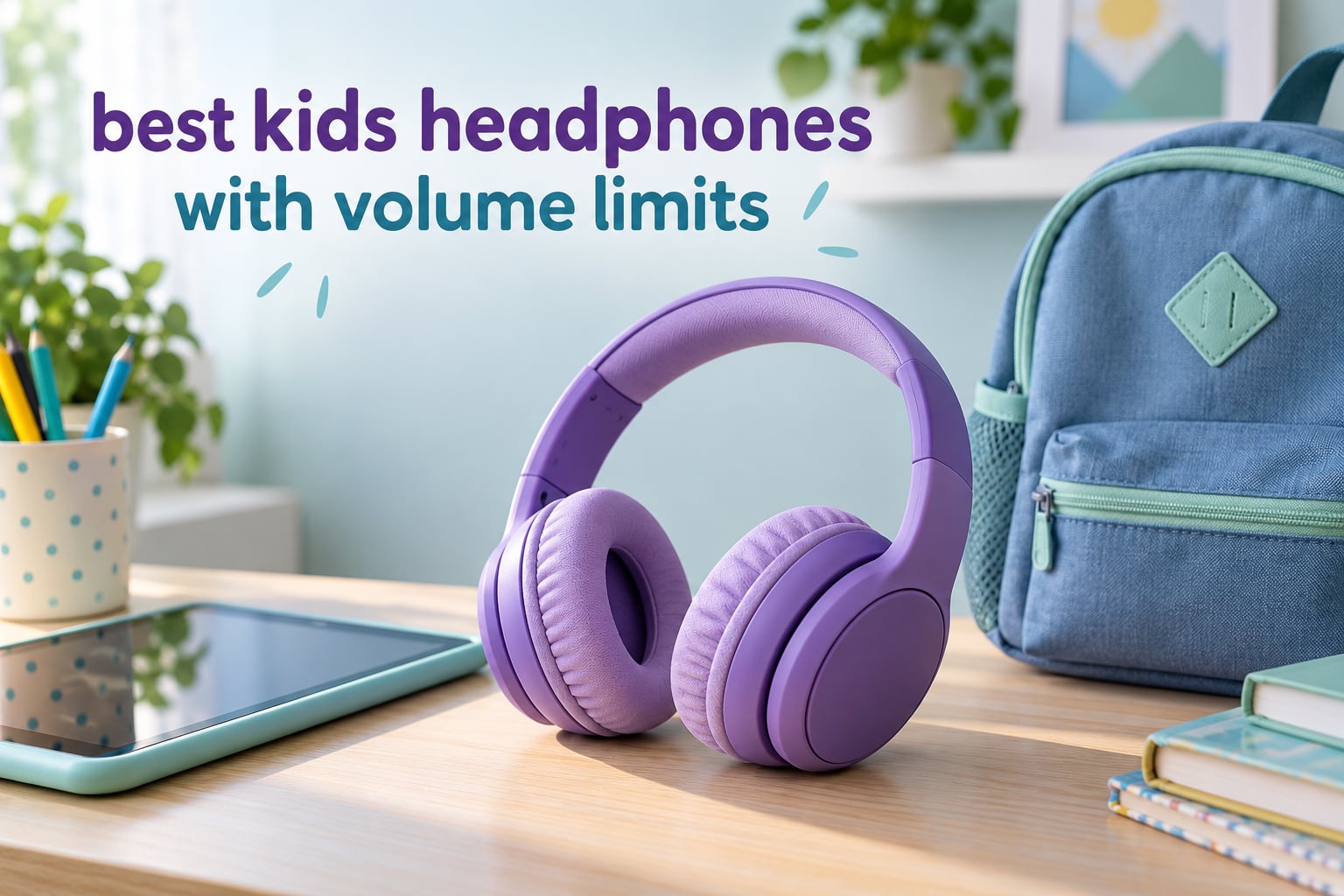
The safest volume limit for kids headphones is 85 decibels, the ceiling the World Health Organization recommends for children, and every pair in this roundup either locks at 85 dB or ships with a switchable 85/94 dB mode. Here is the part most listings skip: the number is a level cap, not a time allowance. A hard 85 dB ceiling removes the daily supervision burden, but it does not turn eight hours of listening into a good idea.
We spent weeks reading specifications, owner reviews and forum threads to put together the best kids headphones with volume limits available now. Twelve sets made the cut, split across wired school models, on-ear builds for small heads, and wireless pairs for travel. Every one has a published decibel limit tied to a specific model number, which is the bar we set after finding too many listings that claim a safe volume without confirming it.
This is a vendor-neutral roundup. No brand paid for placement, and no manufacturer supplied the specs. We lean on published manufacturer data and on what owners actually report after months of daily use, including the failures. If you want a broader view of audio gear, our guides to the best budget headphones and the best wireless headphones cover the adult end of the market.
Table of Contents
Top 3 Picks for the Best Kids Headphones With Volume Limits in 2026

MIDOLA Kids Bluetooth Headphones
- 85/94dB toggle with key lock
- 68-hour listed playtime
- Bluetooth 5.4 with 40mm drivers
- Wired AUX fallback

awatrue AT2 Kids Headphones
- 85dB study and 94dB travel modes
- Built-in sharing jack
- Built-in mic for classes
- Ages 2-15

EarFun K1 Kids Headphones
- 85/94dB volume limiter
- CPC-certified build
- 3.5mm sharing jack
- Braided tangle-free cord
12 Best Kids Headphones With Volume Limits (October 2026)
Every model below has a published limit. Six ship with a switchable 85/94 dB design, two lock at 85 dB with no override, and the rest advertise a single ceiling in their specifications.
| Product | Specifications | Action |
|---|---|---|
| MIDOLA Kids Bluetooth Headphones |
|
Check Latest Price |
| awatrue AT2 Kids Headphones |
|
Check Latest Price |
| EarFun K1 Kids Headphones |
|
Check Latest Price |
 Nabevi Kids Headphones with Shareport Nabevi Kids Headphones with Shareport |
|
Check Latest Price |
 IMYB V1 Kids Headphones IMYB V1 Kids Headphones |
|
Check Latest Price |
 JBL Junior 320 Kids Headphones JBL Junior 320 Kids Headphones |
|
Check Latest Price |
 JLab JBuddies Studio On-Ear JLab JBuddies Studio On-Ear |
|
Check Latest Price |
 Puro Sound Labs PuroBasic Puro Sound Labs PuroBasic |
|
Check Latest Price |
 Voopwink Kids Over-Ear Headset Voopwink Kids Over-Ear Headset |
|
Check Latest Price |
 Botesty Sound Kids Headphones Ivy Botesty Sound Kids Headphones Ivy |
|
Check Latest Price |
 Acer Kids Bluetooth Headphones Acer Kids Bluetooth Headphones |
|
Check Latest Price |
 Puro Sound Labs BT2200 Plus Puro Sound Labs BT2200 Plus |
|
Check Latest Price |
1. MIDOLA Kids Bluetooth Headphones – Best Overall Volume-Limited Wireless Set
Kids Bluetooth Headphones Wireless Over-Ear,68Hrs,Volume Limit 85/94dB Blue
85/94dB toggle with key lock
Bluetooth 5.4, 40mm drivers
Up to 68 hrs wireless
Wired AUX fallback
Pros
- Dedicated dB button switches 85dB safe mode and 94dB mode
- Key lock blocks accidental volume changes
- Wireless plus a wired 3.5mm AUX fallback
- Four-level adjustable headband from toddlers to adults
- Built-in mic and 40mm drivers
Cons
- No active noise cancellation
- Not water resistant
- Fast chargers above 15W will not charge it
This is the pair we would hand to a family with one child who moves between school, a tablet and a car. It is the only set in the group that combines a real 85/94 dB hardware switch, a key lock to stop accidental changes, and a wired fallback when the battery runs out.
The build is plastic and light at 8.96 ounces, with a four-level headband that reviewers say fits a four-year-old and most adults. Ear cushions are plush rather than memory foam, which some owners like and some find warm after a few hours.
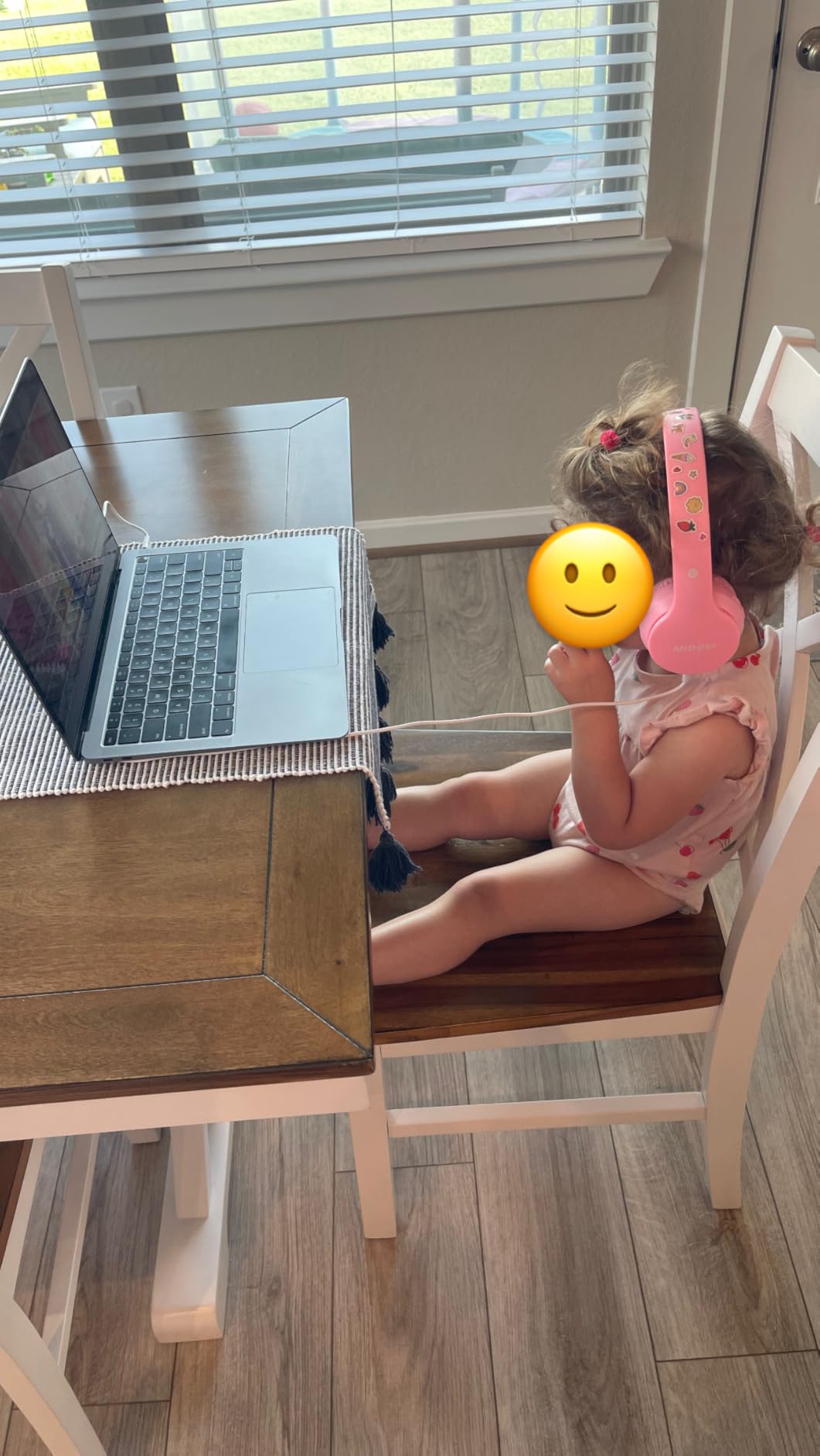
Battery claims need a caveat. The listing markets up to 68 hours of wireless playtime while the technical specification block lists a 15-hour average, so treat the longer figure as a best case with volume kept moderate. A 10-minute quick charge is advertised as returning up to 4 hours.
The 94 dB mode is the feature parents ask about most and the one we would keep switched off for under-10s. It exists for airplane cabins and noisy roads. On a quiet home desk the 85 dB setting is plenty, and older children do sometimes complain that the ceiling dulls speech clarity in films and language apps.
What parents check before buying this one
Whether the dB button is reachable but not tempting, and whether the key lock actually holds. Owners report that the lock keeps a curious five-year-old from flipping into 94 dB mode, which is the entire point of the design.
Also check that your child can run the wired mode. Several school-issued Chromebooks and tablets have no Bluetooth, and the AUX fallback means the set still works that day.
Where this set falls short
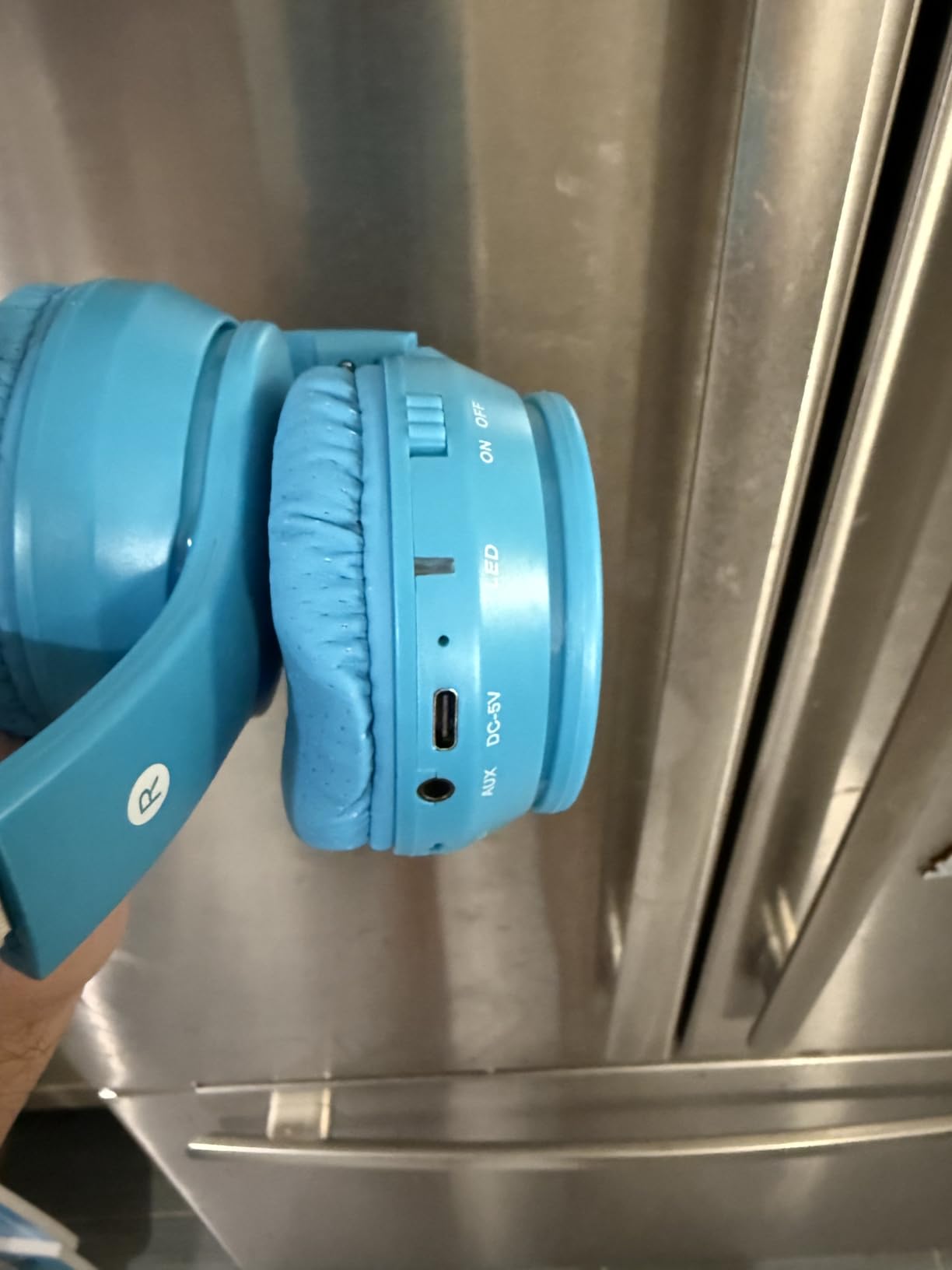
There is no active noise cancelling, so a loud restaurant still reaches the ear and pushes the volume up against the cap. The charging limitation is real too: the headphones will not take a charge from fast adapters rated above 15W, which catches people out on newer desks.
2. awatrue AT2 Kids Headphones – Best Wired Set for Daily School Use
awatrue AT2 Kids Headphones for School with Mic, 85/94dB Safe Volume Limit
85dB study and 94dB travel modes
Sharing jack and built-in mic
Ages 2-15
5.2 oz
Pros
- 85dB study mode and 94dB travel mode on the same headset
- Built-in 3.5mm sharing jack links two pairs
- Premium built-in mic for classes and video chat
- Ultra-soft protein leather cushions
- Adjustable headband for ages 2-15
Cons
- Wired only
- so a 3.5mm jack is required
- Cord joint at the earcup entry is a reported break point
- Build quality reflects the low price point
Seven thousand reviews at 4.6 stars is the deepest feedback pool of any wired set here, and owners who use it daily at school report it holds up past a full year. That durability record matters more than any spec line when a headset lives in a backpack.
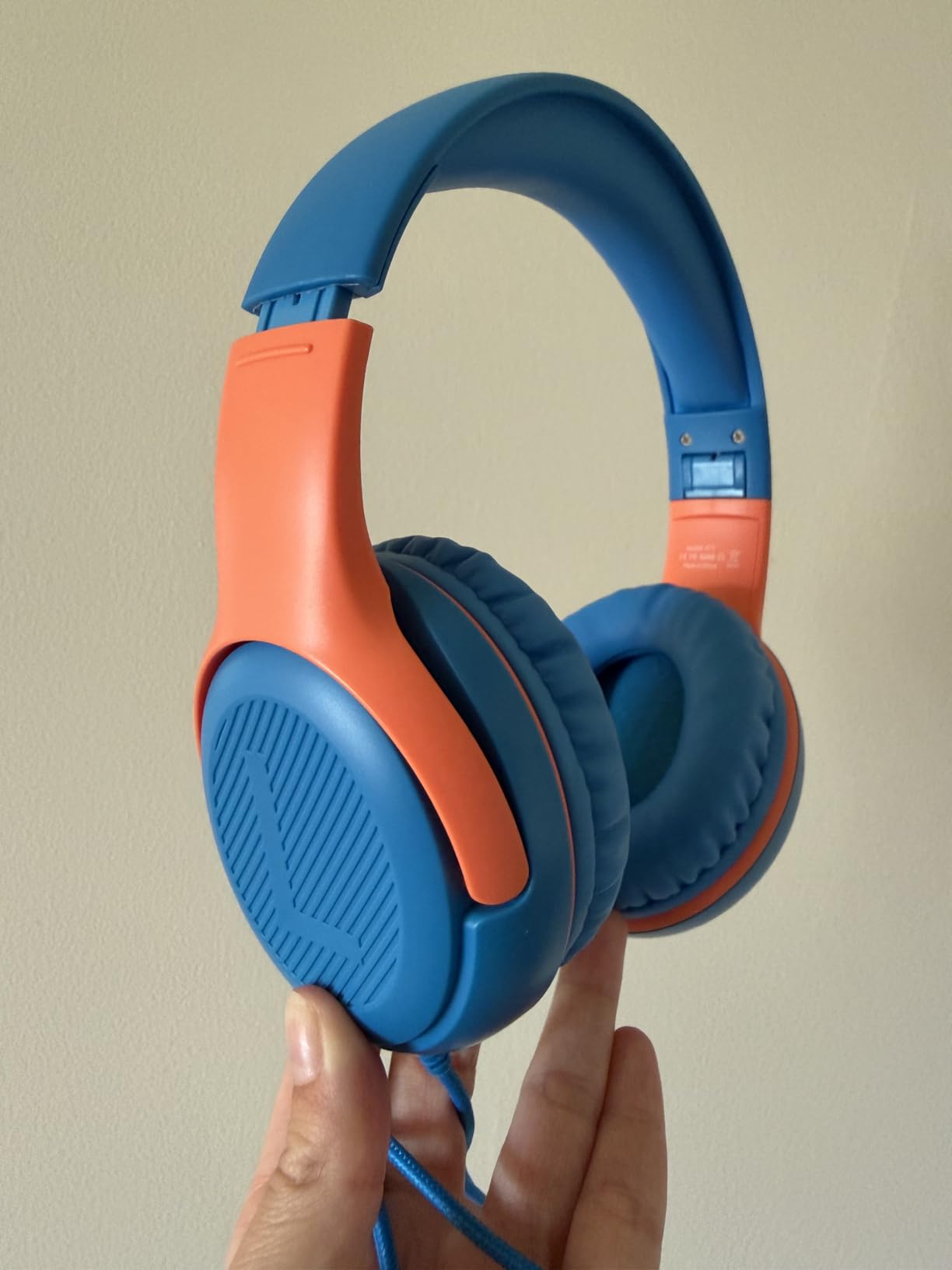
The limiter design is the clearest one in the roundup: 85 dB is labelled for study and quiet rooms, 94 dB for travel and noisy environments. Protein leather cushions stay cool over long sessions, which parents describe as the reason the set stays on the head.
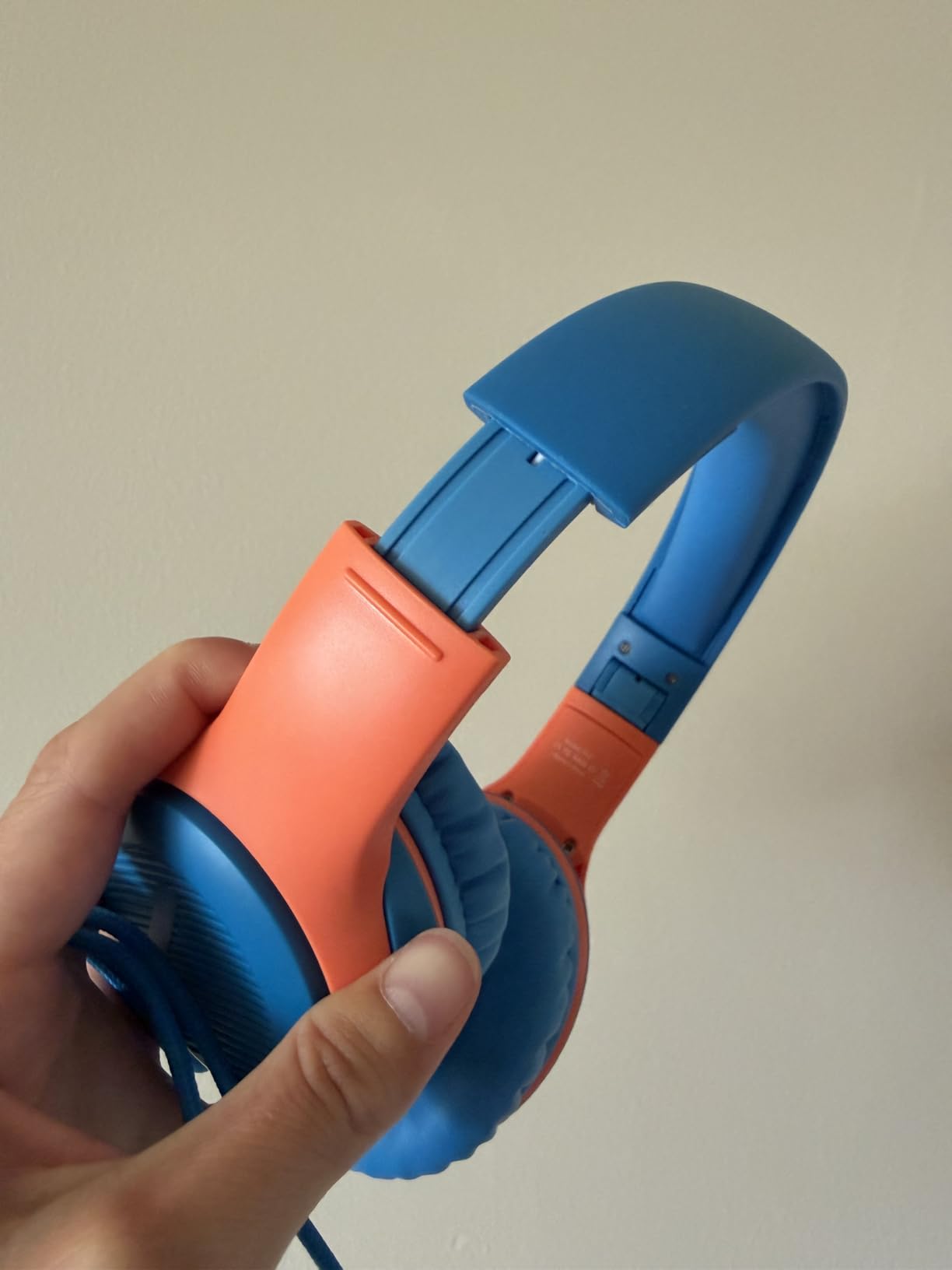
Worth planning around: the built-in sharing jack needs a firm push to seat, and a few owners report the decibel selector behaving oddly when two pairs are daisy-chained. Test the pair with the one device you will actually use before the return window closes.
The sharing feature is a genuine advantage in a two-child household. One device, two headsets, no splitter, and both children still sit inside a published decibel ceiling.
What parents check before buying this one
Confirm your school device has a real 3.5mm jack. The manufacturer lists Chromebooks, tablets, PCs and laptops as supported, and owners using these daily report consistent microphone pickup for Zoom-style classes.
Check the cable entry point. That is the part most likely to fail on a wired set, and a cable clip or a strain-relief loop at the desk reduces the pull on it.
Where this set falls short
No Bluetooth means no pairing step, but also no wireless freedom in the car or on a walk. The cord joint where it enters the earcup is the recurring failure point in reviews, so factor in a possible replacement within a couple of years.
3. EarFun K1 Kids Headphones – Top Rated Wired Set With a Share Jack
EarFun K1 Kids Headphones Wired with Mic, Volume Limit Headphones for Kids
85/94dB volume limiter
CPC-certified recycled build
40mm drivers
3.5mm share jack
Pros
- 85dB/94dB limiting built into the cable
- 79% of ratings are 5 stars across 5666 reviews
- 3.5mm sharing jack for two listeners on one device
- Nylon braided pull-resistant cord
- CPC-certified build from recycled material
Cons
- Wired only
- no Bluetooth or wireless option
- Needs a device with a 3.5mm jack
- One reviewer reported receiving a used unit
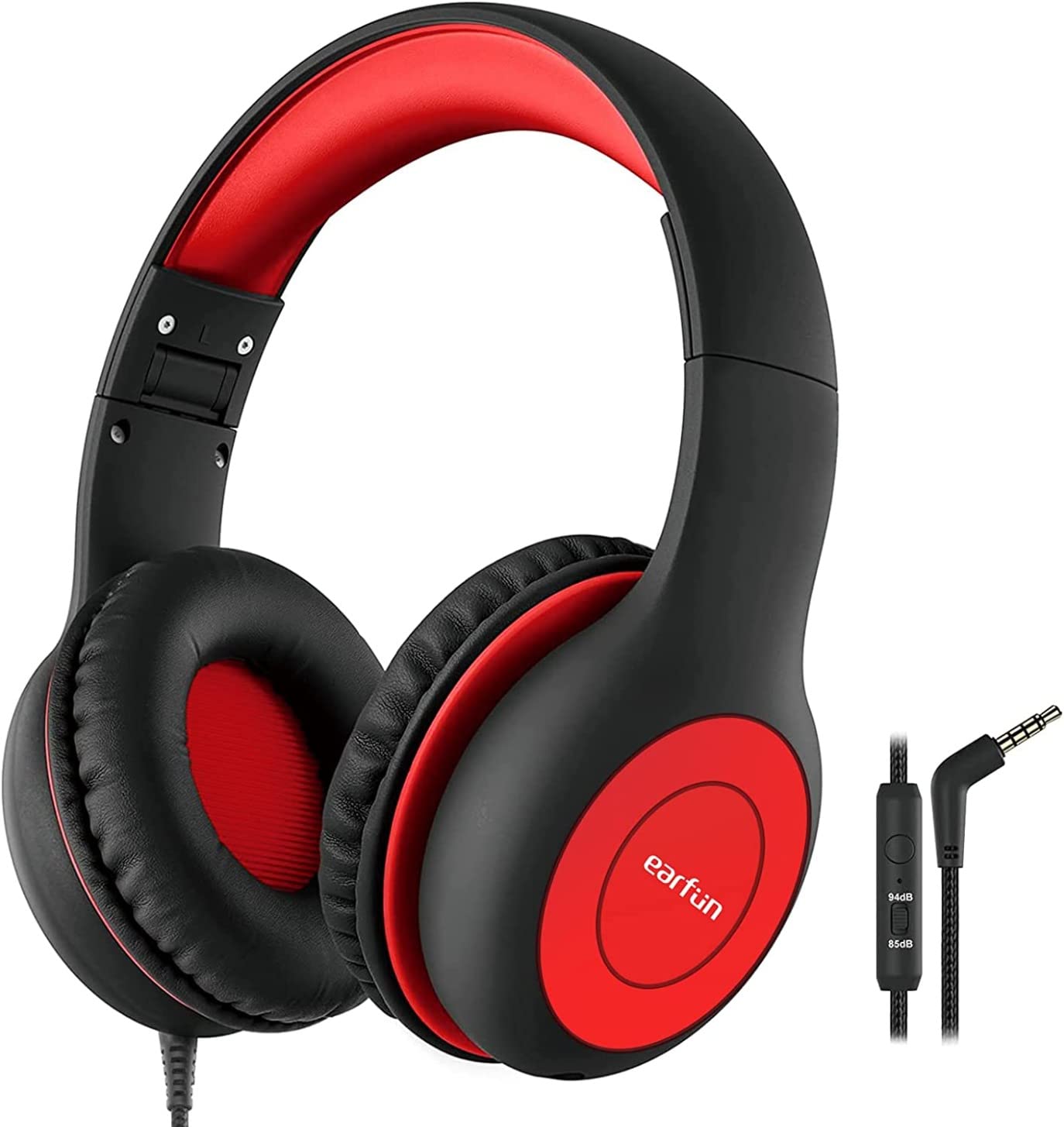
EarFun backs this with an 18-month warranty, which is longer than most of the wired sets here, and the 85/94 dB switch sits on the inline control rather than behind a menu. That placement is easier to explain to a child than a companion app.
Owners consistently mention the ear caps, the sliding adjustment and how the folding design fits in a school bag. The sharing jack is praised for sibling viewing, where two children watch one screen without a splitter.
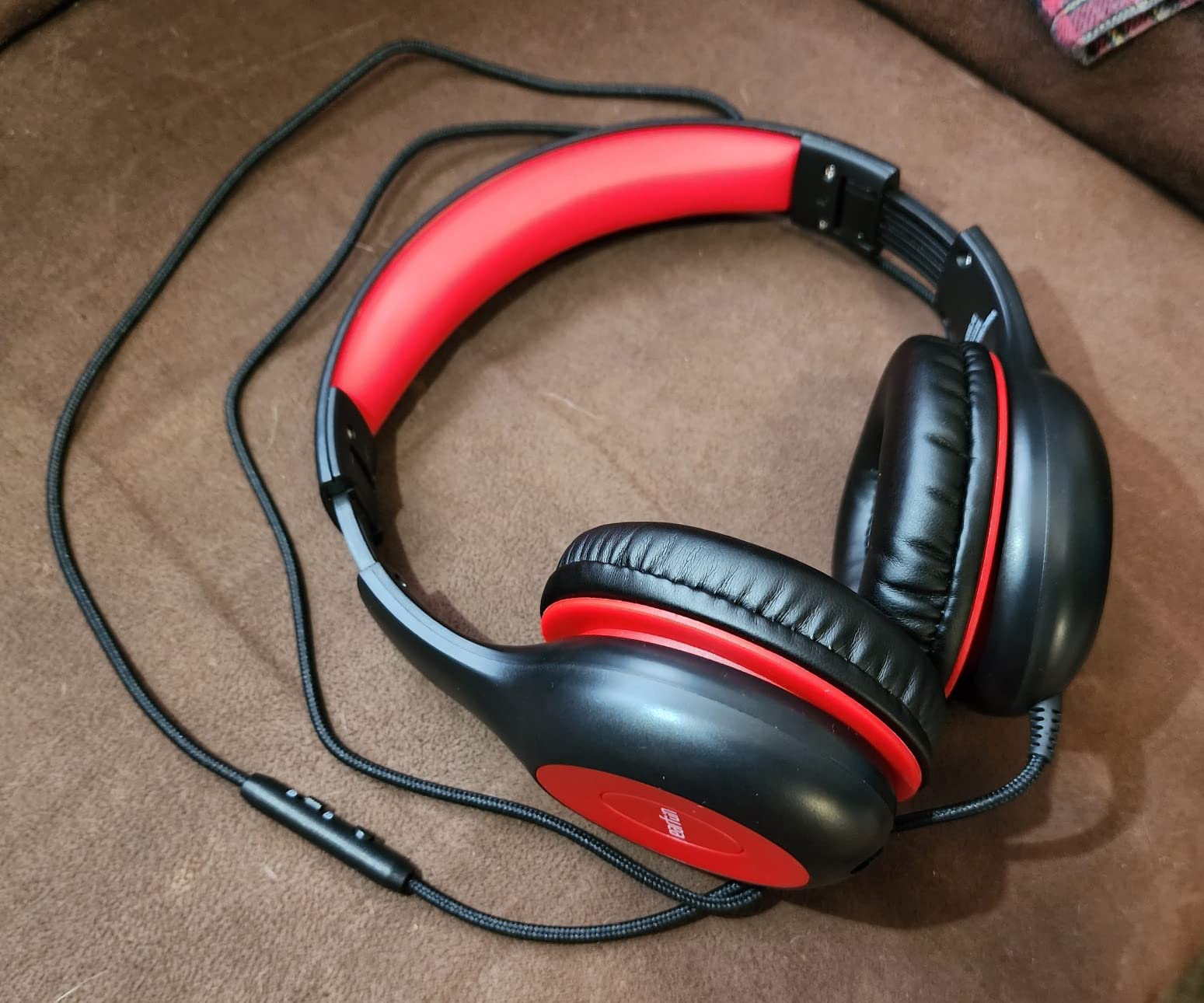
Sound comes from 40mm soundstage drivers, and reviewers describe bass that is present without swallowing the vocals in a cartoon. For language apps and audiobooks, the inline microphone with playback and call controls is the feature that gets used most.
Compatibility is broad: Kindle Fire, Switch, Chromebook, PC and anything with a 3.5mm jack. Note that Switch and newer tablets need an adapter, which adds a part to keep track of.
What parents check before buying this one
Whether the braided cord length works for your setup. Braided cables resist tangling better than smooth ones but add bulk, and in a bag with a water bottle the loop can catch on the zipper.
Check that your child can reach the inline buttons. The volume limiter switch is on the same control pod, so a mispositioned chord can leave a younger child unable to find it.
Where this set falls short
There is no wireless option on this model, so it stays tethered. A handful of reports mention receiving a previously used unit, so check the box seal and the ear cushions on arrival.
4. Nabevi Kids Headphones with Shareport – Best for Two-Child Listening
Nabevi Kids Headphones with Cord, Over-Ear Headphones for Kids with Microphone, 85/94dB Volume Limit, Headset for Kid Boys Girls with Shareport, Wired Toddler Headphone for School/Tablet/iPad/Travel
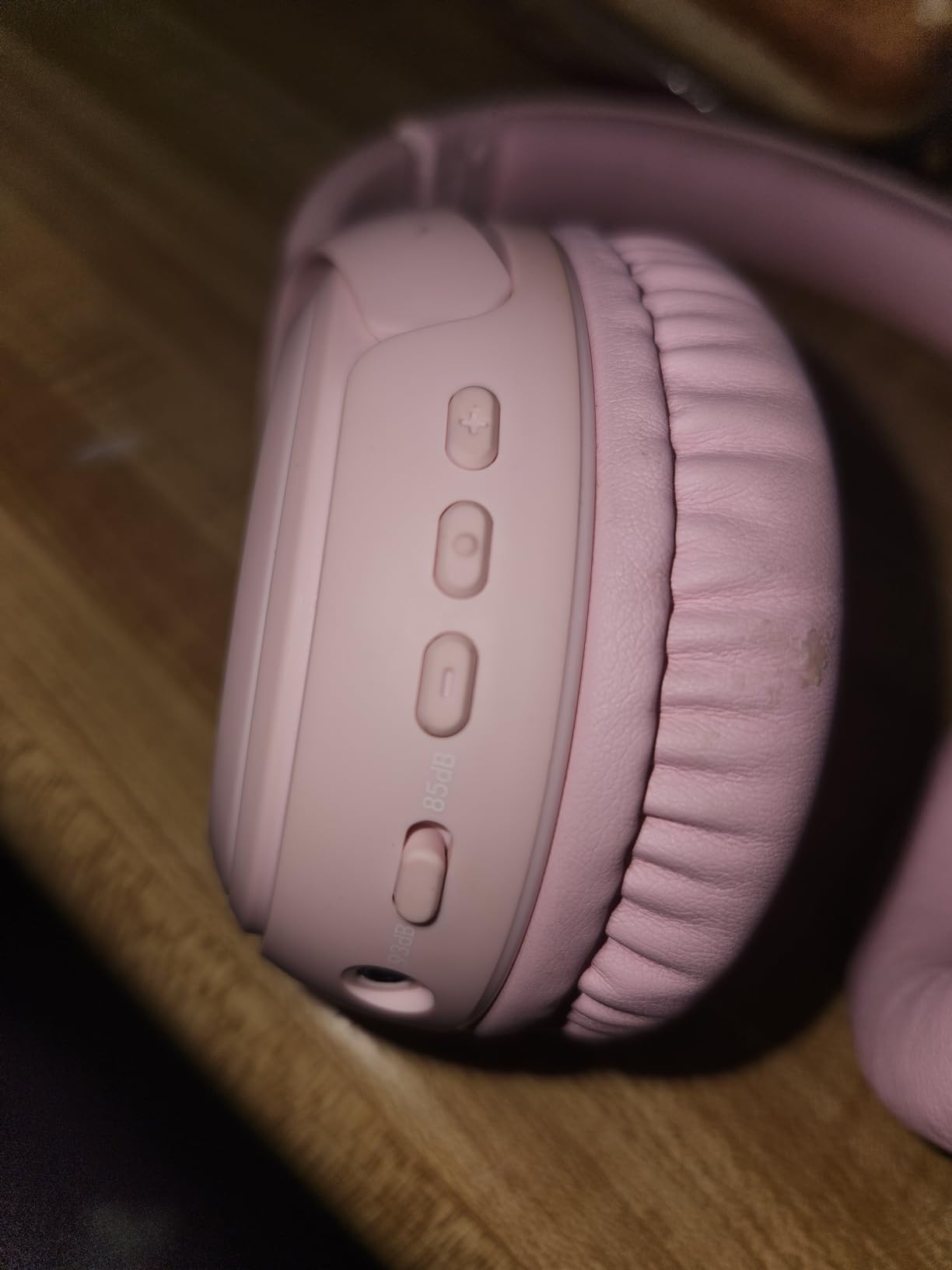
85dB default, 94dB switchable
3.5mm shareport
Soft foam and protein leather
200 g
Pros
- 85dB default with a switchable 94dB mode
- 3.5mm sharing port for two pairs on one device
- Soft foam and breathable protein leather cushions
- All-plastic body with no sharp corners
- Built-in mic for classes and calls
Cons
- Wired only
- no Bluetooth on this model
- Some parents find 85dB too quiet for older children
- One review reported a cable or earpiece failure within about a month
If two children share one tablet, the shareport is the feature that decides this purchase. Both sets stay inside a published decibel limit while listening to the same source, which is exactly the scenario where a parent loses track of who is at what volume.
The all-plastic body has no sharp 90-degree corners, a detail that matters for a toddler who is still bumping into things. At 200 grams it sits in the middle of the weight range here, light enough for long sessions without feeling flimsy.
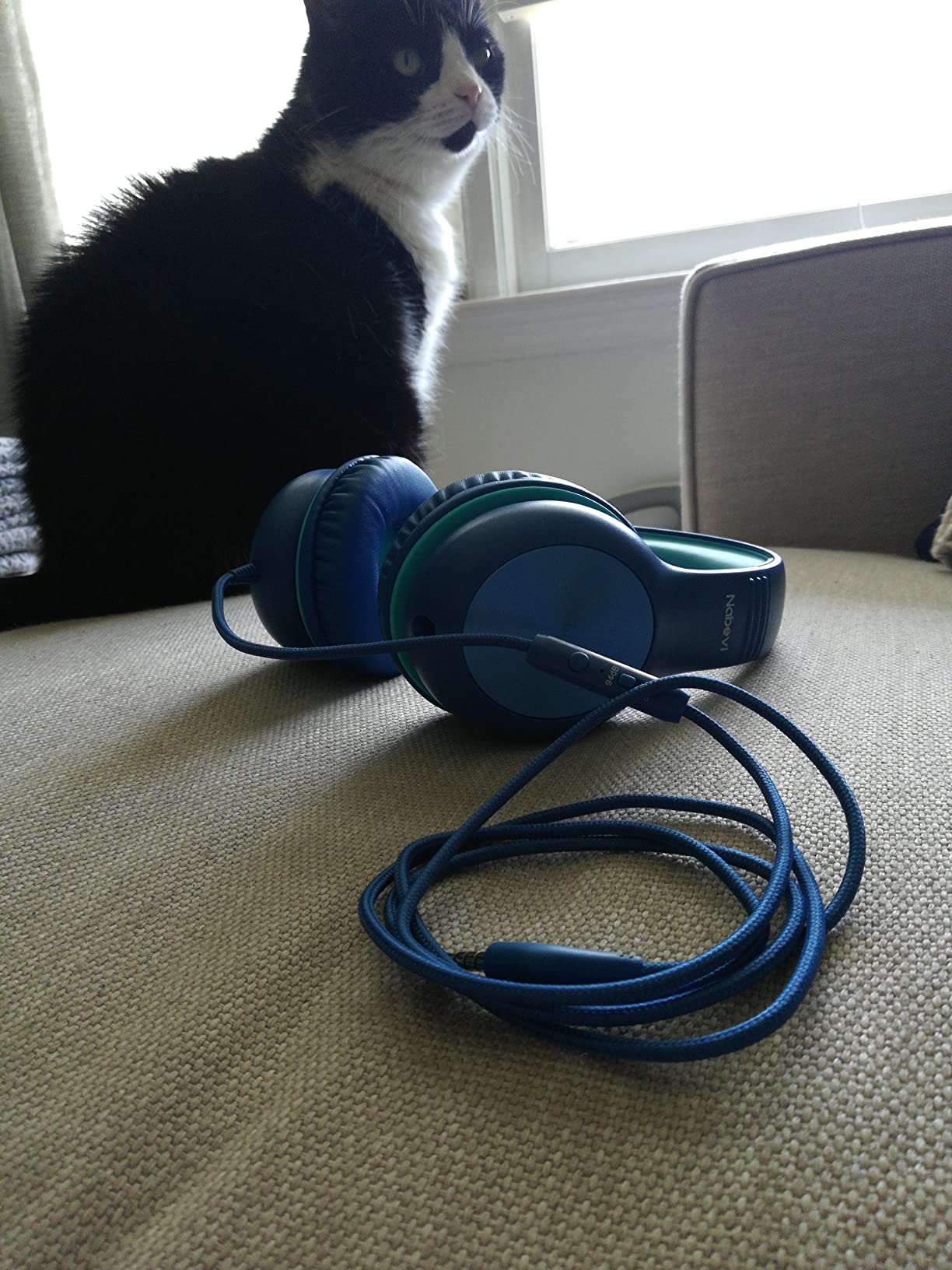
Reviewers rate the cushion comfort highly, and the 40mm drivers produce sound parents describe as good for kids rather than exceptional. On a car trip at highway noise, some parents switch to 94 dB for their older child.
That is the recurring tension in this category and it is worth naming plainly. At 85 dB, some ten-year-olds ask for more volume because speech in a film or a game gets harder to follow. The honest answer is to raise the source quality, not the ceiling.
What parents check before buying this one
Whether both children can comfortably share one device, since the shareport works by plugging a second pair into the first. Check the age gap too: a 4-year-old and a 12-year-old will not both get a good fit from the same band.
Check that your device accepts a wired input while charging, if that is how your child will use it.
Where this set falls short
It is wired only, and one review reports a cable or earpiece failing inside the first month. A minority of owners also find 85 dB too quiet for older children, which is a design choice rather than a fault.
5. IMYB V1 Kids Headphones – Best for Toddlers and the Lightest Build
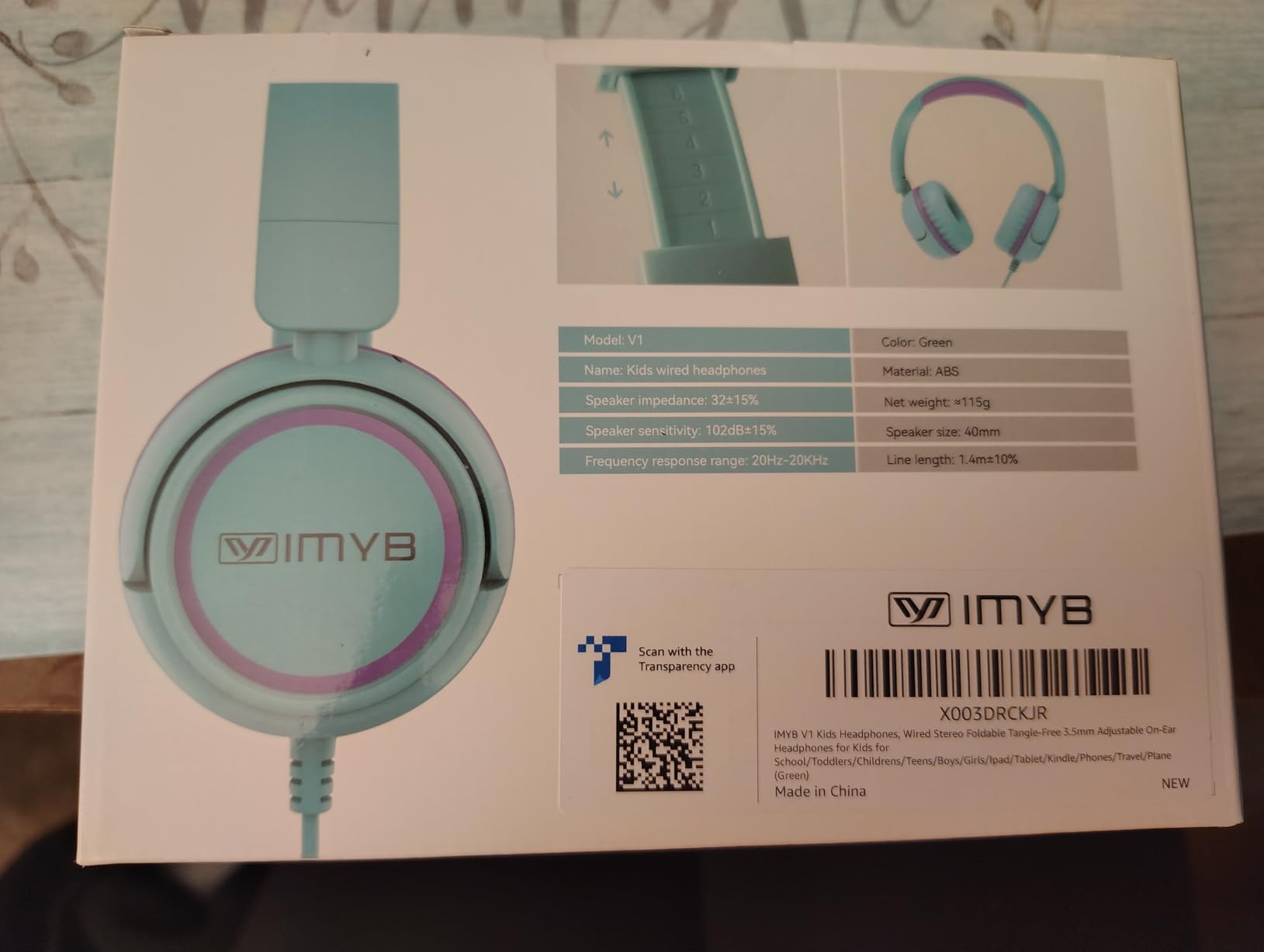
IMYB V1 Kids Headphones, 85dB Wired for School, Toddler 2-12 Boys Girls
Factory-locked 85dB limit
4 oz on-ear weight
Ages 2-12
BPA-free materials
Pros
- Factory-locked 85dB limit with no override button
- Weighs only 4 ounces
- Memory foam earpads with protein leather
- Adjustable headband and swivel cups for ages 2-12
- Cord rated past 1000 bend tests
Cons
- On-ear rather than over-ear
- so isolation is limited
- Fixed 85dB with no 94dB option for noisy places
- Does not fold completely flat
This is the only set in the roundup where the 85 dB cap is factory-locked with no override, no switch and no volume buttons to hunt for. For a two-year-old, that removes the entire question of whether the limiter stays on.
At 4 ounces it is the lightest design here, and parents of younger children mention that the weight is the reason the set stays on a small head without sliding. The headband adjusts and the cups swivel, which helps with a growing head.
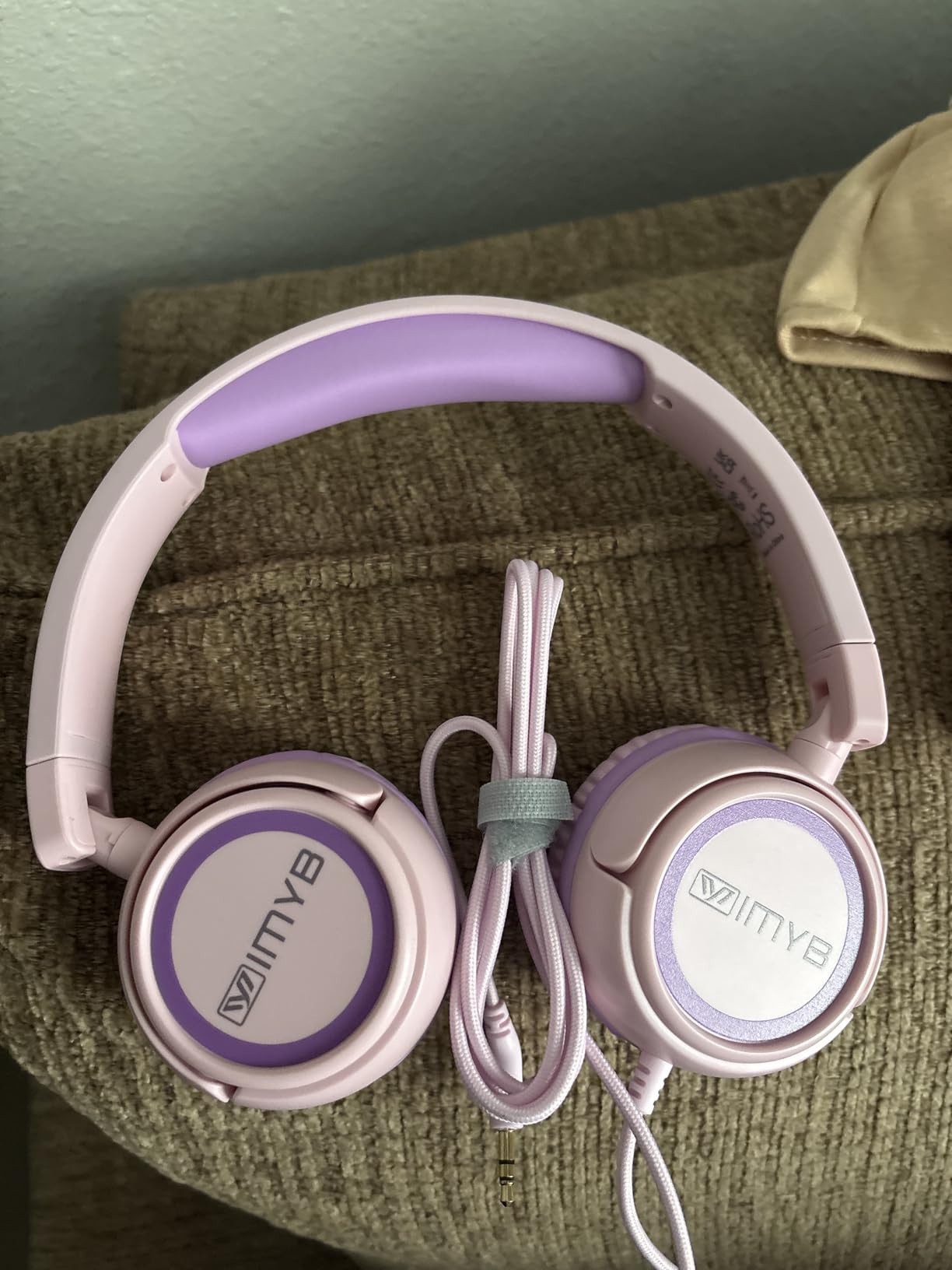
Durability reporting is unusually good for this price. Owners describe sets that survived being stepped on, thrown and slung in a bag, and the cord is rated past 1000 bend tests with a 5kg pull-resistant braid. A 24-month warranty is listed alongside.
The trade-off is acoustic. On-ear cups rest on the ears rather than covering them, so ambient noise leaks in and passive isolation is limited. In a quiet room that is fine. In a loud one, children ask for more volume.
What parents check before buying this one
Head size and cup shape. On-ear designs press directly on the ear, and a very small or very large head can be uncomfortable after an hour. The swivel helps, but it cannot change where the pad sits.
Also confirm the device has a 3.5mm jack, and whether you need a splitter for two children, since this model does not list a sharing port.
Where this set falls short
There is no 94 dB mode, so there is no answer for a plane or a noisy road. The cups also do not fold perfectly flat, which matters a little for a bag with limited space.
6. JBL Junior 320 Kids Headphones – Best for Small Heads and Big Brand Support
JBL Junior 320 Kids Headphones, Wired, Volume-Limited – Purple
JBL Safe Sound 85dB cap
116.8 g
32mm drivers
Built-in mic and stickers
Pros
- JBL Safe Sound caps output so it never exceeds 85dB
- Lightest on-ear weight in the group at 116.8 g
- 12mm padded headband sized for small heads
- Built-in mic and a customisable sticker set
- Single-side cable reduces tangling
Cons
- Cable is fixed and cannot be removed
- Fit can feel tight on larger or older kids' heads
- One reviewer reported the ear pad padding detaching
- Shipped with a two-point adapter
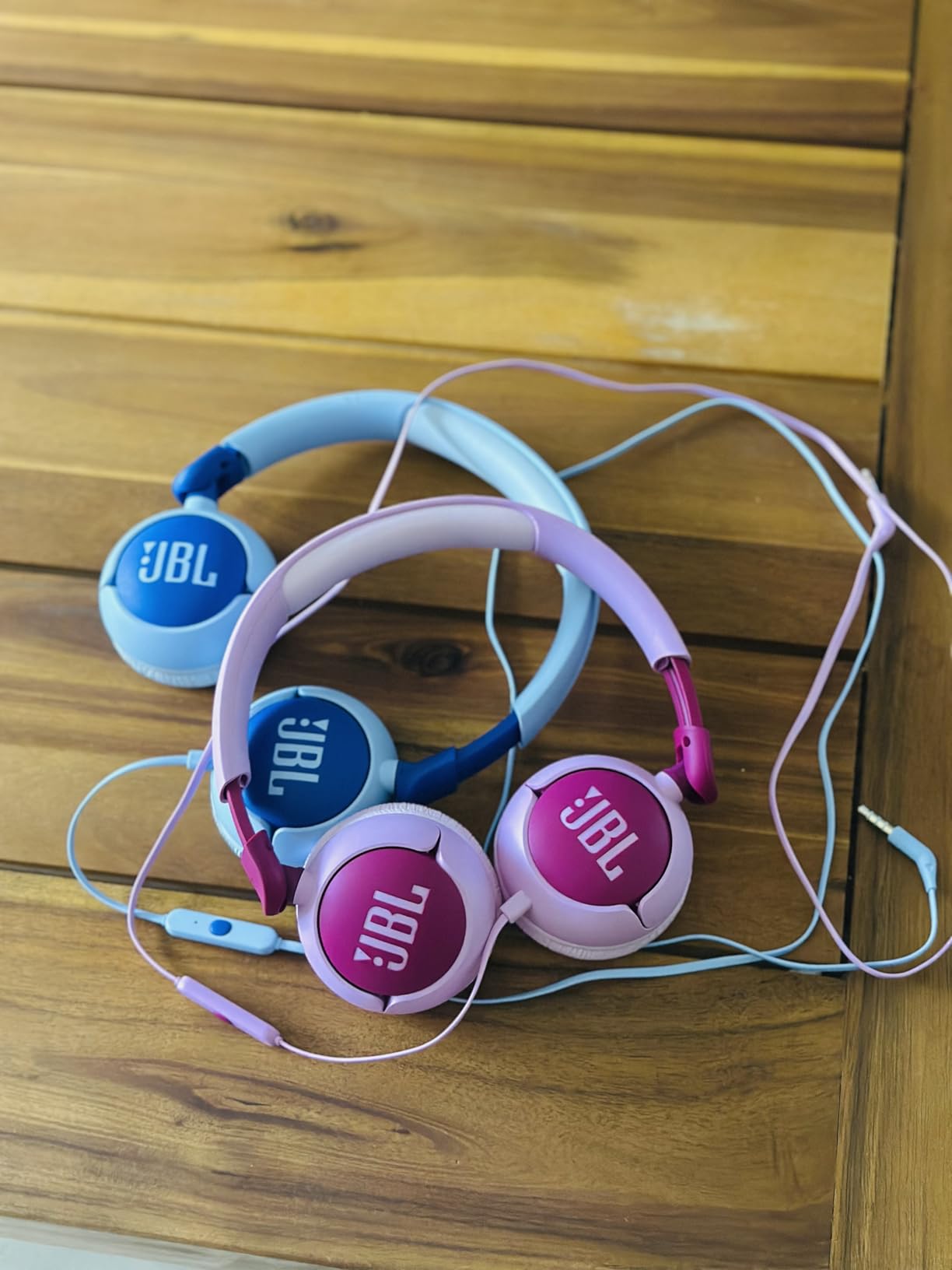
For a child with a small head, the 12mm padded headband and round earcups are the reason this set gets recommended. At 116.8 grams it is the lightest on-ear design here, which reduces the pressure a younger child feels across the top of the head.
JBL Safe Sound caps output so it never exceeds 85 dB, and the single-side cable entry is a smart detail for school life. Two-sided cords are the single most repeated durability complaint parents have about wired kids sets, because the free-hanging loop snags on everything in a bag.
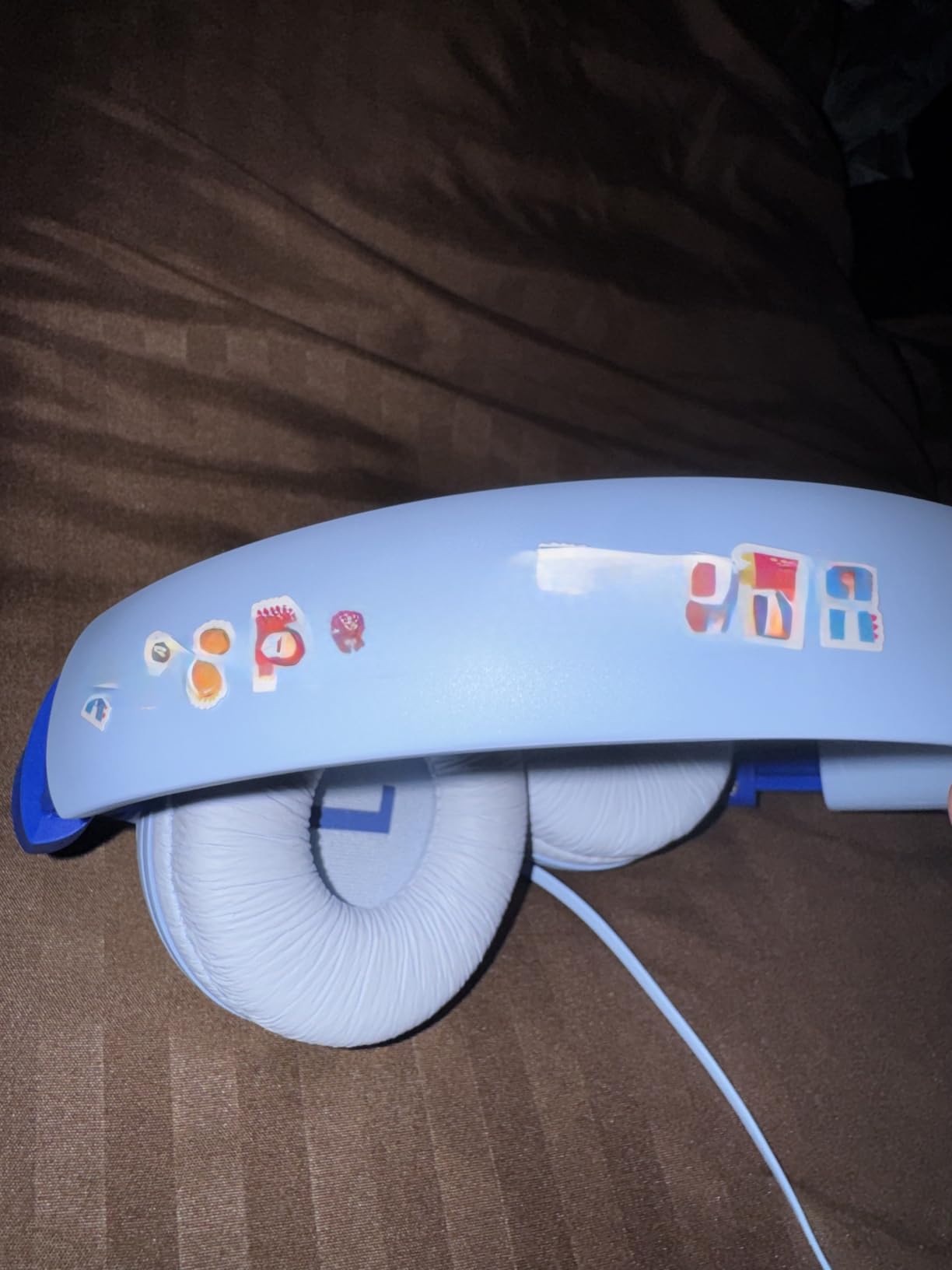
The included sticker set matters more than it sounds. Owners frequently report that a child who picked the colour and stuck the stickers on keeps the headphones on longer, which reduces the push-then-turn-up-the-volume cycle that undermines a limiter.
Sound comes from 32mm drivers, and the published sensitivity of 78 dB sits comfortably under the cap. Reviewers value the brand name for support, and the 32 ohm impedance pairs easily with school laptops and tablets.
What parents check before buying this one
Head size, and honestly this is the whole decision. The fit is tuned for smaller heads, and owners of larger or older children report it feels tight above the recommended range.
Check your device for the two-point adapter. The set ships with one, and some newer laptops and phones no longer accept that shape, so a single 3.5mm jack may be all you need.
Where this set falls short
The cable is fixed and cannot be removed, so a damaged cord means a new set. Fit complaints appear across reviews for larger heads, and one report mentions the ear pad padding detaching after a single use.
7. JLab JBuddies Studio On-Ear Headphones – Best for Folding, Repairs and Warranty
JLab JBuddies Studio On-Ear Kids Wired Headphones, Toddler Headphones, Kid Safe, Studio Volume Safe, Volume Limiter, Folding, Adjustable, Noise Isolation, with Mic (Graphite/Blue)
Built-in 85dB regulators
Ear cups rotate 80 degrees
Lifetime limited warranty
Fits ages 6-16
Pros
- Built-in volume regulators cap sound at 85dB
- Ear cups rotate 80 degrees and fold flat into the palm
- Metal headband sliders with smooth movement
- Braided tangle-free cord with in-line mic and controls
- Lifetime limited warranty
Cons
- On-ear cushions give limited isolation
- Wired only with no wireless option
- Older sizing can feel tight for very young toddlers
The lifetime limited warranty is the differentiator here, and it changes the ownership maths. When a two-year-old eats a pair of cups, a repair is a support ticket rather than a repeat purchase, and that is worth more than any spec line.
Folding is genuinely good. The ear cups rotate 80 degrees and collapse into the palm, so the set lives in a desk drawer or a backpack pocket. Parents who travel report this is the pair that actually makes it onto the trip.
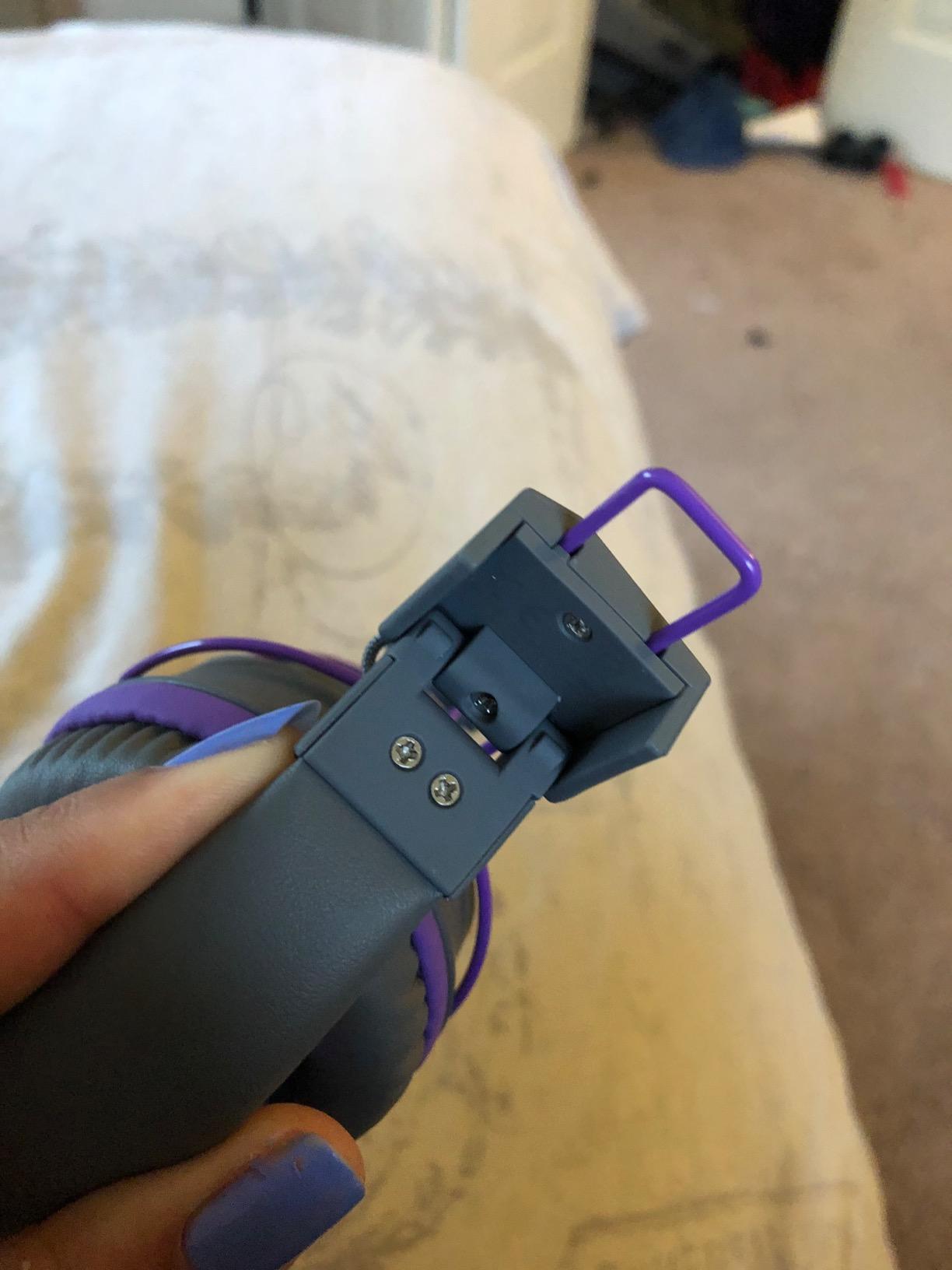
The built-in volume regulators cap sound at 85 dB with no switch to flip, which is the safer configuration for a child old enough to be curious. The metal headband sliders are smoother than plastic ones, a small detail that survives daily adjustment.
Recommended sizing runs from about age 6 to 16, which is wider than most on-ear sets here. That range makes it a reasonable step up after the toddler years without a jump in price.
What parents check before buying this one
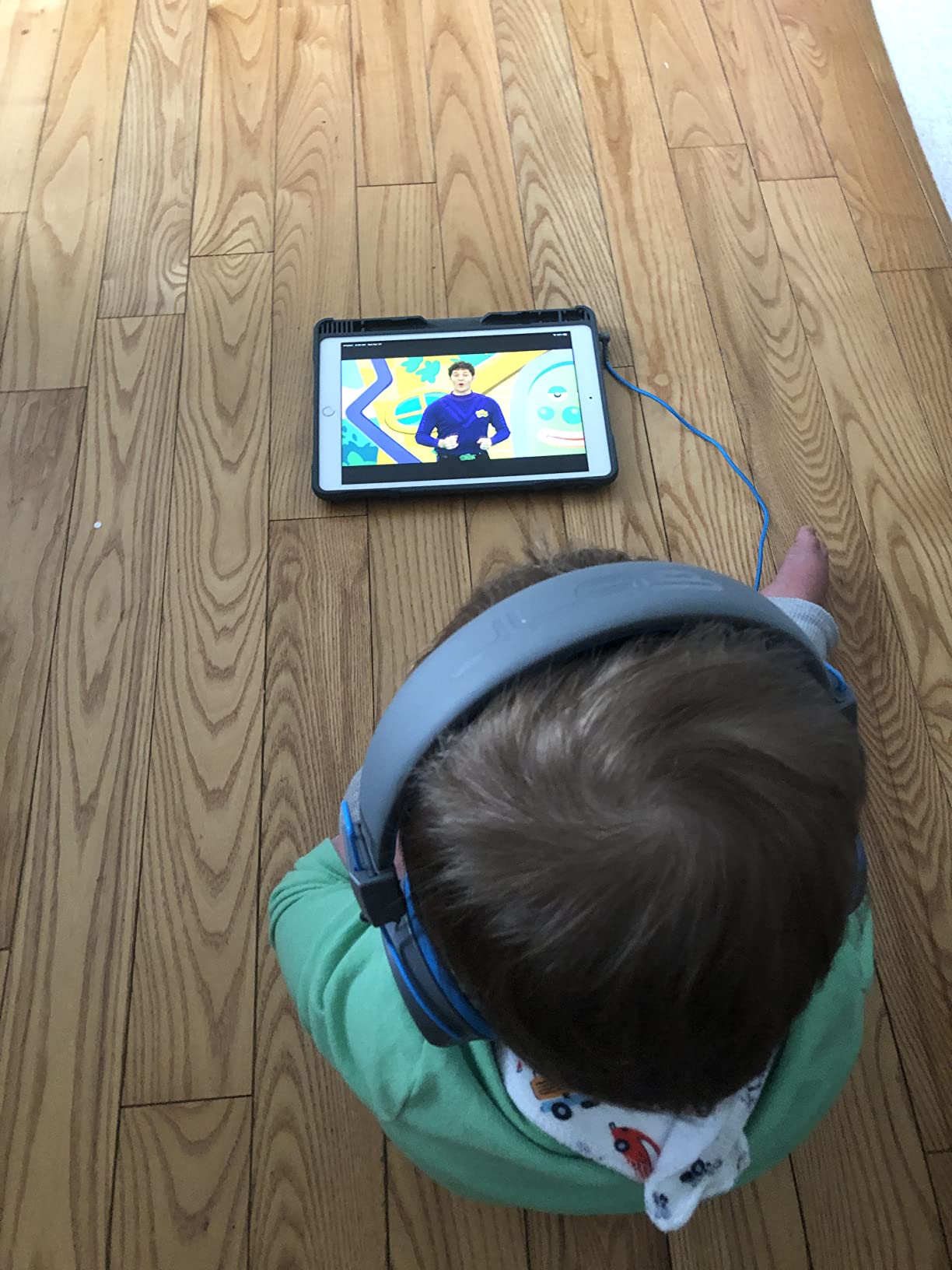
Whether your child is inside the 6-to-16 range. Below that, the on-ear sizing can feel tight, and a toddler will push the set off and ask for volume elsewhere.
Check the in-line control layout. Playback, call and track controls are on the cord, so verify the buttons are reachable from the side the cable runs.
Where this set falls short
On-ear cushions rest on the ear rather than covering it, so isolation is limited and the set is a poor choice for a loud car or a plane. It is also wired only, so there is no wireless option.
8. Puro Sound Labs PuroBasic – Best Sound Quality in a Wired Kids Set
Puro Sound Labs – Kids Headphones, Volume-Limiting 85dB, PuroBasic, Purple
85dB built-in limiter
Balanced armature driver
Plush headband and cushions
Drawstring bag
Pros
- Built-in limiter genuinely caps sound at 85dB
- Balanced armature driver delivers clear
- well-defined audio
- Plush adjustable headband with soft breathable cushions
- Rugged flexible plastic frame with folding ear cups
- Drawstring bag and responsive warranty service
Cons
- Lowest rating in this roundup at 4.2
- Pad and cup durability issues reported within a few months
- Long cord that tangles easily
- Smallest headband setting still runs large on a 3-year-old
The reason to choose this set over cheaper wired models is the driver. A balanced armature driver produces clear, well-defined sound that adults also like, and that matters when a parent and child share a listening device.
The limiter is real and fixed at 85 dB, with no switch that can be flipped and forgotten. The 32 ohm impedance pairs easily with school laptops, and a built-in microphone covers calls and online classes.
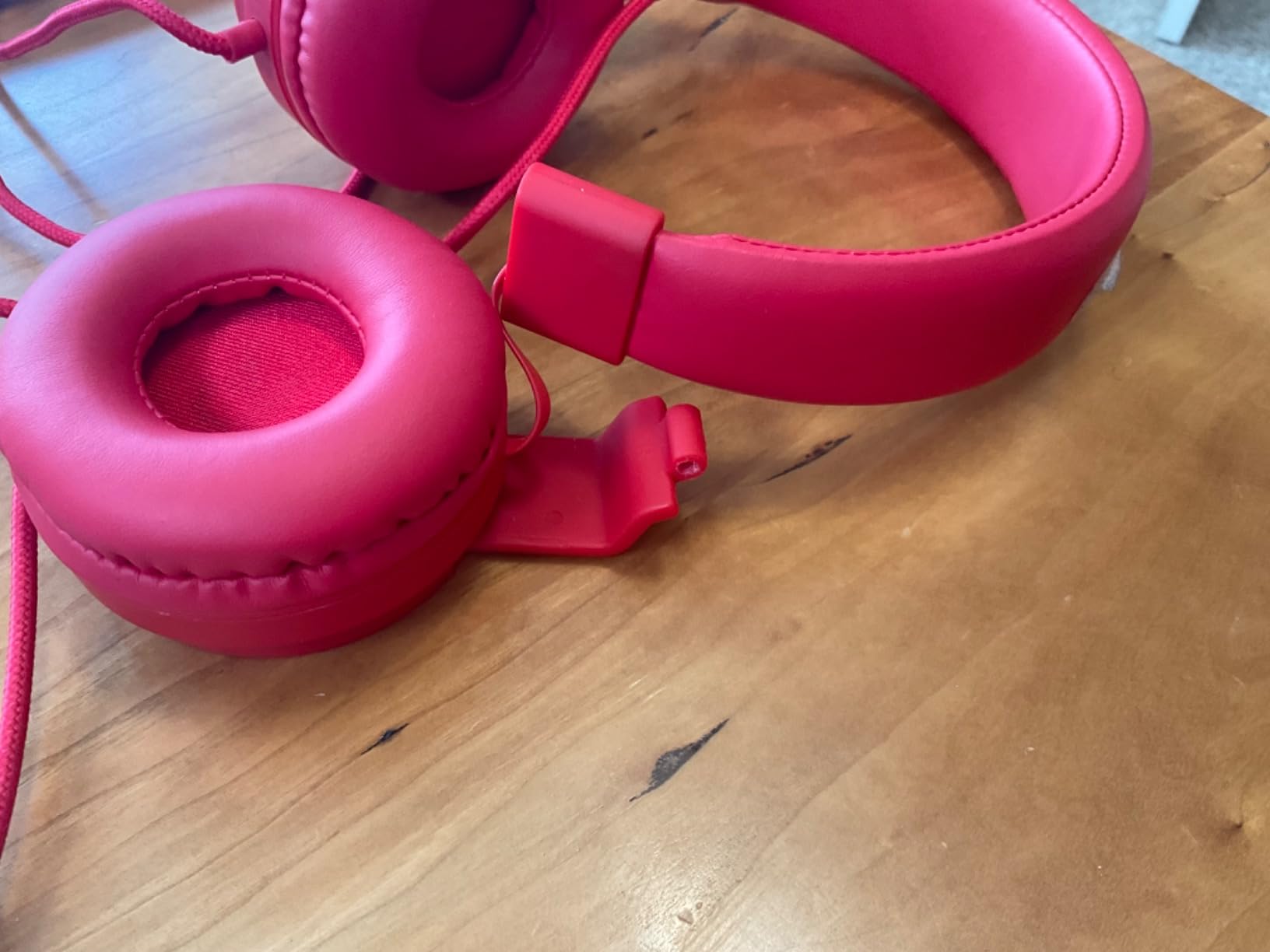
Fit is the soft sell. The plush headband and breathable cushions work for long sessions, and the flexible plastic frame survives being folded into a bag. A drawstring case is included, which is unusual at this level.
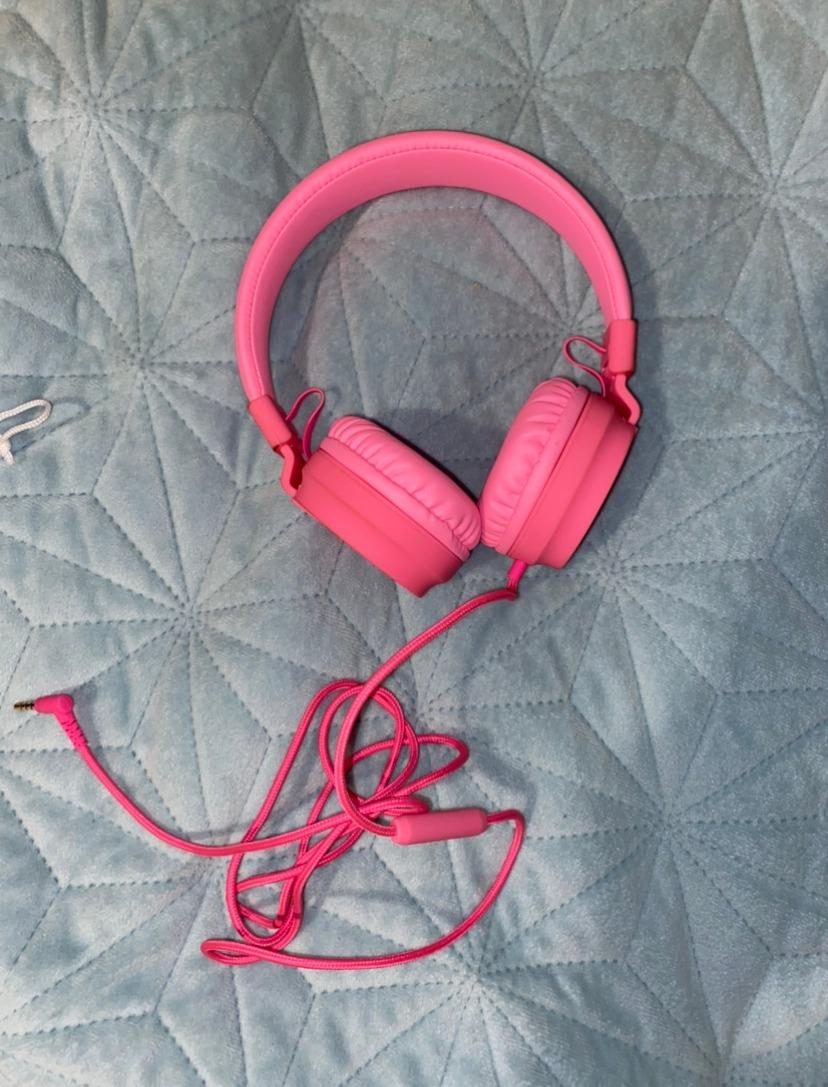
We are rating this one lower than its competitors because of what owners report after a few months. Cushion tearing and ear covers detaching show up repeatedly, and the cord is long enough to tangle, which parents with toddlers flag as a genuine safety concern rather than a nuisance.
What parents check before buying this one
Head size at the smallest setting. It still runs large on a three-year-old, so this is a better fit from about age five upward. For a toddler, a lighter on-ear design works better.
Also check cord routing. If your child sits near a door or a rolling chair, a long cable is a genuine hazard and a shorter or detachable cord is worth searching for instead.
Where this set falls short
This carries the lowest rating in the group at 4.2, with durability the recurring theme: pads ripping, covers detaching and cords failing within months. If it works out, customer service is praised for shipping replacement pads, which softens the risk.
9. Voopwink Kids Over-Ear Headset – Best for Tweens and Teens
Voopwink Kids Headphones with Microphone, Wired Over Ear Headsets with Limited Volume 85dB/ 94dB for Boys Girls Teens Children Online School/Travel/iPad/Tablet/Cellphone
85/94dB switch on the cable
HD mic in braided cord
40mm drivers
Over-ear cushions
Pros
- 85dB and 94dB limit switch mounted on the cable
- Over-ear cushions suit larger older children
- HD microphone in the braided cord for schoolwork
- 40mm drivers with crisp stereo output
- Foldable design with no sharp corners
Cons
- Wired only with no Bluetooth option
- Braided cord adds bulk and can tangle
- 85dB can feel quiet for older kids and teens
This is the section for the families the forums keep asking about. A lot of parents with ten-year-olds and up find 85 dB capping dulls speech in films, and this set puts the 94 dB mode on the cable so they can decide per situation instead of per product.
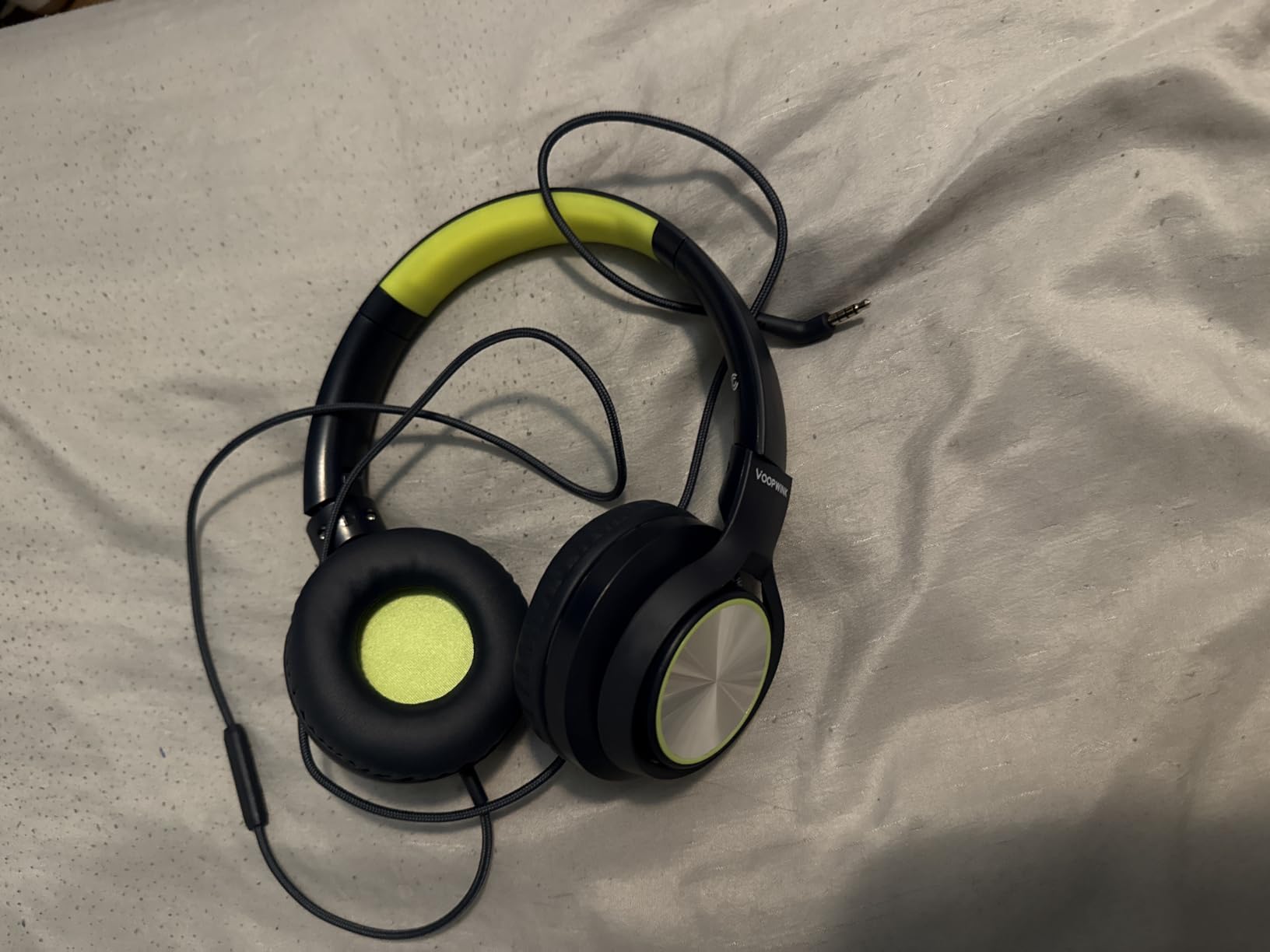
Over-ear cushions and a smooth adjustable headband suit older children better than the small on-ear designs. Reviewers rate comfort well for long study sessions, and the foldable body handles a school bag.
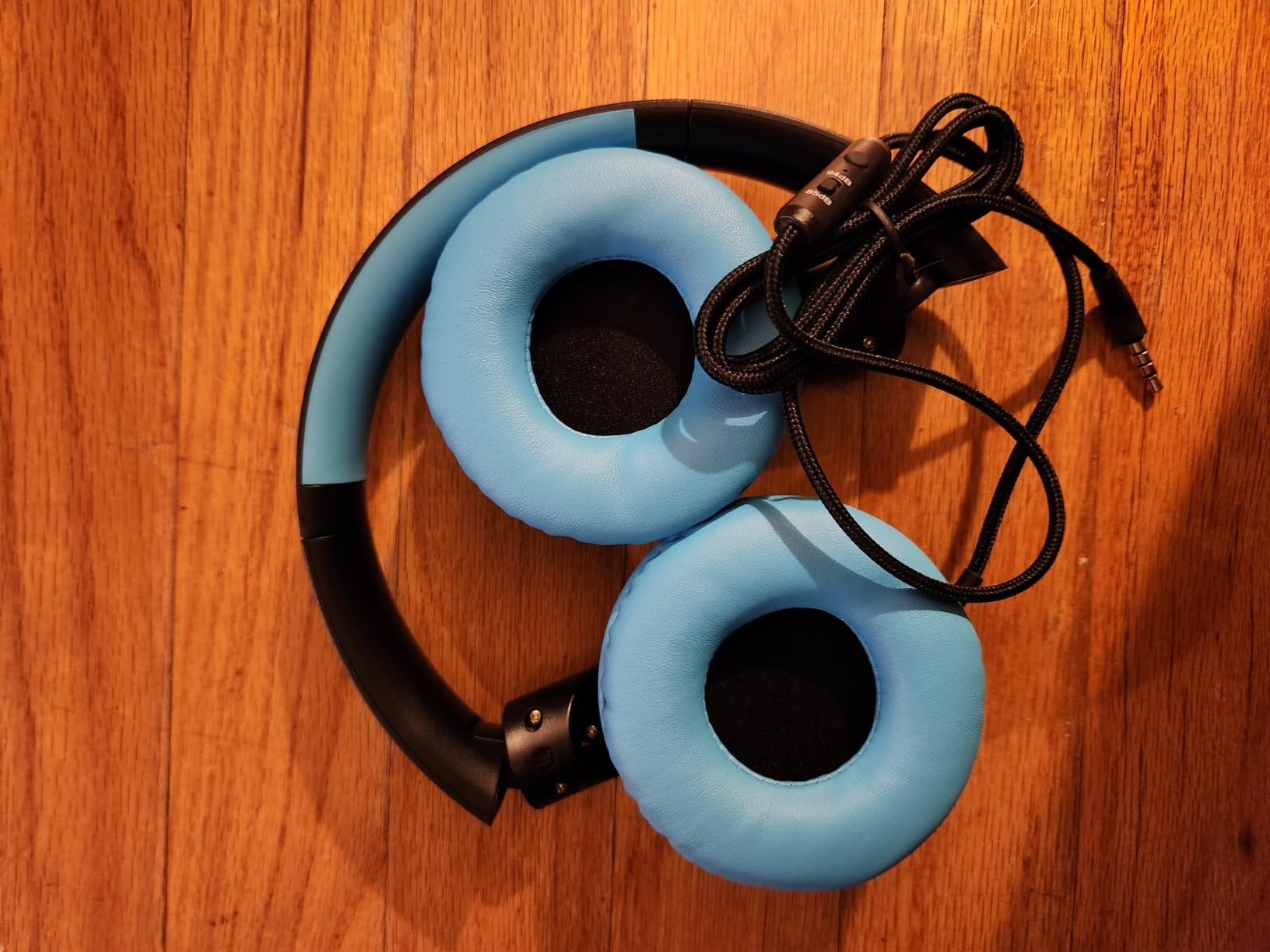
Sound comes from 40mm drivers with crisp stereo output, and the multi-function in-line button handles calls and track skipping. The HD microphone in the cord is the part that gets used daily for classes and video chats.
One honest note: the braided cord adds bulk and can tangle, which is the mirror image of the fixed-cable problem in cheaper sets. The inline switch is easy to miss if the chord is routed awkwardly, so check it fits the child’s hand position.
What parents check before buying this one
Where the 94 dB switch sits and whether the child will leave it alone. It is a deliberate choice, and it should stay off for younger children and on only in genuinely noisy environments.
Check that the over-ear band fits without pressure. Over-ear cups need more headband range than on-ear models, and a child near the top of the range should test it before committing.
Where this set falls short
Wired only, with no Bluetooth. The braided cord adds bulk and tangles more than a smooth cable. Several users also note 85 dB feels quiet for older children, which is the trade the switch exists to solve.
10. Botesty Sound Ivy Kids Headphones – Best for Online School and Video Calls
Kids Headphones Wired for School, 3.5mm Safe Volume Limited with Mic, Navy
85/94dB in-line switch
HD mic and call buttons
90-degree swivel cups
24-month warranty
Pros
- Adjustable 85dB/94dB limiter with an in-line switch
- HD microphone with in-line call and playback buttons
- Soft over-ear cushions with an adjustable headband
- 90-degree swivel earcups and a foldable structure
- 24-month warranty and universal 3.5mm support
Cons
- Wired only
- no wireless option
- 90-degree swivel is a reported break point
- Runs a little large on a 3-year-old's head
- One earpiece stopped working after most of a school year
When a headset lives on a video call, the microphone and the call controls matter more than the driver. This set puts an HD mic and dedicated call and playback buttons on the inline cord, which removes the fishing-for-the-button moment that disrupts a lesson.
The 85/94 dB switch is also inline rather than hidden, so a parent can change modes without taking the set off. A 24-month warranty is longer than most wired models here, and universal 3.5mm support covers Chromebooks, tablets, laptops and consoles.
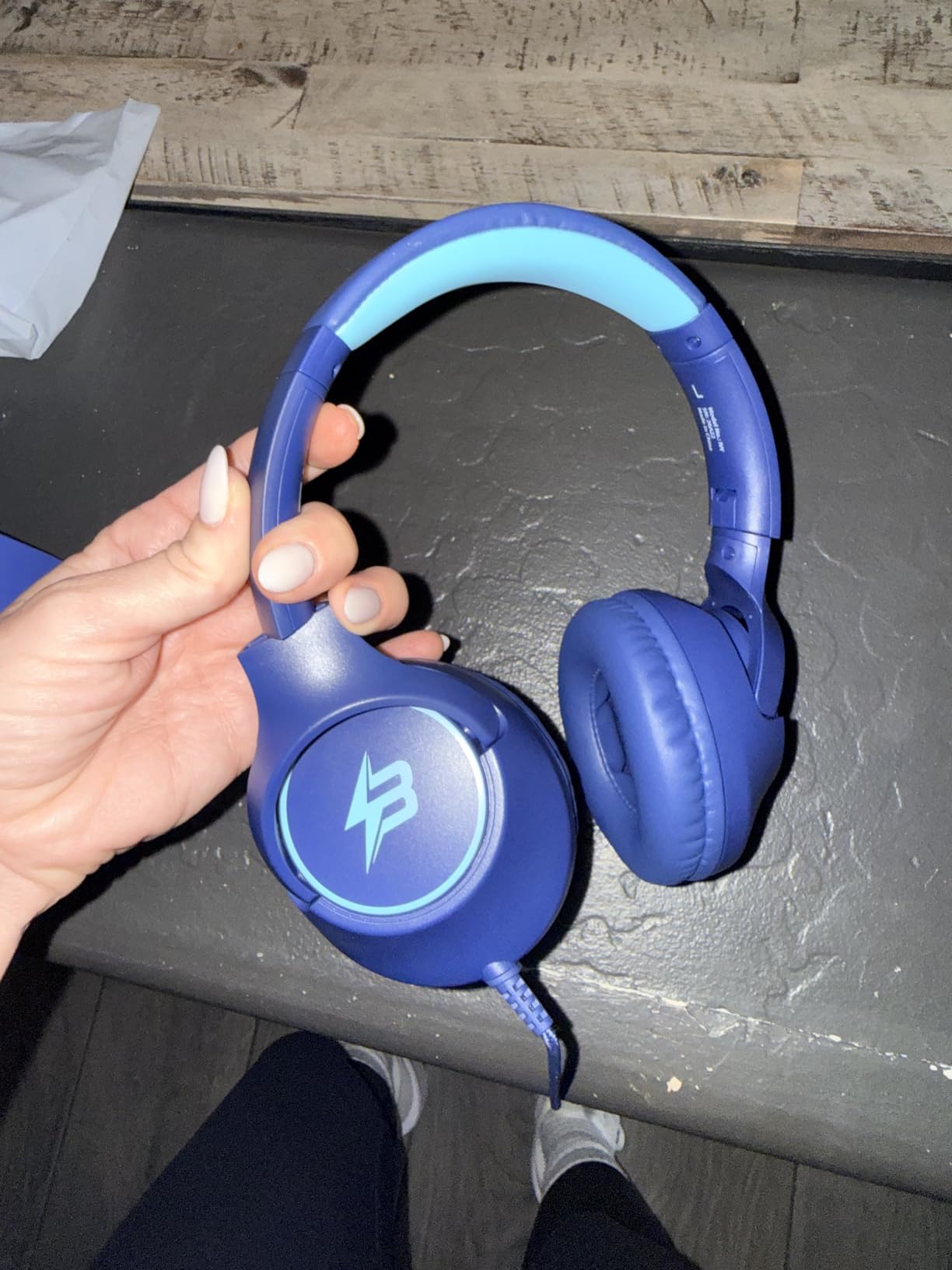
Comfort is the other strength. Soft over-ear cushions, an adjustable headband and a 4.9ft tangle-free braided cord add up to a set parents describe as comfortable for a long school day, which is the phrase that actually predicts whether a limiter gets respected.
Owners specifically note that the hardware limiter genuinely cannot be overridden, which is the property that separates a real limiter from a soft one that a determined child can work around.
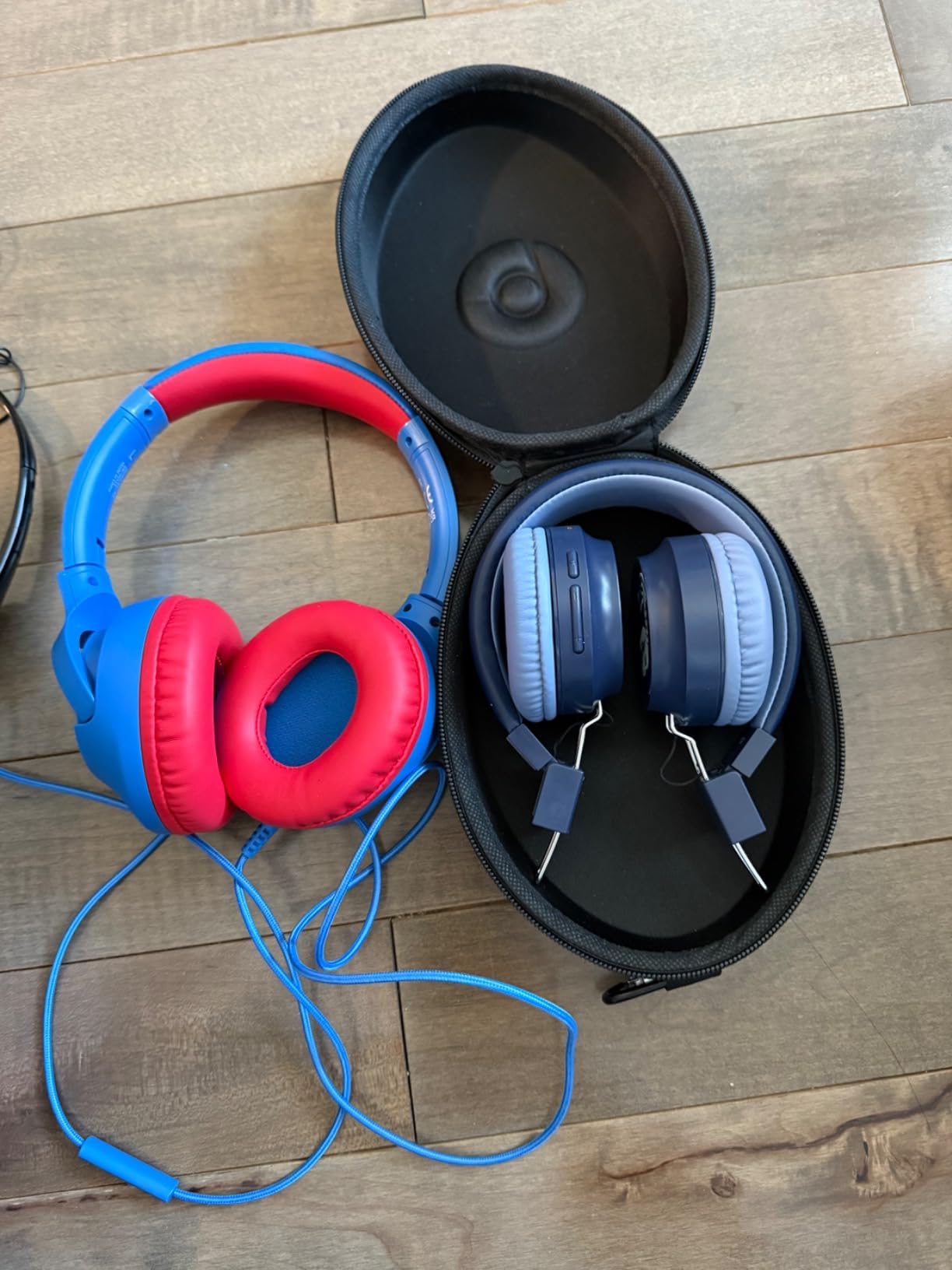
What parents check before buying this one
Mic quality against your actual setup. Owners report clear pickup for calls, but a device with a noisy microphone will dominate whatever the headset provides, so test in the room your child will use.
Also check size at the youngest end. This runs a little large on a three-year-old, and the swivel hinge is worth inspecting periodically.
Where this set falls short
Wired only, and the 90-degree swivel has been reported as a break point on some units. One review describes an earpiece failing after most of a school year, which is worth factoring into expectations.
11. Acer Kids Bluetooth Headphones – Best Wireless Set With a Safety Certification
Acer Kids Bluetooth Headphones, 85/94dB Volume Limiter, Foldable Wireless Over-Ear Headphones for iPad, Travel, 60H Playtime, Bluetooth 6.0, Built-in Mic, Blue Green
CPSIA-certified 85/94dB limiter
Bluetooth 6.0 with mic
60-hour listed playtime
Wired fallback
Pros
- 85/94dB volume limiting with CPSIA certification and BPA-free materials
- Up to 60 hours of playtime with a 5-minute quick charge
- Reinforced headband hinge and foldable build
- Memory foam cushions on a lightweight 0.19 kg body
- Also works wired over 3.5mm
Cons
- Smallest installed base here at 377 reviews
- No active noise cancellation
- Wireless playback adds pairing steps
This is the only set in the roundup that states a formal child-safety certification alongside the limiter. The 85/94 dB limiting is CPSIA certified with BPA-free materials, which is a stronger paper trail than a marketing phrase on a listing.
The battery figure is the headline: up to 60 hours of listed playtime, with a 5-minute quick charge returning 2 hours. A reinforced headband hinge and a foldable body target the school-bag scenario where most wireless sets fail first.
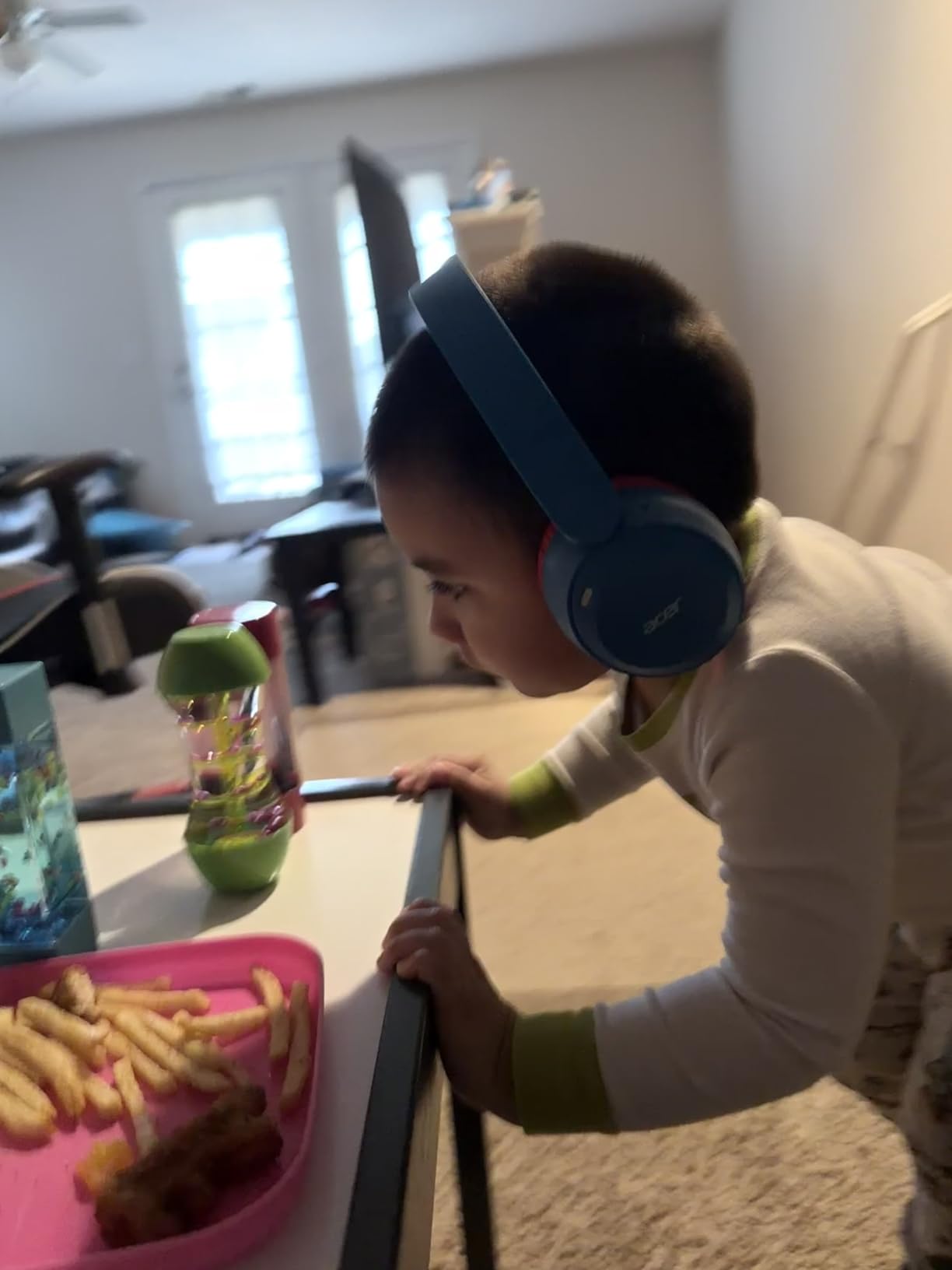
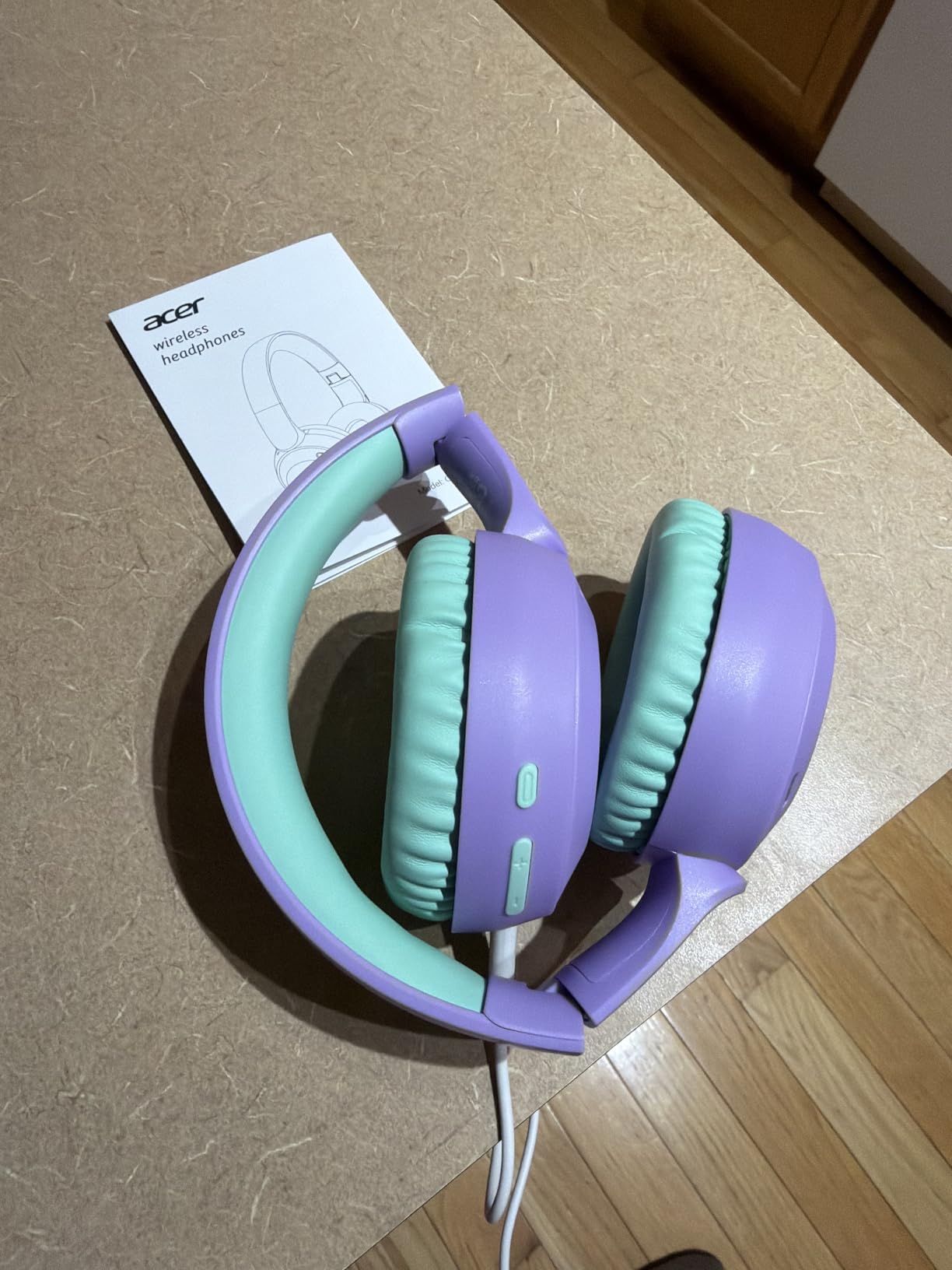
Bluetooth 6.0 with a built-in microphone covers classes and calls, and the 3.5mm wired mode keeps the set usable on a school device that blocks pairing. Compatibility is listed for iPad, smartphones, tablets, YOTO Player and Switch.
At 0.19 kg with memory foam cushions, comfort is a strength in reviews. Eighty percent of ratings are 5 stars, which is a high share, but the base is much smaller than the rest of this list, so treat the long-term picture as still forming.
What parents check before buying this one
Whether the school allows Bluetooth at all. Many school-issued Chromebooks and tablets block pairing during the day, which makes a wireless set useless for that stretch unless it can also run wired. This one can.
Check the charging plan. A wireless headset is one more device on the nightly charge list, and dead headphones at 2pm are a recurring complaint in parent threads.
Where this set falls short
With 377 reviews there is far less long-term durability data than the other sets here, and we would want a year of use before calling it proven. There is no active noise cancelling, and pairing adds a step a younger child can get wrong.
12. Puro Sound Labs BT2200 Plus – Best for Swappable Cushions and Two Listeners
Puro Sound Labs – Kids Headphones, Volume-Limiting 85dB, BT2200 Plus,Purple
85dB volume limiting
Swappable on-ear and over-ear cushions
20 hours Bluetooth 5.1
Protective case
Pros
- 85dB volume limiting with a Puro balanced response curve
- Interchangeable on-ear and over-ear cushions
- Up to 20 hours of Bluetooth 5.1 playtime with a wired fallback
- Protective hard case and daisy chain cable included
- Works for kids and hearing-sensitive adults
Cons
- Widest rating spread in the group at 4.2
- Reviews cite batteries dying and failures within months
- Charge-dependent design stops working when the battery does
- Bulky configuration takes more bag space
Interchangeable cushions are the feature no other set here offers. Swap between on-ear and over-ear pads as the child grows, which is the honest answer to the sizing anxiety most parents raise in forum threads about a set that works at six and falls apart at eleven.
The 85 dB limiter is built in, and a 20-hour battery with Bluetooth 5.1 plus a wired 3.5mm fallback covers most days. A protective hard case and a daisy chain cable for two listeners are included, which makes it a reasonable pick for an older child and a parent sharing one device.
Sound is the reason adults keep this one. The Puro balanced response curve gives rich bass and clear vocals, and the same set is marketed to hearing-sensitive adults, which tells you how seriously the tuning is taken.
The price is the highest in this roundup by a wide margin, and that changes how you should read the reviews. Buyers who keep them rate the sound and the cushion swap highly. Buyers who return them describe batteries that stopped holding a charge and sets that failed well before a year.
What parents check before buying this one
Whether the child will actually use the swap. Interchangeable cushions only solve a growth problem if someone is willing to change them, so check that the pads come off without tools.
Check the battery expectation against the review spread. With 11 percent of ratings at one star, a year of use is the timeframe where problems appear, and that is a long time to wait to find out.
Where this set falls short
It carries the widest rating spread here at 4.2, with critical reviews describing batteries dying and headsets breaking within months. The design also stops working when the battery does, and the on-ear-plus-over-ear configuration takes more bag space than a single-cup design.
How to Choose Volume-Limiting Kids Headphones
Know the three limiter types before you compare anything
A locked limiter caps output at 85 dB with no switch, no app and no override. That is the safest configuration and the easiest to verify. A switchable limiter toggles between 85 dB and 94 dB, usually from a button on the cable or the earcup. An adjustable limiter lets a parent set the ceiling in an app.
For a child under 8, a locked or switchable design with the 85 dB mode as the default is what you want. For a tween, a switchable design gives you control in noisy environments without giving up the cap at home. Adjustable-by-app limiters depend on a phone, and a phone-based ceiling is only as reliable as the family keeping it there.
How to verify the limiter on the exact model number
Start with the model number, not the product title. Listings reuse family names across variants, and the same brand name can appear with a locked 85 dB cap on one SKU and a 85/94 dB switch on another.
Find the model number on the box, the earcup or the product page specification block.
Read the sensitivity or volume limit field in the technical specifications rather than the title.
Look for a decibel figure tied to that number, not a general brand statement about safe listening.
Check whether the listing names a lock, a switch or an app, because those are different products in behaviour.
Confirm the warranty terms from the manufacturer, since a one-year warranty and a lifetime warranty carry very different risk.
This matters because the failure mode in the category is a title that claims volume limiting while the specification page says nothing. Parents in headphone forums ask constantly how to confirm the cap is actually enforced, and the honest answer is that you check the model, not the badge.
Wired or wireless, and what school policy decides
Wired sets win on cost, battery anxiety and school compatibility. No charging, no pairing, and a 3.5mm jack still works on a school-issued Chromebook. The recurring complaints are cable damage at the earcup entry, tangling in a bag, and a mic that the laptop microphone outclasses.
Wireless sets win on travel and for a child who moves around. The costs are one more device to charge, a pairing step a younger child can get wrong, and school Bluetooth policy. Many school-issued Chromebooks and tablets block pairing during the school day, which makes a wireless set useless for that stretch unless it also runs wired.
The practical compromise is a wireless set with a 3.5mm fallback. Two of the sets here do that, and it is the reason they suit households that move between school, home and a car.
Fit and age bands matter more than the spec sheet
Kids’ heads vary enormously, and a fits ages 3-12 claim is a marketing range rather than a measurement. Children aged 3 to 5 need the lightest build and a locked limiter. Ages 6 to 10 need a set that stays comfortable across a long school day plus a mic for online classes. Ages 11 to 13 often outgrow on-ear cups first, so check the headband range before buying.
Ear cups that pinch after an hour cause children to push headphones off, and then the volume goes up somewhere else. That is the failure mode a limiter cannot fix, and it is worth choosing a set with memory foam or breathable protein leather if the child wears headphones for more than an hour at a stretch.
Weight is a fair proxy for comfort. The lightest set here is 4 ounces and the heaviest sits near 0.33 kg, and for a small head that gap is noticeable over a full day.
Use the hardware limiter and device controls together
Turn on parental controls in your device or streaming app so account-level volume caps are set.
Set the daily or weekly listening time limits that both major operating systems now offer.
Keep the headphone limiter on 85 dB and treat 94 dB as a travel-only setting.
Aim for device volume below roughly 60 percent as a habit, per safe listening guidance.
Check the limiter again after any firmware or app update, since settings can reset.
Software controls are a second layer, not a replacement. A slider can be dragged back up, and a child with a phone will find it. The hardware cap is the layer that holds when supervision lapses.
Stop signals worth knowing
Ear ringing, muffled hearing, discomfort or a child asking for the volume turned up after a session are all reasons to stop and reassess. Damage from noise exposure is cumulative and permanent, and it does not announce itself.
If a child reports ringing or dull hearing after headphone use, book a check with an audiologist rather than adjusting the limiter and waiting. This article is a buying guide, not medical advice, and a hearing professional can tell you what a specific child needs.
Two habits help more than any product choice. Break up long sessions, since duration compounds with level, and keep the device source clean, because a noisy source tempts a child to push against the cap. For wider audio context, our picks for the best studio headphones cover the monitoring side.
Frequently Asked Questions
What is the decibel limit for safe headphones for kids?
Most volume-limiting kids headphones cap output at 85 decibels, the ceiling the World Health Organization recommends for children. Some models ship with a switchable 85/94 dB dual mode for noisy environments, where the higher setting is intended for travel rather than daily use. The 85 dB figure is a conservative level cap, not a time allowance, so listening duration still matters on top of it.
Is 85 dB too loud for headphones?
No, 85 dB is not a damage threshold. It is a conservative public-health cap that the WHO and the WHO-ITU global standard for safe listening devices treat as a dose allowance, roughly 12.5 hours per week at that level for a child. Above that level, safe exposure time falls quickly, so duration and level have to be considered together.
How do I know if my kids headphones have a volume limit?
Check the model number rather than the product title. Find the model number on the box or the earcup, then read the sensitivity or volume limit field in the technical specifications. A real limiter appears as a decibel figure attached to that model, and the listing will say whether the cap is factory-locked, switchable between 85 and 94 dB, or set through an app. A title alone is not proof.
What are the best headphones for a 10-year-old?
At 10 a child usually needs a 85/94 dB switchable set with a real 94 dB option for travel, plus a wired mode for school devices that block Bluetooth. Fit matters more than specs here, so check the headband range and weight first. Over-ear cushions that do not pinch after an hour keep the cap in use, because an uncomfortable set gets pushed off and the volume goes up somewhere else.
Is it safe for a 3 year old to use headphones?
Short supervised sessions on a set with a hard 85 dB cap are the common pediatric advice, paired with a volume well under the cap and a lightweight on-ear or over-ear fit. A factory-locked limiter is the right choice at that age because there is nothing to switch. Watch for ear ringing, muffled hearing or discomfort, and consult an audiologist if any of those appear. This guide is a buying resource, not medical advice.
Final Verdict for 2026
The MIDOLA kids Bluetooth headphones take our 2026 recommendation because they combine a genuine 85/94 dB hardware switch, a key lock that stops a curious child changing the mode, and a wired fallback for school devices that block Bluetooth. For a wired school set, the awatrue AT2 has the deepest owner feedback, and for a toddler the IMYB V1 offers the only factory-locked 85 dB cap with a 4-ounce build.
Whatever you choose, check the model number rather than the product title, and treat 85 dB as a level cap rather than permission to listen all day. If your child already reports ringing or dull hearing, speak to an audiologist before buying anything. Our guides to the best cameras with no recording time limits cover a different kind of limit entirely.