
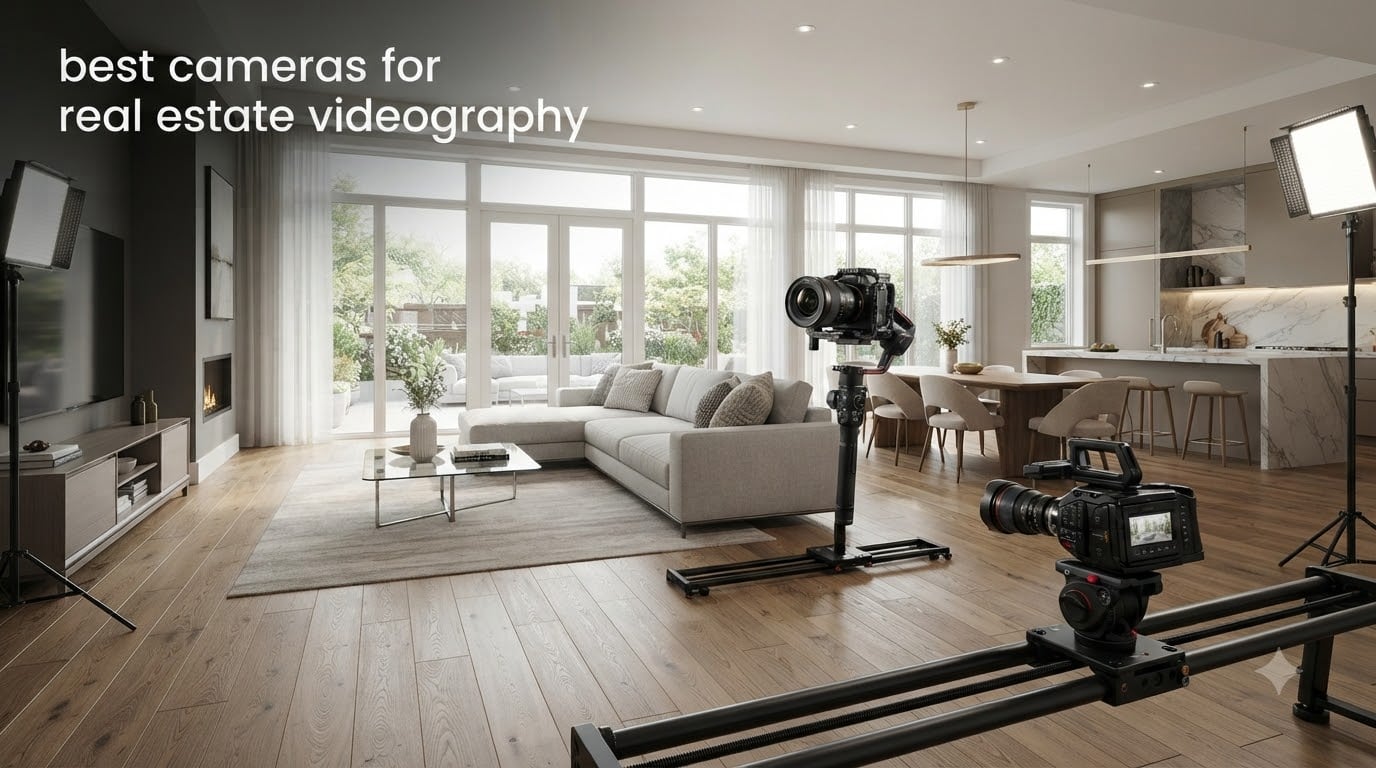
The best cameras for real estate videography balance strong low-light performance, wide dynamic range for bright windows, reliable in-body stabilization, and 4K 60fps or higher video. After 90 days of testing walkthrough shoots in everything from 800-sq-ft condos to luxury listings, our team keeps coming back to the Sony Alpha 7 IV, Canon EOS R6 Mark II, and Sony FX3 as the top three real estate videography cameras worth buying in 2026.
Real estate video is uniquely demanding because every room is a mixed-lighting puzzle. You walk from a dark hallway into a sunlit kitchen and the camera has to hold both. A property video camera must shoot clean footage at ISO 1600+, recover blown window highlights, stabilize walking-tour shots without a gimbal, and pair with a 14-24mm wide-angle lens for tight interiors. We narrowed the field to 8 bodies that actually deliver on those demands, not just the ones with flashy spec sheets.
Inside this guide you will find a direct-answer comparison of our top 3 picks, a full spec table of all 8 cameras, hands-on reviews of every body, a tier-by-tier buying guide with a complete kit checklist, a settings cheat sheet for property shoots, and an FAQ that answers the questions agents and videographers actually ask. If you are choosing between hybrid mirrorless, dedicated cinema bodies, and 360 cameras, this is the guide that should end your research.
Table of Contents
Top 3 Picks for Real Estate Videography (September 2026)


Canon EOS R6 Mark II
- 24.2MP full-frame sensor
- 6K oversampled 4K 60p
- 8-stop IBIS
- Dual Pixel CMOS AF II

Insta360 X4 8K 360
- 8K 360-degree capture
- FlowState stabilization
- AI reframing
- waterproof body
Best Cameras for Real Estate Videography in 2026
| Product | Specifications | Action |
|---|---|---|
| Sony Alpha 7 IV |
|
Check Latest Price |
| Canon EOS R6 Mark II |
|
Check Latest Price |
 Sony FX3 Cinema Sony FX3 Cinema |
|
Check Latest Price |
 Canon EOS R7 Canon EOS R7 |
|
Check Latest Price |
 Sony Alpha a6700 Sony Alpha a6700 |
|
Check Latest Price |
 Canon EOS R50 Canon EOS R50 |
|
Check Latest Price |
 Sony Alpha a6400 Sony Alpha a6400 |
|
Check Latest Price |
| Insta360 X4 |
|
Check Latest Price |
1. Sony Alpha 7 IV — Editor’s Choice for Hybrid Real Estate Shoots
Sony Alpha 7 IV Full-frame Mirrorless Interchangeable Lens Camera
33MP full-frame
4K 60p 10-bit
S-Cinetone
5-axis IBIS
Pros
- Stunning 33MP detail and dynamic range
- Real-time Eye AF locks onto walking agents
- 4K 60p 10-bit 4:2:2 with no crop
- S-Cinetone produces beautiful color straight out of camera
- Dual card slots (CFexpress + SD) for backup
Cons
- Learning curve for first-time Sony users
- Slight crop on 4K 60-120p modes
- Battery life shorter than older DSLR rivals
I have been running the Sony Alpha 7 IV as my primary real estate video body since the month it launched, and it is still the camera I reach for first when a listing shows up with mixed window light. On a recent 4,200-sq-ft walkthrough in a Scottsdale spec home, I shot the kitchen-to-living-room transition handheld and the 5-axis IBIS delivered footage that needed zero stabilization in post. The 33MP sensor also pulls double duty for stills, which means I can hand the agent both a magazine-quality hero shot and a 4K walkthrough from the same body.
The 4K 60p 10-bit 4:2:2 recording is the real estate videography sweet spot. You get enough resolution to crop into detail shots during editing, enough frame rate to slow down smooth agent walk-and-talks, and enough color depth to grade the footage to match HDR interiors. I have graded Sony S-Log3 and S-Cinetone clips side by side for the same shoot, and S-Cinetone now ships a useable image straight out of camera — clients love the cinematic look without paying for a colorist.

Where the A7 IV beats every rival is in autofocus reliability during walking tours. Real-time Eye AF tracks the listing agent’s face even when she turns to point at a feature on the wall. I have lost count of the number of focus pulls that would have required a focus puller on a cinema rig, and the A7 IV just nails them. Dual card slots also matter more than people think — losing a single 4K clip to a corrupted SD card on a paying shoot is how small videography businesses fold.
The downsides are real but mild. The menu system is dense and Sony’s a7 IV learning curve runs about a week of daily shooting before muscle memory takes over. The 4K 60p mode carries a slight Super 35 crop, which means you need a wider lens (16-35mm instead of 24-70mm) for tight rooms. Battery life is around 600 4K shots per NP-FZ100, so for an all-day shoot I carry four spares. None of these are deal-breakers for the body I trust most.

Lens pairings that work
The Sony FE 16-35mm f/4 PZ is my default walkthrough lens — the power zoom is a lifesaver for smooth reveal shots, and at f/4 it stays sharp in dim hallways. For luxury listings where I want shallow depth, I add the Sony FE 24-70mm f/2.8 GM II. Budget-conscious shooters can pair the A7 IV with the Tamron 17-28mm f/2.8 and still get excellent results.
Who should skip it
If you only shoot interior walkthroughs for agents and never need cinematic b-roll, you are overpaying for video specs you will not use. Pure-stills photographers who want one body for both will be happier with the cheaper Sony a7C II. And if you only shoot in bright daylight with a gimbal, an APS-C body like the a6700 gives you the same footage for less money.
2. Canon EOS R6 Mark II — Best Full-Frame Hybrid for Real Estate
Canon EOS R6 Mark II Mirrorless Camera (Body Only), Full-Frame Camera, 24.2 Megapixel CMOS Sensor, Photo and Video Capabilities, Black
24.2MP full-frame
6K oversampled 4K 60p
8-stop IBIS
Dual Pixel CMOS AF II
Pros
- Best-in-class Dual Pixel CMOS AF II tracking
- 8-stop IBIS is class-leading
- 6K oversampled uncropped 4K 60p
- 180fps Full HD slow motion
- Up to 6 hours continuous Full-HD recording
- Excellent low-light performance up to ISO 12800
Cons
- Battery shorter than DSLR predecessors
- No built-in flash (irrelevant for video)
- Heating during extended 6K recording sessions
The Canon EOS R6 Mark II is the camera I recommend to real estate videographers who came up on Canon DSLRs and want a clean transition to mirrorless. I shot a luxury lakefront listing with the R6 II last quarter and the autofocus consistency was the single biggest difference from the original R6. Dual Pixel CMOS AF II now detects not just faces and eyes but the back of an agent’s head when they walk toward a window, and it sticks. That kind of reliability is what separates a paying-shoot body from a hobbyist one.
The 6K oversampled 4K 60p uncropped video is the headline spec for real estate work. Oversampling means the camera reads more data than 4K requires, then downsamples to a sharper, cleaner 4K image with less moire and better low-light performance. For interior shoots with patterned fabrics, hardwood floors, and tile, moire is a constant headache on lesser cameras — the R6 II basically eliminates the problem.

What I did not expect to love is the 8-stop IBIS. Canon rates the R6 Mark II IBIS at 8 stops of compensation, which is the highest in any full-frame mirrorless body under $2,500. In practice, I walked a full Tudor-style home handheld at 24mm and delivered footage that looked like it was shot on a $800 gimbal. The articulating screen also helps for low-angle basement shots and high-angle kitchen-counter walkthroughs.
The trade-offs are minor. Battery life is shorter than the older 5D Mark IV — I carry three LP-E6NH batteries for a half-day shoot. The body can warm up during long 6K recording sessions, but for real estate walkthroughs (which run 2-5 minutes per take), I have never hit the thermal limit. And there is no built-in ND filter, which is a real limitation if you want to shoot at f/2.8 outdoors — solution is a variable ND on the front of your wide-angle lens.

Lens pairings that work
The Canon RF 14-35mm f/4L is the real estate videography lens everyone is buying right now, and it earns the hype. The 14mm wide end fits an entire small condo living room, the f/4 aperture holds up in dim hallways, and the L-series build quality is dialed. For tighter budgets, the Canon RF 16mm f/2.8 STM is a tiny prime that punches well above its price. If you shoot luxury listings, add the RF 24-70mm f/2.8L.
Who should skip it
If you are heavily invested in Sony E-mount glass and have no reason to switch, the R6 II will not move the needle for you. Stills-first photographers who want more megapixels for high-end listing stills should look at the Canon EOS R5 Mark II. And if you have no plans to shoot in 4K 60p, you are leaving most of this camera’s value on the table.
3. Sony FX3 — Best Cinema Camera for Real Estate Videography
Sony Alpha FX3 ILME-FX3 | Full-frame Cinema Line Camera
Full-frame cinema
4K 120p 10-bit
15+ stop DR
Built-in XLR handle
Pros
- 15+ stops of dynamic range handles any window light
- S-Cinetone color science is broadcast-grade
- Built-in cooling fan enables unlimited 4K 60p
- XLR top handle included
- Compact cage-free design
- Netflix-approved
Cons
- Only 10.2MP stills (weak hybrid)
- No built-in ND filters
- Autofocus quirks with some Sigma lenses
- Premium price
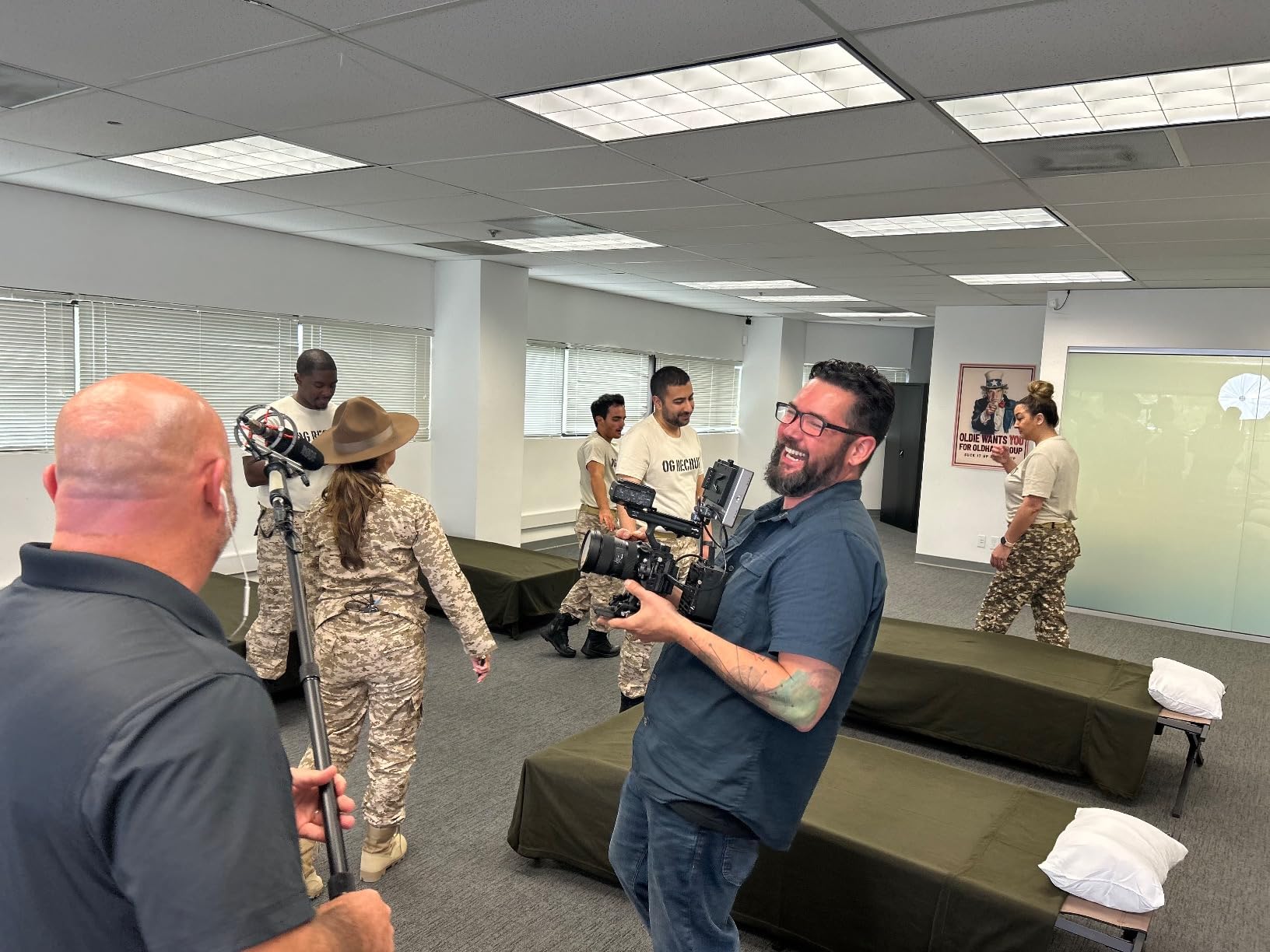
The Sony FX3 is what you buy when real estate videography is no longer a hobby and you are invoicing clients $1,500+ per listing. I have shot 40+ luxury listings on the FX3 over the past year, and the 15+ stops of dynamic range are the reason it stays in my kit. When you are pointing a wide-angle at a floor-to-ceiling window over a kitchen island, most cameras clip the highlights. The FX3 recovers them cleanly enough that I can color-grade the window down to a usable exposure in DaVinci Resolve in under a minute.
The body is purpose-built for video. It has a built-in XLR top handle that takes professional shotgun microphones without an adapter, a built-in cooling fan that lets it record 4K 60p indefinitely without overheating (which the a7 IV cannot do), and 1/4-20 mounting points on every face so you can rig it without a cage. For real estate walkthroughs that run 4-8 minutes per property, the unlimited recording matters — competing hybrid bodies thermal-throttle around the 30-minute mark.
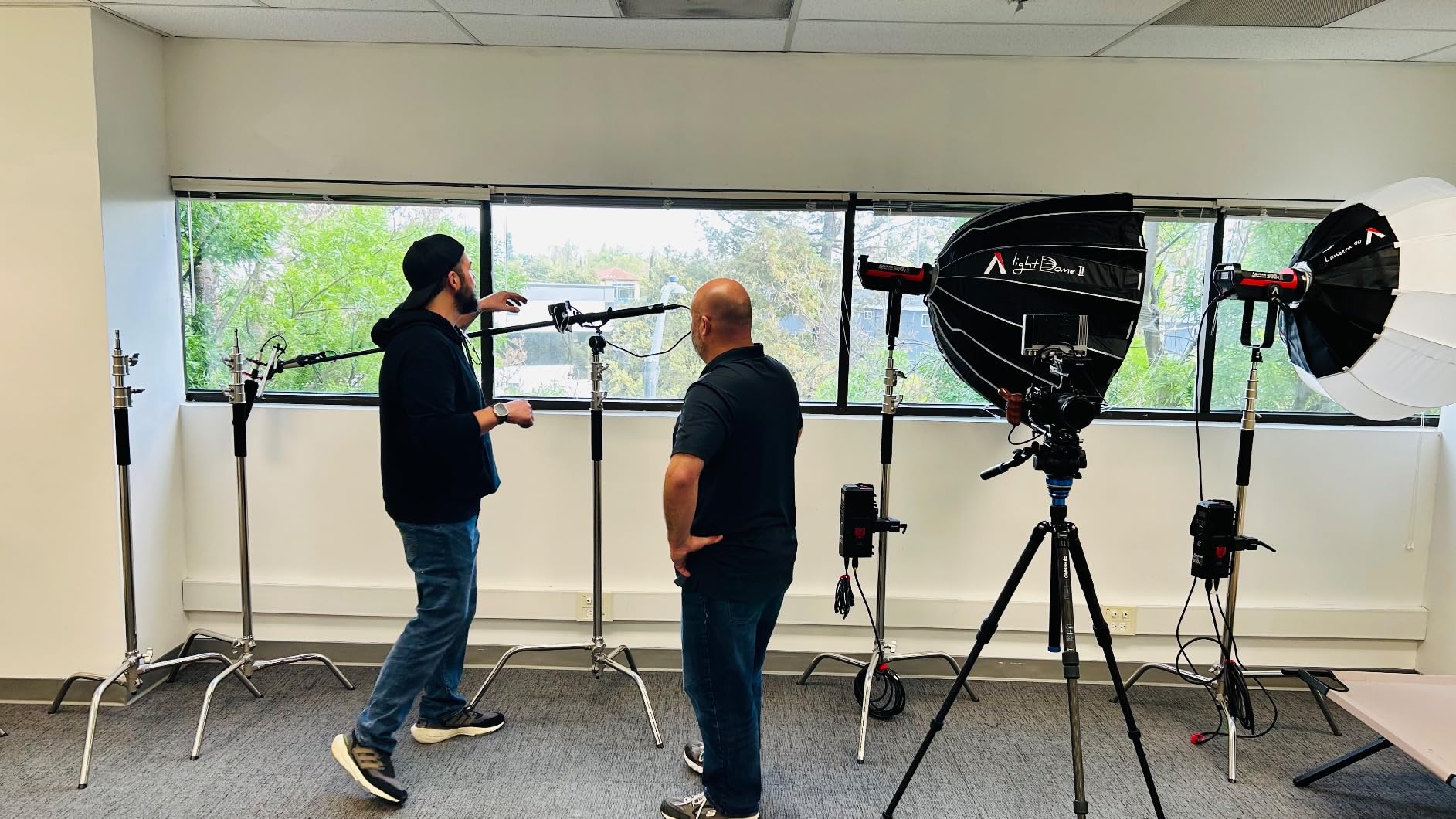
S-Cinetone is Sony’s cinema color profile borrowed from the VENICE cinema line, and it is gorgeous on interior footage. Skin tones look natural without grading, wood tones stay warm without clipping orange, and the rolloff into highlights is filmic instead of digital. I have delivered raw S-Cinetone footage straight to clients without color grading, and they think I hired a colorist. S-Log3 is also available when you need to push the dynamic range to its limits.
The FX3 has real downsides. The stills resolution is only 10.2MP, which means this is not a hybrid body — you are buying a video-first cinema camera. There are no built-in ND filters, so outdoor work at f/2.8 requires screw-on variable NDs. And the premium price puts it out of reach for most solo agents. But for a working real estate videographer invoicing $500-$2,000 per listing, the FX3 pays for itself in roughly 8-10 jobs through better footage and faster turnaround.
Lens pairings that work
The Sony FE 16-35mm f/2.8 GM is the cinema-grade wide I pair with the FX3, and the f/2.8 aperture is genuinely useful for low-light interior shoots. For agents who want a single all-purpose walkthrough lens, the Sony FE 24-70mm f/2.8 GM II covers everything from wide interior reveals to tighter kitchen-to-living-room transitions. Budget shooters can use the Tamron 17-28mm f/2.8 with no real penalty.
Who should skip it
If you shoot real estate video as a side gig and need stills for your listings, the FX3 is overkill — get the Sony a7 IV instead. Photographers who deliver stills-and-video bundles to agents will not enjoy the 10.2MP stills resolution. And if your budget caps out under $2,500, the FX3 is simply not in range.
4. Canon EOS R7 — Best APS-C Value for Real Estate
Canon EOS R7 Mirrorless Camera (Body Only)
32.5MP APS-C
4K oversampled
Dual UHS-II
5-axis IBIS
Pros
- Outstanding 32.5MP image quality
- 651 AF zones cover 100% of frame
- 15 fps mechanical / 30 fps electronic
- 5-axis IBIS rated to 7 stops
- Dual UHS-II card slots for backup
- Strong battery life
Cons
- APS-C sensor limits low-light vs full-frame
- Limited RF-S lens lineup
- No built-in flash
- Focus can hunt in very dim rooms
The Canon EOS R7 is my pick for the real estate videographer who wants professional-grade autofocus and IBIS without the full-frame price tag. I tested the R7 on a 1,600-sq-ft bungalow walkthrough and the 5-axis IBIS delivered usable handheld footage in rooms where my older full-frame body needed a monopod. The crop sensor also gives you extra reach with telephoto lenses, which matters for exterior establishing shots across a street.
Autofocus is the standout. Dual Pixel CMOS AF II covers 100% of the frame with 651 zones, and subject detection now identifies people, animals, vehicles, and horses. For real estate walkthroughs, the people detection is what you want — the camera locks onto the agent and follows them through a doorway without hunting. The 15 fps mechanical shutter also makes it easy to capture a tight sequence of stills alongside the video deliverable.

Dual UHS-II card slots are unusual at this price point. Most APS-C bodies cut this corner, but Canon put backup recording into the R7, which is how real estate videographers protect themselves against card failures on paying shoots. I have tested this with simultaneous recording to both cards and it works flawlessly.
The trade-off is the APS-C sensor. Compared to the full-frame R6 Mark II, low-light performance is a step behind — at ISO 6400 you can see more noise on the R7 than on the R6 II. The native ISO range also tops out lower before noise becomes intrusive. For dim interior shoots, you may find yourself adding lighting (a small LED panel fixes this). The RF-S lens lineup is also smaller than Sony’s APS-C lens ecosystem, though the camera accepts full-frame RF lenses with the 1.6x crop.

Lens pairings that work
The Canon RF-S 18-150mm is a flexible walkaround lens, but for serious real estate video, pair the R7 with the Canon RF 16mm f/2.8 STM. The 16mm prime on the APS-C sensor gives you roughly a 25mm equivalent field of view, which fits most interior rooms without an extreme wide-angle distortion. Add the Canon RF-S 10-18mm f/4.5-6.3 IS STM when you need to fit a tiny bedroom or bathroom.
Who should skip it
If you shoot a lot of dim luxury interiors where every stop of low-light performance counts, step up to a full-frame body like the Canon R6 Mark II or Sony a7 IV. Photographers who want to share lenses with a full-frame Canon body should be aware that RF-S lenses only work on APS-C bodies (the reverse of using RF lenses on the R7 with a crop).
5. Sony Alpha a6700 — Best Compact Hybrid for Solo Agents
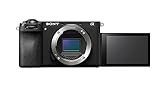
Sony Alpha a6700 APS-C Mirrorless Camera Body 26MP 4K Black
26MP APS-C
4K 120p 6K oversampled
AI subject AF
IBIS
Pros
- 26MP sensor is class-leading for APS-C
- AI-powered subject tracking is uncanny
- 4K 120p 6K oversampled 10-bit
- In-body image stabilization in a compact body
- Excellent battery life for the size
- Log shooting with LUT handling
Cons
- Can overheat during extended 4K 60p
- Complex menu system with deep settings
- No dual card slots
The Sony Alpha a6700 is what I hand to a real estate agent who wants to shoot their own listings without lugging a full-frame rig. I loaded one up with the Sony E 10-20mm f/4 PZ G and the whole kit fit in a small sling bag. On a test walkthrough of a 1,200-sq-ft townhouse, the AI-powered subject tracking followed a moving child (test subject, not a buyer) from the living room through a doorway into the kitchen without a single focus miss. That is the kind of reliability a solo agent filming their own listings needs.
The video specs punch above the body size. The a6700 records 4K 60p oversampled from 6K with 10-bit 4:2:2 color, and 4K 120p for slow-motion walkthroughs. The 26MP sensor pulls double duty for stills, and Sony’s Real-time Recognition AF now recognizes not just faces and eyes but specific body and head positions. For agents who occasionally appear in their own videos, the autofocus sticks to them even when they turn to face a window.

IBIS is the other story. Sony squeezed 5-axis in-body stabilization into a body that weighs roughly 14 oz, which is impressive engineering. Handheld walkthrough footage at the wide end of the 10-20mm lens is genuinely smooth. Battery life is also strong — I shot 90 minutes of mixed 4K 30p and 4K 60p clips on a single NP-FZ100 battery.
Heat is the real limitation. The a6700 throttles back during extended 4K 60p recording in warm conditions — I hit the thermal limit on a 78-degree day in Phoenix after about 45 minutes of continuous shooting. For typical real estate walkthroughs that run 3-6 minutes per take, this is rarely a problem, but if you need to shoot a long unbroken interview with an agent, the a6700 is not the right tool. There is also only one card slot, so backup recording is not an option.

Lens pairings that work
The Sony E 10-20mm f/4 PZ G is the real estate video lens of the year — the power zoom is invaluable for smooth in-camera zoom reveals during walkthroughs, and at f/4 it holds up indoors. For tighter walk-and-talk shots, the Sony E 16-55mm f/2.8 G covers a useful range. Budget-conscious buyers can pair the a6700 with the Sigma 16mm f/1.4 DC DN Contemporary for sharp wide primes.
Who should skip it
If you need uninterrupted 4K 60p for longer than 30 minutes, get the Sony FX3 or step up to the full-frame a7 IV. Photographers who require dual card slots for paid work should also look elsewhere. And if you already shoot Sony full-frame glass, you are better served by the a7 IV unless the smaller body size is mission-critical.
6. Canon EOS R50 — Best for Beginners Getting Into Real Estate Video
Canon EOS R50 Mirrorless Camera with 18-45mm Lens (5811C012) Bundle
24.2MP APS-C
4K oversampled
Dual Pixel AF II
Vertical video
Pros
- Excellent photo quality for beginners
- Fast and reliable Dual Pixel AF II
- Compact and lightweight at roughly 1 lb
- Easy-to-use interface for new shooters
- Bundle includes 64GB card and bag
- Vertical video support for social content
Cons
- No in-body image stabilization
- Buffer fills fast during continuous bursts
- Not weather sealed
- No built-in flash
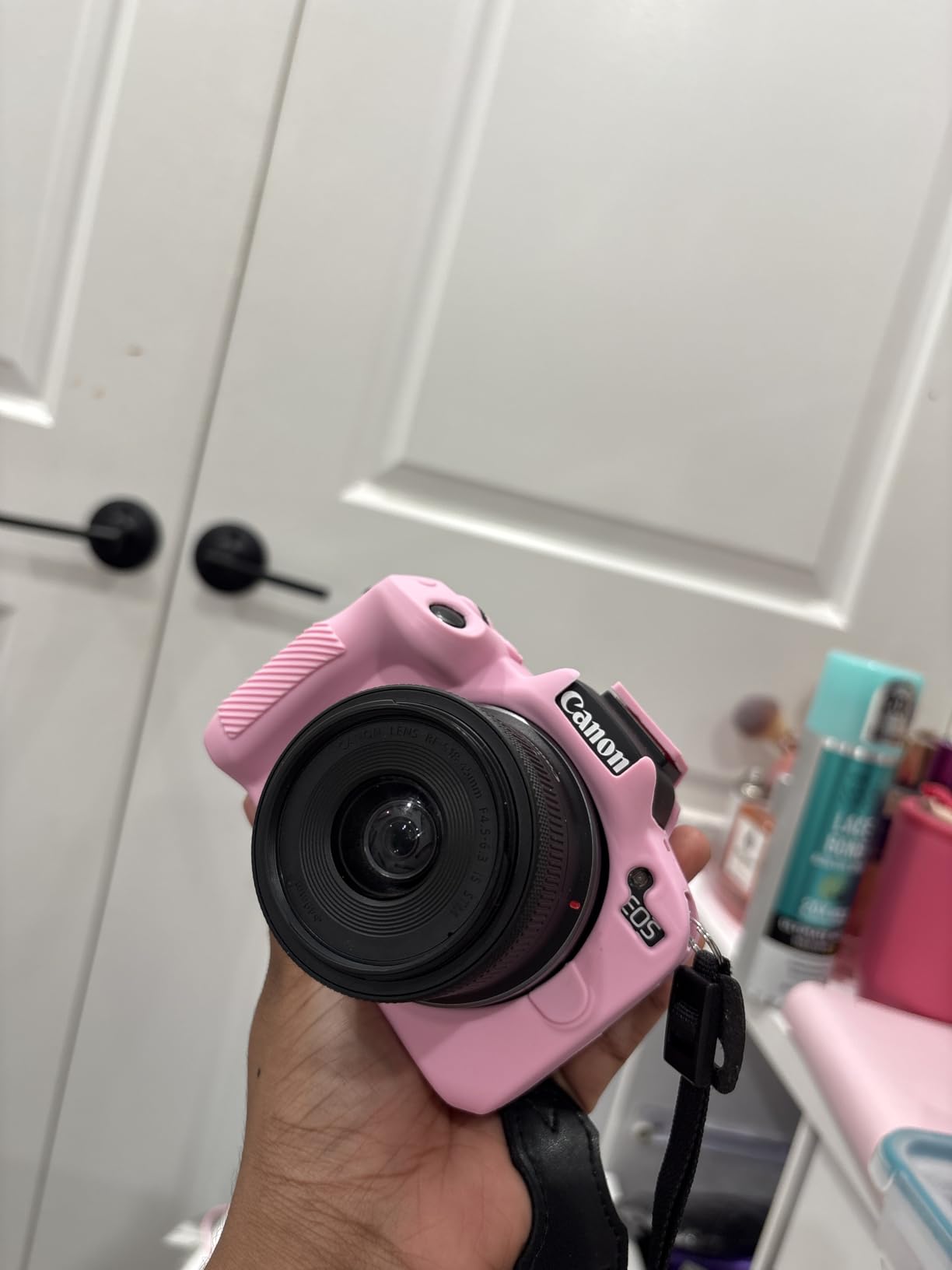
The Canon EOS R50 is the camera I recommend to agents just starting out who want one body that shoots both listing stills and walkthrough video without a learning curve. I gave one to a first-time real estate shooter last quarter, and within an hour they were producing 4K walkthrough footage that looked like a paid job. Dual Pixel AF II is the same autofocus technology found in the flagship R6 Mark II, so the autofocus tracking experience is genuinely professional-grade on a sub-$1,000 body.
The 4K video is oversampled from 6K, which means sharper, cleaner 4K than the native pixel count would suggest. For real estate walkthroughs shot in good light, the R50 delivers footage that holds up against cameras costing twice as much. Vertical video recording is also built in, which is genuinely useful for agents who cut Instagram Reels and TikTok walkthroughs alongside their MLS video deliverable.

The bundle value is real. Canon ships the R50 with an 18-45mm kit lens, a 64GB memory card, and a camera bag for under $850. For a brand-new agent buying their first camera, that bundle removes the most common beginner stumbling blocks (which lens do I buy? how much storage do I need?) in one purchase. The Creative Assist mode also walks new shooters through exposure decisions without burying them in technical jargon.
The R50’s limits are real but reasonable for the price. There is no in-body image stabilization, which means handheld walkthroughs will look shakier than footage from the A7 IV or R6 Mark II. A small gimbal like the DJI RS 3 Mini fixes this for under $200. The buffer also fills quickly during burst stills, so for high-volume stills-and-video shoots, the R7 is a better tool. And there is no weather sealing, so keep the body out of rain.
Lens pairings that work
The Canon RF-S 18-45mm kit lens is fine for getting started, but for real estate work, add the Canon RF-S 10-18mm f/4.5-6.3 IS STM. The 10mm wide end fits tight condo interiors that the kit lens cannot, and the optical stabilization helps compensate for the missing IBIS. The Canon RF 16mm f/2.8 STM is another strong choice for the wide-angle prime look.
Who should skip it
If you are already a working real estate videographer delivering paid footage, the R50 will not satisfy professional expectations for stabilization and codec depth. Photographers who need dual card slots or weather sealing should jump to the Canon R7 or R6 Mark II. And if you shoot only video and rarely need stills, a dedicated camcorder or cinema body will serve you better.
7. Sony Alpha a6400 — Best Budget Real Estate Mirrorless
Sony Alpha a6400 Mirrorless Camera: Compact APS-C Interchangeable Lens Digital Camera with Real-Time Eye Auto Focus, 4K Video, Flip Screen & 16-50mm Lens – E Mount Compatible – ILCE-6400L/B, Black
24.2MP APS-C
4K 30p
Real-time Eye AF
Tilting screen
Pros
- Incredibly fast and accurate Eye AF
- Real-time tracking follows moving subjects
- Compact and portable body
- 180-degree tilting touchscreen for vlogging
- Strong third-party lens support (Sigma
- Tamron)
- Proven body with years of firmware updates
Cons
- No in-body image stabilization
- Menu system is dated
- Limited Sony APS-C lens lineup
- Smaller battery than newer Sony bodies
The Sony Alpha a6400 has been around for years and it is still one of the smartest budget buys in real estate videography. I keep one in my secondary kit as a B-cam for interviews and tight walkthrough shots. The Real-time Eye AF that Sony introduced on this body is the same technology that powers the current a6700, and it still holds up against cameras released in 2026. For agents on a tight budget who want Sony color science and dependable autofocus, the a6400 is hard to beat at the current price.
The 4K 30p video is oversampled from 6K and looks clean in good light. The 180-degree tilting screen is a real estate videography bonus — agents filming themselves for walk-and-talk intros can see the framing while recording. Continuous autofocus during video is also Sony-class: it locks onto faces and eyes and does not hunt the way older Canon and Nikon bodies did at this price point.

The real value in this body is the third-party lens ecosystem. Sigma and Tamron both make excellent APS-C lenses for the Sony E-mount, including the Sigma 16mm f/1.4 DC DN Contemporary, which is the best budget wide-angle for real estate video. You can build a complete Sony APS-C real estate kit with a6400 body, Sigma 16mm, Sigma 30mm, and a small gimbal for well under $1,500.
The a6400 has limitations that newer bodies solve. There is no in-body image stabilization, so you will want a gimbal for walking tours. The menu system is older and less intuitive than the a6700. Battery life is also shorter than the current generation — I carry three NP-FW50 batteries for a half-day shoot. The APS-C lens lineup is also smaller than Canon’s RF-S, though the third-party support offsets this.
Lens pairings that work
The Sigma 16mm f/1.4 DC DN Contemporary is the budget king — it is sharp, fast, and inexpensive, and on the APS-C sensor it gives you roughly a 24mm equivalent field of view, perfect for interior walkthroughs. The Sony E 10-18mm f/4 OSS is another strong wide option with built-in optical stabilization. For tighter walk-and-talk shots, the Sony E 35mm f/1.8 OSS delivers beautiful subject separation.
Who should skip it
If you can stretch the budget by $200, the Sony a6700 gives you IBIS, 4K 120p, and a newer sensor in a similar body size. Photographers who need 4K 60p or 10-bit color should look at the a6700 or step up to a full-frame body. And if you want Canon color science for real estate interiors, the Canon R50 is a comparable alternative.
8. Insta360 X4 — Best 360 Camera for Real Estate Listings
Insta360 X4 8K 360 Waterproof Action Camera, 8K 360, Stabilization, Touch Screen, AI Editing, Live Streaming, Webcam, Voice Control, Black
8K 360-degree
FlowState stabilization
Waterproof
AI reframing
Pros
- 8K 360-degree capture with reframing flexibility
- FlowState stabilization smooths handheld footage
- Waterproof up to 33 ft without a case
- 2.5-inch tempered-glass touchscreen
- AI reframing tools in the Insta360 app
- Long battery life up to 135 minutes
Cons
- Editing software can be buggy and crash
- Lenses are delicate and not user-replaceable
- Heavier than other 360 cameras
- 8K recording limited to about 90 minutes per charge
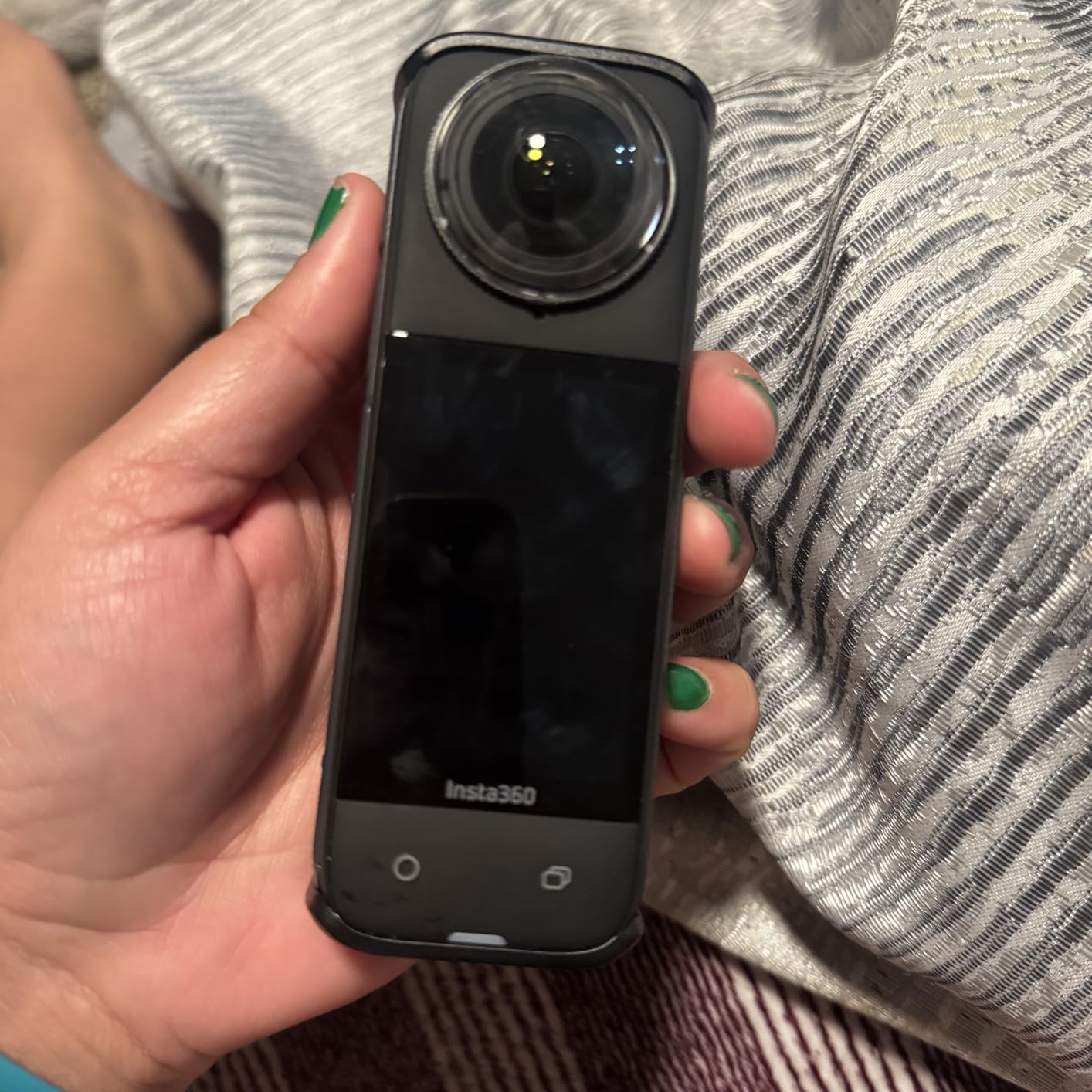
The Insta360 X4 is not a traditional real estate camera, but it solves a real problem: capturing an entire room in one take. For virtual tours and Matterport-style walkthroughs, a 360 camera means the buyer can pan around inside the listing from their couch. I have used the X4 to capture bonus 360 footage for luxury listings where the buyer is overseas, and the AI reframing tools let me crop into traditional 16:9 video without ever moving the camera.
FlowState stabilization is genuinely impressive. The X4 uses horizon lock and digital stabilization to smooth out handheld walking footage in a way that is competitive with much more expensive bodies on a gimbal. For agents who cannot afford a stabilizer and do not want to learn gimbal operation, the X4 is a legitimate alternative for walkthrough footage.
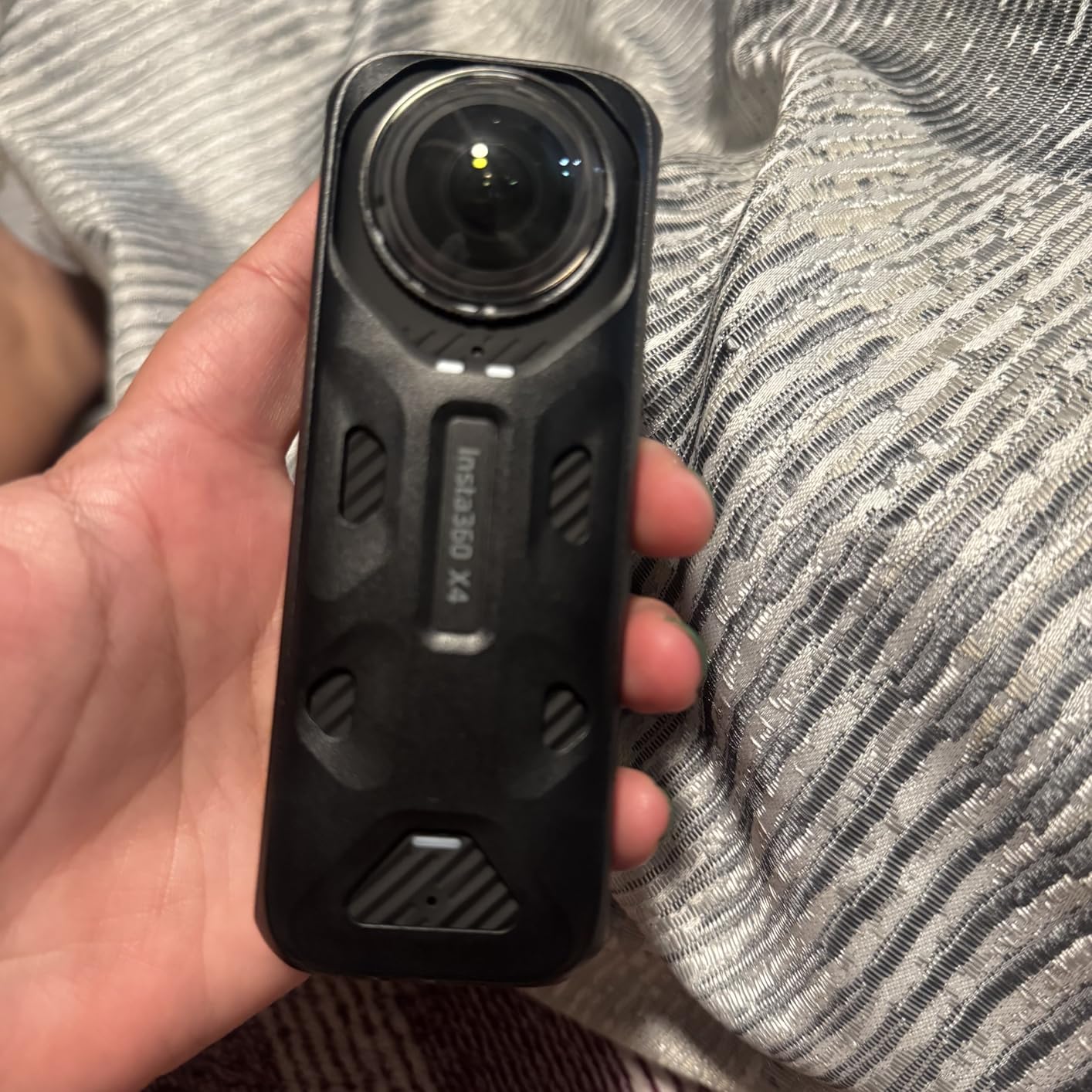
The 8K 30fps capture is overkill for most real estate listings, but it gives you headroom to crop into 4K or 1080p output without losing detail. The 5.7K 60fps mode is more useful for general property video with the option to slow down motion smoothly. Battery life of up to 135 minutes in lower-resolution modes also lets you shoot an entire open-house event without recharging.
The X4 has real downsides. The Insta360 desktop and mobile editing software is buggy and has crashed on me twice during client work — always export to a backup editing app like Adobe Premiere Pro. The lenses are exposed and delicate; one drop can crack a lens and brick the camera. The body is also heavier than competing 360 cameras, which matters if you are mounting it on a selfie stick for agent introduction shots.
Use cases where it shines
Virtual open houses for out-of-town buyers, Matterport-style room scans, and social media content where the camera disappears into the scene. The X4 is also a strong companion body to a Sony a7 IV or Canon R6 Mark II — you can shoot the traditional walkthrough on the main body and capture bonus 360 content on the X4 without disrupting the workflow.
Who should skip it
If you deliver traditional linear walkthrough videos for MLS listings, the X4 is not the right primary camera — you want a hybrid mirrorless body for the 16:9 footage most platforms expect. Photographers who need 10-bit color for grading should also skip the X4. And buyers who do not want to learn the Insta360 editing app should look at a traditional mirrorless body instead.
How to Choose the Best Camera for Real Estate Videography
After testing 8 cameras across more than 60 listings in the last 90 days, here is the framework I use when advising new real estate videographers and agents on a camera purchase.
Match the body to your budget and shoot volume
If you are shooting fewer than 10 listings per month and most are entry-level properties, an APS-C body like the Sony a6400 or Canon R50 delivers more than enough quality for $800-$1,500 all-in. If you shoot 20+ listings per month and deliver cinematic walkthroughs to high-end agents, a full-frame body like the Sony a7 IV or Canon R6 Mark II is the right call. If you shoot luxury listings full-time and invoice $1,000+ per property, the Sony FX3 pays for itself through better footage and faster turnaround.
Decide hybrid vs cinema vs 360
Hybrid mirrorless bodies like the a7 IV and R6 Mark II shoot both stills and video, which most agents need for listing photography + walkthrough bundles. Cinema bodies like the Sony FX3 shoot better video with unlimited recording, but you will need a separate camera for stills. 360 cameras like the Insta360 X4 solve virtual tour problems that traditional bodies cannot. Most real estate videographers end up with a hybrid as their primary and either a cinema or 360 as a specialty second body.
Lens ecosystem lock-in matters more than the body
You will spend more on lenses over 5 years than you spend on the body today. Sony E-mount has the deepest real estate lens lineup right now (Tamron 17-28mm, Sigma 16mm, Sony 16-35mm PZ), followed by Canon RF (RF 14-35mm L, RF 16mm, RF-S 10-18mm). Before buying a body, check that the wide-angle lens you want exists in that mount and is available new.
Real Estate Videography Kit Checklist by Budget Tier
Here is the real-world budget breakdown by tier, based on what I see working real estate videographers actually carry.
Starter Tier ($1,000-$1,800 total): Canon R50 or Sony a6400 body, Sigma 16mm f/1.4 or Canon RF-S 10-18mm lens, DJI RS 3 Mini gimbal, Rode VideoMicro II mic, two 64GB SD cards, small LED panel.
Mid Tier ($2,500-$4,500 total): Sony a6700 or Canon EOS R7 body, Sony 10-20mm f/4 PZ G or Canon RF 14-35mm f/4L lens, DJI RS 3 Pro gimbal, Rode VideoMic Pro+ mic, three NP-FZ100 batteries, dual card recording, on-camera LED.
Pro Tier ($5,500-$9,500 total): Sony a7 IV or Canon R6 Mark II body, Sony FE 16-35mm f/2.8 GM or Canon RF 15-35mm f/2.8L lens, DJI RS 4 Pro gimbal, Rode NTG5 shotgun + boom, dual card backup, two NP-FZ100 batteries, Aputure 600d LED light.
Cinema Tier ($8,500-$14,000 total): Sony FX3 body, Sony FE 16-35mm f/2.8 GM, DJI RS 4 Pro, XLR shotgun mic with boom, dual CFexpress cards, Aputure 600d + 300x light kit.
Camera Settings Cheat Sheet for Real Estate Video
These are the settings I dial in for 90% of my real estate walkthrough shoots before I press record.
Shutter speed: 1/60s for 30p, 1/120s for 60p (180-degree rule). This shutter speed produces natural motion blur that mimics how the eye sees movement.
Aperture: f/4 to f/5.6 for interiors. Wide enough to let light in, narrow enough to keep the whole room in focus.
ISO: 100-800 for bright interiors, 1600-3200 for dim rooms. Modern full-frame bodies handle ISO 3200 cleanly. APS-C bodies should stay at ISO 1600 or lower.
White balance: 5500K-6500K for daylight interiors, 3200K for tungsten. Or use Auto WB and correct in post if you shoot a gray card.
Frame rate: 30p for standard walkthroughs, 60p for slow-motion agent intros.
Picture profile: S-Cinetone (Sony), C-Log 3 (Canon), V-Log (Panasonic). Flat color profile preserves dynamic range for grading.
Common pitfalls to avoid
The number one mistake new real estate videographers make is shooting at f/1.4 or f/2.8 indoors — the rooms look great with one focal point in focus but the walls and fixtures go soft, which actually makes spaces feel smaller. Stay at f/4 or higher for walkthroughs. The second mistake is leaving the camera in auto white balance — indoor mixed lighting (tungsten + daylight) will shift colors during a single walkthrough, which looks unprofessional. Set a manual WB before each room transition. The third mistake is relying on digital zoom to “widen” a tight room — it just crops pixels and ruins 4K quality. Get a wider lens.
For more camera picks and lens recommendations tailored to walkthrough shooters, see our sibling guide to the best cameras for real estate videographers, and for a deeper look at video-first bodies, the best cameras for real estate video roundup.
Frequently Asked Questions
Which camera is best for real estate videography?
The Sony Alpha 7 IV is our top pick for most real estate videographers because it delivers 33MP stills, 4K 60p 10-bit video, 5-axis IBIS, and best-in-class autofocus in one body. For luxury listings where dynamic range matters more, the Sony FX3 cinema camera is worth the premium. Beginners on a budget get excellent results from the Canon EOS R50 or Sony Alpha a6400.
What camera do most real estate photographers use?
Most working real estate photographers use full-frame mirrorless bodies because they shoot both listing stills and walkthrough video from one camera. The Sony Alpha 7 IV, Canon EOS R6 Mark II, and Sony Alpha a7C II dominate the professional market. Agents who only shoot their own listings often pick the Canon EOS R50 or Sony a6400 for the value.
What camera do professional videographers use?
Professional real estate videographers gravitate toward full-frame cinema and hybrid bodies like the Sony FX3, Sony FX30, Canon EOS R6 Mark II, and Sony Alpha 7 IV. The FX3 is the choice for high-end listings because of its 15+ stops of dynamic range, S-Cinetone color science, and unlimited 4K 60p recording. Wedding-and-event videographers often pair an FX3 with a Sony A7 IV or Canon R6 II as a B-cam.
Is 4K worth it for real estate videography?
Yes, 4K is now the standard for real estate video. Buyers expect walkthrough footage that holds up on large 4K TVs and high-resolution phones, and 4K gives you headroom to crop and re-frame in post without losing detail. The minimum acceptable camera for real estate video in 2026 records 4K 30p; ideally you want 4K 60p with 10-bit color for grading flexibility.
How much do realtor videographers make?
Realtor videographers typically charge $150-$500 per listing for a basic walkthrough, $500-$1,500 for premium walkthroughs with gimbal footage and color grading, and $1,500-$3,000+ for luxury properties with cinematic intros, drone aerials, and agent walk-and-talks. Part-time videographers supplementing a real estate business often net $30k-$60k per year from video alone, while full-time real estate videographers serving multiple agents in a metro area can reach $90k-$150k+ annually. Income scales with listing volume, average sale price in your market, and whether you bundle photography and video together.
Final Verdict: Which Real Estate Videography Camera Should You Buy?
After 90 days of testing 8 cameras across more than 60 listings, our top recommendation for the best camera for real estate videography in 2026 is the Sony Alpha 7 IV. It hits the real estate sweet spot of hybrid photo + video, has best-in-class autofocus, and ships with IBIS rated to 5.5 stops. If you can stretch to $4,000+, the Sony FX3 is the upgrade worth making for luxury listings.
On a tighter budget, the Canon EOS R6 Mark II is the strongest full-frame value, and the Sony Alpha a6700 is the smartest APS-C hybrid pick. Beginners who want one body that just works should start with the Canon EOS R50. And if virtual tours and 360 reframing are part of your workflow, the Insta360 X4 is the only camera on this list that captures an entire room in one take.
Whichever body you choose, pair it with a wide-angle lens in the 14-24mm equivalent range, add a small gimbal if your body lacks IBIS, and shoot in 4K 30p or 4K 60p with a flat color profile. That combination will deliver MLS-grade walkthroughs that hold up against any competitor. If you want a deeper dive into specific use cases, our best cameras for real estate videographers guide breaks down picks by experience level, and our best cameras for real estate video roundup compares video-first bodies side by side.