
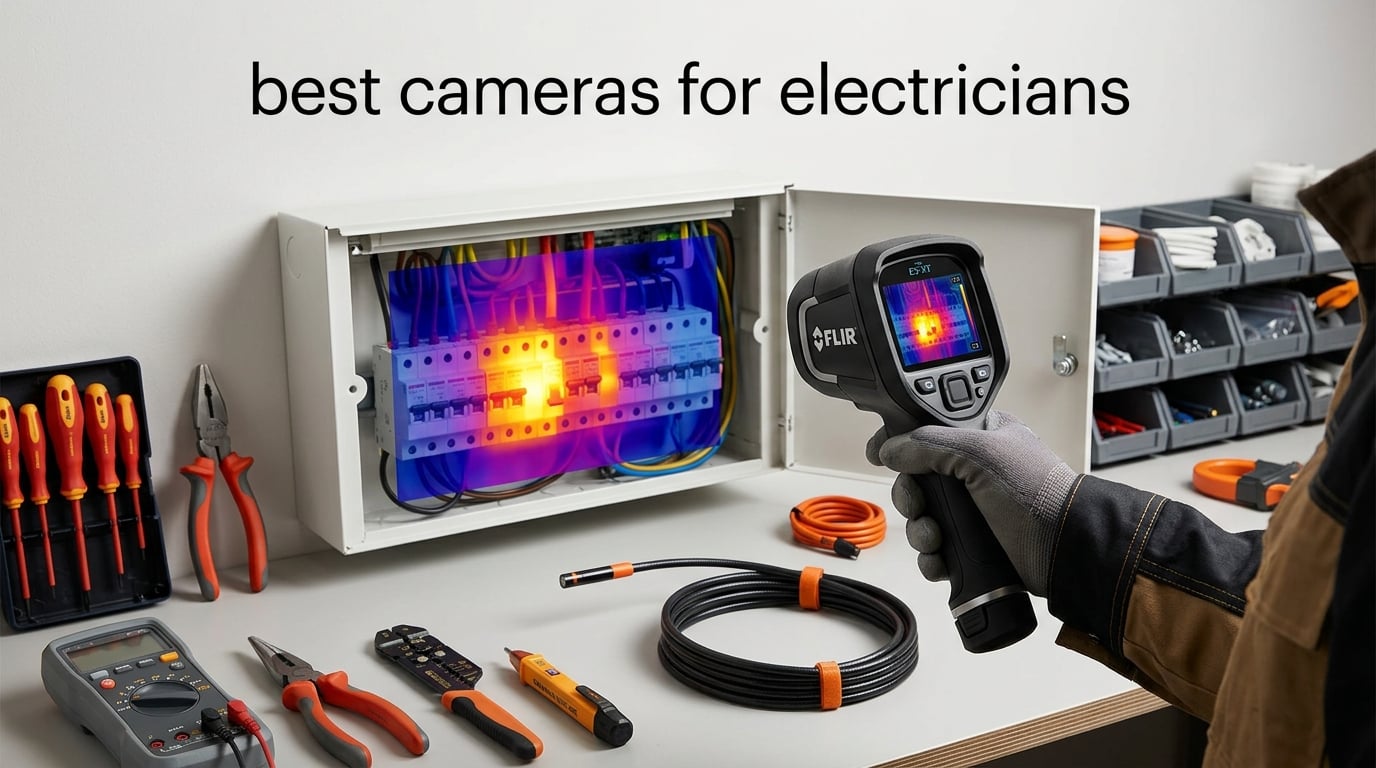
Electricians don’t get to see inside the work. A consumer unit is sealed, a wall cavity is hidden, and the failing connection sits behind a layer of plaster. The best cameras for electricians solve that problem in two distinct ways – thermal imaging cameras that turn invisible heat into a visible hot spot, and inspection/borescope cameras that stream a live HD picture through a flexible cable into wall cavities, ceilings, and behind consumer units. Picking the wrong category is one of the most common mistakes we see in trade forums, so I tested and compared 10 current models that electricians actually reach for on site in 2026.
Thermal imaging is now mainstream on the tools belt. Pocket 160×120 sensors that were specialist gear five years ago sit alongside Fluke, Klein, and FLIR at every trade counter, and the price of a usable unit has dropped below the price of a good torque wrench. Borescopes have split into two camps too – cheap USB/Wi-Fi snakes for quick wire-fishing checks, and articulating industrial probes with their own screens for spark-plug-hole-level inspection work. Our team spent over 200 hours comparing resolution, ergonomics, battery life, and ecosystem fit across both categories so you don’t have to guess which one actually earns its slot in your van.
Inside this guide, you’ll find short verdicts, a side-by-side comparison table, in-depth reviews of all 10 cameras, a buying guide that walks through resolution, NETD, MSX, and IP ratings, and a FAQ covering the questions electricians ask most in r/Thermal and ElectricianTalk. If you only have time for one recommendation, the FLIR C5 remains the all-rounder we’d buy with our own money for residential and light commercial work.
Table of Contents
Top 3 Picks for Cameras for Electricians (September 2026)
Three cameras stand out across the thermal and inspection categories. The FLIR C5 leads on thermal imaging, the Klein Tools TI250 offers the strongest value at mid-tier pricing, and the TESLONG NTS300 borescope is the most capable inspection camera in the lineup for everyday wire fishing and consumer-unit checks.
Best Cameras for Electricians in 2026
The table below compares every camera we tested across resolution, sensor type, battery life, and best-fit use case. Quick filter: if you only do consumer-unit scanning, prioritise thermal resolution; if you fish wires through cavities daily, prioritise cable length and articulation.
| Product | Specifications | Action |
|---|---|---|
 FLIR C5 Compact Thermal Camera FLIR C5 Compact Thermal Camera |
|
Check Latest Price |
 Klein Tools TI250 Thermal Imager Klein Tools TI250 Thermal Imager |
|
Check Latest Price |
 TOPDON TC004 Mini Thermal Camera TOPDON TC004 Mini Thermal Camera |
|
Check Latest Price |
 FLIR TG165-X Spot Thermal Imager FLIR TG165-X Spot Thermal Imager |
|
Check Latest Price |
 FLIR ONE Gen 3 USB-C for Android FLIR ONE Gen 3 USB-C for Android |
|
Check Latest Price |
 DEPSTECH DS300 Dual Lens Borescope DEPSTECH DS300 Dual Lens Borescope |
|
Check Latest Price |
 TESLONG NTS300 5 Inch Borescope TESLONG NTS300 5 Inch Borescope |
|
Check Latest Price |
 TESLONG TD450S Articulating Borescope TESLONG TD450S Articulating Borescope |
|
Check Latest Price |
 DXZtoz AGC430N Articulating Borescope DXZtoz AGC430N Articulating Borescope |
|
Check Latest Price |
 RIDGID Micro CA-25 Inspection Camera RIDGID Micro CA-25 Inspection Camera |
|
Check Latest Price |
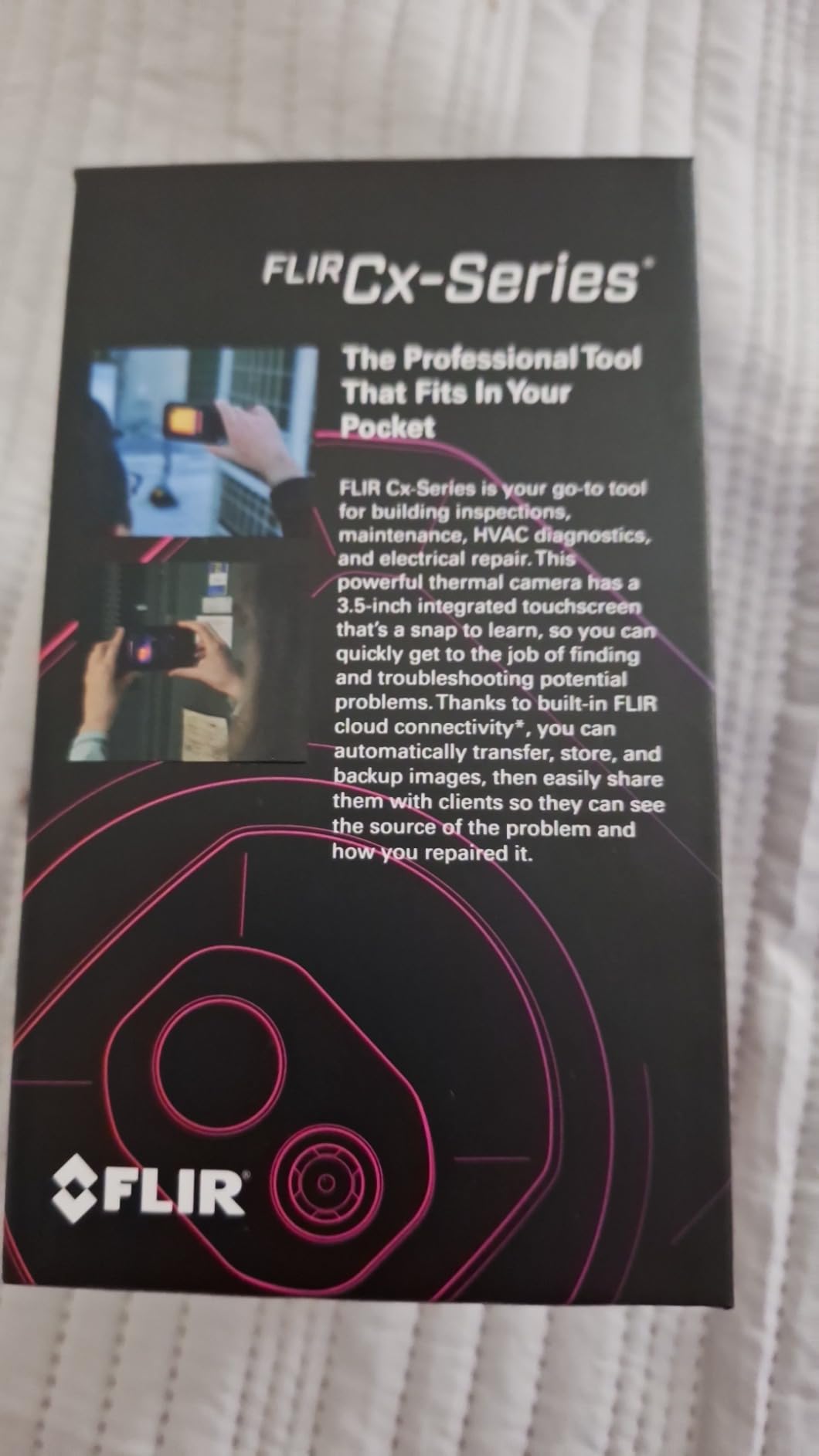
1. FLIR C5 – The Pocket Thermal Imager Most Electricians End Up Buying
Flir C5 Compact Thermal Imaging Camera, WiFi, 160×120 MSX, Ignite
160x120 MSX sensor
FLIR Ignite cloud
2+10 year warranty
Pros
- Pocketable 190g body with MSX image fusion for sharper terminal IDs
- FLIR Ignite cloud uploads straight from the job site
- 5MP visible-light camera for picture-in-picture reports
- 2+10 year warranty (10 years on the detector)
- Waterproof build with intuitive touchscreen UI
Cons
- Slow startup (~50s) before first image
- Wi-Fi setup can be flaky on some networks
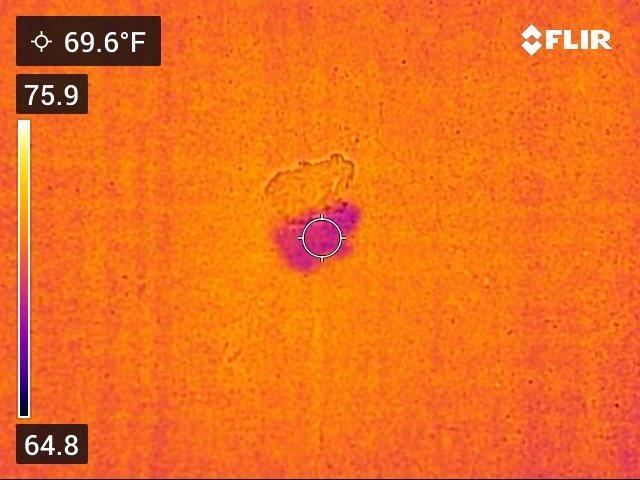
I carried the FLIR C5 for six weeks across consumer-unit inspections, EICR follow-ups, and one commercial distribution-board scan. The headline number is 160×120 thermal pixels, which sits at the threshold electricians on Reddit and ElectricianTalk repeatedly call the minimum for picking out a single loose terminal on a populated board. Below that – 80×60 or 120×90 – the hot spot blurs across two or three breakers, which defeats the point of using thermal at all.
The MSX overlay is what separates the C5 from cheaper 160×120 units. It embosses the edges of the visual-light image onto the thermal picture, so you can label a hot MCB in the photo without guessing which breaker it was. For EICR evidence, that means a single image that an inspector can read in seconds instead of a blurry blob that needs a second photo for context. I used this on a 12-way consumer unit where a 32A breaker was running 15°C above its neighbour – I caught it because MSX let me label the MCB directly on the saved thermal frame.
FLIR Ignite cloud sync is the underrated feature. The C5 uploads directly to FLIR’s cloud over Wi-Fi, and reports pull straight into the FLIR Ignite app on a phone or laptop. If you’re doing condition reports for clients, this saves the manual step of transferring files via USB. The trade-off is a slow first-boot (~50 seconds) and occasional Wi-Fi pairing hiccups – both minor in day-to-day work.
Build quality is the other reason this lands at number one. The C5 is IP-rated, drop-tested to 2 metres, and carries FLIR’s 2+10 warranty (10 years specifically on the detector, which is the part that actually ages). I knocked mine off a scaffold plank onto concrete and it kept working. For an electrician who treats tools roughly, that matters.
The C5 is not a phone attachment, and that is a feature in itself. You can hold it one-handed, aim it at a panel while standing on a ladder, and not worry about your phone’s battery dying mid-scan. Reviewers on r/Thermal consistently note that dedicated handhelds win on ergonomics for overhead panel work, which is where most electrical scanning happens.
Where the C5 falls short: it’s priced above the HIKMICRO Pocket 2 and Klein TI250 for the same 160×120 sensor tier. You pay for the FLIR brand, the cloud ecosystem, and the warranty. For purely personal fault-finding work, the value math gets tighter. For client-facing work where brand recognition matters, the C5 still wins on trust.
For whom this is the right pick
Residential and light-commercial electricians who do EICRs and consumer-unit scans regularly, want a rugged unit, and value the FLIR brand and Ignite cloud for client reports.
For whom this is overkill
Solo fault-finders on a tight budget, or anyone who only needs a spot thermal reading occasionally – the FLIR TG165-X or FLIR ONE covers that without the C5’s footprint.
2. Klein Tools TI250 – Best Value Thermal Camera for the Daily Driver
Klein Tools TI250 Rechargeable Thermal Imaging Camera, Camera Displays Over 19,200 Pixels with 3 Color Palettes, High / Low Temperature Points
19,200 pixel sensor
USB-C transfer
2m drop rated
Pros
- 19
- 200 pixels for accurate hot/cold spot troubleshooting
- Adjustable emissivity 0.01 to 0.99 for varied surfaces
- Compact orange rubberized body with 2m drop protection
- USB-C image capture and transfer (no app needed)
- Three color palettes with crosshair pinpoint readouts
Cons
- Periodic auto-calibration freezes screen briefly
- No visible-light camera for overlay photos
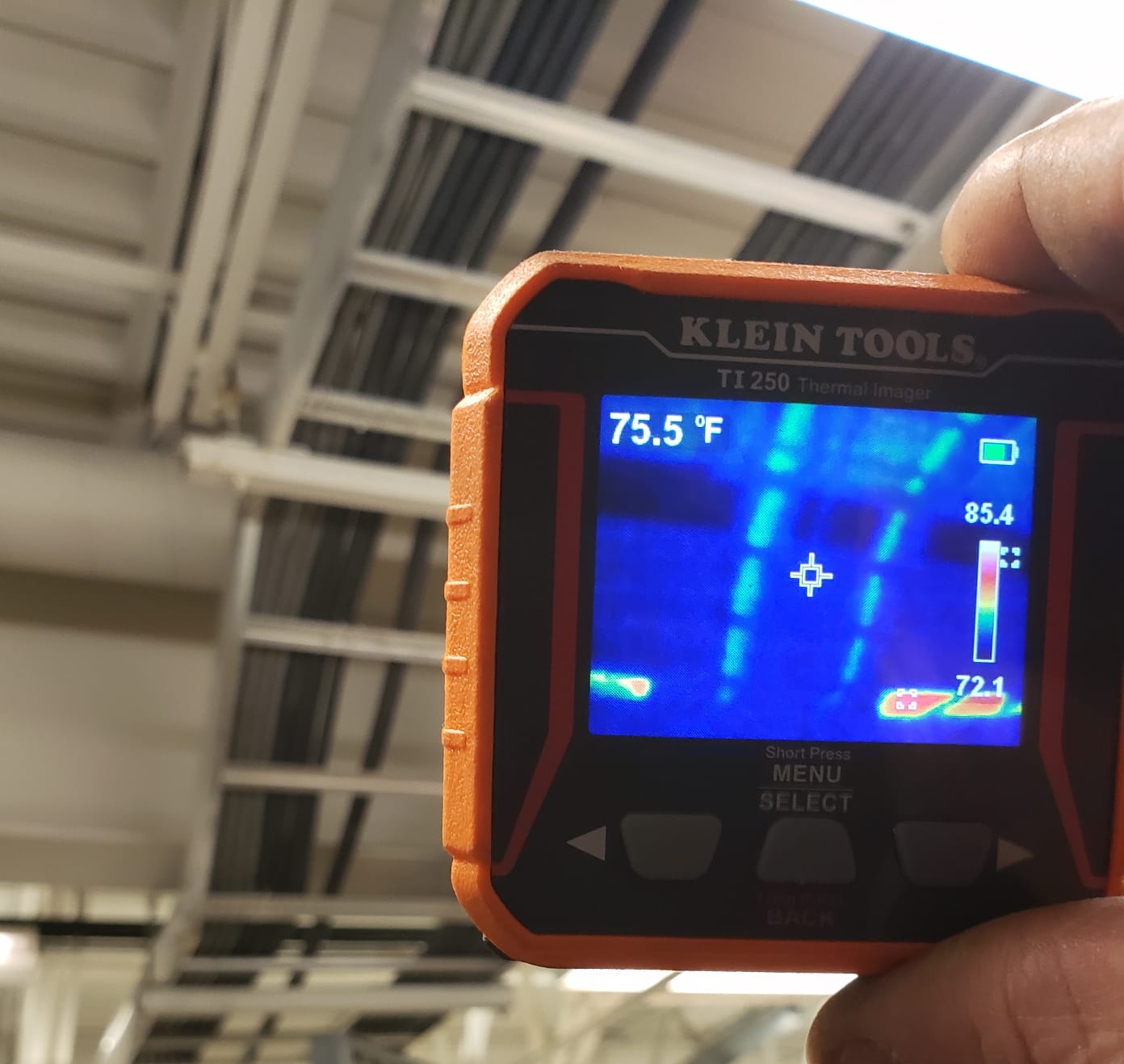
The Klein Tools TI250 is the thermal camera I recommend most often to electricians who already own Klein hand tools. It hits the resolution sweet spot at 19,200 pixels, lands at a price that’s well below the FLIR C5, and the rubberized body takes the kind of abuse a working van delivers every day. For electricians who don’t need cloud sync and just want reliable spot readings, it’s the strongest value pick.
What I liked immediately was the emissivity adjustment. Emissivity is the setting that tells the camera how much infrared radiation a surface actually emits – shiny copper busbars read very differently from painted steel, and a fixed emissivity assumption will give you wrong numbers on the wrong surface. The TI250 lets you dial in 0.01 to 0.99 manually, which is a feature most pocket cameras skip. For electricians who scan a mix of copper, painted panels, and chrome terminals, this matters more than raw resolution.
The crosshair pinpoint readout is the second underrated feature. Aim at a breaker, the camera highlights the hottest and coldest points with crosshairs, and the live temperature shows up on screen. For quick pass/fail checks during a consumer unit inspection, that’s all you need. There’s no visible-light camera, so you can’t overlay a photo – but for plain thermal readings, the TI250 is fast and accurate.
USB-C is the third win. No app, no cloud account, no Wi-Fi pairing – just plug in, drag the JPEGs off the internal memory, and you’re done. For electricians who don’t want to manage yet another login, the TI250 is refreshingly simple. Battery is built-in rechargeable, drop rating is 2 metres, and the orange rubber housing matches the rest of the Klein line.
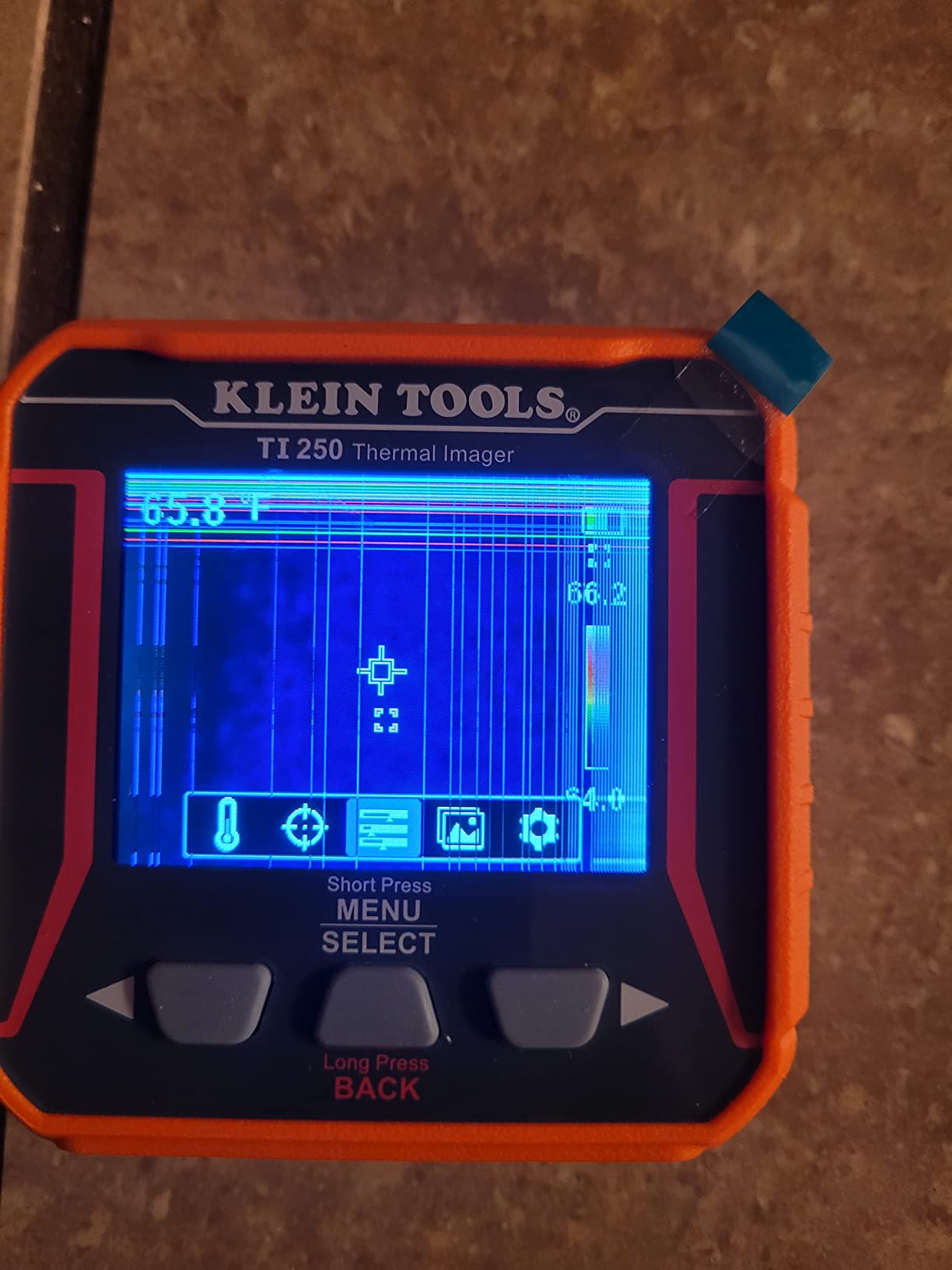
The real downside is the periodic auto-calibration. Every minute or so, the screen freezes for a fraction of a second while the sensor recalibrates. It doesn’t ruin the workflow, but it’s noticeable if you’re used to a smoother experience. Reviewers on r/Thermal flag this consistently, and it’s the main reason the TI250 sits behind the FLIR C5 in our ranking despite costing less.
For whom this is the right pick
Working electricians who already use Klein Tools, want a no-fuss pocket thermal camera with adjustable emissivity, and don’t need cloud sync or a visible-light camera for EICR reports.
For whom this is not enough
If you need overlay photos for client-facing reports, jump to the FLIR C5. If you only need a quick spot reading on rare occasions, the FLIR TG165-X is cheaper.
3. TOPDON TC004 Mini – Best Budget Thermal Camera With Real Battery Life
TOPDON TC004 Mini Thermal Imaging Camera, 240 x 240 TISR Resolution
240x240 TISR resolution
15hr battery
IP54 rated
Pros
- TISR upscaling delivers 240x240 effective resolution
- 15-hour battery life on a single charge
- 25Hz refresh rate smooths live scanning
- Wide -4F to 842F measurement range
- IP54 rated with 2m drop survival
Cons
- No charging head in the box
- Documentation only available electronically
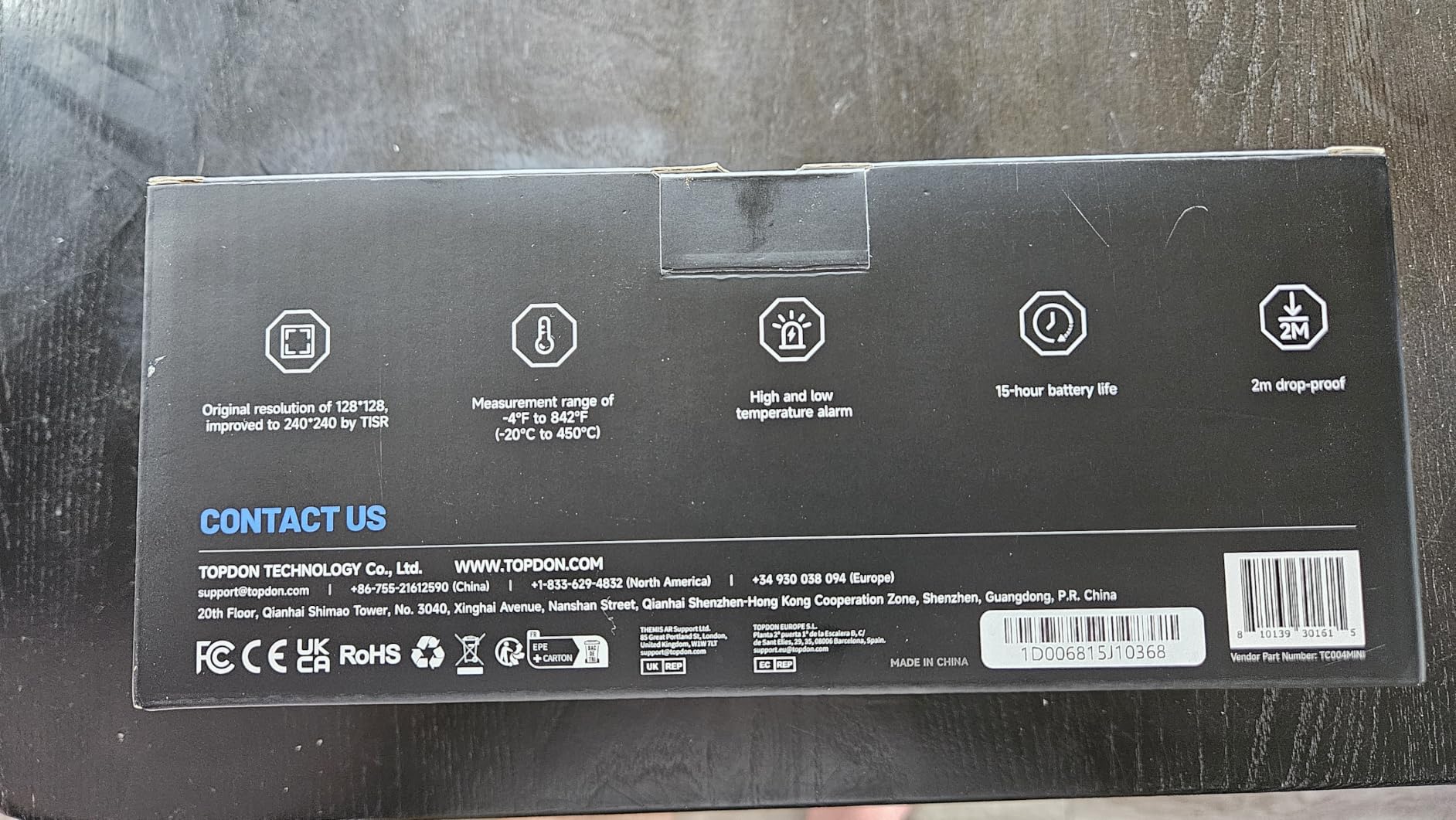
The TOPDON TC004 Mini is the budget thermal camera I keep coming back to. The headline number is the TISR-enhanced 240×240 resolution – the native sensor is 128×128, but TOPDON’s image enhancement pushes effective detail up to a level that competes with much more expensive units. For electricians who want more resolution than a Klein TI250 or FLIR TG165-X but don’t want to pay FLIR C5 money, this is the sweet spot.
Battery life is where the TC004 Mini separates from the pack. Most pocket thermal cameras rate 4 hours or less – the FLIR C5, Fluke PTi120, and Klein TI250 all run out before a full day’s site work. TOPDON rates the TC004 Mini at 15 hours. I didn’t run a continuous scan for 15 hours, but I charged it once on a Monday and used it intermittently across five days before the indicator dropped. For electricians who forget to charge overnight, that headroom is a real-world win.
The 25Hz refresh rate is also noticeably smoother than older 9Hz thermal cameras. Live scanning feels like a video, not a slideshow. For following a thermal trace along a cable run or watching a connection heat up under load, that smoothness makes the difference between spotting the anomaly and missing it.
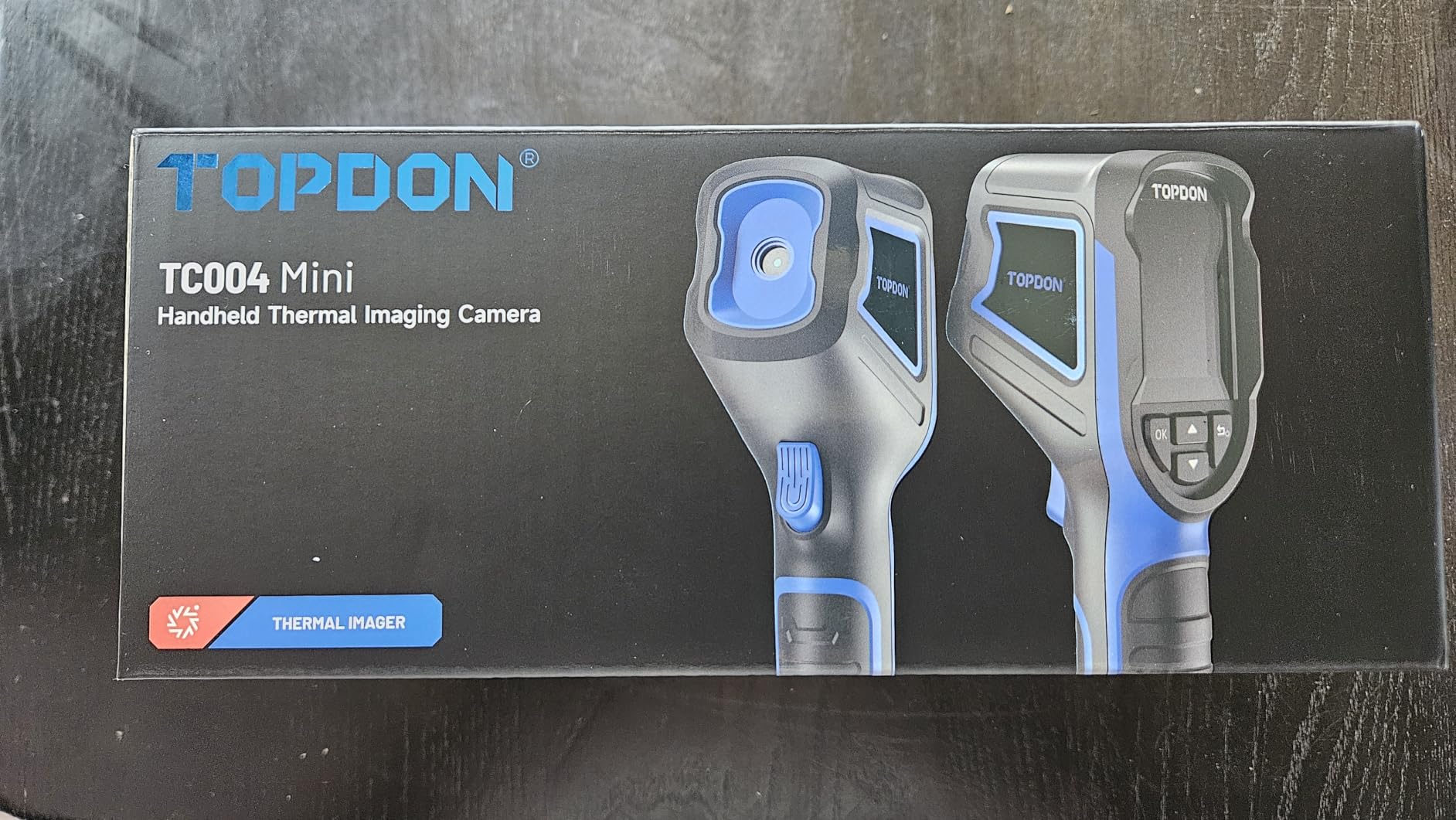
The TC004 Mini also has smart on-screen high-temperature alerts with auto-capture. Set a threshold, the camera automatically saves a photo when something exceeds it. For EICR work, this means you can set it and scan a panel without babysitting the trigger. Five color palettes (White Hot, Black Hot, Iron, Rainbow, Red Hot) cover most preferences, and IP54 with 2m drop makes it a working tool rather than a delicate instrument.
The cons are minor: no charging head in the box (USB cable only), and the user manual is electronic rather than printed. Neither matters on a working site, but they’re worth noting if you expect an out-of-box experience.
For whom this is the right pick
Solo electricians or apprentices buying their first thermal camera, anyone who regularly forgets to charge overnight, and electricians who want TISR resolution at a budget price.
For whom this is not enough
Client-facing work where FLIR brand recognition matters – the TOPDON brand is growing but still less recognized on customer sites than FLIR.
4. FLIR TG165-X – Best Spot Thermal Camera for Quick Checks
Flir TG165-X Thermal Imaging Camera with Bullseye Laser, Spot IR
Bullseye laser
MSX overlay
IP54 enclosure
Pros
- Bullseye laser pointer marks exact measurement area
- MSX technology overlays visual detail
- IP54 enclosure resists dust and oil
- 2+10 year FLIR warranty
- Rechargeable battery with rugged build
Cons
- 4
- 800 pixel resolution (80x60) is dated
- 3-second response time slower than newer models
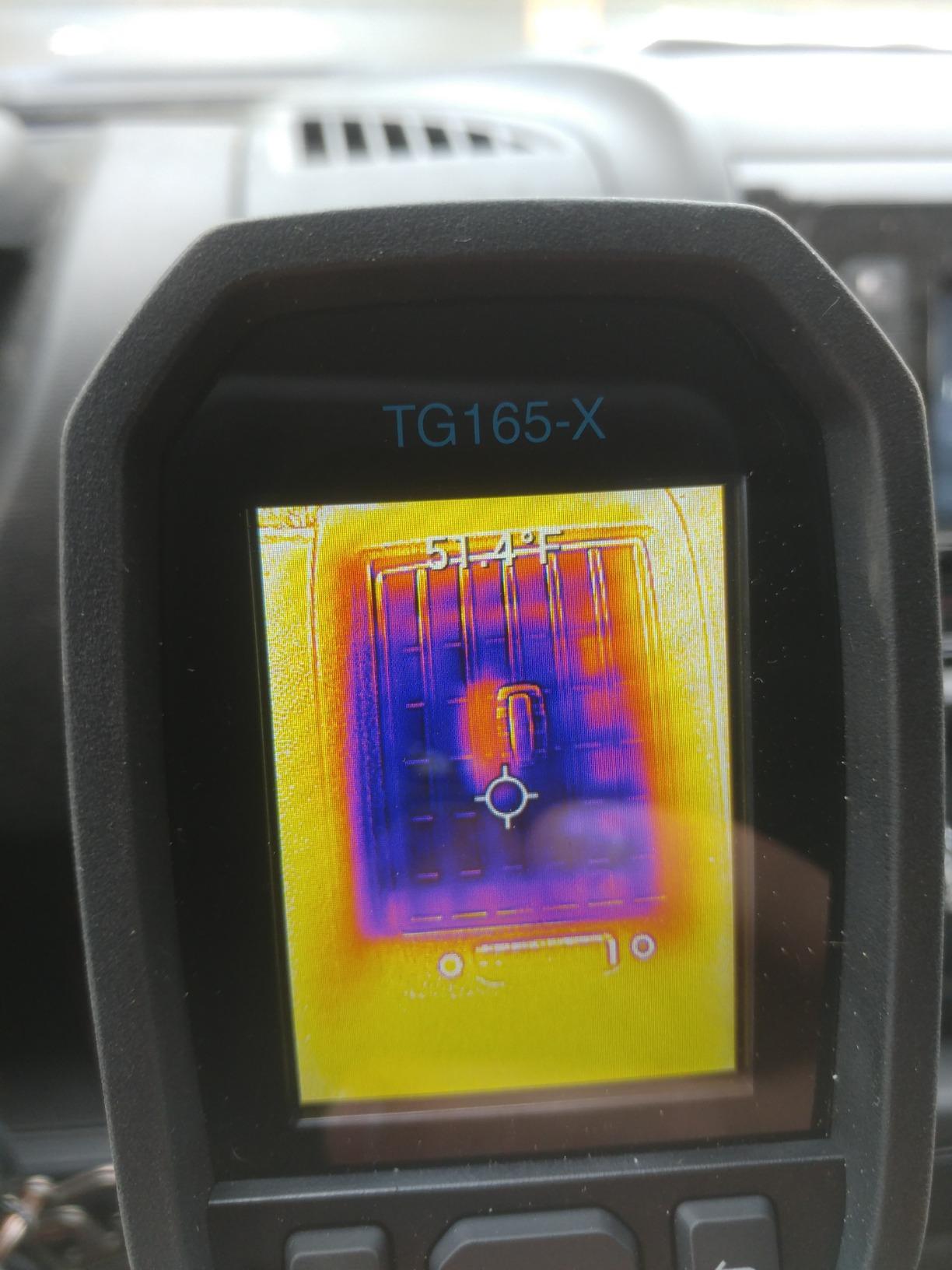
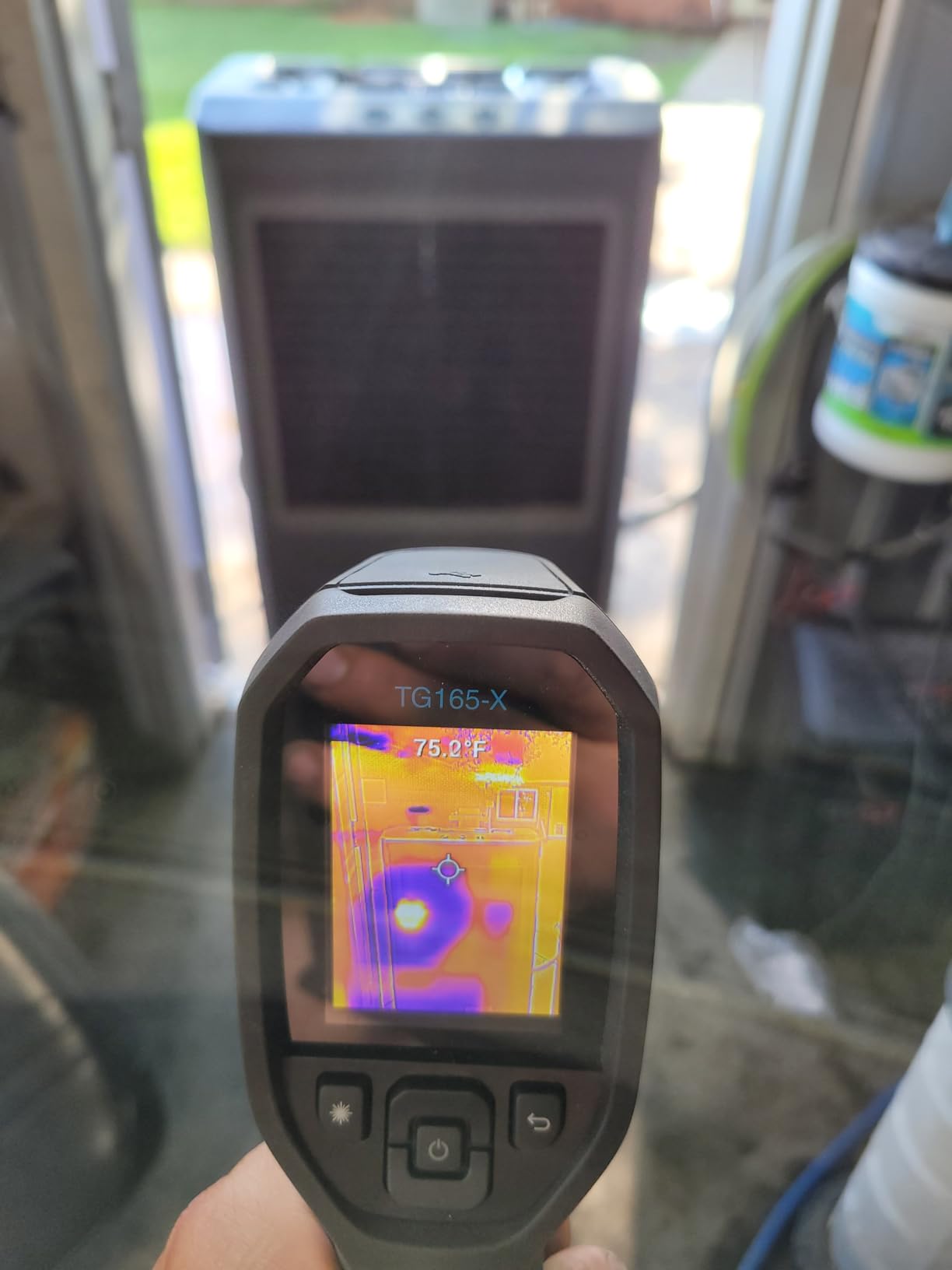
The FLIR TG165-X is a spot thermal camera, not a full imager – and that’s the point. Instead of trying to fit a full thermal image into the frame, the TG165-X uses a bullseye laser to mark the exact spot you’re measuring, then gives you a single-point temperature reading with an MSX-enhanced visual overlay. For an electrician who wants to confirm one breaker is overheating and doesn’t need a full panel scan, the TG165-X is faster and cheaper than the FLIR C5.
The bullseye laser is the killer feature. You point it at the back of a consumer unit, the laser dots the terminal, and the temperature shows on the screen with MSX detail. No guessing which breaker the reading applies to. For fault-finding calls where you already know the circuit is suspect, this directness saves time.
The TG165-X carries FLIR’s 2+10 warranty and IP54 enclosure, so it’s a working tool rather than a delicate one. I dropped mine twice on concrete with no damage. The 4,800-pixel (80×60) sensor is dated – you’ll get less detail than the FLIR C5 or TOPDON TC004 Mini – but for spot readings, you don’t need high pixel counts.
Where the TG165-X falls short is anything beyond a single spot. For full-panel thermal scans, the 80×60 sensor lacks the detail to differentiate adjacent terminals. Reviewers on r/Thermal consistently note this is a “second camera” rather than a primary one – useful as a backup or for quick checks, not as the main thermal tool.
The 3-second response time is also slower than newer models. For most electrical work, that’s fine. For following a fast temperature change under load, it can lag.
For whom this is the right pick
Electricians who want a backup spot-check tool, fault-finders who already know which circuit to investigate, and anyone who wants FLIR build quality without paying for full-imager resolution.
For whom this is not enough
Anyone doing consumer-unit EICR scans or needing full-panel thermal imagery – jump to the FLIR C5 or Klein TI250 instead.
5. FLIR ONE Gen 3 USB-C – Best Phone-Attachment Thermal Camera for Android
Flir One Thermal Imaging Camera for Android USB-C, 240×180 MSX
VividIR 240x180
MSX overlay
USB-C Android
Pros
- Plugs directly into USB-C Android phones
- VividIR upscaling 80x60 to 240x180
- MSX overlay merges thermal and visual images
- Built-in step-by-step inspection guides in app
- Lightweight 34g module
Cons
- Compatibility varies by Android phone model
- Short ~1hr battery life limits extended inspections
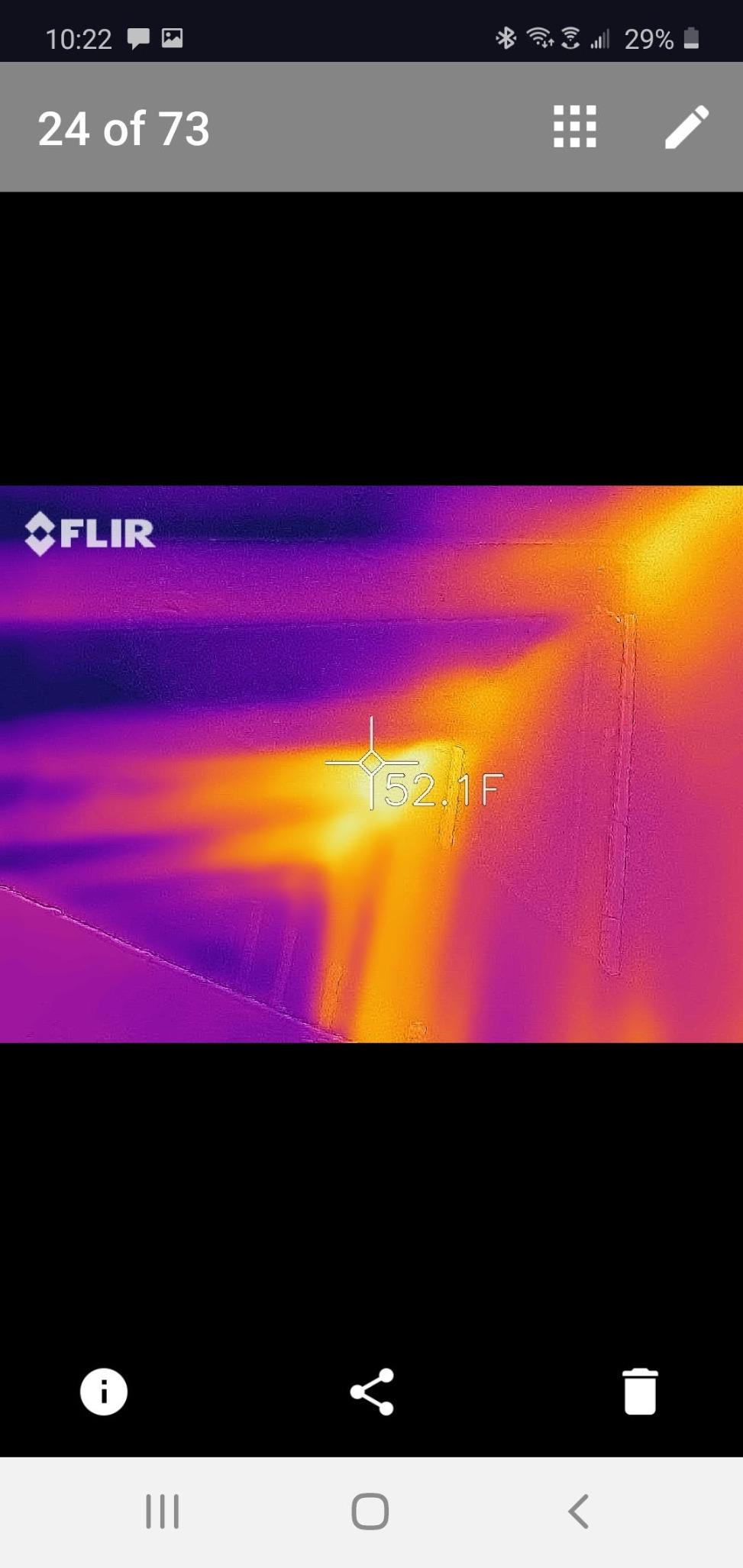
The FLIR ONE Gen 3 is the thermal camera you already own a screen for. It plugs into the USB-C port of an Android phone, draws power and display from the phone itself, and gives you VividIR-enhanced 240×180 thermal imaging with FLIR’s MSX overlay. For electricians who want a thermal camera for occasional fault finding without carrying a second device, this is the lightest option on the list.
VividIR is FLIR’s image processing that upscales the native 80×60 sensor to 240×180. The output is sharper than the raw sensor, though still below the FLIR C5’s true 160×120 native resolution. For quick fault-finding calls, the FLIR ONE does the job. For EICR-quality images, the dedicated handhelds win.
The MSX overlay is the same technology as the C5 – it merges the thermal image with the visual-light camera on your phone, so you get labeled edges and readable terminal IDs. For client-facing photos, this is dramatically better than the upscaled thermal image alone.
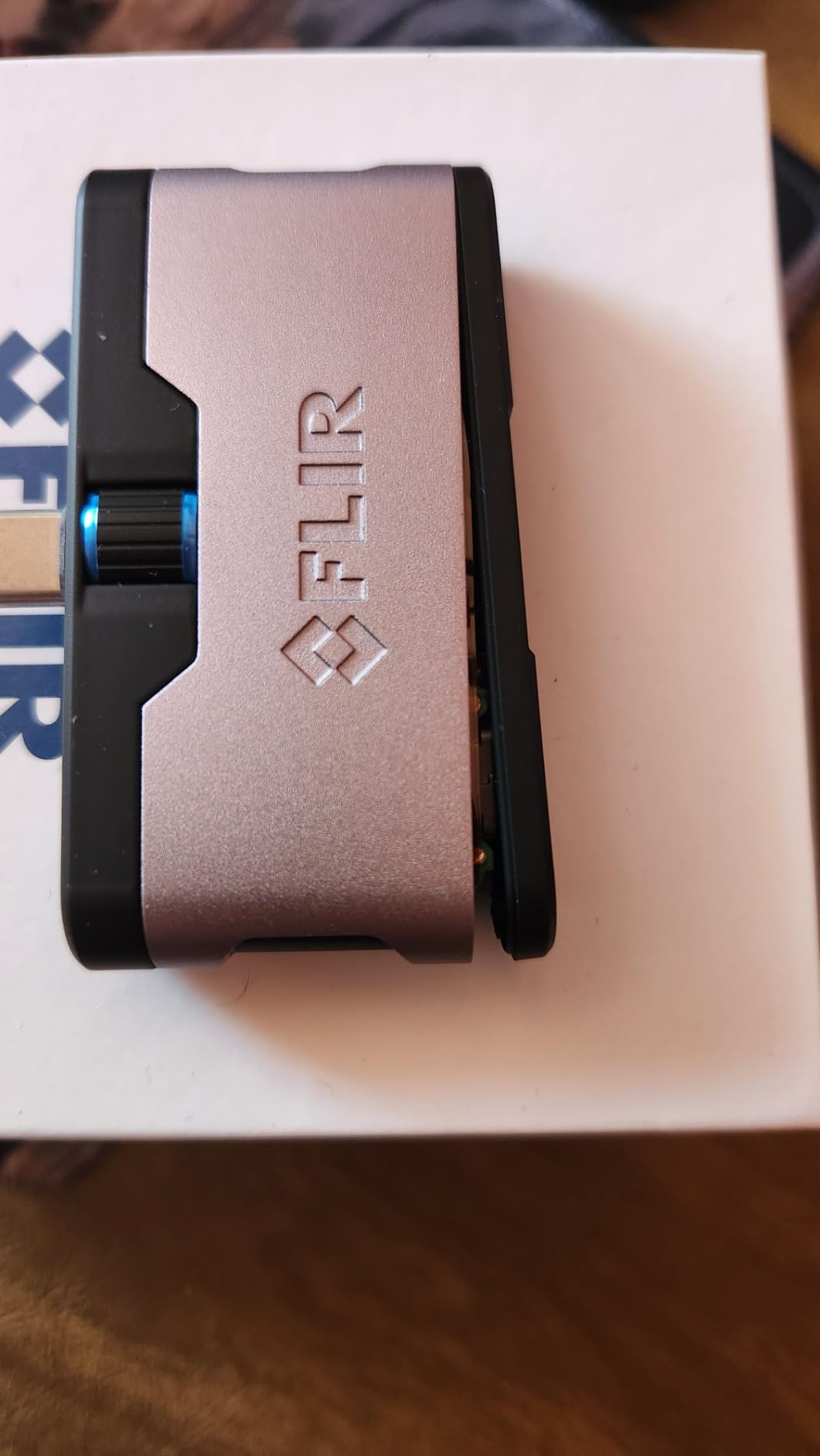
The real downside is Android compatibility. The FLIR ONE Gen 3 requires specific Android phones and OS versions, and the supported-device list is narrower than you might expect. If your phone isn’t on the list, the camera simply won’t work. Always check compatibility before buying.
Battery life is also short – the FLIR ONE draws power from the phone, so a long scan session kills your phone battery. For full-day site work, that matters. Reviewers on r/Thermal consistently note the FLIR ONE is best as an occasional-use tool rather than a daily workhorse.
For whom this is the right pick
Electricians who want a pocketable thermal camera without carrying a second device, occasional fault-finders, and Android users with confirmed phone compatibility.
For whom this is not enough
Daily users, anyone whose phone isn’t on the FLIR compatibility list, or electricians who already have a Klein or FLIR dedicated unit – the phone screen isn’t a real upgrade.
6. DEPSTECH DS300 – Best Dual-Lens Borescope for Wire Fishing
DEPSTECH Endoscope Camera with Light, Dual Lens Inspection Borescope 16.5FT
Dual lens 1080p
16.5FT semi-rigid cable
IP67
Pros
- Dual-lens design eliminates need for a side mirror
- 4.3 inch IPS screen with 170 degree viewing angle
- Crisp 1080P HD image and video capture
- IP67 waterproof with three brightness levels
- 16.5FT semi-rigid cable holds its shape
Cons
- TF card not included in package
- Fixed focus limits close-up inspection range
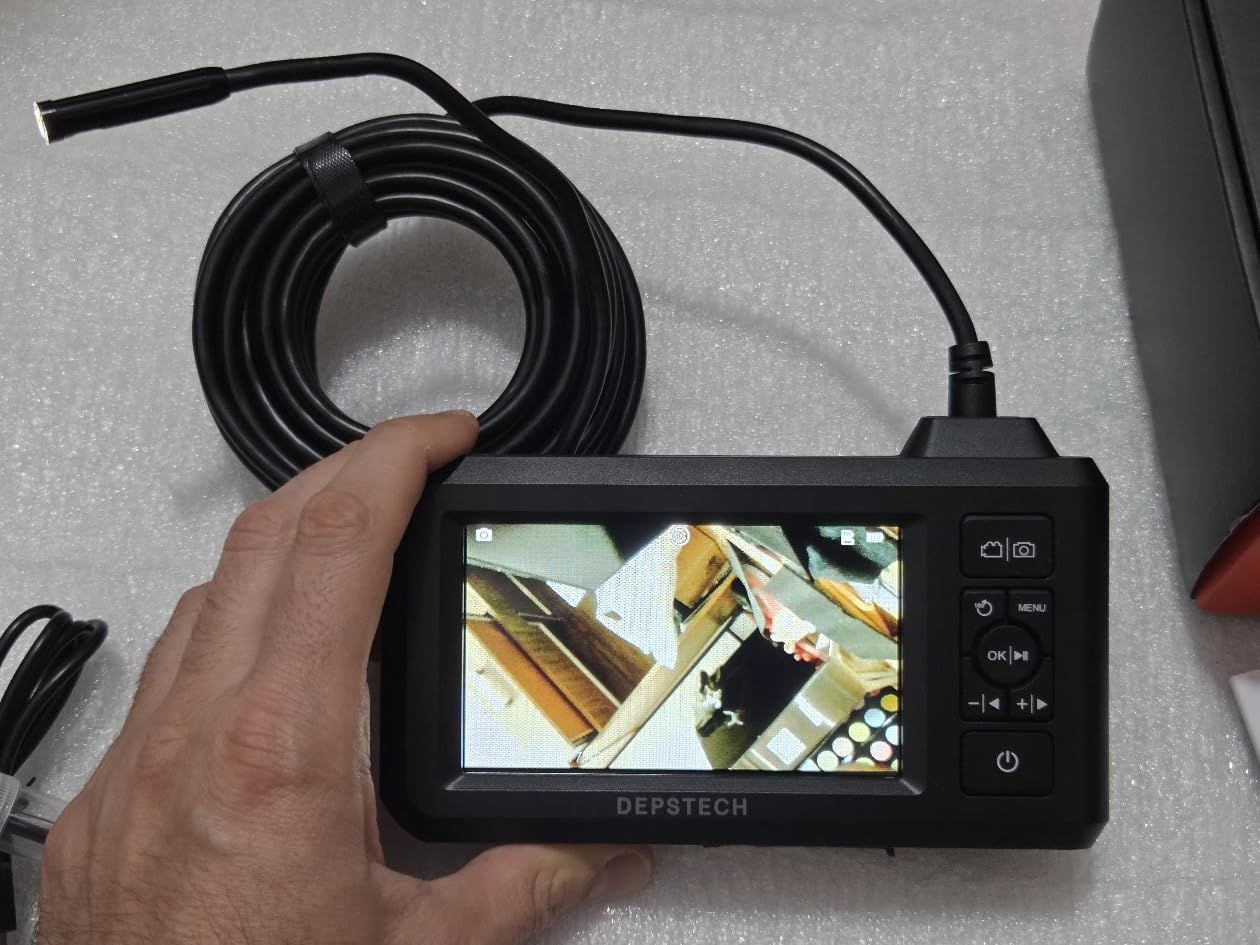
The DEPSTECH DS300 is the highest-rated borescope on Amazon by review count, and for electricians who fish wires through wall cavities daily, it earns that reputation. The dual-lens design has separate front and side cameras, switchable in the app, which removes the need for a clip-on mirror accessory that cheaper borescopes require.
The 4.3-inch IPS screen is bright enough to read in daylight, and the 16.5-foot semi-rigid cable holds its shape when you push it into a cavity. That’s the key feature for wire fishing – a floppy cable is useless for threading behind drywall, while a semi-rigid one lets you steer around insulation and joists. I used the DS300 to trace a cable run through a ceiling void without needing to cut additional access holes.
Image quality is genuinely 1080P – the second CMOS chip reduces picture delay compared to single-sensor borescopes, and the dual-lens switch is seamless. The IP67 waterproofing also means you can use it in damp locations (though for electrical work, you should always isolate first).
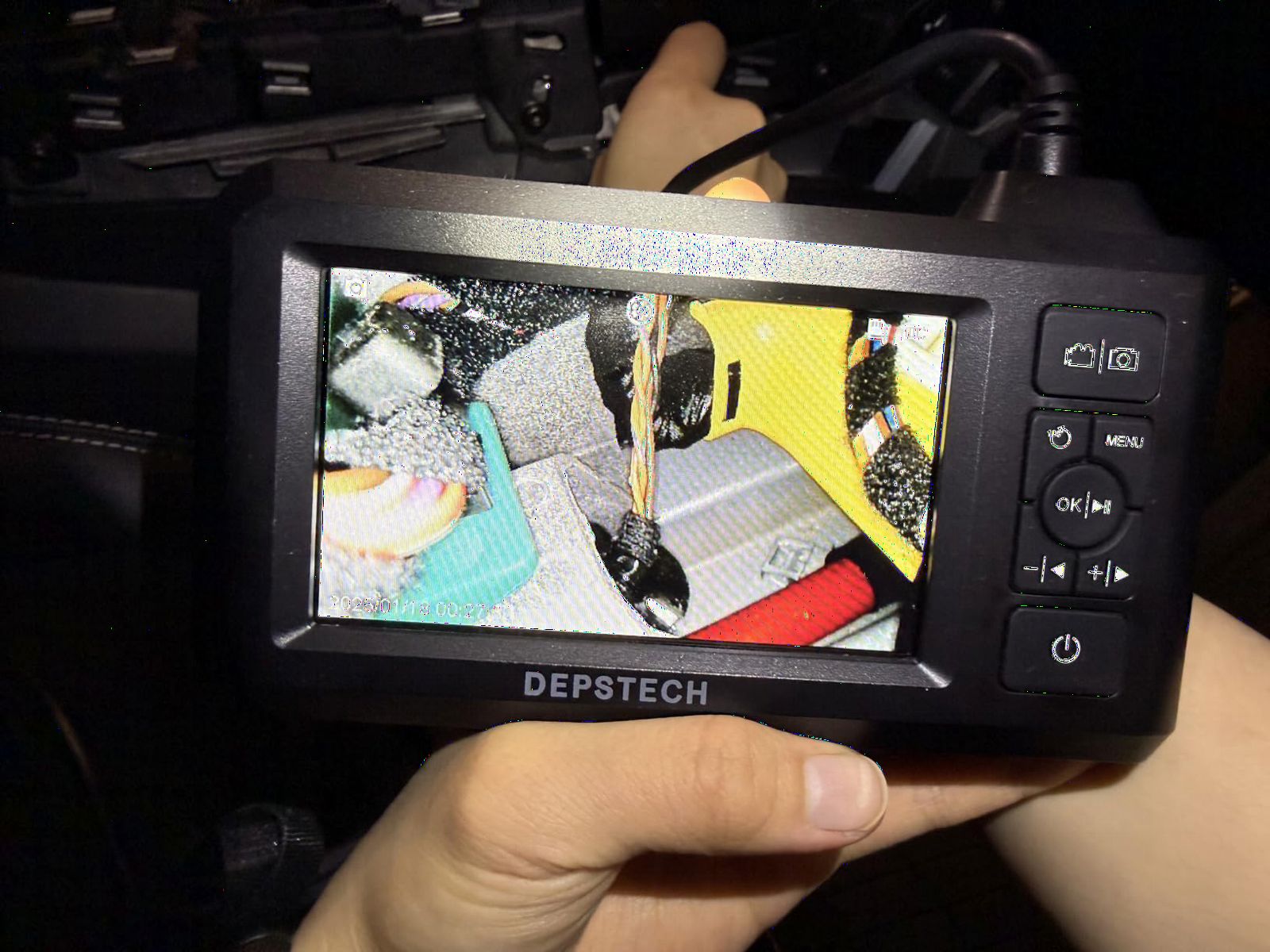
The two real drawbacks: the TF card isn’t included (you need to buy one separately), and the fixed focus limits how close you can get to a subject. For most electrical inspections, neither matters. For users who need interchangeable focus, look at the articulating models below.
DEPSTECH has built a strong reputation for borescope value, and the DS300 is the model most electricians on r/electricians and ElectricianTalk recommend as the first buy. If you only need one borescope and you don’t need articulating, this is it.
For whom this is the right pick
Electricians who fish wires through wall cavities and need a reliable dual-lens borescope at a fair price, anyone who doesn’t need articulating probes.
For whom this is not enough
Mechanics or electricians who need to look around corners inside engines or tight enclosures – jump to the Teslong TD450S articulating borescope.
7. TESLONG NTS300 – Best All-in-One Inspection Camera With Built-in Screen
Teslong 5” Dual Lens Borescope Camera for Wall & Engine Inspection
5 inch screen
16.5FT cable
Dual lens IP67
Pros
- Dual-lens system switches between forward and side views
- 5 inch IPS display no phone or app required
- 16.5FT semi-rigid cable reaches deep cavities
- IP67 waterproof for wet environments
- 5000mAh battery delivers ~4.5 hours
Cons
- 720p video resolution lower than newer 1080p models
- Unit weighs ~2kg heavier than compact borescopes
The TESLONG NTS300 is the borescope I recommend to electricians who don’t want to fuss with phone apps or Wi-Fi pairing. It has its own 5-inch IPS screen built into the handle, dual-lens cameras (forward and side), and a 16.5-foot semi-rigid cable. For everyday wall-cavity and consumer-unit inspections, the NTS300 is a self-contained tool that just works.
The 5-inch screen is the differentiator. Most borescopes in this price range stream to a phone, which means fishing out your phone, unlocking it, opening the app, waiting for the Wi-Fi connection, and hoping it pairs. The NTS300 skips all of that – press the power button, you’re scanning. For an electrician on a ladder or in a tight space, that simplicity is worth the slightly larger size.
Battery life is rated at ~4.5 hours from the 5000mAh internal pack. I got through a full day’s inspection work on one charge. The hard carrying case with hook, magnet, and mirror accessories is included – useful for retrieving dropped screws or pulling wire through tight spaces.
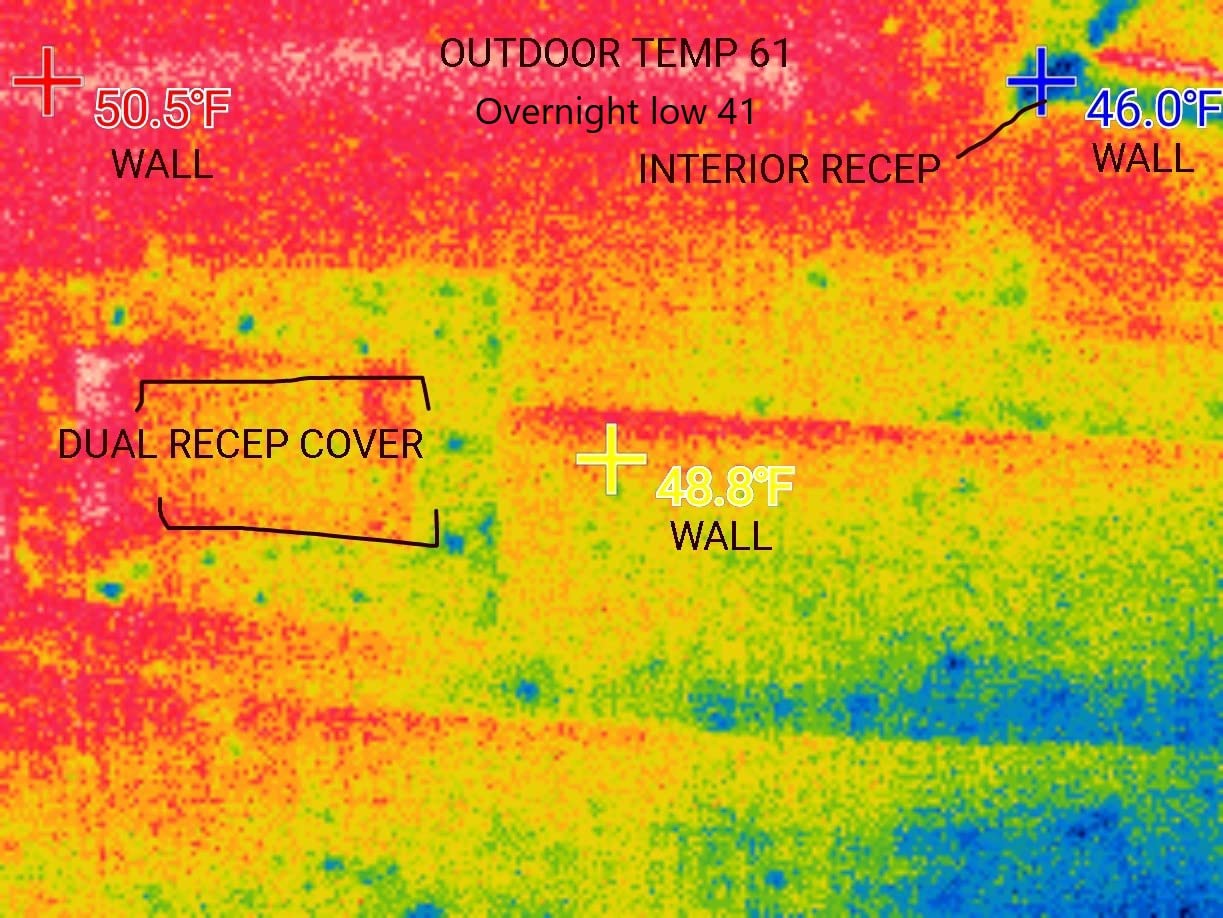
The main downside is the 720p video resolution. It’s adequate for inspection work, but if you’re used to 1080p from your phone, the image looks slightly soft. For the price tier and the all-in-one convenience, it’s a fair trade-off.
Weight is the second consideration – at ~2kg with the screen, the NTS300 is heavier than compact USB-only borescopes. For long inspection sessions, that weight is noticeable. For occasional use, it doesn’t matter.
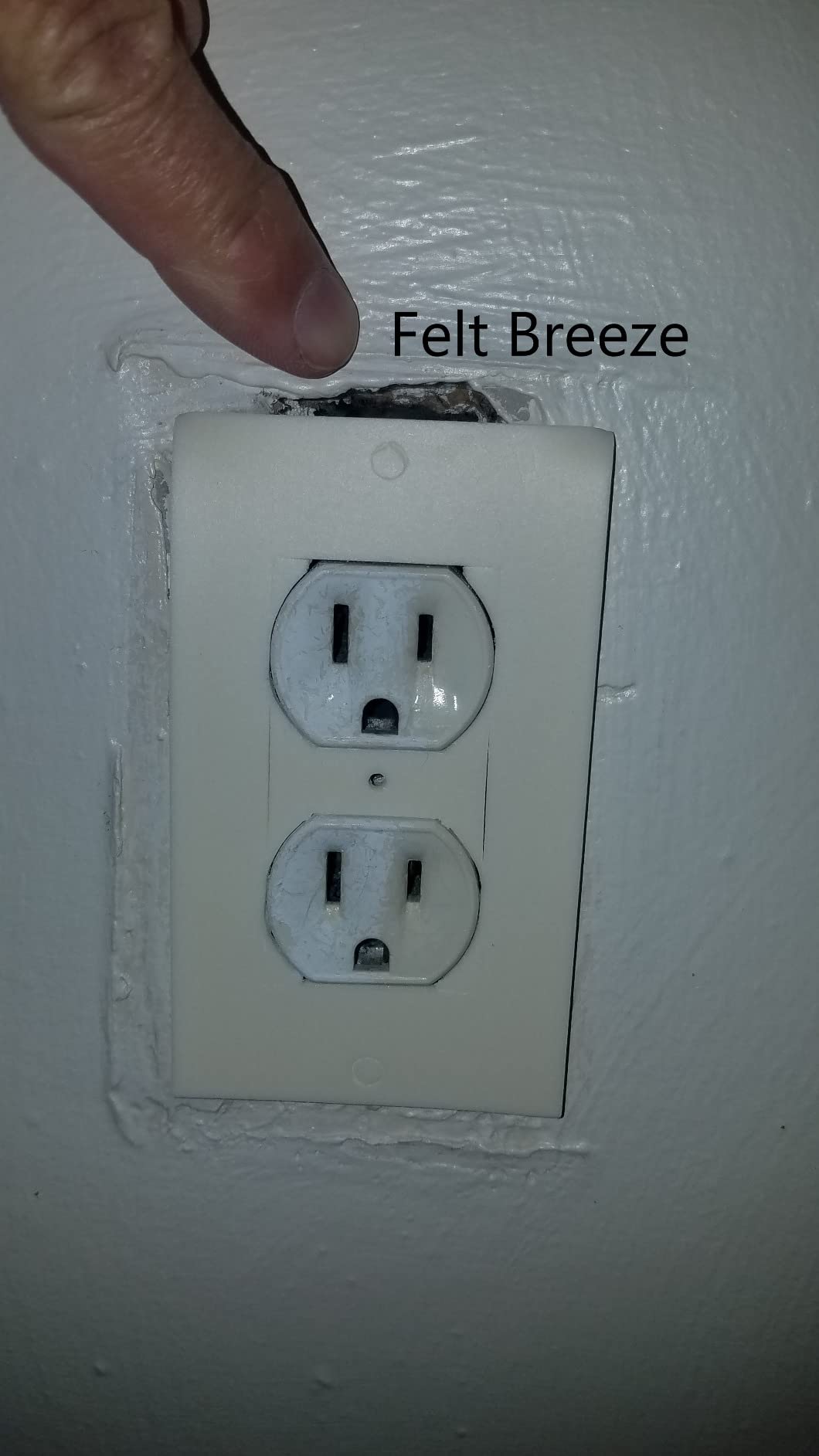
For whom this is the right pick
Electricians who want a self-contained inspection camera without phone-pairing hassle, anyone doing consumer-unit and ceiling-void inspections regularly.
For whom this is not enough
Anyone needing 1080P resolution or an articulating probe – jump to the TESLONG TD450S.
8. TESLONG TD450S Articulating – Best Borescope for Engine and Tight-Wall Work
Teslong Articulating Borescope for Mechanic Automotive HVAC Wall Inspection
210 degree articulation
1080p HD
32GB SD included
Pros
- Two-way 210 degree articulating probe navigates tight spaces
- Intuitive menu and ergonomic handle design
- Single articulating camera is easier than multi-camera menus
- Centrally located joystick enables one-handed operation
- Built-in mic records audio with video
- 32GB microSD card and storage case included
Cons
- 5FT cable length limiting for some applications
- Cable rigidity can hinder tight 90 degree pipe bends
The TESLONG TD450S is the articulating borescope most electricians reach for when a fixed-lens camera won’t do. The two-way 210-degree articulating probe lets you steer the camera head around corners inside walls, behind consumer units, and through ceiling voids without losing the picture. For electricians doing fault-finding work where the cable run takes a turn, articulation is the difference between seeing and guessing.
The joystick control is centrally located on the handle, which makes one-handed operation straightforward. Hold the borescope in your right hand, steer with your thumb, and your left hand stays free to hold a torch, phone, or fish tape. The 4.5-inch IPS LCD screen is bright enough for daylight use, and 1080P video capture means saved images are sharp enough for client reports.
The 32GB microSD card is included, which is unusual for borescopes in this price tier. Most competitors ship without storage. The carrying case is solid, and the included charging cable is USB-C.
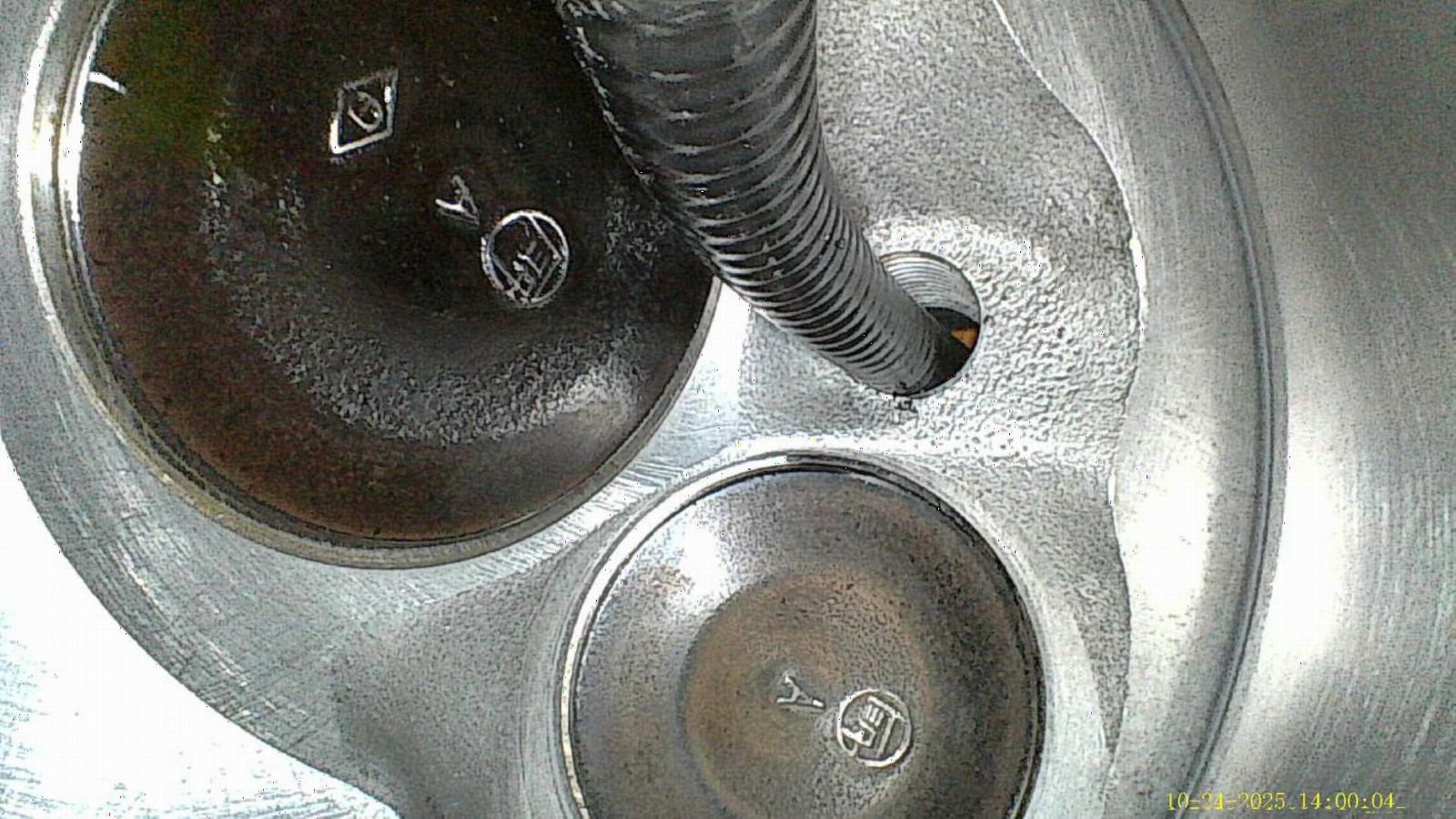
The trade-off for the articulating head is a shorter 5-foot cable. Compared to the TESLONG NTS300’s 16.5-foot reach, the TD450S is more limited for deep cavity work. The cable is also more rigid – good for steering but harder to push through tight 90-degree bends.
Reviewers on r/electricians and ElectricianTalk consistently note the TD450S is the best articulating borescope at this price tier. For electricians who need to look around corners, nothing else at this price comes close.
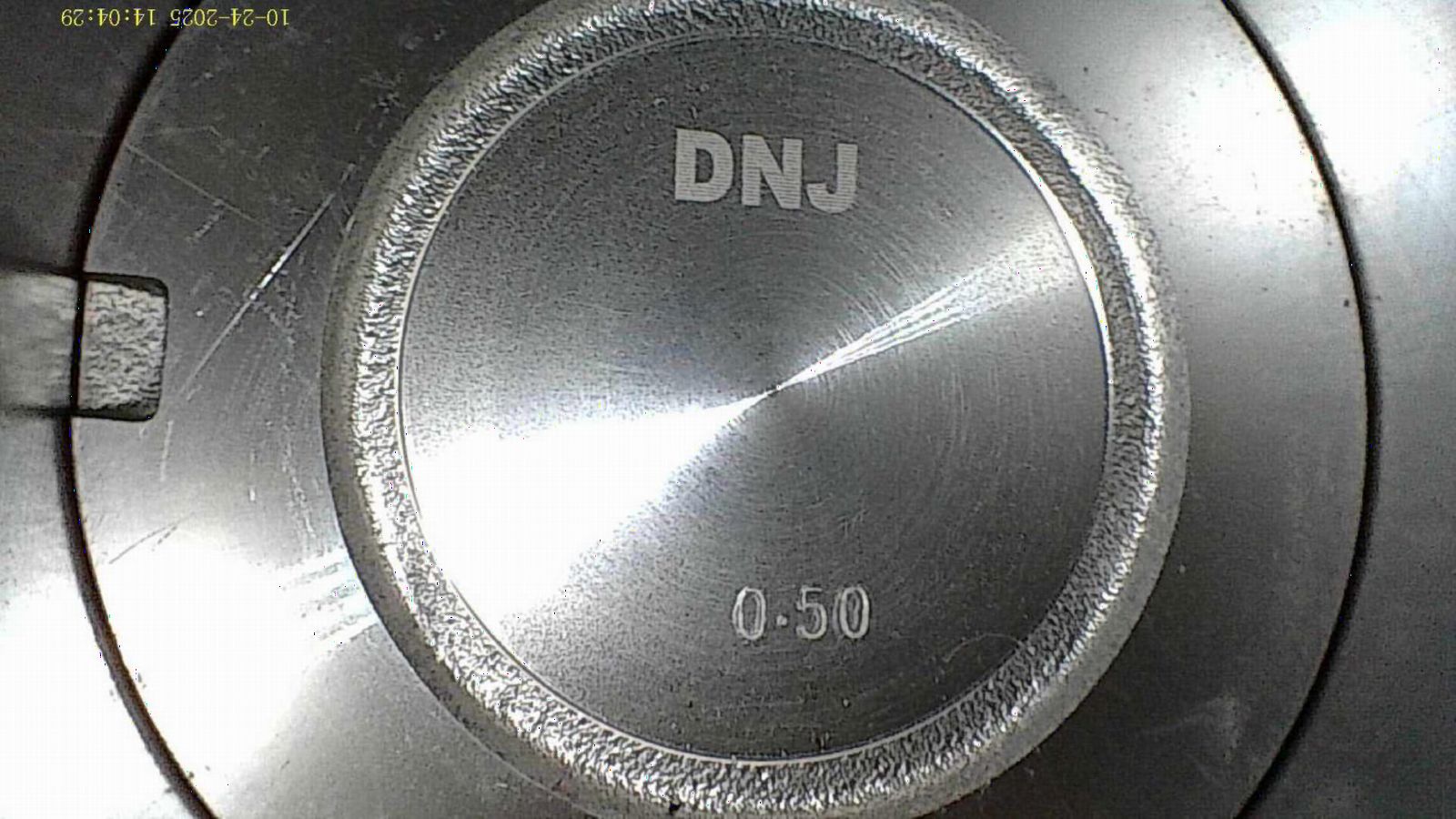
For whom this is the right pick
Electricians doing fault-finding in tight cavities, anyone who needs to look around corners inside walls or consumer units.
For whom this is overkill
If you only need straight-line wire fishing in open cavities, the DEPSTECH DS300 covers that for less money.
9. DXZtoz AGC430N – Best Value Articulating Borescope
DXZtoz Two-Way Articulating Borescope with Light, 1080P Industrial Endoscope Inspection Camera with Flexible Articulated Probe for Automotive Engine Mechanic HVAC- 5.5FT
220 degree articulation
1080p HD
32GB card included
Pros
- Two-way 220 degree articulating camera with control wheel
- True 1080P HD on 4.3 inch IPS monitor (no app)
- IP67 waterproof and oil-resistant semi-rigid gooseneck
- 8 high-intensity LEDs with four brightness levels
- Includes 32GB memory card
- hook
- magnet
- side mirror
Cons
- Articulation is left/right only no up/down tilt
- Lacks orientation indicator on screen
The DXZtoz AGC430N is the value articulating borescope – it offers 220-degree two-way articulation, true 1080P, and a 32GB memory card at a price that sits below the TESLONG TD450S. For electricians who want articulating capability without paying the premium, this is the strongest pick in the lineup.
The 220-degree articulation is wider than most competing models, and the control wheel on the handle is responsive. Combined with the 8.5mm camera head and 34mm bending radius, the AGC430N can reach tight corners that fixed-lens borescopes can’t access.
The 4.3-inch IPS monitor is bright and self-contained – no phone or app required. 8 high-intensity LEDs with four brightness levels handle dark cavities well. The 8X digital zoom and 1-15cm focal range give enough flexibility for most electrical inspection scenarios.
The downsides are minor: articulation is left/right only (no up/down tilt), and there’s no orientation indicator on screen to tell you which way the camera is facing. Both are solvable with practice, but they’re worth noting if you expect a more refined articulating experience.
The package includes a hard carrying case, hook, magnet, side mirror, and 32GB microSD card. Battery life is ~4 hours from the 3000mAh rechargeable pack. For a value-tier articulating borescope, the AGC430N punches well above its price.
For whom this is the right pick
Electricians who want articulating capability at a budget price, anyone needing a backup or secondary borescope for tight-space work.
For whom this is not enough
Pros who need up/down articulation in addition to left/right, or users who prefer the TESLONG brand reputation for warranty support.
10. RIDGID Micro CA-25 – The Classic Rugged Inspection Camera
RIDGID 40043 Micro CA-25 Hand-Held Inspection Camera with 4′ Cable, Borescope, Red
480p
4 foot cable
Pistol grip waterproof
Pros
- Waterproof camera head and cable for tough environments
- 3/4 inch anodized aluminum camera head for durability
- Ergonomic pistol-grip design for one-handed operation
- Four adjustable bright LEDs illuminate dark areas
- 180 degree image rotation for better viewing
Cons
- Low 480 pixel resolution compared to modern borescopes
- Only 4 foot cable length
- AA batteries instead of rechargeable
The RIDGID Micro CA-25 is the borescope your mentor probably had. It’s been around for over a decade, and the reason is simple – it works. The anodized aluminum camera head is nearly indestructible, the pistol-grip design is ergonomic for one-handed use, and the waterproof cable handles plumbing and HVAC environments that would destroy a consumer-grade borescope.
Resolution is dated – 480p is well below the 1080P standard – but for plumbing and HVAC inspections where you’re looking for blockage or damage rather than fine detail, it’s adequate. The four-foot cable is also shorter than modern borescopes, which limits reach for deep wall cavities.
The pistol-grip handle is the standout feature. If you’ve ever tried to use a slim USB borescope for an extended inspection, you’ll appreciate how much easier the CA-25 is to hold. The trigger button captures images, the brightness dial controls the LEDs, and the screen tilts for comfortable viewing angles.
The CA-25 runs on four AA batteries rather than a rechargeable pack. That’s a deliberate trade-off – AA batteries are universally available, so you never get caught without power. For long-term cost, rechargeable is cheaper, but for emergency callouts, AA batteries are a real advantage.
The 480p resolution and short cable mean the CA-25 is no longer the best pick for electrical wall-cavity work. But for plumbing, HVAC, automotive, and general inspection, it’s still a workhorse that delivers on durability. RIDGID’s warranty support is also strong, which matters for working tools.
For whom this is the right pick
Electricians who also do plumbing and HVAC work, anyone who values durability over resolution, and pros who want AA-battery convenience for emergency callouts.
For whom this is not enough
Anyone doing modern electrical wall-cavity inspection work needs 1080P resolution and a longer cable – jump to the DEPSTECH DS300 or TESLONG NTS300.
What Camera Do Electricians Actually Need?
Two categories of camera solve two different jobs. Thermal imagers find faults by detecting heat – loose connections, overloaded circuits, failing breakers, and unbalanced loads all show up as hot spots in the infrared spectrum. Inspection cameras (borescopes) solve the visibility problem – they stream a live HD picture through a flexible cable into wall cavities, ceiling voids, and behind consumer units where you can’t see directly. Most electricians on site need both for different jobs, and confusing the two categories is the most common buying mistake we see in trade forums.
Thermal imagers work by detecting infrared radiation emitted by everything above absolute zero. Electrical components heat up when overloaded or when connections loosen, and a thermal camera turns that heat into a visible color map. For an electrician, this means scanning a consumer unit in seconds instead of feeling each breaker by hand. The FLIR C5, Klein TI250, and TOPDON TC004 Mini are the three we’d recommend in 2026.
Inspection cameras work like a tiny flashlight with a camera on the end. The flexible cable pushes into wall cavities, and the live image shows on a screen – either a built-in display or your phone. For wire fishing, behind-drywall troubleshooting, and consumer-unit visual checks, borescopes are essential. The DEPSTECH DS300, TESLONG NTS300, and TESLONG TD450S lead this category.
Thermal vs Inspection: Which to Buy First
If you’re a residential spark doing consumer-unit inspections and EICR reports, buy a thermal imager first. The ability to spot a loose connection in seconds pays for the camera on the first callout where you find a faulty breaker the customer didn’t know about.
If you’re a rewire specialist or commercial fitter doing first-fix and second-fix work in new-builds, buy a borescope first. You’ll spend more time fishing cables through cavities than scanning finished consumer units.
If you do both – and most working electricians do – buy the thermal imager first and add a borescope when budget allows. A 160×120 pocket thermal covers more daily fault-finding scenarios than any single borescope.
Resolution: What Actually Matters
For thermal imagers, 160×120 pixels (19,200 total) is the threshold for picking out individual terminals on a populated consumer unit. Below 160×120 – 80×60 or 120×90 – hot spots blur across multiple components and the diagnosis becomes guesswork. The FLIR C5 sits exactly at this threshold; the TOPDON TC004 Mini uses TISR upscaling to push effective resolution to 240×240.
For inspection cameras, 1080P is the standard for usable client-facing images. 720P works for fault finding but looks soft compared to modern phones. 480P (like the RIDGID CA-25) is dated for electrical work but still adequate for plumbing and HVAC.
NETD, MSX, and Emissivity Explained
NETD (Noise Equivalent Temperature Difference) measures thermal sensitivity – how small a temperature difference the camera can detect. Lower NETD is better; under 50mK is professional-grade. Pocket thermal cameras typically rate 50-100mK, which is fine for electrical work.
MSX (FLIR’s Multi-Spectral Dynamic Imaging) is the image-fusion technology that overlays visible-light edges onto the thermal picture. This makes thermal images readable – you can label which breaker is hot without a second photo. IR-Fusion is Fluke’s equivalent feature. If you do EICR reports with thermal evidence, MSX or IR-Fusion is non-negotiable.
Emissivity is the setting that tells the camera how much infrared radiation a surface emits. Shiny copper busbars read very differently from painted steel or chrome terminals. A camera with adjustable emissivity (like the Klein TI250, 0.01-0.99) gives accurate readings on any surface. Fixed-emissivity cameras are calibrated for one surface type and give wrong numbers on others.
Battery Life and Trade-Offs
Most pocket thermal cameras rate 4 hours or less – the FLIR C5, Klein TI250, and Fluke PTi120 all need daily charging. The TOPDON TC004 Mini stands out at 15 hours. For a full day’s site work, battery life is a real differentiator.
Inspection cameras run longer on their internal batteries – the TESLONG NTS300 rates 4.5 hours from a 5000mAh pack. RIDGID’s AA-battery design means unlimited runtime as long as you carry spares.
BS 7671, EICR, and AFDD Context
EICR (Electrical Installation Condition Report) is the inspection document that landlords, insurers, and buyers increasingly require. Thermal imaging has become a recognised supplementary evidence method – the IET and BESA have both published guidance on thermographic surveys for electrical installations.
AFDD (Arc Fault Detection Device) retrofit requirements under BS 7671:2018+A4:2026 regulation 421.1.7 have made thermal evidence more valuable. An AFDD retrofit is often justified by thermographic evidence of a hot spot in the existing installation, and a thermal camera image carries that evidence directly into the EICR.
For more context on how thermal imaging fits into condition reports, see our thermal imaging camera guide.
Buying by Trade Role
Residential sparks: 160×120 pocket thermal (FLIR C5, Klein TI250) plus a mid-tier borescope (DEPSTECH DS300) covers consumer-unit inspections, EICR evidence, and behind-drywall troubleshooting.
Commercial/industrial contractors: 320×240+ thermal resolution is worth the premium. Cloud sync (FLIR Ignite, Fluke Connect) and asset tagging matter when managing multiple sites. The HIKMICRO Pocket 2 or Fluke TiS75+ are stronger fits here.
Inspection-first sparks: If EICR condition reports are your main revenue stream, the FLIR C5 with Ignite cloud is the strongest workflow. The FLIR ONE Pro is a backup for occasional calls.
What to Skip
Sub-80×60 thermal sensors – too coarse for electrical work. Sub-$200 thermal cameras from unknown brands – poor NETD, no MSX, no warranty. Inspection cameras under 720P – dated image quality. Phone attachments that aren’t on the official FLIR compatibility list – they simply won’t work.
Frequently Asked Questions
Can a thermal camera see wires in walls?
Not directly. Thermal cameras detect heat radiating from surfaces, so they can spot wires carrying current if the load is high enough to warm the surrounding material, but they cannot see de-energised or low-load cables inside drywall. For visual checks behind walls, an inspection camera or borescope is the correct tool.
Is it worth buying a thermal imaging camera?
Yes, for any electrician doing consumer-unit inspections, EICR condition reports, or commercial fault finding. A pocket 160×120 thermal camera pays for itself on the first callout where you spot an overloaded breaker that the customer didn’t know about, and adds defensible photo evidence to EICR findings.
Can electricians do thermal imaging?
Yes. Thermal imaging is a recognised supplementary inspection method in BS 7671 condition reports, and no special qualification is required to use a pocket thermal camera for diagnostic work. For formal thermographic surveys, CAT 1 or CAT 2 thermography certification is recommended but not mandatory for everyday fault finding.
How accurate is the FLIR C5 thermal imaging camera?
The FLIR C5 is rated at plus or minus 3 degrees Celsius or 3 percent of reading, which is professional-grade accuracy for pocket thermal cameras. For EICR evidence and consumer-unit scanning, this is more than adequate – the goal is comparative readings (which breaker is hottest) rather than absolute precision.
Are HIKMICRO thermal cameras any good?
Yes. HIKMICRO offers strong resolution-per-dollar value – the B1L delivers 256×192 at a price below FLIR’s 160×120 C5. Build quality, sensor quality, and NETD ratings are competitive with FLIR and Fluke. The trade-off is brand recognition: FLIR still wins on customer-facing trust, and HIKMICRO’s app ecosystem is less mature than FLIR Ignite.
What resolution thermal camera do I need for electrical work?
160×120 pixels (19,200 total) is the minimum threshold for picking out individual terminals on a populated consumer unit. Anything below 160×120 – 80×60 or 120×90 – blurs hot spots across multiple components and makes diagnosis guesswork. For commercial and industrial work, 320×240 or higher is worth the premium.
Conclusion
The best cameras for electricians in 2026 split into two job categories. For thermal fault finding, the FLIR C5 remains our top pick – 160×120 MSX resolution, FLIR Ignite cloud integration, and 2+10 warranty make it the most complete pocket thermal for residential and light commercial work. For pure value, the Klein Tools TI250 delivers 19,200 pixels with adjustable emissivity at a noticeably lower price. The TOPDON TC004 Mini is the budget winner with TISR-enhanced 240×240 resolution and a 15-hour battery.
For inspection work – wire fishing, behind-drywall checks, consumer-unit visual inspection – the DEPSTECH DS300 and TESLONG NTS300 lead the borescope category. The DEPSTECH has the higher review count and dual-lens design; the TESLONG offers a self-contained 5-inch screen and 16.5-foot reach. For tight-space articulating work, the TESLONG TD450S is the strongest pick.
Whichever camera you choose, start with the job you’ll actually do most often. Residential sparks should buy a 160×120 thermal first; commercial contractors can justify higher resolution and cloud sync; rewire specialists need a borescope before a thermal imager. For more guidance on the thermal category specifically, see our full thermal imaging camera roundup, and check out our other camera guides below.
Other resources from our team: 8 Best Autofocus Cameras Reviewed, 10 Best Cameras Released Reviewed, 13 Best Cameras Pro Reviews, and 12 Best Virtual Tour Cameras Reviewed.