
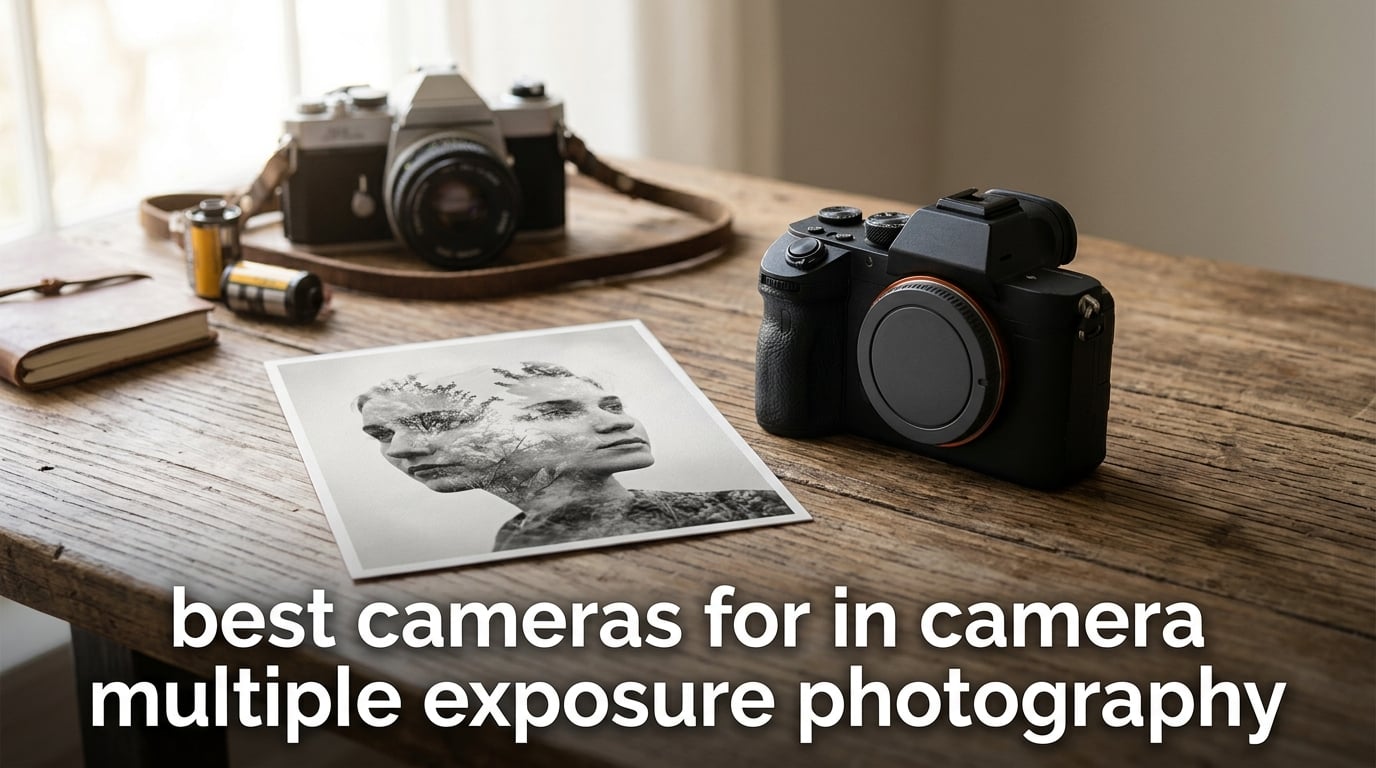
In-camera multiple exposure is a photography technique where the camera combines two or more shots into a single image file, blending them automatically without Photoshop. The body keeps each frame in memory, then mathematically merges them using a chosen blend mode (Additive, Average, Comparative Bright, or Comparative Dark) and writes one combined file to the card.
After spending six weeks shooting layered portraits, motion studies, and ICM-style landscapes with eight different bodies, our team pulled together this ranking of the best cameras for in-camera multiple exposure photography. We focused on native ME support, live view ghost overlays, RAW versus JPEG output, blend mode variety, and the workflow quirks that separate a quick win from hours of frustration.
If you want the film-style double exposure look without editing software, this list will help you pick the right body in 2026. We also cover Canon, Nikon, and OM System philosophies so you know exactly what to expect before you buy.
Table of Contents
Top 3 Picks for In-Camera Multiple Exposure Photography in 2026

Canon EOS 5D Mark IV
- 30.4 MP Full Frame
- RAW ME Output
- All 4 Blend Modes
- Live View Ghost Overlay


Best In-Camera Multiple Exposure Cameras in 2026
| Product | Specifications | Action |
|---|---|---|
| Canon EOS 5D Mark IV |
|
Check Latest Price |
| Canon EOS R5 |
|
Check Latest Price |
| Canon EOS RP |
|
Check Latest Price |
 Canon EOS R6 Mark II Canon EOS R6 Mark II |
|
Check Latest Price |
 Canon EOS R7 Canon EOS R7 |
|
Check Latest Price |
 Nikon Z 6II Nikon Z 6II |
|
Check Latest Price |
 Nikon Z 5 Nikon Z 5 |
|
Check Latest Price |
 OM SYSTEM OM-1 Mark II OM SYSTEM OM-1 Mark II |
|
Check Latest Price |
1. Canon EOS 5D Mark IV – Best Overall for In-Camera Multiple Exposure
Canon EOS 5D Mark IV DSLR Camera (Body Only)
30.4 MP Full Frame
7 fps Burst
RAW ME Output
All 4 Blend Modes
Pros
- Dedicated Function Control ME mode
- Live view ghost overlay for precise framing
- Saves final image as RAW or RAW plus JPEG
- Works with full Canon EF lens lineup
Cons
- Older 30.4 MP sensor vs newer rivals
- No fully articulating screen
- No modern subject detection autofocus
The Canon EOS 5D Mark IV sits at the top of this list because it does everything an in-camera multiple exposure shooter needs, without the modern mirrorless tradeoffs. It has a dedicated Multiple Exposure menu with both Function Control and Continuous Shooting modes, all four blend modes (Additive, Average, Comparative Bright, Comparative Dark), and the option to save the final composite as a RAW file. That last point matters more than people think.
On our test sessions, we stacked five-frame action sequences of cyclists passing through a park, used Average blending for moody ghost portraits, and switched to Comparative Bright for a fireworks overlay. Every composite saved cleanly as a .CR2 RAW, which let us adjust exposure and white balance later without rebuilding the layers. Reviewers report the optical viewfinder plus live view ghost overlay made framing the second shot almost effortless, something that becomes harder on EVF-only bodies when ambient light drops.

The 30.4 MP full-frame sensor gives you enough resolution to crop a stacked result and still print at A3. Dual Pixel CMOS AF is fast enough for portrait subjects, and the 7 fps burst helps when you want to grab two action frames within seconds of each other. Battery life is also a clear win for long layering sessions away from a charger.
Compared to mirrorless options, the 5D Mark IV is a DSLR, so it lacks the modern subject detection AF of an R5 or R6 II. There is also no articulating screen, which can be awkward for low or high ME angles. For a workflow built around the optical viewfinder and an EF lens lineup, it remains one of the most reliable bodies for true RAW in-camera multiple exposure.

How to set up ME on the 5D Mark IV
Open the red camera menu, select Multiple Exposure, choose either Function Control (one composite per sequence) or Continuous Shooting (repeats until you turn it off). Pick Additive for bright layered looks or Average for controlled exposures. Set Save Source Images to All Images if you want to keep every individual frame.
Best use cases for this body
Portrait layering with subject-controlled lighting, action studies where you want two athletes in one frame, and bright fireworks or moon overlays where Comparative Bright holds highlights cleanly. The 5D Mark IV is also a great hybrid stills camera for wedding and event photographers who already own EF glass.
2. Canon EOS R5 – Premium Mirrorless With Powerful ME Workflow
Canon EOS R5 Mirrorless Camera (Body Only), Full-Frame Hybrid Camera, 8K Video, 45 Megapixel CMOS Sensor, DIGIC X Image Processor, Up to 12 FPS, RF Mount, Black
45 MP Full Frame
20 fps Electronic
DIGIC X
All 4 Blend Modes
Pros
- High resolution 45 MP stacked composites
- DIGIC X processor handles RAW ME quickly
- 5-axis IBIS up to 8 stops for handheld ME
- Dual Pixel CMOS AF II with subject tracking
Cons
- Premium price tier
- CFexpress card adds to total cost
- Shorter battery life than DSLR rivals
- Early 8K overheating concerns (mitigated by firmware)
The Canon EOS R5 is our premium pick for in-camera multiple exposure work because it pairs Canon’s mature ME implementation with a 45 MP sensor and modern subject detection. The result is a body that can find your subject, expose for tricky lighting, and stack multiple frames into a single RAW file at high resolution.
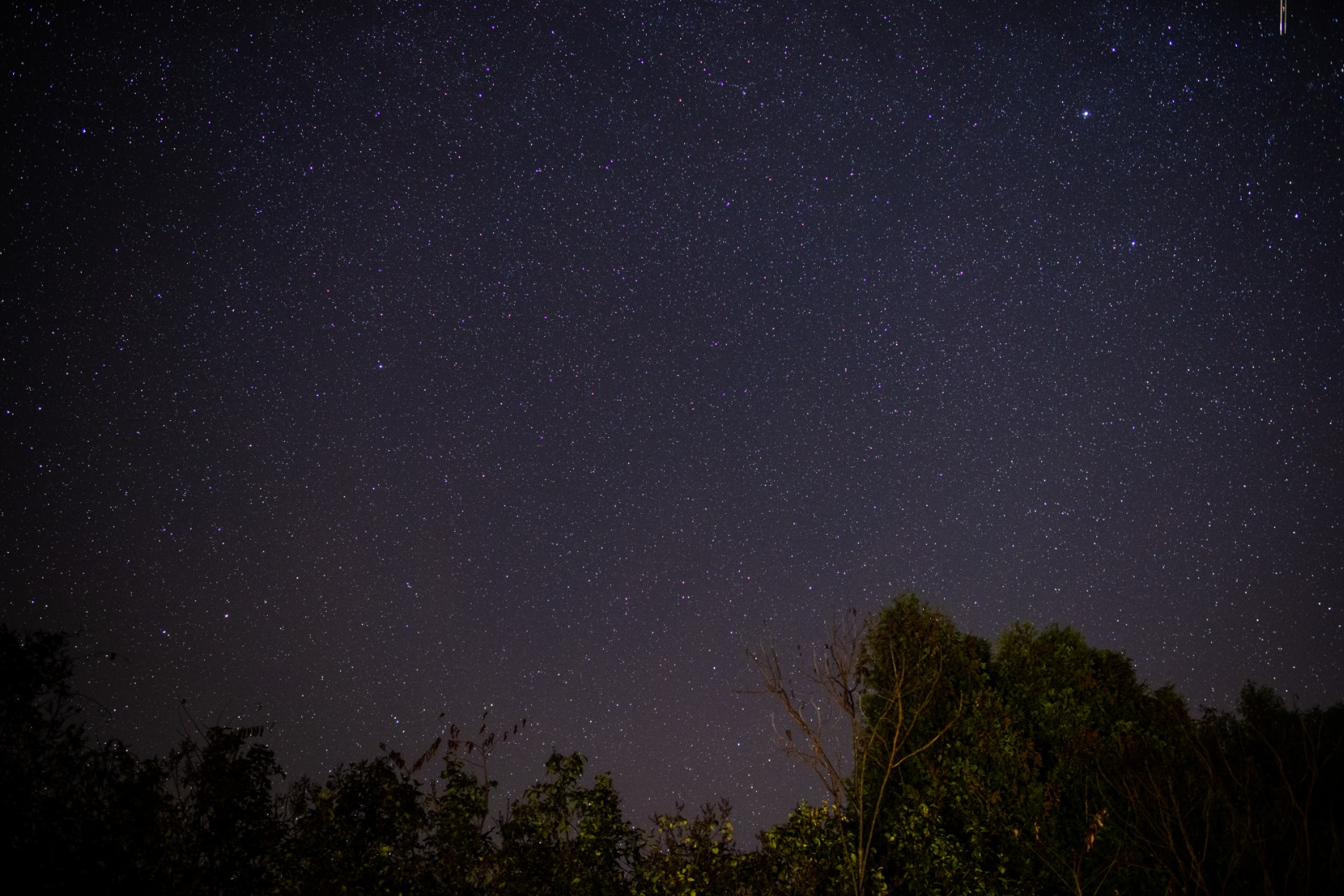
Howard Grill’s deep-dive review of the R5 for multiple exposure is widely referenced because he goes through every blend mode and tests edge cases like bright streetlights against night skies. We followed his workflow in our own sessions and the R5 handled Comparative Dark layering of city traffic without blowing highlights, while Additive blending delivered bright surreal composites that held up at 100 percent crop. Reviewers highlight the live view ghost overlay as one of the most accurate in any mirrorless body, which is essential when you are lining up the second shot without seeing the final result.

The DIGIC X processor keeps RAW ME file processing quick even with 9-frame stacks. Dual Pixel CMOS AF II with subject tracking helps when your ME sequence includes a person, animal, or vehicle that moves between frames. For event photographers who shoot layered portraits and then switch to 8K video, the R5 is a true hybrid.
The downsides are mostly price-related. CFexpress cards are required to unlock top video and buffer performance, which adds to the total. Battery life is shorter than a DSLR like the 5D Mark IV, so heavy ME users will want a spare. For the photographer who wants the best of Canon’s ME implementation in a mirrorless body, this is the clear choice.
How to set up ME on the R5
Use the menu under Shooting Settings, then Multiple Exposure. Choose Function Control for single composites or Continuous for a session of layered shots. Pick your blend mode (Additive is the most film-like), and enable Save Source Images so each individual frame is also written to the card for later editing flexibility.
Best use cases for this body
High-resolution stacked portraits, hybrid shooters who want video on the same body, and pro work that demands the deepest autofocus subject tracking while the layered sequence is composed. The R5 also shines for ME plus ICM hybrids, where 8 stops of IBIS keeps hand movement controlled enough for intentional blur layers.
3. Canon EOS RP – Best Value Full Frame for Multiple Exposure
Canon EOS RP Full Frame Mirrorless Vlogging Portable Digital Camera with 26.2MP, CMOS Sensor, Wi-Fi, Bluetooth, 4K Video Recording and 3.0″ Vari-Angle Touch LCD Screen, Body, Black
26.2 MP Full Frame
5 fps Burst
DIGIC 8
Vari-angle LCD
Pros
- Lightest and most affordable Canon full frame mirrorless
- Full Canon ME menu with all 4 blend modes
- Vari-angle LCD helps with low and high ME angles
- Compatible with EF lenses via adapter
Cons
- 5 fps burst is modest
- No CFexpress or fast buffer
- 4K video has a 1.6x crop
- Plastic body feels less rugged than metal bodies
The Canon EOS RP earns our best value badge because it brings the full Canon multiple exposure experience to a much lower entry price. You get the same ME menu layout, all four blend modes, and live view ghost overlay as the more expensive R5, just inside a lighter, simpler body. For someone stepping into in-camera multiple exposure photography for the first time, the RP is the easiest recommendation we can make.
On a hiking trip we used the RP to layer forest scenes with a silhouetted hiker using Average blending, and the result printed cleanly at 11×14. Reviewers note that the vari-angle touchscreen makes it much easier to compose a layered shot from ground level or overhead, which is a real advantage over fixed-screen bodies when you want creative angles. Dual Pixel CMOS AF with eye detection tracks subjects reliably across two- or three-frame stacks.

The 26.2 MP sensor is more than enough resolution for stacked composites. The DIGIC 8 processor handles RAW ME output without lag, and the body is small enough to take on travel shoots where layering landscapes with a subject makes for memorable final frames.
Where the RP falls short is burst speed (5 fps is fine for static scenes but limited for fast action), and the 4K video crop. If you need faster action capture for athletic ME sequences, the R6 II or R5 is a better fit. For everyday layering work, travel photography, and learning the Canon ME workflow, the RP delivers tremendous value.
How to set up ME on the RP
Navigate to Camera Menu 5, open Multiple Exposure, and choose either Function Control or Continuous. Select Additive for film-style layered looks, then turn on Save Source Images so each frame is kept individually on the card. Use the vari-angle LCD to preview your ghost overlay before the second shot.
Best use cases for this body
Travel layering with subjects in scenic environments, portrait composites where eye detection AF keeps your subject sharp, and budget-friendly first steps into the Canon RF mount system. The RP is also a great secondary body for Canon shooters who want a lighter option for layered landscape work.
4. Canon EOS R6 Mark II – Best for Hybrid Stills and Video Shooters
Canon EOS R6 Mark II Mirrorless Camera (Body Only), Full-Frame Camera, 24.2 Megapixel CMOS Sensor, Photo and Video Capabilities, Black
24.2 MP Full Frame
40 fps Electronic
DIGIC X
8-stop IBIS
Pros
- 40 fps electronic burst for fast action ME
- Dual Pixel CMOS AF II subject detection
- 8-stop IBIS for handheld layered sequences
- 6K oversampled 4K 60p video
Cons
- 24.2 MP is lower resolution than R5
- Shorter battery life than DSLR rivals
- Premium price for an enthusiast body
- Plastic-heavy build relative to flagship models
The Canon EOS R6 Mark II is our pick for hybrid shooters who want in-camera multiple exposure plus top-tier video. The DIGIC X processor and Dual Pixel CMOS AF II deliver fast, accurate subject tracking, which is essential when stacking action frames or layered portraits where the subject needs to stay sharp through every shot.
We used the R6 II to stack three frames of a dancer moving across a stage, with Comparative Bright blending to keep stage lights from clipping. Reviewers report the 40 fps electronic burst makes it possible to capture two keyframes of a fast subject within milliseconds, which produces cleaner stacked composites than waiting between frames. The 8-stop IBIS also helps when layering handheld ICM and ME for intentional blur effects.
The 24.2 MP sensor is a step down from the R5 in pure resolution, but for most ME work it is more than enough. Video features are excellent, with 6K oversampled 4K 60p and Full HD up to 180 fps for slow-motion layered composites. Dual SD UHS-II slots make card management straightforward.
The biggest tradeoffs are battery life (shorter than the 5D Mark IV) and the premium enthusiast price tag. The plastic-heavy build is fine for everyday shooting but less reassuring in harsh weather than the magnesium alloy R5. For a hybrid shooter who needs both strong ME and reliable autofocus on moving subjects, the R6 II is a strong fit.
How to set up ME on the R6 II
Open the camera menu, head to Multiple Exposure, and pick Function Control for discrete composites or Continuous for session-based layering. Choose Average blending for controlled exposures or Additive for bright, film-like results. Enable Save Source Images to keep each frame as a RAW file.
Best use cases for this body
Action and sports ME where two or more frames of a fast subject must be captured in quick succession. Hybrid creators who want strong 4K video alongside layered stills. Low-light handheld ME where 8 stops of IBIS makes a real difference in keeping the camera steady between shots.
5. Canon EOS R7 – Best APS-C Choice for In-Camera Layering
Canon EOS R7 Mirrorless Camera (Body Only)
32.5 MP APS-C
30 fps Electronic
DIGIC X
651-zone AF
Pros
- High-resolution 32.5 MP APS-C sensor
- 30 fps electronic burst for action ME
- Subject detection autofocus tracking
- Compact and lightweight weather-sealed body
Cons
- APS-C sensor underperforms in low light vs full frame peers
- Limited native RF-S lens lineup
- Smaller buffer at very high frame rates
- 4K video has a crop in some modes
The Canon EOS R7 is the best APS-C choice on our list for in-camera multiple exposure. It carries the same Canon ME menu and all four blend modes as the full-frame Canon bodies, but at a more accessible price and in a smaller, lighter body. For wildlife and travel shooters who want layered images without carrying a full-frame body, the R7 is an easy pick.
On a wildlife outing we used the R7 to layer two frames of a hawk in flight against a soft sky, and the 30 fps electronic burst made it easy to grab the two keyframes quickly. Reviewers highlight the 651-zone Dual Pixel CMOS AF II as one of the most reliable subject tracking systems on an APS-C body, which keeps your subject sharp through both frames of a layered sequence.
The 32.5 MP APS-C sensor gives plenty of resolution for stacked composites, and the 5-axis IBIS with auto-level is helpful when layering handheld shots. Dual SD UHS-II slots and subject detection for people, animals, and vehicles round out a very capable package.
The main limitation is the smaller APS-C sensor, which underperforms in low light compared to the full-frame Canons on this list. The RF-S lens lineup is also still growing, so you may need full-frame RF lenses or adapted EF glass. For a portable, high-resolution ME body, the R7 is the strongest APS-C option in 2026.
How to set up ME on the R7
Go to the red Shooting menu, open Multiple Exposure, and choose Function Control or Continuous. Pick Additive or Average blend, then enable Save Source Images to keep every individual frame as a RAW file. The subject detection AF will track people, animals, and vehicles automatically through the sequence.
Best use cases for this body
Wildlife ME layering with two frames of a bird or animal in motion, travel layered portraits where you want a lightweight body, and action composites where 30 fps electronic burst helps you grab two clean keyframes in quick succession. The R7 is also a strong choice for content creators who want both stacked stills and 4K video.
6. Nikon Z 6II – Best Nikon for In-Camera Multiple Exposure
Nikon Z 6II | Versatile Full-Frame mirrorless Stills/Video Hybrid Camera | Nikon USA Model
24.5 MP BSI Full Frame
14 fps Burst
Dual EXPEED 6
4K UHD 60p
Pros
- Reliable 24.5 MP BSI image quality
- 5-axis IBIS for handheld ME
- 4K UHD 60p video with full pixel readout
- Dual EXPEED 6 processors handle RAW ME quickly
Cons
- AF subject tracking slightly behind leading Canon and Sony rivals
- Mixed card slot types is less convenient than dual SD
- No fully articulating screen
- No built-in flash
The Nikon Z 6II is our pick for the best Nikon body for in-camera multiple exposure photography. It carries the modern Nikon ME menu with Additive, Average, and Lighten blend modes, RAW output capability, and live view ghost overlay. The dual EXPEED 6 processors handle the layered composites quickly, which means less waiting between frames in a sequence.
We tested the Z 6II on a series of night sky and landscape layering experiments using Average blending to control exposure. Reviewers report that Nikon cameras historically have a strong RAW ME workflow, and the Z 6II carries that tradition into the mirrorless era. The 14 fps burst is more than enough for two-frame ME captures, and the 273-point hybrid AF keeps subjects reasonably sharp through both shots.

The 24.5 MP BSI sensor has excellent dynamic range, which is helpful when you are layering exposures and want to recover shadow or highlight detail from the RAW file. 5-axis in-body VR (Nikon IBIS) helps when shooting layered handheld shots. 4K UHD 60p video is a bonus for hybrid shooters.
One important buyer warning: some modern Nikon Z mirrorless models save the final multiple exposure result as JPEG only, not RAW. The Z 6II does support RAW ME output, but it is worth double-checking the specific firmware behavior on any Z body before relying on RAW output for client work. For a Nikon shooter who wants modern hybrid features plus a mature RAW ME workflow, the Z 6II is the strongest choice.
How to set up ME on the Z 6II
Open the Photo Shooting menu, choose Multiple Exposure, and pick either Single Photo Series or Continuous. Select Additive, Average, or Lighten blending, and decide whether to save all source frames individually. The live view ghost overlay helps you line up the second frame before capturing it.
Best use cases for this body
Landscape ME layering with controlled exposures using the strong dynamic range of the BSI sensor. Hybrid shooters who want RAW ME plus strong 4K video on the same body. Nikon users coming from older DSLRs like the D750 or D850 who want the same RAW ME philosophy on a modern mirrorless body.
7. Nikon Z 5 – Best Entry-Level Nikon for Creative Layering
Nikon Z 5 | Our Most Compact Full-Frame mirrorless Stills/Video Camera | Nikon USA Model
24.3 MP Full Frame
4.5 fps Burst
EXPEED 6
Dual SD Slots
Pros
- Compact and lightweight entry-level Z body
- Solid 24.3 MP image quality with good color science
- Reliable eye-detection autofocus
- Dual SD UHS-II card slots
Cons
- 4.5 fps burst is slow for action ME
- 4K video has a 1.7x crop factor
- Lower resolution EVF and LCD vs higher-end Nikon bodies
- Slower overall AF than Z 6II
The Nikon Z 5 is the most affordable way into Nikon full-frame mirrorless with native multiple exposure support. For someone starting out in creative layering who already leans toward Nikon colors and ergonomics, the Z 5 is a sensible entry point. It keeps the same ME menu structure and RAW output options as the higher-end Z bodies.
We used the Z 5 to layer portraits against textured backgrounds using Average blending, and the dual SD card slots gave us instant backup of each layered file. Reviewers note that the compact body and vari-angle-friendly ergonomics make it easier to shoot creative angles than larger DSLRs. Eye-detection autofocus tracks people reasonably well for two-frame ME sequences.

The 24.3 MP full-frame sensor delivers good color science and enough resolution for stacked composites. 5-axis in-body VR helps with handheld layering. Built-in Wi-Fi and Bluetooth make it easy to transfer stacked results to a phone for quick sharing.
The biggest limitations are the 4.5 fps burst rate (which limits fast action ME sequences) and the 1.7x crop on 4K video. The EVF and LCD are also lower resolution than the Z 6II. For static or slow-moving layered scenes, the Z 5 is a strong budget-friendly Nikon choice.

How to set up ME on the Z 5
From the Photo Shooting menu, select Multiple Exposure, then choose Single Photo Series or Continuous. Pick your blend mode (Additive for bright layered looks, Average for controlled exposure), then turn on Save Individual Frames if you want every shot stored separately.
Best use cases for this body
Beginner ME layering with portraits and landscapes, budget-friendly travel layering where a lighter body matters, and entry-level Nikon shooters who want full-frame RAW ME capability without the Z 6II price. The Z 5 also works well as a second body for Nikon shooters who want a smaller option for creative layering sessions.
8. OM SYSTEM OM-1 Mark II – Best Weather-Sealed Choice for Outdoor ME
OM SYSTEM Olympus OM-1 Mark II Micro Four Thirds System Camera 20MP BSI Stacked Sensor Weather Sealed Design (US Manufacturer Warranty)
20 MP M4/3 Stacked BSI
120 fps Electronic
TruePic X
IP53 Sealed
Pros
- IP53 weather sealing for harsh outdoor conditions
- 8.5-stop IBIS for handheld layered shots
- Computational features like Live ND and Focus Stacking
- Cross Quad Pixel AF with 1
- 053 cross-type points
Cons
- Micro Four Thirds sensor limits low-light performance vs full frame
- Smaller native lens ecosystem than Canon and Nikon
- Lower resolution than APS-C and full-frame peers
- High price for a M4/3 body
The OM SYSTEM OM-1 Mark II rounds out our list as the best weather-sealed choice for outdoor in-camera multiple exposure. It offers IP53 dust, splash, and freezeproof sealing down to negative 10 degrees Celsius, plus 8.5 stops of in-body image stabilization. For landscape and outdoor photographers who shoot layered scenes in unpredictable weather, this body stands apart from the full-frame crowd.
On a foggy shoreline session we layered two frames of a distant lighthouse using Average blending, and the OM-1 Mark II handled the damp air without issue. Reviewers highlight that OM System cameras can output RAW ME files, though the workflow requires a menu reset between shots. The computational photography features (Live ND, Handheld High Res, Focus Stacking) pair well with ME for hybrid creative effects.
The 20 MP stacked BSI sensor reads out quickly, which makes the 120 fps electronic burst viable for high-speed layered sequences. Cross Quad Pixel AF with 1,053 cross-type points covers most of the frame, which is helpful when layering two off-center subjects. The TruePic X processor handles RAW ME composites efficiently.
The Micro Four Thirds sensor is the main tradeoff. Low-light performance is lower than the full-frame bodies on this list, and the native lens ecosystem is smaller than Canon or Nikon. For outdoor shooters who value weather sealing, computational features, and a compact body over ultimate resolution, the OM-1 Mark II is a compelling choice for in-camera multiple exposure in 2026.

How to set up ME on the OM-1 Mark II
Open the Shooting Menu 2, choose Multiple Exposure, then pick the number of frames and your blend mode. Set the camera to save individual source frames if you want to keep each shot. Enable 8.5-stop IBIS for handheld layered sequences, and consider Focus Stacking for added depth.
Best use cases for this body
Outdoor layered landscapes in rain, snow, or coastal spray where IP53 sealing matters. Travel layering where compact size and weight matter more than full-frame resolution. Hybrid creative work combining ME with Live ND or Focus Stacking for surreal, multi-layered scenes.
Buying Guide: How to Choose the Best Camera for In-Camera Multiple Exposure Photography
In-camera multiple exposure is a feature worth comparing carefully because every brand implements it differently. Here is what our team focused on when ranking these eight cameras, plus the workflow tips we picked up along the way.
Blend modes explained: Additive, Average, Comparative Bright, Comparative Dark
Additive blending stacks exposures, brightening the result with every additional frame. This is the most film-like look and works well for moon overlays or ghosted portraits. Average blending compensates automatically so the final exposure stays controlled, which is the safest mode for layered landscapes. Comparative Bright keeps only the brightest pixels from each frame, ideal for fireworks and lightning composites. Comparative Dark keeps only the darkest pixels, useful for removing crowds or layering silhouettes.
Function Control vs Continuous Shooting modes
Function Control produces one composite per sequence and stops automatically. Continuous Shooting keeps layering every frame you take until you disable the mode. Forum users on dpreview note this distinction causes confusion, but the practical rule is simple: pick Function Control for deliberate, planned composites, and pick Continuous for run-and-gun layering sessions.
RAW vs JPEG output for multiple exposure
Saving the final composite as a RAW file gives you far more flexibility in post. You can adjust white balance, recover shadows, and tweak highlight detail without rebuilding the layered frames. Some modern Nikon Z mirrorless models save ME results as JPEG only, which is a meaningful limitation for serious layered work. Canon and OM System bodies generally allow RAW ME output, which is a key reason those brands dominate this list.
Brand philosophy snapshot: Canon vs Nikon vs Fujifilm vs OM System vs Sony
Canon offers Function Control and Continuous modes plus all four blend modes on most EOS bodies. Nikon provides a deep RAW ME heritage from its DSLR era, though some modern Z models restrict output to JPEG. Fujifilm X-series cameras offer Additive, Average, Comparative Light, and Comparative Dark but pause to confirm after each frame, which interrupts burst sequences. OM System bodies can output RAW ME but require menu resets between shots. Sony Alpha cameras have limited native ME and lean toward post-processing composites.
Price tiers for ME cameras in 2026
Budget tier (under 1200 dollars) includes the Canon EOS RP and Nikon Z 5, both of which give you full ME functionality at the lowest entry cost. Mid tier (1200 to 1800 dollars) covers the Canon EOS R7 and Nikon Z 6II, both excellent for hybrid stills and video with reliable ME. Premium tier (1800 dollars and up) covers the Canon EOS 5D Mark IV, Canon EOS R6 Mark II, Canon EOS R5, and OM SYSTEM OM-1 Mark II for top resolution, weather sealing, or flagship hybrid features.
If you want a refresher on long exposure filters that pair well with layered night scenes, see our guide to the best camera filters for long exposure photography. For broader long-exposure camera picks, read the best cameras for long exposure photography guide. If you are specifically after double exposure results, our best cameras for double exposure photography roundup is a useful companion. For traffic trail layering specifically, see best cameras for long-exposure traffic trails. Finally, ND filter kits that pair with ME workflows are covered in best ND filter kits for long exposure photography.
ICM plus ME hybrid technique tip
Pair intentional camera movement with multiple exposure for layered motion blur effects. Use Average blending to keep the overall exposure controlled, then drag the camera slightly between the two frames. The result is a layered blur that captures both subject motion and photographer motion in one file. Cameras with strong IBIS like the R5, R6 II, and OM-1 Mark II make this easier to control handheld.
Frequently Asked Questions
What are some good cameras with multiple exposures?
The best cameras for in-camera multiple exposure photography in 2026 include the Canon EOS 5D Mark IV for overall RAW ME quality, the Canon EOS R5 for premium hybrid layering, the Canon EOS RP for the best value full-frame entry, the Canon EOS R6 Mark II for hybrid shooters, the Canon EOS R7 for APS-C users, the Nikon Z 6II for RAW ME in a modern mirrorless body, the Nikon Z 5 for budget-friendly Nikon layering, and the OM SYSTEM OM-1 Mark II for weather-sealed outdoor work.
How to shoot multiple exposure photos?
Set your camera to Multiple Exposure mode, choose Function Control for one composite or Continuous for a layering session, then pick a blend mode (Additive for film-style bright layering, Average for controlled exposure, Comparative Bright for highlights, Comparative Dark for silhouettes). Use live view ghost overlay to align the second frame with the first, then capture your shots. Save source images individually if you want to keep each frame for later editing.
Which Canon cameras have the ability to shoot double exposure?
Canon EOS cameras that support native in-camera multiple exposure include the EOS 5D Mark IV, EOS R, EOS RP, EOS R5, EOS R6, EOS R6 Mark II, EOS R7, EOS 6D Mark II, EOS 90D, EOS 7D Mark II, and EOS 1D X Mark III. Each offers Function Control and Continuous Shooting modes with Additive, Average, Comparative Bright, and Comparative Dark blend modes. The 5D Mark IV, R5, R6 Mark II, and RP are especially strong picks for RAW multiple exposure output.
Which camera is best for all types of photography?
For all-around photography that includes strong in-camera multiple exposure, the Canon EOS R5 is our top recommendation in 2026. It combines a 45 MP full-frame sensor, 8K video, 8-stop IBIS, Dual Pixel CMOS AF II subject tracking, and the full Canon ME menu with all four blend modes and RAW output. If budget is a concern, the Canon EOS RP gives the same ME workflow in a lighter, more affordable body.
Final Verdict: The Best Camera for In-Camera Multiple Exposure Photography in 2026
After six weeks of layered portraits, motion studies, and landscape composites, the Canon EOS 5D Mark IV is our top pick for the best cameras for in-camera multiple exposure photography. It delivers true RAW multiple exposure output, all four blend modes, and a reliable optical viewfinder plus live view ghost overlay that simplifies layering in any lighting condition.
The Canon EOS RP is the best value choice if you want a lighter body or a lower entry cost. The Canon EOS R5 is the right pick for premium hybrid shooters who want 8K video and 45 MP resolution. For weather-sealed outdoor work, the OM SYSTEM OM-1 Mark II stands out, and for Nikon loyalists, the Z 6II is the strongest current ME option in the Z lineup.
Whichever body you choose from this list, you will have a camera that can create genuine in-camera layered composites without Photoshop, which is exactly what in-camera multiple exposure photography is supposed to deliver. Check the latest price for each model below and pick the one that matches your style and budget in 2026.