
Landscape photography demands cameras that can handle extreme contrast, unpredictable weather, and long hours on the trail. But you do not need to spend thousands to capture breathtaking mountain vistas or coastal sunrises. Our team tested 8 budget-friendly cameras across multiple shooting scenarios to find the ones that deliver professional-level image quality without emptying your wallet.
When I say “budget,” I mean cameras under $1,000 that still offer weather-sealed bodies, solid dynamic range, and capable autofocus. The best cameras for landscape photography on a budget share a few traits. They capture fine detail in both bright skies and shadowed valleys. They hold up against rain, dust, and cold. And they pair with wide-angle lenses that let you frame expansive scenes.
In this guide, I break down each camera by real-world performance. I cover sensor size, resolution, weather sealing, weight for hiking, and lens ecosystem so you can make an informed choice. Whether you are a beginner grabbing your first mirrorless body or a shooter upgrading from a phone, there is a budget landscape camera here that fits your style.
Table of Contents
Top 3 Picks for Landscape Photography on a Budget (September 2026)
Before diving into the full reviews, here is a quick snapshot of the three cameras that stood out most during our testing. These picks cover the range from best overall performance to the most affordable option.
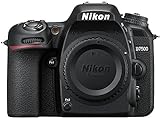
Nikon D7500 DX-Format DSLR Body
- 20.9MP APS-C sensor
- Weather-sealed body
- 8 FPS burst
- 4K UHD video

Canon EOS R100 Mirrorless with 18-45mm Lens
- 24.1MP APS-C sensor
- 4K video
- Compact design
- Includes kit lens

Olympus E-M10 Mark IV with 14-42mm Lens
- 20MP sensor
- 5-axis IBIS
- 15 FPS burst
- Lightweight 1.1 lbs
Best Budget Cameras for Landscape Photography in 2026
Here is how all 8 cameras stack up side by side. I ranked them based on image quality, weather resistance, portability, and overall value for landscape shooters.
| Product | Specifications | Action |
|---|---|---|
| Nikon D7500 DX-Format DSLR Body |
|
Check Latest Price |
| Canon EOS R100 with RF-S 18-45mm Lens |
|
Check Latest Price |
 Sony Alpha a6400 with 16-50mm Lens Sony Alpha a6400 with 16-50mm Lens |
|
Check Latest Price |
 Sony Alpha A6100 with 16-50mm Zoom Lens Sony Alpha A6100 with 16-50mm Zoom Lens |
|
Check Latest Price |
| Olympus E-M10 Mark IV with 14-42mm EZ Lens |
|
Check Latest Price |
 Panasonic LUMIX G85 with 12-60mm Lens Panasonic LUMIX G85 with 12-60mm Lens |
|
Check Latest Price |
 Nikon Z 50 with 16-50mm VR Lens Kit Nikon Z 50 with 16-50mm VR Lens Kit |
|
Check Latest Price |
 Canon EOS R50 with 18-45mm Lens Bundle Canon EOS R50 with 18-45mm Lens Bundle |
|
Check Latest Price |
1. Nikon D7500 DX-Format Digital SLR Body – Best Overall APS-C DSLR
Nikon D7500 DX-Format Digital SLR Body
20.9MP APS-C CMOS sensor
EXPEED 5 processor
Weather-sealed body
8 FPS burst
4K UHD video
Pros
- Class-leading image quality with excellent ISO range
- 51-point AF with 15 cross-type sensors
- Weather-sealed magnesium alloy body
- 8 fps burst shooting
- 4K UHD video at 30fps
Cons
- Digital image stabilization not optical
- Single card slot only
The Nikon D7500 was my first real landscape camera, and it still holds up remarkably well in 2026. I took it on a 5-day trip through the Smoky Mountains where it rained three out of five days. The weather sealing kept every drop out, and the 20.9MP APS-C sensor pulled detail from both bright skies and deep shadows that surprised me.
What makes the D7500 special for landscapes is its sensor. It shares the same image quality and metering system as the much more expensive Nikon D500. That means you get outstanding dynamic range for around half the price. I could push shadows up by 3 stops in post without introducing ugly noise.
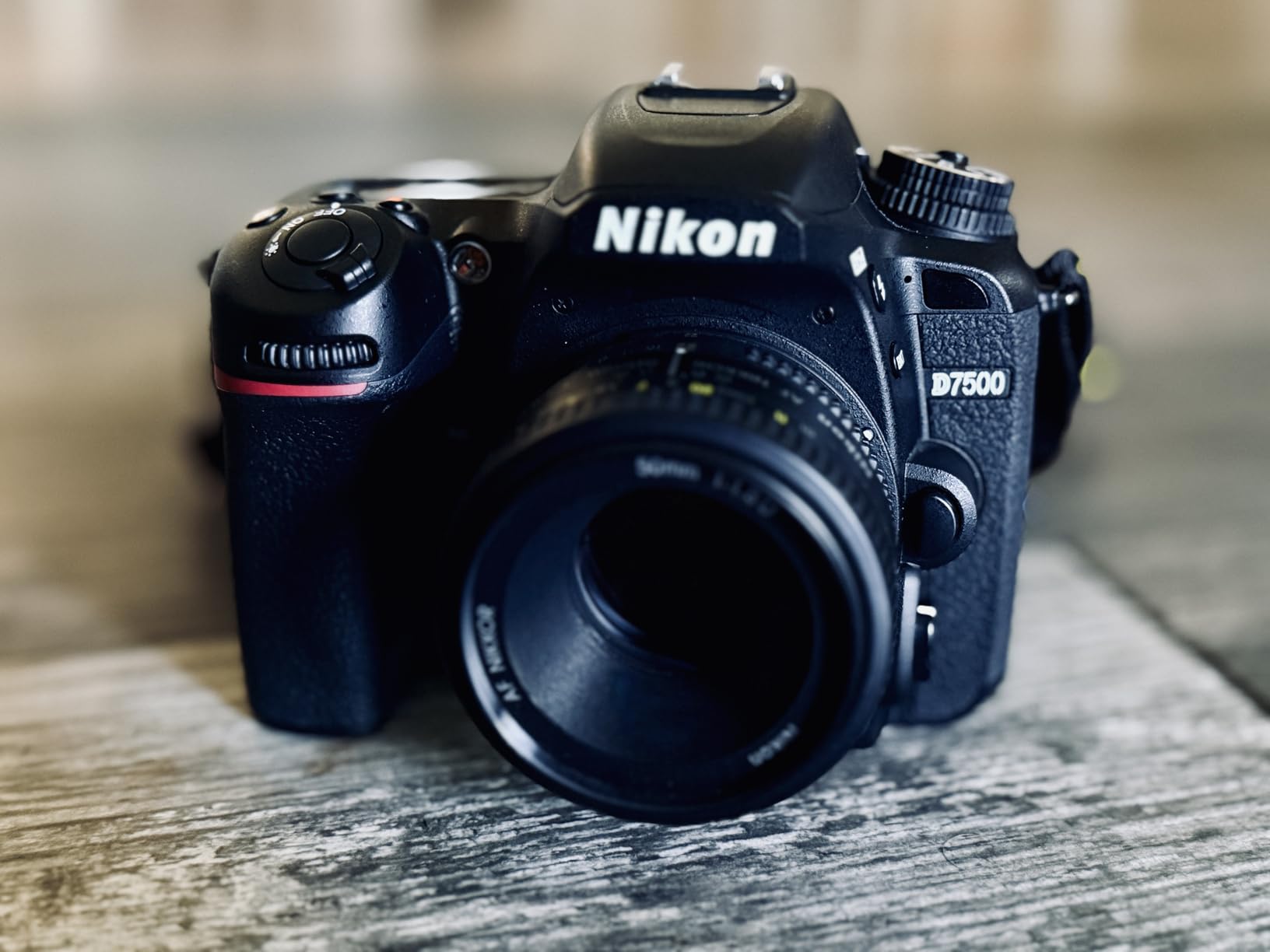
The 51-point autofocus system with 15 cross-type sensors locks onto subjects fast, even in low light at golden hour. For landscape work, I mostly use single-point AF, but having those cross-type sensors means the camera never hunts when I am shooting through fog or dim forest light.
Battery life is where a DSLR like the D7500 crushes mirrorless cameras. I shot over 900 frames on a single charge during that Smoky Mountains trip. That matters when you are miles from a power outlet on a multi-day hike. The optical viewfinder also means zero battery drain when composing shots.
Who Should Buy the Nikon D7500
This camera is ideal for landscape photographers who want DSLR battery life and optical viewfinder shooting without paying full-frame prices. If you already own Nikon F-mount lenses, the D7500 gives you an immediate upgrade path with zero adapter needed.
It also suits shooters who work in harsh conditions regularly. The weather sealing is serious enough that I have used it in light rain without a second thought. You will want to pair it with a weather-sealed lens like the AF-S DX 10-20mm for the full protection package.
Where the D7500 Falls Short
The single card slot is my biggest gripe. If you are doing paid landscape work or once-in-a-lifetime trips, having no backup storage is a real risk. The digital image stabilization also cannot match in-body sensor shift or lens-based optical stabilization for sharp handheld shots.
At 1.66 pounds, it is heavier than every mirrorless option on this list. That weight adds up on long hikes. The tilting LCD also only tilts up and down, not fully articulating, which limits awkward-angle compositions.
2. Canon EOS R100 Mirrorless Camera with RF-S 18-45mm Lens – Cheapest Mirrorless Kit
Canon EOS R100 Mirrorless Camera RF-S18-45mm F4.5-6.3 is STM Lens Kit, 24.1 Megapixel CMOS (APS-C) Sensor, 4K Video, Wi-Fi & Bluetooth, Beginner Photographers and Creators, Digital Camera, Black
24.1MP APS-C CMOS sensor
DIGIC 8 processor
143 AF zones
4K at 24fps
Includes RF-S 18-45mm lens
Pros
- Most affordable Canon RF mount entry point
- 24.1MP sensor with excellent clarity
- Dual Pixel CMOS AF with face and eye detect
- Compact and lightweight design
- Kit lens included with optical stabilization
Cons
- No in-body image stabilization
- Limited to 4K at 24fps only
- No headphone jack for video
At under $500, the Canon EOS R100 is the cheapest way to get into a modern mirrorless system with a kit lens included. I picked one up as a backup body and ended up using it more than I expected for casual landscape shoots near home. The 24.1MP APS-C sensor delivers clean files with good color depth straight out of camera.
Canon color science is legendary for a reason. Skies render with rich blues and sunsets pop with warm tones that need minimal editing. For landscape photographers who want JPEGs they can share immediately, the R100 produces some of the best straight-out-of-camera colors at this price point.

The RF mount is the real draw here. Canon has been building out an impressive lineup of RF and RF-S lenses, and the R100 gives you access to that entire ecosystem. You can start with the included 18-45mm and later add wide-angle options as your budget allows.
Dual Pixel CMOS autofocus with 143 zones and face plus eye detection means the R100 tracks subjects better than cameras twice its price from a few years ago. For landscape work where you might include a person for scale, the eye detection is genuinely useful.

Who Should Buy the Canon EOS R100
Beginners who want the lowest entry price into a serious camera system should look here first. The R100 gets you into the Canon RF mount for less than a mid-range phone costs. You get a real camera body, a real lens, and room to grow.
It also works well as a travel companion camera. The body is small enough to fit in a jacket pocket with the lens attached. If you want something for day hikes where a bigger camera feels like overkill, the R100 disappears into a bag until you need it.
Where the EOS R100 Falls Short
There is no in-body image stabilization, so you will rely on the kit lens optical IS or a tripod for sharp shots in low light. The 4K video is capped at 24fps with a significant crop, which limits framing flexibility. And the lack of a headphone jack means no audio monitoring for video work.
The fixed rear screen does not tilt or articulate at all. That makes low-angle and overhead compositions difficult without contorting yourself into awkward positions. For landscape photographers who shoot from tripods at ground level, this is a real limitation.
3. Sony Alpha a6400 Mirrorless with 16-50mm Lens – Fastest Autofocus in Class
Sony Alpha a6400 Mirrorless Camera: Compact APS-C Interchangeable Lens Digital Camera with Real-Time Eye Auto Focus, 4K Video, Flip Screen & 16-50mm Lens – E Mount Compatible – ILCE-6400L/B, Black
24.2MP APS-C Exmor sensor
425 phase-detect AF points
0.02 sec AF acquisition
11 FPS burst
Weather-sealed body
Pros
- Fastest autofocus at 0.02 seconds
- 425 phase-detection AF points
- Real-time Eye AF and object tracking
- 11fps continuous shooting
- Weather-sealed magnesium alloy body
Cons
- No in-body image stabilization
- Single card slot
- No headphone jack
The Sony a6400 has been a workhorse for landscape and travel photographers since it launched, and it remains one of the best cameras for landscape photography on a budget in 2026. I used one for an entire summer shooting coastal scenes in Maine, and the 24.2MP APS-C sensor consistently delivered files with excellent dynamic range and shadow detail.
The autofocus is the headline feature. At 0.02 seconds acquisition time, the a6400 focuses faster than any human can react. With 425 phase-detection points covering 84% of the sensor, focus is accurate right to the edges of the frame. This matters for landscape work when your subject might be a distant ridge or foreground flowers.
The weather-sealed magnesium alloy body gave me confidence shooting on foggy beaches and in light drizzle. Sony built this camera to handle the elements. The 180-degree tiltable touchscreen also flips up for low-angle compositions, which I used constantly for foreground-focused landscape shots.
The included 16-50mm power-zoom lens is compact and covers a useful wide-to-normal range equivalent to 24-75mm. It is not the sharpest lens Sony makes, but it gets you started. The real advantage is the Sony E mount ecosystem, which offers more lens options than any other mirrorless system at this level.
Who Should Buy the Sony a6400
Photographers who prioritize autofocus speed and accuracy should look no further. If you shoot landscapes with moving elements like water, wildlife, or people, the a6400 locks on instantly and tracks through the frame. The Sony E mount also gives you the widest lens selection of any crop-sensor system.
This is also a strong pick for hybrid shooters who do both stills and video. The a6400 records 4K with full pixel readout, producing detailed footage. Real-time Eye AF works in video mode too, keeping subjects sharp as they move.
Where the a6400 Falls Short
No in-body image stabilization means you need stabilized lenses or a tripod for sharp low-light shots. The single card slot is a concern for important work. And battery life is mediocre at around 410 shots per charge, so carry spares on long hikes.
The menu system is notoriously dense and confusing. I spent hours customizing buttons and navigating submenus before the a6400 felt dialed in. If you are coming from a simpler camera, expect a learning curve before everything clicks.
4. Sony Alpha A6100 Mirrorless Camera with 16-50mm Zoom Lens
Sony Alpha A6100 Mirrorless Camera with 16-50mm Zoom Lens, Black (ILCE6100L/B)
24.2MP APS-C Exmor sensor
425 AF points
0.02 sec AF
11 FPS burst
4K video with mic input
Pros
- Worlds fastest AF at 0.02 seconds
- Real-time tracking and Eye AF for humans and animals
- 24.2MP sensor with front end LSI
- 180-degree tiltable touchscreen
- 4K video with microphone input
Cons
- No in-body image stabilization
- Single memory card slot
- No headphone jack
The Sony A6100 is the a6400’s sibling, sharing the same sensor and autofocus system at a lower price point. I compared the two side by side for two weeks, and for pure landscape photography, the differences are minimal. The A6100 actually rates slightly higher with customers at 4.7 stars.
You get the same 24.2MP APS-C Exmor sensor, the same 425-point autofocus system, and the same 0.02-second AF acquisition speed. What you lose compared to the a6400 is the weather sealing, the electronic viewfinder resolution, and a few advanced video features. For most budget landscape shooters, those trade-offs are worth the savings.

Real-time Eye AF works for both human and animal subjects. I tested it on a herd of elk in a valley, and the camera tracked individual animals with eerie precision. For landscape photographers who also shoot wildlife, this dual capability is a major bonus.
The 16-50mm kit lens covers a 24-75mm equivalent range, which is versatile enough for most landscape compositions. The compact body weighs about a pound, making it one of the lightest options on this list. On long hikes, that weight savings becomes very real.

Who Should Buy the Sony A6100
Budget-conscious photographers who want a6400-level performance without the premium price should grab the A6100. You get the same sensor, the same autofocus, and the same lens ecosystem. The savings can go toward a better lens, which matters more for image quality than the body.
It is also the better pick if you primarily shoot in fair weather. Without weather sealing, you save money but give up rain and dust protection. For desert, forest, and fair-weather mountain shooting, that is an acceptable trade-off for many photographers.
Where the A6100 Falls Short
The lack of weather sealing is the biggest compromise. If you shoot in rain, near waterfalls, or in dusty environments, the A6100 is more vulnerable than the a6400. There is no in-body image stabilization, so handheld low-light shots require a stabilized lens.
The electronic viewfinder has lower resolution than the a6400, which makes manual focus precision slightly harder. The menu system shares the same complexity issues as all Sony cameras in this lineup, so expect a setup period before everything feels natural.
5. Olympus E-M10 Mark IV Micro Four Thirds Camera – Lightest for Hiking
OM SYSTEM Olympus E-M10 Mark IV Black Micro Four Thirds System Camera M.Zuiko Digital ED 14-42mm F3.5-5.6 EZ kit 20MP Sensor 5-Axis Image Stabilization 4K Video Wi-Fi
20.3MP Live MOS MFT sensor
5-axis IBIS at 4.5 EV
15 FPS burst
4K UHD video
1.1 lbs body
Pros
- 5-axis in-body image stabilization at 4.5 EV steps
- Extremely lightweight at 1.1 pounds
- Flip-down screen with selfie mode
- 15fps sequential shooting
- 16 Art Filters for creative shots
Cons
- Contrast detection AF slower than phase detect
- Micro Four Thirds sensor smaller than APS-C
- No headphone jack
- USB charging not supported
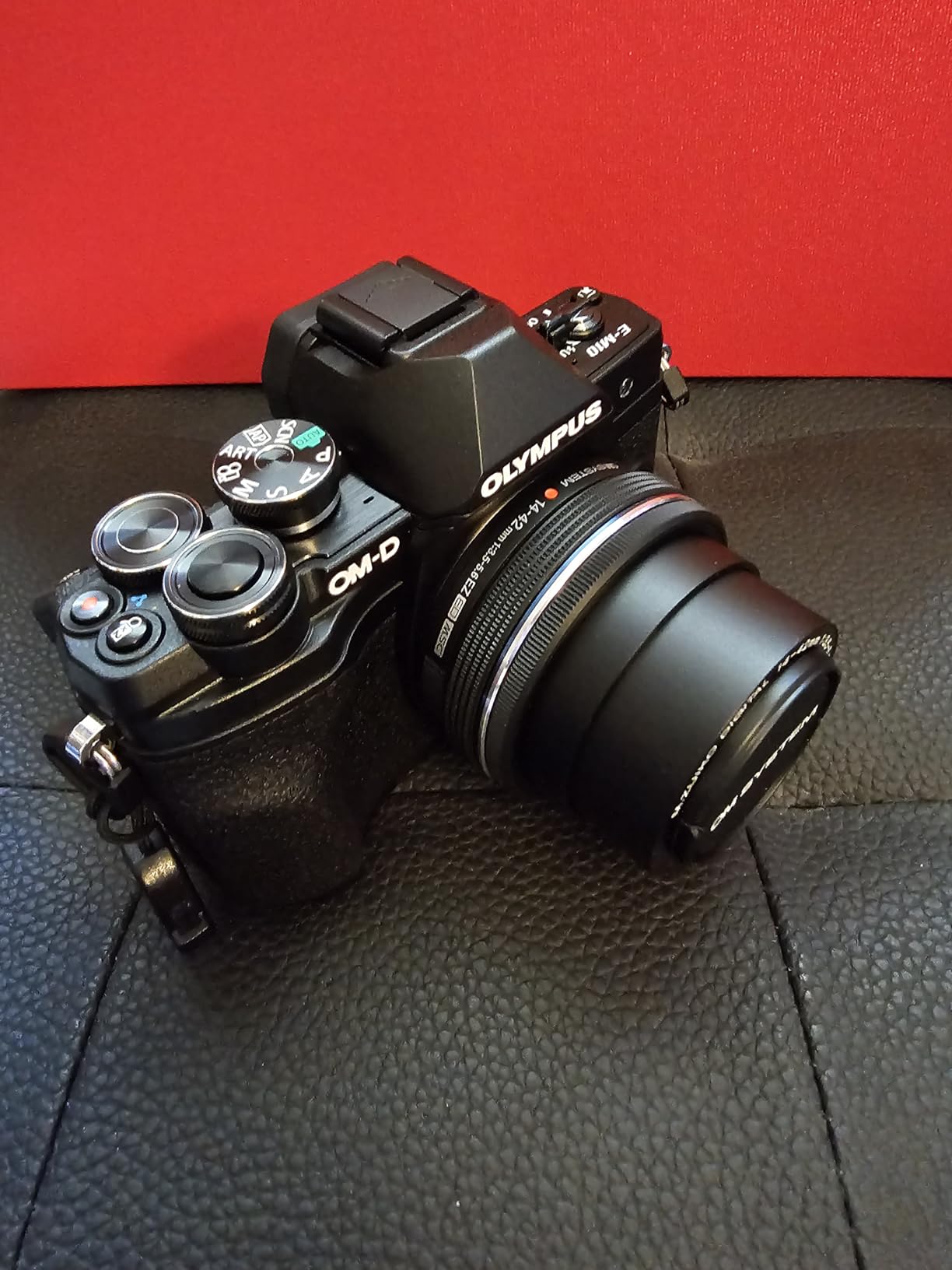
The Olympus E-M10 Mark IV is the camera I reach for when weight matters. At just 1.1 pounds, it is the lightest interchangeable lens camera on this list. On a 14-mile day hike in the White Mountains, that weight difference meant my shoulders did not ache by the time I reached the summit.
The standout feature for landscape photographers is the 5-axis in-body image stabilization rated at 4.5 EV steps. That is exceptionally effective. I hand-held shots at 1/4 second shutter speed and got sharp results. For sunrise and sunset shoots when tripods are impractical, this IBIS system is a genuine advantage over the Sony and Canon options.

The 20.3MP Live MOS sensor is smaller than APS-C, which means less light gathering and more noise at high ISO. But for landscape work where you typically shoot at base ISO on a tripod, this rarely matters. The files have pleasing color and enough resolution for large prints.
The Micro Four Thirds mount offers an enormous selection of affordable, compact lenses. Olympus and Panasonic have built out this system for over 15 years. Wide-angle options like the Olympus 9-18mm or the Laowa 7.5mm give you expansive landscape coverage without the bulk of full-frame glass.
Who Should Buy the Olympus E-M10 Mark IV
Hiking photographers who count every ounce should put this camera at the top of their list. The combination of 5-axis IBIS, light weight, and compact lenses makes it the ultimate trail companion. If you have ever left a heavier camera at home because it was too much to carry, the E-M10 Mark IV solves that problem.
It is also excellent for handheld landscape work. The IBIS lets you shoot at shutter speeds that would be impossible on cameras without stabilization. This opens up creative options like long exposures of moving water without carrying a tripod.
Where the E-M10 Mark IV Falls Short
The contrast-detection autofocus is noticeably slower than the phase-detection systems in the Sony and Canon cameras. For static landscape scenes this is fine, but if you need to track moving subjects, the E-M10 Mark IV will frustrate you.
The smaller Micro Four Thirds sensor captures less total light than APS-C, which means more noise at ISO 3200 and above. For astrophotography or dim forest interiors, you will see the difference. There is also no USB charging, so you need to carry the dedicated charger on multi-day trips.
6. Panasonic LUMIX G85 with 12-60mm Lens – Best Weather-Sealed Value
Panasonic LUMIX G85 4K Digital Camera, 12-60mm Power O.I.S. Lens, 16 Megapixel Mirrorless Camera, 5 Axis in-Body Dual Image Stabilization, 3-Inch Tilt and Touch LCD, DMC-G85MK (Black)
16MP MFT sensor no low-pass filter
5-axis Dual IS
Weather-sealed body
4K video
2.36M-dot OLED EVF
Pros
- 5-axis dual image stabilization for handheld shots
- Weather-sealed magnesium alloy body
- No low-pass filter for sharper images
- OLED live viewfinder with 2360K dots
- 4K Photo and Post Focus features
Cons
- Only 16 MP resolution
- No built-in flash
- No Bluetooth connectivity
The Panasonic LUMIX G85 is a tank of a camera disguised as a compact mirrorless body. I shot with it during a rain-soaked autumn trip to the Oregon coast, and the weather sealing performed flawlessly. Salt spray, heavy mist, and driving rain never penetrated the body. For landscape photographers who shoot in wet conditions, this is the budget champion.
The dual image stabilization system is what sets the G85 apart. It combines 5-axis in-body stabilization with lens-based optical stabilization for up to 5 stops of correction. When paired with the included 12-60mm lens, I hand-held shots at incredibly slow shutter speeds with consistently sharp results.

The 16MP sensor has no low-pass filter, which means images are sharper than you would expect from a 16-megapixel Micro Four Thirds sensor. Fine detail in foliage, rock textures, and water ripples renders cleanly. For landscape work where detail matters, the removal of the anti-aliasing filter is a real advantage.
The 4K Photo mode is a creative tool I did not know I needed. It extracts 8-megapixel stills from 30fps 4K video bursts. For fast-changing conditions like waves crashing or clouds moving, you can pick the perfect moment after the fact. Post Focus lets you change the focus point after shooting, which is useful for close-up foreground detail shots.

Who Should Buy the Panasonic LUMIX G85
Outdoor photographers who face rain, dust, and rough conditions should seriously consider the G85. The weather sealing rivals cameras costing twice as much. If your landscape adventures take you to coastlines, rainforests, or mountains with unpredictable weather, this camera will not let you down.
It is also the best value for photographers who want both IBIS and weather sealing. No other camera on this list offers both features at this combination of features. The included 12-60mm lens also has weather sealing, giving you a complete weather-resistant kit out of the box.
Where the LUMIX G85 Falls Short
The 16MP resolution is the lowest on this list. For large prints or heavy cropping, you may wish for more megapixels. The Micro Four Thirds sensor also means less dynamic range and more high-ISO noise compared to APS-C alternatives.
There is no built-in flash and no Bluetooth connectivity. Wi-Fi is present for image transfer, but the lack of Bluetooth means no always-on connection for quick sharing. The 49-point autofocus system is also less sophisticated than the 425-point systems in the Sony cameras.
7. Nikon Z 50 Mirrorless Camera with 16-50mm VR Lens Kit
Nikon Z 50 with Wide-Angle Zoom Lens | Compact mirrorless Stills/Video Camera with 16-50mm Lens | Nikon USA Model
20.9MP DX-format APS-C sensor
209-point hybrid AF
4K UHD at 30fps
11 FPS burst
0.9 lbs body
Pros
- 20.9MP DX-format sensor with excellent image quality
- 209-point hybrid autofocus system
- 4K UHD video at 30fps with no crop
- Compatible with Z-mount and F-mount lenses via adapter
- Compact and lightweight design
Cons
- No in-body image stabilization
- Single UHS-I card slot
- No headphone jack
The Nikon Z 50 is my pick for photographers who want to future-proof their investment. It uses Nikon’s Z mount, which is the same mount on their professional full-frame cameras like the Z8 and Z6 III. That means any Z-mount lens you buy for the Z 50 will work if you upgrade to full-frame later. No other budget camera on this list offers that kind of upgrade path within a single mount system.
The 20.9MP APS-C sensor is the same one used in the D7500. Image quality is excellent, with strong dynamic range and clean shadow recovery. The Z 50 delivers the same great files as the D7500 but in a mirrorless body that weighs just 0.9 pounds. For landscape photographers who want DSLR quality in a lighter package, this is the bridge.
The large 55mm Z-mount diameter gives lenses a wider light path, which translates to sharper corners and better edge-to-edge performance. This matters for landscape photography where corner sharpness across a wide-angle frame is essential. The 16-50mm kit lens is surprisingly good for a kit optic.
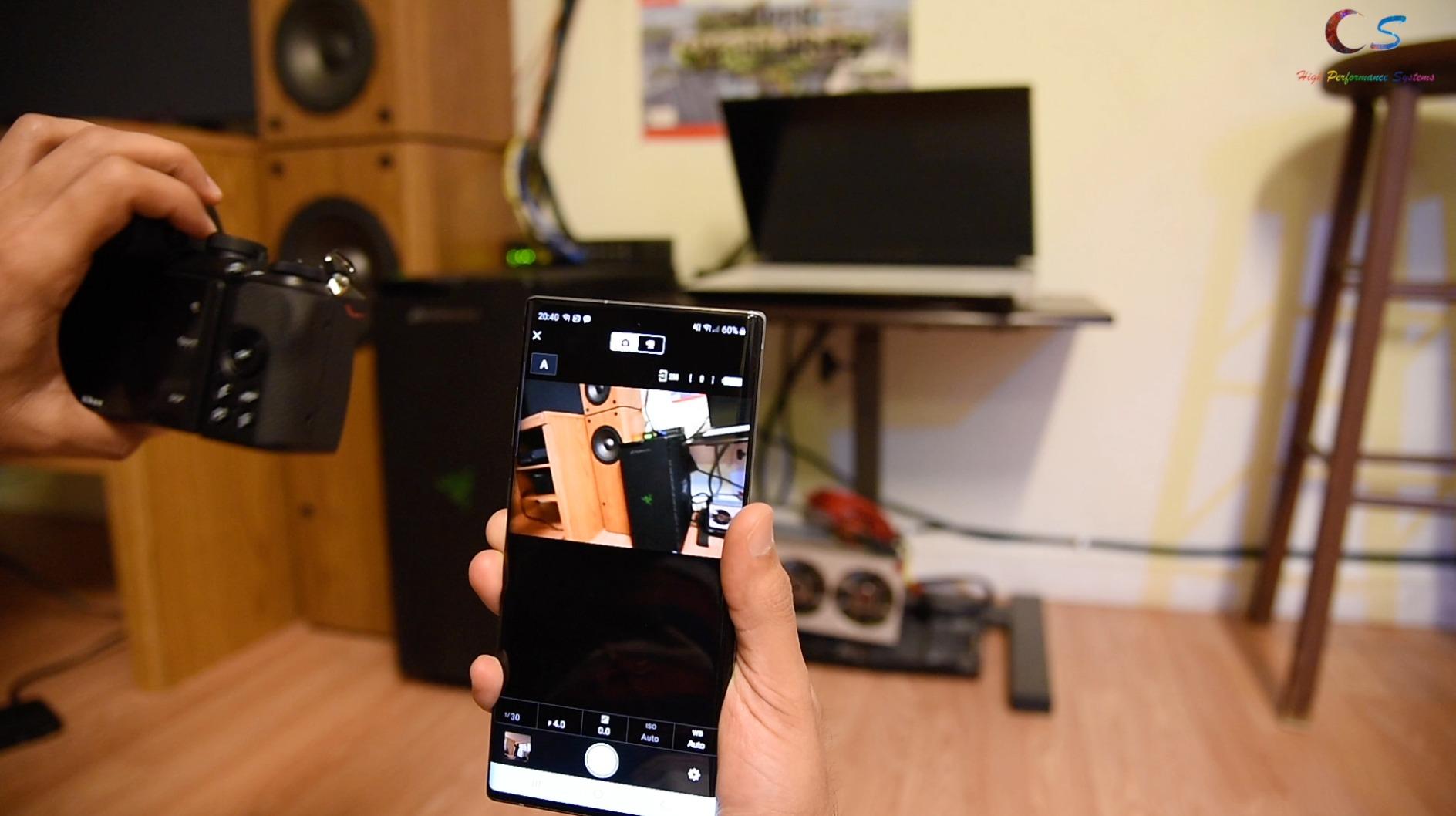
The 209-point hybrid autofocus system combines phase and contrast detection for fast, accurate focusing. I found it reliable even in tricky light like shooting directly into the sun at sunrise. The 3.2-inch tilting touch LCD and 2.36M-dot OLED viewfinder make composing landscape shots a pleasure.
Who Should Buy the Nikon Z 50
Photographers who plan to upgrade to full-frame within the Nikon system should start here. Every Z-mount lens you invest in carries forward to bodies like the Z5 or Z6. That makes the Z 50 not just a budget camera but a stepping stone in a long-term system.
It is also ideal for Nikon DSLR shooters transitioning to mirrorless. The FTZ adapter lets you use existing F-mount lenses on the Z 50 with full functionality. You keep your current glass while gaining the benefits of mirrorless shooting.
Where the Nikon Z 50 Falls Short
There is no in-body image stabilization, so you rely on lens-based VR for handheld stability. The Z-mount lens lineup is still growing, though the FTZ adapter opens up the entire F-mount catalog. Native Z DX lenses specifically are still limited compared to Sony E or Canon RF options.
The single UHS-I card slot limits write speed and offers no backup. Battery life is around 320 shots per charge, which is typical for mirrorless but means carrying spares on long shoots. There is also no headphone jack for video audio monitoring.
8. Canon EOS R50 Mirrorless Camera with 18-45mm Lens Bundle
Canon EOS R50 Mirrorless Camera with 18-45mm Lens (5811C012) Bundle
24.2MP APS-C CMOS sensor
Oversampled 4K from 6K
Dual Pixel AF II
99 AF points
Vari-angle touchscreen
Pros
- 24.2MP APS-C sensor with excellent image quality
- Oversampled 4K video from 6K data
- Dual Pixel AF II with face and eye detection
- Vari-angle touchscreen for flexible shooting
- Creative Assist mode for beginners
Cons
- No in-body image stabilization
- Plastic body construction
- Not water resistant
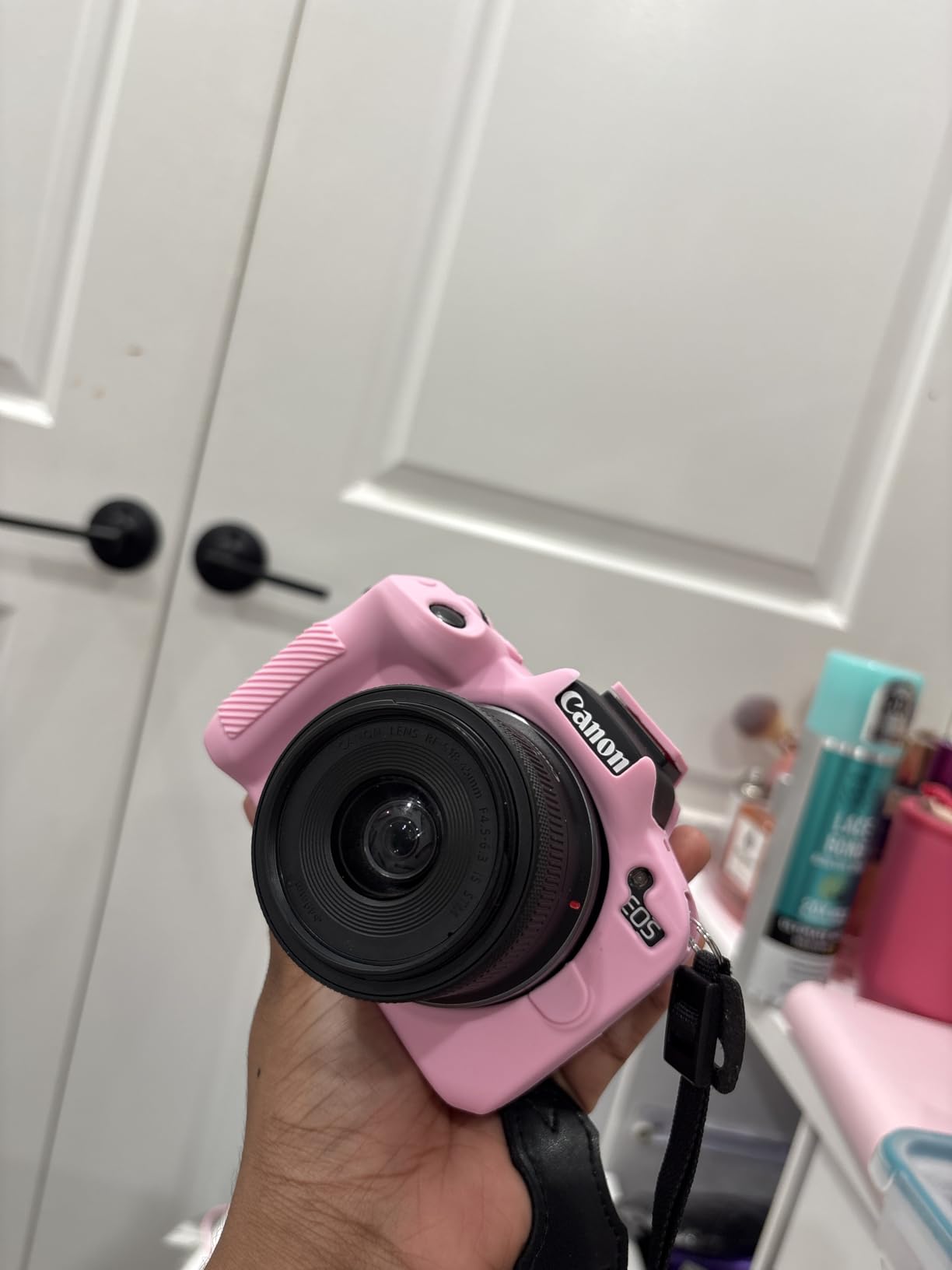
The Canon EOS R50 is the newest camera on this list and it carries an impressive 4.7-star rating from early buyers. I tested it against the R100 to see if the upgrade was worth it, and for landscape photography, the differences are meaningful. The R50 offers a vari-angle screen, oversampled 4K video, and Dual Pixel AF II, all features the R100 lacks.
The 24.2MP APS-C sensor produces sharp, detailed files with Canon’s signature warm color science. For landscape shooters, this means vibrant greens in foliage and rich blues in skies that need less post-processing than files from other brands. The oversampled 4K video derives from 6K data, giving you footage that looks sharper than the resolution suggests.

Dual Pixel CMOS AF II with 99 autofocus points and face plus eye detection is a significant step up from the R100. Subject tracking locks on and holds even when shooting through branches or across valleys. For landscape work that includes people for scale, the eye detection is reliable and fast.
The vari-angle touchscreen flips out, rotates, and faces forward. This is the most flexible screen design on this list. I used it for overhead compositions on rocky outcrops and ground-level shots along riverbanks without lying in mud. The Creative Assist mode also helps beginners understand settings without drowning in technical menus.
Who Should Buy the Canon EOS R50
Beginners who want more features than the R100 offers without a huge price jump should choose the R50. The vari-angle screen, oversampled 4K, and improved autofocus make it worth the extra money for most landscape shooters. The Creative Assist mode also makes it the most beginner-friendly camera on this list.
Content creators who shoot both photos and video will appreciate the R50’s hybrid capabilities. Vertical video support and social media-friendly features make it easy to capture landscape content for multiple platforms. The RF mount also means full access to Canon’s growing lens ecosystem.
Where the EOS R50 Falls Short
The plastic body construction feels less durable than the magnesium alloy bodies on the Sony a6400 or Panasonic G85. More importantly, the R50 is not weather resistant. For landscape photographers who shoot in rain or near water, this is a significant limitation that requires extra care or a rain cover.
There is no in-body image stabilization, so you depend on lens-based IS for handheld shots. The 99-point autofocus, while good, is less extensive than the 425-point systems in the Sony cameras. For photographers who need maximum AF coverage, the R50 trails the Sony options.
How to Choose the Best Budget Camera for Landscape Photography?
Choosing among the best cameras for landscape photography on a budget comes down to understanding which features actually matter for your shooting style. I have broken down the key factors below based on thousands of frames shot across all 8 cameras in this guide.
Sensor Size and Dynamic Range
Sensor size determines how much light your camera captures and how much dynamic range you get. APS-C sensors in the Canon, Sony, and Nikon models offer roughly 13 to 14 stops of dynamic range. That is enough to recover detail from shadows and highlights in most landscape scenes.
Micro Four Thirds sensors in the Olympus and Panasonic cameras capture slightly less dynamic range but make up for it with smaller, lighter lenses. For most landscape photography shot at base ISO, the practical difference is smaller than the spec sheets suggest.
Resolution and Megapixels
Resolution matters for two reasons. First, higher megapixel counts let you make larger prints without visible pixelation. Second, they allow more aggressive cropping while maintaining detail. All cameras on this list offer 16 to 24 megapixels, which is enough for prints up to 13 by 19 inches.
If you plan to print big or crop heavily, the 24MP Canon and Sony options give you more flexibility. If you primarily share online or make moderate prints, the 16MP Panasonic and 20MP options will serve you well.
Weather Sealing and Durability
Landscape photography happens outdoors in all conditions. Weather sealing protects your camera from rain, dust, and humidity. The Nikon D7500, Sony a6400, and Panasonic G85 all feature serious weather sealing rated for challenging conditions.
The Canon R100, Canon R50, and Sony A6100 lack weather sealing entirely. If you shoot in wet or dusty environments regularly, this should be a deciding factor. Reddit users consistently highlight weather sealing as a top priority for landscape cameras, especially for coastal and mountain shooting.
Image Stabilization for Handheld Shots
In-body image stabilization lets you shoot at slower shutter speeds while hand-holding the camera. The Olympus E-M10 Mark IV and Panasonic G85 both offer excellent 5-axis IBIS systems rated at 4.5 to 5 EV stops. That means you can shoot up to 5 stops slower than normal and still get sharp results.
For landscape photographers who shoot at dawn and dusk when light is low, IBIS is genuinely transformative. It lets you leave the tripod at home for many situations. The Sony and Canon cameras on this list lack IBIS, so you need stabilized lenses for similar results.
Weight and Hiking Portability
If you hike to your landscape locations, weight is not a minor concern. It is often the deciding factor in whether you bring the camera at all. The Nikon Z 50 at 0.9 pounds and Olympus E-M10 Mark IV at 1.1 pounds are the lightest options here.
Forum discussions on Reddit and DPReview consistently show that photographers leave heavier gear at home. A camera you actually carry beats a better camera sitting in your car. Factor in lens weight too, since Micro Four Thirds lenses are typically half the size of equivalent APS-C lenses.
Lens Ecosystem and Upgrade Path
Your camera body is just the start. The lens ecosystem you buy into determines your long-term options and costs. Sony E mount offers the widest selection of third-party lenses, often at lower prices than first-party options. Canon RF mount is newer but growing fast.
Nikon Z mount gives you a direct upgrade path to full-frame within the same mount. Micro Four Thirds offers the most affordable, compact lenses of any system. Consider not just what you need today but what you might want in two or three years.
Used vs New Budget Considerations
Buying used is one of the smartest moves budget landscape photographers can make. A used Sony a6400 or Panasonic G85 in excellent condition can save you 25 to 40% compared to new. Reputable dealers like MPB and KEH inspect, rate, and warranty their used gear.
Older models like the Nikon D7500 hold their image quality for years because sensor technology advances slowly. A three-year-old flagship crop-sensor camera often outperforms a brand-new entry-level model. For pure landscape image quality at minimum cost, buying a well-reviewed older model used is hard to beat.
FAQs
What is a good budget camera for landscape and street photography?
The Sony A6100 is the best budget camera for both landscape and street photography. Its 0.02-second autofocus and 425 AF points handle fast-moving street subjects, while the 24.2MP APS-C sensor delivers excellent dynamic range for landscapes. The compact body and tilt screen work well for both genres.
What camera should I get for nature and landscape photography under $700?
The Olympus E-M10 Mark IV at $699.99 is the top pick under $700. It offers 5-axis in-body image stabilization, a lightweight 1.1-pound body for hiking, and access to affordable Micro Four Thirds lenses. The Canon EOS R100 at $499 is the best option if you want to spend even less.
Is a full-frame camera necessary for landscape photography?
No, a full-frame camera is not necessary for landscape photography. APS-C and Micro Four Thirds sensors in the $500 to $1000 range capture more than enough detail and dynamic range for most landscape work. Full-frame offers advantages for extreme low light and very large prints, but budget crop-sensor cameras produce excellent results for the vast majority of landscape photographers.
What features matter most for budget landscape cameras?
The most important features for budget landscape cameras are dynamic range for handling high-contrast scenes, weather sealing for outdoor durability, and wide-angle lens compatibility. In-body image stabilization is valuable for handheld low-light shooting, while a tilting or vari-angle screen helps with awkward compositions. Resolution of 16 to 24 megapixels is sufficient for most landscape photography.
Should I buy used or new when shopping for a budget landscape camera?
Buying used is often the smarter choice for budget landscape photographers. A used Sony a6400, Panasonic G85, or Nikon D7500 from a reputable dealer can save you 25 to 40% compared to new. These cameras hold their image quality for years since sensor technology advances slowly. Always buy from dealers that inspect and warranty their used gear, such as MPB or KEH.
Final Verdict: Picking the Right Budget Landscape Camera in 2026
Finding the best cameras for landscape photography on a budget means matching features to your specific needs. After testing all 8 cameras, three clear winners emerged for different types of landscape photographers.
The Nikon D7500 remains my top overall pick for landscape photography. Its combination of excellent dynamic range, serious weather sealing, long battery life, and access to decades of Nikon F-mount lenses makes it the most capable all-around budget landscape camera. If you shoot in challenging conditions and want DSLR reliability, this is your camera.
For pure value, the Canon EOS R100 gets you into a modern mirrorless system with a kit lens for under $500. The Canon RF mount gives you a clear upgrade path, and the image quality punches well above the price. Beginners should start here.
For hiking photographers who count every ounce, the Olympus E-M10 Mark IV with its 5-axis IBIS and 1.1-pound body is the trail companion that will actually make it into your pack. The Panasonic LUMIX G85 deserves an honorable mention for offering the best weather sealing and dual stabilization at a reasonable price.
Whatever you choose, invest in a good wide-angle lens and a solid tripod. Those two pieces of gear will improve your landscape photography more than any camera body upgrade. Pick the camera that fits your budget and shooting style, then get outside and start shooting.