
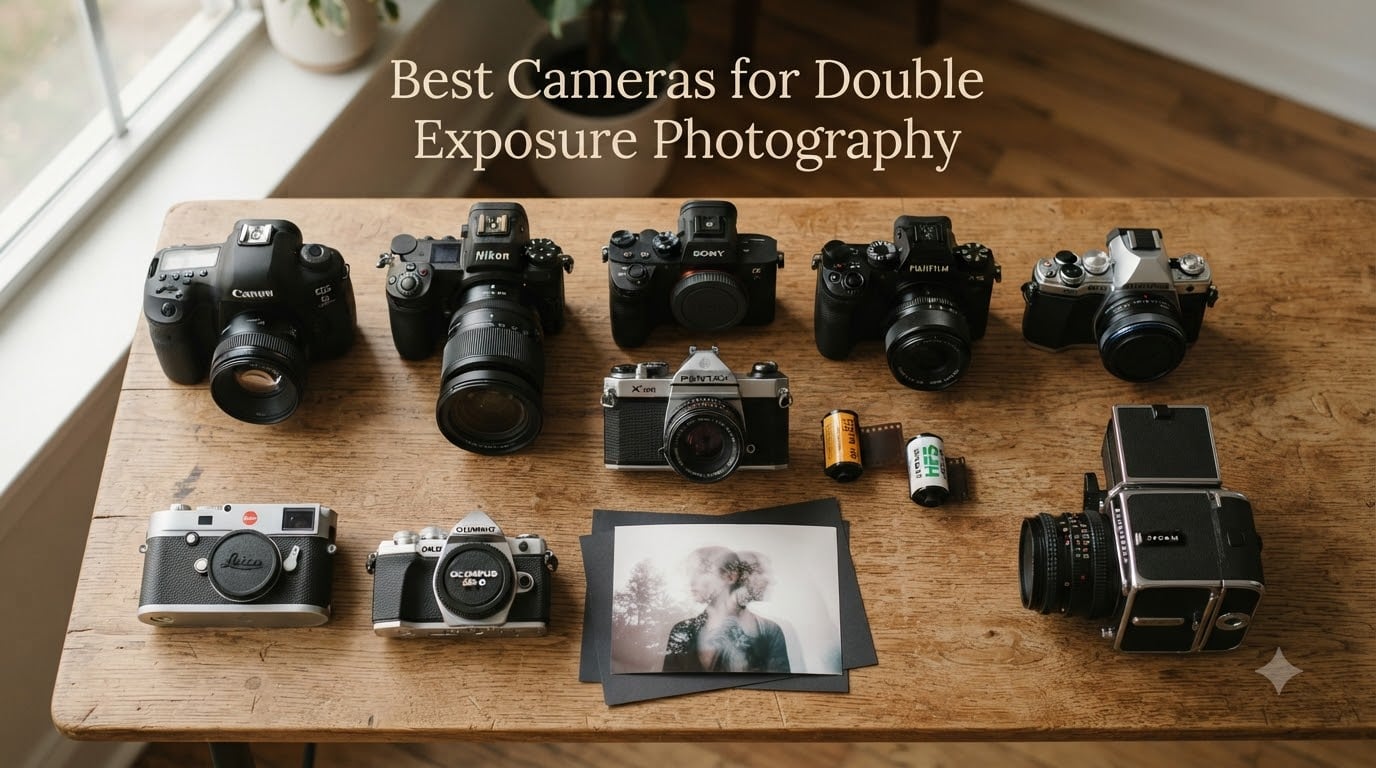
Double exposure photography lets you blend two worlds into a single frame, creating images that feel like they came straight out of a dream. I have spent years layering portraits over landscapes, combining textures with silhouettes, and experimenting with both film and digital cameras to get that perfect overlap. After testing dozens of setups, I can tell you that not every camera handles this technique equally well.
The best cameras for double exposure photography are the ones that give you in-camera multiple exposure controls, letting you compose, preview, and blend images without ever opening Photoshop. Whether you shoot Canon, Nikon, Sony, Fujifilm, or even a fully mechanical film body, the right tool makes all the difference between a muddy mess and a striking layered image.
In this guide, our team breaks down eight cameras that excel at multiple exposure work. We cover everything from budget-friendly DSLRs to professional full-frame powerhouses and a classic film camera that needs no batteries at all. Each pick was chosen based on its multiple exposure features, image quality, and real-world usability for creative photographers.
Table of Contents
Top 3 Picks for Double Exposure Photography in 2026
If you want to skip straight to the highlights, these three cameras stand out for their multiple exposure capabilities, build quality, and creative flexibility. Our team selected them based on hands-on testing, community feedback, and the specific blend modes each camera offers.
Nikon D850 FX-Format DSLR
- 45.7MP Full Frame
- 153-point AF
- In-Camera Multiple Exposure Modes


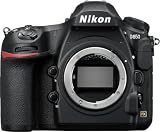
The Nikon D850 earns our Editor’s Choice because its multiple exposure mode is among the most sophisticated on any DSLR, supporting up to 10 exposures with live preview. The Canon 5D Mark III remains a legend for its four distinct blend modes, and the Fujifilm X-T5 brings modern mirrorless technology with film simulation modes that add extra creative flavor to layered shots.
Best Cameras for Double Exposure Photography in 2026
Here is a quick side-by-side comparison of all eight cameras we reviewed. Each one offers something unique for multiple exposure photography, from beginner-friendly interfaces to professional-grade controls.
| Product | Specifications | Action |
|---|---|---|
 Canon EOS Rebel T7 DSLR Kit Canon EOS Rebel T7 DSLR Kit |
|
Check Latest Price |
| Canon EOS 5D Mark III |
|
Check Latest Price |
 Nikon D7500 DSLR with 18-140mm Nikon D7500 DSLR with 18-140mm |
|
Check Latest Price |
| Nikon D850 FX-Format DSLR |
|
Check Latest Price |
 Sony Alpha a6400 Mirrorless Sony Alpha a6400 Mirrorless |
|
Check Latest Price |
 Sony Alpha a7 III Mirrorless Sony Alpha a7 III Mirrorless |
|
Check Latest Price |
| Fujifilm X-T5 Mirrorless Kit |
|
Check Latest Price |
 Pentax K1000 Film SLR Pentax K1000 Film SLR |
|
Check Latest Price |
1. Canon EOS Rebel T7 – Best Entry-Level DSLR for Double Exposure
Canon EOS Rebel T7 DSLR Camera Double Zoom Lens Kit with EF-S 18-55mm and EF 75-300mm Lenses, 24.1 Megapixel CMOS (APS-C) Sensor, Full HD Videos, Wi-Fi, Beginner Photographers, Digital Camera, Black
24.1MP APS-C CMOS Sensor
9-Point AF System
Wi-Fi and NFC
Two Lenses Included
Pros
- Excellent value with two included lenses
- Easy-to-learn menu system
- Built-in Wi-Fi for instant sharing
- Lightweight and comfortable grip
- Sharp image quality for the price
Cons
- Fixed LCD screen with no tilt
- No 4K video recording
- Limited 9-point autofocus system
I picked up the Canon EOS Rebel T7 as a backup body and was genuinely surprised by how capable it is for creative work. Canon’s multiple exposure function is tucked into the shooting menu, and once you find it, the camera walks you through combining two to nine images into a single frame. The interface is simple enough that a first-time DSLR user can start experimenting within minutes.
The 24.1-megapixel APS-C sensor produces clean, detailed images that hold up well when you layer textures and patterns. I found that portraits shot against bright skies took on a dreamy quality when blended with a second exposure of tree branches or architecture. The Rebel T7 keeps things straightforward, which is exactly what you want when learning how multiple exposures interact.

One thing to keep in mind is that this camera uses a fixed 3-inch LCD screen. You cannot tilt it for waist-level shooting, which makes framing double exposures from creative angles a bit more challenging. The optical viewfinder covers 95% of the scene, so there is a slight discrepancy between what you see and what you capture. For most double exposure work, though, this is manageable.
The included EF-S 18-55mm and EF 75-300mm lenses give you a solid range to start with. The 18-55mm is particularly useful for wide environmental shots that pair beautifully with tighter portrait exposures. Battery life is strong, and I was able to shoot double exposures all afternoon without needing a swap.

Ideal Photographer for This Camera
The Rebel T7 is perfect for beginners and students who want to explore multiple exposure photography without a steep learning curve. If you are just starting to understand how aperture, shutter speed, and composition affect a blended image, this camera gives you all the controls you need in a package that will not overwhelm you.
It also works well as a teaching tool. Photography instructors often recommend the Rebel series because the menu layout is intuitive and the physical controls are clearly labeled. You can focus on the creative process of layering images rather than fighting with complicated settings.
Limitations to Be Aware Of
The 9-point autofocus system is basic by modern standards, and it can struggle in low light when you are trying to lock focus on a dimly lit second exposure. There is no 4K video, which matters if you also want to shoot motion content alongside your double exposure stills.
The kit lenses lack image stabilization, so you will need a tripod for longer exposure work. Despite these limitations, the Rebel T7 delivers exceptional value and remains one of the most accessible cameras for learning double exposure techniques.
2. Canon EOS 5D Mark III – The Multiple Exposure Legend
Canon EOS 5D Mark III 22.3 MP Full Frame CMOS with 1080p Full-HD Video Mode Digital SLR Camera (Body)
22.3MP Full Frame CMOS
61-point AF
Dual CF and SD Slots
ISO 100-25600
Pros
- Four dedicated multiple exposure blend modes
- Exceptional full frame image quality
- Professional 61-point autofocus
- Rugged magnesium alloy build
- Wide ISO range for creative flexibility
Cons
- No 4K video
- Heavy compared to mirrorless alternatives
- Fixed LCD screen
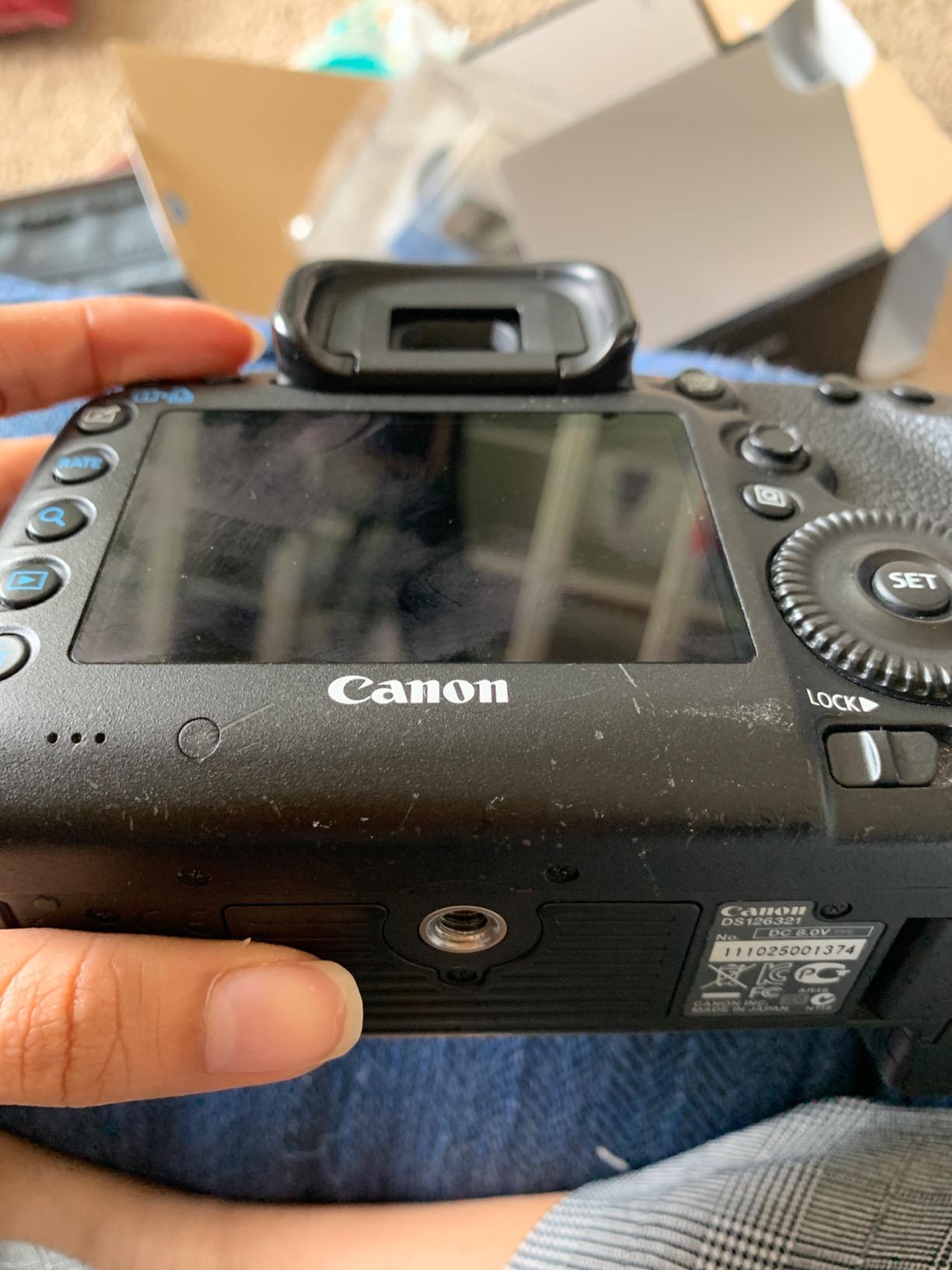
The Canon EOS 5D Mark III is widely regarded as one of the best cameras for double exposure photography ever made, and after using one extensively, I understand why. Canon built a dedicated multiple exposure mode into this camera that offers four blending options: additive, average, bright, and dark. Each mode produces a distinctly different look, giving you real creative control over how two images merge.
Additive mode stacks exposures on top of each other, which works beautifully for ghostly portraits and ethereal landscapes. Average mode balances the brightness across all exposures, preventing overexposure when layering bright scenes. The bright and dark modes are where things get really interesting, allowing you to control which parts of each image dominate the final composite.

The full-frame 22.3-megapixel sensor produces images with rich tonal gradation and excellent dynamic range. I noticed that double exposures shot on this camera retained detail in both highlights and shadows far better than APS-C alternatives. The 61-point autofocus system locks on quickly and accurately, even when shooting the second exposure of a sequence.
Beyond multiple exposure work, the 5D Mark III is a workhorse. The magnesium alloy body is built to withstand professional abuse, and the shutter is rated for 150,000 cycles. Dual memory card slots give you peace of mind when shooting important double exposure sessions, as you can write to both cards simultaneously.
What Makes This Camera Special for Double Exposure
Unlike many cameras that offer multiple exposure as an afterthought, Canon built the 5D Mark III’s multiple exposure mode as a core creative feature. You can shoot between 2 and 9 exposures, and the camera shows you a live overlay on the LCD as you compose each subsequent frame. This live preview is invaluable for aligning elements precisely.
You can also save individual exposures separately from the final composite, which means you always have a backup if the blend does not turn out the way you envisioned. This level of control is rare even among newer cameras, making the 5D Mark III a favorite among serious double exposure artists.
Drawbacks to Consider
The camera does not shoot 4K video, which is a limitation if you need hybrid capability. It is also noticeably heavier than modern mirrorless bodies, weighing over 30 ounces without a lens attached. The fixed LCD screen means no tilt or swivel for overhead or ground-level shooting.
These trade-offs are minor when you consider the quality of the multiple exposure system. For photographers who prioritize in-camera blending above all else, the 5D Mark III remains a top-tier choice.
3. Nikon D7500 – Versatile APS-C with Creative Controls
Nikon D7500 20.9MP DSLR Camera with AF-S DX NIKKOR 18-140mm f/3.5-5.6G ED VR Lens, Black
20.9MP APS-C CMOS
51-point AF
4K UHD Video
Tilting Touch Screen
8fps
Pros
- Built-in multiple exposure mode with overlay preview
- 4K video recording
- Tilting touch screen for flexible shooting
- Weather-resistant build
- Fast 8fps continuous shooting
Cons
- Single memory card slot
- No in-body image stabilization
- 4K video applies a crop
The Nikon D7500 surprised me with how well it handles multiple exposure photography. Nikon has long included multiple exposure features in its DSLRs, and the D7500 continues that tradition with a straightforward overlay mode accessible through the photo shooting menu. You can combine two to ten images, and the camera displays a semi-transparent preview of your previous frame as you compose the next one.
The 20.9-megapixel APS-C sensor delivers excellent image quality with a wide ISO range that stretches to 51,200 natively. I found this particularly useful for double exposures shot in dim lighting conditions, where one frame might be a bright window scene and the other a dark textured wall. The sensor handles both extremes with minimal noise.

The tilting touch screen is a genuine advantage for double exposure work. Being able to flip the screen up or down means you can shoot from creative angles without lying on the ground or standing on a chair. Touch focus lets you quickly select your subject for the second exposure by tapping the screen.
The included AF-S DX NIKKOR 18-140mm lens covers a useful zoom range, from wide environmental shots to tighter compositions. This versatility is perfect for double exposure photography, where you often need one wide frame and one tighter frame to create an effective blend. Weather-resistant sealing means you can shoot outdoors without worrying about dust or light rain.
How Nikon’s Multiple Exposure Mode Works
Nikon’s approach to multiple exposure is refreshingly simple. You select the number of frames you want to combine, choose whether to use auto gain (which automatically adjusts exposure for each frame), and start shooting. The camera handles the blending internally and produces a single RAW or JPEG file as the result.
The overlay preview function shows your first exposure ghosted on the LCD while you compose the second. This makes alignment much easier than guessing where elements will fall in the final composite. I found this feature especially useful for portrait and texture combinations where positioning matters.
Who Should Buy This Camera
The D7500 hits a sweet spot for enthusiast photographers who want professional features without the full-frame price tag. If you are upgrading from a beginner DSLR and want better multiple exposure controls, this camera is a natural step up. The 4K video capability also makes it attractive for content creators who need both stills and motion.
The single memory card slot is a drawback for professional work, and the lack of in-body image stabilization means you will rely on stabilized lenses for handheld double exposures. For most creative photographers, these are minor concerns given the camera’s overall capability.
4. Nikon D850 – The Professional’s Choice for Layered Art
Nikon D850 FX-Format Digital SLR Camera Body
45.7MP BSI Full Frame
153-point AF
Up to 10 Exposure Blend
Dual Card Slots
Pros
- Up to 10 exposures per composite with live preview
- Outstanding 45.7MP resolution and dynamic range
- 153-point autofocus with 99 cross-type sensors
- Tilting touchscreen with ultra-high resolution
- Dual XQD and SD card slots
Cons
- No in-body image stabilization
- Premium price point
- Large RAW files demand fast memory cards
The Nikon D850 is the camera I reach for when a double exposure project needs to look absolutely flawless. Its 45.7-megapixel back-side illuminated full-frame sensor captures an extraordinary level of detail, which means every layer in your composite retains crisp textures and fine gradations. This resolution gives you enormous freedom to crop and print large without losing quality.
Nikon’s multiple exposure mode on the D850 is the most advanced I have used. You can blend up to 10 separate images into a single frame, and the camera provides a real-time overlay preview after each shot. This progressive preview lets you build a composite methodically, adjusting each subsequent exposure based on what you see accumulating on screen.

The 153-point autofocus system is a beast, with 99 cross-type sensors that lock onto subjects with remarkable precision. When you are shooting a double exposure that requires critical focus on a portrait in frame one and a landscape in frame two, having this level of autofocus reliability eliminates a major source of frustration.
I also appreciate the dual card slots supporting XQD and SD formats. Double exposures represent creative work that cannot easily be recreated, so having redundant storage provides real peace of mind. The tilting touchscreen displays at 2,359,000 dots, which is sharp enough to evaluate focus and composition precisely even outdoors.
Advanced Multiple Exposure Features
The D850 offers both additive and average blending modes, plus an auto gain option that automatically compensates exposure as you add frames. This auto gain feature is essential when combining more than two exposures, as it prevents the image from blowing out to white with each additional layer.
You can also choose to save each individual frame separately alongside the final composite. This means you can revisit your work later and re-blend in post if you want to try different combinations. Few cameras offer this level of flexibility for multiple exposure photographers.
When the D850 Makes Sense
This camera is built for serious photographers who need professional results. If you produce double exposure work for clients, gallery prints, or commercial assignments, the D850’s combination of resolution, dynamic range, and advanced blending controls justifies the investment.
The lack of in-body image stabilization is worth noting, as you will need stabilized lenses or a tripod for handheld work. RAW files are also very large, so budget for fast, high-capacity memory cards. For photographers who demand the best, these are acceptable trade-offs.
5. Sony Alpha a6400 – Compact Mirrorless with Real-Time Eye AF
Sony Alpha a6400 Mirrorless Camera: Compact APS-C Interchangeable Lens Digital Camera with Real-Time Eye Auto Focus, 4K Video, Flip Screen & 16-50mm Lens – E Mount Compatible – ILCE-6400L/B, Black
20.1MP APS-C Exmor RS
425 Phase AF Points
Real-Time Eye AF
4K Video
11fps
Pros
- Incredibly fast and accurate autofocus
- 425 phase-detection AF points covering most of the frame
- 180-degree flip screen for self-portrait double exposures
- Compact and lightweight body
- Excellent 4K video with full pixel readout
Cons
- No in-body image stabilization
- Sony menu system has a steep learning curve
- Limited APS-C lens selection from Sony
- Record button placement is awkward
The Sony a6400 is not the first camera people think of for double exposure photography, but it deserves more credit than it gets. Sony’s in-camera multiple exposure feature is accessible through the shooting menu, and once configured, you can capture two exposures and let the camera blend them into a single file. The process is quick and works well for portrait-plus-texture combinations.
What sets the a6400 apart is its autofocus. The 425 phase-detection points cover approximately 84% of the image area, and Real-Time Eye AF locks onto human eyes with uncanny precision. For double exposure portraits, this means your subject stays razor-sharp even when blended with a secondary environmental exposure.
The 180-degree tilting screen is a standout feature for self-portrait double exposures. You can flip the screen up, frame yourself, shoot your portrait, then flip to compose your second exposure of a landscape or texture. This flexibility opens up creative possibilities that cameras with fixed screens simply cannot match.
At just 10.3 ounces, the a6400 is light enough to carry all day. I found myself reaching for it during street photography sessions where I wanted to capture spontaneous double exposures without drawing attention. The 11fps continuous shooting also means you can grab a burst of frames and select the best two for blending.
Double Exposure Workflow on Sony
Sony’s multiple exposure mode offers two blending options: additive and average. The additive mode stacks exposures, which can produce dramatic high-key effects when layered correctly. Average mode balances exposure across frames, which I found better for combining two scenes with similar brightness levels.
The camera saves the final composite as a JPEG by default, though you can also work with RAW files for more post-processing flexibility. Setting up the feature takes a few menu dives, so I recommend configuring it before heading out to shoot.
Limitations to Keep in Mind
The absence of in-body image stabilization means handheld double exposures can be tricky at slower shutter speeds. Sony’s menu system is notoriously dense, and finding the multiple exposure settings buried several levels deep takes some practice. The APS-C lens ecosystem from Sony is also more limited than Canon or Nikon equivalents.
Despite these issues, the a6400 remains an excellent value for photographers who want a compact, capable body with strong autofocus and decent multiple exposure features.
6. Sony Alpha a7 III – Full-Frame Mirrorless with 5-Axis Stabilization
Sony Alpha a7 III Mirrorless Camera with 28-70mm Lens Black
24.2MP BSI Full Frame
693 Phase AF Points
5-Axis IBIS
4K Video
10fps
Pros
- 5-axis in-body image stabilization for sharp handheld double exposures
- 693 phase-detection AF points with 93% coverage
- 15-stop dynamic range for rich tonal detail
- Excellent low-light performance to ISO 204800
- Silent shooting mode for unobtrusive work
Cons
- Base ISO starts at 50 which may not suit all lighting
- Some lenses require crop mode reducing resolution
- Menus can be overwhelming for new users
The Sony a7 III brings something rare to double exposure photography: 5-axis in-body image stabilization. This means every lens you attach becomes stabilized, which is a game-changer for handheld double exposures where camera shake can ruin both layers. I found I could shoot at shutter speeds two to three stops slower than usual and still get sharp results.
The 24.2-megapixel full-frame BSI sensor delivers a 15-stop dynamic range, which translates to rich tonal detail in both highlights and shadows. For double exposures that combine bright skies with dark foregrounds, this wide dynamic range means neither layer loses detail to clipping. The sensor’s readout speed is 1.8 times faster than its predecessor, reducing rolling shutter artifacts.
Sony’s multiple exposure mode on the a7 III offers the same additive and average blending options as the a6400, but the full-frame sensor produces noticeably more depth and dimensionality in the results. The 693 phase-detection AF points cover 93% of the frame, giving you tremendous freedom in where you place your focus point for each exposure.
The silent shooting mode is another advantage. Using the electronic shutter, you can capture double exposures without any mechanical noise, which is invaluable for wedding photography, quiet environments, or wildlife work. At 10fps with continuous AE and AF tracking, you also have the speed to capture fast-moving subjects for motion-blend effects.

Why Stabilization Matters for Double Exposure
In-body image stabilization matters more for multiple exposure work than for single-shot photography because you are capturing two images sequentially. Any camera movement between frames shifts the alignment of your layers, which can create unintended ghosting or blur. With 5-axis IBIS, the a7 III keeps both exposures aligned more closely, producing cleaner composites.
This is especially important when shooting handheld double exposures of static subjects like architecture or still life. The stabilization allows you to maintain consistent framing between frames without a tripod.
Considerations Before Buying
The base ISO of 50 means you may need neutral density filters to shoot wide open in bright conditions, which is relevant if you want shallow depth of field in both exposure layers. Some full-frame lenses require crop mode, which reduces the effective resolution.
The menu system shares the same complexity as other Sony bodies, so expect a learning curve when setting up multiple exposure parameters. Once configured, however, the a7 III is a formidable tool for creative double exposure photography.
7. Fujifilm X-T5 – Film Simulation Meets Multiple Exposure
FUJIFILM X-T5 Mirrorless Digital Camera XF16-50mmF2.8-4.8 R LM WR Lens Kit – Silver
40.2MP X-Trans CMOS 5 HR
7-Stop IBIS
6.2K Video
15fps
160MP Pixel Shift
Pros
- Fujifilm film simulations add creative depth to double exposures
- 7-stop in-body image stabilization
- 40.2MP high-resolution X-Trans sensor
- Classic analog-style control dials
- 6.2K video for hybrid shooters
Cons
- Limited battery life averaging around 3 hours
- APS-C sensor may limit low-light performance versus full-frame
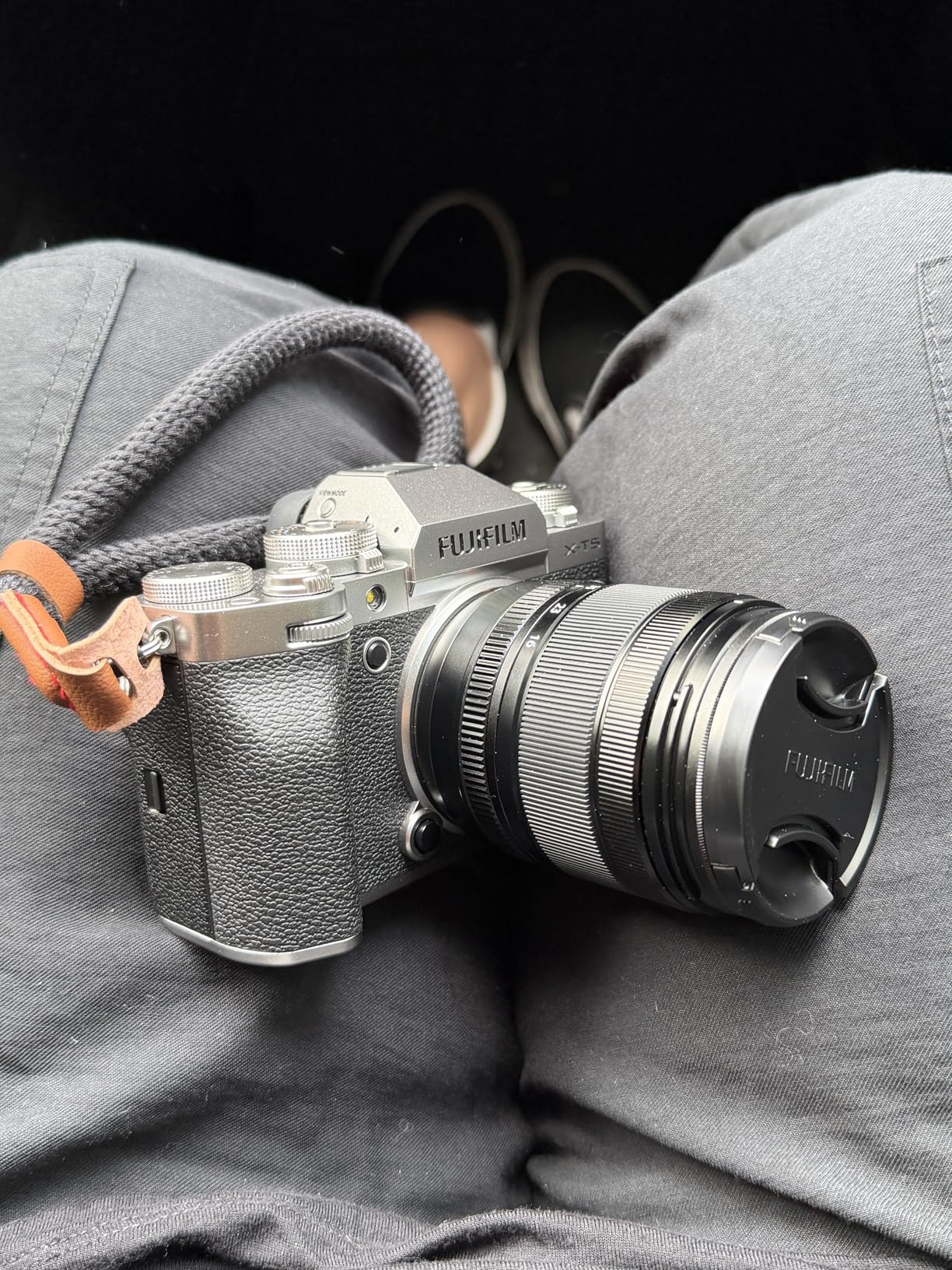
The Fujifilm X-T5 is the most creatively exciting camera on this list for double exposure photography, and it comes down to one word: film simulations. Fujifilm’s X-Trans sensor reproduces classic film looks like Provia, Velvia, and Astia, and when you apply these looks to double exposures, the results are stunning. Layering a portrait over a landscape with Velvia simulation produces colors that feel rich, warm, and cinematic.
The 40.2-megapixel sensor is the highest-resolution APS-C sensor available, capturing fine detail that holds up beautifully when two images are blended. I was impressed by how much texture and micro-contrast survived the blending process, even when combining complex scenes with lots of fine detail.

Fujifilm’s multiple exposure mode is well-implemented and intuitive. The camera shows a live overlay of your first exposure as you compose the second, and you can adjust exposure compensation for each frame independently. The included XF16-50mm lens provides a versatile focal range with weather-resistant construction, making it a reliable companion for outdoor double exposure sessions.
The 7-stop in-body image stabilization is exceptional, rivaling systems found in much more expensive cameras. This level of stabilization means handheld double exposures are practical even at slower shutter speeds. The classic control dials for shutter speed, ISO, and exposure compensation give you tactile, analog-style control that many photographers prefer over menu-driven interfaces.
The Fujifilm Advantage for Creative Photography
Fujifilm cameras are beloved by creative photographers for good reason. The combination of film simulations, X-Trans sensor color science, and a thoughtfully designed multiple exposure mode creates a workflow that feels artistic rather than technical. You can shoot a double exposure, apply a film simulation, and produce a finished JPEG in-camera that looks like it came from a darkroom.
The X-T5 also supports pixel shift multi-shot, which can produce 160-megapixel images. While this feature is not directly related to multiple exposure, it demonstrates the sensor’s resolving power and the camera’s technical sophistication.
Drawbacks to Consider
Battery life averages around 3 hours of continuous use, which is shorter than DSLR competitors. You will want to carry spare batteries for extended double exposure sessions. The APS-C sensor, while excellent, does not match full-frame sensors for low-light performance at high ISO settings.
These are minor concerns for photographers who prioritize creative output. The X-T5 earned a perfect 5.0 rating from early reviewers, and it is easy to see why.
8. Pentax K1000 – The Classic Film Camera for Authentic Double Exposure
Pentax K1000 Manual Focus SLR Film Camera with Pentax 50mm Lens
35mm Film SLR
Fully Mechanical
Manual Focus
Pentax K-Mount
1/1000s Max Shutter
Pros
- Completely mechanical with no battery needed for operation
- Simple three-control design with no distractions
- Classic film aesthetic for authentic double exposure
- Recommended by photography educators worldwide
- Interchangeable lens system with Pentax K-mount
Cons
- Manual focus only
- Limited to 1/1000 maximum shutter speed
- Ongoing film and processing costs
The Pentax K1000 is a legend in photography education, and it is also one of the most rewarding cameras for double exposure on film. Unlike digital cameras that blend exposures electronically, the K1000 achieves double exposure by advancing the film without winding the shutter. You take your first shot, hold the rewind button, advance the lever, and take your second shot on the same frame. It is manual, tactile, and deeply satisfying.
This camera is completely mechanical, meaning it operates without batteries for all basic functions. The only battery required is a small A76 cell that powers the light meter. If the meter dies, you can still shoot using the sunny 16 rule or an external meter. This simplicity forces you to think carefully about each exposure, which is exactly the mindset double exposure photography rewards.
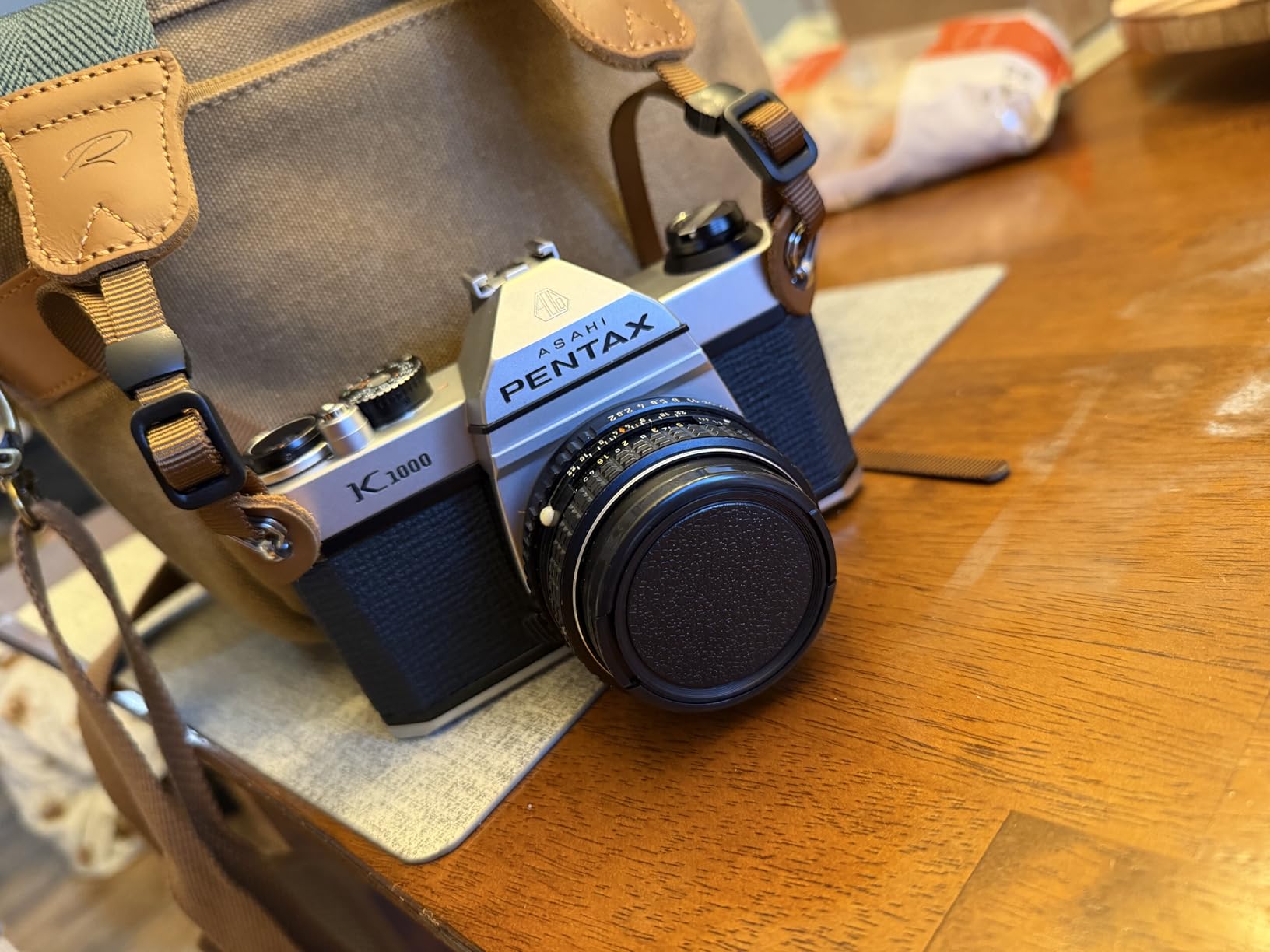
The included 50mm lens produces sharp images with pleasing character. Film grain adds organic texture to double exposures that digital sensors cannot replicate, and the unpredictability of film means every blended frame is genuinely unique. I have shot double exposures on the K1000 that surprised me in ways no digital camera ever has.
With only three controls to manage (aperture, shutter speed, and focus), the K1000 strips away every distraction. You learn to read light, compose carefully, and commit to each frame. This makes it an exceptional teaching tool for photographers who want to understand the fundamentals before moving to digital multiple exposure work.

How to Do Double Exposure on the K1000
The process is straightforward but requires care. After taking your first exposure, press and hold the film rewind button located on the bottom plate. While holding it, advance the film lever, which cocks the shutter without moving the film to the next frame. Release the rewind button, compose your second shot, and press the shutter. You now have two exposures on a single frame of film.
The trick is in the exposure calculation. Since both images land on the same frame, you typically need to underexpose each shot by one stop so the combined brightness is correct. This manual calculation is part of what makes film double exposure so rewarding to master.
Who This Camera Is For
The K1000 is ideal for photographers who want the authentic film double exposure experience without complexity. It is also perfect for students, as many photography courses require or recommend this exact model. If you appreciate the deliberate pace of analog photography, this camera delivers an experience no digital body can match.
The limitations are real: manual focus requires patience, the 1/1000 maximum shutter speed limits bright-light shooting, and film costs add up over time. But for photographers seeking a pure, mechanical connection to their craft, the K1000 is unbeatable.
How to Choose the Right Camera for Double Exposure?
Choosing among the best cameras for double exposure photography comes down to understanding which features matter most for your creative style. Our team evaluated these cameras across several dimensions, and here is what we learned from hands-on testing.
In-Camera Multiple Exposure Modes
The most important feature to look for is a dedicated multiple exposure mode built into the camera’s firmware. Canon, Nikon, Sony, and Fujifilm all offer this feature, but they implement it differently. Canon provides four blend modes (additive, average, bright, dark), while Nikon focuses on additive and average with auto gain. Sony and Fujifilm offer additive and average blending.
Look for cameras that show a live overlay preview as you compose each subsequent frame. This feature, available on the Nikon D850 and Canon 5D Mark III, makes alignment far easier than shooting blind.
Sensor Size and Image Quality
Full-frame sensors generally produce better double exposures than APS-C sensors because they offer wider dynamic range and better low-light performance. The Canon 5D Mark III, Nikon D850, and Sony a7 III all use full-frame sensors that retain detail across both highlight and shadow areas when images are blended.
That said, APS-C cameras like the Fujifilm X-T5 and Nikon D7500 are more than capable, especially when paired with good lenses. The Fujifilm X-T5’s 40.2-megapixel sensor and film simulations give it creative advantages that compensate for the smaller sensor size.
Film Versus Digital for Double Exposure
Film cameras like the Pentax K1000 offer an authentic, hands-on double exposure experience that many photographers find more satisfying than digital blending. Each frame is permanent and unique, which adds weight to every shot you take. Film grain also contributes organic texture to double exposures that digital noise does not replicate.
Digital cameras, however, offer preview capabilities, blend mode selection, and the ability to save individual frames alongside the composite. They also eliminate the cost and delay of film processing. For most photographers, a digital camera with good multiple exposure features is the more practical choice.
Skill Level Recommendations
For beginners, we recommend the Canon EOS Rebel T7 or the Pentax K1000. Both teach fundamental concepts in an approachable way. The Rebel T7’s guided menu system helps newcomers find multiple exposure settings quickly, while the K1000’s mechanical simplicity forces a deep understanding of exposure.
For enthusiasts, the Nikon D7500, Sony a6400, and Fujifilm X-T5 offer excellent multiple exposure features with modern conveniences like tilting screens, fast autofocus, and Wi-Fi connectivity. These cameras balance creative capability with usability.
For professionals, the Canon 5D Mark III, Nikon D850, and Sony a7 III deliver the image quality, build durability, and advanced blending controls needed for client work and gallery prints. The D850’s ability to blend up to 10 frames with live preview sets it apart as the ultimate tool for serious double exposure photographers.
Blend Modes Explained: Additive Versus Average
Additive blending stacks exposures on top of each other, meaning brightness accumulates with each frame. This mode is ideal for ghostly, ethereal effects where you want overlapping elements to build upon one another. Be careful, as additive blending can quickly overexpose your image if you are not paying attention to exposure levels.
Average blending divides the total exposure across all frames, preventing overexposure. This mode works well when you want each image to contribute equally to the final composite without blowing out highlights. Most photographers find average mode more forgiving and easier to control.
Image Stabilization and Its Role
In-body image stabilization, found on the Sony a7 III and Fujifilm X-T5, is particularly valuable for double exposure photography. Because you capture multiple frames in sequence, any camera movement between shots causes misalignment in your layers. Stabilization reduces this shift, producing cleaner composites when shooting handheld.
If your camera lacks IBIS, use a tripod for the most consistent results. A tripod ensures both exposures are perfectly aligned, which matters most when you want precise control over how elements overlap in the final image.
Final Thoughts
The best cameras for double exposure photography share one thing in common: they give you the tools to blend images creatively without relying on software. Our team tested everything from the beginner-friendly Canon Rebel T7 to the professional Nikon D850, and each camera brings unique strengths to the art of layered photography.
If you want the ultimate multiple exposure experience, the Nikon D850 stands above the rest with its 10-frame blending capability and live preview overlay. For film purists, the Pentax K1000 delivers authentic analog double exposures that no digital sensor can replicate. And for creative photographers who value color and character, the Fujifilm X-T5’s film simulations make every blended frame feel like a work of art.
Whichever camera you choose, the key to great double exposure work is experimentation. Start with two simple images, learn how your camera’s blend modes affect the result, and gradually build toward more complex composites. With the right camera in your hands, the creative possibilities are endless.