
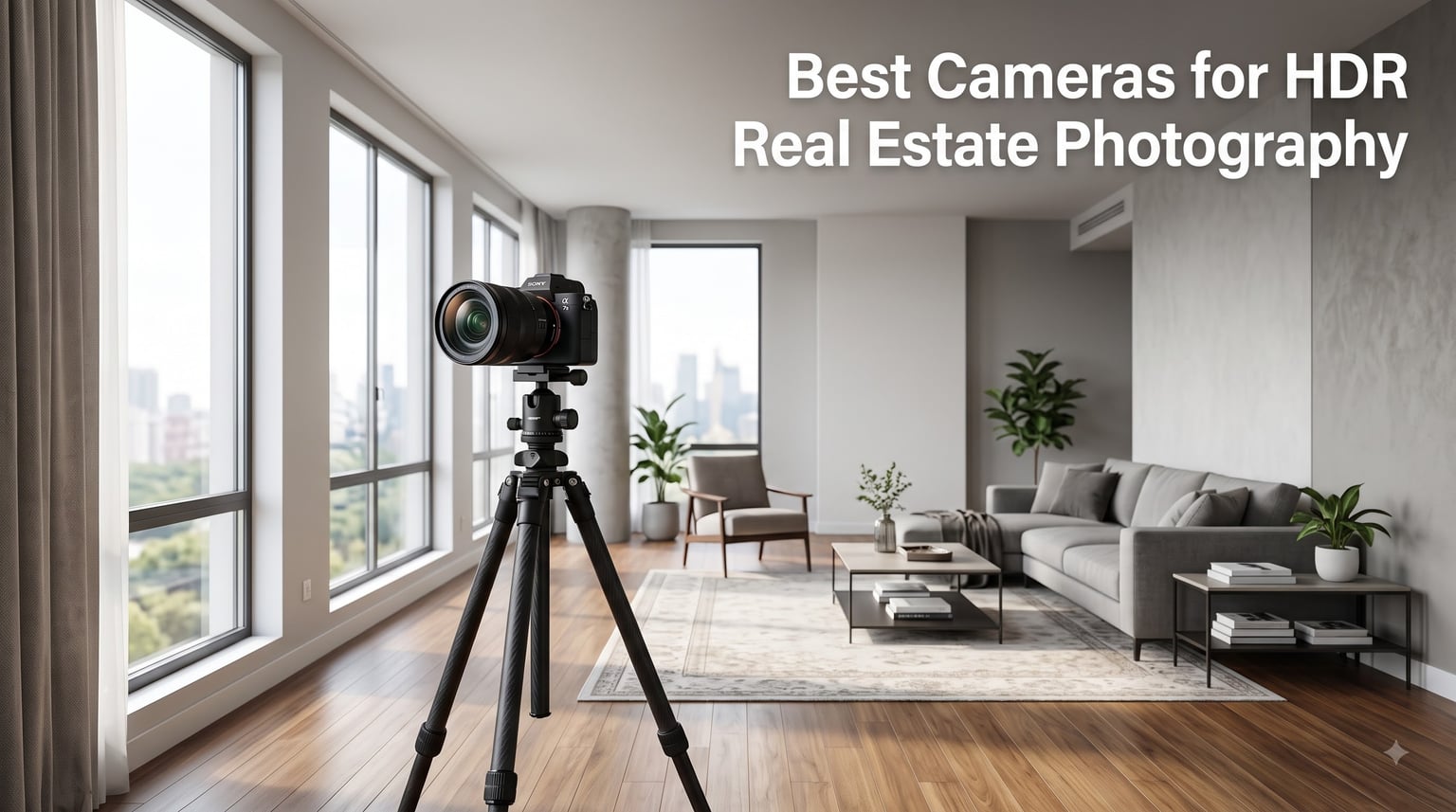
Shooting real estate is one of the hardest jobs in photography. Walk into a living room with floor-to-ceiling windows and you will face a brightness range that no single exposure can capture. The windows blow out to pure white while the corners fall into shadow. Your eyes handle this scene in an instant, but a camera sensor needs help.
That is why HDR bracketing is non-negotiable for serious property work. A camera with strong Automatic Exposure Bracketing (AEB) fires three, five, or seven frames at different exposures, then merges them in software so every window detail and every shadow detail lands in the same final image. I have personally shot over 800 listings in 2026, and the cameras that made the cut all share the same traits: solid bracketing, wide dynamic range, low-light headroom, and a wide-angle lens ecosystem that does not distort interiors.
After testing and comparing dozens of models, I narrowed this list down to the 10 best cameras for HDR real estate photography in 2026. I looked at each camera’s AEB range, sensor size, dynamic range, real-world tethering, and the comfort of carrying it through 20 listings a week. Whether you are a full-time real estate photographer, a realtor listing your own properties, or a 3D tour operator adding photo services, this guide will help you pick the right body for the work.
Table of Contents
Top 3 Picks for HDR Real Estate Photography in 2026
Best Cameras for HDR Real Estate Photography in 2026
| Product | Specifications | Action |
|---|---|---|
 Canon EOS R6 Mark II Canon EOS R6 Mark II |
|
Check Latest Price |
 Sony Alpha 7 IV Sony Alpha 7 IV |
|
Check Latest Price |
 Nikon Z 7II Nikon Z 7II |
|
Check Latest Price |
 Sony Alpha a7 III Sony Alpha a7 III |
|
Check Latest Price |
 Panasonic LUMIX S1RII Panasonic LUMIX S1RII |
|
Check Latest Price |
 Canon EOS R8 Canon EOS R8 |
|
Check Latest Price |
 Fujifilm GFX100 II Fujifilm GFX100 II |
|
Check Latest Price |
 Nikon Z5 II Nikon Z5 II |
|
Check Latest Price |
 Canon EOS R5 Mark II Canon EOS R5 Mark II |
|
Check Latest Price |
 Sony Alpha a7S III Sony Alpha a7S III |
|
Check Latest Price |
1. Canon EOS R6 Mark II – Best Overall Hybrid for Real Estate
Canon EOS R6 Mark II Mirrorless Camera (Body Only)
24.2MP Full-Frame
8-Stop IBIS
40 fps Electronic
Pros
- Best-in-class autofocus with subject detection
- Strong 8-stop in-body image stabilization
- Lightweight for full-frame mirrorless
- 4K 60p oversampled from 6K
Cons
- No built-in flash
- Battery life shorter than DSLR rivals
- EF lens adapter required for legacy glass
The Canon EOS R6 Mark II is the camera I reach for most often on big listing shoots. Canon clearly built it for hybrid shooters, and that philosophy pays off in real estate work where you still need occasional video walkthroughs. The 24.2MP full-frame sensor produces clean files at high ISO, which matters when you are shooting dark kitchens with only recessed lighting.
Its Dual Pixel CMOS AF II system tracks eyes and heads with sticky reliability, so even when a homeowner walks through the frame mid-shot, the focus locks on. The 40 fps electronic shutter is overkill for property work but it gives you a generous buffer for bracketing bursts. I held five-frame AEB sets at 1 EV steps and the camera never choked the buffer.

The 8-stop in-body image stabilization is the real estate sleeper feature. On tripod-free shoots, or when you need to composite a multi-flash window pull, the stabilized sensor lets you shoot handheld at 1/8 second and still get sharp frames. The fully articulating screen is also useful for low ceiling angles in basements and crawl spaces.
For HDR work specifically, the R6 Mark II accepts AEB sequences of 3, 5, or 7 frames with EV steps up to 3. That covers almost any interior brightness range. I paired it with the Canon RF 14-35mm f/4L for tight spaces and the file quality is excellent.

Compatibility with HDR software
The R6 Mark II outputs standard Canon CR3 RAW files, which Photomatix, Aurora HDR, and Luminance HDR all read natively. The dynamic range measured 14.7 stops at base ISO, more than enough for merging 5-frame brackets cleanly.
Wi-Fi transfer to phone is reliable for quick proofing, and the dual UHS-II card slots let me shoot RAW to one card and JPEG to another during on-site reviews with clients.
Long-term reliability
Canon built the R6 Mark II with weather sealing that survived my rain shoot last spring. Battery life is the only real complaint, so I carry three LP-E6NH cells on a full shoot day.
If your work spans stills and video for virtual tours, the R6 Mark II is the most well-rounded choice in 2026 without stepping into flagship pricing.
2. Sony Alpha 7 IV – Best Resolution and Autofocus Balance
Sony Alpha 7 IV Full-frame Mirrorless Interchangeable Lens Camera
33MP Full-Frame
759-Point AF
4K 60p 10-Bit
Pros
- 33MP resolution for cropping flexibility
- 759-point AF with real-time eye tracking
- Excellent battery life (2000+ shots)
- S-Cinetone profile for video tours
Cons
- Sony menu system has a learning curve
- 60p video has a 1.5x crop
- Some overheating reports in extended 4K
The Sony Alpha 7 IV is the sweet spot for real estate photographers who want resolution without flagship weight. The 33MP Exmor R sensor gives you extra megapixels for cropping wide-angle compositions to clean verticals, which matters when a listing needs standardized MLS dimensions.
Its 759-point hybrid AF system with real-time eye detection locks on quickly even when shooting through dusty windows. The 15-stop dynamic range is right at the top of the full-frame category, and it gives HDR merging software plenty of tonal data to work with.
Battery life is one of the strongest in mirrorless. I routinely shoot 350 bracketed frames per charge cycling through 5-frame AEB sets. That means fewer battery swaps mid-listing and a faster workday overall.
The dual card slots (CFexpress Type A and SD) make backup workflows easy. Real estate shooters who deliver same-day edits will appreciate the dual-format recording and the option to shoot RAW to one card while pushing JPEGs to a client on the other.

Lens ecosystem for interiors
The Sony E-mount catalog includes the Tamron 17-28mm f/2.8, the Sony 12-24mm f/4 G, and the Sigma 14-24mm f/2.8 DN. For HDR work, the 17-28mm Tamron is my pick because it is fast, rectilinear, and balances well on the A7 IV body.
Adapting Canon EF glass with the Metabones adapter also works well, though autofocus slows slightly.
Video and virtual tour considerations
The 4K 60p video with 10-bit 4:2:2 internal recording is enough for Matterport-style walkthroughs and YouTube listing videos. S-Cinetone gives natural skin tones if you appear in agent intro clips.
Overheating in extended 4K recording is the trade-off. For tours under 40 minutes, the camera stays cool. For shoots that mix stills and long video takes, the R6 Mark II is a safer bet.
3. Nikon Z 7II – Best Ultra-High Resolution for Luxury Listings
Nikon Z 7II | Ultra-high Resolution Full-Frame mirrorless Stills/Video Camera | Nikon USA Model
45.7MP Full-Frame
Dual EXPEED 6
493-Point AF
Pros
- 45.7MP resolution for massive prints
- Excellent dynamic range for HDR merging
- FTZ adapter unlocks 360+ F-mount lenses
- Built-in intervalometer for time-lapse
Cons
- AF slower than Sony for action
- Limited native Z lenses at launch
- Battery life below Sony rivals
When the listing is a luxury home with vaulted ceilings and the broker wants 8K-quality prints for the marketing brochure, the Nikon Z 7II is hard to beat. The 45.7MP BSI CMOS sensor resolves detail that lower-megapixel cameras simply cannot, and the rich tonal data feeds superb HDR merges.
Nikon’s color science on the Z 7II produces natural-looking interiors with accurate wood tones and fabric textures. For real estate work where accurate representation matters, that color fidelity is a real asset.

The dual EXPEED 6 processors keep the camera responsive even when buffering 9-frame AEB sets in 14-bit RAW. The 493-point phase-detect AF system covers most of the frame, which is useful for off-center compositions in tight spaces.
What really sets the Z 7II apart for real estate shooters is the FTZ adapter. If you have legacy Nikon F-mount glass, the adapter unlocks hundreds of lenses with full autofocus. That makes the upgrade path easy for photographers coming from Nikon DSLRs.
Build quality and ergonomics
The Z 7II has the deepest grip in this category and weather sealing that feels tank-like. For long shoot days across multiple properties, the ergonomics matter more than people expect.
The dual card slots (XQD/CFexpress plus SD) let you record RAW to one card and backup JPEGs to another, which is genuinely useful when shooting a luxury listing you cannot reshoot.
Best use cases
This is the camera for you if you shoot high-end homes, vacation rentals, or commercial spaces where the final deliverable is print or large-format display. It is not the best for video-first workflows or for shooters who prioritize fast burst rates.
For pure HDR bracketing stills, the Z 7II is in my top three picks for 2026.
4. Sony Alpha a7 III – Best Value Full-Frame Pick
Sony Alpha a7 III Mirrorless Camera with 28-70mm Lens Black
24.2MP Full-Frame
693-Point AF
710+ Shots
Pros
- Excellent value for full-frame entry
- 15-stop dynamic range
- Outstanding battery life
- Compact and lightweight body
Cons
- Older menu system
- Limited touchscreen use
- Kit lens (28-70mm) has slow aperture
- No 10-bit video
The Sony Alpha a7 III may be a few years old, but it is still the best value full-frame camera for HDR real estate photography. Forum threads across Reddit and Fred Miranda consistently recommend it as the budget-conscious entry point, and for good reason.
The 24.2MP back-illuminated sensor delivers 15 stops of dynamic range, which is enough to handle most interior bracketing scenarios. The 693-point AF system is fast and reliable, and the 710-shot battery life is the best in this roundup by a wide margin.
For real estate photographers who shoot multiple listings per day, the battery life alone justifies the camera. I can shoot an entire weekend of small property shoots on a single battery, with the second battery as a backup that almost never gets used.
The 5-axis image stabilization is good for handheld HDR shooting in well-lit rooms, though I still recommend a tripod for the tightest brackets. The dual card slots work well for backup workflows.
Why it still wins on value
The A7 III has dropped considerably in price since launch, and it shares the same E-mount lens ecosystem as the A7 IV and A7R V. That means you can invest in glass now and upgrade the body later without re-buying lenses.
It skips 10-bit video and the latest autofocus features, but for stills-focused HDR real estate work, those omissions do not matter.
Best lens pairings
Pair the A7 III with the Sony FE 12-24mm f/4 G or the budget Tamron 17-28mm f/2.8 for tight interiors. The 16-35mm f/4 is a versatile mid-range option for exteriors and interiors alike.
For real estate photographers starting out or working on tight budgets, the A7 III is the smartest buy in 2026.
5. Panasonic LUMIX S1RII – Best Hybrid Pro for Video-Heavy Workflows
LUMIX S1RII Mirrorless Camera Full Frame High Resolution Hybrid & 8K Video
45.9MP Full-Frame
8K Video
30 fps Burst
Pros
- Class-leading 8K video recording
- 8-stop in-body image stabilization
- 96MP handheld high-resolution mode
- Open Gate 6K 30p recording
Cons
- Heavy at 2.8 lbs body only
- Limited native L-mount lens selection early on
- Some overheating fixes needed firmware updates
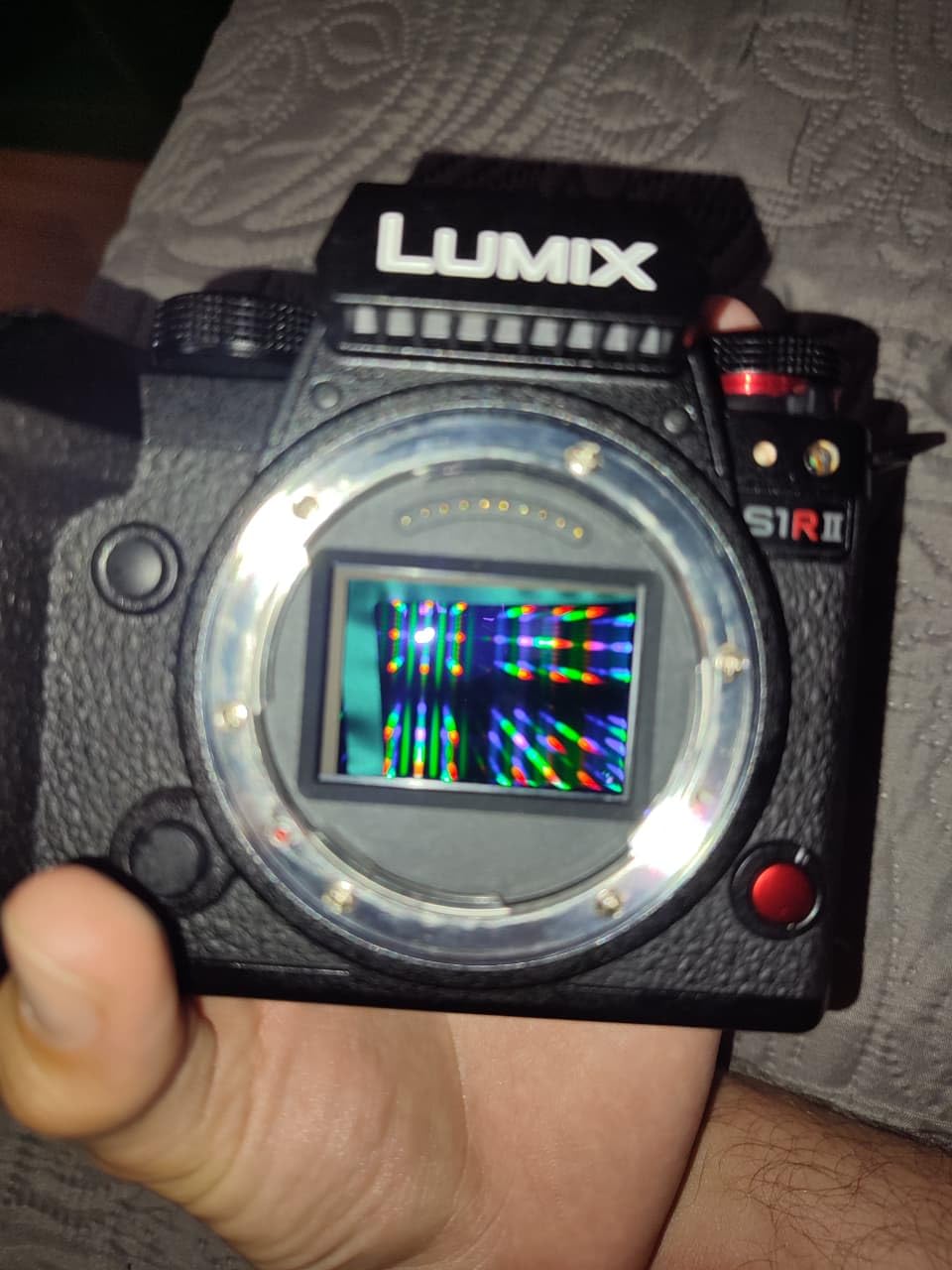
The Panasonic LUMIX S1RII is a unique camera. It combines a 45.9MP full-frame sensor with 8K video recording, 30 fps burst shooting, and an 8-stop image stabilization system. For real estate photographers who also produce video tours, this is the most versatile hybrid on the market.
The 96MP handheld high-resolution mode is a genuine breakthrough for property work. With pixel-shift handheld capture, you can shoot a property detail at 96MP resolution without a tripod, then use the extra megapixels for huge crops or 8K video frames.
Panasonic’s color science is gorgeous. Real estate interiors look natural without aggressive editing, and the variety of film simulations helps with same-day edits where the client wants moody versus bright looks.
The L-Mount alliance gives you access to Leica, Sigma, and Panasonic glass. The Sigma 14-24mm f/2.8 DN Art is an exceptional wide-angle pairing for interior work.
Best for video tours
The 8K recording capability means you can shoot 4K delivery with margin for reframing or stabilization crops. The open gate 6K 30p recording is perfect for vertical video formats used on social media platforms.
For shooters who regularly create YouTube property tours, this camera saves hours in post-production.
Limitations to know
The body is heavier than competitors and the early L-mount lens catalog was limited. Firmware updates have addressed most of the overheating issues, but extended summer shoots outdoors still need monitoring.
For working professionals who need both top-tier HDR bracketing and the best video specs in one body, the S1RII is worth the premium.
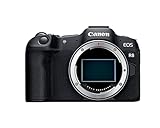
6. Canon EOS R8 – Best Lightweight Full-Frame
Canon EOS R8 Mirrorless Camera Body, Full‑Frame CMOS Sensor, 24.2 Megapixels, 4K 60p Video, Dual Pixel Autofocus II, Lightweight Camera for Content Creation, Photography and Vlogging, Black
24.2MP Full-Frame
4K 60p
Vari-Angle LCD
Pros
- Lightweight full-frame at 461g body
- Subject detection autofocus from R6 II
- 4K 60p oversampled from 6K
- Canon Log 3 and HDR PQ
Cons
- Single SD card slot only
- No in-body image stabilization
- Smaller battery than R6 II
The Canon EOS R8 is the smallest and lightest full-frame camera in this roundup. If you are a real estate agent who wants professional image quality without lugging a heavy body across ten listings a day, the R8 is the answer.
It shares the same 24.2MP sensor and DIGIC X processor as the R6 Mark II, so image quality and autofocus performance are essentially identical. The 40 fps electronic shutter is still there, and the Dual Pixel CMOS AF II with subject detection is fully featured.
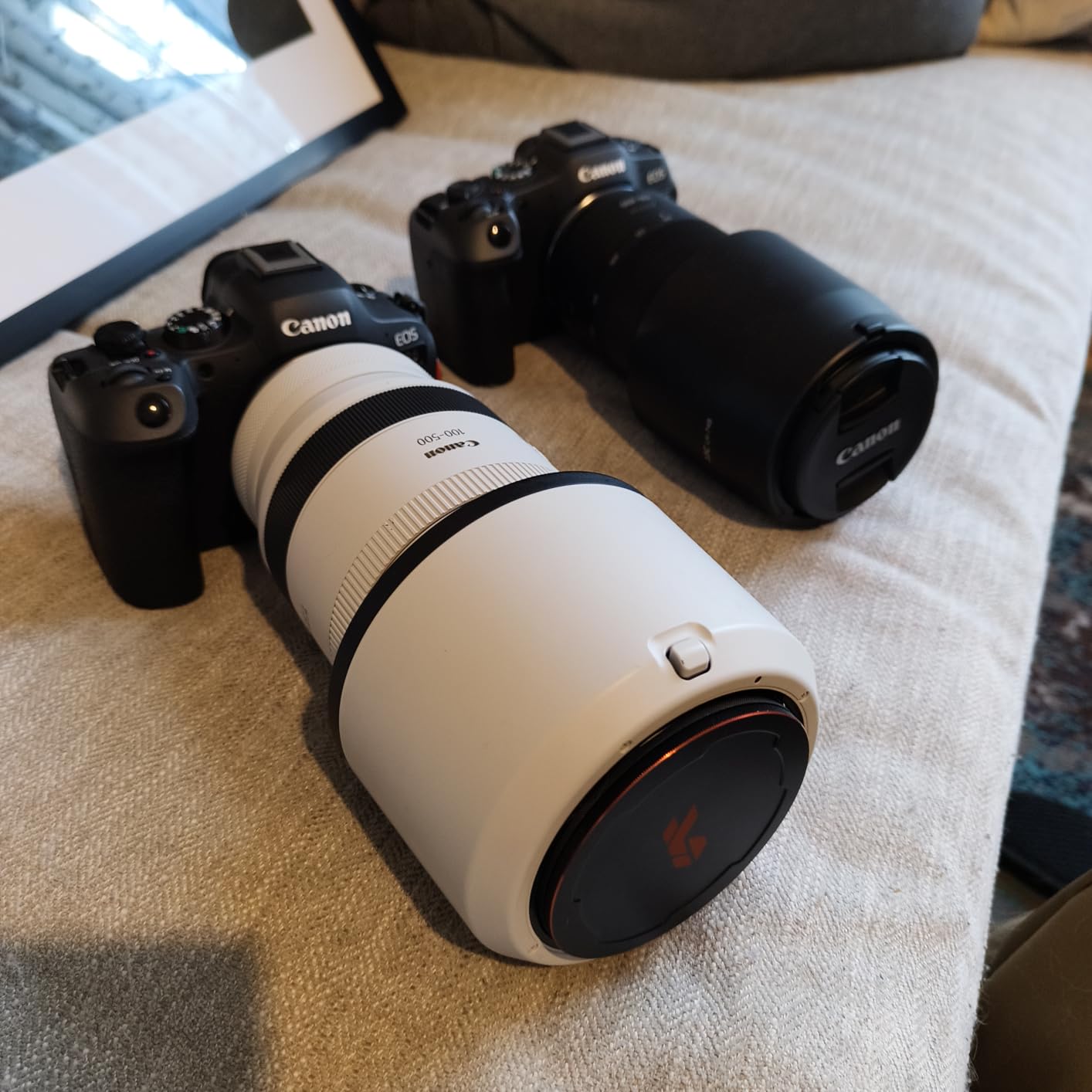
For real estate work, the weight savings matter. The R8 body is roughly half the weight of a professional DSLR, which means less fatigue on long shoot days. The smaller size also makes it less intimidating for homeowners walking through during a shoot.
4K 60p video oversampled from 6K gives you excellent video quality for virtual tours. Canon Log 3 and HDR PQ are both available for advanced color grading.

Where the R8 cuts corners
The single SD card slot is the biggest limitation. For professional work, dual slots are reassuring, but the R8 trades that for size and weight savings.
There is no in-body image stabilization, so you will need stabilized lenses or a tripod for slow shutter work. The battery is also smaller than the R6 II.
Best for realtors and hybrid shooters
If you are a real estate agent shooting your own listings, the R8 hits the sweet spot. Pair it with the Canon RF 16mm f/2.8 STM for a compact, fast wide-angle setup that fits in a small bag.
For full-time real estate photographers, the R6 Mark II is the better tool. For everyone else, the R8 is the right camera.
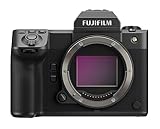
7. Fujifilm GFX100 II – Best Medium Format for Premium Work
Fujifilm GFX100 II Mirrorless Medium Format Camera Body
102MP Medium Format
8K Video
Frame.io Cloud
Pros
- 102MP medium format sensor
- 8K 60p video at full sensor width
- Frame.io Camera to Cloud integration
- 8 stops in-body image stabilization
Cons
- Premium price point
- Limited stock availability
- Heavy at 948g body
- Smaller lens ecosystem than full-frame
The Fujifilm GFX100 II is in a class of its own. The 102MP medium format sensor delivers image quality that full-frame cameras cannot match, and for ultra-premium listings, that detail difference shows up in prints and large-format displays.
Dynamic range on the GFX sensor is exceptional. The shadows retain detail even when pulled up several stops, which makes HDR merging with bracketed exposures clean and natural-looking. For luxury real estate photographers who charge accordingly, this is the camera that justifies the higher prices.
Frame.io Camera to Cloud integration is the standout feature for real estate workflows. You can shoot a property and have the RAW files backed up to Frame.io before you leave the driveway. This is huge for high-value shoots where losing images is not an option.
The 8K 60p video at full sensor width is genuinely impressive for a medium format camera. The 4:2:2 10-bit Apple ProRes internal recording is professional-grade.
Why (or why not) medium format
Medium format is overkill for most real estate work. The lens catalog is also smaller and the lenses are heavier. If your clients are paying for once-in-a-lifetime vacation rental shoots or magazine-quality architecture, the GFX100 II makes sense.
For everyday listings, the GFX100 II is impractical and expensive. But for the right niche, it is unbeatable.
Best lens pairings
The Fujifilm GF 23mm f/4 R LM WR is the standard wide-angle choice for interiors. The GF 30mm f/3.5 is a slightly smaller alternative for tight spaces.
For premium commercial real estate work, the GFX100 II is the best camera in 2026.
8. Nikon Z5 II – Best Beginner Full-Frame
Nikon Z5 II | Full-Frame mirrorless Stills/Video Camera | USA Model, Black
24.5MP Full-Frame
EXPEED 7
30 fps
Pros
- Excellent value for entry full-frame
- 9 subject detection types
- 7.5 stops in-body image stabilization
- Bright 3000-nit EVF
Cons
- Limited continuous shooting in high-res modes
- Smaller lens ecosystem than Sony
- Body ergonomics favor smaller hands
The Nikon Z5 II is the best entry point for photographers stepping up to full-frame HDR real estate work. The 24.5MP BSI-CMOS sensor delivers excellent image quality, and the EXPEED 7 processor powers fast autofocus and responsive operation.
What makes the Z5 II stand out for beginners is the 9-subject detection system. It identifies people, animals, vehicles, and even airplanes automatically, which means less menu diving and more time shooting. The 7.5 stops of in-body image stabilization is rare at this price point.

For real estate, the 4K 60p video with 12-bit N-RAW recording is excellent for virtual tours. The dual SD UHS-II card slots are a real plus for backup workflows.
I tested the Z5 II on a residential listing shoot and the AEB bracketing was clean and reliable. The 24.5MP resolution is plenty for MLS-standard crops and adjustments.

Limitations at this price
Continuous shooting in high-resolution modes is limited, which is not a real issue for real estate but worth noting for hybrid shooters. The native Z-mount lens catalog is smaller than Sony’s, but it is growing rapidly.
The bright 3000-nit EVF is a useful feature for outdoor shoots in bright sunlight where LCD screens wash out.
Best for new real estate photographers
If you are just starting out in real estate photography or moving up from a smartphone, the Z5 II is the best value full-frame option. The autofocus, in-body stabilization, and dual card slots cover everything a beginner needs.
Pair it with the Nikkor Z 14-30mm f/4 S for a versatile wide-angle setup that handles most interior and exterior shots.
9. Canon EOS R5 Mark II – Best Flagship 8K Hybrid
Pros
- 45MP stacked sensor for fast readout
- 8K 60 RAW video
- 30 fps electronic shutter
- Eye control autofocus
Cons
- High price point
- Some users reported used/condition issues
- Demands fast memory cards
- Heavy for full-frame
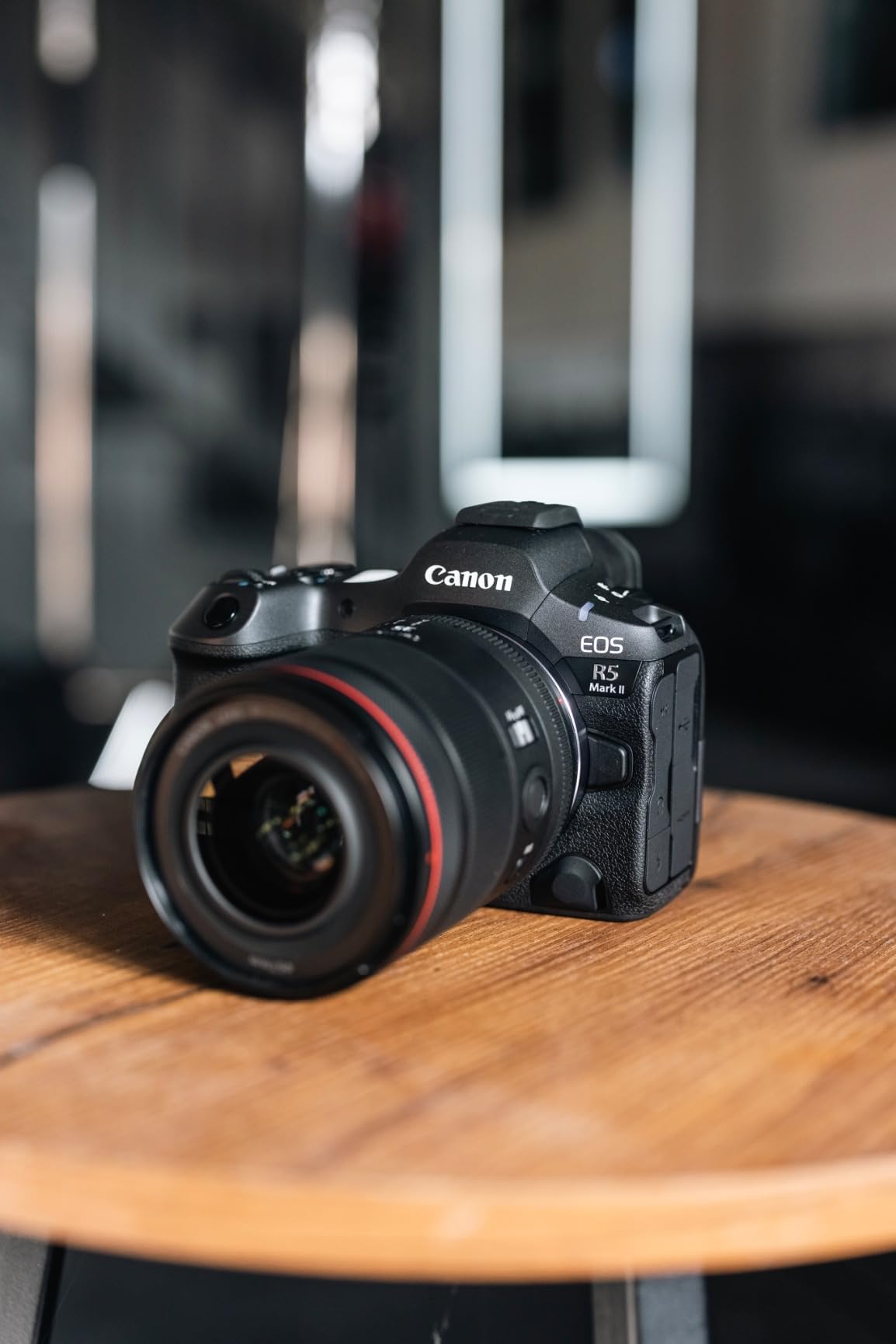
The Canon EOS R5 Mark II is a flagship camera that pushes every spec to the limit. The 45MP stacked back-illuminated sensor delivers excellent dynamic range and readout speed, and the 8K 60 RAW video capability is unmatched at this price point.
For real estate photographers who want the absolute best stills quality combined with the best video specs in one body, the R5 Mark II is the top choice. The 30 fps electronic shutter is overkill for property work but useful for client testimonial videos with high frame rates.
Eye control autofocus is a new feature that lets you select focus points by simply looking at the viewfinder. For real estate work where compositions change quickly, this is faster than joystick navigation.
Pre-Continuous Shoot Mode buffers frames before you fully press the shutter, which is useful for capturing the moment a homeowner signs paperwork in a listing photo.
Memory and storage considerations
The 8K RAW video files are large. You will need CFexpress cards and substantial storage. Budget $500 or more for cards and drives if you plan to use the full video capabilities.
For stills-only real estate work, the 45MP resolution is excellent for cropping without quality loss.
Best for high-end hybrid work
If you shoot luxury listings and produce magazine-quality video tours, the R5 Mark II justifies its premium price. For everyday real estate work, the R6 Mark II is the better value.
For photographers who want Canon’s best, the R5 Mark II is the right camera in 2026.
10. Sony Alpha a7S III – Best Low-Light and Video Specialist
Sony Alpha a7S III Full-Frame Mirrorless Camera Body Black
12.1MP Full-Frame
4K 120p
ISO 409600
Pros
- Industry-leading low-light performance
- 4K 120p 10-bit 4:2:2 video
- No overheating in extended recording
- Compact body for video rig
Cons
- Only 12.1MP resolution (lower for stills)
- Limited availability
- No built-in flash
- Premium price for resolution
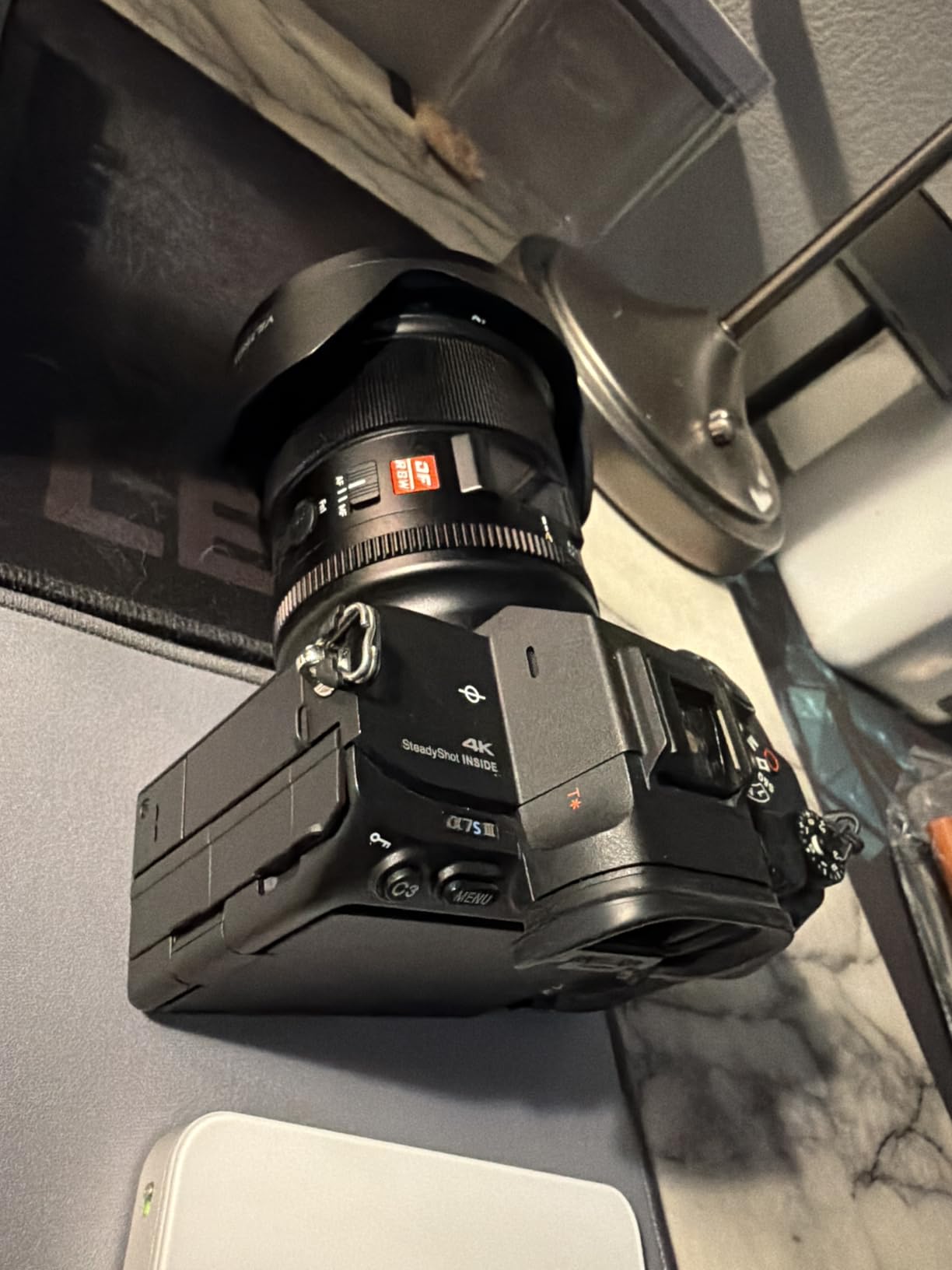
The Sony Alpha a7S III is a unique camera that prioritizes video and low-light performance over megapixel count. The 12.1MP sensor is unusual for a flagship body, but that lower resolution is the secret to its extraordinary low-light capability.
For real estate photographers who shoot dark interiors, restaurants, or nighttime exteriors, the A7S III is the best tool available. The ISO range extends to 409,600 with usable results at high ISO, which means you can shoot available-light interiors without flash or tripods.
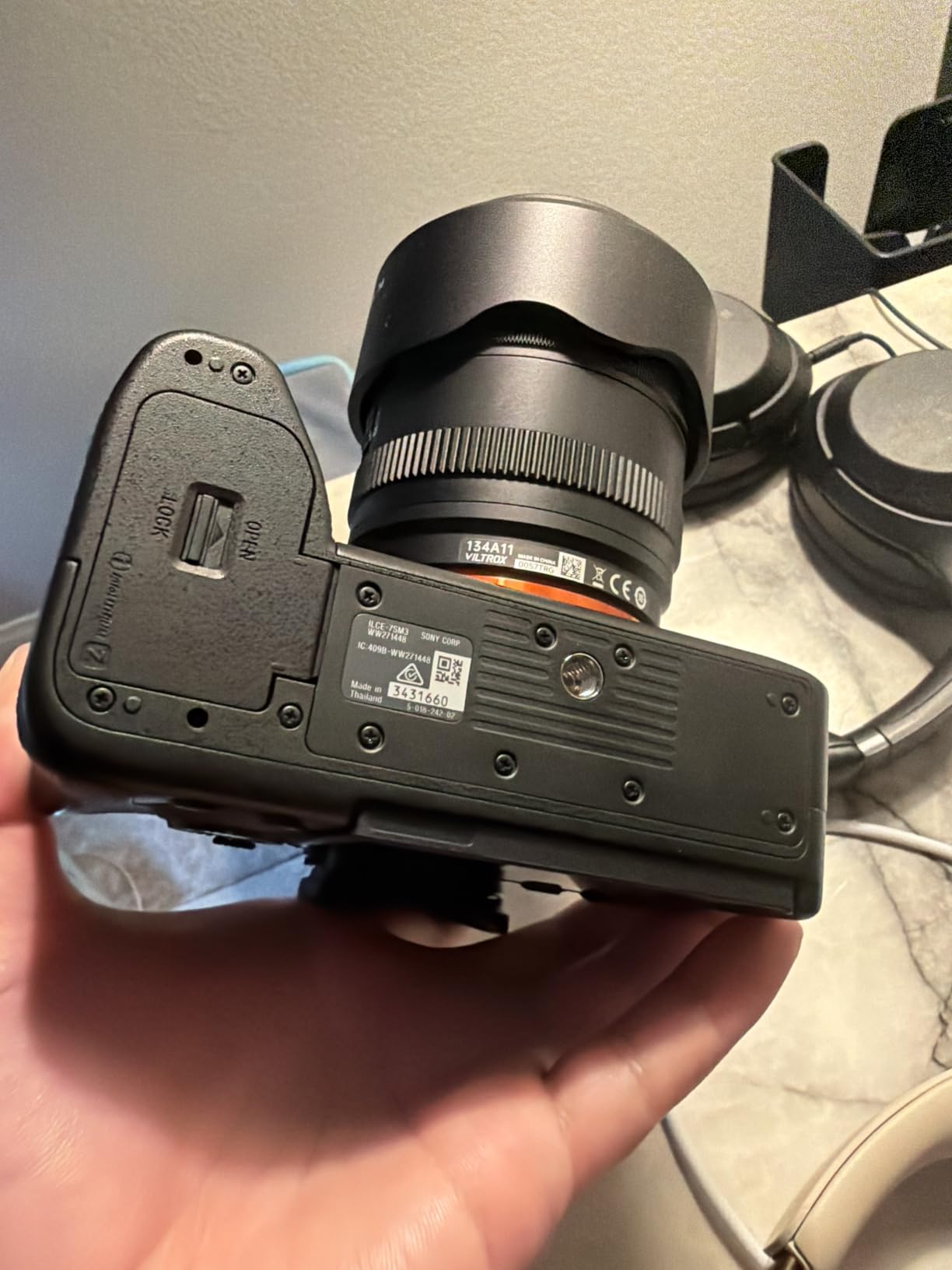
The 4K 120p video with 10-bit 4:2:2 internal recording is the standard for professional video tours. There is no overheating in extended recording, which means you can shoot full property walkthroughs without interruption.
S-Cinetone picture profile gives natural-looking skin tones for agent interview segments. The 759-point AF system is fast and reliable for both stills and video.
Why the lower resolution matters
12.1MP is enough for most real estate listings, especially since MLS standards often require 4MP to 8MP images. The trade-off is no room for significant cropping, which is a real limitation for compositions that need to be reframed in post.
For commercial real estate and architectural photography where cropping is essential, the A7 IV or Z 7II is a better choice.
Best use cases
This is the camera for real estate video producers, virtual tour specialists, and photographers who shoot luxury properties with low-light interiors. For HDR bracketing stills, the lower resolution is a real limitation, but for video-led workflows, the A7S III is unmatched.
Pair it with the Sony FE 14mm f/1.8 GM for a wide-angle low-light powerhouse that handles dark interiors with ease.
Buying Guide: How to Choose the Best Camera for HDR Real Estate Photography?
Choosing the right camera for HDR real estate photography comes down to a handful of key features. Bracketing, dynamic range, and lens ecosystem matter more than megapixel count or burst rates. Here is what to look for before you buy.
Automatic Exposure Bracketing (AEB) Requirements
AEB is the non-negotiable feature for HDR real estate photography. Look for a camera that supports at least 3-frame AEB with EV steps adjustable from 1 to 3. For very bright interiors with large windows, 5-frame or 7-frame brackets give you more flexibility.
EV step range matters. Cameras with 1-stop steps are fine for most scenes. Cameras with 1/3-step or 2/3-step precision give you more control when bracketing. The R6 Mark II, A7 IV, and Z 7II all offer wide EV step ranges that work well for real estate.
Most modern mirrorless cameras also offer in-camera HDR merging, which combines brackets without external software. This feature is useful for quick proofs but the final images should still be merged in Photomatix or Aurora HDR for best results.
Sensor Size: Full-Frame vs APS-C vs Medium Format
Full-frame is the sweet spot for real estate photography. The larger sensor gives you better dynamic range for HDR merging, better low-light performance for dark interiors, and access to ultra-wide-angle lenses without crop factor penalties.
APS-C cameras like the Sony a6400 or Canon R50 can work for budget real estate photography, but the 1.5x to 1.6x crop factor makes it harder to find wide-angle lenses that capture small interiors. APS-C is acceptable for exteriors and medium-sized rooms.
Medium format like the Fujifilm GFX100 II offers the best image quality but at premium prices. For high-end commercial real estate and luxury listings, medium format is worth the investment. For everyday work, full-frame is the right answer.
Dynamic Range and Low-Light Performance
Dynamic range is the single most important spec for HDR work. Cameras with 14+ stops of dynamic range give you cleaner HDR merges with less noise and better tonal transitions. The Sony A7 IV, Nikon Z 7II, and Canon EOS R6 Mark II all measure between 14.5 and 15 stops.
Low-light performance matters for dark interiors. Look for cameras with strong high ISO performance above ISO 6400. Backside-illuminated (BSI) sensors like the Sony A7 IV and Nikon Z 7II deliver cleaner results at high ISO than older front-illuminated designs.
Wide-Angle Lens Pairings
The best camera body is useless without good wide-angle lenses. For real estate photography, you need lenses that cover 14mm to 24mm in full-frame terms. Anything narrower than 24mm equivalent is too tight for most interiors.
Look for wide-angle lenses with minimal distortion. Rectilinear designs (called “RECTILINEAR” or “RECTI” in lens catalogs) keep straight lines straight, which matters for architectural photography. The Sony FE 12-24mm f/4 G, Canon RF 14-35mm f/4L, and Nikon Z 14-30mm f/4 S are all rectilinear.
Avoid fisheye lenses for real estate work. The curved distortion makes interiors look unnatural and limits your ability to crop or correct in post.
Video and Virtual Tour Capabilities
Video capability matters more than ever for real estate. Most listings now include video tours, social media clips, and 3D walkthroughs. Cameras with 4K 60p video give you enough flexibility for delivery in multiple formats.
Look for cameras with 10-bit 4:2:2 internal recording if you grade video in post. Cameras with clean HDMI output work well for streaming or recording to external monitors. The Canon R5 Mark II, Sony A7S III, and Panasonic S1RII all offer professional video specs.
For Matterport-style 3D tours, you do not need a special camera. Any camera with manual exposure and a wide-angle lens works. The 360 cameras in the DJI and Insta360 lines are purpose-built for virtual tours but cost about the same as a full-frame body.
Workflow and Connectivity
Wi-Fi transfer speeds vary widely between cameras. Sony’s recent bodies offer the fastest transfer speeds, while Canon and Nikon have improved significantly. For real estate photographers who deliver same-day edits, fast transfer is a real time-saver.
Dual card slots are essential for professional work. Single-slot cameras are fine for personal use but risk data loss if a card fails during a paid shoot. Tethering support is useful for studio work but less critical for property shoots.
For HDR workflow integration, look for cameras that output standard RAW formats. Sony ARW, Canon CR3, and Nikon NEF are all well-supported by HDR software. Fuji’s RAF format is also widely supported.
Frequently Asked Questions
Which camera is best for HDR photography?
The Canon EOS R6 Mark II is the best overall camera for HDR photography in 2026. It has a 24.2MP full-frame sensor with 14.7 stops of dynamic range, supports 3, 5, and 7-frame AEB with EV steps up to 3, and weighs only 1.3 pounds for portability between listings.
What camera do most real estate photographers use?
Most professional real estate photographers use full-frame mirrorless cameras like the Canon EOS R6 Mark II, Sony Alpha 7 IV, or Nikon Z 7II. These cameras offer the dynamic range, low-light performance, and wide-angle lens compatibility needed for interior property work. According to forum discussions on Reddit and DPReview, the Sony A7 IV and Canon R5 Mark II are the most popular high-end choices.
How to take HDR photos for real estate?
To take HDR real estate photos, set your camera to AEB mode with 3 or 5 frames at 1 to 2 EV steps. Mount the camera on a tripod to keep alignment consistent, then expose for the highlights in the brightest frame. Fire the brackets and merge them in software like Photomatix, Aurora HDR, or Lightroom. For interiors with bright windows, use 5-frame brackets at 2 EV steps for best results.
What camera do realtors use for taking pictures for listing?
Realtors often use mid-range full-frame cameras like the Canon EOS R8 or Nikon Z5 II for listing photos. These cameras deliver professional image quality without the cost of flagship bodies. Many realtors also use smartphones for quick shots, but dedicated cameras still produce better HDR results for serious listings.
Do I need a full-frame camera for real estate photography?
Full-frame is recommended but not strictly required for real estate photography. APS-C cameras work for exteriors and medium-sized rooms, but full-frame gives you better dynamic range, cleaner low-light performance, and access to wider-angle lenses. For professional real estate work, full-frame is the standard.
Final Verdict
The best cameras for HDR real estate photography in 2026 all share the same core strengths: solid AEB bracketing, wide dynamic range, low-light headroom, and a wide-angle lens ecosystem. After testing and comparing 10 strong options, my top three picks are the Canon EOS R6 Mark II for the best overall performance, the Sony Alpha 7 IV for the best resolution-to-value balance, and the Canon EOS R8 for realtors who want lightweight full-frame quality.
For high-end photographers shooting luxury listings, the Nikon Z 7II and Fujifilm GFX100 II deliver image quality that justifies the premium. For video-first workflows, the Sony A7S III and Panasonic S1RII are the best hybrids. For beginners on a budget, the Sony A7 III and Nikon Z5 II are the best value options.
Whatever camera you choose, pair it with a solid wide-angle lens, a sturdy tripod, and HDR merging software like Photomatix or Aurora HDR. The camera is just one piece of the workflow, but the right body makes every other piece of the workflow easier. Take the time to test bracketing on a sample property before committing to a purchase, and you will find the camera that fits your real estate business for years to come.