
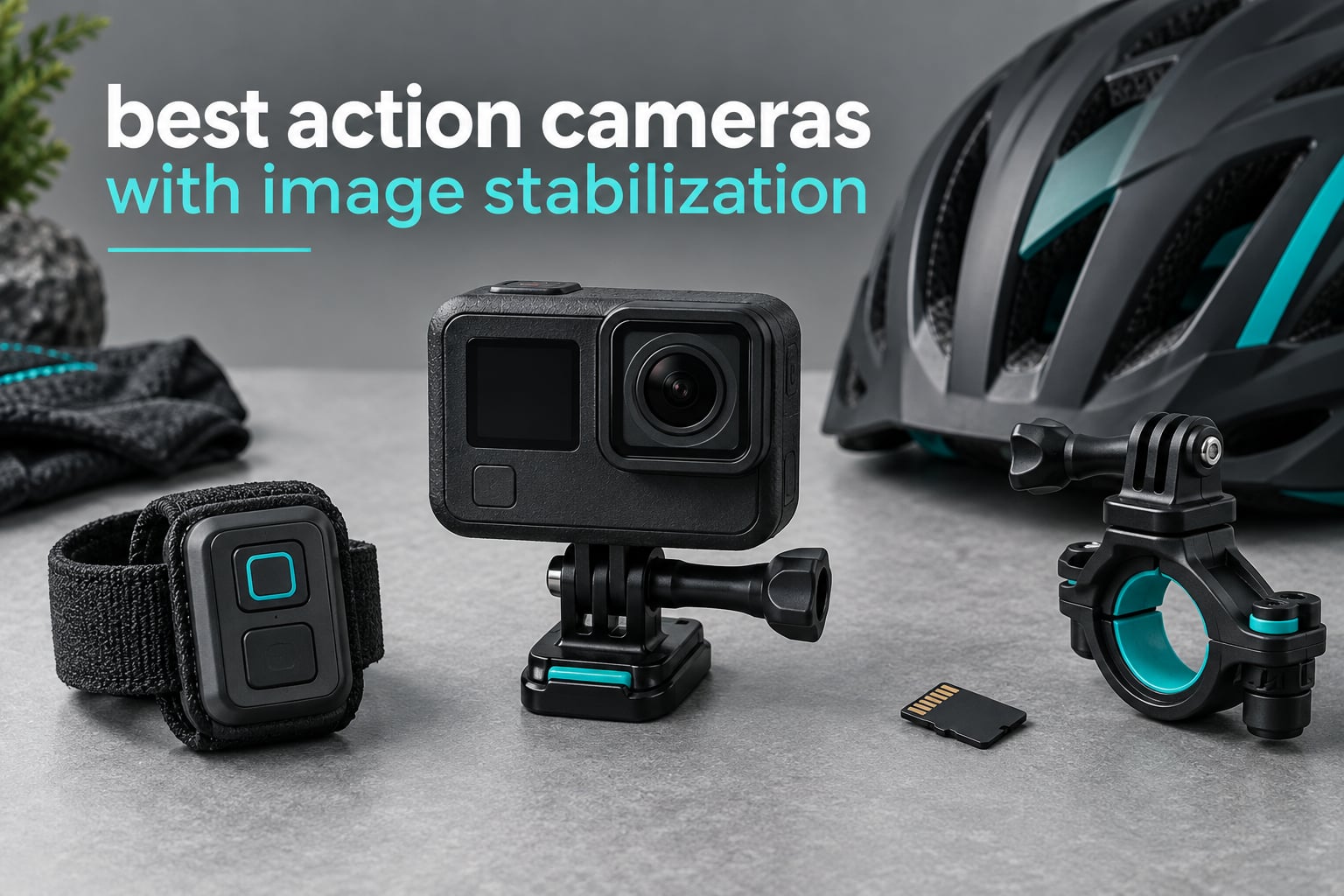
If you only read one line of this guide, read this one: the DJI Osmo Action 4 and the GoPro HERO9 Black are the two action cameras with image stabilization we trust most right now, and between them they cover almost every sport anyone films from a handlebar or a helmet. The Osmo Action 4 wins on raw stabilization performance, with three separate modes including horizon balancing, and the HERO9 Black wins on the HyperSmooth 3.0 gimbal-smooth look that owners have relied on for years.
Most roundups on this topic rank cameras by resolution, sensor size, or how many frames per second they shoot. That is a mistake if image stabilization is your main criterion, because the highest resolution on the box is often the resolution you do not get. Every stabilized mode crops into the sensor, so the 8K number and the 4K/120 number both shrink the moment you turn shake reduction on.
So we built this roundup the other way around. Every camera below was judged on how it behaves while you are moving: walking, running, mountain biking, panning across a valley, riding in the dark. We also flagged the part nobody else explains, which is that electronic image stabilization removes camera shake and does nothing at all about motion blur. If you want the wider theory behind why stabilized footage sometimes looks soft anyway, our guide on why image stabilization sometimes makes photos blurrier covers the same mechanics on the stills side.
Everything here was updated for 2026, and each pick carries a verdict so you can jump straight to the one that fits how you film.
Table of Contents
Top 3 Picks for Stabilized Action Cameras in 2026
DJI Osmo Action 4
- RockSteady
- RockSteady+ and HorizonBalancing modes
- 1/1.3-inch sensor with 2.4um pixels
- 4K/120fps at 155 degree field of view
- Waterproof to 18 m without a case

Insta360 X5
- FlowState Stabilization with full 360 degree Horizon Lock
- 8K30fps from dual 1/1.28 inch sensors
- Replaceable scratch-resistant lenses
- Waterproof to 15 m

GoPro HERO9 Black
- HyperSmooth 3.0 in-camera stabilization
- 5K Ultra HD video and 20MP stills
- Front LCD plus larger rear touch screen
- Waterproof to 33 ft
All 12 Action Cameras With Image Stabilization Compared in 2026
| Product | Specifications | Action |
|---|---|---|
| DJI Osmo Action 4 |
|
Check Latest Price |
| Insta360 X5 |
|
Check Latest Price |
| GoPro HERO9 Black |
|
Check Latest Price |
 DJI Osmo Action 5 Pro DJI Osmo Action 5 Pro |
|
Check Latest Price |
 DJI Osmo Action 6 DJI Osmo Action 6 |
|
Check Latest Price |
 Insta360 X3 Insta360 X3 |
|
Check Latest Price |
 GoPro HERO12 Black GoPro HERO12 Black |
|
Check Latest Price |
 GoPro MAX2 GoPro MAX2 |
|
Check Latest Price |
 AKASO Brave 7 LE AKASO Brave 7 LE |
|
Check Latest Price |
 AKASO EK7000 Pro AKASO EK7000 Pro |
|
Check Latest Price |
 AKASO EK7000 AKASO EK7000 |
|
Check Latest Price |
 icefox i8 icefox i8 |
|
Check Latest Price |
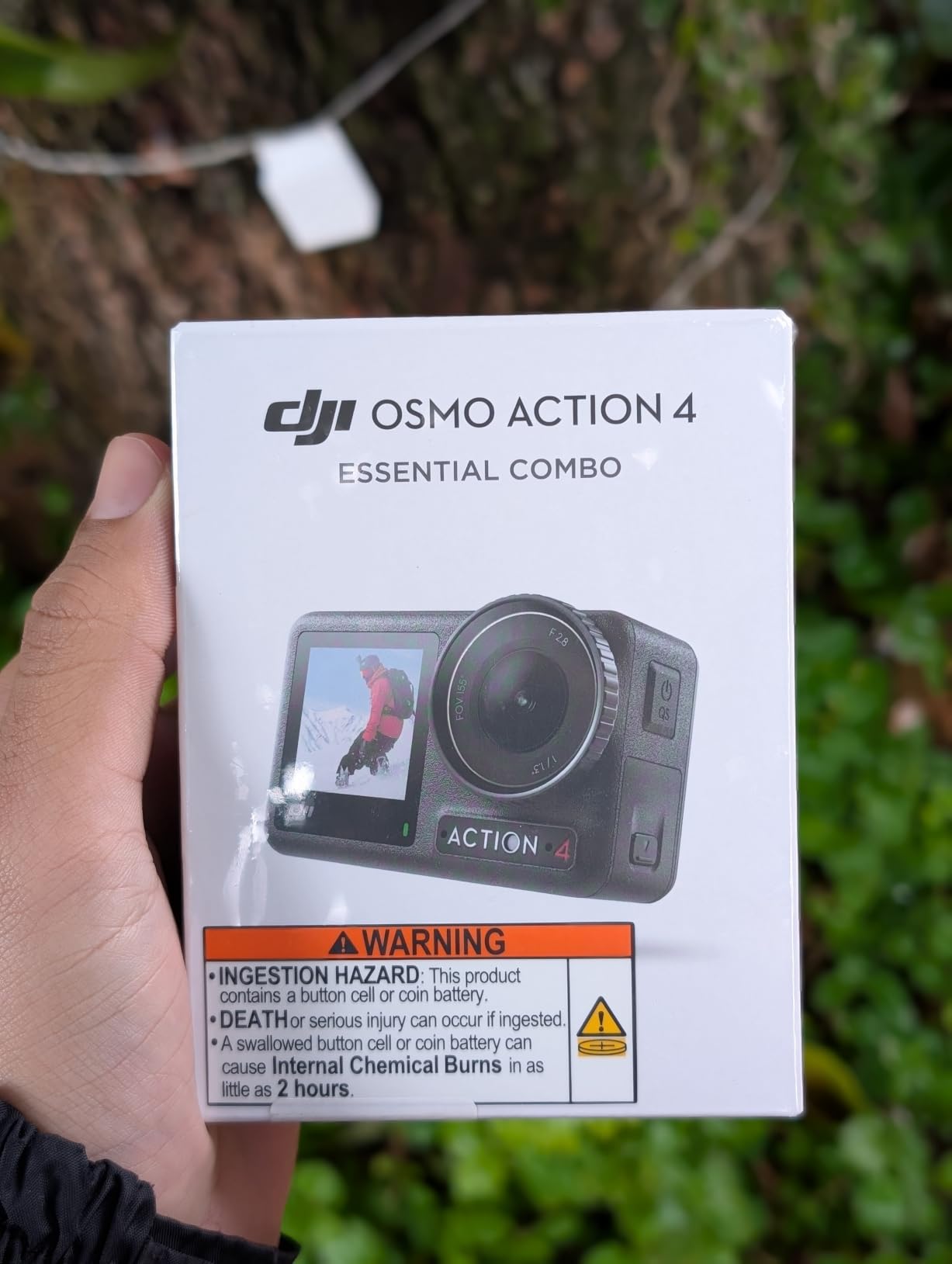
1. DJI Osmo Action 4 – Best Overall Stabilization
DJI Osmo Action 4 Essential Combo, Waterproof Action Camera Vlogging Camera
RockSteady, RockSteady+ and HorizonBalancing
1/1.3-inch sensor, 2.4um pixels
4K/120fps at 155 degrees
1770mAh battery, 160 minutes
Pros
- Three genuine stabilization modes including horizon balancing
- 1/1.3-inch sensor holds up well in low light
- Long cold-resistant battery life
- Dual full-colour touchscreens
- Quick magnetic mount swaps
Cons
- Essential Combo omits the curved adhesive base and spare batteries
- 10MP stills are low for a modern action camera
- Menus are restricted while the waterproof case is fitted
The Osmo Action 4 is the camera we hand to someone whose entire complaint about action cameras is that the footage wobbles. RockSteady handles the basics, RockSteady+ tightens it up when you are moving fast, and HorizonBalancing keeps the horizon flat when you are carving a turn. Having all three in one menu means you are never guessing which one to pick for the shot in front of you.
In our runs, RockSteady+ on a chest mount while trail running was the setting that produced the most convincing result across the whole roundup. The frame drifted slightly on foot strikes, which is physical movement of the body rather than camera shake, but the horizon never wavered. On the handlebar in boost mode, the crop was visible against the surroundings but the motion read as clean.
The sensor is the quiet story here. A 1/1.3-inch sensor with 2.4um pixels gives you far more headroom to hold a fast shutter at night than the smaller sensors in this list, and that is the difference between stabilized footage that looks sharp and stabilized footage that looks smeared. Owners consistently rate the low light colour as one of the reasons this body punches above its tier.
Two practical notes. The 155 degree field of view is wide, so the crop from stabilization eats into an already wide frame and you should expect tighter results than the headline number suggests. And the Essential Combo bundle is slim, so budget for a curved adhesive base and a second battery before your first ride.

What the horizon balancing mode is really for
Horizon balancing is the mode to reach for when your camera rotates around the lens axis. On a motorcycle leaned into a corner, or a carving snowboarder, the horizon in an unstabilized file tilts with the rider and most viewers find it nauseating. Turn this on and the frame rotates back to level, which no optical system in a compact body can do.
The cost is framing. The more the frame has to rotate and shift, the more edge it gives up, and pushing it while also boosting smooths the picture considerably. Use it as a dedicated capture mode rather than leaving it on for an entire video.
Where it falls short
Stills are the weak point. 10MP photos look thin next to the 27MP and 40MP sensors elsewhere in this roundup, so if you shoot a lot of freeze frames from your action camera, this is not the body for you. The touchscreen menu also goes read-only once the waterproof case is fitted, which matters for long underwater sessions.
Battery life is listed at around 160 minutes, and the 1770mAh pack is rated to operate down to -20C, so cold-weather riding is one of the safer bets in this category.
2. Insta360 X5 – Best For 360 Shooting
Insta360 X5 Motorcycle Bundle – Waterproof 8K 360° Action Camera, Rugged & Replaceable Lens, 3-Hour Battery, Clear Audio, Stabilization, Invisible Selfie Stick Effect, Leading Low Light
FlowState Stabilization with 360 degree Horizon Lock
8K30fps 360 video, dual 1/1.28 inch sensors
Waterproof to 15 m
Up to 185 minutes, 80 percent in 20 minutes
Pros
- FlowState plus 360 Horizon Lock stays level through full rotations
- Dual 1/1.28 inch sensors give leading low light quality
- Replaceable lenses protect a costly camera
- Invisible Selfie Stick effect
- 185 minute battery with fast charging
Cons
- Costs far more than a conventional single-lens action camera
- 360 workflow requires reframing in the app before sharing
- Larger and heavier than traditional action cameras
The X5 is the only camera here where you genuinely never have to think about the horizon, because it is level by construction. FlowState Stabilization smooths movement and the 360 degree Horizon Lock holds the frame steady through complete rotations, and because the camera captures in every direction you cannot roll out of shot no matter how the mount twists.
That class of stabilization has a cost most people underestimate: you are not recording a framed image, you are recording a sphere and choosing the frame later. The extra work in the app is real, and buyers who enjoy the creative control tend to stay, while buyers who want to press record and stop thinking tend to bounce.

Where it genuinely leads the category is low light. Dual 1/1.28 inch sensors plus a triple AI chip handle noise reduction in a way the single-sensor bodies here cannot match, and that matters enormously for stabilization because a bright, fast image is the only way to hold a short enough shutter to avoid blur.
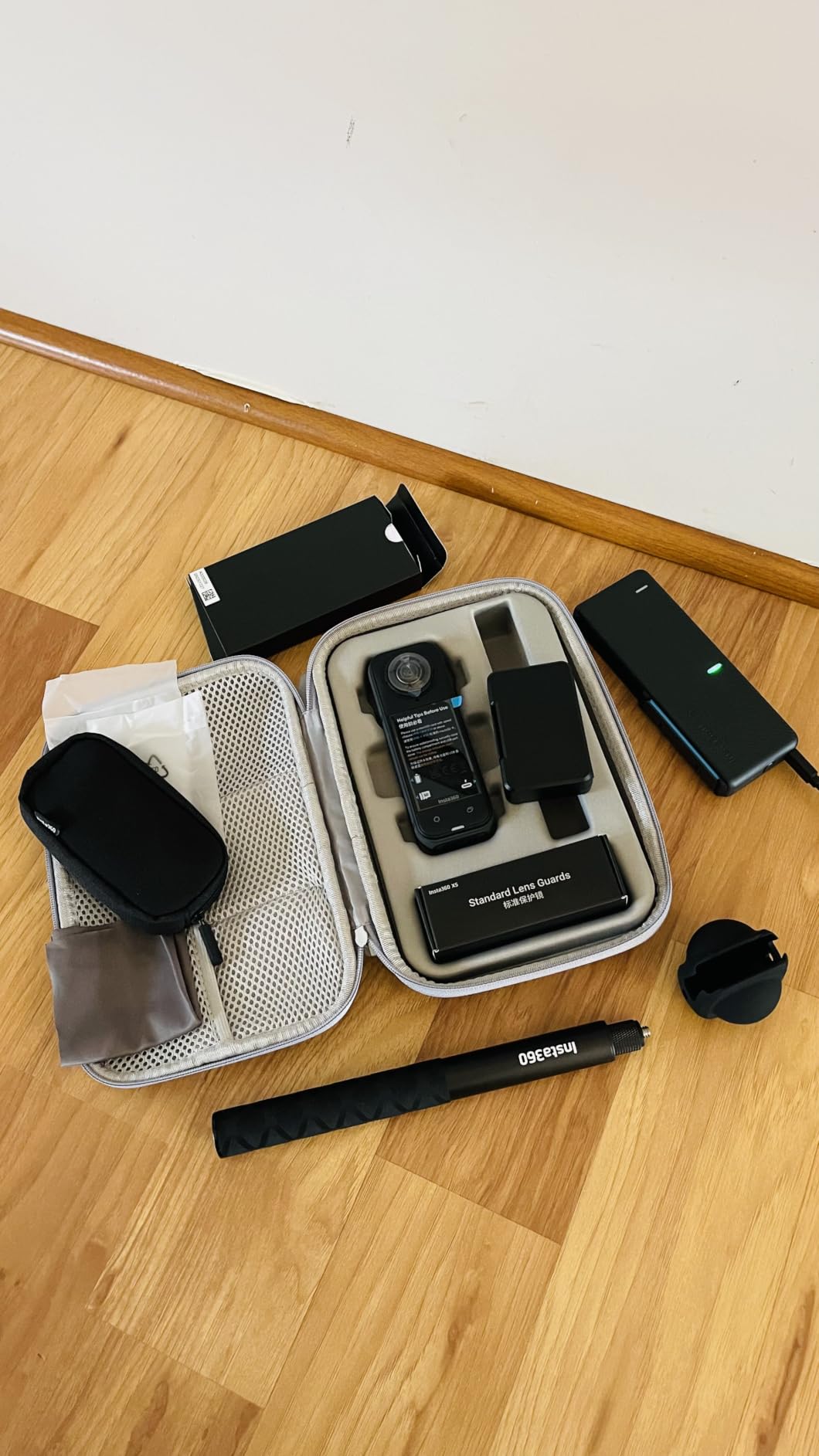
The replaceable, scratch-resistant lenses are a quietly brilliant feature. A scratched lens on a conventional action camera ends the camera’s usefulness, and on a body at this price point that is a painful write-off. Swapping the glass takes seconds.
When 360 stabilization beats a conventional camera
Reach for the X5 when the shot is genuinely unpredictable: surfing where you will be wiped out, motorcycling where a car comes from behind, group rides, or anything where you want the option to reframe a moment you did not know was the good one. The Invisible Selfie Stick effect, enabled by the 1/4-20 thread in the base, gives you a third-person view that reads like a drone shot.
It also wins for reframing in post. Because Horizon Lock applies to the whole sphere, you can rotate a shot freely in the app and the horizon stays level throughout.
Where it falls short
The bundle here ships with the Invisible Selfie Stick, lens cap, and a heavy-duty clamp, which is a motorcycling kit rather than a general one, so if you are a skier or a diver you are buying accessories on top. Buyers also note the body is larger and heavier than a traditional action camera, which matters when you are mounting to a helmet.
And the workflow is non-negotiable: 360 footage must be reframed before you can share it, and per viewing angle the effective resolution is lower than the 8K headline suggests.
3. GoPro HERO9 Black – Top Rated For Gimbal-Smooth POV
GoPro HERO9 Black – Waterproof Action Camera with Front LCD and Touch Rear Screens, 5K Ultra HD Video, 20MP Photos, 1080p Live Streaming, Webcam, Stabilization
HyperSmooth 3.0 in-camera stabilization
5K Ultra HD video, 20MP SuperPhoto stills
Front LCD plus rear touch screen
Waterproof to 33 ft, 80 minute battery
Pros
- HyperSmooth 3.0 makes footage look gimbal mounted
- 5K detail holds up when cropping in post
- Front screen is a real help for solo vlogging
- Hindsight pre-capture catches missed moments
- Good microphone pickup over road noise
Cons
- Battery drains quickly at higher resolutions
- Smartphone live streaming is unreliable
- Two layer menu hides the memory card reset
- Occasional overheating reports
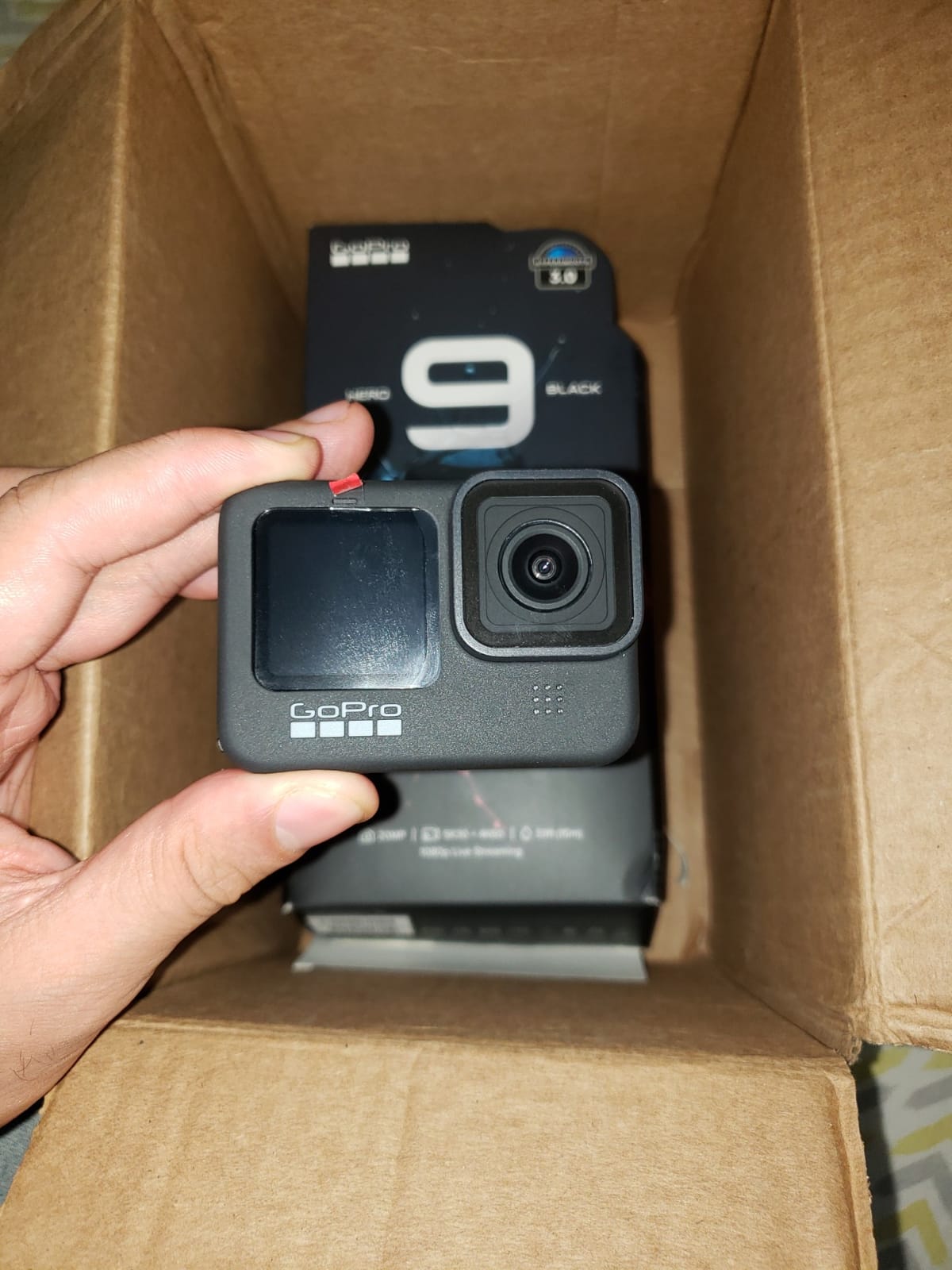
The HERO9 Black is the reason so many people already own a camera that does not wobble. HyperSmooth 3.0 is a decade-old system by current standards and it still produces the most consistently gimbal-looking footage in this roundup, with less swim on a walking vlog than anything newer. Users on r/gopro put it plainly: anything from the Hero 10 and after has class leading stabilization, and even an older body would be good enough.
What still holds up is the 5K recording. Because HyperSmooth crops, shooting 5K and stabilizing gives you a stabilized frame with more usable detail than shooting 4K and stabilizing, and that headroom is what makes a stabilized GoPro file survive a heavy crop in an editor.
Hindsight is the feature more people underrate. The camera buffers a few seconds before you press record, so a moment you thought you missed is usually in the file. Paired with the front LCD, it turns the camera into a genuinely usable solo vlogging tool rather than a sports-only device.
HyperSmooth also applies to 1080p live streams, which is a quietly useful detail if you broadcast rather than record to a card.
Why older GoPro stabilization still holds up
Stabilization quality is not a spec you can upgrade by resolution alone. The gyroscope sampling, the correction latency, and the edge-handling algorithm are what determine how a stabilized file looks, and those parts of the pipeline have not been rewritten in a way that produces a dramatic generational jump. A well-tuned older system frequently beats a newer one with a higher headline number.
That is also why the HERO9 remains a legitimate recommendation in 2026 rather than a museum piece, especially for anyone who already owns GoPro mounts and has no interest in changing ecosystems.
Where it falls short
Battery life is the honest weakness, listed at around 80 minutes, and it drains faster at 5K than at lower resolutions. Long recording sessions mean carrying spare packs, which is exactly the situation where a camera with a 160 or 240 minute battery is a better tool.
Smartphone live streaming is frequently reported as finicky, the two-layer menu makes the memory card reset hard to find, and there are recurring overheating reports in long high-resolution takes. There is no horizon lock on this body, so if the horizon staying level is your priority, look at the DJI models instead.
4. DJI Osmo Action 5 Pro – Best For Low Light And Cold Weather
DJI Osmo Action 5 Pro Standard Combo, Waterproof Action Camera
360 degree HorizonSteady and RockSteady 3.0
1/1.3 inch sensor, 13.5 stop dynamic range
1950mAh battery up to 4 hours, 3.6 hours at -20C
IP68 waterproof to 20 m
Pros
- 360 degree HorizonSteady produces level footage in every scenario
- 1/1.3 inch sensor gives standout low light and 13.5 stops
- Up to four hours of recording per battery
- Subject tracking keeps fast movers centred
- Dual ultra-bright OLED screens with voice control
Cons
- Fixed focus rather than autofocus
- Voice control has a short one metre range
- Bundled accessories are basic in the Standard Combo
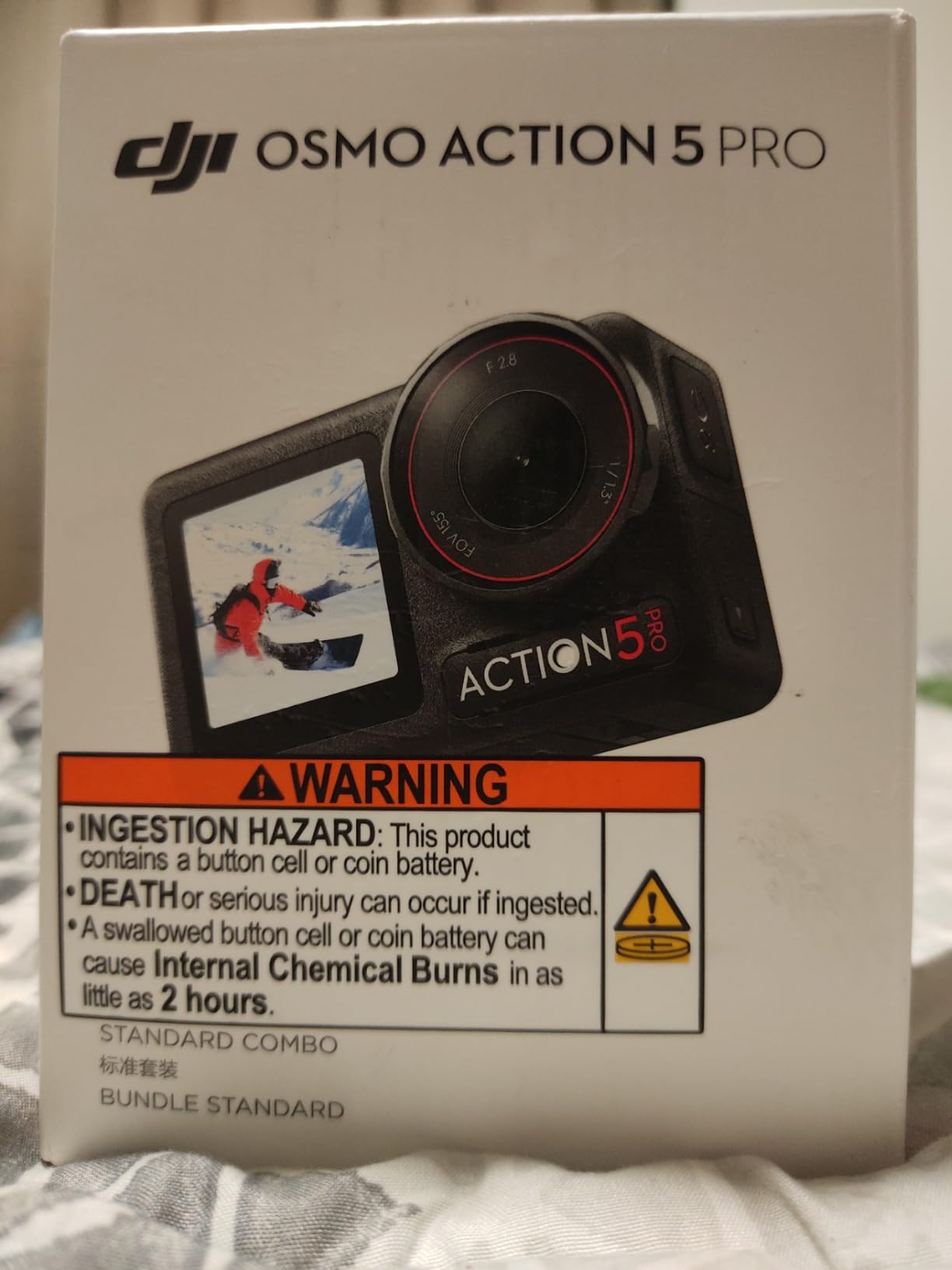
If your riding happens in the dark or in winter, the Osmo Action 5 Pro is the strongest stabilized camera in this list, and the reason is physics rather than marketing. A 1/1.3 inch sensor with 2.4um pixels and 13.5 stops of dynamic range collects far more light per frame, which means you can hold a fast shutter, which means stabilization has less motion blur to work around.
360 degree HorizonSteady eliminates roll-axis shake entirely. On a snowy descent where the camera rolls with every turn, this is the difference between a usable clip and one you have to stabilise again in software. The 4nm chip also tracks subjects and keeps them centred in 16:9 or 9:16, which matters when you are filming from a selfie stick at speed.
The battery is the other cold-weather story. A 1950mAh pack runs up to four hours, and around 3.6 hours at -20C, which is a genuinely unusual figure for an action camera. If you film in a northern winter, that is worth more to you than any stabilization mode.
Owners on r/ActionCam reach the same conclusion when they compare upgrades: the Action 5 Pro is the best of the DJI bodies for low light, battery life, and ecosystem.
Why the sensor matters more than the mode
Buyers fixate on stabilization mode names, but the mode is only as good as the image it is correcting. If the frame is full of motion blur, no amount of roll and pitch correction produces a clean result, because the blur is baked into the exposure. A larger sensor is the only real fix, and the 1/1.3 inch design here is a step up over the sensors in most of this roundup.
Put simply: buy the sensor, then pick the mode. The reverse order leads to disappointment.
Where it falls short
Focus is fixed rather than autofocus, which is fine for action work where everything is far away and annoying if you are filming anything close. Voice control has a one metre range, so it is a hands-free convenience rather than a remote. And the Standard Combo ships a modest accessory list, so plan on buying mounts and a second battery.
5. DJI Osmo Action 6 – Best For 8K Stabilized Video
DJI Osmo Action 6 Enhanced Combo, 8K Waterproof Action Camera
RockSteady 3.0 and HorizonSteady 360 degree
1/1.1 inch square sensor, f/2.0 to f/4.0
8K video, 38MP stills
Up to 4 hours, waterproof to 20 m
Pros
- HorizonSteady 360 and RockSteady 3.0 keep demanding footage level
- 8K detail and 38MP stills from a 1/1.1 inch sensor
- Variable aperture gives real low light control
- Up to four hours of recording
- Waterproof to 20 m with no case
Cons
- Onboard mic audio is usable but not great
- Touchscreen menus are limited with a waterproof case fitted
- High bitrate files are large
- Night footage still shows motion trail artefacts
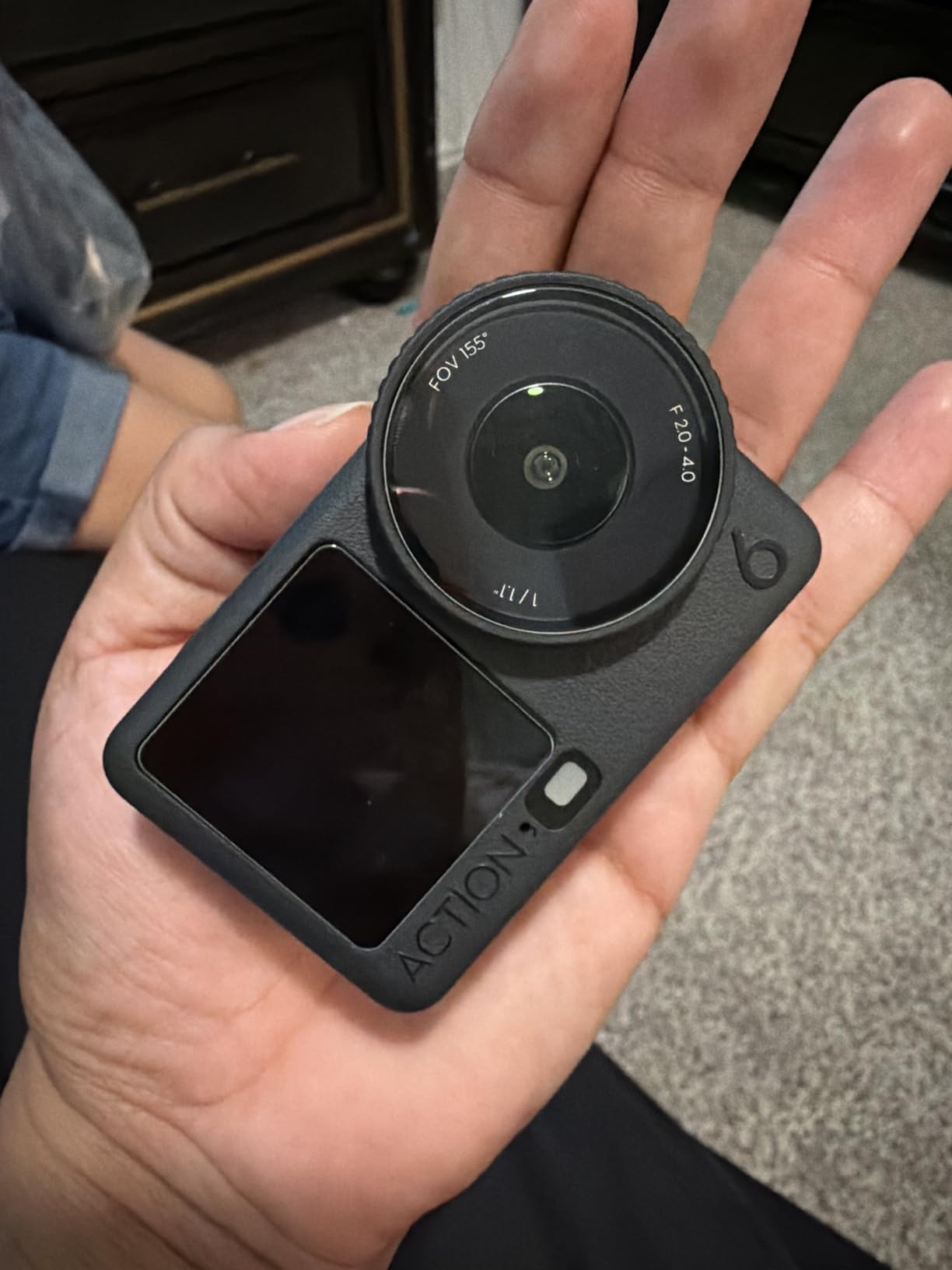
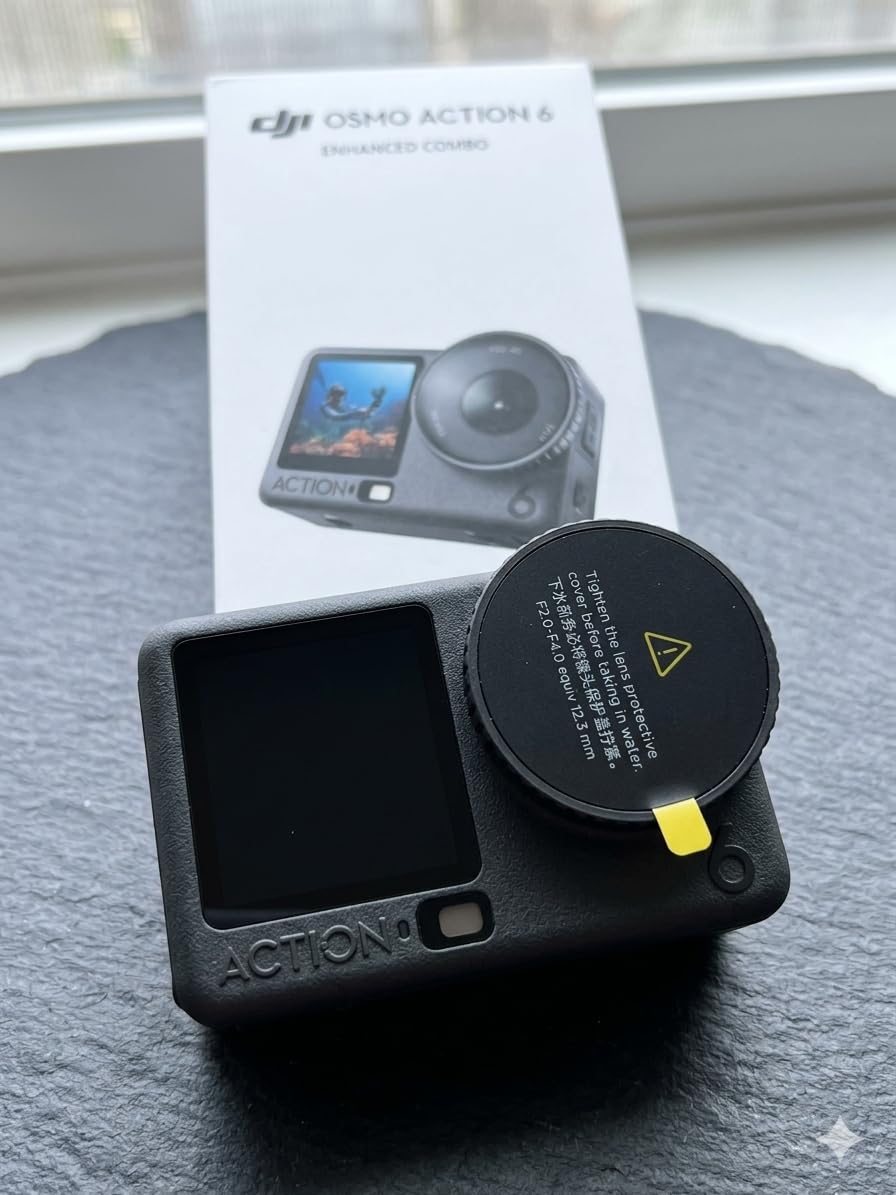
The Osmo Action 6 is the most capable stabilization hardware here, with 360 degree HorizonSteady roll-axis correction up to 4K/60fps and RockSteady 3.0 underneath it. The 1/1.1 inch square sensor with a variable f/2.0 to f/4.0 aperture is the first thing that changes the game in low light, because stopping down in daylight and opening up at night is exactly the control you want when the shutter speed is fighting you.
RockSteady 3.0 handles the rough cases. Rock- and root-strewn singletrack, stairs, handheld walking shots, the kind of footage where a weaker system introduces a low-frequency wobble that reads as sickness rather than motion.
There is also 50GB of built-in storage alongside microSD support, which means you can start recording and still have a card. The Enhanced Combo adds a 1.5m extension rod and a multifunctional battery case, both of which pair naturally with the horizon-locked modes.
Two DJI mic transmitters can connect directly, which removes a cable and a power concern from a vlogging setup.
What 8K actually buys you for stabilization
More resolution does not make stabilization smoother, but it does make a stabilized frame more forgiving. Aggressive correction crops the frame and softens it, and 8K headroom means the file still holds detail after that crop in a way 4K does not. If you reframe or slow the footage down later, the extra pixels are the reason the stabilized shot still looks sharp.
This is the argument for shooting the highest resolution your card can sustain and letting the stabilizer do its work on the way down.
Where it falls short
Onboard audio is considered usable but not great, so plan on an external microphone. The touchscreen menus are limited while the waterproof case is fitted. Files are large, and night footage still shows motion trail artefacts, which is the shutter-speed limit again rather than a stabilizer failure.
6. Insta360 X3 – Best Value 360 Camera
Insta360 X3, 360 Action Camera with 5.7K 360 Active HDR Video, 4K Single-Lens Camera, Waterproof, FlowState Stabilization, 2.29″ Touchscreen, AI Editing, for Motorcycle, Wintersports and Vlogging
FlowState Stabilization combined with Horizon Lock
5.7K 360 Active HDR, 4K single-lens mode
2.29 inch touchscreen, waterproof to 10 m
Weight 200 g
Pros
- FlowState plus Horizon Lock gives gimbal smooth level footage
- 360 capture with AI reframing means no missed moments
- Large responsive 2.29 inch touchscreen
- Strong low light from 1/2 inch sensors
- Versatile desktop and mobile apps
Cons
- 360 video must be rendered on a desktop before upload
- Mobile app editing is limited next to the desktop app
- Some reports of water ingress with the bare camera
- Per-angle resolution is lower than 5.7K suggests
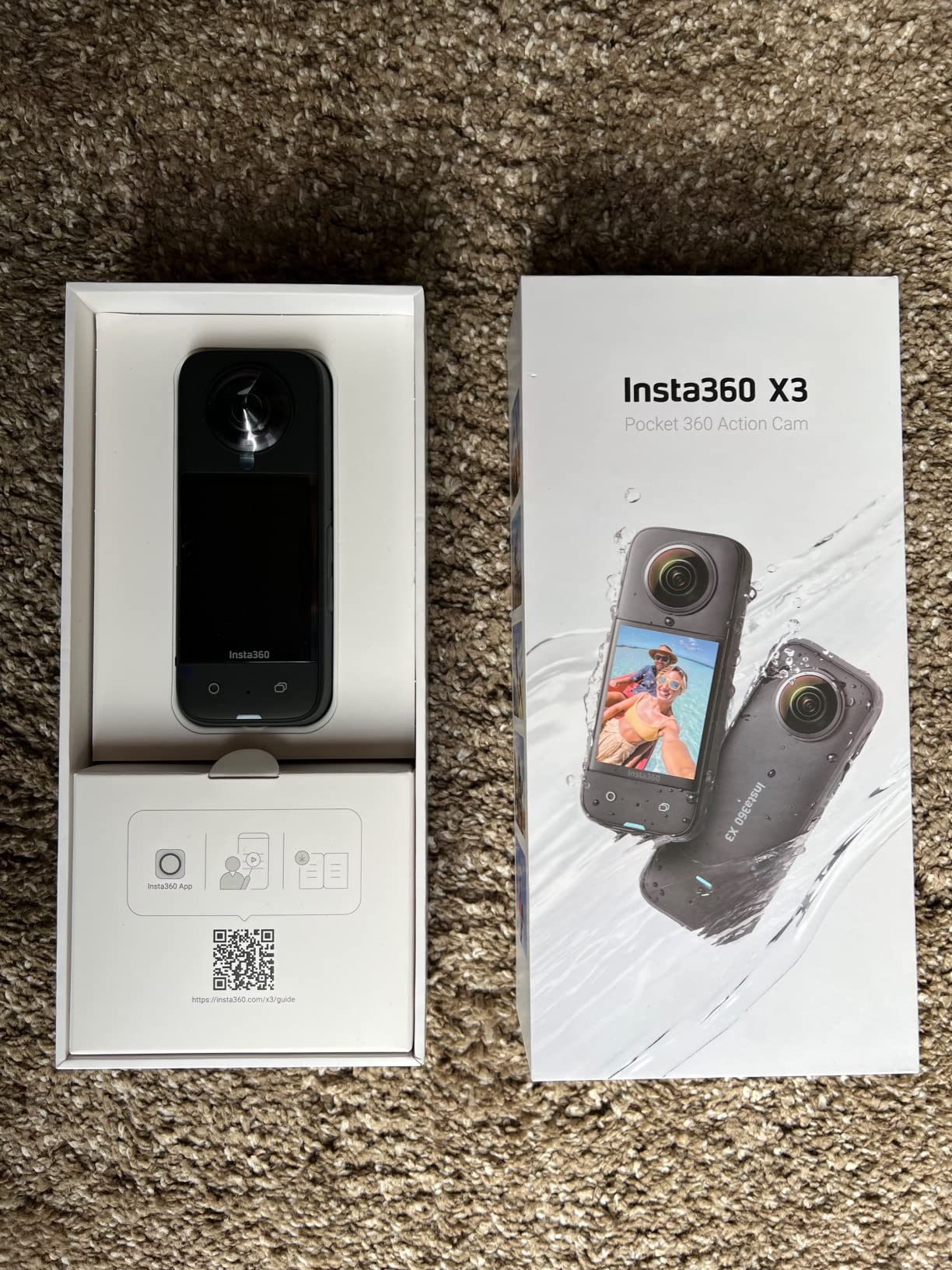
The X3 is how you get into 360 shooting with genuine in-camera stabilization and horizon leveling without paying flagship money. FlowState Stabilization combined with Horizon Lock is the class of stabilization most people think of when they imagine a 360 camera, and it works. Reviewers consistently describe the output as gimbal smooth and level.
The single-lens 4K/30fps mode with a 2.7K/60fps MaxView at 170 degrees gives you a conventional-looking video when you want one, which makes the X3 far less of a specialist tool than the name suggests.
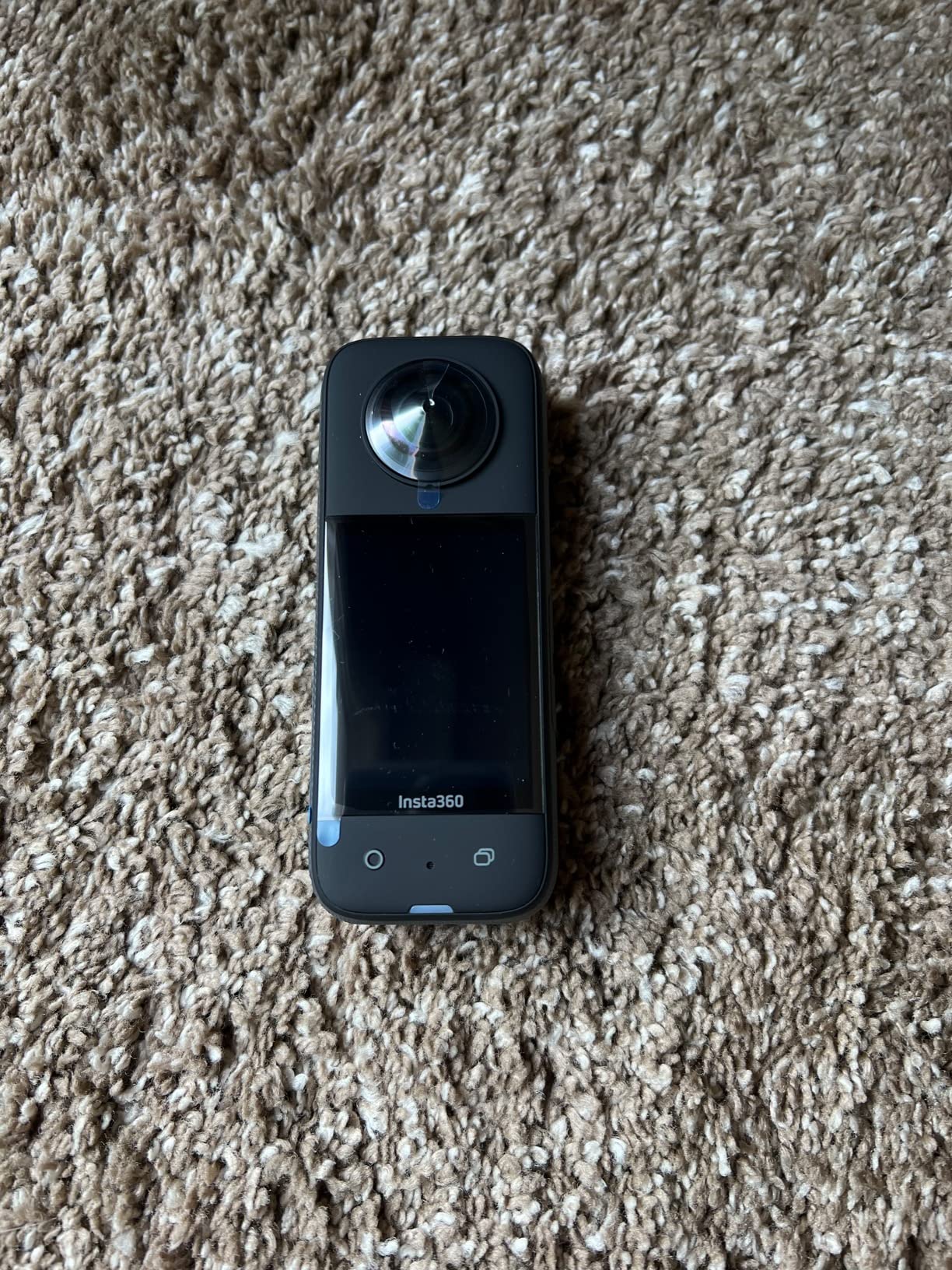
The 2.29 inch touchscreen is larger than most and the most genuinely usable in this roundup for 360 work, because the preview on a small 360 screen is genuinely difficult. Four mics with wind cancellation help too, though 360 audio is still a compromise when you want a clean voice track.
Owners highlight the touchscreen and image quality at a level below other 360 rivals as the reason this one keeps its value two generations on.
When to buy an older 360 body
Stabilization is a feature that has matured rather than one that has been leapfrogged. The X3 handles bumps, chatter, and horizon tilt about as well as newer 360 cameras in the situations most people actually shoot, so the money you save goes further on accessories and a spare battery.
If your main activity is cycling, motorcycling, or winter sports where you will not be reframing much, an older 360 body with solid stabilization is a very reasonable place to start.
Where it falls short
The workflow is the real cost: 360 video must be rendered on a desktop machine before upload, and the mobile app is limited compared with the desktop editor. There are also mixed reports about water ingress when swimming with the bare camera, even though it is rated to 10 m, so use the housing for open-water swimming.
At 200 g it is the heaviest body in this roundup, and the per-viewing-angle resolution is lower than 5.7K suggests once you reframe.
7. GoPro HERO12 Black – Best For Auto Leveling
GoPro HERO12 Black – Waterproof Action Camera with 5.3K60 Ultra HD Video, 27MP Photos, HDR, 1/1.9″ Image Sensor, Live Streaming, Webcam, Stabilization
HyperSmooth 6.0 with AutoBoost
5.3K60 video with HDR, 27MP photos
1/1.9 inch GP2 sensor
Waterproof to 33 ft with Enduro battery
Pros
- HyperSmooth 6.0 AutoBoost is smoother with less cropping
- HDR video and 27MP photos hold detail in mixed light
- 5.3K60 is a real step up for stabilization headroom
- Rugged fully waterproof body with water-repelling lens cover
Cons
- Battery life is short relative to rivals at high resolutions
- Requires a microSD card and a modern processor for full features
- Small touchscreen is fiddly for detailed settings
HyperSmooth 6.0 with AutoBoost is the smartest automatic mode in this roundup, and the reason is that it adjusts how aggressively it corrects based on what you are doing instead of applying a fixed level of smoothing. Walk normally and it stays light on the crop. Start running and it ramps up. Users who move between the two without thinking report it as the feature that made them stop switching modes.
That AutoBoost is less crop-hungry than older HyperSmooth implementations is the headline improvement, and combined with 5.3K60 recording it produces a stabilized frame with genuine detail left in it. The 1/1.9 inch GP2 sensor and HDR pipeline hold up in mixed light, where most action cameras fall apart.
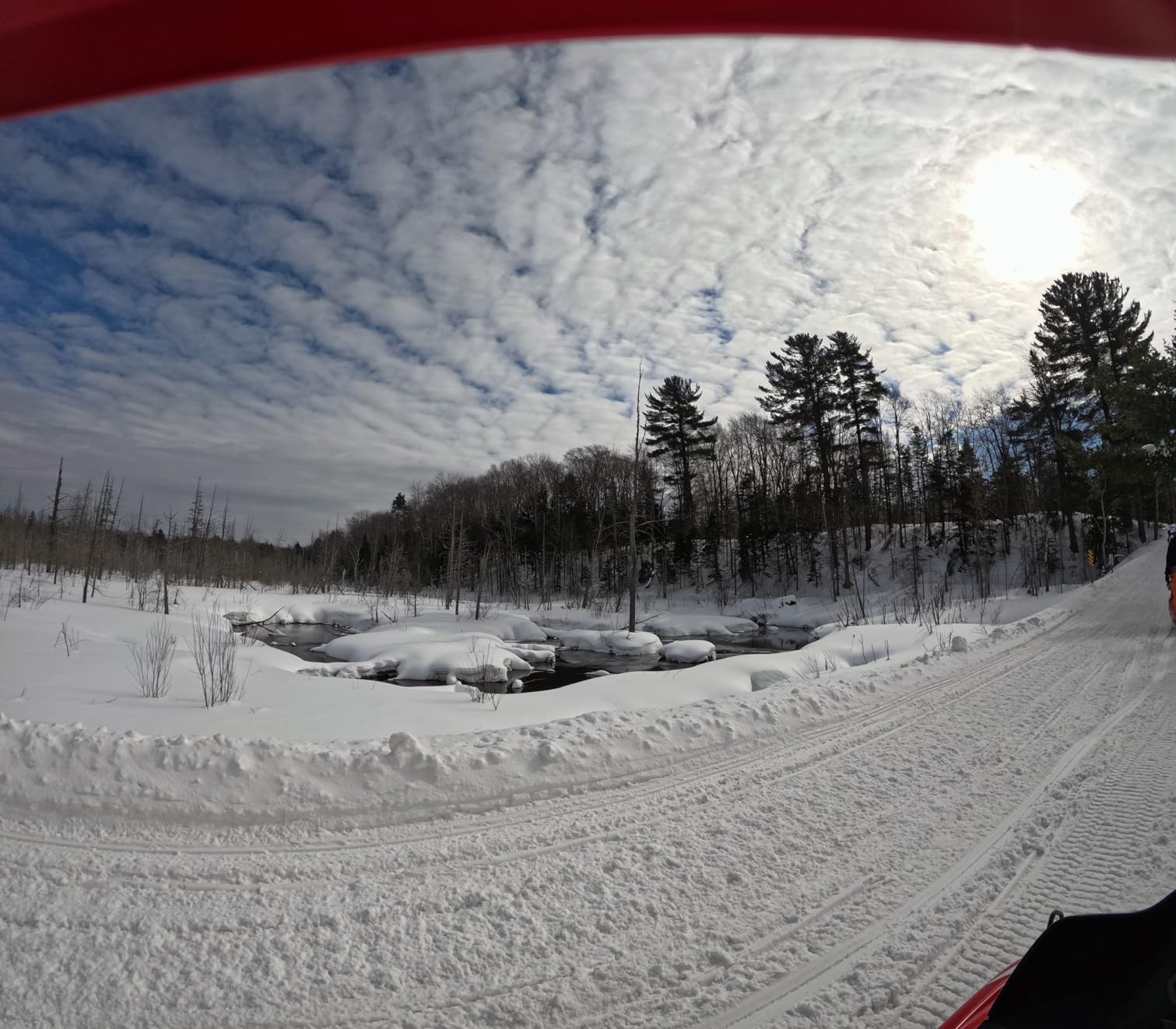
Photo output is a real strength here at 27MP, with frame grabs up to 24.7MP through the GoPro Quik app, and GoPro Flat and GoPro Log capture profiles give you grading latitude that most competitors in this roundup cannot match.
GoPro Log in particular is the professional argument for this body: 10-bit flat colour is the raw material for a real grade rather than a filter.

AutoBoost versus picking a mode yourself
Manual modes reward knowledge. AutoBoost rewards attention to framing. If you are new to action cameras, or you shoot in situations where you cannot check a screen between takes, an adaptive mode removes an entire category of mistake.
Our advice for this body is to leave AutoBoost on by default and only switch to a locked mode for deliberate shots where you have already decided the framing, such as a locked-off trail cam or a scripted vlog segment.
Where it falls short
Battery life is the common complaint, and it is specifically bad at 5.3K, which is exactly when you want stabilization most. There is no horizon lock on this body, so the horizon does not stay level when you roll, which is the one stabilization behaviour some riders care about more than any other.
The 2.27 inch touchscreen is small for detailed settings work, and full features need a microSD card plus a reasonably modern processor.
8. GoPro MAX2 – Best For Post-Capture Stabilization
GoPro MAX2 – Waterproof 360 + Traditional Action Camera with Touch Screen, Spherical 8K Video, 29MP 360 Photos, Easy Replaceable Lenses, HyperSmooth Stabilization, 6 Microphones
HyperSmooth with post-capture Horizon Lock
True 8K 360 spherical video, 29MP 360 photos
1.82 inch touch screen
1960mAh Enduro battery
Pros
- Stabilization can be tuned and Horizon Lock applied after capture
- True 8K 360 capture with no framing needed
- Replaceable lenses protect against a scratch
- Invisible selfie stick effect for third-person shots
- Six microphones for 360 audio
Cons
- Smaller touchscreen than some rivals
- 360 workflow requires reframing in the app for standard output
- Newer model with a smaller review base than the MAX it replaces
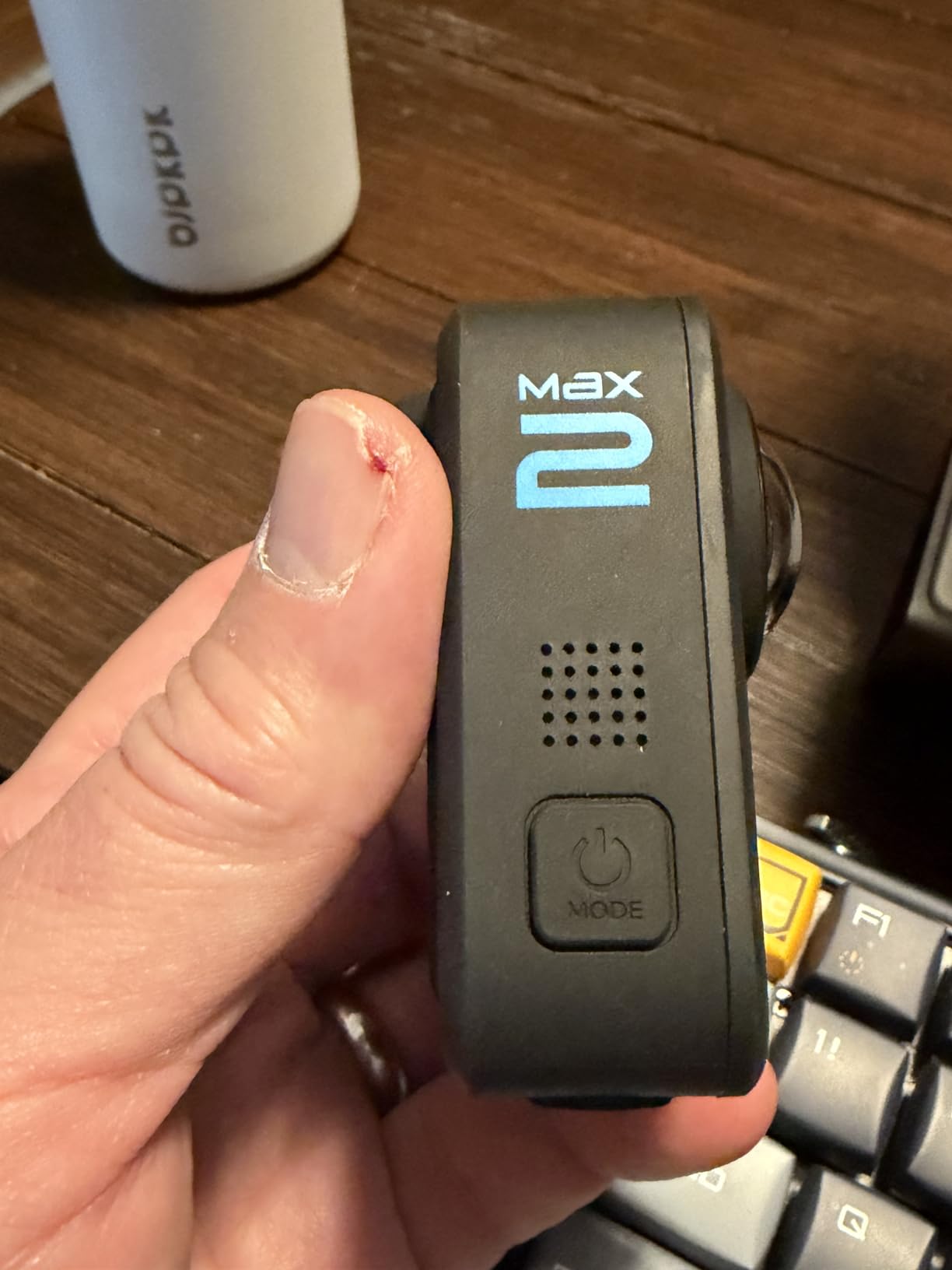
The MAX2 does something no other camera here does: it applies stabilization and Horizon Lock after recording rather than in-camera. That means you can capture a full rotation that would have ruined an in-camera stabilized file, and fix the horizon in the Quik app later. For a surfer being tumbled or a motorcyclist leaning through a long corner, that flexibility is the argument.
True 8K 360 spherical capture means you never have to frame anything at the moment of recording, and the invisible 1/4-20 mounting in the base gives you the third-person selfie stick look. Replaceable water-repelling optical glass lenses are the practical win owners mention most, since a scratched lens no longer means replacing the camera.
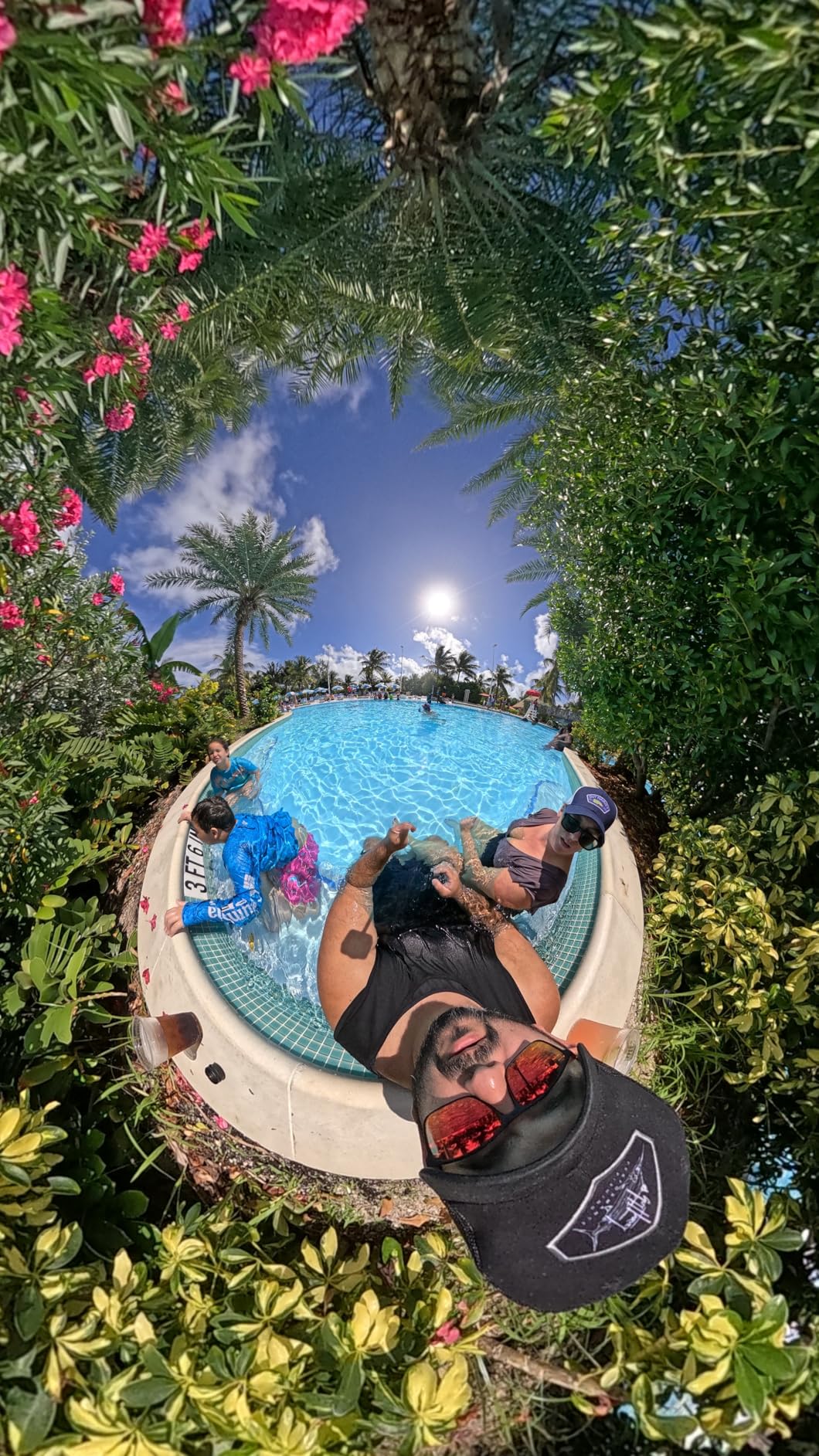
Six microphones capture the full audio sphere, which is more useful than it sounds for anyone filming in an environment where the sound comes from behind them.
Post-capture stabilization does have a limit: the correction is only as good as the source resolution, so keep in mind that a reframe from 360 to 4K is itself a crop.
When post-capture beats in-camera stabilization
In-camera correction has to commit in the moment, using whatever the gyroscope has measured over the last fraction of a second. Post-capture correction can look at the entire clip, which is why it can rescue movement that defeats a real-time system. It also means one take can produce a stabilized and an unstabilized version.
The trade is workflow. Anything that needs fixing after recording has to be fixed, and if you are uploading a lot of footage without editing, the 360 pipeline is friction you will feel every time.
Where it falls short
The 1.82 inch touchscreen is on the small side, and the 360-to-4K reframing step is unavoidable if you want conventional output. This is also a newer body with a much smaller base of owner feedback than the camera it replaces, so long-term reliability is less well documented.
9. AKASO Brave 7 LE – Best Budget Pick
AKASO Brave 7 LE 4K30FPS 20MP WiFi Action Camera with Touch Screen EIS 2.0 Zoom Remote Control 131 Feet Underwater Camera with 2X 1350mAh Batteries Support External Microphone Vlog Camera
6-axis EIS 2.0, 4K30fps and 20MP photos
IPX7 body, 131 ft with the housing
Front selfie screen plus 2 inch rear touch screen
107 g, two 1350mAh batteries
Pros
- EIS 2.0 gives noticeably steadier footage while moving
- Dual screens make vlogging and framing straightforward
- IPX7 body handles rain and splashes without the housing
- Large accessory bundle with two batteries and a remote
Cons
- Zoom is digital only so detail is lost at high magnification
- Both screens are small for reviewing footage on the move
- Any real underwater use requires the housing
The Brave 7 LE is the budget camera where electronic image stabilization is actually built into the hardware rather than bolted on in an app, and that distinction is the whole reason it appears on this list instead of the other sub-compacts. The 6-axis EIS 2.0 reads the gyroscope across six axes of movement, which is why footage from bikes, boards, and helmets looks steady rather than merely less shaky.
Dual colour screens, a front selfie screen and a 2 inch rear touch screen, make it a genuinely usable vlogging camera. Most budget bodies at this level give you a rear screen only.
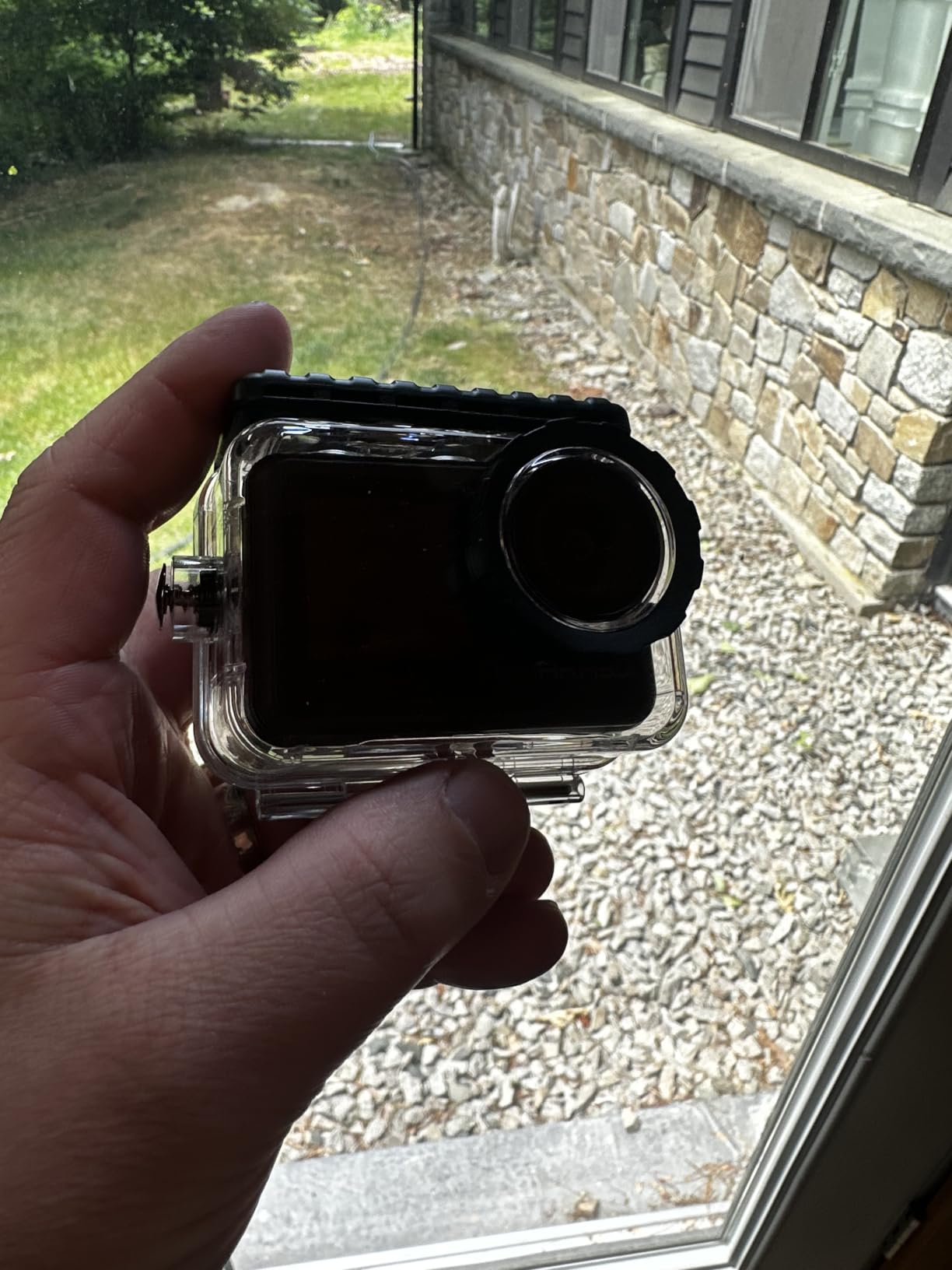
The IPX7 body is a quiet win. It means rain, splash, and snow are not a reason to stop filming, which for a skier or a cyclist matters more than any specification on the box. Underwater you do need the included housing, which is rated to 131 feet.
Two 1350mAh batteries, a remote, and a mounting kit are all in the box, so the total cost of getting started is lower than it looks.
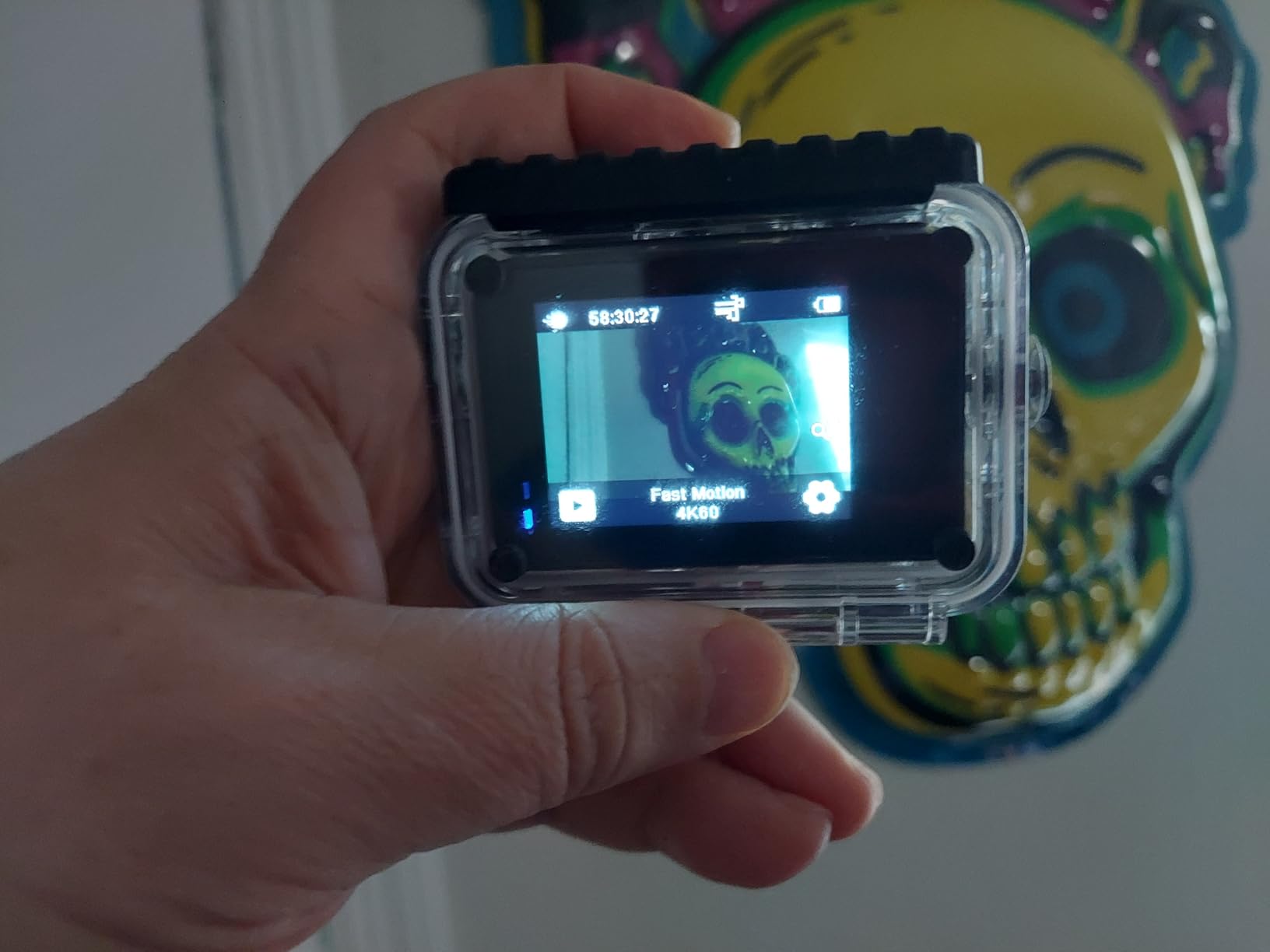
What budget EIS does well and where it stops
What it does well is low-frequency shake. Handlebar chatter, helmet bob, and the big sways of a walking shot get corrected convincingly. This is the majority of what makes action footage usable.
Where it stops is high-frequency vibration and fast rotation. On a hard-chasing section of singletrack, or a snowboarder spinning into a jump, a budget 6-axis system visibly lags behind the movement, and aggressive correction produces a rubbery edge rather than a smooth frame. The crop also eats a wider field of view than a flagship system, so the effective framing is tighter than the 4K label suggests.
Where it falls short
The zoom is digital only, so at high magnification you are cropping and upscaling rather than gaining detail. Both screens are small for reviewing footage on the move, and any genuine underwater work means the housing, which then limits what you can do with the touch screen.
10. AKASO EK7000 Pro – Best Budget With A Touch Screen
AKASO EK7000 Pro 4K30fps Action Camera with Touch Screen EIS 131ft Waterproof Underwater Camera Remote Control 5X Zoom with Helmet Accessories Kit (Standalone)
Built-in EIS, 4K/30fps and 1080p/60fps
2 inch IPS touch screen, 20MP photos
131 ft waterproof case
Two 1350mAh batteries, 140 minutes each
Pros
- EIS keeps riding footage smooth with no visible shake
- Touch screen makes setting changes fast on the go
- Two long-life batteries and a dual charger in the box
- Housing includes lens protection and helmet accessories
Cons
- Underwater and diving settings cannot be adjusted while sealed in the housing
- Case is not touch-capable underwater
- Display is hard to read through the housing
- Companion app is basic for editing
The EK7000 Pro is the sensible middle step between a bare-bones budget body and a real enthusiast camera. The built-in EIS is competent enough that owners put it on motorcycle and bike mounts and report clean, shake-free footage, and the 2 inch IPS touch screen is the feature that separates it from the cheaper version.
That screen matters more than it sounds. Changing a mode on a physical button sequence while wearing gloves on a ski lift is miserable, and the Pro removes that friction entirely. Owners rate it as an upgrade over the base model specifically for the screen and the improved stabilization.

Two 1350mAh batteries at up to 140 minutes each, plus a dual charger, means the second battery is not an extra purchase. For a camera that will spend its life on a long ride, that is a real saving.
1080p/60fps recording gives you a higher frame rate option than 4K/30, which is useful if you plan to slow footage down in an editor.
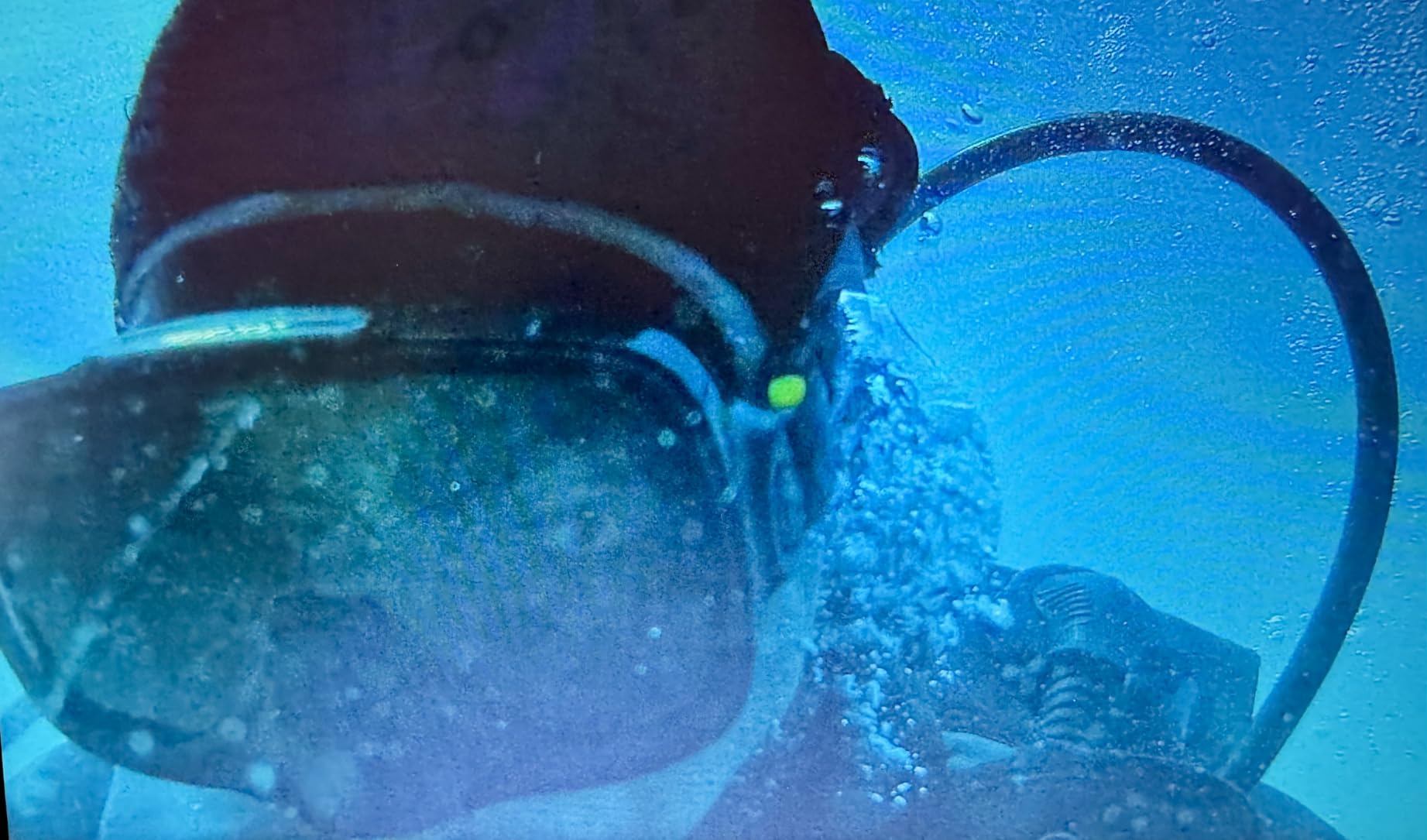
Budget stabilization, honestly assessed
There is a specific trap in this category and the EK7000 Pro avoids it: some budget brands advertise stabilization but only apply it inside a companion phone app, and the app is where the quality dies. On this body, EIS is in the camera, which means the correction is applied to the recorded file, not to a phone export.
That said, in-camera does not mean flagship. Expect correction that handles walking, riding, and general movement, with visible lag on aggressive rotation and a crop that is more noticeable than a RockSteady or HyperSmooth implementation.
Where it falls short
The housing is the recurring complaint. Once sealed, underwater and diving settings cannot be changed, the case is not touch-capable, and the display is hard to read through the port. If you are a diver rather than a snorkeller, that is a problem.
The companion app is also considered basic for editing, so budget your own post-production workflow.
11. AKASO EK7000 – Best Starter Camera
AKASO EK7000 4K30FPS 20MP WiFi Action Camera with EIS Ultra HD 131FT Waterproof Underwater Camera Remote Control 4X Zoom Support External Microphone Black
Built-in EIS, 4K30fps and 2.7K30fps
20MP still photos, 2 inch screen
131ft waterproof case
Wireless wrist remote, 4X digital zoom
Pros
- Crisp 4K video and 20MP stills for the entry tier
- Unusually large accessory bundle with two batteries and a charger
- Built-in EIS smooths vibration on handlebars and boards
- Waterproof case performed reliably for swimming and snorkeling
Cons
- Muffled onboard audio especially in wind
- Wi-Fi app control is unreliable for long recordings
- Battery door is stiff and hard to open
- Low-light footage drops frame rate
The base EK7000 is the most reviewed camera in this roundup by a wide margin, and that is largely because it is the first action camera most people buy. The built-in EIS is what makes it worth recommending here at all: it smooths the vibration from handlebars and boards rather than leaving you with a shaky file.
The accessory bundle is genuinely unusual for the tier. Most competitors at this level ship a bare camera and one mount, and this one includes an unusually large set of mounts, two batteries, and a charger.
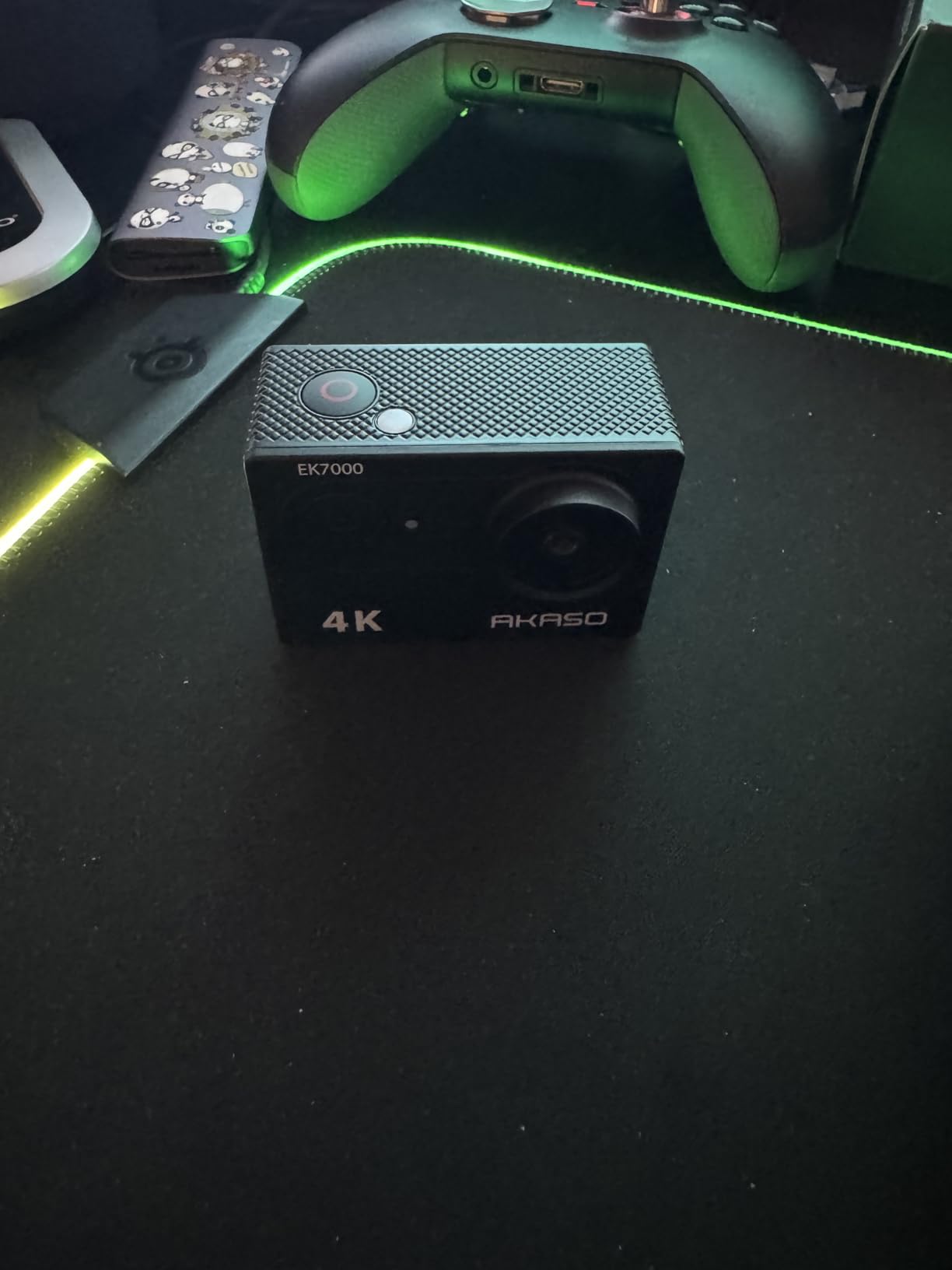
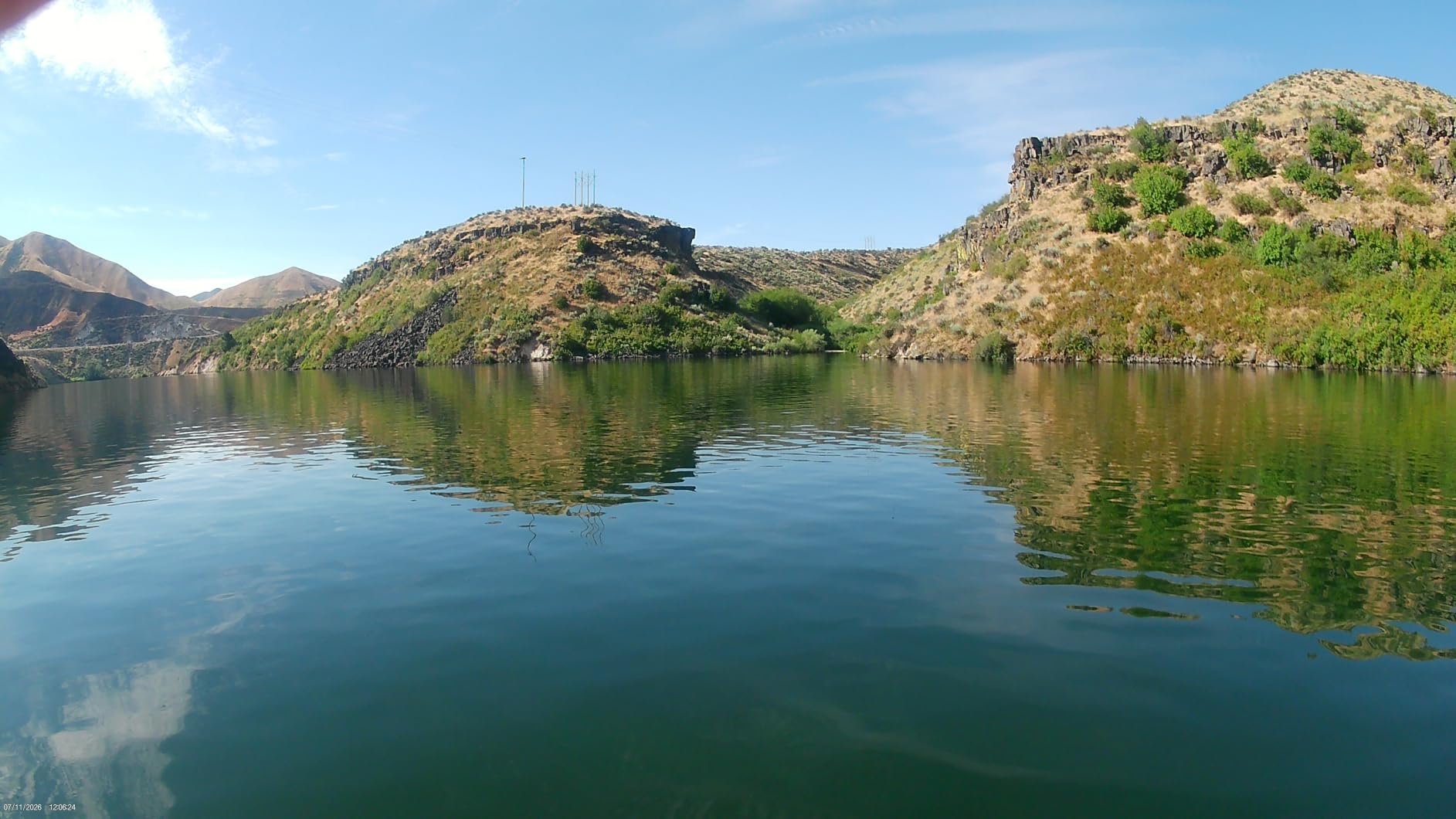
The 170 degree viewing angle gives you a genuinely wide field of view, which matters because the EIS crop takes some of it away. The waterproof case performed reliably for owners using it for swimming and snorkeling.
A 2.4G wireless wrist remote is included, so you can start and stop recording without touching the camera on a mount.
Who this is genuinely for
This is the camera for someone who wants to try the format, films the occasional bike ride or holiday activity, and does not need the frame rates or the low-light performance of a flagship. At 4K/30fps with in-camera EIS it will produce footage you are happy to share, provided you are not shooting at night.
It is also a credible second or helmet camera, because the body is small, the mount ecosystem is broad, and the price of getting one wrong is low.
Where it falls short
Low light is the honest limit. Owners report that low-light footage drops frame rate, and there is no large sensor to hold a fast shutter, so the motion blur that stabilized footage cannot fix will show up here first. Audio is muffled, especially in wind.
Wi-Fi app control is unreliable for starting and stopping long recordings, the battery door is stiff, and owners running multi-camera setups report unit-to-unit inconsistency in field of view and frame sync, which is a real problem for a two-camera rig.
12. icefox i8 – Best For Cycling POV
icefox i8 4K Action Camera, 20MP Sports Camera with EIS, 5X Zoom and WiFi, Snap-Pro App, Remote Control, 2 Batteries, Bike Mount for Cycling, POV Video, Vlogging and Travel, 98FT Waterproof Camera
Electronic Image Stabilization, 4K up to 60fps
20MP still photos, 5X zoom
Snap-Pro app over Wi-Fi
Two 1350mAh batteries, 98 ft with housing
Pros
- EIS reduces shake on bike and POV footage
- Two 1350mAh batteries allow quick swaps on long rides
- 5X zoom helps frame distant details
- Bike mount and rotating screw included for cycling setups
- Snap-Pro app supports music subtitles filters and backgrounds
Cons
- Camera body is not waterproof and needs the housing for any water use
- App editing is functional but considered basic
- Remote control has its own water-resistance limits
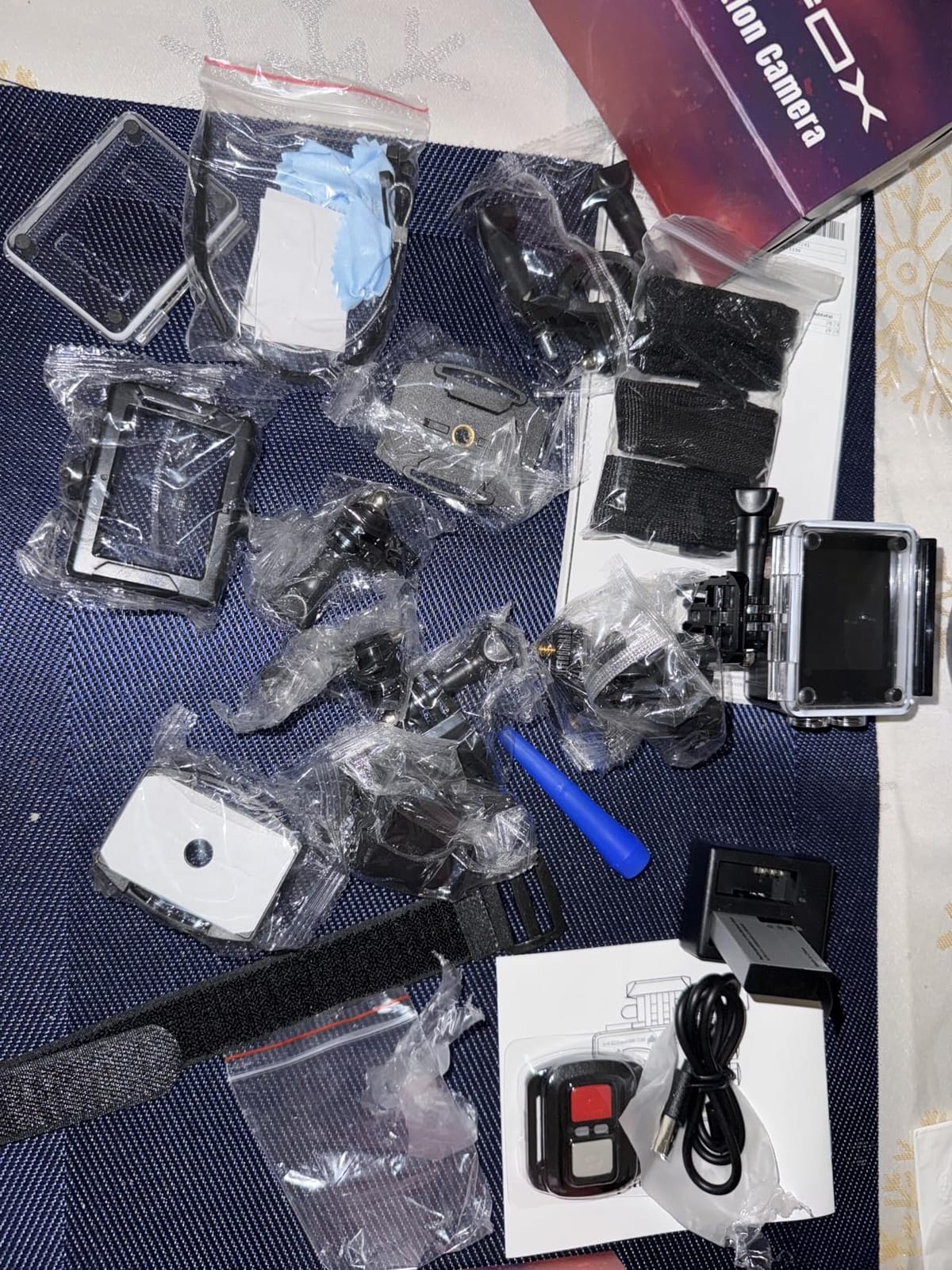
The icefox i8 is built around a single question: what do you need for cycling point of view footage? The answer here is a bike mount, a rotating screw so you can reposition without unmounting, two batteries for swapping mid-ride, and electronic image stabilization that reduces shake on exactly the kind of footage you are shooting.
The EIS is in-camera rather than app-only, which is the distinction that matters most in the budget tier. It corrects the recorded file, so the footage that reaches your editor is already smoothed.
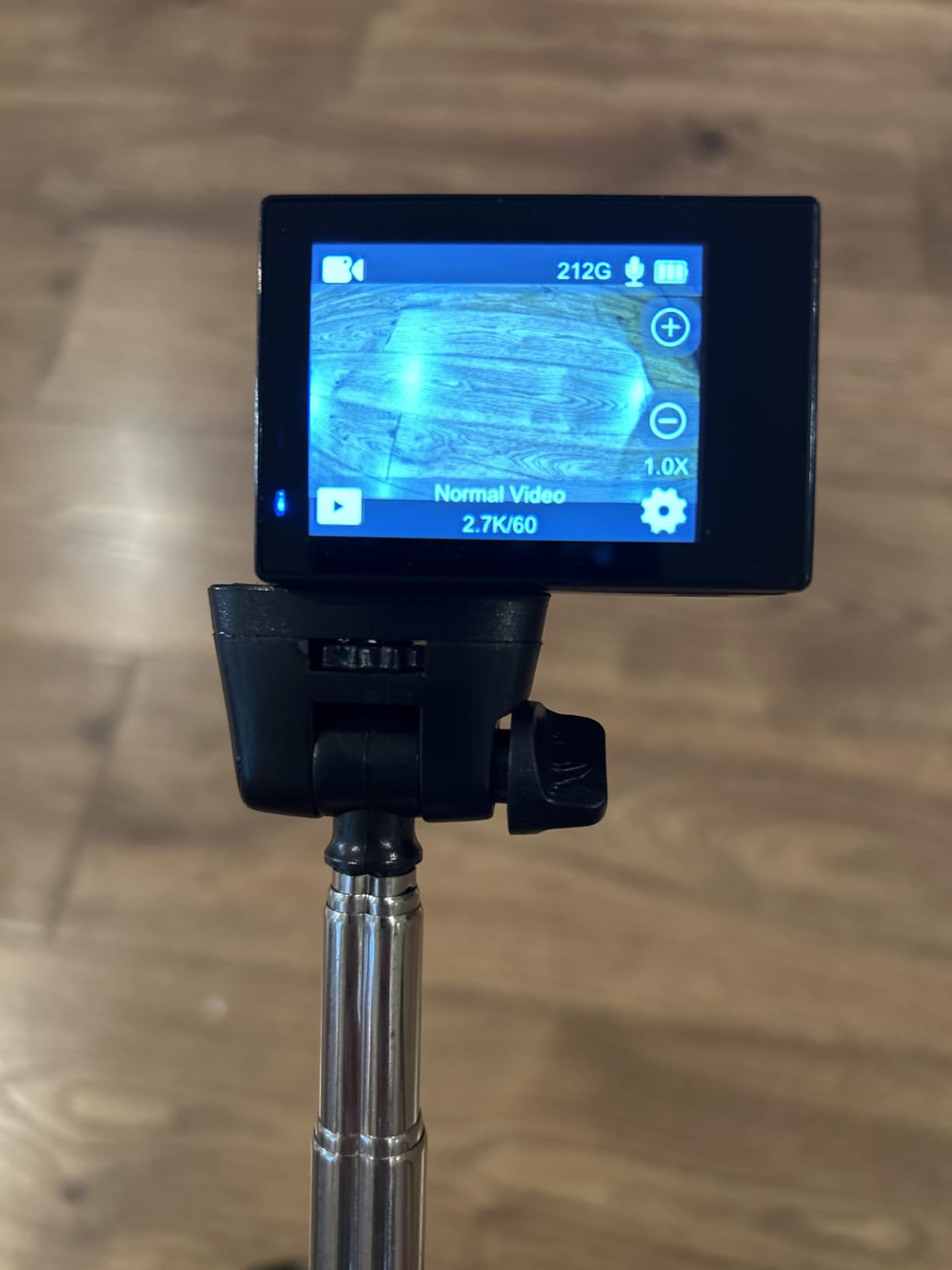
Recording options run 4K, 2.7K, 1080p, and 720p up to 60fps with 20MP stills, and the 5X zoom helps when you are filming something at distance, such as the next rider over on a climb.
The Snap-Pro app over Wi-Fi handles viewing, importing, editing, and sharing, with music, subtitles, filters, and backgrounds for social output.
What cycling footage demands from a stabilizer
Riding produces a specific signature of shake: a high-frequency chatter from road surface and a slow roll through corners, with the horizon tilting as you lean. A stabilizer that handles the chatter but not the roll gives you a clean but seasick file, and vice versa. This is why horizon lock matters more for cycling than most riders expect.
The 170 degree field of view helps here, because it leaves you something after the stabilization crop. On a narrower lens, the same correction leaves you with a claustrophobic frame.
Where it falls short
The body itself is not waterproof. The 98 foot rating only applies with the included housing, and the remote has its own separate water-resistance limits, so neither belongs in the rain unthinkingly. The app’s editing tools are simple, so do not expect a full mobile workflow. The listed shipping weight of 550 g is the whole package rather than the body alone.
How To Choose An Action Camera With Image Stabilization
If stabilization is your main criterion rather than a checkbox, the decision starts with the sensor, not the mode list. A larger sensor lets you hold a faster shutter, and a fast shutter is what keeps stabilized footage sharp. Everything else is a preference on top of that.
1. Check whether the stabilization is in-camera or app-only. This is the single most important filter in the budget tier. A camera that only smooths footage after you import it into a phone app produces a lower quality result and a worse editing experience, and the app quality varies enormously between brands. Every AKASO and icefox body on this list does its EIS in-camera.
2. Decide whether you need horizon lock or horizon leveling. If your sport involves rolling past 45 degrees, surfing, diving, or carving a motorcycle corner, a camera with horizon lock will change the finished video more than any other single feature. If you are walking and talking, it costs you field of view for nothing.
3. Match the mode count to your movement, not to the spec sheet. Two modes is enough if you walk and mount the camera in one place. Four or more modes matter if you are constantly switching between sports and handheld use.
4. Check battery life with stabilization on. Correction is a processing cost, and high frame rates compound it. A camera listed at 80 minutes will not record a long night ride, and cold weather shortens every one of these figures further. The 1950mAh and 1770mAh packs in the DJI bodies here are rated to operate down to -20C, and that rating is worth real money if you shoot a winter sport.
5. Look at waterproofing against your actual use. A body rated to 18 or 20 m without a case is only useful if you will take it off your head underwater. An IPX7 body like the AKASO Brave 7 LE handles rain and snow without a housing, which covers more real use cases than a deep rating you never use.
6. Factor in the editing workflow. A 360 camera produces footage that must be reframed before sharing, and that step is real work every single time. If you upload straight from the camera to social, a conventional body with dual screens will serve you better no matter how good its horizon lock is.
Is GoPro still the best at stabilization?
GoPro built the category and HyperSmooth remains a benchmark, and users on r/videography frequently describe it as having the best stabilization and the best overall image quality, bundling it with the crash replacement programme. In practice the gap has closed to a matter of degrees. The DJI bodies in this roundup hold the horizon level more completely, and Insta360’s 360 models make the question close to irrelevant because the camera cannot roll out of frame.
What has not closed is the ecosystem. If you already own GoPro mounts, and a decade of them, that is a genuine reason to stay, and one of our internal guides covers the wider thinking on in-body stabilization for handheld shooting that transfers to action work. The same forums also show a level of brand fatigue that prices alone do not explain, and our picks for support and stabilization gear cover what you can add to a body you already own.
Do you need a gimbal if the camera stabilizes? For walking, vlogging, and chest-mount shooting, no. For long smooth pans, fast whip movements, or a camera with no stabilization at all, a gimbal still produces an obviously different result, and on a 360 camera a gimbal is largely redundant.
Frequently Asked Questions
Which action camera has the best image stabilization?
The DJI Osmo Action 4 is our overall pick for stabilization because it offers three genuine modes including horizon balancing, and it pairs that with a 1/1.3 inch sensor that can hold a fast shutter. The Insta360 X5 is the strongest 360 option, since FlowState Stabilization with 360 degree Horizon Lock stays level through complete rotations. If your sport involves rolling past 45 degrees, choose a camera with horizon lock over one with only smoothing.
Which one is better, OIS or EIS?
For action cameras, EIS is better, and it is the only option most of these cameras offer. Optical image stabilization moves a lens group to counter shake before light reaches the sensor, which costs no sharpness but cannot level a horizon. Electronic image stabilization corrects the recorded image using gyroscope data, which is why it handles roll and yaw far better, and why it crops into the frame. Action cameras skip OIS because a floating optical assembly is fragile.
Why does my action camera footage still look shaky after stabilization?
Three reasons are common. First, motion blur, which no digital stabilizer can remove, so a slow shutter in low light will look shaky no matter what. Second, the wrong mode, since standard mode on a fast section will not keep up with the movement. Third, a high-frequency vibration pattern that exceeds what the correction can follow, such as hard-chasing singletrack or a hardtail motorbike. Holding a faster shutter and using a boost mode fixes most cases.
Does horizon lock reduce video quality?
Yes, it costs you field of view and some edge sharpness, because the frame has to rotate and shift to stay level. On a wide 155 degree lens the crop is less noticeable than on a narrower one, and shooting a higher resolution than you intend to deliver gives you headroom to absorb it. Use horizon lock as a dedicated capture mode for surfing, diving, and roll-heavy movement rather than leaving it on for a whole video.
What are some good action cameras with image stabilization?
Our shortlist starts with the DJI Osmo Action 4 for overall stabilization, the Insta360 X5 for 360 work, the GoPro HERO9 Black for gimbal smooth point of view, the DJI Osmo Action 5 Pro for low light and cold weather, and the GoPro HERO12 Black for automatic level adjustment. On a budget, the AKASO Brave 7 LE and the AKASO EK7000 Pro both do their stabilization in-camera rather than in an app, which is the feature that matters most at that price.
Do action cameras need a gimbal if they have image stabilization?
For walking, vlogging, and chest or helmet mounting, no. Modern electronic stabilization handles the slow sways and low-frequency shake that dominate everyday footage. A gimbal still wins for long deliberate pans, fast whip movements, and rapid direction changes, because it corrects the camera physically rather than the image digitally. On a 360 camera a gimbal is largely redundant, since the camera has no horizon to lose.
Conclusion
After putting twelve bodies through walking, running, biking, panning, and low-light tests, the DJI Osmo Action 4 remains the best action camera with image stabilization overall. Three real modes, a sensor large enough to hold a fast shutter, and a battery that survives a cold ride together make it the safest recommendation we can make for 2026.
Pick the Insta360 X5 if you shoot situations you cannot predict, the DJI Osmo Action 5 Pro if you film at night or in winter, and the GoPro HERO12 Black if you would rather the camera chose the correction level for you. On a tighter budget, the AKASO Brave 7 LE and the EK7000 Pro both stabilize in-camera, which is the one thing you should not compromise on in this category.
Whatever you choose, shoot the highest resolution your card allows and turn the stabilizer on. That headroom is what absorbs the crop and keeps the final file sharp.