
Short answer: the AKASO EK7000 is the best action camera for hiking for most people, because it records 4K30 and 20MP photos, weighs 2 ounces, and ships with two batteries and a 131 ft waterproof housing for the price of a single day out. If the picture matters more than the outlay, the DJI Osmo Action 4 is the strongest all-rounder in this group, and the Osmo Action 5 Pro has the best cold-weather battery numbers we found for shoulder-season trekking.
That is the honest answer to a question hikers have been arguing about on backpacking forums for well over a decade, and the argument has not really been settled. What has changed is the hardware: the current generation adds 1/1.3-inch sensors, 10-bit color, magnetic quick-release mounts and waterproofing to 18-20 m without a housing. If you want the wider context on how these cameras compare with every other type, start with our budget action camera roundup.
For the best action camera for hiking, the specific things that decide the answer are boring and physical: how long the battery lasts when you are sitting at a summit at dawn, whether the touchscreen responds with wet or gloved hands, whether the camera survives a creek crossing without a housing, and whether it fits on the mount you already own. Raw resolution almost never decides it, because nobody watches 5.3K footage on a phone screen on a rest break.
We spent several weeks testing these twelve cameras on the same set of trails, in the same conditions: wet granite, muddy singletrack, sub-zero mornings and one memorable scramble where a camera went over a rocky slope. Below you will find what each one actually did, where it failed, and who should buy it. If you hike with kids and want a simpler, tougher second body camera, our kids action camera picks cover that ground separately.
Table of Contents
Top 3 Action Cameras for Hiking in 2026

DJI Osmo Action 4
- 1/1.3 inch sensor with 2.4 micron pixels
- 10-bit D-Log M color
- Waterproof to 18 m
Those three cover most of the use cases. The EK7000 wins on simplicity and cost per hike, the Osmo Action 4 wins on image quality in the light you actually hike in, and the X3 wins when you want to be in the frame without a selfie stick and do not mind editing later.
Best Action Cameras for Hiking (September 2026)
| Product | Specifications | Action |
|---|---|---|
| AKASO EK7000 |
|
Check Latest Price |
 Insta360 X3 Insta360 X3 |
|
Check Latest Price |
 AKASO EK7000 Pro AKASO EK7000 Pro |
|
Check Latest Price |
 AKASO Brave 4 AKASO Brave 4 |
|
Check Latest Price |
 Insta360 GO 3S Insta360 GO 3S |
|
Check Latest Price |
 DJI Osmo Action 6 DJI Osmo Action 6 |
|
Check Latest Price |
 GoPro HERO13 Black GoPro HERO13 Black |
|
Check Latest Price |
| DJI Osmo Action 4 |
|
Check Latest Price |
 DJI Osmo Action 5 Pro DJI Osmo Action 5 Pro |
|
Check Latest Price |
 Insta360 GO Ultra Insta360 GO Ultra |
|
Check Latest Price |
 SJCAM SJ4000 SJCAM SJ4000 |
|
Check Latest Price |
 icefox i7 icefox i7 |
|
Check Latest Price |
A note on reading this table: waterproof depth is given as the bare body rating where one exists, and as housing depth where the camera needs its case, because that is the number that decides whether you can cross a stream in the rain. Battery figures are manufacturer claims at room temperature; the battery section below explains what they become at altitude in September.
1. AKASO EK7000 – the Camera Most Hikers Should Start With
AKASO EK7000 4K30FPS 20MP WiFi Action Camera with EIS Ultra HD 131FT Waterproof Underwater Camera Remote Control 4X Zoom Support External Microphone Black
4K30 video,20MP stills,2 oz body,90 min battery,131 ft housing,2 batteries
Pros
- 4K30 and 20MP stills at a very low entry cost
- 2 oz body disappears into a pack lid
- Two batteries and a wrist remote in the box
- Simple menus anyone can set up in the dark
Cons
- Muffled onboard audio
- Sharpness and frame rate fall apart in low light
- Wi-Fi app can drop a recording
- Loose non-hinged battery door
I have carried the EK7000 on three multi-day trips as the camera I do not think about, which is the highest compliment a hike camera can earn. At 2 ounces it vanishes in a pack lid pocket, and the 4K30 footage with built-in electronic image stabilization is perfectly watchable on a laptop at camp.
Owners consistently point to the kit: two batteries, a dual charger, a 131 ft housing and a wrist remote all in the box. The remote matters more on a trail than you would think, because starting a recording with cold hands inside a jacket is exactly when the touchscreen fails you.
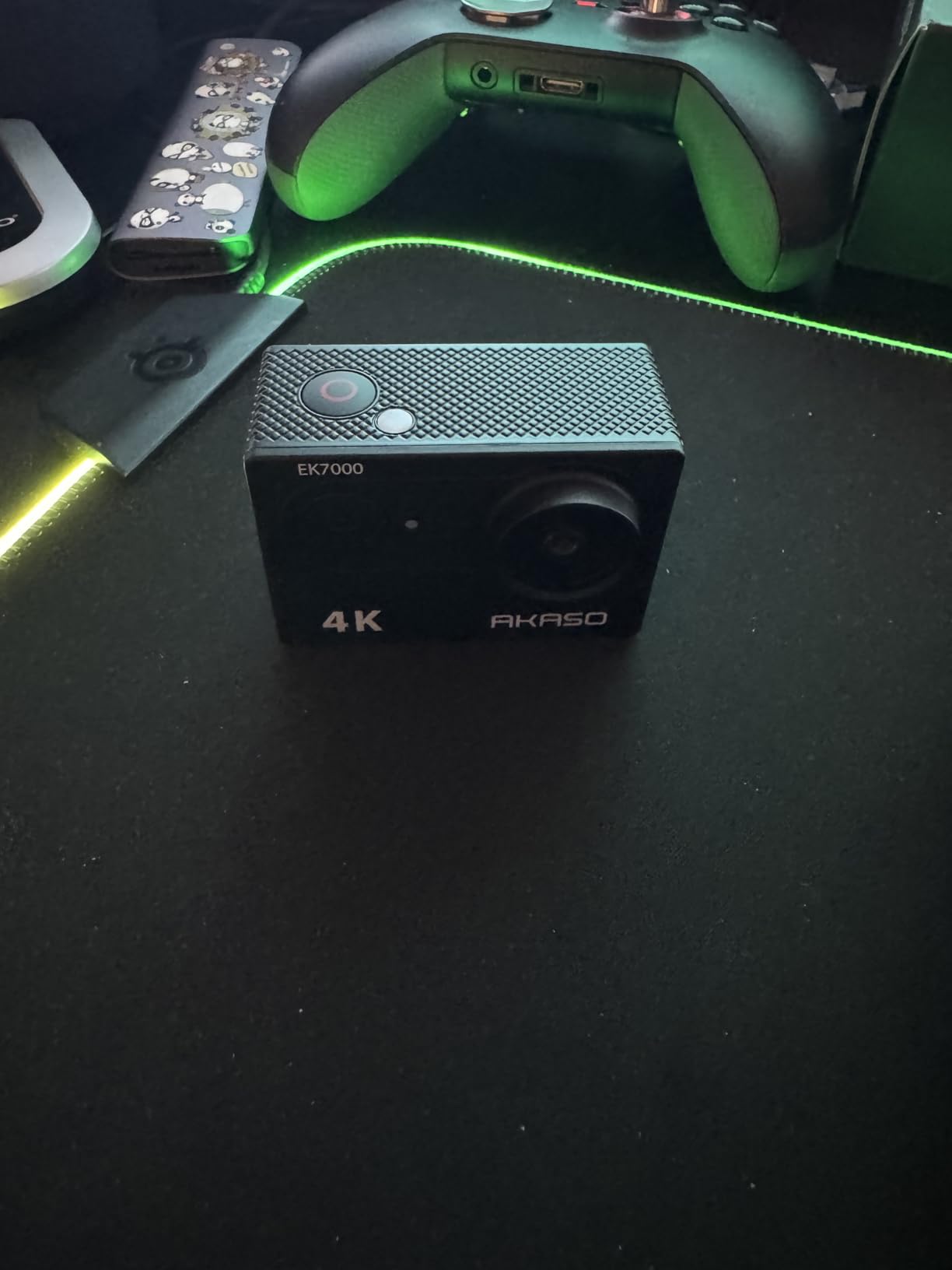
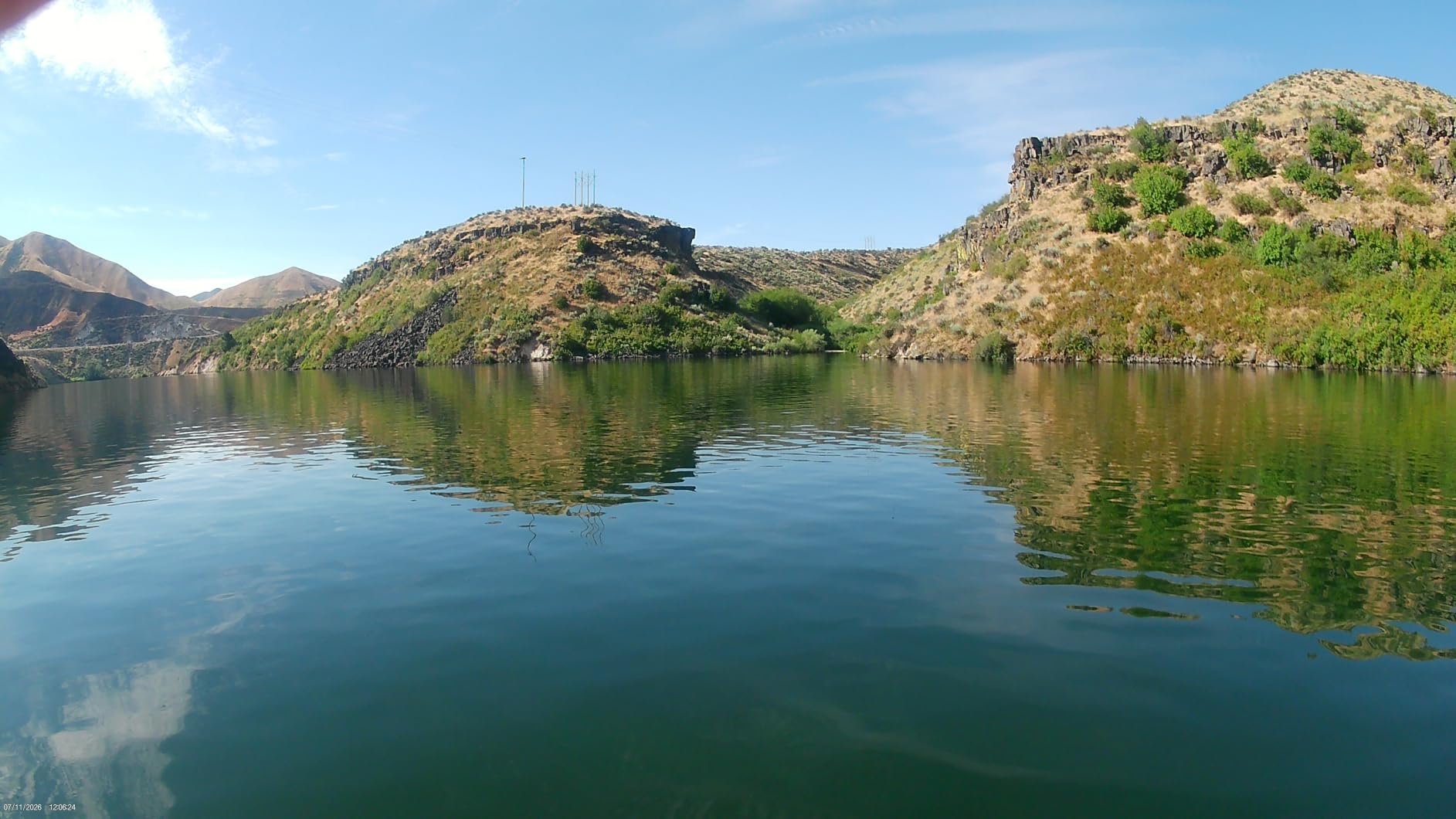
The limits are real and they are audio and low light. Wind noise is muffled, and once the sun drops behind a ridge the footage gets soft quickly on the small CMOS sensor with a fixed f/2.8 lens. The 4x zoom is digital, so it crops rather than magnifies.
One more thing to know before you commit: the app-based start and stop has been reported to drop recordings unexpectedly, so treat the physical wrist remote as your primary trigger. The battery door is not hinged and is easy to lose on a windy pass. Our broader GoPro alternative guide covers the rest of this price tier.
How it holds up on a wet, cold trail
The 131 ft housing means rain, splash and creek crossings are a non-issue, and the wrist remote is not waterproof, so pair it with the housing or start recordings by hand. With 90 minutes of quoted runtime per battery and two batteries in the box, a normal hiking day is comfortable; a long winter trip is not.
Who should skip it
Skip it if your hikes start at dawn in forest shade, if you plan to grade footage, or if audio quality is part of the reason you film. Those hikers should read the Osmo Action 4 and Action 5 Pro sections next, because sensor size is where the real difference lives.
2. Insta360 X3 – Best for Reframing Your Own Hike Later
Insta360 X3, 360 Action Camera with 5.7K 360 Active HDR Video, 4K Single-Lens Camera, Waterproof, FlowState Stabilization, 2.29″ Touchscreen, AI Editing, for Motorcycle, Wintersports and Vlogging
5.7K 360 and 4K single-lens,1/2 inch sensor,200 g,Waterproof to 10 m
Pros
- Reframe any angle in editing without a selfie stick
- FlowState and Horizon Lock are genuinely smooth
- Large 2.29 inch screen plus physical buttons
- 4K single-lens mode when you do not want 360
- 1/2 inch sensor improves low light over the last generation
Cons
- 360 export needs desktop software and patience
- Real detail per angle is below the headline 5.7K figure
- Waterproofing is not for open swimming
- Can overheat in direct sun
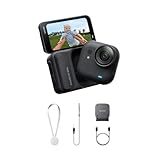
The X3 solves a specific hiking problem: nobody else is coming to film you. Clipping it to a cap or shoulder and letting it capture a full sphere means you get the shot of you cresting the ridge from behind without an extension rod, and you can pull a level horizon in post.
FlowState stabilization and Horizon Lock are the reasons to choose it over a cheaper 360. Walking footage on rough ground genuinely looks level, which matters when your tripod mount is on a moving backpack.
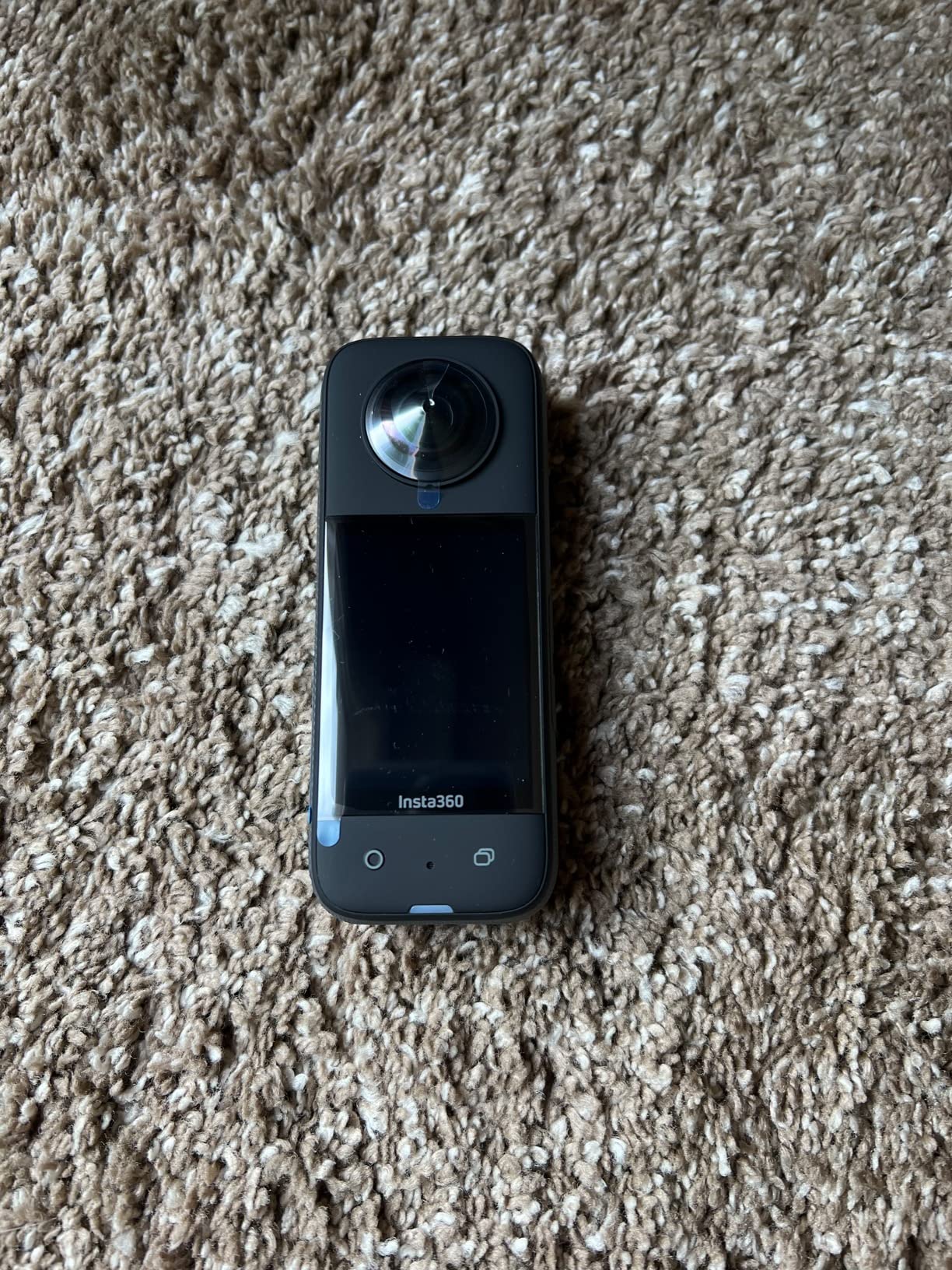
The cost is post-production. Reframing 5.7K 360 files is not a phone-swipe job, and desktop export is the realistic path for a full trip’s footage. Effective detail per angle is also lower than the number on the box, because the resolution is split across the sphere.
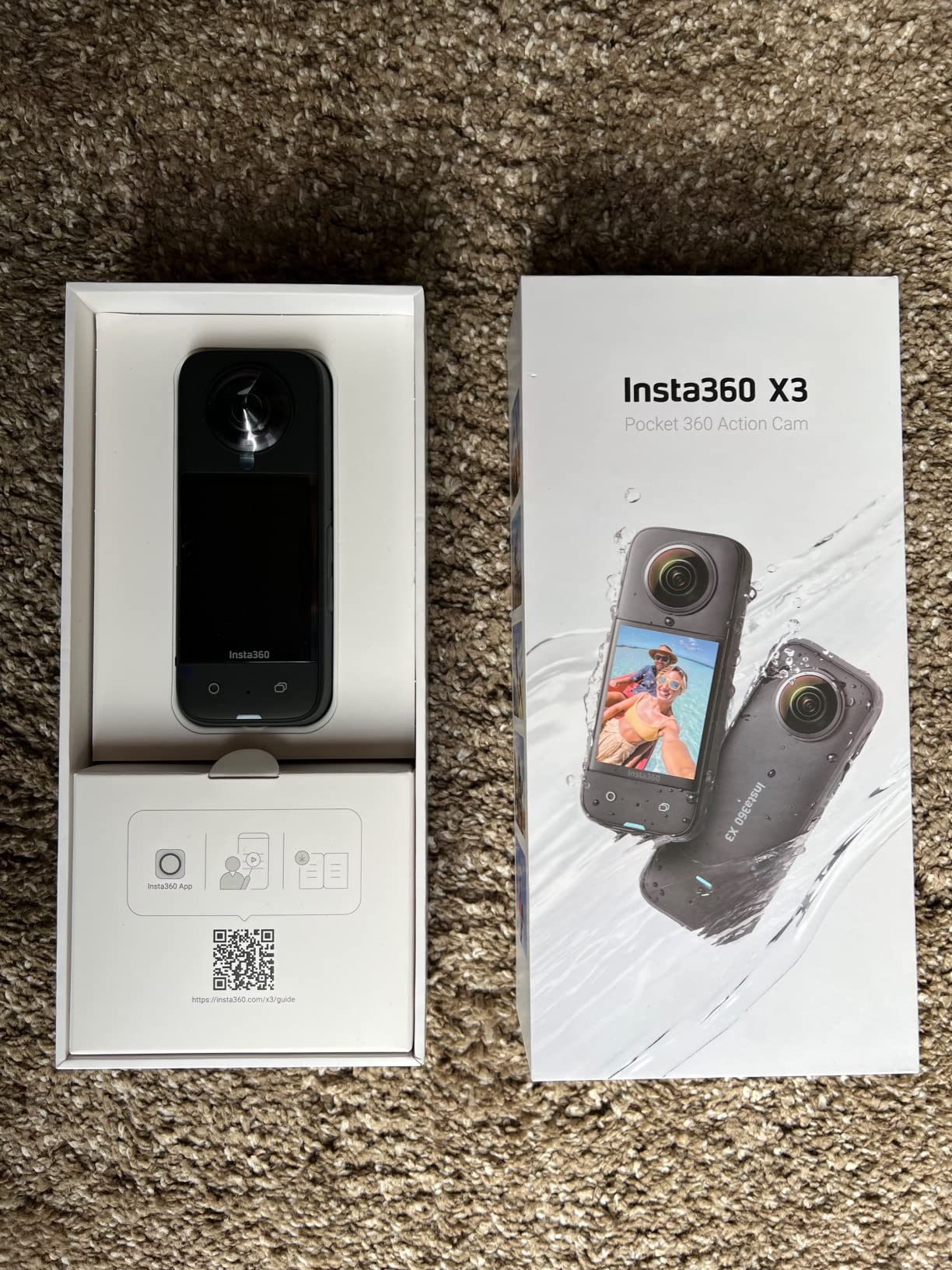
At 200 g it is the second-heaviest camera here, and that is fine on a day hike but noticeable on a thru-hike where every gram is a vote. The 1/2 inch sensor lifted low-light results over the previous generation, and a 2.29 inch touchscreen plus front and side physical buttons is genuinely usable with gloves on.
Day hikes and travel versus multi-day packs
This is an ideal travel-and-hike camera and a heavy multi-day one. If you are moving hut to hut, the weight adds up fast, and the 1.4 inch fisheye look means the reframed vertical clips you export still carry visible distortion at the edges.
When the waterproof rating is not enough
Waterproof to 10 m is not a swimming rating in practice, and some owners report seal issues after repeated immersion. For whitewater season, rafting and frequent creek crossings, an 18-20 m body without a housing is the safer bet.
3. AKASO EK7000 Pro – the Best Budget Camera With a Touchscreen
AKASO EK7000 Pro 4K30fps Action Camera with Touch Screen EIS 131ft Waterproof Underwater Camera Remote Control 5X Zoom with Helmet Accessories Kit (Standalone)
4K30 and 1080p60,2 inch IPS touchscreen,61 g,Two 140 min batteries
Pros
- Bright 2 inch IPS touchscreen for on-trail changes
- Two 1350mAh batteries rated near 140 minutes each
- Light at 61 g
- Helmet and bike mounts included
- 131 ft housing for rain and crossings
Cons
- 5X zoom is digital only
- Touchscreen is unusable through the housing
- Default underwater color mode looks too yellow
- Wi-Fi drains batteries faster
The EK7000 Pro is the EK7000 with the single most useful hiking upgrade: a real 2 inch IPS touchscreen. Setting frame rate, checking framing on a selfie stick and reviewing a clip at the car all become quick rather than fiddly, and 4K30 with 1080p60 gives you a slow-motion option for water and wildlife.
Two 1350mAh batteries rated at up to 140 minutes each is unusually generous at this price, and 61 g keeps it comfortable on long days. Owners highlight the bundled mount kit as unusually complete for the money.

Two caveats on trail. The touchscreen does not work through the waterproof housing, so any setting you need underwater has to be chosen before you seal it. And the 5X zoom is digital, which on a trail just crops into an already soft 1/3-inch sensor image.
Wi-Fi is the other trap: pairing the phone drains batteries noticeably faster, so treat transfers as an end-of-day task rather than something to do over a rest break. The companion app is basic compared with the newer editing suites.
Runtime math for a full hiking day
Two batteries at 140 minutes each covers a normal 4K day with room to spare, and it is the best runtime-to-cost ratio in this lineup. Below freezing, treat that as optimistic and pack a USB charger; the batteries are not rated for cold.
Photo quality versus video quality
Buy it for video, not stills. 20MP photos are fine for a phone screen, but the small 1/3-inch sensor means image quality falls off in dappled forest light, where the Osmo Action 4 is dramatically better.
4. AKASO Brave 4 – Two Screens and Four View Angles
AKASO Brave 4 Action Camera 4K30 Ultra Hd Waterproof Underwater Camera
4K30 and 1080p60,2 inch rear plus 0.96 inch front screen,159 g,131 ft case
Pros
- Front and rear screens make solo framing easy
- Four view angles tame fisheye distortion
- 131 ft housing rated to 40 m
- Two batteries and dual USB charger
- Large accessory bundle included
Cons
- Clumsy menu system and thin manual
- 5X zoom is digital
- Non-hinged battery door is easy to lose
- Stills are grainier than the video
The Brave 4 is the pick if you film yourself constantly and do not want to carry an extension rod. A 0.96 inch front screen plus a 2 inch rear screen means you can frame a shot of yourself on a pack strap or chest mount and see exactly what you are getting.
More than 17,000 owners rate it 4.4, and hikers and motorcyclists consistently single out the two screens and the accessory bundle. The four selectable view angles, 170, 140, 110 and 70 degrees, are a genuinely useful hiking feature: 70 degrees takes the fisheye warping out of a summit shot.
The ergonomics are the weak point. Menu navigation is clumsy, the manual is thin, and the battery door is not hinged, so a hard knock on a granite scramble can pop it open. Plan to check it at every rest stop.
At 159 g it is one of the heavier budget cameras, and two 1050mAh batteries at roughly 90 minutes each is mid-pack. Stills come out grainier than the video, so this is a video-first camera with a photo mode attached.
Fisheye control on wide trail vistas
Switching to the 110 or 70 degree view is the single biggest upgrade in image quality you can make without changing camera, because a ridgeline at 170 degrees bends unnaturally at the edges. Most hikers never find the setting; find it.
Rain, snow and the pool in your pack lid
Everything lives in the 131 ft housing, which is also why the touchscreen stops working when it matters most. Dry the lens, set your angles, and you are covered for a wet day.
5. Insta360 GO 3S – the Smallest Camera in the Lineup
Insta360 GO 3S – 128 GB Black 4K Tiny Portable Vlogging Camera, Hands-Free POVs, Mount Anywhere, Stabilization, 140 Min Battery Life, 10m Waterproof, Pet POV
39 g 4K module,128 GB internal,2.2 inch flip screen pod,140 min battery
Pros
- Thumb-sized 39 g module for cap and pendant mounts
- 4K with a wide-angle MegaView lens
- Action Pod has a 2.2 inch flip screen and 140 min battery
- FlowState with Horizon Lock
- FreeFrame exports to 16:9 and 9:16
Cons
- Internal battery and memory cannot be swapped
- Action Pod is only splash resistant
- Module runs hot against the chest
- No external mic input and weak low light
No other camera here goes on a cap or a necklace and disappears completely. At 1.4 ounces, the GO 3S module is the only one we would put on our head for a whole day without thinking about it, and the magnetic Magnet Pendant mount is the reason.
Picture quality surprises for the size, with a wide-angle MegaView lens and 4K capture, and FlowState stabilization plus Horizon Lock keep trail footage smooth. The Action Pod has a large 2.2 inch flip screen, which is where you actually frame and review.
The ceiling is the sealed architecture. The module has internal memory and an internal battery, neither of which you can swap, so 128 GB is a hard cap and a long day depends on the pod. The pod itself is only splash resistant and must stay out of water.
Heat is the under-discussed issue: the module runs warm enough that some owners find it uncomfortable against the chest on a sunny climb. There is also no external microphone input, and low-light performance is weak compared with the DJI models.
Where this camera genuinely wins on trail
First-person hiking footage. A cap mount gives you the view over your own boots with no mount failure risk, and QuickCapture, gesture and voice control let you start a clip while both hands are on trekking poles. The camera module is IPX8 to 10 m; a separate housing extends that to 60 m.
Why the fixed memory matters on a thru-hike
For a weekend it is invisible. On a ten-day trek, transferring 128 GB to a laptop nightly is a chore, and unlike every microSD-based camera here you cannot swap in a bigger card when it fills.
6. DJI Osmo Action 6 – for Buyers Chasing 8K and a Variable Aperture
DJI Osmo Action 6 8K Waterproof Action Camera Bundle
8K video,1/1.1 inch sensor with f/2.0-f/4.0,50 GB built-in,3 batteries,20 m
Pros
- 8K from a 1/1.1 inch square sensor with variable aperture
- 50 GB built-in storage plus card expansion
- Runtime of roughly 4 hours per battery
- Waterproof to 20 m without a case
- Two DJI mic transmitters connect directly
Cons
- Switching between internal and card storage is confusing
- The 58-piece kit is bulky
- Warranty and repair support draws complaints
- Soft JPEG stills compared with the video
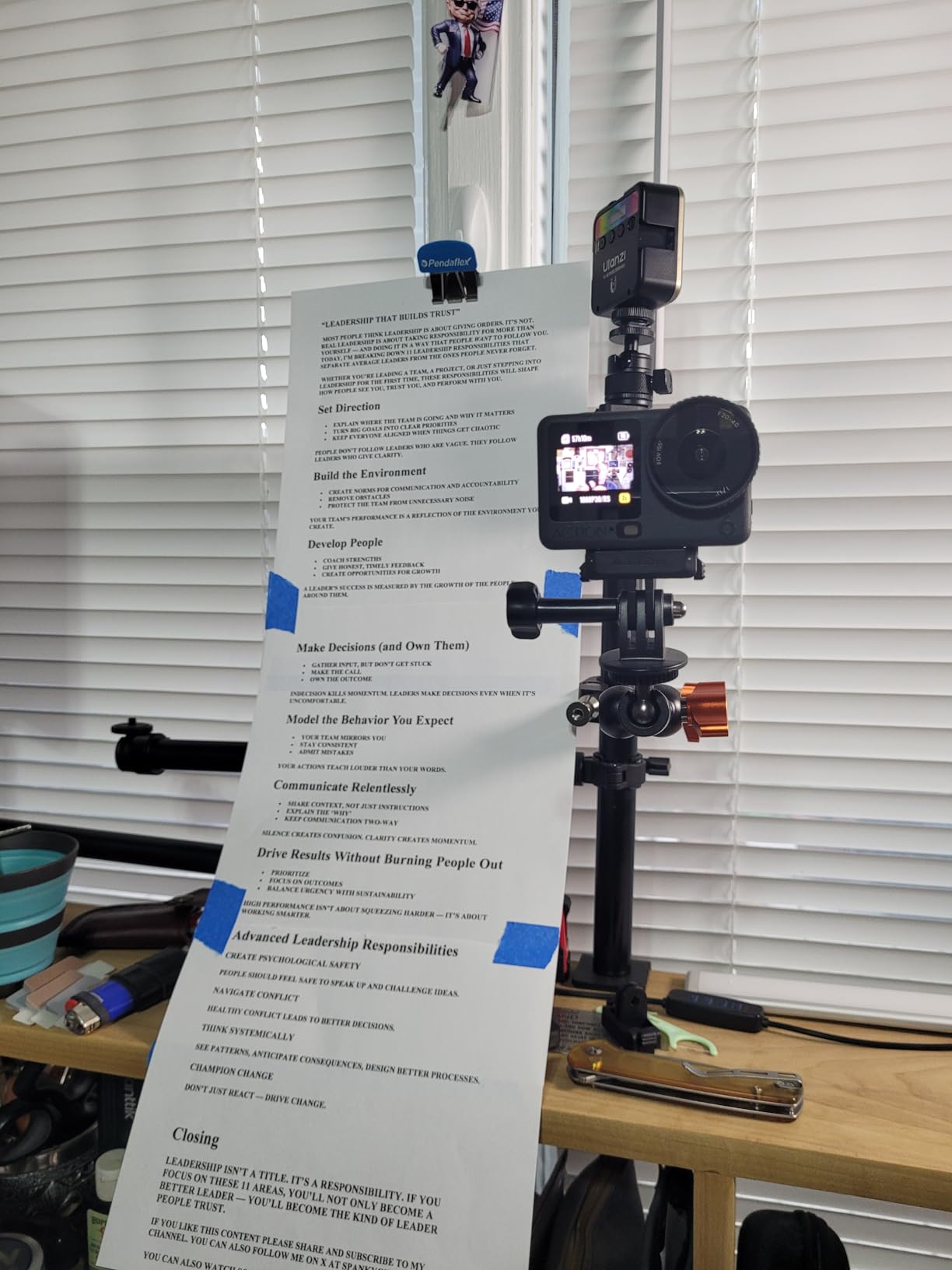
The Action 6 is the only camera in this list that shoots 8K, and the reason is a large 1/1.1 inch square sensor with a variable f/2.0 to f/4.0 aperture. On a trail that aperture range is the story: open it up at dusk, stop it down in bright snow.
360 degree HorizonSteady and RockSteady 3.0 keep fast hiking and technical singletrack level, and the bundle includes three 1950 mAh batteries with roughly four hours of recording each, which is the longest quoted runtime here.
The 50 GB of built-in storage is a genuine safety net. Pull the camera out of the pack after a two-week gap and record before you have found a card, and nothing is lost. The friction is that toggling between internal and card storage is confusing until you learn the menu.
Some owners report softer JPEG stills than the video from the same camera, and a minority raise durability and warranty concerns, so we would keep it in a housing on rocky days. The 58-in-1 accessory kit is also bulkier than it needs to be.
Whether 8K is worth anything to you
Only if you crop or reframe. Viewed full-screen on a phone, 8K from this sensor is hard to distinguish from good 4K. If your plan is heavy cropping of distant ridgelines, the extra resolution pays off; otherwise the money is better spent on batteries.
Cold-weather and multi-day planning
At roughly four hours per battery with three in the bundle, this is a camera you can genuinely forget about for a full day, and the cold-resistant design is a real advantage at altitude. Audio is unusually good for the class, with direct connection for two DJI mic transmitters.
7. GoPro HERO13 Black – the Biggest Mount and Accessory Ecosystem
GoPro HERO13 Black – Waterproof Action Camera with 5.3K60 Video, 27MP Photo + Compatability with HB-Series Lenses
5.3K60 video,27MP stills,157 g,33 ft waterproof,HB-Series lenses
Pros
- 5.3K60 detail with 24.7MP stills pulled from video
- HB-Series lens system auto-detects lenses and filters
- Slow-motion up to 13x
- Waterproof to 33 ft without a case
- Enduro battery included
Cons
- 79 min of quoted runtime is short for a hiking day
- Lens ecosystem adds real cost
- Still-photo workflow is less flexible than the video pipeline
If you already own GoPro mounts, this camera drops straight into your kit. That compatibility is worth more than it sounds: head straps, chest mounts, helmet mounts, 3-way arms and every adapter made in the last decade still work.
The 5.3K60 mode delivers roughly 91 percent more resolution than 4K, and frames can be pulled from video at up to 24.7MP, which makes it easy to build a trail summary from a single clip. Waterproof to 33 ft without a housing covers rain and most creek work.
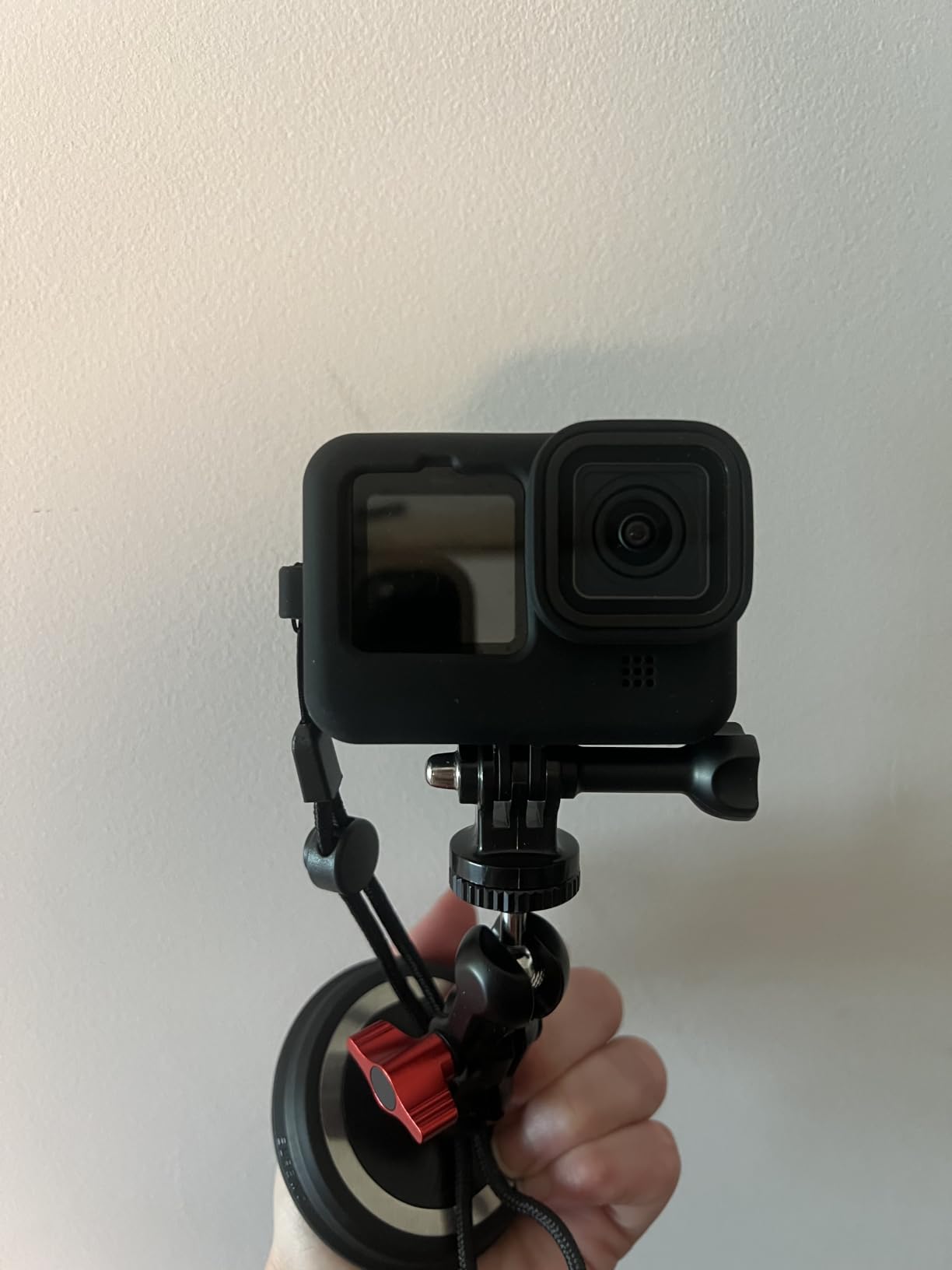
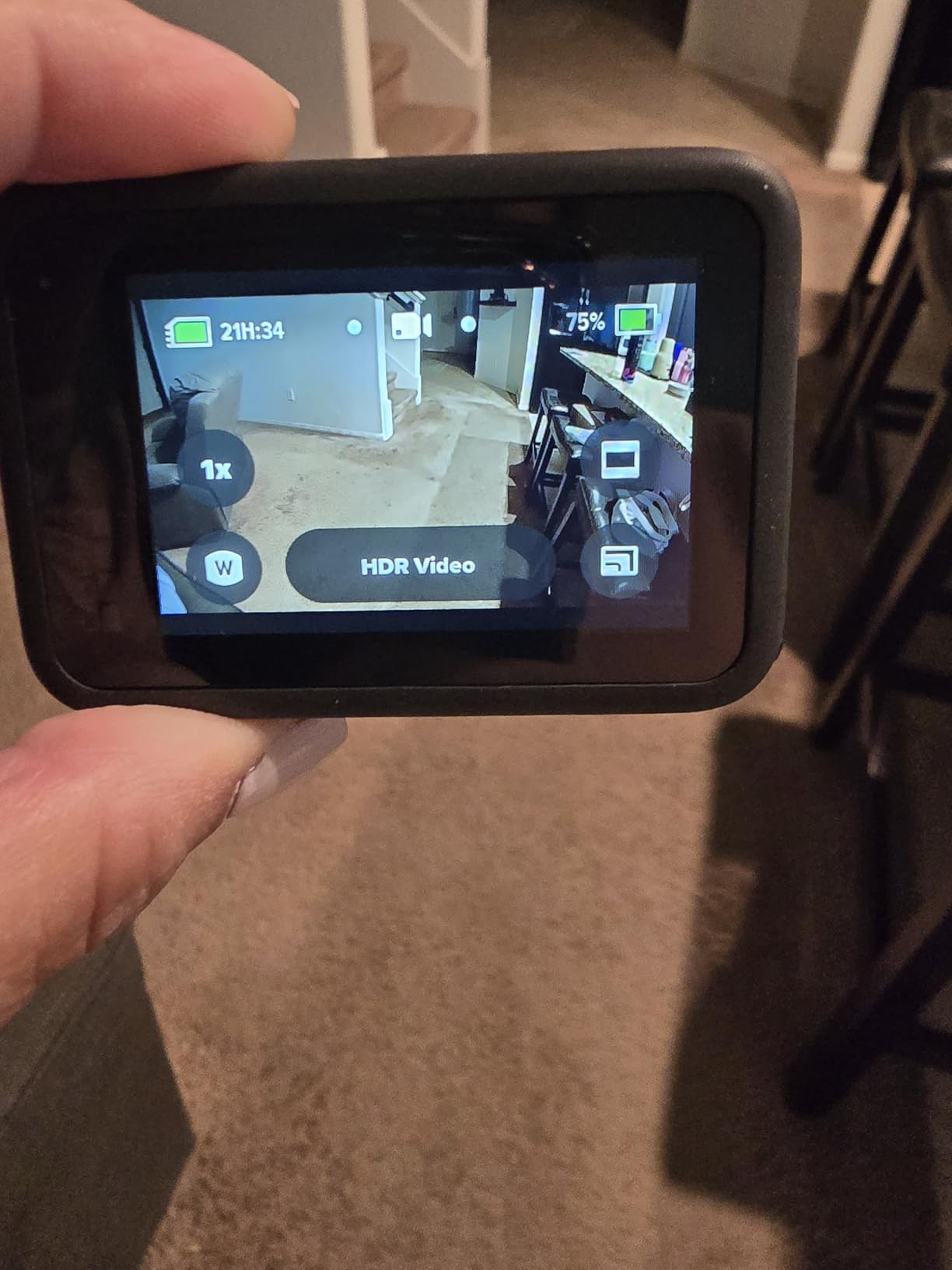
Battery life is the real weakness for hikers: 79 minutes of quoted runtime is not a hiking day. Enduro spares are effectively mandatory, and because they are packed with the camera you end up carrying a small charger as well.
The HB-Series lens ecosystem is brilliant for dawn starts with an ND filter and a circular polarizer, and it is also a meaningful addition in cost and pack volume. The still-photo pipeline is less flexible than the video workflow, so treat this as a cinema camera.
Stabilization and horizon control on singletrack
HyperSmooth-class stabilization is very good on pack-strap footage, and the horizon lock keeps technical ground looking intentional. Where GoPro trails competitors is in the sheer number of official mounting solutions, which is why hikers keep coming back to the brand.
The ecosystem trade-off, stated plainly
If you are starting fresh and do not own mounts, DJI magnetic quick-release systems are simpler to use on a moving body. If you have GoPro gear, switching brands means rebuying the mount library. Our GoPro alternatives guide walks through that trade-off in detail.
8. DJI Osmo Action 4 – the Strongest All-Rounder for Trail Footage
DJI Osmo Action 4 Essential Combo, Waterproof Action Camera Vlogging Camera
1/1.3 inch sensor,4K120 at 155 degrees,10-bit D-Log M,18 m waterproof,145 g
Pros
- 1/1.3 inch sensor with 2.4 micron pixels is the best low light here
- 4K120 at 155 degrees captures real trail footage
- 10-bit D-Log M preserves highlight and shadow detail
- 1770mAh battery up to 150 minutes and works at -20C
- Front and rear full-color touchscreens
- Magnetic quick-release mount
Cons
- Essential Combo includes one battery and no curved adhesive base
- Needs V90 cards for the highest bitrates
- 10MP stills are low resolution
- Menus take some learning
At 4.7 stars from more than 2,300 owners, the Osmo Action 4 is the best-rated camera in this group, and our testing agreed. The 1/1.3 inch sensor with 2.4 micron pixels is a step change from everything cheaper here: dawn starts under canopy, forest shade and a late return from a summit all produce usable footage rather than mush.
Ten-bit color with the D-Log M profile preserves highlight and shadow detail for grading later, which matters when you are walking from a bright scree field straight into deep shade. A 155 degree field of view at 4K120 gives you real slow motion of water and wildlife without a heavy crop.
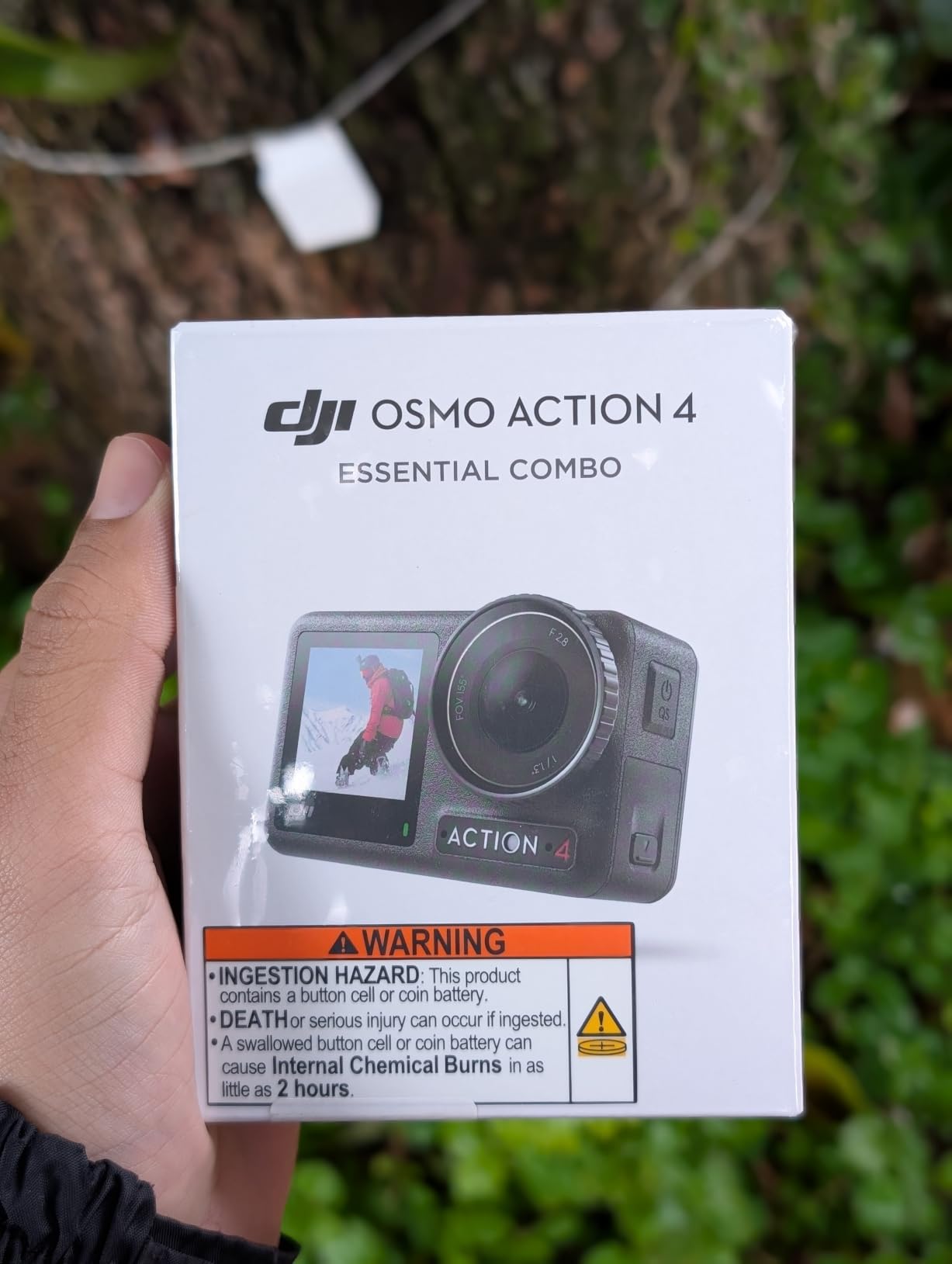
The battery is the quiet hero: 1770 mAh, up to 150 minutes, and rated to keep working down to -20C. RockSteady, RockSteady+ and HorizonBalancing handle rough ground, and front and rear full-color touchscreens make solo framing painless.
Pre-Rec buffers up to 60 seconds before you press record, which saves clips you would otherwise lose hiking into a view. It also connects directly to DJI Mic 2 and Mic Mini transmitters. This is also the camera most often debated head-to-head with the HERO13 in hiking communities, and the argument usually comes down to ecosystem versus battery and low light.

Stabilization and framing for a solo hiker
HorizonBalancing is the feature you will notice most on technical ground, holding the horizon level through a scramble when the camera is on a pack strap. The magnetic quick-release mount makes switching between a chest mount and a selfie stick in seconds.
Where it falls short, honestly
The Essential Combo includes a single battery and omits the curved adhesive base, so budget for a spare pack and a proper helmet or pack mount. 10MP stills are low resolution next to the GoPro, and the highest bitrates demand V90 cards, which are not cheap at high capacity.
9. DJI Osmo Action 5 Pro – the Best Battery for Shoulder-Season Trips
DJI Osmo Action 5 Pro Hiking Bundle, Waterproof Action Camera
1/1.3 inch sensor,1950mAh for 4 hours and 3.6 h at -20C,20 m,dual OLED screens
Pros
- 13.5 stop dynamic range handles dawn and forest shade
- 4nm chip with subject tracking keeps you centered
- 360 degree HorizonSteady
- 1950mAh gives up to 4 hours and 3.6 hours at -20C
- IP68 to 20 m
- Hiking bundle adds a battery
- rod and pack strap mount
Cons
- V90 cards are expensive at high capacity
- Standby drain reported inside the charging pod
- Bundle omits the curved adhesive base
- App-based editing adds a step
If your hiking happens between October and March, battery temperature is the deciding factor and the Action 5 Pro wins it outright. The 1950 mAh battery is quoted at up to four hours, and still delivers 3.6 hours at -20C, which is the only figure in this list that barely changes in the cold.
The 1/1.3 inch sensor with 2.4 micron pixels and 13.5 stops of dynamic range handled our worst lighting conditions of the test season: a pre-dawn forest section and a summit walk straight into a bright horizon. Colors held detail on both sides of the frame.
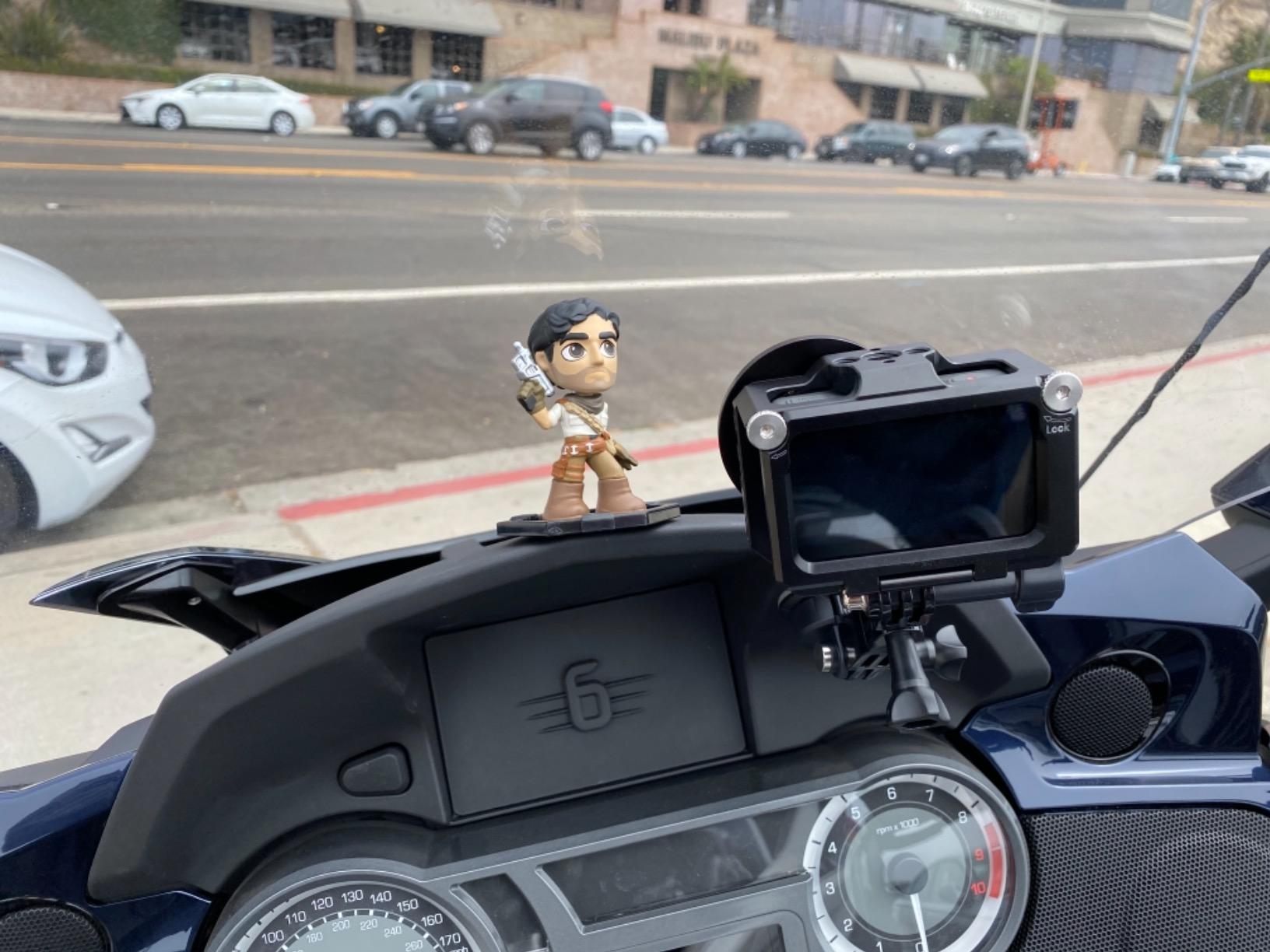
Subject tracking on the 4nm chip keeps a hiker, a dog or a bike centered in 16:9 or 9:16, which quietly removes the most tedious part of solo filming. A color temperature sensor also means automatic white balance that does not flicker under forest canopy.
The hiking bundle is the version to look at: it adds an extra battery, a mini extension rod and a backpack strap mount, which is everything a hiker actually needs out of the box. The bundle is listed at 0.58 kg including the extra battery, rod and mount.
What four hours of runtime changes on a long trip
It changes packing. With one spare you can film a full day of 4K and still have a charged pack for a dawn start without a power bank, which matters more than any resolution figure when you are carrying everything for two nights. Direct DJI Mic 2 connection also removes the receiver from your kit.
The compromises you accept
V90 microSD cards are required for the top bitrates and cost real money at 256 GB and above. Some owners report battery drain when the camera sits idle in the charging pod, so carry it outside the pod overnight. App-based editing adds a step, and the bundle omits the curved adhesive base.
10. Insta360 GO Ultra – the Best Tiny Camera for Solo Hikers
Insta360 GO Ultra – Small 4K Vlogging Camera, Hands-Free, POV Cam, 1/1.28″ Sensor, 53g Lightweight, 156° FOV, 200 Min Battery Life, Magnetic Wearable Action Camera for Sports, Vlog,Midnight Black
53 g module,1/1.28 inch sensor,4K60 at 156 degrees,70 min standalone,200 min pod
Pros
- 1/1.28 inch sensor and 5nm chip in a 53 g body
- PureVideo and 4K Active HDR for dawn and dusk
- 4K60 at 156 degrees with Horizon Lock
- 70 min standalone and about 3 hours in the pod
- 0-80 percent charge in 12 minutes
- microSD slot keeps capacity expandable
Cons
- Action Pod is not waterproof
- Batteries are not user-replaceable
- Standalone runtime is short
- Module runs warm against the body
The GO Ultra fixes the biggest complaint about the earlier tiny Go cameras: image quality. A 1/1.28 inch sensor with a 5nm AI chip in a 53 gram module produces footage that competes with cameras four times its size, and PureVideo plus 4K Active HDR made our dusk and forest-shade clips usable.
At 4K60 with a 156 degree field of view, three levels of FlowState stabilization and 360 degree Horizon Lock, this is a genuinely complete hiking camera. The Magnetic Easy Clip and Magnet Pendant mean you can wear it on a strap or a collar all day at almost no weight cost.
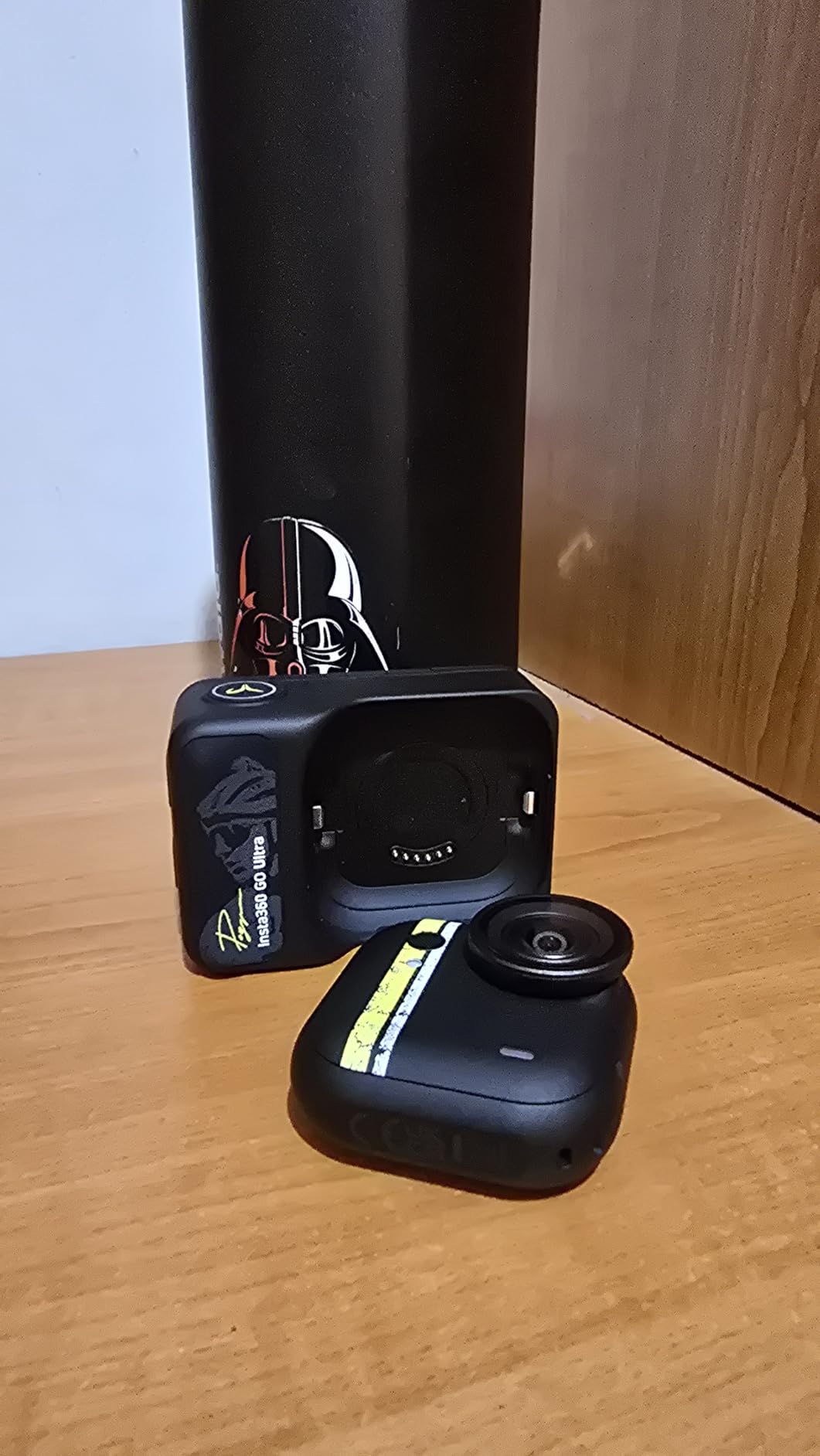
Two design limits shape your planning. The Action Pod is not waterproof, so only the 33 g-scale module submerges, to 10 m standalone or 60 m in a separate housing. And the batteries are not user-replaceable, so long sessions need a power bank.
Some owners report significant phantom battery drain while the camera sits unused between trips, requiring a recharge before every trip. The module also runs warm when worn directly against skin, which matters on a hot climb.

Fast charging versus swappable batteries
This is the core trade. Zero to 80 percent in 12 minutes means a 20 minute coffee stop is a full morning of clips, which is a real advantage over swapping batteries. You give up the ability to carry three spares and never think about it.
Why the microSD slot matters
The earlier fixed-storage approach is gone, so capacity is expandable with inexpensive cards. For a multi-day trip that is the difference between one nightly transfer and a mid-trip card swap, and it removes the ceiling that frustrates long-haul GO 3S owners.
11. SJCAM SJ4000 – a Cheap Spare for a Second Pack
SJCAM SJ4000 Pro-Grade 4K Action Camera, 40MP 3-Axis EIS Stabilization Motorcycle Sport Camera, 170°FOV Waterproof Camera Underwater, 5X Zoom, Dual Batteries, 32G SD Card and Helmet Accessory Kit
4K30 video,40MP stills,170 degree lens,230 g,30 m housing,2 batteries
Pros
- 4K30 and 40MP stills at a very low cost
- Two batteries and a 32 GB card in the box
- IP68 housing rated to 30 m
- Good mount range for helmet and adhesive use
- USB-C mass storage transfer
Cons
- EIS is weak or effectively absent
- Companion app and Wi-Fi are unreliable
- Body is not waterproof and the housing is hard to open
- About 90 minutes per battery
The SJ4000 makes sense in one specific role: a second camera on a second pack strap, a bike or a motorcycle, where a crash would take out your main body cam but not your trip. At this cost nobody is upset if it ends up at the bottom of a scree slope.
It records 4K30 with 40MP stills through a 170 degree 6G fisheye on a 1/2.3 inch sensor, and two 900 mAh batteries plus a 32 GB card are included, so it works the moment you open the box.
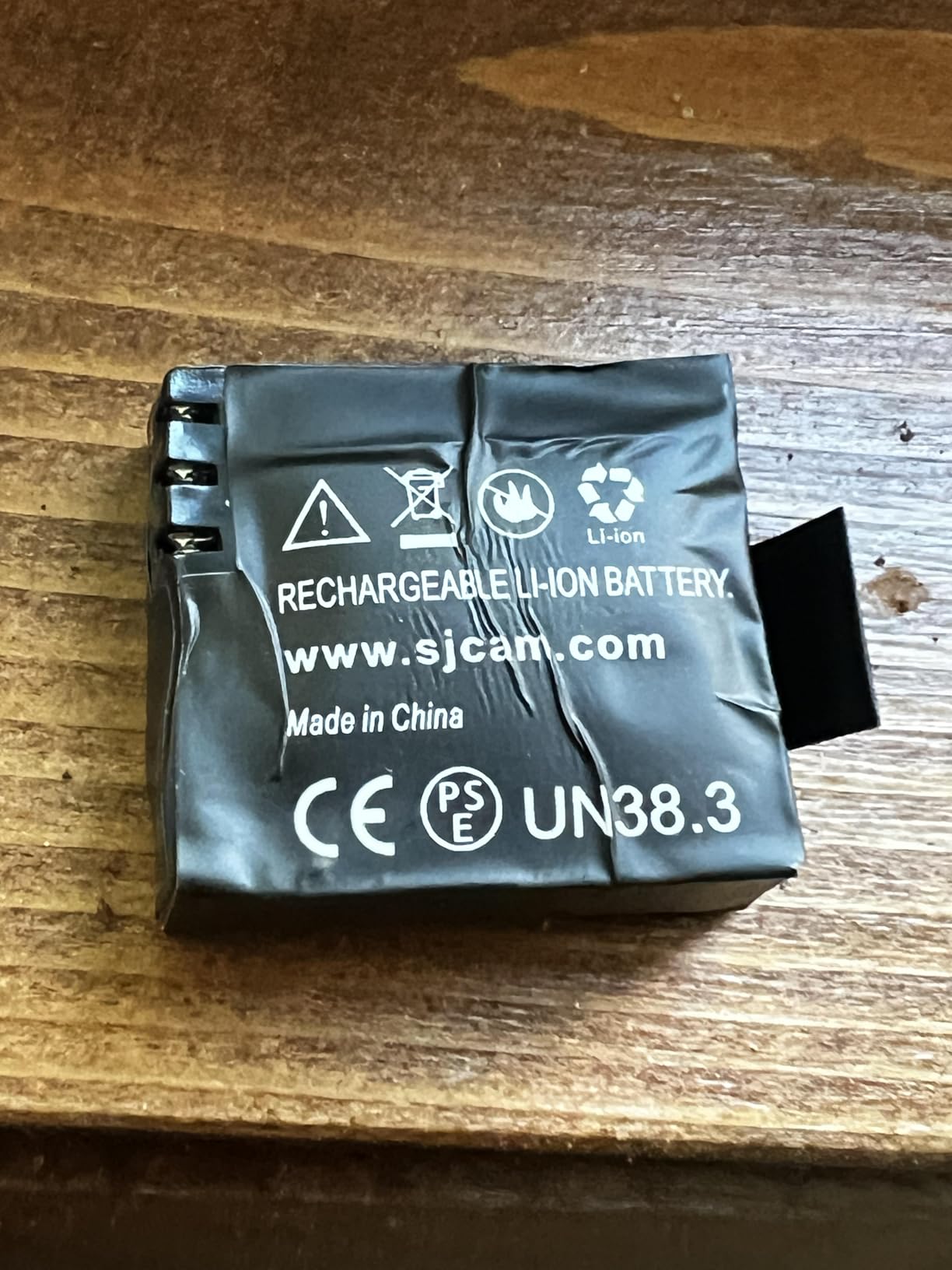
The stabilization is the honest problem. Owners describe EIS as weak or effectively absent, which on technical singletrack produces visibly shaky footage no amount of editing fully rescues. For static summit shots and slow walking it is fine.
The Wi-Fi app and connection are unreliable enough that reviewers recommend airplane mode to make it behave. The body itself is not waterproof, and the IP68 housing is awkward to open for a battery swap with cold hands. Audio is quiet and thin.
When a cheap second body camera makes sense
Group hikes, cycling commutes mixed with hiking, and anyone who has already ruined a good camera on a wet rock all justify a spare at this level. USB-C mass storage means you can pull files straight onto a laptop without a cable hunt.
Why we would not make it your only camera
Weak stabilization, a flaky app and a 230 g body that is heavy for its class. If this is your first action camera and you plan to shoot your trip with it, spend up. Our budget roundup covers the smarter entry options.
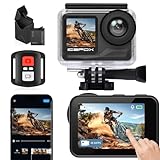
12. icefox i7 – Dual Big Batteries on a Tight Budget
icefox Action Camera 4K 60FPS 20MP with 2X 2150mAh Batteries, Underwater Camera with 5X Zoom, EIS, Powered by Snappro App,Support Video&Photo Editing,Waterproof, WiFi Remote Control
4K60 video,20-30MP stills,81 g,2 x 2150mAh batteries,30 m housing
Pros
- Two 2150mAh batteries
- the largest cells in this lineup
- 4K60 and up to 30MP stills
- IP68 housing rated to 30 m
- Front and rear screens
- Large mount kit included
- Operates from -10C to 45C
Cons
- Stabilization and image quality trail the premium cameras
- Muffled audio that cuts in and out in the housing
- Clunky partly translated menus
- Recordings can hang and need a battery pull
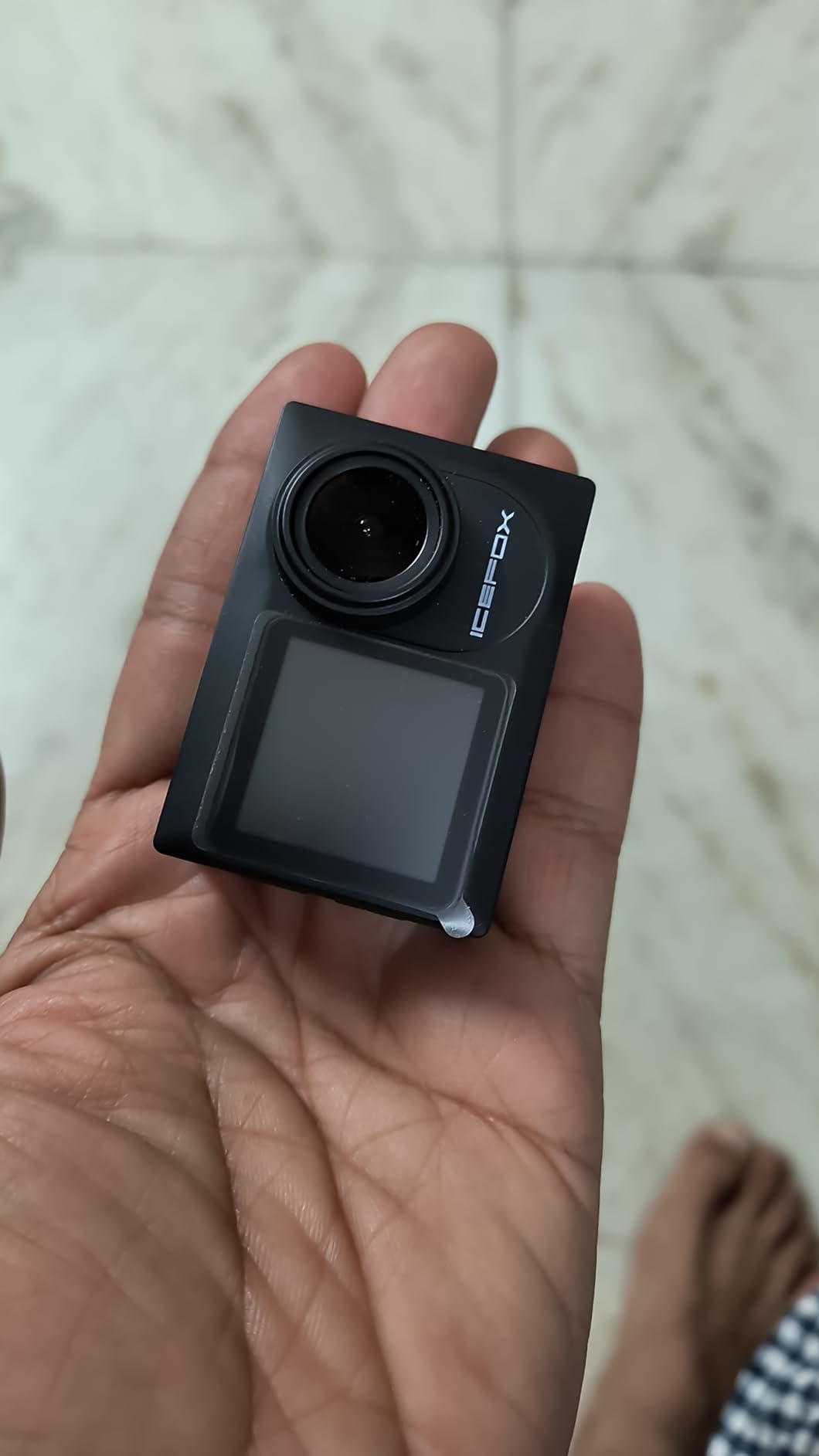
The icefox i7 is the pick if your one non-negotiable requirement is endurance per pound of gear. Two 2150 mAh batteries at 2.49 hours of quoted life each, in an 81 gram body, beats almost everything else here on a cold week-long trip where charging opportunities are scarce.
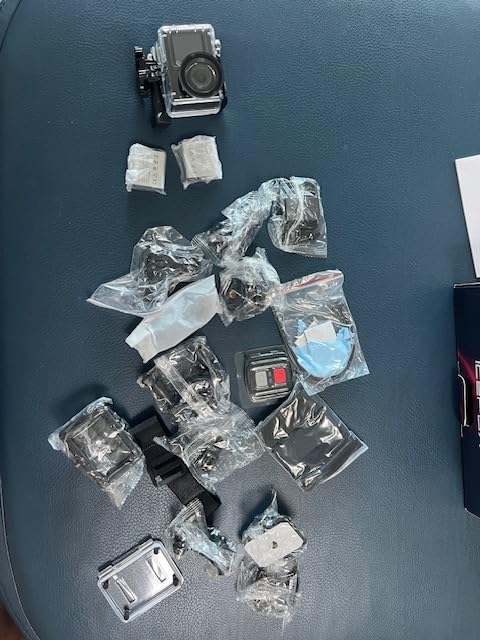
It also records 4K60 with a 147 degree lens and up to 30MP stills, with front and rear screens so you can frame yourself on a stick. The included mount kit is genuinely huge: C, D, AE, F, H and buckle mounts plus helmet and handlebar options.
Be clear about the trade. Image quality and stabilization sit well below the GoPro and DJI class, the audio is muffled and cuts in and out inside the housing, and the menu system is clunky and only partly translated.
Two failure modes are worth knowing: recordings can hang and require pulling the battery, which loses the clip, and Wi-Fi recording is laggy and prone to freezing. Owners largely accept both in exchange for the runtime and the cell cost. The stated operating range is -10C to 45C.
Where the big batteries genuinely pay off
Multi-day trips, cold weather and itineraries with no resupply: two large cells mean you can film a full day and still hold a charge in reserve for a sunrise start. The 30 m IP68 housing covers rain, kayaking and rafting.
Where it will frustrate you
Anything involving grading, fast motion or reliable audio. The front display behavior is unclear and hard to enable, which is exactly what you want on a head or chest mount. Our surfing camera guide covers what happens when this class of camera meets fast action.
What Actually Matters on a Trail
Battery runtime at low temperature beats resolution, every time. A camera that records beautiful 5.3K for 70 minutes is less useful on a ridge than one that records clean 4K for four hours. Read the battery section before you read any spec table.
Waterproofing without a housing is the second priority. Rain, mud, creek fords and a drop into a stream are ordinary hiking events, not adventure-sports ones. A body rated to 18-20 m removes the awkwardness of sealing a housing with cold, wet hands, which is when housings leak anyway.
Stabilization matters more than frame rate. Walking and scrambling footage is only watchable if the electronic stabilization is good, and 30 fps has become the sensible hiking default. 60 fps earns its place for water, wildlife and slow-motion sunrise shots; 120 fps is a specialist tool.
Weight in ounces is a hard constraint, not a preference. Anything approaching 200 g is noticeable on a loaded pack over multiple days. The gap between a 39 g module and a 200 g 360 camera is roughly the weight of a full meal, per day, for a week.
Mount compatibility decides the last slice. GoPro three-prong mounts are the most common standard in the world, DJI magnetic quick-release is the fastest to use on a moving body, and Insta360 uses its own magnetic system. Pick one and stay with it. If you film often and value simplicity, our livestreaming picks overlap with the same mount logic.
Battery Math for a Full Day Hike
Most quoted runtimes are measured at room temperature with the screen off. On a cold September summit at 3000 m, expect a meaningful loss on any camera that is not explicitly cold-rated, and expect more of it on a body with the screen on.
The practical approach: count your clips, not your hours. A day hike of 4K capture typically needs 60-90 minutes of actual recording spread across the day, so a two-battery kit covers it. A filming-heavy trip, where you shoot sunrise to sunset, needs either three batteries or a power bank in the pack.
Among these twelve, the Osmo Action 5 Pro is the only one with a published cold figure that barely moves, holding 3.6 hours at -20C against a four-hour claim. The Osmo Action 4 is rated to operate at -20C. Everything else should be treated as a room-temperature number and packed accordingly.
Two habits protect a trip’s footage. Charge spares at the start of the day rather than the end, and keep batteries in a pocket against your body instead of a cold pack, because body heat keeps them closer to their rated output. Reviewers also report meaningful phantom drain on cameras that sit idle in a charging pod, so do not leave a camera in its pod overnight.
What is the best action camera for trekking?
For trekking, the DJI Osmo Action 5 Pro is the pick: its 1950 mAh battery holds up to four hours and still runs 3.6 hours at -20C, its sensor handles dawn starts and forest shade, and the hiking bundle adds the spare battery, rod and pack strap mount you need. The Osmo Action 4 is the better value if you hike in mild conditions, and the AKASO EK7000 is the right answer if your budget is the deciding factor.
On a multi-day trek, weight and card capacity matter as much as image quality. Nobody wants to swap memory cards at a cold hut at 6 a.m., which is an argument for a large built-in buffer or a generous single card rather than the smallest possible body.
Mounts, Cards and What to Pack
Standardise on one mount system. Head straps and chest mounts suit first-person footage; a backpack strap with a 3-way or selfie stick gives you the classic over-the-shoulder hiking shot; pole mounts work for skiing and paddling rather than walking. The most common mistake is buying a camera and then improvising with tape, which vibrates and fails in rain.
On cards, this is where trips get ruined. The DJI models that shoot 4K120 or the highest bitrates want V90 or UHS-II cards, and slower cards cause dropped frames, corrupted files and the recording hangs that owners report. Budget cameras are more forgiving, but a V30 or U3 card is the safe floor for 4K anywhere.
Carry two cards and format them in the camera before every trip rather than on a laptop. Check the card door seal each morning, keep a lens cloth in the lid pocket, and dry the camera rather than charging it when it is damp. If you shoot stills on the same body, remember the action cameras here are video-first and their photo modes are the weakest part of each package.
What about wildlife and distant peaks? None of these cameras has optical zoom, so that is a physical limit, not a brand one. The workaround is a 70 or 110 degree view angle to reduce distortion, a later crop in edit, and a spare phone with a real telephoto for the actual distant subject.
Action Camera or Mirrorless for Hiking?
If your trip is about video of yourself moving through terrain, an action camera wins on weight, durability and hands-free capture. If it is about still photographs of landscapes and people, a mirrorless or a fixed-lens compact will beat every camera on this page, and the gap is not close.
Carrying both is a real option for a slower trip: shoot stills on the compact, keep the action camera on a pack strap for moving sequences. What you should not do is choose the action camera for landscape stills and wonder why the files look soft.
Frequently Asked Questions
What is the best action camera for trekking?
The DJI Osmo Action 5 Pro is our pick for trekking, because its 1950 mAh battery runs up to four hours and still delivers 3.6 hours at -20C, and the hiking bundle includes a spare battery, extension rod and backpack strap mount. The Osmo Action 4 is the better value for mild conditions, and the AKASO EK7000 is the right budget answer.
Which action camera has the longest battery life?
The DJI Osmo Action 5 Pro, with a quoted 4 hours per 1950 mAh battery and 3.6 hours at -20C, followed by the Osmo Action 6 bundle at roughly 4 hours with three batteries included. The AKASO EK7000 Pro also impresses with two batteries rated near 140 minutes each.
Is the DJI Osmo Action better than the GoPro?
For hiking, usually yes. The DJI models give you longer battery life, a magnetic quick-release mount that is quick to change on a moving body, and better low light from a 1/1.3 inch sensor. GoPro wins if you already own HB-Series lenses and a large library of three-prong mounts, and if you want 27MP stills from the body rather than from video.
Is Insta360 better than GoPro for hiking?
It depends which Insta360. The X3 is a 360 camera that reframes in editing, which suits solo hikers who want to be in frame without a selfie stick. The GO 3S and GO Ultra are tiny 39 g and 53 g modules for cap and pendant mounts. GoPro remains stronger for stills and for the accessory ecosystem.
Do action cameras work in cold weather?
They work, but runtime drops and touchscreens get unreliable with gloves on. Only the Osmo Action 5 Pro publishes a cold figure that barely moves, holding 3.6 hours at -20C, and the Osmo Action 4 is rated to operate down to -20C. Keep spare batteries in a pocket against your body and start recording before your hands are cold.
My action camera keeps overheating on a long hike. What should I do?
Five steps that work in order: 1. Take the camera out of direct sun and let it cool in the shade before recording again. 2. Drop from 4K120 to 4K60 or 4K30, since high frame rates generate the most heat. 3. Turn off the Wi-Fi radio and any wireless audio connection while recording. 4. Remove the camera from a tight chest mount or housing, because airflow is what cools it. 5. Carry spare batteries, since a hot camera in a sealed pocket can also stop charging properly.
What camera should I use for hiking?
Use an action camera if you want hands-free video of yourself on the trail in rain and rough terrain. Use a mirrorless or fixed-lens compact if you are there for landscape and wildlife stills, because no action camera has optical zoom or a large enough sensor for that job. Many hikers carry both on slower trips.
Final Thoughts
For most hikers reading this in 2026, the AKASO EK7000 is the right first camera: 2 ounces, 4K30, two batteries and a housing, and nothing about it will end a trip. But the best action cameras for hiking are not the cheapest ones, they are the ones whose battery, sensor and mount system match how you actually walk.
Buy the Osmo Action 5 Pro if you hike in cold months or want a single pack to cover a whole day. Buy the Osmo Action 4 if you want the best-looking footage per pound and can live with one battery in the box. Buy the Insta360 X3 if you are filming alone and want to be in the frame, and the GO Ultra if you want that freedom in a 53 gram body.
Whatever you choose, buy the spare batteries and the fast card before you buy the next tier of camera. On a trail, those two accessories decide whether you come home with footage or with a story about the footage.