
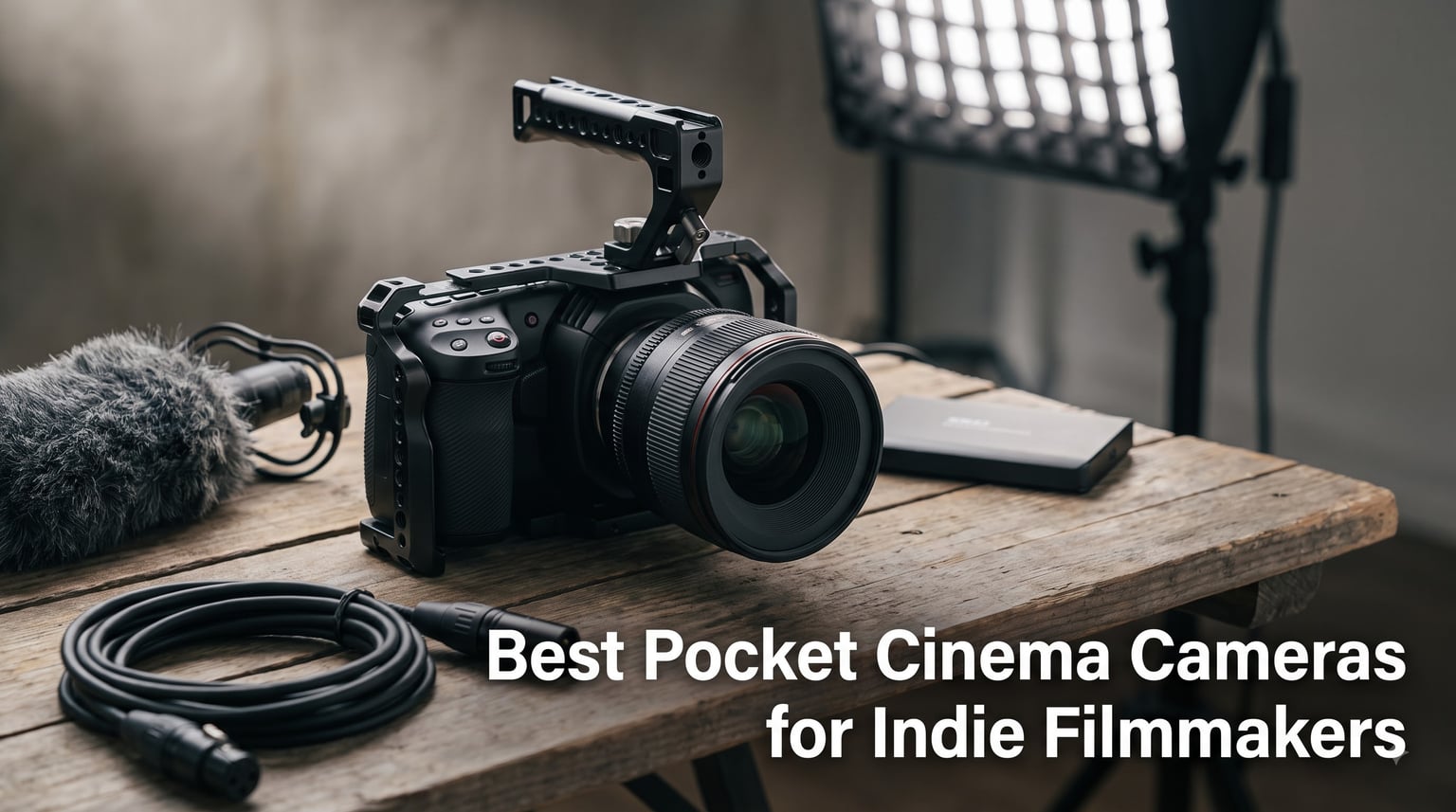
I have spent three years shooting shorts, docs, and client work on cameras that fit in a backpack, and the gap between a small camera and a real cinema tool has never been narrower. The best pocket cinema cameras for indie filmmakers in 2026 deliver 10-bit and 12-bit recording, 13-plus stops of dynamic range, and pro audio inputs in bodies that cost less than a day of renting a full cinema package. The trade-offs have not gone away: battery life, autofocus, and storage budgets are still where these cameras cut corners.
Our team built this list for one reader: the indie filmmaker who has to shoot, focus, and sometimes record audio alone. Some picks are true pocket cinema cameras from Blackmagic Design. Others are compact mirrorless bodies that indie crews on Reddit’s r/Filmmakers recommend constantly, because autofocus and stabilization matter more than a cinema badge when the crew is you.
We lean on owner review data for the long-term problems, the kind that appear in month three rather than day one. Jump to the top three if you want the short version. The buying guide covers codecs, sensor sizes, and what these cameras cost to run after you buy them.
Table of Contents
Top 3 Picks for Indie Filmmakers (October 2026)
Three cameras cover most indie situations. The Blackmagic Pocket Cinema Camera 6K Pro is our editor’s choice for controlled shoots, the Pocket 4K is the value pick that gets you true cinema codecs for the least money, and the Panasonic LUMIX GH5M2 is the top-rated hybrid for solo shooters who need stabilization and autofocus.

Blackmagic Pocket Cinema Camera 6K Pro
- 6K Super 35 sensor
- Built-in 2/4/6 stop ND filters
- Tilting 5 inch HDR screen
- ProRes and Blackmagic RAW

Blackmagic Pocket Cinema Camera 4K
- 4K with 13 stops dynamic range
- ProRes and 12-bit BRAW
- Mini XLR audio
- DaVinci Resolve Studio included

Panasonic LUMIX GH5M2
- 4K 10-bit internal recording
- 5-axis Dual I.S. stabilization
- Unlimited recording
- Weather-sealed body
The logic is simple. If you shoot narrative work with a small crew and time to set focus, the 6K Pro wins on image and built-in ND filters. If you are stretching every dollar, the Pocket 4K is the cheapest legitimate entry into real cinema codecs. If you shoot run-and-gun by yourself, the GH5M2 keeps footage usable with no tripod and no focus puller.
Best Pocket Cinema Cameras for Indie Filmmakers in 2026
The table below holds all twelve cameras we tested and researched, from pocket gimbal cameras to full Super 35 cinema bodies. Shortlist by recording format and lens mount before you read the individual reviews.
| Product | Specifications | Action |
|---|---|---|
 Insta360 Luna Ultra Insta360 Luna Ultra |
|
Check Latest Price |
 Sony Alpha a6400 Sony Alpha a6400 |
|
Check Latest Price |
 Canon EOS R50 Canon EOS R50 |
|
Check Latest Price |
 Panasonic LUMIX ZS300 Panasonic LUMIX ZS300 |
|
Check Latest Price |
 Sony ZV-E10 Sony ZV-E10 |
|
Check Latest Price |
| Panasonic LUMIX GH5M2 |
|
Check Latest Price |
| Blackmagic Pocket 4K |
|
Check Latest Price |
 Sony ZV-E10 II Bundle Sony ZV-E10 II Bundle |
|
Check Latest Price |
 Nikon Z50 II Two-Lens Kit Nikon Z50 II Two-Lens Kit |
|
Check Latest Price |
 Blackmagic Pocket 6K G2 Blackmagic Pocket 6K G2 |
|
Check Latest Price |
 Blackmagic Pocket 6K Blackmagic Pocket 6K |
|
Check Latest Price |
| Blackmagic Pocket 6K Pro |
|
Check Latest Price |
1. Insta360 Luna Ultra – 8K Pocket Gimbal Camera With a Detachable Screen
Insta360 Luna Ultra – 8K Vlogging Camera with Dual Leica Lenses
8K30 HDR with Dolby Vision
Dual Leica lenses, 12x zoom
14 stops dynamic range
Detachable 2 inch OLED touchscreen
10-bit I-Log
Pros
- Exceptional 8K video quality with sharp detail
- Outstanding low-light performance with AI noise reduction
- Detachable OLED touchscreen enables solo shooting and remote monitoring
- 3-axis gimbal stabilization for smooth footage
- Up to 4 hours battery life with fast charging
Cons
- Contact pin sensitivity issues with detachable screen
- Screen can glitch or freeze during use
- Gimbal not very smooth on certain angles
- App is full of ads
The Luna Ultra is what I grab when a shoot has to fit in a jacket pocket. It records 8K30 HDR with Dolby Vision from a 1-inch sensor and dual Leica lenses, and it stabilizes itself with a 3-axis gimbal, so there is no rig to build. Handheld footage at dusk looked closer to a small cinema camera than any pocket gimbal should.
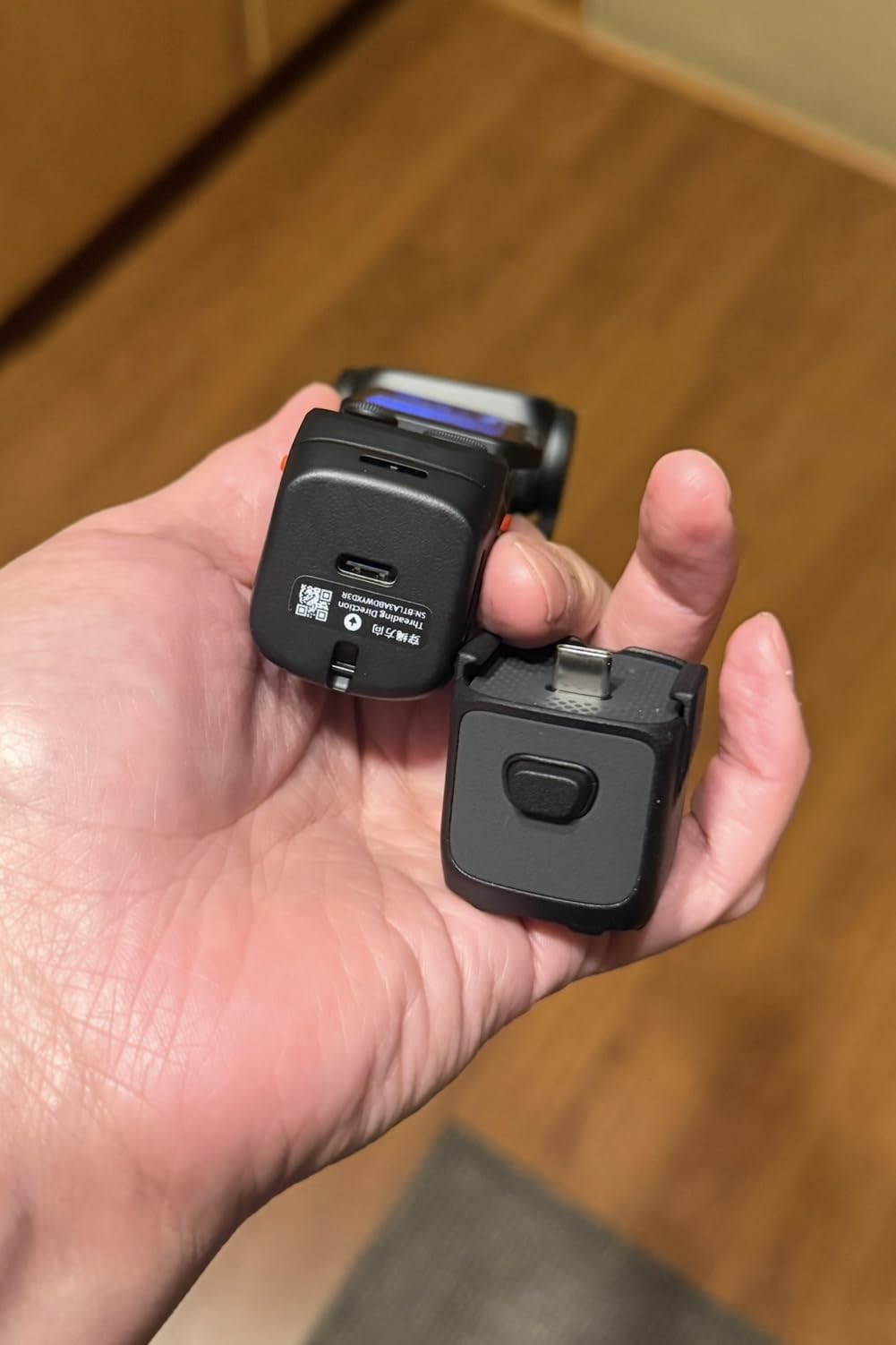
The detachable 2-inch OLED touchscreen changes how you work. Pull it off, set the camera up to 20 meters away, and frame yourself from the remote. For solo to-camera work, that removes an entire tripod-and-monitor setup from the bag.
The imaging numbers hold up in practice. Fourteen stops of dynamic range and AI noise reduction kept night exteriors clean, and 10-bit I-Log gave me real grading room rather than a baked-in look. The 6x lossless telephoto zoom produces natural bokeh for compression shots.
The problems are the ones owners report most. Contact pins between screen and body are sensitive, and some users hit glitches or freezes mid-shoot. Battery life, rated up to four hours with fast charging to 80 percent in 23 minutes, still needs a top-up on full event days.
Telephoto autofocus hunts more than the wide end, the paint can go sticky in direct sun, and the app pushes ads. None of that ruins b-roll duty, but it matters if you build a whole project around it.
Who the Luna Ultra suits on an indie set
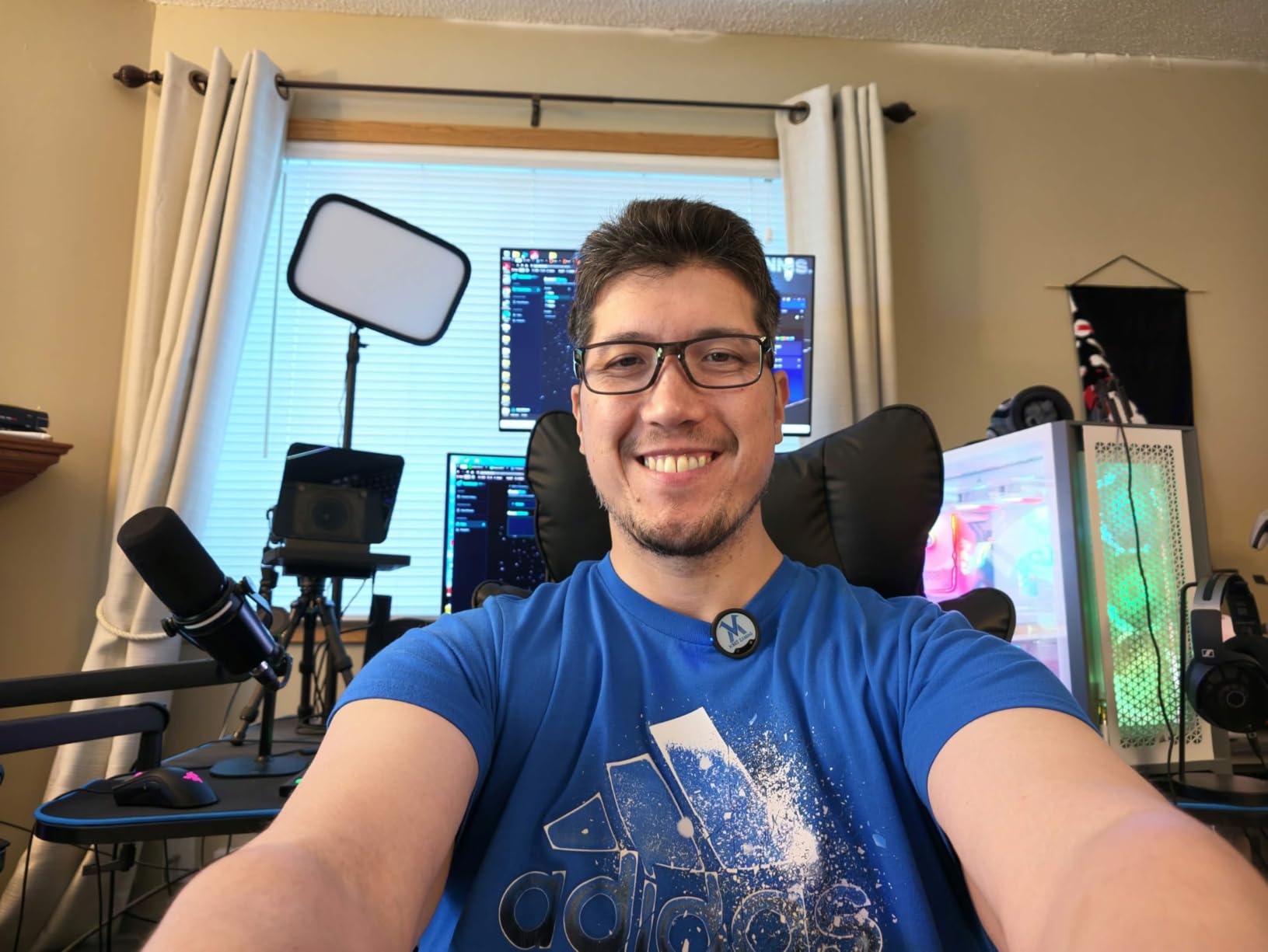
It shines as a B-camera, crash cam, and documentary insert tool, where a stabilized 8K image from a pocket beats dragging a rigged cinema camera. Solo creators get the most from the detachable screen and stubborn AI tracking.
It is weakest as your only narrative camera. There is no interchangeable mount, no XLR input, and no log workflow beyond 10-bit I-Log, so scripted dialogue work belongs to the cinema bodies below.
Storage and power planning
Plan for 8K files from day one, because they fill microSD cards faster than any 4K body here. Two fast cards and a power bank cover a normal shoot day.
Check your edit machine too. If it struggles with 4K proxies, shoot the lower-resolution modes rather than rebuilding your post setup around one pocket camera.
2. Sony Alpha a6400 – The Budget King of Real-Time Eye Autofocus
Sony Alpha a6400 Mirrorless Camera: Compact APS-C Interchangeable Lens Digital Camera with Real-Time Eye Auto Focus, 4K Video, Flip Screen & 16-50mm Lens – E Mount Compatible – ILCE-6400L/B, Black
APS-C Exmor sensor with DRAM
425 phase detection points, 84 percent coverage
Real-Time Eye AF
11fps continuous
4K video
Pros
- Real-Time Eye AF locks onto moving subjects reliably
- Exceptional image quality that still competes with newer cameras
- Strong third-party lens ecosystem from Sigma and others
- Compact and portable APS-C system
- Good battery life for the class
Cons
- No in-body image stabilization
- Menu system not very user-friendly
- Kit lens is basic and often criticized
- Odd recording button placement
The a6400 is the camera I hand to first-time directors who need autofocus they can trust. Real-Time Eye AF with 425 phase-detection points covering 84 percent of the sensor still tracks faces through movement better than many newer bodies, and that matters when your actor improvises and the focus puller is you.
It launched in 2019, and the image has aged better than the menus. Owners three-plus years in still rate it highly, and a base of over a thousand reviews at 4.5 stars means the weaknesses are known quantities, not surprises.
The E-mount is the real reason to buy in. Sigma and other third parties make sharp, affordable APS-C glass, so you can build a two-lens narrative kit without cinema-lens prices. The 180-degree flip screen handles self-shot setups, and 4K with S-Log profiles gives grading headroom.
What you give up is stabilization. There is no in-body IBIS, so handheld work wants a gimbal or an OSS lens, and the 16-50mm kit zoom is the weakest link in the box. The menus are dense and the record button sits where your palm lands.
For documentary work, pair it with a stabilized lens and a monopod. For narrative work, spend the savings on a fast prime and it holds its own against costlier cameras.

Lens path and ecosystem lock-in
Sony’s APS-C-native lens list is short, but the mount takes every full-frame E-mount lens too. Buy full-frame glass now and it survives a later move to a full-frame Sony cinema body.
Skip the kit zoom if you can. A used Sigma prime in the 16mm to 56mm range does more for your image than any accessory.
Where it falls short on a working shoot
No IBIS is the headline limit, and no screen workaround replaces it for walking shots. Serious dialogue work also wants an external recorder, since pro audio is not this body’s job.
Battery life is decent rather than great, so pack two spares. The buffer clears slowly after long bursts, which only matters if you double it as a stills camera.
3. Canon EOS R50 – The Cleanest Entry Point for New Filmmakers
Canon EOS R50 Mirrorless Camera with 18-45mm Lens (5811C012) Bundle
24.2MP APS-C sensor
Oversampled 4K video
Dual Pixel AF II with 99 points
Vari-angle touchscreen
10-bit output
18-45mm lens, 64GB card and bag included
Pros
- Excellent image quality for beginners
- Fast and reliable Dual Pixel AF II
- Oversampled 4K for sharp footage
- Vari-angle touchscreen for flexible framing
- Creative Assist mode helps beginners learn
Cons
- Lacks in-camera image stabilizer
- Buffer fills quickly with continuous shots
- Limited lens selection for RF-S mount
- Kit lens has a slow variable aperture
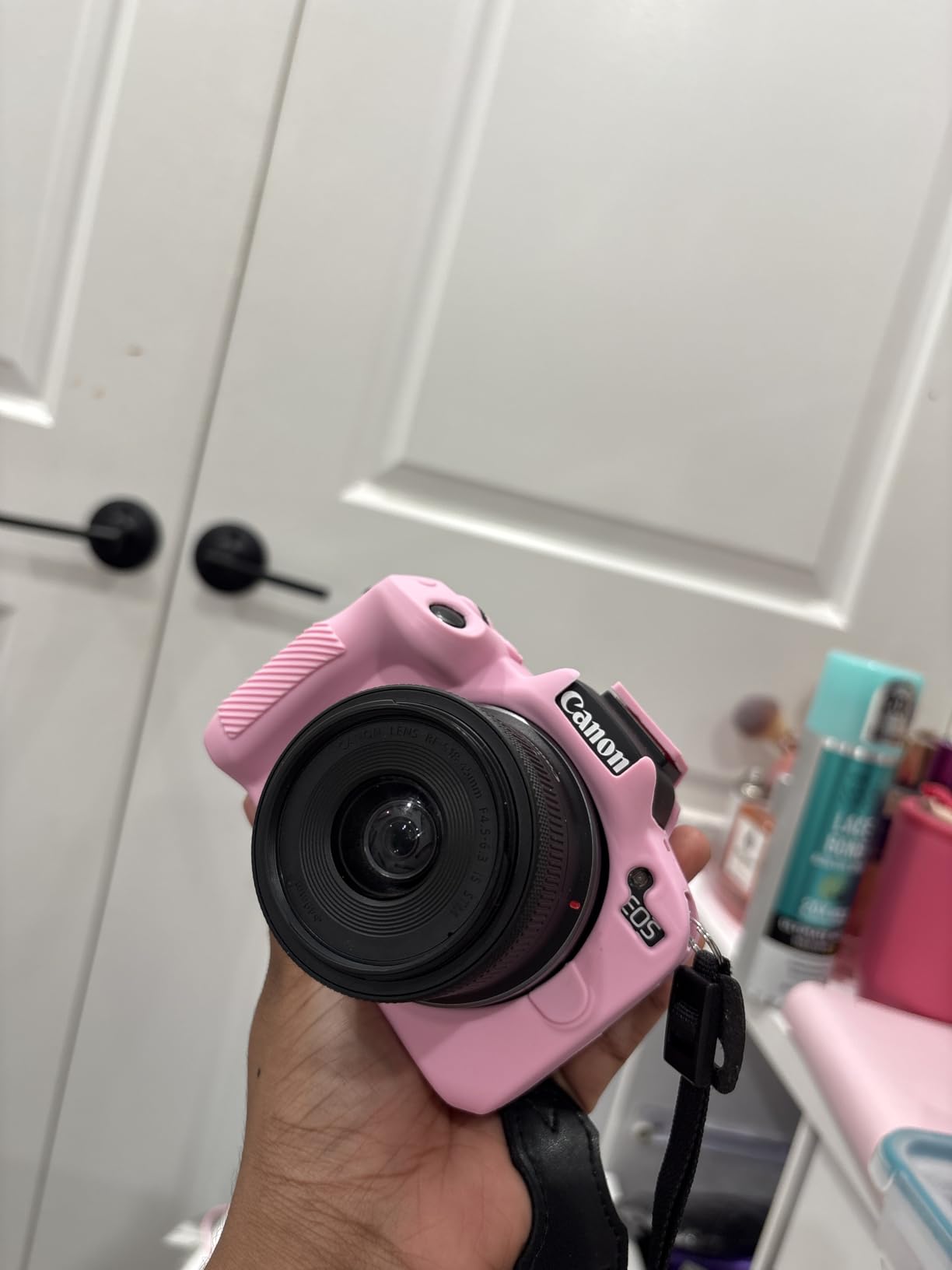
The R50 is what I recommend when someone asks what to buy before film school. Oversampled 4K means footage is genuinely sharp rather than soft-assembled, and Canon’s Dual Pixel AF II with face and eye detection simply works. Ninety-three percent of owners rate it four stars or higher.
Canon color science is the quiet advantage. Skin tones come out flattering with minimal grading, which matters when your post budget is a free version of Resolve and a Sunday afternoon.

The vari-angle touchscreen is the right solo-filmmaking tool, flipping forward for self-shooting and sideways for low tripod work. Vertical video support is built in, so one body covers your short film and its social cutdowns.
The honest limits: no in-body stabilization, so walking shots need a gimbal or careful technique. The RF-S lens catalog is thin, the 18-45mm kit zoom is slow, and the buffer fills quickly if you lean on continuous stills between takes.
There is also no headphone jack and no 10-bit log, so heavy grading and pro audio monitoring are off the table. For web-delivered work, neither comes up daily.
What to buy alongside the body
The bundled 64GB card and bag cover day one, but plan on a faster card once you shoot long 4K takes, plus a spare battery. An EF-to-RF adapter is the upgrade that most improves the image.
That adapter opens decades of cheap used Canon glass, one of the better ecosystem plays for a budget filmmaker. It keeps total system cost far below buying native RF lenses new.
Who outgrows it, and how fast
You outgrow it when you need 10-bit log, XLR audio, or long uninterrupted takes. For web series, student films, and documentary shorts, it holds up for years.
The natural upgrade stays inside Canon’s RF mount, so lenses carry forward. If you know you want cinema codecs soon, skip straight to the Pocket 4K instead of buying twice.
4. Panasonic LUMIX ZS300 – The 15x Zoom That Lives in a Jacket Pocket
Panasonic LUMIX ZS300 Compact 4K Digital Camera, 15x Zoom Travel Camera Point and Shoot (24-360mm), Small Camera for Concerts & Sports, DC-ZS300K, Black
20.1MP 1-inch sensor
15x optical zoom, 24-360mm
4K video and 4K photo at 30fps
Leica-standard lens
USB-C charging from power banks
Pros
- Impressive 15x optical zoom range
- Excellent image stabilization for long zoom shots
- Compact enough for a jeans pocket
- RAW support for post flexibility
- Long battery life with USB-C convenience
Cons
- No viewfinder
- difficult in bright sunlight
- No tilting screen
- Must charge battery in-camera
- Autofocus can struggle at long zoom ranges
The ZS300 is the camera I keep in a coat pocket for location scouts. A 24-360mm Leica-standard zoom in a body that genuinely fits a large pocket covers a wide establishing shot and a long compression shot without changing anything but focal length.
The 20.1-megapixel 1-inch sensor is a real step up from a phone, with honest low-light performance for interiors and dusk exteriors. RAW stills and 4K video leave room to correct in post.
Where it earns a place on an indie production is coverage. I use pocket zooms like this for B-roll, plate shots, and reference stills while the A-camera is tied up, and 4K photo mode at 30fps is a sneaky way to pull the perfect frame from fast action.
The restrictions are structural. There is no viewfinder, which makes bright-sun framing a guessing game, and the fixed screen does not tilt. You charge the battery in-camera, the lens is permanent, and autofocus slows at the long end.
Think of it as a scout and B-roll tool rather than a primary body. For concerts, travel, and events, the reach and pocket size solve a problem nothing else here can.
Where a pocket zoom fits a real production
Use it for scouting, second-unit pickups, and personal documentary work. There is no pro audio input and no log profile worth grading, so scripted dialogue lives elsewhere on this list.
Concert and event shooters are the exception, because 360mm reach from a fixed position with zero rig is genuinely useful. Nothing interchangeable-lens here is that small.
Power and usability on long days
Battery life is a strength, and USB-C charging means a power bank extends a shoot day indefinitely. That beats cinema bodies that drain proprietary cells in under an hour.
Learn the manual controls early, since the small body hides real exposure control past auto. Shoot RAW stills for location references and save yourself re-scouting trips.
5. Sony ZV-E10 – The Solo Creator Body With a Built-In Directional Mic
Sony ZV-E10 Mirrorless Camera with 16-50mm Lens & Tripod (White) Bundle
APS-C sensor with 100-32000 ISO
4K video
Real-time tracking and eye AF
Directional microphone
16-50mm II power zoom with OSS
Vari-angle touchscreen
Pros
- Excellent APS-C sensor with great low-light performance
- Real-time tracking and eye autofocus work reliably
- Directional microphone improves audio quality
- Vari-angle touchscreen for flexible framing
- Strong dynamic range for indoor and outdoor shooting
Cons
- S&Q button placement causes accidental mode changes
- Limited manual adjustments compared to higher-end models
- No in-body image stabilization
- Bundle quality varies by seller
The ZV-E10 is built for one job: a single person pointing a camera at themselves and making it look professional. Sony removed the viewfinder and stills-centric controls, then added a directional microphone, real-time tracking autofocus, and a fully articulating screen.
Audio is the underrated win. The directional mic picks up voice clearly in treated rooms and quiet exteriors, which covers most solo interview situations before you buy a shotgun mic. When you upgrade, the input and gain control are already there.
The 16-50mm II power zoom includes Optical SteadyShot, which partially covers for the missing in-body stabilization on walking shots. Combined with eye AF, I can hold a self-shot frame at arm’s length and trust focus through head movement, something a manual-focus cinema camera will not do.
The frustrations are small but real. The S&Q button sits where your thumb lands, so slow-motion mode engages by accident mid-shoot, and manual control depth is thinner than a photographer would want. Some bundle listings ship mismatched camera and lens combinations.
Confirm exactly what is in the box before ordering. Bundle quality varies by seller, and mismatches are a known complaint.
Audio-first workflow for one-person shoots
Start with the internal mic for scratch audio, then add a shotgun or wireless lav through the mic input as budget allows. Monitor with headphones, because solo shooters rarely notice wind noise until the edit.
If dialogue is the product, record a parallel track on a phone or recorder as backup. It costs one sync step in post and saves entire takes.
Upgrade timing for growing filmmakers
Move up when you need 10-bit log for grading, XLR inputs, or longer uninterrupted takes. Until then, this body and the E-mount catalog cover an enormous amount of web-delivered documentary work.
The next step inside Sony is a cinema-line body, and your E-mount lenses travel with you. That makes this one of the lower-risk entry points for planned growth.
6. Panasonic LUMIX GH5M2 – The Stabilized Workhorse Rated 4.9 by Owners
Panasonic LUMIX GH5M2, 20.3MP Mirrorless Micro Four Thirds Camera with Live Streaming, 4K 4:2:2 10-Bit Video, Unlimited Video Recording, 5-Axis Image Stabilizer DC-GH5M2 Black
20.3MP Micro Four Thirds sensor
4K 60p 10-bit internal
5-axis Dual I.S., 6.5 stops
Unlimited recording
V-Log and Cinelike profiles
Weather-sealed magnesium body
Pros
- Superior 5-axis stabilization with 6.5-stop compensation
- Unlimited 4K 60p recording with no time limit
- Excellent wired and wireless live streaming
- Weather-sealed magnesium body freezeproof to -10C
- Dual UHS-II SD card slots
Cons
- Relatively heavy for a mirrorless camera
- Premium position for the Micro Four Thirds format
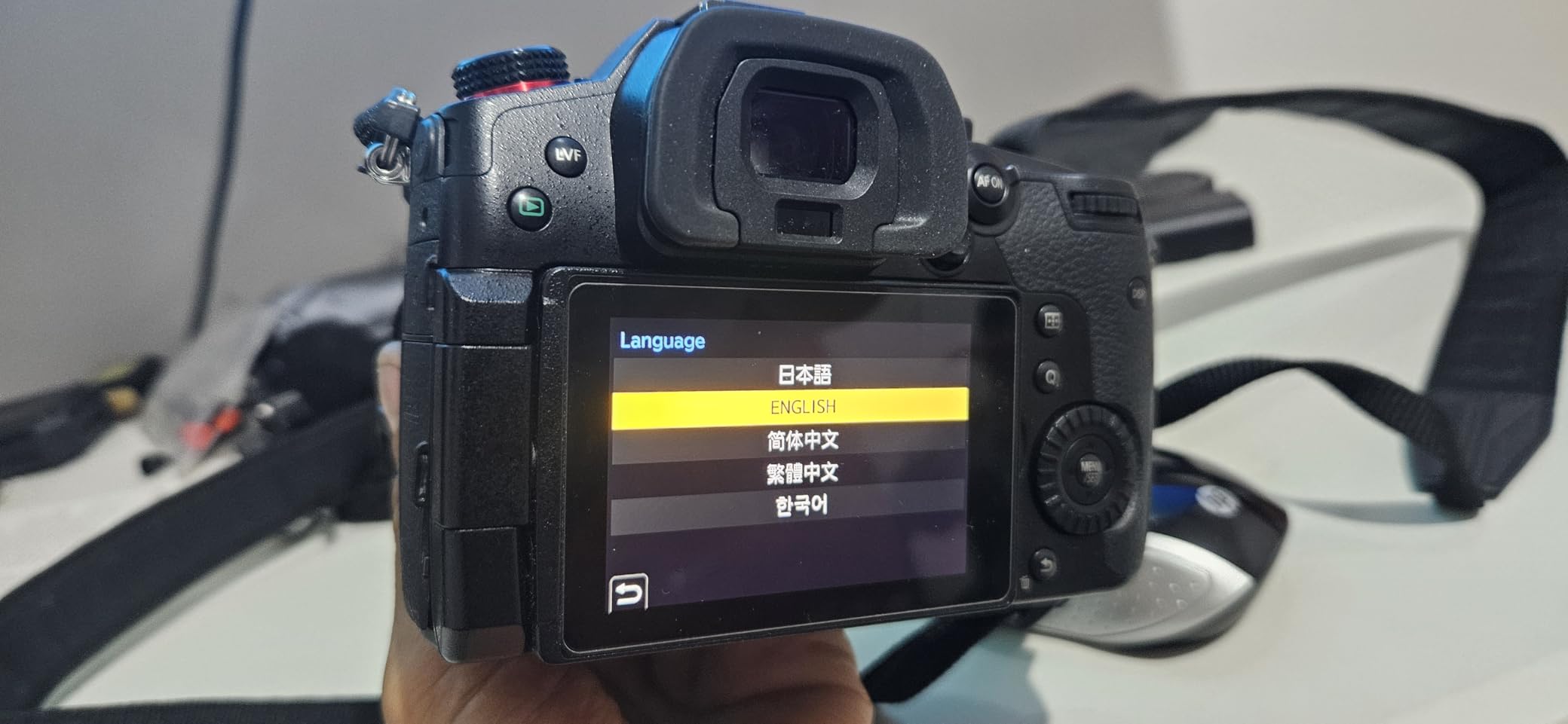
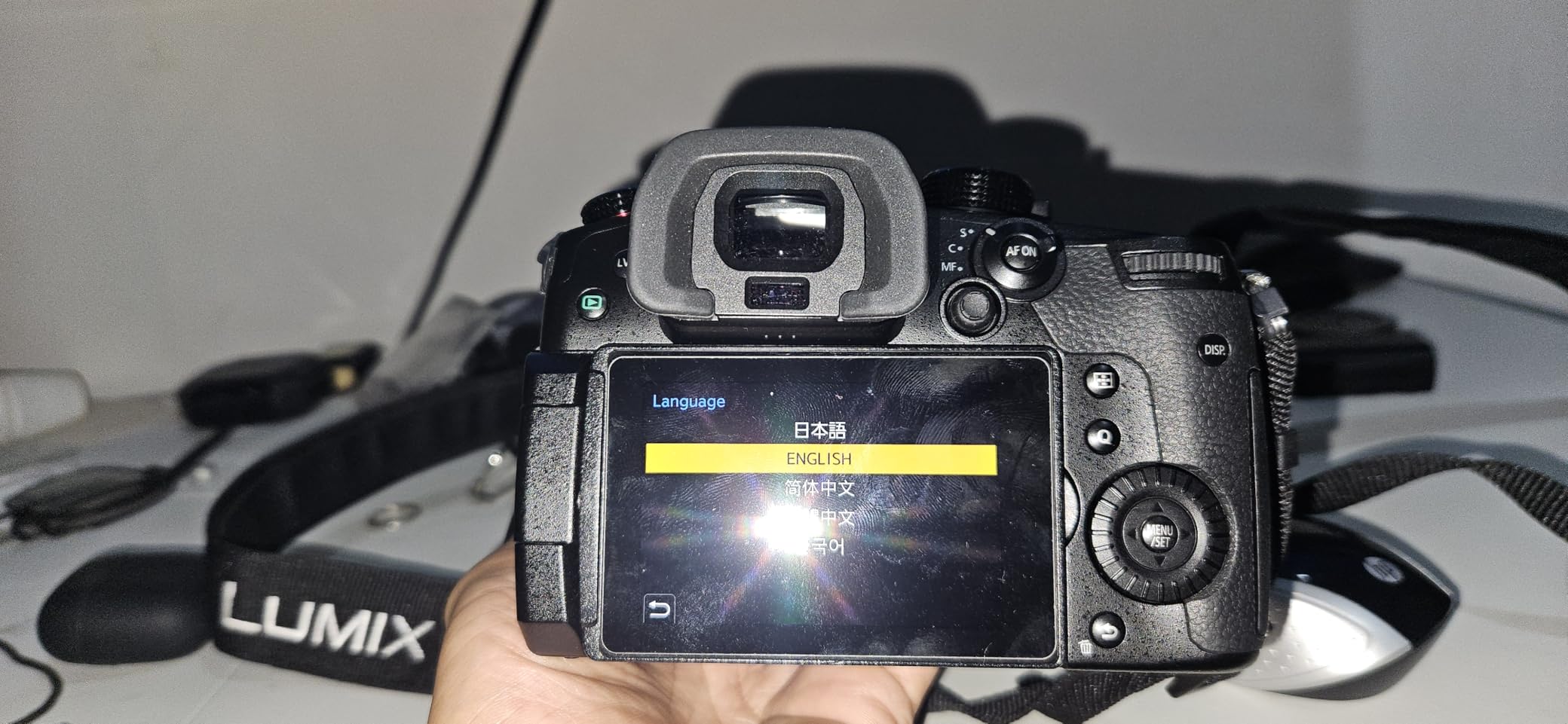
- Limited language options on some units
The GH5M2 is the most reliable camera on this list, and owners agree at 4.9 stars with 93 percent five-star ratings. Five-axis Dual I.S. with 6.5 stops of correction means you can walk downstairs handheld and deliver footage a client accepts, no gimbal required.
Recording is unlimited in 4K 60p, which matters on event and documentary shoots where a clip limit means missing the moment you were hired to catch. Dual UHS-II slots give in-camera backup or extended capacity, and the magnesium body is splash, dust, and freeze resistant to -10 Celsius.
The video pipeline is professional: 4K 60p 10-bit internally, 4:2:2 10-bit over HDMI, and photo styles including V-Log, Cinelike D2 and V2, MonochromeS, and L.ClassicNeo. That last preset produces a film-like look straight out of camera, saving real grading time on fast turnarounds.
Live streaming is first-class here, wired and wireless, so one body covers a multicam shoot one week and a live event feed the next. Firmware updates have kept adding capability, a good sign for ownership.
The costs are weight and format. At 1.6 pounds it is heavier than most bodies here, and Micro Four Thirds brings deeper depth of field and weaker low-light performance than APS-C or Super 35. Full Dual I.S. correction also wants Lumix glass.
Run-and-gun setup for one-person crews
A 12-35mm stabilized zoom plus the built-in stabilization covers most handheld documentary situations without a rig. Add a shotgun mic in the hot shoe and a spare battery and you can record as long as your cards hold.
Turn on linear focus lens control if you pull focus manually, since it makes focus ramps predictable instead of jumpy. That one setting closes much of the gap to a true cinema camera.
Delivery and approval considerations
Micro Four Thirds at 10-bit will not clear the capture requirements platforms like Netflix publish for original production. Plan this as your web, commercial, and documentary body.
For everything else on an indie slate, including festival shorts and branded work, the format is not the limitation, your lighting is. Spend the savings on glass and lights, not a bigger sensor.
7. Blackmagic Pocket Cinema Camera 4K – Real Cinema Codecs for Indie Money
Blackmagic Design Pocket Cinema Camera 4K (CINECAMPOCHDMFT4K)
Four Thirds sensor, 4096 x 2160
13 stops dynamic range
Dual gain ISO to 25600
ProRes and 12-bit Blackmagic RAW
Mini XLR audio
5 inch touchscreen
DaVinci Resolve Studio included
Pros
- Professional cinema image with 13 stops dynamic range
- Industry-standard ProRes and Blackmagic RAW formats
- Free DaVinci Resolve Studio included
- Direct SSD recording via USB-C
- Advanced focus assist
- false color
- and zebras
Cons
- No continuous autofocus
- manual focus only
- Very poor battery life around 30 minutes
- No in-body image stabilization
- Screen is hard to see in bright sunlight
This is the camera that made budget cinema cameras a real category, and it is still the cheapest way into genuine cinema codecs. Thirteen stops of dynamic range, dual gain ISO to 25,600, ProRes up to 4K, and 12-bit Blackmagic RAW put it in a different class from any hybrid above it for grading flexibility.
The included DaVinci Resolve Studio license is not a footnote. That is professional editing and grading software you do not have to buy, and it is the exact tool Blackmagic RAW is built around. Camera plus software is a complete workflow decision.
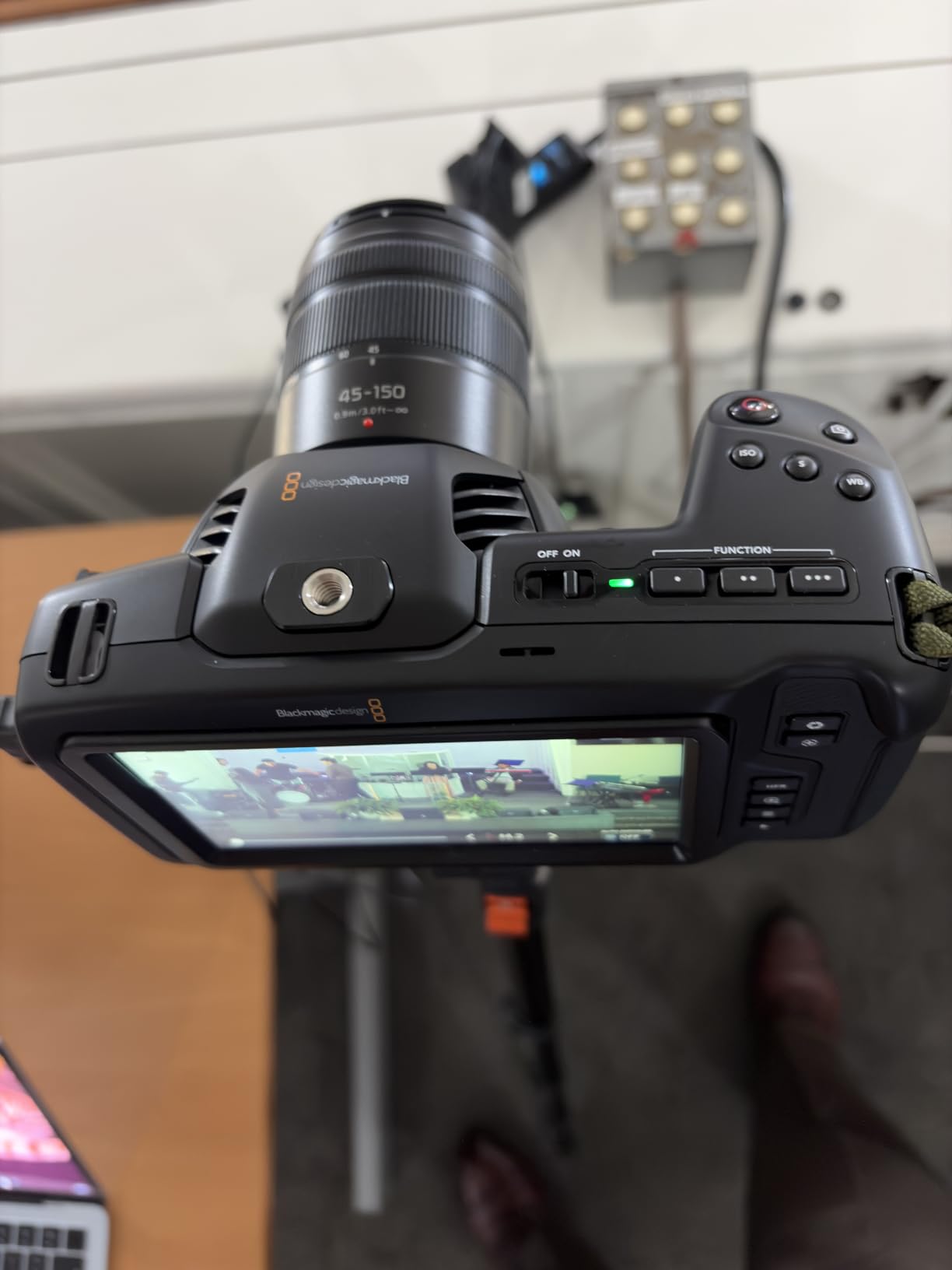
Shooting it is deliberately manual. There is no continuous autofocus, no IBIS, and a fixed 5-inch screen that washes out in direct sun, so you build a small rig, set focus with the excellent assist tools, and work slowly. The menus remain among the best in the business.
Recording is unusually flexible for the money: SD and UHS-II, CFast 2.0, or a USB-C external SSD, which is the cheapest way to feed high-bitrate BRAW. Mini XLR inputs with phantom power put pro audio straight into the file.
The pain points are famous. Expect roughly 30 minutes per battery, so most owners run a power bank or dummy battery. It needs accessories to shine, and the learning curve from a hybrid camera is steep if you have never pulled focus manually.
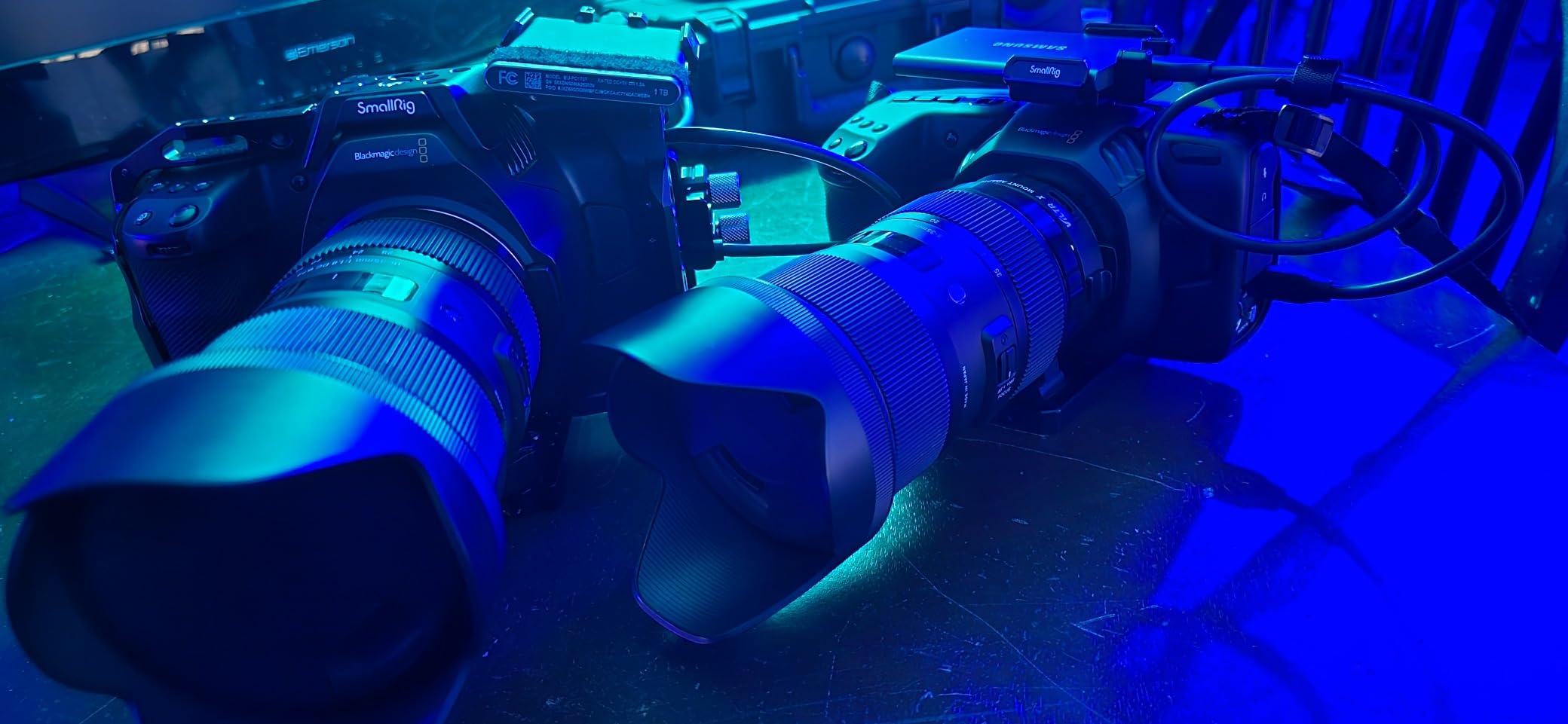
What to buy after the body
Plan power first: a USB-C power bank in a cage or a dummy battery adapter, plus two fast SD cards or a small SSD. A variable ND filter comes next, because there are no built-in NDs at this tier.
A cheap cage, a follow-focus gear, and a monitor hood round it out. Even with all of that, the total sits below what most cinema bodies cost before accessories.
Who it suits and who should pass
Narrative shorts, music videos, and controlled interviews are its home turf, because deliberate focus and lighting are already part of the process. With a focus puller, the image competes with costlier cameras.
Solo run-and-gun shooters should pass. No autofocus, no stabilization, and 30-minute batteries are frustrating when you are also the sound recordist and director. The GH5M2 fits that job better.
8. Sony ZV-E10 II Pro Bundle – A 26MP Creator Body in a 35-Piece Kit
Sony ZV-E10 II + 16-50mm Lens, LED Light, Microphone, 128GB Extreme Speed, U-Grip, Filters, Tripod, Case, Software, & More – Pro Video Bundle (35pc)
26MP APS-C Exmor R sensor
4K with full pixel readout
759 AF points, real-time eye AF
Articulating LCD
16-50mm OSS lens
35 piece accessory bundle
Pros
- Excellent 4K video with full pixel readout and no pixel binning
- Superior autofocus with real-time eye tracking
- Articulating screen perfect for vlogging
- Strong low-light performance from the 26MP sensor
- Picture profiles and S&Q motion for creative control
Cons
- Bundle includes many low-quality accessories
- No electronic viewfinder
- Not ideal for professional filmmaking
- Micro SD card instead of full-size SD
The ZV-E10 II is a real step up from the original, with a 26-megapixel APS-C Exmor R sensor, 4K from a full pixel readout with no binning, and 759 phase-detection points driving real-time eye AF. For one person producing their own content, it is one of the sharpest tools at this size.
Full pixel readout is the spec to care about. The 4K footage is derived from the whole sensor without line skipping, so detail and moire performance are markedly better than the first generation, and self-shot interviews stay in focus without a second operator.
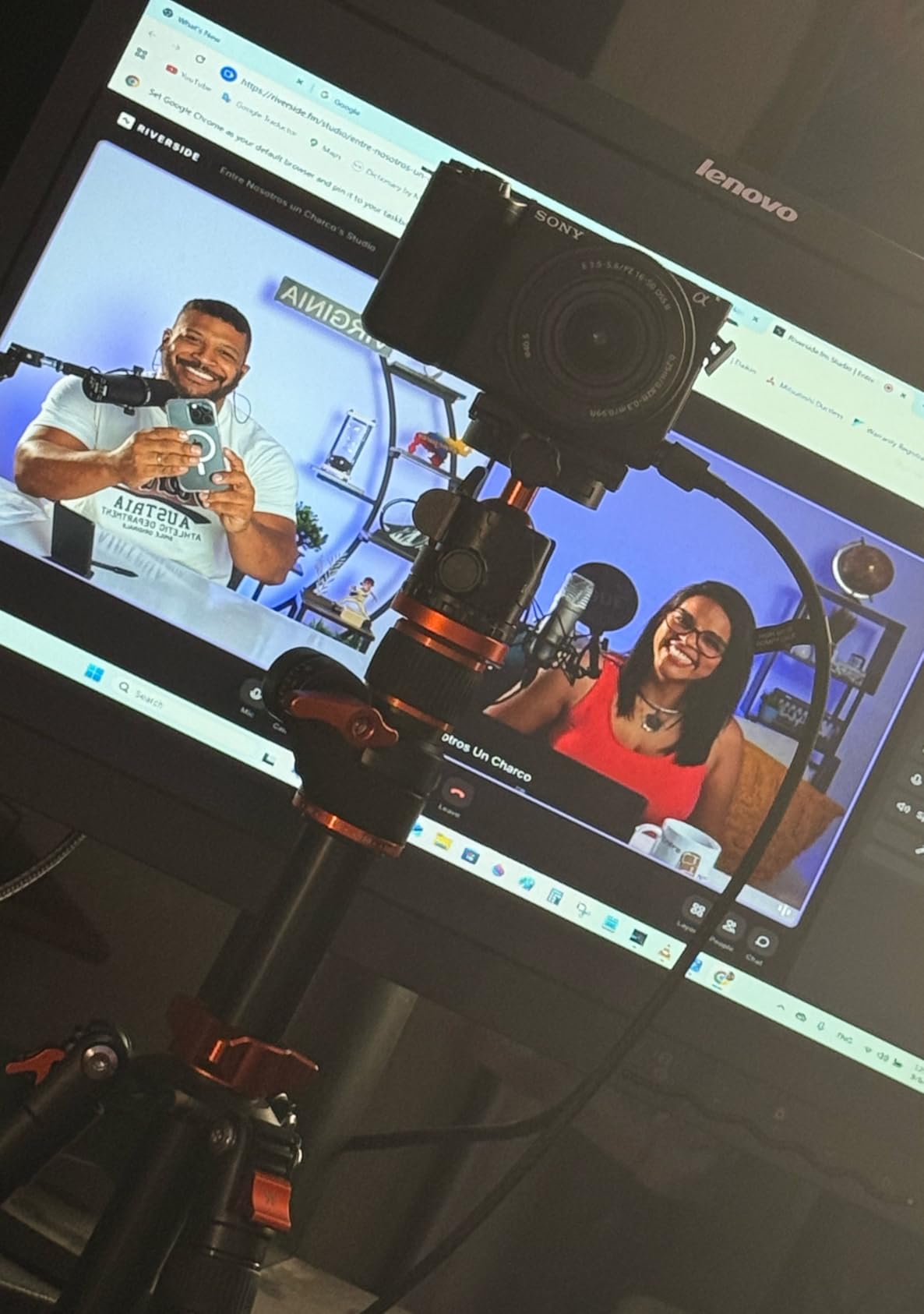
Be clear-eyed about what a 35-piece bundle is. Reviewers are blunt that many included accessories are low quality, with the grip, filters, and miscellany best treated as giveaways. The camera, the 16-50mm OSS lens, the storage, and the mic hold the real value.
As a filmmaking tool it is a content camera, not a cinema camera. There is no electronic viewfinder, manual control depth is limited, and the feature set stops short of log-heavy cinema workflows. For YouTube and documentary-style web content, that is a fair trade.
Note the bundle ships a microSD card rather than full-size SD, so plan your card ecosystem if you own other bodies. One standard across your kit saves hassle on shoot days.
What is worth keeping from the bundle
Keep the camera, lens, storage, microphone, and tripod, and be skeptical of the rest. Replacing the weakest accessories with one good mic or light improves output more than the whole box of extras.
The 4.2 average rating reflects bundle complaints more than camera complaints. The body itself is well regarded by people who bought it for the right job.
Who should buy it versus the cinema options
Buy it if you publish fast, shoot alone, and need dependable autofocus more than codec flexibility. Skip it if your deliverables involve heavy grading, external audio, or long controlled takes.
Those jobs point at the Blackmagic bodies below, where the image pipeline is the priority. Convenience and cinema codecs still do not live in the same body at this price.
9. Nikon Z50 II Two-Lens Kit – 4K60 and 31 Color Presets Out of the Box
Nikon Z50 II with Two Lenses | Compact mirrorless Stills/Video Camera with Easy Color presets and Wireless Photo Sharing | USA Model
20.9MP DX APS-C sensor
4K UHD 60p, 120p FHD slow motion
231-point hybrid AF, 9 subject types
31 Picture Control presets
16-50mm and 50-250mm VR lenses
Electronic viewfinder
Pros
- Strong 4K UHD 60p video capabilities
- Advanced subject detection autofocus covering 9 subject types
- 31 creative Picture Control presets with cloud downloads
- Versatile two-lens kit from wide to telephoto
- Electronic viewfinder with high magnification
Cons
- 5 fps continuous shooting is modest
- Battery life could be better
- Kit lenses have variable apertures
- Limited native lens selection for Z DX mount
The Z50 II kit is the most complete day-one package on this list. You get a stabilized 16-50mm for wide and standard work, a stabilized 50-250mm for compression and distant subjects, plus 4K UHD at 60p and 120fps slow motion in Full HD. That covers a short film’s focal range before you buy another lens.
The color system is Nikon’s standout. Thirty-one built-in Picture Control presets, plus cloud downloads and custom creation, let you lock a look in camera and cut grading time dramatically on fast-turnaround work.
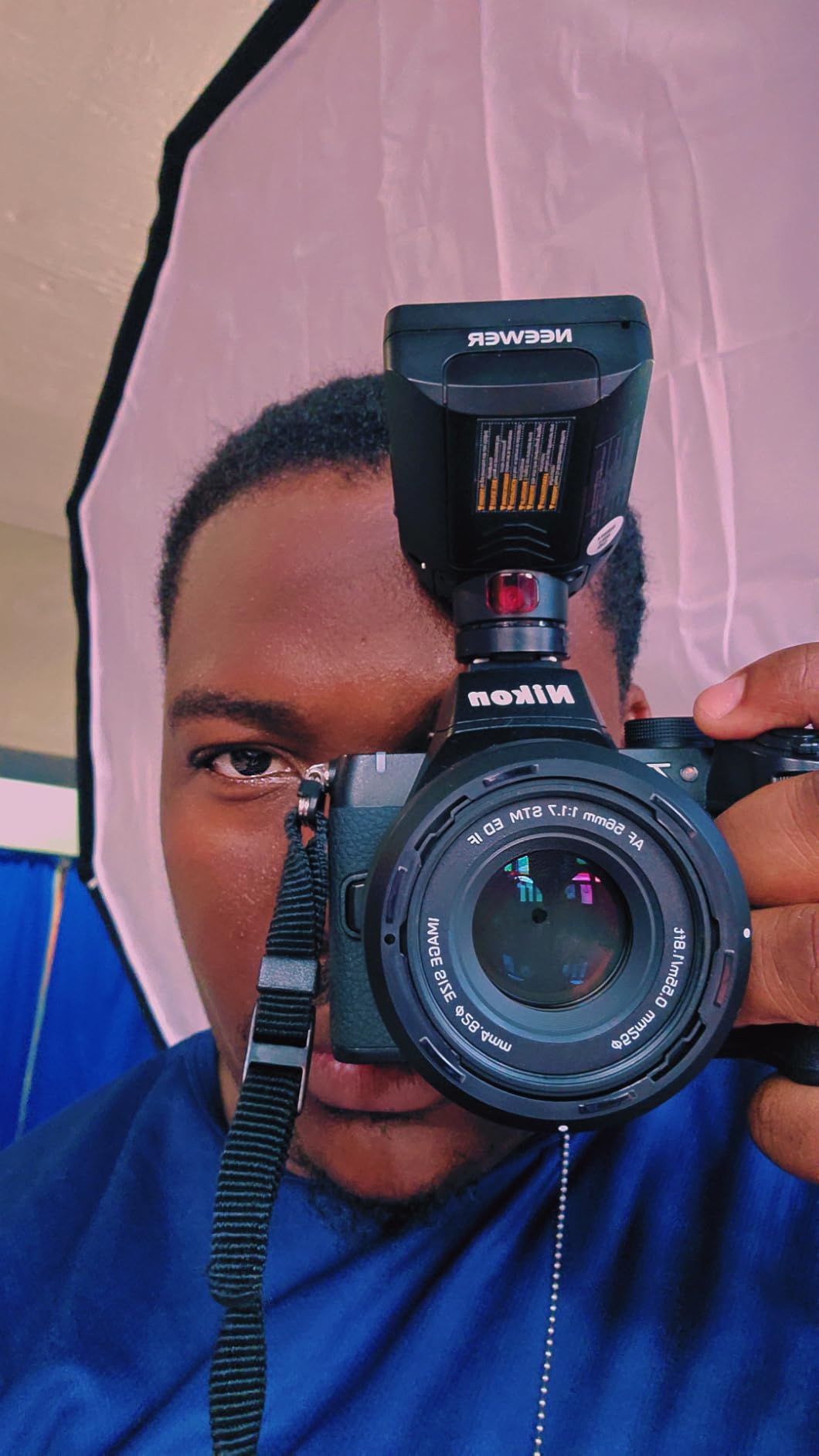
Autofocus is advanced for this tier, with 231 hybrid points and subject detection across nine categories including people, birds, vehicles, dogs, and cats. In practice it tracks a moving subject through a busy frame without hunting, which lowers the mental load of solo shooting.
The electronic viewfinder is a real advantage over screen-only bodies, especially outdoors where rear LCDs wash out. SnapBridge moves files to a phone for same-day social cutdowns, and electronic VR for video supplements the stabilized kit lenses.
Limits are ordinary for the class: a five-frames-per-second burst, average battery life, variable-aperture kit glass, and a Z DX catalog still filling in. Some grey-market units ship with a fixed language, so buy the USA model from an authorized seller.

How the two lenses split real production work
Shoot the 16-50mm for handheld interiors, walk-and-talks, and establishing coverage, and the 50-250mm for interviews, close-ups, and anything across a room. Between them, most small-production coverage needs no extra glass.
When you upgrade, a fast DX prime for low-light interiors comes first. The kit zooms cover range, but neither gathers light like a fixed aperture lens.
Post workflow and delivery expectations
Picture Controls give a consistent starting point, but heavy grading still wants a flatter profile and a machine that handles 4K60. On an older computer, shoot 4K30 masters and reserve 60p for slowed shots.
Treat this as a web and festival shorts camera, like the other APS-C hybrids here. It also makes a strong second body for a Blackmagic A-camera, matching color far more easily than mixed brands.
10. Blackmagic Pocket Cinema Camera 6K G2 – 6K Super 35 With a 4.9 Owner Rating
Blackmagic Design Pocket Cinema Camera 6K G2, EF Mount
Super 35 BSI CMOS sensor, 6144 x 3456
13 stops dynamic range
Dual gain ISO to 25600
Active EF and EF-S mount
Bright 5 inch tilt LCD
ProRes and 12-bit BRAW
DaVinci Resolve Studio included
Pros
- Incredible 6K image quality from a Super 35 sensor
- 13 stops of dynamic range for detailed highlights and shadows
- Dual gain ISO to 25600 keeps low light clean
- Multiple recording options including USB-C SSD
- Includes DaVinci Resolve Studio activation key
Cons
- Battery life is approximately 60 minutes
- Manual focus only
- no autofocus
- Large file sizes require fast storage and a capable edit system
- Professional workflow requires additional rig accessories
The 6K G2 is the smartest entry into Super 35 6K recording available to indie filmmakers right now, and owners agree at 4.9 stars with 94 percent five-star reviews. You get the same 6144 x 3456 sensor, 13 stops, and dual gain ISO to 25,600 as the costlier 6K models in a lighter 3.8-pound body.
The brighter, adjustable 5-inch tilt screen is the practical upgrade over the original 6K, and it reduces how often you need an external monitor on small sets. BSI CMOS construction shows up as cleaner shadows in night interiors.
The active EF and EF-S mount is why many filmmakers choose this system. Decades of Canon glass, new and used, attach and communicate electronically, giving aperture control from the camera and access to some of the best-value lenses ever made.
Recording runs to SD and UHS-II, CFast 2.0, or a USB-C external SSD, in ProRes up to 4K or 12-bit Blackmagic RAW at full 6K. The bundled Resolve Studio key completes the pipeline, since Resolve handles BRAW natively.
Expect roughly 60 minutes per NP-F cell, manual focus only, and file sizes that demand fast media and a competent edit machine. Like every Pocket camera, it wants a rig and a power plan even with a two-person crew.
Storage and post requirements to plan for
6K BRAW at high bitrate fills small cards fast, so budget for UHS-II, CFast, or a portable SSD as primary media. An SSD over USB-C is the most cost-effective path for long days and offloads faster than card swapping.
Your edit system matters at this resolution. Machines that handle 4K comfortably can still choke on 6K timelines, so plan on proxy workflows in Resolve, which the included Studio license covers.
How it differs from the 6K and 6K Pro
Against the original 6K, the G2 adds the brighter tilting screen and a lighter body. Against the 6K Pro, you give up built-in ND filters and the HDR screen but keep the same sensor and recording pipeline.
If you shoot controlled interiors where a matte box is workable, the G2 saves money without costing image. For run-and-gun exteriors, the 6K Pro’s internal NDs are worth the difference.
11. Blackmagic Pocket Cinema Camera 6K – 6K at 50fps and 120fps Slow Motion
Blackmagic Design Pocket Cinema Camera 6K with EF Lens Mount
Super 35 sensor, 23.10 x 12.99mm
6K up to 50 fps
120 fps in 2.8K and 1080p
EF lens mount
Dual CFast and SD slots
5 inch touchscreen
DaVinci Resolve Studio included
Pros
- Super 35 sensor with 6K resolution for cinema-quality footage
- Multiple frame rates including 6K at 50 fps and 120 fps slow motion
- Dual CFast and SD card slots for flexible media
- EF mount compatibility with a wide range of Canon lenses
- Includes DaVinci Resolve Studio for post-production
Cons
- Battery not included
- requires separate purchase
- No built-in ND filters
- Manual focus only
- Limited to 60 fps in 6K 17:9 mode
The original Pocket 6K remains one of the most proven cinema cameras in indie use, with 351 owner reviews at 4.7 stars. Its Super 35 sensor records 6144 x 3456 at up to 50 fps, with off-speed rates to 60 fps in 6K 2.4:1 and 120 fps in 2.8K and 1080p, slow motion most indie budgets never touch.
At 900 grams it is the lightest way to put this sensor on a gimbal, which is how most owners use it. A single-handle stabilizer, an EF prime, and this body make a one-operator narrative camera that produces images clients assume came from a bigger package.
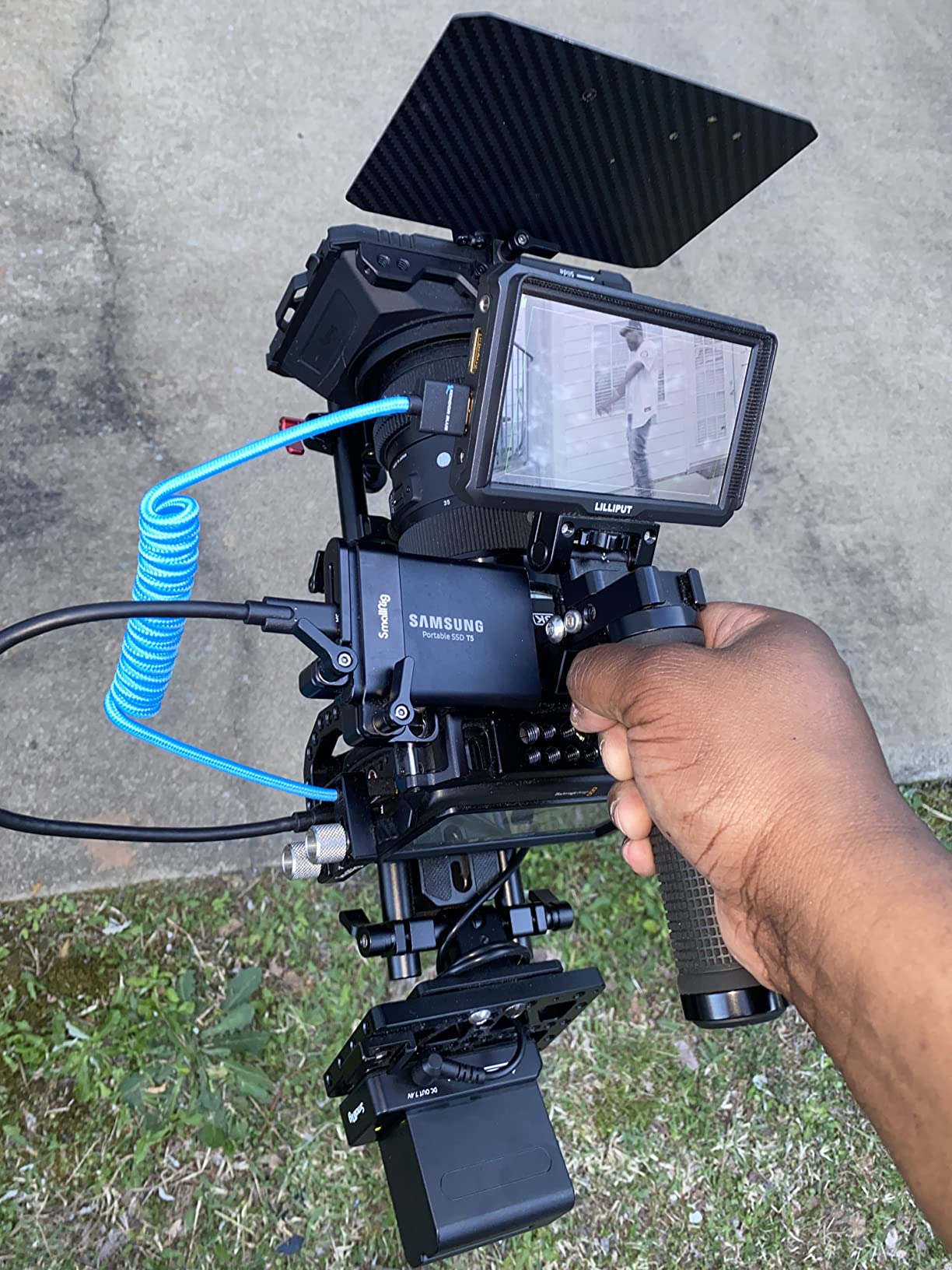
The EF mount plus dual CFast and SD slots give you a flexible media strategy, and HDMI output feeds an external recorder or monitor when needed. Blackmagic RAW keeps files manageable, and ProRes is there when you want an edit-friendly intermediate.
Two warnings before you order: no battery ships in the box, so add an NP-F cell and charger to your first purchase, and there are no built-in ND filters, so budget for a variable ND or a matte box. Manual focus is the design, not an omission.
This is the body I recommend for gimbal-led work specifically, because weight savings on a stabilizer compound fast. Everything you skip on rig weight goes back into shoot time.
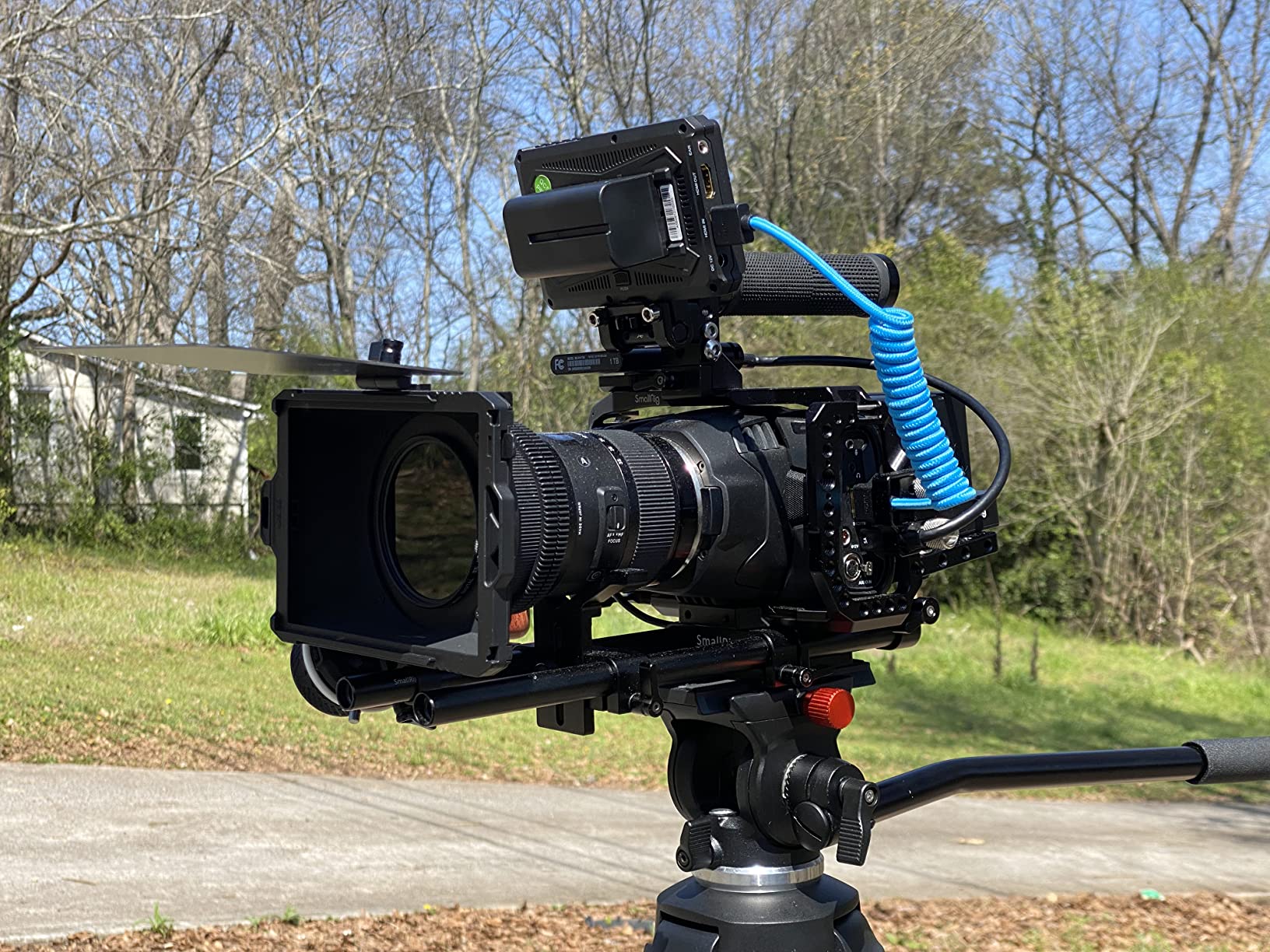
Gimbal and rigging setup that works
Balance it with a light EF prime in a small cage, and power it from the gimbal handle or an NP-F plate rather than the internal cell. That extends shoot time and keeps the rig under consumer stabilizer limits.
Add a wireless focus motor only if shots demand focus changes while moving. Deep depth of field and careful blocking get you most of the way with one less failure point.
Media budgeting before the first shoot
High-bitrate 6K wants fast cards, CFast for the highest rates or UHS-II for standard work, and the write-speed floor is unforgiving. Fewer fast cards beat more slow ones, because dropped frames on a paid shoot cost more than media.
Plan storage for the whole pipeline, not just cards. A single day of 6K RAW can produce hundreds of gigabytes, so a two-drive backup routine belongs in the budget from project one.
12. Blackmagic Pocket Cinema Camera 6K Pro – Our Editor’s Choice
Blackmagic Design Pocket Cinema Camera 6K Pro (CINECAMPOCHDEF06P)
Super 35 6K sensor, 6144 x 3456
13 stops dynamic range
Built-in 2, 4, and 6 stop ND filters
Tilting 5 inch HDR LCD
Canon EF and EF-S mount
Mini XLR audio, NP-F power
DaVinci Resolve Studio included
Pros
- Superb 6K image quality from a Super 35 sensor
- Built-in 2
- 4
- and 6 stop ND filters remove the matte box
- Tilting HDR LCD screen
- Professional ProRes and Blackmagic RAW codecs with 13 stops of dynamic range
- EF lens mount with vast used lens compatibility
Cons
- No continuous autofocus
- No in-body image stabilization
- Battery life limited
- NP-F550 recommended
- Not ideal for run-and-gun shooting
- Heavy for long handheld sessions
The 6K Pro is the best pocket cinema camera for indie filmmakers who shoot deliberately, and it is the body I would back with my own money for narrative work. Built-in 2, 4, and 6 stop ND filters behind the mount mean you control exposure in full daylight with no matte box, no filter rings, and no rigging.
In practice, those NDs change workflow more than any other feature here. Moving from interior to exterior is a switch flick instead of an accessory swap, which keeps momentum on small sets where every minute is borrowed. Owners rate it 4.6 across 241 reviews all the same.
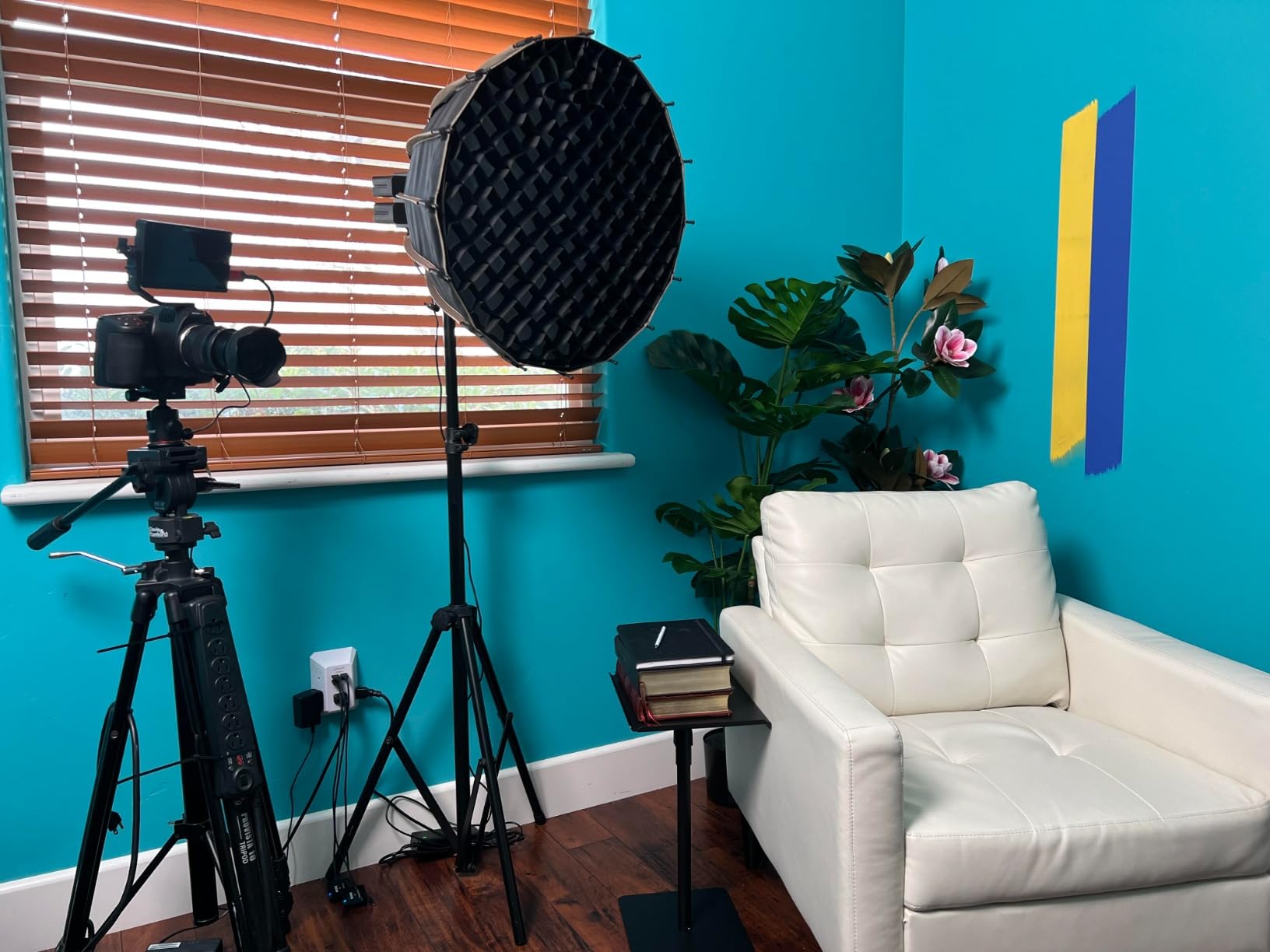
The tilting 5-inch HDR screen is bright enough to judge exposure and focus without a monitor, and 13 stops with dual gain ISO to 25,600 gives footage that grades beautifully. Highlights roll off like film rather than clipping.
The professional plumbing is everywhere: mini XLR with phantom power, timecode and reference sync for multicam, ProRes up to 4K, 12-bit Blackmagic RAW at 6K, and recording to SD, CFast, or USB-C SSD. The Resolve Studio key means post is not an extra purchase.
The trade-offs are the Pocket line’s, sharpened. No continuous autofocus, no IBIS, harsh auto-exposure transitions, and no exposure compensation or spot metering, so you work manually on purpose. At 4.4 pounds it is heavy for long handheld takes, and battery life still pushes you toward NP-F550 cells or external power.
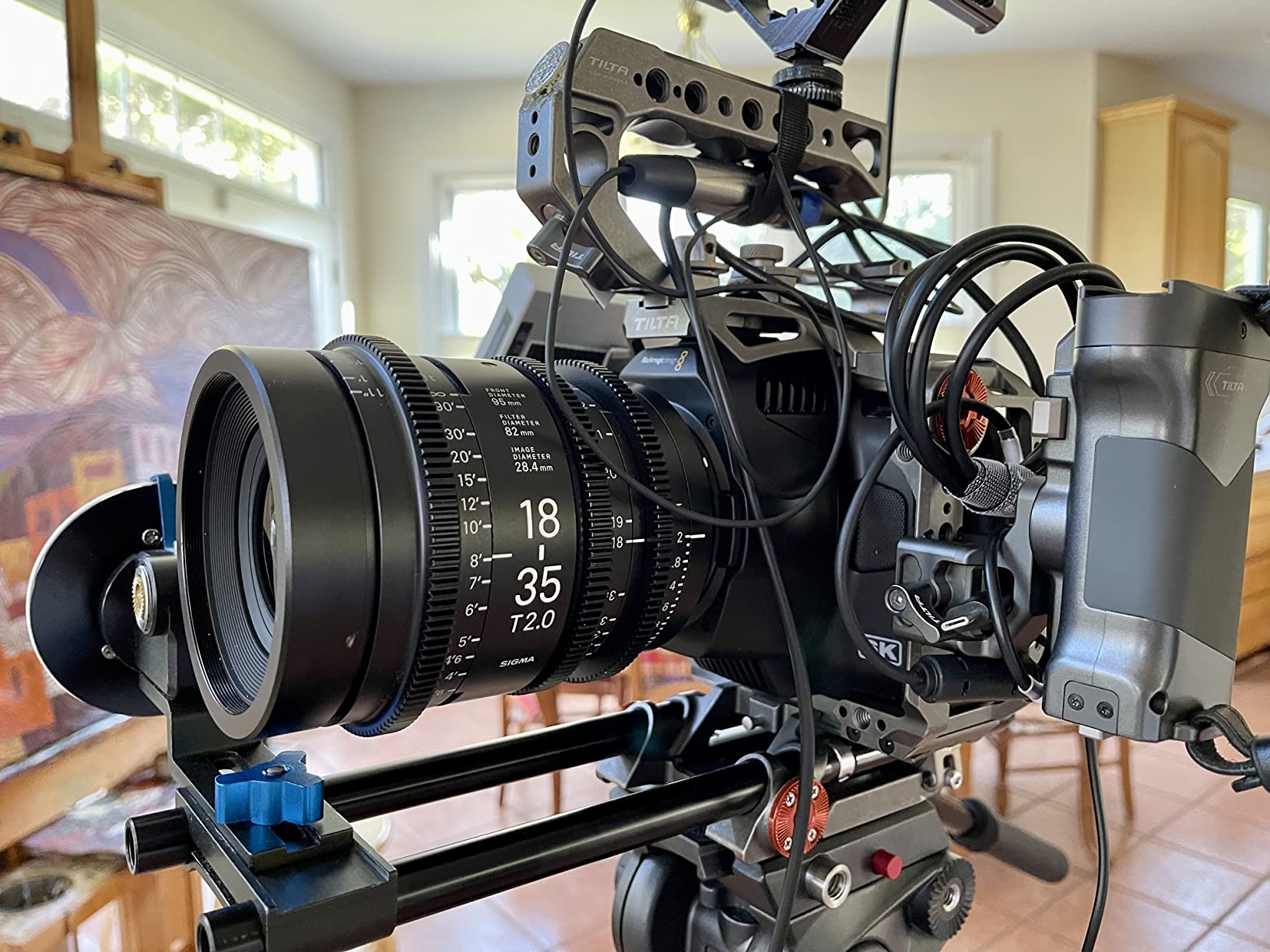
Building a working kit around it
Start with two NP-F550 batteries and a charger, a fast UHS-II card or small SSD, and one good EF prime. Add a simple cage with rod support when you want a follow focus or matte box.
Used Canon EF glass is the budget unlock for this mount. Sharp older primes cost a fraction of new cinema lenses and cover Super 35 well, and the savings fund the power and media extras.
Delivery, approval, and long-term value
Blackmagic’s Pocket line has shipped on platform-delivered originals and festival features for years, and 6K RAW at these bitrates clears delivery expectations that 8-bit hybrids cannot. If your ambition includes distribution beyond the web, this is the body that grows into it.
It also holds value, because the sensor and codecs have not been obsoleted by newer releases. Buy it once, rig it properly, and it stays a working A-camera for years.
How to Choose a Pocket Cinema Camera for Indie Work?
Pick based on how you shoot, not on the biggest number on the spec sheet. The right choice follows from your crew size, your lighting control, and what your edit machine can handle.
Sensor size and the look you are after
Sensor size drives depth of field, low-light performance, and field of view more than any other spec. Super 35, as on the Blackmagic bodies, produces the classic cinema field of view with focus that is achievable handheld. APS-C, on the Sony, Canon, and Nikon bodies, is close in look and usually paired with stronger autofocus.
Micro Four Thirds and 1-inch sensors give you deeper focus and smaller glass, which helps run-and-gun work and long zooms like the ZS300. The cost is low-light flexibility and a flatter look at the same aperture.
Codecs, bit depth, and your edit rig
Bit depth and chroma subsampling determine how far you can push an image in post. The Blackmagic bodies record 12-bit BRAW and ProRes, the GH5M2 records 10-bit internally, and several hybrids here output 10-bit as well. Eight-bit bodies limit heavy grading and color matching between mixed cameras.
Your editing computer is part of the decision. A machine that edits 4K comfortably may still struggle with 6K RAW timelines, so plan on proxy workflows, more RAM, or a GPU upgrade before committing to a 6K body.
Autofocus, stabilization, and crew size
Be honest about how many people are on set. A one-person crew usually needs autofocus and stabilization, which points to Sony’s Real-Time Eye AF, Canon’s Dual Pixel AF II, or the GH5M2’s Dual I.S. Two or three people can pull manual focus, which unlocks the Blackmagic line and its better codecs.
Stabilization stacks. In-body stabilization plus a stabilized lens, as on the Panasonic system, delivers walking shots without a gimbal. Cinema bodies with none need a tripod, a slider, or a stabilizer, and pretending otherwise wastes footage.
Power, media, and the hidden costs
The sticker price is the beginning. Blackmagic Pocket cameras run roughly 30 to 60 minutes per battery, so budget for multiple NP-F cells, a dummy battery, or a power bank. Hybrid bodies last longer but still want two spares for a full day.
Media is the other recurring cost. Fast UHS-II cards, CFast, or a portable SSD are requirements on cinema bodies, not upgrades, and slow cards bought to save money produce dropped frames on the one shoot you cannot reshoot.
Buying used and picking an ecosystem
The used market is the best budget lever in indie filmmaking, and forum shooters recommend it constantly. Bodies depreciate fast while lenses hold value, so a used body plus used glass often buys a full kit at the price of a new body alone.
Choose your mount with your next camera in mind. EF glass works across the Blackmagic EF line, E-mount glass travels from Sony hybrids toward Sony cinema bodies, and RF and Z mount tie you to thinner APS-C catalogs. Lenses outlive cameras, so the mount is the real commitment.
Frequently Asked Questions
What is the best pocket cinema camera?
The Blackmagic Pocket Cinema Camera 6K Pro is the best pocket cinema camera overall, thanks to its Super 35 6K sensor, 13 stops of dynamic range, 12-bit Blackmagic RAW, and built-in 2, 4, and 6 stop ND filters. If budget is the priority, the Blackmagic Pocket Cinema Camera 4K delivers true cinema codecs for less, and owners rate it 4.7 across 757 reviews.
What is the best cinema camera for indie filmmakers?
It depends on crew size. For controlled narrative shoots with two or more people, the Blackmagic Pocket 6K Pro or 6K G2 give the best image per dollar with ProRes, RAW, and 13 stops of dynamic range. For solo documentary and run-and-gun work, the Panasonic GH5M2 is stronger because its 5-axis stabilization, reliable autofocus, and unlimited 4K recording do not require a second operator.
What is the best small camera for filmmaking?
The Blackmagic Pocket Cinema Camera 4K is the best small dedicated filmmaking camera, packing a 4/3 sensor, 13 stops of dynamic range, mini XLR audio, and ProRes or Blackmagic RAW into a compact body with a 5-inch touchscreen. If you need something closer to pocket size, the Insta360 Luna Ultra shoots stabilized 8K HDR with dual Leica lenses and a detachable remote screen.
What is the best handheld video camera for filmmaking?
The Panasonic LUMIX GH5M2 is the best handheld option, combining 5-axis Dual I.S. with 6.5 stops of correction, unlimited 4K 60p 10-bit recording, dual UHS-II card slots, and a weather-sealed magnesium body. It holds 4.9 stars from owners, the highest rating in this group, and it streams live wired or wireless for event and hybrid productions.
Are Blackmagic cameras good for indie films?
Yes. Indie filmmakers consistently praise Blackmagic’s color science, 12-bit Blackmagic RAW recording, 13 stops of dynamic range, and the included DaVinci Resolve Studio license, which together deliver a professional grade pipeline at an indie price. The trade-offs are manual focus only, roughly 30 to 60 minutes of battery life, no in-body stabilization, and heavy storage demands, so they suit crews who shoot deliberately.
The Wrap: Which Pocket Cinema Camera Should You Buy?
Our final ranking for 2026 is straightforward. The Blackmagic Pocket Cinema Camera 6K Pro is the editor’s choice for narrative and commercial work, the Pocket 4K is the best value route into real cinema codecs, and the Panasonic GH5M2 is the top-rated pick when you shoot alone and need stabilization and autofocus. Sony’s a6400 and the Canon R50 cover the budget autofocus crowd, and the 6K G2 is the smartest 6K entry point.
Whichever body you choose, put real thought into the mount, the media, and the power plan, because those three decisions outlast any camera. Pick the body that matches your crew size and your willingness to work manually, then spend what is left on glass and lighting, which is where image quality actually comes from.
1 thought on “12 Best Pocket Cinema Cameras for Indie Filmmakers (October 2026) Pro Reviews”