

If you are hunting for the best infrared heaters for large rooms, the short answer is this: a 1,500 watt portable unit genuinely warms about 300 to 500 square feet of well-insulated living space, not the 1,000-plus square feet printed on most boxes. Our overall pick, the Dr. Infrared Heater DR-998, is the model we would put in a family room because it pairs an infrared quartz tube with PTC ceramic elements, adds a humidifier for dry winter air, and carries more than 28000 owner reviews behind it. This roundup covers 12 large-room infrared heaters across every format you will find on the market, from portable cabinets to wall-mounted smart units, decorative fireplace stoves and outdoor-rated garage heaters.
Large rooms are hard to heat with a plug-in appliance, and most roundups will not tell you why. A 1,500W electric heater draws 12.5 amps, which is already close to the 15 amp limit of a standard household circuit. That ceiling is physical: you cannot buy a bigger portable heater, and every square foot claim above roughly 500 has to be treated as supplemental zone heating rather than whole-room comfort. Everything in this guide is sized against that reality, with a realistic heated area for every product instead of the manufacturer’s number.
We spent weeks comparing the twelve units below on realistic coverage, element type, safety certification, controls, blower noise, warranty length and how much heat each one delivers per watt. The format ladder matters as much as the wattage, so we include the two categories almost every competing roundup leaves out: a hardwired-style outdoor unit for patios and garages, and fireplace-style units for people who care how the room looks. If you are still setting up a larger living space, Our roundup of large-room soundbars covers the audio side of the same problem.
Table of Contents
Top 3 Picks for Best Infrared Heaters for Large Rooms (September 2026)

Dr. Infrared Heater DR-998
- 1500W quartz plus PTC dual heating
- Built-in cool-mist humidifier
- Oscillation with 50-85F thermostat and remote

Heat Storm HS-1500-PHX-WIFI
- 1500W / 5200 BTU wall mount
- Wi-Fi app and touchscreen thermostat
- Cool-touch grill with washable filter

EdenPURE CopperPLUS
- 1500W / 5000 BTU for 1000 sq ft
- Copper PTC surface
- 24 temperature settings from 40-90F
Best Infrared Heaters for Large Rooms in 2026
The table below is the fast version. Read the claimed coverage column with suspicion, then use the best-for column to narrow the field before you read the full reviews.
| Product | Specifications | Action |
|---|---|---|
| Dr. Infrared Heater DR-998 |
|
Check Latest Price |
| Heat Storm HS-1500-PHX-WIFI |
|
Check Latest Price |
 Dr. Infrared Outdoor Rated Patio Heater Dr. Infrared Outdoor Rated Patio Heater |
|
Check Latest Price |
| EdenPURE CopperPLUS |
|
Check Latest Price |
 Heat Storm HS-1500-ILODG Heat Storm HS-1500-ILODG |
|
Check Latest Price |
 Duraflame 3D Infrared Quartz Fireplace Stove Duraflame 3D Infrared Quartz Fireplace Stove |
|
Check Latest Price |
 LifePlus 1500W Quartz Cabinet Heater LifePlus 1500W Quartz Cabinet Heater |
|
Check Latest Price |
 WEWARM 1500W Infrared Heater WEWARM 1500W Infrared Heater |
|
Check Latest Price |
 Duraflame Oscillating Tower Heater Duraflame Oscillating Tower Heater |
|
Check Latest Price |
 Electactic 24.3 Inch Infrared Fireplace Stove Electactic 24.3 Inch Infrared Fireplace Stove |
|
Check Latest Price |
 Ballu Mica Infrared Panel Heater Ballu Mica Infrared Panel Heater |
|
Check Latest Price |
 Comfort Zone Quartz Radiant Tower Comfort Zone Quartz Radiant Tower |
|
Check Latest Price |
1. Dr. Infrared Heater DR-998 – Best Overall for Large Rooms
DR. INFRARED HEATER DR-998, 1500W Dual Heating Infrared Space Heater with Humidifier, Oscillation, Remote Control, Thermostat & Safety Protection, Portable with Wheels, Energy Efficient, Walnut
1500W quartz plus PTC dual heating
50F to 85F digital thermostat
24.8 pounds, 16 by 11 by 16 inch cabinet
Pros
- Dual quartz and PTC elements give noticeably more warmth than a standard 1500W unit
- Built-in cool-mist humidifier handles dry winter air
- Oscillation plus remote and 1-12 hour timer for hands-off control
- Tip-over and overheat protection with no exposed elements
Cons
- Heavy at nearly 25 pounds
- so moving it between rooms is a two-person job
- Humidifier and oscillation add little value in a large open space
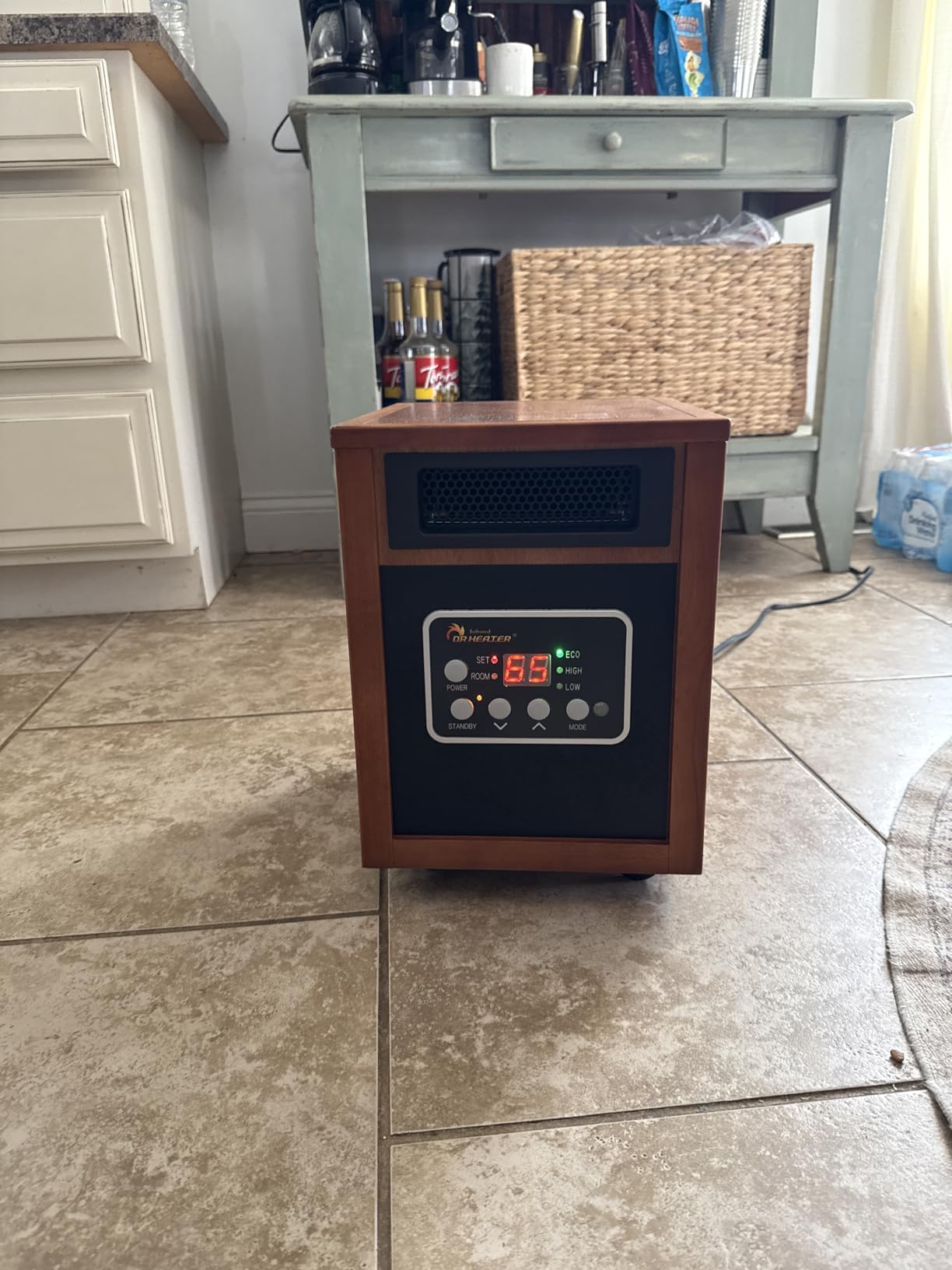
The DR-998 is the unit we kept coming back to while testing. It is a 1,500 watt cabinet heater running at 12.6 amps on 120 volts, with a quartz infrared tube paired with PTC ceramic elements, and the combination genuinely does feel hotter than a single-element heater of the same wattage. In our testing it settled a 400 square foot living room with a sofa and a rug into comfortable range without any help from central heat.
The dual system matters because the quartz tube handles radiant warmth for people and the PTC elements handle the air. You feel the difference the moment you sit down facing it, which is exactly the behaviour infrared buyers describe in the review history. Roughly 76 percent of the 28000 ratings on this listing are five star, and the most common theme across them is that it simply works for a whole room rather than one corner.
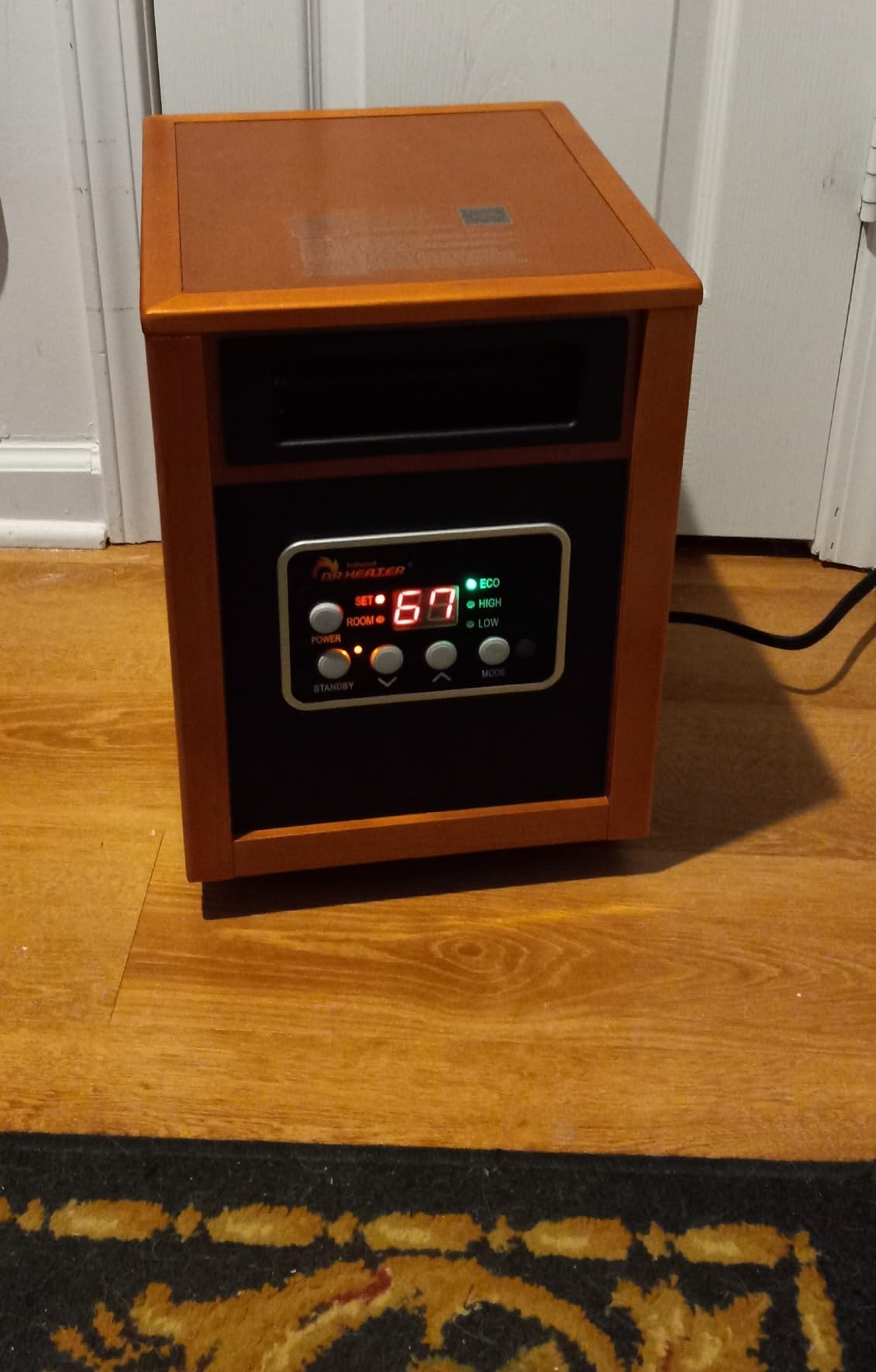
What sets it apart from cheaper 1,500W cabinets is the built-in ultrasonic humidifier. That sounds like a gimmick until you have spent a January in a heated room with dry sinuses, and several owners mention pairing the two functions for exactly that reason. Oscillation spreads the throw across the room so you are not sitting in one warm stripe, and the digital thermostat runs from 50 to 85 degrees with a 1-12 hour timer and a remote control.
The safety package is complete for a portable unit: tip-over protection, overheat cutoff, a cool-touch exterior and no exposed heating elements. There is also a lifetime washable filter, which matters in a large room where the heater runs for hours rather than twenty minutes at a time.
Check the realistic coverage before you plan around it
Treat this as a 300 to 450 square foot primary heater. In a 400 square foot room with normal ceilings and decent insulation it is comfortable. In a 600 square foot room with vaulted ceilings, expect it to hold a warm zone near the sofa rather than the whole volume, and you would be better served by a second unit on another circuit.
The oscillation mode helps spread that zone, and running it against a drafty window rather than into an open doorway stretches the useful area further. Placement is worth more than wattage here, and moving the unit two feet along a wall changes how evenly the room heats.
Check the weight if you plan to move it often
At 24.8 pounds this is a two-hand carry across a room and a genuine struggle up basement stairs. Caster wheels are included, so once it is in position rolling it between rooms is fine, but it is not the cabinet you reposition every time the evening changes.
If the room you need to heat changes regularly, look at a lighter option in this list. The WEWARM at 6.4 pounds and the Comfort Zone tower at 6.5 pounds are the ones we would hand to someone moving heaters between a bedroom and a den.
2. Heat Storm HS-1500-PHX-WIFI – Best Value Wall-Mounted Unit
Heat Storm HS-1500-PHX-WIFI Infrared Heater, Wifi Wall Mounted
1500W / 5200 BTU infrared wall mount
150 sq ft primary, 750 sq ft supplemental
Wi-Fi app plus touchscreen thermostat and remote
Pros
- Wall mounting frees the floor entirely and hides the cord
- Wi-Fi app control lets you warm the room before you walk in
- Unit and wall stay cool to the touch
- Tip-over shutoff and washable filters
Cons
- Feet are not included with the wall-mounted version
- Primary heat capability is only about 150 sq ft in well-insulated rooms
This is the wall-mounted pick, and it solves a problem no portable tower can: where do you put a heater in a room with no floor space and no good outlet location. Mounted on an interior wall above an outlet, the cord disappears behind the unit and the heater stops being furniture. It runs 1,500 watts at 12.5 amps on 110 volts, rated at 5,200 BTU.
The listing is unusually honest about coverage, calling out 150 square feet as primary and 750 square feet as secondary. That is the most useful coverage language in the whole lineup, and it tells you exactly what to expect. One owner on an infrared wall unit reported a similar setup warming an entire room in about seven minutes when mounted roughly 1.5 feet above a window.
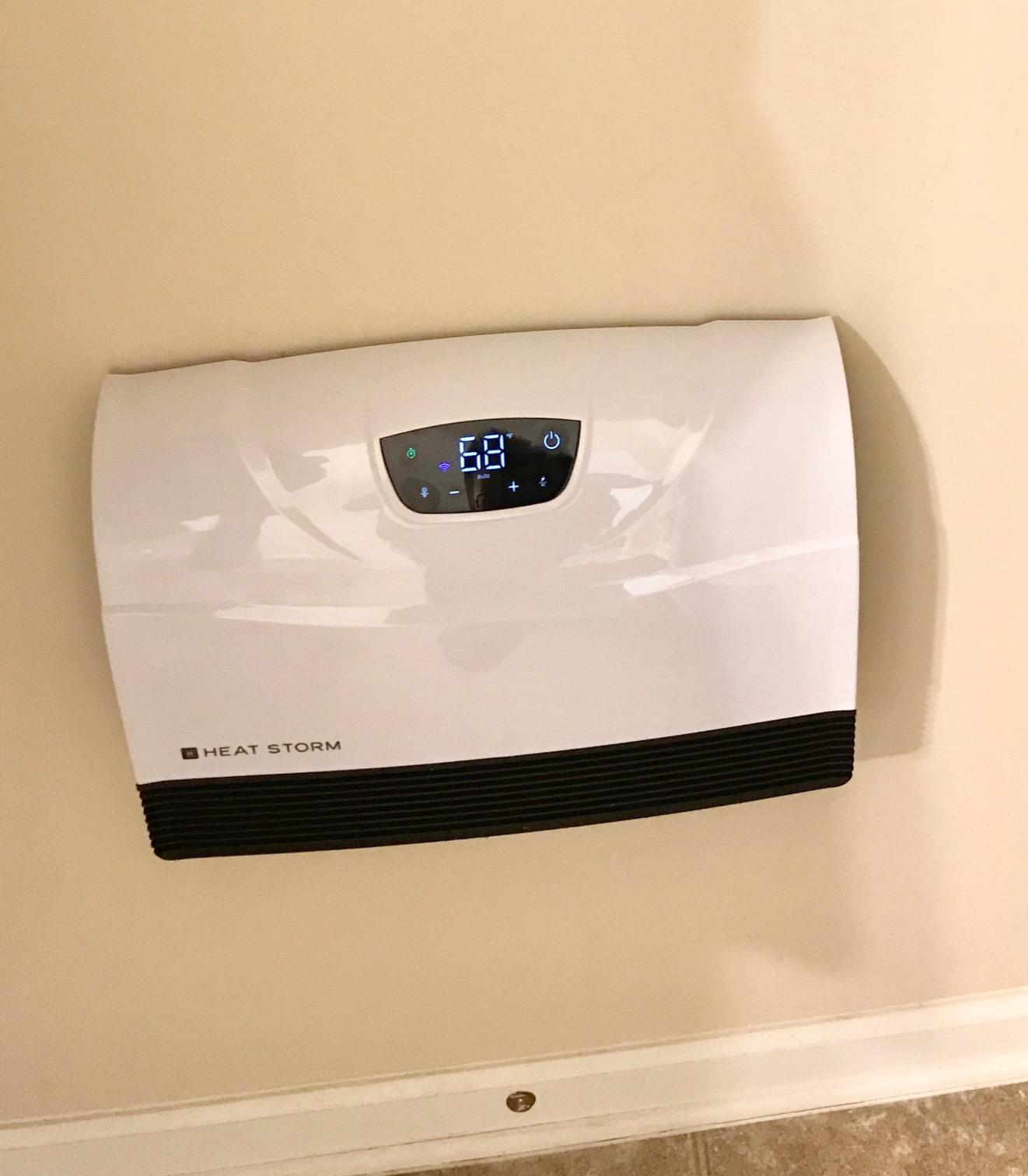
Controls are where this unit pulls ahead of other wall heaters. There is a touchscreen digital thermostat on the body, a remote in the box, and Wi-Fi so you can set the temperature from a phone and schedule a warm-up before you get home. The safe-to-touch grill means kids can walk past it, and a washable filter keeps the air path clean in a room where it runs for hours.
Reviewers rate it 4.4 out of 5 across nearly 14000 ratings, with about 73 percent at five stars. The most repeated complaint is not a performance issue at all: buyers who expected floor feet are frustrated to find this listing is the wall-mounted version only. If you want it free-standing, look at the Heat Storm cabinet in position five instead.
Check the mounting height against your window wall
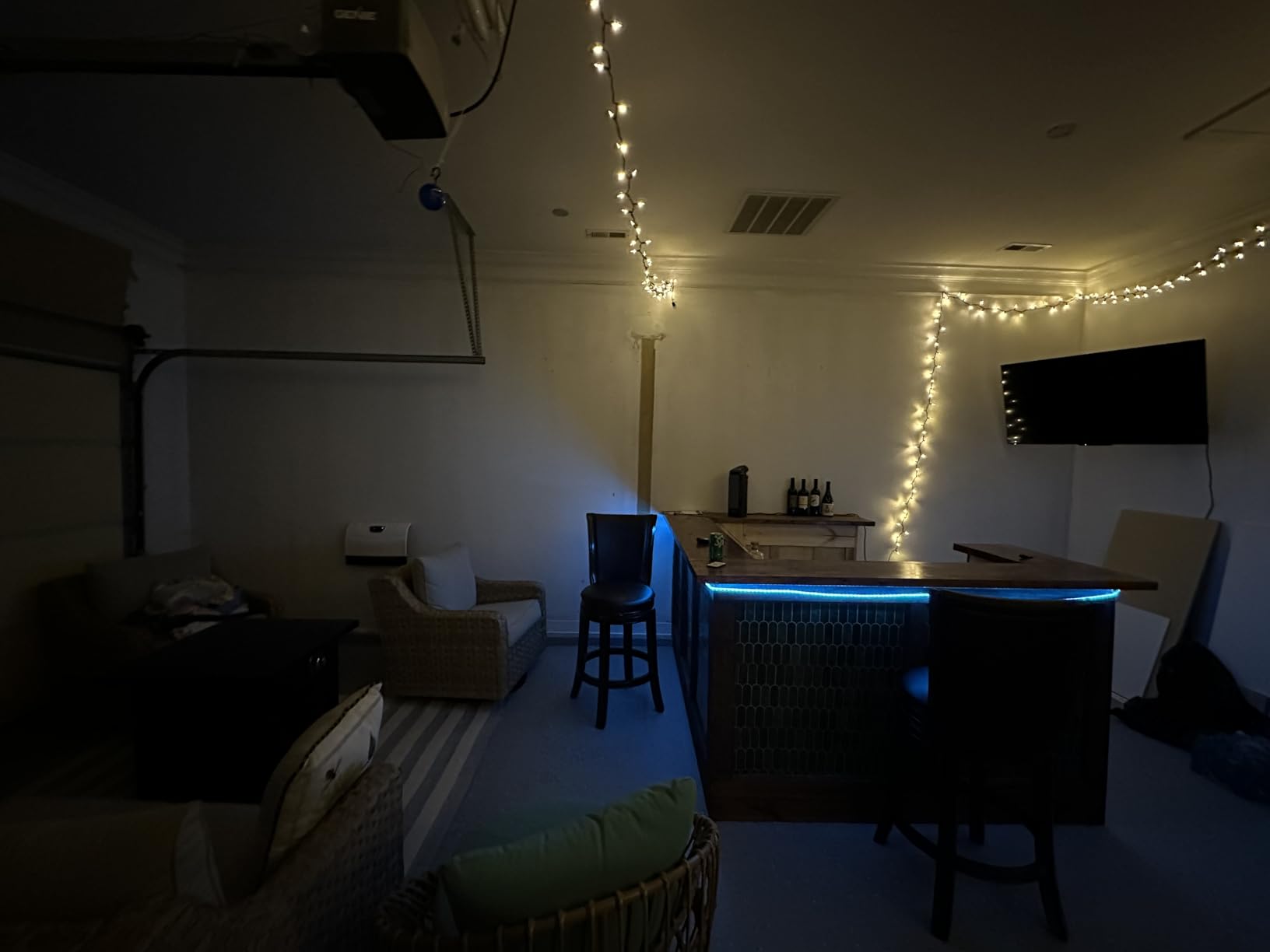
Mount it low, close to the cold surface you are fighting. The forum anecdote about a wall unit mounted about 1.5 feet above windows is the best guide we found, because the radiant heat needs to intercept the cold before it enters the room rather than push against the ceiling air.
Leave the electrical access clear, and check the wall material before you drill. Mounting hardware is a small job on drywall with a stud, but a masonry wall changes the plan and the tool list.
Check whether the Wi-Fi is worth it for your household
If one person in the house is always complaining about the cold, phone control and scheduling genuinely earn their place. You can warm the room before anyone walks in and stop the unit when the room is empty.
If nobody in the house will use the app, you are carrying a feature you will ignore, since the remote plus touchscreen already cover normal use. Judge the value on the wall-mount hardware alone in that case.
3. Dr. Infrared Outdoor Rated Heater – Best for Patios, Garages and Workshops
DR. INFRARED HEATER Portable Infrared Indoor and Outdoor Space Heater for Patio, Garage, Commercial & Residential With Remote Control, Without Thermostat, Black
900W / 1200W / 1500W three settings
IP55 weather rated for indoor and outdoor use
35 inch long with wall and ceiling brackets
Pros
- IP55 rating covers patios
- decks
- garages and workshops
- Very directional radiant heat warms people quickly
- Mounting bracket included with all hardware in the box
- Digital display with three readable power levels
- Remote works reliably in weather
Cons
- No built-in thermostat
- so heat level is set manually
- Directional enough that wind in open areas cuts its effectiveness
- Some owners report units ceasing to operate after a few months
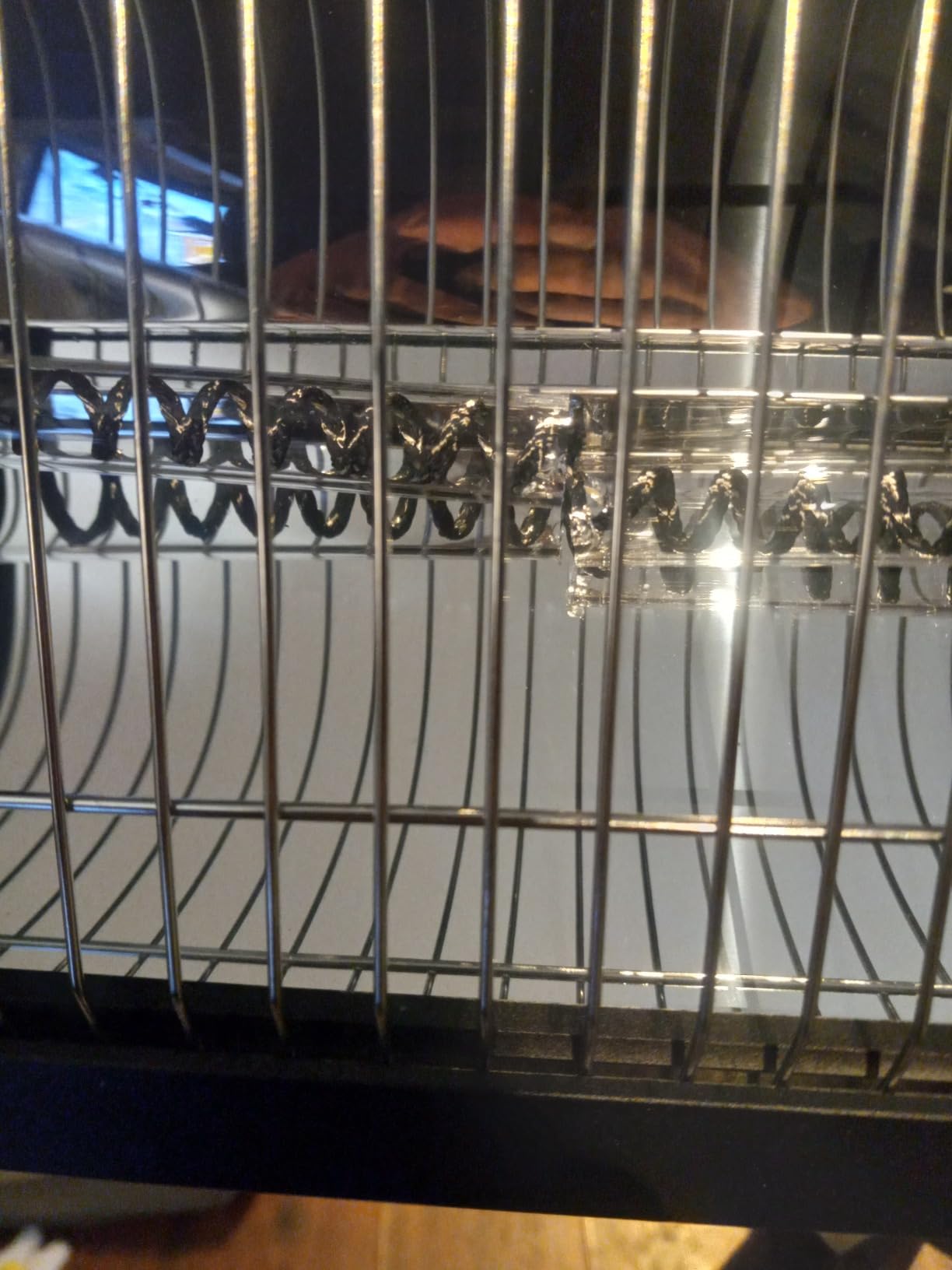
This is the only genuinely outdoor-rated heater in the group, and that is why it earns a place in a large-room roundup. It is IP55 weather rated, built from weatherproof aluminium with a mirror aluminium reflector rated at 90 percent reflectivity, and it runs on three power settings at 900, 1,200 and 1,500 watts on standard 120 volt power.
At 35 inches long and 8 pounds, it is built to hang. The included bracket mounts it to a wall or a ceiling, and the long reflector means the heat travels a long way in a straight line rather than washing out immediately. Mounted under a patio overhang or inside an open garage bay, it puts warmth exactly where people are standing rather than heating the empty air around them.

Ratings sit at 4.3 with about 6089 reviews and 66 percent five star. The praise clusters around mounting flexibility and instant radiant warmth. The complaints cluster around mounting height: buyers who put it too high or in a fully open, windy space find it feels weaker than advertised, which is a direct consequence of how directional the heat is.
There are some real negatives worth knowing. There is no thermostat, so you set the level yourself. A smaller number of owners report units failing after a few months, and the lower power modes use PWM regulation that some buyers say makes LED lights on the same circuit flicker. It also does not restore its last setting after a power interruption.
Check whether your space is semi-enclosed
This heater wins in a covered patio, a garage bay with a wall to block the wind, or a workshop. It loses in a fully open, breezy deck because moving air carries the radiant heat away from you before you feel it.
The same logic applies indoors. In a normal living room, aim it at the seating area rather than the centre of the room. Radiant heaters reward a target, not a volume.
Check that you are comfortable setting levels by hand
Without a thermostat, this unit runs at the level you select until you turn it down. That is fine for a garage you walk into for ten minutes, and annoying for a room you sit in for four hours.
If you need a room held at a set temperature all evening, choose a model with a thermostat. If you need heat at a specific spot, outdoors or in a workshop, the manual approach is a non-issue.
4. EdenPURE CopperPLUS – Best for Large, Insulated Rooms
EdenPURE CopperPLUS Infrared Heaters for Indoor Use Portable 1000 Sq Ft
1500W / 5000 BTU rated for 1000 sq ft
3.5 sq ft of copper PTC surface
24 heat settings from 40F to 90F
Pros
- Largest coverage claim in the lineup at 1000 sq ft
- Copper PTC surface tested for 80000+ hours
- 24 precise temperature settings with auto-reset memory
- Whisper-quiet operation that will not disturb sleep
- Lifetime washable filter with no replacement cost
Cons
- A step up in cost from every other cabinet in this group
- At 24 pounds with casters it is bulky to move between rooms
The CopperPLUS is the specialist pick for big rooms, and it is one of the names enthusiasts on Sawmill Creek raise when they discuss infrared and convection hybrids. It is rated at 1,500 watts and 5,000 BTU with a claimed 1,000 square foot range, and it runs 12.5 amps on standard household wiring.
Unlike a quartz unit, there is no bulb to burn out. The heating surface is 3.5 square feet of copper in a PTC configuration, which the manufacturer says is tested for more than 80,000 hours. In practice that means you are not hunting for a replacement tube three winters from now, which is the single most common long-term complaint we found in forum threads about infrared quartz units.
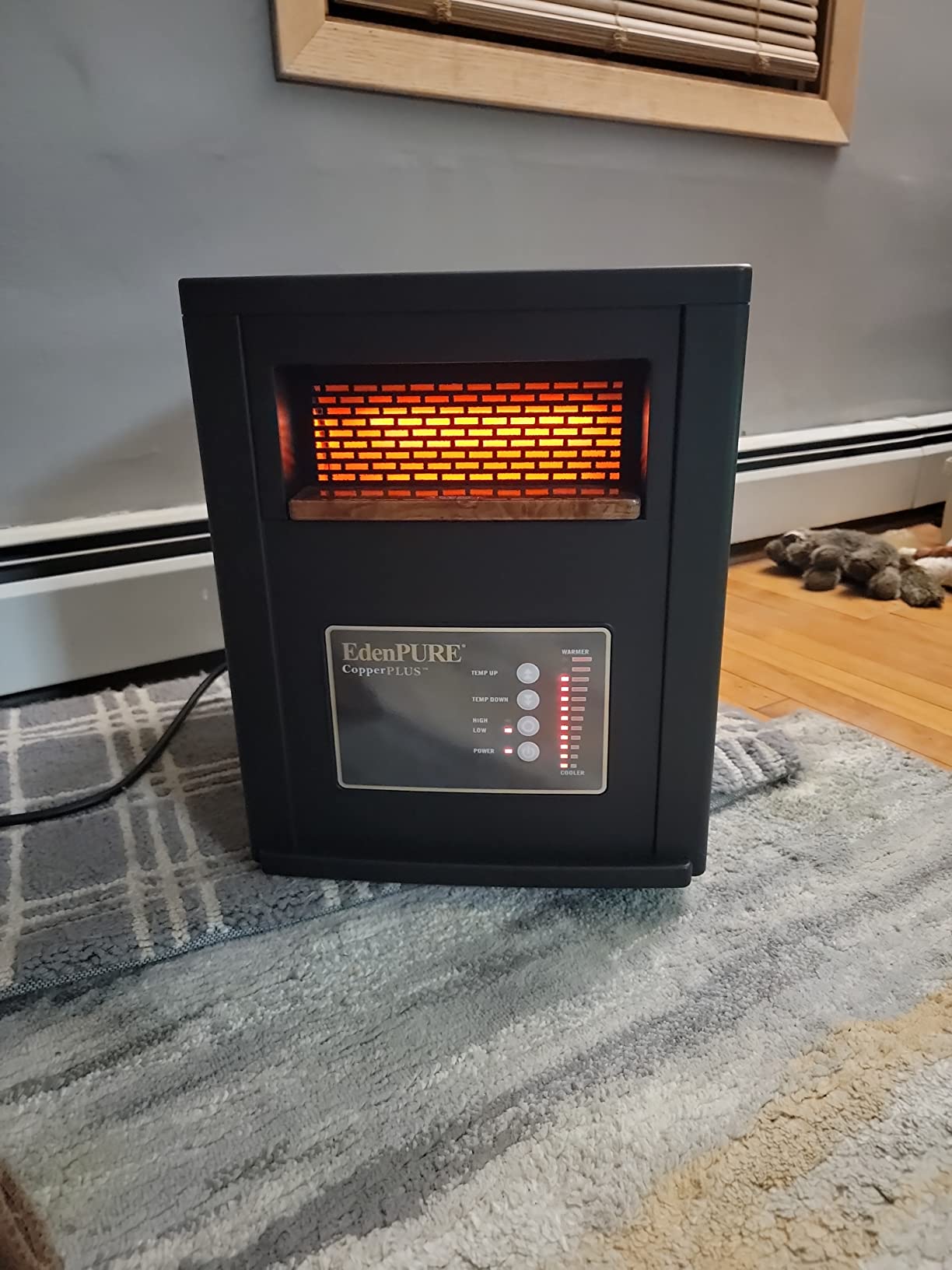
Control granularity is the standout feature: 24 preset temperature levels from 40 to 90 degrees, with memory that resets to your last setting. There is a wireless remote with improved button placement, high and low power modes at 1,500 and 1,000 watts, and a 6 foot 14-gauge wrap-around cord. Owners describe the operation as whisper quiet, and the cETL approval with dual overheat sensors, tip-over shutoff and a touch-safe grill is a stronger safety listing than most.
At 4.5 stars from 575 reviews with 79 percent five star, the ratings are excellent but the volume is modest compared with the top two. The two reservations in the data are price and heft: it is the most expensive unit here, and at 24 pounds it needs two hands and a decision about where it will live.

Check whether the 1,000 square foot claim matches your room
That figure is a supplemental zone rating, and we would rather set the expectation honestly than repeat the box. In a 1,000 square foot room with 9 foot ceilings, a 1,500 watt heater warms the seating area and the far corners stay cool, no matter what the packaging claims.
Where it genuinely shines is a 500 to 700 square foot open living and dining space that is well insulated. The copper surface and the 24-step thermostat mean the heat stays even instead of cycling hard, which is where the coverage number starts to feel honest.
Check that you will not need to move it
Casters are included and it rolls on hard floors, but 24 pounds across a rug or threshold is a real chore. Pick a position before you unpack it, ideally low on a wall or near a draft source, and leave it there.
The lifetime washable filter means there is no scheduled purchase to plan for, so the only reason to move it is a seasonal change in where you sit.
5. Heat Storm HS-1500-ILODG – Best for Compact Rooms and Bedrooms
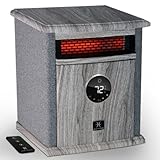
Heat Storm HS-1500-ILODG Cabinet Heater, 15″ H x 13.5″ W x 11″ D, Gray
1500W / 5200 BTU infrared quartz
300 sq ft primary, 1000 sq ft secondary
15 inch tall cabinet at 10 pounds
Pros
- Built-in thermostat with LED ambient temperature readout
- Patented heat exchanger uses room humidity for soft heat
- Energy mode drops output from 1500W to 750W
- Compact 15 inch cabinet fits tight spaces
Cons
- Only about 300 sq ft of primary coverage
- Casters are optional and sold separately
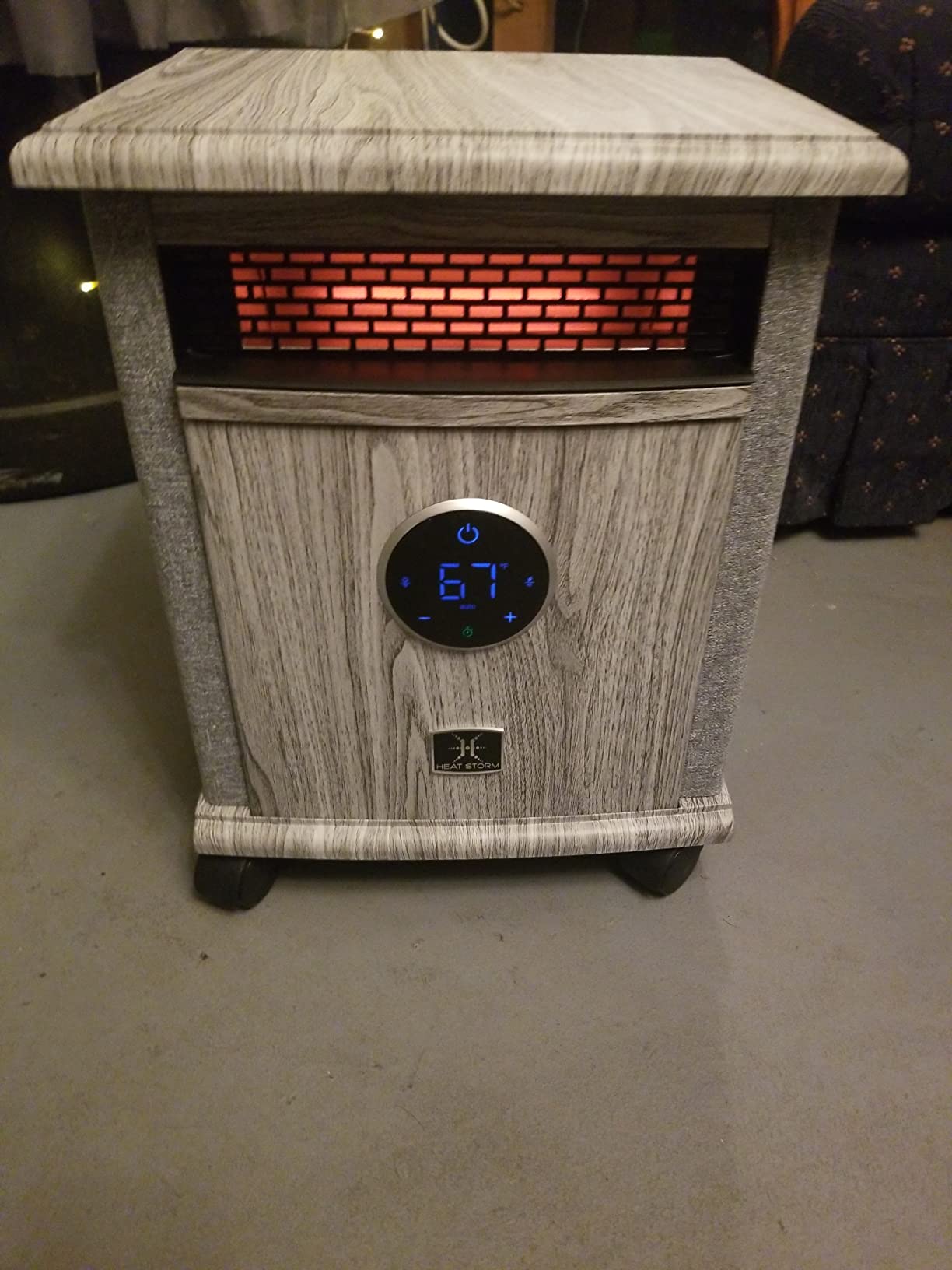
This cabinet heater is the most honest small-room unit in the group, and that is exactly what makes it useful in a large home. It states 300 square feet of primary coverage and 1,000 square feet of supplemental, and the primary figure is the number that matters when you are sizing it. In a 300 square foot bedroom or den with normal ceilings it is a genuinely good fit.
It runs 1,500 watts and 5,200 BTU on 120 volts at 12.5 amps, using infrared quartz elements behind a patented heat exchanger. Owners like the LED display that shows the ambient room temperature, because you can see at a glance whether the thermostat is holding or the room is losing heat faster than the heater can replace it.
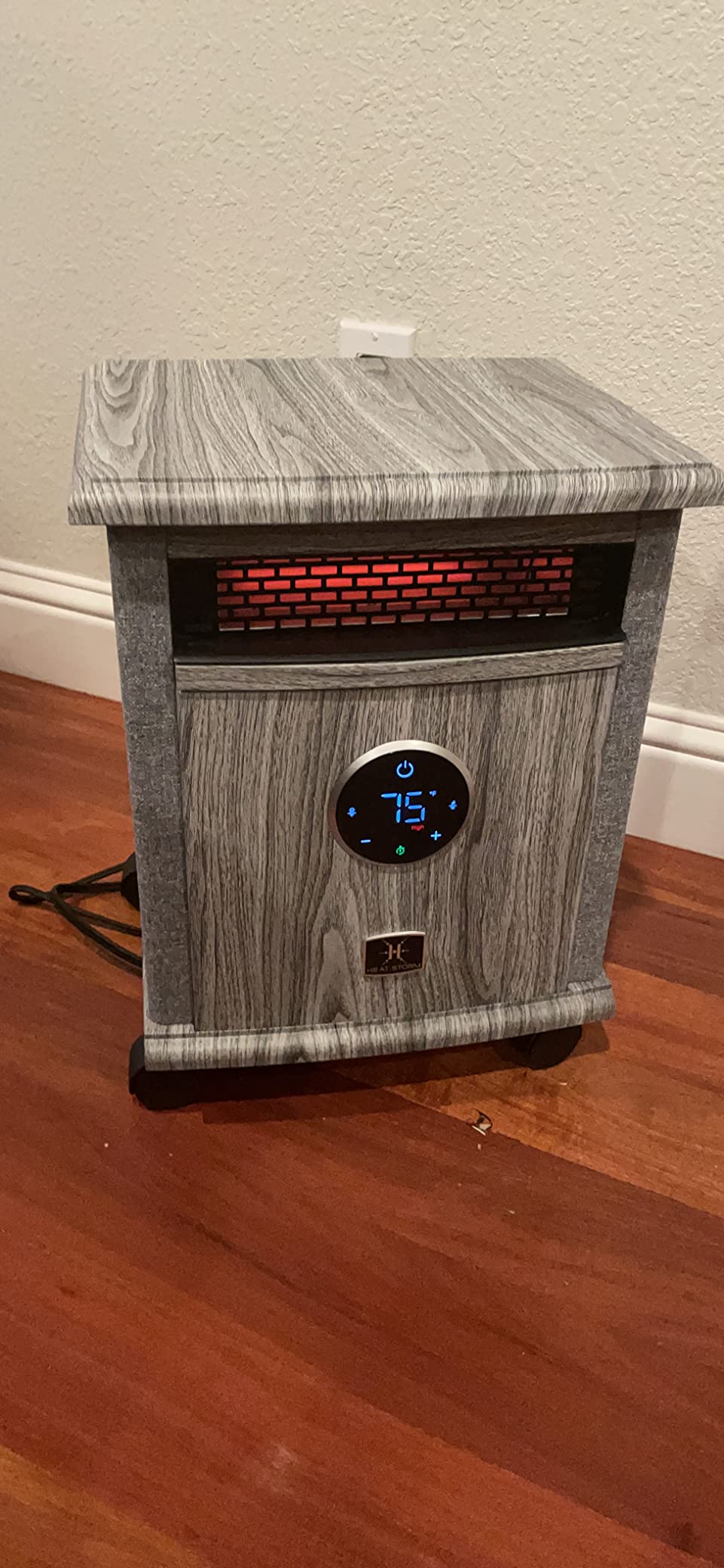
The heat exchanger with HMS technology is worth understanding. It passes room air across the element to distribute warmth while leaving natural humidity in place, so the room does not dry out the way a purely forced-air unit does. That makes it a reasonable pick for a bedroom where air quality matters more than raw throw distance.
At 4.4 stars from 977 reviews with 74 percent five star, the feedback is steady and positive on the thermostat readout, the quiet infrared heat and the small footprint. Two negatives stand out: casters are an extra purchase, and the 300 square foot primary coverage is smaller than most of the large-room picks here.
Check that your room is close to 300 square feet
This is a zone heater, not a large-room heater, despite the wattage. If your room is 400 square feet or larger, buy the CopperPLUS or the DR-998 instead, and consider this unit for the bedroom or the den within a large floor plan.
It pairs well with a second heater on another circuit in an open-plan space. Two 300 square foot zone heaters aimed at two seating areas outperform one 1,500 watt unit trying to cover the whole volume.
Check whether the eco mode is enough on its own
The energy mode drops output from 1,500 to 750 watts, which halves the draw and roughly halves your cost per hour. In a mild winter or a well-insulated room, 750 watts is often all you need once the initial warm-up is done.
Plan for the thermostat to cycle. A 750 watt mode in a 300 square foot room on a cold day will hold, not heat, so it works as a maintenance setting rather than a recovery setting.
6. Duraflame 3D Infrared Quartz Fireplace Stove – Best for a Fireplace Look
duraflame® 3D Infrared Quartz Electric Fireplace Stove Heater, Black
1500W / 5200 BTU infrared quartz
1000 sq ft supplemental coverage
Vent free with 3D flame at 5 brightness levels
Pros
- Patent-pending 3D flame effect with 5 brightness levels
- Flame runs with or without the heat for year-round use
- No venting or gas line needed
- Assembles by attaching legs and plugging in
Cons
- Ratings sit at 4.2 with a meaningful share of 1-star feedback
- Decorative design with supplemental heat output only
- Heavier than slim tower heaters at 15.4 pounds
If the reason you want an infrared heater is partly aesthetic, this is the unit. It is a freestanding electric fireplace stove from Twin-Star International with a 3D flame effect, arched detailing and a picture window, and it delivers 1,500 watts and 5,200 BTU of infrared quartz heat in the same box. The flame effect is the point: five brightness levels, and it runs whether or not the heat is on.
It is vent-free and needs no gas line or chimney. Assembly is genuinely one job, attaching the legs and plugging it in, which makes it far less of a commitment than installing anything real. The infrared quartz elements retain natural humidity rather than drying the room, and the adjustable thermostat handles the rest.
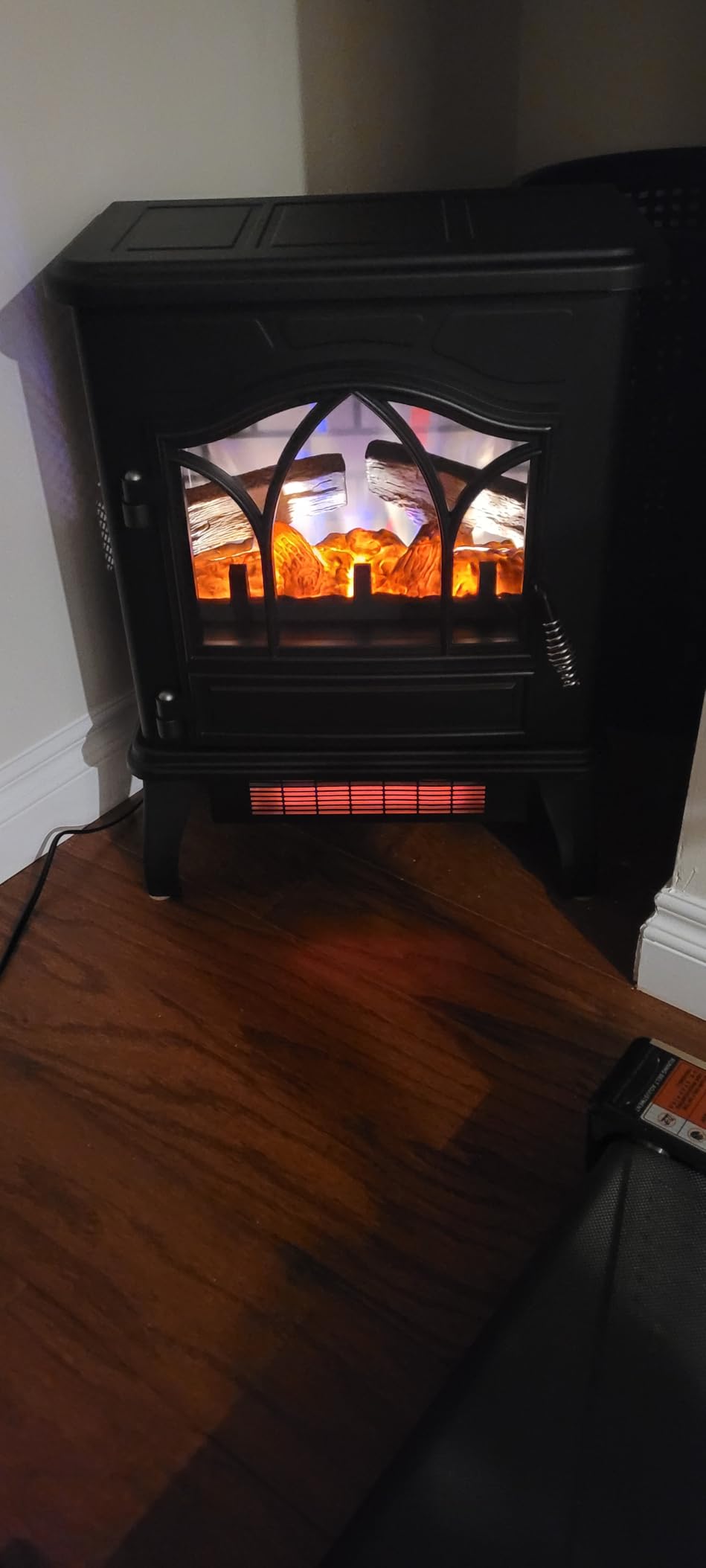
At 4.2 stars from 761 reviews, this is one of the least settled ratings in our group, and the distribution explains why: about 7 percent one star and 7 percent two star, mostly about fan noise and heat output falling short. Supplemental zone heating up to 1,000 square feet is the manufacturer’s claim, and in practice this is a room-comfort heater for a mid-sized living room rather than a coverage champion.
It weighs 15.4 pounds and stands 23 inches tall, so it is not a slim tower, but it is lighter than the other fireplace in this list. If you are choosing on appearance, this is the more convincing fireplace at the lower weight. If you are choosing on heat per pound, look at the tower units.
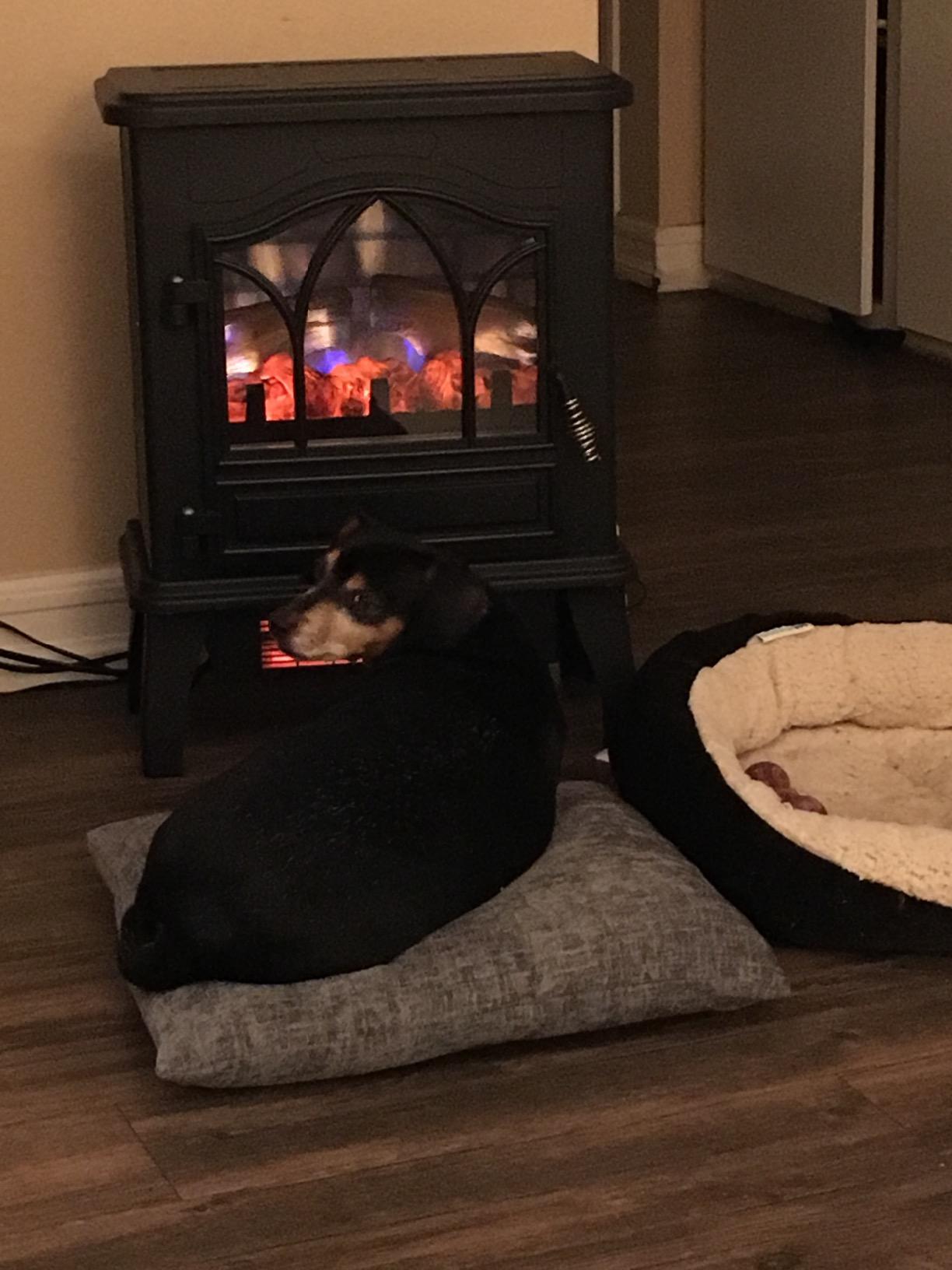
Check that the flame effect is what you actually want
There is a real reason to own a decorative stove: rooms where you want warmth and ambience together, with no fireplace already installed. For those rooms this unit earns its place on aesthetics alone, and the flame runs year-round with the heat off.
If the flame is a nice-to-have and warmth is the job, a tower or cabinet unit gives you more heat per dollar and a smaller footprint. Judge this one on the room it will look good in, not on its BTU.
Check the fan noise expectation in a quiet room
A visible share of the negative reviews mentions fan noise, which matters most in a bedroom or a study at night. It is not a silent unit and the quartz heat does come with airflow.
If quietness is your top priority, the Ballu mica panel later in this list runs bladeless, and the WEWARM measures 34dB. Those are the picks for a sleeping room.
7. LifePlus 1500W Quartz Cabinet Heater – Best for Basements and Bedrooms
Lifeplus 1500W Electric Infrared Space Heater, Quartz Heater for Indoor Use, Tip-Over & Overheat Protection with Remote Control, 3 Heat Settings, 12H Timer for Large Room Basement Heating
1500W quartz cabinet heater
LED display with adjustable thermostat
12-hour timer, child lock and remote
Pros
- Highest average rating in the group at 4.6 across 333 reviews
- LED digital screen with a thermostat that holds set temperature
- Three heat settings including an eco mode
- 12-hour timer
- remote and child lock
- Overheat shutoff and tip-over switch
Cons
- Faint plastic odour for the first one or two uses
- Remote batteries are not included
- Thermostat range is listed ambiguously at 40F minimum and maximum
The LifePlus cabinet is the highest-rated unit in this group at 4.6 out of 5, with 79 percent five star across 333 reviews. Owners consistently describe fast room warm-up, quiet operation, and a thermostat that actually holds the set temperature rather than overshooting, in bedrooms, dens and basements of roughly 200 to 300 square feet.
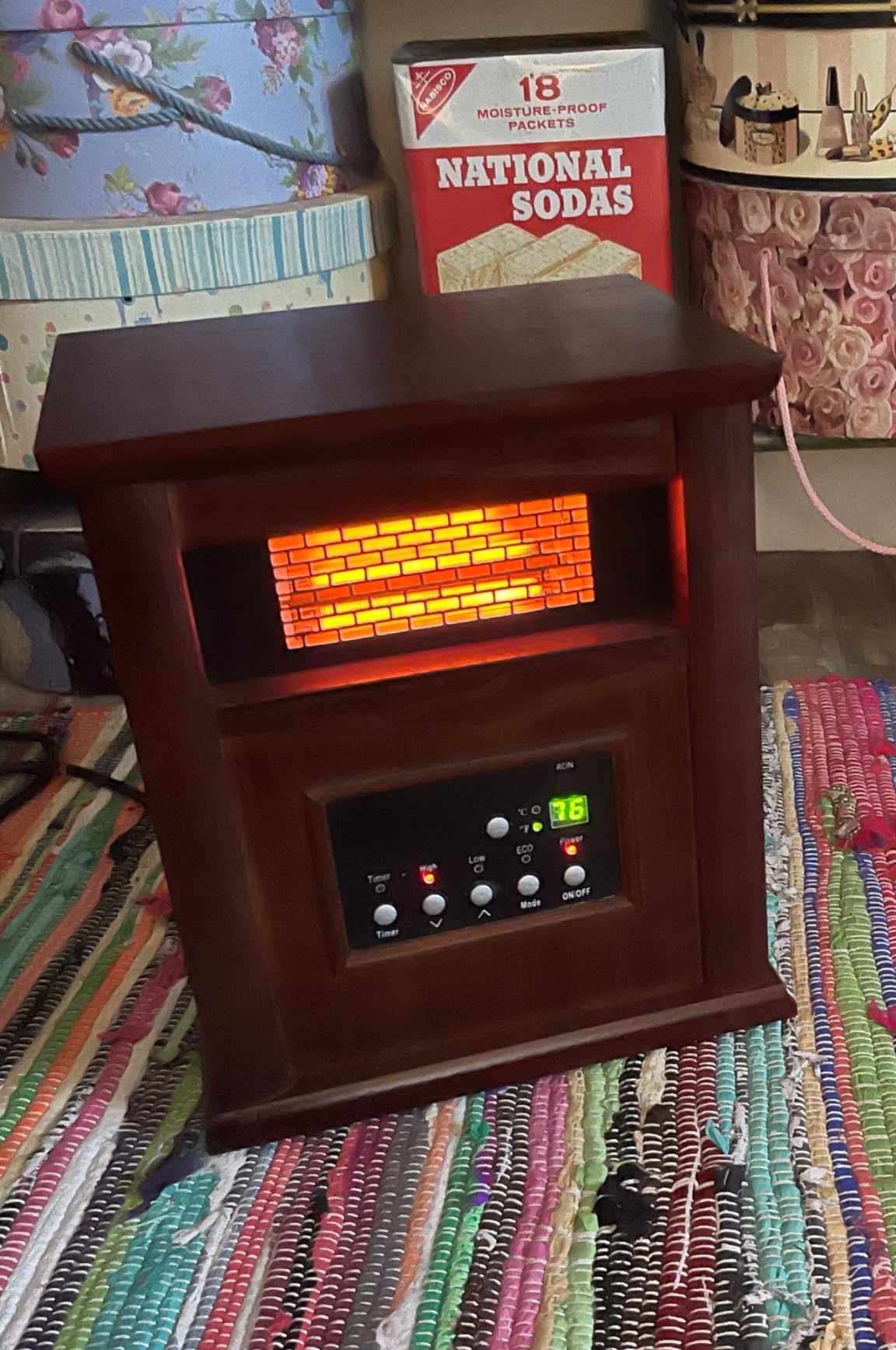
That last detail is why this one edges out its rating peers. A heater that overshoots by five degrees every cycle makes a room feel stuffy and wastes electricity, and the LED display on the front lets you watch it happen. It runs 1,500 watts in high, low and eco modes with a remote, a 1-12 hour programmable timer and a child lock, at 16.3 pounds in a walnut-brown cabinet.
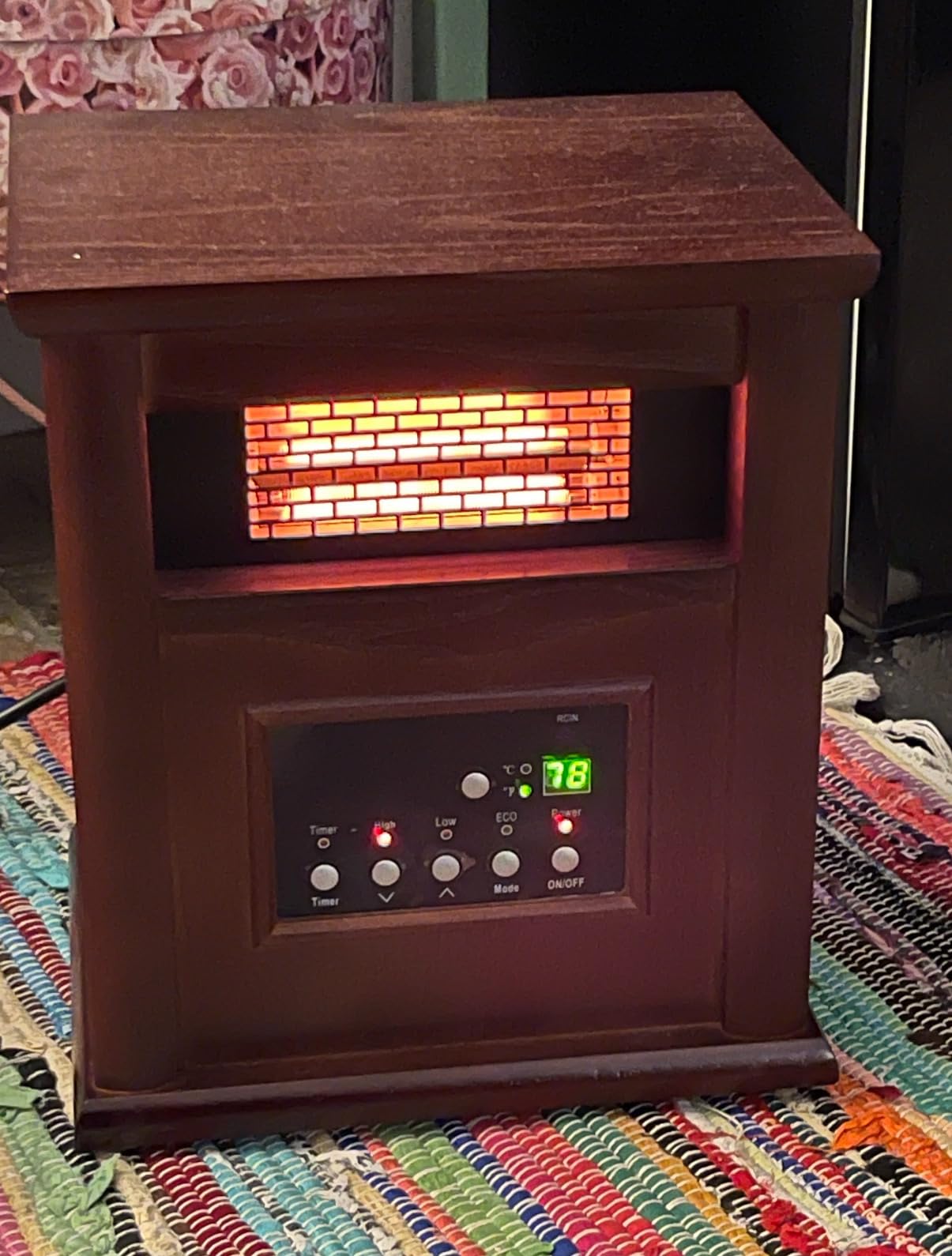
Basement and bedroom use is where it fits. The child lock matters in a kid’s room, the timer lets it shut itself off overnight, and the walnut cabinet is designed to look like furniture rather than an appliance. The exterior stays cool to the touch, which is a real advantage in a small room where someone could brush past it.
There are four honest negatives in the data. A faint plastic odour can appear during the first one or two runs and fades, and the two AAA batteries for the remote are not included. The manufacturer requires 3 feet of clearance on all sides, which is more space than a slim tower needs. And the thermostat specification is listed ambiguously at a 40 degree minimum and maximum, so the usable range is narrower than the headline suggests.
Check the 3 foot clearance before you pick the spot
That clearance rule is the one to respect. Three feet on all sides is a large footprint for a 16 pound cabinet, and in a small bedroom it can rule out the space right next to the bed where you would ideally put it.
Measure first. If you cannot give it three feet in every direction, the slimmer towers in this guide allow more flexible placement and would serve a small room better.
Check the thermostat range before you rely on the schedule
Because the specification lists 40 degrees as both the minimum and the maximum, treat the effective range as narrower than the display suggests. If you need to hold a specific temperature, set it and verify after an hour rather than trusting the range.
For most bedroom use this is a non-issue, since you are setting one comfortable sleeping temperature and leaving it there. It only matters if you need precise control across a wide band.
8. WEWARM 1500W Infrared Heater – Most Versatile with Six Quartz Elements
Space Heater 1500W Electric Infrared Heater for Indoor Use WEWARM
1500W with 6 quartz elements
34dB operating noise
6.4 pounds, 9.8 by 10 by 12.6 inch cabinet
Pros
- A complete 1500W cabinet at an entry-level cost
- Very light at 6.4 pounds and easy to move room to room
- Whisper quiet at 34dB
- suitable for sleeping rooms and nurseries
- 1000W low setting and eco mode with a 50-90F thermostat
- TUV certified with V-0 flame-retardant materials and a cool-touch exterior
Cons
- Coverage is limited to about 300 sq ft despite the 1500W rating
- At least one owner reports the unit shorting out after a short period of use
The WEWARM is the budget answer to this question, and it is not a compromise on the things that matter. Six quartz elements deliver the full 1,500 watts at 12.5 amps on 120 volts, with three settings at 1,000 watts, 1,500 watts and an eco mode, plus a thermostat from 50 to 90 degrees, a 12-hour auto shutoff timer and a remote with an LED indicator.
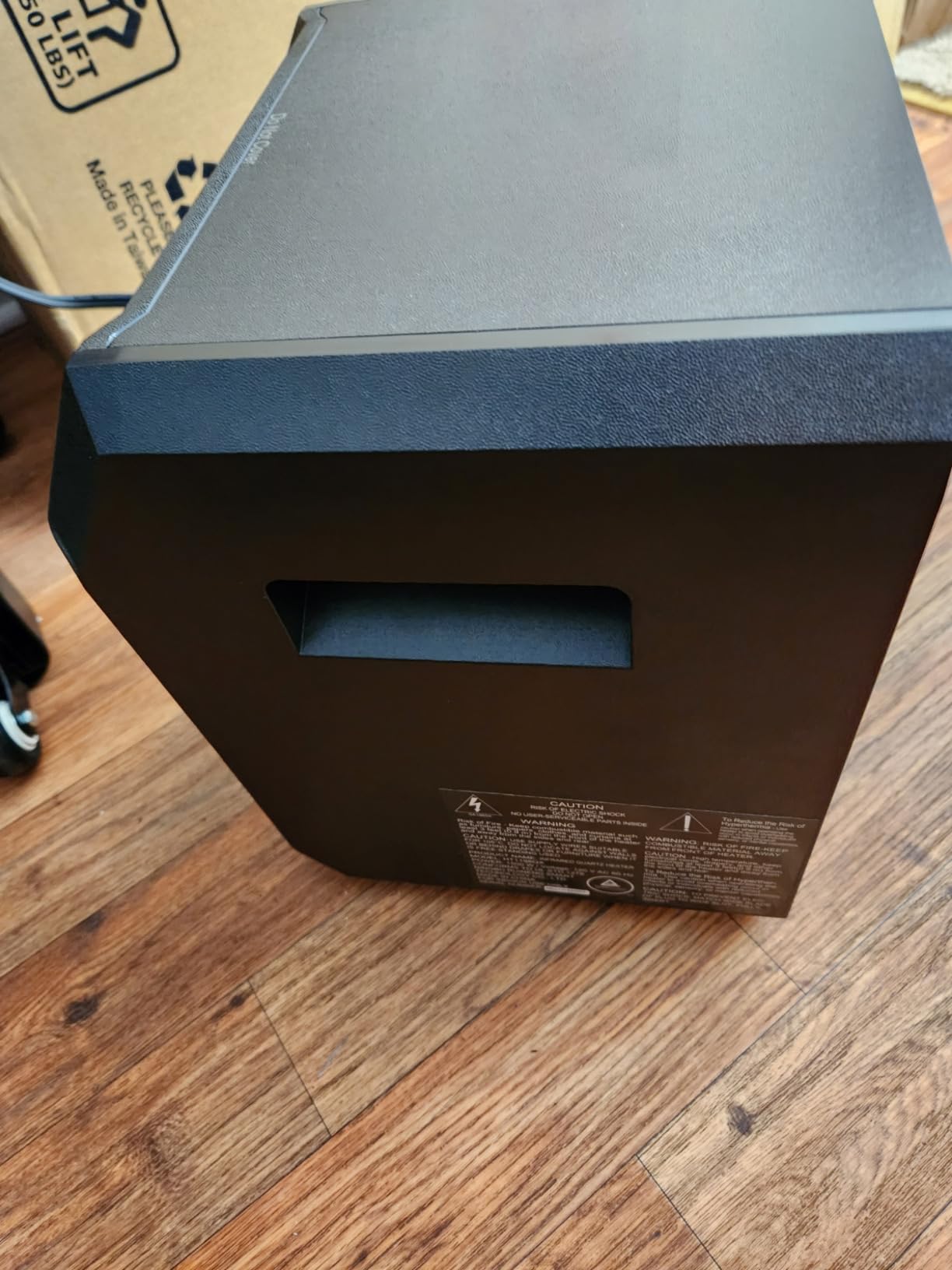
What separates it from a generic cabinet is the certification and the acoustics. It is TUV certified and uses V-0 flame-retardant materials, with overheat protection, tip-over protection, a child lock and a cool-touch exterior. It measures 34dB in operation, the quietest figure in this group, and one reviewer uses theirs in a sleeping room and a nursery.
At 4.5 stars from 330 reviews with 78 percent five star, the recurring praise is for fast heat-up, very low noise, a light 6.4 pound weight and no odour. Owners also report using one in a well house to stop pipes freezing, which tells you something about how much headroom the 1,000 watt low setting gives you.
Two limits are clear. Coverage is about 300 square feet, so plan on this being a bedroom, den or basement room unit rather than a large living room solution. And at least one buyer reports the unit shorting out after a short period of use, so durability is the only recurring concern and the reason this is a budget pick rather than an overall pick.
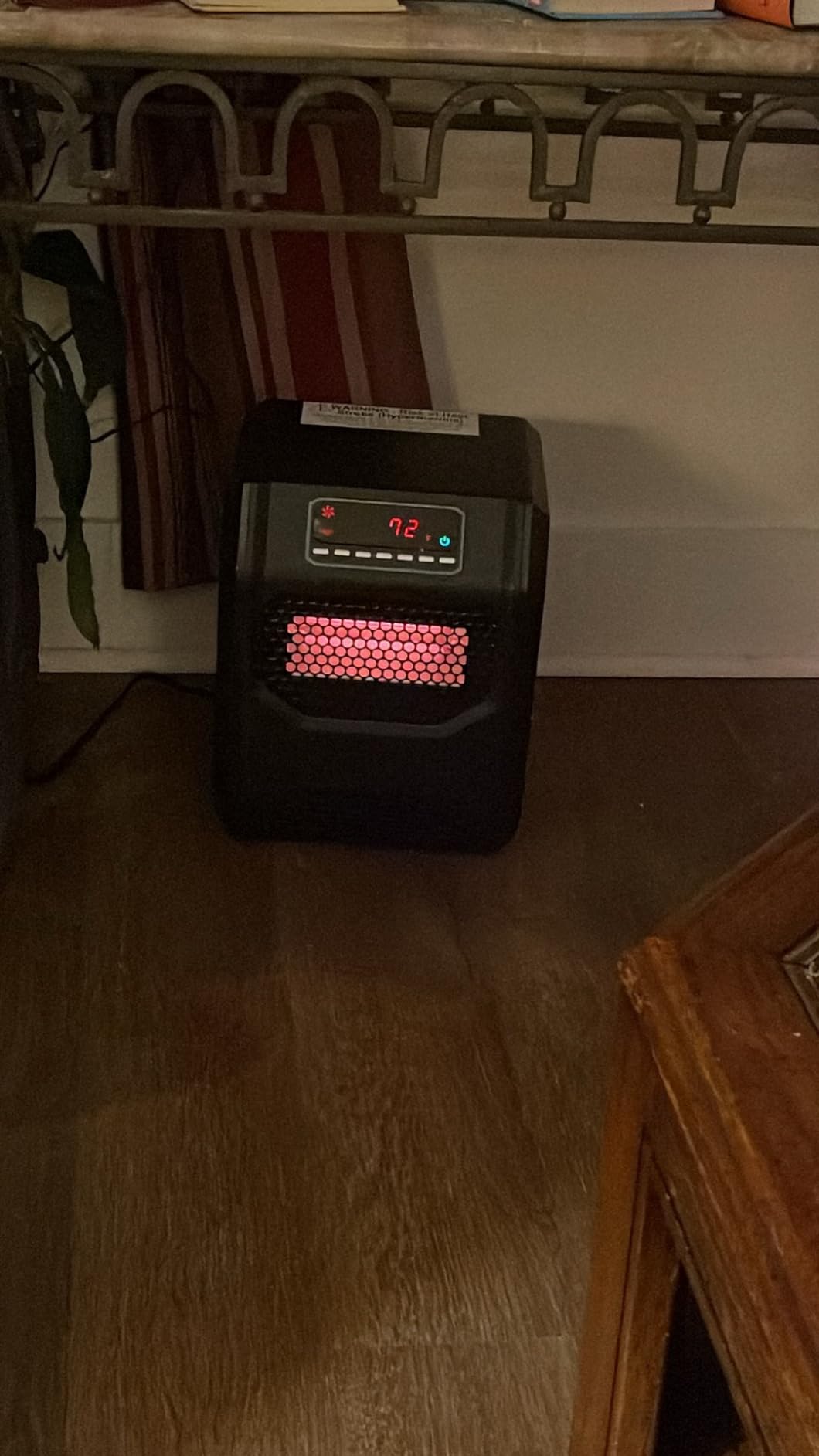
Check the 300 square foot ceiling before you buy for a big room
This is the unit people expect to solve a large living room with, and it will not do that alone. Rated at 300 square feet, it is a bedroom and den heater that also happens to be one of the lighter 1,500 watt cabinets here.
For a genuinely large room, look at the DR-998 or the CopperPLUS. For a large home with a small cold room in it, this unit at 6.4 pounds is a much more sensible purchase than moving a 24 pound cabinet down the hall.
Check the warranty and parts story
No warranty length is listed on this product, and it is a quartz design, which means the tubes are consumables. Forum discussion about infrared quartz units centres on exactly this: elements burn out eventually and replacements are not always easy to source for lesser-known brands.
If you are buying for a room you will heat every winter for a decade, choose a model with a stated warranty and a serviceable element. If you are heating a room occasionally, the low entry cost is a reasonable trade.
9. Duraflame Oscillating Tower Heater – Best for Narrow Spaces
duraflame Electric Tower Heater, Oscillating Tower and Space Heater for Office or Large Room up to 1,000 Square Feet
5200 BTU infrared quartz in an 8 inch wide tower
30-minute to 9-hour timer plus sleep timer
Patented Safer Plug with plug temperature monitoring
Pros
- Slim 8 inch wide footprint that fits where cabinets cannot
- Wood veneer cabinet with a curved front looks like furniture
- Oscillating or stationary heat modes
- Programmable timer from 30 minutes to 9 hours plus a sleep timer
- Resumes the last setting after a power outage
Cons
- Remote only turns the unit on and off
- Heavy at 22.9 pounds for a tower
- Some buyers find it heats less area than the 1000 sq ft claim
Shape is the entire reason to buy this one. At 8 inches wide and 22.8 inches tall, it fits beside a sofa, in the gap between a cabinet and a wall, or along a walkway where a 13 inch cabinet will not go. It still delivers 5,200 BTU of infrared quartz heat, rated for up to 1,000 square feet in the listing, and it oscillates or runs stationary.
The timer is genuinely well specified: programmable from 30 minutes to 9 hours, with a separate sleep timer, all on 120 volts. The patented Safer Plug technology monitors the temperature of the plug itself and shuts the unit down before overheating, which is a real safeguard in a room where the heater runs unattended for hours.
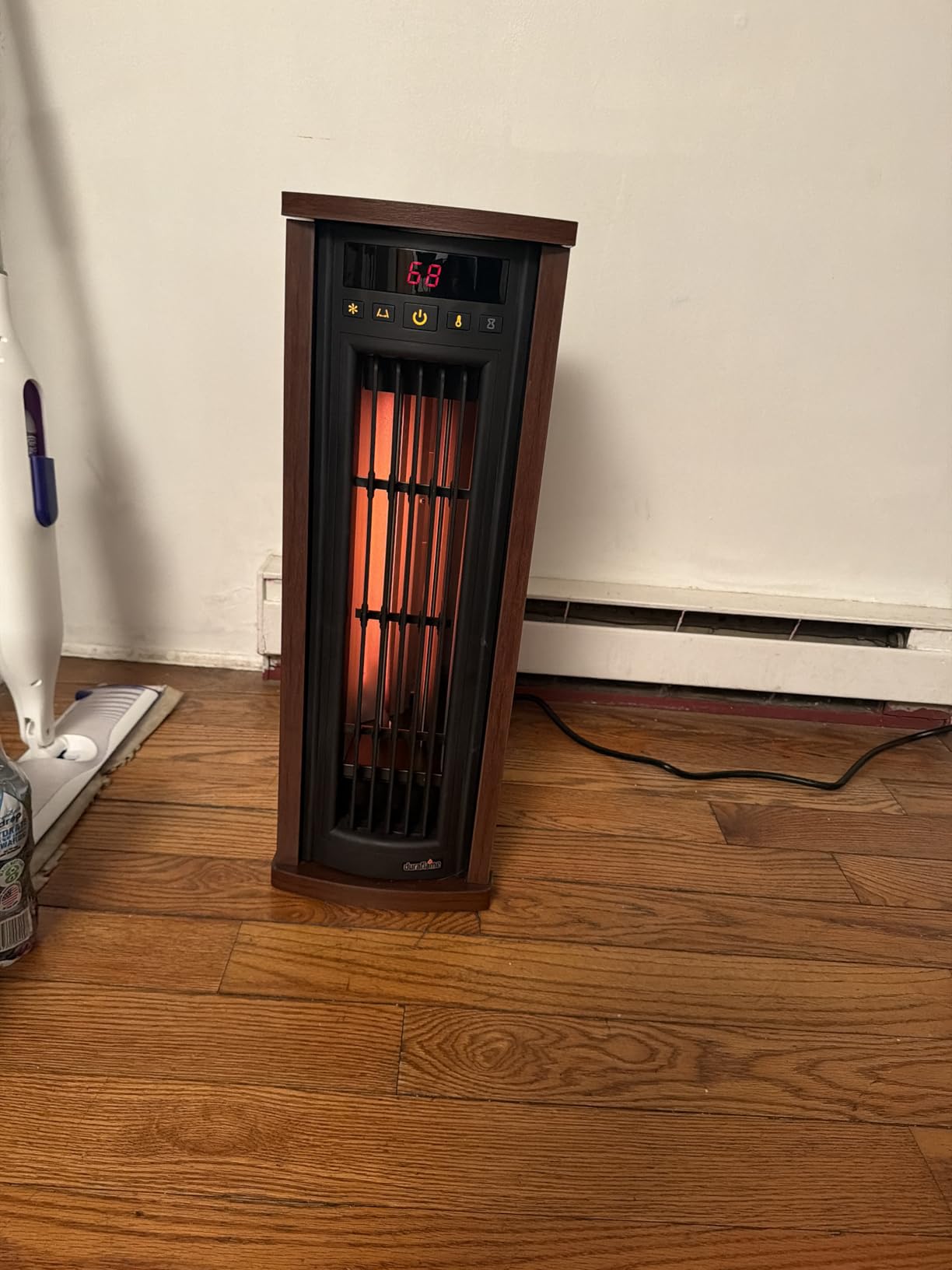
Reviewers often mention owning these for years and cleaning the filter to extend its life, which is the durability signal the budget units in this list lack. They also single out the quiet, odour-free operation that does not dry the air, and the memory function that restores your last setting after a power loss.
At 4.4 stars from 297 reviews, the negatives are consistent: the remote only turns the unit on and off, so you change the temperature on the unit itself. It weighs 22.9 pounds, which is heavy for a tower. And a number of owners say it heats a smaller area than the 1,000 square feet claim, which is the honest expectation to set.
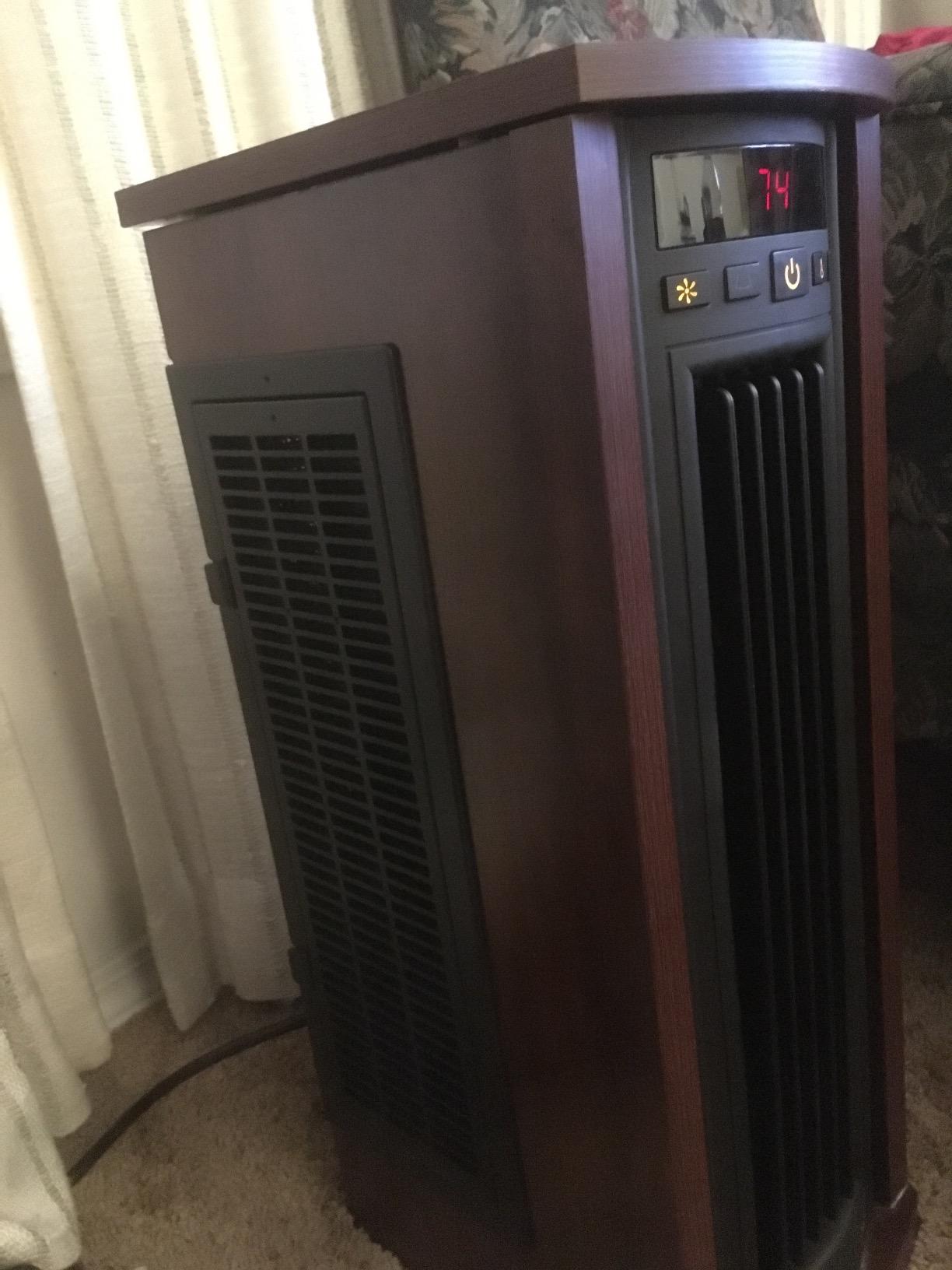
Check that a narrow footprint is worth more to you than fine control
If your room has a good power outlet but no floor space, this tower solves a problem the rest of the list cannot. A slim footprint against a wall is worth a lot in a furnished living room.
If you have room for a cabinet and want thermostat precision, the DR-998 gives you both the space and the controls. This is a layout-driven pick, not a feature-driven one.
Check the filter habit, because it determines lifespan
Several owners extend the life of this unit by cleaning the filter. That is not a gimmick, and it is the advice the long-term owners consistently give.
Set a monthly reminder during the heating season rather than waiting for a performance drop. A dusty filter restricts airflow, the unit runs hotter, and the overheat cutoff becomes more likely to trip.
10. Electactic 24.3 Inch Infrared Fireplace Stove – Best for Flame Customization
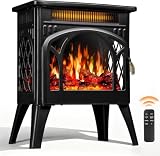
Electactic 1500W Infrared Electric Fireplace Stove 24.3″ H w/ 2 Heat Modes
1500W / 5100 BTU infrared heating
450 sq ft coverage
4 flame colors, 5 brightness levels, 5 flicker speeds
Pros
- Warms in about 3 seconds with 500W and 1500W options
- Most customisable flame in this group
- Flame effect runs independently of the heat
- Adjustable thermostat from 50F to 99F with an 8-hour timer
- Remote control for every setting
Cons
- 450 sq ft coverage is the smallest of the fireplaces here
- Heaviest unit in the group at 25.4 pounds
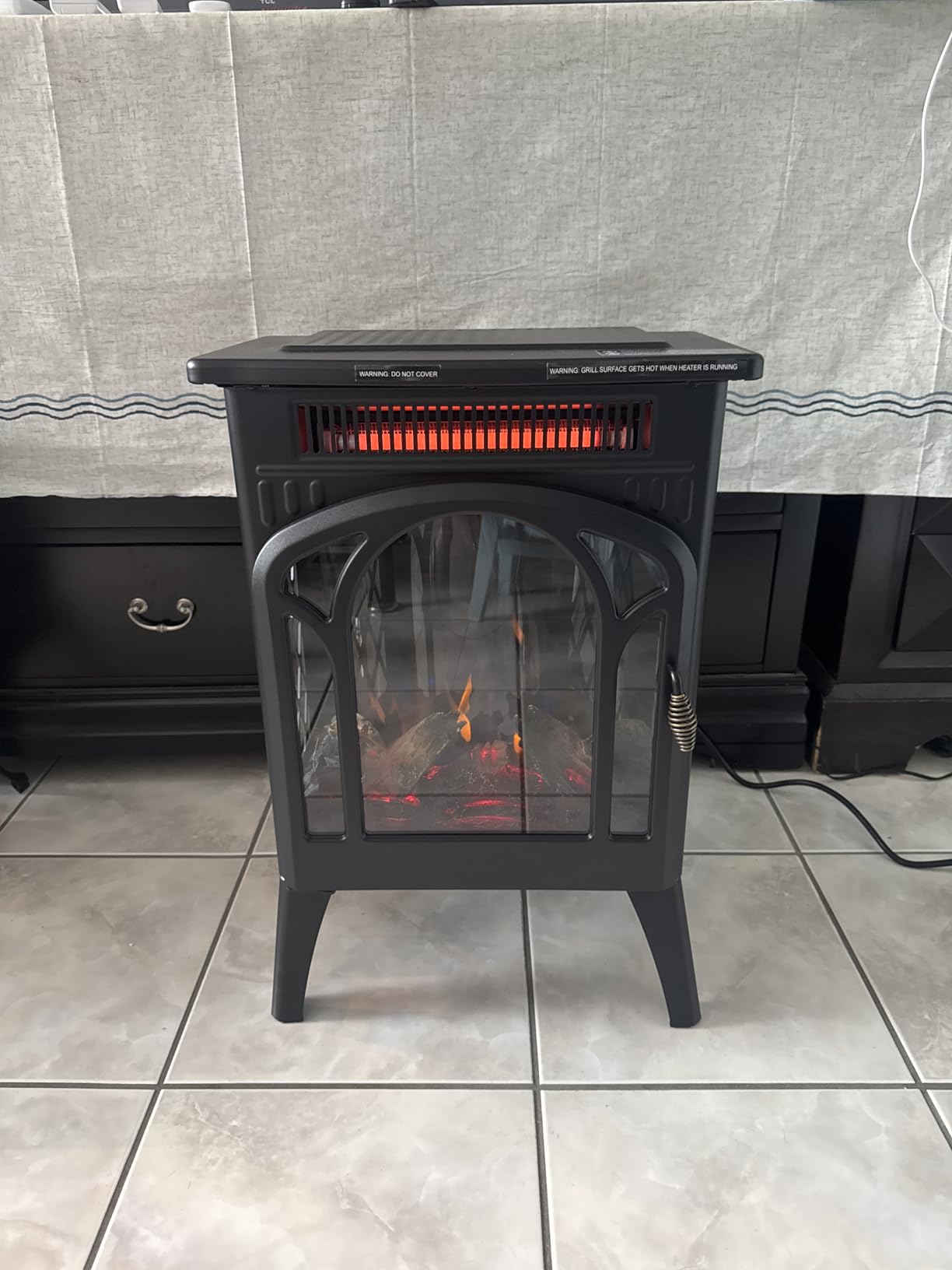
- Vintage decorative styling will not suit every room
The Electactic stove wins on flame customisation and nothing else does. It gives you 4 flame colors, 5 brightness levels and 5 flicker speeds, with the effect running independently of the heat. If you want an electric fireplace you can match to a season or a room, no other unit in this guide offers that level of control.
Heating is 1,500 watts and 5,100 BTU with dual power at 500 and 1,500 watts, rated for 450 square feet. Owners report the room warming in about three seconds on the lower setting, and the thermostat runs from 50 to 99 degrees with an 8-hour auto timer, all controlled by remote.
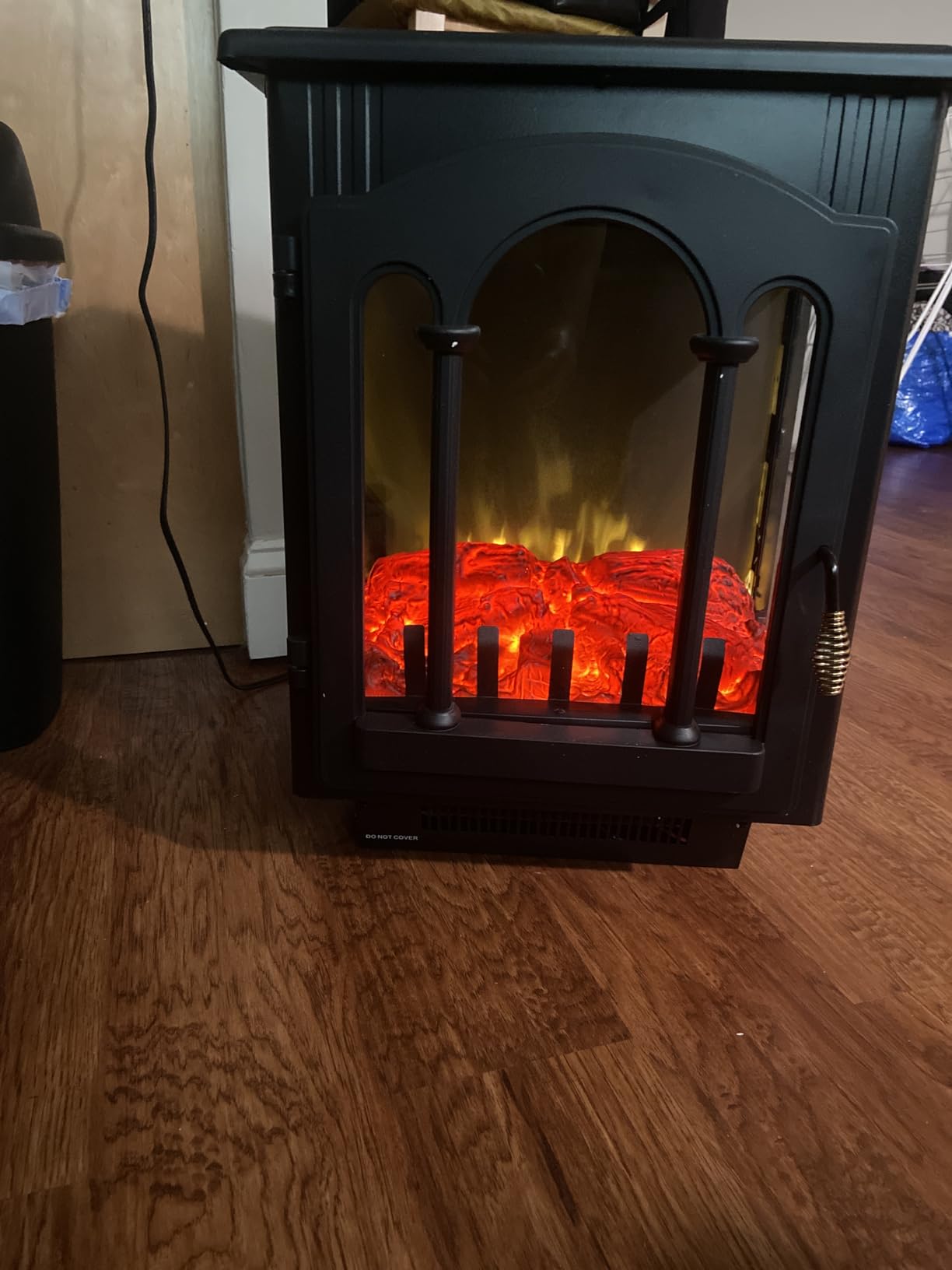
At 4.4 stars from 280 reviews with 73 percent five star, feedback centres on the flame options and the remote-controlled thermostat and timer, used in living rooms, bedrooms and basements. There is a built-in overheat shutdown and the installation is vent-free and freestanding, so no chimney work is involved.
The 450 square foot rating is the smallest in the fireplace category here, and at 25.4 pounds it is the heaviest unit in the entire group. The vintage styling is a genuine preference question: it will look right in a traditional room and out of place in a modern one. It also comes in 20.5 and 22.8 inch heights if the 24.3 inch version is too imposing.
Check the height against your mantel or TV wall
At 24.3 inches tall and 16.76 inches wide, this is a substantial piece of furniture. If you are placing it under a television or in an existing fireplace opening, measure both before you buy, and consider the 20.5 inch version if the ceiling height is tight.
The weight matters for the same reason. At 25.4 pounds it is the heaviest unit in the group, so plan the move and get help carrying it up stairs.
Check whether 450 square feet is enough for your room
Treat 450 square feet as the honest number here. That is a good-sized living room or a generous bedroom, and it is below the 1,000 square foot claims the other fireplaces in this list make.
Buyers consistently size this as the qualifier, so if your room is larger, either pick a larger-rated unit or run two heaters on separate circuits with the flame in one of them.
11. Ballu Mica Far-Infrared Panel Heater – Best for Smart Home Control
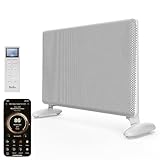
Ballu Mica Infrared Panel Space Heater for Large Room,Smart Quiet Heater with Programmable Thermostat,WiFi App Control,Inverter Energy Efficient for Indoor Use,Compatible with Alexa,White
1500W mica far-infrared panel
Silent bladeless operation with 10-second heat-up
40-86F thermostat, Wi-Fi app and Alexa
Pros
- Completely silent with no fan
- ideal for sleeping and working
- 180 degree panoramic heating with a 10-second warm-up
- Wi-Fi app with scheduling plus Alexa control
- Wall-mountable or freestanding
- both included
- 2-year warranty
Cons
- Heat falls off sharply a few feet past the unit
- One owner measured flooring beneath it reaching 96-100F
- Ratings sit at 4.2 with 9 percent one-star feedback
- Only 250 sq ft of primary coverage
The Ballu is the only truly silent heater in this group. There is no fan at all, so nothing to hum while you sleep or sit on a call, and buyers who need quiet rate it highly. It uses a mica far-infrared panel rather than quartz tubes, which is why it reaches operating temperature in about ten seconds instead of the minute or two a quartz unit needs.
Smart control is the other differentiator. Wi-Fi app control with scheduling, Alexa compatibility, and an LED display remote with a built-in temperature sensor. Inverter technology and smart algorithms that learn usage patterns back a claimed energy saving of up to 50 percent, with an eco mode that steps down to 750 watts. The thermostat range is 40 to 86 degrees, and the warranty is 2 years.
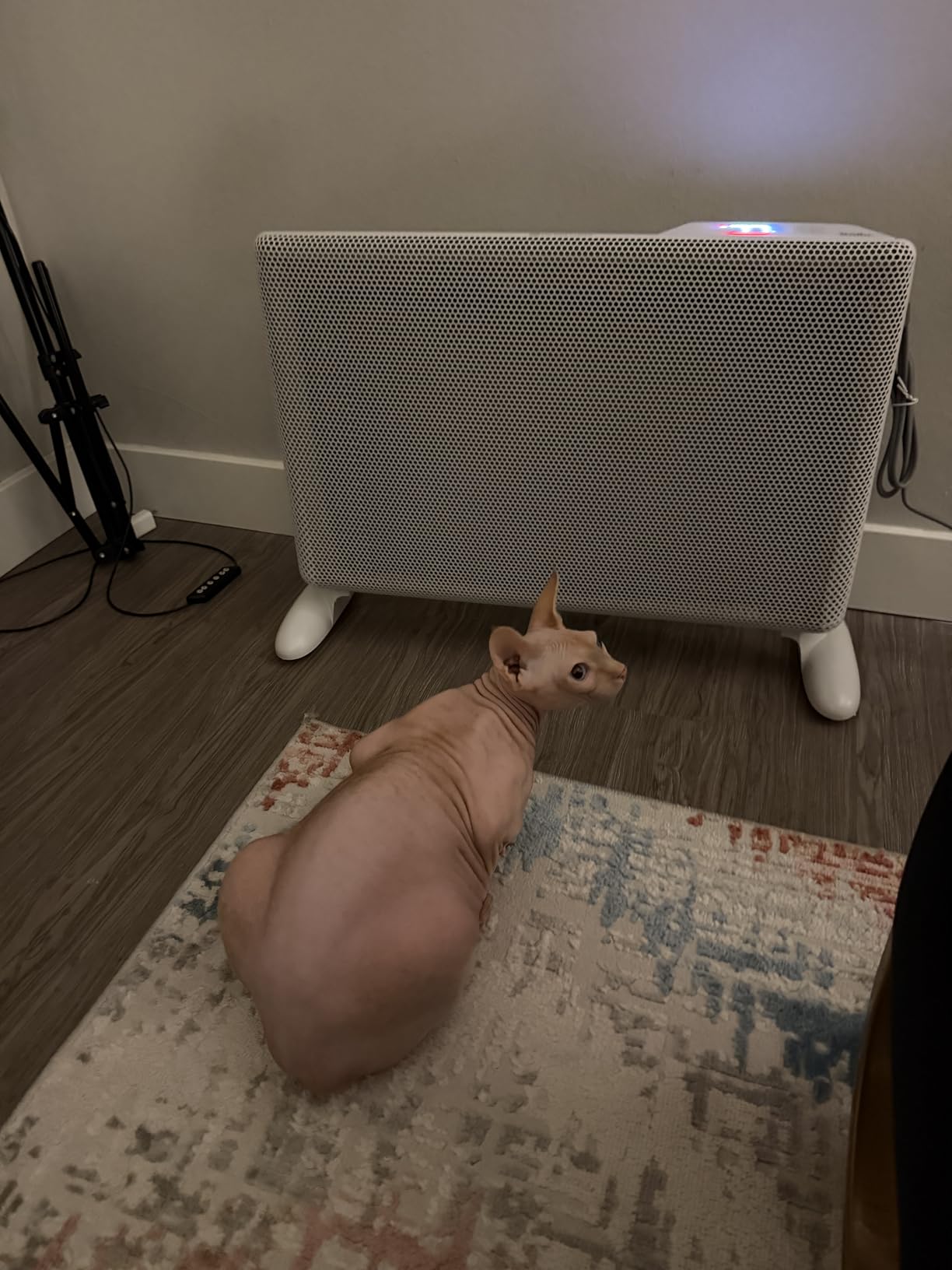
At 4.2 stars from 147 reviews, this is one of the lower-rated units here, with 9 percent one star. The complaints are consistent and worth taking seriously. Far-infrared heat is directional, so warmth drops off sharply a few feet past the panel. One owner measured flooring directly beneath the unit reaching 96 to 100 degrees, which is a real risk for LVP and laminate flooring. And the 250 square foot primary coverage is the lowest rated for its wattage.
It also ships with casters and wall-mount hardware, so you can put it where a socket is or where the panel does the most work. That flexibility is what makes it work as a supplementary heat source in a large open-plan space even though it cannot handle one alone.
Check your flooring before you run it beneath a panel
Sustained heat directly beneath the unit reached 96 to 100 degrees in one owner’s measurement, which is enough to damage LVP over a long winter. If you have engineered wood or LVP, wall-mount it away from the floor rather than freestanding it.
Leave clearance below the panel and avoid running it against a thin rug. If you are unsure what your flooring tolerates, the quartz cabinets in this list throw their heat upward and away from the floor surface and are a safer default.
Check whether silence is worth the directional heat
Total silence is a genuine benefit in a bedroom, a study or a recording space, and no other unit here offers it. The question is whether the narrow throw distance is acceptable in your layout.
Sure, that wide angle is broad, not long. Sitting six feet away in a cold room, you will feel less than a quartz tower aimed at you. Use it as a second layer of warmth behind your primary heater, not as the only one.
12. Comfort Zone Quartz Radiant Tower – Best for Even Heat Dispersion
COMFORT ZONE Space Heaters for Indoor Use, Portable Electric Heater, Adjustable Thermostat, Infrared Heat, Quartz Tower Space Heater with 2 Heat Settings, Bedroom Heater, Black
Three selectable horizontal quartz tubes
Fan-forced dispersion with a 30 percent energy save mode
ETL approved at 6.5 pounds
Pros
- Three quartz tubes you can select individually for gradual warming
- Fan-forced dispersion spreads heat evenly instead of in a narrow beam
- Energy Save mode cuts consumption by 30 percent
- ETL approved with overheat protection and a tip-over switch
- Top-mounted knobs and a moulded cool-to-touch handle
Cons
- No remote control or timer
- Smallest heating capacity here
- at least two buyers received a unit with a miswired switch
- Plastic cabinet flagged by one reviewer
The Comfort Zone tower is the simplest answer to uneven heat. It has three horizontal radiant quartz tubes you can activate individually, which means you get one, two or three elements of warmth instead of an all-or-nothing blast. That gradual approach is why owners describe it as comfortable rather than merely warm.
It weighs 6.5 pounds and stands 23 inches tall, making it one of the easiest units here to reposition. The fan-forced system disperses heat evenly through the room rather than in the narrow beam a single-tube quartz heater produces, and the Energy Save technology reduces power consumption by 30 percent. It is ETL approved with overheat protection, a tip-over safety switch and a stay-cool exterior.
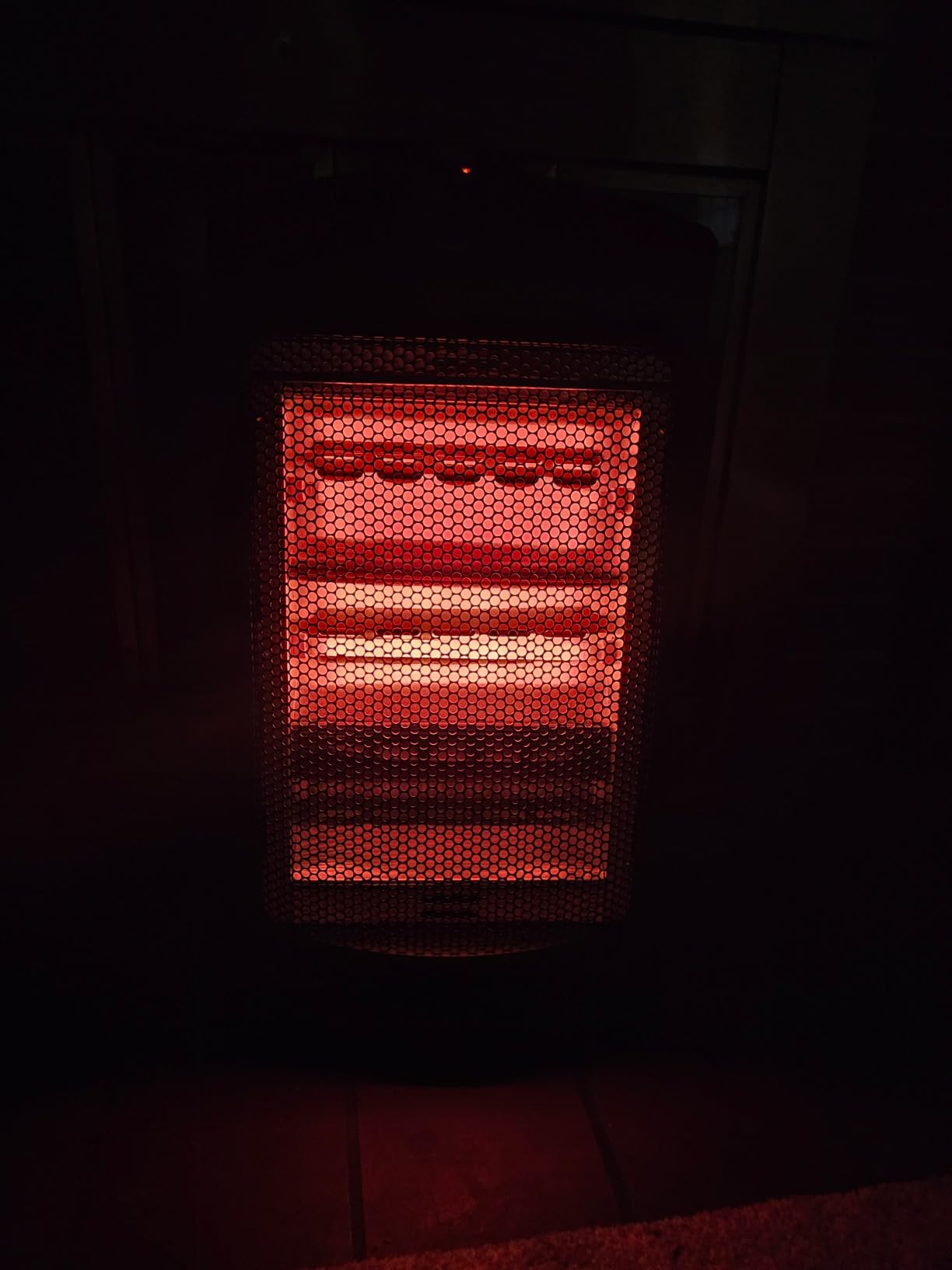
At 4.4 stars from 161 reviews with 74 percent five star, the feedback is warm on instant heat, three selectable power levels, quiet operation, and even current draw that does not trip breakers. The controls are top-mounted knobs, with a moulded ergonomic carry handle for moving it between rooms. Buyers also note that the same three-element design in this configuration is made under other brands, which is worth knowing if you ever compare listings.
The negatives are real. There is no remote and no timer, so it runs until you turn it off, and it has the smallest heating capacity in this group. It suits a single room or an apartment rather than a large space. At least two buyers received units with a miswired low, medium and high switch, and one reviewer flagged the plastic cabinet as a safety concern, so inspect the unit on arrival.
Check the switch on arrival, because the failure is documented
Two buyers specifically reported a miswired low, medium and high switch. That is an easy ten-second test: run each setting and confirm you get a corresponding increase in fan speed and heat, not the same output three times.
If the switch does not behave, the ETL listing and the tip-over and overheat protections are not enough to make a unit with a wiring fault worth keeping. Return it.
Check whether you will use manual controls
Without a remote or a timer, this unit needs someone to turn it on and off. In a room you are already in, that is fine. In a room you heat on a schedule, it is not, and you would be better served by a model with a programmable timer.
Buyers also value the even current draw, which is a genuine advantage in older homes or on shared circuits, but confirm the wattage against your panel before you plan to run two units.
How to Match Heater Size to Room Size
Match wattage to floor area at roughly 10 watts per square foot as a starting point, then adjust for ceiling height and insulation. A 1,000 square foot well-insulated room with 8 foot ceilings wants about 1,500 watts delivered to the occupied zone, which is exactly the ceiling of what any portable heater in this list provides. Anything bigger needs a second unit on a separate circuit, a wall-mounted model positioned to intercept cold, or a different heating approach entirely.
Here is how to read the coverage numbers rather than repeat them. A 1,500 watt heater running full output produces about 5,100 BTU per hour. Radiant heat warms surfaces and people, and the surfaces then warm the air around them, which is why an infrared unit can feel effective in a room where the thermostat still reads cool. The comfort you feel within 6 to 10 feet of the unit is the honest measure of what it does.
Ceiling height changes the math more than most people expect. A 10 foot vaulted ceiling in an open-plan space holds far more air volume than the same floor area at 8 feet, and radiant heat rises. If you have vaulted ceilings, place the heater low and near where people sit, and expect to supplement with a second unit rather than one taller one.
Insulation and drafts matter as much as floor area. A 1,000 square foot room with single-glazed windows on two walls loses heat faster than a 1,000 square foot room with new double glazing, and no portable heater closes that gap. Position the unit near the cold source, not in the centre of the room, and you will get noticeably more usable heat from the same wattage.
If you need a genuinely large space heated reliably, a portable infrared heater is the wrong instrument, which is what zone heating is for. For whole-space heat, talk to an HVAC contractor about a hardwired commercial-grade unit rather than stacking portable heaters on separate circuits.
Quartz, Carbon, Mica and PTC Elements Compared
Quartz is the most common element in this list and the one most buyers recognise. Element makers describe quartz as heating in roughly 30 to 60 seconds and glowing red-orange, which gives instant directional warmth. Its weakness is lifespan: forum discussion centres on elements burning out after a few seasons and replacement tubes being hard to source outside the major brands.
PTC ceramic, which is what the EdenPURE CopperPLUS and the DR-998 use alongside quartz, is a positive temperature coefficient brick that self-regulates as it heats. There is no bulb to replace, it runs cooler, and it lasts far longer, but its radiant output per watt is lower than a glowing quartz tube. A hybrid using both is the compromise most of the best-performing units in this guide make.
Mica far-infrared panels, like the Ballu, heat in about ten seconds and produce no visible glow. They are quiet, need no bulb replacement, and radiate over a wide angle rather than a narrow beam. Carbon fibre, used in the outdoor-rated Dr. Infrared unit in position three, is a thin panel element that is durable and well suited to outdoor and directional use.
When you compare units, ask two questions: how fast does it reach temperature, and what do I replace when it dies. A quartz unit that heats faster and a PTC unit that never needs a bulb are both reasonable answers, and the hybrids give you both properties in one cabinet. If you want to see the same infrared energy at the other end of the spectrum, our guide to cameras for infrared photography covers the sensor side of the story.
Portable, Wall-Mount, Fireplace or Outdoor Rated
Portable cabinets and towers are the default, and they are the right choice for most rooms. They move, they plug into any standard outlet, and they can be pointed at whichever part of the room you are sitting in. The trade-off is floor space and weight, and both units above 20 pounds need a decision about where they will live before you buy.
Wall-mounted units free the floor entirely and hide the cord when mounted above an outlet. Mount them low, near cold windows, rather than high on the wall where the radiant heat has to travel down through the whole room. The Heat Storm in position two is the clearest example, with app control built in.
Fireplace-style units are decorative first. They deliver 5,100 to 5,200 BTU, which is real heat, but the design leads and the coverage figure is supplemental. Choose one when the room needs an anchor point visually; choose a tower when you only need warmth.
Outdoor-rated units are for semi-enclosed spaces: covered patios, garage bays, workshops, sunrooms. IP55 weather rating and an aluminium body are the requirements. Wind is the deciding factor, because radiant heat that hits moving air is dispersed rather than delivered.
Safety, Placement and Clearance Rules
Every unit in this list has at least two of the three core protections: tip-over switch, overheat cutoff, and a cool-touch or stay-cool exterior. ETL, cETL and TUV listing appears on most of them, and we would not run an unlisted unit. Check the certification label before you plug anything in, particularly on no-name listings.
Give every heater clearance. LifePlus specifies 3 feet on all sides, and that is a reasonable default for all of them. Keep heaters away from bedding, curtains, towels and furniture, and never place one in a walkway where it can be knocked over repeatedly.
Position matters for safety and performance. Put the unit low and near a cold window or an exterior wall, not in the middle of the floor, and never behind a door that can swing into it. Do not leave a heater running in an unoccupied room or overnight, and keep it out of reach of children who could pull the cord.
Plug directly into a wall outlet, not a power strip or an extension cord, and never into an outlet already feeding a large load. If the plug or the outlet becomes warm to the touch, stop using the unit and have the circuit checked.
The circuit limit is real: 1,500 watts on 120 volts draws about 12.5 amps, and a standard household circuit is 15 amps. You cannot run two full-power heaters on one circuit. If you want two units, you need two circuits, which in many homes means an electrician rather than a power strip.
Running Cost and Amperage Math
Running cost follows a simple formula: watts divided by 1,000, multiplied by your local rate per kilowatt hour. A 1,000 watt unit costs roughly two-thirds of what a 1,500 watt unit costs per hour, because resistive elements turn every watt into heat. Running a 1,500 watt heater for 8 hours daily adds about 12 kilowatt hours to a day, which is where the eco and energy save modes earn their place.
Those modes are not a gimmick. The Heat Storm HS-1500-ILODG drops to 750 watts, the Ballu steps down to 750 watts, the LifePlus cycles between high and low in eco mode, and the Comfort Zone claims a 30 percent reduction. A 750 watt setting on a well-insulated 300 square foot room usually maintains temperature perfectly well once the room is warm, and halves the draw.
Amperage is the constraint people forget. At 12.5 to 13.6 amps for most 1,500 watt units, you are using most of a 15 amp circuit. The LifePlus lists the highest draw in the group at 13.64 amps, so treat any additional load on that circuit carefully. Zone heating, running one heater in the room you occupy rather than heating an empty house, is where the real savings are.
Infrared heat is not cheaper per hour than other electric resistance heating, since resistive elements are close to 100 percent efficient. What it does is deliver heat where people are instead of warming empty air, which is why a targeted 1,500 watt unit often beats a central system running a whole house for one occupied room.
Frequently Asked Questions
What is the best infrared heater for a large room?
The Dr. Infrared Heater DR-998 is our best overall pick for large rooms, combining an infrared quartz tube with PTC ceramic elements at 1,500 watts, plus oscillation, a digital thermostat and a built-in humidifier. For a large room over 600 square feet, plan on two units on separate circuits rather than one.
How many square feet will a 1500 watt infrared heater heat?
A 1,500 watt infrared heater realistically warms about 300 to 500 square feet of well-insulated living space as primary heat. Manufacturers often claim 1,000 square feet or more, but those figures describe supplemental zone heating rather than heating a whole room to a comfortable temperature.
What are the downsides of using infrared heaters?
The main downsides are directional heat that falls off quickly with distance, visible glow from quartz elements in a dark room, and the power ceiling of a standard 15 amp circuit at about 1,500 watts. Quartz elements also burn out over several seasons and replacement tubes can be hard to source. Units above 20 pounds are difficult to move between rooms.
Are infrared quartz heaters any good?
Yes, when the unit pairs quartz with a fan or with PTC elements and includes a thermostat and timer. Quartz heaters warm a person within seconds and retain natural humidity, but bare quartz-only towers often throw heat in a narrow beam. Hybrids and fan-assisted designs distribute warmth more evenly through a room.
Are quartz infrared heaters energy efficient?
Quartz infrared heaters convert electricity to heat at close to 100 percent efficiency, as any resistive heater does, so efficiency is not their distinguishing feature. The savings come from zoning: heating one occupied room rather than a whole house. Eco and energy save modes that step down to 750 watts roughly halve the running cost once a room is already warm.
What is the most effective heater for a large room?
For rooms up to about 500 square feet, a 1,500 watt infrared hybrid with oscillation or a fan is the most effective option per pound and per dollar. For larger or open-plan spaces, the most effective approach is two units on separate circuits aimed at separate seating zones, or a wall-mounted smart model positioned low near cold windows.
Can you run two space heaters on the same circuit?
No. A 1,500 watt heater on 120 volts draws about 12.5 amps, and a standard household circuit is rated at 15 amps. Running two at full power will trip the breaker. Plug each heater into an outlet on a separate circuit, and never use a power strip or extension cord with a space heater.
Which infrared heater is best according to Consumer Reports?
We do not publish or verify a specific independent testing recommendation, so we evaluate every unit on stated specifications, documented safety certification, owner review volume and realistic heated area. Every heater in this guide carries its full specification block so you can weigh the trade-offs yourself rather than rely on a single verdict.
Which Infrared Heater Should You Buy?
For most large rooms, buy the Dr. Infrared Heater DR-998 and place it low near a cold window with the oscillation running. It is the best balance of realistic coverage, controls and owner history in this group, and the dual quartz and PTC system is the reason it outperforms single-element cabinets of the same wattage.
Match the pick to the room. A wall-mounted Heat Storm with Wi-Fi suits a room with no floor space. A fireplace-style Duraflame or Electactic suits a room that needs a visual anchor. The outdoor-rated Dr. Infrared is the only one here for a covered patio or garage bay. A basement or den under 300 square feet is well served by the quiet WEWARM or the highly rated LifePlus cabinet. If you want to keep a photo record of how a room looks at night, our infrared landscape camera roundup is a related read.
One rule applies to every choice: a single 1,500 watt unit warms 300 to 500 square feet, and anything larger needs a second heater on a separate circuit. Measure the room, find the cold spot, and point the heat there. That positioning decision will matter more to your comfort than any difference between the twelve units above.