
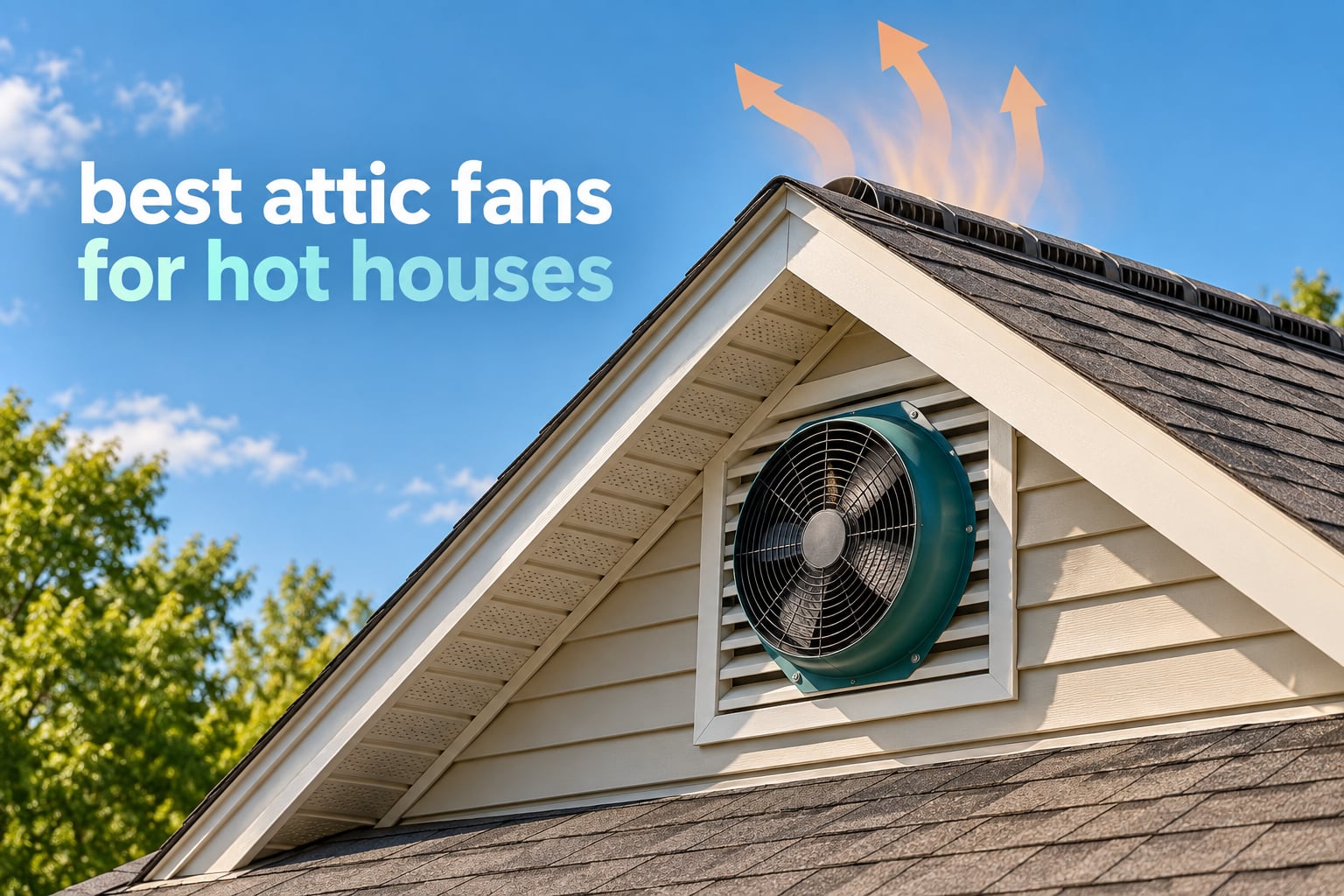
Do attic fans really help cool a house? They cool the attic, not the rooms you live in. A powered attic exhaust fan pulls trapped hot air out through your gable or roof and draws replacement air in through soffit and ridge vents, which takes heat off the ceiling below and makes your air conditioning work less. It is no substitute for cooling, and it only pays off when your attic already has adequate intake venting.
That distinction trips up more first-time buyers than anything else in the category, and it explains why so many attic fans disappoint after install. Think of the attic as a hot lid on your house. Remove the lid’s heat and the ceiling surface below runs cooler, so the air near your top floor is easier for the AC to hold. What you do not get is cool air delivered into the living space, which is exactly what a whole house fan or a mini-split provides.
Our team worked through twelve of the most-reviewed attic exhaust fans available, compared airflow claims against stated coverage, and weighted the things that decide whether a fan performs in a real attic: intake vent ratio, motor type, mounting location, and whether it can be switched off when the weather turns. These are the best attic fans for hot houses in 2026, ranked by usable performance per install headache.
One more thing first, because it came up more than any product question. Homeowners on r/hvacadvice and r/homeowners are mostly asking which brands are reputable, and the honest answer is that brand name matters far less than three numbers: the CFM rating, the attic square footage that rating covers, and whether your intake venting can feed it. A well-sized 1,000 CFM unit on a properly vented attic will beat a bigger fan on a starved one every time.
Table of Contents
Top 3 Picks for Hot Houses in 2026

iLiving ILG8SF16V-ST 1200 CFM
- 1200 CFM brushless wall fan
- Variable speed plus 32-130F controller
- Covers up to 1800 sq ft
- Plug-and-play NEMA 5-15

QuietCool AFG PRO-2.0 1945 CFM
- Two-speed PSC motor
- 1945 CFM high and 1495 CFM low
- 50-120F adjustable thermostat
- 20 ft plug-and-play cord
iLiving ILG8G14-12T 2339 CFM
- 2339 CFM gable ventilator
- Cools up to 3400 sq ft
- Built-in adjustable thermostat
- Hardwired at 230 watts
The iLiving ILG8SF16V-St takes the top spot for pairing the group’s largest review count with a brushless motor, a genuine variable-speed controller, and a 1,200 CFM rating that covers an 1,800 square foot attic without overreaching. The QuietCool AFG PRO-2.0 is the quieter, more refined gable option with two real speed stages and a fire safety shutoff. The iLiving ILG8G14-12T wins on airflow per dollar from a single-speed gable unit with a built-in thermostat.
Best Attic Fans for Hot Houses (September 2026)
| Product | Specifications | Action |
|---|---|---|
| iLiving 16 inch Wall Mount Shutter Fan 1200 CFM |
|
Check Latest Price |
| iLiving Gable Mount Ventilator 2339 CFM |
|
Check Latest Price |
| QuietCool AFG PRO-2.0 Gable Fan 1945 CFM |
|
Check Latest Price |
 Air Vent 53315 Gable Ventilator 1050 CFM Air Vent 53315 Gable Ventilator 1050 CFM |
|
Check Latest Price |
 QuietCool AFG SMT ES-3.0 Smart Gable Fan QuietCool AFG SMT ES-3.0 Smart Gable Fan |
|
Check Latest Price |
 Amtrak Solar 12 inch 50W Solar Fan Amtrak Solar 12 inch 50W Solar Fan |
|
Check Latest Price |
 Remington Solar 30W Roof Mount Fan Remington Solar 30W Roof Mount Fan |
|
Check Latest Price |
 VEVOR 14 inch Shutter Exhaust Fan 1802 CFM VEVOR 14 inch Shutter Exhaust Fan 1802 CFM |
|
Check Latest Price |
 4SEASONS 12W Solar Roof Vent Fan 4SEASONS 12W Solar Roof Vent Fan |
|
Check Latest Price |
 Amico 12 inch Shutter Fan 1282 CFM Amico 12 inch Shutter Fan 1282 CFM |
|
Check Latest Price |
 iLiving 30 inch Wall Mount Fan 5088 CFM iLiving 30 inch Wall Mount Fan 5088 CFM |
|
Check Latest Price |
 QuietCool AFR SMT ES-2.0 Smart Roof Fan QuietCool AFR SMT ES-2.0 Smart Roof Fan |
|
Check Latest Price |
Read the whole table and two things stand out. Airflow per watt varies enormously, from 400 CFM on a 12 watt panel to 5,088 CFM on 345 watts, and neither extreme is automatically right. Coverage claims also assume proper intake venting, so treat every square footage figure as a ceiling rather than a target.
1. iLiving ILG8SF16V-ST 1200 CFM Wall Mount Fan – Best Overall
iLIVING 16″ Wall Mounted Shutter Exhaust Fan, Automatic Shutter, with Thermostat and Variable Speed controller, 0.85A, 1200 CFM, 1800 SQF Coverage Area Silver (ILG8SF16V-ST)
1200 CFM
16 inch aluminum blades
Brushless motor
65 dB
1800 sq ft
13.8 lb
Pros
- Steady airflow that moves attic heat and dust quickly
- Thermostat plus three power levels with accurate control
- Automatic louvers open and close cleanly
- Clear mounting hole pattern
Cons
- Mounting hardware and some electrical parts not included
- Louvers droop slightly at reduced speeds
- Some vibration in lightweight structures
This is the fan we kept coming back to while checking airflow claims against owner feedback. It moves 1,200 CFM on 115 volts at 97 watts from a brushless motor spinning at 1,550 rpm, and it is rated for attics up to 1,800 square feet.
The housing is galvanized alloy steel with aluminum shutters and a 16 inch blade set, and at 13.8 pounds it is manageable up a pull-down attic stair. The thermospeed controller runs from 32 to 130 degrees Fahrenheit, so it does not make you wait for a genuinely hot attic.
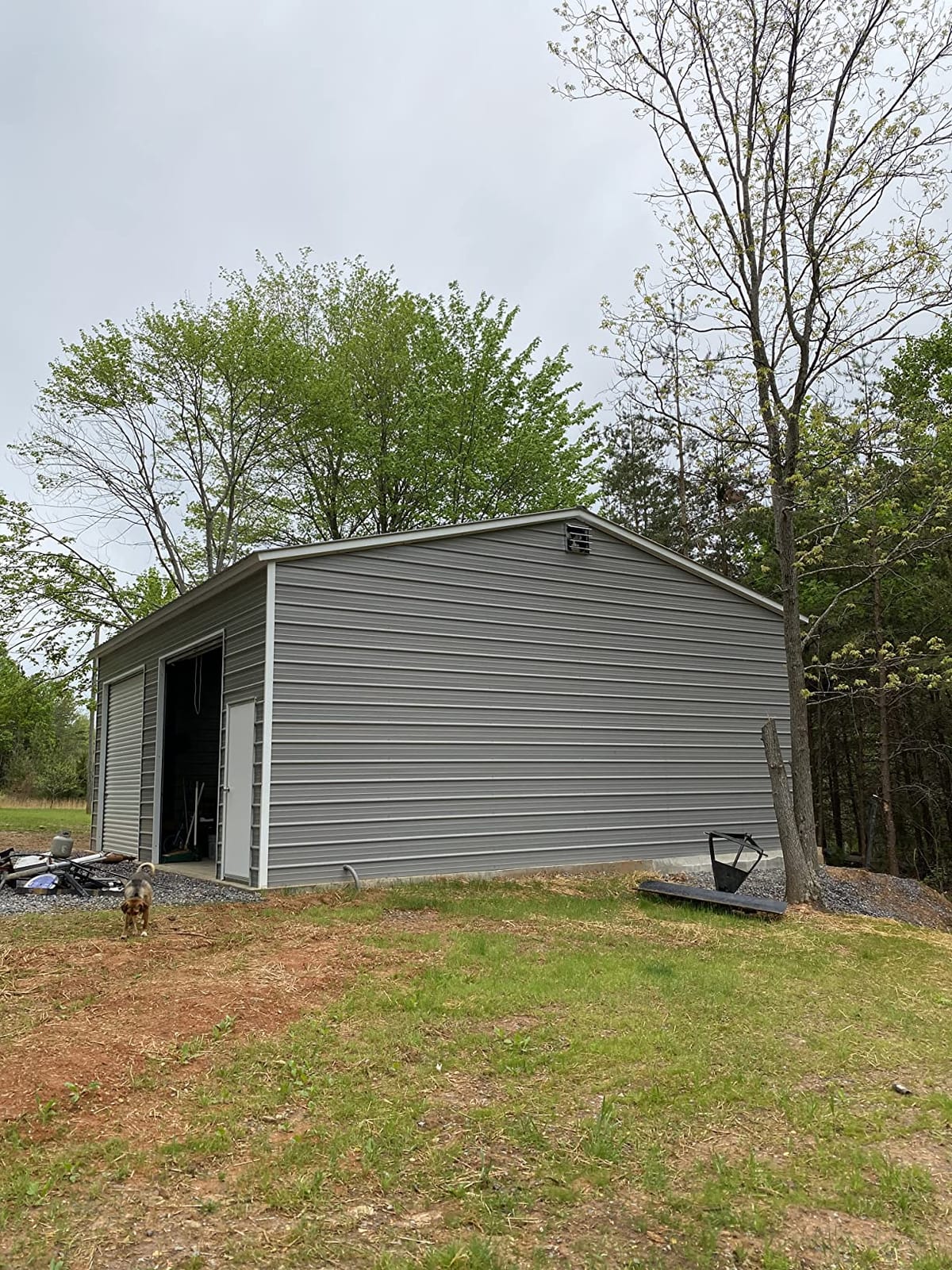
Buyers report airflow strong enough to clear fumes, dust and accumulated heat, with louvers that open and close cleanly. Three power levels let you back off once the attic is moving enough air.
The spec sheet also lists bathroom, shed, greenhouse, garage, kitchen and laundry room as intended spaces, and the NEMA 5-15 plug means no wiring work at all. It doubles as a workshop or garage exhaust fan.
What you actually get at the outlet
At 65 decibels this is not silent, but it sits under a ceiling fan in another room rather than announcing itself, and the thermostat means you rarely run it at full output. The box contains the fan, the controller and the manual, with no fastener bundle.
Where it falls short
The most common review complaint is missing mounting hardware and electrical parts, an annoying discovery in a 100 degree attic but a five-minute hardware store fix. Louvers also droop at reduced speeds, and a 19 inch face needs a framed opening rather than thin plywood.
2. iLiving ILG8G14-12T 2339 CFM Gable Ventilator – Best Airflow for the Money
iLiving ILG8G14-12T Automatic Gable Mount Attic Ventilator Fan with Adjustable Thermostat, 2.85 Amp, 2339 CFM, Single-Speed
2339 CFM
14 inch propeller
Gable mount
63 dB
230 watts
9.8 lb
Pros
- Highest airflow per dollar in the group
- Built-in adjustable thermostat
- Often reuses an existing gable housing
- Light enough to handle in a hot attic
Cons
- Hardwired so you need power in the attic
- Analog dial instead of a digital readout
- Slight rattle audible from directly below
On pure airflow per dollar, this 2,339 CFM gable ventilator is the value pick of the group. A 1/8 horsepower motor at 2.85 amps and 230 watts drives a 14 inch four-blade propeller at 1,010 rpm, rated for attics up to 3,400 square feet.
The built-in adjustable thermostat is why it has held up over more than a decade of listings. Owners report attic temperatures dropping 15 to 20 degrees Fahrenheit with it running, and because the thermostat is mechanical there is no app to pair and nothing to reset after a power cut.
It is also a natural retrofit. Where a home already has a gable opening with a matching housing, many owners drop this straight in, which is the cheapest install path available.
At 9.8 pounds it is the lightest large-capacity unit we tested, and the 63 decibel figure matches owner reports of being inaudible from inside the home. The trade-off is no low-output mode on a single-speed motor.
Check your attic power before buying
This unit is hardwired rather than plug-in, so you need a 120 volt circuit in the attic or an outlet within cord reach. That is the single biggest reason people hire a contractor instead, and worth confirming first.
What to watch after the first season
A small number of reviews mention a slight rattle from directly beneath the unit, and one describes the blade hub separating from the collar shortly after delivery. Neither is widespread, but both show up in an empty attic rather than an occupied room. It also ships balanced for a vertical gable, not an inclined mount.
3. QuietCool AFG PRO-2.0 1945 CFM Gable Fan – Top Rated Gable Mount
Quietcool AFG PRO-2.0 Attic Fan for Gable Vents – 1945 CFM – Adjustable Thermostat – 20ft Power Cord – Plug-and-play – Two Speed Capable
1945 CFM high and 1495 CFM low
Two-speed PSC motor
108W high and 77W low
50-120F thermostat
20 ft cord
Pros
- Two real speed stages instead of one fixed output
- Plug-and-play 20 ft cord removes all wiring work
- Anti-vibration mounting tabs cut transmitted noise
- Vent covers included to block backdrafting
Cons
- Fire safety shutoff interrupts operation in extreme attic heat
- Low speed is fixed rather than continuously variable
The AFG PRO-2.0 is the fan we would put above a bedroom. It delivers 1,945 CFM on high and 1,495 CFM on a low-energy setting, and the two-speed permanent split capacitor motor is the quiet part: 108 watts on high, 77 watts on low, with none of the whine a cheap motor makes at part load.
Sound does not travel through open air so much as through structure, and a fan bolted rigidly to a gable wall becomes part of that wall. The built-in mounting tabs with anti-vibration pads are what turn a 1,900 CFM fan into something you stop noticing.
The rest of the package is unusually complete for a gable unit: an adjustable 50 to 120 degree thermostat, a 20 foot power cord, a built-in fire safety shutoff at 182 degrees, and vent covers that block backdrafting when the fan is off.
Buyers rate the airflow and install simplicity highly, and the second speed is what earns its keep: run high at the afternoon peak, drop to low overnight so the attic does not re-soak.
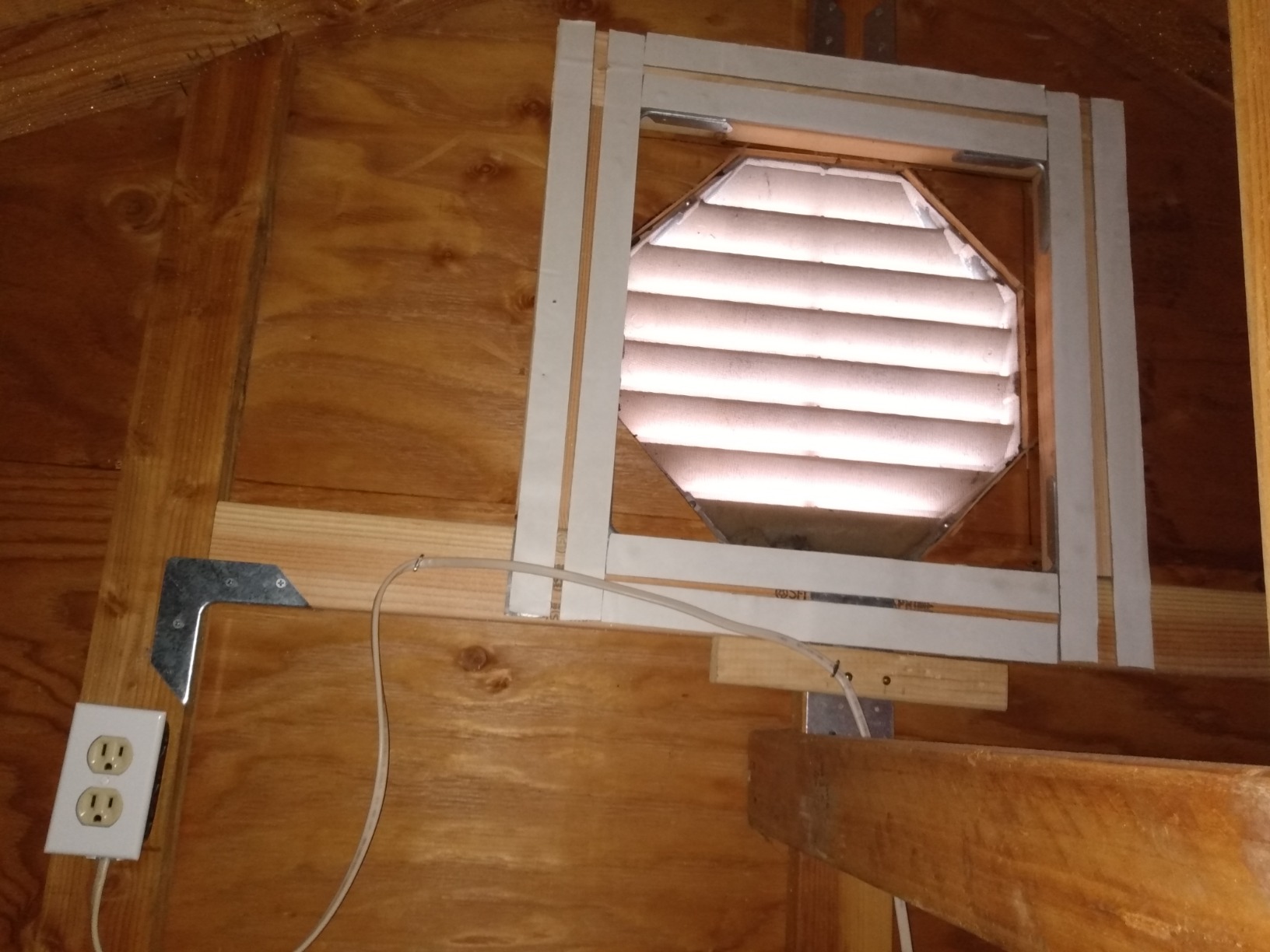
Why two speeds beat one loud stage
An attic does not need full airflow all night. Owners describe running this one on low after peak heat, which keeps the attic from storing warmth without pushing the motor hard. The 50 to 120 degree thermostat range also lets it run in mild shoulder seasons.
The fire shutoff trade-off
The 182 degree shutoff is a fire safety feature, but on a genuinely hot day the attic can reach that temperature and the fan stops, which is the opposite of what you want at 3pm. It protects against runaway attic fire, it is not an operating strategy.
4. Air Vent 53315 Gable Ventilator 1050 CFM – Best for Small Attics
Air Vent Gable Ventilator 53315 Attic and Whole House Fans, Multicolor,Medium
1050 CFM
14 inch blade
Stainless steel and alloy frame
180W
1/12 HP
UL listed
Pros
- Long-running design fitting standard 14 inch openings
- Installs under a sloped roof or in a vertical gable
- Accurate mechanical thermostat dial
- Easily paired with rubber grommets to quiet it
Cons
- Narrower 1050 CFM rating than newer competitors
- Plastic frame ribs can resonate if not clamped
- Blade hub may be slightly loose out of the box
The Air Vent 53315 is a different proposition from the high-output units above it, and for a small attic it is the right one. At 1,050 CFM it covers attics up to 1,500 square feet, and oversizing a fan into a small attic is the most common sizing mistake we see.
A 1/12 horsepower motor at 180 watts and 2.3 amps drives a 14 inch blade in a UL listed stainless steel and alloy frame. Buyers like the accurate mechanical thermostat and the ability to mount under a sloped roof when the gable end is not accessible.
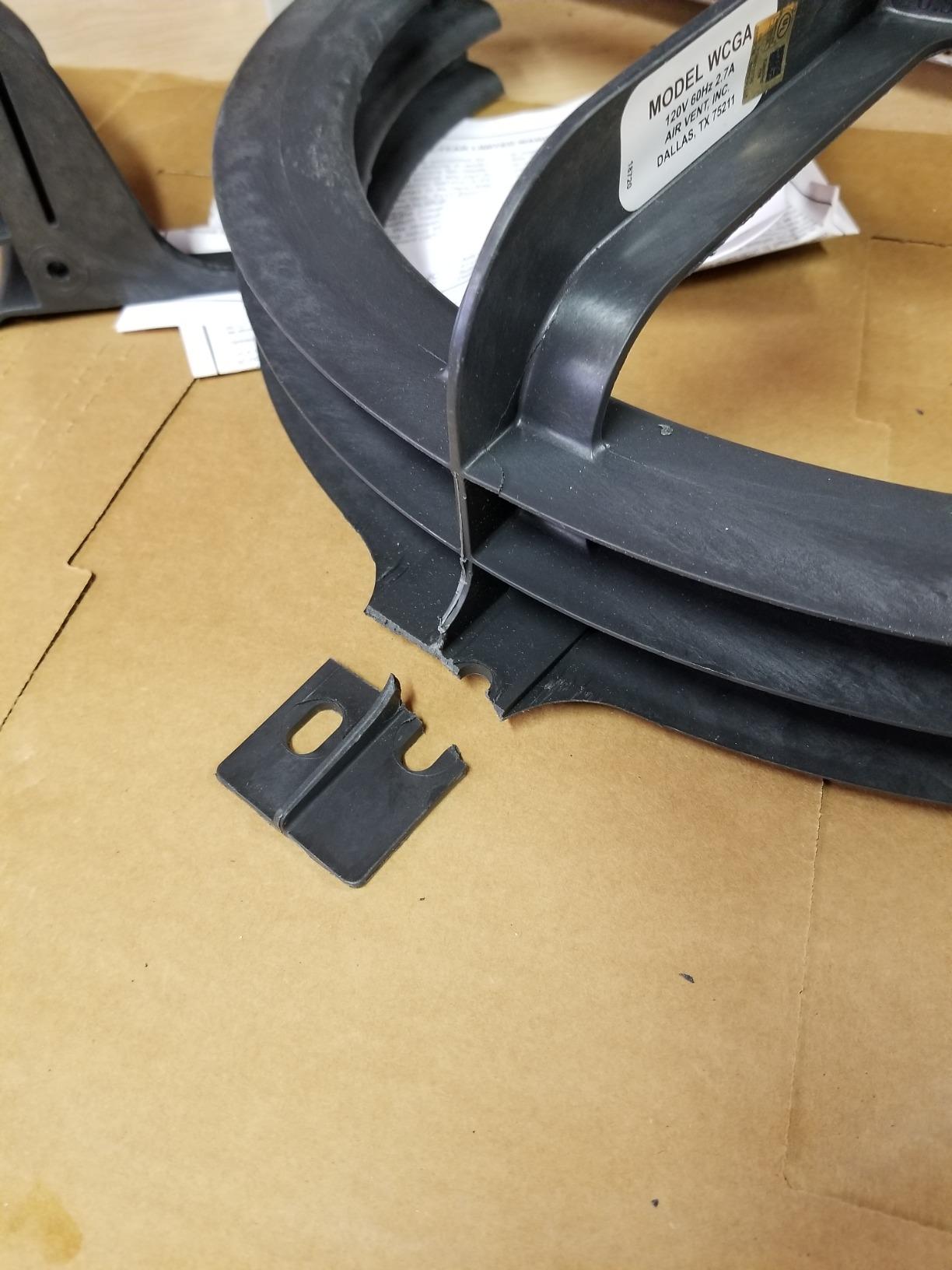
Vibration is the recurring theme in reviews, and so is the fix. Owners who tighten the blade set screws and clamp the frame ribs after install report the rattle disappears, and rubber grommets between frame and housing are the other common remedy.
At 887 reviews this is among the most proven designs in the category, which matters for a component that will sit in a hot attic for a decade.
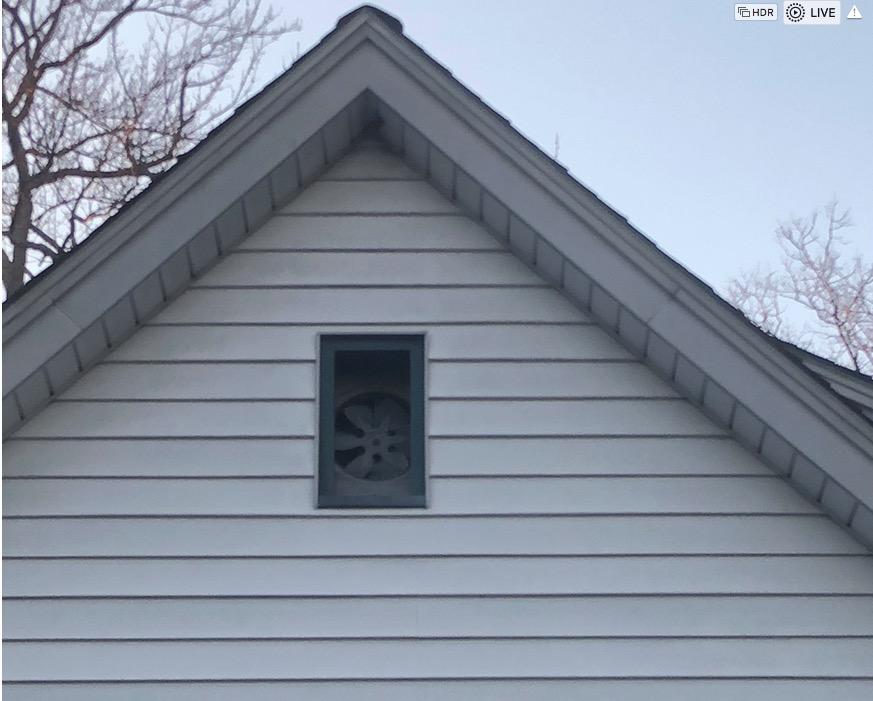
When 1050 CFM is genuinely enough
What matters is attic floor area, not house size. A 1,500 square foot attic is small by current standards, and with the roof deck insulated a fan of this size keeps the assembly workable in moderate peaks. On a west-facing roof at peak summer it will feel underpowered.
Plan for a five-minute fix after install
Check every fastener and the blade set screw after mounting. This is less a defect than a symptom of a design mixing steel structure with plastic ribs. Spending more on a fully metal frame and balanced blade is exactly the premium a QuietCool unit commands.
5. QuietCool AFG SMT ES-3.0 Smart Gable Fan – Best App Control
Quietcool AFG SMT ES-3.0 Smart Attic Fan for Gable Vents – Up to 2801 CFM – As low as 22 Watts – Smart App Control – Thermostat and Humidistat – 20ft Power Cord – Plug-and-play – Three Speed
Up to 2801 CFM
Three-speed brushless ECM motor
45 dB
22W on low
148 watts
App control
Pros
- Very quiet on low and medium speeds
- Highest CFM of any gable mount in the group
- App stages speeds as temperature rises
- Thermostat and humidistat in one controller
Cons
- Bluetooth-only control with limited range
- App keeps no history and lacks a simple off function
- Does not auto-restart after a power interruption
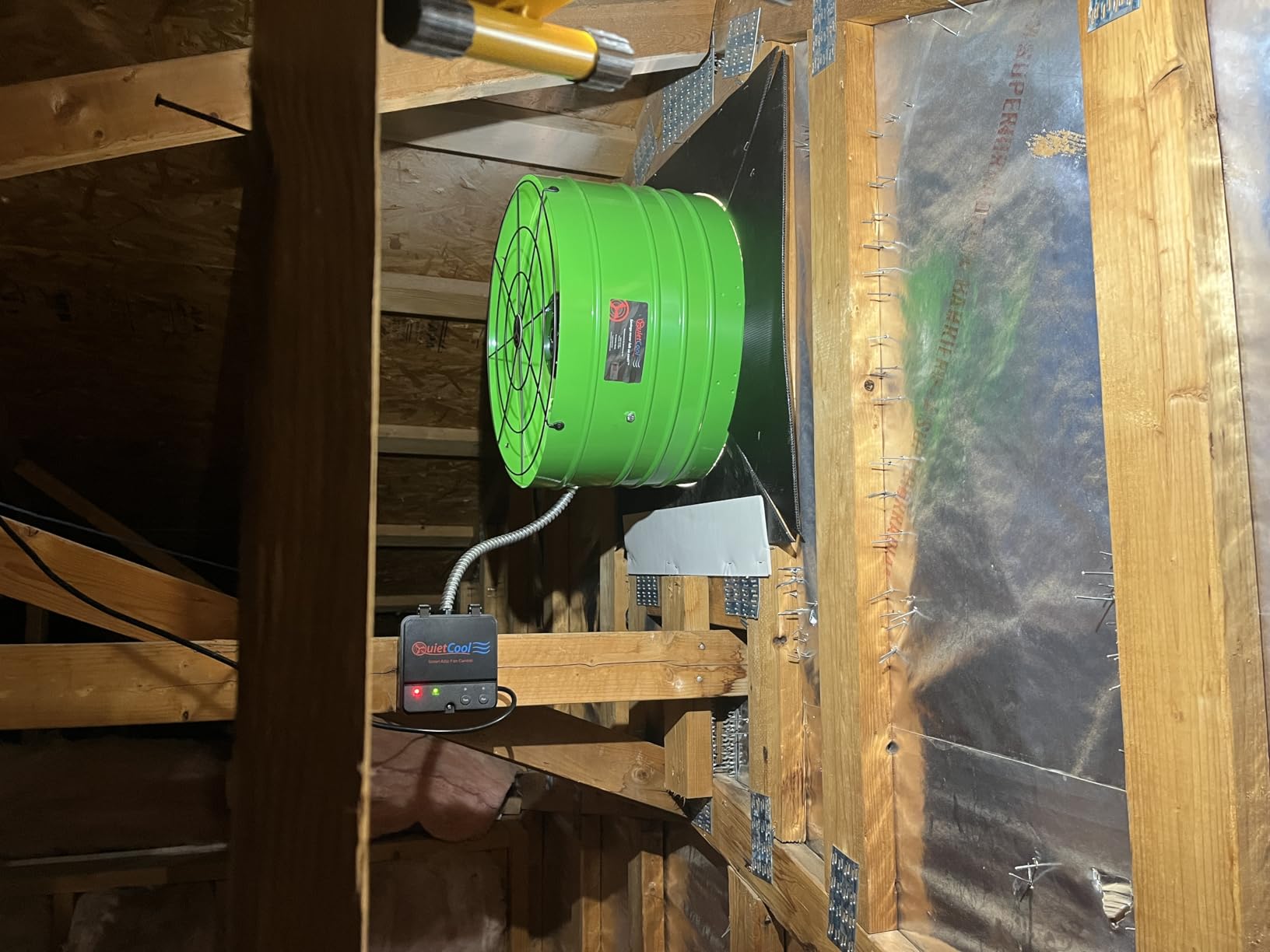
The AFG SMT ES-3.0 is the most capable fan in the gable category, pushing up to 2,801 CFM on high while staying quiet at the low end. The three-speed brushless ECM motor draws as little as 22 watts on its lowest setting, and at 45 decibels it is the quietest large-capacity unit here by a clear margin.
Control is what separates it from everything else on this list. The smart controller handles a thermostat and a humidistat together, and the app stages the three speeds automatically as attic temperature climbs. In humid regions the humidistat is the more valuable half, because it runs the fan on moisture rather than waiting for a heat threshold that may never arrive.
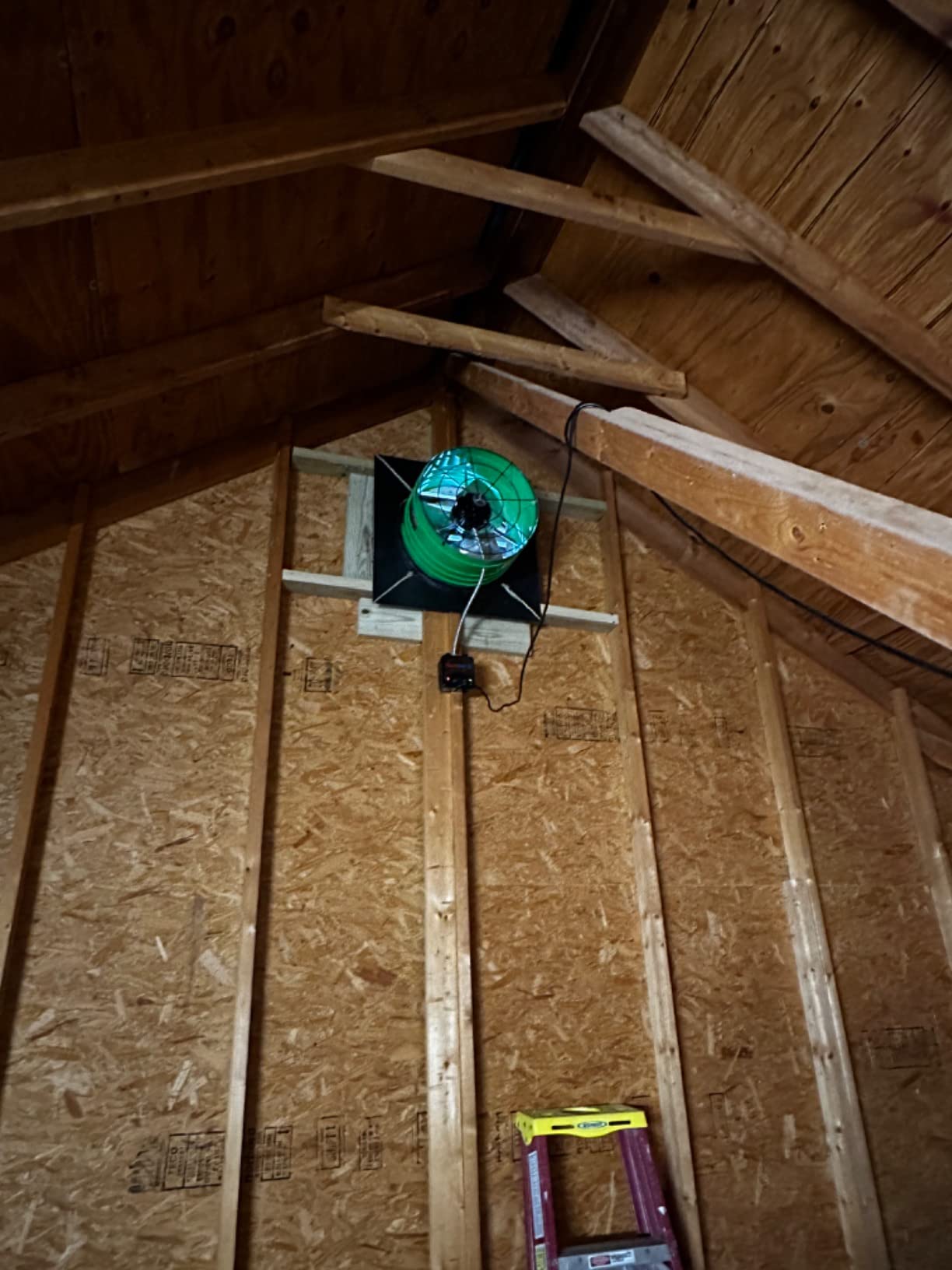
Owners report that scheduling meaningfully lowered summer power bills, and the 20 foot plug-and-play cord keeps the install simple. Anti-vibration mounting tabs and a 182 degree fire safety shutoff carry over from the rest of the line.
At 2,801 CFM in a gable footprint, this is the unit for a large attic where noise matters and you would rather not go up on the roof.
What the app does well
Staging earns its place. Rather than full output or off, the controller ramps speed with temperature, which is quieter and cheaper, and the humidistat adds a second trigger that matters in the South. Configure it once and it runs itself.
Where the smart features disappoint
The complaints are all about the app, not the fan. Control is Bluetooth-only, so range is limited and reconnection can be unreliable, there is no run history or obvious off function, and the unit does not restart after a power interruption. On high speed the blades can thump if not perfectly balanced.
6. Amtrak Solar SAA50 12 Inch 50W Solar Fan – Best Wiring-Free Install
Amtrak Solar 12-Inch 50W Solar Attic Fan with Thermostat, Made in USA – Quiet Gable Vent Fan for Attic, Garage, Shed, Greenhouse – Plug and Play
12 inch galvanized steel housing
50W solar panel
10 inch blade
Vents up to 2250 sq ft
12 lb
Pros
- No wiring and no operating cost on solar power
- All-metal galvanized steel construction
- Large volume of hot air for a 12 inch unit
- Manufacturer support responds quickly
Cons
- Solar-only means no night cooling and slower output in cloud
- Factory panel wiring polarity reversed on some units
- Loose bushing between blade and motor causes wobble
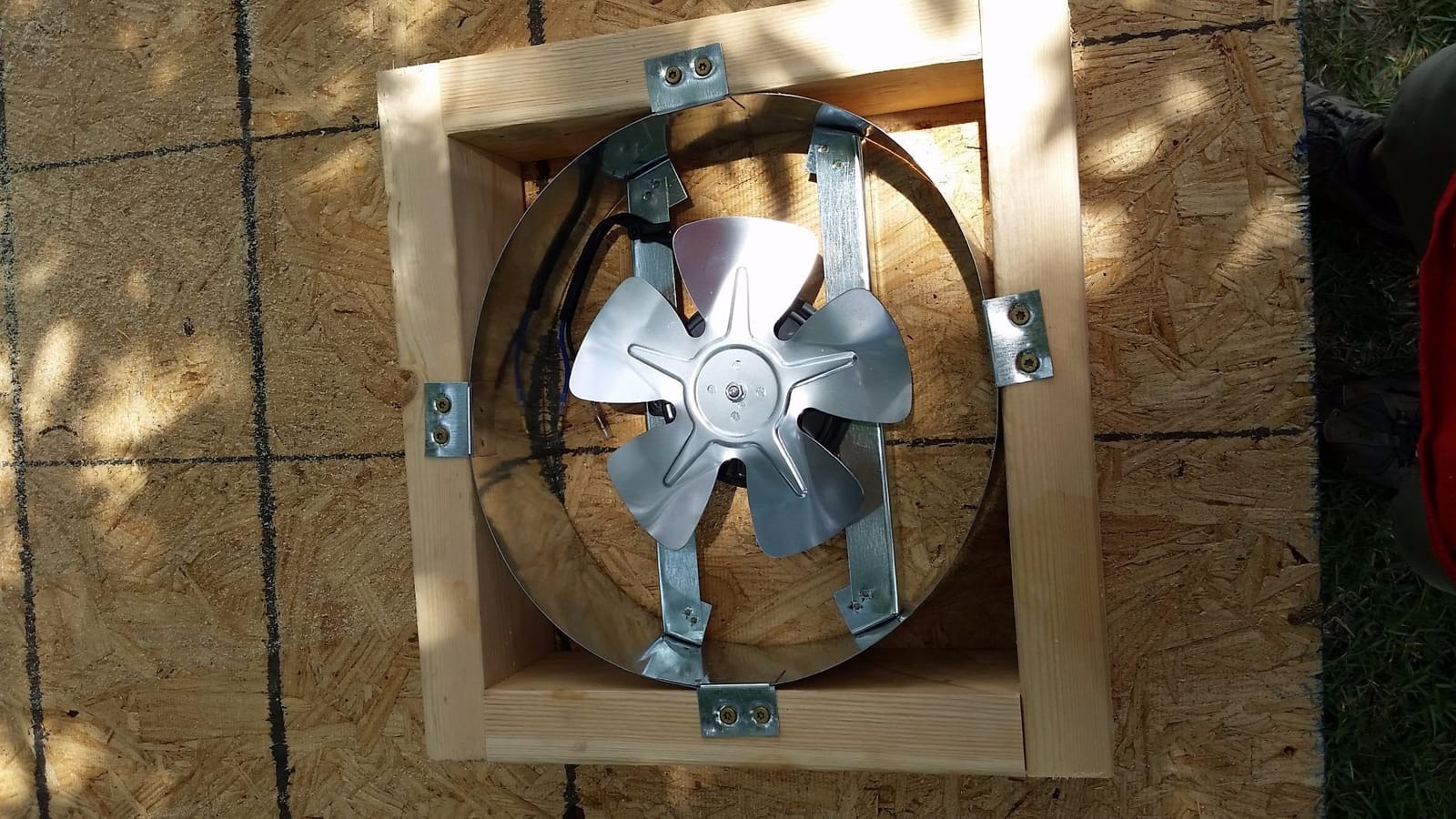
The Amtrak Solar SAA50 is the simplest install in this group: a 50 watt panel, a 12 inch galvanized steel housing, a 10 inch high-efficiency blade, and quick-connect wiring with 15 feet of extra wire for panel placement. No circuit to run, no outlet to find, which is why solar units come up constantly on r/homeowners threads about finished attics.
At 12 pounds it is heavier than most solar vents but still manageable from a ladder, and the sealed ball-bearing, thermally protected motor is a sensible choice for a device most owners will never service. Stated vent area is up to 2,250 square feet.
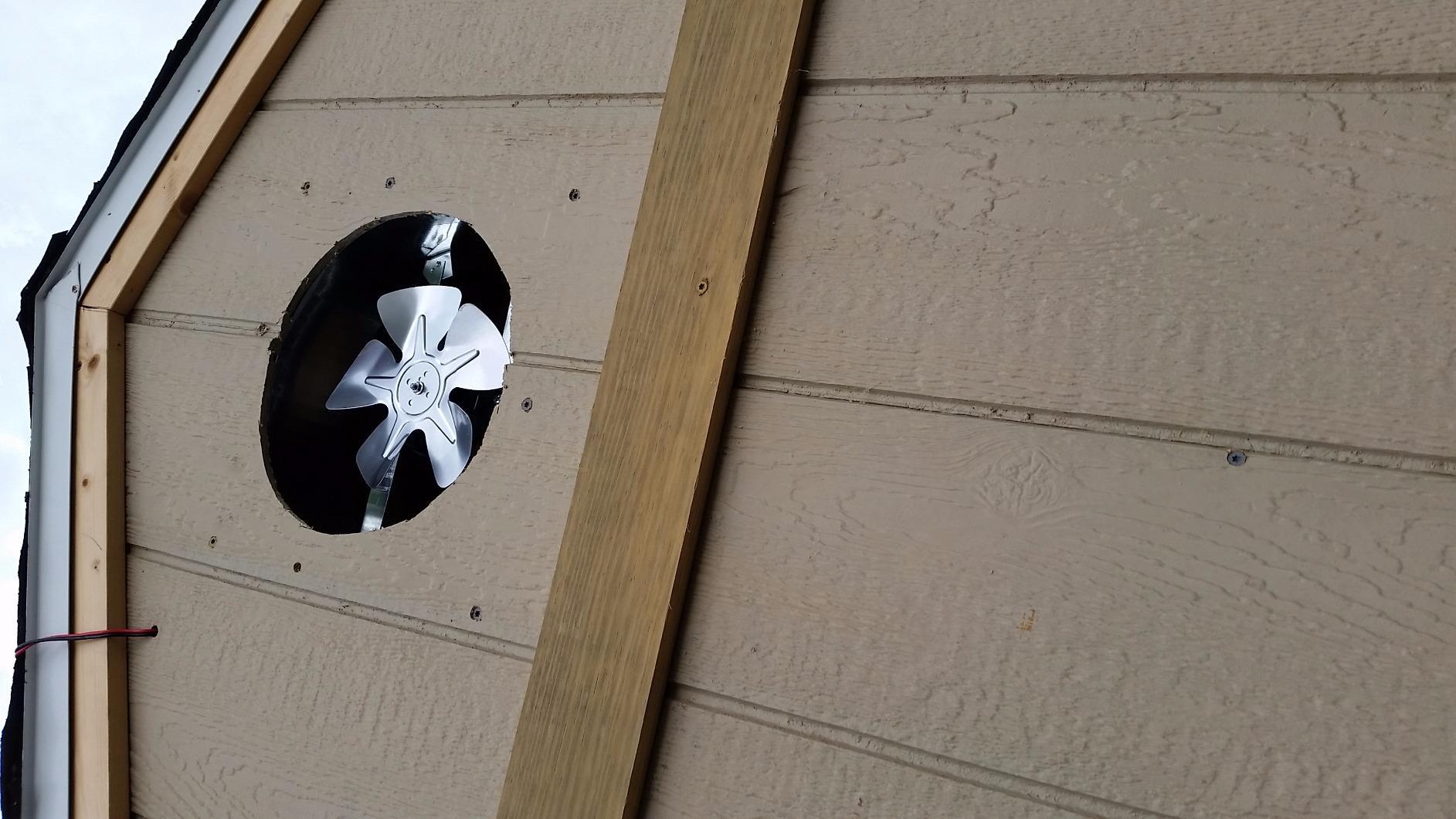
Buyers value the zero operating cost and the metal build, and manufacturer support genuinely responds with troubleshooting help. Owners report more hot air moved than most competitors manage at this size.
The 4.1 rating reflects quality control rather than concept. Issues recur: reversed polarity on factory panel wiring on some units, and a loose bushing between blade and motor that produces a wobble and a ticking sound.
Solar sizing: wattage is the real decision
The most common regret with solar attic fans is buying too little wattage for a large attic. A 50 watt panel in full sun is a different machine from the same panel on a bright overcast afternoon, and July attic load is the least forgiving time to be short. Place the panel for full sun access, not for neatness.
What solar-only costs you
There is no night operation at all, which is a real loss because the hours around dawn are often the coolest for exhaust. You also cannot shut it down for winter, so it runs whenever the sun is out. Check the bushing fit before climbing the ladder.
7. Remington Solar 30W Roof Mount 1550 CFM – Best Silent Roof Mount
Remington Solar 30 Watt Roof Mount Solar Attic Fan
1550 CFM
30W solar roof mount
Brushless motor at 0.08 sones
22.5 inch steel flashing
30 lb
Pros
- Brushless motor runs near-silently with low power draw
- Large steel flashing gives a leak-resistant penetration
- Built-in humidistat and thermostat
- Texas Windstorm certified for hail regions
Cons
- Single-speed operation with no low-power mode
- Nighttime cooling needs a separately sold hybrid adapter
- Sits high on the roof and needs a comfortable working position
The Remington sits on the roof rather than in the gable, and that one design choice answers most noise complaints before any spec matters. With the motor outside the living envelope there is no structural path for sound into the rooms below, and the 0.08 sone brushless motor is inaudible from the house.
It moves 1,550 CFM from a 30 watt solar panel and carries a built-in humidistat and thermostat that change airflow automatically. The 22.5 by 22.5 inch steel flashing is oversized on purpose, and the unit is Texas Windstorm certified, which matters in hail country.
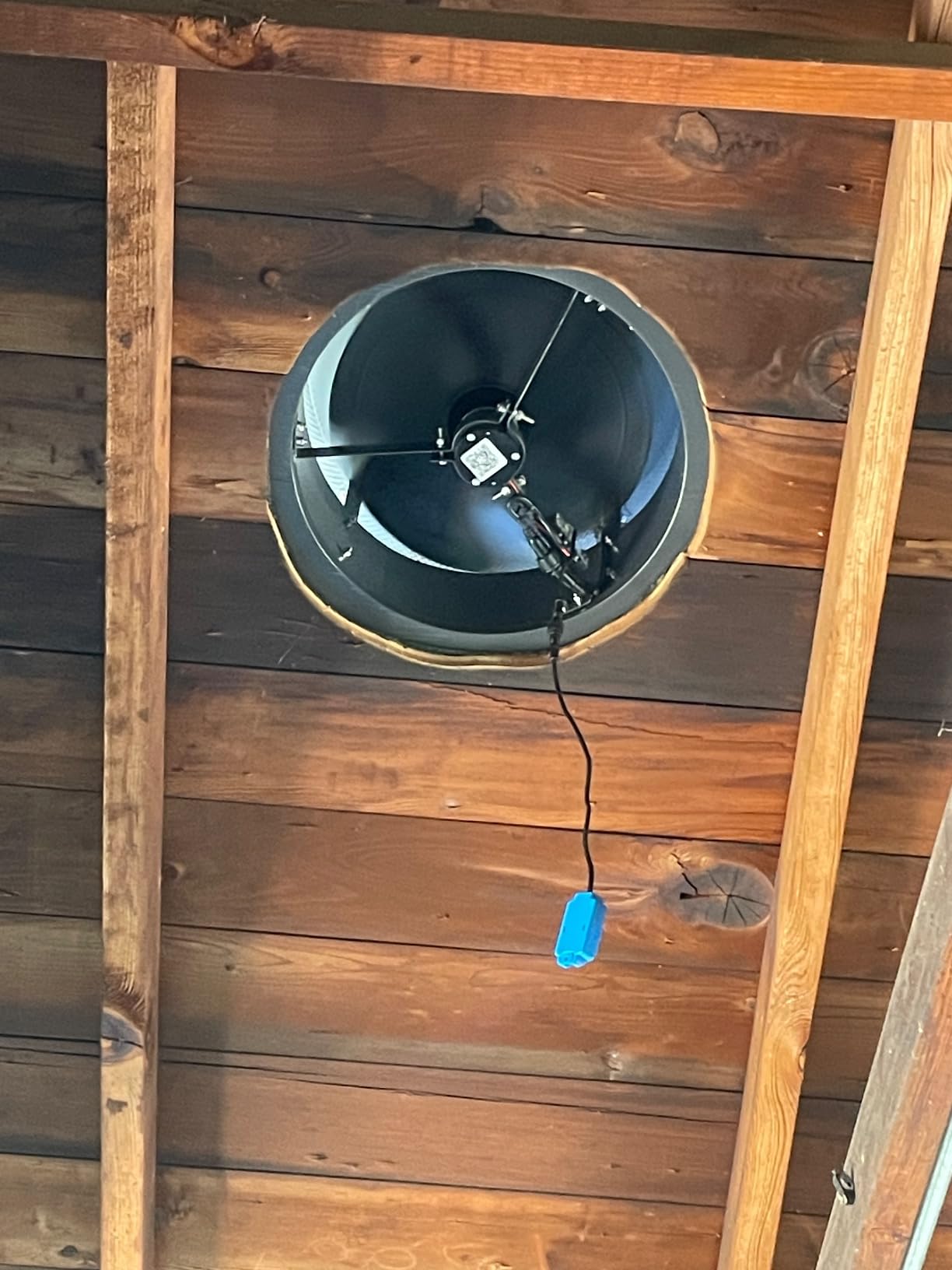
At 30 pounds this is a substantial unit, and buyers single out the flashing as the reason the roof penetration stays dry. It also ships with all installation parts included, a pleasant change from hunting for fasteners.
A separately sold hybrid adapter lets the panel run the fan after dark, which closes the main gap in the solar approach without redoing electrical.
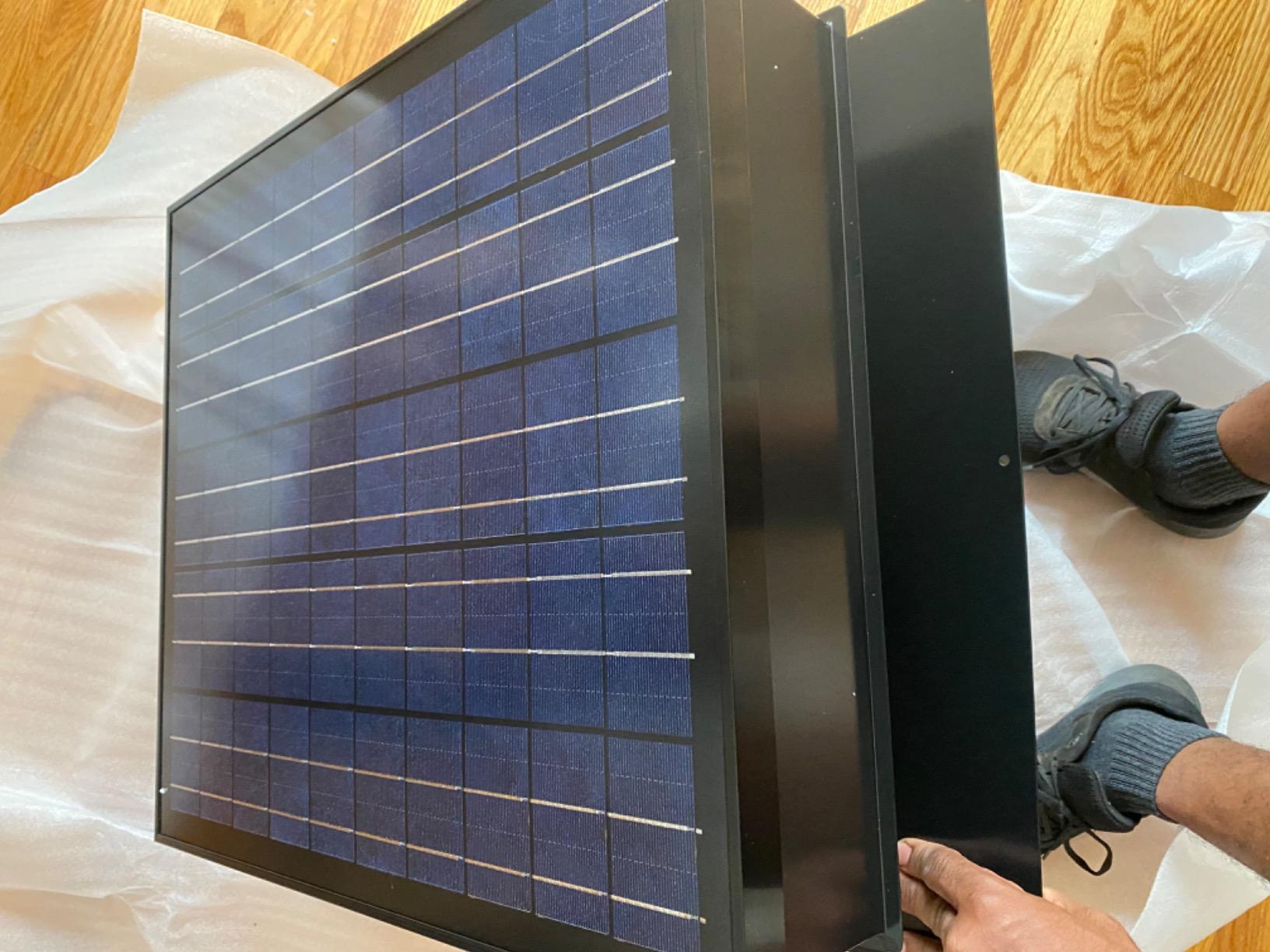
Why roof mount wins on noise
Attic fan noise is a structural transmission problem, not an air problem. A gable fan bolts to a wall that is also the wall of the room below, and a full-output motor will find every framing member as a resonator. Put the same motor on the roof and the path to your bedroom is gone.
Installation realities
This is a roof penetration, so it is a roofer’s job in most cases, and the fan sits high enough that a comfortable working position matters. A ladder on a sloped roof is exactly how people get hurt. Single-speed operation also means no low-power mode.
8. VEVOR 14 Inch Shutter Exhaust Fan 1802 CFM – Best High CFM Per Dollar
VEVOR 14 in Shutter Exhaust Fan Wall-Mount Automatic Louvers Variable Speed, Sturdy Steel Housing, Low Noise, AC Motor, 1802 CFM Ventilation and Cooling for Attic, Garage, Barn, Greenhouse, Workshop
1802 CFM
14 inch steel housing
Stepless variable speed
1600 rpm AC motor at 60W
63 dB
9.1 lb
Pros
- High airflow with stepless speed control
- Powder-coated steel housing tolerates damp conditions
- Automatic rain-guard shutters close when switched off
- Bolt-in-and-plug-in installation
Cons
- Expansion bolts are masonry only
- no framing hardware
- Speed controller defaults to high on power-up
- Louvers flutter in a breeze while off
The VEVOR has the strongest ratio of airflow to cost in the group, pushing 1,802 CFM from a 14 inch steel housing on 60 watts. That puts it ahead of several premium gable units on raw output, and the stepless variable-speed controller gives finer control than the fixed two- and three-stage motors most competitors use.
The motor runs at 1,600 rpm delivering up to 7.5 m/s of airflow in a powder-coated alloy steel housing that tolerates damp conditions far better than plastic. At 9.1 pounds it is light, and owners rate it quiet enough for greenhouses, coops and workshops.
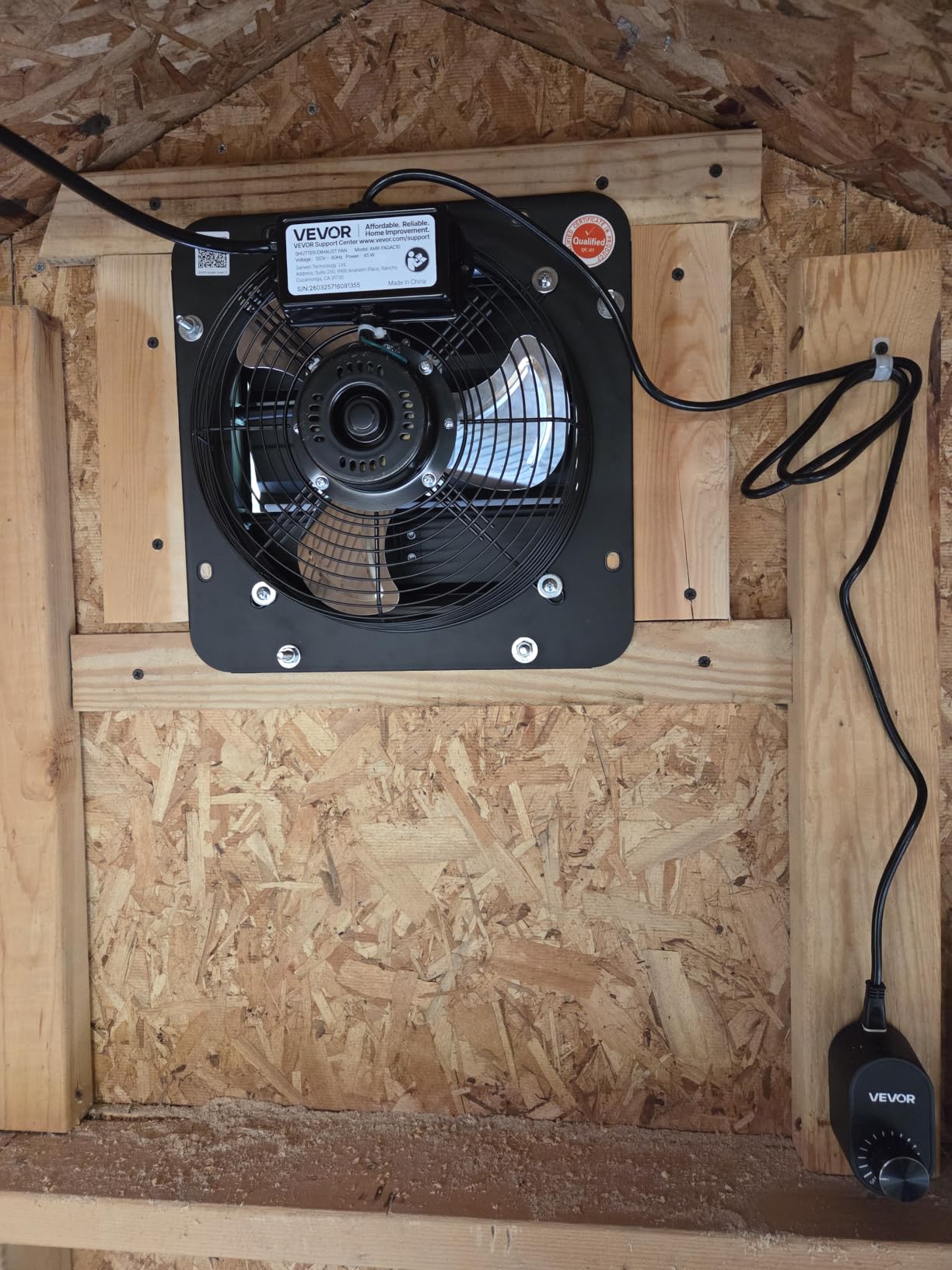
Buyers describe it as sturdy, quiet and easy to install with strong airflow, and the automatic rain-guard shutters that close when the fan is off are a useful detail in a stormy summer climate.
The same line is offered in 10, 12, 18, 20 and 24 inch sizes, so if the airflow is right but the frame is wrong for your opening, a better dimension likely exists.
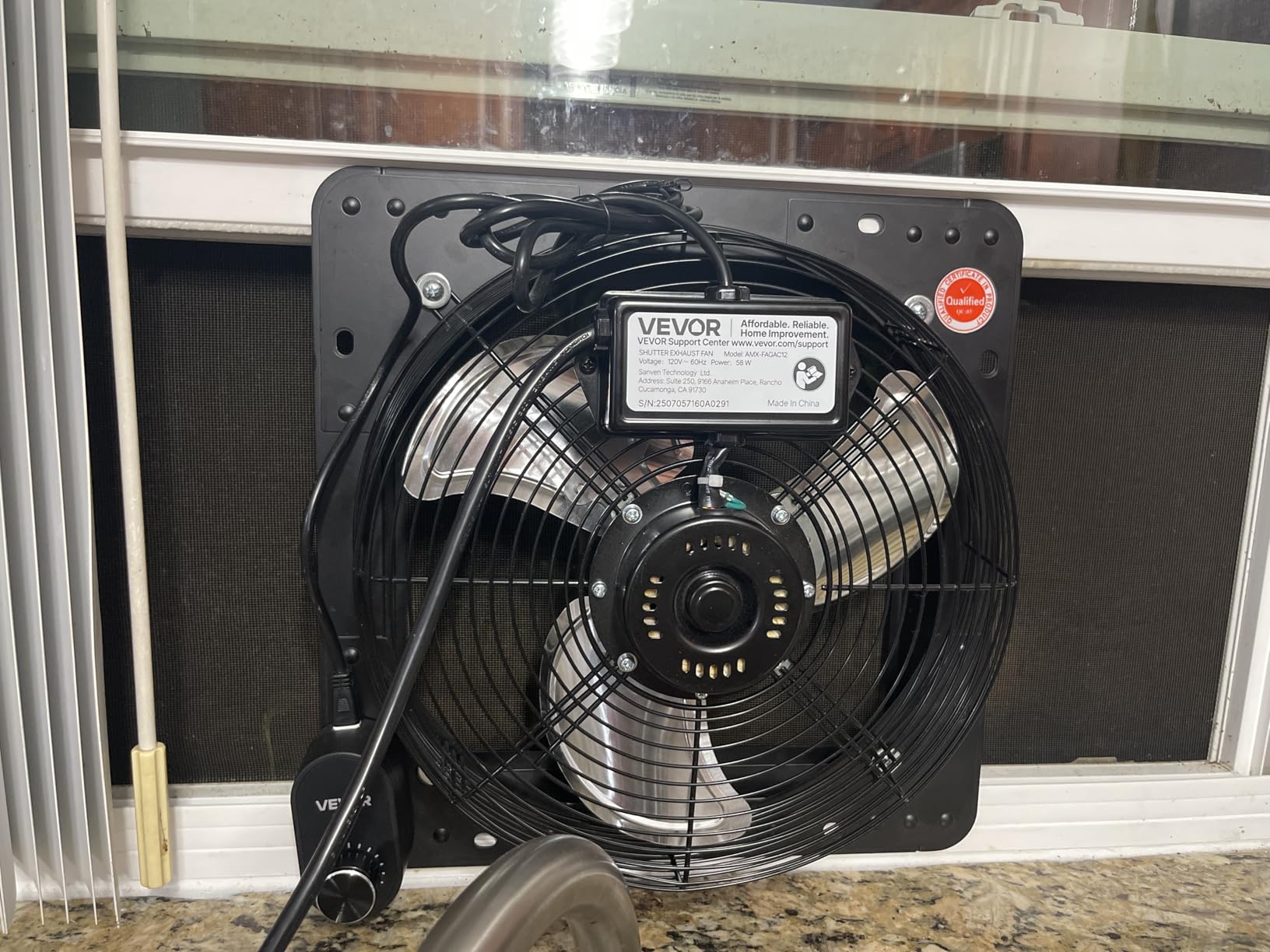
Stepless control is the underrated feature
Most fans jump between fixed speeds, meaning they move either too much air or not enough. A stepless dial lets you match output to the attic you actually have, which matters in a small attic where 1,800 CFM on high is overkill, and the automatic shutters keep it weatherproof when idle.
What to add before you install
The included hardware is four M8 masonry expansion bolts, the wrong fastener entirely for a wood-framed gable. Buy structural screws suited to your framing, and template your own cut-out since none is supplied. Reset the controller to low after every power-up because it defaults to high.
9. 4SEASONS 12W Solar Roof Vent Fan 400 CFM – Best Small Solar Roof Vent
4SEASONS Solar Attic Vent Fan – 400 CFM Airflow, Up to 500 sq. ft., 12W Solar Panel, CSA A93 Certified, Polycarbonate Housing, Quiet Roof Ventilation
400 CFM
Attics up to 500 sq ft
12W monocrystalline panel
Polycarbonate housing
5.6 lb
CSA A93
Pros
- No wiring
- drop-in replacement for a standard roof vent
- Very quiet with airflow that tracks sunlight
- Polycarbonate housing holds up to driving rain and wind
- Light at 5.6 lb for ladder work
Cons
- Modest 400 CFM suits only attics around 500 sq ft
- One report of wind-driven rain splashing back through the opening
- Factory blade balance can need a shim
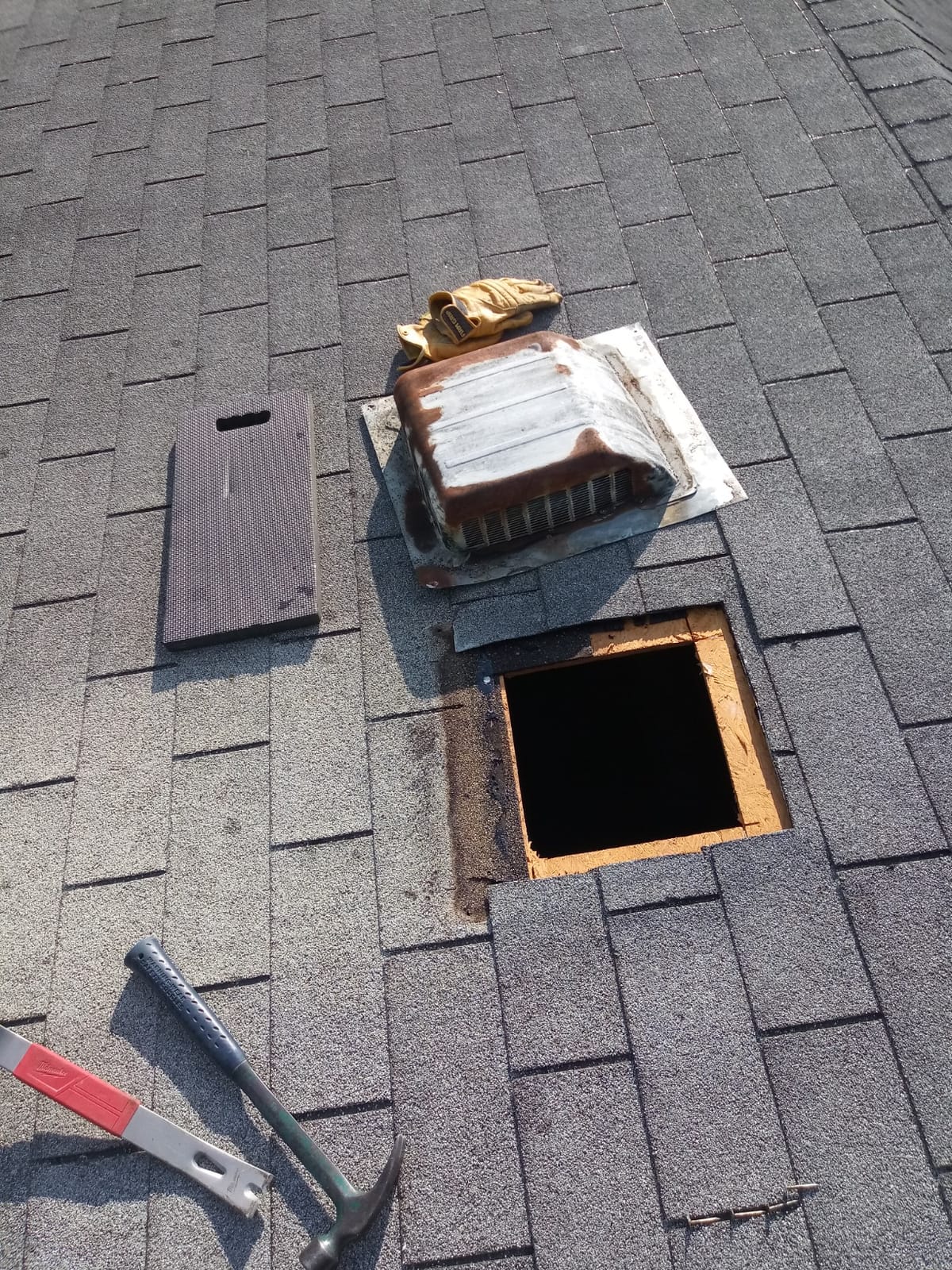
The 4SEASONS is a different product from the rest: a small solar roof vent rather than a whole-attic fan. It moves up to 400 CFM and ventilates attic spaces up to 500 square feet from a 12 watt monocrystalline panel and a brushless motor in an impact-resistant polycarbonate housing. It is TDI and CSA A93 certified and weighs 5.6 pounds.
Where it genuinely excels is install. Because it replaces a standard roof vent with integrated flashing, there is no wiring, no new penetration and no structural work. It is a weekend job from a ladder, and for small buildings that is the entire pitch.
Owners report noticeable reductions in indoor heat and humidity, describe it as very quiet with airflow that ramps with sunlight, and report steady operation across years of service, which is a fair signal for a sealed polycarbonate unit with no electrical connection.
Being light matters more than it sounds when you are on a roof, and the housing holding up to driving rain and wind is a reasonable durability claim.
Honest limits on 400 CFM
Do not read this as an attic fan. Four hundred CFM suits a small attic, detached garage, shed or workshop, and is nowhere near enough for a main house. Owners who bought it for a larger space are the source of most disappointments in its reviews.
Two small things to check
One report describes wind-driven rain splashing back through the opening, so orienting it on the leeward slope is a cheap precaution. Factory balance can also leave the blade close to the housing, where a shim clears it, and the instructions call for a larger cut-out than the unit needs. Measure the existing vent instead.
10. Amico 12 Inch 1282 CFM Shutter Fan – Best Low-Noise DC Motor
Amico 12″ Shutter Exhaust Fan, Thermostat,1400 Sq.Ft,25W DC Motor, 1282 CFM
1282 CFM
25W brushless DC motor
50 dB
Eight speeds
Attics up to 1600 sq ft
Thermostat probe
Pros
- Very quiet at 50 dB for the airflow it delivers
- Eight speed settings plus a thermostat probe for real control
- Low 25W DC draw that can run from solar or battery
- Includes a cut-out template and pre-wired 120V plug
Cons
- Touch thermostat has a non-obvious long-press programming step
- Thermostat cannot be programmed for schedules
- Heavier than plastic units so thin plywood may need framing
The Amico is the most efficient unit here on a wattage basis, and that efficiency is what makes it quiet. A 25 watt brushless DC motor moves 1,282 CFM while registering 50 decibels, with energy use claimed up to 66 percent below a comparable AC fan, and it can run from a small solar panel or battery if you want it off-grid.
Control is granular here: eight speed settings, a thermostat probe on a three foot wire that triggers the fan at a preset temperature, and power-off memory that restores your last speed and temperature rather than resetting you to maximum.
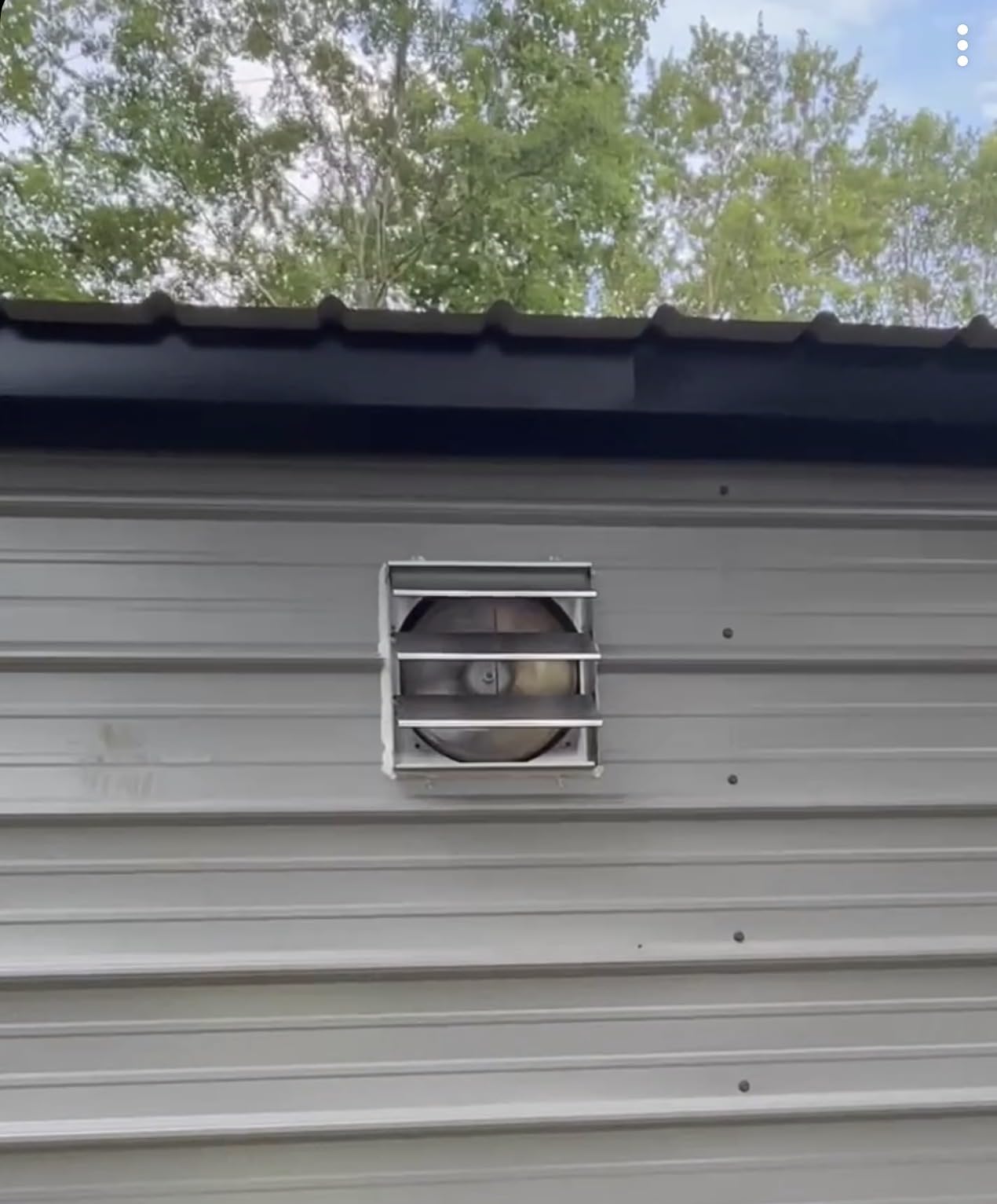
Automatic gravity louvers open on power and seal when off, which is the right behavior for a unit that may sit through a storm. It is plug and play with a pre-wired 120V plug, an extra-long cord, and a cut-out template in the box.
Rated for attics up to 1,600 square feet, it slots neatly between the small and large gable units in this list.
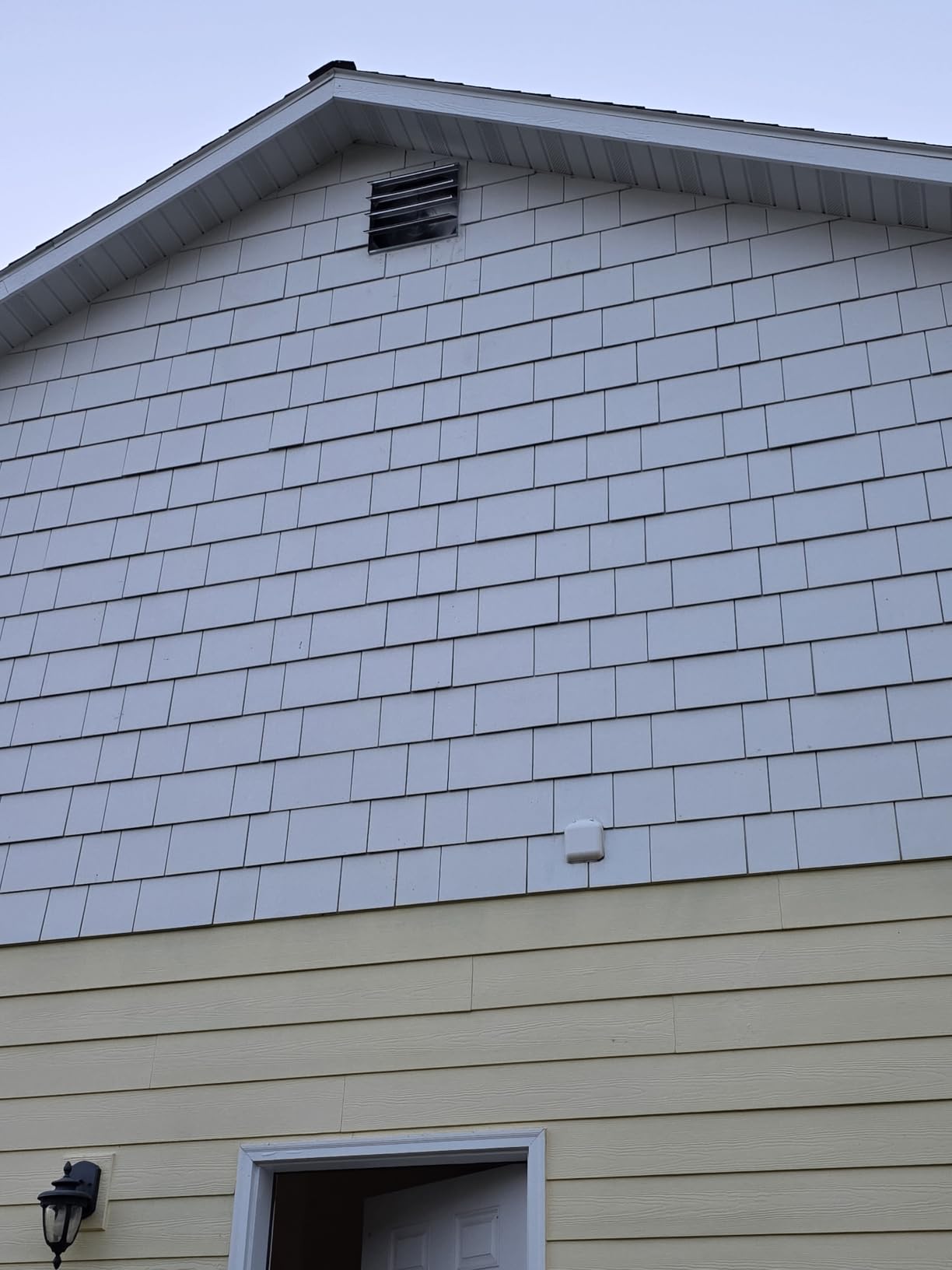
DC versus AC motors in practice
AC induction motors, standard in most attic fans, are efficient at full output and inefficient everywhere else. A brushless DC motor is the reverse, and in an attic where a fan spends most of its life at part output, that shows up in both noise and cost. The 50 decibel figure is the lowest of any wall or gable unit here.
The thermostat is the weak point
Programming the touch thermostat takes a long-press step reviewers call non-obvious, there are reports of controller buttons failing after roughly six weeks, and it cannot be programmed for schedules, so it responds to temperature only. It is also heavy enough that thin plywood may need added framing.
11. iLiving 30 Inch ILG8SF30S 5088 CFM – Best for Very Large Attics
iLiving – 30″ Wall Mounted Shutter Exhaust Fan – Automatic Shutter – Single Speed – Vent Fan For Home Attic, Shed, or Garage Ventilation, 5088 CFM, 7500 SQF Coverage Area, Silver (ILG8SF30S)
5088 CFM
30 inch aluminum shutters
120V 1/3 HP at 345 watts
Covers up to 7500 sq ft
50.3 lb
Pros
- Highest airflow in the group for large attics and workshops
- Aluminum shutters resist moisture and heat better than cheaper units
- Enclosed thermally protected motor for long service life
- Single large opening means fewer penetrations
Cons
- Single speed only
- with no thermostat or variable control
- Weighs 50.3 lb and needs two people and solid framing
- Higher power draw than anything else in the group
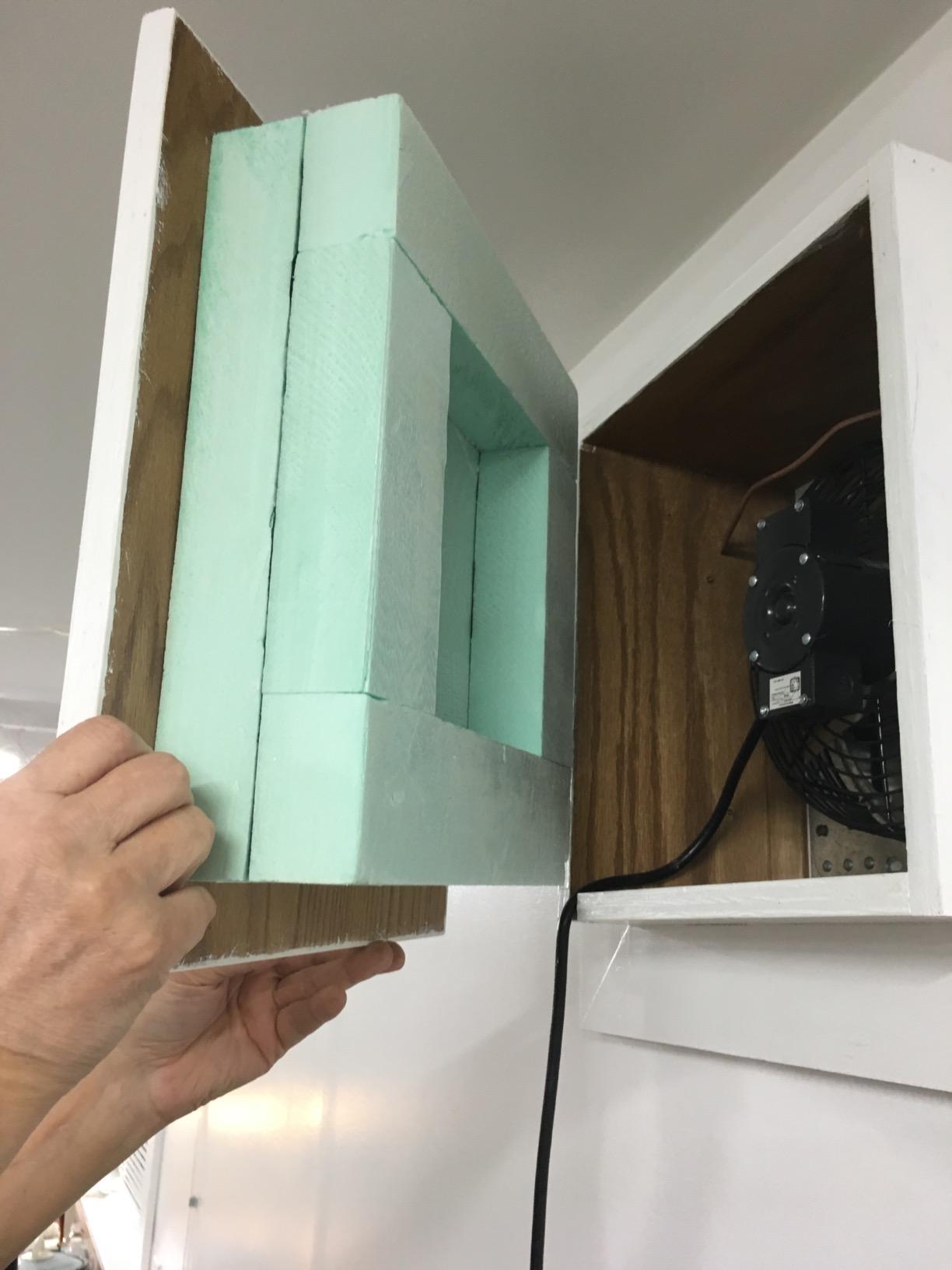
When an attic is genuinely large, most of these fans are the wrong tool and this one is right. The ILG8SF30S moves 5,088 CFM, the highest figure here, rated to cover attics up to 7,500 square feet. It runs on 120 volts at one third horsepower and 3.30 amps driving a five-blade set with 30 inch aluminum shutters.
The aluminum shutters are the material upgrade that matters, holding up to moisture and heat considerably better than plastic or steel-ribbed shutters on budget units, and the fully enclosed, thermally protected, permanently lubricated motor is built for a service life measured in decades.
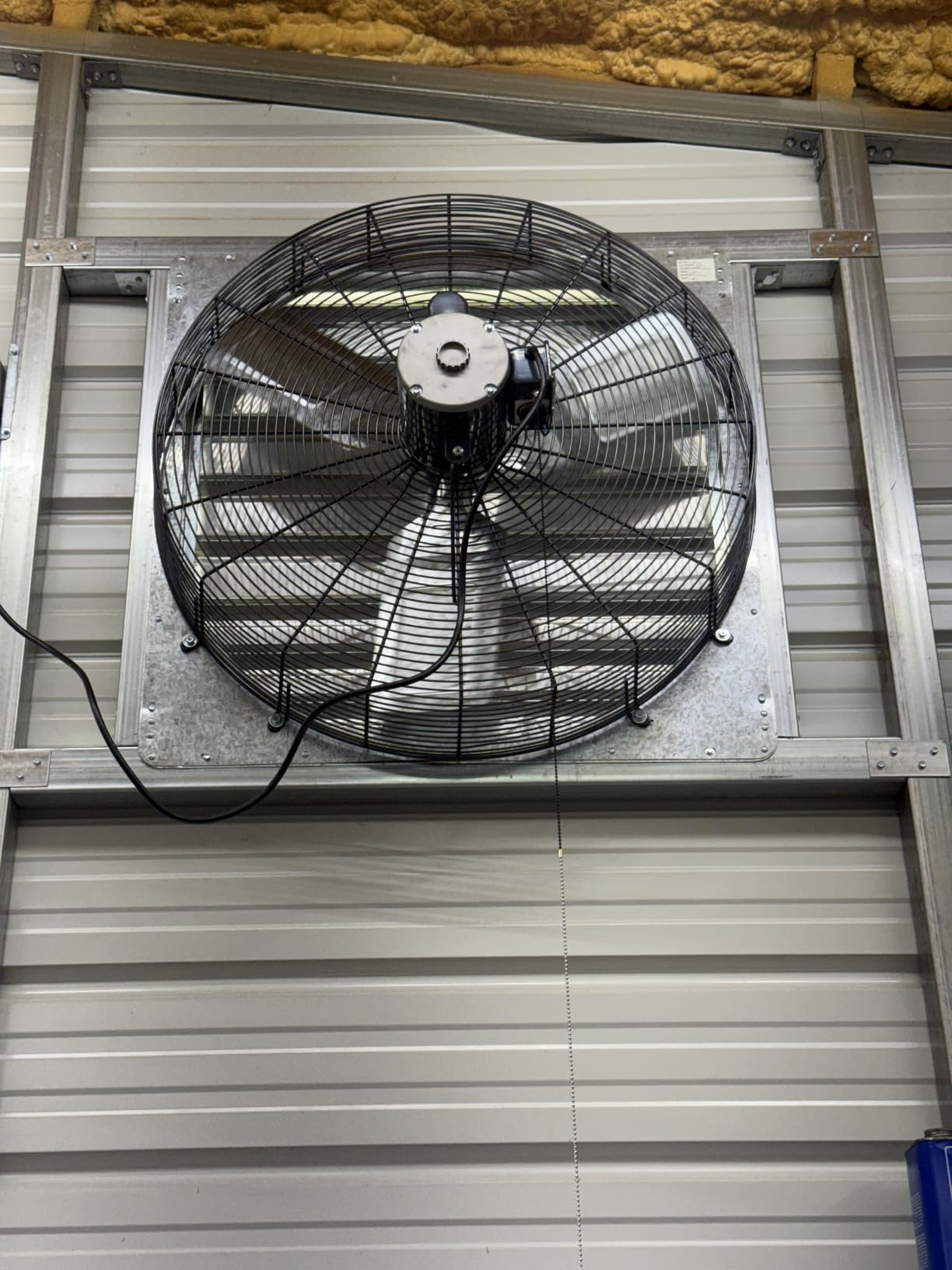
Owners report cutting cooling costs by dumping attic heat before it reaches living space, which is the whole point of the category. For warehouses, garages and workshops, 5,000 CFM opens a use case well past house ventilation.
A single large opening also means one flashing detail instead of several, which simplifies the roof work considerably.
When you actually need this much airflow
Large attics, converted spaces, and workshops over roughly 3,000 square feet are where mid-size units run out of capacity. A fan that cannot move enough air runs continuously at full output, which costs more and cools less than a properly sized larger fan on a thermostat. The 7,500 square foot rating is a ceiling, not a target.
Weight and controls are the trade-offs
At 50.3 pounds with a 33 inch face, this is a two-person install into properly framed opening, so plan the framing before the fan arrives. Single speed with no thermostat is the other limitation, and at 345 watts it draws more than six times the Amico. Add a timer or thermostat switch.
12. QuietCool AFR SMT ES-2.0 1950 CFM Smart Roof Fan – Best Smart Roof Mount
Quietcool AFR SMT ES-2.0 Roof Mount Smart Attic Fan – Up to 1950 CFM – As low as 25 Watts – Smart App Control – Thermostat and Humidistat – 20ft Power Cord – Plug-and-play – Three Speed
1950 CFM
Three-speed brushless ECM motor
50 dB
24.6W on low
217 watts
31 lb
15 year warranty
Pros
- Very quiet on low and medium compared with older units
- Three speed stages tied to temperature cut AC use
- Sealed ECM ball-bearing motor with a 15 year warranty
- App control works well over Bluetooth inside the house
Cons
- Interchangeable pitched-roof flashings sold separately
- Cannot be installed from inside the attic
- Control hub is hard to reach on a high-pitch roof
The AFR SMT ES-2.0 is the roof-mount counterpart to the smart gable fan, sharing the same design logic: a three-speed brushless ECM motor drawing as little as 24.6 watts on low and 217 watts on high, moving up to 1,950 CFM at 50 decibels. The one-piece stamped steel hood and perforated cylindrical housing are better built than a typical roof vent.
The 15 year warranty on a sealed ECM ball-bearing motor is the longest in this roundup and the clearest signal of expected service life. App control with thermostat and humidistat stages the speeds against temperature, and owners report the staging visibly cut air conditioning use over a summer.
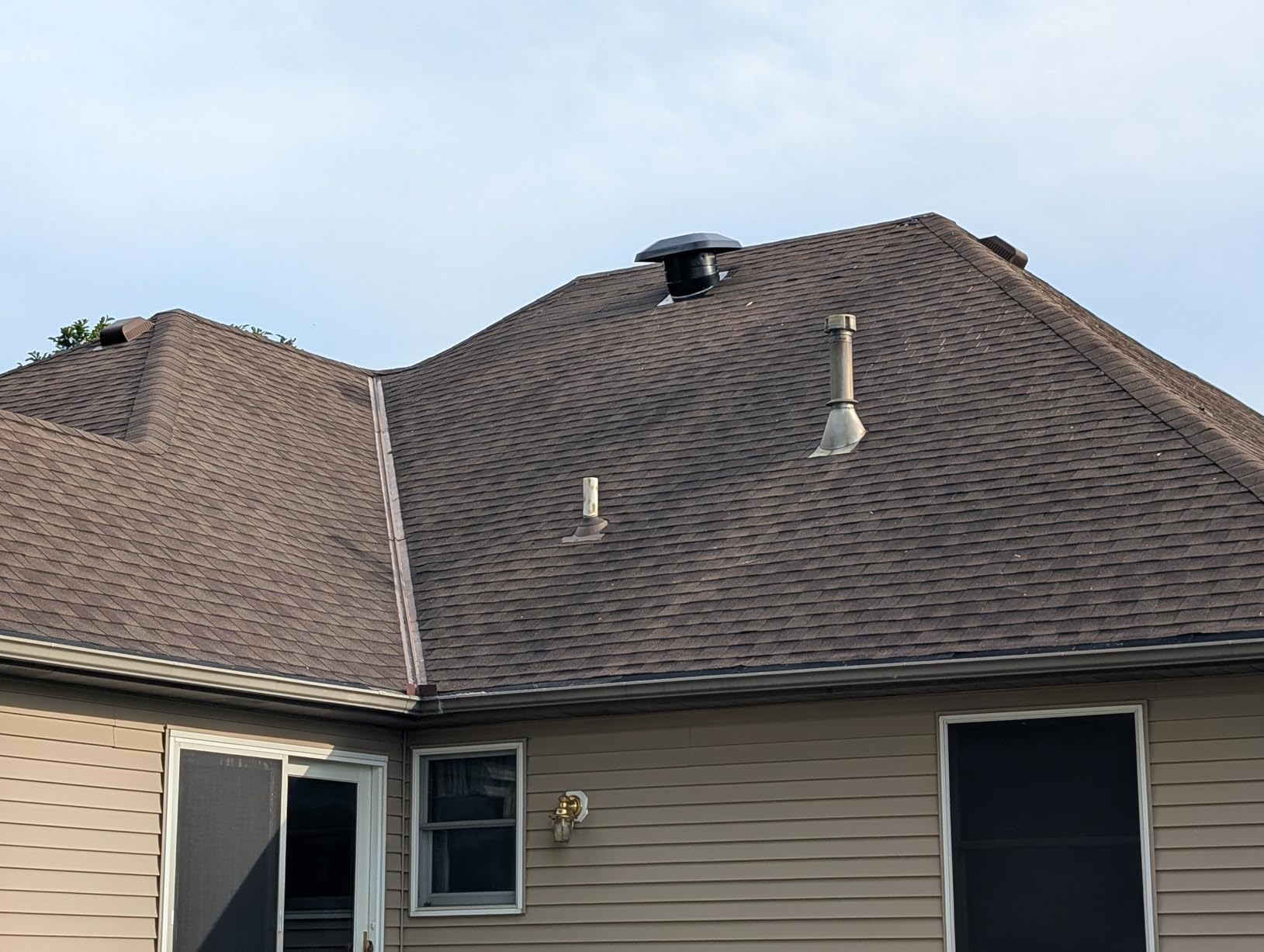
Because the motor sits on the roof, the noise complaint that dominates gable reviews largely does not apply, and reviewers describe low and medium speeds as audibly better than older units. A large cut-out template and included flashing are in the box.
For anyone with a high attic temperature who wants the full feature set and does not mind a roofer, this is the most complete package in the group.
What the fifteen year warranty tells you
Warranty length on the motor is the most honest indicator of service life in this category, and fifteen years on a sealed ball-bearing motor reflects how few serviceable parts there are. Buyers cite warranty length as a primary trust signal, and this is the strongest number here. Temperature-staged speeds are what turn that motor into savings.
Access and extra parts are the friction points
Interchangeable flashings for pitched roofs are sold separately, which surprises people at the hardware store. It cannot be installed from inside the attic, so a roofer is usually the right call, and the control hub can be hard to reach on a high-pitch roof after install. Some owners also object to the app requesting location data.
How to Size an Attic Fan by Square Footage
Size from the attic floor, not the living area. A 2,000 square foot house may have a 1,200 square foot attic, and a 2,500 square foot attic in a ranch can serve a 1,600 square foot home. Measure the attic floor, multiply by each fan’s published coverage, then confirm your intake vents can feed it.
The community rule of thumb worth knowing is one square foot of free vent area per 150 square feet of attic floor, split between soffit and ridge. For a 1,500 square foot attic that means roughly 10 square feet of intake, and it is the single biggest reason a good fan performs badly. Without intake it stalls, runs loud, and pulls conditioned air out of the house below.
Under 800 square feet of attic, anything in the 1,000 to 1,300 CFM band covers the space, which is where the Air Vent 53315 and the Amico sit. From 800 to 1,600 square feet, look at 1,200 to 2,000 CFM, home to the iLiving ILG8SF16V-ST, the QuietCool AFG PRO-2.0 and the QuietCool roof mount.
Above 1,600 square feet you want 2,000 CFM or more. The iLiving gable at 2,339 CFM, the QuietCool smart gable at up to 2,801 CFM and the Amtrak solar rated to 2,250 square feet sit in this band. Past 3,000 square feet of attic, the 5,088 CFM thirty inch unit is the only one here sized for it.
If your attic is already well insulated and vented, the fan runs less and lasts longer. If it is uninsulated, fix that first, because a fan dumping heat all day costs more than the insulation ever saved.
Solar vs Electric vs Hybrid Attic Fans
Solar units such as the Amtrak SAA50, the 4SEASONS and the Remington need no wiring and no electrician, which in a finished attic is worth more than the fan’s headline price. The cost is that they run only when the sun is out and their output drops in cloud. Owners describe them as set and forget, with the added note that the most common regret is too little wattage for a large attic.
Electric units with a 20 foot plug-and-play cord, like the QuietCool AFG PRO-2.0, give the same simple install if an outlet is within reach, plus night operation and consistent output. Hardwired units such as the iLiving gable ventilator need a circuit in the attic but run whenever you tell them to.
Hybrid is the compromise. The Remington accepts a separately sold adapter that lets its panel run the fan after dark, and the QuietCool smart units run on a plug while staging speeds to cut cost. In humid regions, weight the humidistat heavily: the QuietCool smart gable, the QuietCool smart roof fan and the Remington all include one, because moisture is often the problem before heat is.
Gable Mount vs Roof Mount
Gable mount is the easier retrofit. If you already have a gable opening, the fan drops into the existing housing, the install stays inside the attic, and a competent homeowner can usually finish in an afternoon. It is also where most affordable capacity lives.
Roof mount wins on noise because the motor sits outside the living envelope, so there is no structural path for sound into your bedrooms. It costs more and it is a roof penetration, which means flashing and often a roofer. If noise is your top complaint, go roof mount.
Solar roof vents like the 4SEASONS are a third option that behaves more like a replacement roof vent than a mounted fan. They make sense in small spaces and outbuildings, not as primary ventilation for a main house.
Attic Fan vs Whole House Fan vs Mini-Split
These three get confused constantly because search results mix them, and buying the wrong one is the costliest mistake in this category. An attic fan cools the attic only. A whole house fan draws cool outdoor air into the living space and exhausts stale indoor air, which is effectively free air conditioning when it is cooler outside. A mini-split cools one room without ductwork.
Start from the actual problem. If the top floor heats up in the afternoon and the rest of the house is fine, an attic fan is right because it removes load from the ceiling above those rooms. If the whole house is stuffy and you want air moving through the rooms, you want a whole house fan, and no attic fan substitutes. If one bedroom is hot and nothing else is, a mini-split solves it directly.
The two fan types are complementary rather than competing. Plenty of households run an attic fan by day for load reduction and a whole house fan at night when outdoor air is coolest, which owners describe as the highest-value operating pattern in the category.
Get the Attic Ready Before You Buy a Fan
The order of operations matters more than the fan, and it is the piece most product guides skip. Air seal first, then insulate, then verify or add intake venting, and only then add a fan. Every owner who added soffit and ridge vents alongside a fan reports dramatically better results than those who added a fan to an unchanged attic.
Check three things before buying. Compare your free intake area against the one square foot per 150 square feet of ceiling guideline. Confirm you have a gable opening of the right dimensions or a clear roof area for flashing. And confirm where your power is, because a plug-in unit and a hardwired unit are very different attic projects.
Do not forget winter. A fan left running year-round can backdraft stale air down into the living space, a documented complaint among owners who used thermostat cutoffs or a wall switch to shut theirs down. If your unit has a humidistat or thermostat, use the winter set point as a shutoff, or budget for a switch.
Installation Mistakes and Noise Fixes
Most attic fan complaints trace back to install rather than hardware. Loose mounting hardware and unbalanced blades are the biggest sources of a rattle, so tighten every fastener and check the blade set screws a month after install, once the wood has dried and settled.
Second, running a fan on a starved attic. Without enough intake it stalls, gets loud, and pulls conditioned air out of the house, which is the negative pressure problem forums describe most often. Adding soffit vents fixes performance and noise at the same time.
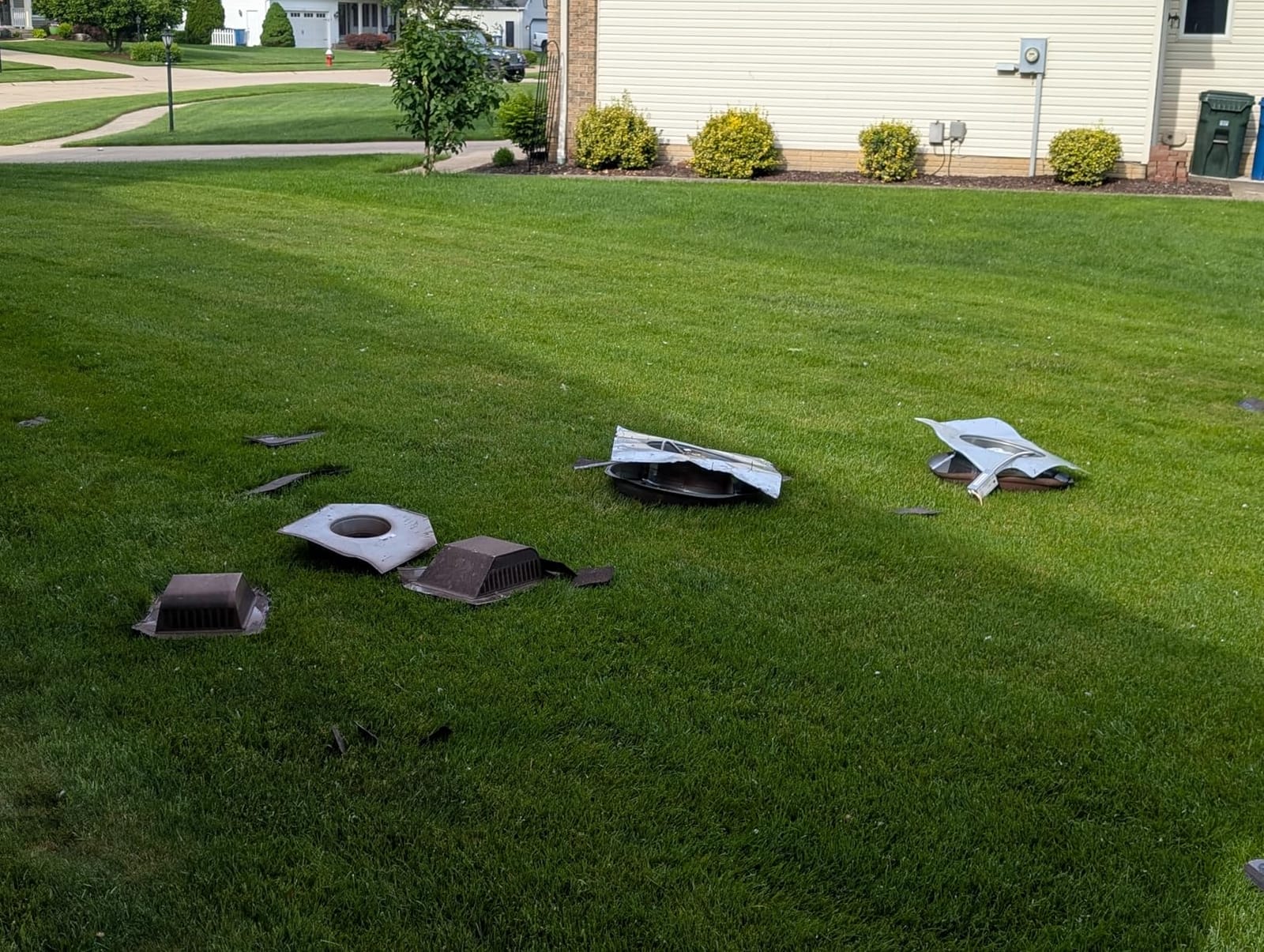
Third, unflashed roof penetrations. Roof-mounted units need flashing sized to the penetration, and the 22.5 inch flashing on the Remington exists because leaks around these installs appear after the first storm. Do not improvise this one.
Fourth, ignoring the low-speed mode. Running a large fan on high continuously is louder and more expensive than staging it, and every multi-speed or variable unit in this list exists to solve that. Fifth, attaching to thin material. A fan bolted to a single sheet of plywood transmits straight into the room below, so add blocking and rubber isolation between frame and structure.
Our picks cover the range: the iLiving ILG8SF16V-ST for most homes, the QuietCool AFG PRO-2.0 above a bedroom, and the iLiving gable ventilator for pure airflow on a tight budget.
Frequently Asked Questions
Do attic fans really help cool a house?
They cool the attic, not the rooms. An attic fan removes trapped heat through your gable or roof and draws replacement air in through soffit and ridge vents, which lowers the temperature of the ceiling below so your air conditioning works less. It does not blow cool air into your living space, and it only works if your intake venting is adequate.
What CFM fan do I need for my attic?
Match the fan to the attic floor rather than the living area. Under 800 square feet needs roughly 1,000 to 1,300 CFM, 800 to 1,600 square feet needs about 1,200 to 2,000 CFM, and above 1,600 square feet you want 2,000 CFM or more. A good rule is one square foot of free vent area for every 150 square feet of attic floor.
What size attic fan do I need for a 2000 square foot house?
It depends on the attic, not the house. A 2,000 square foot home with a 1,200 square foot attic is well served by a 1,200 to 1,900 CFM fan, such as the iLiving ILG8SF16V-ST or the QuietCool AFG PRO-2.0. If the attic itself is close to 2,000 square feet, step up to 2,300 CFM or more.
What is the quietest attic fan for a whole house?
QuietCool units come up most often in reviews, and the AFG SMT ES-3.0 is the quietest large-capacity option at 45 decibels. The Amico is quieter at 50 decibels for a smaller 1,282 CFM output. If noise is the priority, a roof mount such as the Remington or the QuietCool AFR SMT ES-2.0 removes the structural sound path entirely.
Are solar-powered attic fans worth it?
For attics without convenient power they often are, because there is no wiring to run and no operating cost. The trade-offs are real: solar-only units cannot run at night, output drops in cloud, and wattage matters more than most buyers expect. The most common regret is buying too little panel power for a large attic.
Is it safe to leave an attic fan on all night?
It is safe to run one overnight, and doing so during cooler hours is one of the most useful operating patterns. The concern is running it in cold weather, which can backdraft stale air into the living space. Many owners set the thermostat or humidistat to a winter set point as a shutoff, or add a wall switch.
The Final Verdict
After working through all twelve, the iLiving ILG8SF16V-St is the pick we would install in our own house: 1,200 CFM from a brushless motor, a thermostat plus three power levels, automatic shutters, and the largest review base here backing it up. The QuietCool AFG PRO-2.0 is the better answer if a bedroom sits directly beneath the gable, and the iLiving ILG8G14-12T is hard to argue with when airflow per dollar is the goal.
Whatever you choose, do the prep first. Air seal, insulate, check free intake area against that one-square-foot-per-150 rule, and make sure you can switch the fan off for winter. A properly prepared attic turns any of these into a real reduction in cooling load, and an unprepared one turns even a good fan into an expensive disappointment.
Our guides to choosing the right camera for your work and security camera systems for large homes cover the other half of the summer projects, and the picks above are updated for 2026.