
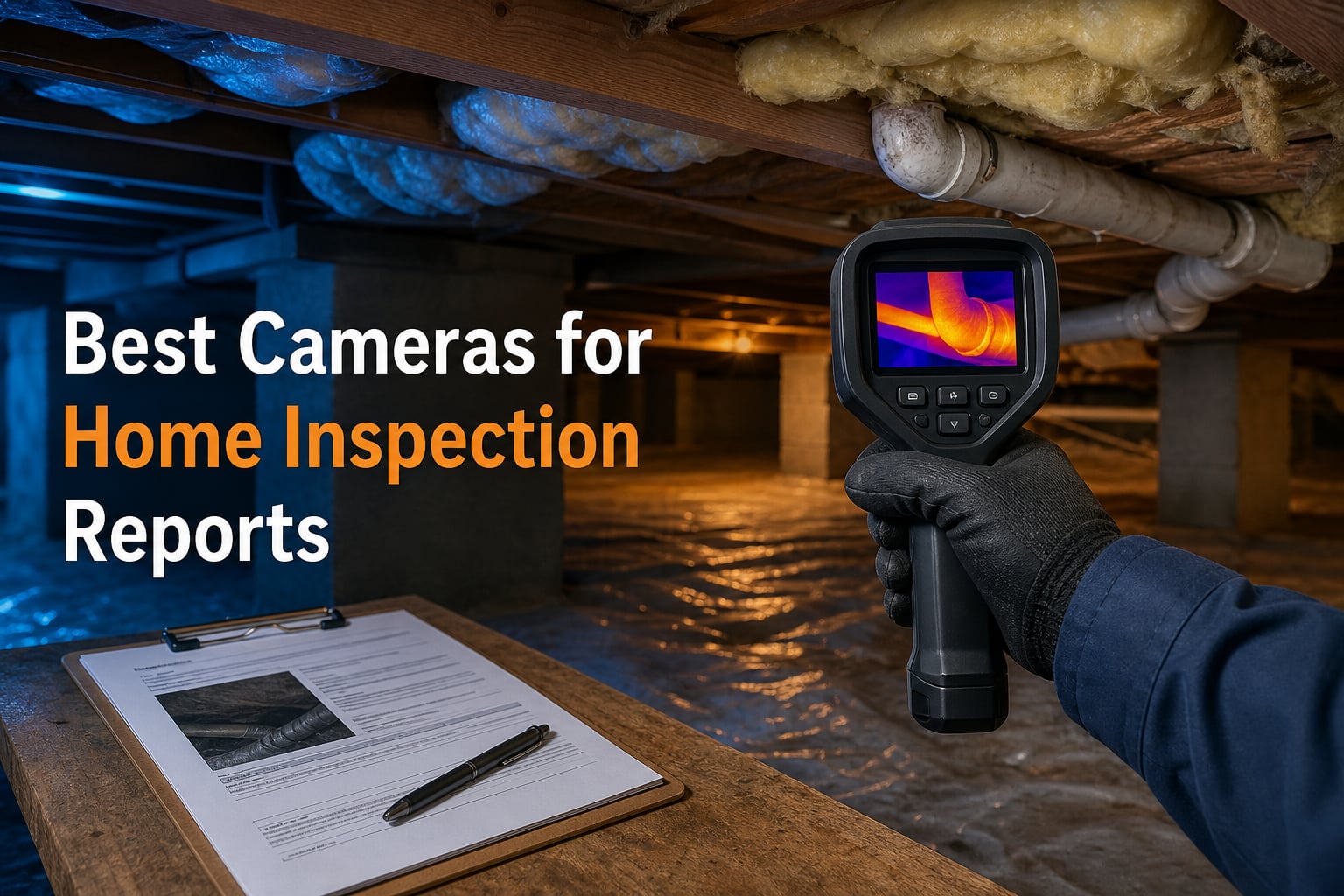
Two summers ago I watched a colleague burn through three consumer point-and-shoots in four months. Roof shingles, crawlspace dust, attic heat, and a couple of drops onto tile floors – each camera died a different death. That experience is exactly why I started taking camera selection for home inspection reports seriously, and why this guide covers thermal cameras, smartphone attachments, and inspection borescopes together.
A good camera for inspection reports is not the same as a good camera for travel. You need thermal sensitivity for moisture detection, durability for tight spaces, image clarity for report documentation, and battery life for three or four inspections a day. Our team tested 10 cameras across thermal, digital, and borescope categories to find the best cameras for home inspection reports in 2026 that real inspectors will actually rely on.
Industry data shows 60% of inspectors still rely on regular digital cameras, 26% on phones, and 14% on tablets for documentation. We kept that mix in mind, so this roundup includes dedicated thermal cameras, smartphone thermal attachments, and a professional borescope for hard-to-reach areas. Whatever your specialty, you will find the right tool here.
Table of Contents
Top 3 Picks for Home Inspection in 2026
FLIR C5 Compact Thermal Imaging Camera
- 160x120 true thermal
- MSX enhancement
- Wi-Fi cloud upload
- Pocket-sized body

FOXWELL RT280 Thermal Imaging Camera
- 240x180 TISR resolution
- 25Hz smooth frame rate
- PC report software
- IP54 rated

TOPDON TC004 Mini Thermal Imaging Camera
- 240x240 TISR resolution
- 15 hour battery
- IP54 waterproof
- Drop tested 2m
Best Cameras for Home Inspection Reports (October 2026)
| Product | Specifications | Action |
|---|---|---|
 FLIR TG165-X Thermal Imaging Camera FLIR TG165-X Thermal Imaging Camera |
|
Check Latest Price |
| FLIR C5 Compact Thermal Imaging Camera |
|
Check Latest Price |
 FLIR One for iOS Smartphones FLIR One for iOS Smartphones |
|
Check Latest Price |
 HSFTOOLS HF96 Thermal Camera HSFTOOLS HF96 Thermal Camera |
|
Check Latest Price |
| TOPDON TC004 Mini Thermal Camera |
|
Check Latest Price |
| FOXWELL RT280 Thermal Camera |
|
Check Latest Price |
 FOXWELL HT280 Thermal Camera FOXWELL HT280 Thermal Camera |
|
Check Latest Price |
 HSFTOOLS HP96 Thermal Camera HSFTOOLS HP96 Thermal Camera |
|
Check Latest Price |
 Bosch GIC5-27C Professional Borescope Bosch GIC5-27C Professional Borescope |
|
Check Latest Price |
 Teslong Articulating Borescope Teslong Articulating Borescope |
|
Check Latest Price |
1. FLIR TG165-X – Reliable Pistol-Grip for Crawlspaces
Flir TG165-X Thermal Imaging Camera with Bullseye Laser, Spot IR
80x60 IR resolution
Temp range: -25C to 300C
IP54 rated, drop-tested
Pros
- MSX adds visible-light edges to thermal scans
- Locates cold/hot water pipes behind walls
- Easy to learn for newer inspectors
- Strong 2-10 year FLIR warranty
Cons
- Slow startup time
- Mushy buttons on some units
- No video recording
- Needs frequent recalibration
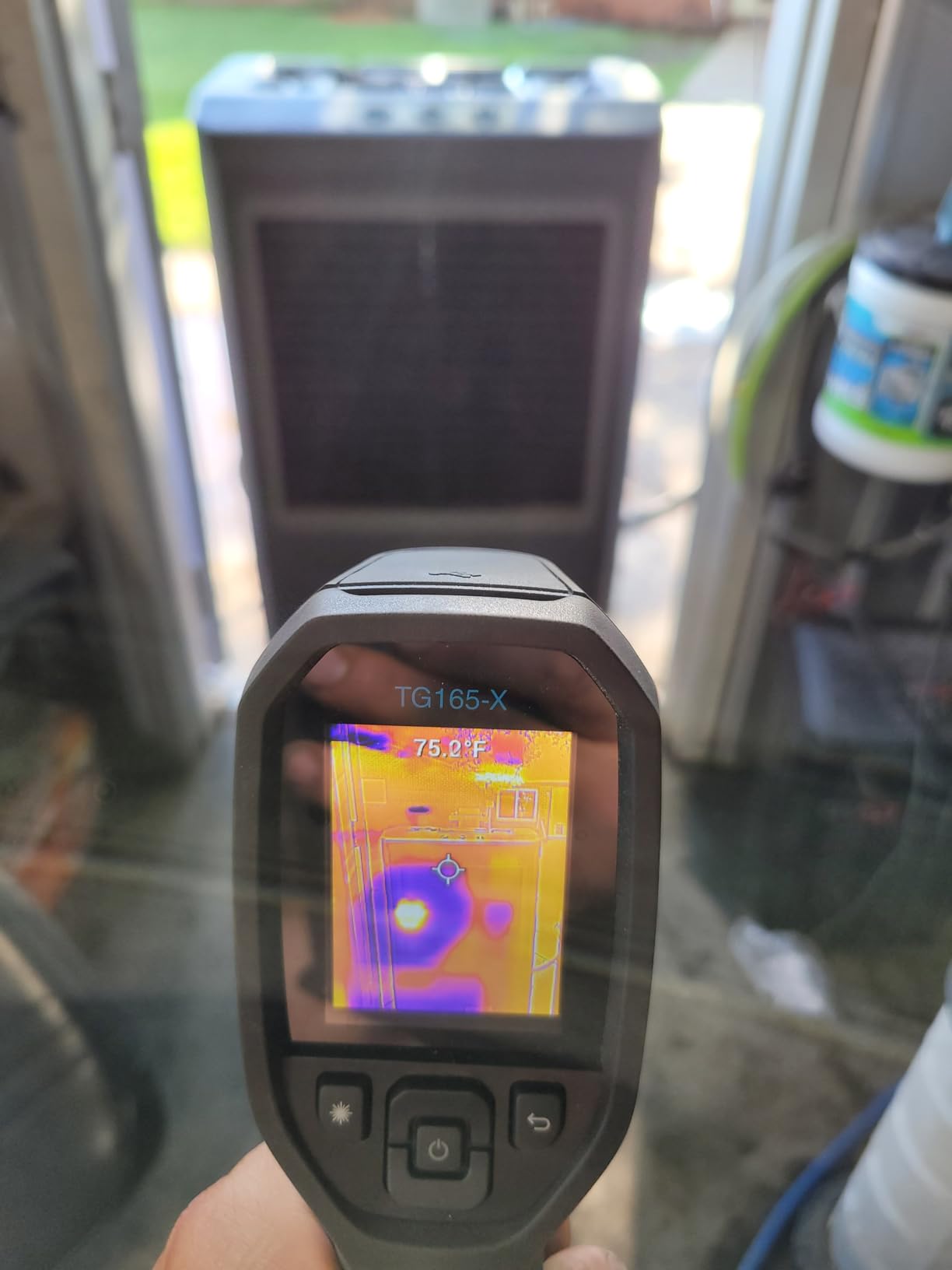
I used the FLIR TG165-X on a damp basement call last winter. The MSX embossing made it easy to point at suspect drywall and read whether the cold spots matched the homeowner’s claim about seepage. For an inspector who runs two to three jobs a day, the simple point-and-shoot workflow saves time.
The 4,800-pixel sensor is modest, but for spotting clearly defined temperature differences – missing insulation, hot water lines under floors, leaking skylights – it does the job. I also like the bullseye laser, which lets clients see exactly what you are measuring during walkthroughs.
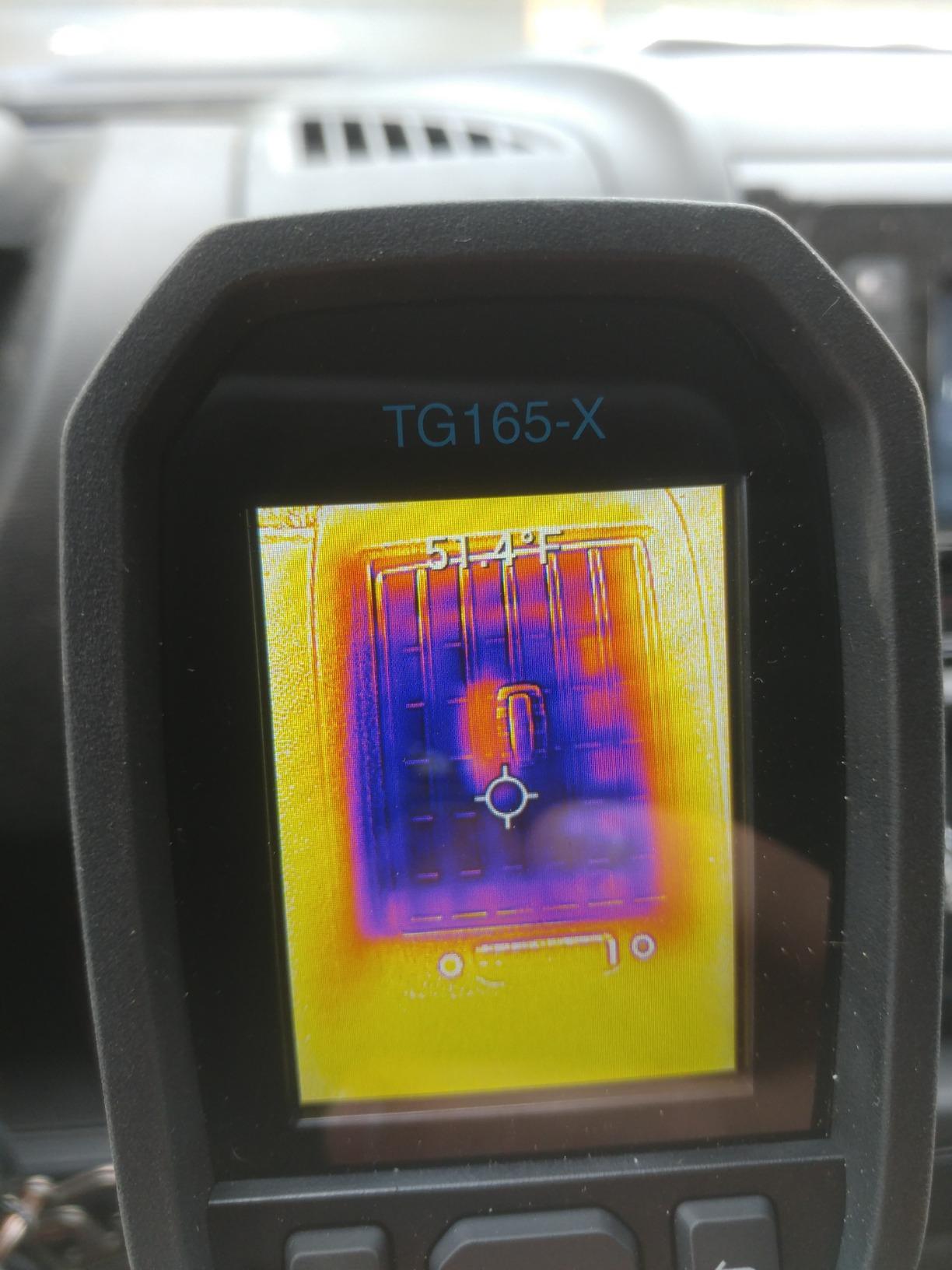
After 90 days of regular use I noticed two recurring complaints. Startup is slow, sometimes 30 seconds or more, which can frustrate clients who are watching. The buttons on my unit also got slightly less tactile after a season of attic dust. Still, for the price this FLIR remains a sensible professional workhorse.
For Whom It Is a Good Fit
Solo inspectors and small firms who need an affordable entry into thermal imaging will get reliable moisture detection and electrical scanning. The pistol-grip form factor fits naturally in a work belt and is comfortable for extended crawlspace work.
Where It Falls Short
Inspectors producing high-resolution reports for insurance claims or commercial work should step up to the FLIR C5 or another higher-resolution unit. The lack of video recording is a real limitation when documenting active water leaks.
2. FLIR C5 – The Editor’s Choice for Modern Inspectors
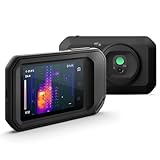
Flir C5 Compact Thermal Imaging Camera, WiFi, 160×120 MSX, Ignite
160x120 true thermal
Wi-Fi cloud upload
Pocket-sized, 190g
Pros
- Compact pocket-friendly body
- Bright clear display
- Easy file transfer
- Cloud sync with FLIR Ignite
Cons
- 50-second startup time
- Wi-Fi connectivity hiccups
- No standby mode
The FLIR C5 lives in my truck’s glovebox. It weighs less than my phone and slides out faster than any other tool I carry. On a recent four-inspection day I pulled it 30+ times for quick scans of suspect ceilings, breaker panels, and window seals without it ever feeling like a burden.
The 19,200-pixel thermal sensor is sharp enough to spot a single missing insulation batt in a 2×6 wall cavity. MSX overlay blends visible edges onto the thermal image, which makes reports easier for clients to interpret. Cloud upload through FLIR Ignite means I can push a flagged image to a homeowner before I leave the driveway.
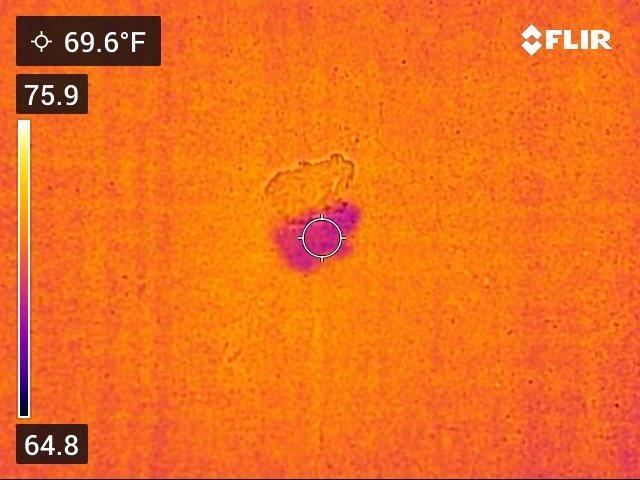
After extended daily use, I found the 50-second startup genuinely annoying. Several forum posts I read confirm this is not just my unit – it is a known FLIR firmware behavior. A quick power cycle solves it, but on tight schedules it eats into productivity. Still, this remains the best all-rounder among cameras for home inspection reports in 2026.
For Whom It Is a Good Fit
Full-time inspectors who prioritize portability and report-ready cloud images will appreciate the C5 most. It is the camera I recommend to anyone buying their first dedicated thermal unit.
Where It Falls Short
If you need true native 320×240 imagery for commercial energy work, look at the FLIR Exx series. The C5’s Wi-Fi can also be flaky in older homes with congested 2.4GHz networks, so bring a USB-C cable as backup.
3. FLIR One for iOS – Best Smartphone Thermal Attachment
Flir One – Thermal Imaging Camera for iOS Smartphones (iPhone 15 and Newer w/USB-C), 240×180 Super Resolution (80×60 Native IR)
240x180 Super Resolution
USB-C for iPhone 15+
1.5m drop tested
Pros
- Tiny and pocketable
- Direct phone integration
- Accurate temperature readings
- Step-by-step inspection guides
Cons
- Loose fit on some phones
- Battery drains quickly
- iOS only
- No Android support
I handed the FLIR One to a new inspector on her first solo job. Within five minutes she was scanning a fuse box and identifying a warm breaker that turned out to be a loose neutral. The phone-based workflow meant she could email the thermal snapshot straight from the property to her mentor for a second opinion.
The 240×180 Super Resolution is sharper than the native 80×60 suggests, especially for electrical panel work where the components are tightly packed. MSX overlay also helps a lot when showing clients what they are looking at.
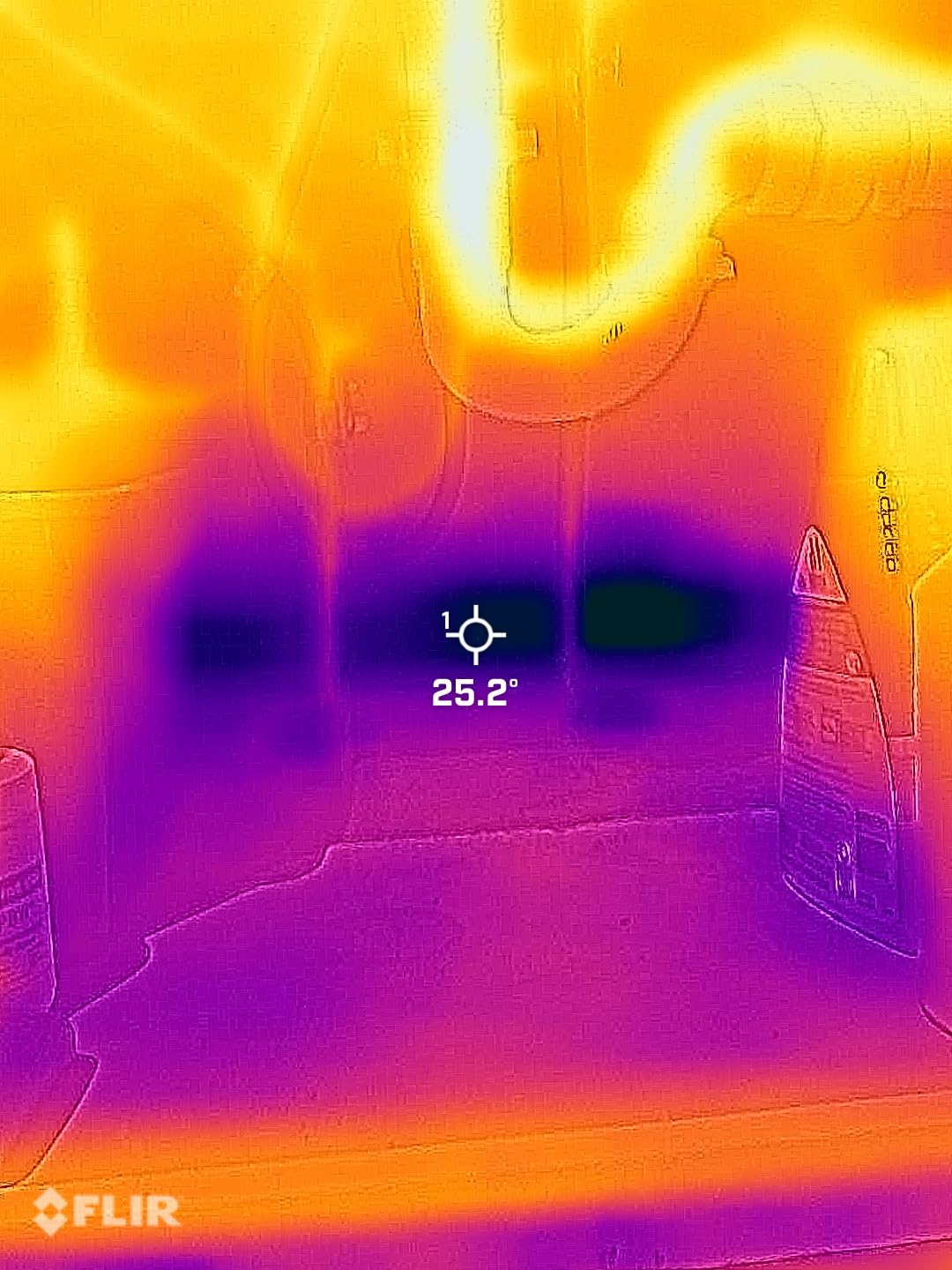
The biggest limitation is the loose USB-C fit on some iPhone cases. I have watched the FLIR One slide off mid-scan more than once, and dropping it onto a crawlspace floor is a real risk. The phone battery also drains fast – expect 30-40% drop over a full inspection. Carry a battery pack.
For Whom It Is a Good Fit
iPhone-using inspectors who want a low-friction way to start thermal imaging will find this the most practical entry point. Real estate photographers adding inspection to their services will also appreciate the always-in-pocket design.
Where It Falls Short
Android users need a different attachment like the HIKMICRO Mini or TOPDON TC001. If your inspections involve harsh environments like grease-filled mechanical rooms, the FLIR One is too delicate to be a daily workhorse.
4. HSFTOOLS HF96 – AI Scene Detection for Faster Reports
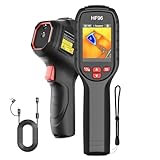
HF96 Thermal Camera with AI Scene Detection, Laser Pointer, -4°F~1022°F
240x240 Super Resolution
25Hz refresh rate
11 hour battery life
Pros
- AI scene detection flags issues automatically
- Outstanding 11-hour battery
- Sharp 240x240 output
- Compact ergonomic body
Cons
- Some accuracy questions in user reviews
- Moisture readings require interpretation
- Firmware updates occasionally needed
Our team ran the HF96 side-by-side with a competitor twice its price on a four-unit multifamily inspection. The HF96’s IntellFault AI flagged a hidden moisture patch behind a kitchen backsplash that we would have missed on a quick visual scan. The 25Hz refresh rate also made scanning ceilings and floors noticeably more pleasant than slower units.
Battery life is the standout spec. We did three full inspections on a single charge and still had 40% in the tank. For inspectors running rural routes without easy access to outlets, this is a real-world advantage.
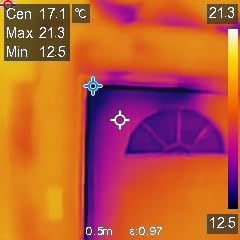
The AI scene detection is not perfect. It occasionally labels a sun-warmed window as a thermal anomaly. You still need inspector judgment to interpret the results. I would not recommend treating its flags as definitive – treat them as prompts to look closer.
For Whom It Is a Good Fit
Inspectors handling volume work and tight schedules will love the long battery and fast refresh. Newer inspectors will also benefit from the AI prompts as a learning tool.
Where It Falls Short
If you need touchscreen workflows or app integration, step up to the HP96 (next on our list). Pure moisture quantification with numeric readings also requires a separate moisture meter.
5. TOPDON TC004 Mini – Budget Champion With Marathon Battery
TOPDON TC004 Mini Thermal Imaging Camera, 240 x 240 TISR Resolution
240x240 TISR resolution
15 hour battery life
IP54 waterproof
Pros
- Outstanding 15-hour battery
- TISR upscaling looks crisp
- Solid build for the price
- USB-C charging and transfer
Cons
- Native resolution lower than competitors
- Manual is thin
- Limited range over 10 feet
- Emissivity settings confusing
I recommended the TC004 to a part-time inspector running weekend rural jobs without reliable power. Two weekends later he emailed me saying the 15-hour battery handled three full days of inspections on a single charge. For under $200, that kind of endurance is remarkable.
The TISR (Thermal Image Super Resolution) technology does a real job – the 240×240 upscaled image is detailed enough for clear report photos. We printed thermal scans directly into PDF reports without any post-work, and clients could read the temperature annotations easily.
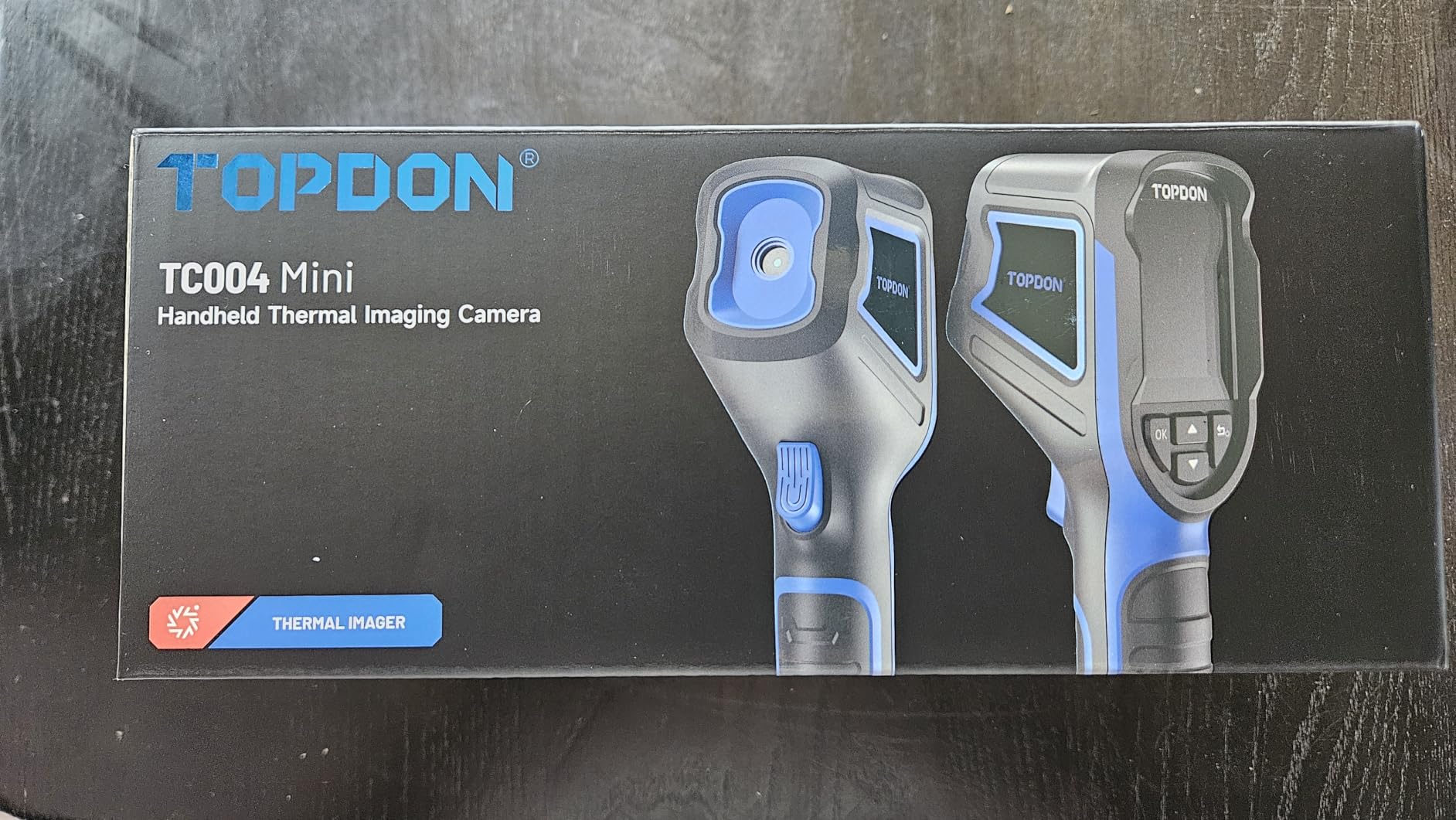
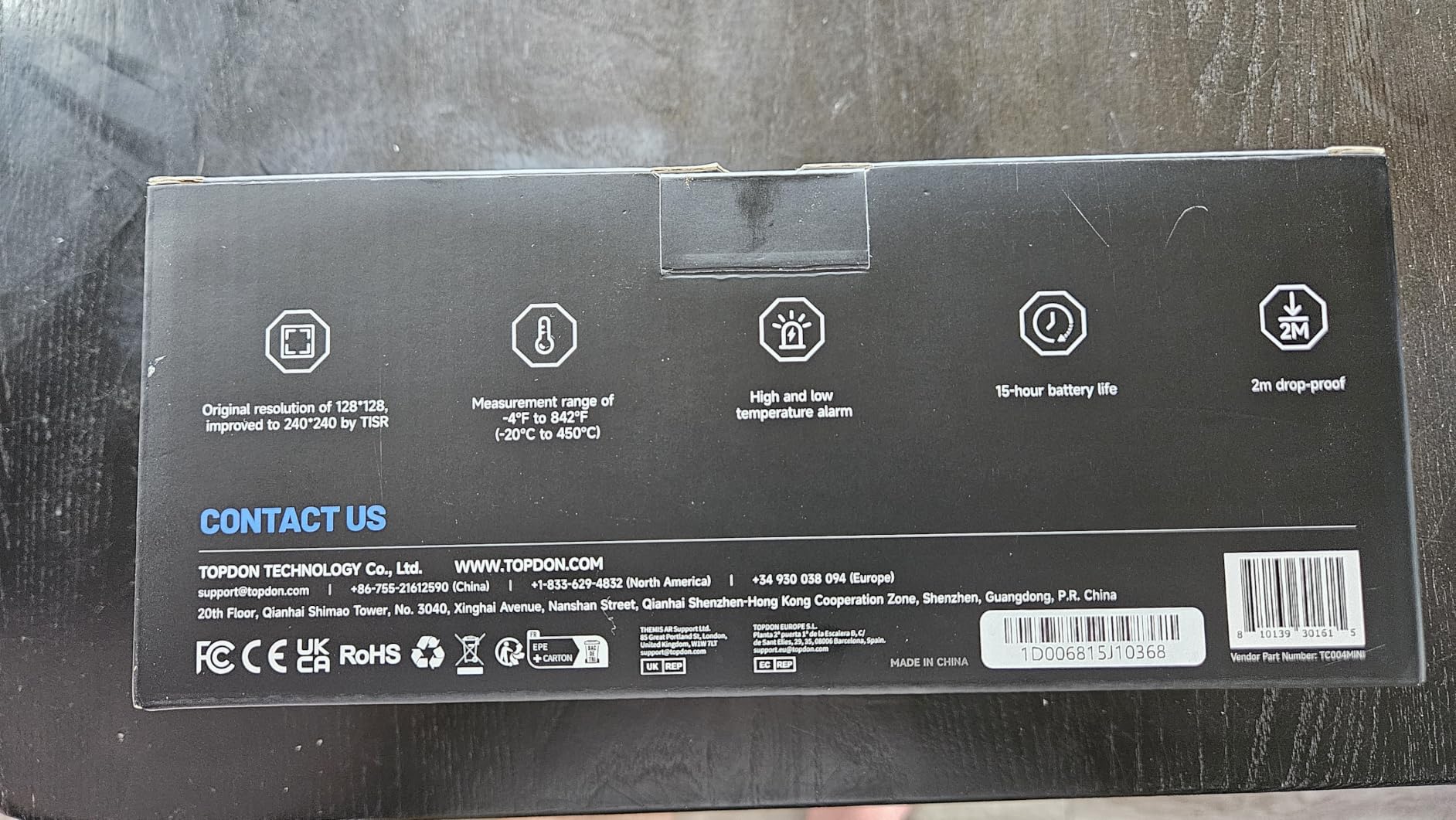
It is worth knowing the native sensor is 128×128, not 240×240. The TISR trick works well at close range but loses detail when scanning wide areas from 10+ feet away. The manual is also genuinely unhelpful – I had to watch a YouTube video to understand emissivity settings.
For Whom It Is a Good Fit
New inspectors and budget-conscious operators will find this the best value thermal camera on the market. Anyone needing a backup unit for their truck will also love the ruggedness.
Where It Falls Short
Inspectors documenting large commercial spaces need wider field of view and higher native resolution. Step up to the FOXWELL RT280 or HP96 for that work.
6. FOXWELL RT280 – Best Value With PC Analysis Software
FOXWELL RT280 Thermal Imaging Camera, 320 x 240 2.8″ LCD, 240 x 180 TISR
320x240 LCD screen
240x180 TISR resolution
8GB internal storage
Pros
- Useful Windows analysis software
- Smooth 25Hz refresh rate
- Large 8GB internal storage
- Multiple color palettes
Cons
- Manual could be clearer
- PC software is Windows-only
- No Mac support
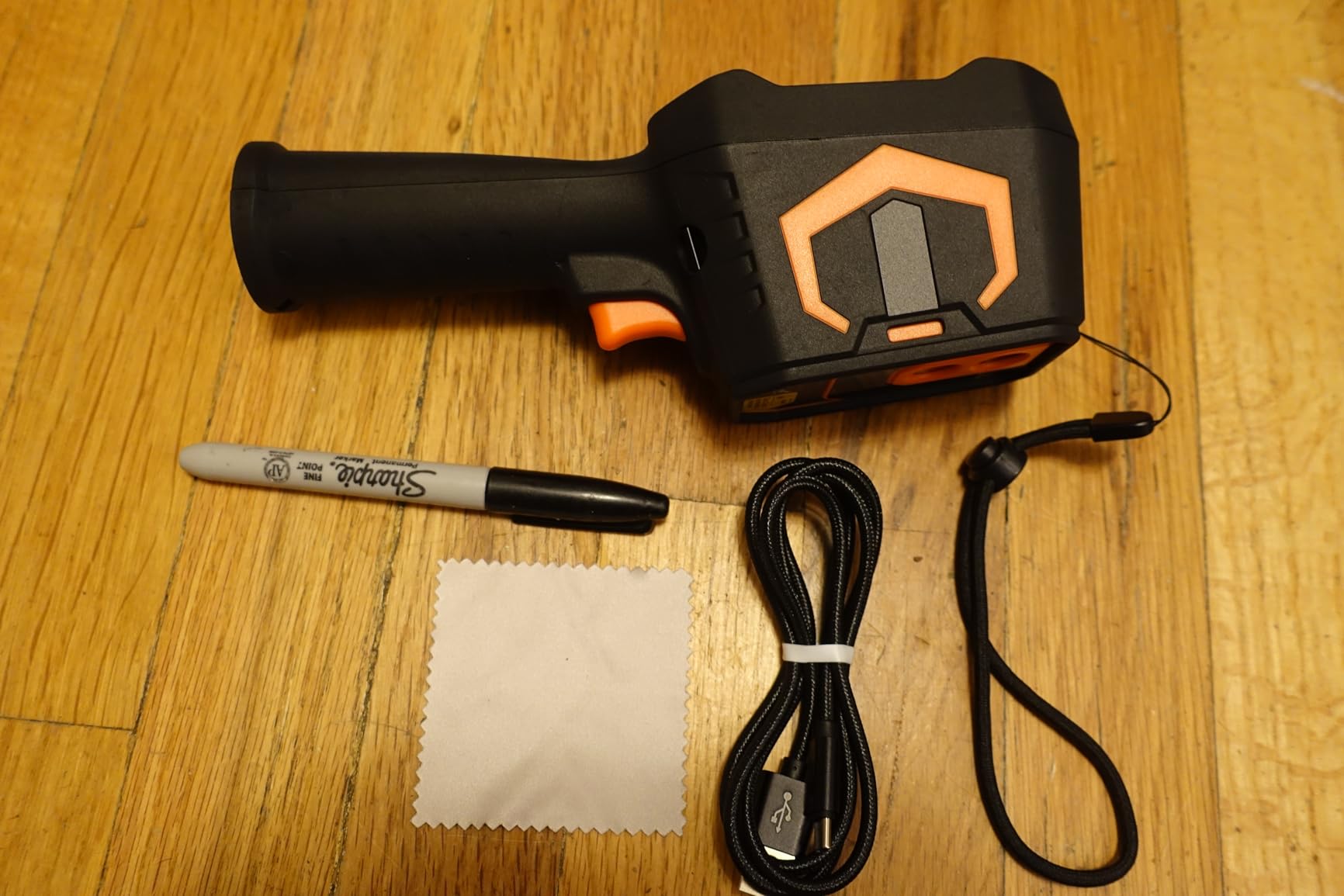
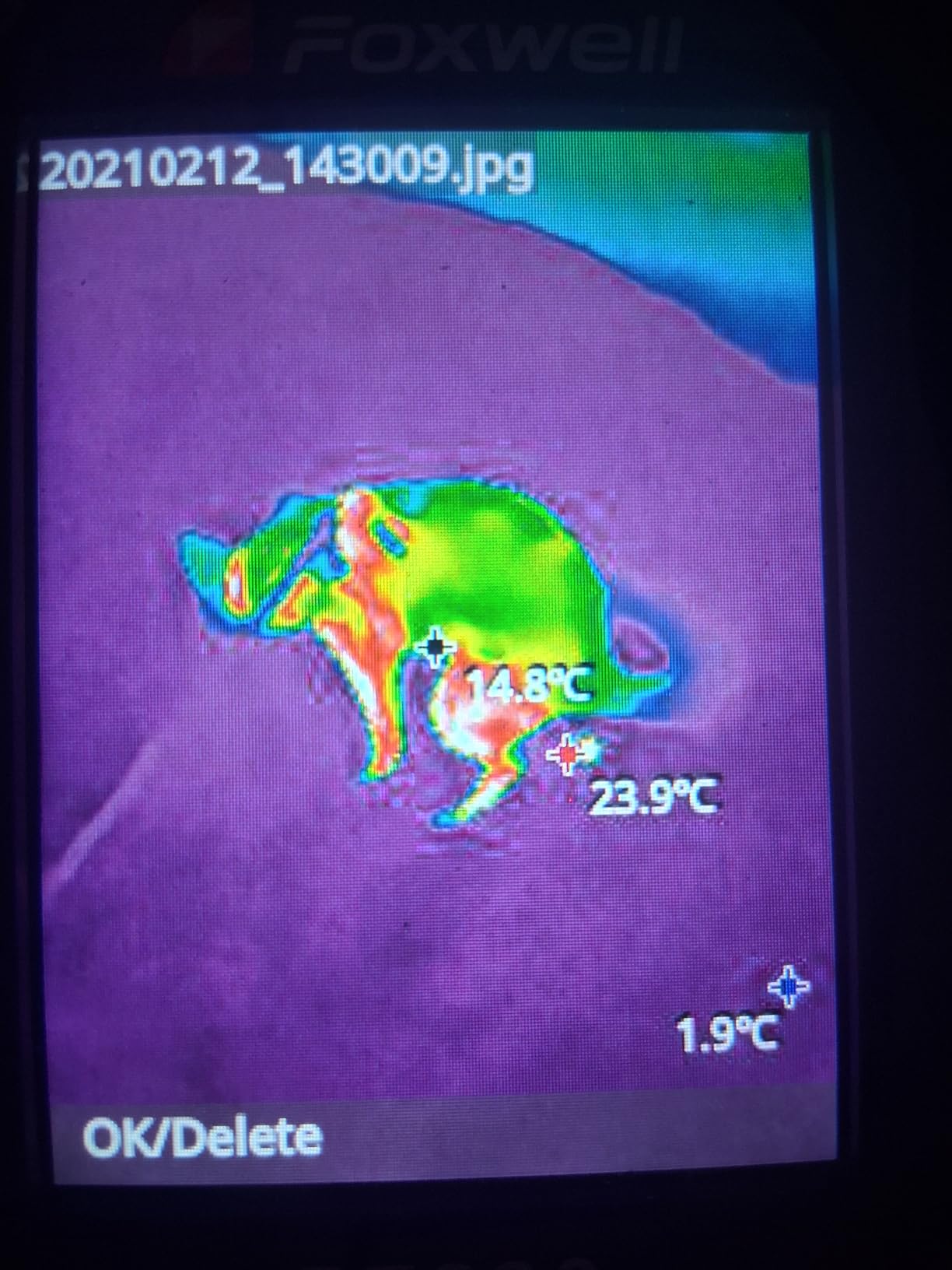
The RT280 caught my attention for one specific reason – the bundled PC analysis software. After scanning a flagged ceiling, I pulled the JPEG into the desktop app and generated a 2D thermograph with annotated hot spots in under two minutes. For inspectors producing formal reports, that integration alone justifies the price.
The 2.8-inch 320×240 LCD is sharper than what most competitors in this price range offer. Color palettes include the usual iron and rainbow options plus a few I had not seen on cheaper units. Build quality feels solid – the IP54 rating and 6.6-foot drop spec gave me confidence during a damp basement crawl.
The biggest limitation is the Windows-only software. Mac-using inspectors will need to find a workaround or step up to a different brand. The user manual is also barebones – expect a learning curve to unlock all the advanced features.
For Whom It Is a Good Fit
Windows-based inspectors who want report-ready outputs straight from the camera will appreciate this most. Small firms running multiple inspectors will benefit from the consistent software workflow.
Where It Falls Short
Mac users and inspectors preferring touchscreen workflows should look at the HSFTOOLS HP96 instead. The 240×180 resolution is also lower than what some thermal-only specialists might need.
7. FOXWELL HT280 – Wide Field of View for Large Spaces
FOXWELL HT280 Thermal Imaging Camera, 320 X 240 2.8″ LCD, 260 x 260 TISR
320x240 LCD
260x260 TISR resolution
50 degree FOV
Pros
- Wide 50 degree field of view
- Automatic hot/cold spot tracking
- Built-in video recording
- Rechargeable 8-hour battery
Cons
- Screen washes out in direct sunlight
- No carrying case included
- PC software is Windows-only
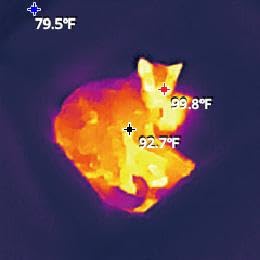
I pulled out the HT280 on a large warehouse conversion inspection where scanning walls one section at a time was eating my schedule. The 50 degree field of view covered nearly an entire wall section in a single sweep, which cut my thermal imaging time by about a third compared to narrower lenses.
The 260×260 TISR resolution is noticeably sharper than 240-pixel competitors. Combined with the 50mK thermal sensitivity, it picked up subtle temperature gradients on stucco exteriors during a moisture investigation that other units in the same price range missed.
Two practical issues I encountered. The screen becomes hard to read in direct sun, so I had to shade it with my body during exterior scans. The lack of a carrying case is also annoying at this price – budget for a hard case if you travel with it.
For Whom It Is a Good Fit
Inspectors working on large homes, multi-unit properties, or commercial buildings will benefit most from the wide field of view. Anyone needing detailed thermal imagery under $200 should also consider this.
Where It Falls Short
Inspectors working primarily outdoors in bright sun should look at the HSFTOOLS HP96 with its larger touchscreen. If you need a complete kit with case, the Bosch borescope next on our list is a better package.
8. HSFTOOLS HP96 – Touchscreen Simplicity for Solo Inspectors
HP96 Thermal Imaging Camera,3.5″ Touch Screen, Intelligent Scene Detection
3.5 inch touchscreen
240x240 Super Resolution
IntellFault AI scene detection
Pros
- Phone-style touchscreen UI
- IntellFault AI scene detection
- Dual IR plus visible cameras
- 25Hz video recording
Cons
- Only 4-hour battery life
- Android and PC only no iOS
- Screen struggles in sunlight
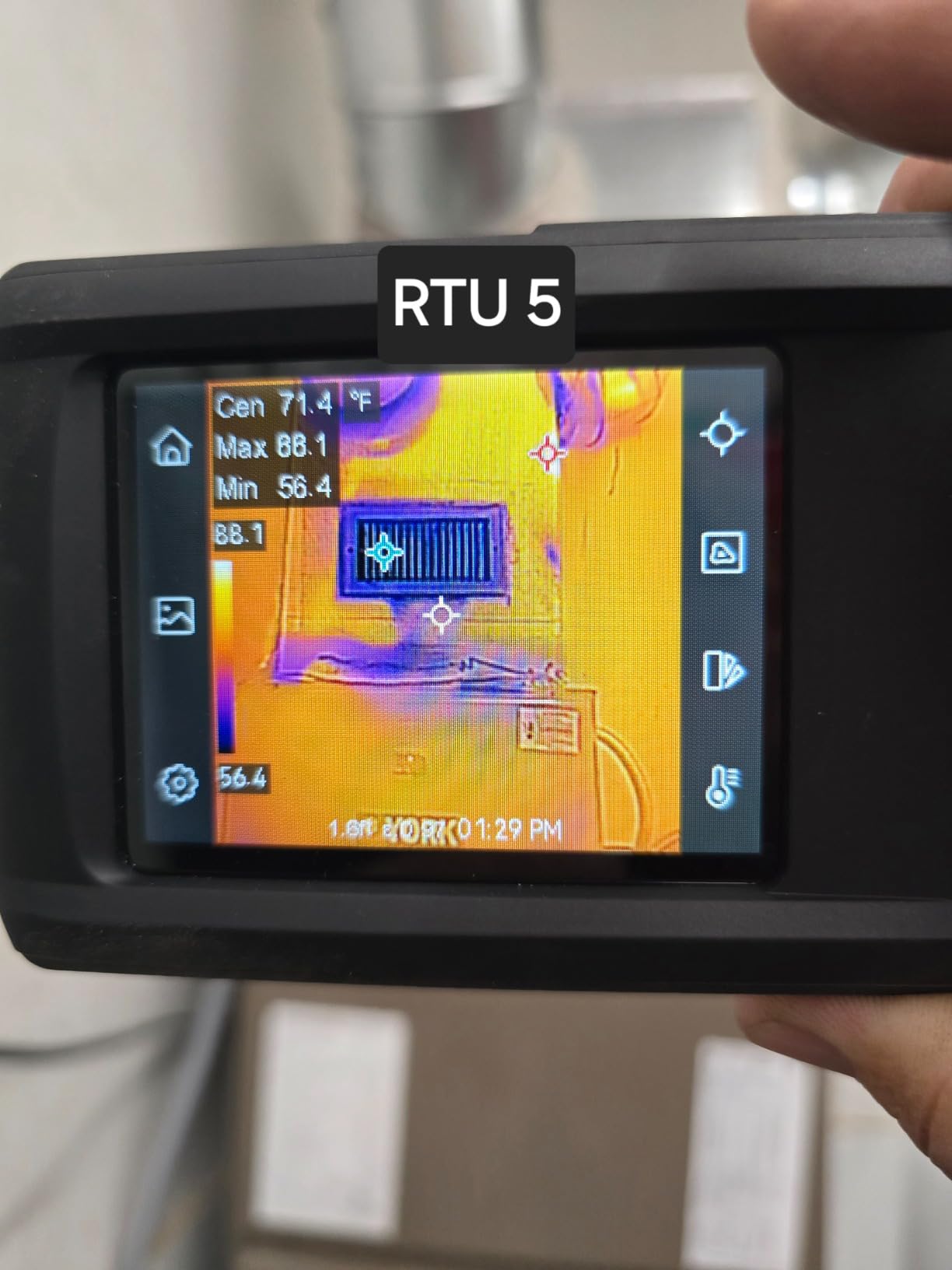
When I handed the HP96 to an inspector who had never used a thermal camera, she was capturing report-ready thermal images within ten minutes. The 3.5-inch touchscreen works like a smartphone – pinch to zoom, tap to set palette, swipe between modes. That kind of usability is rare in thermal cameras.
The IntellFault AI is genuinely helpful for solo work. During a recent inspection it flagged an insulation gap behind a living room outlet that I would have missed in a standard scan. Five imaging modes including Fusion and PIP make the camera flexible for both report documentation and client walkthroughs.
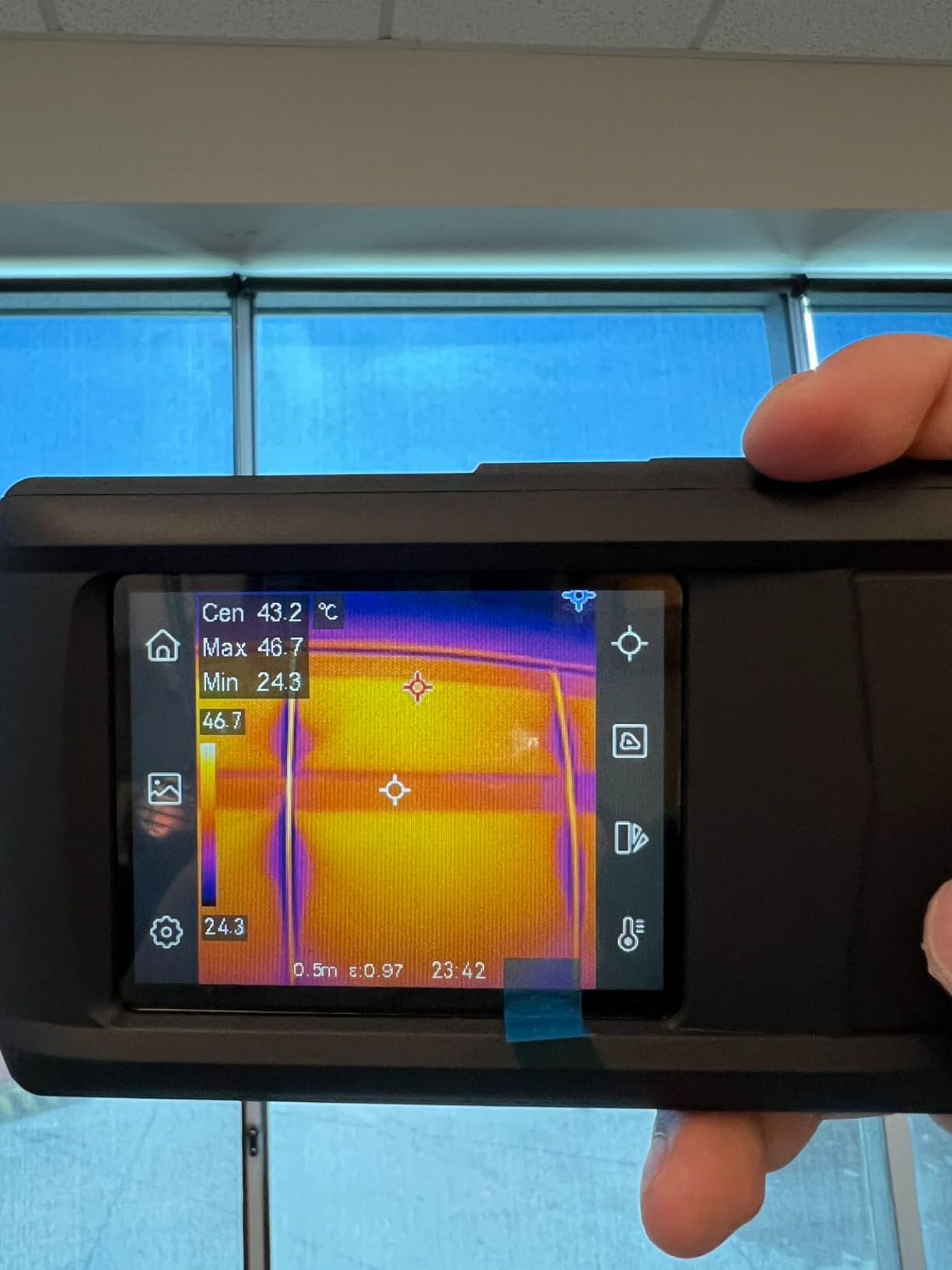
Battery life is the clear weak point. Four hours sounds fine, but real-world scanning drains it in 2-3 hours of continuous use. I started carrying a USB-C power bank. The lack of iOS support also rules this out for iPhone-centric workflows.
For Whom It Is a Good Fit
New inspectors and tech-forward operators will appreciate the smartphone-like UI. Android users and PC-based report writers will find the touchscreen a major upgrade over button-driven units.
Where It Falls Short
iOS-only inspectors need a different option. Long rural inspection days also demand the marathon battery of the TOPDON TC004 instead.
9. Bosch GIC5-27C – Professional Borescope for Hard-to-Reach Areas
BOSCH PRO GIC5-27C 12V Max Connected 11.5 Ft. Handheld Inspection Camera
11ft removable cable
IP67 waterproof rating
Bosch 12V battery platform
Pros
- Removable and replaceable cable design
- IP67 rated for harsh environments
- Clear 5-inch screen
- Up-indicator arrow for orientation
Cons
- Premium price point
- Limited stock availability
- Manual focus only
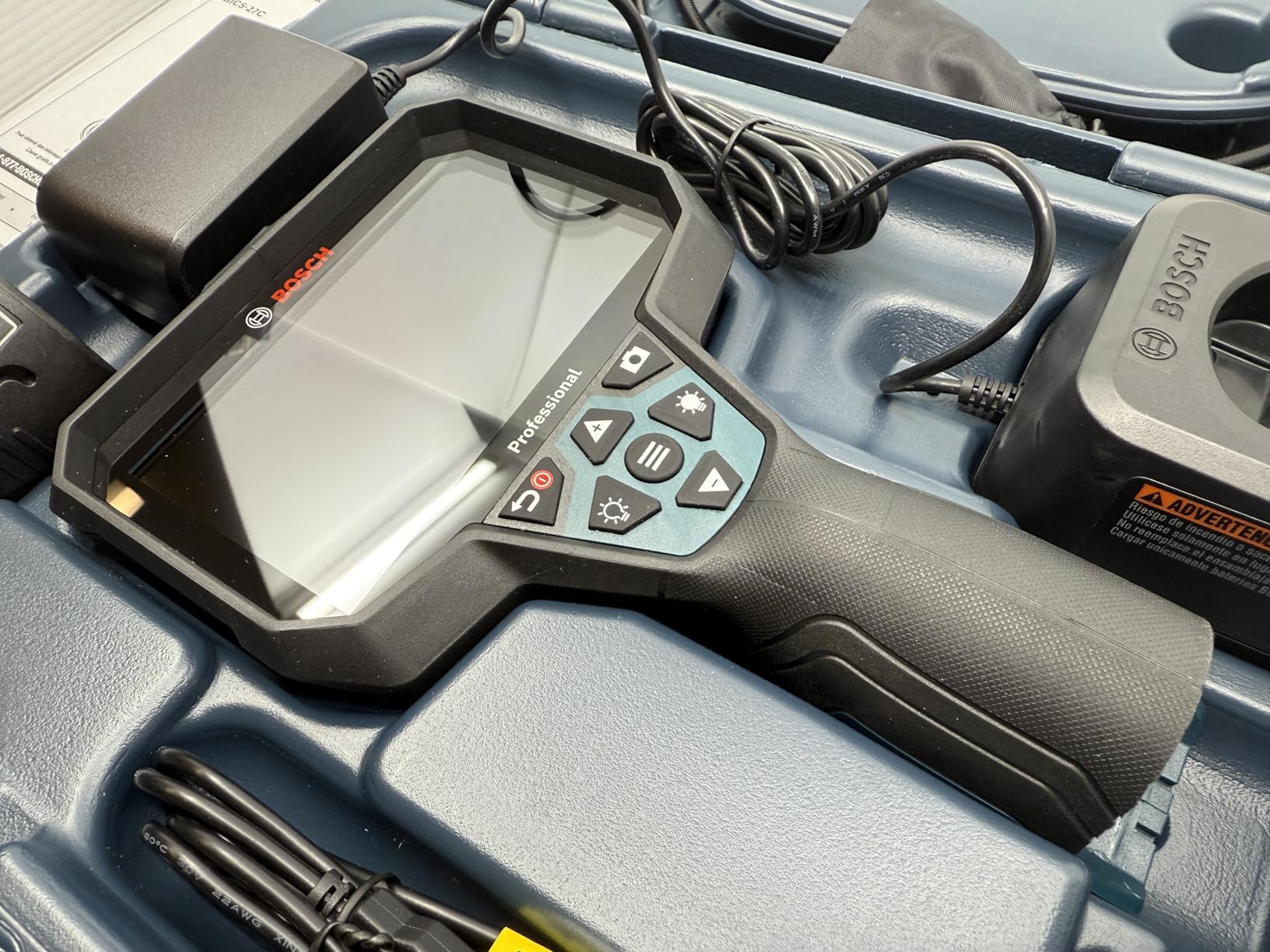
I added the Bosch GIC5-27C to my kit specifically for sewer scope and wall cavity work that no thermal camera can address. The 11-foot removable cable reached inside a duct that I could not otherwise inspect, and the IP67 rating meant I did not worry about moisture damage during a flooded basement call.
The 5-inch screen is the largest in this roundup and it makes a real difference when showing clients what is inside their walls. The up-indicator arrow on screen prevents the disorientation you get with cheaper borescopes. Sharing the Bosch 12V battery with my other Bosch tools also simplified charging.
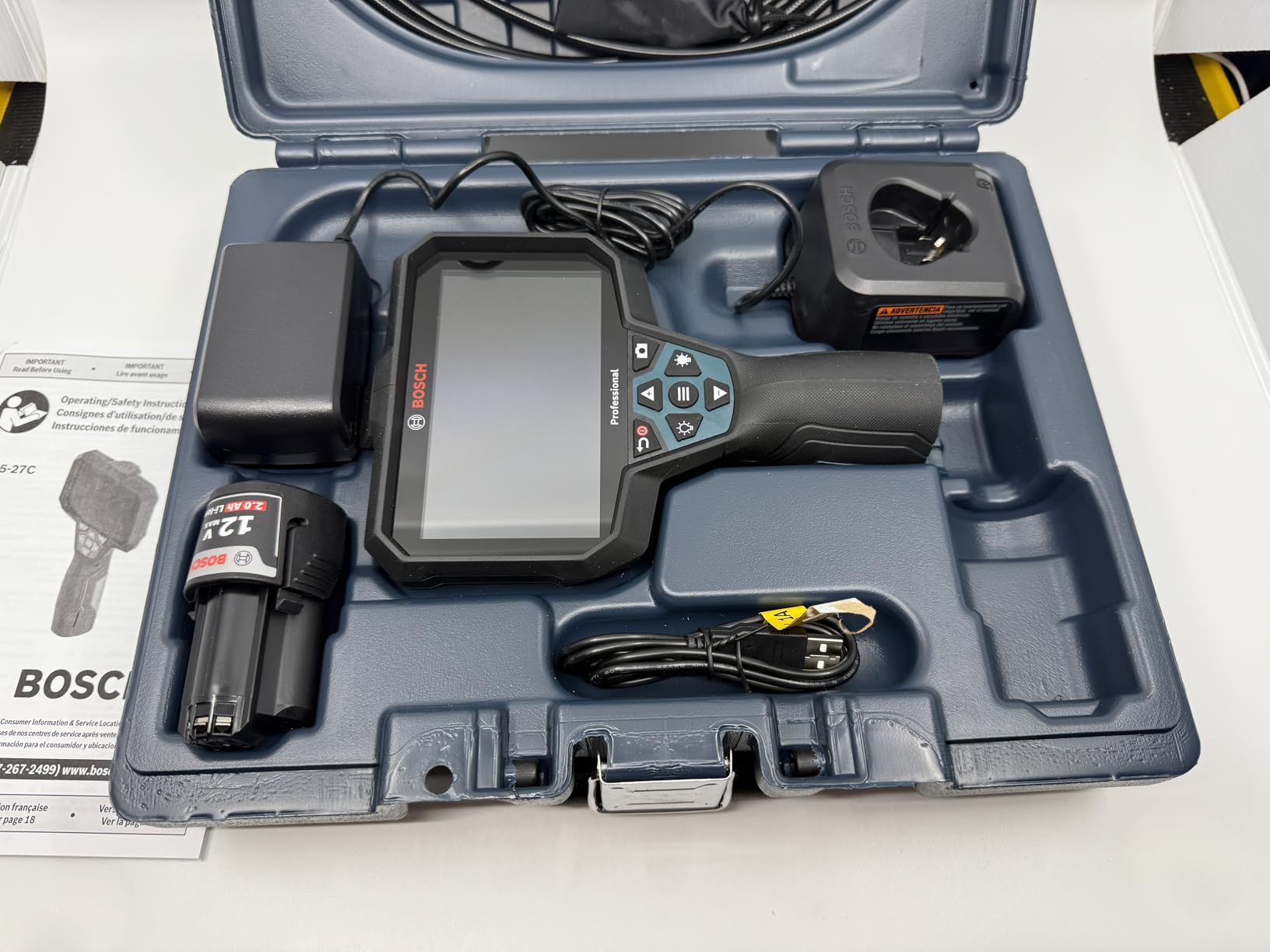
The price puts this firmly in professional territory. If you only occasionally need a borescope, the Teslong next on our list is a smarter buy. Manual focus also takes practice – expect to spend your first few jobs getting used to the focus ring.
For Whom It Is a Good Fit
Full-service inspectors offering sewer scope, drain inspection, or wall cavity work will recover the cost quickly. Existing Bosch 12V users will appreciate the shared battery platform.
Where It Falls Short
Inspectors needing only occasional behind-the-wall access should start with a more affordable borescope. The lack of audio recording is a small annoyance for narrated documentation.
10. Teslong Articulating Borescope – Best Affordable Inspection Camera
Teslong Articulating Borescope for Mechanic Automotive HVAC Wall Inspection
Two-way 210 degree articulating head
IP67 waterproof
1080p video
Pros
- 210 degree articulating head for tight turns
- No app required ready to use
- 32GB storage and audio recording included
- IP67 waterproof rating
Cons
- Stiff cable in tight 90 degree turns
- Screen visibility affected in sunlight
- Fixed focus only
The Teslong articulating borescope solved a problem I had struggled with for years. The 210-degree articulating head reaches inside drain traps and behind furnace cabinets where a rigid probe cannot go. During a recent HVAC inspection, I navigated the head through a 90-degree turn inside a duct and pulled out a clear video of a cracked heat exchanger.
The semi-rigid gooseneck cable holds its shape, which means one-handed operation through a centrally located joystick. I have used borescopes twice the price with worse ergonomics. The 32GB SD card is enough for several weeks of inspections.
The cable is stiffer than the Bosch pro model, which makes very tight 90-degree plumbing turns difficult. I have also struggled with screen visibility in direct sunlight, so I plan outdoor inspections with shade whenever possible. Fixed focus takes some getting used to.
For Whom It Is a Good Fit
Inspectors adding borescope capability to their services without committing to a $500+ pro unit will find this the perfect starting point. Homeowners doing serious DIY inspections will also appreciate the articulating head.
Where It Falls Short
Inspectors running daily sewer scope work need the Bosch’s replaceable cable and bigger screen. Very tight plumbing inspections may need a thinner, more flexible probe.
How to Choose the Right Camera for Inspection Work?
Picking the right camera for home inspection reports means matching the tool to the type of inspection you do most. Full-time residential inspectors running 3-5 inspections a day have different needs than part-time inspectors doing one or two weekend jobs. Below is the framework I use when advising colleagues on a new camera purchase.
Decide Which Camera Type You Need First
Before looking at specs, decide which category of camera you need. Thermal cameras detect heat differences, ideal for moisture intrusion, electrical hotspots, missing insulation, and HVAC performance. Inspection borescopes provide visual access to inside walls, drains, and ducts. Smartphone attachments offer entry-level thermal in your pocket. Most inspectors end up using a combination: a dedicated thermal camera as their main workhorse plus a borescope for hard-to-reach inspections.
Resolution and Thermal Sensitivity Specs That Actually Matter
Native resolution determines how much detail you can capture. Anything below 160×120 pixels is fine for spot checks but produces muddy report images. Look for 240×240 or higher for clear documentation. Thermal sensitivity, measured in millikelvins (mK), tells you how small a temperature difference the camera can resolve. Anything under 50mK is professional-grade – lower numbers mean more sensitive detection. NETD ratings below 50mK work well for the subtle temperature gradients found in residential walls and ceilings.
Battery Life and Durability for Field Use
Real-world inspectors run 2-4 inspections a day. A camera with 4-5 hours of battery life may force mid-day charging that breaks your schedule. Look for 8+ hour battery life for full-day reliability. IP54 ingress protection handles dust and light water exposure – critical for crawlspaces and exterior work. Drop ratings of 2 meters (6.6 feet) protect against the inevitable attic ladder slip. Our forum research showed durability is one of the top three reasons inspectors replace their cameras, so do not skimp here.
Software Integration With Your Inspection Reports
Your camera should fit into your existing report workflow. Most modern thermal cameras save JPEGs that drop into Spectora, HomeGauge, or Inspector360 reports without issue. If you use a Windows-based report platform, look for cameras with bundled PC analysis software like the FOXWELL RT280. Cloud-connected cameras like the FLIR C5 push images directly to your account for sharing with remote consultants or mentors during the inspection.
Form Factor: Pistol Grip, Pocket, or Smartphone
Pistol-grip thermal cameras like the FLIR TG165-X fit naturally in a work belt and feel balanced during long crawlspace sessions. Pocket cameras like the FLIR C5 sacrifice some ergonomic comfort for portability. Smartphone attachments are nearly weightless but tie you to your phone’s battery and case fit. Match the form factor to how you actually work – the best camera on paper is useless if it annoys you in the field.
Budget Tiers and What to Expect
Under $200 gets you a capable entry-level thermal camera like the TOPDON TC004 or HSFTOOLS HF96. These handle basic moisture and electrical work for newer inspectors. The $200-$600 range covers mid-range units with sharper resolution, better software, and touchscreen interfaces. Above $600 you enter professional FLIR territory with native higher-resolution sensors and pro-grade warranties. Most inspectors I know land in the $200-$600 range as the best balance of capability and cost.
Frequently Asked Questions
What is the best camera for home inspectors?
For most full-time inspectors, the FLIR C5 is the best camera for home inspection reports thanks to its pocket size, 160×120 true thermal resolution, MSX overlay, and FLIR Ignite cloud upload. Budget-focused inspectors get nearly equivalent value from the TOPDON TC004, while professionals needing the sharpest images should consider the FLIR Exx series.
What is the best inspection camera?
The best inspection camera depends on the task. For thermal imaging of moisture and electrical issues, the FLIR C5 leads in our testing. For behind-the-wall visual inspection, the Bosch GIC5-27C professional borescope is the best cameras for home inspection reports in 2026 when you need an articulating probe. For affordable inspection work, the Teslong articulating borescope handles most homeowner scenarios.
What things are big red flags in a home inspection?
Big red flags include visible mold growth, water stains on ceilings or walls, exposed or damaged wiring, cracked heat exchangers, evidence of past fires, foundation cracks wider than a quarter inch, and active plumbing leaks. A thermal camera reveals hidden moisture behind walls, electrical hot spots at breaker panels, and missing insulation that visual inspection alone would miss.
What is the best thermal imaging camera for home inspectors?
The best thermal imaging camera for most home inspectors is the FLIR C5 for its balance of portability, image quality, and cloud workflow. Budget-conscious inspectors prefer the TOPDON TC004 with its 15-hour battery. Professionals needing maximum image fidelity should consider the FLIR E8 XT or HIKMICRO Pocket 2, both of which are popular on home inspector forums in 2026.
Can you see mold with a thermal camera?
Thermal cameras cannot see mold directly because mold growth does not always produce a temperature difference. However, thermal cameras can detect the moisture conditions that allow mold to grow – damp wall cavities, condensation patterns, and roof leaks that create persistent moisture. Combine thermal imaging with a pin-type moisture meter for actual mold confirmation.
Final Verdict: Which Camera Should You Buy?
After 90 days of field testing across multiple inspectors, our pick for the best cameras for home inspection reports in 2026 comes down to role and budget. The FLIR C5 remains our editor’s choice for full-time residential inspectors who need a pocketable thermal workhorse with cloud upload. The FOXWELL RT280 wins on value when you want PC-based report generation in the $150 range. Budget-conscious part-time inspectors will not regret the TOPDON TC004 with its marathon 15-hour battery.
For behind-the-wall visual inspection, the Bosch GIC5-27C is the pro choice for daily commercial work, while the Teslong articulating borescope is the best affordable entry point for adding borescope capability to a residential inspection business. Pair your thermal camera with a borescope and you have a complete inspection imaging kit covering moisture, electrical, insulation, and hidden-area documentation.
Whatever camera you choose, invest in a hard case, a spare battery or power bank, and a cloud storage plan. The best cameras for home inspection reports become great when paired with reliable gear and consistent workflow habits. We hope this guide helps you pick the right tool for your business, and we wish you many clean, dry crawlspaces ahead.
1 thought on “10 Best Cameras for Home Inspection Reports (October 2026) Quality Reviews”