
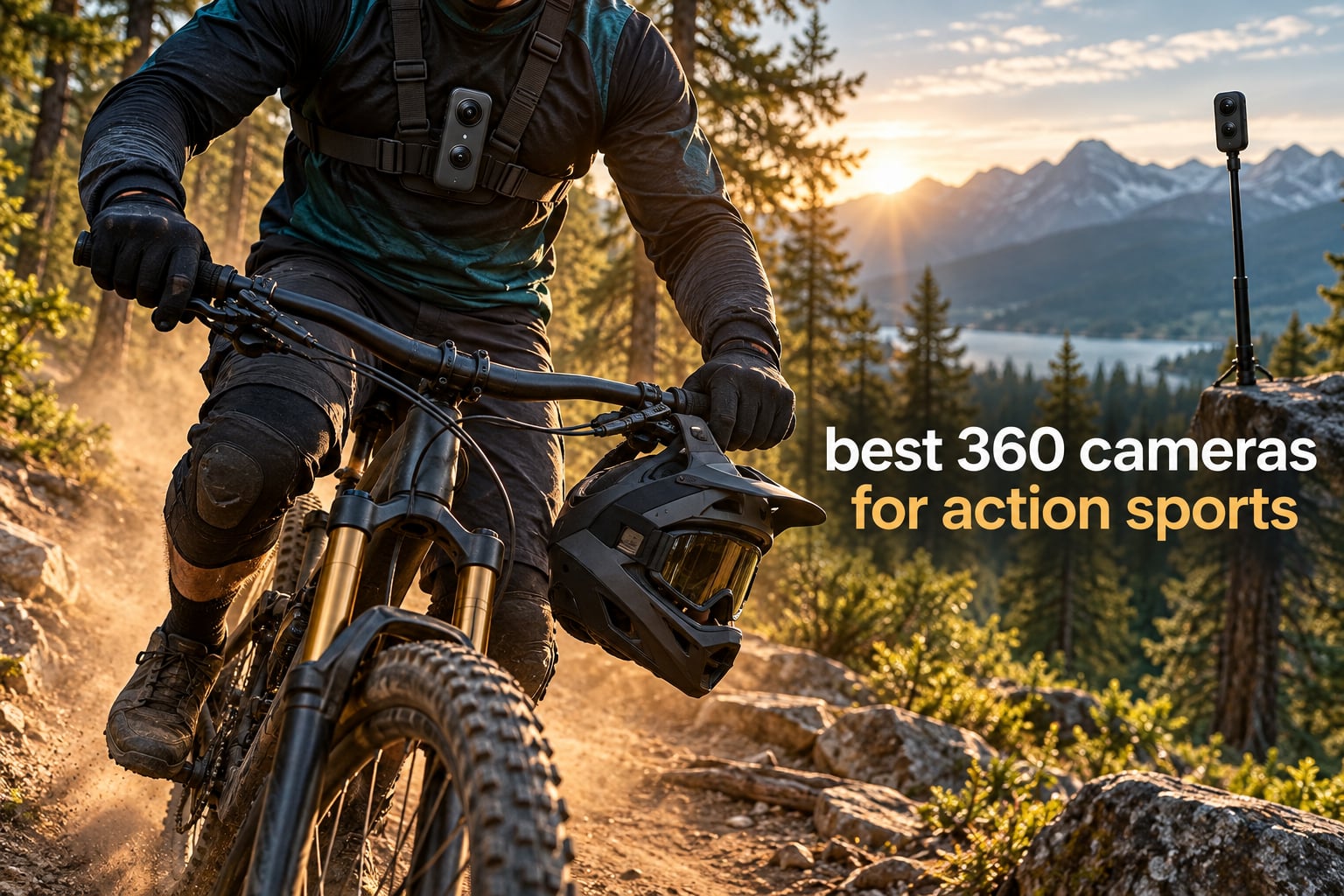
The best 360 cameras for action sports are the Insta360 X3 for all-around riding, the Insta360 X4 for cold weather and long days, and the DJI Osmo 360 for dusk sessions and slow motion. We spent weeks comparing seven genuine dual-lens 360 bodies on the things that actually break or ruin action footage: stitching under vibration, lens protection, waterproof depth, real battery minutes and how the reframing app behaves when you are still breathing hard.
Action sports move too fast to frame. A 360 body records the rider, the bike, the trail behind you and the rider following you in a single take, then the app decides the shot afterwards. That is the whole argument for the format, and it is why so many mountain bikers and motocross riders have moved away from flat action cams.
The market in 2026 is narrower than the search results make it look. Four brands carry genuine dual-lens 360 bodies with enough field history to trust, and the rest of the listings are single-lens cameras or accessories dressed up in the same search. What follows is a sport-first roundup rather than a generic 360 buying guide, because the differences that matter on a rocky trail are completely different from the differences that matter on a tripod.
We also kept the hybrid option in mind. If your priority is a crisp first-person POV shot, our picks over on action cameras for adventure sports are worth a look, and experienced riders often carry both. More on that later.
Table of Contents
Top 3 Picks for 360 Action Sports in 2026


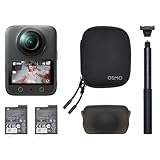
Those three cover the widest spread of sports. The X3 is the body we would put on a bike today, the X4 adds the battery headroom and cold rating you want for a full ski day, and the Osmo 360 is the one to reach for when the light drops or you want 4K at 120fps.
Best 360 Cameras for Action Sports (September 2026)
| Product | Specifications | Action |
|---|---|---|
| Insta360 X3 |
|
Check Latest Price |
| Insta360 X4 |
|
Check Latest Price |
 Insta360 ONE X2 Insta360 ONE X2 |
|
Check Latest Price |
 Xtra 360 Xtra 360 |
|
Check Latest Price |
 AKASO 360 AKASO 360 |
|
Check Latest Price |
| DJI Osmo 360 |
|
Check Latest Price |
 GoPro MAX2 GoPro MAX2 |
|
Check Latest Price |
One thing the table cannot show is how these bodies behave after a season of abuse. Sealing, lens guard design and vibration tolerance only tell the truth in month three, so we have weighted field reports heavily below.
1. Insta360 X3 – Best Overall 360 Camera for Action Sports
Insta360 X3, 360 Action Camera with 5.7K 360 Active HDR Video, 4K Single-Lens Camera, Waterproof, FlowState Stabilization, 2.29″ Touchscreen, AI Editing, for Motorcycle, Wintersports and Vlogging
5.7K 360 Active HDR
4K single-lens mode
FlowState stabilization
10m waterproof
200g
Pros
- 5.7K 360 Active HDR with 4K single-lens mode in one body
- FlowState stabilization and Horizon Lock for level high-motion footage
- Large 2.29 inch touchscreen with physical record and lens buttons
- Waterproof to 10m without a case
- Four-mic array with wind noise cancellation
Cons
- Effective 360 detail drops once the sphere is cropped hard
- 360 playback needs the desktop app for full rendering
- Micro SD card is not included
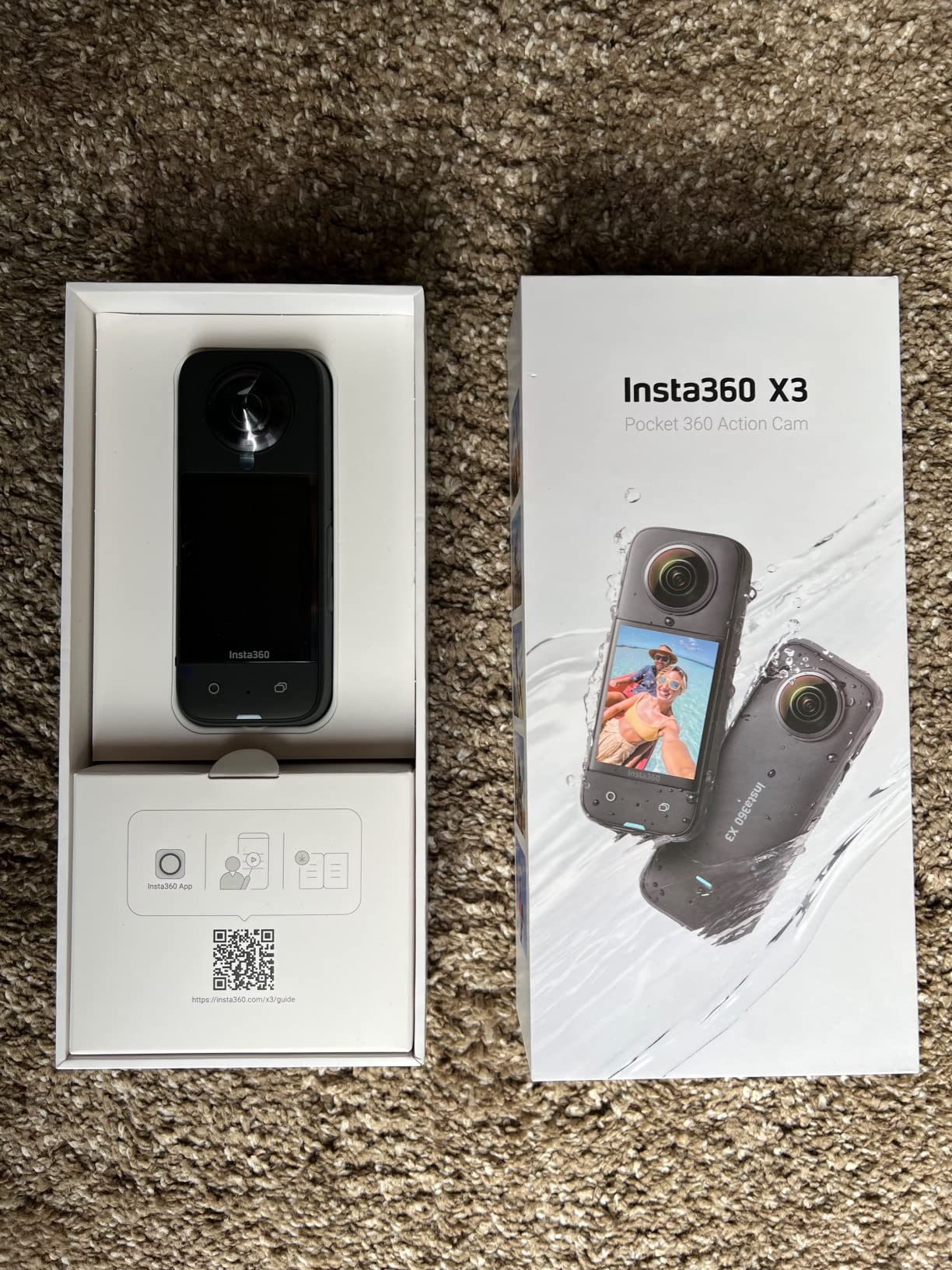
I have had the X3 on a bike longer than most of the cameras in this roundup have existed, and it is still the one I reach for. The 5.7K 360 Active HDR mode gives you a full sphere, and the 4K single-lens mode gives you a normal flat action clip from the same body when you want a straightforward POV file with no post work.
Stabilization is the reason it wins. FlowState combined with Horizon Lock keeps the horizon genuinely level through corners and drops, which matters enormously when you reframe a clip and find the ground tilting halfway through. The four-mic array picks the cleanest audio source in wind, which is a small detail that saves a lot of re-recording.
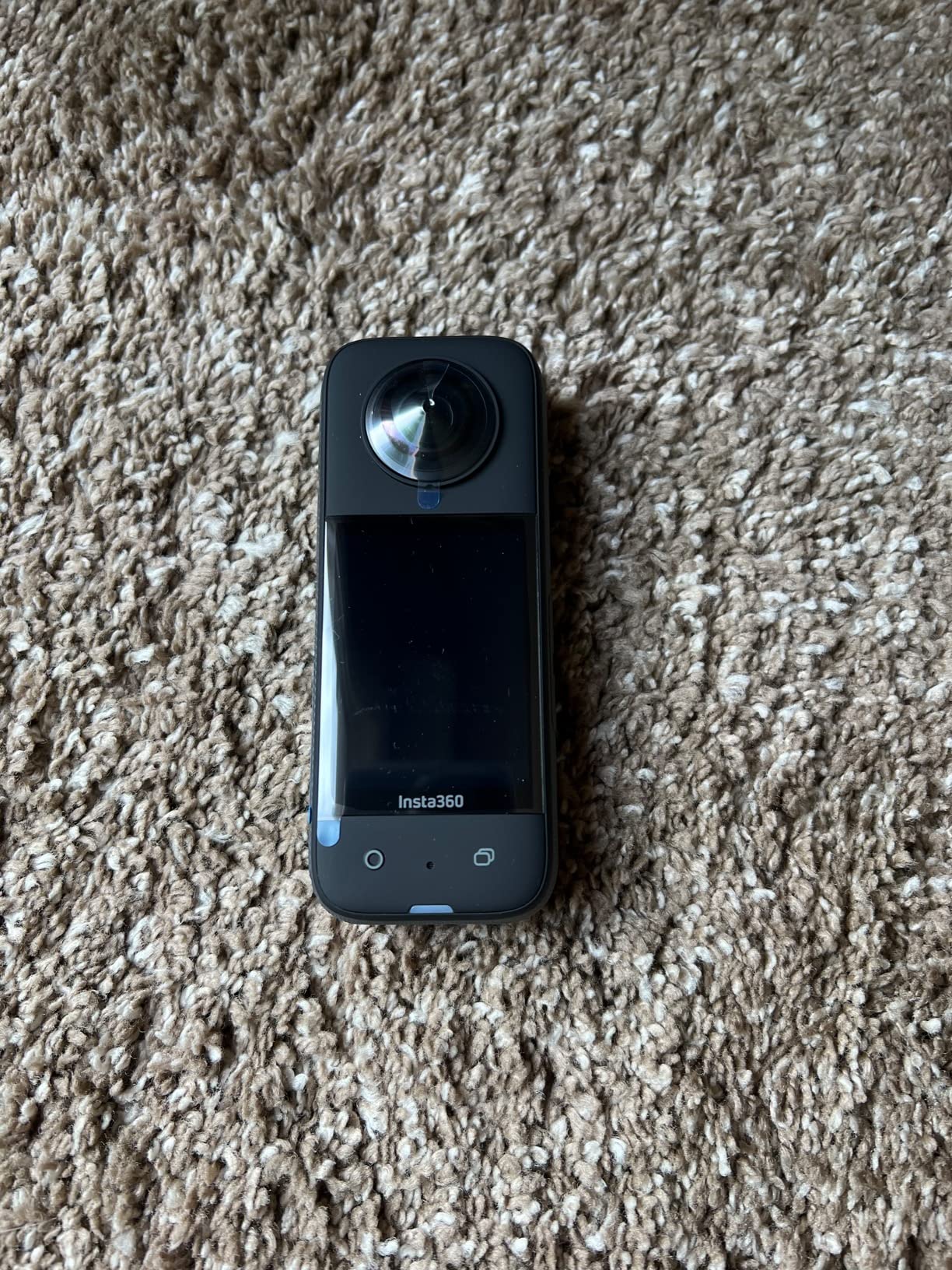
The long-running owner story is consistent. On r/Insta360, riders describe using the X3 for mountain biking year after year, and the advice in those threads is always the same: get the sticky lens guards, because the lenses are exposed on trails, and mount it on the chest rather than the helmet for better framing.
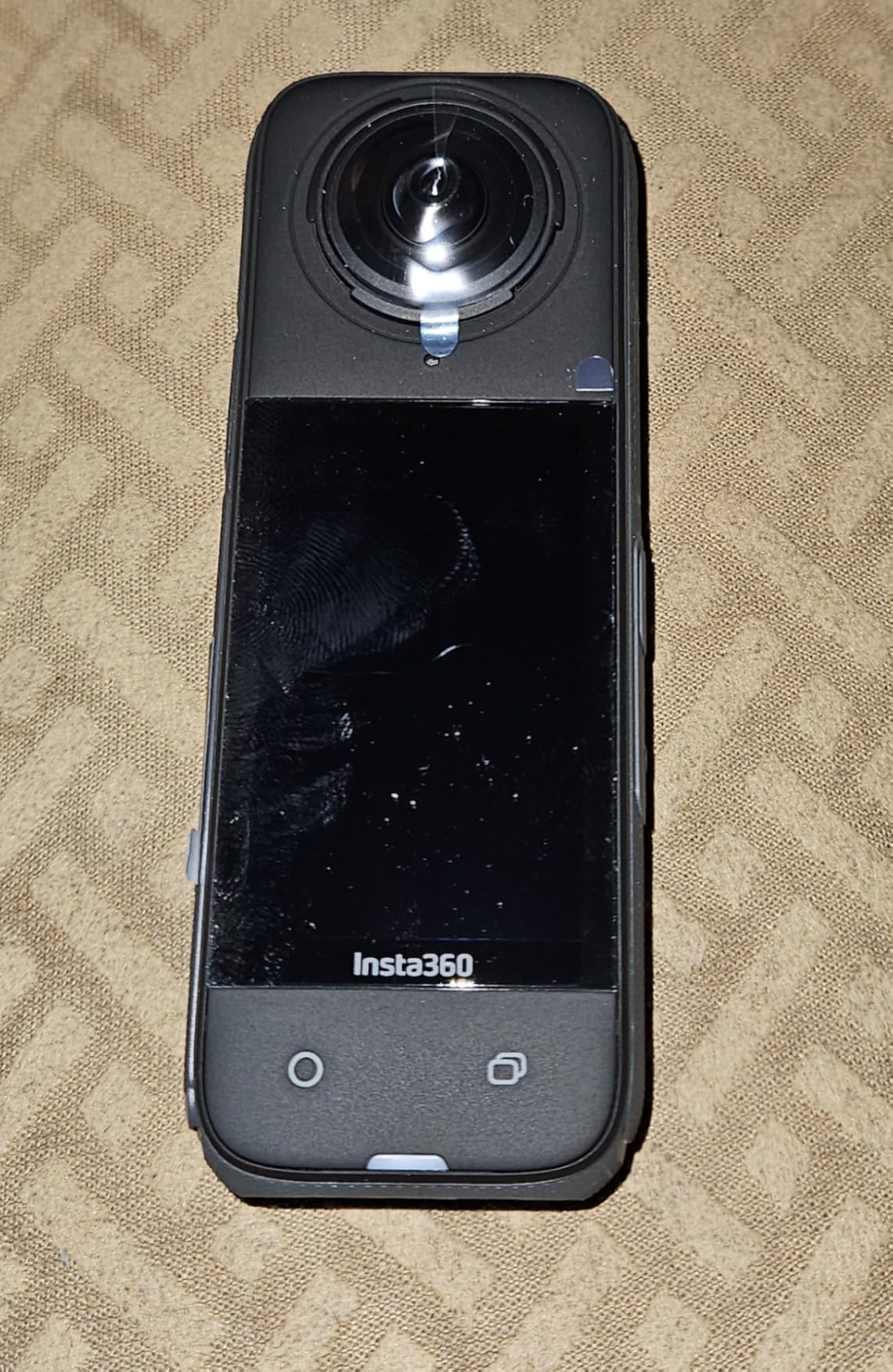
Where it falls short is post-crop detail. Push a reframed clip from a 5.7K sphere hard and you see the resolution limit, and full 360-view playback has to be rendered through the desktop app because the mobile app is limited. Reviewers also report overheating in extreme heat with no shade or airflow, and occasional water ingress concerns when the port covers are not seated properly.
Is the X3 durable enough for motocross and rock riding?
It is the most battle-tested body in this list, with more owner reviews than anything else here and a track record of surviving drops, mud and water. The vibration question comes up constantly, and the honest answer is that no 360 body is vibration proof, but the X3 has more field hours behind it than the alternatives.
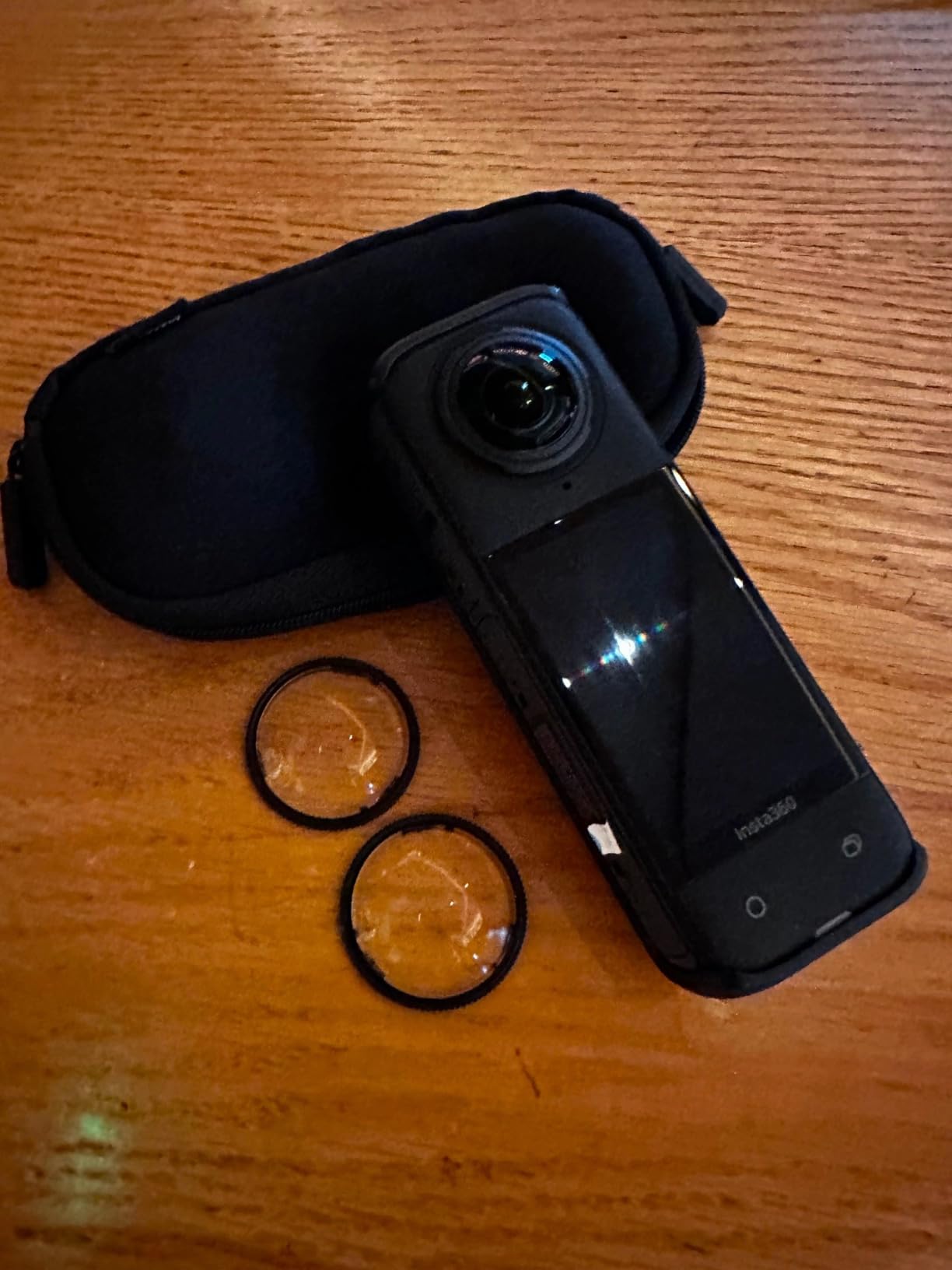
Rough terrain is where the lens guards stop being optional. Sticky guards are the single most repeated recommendation from riders who hit trees, and they are cheap relative to replacing a lens.
Who should skip the X3?
Skip it if your riding is cold-weather and all-day. The battery figure of roughly 135 minutes on the X4 does not carry over, and cold drains packs faster. Skip it if you need maximum low-light performance for evening sessions, or if you are already deep in the DJI or GoPro ecosystem and want the mounts and apps to match.
2. Insta360 X4 – Best for Cold Weather and Full-Day Battery
Insta360 X4 Standard Bundle – Waterproof 8K 360 Action Camera, 4K Wide-Angle Video, Invisible Selfie Stick Effect, Removable Lens Guards, 135 Min Battery Life, AI Editing, Stabilization
8K 360 video
135 minute battery
Removable lens guards
Waterproof to 33ft
2.5 inch Gorilla Glass
Pros
- 8K 360 is the cleanest footage here once reframed or zoomed
- 135 minute battery covers most full shooting days
- Removable lens guards protect the glass on trail
- dive and moto use
- Cold resistant to -4F and waterproof to 33ft without a case
- Improved stitching reduces warping near the seam
Cons
- Mobile app lacks features available only in desktop software
- No GPS direction data in the iPhone app and no Apple Watch remote
- Daylight sky can blow out with auto exposure
The X4 is the X3 with the three things riders ask for answered: more resolution, a much bigger battery and tool-free lens guards. A 135-minute battery changes what a shooting day looks like, because you stop babysitting spares between runs, and the -4F cold rating is the number that matters when the lift opens at first lift and the temperature is well below freezing.
Lens guards snap on without tools and add little visible distortion, which matters because the guard sits right where a tree branch or a handlebar wants to meet the glass. Waterproof to 33ft bare, and deeper with the Invisible Dive Case, so surf and shallow diving are covered without a housing.
Stitching is noticeably improved over the previous generation, particularly when the camera is mounted parallel to the ground. That is the mount position where warping near the lens seam used to show most, and it is the one that gets used on a bike or a motorcycle for most of a ride.
The compromises are in software rather than hardware. Direction lock and GPS stat overlays are desktop-only, there is no GPS direction data in the iPhone app, and Apple Watch remote support is absent. Reviewers also flag the GPS Preview Remote as unreliable across firmware versions, plus occasional playback glitches and bright-sky blowouts with auto exposure while driving.
Does the 8K actually help action footage?
Yes, and this is the main reason to step up. Because 360 means every pixel of the frame is a crop of a much larger sphere, resolution headroom translates directly into usable flat footage after reframing. The X4 holds detail when you zoom or reframe in a way the X3 cannot, which is exactly the workflow action sports demand.
The cost of that headroom is file size and heat. 8K spherical video is demanding to edit, and you want a recent computer and a fast card rather than an old laptop and a spare drive.
Who should skip the X4?
Skip it if your day is two-hour sessions rather than full days, because the extra battery headroom changes little. Skip it if you edit entirely on a phone and need GPS overlays on the go, since those features sit in the desktop app. If low light is your main concern rather than daylight riding, the sensor class here is not the strongest in this group.
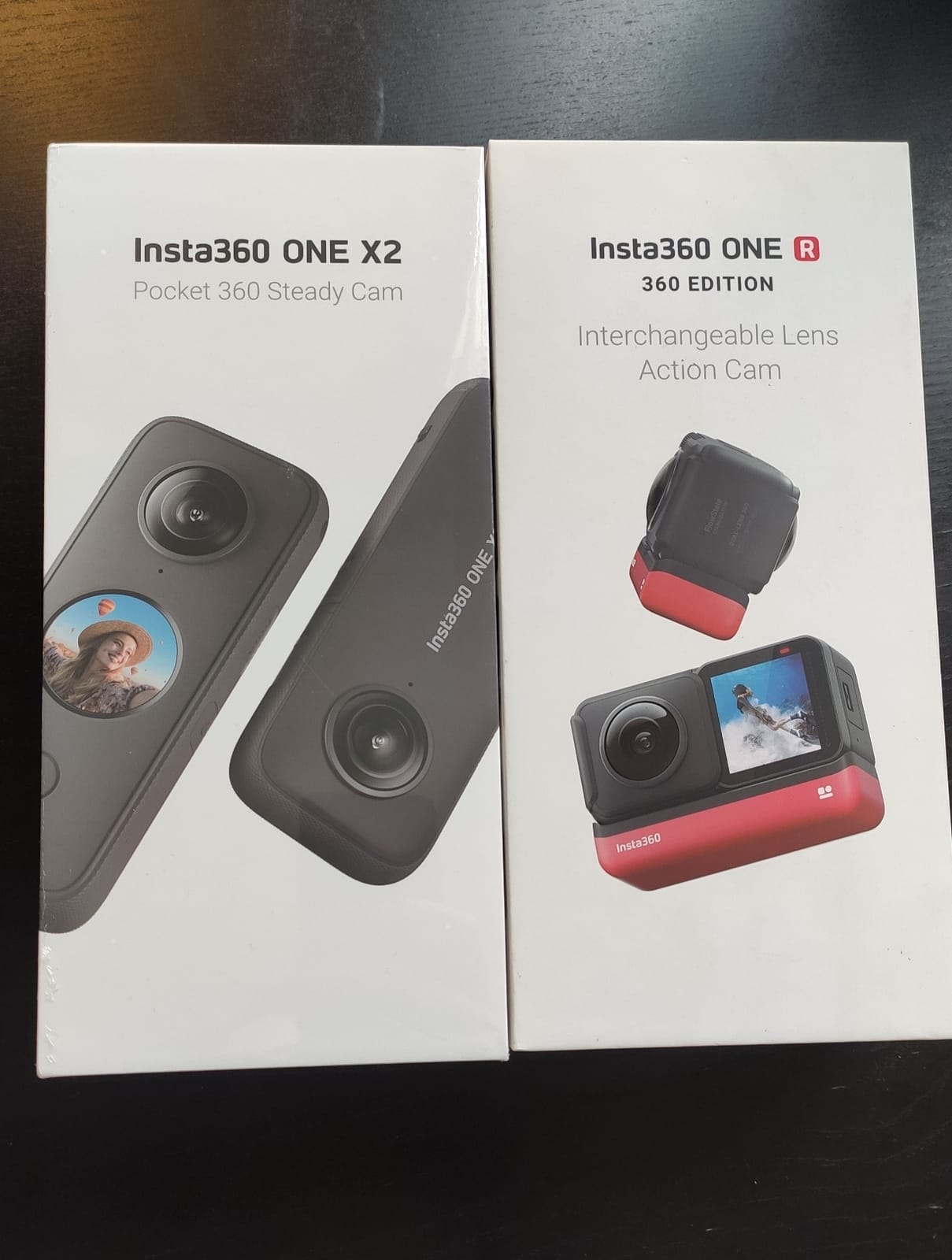
3. Insta360 ONE X2 – Best First 360 Camera for Riders on a Budget
Insta360 ONE X2 360 Degree Waterproof Action Camera, 5.7K 360, Stabilization, Touch Screen, AI Editing, Live Streaming, Webcam, Voice Control
5.7K 360 with Steady Cam
IPX8 waterproof to 10m
80 minute battery
Removable battery
3 inch screen
Pros
- Genuine dual-lens 360 body at an entry-level price
- Steady Cam mode gives ultra-stable wide-angle from one lens
- FlowState stabilization with horizon leveling
- IPX8 waterproof to 10m for rain and surf
- Removable battery plus protective pouch in the box
Cons
- Older sensor class limits low light and post-crop detail
- Wireless transfer is slow for long clips
- Edge stitching is soft and can warp on motion
The ONE X2 is the camera we recommend to someone who wants to find out whether the 360 format suits them before spending real money on a flagship. It is a true dual-lens body at 5.7K with FlowState stabilization and horizon leveling, and the phone app handles reframing and the invisible selfie stick effect without a computer.
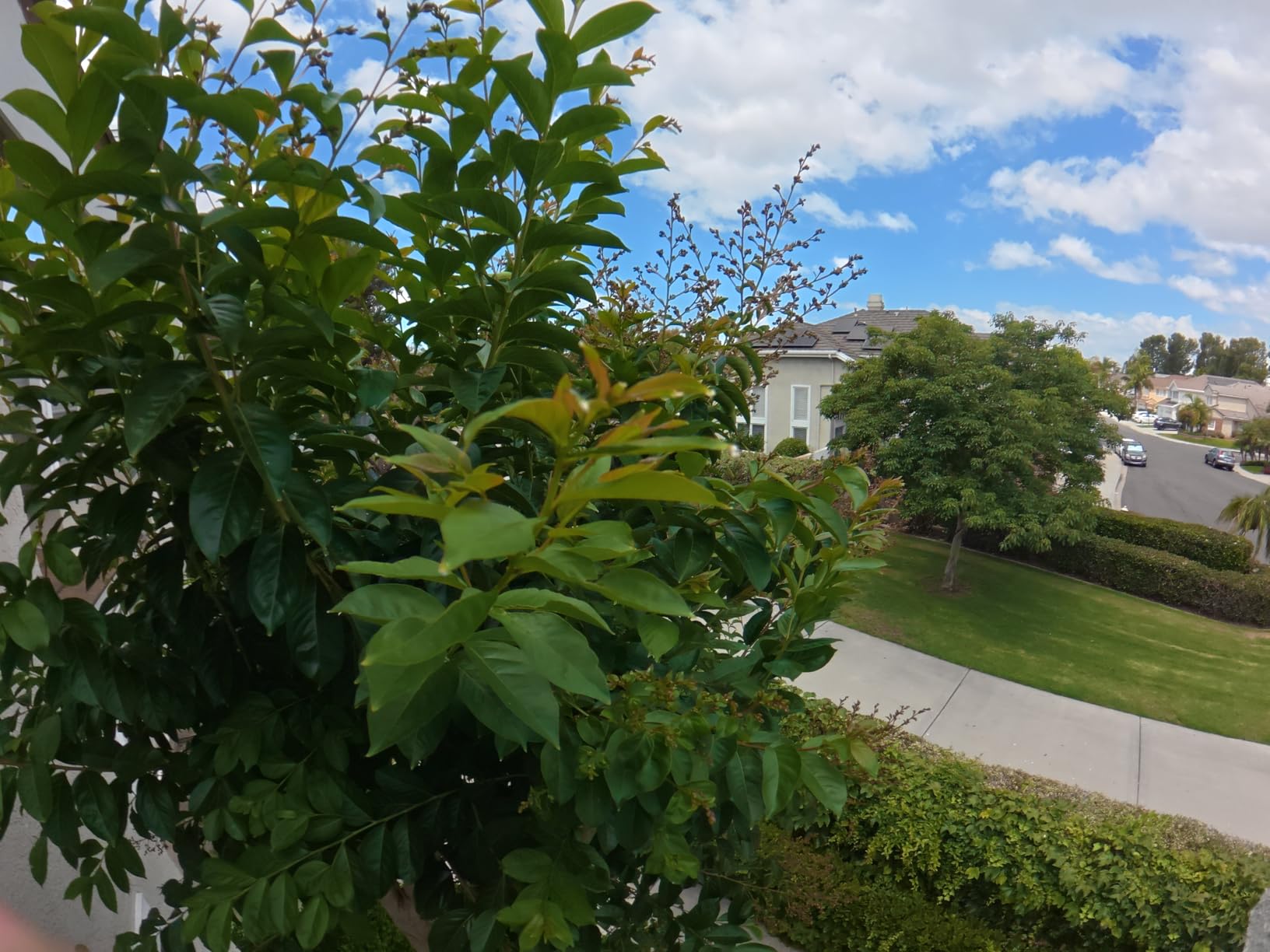
Steady Cam mode is the underrated part. It uses a single lens for an ultra-stable ultra-wide file, which is a quick way to get a normal-looking action clip without waiting on a 360 render, and on fast trail days that speed matters more than headline resolution.
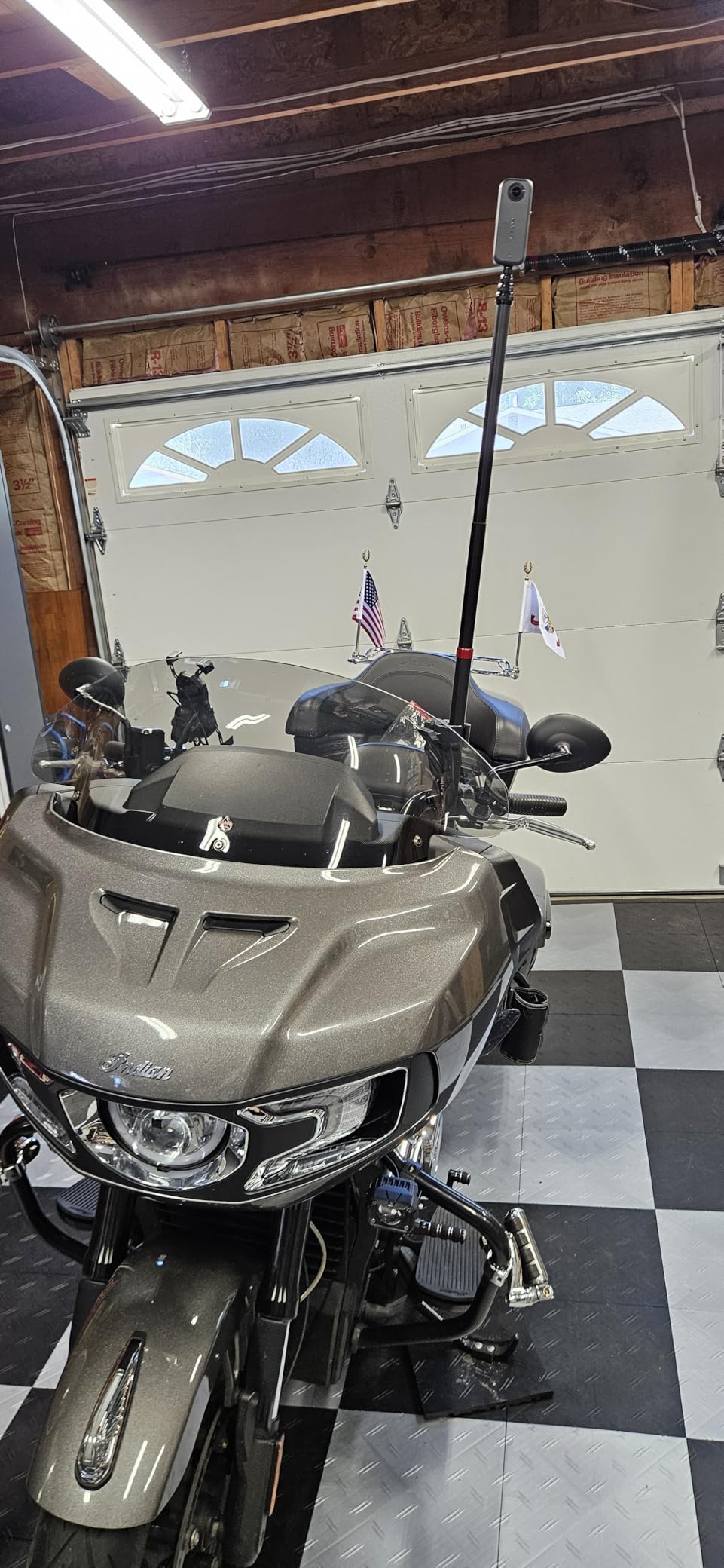
On a motorcycle it is genuinely useful, and it pairs well with the rest of our 360 camera picks for motorcycling. The removable battery and USB-C charging mean you can hot-swap through a long ride day instead of planning around a single pack.
Age shows in three places. The older sensor class limits both low light and detail after a heavy reframe, wireless transfer of long clips is slow so you download before editing, and edge stitching is visibly soft and can warp on fast motion. The built-in mics are weak outdoors too, and the charging-port audio adapter is unreliable.
Is an older 360 body still worth buying for riding?
For daylit riding, yes. Stabilization, waterproofing to 10m and the editing workflow have not changed enough to make it feel like legacy hardware, and riders report continued use of older generation bodies without reliability drama. Where it ages is dusk, fast panning and any heavy crop.
Treat it as a learning tool. It teaches you the framing and mount choices that matter, and those choices carry over to a newer body when you decide to upgrade.
Who should skip the ONE X2?
Skip it if you ride at night, race at dusk, or plan to crop tight action moments, because the sensor will not serve you. Skip it if long wireless transfers would frustrate you on a trip with no reliable laptop. And skip it if you already own a recent Insta360, since the software ecosystem is the same and the hardware is the only difference.
4. Xtra 360 – Best for Phone-Only Editing and Built-In Storage
Xtra 360 Camera with Invisible Selfie Stick, 8K Panoramic Video, 1-Inch Sensor Equivalent, 100MP Photos, 105GB Built-in Storage, Waterproof Action Camera with Bullet Time for Travel and Vlogging
1-inch equivalent 360 sensor
8K panoramic video
105GB built-in storage
150g body
F1.9 aperture
Pros
- 1-inch equivalent sensor gathers more light and holds dynamic range
- 105GB built-in storage removes card swapping mid-trip
- Waterproof and light at 150g
- Works with standard action camera mounts and selfie sticks
- Owners report strong reliability over months of daily shooting
Cons
- No desktop software
- editing app is less mature and weaker on macOS
- Firmware cadence and long-term support are uncertain
This is the odd one out in the list and worth a paragraph of its own. The Xtra 360 pairs a 1-inch equivalent sensor with 8K panoramic video and 105GB of built-in storage, which means no memory card and no swapping media on a multi-day trip. For a rider who films on a phone and never opens desktop software, that combination is unusually well matched to the job.
Owners describe the sharpness as competitive with an X4 in side-by-side use, and the dynamic range holding highlights and shadows in high-contrast scenes, which is exactly the condition of a sunlit trail with dark tree cover. The magnetic quick-release takes standard action camera mounts and selfie sticks, so it drops into gear you already own.

That is the pitch. The catch is software maturity and support, and it is a real catch. There is no desktop software, the editing app is less capable than the main-brand apps and weaker on macOS, and the firmware update cadence is uncertain compared with the established names. Image quality also degrades noticeably when you zoom past roughly a 150-degree field of view, and the included lens protectors produce variable flare and are not fully sealed underwater.
The review base is also far thinner than the established names, at 86 reviews, so you are taking more of a bet on the brand than on the hardware.
Is built-in storage actually better than a fast card?
For trips, yes. There is no card to fail, no card reader and no risk of filling a single card on a long day, and transfer happens over one wireless push rather than a card copy. For anyone editing a long multi-day trip on a phone with limited storage, that removes real friction.
The trade is that storage is fixed and not expandable, so very long projects still need to be exported and cleared. If you shoot 8K constantly and never clear anything, capacity becomes the constraint instead.
Who should skip the Xtra 360?
Skip it if you need a desktop timeline, colour grading or a long-term firmware commitment, because none of those are guaranteed. Skip it for extended underwater work without a proper housing. And be measured if you are putting a lot of money on rough terrain, since long-term support is the one thing that cannot be fixed with a lens guard.
5. AKASO 360 – Best Budget 360 Camera for Mountain Biking
AKASO 360 Action Camera – 5.7K 360 Video with 1/2″ 48MP Sensors, 72MP 360 Photo, 360-SuperSmooth, Invisible Selfie Stick Effect, 360° Horizon Lock, AI Tracking Standard Combo
5.7K 360 video
Dual 1/2 inch 48MP sensors
72MP 360 photos
2 hour battery
180g
Pros
- Dual 1/2 inch 48MP sensors capture more pixels than most budget 360 bodies
- 360-SuperSmooth and 360 degree Horizon Lock keep footage level
- 72MP photos plus DNG8 RAW mode for darker scenes
- AI subject tracking centers the rider automatically
- Light 180g body with roughly two hour battery
Cons
- No HDR support so highlight and shadow detail is compressed
- Water resistant rather than fully waterproof
- Stabilization is applied in software so motion warping can remain
The AKASO 360 answers the question riders ask most often, which is whether a genuine dual-sensor 360 body has to cost flagship money. It does not. Two 1/2-inch 48MP sensors, 5.7K spherical video, 72MP stills and DNG8 RAW mode sit in a 180g body with a roughly two-hour battery, which is a rare combination at this tier.
For mountain biking specifically, the light body and long battery matter as much as the sensor. A helmet or chest mount that stays on for a full day of riding without being swapped is the difference between a camera you use and a camera in a bag, and the AI subject tracking can center the rider or your follow rider automatically when you are solo.

It is also the body you can afford to crash. If your concern about upgrading is that you cannot bring yourself to risk a flagship on a trail where branches are at eye level, this is the rational answer, and the invisible selfie stick effect works for the third-person chase shots riders want.
Three real limits. There is no HDR, so highlight and shadow detail is compressed compared with the X-series. The body is water resistant rather than fully waterproof, so a dive case is needed for submerged use. And stabilization is applied in software rather than by the body, which means motion warping can survive the smoothing on fast panning.
Does software stabilization cause problems on fast trail sections?
It can. Because the correction is applied after capture rather than through the body, a fast pan or a hard landing can leave some warping that the X-series bodies clean up. On flowing singletrack with a mounted horizon it is rarely noticeable, but on whip pans into a berm it is.
Horizon Lock keeps the frame level, which hides a lot of the effect. The trade is processing time, so live preview of the levelled frame lags slightly behind on rough ground.
Who should skip the AKASO 360?
Skip it for surfing and diving beyond splash range, because water resistant is not waterproof. Skip it for backlit riding where compressed HDR will show, or for anyone whose footage depends on aggressive post-crop detail. The editing app is also less refined than the Insta360 ecosystem, which matters if you publish often.
6. DJI Osmo 360 – Best for Dusk Sessions and Slow-Motion Sports
DJI Osmo 360 Essential Combo, 360 Action Camera
1-inch 360 imaging
8K30 360 and 4K120
105GB built-in storage
183g
4 microphones
Pros
- 1-inch 360 sensor gives the best low-light performance in this roundup
- 8K30 360 plus super-smooth 4K120 for action and slow motion
- 120MP one-tap 360 photos
- 105GB storage with up to 190 minutes of recording
- Essential Combo includes the Invisible Selfie Stick Kit and an extra 1950mAh battery
Cons
- 2 inch screen is hard to use with gloves
- 360 capture does not work underwater without a housing
- Editing app is less mature than Insta360 software
Everything about the Osmo 360 is built around light. Its 1-inch 360 sensor gathers more light than the other bodies in this roundup, and it produces the best low-light performance here, which changes the equation for evening group rides, night ski sessions and any sport where the session ends after sunset. Riders have long argued that daylight matters more than low light, and that is true, but when the daylight runs out this is the body that keeps working.
The second strength is frame rate. Alongside 8K30 spherical video it records super-smooth 4K120, which is the number you want for a jump, a whip turn or a motocross takeoff where the slow-motion detail carries the edit.
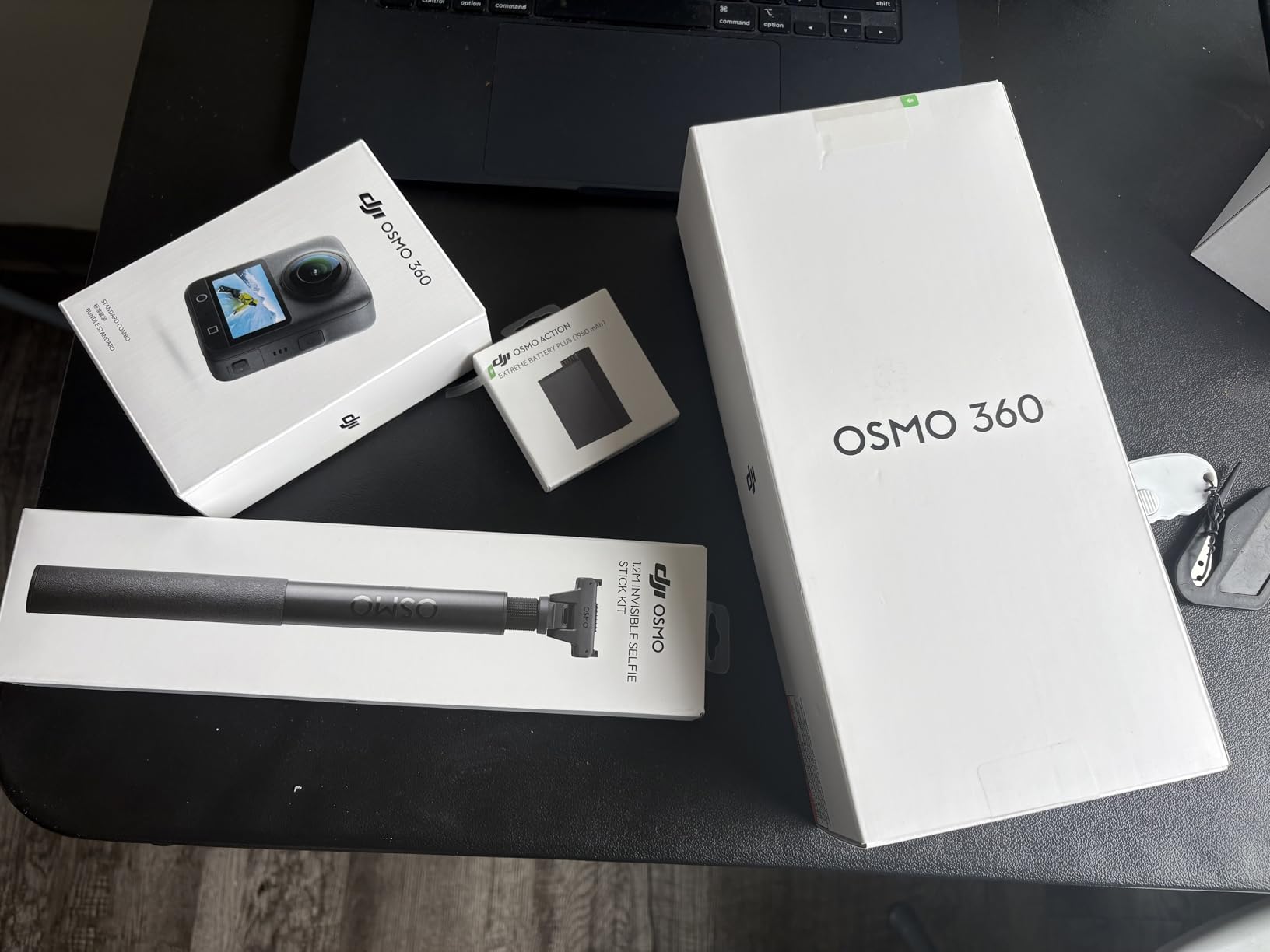
The Essential Combo bundles the 1.2m Invisible Selfie Stick Kit and a 1950mAh Osmo Action Extreme Battery Plus, so the accessories most 360 riders want are in the box. The 1/4-inch thread and magnetic quick-release make swapping between 360 and single-lens vlog modes fast, and four microphones connect directly to two DJI wireless transmitters with no receiver needed.
There are operational catches. The 2-inch screen is the smallest in this comparison and is genuinely hard to operate with gloves on, which matters on a handlebar or in a chairlift queue. 360 capture does not work underwater without a housing. And the editing app is less mature than the leading mobile and desktop software.
Why does the 1-inch sensor matter for evening riding?
Larger sensors gather more light and hold more dynamic range, so dusk clips keep usable detail in the shadows without the noise and mush that a smaller sensor produces when it is pushed. On a ride that ends at sunset, that is the difference between a usable clip and a grainy one.
It also crops better. Because 360 reframing is always a crop, extra light gathering translates into more usable footage after you pull a flat frame out of the sphere.
Who should skip the Osmo 360?
Skip it if you ride in gloves for hours and cannot live with a 2-inch screen. Skip it for diving without a housing. And skip it if your editing is desktop-heavy, because the app is the least mature part of an otherwise very strong package.
7. GoPro MAX2 – Best for GoPro Mount and App Ecosystem Owners
GoPro MAX2 – Waterproof 360 + Traditional Action Camera with Touch Screen, Spherical 8K Video, 29MP 360 Photos, Easy Replaceable Lenses, HyperSmooth Stabilization, 6 Microphones
True 8K 360 video
Replaceable optical glass lenses
HyperSmooth stabilization
1/4-20 thread
6 microphones
Pros
- True 8K 360 capture with up to 21 percent more resolution than competing 360 cameras
- One device works as both a 360 and a traditional action camera
- Replaceable water-repelling optical glass lenses mean a scratch does not end the camera
- 1/4-20 thread on the bottom supports invisible pole mounting
- Quik app reframes 360 footage into 4K for sharing
Cons
- 1.82 inch touchscreen is cramped for menu changes during action
- Larger and heavier body than slim 360 competitors
- Long clips take time to render in Quik
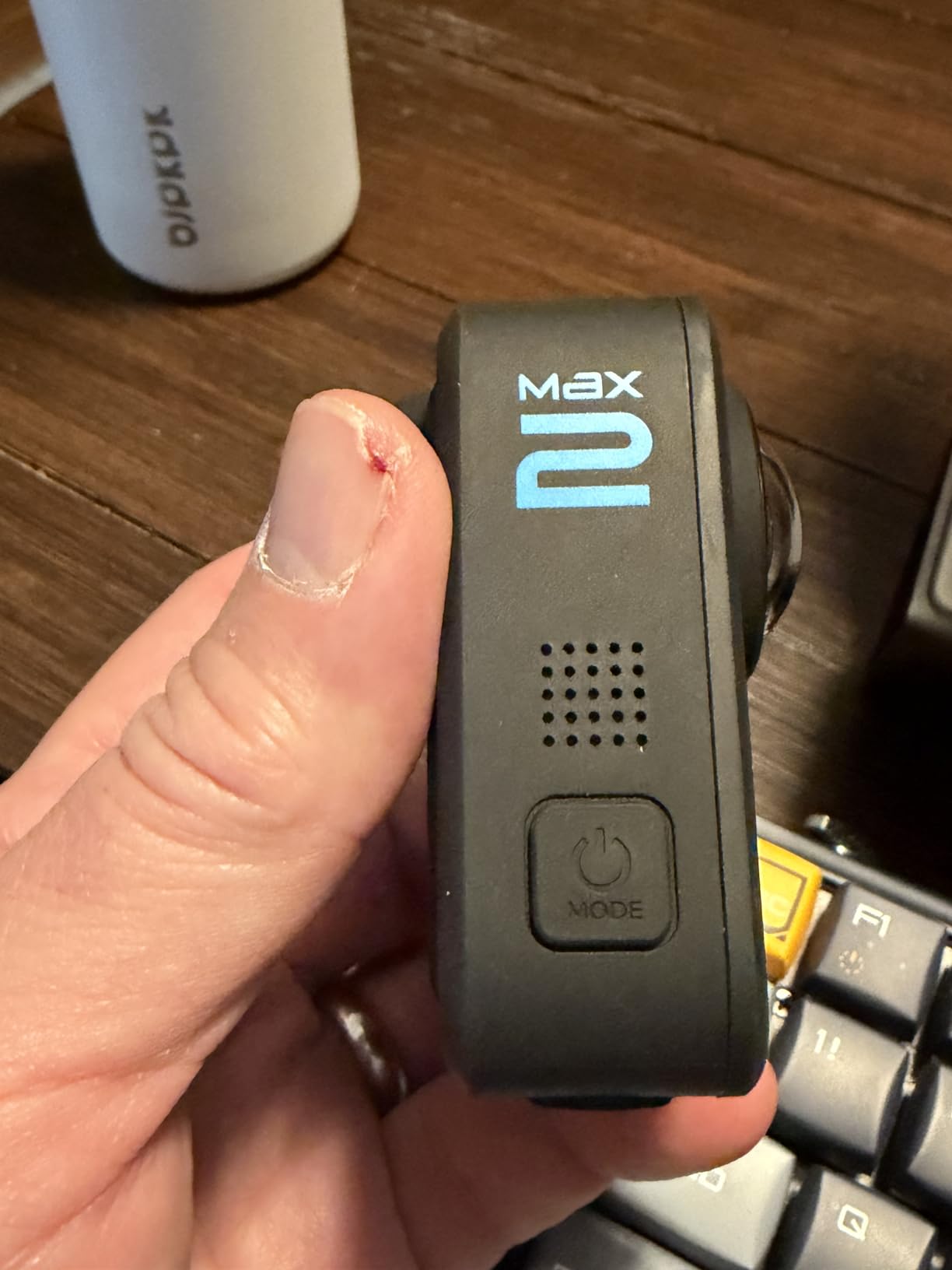
The MAX2 is the pick for people already invested in GoPro. That is not a marketing statement, it is the practical one. Every GoPro mount, buckle, pole and case you already own fits it, the Quik app is the workflow, and the body doubles as a traditional flat action camera with a touchscreen when you want a normal POV clip.
The hardware argument is real too. True 8K 360 capture with up to 21 percent more resolution than competing 360 cameras, as GoPro states, gives you serious headroom for reframing, HyperSmooth stabilization and Horizon Lock are adjustable after recording, and the replaceable water-repelling optical glass lenses mean a scratch is a part swap rather than the end of the camera.
Six microphones with spherical audio capture is a quiet advantage in windy sport, and the 1/4-20 thread on the bottom is what makes the invisible pole mounting work cleanly for third-person shots. The 1960mAh Enduro battery and two protective lens caps are included.
Where it lags is handling and workflow. Reframed 360 output can fall below 4K in some workflows, the 1.82-inch touchscreen is cramped for menu changes while riding, and at 13.76 ounces it is a noticeably heavy body for a long helmet-mounted day. Long clips also take real time to render in Quik, and the memory card is not included.
Are replaceable lenses worth switching brands for?
They matter more than most spec sheets admit. On a bike or a moto, the lenses are the part that gets hit by branches, handlebars and gravel, and a replaceable lens converts a camera-ending scratch into a cheap part swap. The optical glass here is also water repellent, which matters in rain and snow.
The X-series lens guards cover the same need in a different way, with removable guards that sit over the glass rather than lenses that come out. Either approach works, and both are far better than running exposed glass on technical terrain.
Who should skip the MAX2?
Skip it if you already own GoPro mounts and are happy in the Insta360 ecosystem, since ecosystem loyalty is the main argument. Skip it if weight on a helmet mount is critical, or if you need to change settings mid-ride, because the small screen works against you.
Which 360 Camera for Which Sport
Mountain biking and trail riding: the Insta360 X3 or X4. Chest mount, removable lens guards and a body that survives branches are the priority, and both have the field history. If the budget is the barrier, the AKASO 360 answers that.
Motorcycling and motocross: vibration is the constant concern, which is exactly where the body with the most field hours and the best sealing wins. The X3 and X4 both handle it, and our motorcycling-specific 360 picks cover the helmet and chin mount angles in more depth.
Skiing and snowboarding: the Insta360 X4. The cold rating and the 135-minute battery are the deciding factors, and waterproof to 33ft without a case covers a wipeout in deep snow. The X3 works, but the battery math is tighter on a chairlift day.
Skateboarding and skatepark: the X3, X4 or MAX2. Nothing here needs a housing for a skate session, and the horizon lock matters most for lines filmed on flat ground. The Xtra 360’s dynamic range is also strong for the high-contrast indoor-outdoor transitions a park session has.
Surfing and diving: the X4 and Osmo 360. Both go deep without a housing, and the Osmo adds the stronger low-light performance for evening water sessions. The AKASO 360 is not the answer here because it is only water resistant.
Climbing and bungee: the X3 for daylight, the Osmo 360 if the jump happens at dusk. Headless pole framing is the whole point and every body here supports it, so sensor and battery decide the pick rather than the mount.
Motocross and motorsport: the X3 or X4 with a chest mount. A chin or helmet mount on a bike puts the horizon exactly where every bump moves it, while a chest mount stays closer to the rider’s natural head angle.
Durability and Failure Modes on Rough Terrain
Every rider eventually asks the same question, and it deserves a straight answer before you buy anything. The most cited concern in rider communities is vibration, and at least one thread argues that the newest Insta360 flagship is designed to inevitably fail from vibration at motorsport events. We would not treat one forum claim as a verdict, but the pattern behind it is real enough to act on.
Lens vulnerability is the second. Riders repeatedly report that the lenses are exposed and vulnerable on trails and when hitting trees, and the near-universal recommendation is sticky lens guards as mandatory rather than optional. That single accessory is the difference between a scuffed guard and a cracked lens.
The third is sealing. Buyers report water resistance concerns when port covers are not seated correctly, and seam separation after wet rides appears across brands. The fix is unglamorous: check the seals before every wet session, rinse with fresh water after salt or mud, and dry the body before the case closes.
Beyond those three, the reported deal-breakers are overheating mid-clip during long high-resolution sessions, app instability or lost files during export, and the simple emotional one: not wanting to risk an expensive body on rough terrain. That last one is what the budget tier is for, and picking a body you will actually use beats picking the best one you are afraid to mount.
Where to Mount a 360 Camera: Chest, Helmet, Chin and Pole
Chest mount is what experienced riders recommend for mountain biking, and the reason is framing. The camera sits below the head and stays closer to a natural viewing angle, so a reframed clip does not swing wildly every time you look down at your front wheel. It also puts the lens further from branches.
Helmet mount gives a more dramatic, higher angle and works well for skiing, skateboarding and moto, but it rotates with every head movement, which means the horizon lock and keyframing matter more. It is also the position most likely to collect a tree branch.
Chin mount on a helmet gives the drone-style third-person look, and it keeps the horizon stable through head turns in a way a top mount cannot. The trade is that it is a less forgiving position on technical terrain.
Pole and invisible selfie stick is how you get the third-person chase shot from one take. The longer the stick, the more pronounced the effect, but the tip of the stick is exactly where stitching artifacts appear, so a moderate length is the safer choice for action footage. It is also the position most likely to introduce wind noise into the audio.
Whatever you choose, keep the camera parallel to the ground whenever you can. The stitching warping near the lens seam is most visible when the body is tilted, and a level mount removes most of that artifact before editing even starts.
What to Look for When Buying a 360 Action Camera
Resolution and cropping headroom. This is the one that surprises people. Because a 360 clip is always a crop of a larger sphere, resolution buys you freedom in editing rather than a sharper file in isolation. 8K bodies hold detail when you reframe hard; 5.7K bodies are fine until you crop tight.
Sensor size and low light. A 1-inch 360 sensor gathers meaningfully more light than a 1/2-inch pair, and it holds up better at dusk and on night sessions. If your sport ends at sunset rather than at midday, this outranks resolution.
Waterproof depth mapped to your sport. Rain, snow and splash need a body that is waterproof bare. Surfing, swimming and diving need substantially more depth than the entry models offer, and a water resistant body needs a case for anything submerged. Check the bare-body figure, not the housing figure, because that is what you will actually use on a chairlift or in a wave.
Battery minutes and cold behaviour. Manufacturer figures are measured in ideal conditions. Real riding drains packs faster, and cold drains them faster again. Look for 120 minutes or more if your sport is an all-day session, and check for a cold rating if you ride at altitude or in winter.
Stabilization and horizon lock. FlowState and HyperSmooth are the two systems here, and both do the same job. Horizon lock matters more than raw smoothing for riding, because a level frame is easier to reframe and a tilted one pulls the whole scene off axis.
App and desktop software. This is the real dividing line between brands. Some features live only in desktop software, which matters if you publish from a laptop, and some companion apps are pulled from app stores or lag behind on macOS. Check what the mobile app can do before you commit.
Storage and card requirements. High-resolution spherical video generates large files quickly, so a fast card is required rather than optional, and 8K work realistically needs a recent computer. The bodies with built-in storage sidestep the card question entirely, which is a real convenience for multi-day trips.
Mount ecosystem. If you already own GoPro mounts, that alone can decide the purchase. If you are starting fresh, magnetic quick-release and a 1/4-inch thread are the two features that make moving between pole, chest and helmet fast.
Insta360 vs GoPro 360 for Action Sports
Insta360 is better for action sports if your priority is battery, cold-weather use, lens guard options and a mature editing ecosystem. GoPro is better if you already own GoPro mounts, want a single body that also works as a flat action camera, and value replaceable optical glass lenses over removable guards.
The community view leans the same way. Riders consistently favour Insta360 for trail riding, and GoPro tends to be framed as the choice for people already inside the GoPro ecosystem rather than a like-for-like alternative. The counterpoint worth hearing is from FPV flying communities, where 360 bodies are rejected outright for POV quality but acknowledged as strong for third-person freestyle shots.
There is also a hybrid pattern experienced riders use: a traditional action cam for POV and a 360 body for the follow-cam chase shot. If that sounds like your use case, our guides to cameras tested for action sports and vlogging and to APS-C cameras for action sports video cover the flat-camera side of that decision.
Frequently Asked Questions
Which is the best 360 action camera overall?
The Insta360 X3 is the best overall 360 action camera for most riders because it combines 5.7K 360 Active HDR capture, FlowState stabilization, Horizon Lock, waterproofing to 10m without a case and a large 2.29 inch touchscreen in a 200g body. The Insta360 X4 is the better choice for cold weather and all-day battery, and the DJI Osmo 360 leads for dusk and low-light work.
Is Insta360 better than GoPro for action sports?
For most riders, yes. Insta360 offers longer battery life, cold-weather ratings, removable lens guards and a more complete editing ecosystem across mobile and desktop. GoPro MAX2 is the stronger choice if you already own GoPro mounts, want one body that also shoots flat action video, and prefer replaceable optical glass lenses to removable guards.
Which Insta360 is best for mountain biking?
The Insta360 X3 is the best all-round choice for mountain biking because it has the deepest field history of any body here, and the X4 is the upgrade if you ride in cold conditions or shoot all day. Riders on r/Insta360 consistently recommend the sticky lens guards and a chest mount for trail riding.
Are 360 cameras waterproof enough for surfing and diving?
It depends on the model. The Insta360 X4 is waterproof to 33ft without a case and deeper with a dive case, and the Insta360 X3 and ONE X2 are waterproof to 10m without a housing. The AKASO 360 is only water resistant, so submerged use needs a dive case, and the DJI Osmo 360 requires an additional housing for underwater 360 capture.
How much storage do I need for a 360 action camera?
Plan for large files, because 360 capture records everything at once and high-resolution modes are heavy. A fast microSD card is required, and 8K spherical work realistically needs a recent computer. The DJI Osmo 360 and Xtra 360 sidestep the card entirely with 105GB of built-in storage.
Do 360 cameras work in low light?
Yes, and sensor size decides how well. The DJI Osmo 360 uses a 1-inch 360 sensor and delivers the best low-light performance in this group, which matters for evening rides and night sessions. Entry-level bodies with 1/2-inch sensors hold up in daylight but lose detail quickly after sunset.
The Verdict: Who Should Buy Which 360 Camera
The Insta360 X3 is the pick for anyone who rides, motors or skies in daylight and wants the least second-guessing. It is our editor’s choice for the best 360 cameras for action sports because nothing else in this list matches its combination of field history, stabilization quality and price.
Move up to the X4 if you ride in cold weather or shoot full days, to the Osmo 360 if your sessions run past sunset or you want 4K120 slow motion, to the Xtra 360 if you edit only on a phone, and to the MAX2 if you are already in the GoPro ecosystem. Buy the AKASO 360 if the real barrier is putting an expensive body on rough terrain, and pick up the ONE X2 if you want to learn the format cheaply first.
Whatever you choose, put sticky lens guards on it before the first trail day, mount it on the chest, and keep the body parallel to the ground. Those three habits prevent more ruined footage than any spec on any spec sheet.