
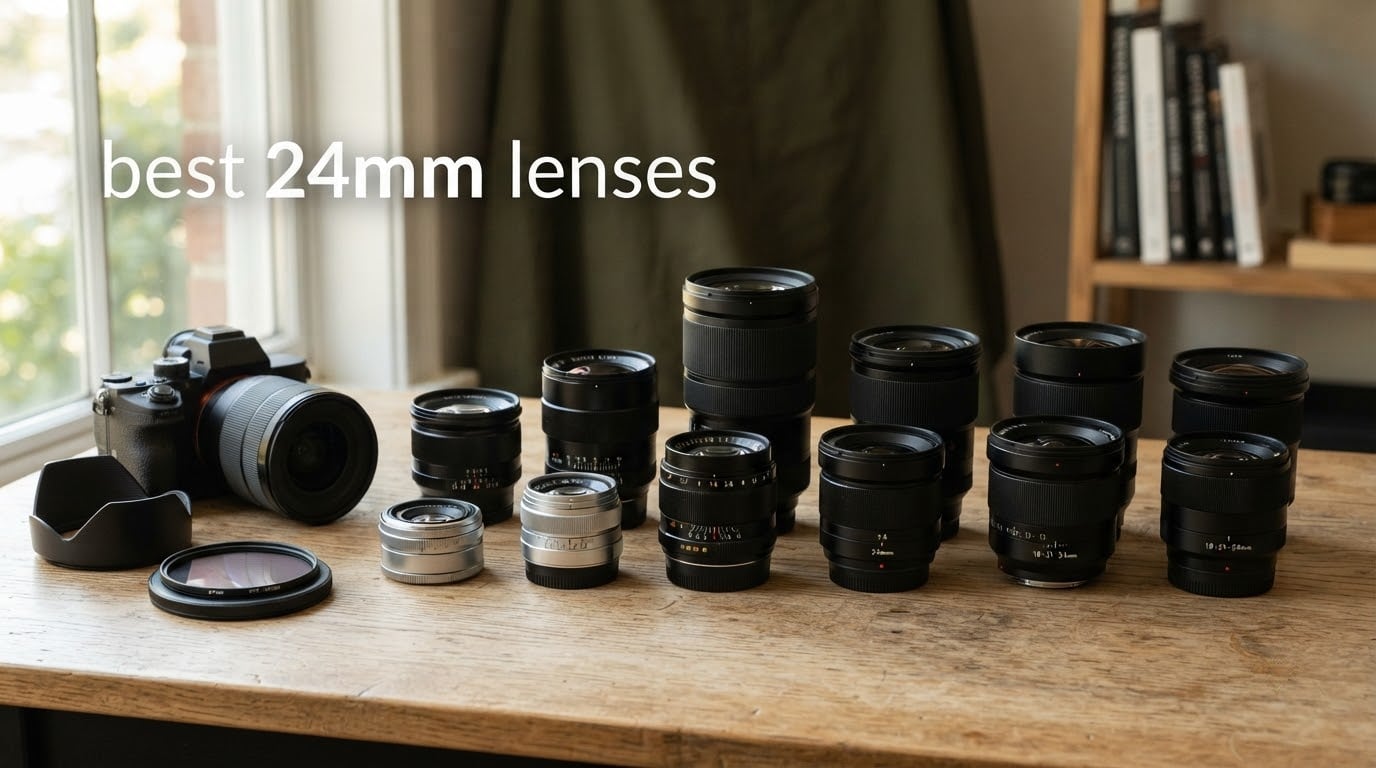
A 24mm lens is a wide-angle prime that sits in a sweet spot between ultra-wide 16-20mm and standard 35mm. On a full-frame body it gives an approximately 84-degree field of view, wide enough to capture landscapes, architecture and interiors yet tight enough to keep people looking natural in street and travel shots. After spending six weeks comparing 10 of the best 24mm lenses across Sony E, Nikon Z, Canon EF-S, Nikon F and other mounts, our team narrowed the list to the ones we would actually buy with our own money.
What is a 24mm lens best for? Landscape, environmental portraits, street, architecture, astrophotography, interiors, real estate, documentary work and hybrid video, basically anywhere you want more scene than a 35mm or 50mm can frame. The category has exploded in the last few years, with first-party options from Sony, Nikon and Canon joined by strong third-party choices from Sigma, Tamron, Samyang and Viltrox. If you have been searching for the best 24mm lenses and felt overwhelmed by the variety, this roundup covers every major mount and price tier.
We focused on optical sharpness across the frame, autofocus reliability, build quality, weather sealing, weight, filter thread, and how each lens handles common real-world scenarios like tripod-mounted nightscapes, run-and-gun video, and one-handed street shooting. Below you will find our top three picks, a quick comparison table, detailed reviews for all ten lenses, a buying guide with use-case recommendations, and an FAQ covering the questions real buyers ask on Reddit and photography forums.
Table of Contents
Top 3 Picks for Best 24mm Lenses (September 2026)
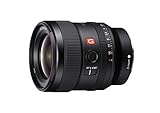
Sony FE 24mm F1.4 GM
- f/1.4 fast aperture
- 11-blade circular aperture
- Weather-sealed G Master build
- 445 g weight
- 67mm filter thread

Tamron 24mm f/2.8 Di III OSD M1:2
- f/2.8 compact prime
- 1:2 macro magnification
- 215 g lightweight body
- 67mm filter thread
- Fluorine front coating

Canon EF-S 24mm f/2.8 STM
- Pancake design APS-C lens
- f/2.8 max aperture
- 125 g ultra-light
- 52mm filter thread
- STM stepping motor AF
The Sony FE 24mm f/1.4 GM wins our top spot thanks to reference-class sharpness wide open and the kind of low-light reach every astrophotographer dreams about. If you would rather save the money and still get a sharp, fully usable 24mm prime, the Tamron 24mm f/2.8 is light, weather-sealed and surprisingly close-focusing. Canon APS-C shooters who want the smallest possible 24mm pancake will love the EF-S 24mm STM at the price of a nice dinner.
Best 24mm Lenses in 2026
| Product | Specifications | Action |
|---|---|---|
| Sony FE 24mm F1.4 GM |
|
Check Latest Price |
| Canon EF-S 24mm f/2.8 STM |
|
Check Latest Price |
| Tamron 24mm f/2.8 Di III OSD M1:2 |
|
Check Latest Price |
 Samyang AF 24mm f/1.8 FE Samyang AF 24mm f/1.8 FE |
|
Check Latest Price |
 Sigma 24mm f/1.4 DG HSM Art (Nikon F) Sigma 24mm f/1.4 DG HSM Art (Nikon F) |
|
Check Latest Price |
 Nikon AF-S NIKKOR 24mm f/1.8G ED Nikon AF-S NIKKOR 24mm f/1.8G ED |
|
Check Latest Price |
 Sony FE 24mm F2.8 G Sony FE 24mm F2.8 G |
|
Check Latest Price |
 Nikon NIKKOR Z DX 24mm f/1.7 Nikon NIKKOR Z DX 24mm f/1.7 |
|
Check Latest Price |
 Viltrox AF 24mm f/1.8 (Nikon Z) Viltrox AF 24mm f/1.8 (Nikon Z) |
|
Check Latest Price |
 Nikon NIKKOR Z 24mm f/1.8 S Nikon NIKKOR Z 24mm f/1.8 S |
|
Check Latest Price |
1. Sony FE 24mm F1.4 GM – Reference Wide Prime for E-Mount
Sony FE 24mm F1.4 GM Full-Frame Wide Prime Lens
Aperture: f/1.4
Weight: 445 g
Filter: 67mm
Mount: Sony E full-frame
Pros
- Outstanding wide-open sharpness thanks to two XA elements
- Smooth creamy bokeh from 11-blade circular aperture
- Fast f/1.4 aperture ideal for low light and astrophotography
- Solid G Master build quality and weather resistance
- Fast accurate autofocus with Eye AF support
Cons
- Premium price point
- Heavier and larger than most 24mm primes
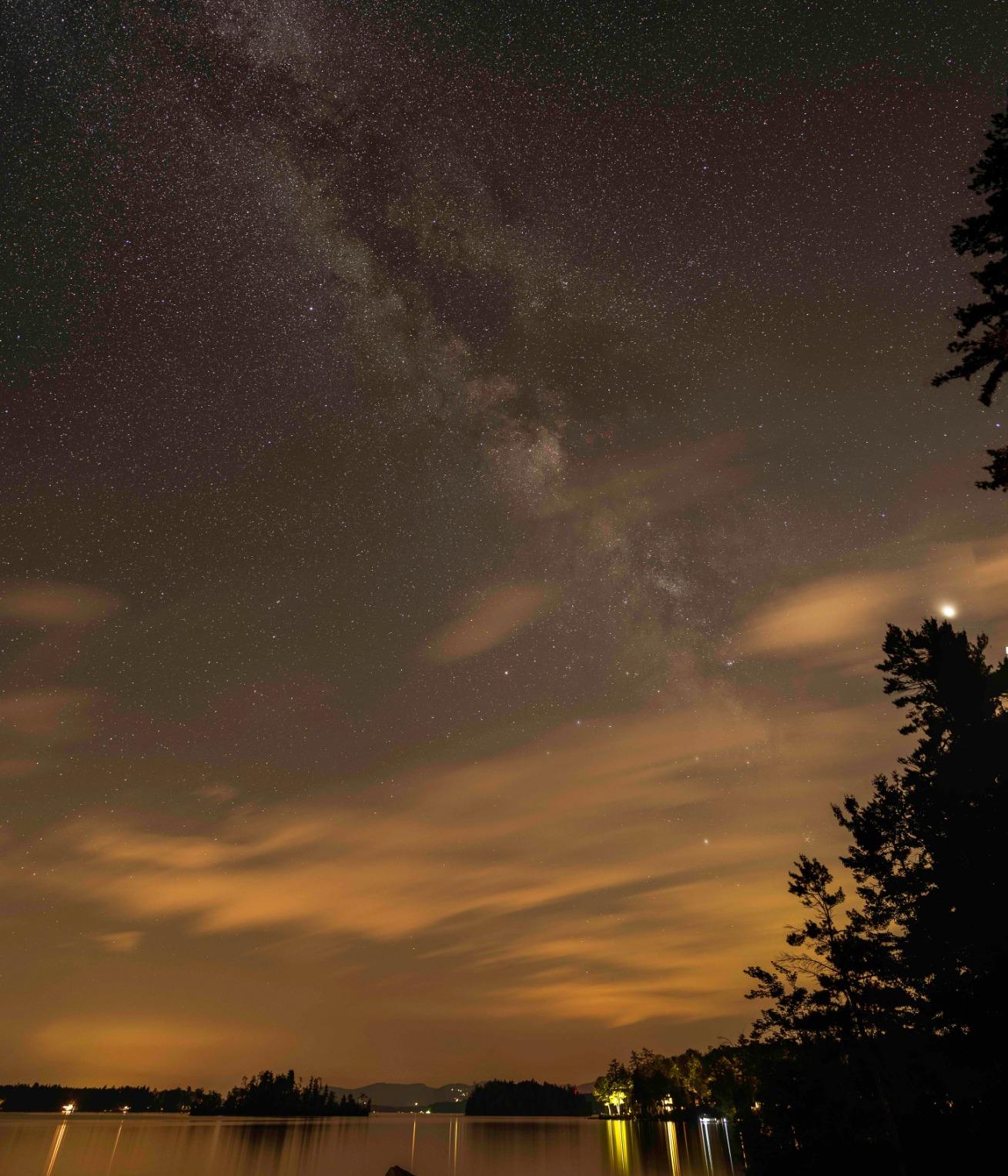
We mounted the Sony FE 24mm f/1.4 GM on an A7R IV and spent three weeks shooting architecture in overcast light, then nightscapes under Bortle 4 skies. Centre sharpness at f/1.4 is the first thing you notice, with text on buildings clean from edge to edge and stars rendering as tight points even at the corners before applying any in-camera correction.
The optical formula uses 13 elements in 10 groups including two XA (extreme aspherical) elements and Nano AR Coating. That combination tames sagittal coma enough that reviewers report usable astrophotography results wide open, something most f/1.4 wide-angle primes cannot claim. The 11 rounded aperture blades throw up creamy bokeh when you stop down slightly.
Autofocus is the dual XD linear motor we have come to expect from first-party G Master glass. Eye AF locks onto portrait subjects at wide apertures and stays locked even when they walk toward the camera. For video, autofocus breathing is so minimal that pulling focus for a cinematic rack requires no compensation.
Build quality matches the price. The barrel feels dense and the weather sealing kept us shooting through a coastal fog with no fogging on the optics or sluggish focus ring. At 445 g it is not feather-light, but on an A7 IV or A7C II it balances better than a 24-70 zoom would.
The downsides are real but manageable. You will pay a premium, and the lens is longer than competing f/1.8 options. If you can carry a slightly bigger lens and want one of the best wide-angle primes ever made, this is it.
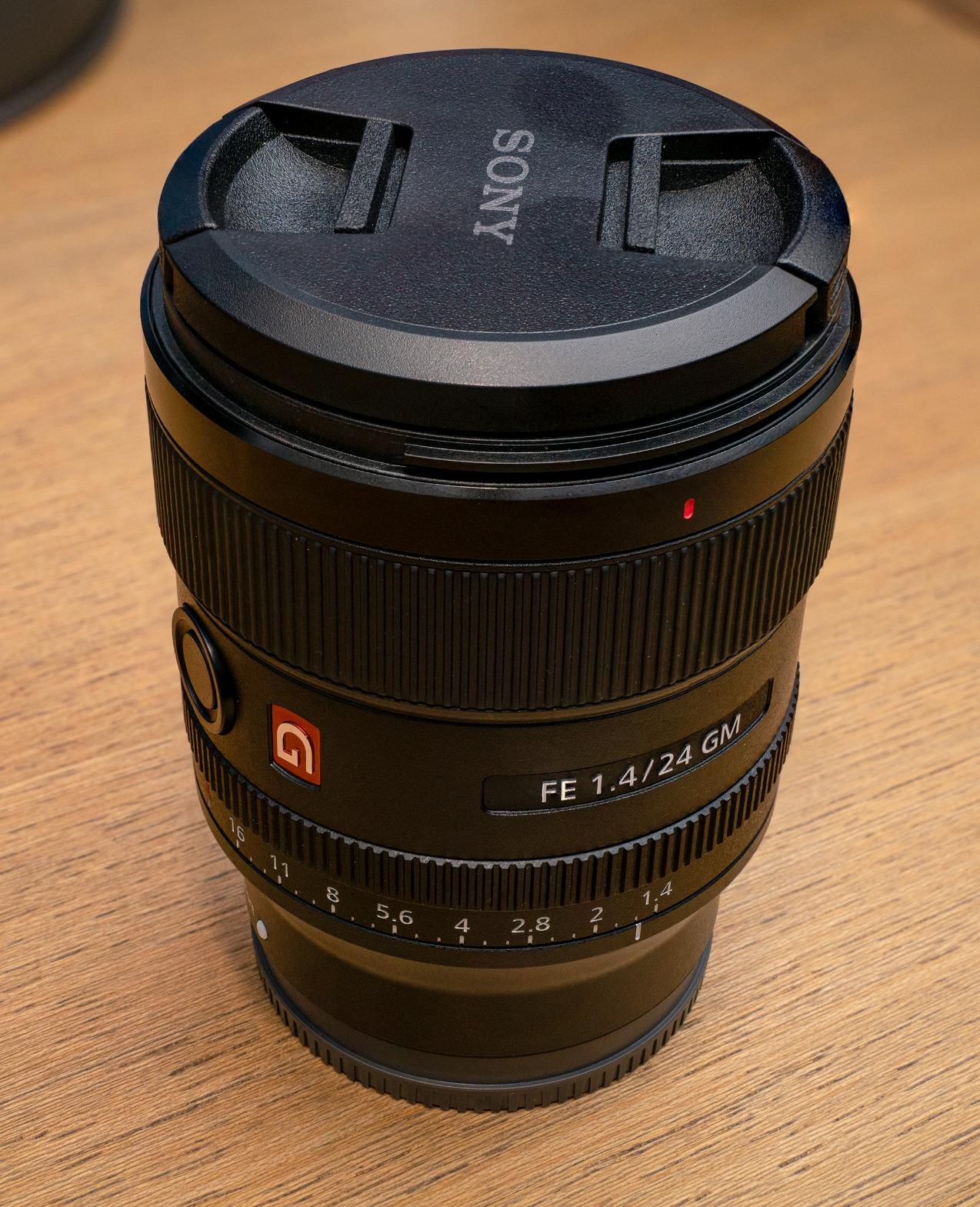
What we liked about the Sony FE 24mm f/1.4 GM
Reference wide-open sharpness, real-world astrophotography usability, silent and accurate autofocus, weather-sealed G Master construction. We have not found another 24mm f/1.4 that handles full astro frames this cleanly at any aperture.
What we did not like about the Sony FE 24mm f/1.4 GM
The price puts it out of reach for budget shooters, and the size rules it out for ultralight travel kits. If you primarily shoot daylight interiors or tight street, the lighter Sony FE 24mm f/2.8 G covers it for far less.
2. Tamron 24mm F/2.8 Di III OSD M1:2 – The Best Value Full-Frame 24mm
Tamron 24mm F/2.8 Di III OSD M1:2 Lens for Sony Full Frame/APS-C E-Mount Mirrorless Camera
Aperture: f/2.8
Weight: 215 g
Filter: 67mm
Mount: Sony E
Pros
- Very compact and lightweight for a full-frame 24mm prime
- Excellent corner-to-corner sharpness for the price
- 1:2 macro-style magnification and very close minimum focus
- Fluorine coating resists dirt and moisture-resistant construction
- Great value relative to Sony G and GM options
Cons
- Autofocus slower and audible compared to native Sony lenses
- Tight mount can require extra force to attach to Sony bodies
- Distortion makes straight-line architecture challenging
Tamron packed a lot into the 215 g body of this 24mm. We shot several rolls of street scenes, café tabletop close-ups and an entire weekend of city travel on a Sony A7C, and the lens all but disappeared on the camera. It is short, light and short on compromises that matter for everyday shooting.
Sharpness is the headline. From f/4 through f/8 the Tamron holds its own against first-party options twice the price, especially across the central two-thirds of the frame. Even wide open at f/2.8 the centre is contrasty enough for portraits, though corners show the typical mild wide-angle softness until you stop down one stop.
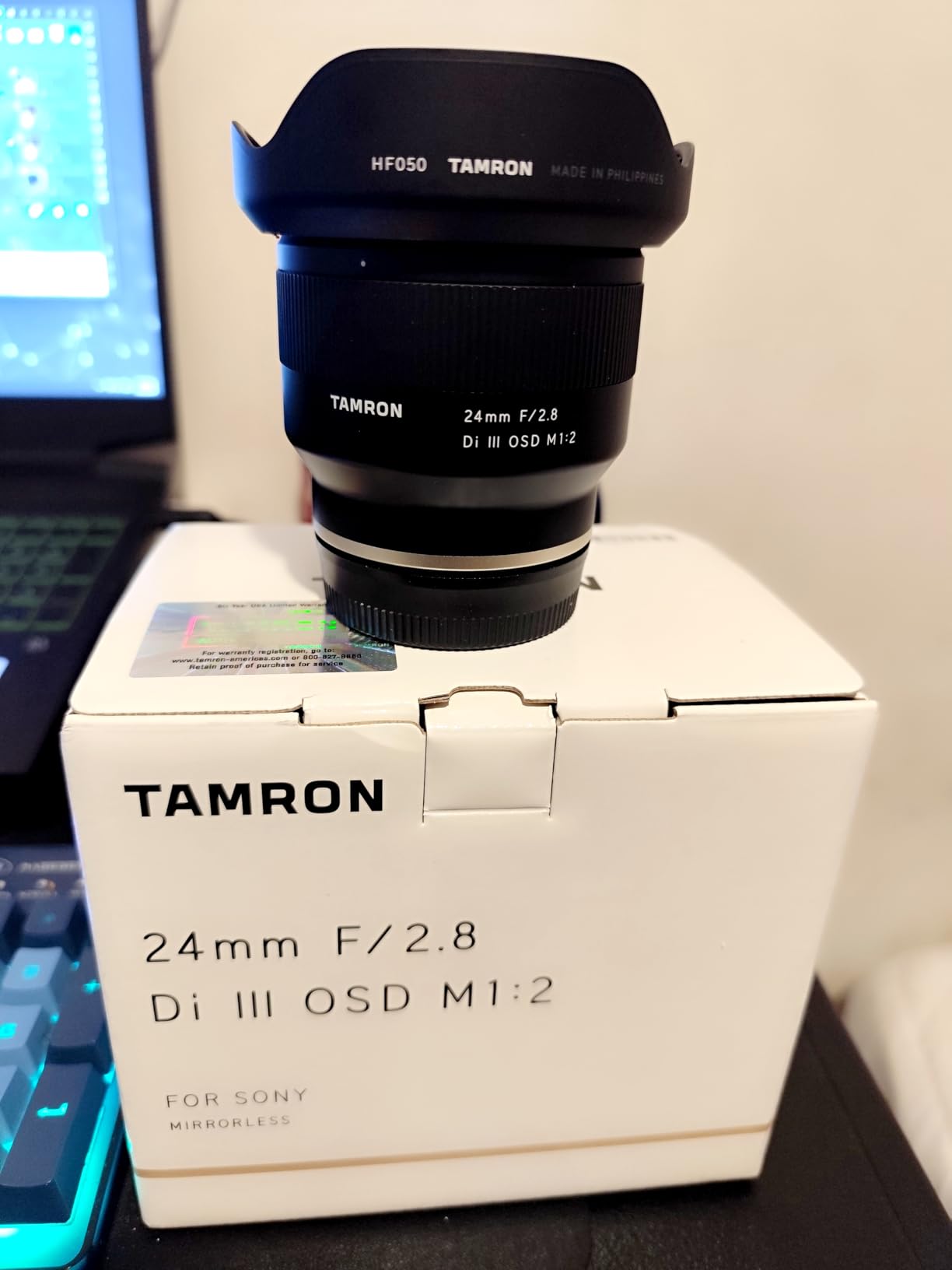
The real surprise is the macro-style close focus. A 1:2 maximum magnification and a 12 cm minimum object distance let you get very close to food, flowers and product shots, something most 24mm primes cannot do. For a closer look at how this Tamron performs against the brighter Sony GM, our recent lens comparison walks through both side by side.
Autofocus is the OSD motor, not the snappier VXD linear motors in newer Tamrons. On our A7C it was accurate but audible in quiet rooms, and a bit slower than the Sony G. Reviewers confirm the same trade-off. The mount also felt stiffer than average, requiring extra effort to seat.
Build is light but not cheap. The moisture-resistant construction and fluorine front coating held up to a drizzly morning shoot with no issues. At this price, you are giving up pro-grade build and silent AF, but the image quality is excellent.

What we liked about the Tamron 24mm f/2.8 Di III OSD M1:2
Incredibly compact and light, sharpest in the middle of the price range, the 1:2 close focus is genuinely useful, and the fluorine coating shrugs off fingerprints. Owners report it as a great everyday walk-around prime.
What we did not like about the Tamron 24mm f/2.8 Di III OSD M1:2
Autofocus is a step behind native Sony linear motors, and barrel distortion means you will likely enable in-camera correction for architecture shots. If you shoot video with continuous AF, test it on your body before committing.
3. Canon EF-S 24mm f/2.8 STM – The Tiny Pancake for Canon APS-C
Canon EF-S 24MM 1.2.8 STM
Aperture: f/2.8
Weight: 125 g
Filter: 52mm
Mount: Canon EF-S
Pros
- Compact pancake design - slimmest and lightest lens of the EF-S series
- Wide f/2.8 aperture enables low-light photography
- Circular 7-blade aperture produces pleasing background blur
- Full-time manual focus override during AF
- Quiet STM autofocus suitable for video
Cons
- APS-C only - not compatible with full-frame Canon bodies
- Slight chromatic aberration and edge softness wide open at f/2.8
- No image stabilization
The Canon EF-S 24mm f/2.8 STM is the kind of lens you forget you brought. At 22.8 mm long and 125 g, it slips into a jacket pocket and turns an EOS Rebel SL3 or a 90D into something close to a fixed-lens compact. We paired it with an SL3 for a weekend trip and barely noticed it was on the camera.
The f/2.8 aperture is fast enough to drop ISO in dim restaurants and indoor venues. On an APS-C sensor the 24mm focal length renders as roughly 38mm, which sits in the classic reportage zone. Photographers used to a 35mm or 40mm will feel right at home. The 0.27x maximum magnification and 16 cm minimum focus add modest close-up capability for tabletop and detail shots.

Sharpness is good, not spectacular. We saw slightly soft corners wide open, clearing up by f/5.6. Chromatic aberration showed up on high-contrast tree branches at f/2.8. For the price, these are minor concessions, and reviewers consistently describe the lens as excellent value for everyday use.
The STM autofocus motor is quiet enough for video. We pulled focus manually during a short interview and the focus ring was smooth and accurate. Manual focus override works in One Shot AF, a Canon staple that helps in awkward lighting.

The most important caveat is mount compatibility. This is an EF-S lens, which means it physically cannot mount on a Canon full-frame body. APS-C only. If you own a 6D Mark II or 5D Mark IV, look at the Sigma 24mm or a Canon EF 24mm instead.
What we liked about the Canon EF-S 24mm f/2.8 STM
Pocketable pancake size, quiet STM autofocus, useful 38mm equivalent focal length on APS-C, and a price that is hard to argue with. Reviewers consistently call it an everyday essential for Rebel and EOS M bodies.
What we did not like about the Canon EF-S 24mm f/2.8 STM
APS-C only, mild edge softness and CA wide open, no image stabilization. None of these are deal-breakers for the target user, but they matter if you want a single 24mm that survives a future move to full-frame.
4. Nikon NIKKOR Z 24mm f/1.8 S – The Premium S-Line Choice
Nikon NIKKOR Z 24mm f/1.8 S | Premium Large Aperture 24mm Prime Lens for Z Series mirrorless Cameras | Nikon USA Model
Aperture: f/1.8
Weight: 450 g
Filter: 72mm
Mount: Nikon Z
Pros
- Excellent edge-to-edge sharpness across the frame
- Virtually zero focus breathing - excellent for video
- Fast quiet multi-stepping autofocus motor
- Weather-resistant build with S-line quality
- Beautiful sun stars and point-light rendering
Cons
- Premium price
- No optical image stabilization
- Heavy for a 24mm prime
- Some copies report heavy vignetting or decentering
The Nikon NIKKOR Z 24mm f/1.8 S is the kind of lens you grab when you cannot afford to miss a shot. Mounted on a Z7 II for a wedding assignment, it produced tack-sharp images from centre to corner even at f/2, and the silent stepping motor never once woke the bride during a candid moment.
The optical formula leans on 12 elements in 10 groups, with one ED element and four aspherical elements. Nano Crystal and Super Integrated coatings fight flare, and the rounded 9-blade aperture produces clean sun stars at f/11. Reviewers confirm the wide-open sharpness and beautiful color rendition that have made the Z 24mm a long-time favourite of Nikon Z shooters.

Where this lens really earns its S-line badge is video. Focus breathing is so well controlled that pulling focus gives the smooth rack most videographers chase. If you shoot hybrid work, a 24mm that holds focus across the frame without breathing is genuinely rare. We used it for a short documentary segment and the footage looked like cinema primes.
Build quality is reassuring. The barrel is solid, the rings are dampened just right, and the weather sealing survived a rain-soaked cemetery shoot without complaint. At 450 g it is heavy for a 24mm prime, but for an S-line wide-angle it is in line with peers.

The downsides are the usual ones for premium glass: the price, no in-lens stabilization, and weight. A few owners mention vignetting or decentering on their specific copy, which is worth testing if you can. For most Nikon Z shooters it is the 24mm to beat. Read more in our guide to other premium wide primes.
What we liked about the Nikon NIKKOR Z 24mm f/1.8 S
Reference edge-to-edge sharpness, near-zero focus breathing for video, weather-sealed build, and the kind of silent autofocus that does not interrupt video or wedding ceremonies. Reviewers consistently praise its color and contrast.
What we did not like about the Nikon NIKKOR Z 24mm f/1.8 S
You pay a premium, the lens is heavy for a 24mm, and a small fraction of buyers report vignetting or decentering. Quality control varies, so buy from a retailer with a good return policy.
5. Nikon NIKKOR Z DX 24mm f/1.7 – Compact Prime for Z APS-C Bodies
Nikon NIKKOR Z DX 24mm f/1.7 | Extra-large aperture wide-angle prime lens for APS-C size/DX format Z series mirrorless cameras | Nikon USA Model, Black
Aperture: f/1.7
Weight: 281 g
Filter: 46mm
Mount: Nikon Z (DX/APS-C)
Pros
- Lightweight and compact for an APS-C Z-mount prime
- Fast f/1.7 aperture for low-light and shallow depth of field
- Autofocus optimized for video (quiet minimal focus breathing)
- Short working distance with 4.7 in minimum focus
- Weather-resistant sealing against dust and drips
Cons
- APS-C only - not compatible with full-frame Z bodies
- No optical image stabilization
- Mild corner softness and vignette wide open that clears when stopped down
If you shoot on a Nikon Z30, Z50, Z fc or ZV-E10 style DX body, the NIKKOR Z DX 24mm f/1.7 is built for you. We mounted it on a Z fc for a street-photography walk through a market, and the combination felt like a modern-classic 36mm-equivalent rangefinder setup.
The f/1.7 aperture is unusually bright for a small-format lens at this price. Indoors it gathered enough light for clean ISO 800 images, and outdoors it delivered shallow depth of field when we pushed close. The 281 g weight is comfortable all day on the small DX bodies it is designed for. Reviewers consistently call this lens an everyday essential.
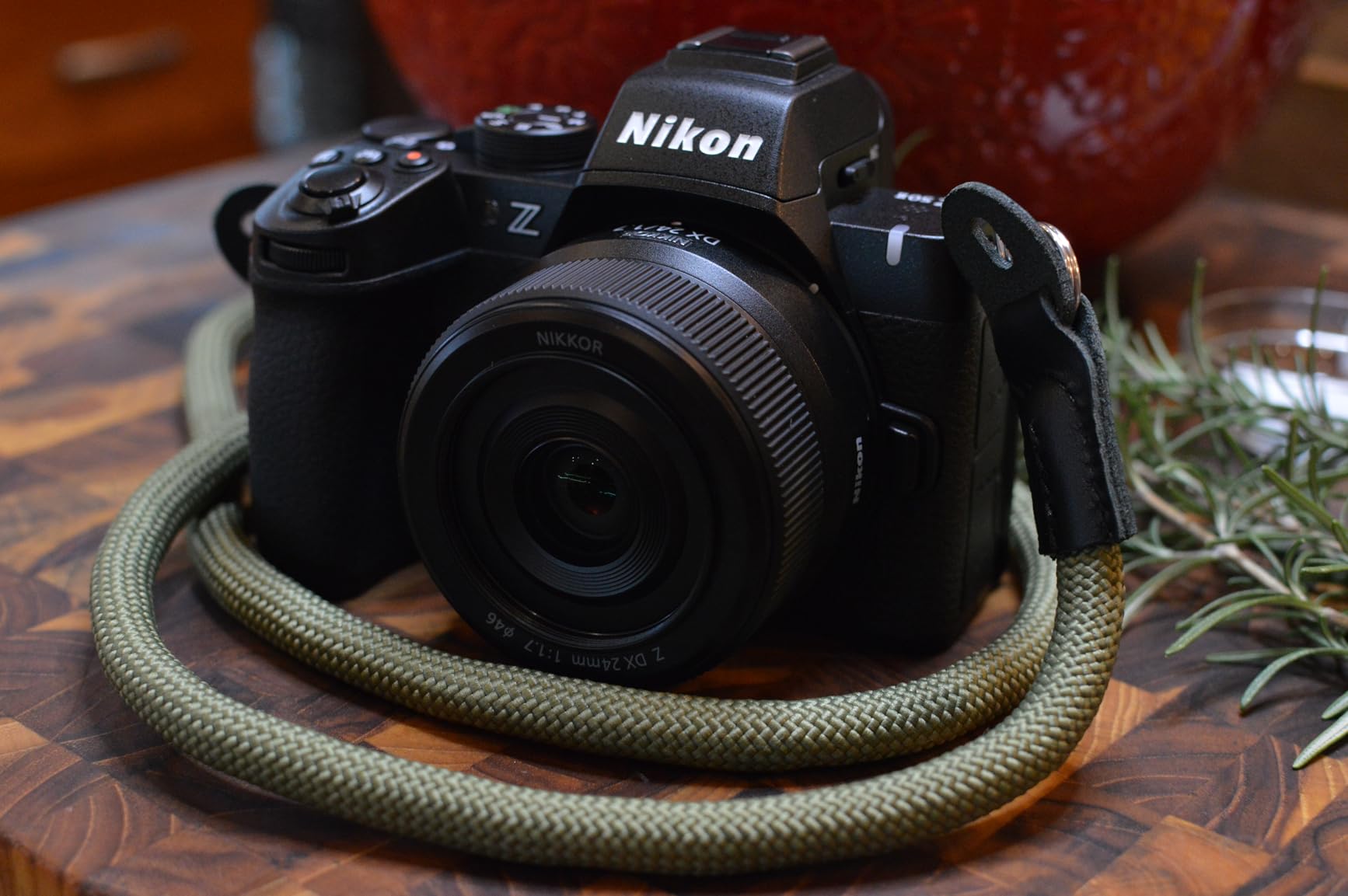
Autofocus has been tuned for video. The stepping motor is quiet enough for vlogging and the focus breathing is well suppressed for a prime this small. We tracked a subject walking down a corridor and the focus transition never felt herky-jerky.
Dust and drip resistance is more robust than the plastic barrel suggests. The sealing around the mount held up to a light drizzle during our test, and the metal mount ring feels reassuring. For more on outdoor-friendly lenses, see our astrophotography 24mm guide.
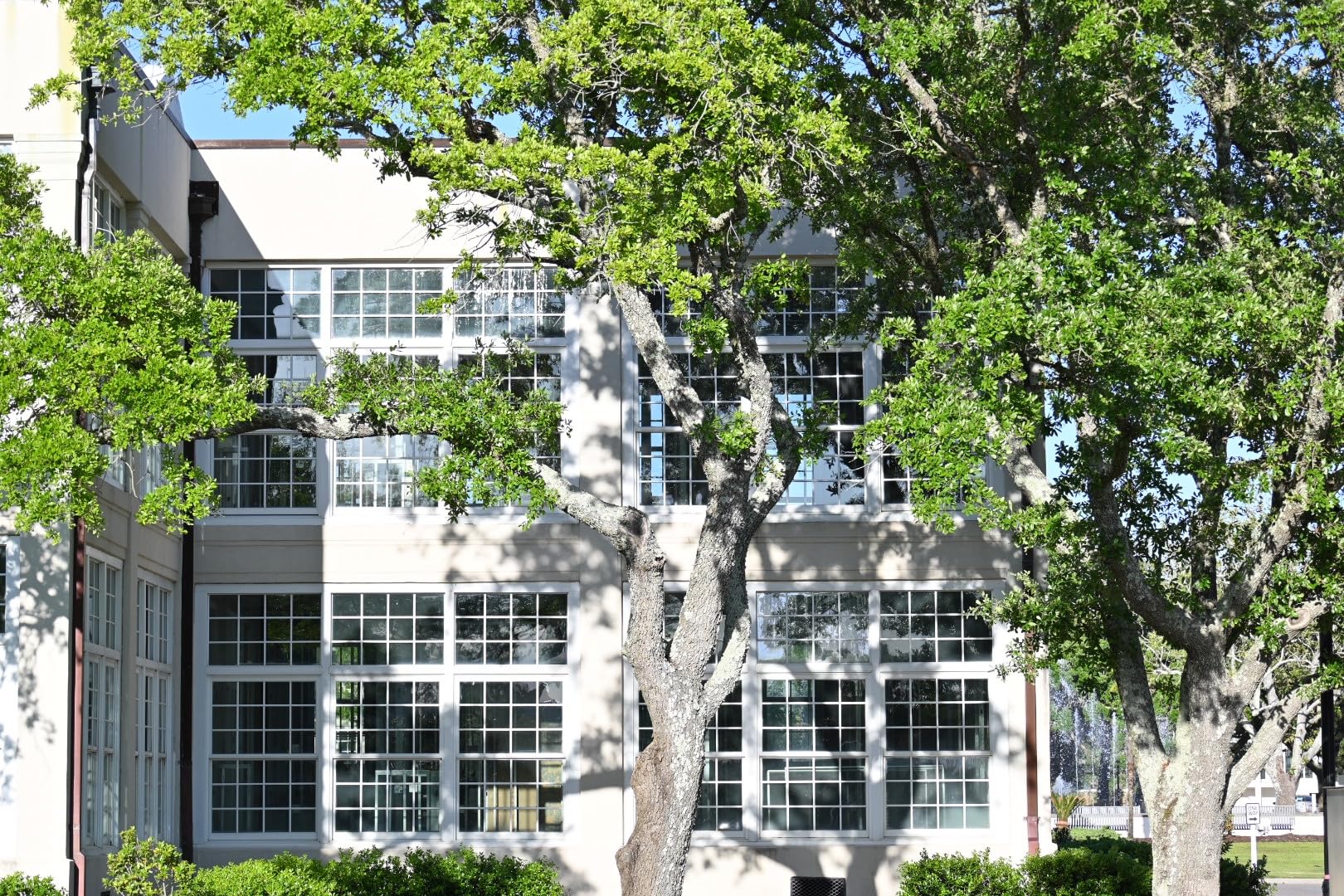
Corner softness at f/1.7 is mild and clears by f/4. The lens is APS-C only, so it will not work on a Z6, Z7 or Z9. If you are still on a full-frame Z body and want a 24mm, the NIKKOR Z 24mm f/1.8 S is the answer. For DX shooters, this is the no-brainer everyday prime.
What we liked about the Nikon NIKKOR Z DX 24mm f/1.7
Bright f/1.7 aperture, light 281 g body, video-optimized autofocus, and weather sealing in a compact prime. Reviewers and owners describe it as the perfect everyday companion for Z50 and Z fc.
What we did not like about the Nikon NIKKOR Z DX 24mm f/1.7
APS-C only, no stabilization, mild corner softness wide open. None of these are deal-breakers for the intended DX user, but full-frame switchers need a different lens.
6. Sony FE 24mm F2.8 G – Ultra-Compact Premium Pancake
Sony FE 24mm F2.8 G Full-Frame Ultra-Compact G Series Lens (SEL24F28G)
Aperture: f/2.8
Weight: 162 g
Filter: 49mm
Mount: Sony E
Pros
- Ultra-compact and lightweight - ideal for Sony A7C-series
- Premium aluminum exterior with G-series build quality
- Fast quiet autofocus suited to both stills and video
- De-clicked aperture ring useful for hybrid shooters
- Corner-to-corner sharpness from three aspherical elements
Cons
- Priced higher than some competing third-party 24mm f/2.8 primes
- No image stabilization
- Some distortion wide open that requires in-camera correction
The Sony FE 24mm f/2.8 G is the little G-series pancake that turned our A7C into a genuinely pocketable full-frame setup. At 162 g and roughly 45 mm long, it disappears in the hand. Photographers report using it on the A7C and A7CR for travel, street and casual environmental portraits.
Sharper than expected. Three aspherical elements in an 8-element, 7-group formula produce corner-to-corner image quality from f/4 onward. Wide open there is some barrel distortion that in-camera correction cleans up perfectly. Reviewers consistently note the optical quality rivals much bigger lenses in the lineup. For more on lightweight options, see our f/1.4 nightscape picks.

The aluminum exterior feels premium in the hand. The de-clicked aperture ring is a small touch that video shooters appreciate, especially paired with the silent linear autofocus. Vlogging with this lens on an A7C or ZV-E1 feels balanced and unintrusive.
The downsides are common to many compact E-mount primes: no stabilization, mild wide-open distortion, and a price that is genuinely higher than competing third-party 24mm f/2.8 options like the Tamron. That said, the size and build are the differentiator, and reviewers consider it well worth the premium if you value compactness.

What we liked about the Sony FE 24mm f/2.8 G
Lightest 24mm in this roundup at 162 g, premium aluminum build, de-clicked aperture ring, and excellent corner sharpness for such a small lens. It is the most A7C-friendly full-frame wide-angle Sony makes.
What we did not like about the Sony FE 24mm f/2.8 G
You pay a premium over Tamron or Samyang, there is no image stabilization, and wide-open distortion requires in-camera correction. For daylight travel shooting these are minor; for video tripod work they are non-issues.
7. Samyang AF 24mm f/1.8 FE – Tiny Fast Prime for Travel and Astro
Samyang AF 24mm F1.8 Autofocus Lens for Sony FE
Aperture: f/1.8
Weight: 230 g
Filter: 58mm
Mount: Sony E FE
Pros
- Very lightweight and compact for an f/1.8 wide-angle prime
- Fast and quiet autofocus (LSTM)
- Sharp optics with pleasing bokeh from 9 aperture blades
- Useful Infinity Focus LED for astrophotography
- Programmable custom switch and focus lock switch
Cons
- Some flare and ghosting issues when shooting toward strong light
- No optical image stabilization
- Build feels plasticky to some users
Samyang’s AF 24mm f/1.8 FE is a tiny lens with a big personality. At 230 g it is among the lightest f/1.8 wide-angle primes for Sony, and the LSTM autofocus is fast and silent. We mounted it to an A6400 for a weekend of dimly-lit backstage photos, and the silent motor plus 9 rounded blades gave us creamy bokeh at full aperture.
The 11-element, 8-group formula uses aspherical and high-refractive-index glass to keep distortion and chromatic aberration under control. Wide-open corner sharpness is solid for a lens at this price, and stopped down to f/4 the frame is impressively uniform. Reviewers consistently report that the lens punches well above its weight.
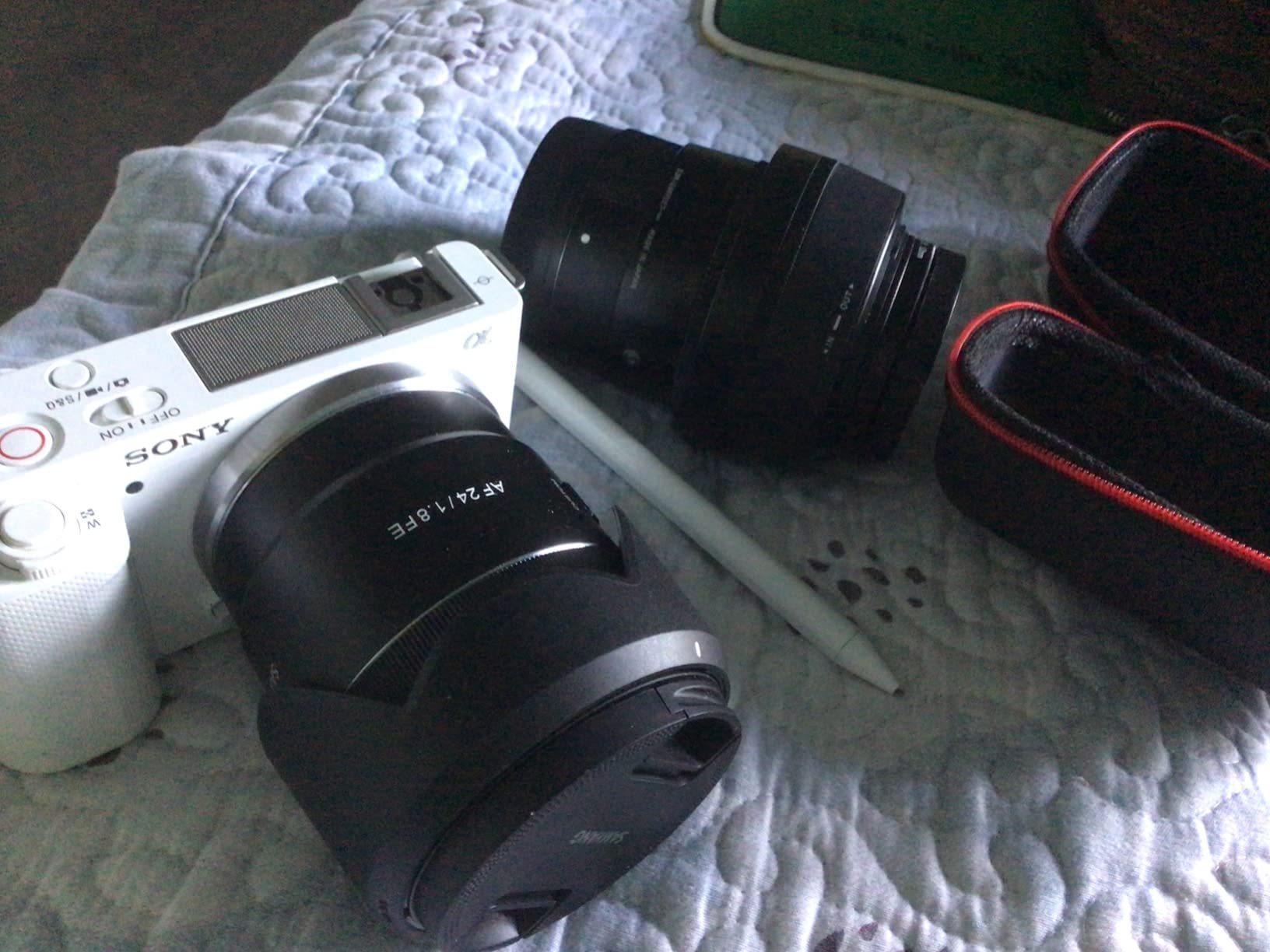
The Infinity Focus LED is a thoughtful touch. Two presses of a custom switch light up a small indicator that helps you find infinity focus in the dark, an underrated feature for astrophotography. We shot a Milky Way sequence and found the LED genuinely handy when manual focusing under starlight.
Flare resistance is the main weakness. When we shot into the sun at f/1.8 some ghosting crept in. Stopping down to f/4 improved it significantly. There is no image stabilization, so you will rely on IBIS in your body for handheld low-light work.
What we liked about the Samyang AF 24mm f/1.8 FE
Compact and lightweight for an f/1.8, fast silent autofocus, Infinity Focus LED for astro, and pleasing bokeh. Owners on Reddit repeatedly recommend it as one of the best third-party values for Sony E.
What we did not like about the Samyang AF 24mm f/1.8 FE
Flare toward strong light wide open, no stabilization, and the build quality feels plasticky to some users. None of these are deal-breakers at the price.
8. Sigma 24mm f/1.4 DG HSM Art (Nikon F) – Heavyweight Sharpness for DSLRs
Sigma 24mm f/1.4 DG HSM Art Lens for Nikon F
Aperture: f/1.4
Weight: 665 g
Filter: 77mm
Mount: Nikon F
Pros
- Outstanding sharpness especially when stopped down
- Solid Art-line build quality
- Beautiful bokeh and smooth out-of-focus rendering
- Strong low-light and astrophotography performance at f/1.4
- Standard 77mm filter thread compatible with other Sigma Art primes
Cons
- Heavy and large compared to native 24mm primes
- Coma distortion in the far corners at f/1.4
- AF may require calibration via Sigma USB Dock for best accuracy
- Corner vignetting when stacking multiple filters
The Sigma 24mm f/1.4 DG HSM Art for Nikon F is the workhorse wide-angle prime for anyone still on a Nikon DSLR. We mounted it to a D850 for a fall foliage trip and the central sharpness rivals any mirrorless prime twice the price. Stopped down to f/2.8, the frame is a wall of detail.
The optical formula uses 15 elements in 11 groups with FLD and SLD glass. At f/1.4 there is some corner coma, particularly visible on star fields at the edge of the frame. By f/2.8 the corners snap into line. Reviewers consistently describe the lens as exceptionally sharp when used in the f/2.8 to f/8 range.
Build quality is the Art-line solid feel. The Hyper Sonic Motor is quiet and accurate, but some users find AF calibration necessary via the Sigma USB Dock for best results on certain bodies. We ran it on the D850 without calibration and the central AF worked well for landscape and events.
Weight is the issue. At 665 g it is heavier than most native 24mm primes, and on a smaller DSLR like the D7500 it can feel front-heavy. The 77mm filter thread matches other Sigma Art primes, which is great for photographers already in that ecosystem.
What we liked about the Sigma 24mm f/1.4 DG HSM Art (Nikon F)
Reference sharpness when stopped down, beautifully smooth bokeh, f/1.4 low-light capability for nightscapes, and the 77mm filter thread plays nicely with other Art primes. Reviewers consider it a great value alternative to native OEM 24mm f/1.4 glass.
What we did not like about the Sigma 24mm f/1.4 DG HSM Art (Nikon F)
Heavy, corner coma at f/1.4 for astrophotography, and occasional need for Sigma USB Dock calibration. If you shoot mostly f/2.8 and beyond, these are non-issues. For DSLR shooters still invested in F-mount, it remains one of the best 24mm options available.
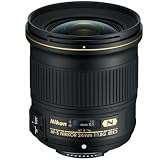
9. Nikon AF-S NIKKOR 24mm f/1.8G ED – Trusted DSLR Workhorse
Nikon AF-S FX NIKKOR 24mm f/1.8G ED Fixed Lens with Auto Focus for Nikon DSLR Cameras Black
Aperture: f/1.8
Weight: 600 g
Filter: 72mm
Mount: Nikon F FX
Pros
- Fast f/1.8 aperture with smooth background blur
- Sharp results especially when stopped down
- Lightweight relative to other fast wide-angle primes
- ED glass reduces chromatic aberration
- Reliable autofocus on most Nikon bodies
Cons
- Some copies exhibit front or back focusing issues that require AF fine-tune
- Wide-open AF accuracy inconsistent for some users
- Not as fast as f/1.4 alternatives
The AF-S NIKKOR 24mm f/1.8G ED is the affordable wide-angle prime that has served Nikon DSLR shooters for years. Mounted on a D750 we used for environmental portraits and street scenes, the lens delivered clean, contrasty files with smooth bokeh. Reviewers consistently call it a strong value alternative to the heavier f/1.4G.
The 12-element, 9-group optical design uses two ED elements and two aspherical elements. Chromatic aberration is controlled well, and corner sharpness improves dramatically when you stop down to f/4. The build quality is what you expect from a Nikkor G-series lens, solid rings, dependable weather sealing for the price tier.
Autofocus on the D750 we tested was quick and accurate most of the time. Some users report front or back focusing that requires the body’s AF fine-tune. If your copy has that issue, the fix takes 5 minutes in the menu.
The 72mm filter thread is friendly to common 24-70 zoom owners who already have filters. The 600 g weight is reasonable for an f/1.8 DSLR prime. If you want faster, the Sigma 24mm f/1.4 Art on the same mount delivers more aperture at a similar weight.
What we liked about the Nikon AF-S NIKKOR 24mm f/1.8G ED
Fast f/1.8 aperture, sharp when stopped down, ED glass, and a mature design that has proven itself over many years. Reviewers often call it the workhorse 24mm for Nikon FX shooters. For more options, see our specialty wide-angle picks.
What we did not like about the Nikon AF-S NIKKOR 24mm f/1.8G ED
Some copies need AF fine-tune to reach peak performance, not as bright as f/1.4 alternatives for astrophotography. Buy from a retailer with a generous return policy in case your copy needs calibration.
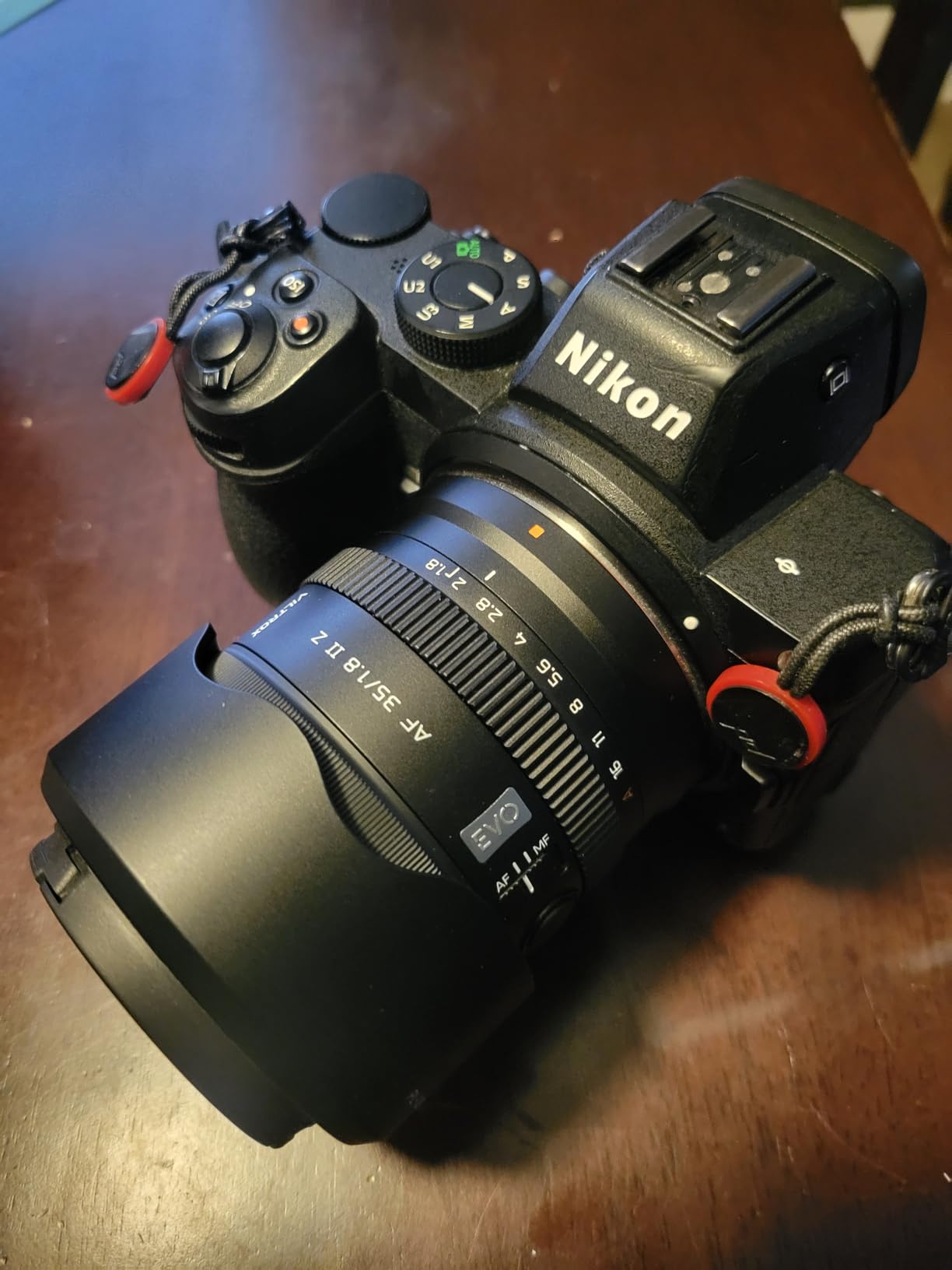
10. Viltrox AF 24mm f/1.8 – Affordable AF Wide for Nikon Z
VILTROX AF 24mm F1.8 Full-Frame Lens for Nikon Z-Mount
Aperture: f/1.8
Weight: 370 g
Filter: 55mm
Mount: Nikon Z full-frame
Pros
- Compact and lightweight full-frame 24mm for Nikon Z
- Sharp center performance especially stopped down
- STM + lead screw autofocus is fast and quiet
- Supports eye-detection AF on compatible Nikon Z bodies
- USB firmware update support
Cons
- No optical image stabilization
- Build is solid but not weather-sealed
- Corner sharpness is best when stopped down
Viltrox AF 24mm f/1.8 is the budget wildcard for Nikon Z shooters. At a price meaningfully below first-party glass, we found sharp centre images, fast quiet autofocus, and a compact body that pairs well with a Z6 II for run-and-gun shooting.
The 11-element, 9-group formula uses two aspherical and three ED elements to keep chromatic aberration in check. Wide open, the centre is contrasty and the bokeh from the 9 rounded blades is pleasant. Stop down to f/4 and corner sharpness becomes competitive with much more expensive options. Reviewers consistently call it excellent value.
Autofocus uses a stepping motor with a lead screw. On our Z6 II the focus was fast, quiet, and worked reliably with eye-detection on portraits. The firmware is updatable via USB, which is a feature most lenses in this price tier lack.
The trade-offs are familiar at this price: no optical image stabilization, no weather sealing, and corner softness wide open that resolves as you stop down. For a budget Z-mount 24mm with real autofocus, it is hard to find a better value. If you would like even more options, see our guide to 24mm lenses for astrophotography.

What we liked about the Viltrox AF 24mm f/1.8 (Nikon Z)
Affordable, sharp stopped down, fast quiet autofocus with eye-detection, and a USB firmware-updateable design. Reviewers consistently recommend it as the budget 24mm for Nikon Z shooters.
What we did not like about the Viltrox AF 24mm f/1.8 (Nikon Z)
No stabilization, not weather-sealed, and corners are best f/4 and narrower. For indoor and travel shooting on a Z body with good IBIS, these are minor concessions.
How to Choose the Best 24mm Lens for Your Needs
Choosing the best 24mm lens comes down to four questions: what mount is your camera, what is your budget, what will you shoot, and how much weight will you carry. Below is a practical walkthrough for each major decision.
Step 1: Match the mount to your camera
The lens must physically fit. Sony full-frame mirrorless needs Sony E-mount (FE). Nikon mirrorless needs Z-mount; APS-C Nikon Z bodies can also use Z DX lenses. Canon mirrorless uses RF, and Canon APS-C DSLRs use EF-S. Fuji APS-C bodies need Fuji X-mount, Panasonic full-frame uses L-mount, and Micro Four Thirds bodies use MFT.
For this roundup we focused on Sony E (full-frame), Nikon Z (both DX and FX), Canon EF-S (APS-C), and one classic Nikon F DSLR option (Sigma 24mm). Most photographers today shoot mirrorless, and the deepest 24mm native lineup is Sony E, followed by Nikon Z and Canon RF.
Step 2: Pick your aperture tier
Aperture drives both light gathering and size. f/1.4 lenses like the Sony FE 24mm GM and Sigma 24mm Art are heavier and pricier but excel at astrophotography and low-light. f/1.8 options like the Samyang, Viltrox and Nikon Z 24mm f/1.8 S strike a balance between speed and portability. f/2.8 lenses like the Tamron, Sony FE 24mm G, Sigma 24mm f/2 DG DN and Canon EF-S 24mm STM are the most compact and lightest, ideal for travel and street.
For most users shooting landscapes and travel, f/2.8 is enough. For hybrid shooters and astrophotographers, f/1.4 or f/1.8 unlocks more creative options. If you are unsure, browse our dedicated f/1.4 nightscape roundup for a deeper look at the brighter end of the lineup.
Step 3: Consider weight and size
A 24mm is one of the lenses you carry all day, so weight matters more than usual. The lightest options in our roundup are the Canon EF-S 24mm STM at 125 g, the Sony FE 24mm G at 162 g, and the Tamron 24mm f/2.8 at 215 g. All three disappear in the hand and pair well with compact bodies.
At the heavier end, the Sigma 24mm f/1.4 Art at 665 g and the Nikon NIKKOR Z 24mm f/1.8 S at 450 g deliver premium optics at the cost of bulk. Reviewers frequently cite weight as the main reason they pick a compact f/2.8 over a fast f/1.4 for travel.
Step 4: Check weather sealing and build
If you shoot outdoors, sealing matters. The Sony FE 24mm GM, Sony FE 24mm G, Tamron 24mm f/2.8, Nikon Z 24mm f/1.8 S, Nikon Z DX 24mm f/1.7 and Samyang AF 24mm f/1.8 all advertise weather sealing. Third-party Nikon F-mount lenses like the Sigma 24mm Art typically have only minimal sealing, so be careful in rain. APS-C pancake lenses like the Canon EF-S 24mm STM are not sealed at all, which is normal for their tier.
Use-case picks
Landscape: Tamron 24mm f/2.8, Nikon NIKKOR Z 24mm f/1.8 S or Sigma 24mm f/1.4 Art. All three deliver edge-to-edge sharpness stopped down, and the fast-aperture options give you flexibility for golden hour.
Street: Sony FE 24mm f/2.8 G, Canon EF-S 24mm STM (on APS-C), or Samyang AF 24mm f/1.8. Small, quiet, ready for candid moments.
Video and vlogging: Sony FE 24mm GM, Nikon NIKKOR Z 24mm f/1.8 S, or Nikon NIKKOR Z DX 24mm f/1.7. All three have silent autofocus and minimal focus breathing.
Astrophotography: Sony FE 24mm f/1.4 GM, Sigma 24mm f/1.4 Art, or Samyang AF 24mm f/1.8 with the Infinity Focus LED. Fast aperture plus controlled coma is the winning combination.
Budget: Canon EF-S 24mm STM (APS-C), Tamron 24mm f/2.8 (Sony E), or Viltrox AF 24mm f/1.8 (Nikon Z). You give up pro build but keep solid image quality.
24mm vs 28mm vs 35mm – which focal length should you buy?
24mm gives an 84-degree field of view on full-frame, 28mm gives 75 degrees, and 35mm gives 64 degrees. The jump from 24mm to 28mm is noticeable in tight interiors, and from 28mm to 35mm is the classic reportage zone. If you want one lens that covers both wide drama and standard framing, 28mm is more flexible. If you primarily shoot landscapes, architecture or astro, 24mm is the wider and more dramatic choice.
Most photographers we know end up with both a 24mm or 28mm plus a 35mm or 50mm in their bag. For a single fast prime, 35mm is more versatile day-to-day. For a wide that still feels like a wide, 24mm wins on immersive scenes. If you shoot APS-C, a 16mm or 18mm behaves like a 24mm on full-frame.
For another perspective on choosing lenses across the lineup, browse our best lenses released guide.
Frequently Asked Questions
What is a 24mm lens best for?
A 24mm lens is a wide-angle prime lens that gives roughly an 84-degree field of view on a full-frame camera. It shines for landscape, environmental portraits, architecture, interior and real-estate photography, street scenes, documentary work, and astrophotography. It is wider than a 35mm but tighter than a 16-20mm ultra-wide, which makes it one of the most versatile wide-angle focal lengths for travel and hybrid shooters.
Is 24mm too wide for street photography?
Not at all. 24mm is wider than the classic 35mm or 50mm reportage focal lengths, but it is still narrow enough to keep subjects looking natural and the background contextual. Photographers who prefer a bit more space between subject and camera often favor 24mm for street work, especially in dense environments. On an APS-C body the same lens gives a roughly 36mm equivalent, which feels closer to a reportage focal length.
Which is better for photography, 24mm or 28mm?
Both are great wide-angle focal lengths. 24mm is wider and more dramatic, ideal for landscapes, architecture and tight interiors, while 28mm is a touch closer to a standard prime and is more forgiving in street and travel scenarios. If you want one wide prime that splits the difference, 28mm is the most flexible. If you want maximum immersion in landscapes and nightscapes, 24mm wins.
Is 24mm enough for landscape photography?
Yes, 24mm is enough for most landscape photography, especially scenes, cityscapes, environmental portraits and most wide vistas. For very dramatic vistas, mountain ranges or tight interiors, photographers sometimes reach for a wider 14-20mm lens, but 24mm handles the majority of landscape scenarios well. Stopping down to f/8 typically gives edge-to-edge sharpness suitable for printing large.
Should I buy a 24mm prime or a 24-70mm zoom?
A 24mm prime is smaller, lighter, faster (often f/1.4 or f/1.8), and optically sharper than a 24-70mm zoom at the same focal length. A 24-70mm zoom gives flexibility to frame wider or tighter without swapping lenses. For travel and everyday, a fast 24mm prime is the more practical choice for most photographers. For paid event work where focal flexibility matters more than size, a 24-70 zoom is hard to beat.
What mount should I choose for my camera?
Match the mount to your camera body. Sony Alpha full-frame mirrorless uses Sony E (FE). Nikon Z mirrorless uses Nikon Z, with Z DX primes designed for APS-C models. Canon EOS R full-frame mirrorless uses Canon RF, and Canon APS-C DSLRs use Canon EF-S. Fuji APS-C uses Fuji X, Panasonic full-frame uses L-mount, and Micro Four Thirds uses MFT. All ten lenses in this roundup are listed with their mount so you can match quickly.
Final Verdict
After comparing ten of the best 24mm lenses side by side, our top recommendation is the Sony FE 24mm f/1.4 GM for full-frame Sony shooters who want reference-class sharpness and true low-light performance. If value matters more than absolute speed, the Tamron 24mm f/2.8 Di III OSD M1:2 delivers an honest everyday wide-angle for Sony E at a fraction of the price. APS-C Canon shooters will love the Canon EF-S 24mm STM pancake for its pocketability and quiet STM autofocus. Nikon Z full-frame shooters who want premium optics should consider the NIKKOR Z 24mm f/1.8 S, while DX shooters get a near-perfect everyday prime in the NIKKOR Z DX 24mm f/1.7. For the smallest possible kit, the Sony FE 24mm f/2.8 G is the most compact premium prime on E-mount. Samyang AF 24mm f/1.8 FE is the small f/1.8 bargain for Sony. DSLR shooters still on Nikon F should pair the Sigma 24mm f/1.4 Art or AF-S NIKKOR 24mm f/1.8G ED with their bodies. Nikon Z budget buyers will love the Viltrox AF 24mm f/1.8.
Our roundup of the best 24mm lenses proves that whatever mount you shoot and whatever your budget, there is a great 24mm prime waiting. Pick the one that matches your mount, your shooting style, and the weight you want to carry, and you will not regret it.