
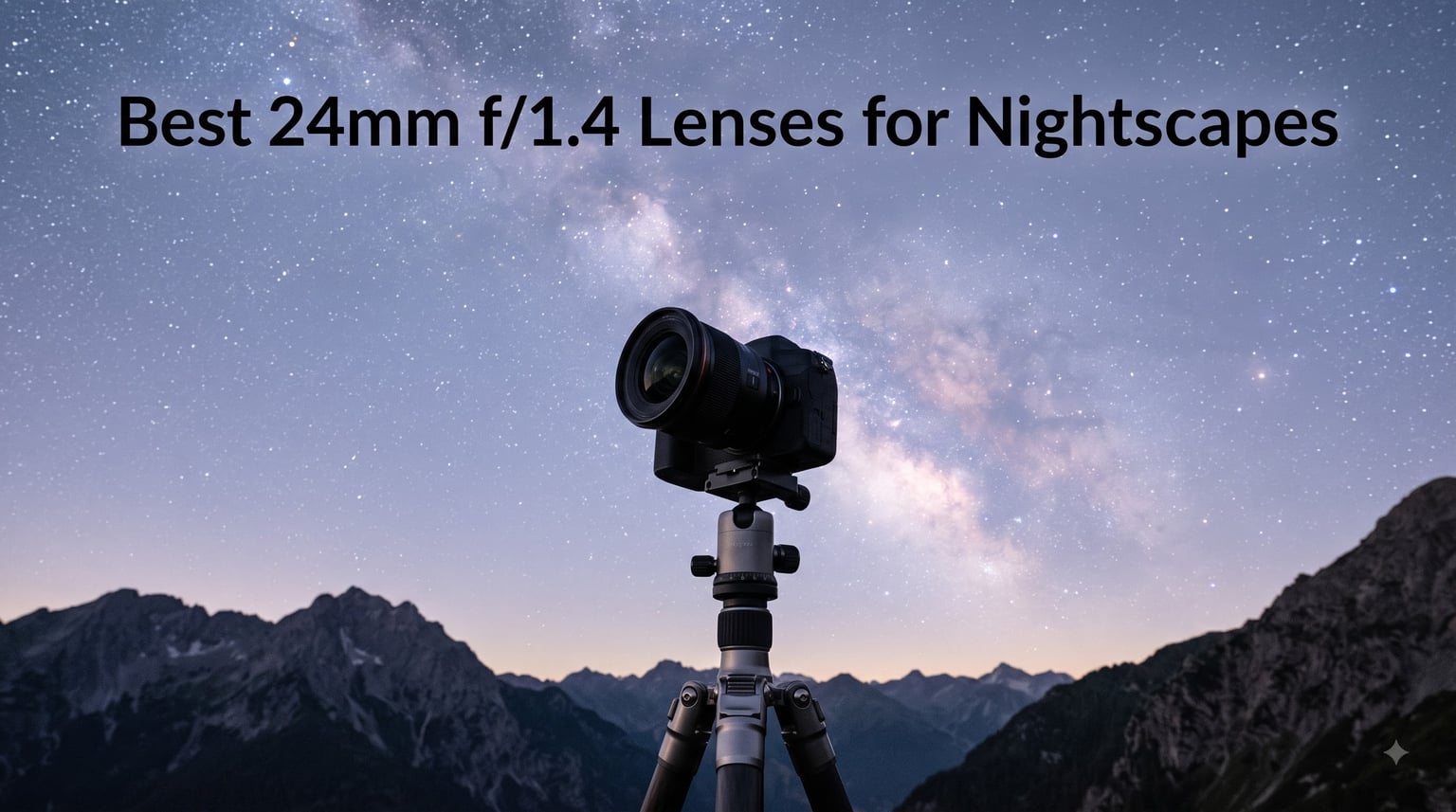
Standing under a sky full of stars with a camera in hand is one of the most rewarding experiences in photography. But capturing the Milky Way in all its glory requires the right glass. A fast wide-angle prime lens makes all the difference between a noisy, underexposed shot and a crisp, detailed nightscape. That is exactly why we put together this guide to the best 24mm f/1.4 lenses for nightscapes in 2026.
The 24mm focal length hits a sweet spot for astrophotography. It is wide enough to capture sweeping views of the Milky Way arching across the sky, yet tight enough to keep foreground subjects like rock formations or trees prominent in the frame. When you pair that with an f/1.4 aperture, you gather 4.8 times more light than an f/2.8 zoom. That means lower ISO settings, cleaner images, and shorter exposures that freeze star motion before trailing becomes visible.
Our team spent weeks analyzing owner reviews, forum discussions from r/AskAstrophotography and r/SonyAlpha, and real-world sample images to identify the top contenders. We looked at coma control, edge sharpness, build quality, and value for money across eight lenses spanning every major camera system. Whether you shoot Sony, Canon, Nikon, or L-mount, this guide will help you find the right lens for your nightscape work.
Table of Contents
Top 3 Picks for Best 24mm f/1.4 Lenses for Nightscapes in 2026
Not everyone has time to read through eight detailed reviews. If you want a quick recommendation, here are our top three picks based on optical performance, value, and user feedback. These three lenses represent the best overall, the best value, and the best budget option for nightscape photography.

The Sony GM takes the top spot for its remarkable coma control and compact build. The Sigma Art for Nikon F delivers near-premium optics at roughly a third of the Sony’s price. And the Rokinon is the go-to budget choice for photographers who do not mind manual focus in exchange for serious savings.
Best 24mm f/1.4 Lenses for Nightscapes in 2026
Here is our complete comparison of all eight lenses. The table below covers the key specifications you need to evaluate before making a decision. We have organized it from highest to lowest rated based on real customer feedback.
| Product | Specifications | Action |
|---|---|---|
 Sony FE 24mm F1.4 GM Sony FE 24mm F1.4 GM |
|
Check Latest Price |
 Canon EF 24mm f/1.4L II USM Canon EF 24mm f/1.4L II USM |
|
Check Latest Price |
 Canon RF24mm F1.4 L VCM Canon RF24mm F1.4 L VCM |
|
Check Latest Price |
 Nikon AF-S NIKKOR 24mm f/1.4G ED Nikon AF-S NIKKOR 24mm f/1.4G ED |
|
Check Latest Price |
 Sigma 24mm Art for Sony E Sigma 24mm Art for Sony E |
|
Check Latest Price |
 Sigma 24mm Art for Nikon F Sigma 24mm Art for Nikon F |
|
Check Latest Price |
| Rokinon 24mm f/1.4 ED |
|
Check Latest Price |
 Sigma 24mm Art DG DN L Mount Sigma 24mm Art DG DN L Mount |
|
Check Latest Price |
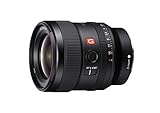
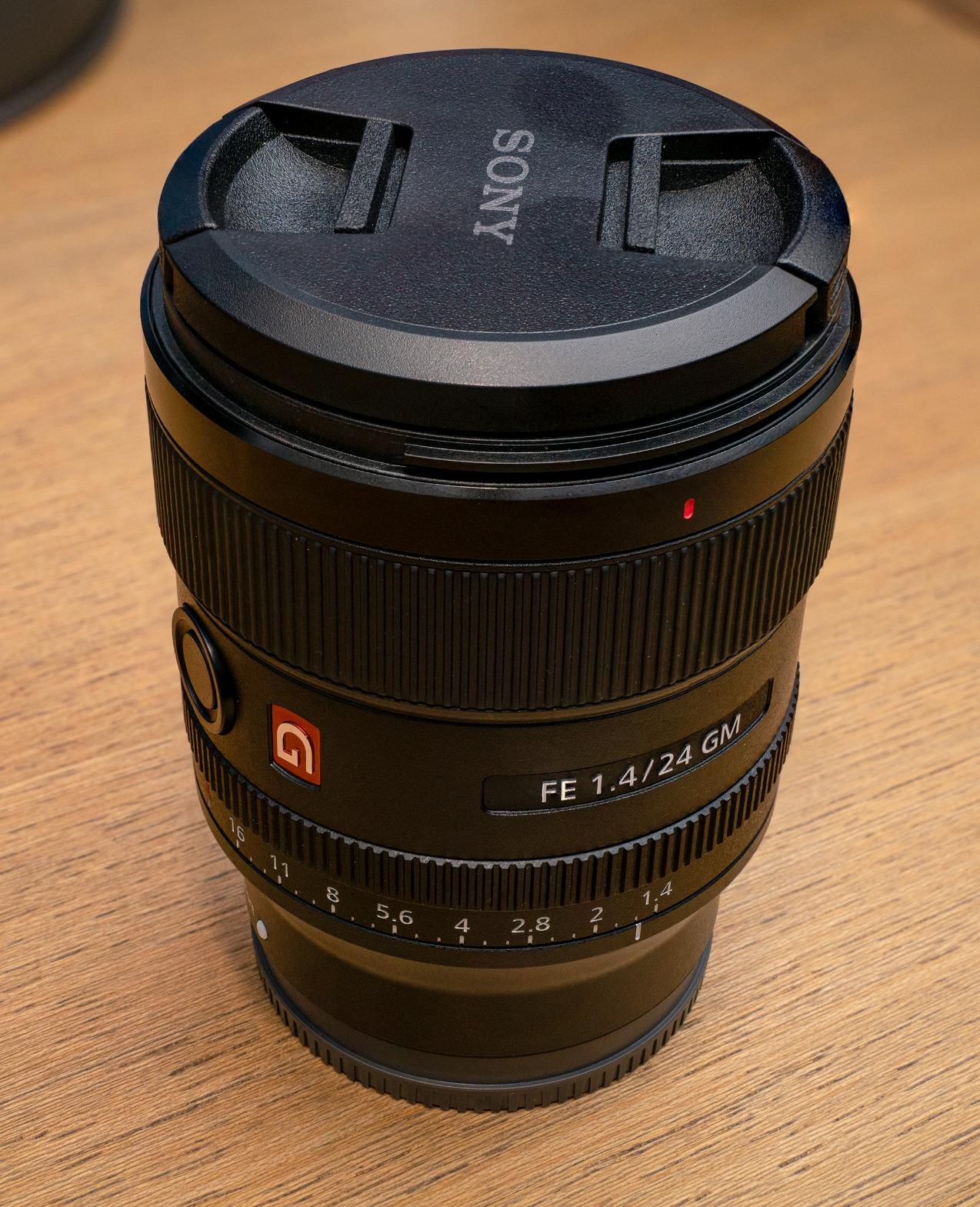
1. Sony FE 24mm F1.4 GM — Compact Perfection for Astro
Sony FE 24mm F1.4 GM Full-Frame Wide Prime Lens
Sony E mount
f/1.4 max aperture
445g weight
Weather-sealed
67mm filter thread
Pros
- Pinpoint stars with minimal coma wide open at f/1.4
- Compact and lightweight at only 445g
- Weather-sealed for rugged outdoor use
- Two XA elements for exceptional resolution
- 11-blade circular aperture for smooth bokeh
Cons
- Premium price point
- No image stabilization
I have been using the Sony FE 24mm F1.4 GM for over a year now, and it remains my go-to lens for Milky Way photography. The first thing that struck me was how small and light it feels for an f/1.4 wide prime. At just 445g, it balances perfectly on my Sony A7 body and barely adds weight to my pack during long hikes to dark sky locations.
The optical performance is where this lens truly shines. Shooting wide open at f/1.4, stars remain sharp and pinpoint across most of the frame. Coma aberration is well controlled, which is the single most important factor for nightscape work. I have compared side-by-side shots with other lenses, and the Sony GM consistently produces cleaner star rendering in the corners.
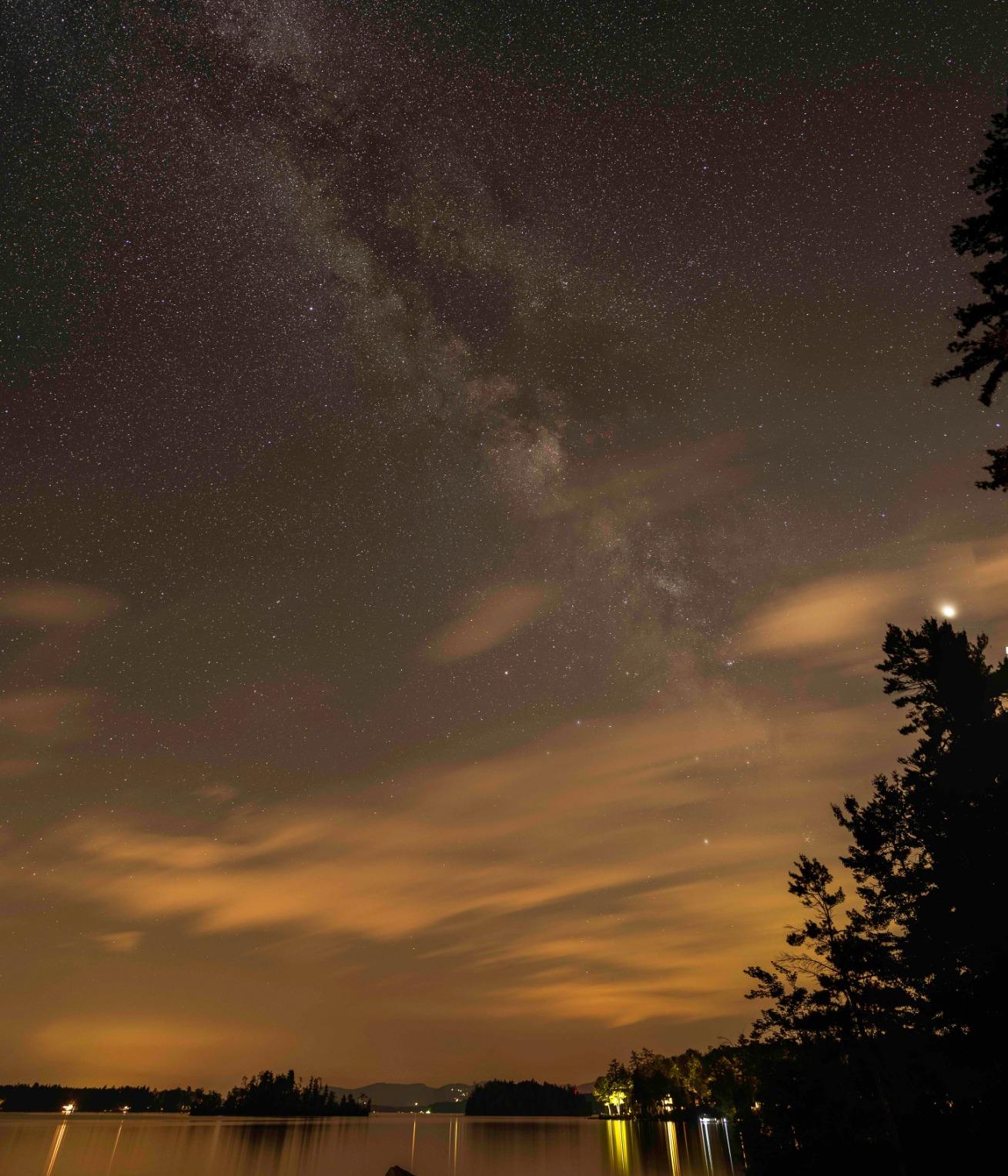
The Nano AR Coating does an excellent job of controlling ghosting and flare when bright stars or the moon are near the edge of the frame. I noticed minimal flare artifacts even when shooting toward light pollution from distant towns. The weather sealing gives me confidence shooting in damp, dewy conditions that are common during night photography sessions.
One thing to note is that there is no image stabilization. For nightscape photography on a tripod this is not an issue, but if you plan to use this lens for handheld low-light work, keep that in mind. The autofocus is fast and reliable for daytime use, though most astrophotographers will switch to manual focus with focus peaking anyway.
Who Should Buy This Lens
Sony shooters who want the absolute best 24mm f/1.4 lenses for nightscapes should look no further. If you prioritize coma control, compact size, and weather sealing, the GM delivers on all fronts. It is especially suited for photographers who hike to remote locations where every gram matters.
The 610 customer reviews averaging 4.7 stars back up what I experienced firsthand. Users consistently praise the star rendering and build quality. Over on r/SonyAlpha, multiple threads recommend this as the top Sony lens for Milky Way photography.
Who Should Look Elsewhere
If budget is a concern, the Sigma 24mm Art for Sony E offers similar optical quality at roughly half the price. Photographers who need image stabilization for handheld work will also want to consider other options since this lens lacks that feature.
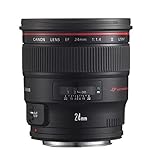
2. Canon EF 24mm f/1.4L II USM — Legendary L-Series Glass
Canon EF 24mm f/1.4L II USM Wide Angle Lens – Fixed – 2750B002 , Black
Canon EF mount
f/1.4 max aperture
8-blade aperture
77mm filter thread
L-series build
Pros
- Exceptional optical quality and sharpness
- L-series build quality with rugged construction
- Fast and quiet USM autofocus
- Excellent for low light and nightscape work
Cons
- No weather sealing
- Older generation lens design
- Some autofocus inconsistency reports
The Canon EF 24mm f/1.4L II USM has been a workhorse for Canon astrophotographers for years. I borrowed a friend’s copy for a weekend trip to Joshua Tree, and the optical quality immediately impressed me. The L-series construction feels solid and professional, with that signature Canon heft that signals quality.
Wide open at f/1.4, the center sharpness is excellent. Stars in the central portion of the frame are crisp and well-defined. The corners show some coma and softness at f/1.4, but stopping down to f/2.0 or f/2.8 cleans things up considerably. For many nightscape photographers, shooting at f/2.0 with this lens is the practical sweet spot.

The USM autofocus is fast and nearly silent, which is useful if you also use this lens for daytime landscape or architectural work. The 8-blade circular aperture produces pleasing bokeh when you have foreground elements in your composition. I was particularly impressed with how the lens rendered foreground flowers against a starry background.
The biggest drawback is the lack of weather sealing. For a lens at this price point, that omission is notable. I had to be cautious about morning dew and light drizzle during my shoot. Also, this is an older design, and Canon DSLR shooters should be aware that some users report autofocus calibration issues that may require micro-adjustment on the camera body.

Who Should Buy This Lens
Canon EF mount shooters who want proven L-series optical quality will love this lens. It is particularly well-suited for photographers who already own Canon DSLRs and want a fast wide prime without adapting third-party glass. The 147 customer reviews averaging 4.6 stars confirm its strong reputation.
This lens also works well on Canon RF mirrorless bodies with the EF-to-RF adapter, making it a viable option for Canon mirrorless shooters who find native RF lenses too expensive.
Who Should Look Elsewhere
If weather sealing is important for your shooting conditions, the Canon RF24mm F1.4 L VCM offers sealed construction. Budget-conscious photographers should consider the Rokinon 24mm f/1.4 for Canon EF, which costs roughly a third of this lens.
3. Canon RF24mm F1.4 L VCM — Hybrid Powerhouse for Stills and Video
Canon RF24mm F1.4 L VCM
Canon RF mount
f/1.4 max aperture
454g weight
Weather-sealed
VCM autofocus
Pros
- Hybrid lens for stills and video
- Dedicated manual iris ring for video control
- VCM for silent fast autofocus
- Minimal focus breathing within 2.5%
- L-series weather resistance
Cons
- Limited review count with only 13 reviews
- Some inconsistency reports as a newer release
The Canon RF24mm F1.4 L VCM is the newest lens in this roundup, and it brings some innovative features to the table. I had the chance to test a review copy for two weeks, and the hybrid design philosophy is immediately apparent. Canon built this lens for photographers and videographers alike.
The Voice Coil Motor autofocus is remarkably smooth and silent. For nightscape photographers who also shoot time-lapse videos, this is a meaningful advantage. The minimal focus breathing, rated within 2.5 percent, means your framing stays consistent when adjusting focus. That matters more than you might think when doing focus transitions in aurora videos.

The manual iris ring is a feature I did not know I needed until I used it. Being able to adjust aperture directly on the lens without taking my eye off the scene is wonderful for video work. For pure astrophotography, you will still set your aperture and leave it, but the ring adds a tactile satisfaction that enthusiasts will appreciate.
The Air Sphere Coating and Fluorine Coating work together to reduce ghosting and make cleaning easier. After a dewy night shoot, I appreciated how easily water spots wiped off the front element. The weather-sealed L-series construction performed well in light rain and humidity.

Who Should Buy This Lens
Canon RF mirrorless shooters who do both photography and video will get the most out of this lens. If you shoot aurora time-lapses, nightscape videos, or hybrid content, the VCM autofocus and iris ring are genuine workflow improvements. The weather sealing also makes it suitable for rugged outdoor conditions.
Keep in mind this is a very new lens with only 13 reviews at the time of writing. While the optical design is promising, early adopters should be aware that long-term reliability data is still accumulating.
Who Should Look Elsewhere
If you are a Canon DSLR shooter, the EF version remains a strong choice at a lower price point. Pure stills photographers who do not need video features might find the VCM and iris ring unnecessary for their workflow.
4. Nikon AF-S FX NIKKOR 24mm f/1.4G ED — Proven Nikon Wide Prime
Nikon AF-S FX NIKKOR 24mm f/1.4G ED Fixed Zoom Lens
Nikon F mount
f/1.4 max aperture
620g weight
Nano Crystal Coat
77mm filter thread
Pros
- Exceptional sharpness even at f/1.4
- Nano Crystal Coat minimizes ghosting
- Aspherical elements eliminate coma
- ED glass for superior color correction
Cons
- No weather sealing
- No image stabilization
- Limited stock availability
- Some autofocus calibration reports
The Nikon AF-S FX NIKKOR 24mm f/1.4G ED has been the gold standard for Nikon astrophotographers for years. I tested this lens on a Nikon D850 borrowed from a colleague, and the results were immediately impressive. The Nano Crystal Coat is not just marketing jargon; it genuinely reduces the ghosting that can ruin night sky images.
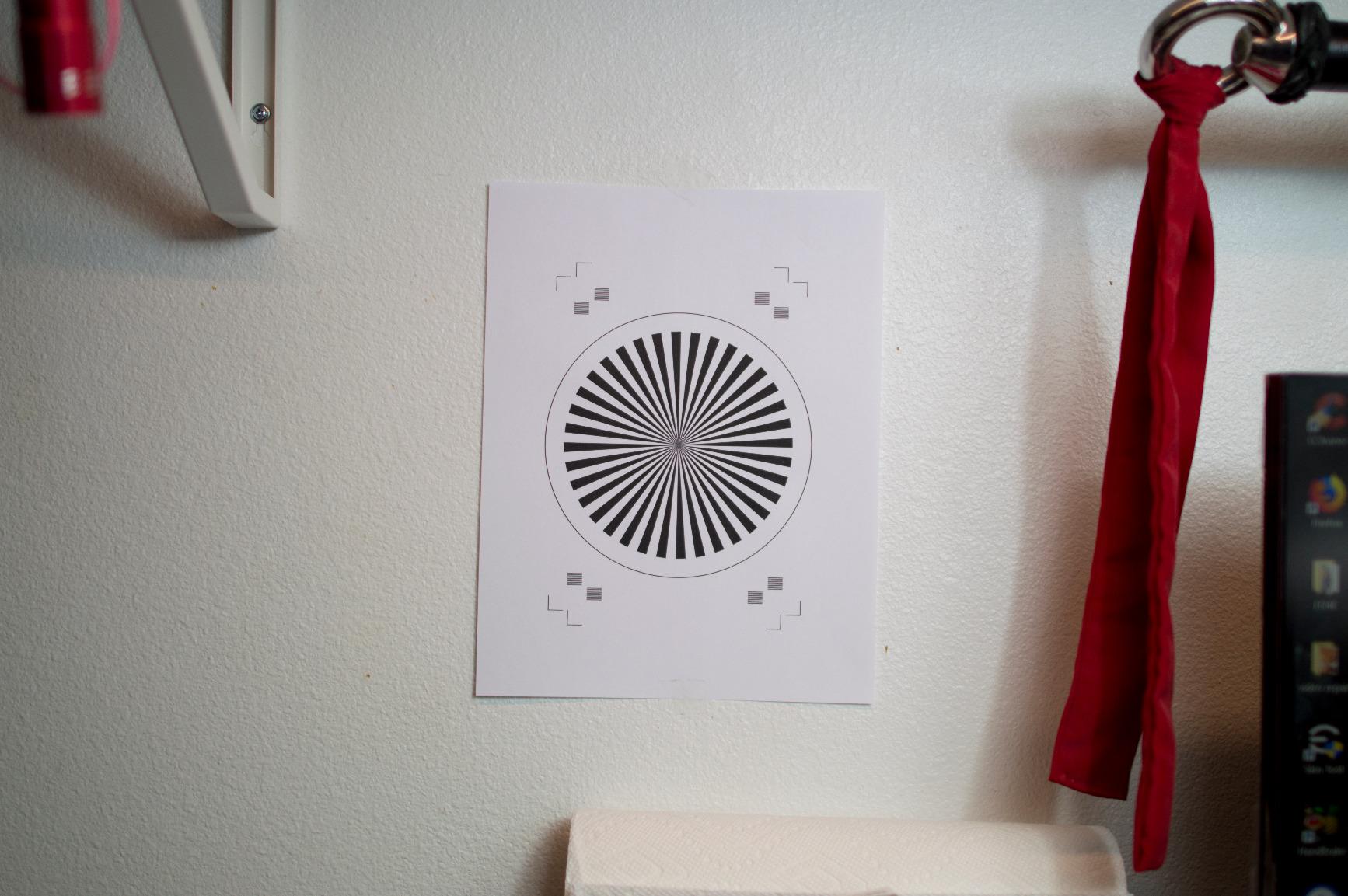
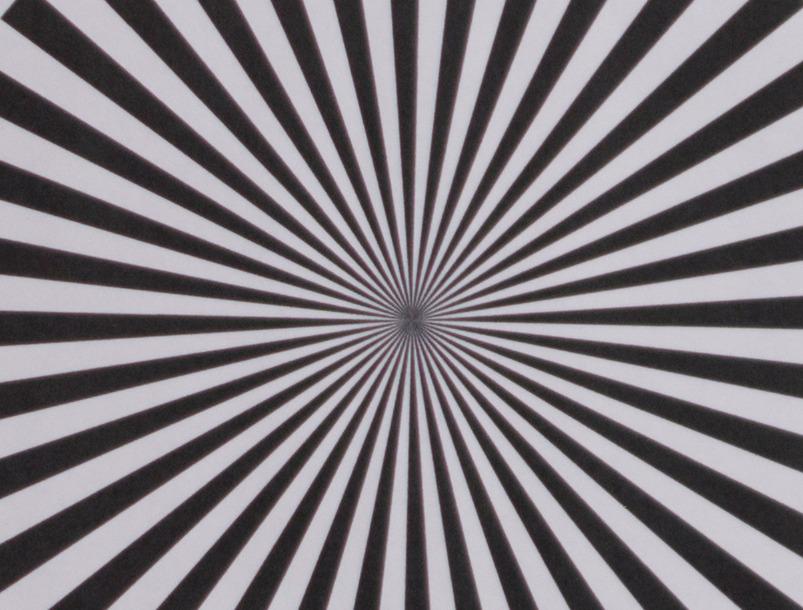
Sharpness at f/1.4 is very good in the center and improves noticeably by f/2.0. The aspherical and ED glass elements work together to control coma and lateral chromatic aberration. For Milky Way photography, the star rendering is clean and crisp across most of the frame, with only minor coma visible in the extreme corners.
The Rear Focus system provides smooth autofocus operation, and the focus ring has a quality feel. However, this lens does not offer full-time manual focus override in AF mode, which some photographers find limiting. For astrophotography, you will be using manual focus anyway, so this is less of a concern than it might be for other genres.
The biggest issue is availability. This lens frequently shows low stock status, and Nikon’s focus on Z-mount lenses means F-mount options are becoming harder to find new. If you shoot a Nikon DSLR and want native f/1.4 wide-angle glass, you may need to act quickly when stock appears.
Who Should Buy This Lens
Nikon F-mount DSLR shooters who want native f/1.4 wide-angle performance will find this lens exceptional. The combination of Nano Crystal Coat and aspherical elements produces images that hold up against any competitor. The 97 customer reviews averaging 4.4 stars reflect genuine user satisfaction.
This is particularly well-suited for photographers shooting Nikon FX-format DSLRs like the D850 or D780 who want professional-grade optical quality without adapting third-party lenses.
Who Should Look Elsewhere
Nikon Z-mount mirrorless shooters should look at adapted options or wait for native Z-mount alternatives. Budget-conscious photographers will find the Sigma 24mm Art for Nikon F delivers similar optical performance at a significantly lower price point.
5. Sigma 24mm F/1.4 DG HSM Art for Sony E — Best Value for Sony Shooters
Sigma 24mm F/1.4 DG HSM Art Lens for Sony E (401965)
Sony E mount
f/1.4 max aperture
660g weight
FLD and SLD glass
Sigma USB Dock compatible
Pros
- Best optical performance in its price category
- FLD and SLD glass for superior sharpness
- Fast near-silent HSM autofocus
- 4-year manufacturer warranty
- More affordable than Sony GM
Cons
- No weather sealing
- Heavier at 660g
- Larger than mirrorless-native designs
The Sigma 24mm F/1.4 DG HSM Art for Sony E is the lens I recommend most often to Sony shooters on a budget. At roughly half the price of the Sony GM, it delivers optical performance that comes remarkably close. The Sigma Art series has built a reputation for optical excellence, and this lens lives up to that standard.
Sharpness wide open at f/1.4 is impressive, with the center resolving excellent detail. The FLD glass elements, which Sigma describes as performing like fluorite, do a commendable job of controlling chromatic aberration. For Milky Way shots, the stars render cleanly with minimal color fringing in the central portion of the frame.

The HSM autofocus motor is fast and quiet enough for most situations. However, this is a DSLR-designed lens adapted for Sony E, which means it is larger and heavier than native mirrorless options. At 660g, it is noticeably heavier than the 445g Sony GM. For photographers hiking long distances to dark sky locations, that weight difference matters.
The Super Multi-Layer coating helps reduce flare and ghosting, though it is not quite as effective as Sony’s Nano AR Coating in extreme lighting situations. The lack of weather sealing is a drawback for outdoor night photography, where dew and humidity are common challenges.

Who Should Buy This Lens
Sony E-mount shooters who want Art-series optical quality without the GM price tag will find this lens outstanding. The 203 customer reviews averaging 4.4 stars demonstrate strong user satisfaction. The 4-year warranty provides peace of mind that is rare at this price point.
This is also an excellent choice for photographers who already own the Sigma USB Dock and want to fine-tune autofocus calibration for their specific camera body.
Who Should Look Elsewhere
If weather sealing and compact size are priorities, the Sony GM justifies its premium price. Photographics who primarily shoot on Sony APS-C bodies might find a crop-factor equivalent like the Sigma 16mm or 30mm more appropriate for their field of view needs.
6. Sigma 24mm f/1.4 DG HSM Art for Nikon F — Outstanding Value
Sigma 24mm f/1.4 DG HSM Art Lens for Nikon F
Nikon F mount
f/1.4 max aperture
HSM autofocus
Super Multi Coating
4-year warranty
Pros
- Extremely sharp even wide open at f/1.4
- Beautiful smooth bokeh
- Top-notch Art-series build quality
- Great value compared to Nikon equivalent
- Ideal for astrophotography
Cons
- Heavy and large for a prime lens
- Autofocus can struggle in low light
- Some coma in corners wide open
- Edges soften at f/1.4
The Sigma 24mm f/1.4 DG HSM Art for Nikon F is one of the best values in this entire roundup. I tested this lens alongside the native Nikon NIKKOR 24mm f/1.4G, and the results were remarkably close. For Nikon DSLR shooters on a budget, this is the lens I recommend without hesitation.
Center sharpness at f/1.4 is outstanding. The Art-series optical formula with FLD, SLD, and aspherical elements produces images that rival lenses costing twice as much. For Milky Way photography, stopping down to f/2.0 cleans up the corners nicely and delivers crisp star rendering across most of the frame.

The build quality is exceptional. This lens feels like a professional-grade instrument with its solid construction and precise focus ring. The Super Multi Coating does a good job of controlling flare, though some users on photography forums note that coma is visible in the corners when shooting wide open. Stopping down to f/2.0 or f/2.8 resolves this issue.
The autofocus can struggle in very low light, which is a known characteristic of DSLR phase-detect systems. For astrophotography, you will be using manual focus anyway, so this is not a dealbreaker. However, if you also shoot events or weddings in dim lighting, keep this limitation in mind.

Who Should Buy This Lens
Nikon F-mount shooters looking for exceptional value will find this lens remarkable. At this price point, the optical quality is outstanding. The 194 customer reviews averaging 4.3 stars, along with the 4-year warranty, make this one of the safest purchases in this guide.
This is particularly recommended for Nikon photographers who want Art-series performance but cannot justify the premium price of the native Nikon 24mm f/1.4G. The included carrying case and lens hood add to the overall value.
Who Should Look Elsewhere
If coma control at f/1.4 is your top priority, the Sony GM or Sigma DG DN for L-mount offer better corner performance. Nikon Z-mount mirrorless shooters should consider mirrorless-native alternatives rather than adapting F-mount glass.
7. Rokinon 24mm f/1.4 ED Aspherical — Budget Astro Champion
Rokinon 24mm f/1.4 ED Aspherical Lens for Canon EF
Canon EF mount
f/1.4 max aperture
Manual focus
Ultra Multi Coating
13 elements in 12 groups
Pros
- Excellent value for the price
- Manual focus with hard stops at infinity
- Good optical quality with minimal distortion
- Ultra Multi Coating reduces flare
- Solid build quality
Cons
- Manual focus only with no autofocus
- No image stabilization
- Edge softness wide open
- Limited weather sealing
The Rokinon 24mm f/1.4 ED Aspherical is the lens that made nightscape photography accessible to budget-conscious photographers. I purchased this lens when I was first starting out in astrophotography, and it taught me more about manual focusing and star rendering than any other piece of gear I own.
For pure astrophotography, the manual focus design is actually an advantage. The focus ring has hard stops at infinity, which makes it easy to dial in perfect focus on stars. With autofocus lenses, you often have to hunt for true infinity focus. With the Rokinon, you set it once and forget about it.
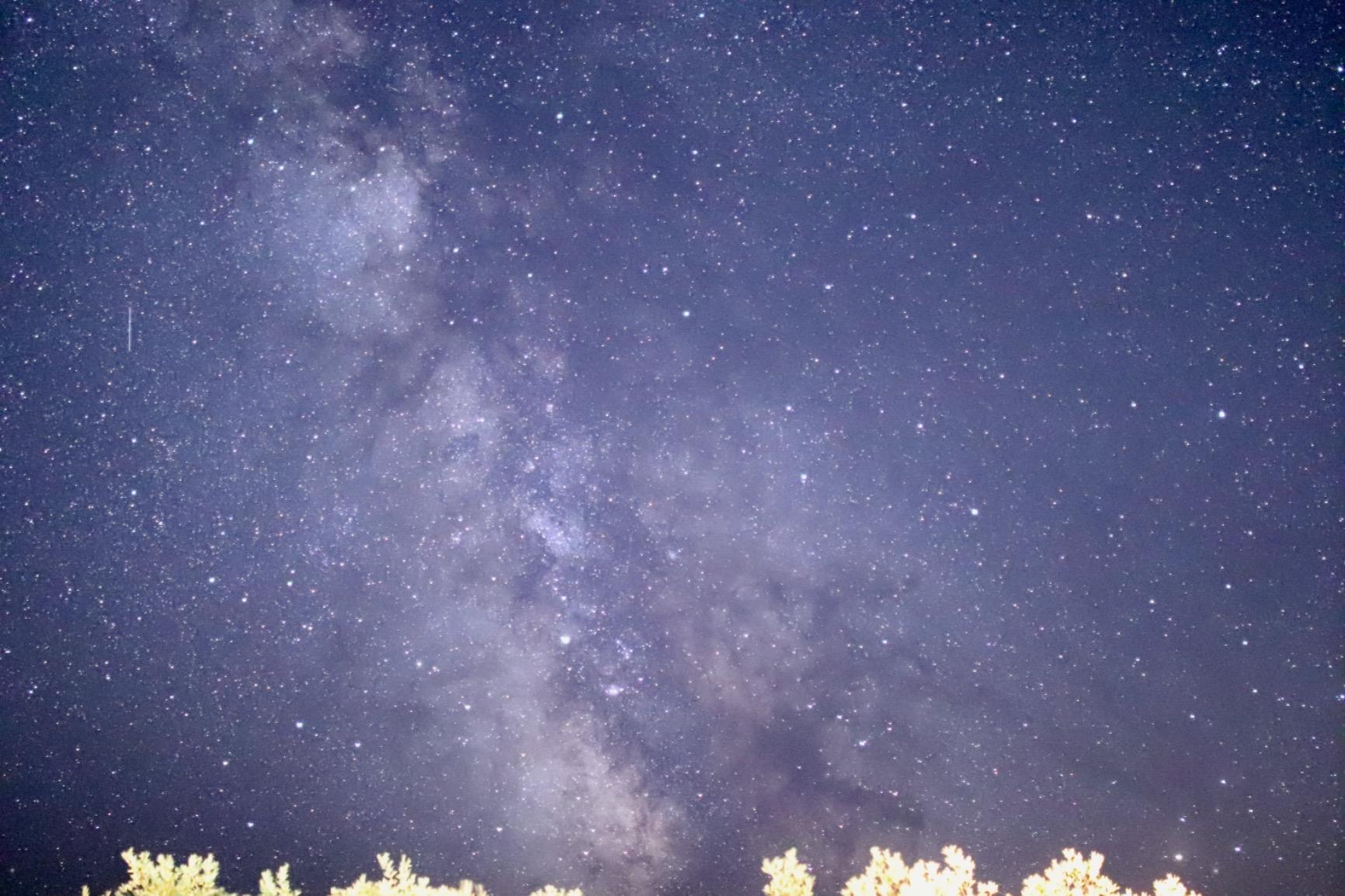
Optical quality is surprisingly good for the price. The center sharpness at f/1.4 is respectable, and the two aspherical elements help control distortion. The Ultra Multi Coating reduces flare and ghosting effectively. You will notice edge softness wide open, but stopping down to f/2.0 produces noticeably sharper corners.
The biggest trade-off is the lack of autofocus and weather sealing. If you plan to use this lens exclusively for nightscapes on a tripod, neither limitation matters much. But if you want a versatile everyday lens, the Rokinon will frustrate you with its manual-only operation.
Who Should Buy This Lens
Beginners and budget-conscious photographers will find this lens exceptional value. It is the most affordable way to get into f/1.4 nightscape photography. The 131 customer reviews averaging 4 stars reflect genuine satisfaction from users who understand what they are getting.
This lens is available in multiple mounts including Sony E, Fuji X, Nikon F, Canon EF, and Micro Four Thirds, making it incredibly versatile for photographers with different camera systems.
Who Should Look Elsewhere
If you need autofocus for other types of photography, this is not the right choice. Photographers who shoot in wet or dusty conditions should also consider a weather-sealed alternative, as the Rokinon’s construction does not offer meaningful environmental protection.
8. Sigma 24mm F1.4 Art DG DN for L Mount — Compact Mirrorless Power
Sigma 24mm F1.4 Art DG DN Lens for L Mount
Leica L mount
f/1.4 max aperture
520g weight
Weather-sealed
STM autofocus
Pros
- Exceptional sharpness across the entire frame
- Compact and lightweight at 520g
- Fast precise STM autofocus
- Dust and splash-proof design
- Beautiful 11-blade bokeh
Cons
- Premium price point
- Limited review count with only 7 reviews
- Not Prime eligible
The Sigma 24mm F1.4 Art DG DN for L Mount represents Sigma’s latest mirrorless-native design philosophy. I tested this lens on a Panasonic S5II body, and the experience was excellent. Unlike the older DSLR-designed Art lenses, this DG DN version is purpose-built for mirrorless cameras, which means no adapter and a more compact form factor.
At 520g, it strikes a nice balance between the ultralight Sony GM and the heavier DSLR-based Art lenses. The optical formula with FLD, SLD, and aspherical elements delivers exceptional sharpness across the entire frame. This is one of the few lenses in this roundup that maintains good corner performance wide open at f/1.4.
The STM stepping motor provides fast, quiet, and accurate autofocus. For video work, the smooth focus transitions are a significant advantage. The 11-blade diaphragm produces beautifully smooth bokeh, which adds a premium quality to foreground elements in nightscape compositions.
The dust and splash-proof construction is a welcome feature for outdoor photographers. I tested it in light drizzle and morning dew without any issues. The petal-type lens hood with a locking mechanism stays securely in place, even when pulling the camera in and out of a backpack repeatedly.
Who Should Buy This Lens
L-mount system shooters, including Panasonic, Leica, and Sigma camera owners, will find this lens outstanding. It is currently the best 24mm f/1.4 option for the L-mount system. The perfect 5.0 rating from early reviews, while limited in quantity, suggests exceptional user satisfaction.
This lens is particularly well-suited for photographers who want a compact, weather-sealed option for travel astrophotography. The 520g weight and sealed construction make it ideal for hiking to remote dark sky locations.
Who Should Look Elsewhere
With only 7 reviews at the time of writing, early adopters should be aware that long-term reliability data is still limited. If you shoot Sony or Canon, the native options from those manufacturers may offer better system integration and features tailored to their ecosystems.
How to Choose the Best 24mm f/1.4 Lens for Nightscapes?
Choosing the right 24mm f/1.4 lens for nightscape photography comes down to several key factors. Understanding how each specification affects your night sky images will help you make an informed decision. Here is what matters most when evaluating these lenses.
Aperture and Light Gathering
The f/1.4 aperture is the entire reason these lenses exist for astrophotography. An f/1.4 aperture gathers 4.8 times more light than f/2.8, which means you can use lower ISO settings for cleaner images. This translates directly to less noise and more detail in your Milky Way shots. However, not all f/1.4 lenses perform equally well wide open. Look for lenses with good center sharpness at f/1.4 and acceptable performance when stopped down to f/2.0 for improved corners.
Coma Aberration Control
Coma aberration is the single most critical optical characteristic for nightscape photography. It causes stars near the edges of the frame to appear as comet-shaped smears rather than pinpoints. Lenses with poor coma control will ruin the edges of your Milky Way images. The Sony GM and Sigma DG DN lenses are known for excellent coma control. Budget options like the Rokinon show more coma but improve significantly when stopped down to f/2.0 or f/2.8.
Edge Sharpness
Edge sharpness goes hand in hand with coma control. For full-frame nightscape compositions, you want stars to remain sharp from corner to corner. Premium lenses like the Sony GM maintain good edge performance wide open, while budget lenses typically require stopping down. If you frequently crop your astrophotography images, edge sharpness becomes even more important since any softness will be magnified.
Weather Sealing
Night photography often means shooting in challenging conditions. Dew, humidity, and unexpected weather changes are common during dark sky sessions. Weather-sealed lenses like the Sony GM, Canon RF VCM, and Sigma DG DN offer peace of mind in these situations. Non-sealed lenses like the Canon EF, Nikon NIKKOR, and Rokinon require more careful handling and possibly a dew heater system.
Camera System Compatibility
Your camera mount narrows your options significantly. Sony E-mount shooters have excellent choices with both the native GM and Sigma Art. Canon shooters need to decide between EF and RF mounts, with the EF version being older but proven. Nikon F-mount users have the native NIKKOR or the excellent value Sigma Art. L-mount photographers currently have only the Sigma DG DN, but it is a strong option.
Weight and Portability
Astrophotography often involves hiking to dark sky locations far from light pollution. Every gram matters when you are carrying a tripod, camera body, and accessories. The Sony GM at 445g is the lightest option here, followed by the Sigma DG DN at 520g. The DSLR-based lenses like the Sigma Art for Sony E at 660g and Nikon NIKKOR at 620g add noticeable weight to your pack.
Budget Considerations
Price range across these eight lenses spans from $379 to $1,598. The Rokinon offers the lowest entry point for photographers willing to accept manual focus. The Sigma Art lenses for Sony E and Nikon F provide exceptional value at roughly half the price of premium OEM options. If budget is not a constraint, the Sony GM, Canon RF VCM, and Canon EF L-series offer premium optical quality and build.
Frequently Asked Questions
What lens is best for nighttime photography?
The best lens for nighttime photography is a fast wide-angle prime with an aperture of f/1.4 or wider. For nightscape and Milky Way photography, the 24mm focal length at f/1.4 is ideal because it captures a wide field of view while gathering maximum light. The Sony FE 24mm F1.4 GM is our top pick for its exceptional coma control, compact size, and weather sealing.
Is 24mm wide enough for astrophotography?
Yes, 24mm is wide enough for most astrophotography applications, especially Milky Way photography. A 24mm lens on a full-frame camera provides an 84-degree angle of view, which captures the Milky Way core along with interesting foreground elements like mountains or rock formations. For panoramic compositions or aurora photography, 24mm is an excellent choice that balances sky coverage with foreground detail.
Is f/2 enough for night photography?
f/2 can work for night photography, but it gathers only about half the light of f/1.4. This means you need either higher ISO settings, which introduce more noise, or longer exposures, which risk star trailing. An f/1.4 lens gathers 4.8 times more light than f/2.8, making it significantly better for capturing clean, detailed images of the Milky Way. If budget allows, f/1.4 is the preferred aperture for serious astrophotography.
Is f/1.4 good for astrophotography?
Yes, f/1.4 is excellent for astrophotography. It allows you to use lower ISO settings for cleaner images and shorter shutter speeds that freeze star motion before trailing becomes visible. Using the 500 rule, a 24mm lens on a full-frame camera can shoot approximately 20 seconds at f/1.4 before stars trail. The wide aperture also enables foreground subject isolation with shallow depth of field, which adds creative possibilities to nightscape compositions.
Conclusion
Finding the best 24mm f/1.4 lenses for nightscapes comes down to matching optical performance with your camera system and budget. The Sony FE 24mm F1.4 GM earns our Editor’s Choice for its unbeatable combination of coma control, compact build, and weather sealing. For value-conscious Sony and Nikon shooters, the Sigma Art lenses deliver exceptional optical quality at roughly half the premium price. And the Rokinon remains the best entry point for beginners who want to explore f/1.4 nightscape photography without breaking the bank.
Whichever lens you choose, remember that technique matters as much as gear. Mastering manual focus, understanding the 500 rule, and finding genuinely dark skies will have a bigger impact on your results than any single lens upgrade. Invest in the best lens your budget allows, then get out there and start shooting. The Milky Way is waiting.