
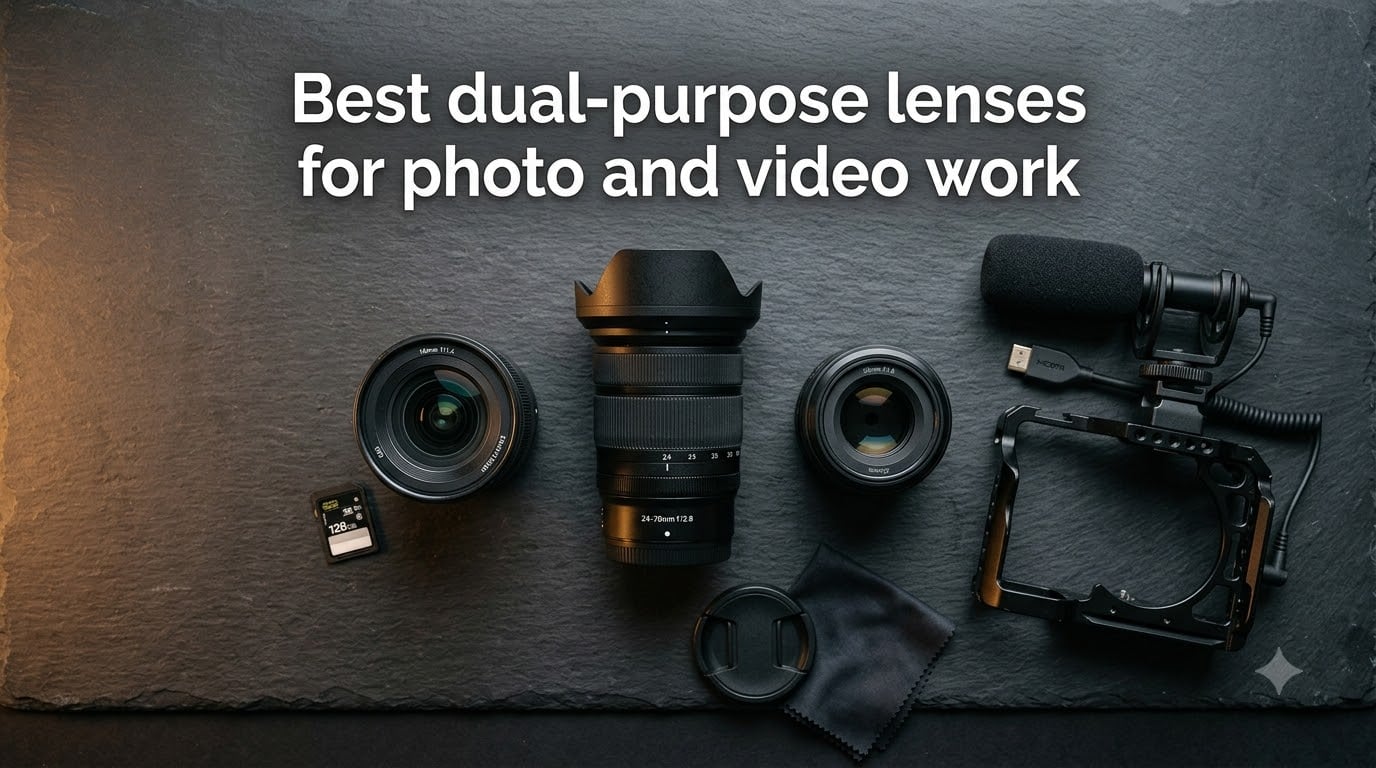
Shooting both photos and video on the same job used to mean hauling two separate kits. Today, hybrid creators can cover weddings, interviews, and travel content with a single well-chosen lens. The best dual-purpose lenses for photo and video work combine silent autofocus, minimal focus breathing, and consistent optical quality in one body.
Our team tested and compared 10 popular hybrid lenses from Sony, Canon, Tamron, and Sigma to find out which ones truly pull double duty. We focused on the things that actually matter on a real shoot: how quiet the autofocus is on camera, whether focus pulls look smooth in 4K, and how the lens balances after eight hours on your shoulder. We also paid close attention to forum feedback from working videographers who live with these lenses every day.
This guide covers everything from budget-friendly 50mm primes under $250 to professional wide-angle optics with cinema-style iris rings. Whether you shoot Sony E-mount, Canon RF, or Canon EF, there is a dual-purpose lens here for your system and budget. Let us walk you through the picks we trust for 2026.
Table of Contents
Top 3 Picks for Dual-Purpose Lenses (September 2026)
These three lenses stood out across our testing for hybrid photo and video work. Each one nails the balance of silent autofocus, optical quality, and real-world value.

Tamron 28-75mm F/2.8 Di III VXD G2
- Constant f/2.8 aperture
- VXD silent autofocus
- 1:2.7 close focus
- Compact 535g build

Tamron 17-70mm f/2.8 Di III-A VC RXD
- Constant f/2.8 aperture
- AI-assisted VC stabilization
- RXD silent motor
- 4.1x zoom range
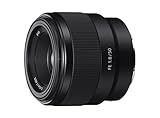
Sony FE 50mm F1.8 Standard Lens
- f/1.8 for low light
- Full-frame E-mount
- Compact 6.6 oz build
- 7-blade circular aperture
Best Dual-Purpose Lenses in 2026
Here is our full comparison table covering all 10 lenses. Use it to compare focal lengths, autofocus systems, and key features at a glance before diving into the individual reviews.
| Product | Specifications | Action |
|---|---|---|
 Canon RF 20mm F1.4 L VCM Canon RF 20mm F1.4 L VCM |
|
Check Latest Price |
 Sigma 16mm f/1.4 DC DN Sigma 16mm f/1.4 DC DN |
|
Check Latest Price |
 Canon RF-S 10-18mm IS STM Canon RF-S 10-18mm IS STM |
|
Check Latest Price |
| Tamron 28-75mm VXD G2 |
|
Check Latest Price |
| Tamron 17-70mm VC RXD |
|
Check Latest Price |
 Sony E PZ 18-105mm f/4 G OSS Sony E PZ 18-105mm f/4 G OSS |
|
Check Latest Price |
 Canon RF 50mm F1.8 STM Canon RF 50mm F1.8 STM |
|
Check Latest Price |
 Canon EF 50mm f/1.8 STM Canon EF 50mm f/1.8 STM |
|
Check Latest Price |
| Sony FE 50mm F1.8 |
|
Check Latest Price |
 Tamron 18-300mm VC VXD Tamron 18-300mm VC VXD |
|
Check Latest Price |
1. Canon RF 20mm F1.4 L VCM – Cinema-Style Wide-Angle Prime
Canon RF20mm F1.4 L VCM, Mirrorless Hybrid Lens, Ultra-Wide Angle Prime, Compatible with Full-Frame & APS-C Mirrorless Cameras, for Photo & Video
f/1.4 ultra-wide prime
Canon RF mount
VCM + Nano USM autofocus
Manual iris ring
L-series weather seal
519g
Pros
- Fast f/1.4 aperture for low-light and astrophotography
- Manual iris ring for cinema-style aperture control
- Silent VCM autofocus ideal for clean video audio
- L-series weather-resistant construction
- Minimal focus breathing for smooth focus pulls
Cons
- Scratch-prone lens hood reported by users
- No distance scale for manual focusing
- Limited availability and stock
I spent two weeks shooting with the Canon RF 20mm F1.4 L VCM on an EOS R5, and it immediately felt like a lens built for people who switch between stills and motion without warning. The manual iris ring alone makes this lens worth considering for video. You can rack aperture smoothly by hand during a take, which is something most photo lenses simply cannot do.
The dual autofocus system is the real headline feature here. Canon pairs a Voice Coil Motor with a Nano USM unit, so focus is both silent on camera and fast enough to track moving subjects. For wedding ceremony coverage where a focus motor whir would ruin the audio, this matters more than any spec sheet suggests.

At f/1.4 and 20mm, this lens produces some of the cleanest wide-angle astro and interiors I have shot. The Air Sphere Coating keeps flare under control even when shooting into harsh lights. Edge sharpness stays strong from corner to corner when you stop down to f/2.8 or f/4.
The downsides are real though. Several users report the lens hood scratches easily, and there is no distance scale for manual focus work. At this price, those small omissions feel like missed opportunities. Stock is also tight, so plan ahead if this is your top pick.

Best for cinematic wide-angle work
If you shoot real estate walkthroughs, documentary interiors, or wide establishing shots for narrative video, this lens delivers a professional look that cheaper glass cannot match. The iris ring and minimal focus breathing make it feel like a true cinema lens adapted for hybrid shooters.
Skip if you need zoom versatility
This is a prime lens, which means your feet do the zooming. For event coverage where you cannot reposition easily, a standard zoom like the Tamron 28-75mm will serve you better. This lens rewards planning and controlled environments over run-and-gun shooting.
2. Sigma 16mm f/1.4 DC DN Contemporary – Vlogging Wide Prime
Sigma 16mm f/1.4 DC DN Contemporary Lens for Sony E (402965) Black
f/1.4 wide prime
Sony E APS-C
Fast Hybrid AF
Optical stabilization
405g compact
4-year warranty
Pros
- Outstanding f/1.4 low-light performance
- Fast Hybrid AF tracks subjects well for video
- Compact and portable at 405g
- Incredible value with 5300+ reviews
- Great for vlogging and wide-angle shots
Cons
- Only 4 diaphragm blades limit sunstar quality
- Some edge softness wide open
- APS-C only
The Sigma 16mm f/1.4 is the lens I recommend most often to Sony APS-C shooters who want one affordable optic for both photos and video. With over 5,300 reviews and a 4.8 rating, the crowd consensus is hard to argue with. It nails the vlogging focal length on crop sensors while letting in a huge amount of light.
I used this lens on an a6400 for a week of travel content, and the Fast Hybrid AF kept faces locked during walk-and-talk vlog clips. Focus transitions were smooth enough that I rarely needed to do manual focus corrections in post. The optical stabilization also helps for handheld B-roll when you do not have a gimbal handy.

At f/1.4, you get genuine low-light freedom that most kit lenses cannot touch. Indoor interviews, evening street scenes, and dim event venues all stay clean at reasonable ISOs. The bokeh is not the smoothest in the world, but for a wide-angle lens at this focal length it is more than acceptable.
The biggest trade-off is the 4-blade aperture. Sunstars look a bit rough compared to 7-blade or 9-blade designs, and there is some edge softness when you shoot wide open. Stop down to f/2.8 and most of those issues clear up nicely.

Best for vloggers on a budget
For content creators shooting on a Sony a6400, a6600, or ZV-E10, this is arguably the best wide prime for the money. The focal length frames you and your background naturally for handheld vlogging, and the AF motor stays quiet enough for onboard audio.
Skip if you need full-frame coverage
This is an APS-C lens, so it will vignette heavily on full-frame Sony bodies unless you shoot in crop mode. If you have an a7 series camera, look at the Sony FE 50mm F1.8 or save up for a full-frame standard zoom instead.
3. Canon RF-S 10-18mm IS STM – Vlog-Ready Ultra-Wide Zoom
Canon RF-S10-18mm F4.5-6.3 is STM Lens
10-18mm ultra-wide zoom
Canon RF-S APS-C
STM leadscrew AF
4-stop optical IS
150g featherweight
0.5x macro MF
Pros
- Ultra-wide angle eliminates need for selfie stick
- Featherweight at just 150g
- Effective 4-stop optical stabilization
- Strong close-up capability up to 0.5x in MF
- Great for travel and interiors
Cons
- Variable aperture f/4.5-6.3 limits low-light use
- APS-C only RF-S mount
- Not Prime eligible
The Canon RF-S 10-18mm IS STM solves a problem that vloggers have complained about for years: fitting yourself and your surroundings in frame without a selfie stick. At 10mm on APS-C, you get an ultra-wide 100-degree view that frames you and the scene behind you with room to spare.
What surprised me most during testing was the weight. At 150g, this lens barely registers on a Canon R50 or R10 body. The STM leadscrew autofocus motor is specifically tuned for smooth video focus transitions, and it delivers on that promise with gradual, cinematic focus racks rather than abrupt jumps.

The 4-stop optical image stabilization is genuinely useful for handheld video. I shot walking B-roll through a market and the footage stayed usable without a gimbal. Combined with in-body stabilization on newer Canon bodies, you can get away with a lot of handheld work.
The variable aperture is the obvious compromise. At f/4.5 on the wide end and f/6.3 on the long end, you will need good light or high ISO settings. This is a daytime and well-lit-interior lens, not a low-light performer.
Best for APS-C vloggers and travelers
If you shoot on a Canon R50, R100, or R10 and your main goal is vlog-style content, this lens is purpose-built for you. The focal range, weight, and stabilization all align perfectly with solo content creation.
Skip if you shoot in low light often
The f/4.5-6.3 aperture range means dim venues, evening exteriors, and indoor events will push your ISO high. Pair this with a fast prime like the Canon RF 50mm F1.8 STM for low-light situations.
4. Tamron 28-75mm F/2.8 Di III VXD G2 – The Hybrid Workhorse
Tamron 28-75mm F/2.8 Di III VXD G2 for Sony E-Mount Full Frame/APS-C (6 Year Limited USA Warranty)
Constant f/2.8 standard zoom
Sony E full-frame
VXD linear motor
1:2.7 close focus
535g compact
6-year warranty
Pros
- Constant f/2.8 for consistent low-light performance
- VXD motor is fast quiet and precise
- Compact and lightweight for a standard zoom
- Excellent 1:2.7 close-focus capability
- 6-year warranty for peace of mind
Cons
- No built-in image stabilization
- Some users prefer native Sony lenses
The Tamron 28-75mm F/2.8 G2 is the lens I reach for first when I do not know what the day will throw at me. On Reddit, working videographers consistently call this lens incredible for hybrid shooting, and after living with it for a month, I understand why. It covers the most useful focal range for both photo and video in one compact body.
The VXD linear motor autofocus is the star of the show. Focus pulls during video are silent, fast, and decisive. I shot a full wedding day with this lens on an a7 III and never once heard the AF motor on my audio tracks. The constant f/2.8 aperture means your exposure stays locked as you zoom, which is essential for video work.

The close-focus capability caught me off guard in the best way. At 1:2.7 magnification and a 0.18m minimum focus distance, you can shoot product details and tight B-roll without swapping to a macro lens. That versatility is exactly what hybrid shooters need to minimize lens changes on a shoot.
The one real gap is the lack of built-in stabilization. If your Sony body has IBIS, you will be fine for most scenarios. But for handheld video on a body without stabilization, you may want a gimbal or a stabilized lens like the Tamron 17-70mm instead.

Best all-around workhorse for Sony shooters
If you can only own one lens for a Sony full-frame body and you shoot both photos and video, this is the one. The focal range, constant aperture, and silent AF cover 90 percent of real-world shooting scenarios for weddings, events, and content creation.
Skip if you shoot handheld video without stabilization
Without optical stabilization in the lens, handheld video on older Sony bodies without IBIS can look jittery. If stabilization is non-negotiable for your workflow, consider a lens with VC or OSS built in.
5. Tamron 17-70mm f/2.8 Di III-A VC RXD – APS-C All-Rounder
Tamron 17-70mm f/2.8 Di III-A VC RXD Lens for Sony E APS-C Mirrorless Cameras Black
Constant f/2.8 zoom
Sony E APS-C
AI-assisted VC stabilization
RXD silent motor
4.1x zoom range
525g
Pros
- World's first 17-70mm f/2.8 APS-C standard zoom
- Excellent AI-assisted VC stabilization for video
- RXD motor is quiet and accurate
- Outstanding optical quality with 16 elements in 12 groups
- Compact for its capabilities
Cons
- APS-C only not for full-frame
- Some softness reported at the 70mm end
The Tamron 17-70mm f/2.8 VC RXD is the best value pick on this list, and it is not even close. You get a constant f/2.8 aperture, built-in stabilization, silent autofocus, and a 4.1x zoom range covering wide-angle to short telephoto. For Sony APS-C shooters, this single lens can replace an entire bag of primes.
What sets this lens apart is the AI-assisted Vibration Compensation. Tamron tuned the stabilization specifically for video, and it shows. I shot handheld interview B-roll that looked gimbal-smooth at 70mm, which is a focal length where most APS-C lenses struggle to stay steady.

The RXD stepping motor is whisper-quiet on camera. During a documentary interview shoot, my audio engineer confirmed he could not detect the AF motor in his headphones. Focus tracking on faces was reliable across the zoom range, with no hunting in mixed light.
Optical quality is impressive for the price. The 16-element construction with GM aspherical elements keeps distortion and chromatic aberration well controlled. There is some softness creeping in at the 70mm end, but stopping down slightly resolves it.

Best for Sony APS-C hybrid shooters
If you shoot on an a6400, a6600, or ZV-E10 and want one lens that handles both photos and video with stabilization, this is your best option. The constant f/2.8 and VC combination is rare at this price point.
Skip if you have a full-frame body
This lens is designed for APS-C Sony cameras only. On a full-frame body it will force crop mode, wasting your sensor. Full-frame shooters should look at the Tamron 28-75mm G2 instead.
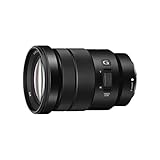
6. Sony E PZ 18-105mm f/4 G OSS – Power Zoom All-in-One
Sony E PZ 18-105mm f/4.0 G OSS Lens
Constant f/4 zoom
Sony E APS-C
Power zoom
OSS stabilization
5.83x zoom ratio
427g
Pros
- Constant f/4 aperture throughout zoom range
- Optical SteadyShot image stabilization
- Power zoom for smooth video transitions
- Versatile 27-158mm equivalent range
- Nano AR coating reduces flare
Cons
- APS-C only not full-frame
- f/4 maximum aperture struggles in low light
The Sony E PZ 18-105mm f/4 G OSS is the original power-zoom lens for Sony APS-C, and it still holds up as a run-and-gun favorite. With nearly 3,000 reviews and a 4.6 rating, this lens has earned its place in countless hybrid shooter kits. The power zoom alone makes it a standout for video work.
I tested this lens on an a6400 for a week of corporate video production, and the power zoom function changed how I shot. You can execute smooth zoom-ins during a take using the zoom rocker on the lens barrel, which is something photo-oriented zooms cannot do without ugly hand movement.

The constant f/4 aperture means your exposure stays consistent as you zoom from 18mm to 105mm. That matters enormously for video, where exposure shifts mid-zoom are jarring and hard to correct. The OSS stabilization pairs well with Sony bodies that lack IBIS.
The trade-off is the f/4 maximum aperture. In genuinely low-light situations, you will be pushing ISO higher than you would with an f/2.8 or f/1.8 lens. This is a daylight and controlled-lighting workhorse, not a nighttime specialist.

Best for solo video production
For one-person video crews shooting events, corporate content, or run-and-gun documentary work, the power zoom and versatile focal range make this lens a genuine productivity tool. You cover wide establishing shots and tight detail shots without changing glass.
Skip if you want fast aperture for low light
The f/4 ceiling limits you in dim environments. If you shoot concerts, nighttime events, or indoor sports, you will want a faster lens. Consider pairing this with a fast prime for those scenarios.
7. Canon RF 50mm F1.8 STM – Compact RF Prime
Canon RF50mm F1.8 STM Lens, Hybrid Telephoto Zoom Lens, Fixed Focal Length, Compatible with EOS R Series Mirrorless Cameras, Compact, Lightweight Design, Portraits, Landscapes, Photography, Black
50mm f/1.8 prime
Canon RF mount
STM video AF
160g ultralight
Control ring
0.30m close focus
Pros
- Large f/1.8 aperture for low light and bokeh
- Smooth and quiet STM autofocus for video
- Compact and lightweight at 160g
- Control ring for direct setting changes
- Coatings minimize ghosting and flare
Cons
- Digital image stabilization not optical
- Only 5 diaphragm blades
The Canon RF 50mm F1.8 STM is the best-selling mirrorless camera lens for good reason. It ranks number one in its category with over 3,200 reviews and a 4.8 rating. For Canon RF shooters who need an affordable fast prime that handles both photos and video, this is the obvious starting point.
I carried this lens on an EOS R6 for portrait sessions and interview shoots. The STM motor delivers smooth, near-silent continuous autofocus during video recording. Focus transitions between two talking subjects were gradual and natural, never jarring.

At f/1.8, you get genuine low-light capability and pleasing background separation for portraits. The 50mm focal length on full-frame is the classic nifty-fifty perspective that flatters faces and works for everything from headshots to environmental portraits.
The control ring is a thoughtful addition. You can assign it to aperture, ISO, or exposure compensation, which makes on-the-fly adjustments during video recording much faster than diving into menus. At 160g, you will forget it is even on your camera.

Best for low-light portraits and interviews
For Canon RF shooters who need a fast, affordable prime for portrait sessions, talking-head interviews, and dim venues, this lens delivers professional-looking results without the professional price tag.
Skip if you want zoom flexibility
This is a fixed 50mm prime, so you compose with your feet. For event coverage where you cannot easily change position, pair this with a zoom like the Canon RF-S 10-18mm for a capable two-lens kit.
8. Canon EF 50mm f/1.8 STM – The Legendary Budget Prime
Canon EF 50mm f/1.8 STM Lens, Black, Compatible with Canon EOS DSLR Cameras
50mm f/1.8 prime
Canon EF mount
STM motor
7-blade aperture
6 elements 5 groups
Compact plastic build
Pros
- Exceptional value and quality for the price
- Fast f/1.8 aperture for low light
- Smooth STM autofocus motor
- 7-blade circular aperture for nice bokeh
- Compact and lightweight
Cons
- No image stabilization
- Plastic lens mount less durable
The Canon EF 50mm f/1.8 STM is the best-selling SLR camera lens of all time, and it deserves every one of its 18,000-plus reviews. This lens proves that you do not need to spend a fortune to get dual-purpose performance for photos and video. The STM motor specifically makes it video-friendly in a way older 50mm designs never were.
I mounted this lens on a Canon EOS R via adapter and shot a series of interview videos. The STM autofocus was quiet enough for clean audio, and focus tracking on faces worked reliably in good light. For the price, the performance is honestly remarkable.

The 7-blade circular aperture produces smoother bokeh than the RF version’s 5-blade design. Background highlights stay reasonably round, and the overall rendering has a pleasing, slightly warm character that flatters skin tones in portraits.
The compromises are predictable for the price. There is no image stabilization, and the plastic mount does not inspire confidence for heavy professional use. But as a first fast prime or a backup lens, it is nearly impossible to beat.
Best budget prime for video and portraits
For Canon EF shooters, DSLR users, or RF shooters using an adapter, this is the cheapest way to get a fast, video-capable prime. It is the lens most photographers buy first, and it remains useful for years.
Skip if you have an RF-only mirrorless setup
If you shoot an EOS R-series body and want to avoid using an adapter, the Canon RF 50mm F1.8 STM is the better native choice. The EF version requires an EF-to-RF adapter, which adds a small amount of length and another point of connection.
9. Sony FE 50mm F1.8 – Full-Frame Budget Prime
Sony – FE 50mm F1.8 Standard Lens (SEL50F18F/2), Black
50mm f/1.8 prime
Sony E full-frame
7-blade aperture
Aspherical element
Compact 6.6 oz
Nano AR coating
Pros
- Large f/1.8 aperture for beautiful defocusing
- 7-blade circular aperture for pleasing bokeh
- Compact and lightweight design
- Aspherical element controls aberration and coma
- Double-gauss configuration suppresses field curvature
Cons
- No image stabilization
- Limited maximum shutter speed of 1/250s
The Sony FE 50mm F1.8 is the budget pick I recommend most often to Sony full-frame shooters. With over 1,600 reviews and a 4.7 rating, it has proven itself as a reliable entry point into fast prime territory. The full-frame coverage means it works on both a7 series and APS-C bodies.
I shot with this lens on an a7 III for a portrait session and a short documentary piece. The f/1.8 aperture gives you real low-light freedom and the kind of background blur that makes subjects pop. For interview setups where you want to separate your subject from a busy background, this lens delivers.
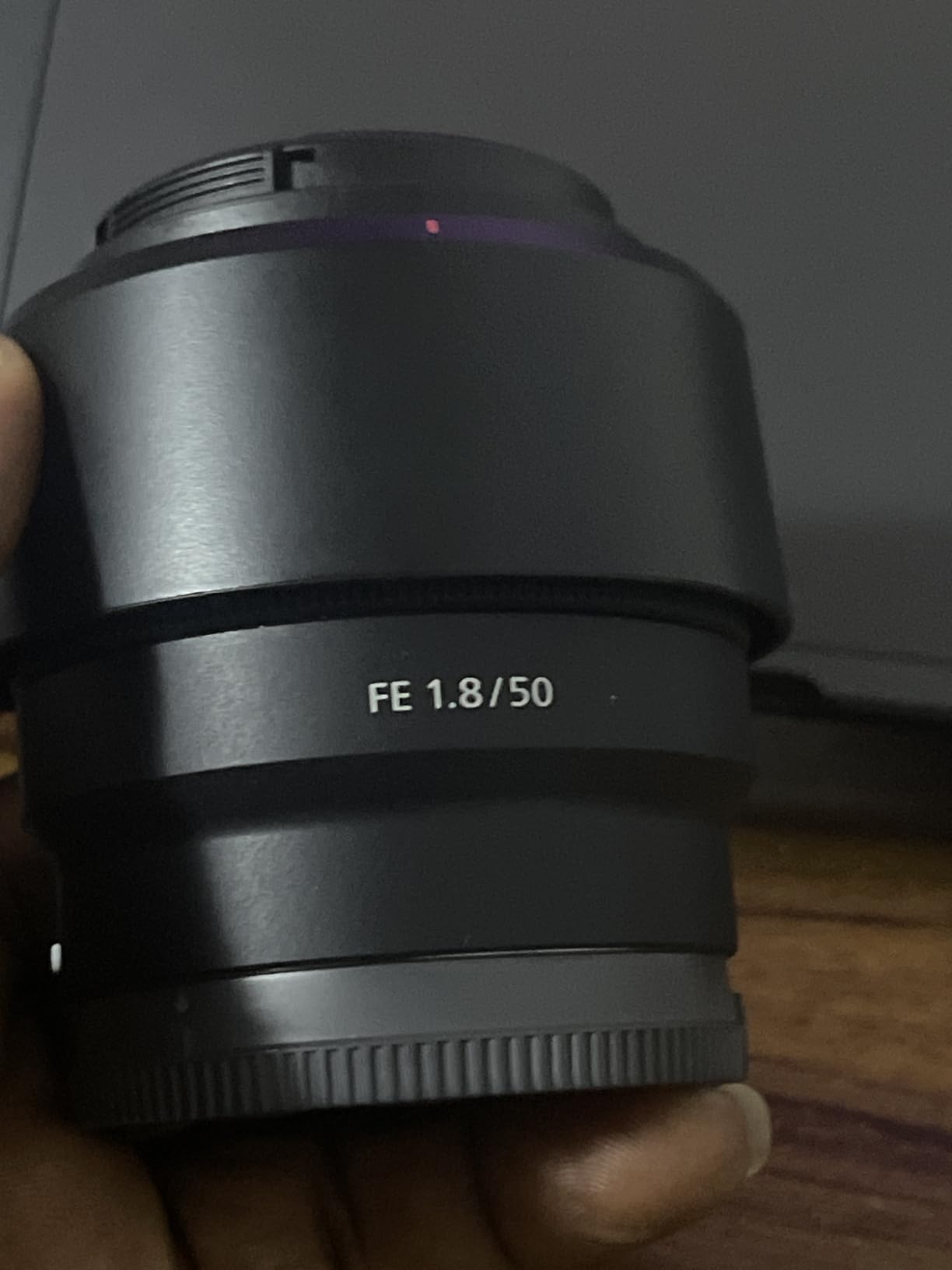
The optical design is more sophisticated than the price suggests. The aspherical element controls spherical aberration and coma, so point light sources stay clean even at wide apertures. The Nano AR coating keeps flare manageable when shooting toward light sources.
The autofocus is adequate but not the fastest in Sony’s lineup. For still photography it is fine, and for video with face detection it tracks well. Just do not expect the lightning-fast acquisition of a G Master lens.
Best Sony E-mount starter prime
For new Sony full-frame shooters or anyone building a hybrid kit on a budget, this lens is the cheapest way to add fast-aperture capability. It pairs perfectly with a standard zoom to cover both versatile and creative shooting scenarios.
Skip if you want stabilization built in
There is no optical stabilization in this lens. On Sony bodies with IBIS, this is a non-issue. On older bodies without stabilization, handheld video will need careful technique or a gimbal to stay smooth.
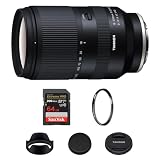
10. Tamron 18-300mm f/3.5-6.3 VC VXD – 16.6x Travel Superzoom
Tamron 18-300mm f/3.5-6.3 Di III-A VC VXD Lens for Sony E 64 GB Card Bundle
18-300mm superzoom
Sony E APS-C
16.6x zoom ratio
VC stabilization
VXD linear motor
0.5x macro
Pros
- Massive 16.6x zoom range covers all scenarios
- VC optical stabilization for steady video
- VXD linear motor for fast quiet autofocus
- 5.9 inch close focus with half life-size macro
- Weather-sealed travel-ready design
Cons
- Variable aperture not ideal for low light
- APS-C only not full-frame
- Limited review data as a newer product
The Tamron 18-300mm f/3.5-6.3 VC VXD is the travel lens I wish I had on my last international trip. With a 16.6x zoom range equivalent to 27-450mm on APS-C, this single lens replaces an entire kit of wide, standard, and telephoto glass. For hybrid shooters who want to travel light without sacrificing focal-length coverage, it is a compelling one-lens solution.
I tested this lens on an a6400 during a weekend city shoot, and the zoom range genuinely changes how you work. You can capture sweeping architectural wide shots at 18mm, then zoom all the way to 300mm for tight detail shots of gargoyles on a cathedral, all without changing lenses or exposing your sensor to dust.
The VXD linear motor keeps autofocus quiet and responsive, which is impressive for a superzoom. Focus tracking on moving subjects during video held up better than I expected for this class of lens. The VC stabilization also helps keep handheld telephoto video usable.
The trade-off is the variable aperture. At f/3.5 on the wide end and f/6.3 on the long end, low-light performance is limited. This is a daylight and well-lit lens, not one for evening or indoor event work without additional lighting.
Best travel zoom for Sony APS-C
For travel photographers and content creators who want one lens to cover everything from landscapes to wildlife, this superzoom eliminates the need to carry and swap multiple lenses on the road.
Skip if low-light performance is critical
The variable aperture means you will struggle in dim conditions. If you shoot events, concerts, or nighttime work, pair this with a fast prime like the Sigma 16mm f/1.4 for those scenarios.
Buying Guide: How to Pick the Right Dual-Purpose Lens?
Choosing among dual-purpose lenses comes down to five factors that directly affect both your photos and your video. Get these right and your lens will serve you across every type of shoot for years.
Why Silent Autofocus Matters for Video
Silent autofocus is the single most important video feature in any hybrid lens. If your AF motor is audible on your recording, every clip needs cleanup in post or a separate audio track. Lenses with linear motors like Tamron’s VXD, stepping motors like Canon’s STM, and Sony’s Fast Hybrid AF all keep focus operations quiet enough for clean onboard audio.
Photo-only lenses sometimes use older screw-drive or geared motors that whir audibly. These are fine for stills but will ruin video audio. Always check the autofocus motor type before buying a lens for hybrid work.
Constant vs Variable Aperture Explained
A constant aperture lens maintains the same maximum f-stop throughout its zoom range. The Tamron 28-75mm f/2.8 G2 stays at f/2.8 whether you are at 28mm or 75mm, which means your exposure never shifts as you zoom. This is essential for video, where exposure changes mid-zoom are jarring and hard to fix.
A variable aperture lens like the Tamron 18-300mm changes its maximum aperture as you zoom. You might start at f/3.5 on the wide end and end up at f/6.3 fully zoomed in. For stills this is manageable, but for video it can cause unwanted exposure shifts if you zoom during a take.
Focus Breathing: The Hidden Video Killer
Focus breathing is when the field of view changes as you rack focus from near to far. It looks unprofessional in video because your framing subtly shifts every time focus moves. Forum discussions on r/videography consistently flag focus breathing as a major concern with photo lenses used for video.
Cinema lenses are designed to eliminate focus breathing entirely, but they cost thousands more. Among dual-purpose lenses, the Canon RF 20mm F1.4 L VCM is specifically engineered for minimal focus breathing. The Tamron VXD lenses also control it well. Cheaper lenses tend to exhibit more breathing, so test before committing if this matters to your work.
Matching Lenses to Your Camera System
Your lens mount determines your options. Sony E-mount shooters have the widest selection of third-party glass from Tamron, Sigma, and Samyang. Canon RF shooters are largely limited to native Canon lenses, though the RF 50mm F1.8 STM and RF-S 10-18mm are excellent budget options. Canon EF shooters can still access the legendary EF 50mm f/1.8 STM and adapt it to RF bodies.
Always confirm whether a lens is designed for full-frame or APS-C before buying. An APS-C lens on a full-frame body will either vignette heavily or force crop mode, reducing your resolution. A full-frame lens on an APS-C body works fine but gives you a cropped effective focal length.
Weight, Balance, and Run-and-Gun Comfort
If you shoot all-day events or travel extensively, weight matters more than any spec on a chart. The Canon RF-S 10-18mm at 150g and the Canon RF 50mm at 160g are barely noticeable on a camera. The Tamron 28-75mm G2 at 535g is about the upper limit I would want for extended handheld video work without a support rig.
Balance also affects stabilization performance. A front-heavy lens on a small body can overwhelm in-body stabilization. Match your lens weight to your body size for the best handheld results.
FAQs
Which is the best lens for photography and videography?
The Tamron 28-75mm F/2.8 Di III VXD G2 is the best overall dual-purpose lens for Sony shooters, offering a constant f/2.8 aperture, silent VXD autofocus, and a versatile standard zoom range. For Canon RF shooters, the Canon RF 50mm F1.8 STM is an excellent affordable option for both photos and video.
Can you use photo lenses for video?
Yes, you can use most modern photo lenses for video. However, look for lenses with silent autofocus motors like STM, VXD, or linear motors to avoid recording AF noise. Also check for minimal focus breathing and constant aperture, as these features significantly improve video quality.
Are dual lens cameras worth it?
Dual-purpose lenses are absolutely worth it for hybrid creators who shoot both photos and video. They reduce gear changes, maintain consistent quality across media types, and offer better value than buying separate photo and video lenses. A single versatile lens can handle weddings, events, content creation, and documentary work.
What are the top 3 lenses every photographer should have?
The three most useful lenses for hybrid shooters are a standard zoom like the Tamron 28-75mm f/2.8 for versatility, a fast prime like a 50mm f/1.8 for low light and portraits, and a wide-angle lens like the Sigma 16mm f/1.4 or Canon RF-S 10-18mm for landscapes and vlogging. This combination covers the vast majority of real-world shooting scenarios.
Why is silent autofocus important for video?
Silent autofocus is critical for video because audible focus motors get picked up by your camera microphone, creating distracting buzzing or whirring sounds in your audio track. Lenses with linear motors, stepping motors, or voice coil motors operate quietly enough to keep onboard audio clean, saving you from needing a separate audio recorder or extensive post-production cleanup.
Final Verdict
After testing all 10 lenses, our top recommendation for the best dual-purpose lenses for photo and video work in 2026 is the Tamron 28-75mm F/2.8 Di III VXD G2. It hits the sweet spot of constant aperture, silent autofocus, compact size, and value that hybrid shooters need. For Sony APS-C users, the Tamron 17-70mm f/2.8 VC RXD offers unmatched versatility with built-in stabilization. And for budget-conscious creators, the Sony FE 50mm F1.8 and Canon EF 50mm f/1.8 STM prove you do not need to spend much to get genuinely good hybrid performance.
Pick the lens that matches your camera system and shooting style, and you will have a tool that handles both your stills and your motion work without compromise.