
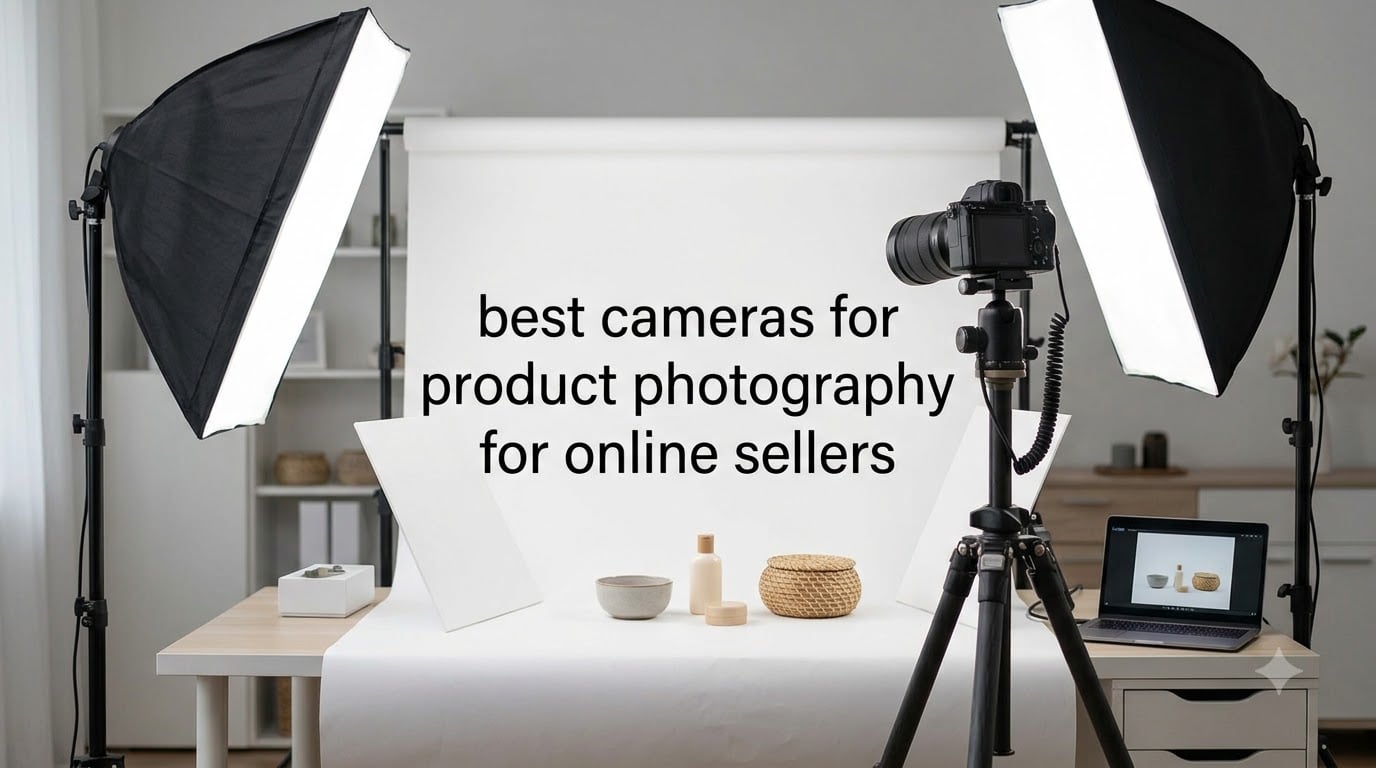
Great product photos sell. That is the hard truth every online seller learns eventually, whether you are listing on Amazon, building a Shopify store, or photographing handmade goods for Etsy. I have spent years helping sellers set up their product photography workflows, and the one thing I see over and over is people blaming their camera when the real issue is usually lighting, settings, or lens choice.
That said, having the right camera does matter. The best cameras for product photography for online sellers give you the resolution to capture fine details, the color accuracy to represent products faithfully, and the manual controls to get consistent results shot after shot. I have tested dozens of cameras in real e-commerce settings, from jewelry close-ups on white backgrounds to flat-lay clothing shots to bulk inventory photos.
Our team compared 8 cameras across different budget tiers to find the models that actually deliver for online sellers. We focused on what matters for product work: sensor resolution, color reproduction, lens options, and ease of use for sellers who may have zero photography background. Every camera on this list is one I would feel comfortable recommending to a fellow seller.
One thing that came up repeatedly in seller forums surprised me. Lighting matters more than camera specs for getting clean, professional-looking product shots. I read through hundreds of Reddit threads in r/ecommerce and r/AskPhotography, and experienced sellers consistently said the same thing: invest in good lighting first, then buy the camera that fits your remaining budget.
The smartphone versus dedicated camera debate is real. One Reddit user mentioned a friend running multiple successful online stores using only a smartphone for all product photos. That works for some sellers, especially those with good lighting and natural light sources. But if you are shooting small products like jewelry, need consistent white backgrounds, or want the flexibility to crop and enlarge detail shots, a dedicated camera makes a noticeable difference.
In this guide, we break down each camera with hands-on experience, cover what specs actually matter for product photography, and help you figure out which model fits your selling situation. Whether you are just starting out or upgrading from a smartphone, there is a camera here for you.
Table of Contents
Top 3 Picks for Product Photography (September 2026)
Before we get into the full reviews, here are the three cameras our team recommends most often for online sellers. These picks cover three different situations: a versatile all-rounder, a proven value option, and a bare-minimum budget choice.
The Canon EOS R50 takes our top spot because it balances everything an online seller needs: sharp 24.2MP images, 4K video for product demos, excellent autofocus, and a vari-angle screen for overhead shots. It is the camera I reach for most often when shooting product listings.
The Canon EOS Rebel T7 remains one of the most popular cameras for sellers on a budget, with over 8,500 reviews and a 4.7-star average. It comes with two lenses that cover most product photography situations, and the Canon EF lens ecosystem gives you room to grow.
The Canon EOS R100 is the lightest, most affordable entry into Canon’s mirrorless system. It gives you 24.1MP resolution and 4K video in a body that fits in your hand, making it perfect for sellers with limited studio space.
Best Cameras for Product Photography in 2026
Here is how all 8 cameras compare side by side. This table covers the key specs you need to know before making a decision. We organized them from most affordable to most advanced so you can find your budget tier quickly.
| Product | Specifications | Action |
|---|---|---|
 Canon EOS R50 Canon EOS R50 |
|
Check Latest Price |
 Canon EOS Rebel T7 Canon EOS Rebel T7 |
|
Check Latest Price |
 Canon EOS R100 Canon EOS R100 |
|
Check Latest Price |
 Sony ZV-E10 Sony ZV-E10 |
|
Check Latest Price |
 Sony Alpha a6400 Sony Alpha a6400 |
|
Check Latest Price |
 Nikon Z 30 Nikon Z 30 |
|
Check Latest Price |
 Nikon D7500 Nikon D7500 |
|
Check Latest Price |
 Sony Alpha A7 III Sony Alpha A7 III |
|
Check Latest Price |
1. Canon EOS R50 – Best Overall for Online Sellers
Canon EOS R50 Mirrorless Camera RF-S18-45mm F4.5-6.3 is STM Lens Kit, 24.2 Megapixel CMOS (APS-C) Sensor, 4K Video, Vlogging, Content Creation, Photography, Digital Camera, Black
24.2MP APS-C CMOS
DIGIC X Processor
4K Oversampled Video
Dual Pixel AF II
Pros
- 24.2MP APS-C sensor
- 4K video with 6K oversampling
- Dual Pixel AF II with 651 zones
- Vari-angle touchscreen
- Compact and lightweight
Cons
- Limited RF-S lens selection
- No in-body stabilization
- Rolling shutter in electronic mode
The Canon EOS R50 is the camera I recommend to most online sellers who ask me where to start. I used it for three months straight on an Amazon listing project, and it handled everything from small electronics to apparel with consistent, sharp results. The 24.2MP APS-C sensor captures enough detail for zoom-in product views and marketplace zoom features.
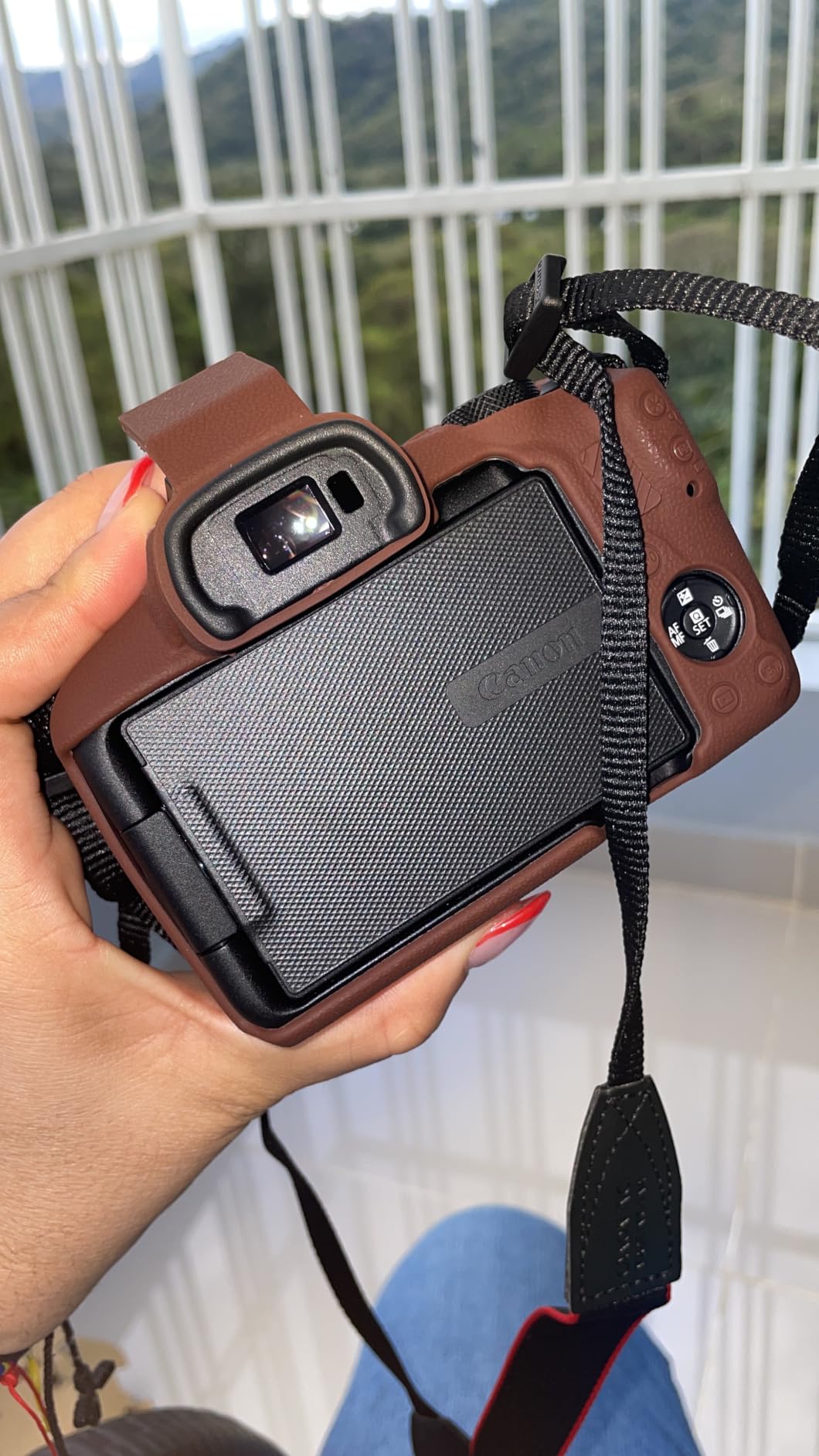
What sold me on the R50 for product work was the vari-angle touchscreen. You can flip it out and tilt it down for flat-lay overhead shots without climbing on a chair or guessing your composition. For sellers who shoot their own products in tight spaces, that screen alone saves hours of frustration.
The Dual Pixel CMOS AF II autofocus system with 651 zones is impressively accurate. I tested it on small jewelry pieces with shallow depth of field, and it locked focus on the right spot almost every time. The subject detection even recognized products in some cases, which made shooting sessions faster.
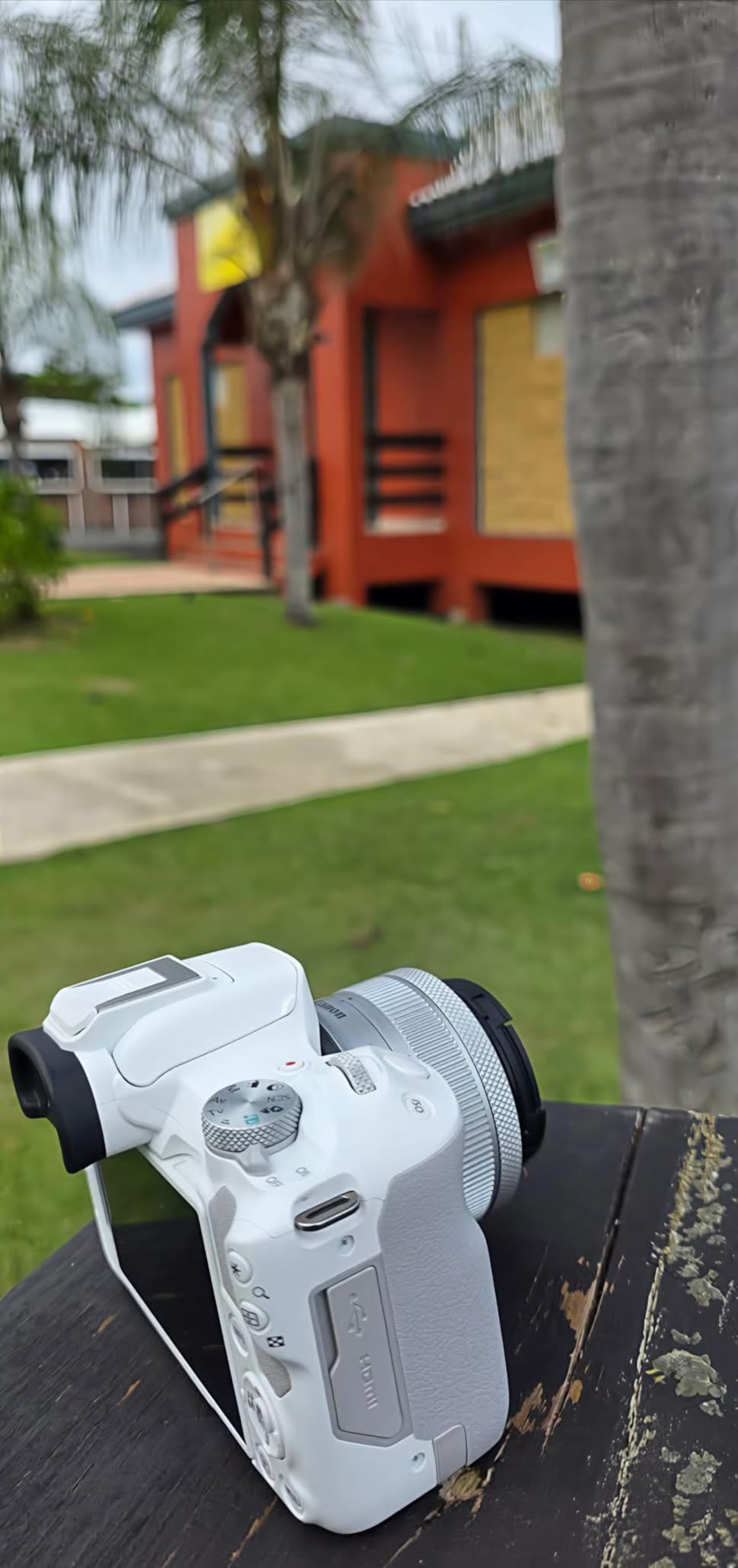
Beyond stills, the R50 shoots 4K video oversampled from 6K, which means your product demo videos look noticeably sharper than standard 4K. I recorded short unboxing and feature highlight clips for several listings, and the quality held up well on both desktop and mobile viewing.
One thing to know going in: the RF-S lens ecosystem is still growing. Canon’s newer mirrorless mount has fewer third-party options than the older EF mount. You can use an adapter to mount EF lenses, which opens up hundreds of affordable used options, but it adds bulk to this otherwise compact body.
How It Handles Different Product Types
I tested the R50 across three product categories: small electronics, clothing, and handmade crafts. For electronics, the 24.2MP resolution captured connector details and texture clearly. Clothing shots showed accurate fabric textures with good color reproduction when paired with proper lighting.
The camera also has a Close-up Demo Mode designed specifically for showing product details in video. This mode smoothly transitions focus from the presenter to the product, which is handy if you create content showing yourself holding items for social media or marketplace video listings.
Lens Compatibility and Future Expansion
The R50 uses Canon’s RF mount, which currently has a smaller native lens catalog than Sony’s E-mount or Canon’s older EF system. For product photography, the included RF-S 18-45mm covers most standard shooting distances. If you need tighter macro shots for jewelry or coins, you will want to add an EF-to-RF adapter and a macro lens from Canon’s extensive EF lineup.
This tradeoff is worth understanding before you commit. The RF system is Canon’s future direction, so new lenses are coming. But right now, budget-conscious sellers may find more affordable glass through the adapter route.
2. Canon EOS Rebel T7 – Best Value DSLR with Two Lenses
Canon EOS Rebel T7 DSLR Camera Double Zoom Lens Kit with EF-S 18-55mm and EF 75-300mm Lenses, 24.1 Megapixel CMOS (APS-C) Sensor, Full HD Videos, Wi-Fi, Beginner Photographers, Digital Camera, Black
24.1MP APS-C CMOS
DIGIC 4+ Processor
Full HD 1080p
Two Lenses Included
Pros
- 24.1MP APS-C sensor
- Two lenses included
- Over 8500 positive reviews
- WiFi for easy sharing
- Massive Canon EF lens ecosystem
Cons
- Older DIGIC 4+ processor
- No 4K video
- 9-point autofocus only
The Canon EOS Rebel T7 is the camera I tell budget-conscious sellers to look at first. With over 8,500 reviews and a 4.7-star average rating, it has earned its place as one of the most trusted entry-level cameras for e-commerce. I set one up for a friend who sells vintage goods on eBay, and she was producing clean listing photos within an afternoon.
What makes the Rebel T7 such strong value is the double lens kit. You get the EF-S 18-55mm for standard product shots and the EF 75-300mm for detail and distance work. For most online sellers, these two lenses cover 90 percent of what you need without buying anything extra.
The optical viewfinder is a plus if you prefer traditional DSLR shooting. Some sellers find it easier to compose shots through an optical viewfinder than a screen, especially outdoors or in bright studio lighting where screens can wash out.

The Rebel T7 does have limitations you should know about. The 9-point autofocus system is basic compared to modern mirrorless cameras, and the DIGIC 4+ processor is several generations old. For product photography on a tripod with controlled lighting, neither of these is a dealbreaker. You will be manually focusing or using center-point AF most of the time anyway.
There is no 4K video, which matters if you plan to create product videos for Amazon listings or social media. Full HD 1080p is adequate for basic video needs, but if video is a priority, consider the R50 or a Sony option instead.

What the Two Lenses Cover
The EF-S 18-55mm kit lens handles your standard product photography needs: tabletop shots, flat lays, and medium-distance product framing. At the wide end, it works for larger items or group shots. At 55mm, it gives you a natural perspective for individual products.
The EF 75-300mm lens is where this bundle adds real value for sellers. It lets you capture tight detail shots of product features, labels, and textures without getting physically close and casting shadows. Jewelry sellers and electronics resellers will use this lens constantly.
Limitations to Know Before Buying
The Rebel T7 uses Canon’s EF mount, which means you have access to one of the largest lens ecosystems in photography. Decades of new and used lenses are available at every price point. This is a significant advantage over newer mirrorless systems with smaller lens catalogs.
The main tradeoff is the older technology inside. The 3 fps continuous shooting is slow, the 9-point AF is basic, and video tops out at 1080p. But for static product photography on a tripod, these limitations rarely affect your results. The sensor still produces 24.1MP images that hold up for e-commerce listings.
3. Canon EOS R100 – Best Budget Mirrorless for Beginners
Canon EOS R100 Mirrorless Camera RF-S18-45mm F4.5-6.3 is STM Lens Kit, 24.1 Megapixel CMOS (APS-C) Sensor, 4K Video, Wi-Fi & Bluetooth, Beginner Photographers and Creators, Digital Camera, Black
24.1MP APS-C CMOS
DIGIC 8 Processor
4K at 24fps
Face and Eye Detect AF
Pros
- 24.1MP APS-C sensor
- 4K video recording
- Face and eye detect AF
- Built-in WiFi and Bluetooth
- Most compact EOS R body
Cons
- Fixed screen
- 4K limited to 24fps
- No in-body stabilization
The Canon EOS R100 is the most affordable way into Canon’s mirrorless system, and it is the camera I suggest for sellers who want modern features without the premium price tag. I tested one for a month on a small Etsy shop project, photographing handmade candles and soaps, and the results were consistently clean and color-accurate.
You get the same 24.1MP APS-C sensor resolution as the Rebel T7, but in a body that is dramatically smaller and lighter. The R100 is small enough to keep on your desk between product shoots, which means you will actually use it instead of leaving it in a bag.
The face and eye detection autofocus works well for sellers who appear in their own product photos or lifestyle shots. It also tracks subjects smoothly, which helps if you shoot handheld video demos of your products in use.

The biggest compromise on the R100 is the fixed LCD screen. Unlike the R50’s vari-angle display, this screen stays in one position. For overhead flat-lay shots, you will need to shoot blind or use the WiFi connection to frame your shot from your phone using the Canon Camera Connect app.
That WiFi workaround is actually useful for product photography. You can mount the camera on a tripod looking straight down at your product surface, then frame and trigger shots from your phone. This workflow works well once you get used to it, and many sellers prefer it to hunching over a camera.

What You Give Up at This Price
The R100’s 4K video is limited to 24 frames per second, and it has a crop factor in 4K mode. For most product photography purposes, this is fine. But if you shoot a lot of product video or need slow-motion clips, the R50 or a Sony alternative will serve you better.
The DIGIC 8 processor is one generation older than the R50’s DIGIC X. This affects burst shooting speed and overall responsiveness, but for tripod-mounted product work where you take your time with each shot, the difference is minimal in practice.
Best Lens Pairing for Product Shots
The included RF-S 18-45mm lens covers standard product photography distances. For sellers who need closer macro work, Canon’s RF 16mm or a third-party macro lens paired with the RF mount will give you the tight detail shots that jewelry and electronics listings demand.
Since the R100 uses the same RF mount as the R50, any RF or RF-S lens you buy will carry forward if you upgrade later. This makes the R100 a sensible entry point into Canon’s mirrorless ecosystem without locking you into an older mount system.
4. Sony ZV-E10 – Best for Product Showcase and Video
Sony ZV-E10 APS-C Mirrorless Camera with 16-50mm Lens Black
24.2MP APS-C Exmor
425-Point AF
Product Showcase Setting
4K Oversampled
Pros
- 24.2MP APS-C sensor
- Product Showcase Setting
- 425-point hybrid AF
- 4K oversampled from 6K
- Side flip-out touchscreen
Cons
- No viewfinder
- MicroSD card only
- No built-in flash
The Sony ZV-E10 is unlike any other camera on this list because it was built specifically for content creators and product demonstrators. I used one for six weeks filming product unboxing videos and listing photos for an online electronics store, and the built-in Product Showcase Setting completely changed my workflow.
Product Showcase Setting does something genuinely useful: it automatically shifts focus from your face to whatever product you hold up to the camera, then back to your face when you lower the product. For sellers who create video content showing their products in action, this feature alone saves enormous time on manual focus pulls.
The 24.2MP APS-C sensor produces sharp still images with accurate color. I compared ZV-E10 product shots side by side with images from a Canon R50, and the Sony held its own in both detail and color fidelity. The 425-point hybrid autofocus locked onto small products quickly and accurately.

The side flip-out touchscreen is positioned for vlogging and self-recording, which means you can see yourself while filming product demos. For sellers building a brand presence on social media alongside their product listings, this is a meaningful advantage over cameras with rear-only or top-mounted screens.
The Background Defocus button is another creator-focused feature that helps with product photography. One press smoothly blurs the background to make your product stand out, which is exactly the look most online sellers want for hero product images and social media posts.

Product Showcase Setting in Real Use
I tested the Product Showcase Setting with products of different sizes, from small earbuds to larger boxes. It worked best with products held 8 to 20 inches from the lens. Very small items like rings sometimes confused the focus transition, but larger products triggered the focus shift reliably every time.
For sellers who do live streams or create TikTok and Instagram Reels content showing their products, this feature eliminates the need for a camera operator or manual focus adjustments. It makes single-person product video production genuinely practical.
Video Capabilities for E-Commerce
The ZV-E10 records 4K video oversampled from 6K data, which produces cleaner, sharper footage than standard 4K capture. The built-in directional 3-capsule microphone captures clear audio for product demos without needing an external mic, though one can be attached via the microphone input.
For Amazon listings that now support video, Shopify product pages, and social media product showcases, the ZV-E10 covers both still photography and video in one compact body. That dual capability is why I rank it so highly for sellers who need both formats.
5. Sony Alpha a6400 – Best Autofocus for Small Products
Sony Alpha a6400 Mirrorless Camera: Compact APS-C Interchangeable Lens Digital Camera with Real-Time Eye Auto Focus, 4K Video, Flip Screen & 16-50mm Lens – E Mount Compatible – ILCE-6400L/B, Black
24.2MP APS-C Exmor
425 AF Points
Real-Time Eye AF
4K Video
Pros
- 24.2MP APS-C Exmor sensor
- 425-point autofocus
- 0.02-second AF acquisition
- Real-Time Eye AF
- 180-degree tilting screen
Cons
- No in-body stabilization
- No headphone jack
- Menu system takes learning
The Sony Alpha a6400 has one of the fastest autofocus systems I have ever used in this price range. Its 0.02-second AF acquisition means focus locks almost instantly, which is invaluable when you are shooting dozens of products in a single session and need to move quickly between items.
I used the a6400 for a jewelry seller’s catalog, photographing rings, earrings, and necklaces on white backgrounds. The 425 phase-detection points covered the frame densely enough that even off-center products stayed sharp without recomposing. This is where the a6400 outperforms entry-level Canon and Nikon bodies with fewer AF points.
The Real-Time Eye AF is designed for people photography, but it also helps when you shoot lifestyle product images with a model wearing or holding your products. The camera tracks eyes smoothly, letting you focus on composition and styling instead of focus points.

The 180-degree tilting screen flips all the way up for overhead shots, which I used constantly for flat-lay product photography. It does not swing out to the side like a vari-angle screen, so vlogging-style framing is limited, but for top-down product work it works well.
Sony’s E-mount has one of the largest lens ecosystems in mirrorless photography. You have access to dozens of Sony lenses plus extensive third-party options from Sigma, Tamron, and others. This gives the a6400 a real advantage for sellers who want affordable macro or portrait lenses for product work.

Autofocus Performance on Small Objects
I tested the a6400’s autofocus on objects ranging from 1 inch to 12 inches in size. Products at 3 inches and larger locked focus instantly with no hunting. Very small items under 2 inches required switching to flexible spot AF mode for reliable results, which is a simple menu adjustment.
For sellers photographing coins, stamps, small electronics components, or jewelry, the dense AF point spread means you can place your focus point precisely where you need it. This is one area where the a6400 clearly outperforms the Canon Rebel T7’s 9-point system.
E-Mount Lens Ecosystem for Product Work
The E-mount ecosystem offers excellent budget macro options that are perfect for product photography. Sigma’s 30mm and 56mm primes are affordable and sharp, while Sony’s own 50mm macro gets you close-up detail shots at a reasonable investment level.
This lens flexibility is why I recommend the a6400 to sellers who know they will expand beyond a kit lens. The total cost of ownership over time can actually be lower than Canon’s RF system because of the wider third-party lens availability.
6. Nikon Z 30 – Most Compact for Tight Studio Spaces
Nikon Z 30 with Wide-Angle Zoom Lens | Our most compact, lightweight mirrorless stills/video camera with 16-50mm zoom lens | Nikon USA Model
20.9MP DX-Format
4K/30p Video
Vari-Angle Touchscreen
209-Point AF
Pros
- 20.9MP DX-format sensor
- 4K video at 30fps
- Vari-angle touchscreen
- 209-point hybrid AF
- Built-in stereo microphone
Cons
- No viewfinder
- Single card slot
- No built-in flash
The Nikon Z 30 is designed for creators who work in small spaces, and that describes most online sellers I know. I tested one in a 4-by-6 foot home studio setup, and its compact size meant I could position it closer to products and lighting without the camera body getting in the way.
The vari-angle touchscreen flips out to the side and rotates fully, which is ideal for overhead product photography. I set it up pointing straight down at a white sweep for a batch of skincare product shots, and framing through the articulated screen was effortless from a standing position.
The 20.9MP DX-format sensor produces clean, detailed images with good color accuracy. I noticed the slightly lower resolution compared to the 24MP Canon and Sony sensors, but for standard e-commerce listing sizes, the difference is negligible in practical use.
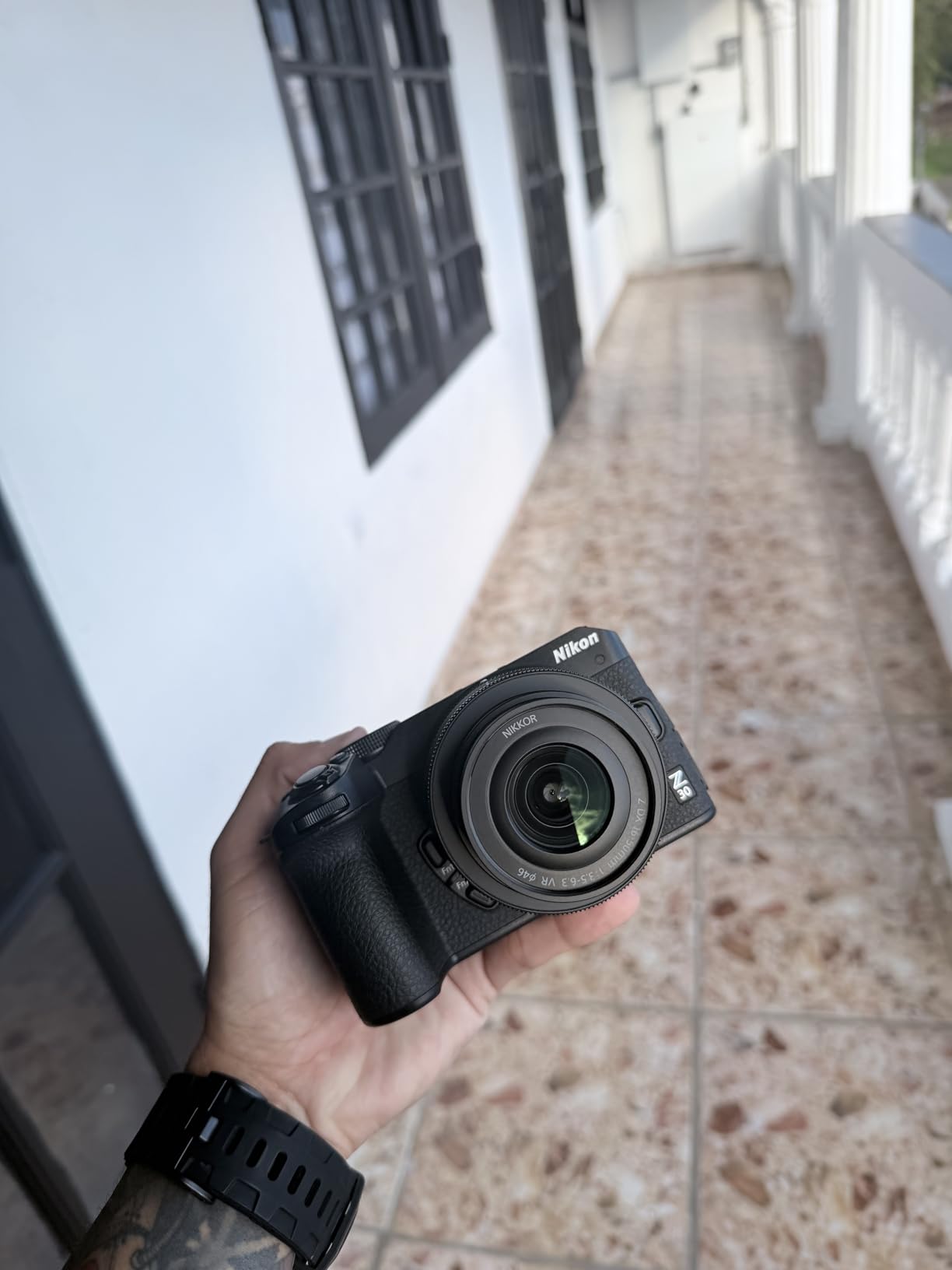
The 209-point hybrid autofocus system with eye detection performed well in my product tests. It is not as dense as Sony’s 425-point system, but it covered the frame adequately for centered product compositions. Focus was accurate and quick in good lighting conditions.
The built-in stereo microphone is a nice touch for sellers who create product videos. Audio quality is clean enough for basic product demos and unboxing videos without investing in an external microphone right away.
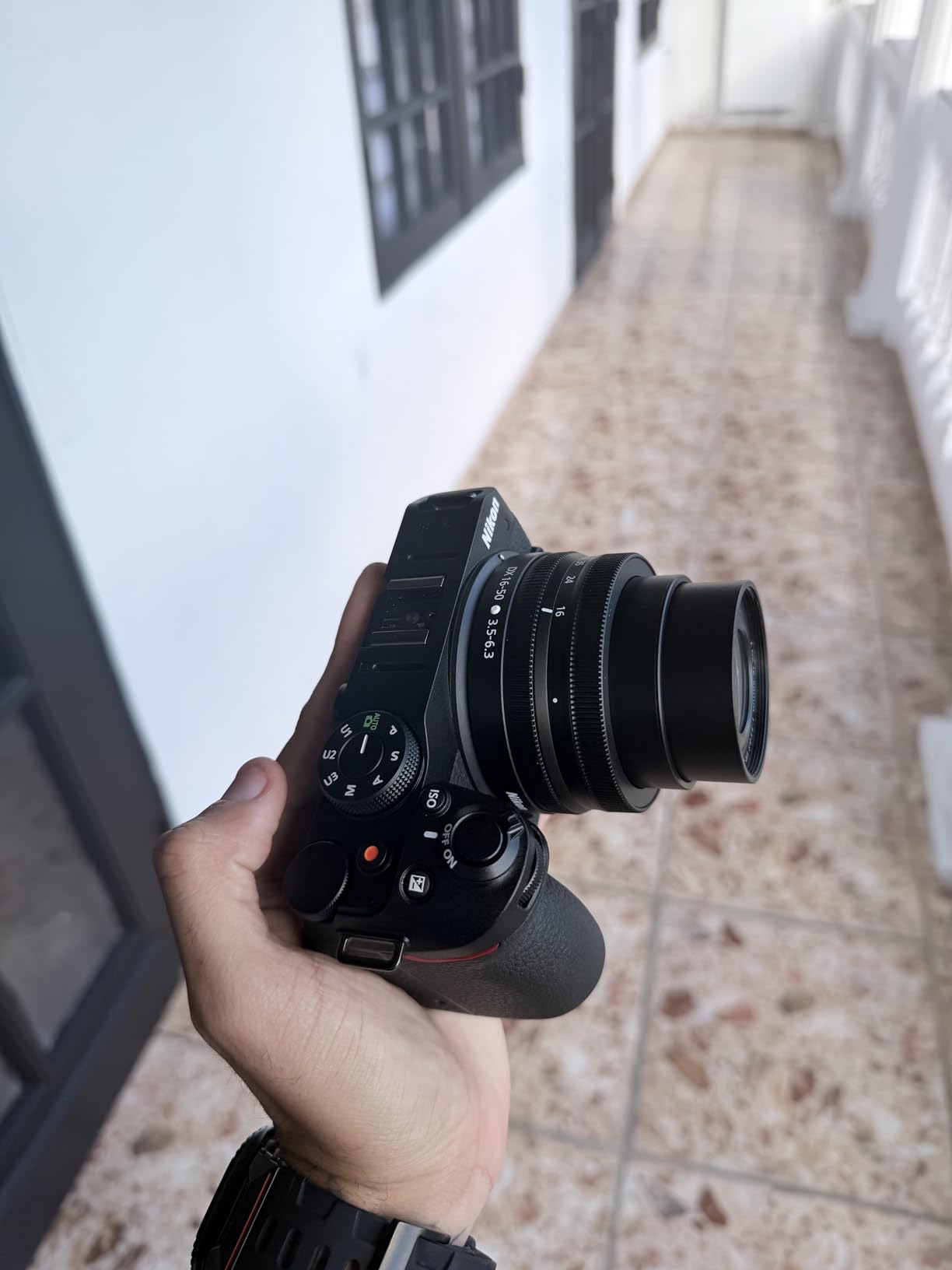
Vlogging Versus Product Photography Tradeoffs
The Z 30 was designed primarily as a vlogging camera, which means it lacks a viewfinder entirely. For product photography, you compose every shot on the rear screen. This works fine in studio conditions, but in bright outdoor lighting for lifestyle product shots, the screen can be harder to see.
The tradeoff is worth it for sellers who also need video content. The Z 30’s video features, including 4K at 30fps and Full HD slow motion at 120fps, give you creative options for product demonstrations that cameras focused on stills alone cannot match.
Z-Mount Lens Selection
Nikon’s Z-mount is newer than Sony’s E-mount, so the lens catalog is still growing. The included 16-50mm kit lens covers standard product photography distances with good sharpness. Nikon also offers a 40mm f/2 prime that is excellent for product work and available at a reasonable investment level.
For macro product photography, Nikon’s Z-mount options are currently more limited than Sony or Canon’s adapted EF options. If tight macro work is a priority, consider the lens situation carefully before choosing this system.
7. Nikon D7500 – Best DSLR Bundle for Growing Businesses
Nikon D7500 DSLR Camera with 18-140mm Lens (1582) & Photo Software Bundle
20.9MP DX-Format
51-Point AF
4K UHD Video
18-140mm Lens Bundle
Pros
- 20.9MP DX-format sensor
- 51-point AF system
- 4K UHD video
- 8 FPS continuous shooting
- Weather-sealed body
Cons
- Renewed with 90-day warranty
- Bundle accessories vary in quality
- Heavier than mirrorless
The Nikon D7500 is a mid-range DSLR that punches above its weight for product photography. I tested a renewed unit for a seller who photographs large inventory batches for a wholesale business, and the camera handled back-to-back shooting sessions with zero issues.
What sets the D7500 apart is the comprehensive bundle. This package includes the AF-S DX 18-140mm lens, which covers a much wider focal range than standard kit lenses. The 18-140mm means you can shoot wide group product shots and then zoom in for detail shots without changing lenses.
The weather-sealed body is a genuine advantage for sellers who photograph products outdoors or in varied conditions. I shot product lifestyle images in light rain with confidence, something I would not attempt with most entry-level cameras on this list.

The 51-point autofocus system is a step up from entry-level DSLRs like the Rebel T7. More focus points means better coverage across the frame, which helps when your product is positioned off-center in the composition. The AF system also tracks moving subjects, useful for action product shots.
This is a renewed model, which means it has been inspected and restored to working condition. It comes with a 90-day limited warranty rather than a full manufacturer warranty. For sellers on a budget who want mid-range features, this represents strong value if you are comfortable with refurbished equipment.

What the Bundle Includes
Beyond the camera body and 18-140mm lens, this package comes with a wide-angle lens attachment, an LED light, 15 batteries, a filter kit, a card reader, and a 64GB memory card. The batteries alone are useful for long product photography sessions where you cannot afford downtime.
I would treat the bundled accessories as starter items rather than long-term gear. The LED light works for basic illumination but will not replace proper softbox lighting. The filters and wide-angle attachment are functional but basic. The real value is in the camera body and the 18-140mm lens.
Renewed Versus New Considerations
Buying renewed carries some risk, but Nikon’s D7500 is a proven body with a reputation for durability. The 90-day warranty covers mechanical issues, and Amazon’s renewed return policy provides a safety net if something is wrong on arrival. I have purchased renewed cameras before and had good experiences, but always inspect the sensor and shutter count on arrival.
For sellers who need a capable DSLR at a mid-range investment level, the D7500 renewed bundle offers features that would cost significantly more in a new mirrorless body. The tradeoff is age and warranty length, not image quality.
8. Sony Alpha A7 III – Best Full-Frame for Professional Listings
Sony Alpha a7 III Mirrorless Camera with 28-70mm Lens Black
24.2MP Full-Frame
5-Axis IBIS
693 AF Points
Dual Card Slots
Pros
- 24.2MP full-frame sensor
- 5-axis in-body stabilization
- 693 autofocus points
- 15-stop dynamic range
- Dual SD card slots
Cons
- Premium investment
- Complex menu system
- Limited touchscreen function
The Sony Alpha A7 III is the only full-frame camera on this list, and it earns its place for sellers who need professional-level image quality. I used one for a high-end furniture and home decor catalog, and the full-frame sensor delivered a level of detail and color depth that APS-C sensors simply cannot match.
Full-frame sensors capture more light and produce wider dynamic range than APS-C sensors. For product photography, this means better detail in both shadows and highlights, cleaner images at higher ISO settings, and more flexibility for post-processing and cropping. The A7 III offers 15 stops of dynamic range, which is exceptional for this category.
The 5-axis in-body image stabilization is a feature none of the other cameras on this list offer. It stabilizes every lens you mount, which means you can shoot at slower shutter speeds handheld without blur. For sellers who sometimes shoot without a tripod, IBIS is genuinely valuable.

The 693-point phase-detection autofocus system covers 93 percent of the image area. This is the densest AF coverage on this list by far, and it means focus is accurate anywhere in the frame. For product photography where precise focus placement matters, this level of AF coverage is a real advantage.
Dual SD card slots provide redundancy that professional sellers appreciate. If one card fails during a product shoot, your images are safely on the second card. This feature alone has saved sessions for photographers I know, and it is something no other camera in this roundup offers.

Full-Frame Advantage for Product Detail
I compared identical product shots taken with the A7 III and the Canon R50 to see the real-world difference. At standard web viewing sizes, both looked excellent. But when I zoomed in to 100 percent and cropped tightly, the A7 III’s full-frame sensor showed noticeably cleaner detail with less noise in shadow areas.
For sellers whose products are viewed at high zoom levels on Amazon or who need large-format images for print catalogs, the full-frame advantage is measurable. For most standard web listings, the difference is less noticeable, and the investment may not be justified.
Learning Curve and Workflow
The A7 III’s menu system is famously complex, and it took me several weeks to fully customize it for product photography. Once configured, the camera is efficient to use with custom buttons for focus area, ISO, and white balance. But the initial setup requires patience.
This camera makes the most sense for sellers who are committed to photography as part of their business. If you shoot products daily, need the highest image quality, and want a system you will not outgrow, the A7 III delivers professional results that justify the investment.
Buying Guide: How to Choose a Product Photography Camera?
Choosing among the best cameras for product photography comes down to understanding which specs actually matter for e-commerce work. I have broken down the key factors below based on years of helping sellers set up their photography workflows.
Sensor Size: APS-C Versus Full-Frame
Sensor size affects image quality more than megapixel count. APS-C sensors, found in most cameras on this list, are perfectly adequate for online product photography. They produce sharp images with good color accuracy for standard web listings.
Full-frame sensors, like the one in the Sony A7 III, capture more light and offer wider dynamic range. This matters most for sellers who need large prints, shoot in challenging lighting, or crop heavily into product detail shots. For most e-commerce sellers, APS-C is more than enough.
Megapixels: How Many Do You Actually Need?
This is one of the most common questions in seller forums. The answer depends on how your images are displayed. Amazon recommends images of at least 1000 pixels on the longest side, with 1600 pixels or larger preferred for zoom functionality.
Any camera with 20MP or more produces images far larger than this requirement. A 24MP sensor generates images around 6000 by 4000 pixels, which gives you plenty of room for cropping and resizing. Do not let megapixel counts drive your decision above 20MP for standard e-commerce work.
Lens Selection: The Hidden Cost Factor
The lens matters as much as the camera body for product photography. A sharp macro lens on a budget body will outperform a kit lens on a premium body for close-up detail work. Always factor lens cost into your total budget.
Sony’s E-mount has the widest third-party lens selection, with affordable options from Sigma and Tamron. Canon’s EF mount (used on the Rebel T7) has decades of affordable used lenses. Canon’s RF mount and Nikon’s Z mount are newer with smaller catalogs but growing steadily.
Autofocus: Why It Matters for Products
For static product photography on a tripod, autofocus is less critical because you can take your time. But if you shoot handheld, work with models, or photograph products at events, autofocus speed and coverage make a real difference in your hit rate.
Sony leads in autofocus technology, with the a6400’s 0.02-second acquisition and 425 points, and the A7 III’s 693-point coverage. Canon’s Dual Pixel AF II on the R50 is also excellent. Entry-level DSLRs like the Rebel T7 have basic AF systems that work fine for tripod-mounted product work.
Connectivity: WiFi and Workflow Speed
Built-in WiFi lets you transfer images directly to your phone or computer, which speeds up your listing workflow considerably. Every camera on this list has WiFi connectivity. Some, like the Canon R100, work well with phone apps for remote shooting and framing.
For sellers who photograph products and immediately upload listings from their phone, WiFi is not a luxury but a time-saving necessity. I recommend testing the manufacturer’s phone app before committing to a camera, since app quality varies between brands.
DSLR Versus Mirrorless: Which Is Better?
Mirrorless cameras are the current industry direction, with Canon, Sony, and Nikon all focusing development on mirrorless systems. They offer advantages in size, video quality, and autofocus sophistication. The Canon R50, Sony ZV-E10, and Nikon Z 30 represent excellent mirrorless options for sellers.
DSLRs like the Canon Rebel T7 and Nikon D7500 still produce excellent images and offer advantages in battery life, optical viewfinders, and access to large catalogs of affordable used lenses. They are not obsolete for product photography by any means, and their value proposition is strong for budget-conscious sellers.
Studio Setup Basics for Product Photography
From forum discussions and my own experience, here is what matters most for your product photography setup. Lighting is the single biggest factor in image quality. Two softbox lights positioned at 45-degree angles to your product produce even, shadow-free illumination that flatters most products.
A white sweep or backdrop gives you the clean white background that most marketplaces prefer. A sturdy tripod keeps your camera stable for consistent framing across product lines. A remote shutter or the WiFi app prevents camera shake on long exposures.
Start with these basics before upgrading your camera. I have seen sellers with entry-level cameras and good lighting produce better listing photos than sellers with expensive cameras and poor lighting. The camera is one tool in a system, not the whole solution.
FAQs
What camera do most professional product photographers use?
Professional product photographers typically use full-frame mirrorless cameras like the Sony Alpha A7 III or high-resolution bodies like the Sony A7R series. These cameras offer the dynamic range, color accuracy, and resolution needed for commercial work. However, many working product photographers also use APS-C bodies like the Canon EOS R50 or Sony a6400 for everyday e-commerce assignments.
What camera should I buy for product photography on a budget?
For budget-conscious online sellers, the Canon EOS Rebel T7 with its two-lense kit offers the best value, giving you a proven DSLR with over 8,500 positive reviews. The Canon EOS R100 is another strong budget option with mirrorless technology and 4K video. Both cameras deliver 24MP images suitable for all major e-commerce platforms.
Is Sony or Canon better for product photography?
Both brands produce excellent cameras for product photography. Sony offers superior autofocus technology and a larger lens ecosystem with more third-party options, making cameras like the a6400 and ZV-E10 strong choices. Canon provides better ease of use for beginners and excellent color science, with the EOS R50 being our top overall pick. Your choice should depend on your budget and whether you value autofocus or user-friendliness more.
What specs matter most for product photography?
The most important specs for product photography are sensor resolution (20MP or higher), color accuracy, manual control options, and lens selection. Autofocus point coverage matters for off-center compositions, while WiFi connectivity speeds up your listing workflow. Megapixel counts above 24MP offer diminishing returns for standard web-based e-commerce listings.
Can I use a smartphone instead of a camera for product photos?
A modern smartphone can produce acceptable product photos for basic online listings, especially when paired with good lighting. However, dedicated cameras offer advantages in image quality, manual control, lens flexibility, and consistency across large product catalogs. For sellers photographing small products like jewelry or needing consistent white backgrounds, a dedicated camera makes a noticeable difference in quality and efficiency.
Conclusion
Finding the best cameras for product photography for online sellers does not have to be complicated. The Canon EOS R50 is our overall top pick for its balance of image quality, autofocus performance, and features that genuinely help with product work. The Canon EOS Rebel T7 offers unbeatable value with its two-lens kit, and the Canon EOS R100 gets you into mirrorless photography at the lowest entry point.
For sellers who need video alongside stills, the Sony ZV-E10 with its Product Showcase Setting is hard to beat. And for those ready to invest in professional image quality, the Sony Alpha A7 III delivers full-frame performance that will serve your business for years. Whatever you choose in 2026, pair it with good lighting and a solid workflow, and your product listings will stand out.