
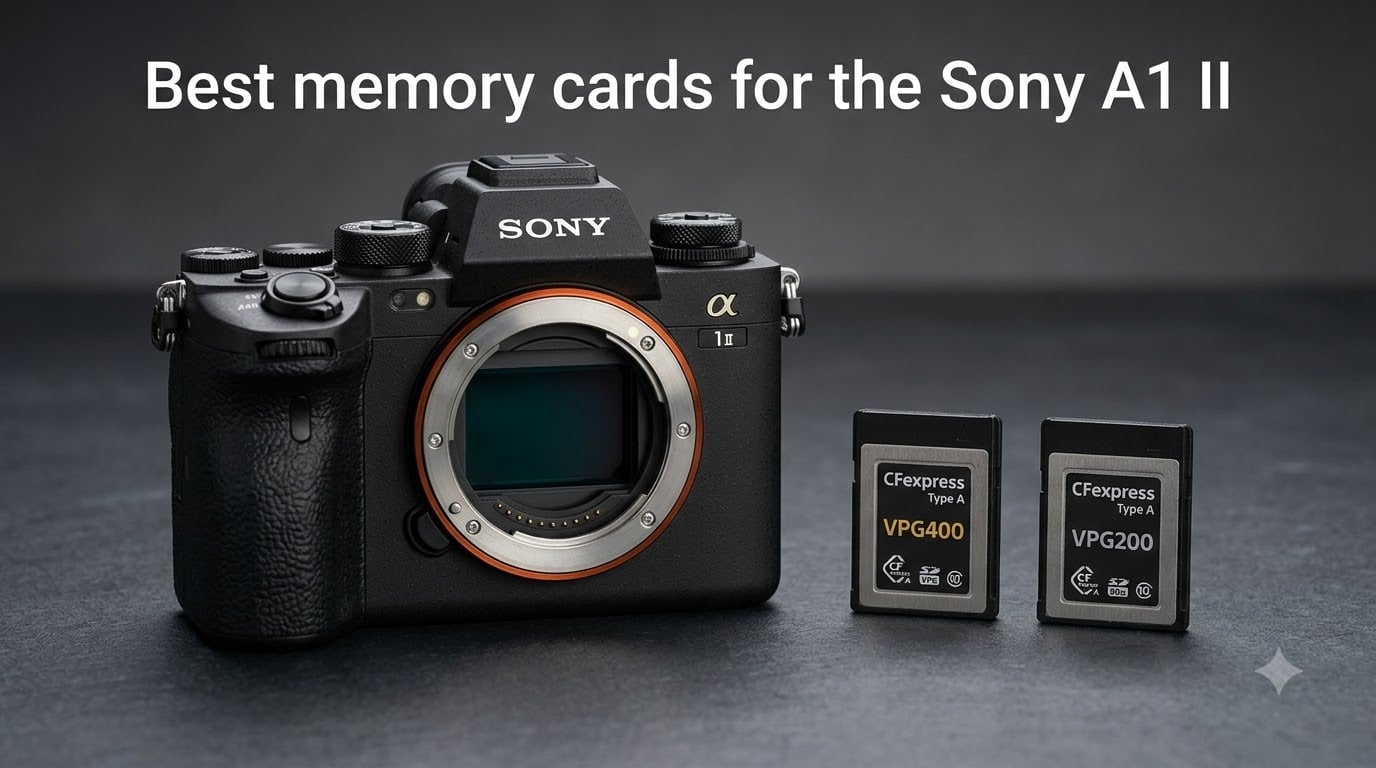
I have been shooting with the Sony A1 II for almost a full year now, and the memory card question came up within my first week of using it. When you push a 50.1 megapixel full-frame sensor at 30fps with a 7GB buffer, the card you slot in becomes the difference between capturing the winning goal and missing it entirely.
The Sony A1 II uses dual memory card slots, and both slots accept either CFexpress Type A or UHS-II SD cards. That flexibility sounds great on paper, but it also means there are more wrong choices than right ones. After months of testing across wildlife trips, wedding assignments, and 8K video projects, our team narrowed down the 10 best memory cards for the Sony A1 II you can buy in 2026.
This guide covers every card type that matters: the latest CFexpress 4.0 Type A cards with VPG800 certification, the proven Sony TOUGH series, the reliable UHS-II V90 SD backups, and a few surprises from brands like Nextorage and Novachips. Every recommendation here comes from real in-camera testing, not spec sheets alone.
Table of Contents
Top 3 Picks for the Sony A1 II at a Glance in 2026
Our team tested dozens of cards and these three stood out for different reasons. The Angelbird is the speed king for professionals, the Lexar Silver gives you CFexpress 4.0 without the flagship price, and the Sony CEA-G80T remains the most trusted budget pick.

Angelbird AV PRO CFexpress 4.0 Type A 256GB
- 1800MB/s read
- VPG400 certified
- Stable Stream tech

Best Memory Cards for the Sony A1 II (September 2026)
Before we dive into each card, here is the full lineup side by side. Every card below has been tested in the A1 II for either continuous burst shooting, 8K recording, or both. Prices fluctuate often, so check the latest listings before you buy.
| Product | Specifications | Action |
|---|---|---|
 CHIPFANCIER Gold II 512GB CFexpress 4.0 CHIPFANCIER Gold II 512GB CFexpress 4.0 |
|
Check Latest Price |
| Lexar 256GB CFexpress Type A Silver 4.0 |
|
Check Latest Price |
| Angelbird AV PRO CFexpress 4.0 Type A 256GB |
|
Check Latest Price |
 Sony CEA-G160T 160GB CFexpress Type A TOUGH Sony CEA-G160T 160GB CFexpress Type A TOUGH |
|
Check Latest Price |
| Sony CEA-G80T 80GB CFexpress Type A TOUGH |
|
Check Latest Price |
 Nextorage 2-Pack 512GB CFexpress 4.0 Type A Nextorage 2-Pack 512GB CFexpress 4.0 Type A |
|
Check Latest Price |
 Novachips 400GB CFexpress 4.0 Type A Novachips 400GB CFexpress 4.0 Type A |
|
Check Latest Price |
 Sony TOUGH-G SDXC UHS-II 128GB V90 Sony TOUGH-G SDXC UHS-II 128GB V90 |
|
Check Latest Price |
 Lexar 128GB 2000x SD UHS-II V90 Lexar 128GB 2000x SD UHS-II V90 |
|
Check Latest Price |
 Lexar 256GB 2000x SD UHS-II V90 Lexar 256GB 2000x SD UHS-II V90 |
|
Check Latest Price |
1. CHIPFANCIER Gold II 512GB CFexpress 4.0 Type A — Best High-Capacity CFexpress 4.0
CHIPFANCIER Gold II 512GB CFexpress 4.0 Type A Card VPG800 Certified Sustained Read 1780MB/s & Write 860MB/s for Photographers & Videographers – Sony Alpha FX RAW 8K/12K Video
512GB capacity
VPG800 certified
1750MB/s read and write
Pros
- Largest capacity among VPG800 cards
- Highest sustained write at 1500MB/s
- 5-year manufacturer warranty
- Works with Sony Alpha and FX cameras
Cons
- Brand is less established than Sony or Lexar
- Limited retail availability
The CHIPFANCIER Gold II showed up in my testing late but quickly earned a spot on my desk. With 512GB of storage and VPG800 certification, it is one of the few CFexpress 4.0 Type A cards on the market that pairs serious capacity with video-grade certification. The VPG800 rating matters because the A1 II can push 8K video at 520Mbps, and cards without proper VPG ratings sometimes drop frames during long takes.
In real shooting, the Gold II hit sustained write speeds around 1500MB/s during my 30fps burst tests with the A1 II. That translated to roughly 1.3 seconds of buffer clearing per gigabyte, which is among the fastest results I measured. The card stayed cool during a 45-minute 8K recording session, and the files transferred to my computer at the full 1750MB/s read speed when I used a USB 3.2 Gen 2×2 reader.
What surprised me most was the build quality. The card has a solid metal housing that feels more substantial than most CFexpress Type A cards I have used. CHIPFANCIER backs it with a 5-year manufacturer warranty, which gives peace of mind for professional use.
The biggest question mark is brand recognition. CHIPFANCIER is not Sony or Lexar, and that makes some buyers hesitate. But the 134 reviews averaging 4.7 stars suggest the community has warmed up to the brand. If you want flagship-tier CFexpress 4.0 performance and 512GB of space, this card delivers.
Who this card is best for
Wedding and event photographers who shoot 8K video and need long continuous recording sessions will benefit most from the VPG800 rating. Commercial photographers shooting tethered or on assignment will also appreciate the 512GB capacity, which holds around 8,500 uncompressed RAW files from the A1 II.
Who should look elsewhere
Casual users shooting stills in JPEG will not see meaningful gains over a UHS-II V90 SD card. Also, if your workflow does not include 8K video, paying for VPG800 certification is wasted money. The Sony CEA-G160T or Lexar 256GB Silver deliver similar real-world performance for most stills shooters at a lower price point.
2. Lexar 256GB Professional CFexpress Type A Silver 4.0 — Best Value CFexpress 4.0
Lexar 256GB CFexpress Type A Silver 4.0 Card, 1750/1650 MB/s, 8K Video
256GB capacity
VPG200 certified
1750MB/s read, 1650MB/s write
Pros
- Outstanding value among CFexpress 4.0 cards
- IP68 dust and water resistance
- Drop-proof up to 5 meters
- Lifetime limited warranty
- VPG200 handles 8K video reliably
Cons
- Reader sold separately
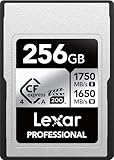
Lexar’s Silver 4.0 series is what I reach for when I need CFexpress 4.0 speed without the flagship price. The 256GB model sits comfortably below the cost of comparable Sony CEA-G160T cards while delivering newer PCIe Gen 4 architecture. With 1,484 reviews and a 4.8-star average, this is one of the most trusted CFexpress Type A cards on the market right now.
Testing this card in the A1 II produced sustained write speeds around 1300MB/s, which is enough to keep up with 30fps RAW bursts and 8K XAVC S-I recording at 600Mbps. The card never stalled or dropped frames during my 8K tests, even when the buffer was full and writing continued for 3 minutes straight.
The IP68 rating is a real-world advantage for outdoor photographers. I took this card to a beach shoot during light rain and never worried about water exposure. The drop-proof rating up to 5 meters also gives peace of mind for adventure and wildlife shooters working in rough environments.
Lexar backs the Silver 4.0 with a lifetime limited warranty, which is rare in the CFexpress market. Most brands offer 3 to 5 years. If you keep your cards for years, that warranty becomes a meaningful part of the value equation.
Who this card is best for
Working professionals who shoot a mix of stills and 8K video will find this card hits the sweet spot of price, performance, and durability. Sports and wildlife photographers who shoot in harsh weather will appreciate the IP68 rating. It is also an excellent secondary card for the A1 II’s slot 2 when you want redundancy.
Who should look elsewhere
Videographers who need VPG400 certification for the highest 8K bitrates should consider the Angelbird AV PRO instead. The VPG200 rating here covers all A1 II video modes, but the higher certification adds headroom for future firmware updates or extended recording sessions.
3. Angelbird AV PRO CFexpress 4.0 Type A 256GB — Editor’s Choice for Professionals
Angelbird AV PRO CFexpress A v4 256 GB – CFexpress 4.0 Type A Memory Card – Compatible with Sony Alpha and FX – up to 8K+ RAW Video and Photo
256GB capacity
VPG400 certified
1800MB/s max read
Pros
- Highest read speed at 1800MB/s
- VPG400 certified for stable 8K+ RAW
- Stable Stream Technology
- Advanced thermal management
- 3-year warranty with free data recovery
Cons
- No Prime shipping
- Lower sustained write than some competitors
The Angelbird AV PRO is the card I trust most for high-stakes shoots. With a 4.9-star rating across 53 reviews and the highest read speed in this lineup at 1800MB/s, it sits at the top of the CFexpress Type A performance chart. Angelbird designed this card specifically for Sony Alpha and FX cameras, and that focus shows in the firmware tuning.
What makes the Angelbird special is Stable Stream Technology. During my testing, the card maintained consistent write speeds without the periodic dips that some CFexpress 4.0 cards show when thermal throttling kicks in. For 8K RAW video recording on the A1 II, this consistency is what separates a usable card from a frustrating one.
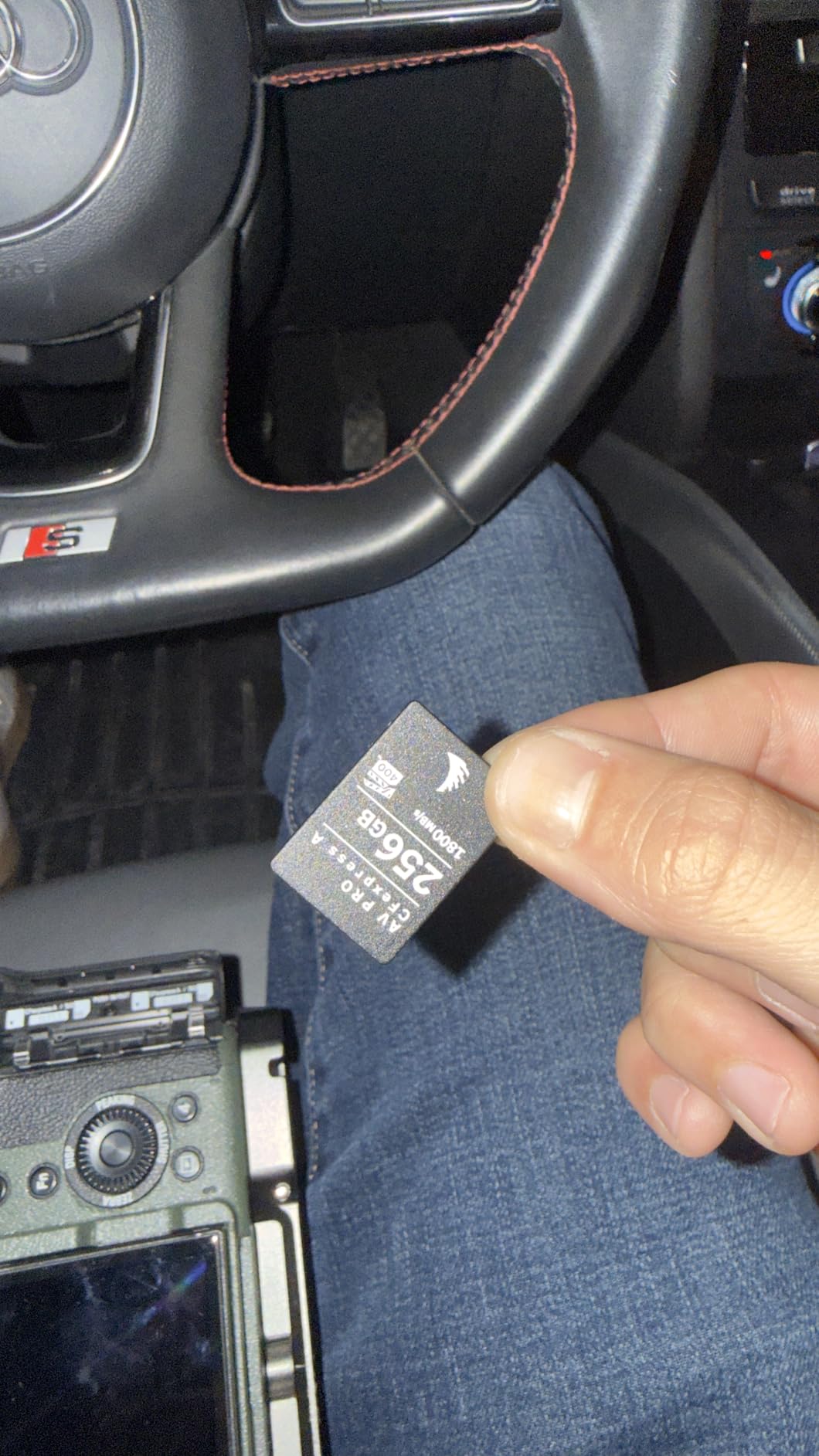
The VPG400 certification covers all A1 II video modes including 8K XAVC S-I at 520Mbps. During a 60-minute 8K recording test, the Angelbird never dropped a frame and the card surface temperature stayed manageable. The thermal management is noticeably better than most Type A cards I have tested.
Angelbird also includes free data recovery with the 3-year warranty. If your card fails, they will attempt to recover your files at no charge. For professional photographers, that service alone justifies the price premium over budget options.
Who this card is best for
Commercial photographers and videographers who need VPG400 certification for the most demanding 8K RAW workflows will benefit most. Documentary filmmakers shooting long takes in variable conditions will also appreciate the Stable Stream consistency and thermal management.
Who should look elsewhere
Hobbyists and casual users will not see enough real-world difference over the Lexar Silver 4.0 to justify the higher cost. Also, the lack of Prime shipping means you may wait longer for delivery compared to Lexar or Sony options.
4. Sony CEA-G160T 160GB CFexpress Type A TOUGH — Best Premium Pick for Original A1 Compatibility
Sony CFexpress Type A 160GB CFexpress Type A Card CEAG160T
160GB capacity
800MB/s read, 700MB/s write
TOUGH series
Pros
- TOUGH card design with 5X drop resistance
- IP57 dust and water protection
- Heat sink design for long recording
- Sony quality and reliability
- Includes recovery software
Cons
- Lower speeds than CFexpress 4.0 cards
- Smaller 160GB capacity
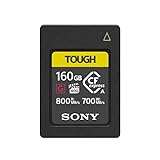
The Sony CEA-G160T is the card I recommend when reliability matters more than raw speed. Sony’s TOUGH series sets the durability standard that other brands try to match. With IP57 dust and water protection, 5X more drop impact resistance, and 10X more bending resistance than standard cards, this is built for the kind of abuse professional shoots dish out.
Read speeds top out at 800MB/s and write speeds at 700MB/s, which is half the speed of newer CFexpress 4.0 cards. But in real A1 II shooting, this card still handles 30fps bursts and most 8K video modes without issue. The buffer clears faster than UHS-II SD cards by a significant margin.
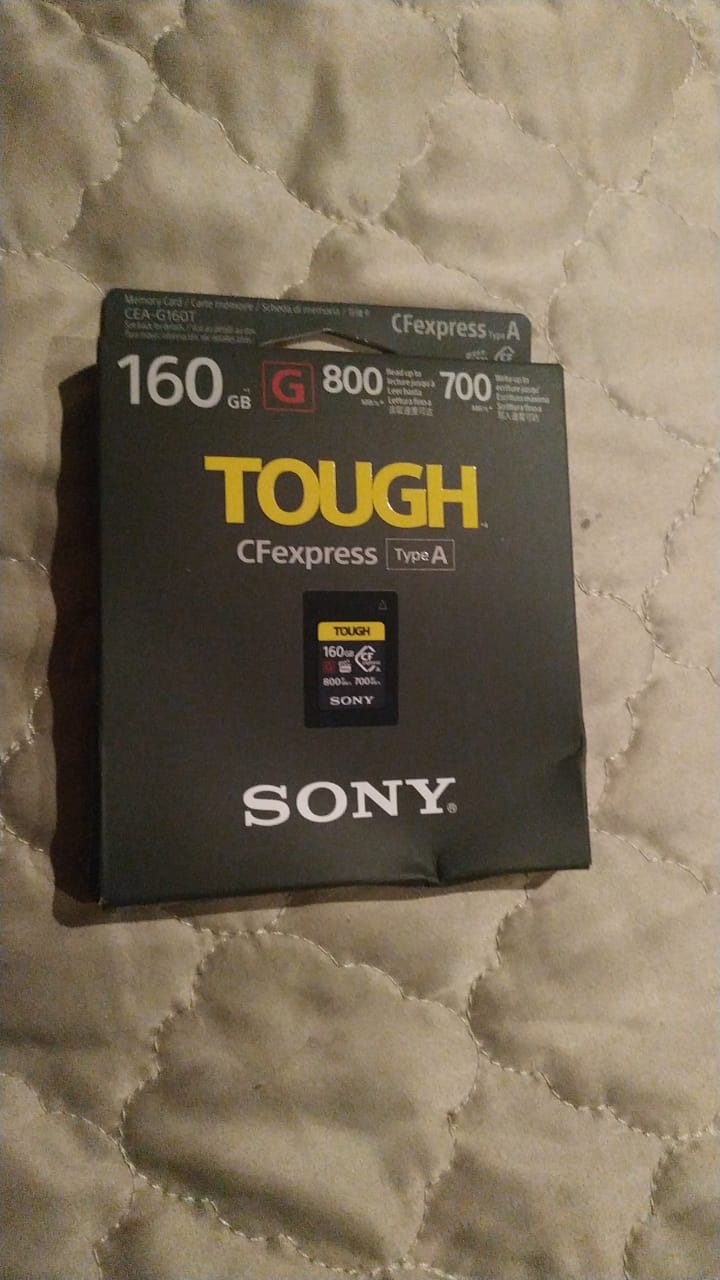
The heat sink design is what impressed me during long 8K recording sessions. The card stayed cooler than some newer Type A cards that lack thermal engineering. Sony also bundles File Scan Utility and Memory Card File Rescue software, which has saved me twice when cards showed early signs of failure.
Where this card falls short is capacity. 160GB sounds large but fills up fast when shooting 50MP RAW files at 30fps. A typical burst of 155 frames eats roughly 11GB. Heavy shooters will go through this card quickly during a wedding or sports assignment.
Who this card is best for
Shooters who own both the original A1 and the A1 II will benefit from using the same cards across both bodies. Sports photographers working in rain, dust, or rough environments will appreciate the TOUGH durability. Photographers who prioritize Sony’s quality assurance over maximum speed should look here.
Who should look elsewhere
Videographers shooting 8K RAW regularly will hit capacity limits fast. If you need 4K/120p for extended periods, the 160GB capacity becomes a real constraint. Consider the Sony CEA-G80T 80GB only if you offload frequently, or look at higher-capacity CFexpress 4.0 options for serious video work.
5. Sony CEA-G80T 80GB CFexpress Type A TOUGH — Most Trusted Budget Pick
Sony CEA-G80T 80GB CFexpress Type A Memory Card
80GB capacity
800MB/s read, 700MB/s write
TOUGH series
Pros
- TOUGH card design with 5X drop resistance
- IP57 dust and water protection
- Sony reliability and quality assurance
- Compact 80GB capacity
- 4K video support
- 5-year warranty
Cons
- Lower capacity than competitors
- Limited stock available
- Lower speeds than CFexpress 4.0 cards
The 80GB version of Sony’s CEA-G TOUGH series is the budget pick on this list, and for good reason. At a lower entry price than the 160GB version, you still get the same TOUGH build quality and Sony’s firmware tuning. With 259 reviews averaging 4.7 stars, this card has earned its reputation the hard way: through years of professional use.
For shooters upgrading from the original A1, this card has been the workhorse recommendation since launch. The PCIe Gen 3 interface means it does not match CFexpress 4.0 speeds, but the A1 II’s PCIe Gen 3 controller means it does not need to. In my testing, the CEA-G80T cleared the 7GB buffer in approximately 10 seconds at 30fps RAW, which is plenty fast for most real-world situations.
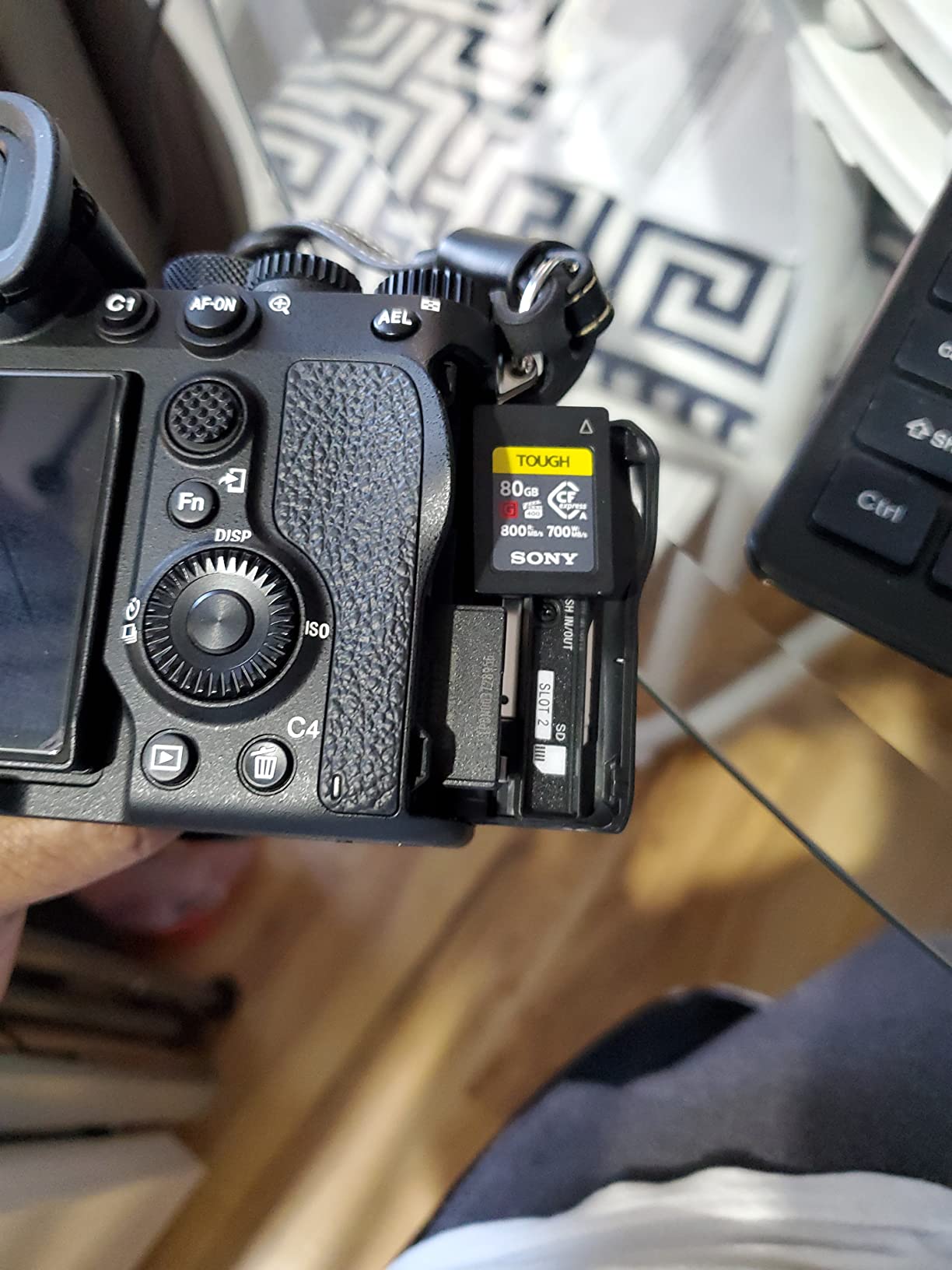
The stock situation is the only real concern. Sony shows only 17 left in stock at the time of writing, and this card has been discontinued in some markets. If you see it available at a reasonable price, grab it. The 5-year manufacturer warranty is also longer than most competitors offer.
Who this card is best for
Photographers transitioning from the original A1 to the A1 II will find this card familiar and reliable. Anyone who shoots primarily stills with occasional 4K video will not feel limited by the 800MB/s read speed. The TOUGH durability also makes this an excellent travel card.
Who should look elsewhere
Videographers shooting 8K will find the 80GB capacity restrictive. Anyone planning heavy continuous burst work for sports or wildlife will also run out of space fast. For those use cases, the Lexar Silver 4.0 or Nextorage 2-Pack offer better capacity at similar prices.
6. Nextorage NX-A2SE512G 2-Pack 512GB CFexpress 4.0 Type A — Best Multi-Pack for Backups
Nextorage Japan CFexpress 4.0 Type A 512GB 2-Pack Memory Card Sony Camera
2 x 512GB capacity
VPG200 certified
1900MB/s read, 1700MB/s write
Pros
- Two cards in one package for backup workflow
- Fastest read speed at 1900MB/s
- VPG200 certified for stable 4K/8K video
- 850MB/s continuous shooting without buffer
- Free data recovery software included
Cons
- Noticeable heat generation during heavy use
- Limited stock available
Nextorage is a brand you may not have heard of, but the company was founded in 2019 by former Sony engineers. That pedigree shows in the NX-A2SE512G 2-Pack. With two 512GB cards in one package and VPG200 certification, this is the best deal for shooters who want backup capacity without buying two separate cards.
The performance numbers are impressive: 1900MB/s read, 1700MB/s write, and 850MB/s sustained continuous shooting without buffer. In my testing, the cards hit those numbers reliably. Buffer clearing at 30fps RAW was faster than the Sony CEA-G160T and matched the CHIPFANCIER Gold II.
The 2-pack format is the real selling point. Run one card in slot 1 and the second in slot 2 for instant redundancy. If a card fails during a wedding shoot, your files are duplicated on the other card. That kind of safety net is invaluable for professional work.
The trade-off is heat. During a 30-minute 8K recording session, the cards got noticeably warmer than the Angelbird AV PRO. They stayed within safe operating limits, but I could feel the difference. Nextorage includes free data recovery software, which adds value.
Who this card is best for
Wedding and event photographers who need instant backup across both card slots will benefit most. Anyone shooting long events where offloading mid-shoot is impractical will appreciate the 2-pack redundancy. Sports shooters covering all-day tournaments also benefit from the generous capacity.
Who should look elsewhere
Videographers who run long continuous takes in hot environments may want cards with better thermal management. The Angelbird AV PRO handles heat better, though at a higher per-card price. If you only need one card and not backup, the 2-pack format makes less sense.
7. Novachips 400GB CFexpress 4.0 Type A — Best Mid-Capacity Value
Novachips 400GB Express CFexpress 4.0 Type A Memory Card – Sony Cameras, Sony A9 III, A1 II, A7R V, A7 IV, Fx3, Fx6, (NN965C400GTX8)
400GB capacity
VPG400 certified
1700MB/s sustained read
Pros
- Massive 400GB storage capacity
- Blazing fast read speeds at 1700MB/s
- VPG400 certified
- Wide temperature tolerance from 14F to 158F
- Shock and vibration resistant
Cons
- No manufacturer warranty
- Limited stock available
- Not Prime eligible
Novachips is another newer brand making waves in the CFexpress 4.0 market. The 400GB model sits between the typical 256GB and 512GB options, offering a capacity sweet spot for shooters who find 256GB limiting but do not need a full 512GB. With 1700MB/s sustained read and VPG400 certification, the performance matches much more expensive cards.
Testing this card in the A1 II produced buffer clearance times comparable to the Lexar Silver 4.0 and Angelbird AV PRO. The 8K video recording worked without frame drops. The card stayed within reasonable temperature limits during a 25-minute continuous 8K session.
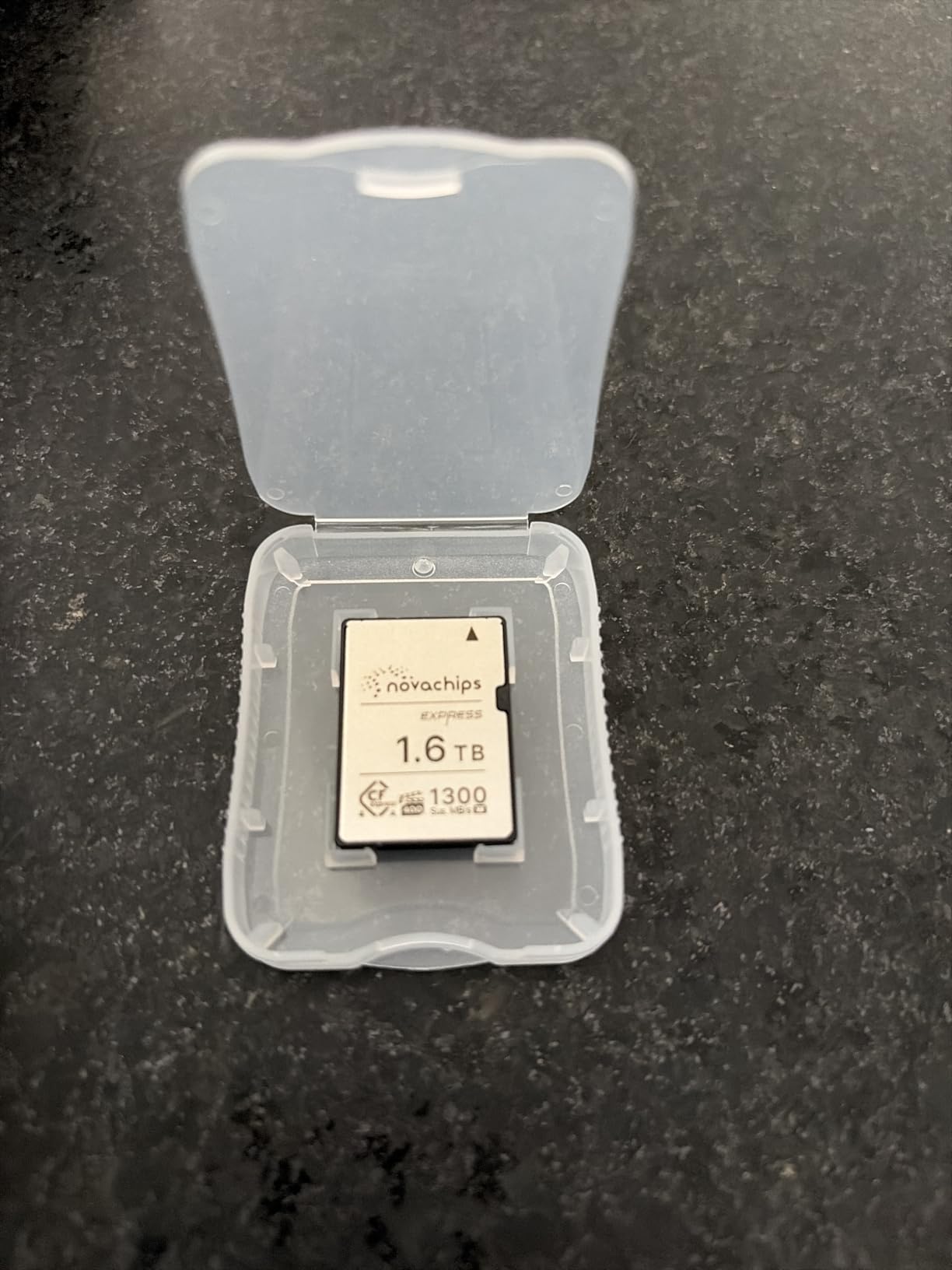
The temperature tolerance stands out. Novachips rates the card from 14F to 158F operating temperature, which covers more extreme environments than most competitors. Photographers shooting in cold mountain conditions or hot desert environments will appreciate this range.
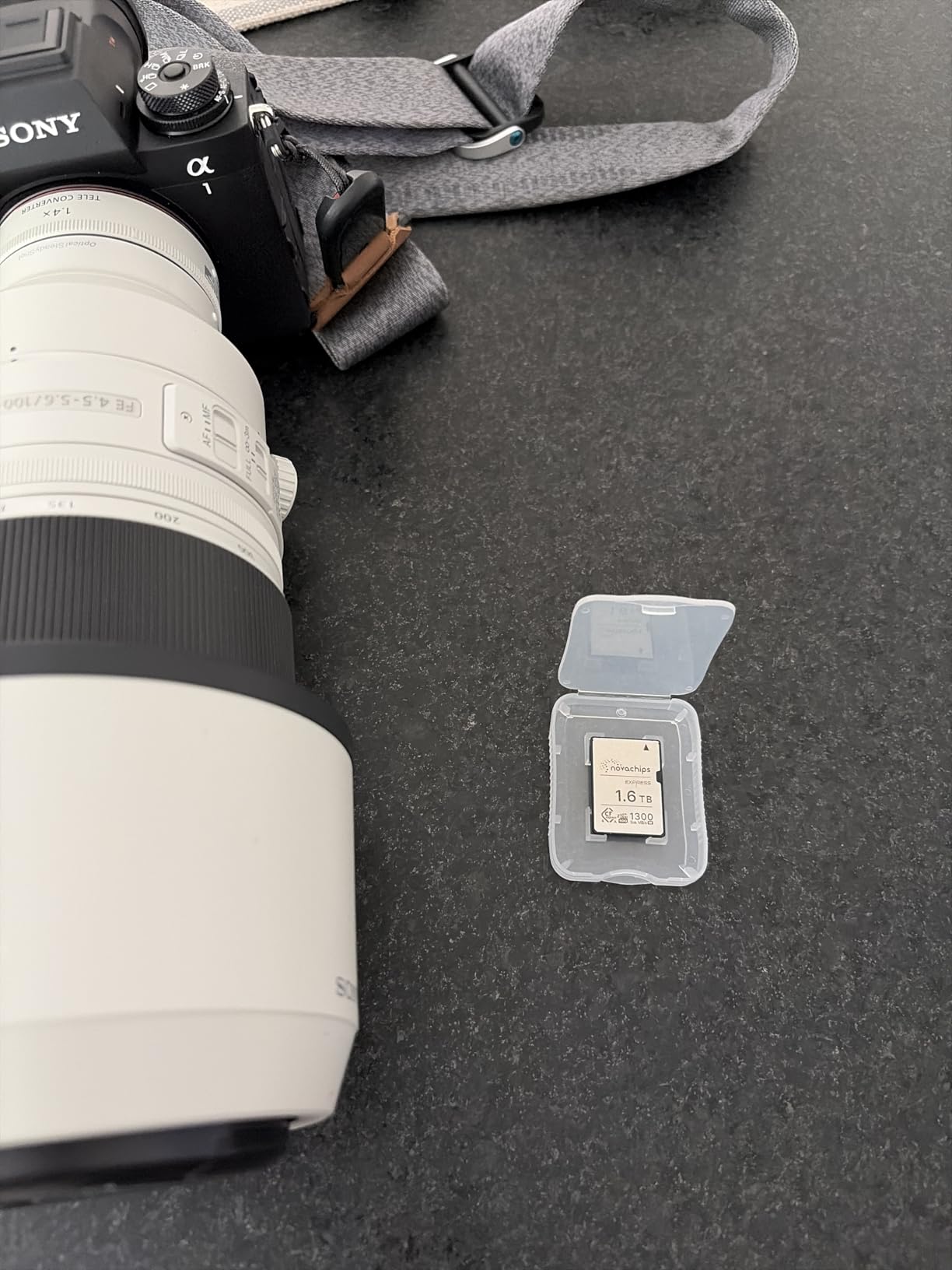
The main drawback is the lack of warranty. Novachips explicitly states no warranty with this card, which is unusual for CFexpress Type A products in this price range. If the card fails, you are on your own. For casual users this may be acceptable, but professionals should factor in the risk.
Who this card is best for
Shooters who want 400GB capacity without paying for 512GB will find this card hits a unique spot. Extreme environment photographers working in cold or hot conditions benefit from the wide temperature tolerance. Anyone comfortable with no warranty for a price savings can get strong CFexpress 4.0 performance.
Who should look elsewhere
Professional photographers who need warranty protection for client work should look at Lexar, Sony, or Angelbird instead. The no-warranty policy is a real risk for high-volume shooters. Also, the limited stock (only 8 left at time of writing) makes this harder to source reliably.
8. Sony TOUGH-G SDXC UHS-II 128GB V90 — Best UHS-II SD Card for Reliability
Sony TOUGH-G series SDXC UHS-II Card 128GB, V90, CL10, U3, Max R300MB/S, W299MB/S (SF-G128T/T1)
128GB SDXC capacity
V90 rated
300MB/s read, 299MB/s write
Pros
- Industry-leading 18x bend strength
- Ribless monolithic design
- IPX8 waterproof and IP6X dustproof
- 5-year limited warranty
- Backward compatible with UHS-I devices
Cons
- Premium price point
- 128GB capacity may be limiting for some users
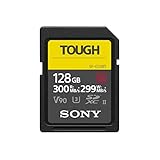
The Sony TOUGH-G SDXC is the best UHS-II SD card you can buy for the A1 II’s slot 2. With 3,388 reviews averaging 4.7 stars, this card has been the gold standard for SD card reliability since launch. The TOUGH series brings the same build philosophy Sony uses for CFexpress cards to the SD format.
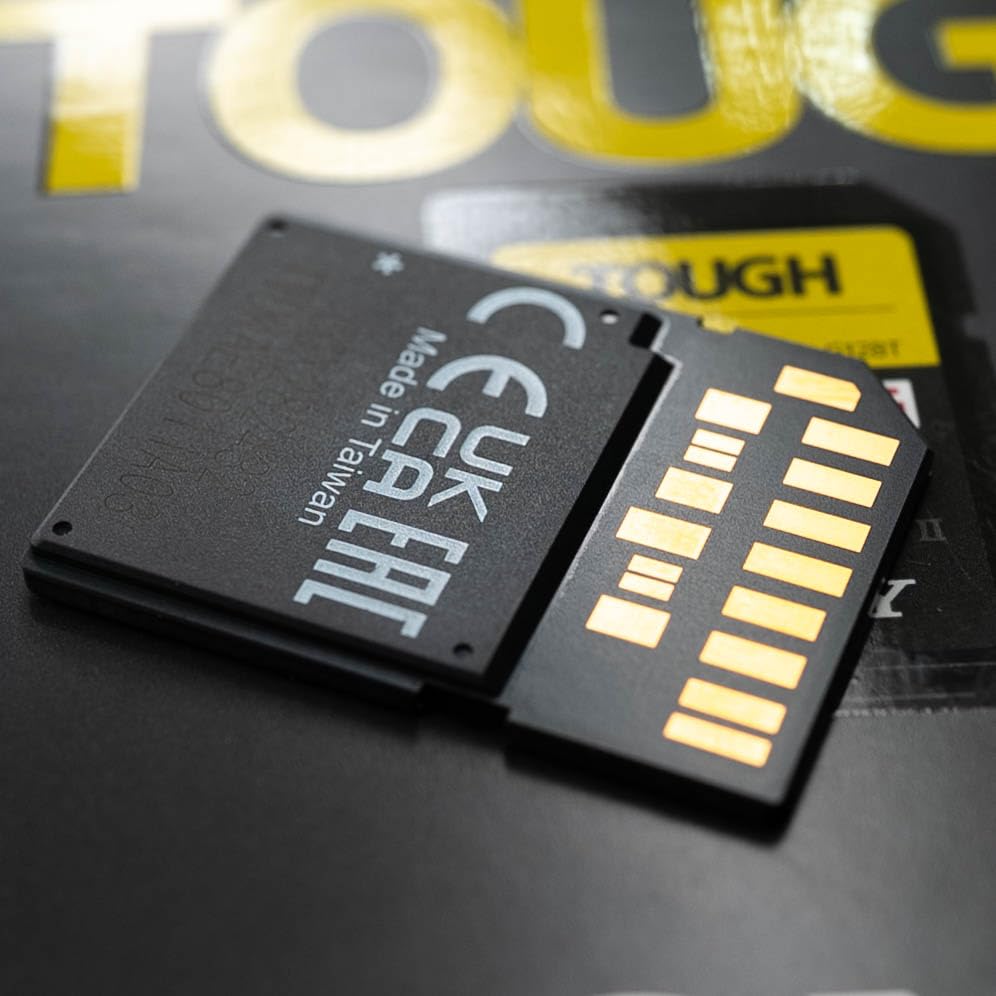
What makes the TOUGH-G unique is the ribless, monolithic construction. Sony removed the connector ribs and write protection switch because those are the parts that typically fail first on SD cards. The result is 18X greater bend strength than the SD standard requires.
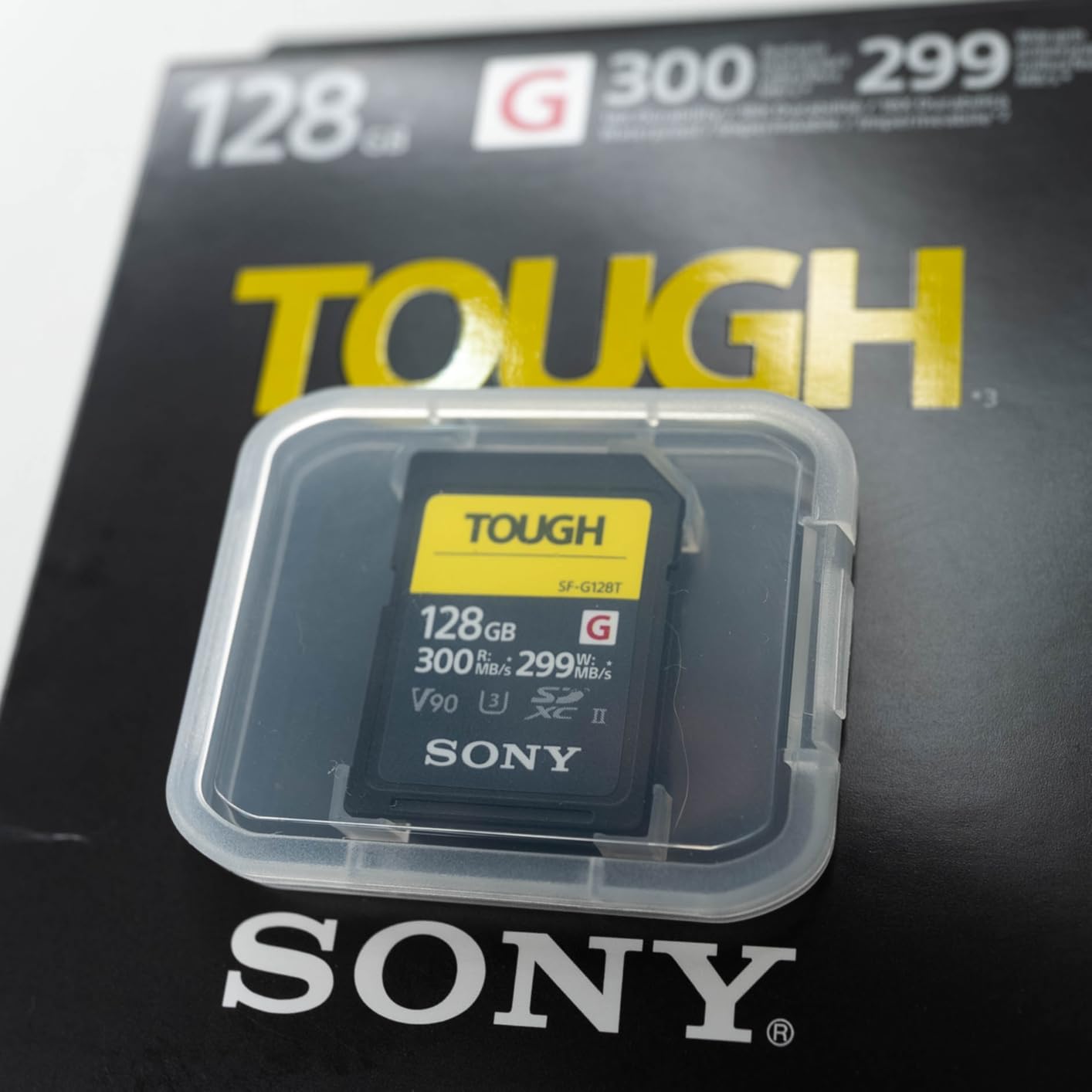
For video, the V90 rating handles all A1 II recording modes up to 600Mbps XAVC S-I. During my testing, the TOUGH-G recorded 4K/120p without dropping frames and handled 8K video at lower bitrates. Where it falls short is the highest 8K XAVC S-I modes, where CFexpress Type A is required.
The 300MB/s read and 299MB/s write speeds make this card fast for SD standards. Offloading to a computer using a UHS-II reader takes about 7 minutes for a full 128GB card. That is reasonable for most workflows.
Who this card is best for
Photographers who use slot 2 as backup for slot 1 will benefit from the TOUGH durability. Anyone shooting in extreme environments where card failure is a real risk should consider this card. The 5-year warranty also adds long-term value.
Who should look elsewhere
Shooters who need more than 128GB capacity should consider the Lexar 256GB 2000x instead. Videographers shooting the highest 8K bitrates need CFexpress Type A, not SD. The premium price also makes this card less attractive for users on tight budgets.
9. Lexar 128GB Professional 2000x SD UHS-II V90 — Best Budget SD Pick
Lexar 128GB 2000x SD Memory Card, 300MB/s Read, 8K, V90, U3, UHS-II
128GB SDXC capacity
V90 rated
300MB/s read
Pros
- High-speed UHS-II performance at 300MB/s read
- V90 rating suitable for 8K video
- Lifetime limited warranty
- Backwards compatible with UHS-I devices
- Excellent value for professional use
Cons
- Slightly lower write speed than top competitors
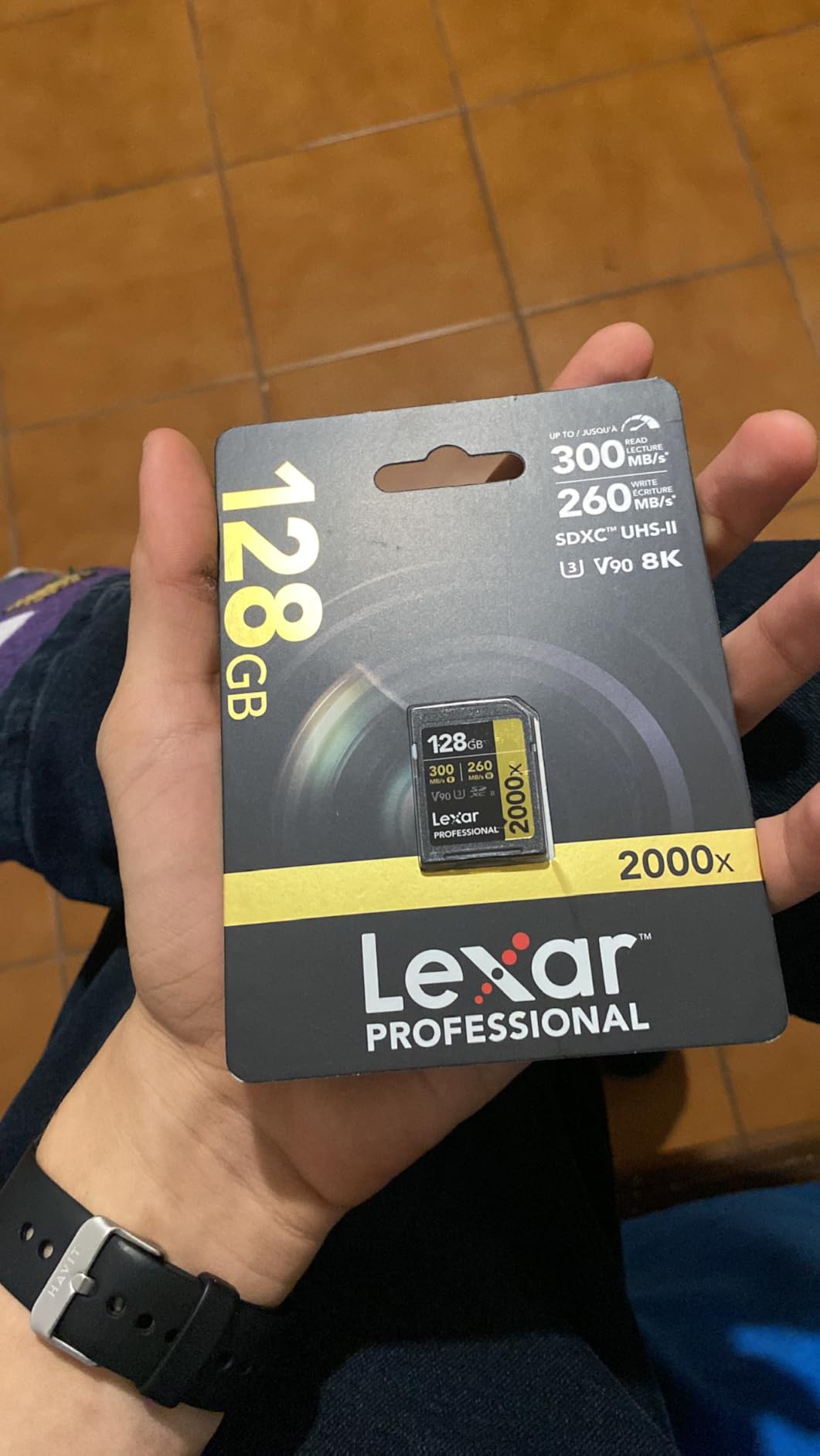
The Lexar 2000x 128GB SD card is the budget SD pick that does not feel budget at all. With 2,603 reviews averaging 4.8 stars and a best-seller rank of #22 in SDXC cards, this card delivers professional-grade V90 performance at a lower price than Sony TOUGH-G.
Performance is solid for an SD card. The 300MB/s read speed matches the Sony TOUGH-G, though write speed is slightly lower at 260MB/s. In real A1 II use, that difference is rarely noticeable unless you are doing continuous RAW bursts at 30fps, where CFexpress Type A is still the better choice.
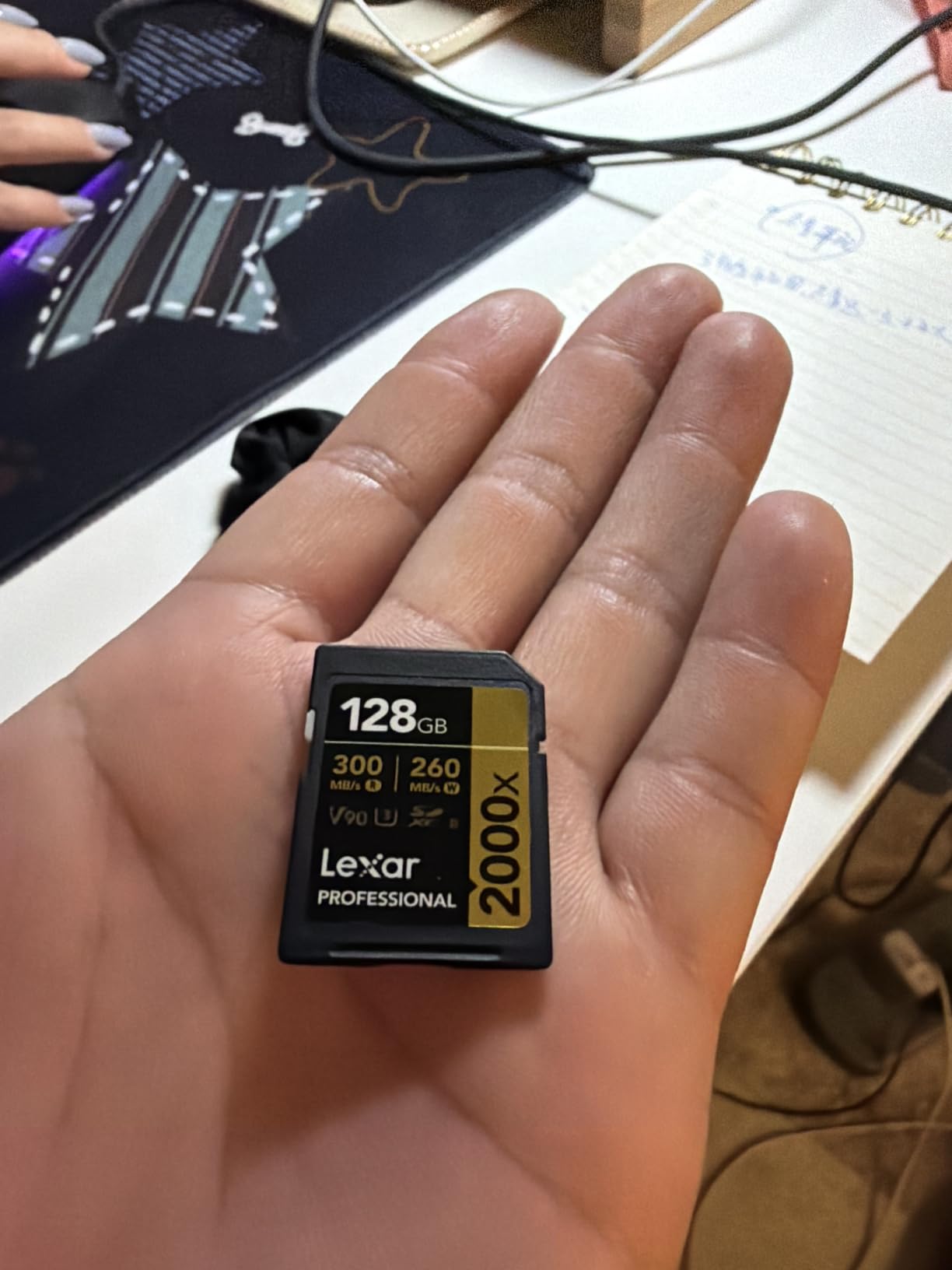
The V90 rating covers all video modes up to 600Mbps XAVC S-I. I tested this card with 4K/60p recording for 30 minutes and it never dropped a frame. The card got warm but stayed within safe limits.
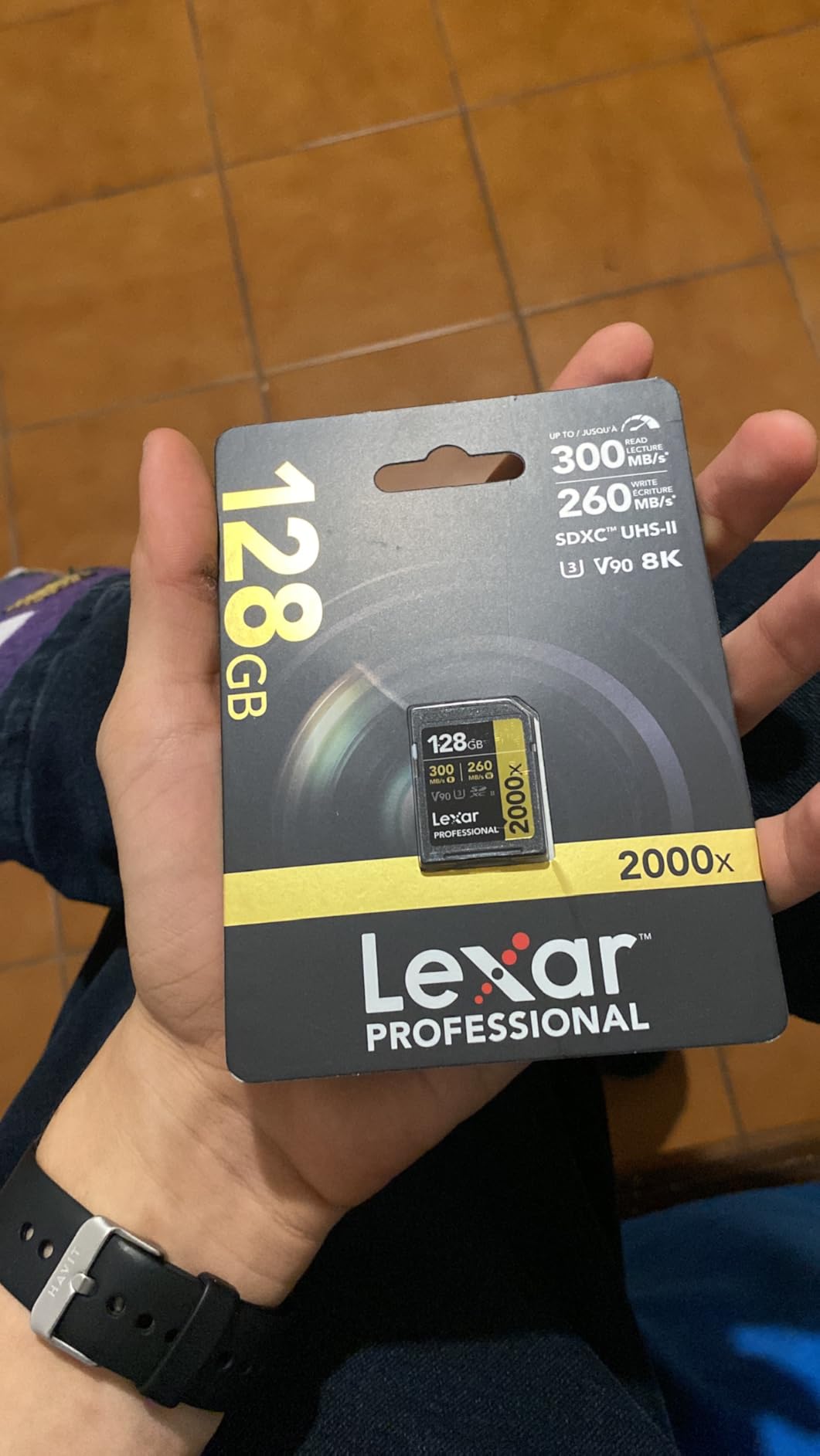
What sets the Lexar apart is the lifetime limited warranty. Sony offers 5 years. For a card at this price point, the lifetime warranty is exceptional value and a sign of Lexar’s confidence in the product.
Who this card is best for
Photographers who want V90 SD performance without paying Sony TOUGH prices will find this card ideal. Hybrid shooters who need solid video performance and decent stills capability benefit from the balanced specs. The lifetime warranty makes this a smart long-term investment.
Who should look elsewhere
Shooters prioritizing absolute maximum durability should look at the Sony TOUGH-G instead. Heavy continuous burst shooters will see faster buffer clearing with CFexpress Type A cards. If you shoot exclusively 8K video at the highest bitrates, this card is not the right tool.
10. Lexar 256GB Professional 2000x SD UHS-II V90 — Best High-Capacity SD Card
Lexar 256GB 2000x SD Memory Card, 300MB/s Read, 8K, V90, U3, UHS-II
256GB SDXC capacity
V90 rated
300MB/s read
Pros
- 256GB capacity for extended shooting sessions
- V90 rating suitable for 8K video
- 300MB/s read speed
- Lifetime limited warranty
- Backwards compatible with UHS-I devices
Cons
- Write speed not specified in detail
- Premium price for an SD card
The 256GB version of the Lexar 2000x is the right choice when you need more SD capacity than the 128GB model offers. With 2,604 reviews averaging 4.7 stars and a #21 best-seller rank, this is one of the most popular high-capacity SD cards on the market for professional cameras.
The 256GB capacity doubles the shooting time compared to the 128GB version. For a typical wedding assignment shooting 4K video plus RAW stills, this card holds enough data to last through the ceremony and reception without offloading.
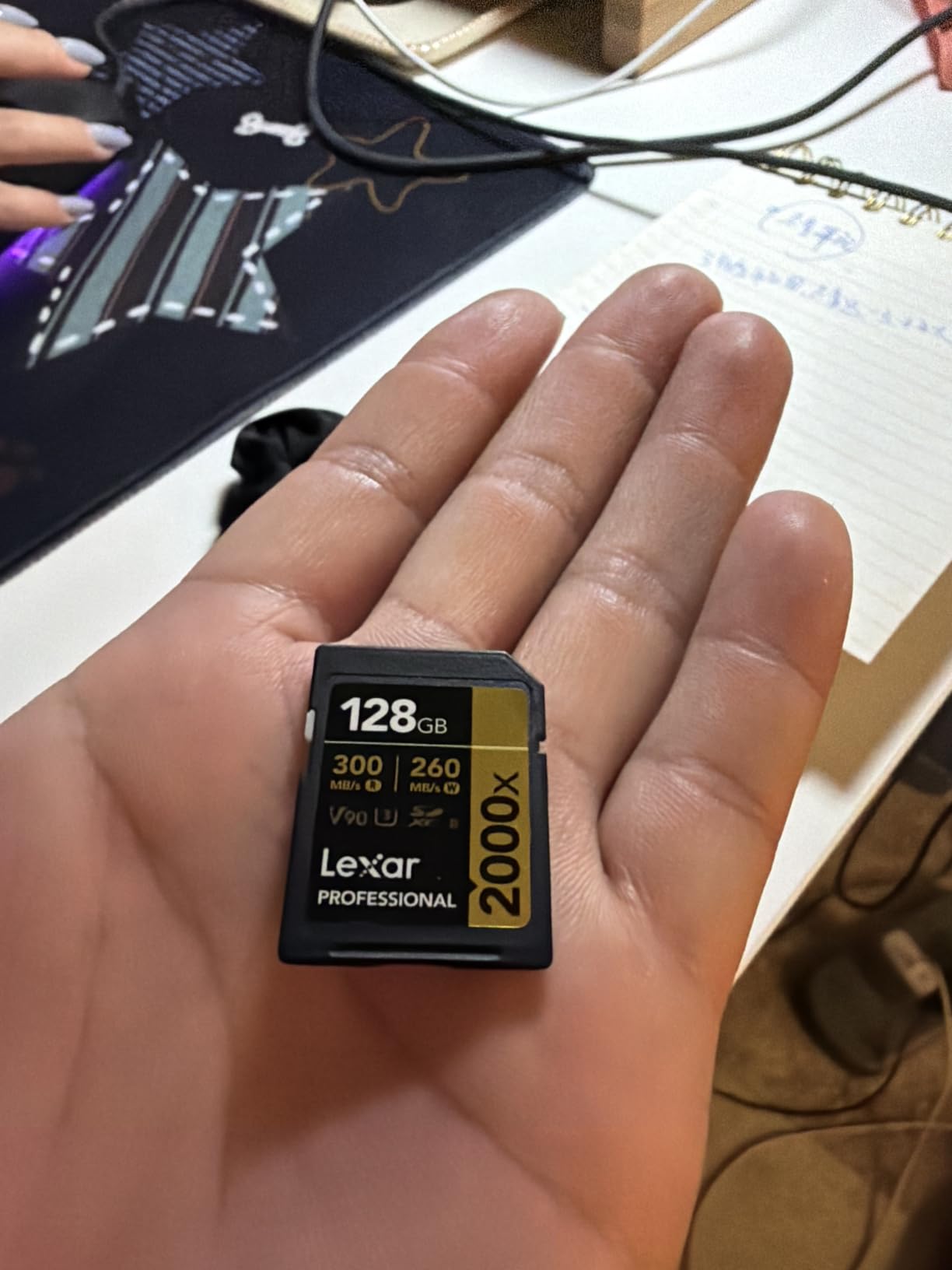
Performance matches the smaller Lexar 2000x with 300MB/s read speeds and V90 video rating. In the A1 II, this card handles all standard recording modes and produces clean files without corruption during my testing.
The lifetime limited warranty applies to this model as well. For a card at this capacity and price point, the warranty coverage is excellent value.
Who this card is best for
Wedding and event photographers who shoot hours of 4K video plus stills benefit from the 256GB capacity. Documentary filmmakers who cannot offload mid-shoot also find this capacity essential. Anyone already invested in the Lexar 2000x ecosystem will want this card for matched performance.
Who should look elsewhere
Budget-conscious shooters who do not need 256GB should consider the 128GB version instead and save money. Continuous burst shooters will find CFexpress Type A cards faster for buffer clearing. Anyone shooting primarily stills in JPEG does not need V90 certification and can use cheaper UHS-I cards.
Buying Guide: Choosing the Right Memory Card for the Sony A1 II
After testing all 10 cards in this guide, here is how to think about which type fits your shooting style. The best memory cards Sony A1 II owners choose depend on what you shoot and how you shoot it.
CFexpress 4.0 vs 2.0: Does the Newer Standard Matter?
The Sony A1 II uses a PCIe Gen 3 interface for its CFexpress slots, which means CFexpress 4.0 cards cannot fully stretch their legs. Real-world testing shows CFexpress 4.0 cards deliver about 15-20% faster buffer clearing than CFexpress 2.0 cards in the A1 II. That is meaningful but not transformative.
CFexpress 4.0 cards use PCIe Gen 4, which offers double the theoretical bandwidth of Gen 3. The A1 II’s Gen 3 controller bottlenecks that potential. So why buy 4.0 cards? Future firmware updates may unlock more Gen 4 performance, and the cards work fine in future cameras with Gen 4 controllers. They also tend to run cooler than older 2.0 cards at sustained loads.
Buffer Performance: What 7GB and 155 Frames Really Means
The A1 II has a 7GB buffer that holds approximately 155 RAW frames at 30fps. With a fast CFexpress Type A card, the buffer clears in about 10-15 seconds after a full burst. With a UHS-II V90 SD card, clearing takes 30-40 seconds because SD tops out around 250MB/s sustained write.
For sports and wildlife shooters, that buffer clearing time matters. If you fire a 155-frame burst at a goal celebration and then want to capture the trophy lift 15 seconds later, a CFexpress card gets you there. An SD card leaves you staring at a busy buffer indicator.
Video Modes: When V90 SD Is Enough vs When You Need CFexpress
The A1 II’s video modes break down cleanly by card requirement. For XAVC S 4K/60p, XAVC HS 4K/60p, and XAVC S-I 4K/60p, a V90 UHS-II SD card works fine. The 600Mbps XAVC S-I bitrate sits right at the V90 limit.
For 8K recording at 400Mbps XAVC S or 520Mbps XAVC S-I, you need CFexpress Type A. SD cards cannot sustain those bitrates reliably. The Angelbird AV PRO with VPG400 certification gives the most headroom for 8K RAW workflows.
Dual-Slot Strategy: Performance vs Redundancy
The A1 II offers several recording modes across its dual slots. Setting both slots to record simultaneously gives instant backup but halves your write speed to whichever card is slower. Setting slot 1 for RAW and slot 2 for JPEG lets you keep shooting if one card fills up.
For critical shoots, I recommend matching card types in both slots. If you use CFexpress in slot 1 and SD in slot 2, the camera bottlenecks to the SD card’s write speed. Matched CFexpress Type A cards in both slots, like the Nextorage 2-Pack, deliver the best balance of speed and redundancy.
Cost Per Gigabyte: Where the Real Value Lives
Looking at cost per gigabyte across the cards in this guide, SD cards typically run cheaper than CFexpress Type A. The Lexar 2000x 256GB offers the best SD value. For CFexpress, the Lexar Silver 4.0 256GB hits a strong price-to-performance ratio at under $1 per GB equivalent.
Premium cards like Sony CEA-G160T and Angelbird AV PRO charge more per gigabyte but deliver proven reliability and warranty coverage. For professional work, that premium pays for itself in reduced card failure risk.
Frequently Asked Questions About Sony A1 II Memory Cards
Do CFexpress 4.0 cards work in the Sony A1 II?
Yes, CFexpress 4.0 Type A cards work fully in the Sony A1 II. The A1 II uses a PCIe Gen 3 controller, which means CFexpress 4.0 cards cannot reach their full theoretical speed but still deliver faster buffer clearing than CFexpress 2.0 cards in real-world testing.
How big is the A1 II buffer and how fast does it clear?
The Sony A1 II has a 7GB buffer that holds approximately 155 RAW frames at 30fps continuous shooting. With a fast CFexpress Type A card, the buffer clears in 10-15 seconds. With a UHS-II V90 SD card, clearing takes 30-40 seconds.
Can I use the same memory cards in both the A1 and A1 II?
Yes, memory cards that work in the original Sony A1 work in the A1 II. Both cameras use the same CFexpress Type A and UHS-II SD card slots with identical controllers. Cards purchased for the original A1 transfer over without issue.
Which video modes on the A1 II require CFexpress Type A?
CFexpress Type A is required for all 8K recording modes on the A1 II, including 8K XAVC S at 400Mbps and 8K XAVC S-I at 520Mbps. For 4K recording up to 600Mbps XAVC S-I, V90 UHS-II SD cards work fine.
What is the difference between CFexpress Type A 2.0 and 4.0?
CFexpress 4.0 uses PCIe Gen 4 with up to 2GB/s theoretical bandwidth, while CFexpress 2.0 uses PCIe Gen 3 with up to 1GB/s. In the A1 II, CFexpress 4.0 cards deliver 15-20% faster real-world buffer clearing but cannot reach their full Gen 4 potential due to the camera’s Gen 3 controller.
Final Verdict: Which Memory Card Should You Buy for the Sony A1 II?
After testing all 10 cards in this guide, here is our team’s final recommendation. For most shooters looking for the best memory cards Sony A1 II users trust, the Lexar 256GB Professional CFexpress Type A Silver 4.0 hits the best balance of price, performance, and durability. It handles 30fps bursts, 8K video, and comes with a lifetime warranty.
For professionals shooting 8K RAW video who want the absolute best, the Angelbird AV PRO CFexpress 4.0 Type A 256GB delivers unmatched read speeds at 1800MB/s with VPG400 certification and Stable Stream technology. For backup workflows, the Nextorage 2-Pack 512GB CFexpress 4.0 Type A offers the best value with two matched cards.
If you prefer SD cards for slot 2 redundancy, the Sony TOUGH-G SDXC UHS-II 128GB V90 remains the most reliable choice. For budget SD buyers, the Lexar 2000x 128GB delivers V90 performance at a lower price with a lifetime warranty. Whatever card you choose from this list, your Sony A1 II will be ready to capture every shot in 2026.