
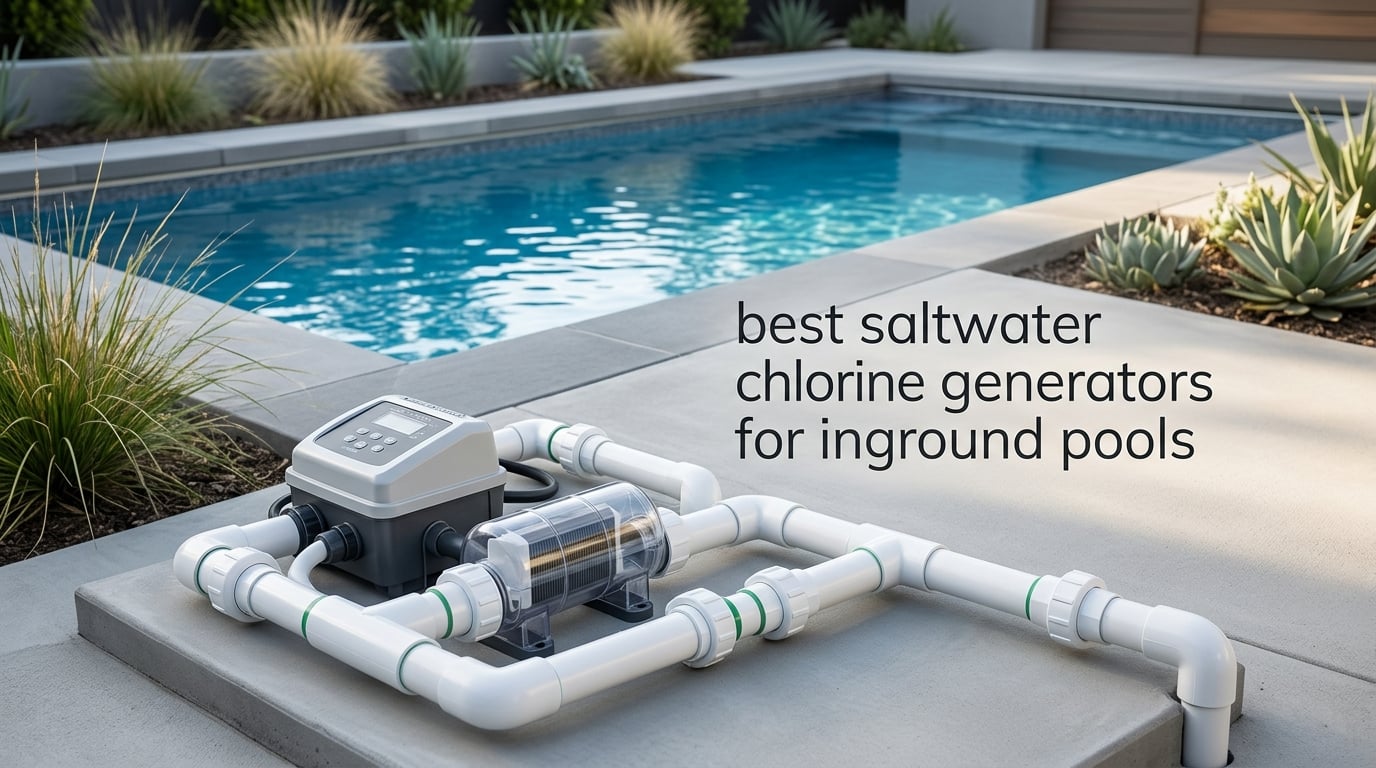
A saltwater chlorine generator looks simple from the pool deck: a plastic canister bolted into the plumbing with a control box humming beside it. Underneath, it is doing something more interesting than dissolving a tablet. It is running electrolysis, splitting dissolved pool salt into free chlorine and hydrogen gas, then sanitizing your water continuously while the salt regenerates in the process.
That convenience comes with one hard rule that decides whether you are happy with the purchase or replacing a dead cell in three years: size the generator well above your actual pool volume. Most owners who regret a saltwater system undersized it, and readers on r/pools and Trouble Free Pool consistently land on the same guidance: buy a unit rated for at least twice the real volume of your pool. This guide covers the best saltwater chlorine generators for inground pools, scoped to vinyl liner, fiberglass and concrete builds from roughly 13,000 to 40,000 gallons, and we leave above-ground-only chlorinators out entirely because their lower-output cells and skimmer-return plumbing will not serve an equipment pad.
We compared ten inground-rated models on rated capacity, chlorine output per day, cell construction, warranty length, sensor coverage and how cleanly each one retrofits into plumbing that is already in the ground. Nine of them report salt level, temperature or cell status back to you in some form, and the spread in diagnostic depth between a budget body and a full monitoring panel is the largest quality gap we found.
Table of Contents
Top 3 Picks for Inground Pools in 2026

Hayward Aquarite 40000 Gal
- Rated to 40000 gallons
- LED monitor with service alerts
- Retrofit onto existing Hayward plumbing

CircuPool RJ45+ 45000 Gal
- Up to 1.9 lb chlorine per day
- Clear cell housing for inspection
- 7-year limited warranty

APX Performance E-CHLOR 32000 Gal
- Plug-in install with two unions
- Works with variable-speed pumps
- Tracks salt
- temperature and cell life
Best Saltwater Chlorine Generators for Inground Pools (October 2026)
| Product | Specifications | Action |
|---|---|---|
| Hayward Aquarite 40000 Gallon |
|
Check Latest Price |
 CircuPool CORE35 35000 Gallon CircuPool CORE35 35000 Gallon |
|
Check Latest Price |
| CircuPool RJ45+ 45000 Gallon |
|
Check Latest Price |
 Pureline Crystal Pure PL7700 40000 Gallon Pureline Crystal Pure PL7700 40000 Gallon |
|
Check Latest Price |
| APX Performance E-CHLOR 32000 gal |
|
Check Latest Price |
 Fengind 26500 Gallon with App Control Fengind 26500 Gallon with App Control |
|
Check Latest Price |
 WESTAHO EL-032 40000 Gallon WESTAHO EL-032 40000 Gallon |
|
Check Latest Price |
 Bonvoisin LC-200A 25000 Gallons Bonvoisin LC-200A 25000 Gallons |
|
Check Latest Price |
 Rinoson 22000 Gallon Chlorinator Rinoson 22000 Gallon Chlorinator |
|
Check Latest Price |
 Troxlly TP30 40000 Gallons Troxlly TP30 40000 Gallons |
|
Check Latest Price |
1. Hayward Aquarite 40000 Gallon: Best Overall Inground Salt Chlorine Generator
Hayward Aquarite Salt Chlorine Generator for Swimming Pools 40,000 Gallons
Rated to 40000 gal
Model W3AQR15
24.3 lb system
LED monitor with service alerts
Pros
- Retrofits onto existing Hayward plumbing with no extra piping
- LED monitor gives clear maintenance and service alerts
- Soft water that owners report is gentler on skin and swimwear
- Cuts chemical costs substantially against tablets and liquid chlorine
- Long service life reported by some long-term owners
Cons
- Cell and control-board failures reported inside the first year
- 1-star reviews make up 14% of the ratings
- Warranty handling reported as difficult outside authorized dealers
We picked the Hayward Aquarite as our best overall saltwater chlorine generator for inground pools because it has the deepest installed base in this group. With 994 reviews behind it, this is the model most service techs and pool shops already know, and that matters when something faults and you need a person on the phone.
The W3AQR15 is rated to 40,000 gallons, which gives real headroom on a standard 20,000 gallon inground pool. The LED monitor shows system status and pushes service alerts rather than making you guess at codes, and the whole thing integrates into existing Hayward plumbing without added piping, which keeps the install short.
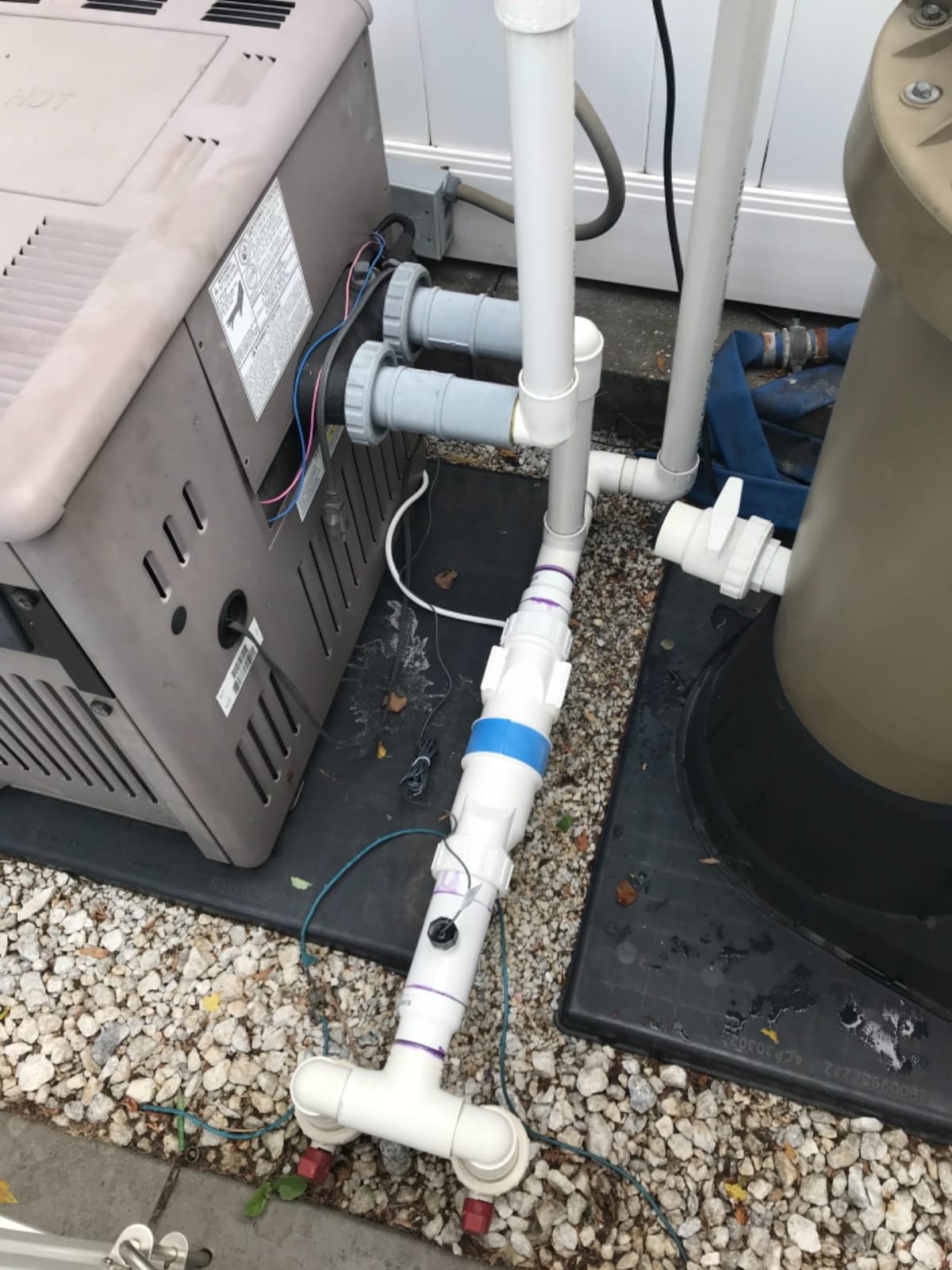
Owners consistently report two things. First, the water feels noticeably softer and less drying, and the closed-loop system cuts ongoing chemical spending compared with tablets or liquid chlorine. Second, the retrofit is close to drop-in when you are replacing an older Hayward model, which several owners with long-tenured systems described as nearly automatic.
The honest weakness sits in the reliability reports. Cell and control-board failures inside the first year show up repeatedly, and 1-star reviews account for 14% of the ratings. Buyers also report arriving without a main power cord or mounting screws, and some received units sourced from third-party fulfillment warehouses, so check the box contents before you leave the dock.
How it performs in a variable-speed pump pool
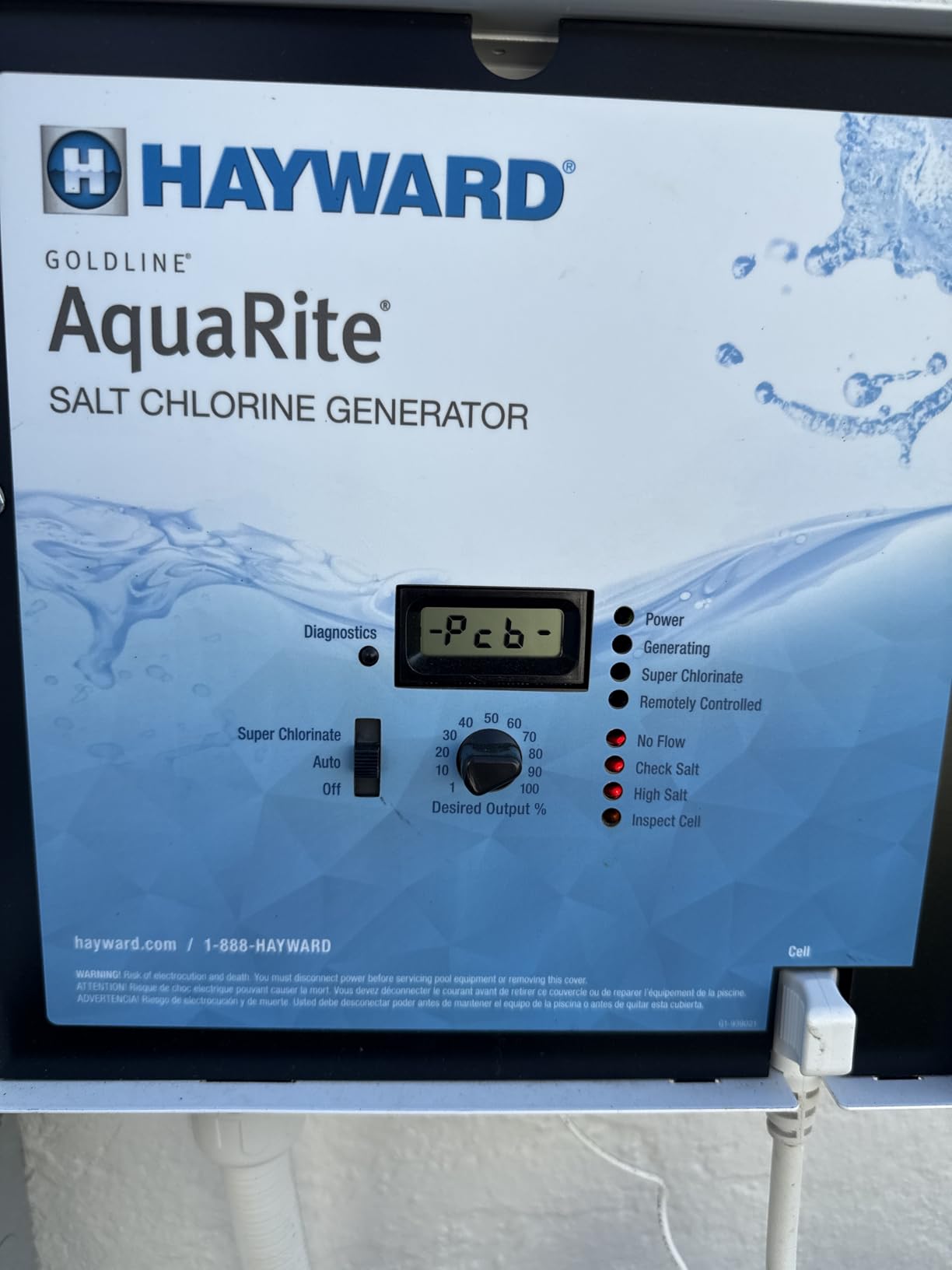
The Hayward runs on the standard salt pool principles that every system here follows, so the variable-speed question is about flow rather than brand. Set your pump to a minimum speed that keeps flow above the cell’s minimum rating, and give the generator enough daily runtime to reach its target free chlorine without sitting at full output all day.
If your pump is set to run long at low speed, the cell sees flow but the control unit still accumulates runtime. Watch your free chlorine for a week before deciding the unit is undersized, because an output setting problem looks exactly like a capacity problem on the display.
When to choose something else
Skip the AquaRite if warranty service through an authorized dealer is a deal breaker for you. Owners report the process as hard to work through outside authorized pool shops, and that friction is a real cost when a board fails in year two.
It is also a heavy system at 24.3 pounds, so plan the mounting bracket before the plumbing work starts. Owners replacing a 17-year-old unit of the same type describe it as a familiar install, but that is a Hayward-to-Hayward swap. If you are coming from a different brand, the plumbing fit is less certain.
2. CircuPool CORE35 35000 Gallon: Best All-in-One Install
CircuPool CORE35 Salt Chlorine Generator System | 35,000 Gallon Pool Max
Rated to 35000 gal
1.4 lb chlorine per day
11 lb all-in-one body
8-year limited warranty
Pros
- All-in-one control and cell removes complicated wiring
- Sensors track flow
- salinity
- temperature
- scaling and cell life
- IP66 weatherproof housing for outdoor service
- Manufacturer supports DIY installation without voiding warranty
Cons
- Cell-rest mode is poorly documented and looks like a fault
- Plastic cover latch does not hold the cover closed
- Cleaning cap sold separately so a cell bath wastes muriatic acid
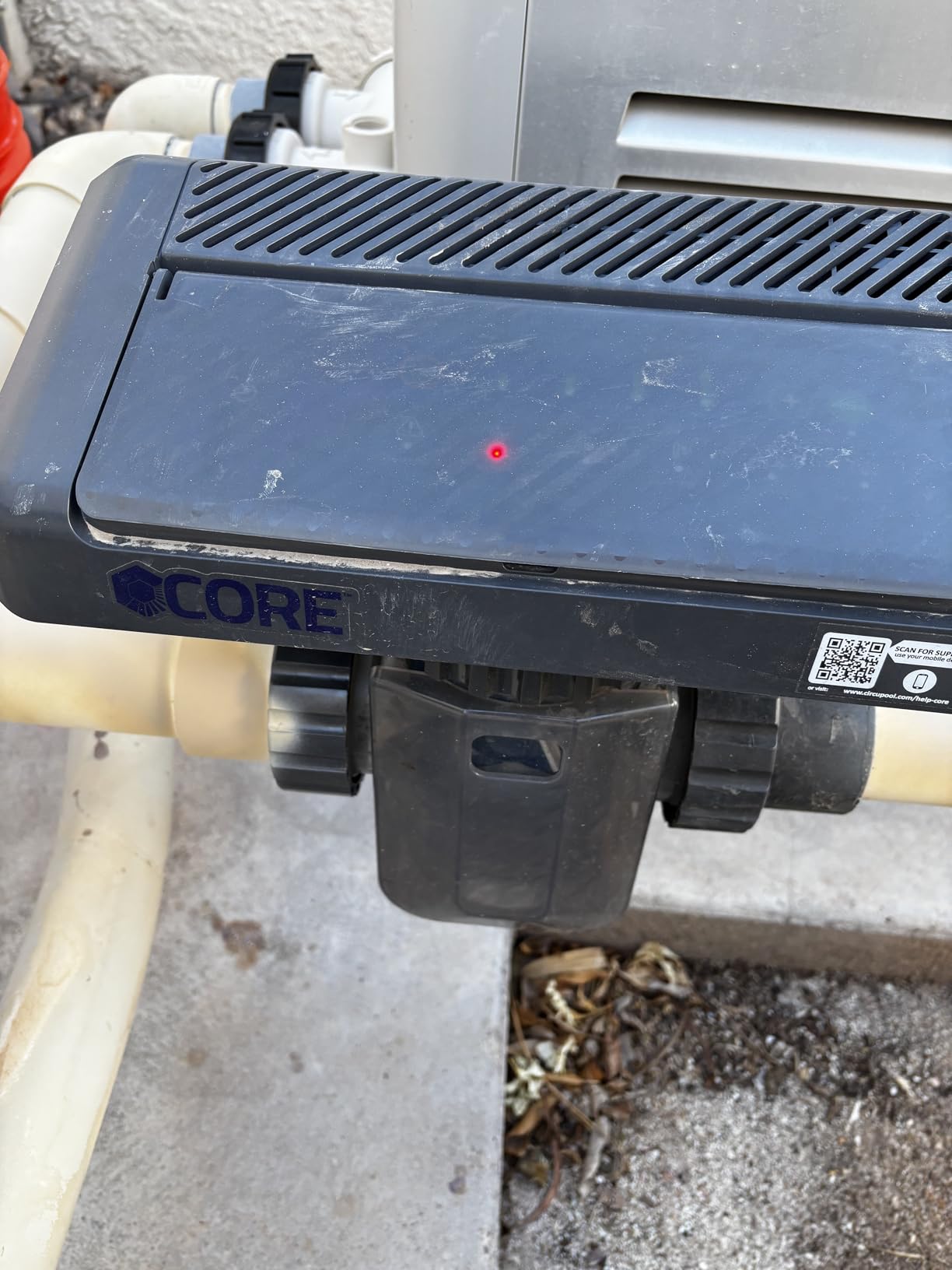
The CircuPool CORE35 is the model we recommend to anyone who wants the shortest install of the ten. The control unit and the cell live in one housing, so there is no cell cord to run, no control box to mount and almost no wiring to terminate. For a first salt conversion on an inground pool, that removes most of the usual friction.
Output is up to 1.4 lb of chlorine per day from a long-life titanium cell backed by an 8-year limited warranty, the longest warranty term in this roundup. The sensor suite is the best in the group for what it reports: flow, salinity, temperature, cell scaling and cell lifespan, each with its own status notification.
Owners report steady, clear water after fitting it into an existing salt setup, and the IP66 housing is built for years of outdoor exposure. CircuPool also explicitly supports DIY installation without cutting warranty coverage, which removes the dealer-dependency problem that haunts some premium brands.
What it does not do is document the cell-rest function clearly enough. Owners mistake that mode for a malfunction on first encounter, and the plastic cover latch will not hold the cover down over the controls in wet weather. The cleaning cap is an accessory rather than an inclusion, so plan a cell-cleaning method that does not waste a five-gallon bucket of muriatic acid.
What the sensors actually change day to day
Most of the value in a sensor suite is early warning. When the CORE35 flags a scaling condition you can act on it before output drops, and cell lifespan tracking tells you whether a cell is worth cleaning or replacing. That turns a surprise failure into a planned purchase.
Output management is simpler too, because the unit reports flow and temperature separately. If chlorine falls short on a hot week, you can check whether it is reduced pump runtime, higher water temperature or a fouled cell instead of guessing.
Where it falls short
Two practical limits are worth weighing. At 1.4 lb per day, a 35,000 gallon rating means it is well matched to a mid-size pool but thin for a large one, especially in high sun. There is also no built-in timer or Wi-Fi monitoring, so if your existing controller does not schedule the run, you need to handle that yourself.
The overall rating sits below the brand’s higher-capacity model, with 1-star reviews at 14%, so treat the warranty as meaningful protection rather than a formality.
3. CircuPool RJ45+ 45000 Gallon: Top Rated
CircuPool RJ45+ Salt Chlorine Generator System | 45,000 Gallon Pool Max
Rated to 45000 gal
Up to 1.9 lb chlorine per day
22 lb die-cast aluminum
7-year limited warranty
Pros
- Tied for the highest average rating in this roundup at 4.5 stars
- Clear cell housing lets you inspect plates without disassembly
- Accepts 120V or 240V and includes both 1.5 and 2 inch PVC fittings
- OLED display with clear system status
- CircuPool phone support repeatedly praised by owners
Cons
- Cell-rest cycle is not well documented
- Plastic cover latch does not hold the cover closed
- Cleaning cap is an accessory rather than an inclusion
- Warranty claim process reported by one owner as slow
The CircuPool RJ45+ shares the highest average rating of any system we reviewed, at 4.5 stars, with 163 reviews behind that figure. It is a third-generation RJ design with a long production history, and that maturity shows in the details: die-cast aluminum construction, an OLED display, and a clear cell housing you can look through to check plate condition.
Output reaches up to 1.9 lb of chlorine per day, and the 45,000 gallon rating makes it a strong fit for large inground pools running the 1.5x to 2x oversizing rule. Installation is forgiving, accepting 120V or 240V power and including both 1.5 inch and 2 inch PVC fittings, and it works with virtually any existing pump and filter.
Owners call it easy to install, easy to use and durable, and several report outstanding, crystal-clear water with no added chlorine at all. CircuPool customer service earns specific praise for phone support and the follow-up calls that follow it, which matters more than people expect when a cell reaches end of life.
The complaints repeat across the brand rather than the model. The cell-rest cycle is not well documented and looked like a fault to one owner, the cover latch will not hold, and the cleaning cap is not supplied. One owner also reported the warranty claim process as slow and unsatisfying, which is worth weighing before you buy rather than after.
Why cell replacement economics favor this pick
Owner recommendations on r/pools frequently point at the RJ45+ specifically because the replacement cell is far cheaper than the proprietary cells on premium systems. That single fact changes the ten-year math more than the purchase price does, because a cell is a second purchase you are guaranteed to make.
Before you commit, ask a pool shop for the current replacement cell part number and price for this model, and do the same for two competing systems. Write both numbers down next to the system price.
When another model fits better
If your inground pool is under about 25,000 gallons, a 45,000 gallon unit is more capacity than you need and you are paying for headroom you will not use. Match the 2x rule to your real volume rather than buying the biggest number on the page.
There is also no built-in end-user timer and no Bluetooth or Wi-Fi monitoring despite the controller, so scheduling still comes from your automation system or an external timer.
4. Pureline Crystal Pure PL7700 40000 Gallon: Highest Chlorine Output
Pureline Crystal Pure Salt System, PL7700, Universal Pool Salt Chlorination System, Includes Control Panel, Salt Cell, 40,000 Gallon
Rated to 40000 gal
Max 2.1 lbs per day
10.75 kg system
50F to 140F operating range
Pros
- Highest chlorine output in this roundup at 2.1 lbs per day
- Drops into existing Hayward
- CircuPool and Pentair plumbing layouts
- Self-cleaning cell with super chlorination mode
- Low-salt and overload indicators plus flow detection
- Strong output for a fraction of brand-name equivalents
Cons
- Only a 1-year warranty
- which owners call too short
- Thin documentation and installation instructions
- No power lead to the control unit is included
The Pureline Crystal Pure PL7700 is the output champion in this group, with a maximum daily chlorine production of 2.1 lbs, the highest figure any of these ten publishes. On a hot-climate inground pool with heavy sun exposure and a real bather load, raw output is what keeps free chlorine steady without running the cell at maximum for hours on end.
It is also one of the most retrofit-friendly units we looked at. Owners report it dropping into existing Hayward, CircuPool and Pentair plumbing layouts, which means a conversion can happen without new piping, and the feature set includes a self-cleaning cell, super chlorination mode, flow detection and low-salt and overload indicators.
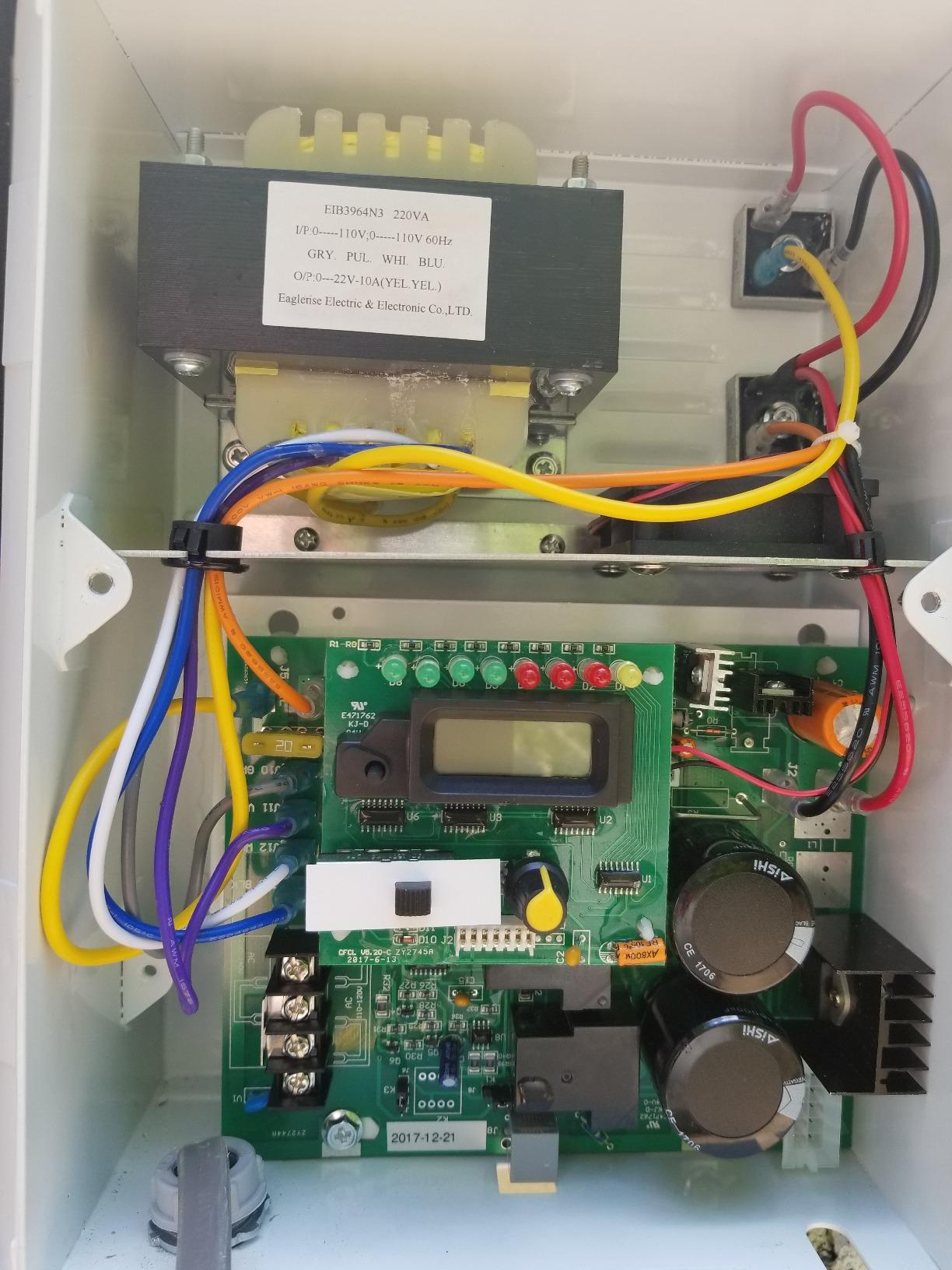
The stated operating range of 50F to 140F covers most climates without a seasonal shutdown ritual. The display is readable with clear LED indicators and adjustable output, which matters when you are dialing the system back for winter or dialing it up for a party weekend.
The weakness is warranty length. A one-year warranty is short for a permanently mounted pool system, and owners call it out directly. Documentation is also thin compared with brand-name systems, and no power lead to the control unit is included, so budget for a timer and wiring work. At least one owner reported customer support as unresponsive.
When maximum output is worth the short warranty
High output earns its keep in two situations. The first is a large pool in a region with long, hot summers, where demand per day is simply higher. The second is a high bather load household, a rental used heavily in summer, or a pool with a solar cover that keeps chlorine demand elevated.
Owners highlight this as a value-packed replacement that delivers strong output at a fraction of what the big-name equivalents command, and the retrofit fit is the reason many of them picked it.
When a longer warranty should win
If your pool sits in a mild climate and you run a modest bather load, the 2.1 lb ceiling is capacity you will never touch, and you are carrying a one-year warranty for it. In that case a unit with a seven or eight year limited warranty is a better long-term decision.
Also weigh the missing power lead and the thin documentation against your own comfort level. This is a unit that rewards an owner willing to read a wiring diagram.
5. APX Performance E-CHLOR 32000 gal: Best Value
E-CHLOR Plug-in Salt Chlorine Generator | 32,000 gal Max | APX Performance
Rated to 32000 gal
Model APX-ECHLOR-32-0301
Plug-in install on 110V
3-year manufacturer warranty
Pros
- Install is two unions and a plug into any 110V outlet
- Includes a cut template and a cleaning plug that seals the plates
- Works with variable-speed pumps and keeps running in winter
- Sensors track salt
- temperature
- cell scaling and cell lifespan
- Up to 15 percent more output than other compact chlorinators
Cons
- Power cord is short and may not reach a panel outlet
- An external outlet timer is needed to schedule operation
- Newer listing with a smaller review base than established brands
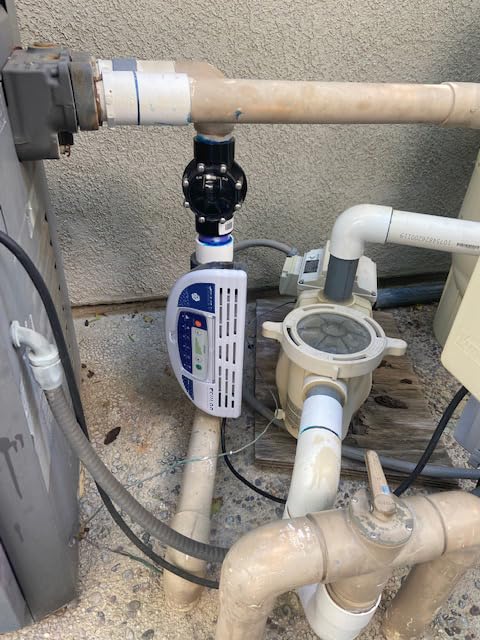
The APX Performance E-CHLOR is the one we recommend to an owner who wants a modern saltwater chlorine generator without a dealer visit. The install is genuinely plug-in: glue two unions, plug into any 110V outlet, and there is no control box wiring because the controller is built into the body. An accurate cut template and an included cleaning plug that seals the cell plates for cleaning come in the box.
Owners consistently frame it as a drop-in replacement for Pentair IntelliChlor layouts, and several report the template and unions shortening the job to an afternoon. The sensor package is unusually good for the money, independently tracking salt level, temperature, cell scaling and cell lifespan with actionable alerts rather than bare error codes.
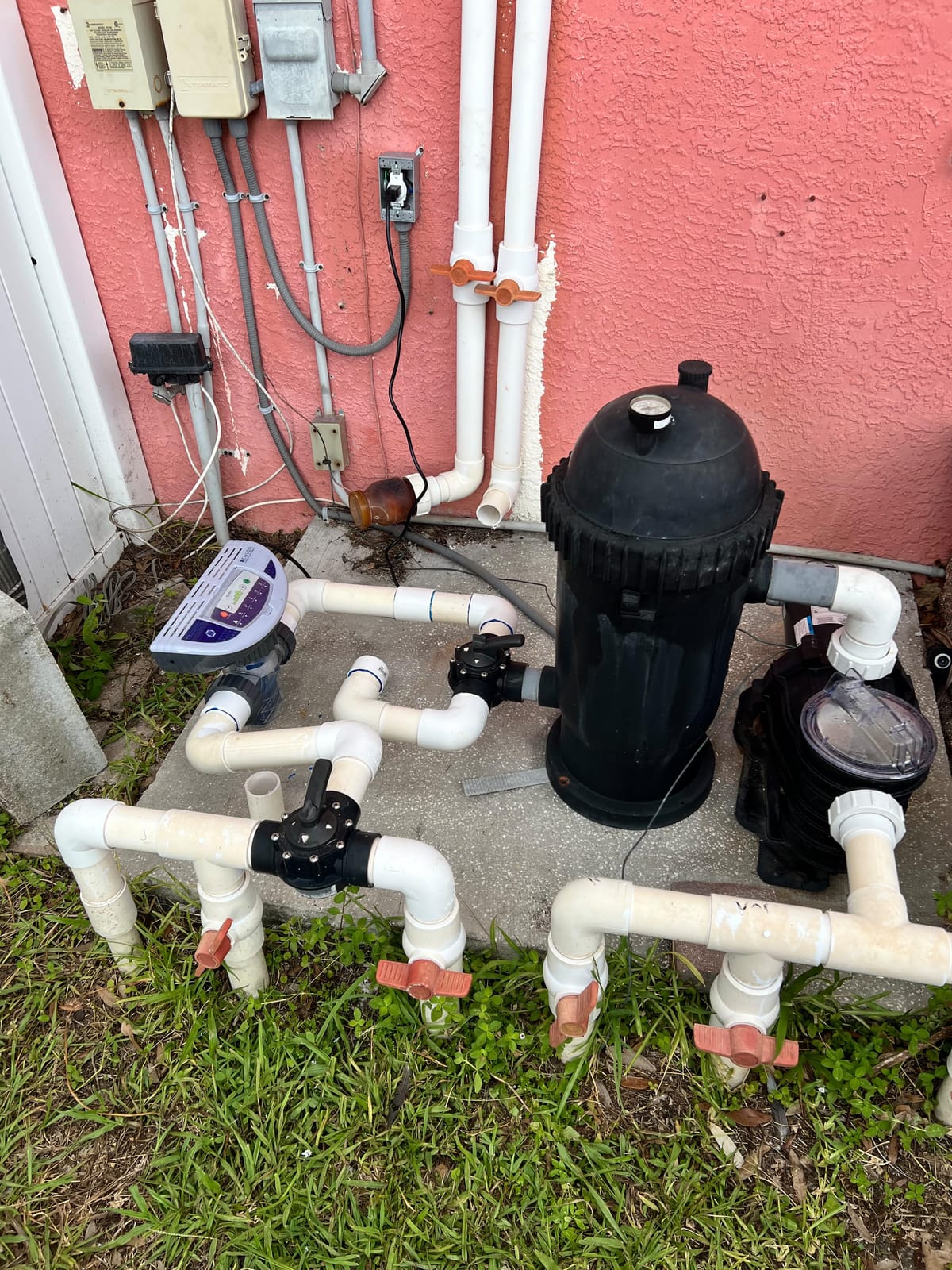
Two claims stand out. It produces up to 15 percent more chlorine than other compact salt chlorinators, and it works with variable-speed pumps and continues operating in winter. Owners running it at 50 percent output on pools well below its 32,000 gallon capacity rate it highly, which is exactly how a correctly sized system should behave.
The practical drawbacks are minor but real. The power cord is short and may not reach a panel-mounted outlet, and you will need an outlet timer if you want to control when it runs. It is also a newer listing with a smaller review base than the established brands, so long-term field history is thin.
Why the plug-in form factor matters for a retrofit
Most salt conversions fail on the electrical side, not the plumbing. A unit with a separate control box needs a power supply, a relay or an automation tie-in, and often a licensed electrician. A body-mounted controller and standard 110V plug sidestep all of that, which is why this unit is so common as a cell-only swap.
Measure the run from your outlet to the cell location before you order. That short cord is the most common install complaint, and it is easier to solve with a new GFCI outlet location than with an extension cord outside.
When it is the wrong call
Choose something else if you already run a full Pentair or Hayward automation and want the generator to report into it. This is a standalone system with an external timer, not a node on an existing control bus, so you would be running two schedulers instead of one.
At full setting it can also produce more chlorine than some pools need, which means owners on smaller pools should plan to reduce output rather than run it at 100 percent from day one.
6. Fengind 26500 Gallon With App Control: Budget Pick
Salt Chlorine Generator for Pools up to 26,500 Gallons with App Control
Rated to 26500 gal
1.1 lb chlorine per day
2.5 kg all-in-one
IPX5 housing
Pros
- Compact all-in-one control and cell for a short DIY setup
- App remote control plus a memory function that restores settings
- Self-cleaning titanium plates reverse polarity every 4 8 or 12 hours
- Output adjustable from 25 to 100 percent in two modes
- Auto-shutdown below 10C and at low salt
Cons
- Dual-size fittings target 1.5 and 1.25 inch pipes
- IPX5 sealing is a step below the IP66 housings used elsewhere
- Shortest service term among the budget options at 3 years
The Fengind 26500 gallon system is the budget entry point in this roundup. It is a compact all-in-one body that combines the control unit and the electrolytic cell, plus an app that monitors salinity, temperature and power and remembers your settings between sessions. Steady output is 1.1 lb of chlorine per day.
The self-cleaning titanium plates reverse polarity on selectable 4, 8 or 12 hour cycles, which limits scale the same way premium systems do. A tri-sensor package shuts the unit down below 10C and at low salt, and there is a child lock and surge protection with audible alarms. For a first system on a smaller inground pool, that is a complete feature list.
Owners treat it as a way in: the integrated design and dual-size adapters make installation approachable, and the app plus self-cleaning cell reduce day-to-day maintenance. Ratings trail the premium systems, and 13 percent of feedback sits at three stars with another 14 percent at one star, which is the normal cost of a newer budget brand.
Check your pipe size before ordering. The dual-size fittings target 1.5 inch and 1.25 inch lines, and the IPX5 weather sealing is a step below the IP66 housings used by higher-priced equipment, so this unit wants a protected equipment pad location.
App control versus a wired control panel
App control is genuinely useful when you are away from the pool for stretches, because you can see whether the pump is running and the salt level is in range without driving over. A memory function that restores your last settings after a power event matters more than it sounds on systems that forget their configuration.
What an app does not do is replace proper flow protection. Confirm the unit sees flow before you leave it running unattended, and treat the 2.4 GHz connection as a convenience layer rather than a control dependency.
When to spend more instead
The bonus is a long warranty paired with output that suits a mid-size pool. It is the 3-year service term that is the shortest among the budget options, and IPX5 sealing on a permanently mounted device is a real long-term consideration in a climate with hard summer sun and freezing winters. A unit with a seven or eight year limited warranty is a different category of purchase.
It is also the least generous fit for large pools, at 26,500 gallons. Push past 2x on any pool volume above about 13,000 gallons and you will be looking at a bigger unit anyway.
7. WESTAHO EL-032 40000 Gallon: Best Plug-and-Play Setup
Salt Chlorine Generator, Westaho Pool Salt System for Inground Pools Up to 40,000 Gallons, 1.4 lb Chlorine Output, USA Titanium Cell with 10,000-Hour Lifespan, Built-in Power Supply
Rated to 40000 gal
1.4 lb chlorine per day
Model EL-032
IP66 housing
Pros
- Built-in power supply removes the separate control box from the install
- 11 USA-made titanium plates rated for up to 10000 hours
- Display shows salt level
- temperature
- cell usage
- voltage and current
- Magnetic flow switch is more sensitive than mechanical types
- Low-temperature protection shuts down below 52F
Cons
- 1.4 lb per day is modest at the top of the 40000 gallon range
- Newer listing with only 30 reviews and 21 percent of ratings at 1 star
- Only 2 inch pipe compatibility confirmed so smaller plumbing needs an adapter
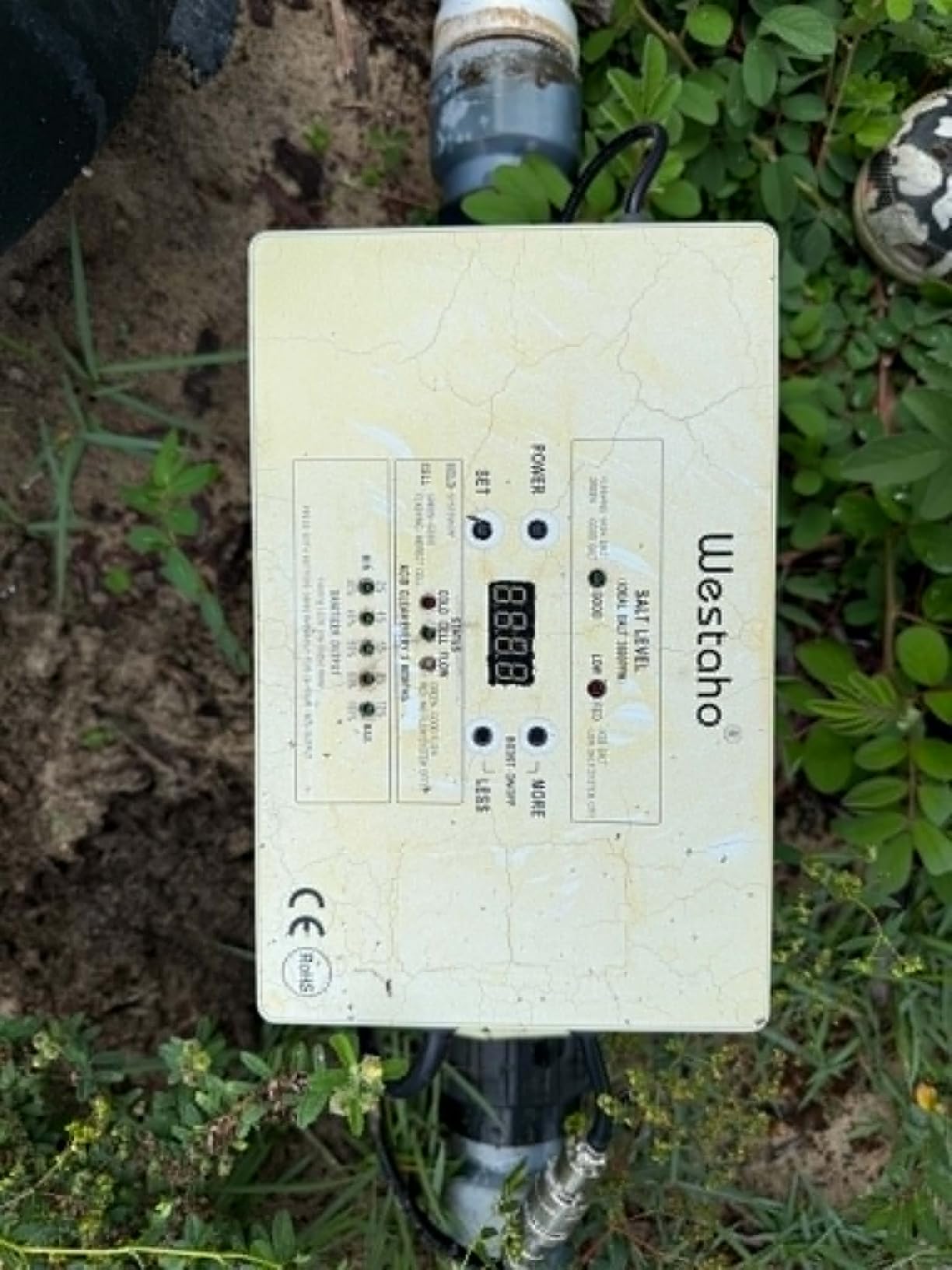
The WESTAHO EL-032 is built around a simple idea: put the power supply inside the unit so there is no external box to mount. The panel still shows real-time salt level, water temperature, cell usage, voltage and current, so you are not flying blind, but the install reduces to plumbing, mounting and a plug.
Output is 1.4 lb of chlorine per day for pools up to 40,000 gallons, and the cell is built from 11 USA-made titanium plates rated for up to 10,000 hours, roughly a seven-year service life on typical residential runtime. The magnetic flow switch is a step up from mechanical types, and low-temperature protection shuts the system down below 52F.
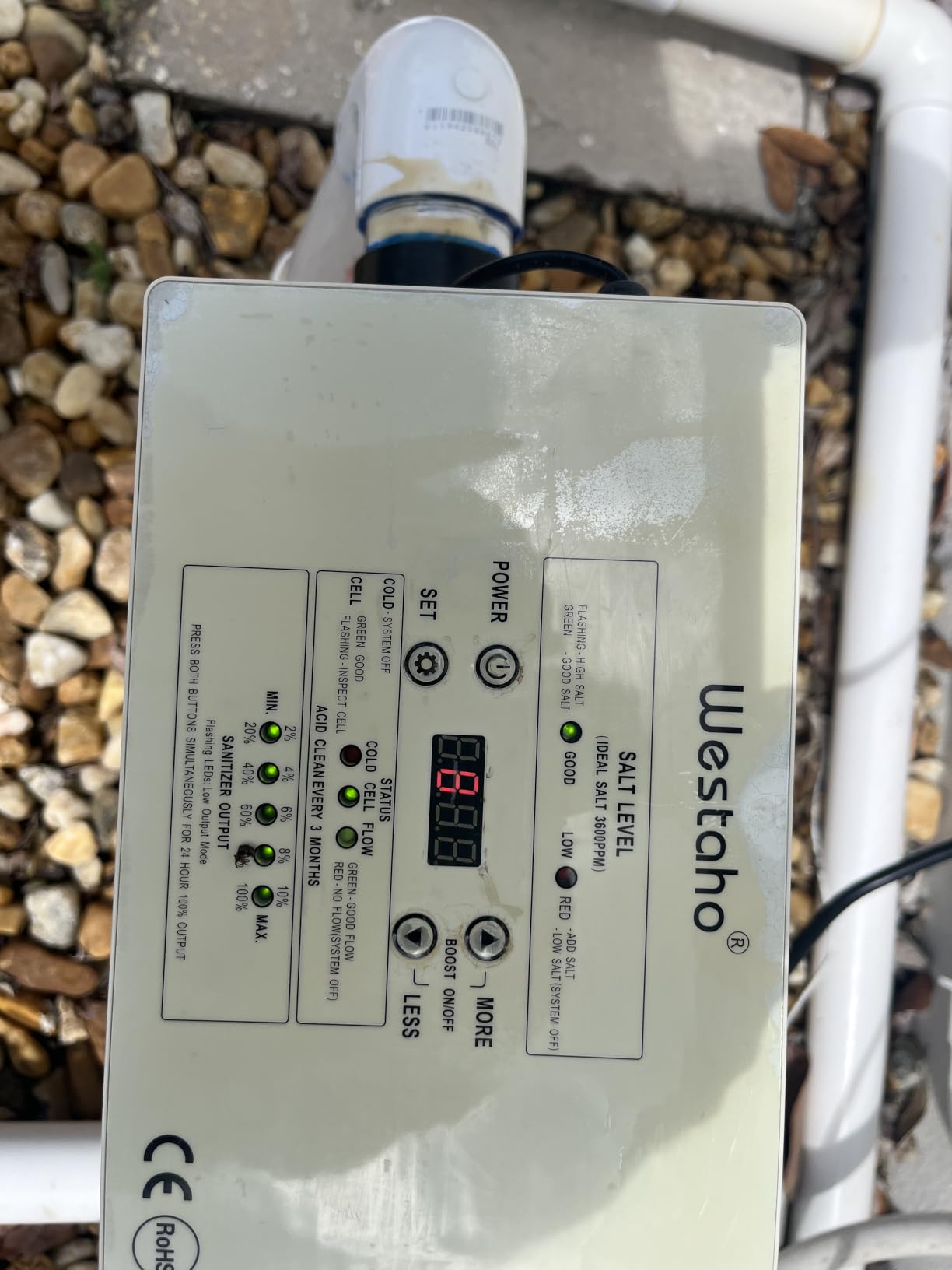
Owners point at the simplicity and the long-life cell as the reason to buy. The IP66 rating is a genuine outdoor rating, and the included 2 inch to 1.5 inch adapter covers most residential plumbing, so the compatibility question is mostly settled out of the box.
The tradeoffs are real. At 1.4 lb per day, output is modest for a pool at the top of the 40,000 gallon range, so treat the rating as a ceiling for smaller pools rather than for a large one. The listing is new with a 30-review base, and 21 percent of ratings sit at one star, which is the sort of early-sample spread you would expect.
What 10000 cell hours actually means for you
Cell life is quoted in operating hours, so translate it against your own runtime. A generator that runs eight hours a day across a season reaches 10,000 hours in roughly four calendar years. One that runs three hours a day on a small, shaded pool can stretch the same cell toward a decade.
This is why undersizing quietly costs you money. An undersized cell runs longer each day, hits the hour limit sooner, and the replacement arrives on schedule instead of after a decade.
When a 40,000 gallon rating is misleading
A rating is a maximum under ideal conditions, not a promise. Output falls with water temperature, with cell scaling, and with the salt level drifting outside the target band. If your pool genuinely holds 40,000 gallons, a 1.4 lb per day unit is working at its limit from the first week of summer.
Owners running smaller pools with plenty of sun exposure are the ideal match. Anyone at the top of the range should look at a higher-output unit or a smaller effective pool volume.
8. Bonvoisin LC-200A 25000 Gallons: Best for Tight Equipment Pads
Bonvoisin Salt Water Pool Chlorinator System Salt Chlorine Generator for Inground Pools Saltwater Pool System with Titanium Cell, LED/APP Control, Up to 25,000 Gallons Pool
Rated to 25000 gal
Model LC-200A
4.7 x 13 inches
3.5 pound body
Pros
- Integrated controller and cell weighs 3.5 pounds and mounts either orientation
- 2.4 GHz app sets output percentage and run time
- Self-cleaning titanium plates reverse polarity every 4 8 or 12 hours
- Output adjustable from 5 to 100 percent in 5 percent steps
- Includes both 1.5 and 2 inch pipe adapters
Cons
- Some units did not auto-start when power was applied
- Wi-Fi connection to the app reported as unstable
- App and unit sometimes fall out of sync
- Slow or non-responsive support reported after a failure
The Bonvoisin LC-200A solves a physical problem that bigger systems create. The integrated controller and cell measure 4.7 by 13 inches and weigh 3.5 pounds, so it mounts horizontally or vertically in a crowded equipment pad, which is common on retrofit installations where space was never designed for a salt system.
The app runs on 2.4 GHz Wi-Fi and lets you set chlorine production level and production time, and the unit measures both water temperature and salinity. Output adjusts from 5 to 100 percent in five percent steps, which is finer control than most budget systems offer. Self-cleaning titanium plates reverse polarity every 4, 8 or 12 hours, with a cleaning reminder icon after 500 hours.
Owners treat this as a strong value swap for an aging cell rather than a full system decision. Several report replacing an aging Jandy system in minutes, and the two included adapters, for 1.5 inch and 2 inch lines, remove the most common fitment question.
Software reliability is the weak spot. Some units did not auto-start when power was applied and needed a button press each cycle, the Wi-Fi connection to the phone app is reported as unstable with location services required, and the app and the unit sometimes fall out of sync. At least one owner reported support as slow or non-responsive after a failure, and that is the risk with any brand this new.
When a cell-only swap makes sense
If your existing system is functional and only the cell has died, this category of unit is often the cheapest path back to steady chlorine. The compact body and included adapters mean you are not re-plumbing, and the app gives you visibility you did not have on the old system.
Just confirm your existing controller is not driving the old cell on a schedule you still need. With an app-driven unit, scheduling moves to the app or an external timer.
When the 25000 gallon ceiling is the problem
At this price tier, capacity is the trade. A 25,000 gallon rating leaves limited headroom under the 1.5x to 2x rule, so it suits a pool in the low-to-mid teens, not a 20,000 gallon pool running in high summer sun.
If your pool is larger than about 16,000 gallons, stretching to a higher-output unit is the difference between a cell that lasts a season and one that lasts five years.
9. Rinoson 22000 Gallon Chlorinator: Best for Smaller Pools
Rinoson Saltwater Pool Chlorinator System with Two Year Limited Warranty, App Remote Control & Titanium Plate Self-Cleaning Smart Salt Chlorine Generator for Pools up to 22,000 Gallons
Rated to 22000 gal
Up to 0.7 oz chlorine per hour
2.78 kg all-in-one
2-year limited warranty
Pros
- All-in-one control and cell removes the need for professional installation
- App control over 2.4 GHz Wi-Fi for on off
- output and self-clean mode
- Five output settings with a low-salt alert
- Polarity reversal selectable every 2 4 6 or 8 hours
- Built-in adapter accepts 100V-240V input
Cons
- Lowest average rating in this roundup at 3.6 stars
- Modest 20 g/h output caps it at the smaller end of the range
- Listing states the item should be used indoors only
- Two-year warranty is short
We included the Rinoson system because it is the honest bottom of this roundup, and skipping the weakest option would tell you less than naming it. Output is up to 0.7 oz of chlorine per hour, or 20 grams per hour, which is genuinely modest and puts a hard ceiling on pool size.
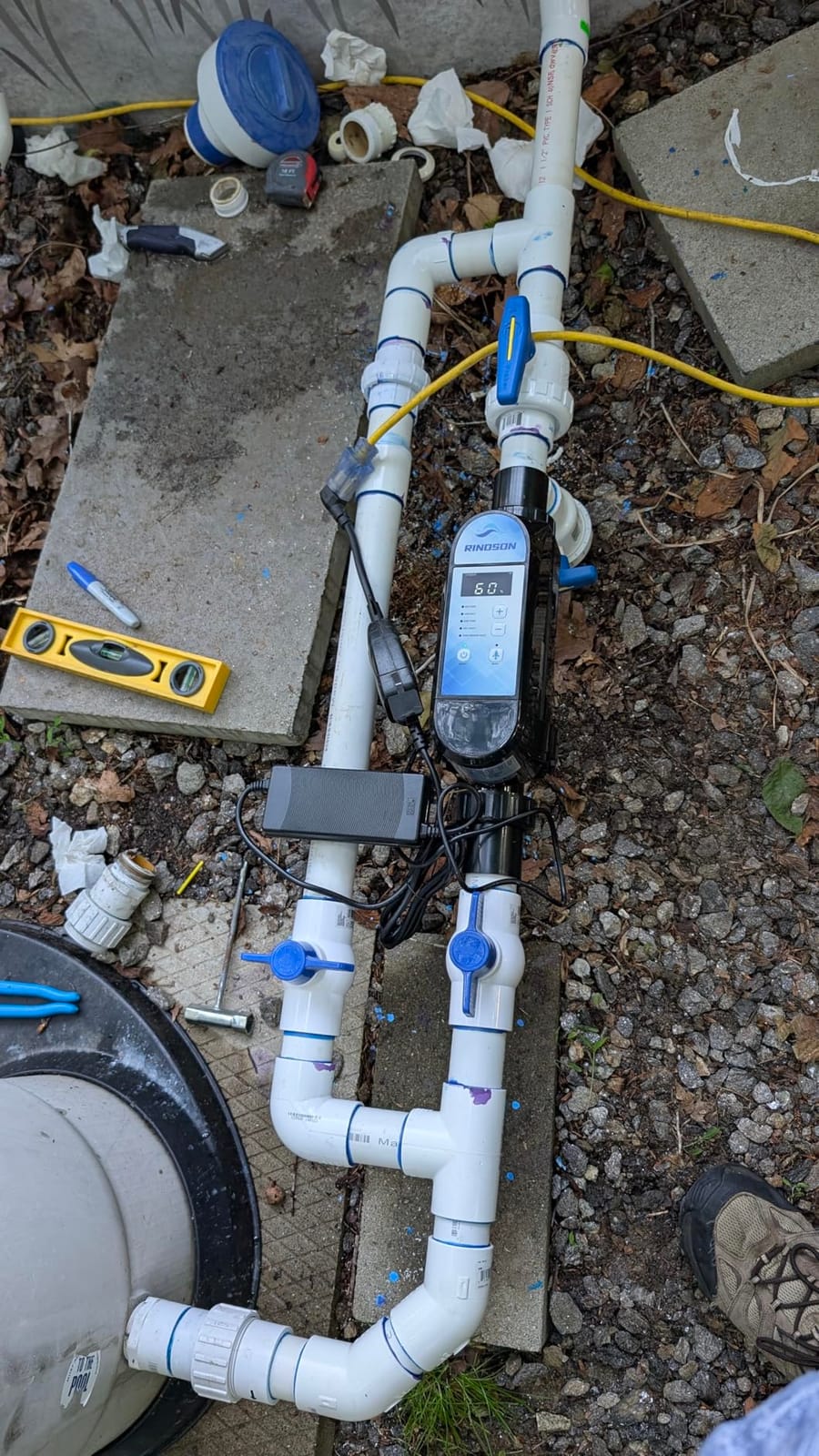
The hardware is fine. The all-in-one body combines the control unit and electrolytic cell, the app runs on 2.4 GHz Wi-Fi for on and off, output level and self-clean mode, and the titanium plate self-cleaning function reverses polarity every 2, 4, 6 or 8 hours. The built-in adapter accepts 100V to 240V input, and output steps through 20, 40, 60, 80 or 100 percent with a low-salt alert.
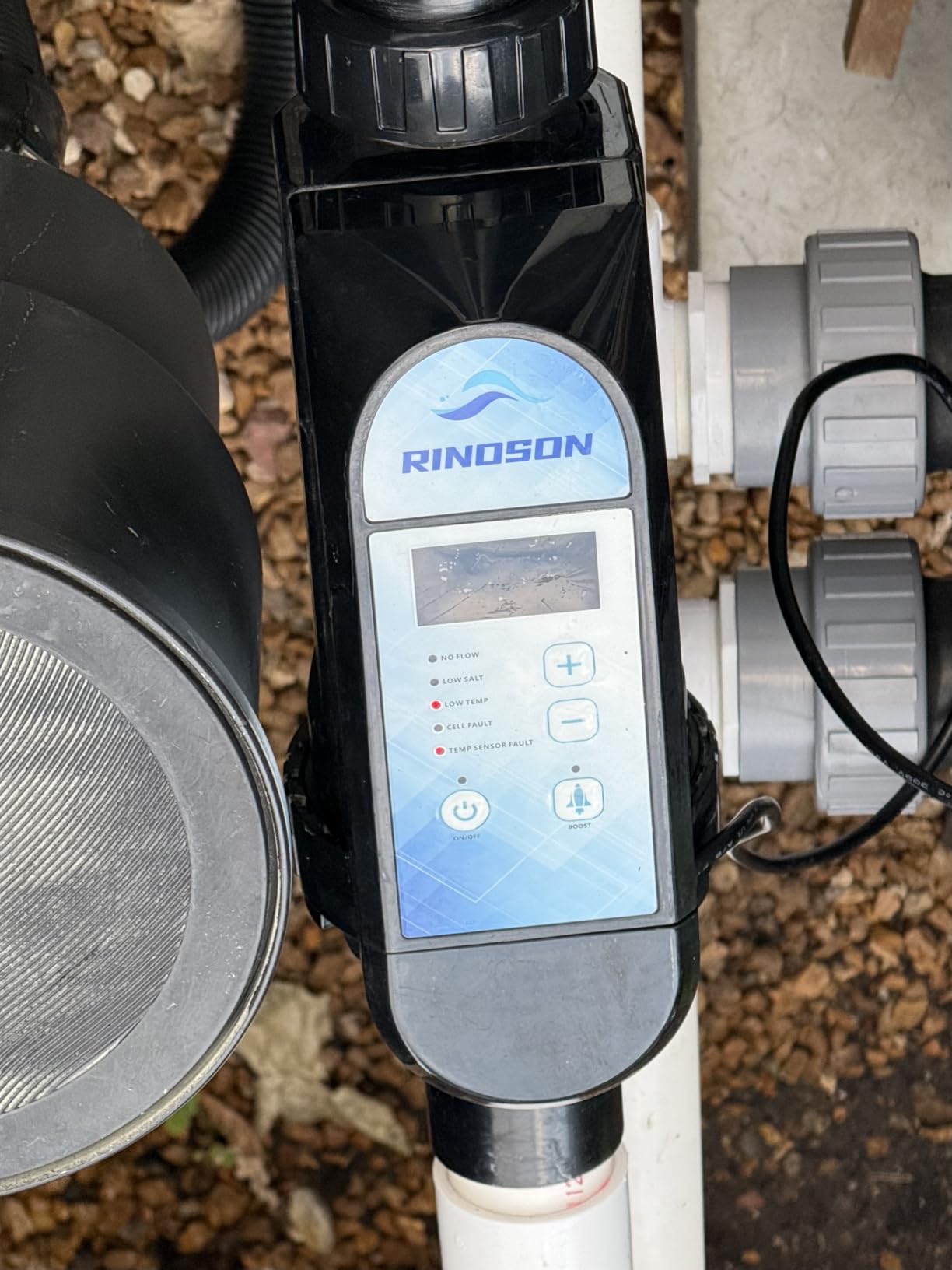
What drags it down is the feedback. The 3.6-star average is the lowest here, with 23 percent of ratings at one star, which points to real reliability and support problems rather than a preference gap. The listing also states the item should be used indoors only, and that conflicts with typical inground pool placement on a wet equipment pad.
The two-year warranty is the shortest in this group, and the wider size range in the listing runs from 13,000 to 35,000 gallons, but the 20 g/h output keeps it honestly matched to the small end of that range.
How to judge output honestly
Grams per hour is a more honest figure than a gallon rating, because it tells you what the cell can produce on a given day. Cross it against pool volume and expected demand, and remember that output falls in cold water. On a small pool in a mild climate, a low output figure is workable; in summer it is not.
If a listing quotes both a wide gallon range and a modest hourly output, trust the hourly number.
Why we would choose something else
The indoor-use statement is the deciding factor for us. An inground equipment pad is outdoors, wet and exposed, and we would not want to run a unit whose own documentation points away from that environment.
At the same budget level, other units in this roundup offer longer warranties, tighter app performance and far better feedback. If you are choosing on price alone for a small pool, we would pick one of those instead.
10. Troxlly TP30 40000 Gallons: Best for Pentair Layout Retrofits
TP30 Salt Chlorine Generator for Pools up to 40,000 Gallons, Smart Salt Chlorinator with App Monitoring, ETL Listed, Auto Reverse Polarity Cell, Standard Plumbing Fit
Rated to 40000 gal
Model TPS30
ETL listed
Retrofit plumbing fit
Pros
- Installed length and threaded unions match Pentair IntelliChlor IC20 40 and 60 layouts
- ETL listed to applicable safety standards with app diagnostics
- Clear cell housing supports visual inspection
- No-flow light and automatic stop when the pump shuts off
- Includes a cleaning disc that avoids a muriatic acid bucket bath
Cons
- Cannot be installed vertically with downward flow per the guide
- Only 2 inch unions included
- App and unit sometimes report out of sync and salt readings run high
- New brand with 17 reviews and email-only support
The Troxlly TP30 exists to solve a specific retrofit problem, and if you have a Pentair IntelliChlor IC20, IC40 or IC60 plumbing layout it solves it well. The installed length matches and the threaded unions line up, which is exactly the detail that stops a swap from becoming a replumbing job. It is not affiliated with or endorsed by Pentair, but it is dimensionally compatible.
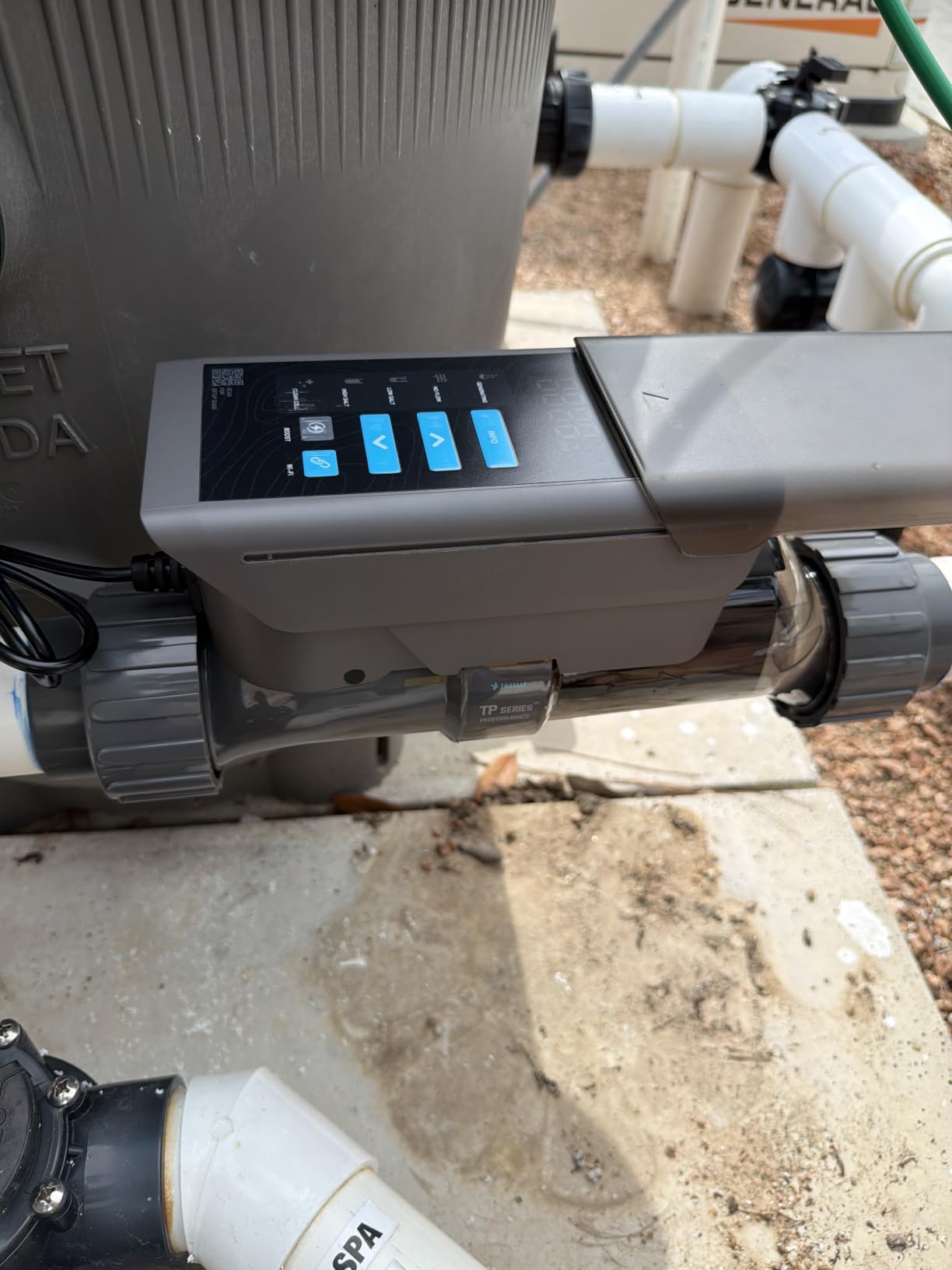
It is ETL listed to applicable safety standards, which is a certification more budget salt chlorinators skip, and the app and control panel show output, salinity, flow, water temperature and system alerts. The clear cell housing supports visual inspection, and automatic reverse polarity limits scale buildup.
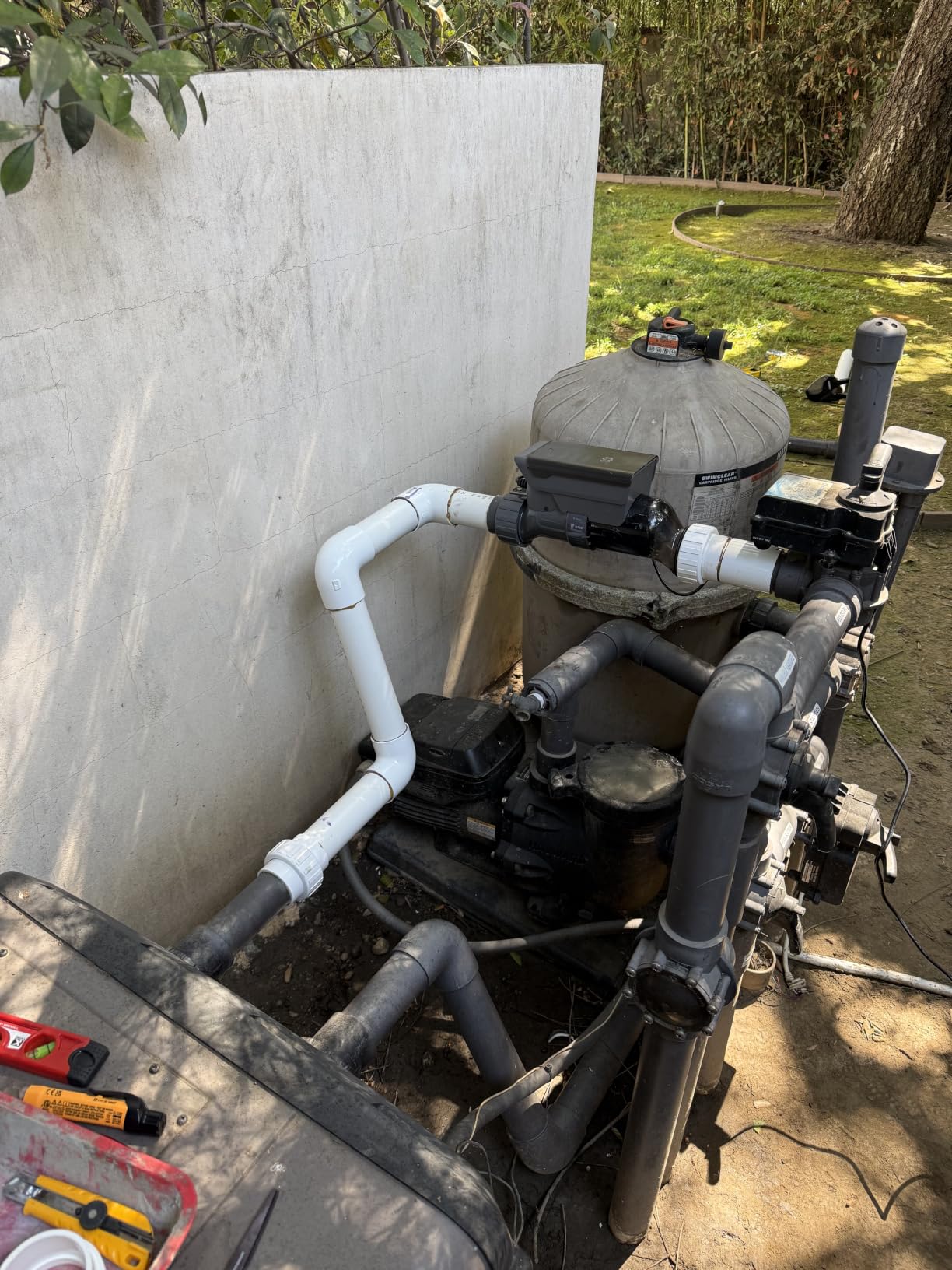
Two behaviours stand out. The no-flow light and automatic stop when the pump shuts off, with automatic restart when flow returns, make it tolerant of variable-speed pump schedules. And the included cleaning disc seals the plates for cleaning, so you avoid a five-gallon muriatic acid bath, which is a real saving if you maintain your own cell.
The catch is in the installation guide. It states the unit cannot be installed vertically with downward flow, which is a common IntelliChlor orientation and is not flagged in the listing. Check your existing orientation before ordering, because a return is an expensive outcome for a dimension-specific part. Only 2 inch unions are included, so 1.5 inch plumbing needs separate adapters.
How salt sensor accuracy changes your water chemistry routine
Owners report salt ppm readings running 500 to 600 ppm high against independent testing, and the app and unit sometimes report out of sync. That matters because the most common forum complaint in this niche is owners adding unnecessary salt based on a misreading, especially in cold water where built-in sensors drift.
Verify your salt level with an independent tester at least twice in the first month after installation, then settle into a monthly routine. Treat the on-board reading as a trend indicator, not as gospel.
When the retrofit fit does not apply
If your existing plumbing is Hayward or CircuPool rather than Pentair, this dimensional advantage disappears and you should compare the unit on output, warranty and app quality instead. With 17 reviews and an email-only support channel, the field history is also the thinnest in this roundup, so a brand with a phone line may serve you better.
Some owners also report needing more than 10 hours of pump runtime to hold chlorine at acceptable levels, which points back to runtime scheduling rather than capacity.
Installation, Variable-Speed Pumps and Water Chemistry
The cell belongs in the return line downstream of the filter and after the pool heater, on a plumbing run sized so you can remove it without draining the pool. Union fittings on both sides are not optional; they are the difference between a five-minute swap and a full drain. A bypass valve is useful if you want to isolate the cell without cutting power.
Salt dosing follows the standard rule. A 10,000 gallon pool needs roughly 270 pounds of pool-grade salt, which is about seven bags at 40 pounds each, to reach the target band, and larger pools scale proportionally. Always use pool-grade salt, never food or industrial salt, because impurities accumulate in the cell and on the plates.
Variable-speed pump note: the most common real-world problem with a salt cell and a variable-speed pump is a low-flow fault or a cell that never actually engages. Set a minimum pump speed that keeps flow above the cell’s minimum requirement, and confirm daily runtime is long enough to reach target free chlorine. This is the single most repeated thread in pool forums, and no brand setting fixes it for you.
Water chemistry decides how long the cell actually lasts. Keep salt in the target band the manual specifies, keep calcium hardness high enough to stop scale from forming on the plates, keep pH balanced, and keep cyanuric acid stabilizer in the recommended range. Low calcium and high pH are the fastest route to a scaled cell and an early replacement.
Inspect the cell monthly and expect an acid wash roughly once a year, or more often in hard-water areas. The standard procedure is removing the cell, soaking the plates in muriatic acid diluted roughly 1 part acid to 10 parts water, and rinsing thoroughly. Never mix acid with anything else, and never pour water into concentrated acid.
Corrosion, Heaters and the Anode Checklist
Saltwater is more aggressive on metals than chlorine alone, and the hardware that fails first is rarely the expensive part. Handrails, diving boards, metal ladders, copper fittings and heater components are the usual casualties within a season or two of conversion, according to the complaints owners report in this niche.
The prevention checklist is short and worth doing at conversion time. Fit sacrificial anodes in the pool, both inline and bolt-on, and replace them on schedule rather than when they look eaten. Confirm your bonding grid and grounding are correct and intact, since those are what carry stray current away from metal. Add a zinc anode to the heater if the manufacturer recommends one for salt service.
Check your heater’s warranty terms before you fill with salt. Some gas heater manufacturers exclude salt systems, and that is a question to ask before the conversion rather than after a claim is denied.
Give special attention to anything copper that sits inside the pool, including copper plumbing and copper heat exchanger components. Sacrificial anodes, sound bonding fittings and cathodic protection for metal parts are the standard mitigation, and owners report rust on handrails and ladders within a season or two when these steps are skipped. Adding a zinc anode to the heater covers the most common single failure point on larger residential pools.
How to Choose the Right SWCG for Your Inground Pool
Start with your automation platform. If you already run Pentair IntelliCenter, Hayward OmniLogic or Jandy iAquaLink, a standalone plug-in unit like the APX E-CHLOR or Bonvoisin LC-200A will run on its own schedule rather than reporting into your board. That is fine if you are happy with a second scheduler, and frustrating if you want a single control screen.
Price the cell, not just the system. A cell is a second purchase you are guaranteed to make, and this is the factor that decides real ten-year cost. Get the current replacement cell part number and price for each model on your shortlist and write them down. Forum recommendations for specific models are frequently driven by this number alone.
Look at the warranty term and the dealer network. Terms here run from one year to eight years. A long warranty is only as good as the service behind it, and owners of premium brands report friction with warranty claims handled through authorized dealers, while some smaller brands ship support that is slow or email-only.
Check the form factor against your pad. All-in-one bodies with built-in power supplies install fastest, but the control-box style units give you more choice in placement. Measure the space before you order, and confirm pipe diameter and whether your existing plumbing runs vertically with downward flow.
Judge diagnostics honestly. Salt level, temperature, flow, cell scaling and cell lifespan tracking are the difference between a planned replacement and a surprise failure in August. On smaller units, expect flow protection and a low-salt alert at minimum.
Verify independent sensors. Built-in salt sensors read high in cold water and are reported off by 500 to 600 ppm against independent testing on at least one unit here. Test your salt level independently monthly rather than trusting the display alone.
Plan for power loss. A salt system stops generating the moment the pump stops, and so does your circulation. If your equipment pad is on a circuit that is not covered by a backup power supply, it is worth weighing one for outages longer than a few hours, and our guides to the best portable generators, the best inverter generators and the best whole house generators cover the sizing and fuel decisions for that scenario.
Who Should Skip a Salt System Entirely
Salt systems are excellent, and they are not for everyone. A small pool under about 12,000 gallons will struggle to meet the oversizing rule without overpaying, and a tablet or liquid chlorine routine is cheaper at that scale.
Renters should not make a permanent plumbing change to a pool they do not own, and it is rarely a deposit-recoverable improvement. Seasonal-only pools that sit closed through winter get little benefit from an automated generator and still carry the corrosion and anode upkeep in spring.
Heavily shaded pools and cold-climate owners with short seasons get the same corrosion exposure with less of the convenience payoff. And budget-constrained owners who keep the pool closed in winter should weigh the full cost, because the system pays for itself through year-round chemical savings that never happen.
There is one more honest caution from the r/pools consensus: the downside of salt is the up-front cost, and salt chlorinators need cleaning and do not last indefinitely. The counter-consensus view is equally valid, that salt is very convenient but quite corrosive. Both are true, which is why the anode and bonding checklist matters more than most guides admit.
Frequently Asked Questions
What are the best salt chlorine generators for inground pools?
The Hayward Aquarite rated to 40,000 gallons is our best overall pick for inground pools, with the largest review base and a near drop-in fit into existing Hayward plumbing. The CircuPool RJ45+ offers the highest average rating and up to 1.9 lb of chlorine per day, while the APX Performance E-CHLOR is the strongest value choice with a two-union plug-in install.
What size saltwater chlorine generator do I need for my inground pool?
Multiply your pool volume by 1.5 to 2 to get the gallon rating you should buy. A 20,000 gallon inground pool wants a 30,000 to 40,000 gallon generator. Calculate volume as length by width by average depth by 7.5 for a rectangular pool, and by 5.9 for round or oval shapes.
Is a salt chlorine generator worth it for an inground pool?
For most inground pools roughly 15,000 to 50,000 gallons, yes. The system replaces daily tablet and shock routines, produces softer-feeling water, and cuts ongoing chemical spending. It only pays off if you size it well and maintain the chemistry, so pools under about 12,000 gallons or seasonal pools get less value.
How long does a salt cell last?
Cell life is quoted in operating hours rather than years. A titanium cell rated for 10,000 hours runs about three years on long daily runtime and closer to seven on a small, shaded, lightly used pool. Undersizing is the main cause of early failure because the cell accumulates hours far faster.
Do I need to replace the whole SWG or just the cell?
Usually just the cell. The titanium plates are the wear part, while the control box and power supply last far longer. Replacement cells run a few hundred dollars depending on brand, which is why cell cost should be checked before you buy the system, not after the first failure.
Can I use a salt chlorine generator with a variable-speed pump?
Yes, but set a minimum pump speed that keeps flow above the cell’s minimum requirement. Dropping below minimum flow causes low-flow faults or a cell that never engages. If the manual permits 2x your pool volume, an undersized variable-speed setup may never produce enough to hold target free chlorine.
What should a salt chlorinator be set at for a pool?
Set output so the unit reaches roughly 2 to 3 ppm free chlorine without running continuously. Start around 40 to 50 percent and adjust weekly based on test results rather than the display. Remember that cold water produces less chlorine, so a setting that works in spring will fall short in summer.
How much salt does a 10,000 gallon pool need?
A 10,000 gallon pool needs roughly 270 pounds of pool-grade salt, which is about 7 bags at 40 pounds each, to reach the target band. Scale the figure proportionally for larger pools. Always use pool-grade salt, because food or industrial salt carries impurities that build up on the cell plates.
Which pool salt tester is the most accurate?
Use an independent electronic salt tester or a calibrated titration test rather than trusting the salt reading on the generator. Built-in sensors are reported to run 500 to 600 ppm high against independent testing, and they drift further in cold water, which leads owners to add unnecessary salt.
Do saltwater pools need shock and other chemicals?
A salt pool still needs support chemistry. You still balance pH, total alkalinity, calcium hardness and cyanuric acid stabilizer, and you may add shock for heavy bather loads or cloudy water. The generator handles routine free chlorine only, which is exactly the balance point that keeps a cell from scaling.
The Verdict: Which Salt Chlorine Generator to Buy
After working through ten inground-rated systems, the Hayward Aquarite W3AQR15 remains our best saltwater chlorine generator for inground pools. It is not the highest rated or the highest output, and we will not pretend otherwise, but 994 reviews of field history plus a retrofit fit into existing Hayward plumbing is a combination none of the newer brands can match yet.
Pick the CircuPool RJ45+ instead if you want the highest average rating in the group and the better replacement-cell economics, or the CircuPool CORE35 if the shortest possible install matters most and you value the eight-year warranty term. Move to the APX Performance E-CHLOR if you want app-level diagnostics and a genuinely short plug-in install on a mid-size pool.
Whatever you choose, size it to 1.5 to 2 times your measured pool volume, set a minimum pump speed that protects flow, and price the replacement cell before you buy the system. Those three steps decide whether your saltwater system is still running in 2026.