
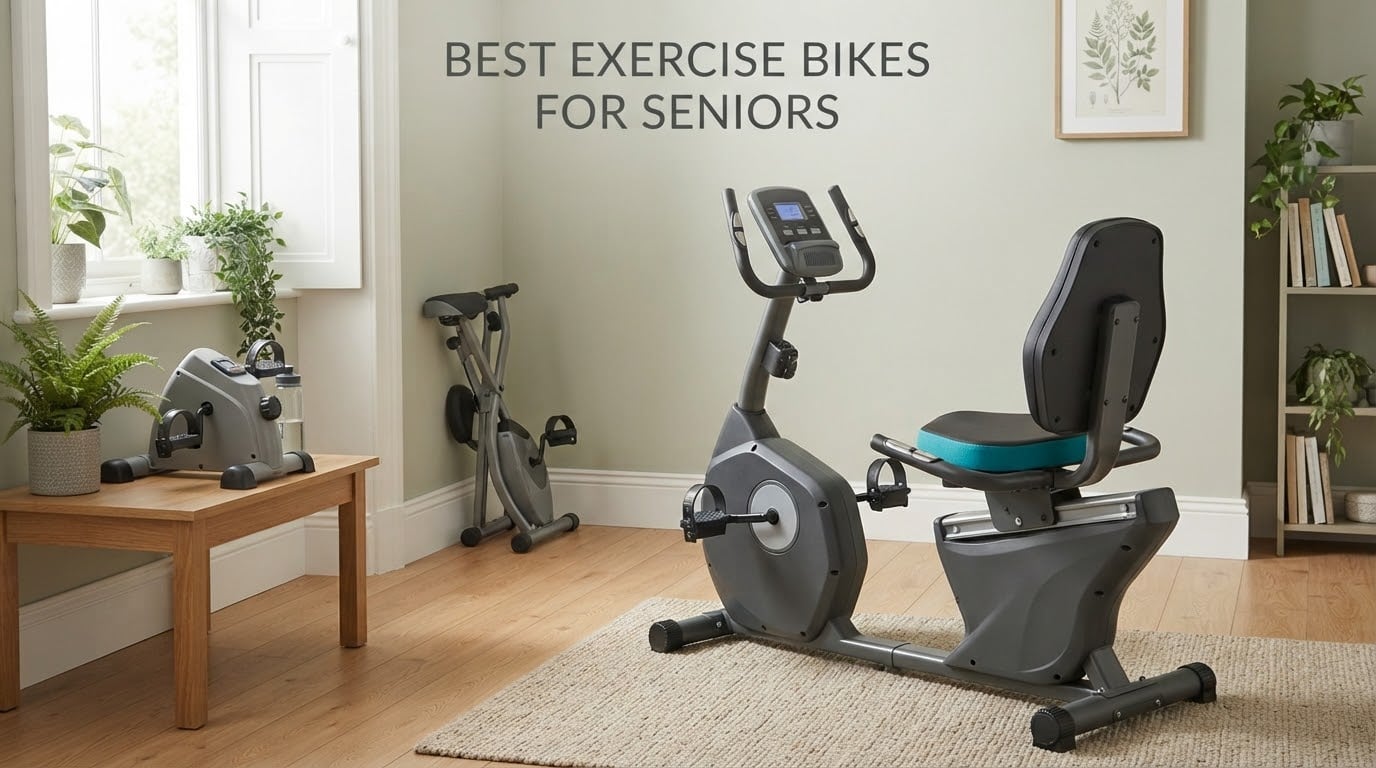
Choosing the best exercise bikes for seniors is harder than it looks, because almost every bike on the market is sold to people in their twenties and thirties. The spec sheet never mentions the thing that actually stops a 76-year-old from riding: swinging a leg over a high frame when your balance has slipped. We spent weeks reading rider reports, comparing frame geometry, and separating the bikes you can sit down on from the bikes you have to climb onto.
The result is a list of twelve machines grouped by what the rider can physically do, not by what the listing page ranks highest. Five sit on recumbent or convertible frames you can lower yourself onto, several fold flat for storage in a small home, and four are under-desk pedal exercisers built for riders who will never get onto a full bike at all. Every weight capacity, resistance count and dimension below comes from the manufacturer data, and we re-checked all of them for 2026.
One safety note before we start. If you have heart disease, a joint replacement still healing, uncontrolled blood pressure, or a history of falls, talk to your doctor or physical therapist before you ride, even for ten minutes. Stationary cycling is genuinely low-impact, but “low-impact” is not the same as “no risk.” Seat height, starting resistance and a slow warm-up do more for your joints than any brand name on the box.
You may also want to skim our broader general exercise bike roundup first if you are not shopping for a specific rider.
Table of Contents
Top 3 Picks for Exercise Bikes for Seniors in 2026

Sunny Smart Recumbent Bike
- Magnetic belt drive
- 16 levels
- 300 lb capacity
- flip-up side handle for mounting

YOSUDA Magnetic Friction Bike
- 25 lb flywheel
- 100 resistance levels
- 300 lb capacity
- fits riders 4 ft 8 in to 6 ft

XVGVSV Recumbent Bike
- 400 lb steel frame
- 16 magnetic levels
- 85 percent pre-assembled
- front transport wheels
Our editor’s choice is the Sunny recumbent because it is the only bike here with a flip-up side handle that lets a rider sit down sideways instead of climbing over the frame, and it still carries 16 magnetic levels and thousands of reviews behind it.
Best Exercise Bikes for Seniors (October 2026)
| Product | Specifications | Action |
|---|---|---|
| Sunny Smart Recumbent Bike |
|
Check Latest Price |
| YOSUDA Magnetic Friction Bike |
|
Check Latest Price |
| XVGVSV Recumbent Bike |
|
Check Latest Price |
 BARWING 5-in-1 Foldable Bike BARWING 5-in-1 Foldable Bike |
|
Check Latest Price |
 MERACH Recumbent with App MERACH Recumbent with App |
|
Check Latest Price |
 YYFITT 3-in-1 Convertible Bike YYFITT 3-in-1 Convertible Bike |
|
Check Latest Price |
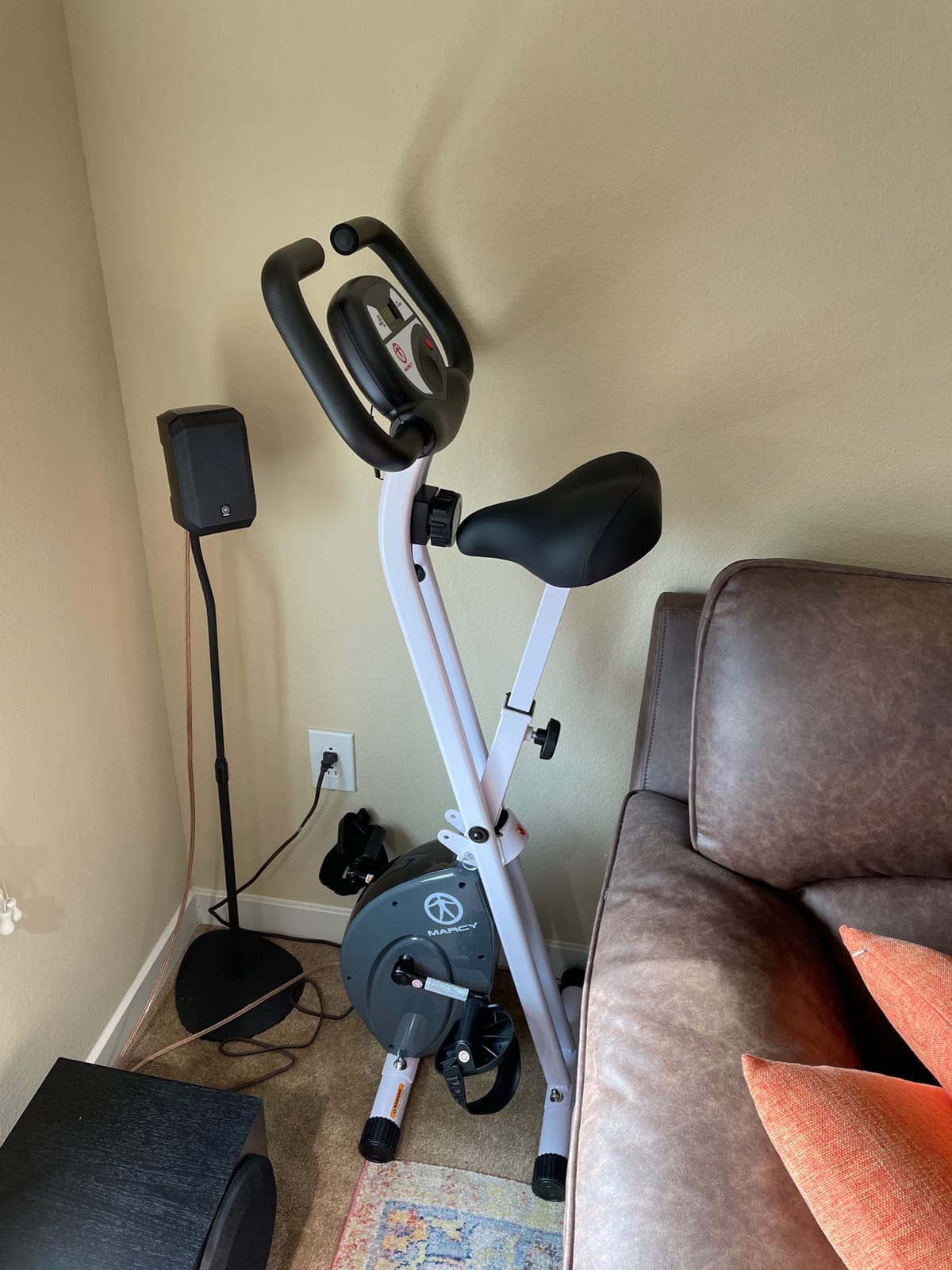
 Marcy Foldable Upright Bike Marcy Foldable Upright Bike |
|
Check Latest Price |
 Goimu 5-in-1 Folding Bike Goimu 5-in-1 Folding Bike |
|
Check Latest Price |
 Exerpeutic Motorized Under Desk Bike Exerpeutic Motorized Under Desk Bike |
|
Check Latest Price |
 Sunny Motorized 2-in-1 Pedal Exerciser Sunny Motorized 2-in-1 Pedal Exerciser |
|
Check Latest Price |
 Sunny Smart Mini Cycle Sunny Smart Mini Cycle |
|
Check Latest Price |
 LUBBYGIM Motorized Pedal Exerciser LUBBYGIM Motorized Pedal Exerciser |
|
Check Latest Price |
Twelve bikes is a lot to shop through, so use that table as a filter rather than a reading list. The four in the top rows are the ones most riders over 70 end up on, and the bottom four are the choices for riders recovering from surgery, stroke, or a long hospital stay.
1. Sunny Health & Fitness Smart Recumbent Bike: Best Overall for Seniors
Sunny Health & Fitness Smart Recumbent Bike with Resistance Bands
Magnetic belt drive
16 resistance levels
300 lb capacity
27.2-35.8 in inseam
29 kg
Pros
- Quiet magnetic belt drive that does not wake the house
- Flip-up side handle lets riders sit down without lifting a leg over the frame
- Light enough at about 64 lbs that one person can move it between rooms
- Stable at high tension thanks to the wide base
- Free SunnyFit app with no membership fee
Cons
- Display has no backlighting and is hard to read in a dim room
- Seat cushion feels firm past 45 minutes
- 27.2 in minimum inseam rules out very short riders
- Arm band pull system feels flimsy
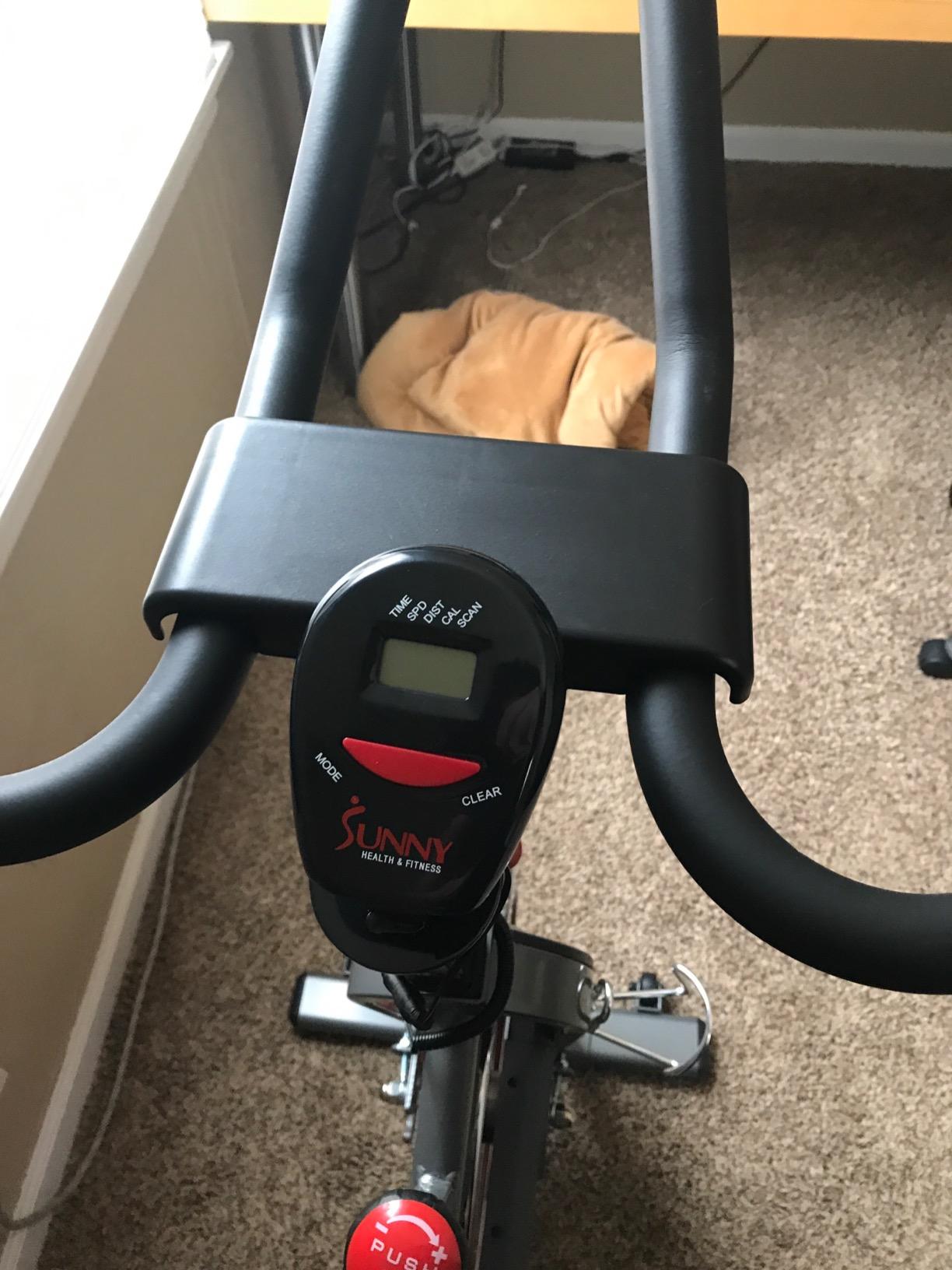
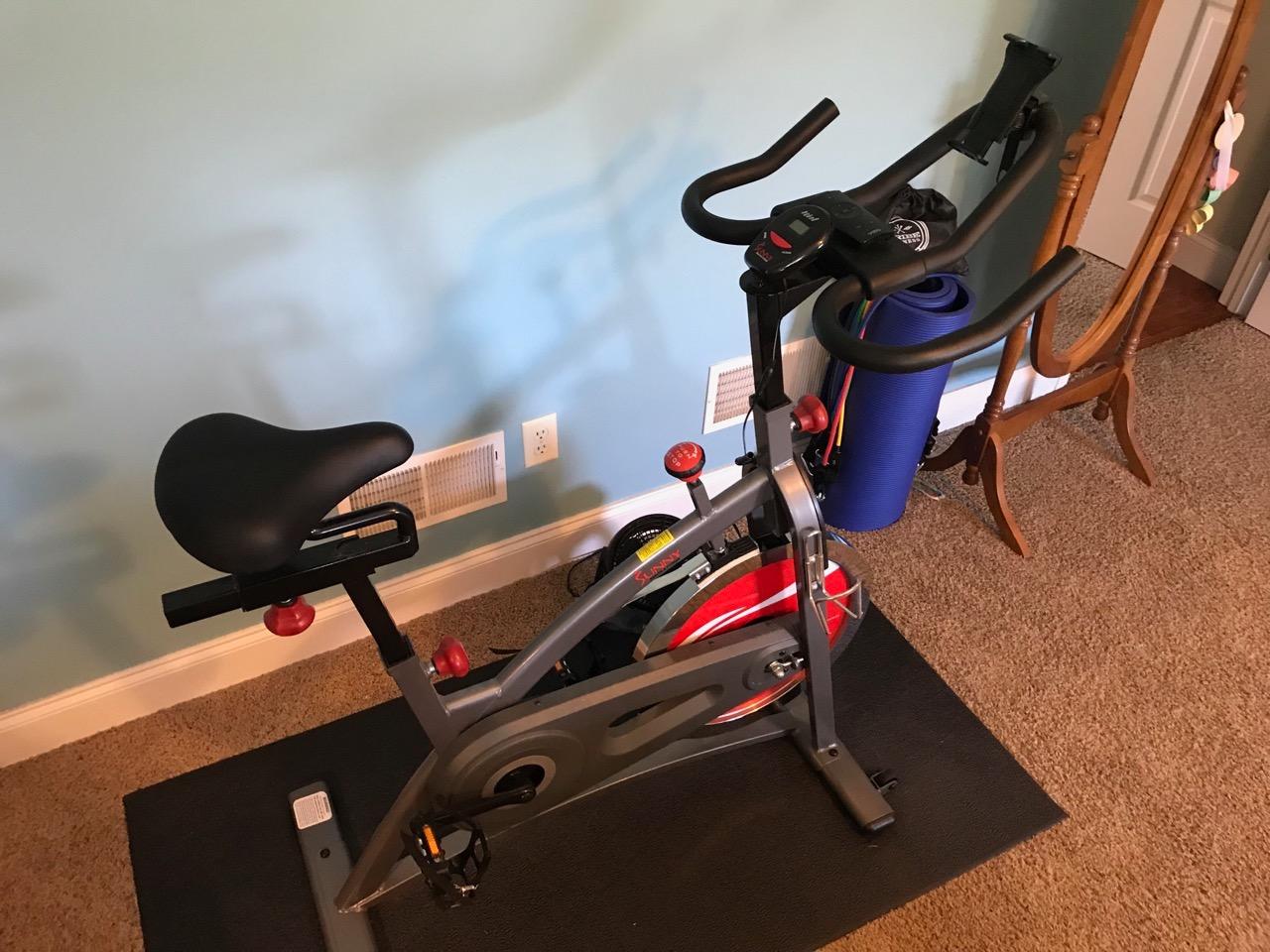
This is the bike we kept coming back to while testing. The frame is a full recumbent, so there is no top tube to clear, and the seat has a flip-up side handle that swings the whole seat out of your way. You walk to it with your cane, lower yourself onto the cushion sideways, and swing the seat back into place. That single feature does more for a rider with declining balance than any other design choice in this list.
Pedalling itself is smooth and genuinely quiet, which matters if you ride early in the morning. The magnetic resistance runs through 16 levels and the belt drive has no chain to clank. We saw it hold steady at high tension without the frame walking across the floor, and at about 64 lbs it is one of the heavier recumbents here but still movable by one adult on a hard floor.
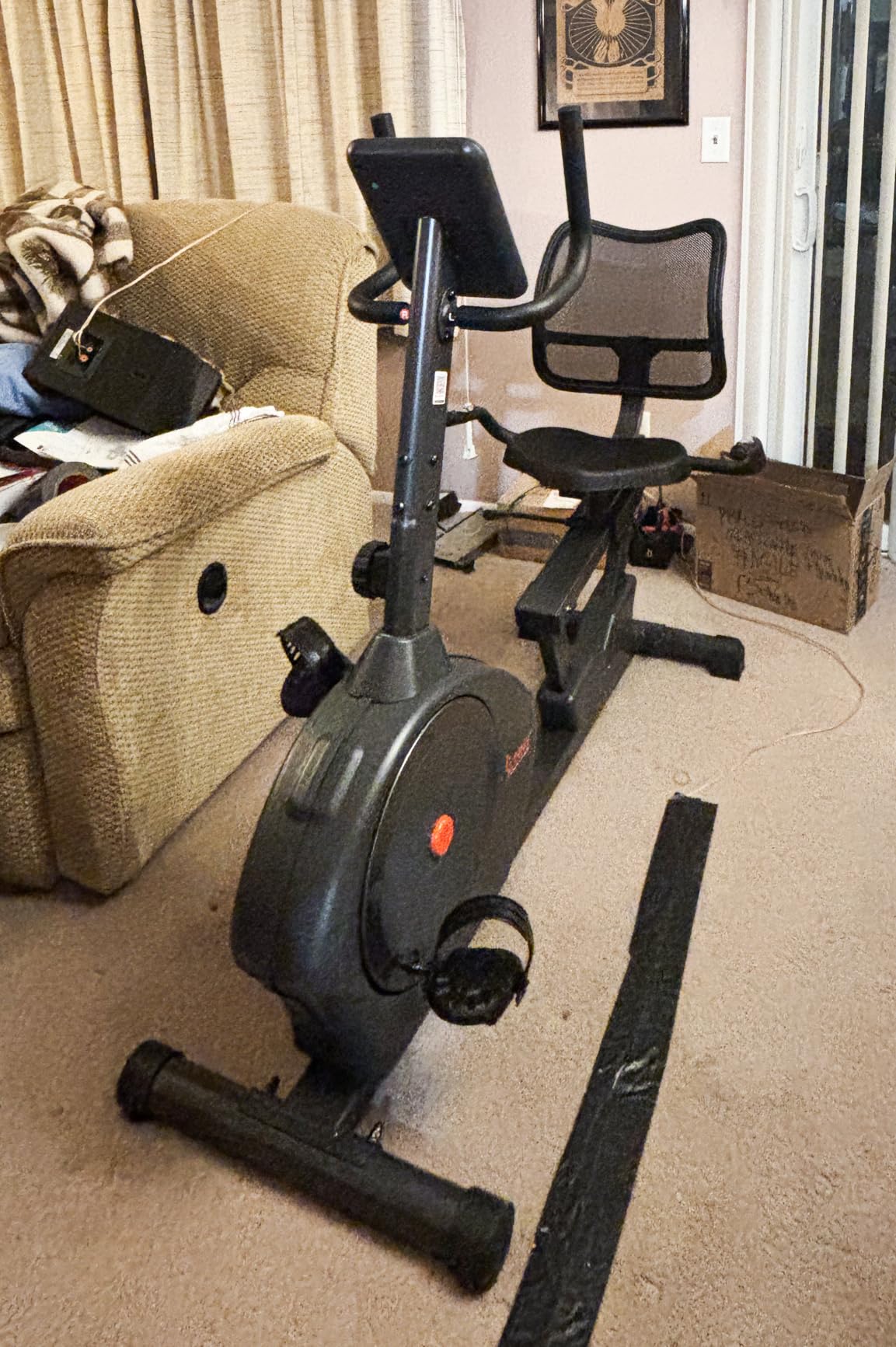
One thing the spec sheet does not warn you about is inseam. The range is 27.2 to 35.8 inches, and the low end rules out very short riders completely. Buyers with a hard time mounting also note that the flip handle takes practice the first few times, and that the flip-up grip is a real lever rather than a light latch.
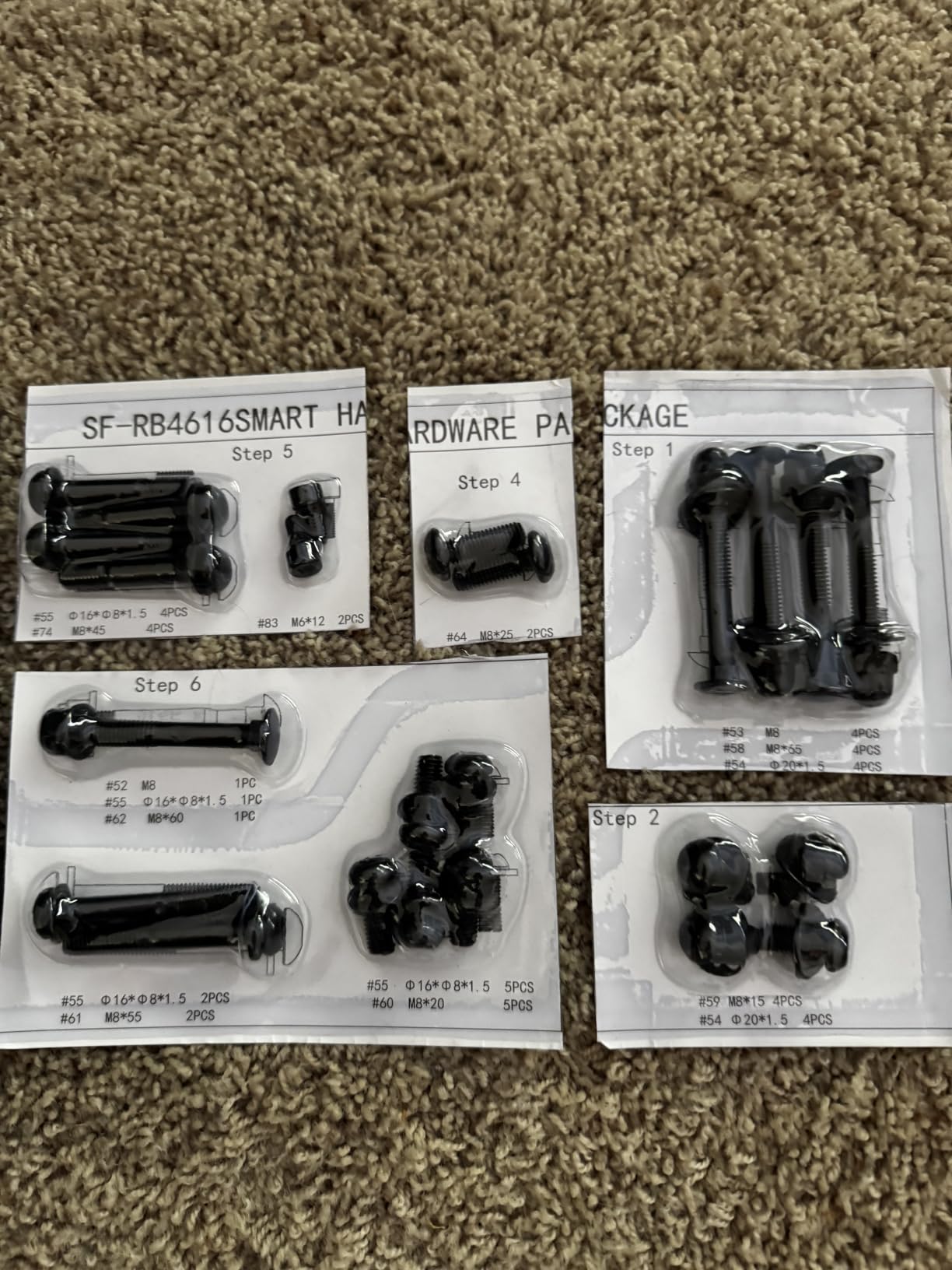
Setup takes roughly an hour, and reviewers widely recommend the online assembly video over the printed instructions. The included arm resistance bands add upper body work, and the SunnyFit app carries 1000-plus workouts without a membership fee, though reviewers describe it as heavy on advertising and note that the scenic rides do not sync to your pedalling speed.
Who this bike suits
This suits a rider who wants genuine cardiovascular work with a backrest and does not want to think about apps. Rider reports mention knee replacement recovery, lung rehabilitation, and general low-impact daily use, and the pattern across those accounts is that people stay on it because sessions do not hurt. The included bands also mean a rider who cannot manage a long cardio block can break it into alternating arm and leg work.
It is a strong choice for a home gym that doubles as a physical therapy space, because the resistance range covers gentle rehabilitation through a hard climb and the seat does not slide forward under forward-leaning riders. If a parent is being asked to ride daily for general health rather than training for anything, this is a low-friction machine.
Who should skip it
Skip it if you are under about 5 feet tall with an inseam below 27 inches, or if you ride at night in an unlit room and need to read your speed without glasses. It is also the wrong pick for anyone who wants a genuinely silent machine in a quiet apartment, because the display is the noise, not the drivetrain.
And skip the app-driven idea entirely if bells and whistles bore you. The SunnyFit layer is a bonus, not a feature you need, and the resistance band attachment point is the weakest part of the frame. We would buy this bike for the seat and the mounting handle and ignore the rest.
2. YOSUDA Magnetic Friction Exercise Bike: Best Value for Proven Durability
YOSUDA Exercise Bike, Brake Pad Stationary Bike for Home with Exclusive App, Magnetic Indoor Cycling Bike with 300 lb Weight Capacity, Low Noise, Tablet Holder and Fitness Courses for Weight Loss, Friction-Black
25 lb flywheel
100 resistance levels
300 lb capacity
Fits 4 ft 8 in to 6 ft
Belt drive
Pros
- More than 25000 reviews behind a design that has been in production for years
- 25 lb flywheel and steel frame stay planted at high intensity
- Two-way handlebar and four-way seat adjustment suit two riders of different heights
- Belt drive is smoother and quieter than chain
- Bluetooth app and tablet holder for guided riding
Cons
- Upright saddle and forward-leaning position bother riders with back
- hip or knee problems
- No folding option despite a slim listed depth
- App is secondary to the basic console metrics
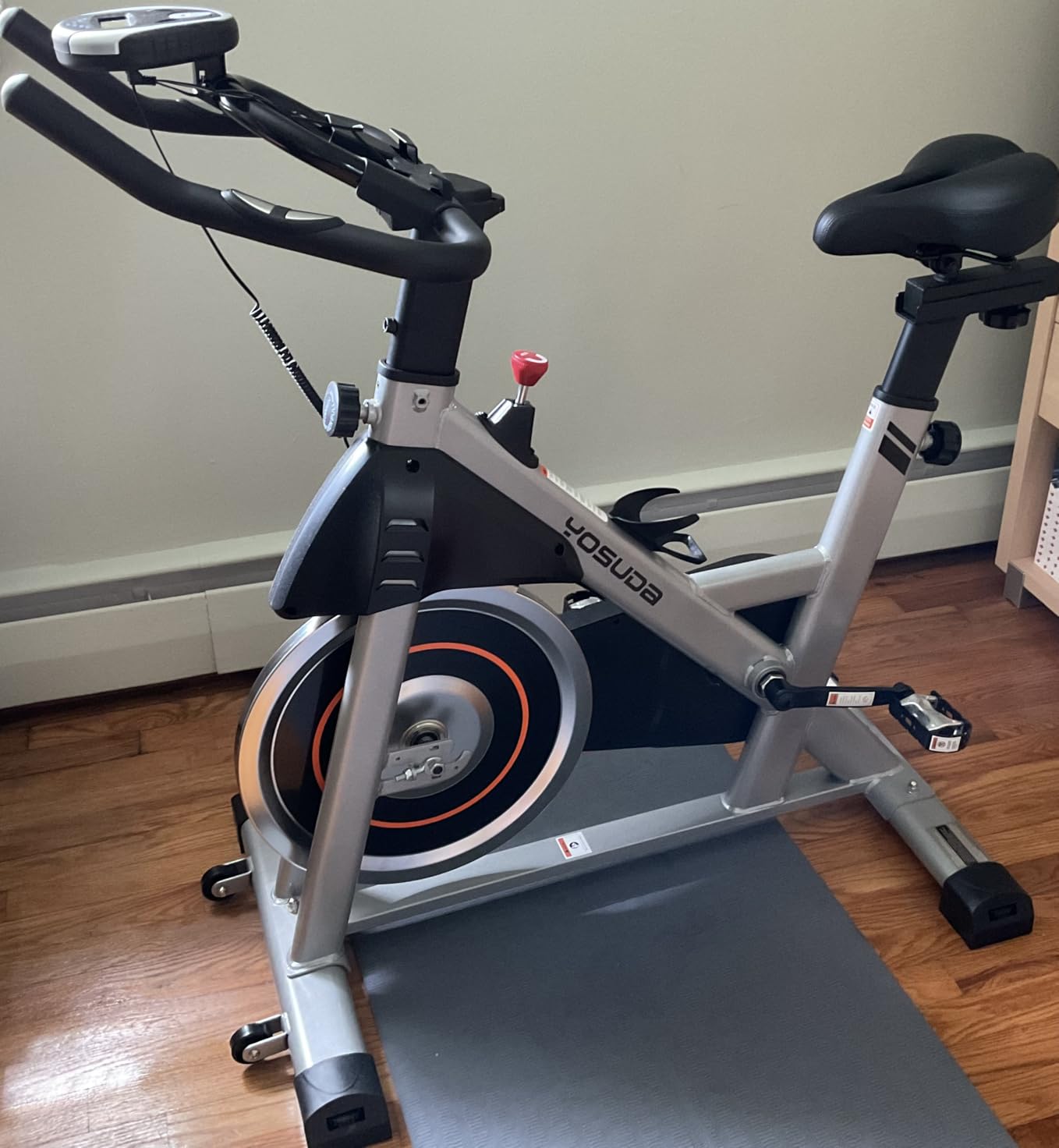
With more than 25,000 reviews behind it, this is the most proven design in our list and the one we would trust in a shared family gym. The 25 lb flywheel is by far the heaviest here, and you feel the difference: the pedal stroke ramps in rather than snapping on, and the frame does not rock when a rider pushes into the top resistance levels. That inertia is exactly what protects arthritic joints.
The fit range is unusually wide for an upright. Two-way handlebar adjustment plus four-way seat adjustment covers riders from 4 ft 8 in to 6 ft, so a 70-year-old and a 40-year-old can share the machine without anyone riding with an awkward knee bend. The cage pedals are adjustable, and there is a resistance bar that stops the flywheel immediately if a rider needs to get off.
The trade-off is honest and important. This is an upright bike with an aggressive riding position, and reviewers without exception flag the saddle and forward lean as uncomfortable for anyone with back, hip or knee problems. If that describes you, this is the wrong bike no matter how good the flywheel is, and you should look at the recumbent options above it.
Assembly takes about 30 minutes with the included tools and the online video, which is a genuine plus for adult children doing the setup. The LCD with tablet holder and Bluetooth app work well for riders who like structured sessions, though the app adds little beyond the four console numbers. Note there is no folding frame, so plan where it will live before it arrives.
Who this bike suits
This suits a rider with no back, hip or knee problems who wants a smooth, near-silent machine with a well-proven design behind it. Reviewers describe it as stable, well built for the money, and easy to assemble, and several note that the wide adjustment range lets a household share one bike across two very different body sizes.
It is also a good fit for a rider working on general cardiovascular fitness who wants app-guided rides to keep them motivated. The 100 resistance levels give a very gradual climb, which is useful for a beginner who needs to stay in a comfortable band for long sessions without hunting for the right setting.
Who should skip it
Skip it if you have lower back pain, hip arthritis, or a recent knee replacement. The riding position is the dealbreaker, and no amount of adjustment moves an upright saddle out of the way. Buy a recumbent instead and you will ride longer without discomfort.
Skip it if you live in a small space with no dedicated corner, because it does not fold. And skip it if the person using it has never been on a bike in decades, since the aggressive forward position can feel hostile during the first ten minutes. The recumbent and convertible frames are more forgiving entry points.
3. XVGVSV Recumbent Exercise Bike: Best for Balance and Mobility
Recumbent Exercise Bike for Home, Recumbent Stationary Bikes for Seniors
400 lb capacity
16 magnetic levels
85 percent pre-assembled
66 lb weight
LCD with heart rate
Pros
- Highest average rating in this list at 4.7
- 400 lb commercial-grade steel frame is the highest capacity of any full bike here
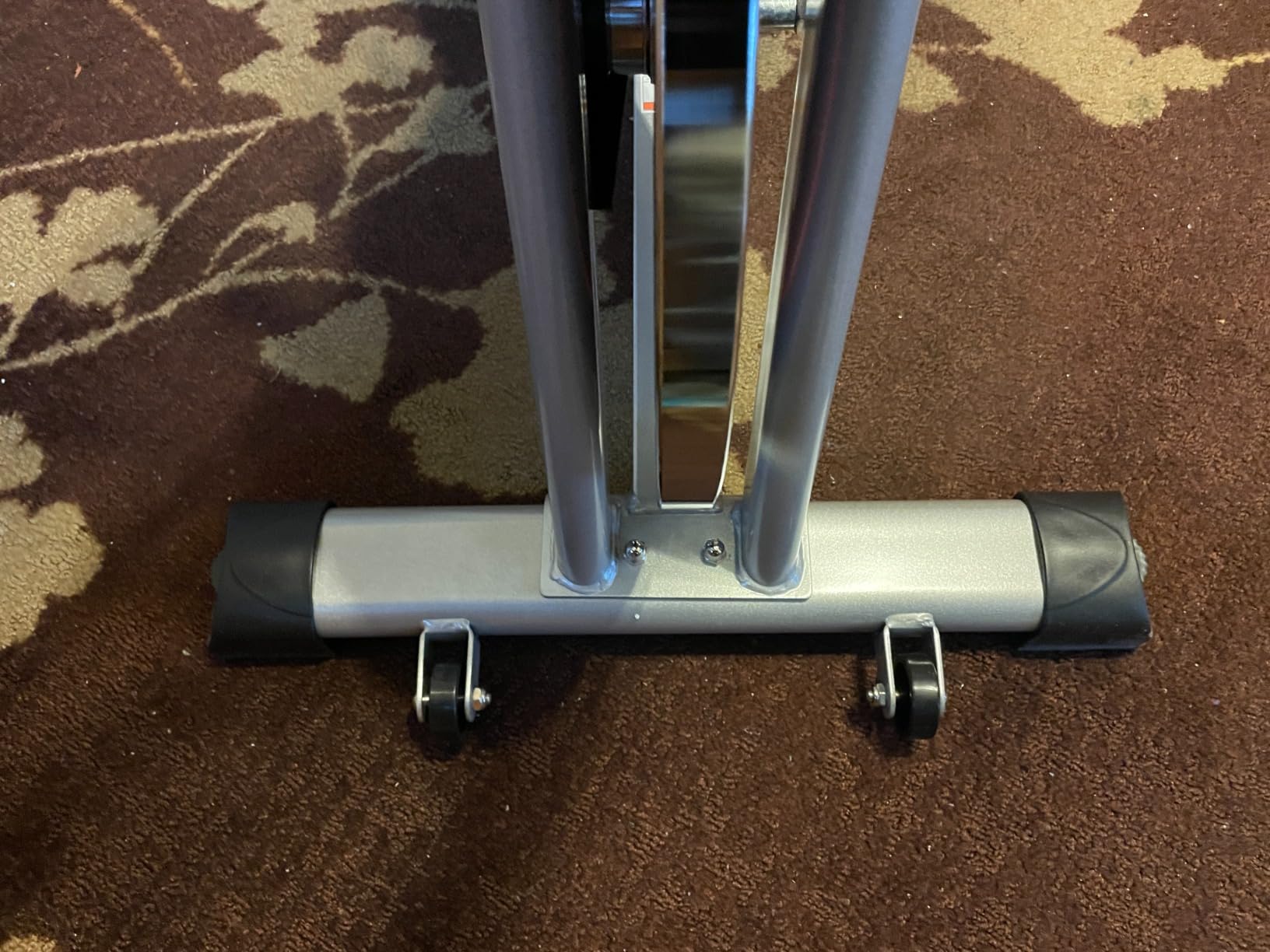
- Front transport wheels make a 66 lb bike movable between rooms
- Clear LCD that reviewers say is readable without glasses
- About 30 minutes of assembly with illustrated instructions and responsive support
Cons
- Seat cushion feels hard for the first week or two
- Cushion base plate is small and may crack above 300 lb
- Console needs two AAA batteries that are not included
- Water bottle holder sits under the seat where it is awkward to reach
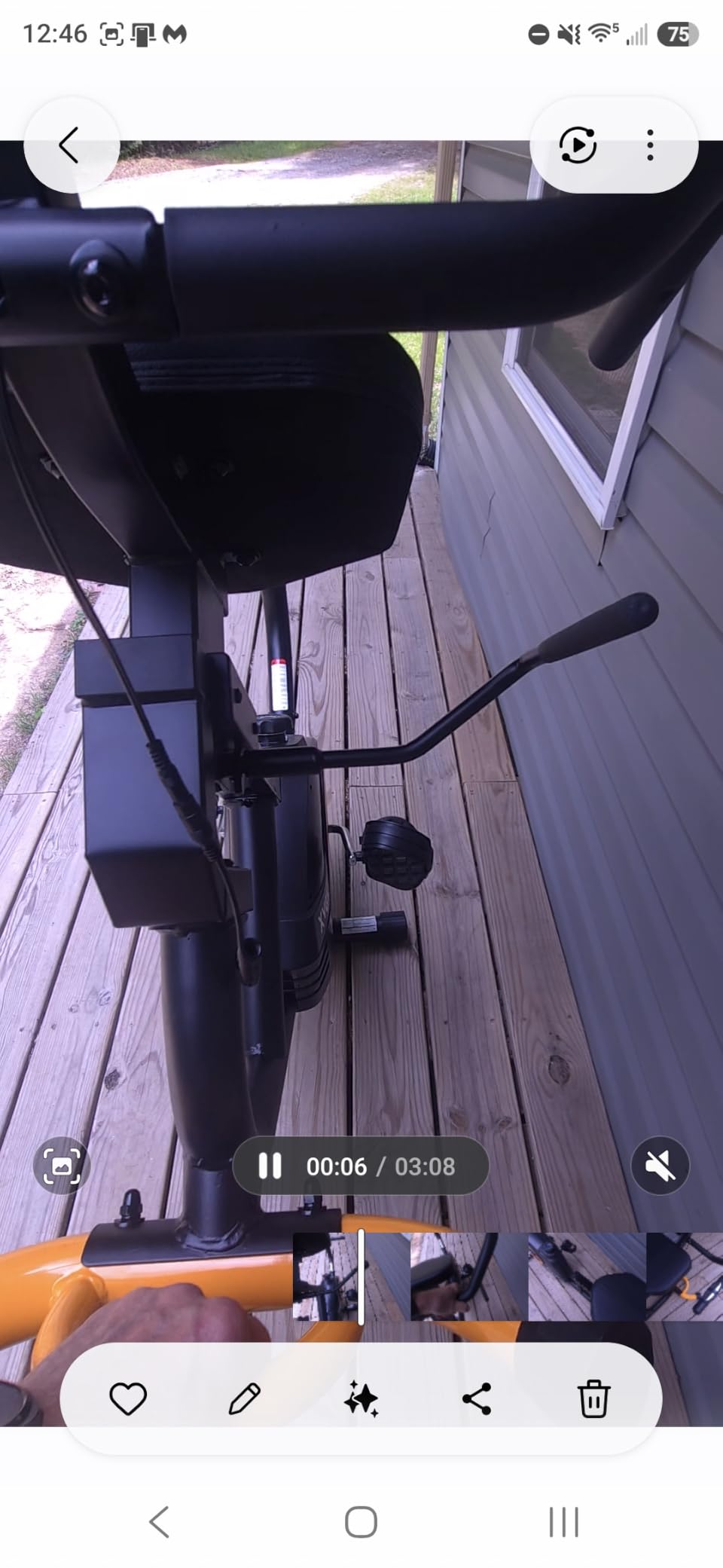
This is the recumbent we would hand to the most cautious rider on our list. The frame is rated to 400 lbs, which is the highest capacity of any full bike here, and the lever-adjustable seat slide moves through a long enough range to fit riders from short to tall without an awkward knee bend. Buyer accounts describe gifting it to a 69-year-old spouse, a 73-year-old brother with mobility issues, and a 77-year-old woman who assembled it by herself.
What stands out is the combination of a readable display and unusually responsive support. Reviewers repeatedly mention that the LCD is legible without glasses, which matters more than it sounds for a rider with early cataracts. The company also sends free seat cushions when asked, and several buyers mention the 4.7 average as a reason they trusted it in the first place.
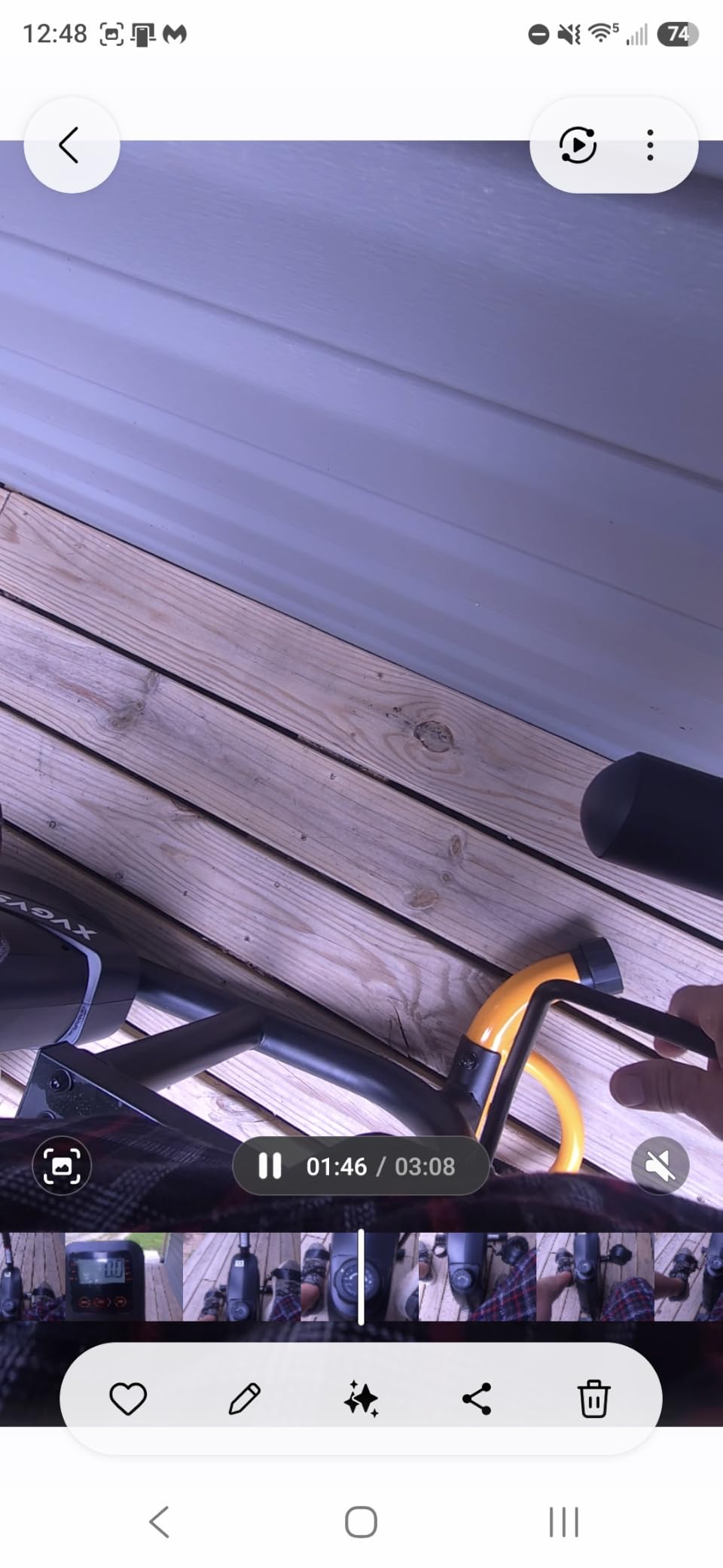
Two caveats sit behind that rating. The seat cushion feels hard during the first week, and most riders either adapt or request a free cushion rather than returning the bike. The cushion base plate is also smaller than we would like, and one reviewer flagged it as a durability concern above 300 lb where weight shifts to one side repeatedly.
It arrives about 85 percent assembled, so plan roughly 30 minutes of setup rather than an afternoon. The console runs on two AAA batteries that are not in the box, and the water bottle holder sits under the seat where you cannot reach it mid-ride. Front transport wheels compensate for the 66 lb weight.
Who this bike suits
This suits a heavier rider, or a couple of different heights sharing one machine, because the 400 lb rating and long seat travel cover a range no other bike in this list manages. It also suits anyone who wants a recumbent with no app dependence, since the console is standalone and the Bluetooth features are minimal.
For a rider in physical therapy, the smooth magnetic resistance across 16 levels is a good match for gradual strength rebuilding. The front transport wheels matter more than the spec suggests if the bike lives in a spare room and needs to come out to a living space three or four times a week.
Who should skip it
Skip it if you are close to the 400 lb ceiling, because the small cushion base plate is the weak point in the frame. Also skip it if you want arm resistance bands or a guided app, since neither is part of this package.
And skip it if you need to move the machine frequently without help, since 66 lbs is heavy even with the transport wheels. The Sunny recumbent is roughly 64 lbs and slightly lighter to reposition in a tight room.
4. BARWING 5-in-1 Foldable Bike: Best for Small Spaces and Quiet Apartments
BARWING Stationary Exercise Bike for Home Workout, 5 IN 1 Foldable Indoor Cycling Bike for Seniors, 350LB Capacity, 16-Level Magnetic Resistance, Seat Backrest Adjustments
16 magnetic levels
350 lb capacity
Folds to 1.8 sq ft
40 lb weight
4 ft 11 in to 6 ft 6 in
Pros
- Advertised noise level under 20 dB
- the lowest figure published for any bike in this list
- Tilting seat converts the frame to a semi-recumbent without adding footprint
- Eight seat heights and two angles cover 4 ft 11 in to 6 ft 6 in
- 70 percent pre-assembled with labelled hardware and bolts preset
- Folds to roughly 1.8 sq ft on transport wheels
Cons
- Lumbar pad slides and does not lock during a ride
- Folding needs a retaining knob held down and the frame can spring open
- Resistance bands fray quickly against the frame
- X-frame shape is hard to mount for shorter riders
This is the quietest bike in this roundup, and for a rider in a ground-floor apartment that is not a minor feature. The 6.6 lb flywheel runs on an ABS belt with a four-magnet resistance system rated at 22 N·m, and the manufacturer publishes a noise level under 20 dB. Multiple reviewers confirm the claim independently, describing a machine they can ride at 6 am without waking anyone.
The tilting seat is the clever part. It lets the frame switch between upright, reclined, and folded postures without changing the footprint, so a rider who finds the upright saddle uncomfortable can tilt back without buying a second machine. Eight seat heights and two seat angles cover riders from 4 ft 11 in to 6 ft 6 in, which is a wide range for a bike in this price class.
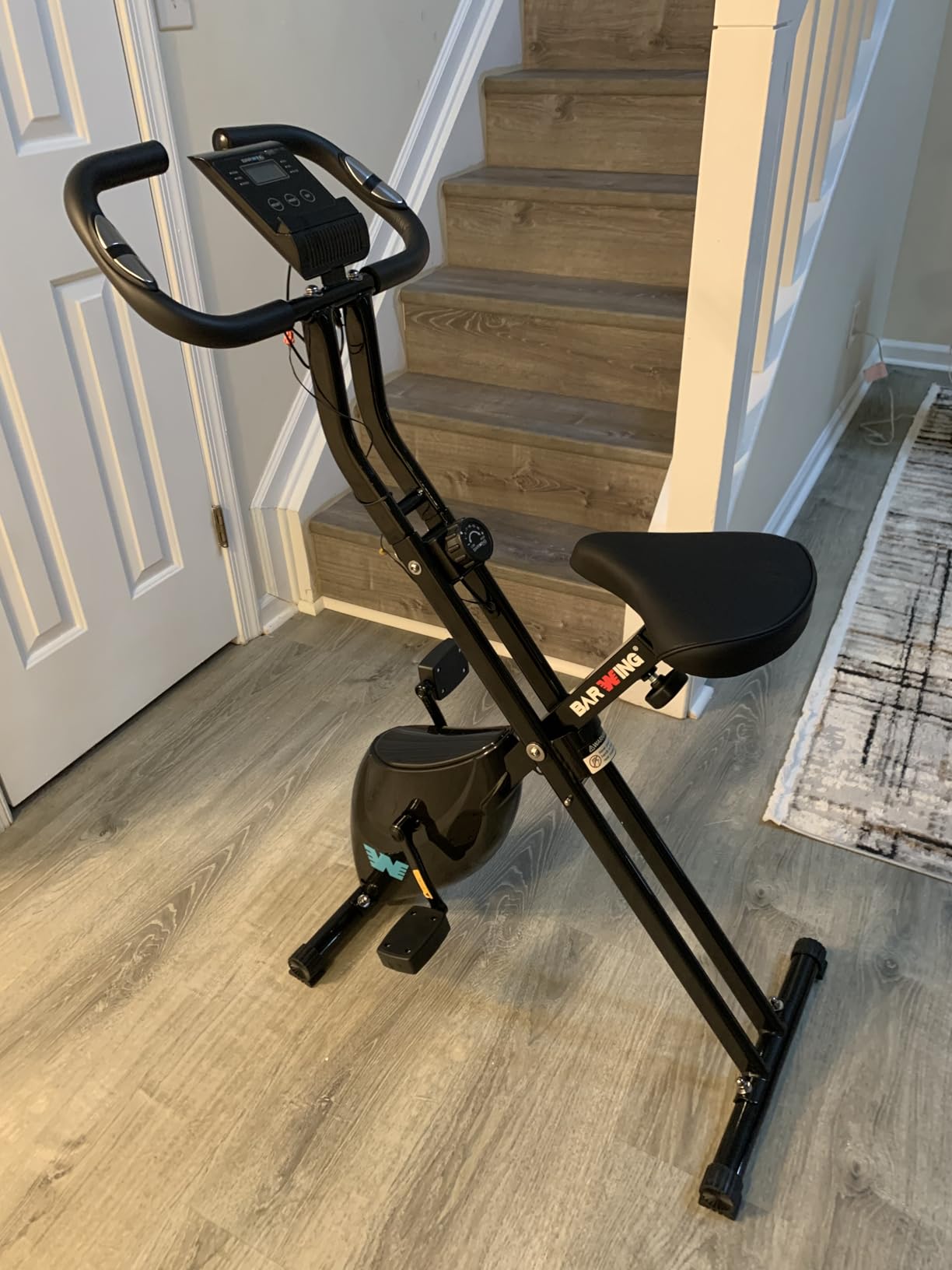
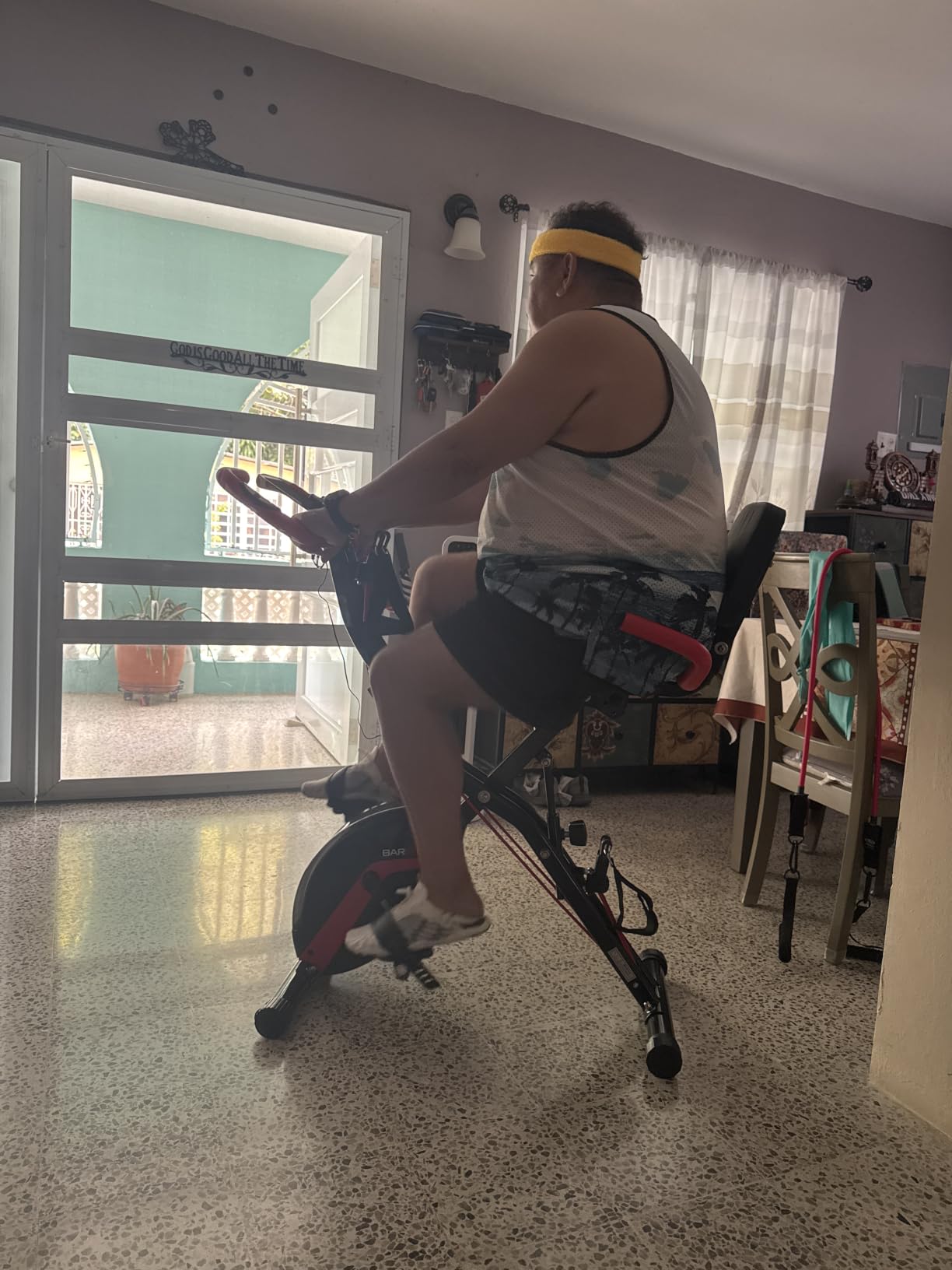
Now the honest part. The seat back pad slides back and forth and does not lock in place while you ride, so a rider who leans on it will feel it move. Folding requires holding a retaining knob down with one hand while the 40 lb frame tries to spring open, and that is genuinely difficult for a single older adult to manage.
The X-frame shape is also a mounting problem. Getting on requires lifting a leg over a frame that sits relatively high, and reviewers specifically flag this for shorter and older riders, along with a saddle that many people cover with a towel or cushion for sessions beyond 30 minutes. It ships 70 percent pre-assembled with hardware labelled and bolts preset, which cuts setup time significantly.
Who this bike suits
This suits a rider in a small apartment who cannot tolerate noise and who is comfortable enough with a step-over mount. Reviewers cite successful knee replacement and MPFL or TTO rehabilitation, and the 350 lb rating is a solid middle ground between the light-duty and heavy-duty frames here.
It is a good option for a household that needs the bike to disappear into a closet between uses rather than occupy a permanent room. The transport wheels and 1.8 sq ft folded size make that realistic, and the console tracks time, speed, distance, calories, and an odometer with a phone holder on top.
Who should skip it
Skip it if getting on and off is your main concern. The X-frame mount is exactly the problem we flagged in the introduction, and a recumbent frame solves it properly. Also skip it if you ride more than half an hour at a stretch without adding your own seat cushion.
Skip it if you plan to use the arm and leg resistance bands heavily, since they wear through quickly where they rub the frame. And skip it if you fold the bike daily alone, because the latch takes two hands to work reliably.
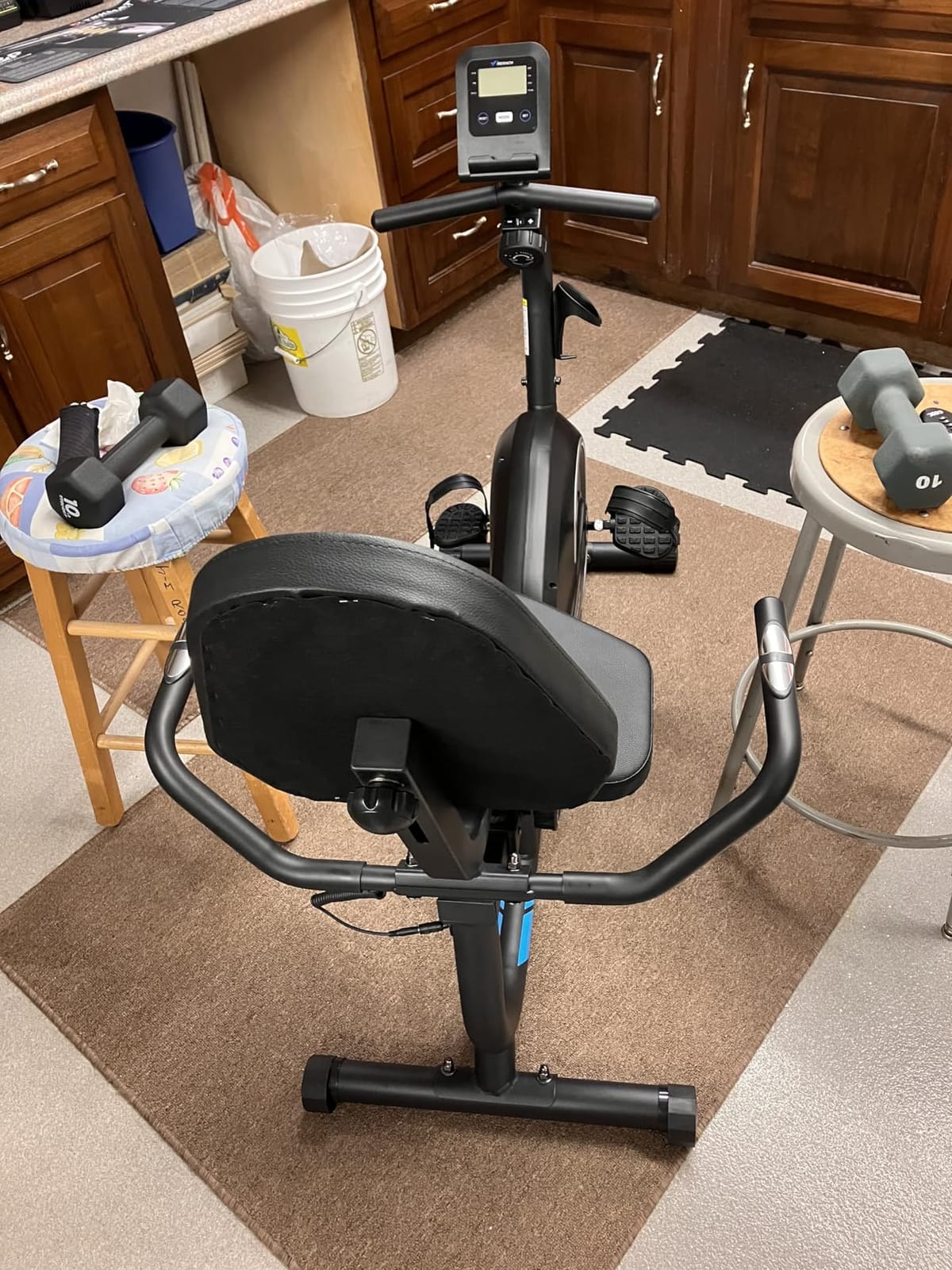
5. MERACH Recumbent Exercise Bike: Best for Quiet Apartment Living With App Support
MERACH Recumbent Exercise Bikes for Home with Smart Bluetooth Equipment Exercise Bikes App,LCD,Heart Rate Handle Stationary Bikes for Home, Magnetic Recumbent Exercise Bike for Seniors Gym S08/S23
Magnetic belt drive
8 resistance levels
300 lb capacity
57.3 lb weight
Fits 5 ft 3 in to 6 ft 2 in
Pros
- Belt drive is quiet enough for a shared wall or a downstairs neighbour
- Seat and backrest are well sized for 30-plus minute sessions
- Footprint of about 4.3 by 2.1 feet fits at the foot of a bed
- Smooth resistance changes and accurate pulse readings
- Several 70-year-olds report assembling it unassisted
Cons
- Only 8 resistance levels caps the ceiling at intermediate effort
- Best suited to riders up to about 170 cm
- Some owners retightened seat support bolts after a few rides
- Display has no backlight
MERACH is among the quietest recumbents in this list, and its footprint of roughly 4.3 by 2.1 feet means it fits at the foot of a bed in a room that has to work for other things. The belt drive does not clank, and reviewers with downstairs neighbours single that out as the reason they kept this bike rather than a chain-driven alternative.
Comfort is the strength. A large share of reviews come from buyers in their late sixties and seventies using it for knee arthritis and pre-surgical strengthening, and they describe the seat and backrest as comfortable enough for sessions over half an hour. The recumbent format and lean-back bars are repeatedly credited with making exercise tolerable for people who dread upright cycling.
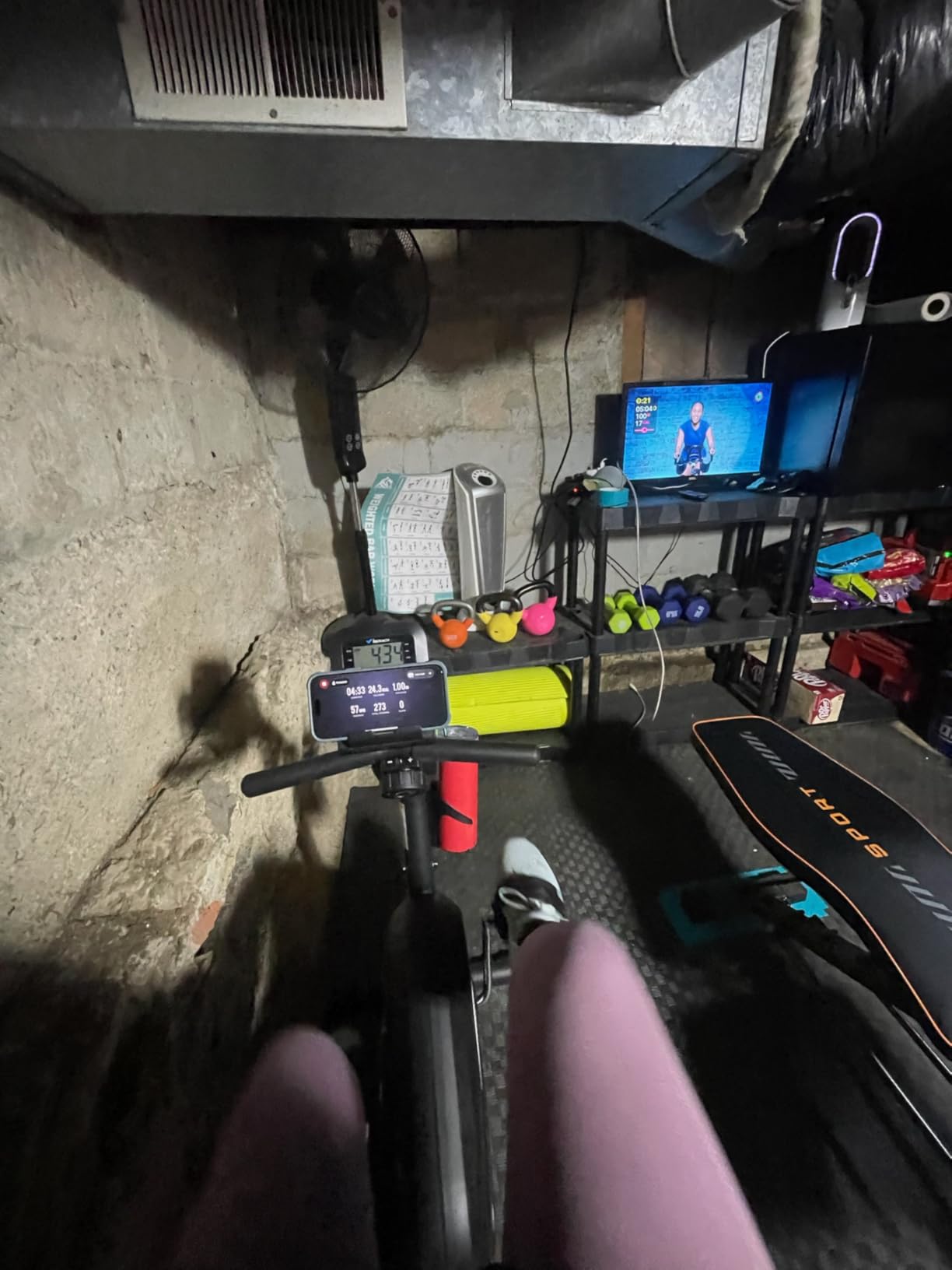
Eight resistance levels is the real limitation. That is enough for rehab and general fitness, and it will not go much further, so a rider who wants a hard hill at the end of a session will run out of range. Riders up to about 170 cm fit well; taller users report the frame feeling cramped.
It arrives partially pre-assembled with roughly 30 minutes of work, and a few owners had to retighten the seat support bolts after only a few rides, which is worth checking during the first week. The display is not backlit, and the Bluetooth app plus FantomFite gamified cycling logged workouts inconsistently for one reviewer. A bottle cage and pulse-sensor heart rate tracking are included, with a 1-year warranty.
Who this bike suits
This suits a rider who is comfortable with a moderate ceiling and wants a belt-driven recumbent in a small footprint. It is also a strong pick for pre-surgical strengthening, where a physical therapist wants steady low-to-moderate sessions rather than interval work, and where the app layer can be ignored entirely.
It suits a household where the bike lives in a bedroom or a multi-use room, because the footprint is modest and the weight of 57.3 lbs is manageable for two people. A 1-year manufacturer warranty is shorter than some, so it is a better fit for a moderate-intensity user than a heavy daily trainer.
Who should skip it
Skip it if you are a serious rider or you are working on building fitness toward harder efforts, because 8 levels runs out. Also skip it if you are taller than about 5 ft 7 in and want long sessions, since the fit ceiling is around 170 cm.
Skip it if you need a backlit display for early-morning or evening riding in a dim room. And if the seat bolt loosening worries you, check it after the first three rides and every month after that.
6. YYFITT 3-in-1 Convertible Bike: Best for Early-Morning and Dim-Room Riding
YYFITT 3-IN-1 Exercise Bike with Luminous Display | Foldable | XXL Backrest
Luminous digit display
16 magnetic levels
300 lb capacity
40 lb weight
Seat 12.6 in wide
Pros
- Patented luminous digits stay readable in a dark room
- Converts between upright and recumbent positions on the same frame
- Seat is 15 percent wider than comparable models and the XXL backrest has two heights
- Quiet magnetic drivetrain that does not wake a sleeping household
- Folds down to save about half the floor space
Cons
- Effectively comfortable only for riders up to about 6 ft
- 16 claimed resistance levels feel light against other bikes
- Display cycles screens instead of showing all metrics at once
- Heart rate readings are inconsistent
- Folding and unfolding is awkward solo
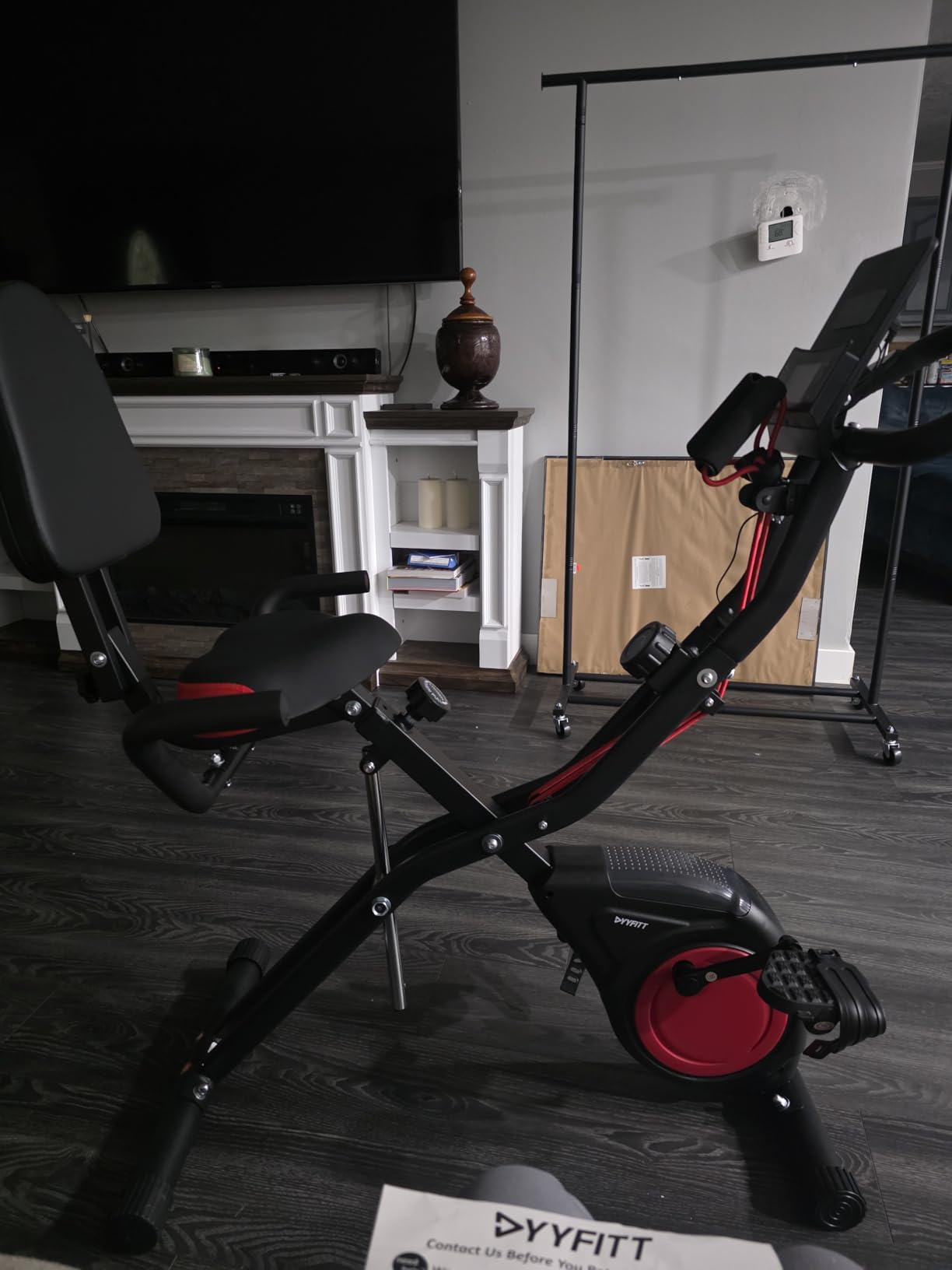
The luminous-digit display is the reason to buy this bike, and it is a real one. If you ride before anyone else is awake, a dim room, or at night, most LCDs become unreadable without a light. This one adjusts its viewing angle and stays legible, and reviewers single it out again and again as the standout feature.
The frame converts between upright and recumbent riding positions, which is unusual at this level and genuinely useful for a rider who finds a standard saddle uncomfortable but is not ready to commit to a full recumbent. The seat measures 12.6 by 9.5 inches, 15 percent wider than comparable models, and the XXL backrest has two height settings and adjustable angle.
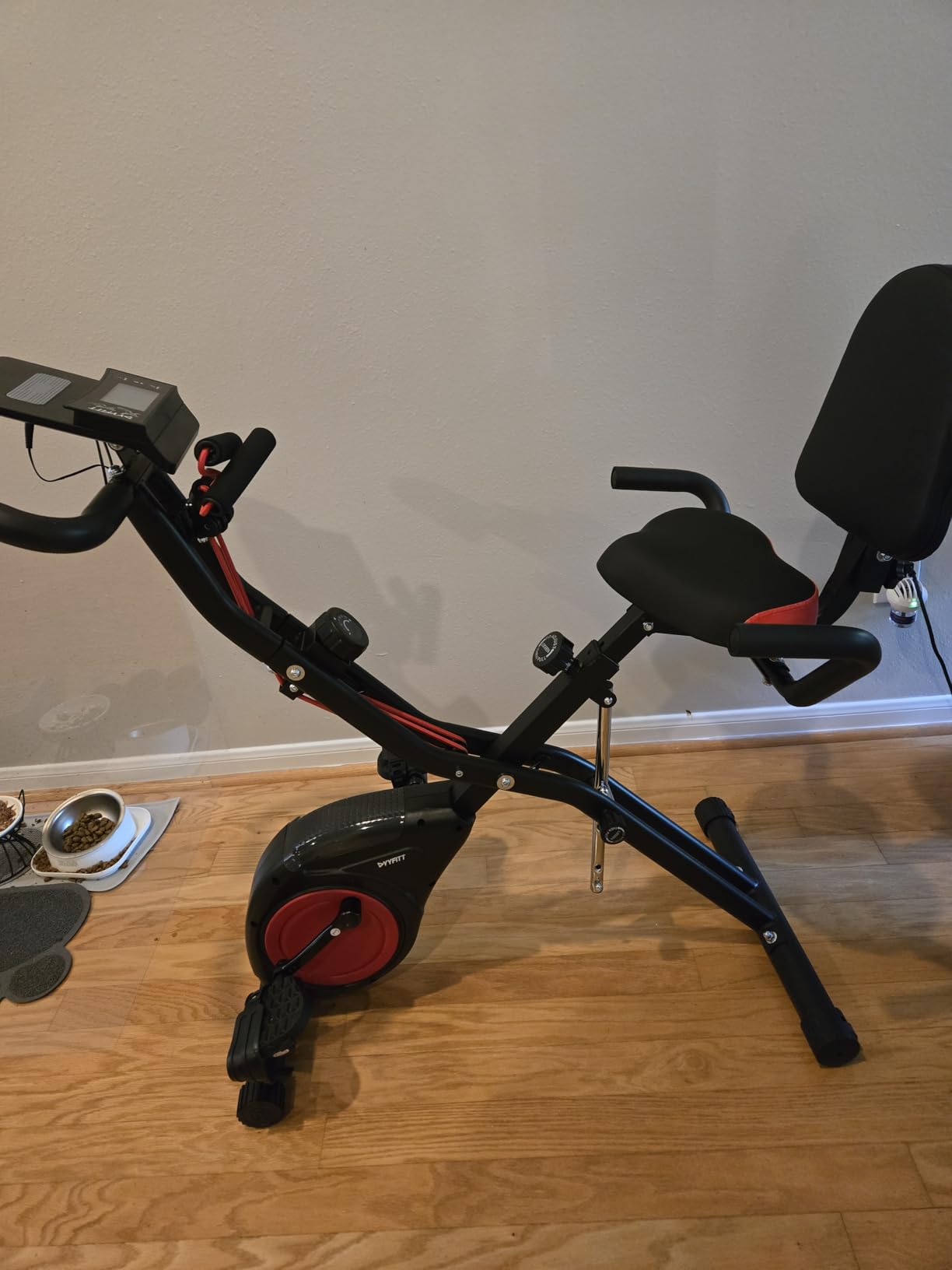
Two things temper that. Riders over about 6 ft report cramped leg extension, and one 6 ft 2 in owner found the frame too small. The 16 claimed resistance levels also feel noticeably light compared with the heavier flywheels in this list, so treat the top end as a moderate effort rather than a hill.
The display cycles through screens instead of showing everything at once and needs frequent resetting, and the heart rate grips give inconsistent readings. Folding is awkward to do alone. It fits a 26-inch inseam and folds down to save about half the floor space, which is a real gain in a small home.
Who this bike suits
This suits an early riser or anyone riding in low light, and that is a genuine safety feature rather than a gimmick. It also suits a rider managing fibromyalgia, chronic pain, or back problems who wants a backrest but wants the option to sit more upright on easier days.
It works well for a household where two people of different heights share the bike, since the seat and backrest both adjust through several positions. Two arm resistance bands are included for upper body stretching, and an assembly video and manual are provided.
Who should skip it
Skip it if you are taller than 6 ft, because leg extension is cramped and no adjustment fixes the frame length. Also skip it if you want a serious resistance ceiling, since the light feel at the top settings will disappoint you.
Skip it if you rely on accurate heart rate data, and if you fold the bike frequently by yourself. Our other convertible and recumbent options give you cleaner data or easier folding.
7. Marcy Foldable Upright Exercise Bike: Best Folding Upright for a Small Room
Marcy Foldable Exercise Bike with Adjustable Resistance for Cardio Workout and Strength Training NS-652
8 magnetic levels
250 lb capacity
36 lb weight
Folds flat
5 ft 1 in to 6 ft 3 in
Pros
- Folds down for genuinely compact storage in a closet or apartment
- 36 lb steel frame is solid for a budget upright
- Counterweighted pedals with adjustable foot straps reduce slipping
- Adjustable foam padded seat with an LCD tracking four metrics
- Recommended range covers 5 ft 1 in to 6 ft 3 in
Cons
- Only 8 resistance levels
- 250 lb capacity is lower than the other full-size bikes here
- Seat can feel firm on long sessions
- 36 lb weight is awkward to move by itself
- Larger footprint when in use
The Marcy is the simplest honest option here for someone who wants a real upright bike, a magnetic drivetrain, and a frame that folds out of the way. It is a 14-gauge steel frame rated to 250 lb, which is lower than the other full-size bikes in this list, so it is a pick for a lighter rider in a smaller space rather than a heavy rider in a gym.
It is a proven design with thousands of reviews behind it, and reviewers consistently mention sturdy construction and smooth magnetic resistance for the money. The counterweighted pedals with adjustable foot straps are a nice touch, because slipperiness is a common complaint on budget uprights and loose straps are a real fall risk on a moving pedal.
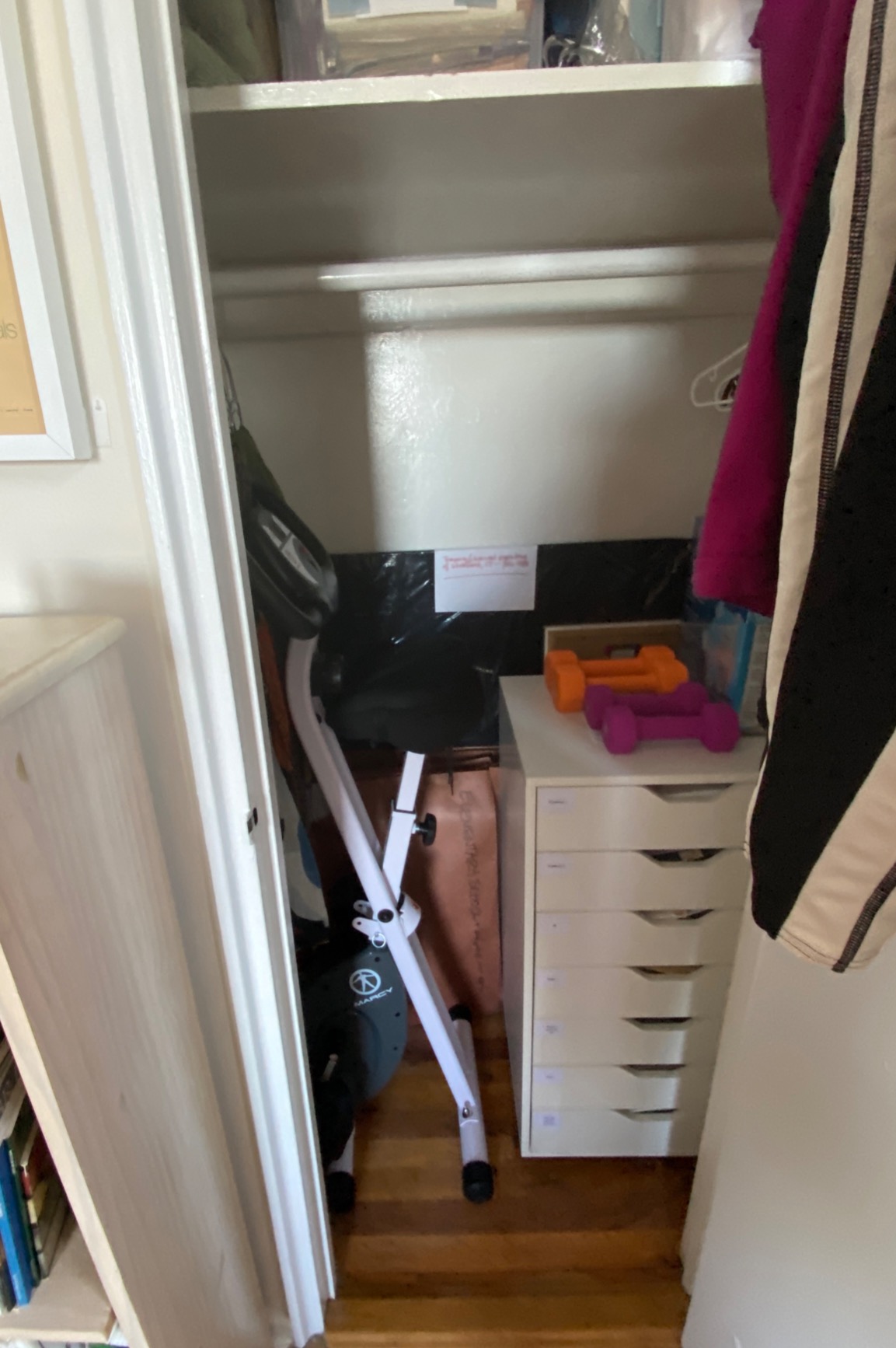
Eight resistance levels is a low ceiling. It is fine for general fitness and light rehab, and it runs out before you reach anything that feels like a real hill. The LCD tracks speed, distance, time, and calories, and there is no backlight, which is worth knowing if you ride early.
Assembly is required, and the frame is 36 lb, so folding is a two-person job for most older adults. Seat comfort is the other limitation: the foam is adjustable but can feel firm past an hour, and the footprint in use is larger than the folded one by a wide margin.
Who this bike suits
This suits a rider under 250 lb who wants a straightforward upright bike in a small apartment and will accept a moderate resistance ceiling. The fold is the real feature here, and it is a genuine one for anyone who cannot give a bike a permanent room.
It is a good fit for a general fitness goal rather than a rehab protocol, since the four console metrics and smooth magnetic resistance cover the basics without the learning curve of an app. The recommended height range of 5 ft 1 in to 6 ft 3 in is broad for an upright.
Who should skip it
Skip it if you are near or above 250 lb, if you have balance issues that make the step-over mount difficult, or if you want a serious resistance range. It is not a recumbent and it does not convert.
Skip it if you will be moving it on your own regularly, because 36 lb plus a folding frame is awkward. A recumbent with transport wheels is a better match for a rider who moves their machine.
8. Goimu 5-in-1 Folding X-Bike: Most Versatile for Rehab and Small Homes
Goimu Exercise Bike, 5 in 1 Foldable Stationary Bike for Seniors, 16-Level Adjustable Magnetic Resistance, Indoor Workout Bike with 330LB Capacity, Comfortable Seat Backrest X-bike (Dark Grey-Pro)
16 magnetic levels
330 lb capacity
50.6 lb weight
5.5 lb flywheel
Fits 4.4 ft to 7 ft
Pros
- Quiet magnetic resistance that does not disturb other household members
- Folds down for closet storage and rolls on transport wheels
- Backed by 12 months of free replacement and lifetime technical support
- Recommended height range from 4.4 ft to 7 ft is broad
- Comfortable seat and backrest well suited to hip arthritis and limited mobility
Cons
- Assembly is difficult and parts are inconsistently labelled versus the instructions
- Fold knob is very hard to operate alone as the frame collapses
- Console beeps loudly during use
- Seat leaves users sore on longer rides
- Larger than expected even when folded
The Goimu is the budget pick in this list, and it does something several more expensive bikes do not: it carries a 330 lb rating on a folding X-frame with a backrest and 16 magnetic levels. The 5.5 lb aluminum flywheel gives a quiet, low-effort pedal stroke, and the wide recommended height range from 4.4 ft to 7 ft is the broadest we found.
Several reviewers describe it as genuinely useful for hip and knee rehabilitation and daily small-space cardio, including one owner with dysautonomia who cited it as prescribed treatment. The 12-month free replacement service and lifetime technical support are unusually generous terms for a bike at this level.
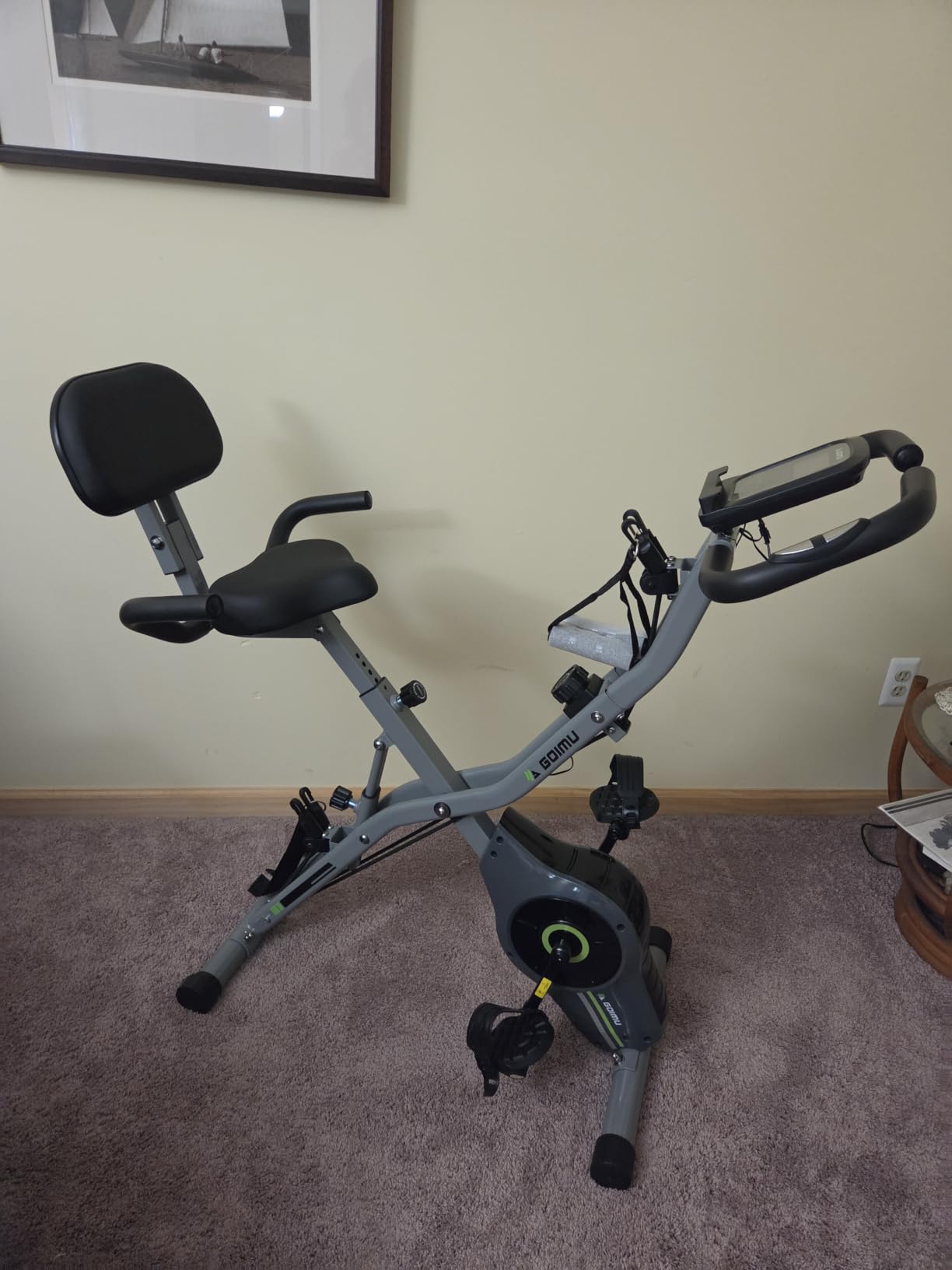
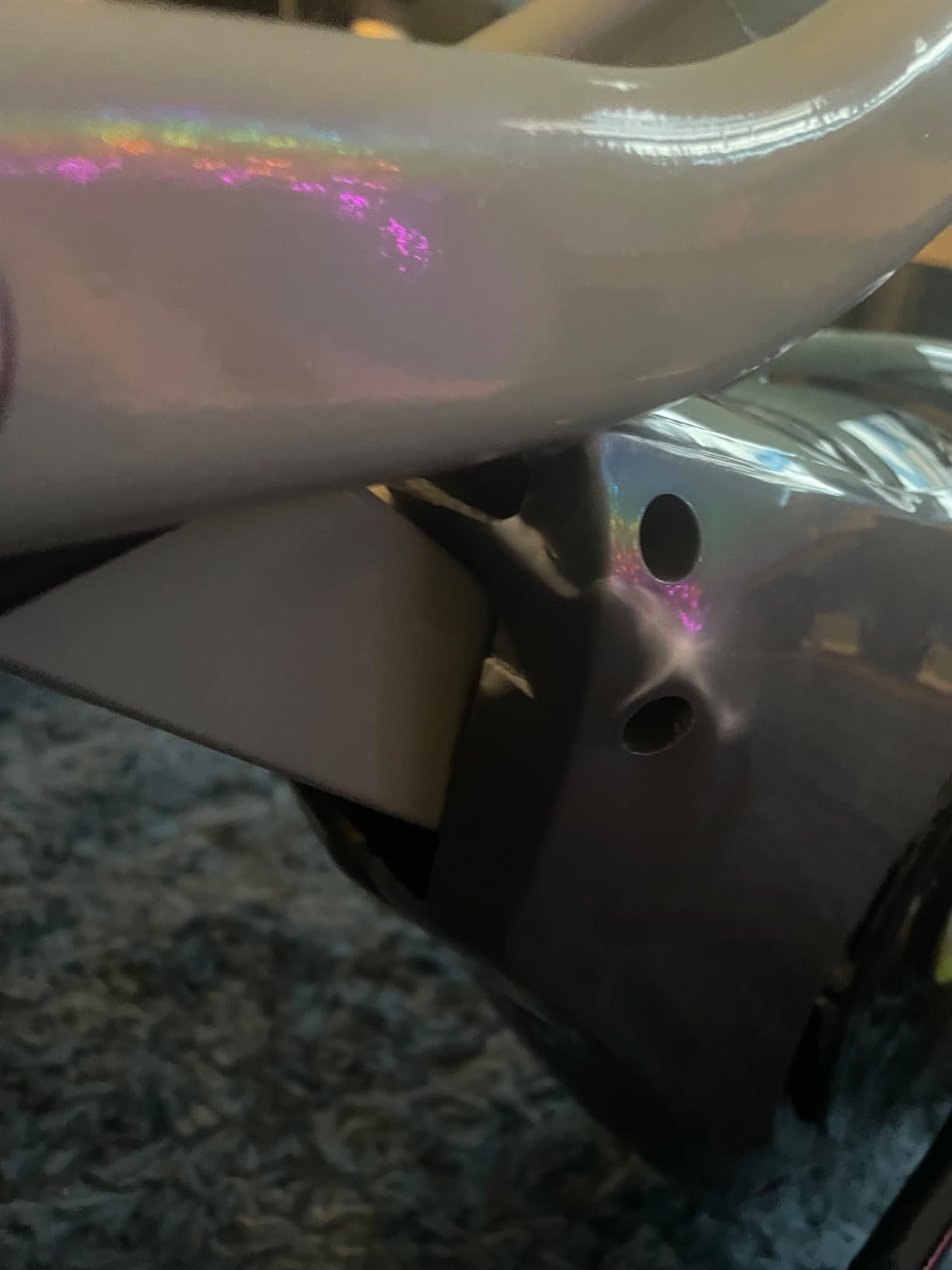
The ownership experience is where it falls short. Assembly is difficult and the parts are inconsistently labelled against the instructions, which is exactly the frustration an adult child buying for a parent will hit first. The fold knob is very hard to operate alone because the frame collapses as you loosen it, and the transport wheels do not work on carpet.
It is also larger than expected even when folded, and the console beeps loudly during use, which is a genuine problem for someone in a quiet apartment. The seat is the other recurring complaint, with riders reporting soreness on longer sessions. Leg resistance bands can lift the bike unless it is braced against something heavy.
Who this bike suits
This suits a rider who needs a folding frame, a backrest, and a higher weight capacity than the entry-level folding bikes offer, and who has someone nearby who can help with assembly. It works well as a basic cardio and stretching machine for rehabilitation, and for daily folding and unfolding in a small home.
It is a sensible budget choice for a lighter, more mobile rider who does not need a serious resistance ceiling and does not mind a firm saddle. The upgraded seat cushioning and ergonomic handlebars are a modest improvement over earlier versions, not a transformation.
Who should skip it
Skip it if you will be alone with the assembly or the folding mechanism, because both are genuinely difficult for a single person. Also skip it if console noise matters in your home, since the beeping is loud enough to be noticed through a wall.
Skip it if you plan long sessions on a hard seat, and if you need a recumbent position for back or hip pain, because the X-frame is an upright mount with a small pad, not real back support.
9. Exerpeutic 2000M Motorized Under Desk Bike: Best for Passive-Motion Rehabilitation
Exerpeutic 2000M Motorized Under Desk Exercise Bike – Electric Legs and Arms Pedal Exerciser – Fitness Equipment for Home Use – Remote Work Office Accessory – Black
Motor assisted
24 levels and 24 programs
Arms and legs
130 kg capacity
18.2 in frame
Pros
- Motor assistance moves the pedals for riders with almost no leg strength
- Works arms and legs together for shoulder
- hip and knee rehabilitation
- Quiet enough for a shared room
- Alloy steel construction with an included stability mat and carry handle
- Overload protection stops the cranks if the legs cannot rotate freely
Cons
- Controller cord is too short to hold comfortably
- No height adjustment limits range of motion
- No effort-based resistance once the motor is off
- Folding pedals are the most failure-prone part
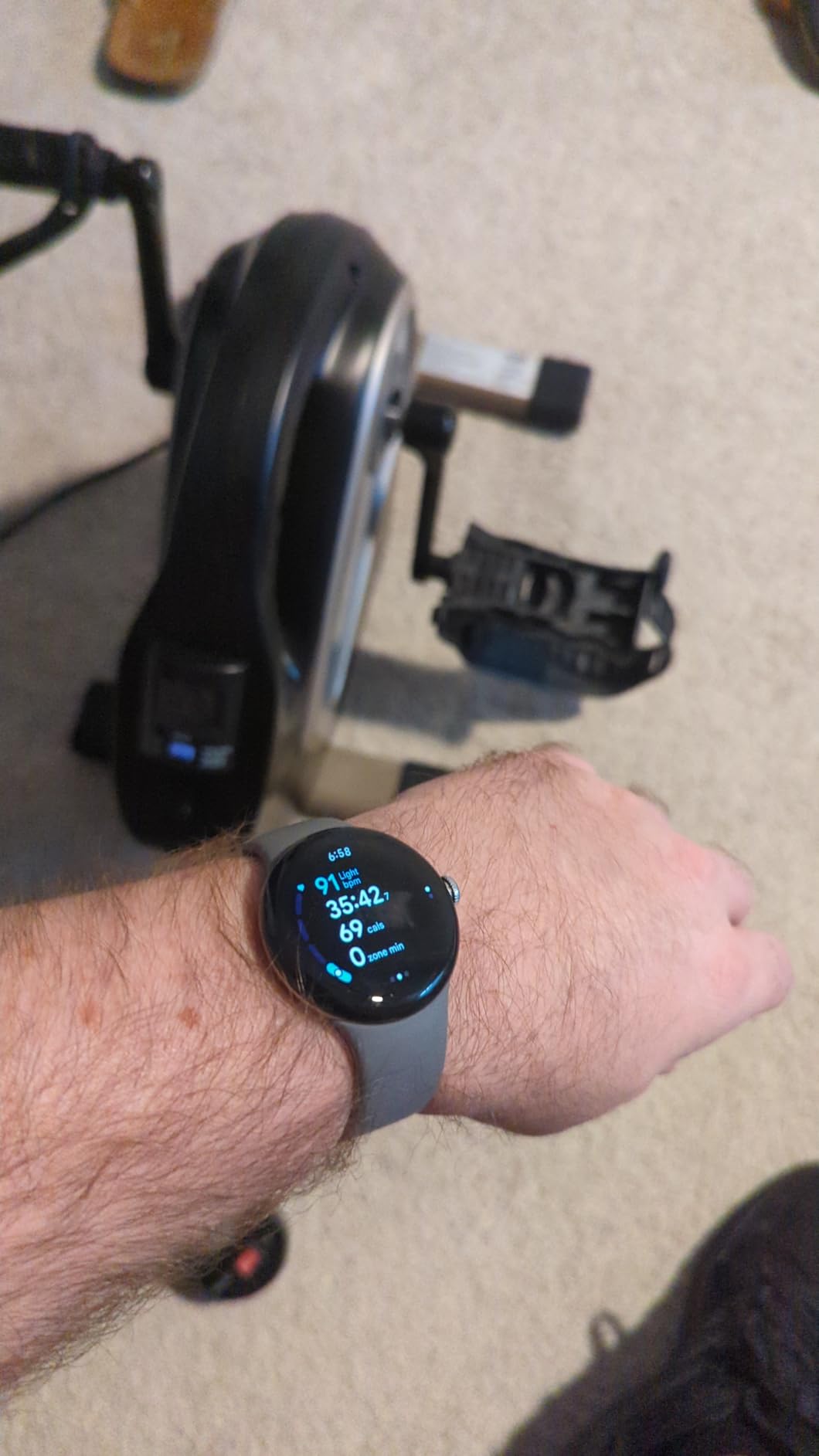
This is a rehabilitation device more than a workout machine, and that is the point. The motor turns the cranks for riders who cannot initiate pedalling on their own. Owners with rheumatoid arthritis, Parkinson’s, shoulder replacement recovery, and one-sided paralysis report restored mobility, leg muscle gain, and reduced joint stiffness from using it daily.
It works arms and legs, which is unusual and valuable for anyone with limited lower-body capability who can still move their upper body. Overload protection stops the cranks if the speed is excessive or the legs cannot rotate freely, which is a real safety feature in a passive-motion context. There is an automatic 15-minute powered session and 24 programs on a multi-function LCD.
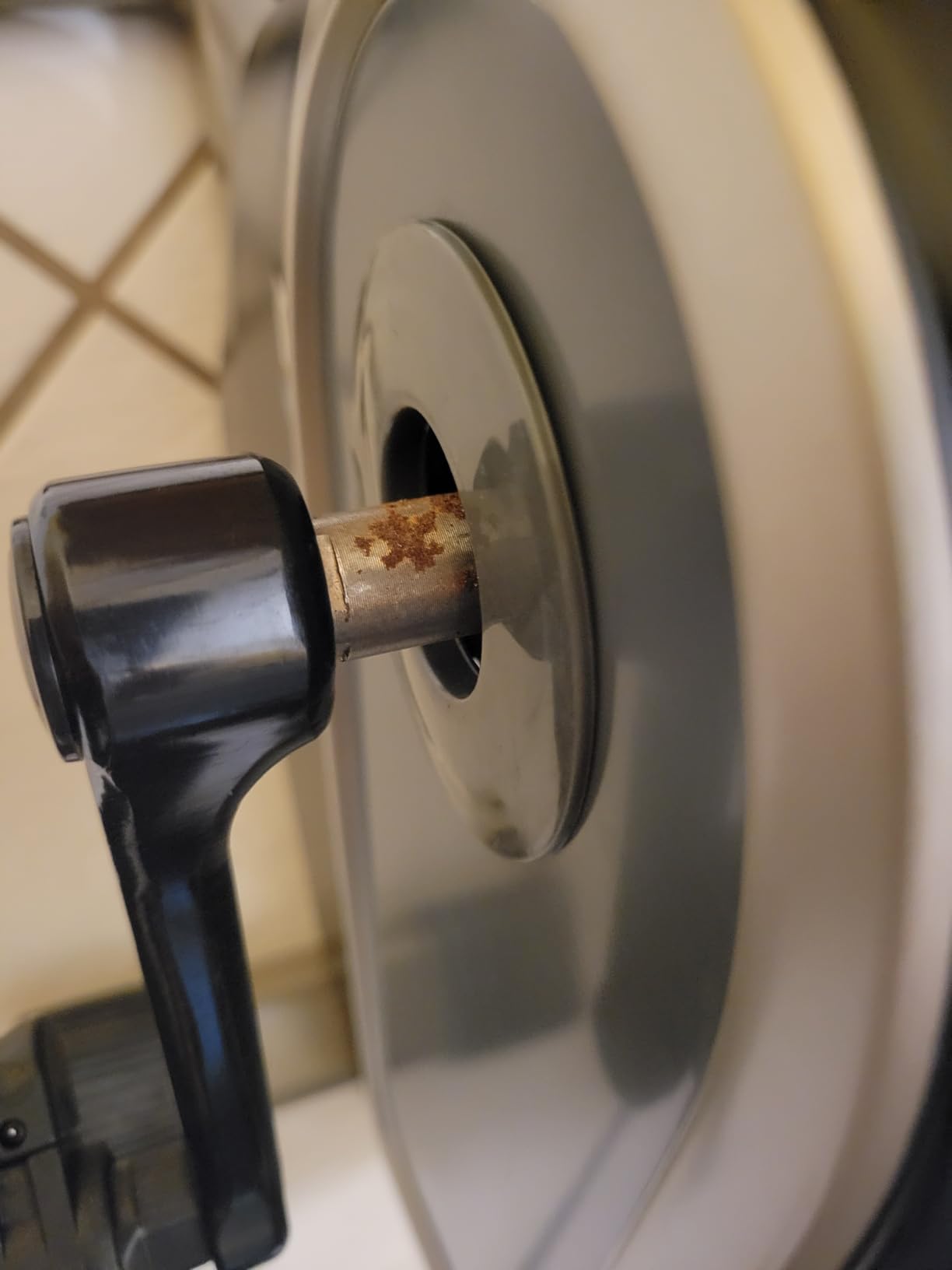
The physical limits are worth stating plainly. There is no height adjustment, so range of motion is limited unless you prop the unit up yourself. Once the motor is off, there is no effort-based resistance option, so you cannot use it to build strength as you recover, only to keep moving.
The controller cord is too short to hold comfortably in the hand, and the folding pedals are the most failure-prone part on the machine and the only assembly required. The 130 kg capacity is more than adequate. It includes a floor mat and a carry handle, and carries a 1-year limited manufacturer warranty.
Who this bike suits
This suits a rider recovering from a stroke, a hip or knee replacement, or a long period of immobilisation who cannot yet pedal under their own power. Reviewers describe it as the tool that got someone walking again, and the motorized assistance means progress is not blocked by weakness on day one.
It also suits anyone who works at a desk and wants arm and leg movement during the day, since the 18.2 by 21 inch frame fits under a desk. A physical therapist asked to recommend something for a patient with very limited range of motion will find the overload protection reassuring.
Who should skip it
Skip it if you can already pedal, because the lack of effort-based resistance means it cannot grow with you. There is no height adjustment, so a tall rider gets a cramped stride.
Skip it if you need a full workout, a proper seat, or a real backrest, because this is a floor device. And skip it if the short controller cord will frustrate you, since several reviewers call it out directly.
10. Sunny Motorized 2-in-1 Pedal Exerciser: Best for Physical Therapy at Home
Sunny Health & Fitness Smart 2-in-1 Motorized Pedal Exerciser for Seniors
Motorized, arms and legs
18 speed levels
260 lb capacity
15.9 lb body
21.5 in long
Pros
- Motor assistance gives genuinely low-impact movement for knees
- ankles and hips
- Works both arms and legs for rehab and joint flexibility
- Remote control changes speed
- direction and programs without bending down
- Compact 15.9 lb body with a carry handle works in a chair
- at a desk or on the sofa
- Tilt protection stops the unit within 10 seconds if it tips past 45 degrees
Cons
- Lowest speed is still too fast for users with severe spasticity
- No resistance control
- only speed control
- Remote does not show which of the four modes is active
- Console button beeps can be audible in a quiet room
This is the pedal exerciser we would recommend for someone in a wheelchair, on a couch, or working from a chair during physical therapy. The motor drives the pedals, so movement happens even with very limited leg strength, and the 15.9 lb body with a carry handle makes it easy to move from room to room in a way a full bike never is.
The remote control is the feature that makes it usable in practice. You change speed, direction, and programs without bending down to the base, which matters when bending is exactly what you cannot do easily. Tilt protection stops the unit within 10 seconds if it tips past 45 degrees, and there is a 5 ft 7 in power cord so placement is flexible.
The critical limitation is the slow end. The lowest of 18 speed levels is still too fast for users with severe spasticity, and several reviewers report feet slipping off the pedals as a result. There is no resistance control at all, only speed, so you cannot make the movement harder as you improve.
The remote also does not indicate which of the four modes, Manual or P1 through P3, is currently active, and the manual explains the mode buttons poorly. Console button beeps can be audible in a quiet room. The warranty is 1 year on the structural frame and 180 days on other parts, and the speed range covers 0.67 to 1.9 mph.
Who this bike suits
This suits a rider doing at-home physical therapy who needs assisted movement rather than a workout, especially post-operative knee, ankle, or hip recovery. It is also a good fit for anyone who cannot get down to the floor easily, because it works from a chair, a desk, or a sofa.
It suits a caregiver working alongside a patient, since the remote lets someone else adjust the pace without touching the machine. The SunnyFit app connection is free with no membership fee, and the 260 lb capacity covers most riders.
Who should skip it
Skip it if you have severe spasticity or involuntary muscle contractions, because the minimum speed is not slow enough and feet can slip. Also skip it if you want to build strength, since there is no resistance control to add effort with.
Skip it if you need a real bike. There is no seat, no backrest, and no meaningful resistance ceiling, so it is a rehab tool and a circulation aid, not a cardio machine.
11. Sunny Smart Mini Cycle: Best Starter Mini Cycle for Arms and Legs
Sunny Health & Fitness (White) Under Desk Smart Mini Pedal Exerciser, Dual Function Exercise Cycle Bike with Low Profile Design – SF-B023005WHT
16 resistance levels
300 lb capacity
11.7 lb
Mesh belt drive
Manual operation
Pros
- 16 levels of stepless micro-adjustment give unusually fine resistance control
- Quiet mesh belt drive for early morning or late night use
- 300 lb capacity is higher than the other mini cycles here
- Alloy steel build with a 2-in-1 arm and leg design
- Carry handle and 11.7 lb weight make it genuinely portable
Cons
- Manual only
- so there is no motorized assistance for passive use
- Battery powered so the display needs batteries eventually
- Larger footprint than some mini cycles
- Higher price than the simplest mini models
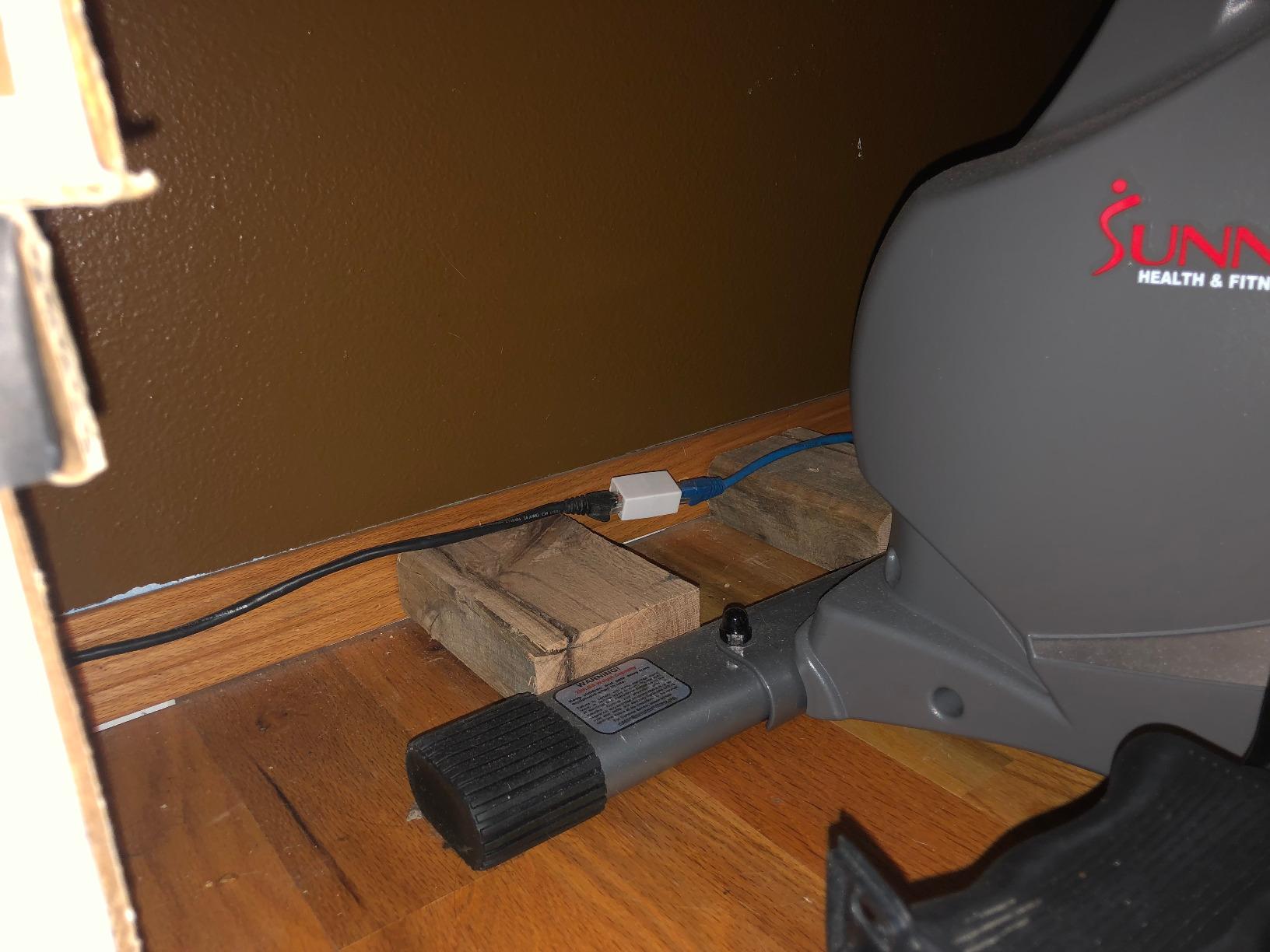
Among mini pedal exercisers this is the one with the most real adjustability. Sixteen levels of stepless micro-adjustment means you can creep resistance up in increments small enough to use for post-surgical knee rehab, where a 5-level knob is too coarse to help. The mesh belt drive is quiet enough to use while someone else is asleep.
It is also sturdier than the category usually is, with an alloy steel build and a 300 lb capacity, higher than the other mini cycle in this roundup. The 2-in-1 design works arms and legs, the LCD tracks speed, time, distance, and calories, and at 11.7 lb with a built-in handle it moves between a chair, a desk, and a sofa without effort.
The defining limitation is that it is manual only. A rider who cannot initiate pedalling has no assistance available here, which is the entire point of the two motorized machines above. If passive movement is the goal, this is the wrong device.
It also runs on two AAA batteries, which are included but will eventually need replacing, and the display has no backlight. Reviewers note it is a bit larger than the simplest mini models, and buyers who later want motorized assistance tend to end up replacing it entirely. The warranty is 1 year on the frame and 180 days on parts.
Who this bike suits
This suits a rider who can pedal on their own but wants low-impact movement in a chair, at a kitchen table, or beside a desk. It works well for circulation, general mobility maintenance, and light knee rehabilitation, and the arm position makes it useful for shoulder mobility too.
It is a good first machine for someone unsure whether they will stick with riding, because it is small, stores anywhere, and the 16 levels mean it will not outgrow a beginner. Reviewers frequently note the range and the LCD tracking as the two things they value most.
Who should skip it
Skip it if you need the pedals moved for you, since there is no motor. Also skip it if you want real resistance for a cardio session, because the effort ceiling is low by design.
Skip it if you have very limited floor space and need the smallest possible footprint. The Sunny mini cycle is sturdy, and that sturdiness costs a few inches of floor area compared with the plastic models.
12. LUBBYGIM Motorized Pedal Exerciser: Best Seated Arm and Leg Machine With a Two-Year Warranty
Under Desk Bike Pedal Exerciser for Seniors, LUBBYGIM Mini Exercise Bike
Motorized or manual
6 speed levels
88 lb capacity
9.2 lb
2 year warranty
Pros
- Motorized and manual modes in one machine
- Quiet operation that does not disturb someone on a call or watching television
- Remote control for easy adjustment without bending down
- LED display tracks time
- speed
- and calories
- Most compact option here at 9.2 lb
- and it fits under a desk
Cons
- 88 lb maximum weight recommendation is far below the other machines here
- Only 6 speed levels
- Plastic construction feels less durable than the steel machines
- Needs a power outlet for motorized mode
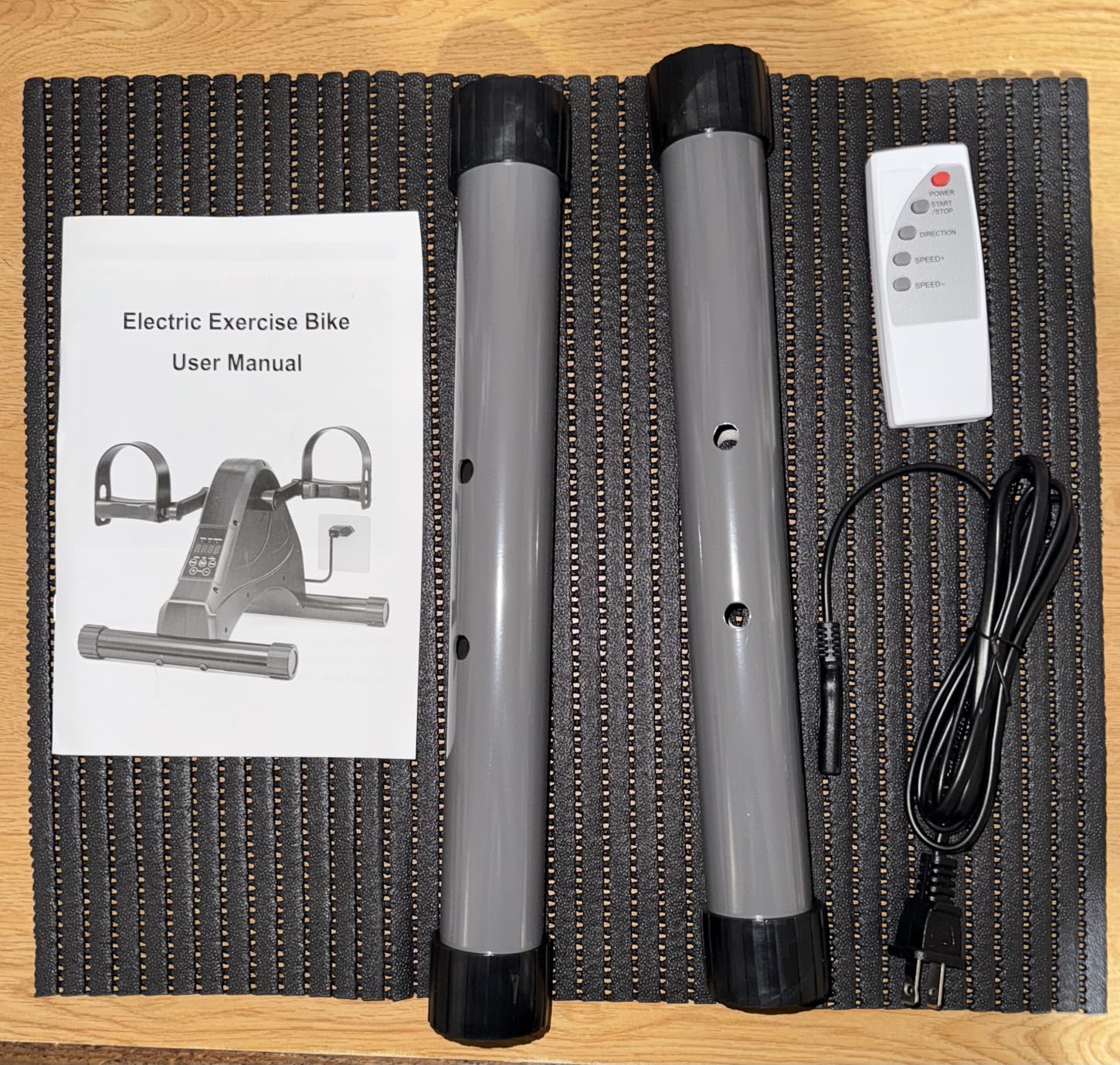
This is the smallest and lightest machine in the list at 9.2 lb, and it is the one to pick when floor space is genuinely tight or the rider needs something that can be put away between uses. It pedals forward and backward, which is unusual and useful for ankle and circulation work, and it runs at 1 to 6 rpm, so the slow end is genuinely slow.
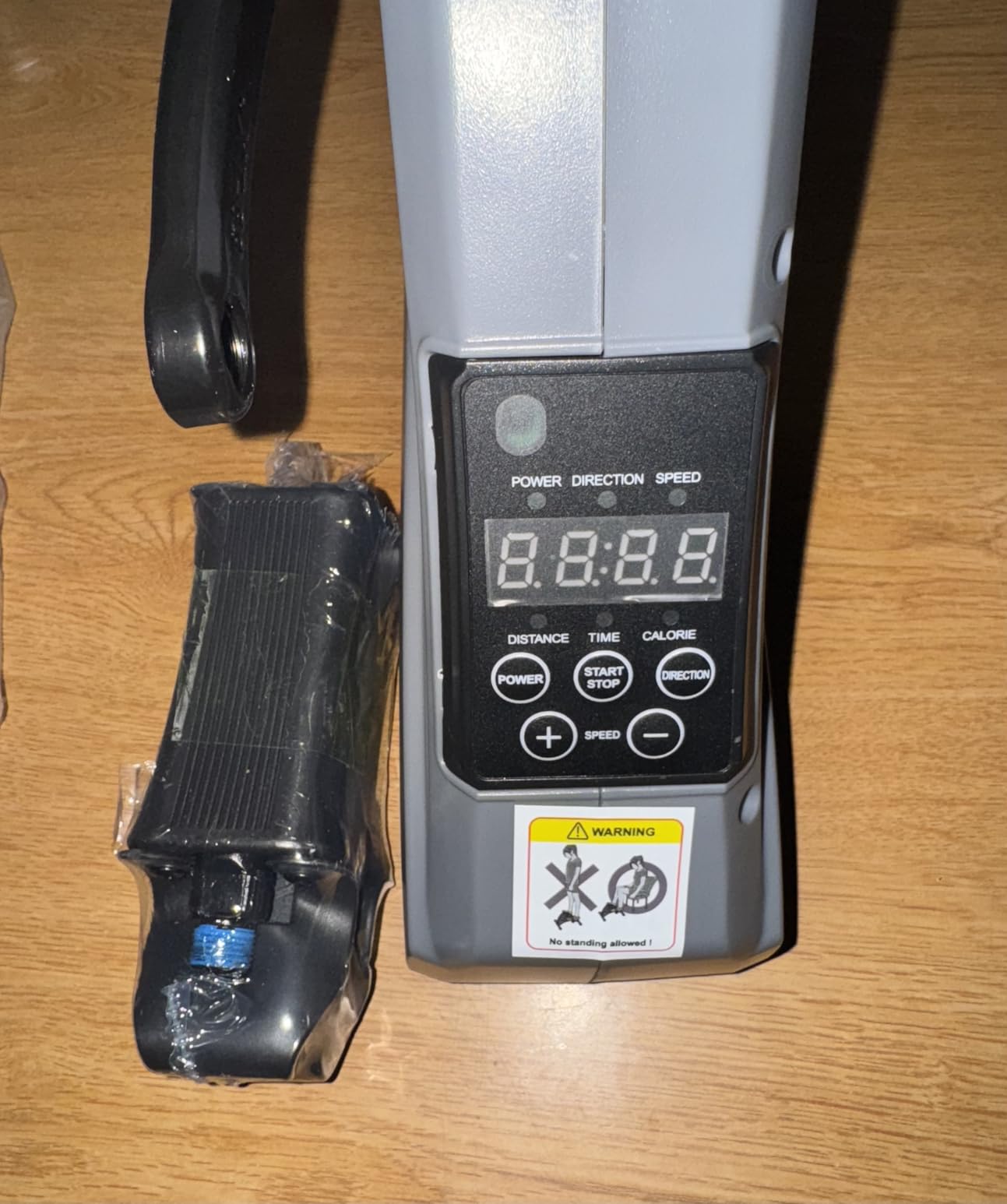
It works motorized or manual, and the automatic and passive modes cover both passive movement and active pedalling in one device. The remote control changes speed without bending down, and the LED display shows time, speed, and calories. The two-year warranty is the longest of any product here.
The weight recommendation is the catch. At 88 lb it is rated for a fraction of what the other machines carry, so a larger adult simply cannot use it as specified. Combined with plastic construction, this is a machine for a smaller rider or for hands-and-arms work where body weight is not on the pedals at all.
Six speed levels is coarse, and motorized mode needs a power outlet. There is no backlight on the LED and no resistance control beyond speed. Reviewers note the weight limit and the plastic build as the two limitations, and they are correct on both counts.
Who this bike suits
This suits a smaller-framed rider who needs assisted arm and leg movement, or anyone using a pedal exerciser purely for hand and arm rehabilitation. The 9.2 lb weight and 15.9 by 12.5 inch footprint make it the easiest machine here to store and to move between a desk, a sofa, and a chair.
It is a good fit for someone who wants to work on mobility while doing something else, since the motor is quiet enough to run during a television programme or a work call. The two-year warranty reduces the risk on a light-duty device.
Who should skip it
Skip it if you are above the 88 lb recommendation, and treat that limit seriously rather than as a formality. Also skip it if you need a durable machine you will keep for years, since the plastic build is the weak point.
Skip it if you want real cardio effort, because six speed levels and no resistance control cap what you can achieve. For a genuine workout, move up to one of the full bikes earlier in this list.
Which Frame Style Fits Your Mobility?
This is the decision that matters more than any brand, so we broke it down by what the rider can physically do rather than by price. If you are buying for someone else, the honest test is simple: can they walk to a chair and sit down without holding furniture? If not, start with a recumbent.
Recumbent. You sit in a seat with a backrest and pedal in front of you, so your torso is supported and there is no frame to swing over. Mounting is a sideways sit-down, which is the single safest entry point for anyone with balance concerns, hip replacements, or knee pain. The trade-off is a longer footprint and generally a higher price than an upright.
Semi-recumbent and convertible bikes. A tilting seat or a frame that converts between upright and recumbent gives you a compromise. It takes up less floor space than a full recumbent and mounts more easily than a swing frame, but the back support is a pad rather than a proper backrest, so it is not the answer for significant back pain.
Step-through upright. The frame has a low, open front so you can step up rather than swing a leg over. This is a good middle ground for a rider who is mobile but does not want to climb. None of the bikes in our list is a true step-through, which is worth knowing if your rider cannot lift a leg over a standard X-frame.
Upright swing frame. The classic gym bike. It is compact, often cheaper, and the best choice for cardio if back, hip, and knees are fine. It is the worst choice for a rider with any balance limitation, because mounting demands the exact hip rotation and single-leg balance that declines with age.
Under-desk pedal exerciser. You pedal from a chair or a sofa. If the rider will not or cannot get onto a full bike, this is not a compromise, it is the correct answer. Motorized versions move the pedals for riders who cannot initiate pedalling at all.
A practical mounting test: sit on the bike fully, then check that your knee is slightly bent at the bottom of the pedal stroke with your heel on the pedal. If your leg locks straight, the seat is too high or too far. And if you cannot get on the bike without lifting your leg above hip height, the frame is wrong for you regardless of how good the specs look.
Our recumbent exercise bike guide goes deeper on seat-back angle and sizing if you have already decided a recumbent is the right shape. If you are still narrowing by price, our budget exercise bike roundup covers what you lose at the lower end.
What to Look For: Resistance, Seat, Capacity and Noise
Magnetic resistance beats friction. A magnet passes near a rotating flywheel instead of a pad clamping against it, so resistance rises and falls without a grab. That is the quiet, smooth pedal stroke that protects joints. Friction bikes like the YOSUDA blend both, which gives fine control but adds a pad that wears.
Flywheel weight predicts smoothness. Heavier is generally smoother: the 25 lb flywheel in the YOSUDA and the 6.6 lb one in the BARWING feel different, and the 5.5 lb one in the Goimu sits at the lower end. For an arthritic knee, a heavier flywheel means less jerk at the start of each stroke.
Seat padding matters more than seat adjustment. Reviewers across this list repeatedly mention firm saddles past 30 to 45 minutes, and the fix that works for most people is a foam cushion or a folded towel over the seat. For a bony rider this is not a luxury, it is the difference between riding daily and quitting.
Check the weight capacity honestly. Our list spans 88 lb on the LUBBYGIM up to 400 lb on the XVGVSV recumbent. If you are within about 10 percent of a bike’s ceiling, expect a firmer and twitchier ride, and check the seat cushion base plate on lighter frames at higher weights.
Listen for belt drive. Belt drivetrains and mesh belts are quiet. If a bike has a chain, expect a periodic clatter that carries through a floor. The BARWING claims under 20 dB, and several riders confirm it independently, which makes it our pick for shared walls.
Console simplicity wins. For this audience a resistance knob plus an LCD showing time, speed, distance, and calories is the right amount of technology. A backlit or luminous display is a real quality-of-life feature if you ride before dawn or after dark, and only the YYFITT in this list has genuinely luminous digits.
Grips and pedal straps. Arthritic hands need a handlebar you can hold without a death grip, and loose foot straps are a real hazard. The Marcy’s counterweighted pedals with adjustable straps, and the Sunny recumbent’s flip-up seat handle, are both worth weighting in the decision.
Assembly and where it will live. Setup ranges from about 30 minutes on the pre-assembled recumbents to a difficult build on the Goimu. If you are buying for a parent and cannot be there in person, the 85 percent pre-assembled recumbent is the most forgiving option. On storage, our foldable exercise bike guide covers the footprint trade-offs in more detail.
Price bands, without the noise. At the entry tier you are looking at folding X-frames, mini cycles, and the entry recumbents, where the compromises are firm seats and 8-level resistance. In the mid tier you reach 16 magnetic levels, wider adjustment, and the better recumbent frames. Above that you get heavier flywheels, higher capacities, and larger consoles. The product buttons below show current pricing.
Getting Started Safely: Your First Two Weeks
Clear it with your doctor first if you have heart disease, a recent joint replacement, uncontrolled blood pressure, or a history of falls. Then follow a simple progression rather than starting from the console’s instructions.
Week one. Five to ten minutes, three or four days a week, at the lowest resistance that still lets the pedals turn. The goal is not fitness, it is teaching your body the movement is safe. Many people find their legs feel unfamiliar the next morning, and that is normal at this stage.
Week two. Add five minutes per session, and add one resistance level every third session rather than every session. Raise the seat so your knee is slightly bent at the bottom of the stroke with your heel on the pedal, and keep the seat in a position that lets you ride with a relaxed grip.
Comfort habits. Ride without socks if your feet slip, or add pedal straps. Wear padded cycling shorts or use a gel seat cover if you are going past 30 minutes. Keep water within reach and sip regularly. Stop if you feel chest tightness, dizziness, or sharp joint pain, and do not push through numbness in the feet.
On the pedals. Set the straps snug enough that your foot does not lift at the top of the stroke. Loosely strapped feet on a moving pedal are the most common cause of the minor falls people report on upright bikes.
Maintenance. Check the pedal and seat bolts every month for the first three months, especially on the recumbents where weight shifts side to side. Wipe the chain or belt dry if it gets dusty. Keep a bottle of chain lubricant on hand if your bike is chain-driven, and never oil a magnetic resistance flywheel. If you also use a rollator for outdoor walking, a stationary bike is an excellent indoor companion for days when the weather or the pavement makes walking risky.
Frequently Asked Questions
What type of exercise bike is best for over 70 year olds?
A recumbent bike is the safest default for riders over 70, because you sit down sideways instead of swinging a leg over a frame. If the rider is mobile and wants a backrest without a large footprint, a convertible or semi-recumbent bike works. An upright suits riders with no back, hip or knee problems. A pedal exerciser is correct when getting onto a full bike is not realistic.
Is a recumbent bike better than an upright bike for seniors?
Usually yes, and the reason is mounting rather than pedalling. A recumbent lets you sit down without lifting a leg over the frame, and its backrest carries your torso weight so your lower back and hips work less. An upright is more compact and better for hard cardio intervals, but it is a poor fit for balance concerns, hip arthritis or back pain.
Are exercise bikes safe for seniors?
Stationary cycling is one of the safest forms of cardio because there is no balance demand, no impact on standing, and you can stop instantly. It is still not risk-free. Get medical clearance first if you have heart disease, uncontrolled blood pressure, a healing joint replacement, or a history of falls, and start at low resistance with a short session.
How long should a senior ride a stationary bike?
Start with five to ten minutes three or four days a week in week one, then add five minutes per session in week two. Most riders settle into 20 to 30 minutes on most days. Consistency matters far more than duration, and several short daily sessions are better for joints than one long weekly ride.
What resistance level should a beginner senior start on?
Start at the lowest level that lets the pedals turn smoothly, usually level one or two on a 16-level scale. Increase by one level every third session rather than every session. On a bike with only 8 levels, the lowest setting is already a reasonable starting point, and a motorized pedal exerciser is a better starting point than any resistance setting if leg strength is very low.
Can you lose belly fat by riding a stationary bike?
Riding burns calories and builds cardiovascular fitness, but it does not burn fat from one specific area of the body. Spot reduction is not possible through cycling alone. What cycling does do is raise total daily calorie burn, support heart health, and build leg and core strength, and those changes over months shift overall body composition.
Our Final Verdict on the Best Exercise Bikes for Seniors in 2026
The Sunny Health & Fitness Smart Recumbent Bike is our pick for 2026 because the flip-up side handle solves the mounting problem that ends most senior riding plans, and it does that without giving up 16 magnetic levels or a 300 lb rating. If the rider is heavier, the XVGVSV recumbent takes 400 lb and comes 85 percent assembled. If quiet matters most, the BARWING runs under 20 dB and folds flat. And if getting onto any bike is unrealistic, the Exerpeutic 2000M moves the pedals for the rider when they cannot move them themselves.
Whatever you choose, sit down on it before you buy. Mounting ease decides whether a bike gets used next month or gathers dust in the corner, and no spec sheet will tell you that better than ten seconds in the saddle.