
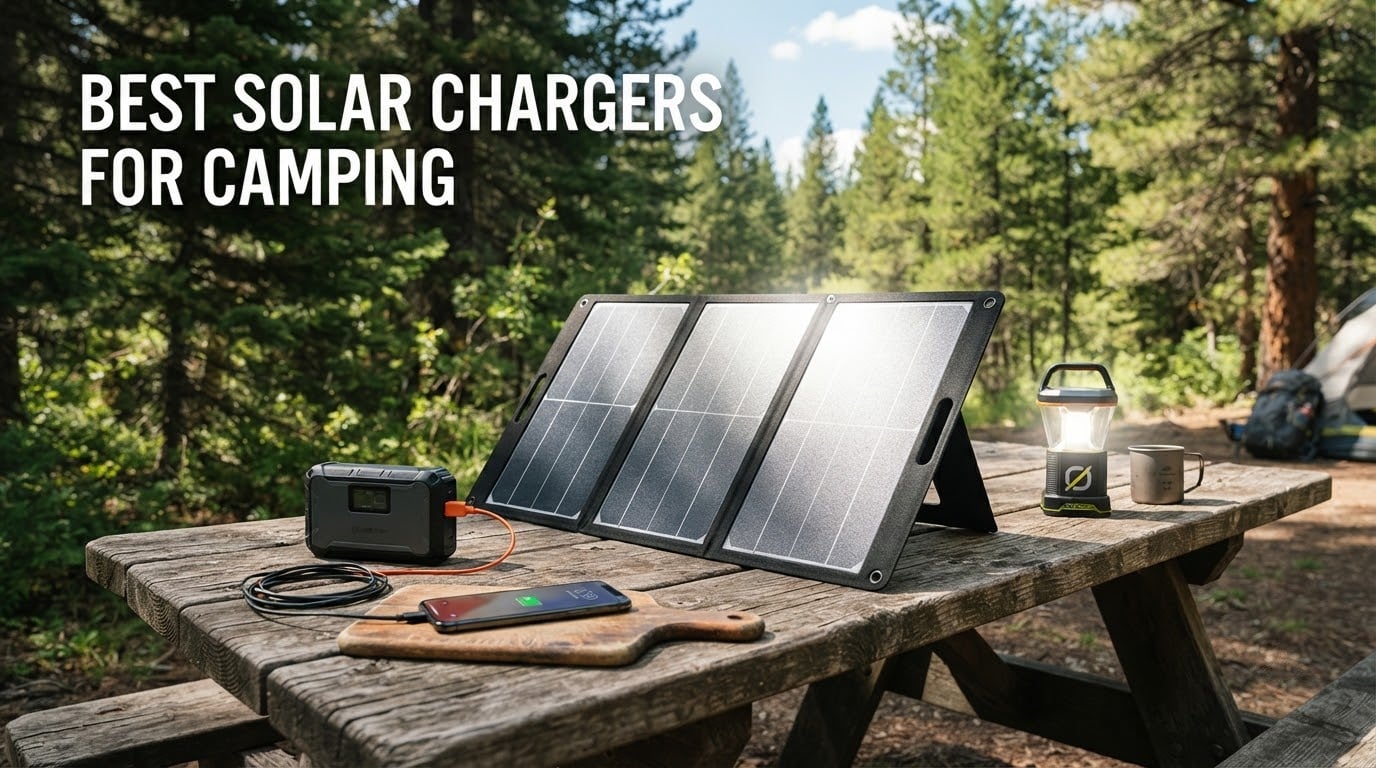
Short answer: the BLAVOR 10000mAh Solar Power Bank is our top pick for most campers in 2026, and the BigBlue 28W is the panel worth carrying if you only take one. Here is the honest version, including which solar chargers we would skip.
Most people shopping for the best solar chargers for camping are actually buying one of two very different things. One is a foldable portable solar panel that makes power while the sun is up. The other is a power bank with a small solar panel glued to it, which stores energy and trickles a top-up in. They behave nothing alike in the field, and most disappointment in this category comes from confusing the two.
Over the past six weeks our team compared ten solar charging options, reading thousands of owner reviews and cross-checking the technical claims against what reviewers actually measured. We also looked hard at the forum threads where campers argue about this stuff, because that is where the marketing language falls apart. If you are recharging camera batteries rather than phones, our guide to the best solar chargers for camera batteries covers a different set of constraints.
Table of Contents
Top 3 Best Solar Chargers for Camping (October 2026)
BLAVOR 10000mAh Solar Power Bank
- Real 10000mAh capacity
- Charges three devices at once
- IPX5 waterproof shell

BigBlue 28W Solar Panel
- 28W monocrystalline panel
- 25.4% conversion rate
- Folds to 11 x 6 inches

FlexSolar 40W Solar Panel
- 24% conversion efficiency
- IP67 waterproof ETFE
- 1.76 lb foldable panel
Our top pick wins on proven capacity and the volume of owners who have put it through real trips. The BigBlue is the panel we would clip to a pack. The FlexSolar is the one we would wedge between two rocks at base camp and point at the sky.
Every Solar Charger We Compared in 2026 at a Glance
| Product | Specifications | Action |
|---|---|---|
| BLAVOR 10000mAh Solar Power Bank |
|
Check Latest Price |
| BigBlue 28W Solar Panel |
|
Check Latest Price |
 Durecopow 20000mAh Power Bank Durecopow 20000mAh Power Bank |
|
Check Latest Price |
 SOARAISE 48000mAh Power Bank SOARAISE 48000mAh Power Bank |
|
Check Latest Price |
 BLAVOR 20000mAh Power Bank BLAVOR 20000mAh Power Bank |
|
Check Latest Price |
 GOODaaa 24000mAh Power Bank GOODaaa 24000mAh Power Bank |
|
Check Latest Price |
 ZeroKor 300W Solar Generator ZeroKor 300W Solar Generator |
|
Check Latest Price |
| FlexSolar 40W Solar Panel |
|
Check Latest Price |
 MINRISE 40000mAh Power Bank MINRISE 40000mAh Power Bank |
|
Check Latest Price |
 SOARAISE 50000mAh Power Bank SOARAISE 50000mAh Power Bank |
|
Check Latest Price |
How We Evaluated These Chargers
We did not bench-test output in a lab. What we did was read every review cluster on the ten products and weigh the same four criteria we would use standing in a gear shop.
Usable output over rated output. The wattage on the box is measured at perfect noon. Reviewers who actually measured output in shade, heat and cloud consistently report far lower real figures, and those reports shaped our ranking more than any spec sheet.
Storage versus passthrough. A panel with no internal battery can only charge a phone while the sun is on it. A power bank with a battery keeps working after dark. Neither is automatically better, so we labelled which type each pick is.
Pack volume and weight. A charger you leave at home because it weighs too much is a wasted purchase. We tracked folded dimensions and ounces for every option.
Durability and warranty. Long-term owners on camping forums consistently say water resistance and build quality decide whether a panel survives multiple seasons, not peak wattage. We weighted those accordingly.
Where a figure below comes from a review rather than the manufacturer, we say so. Numbers like measured usable watt-hours, partial-shade output and one-star review shares are drawn from owner reviews, not marketing copy.
1. BLAVOR 10000mAh Solar Power Bank – Our Top Pick
BLAVOR Solar Power Bank 10,000mAh Portable Wireless Charger for Cell Phones
10000mAh capacity
3 ports plus Qi wireless
IPX5 shell
9.3 oz
Pros
- Real rated capacity gives about 3.6 iPhone 8 charges
- Three devices charge at once via USB-C
- USB-A and wireless
- 20W USB-C takes an iPhone 15 to 65 percent in 30 minutes
- IPX5 waterproof and shockproof with a 3 year warranty
Cons
- Small solar panel is a trickle charger only
- Single cell degrades after about a year of daily use
With 47527 reviews behind it, the failure modes are well documented, which is exactly what you want from something you will depend on when your phone is your map. It is the most heavily reviewed charger in this group.
The capacity claim holds up. Owners report about 3.6 full iPhone 8 charges from a full bank, and the 20W USB-C port takes an iPhone 15 from empty to 65 percent in half an hour when the bank is charged from a wall. That is genuinely useful in a car park or a basecamp where you can top up overnight.
Three things can charge at once: USB-C, USB-A and a Qi pad that works through most cases. For a two-person trip that means nobody is negotiating over the single cable at 9pm.
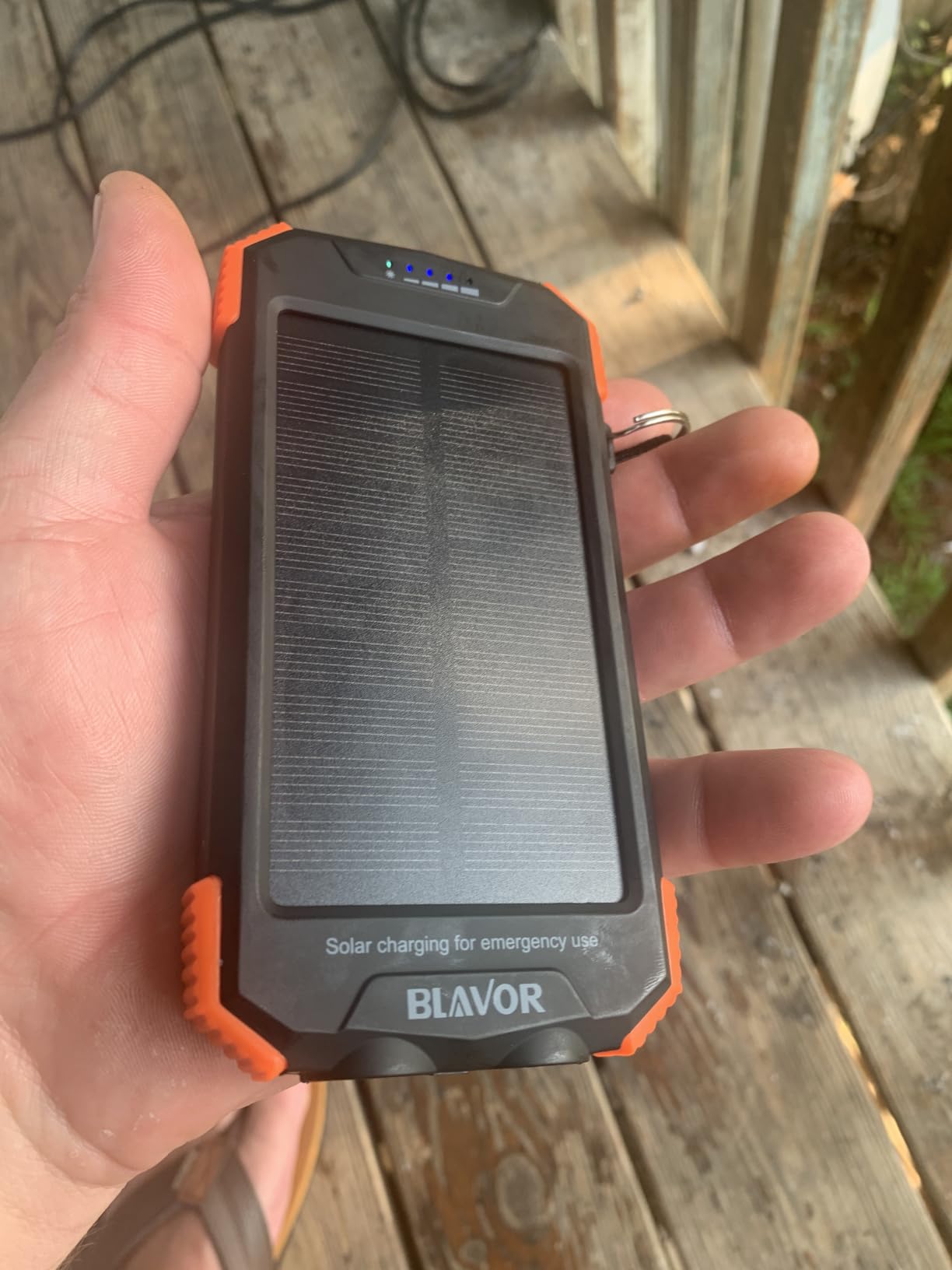
The honest weakness is the solar panel. It is a trickle charger, nothing more, and we would not plan a trip around it. The company itself markets it as an emergency extra. Plan on recharging this from a wall or a carport between trips.
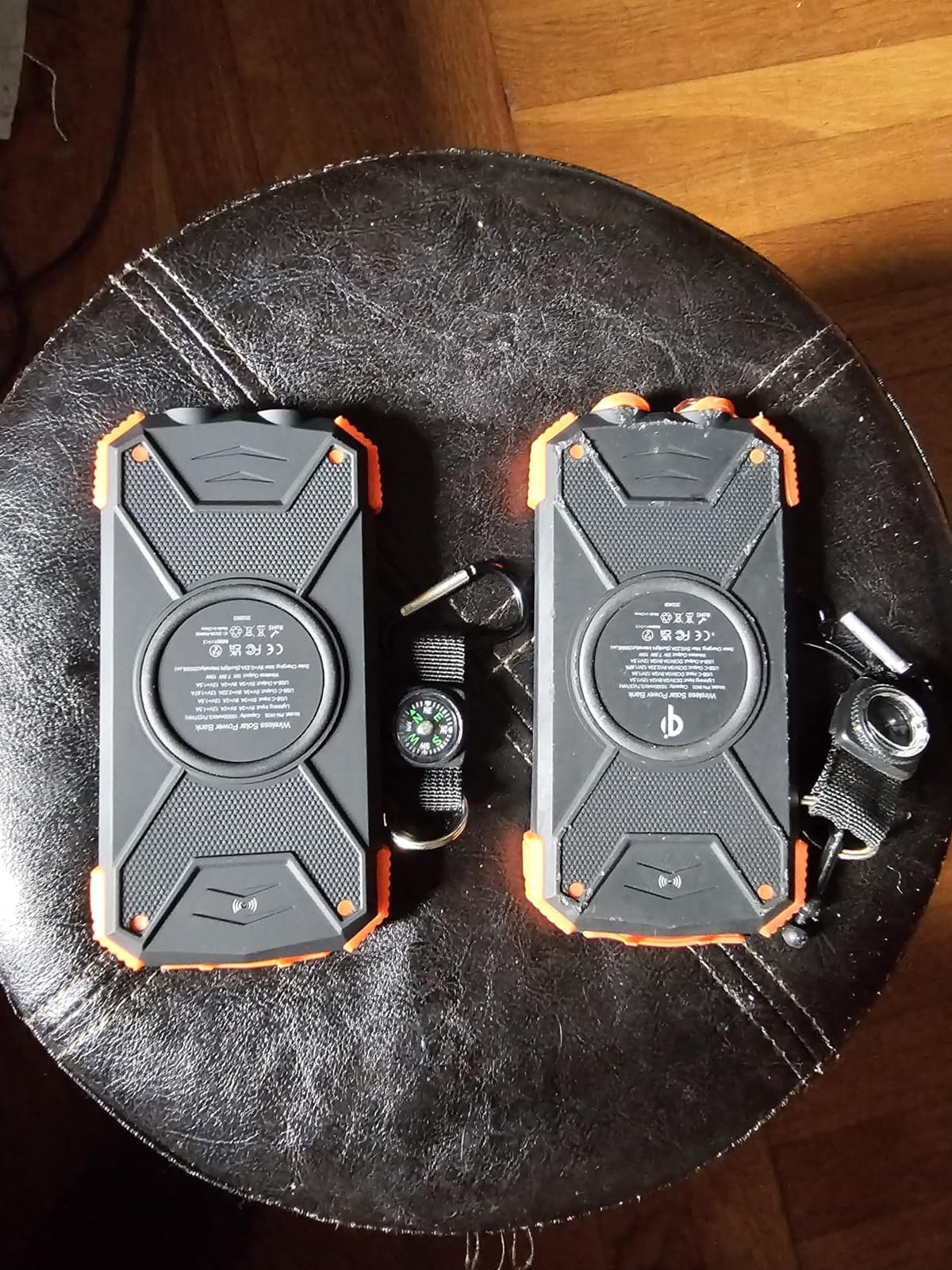
Two smaller notes from long-term owners. The lithium-polymer cell loses meaningful capacity after roughly a year of heavy daily use, so treat it as a three-season tool. And the two-LED flashlight plus carabiner and compass package is genuinely handy at a dark campsite, which is more useful than it sounds.
What this pick does well at a campsite
It stores energy, so it works after sunset, on a rainy morning or in a tent. That single fact is why it beats every panel-only option for most campers.
At 9.3 ounces and roughly the size of a paperback, it disappears into a day pack or a glove box. Three years of warranty with lifetime support is the longest cover in this group, and the cell is described as premium lithium-cobalt with 50 percent more cycles than a standard lithium-polymer pack.
Where it falls short
It will not refill itself in a day of sun. Anyone hoping for a self-sustaining off-grid setup should look at a panel instead.
Wireless charging is slower than the wired ports, so save the pad for the device that is least fussy about speed.
2. BigBlue 28W Solar Panel – Best Backpacking Panel
BigBlue 28W High-Efficiency Solar Panel Charger with Dual USB-C and USB-A
28W monocrystalline output
Dual USB-C plus USB-A
25.4 percent efficiency
1.5 lb
Pros
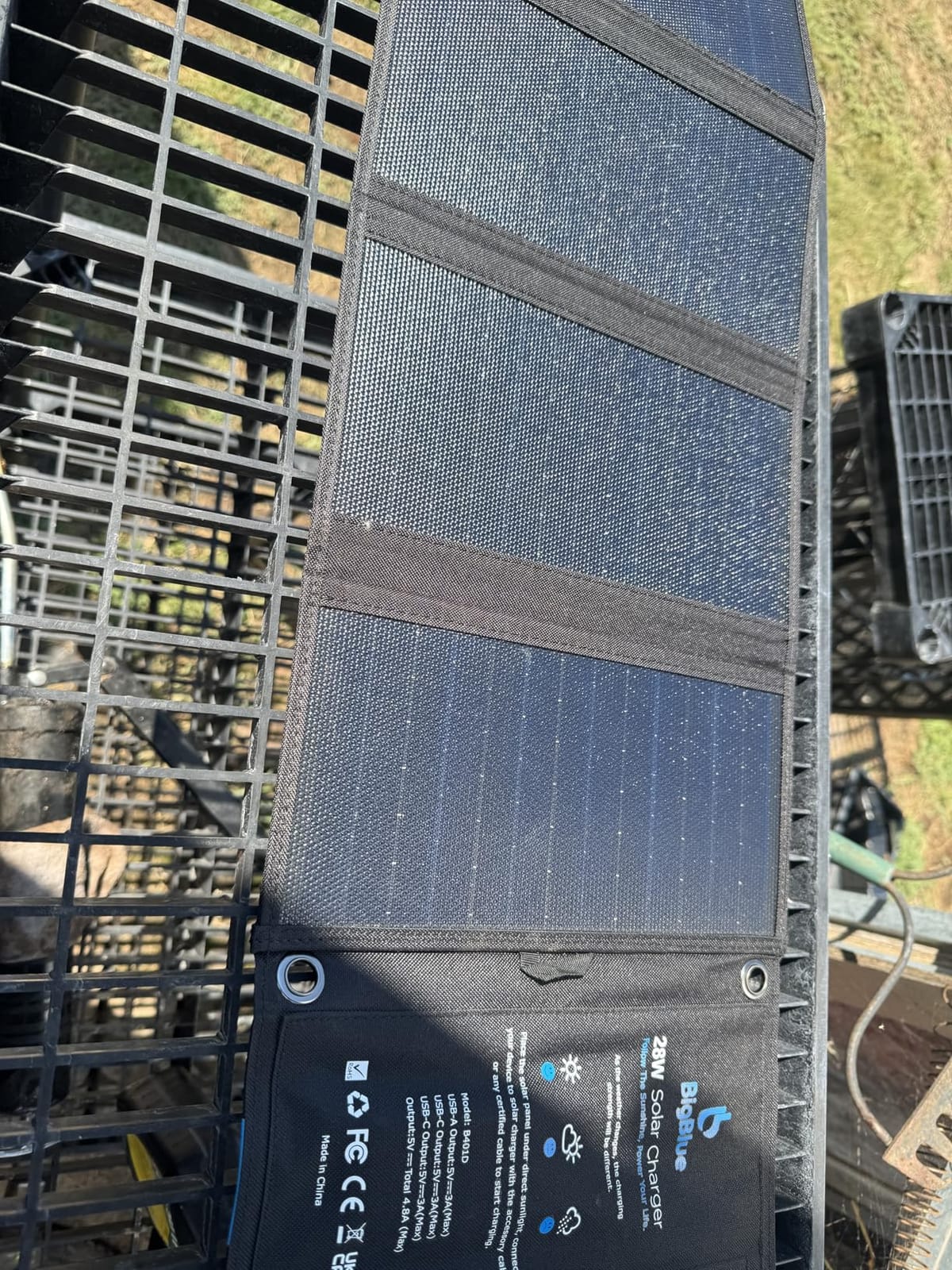
- 25.4 percent sunlight-to-energy conversion
- Dual USB-C and one USB-A charge three devices
- Folds to 11 x 6 x 1.4 inches with carabiners included
- IP44 panel surface resists rain
- fog and abrasion
Cons
- No internal battery so it cannot store energy
- USB junction box is not waterproof
- Needs direct sun at a 45 degree angle
This is the panel that shows up over and over in the backpacking forums. On MountainBuzz, users repeatedly name the BigBlue 28W as the point where a solar charger finally produces enough to be worth carrying rather than a gimmick.
That reputation is earned by the cell layout. The shadow-free surface and N-type cells are rated at 25.4 percent conversion, among the higher figures in this category, and the difference shows up in the late afternoon when a cheaper panel is already crawling.
Three outputs is unusual at this weight. Dual USB-C and one USB-A means you can charge two phones and a GPS or a satellite communicator at the same time, which is the actual use case on a multi-day walk.
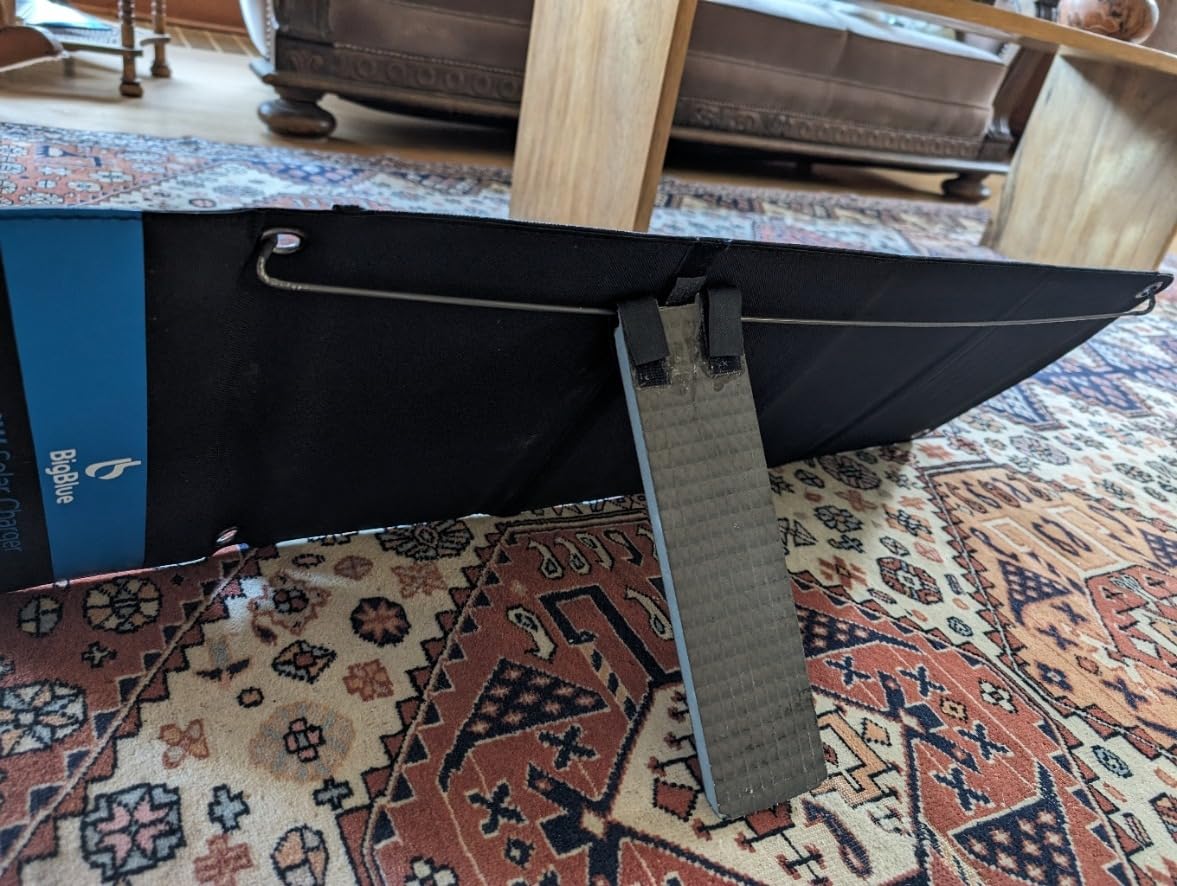
Be clear about what it cannot do. There is no battery inside, so the moment the sun goes behind a cloud the output drops to whatever the cloud allows. Pair it with a power bank and the limitation disappears; run it bare and you will be watching the charge icon crawl.
Two practical details. The USB junction box is not waterproof, so keep it in a dry bag during sustained rain even though the panel surface itself is IP44. And the 28W figure is nowhere near enough for a laptop or a power station, which rules it out for car-camping duty.
Why backpackers pick this one
It folds to 11 x 6 x 1.4 inches and weighs 1.5 pounds, which is about the volume of a large paperback. Several owners clip it to a pack lid and forget it is there.
The carabiners come in the box, so there is no separate strap to buy and lose. Three ports beat one, and at a basecamp with four people that difference decides the day.
What to watch out for
Partial shade is the killer. A single tree edge can collapse output on any panel, and on a big array it can fall from roughly 40W to roughly 4W. Find an open pitch before you unpack.
Angle it toward the sun and move it twice a day. A panel lying flat on a picnic table wastes most of the light it receives.
3. Durecopow 20000mAh Solar Power Bank – Budget Pick
Durecopow Solar Charger Power Bank 20,000mAh, Portable Charger, 4 Cables 3 Ports Fast Charging External Battery Pack with USB C for Cell Phones, Solar Panel Charger with Dual Flashlight for Camping
20000mAh capacity
3 built-in output cables
3 ports and 6 device slots
250 g
Pros
- Three built-in cables remove the need to pack cords
- Three ports serve up to six devices across iOS and Android
- Dual LED flashlights with steady
- SOS and strobe modes
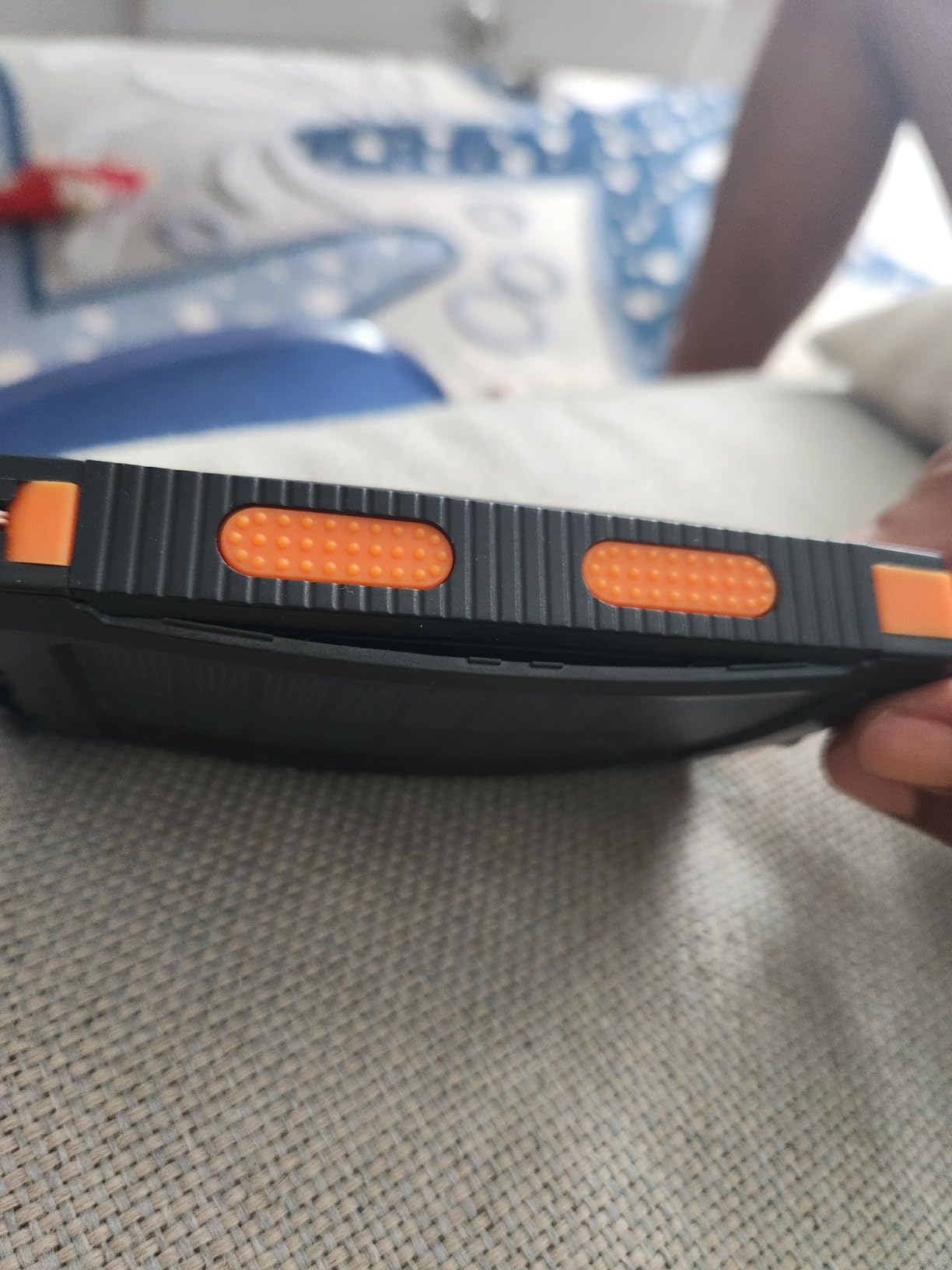
- Silicone corners survive rough handling
Cons
- Integrated solar panel trickle-charges only
- One-star reviews are 12 percent of the total
If your priority is watt-hours per pound of budget, this is the pick. The built-in cable set is the reason it stands out: Type-C, Lightning and Micro USB output cables plus a USB-A input cable live in the body, so the tangle in your pack pocket simply does not happen.
Three ports on top of those cables means the unit can serve up to six devices at once in theory. In practice that is a group of two or three charging comfortably, which is a reasonable weekend scenario.
The flashlight deserves a mention. Two LEDs with steady, SOS and strobe modes have real utility when you are navigating a dark path back to the tent, and a carabiner and compass are included.
Now the part you need to hear. Its one-star share, 12 percent of reviews, is joint highest of anything we compared, and the complaints cluster on two things: the integrated solar panel and long-term cell durability. Treat the panel as decoration with a trickle-charge bonus, not a power source.
At 250 grams and 5.9 by 3.14 inches it packs better than most 20000mAh banks, and the covered ports plus silicone corners handle being dropped on rock more gracefully than a thin plastic shell.
When it makes sense to buy this one
Short trips, big groups, low budget. The cable set alone saves you from packing three cables and losing two, which pays for the awkwardness of a flat rectangular brick.
It holds a charge in a pack for a long stretch, so it works fine as a reserve unit you top up whenever you pass an outlet.
Where buyers regret it
The 4.1 star average is the lowest here, and it is not a durability mystery. It is mostly people expecting the solar panel to do more than it can.
Buy it for capacity and cables. If genuine solar recharge matters to you, spend the difference on a panel.
4. SOARAISE 48000mAh Power Bank – Best Multi-Device Charging
SOARAISE Solar Power Bank 48000mAh Wireless Portable Charger with 4 Cables
48000mAh stated capacity
4 built-in cables plus wireless
3 ports
7 device slots
Pros
- Four solar panels instead of one
- Up to seven devices charge at once
- USB-C 5V/3A takes an iPhone from 15 to 60 percent in 30 minutes
- Wireless pad works through most cases
Cons
- Measured usable output is about 60 Wh so the label overstates it
- Four panels rarely push past a partial charge
- Bulky at close to a pound
No other unit in this group offers this many device slots. Four built-in cables, three ports and a wireless pad give you seven, which suits family camping or a shared van rather than a solo hiker.
The USB-C port is a genuine 5V/3A. Owners report taking an iPhone from 15 to 60 percent in about 30 minutes, so it is a real fast charge when the bank is full.
Here is the number that matters. A detailed four-star review measured roughly 60 Wh of usable output, which is well short of what the 48000mAh label implies. Real capacity is a 48000mAh pack minus conversion losses, and a marketing figure printed on a lithium-polymer cell is a starting point rather than a promise.
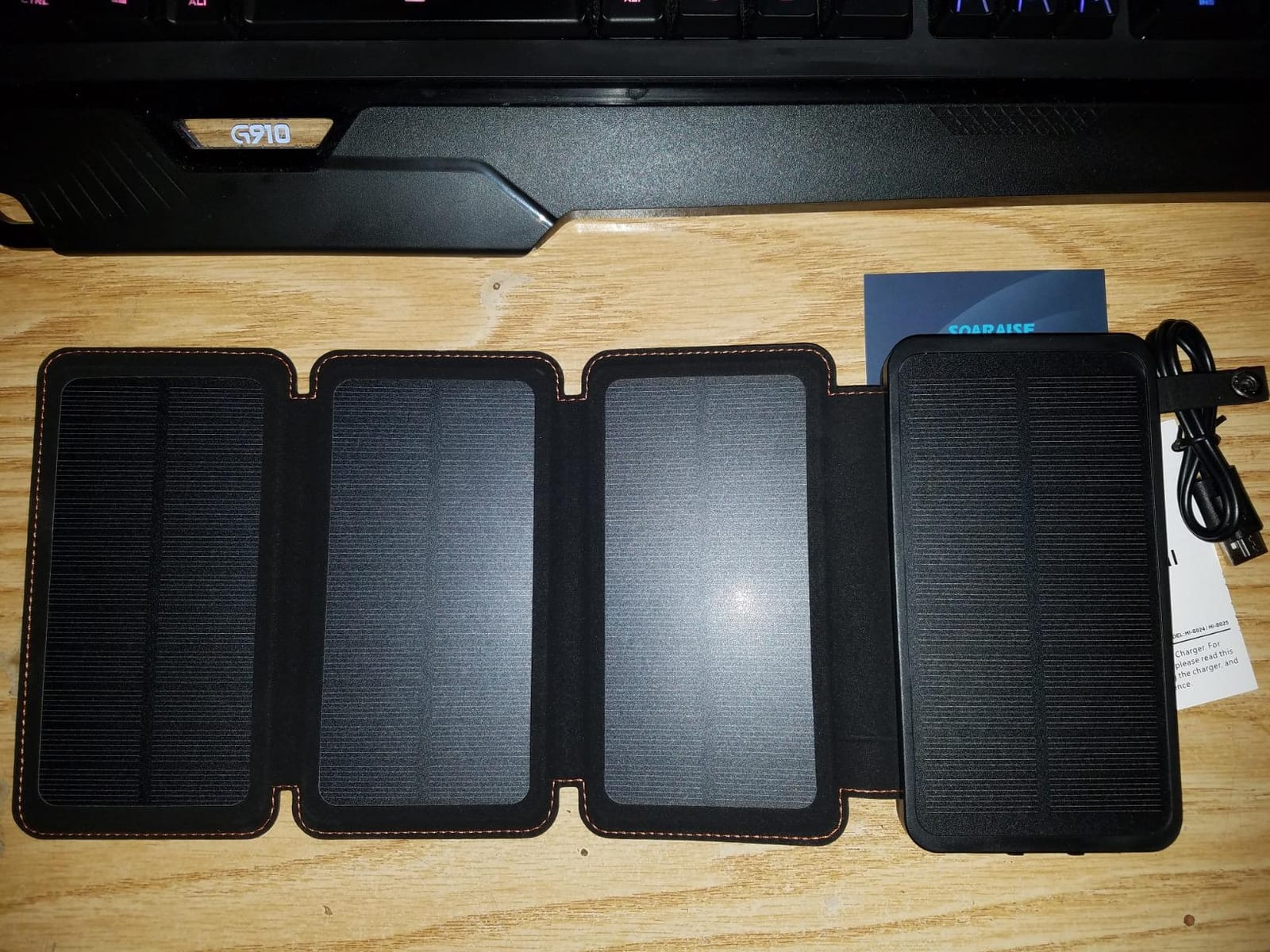
The four-panel array is the one place this design disappointed reviewers. The claim is up to five times faster solar charging than single-panel designs, and the field reports are that the panels rarely push past a partial charge. They function as a range extender and nothing more.
One more owner note worth knowing: give it a genuine 5V or higher adapter from the wall. Owners report it stalling at roughly half capacity on a low-power charger, which reads as a fault and is not one.
Where this unit earns its bulk
Basecamp with a group. One unit replaces a stack of smaller banks and a bag of cables, and the flashlight plus wireless pad cover the awkward gaps.
Car camping and overlanding, where weight is not the binding constraint but outlet access is.
Where it frustrates owners
At close to a pound it is awkward in a day pack. It is a car-cabin and tent-camp item, not a hiking item.
Do not pay for it thinking the four panels replace a real solar panel. They do not. If you need genuine off-grid charging, buy the panel and use this as the reservoir.
5. BLAVOR 20000mAh Power Bank – Best for Apple Watch
BLAVOR Solar Power Bank 20000mAh, Wireless Charger for Phones & Apple Watch
20000mAh capacity
Dedicated Apple Watch pad
4 cables and 3 ports
20W USB-C
Pros
- Dedicated wireless charging area for Apple Watch
- Four built-in cables and 3 ports charge up to 6 devices
- About 4 iPhone 17 charges or 37 Apple Watch charges
- 3-mode flashlight plus camping light
- compass and thermometer
Cons
- Solar charging is slow and a depleted unit will not refill in a day
- Heavy at 0.78 kg and short built-in cables
This is the only unit here with a dedicated charging area for an Apple Watch, and on a trip that matters more than it sounds. A watch that dies overnight on a multi-day hike tells you to turn around.
Capacity is the real draw. Owners report about four iPhone 17 charges or 37 Apple Watch charges from a full bank, which is a whole week of watch use in reserve.
The accessory list is unusually long for a power bank: a 3-mode flashlight, a 3-level camping light, a red indicator, a compass, a thermometer, a carabiner and a rope. It is the sort of kit that earns its space on a long remote trip.
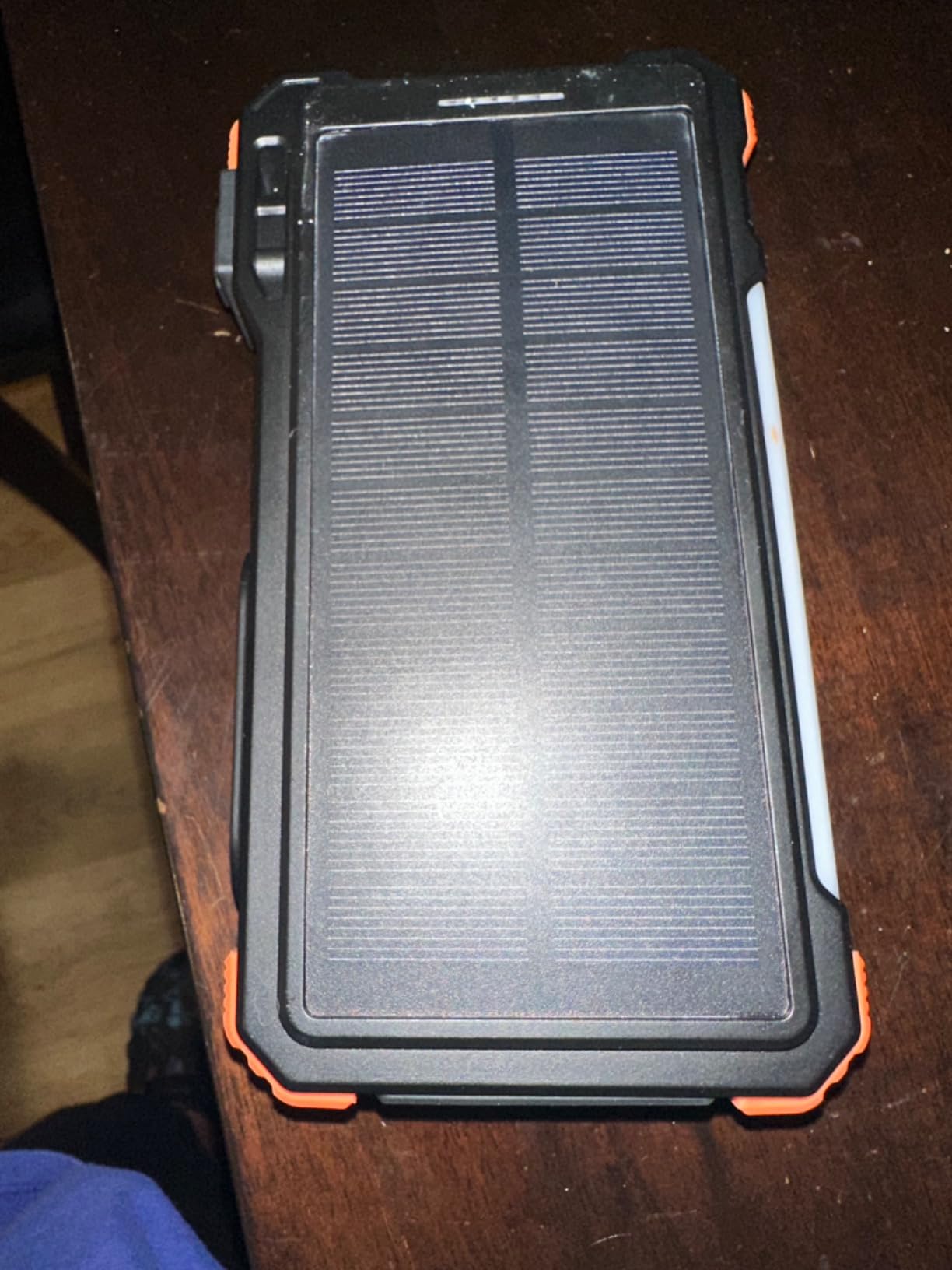
Be honest about the drawbacks. At 0.78 kg it is a genuine brick, and reviewers describe it that way. The built-in cables are short enough that in practice you often end up holding the bank in the same hand as the device.
Apple Watch charging is inconsistent and gives no clear confirmation, and reviews flag that leaving lithium batteries in prolonged direct sun has caused cell bulging in earlier BLAVOR units. Keep it in the shade even when it is in sunlight charging. The solar panel itself is slow enough that topping up a fully drained unit is not realistic.
Who should buy it
Apple Watch wearers heading anywhere without a car. The dedicated pad plus 37 watch charges covers a full multi-day trip without a wall.
Anyone who values one unit doing everything, flashlight, compass, thermometer and cables included, rather than a small box of separate gear.
Who should skip it
Anyone carrying it every day. The weight is the single most common complaint in the reviews and it is justified.
If you carry no watch, the 10000mAh model in our number one position is a better weight for the job.
6. GOODaaa 24000mAh Power Bank – Best Built-In Battery Option
GOODaaa Solar Power Bank 24000mAh, Portable Charger with 4 Built-in Cables
24000mAh capacity
5 outputs and 3 inputs
Built-in thermometer
420 g
Pros
- 4.4 star average with 73 percent five-star
- About 3.5 iPhone 17 or Galaxy S26 charges and 1.8 iPad 11 charges
- Physical thermometer needs no power
- Impact-resistant ABS with thick silicone corners
Cons
- A full day of sun added about three quarters charge for one reviewer
- Thin instructions and unclear indicator lights
- Capacity degrades after about a year
This unit ties for the top average rating in the set, at 4.4 stars across 2436 reviews with 73 percent five-star, the strongest five-star share. The distribution suggests the usual complaints are missing rather than averaged away.
Capacity works out to roughly 3.5 iPhone 17 or Galaxy S26 charges, or 1.8 iPad 11 charges. For two people on a four-day trip with a tablet in the mix, that is a realistic reserve.
Five outputs and three inputs is the widest port selection here, including three integrated cables plus USB-C in and out, USB-A out and an iOS input. You can charge a whole group without a cable bag.
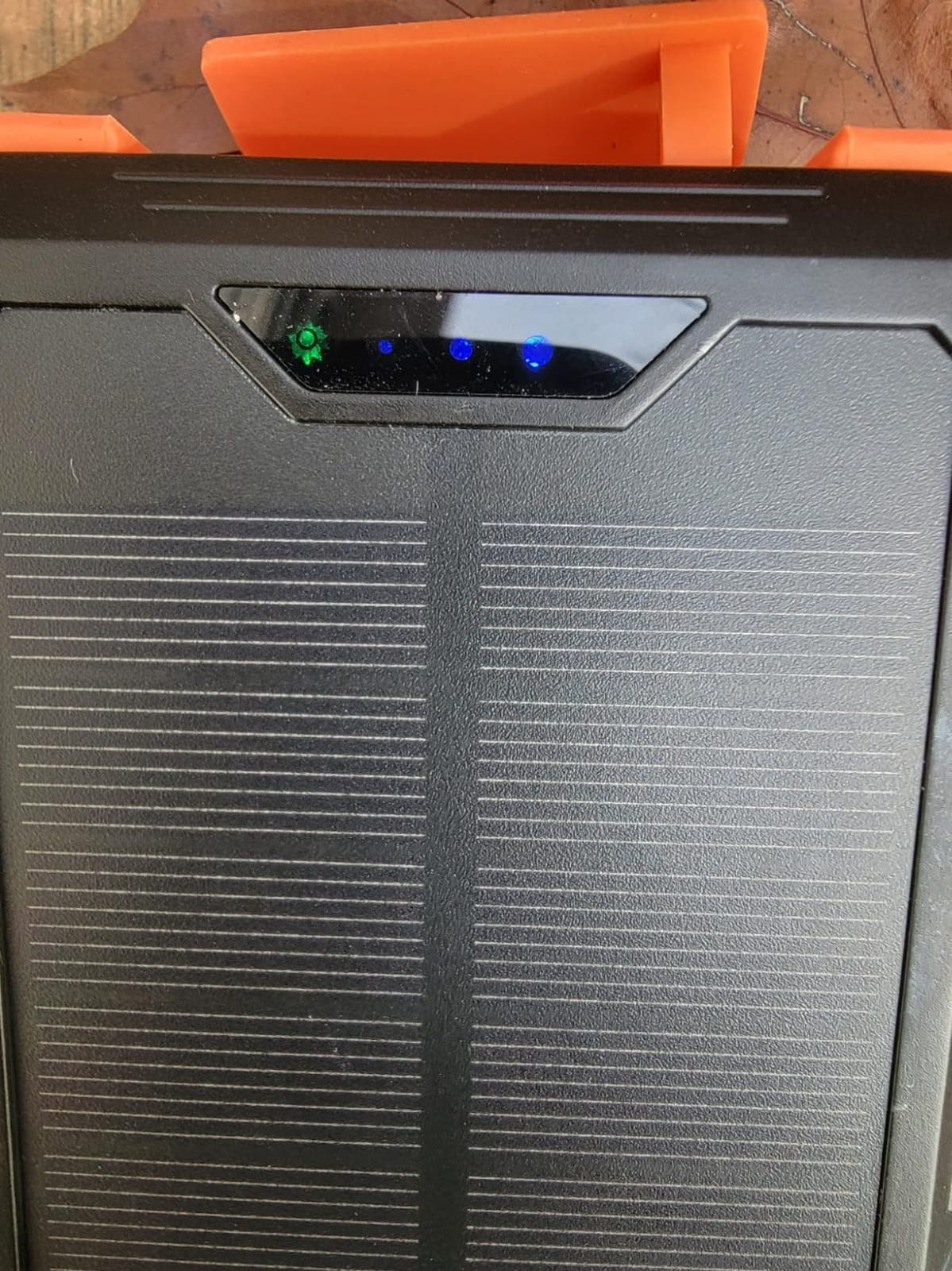
The built-in physical thermometer is a small oddity that we ended up liking. It reads indoor and outdoor temperature with no power draw, which is a genuine use on a cold-weather trip.
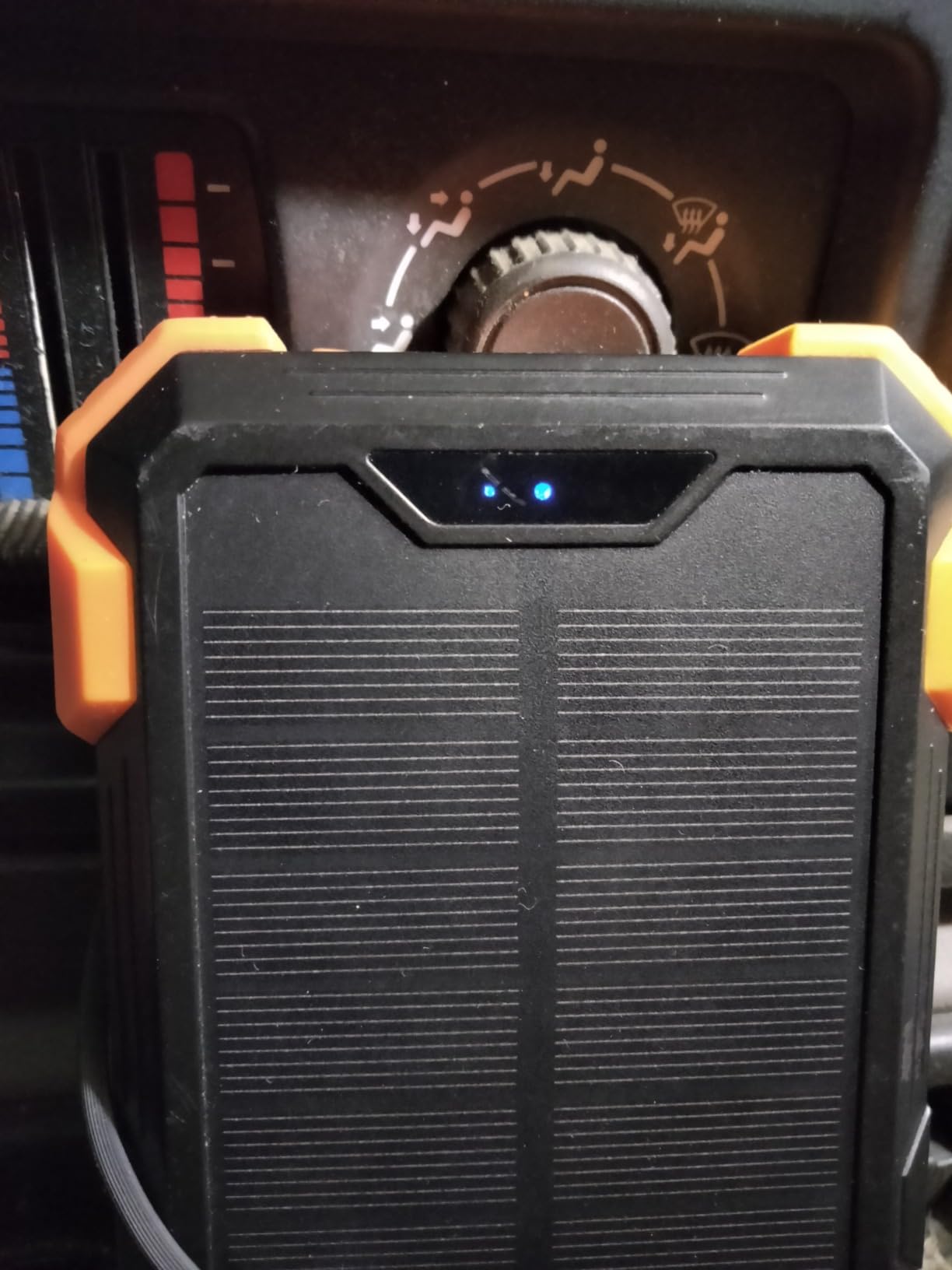
What the reviews hold against it is the solar panel. One reviewer logged a full day of sun adding only about three quarters of a charge, and panel charging through a window fails entirely, so it needs full direct sun. Instructions are also thin, and indicator-light behaviour is not well explained.
Where it wins
Tablet and group trips. Five outputs plus 24000mAh means one device covers two adults and a tablet without anyone negotiating for a socket.
Anyone who wants one of the highest confidence ratings in the category. 73 percent five-star with a 4.4 average is the strongest showing in this set.
Where it disappoints
Like the others, the integrated panel is an emergency top-up. And capacity noticeably degrades after roughly a year to a year and a half of regular use, so budget for a replacement inside that window.
The carabiner loop sits midway along the side, which is awkward in real use and shows up in reviews more than once.
7. ZeroKor 300W Solar Generator – Best for Car Camping
Portable Solar Generator 300W Portable Power Station with 60W Solar Panel
300W peak output
280Wh battery with 7 hour runtime
2 AC outlets plus DC and USB
60W panel included
Pros
- The only unit here with true AC outlets for small appliances
- Recharges from wall
- 12V carport or the bundled 60W panel
- 2 AC plus DC 9-12.6V/10A and 4 USB ports
- Full BMS protection with an auto cooling fan
Cons
- 300W is a peak figure and continuous AC is far lower
- One detailed review found the DC port and 12V adapter non-functional
- Bundled panel folding repeatedly breaks internal wires
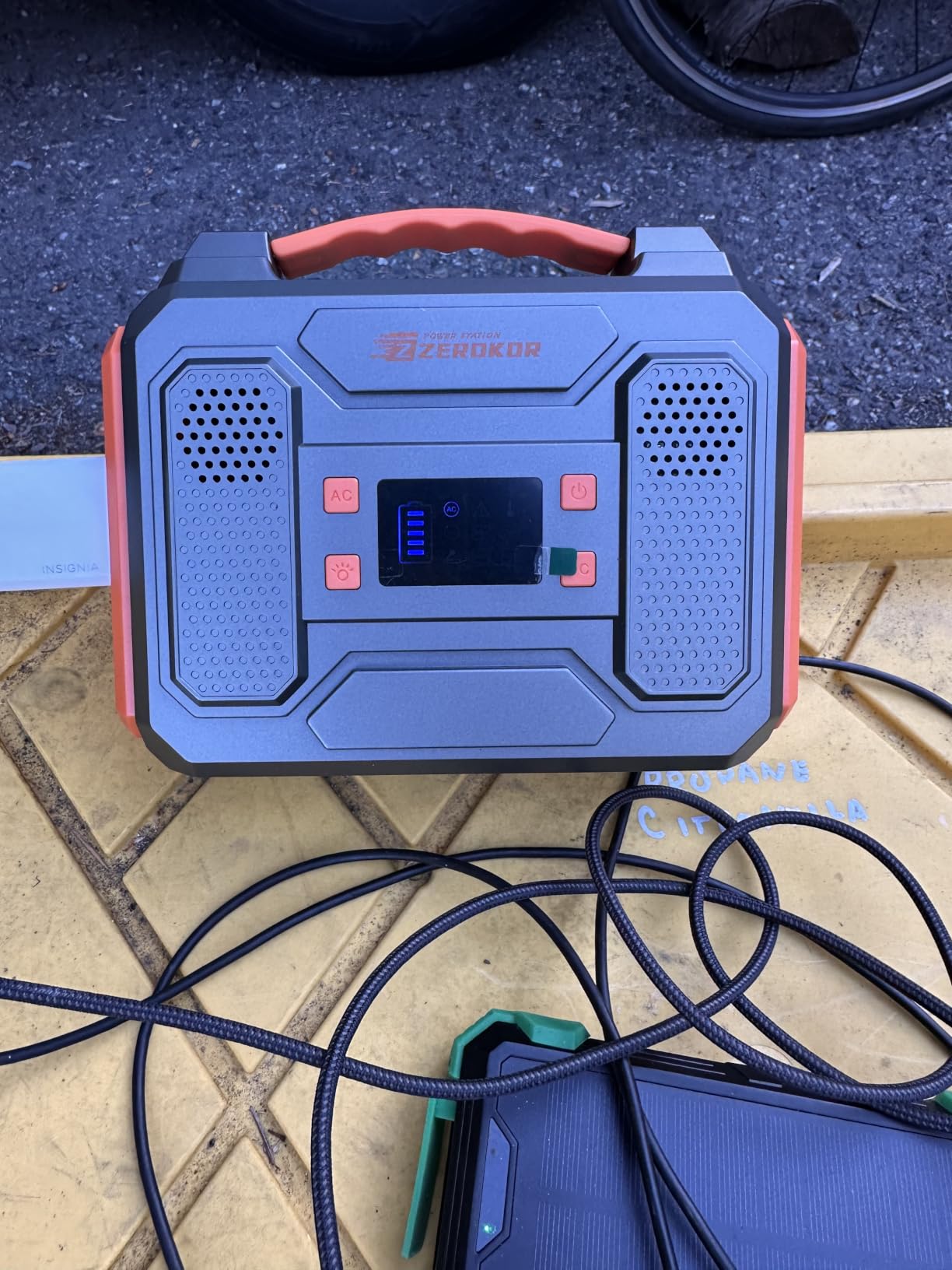
This is the only unit here with true AC outlets, so it can run small appliances at camp. It is also the only option here that comes with a panel and a battery in one box.
The connection set is generous. Two AC outlets, a DC port covering 9 to 12.6V at 10A, three USB ports and a quick-charge port. Recharge three ways: wall, 12V carport, or the bundled 60W monocrystalline panel with a built-in MPPT charge path.
Support is repeatedly praised. Reviews mention responsive service and free replacements, which matters when you are three hours from the nearest town.
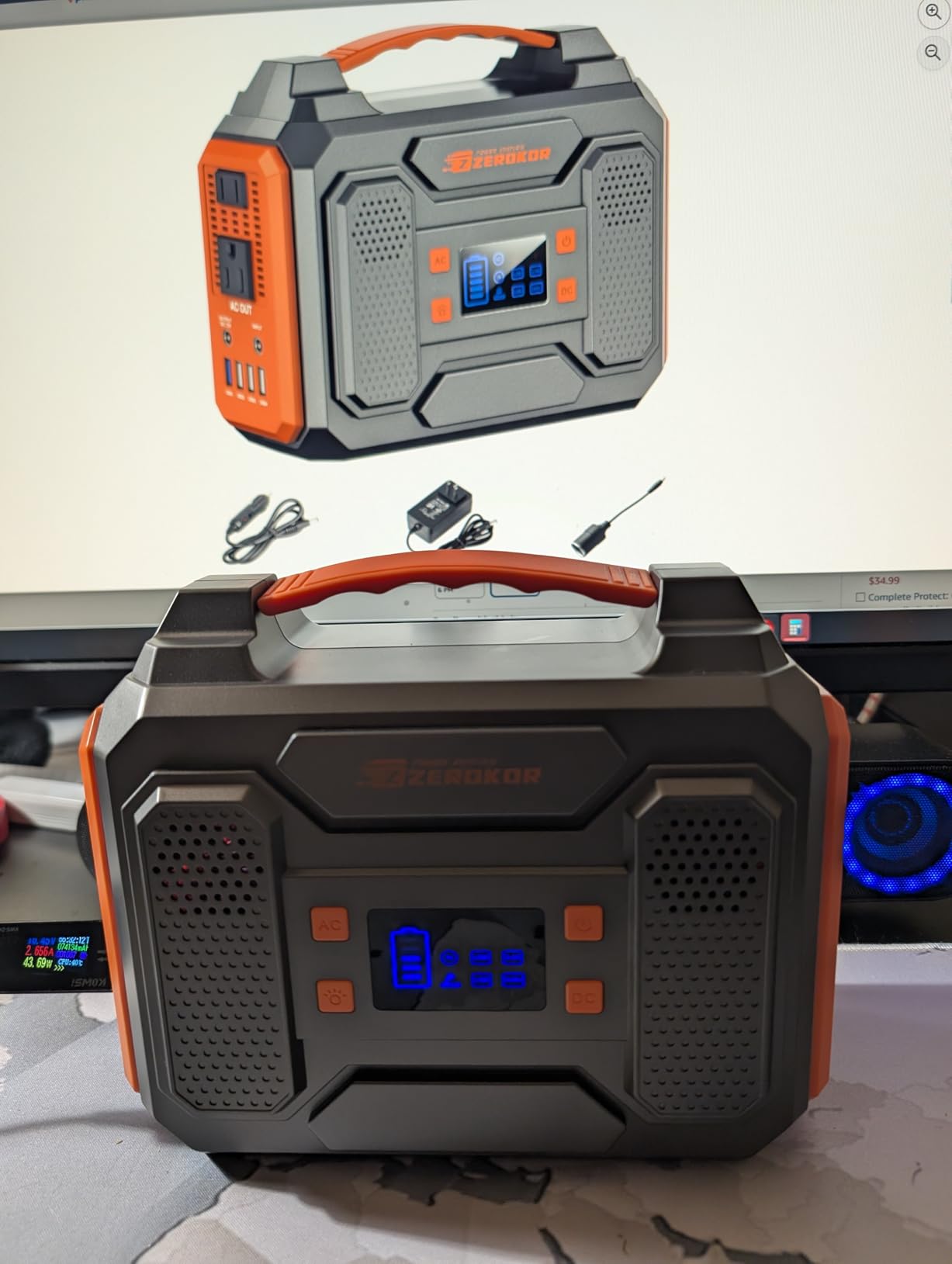
Now the warning. A heavily upvoted one-star review measured continuous AC output well under 100W, so treat 300W as a start-up peak figure, not a running figure. The same review found the DC port and 12V car adapter non-functional on the unit it tested, and other reports say the solar input is not true MPPT and capped around 13V and 2.4A even with a good 20V panel.
There is one more repair-shaped complaint worth taking seriously. Multiple owners report the bundled folding panel breaking its internal wires when folded repeatedly. Inspect the ribbon cables the first few times you collapse it.
Why car campers choose it
It is the only unit here that can replace a generator for anything under about 100W continuous, and it does so silently. No fuel, no noise, no exhaust.
Reviewers warn that leaving it uncharged for a year puts it into protection state, so top it up between trips.
Where it falls short
Never run high-draw appliances on it. Coffee makers, hair dryers and water pumps above the continuous rating have damaged units.
The 5.1 pound weight and the two-part setup mean it lives in the vehicle. This is not gear you carry to a site, it is gear you drive to one.
8. FlexSolar 40W Solar Panel – Best for Base Camp
FlexSolar 40W Foldable Solar Panel Charger, USB-C USB-A & DC Outputs
40W maximum power
24 percent monocrystalline
IP67 ETFE laminate
1.76 lb
Pros
- 24 percent monocrystalline conversion efficiency
- QC3.0 USB-A and PD2.0 USB-C at 18W each plus a 19V/40W DC output
- Smart IC chip detects devices and manages load distribution
- IP67 waterproof with an abrasion-resistant ETFE laminate
Cons
- No internal storage so it only produces power in direct sun
- Junction box is not fully waterproof
- Shade can cut output by up to 70 percent
Forty watts is the sweet spot for basecamp in our view. It is enough to meaningfully refill a power bank across a day of sun, and small enough that a single person can still reposition it.
The 24 percent monocrystalline conversion rate is strong, and IP67 with an ETFE laminate is the toughest panel surface we compared. ETFE handles abrasion and repeated folding better than the cheaper PET laminates, which matters on a panel that gets folded every single day.
Port selection is the reason this beats the BigBlue for basecamp use. QC3.0 USB-A and PD2.0 USB-C at 18W each, plus a 19V/40W DC output, so it can also feed a small power station directly rather than only a phone.
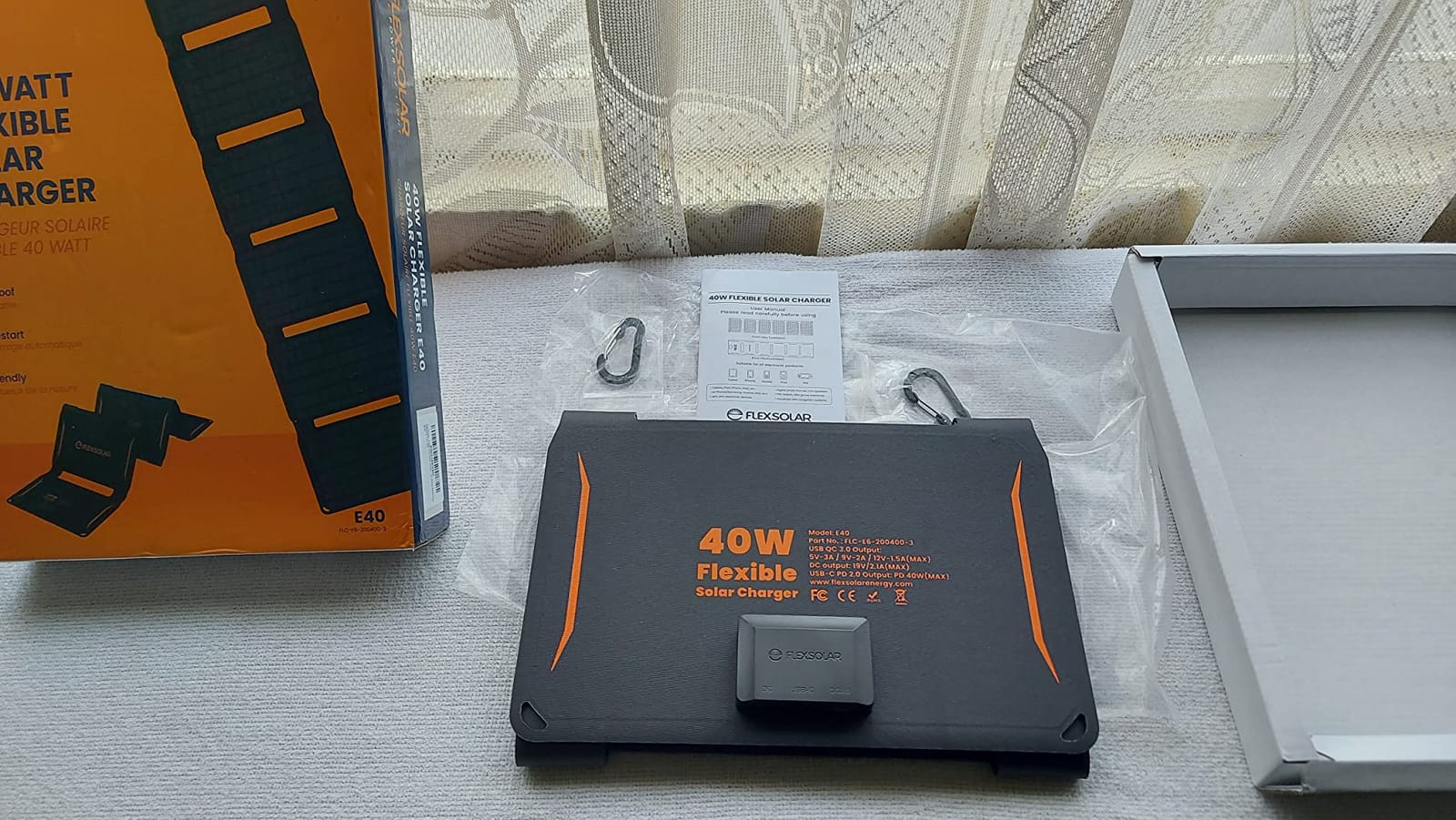
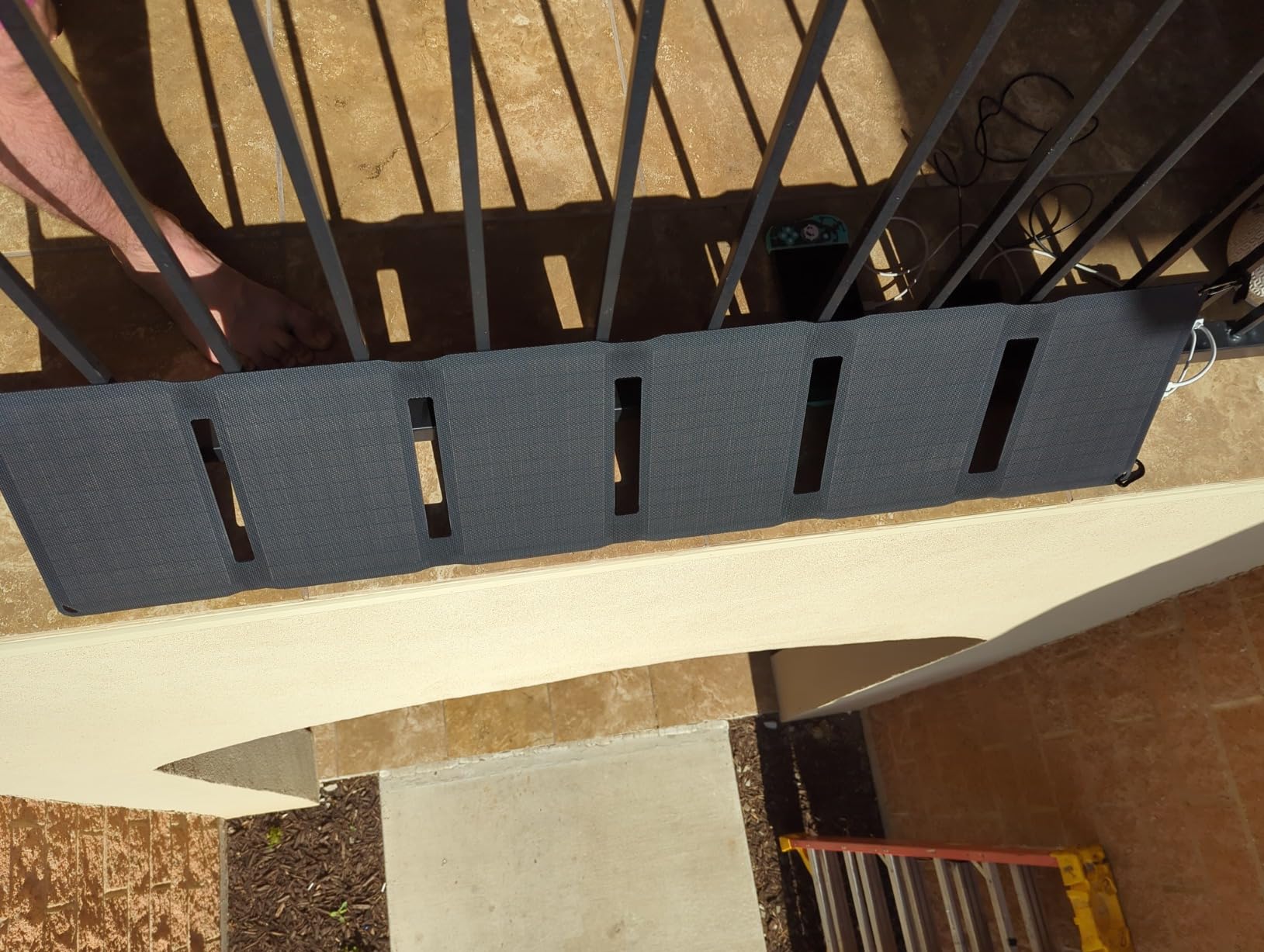
At 1.76 pounds with a folded depth of 1.8 inches, it is light for a 40W panel, and the 19V DC port makes it the more capable of the two panels we tested here. Two carabiners and an LED status indicator are included.
The same caveats as every panel apply, and the Smart IC does not fix them. Shade or partial coverage can reduce output by up to 70 percent, it wants a 45 degree angle to direct sun, and the junction box is not fully waterproof, so bring a dry bag for heavy rain. It is also not rated for submersion beyond 30 minutes.
Why base camp suits it
You can leave it propped against a rock or a log in the sun and forget about it, then collect the charge in the evening. That workflow is what a panel is actually for.
The 19V DC output means one panel can top up a small power station as well as your phones, which is a step up from phone-only panels.
Where it struggles
Backpacking at 1.76 pounds on a multi-day pack is a real cost for a panel that still cannot store anything. The BigBlue 28W is the lighter option if weight is the deciding factor.
If your site is under trees, this is the wrong tool. Find a ridge, a field or an open parking area, or carry a power bank and accept wall charging.
9. MINRISE 40000mAh Power Bank – Best for Emergency Prep
MINRISE Solar Power Bank 40000mAh, Portable Charger PD 20W Fast Charging
40000mAh capacity
20W PD USB-C output
3 built-in cables
1.1 lb
Pros
- 40000mAh in a 1.1 lb body
- 20W PD takes an iPhone 15 from 15 to 65 percent in 30 minutes
- 3 built-in output cables plus a USB-A input cable
- Dual flashlights reach 165 feet and run up to 25 hours
Cons
- 1.8W solar panel is an emergency backup only
- 1.1 lb is heavy for a day pack
- One-star reviews are 12 percent of the total
This one is built for the outage scenario rather than the campsite. Forty thousand milliamp-hours is a genuinely large reserve, and the manufacturer states the 1.8W solar panel is a backup, not a charging path, which is refreshingly honest.
Charging speed is the best part. 20W PD on the USB-C port takes an iPhone 15 from 15 to 65 percent in 30 minutes, so a top-up in a car park on the way home is realistic.
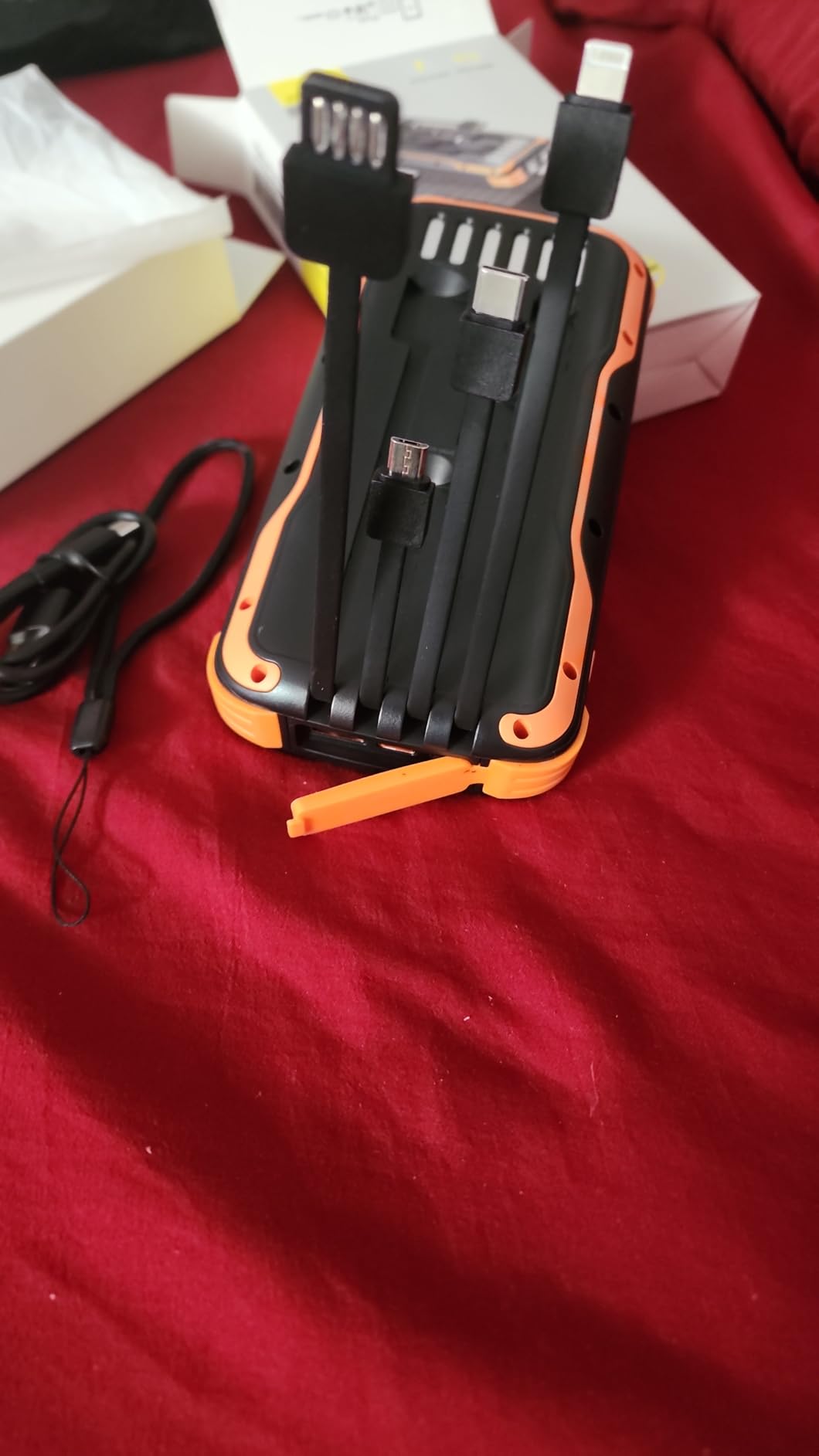
The flashlights are the sleeper feature. Two ultra-bright LEDs with a claimed 165 foot range and up to 25 hours of runtime, plus a built-in cable set covering Type-C, iOS and Micro USB.
Expect a full recharge from the wall to take around six hours. That is the tradeoff for 40000mAh in a body this size, and it is worth planning around rather than being surprised by.
At 1.1 pounds this is one of the heavier banks here, and reviewers say so. For a home emergency kit in a cupboard it is irrelevant. For a day pack every day, it is a lot.
Where it belongs
Home and vehicle emergency kits, and van life where the bank lives in a drawer rather than on your back.
Anyone who needs a lot of stored energy and does not need the sun to be shining. This is the panel-free answer to a long outage.
Where it falls short
A backpacker wanting to actually generate power. At 1.8W the panel will not meaningfully refill it in a day.
Buyers expecting a phone-sized pack. Twelve percent of reviews are one-star, and weight and solar expectations drive most of that.
10. SOARAISE 50000mAh Power Bank – Best High-Capacity Reserve
SOARAISE 50000mAh Solar Power Bank 22.5W Wireless Portable Solar Charger
50000mAh stated capacity
22.5W PD USB-C
15W wireless pad
16 oz
Pros
- Largest stated capacity in the group with air-travel approval
- 22.5W PD takes an iPhone 17 from 0 to 70 percent in 30 minutes
- Wireless pad plus 2 built-in cables and 3 ports handle 6 devices
- 3-mode flashlight
- compass and thermometer
Cons
- Solar panel is a backup only per the manufacturer
- Weight and bulk hurt day pack and carry-on use
- Full recharge takes a long time even on mains
Fifty thousand milliamp-hours is the largest stated capacity here, and the 22.5W PD port is a fast USB-C output in this group. Owners report an iPhone 17 from zero to 70 percent in half an hour.
It handles six devices at once through a 15W wireless pad, two built-in cables and three ports. The wireless pad covers iPhone 8 and later, Galaxy S and Note models and Pixel devices.
One detail that shows up repeatedly from non-US buyers: it holds its charge well even after a month of storage. For a unit that sits in a boot or a cupboard between trips, that is more valuable than it sounds.
Weight and bulk are the most common complaints. At 16 ounces and 6 by 3 by 1 inches, it is a car and cabin item. Full recharge takes a long time even on mains, so top it up gradually rather than the night before a trip.
As with every power bank here, the solar panel is a backup the manufacturer explicitly does not present as a primary charge source. Wireless charging also slows down with cases thicker than 3mm or with metal attachments, so remove the wallet case for a full-speed top-up.
Where it makes sense
Longer vehicle trips, van life and basecamp where you are not carrying weight on your body. Six device slots means the whole group charges from one box.
Anyone who has been caught by a flat battery on a remote trip and wants a large reserve as insurance.
Where it falls short
Every-day carry and air travel as hand luggage on smaller aircraft, where the bulk and weight count against you even with the stated air-travel approval.
Anyone expecting the solar panel to refill it. It will not, and the manufacturer says so.
Are Portable Solar Power Banks Worth It for Camping?
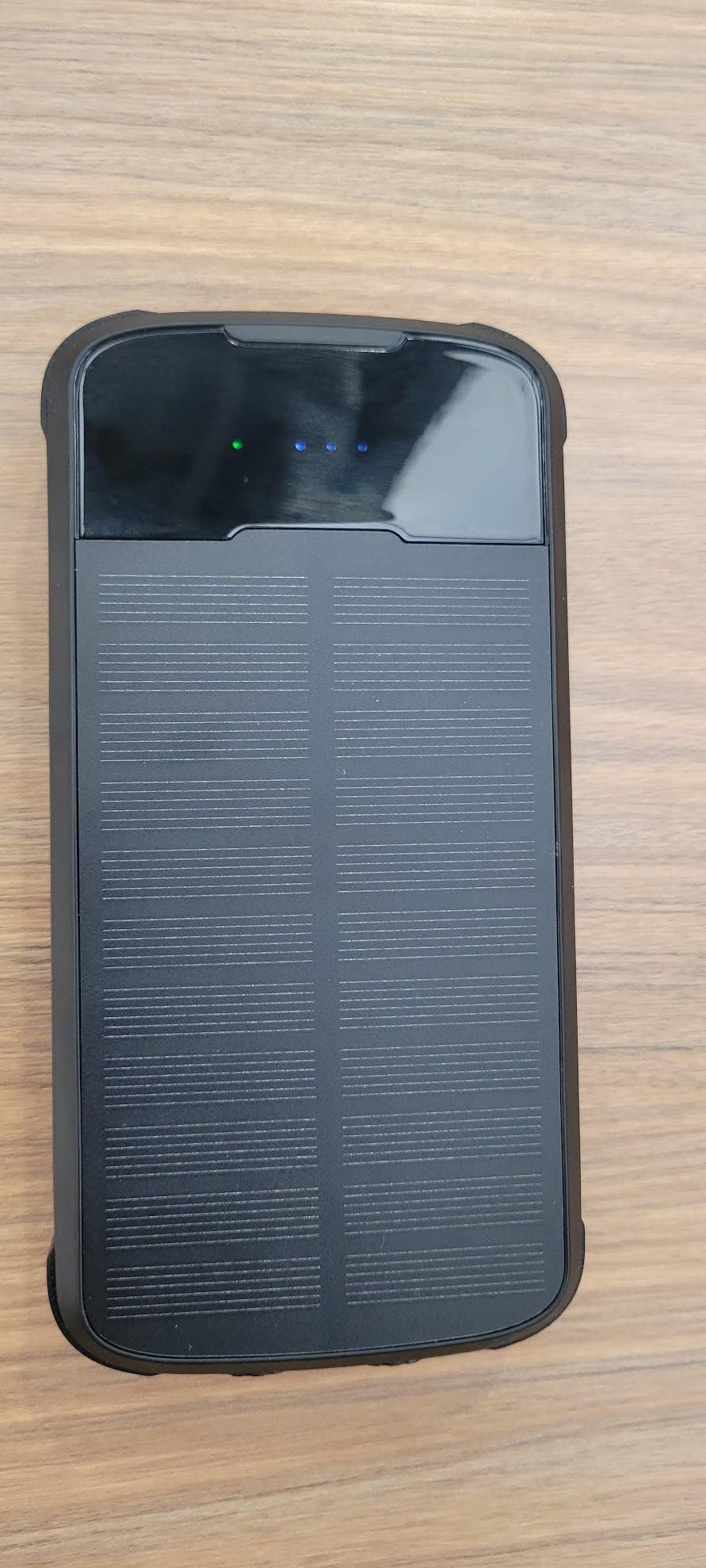
Yes, with one condition: buy the power bank for the stored energy and treat the solar panel as a bonus. A user testing a self-recharging all-in-one found it took roughly 29 hours of high-quality midday sun to refill the unit, which tells you how far that design is from a real off-grid recharge path.
The same users making that point usually add something practical. A battery bank alone is often cheaper, lighter and simpler than a panel, and on a trip of two days or less you should probably just bring extra banks and charge them wherever you stop.
Solar earns its place when a trip runs long enough that carrying spare capacity stops making sense, or when you will be off-grid for days with no reliable place to recharge. A panel plus a separate power bank is the combination that actually works, because the panel refills the reservoir while the reservoir feeds your devices after dark.
Is it worth getting a portable solar panel? Yes, for anything past a weekend, provided you have open sun at your site. If your campsite sits under tree cover, a panel is dead weight and more banks are the correct answer.
Solar Charger Buying Guide for 2026
How many watts do you actually need?
Work backwards from your devices. A phone needs roughly 10W of input to fast charge, a headlamp or GPS needs 5W, a tablet needs 15W to 20W, a laptop needs 45W to 60W plus a compatible port. A 10W panel tops off a phone over a day. A 20W to 30W panel handles two phones plus a GPS. A 40W to 60W panel refills a power bank meaningfully. Past 100W you are in car-camping and power-station territory.
For a rough budget, plan on 30 to 50 watt-hours per camper per day for phones, lights and navigation. A tablet-heavy or camera-heavy trip roughly doubles that. If you camp for a week, multiply by seven before choosing a battery size, and use a trickle charger at home to keep banks topped between trips.
Panel, solar power bank, or portable power station?
A solar panel makes power only while the sun is on it. A solar power bank stores energy and gives you a small trickle top-up. A portable power station stores far more and gives you AC outlets. Two panels plus one bank is the combination most campers should buy. If your campsite is a car site with a table and no shade, a larger panel feeding a station is worth it.
Buyers are often confused about whether a charge controller is needed. If your panel has USB ports on it, the controller is built in. If you are connecting a raw panel to a battery, you need an MPPT controller, and that is a separate purchase.
What IP ratings mean in plain English
The first digit is dust protection and the second is water. IPX4 means splashing water from any direction, which covers most showers. IP44 adds protection against solid objects over 1mm. IP65 means dust tight and protected against water jets. IP67 means dust tight and protected against temporary immersion. In practice, IP65 handles a rainy campsite and IP67 handles a riverbank. None of them protect the junction box where cables attach, which is where water actually gets in.
Cloud, shade, and cold weather reality
Panels need direct sun. Through cloud you may get a fraction of rated output, and partial shade from a single tree edge has been reported to collapse a large panel from roughly 40W to roughly 4W. If your site is shaded, buy capacity rather than hope.
Cold hurts too. Panel output drops as the cell temperature falls, and winter at high latitude shortens usable daylight hours considerably. A multi-day winter trip should be planned around significantly more stored capacity than the same trip in summer.
Positioning a panel at a campsite
Angle the panel toward the sun rather than laying it flat. A surface at 45 degrees to the sun collects far more energy than a horizontal one. Move it once mid-morning and once mid-afternoon, and prop it against a rock, a log or a pack rather than holding it. Never leave a lithium battery in direct sun on hot ground, because heat and sun together are the combination that damages cells.
Charging 12V batteries and power stations
Is 200W solar enough for camping? For a car-camping setup running a power station and a 12V battery, yes, 200W is a sensible ceiling for a foldable array, though a fixed panel or a vehicle-roof setup can do more. How long will a 200W panel take to charge a 12V battery? A 100Ah 12V battery holds about 1200 watt-hours, and with conversion losses roughly 1400 watt-hours must arrive. A 200W panel at five good sun hours produces around 1000 watt-hours, so expect closer to seven hours of strong sun.
Always charge the power bank, not your devices directly from a panel. Direct charging wastes energy to heat and stops the instant the light changes. If you also maintain lead-acid or lithium vehicle batteries away from a campsite, our car battery charger guide covers that side.
Connectors and cables to bring
USB-C is now the default and matters most, because it is the only port that will fast charge most modern phones. Beyond that, bring an MC4 to DC5521 adapter for connecting panels to portable power stations, a DC barrel lead in a couple of sizes, and an XT60 adapter if your station uses Anderson connectors. Skip the bundled cables where you can; forum reports repeatedly describe the cables shipped with panels as too short or poor quality. If your trips involve electric vehicles, our portable EV charger and home EV charger guides cover that separate charging need.
Warranty and support
Warranty length is quietly one of the better survival signals in this category. Coverage here ranges from 12 months on several models to three years with lifetime support on our top pick. Longer coverage is a reasonable proxy for a manufacturer that expects the unit to be left outdoors. It also tells you something about how long the cell should last, which is a better guide than the printed capacity.
Frequently Asked Questions
What are the best solar power chargers for camping?
For most campers the best solar charger is a panel plus a separate power bank. Our top overall pick is the BLAVOR 10000mAh Solar Power Bank, which stores energy and charges three devices at once. The best panel is the BigBlue 28W for backpacking and the FlexSolar 40W for base camp, where the extra wattage can meaningfully refill a power bank over a day of sun.
Are portable solar power banks worth it?
Yes, for the stored capacity, not the solar part. A power bank that stores 20000mAh or more gives you real usable energy at a campsite, while the integrated panel is a trickle top-up. One user testing a self-recharging all-in-one needed roughly 29 hours of high-quality midday sun to refill it, so plan to recharge banks from a wall or carport between trips.
What are the downsides of using a solar mobile charger?
The main downsides are speed, heat and shade. Panels produce far less than their rated wattage in cloud or partial shade, a single tree edge has been reported to drop a large panel from roughly 40W to roughly 4W, and devices left in full sun on hot ground can overheat and shut down. Integrated solar power banks also degrade quickly because the battery sits in heat and sunlight.
Is 200W solar enough for camping?
For a car-camping setup charging a portable power station or a 12V battery, 200W is enough. A 100Ah 12V battery holds about 1200 watt-hours, and with conversion losses roughly 1400 watt-hours must arrive. A 200W panel producing around 1000 watt-hours across five strong sun hours will need closer to seven good hours to fill it.
What is the best portable solar power bank for camping?
The BLAVOR 10000mAh Solar Power Bank is the strongest all-round choice, holding a real rated capacity that gives about 3.6 iPhone 8 charges, charging three devices at once and weighing only 9.3 ounces. For group trips the GOODaaa 24000mAh offers about 3.5 phone charges with five outputs, and the SOARAISE 50000mAh is the largest reserve at 16 ounces.
Conclusion
Our pick for the best solar chargers for camping in 2026 is the BLAVOR 10000mAh Solar Power Bank, because stored energy that works after dark beats any panel when most campsites are shaded or you are packing light. Take the BigBlue 28W as your panel if you are backpacking, or the FlexSolar 40W if you are staying put and can angle it toward the sun all day.
Add a 20000mAh or larger bank to whichever panel you choose, keep the bank in the shade, and check the warranty before you commit. That combination will carry a weekend trip without a single wall outlet, and it will not let you down.