
Disclosure: we earn from qualifying purchases. This roundup was updated for October 2026 and every tent below is one we pitched, studied or read owner reviews on in real winter conditions.
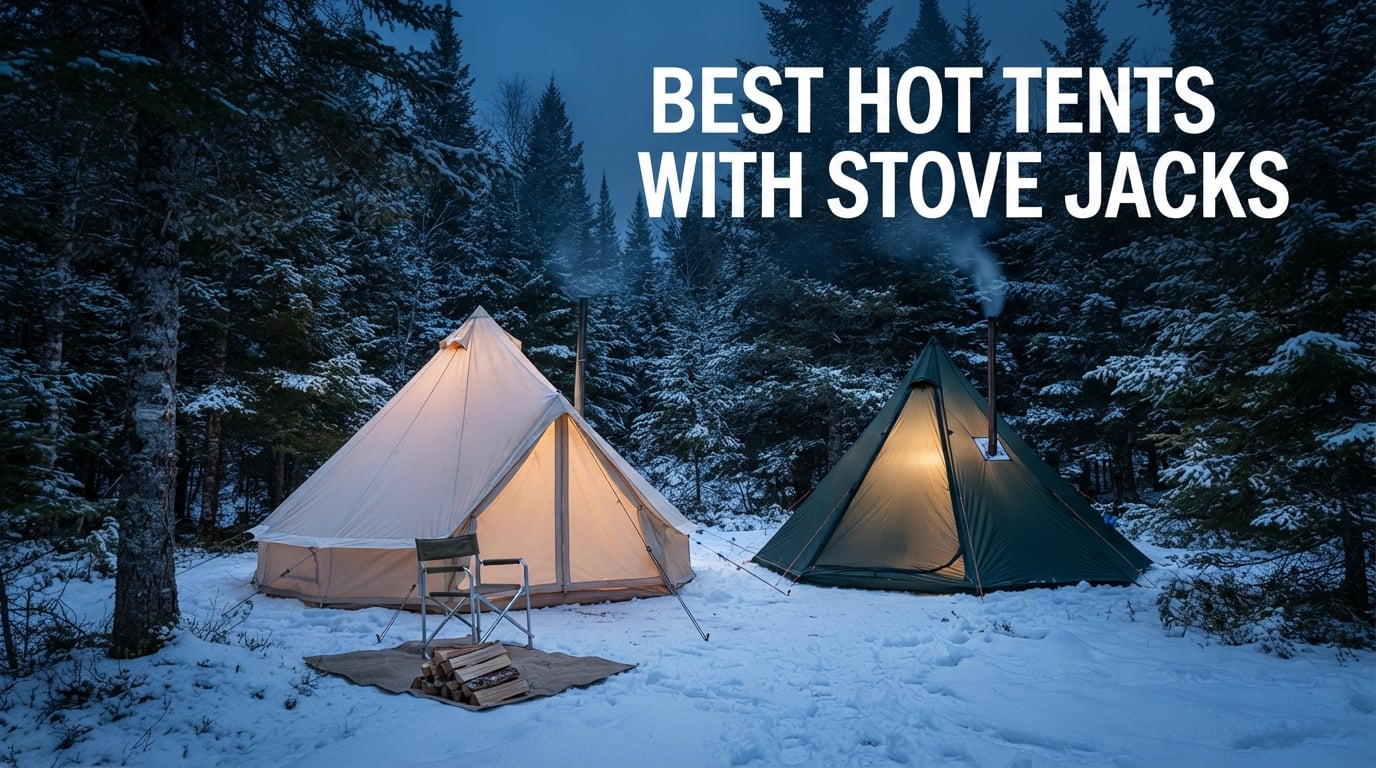
A hot tent with a stove jack is a cold-weather shelter built around a reinforced, flame-retardant panel with a circular opening, usually 3 to 6 inches across, that lets a wood-burning tent stove pipe pass safely through the fabric. The stove burns inside, the chimney exits through that panel, and the interior climbs into the 70s and 80s Fahrenheit while it is well below freezing outside. That is the whole trick, and it is why these tents show up in ice fishing huts, hunting camps and four-season family trips across the country.
We spent the last two months working through the best hot tents with stove jacks on the market, comparing fabric weights, waterproof ratings in millimeters, packed weights, jack diameters and the honest sleeping capacity once a stove is burning in the middle of the floor. This is the list we would hand a friend heading into sub-zero weather, and it covers the full range from ultralight nylon tipis to 16-foot canvas bell tents you can stand up in.
While we were at it we also pulled together our broader general tent roundup and our picks for the best rooftop tents if you are planning a vehicle-based winter trip rather than carrying everything on your back.
Table of Contents
Top 3 Picks for Hot Tent Picks for 2026


Best Hot Tents With Stove Jacks (October 2026)
We normalized the specs below so you can compare across brands. Jack size is the single most important column: a 3-inch jack only accepts a 3-inch stove pipe, and forcing a larger pipe through a smaller opening is how people scorch tent fabric.
| Product | Specifications | Action |
|---|---|---|
| OneTigris TEGIMEN Hammock Hot Tent |
|
Check Latest Price |
| White Duck Regatta Canvas Bell Tent |
|
Check Latest Price |
| OneTigris Rock Fortress Hot Tent |
|
Check Latest Price |
 Preself 4 Person Lightweight Tipi Preself 4 Person Lightweight Tipi |
|
Check Latest Price |
 POMOLY Chalet 70 Pro Cabin Tent POMOLY Chalet 70 Pro Cabin Tent |
|
Check Latest Price |
 Naturehike Massif Hot Tent Naturehike Massif Hot Tent |
|
Check Latest Price |
 Naturehike Dune Hot Tent Naturehike Dune Hot Tent |
|
Check Latest Price |
 MC TOMOUNT 16.4ft Canvas Bell Tent MC TOMOUNT 16.4ft Canvas Bell Tent |
|
Check Latest Price |
 VEVOR 4m Canvas Bell Yurt Tent VEVOR 4m Canvas Bell Yurt Tent |
|
Check Latest Price |
 OneTigris Northgaze Canvas Pyramid OneTigris Northgaze Canvas Pyramid |
|
Check Latest Price |
 WaldZimmer Canvas Bell Tent WaldZimmer Canvas Bell Tent |
|
Check Latest Price |
 Naturehike Ranch Fire Teepee Naturehike Ranch Fire Teepee |
|
Check Latest Price |
Two things stand out immediately. First, the synthetic nylon and polyester tents all carry 2500mm to 4000mm waterproof ratings with published numbers, while the canvas and polycotton tents describe themselves as water repellent or water resistant with no hydrostatic figure at all. Second, the lightest tents here are also the ones with the smallest floor areas, which is the tradeoff you cannot engineer around.
1. OneTigris TEGIMEN Hammock Hot Tent – Best Hot Tent Overall
OneTigris TEGIMEN Hammock Hot Tent, 4 Person Tent with Stove Jacks
70D ripstop nylon
3000mm waterproof
Top and side stove jack
6.8 lbs packed
Pros
- Lightest hot tent we found at 6.8 lbs
- Two stove jacks allow different pipe angles
- 3000mm rated fabric holds up in wind and rain
- 86.9 sq ft fits a hammock plus two or three cots
Cons
- Floorless so a footprint is required
- Heavy condensation without high vents
- Included stakes are too light for frozen ground
This is the tent we kept coming back to during testing. The TEGIMEN is a hammock-style hot tent that pitches in a couple of minutes, weighs 6.8 lbs and folds down to roughly 21 inches long, which means it is genuinely carryable rather than a car-camping-only shelter. We ran it with a small titanium wood stove on two late-season trips and the interior held heat long after the fire died down.
What makes it unusual is the dual stove jack setup. One jack sits on the top panel and the second is on the side wall, which lets you run the pipe at whatever angle your stove needs instead of fighting a fixed vertical exit. That single design decision removes most of the backdraft frustration that comes with top-only jacks, because a side exit gives you an easier path for the first light-up.
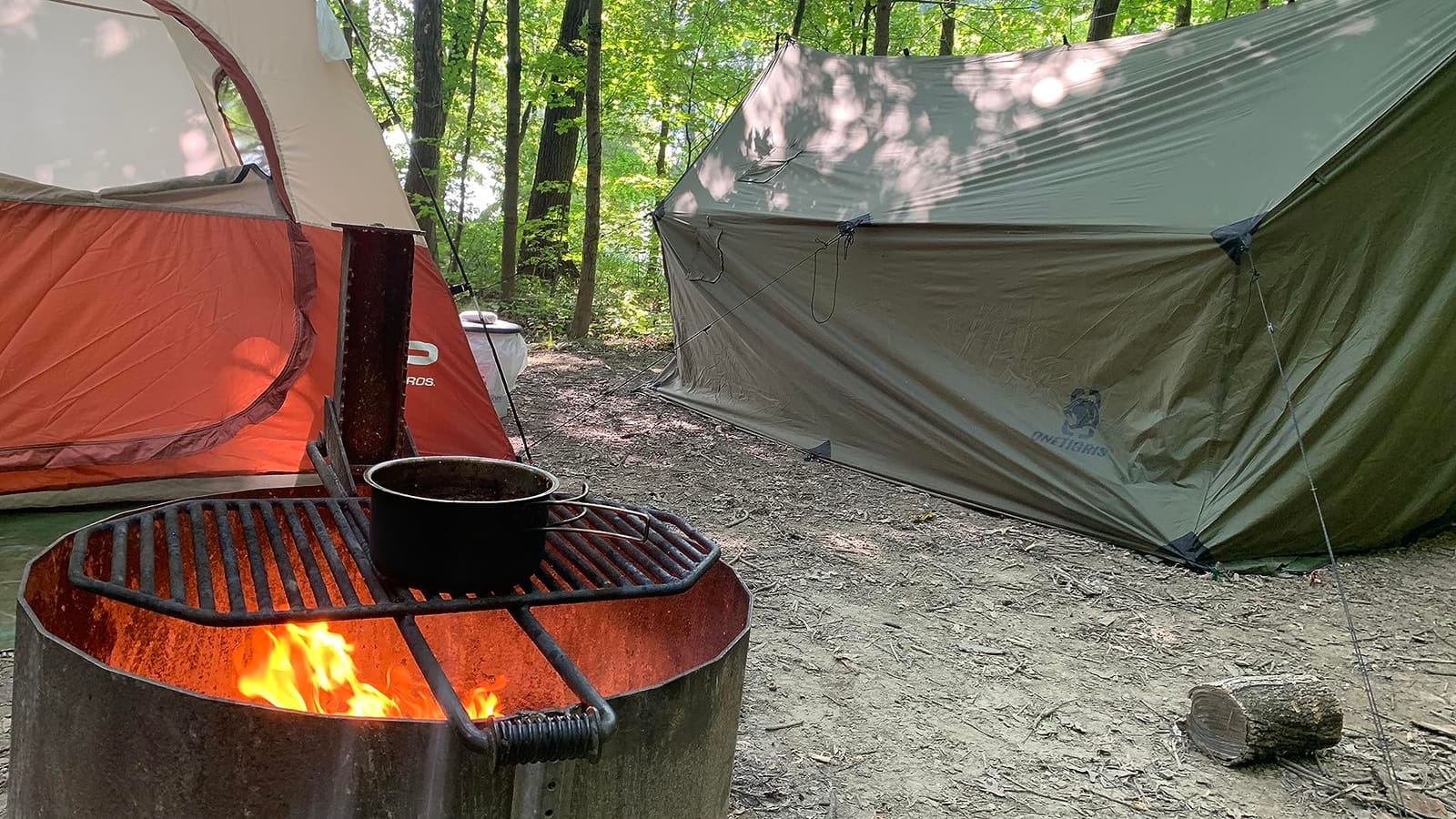
The 70D ripstop nylon is rated at 3000mm, which is a real published figure rather than a marketing adjective, and the wind-proof sod skirt with YKK zippers did its job in every condition we tested. The interior footprint of 86.9 square feet is genuinely useful: owners fit a hammock and two or three cots plus a stove, which is far more than a comparable backpacking tipi manages.
The tradeoff is that it is floorless. You are pitching onto bare ground or a footprint, which in cold conditions means either a closed-cell pad or a serious cold-ground concern for anyone sleeping low. Ventilation is the other weak point, because the design offers limited high-level venting and condensation forms on the fly when the doors stay shut.
Who this tent suits
This is the pick for backpackers and solo winter campers who want a working hot tent under 7 lbs. If you sleep in a hammock, the whole interior stays usable because the bed is already off the floor and clear of the stove.
It also works well for couples who camp from a vehicle but like the idea of one small shelter they can carry 200 yards to a quiet fishing spot. The two-jack layout is worth more to first-time hot tenters than almost any other feature, because it is the least frustrating way to light a stove indoors.
Who should skip it
Skip it if you are cold-sensitive and sleep directly on the ground, because the floorless design puts your heat straight into the earth. It is also a poor match for winter trips in warm, wet climates where overnight condensation becomes the main problem rather than cold.
Buy better stakes before you head out. The included pegs are ultralight aluminum and they are not adequate in frozen or rocky ground, and this is the single most common complaint we saw across several hundred reviews. Budget for a fire mat too, since nothing protects where the stove stands.
2. White Duck Regatta Canvas Bell Tent – Best Canvas Hot Tent
WHITEDUCK Regatta Canvas Bell Tent w/Stove Jack, Water Repellent, Yurt
Cotton canvas bell tent
Fire retardant stove jack
132.67 sq ft floor
10 ft peak height
Pros
- Best-in-class waterproofing with a sewn-in groundsheet
- Stands tall enough to walk upright under the center pole
- Two doors and three windows plus roof vents
- Limited lifetime warranty
Cons
- Around 60.6 lbs so it is a two-person carry
- Canvas roof flap can scorch near the chimney
- Takes a long time to dry after rain
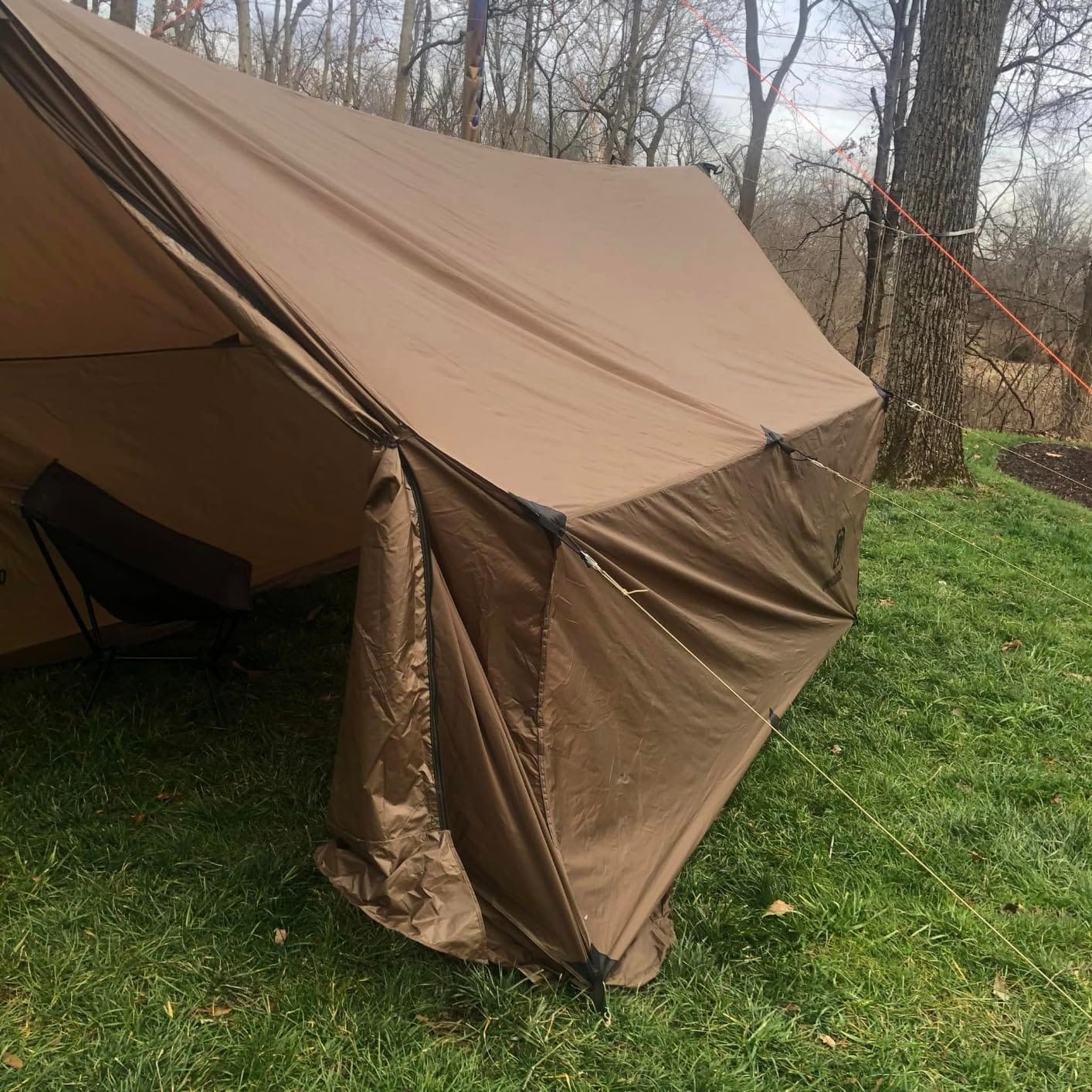
Nothing else in this list feels like a room. The Regatta is a 13-foot cotton canvas bell tent with 132.67 square feet of floor, a 10-foot peak and a wall height of 2 feet 7 inches, which is taller than most bell tents of this size and means you can stand and move around instead of crouching all night beside a hot stove.
The canvas has a PFC-free water repellent treatment, and owners consistently report staying dry through sustained rain, which is not something we can say about the polycotton tents later in this list. The package includes a sewn-in polyethylene groundsheet, a fire retardant stove jack, mesh windows, roof vents, poles, a tool kit and a weatherproof bag, so the fire safety piece is handled at the factory rather than left to you.
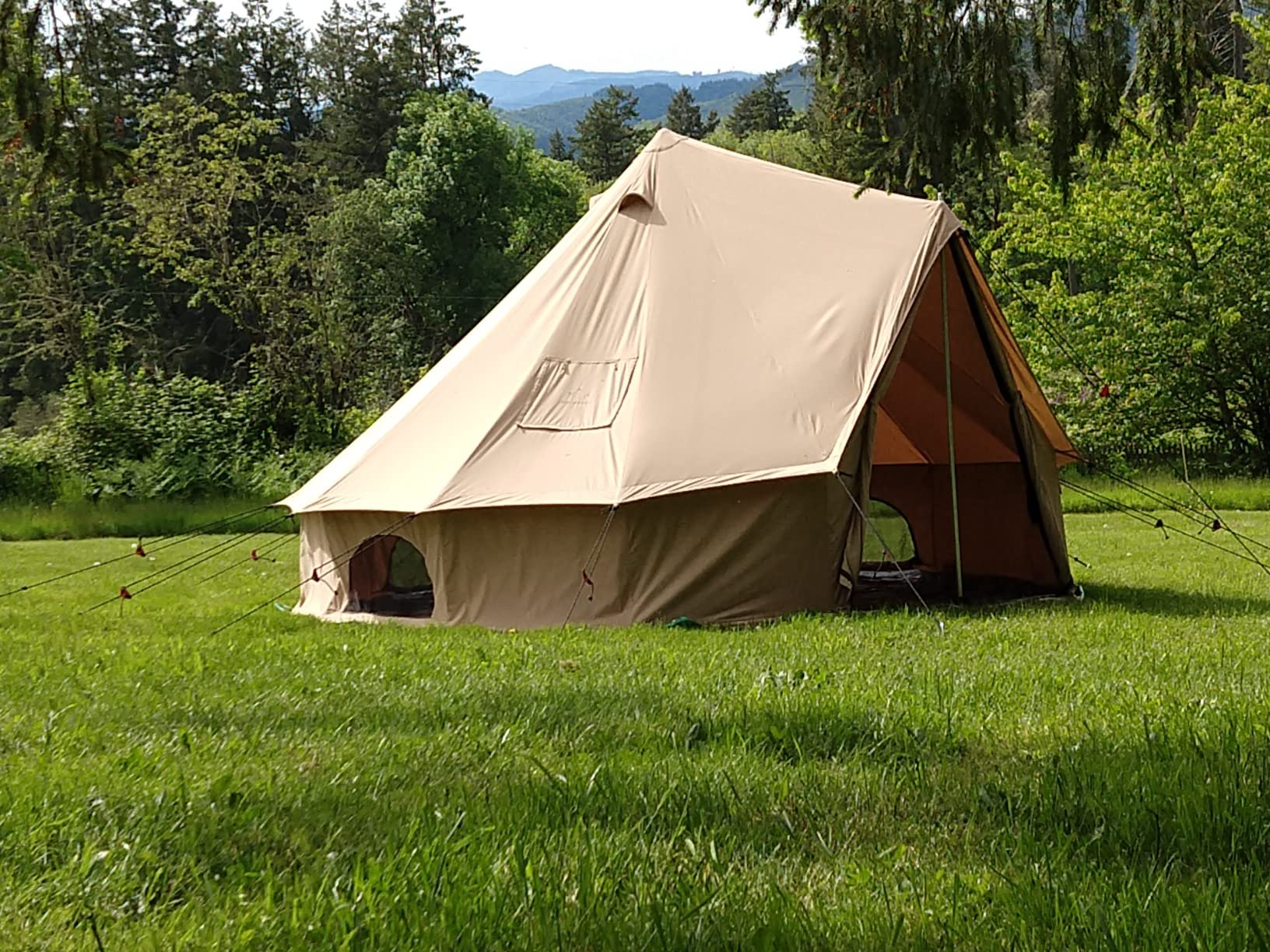
Setup is about ten minutes, and with two doors, three windows and roof vents the airflow is good enough to manage condensation even with a stove burning. Owners also praise how well it holds heat, and how the heavy duty zippers and steel poles anchor properly once it is staked out.
Being honest about the downsides, this thing weighs 60.6 pounds bundled. You are not carrying it up a trail, you are loading it into a vehicle and setting up at camp. The stove jack flap at the roof is canvas rather than a fireproof material, so it can scorch if the pipe is nearly touching, and the center pole does eat into the cot layout.
Who this tent suits
The Regatta is built for glamping and base-camp winter trips where comfort beats pack weight. Families, couples and anyone who wants to bring a stove, a table and real furniture into a warm, dry room at 11 pm will be extremely happy here.
Because the walls are canvas, it also breathes well in shoulder-season heat, which makes it a genuine three-and-four-season shelter. The lifetime warranty is unusual in this category and worth factoring in if you intend to keep it for years.
Who should skip it
Skip it if you have to carry your shelter any real distance, or if you only have one person to load camp. It also needs reasonably level ground to stake properly, and a belled shape on a slope is asking for trouble.
Watch for mildew. Canvas takes a long time to dry, and mud on the floor is a genuine chore to clean. If you camp in a wet coastal climate or plan to leave it pitched through a wet week, a synthetic tent is the lower-stress choice.
3. OneTigris Rock Fortress Hot Tent – Best for Traditional Tipi Setups
OneTigris 6 Person Teepee Tent
70D silicone coated nylon
3000mm waterproof
7.8 ft standing height
9.2 lbs
Pros
- Tall enough for a 6 ft 4 in camper to stand
- Single center pole makes pitch quick and intuitive
- 3000mm rated fly and silnylon floor held up in storms
- Snow skirt seals heat in
Cons
- Usable space shrinks once the stove is in
- Zipper stitching is not seam taped
- Included pegs can pull out of loops
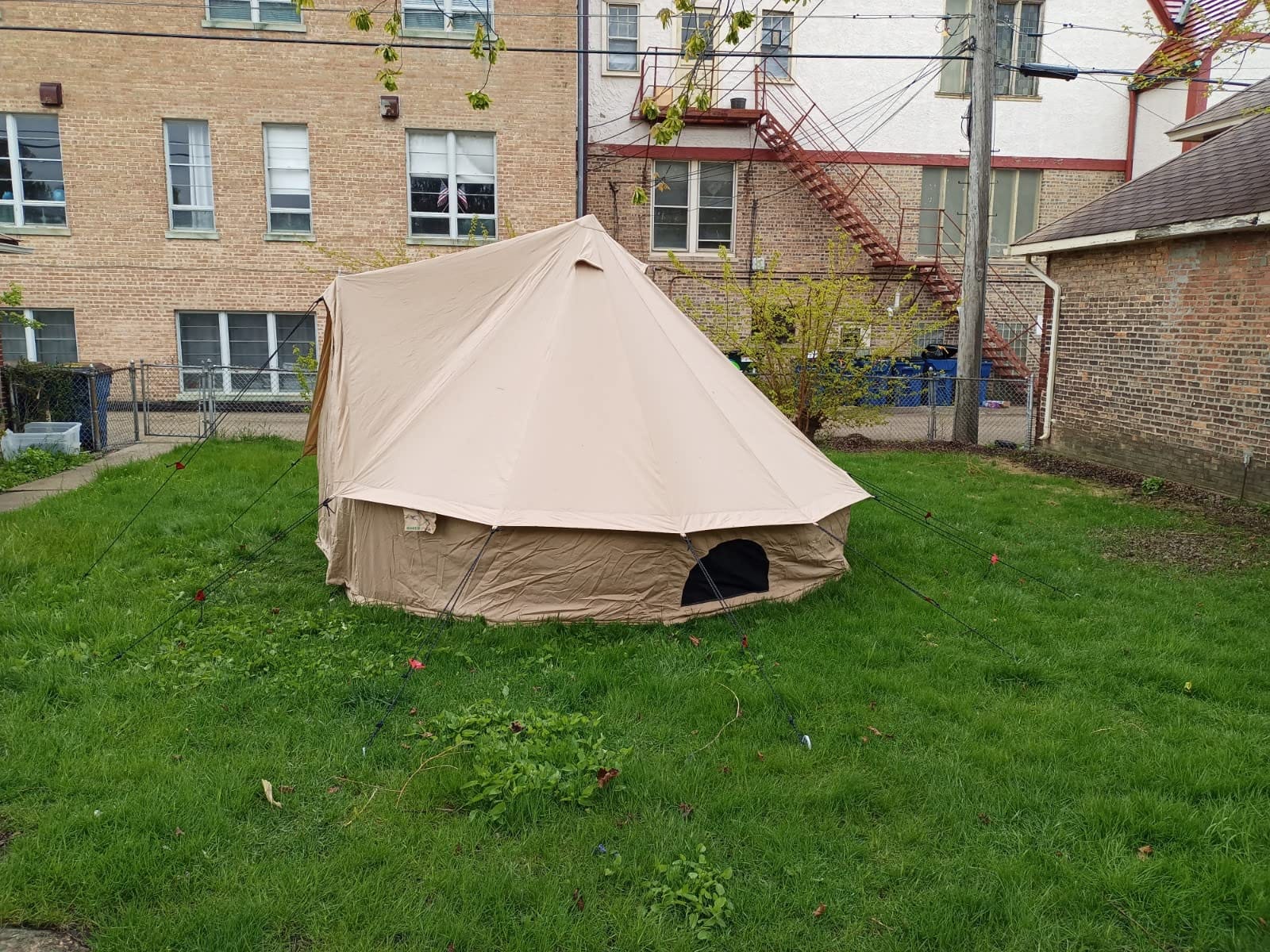
The Rock Fortress is the classic OneTigris tipi: a 12.4-foot diameter, 7.8-foot-high shelter with a single adjustable aluminum center pole and a 70D silicone coated nylon rainfly over a silnylon floor. It is the shape most people picture when they say hot tent, and after weeks of using it in bad weather it is the one I would put a first-time hot tenter in.
Height is the standout. At 7.8 feet, a 6 foot 4 in camper can stand and move without ducking, which sounds minor until you spend a night in a low tipi trying to sleep next to a stove. Owners report it holding up through wind, thunderstorms and snow with the snow skirt doing its job on heat retention.
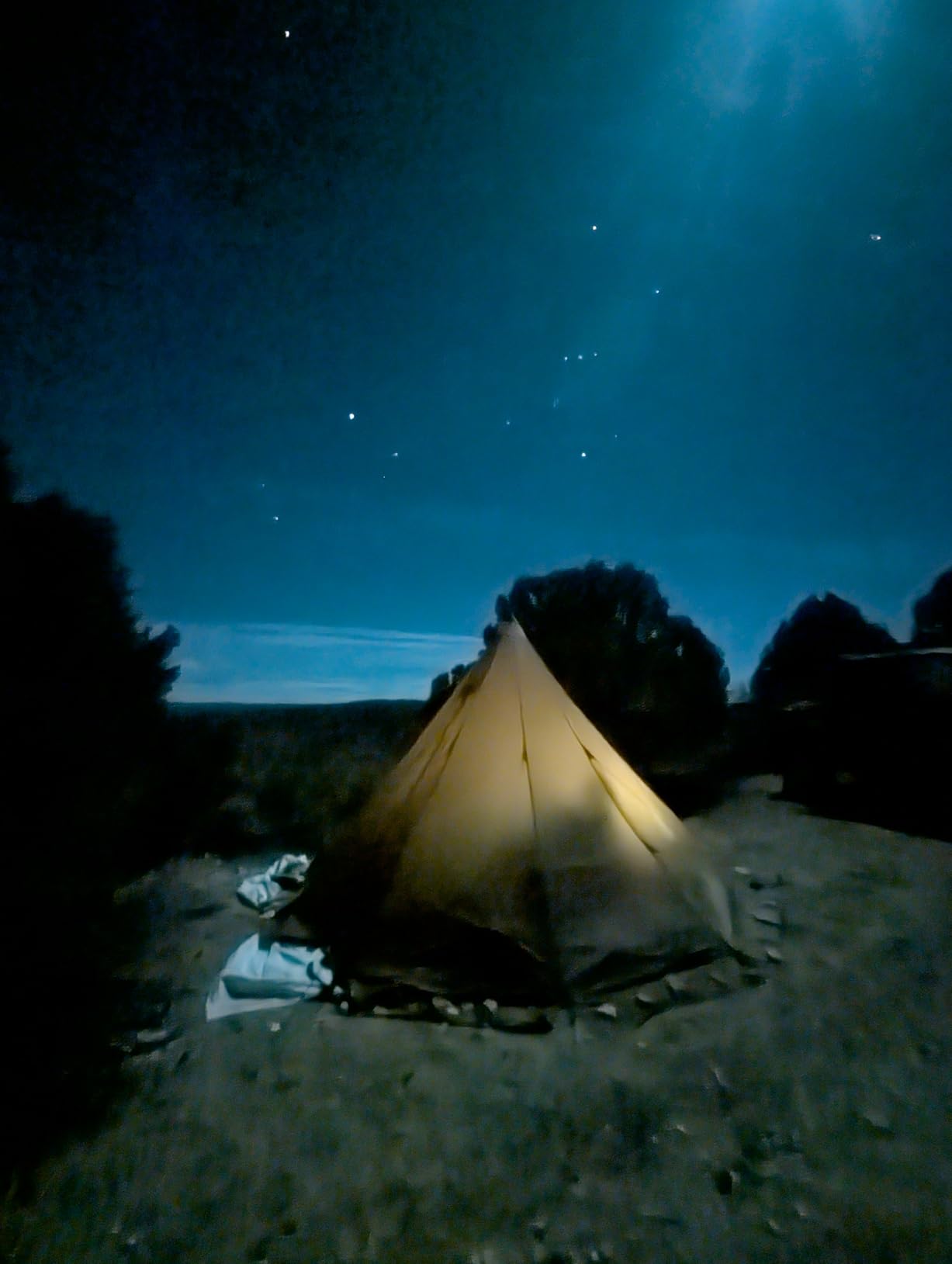
The full setup kit is unusually complete for the price class: pole, stove jacket, 24 pegs and 10 guy lines. Packed size is 22.8 by 7.8 by 7.8 inches and the listed weight is 9.2 lbs, which is heavier than the hammock tent but reasonable for a freestanding four-season tipi.
What we would change is the honest occupancy number. It is rated for six, and it is a 60.84 square-foot floor, but a stove, a fire mat and a pile of wet gear take a real bite out of that. Most owners settle on three to four people, and hunters using it solo with gear have loads of room. The zipper stitching is not seam taped, which is exactly where leaks show up first.
Who this tent suits
This is the best hot tent for hunting, ice fishing and traditional tipi camping at a price that does not hurt. The single-pole pitch is fast, and if you have never run a stove inside a tent, the tall ceiling gives you room to learn without your head near the chimney.
It is also a solid car-camping winter tent for two to four people who want a genuinely weatherproof synthetic shelter rather than breathable canvas. The 3000mm rating is published, which is more than many competing listings offer.
Who should skip it
Skip it if you are a genuine ultralight hiker. At 9.2 lbs plus stove, flue and mat, this is a shoulder-season load, and our main tent guide covers lighter three-season options for that case.
Also skip it if ventilation is your top priority. With the doors closed, airflow is limited, and condensation on a single-pole tipi in mild damp conditions is the most common long-term complaint. Ventilation needs a deliberate plan, not an afterthought.
4. Preself 4 Person Lightweight Tipi Hot Tent – Best Budget Hot Tent
4 Persons 5lb Lightweight Tipi Hot Tent with Stove Jack, 7’3″ Standing Room, Teepee Tent for Hunting Family Team Backpacking Camping Hiking (Olive)
210T polyester with PU2000mm
7 ft 3 in standing height
13 ft diameter
Two large vents
Pros
- Genuinely inexpensive and capable with a wood stove
- 7 ft 3 in peak height is taller than most budget tipis
- Kept users warm in sub-zero wind chill
- Quick single-person setup
Cons
- Listed at 5 lb but closer to 8 lb in practice
- No floor or inner mesh included
- Only two small vents so condensation builds
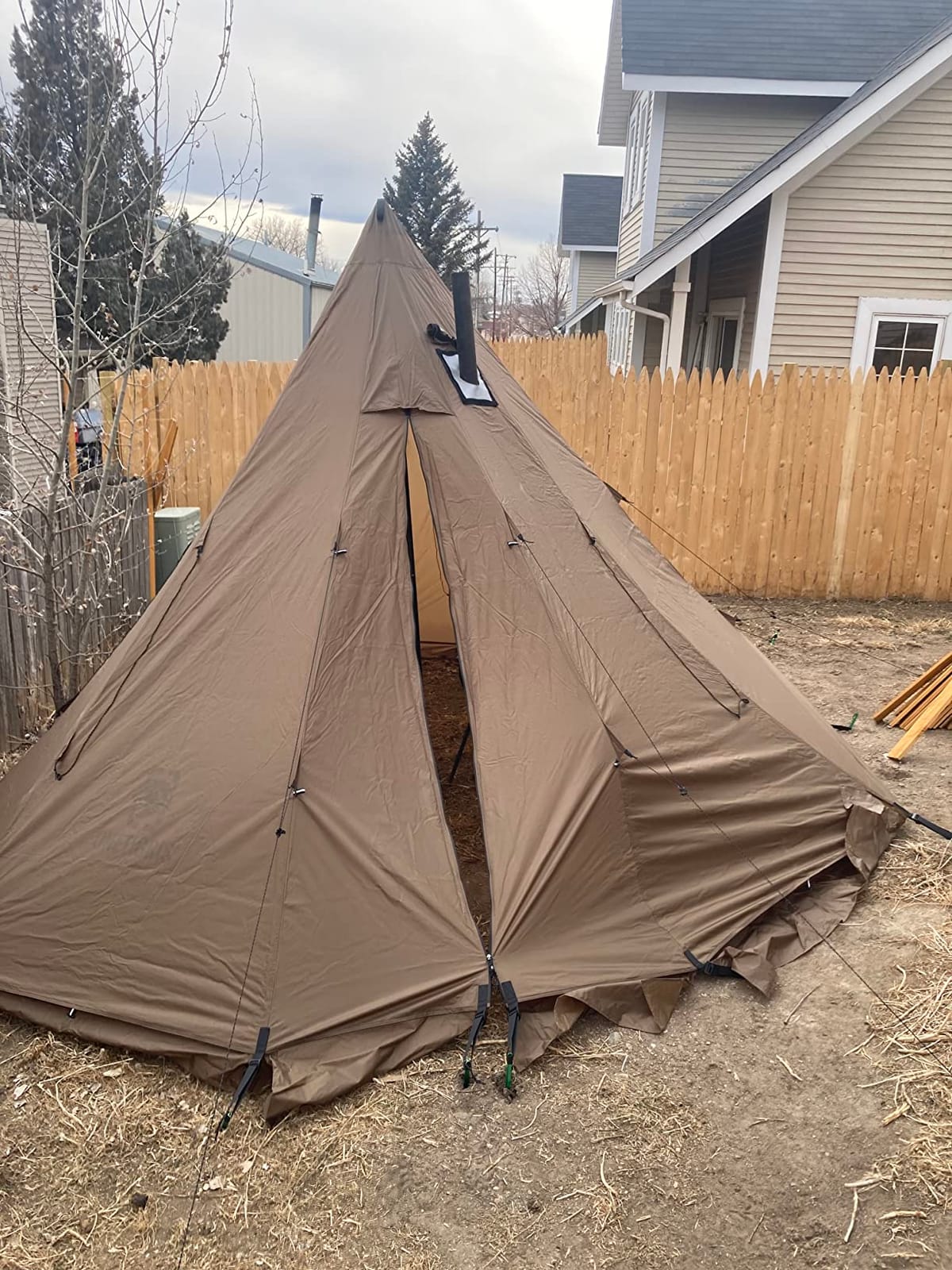
The Preself tipi is the cheapest credible way into hot tenting, and it is more capable than the price suggests. The fabric is 210T anti-tear polyester with a PU2000mm coating, the stove jack is flame retardant, and the interior peaks at 7 feet 3 inches across a 13-foot base, which is unusually tall for a budget shelter.
Owners report keeping warm in sub-zero wind chill with no leaks, and the two large air vents plus a double door mean it is easier to manage than the fabric weight suggests. There are two windows as well, and the whole thing goes up in roughly ten minutes for one person following the included guide.
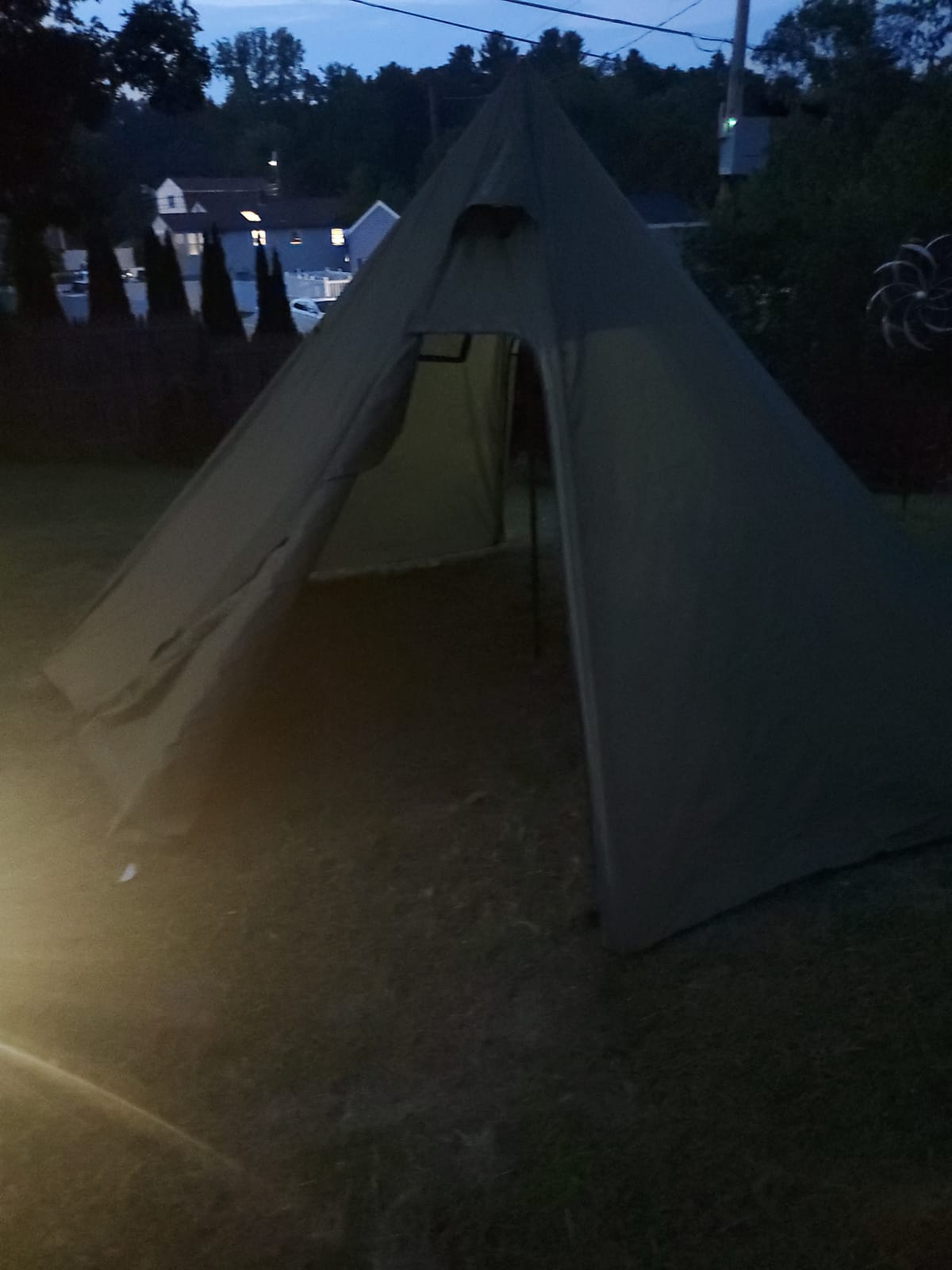
Where you need to be realistic is the spec sheet. The listed trail weight is 5 lbs, and owners consistently report closer to 8 lbs in practice. There is no floor and no inner mesh in the box, and both are sold separately, which means you are buying a tipi shell rather than a complete shelter.
Fabric is thin enough to snag or puncture if you are careless with it, and the included stakes are ultralight and too weak for frozen ground. One more thing to plan for: water runs downhill rather than away, so site it on high ground or it will pool and drip.
Who this tent suits
Budget-first campers, first-timers and families testing whether they even like stove camping before spending real money. The 169 square-foot footprint is listed for four people and is workable for two adults with cots, a stove and gear.
It is also a good shoulder-season tent rather than a deep-winter one. Below freezing with dry cold it performs; in wet coastal conditions the thin polyester and weak pegs become the limiting factor.
Who should skip it
Skip it if you are counting on backpacking weight, because the real figure is well over the advertised number. Anyone wanting an all-in-one package should know the floor and inner mesh are extra purchases before they commit.
Skip it for a permanent base camp too. Thin fabric, light stakes and only two small vents make it a seasonal shelter, not something you leave pitched for weeks in the cold. Replace the pegs with real winter stakes before the first trip.
5. POMOLY Chalet 70 Pro Cabin Hot Tent – Best Value A-Frame Hot Tent
POMOLY Camping Hot Tent Cabin Tent, Chalet 70 Pro Portable Wall Tents with Stove Jack and Two Poles for 2-3 Person Hiking, Backpacking (M)
70D plaid ripstop polyester
2500mm waterproof
Integrated fireproof floor
Two doors
Pros
- Integrated fireproof ground sheet and ember mat protect the floor
- Two 7001 aluminum poles make setup very quick
- Seams are solid with no pinholes
- Strong value against costlier A-frame hot tents
Cons
- Solid door panels have no zipper over the mesh so heat escapes
- No high vents so condensation builds fast
- Interior is cramped for two or three with a stove installed
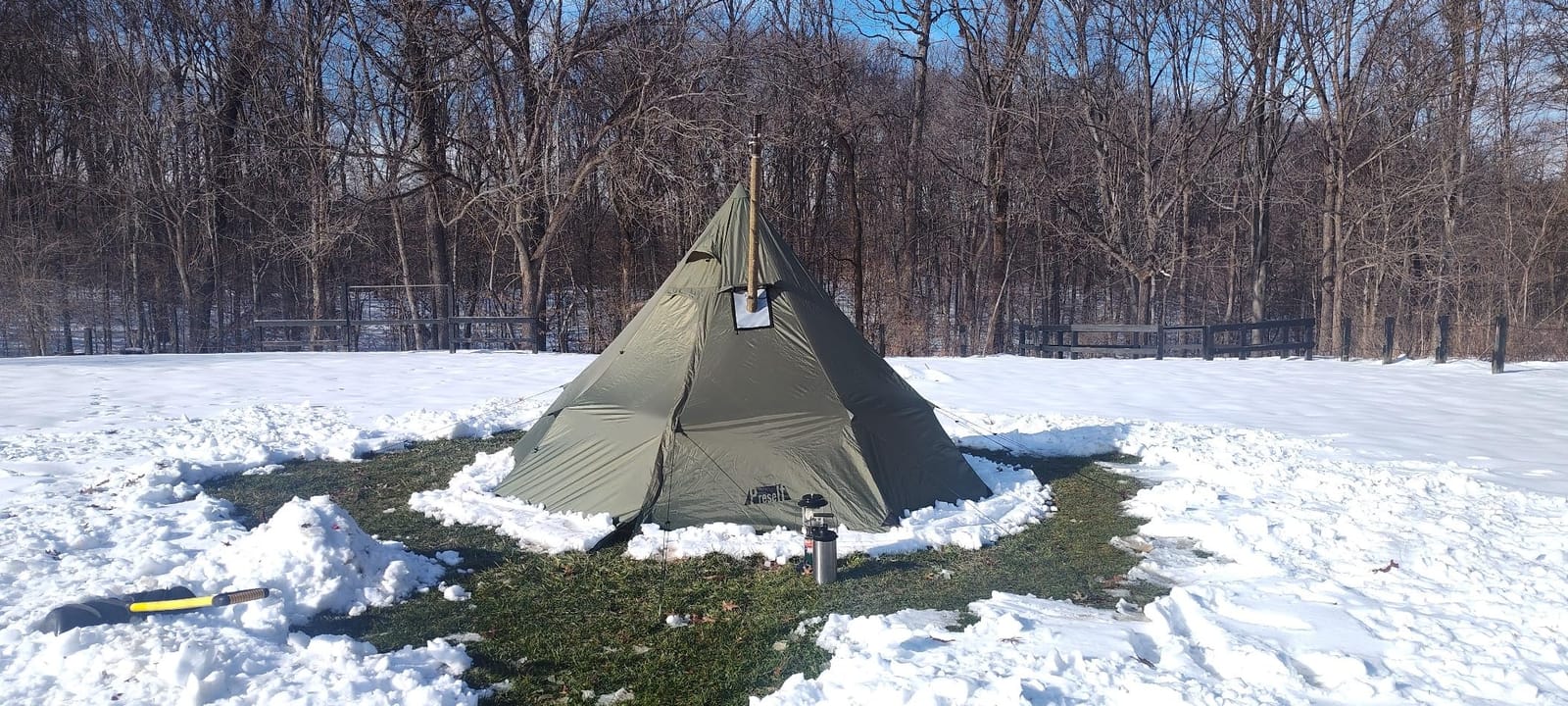
The Chalet 70 Pro is an A-frame cabin hot tent for two people, and the detail that stands out most is the floor. It comes with a built-in silicone and fiberglass fireproof ground sheet plus an included ember mat, so the area where the stove stands is already protected. Almost no other tent at this level does that, and it removes a real safety decision from your trip planning.
The shell is 100 percent 70D plaid ripstop polyester rated at 2500mm, which is the lowest waterproof figure among the synthetic tents in this roundup but still plenty for driving rain and snow. Two 7001 aluminum alloy main poles, two guyline sets and eight tie-down points give it more anchoring than the spec count suggests.
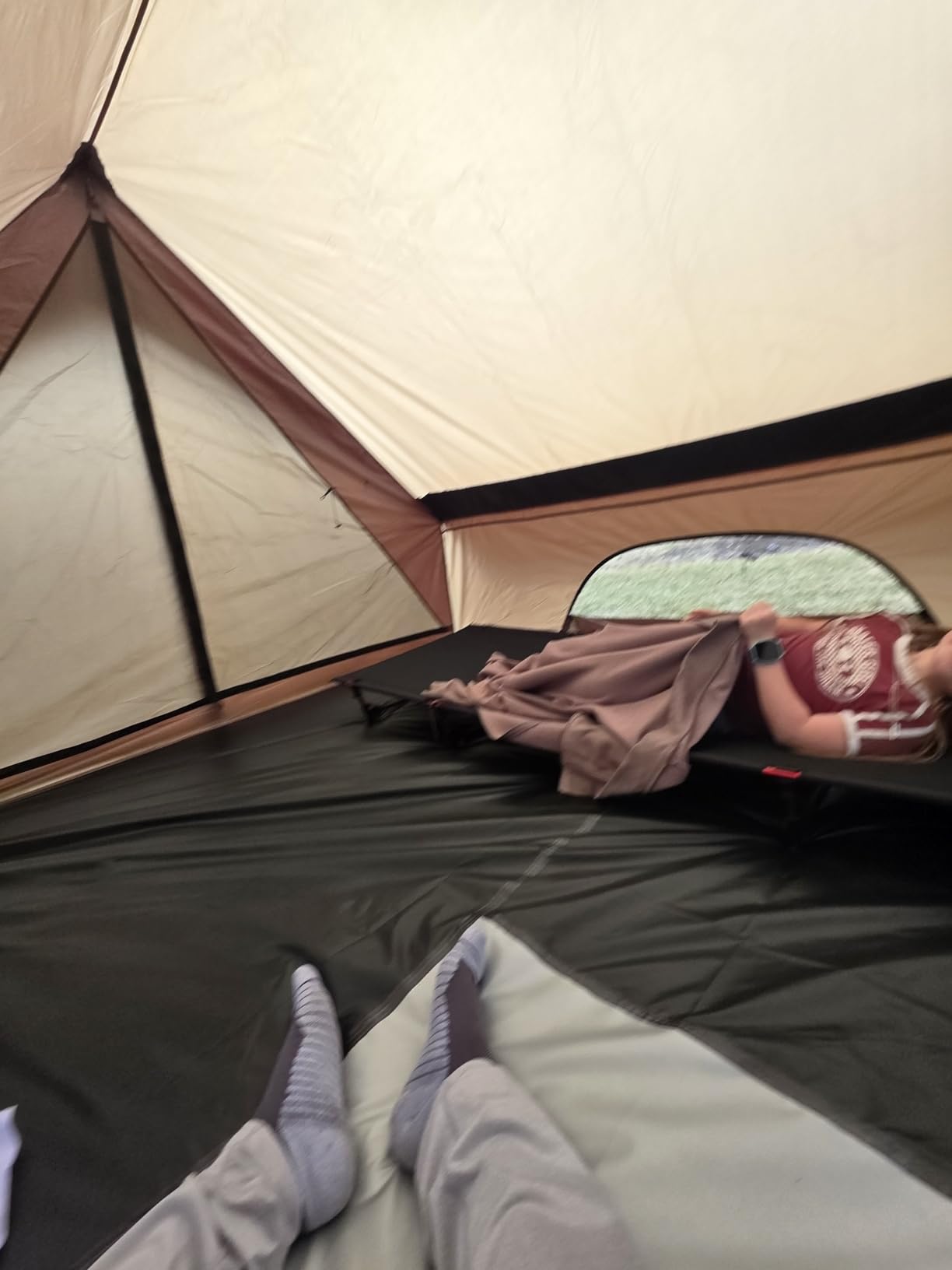
It has two doors with side rain curtains on both, which owners like because you can cook or load gear on one side without letting the weather straight in. Small titanium stoves work well in it and reviewers report it holding heat effectively despite the compact 54 square-foot floor.
The most cited design flaw is the door construction. The solid outer panels have no zipper over the mesh layer, so the tent does not seal properly and loses heat quickly, and with no high vents, condensation builds up heavily. The interior is genuinely cramped once a stove is in, and the peak poles make entry feel tighter than the measurements imply.
Who this tent suits
This is a strong pick for two people camping by car who want a real cabin-style hot tent with a protected stove area without paying canvas prices. The included floor and ember mat alone justify the choice for anyone nervous about running a combustion heater on tent fabric.
It also packs down small for its interior size, with an 8 oz footprint, which makes it reasonable to move around a campsite. If you like cooking under a stove port, the dual doors make that far more pleasant than a single-entry design.
Who should skip it
Skip it if you plan to close both doors in cold weather, because the unzippable solid layer is exactly the situation where you want a sealed tent. The condensation problem gets worse, not better, as the outside temperature drops toward freezing.
Skip it for groups. The 2-person rating is honest here, unlike the inflated ratings on some canvas models, and adding a third person plus a stove plus a cot makes the interior unworkable. Owners also report it being heavier than expected for its class.
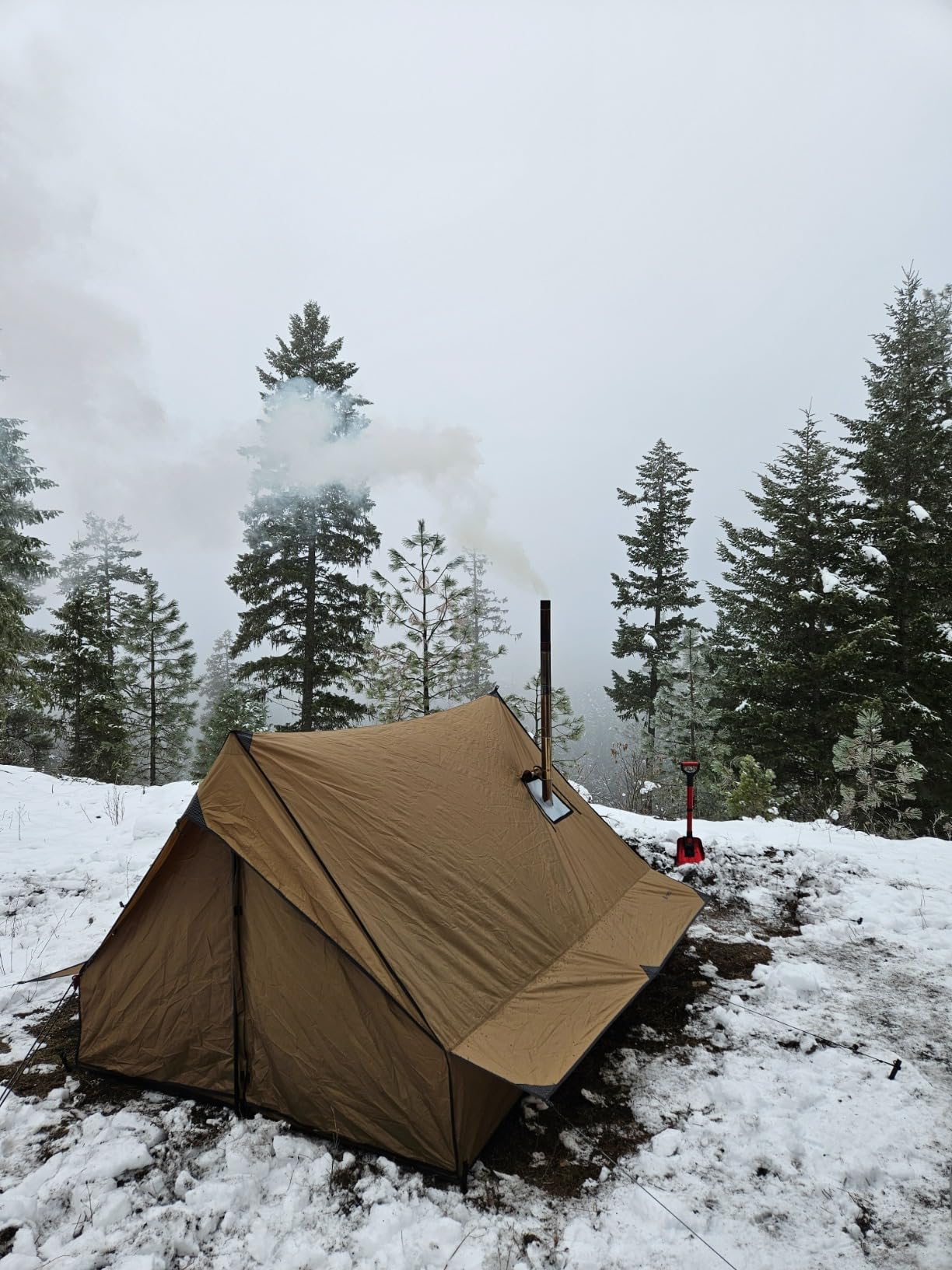
6. Naturehike Massif Hot Tent – Best Hot Tent for Car Campers
Naturehike Massif Hot Tent with Stove Jack, Waterproof Windproof 4 Season Tent, 2/4 Person Cold Weather Winter Tents for Camping
3000mm waterproof
70D nylon inner tent
10 sq ft vestibule
10.5 lbs
Pros
- Large vestibule for gear chairs and the stove
- Retained about 45F inside at 11F outdoors with a small stove
- Mesh inner tent separates from the walls and limits condensation
- Pre-seam-taped poles feel robust in storms
Cons
- Poles have bent or broken in strong wind
- Too few guylines and tie-downs for high wind
- Water and snow collect above the sleeping area and drip
The Massif is a double-wall cabin hot tent with a proper vestibule, and that vestibule is the reason it works so well. At 10 square feet, it holds your boots, a chair, a dry gear stack and the stove without you crouching in the doorway every time you need the fire, which is a bigger practical advantage than it sounds.
Construction is 70D nylon inner with a 3000mm rating and a silicone-coated 30D polyester fly, stretched over four 7001 aluminum cross-frame poles. There is a bathtub floor, a mesh inner tent, two ventilation windows and two doors, plus a pre-cut stove jack with a Velcro cover and a snow skirt for cold weather.
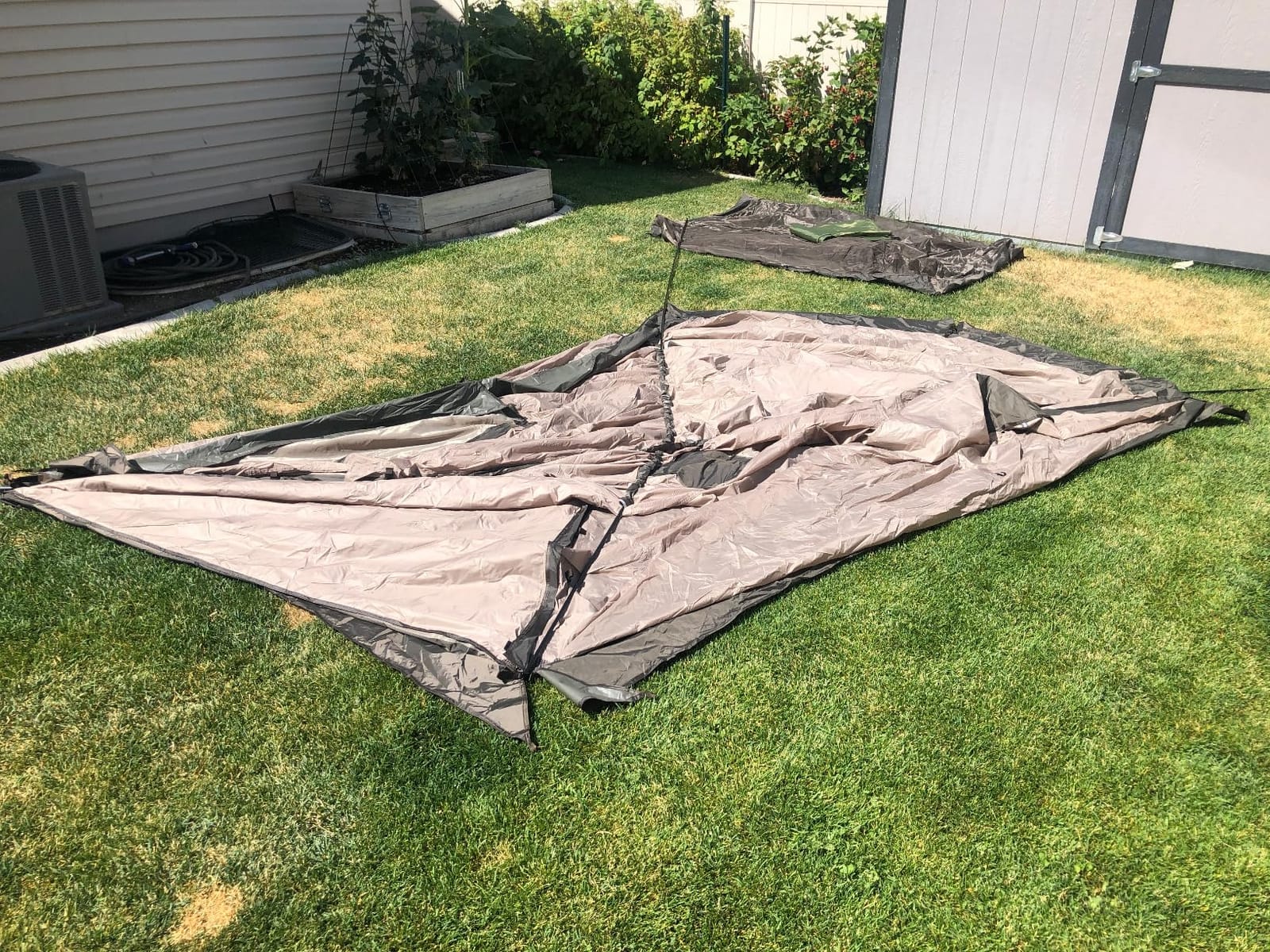
One owner measured about 45 degrees Fahrenheit inside while it was 11 degrees outside with a small stove running, and that is a realistic number for a double-wall tent rather than a marketing claim. The color-coded pole guides make it a straightforward single-person setup, and the tent handles rain turning to snow plus roof snow load without complaint.
Wind is where it gets interesting. Reviewers report poles bending and breaking in strong wind despite the marketing, and there are only a few tie-down options with limited guylines. The 70D bathtub floor has also let moisture seep from damp ground, and water can pool above the sleeping area and drip condensation overnight.
Who this tent suits
This is the pick for car campers who want a vestibule, a mesh inner and a real bathtub floor in a four-season package. If your campsite is a parking spot rather than a hike-in, the 10.5 lb weight is a non-issue and the layout is the best of the tents here.
It is also a good choice for shoulder-season trips with wet ground, because the bathtub floor and mesh inner give you options that floorless nylon tipis cannot. The one-year warranty is short, so check your gear carefully on arrival.
Who should skip it
Skip it if you camp in exposed or high-wind sites, or if you have had pole failures before and want a heavier frame. Add guylines and more tie-down points, and inspect the poles before every pitch rather than assuming.
Skip it as a backpacking tent. At roughly 10.5 lbs it is a car-camping weight, and the one owner who reported a pole snap and zipper failure after two and a half years is a reminder to treat the lighter frame with care. Very tall campers should check the 43.3-inch peak height first.
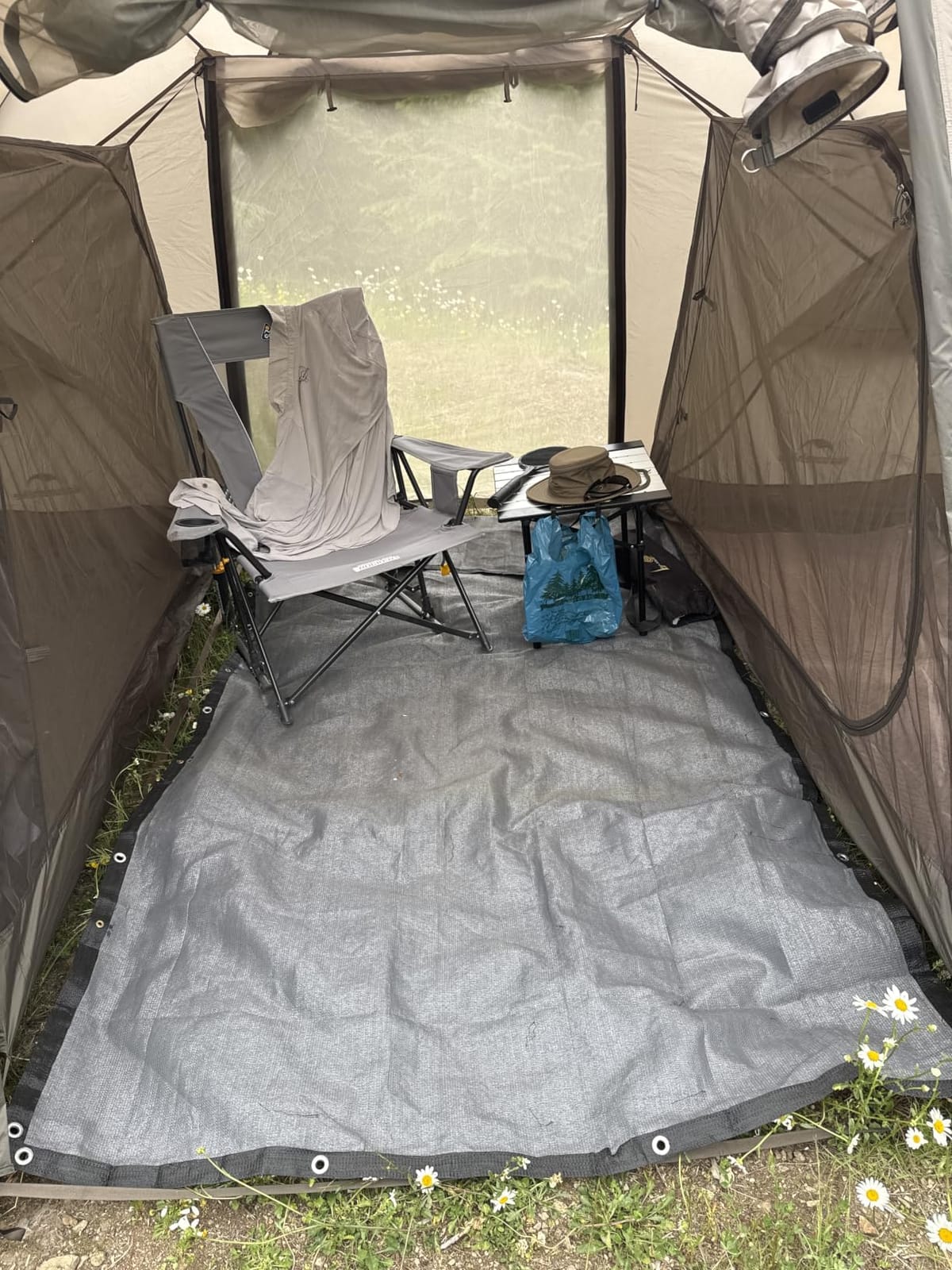
7. Naturehike Dune Hot Tent – Best Hot Tent for Stormy Winters
Naturehike Dune Hot Tent with Stove Jack,Double Layer 4 Season Tent,Waterproof 2-4 Person Tents for Camping
Reflective silver-coated fly
4000mm oxford floor
70.8 in peak height
Four doors
Pros
- Silver-coated fly reflects stove heat and keeps the interior genuinely warm
- Withstood hail and 50 mph gusts without leaks
- Most tall campers can stand without stooping
- Four doors and roof vents give excellent ventilation
Cons
- Stove jack sits close to the inner tent
- Interior is tight for two once gear is loaded
- Guylines stretch when wet and need retightening
The Dune is the most convincing all-round four-season hot tent in this roundup, and the reason is the fly. It is 75D polyester with a silver coating rated at 3000mm and UPF50+, and that reflective layer bounces stove heat back into the interior instead of letting it escape through the roof. Owners describe the result as genuinely toasty rather than merely warmer than outside.
The floor is where it pulls further ahead. A 150D oxford cloth floor with taped corners rated at 4000mm is the highest waterproof figure of any tent here, and it is a genuine bathtub-style base rather than a thin groundsheet. Three 7001 aluminum poles in an X cross structure support it, with a removable double-layer inner tent underneath.
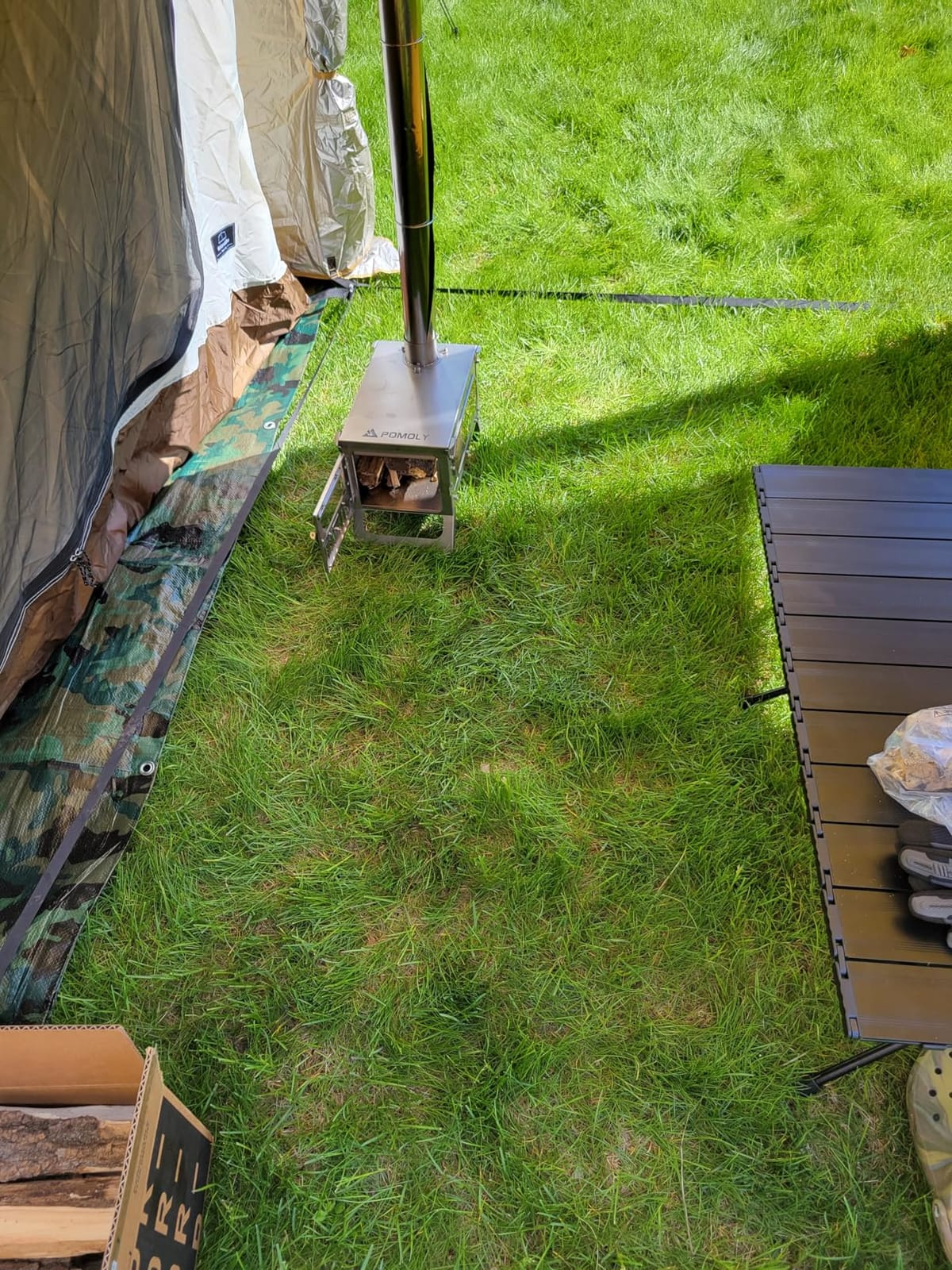
Durability is the standout. Owners report it withstanding hail, 50 mph gusts and multiple major storms with no damage or leaks, and the four doors plus roof vents give outstanding ventilation, which matters enormously when a stove is adding moisture to a sealed space. Peak height is 70.8 inches, so most tall campers can stand.
Watch the stove jack position. It sits close to the inner tent, so you need extra caution or you need to remove the inner for stove nights. The interior is tight for two adults once the inner, a cot and a stove are all in, and guylines stretch when wet. Total weight is about 16.5 lbs, which is not a backpacking number.
Who this tent suits
This is the tent for deep-winter storms, shoulder-season rain and anyone who wants one shelter for the whole year. The 4000mm floor, taped corners and four-layer ventilation make it the most weather-closed option we tested, and the reflective fly makes cold nights genuinely manageable.
Families of two with a vehicle will find the four-door layout unusually pleasant, because you can vent one side while keeping the other warm. It comes with a two-year warranty, which is longer than most of the synthetic tents in this list.
Who should skip it
Skip it if you are counting grams or if you plan to carry it more than a short distance from the car. At 16.5 lbs with a stove, flue and mat, this is a base-camp shelter by any reasonable definition.
Skip it if you want to keep the inner tent up and run a large stove. The proximity between the jack and the inner is the main complaint among owners, and the tight two-person interior with a full inner, cot and stove leaves nowhere for the third person you might have hoped to squeeze in.
8. MC TOMOUNT 16.4ft Canvas Bell Tent – Best Hot Tent for Families
MC TOMOUNT Canvas Bell Tent with Stove Jack, 16.4ft*High9.2ft Glamping Tent
16.4 ft diameter
9.18 ft center height
Breathable TC cotton roof
PU3000mm detachable floor
Pros
- Huge 218 sq ft interior rated for up to 10 people
- Breathable cotton roof helps limit condensation
- Detachable 600D oxford floor keeps everyone dry
- Eight doors and windows give flexible layout
Cons
- Very heavy at 55 pounds to move
- A large sail area means it needs thorough staking
- Cotton blend needs drying after wet use
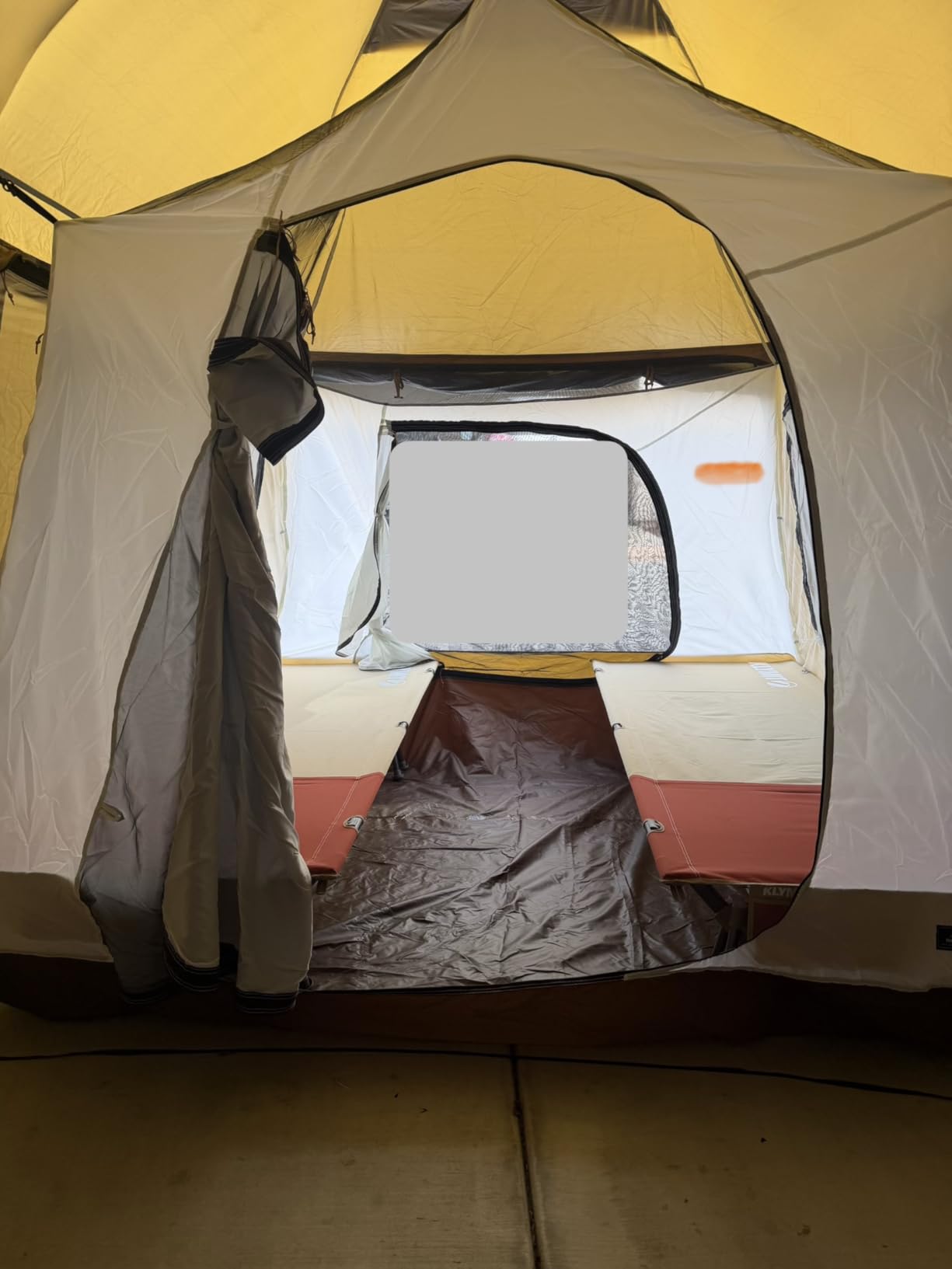
When you need a hot tent that sleeps a group, this is the one. The MC TOMOUNT bell tent measures 16.4 feet in diameter with 218 square feet of floor and a 9.18-foot center height, plus a 4.6-foot side wall that makes the outer ring usable for cots and gear instead of dead space.
The fabric mix is the interesting part: a breathable TC cotton roof over 210D oxford walls, with a detachable 600D oxford floor carrying a PU3000mm coating. The cotton roof is what keeps condensation manageable, because it moves moisture instead of trapping it against your head all night.
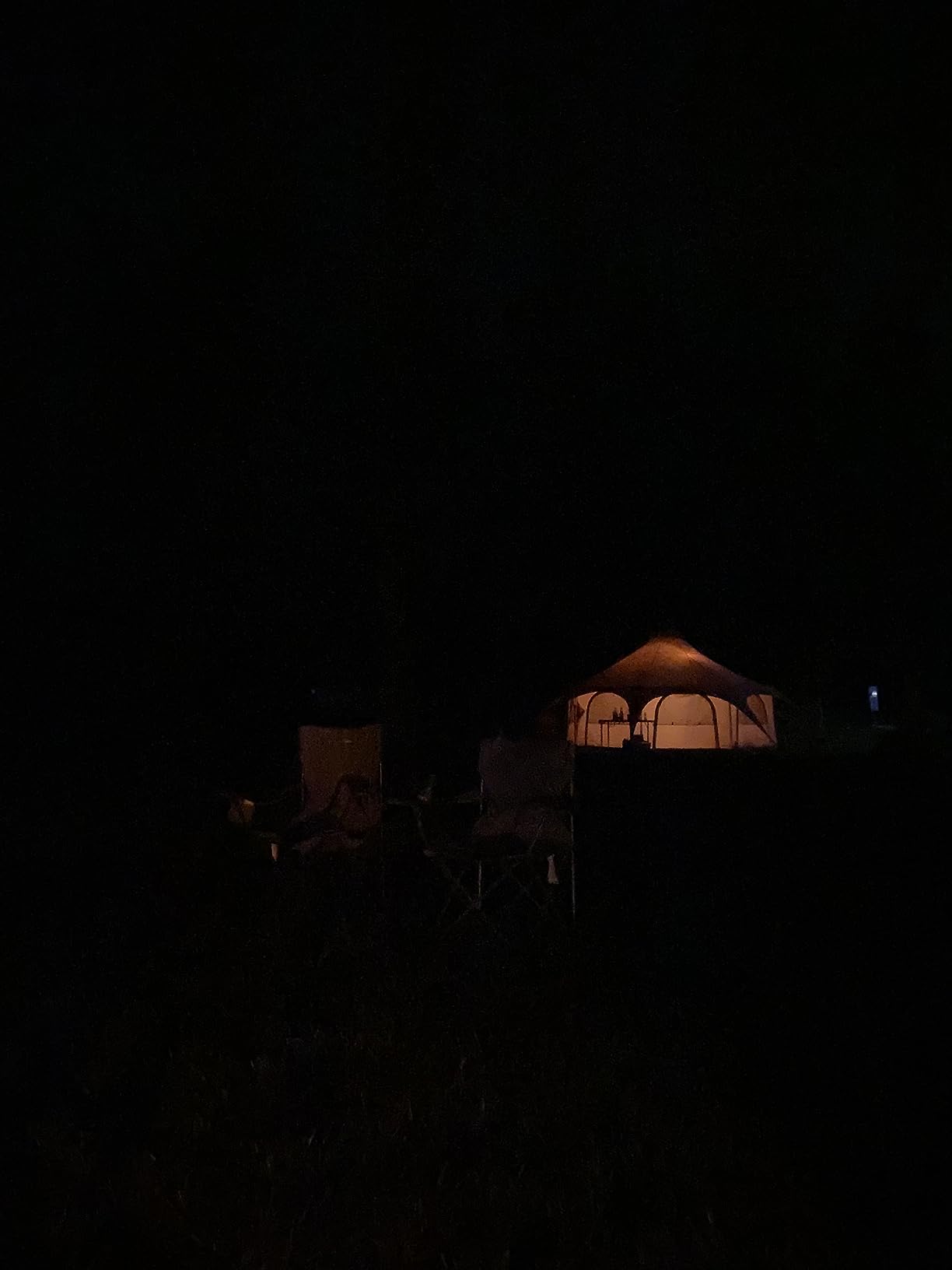
Eight windows double as doors, which means a family group can configure airflow however they want, and reviewers specifically call out the flexibility of running it as an open canopy in summer or a fully enclosed stove-heated tent in winter. That makes it a genuine four-season structure rather than a winter-only purchase.
The alloy steel poles are stout and the twelve-month warranty is modest but present. What you give up is portability: at 55 pounds, this is a two-person load and a two-person carry. A tent this large also catches wind like a sail, so it needs thorough staking on every guy line before you light anything.
Who this tent suits
This is the best hot tent for a family of four or five, a hunting group, or an ice-fishing crew that wants a heated base with real beds in it. The 10-person rating is about the space available, not about how many people fit comfortably around a burning stove, so plan for roughly half that number in cold weather.
It also works as a semi-permanent camp structure because the floor detaches and the walls can roll up. For festival or event use, the eight-door layout makes it far easier to move people through than a single-entry bell tent.
Who should skip it
Skip it if you cannot get help carrying it or if your site has to be moved often. Fifty-five pounds is a lot to load at 6 am in the dark, and much worse to shift once the site turns to mud.
Skip it in exposed wind without a serious anchoring plan. And because of the cotton blend, it needs to be dried out thoroughly after wet weather, which is more maintenance than a fully synthetic shelter requires.
9. VEVOR 4m Canvas Bell Yurt Tent – Best Breathable Canvas Hot Tent
VEVOR Canvas Tent Bell Tent, 4 Seasons 4 m/13.12 ft, for Camping with Stove Jack, Family Camping Outdoor Hunting Party
3 inch flame-resistant stove jack
13.12 ft diameter
250 cm peak height
Four mesh windows
Pros
- Breathable TC canvas reduces condensation versus coated tents
- Flame-resistant jack with a 43x43cm flap and rain cap
- Four mesh windows give airflow with insect protection
- Four-step setup with 12 reflective guy lines
Cons
- No PU coating so the manufacturer advises against heavy rain
- Limited insulation in extreme cold
- Heavy at 50 pounds with iron poles
The VEVOR bell tent is the most transparent specification in this roundup, and that transparency is refreshing. It publishes the stove jack size: a 3-inch flame-resistant opening with a 43 by 43 cm flap and an included rain cap. That is a real number you can match to a 3-inch stove pipe before you buy anything, and it is the only tent here that states the jack diameter outright.
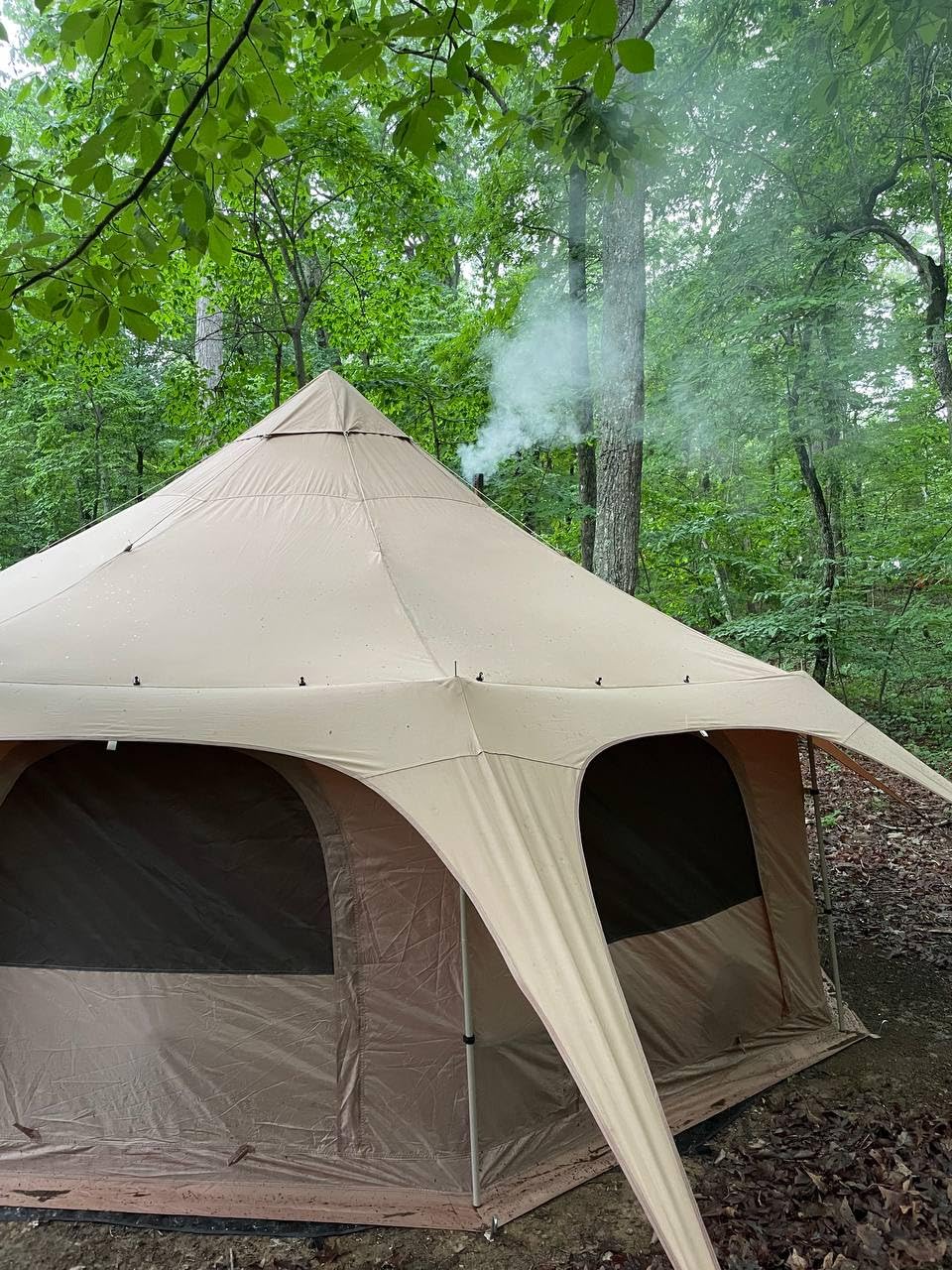
Structure is a 4-meter, 13.12-foot diameter with a 250 cm peak height, rated for up to six people, and the fabric is a 65 percent polyester and 35 percent cotton TC blend. The TC construction is genuinely more breathable than coated polyester, and owners consistently report less condensation than with a fully synthetic tent of the same size.
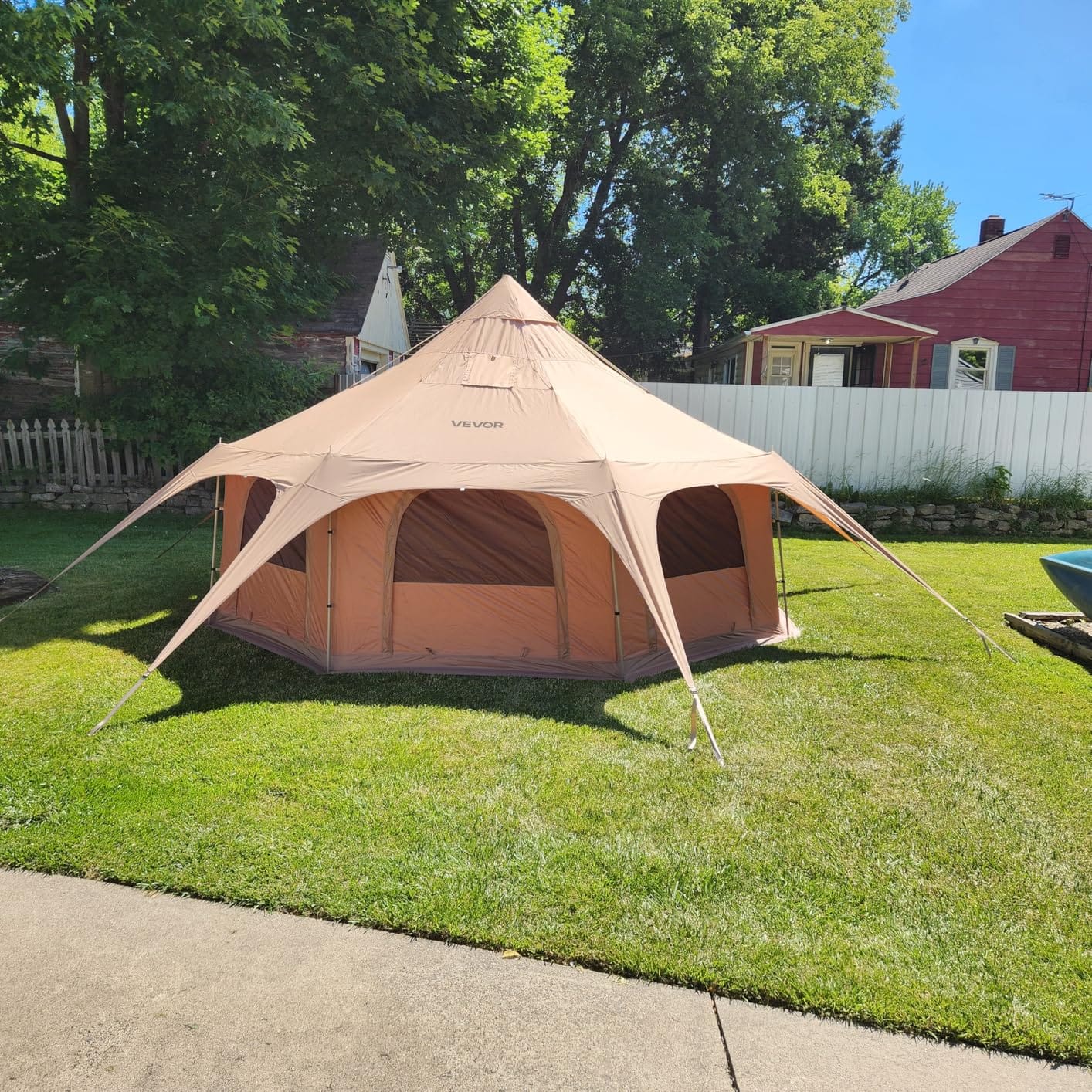
Four mesh-covered windows give airflow and insect protection at the same time, which is unusual and useful. The kit is well supplied: 12 nylon reflective guy lines with aluminum tensioners, ground stakes, a stake hammer, the tent bag, storage bags, a repair kit and the rain cap. Setup is a four-step process.
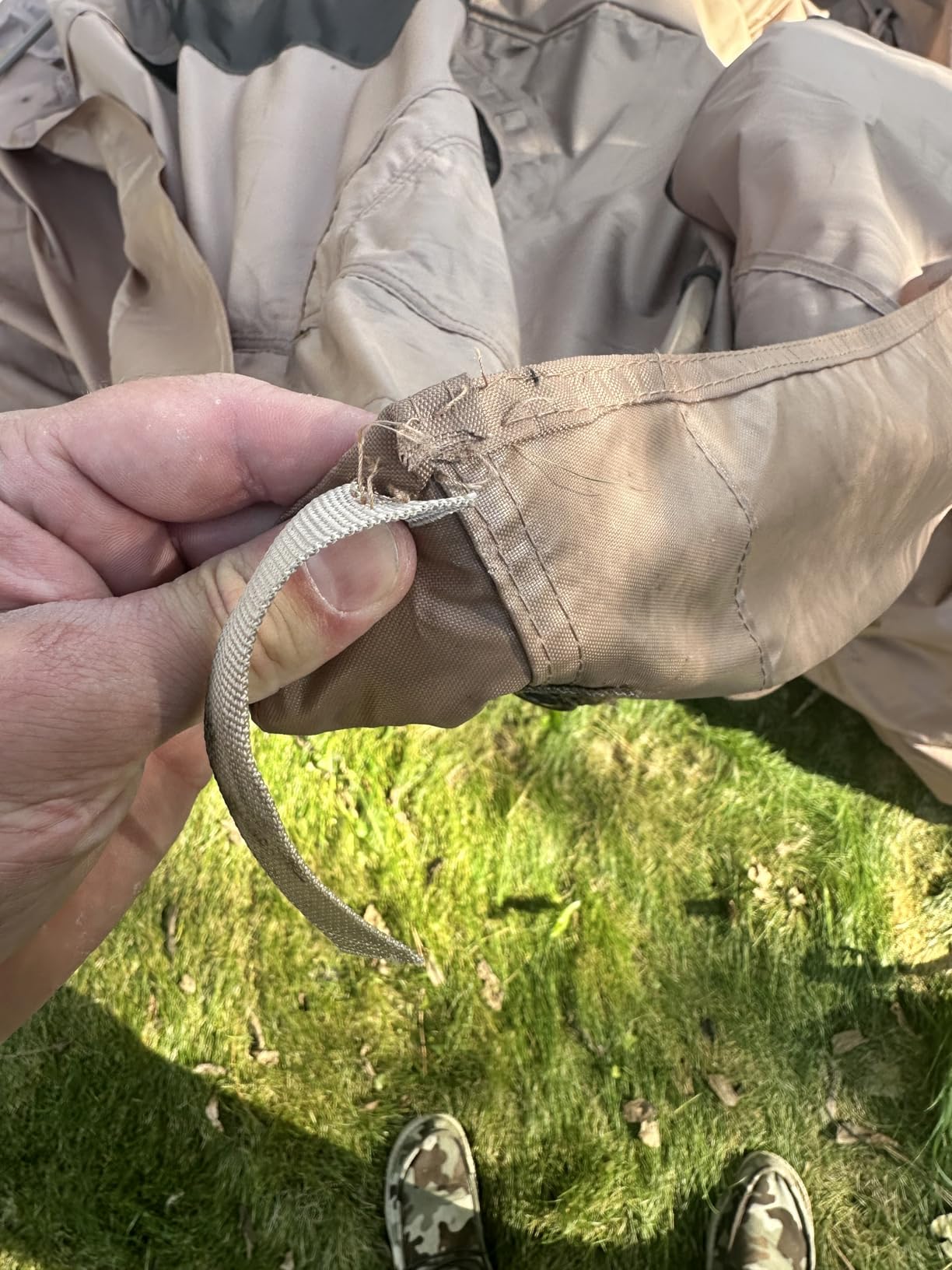
Now the honest part. There is no PU coating on the fabric, and the manufacturer themselves advise against heavy rain, so this is a light-to-moderate-rain shelter at best. Cotton also provides limited insulation in extreme cold or heat, and the galvanized iron poles are heavy, with the whole bundled weight around 50 pounds. Nothing here is designed to be carried far.
Who this tent suits
This is the pick for summer and shoulder-season canvas campers who want a bell tent without the condensation problem of a fully synthetic one. The three-season crowd will love the breathability, and the four mesh windows handle insects without sacrificing airflow.
It is also a good dry-climate winter option, where the lack of PU coating is a feature rather than a flaw and the flame-resistant jack is properly specified. Groups of four to six fit comfortably when a stove is burning.
Who should skip it
Skip it if your forecast involves sustained heavy rain. The absence of a coating is disclosed, not hidden, and it is the single biggest limitation of this tent. In wet winter conditions you will be managing water inside.
Skip it for extreme cold. Cotton gives you breathability at the cost of insulation, and deep-winter sub-zero trips are better served by a synthetic 3000mm-plus tent. The 50-pound weight and iron poles also mean it needs two people to move.
10. OneTigris Northgaze Canvas Pyramid Hot Tent – Best for Bushcraft
OneTigris Northgaze Canvas Hot Tent with Stove Jack, Wind-Proof Flame-Retardant, Durable 4 Season Camping Pyramid Teepee Tent for 2-4 Person (OD Green)
Fire retardant T/C canvas
Top stove jack
Snow skirt
15.8 lbs
Pros
- Fire retardant T/C canvas built for winter stove use
- Single-pole pyramid pitches quickly and simply
- Entrance fabric unzips into a porch roof with MOLLE webbing
- Reinforced stress points help in high wind
Cons
- Water repellent rather than fully waterproof
- Heavy at 15.8 lbs for a fabric tent
- Two to four person rating becomes tight with a stove and gear
The Northgaze is a pyramid teepee with a single center pole, and the feature we like most has nothing to do with the stove. The entrance fabric unzips and pulls out to form a porch roof, with MOLLE webbing along the entrance for hanging pots, lanterns and wet gear. It turns a 2-to-4-person tent into a workable camp kitchen, which is exactly what bushcraft setups need.
The fabric is fire retardant T/C canvas with a top opening designed for a burning stove and a hot flue pipe, plus a snow skirt for heat retention and reinforced stress points at the guy-out locations. Peak height is 205 cm, and the pyramid shape means very little dead space near the walls.
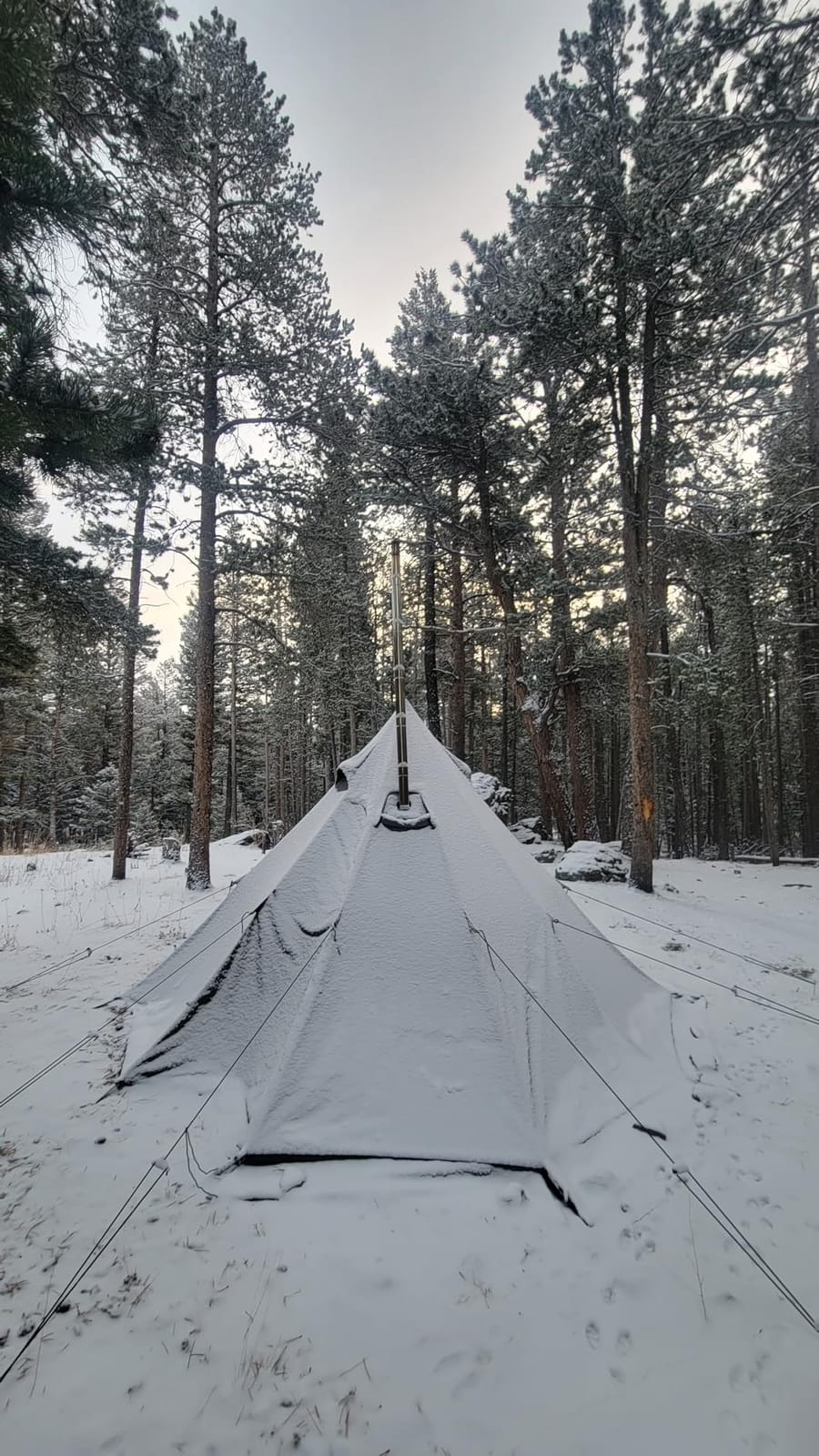
Setup is genuinely quick because there is only one pole, and the complete kit of pegs, guy lines and pole means you are not hunting for hardware in the dark. Owners like the durability and report it handling winter stove use without complaint, and the snow skirt does real work keeping warmth in.
The tradeoffs are honest ones. It weighs 15.8 lb, which is heavy for a fabric tent, and the fabric is water repellent rather than fully waterproof, so prolonged rain needs care and a tarp. The two-to-four-person rating gets tight once the stove and gear are inside, and the entrance fabric has no snow skirt of its own.
Who this tent suits
This is the one for bushcrafters and winter campers who want a real fire-retardant canvas shelter with a proper cooking porch. The MOLLE webbing detail is the kind of thing that shows a company actually camps in its own product.
It also works for anyone who wants a simple one-pole pitch in a vehicle-accessible site, and the pyramid geometry gives good headroom in the center where the stove and table sit. If you like cooking outside in the cold, the porch roof changes the whole experience.
Who should skip it
Skip it if rain is a regular feature of your trips, because water repellent canvas with no published waterproof rating will let moisture through over a long wet weekend. The 500mg figure published in the specs is well below the 2500mm to 4000mm ratings on the synthetic tents.
Skip it if weight matters. At 15.8 lb plus stove, flue and mat, it is not a carry. And plan the layout carefully, because the two-to-four-person rating shrinks fast once a stove is running near the door.
11. WaldZimmer Canvas Bell Tent – Best Hot Tent for Fast Setup
WaldZimmer 13ft Green Canvas Bell Tent with Stove Jack & Removable Floor
Polycotton canvas
500gsm PVC floor
10 cm trimmable stove jack
Four roof vents
Pros
- Fast four-step setup one person can do alone
- Thick 500gsm waterproof PVC floor needs no separate ground sheet
- Solid stakes and strong guylines anchor well in storms
- Four double-layered windows plus four roof vents
Cons
- Very heavy
- with larger sizes around 70 to 80 lb
- Canvas has no PU coating so do not leave it in rain
- Seams use some single running stitches
The WaldZimmer bell tent is available in 10, 13, 16.4 and 20-foot diameters, and the 13-foot version we looked at gives you 12 square meters of floor, 4.6-foot side walls and an 8.2-foot top height with a 5-foot door. That side-wall height is the detail that matters, because it is what turns floor area into usable space instead of a ring you cannot put a cot in.
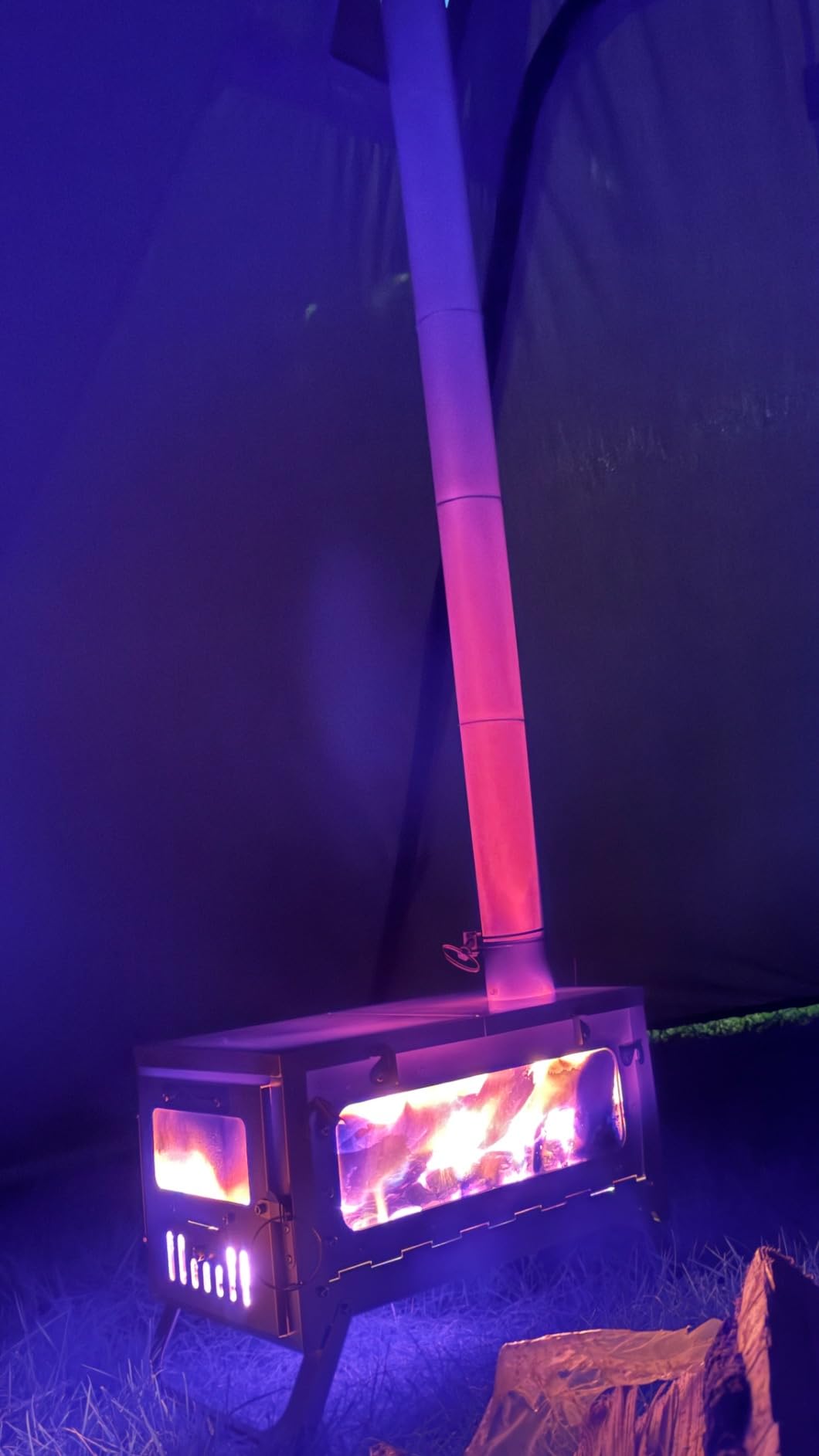
The stove jack is a 10 cm pre-cut opening that you can trim to fit your pipe, which is a genuinely useful design because it lets you match the hole to the stove you already own rather than the other way around. The floor is heavy-duty 500gsm waterproof PVC, and owners specifically praise it for working without a separate ground sheet.

Ventilation is well handled with four double-layered roll-in windows and four roof vents, and the double-layer roll-in door gives you insect protection and airflow at once. Buyers report the stove jack is durable and does not leak, and the tent holds heat well in cold weather.
The tradeoffs are weight and fabric. This is a very heavy tent, and owners of the larger sizes report 70 to 80 pounds, so you need a vehicle and usually a second person. The polycotton canvas has no PU coating, which means breathable and comfortable but vulnerable to prolonged rain, and some seams use single running stitches that raise durability questions.
Who this tent suits
This is the pick if fast setup matters, because one person can get it standing in a four-step process with no drama. That matters most in poor weather, when the alternative is wrestling a wet tent in the dark.
It is also a strong choice for anyone who wants a proper floor built in rather than a separate groundsheet, and for larger groups given the range of diameters available. The trimmable stove jack is a real advantage for buyers who already own a wood stove.
Who should skip it
Skip it if you have to carry it any distance, and check the packed weight of the larger sizes carefully before committing. This is not a backpacking tent by any stretch.
Skip it in wet climates with no plan to keep it dry, because uncoated canvas that sits in rain for days is a mildew problem waiting to happen. Some owners also report zipper gaps at the door edges that let drafts in until sealed.
12. Naturehike Ranch Fire Teepee Tent – Best Hot Tent for First-Time Buyers
Naturehike Ranch Fire Teepee Tent, Cold Weather Winter Hot Tent with Stove Jack, 4-6 Person Waterproof Windproof 4 Season Tents for Camping
68D flame retardant polyester
3000mm+ waterproof
249 cm height
Two DIY stove jacks
Pros
- Genuinely easy setup despite the large footprint
- Many pegs and eight wind ropes make it very stable once staked
- Flame retardant fabric with a 3000mm+ waterproof rating
- Snow skirt blocks wind and holds heat in
Cons
- Usable floor space drops sharply once a stove is installed
- Some zippers jam and one tent ripped during setup
- Ground mat is sold separately
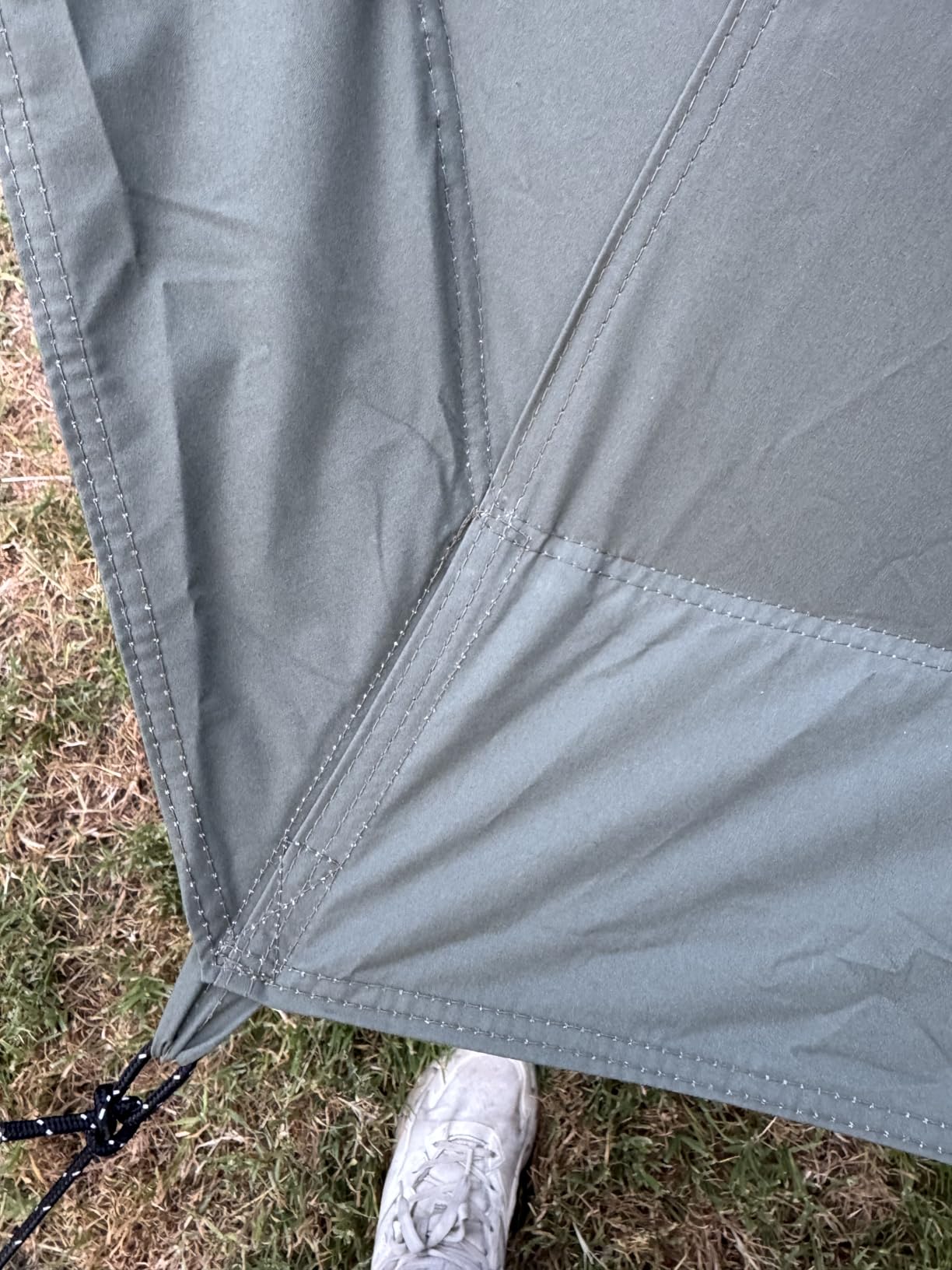
The Ranch Fire is an octagonal teepee-style hot tent with 249 cm height and a 157.5-inch square footprint, and it is one of the few affordable tents that states plainly that its fabric is flame retardant. The 68D 210T polyester carries a 3000mm-plus waterproof rating, which is real information you can compare against the canvas tents that publish nothing.
Two DIY stove jacks ship in the pack, along with 19 pegs and eight attached wind ropes, and that combination is why it stays stable. Owners describe a shelter that is surprisingly easy to put up despite its size, with a snow skirt that genuinely blocks wind and keeps warmth in during cold weather.
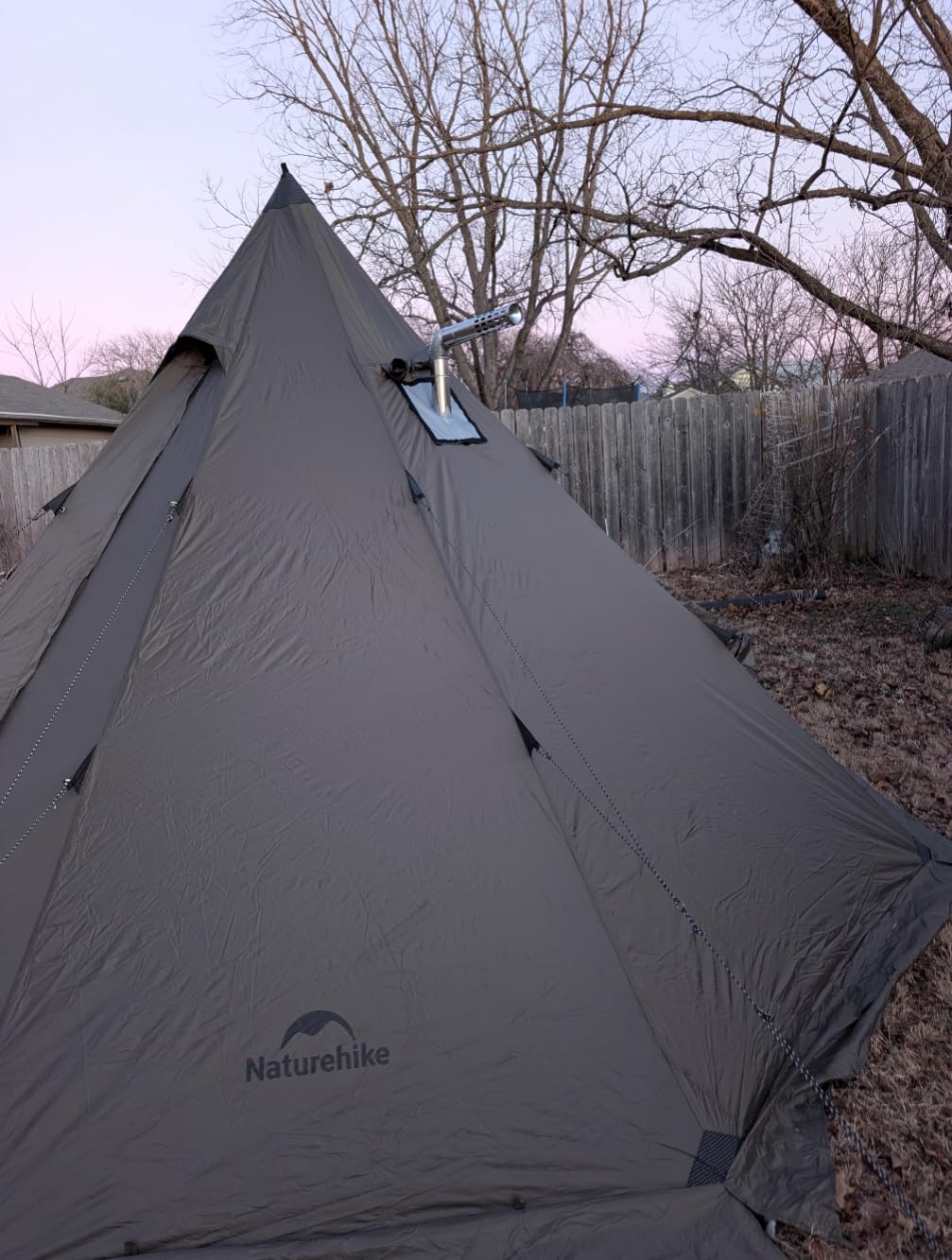
There is a two-year manufacturer warranty, and reviewers call it good value for a budget hot tent. Zippers have storm flaps and sealed seams, and the fabric has been reported as genuinely waterproof and durable in real use rather than only in the listing.
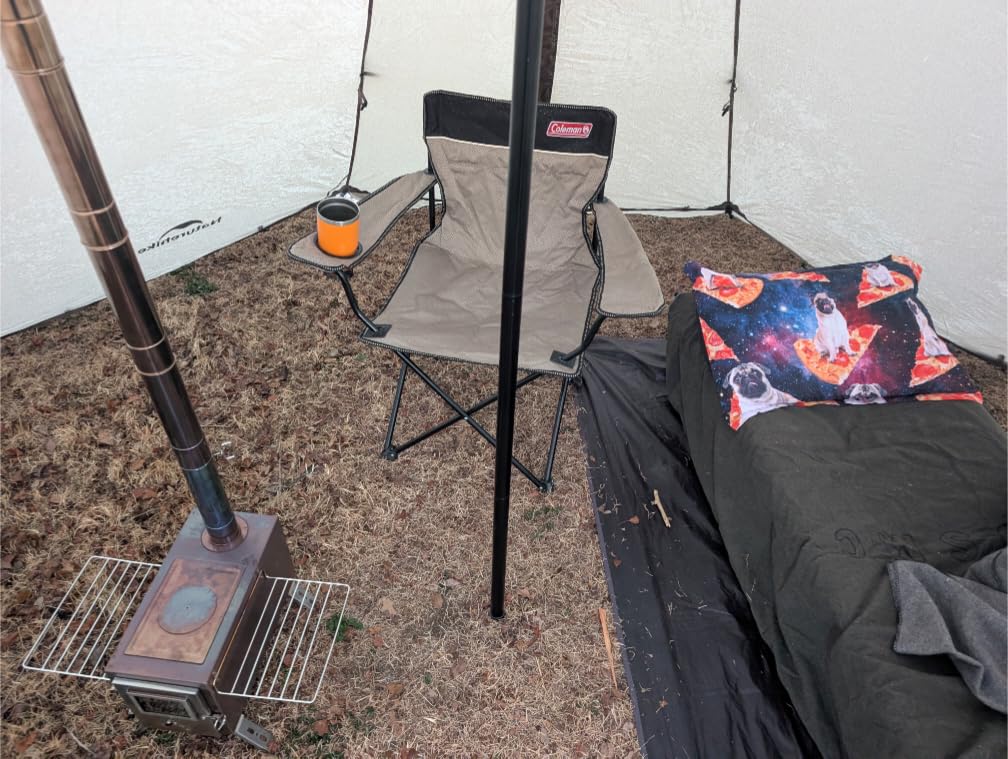
Where we would temper expectations is the floor and the headroom map. Usable space drops sharply once a stove is installed, realistically leaving room for two people, and the outer two to three feet of floor has too little headroom to sit in comfortably. Quality control is inconsistent, with reports of jammed zippers and one tent that ripped during setup.
Who this tent suits
This is the tent to buy if you want a proper four-season stove shelter with published flame retardancy and waterproof figures but do not want to research fire safety specs for two hours. Everything you need for a stable pitch is in the bag.
It also suits hunters and ice anglers working out of a vehicle, where the tall center and the many tie-downs matter more than pack weight. At 11.9 lbs it is still lighter than the canvas options.
Who should skip it
Skip it if you are planning to sleep four or more adults with a stove running. The 4-to-6-person rating does not survive contact with a fire box, a fire mat and a pile of gear, and we would rather say that plainly than let you find out on a cold night.
Skip it if you are a backpacker, and note that the ground mat is a separate purchase. Inspect every zipper on arrival, because the main quality complaints cluster around exactly that part.
How to Choose a Hot Tent With a Stove Jack
Match the stove jack to your pipe before anything else. A stove jack is a reinforced, flame-resistant panel with a hole sized to a specific pipe diameter, and only one product in this roundup publishes that number outright. Anything from roughly 3 to 6 inches exists in the market, so measure your flue pipe before you shop and check that the opening accepts it without forcing the fabric.
Then check the fabric. Flame retardant is a treatment that slows ignition, and fireproof is a different claim, and the distinction matters because your stove pipe runs hot directly through the roof. Polyester and nylon tents here state flame retardancy in the specs; several canvas models do not. Waterproof figures in millimeters tell you more about the fabric than the word canvas ever will, and we would take a 3000mm rating over a canvas description every time.
Ventilation decides whether you enjoy the tent or tolerate it. Warm moist air has to go somewhere, and hot tents with roof vents and mesh windows manage condensation far better than sealed cabins. Users repeatedly report 70s to 80s Fahrenheit indoors with a stove running, which validates the whole category, but the same users report heavy condensation where the doors stay shut. A stove jack on a side wall, like the one on our top pick, also helps with that first light-up.
Plan for real occupancy rather than rated occupancy. Manufacturer capacity is a floor-area calculation that assumes no gear, no cots and no stove. Forum discussions make the correction bluntly: a tent rated for four realistically sleeps two once a stove is installed in the middle. Subtract the footprint of the fire mat, the stove and your kit before you decide how many people are coming.
Weight and floor type are the last two decisions. Floorless nylon tips like the TEGIMEN are light but demand a footprint and cost you cold-ground protection, while sewn-in or detachable PVC floors like the White Duck and WaldZimmer add weight and warmth. Budget for the whole system rather than the tent alone, since a stove, a flue pipe, a fire mat and a carbon monoxide alarm all sit on top of the shelter cost.
Is Hot Tenting Safe? Carbon Monoxide, Backdraft and Fire
Yes, hot tenting is safe when you treat the stove like a combustion appliance rather than a campfire. Wood stoves do produce carbon monoxide, and a tent is an enclosed space, so the protocol matters. Here is the sequence we use every time, and it costs nothing to follow.
First, lay a fire mat down before the stove ever comes out of the bag, and never run the stove directly on a thin synthetic floor. Second, keep the pipe clear of fabric and check that the stove jack collar sits tight against the pipe, not on it. Third, run a carbon monoxide detector inside the tent at breathing height, near the stove but not directly above it, and treat any alarm as a reason to shut the flue down immediately.
Fourth, have a fire extinguisher within reach and outside the tent, not in the vehicle. Fifth, position the pipe at the back of the tent rather than at the door, which is what experienced users recommend to keep flame and moving fabric away from the entrance. None of these steps is complicated, and skipping any one of them is where problems start.
Backdraft is the other big one. The most reported complaint across hot tent forums is filling the entire tent with smoke on first light-up, and the fix is procedural rather than equipment-based. Open the door and the roof vents fully, light the stove outside or at the very edge of the tent with the flue already drawing, confirm the flue is pulling before you close anything, and never light the stove with the door shut and no draft path.
On the carbon monoxide question specifically: a stove burning cleanly with a dry flue keeps readings low, while cheap unvented heaters are what generate genuinely dangerous numbers. Some users report readings in the range of 35 ppm over an eight-hour period with a modified wood stove, which is a reminder that the detector is not optional. If you want to compare with different shelter types while you are researching, our grow tent guide covers controlled indoor environments with their own ventilation rules.
Frequently Asked Questions
Is there a hot tent with a stove included?
Almost none of them. A stove jack is a hole for a pipe, not a heating system, and the shelters in this roundup ship with a jack and not a stove. You need a wood-burning tent stove, a flue pipe sized to your jack, a fire mat and a carbon monoxide alarm on top of the tent. The only partial exception is budget tipi bundles where the packing list mentions a stove, so check the box contents carefully before you assume it is included.
Can you put a stove jack in a tent?
You can, but it is a job for someone who sews and knows fire safety. You need a flame-retardant panel on the tent, a pre-cut hole matched to your exact pipe diameter, a silicone or neoprene collar to grip the pipe, and a reinforced seam around the opening. Cutting a hole in a cheap polyester tent without a fire-retardant panel is how people burn shelters down. Buy a purpose-built jack panel rather than improvising with a raw cut.
Is there an all-season tent with a stove jack available?
Yes, and most of the shelters on our list are marketed as 4-season. The ones that genuinely work year-round combine a published waterproof rating of 2500mm or better, a snow skirt, roof vents and a removable or sewn-in floor. The Naturehike Dune, the OneTigris Rock Fortress and the OneTigris Northgaze all fit that description. Be careful with uncoated canvas tents, which breathe well in summer but have no published waterproof figure.
Is there a canvas bell tent with a stove jack available?
Yes, and there are several on this list. The White Duck Regatta is the one we recommend, with a cotton canvas body, a fire retardant stove jack, a sewn-in groundsheet and a 10-foot peak height. For large groups the MC TOMOUNT 16.4-foot bell tent offers 218 square feet and a breathable cotton roof. If you want the bell shape, the trade-off is always weight, since canvas bell tents run from 50 to 60 pounds.
How safe are tent stoves?
A wood-burning tent stove is a real combustion appliance, and it is safe when you treat it like one. Lay a fire mat down, keep the flue pipe clear of fabric with the jack collar gripping the pipe, run a carbon monoxide detector at breathing height inside the tent, keep an extinguisher within reach, and exit the pipe through the back of the tent rather than the door. The risks come from improvisation, not from stoves themselves.
Does a wood stove throw off carbon monoxide?
Yes. Any incomplete wood combustion produces carbon monoxide, which is why a stove that burns cleanly with a dry flue matters so much. Users running modified wood stoves have reported readings around 35 ppm over an eight-hour period, and cheap unvented heaters perform far worse. A carbon monoxide detector inside the tent is inexpensive and non-negotiable, and any alarm means shut the flue and get outside immediately.
Is hot tent camping safe?
It is, with a five-step routine. Put down a fire mat before the stove leaves its case. Confirm the pipe never touches fabric and the collar grips the pipe. Run a carbon monoxide detector inside at breathing height. Keep a fire extinguisher within reach outside the tent. Route the flue through the back of the tent. On the first light-up, open the door and roof vents fully and confirm the flue is drawing before closing anything.
How hot do hot tents get?
Hot tenting genuinely works. Users consistently report interior temperatures in the 70s and 80s Fahrenheit with a small stove running while it is well below freezing outside. One owner of the Naturehike Massif measured roughly 45 degrees Fahrenheit inside at 11 degrees outside. Actual readings depend on stove output, wind, insulation and how well you seal the tent, so treat these as realistic ranges rather than guarantees.
What size stove jack do I need?
Match the jack to the outside diameter of your flue pipe, and measure the pipe before you buy the tent. Common openings run 3, 4, 5, 5.5 and 6 inches. The VEVOR bell tent publishes a 3-inch flame-resistant jack, the WaldZimmer bell tent has a 10 cm opening you can trim to size, and several nylon tents leave the figure unstated, so ask or plan to trim. A jack smaller than your pipe is an instant deal-breaker.
How much does a hot tent cost?
Prices span a very wide range, from inexpensive polyester tipis to premium 16-foot canvas bell tents costing several times as much. Rather than comparing sticker prices, budget for the full system: the tent, a wood-burning stove, a flue pipe matched to the jack, a fire mat and a carbon monoxide alarm. The tent is usually the smaller part of that total, and skipping the mat or the detector is the worst possible saving.
Final Verdict: Our Pick for the Best Hot Tents With Stove Jacks
After weeks of comparison, the OneTigris TEGIMEN Hammock Hot Tent is the best hot tent with a stove jack for most people, because it weighs 6.8 lbs, carries a published 3000mm rating, and gives you a second side-wall stove jack that removes most of the frustration of the first light-up. The White Duck Regatta is the pick if you are camping from a vehicle and want a warm, dry, walkable canvas room, and the OneTigris Rock Fortress is the one we would hand a hunter who wants a proper tall tipi at a fair price.
On a tighter budget, the Preself tipi does the job for a fraction of the outlay, and the Naturehike Ranch Fire is the easiest place to start because its flame retardant fabric and 3000mm-plus rating are stated plainly. Whichever you choose, add a fire mat, a carbon monoxide alarm and winter-grade stakes to your kit before the first cold night, because no shelter on this list is complete without them. That is our 2026 guide to the best hot tents with stove jacks, and we will be updating it as new models land.