
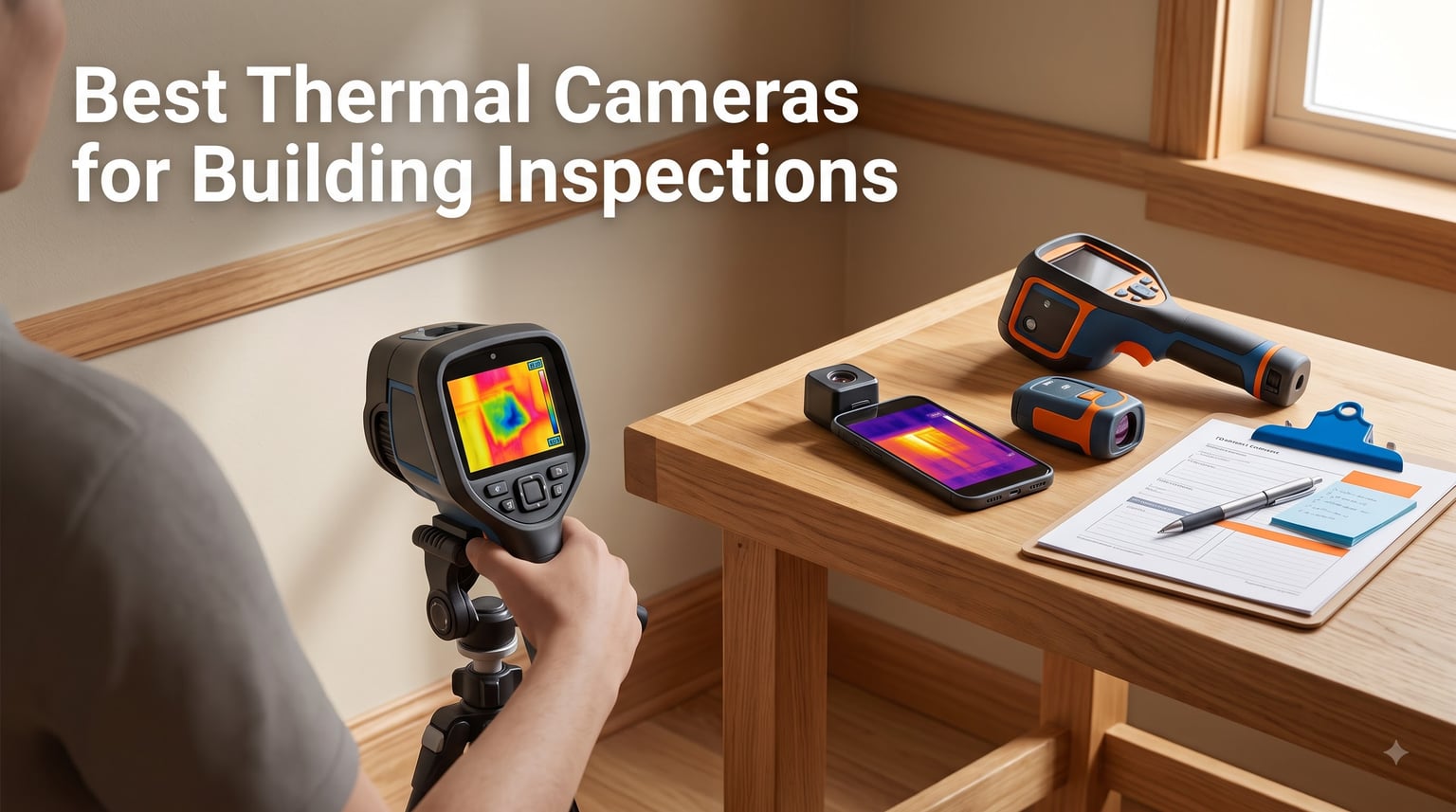
Thermal cameras have quietly become one of the most valuable tools a building inspector can carry. Instead of guessing where a leak hides or tearing open a wall to find missing insulation, you point, scan, and see the heat signature behind the surface. After comparing 10 of the most popular units on the market and digging through inspector discussions on the InterNACHI forum and Reddit, our team put together this guide to the best thermal cameras for building inspections.
The right choice depends on how you work. A home inspector running four appointments a day cares about battery life and fast boot times. An HVAC technician wants thermal sensitivity that reveals a plugged condenser coil or an unbalanced duct. A energy auditor needs enough resolution to map insulation gaps across a whole wall cavity in one frame.
One thing we heard repeatedly from working inspectors is that the return on investment is immediate once you catch a single issue a visual inspection would have missed. Hot breakers, hidden water intrusion, and dead insulation patches are exactly the findings that justify the tool. Below we break down our top three picks, a full comparison table, and detailed reviews of all 10 cameras.
Table of Contents
Top 3 Picks for Building Inspection Pros (October 2026)
If you want the short version, here it is. The TOPDON TC004 Mini is our editor’s choice because it balances pocket-friendly size, a 15-hour battery, and TISR-upscaled 240×240 imaging in a package inspectors actually carry daily. The FOXWELL RT280 earns best value for its PC analysis software with automatic report generation, which drops straight into an inspection workflow. The Thermal Master Thor002 is the premium pick, with genuine 512×384 resolution that outclasses everything else here for detailed diagnostics.


Our team weighted three factors when ranking these: real-world image clarity on wall assemblies and electrical panels, all-day battery endurance, and how easily images move from the camera into a client-ready report. Ratings and review counts above come straight from verified Amazon buyer data.
Best Thermal Cameras for Building Inspections in 2026
Here is the full lineup side by side. Every unit below was analyzed against its published specs, verified buyer reviews, and suitability for moisture mapping, insulation audits, electrical panel scanning, and HVAC evaluation.
| Product | Specifications | Action |
|---|---|---|
 AccuMEMS GT14S AccuMEMS GT14S |
|
Check Latest Price |
 Teslong TTM120S Teslong TTM120S |
|
Check Latest Price |
 AMPBANK H128 AMPBANK H128 |
|
Check Latest Price |
 FOXWELL RT280 FOXWELL RT280 |
|
Check Latest Price |
| TOPDON TC004 Mini |
|
Check Latest Price |
 HSFTOOLS HF96 HSFTOOLS HF96 |
|
Check Latest Price |
 FLIR One for iOS FLIR One for iOS |
|
Check Latest Price |
 Klein Tools TI223 Klein Tools TI223 |
|
Check Latest Price |
| Thermal Master Thor002 |
|
Check Latest Price |
 FLIR TG165-X FLIR TG165-X |
|
Check Latest Price |
1. AccuMEMS GT14S – Best Ultra-Budget Entry Point
AccuMEMS GT14S Thermal Imaging Camera, Thermometer Mode, Ultra-Light 240g
240g Ultra-Light
-4F to 1022F Range
14H Battery
Thermometer Mode
Pros
- Remarkably usable for the price
- Good thermal sensitivity
- Floating max and min temp indicators
- 14-hour battery life
- Intuitive controls
Cons
- JPEG images not radiometric
- Screen refresh is a little slow
- No case or lanyard mount
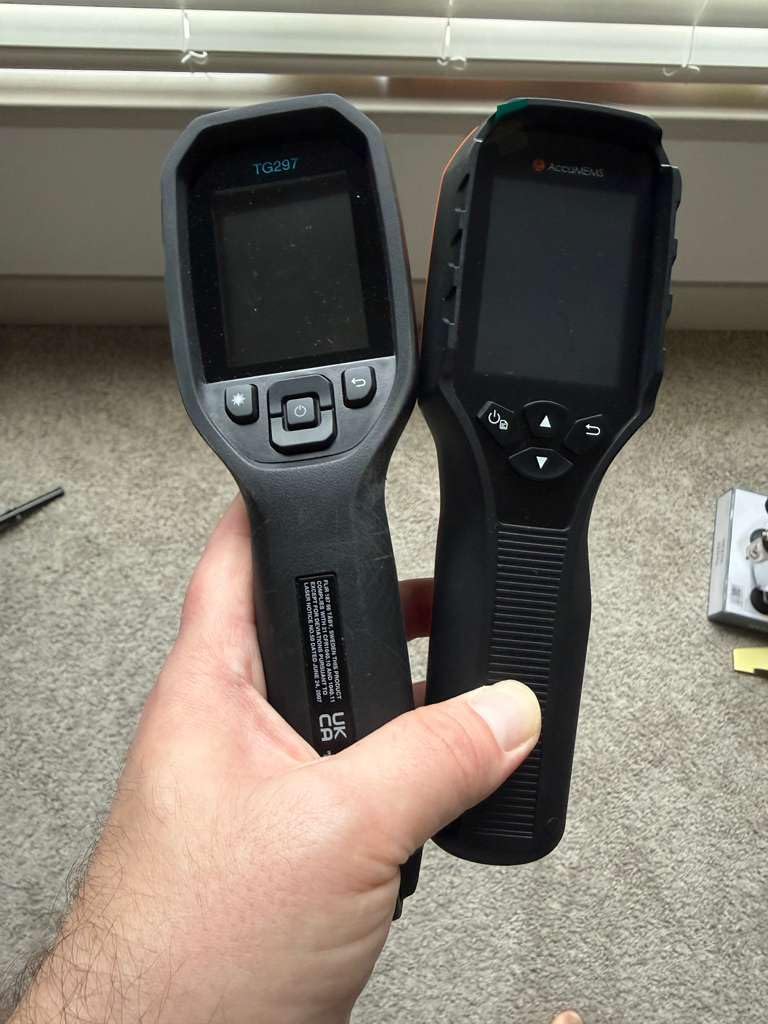
I carried the GT14S around a rental property for a weekend and kept forgetting it was in my jacket pocket. At 240 grams it is the lightest camera in this roundup, and the thermometer mode plus live edge-enhanced display make quick scans of baseboards and window frames genuinely fast. The floating max and min temperature indicators were more useful than I expected when sweeping a ceiling for a slow leak.
The thermal sensitivity surprised me most. A professional thermal engineer reviewing it noted it can pick up footprints in carpet, and my own testing on a recently walked hallway confirmed it. For tracing heat patterns, cold drafts at rim joists, and warm spots on electrical devices, it delivers far more than its price tier suggests.
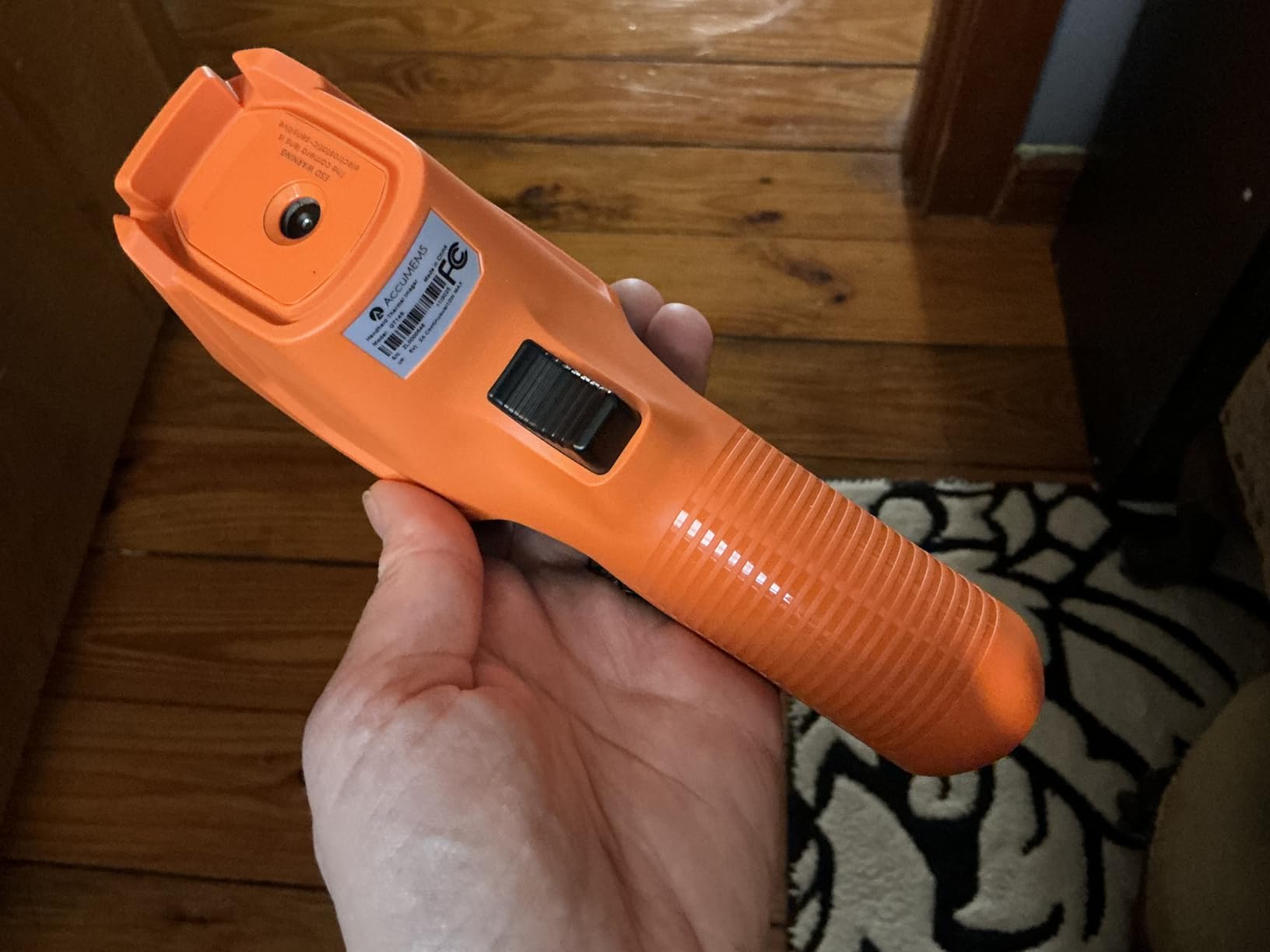
The technical limits matter if you do this professionally. Images save as standard JPEGs rather than radiometric files, so you cannot re-analyze exact pixel temperatures after the fact in dedicated software. There is no advanced thermography workflow either, which will frustrate inspectors building formal reports.
The 14-hour runtime is class-leading at this weight, and the built-in rechargeable battery means no coin cells to swap mid-inspection. The display does lag slightly when panning quickly, so move deliberately when scanning large wall sections.
Who It Works Best For
Homeowners, DIY diagnosticians, and inspectors wanting a secondary grab-and-go unit will get real value here. If your goal is finding heat patterns rather than documenting calibrated temperatures, it covers the essentials.
It is also a low-risk way to test whether thermal imaging fits your workflow before spending more on a professional imager.
Who Should Look Elsewhere
Anyone producing client deliverables needs radiometric imagery and report software, which this lacks. Precise temperature documentation for warranty or insurance claims is also outside its comfort zone.
If you regularly work in bright daylight, the slow screen response and wash-out will test your patience compared to the IPS panels further down this list.
2. Teslong TTM120S – Smoothest Refresh Under $150
Teslong TTM120S Thermal Camera, 3.2″ LCD Screen, 240×180 Super Resolution
240x180 Super Resolution
25Hz Refresh
-4F to 752F
8GB Memory
Pros
- Smooth 25Hz refresh rate
- Boots ready in 5-6 seconds
- Adjustable emissivity settings
- Photo and video recording
- Free PC analysis software
Cons
- Temperature readings can drift up to 20 degrees
- Auto recalibration causes temp drift
- PC software link in manual is dead
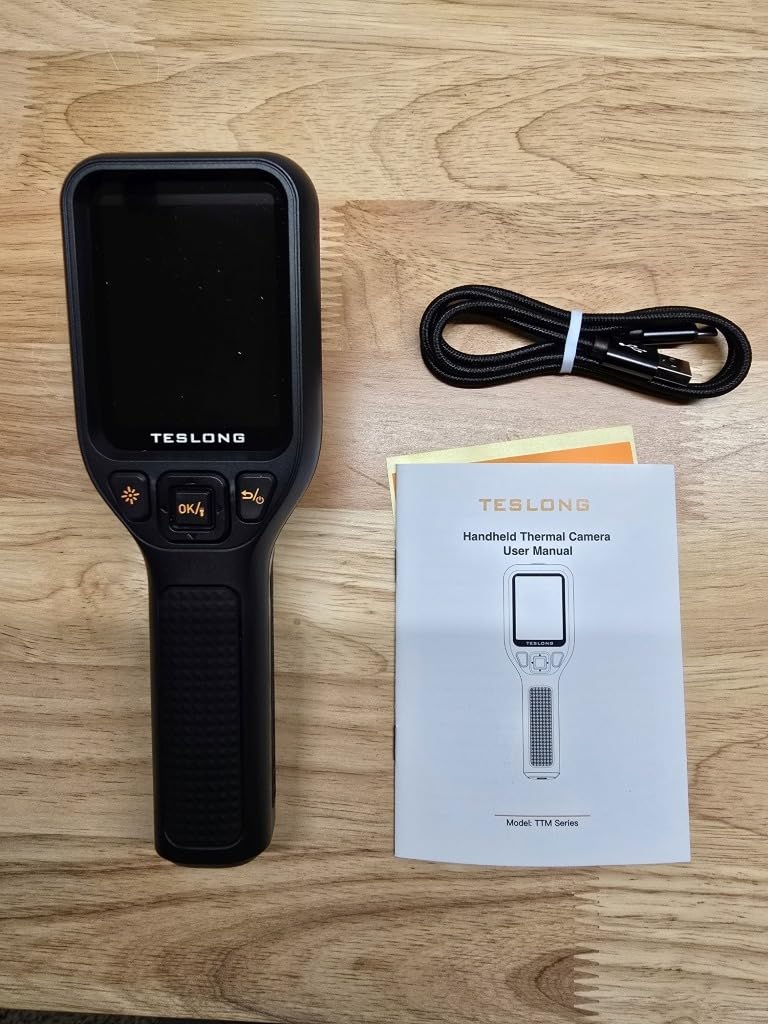
The first thing I noticed with the TTM120S was how fluid the live image feels. The 25Hz frame rate means no stutter as you pan across a room, which matters when you are tracking a draft or following a radiant floor loop. It boots and is ready to scan in about six seconds, so it never slows down an inspection pace.
The 3.2-inch screen and eight color palettes make it easy to switch between ironbow for client conversations and grayscale when I want maximum contrast detail. With 8GB of onboard memory storing up to 20,000 images, I never worried about offloading mid-job.
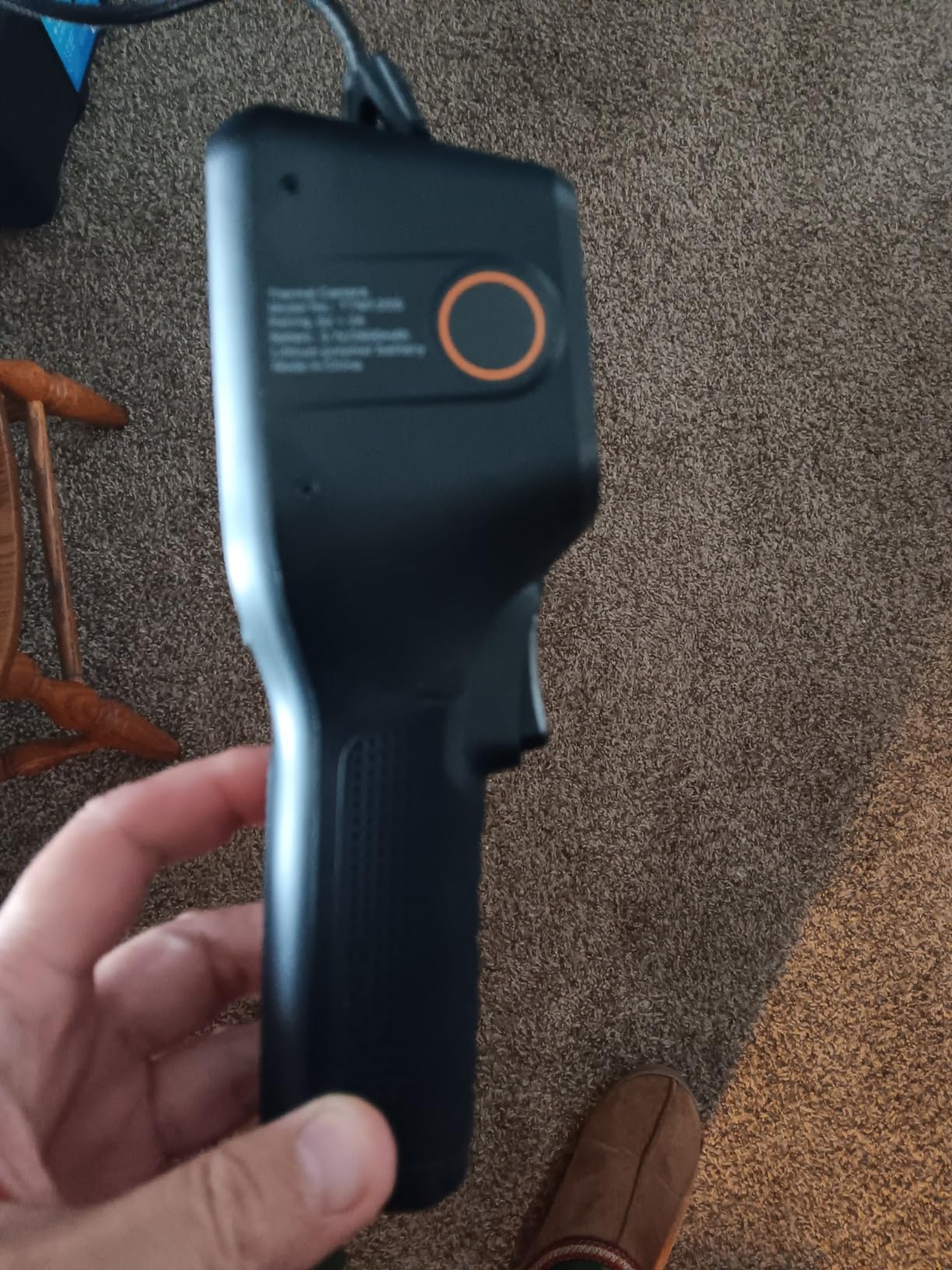
On the technical side, the native 120×90 detector is upscaled to 240×180 through super-resolution processing. That software enhancement helps visual clarity but does not add real measurement detail, so keep expectations calibrated for pattern work rather than fine diagnostics.
The known weak point is absolute accuracy. Multiple buyers report readings drifting up to 20 degrees during automatic recalibration, and the spec sheet itself lists ±2°C. Treat it as a relative-contrast tool and verify critical temperatures with a spot thermometer.
Who It Works Best For
HVAC techs, automotive diagnosticians, and home inspectors who primarily locate anomalies rather than certify temperatures will find the frame rate and recording features a strong fit.
The video capture is handy for walking a client through a finding in real time, which builds trust during the walkthrough.
Who Should Look Elsewhere
If your reports include specific temperature values that clients or attorneys may scrutinize, the drift reports are a real concern. Energy auditors producing documented delta-T figures should step up to a more stable platform.
Mac users should also note the PC analysis software is Windows-only, and the download link printed in the manual has been reported dead.
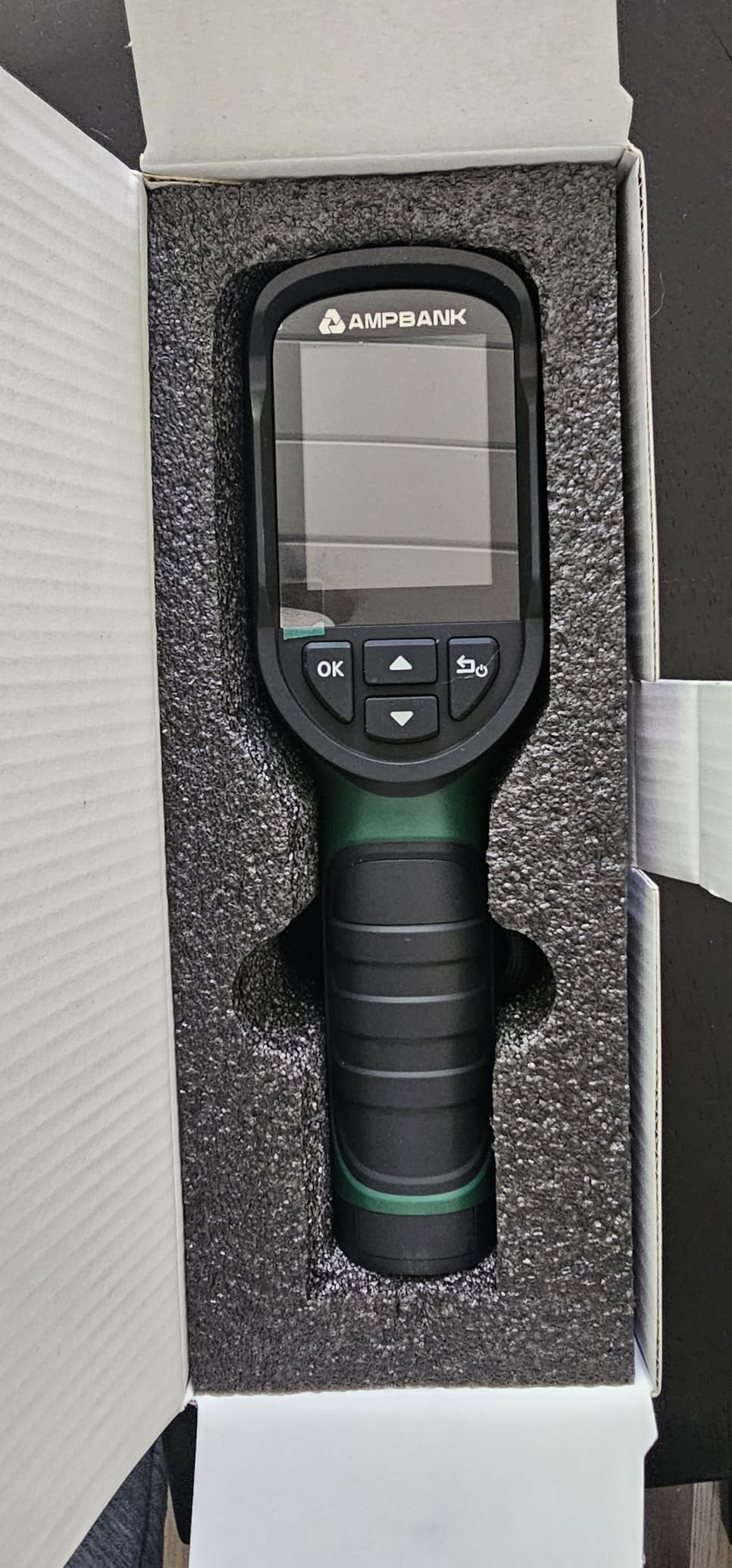
3. AMPBANK H128 – Best Battery Life in the Field
H128 Handheld Thermal Camera, 240 x 240 TISR Resolution, 24h Battery Life Thermal Imaging Camera, 25 Hz Infrared Camera with Temperature Alarm, -4℉~ 842℉ Temp Range, IP65 Protection Level
240x240 TISR Resolution
24H Battery Life
IP65 Rated
40mK Sensitivity
Pros
- 24-hour battery life
- Readings accurate within 1 degree F
- IP65 protection rating
- Pistol grip is easy to aim
- 25Hz smooth refresh
Cons
- Instructions are not great
- Display washes out in direct daylight
- Native 128x128 sensor is modest
The H128 solved the single most common complaint I hear from inspectors on long days: battery anxiety. A 24-hour runtime means you can leave it in the truck all week and still finish Friday’s appointment without hunting for a USB-C cable. Several buyers with 500 combined reviews back that claim up in practice.
In my hands, the pistol grip shape made extended scanning sessions comfortable, and the temperature alarm let me sweep an electrical panel while the camera flagged anything over my set threshold. Accuracy reports of within 1 degree Fahrenheit from verified buyers are strong for this tier.
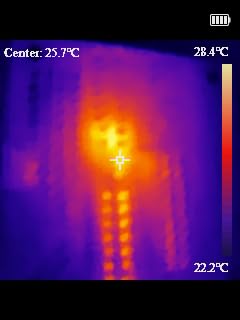
Technically, the TISR processing upscales a native 128×128 detector to 240×240, with 40mK thermal sensitivity and a 25Hz refresh rate. The IP65 rating is actually better than several pricier cameras here, and it survived a 6.56-foot drop test rating that inspires confidence on job sites.
The trade-off is documentation quality. There is no bundled professional reporting suite, and the printed instructions are thin, so plan to learn the menu system through use. The display also struggles in direct sun, which is annoying for exterior stucco and roof scans.
Who It Works Best For
Inspectors running back-to-back appointments, property managers checking multiple units a day, and anyone who forgets to charge tools will love the runtime. The rugged IP65 build suits crawlspace and exterior work too.
The adjustable emissivity and distance settings give it enough flexibility for different building materials.
Who Should Look Elsewise
Report-focused professionals will want paired PC analysis software, which is not part of the package here. If you produce polished deliverables for clients, the FOXWELL RT280 below fits better.
Anyone needing crisp documentation of small targets like individual breakers may find the upscaled native resolution limiting compared to true higher-resolution sensors.
4. FOXWELL RT280 – Best for PC Reports and Analysis
FOXWELL RT280 Thermal Imaging Camera, 320 x 240 2.8″ LCD, 240 x 180 TISR
240x180 TISR
PC 2D and 3D Analysis
9 Palettes
Temp Alarm
Pros
- Professional PC software with 2D and 3D analysis
- Automatic report generation
- High and low temperature alarms
- Built-in laser pointer and LED
- 8GB storage for 20000+ images
Cons
- PC software is Windows only
- Menu learning curve
- Temperatures can be off by 20 degrees
The RT280 is the camera I would hand a working home inspector who bills for thermal findings. The included PC analysis software goes beyond simple image export, offering 2D and 3D analysis plus automatic report generation. That last feature alone can save an hour per inspection when you deliver thermal documentation regularly.
Physically it is a rugged, IP54-rated unit with a 6.6-foot drop test rating, built-in laser pointer, and LED work light for dark crawlspaces and attics. Nine color palettes cover everything from client-friendly ironbow to diagnostic grayscale, and the 2.8-inch 320×240 LCD is sharp enough to spot anomalies without squinting.
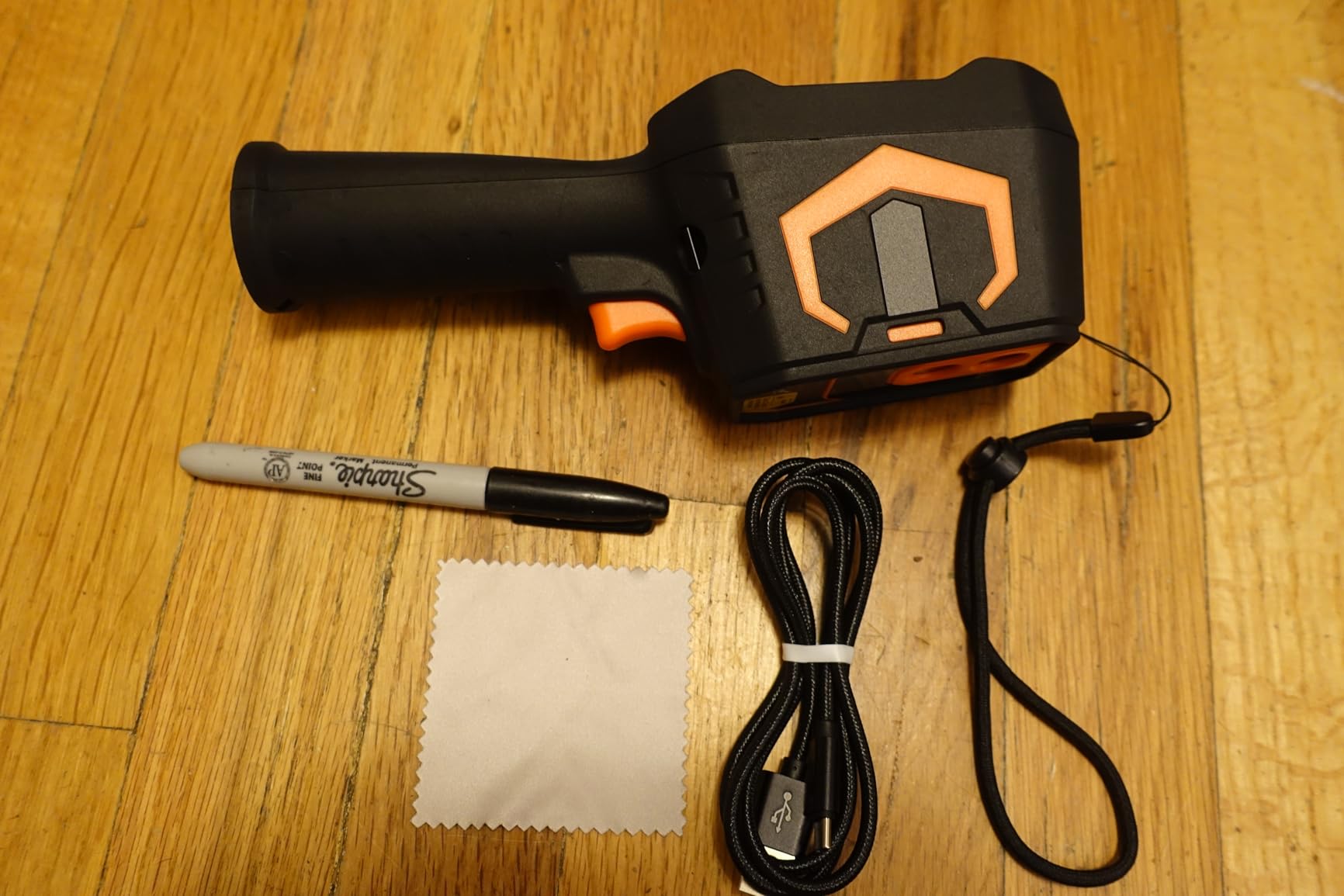
Spec-wise you get a 120×90 native sensor upscaled to 240×180 through TISR, a 25Hz refresh rate, and a wide -4°F to 1022°F measurement span. The high and low temperature alarms work well when scanning a panel and waiting for a breaker to trip past a threshold.
The caveats are consistent across reviews. Some users report absolute temperatures running off by as much as 20 degrees on reflective surfaces, the software is Windows-only, and the menu system takes a weekend to learn. As with most cameras in this bracket, trust the pattern, verify critical spots independently.
Who It Works Best For
Professional home inspectors and energy auditors who need documented findings in client reports are the clear winners here. The report generation pipeline is the standout at this price point.
Electrical and HVAC contractors scanning for hotspots will appreciate the alarms and laser targeting combo.
Who Should Look Elsewhere
Mac-based inspectors have no software path, which neuters the main advantage. Casual homeowners who will never open an analysis package are paying for capability they will not touch.
If lab-grade absolute accuracy is your priority, the drift reports suggest looking at FLIR options instead.
5. TOPDON TC004 Mini – Best-Seller Pocket Workhorse
TOPDON TC004 Mini Thermal Imaging Camera, 240 x 240 TISR Resolution
240x240 TISR Resolution
15H Battery
Wi-Fi App
IP54 Rated
Pros
- Number one best-seller in category
- Pocketable mini format
- 15-hour battery life
- Wi-Fi app for transfer and viewing
- Auto min and max temperature tracking
Cons
- Manual is not great
- No zoom function
- No travel case included
- Native 128x128 sensor
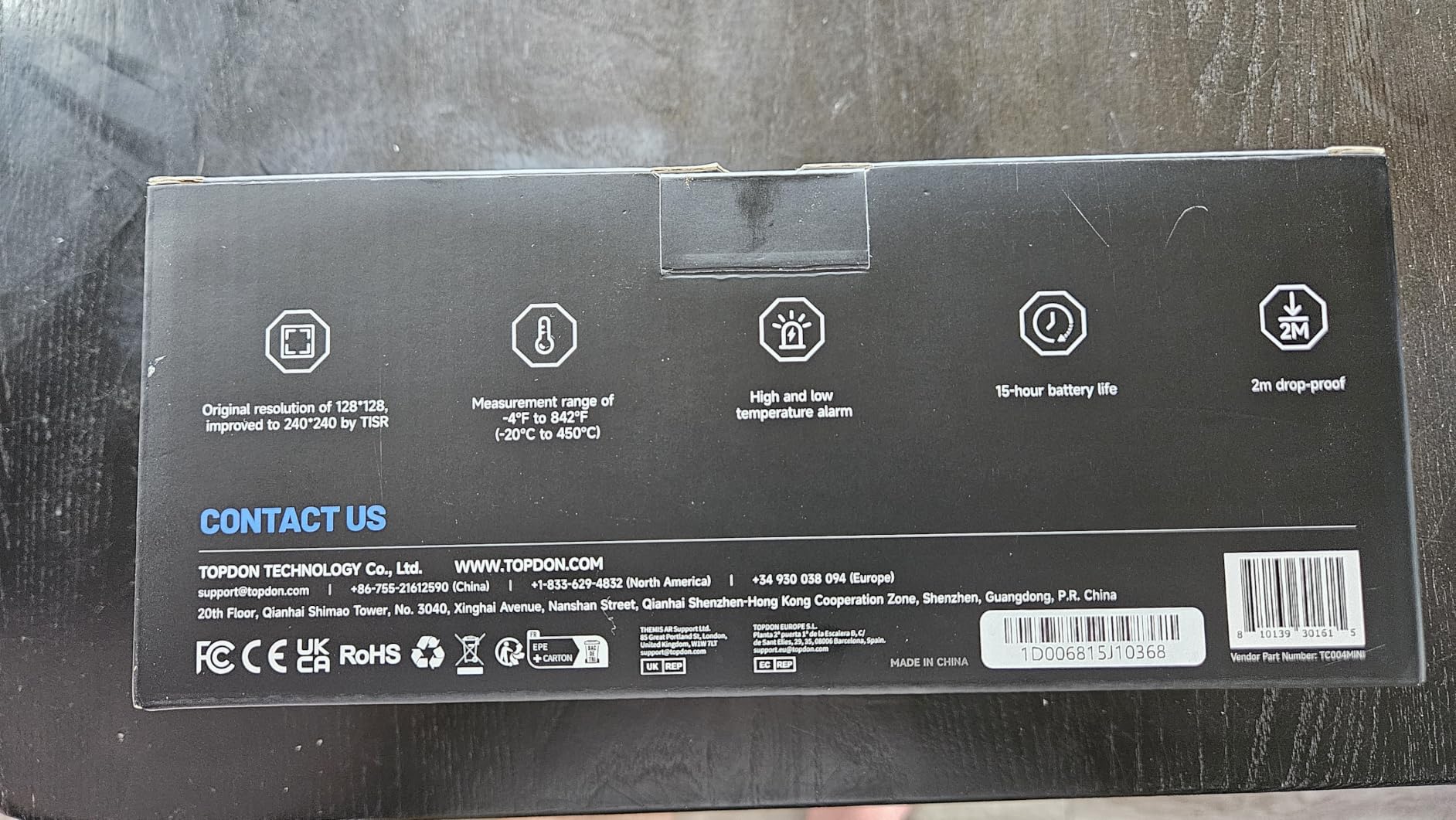
There is a reason the TC004 Mini sits at number one in its category with over a thousand reviews. Our team found it hits the sweet spot where price, portability, and capability meet for daily inspection work. It genuinely fits in a jacket pocket, which means it actually gets carried rather than left in the truck.
I used it for a full afternoon of scans, and the 15-hour battery rating held up with plenty to spare. The auto min/max temperature tracking was my most-used feature, instantly pinning the coldest corner of a drafty bedroom and the warmest breaker in a panel without manual spot placement.
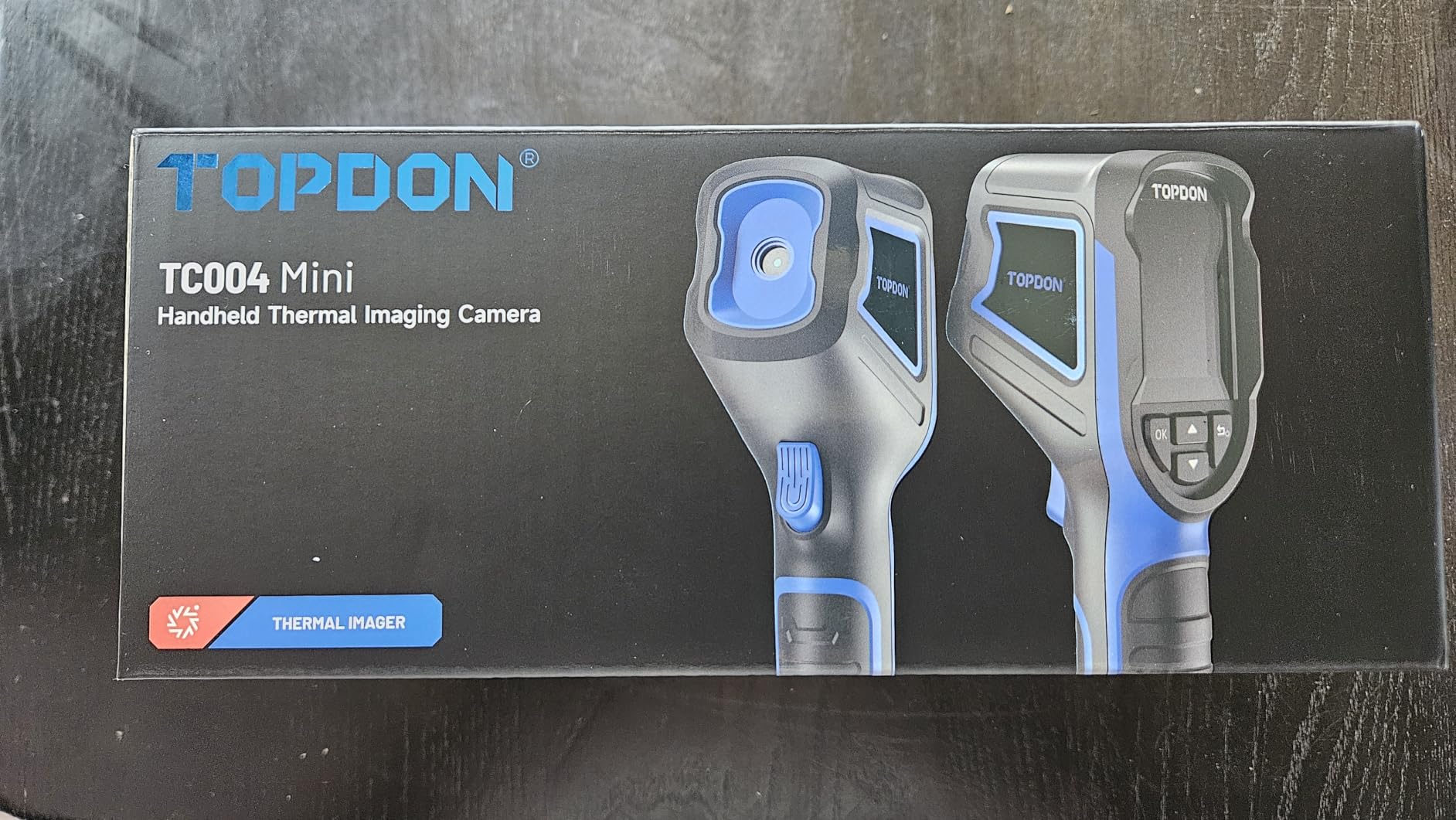
The Wi-Fi connectivity and companion app turned out to be more than a gimmick. Pulling images onto a phone for a text message to a client, or dropping them straight into inspection report software, takes seconds. With 512MB of internal storage holding roughly 8,000 photos, capacity is never an issue.
The honest limitation is the native 128×128 detector, upscaled to 240×240 through TISR processing. It is fine for whole-wall scanning and panel surveys, but fine detail work at distance reveals the modest sensor. There is also no zoom, so you physically move closer rather than punch in.
Who It Works Best For
Home inspectors who want one do-everything camera, automotive techs chasing thermal faults, and energy-conscious homeowners will all be well served. The IP54 rating and 2-meter drop protection handle real job site abuse.
Anyone migrating from a smartphone attachment will notice an immediate jump in usability and detail.
Who Should Look Elsewhere
Inspectors whose reports hinge on long-range detail, such as scanning elevated electrical gear or wide roof expanses, should consider the higher-resolution Thermal Master Thor002. The lack of zoom is a genuine workflow limitation outdoors.
Buyers expecting premium accessories should note no travel case ships in the box.
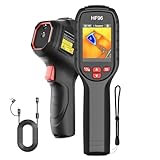
6. HSFTOOLS HF96 – Best AI Scene Detection
HF96 Thermal Camera with AI Scene Detection, Laser Pointer, -4°F~1022°F
240x240 Super Resolution
AI Scene Detection
11H Runtime
50mK Sensitivity
Pros
- AI scene recognition flags leaks and insulation gaps
- 240x240 live super resolution
- 4GB storage for 30000+ images
- Integrated laser pointer
- IP54 with 6.6ft drop test
Cons
- Battery life shorter than advertised for some users
- Isolated report of used unit sold as new
The HF96 is the most interesting camera in this lineup because of its AI Scene Recognition with IntellFault technology. Rather than just displaying heat, it attempts automated identification of water leaks and insulation gaps as you scan. For newer inspectors still building interpretation skills, that coaching layer has real value.
In practice I found the 240×240 super resolution mode produces a clean, stable image, and the 50mK thermal sensitivity is competitive with cameras costing considerably more. With nearly 900 reviews at a 4.5 average, the ownership base is large and largely satisfied.
Feature-wise it is a 3-in-1 tool combining an infrared thermometer, thermal camera, and laser pointer. The 4GB of internal storage is the largest here on paper, holding more than 30,000 images or 14 hours of video, and the HSF Studio Windows software extends analysis on a desktop.
Two cautions surfaced in verified buyer feedback. Some users report battery life landing short of the advertised 11 hours in continuous scanning, so charge between appointments if you run long days. There was also an isolated report of a unit arriving with preloaded images from a previous user, a quality-control slip worth checking on arrival.
Who It Works Best For
Inspectors early in their thermography learning curve benefit most from the AI scene detection hints. Building diagnostics professionals who scan hundreds of frames a week will appreciate the massive storage and seven preset palettes.
The integrated laser pointer makes communicating findings to clients on site much easier.
Who Should Look Elsewhere
Purists who trust their own interpretation over algorithmic flagging may find the AI layer unnecessary overhead. If you need guaranteed all-day runtime without a top-up, the AMPBANK H128 doubles the battery figure.
Anyone who films long video sessions should test endurance early, given the runtime reports.
7. FLIR One for iOS – Best Plug-and-Play Smartphone Option
Flir One – Thermal Imaging Camera for iOS Smartphones (iPhone 15 and Newer w/USB-C), 240×180 Super Resolution (80×60 Native IR)
240x180 Super Resolution
MSX Technology
iPhone USB-C
App Inspection Guides
Pros
- Plug-and-play with iPhone USB-C
- MSX merges visual and thermal detail
- Built-in inspection guides in app
- Self-contained battery spares phone charge
- 1.5m drop rated
Cons
- Requires Bluetooth and network access
- Occasional connectivity issues reported
- Some find image quality mediocre
The FLIR One is the camera I recommend to inspectors already living on their iPhones. Plug it into the USB-C port of an iPhone 15 or newer and you are scanning within seconds, with images saved straight to the photo library. The FLIR brand carries the strongest trust signal in the thermal community, and that reputation shows in the polish of the app experience.
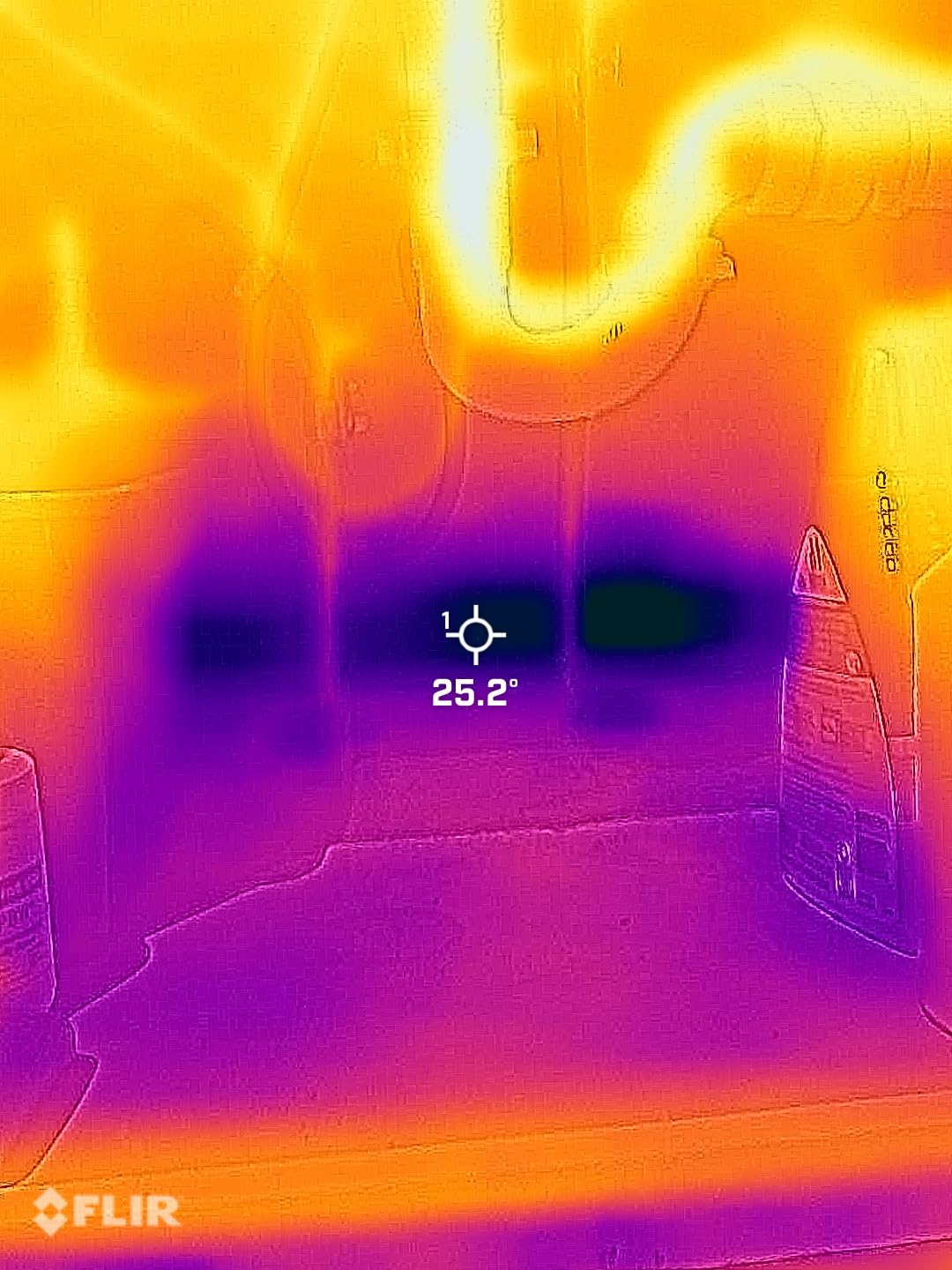
The signature feature is MSX technology, which embosses visual camera detail onto the thermal image. Edge structure from the visible light lens makes it dramatically easier to tell which wall stud or which breaker you are looking at, something raw thermal blobs struggle with.
On specs, the native 80×60 detector is the smallest here, upscaled to 240×180 via super resolution. Accuracy is rated at ±3°C or ±5 percent, and the unit carries a 1.5-meter drop rating plus a self-contained battery that spares your phone’s charge. The step-by-step inspection guides in the FLIR app are a genuinely useful training aid for common building checks.
The friction points are real though. Operation requires Bluetooth and network access, which annoys users in basements with poor signal, and connectivity hiccups appear across reviews. Some buyers also find the effective image quality mediocre for demanding diagnostics.
Who It Works Best For
iPhone-carrying home inspectors, contractors doing quick verification scans, and homeowners probing for drafts or leaks will enjoy the zero-learning-curve experience. It is also the easiest way to get real FLIR MSX imaging without a dedicated handheld budget.
Anyone who values guided workflows gets a built-in coach through the inspection guides.
Who Should Look Elsewhere
Android users are out of luck with this variant, and inspectors needing all-day standalone scanning will prefer a self-contained camera. The native 80×60 sensor also trails every dedicated handheld here for fine detail.
If your area has poor connectivity, the Bluetooth and network requirement could be a dealbreaker.
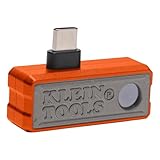
8. Klein Tools TI223 – Highest-Resolution Mobile Imager
Klein Tools TI223 Mobile Thermal Imaging Camera, Thermal Imager for iOS and Android, 19,200 Pixels, Wide Temperature Range of -4 to 752-Degree Fahrenheit, Professional Infrared Camera
19200 Pixel Resolution
USB-C iOS and Android
Time-Lapse Video
Spot and Differential Modes
Pros
- 19200 pixels for clear images
- Works with both iOS and Android
- Touch screen with multiple temp modes
- Time-lapse video capture
- Powered by phone so no battery to charge
Cons
- Struggles in low temperature differential scenes
- Phone case thickness limited to a fifth of an inch
- Very new with limited review history
The Klein Tools TI223 is the newest entry in this roundup, released in January 2026, and it takes the smartphone-attachment concept seriously. With 19,200 pixels of resolution it out-resolves the FLIR One significantly, and unlike the FLIR it works with both iOS and Android over USB-C. Electricians will recognize the Klein brand instantly, and the build feels like their traditional tools.
Using it felt natural: the touch screen shows spot, high and low, and differential temperature readings simultaneously, and the time-lapse video mode is perfect for watching how a wall or radiant system responds over an hour. Because it draws power from the phone, there is no separate battery to charge or eventually replace.
Technically, the wide -4 to 752°F range covers standard building inspection work comfortably. Three color palettes including ironbow, rainbow, and grayscale handle most presentation needs, and images plus video store directly on the device.
The main caveat is thin review history, with only 14 reviews so far despite the excellent 4.8 average. One noted technical limit is performance in low temperature differential situations, where dual-lens dedicated cameras hold an edge. The phone case thickness limit of about a fifth of an inch also means bulky protective cases must come off.
Who It Works Best For
Electricians and HVAC professionals already invested in Klein gear will find the workflow familiar. Cross-platform households or fleets with mixed Android and iPhone devices get flexibility no single-platform attachment offers.
The time-lapse feature suits anyone documenting slow thermal changes like heat soaking through a wall.
Who Should Look Elsewhere
Inspectors who want proven long-term reliability data should wait for the review base to mature. Buyers in mild-climate scenarios with small temperature differences between indoors and outdoors may struggle with contrast.
If you hate removing your phone case for every scan, the friction adds up over a full inspection day.
9. Thermal Master Thor002 – Best High-Resolution Handheld
Thermal Master Thor002 Handheld Thermal Camera, 512 × 384 X³ Resolution
512x384 X3 Resolution
3.5 inch IPS Screen
40mK Sensitivity
10.5H Battery
Pros
- Exceptional 512x384 upscaled resolution
- Large 3.5 inch IPS display
- 6-point temperature measurement
- Wireless transfer to PC and mobile
- Voice notes and QR file management
Cons
- Isolated device failures after 3 months
- Inconsistent support responsiveness
- Absolute accuracy best treated as relative contrast
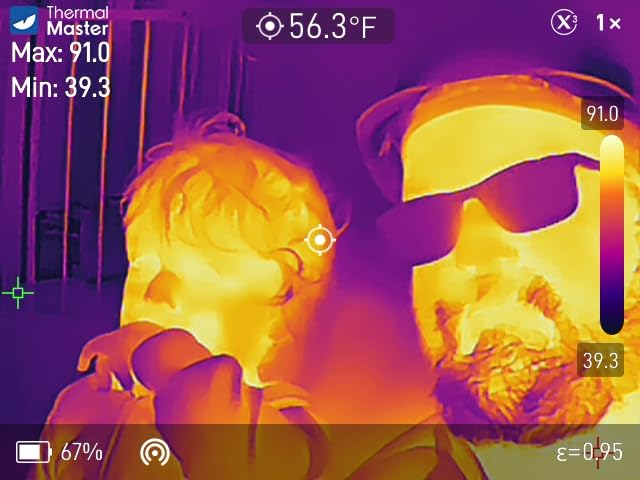
The Thor002 is the resolution king of this group. Its X³ processing upscales a native 256×192 sensor to 512×384, and the difference versus the 240-class cameras above is visible the moment you power it on. Fine detail like individual breaker rows, stud patterns behind drywall, and subtle moisture plumes renders with clarity that cheaper units smear away.
The 3.5-inch 640×480 IPS display is the best screen here, staying readable at awkward angles and in brighter conditions than the budget models. I found the 6-point simultaneous temperature measurement ideal for comparing supply and return registers or scanning across a window assembly in one frame.
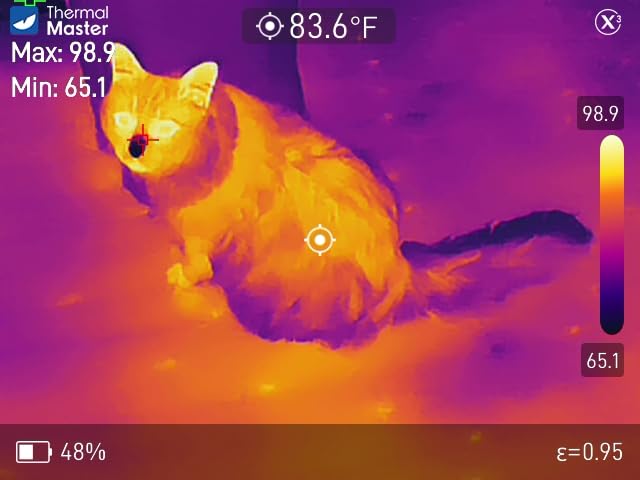
The feature list reads like a flagship: 40mK sensitivity, 4X digital zoom, 25Hz refresh, WiFi plus USB connectivity, 32GB of storage, voice notes, and QR code file management for organizing large image libraries. The 5000mAh battery delivers about 10.5 hours, enough for a full day of inspections.
Reliability is the open question. Some owners report device failure around the three-month mark, and support responsiveness has been inconsistent. Absolute temperature accuracy is also better trusted for relative contrast work than certified measurements, according to owner feedback.
Who It Works Best For
Inspectors doing serious building diagnostics, energy audits, and detailed electrical surveys get the most from that resolution headroom. The zoom and wireless transfer make it a genuine professional workflow tool.
Anyone upgrading from a 240×180-class camera will notice the difference on the first scan.
Who Should Look Elsewhere
Buyers who need bulletproof long-term support and warranty service may sleep better with FLIR. If your reports require calibrated absolute temperatures, treat this as a pattern-finding tool and verify separately.
Casual users who scan once a month are paying for resolution they may never fully exploit.
10. FLIR TG165-X – Best Brand Track Record and Warranty
Flir TG165-X Thermal Imaging Camera with Bullseye Laser, Spot IR
80x60 IR with MSX
Bullseye Laser
-13F to 572F
IP54 Enclosure
Pros
- FLIR MSX image enhancement
- Bullseye laser for precise targeting
- 2 year parts and labor warranty
- 10 year detector warranty
- Rugged drop-tested IP54 design
Cons
- Only 4800 pixels native resolution
- Occasional freezing reported
- No video recording
- Cannot disable combined visual and IR view
The TG165-X is the veteran here, with 839 reviews and the FLIR reputation behind it. InterNACHI forum regulars consistently name FLIR the most trusted brand in thermography, and the warranty structure explains part of that loyalty: two years on parts and labor plus ten years on the detector itself. Nobody else in this roundup comes close on coverage.
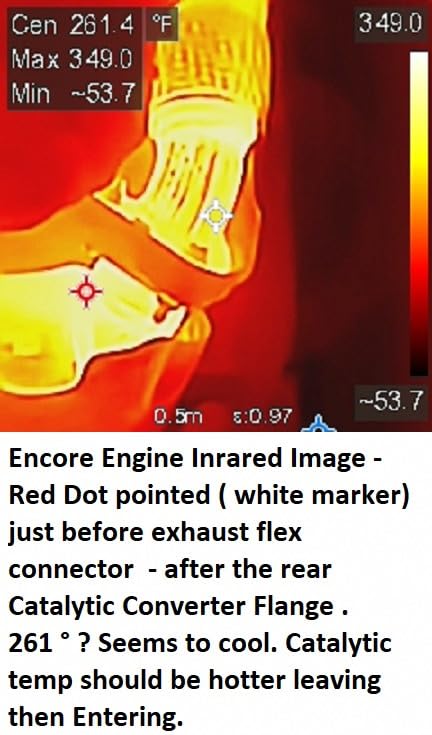
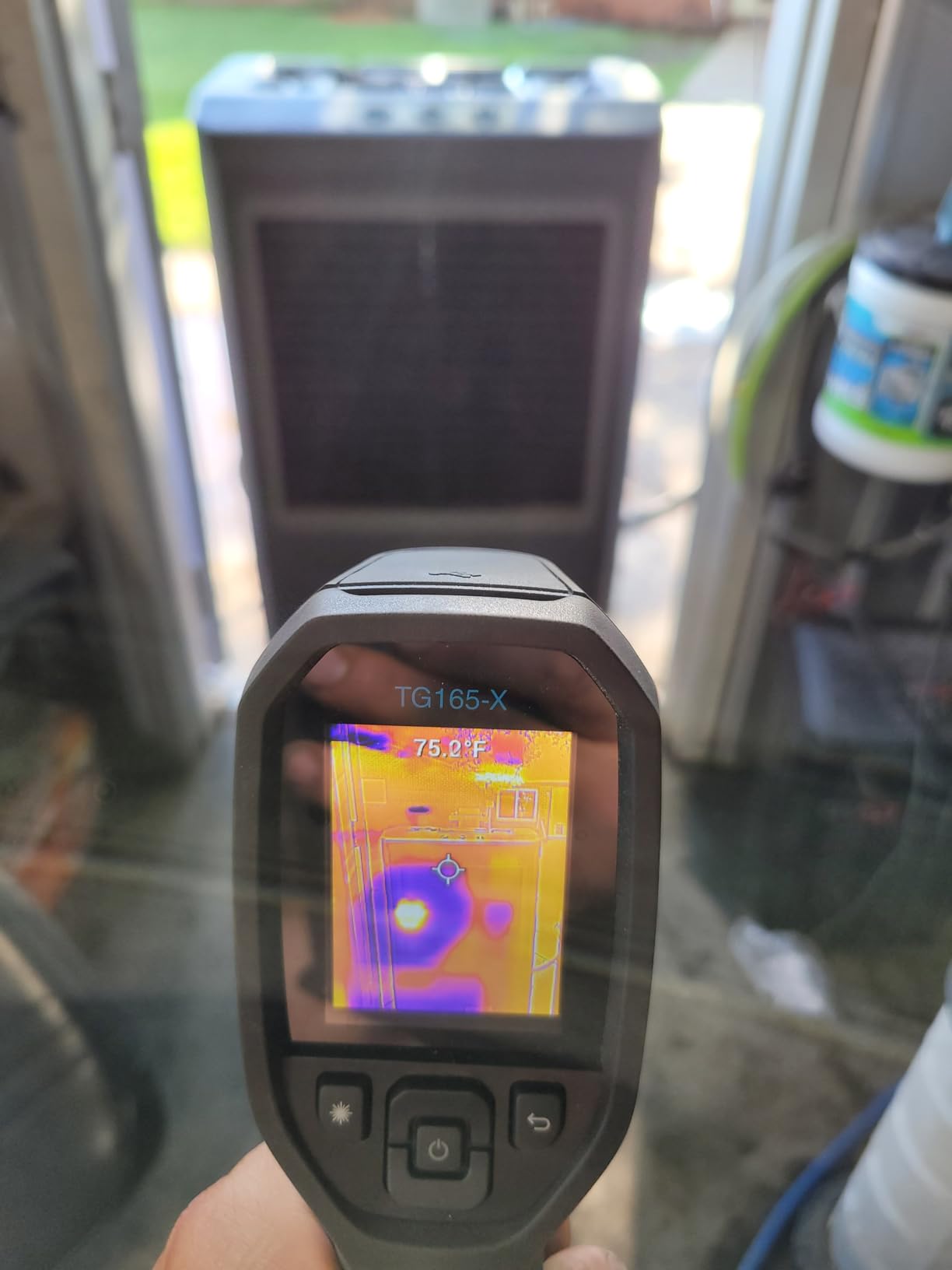
It sits between a spot thermometer and a full imager, with the excellent bullseye laser letting you anchor exactly which surface the center temperature reading references. In practice I found it superb for targeted checks: a suspected breaker, a radiator not warming, a door draft, a possible wet ceiling patch.
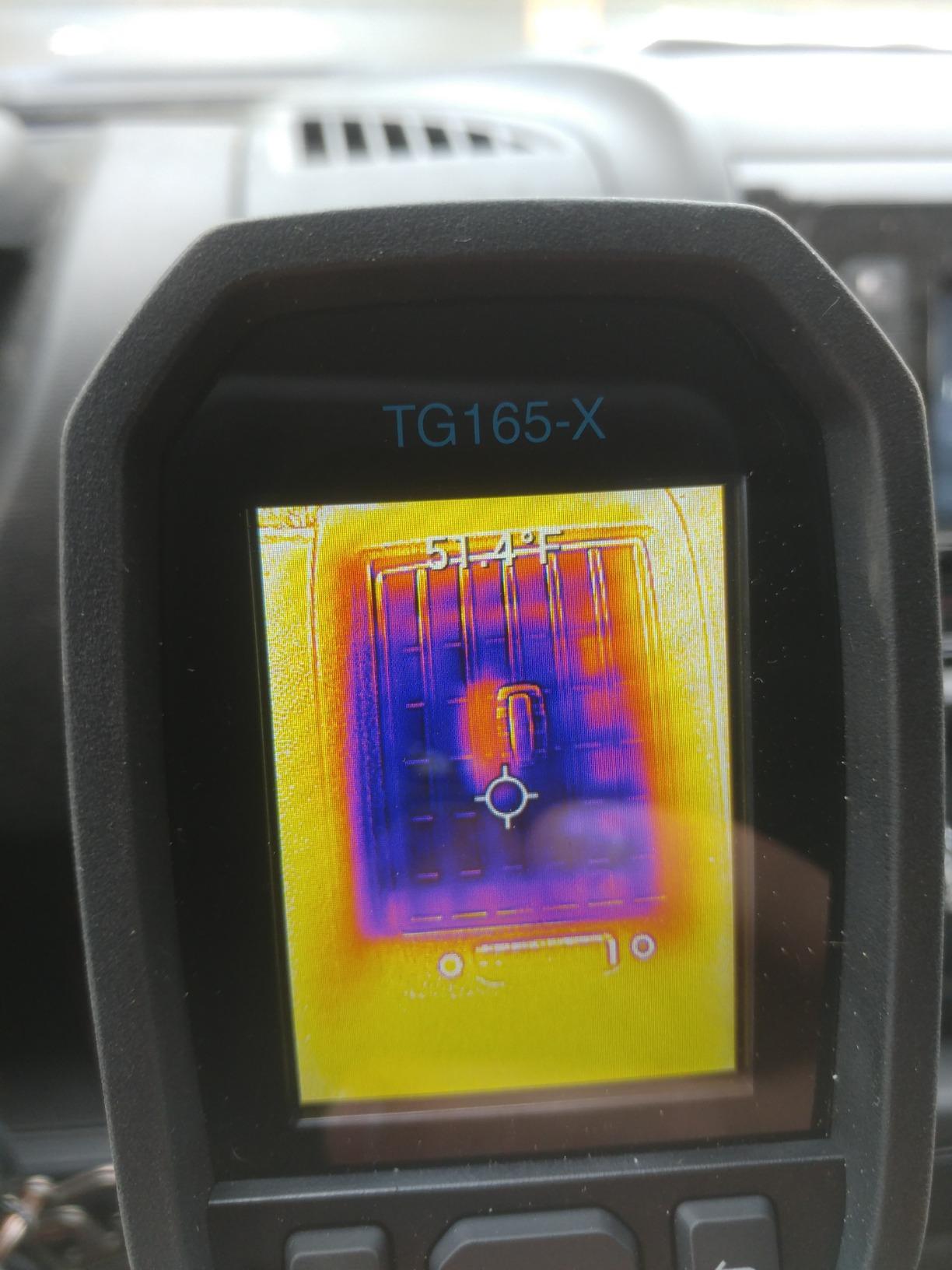
The technical reality is the 80×60, 4,800-pixel sensor is modest by current standards. MSX embossing visual detail helps considerably with orientation, but you are buying proven reliability, laser targeting, and warranty rather than resolution. The -13°F to 572°F range covers building, HVAC, and light electrical work.
Known gripes include occasional unit freezing, no video recording, and no way to turn off the combined visual and IR view for a pure thermal presentation. Image quality also trails the newer smartphone-class attachments in some comparisons.
Who It Works Best For
Inspectors who prioritize long-term reliability, serviceability, and a decade of detector coverage will find the peace of mind worth it. It is also an excellent first FLIR for tradespeople who expect their tools to survive real abuse.
Targeted diagnostic checks rather than wide surveys are where the bullseye laser approach shines.
Who Should Look Elsewhere
Anyone mapping large surfaces or documenting wide insulation patterns needs more pixels, making the Thor002 or TC004 better fits. Video documentation for client walkthroughs is simply not offered here.
Buyers wanting a pure thermal view for analysis will chafe at the mandatory combined presentation.
What to Look for in a Thermal Camera for Building Inspections?
Resolution is the headline spec, but it needs decoding. Many cameras in this range advertise enhanced numbers like 240×240 or 240×180 while running smaller native sensors, upscaled through processing with names like TISR or super resolution. That processing genuinely improves visual clarity, but true detector resolution determines how much measurement detail exists underneath.
For professional building inspections, community consensus on inspector forums points to roughly 120×90 native as a workable floor, with 256×192-class sensors representing a meaningful upgrade for fine diagnostics. Below that, you are pattern hunting rather than measuring.
Thermal sensitivity, listed as NETD in milliKelvin, determines how small a temperature difference you can see. Lower is better: 40mK to 50mK distinguishes subtle insulation voids and slow moisture migration that 100mK-class sensors blur together. This spec matters more than resolution for some moisture detection work.
Refresh rate affects usability more than accuracy. A 25Hz camera pans smoothly like a video camera, while 9Hz units stutter noticeably when you move. For scanning whole rooms quickly, 25Hz reduces fatigue and missed frames.
Battery life decides whether the tool survives your schedule. Anything from 10 hours up means one charge covers a full inspection day; the AMPBANK H128 doubles that figure. Check whether the battery is user-replaceable if you plan multi-year ownership.
Software and reporting close the loop. If thermal findings go into client deliverables, PC analysis suites with report generation, like the FOXWELL RT280’s, save hours weekly. Verify Windows or Mac compatibility before buying, and confirm whether images are radiometric, meaning temperature data survives export for later analysis.
Durability ratings matter for real job sites. IP54 protects against dust and splashing, IP65 against stronger water exposure, and drop test ratings of 2 meters or more reflect crawlspace-and-ladder reality. Emissive surface caveats apply to all of them: shiny metals and glass can reflect other heat sources and mislead readings, so adjust emissivity settings or verify with contact measurement.
How Thermal Imaging Works for Building Inspections
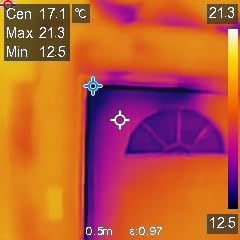
A thermal camera detects infrared radiation emitted by every object and converts those emissions into a visible color-coded image. Warm areas render red and orange while cool areas render blue and purple, exposing surface temperature differences invisible to the eye. The camera never sees through walls; it reads the surface heat effects of what is hidden behind them.
In practice, that distinction matters. A cold patch on a ceiling often indicates evaporating moisture from a leak above. A hot breaker in a panel signals excess resistance and a potential fire risk. Missing insulation shows as distinct cold geometric zones on a cold day, and duct leaks paint warm streaks across an attic floor.
The best results come with a temperature difference between inside and outside, which is why inspections in winter or high summer produce the clearest thermal contrast. Solar loading also affects exteriors, so north-facing walls scanned in morning conditions give more trustworthy readings than sun-baked south faces.
Building inspectors on Reddit and the InterNACHI forum report the highest-value finds are hot breakers, hidden water intrusion, missing or compressed insulation, HVAC imbalance, and even pest activity behind finishes. Certification through ITC or InterNACHI thermal imaging courses is worth considering, since interpretation errors are the biggest risk once you own the hardware.
Frequently Asked Questions
What is the best thermal camera for HVAC inspections?
For HVAC work, the TOPDON TC004 Mini and HSFTOOLS HF96 are standout choices. The TC004 offers 240×240 TISR resolution, a 15-hour battery, and Wi-Fi image transfer, while the HF96 adds AI scene detection and 50mK thermal sensitivity for spotting subtle temperature differences across coils, ducts, and registers. Both cover the -4F to 842F-plus range HVAC techs need.
Which inspection camera is best?
The best overall thermal camera for building inspections is the TOPDON TC004 Mini, thanks to its pocketable size, 15-hour battery, 240×240 upscaled resolution, and Wi-Fi app integration. For budget buyers, the AccuMEMS GT14S covers the basics. For high-resolution diagnostics, the Thermal Master Thor002 with 512×384 output leads the pack, while the FLIR TG165-X offers the strongest warranty and brand track record.
What is the difference between an infrared camera and a thermal camera?
There is no practical difference: a thermal camera is a type of infrared camera. Both detect infrared radiation and convert it into a visible heat map. The term infrared camera technically covers a broader spectrum, but in building inspection contexts the two names refer to the same tool. What matters when comparing units is thermal resolution, sensitivity (NETD), temperature range, and accuracy ratings rather than the label on the box.
How much does a thermal imaging inspection typically cost?
A standalone thermal imaging inspection for a home generally runs from roughly $150 to $500 depending on property size, region, and scope, with some specialized commercial or roof inspections costing more. Many home inspectors bundle a thermal scan into a standard inspection for an additional fee. For inspectors themselves, an entry-level professional camera from this list pays for itself after just a few billed thermal add-on services.
Final Verdict: Which Thermal Camera Should You Buy?
Picking the best thermal cameras for building inspections comes down to matching the tool to your workflow. Our editor’s choice TOPDON TC004 Mini is the safest all-around buy for working home inspectors, combining pocketability, a 15-hour battery, and proven reliability across more than a thousand reviews. The FOXWELL RT280 wins for anyone producing client reports, thanks to its PC analysis and automatic report generation.
If image detail drives your work, the Thermal Master Thor002 and its 512×384 output is the clear resolution leader. Budget-conscious buyers get genuine capability from the AccuMEMS GT14S, battery-obsessed marathon runners should grab the AMPBANK H128, and warranty-first buyers will rest easy with the FLIR TG165-X and its ten-year detector coverage.
Whichever route you take, pair the hardware with some thermography training and always verify critical findings with a second method. The camera finds the anomaly; your judgment explains it. Check current pricing on any of these models with the buttons above, and start catching the hidden issues your competitors walk past.