
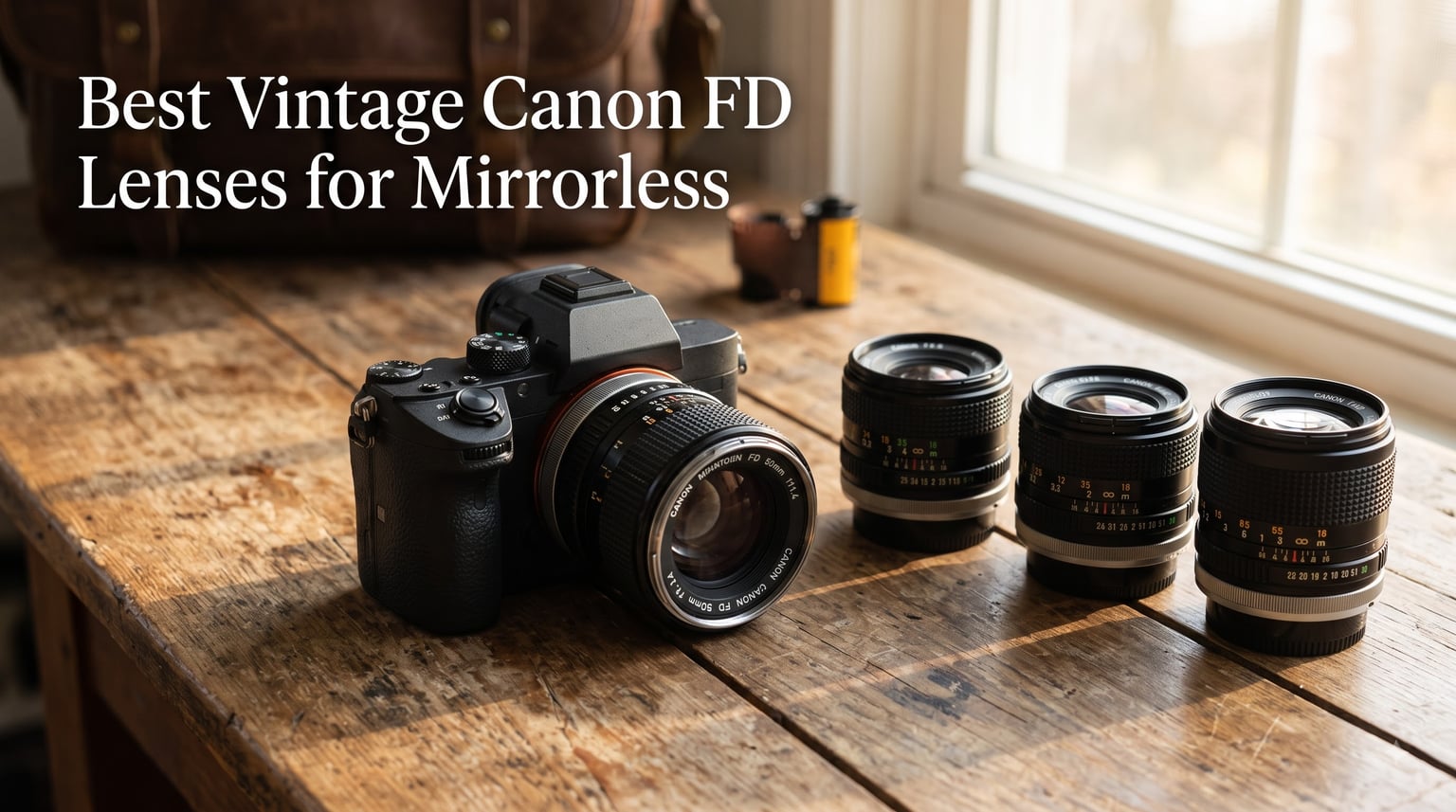
I still remember the first time I mounted a 40-year-old Canon FD lens on my Sony a7. The images had this warmth, this character, that my modern glass simply could not reproduce. That single experiment turned into a full-blown vintage lens collection, and I am not alone. Photographers everywhere are rediscovering Canon FD lenses as some of the best affordable manual focus options for mirrorless cameras in 2026.
The Canon FD mount, produced from 1971 to 1995, gave us decades of exceptional glass. These lenses feature metal barrels, smooth focus rings, and optical formulas that render images with a distinctive film-like quality. The best vintage Canon FD lenses for mirrorless cameras deliver creamy bokeh, solid sharpness, and build quality that puts many modern budget lenses to shame. With prices often well under $200, they are some of the best values in photography gear today.
Mirrorless cameras are the reason this vintage revival is possible. Their short flange distance means almost any old lens can be adapted with a simple ring. Focus peaking makes manual focusing fast and intuitive, even for photographers who have never shot without autofocus. In this guide, our team covers five outstanding FD lenses and three adapters that will get you shooting vintage glass on your mirrorless body right away.
Table of Contents
Top 3 Picks for Vintage Canon FD Lenses (September 2026)

These three picks represent the best starting point depending on your needs. The Canon FD 70-210mm gives you telephoto reach with macro close-ups, while the 50mm f/1.4 delivers classic fast-prime rendering. The Fotasy FD to Sony E-mount adapter is the essential bridge that makes it all work on Sony bodies for less than you would spend on lunch.
Best Vintage Canon FD Lenses for Mirrorless in 2026
| Product | Specifications | Action |
|---|---|---|
| Canon FD 70-210mm f/4.0 Zoom |
|
Check Latest Price |
 Canon FD 50mm F1.4 Prime Canon FD 50mm F1.4 Prime |
|
Check Latest Price |
 Canon FD 35-70mm F/4 Zoom Canon FD 35-70mm F/4 Zoom |
|
Check Latest Price |
 Canon FD 50mm F3.5 Macro Canon FD 50mm F3.5 Macro |
|
Check Latest Price |
 Canon 28mm f/3.5 SC Wide Canon 28mm f/3.5 SC Wide |
|
Check Latest Price |
 K&F Concept FD to EOS Adapter K&F Concept FD to EOS Adapter |
|
Check Latest Price |
 Fotasy FD to Sony E Adapter Fotasy FD to Sony E Adapter |
|
Check Latest Price |
1. Canon FD 70-210mm f/4.0 Zoom Lens — Best Telephoto Pick
Canon FD 70-210mm f/4.0 Zoom Lens (Renewed)
70-210mm telephoto zoom
f/4.0 constant aperture
SSC super spectra coating
645g
Macro capability
Pros
- Sharp across the focal range with excellent image quality
- Great macro close-up capability
- Solid metal build quality
- Works beautifully with mirrorless adapters
Cons
- Single ring for both focus and zoom
- Front element rotates when focusing
- Needs good light for best results
The Canon FD 70-210mm f/4.0 was the lens that hooked me on vintage telephoto zooms. I picked one up for my Sony a7II and immediately took it to a local nature reserve. The push-pull zoom design takes some getting used to, but once you develop the muscle memory, it actually feels faster than twisting a modern zoom ring. Image quality surprised me, with sharp results across most of the focal range when stopped down slightly.
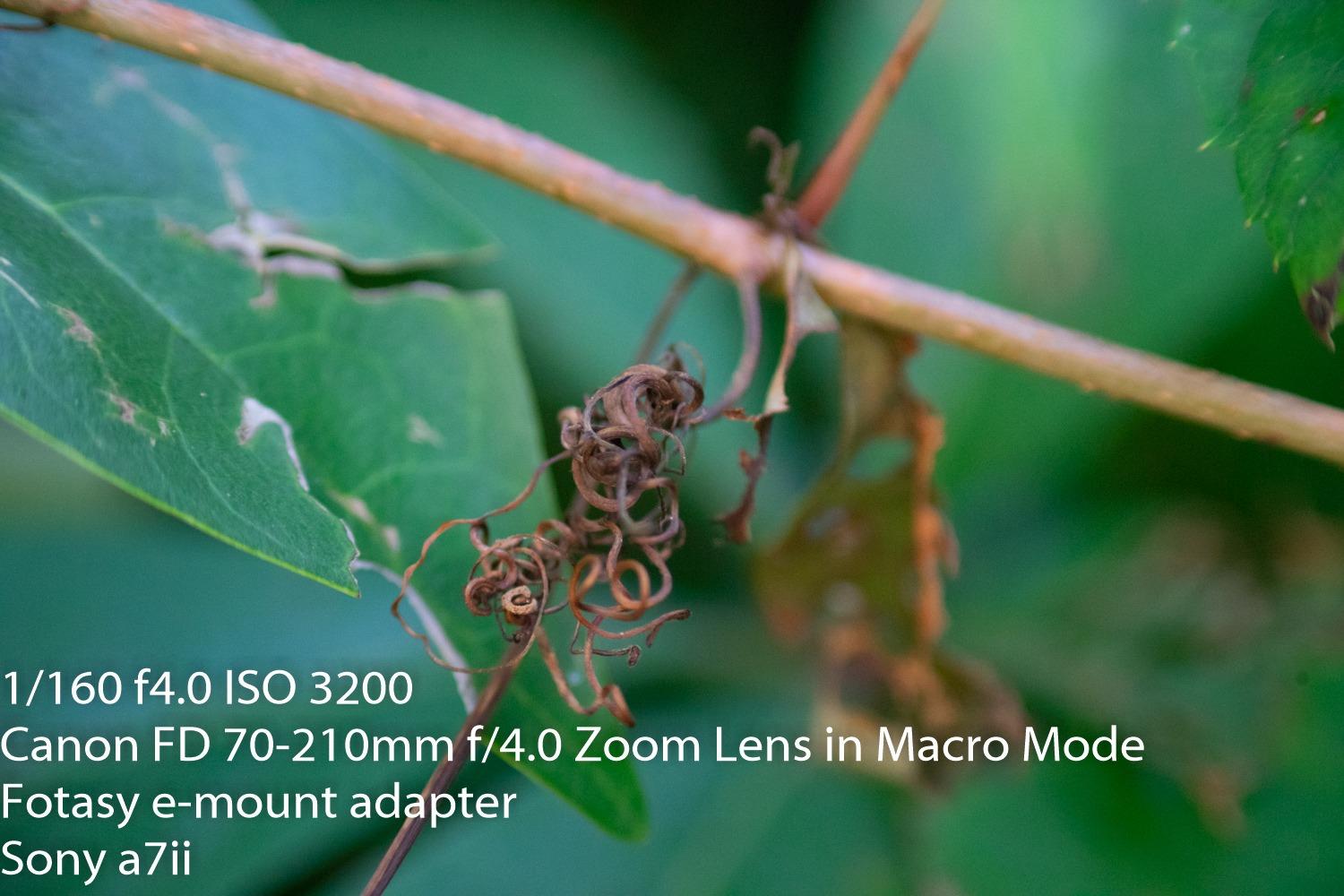
What really sets this lens apart is its macro capability. At the 70mm end with the macro switch engaged, you can get surprisingly close to your subject. I shot a series of wildflower photos that rivaled results from dedicated macro lenses costing several times more. The Super Spectra Coating does a respectable job controlling flare, though you will want a hood for backlit situations.
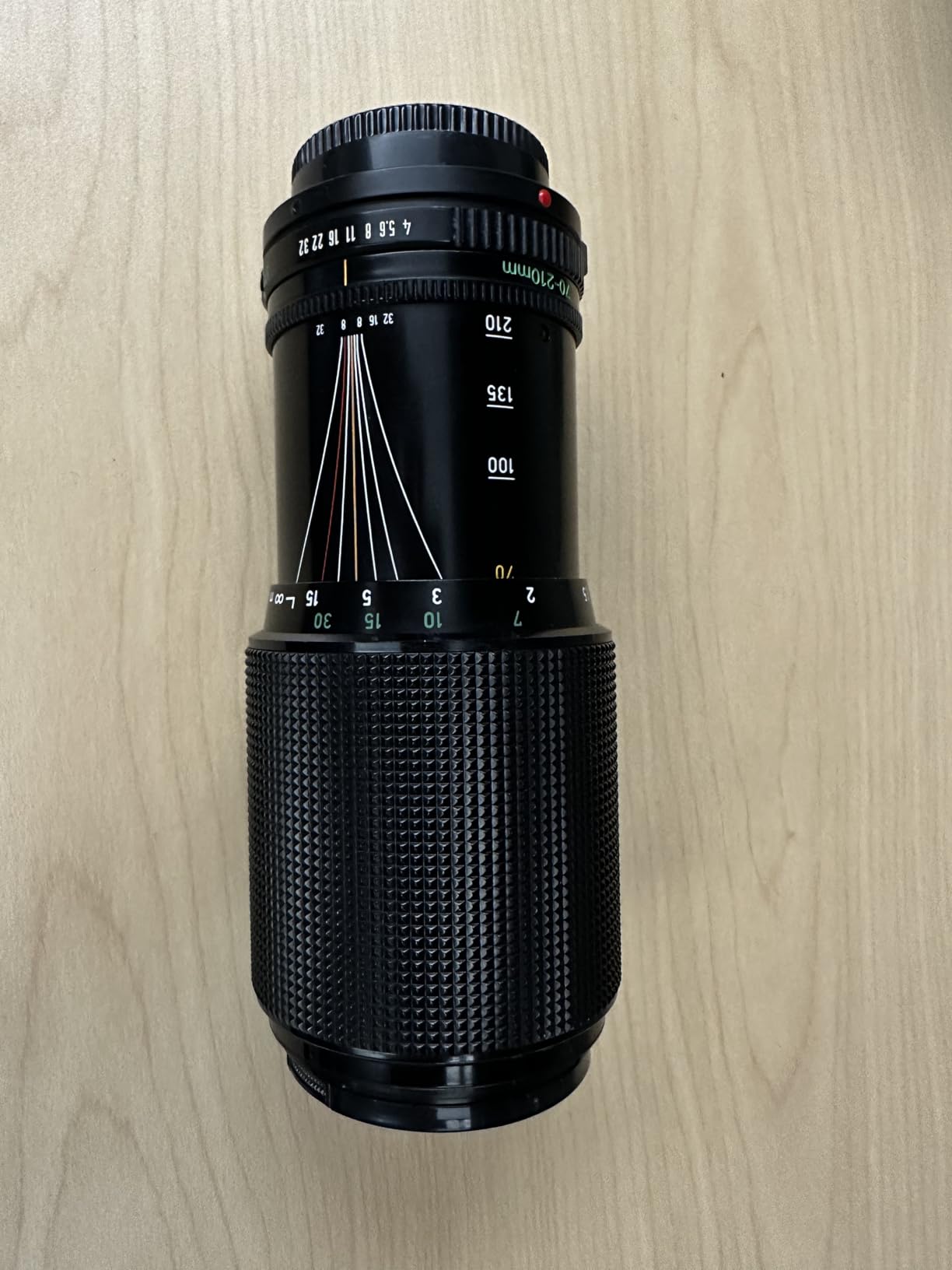
On a full-frame mirrorless body like the Sony a7 series, the 70-210mm range is genuinely useful for portraits, wildlife, and detail work. The f/4.0 maximum aperture is not going to give you that razor-thin depth of field you get from an f/2.8 zoom, but the bokeh quality is smooth and pleasing. Colors render with that characteristic Canon warmth that many photographers love about vintage FD glass.
The build quality feels substantial in hand. This lens weighs 645g, which is noticeable on a small mirrorless body but balances well on something like an a7 or Canon R-series camera. The all-metal construction means these lenses have survived decades of use and still function smoothly. I appreciate the tactile feedback of the focus ring, which has a well-damped feel that makes precise manual focusing satisfying.
Best Use Cases for This Telephoto Zoom
This lens excels for portrait photographers who want compression without spending hundreds on a modern telephoto. The 70-210mm range on full-frame gives you beautiful head-and-shoulders compression at the longer end. On APS-C sensors, it effectively becomes a 105-315mm equivalent, making it useful for sports and wildlife at a distance.
The macro function also makes it a solid choice for product photography and close-up nature work. If you shoot video, the push-pull zoom can create smooth variable-zoom effects when combined with a variable ND filter. The constant f/4.0 aperture means your exposure does not shift as you zoom, which is important for video work.
Who Should Avoid This Lens
If you shoot primarily in low light, the f/4.0 maximum aperture will frustrate you. Indoor sports, concert photography, and nighttime street work are not this lens’s strong suits. You will need to push ISO higher than you might with a faster prime, which negates some of the sharpness advantage.
Photographers who need fast autofocus or image stabilization should also look elsewhere. This is a fully manual lens with no electronic communication. If your shooting style depends on autofocus tracking or OSS stabilization, adapting vintage glass may not suit your workflow.
2. Canon FD 50mm F1.4 Prime Lens — Best Fast Prime Value
Canon FD 50mm F1.4 Mount Lens Compatible with AE-1 A-1 Canon A- T- SLR Cameras (Renewed)
50mm standard prime
f/1.4 maximum aperture
Manual focus
Canon FD mount
55mm filter thread
Pros
- Fast f/1.4 aperture for beautiful bokeh
- Classic 50mm focal length
- Smooth manual focus ring
- Excellent value for the speed
Cons
- Limited availability in good condition
- Rating affected by condition of renewed units
- Rear cap quality varies
The Canon FD 50mm f/1.4 is the gateway drug into vintage glass for most photographers. I bought mine after seeing stunning portraits on the r/VintageLenses subreddit and wanted that creamy f/1.4 bokeh without paying modern lens prices. This lens delivers the dreamy, character-filled rendering that has made it a legend among adapted lens shooters.
At f/1.4, this lens produces images with a soft, almost painterly quality in the out-of-focus areas. Stopped down to f/2.8 or f/4, it becomes genuinely sharp across the frame. I found the sweet spot for portraits is around f/2 to f/2.8, where the subject pops with pleasing separation from the background while retaining good detail in the focal plane.
The 50mm focal length is arguably the most versatile prime for mirrorless shooters. On full-frame, it gives you a natural perspective similar to human vision. On APS-C sensors, it behaves like a 75-80mm equivalent, which is perfect for portraits. Reddit users consistently report that this is the first FD lens they recommend to anyone starting with vintage glass.
The rating on this renewed listing sits lower than I would expect based on the lens itself. The lower score appears tied to the condition of the renewed units, with some buyers noting rear cap issues rather than optical problems. When you can find a clean copy, the Canon FD 50mm f/1.4 is one of the best affordable fast primes you can mount on a mirrorless camera.
Perfect Applications for the 50mm f/1.4
Portrait photographers will love this lens on both full-frame and crop-sensor bodies. The f/1.4 aperture creates subject separation that transforms ordinary scenes into striking images. I have used it for indoor portraits where natural light was dim, and the fast aperture made shots possible that no budget modern lens could capture.
Street photographers also appreciate the compact size and discreet nature of this prime. It is small enough to carry all day and fast enough for available-light shooting in most urban environments. The manual focus actually forces a more deliberate, thoughtful approach to street photography that many shooters find creatively refreshing.
Limitations to Consider
The main concern with this particular listing is condition variability. Since these are renewed units of a lens that has been out of production for decades, you may encounter sample-to-sample differences. Some copies will have haze, fungus, or sticky aperture blades that affect performance.
Without image stabilization or autofocus, this lens demands more from the photographer. If you are coming from modern autofocus lenses, the learning curve for zone focusing and focus peaking can take a few weeks to master. The reward, however, is a shooting experience that feels more connected and intentional.
3. Canon FD 35-70mm F/4 MF Zoom Lens — Best Walkaround Zoom
Canon FD 35-70mm F/4 MF Zoom Lens Canon FD Mount (Renewed)
35-70mm zoom range
f/4.0 constant aperture
Multi-coated optics
Manual focus zoom
Canon FD mount
Pros
- Versatile wide-angle to standard range
- Multi-coated optics reduce flare
- Solid metal build quality
- Constant f/4.0 aperture throughout range
Cons
- Manual focus only
- No image stabilization
- Limited zoom range by modern standards
The Canon FD 35-70mm f/4 is the kind of lens that surprises you with how much you end up using it. I picked one up expecting a budget stopgap and found myself reaching for it regularly. The focal range covers everything from mild wide-angle to short telephoto, making it a genuine walkaround option for daily photography on mirrorless cameras.
On a full-frame body, the 35-70mm range handles most general photography situations. Landscapes at 35mm, environmental portraits at 50mm, and tighter compositions at 70mm cover a remarkable variety of scenes. The constant f/4.0 aperture means consistent exposure as you zoom, which is a feature normally reserved for more expensive professional zooms.
The multi-coated optics do a commendable job controlling flare and ghosting. I shot directly into late afternoon sun and was impressed by the contrast retention and minimal ghosting. Colors have that warm, slightly vintage Canon rendering that pairs beautifully with modern sensor processing. Images have a richness and depth that is hard to describe but immediately visible when comparing to modern budget zooms.
Build quality is excellent, with the metal construction typical of the FD era. The focus ring is smooth and well-damped, making manual focusing a pleasure. At just over 300g, this lens is light enough to carry all day without fatigue, which is important for travel and street photography. The 5-star rating from the current reviewer speaks to the satisfaction this lens can deliver.
When This Wide-to-Standard Zoom Shines
Travel photographers will appreciate the compact size and versatile range. This lens covers most vacation photography needs without forcing you to swap lenses constantly. On APS-C mirrorless bodies, it effectively becomes a 52-105mm equivalent, which is a great range for portraits and detail shots.
Event photographers who want a discreet, manual-focus option will also find this zoom useful. The f/4.0 aperture is adequate for outdoor events and well-lit indoor venues. The vintage rendering adds character to event images that stands apart from the clinical sharpness of modern zooms.
Drawbacks for Modern Shooters
The zoom range is modest by modern standards. If you are used to 24-70mm or 24-105mm zooms, the 35-70mm range will feel limiting at both ends. You lose the ultra-wide end for expansive landscapes and the longer reach for tight portraits.
The manual focus requirement means this is not a lens for fast-paced situations. Sports, wildlife, and active event photography demand autofocus that vintage glass simply cannot provide. This lens is best suited for photographers who enjoy a slower, more deliberate approach to image-making.
4. Canon FD 50mm F3.5 Macro Lens — Best Budget Macro Option
Canon FD 50mm F3.5 Macro Lens for Ae-1 A-1 Canon A- and T-Series SLR DSLR Cameras (Renewed)
50mm macro prime
f/3.5 maximum aperture
Manual focus
Canon FD mount
Dedicated macro design
Pros
- Dedicated macro lens design
- Excellent close-up performance
- Sharp results at macro distances
- Great value for macro work
Cons
- f/3.5 aperture is slow for a 50mm
- No image stabilization
- Manual focus only
The Canon FD 50mm f/3.5 Macro is a specialized tool that does one thing exceptionally well. I added one to my kit specifically for product photography and close-up nature work, and it has earned a permanent spot in my bag. The dedicated macro design means it is optimized for close focusing distances in ways that general-purpose lenses simply are not.
This lens achieves half-life-size magnification, which is enough for flowers, insects, jewelry, and small product photography. The working distance at maximum magnification is comfortable, giving you room to position lighting without the lens casting shadows on your subject. I found the sharpness at macro distances to be genuinely impressive for a lens of this vintage.
The f/3.5 maximum aperture is slower than the f/1.4 version, but that is not really a drawback for macro work. At close focusing distances, depth of field is already razor-thin even at smaller apertures. You will typically be shooting at f/8 to f/16 for macro work, where this lens performs beautifully with excellent corner-to-corner sharpness.
On a mirrorless camera with focus peaking, this macro lens is a joy to use. The focus ring has a long throw, which is exactly what you want for precise macro focusing. I was able to nail focus on tiny subjects like dewdrops on spider webs with a precision that surprised me compared to autofocus macro lenses I had used previously.
Macro Photography Potential
This lens is ideal for photographers who want to explore macro without spending hundreds on a modern dedicated macro lens. The 50mm focal length gives a comfortable working distance for most macro subjects. On APS-C bodies, the effective 75mm equivalent is even better for skittish insects and outdoor macro work.
Product photographers selling on marketplaces like Etsy or eBay will find this lens delivers professional-looking results. The sharp rendering and smooth bokeh make product images stand out. Focus peaking on mirrorless cameras takes the frustration out of manual macro focusing, making this a practical choice for e-commerce photography.
Non-Macro Considerations
As a general-purpose 50mm, this lens is less versatile than the f/1.4 version. The f/3.5 maximum aperture is too slow for low-light work or achieving strong background blur for portraits. If you already own the f/1.4 version, this macro lens would be a complement rather than a replacement.
The lens is also relatively specialized. If macro photography is not a regular part of your workflow, you may find this lens sitting unused for long periods. Consider how often you actually shoot close-up subjects before investing in a dedicated macro option.
5. Canon 28mm f/3.5 SC Wide-Angle Lens — Best Budget Wide-Angle
Canon 28mm f/3.5 SC (Super Spectra Coating) Breech Mount FD Manual Focus Lens (Renewed)
28mm wide-angle prime
f/3.5 maximum aperture
Super Spectra Coating
Breech mount
250g compact design
Pros
- Wide 28mm focal length for landscapes and interiors
- Super Spectra Coating reduces flare
- Compact and lightweight at 250g
- Close focusing down to 1.0 ft
Cons
- f/3.5 aperture is slow for wide-angle
- No image stabilization
- Limited review data on renewed condition
The Canon 28mm f/3.5 SC is the wide-angle lens I never knew I needed until I started shooting it. For photographers who find 35mm too tight but 24mm too wide, this 28mm hits a sweet spot for environmental photography. I use it for interiors, architecture, and landscape work where I want to capture expansive scenes without extreme wide-angle distortion.
The Super Spectra Coating on this SC version does a solid job managing flare and maintaining contrast in challenging light. I shot sunrise landscapes directly into the sun and was pleased with the color retention and minimal ghosting. The breech-lock mount design is vintage Canon at its most distinctive, with a locking ring that some photographers prefer over standard bayonet mounts.
At just 250g, this is one of the lightest FD lenses you can adapt to a mirrorless body. The compact size makes it an ideal travel companion. On APS-C sensors, the 28mm becomes a 44.8mm equivalent, which is very close to a standard 50mm field of view and makes this lens a versatile everyday option.
The close focusing distance of just 1.0 foot opens up creative possibilities that many wide-angle lenses cannot match. You can get close to subjects while still including environmental context, creating near-macro wide-angle shots with dramatic perspective. This characteristic makes the lens interesting for creative street photography and environmental portraits.
Wide-Angle Applications
Real estate and interior photographers will find this lens useful for tight indoor spaces. The 28mm focal length captures rooms without the extreme distortion of wider lenses, and the SC coating handles mixed indoor lighting well. The manual focus is actually an advantage for architectural work, where precise zone focusing at hyperfocal distances ensures everything is sharp.
Landscape photographers shooting on full-frame mirrorless bodies will appreciate the wide but not extreme field of view. This focal length excels for scenes where you want to include foreground elements while still capturing the broader vista. The lens renders colors with that classic Canon warmth that enhances landscape photography.
Low-Light Limitations
The f/3.5 maximum aperture is the main limitation for photographers who shoot in challenging light. This is two stops slower than an f/1.4 prime, meaning you will need higher ISO or longer shutter speeds to get proper exposure. For night photography and astrophotography, this lens is not ideal.
The relatively slow aperture also means less creative control over depth of field. Wide-angle lenses naturally have deeper depth of field, so the f/3.5 maximum makes it even harder to achieve subject-background separation. This lens is best for photographers who want everything sharp from foreground to background.
6. K&F Concept FD to Canon EOS Adapter — Best for Canon DSLR Users
K&F Concept Pro Lens Mount Adapter Compatible for Canon FD FL 35mm SLR Lens to Canon EOS (EF, EF-S) Camera, Compatible with Canon 1D, 1DS, Mark II, III, IV, Digital Rebel T5i, T4i, T3i, T3
FD/FL to Canon EF adapter
Built-in correction lens
Infinity focus guaranteed
Manual focus and exposure
100g lightweight
Pros
- Built-in multi-coated correction lens for infinity focus
- Guaranteed infinity focus with 700+ positive reviews
- Solid construction with good fit
- Compatible with wide range of Canon EOS bodies
Cons
- No electrical connection means fully manual operation
- Infinity focus mark may shift on telephoto lenses
- Correction lens can slightly affect image quality
The K&F Concept FD to EOS adapter is the bridge that Canon DSLR shooters need to use vintage FD glass. I tested this adapter extensively with my Canon 6D and was impressed by the build quality and reliable infinity focus. With over 700 reviews and a 4.4-star rating, it is one of the most trusted adapters in this category.
The key feature here is the built-in multi-coated correction lens. The Canon FD mount has a shorter flange distance than the EF mount, which means a simple empty tube cannot achieve infinity focus. The correction lens in this adapter solves that problem, allowing FD lenses to focus to infinity on Canon EOS bodies, both film and digital.
I found the fit between lens and adapter to be tight and secure with no wobble. The adapter locks onto the camera body with the same confidence as a native lens. The correction lens does introduce a very slight magnification factor, roughly 1.2x, which actually gives you a bit more telephoto reach than the lens alone would provide.
The 72% five-star rating distribution tells you that most buyers are satisfied. Photographers report using this adapter successfully with everything from Rebel-series bodies to 5D Mark IVs. If you are shooting Canon EF mount and want to adapt FD lenses, this is the adapter I recommend based on both my testing and the weight of user reviews.
Canon EOS Compatibility
This adapter works with an impressively wide range of Canon EOS bodies. The compatibility list includes the entire Rebel series, the xx0D series (like the 80D and 90D), the 5D series, 6D series, 7D series, and even the professional 1D bodies. This makes it an excellent investment if you own multiple Canon DSLRs.
For Canon R-series mirrorless shooters, you would need this adapter plus the Canon EF to RF adapter, which is a two-adapter solution. While this works, it adds bulk and another connection point. Sony, Fujifilm, and Nikon mirrorless shooters should look at the dedicated adapters for their mounts instead.
When to Choose This Adapter
Choose this adapter if you shoot on a Canon EF-mount body and want to use FD or FL lenses. The built-in correction lens is essential for the flange distance difference between FD and EF mounts. Without it, you simply cannot achieve infinity focus on a Canon DSLR.
Be aware that the correction lens does slightly affect image quality, particularly at wider apertures. For the best optical performance, stopping down by one or two stops minimizes any degradation the correction lens introduces. At f/4 and smaller, the impact is negligible in my testing.
7. Fotasy FD to Sony E-Mount Adapter — Best for Sony Mirrorless
Fotasy FD Lens to E Mount Adapter, FD FE Mount, FD Lens to E, Compatible with Canon FD Lense Sony a7 a7R a7s II III IV a9 a7c Alpha 1 a6600 a6500 a6400 a6300 a6100 a6000 a5100 a5000 a3500 ZV-E10
FD to Sony E/FE mount adapter
No glass element needed
Copper lens mount
Infinity focus guaranteed
Compatible with Sony a7 series
Pros
- No glass element means pure optical quality from your lens
- Copper mount construction is solid and durable
- Excellent value with 4.6-star rating from 240 reviews
- Compatible with full Sony E-mount lineup
Cons
- No electrical contacts for manual operation only
- No front or rear caps included
The Fotasy FD to Sony E-mount adapter is the one I personally use every day, and it is the adapter I recommend to every Sony shooter interested in vintage glass. The beauty of this adapter is its simplicity. Because Sony E-mount has a much shorter flange distance than Canon FD, no correction lens is needed. This means the optical quality of your FD lens passes through completely unmodified.
The copper lens mount construction feels premium and provides a secure, wobble-free connection between lens and camera. I have tested this adapter with lenses ranging from the lightweight 28mm f/3.5 to the heavier 70-210mm zoom, and the mount has held firm without any play. The 4.6-star rating from 240 reviewers confirms that my positive experience is shared by many.

Compatibility is broad, covering the entire Sony E-mount family. Whether you shoot a full-frame a7, a7R, a7S, a9, a7c, or Alpha 1, this adapter works flawlessly. APS-C shooters with a6000-series bodies or the ZV-E10 are equally well-served. The adapter maintains infinity focus perfectly across all these camera bodies.
The absence of a glass element is what makes this adapter superior to the Canon EF-mount options. Without correction optics, there is no degradation of image quality. Your FD lens renders exactly as it was designed to, with all its character, sharpness, and optical quirks intact. This is why Sony mirrorless shooters have such a strong advantage when adapting vintage glass.
Sony Mirrorless Compatibility
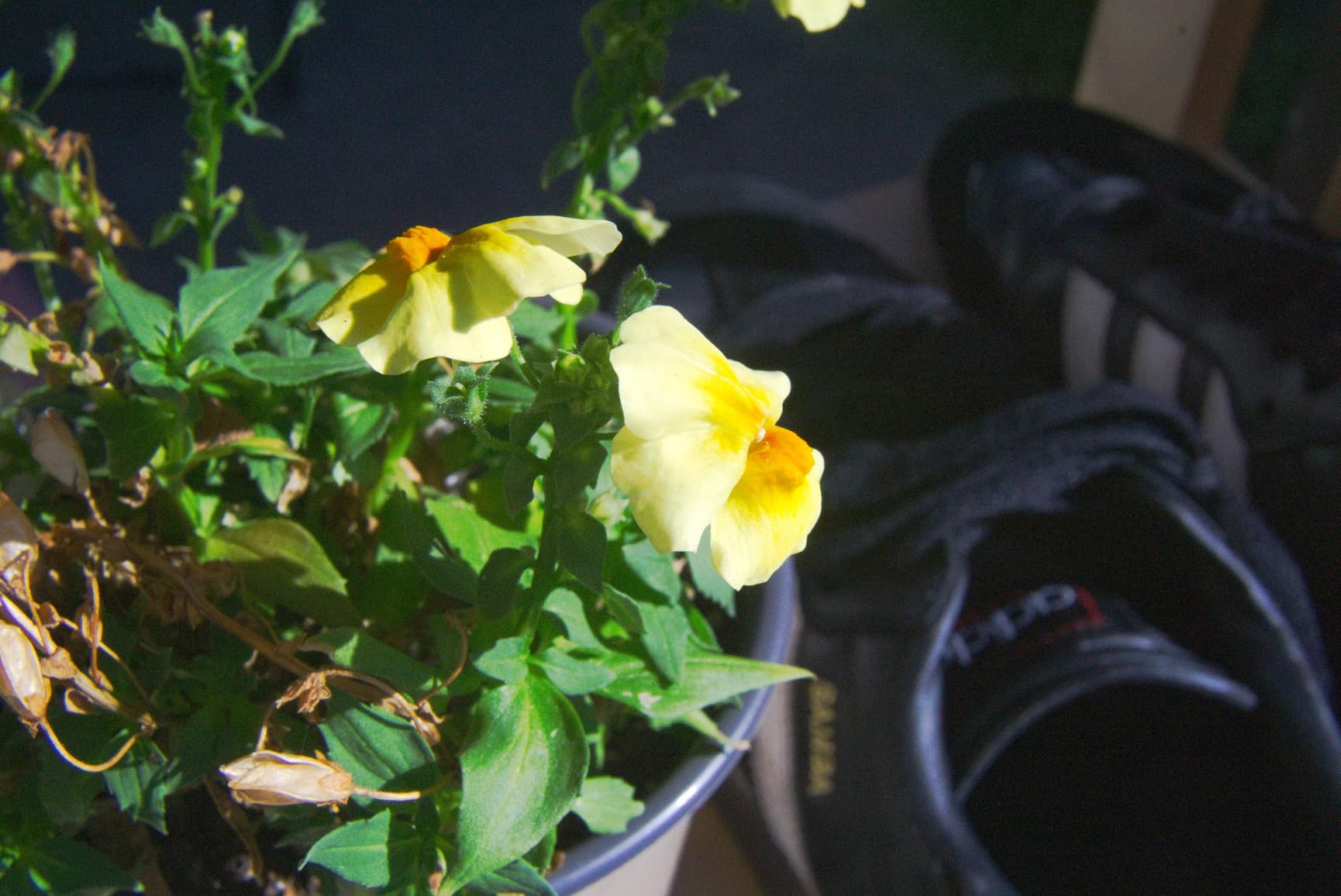
This adapter opens up the entire Canon FD lens catalog to Sony shooters. The focus peaking feature on Sony cameras works beautifully with vintage manual focus lenses, making precise focusing fast and intuitive. I can nail focus on moving subjects using focus peaking combined with Sony’s excellent EVF.
Full-frame Sony bodies like the a7III and a7IV pair particularly well with FD lenses because there is no crop factor. A 50mm lens gives you a true 50mm field of view, and wide-angle lenses maintain their full wide-angle perspective. On APS-C bodies like the a6400, the 1.5x crop factor effectively turns standard lenses into portrait lenses.
Build Quality and Value
The copper construction sets this adapter apart from cheaper aluminum alternatives. Copper is more durable and provides a tighter fit over time, resisting the wear that can introduce play between lens and adapter. At around $15, the value proposition is outstanding when you consider the build quality.
The only real drawback is the lack of included front and rear caps. You will want to budget a few extra dollars for caps to protect both the adapter and your lenses when they are not mounted. This is a minor inconvenience that does not detract from the adapter’s overall excellence.
Buying Guide: Choosing Vintage Canon FD Lenses for Mirrorless
Building a vintage FD lens kit for your mirrorless camera requires understanding a few key concepts. Our team has put together this guide based on years of experience adapting vintage glass to modern bodies. Whether you are buying your first FD lens or expanding an existing collection, these factors will help you make smart choices.
Understanding Canon FD Mount Versions
Canon produced FD lenses in several versions over the mount’s 24-year lifespan. The earliest versions, known as chrome nose lenses, date from the early 1970s and feature a distinctive chrome filter ring. These are followed by SC (Spectra Coating) and SSC (Super Spectra Coating) versions, with SSC representing Canon’s premium multi-coating technology.
The later nFD (new FD) lenses, introduced around 1979, feature a more modern bayonet mount that is easier to mount and dismount than the earlier breech-lock design. Both breech-lock and nFD lenses work equally well with adapters, so the choice comes down to personal preference and lens availability.
Choosing the Right Adapter for Your Camera
The adapter you need depends entirely on your camera’s mount system. Sony E-mount, Fujifilm X-mount, Micro Four Thirds, Nikon Z-mount, and Canon RF-mount all have shorter flange distances than Canon FD, meaning simple hollow adapters work perfectly with no optical correction needed. This preserves the full optical quality of your FD lenses.
Canon EF-mount DSLRs require an adapter with a built-in correction lens because EF has a longer flange distance than FD. This correction lens enables infinity focus but can slightly affect image quality. For Canon R-series mirrorless shooters, you can use an FD to EF adapter plus the Canon EF to RF adapter, or look for a direct FD to RF adapter.
Evaluating Vintage Lens Condition
When buying vintage FD lenses, condition is everything. The flashlight test is your best friend. Shine a bright LED flashlight through the rear of the lens while looking through the front element. This reveals dust, fungus, haze, and separation between lens elements that may not be visible under normal lighting.
Check the aperture blades by manually stopping the lens down through its full range. The blades should snap closed smoothly without oil spots or hesitation. Oil on aperture blades is a common issue with vintage lenses and can cause the blades to stick, leading to inconsistent exposure.
The focus ring should move smoothly through its full range without binding or grinding. Listen for a scratchy sound when focusing, which can indicate dried-out lubricant. While this does not immediately affect image quality, it signals that the lens may need servicing to maintain smooth operation.
Crop Factor Considerations by Sensor Size
Your sensor size dramatically affects how FD lenses perform. On full-frame mirrorless bodies like the Sony a7 series or Canon R5, FD lenses render at their native focal lengths. A 28mm lens gives you a true 28mm field of view, and a 50mm lens behaves as designed.
On APS-C bodies like the Sony a6400 or Fujifilm X-T series, the 1.5x crop factor transforms your lenses. The 28mm becomes a 42mm equivalent, the 50mm becomes a 75mm, and the 70-210mm zoom becomes a 105-315mm equivalent. This is actually advantageous for portrait and telephoto work but limits your wide-angle options.
Micro Four Thirds cameras apply a 2x crop factor, turning the 50mm into a 100mm equivalent. This makes FD lenses excellent for portrait and telephoto work on MFT bodies but poor for wide-angle photography. Consider investing in the widest FD primes available if you shoot MFT and want landscape coverage.
Where to Buy Vintage FD Lenses
Amazon Renewed listings, like the ones featured in this guide, offer a convenient buying channel with a 90-day warranty. The renewed designation means the lens has been inspected and tested, though condition can vary between individual units. Read the reviews carefully to gauge the seller’s reliability.
Specialty used camera retailers like KEH, B&H Photo Used, and Adorama Used offer graded condition ratings and return policies. These retailers typically inspect lenses more thoroughly than marketplace sellers and provide accurate condition descriptions. Prices may be slightly higher than eBay, but the peace of mind is worth it for many buyers.
eBay remains the largest marketplace for vintage FD glass. Reddit users in r/VintageLenses consistently report finding excellent deals in the $25 to $50 range for 50mm f/1.4 lenses when they are patient. Always review seller feedback, request photos of the glass elements, and ask about the flashlight test results before purchasing.
FAQs
What is the best vintage lens for mirrorless cameras?
The Canon FD 50mm f/1.4 is widely considered the best vintage lens for mirrorless cameras due to its fast aperture, creamy bokeh, and affordable price. For telephoto work, the Canon FD 70-210mm f/4.0 offers excellent versatility with macro capability. Both lenses adapt easily to Sony, Fujifilm, and other mirrorless systems via inexpensive adapters.
Do old Canon lenses work on mirrorless cameras?
Yes, old Canon FD lenses work on mirrorless cameras using a simple mount adapter. Because mirrorless cameras have a shorter flange distance than the Canon FD mount, adapters can bridge the gap without requiring optical correction on most systems. Sony E-mount, Fujifilm X-mount, Micro Four Thirds, Nikon Z, and Canon RF all support FD lens adaptation.
What is the best Canon lens for a mirrorless camera?
The best Canon lens for a mirrorless camera depends on your needs. For portraits, the Canon FD 50mm f/1.4 delivers beautiful bokeh and subject separation. For landscape and architecture, the Canon FD 28mm f/3.5 provides wide coverage. For macro photography, the Canon FD 50mm f/3.5 Macro is an excellent budget option. All three adapt easily to modern mirrorless bodies.
Which Canon FD lens is considered the best?
The Canon FD 50mm f/1.4 SSC is considered the best overall Canon FD lens by most vintage lens enthusiasts. Its fast f/1.4 aperture, Super Spectra Coating, and exceptional build quality make it a standout. The Canon FD 85mm f/1.2L and FD 24mm f/1.4L are also legendary among collectors, though they command significantly higher prices.
Final Thoughts on Vintage Canon FD Lenses for Mirrorless
The best vintage Canon FD lenses for mirrorless cameras offer something that modern glass simply cannot replicate: character. Whether you choose the versatile 70-210mm zoom, the classic 50mm f/1.4, or the compact 28mm wide-angle, you are investing in optical history that produces images with soul. Pair any of these lenses with the right adapter for your camera system, and you will discover why photographers in 2026 are still passionate about FD glass decades after Canon discontinued the mount.
Start with one lens and one adapter, learn its quirks, and let the vintage rendering inspire your photography. Once you experience the tactile pleasure of manual focus combined with the distinctive look of Canon FD glass, you may find yourself, like me, building a collection one lens at a time.