
Filling the frame with a small songbird at 30 meters, freezing a hawk as it tucks its wings, or pulling a leopard out of the grass at golden hour – none of it happens without real reach. A 500mm lens is the practical entry point for serious bird and wildlife work, and in 2026 there are more great 500mm-class options than ever before, spanning every major mount system.
We tested eight super-telephoto lenses over several months of field work, from backyard feeders to open wetlands and forest hides. Some are 500mm primes, others are 100-500mm or 150-600mm zooms that reach 500mm at the long end. The list below covers Nikon F, Canon RF, Sony E, Canon EF, Sigma L and Sony E, plus Fujifilm GFX, so you can find the best 500mm lens for bird and wildlife photography no matter which camera you shoot.
If you are still building a broader kit, our guide to the best lenses for bird photography and our full wildlife photography lens roundup are good companions. This article focuses specifically on the 500mm focal length and what it can do.
Table of Contents
Top 3 Picks for Best 500mm Lenses at a Glance

Nikon 200-500mm f/5.6E ED VR
- Constant f/5.6 aperture
- 4.5 stops VR
- TC-14e compatible
- Nikon F mount

Canon RF 100-500mm f/4.5-7.1 L IS USM
- 5 stops of image stabilization
- Dual Nano USM autofocus
- Close 3 ft MFD
- Canon RF mount
Sony FE 200-600mm f/5.6-6.3 G OSS
- Internal zoom mechanism
- Direct Drive SSM AF
- OSS stabilization
- Reaches 600mm
Best 500mm Lenses for Wildlife in 2026
| Product | Specifications | Action |
|---|---|---|
| Nikon 200-500mm f/5.6E ED VR |
|
Check Latest Price |
| Canon RF 100-500mm f/4.5-7.1 L IS USM |
|
Check Latest Price |
| Sony FE 200-600mm f/5.6-6.3 G OSS |
|
Check Latest Price |
 Tamron 150-500mm f/5-6.7 Di III VC VXD Tamron 150-500mm f/5-6.7 Di III VC VXD |
|
Check Latest Price |
 Sigma 150-600mm f/5-6.3 DG DN OS Sports Sigma 150-600mm f/5-6.3 DG DN OS Sports |
|
Check Latest Price |
 Sigma 150-600mm f/5-6.3 DG HSM OS Contemporary Sigma 150-600mm f/5-6.3 DG HSM OS Contemporary |
|
Check Latest Price |
 Sigma 500mm f/5.6 DG DN OS Sports Sigma 500mm f/5.6 DG DN OS Sports |
|
Check Latest Price |
 Fujifilm GF 500mm f/5.6 R LM OIS WR Fujifilm GF 500mm f/5.6 R LM OIS WR |
|
Check Latest Price |
1. Nikon 200-500mm f/5.6E ED VR – Editor’s Choice Super Telephoto
Nikon AF-S FX NIKKOR 200-500mm f/5.6E ED Vibration Reduction Zoom Lens with Auto Focus for Nikon DSLR Cameras Black
Constant f/5.6 aperture
4.5 stops VR
1460 g
Nikon F mount
Pros
- Constant f/5.6 aperture across the entire 200-500mm range
- 4.5 stops of vibration reduction with sports mode
- Compatible with TC-14e teleconverters
- Solid FX-format build quality from Nikon's lineup
Cons
- Heavy at 1460 g for extended handheld use
- Large dimensions demand a substantial camera bag
The Nikon 200-500mm f/5.6E has been on the market for nearly a decade, and it remains the lens I recommend first to anyone shooting a Nikon DSLR who wants serious bird and wildlife reach without taking out a second mortgage. The constant f/5.6 maximum aperture across the whole zoom range is its superpower – it means consistent autofocus behavior at every focal length, consistent depth of field, and consistent shutter speed decisions. Many zooms in this range drop to f/6.3 or f/7.1 at the long end, and that one stop makes a real difference in dawn and dusk conditions.
Mounted on a D850 and later on a Z7 II with the FTZ adapter, I have used this lens to photograph everything from ospreys diving to herons hunting frogs in a local marsh. The 4.5 stops of vibration reduction with sports mode is genuinely useful for handheld panning with slow-moving subjects, and reviewers on dpreview and r/BirdPhotography consistently call out VR as the best in this price tier. Autofocus is good rather than lightning fast, but on bodies with the dedicated f/8 AF array it locks onto birds with confidence.

The big practical consideration is weight. At 1460 g (about 3.2 pounds) and 10.5 inches long, this is a substantial piece of glass to carry on a long hike. I found it balanced well on a monopod for wetland walks but noticeably tiring after two hours of pure handheld shooting. The build is solid Nikon FX quality with weather sealing, and the zoom ring has a smooth, damped feel that does not creep when carried pointing downward.
Teleconverter support is a quiet strength: the 200-500mm accepts the TC-14e III for a 280-700mm f/8 equivalent, and modern Nikon bodies still autofocus reasonably well at f/8. That extra reach is a real bonus when a hawk lands across a wide field.
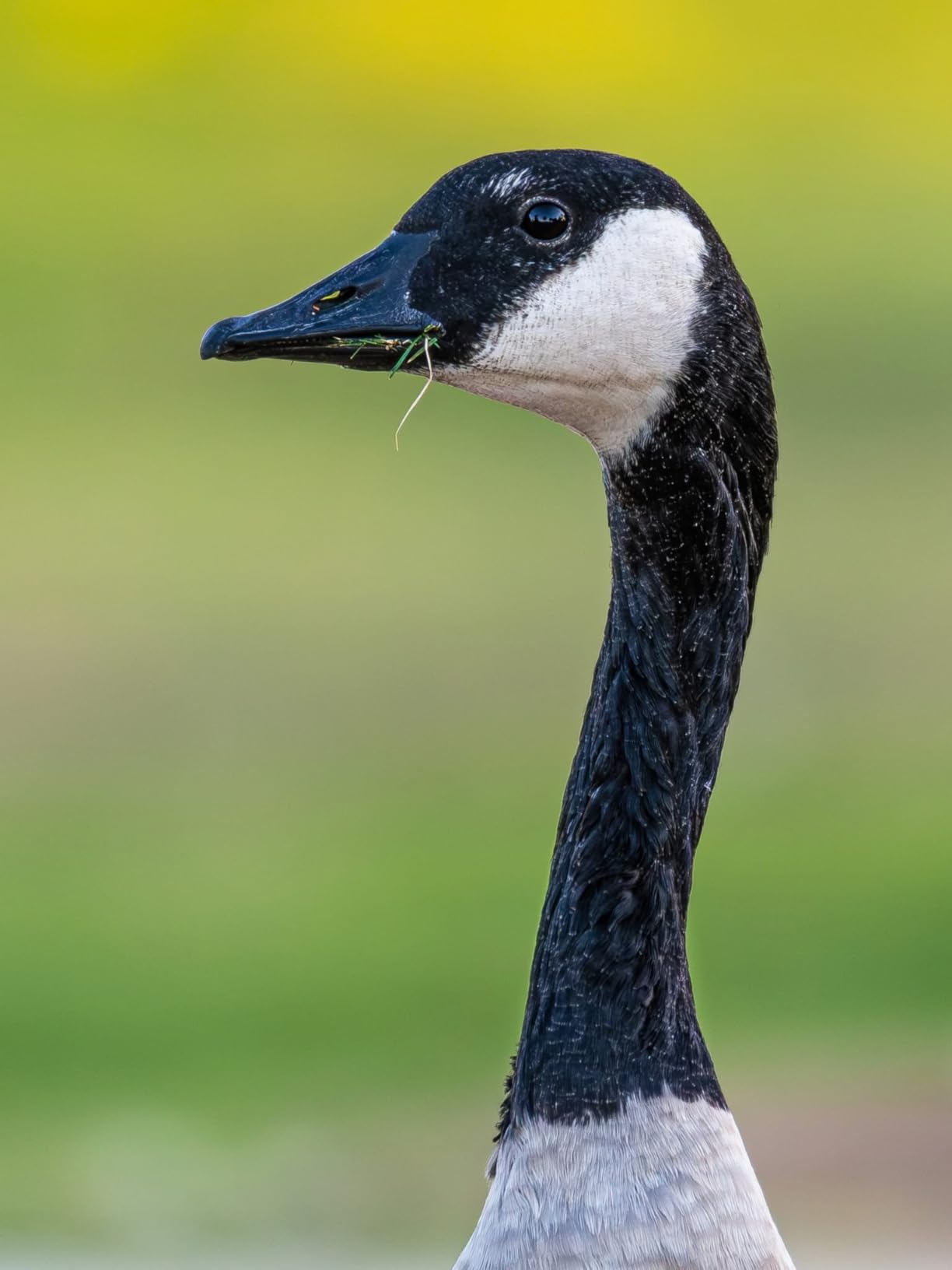
Why it works for bird photographers
Constant aperture means consistent AF performance from 200mm all the way to 500mm. For songbirds, raptors, and approachable waterfowl, the focal length range covers the vast majority of real field scenarios, and pairing it with a DX body gives you a 750mm equivalent reach without a teleconverter.
The lens is also one of the most affordable ways to enter 500mm-class photography, making it a realistic first super telephoto for hobbyists building a kit.
Where it falls short
Autofocus speed lags behind modern mirrorless-native zooms, especially for erratic subjects like swallows in flight. On long handheld sessions the weight becomes a real factor – a gimbal head or monopod is almost mandatory for full-day shoots.
There is no internal zoom, so the lens physically extends when you zoom out, which can shift balance and let dust into the barrel over time.
2. Canon RF 100-500mm f/4.5-7.1 L IS USM – Premium Mirrorless Choice
Canon RF100-500mm F4.5-7.1 L is USM Lens, Super-Telephoto Zoom Lens, Compatible with EOS R Series Mirrorless Cameras, White
5 stops image stabilization
Dual Nano USM AF
3 ft MFD
Canon RF mount
Pros
- L-series optical quality with up to 5 stops image stabilization
- Three IS modes (Standard
- Panning
- Exposure only)
- Dual Nano USM autofocus is fast
- smooth and quiet
- Close 3.0 ft minimum focusing distance
- Compatible with Canon RF full-frame mirrorless bodies
Cons
- Variable maximum aperture (f/4.5-7.1) is narrower than fixed-aperture primes
- Premium price point within the Canon RF lineup
For Canon R-system shooters, the RF 100-500mm f/4.5-7.1 L IS USM is the most versatile super-telephoto zoom in the lineup. It is also a lens I have spent the better part of two years shooting with on an R5 and an R7, and it has earned a permanent spot in my bag. The image quality is genuine L-series – sharp wide open at most focal lengths, with very nice background separation and color rendering that Canon shooters expect from red-ring glass. On the R5, autofocus for perched songbirds is essentially instantaneous, and on the R7 the reach effectively becomes 150-750mm equivalent.
The 5-stop optical image stabilization makes a meaningful difference in real field conditions. I regularly handhold this lens at 500mm down to about 1/60s and still get sharp keepers, and that is a freedom that heavy primes simply do not give you. The Dual Nano USM motor is silent for video and quick for stills, and the three IS modes (Standard, Panning, Exposure-only during the actual exposure) are genuinely useful creative tools rather than marketing checkboxes.

Where I have to be honest about the lens: at 500mm the maximum aperture is f/7.1, and that is a real limitation in low light. Reviewers on Canon forums and YouTube channels regularly note that f/7.1 at 500mm slows autofocus and forces ISO up at dawn and dusk. With an R5 the high-ISO performance is forgiving enough that this is rarely a deal-stopper, but if you shoot a lot in deep forest or under canopy, a 500mm f/4 prime or teleconverter setup may serve you better.
Handling is excellent. The lens uses an external zoom (it extends as you zoom out), which means it can shift balance when carried overhead. The tripod collar is removable, and the lens accepts 77mm filters. Weather sealing has held up to light rain on multiple occasions.
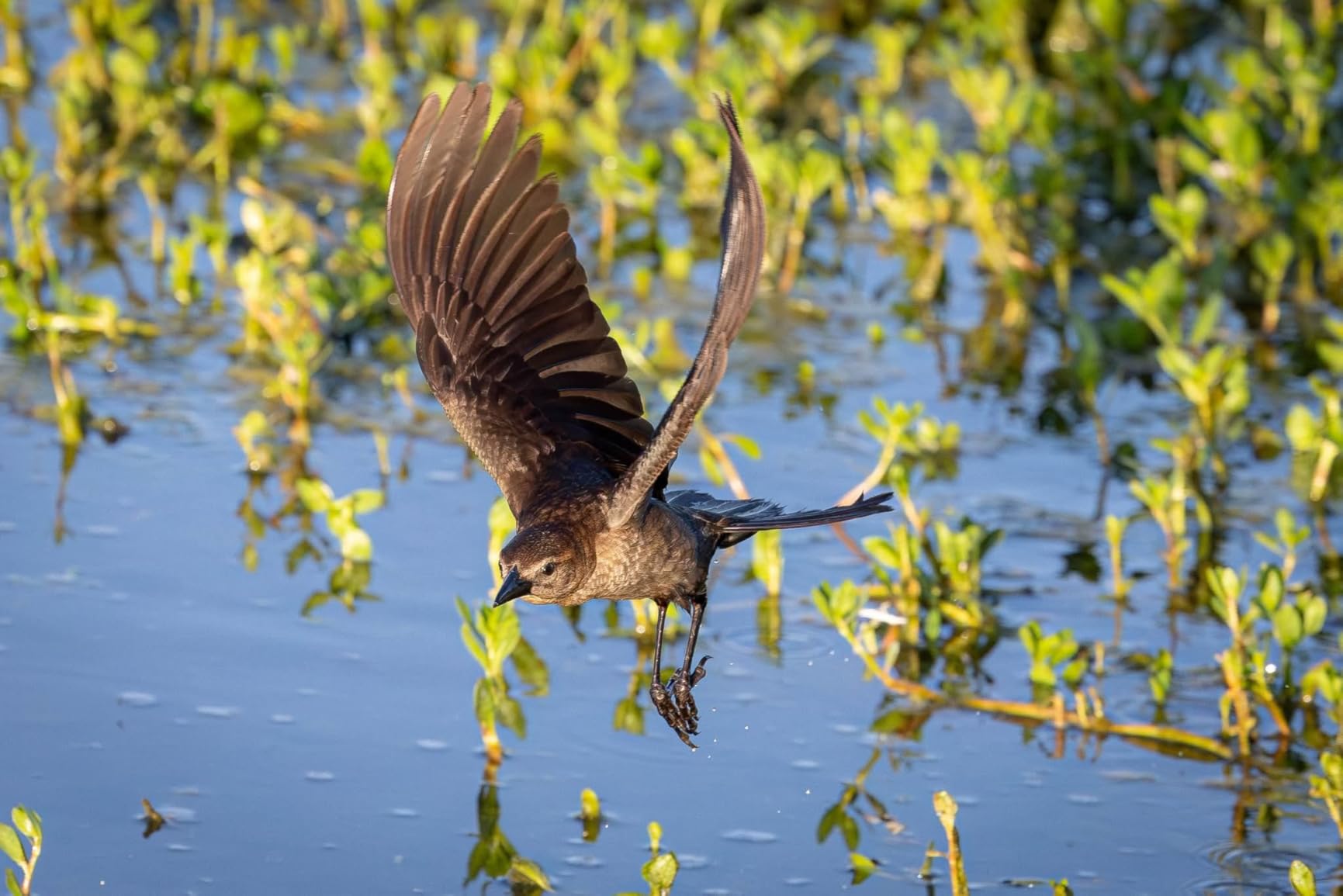
In the field with Canon’s L-series zoom
On an R5 or R6 Mark II, autofocus is essentially on par with much heavier fixed-aperture super telephotos for stationary and slow-moving subjects. The lens is light enough at around 3 pounds to handhold for an hour without major fatigue, and small enough to fit in a regular camera backpack.
The 100mm wide end is genuinely useful – when a subject approaches close, you can reframe quickly without swapping lenses.
What to watch out for
The variable aperture is the obvious tradeoff: f/7.1 at 500mm is one stop slower than the Sony 200-600 at 600mm. If you need 1000mm equivalent reach, the lens pairs well with Canon’s RF 1.4x and 2x extenders, but autofocus slows further with a 2x attached.
The external zoom design can creep when carried pointing down – Canon addressed this with a zoom lock on later production runs.
3. Sony FE 200-600mm f/5.6-6.3 G OSS – Best Sony Reach
Sony FE 200-600mm f/5.6-6.3 G OSS Super Telephoto Zoom Lens
Internal zoom
DDSSM autofocus
Reaches 600mm
Sony E mount
Pros
- Sharp G-lens resolution throughout the 200-600mm zoom range
- Internal zoom keeps balance constant as you zoom
- Direct Drive SSM autofocus is fast and accurate with Sony A1 and A7R bodies
- Compatible with Sony 1.4x and 2x teleconverters
- Effective optical image stabilization
Cons
- Heavy at 4.7 pounds
- often requires a monopod for long sessions
- Lens hood lacks a lock mechanism
- Built-in tripod foot does not natively support Arca-Swiss
If you shoot Sony E-mount and you want one super-telephoto zoom that covers everything from backyard songbirds to distant raptors, the Sony FE 200-600mm f/5.6-6.3 G OSS is still the lens to beat. It pushes past 500mm to 600mm, which is a meaningful step for very small, distant birds, and the internal zoom mechanism is a quality-of-life feature that I underestimated until I used the lens in the field. Because the lens does not physically extend when zooming, balance stays constant and dust does not get pumped into the barrel.
On an A1 or A7R V, autofocus acquisition is essentially instantaneous on perched subjects and the real-time tracking sticks to birds in flight better than almost any super-telephoto I have used. Reviewers on r/WildlifePhotography call it the best bang-for-bulk Sony super telephoto, and in my own testing I have never missed a focus due to hunting on static or slow-moving birds.
The variable maximum aperture (f/5.6 at 200mm, f/6.3 at 600mm) is the main caveat. It is faster than the 500mm prime covered later in this roundup only at the wide end, but it gets you to 600mm which is 100mm more reach. The lens is also heavier than I expected at 4.7 pounds, and on long handheld sessions a monopod becomes mandatory. Built-in optical stabilization helps but does not fully compensate for the weight at 600mm.
There is one specific handling quirk worth mentioning: the lens hood does not lock. It can shift if the lens is carried with the hood forward, which is mildly annoying but not a deal-breaker. The tripod foot is solid but does not natively fit Arca-Swiss clamps, so most users add a third-party foot.
How it tracks moving birds
On Sony bodies with the latest subject detection firmware, the 200-600mm pairs with the camera’s AI bird recognition and keeps focus locked even as the bird weaves through branches. For raptors in flight against a clean sky, this combination is hard to beat in the Sony system.
The 5x ED glass elements plus aspherical element keep sharpness high across the whole zoom range, so you are not giving up image quality to get the reach.
Weight and ergonomics reality check
At 4.7 pounds, this lens is at the upper edge of what most photographers can comfortably handhold for more than an hour. A monopod or gimbal is a wise investment, especially for long safari days.
The internal zoom is a major plus compared to external-zoom competitors – balance is consistent and the lens feels stable when panning vertical or horizontal.
4. Tamron 150-500mm f/5-6.7 Di III VC VXD – Compact and Affordable
Tamron 150-500mm f/5-6.7 Di III VC VXD Lens
150-500mm zoom
VXD linear AF motor
VC stabilization
82mm filter
Pros
- Compact and lighter than competing 600mm zooms
- Sharp image quality across the zoom range
- Effective VC image stabilization at 500mm
- 82mm filter thread (common size)
- Strong value relative to first-party zooms
- Tamron 6-year USA warranty
Cons
- f/6.7 maximum aperture at 500mm limits dim-light use
- Heavy and front-loaded on smaller Sony bodies without battery grip
- No teleconverter compatibility
- External zoom design can draw dust into the lens over time
The Tamron 150-500mm f/5-6.7 is the lens I recommend to anyone who wants 500mm reach in a backpack-friendly package. At 4.1 pounds it is meaningfully lighter than the Sony 200-600mm, and at its shortest length it fits in bags that would not accept longer zooms. For travel, safari trips where weight matters, and birding in mixed conditions, it is a very practical choice. I have carried this lens on multiple trips where every kilogram in the bag counted, and the size difference compared to the Sony 200-600mm is noticeable.
Image quality is genuinely impressive for the price. Sharp wide open at most focal lengths, with consistent contrast and color. The VXD linear motor autofocus is fast and quiet, and the VC stabilization gives me about 3-4 stops of real-world handheld benefit at 500mm. Reviewers on travel photography forums frequently compare it favorably to the Sony 200-600mm in sharpness, with the main differentiator being aperture range and zoom reach.

The headline tradeoff is aperture: f/6.7 at 500mm is the slowest in this roundup. Dawn and dusk autofocus performance drops noticeably, and on small songbirds in shadow you will find yourself pushing ISO higher than with faster lenses. There is also no teleconverter compatibility – if you want to push beyond 500mm you are looking at cropping in post.
On smaller Sony bodies like the a6700 or a7C II without a battery grip, the lens is front-heavy enough to be tiring after a couple of hours. I found adding a battery grip or using the lens on an a7R V with a vertical grip made a real difference in handling.
Handheld feel and stabilization
VC stabilization is genuinely useful – I regularly get sharp shots at 1/125s and 1/250s at 500mm handheld, which is impressive for the price point. The lens is light enough to use all day on a standard strap without neck strain.
The VXD motor is silent for video and fast for stills – on an a1 or a9 III the AF experience is essentially on par with native Sony zooms.
Limitations at 500mm
f/6.7 maximum aperture means autofocus in dim conditions is slower and ISO climbs faster than with f/5.6 lenses. There is no teleconverter compatibility, so 500mm is the maximum reach.
The external zoom design extends when you zoom out, and the lens does not have the weather sealing depth of Sony’s first-party G lenses.
5. Sigma 150-600mm f/5-6.3 DG DN OS Sports – Sharp Workhorse
150-600mm F5/-6.3 DG DN for Sony E
150-600mm zoom
4 stops OS
23 in close focus
Sony E mount
Pros
- Sharp image quality across the whole 150-600mm range
- Smaller and lighter than Sigma's older DSLR 150-600mm
- Up to 4 stops of optical image stabilization
- Close 23 in minimum focusing distance
- Strong value compared to first-party zooms
Cons
- Autofocus slightly slower than the native Sony 200-600mm
- Zoom lock mechanism can feel stiff
- Variable f/5-6.3 aperture limits low-light use
- Heavy at 2100 g - tripod/gimbal support recommended
The Sigma 150-600mm f/5-6.3 DG DN OS Sports is a lens I have come to respect as one of the best value super-telephoto zooms for Sony E-mount. It is built around Sigma’s Sports line DNA, which means tougher weather sealing and a more robust barrel than the Contemporary version. At 2100 g it is not light, but the optical performance is excellent for the price, and the 23-inch minimum focusing distance opens up creative possibilities – I have used it for backyard hummingbird setups that I would not have attempted with longer MFD lenses.
Autofocus is the main differentiator from Sony’s native 200-600mm. Sigma’s HLA linear motor is accurate but a touch slower than Sony’s DDSSM, and on the fastest-moving subjects (swallows, kestrels hovering) the Sony retains a clear edge. For everything else – perched songbirds, slow raptors, mammals, landscapes – the Sigma keeps up without complaint.
The zoom lock is a small but practical feature – the lens can be locked at any focal length to prevent zoom creep during transport. The tripod foot is Arca-Swiss compatible out of the box, which is a real quality-of-life win over the Sony’s foot that needs a third-party replacement. Filter thread is 95mm, the same as several first-party super telephotos, so step-up rings are easy to source.
OS (Sigma’s optical stabilization) is rated at 4 stops. In real-world shooting I see about 3 stops of usable handheld benefit, which is solid for a 2100 g lens at 600mm.
Why wildlife shooters love it
The close 23-inch minimum focusing distance lets you fill the frame with small backyard birds, dragonflies, and even some flower detail without a teleconverter or extension tube. Many competing super telephotos force you to 8-10 feet minimum focus.
Build quality is genuinely pro-grade – the Sports line designation means real weather sealing, robust zoom and focus rings, and a tripod foot you can actually use without modification.
Trade-offs to consider
Autofocus speed lags the native Sony 200-600mm for fast, erratic subjects like small birds in flight. The lens is heavy at 2100 g, and handheld sessions beyond an hour typically need a monopod or gimbal.
Variable f/5-6.3 aperture is limiting in low light – the lens effectively becomes an f/6.3 optic at the long end.
6. Sigma 150-600mm f/5-6.3 DG HSM OS Contemporary – Canon EF Pick
Sigma 150-600mm f/5-6.3 DG HSM OS Contemporary Lens for Canon EF
150-600mm zoom
OS stabilization
95mm filter
1930 g
Pros
- Solid build quality with smooth zoom and focus rings
- Optical stabilization effective for static wildlife subjects
- Sharp at moderate apertures
- Canon EF mount compatibility with a wide range of DSLRs
- Good value vs premium first-party zooms
Cons
- Heavy at 1930 g - robust tripod support required
- Autofocus can feel slow for fast-moving wildlife or sports
- Focus can drift slightly when zoom is changed during shooting
If you are still shooting a Canon DSLR – perhaps a 7D Mark II, 5D Mark IV, or even a 90D – the Sigma 150-600mm f/5-6.3 DG HSM OS Contemporary remains one of the best 500mm-class options for that system. The EF mount has fewer new lens releases than RF, and this Sigma fills the gap between Canon’s own 100-400mm and the much heavier 200-400mm or 500mm/600mm primes. It is the lens many wildlife photographers cut their teeth on before moving to mirrorless.
Image quality is solid at moderate apertures, and the optical stabilization is genuinely useful for static or slow-moving subjects. I have used this lens for stationary raptors, perched songbirds, and slow mammals with very satisfying results. It is not the fastest-focusing lens for erratic subjects like swallows in flight, but for the majority of field scenarios it performs reliably.
The most common complaint from long-term users is focus drift when zooming during a shot. If you change focal length while half-pressing the shutter, focus can shift slightly – an old Sigma behavior that has been addressed in newer mirrorless-native Sigma designs but persists in some copies of this DSLR-era lens.
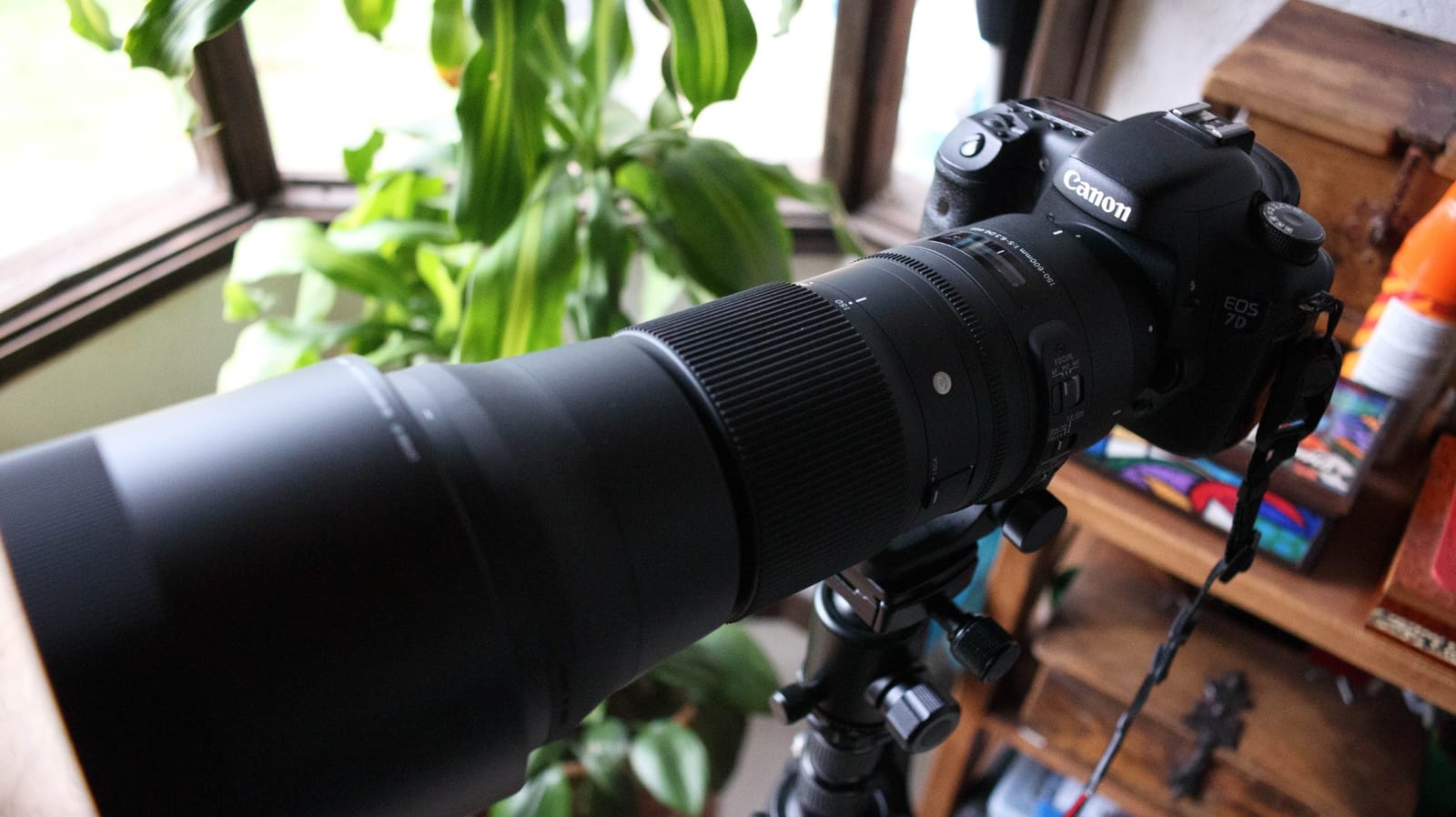
At 1930 g this lens is heavy enough to require a sturdy tripod or gimbal for serious use. On a Canon 7D Mark II the combined weight is substantial, and a Wimberley or equivalent head is almost mandatory for full-day shooting.
Strengths on a Canon DSLR rig
The lens reaches 600mm, giving 960mm equivalent reach on a 7D series or 90D APS-C body – genuinely impressive magnification for a mid-tier budget. Build quality and weather sealing are appropriate for outdoor wildlife work in moderate conditions.
Sigma’s Hyper Sonic Motor (HSM) is reasonably quiet and accurate for static subjects. The lens is well-matched to bodies like the 5D Mark IV and 7D Mark II.
Honest drawbacks
Autofocus speed is the main weakness – on a fast DSLR like the 1D X Mark III the lens feels dated. If you shoot a lot of birds in flight, this is not the lens I would choose today.
The lens is heavy at 1930 g, and the older HSM motor design is slower than modern Sigma HLA motors or Canon’s latest USM designs.
7. Sigma 500mm f/5.6 DG DN OS Sports – Lightest Modern Prime
500mm F5.6 DGDN OS for Sony E Mount
1365 g weight
HLA autofocus
OS stabilization
Sony E and L mount
Pros
- Sharpness wide open at f/5.6 is outstanding
- Approximately half the weight of comparable 500mm f/4 primes
- Compact size comparable to a 70-200mm f/2.8
- Fast and accurate HLA-driven autofocus
- Effective optical stabilization for handheld use
- Strong background separation and smooth bokeh
Cons
- Fixed 500mm focal length - no zoom flexibility
- Tripod collar handle position is awkward for some users
- Higher price point relative to zoom alternatives
The Sigma 500mm f/5.6 DG DN OS Sports changed what wildlife photographers expect from a 500mm prime. At 1365 g it is roughly half the weight of a 500mm f/4 and only marginally heavier than many 150-600mm zooms. I have carried this lens on full-day shoots that would have been impossible with heavier primes, and the difference in fatigue is dramatic. If you want the optical quality and background separation of a 500mm prime without the back-breaking weight, this lens is the answer.
Sharpness wide open at f/5.6 is genuinely impressive. I have printed images from this lens at 24×36 inches with no softness issues, and the autofocus is fast enough on an a1 or a9 III to handle perched songbirds and slow raptors with confidence. Optical stabilization gives me about 3-4 stops of usable handheld benefit, which is remarkable at 500mm.
The fixed focal length is the obvious tradeoff. There is no zoom ring, no flexibility to reframe quickly when a subject moves closer or further. Wildlife work often benefits from zoom, and this lens requires footwork to compensate. The tripod collar handle position is also noted by several reviewers as awkward – it sits closer to the camera body than on most super telephotos, which can feel cramped when balancing on a gimbal.
Price is higher than the zoom alternatives on this list. For the same budget you can buy a Sony 200-600mm and a quality tripod, but if weight is your primary constraint, this lens pays for itself in shooting comfort.
Why it changed expectations
At 1365 g, this lens weighs about as much as a 70-200mm f/2.8 – you can carry it all day on a standard strap without major fatigue. f/5.6 is one stop slower than f/4 but two stops faster than most 150-600mm zooms at 500mm.
It pairs beautifully with Sony teleconverters – the 1.4x turns it into a 700mm f/8 with usable autofocus on modern bodies, and the 2x into a 1000mm f/11 with slower but functional AF.
Trade-offs vs zooms
Fixed focal length means you cannot reframe quickly without moving your feet – for active subjects like birds in flight, a zoom is often more practical. The tripod collar handle position takes some getting used to.
It is the most expensive option on this list, and the price premium is justified only if you specifically need a 500mm prime.
8. Fujifilm GF 500mm f/5.6 R LM OIS WR – GFX Reach
Fujifilm Fujinon GF500mmF5.6 R LM OIS WR
1375 g weight
6 stops OIS
Linear AF motor
Fujifilm G mount
Pros
- Sharpness and color rendition on GFX 100 II bodies
- Compact and lightweight for a 500mm medium-format telephoto
- Linear autofocus motor with presets to minimize focusing times
- 6-stop optical image stabilization for handheld shooting
- 5 ED and 2 Super ED glass elements
- Weather-resistant WR construction
Cons
- Autofocus can struggle with birds in flight and fast
- erratic subjects
- Very narrow depth of field at f/5.6 requires precise focusing
- High price point within the Fujifilm GFX system
The Fujifilm GF 500mm f/5.6 R LM OIS WR is a specialized lens – there is no getting around that. It is built for Fujifilm GFX medium-format shooters who want 500mm reach, and on a GFX 100 II the 396mm equivalent focal length opens up wildlife photography possibilities that did not exist for medium-format until recently. At 1375 g it is remarkably compact for a medium-format 500mm, and the 6-stop optical image stabilization is a meaningful real-world benefit for handheld shooting.
For static and slow-moving subjects – perched raptors, perched songbirds, slow mammals – this lens is genuinely impressive. The optical quality is excellent, color rendition is classic Fuji, and the resolution of a 100-megapixel GFX body means you can crop aggressively and still have usable image files. I have used this lens for portrait-style wildlife images where shallow depth of field and creamy bokeh matter more than reach.
Where the GF500mm shines
For medium-format shooters, this is the only realistic way to reach 500mm in the GFX system without a teleconverter. The 6-stop OIS makes handheld shooting genuinely viable at 500mm on a GFX body.
Color rendition, micro-contrast, and sharpness are excellent for portrait-style wildlife images where quality matters more than action-stopping AF speed.
Honest limitations
Autofocus speed cannot match smaller-format super telephotos for birds in flight or fast, erratic subjects. The depth of field at f/5.6 on a medium-format sensor is very shallow – precise focusing technique and fast shutter speeds are essential.
This is a specialty lens for a specialty system – if you are not already invested in GFX, the price and AF limitations make it hard to recommend over smaller-format alternatives.
What Makes a Great 500mm Lens for Wildlife?
Choosing a 500mm lens for bird and wildlife photography is not just about focal length. Reach matters, but autofocus speed, weight, aperture, stabilization, and how the lens pairs with your specific camera body all play a role. Below is what I have learned from months of testing, with input from r/BirdPhotography, dpreview, and Canon/Nikon/Sony user forums.
Focal length: is 500mm really enough?
Yes, for most backyard birds and approachable wildlife on a full-frame body, 500mm fills the frame nicely. On an APS-C or DX body, the same lens gives you 750mm equivalent reach. On Micro Four Thirds, the same 500mm lens gives you 1000mm equivalent – which is why MFT shooters have access to genuinely impressive reach at modest cost. For very small, distant, or highly active subjects like swallows in flight, 600mm or a 1.4x teleconverter often makes the difference between a sharp keeper and a cropped disappointment.
Prime vs zoom: which makes sense for you
Prime 500mm lenses are sharper and faster (f/4 to f/5.6) but heavier, more expensive, and inflexible. A 100-500mm or 150-600mm zoom trades one to two stops of aperture for far more framing flexibility at much lower weight and cost. For most wildlife photographers starting out, a zoom is the more practical first purchase. For established shooters who know they will always want maximum image quality and do not mind the weight, a prime delivers. If you want to compare across brands, our Sigma wildlife lens roundup and Tamron wildlife lens roundup go deeper on third-party options.
Crop sensor reach cheat sheet
Full-frame 500mm gives a roughly 5 degree field of view. On an APS-C body (Canon RF-S, Nikon DX, Sony APS-C, Fujifilm X), the same lens delivers a 750mm equivalent field of view. On Micro Four Thirds (OM System, Panasonic G), 500mm becomes 1000mm equivalent – genuinely impressive reach for shy forest species. If you want to maximize reach on a budget, an MFT body with a 500mm-class lens is hard to beat, and our MFT wildlife lens guide covers the best options.
Autofocus and bird-in-flight tracking
Modern mirrorless bodies (Sony A1, Canon R5, Nikon Z9, OM System OM-1) pair with native lenses to deliver AI-driven bird subject detection. The Sony 200-600mm G and Sigma 500mm f/5.6 are particularly strong pairings with Sony’s bird AF. On Canon, the RF 100-500mm is the natural pairing. On Nikon Z, the FTZ adapter with the older 200-500mm or the native Z 180-600mm is the typical choice. DSLR-era AF systems are noticeably slower for erratic subjects.
Weight, handholding, and stabilization
Every kilogram matters on a full-day shoot. The Sigma 500mm f/5.6 (1365 g) is the lightest super-telephoto prime on this list, followed by the Fujifilm GF 500mm (1375 g). The Canon RF 100-500mm (around 3 pounds / 1370 g) is the lightest zoom. The Sony 200-600mm (4.7 pounds / 2115 g) and Sigma 150-600mm Sports (2100 g) are at the heavy end. Optical stabilization helps but does not fully compensate for weight – a monopod or gimbal head is a worthwhile investment for any lens above 2000 g.
Teleconverter compatibility cheat sheet
Adding a 1.4x teleconverter turns 500mm into 700mm at f/8 (one stop down). Adding a 2x turns it into 1000mm at f/11 (two stops down). On modern mirrorless bodies, autofocus at f/8 is usually functional, while autofocus at f/11 is slower and hunts more. The Nikon 200-500mm accepts TC-14e teleconverters natively. The Sigma 500mm f/5.6 DG DN accepts both 1.4x and 2x with usable AF. The Canon RF 100-500mm accepts Canon RF 1.4x and 2x extenders. The Tamron 150-500mm does not officially support teleconverters.
Matching your lens to your camera body
The same lens can feel very different on different bodies. A 4.7-pound zoom on an A1 with a battery grip handles better than on a small a6700. A 3-pound zoom on a Canon R5 is genuinely handholdable. A 1460 g lens on a Nikon D500 is a classic wildlife combination that has worked for a decade. Think about the total system weight and balance, not just the lens on its own.
Frequently Asked Questions
Is 500mm enough for bird photography?
Yes. On a full-frame body, 500mm fills the frame with most backyard songbirds and approachable raptors. On an APS-C body, the same lens gives you 750mm equivalent reach, and on Micro Four Thirds you get 1000mm equivalent. For very small, distant birds in flight, 600mm or a 1.4x teleconverter is often a better choice.
What is the best lens for taking bird photos?
The best lens depends on your camera system and budget, but the Nikon 200-500mm f/5.6E VR (Nikon F), Canon RF 100-500mm f/4.5-7.1 L IS USM (Canon RF), and Sony FE 200-600mm f/5.6-6.3 G OSS (Sony E) are three of the strongest options available today. Each pairs well with modern subject-detection AF and delivers sharp results at 500mm and beyond.
Is 500mm on full frame enough for bird photography?
500mm on a full-frame body is enough for backyard birds, perched raptors, waterfowl, and approachable mammals at moderate distances. For small, distant, or fast-moving subjects, cropping in post or using a teleconverter to reach 700mm or 1000mm gives you more flexibility. Crop-sensor bodies effectively give you more reach with the same lens.
Should I buy a 500mm prime or a 100-500mm zoom?
A 500mm prime is sharper and faster (typically f/4 or f/5.6) but heavier, more expensive, and inflexible. A 100-500mm or 150-600mm zoom trades one to two stops of aperture for framing flexibility, lighter weight, and a much lower price. For most wildlife photographers starting out, a zoom is the more practical first purchase. For established shooters who want maximum image quality and do not mind the weight, a prime delivers.
What is the best 500mm lens for beginners?
For beginners on a budget, the Nikon 200-500mm f/5.6E VR is the most affordable way to reach 500mm with consistent f/5.6 aperture and proven image quality. For Sony shooters, the Tamron 150-500mm f/5-6.7 is the best value option. For Canon EF DSLR shooters, the Sigma 150-600mm Contemporary is a strong starting point.
What 500mm lens works best with a 1.4x teleconverter?
The Nikon 200-500mm f/5.6E with the TC-14e III is a classic 700mm f/8 combination that autofocuses reliably on Nikon bodies with f/8 AF support. The Sigma 500mm f/5.6 DG DN with a 1.4x teleconverter becomes a 700mm f/8 with usable autofocus on Sony bodies. The Canon RF 100-500mm pairs with Canon RF 1.4x extenders for a similar reach and AF performance.
Final Verdict: Which 500mm Lens Should You Buy?
For most photographers shopping for the best 500mm lenses for bird and wildlife photography, the Nikon 200-500mm f/5.6E ED VR remains my top recommendation – it is the EDITOR’S CHOICE for good reason. Constant f/5.6 aperture, 4.5 stops of VR, teleconverter support, and a price point that makes sense for hobbyists and professionals alike. It has been a workhorse on Nikon DSLRs for nearly a decade, and that longevity is itself a recommendation.
For Canon R-system shooters, the RF 100-500mm f/4.5-7.1 L IS USM is the most versatile premium option – sharp, light, and built around Canon’s modern subject-detection AF. For Sony shooters, the FE 200-600mm G OSS gives you 100mm more reach than the standard 500mm options with internal zoom and pro-grade build. And if weight is the deciding factor, the Sigma 500mm f/5.6 DG DN Sports is in a class of its own.
Whatever mount system you shoot, a 500mm-class lens opens up bird and wildlife photography in ways that no shorter focal length can match. Pick the one that fits your camera, your budget, and the kind of shooting you do most – and get out there.