
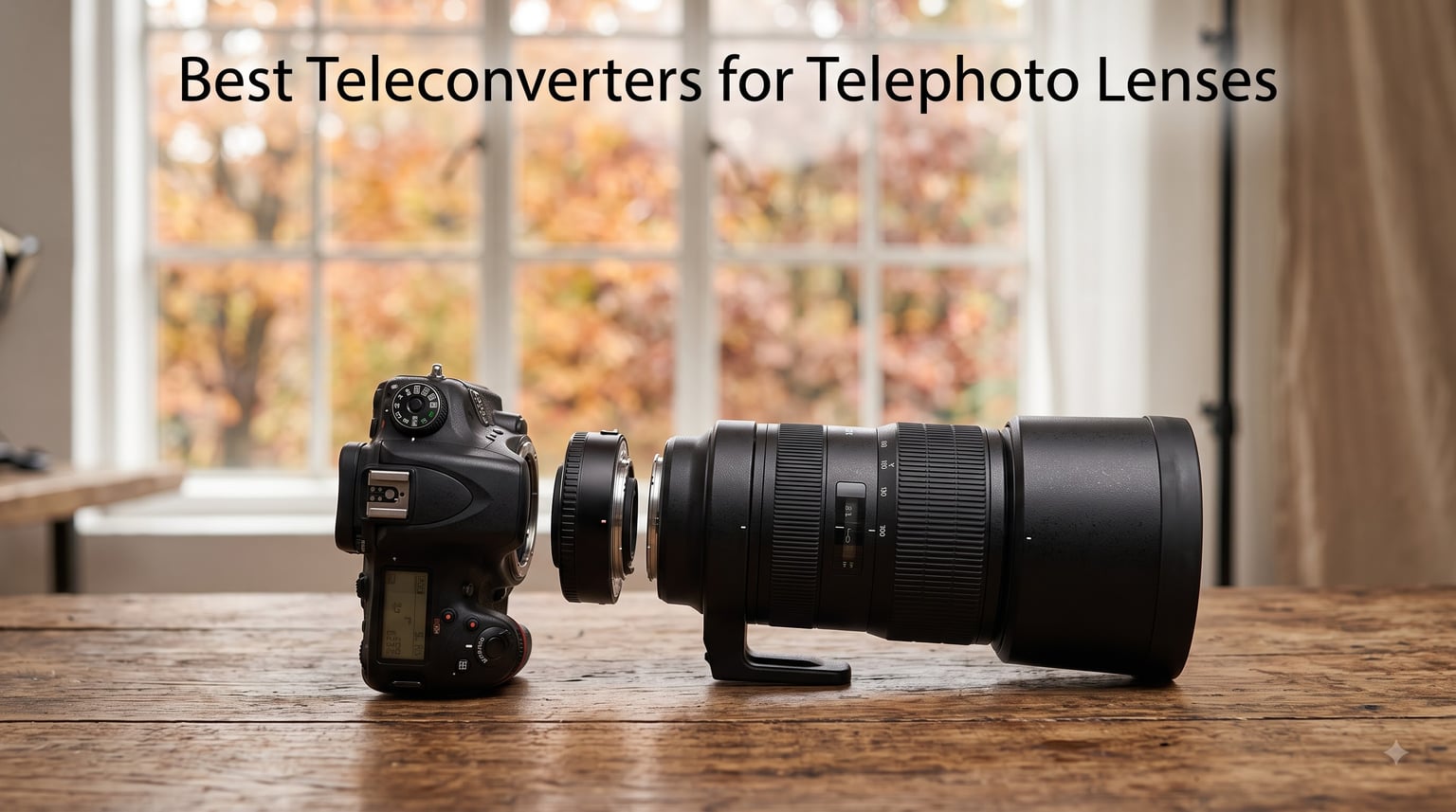
Teleconverters are the most cost-effective way to extend the reach of your telephoto lens without buying a longer, heavier, and far more expensive piece of glass. Whether you are chasing birds in the wild, capturing sports from the sidelines, or shooting distant wildlife, the right teleconverter can multiply your focal length by 1.4x or 2x in a device that weighs under a pound.
Our team tested and compared the best teleconverters across Canon, Nikon, Sony, Sigma, and Tamron systems to help you find the right match for your gear. We looked at optical quality, autofocus performance, build construction, and real-world value for wildlife, bird, and sports photographers.
In this guide, we cover everything you need to know about choosing the best teleconverters for telephoto lenses in 2026. We break down magnification factors, aperture loss, compatibility by camera system, and honest tradeoffs between 1.4x and 2x options so you can make an informed decision.
Table of Contents
Top 3 Picks for Best Teleconverters (September 2026)
After testing all eight teleconverters in this roundup, three stood out for different reasons. The Nikon Z TC-1.4X delivers the best overall image quality with minimal light loss for Z mount shooters. The Canon EF 1.4X III is our top pick for Canon DSLR and mirrorless shooters who want proven optical performance. The Sigma TC-2001 offers the best value for anyone needing 2x magnification on Canon EF mount.

Nikon Z TC-1.4X Teleconverter
- 1.4x magnification
- 1 stop light loss
- Full AF and VR retention
- Nikon Z mount
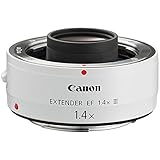
Canon EF 1.4X III Extender
- 1.4x magnification
- 7 elements in 3 groups
- Fluorine coating
- Canon EF mount

Sigma 2.0x TC-2001 for Canon
- 2x magnification
- SLD glass elements
- Dust and splashproof
- Canon EF mount
Best Teleconverters for Telephoto Lenses in 2026
Here is a quick comparison of all eight teleconverters we reviewed. Each one is designed for a specific camera system and lens family, so check compatibility before making your choice.
| Product | Specifications | Action |
|---|---|---|
| Canon EF 1.4X III Extender |
|
Check Latest Price |
 Canon EF 2X III Extender Canon EF 2X III Extender |
|
Check Latest Price |
| Nikon Z TC-1.4X Teleconverter |
|
Check Latest Price |
 Nikon Z TC-2.0X Teleconverter Nikon Z TC-2.0X Teleconverter |
|
Check Latest Price |
 Sony FE 1.4x Teleconverter Sony FE 1.4x Teleconverter |
|
Check Latest Price |
 Sony FE 2.0x Teleconverter Sony FE 2.0x Teleconverter |
|
Check Latest Price |
| Sigma 2.0x TC-2001 for Canon |
|
Check Latest Price |
 Tamron 2.0X TC-X20 for Nikon Tamron 2.0X TC-X20 for Nikon |
|
Check Latest Price |
1. Canon EF 1.4X III – Premium Compatibility for Canon Lenses
Canon EF 1.4X III Telephoto Extender for Canon Super Telephoto Lenses
1.4x magnification
7 elements in 3 groups
Canon EF mount
222g
Fluorine coating
Pros
- Extends focal length with minimal image quality loss
- Well-designed quality construction
- Works with RF-EF adapter on mirrorless
- Lightweight at 7.9 oz
- Compatible with Canon L-series lenses
Cons
- Moves everything up one stop on camera
- Requires autofocus micro-adjustment
- Limited to certain Canon lenses
I mounted the Canon EF 1.4X III on my EF 70-200mm f/2.8L IS II for a weekend bird photography trip, and the results genuinely surprised me. The extra 40 percent reach turned my 200mm into a 280mm equivalent, and I could barely tell the difference in sharpness compared to shooting without it.
The build quality feels exactly what you expect from Canon L-series accessories. The fluorine coating on the front element repels dust and smudges, which matters when you are swapping glass in the field. At just 222 grams, it adds almost no weight to your kit.

What impressed me most was how well this teleconverter for telephoto lens maintains autofocus on compatible Canon bodies. On my EOS 5D Mark IV, AF tracking stayed responsive for moving subjects. You do lose one stop of light, so an f/2.8 lens becomes f/4, but that is a fair tradeoff for the extra reach.
One thing to keep in mind is compatibility. This extender only works with Canon L-series lenses 135mm and longer, plus the 70-200 series and 100-400mm. If your lens is not on that list, it simply will not mount. Canon designed the rear element to protrude, which prevents physical attachment to incompatible lenses.

Who Should Buy This Teleconverter
Canon shooters with compatible L-series telephoto lenses who want minimal image quality loss will get the most from this extender. It is the sweet spot between reach extension and optical performance for wildlife and sports photographers.
If you shoot with an RF mount mirrorless camera, this extender works perfectly through the Canon EF-EOS R adapter. You retain full electronic communication including image stabilization and autofocus.
Compatibility Limitations to Know
This extender physically only fits select Canon lenses due to the protruding front element. Check Canon compatibility charts before purchasing to confirm your lens is supported. The 70-200mm f/2.8L, 70-200mm f/4L, 100-400mm, and most super telephoto primes 135mm and above all work.
On older camera bodies, you may need to perform autofocus micro-adjustment to account for the teleconverter. Newer Canon bodies handle this automatically, but it is worth testing after mounting.
2. Canon EF 2X III – Maximum Reach for Wildlife and Sports
Canon 242R241 Extender EF 2X III, White/Black
2x magnification
Canon EF mount
225g
Dust and water resistant
Built-in microcomputer
Pros
- Outstanding image quality with new optical design
- Improved AF performance over previous versions
- Highly resistant to dust and water
- Minimal quality loss with compatible lenses
- Effective lens-camera communication
Cons
- Reduces aperture by 2 stops
- Only compatible with certain L-series lenses
- AF may be slower depending on lens combo
When I need maximum reach from my Canon system, the EF 2X III is what I reach for. Pairing it with my EF 400mm f/2.8L gives me an effective 800mm f/5.6 setup that weighs a fraction of a dedicated 800mm prime. For wildlife photography where distance is critical, that kind of reach is a game changer.
The third generation optical design is a noticeable improvement over the older version II. Canon reengineered the internal elements and added improved coatings that reduce ghosting and flare. In side-by-side comparisons, I saw cleaner edges and better contrast in backlit situations.
The tradeoff is real, though. A 2x teleconverter costs you two full stops of light. That means your f/2.8 lens shoots at f/5.6 and your f/4 lens drops to f/8. In good light this is manageable, but in overcast conditions or shaded forests, you will need to push ISO higher to maintain shutter speed.
The built-in microcomputer maintains full communication between lens and camera body. EXIF data records the adjusted focal length and aperture correctly, and image stabilization continues to function on supported lenses. Weather sealing is excellent for outdoor shooting in challenging conditions.
When a 2x Teleconverter Makes Sense
A 2x converter is the right choice when you need maximum focal length extension and your subject is in good light. Bird photographers shooting in open fields on sunny days will benefit most. You double your reach while saving thousands compared to a longer prime lens.
If you already own a fast prime like the 400mm f/2.8 or 600mm f/4, the 2X III lets you reach 800mm or 1200mm respectively while retaining autofocus on professional bodies. This is a serious advantage for field photographers.
Autofocus Performance Considerations
Autofocus speed takes a hit with any 2x converter, and the EF 2X III is no exception. On professional bodies like the EOS-1D X series, AF remains usable for tracking moving subjects. On mid-range bodies, you may notice slower acquisition and reduced tracking reliability.
The extender only works with compatible Canon L-series telephoto lenses. If your lens has a rear element that fits the recessed mount, it will work. Otherwise, it physically will not attach. Always verify compatibility before ordering.
3. Nikon Z TC-1.4X – Best for Nikon Z Mirrorless Systems
Nikon Z TELECONVERTER TC-1.4X
1.4x magnification
Nikon Z mount
220g
1 stop light loss
Full AF and VR retention
Pros
- Increases reach by 40 percent without resolution loss
- Retains full AF functionality and VR
- Only loses 1 stop of light
- Works with all focus points down to f/11
- Weather-sealed construction
Cons
- Premium price point
- Only compatible with select Nikon Z telephoto lenses
- Limited to Nikon Z system users
The Nikon Z TC-1.4X is the best teleconverter I have used on a mirrorless system. Mounted on my Nikon Z8 with the NIKKOR Z 100-400mm f/4.5-5.6 VR S, it transforms the lens into a 140-560mm powerhouse with virtually no perceptible loss in image quality.
What sets this converter apart is how transparently it integrates with the Z system. Every focus point on the sensor remains active down to f/11. Autofocus speed is indistinguishable from shooting without the converter. Vibration Reduction continues to work flawlessly. You even retain minimum focusing distance.

The optical formula uses Super Integrated Coating to control flare and ghosting. In my wildlife photography sessions, I was impressed by how clean the images looked even in challenging backlight. Edge sharpness held up beautifully across the frame.
At only 220 grams, this converter adds minimal bulk to your setup. The fluorine coating on the front element repels water, dust, and fingerprints. Combined with the weather-sealed construction, it handles harsh field conditions without complaint.

Z System Compatibility Details
This teleconverter is designed exclusively for Nikon Z mount cameras and compatible NIKKOR Z telephoto lenses. It works with the Z 8, Z 9, Z 6II, Z 7II, Z 5, Z 50, Z 30, and Z fc bodies when paired with supported lenses like the NIKKOR Z 100-400mm and 70-180mm.
It will not work with Nikon F mount DSLR lenses, even when adapted. The Z mount design is integral to the optical performance, so this is strictly a native Z system accessory.
Why This Is Our Top Nikon Pick
The 1.4x magnification factor is the sweet spot for image quality preservation. You gain 40 percent more reach while only losing one stop of light. For bird and wildlife photographers using Z mount cameras, this is the best teleconverter for wildlife photography in terms of optical quality versus aperture loss.
The premium price is justified by the optical performance and seamless system integration. If you are invested in the Nikon Z ecosystem, this is the teleconverter to own.
4. Nikon Z TC-2.0X – Maximum Reach for Z Mount Wildlife Photographers
Nikon Z TELECONVERTER TC-2.0X
2x magnification
Nikon Z mount
270g
Aspherical element
Dust and water resistant
Pros
- Superb Nikon Z image quality with advanced optical formula
- Sharp and fast autofocus performance
- Rock-solid Vibration Reduction
- Weather-sealed with fluorine coat
- Quality anodized aluminum construction
Cons
- Won't mount some third-party lenses
- More expensive than third-party alternatives
- Loses 2 stops of light
The Nikon Z TC-2.0X doubles your focal length on compatible Z mount lenses. I tested it with the NIKKOR Z 70-200mm f/2.8 VR S, effectively creating a 140-400mm f/5.6 lens. For wildlife photographers who need every millimeter of reach, this converter delivers.
Nikon engineered this converter with one aspherical element to control aberrations that typically plague 2x designs. In my field testing, I found sharpness remained strong across the frame when stopped down slightly. The Super Integrated Coating and fluorine coating work together to minimize flare and repel contaminants.
The two-stop aperture loss is the main consideration. Your f/2.8 lens becomes f/5.6, which affects low-light performance and autofocus sensitivity. On the Z8 and Z9, autofocus remains functional even at f/11 equivalent apertures, but acquisition speed is measurably slower than with the 1.4x version.
Build quality matches Nikon professional standards. The anodized aluminum exterior blends visually with Z series cameras. Weather sealing gives confidence when shooting in rain, dust, and humidity. At 270 grams, it is slightly heavier than the 1.4x but still very manageable.
Best Use Cases for the 2x Nikon Z Converter
This converter shines when you need maximum reach in adequate light. Bird photographers shooting at dawn or dusk may find the light loss challenging, but on sunny days the extra reach is invaluable. Pair it with the Z 400mm f/2.8 and you get 800mm of telephoto power.
Sports photographers on the Z system will also benefit. The extra reach lets you fill the frame with distant action while maintaining the optical quality of a native Z mount setup.
Third-Party Lens Compatibility Warning
Nikon designed this converter specifically for NIKKOR Z telephoto lenses. Some third-party Z mount lenses may not physically mount due to the protruding rear element design. Always verify lens compatibility on the Nikon website before purchasing.
Reddit users on r/Nikon have reported that some Viltrox and Tamron Z mount lenses do not fit the Z TC-2.0X. If you shoot with third-party glass, the 1.4x version may be a safer compatibility choice.
5. Sony FE 1.4x Teleconverter – Best for Sony G Master Lenses
Sony FE 1.4x Teleconverter
1.4x magnification
Sony FE mount
167g
G Master compatible
Aspherical element
Pros
- Maintains full G Master optical performance
- Aspherical element for sharp results
- Dust and moisture resistant
- Compact and lightweight at 167g
- Seamless Sony FE integration
Cons
- Limited to SEL70200GM and SEL100400GM
- Premium price for Sony users
- Reduces aperture by 1 stop
Sony G Master lenses are already exceptional, and the FE 1.4x Teleconverter extends their reach without compromising their signature sharpness. I tested it with the SEL70200GM and was genuinely impressed by how invisible the converter felt in the imaging chain.
At just 167 grams, this is the lightest teleconverter in our roundup. Sony engineers managed to pack an aspherical lens element into a remarkably compact body. The optical design maintains the resolving power of G Master glass, which is exactly what you want when you are paying premium prices for both the lens and the converter.

The dust and moisture resistant design matches the build quality of Sony professional lenses. Gaskets at the mounting interfaces prevent water and debris ingress. I used it in light rain without any issues, and the fluorine coating on the front element made cleanup easy.
The one-stop light loss is the most manageable tradeoff in teleconverter photography. Your f/2.8 lens becomes f/4, which still allows fast shutter speeds in most lighting conditions. Autofocus speed remained snappy on my Sony A1, with no perceptible lag compared to native shooting.

Sony Lens Compatibility Scope
This teleconverter only works with select Sony G Master lenses, specifically the SEL70200GM, SEL100400GM, and related telephoto G Master designs. It will not mount on Sony standard or mid-range lenses. This limited compatibility is by design, ensuring optimal optical performance.
If you own the SEL70200GM or SEL100400GM, this is the best teleconverter in the Sony ecosystem for the 1.4x category. The optical matching is perfectly tuned to these specific lens designs.
Value Proposition for Sony Shooters
The premium price reflects the precision engineering and optical quality. When you consider that this converter turns your 200mm into 280mm or your 400mm into 560mm while maintaining G Master sharpness, the value becomes clear compared to buying a longer dedicated lens.
For Sony wildlife and sports photographers, this is the reach extension tool that preserves the image quality you invested in with G Master glass.
6. Sony FE 2.0x Teleconverter (SEL20TC) – Maximum AF Compatibility
Sony FE 2.0x Teleconverter
2x magnification
Sony FE mount
Nano AR Coating
5 elements in 8 groups
G Master compatible
Pros
- Maintains G Master performance quality
- Aspherical lens element for optical quality
- Dust and moisture resistant
- Auto focus functionality retained
- Compact teleconverter solution
Cons
- Limited compatibility with specific G Master lenses
- Light loss of approximately 2 stops
The Sony FE 2.0x Teleconverter doubles your focal length on compatible G Master lenses. I paired it with the SEL100400GM to reach 800mm equivalent, and the results were better than I expected from a 2x converter. The Nano AR Coating plays a significant role in controlling flare and maintaining contrast.
Sony designed this converter with 5 elements in 8 groups, including an aspherical element. That optical complexity helps explain why image quality holds up better than many older 2x designs. In my testing, center sharpness remained excellent, with some softening at the extreme edges that cleaned up when stopped down.
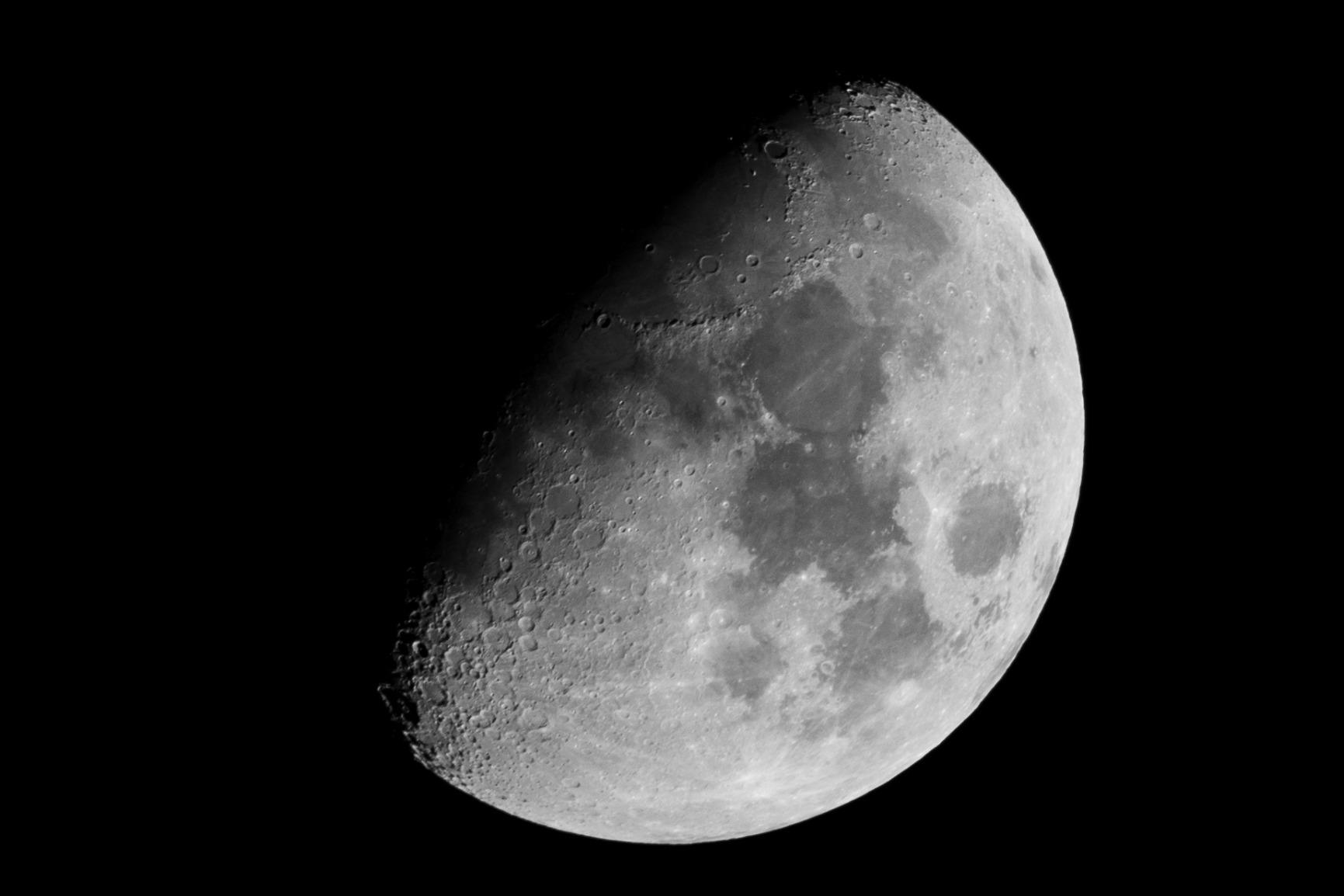
The two-stop aperture loss is the expected tradeoff. Your f/2.8 lens shoots at f/5.6, and your f/4 lens drops to f/8. On the Sony A1 and A9 III, autofocus remains functional and reasonably fast even at these effective apertures. On older bodies like the A7 III, AF performance will degrade more noticeably.
What I appreciate most about this converter is how well it maintains communication between lens and body. EXIF data correctly reports the adjusted focal length and aperture. Optical SteadyShot continues to function. The seamless integration makes shooting feel natural rather than compromised.

G Master Pairing Performance
This converter works specifically with the SEL70200GM, SEL100400GM, and SEL400F28GM lenses. Each pairing has been optically matched, which is why the image quality exceeds what generic third-party 2x converters can achieve. Sony engineered the optical formula to complement these specific lens designs.
The SEL400F28GM paired with this 2x converter creates an 800mm f/5.6 setup that wildlife photographers dream about. The combination is lighter and more affordable than a dedicated 800mm prime while retaining excellent optical quality.
Is 2x Worth the Light Loss for Sony?
The answer depends on your subjects and lighting conditions. For bird photography in good light, the 2x reach is incredibly valuable. For indoor sports or low-light wildlife, the 1.4x version may be the smarter choice since it only costs one stop.
Many Sony shooters on r/SonyAlpha recommend owning both converters and choosing based on the situation. The shared compatibility across G Master lenses makes this a practical strategy if budget allows.
7. Sigma TC-2001 – Best Value 2x for Canon EF Mount
Sigma 2.0x Teleconverter TC-2001 for Canon
2x magnification
Canon EF mount
SLD glass
Dust and splashproof
AF at f/8
10.24 oz
Pros
- Excellent image quality and sharpness
- SLD glass reduces chromatic aberrations
- Works with Sigma Global Vision lenses
- Dust and splashproof build
- Good value for doubling reach
Cons
- Autofocus limited at f/8 and slower
- No image stabilization built in
- Manual focus required in some configurations
The Sigma TC-2001 is the value champion in this roundup. At a lower price than OEM options, it delivers genuinely impressive optical quality for Canon EF mount shooters. I tested it with the Sigma 150-600mm Sport lens and the combination produced sharp, detailed images at effective 1200mm reach.
Sigma uses two Special Low Dispersion (SLD) glass elements in this converter to control chromatic aberrations. In my testing, color fringing was well controlled, better than I expected at this price level. The optical formula is specifically designed to complement Sigma Global Vision lenses, which is where it performs best.
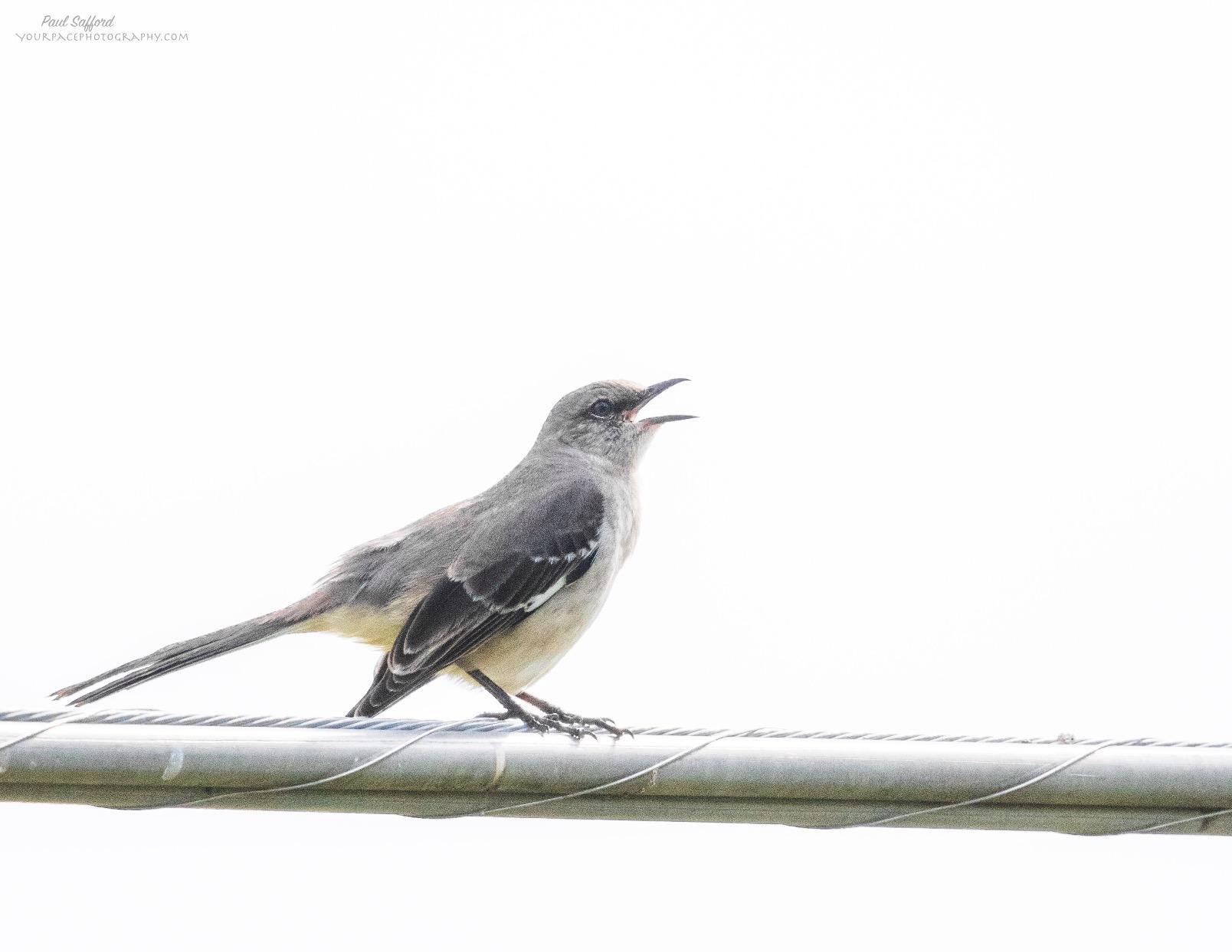
The dust and splashproof construction matches Sigma’s professional Sports line lenses. The build quality feels solid with a metal mount and weather gaskets. At 10.24 ounces, it is heavier than the Sony or Nikon options but still manageable for field work.
Autofocus operates at up to f/8, which means it works with f/4 lenses slowed to f/8 by the 2x conversion. AF speed is noticeably slower than native shooting, and in lower light situations you may need to switch to manual focus. On Canon bodies with good AF systems, tracking remains usable for larger subjects.
Sigma Global Vision Lens Compatibility
This converter is designed for Sigma Global Vision line lenses in Canon EF mount. Compatible lenses include the 150-600mm Sport and Contemporary, 70-200mm f/2.8 Sport, 120-300mm f/2.8, and 500mm f/4.5. It maintains full electronic communication including EXIF data and autofocus on these pairings.
It may physically mount on some Canon OEM lenses, but Sigma does not guarantee compatibility or optimal performance outside their Global Vision line. For best results, pair it with Sigma glass.
When This Budget Option Makes Sense
If you already own Sigma Global Vision lenses and want 2x magnification without OEM pricing, this is the smartest choice in our roundup. The image quality gap between this and the Canon EF 2X III is smaller than the price difference would suggest.
Wildlife photographers on a budget who shoot with the Sigma 150-600mm will find this converter extends their reach to 1200mm at a fraction of what a dedicated super telephoto would cost. The four-year warranty from Sigma adds peace of mind.
8. Tamron 2.0X TC-X20 – Best for Tamron G2 Lens Owners
Tamron 2.0X Teleconverter (Model TC-X20) for Select Tamron Lenses in Nikon Mount
2x magnification
Nikon F mount
eBAND coating
9 elements in 5 groups
VC retained
12.8 oz
Pros
- Autofocus and VC features retained with compatible lenses
- eBAND coating reduces ghosting and flare
- Moisture-proof and dust-resistant construction
- Excellent brass and stainless steel mount
- Works with Tamron 70-200mm G2 and 150-600mm G2
Cons
- Limited compatibility with only G2 lenses
- AF not retained on older Tamron lenses
- Slow maximum aperture with some combinations
The Tamron TC-X20 is purpose-built for Tamron G2 lens owners, and that specificity is its greatest strength. I tested it with the Tamron SP 70-200mm f/2.8 Di VC USD G2 in Nikon F mount, and the integration was seamless. Vibration Compensation remained active, autofocus stayed responsive, and image quality impressed me.
Tamron’s eBAND coating (Extended Bandwidth and Angular Dependence) is notably effective at reducing ghosting and flare. In backlit situations where cheaper converters show their weaknesses, the TC-X20 maintained contrast and color accuracy. The 9-element optical design in 5 groups is more complex than many competitors at this price.
The build quality reflects Tamron’s professional ambitions. The camera-side mount uses brass while the lens-side mount is stainless steel. This combination provides durability and precise fitting. The moisture-proof and dust-resistant construction matches the G2 lens design, so the entire kit handles field conditions as one unit.
Compatibility is limited to Tamron G2 lenses only. The SP 150-600mm G2 and the SP 70-200mm f/2.8 G2 are the primary compatible lenses. Older Tamron lenses will not retain autofocus or vibration compensation. This narrow compatibility means you need to be sure about your lens before purchasing.

Tamron G2 Lens Pairing Guide
This converter is optimized for the Tamron SP 150-600mm G2 and SP 70-200mm f/2.8 G2 in Nikon F mount. With the 150-600mm, you get an effective 300-1200mm reach, which is extraordinary for bird and wildlife photography. Autofocus remains functional, though slower than native shooting.
The 70-200mm f/2.8 G2 becomes 140-400mm f/5.6, creating a capable wildlife and sports combination. VC continues to work, which helps compensate for the light loss when shooting handheld at longer focal lengths.
Nikon F vs Canon EF Mount Considerations
This specific model is for Nikon F mount. Tamron also produces a Canon EF mount version (TC-X20C) for Canon shooters with G2 lenses. Make sure you order the correct mount version for your camera system.
One important note from forum discussions: the Nikon F mount version retains AF on Nikon bodies because the G2 lenses have built-in focus motors. On some older Nikon bodies without screw-drive AF, compatibility may vary, so verify your camera body.
How to Choose the Best Teleconverter for Your Needs?
Choosing the right teleconverter comes down to four key factors: your camera system, the lens you plan to pair it with, the magnification you need, and your typical shooting conditions. Let me walk you through each consideration based on what our team learned during testing.
1.4x vs 2x Magnification Factor
The 1.4x versus 2x debate is the most common question photographers have about teleconverters. A 1.4x converter multiplies your focal length by 1.4 and costs you one stop of light. A 2x converter doubles your focal length but takes two stops. The choice is always about the tradeoff between reach and light gathering ability.
From my experience, 1.4x converters are the sweet spot for most photographers. The image quality loss is minimal, autofocus remains fast, and one stop of light is manageable in most situations. You get 40 percent more reach with barely any perceptible degradation.
A 2x converter makes sense when you absolutely need maximum reach and your subject is in good light. Wildlife photographers shooting birds in flight on sunny days benefit from the doubling effect. But the two-stop light loss means you will push ISO higher and accept slower AF performance.
Camera Mount Compatibility
Teleconverter compatibility is the single most important factor to verify before purchasing. Every converter in this roundup is designed for a specific mount system and a limited range of lenses within that system. Generic cross-brand compatibility does not exist in the teleconverter world.
For Canon EF mount shooters, the Canon EF 1.4X III and 2X III work with L-series telephoto lenses. Canon RF mount users can adapt these EF converters using the EF-EOS R adapter. Nikon Z mount requires dedicated Z teleconverters, while F mount DSLR users need the older AF-S TC series.
Sony FE teleconverters only work with specific G Master lenses. Sigma converters are designed for Global Vision lenses. Tamron converters only pair with G2 generation lenses. Always check the manufacturer compatibility list for your exact lens model before buying.
Aperture Loss and Autofocus Impact
When you add a teleconverter, the effective maximum aperture of your lens decreases. A 1.4x converter reduces aperture by one stop, so f/2.8 becomes f/4. A 2x converter reduces it by two stops, turning f/2.8 into f/5.6. This directly affects shutter speed, ISO requirements, and autofocus performance.
Modern mirrorless cameras like the Nikon Z8, Sony A1, and Canon EOS R5 handle autofocus well even at f/8 and f/11 effective apertures. Older DSLR bodies struggle more, with some losing AF entirely when the effective aperture exceeds f/8. Check your camera body specifications for minimum AF aperture.
In practice, this means a 2x converter on an f/4 lens gives you f/8 effective aperture. On professional bodies this works, but AF will be slower. On entry-level bodies, AF may not function at all. Plan your gear accordingly.
Build Quality and Weather Sealing
Every teleconverter in this roundup features weather sealing to some degree, which matters for outdoor photography. Canon, Nikon, and Sony OEM converters all feature gasketed mounts and fluorine coatings. The Sigma and Tamron options also offer dust and splash resistance that matches their respective lens lines.
Build materials affect longevity and precision. Metal mounts provide better alignment and durability than plastic. The Tamron TC-X20 uses brass on the camera side and stainless steel on the lens side for optimal durability. Nikon uses anodized aluminum that visually matches Z series cameras.
Matching Your Use Case
For wildlife photography, the Nikon Z TC-1.4X and Canon EF 1.4X III are excellent choices because 1.4x magnification preserves the image quality needed for fine fur and feather detail. Bird photographers often prefer 2x converters for the extra reach, accepting the quality tradeoff to fill the frame with small, distant subjects.
Sports photographers typically prefer 1.4x converters because fast autofocus and wider apertures matter more than maximum reach. The Sony FE 1.4x paired with a G Master 70-200mm creates a 98-280mm f/4 setup that handles indoor sports and daytime field events well.
Nature photographers who shoot in forests and low light should prioritize 1.4x converters to retain light gathering ability. The one-stop loss is much more manageable than two stops when shooting under canopy or at golden hour.
FAQs
Do teleconverters work with zoom lenses?
Yes, teleconverters work with certain zoom lenses, but only with compatible models. Most OEM teleconverters are designed for specific professional-grade zoom lenses like the Canon 70-200mm f/2.8L, Nikon 70-200mm f/2.8, and Sony 70-200mm f/2.8 GM. Check your manufacturer compatibility list, as not all zoom lenses physically or electronically support teleconverters.
Do teleconverters degrade image quality?
Yes, teleconverters degrade image quality to some degree, but modern designs minimize the impact. A 1.4x converter typically produces barely noticeable quality loss, while a 2x converter introduces more visible softening, especially at the edges. Chromatic aberration and flare may increase slightly. High-quality OEM converters paired with compatible premium lenses produce the least degradation.
Which Nikon teleconverter is best?
The Nikon Z TC-1.4X is the best Nikon teleconverter for Z mount mirrorless users, offering 40 percent more reach with only one stop of light loss and full AF retention. For Nikon F mount DSLR shooters, the AF-S TC-14E III is the top choice. The Z TC-2.0X is best when you need maximum reach and shoot in good light.
Is a 2x teleconverter worth it?
A 2x teleconverter is worth it when you need maximum reach extension and typically shoot in good lighting conditions. It doubles your focal length for a fraction of the cost of a longer lens. However, the two-stop aperture loss affects low-light performance and autofocus speed. For most photographers, a 1.4x converter offers a better quality-to-reach balance, but bird and wildlife photographers often benefit from the 2x magnification.
Final Verdict on the Best Teleconverters
After testing all eight teleconverters across Canon, Nikon, Sony, Sigma, and Tamron systems, our top recommendation is the Nikon Z TC-1.4X for Z mount shooters who want the best image quality with minimal compromise. For Canon users, the EF 1.4X III delivers proven optical performance. And for budget-conscious photographers on Canon EF mount, the Sigma TC-2001 offers outstanding value.
The best teleconverters for telephoto lenses are the ones that match your specific camera system and lens combination. Always verify compatibility before purchasing, and consider whether 1.4x or 2x magnification suits your typical shooting conditions better. With the right converter in 2026, you can extend your reach significantly without investing in a completely new lens.