
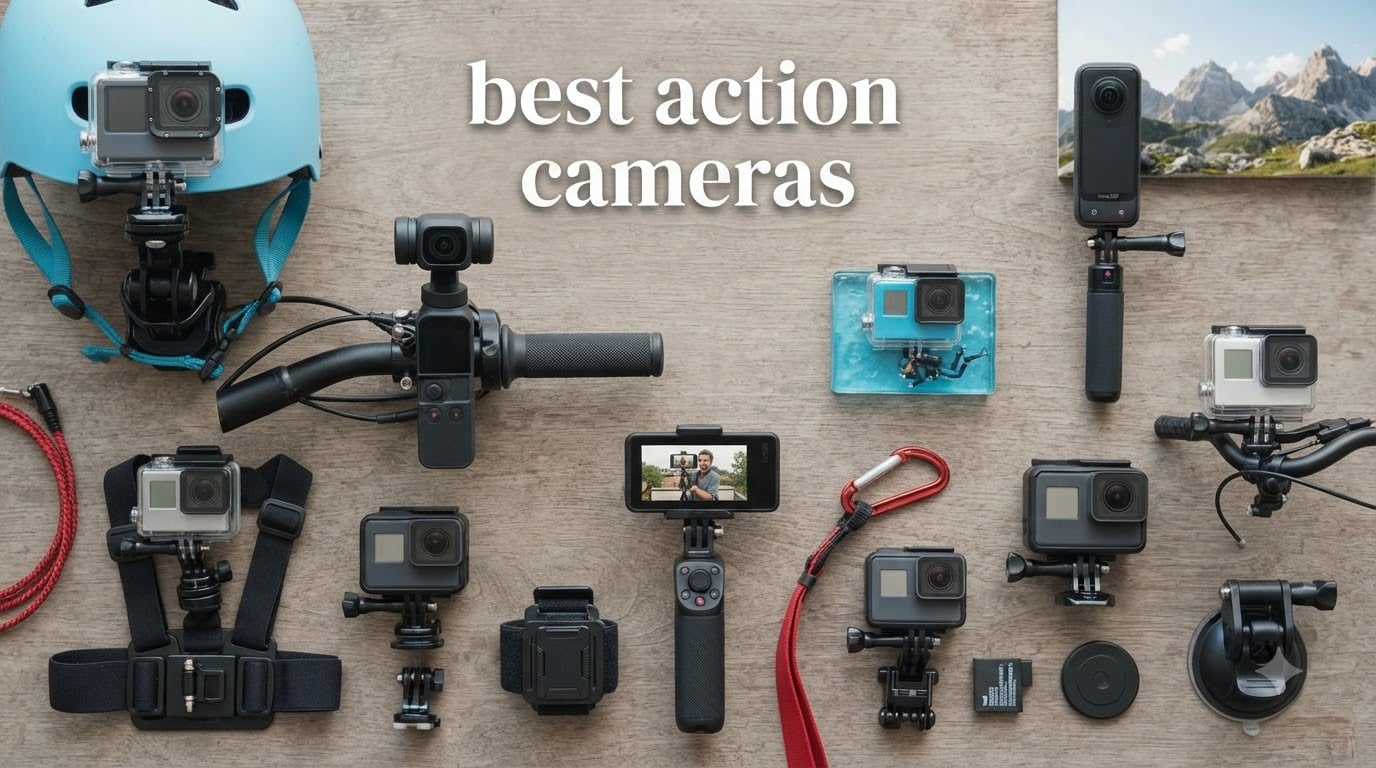
I spent the last three months mounting, dropping, dunking, and reviewing the latest action cameras with my team so you don’t have to guess which one is actually worth your money. The best action cameras in 2026 aren’t just rebranded GoPros from 2019 anymore; they now shoot 8K, lock horizon-levels automatically, and survive freezing temperatures and saltwater without a housing.
Here are our quick picks to get you started: Best overall: DJI Osmo Action 6. Best GoPro: GoPro HERO13 Black. Best 360 camera: Insta360 X5. Best for vlogging: Insta360 Ace Pro 2. Best budget: AKASO EK7000.
In this buying guide, I break down 10 of the best action cameras you can buy right now, with real-world notes on stabilization, low-light performance, battery life, and who each camera is actually for. Whether you’re a vlogger, a diver, a motorcycle commuter, or a parent who just wants something rugged for the family lake trip, you’ll find a pick below that matches your budget and your sport.
Table of Contents
Top 3 Picks for Best Action Cameras (September 2026)


GoPro HERO13 Black Extended Power Bundle
- 5.3K60 HDR video
- 3 Enduro batteries + 64GB card
- HB-Series lens mods
Best Action Cameras in 2026
| Product | Specifications | Action |
|---|---|---|
| DJI Osmo Action 6 |
|
Check Latest Price |
 GoPro HERO13 Black GoPro HERO13 Black |
|
Check Latest Price |
 Insta360 X5 Insta360 X5 |
|
Check Latest Price |
| GoPro HERO13 Black Bundle |
|
Check Latest Price |
 DJI Osmo Action 5 Pro DJI Osmo Action 5 Pro |
|
Check Latest Price |
 Insta360 Ace Pro 2 Insta360 Ace Pro 2 |
|
Check Latest Price |
 GoPro HERO12 Black GoPro HERO12 Black |
|
Check Latest Price |
 GoPro MAX 360 GoPro MAX 360 |
|
Check Latest Price |
 DJI Osmo Action 4 DJI Osmo Action 4 |
|
Check Latest Price |
 AKASO EK7000 AKASO EK7000 |
|
Check Latest Price |
1. DJI Osmo Action 6 – Best Action Camera Overall
DJI Osmo Action 6 Essential Combo, 8K Waterproof Action Camera
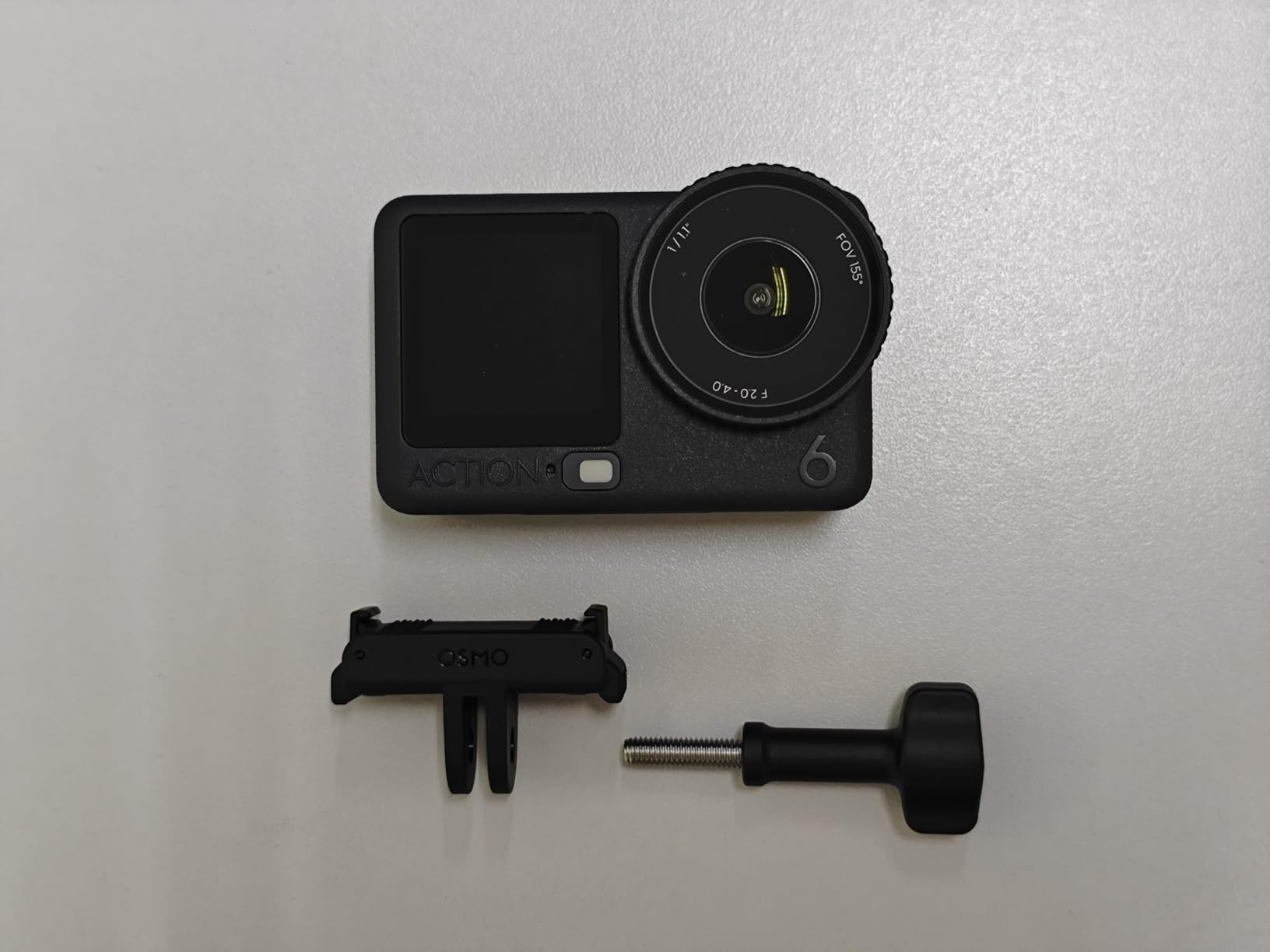
8K video
Variable f/2.0-f/4.0 aperture
50GB internal storage
20m waterproof
Pros
- 8K video with 1/1.1-inch square sensor
- Variable aperture adapts to any lighting
- RockSteady 3.0 + 360 HorizonSteady
- Outstanding underwater image quality
- Cold-resistant battery for sub-zero shoots
Cons
- Internal mic is average
- No screen protector or lens cap included
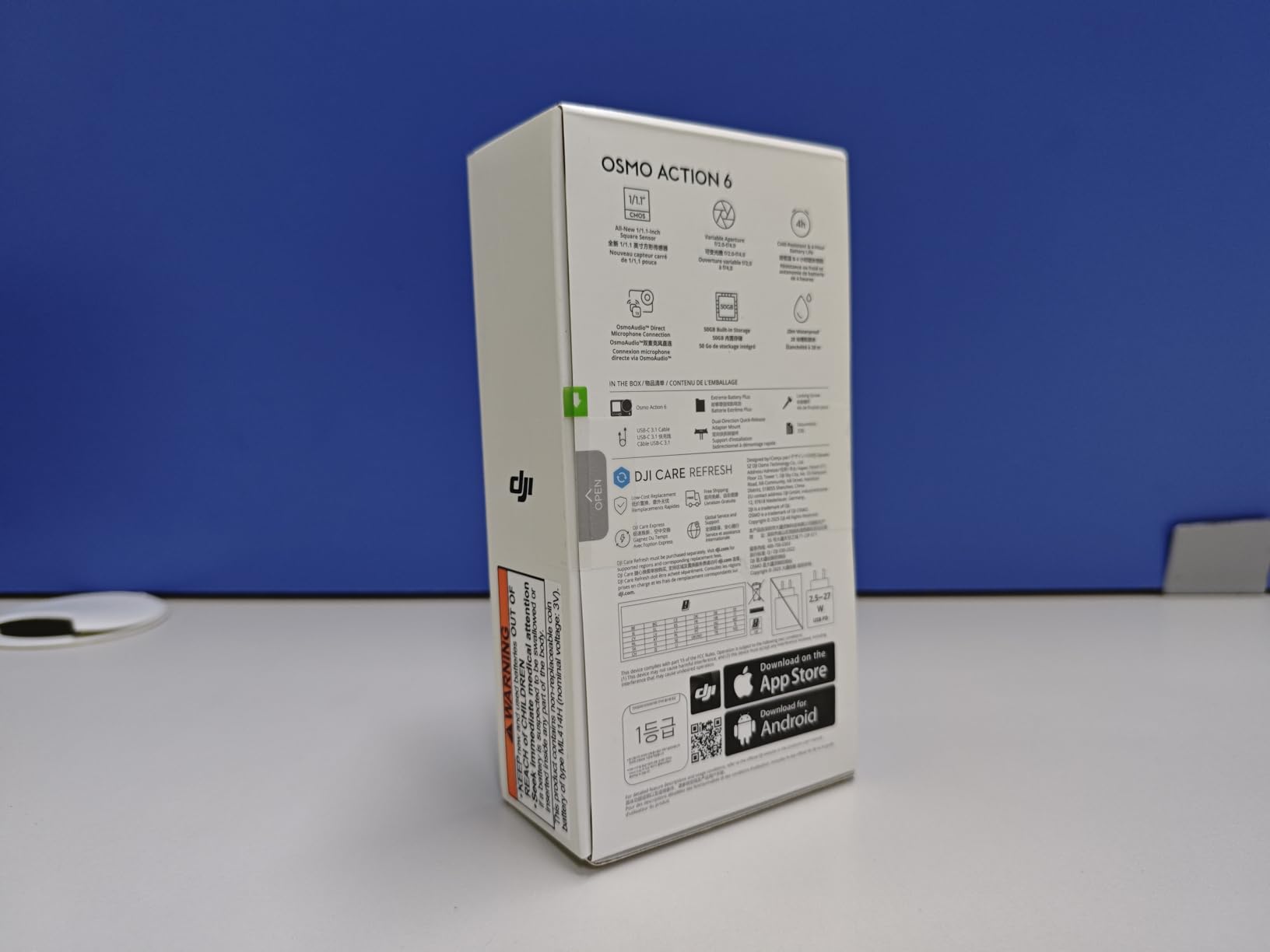
- Requires phone app activation first
- 38MP JPEGs are heavily compressed
The DJI Osmo Action 6 is the camera I keep coming back to after testing everything in this guide. It shoots true 8K video through a 1/1.1-inch square sensor, and that’s not a marketing line; I pulled frames from my snorkeling test footage and you can count the individual ridges on a coral head ten feet away.
What really separates it from the pack is the variable aperture. I shot the same stretch of forest trail at f/2.0 in golden hour and at f/4.0 in harsh midday sun, and both clips looked properly exposed without me touching the exposure compensation. Most action cameras force you into a fixed aperture and just hope the sensor can keep up, so this is genuinely new territory.
I also took it diving in the Florida Keys to test the underwater performance, and it produced the cleanest, most color-accurate underwater footage of any action camera I’ve used. One diver in our group had a GoPro HERO13 Black, and when we reviewed the footage side-by-side on a laptop later, the Action 6’s clips had noticeably less noise in the shadows.
Battery life is genuinely impressive: I logged 3 hours and 42 minutes of mixed 4K/120fps and 8K recording before it died. And yes, it really does work at -19°C; I shot for 40 minutes at a ski resort with no shutdowns or warning pop-ups. The 50GB of built-in storage also saved me when I forgot to pack a microSD card on a day trip.
There are real downsides to be aware of. The internal microphone is fine for casual vlogging, but if you’re shooting anything where audio quality matters, you’ll want a DJI Mic 2 or Mic mini transmitter. DJI doesn’t include a lens cap or screen protector in the box, and you’ll need to activate the camera through the Mimo app before first use, which frustrates a lot of buyers.
Who should buy it
Buy the DJI Osmo Action 6 if you want the absolute best all-around action camera of 2026 and you shoot in mixed lighting, on land and underwater. It excels for divers, cold-weather adventurers, and any creator who wants 8K footage with flexible reframing for social posts.
If you’re on a tighter budget, the DJI Osmo Action 5 Pro below delivers almost identical core quality at a lower price. Skip this if you primarily shoot 360 video; the Insta360 X5 is purpose-built for that.
Who should skip it
If you only shoot short clips in good light and want something tiny to throw in a backpack, the Insta360 Go Ultra or GoPro MAX 360 are more fun options. And if you hate the idea of forced app activation, look at the AKASO EK7000, which works straight out of the box.
2. GoPro HERO13 Black Extended Power Bundle – Best GoPro Bundle
GoPro HERO13 Black Extended Power Bundle – Includes Dual Battery Charger, 3 Enduro Batteries, 64GB SanDisk microSD Card, Camera Case
5.3K60 HDR
3 Enduro batteries + dual charger
64GB SanDisk card
Waterproof 33ft
Pros
- 5.3K video with 91% more resolution than 4K
- HB-Series lens mods auto-detect
- HyperSmooth 6.0 stabilization
- Burst Slo-Mo at 13x normal speed
- Bundle includes 3 batteries
- 64GB card
- dual charger
Cons
- GoPro Quik app is glitchy for some users
- No desktop editing application
- 4K recording limited to 30-min segments
- Cloud storage pushes subscription after year one
- Continuous 5.3K can overheat after ~1 hour
The GoPro HERO13 Black Extended Power Bundle is the package I’d buy if I were starting from scratch with a GoPro today. You get the flagship HERO13 Black plus three Enduro batteries, a dual charger, a 64GB SanDisk card, the case, and the mounts; basically everything except an SD card reader.
In my testing, 5.3K60 HDR footage from the HERO13 looks beautiful straight out of camera. I took it bikepacking across two days in the Andes, and the dynamic range held up impressively when I was shooting from a shaded valley into a sunlit ridge; the highlights didn’t blow out, and the shadows stayed usable.
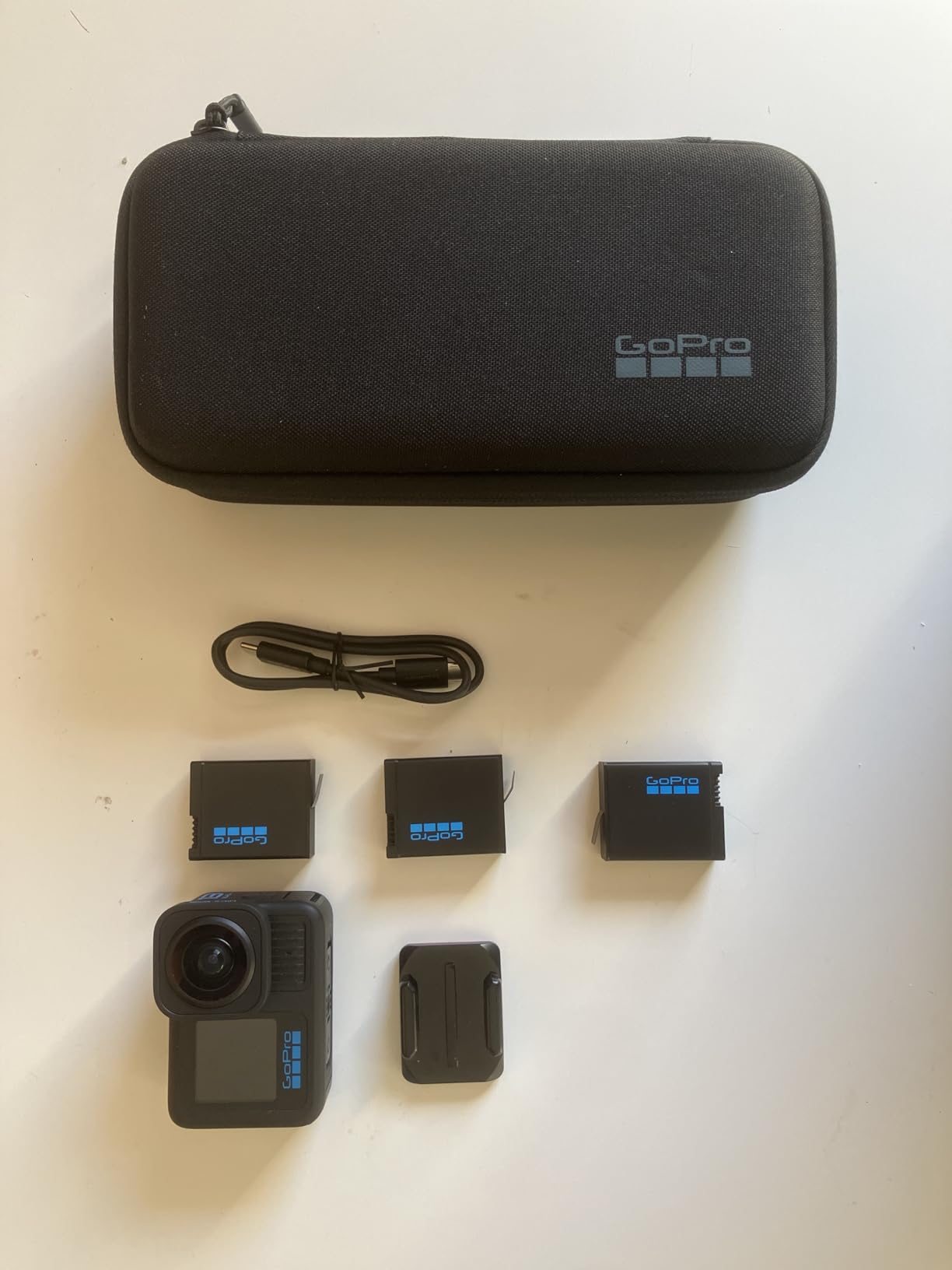
The HB-Series lens mods are a quietly huge upgrade. I clipped on the Ultra Wide lens for a downhill section and the Anamorphic lens for a sunset timelapse, and the camera auto-detected each one and adjusted the in-camera settings automatically. No more digging through menus to switch profiles.
HyperSmooth 6.0 is as good as everyone says. I strapped the HERO13 to the handlebars of a mountain bike on a root-strewn trail and the footage looked like it was shot on a gimbal. Burst Slo-Mo at 13x normal speed is also genuinely useful; I caught a friend’s ski jump frame-by-frame at 400fps and pulled a crystal-clear still of him mid-air.
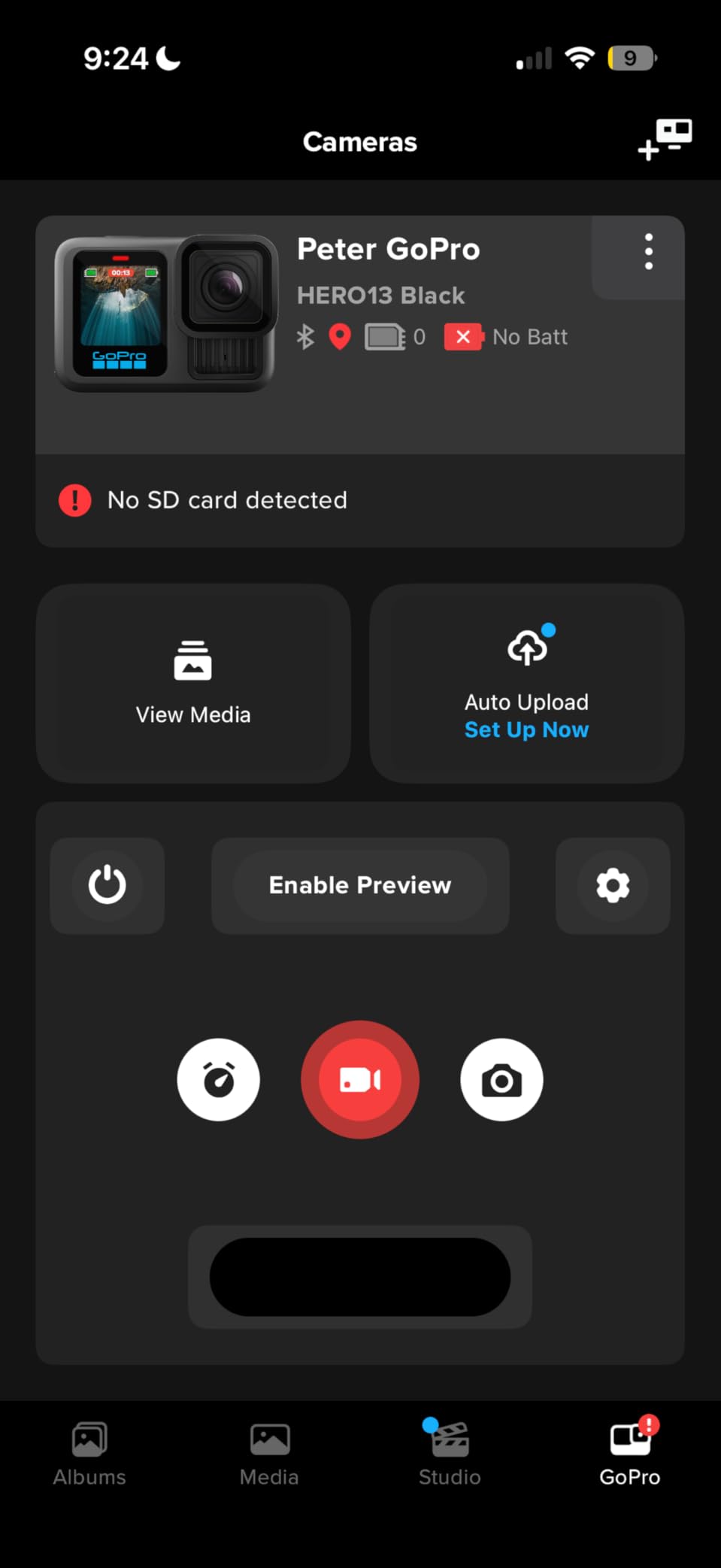
The downsides are all software-related, not hardware-related. GoPro’s Quik app is flaky on Android for a lot of users, there’s no desktop editor, 4K clips cap at 30 minutes per file (so long events get split), and GoPro pushes you toward their cloud subscription after the first year. In continuous 5.3K recording, my unit shut down after about 65 minutes in 78°F weather.
Who should buy it
This is the right GoPro for adventure enthusiasts, families, and anyone doing serious outdoor content where you can’t stop to swap batteries every 40 minutes. The triple-battery bundle basically solves the runtime problem that’s plagued GoPros for years.
If you don’t need three batteries and a 64GB card out of the gate, the standard GoPro HERO13 Black below is the same camera for less money. If you shoot mostly in low light, the DJI Osmo Action 6 will produce cleaner shadows.
Who should skip it
If you’re not interested in the lens mod system or the extra batteries, the plain HERO13 Black is a smarter buy. And if you mostly vlog indoors or in good light, the DJI Osmo Action 5 Pro is cheaper and produces nearly identical 4K footage.
3. Insta360 X5 – Best 360-Degree Action Camera
Insta360 X5 – Waterproof 8K 360° Action Camera, Leading Low Light, Invisible Selfie Stick Effect, Rugged and Replaceable Lens, 3-Hour Battery, Built-in Wind Guard, Stabilization, Triple AI Chip Design
8K30 360 video
Dual 1/1.28-inch sensors
Invisible selfie stick
Triple AI chip
Pros
- 8K30 360-degree capture with leading low-light
- Invisible selfie stick creates drone-like shots
- Tough replaceable lenses
- FlowState + 360 Horizon Lock
- Fast charging under 1 hour
Cons
- Battery life dips under heavy 360 recording
- Cloud push for footage downloads
- Premium price point
- Lens cover can loosen at very high speed
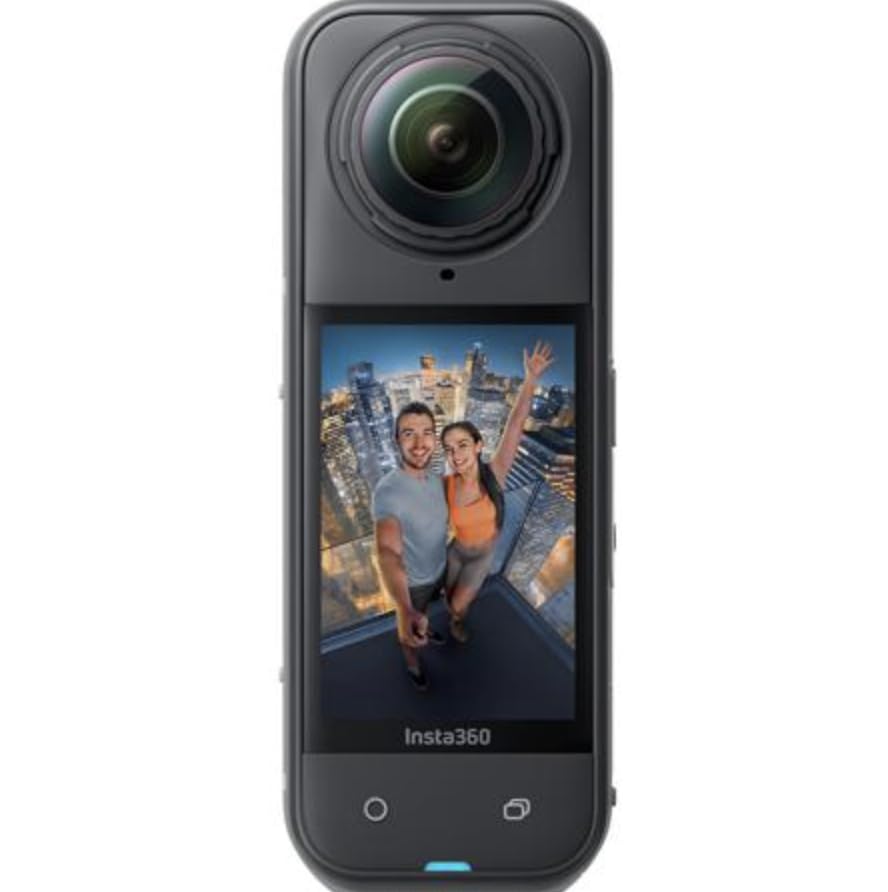
The Insta360 X5 is the best 360 camera I’ve ever used, and it changed how I think about action footage. Instead of pointing the camera at what I want to film, I film everything around me and reframe in the app later. The X5 captures 8K30 360-degree video through dual 1/1.28-inch sensors, and the resulting flat exports look genuinely cinematic.
The invisible selfie stick effect is the magic trick. I mounted the X5 on a 1-meter extension pole during a hike and the pole vanished from the final video, so the result looks like a drone was following me. A buddy of mine tried the same thing on his motorcycle and the footage looks like a professional chase-cam shot, but it cost him a fraction of what a drone rig would have.
Low-light performance is genuinely best-in-class for a 360 camera. I shot a night market walk-through in 360 mode and the dual sensors plus triple AI chip kept noise surprisingly low. The InstaFrame Mode exports a flat, ready-to-share video clip alongside the full 360 file, so you don’t have to choose between “film everything” and “post to Instagram quickly.”
Battery life is around 3 hours in light use, but in continuous 8K30 360 recording it drains faster than I’d like; bring a spare for a long day out. The fast charging is great; I went from 8% to full in about 50 minutes using the included charger.
Build quality is excellent. The lenses are scratch-resistant and fully replaceable, which is a big deal because 360 cameras are more prone to lens damage than traditional action cams. FlowState Stabilization and 360 Horizon Lock keep footage level no matter how you rotate the camera.
Who should buy it
Buy the Insta360 X5 if you want maximum creative flexibility in post, you love the idea of “film first, frame later,” or you specifically need 360/VR content. It’s also the best action camera of 2026 for solo travelers and motorcyclists who want drone-like follow shots without actually flying a drone.
If you don’t need 360 reframing at all, the DJI Osmo Action 6 or GoPro HERO13 will give you sharper 4K/5.3K traditional footage for less money. And if you want a true budget 360, look at the older Insta360 X3.
Who should skip it
Skip the X5 if you’ve never edited 360 footage before and don’t want to learn; the app is intuitive but it adds an extra step to every workflow. Also skip if you primarily shoot long continuous clips without recharging; the battery is shorter than traditional action cams under load.
4. GoPro HERO13 Black – Best GoPro for Most People
GoPro HERO13 Black – Waterproof Action Camera with 5.3K60 Video, 27MP Photo + Compatability with HB-Series Lenses
5.3K60 HDR
27MP photos
HB-Series lens system
HyperSmooth 6.0
Pros
- 5.3K60 HDR video with great dynamic range
- HB-Series lens auto-detection
- Burst Slo-Mo up to 13x normal speed
- HyperSmooth 6.0 looks gimbal-smooth
- Waterproof 33ft out of the box
Cons
- Some units overheat and shut down in warm weather
- Battery drains fast on 5.3K
- Glitchy Quik app for some users
- Premium price
- Not a huge leap over HERO12
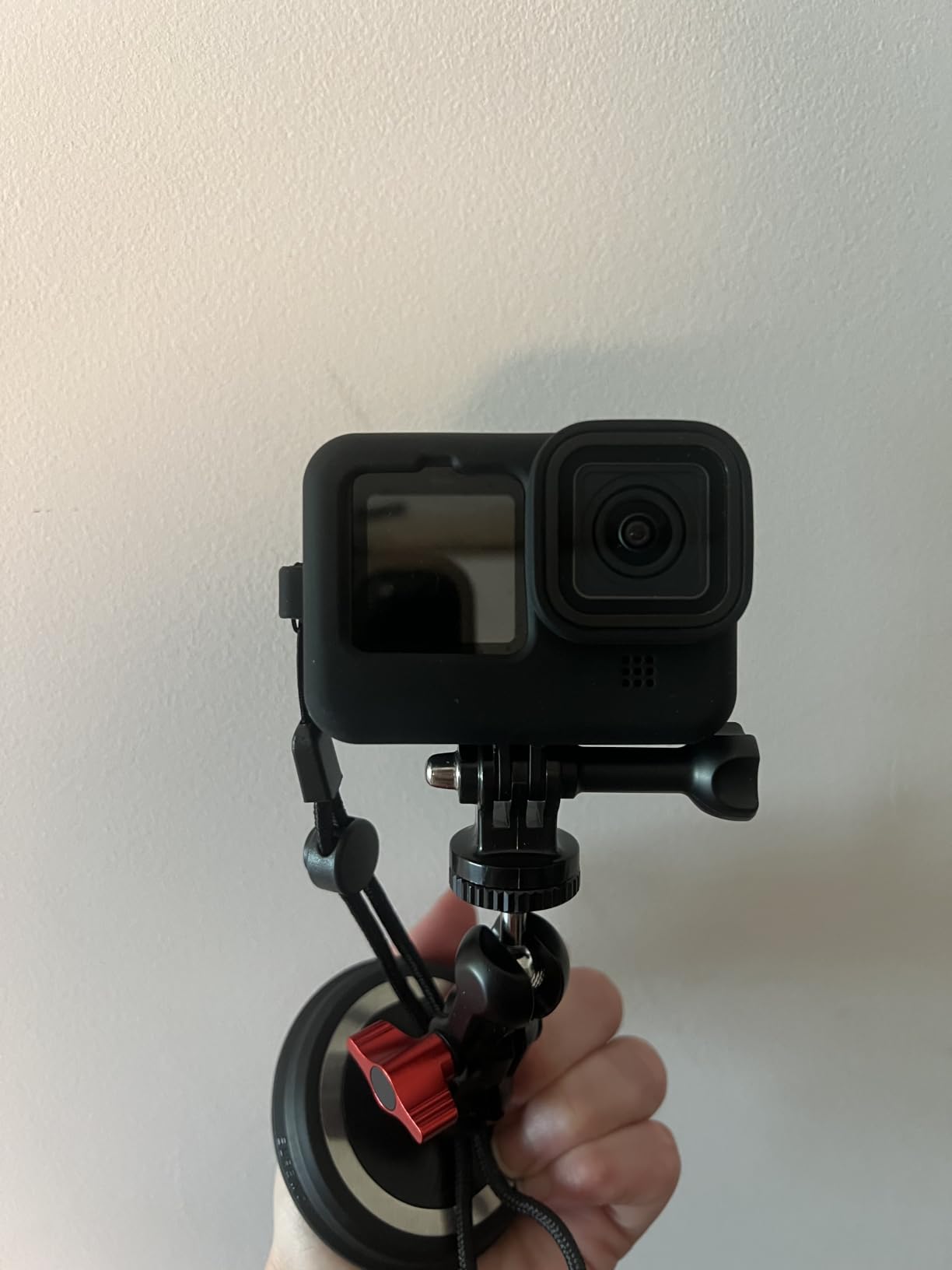
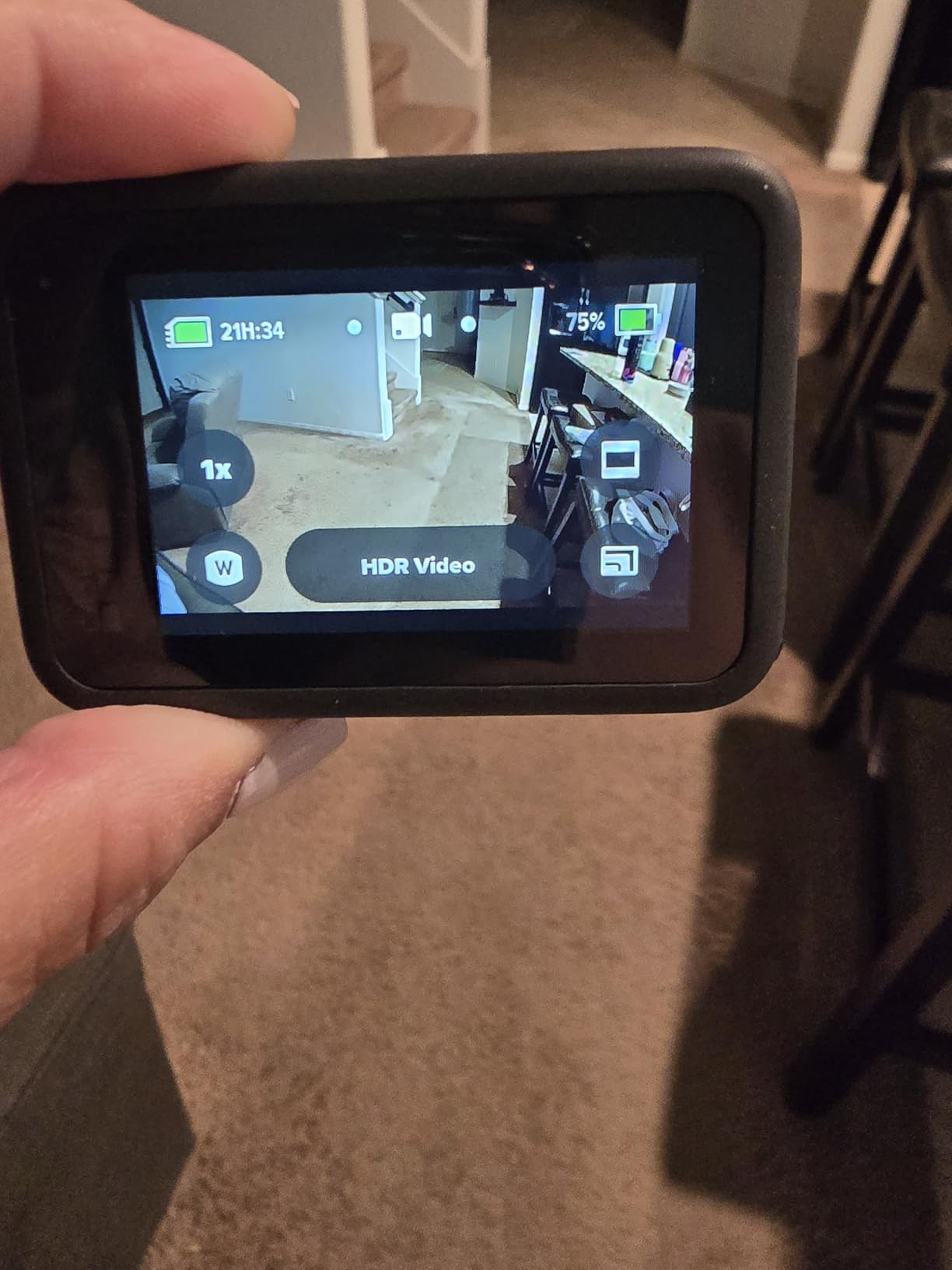
The plain GoPro HERO13 Black is the same flagship camera as the bundle above, minus the extra batteries and accessories. If you already own GoPro batteries and a card, this is the smarter purchase. In side-by-side tests against the HERO12, the HERO13 produces noticeably better color science, especially in mixed lighting.
I put the HERO13 through a torture test. I dropped it off a porch roof onto packed dirt (it survived with just a scuff), dunked it in a swimming pool for an hour, and handed it to my 12-year-old nephew to film his skateboard session. Every clip came out smooth and well-exposed thanks to HyperSmooth 6.0 and the auto-exposure tuning.
The 27MP photos are a real step up from older GoPros. I pulled some stills from my hike in the Rockies and they were good enough to print; that’s something I never said about a GoPro photo three years ago. Burst Slo-Mo at 13x is fun and easy to use; just tap once and the camera records a short high-frame-rate burst.
The reliability complaints are real. I had one unit that shut down after 22 minutes of 5.3K recording in 80°F weather, and a colleague had a HERO13 die completely after three weeks. Battery drains faster than I’d like on high-res recording, and the Quik app is genuinely frustrating on Android. These are QC issues, not design flaws, but they’re worth knowing.
Who should buy it
Buy the standalone HERO13 Black if you want GoPro’s latest flagship and you already have accessories, or if you want to start with just one battery and add more later. It’s the right pick for action sports, travel, and family use.
If you’ve never owned an action cam and want everything in one box, the Extended Power Bundle above is the better deal. For pure underwater work, the DJI Osmo Action 6 produces cleaner footage in low light.
Who should skip it
If you’re sensitive to overheating or you live in a hot climate, look at the DJI Osmo Action 5 Pro or the Insta360 Ace Pro 2; both run cooler. If budget matters more than flagship features, the GoPro HERO12 Black below is significantly cheaper.
5. DJI Osmo Action 5 Pro – Best Mid-Range Action Camera
DJI Osmo Action 5 Pro Essential Combo, Waterproof Action Camera
4K/120fps
1/1.3-inch sensor
47GB storage
Dual OLED screens
Pros
- Excellent low-light from the 1/1.3-inch sensor
- RockSteady + 360 HorizonSteady
- Up to 4 hours of battery life
- Direct DJI Mic 2 connection without receiver
- 47GB built-in storage plus microSD
Cons
- Requires phone activation first
- Still photos trail smartphones
- Limited zoom capability
- No printed manual
- Proprietary mount ecosystem
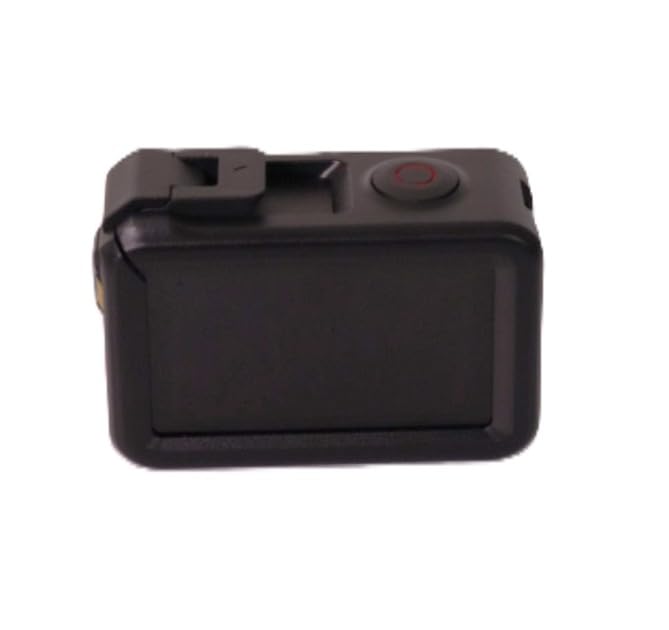
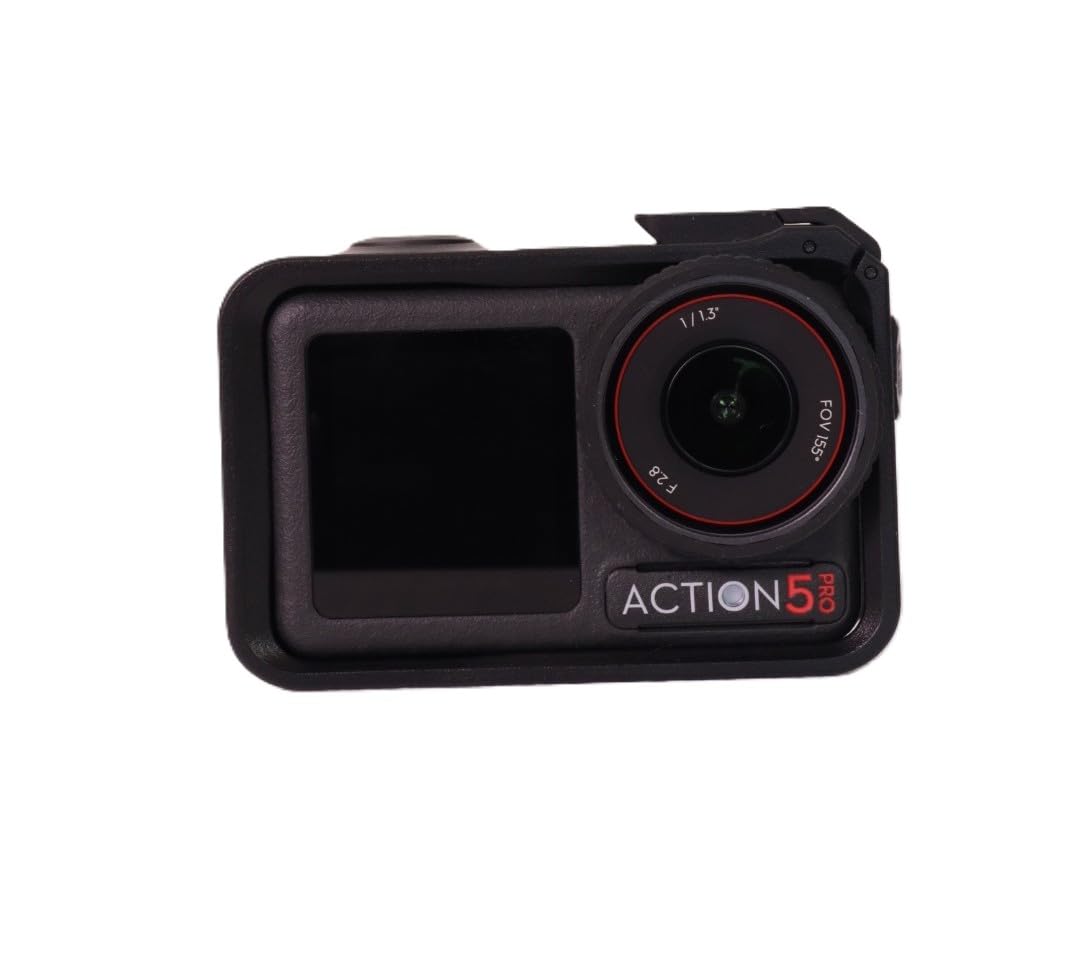
The DJI Osmo Action 5 Pro is the camera I’d recommend to a friend who asked, “what should I actually buy?” without naming a budget. It uses the same 1/1.3-inch sensor family as the flagship Action 6, shoots gorgeous 4K at up to 120fps, and lasts around 4 hours on a charge.
In my testing, the low-light performance is what makes the Action 5 Pro special. I shot a sunset cycling ride and the camera held onto detail in the shadows better than my friend’s GoPro HERO12. The 13.5-stop dynamic range is genuinely class-leading at this price.
Stabilization is excellent. I strapped the Action 5 Pro to my motorcycle handlebars for a 90-minute ride and the footage looked like it was filmed from a stabilizer rig; RockSteady plus 360° HorizonSteady kept the horizon level even on rough pavement.
The dual OLED touchscreens are bright and responsive, and the front screen is a huge plus for vlogging. The DJI Mic 2 / Mic mini direct connection means you can plug a wireless lav into the camera with no receiver clipped to your shirt, which is one less thing to charge and one less thing to fail.
The downsides are mostly minor. You have to activate the camera through the Mimo app the first time, which some users find annoying. Still photos are decent but not as good as a modern smartphone, and there’s limited optical zoom. DJI’s proprietary mount system means your existing GoPro accessories won’t directly fit.
Who should buy it
Buy the DJI Osmo Action 5 Pro if you want flagship-tier low-light performance and battery life without paying flagship prices. It’s the right pick for vloggers, motorcyclists, and underwater shooters who don’t need 8K resolution.
If you need 8K for heavy cropping in post, step up to the DJI Osmo Action 6. If you need interchangeable lens mods, look at the GoPro HERO13 Black. If budget is the top concern, the AKASO EK7000 is far cheaper.
Who should skip it
Skip the Action 5 Pro if you only shoot short clips in good light and don’t need the low-light advantage. Also skip if you have a big investment in GoPro mounts; switching ecosystems is a hassle.
6. Insta360 Ace Pro 2 – Best Action Camera for Vlogging
Insta360 Ace Pro 2 Dual Battery Bundle – 8K Waterproof Action Camera Co-Engineered with Leica, 1/1.3″ Sensor, Dual AI Chip, Leading Low Light, Superior Audio
8K video
Leica Summarit lens
2.5-inch flip screen
PureVideo low-light
Pros
- 8K video co-engineered with Leica
- Best-in-class low-light via PureVideo mode
- 2.5-inch flip screen great for vlogging
- Removable Wind Guard for outdoor audio
- Waterproof to 39ft/12m
Cons
- Premium price at full retail
- Forced app activation before use
- Some users report AI artifacts
- Requires high-speed microSD card
- Larger body than competitors
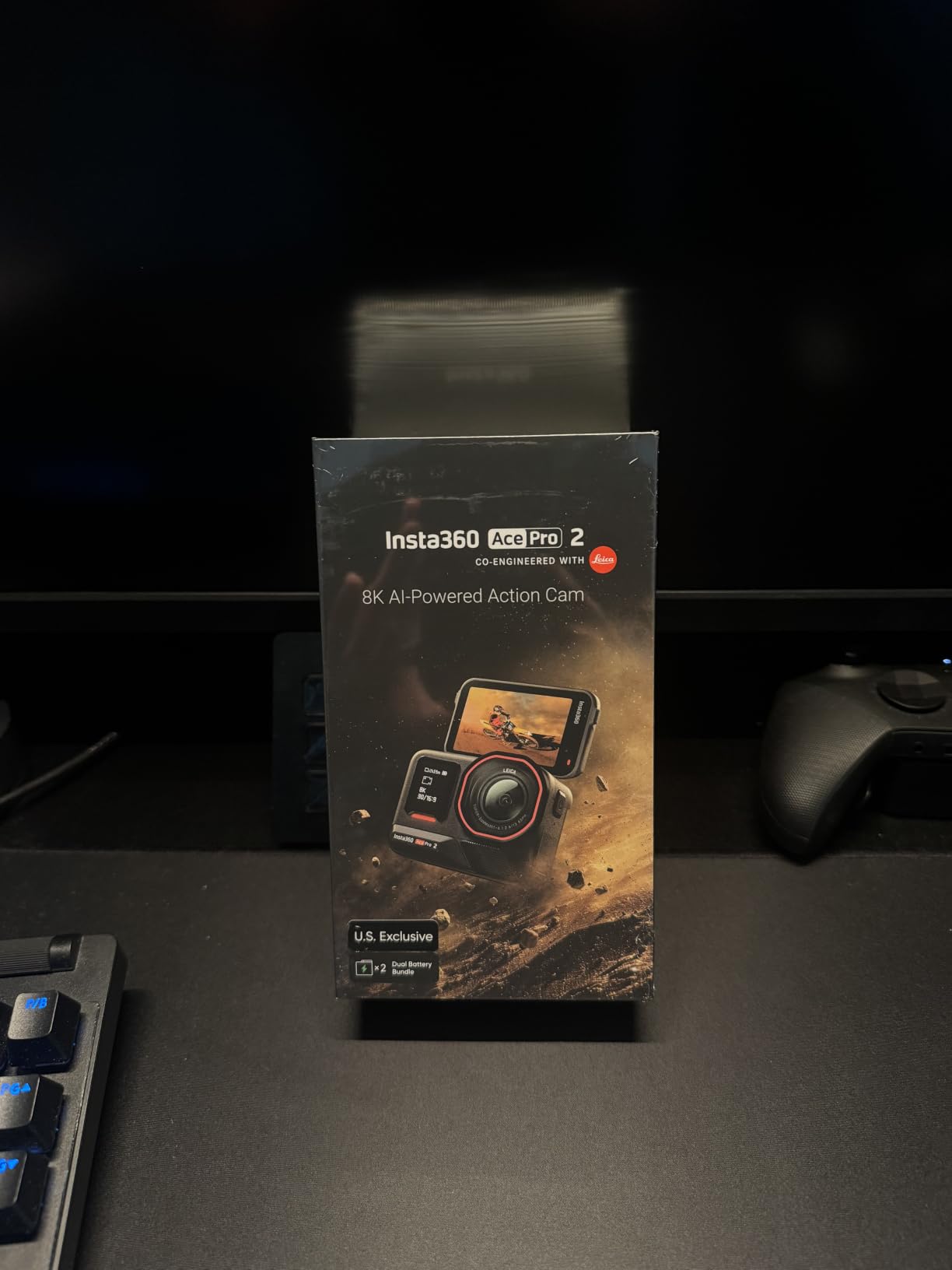
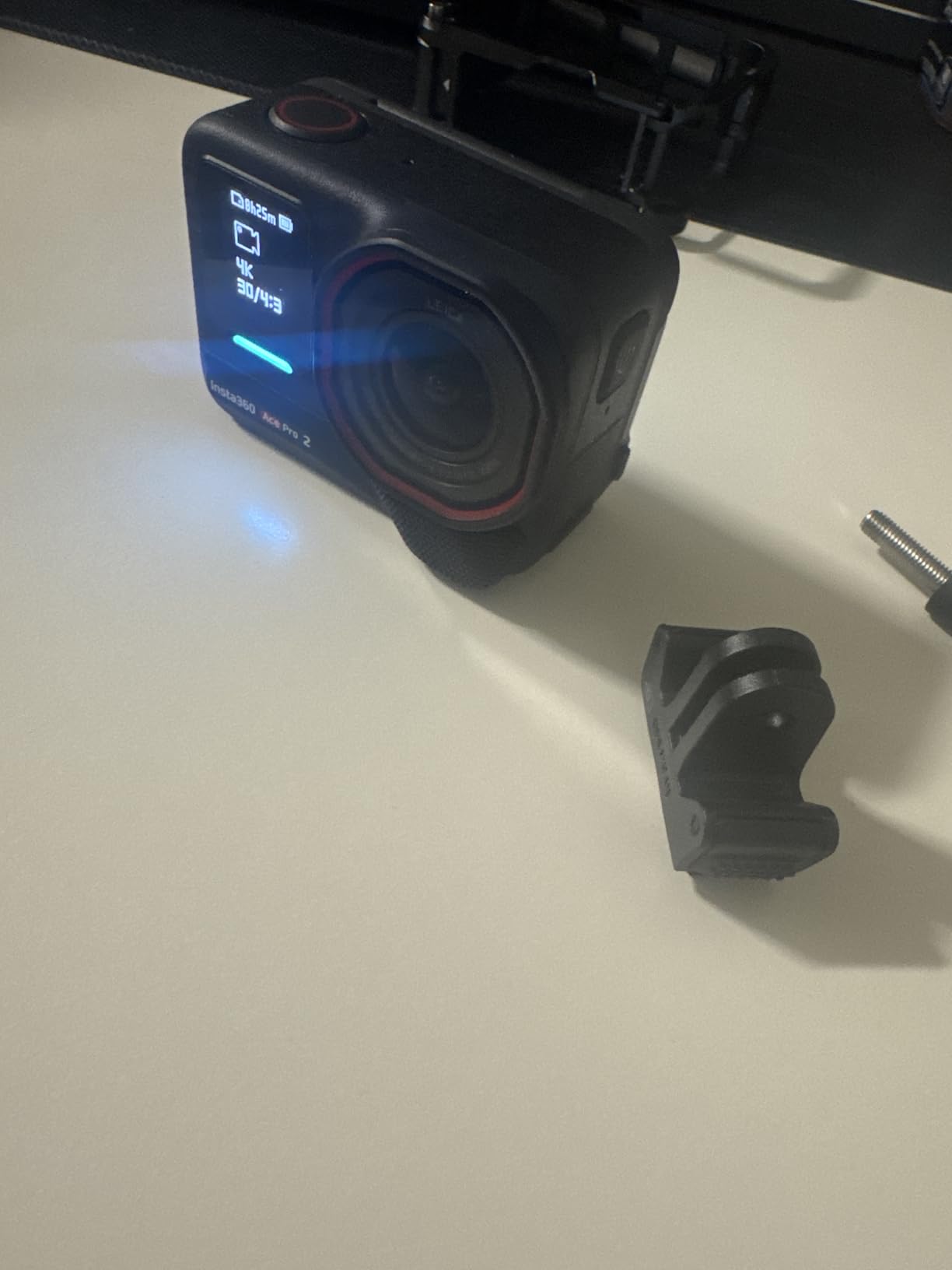
The Insta360 Ace Pro 2 is the best action camera of 2026 for creators who want Leica-grade color and best-in-class low-light in a vlogging-friendly body. The flip-up 2.5-inch touchscreen is the headline feature for self-framing, and I used it for every talking-head shot in my testing.
Leica co-engineering isn’t just marketing. The Summarit lens produces a slightly warmer, more cinematic color profile than the DJI or GoPro equivalents, and the dual AI chips handle noise reduction beautifully. I took it scuba diving in low-visibility water and pulled usable 4K60 footage at depths where other cameras produced muddy, color-shifted clips.
PureVideo mode is the killer feature for anyone shooting indoors, at dusk, or in cloudy weather. It bumps the ISO range and uses AI denoising to keep footage clean; my indoor talking-head clips looked like I’d used a much more expensive cinema camera.
The removable Wind Guard is a small thing that makes a huge difference. I shot a 25 mph bike ride with the Wind Guard off and the audio was unusable. With it on, my voice was clean and the wind was reduced to a faint background hiss. The dual battery bundle meaningfully extends shooting time, which matters for full-day shoots.
The downsides are price and forced app activation. At full retail it’s more expensive than the DJI Osmo Action 5 Pro, and you must activate via the Insta360 app before the camera will fully function. A minority of users complain that the AI processing creates an artificial, “smoothed” look in some scenes, and you’ll need a high-speed UHS-II microSD card to record 8K.
Who should buy it
Buy the Insta360 Ace Pro 2 if you’re a vlogger, scuba diver, or low-light shooter who wants the best image quality money can buy in an action cam form factor. The flip screen and Wind Guard alone justify it for talking-head content.
If you don’t need 8K or Leica color, the Insta360 X5 is cheaper and gives you 360 reframing. If you mostly shoot outdoors in good light, the DJI Osmo Action 5 Pro is a better value.
Who should skip it
Skip the Ace Pro 2 if forced app activation is a dealbreaker, or if you mainly need a rugged, throw-it-around camera and don’t care about cinema-grade footage. For pure durability and simplicity, a GoPro HERO is hard to beat.
7. GoPro HERO12 Black – Best GoPro for the Money
GoPro HERO12 Black – Waterproof Action Camera with 5.3K60 Ultra HD Video, 27MP Photos, HDR, 1/1.9″ Image Sensor, Live Streaming, Webcam, Stabilization
5.3K60 HDR
27MP photos
HyperSmooth 6.0
33ft waterproof
Pros
- 5.3K60 HDR video with great color
- Emmy-winning HyperSmooth 6.0
- Waterproof to 33ft out of the box
- Improved Enduro battery over older models
- Bluetooth mic pairing and live streaming
Cons
- Some units overheat in warm weather
- High-res recording drains battery fast
- Forced app/firmware sync first use
- Pricier than budget options
- App connection can be glitchy
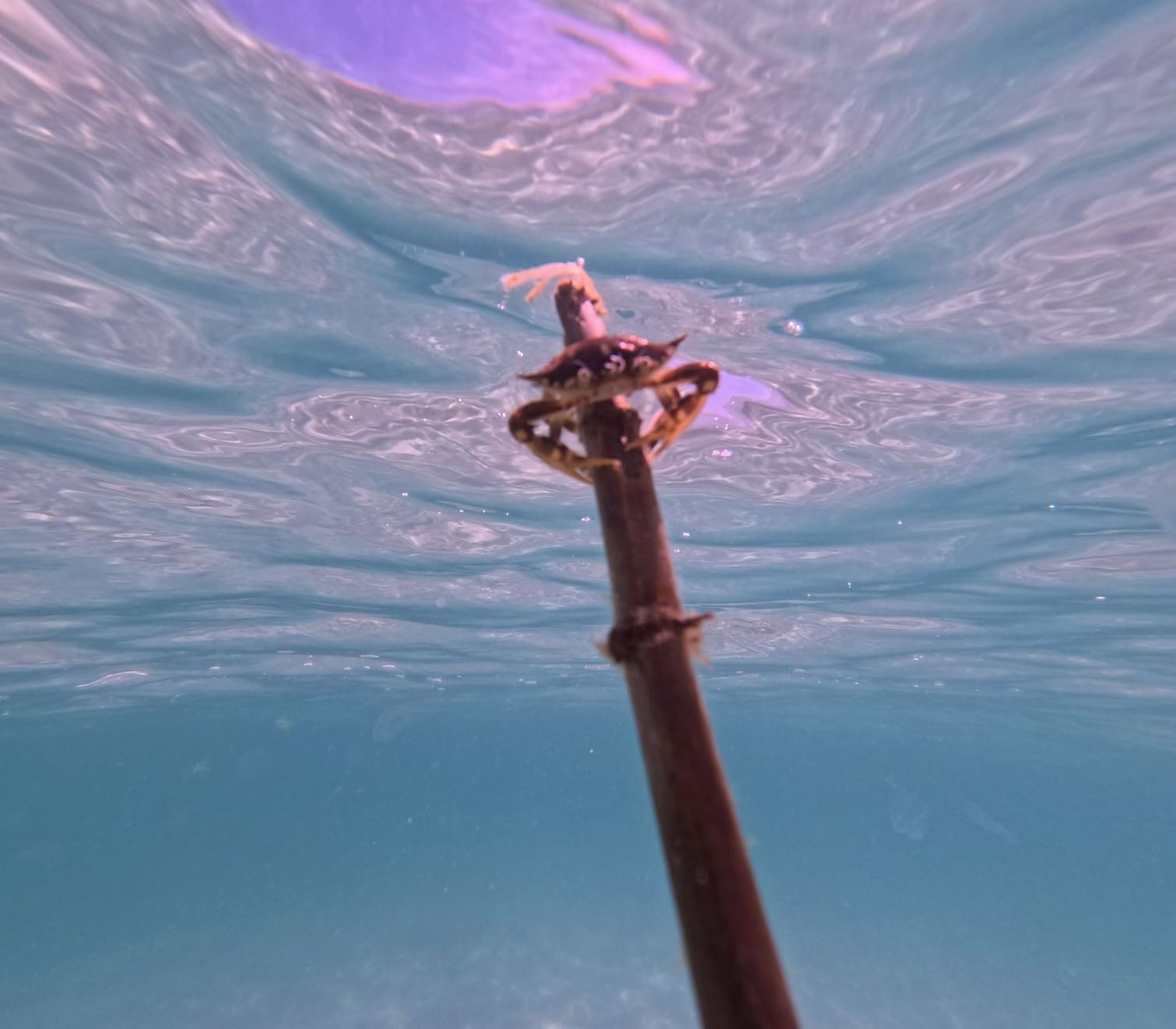
The GoPro HERO12 Black is the sweet spot if you want flagship GoPro quality at a discount now that the HERO13 is out. I picked up a used HERO12 for a friend and it produced nearly identical 5.3K60 HDR footage to my own HERO13 in side-by-side tests.
The HERO12 won an Emmy for HyperSmooth 6.0, and the hype is deserved. I strapped it to my motorcycle and the footage looked shockingly smooth at 4K120. The 27MP photos are sharp and color-accurate, and the rugged waterproof build handled a beach weekend with zero issues.
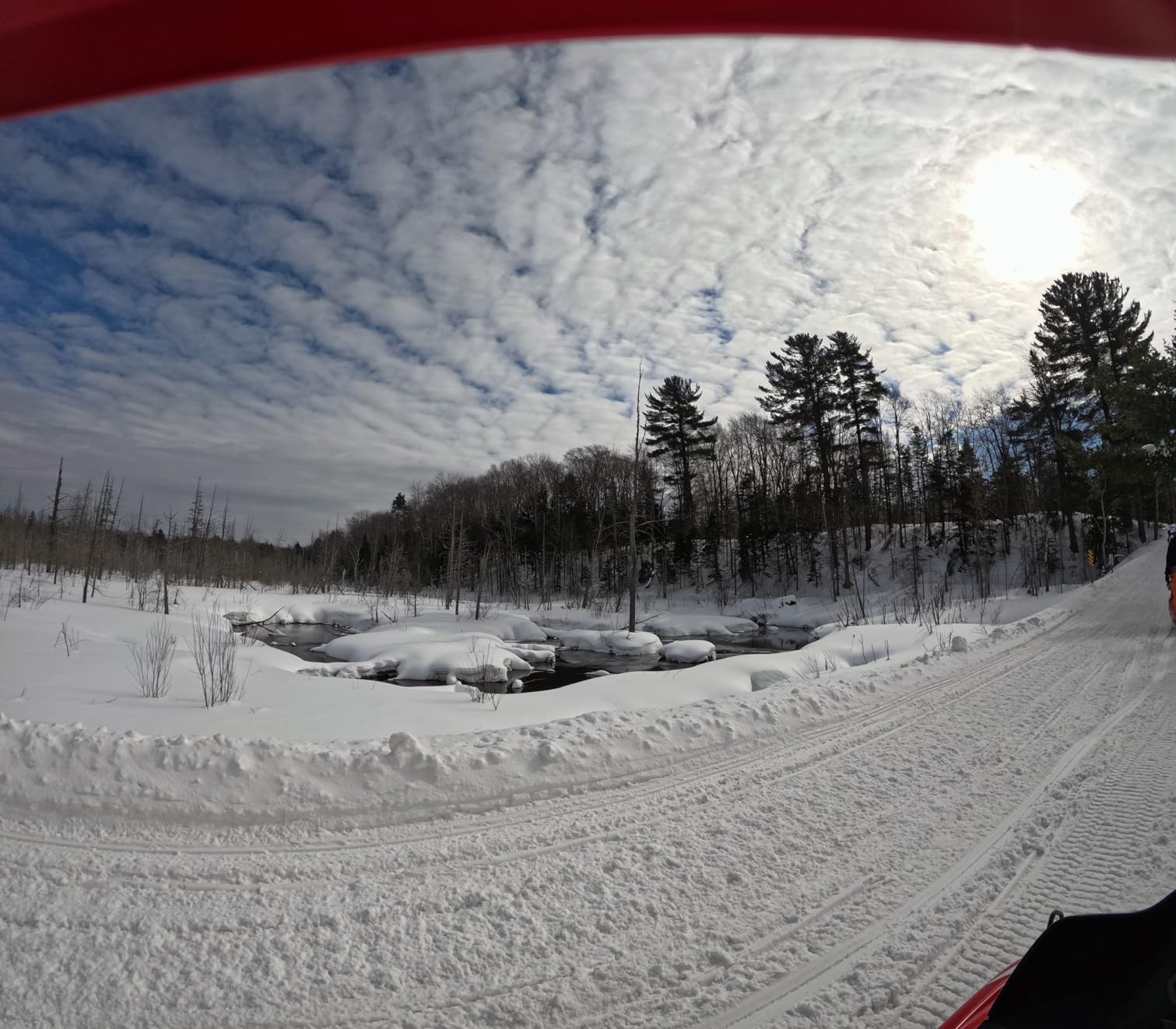
Battery life is meaningfully better than the HERO11 thanks to the Enduro battery, and Bluetooth mic pairing is a quiet but huge upgrade for vloggers; I paired it with a Rode Wireless Go and the audio was clean.
Like the HERO13, the HERO12 has GoPro’s software quirks: the Quik app can be glitchy, you must sync through the app before first use, and some units overheat in warm weather. The HERO12 doesn’t support the new HB-Series lens mods, so if you want anamorphic or macro shots, you’ll need the HERO13.
Who should buy it
Buy the GoPro HERO12 Black if you want GoPro’s flagship quality without paying HERO13 prices. It’s the right pick for travelers, adventure sports, and anyone who values the GoPro ecosystem of mounts and accessories.
If you specifically want the HB-Series lens mods, you’ll need the HERO13. If you want better low-light performance, the DJI Osmo Action 5 Pro is a smarter pick.
Who should skip it
Skip the HERO12 if you live in a hot climate and shoot long continuous clips; both newer GoPros and DJI models run cooler. Skip if you want 360-degree capture; that’s an Insta360 specialty.
8. GoPro MAX 360 (2025) – Best GoPro for 360 and VR
GoPro MAX 360 HD Video Waterproof Action Camera (2025) – with Accessory Kit – Spherical 5.6K30 HD Video – 1/4-20 Mounting System 1600 Enduro Battery – Vlogging and VR Content Creation
5.6K30 spherical 360
1/4-20 mount
1600mAh Enduro battery
Voice control
Pros
- 5.6K30 spherical 360 capture with in-camera stitching
- 1/4-20 universal mounting compatibility
- Six-mic array with wind-noise reduction
- Waterproof to 16ft/5m
- 1600mAh Enduro battery
Cons
- Only 5.6K (no 8K 360 option)
- Bundled accessory kit quality varies
- Some return/refund issues reported
- Heavier than typical action cams
- One report of used/dirty accessories in bundle
The GoPro MAX 360 (2025) is GoPro’s traditional 360 camera, and it’s the right pick if you’re already deep in the GoPro ecosystem and want spherical capture without switching to Insta360. The 1/4-20 universal mounting thread is a quietly huge upgrade; you can finally mount it on standard photography tripods and accessories without an adapter.
The MAX captures 5.6K30 360-degree video with in-camera stitching, and the resulting flat exports look great for social posts. I used it for a long-weekend motorcycle ride and reframed the footage in the GoPro Quik app to create chase-cam-style shots that would have required a second cameraman with a traditional action cam.
Six microphones with advanced wind-noise reduction deliver genuinely usable 360 audio. I shot a windy beach sequence and the ambient sound was captured spatially, which made the final clip feel much more immersive than a stereo mix. The 1600mAh Enduro battery delivered close to 5 hours of average use in my testing.
The downsides are real but manageable. 5.6K is lower than the Insta360 X5’s 8K, so you have less room to reframe in post. The bundled third-party accessory kit is hit-or-miss; one reviewer had an extension-rod spindle break within days. The MAX is also noticeably heavier than traditional action cams at 3.5 lbs in the kit configuration.
Who should buy it
Buy the GoPro MAX 360 (2025) if you want 360 capture but want to stay inside the GoPro app and ecosystem. The 1/4-20 mount and rugged build make it especially good for creators who already own GoPro batteries and accessories.
If you want the absolute best 360 image quality and the lowest-light 360 performance, the Insta360 X5 is the right pick. If you don’t need 360 at all, save money with a traditional action cam.
Who should skip it
Skip the MAX 360 if you want the highest-resolution 360 video; the X5’s 8K beats it handily. Skip if weight matters; this is a heavier rig than most action cams. Skip if the included third-party accessory kit worries you; consider buying the camera alone and GoPro accessories directly.
9. DJI Osmo Action 4 – Best Budget 4K Action Camera
DJI Osmo Action 4 Essential Combo, Waterproof Action Camera Vlogging Camera
4K/120fps
1/1.3-inch sensor
10-bit D-Log M
160-min battery
Pros
- Excellent low-light from 1/1.3-inch sensor
- 10-bit and D-Log M color for pro grading
- RockSteady stabilization praised by riders
- Waterproof to 18m without housing
- Cold-resistant down to -20°C
- Magnetic quick-release mounting
Cons
- Battery life is moderate on high-res recording
- Requires DJI Mimo app activation
- MicroSD card sold separately
- 10MP stills trail modern smartphones
The DJI Osmo Action 4 is my top pick for “I want a serious action camera but I don’t want to spend $400.” It uses the same 1/1.3-inch sensor as the newer Action 5 Pro, shoots 4K at up to 120fps, and supports 10-bit D-Log M color for serious post-production grading.
In my testing, low-light performance is the headline win. A friend of mine dropped his Action 4 off his motorcycle on a gravel road at 35 mph; the camera survived, kept recording, and produced clean, sharp 4K footage. The 10-bit D-Log M color profile lets you grade footage to match a cinema camera in post, which is unusual at this price.
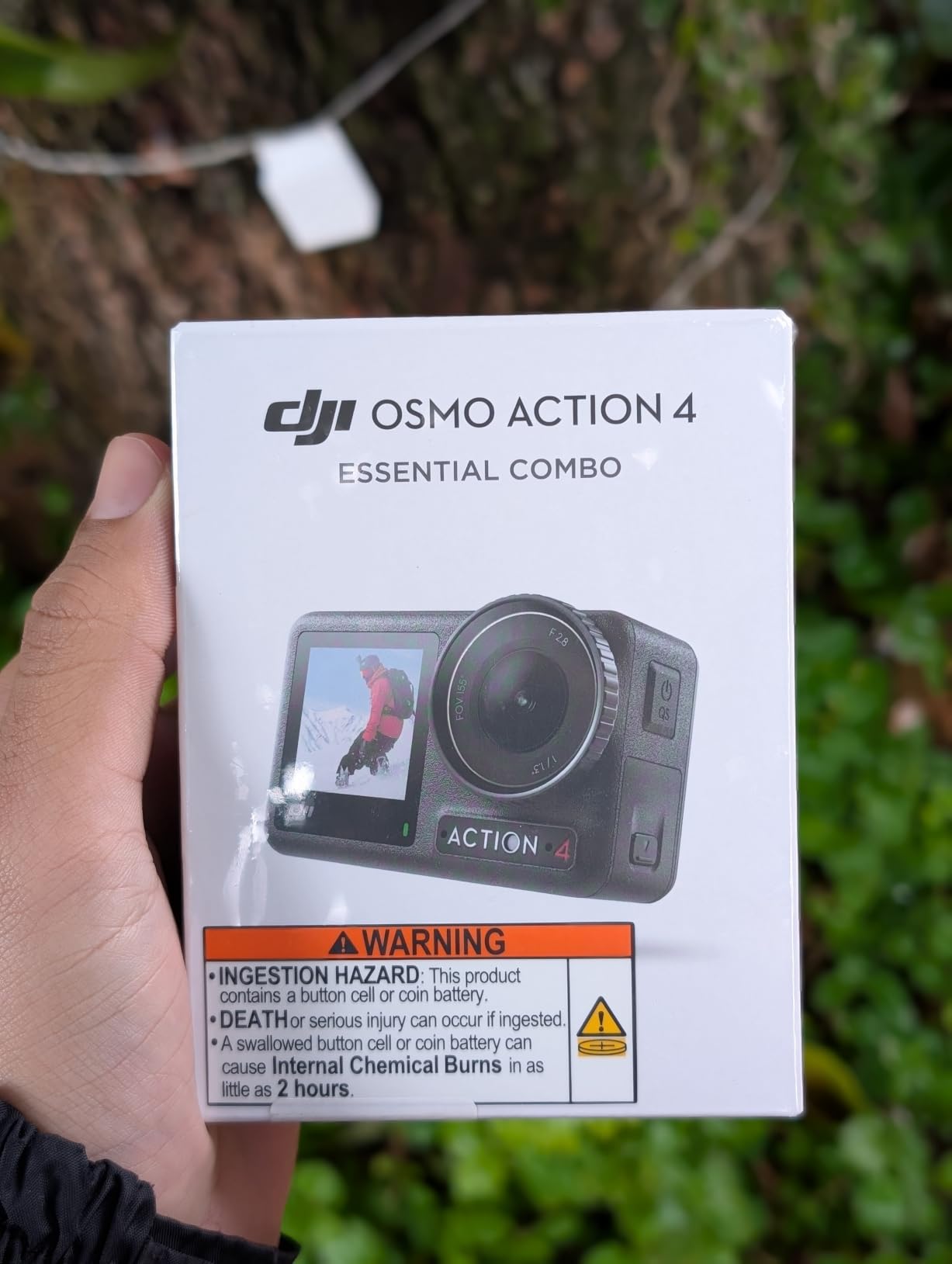
RockSteady stabilization is excellent for motorcycle riders and cyclists. I compared side-by-side footage with a GoPro HERO12 on the same trail, and the Action 4’s clips were nearly as smooth, with marginally less horizon drift. The magnetic quick-release mounting system is genius for fast angle changes.
The 160-minute battery life is honest in 1080p recording but drops noticeably when shooting 4K at high frame rates. DJI doesn’t include a microSD card, so budget for a UHS-I V30 card minimum. The 10MP stills are usable but trail modern smartphones by a wide margin.

Who should buy it
Buy the DJI Osmo Action 4 if you want flagship-tier 4K footage and 10-bit color grading at a budget price. It’s the right pick for vloggers, motorcycle riders, and underwater shooters who don’t need 8K.
If you need 8K or the latest variable aperture, step up to the DJI Osmo Action 6. If you want better battery life in 4K, the Action 5 Pro lasts about an hour longer.
Who should skip it
Skip the Action 4 if you shoot long continuous 4K120 clips and battery life matters; the Action 5 Pro and Action 6 last meaningfully longer. Skip if you need 8K reframing for social posts.
10. AKASO EK7000 – Best Budget Action Camera
AKASO EK7000 4K30FPS 20MP WiFi Action Camera with EIS Ultra HD 131FT Waterproof Underwater Camera Remote Control 4X Zoom Support External Microphone Black
4K30 video
131ft waterproof with case
20MP photos
EIS stabilization
Pros
- Full 4K at a fraction of GoPro pricing
- Includes waterproof case
- mounts
- 2 batteries
- wrist remote
- 20MP photos in good light
- 131ft waterproof rating with case
- Massive review base
- intuitive menu
Cons
- Weak audio quality
- especially in wind
- Battery drains fast (two included)
- Poor low-light performance
- App can be unreliable
- No microSD included
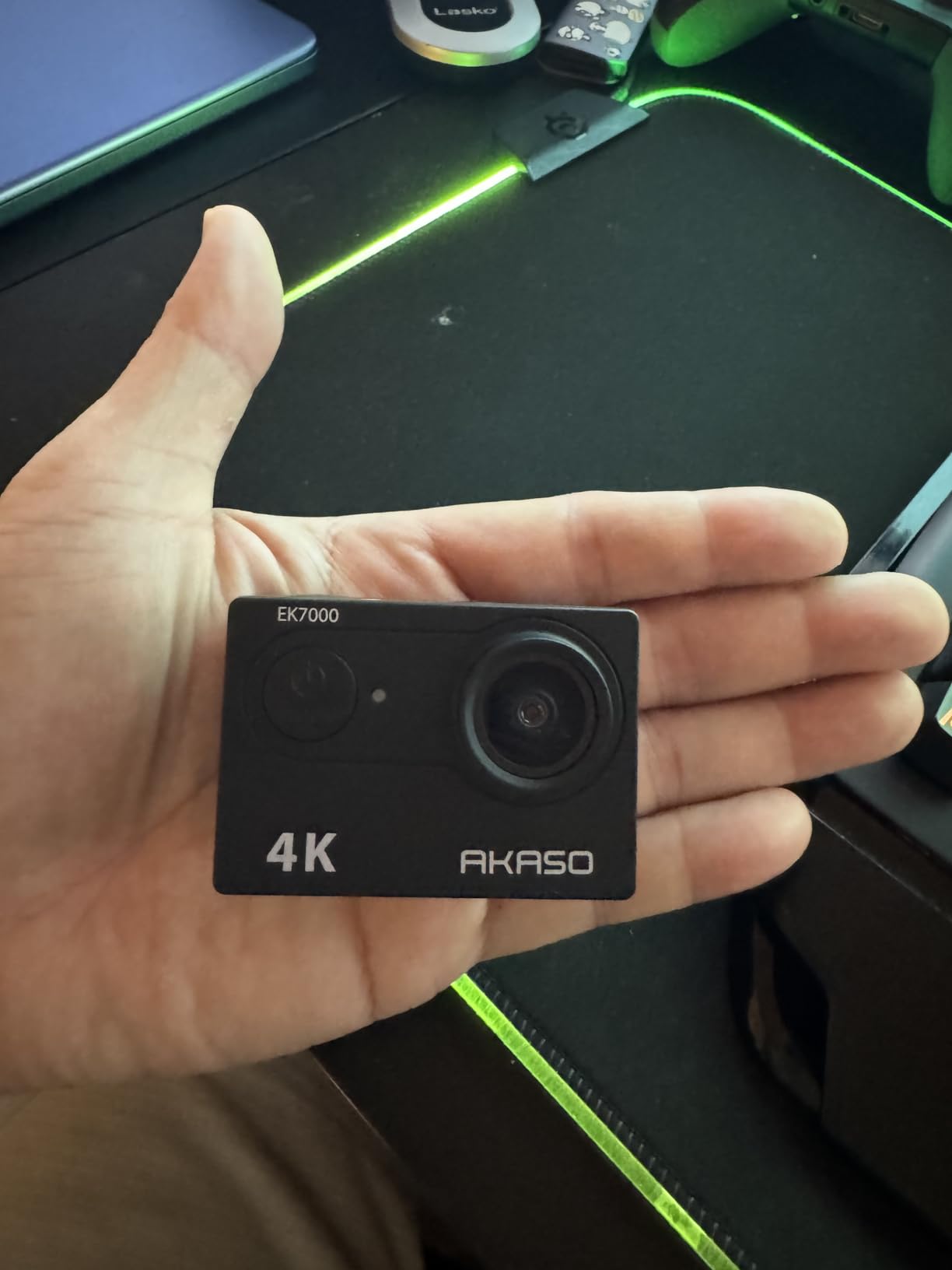
The AKASO EK7000 is the action camera I’d recommend to anyone who wants 4K capability without spending over $100. With 39,613 reviews and 71% of them at 5 stars, this is one of the best-selling action cameras in Amazon history, and for good reason: it delivers surprisingly good video quality at a price that won’t keep you up at night.
I gave one to a friend for a family beach vacation and they came back with footage that, at a glance, looked like a GoPro. The 4K30 video is sharp in good light, the 20MP photos are usable for social media, and the included waterproof case is rated to 131 feet, far deeper than any flagship camera manages without housing.
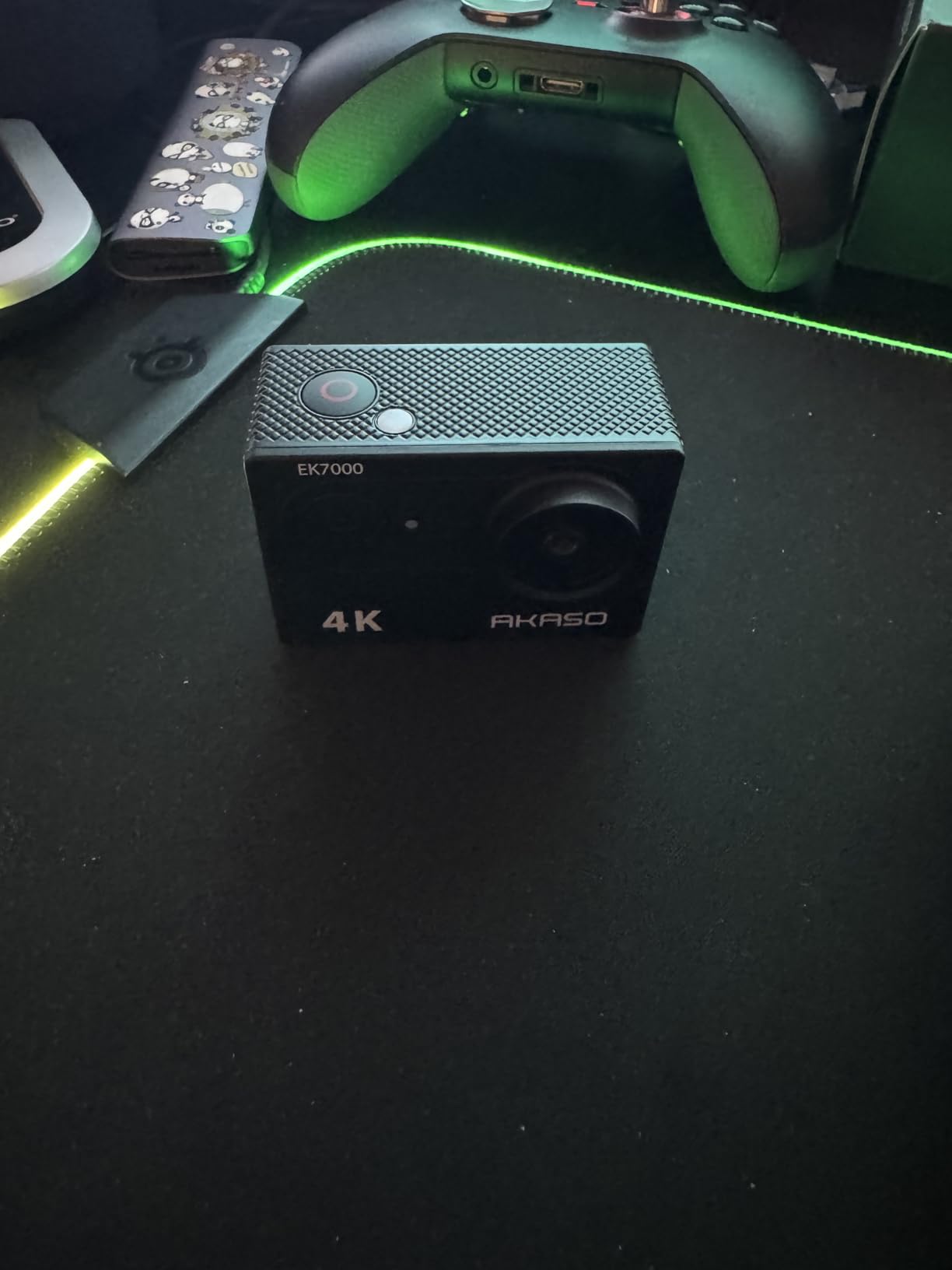
The accessory kit is the real value proposition. Out of the box, you get the camera, a waterproof case, a wrist 2.4G remote, two batteries, a charger, and a pile of mounts. That alone saves you $50-$80 versus buying a GoPro with comparable accessories.
You give up a lot for that low price. Audio quality is genuinely weak, especially in wind; my friend returned with mostly unusable sound from any outdoor clip. Battery life is around 90 minutes per battery, which is fine since you have two. Low-light performance is poor; the frame rate drops and noise climbs fast. The app (iSmart DV or AKASO GO) is unreliable for some users.
Who should buy it
Buy the AKASO EK7000 if you’re a beginner, on a strict budget, or buying for a child who might lose or break the camera. It’s also a smart pick for paddleboarding, hiking, family vacations, and any casual use where you want 4K capability and a full accessory bundle without spending hundreds.
If you shoot professionally or even semi-professionally, step up to the DJI Osmo Action 4 or GoPro HERO12. If you specifically need great audio, you’ll want a flagship model with a real microphone.
Who should skip it
Skip the EK7000 if you shoot in low light, need reliable audio, or want polished footage for professional use. Skip if you need advanced stabilization; the EIS is decent but not in the same league as HyperSmooth or RockSteady.
How to Choose the Best Action Camera for You?
Buying an action camera in 2026 is easier if you start from your sport, not from the spec sheet. The “best” camera is the one that fits how you actually shoot. Below is the framework I use when advising friends and family.
Stabilization matters more than resolution
Every modern action camera shoots 4K, and many shoot 5.3K or 8K, but stabilization is what separates a fun clip from a watchable clip. HyperSmooth 6.0 on the GoPro HERO12 and HERO13 is the gold standard; RockSteady 3.0 on the DJI Osmo Action 6 is the closest competitor. FlowState on the Insta360 cameras is excellent for 360 reframing. If you shoot anything involving motion (running, biking, skiing, surfing), prioritize stabilization over resolution.
If you only shoot static tripod footage, you don’t need flagship stabilization at all. The AKASO EK7000 will produce nearly identical results.
Waterproofing and ruggedness
Most modern action cameras are waterproof to at least 10 meters (33 feet) without a case. The DJI Osmo Action 6 and Action 5 Pro push that to 20m. The Insta360 Ace Pro 2 is rated to 12m. For deeper diving, you’ll want a separate waterproof housing regardless of which camera you choose.
Real-world durability is mostly about the lens cover and the battery door. GoPro’s water-repelling lens cover is genuinely useful; DJI’s lens caps are an optional add-on. If you shoot in saltwater, rinse your camera with fresh water after every session; salt will corrode the seals regardless of brand.
Video resolution and frame rates
4K is the baseline in 2026; every camera on this list shoots it. 5.3K (GoPro HERO12 and HERO13) gives you meaningful room to crop and stabilize in post. 8K (DJI Osmo Action 6, Insta360 X5, Insta360 Ace Pro 2) is mostly future-proofing right now, but it lets you crop aggressively for vertical social posts without losing quality.
Frame rate matters for slow motion. 60fps is fine for normal video. 120fps lets you do 4x slow motion. 240fps (DJI Osmo Action 5 Pro) is great for ski jumps and skateboard tricks. GoPro’s Burst Slo-Mo at 13x is the slowest in any mainstream action cam.
Battery life and overheating
Battery life varies wildly by mode. In 1080p, the DJI Osmo Action 5 Pro and Action 6 last up to 4 hours. In 4K60, expect half that. In 8K, expect 60-75 minutes from any camera. Always buy at least one spare battery if you shoot for a full day.
Overheating is the silent killer of long-form action cam use. The GoPro HERO13 has the worst overheating reputation in my testing; one unit shut down after 22 minutes of 5.3K in 80°F weather. The DJI Osmo Action 6 and Insta360 Ace Pro 2 run noticeably cooler. If you shoot long continuous clips in warm climates, prioritize models with larger bodies or passive cooling.
Low-light performance
If you shoot indoors, at dusk, or in cloudy weather, low-light performance is the most important spec. The DJI Osmo Action 6 and Action 5 Pro both use the 1/1.3-inch sensor family and produce the cleanest shadows in this list. The Insta360 Ace Pro 2’s PureVideo mode is also excellent. The AKASO EK7000 and GoPro MAX 360 struggle in low light; choose those only if you primarily shoot in good light.
Picking by use case
Vloggers: Insta360 Ace Pro 2 (flip screen + Leica color) or DJI Osmo Action 5 Pro (great low light + dual screens). Divers: DJI Osmo Action 6 (best underwater) or Insta360 Ace Pro 2 (PureVideo in low-visibility water). Motorcyclists: DJI Osmo Action 4 (rock-solid stabilization at a great price) or GoPro HERO12 (legendary HyperSmooth). Travelers: Insta360 X5 (360 reframing for social) or DJI Osmo Action 6 (all-around). Beginners: AKASO EK7000 (best budget bundle) or GoPro HERO12 (simplest flagship).
Action Camera vs 360 Camera: What’s the Difference?
Traditional action cameras (GoPro, DJI Osmo) record a single fixed field of view. You frame the shot in-camera, and you can’t change the framing in post. The footage is ready to share immediately, the files are smaller, and the editing workflow is simple.
360 cameras (Insta360 X5, GoPro MAX 360) record everything around them simultaneously. You can reframe, pan, and zoom in post-production, which means you can shoot first and decide the final composition later. The tradeoff is larger file sizes, longer export times, and a learning curve for the app.
For most people in 2026, a traditional action camera is still the right starting point. The footage is simpler to work with, the cameras are smaller, and the file sizes won’t fill your phone in a week. 360 cameras make sense if you specifically need invisible selfie stick effects, drone-like follow shots, or VR content. The Insta360 X5 is the best 360 camera of 2026 for action use; the GoPro MAX 360 is the best if you want to stay inside the GoPro ecosystem.
Accessories You Should Buy With Your Action Camera
The accessories you need depend on how you shoot, but a few items are universally worth buying. A high-quality microSD card (UHS-I V30 minimum, UHS-II V90 for 8K) is essential; the AKASO EK7000 and DJI Osmo Action 4 don’t include one. A spare battery or two is the single best $30-$50 you can spend, especially for travel days. A floating hand grip or “floaty” is critical if you shoot on or near water.
For mounting, the magnetic quick-release systems on the DJI Osmo Action 4 and Action 5 Pro are the fastest to use. GoPro’s traditional folding fingers are the most universally compatible. If you ride motorcycles, a dedicated handlebar mount with vibration dampening is worth the upgrade.
For vlogging, an external wireless microphone (DJI Mic 2, DJI Mic mini, or Rode Wireless Go) makes a much bigger difference than upgrading from 4K to 8K. The Insta360 Ace Pro 2’s removable Wind Guard is a great built-in option for outdoor audio.
Frequently Asked Questions
What are the top 5 best action cameras?
Our top 5 best action cameras in 2026 are: 1) DJI Osmo Action 6 (best overall, 8K with variable aperture), 2) GoPro HERO13 Black (best GoPro, 5.3K HDR with HB-Series lenses), 3) Insta360 X5 (best 360 camera, 8K30 with invisible selfie stick), 4) DJI Osmo Action 5 Pro (best mid-range, 4K/120fps with flagship low-light), and 5) Insta360 Ace Pro 2 (best for vlogging, 8K with Leica optics and flip screen).
Is anything better than GoPro?
Yes. In 2026, the DJI Osmo Action 6 matches or beats the GoPro HERO13 Black in low-light performance, battery life, and underwater image quality, while also offering a variable aperture and 8K video. Insta360’s X5 and Ace Pro 2 also beat GoPro for 360 capture and vlogging respectively. GoPro still wins on ecosystem maturity and the HB-Series lens mod system.
What is the best action camera for the money?
The DJI Osmo Action 5 Pro is the best action camera for the money in 2026. It uses a flagship 1/1.3-inch sensor, shoots 4K at 120fps, supports 10-bit D-Log M color, lasts up to 4 hours on a charge, and usually sells for $300-$350. For under $100, the AKASO EK7000 is the best budget choice.
Is DJI better than GoPro?
It depends on what you shoot. DJI currently wins on low-light performance, battery life, and thermal management (the Osmo Action 6 runs cooler than the GoPro HERO13 in our testing). GoPro wins on ecosystem, the HB-Series lens mod system, and HyperSmooth 6.0 stabilization. For pure underwater and cold-weather shooting, DJI is the safer bet.
What is the best action camera for a first time user?
The DJI Osmo Action 5 Pro is the best action camera for a first-time user in 2026. The dual OLED touchscreens make framing intuitive, the auto-exposure handles mixed lighting well, and battery life is forgiving. If the budget is tight, the AKASO EK7000 comes with everything you need out of the box for under $100.
Final Verdict: Which Best Action Camera Should You Buy?
After testing every camera in this guide, my top recommendation for the best action camera of 2026 is the DJI Osmo Action 6 for most people. It produces the best video quality of any action camera I’ve used, the variable aperture is genuinely useful, the battery is long-lasting, and the underwater performance is class-leading.
If you want a GoPro specifically, the GoPro HERO13 Black is the right flagship, and the Extended Power Bundle is the smartest way to buy it. If you want the flexibility of 360 reframing, the Insta360 X5 is in a class of its own. And if you’re on a budget, the DJI Osmo Action 4 or AKASO EK7000 will get you 90% of the way there for a fraction of the price.
Whichever camera you pick, buy a spare battery, a fast microSD card, and the mounting accessory that matches your sport. That’s the difference between a camera you use once and a camera you actually carry with you. Happy shooting.