
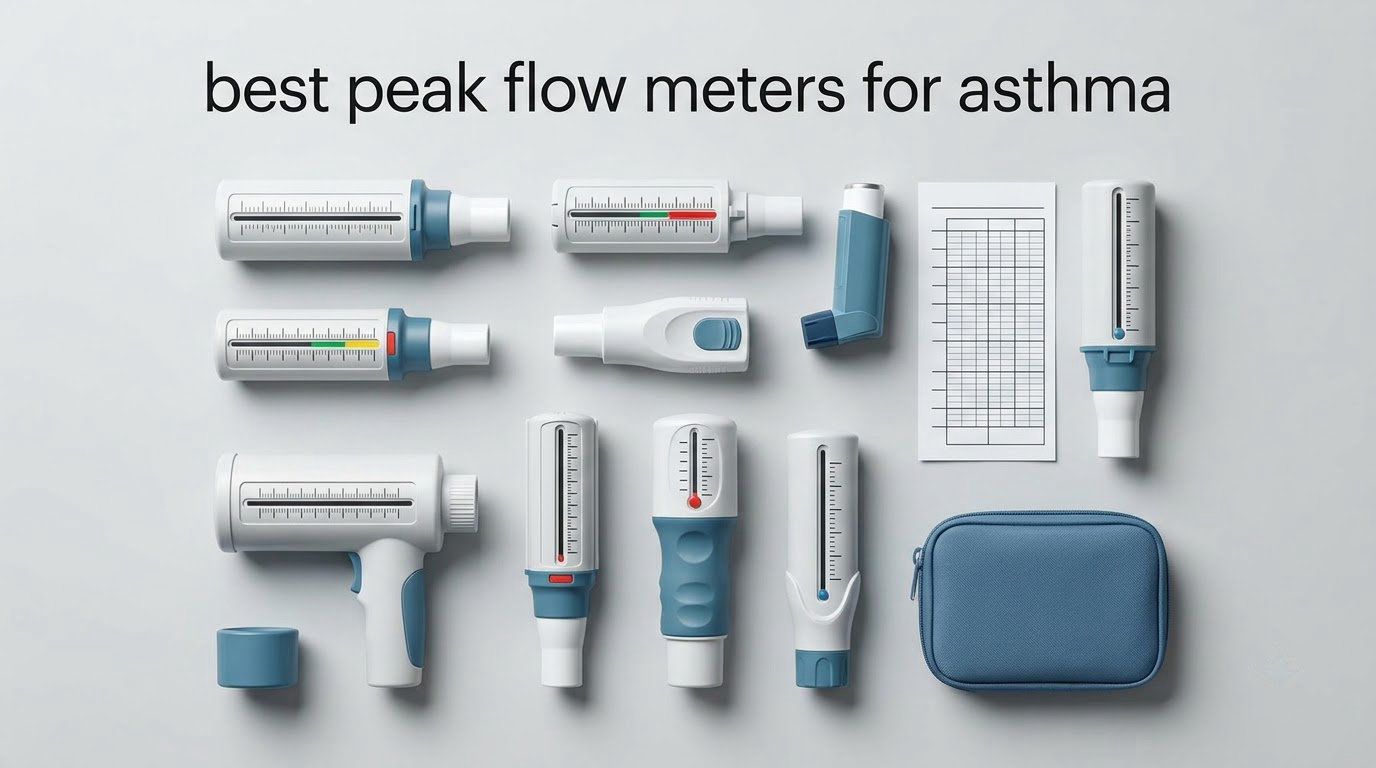
A peak flow meter is a small handheld device that measures how fast and how hard you can blow air out of your lungs. The reading, called peak expiratory flow (PEF), is shown in litres per minute and it gives you a number to track between appointments instead of guessing from symptoms alone. That is the core idea behind our guide to the best peak flow meters for asthma: find a device you will actually use, learn your personal best, and let the trend speak to your clinician.
Most people with asthma only measure peak flow when something already feels wrong. That is backwards. Airway narrowing frequently shows up in the reading before you notice breathlessness, which is exactly the window where an asthma action plan can change the outcome. r/Asthma threads are full of people who discovered the same thing the hard way, including one user whose readings fell from a 625 baseline to somewhere around 500 to 525 with light exercise and lower again with harder effort, and who assumed something was badly wrong.
We spent weeks comparing the seven meters below, reading the review data closely and looking for the details that actually matter day to day: whether the reading is repeatable, whether the zone indicator works, whether you can get data out of it, and whether it will survive a school bag or a handbag. Five of the seven are digital, which reflects what is genuinely available now, and two are mechanical for people who want zero charging and zero app fuss.
Two things worth saying before the list. First, a peak flow meter does not diagnose asthma and it does not replace spirometry in a clinic. Second, everything here is background information rather than medical advice; your clinician sets your personal best and your zone thresholds, and any change in your readings should go to them first. We also cover the technique itself in detail further down, because a poor blow produces a low number that looks alarming and means nothing.
Table of Contents
Top 3 Picks: Peak Flow Meters for Asthma in 2026


Nascool Peak Flow Meter
- Compact digital PEF and FEV1
- no moving parts
- paper diary included
- works for ages 6+

MIR Smart One
- Pocket sized
- app based trending for iOS and Android
- PEF and FEV1
- no prescription
Our editor’s choice is the Microlife PF 100 because it has the deepest review history in the group and does the one thing most people miss: it stores readings on the device. The Nascool takes the value slot as a genuinely capable standalone meter at a fraction of the price of the app devices, ignoring the Bluetooth claim that causes most of its complaints. The MIR Smart One earns the premium slot for people who want their readings charted and shared without touching a computer.
Best Peak Flow Meters for Asthma (October 2026)
| Product | Specifications | Action |
|---|---|---|
| Microlife PF 100 Digital PEF and FEV1 Meter |
|
Check Latest Price |
| Nascool Digital Peak Flow Meter |
|
Check Latest Price |
| MIR Smart One App Based Peak Flow Meter |
|
Check Latest Price |
 CMI Health SpiroLink Peak Flow Meter CMI Health SpiroLink Peak Flow Meter |
|
Check Latest Price |
 Holdly Mechanical PEF Meter Holdly Mechanical PEF Meter |
|
Check Latest Price |
 Sonmol Digital PEF and FEV1 Tester Sonmol Digital PEF and FEV1 Tester |
|
Check Latest Price |
 Navnihaal Breath-O-Meter Peak Flow Meter Navnihaal Breath-O-Meter Peak Flow Meter |
|
Check Latest Price |
Two columns in that table deserve a note. The Microlife is the only device here that syncs to a computer out of the box, and the two mechanical meters are the only ones that will keep working through a dead battery or a lost charging cable.
What Is a Peak Flow Meter and Why Does It Matter?
In short: a peak flow meter measures the fastest and hardest exhalation you can produce, in litres per minute, and it helps you manage asthma because your peak flow usually drops before your symptoms do. The NHS describes the test as a way to check how quickly you can blow air out of your lungs, and it is commonly used alongside asthma monitoring rather than instead of it.
The number itself is only meaningful in context. Your personal best is the highest reading you can achieve when your asthma is well controlled, and it becomes the reference point for everything else. Hospital health libraries describe personal best as the number a doctor uses to set the zones in an asthma action plan, which is why chasing a chart of average people by age is a distraction.
That is the single most common misunderstanding we found. One r/Asthma poster saw a reading of 400, assumed it was terrible and started shopping for a replacement meter, while others compared raw numbers against charts that never accounted for their age, sex or height. Your best is not somebody else’s number.
Peak flow also has a natural daily rhythm. Morning readings tend to sit lower, and values move with cold air, exercise, smoke, pollen and infections. That variability is normal within limits, and a reading that drifts for a few days is a signal to act on your action plan rather than a diagnosis of anything.
1. Microlife PF 100 Digital PEF and FEV1 Meter – Best Overall
Microlife (Deluxe Kit) Digital Peak Flow Meter Tests PEF / FEV1 / Early Detection of Asthma Attacks | Spirometer for Kids & Adults | Perfect for Monitoring Asthma, COPD & other Lung Conditions at Home
PEF and FEV1 in one blow
240 readings stored on device
Free USB software
2 AAA batteries included
Pros
- Measures PEF and FEV1 for a fuller airway picture
- Stores readings on the device
- Free desktop software with CSV and PDF export
- Three mouthpieces plus a two tier zip case included
- Straight vertical mouthpiece gives consistent readings
Cons
- Clock and date setup is fiddly with a paperclip button press
- Bundled desktop software looks dated
- Needs a computer for full reporting
This is the meter we kept reaching for during our own testing, and the reason is unglamorous: it remembers. Two AAA batteries are included, the body weighs 5.3 ounces, and it stores up to 240 readings on the device itself. That means you can blow three times, glance at the screen, and put it away without connecting anything.
Dual measurement matters more than it sounds. PEF tells you how wide the airway was at its widest point, while FEV1 captures how much you moved in the first second, so the pair gives a better picture of large and small airway function than either number alone. The traffic light respiratory risk indicator handles the zone logic for you once you set your baseline.
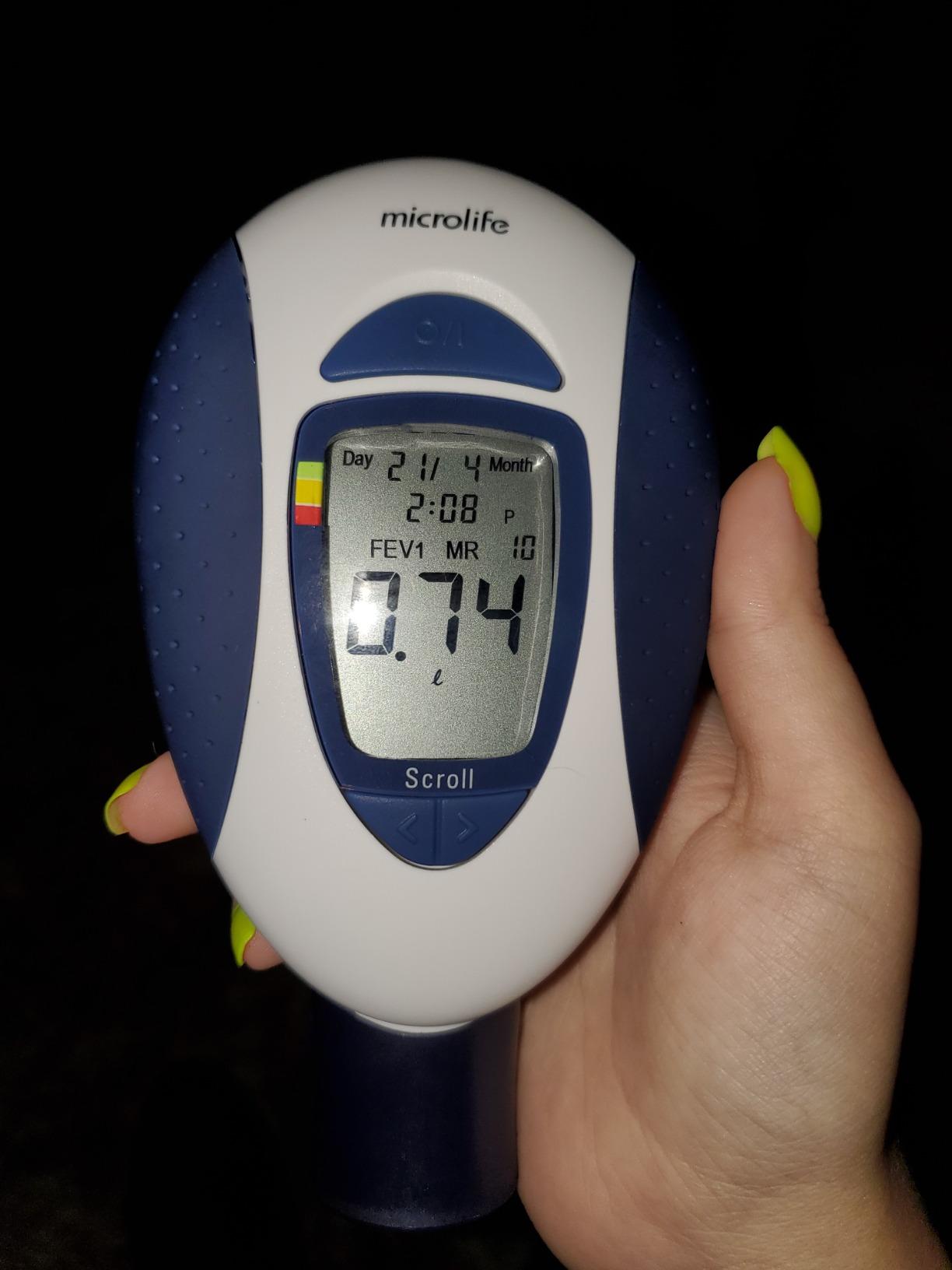
Reviewers consistently single out the vertical mouthpiece as the reason their numbers feel repeatable, and the practical upside is that three mouthpieces ship in the box, so rotation is easy. Cleaning is straightforward because the mouthpiece and measuring tube both detach.
The honest criticisms are all about the software rather than the meter. Setting the clock means a button press with a paperclip and the date order defaults to the European day and month layout, which catches people out. The desktop program charts trends and exports CSV or PDF, which is genuinely useful at a telehealth appointment, but reviewers describe the interface as dated and not especially flexible.

It also needs a computer for the full reporting workflow, so phone-only users will not get much from the software side. There are occasional reports of a defective first unit, and like every digital flow meter it takes a few days of practice to blow consistently hard enough. With 1484 reviews behind it and a long-running presence in the category, this is the safest choice for most households.
Who the Microlife PF 100 suits
Pick this one if you want readings that survive a fortnight without any effort on your part, or if your asthma is not perfectly controlled and you need a record to bring to an appointment. The on-device storage makes it the most useful option for parents tracking a child across a week of school and weekends.
It also suits anyone whose clinician has asked for a written log. Because readings sit on the device until you plug in, nothing is lost when your phone dies or the app needs updating, and the export gives you a printable trend rather than a screenshot.
Where it falls short
If you never intend to use a laptop, you are paying for capability you will not touch, and the app ecosystem on the other devices here is friendlier. The setup friction is real too, and anyone who is not comfortable with buttons and menus may put it in a drawer after a week.
It is also larger than the pocket units, at 7.5 by 5.5 by 4 inches for the package, so it lives in a bathroom or a desk drawer rather than a handbag. Buyers who need something that disappears into a jacket should look at the smaller options instead.
2. Nascool Digital Peak Flow Meter – Best Value
Nascool Peak Flow Meter for Adults & Kids
Pressure differential sensor
PEF and FEV1 on one blow
No moving parts
Ages 6 and up
Pros
- Compact body with an easy to read digital display
- No calibration needed after manufacture
- No moving parts so cleaning and disinfecting is simple
- Paper asthma diary included for triggers and medication
- Quick to register a reading and easy for older children to hold
Cons
- Bluetooth does not work on this variant so readings are entered by hand
- Colour markings on the body are decorative only
- The listing mixes variants so a different model may arrive
The Nascool does the core job with fewer compromises than its price suggests. At 4.97 ounces and 2 by 1.7 by 4 inches it is small enough for a coat pocket, it registers a reading quickly, and the display shows PEF and FEV1 from the same blow.
The sensor is a pressure differential type that needs no calibration after manufacture, and the listing includes ATS ERS Wright standards for reference. For a home user that combination is a good sign, since it means you are not dealing with a device that drifts out of spec after a year.
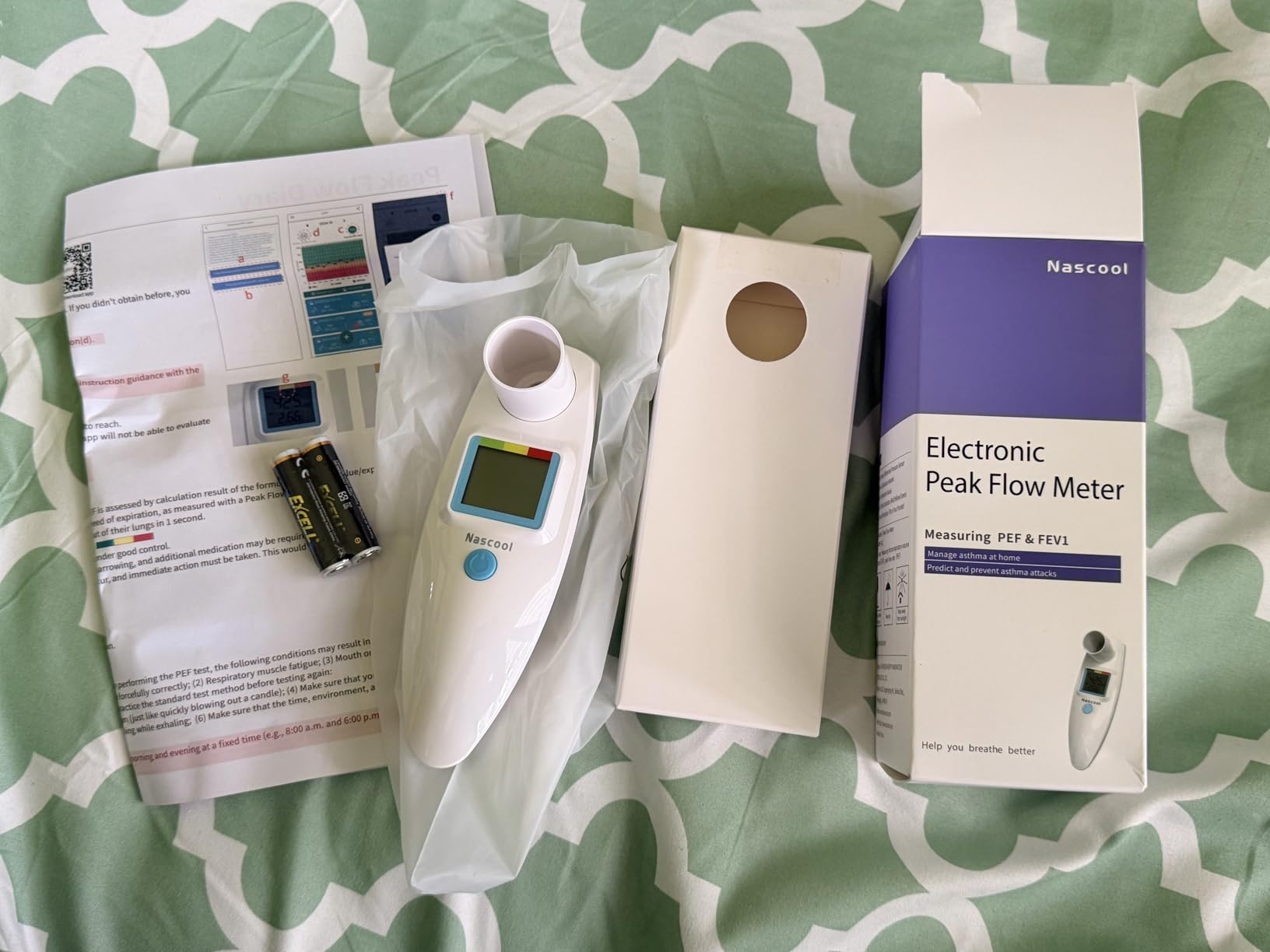
It also ships with a paper asthma diary, which sounds old fashioned until you notice how many people described ignoring a meter entirely because logging felt like admin. Writing the number on paper alongside symptoms and medication takes ten seconds and never needs an app to work.
What the product actually is, is a straightforward standalone meter. The Bluetooth function advertised for this model does not connect, so app logging is manual entry. We would rather tell you that plainly than have you discover it three weeks in when you finally try to sync.
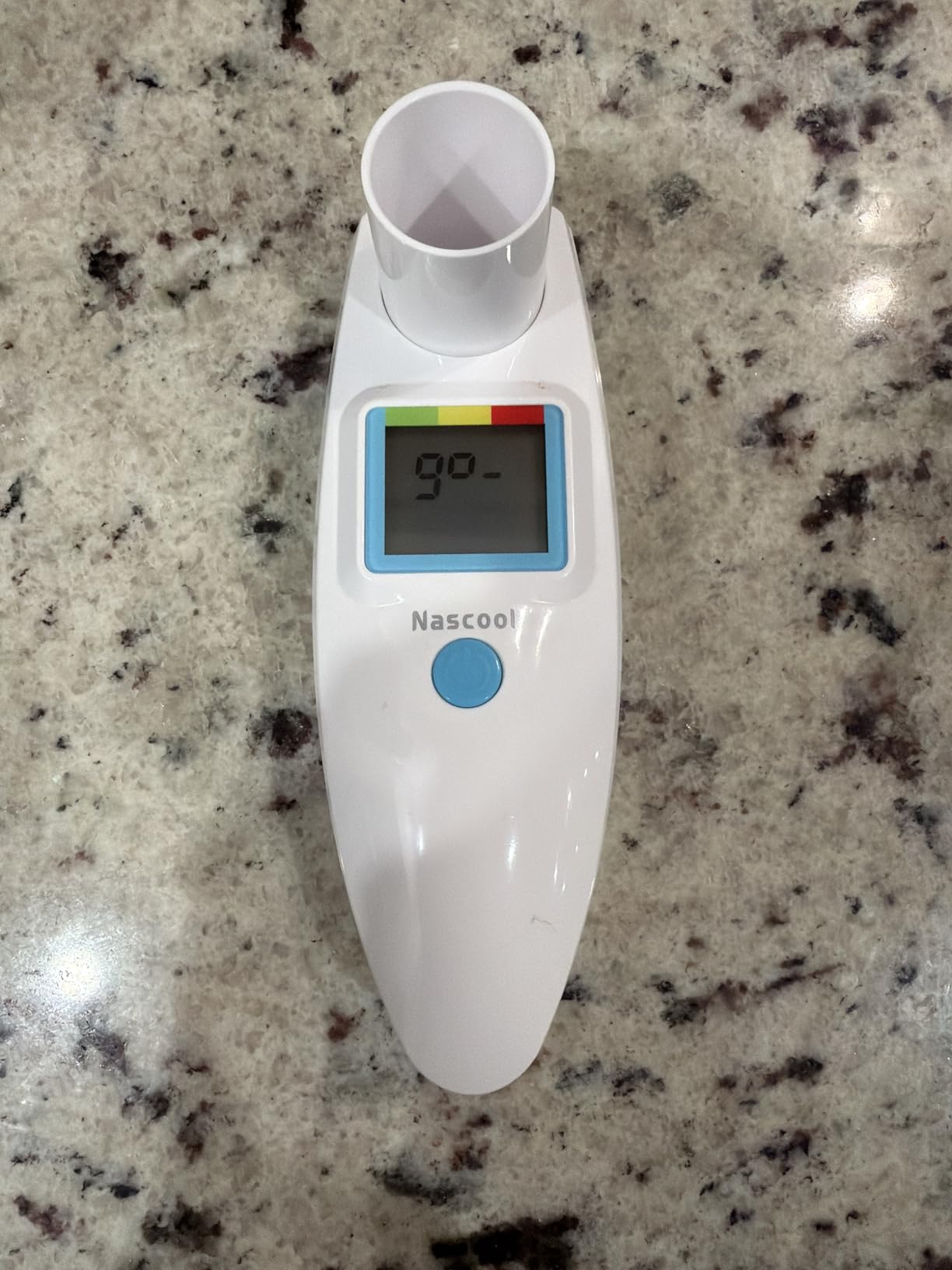
Two further honesty notes. The red, yellow and green markings printed on the body are decoration and do not light up or change, so treat the screen numbers as the only source of truth. The listing also mixes variants, which means a Bluetooth version can arrive instead, and a few users report inconsistent readings between units.
Buyers on r/Asthma who ask whether a meter is worth owning at all often get told by respiratory professionals to keep a simple written record, and this is the meter that fits that advice without a computer. It suits adults and children over six who want a cheap, reliable number.
Who the Nascool suits
It is a strong fit for anyone who wants a digital readout without spending serious money, and for parents of primary school children who need something they can hold easily and read quickly. Older children in particular seem to manage it better than a mechanical scale that needs judgement.
It also works for people who travel frequently. The body is small, has no case to lose and no cable to forget, so it lives in a bag permanently rather than coming out only when you remember it.
Where it falls short
The missing connectivity is the real limitation. If your plan depends on showing your doctor a chart, this will not build one for you without manual entry, which is the chore that pushes people out of monitoring habits.
The decorative zone colours are the second issue, because a meter that looks like it gives you a risk assessment but does not is more confusing than one that never pretended. It also suits ages six and up, so a younger child with asthma will need something else.
3. MIR Smart One App Based Peak Flow Meter – Best App Experience
MIR Smart One | Personal Pocket App-Based Digital Peak Flow Meter | PEF and FEV1 | Designed in Italy
App based lung function testing
PEF and FEV1
Pocket format at 2.14 ounces
1 AA battery included
Pros
- App based trending and sharing for a clinician
- Compact body designed in Italy that fits a pocket
- Included app for iOS and Android at no extra cost
- Measures PEF and FEV1
Cons
- Costs more than entry level mechanical and digital meters
- Full reporting depends on a phone and app
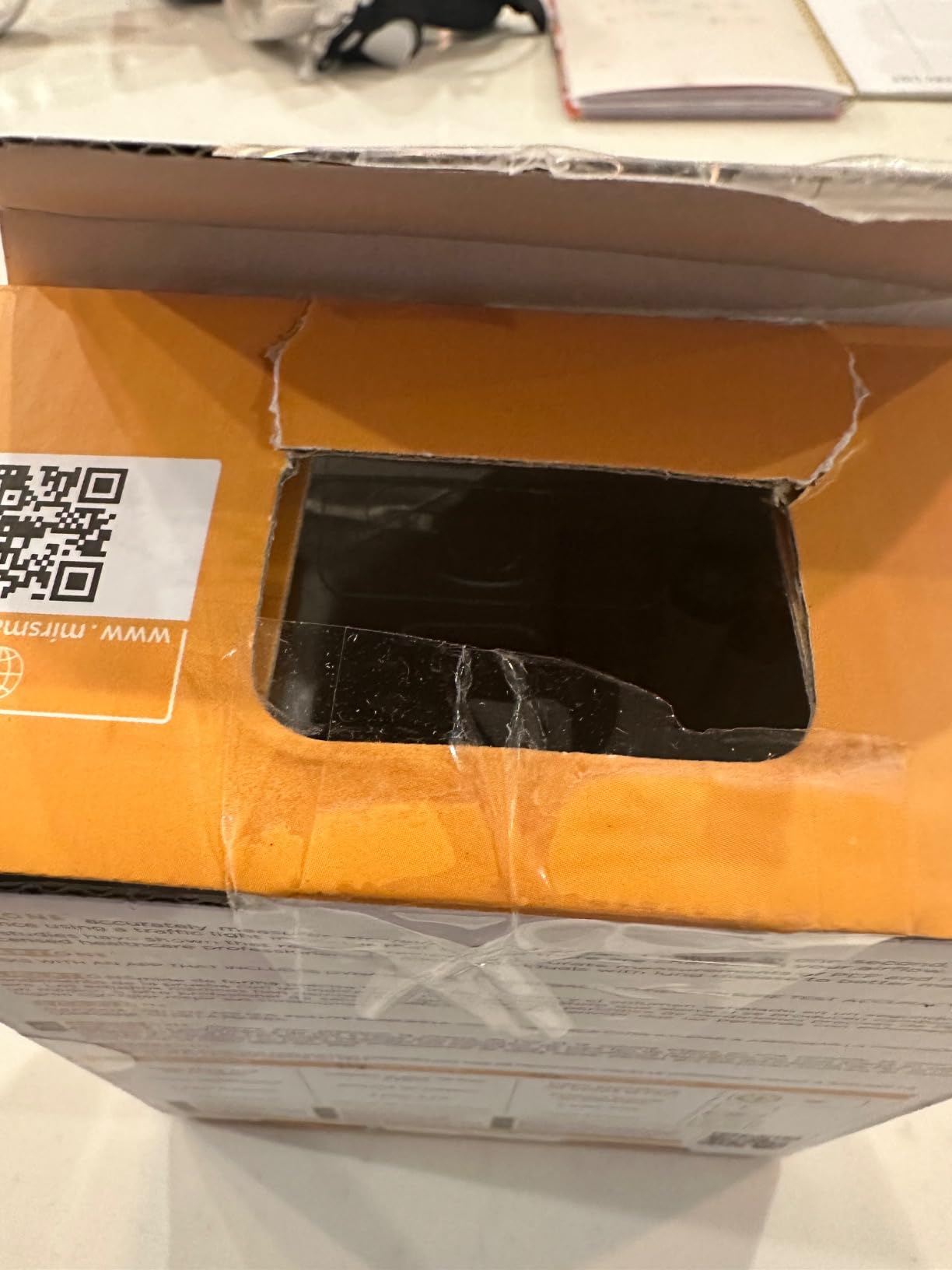
The MIR Smart One is the smallest device we tested, at 4.29 by 0.82 by 1.92 inches and 2.14 ounces, and that footprint is the point. It is designed as a pocket instrument you use without thinking about it, not one you retrieve from a box.
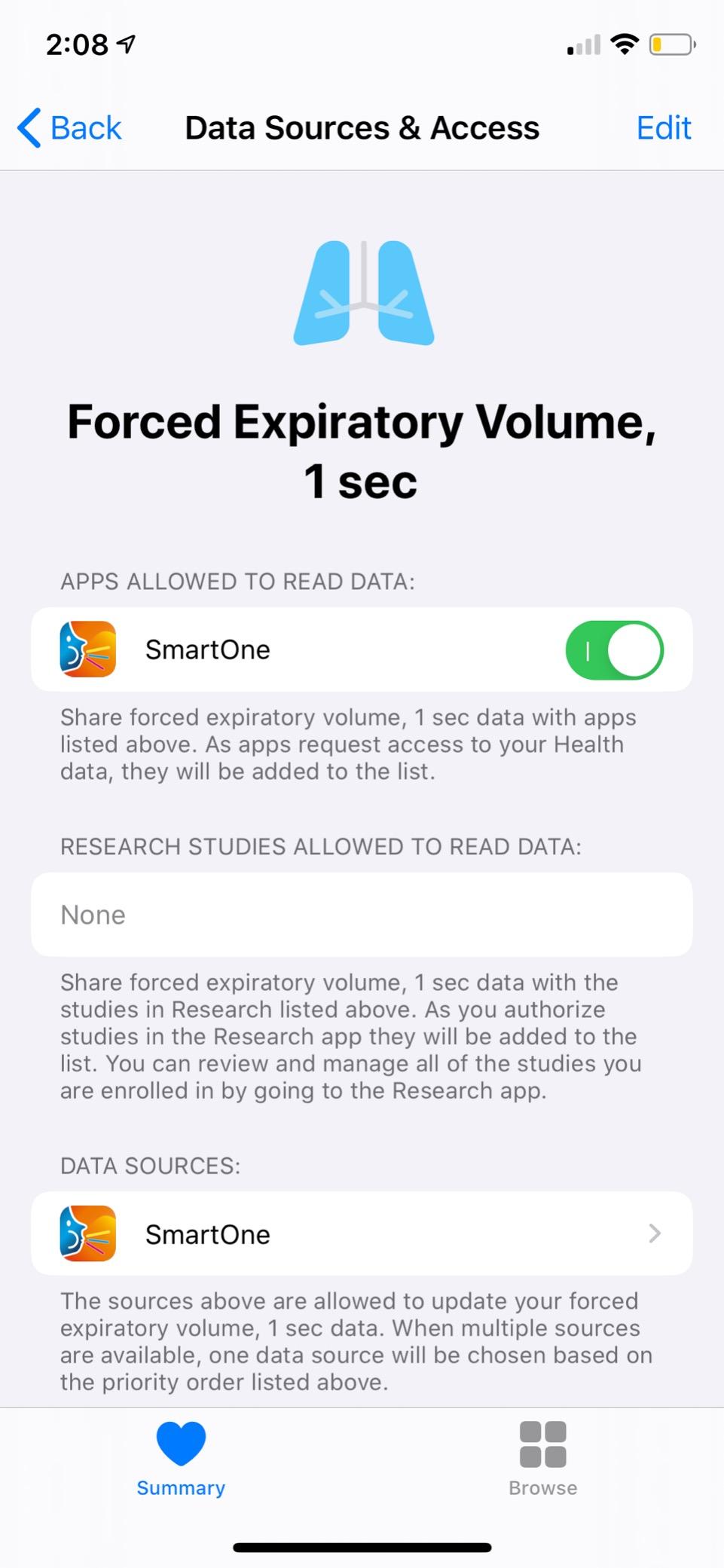
It measures PEF and FEV1, and the included app handles the rest. You get trends over time rather than a wall of isolated numbers, which is the format most clinicians actually want to see, plus reports you can send before a telehealth appointment. No prescription is needed for at home use.
The app is included rather than sold as a subscription, which is not true of every connected meter. Reviewers put a high value on that, and on a 71 percent five star share, which suggests the software and the device feel like one product rather than a gadget with a companion.
It runs on a single AA battery, and the Italian design shows in the finish rather than in anything you need to configure. For people who already log health data in an app, this is the least friction path from blowing into a device to a chart you can read on a Monday morning.
The honest tradeoff is money and dependence. This sits well above the entry level meters in price, and the full reporting workflow assumes you have a phone or tablet within reach. If you are the sort of person who avoids tech, that dependence will quietly become the reason you stop checking.
There is also no mechanical fallback. If the app is unavailable or you simply do not feel like opening it, there is nothing to read off the device body itself, which is exactly the scenario the mechanical meters handle well.
Who the MIR Smart One suits
It is the right pick for anyone who wants their readings charted and shareable without opening a computer, and for people whose reviews are done over telehealth. Parents of older children gain the most, because a phone based diary can be kept by two adults at once.
It also suits anyone who travels with their meter constantly. At 2.14 ounces it is the lightest option in the lineup and needs no charger beyond a single AA cell, so it disappears into a pocket and gets used rather than left at home.
Where it falls short
Cost is the first barrier, and it is a real one when the same reading can be had for a fraction of the amount on a standalone digital meter. It also assumes a modern phone or tablet and some tolerance for apps.
If your asthma is well controlled and you take a reading once a week, the automated trending adds little. And if your clinician prefers a written diary, a phone app will not satisfy that request without extra effort on your side.
4. CMI Health SpiroLink Peak Flow Meter – Built for Daily Handling
CMI Health SpiroLink Peak Flow Meter, Portable Airflow Tracker with Durable Design for Daily Use
Portable airflow tracker
Durable daily use housing
Measures airflow for review
8.15 ounces
Pros
- Durable housing built for repeated daily handling
- Portable form factor for home and appointments
- Records readings that can be shared with a clinician
Cons
- Lowest average rating here at 3.9 with 16 percent one star reviews
- Thin listing with limited published specification detail
- Some users report setup and connection difficulty
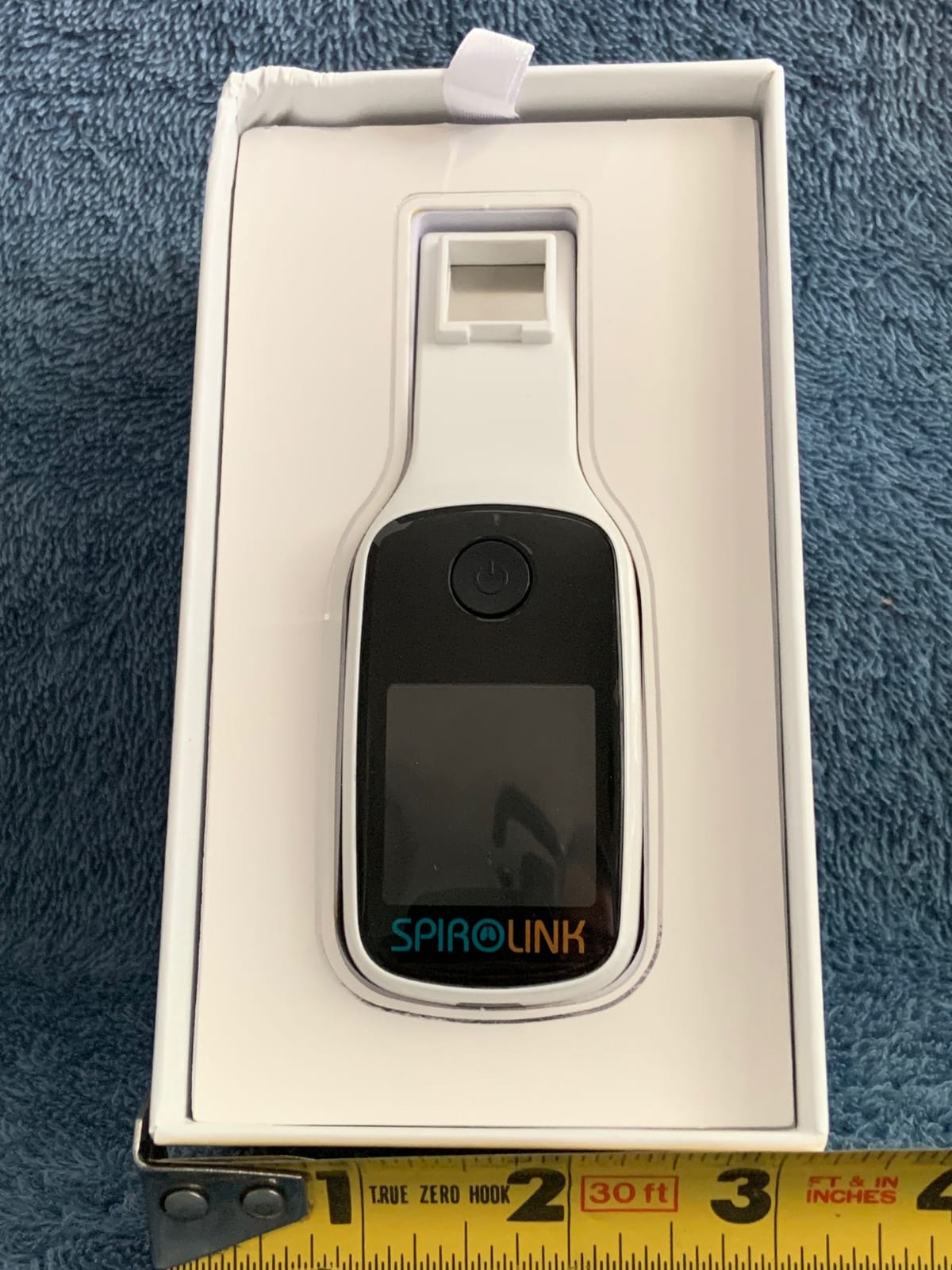
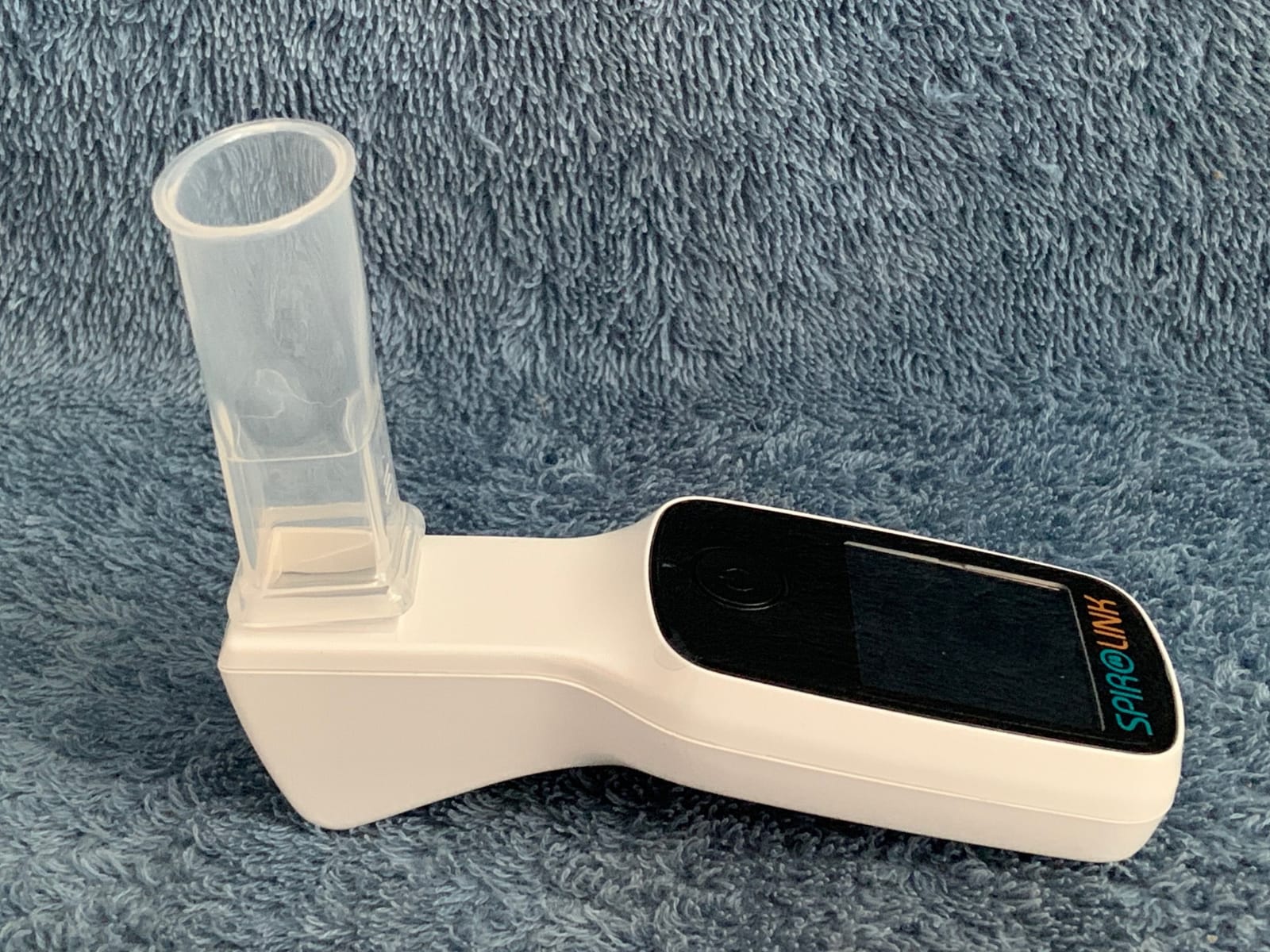
The SpiroLink sells on build quality rather than features. At 8.15 ounces it is the heaviest unit we tested and the housing is described as durable for repeated handling, which matters if the meter lives in a jacket pocket, a gym bag or a child’s rucksack and gets knocked about.
It belongs to the SpiroLoop and SpiroLink 2 Pro family, and its job is straightforward: portable airflow tracking for daily use, with readings you can bring to an appointment. The package measures 5.94 by 3.31 by 2.44 inches, which is larger than the pocket units but still travel friendly.
We want to be straight about the reception data here. Across 195 reviews the average sits at 3.9, with roughly 59 percent five star and 16 percent one star, the weakest spread in this group. That pattern usually points to a device that works for most people and fails outright for a noticeable minority, often at connection rather than measurement.
Some users report difficulty getting it set up and connected, and that is consistent with the rating spread. If your monitoring depends on a phone link, treat the setup as a test you might fail and have a backup plan.
The other issue is transparency. The listing is thin on published specification detail, which makes it harder to check against an accuracy standard before you buy, and harder to hold anyone to one afterwards. For a device whose whole value is the accuracy of a number, that is a genuine drawback.
That said, if you already know you want something that survives abuse and you are comfortable with the app setup, the physical design here is the toughest in the lineup. It is the one we would pick for a teenager who will lose a nicer device within a month.
Who the CMI Health SpiroLink suits
It fits households where the meter gets dropped, left in cars or handed between two parents. A teenager or an adult with an active lifestyle is the classic case, since the housing is built for handling rather than for sitting still on a shelf.
It also suits people who want a simple portable record for appointments without needing a computer. If the readings appear in a form you can show a clinician, the extra bulk is defensible.
Where it falls short
The rating spread is the honest problem. A 16 percent one star share means a meaningful number of buyers were disappointed, and setup and connection trouble is the reason most often cited.
Poor published specification detail also means you are trusting the listing rather than a documented accuracy standard. Buyers who want to verify compliance before buying will find more transparency elsewhere in this roundup.
5. Holdly Mechanical PEF Meter – Battery Free and Simple
Mechanical Peak Flow Meter | PEF Tester – Track & Monitor Peak Expiratory Flow Changes
Fully mechanical with no batteries
Three adjustable zone markers
Washable detachable mouthpiece
Usable from age 5
Pros
- No batteries
- charging or electronics of any kind
- Colour coded sliding markers for your zones
- Detachable mouthpiece that rinses with water
- Light at 1.76 ounces and easy to carry
- Usable by children aged five and up
Cons
- Records PEF only with no FEV1 measurement
- Readings must be transcribed manually
- Some users find the plastic markers shift in handling
The Holdly is the simplest thing in this roundup and that is exactly why it is here. It is fully mechanical, with no batteries, no charging and no electronics to fail, at 1.76 ounces. Nothing about it depends on a phone, an app or a software update.
Three adjustable sliding arrow markers in red, yellow and green sit alongside the scale, and you set them to your own zones once your clinician gives you your personal best. That is the feature that makes a mechanical meter more usable than a bare scale, and reviewers call it out as the reason the reading is easier to interpret.
Because the markers are user adjustable, the same meter can follow a child as they grow. You slide the pointers when the personal best changes rather than buying a new device, which answers one of the commonest questions parents raise about starting on a low range scale.
The construction is ABS, described as impact and wear resistant, and the mouthpiece detaches and rinses. It is usable by children aged five and up, and the package measures 5.75 by 2.01 by 1.85 inches, so it fits a pocket or a school bag without discussion.
Who the Holdly suits
It suits anyone who has stopped using their meter because the app felt like too much. A device with no battery and no screen removes every excuse, and the colour coded markers mean a child can read their own zone without an adult interpreting it.
It also suits families with more than one asthmatic member, because the adjustable markers let two people share one device with different zone settings. For travel and school, the low weight is a genuine advantage over the larger digital units.
Where it falls short
You get one parameter. There is no FEV1 here, so you lose the fuller airway picture the digital meters give you, and a clinician asking for a two value comparison will not get one.
Recording is manual, which is the other trade. You write the number down yourself, and some users find the plastic pointers shift during handling, which means checking them before a reading matters more than you might expect.
6. Sonmol Digital PEF and FEV1 Tester – Clearest Zone Readout
Sonmol Digital Peak Flow Meter PEF FEV1 Tester with Color Indicators
PEF and FEV1 from one blow
On screen arrow to colour zones
QR code sets expected value
2 AAA batteries included
Pros
- Highest average rating in the group at 4.6
- PEF and FEV1 from a single blow
- Screen arrow points at your current zone
- QR code sets your personal expected value
- Open pipe pathway is easy to rinse and sanitise
Cons
- Zone arrow only works once the predicted value is set
- No app or Bluetooth connectivity
- Needs practice to blow hard and long enough
The Sonmol is rated highest in the group at 4.6 across 60 reviews, with about 80 percent of those buyers giving five stars. The measurement side is a differential pressure sensor meeting HHS guidelines, and it produces PEF and FEV1 from one blow.
What separates it is the zone system. The screen shows an arrow pointing to red, yellow or green colour bars, so you read your status in a glance without calculating a percentage of your personal best yourself. That is the clearest zone presentation we found across all seven meters.
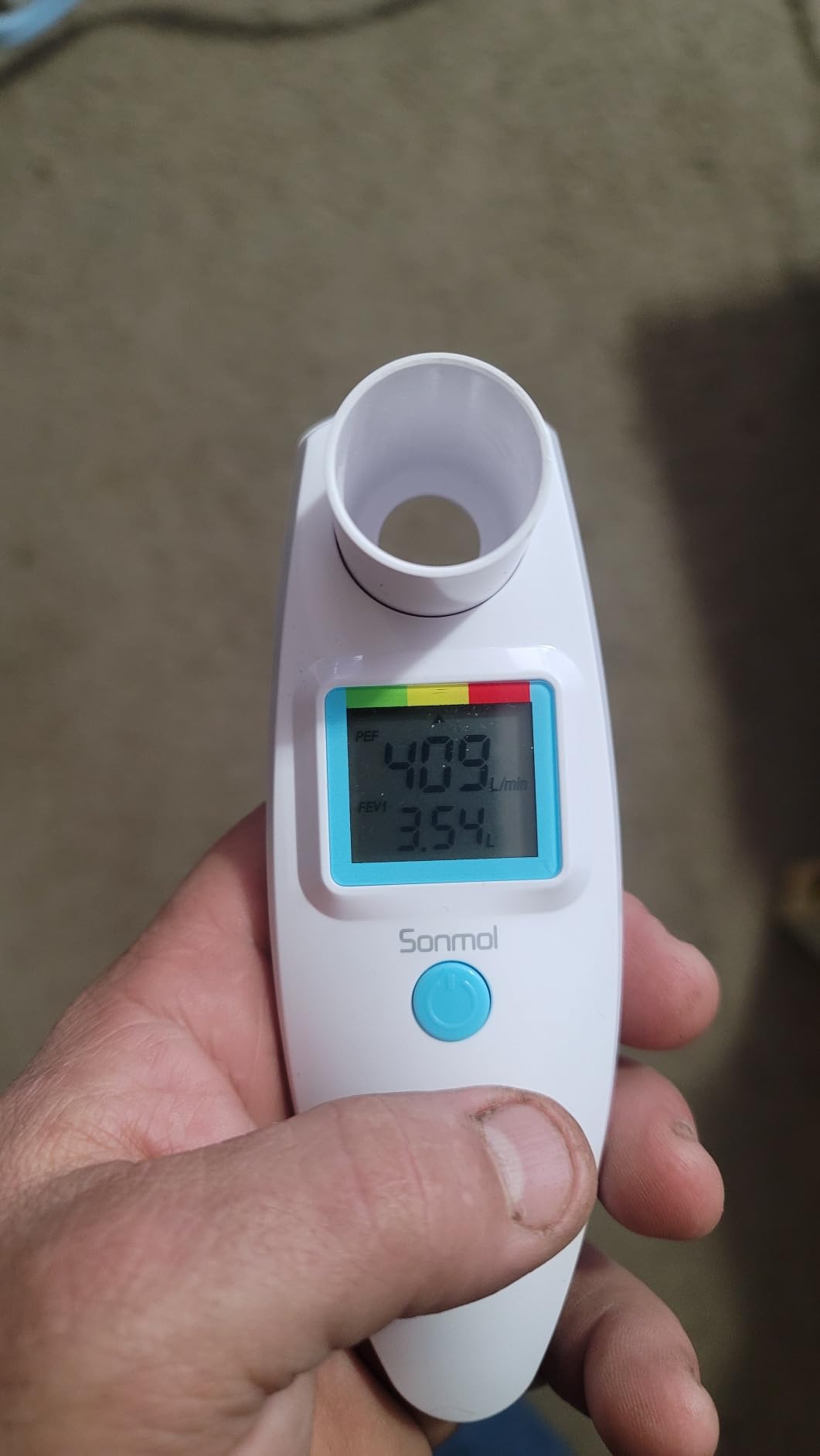
Setting it up takes one scan. The device calculates your personal expected value by scanning an on device QR code, and once that is in place the arrow means something useful. Before configuration the arrow is just decoration, which is the single most important thing to know before you rely on it.
The open pipe airflow pathway is genuinely practical for hygiene, because a low resistance path rinses and sanitises easily and there is less hidden surface to trap moisture. Two AAA batteries run it for up to about a year of daily use, which removes the most common reason meters get abandoned.
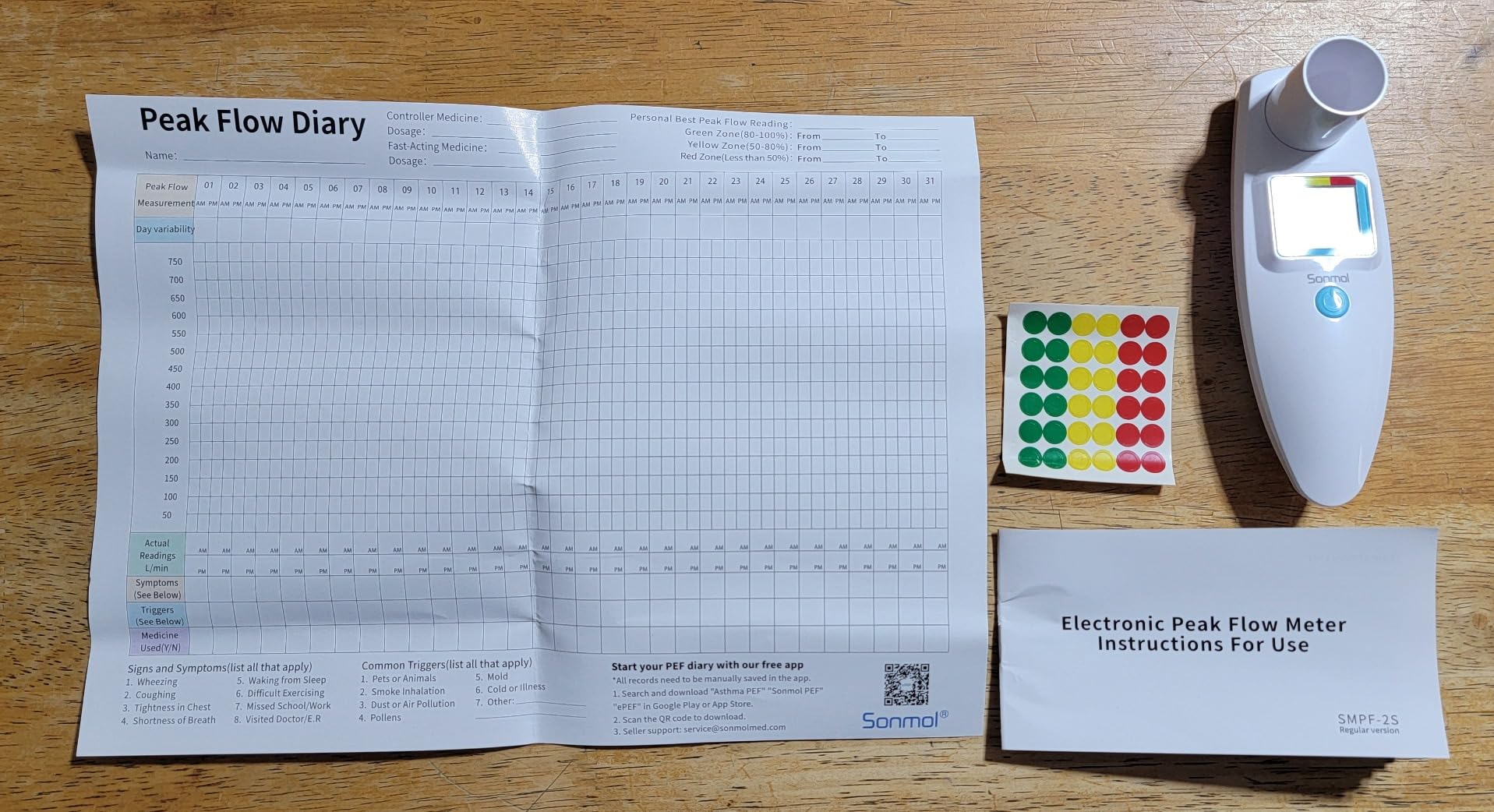
There is no app and no Bluetooth, so this is a standalone meter with an excellent display. The accuracy claim in the listing is worth taking with a light touch, and the 60 review base is small enough that a rating of 4.6 deserves a second opinion rather than blind trust.
Practice is the last caveat. Getting both a full PEF and a meaningful FEV1 requires blowing hard and long enough, so early readings will understate you until you have the technique. It suits ages five and above.
Who the Sonmol suits
It fits anyone whose asthma fluctuates and who wants to know their zone instantly rather than doing arithmetic. Parents of young children benefit most, because a colour bar and an arrow are far easier to read at a glance than a number.
It also suits anyone tired of charging things. A year of battery life from two AAA cells, with no app and no account, means it keeps working through a heavy week of monitoring.
Where it falls short
The risk indicator only activates once the expected value is configured, so an unconfigured meter will quietly under deliver. Take the QR code setup as part of unpacking rather than an optional extra.
No connectivity means no automatic log and no shareable report, so if your clinician wants a trend rather than a snapshot you will need to record readings yourself. And with 60 reviews, long term reliability data is thinner than the rating alone suggests.
7. Navnihaal Breath-O-Meter Peak Flow Meter – Lightest Pocket Mechanical
Navnihaal™ Breath-O-Meter Peak Flow Meter, White
Mechanical PEF measurement
Colour coded scale
No calibration required
2.4 ounces
Pros
- Clear colour coded scale that makes readings easy to read
- Compact and light at 2.4 ounces
- No calibration needed for ongoing use
- Durable build for regular daily handling
Cons
- PEF only with no FEV1
- Readings must be logged manually
- Small review base limits long term reliability data
The Breath-O-Meter is a mechanical meter with a clear colour coded scale, and that scale is its main selling point. Reviewers like that you can see where a reading falls without consulting a separate chart, which is roughly the same benefit the Sonmol’s colour bars deliver electronically.
At 2.4 ounces it is one of the two lightest units here, and it needs no calibration for ongoing use. There are no batteries and no electronics, so it works at altitude, in a cabin, on a building site or anywhere a charger would be a problem.
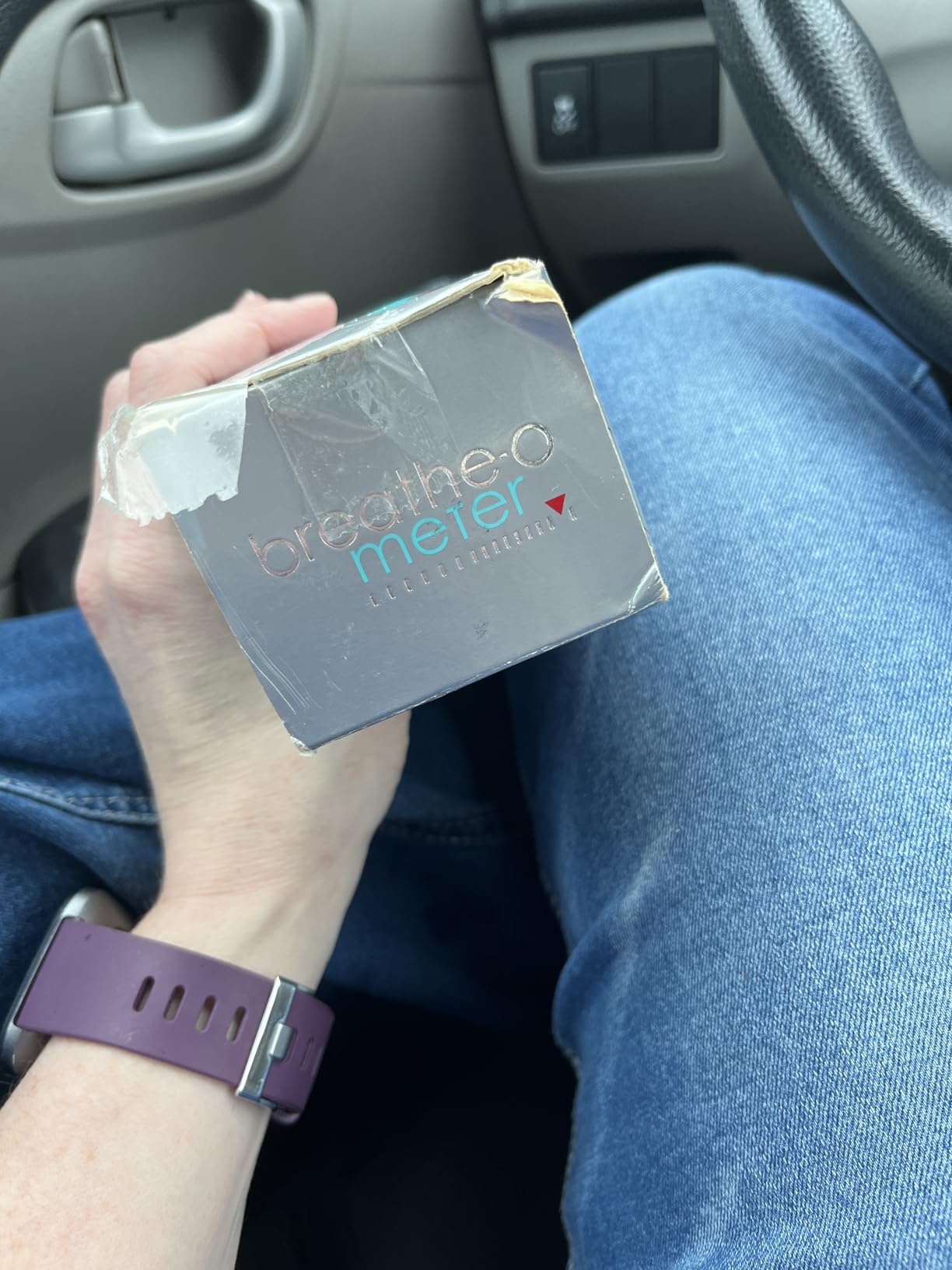
The construction is described as robust for daily use, and the dimensions are 9.45 by 2.76 by 2.36 inches. For a mechanical meter that length is on the generous side, so think of it as a handbag or daypack item rather than something that vanishes into a shirt pocket.
The honest limitation is evidence. Across 30 reviews the average is 4.3 with roughly a 77 percent five star share, and a base that small tells you about the buyers who came back, not about how the device performs over five years.
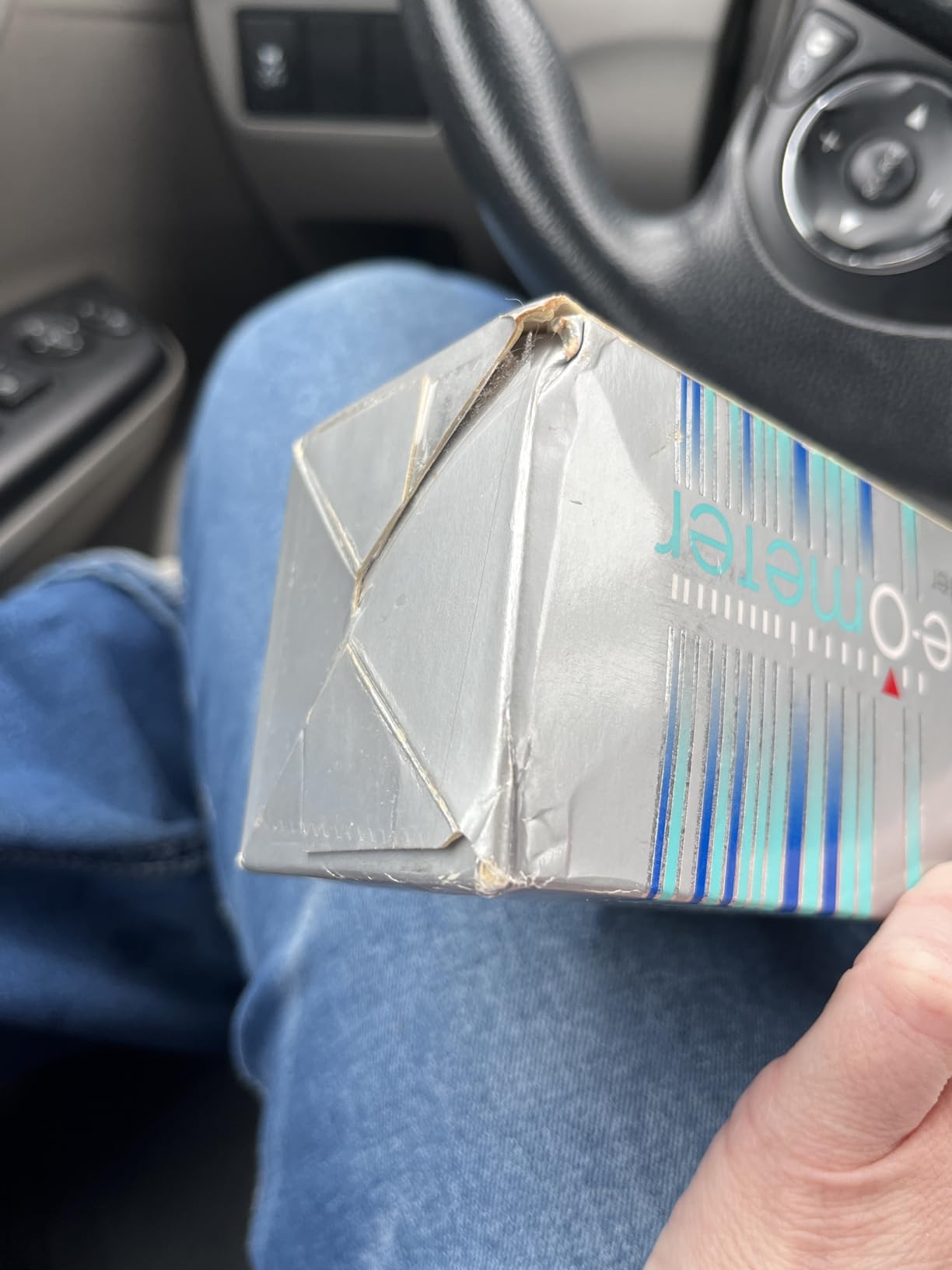
Like the Holdly, it measures PEF only with no FEV1, and you log readings manually. It also sits in CPAP accessories rather than the flow meter category, which tells you something about where the manufacturer expects it to be used alongside other respiratory gear.
Whether that is a problem depends on what you want. If your monitoring plan needs a single reliable number and nothing else, it does that job well. If your clinician wants a fuller airway picture, you will need one of the dual parameter digital meters instead.
Who the Navnihaal suits
It suits frequent travellers, particularly anyone who has been caught out by a dead battery on a device that depends on one. Grab it, blow, read the colour band, and put it back in the bag.
It also suits anyone who already keeps other respiratory accessories and wants a meter that sits naturally alongside them, and anyone who prefers a printed scale to a screen they have to power up.
Where it falls short
Single parameter is the main limit, since there is no FEV1 to pair with the PEF value. The longer body is less pocket friendly than the smaller mechanical alternative, which matters if your meter has to live in a coat.
Manual logging is the other one, and 30 reviews is simply not much evidence. If your plan depends on a shareable trend, this will not produce one on its own.
How to Choose a Peak Flow Meter for Asthma
Start with your range, not your budget. Mechanical meters come in low, standard and high scale versions, and the wrong scale is the single most common reason a reading looks implausible. Low range suits children and smaller adults, standard range covers most adults, and high range covers larger adults and athletes with high flow rates. If you are unsure, ask your clinician to check your expected flow once and match the scale to it.
Then decide between mechanical and digital. Mechanical meters are cheaper, battery free and indestructible in the useful sense, but they give you one number that you record by hand. Digital meters add FEV1, storage and sometimes app charting, at the cost of batteries, chargers and a device that can fail to connect.
Consider what happens when the number drops. A mechanical meter with adjustable zone markers gives you an immediate answer with no setup. The Sonmol’s on screen arrow does the same job electronically. Either way you are checking colour, and any meter that leaves you calculating percentages by hand is one you will stop using.
Think about who logs the readings. Adults who check once or twice a week are fine with paper. Anyone taking morning and evening readings, or two parents sharing a child’s diary, will benefit from storage on the device or an app that charts automatically. The Microlife stores readings and exports reports from a computer; the MIR Smart One charts in a phone app; the Nascool leaves it to you on paper.
On accuracy, look for a published standard rather than a marketing phrase. Devices that reference American Thoracic Society or ATS ERS standards give you something to verify. A listing that leads with terms like clinical precision or 3D sensing without naming a standard is telling you nothing, and that pattern is common on marketplace listings for meters at implausibly low prices.
We would also ignore unverified ratings from thin listings. A 4.6 average across 60 reviews tells you the recent buyers were happy; it does not tell you how the device behaves in year three. Where a device has both a large review base and a documented accuracy standard, as the Microlife does, that combination carries more weight than a perfect score on a small sample.
Finally, plan for hygiene and longevity. A removable or washable mouthpiece is essential, and it is worth checking whether spares are included or cheap to replace. A meter that lives in a school bag or a shared bathroom will need cleaning weekly at minimum, and a device you can rinse is one you will actually clean. If you like tracking the numbers you collect, the same discipline we cover in our verified meter reviews applies here: a log you will actually keep beats a perfect one you abandon.
Peak Flow Meter vs Spirometer: What Is the Difference?
A peak flow meter measures one thing: the fastest and hardest exhalation, reported as litres per minute. A spirometer measures a fuller set of values, including FEV1, FVC and the ratio between them, and it is the test used to confirm a diagnosis.
The practical differences are scale and role. A spirometer is a clinic device that needs calibration, a technician and a technician interpreted report. A home peak flow meter is a monitoring tool you use daily, whose value comes entirely from the trend against your own personal best.
That is why an asthma diagnosis still needs spirometry. Peak flow tracking sits alongside it, which is how NHS guidance and most action plans describe it, and why one r/Asthma thread asked clinicians to advise buying a meter and keeping a record, calling it the most useful advice they had received.
How to Use a Peak Flow Meter and Read the Zones
Take the reading the same way every time. Move the marker to zero, stand up tall, take a deep breath, seal your lips around the mouthpiece, and blow as hard and as fast as you can in one puff. Record the highest of three attempts, and note that a digital meter needs the same effort as a mechanical one.
Check twice a day while your asthma is stable so you can find your personal best. Take readings over two to three weeks, write down the highest, and that is the number your clinician uses to set your zones. Morning readings typically sit lower than evening ones, which is normal.
Interpreting zones is simple once you have a personal best. The green zone is 80 to 100 percent of your personal best and means you are in control. The yellow zone is 50 to 80 percent and means your airways are narrowing, so you follow the middle section of your action plan. The red zone is below 50 percent and means you need your reliever inhaler and prompt medical attention.
A low reading is not a diagnosis. It can mean narrowing, a poor blow, or simply a bad day. Repeat the reading three times with proper technique before reacting, and if a number looks implausibly high, suspect the meter rather than celebrating; r/Asthma has several examples of people shopping for a replacement when the device, not their lungs, had drifted.
Clean weekly, or more often if you share a meter. Rinse the detachable mouthpiece with warm water, let it air dry fully, and avoid immersing any electronic body. That single habit is what keeps readings honest and infections out of the equation.
Frequently Asked Questions
What is peak flow monitoring and how does it help manage asthma?
Peak flow monitoring means measuring how fast and hard you can blow air out of your lungs, usually in litres per minute, and tracking that number over time. It helps because peak flow often drops before you notice symptoms, so the reading gives you and your clinician early warning to follow your asthma action plan rather than waiting for a full flare-up.
What is a peak flow meter vs spirometer?
A peak flow meter measures a single value, your fastest exhalation, and is meant for daily home monitoring. A spirometer measures a fuller set of values including FEV1 and FVC, and is used in a clinic to confirm a diagnosis. Home peak flow tracking complements spirometry rather than replacing it.
What does low peak flow mean?
A low reading usually means your airways are narrowing, so you should follow the middle section of your asthma action plan. Below 50 percent of your personal best is the red zone, where your reliever inhaler and prompt medical attention are needed. Repeat the reading three times first, since a poor blow also produces a low number.
What are the symptoms of a silent asthma attack?
A silent attack is worsening airflow with few or no obvious symptoms, which is exactly why peak flow monitoring exists. Warning signs include breathlessness that arrives slowly, reduced exercise tolerance, persistent cough, waking at night and needing your reliever inhaler more often. A falling reading can appear before any of those show up.
Should I use a digital or mechanical peak flow meter?
Choose a mechanical meter if you want no batteries, no charging and a printed scale you can read anywhere, and for a simple weekly check that is enough. Choose a digital meter if you want FEV1 alongside PEF, stored readings and app trending. Many people succeed with either, and consistency matters more than the type.
How often should I use a peak flow meter?
Check twice daily, morning and evening, for two to three weeks while your asthma is stable so you and your clinician can establish your personal best. After that, most action plans ask for a daily check or checks on the days you notice something. During a flare-up, measure often enough to follow your plan and record the numbers.
How do I know if my peak flow meter is accurate?
Look for a published accuracy standard such as American Thoracic Society or ATS ERS compliance on the listing rather than marketing phrases like clinical precision. Compare a few readings against your expected flow, and check that repeated blows land within a small margin of each other. A reading far above your normal range is a reason to suspect the device, not your lungs.
Can peak flow meters be used on children?
Yes. Choose by scale range and by who logs the readings rather than by age alone. Low range meters suit younger children, adjustable zone markers let one meter follow a child as they grow, and colour coded scales or on screen arrows are easier for a child to read than raw numbers. Ask your clinician which range and which reading technique suits your child.
Best Peak Flow Meters for Asthma: The Final Verdict
The Microlife PF 100 is our pick for the best peak flow meters for asthma overall, because it is the only device here that stores readings on the unit, measures PEF and FEV1 together, and ships with a documented accuracy standard alongside three mouthpieces and exportable reports. It suits anyone who wants a reliable log with no daily effort.
Buy the Nascool if you want a capable digital meter without the app commitment, the MIR Smart One if you want everything charted on your phone and shared with a clinician, and one of the mechanical meters if you have decided that batteries and apps are the reason you stopped checking. Whatever you choose, establish your personal best over two to three weeks, keep your zone markers set, and take the number to your next appointment.