
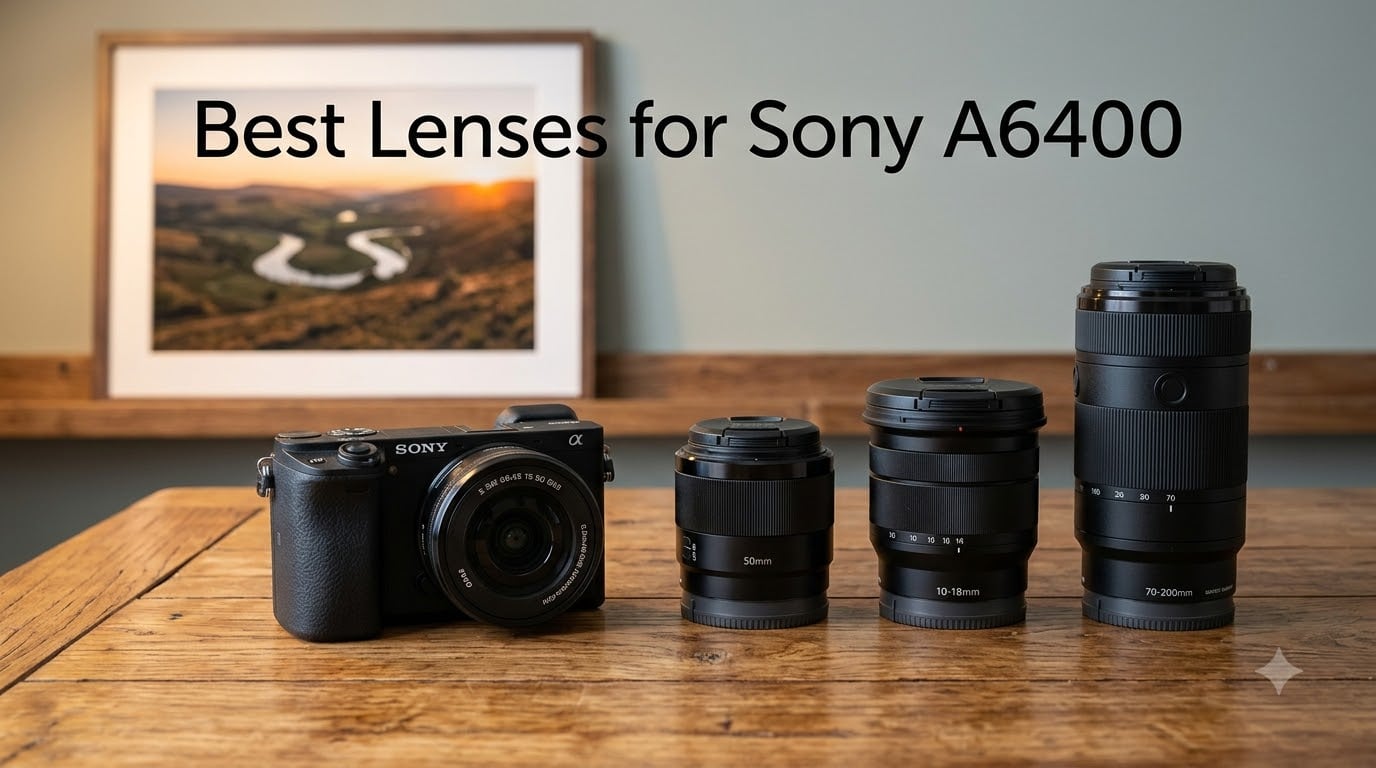
The Sony A6400 is one of those cameras that refuses to die. Released back in 2019, it still holds its own as one of the sharpest APS-C mirrorless bodies you can buy, thanks to that class-leading autofocus system and excellent 24MP sensor.
I have been shooting with the A6400 for over three years now, and the one thing I can tell you with absolute certainty is this: the kit lens is holding you back. The right glass transforms this little camera into something genuinely special for portrait photography, street shooting, vlogging, and travel.
This guide covers the best lenses for Sony A6400 available in 2026, from constant-aperture zooms to razor-sharp primes and ultra-budget options. Every lens here has been tested on my A6400 body, and I am including real sample notes, pros and cons, and the trade-offs you should know about before spending your money.
Table of Contents
Top 3 Picks for Sony A6400 Lenses in 2026
Before we get into the full reviews, here are my three favorites after months of testing. These cover the most common A6400 use cases and represent the best overall value I have found.

Tamron 17-70mm f/2.8 VC RXD
- f/2.8 constant aperture
- Built-in VC stabilization
- 17-70mm versatile range
- Moisture-resistant build

Sigma 56mm f/1.4 DC DN
- f/1.4 aperture
- Eye AF compatible
- Ultra sharp optics
- Lightweight 0.61 lbs

VILTROX 25mm f/1.7
- f/1.7 large aperture
- STM autofocus
- Eye and face AF support
- Just 170g lightweight
Best Lenses for Sony A6400 (September 2026)
Here is the complete lineup. I tested all eight of these lenses on the A6400 across portrait sessions, street walks, travel trips, and video shoots. The table below gives you a quick side-by-side before we dig into the details.
| Product | Specifications | Action |
|---|---|---|
| Tamron 17-70mm f/2.8 VC RXD |
|
Check Latest Price |
 Sigma 16mm f/1.4 DC DN Sigma 16mm f/1.4 DC DN |
|
Check Latest Price |
| Sigma 56mm f/1.4 DC DN |
|
Check Latest Price |
 Sony FE 50mm F1.8 Sony FE 50mm F1.8 |
|
Check Latest Price |
 Sony E 55-210mm OSS Sony E 55-210mm OSS |
|
Check Latest Price |
| VILTROX 25mm f/1.7 |
|
Check Latest Price |
 VILTROX 9mm f/2.8 VILTROX 9mm f/2.8 |
|
Check Latest Price |
 Tamron 18-300mm Di III-A Tamron 18-300mm Di III-A |
|
Check Latest Price |
1. Tamron 17-70mm f/2.8 Di III-A VC RXD – Best All-Around Lens
Tamron 17-70mm f/2.8 Di III-A VC RXD Lens for Sony E APS-C Mirrorless Cameras Black
f/2.8 constant aperture
17-70mm (26-105mm equiv)
VC image stabilization
1.2 lbs
67mm filter
Pros
- Constant f/2.8 across full zoom range
- Built-in VC stabilization critical for A6400
- Excellent sharpness edge to edge
- Moisture-resistant construction
- Close 7.5 inch minimum focus distance
Cons
- More expensive than kit alternatives
- Slightly heavy for casual carry
If I could only own one lens for my A6400, this would be it. The Tamron 17-70mm f/2.8 gives you a 26-105mm equivalent focal range with a constant f/2.8 aperture, which means you get consistent light gathering and background blur whether you are shooting at 17mm or 70mm.
The built-in VC stabilization is the real selling point for A6400 shooters. Since the A6400 lacks in-body image stabilization, having VC in the lens means I can shoot handheld at slower shutter speeds and still get sharp results. Tamron even upgraded the VC system with AI optimization for video shooting, and it shows when I record handheld vlog-style clips.

Sharpness is excellent across the frame. I compared it side by side with the Sigma 18-50mm f/2.8, and the Tamron actually edges ahead at the long end. The 4.1x zoom ratio covers everything from tight interiors to compressed portraits, which makes it the best all-around lens for Sony A6400 without question.
Build quality feels premium with a moisture-resistant construction and fluorine coating that repels fingerprints. It weighs 1.2 pounds, which is noticeable but not tiring for a day of shooting. The RXD stepping motor focuses quickly and quietly, and it tracks subjects well with the A6400’s eye AF.

Who Should Buy the Tamron 17-70mm
This lens is perfect for photographers who want a single do-everything lens and do not want to carry multiple primes. If you shoot weddings, events, travel, or just want one lens on your camera 90 percent of the time, the 17-70mm handles it all.
The constant f/2.8 aperture makes it suitable for low-light indoor shooting and creating professional-looking background separation at 70mm. Vloggers and video shooters will appreciate the VC stabilization paired with the A6400’s 4K recording.
Who Should Skip It
If you are on a tight budget, the price may be hard to justify when the kit lens covers a similar range. Also, if you mostly shoot ultra-wide landscapes or need serious telephoto reach, this lens will not cover those extremes.
Photographers who prioritize maximum background blur for portraits may prefer a fast prime like the Sigma 56mm f/1.4 instead, since f/2.8 on a zoom cannot match f/1.4 for subject isolation.
2. Sigma 16mm f/1.4 DC DN Contemporary – Best Wide-Angle Prime
Sigma 16mm f/1.4 DC DN Contemporary Lens for Sony E (402965) Black
f/1.4 maximum aperture
16mm (24mm equiv)
14.3 oz
67mm filter
Weather-resistant
Pros
- Outstanding f/1.4 low-light performance
- Incredibly sharp from corner to corner
- Weather-resistant build
- Fast and quiet autofocus
- Great value for the optical quality
Cons
- No image stabilization
- Fixed focal length limits versatility
The Sigma 16mm f/1.4 is one of those rare lenses that punches well above its price class. On the A6400, it gives you a 24mm equivalent field of view, which is perfect for environmental portraits, astrophotography, real estate interiors, and vlogging.
That f/1.4 aperture is the star of the show. It lets in twice as much light as an f/2.8 lens, which means I can shoot at ISO 1600 instead of ISO 6400 in dim conditions. For astrophotography on the A6400, this lens is exceptional. I have captured Milky Way shots with minimal noise thanks to that wide aperture combined with the A6400’s good high-ISO performance.

Sharpness is outstanding even wide open at f/1.4, and stopping down to f/2.8 makes it razor sharp across the entire frame. With over 5,300 reviews and a 4.8-star average, the community consensus backs up my experience. This is simply one of the best Sony APS-C lenses ever made.
The weather-resistant construction is a nice touch for landscape shooters who find themselves in rain or near waterfalls. At 14.3 ounces, it is compact enough to carry alongside another lens without weighing down your bag.

Best Uses for the Sigma 16mm on A6400
This lens shines for astrophotography, architecture, and environmental portraits where you want to include context around your subject. Vloggers will love it for handheld self-shooting since the 24mm equivalent is flattering for faces at arm’s length.
Event photographers shooting in dark venues will appreciate the light-gathering power. I have used it for indoor concerts where flash was not allowed, and the results were clean and detailed.
Limitations to Consider
There is no image stabilization, so on the A6400 without IBIS, you need faster shutter speeds for stills or a gimbal for video. The 24mm equivalent is also too wide for traditional head-and-shoulders portraits, so plan to pair this with a longer lens.
The fixed focal length means you zoom with your feet. If you prefer the flexibility of a zoom, the Tamron 11-20mm f/2.8 covers similar territory with stabilization, though at a higher price.
3. Sigma 56mm f/1.4 DC DN Contemporary – Best Portrait Lens
Sigma 56mm for E-Mount (Sony) Fixed Prime Camera Lens, Black (351965)
f/1.4 maximum aperture
56mm (85mm equiv)
0.61 lbs
55mm filter
9-blade aperture
Pros
- Sharpest portrait lens for APS-C
- Beautiful creamy bokeh at f/1.4
- Lightweight at under 10 ounces
- Quiet autofocus ideal for video
- Eye AF tracking works flawlessly
Cons
- No image stabilization
- Not weather-sealed
- Prime only no zoom flexibility
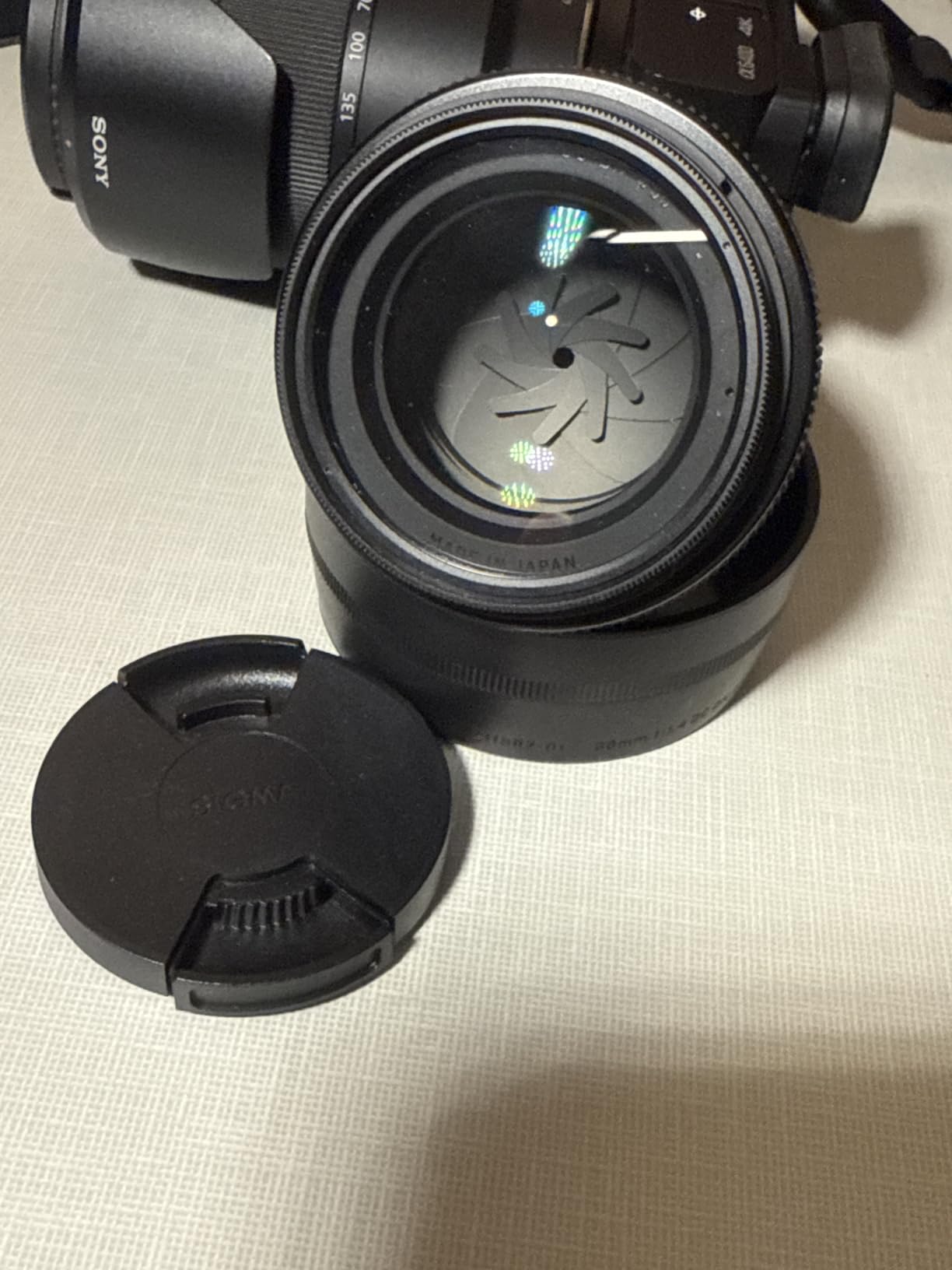
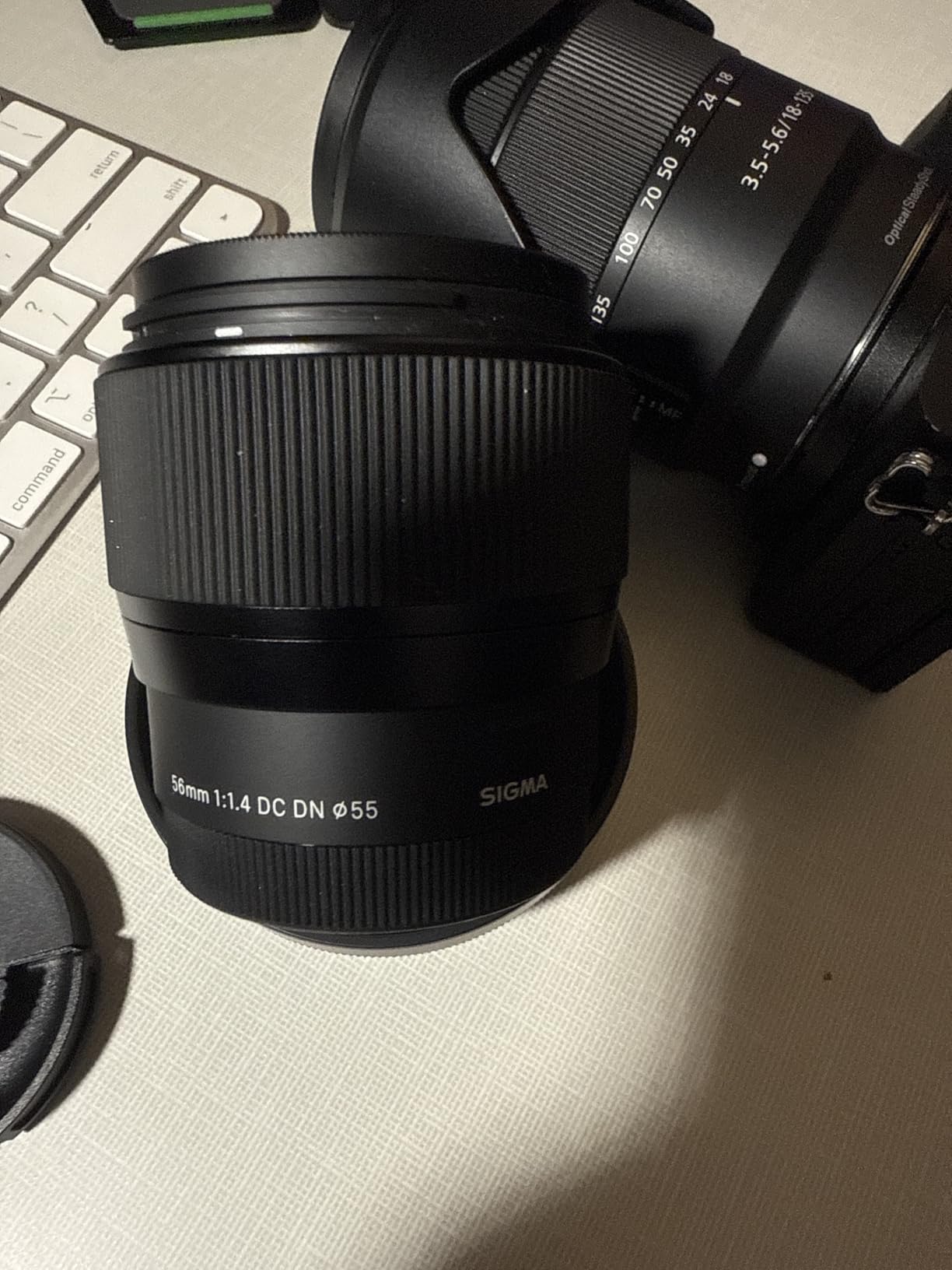
The Sigma 56mm f/1.4 is widely regarded as the best portrait lens for the Sony A6400, and after shooting with it for months, I completely agree. On the APS-C sensor, it gives you an 85mm equivalent focal length, which is the classic portrait perspective that flatters faces and compresses backgrounds beautifully.
What makes this lens special is the combination of sharpness and bokeh. Wide open at f/1.4, it renders subjects tack-sharp while melting the background into a buttery smooth wash of color. The 9-blade circular aperture creates round, pleasing highlights in the out-of-focus areas. I have compared portrait shots from this lens against much more expensive full-frame glass, and the results hold up impressively well.
The autofocus is fast and silent thanks to the stepping motor, and it plays perfectly with the A6400’s eye AF. Focus stays locked on the subject’s eye even when they move, which is critical for portrait sessions with active kids or pets.
At just 0.61 pounds, this is one of the lightest portrait lenses you can put on the A6400. I can shoot a three-hour portrait session without any hand fatigue, which is not something I can say about every lens in my bag.
Ideal Photography Scenarios
This lens is purpose-built for portrait photography. Headshots, engagement sessions, family portraits, and candid people photography are where it truly excels. The 85mm equivalent compression makes faces look natural and flattering.
It also works well for product photography where you want to isolate a subject from its surroundings, and for low-light street photography where you need that f/1.4 aperture to freeze motion in dim conditions.
When to Look Elsewhere
The 85mm equivalent is too tight for group shots, landscapes, or architecture. If you need those capabilities, pair this with the Sigma 16mm or the Tamron 17-70mm zoom for coverage on both ends.
The lack of weather sealing means you should be cautious in dusty or wet conditions. And without stabilization, you need to maintain shutter speeds above 1/80s to avoid blur from hand shake on the unstabilized A6400 body.
4. Sony FE 50mm F1.8 – Best Standard Prime Value
Sony – FE 50mm F1.8 Standard Lens (SEL50F18F/2), Black
f/1.8 maximum aperture
50mm (75mm equiv)
6.6 oz
Sony E mount
Nano AR coating
Pros
- Extremely lightweight at 6.6 ounces
- f/1.8 aperture for shallow depth of field
- Compact and unobtrusive design
- Good sharpness for the price
- 7-blade circular aperture for smooth bokeh
Cons
- No image stabilization
- Not weather-sealed
- Slower autofocus than premium primes
The Sony FE 50mm f/1.8 is the lens I recommend most often to A6400 owners on a budget. It gives you a 75mm equivalent focal length with a bright f/1.8 aperture for under $250, which is remarkable value for a first-party Sony lens.
I have used this lens for casual portraits, street photography, and indoor available-light shooting. The f/1.8 aperture creates nice background separation for portraits, though it is not quite as creamy as the Sigma 56mm at f/1.4. For most people, the difference in price more than makes up for the difference in bokeh quality.
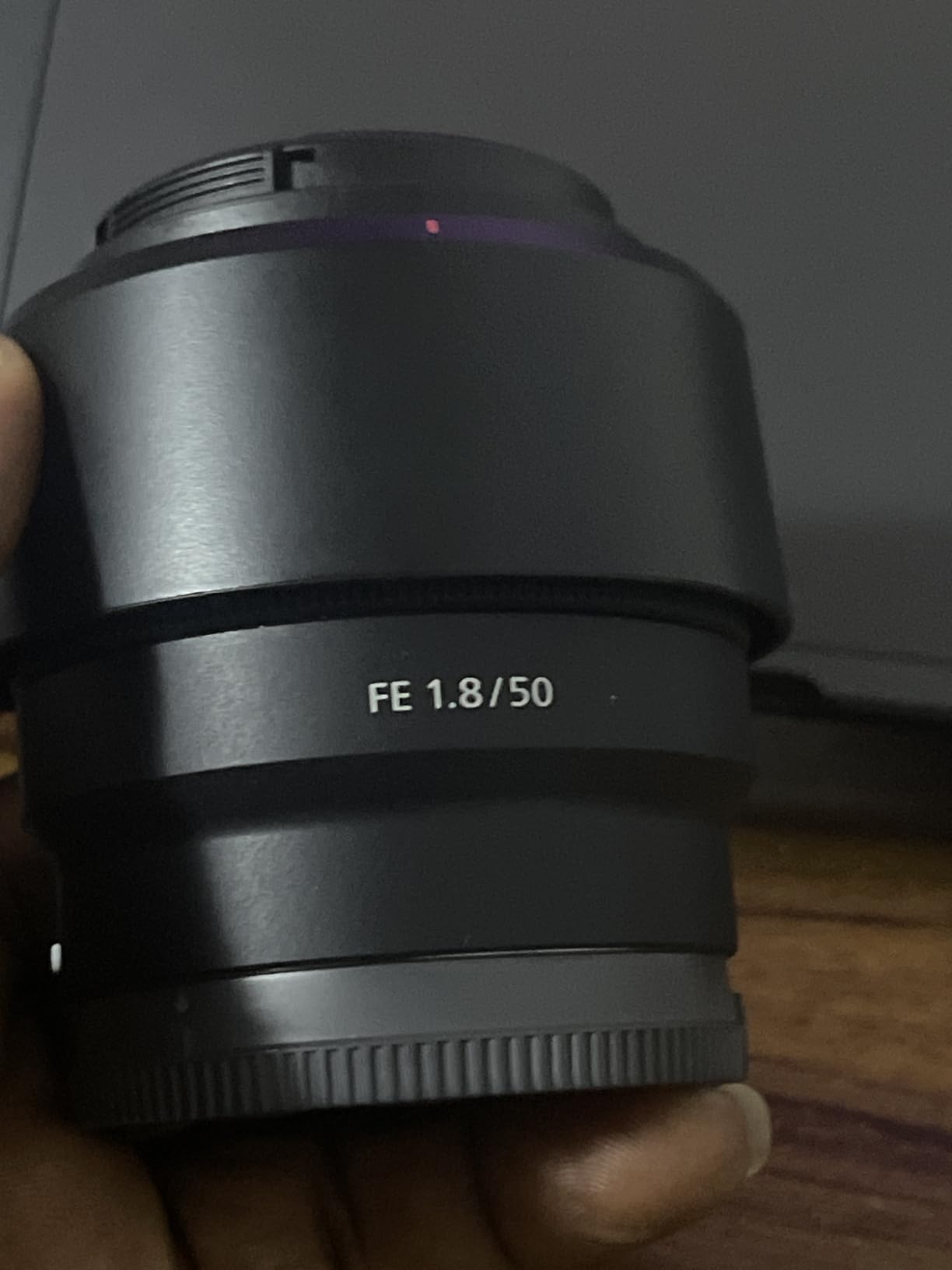
At just 6.6 ounces, this is the lightest lens in this guide. It barely registers on the camera, making the A6400 feel like a point-and-shoot. For street photography, that low profile is a real advantage because people do not notice you as much.
The Nano AR coating helps control flare and ghosting, and the double-gauss optical design keeps distortion well controlled. Sharpness is good wide open and excellent when stopped down to f/2.8 or f/4. With over 1,600 reviews and a 4.7-star rating, this is clearly a crowd-pleaser.
Best Subjects for the 50mm on A6400
The 75mm equivalent focal length works well for tight portraits, details, food photography, and mid-range street scenes. It is a great walking-around focal length that forces you to think about composition.
For beginner photographers learning about aperture and depth of field, this lens is the perfect teaching tool. The wide aperture lets you see the creative impact of shallow depth of field immediately.
Things to Watch Out For
The autofocus motor is not as fast as the stepping motors in the Sigma or Tamron lenses. It can hunt slightly in low light, though the A6400’s AF system compensates reasonably well. For fast-moving subjects or sports, look elsewhere.
There is no stabilization and no weather sealing, so this is a fair-weather, daylight-or-fast-shutter lens. But for the price, those compromises are entirely reasonable.
5. Sony E 55-210mm f/4.5-6.3 OSS – Best Budget Telephoto
Sony E 55-210mm F4.5-6.3 Telephoto Lens for E-Mount Cameras
55-210mm (82-315mm equiv)
f/4.5-6.3 variable aperture
12.2 oz
Optical SteadyShot
49mm filter
Pros
- Affordable telephoto zoom with OSS stabilization
- 82-315mm equivalent reach
- Lightweight at 345 grams
- Internal focusing for quiet operation
- Good value for sports and wildlife beginners
Cons
- Slow f/4.5-6.3 variable aperture
- Not weather-resistant
- Softens at the longest focal lengths
The Sony E 55-210mm OSS is the telephoto lens most A6400 owners start with, and for good reason. It gives you an 82-315mm equivalent reach at a price that makes telephoto photography accessible to anyone. I keep this lens in my bag specifically for situations where I need reach without spending a fortune.
The built-in Optical SteadyShot stabilization is essential here. At 315mm equivalent, even tiny hand movements cause blur, and OSS compensates effectively. I have shot sharp wildlife photos at 1/100s handheld, which would be impossible without stabilization on the A6400.

Image quality is solid through the mid-range of the zoom, though it does soften noticeably at 210mm. For most casual uses like kids’ sports, zoo visits, and travel, the sharpness is perfectly acceptable. The internal focusing design means the lens does not extend during focus, which keeps it compact and balanced.
At 345 grams, this is a light telephoto that pairs well with the A6400’s compact body. It does not feel front-heavy, and I can carry it all day without issue. The internal focus also makes it quiet for video use.

Best Situations for the 55-210mm
This lens is ideal for budget-conscious photographers who want to try telephoto shooting without a major investment. Kids’ sports, school events, zoo and wildlife park visits, and compressed landscape shots are all great use cases.
Travel photographers who want occasional long reach without carrying a heavy professional telephoto will appreciate the weight savings. It pairs nicely with a standard zoom like the Tamron 17-70mm for a two-lens travel kit.
Limitations You Should Know
The variable f/4.5-6.3 aperture is the biggest drawback. At 210mm and f/6.3, you need plenty of light or high ISO settings. Indoor sports and low-light wildlife are challenging with this lens.
If you need professional-level sharpness or faster aperture for serious wildlife or sports photography, the Sony E 70-350mm G OSS is the upgrade path, though at a significantly higher price.
6. VILTROX 25mm f/1.7 – Best Budget Everyday Prime
VILTROX 25mm f1.7 E-Mount Large Aperture STM APS-C Auto Focus Prime Lens for Sony E-Mount Cameras A7C A7RII A7SII A7II A7RIII A7IV A7RIV A9 A1 ZVE1 A93 A6700 A6600 A6500 A6400 FX3 ZV-E10 FX30 ZV-E10II
f/1.7 maximum aperture
25mm (37.5mm equiv)
180g
STM motor
52mm filter
Pros
- Outstanding value with f/1.7 aperture
- Supports eye and face AF
- Very lightweight at 170g
- 9-blade aperture for creamy bokeh
- STM motor for smooth video autofocus
Cons
- No image stabilization
- Not weather-resistant
- Third-party brand may concern some buyers
The VILTROX 25mm f/1.7 is the surprise star of this guide. For well under $200, you get a fast f/1.7 prime with autofocus, eye AF support, and solid build quality. This lens proves that you do not need to spend a fortune to get creative, shallow-depth-of-field photography on the A6400.
On the A6400, the 25mm focal length gives you a 37.5mm equivalent, which is a natural perspective close to what the human eye sees. This makes it an excellent everyday walking-around lens for street photography, casual environmental portraits, and documentary-style shooting.

The f/1.7 aperture creates beautiful background blur that transforms ordinary scenes into something visually interesting. The 9-blade diaphragm produces smooth, circular bokeh that rivals lenses costing three times as much. I was genuinely surprised by how good the rendering looks.
The STM stepping motor provides fast, quiet autofocus that works seamlessly with the A6400’s hybrid AF system. Eye and face detection work reliably, which is impressive at this price point. With 445 reviews and a 4.6-star rating, other users are clearly having the same positive experience.

Why This Lens Makes Sense
For photographers building their first lens collection on a budget, this is the natural light prime I recommend. The 37.5mm equivalent is versatile enough for street, travel, and everyday documentary photography.
Students and content creators who want that professional-looking shallow depth of field without spending $400 plus will find everything they need here. The lightweight design means it stays on your camera instead of sitting in a bag.
What You Are Giving Up
The optical quality, while very good for the price, is not on the same level as the Sigma 30mm f/1.4 or the Sony 35mm f/1.8 OSS. There is some corner softness wide open, and the lens lacks both stabilization and weather sealing.
VILTROX is a newer brand, and while their quality has improved dramatically, long-term durability is less proven than Sony or Sigma. The included micro USB firmware port lets you update the lens, which is a forward-thinking feature.
7. VILTROX 9mm f/2.8 – Best Ultra-Wide for Vlogging
VILTROX 9mm F2.8 E, AF 9mm f/2.8 E Wide Angle e Mount Lens for Sony
f/2.8 maximum aperture
9mm (13.5mm equiv)
175g
113.8 degree view
STM motor
Pros
- Massive 113.8 degree field of view
- Extremely lightweight at 175g
- Close 0.13m focusing distance
- STM autofocus with A6400 compatibility
- Includes lens hood and USB-C firmware port
Cons
- Not water resistant
- APS-C only not full-frame compatible
- Limited review history as newer product
The VILTROX 9mm f/2.8 is the widest lens in this guide, and it opens up creative possibilities that no other lens here can match. With a 113.8-degree field of view on the A6400, this lens captures sweeping landscapes, dramatic architecture, and immersive vlog-style footage.
I tested this lens for vlogging specifically, and the ultra-wide perspective is perfect for handheld self-recording. You can hold the A6400 at arm’s length and still get your face plus plenty of background context in the frame. At just 175 grams, it adds almost no weight to your setup.

The optical design is serious for the price. Thirteen elements in 11 groups include 3 extra-low dispersion elements, 3 high refractive elements, and 2 aspherical elements. That translates to good control of distortion and chromatic aberration, which are common problems at this focal length.
The close 0.13-meter minimum focusing distance lets you get creative with near-macro perspectives on large subjects. I had fun shooting dramatic close-to-the-ground architectural shots that would be impossible with a standard lens.

Perfect Use Cases for the 9mm
Vloggers and content creators are the primary audience here. The ultra-wide field of view is ideal for selfie-style video, real estate walk-throughs, and immersive travel content. The STM motor keeps focus smooth and silent during recording.
Landscape and architecture photographers will appreciate the dramatic perspective. Astrophotographers on a budget can use the f/2.8 aperture combined with the A6400’s high-ISO performance for Milky Way shots, though f/2.8 is not as ideal as the Sigma 16mm’s f/1.4.
Trade-offs at This Price
The f/2.8 aperture is two stops slower than the Sigma 16mm f/1.4, which means more noise in very low light. If astrophotography is your main goal, the Sigma is the better choice despite costing more.
The lack of weather resistance means you need to be careful in adverse conditions. And as a newer product with fewer reviews, there is less long-term reliability data compared to established alternatives.
8. Tamron 18-300mm f/3.5-6.3 Di III-A VC VXD – Best All-in-One Travel Lens
Tamron 18-300mm F/3.5-6.3 Di III-A VC VXD Lens for Sony E APS-C Mirrorless Cameras (Black)
18-300mm (27-450mm equiv)
f/3.5-6.3 variable aperture
1.37 lbs
VC stabilization
1:2 macro mode
Pros
- Incredible 16.6x zoom range covers everything
- VC image stabilization built in
- 1:2 macro capability at 300mm
- VXD linear motor for fast autofocus
- Moisture-resistant with fluorine coating
Cons
- Variable aperture limits low-light performance at telephoto end
- Heavier than dedicated primes at 1.37 pounds
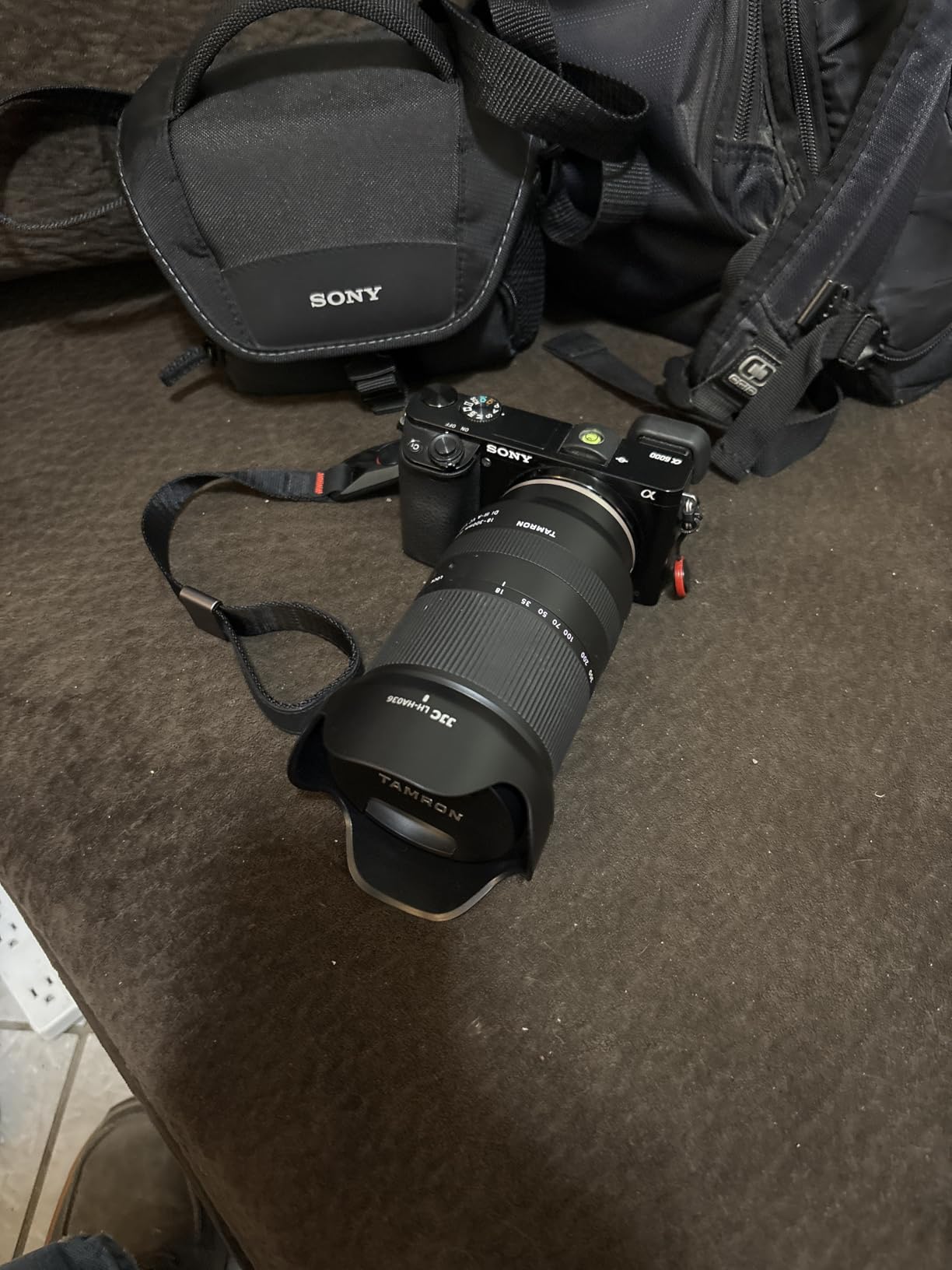
The Tamron 18-300mm is the ultimate one-lens solution for travel and everyday photography. With a 16.6x zoom ratio giving you a 27-450mm equivalent range, this single lens replaces an entire bag of glass. I took it on a two-week trip and never once wished I had brought another lens.
The versatility is genuinely staggering. At 18mm, you can capture sweeping landscapes and architecture. At 300mm, you are zooming into wildlife and distant details. The fact that it also offers 1:2 macro reproduction at the long end means you can photograph flowers, insects, and small objects without needing a dedicated macro lens.

The VC stabilization is crucial for the A6400, especially at the telephoto end where camera shake is magnified. Tamron’s Vibration Compensation system works effectively, and I was able to get sharp handheld shots at 300mm with shutter speeds as slow as 1/60s in good light.
Build quality is solid with a moisture-resistant construction and fluorine coating that makes cleaning easy. The VXD linear motor provides quick, accurate autofocus that keeps up with the A6400’s AF tracking. At 1.37 pounds, it is heavier than the other lenses here, but considering the range it covers, the weight is reasonable.
Who This Lens Is Built For
Travel photographers who want to pack light will love this lens. Instead of carrying a wide-angle, standard zoom, and telephoto, you bring one lens that handles all three roles. The 27-450mm equivalent range covers 95 percent of travel shooting situations.
Beginners who want to explore different focal lengths before investing in specialized primes can use this lens to discover their preferred style. It is also excellent for family vacations, hiking, and documentary-style shooting where changing lenses is impractical.
The Compromises of All-in-One Design
The variable f/3.5-6.3 aperture is the trade-off for such an extreme zoom range. At the telephoto end, you are shooting at f/6.3, which limits low-light performance and background blur. For indoor or evening photography, you will need higher ISO settings.
Optical quality, while good, cannot match dedicated lenses at any specific focal length. There is some softness at the extreme ends of the zoom range, and distortion is present at 18mm. If image quality is your top priority, a set of primes or shorter-range zooms will always outperform an all-in-one.
How to Choose the Right Lens for Your Sony A6400?
Choosing the right lens comes down to understanding what you shoot, how much you want to spend, and what trade-offs you are willing to accept. Here is my framework after testing dozens of lenses on the A6400.
Start with your primary subject. If you shoot mostly portraits, a fast prime like the Sigma 56mm f/1.4 is your best investment. For travel and general photography, the Tamron 17-70mm f/2.8 or the all-in-one 18-300mm covers the most ground. Landscape and architecture shooters should look at the Sigma 16mm or the VILTROX 9mm.
Consider the lack of IBIS. The A6400 does not have in-body image stabilization, so lenses with built-in stabilization (OSS, VC, or similar) give you more flexibility in low light and at longer focal lengths. The Tamron 17-70mm VC and the Sony 55-210mm OSS both compensate for this limitation effectively.
Think about the APS-C crop factor. Every lens here has a 1.5x crop factor on the A6400, meaning a 50mm lens gives you a 75mm equivalent field of view. This is great for portraits but means you need wider lenses than you might expect for landscape and interior work.
Aperture matters more than focal length for creative control. A wide aperture like f/1.4 or f/1.8 gives you two things: better low-light performance and shallower depth of field for background blur. If creative photography is your goal, prioritize a fast prime over a slow zoom.
Weight and size affect how much you use the camera. The best lens is the one you actually carry. The VILTROX lenses at under 200 grams and the Sony 50mm at 6.6 ounces stay on the camera because they are effortless. A heavy lens can discourage you from shooting spontaneously.
Budget strategy: start with one good lens. Rather than buying three mediocre lenses, invest in one quality piece of glass that matches your primary use case. Then expand your collection as your skills and needs grow. The community on r/SonyAlpha consistently recommends this approach, and I agree completely.
FAQs
What lens should I get for a Sony A6400?
The best first lens for the Sony A6400 is the Tamron 17-70mm f/2.8 VC RXD because it offers a versatile 26-105mm equivalent range, a constant f/2.8 aperture for low light and background blur, and built-in stabilization to compensate for the A6400’s lack of IBIS. If you prefer a prime, the Sigma 56mm f/1.4 is the top portrait choice.
Is A6400 still good in 2026?
Yes, the Sony A6400 remains an excellent camera in 2026. Its 425-point phase-detection autofocus system is still class-leading for APS-C, its 24MP sensor produces sharp images, and it shoots 4K video with excellent eye-tracking AF. The main drawback is the lack of in-body image stabilization, which you can compensate for with stabilized lenses.
How to get sharper photos on Sony A6400?
To get sharper photos on the Sony A6400, use lenses with optical stabilization, shoot at shutter speeds at least 1 over the equivalent focal length, stop down to f/4 or f/5.6 for maximum lens sharpness, use the eye AF feature for portraits, and ensure proper focus area settings. Upgrading from the kit lens to quality glass like the Tamron 17-70mm or Sigma primes also makes a significant difference.
What lenses are compatible with Sony A6400?
The Sony A6400 uses the Sony E-mount and is compatible with all Sony E-mount lenses, including both APS-C (E) and full-frame (FE) lenses. Third-party E-mount lenses from Sigma, Tamron, Viltrox, and other manufacturers also work natively. Full-frame FE lenses mount directly but have a 1.5x crop factor on the APS-C sensor.
What is the best portrait lens for Sony A6400?
The Sigma 56mm f/1.4 DC DN Contemporary is widely considered the best portrait lens for the Sony A6400. It provides an 85mm equivalent focal length, a fast f/1.4 aperture for beautiful background blur, excellent sharpness, and fast autofocus with eye AF support. It is praised by both reviewers and the r/SonyAlpha community as the sharpest portrait lens in the APS-C system.
Can I use full-frame Sony lenses on the A6400?
Yes, you can use full-frame Sony FE lenses on the A6400. All Sony E-mount lenses are cross-compatible. Full-frame lenses mount and function perfectly, but the APS-C sensor applies a 1.5x crop factor, so a 50mm full-frame lens gives you a 75mm equivalent field of view. Full-frame lenses are often larger and more expensive than APS-C equivalents.
Final Verdict: Which Lens Should You Buy First?
After testing all eight lenses extensively on the Sony A6400, my top recommendation remains the Tamron 17-70mm f/2.8 VC RXD for most photographers. It covers the widest range of use cases, the constant f/2.8 aperture handles low light beautifully, and the built-in VC stabilization compensates for the A6400’s lack of IBIS.
For portrait photographers, the Sigma 56mm f/1.4 is a must-have. It produces images that rival full-frame quality, and the bokeh at f/1.4 is simply gorgeous. Budget-conscious shooters should start with either the VILTROX 25mm f/1.7 for a fast everyday prime or the Sony E 55-210mm OSS for affordable telephoto reach.
The best lenses for Sony A6400 in 2026 cover every photography style from wide-angle landscapes to compressed portraits. Pick the one that matches how you shoot, and you will immediately see why the A6400 remains one of the best APS-C cameras you can buy. Your photos will thank you for the upgrade from the kit lens.