
If you have a long driveway, the number that matters is not the detection range printed on the box. It is the sensor-to-receiver transmission range, because that is the figure that decides whether the alert ever reaches your kitchen. Most listings quietly blur the two, and buyers end up with a sensor that spots a car perfectly at 50 feet and then never gets the wireless signal home across a long property. We pulled apart ten systems in this roundup of the best driveway alarm systems for long driveways and sorted them by the number that actually keeps you informed.
A short version of what we found: the Dakota Alert DCMA-4K Plus is the only kit here with a stated one-mile transmission distance, the HTZSAFE four-sensor pack is the most proven with more than 20,000 ratings, and the eMACROS Pro3 is the only unit that pushes alerts to a phone over Wi-Fi. Everything else lands somewhere between a third of a mile and a half mile. If you want the visual side of a driveway covered as well, our picks for floodlight cameras for driveways and license plate recognition cameras pair well with any of the alarms below.
Table of Contents
Top 3 Long Range Driveway Alarms in 2026
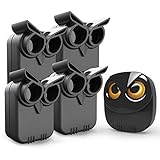
HTZSAFE 1/2 Mile 4-Sensor Kit
- 1/2 mile FSK+FHSS transmission
- 4 sensors in one kit
- 35 melodies
- Expandable to 32 sensors


TECKNET Non-APP Solar RGB Kit
- 2600 ft through trees
- IPX5 waterproof
- 4 alert zones
- No subscription
The HTZSAFE four-sensor kit takes the top slot on the strength of its review base and its expandability, not on a headline specification. Twenty thousand ratings is a lot of long-driveway field reports, and 32-sensor expansion is the most headroom of any kit here. The eMACROS solar pair is the one to pick if you do not want to dig a trench or visit a sensor with a ladder every spring. The TECKNET holds the highest rating in the group and is the only half-mile system whose lens panels can be narrowed to cut traffic triggers, which is exactly the complaint raised in long-range forum threads.
Best Driveway Alarm Systems for Long Driveways in 2026
| Product | Specifications | Action |
|---|---|---|
| HTZSAFE 1/2 Mile 4-Sensor Kit |
|
Check Latest Price |
| eMACROS Solar 1/2 Mile Kit |
|
Check Latest Price |
 Wuloo 1800ft Solar 2-Sensor Kit Wuloo 1800ft Solar 2-Sensor Kit |
|
Check Latest Price |
| TECKNET Non-APP Solar RGB Kit |
|
Check Latest Price |
 eMACROS Pro3 2.4G Wi-Fi Solar Kit eMACROS Pro3 2.4G Wi-Fi Solar Kit |
|
Check Latest Price |
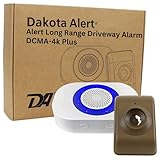 Dakota Alert DCMA-4K Plus 1-Mile Kit Dakota Alert DCMA-4K Plus 1-Mile Kit |
|
Check Latest Price |
 Betterlink Solar 1/2 Mile Kit Betterlink Solar 1/2 Mile Kit |
|
Check Latest Price |
 Hosmart 1/2 Mile 4-Sensor Kit Hosmart 1/2 Mile 4-Sensor Kit |
|
Check Latest Price |
 HTZSAFE Solar 1/2 Mile 1-Sensor Kit HTZSAFE Solar 1/2 Mile 1-Sensor Kit |
|
Check Latest Price |
 Chtoocy 1/2 Mile 4-Sensor Kit Chtoocy 1/2 Mile 4-Sensor Kit |
|
Check Latest Price |
Two columns in that table are worth reading twice. First, the range column is transmission range, not how far the sensor can see. Second, only one row in the whole table offers app notifications, and it costs you a 2.4 GHz-only Wi-Fi network and any video at all.
1. HTZSAFE 1/2 Mile Driveway Alarm With 4 Sensors: Best Overall
Driveway Alarm- 1/2 Mile Long Range Motion Sensor- 1 Receiver+4 Sensors
1/2 mile FSK+FHSS transmission
4 sensors plus 1 receiver
50 ft detection cone
3 AA batteries per sensor
Pros
- Half mile of transmission with FSK+FHSS interference handling
- Four sensors in one kit for a whole property
- Expandable to 32 sensors and unlimited receivers
- 35 melodies and 4 volume levels
- Operates from -30 to 150 degrees Fahrenheit
Cons
- Batteries are not included with the kit
- One receiver limits how many distinct chime zones you can map
- 50 ft detection cone in front of the unit
The HTZSAFE 1/2 Mile Driveway Alarm is the pick we would put on a long property, and the reason is the boring one: volume. More than 20,000 ratings at 4.4 stars is the largest review base in this roundup, and a large share of those owners are running the system across half a mile of rural drive. The kit ships with one receiver and four sensors, so you can cover the driveway, the gate, a shed and the road-side approach without buying four separate units.
Transmission is listed at half a mile using FSK plus frequency-hopping spread spectrum, which is the technical reason this kit holds up near trees and buildings where cheaper single-frequency kits drop out. Mounting is wall mount, each sensor takes three AA batteries, and the whole sensor is 3.74 by 2.95 by 3.94 inches. Operating range runs from minus 30 to 150 degrees Fahrenheit, so a Minnesota or Alberta winter is not the limiting factor here.
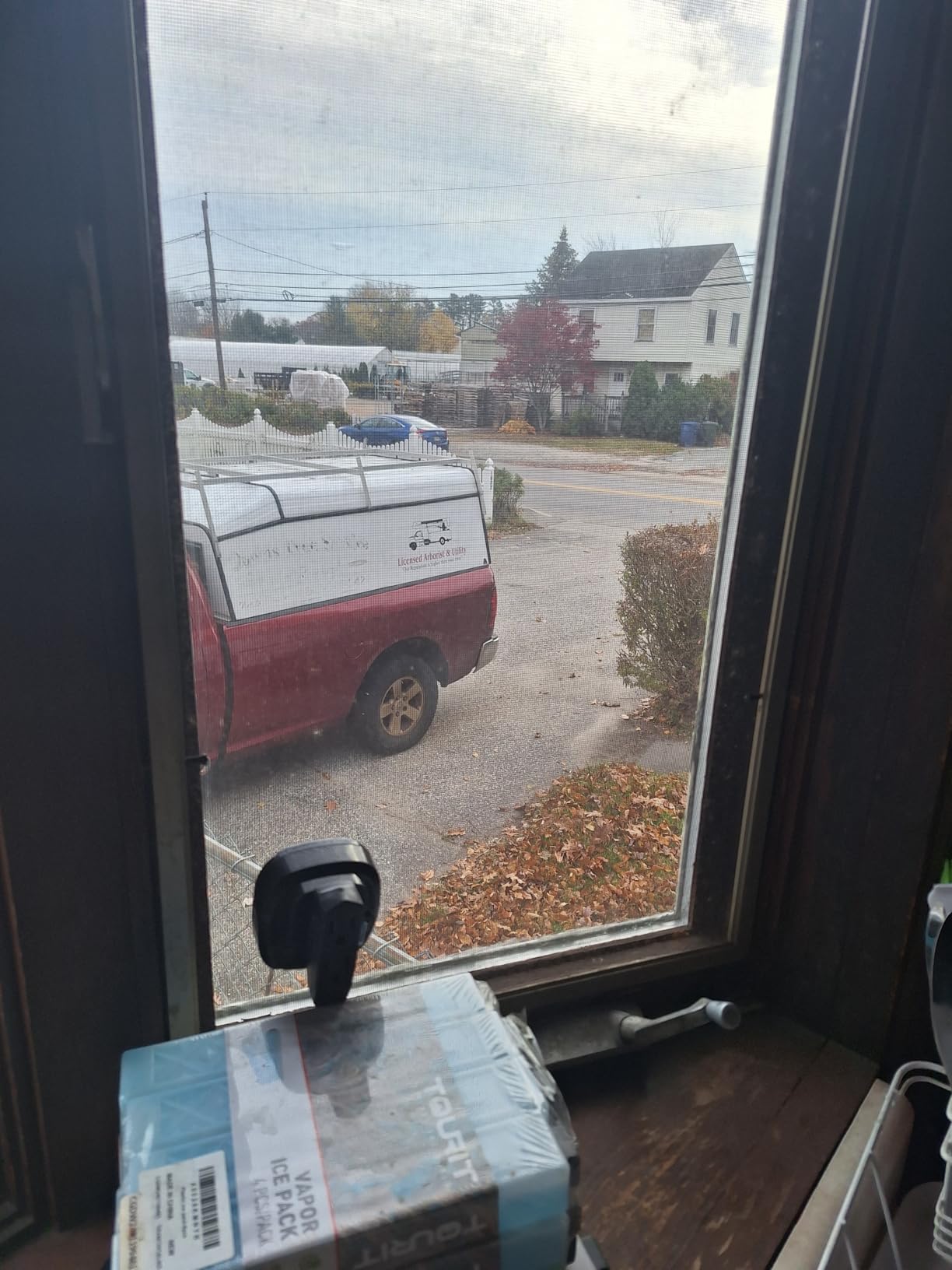
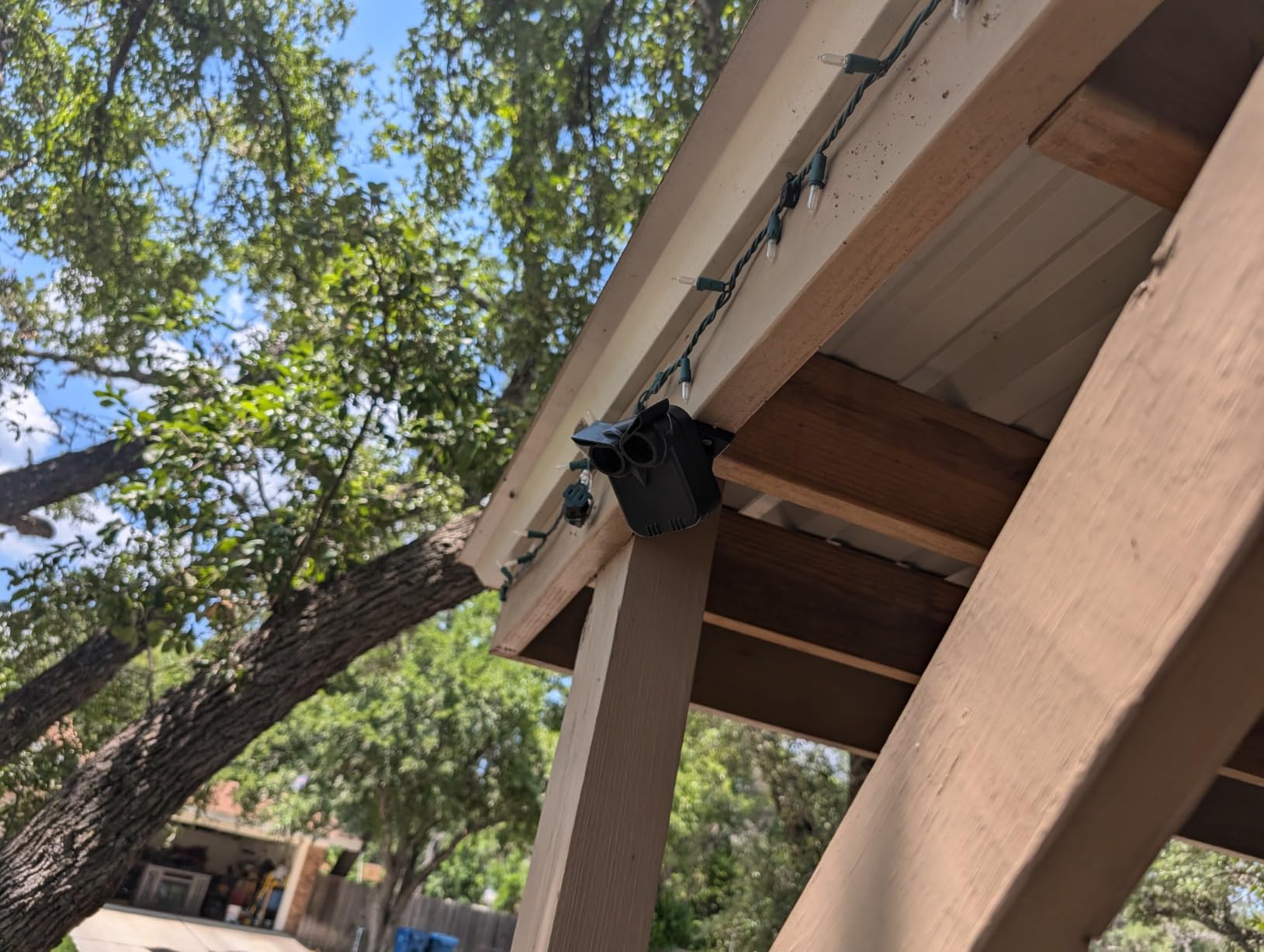
Detection is a 50-foot-wide passive infrared cone with two sensitivity settings, 35 feet on low and 50 feet on high. That cone is the part to think carefully about. A 50-foot detection width works well when a sensor is mounted at the driveway entrance looking up the drive, but it does not cover a long drive on its own, which is precisely why four sensors matter. Spread them along the run and each one becomes a separate trigger point.
False alarms are the recurring theme in owner feedback, and the fix that comes up most often is turning sensitivity down to the 35-foot setting and aiming the sensor away from the road-facing edge. Users in driveway detection threads make the same point: a sensor mounted where it can see passing traffic will trip on passing traffic. The receiver offers four volume levels and 35 melodies, which is more tuning room than most of the kits in this list.
Why this one works for a long rural drive
Two things separate it from the other half-mile kits: the FSK+FHSS radio handling and the 32-sensor ceiling. If your driveway runs past a stand of trees, a barn, or a change in elevation, that combination matters more than raw advertised range. Owners on a 900-foot drive with heavy tree cover report stable reception, and the four-sensor bundle means you can place a trigger at the far end of the property and get the earliest possible warning.
Where it falls short
Batteries are not included, so plan on buying AA cells for four sensors up front. The single receiver means you are limited in how many distinct zones you can map, and each sensor’s detection is still capped at a 50-foot cone. If you need per-zone voice announcements of what triggered, this is not the kit, and you should look at the HTZSAFE solar model further down for that.
2. eMACROS 1/2 Mile Solar Wireless Driveway Alarm: Best Value
eMACROS 1/2 Mile Solar Wireless Driveway Alarm, 1 Receiver & 1 Sensor
2640 ft transmission range
Solar panel on sensor
Adjustable 20 ft and 30 ft detection
Up to 64 sensors
Pros
- Half mile of range proven in forests and heavy rain
- Solar panel means no routine battery swaps
- Supports up to 64 sensors and unlimited receivers
- No wiring or trenching required
- Per-zone chimes on the receiver
Cons
- Detection capped around 30 ft
- Receiver has no app so no phone alerts
- Internal battery can need charging in low-sun spots
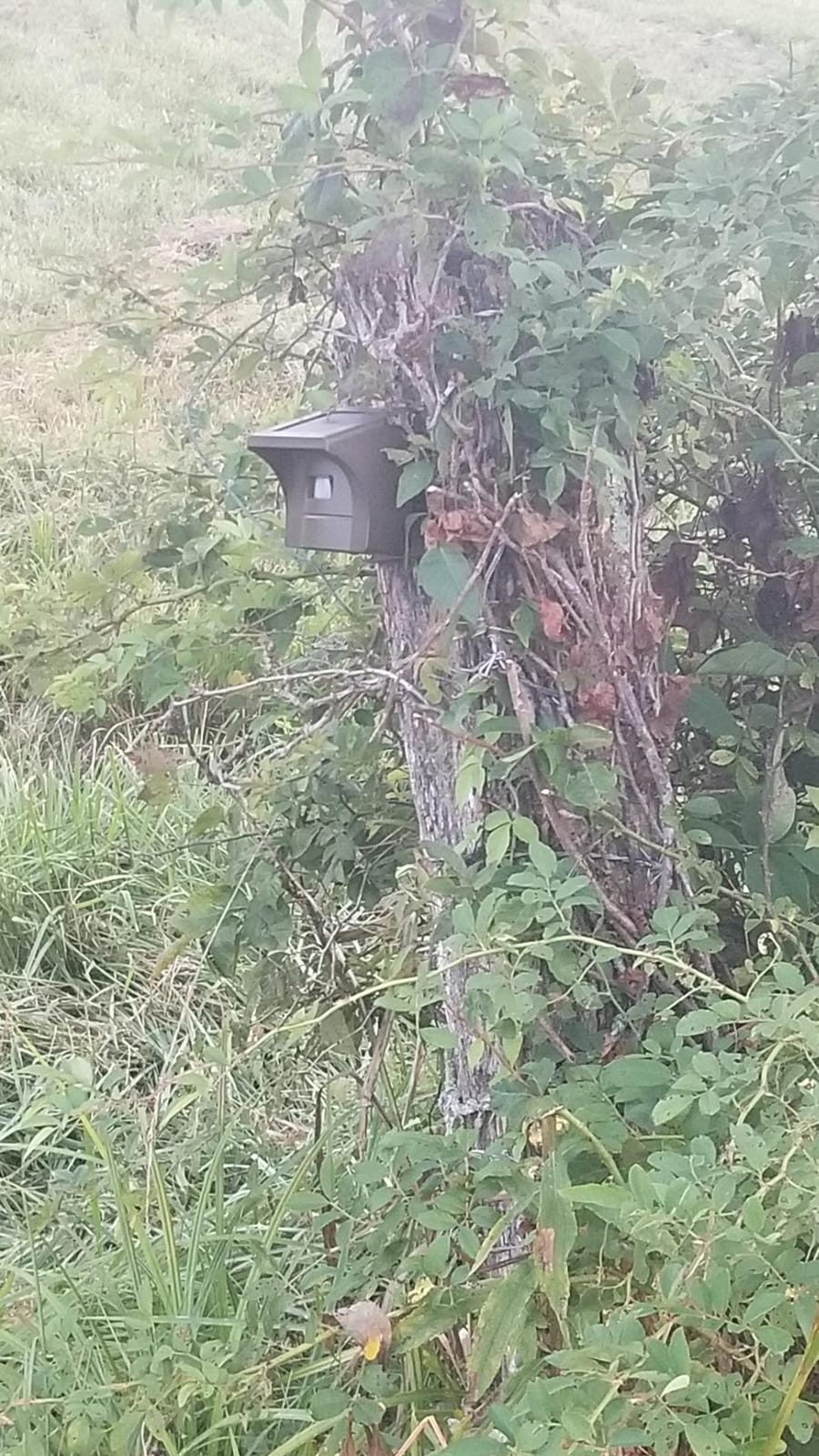
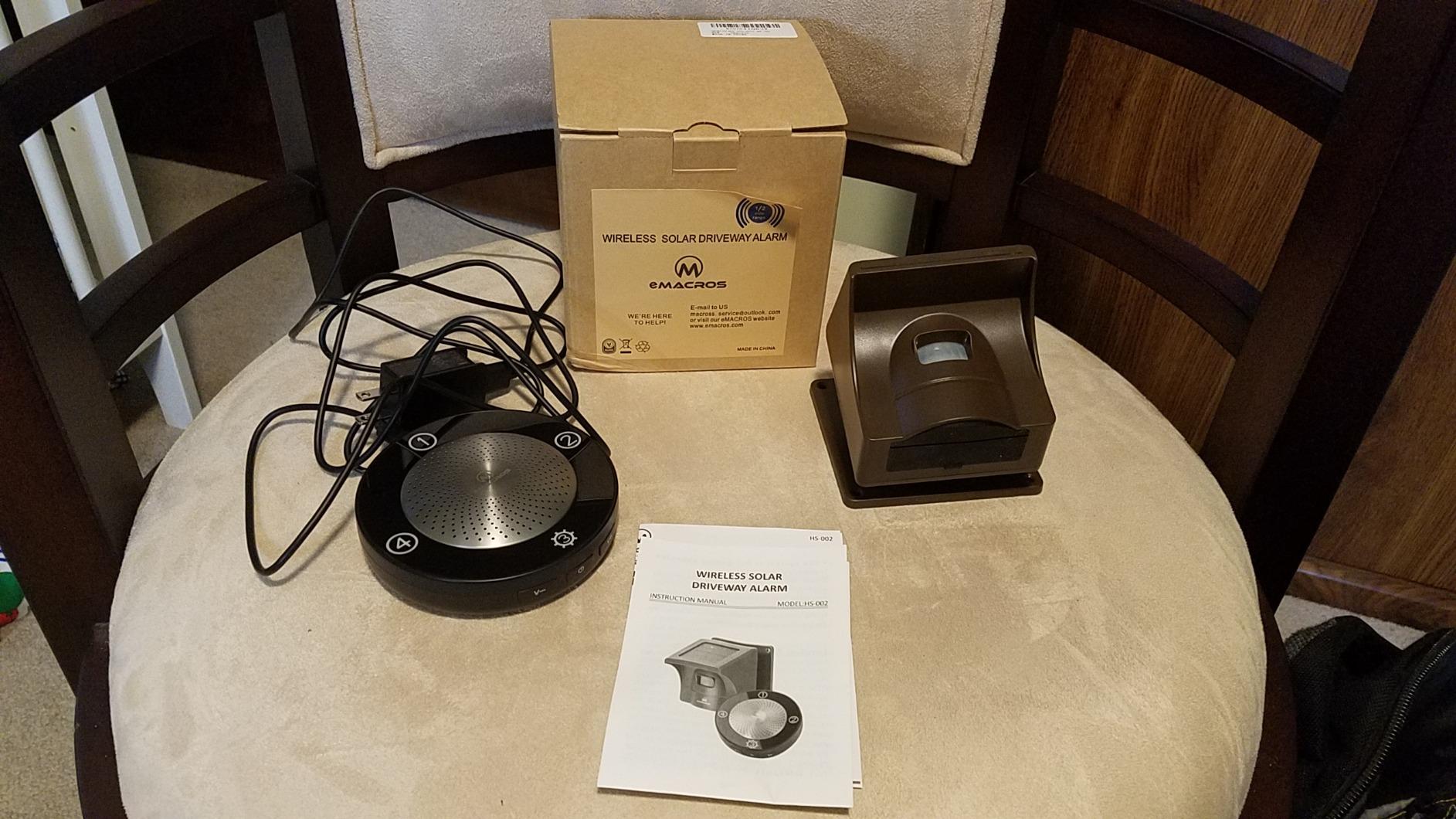
The eMACROS 1/2 Mile Solar Wireless Driveway Alarm is the system we recommend to anyone whose sensor is far from a road and hard to reach. At 2,640 feet of transmission on a 433 MHz radio, it covers essentially every driveway we would call long, and the solar panel removes the one recurring chore that spoils battery-powered sensors on rural properties.
Buyers with wooded driveways report that the range holds up in forests, storms and heavy rain, and the adjustable sensitivity, 20 feet on low and 30 feet on high, is enough to filter out most passing traffic. The kit includes a lithium polymer cell, charging cables and adapters, so you can top it up over USB during a stretch of bad weather rather than waiting for the sun.
Expandability is the sleeper feature. Sixty-four sensors and unlimited receivers is the highest ceiling in this roundup, which makes it the kit to grow into if you plan to cover a gate, a shop, a pond edge and the drive itself. The receiver handles per-zone chimes, so you can hear which sensor fired without walking to the window.
Mounting guidance is specific and sensible: 3 to 4 feet for detecting people, 2 to 3 feet for vehicles, kept level and perpendicular to the ground. The unit itself is 5.71 by 5.31 by 4.96 inches and weighs under a pound, so it will not sag a fence post.
Why this is the easy long-driveway install
Two reasons. The sensor never needs a ladder because there are no cells to swap, and the 64-sensor ceiling means one purchase can cover a property rather than a driveway. Owners running long driveways also like that the transmission distance is unaffected by tree cover, which is the failure mode that catches cheaper kits in the first season.
Where it falls short
Thirty feet of detection is short by modern standards, so a single sensor only covers the entry point of a long drive. The receiver has no app and no phone notifications, which means if the house is empty and nobody is home to hear the chime, the alarm goes unheard. If you want remote monitoring, the eMACROS Pro3 later in this roundup is the same brand with Wi-Fi added.
3. TECKNET Non-APP Solar RGB Wireless Driveway Alarm: Highest Rated
TECKNET Non-APP Solar RGB Wireless Driveway Alarm
2600 ft transmission
IPX5 waterproof from -15C to 50C
Solar panel with battery top-up
16 ft and 33 ft sensitivity
Pros
- Signal verified at 1200 ft over a hill through walls and trees
- Highest rating in the roundup at 4.5
- Solar keeps charging through multi-day overcast and storms
- No app
- no pairing
- no subscription
- Adjustable lens panels narrow the detection field
Cons
- Blue status LED on the sensor cannot be turned off
- Receiver has no latching indicator for missed events
- Included USB cable is short and has no AC plug
- Melodies run 3 to 5 seconds
The TECKNET Non-APP Solar RGB kit carries the highest average rating in this roundup at 4.5 stars, and the reason is that it does the two things long-driveway owners complain about most: it holds its signal over rough terrain, and it lets you physically narrow the detection field. That second point is the one no competitor in this list handles as well.
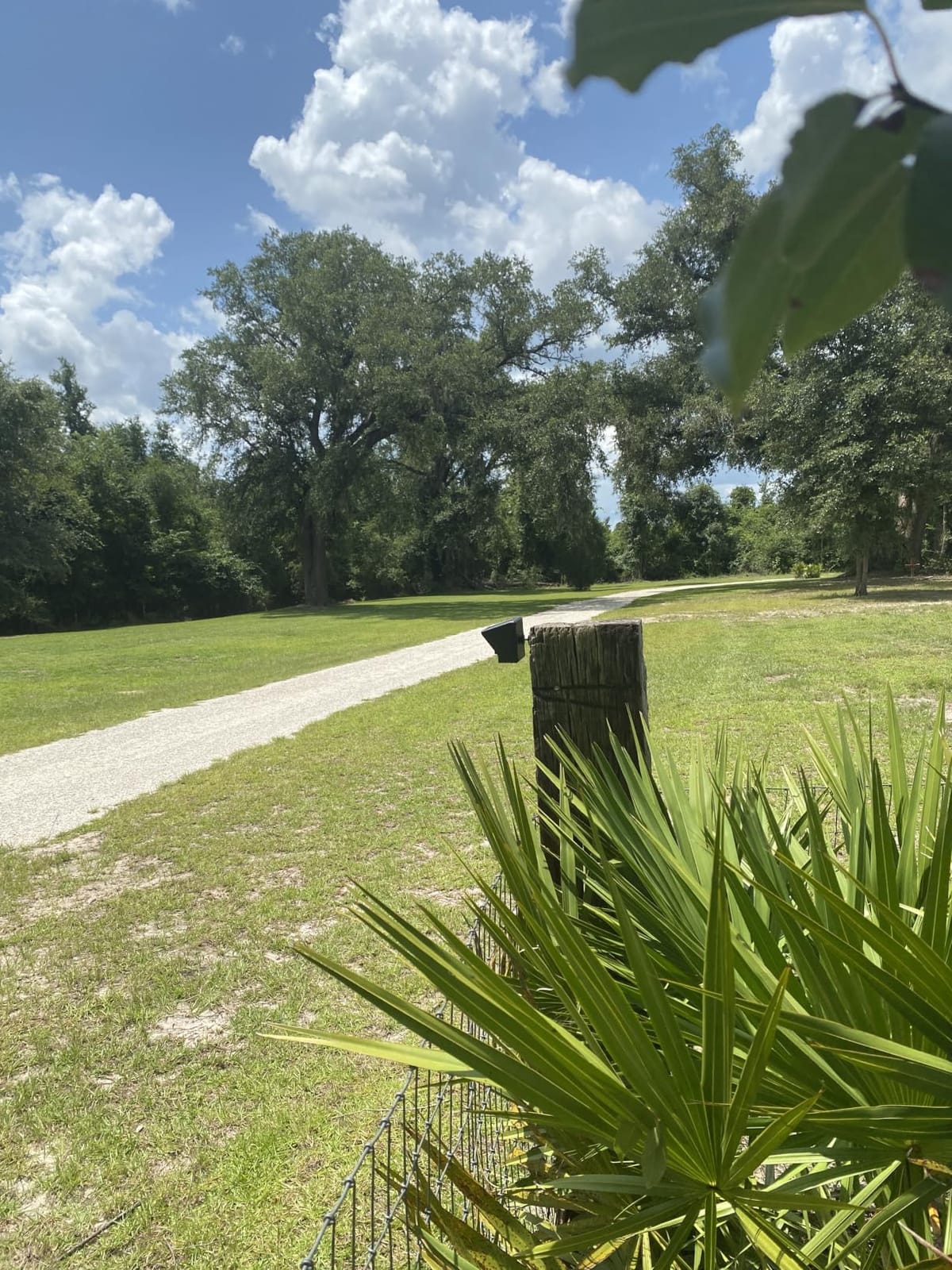
Owners on rural and wooded drives report transmissions working at 700 to 1,200 feet through walls, hills and trees, and one confirmed run at 1,200 feet over a hill. The rotating bracket with adjustable lens panels is the feature that separates it. Instead of only moving the unit up and down, you can narrow the cone so a sensor aimed up a driveway does not also see the county road.
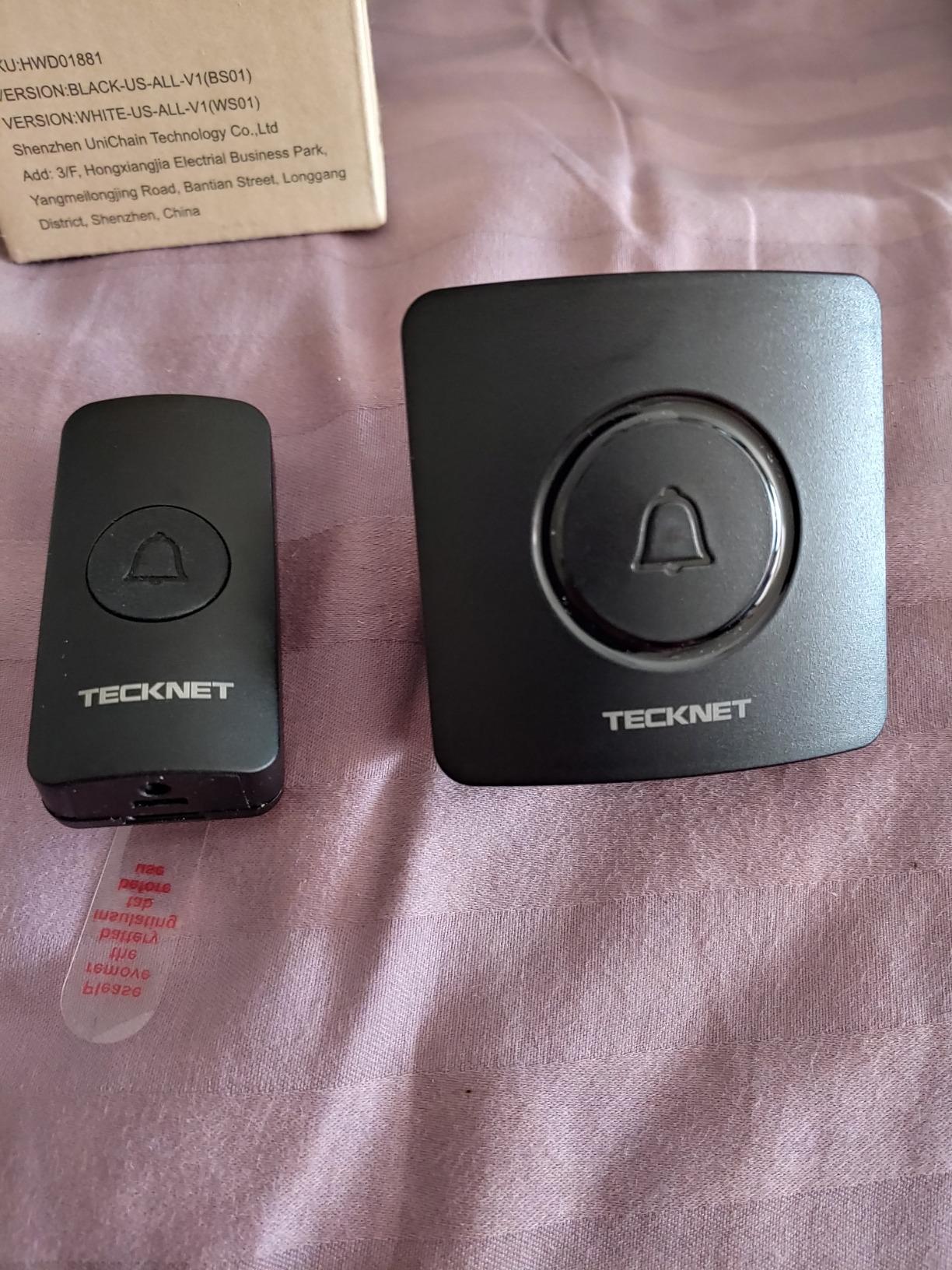
Power is handled well. The solar panel tops up the battery even through multi-day overcast stretches and thunderstorms, and the receiver runs on four AA batteries so you can carry it to a window, a porch or the workshop. There is no app, no pairing process and no subscription, which means the system keeps working with no vendor server in the loop.
Alerting is where it feels generous for the money: 36 melodies, five volume levels, four ringer alert zones and synchronised RGB flashing on the receiver. The housing is IPX5 rated and rated from minus 15 to 50 degrees Celsius, and it mounts to a wall, fence post, tree or any flat surface. Transmitter and receiver arrive pre-paired.
Why this is the best buy for wooded driveways
Reported real-world reach of 700 to 1,200 feet puts it ahead of several kits that advertise a half mile, and the lens panels let you fix the most common complaint in driveway forums, which is cars on the road. Add the RGB zone alerts and you can tell at a glance whether the trigger came from the drive or the gate, without reading a display.
Where it falls short
The blue status LED on the sensor cannot be disabled, so anyone approaching at night knows exactly where the sensor is. The receiver has no latching indicator, so a brief event you missed is gone. The included USB cable is short and has no AC plug, and the melodies run three to five seconds, which is longer than some people want at two in the morning.
4. Dakota Alert DCMA-4K Plus 1-Mile Kit: Longest Reach
Dakota Alert Wireless Driveway Alarm DCMA-4K Plus 1-Mile Motion Sensor Kit
1 mile wireless transmission
110 dB audible output
Single 9V battery per sensor
16 sensors per receiver
Pros
- Only one-mile transmission kit in this roundup
- Loud 110 dB alert with four adjustable volume levels
- Code-learning setup needs no wiring
- 9V battery lasts a year or more
- Scales to 16 sensors or unlimited receivers
Cons
- Battery powered rather than solar
- Older 4000-series hardware with fewer chime options
- Listed 50 ft range refers to PIR detection not transmission
The Dakota Alert DCMA-4K Plus is the only kit here with a stated one-mile transmission distance, and that single number puts it at the top of the list for anyone on a half-mile or mile-long drive. The data on the listing is 2,640 feet for many of the other kits we tested; this one is 5,280, and on obstructed ground that extra headroom is often the difference between a working alarm and a dead zone halfway down the drive.
Note the detail that trips people up. This listing carries a maximum range of 50 feet, and that figure describes the passive infrared detection cone, not the radio distance. The transmission figure is the one-mile number. This is the exact confusion we flagged at the top of the article, and reading the two figures as the same thing is how buyers end up disappointed.
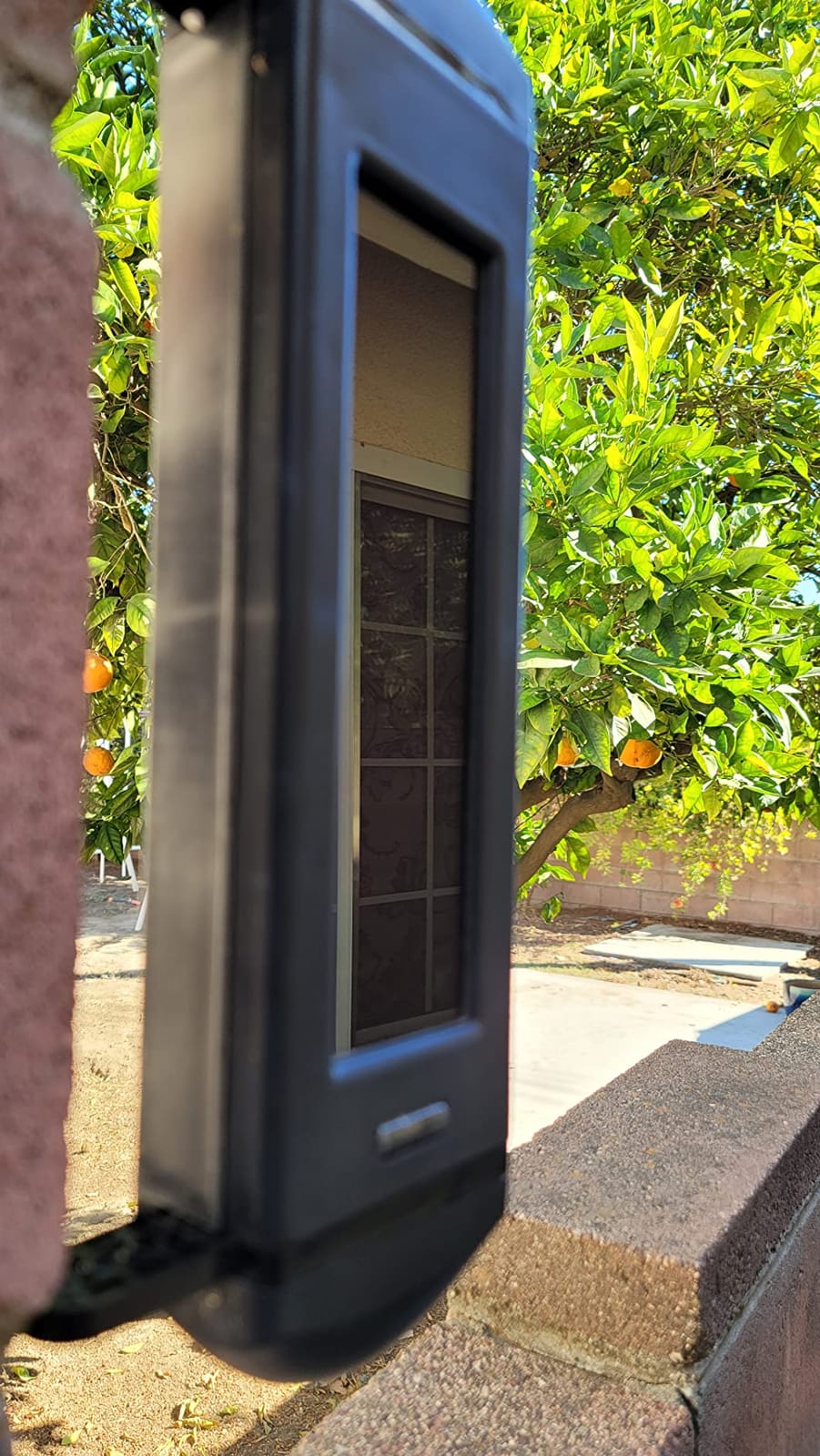
Alert output is loud. Four adjustable volume levels and 110 dB audible output means it is genuinely useful as a trespasser alarm, not only a doorbell. Setup is code-learning technology, so the sensor and receiver learn each other without any wiring, and a single 9V battery in the sensor runs a year or more. The system pairs up to 16 sensors to one receiver, or unlimited receivers to one sensor, which is how you cover multiple outbuildings on a large property.
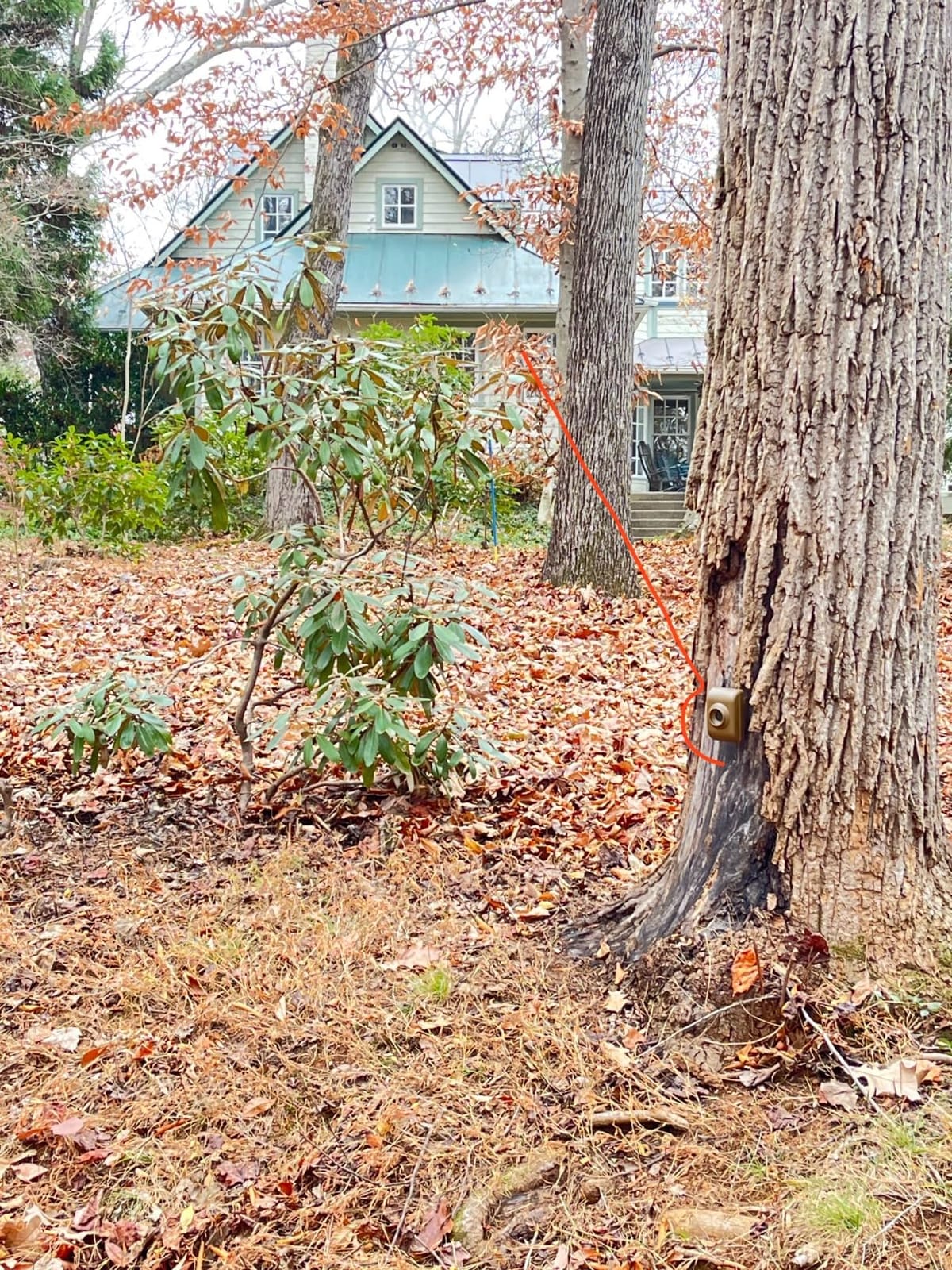
On placement, owners running large properties note that a sensor at the far end of the drive gives the earliest possible warning, several minutes ahead of a camera at the house. They also report false alerts when the sensor is positioned where it can see people turning in the road, which is the same fix as everywhere else in this roundup: aim away from the road-facing edge.
Why this is the right kit for a mile of driveway
Nothing else in this roundup claims that distance. If your drive runs 1,500 feet or more, past a barn, a stand of trees or over a rise, this is the kit that has the range budget to still deliver an alert. The 110 dB output also means it can double as a property alarm for a gate or a shop where you would rather hear something than look at a screen.
Where it falls short
It is battery powered, not solar, so you are committing to an annual visit at the far end of a long drive. The 4000-series hardware is older and gives you fewer chime and zone options than the newer solar kits, and the detection cone is still just 50 feet. If your priority is zero maintenance, the solar kits in this list are the better answer despite the shorter advertised reach.
5. eMACROS Pro3 2.4G Wi-Fi Solar Driveway Alarm: Best App Alerts
eMACROS Pro3 2.4G Wi-Fi Solar Driveway Alarm,1 Receiver+1 Sensor
Phone push notifications
2640 ft range
Solar sensor
2.4 GHz Wi-Fi only
Pros
- Only system in the roundup with real-time phone push notifications
- Half mile of range that holds through trees and snow
- Solar and weatherproof with a rechargeable battery
- Setup is plug in receiver then Bluetooth pair
- Adjustable detection at 30 ft and 20 ft
Cons
- 2.4 GHz Wi-Fi only
- no 5 GHz support
- No camera and no video recording despite the app
- Lowest average rating in the roundup at 4.0
The eMACROS Pro3 is the only system in this roundup that sends real-time push notifications to a phone, and for a long driveway that changes the maths entirely. Every other kit depends on somebody inside the house hearing a chime. This one reaches you at the office, on the road or while you are away for the week.
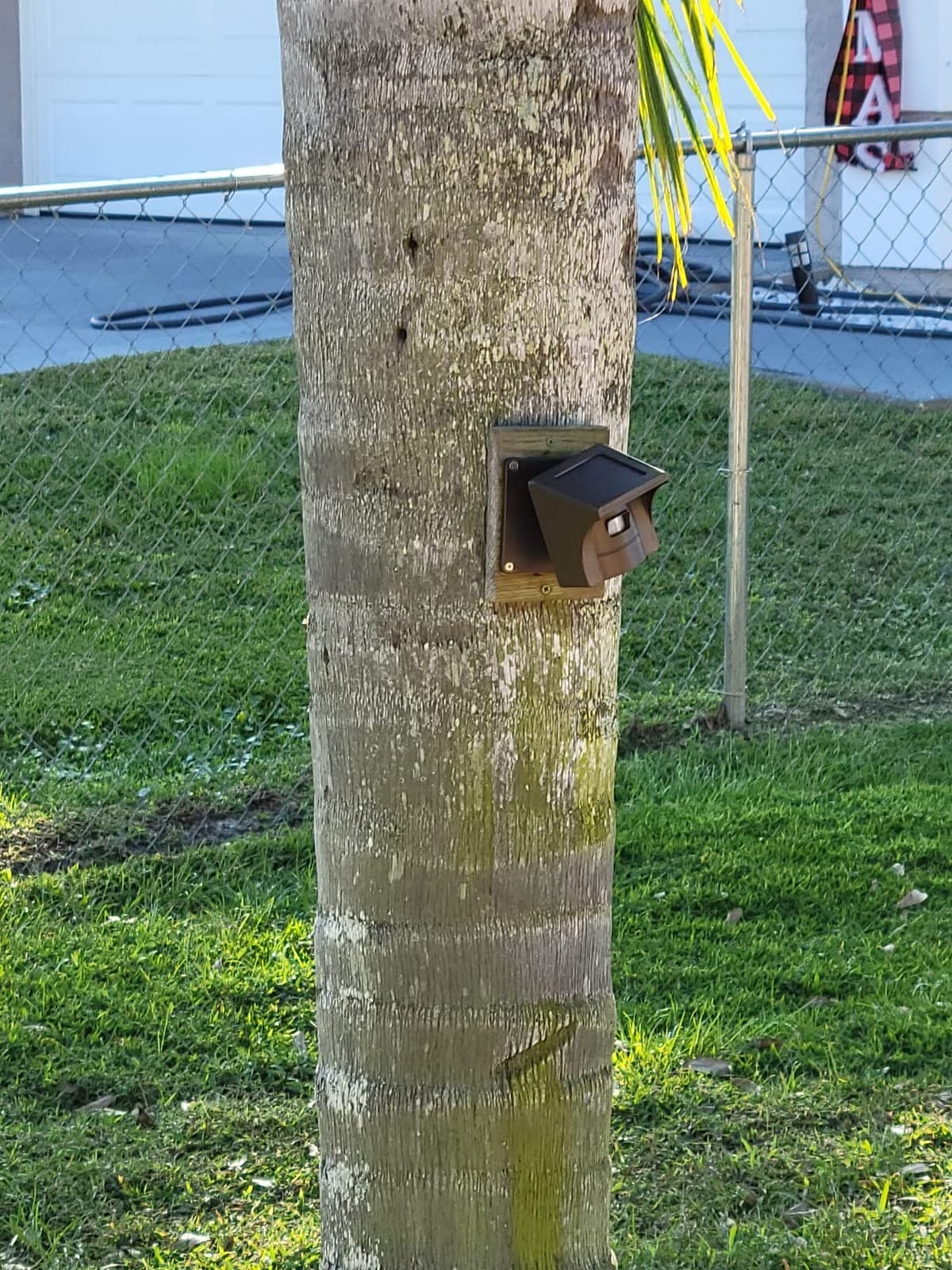
The range is 2,640 feet, which owners report holding up through trees, rain and snow, and the sensor is solar powered and weatherproof with a rechargeable battery inside. Setup takes a few minutes: plug in the receiver, enable Bluetooth on your phone, join the Wi-Fi network and the My Hosmart app takes over. Adjustable detection distance runs to 30 feet on high and 20 feet on low.
There is a catch, and it is a real one. The receiver joins 2.4 GHz Wi-Fi only. If your router broadcasts 2.4 and 5 GHz on the same name, which most modern routers do by default, the receiver will not see it until you split the networks. That single configuration step is the most common reason the app fails to connect, and it is worth doing before you mount anything.
Also worth stating plainly: this is a motion alert, not a camera. There is no video recording and no live view, so if you want to see who is at the end of your drive, you need a separate camera system. That is a fair trade, and a camera-first approach pairs well with one of our floodlight security camera guides.
Why this is the best choice for an empty house
Package deliveries, contractors arriving early and anyone walking the property all become a phone alert instead of an unheard chime. The half-mile range means the sensor can sit at the far end of a long drive, which is the position that gives you the most warning time. Solar power means the sensor keeps reporting through winter without a ladder trip.
Where it falls short
It is the lowest-rated product here at 4.0 stars, with a comparatively high share of one-star ratings, and the review pattern points at connectivity rather than detection. Owners report setup frustration, a 12% one-star share, and no video at all. If your network does not broadcast 2.4 GHz, or you want a camera in the same box, this is the wrong kit.
6. Hosmart 1/2 Mile 4-Sensor Kit: Best Four-Zone Coverage
1/2 Mile Hosmart Driveway Alarm Wireless Outdoor Motion Sensor System | Driveway Sensor Alert System Weatherproof Security Sensor & Detector Protect Outdoor/Indoor Property
1500 ft real-world range
Four sensors plus base receiver
4 distinct chime channels
2-year warranty
Pros
- Four sensors plus a battery or AC powered base receiver in one kit
- Four distinct chime channels show which zone fired
- Dependable at -38C in hail and in heavy rain and snow
- Two-year parts and workmanship warranty
- Sensitivity switch and swivel mount for driveway or trespasser use
Cons
- Sensors have no on or off switch
- Only a single 2-second chime per detection
- Sensor sunshade can come loose in strong wind
- Some units lose sensitivity to slow-moving people
The Hosmart 1/2 Mile kit is the one we would look at first when someone asks for a whole-property system rather than a single driveway. It ships with one battery or AC powered base receiver and four sensors, and it gives you four distinct chime channels so the receiver tells you which of the four zones just fired. On a property with a gate, a shop, a barn and a drive, that is the difference between a chime and usable information.
The honest range figure here is the one to use. The claim is half a mile in ideal conditions, and the manufacturer states roughly 1,500 feet in most real conditions. Owners on 900-foot driveways with heavy tree cover report dependable operation, and the housing is industrial-grade PVC with a rubberized weather seal and a sunshade, tested down to -38 degrees Celsius through hail, wind, heavy rain, heat and snow.
Sensitivity is set with a sensor-eye switch, 30 feet on high and 15 feet on low, and a swivel mount lets the same unit work as a driveway alert or a trespasser alarm. Sensors run about a year on four AA batteries. The warranty is two years on parts and workmanship with a 90-day risk-free window, and only one other kit in this roundup matches that length of cover.
It also carries the highest cost in this roundup, and that cost buys you the multi-zone base unit rather than better radio reach. If you only have one driveway and a 400-foot run, you are paying for channels you will not use.
Why this is the right kit for an acreage property
Four sensors, four chimes and a receiver that runs on mains power or batteries. That combination covers a half-mile drive, a gate, a workshop and a field entrance without needing a second system, and the two-year warranty reduces the risk on hardware you will not touch again for a year. The AC or battery base means you can also put a receiver in a shop or a barn.
Where it falls short
It carries the highest cost in the group, and several design choices are dated. The sensors have no on or off switch, so temporarily disabling one means covering it. Each detection plays a single two-second chime, which light sleepers can miss, the sunshade can dislodge in high wind without extra housing, and some units lose sensitivity to slow-moving people after extended outdoor use.
7. Betterlink 1/2 Mile Solar Wireless Driveway Alarm: Best False-Alarm Filtering
BetterLink 1/2 Mile Long Range Solar Wireless Driveway Alarm System 1R1S
Half-mile range
IP65 sensor to -4F and 140F
30 ft PIR detection
Solar or USB-C charging
Pros
- Half-mile range confirmed at 700 ft clear and 400 ft in dense forest
- Detection algorithms tuned to reduce false alarms
- Two-year manufacturer warranty and responsive support
- Four alert modes including a silent receiver-only setting
- USB-C charging works as an alternative to solar
Cons
- Solar panel cannot be tilted without rotating the whole sensor
- One owner reports water getting in after about two years
- Green receiver LED flashes constantly
- Can miss detections in heavy rain
The Betterlink solar kit is the one we would pick for a wooded drive where deer, raccoons and wind-blown branches are a daily problem. It holds a 4.5 rating, and the sensor uses PIR detection up to 30 feet with algorithms tuned to filter false triggers, which is the specific complaint raised in nearly every long-range driveway thread we looked at.
Range checks out in the real world. Owners report half-mile performance at about 700 feet with a clear line of sight and around 400 feet through dense forest, and several describe years of trouble-free operation at roughly 100 yards from the house. The sensor is IP65 rated and rated from minus 4 to 140 degrees Fahrenheit, so it is a genuine four-season unit.
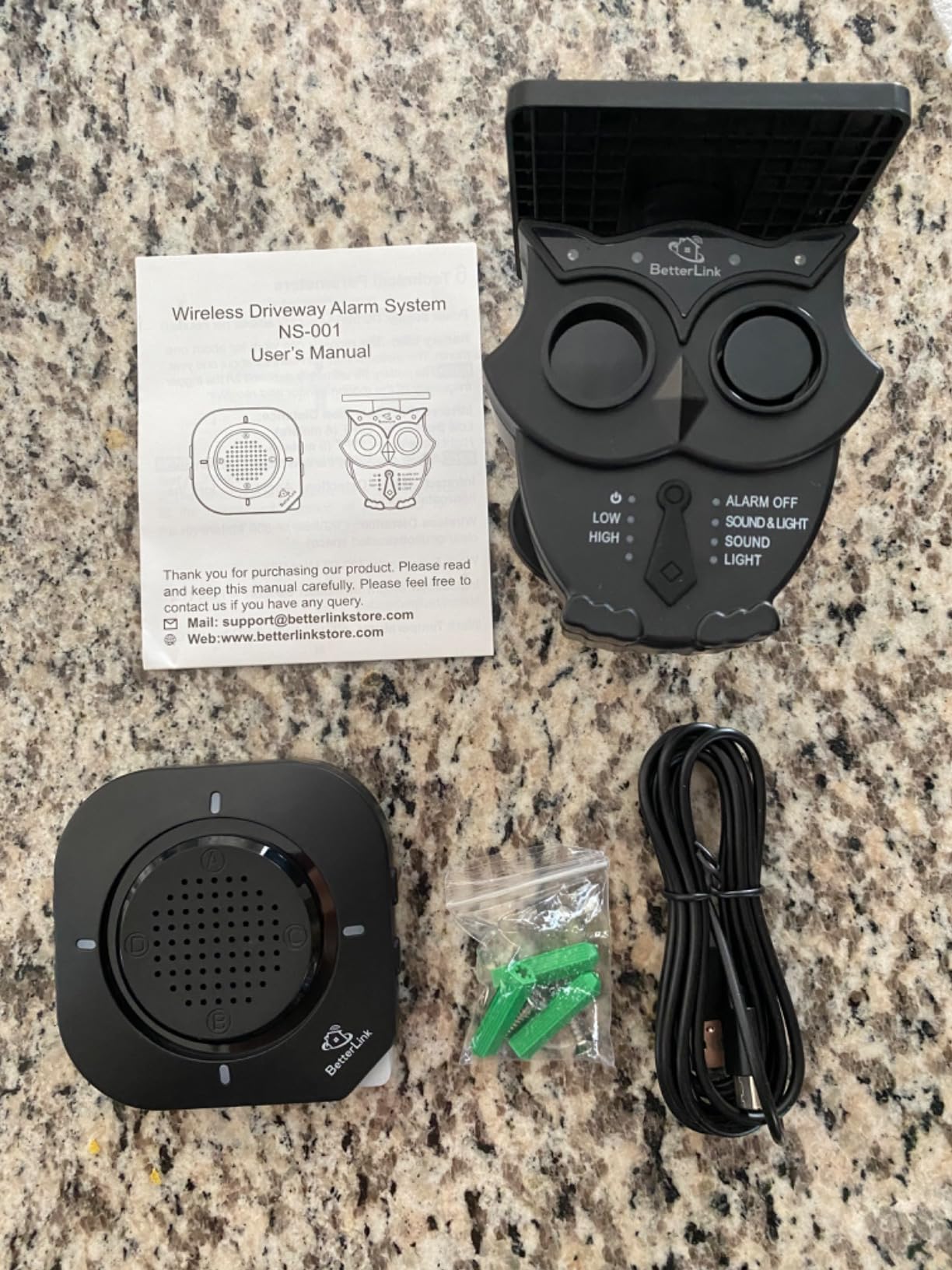
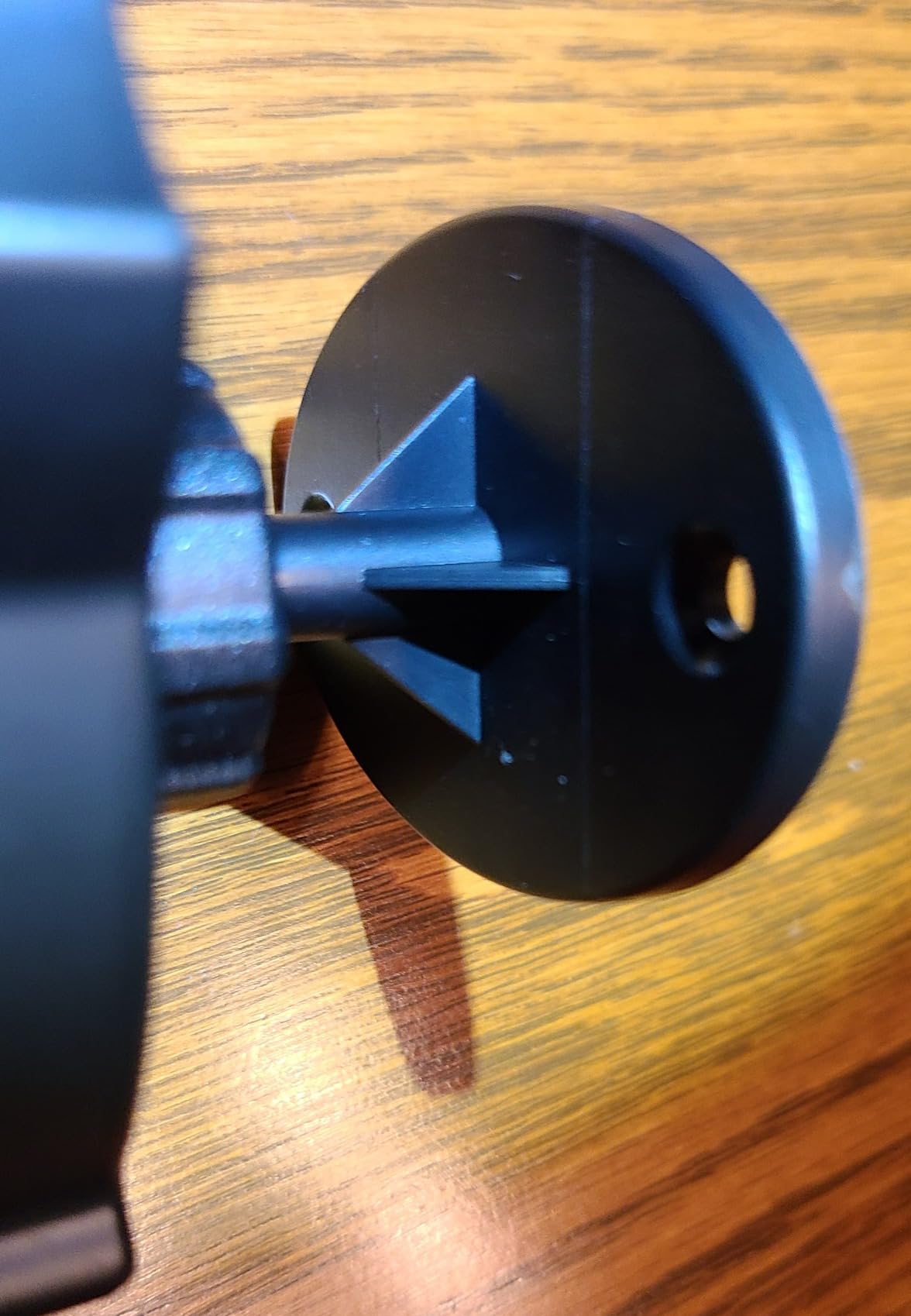
Power is flexible. The sensor charges by solar panel or by USB-C cable, and the box includes the receiver, one solar sensor, a Type-C cable, a manual and three mounting screws. Four alert modes let you choose audible alarm, light alarm, sound plus light, or receiver-only, which is useful if the driveway is close to a bedroom and you would rather see a light than hear a tune.
Customer support is a genuine strength here. Owners report a failed sensor replaced and return postage covered, and the manufacturer warranty is two years. The receiver expands to 16 sensors, which is more than most of the single-sensor kits here.
Why this works best where animals and weather interfere
The false-alarm tuning is the headline. If your drive runs past woods where deer cross at dawn, or you get wind that moves branches across a sensor cone, this is the kit whose owner complaints focus on the solar panel angle rather than on nuisance trips. Four alert modes also let you silence the chime and rely on the light, which solves a lot of household friction.
Where it falls short
The solar panel cannot be tilted independently, so if you want a better winter sun angle you have to rotate the entire sensor body and accept the new detection aim. One owner reports water getting past the seal after about two years outdoors, the green receiver LED flashes constantly and can be distracting at night, and a few reports mention missed detections during heavy rain. Only one alarm tune is available as a fallback.
8. HTZSAFE Solar 1/2 Mile Driveway Alarm: Widest Detection Cone
HTZSAFE Solar Driveway Alarm 1/2 Mile Long Range – 1 Receiver + 1 Sensor
2640 ft transmission
70 ft detection cone
Solar sensor and receiver
Spoken zone labels
Pros
- Widest detection cone in the roundup at 70 ft on high
- Solar charging on both sensor and receiver
- Receiver keeps alerting through a power cut on its internal battery
- Spoken-word melodies name the zone that triggered
- Lowest cost among the half-mile systems
Cons
- Shaded mounting spots drain the battery in about four days
- No on or off switch on the sensor
- Most of the 35 melodies are described as tinny
- Settings can reset when the receiver is powered off
The HTZSAFE solar single-sensor kit is the cheapest way in this roundup to get a half-mile transmission range, and it does something none of the others do: the receiver has a built-in rechargeable battery, so it keeps alerting through a power cut. On a long rural drive where an outage means a dark house anyway, that is a small feature that turns out to matter.
Detection is the widest cone here. Three sensitivity levels give you 25 feet on low, 50 feet on medium and 70 feet on high, so a single sensor at the driveway entrance can watch a much wider slice of the drive than a 30-foot unit. Owners report reliable alerts at 200 yards and on 400-metre roads with no line of sight.
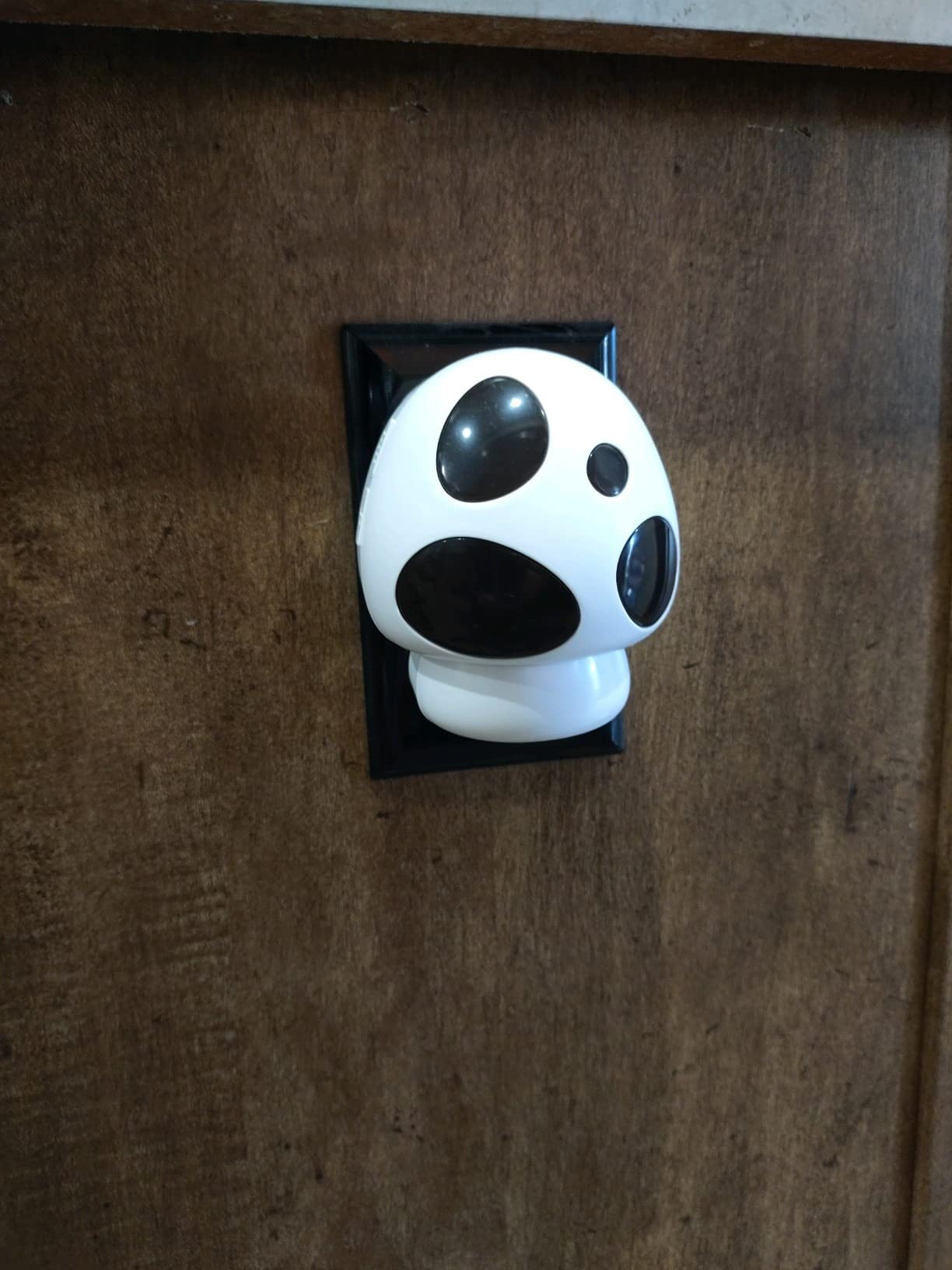
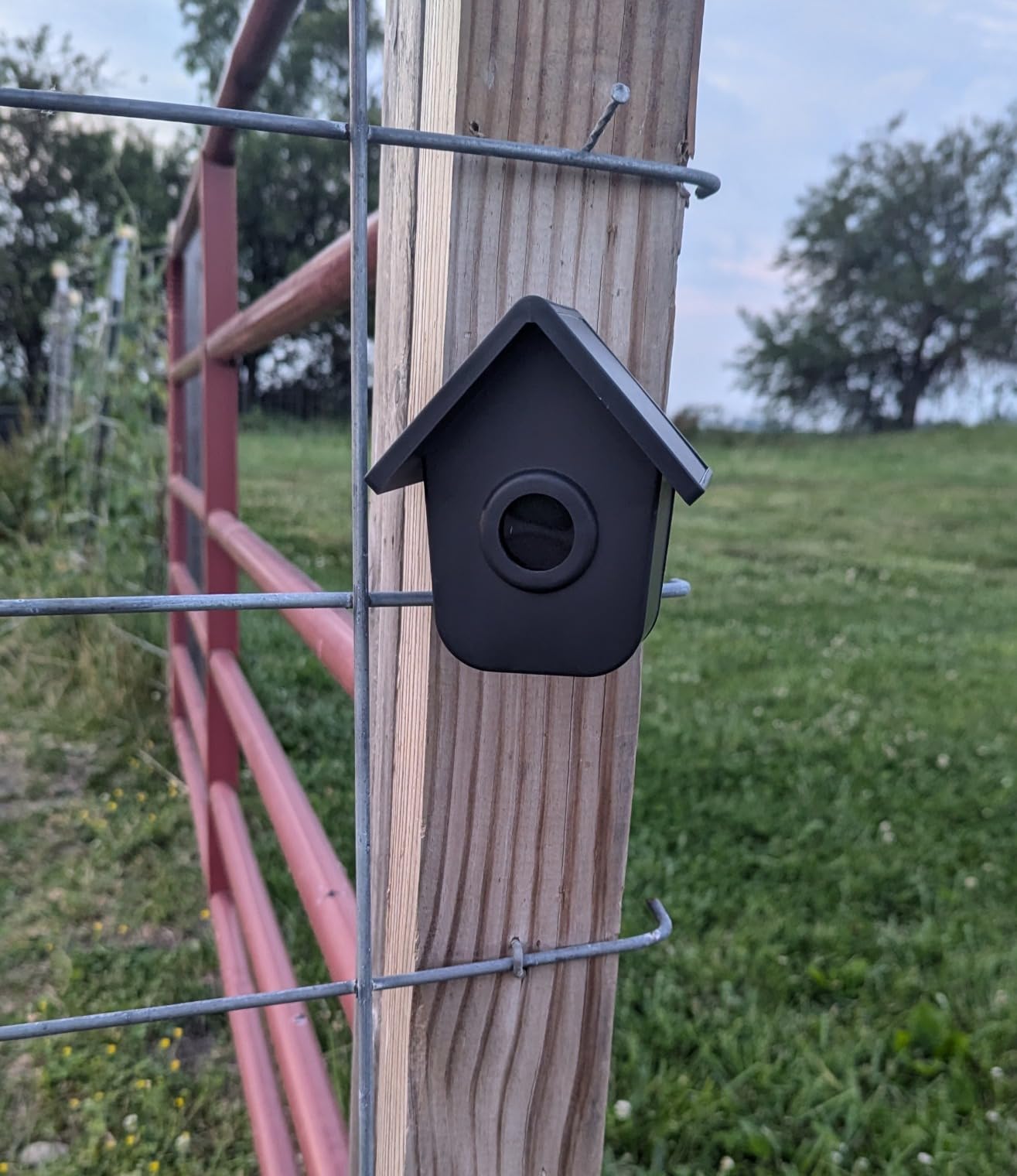
The melodies are the sleeper feature. Thirty-five options with five volume levels, and several are spoken-word alerts that name the zone, driveway, front door, backyard or garage, so you know where activity is without checking a display. The housing is shaped so it reads as a birdhouse rather than a camera, which matters if the sensor sits where visitors can see it.
Both sensor and receiver charge by solar, and the sensor battery recharges even on cloudy or rainy days. The kit expands to four sensors and unlimited receivers, and it mounts on a pole or wall.
Why this suits a wide driveway entrance
Just one of the ten kits here reaches past 50 feet on PIR detection, and this is it. If your driveway opens onto a wide apron rather than a narrow tree-lined lane, a 70-foot cone covers far more of the approach with one sensor. The spoken zone labels also make it the easiest of the bunch to set up for a household where more than one person needs to know what is happening.
Where it falls short
Solar charging is the whole design and also its weakness. In a shaded mounting spot the battery can drain in about four days, so pick a site with direct sun or plan to top it up. There is no on or off switch on the sensor and the button is unlabeled, most of the 35 melodies are described as tinny, and the receiver can play its default tone at full volume while charging or reset its settings when switched off. A small number of owners report indoor receiver failures.
9. Wuloo 1800ft Solar Driveway Alarm: Best Mid-Length Coverage
Solar Driveway Alarm Wireless Outside 1800ft Range, Outdoor Motion Sensor & Detector Driveway Alert System with Rechargeable Battery/Weatherproof/Mute Mode(1&2-Brown)
1760 ft tested range
Weatherproof in rain and snow
Receiver doubles as clock
24-month battery life
Pros
- Reliable 1760 ft range tested with trees
- buildings and vehicles in the way
- Weatherproof housing rated for rain and snow
- Receiver doubles as a clock and alarm with adjustable chimes
- Rechargeable battery lasts up to 24 months on a full charge
- Expands to 8 additional sensors
Cons
- Shorter transmission than the half-mile systems
- Detection field tops out around 30 ft
- No smartphone or app connectivity
The Wuloo 1800ft solar system is the sensible choice when your driveway is long enough to matter but comfortably inside a third of a mile. Tested range is 1,760 feet, verified with trees, buildings, walls and vehicles in the signal path, which is a more honest test than a manufacturer’s clear-field number. Owners with driveways in that band report alerts that arrive without fail.
Wuloo has been building FM, ASK and FSK wireless gear for more than 20 years, and that history shows up in owner comments about dependable range and weather tolerance. The sensors are weatherproof and work in rain or snow, the kit includes two sensors with one receiver, and the rechargeable lithium battery runs up to 24 months on a full charge from the solar panel.
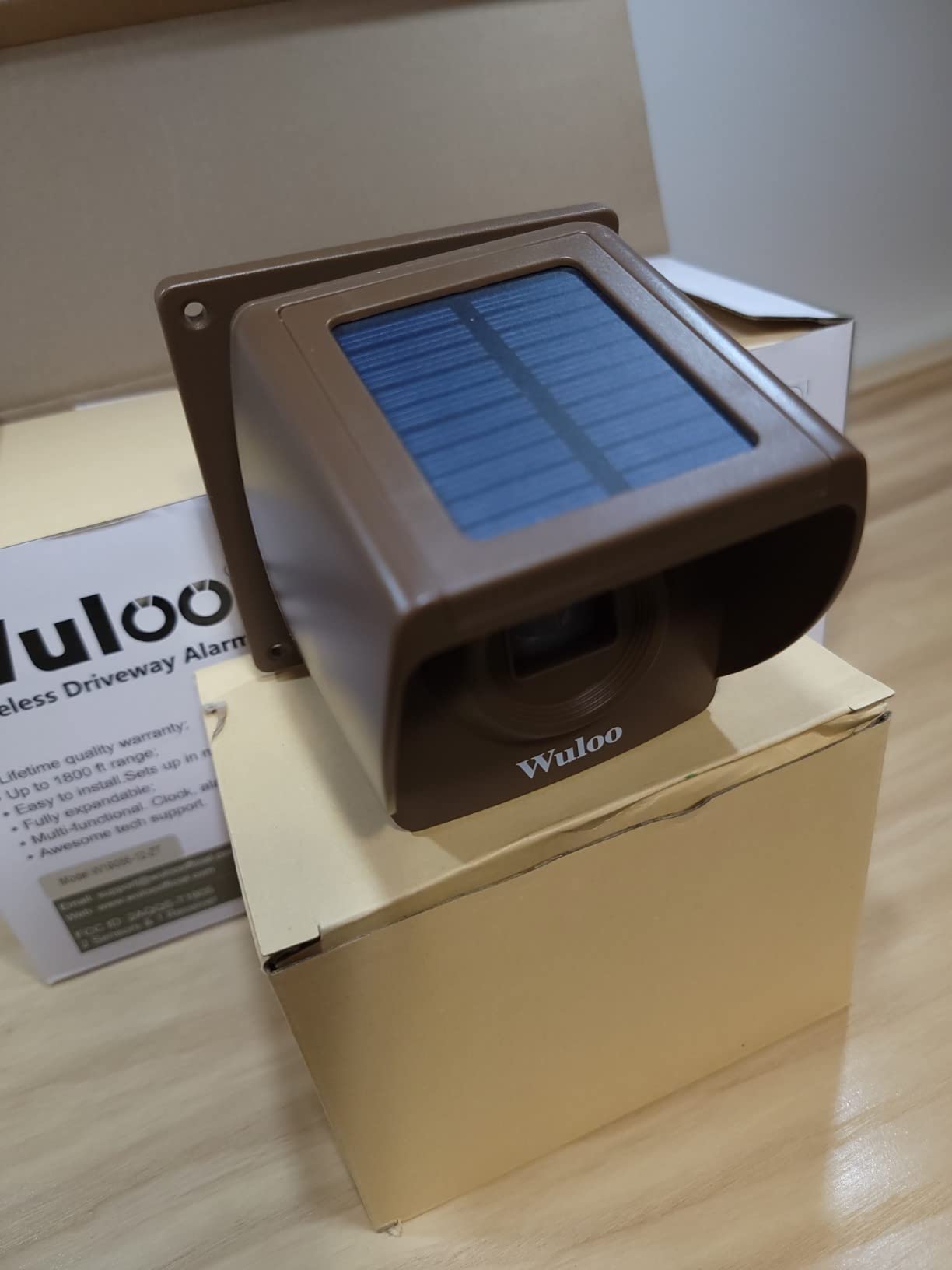
The receiver is the differentiator here. It doubles as a clock and an alarm with adjustable chimes, so one box on a kitchen shelf gives you the time, a wake-up alarm and your driveway alert. It expands by eight additional sensors with adjustable sensitivity, which is enough headroom to add a gate and a back path.
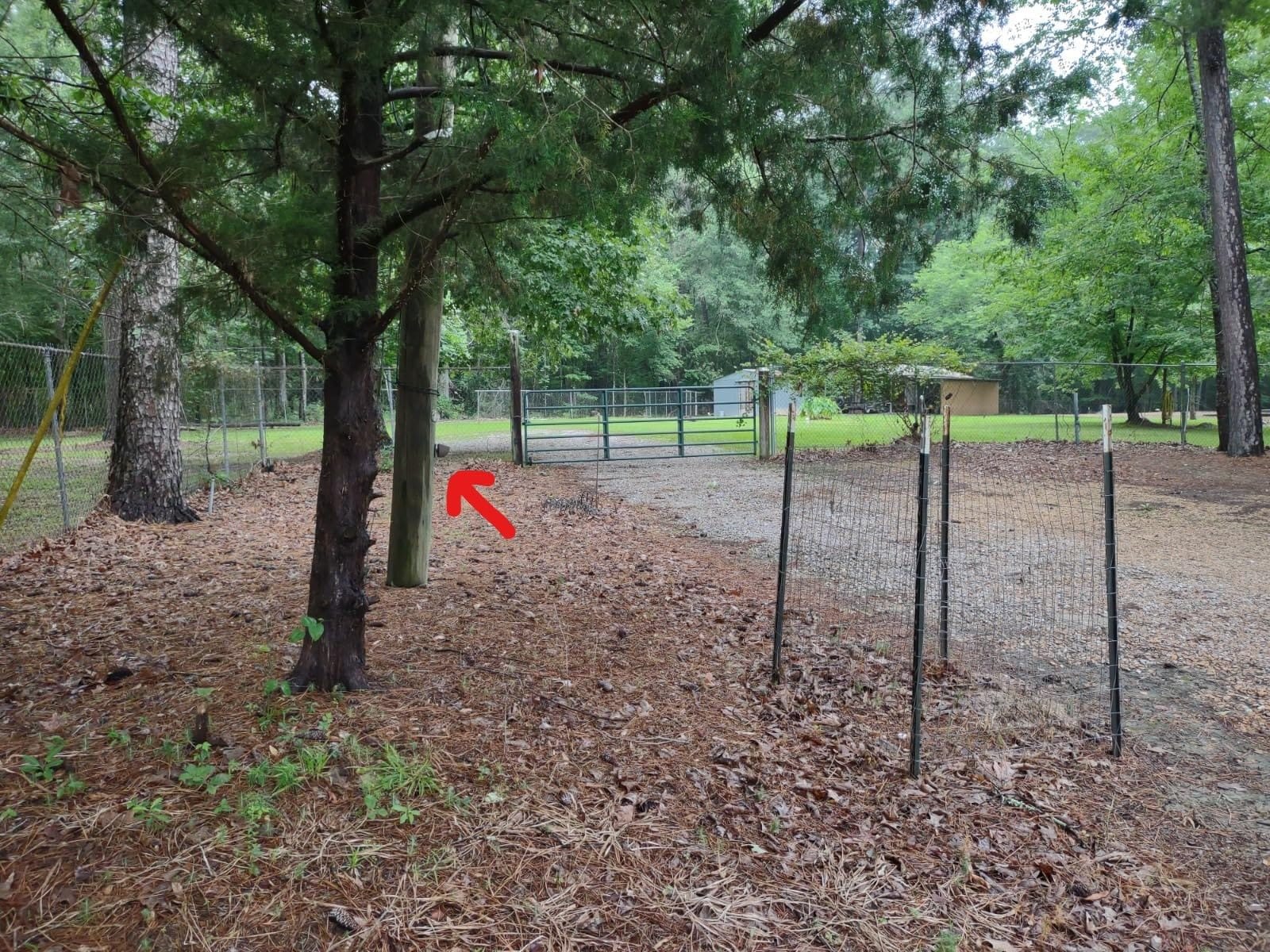
Detection is around 30 feet at most, so this is a trigger-point sensor rather than something you can angle to watch a wide apron. Mounting is wall mount, and the whole package weighs under a kilogram.
Why this fits driveways between 500 and 1,200 feet
You are buying exactly the range you need and nothing more complicated. The tested 1,760 feet leaves headroom for a sensor behind a building or a slight rise, the 24-month battery means you can go two seasons between top-ups, and the clock-and-alarm receiver is genuinely useful rather than a gimmick. A 24-month runtime is longer than the solar cells in most of the other kits here.
Where it falls short
1,760 feet is meaningfully shorter than the 2,600 to 2,640 feet offered by most of the other kits, so on a driveway approaching a mile it will not carry. The 30-foot detection field is at the short end of the range here, and there is no app or phone connectivity, which means the chime only helps if someone is at home to hear it.
10. Chtoocy 1/2 Mile Wireless Driveway Alarm: Toughest Housing
Chtoocy Wireless Driveway Alarm, 1/2 Long Mile for Outdoor Security
IP67 weatherproof shell
4 sensors plus receiver
Solar sensors up to 12 months
33 ft detection width
Pros
- IP67 shell is the highest weather rating in this roundup
- Half-mile range reported working over 300 ft of elevation change with heavy tree cover
- Four sensors cover the whole property
- Sensor trigger light can be disabled so visitors are not tipped off
- Receiver indicator holds about 60 seconds
Cons
- All sensors share one tone in the base configuration
- Bracket pivots up and down only so side aiming needs disassembly
- Some buyers report real reach closer to 500 ft
- False alarms from birds and wind-blown branches at high sensitivity
The Chtoocy 1/2 Mile kit has the most weather-hard housing we found, an IP67 shell rated from minus 20 to 60 degrees Celsius, which is the highest ingress rating of the ten. If your sensor sits in an exposed position with no tree or eave cover, that matters. Owners report half-mile range working across 300 feet of elevation change with heavy tree cover, and four sensors in the box cover a gate, the drive, the yard and outbuildings.
Two small design touches stand out. The sensor trigger light can be disabled so an approaching visitor is not told exactly where the sensor is, and the receiver indicator stays lit for about 60 seconds, longer than most competing units, which gives you time to walk to it and see which sensor fired. Solar sensors run up to 12 months on a full charge, and the system expands by eight extra sensors.
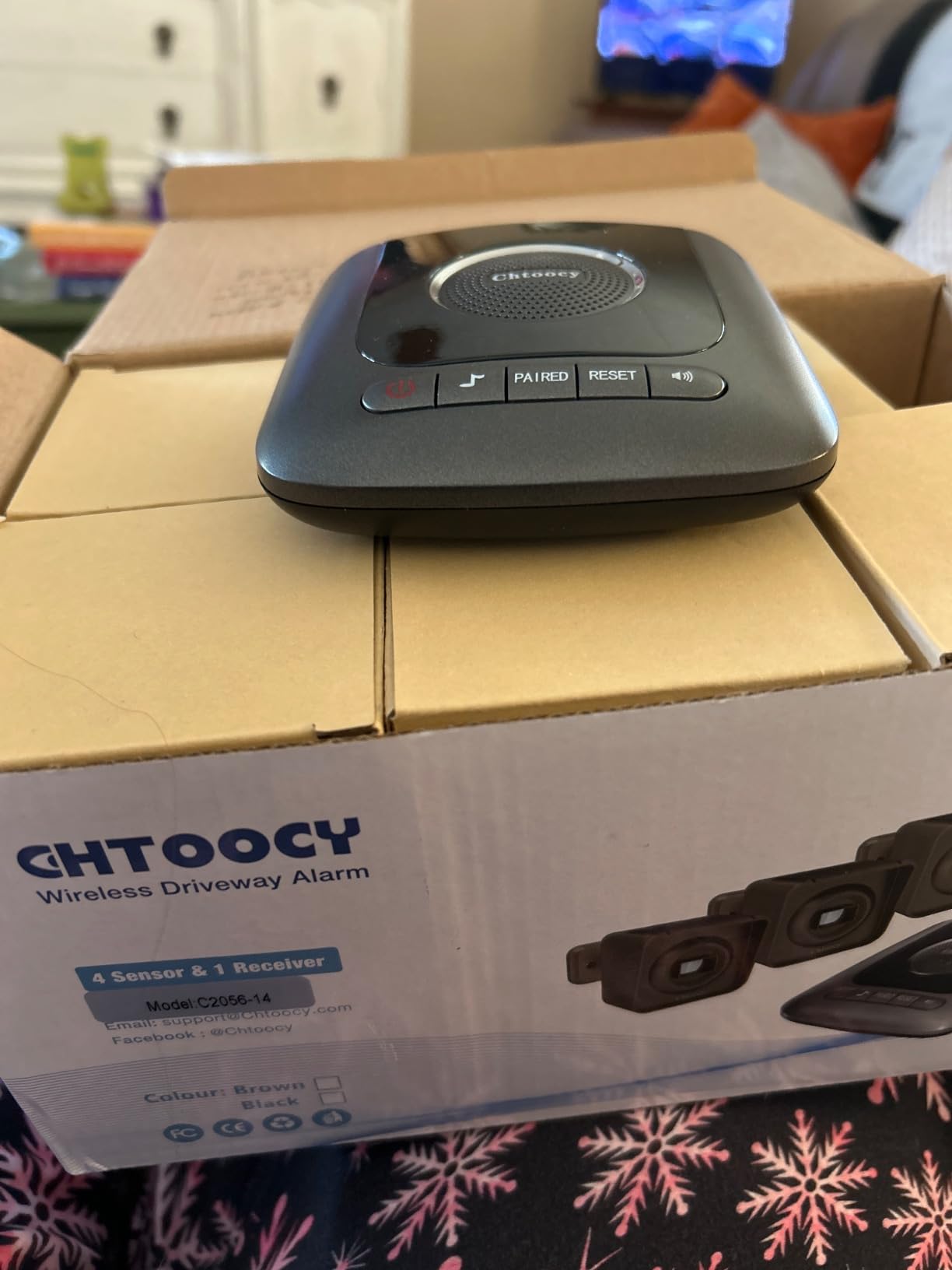
Sensitivity has three levels with up to 33 feet of detection width, and the receiver offers 12 chimes, four volume settings including mute, and LED flash alerts. Transmission is 2,640 feet using FM wireless with an anti-interference design, and the units arrive pre-paired for quick setup. Support is repeatedly praised in reviews, including follow-ups after delivery.
This is the smallest review base in the roundup at 155 ratings, and the spread is the widest, from 53% five-star to 11% one-star. That is what a young listing looks like, and it is a fair reason to treat the owner feedback as direction rather than settled fact.
Why this suits an exposed rural position
An IP67 shell, four sensors and a 60-second indicator hold up in a way that most kits in this price band do not, and the disableable trigger light is a small privacy win most owners never think to ask for. If your sensors get no cover from an eave or a tree, the weather rating is the reason to shortlist it.
Where it falls short
In the base configuration every sensor plays the same tone, so you have to look at the receiver to know which zone fired, and the bracket pivots up and down only, meaning side aiming needs disassembly. Some buyers report real-world reach closer to 500 feet rather than the advertised half mile, and birds, spiders and wind-blown branches cause false alarms at higher sensitivity. With only 155 ratings, we would test it thoroughly before mounting it at the far end of a long drive.
How to Choose a Driveway Alarm for a Long Drive in 2026
Start by measuring the distance from your intended sensor position to the receiver, not the length of the driveway. That single number, plus the physical obstructions between the two points, is what determines whether a kit works. Everything else in this guide follows from it.
Detection range is not transmission range
This is the single most important thing to understand before you buy, and it is where most listings mislead you. Detection range is how far the sensor can see a person or a car. Transmission range is how far the radio signal carries from that sensor to the receiver. On a long driveway, transmission range is the number that decides whether you get an alert at all.
A good example sits in this roundup. The Dakota Alert DCMA-4K Plus lists a 50-foot maximum range and also claims one mile of transmission. Those are not in conflict; the 50 feet is the passive infrared cone, and the mile is the radio distance. A less careful reader sees only 50 feet and thinks the kit is inadequate. A careful reader sees that the 50-foot figure describes the doorway, not the driveway.
Apply a derating rule of thumb when comparing kits. Half-mile and 2,640-foot claims are typically measured in open ground, and in practice most systems hold somewhere between 1,200 and 1,800 feet once you account for buildings, tree cover, terrain change and walls. The Hosmart listing is unusually honest about this, stating roughly 1,500 feet in most conditions rather than the half mile claimed in ideal ones. Owner reports on the TECKNET and Betterlink kits, at 700 to 1,200 feet and 700 feet clear sightline respectively, fit inside that range.
Detection technologies compared
Passive infrared is what almost every kit in this roundup uses. It is cheap, it runs on AA batteries, and it detects heat movement within a cone, typically 16 to 70 feet wide depending on the model. The weakness is that it detects anything warm, which is why deer and headlights cause nuisance trips.
Active infrared break beams use an emitter and a receiver aimed at each other, and they only trigger when the beam is broken. They are far less false-alarm prone because a swaying branch will not break a beam aimed across the drive at an angle. They cost more, need two units and a clear line of sight, and they need a power source at the far end, which on a long rural drive is a real obstacle.
Buried probe and rubber hose systems run a line along the edge of the drive and are triggered by weight. They are the most reliable and the least attractive option for a long drive, because a 600-foot run means 600 feet of tubing or cable buried in a trench. The camera-based category is really a separate product, and if you want visual verification rather than a chime, our floodlight camera picks serve a different purpose than anything on this list.
Power options for remote sensors
Battery power is the default and the cheapest, and every system here except the solar models will need annual attention at the far end of a long drive. Cold weather shortens battery life, and a sensor at the end of a 900-foot drive in January is exactly the one you do not want to find flat. The Dakota Alert single 9V battery lasting a year or more and the Hosmart four-AA year are the realistic best cases.
Solar solves that problem and introduces its own. The eMACROS, Wuloo, TECKNET, Betterlink and Chtoocy kits all charge a lithium cell from a panel, and the HTZSAFE solar model also charges the receiver. The catch is placement. A sensor in partial shade can drain in a matter of days, as owners of the HTZSAFE solar kit report, so choose a site with direct sun or keep the USB cable as a backup. Panels are rated from minus 4 to 140 degrees Fahrenheit on the Betterlink, minus 15 to 50 degrees Celsius on the TECKNET, and minus 20 to 60 degrees Celsius on the Chtoocy.
App alerts and smart home integration
Only one product in this roundup sends alerts to a phone. The eMACROS Pro3 uses a 2.4 GHz Wi-Fi receiver and the My Hosmart app for real-time push notifications, and it needs a 2.4 GHz network, which means splitting your router bands if they are combined. Everyone else in this list is receiver-only, meaning the chime has to be heard by someone at home.
That is a meaningful limitation for people running driveway detection for a shop, a gate or an empty house, and it is why camera and NVR systems come up so often as the alternative in driveway monitoring threads. If you already have a camera system with person, vehicle and pet classification, the alarm’s job is to tell you something is out there, and the camera’s job is to tell you who.
Home Assistant and SmartThings integration is where driveway alarms are weakest. Most of these kits are closed systems with no local API, so the practical options are a Z-Wave or Zigbee relay wired to the receiver’s chime output, or a camera system that speaks those protocols natively. If local control without a cloud subscription is a hard requirement for you, plan the relay from the start rather than discovering the gap after installation.
Cutting false alarms on a long driveway
This is the number one complaint in every long-range driveway discussion, and the causes are consistent. Cars turning in the road, animals crossing, branches moving in wind, and a sensor aimed too wide are the four usual suspects. The fixes are practical and mostly free.
First, aim away from the road-facing edge of the driveway. A sensor pointed up the drive catches approaching vehicles early; a sensor pointed at the road catches every car that passes for a mile. Second, drop the sensitivity setting a notch. Nearly every kit here has two or three levels, and the difference between a 70-foot and a 50-foot cone is often the difference between a quiet driveway and one that chirps all night. Third, use the TECKNET’s adjustable lens panels or the HTZSAFE’s sensitivity switch to physically narrow the field rather than relying on electronics alone.
Fourth, test before you finalise. Walk the full length of the drive in both directions after a dark walk-by, wait a week of normal traffic, and only then lock in the settings. Homeowners in driveway detection forums report that two rounds of sensitivity adjustment after installation solves most of their nuisance alerts, and that the settings which work in summer may need revisiting after leaf cover goes on in autumn.
Matching your setup to your driveway length
Under 500 feet is straightforward. A single sensor at the entrance with any kit in this roundup will work, and a solar model removes battery maintenance entirely. Between 500 and 1,000 feet is where transmission range starts to matter, and anything rated at 1,800 feet or more gives you headroom for a building or a rise in the path.
Over 1,000 feet, the Dakota Alert’s one-mile rating is the only one in this roundup with the budget for the run, and you should plan multiple sensors rather than one long-range unit, because a 50-foot detection cone only covers the trigger point. A second receiver in a shop or a barn, or a sensor at the far end of the drive, gives you the early warning that makes a long driveway alarm worthwhile. For driveways beyond a mile, treat this roundup as a starting point and plan a relay or repeater between the house and the sensor, since none of these kits carry a signal that far.
One more measurement worth taking before you buy: count the obstructions. Every building, stand of trees and rise between the sensor and receiver is a range tax, and on a farm or acreage property the count is often higher than people expect. If you can move the receiver rather than the sensor, that is usually the cheapest fix available.
Frequently Asked Questions
What is the best long-range driveway alarm available right now?
The HTZSAFE 1/2 Mile four-sensor kit is the best overall long-range driveway alarm, with the largest review base in this roundup at more than 20,000 ratings and expansion to 32 sensors. For a mile-long drive, the Dakota Alert DCMA-4K Plus is the only kit here with a one-mile transmission rating. For phone alerts, the eMACROS Pro3 is the only system with app push notifications.
What is the longest range driveway alarm?
The longest range system in this roundup is the Dakota Alert DCMA-4K Plus with a one-mile wireless transmission distance. Everything else here lands between 1,760 and 2,640 feet. Remember that detection range and transmission range are different numbers, and in real conditions most half-mile claims settle between 1,200 and 1,800 feet once buildings, trees and terrain are counted.
Why does my driveway sensor keep going off?
The usual causes are a sensor aimed at the road, sensitivity set too high, animals crossing the detection cone, and branches moving in wind. Aim the sensor up the drive rather than toward passing traffic, drop the sensitivity one notch, and use a physical lens or swivel adjustment if the kit offers one. Test the settings over a full week of normal traffic before locking them in.
Are driveway alarms worth it?
For most owners of long rural or suburban driveways, yes. They provide 30 to 60 seconds of early warning, which is enough time to get to a safe position, call for help or drive away safely, and they handle package and contractor notification without a monthly camera subscription. The real test is false alarms, so pick a kit with adjustable sensitivity and aim it away from the road.
Is there a wireless driveway alert system available?
Yes, and every product in this roundup is wireless. Most use a 433 MHz or FM radio between a battery or solar powered sensor and a plug-in receiver, with ranges from 1,760 feet to one mile. If you need alerts away from home, only the eMACROS Pro3 sends phone push notifications, and it requires a 2.4 GHz Wi-Fi network.
Do driveway alarms work in the rain and snow?
They do, with some limits. The Chtoocy kit has the toughest housing at IP67 rated from minus 20 to 60 degrees Celsius, the Betterlink sensor is IP65 rated from minus 4 to 140 degrees Fahrenheit, and the Hosmart is reported working down to -38 degrees Celsius. A few owners report missed detections in heavy rain, so a camera as backup is sensible in prolonged storms.
How many sensors do I need for a long driveway?
One sensor covers roughly a 30 to 70 foot detection cone, so length alone is not the deciding factor. Most long driveways need two to four sensors, one at the entrance for the earliest warning and additional ones along the run or covering a gate, shop or outbuilding. Kits with four sensors in the box, such as the HTZSAFE and Hosmart, cover a whole property from one purchase.
Can I get a motion sensor that notifies me on my phone?
Only one product in this roundup does that. The eMACROS Pro3 sends real-time push notifications through the My Hosmart app from a 2.4 GHz Wi-Fi receiver with a 2,640-foot range, and the sensor is solar powered. It does not record video, so if you need to see who triggered the alert, you need a separate camera system.
Final Verdict on the Best Driveway Alarm Systems for Long Driveways
For most long driveways, the HTZSAFE 1/2 Mile four-sensor kit is the safest choice: the biggest review base in the group, FSK+FHSS transmission that holds up around buildings, and room to grow to 32 sensors. If the far end of your drive is awkward to reach, the eMACROS solar pair removes the battery trip entirely. If you have a mile of driveway, only the Dakota Alert DCMA-4K Plus has the reach budget, and you should pair it with extra sensors. Whichever you pick, measure the sensor-to-receiver distance first, aim away from the road, and spend a week tuning the sensitivity before you trust it. You can compare the visual side of a driveway alongside our license plate recognition camera reviews.