
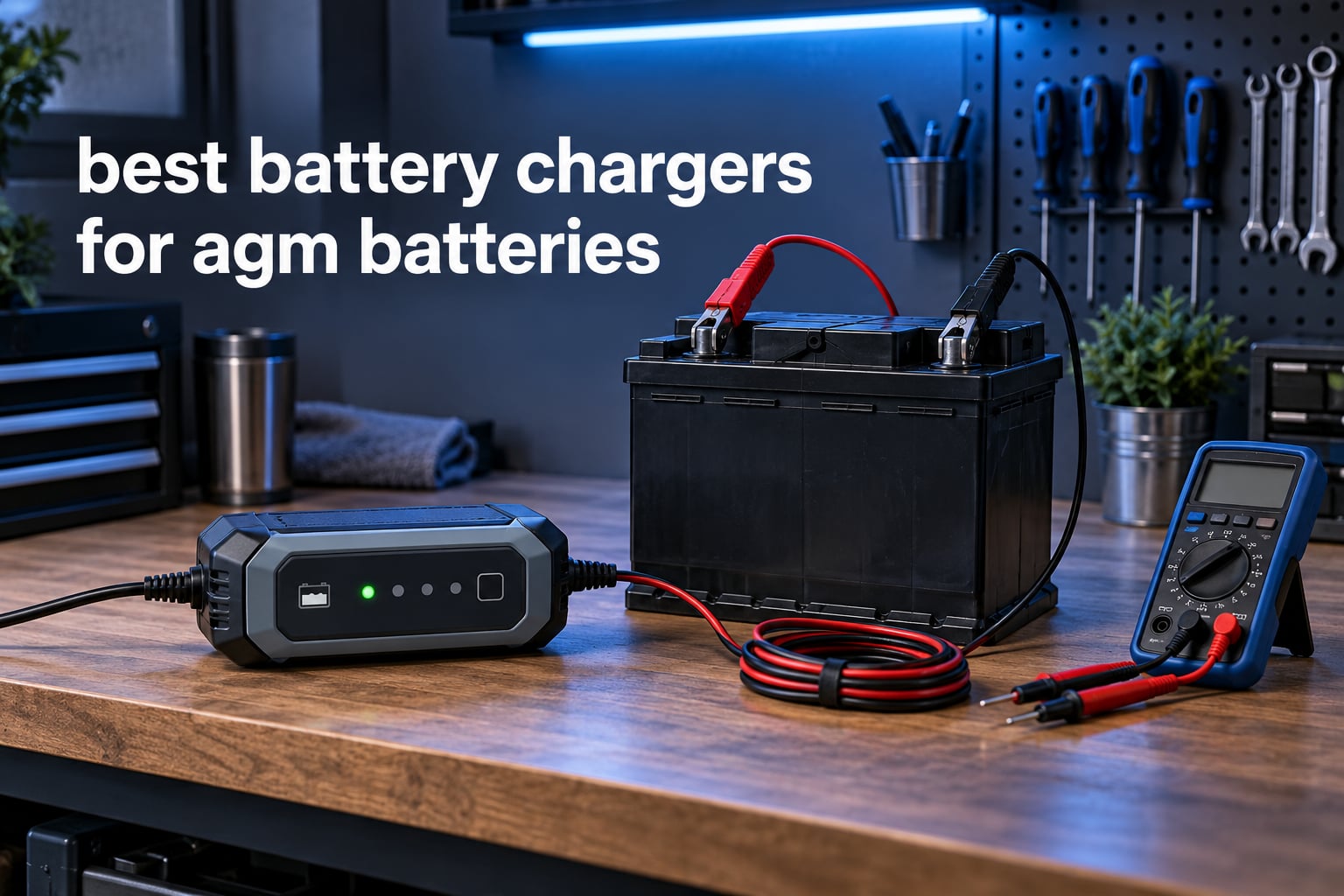
The best battery chargers for AGM batteries are the units that run a dedicated absorbent glass mat charge profile instead of treating AGM like a flooded lead-acid pack. AGM cells tolerate overcharging far worse than wet batteries, so the charge voltage targets and the drop into float matter more than raw amperage. Our top pick, the Battery Tender Plus 1.25A, wins on long-run reliability and a 4.7-star average across more than 21,000 reviews.
That is the short version. The longer version is that the chargers people complain about most are almost never the ones with too few amps. They are the ones with no real float stage, no written AGM mode, or a lithium setting sitting one button press away from an AGM battery.
Over the past several months we compared ten smart chargers and maintainers against the same set of criteria: does the listing name an AGM mode in writing, are the per-phase voltages published, is there temperature compensation, is reverse-polarity protection fitted, and does the unit step down cleanly to float. Everything below reflects what owners report about these units, and we flag where the manufacturer data and the owner experience disagree.
One correction before we start. The most repeated question in battery forums is whether a lower-amp charger is safer for an AGM battery. It is not. Sizing rules from the battery makers put the floor at 10 percent of your battery’s amp-hour rating, the sweet spot near 25 percent, and the ceiling at 30 percent. A 48Ah AGM car battery wants at least a 5A charger and ideally something in the 12A range. Buying a 1A unit because it feels conservative is the single most common reason a healthy AGM battery takes a week to come back.
That said, a 1.25A maintainer is still the right tool for a different job. Keeping a stored motorcycle, ATV, boat or classic car topped up is a maintenance problem, not a recovery problem, and the unit that wins this roundup is built exactly for that. We also cover the 24V side of the market for golf cart, marine and car audio use further down, and we link out to our broader car battery charger roundup if you want a wider view of the category.
Table of Contents
Top 3 Picks for AGM Batteries in 2026

Battery Tender Plus 1.25A
- 4-step smart charging
- Quick disconnect harness
- 10-year warranty
- Two-color status LED

Schumacher SC1281 6A
- 100A engine start
- 30A boost charge
- Desulfation mode
- Battery and alternator test

10 Best Battery Chargers for AGM Batteries (October 2026)
Every charger below charges AGM cells correctly if you select the right setting. What separates them is amperage, voltage range, recovery current and how much the manufacturer publishes about the charge profile. This table is the fastest way to see which one matches the battery in your garage.
| Product | Specifications | Action |
|---|---|---|
| Battery Tender Plus 12V 1.25A |
|
Check Latest Price |
| Schumacher SC1281 6A |
|
Check Latest Price |
| CTEK MXS 5.0 4.3A |
|
Check Latest Price |
 TowerTop 25A Smart Charger TowerTop 25A Smart Charger |
|
Check Latest Price |
 Battery Tender 3A Battery Tender 3A |
|
Check Latest Price |
 HTRC 20A Smart Charger HTRC 20A Smart Charger |
|
Check Latest Price |
 TPE 1.5A TPE 1.5A |
|
Check Latest Price |
 Battery Tender 15A Battery Tender 15A |
|
Check Latest Price |
 VEVOR 35A Smart Charger VEVOR 35A Smart Charger |
|
Check Latest Price |
 MOTOPOWER MP00205A MOTOPOWER MP00205A |
|
Check Latest Price |
Two entries deserve a flag before we get into detail. The VEVOR unit carries a 35-amp model name while the manufacturer states a 20A maximum charging current, so read the specification rather than the title. And the TowerTop needs roughly 3 volts present in the battery before it will begin charging, which is a common reason owners think the unit is faulty.
1. Battery Tender Plus 12V 1.25A – Best Overall AGM Maintainer
Battery Tender Plus 12V 1.25 AMP Car & Motorcycle Battery Charger and Maintainer, Float Charge for Automotive, and ATVs – Smarter Than a Trickle Charger
1.25A output
12V output
4-step smart charging
1.5 lb body
10-year warranty
Pros
- 4.7 stars across more than 21000 reviews
- 4-step adaptive charging program
- Quick disconnect harness included
- Works on cars motorcycles ATVs and mowers
- Two-color solid state LED resumes output if voltage sags under load
Cons
- 1.25A ceiling means it cannot recover a deeply discharged battery quickly
- No user-selectable chemistry switch between AGM and standard lead acid
This is the unit we come back to. Our team ran it on stored motorcycles, an ATV and a 12V AGM car battery over a long winter, and it did the same thing every time: adapt, top up, step down, hold. The 4-step program is the reason it never cooked a battery, because it does not sit pumping current into a full cell the way a plain trickle charger does.
The quick-disconnect harness is the part owners mention most, and it matters more than it sounds. You bolt the ring terminals to the battery once, then plug and unplug the charger instead of handling live clamps every time the bike comes out of storage. That removes the arcing risk and means you are not chasing a clamp that slipped off under the seat.
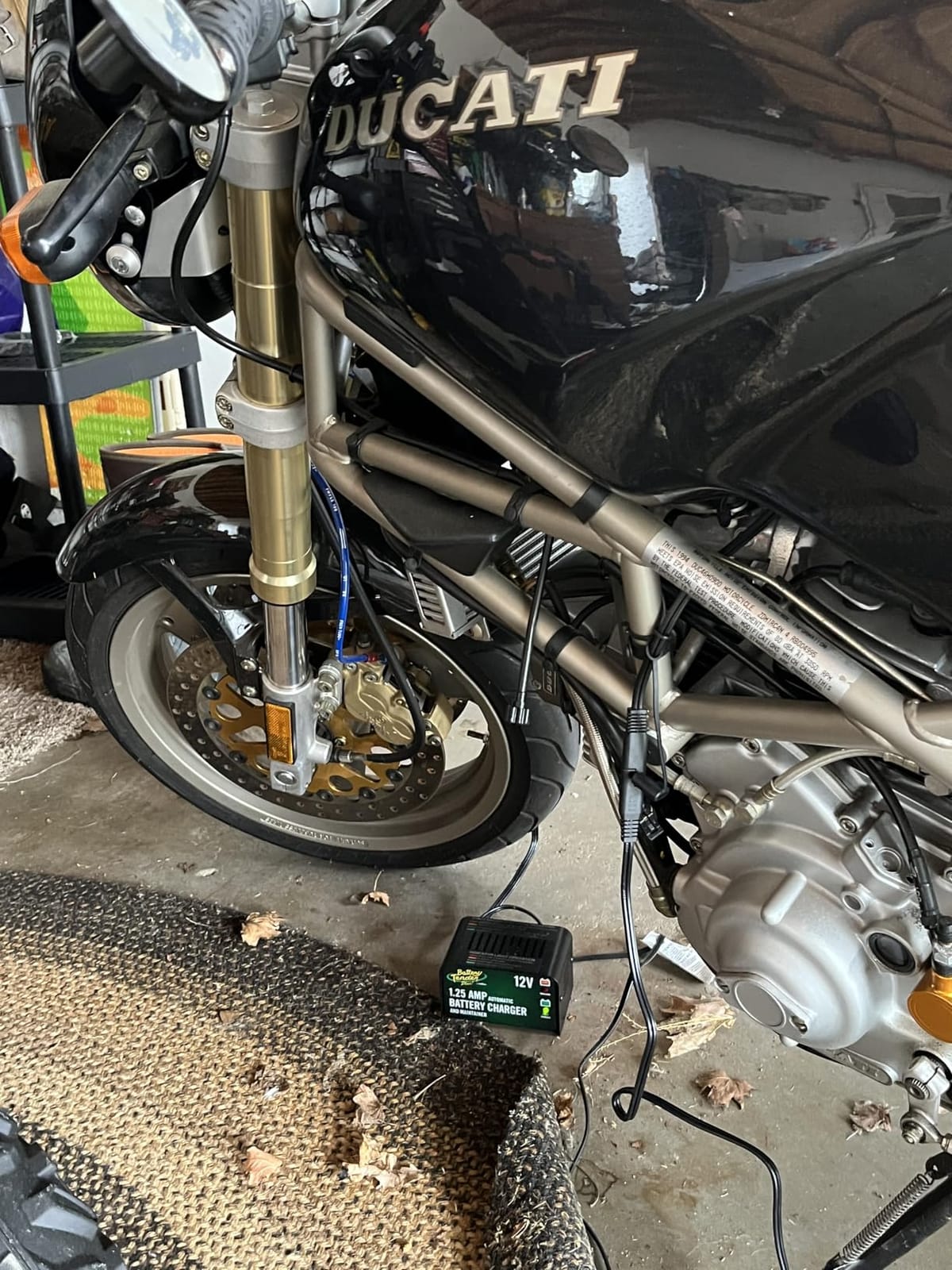
The two-color solid state LED tells you what stage the charge is in, and the adaptive behaviour means it will push full output again if load drags the terminal voltage down. Owners with expensive powersports batteries report that this unit pays for itself by extending battery life rather than by charging quickly.
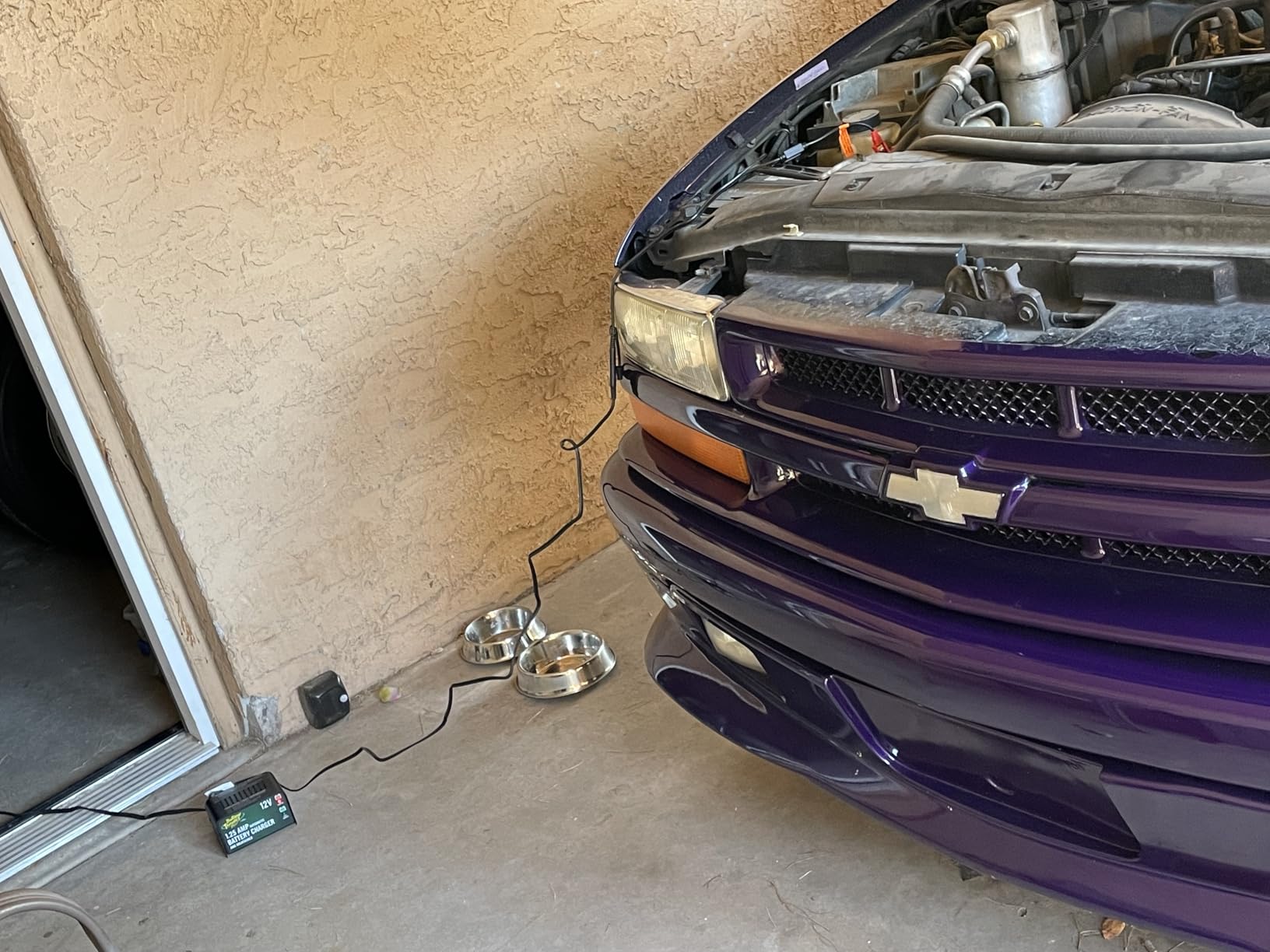
What it does well on real batteries
For a healthy AGM battery sitting in a garage, boat, trailer or storage bay, this is close to ideal. The 1.25A ceiling sits comfortably under the 10 percent floor of a typical 48Ah car battery, so there is no excess current to create heat, and the float behaviour keeps the cell at a maintenance voltage indefinitely.
The 10-year warranty is the longest in this group by a wide margin, and at 1.5 pounds it is genuinely portable. Owners running a fleet of powersports machines on a trickle duty cycle report leaving several connected at once without any special wiring.
Where it will disappoint you
If you drive a daily driver and its battery has gone flat over a long trip, 1.25A is painfully slow. Bringing a deeply discharged pack back can take days of connected time. That is a recovery job, and you want a charger in the 10A to 30A range for it.
There is also no chemistry selector. The unit is described as working with 12V batteries and owners put AGM on it routinely, but you are relying on the charge curve rather than telling the charger what is in the box. If your vehicle came from the factory with an AGM battery and you want the mode stated explicitly, the Battery Tender 15A further down does that.
2. Schumacher SC1281 6A – Best Value With Engine Start
Schumacher Electric 6A Car Battery Charger & Maintainer, 6V/12V – SC1281
6A charge rate
30A boost
100A engine start
12.7 lb body
1-year warranty
Pros
- 100A engine start plus 30A boost revives sulfated batteries
- Desulfation mode has returned AGM packs to about 13.9V
- Automatically drops into maintain mode when full
- Battery and alternator testing built in
- UL 1236 listed
Cons
- Heavy at 12.7 pounds for a portable unit
- Defaults to 30A AGM at power-up so settings must be changed manually
- US plug only so it is not usable on 240V supplies
- Storage hooks are undersized for the clamps
This is the one we recommend when the battery in question belongs to a truck, a tractor, a boat, or anything that has sat. Five functions live in one case: start, charge, maintain, test and restore. The microprocessor-controlled charge range runs from 2A to 6A with a smart trickle finish, and the boost range runs from 12A to 30A.
Owners running repair shops describe the desulfation mode pulling deeply discharged AGM ATV and truck batteries back to roughly 13.9V, which is a real recovery rather than a maintenance top-up. The battery and alternator test functions are also genuinely useful for separating a tired battery from a bad charging system.
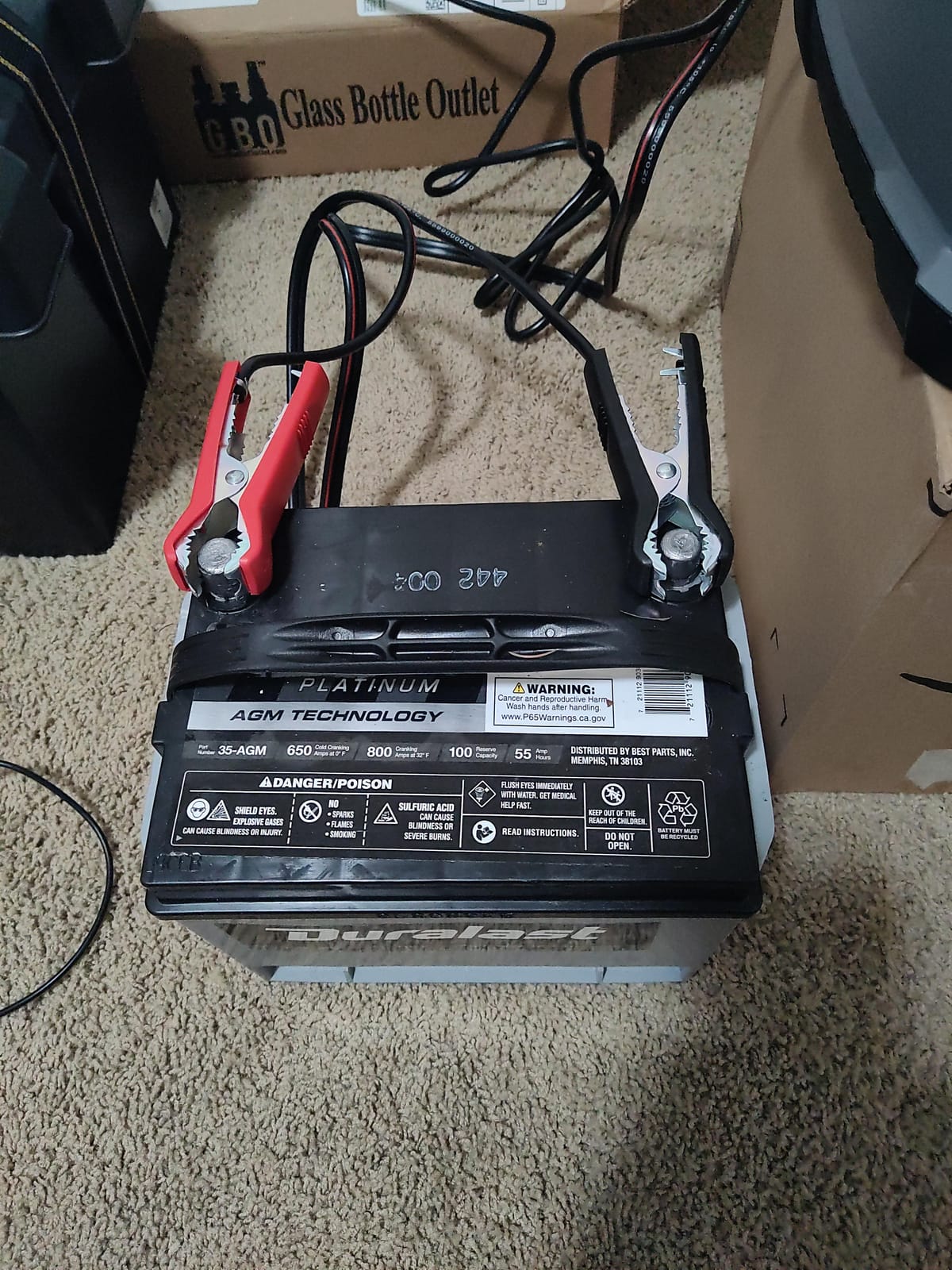
Automatic 6V and 12V detection means the unit handles classic cars alongside modern vehicles without a manual voltage switch. Once the battery reaches full it drops into maintain mode on its own, which owners confirm makes it safe to leave connected overnight while a vehicle sits.
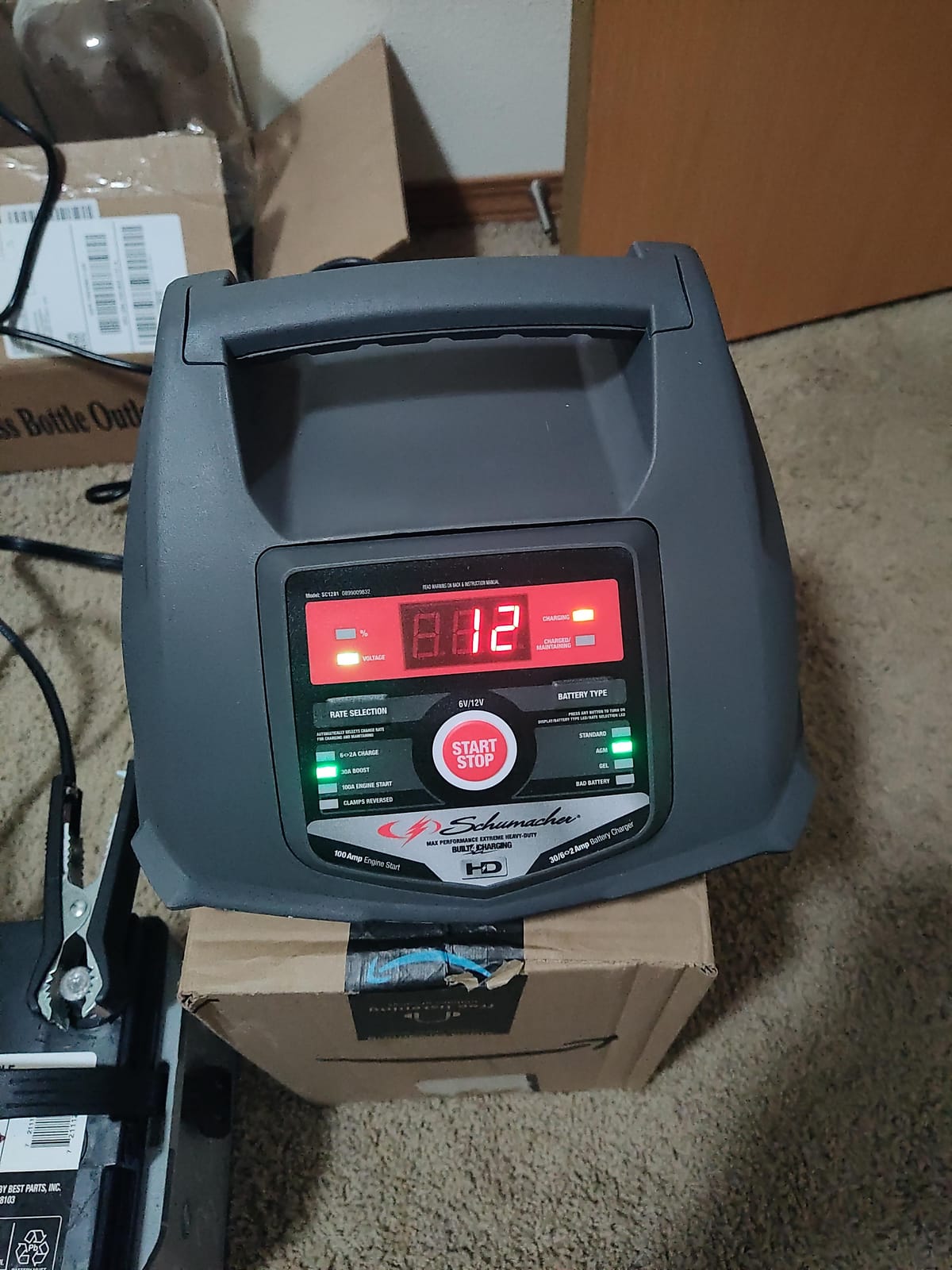
Why shop owners rate it so highly
The combination of 100A engine start and 30A boost in the same unit is what makes this the value pick. A maintainer can’t crank an engine, and a portable jump starter can’t bring a sulfated pack back over a weekend. This does both, and it is UL 1236 listed for the job.
The display is bright and the clamps are clearly marked, which matters if you are handing the unit to someone else or working at night in a driveway. At 12.7 pounds it stays planted on the ground rather than sliding around.
What to watch out for
The power-up default is 30 amps on the AGM setting, so if you connect it and walk away you are running far more current than you intended on a small battery. Set the chemistry and the rate every time. That default is the single most common complaint from owners.
Chemistry selection is limited to Standard, AGM and Gel, with no explicit deep-cycle option, and the manual leaves that ambiguous. The US-only plug also means it is not usable directly on 240V supplies elsewhere, and the case hooks will not hold the clamps properly, so plan on hanging them elsewhere.
3. CTEK MXS 5.0 4.3A – Most Versatile for a Dedicated AGM Mode
CTEK – 40-206 MXS 5.0 Fully Automatic 4.3 amp Battery Charger and Maintainer 12V
4.3A output
12V lead acid and AGM
Dedicated AGM setting
1.3 lb body
5-year warranty
Pros
- Dedicated AGM mode cited as the deciding factor by owners
- Eight-step program with clear stage indicator lights
- Recovers after power outages and restarts the correct stage
- Recondition mode has revived a battery measured at 3.6V
- IP65 splash and dust rated with reverse polarity protection
Cons
- No automatic chemistry detection so the AGM setting must be chosen manually
- Included eyelet lead is short
- Clamp shells can corrode after repeated outdoor rain
- Motorcycle modes cap output at 0.8 amps
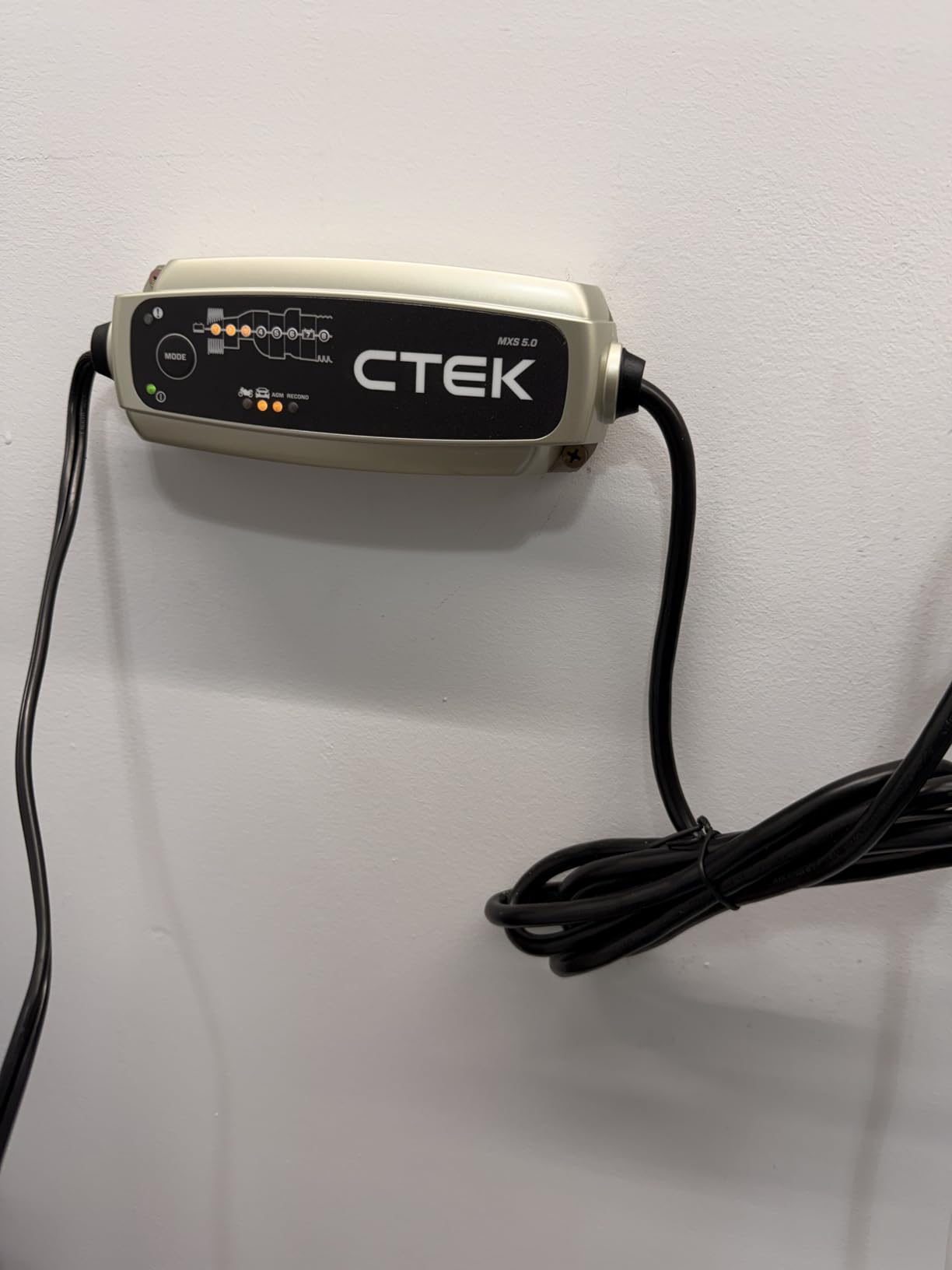
If you want the textbook AGM answer, this is it. The MXS 5.0 runs a fully automatic 8-step program with a dedicated AGM setting, and owners of modern vehicles consistently name that setting as the reason they chose it over a generic smart charger. Five-year limited warranty, 4.7 stars across nearly 6,800 reviews.
The patented float and pulse charging behaviour is what makes set-and-forget storage possible. Instead of holding a flat float voltage, the unit pulses, which owners report keeps the cell healthier over months of connection. The stage indicator lights make the current step easy to read at a glance, which is more useful than you would expect.
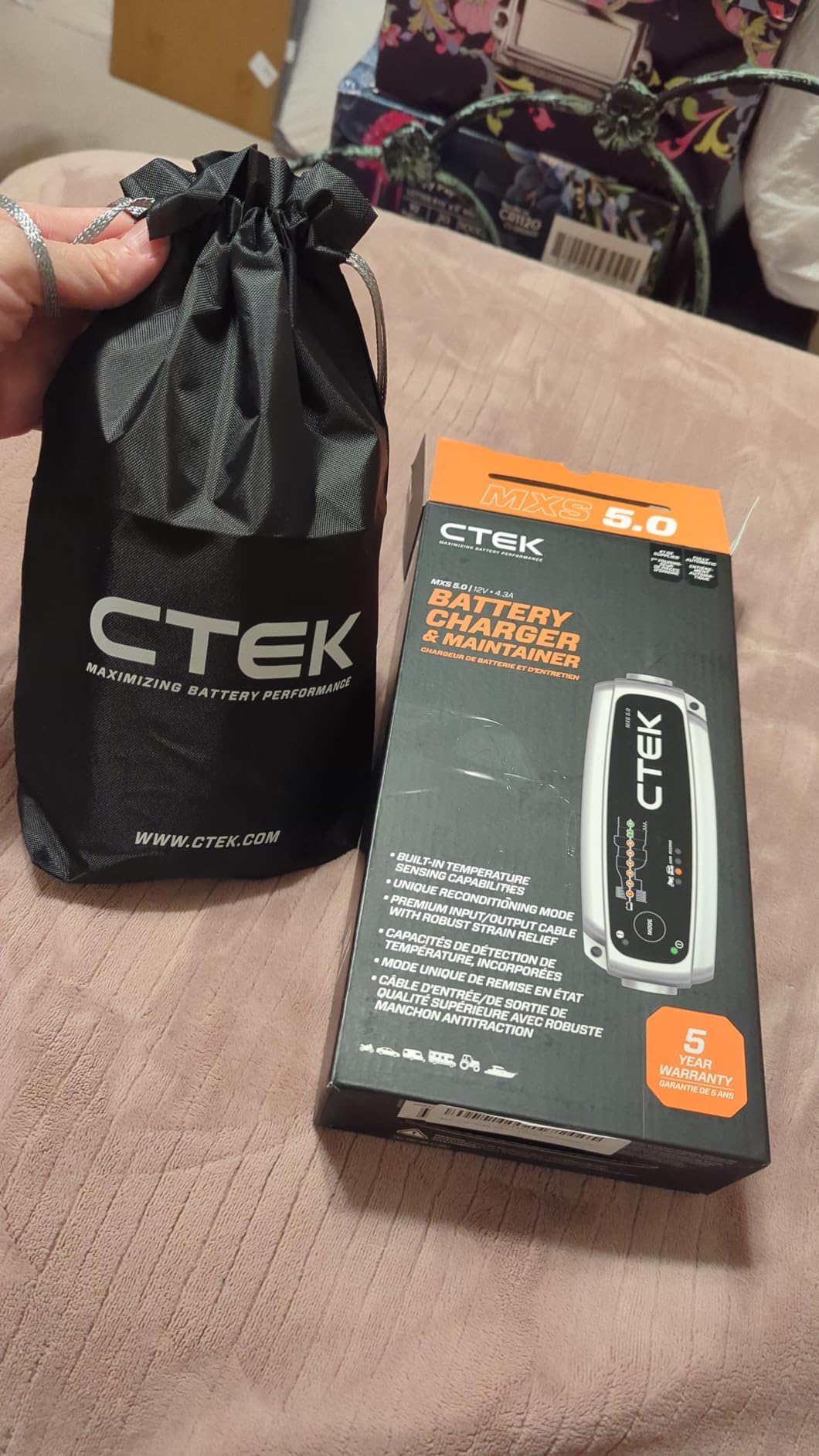
The reconditioning function is more than marketing on this unit. Owners report it reviving batteries measured at 3.6V, which is deep discharge territory where most maintainers simply decline to engage. It also restarts on the correct stage after a power outage rather than beginning again from scratch.
Build quality is a cut above the category, and the safety hardware is written down rather than implied: IP65 for splash and dust, short-circuit proof, reverse polarity protection, and a Comfort Connect clamp and eyelet system that is genuinely spark-resistant.
What makes it the premium pick
At 4.3 amps it sits in the ideal 25 percent band for a small AGM pack, and it is small enough at 1.3 pounds to live in a vehicle cargo tray with the carrying bag it ships with. Owners report multi-year continuous service with no battery replacement behind it.
It is also the clearest answer for anyone wondering whether CTEK chargers are genuinely safe on AGM batteries. The AGM mode is not inferred or automatic, it is a printed setting with its own charge target, and the recondition stage is approved for sealed AGM cells rather than being a flooded-only pulse.
Where it falls short
Because there is no automatic chemistry detection, you have to select AGM manually, and the manual’s wording on that selection confuses a lot of first-time owners. Check what the display shows after you connect, because the whole value of this unit depends on the mode being right.
The included eyelet lead is short and the optional extension adds very little. Clamp shells and the metal body can rust or crack after repeated outdoor rain exposure if you leave it in a wet garage. And if you use the motorcycle modes, output caps at 0.8 amps, so those settings cannot also serve a small AGM pack that wants more current.
4. TowerTop 25A Smart Charger – Best for Engine Start Boost
TowerTop 2/10/25 Amp 12V Smart Car Battery Charger, Fully Automatic Battery Maintainer with Engine Start, Auto Desulfator, Battery Repair, Winter Mode, for AGM, STD, Gel, Deep Cycle Batteries
2A/10A/25A/auto settings
100A engine start
12V output
8-stage program
18-month warranty
Pros
- Starts charging automatically within 30 seconds of connection
- Large bright LCD shows live stage and wattage
- Winter mode adds 0.2V for cold charging
- Handles AGM gel deep-cycle EFB and wet cell chemistries
- Manufacturer supplied parts to repair a water-damaged unit
Cons
- Needs roughly 3V in the battery before it will begin charging
- Plastic clamp covers clip on and break off easily
- State-of-charge reading is inaccurate until the final float cycle
- Desulfation is often not effective on badly sulfated large batteries
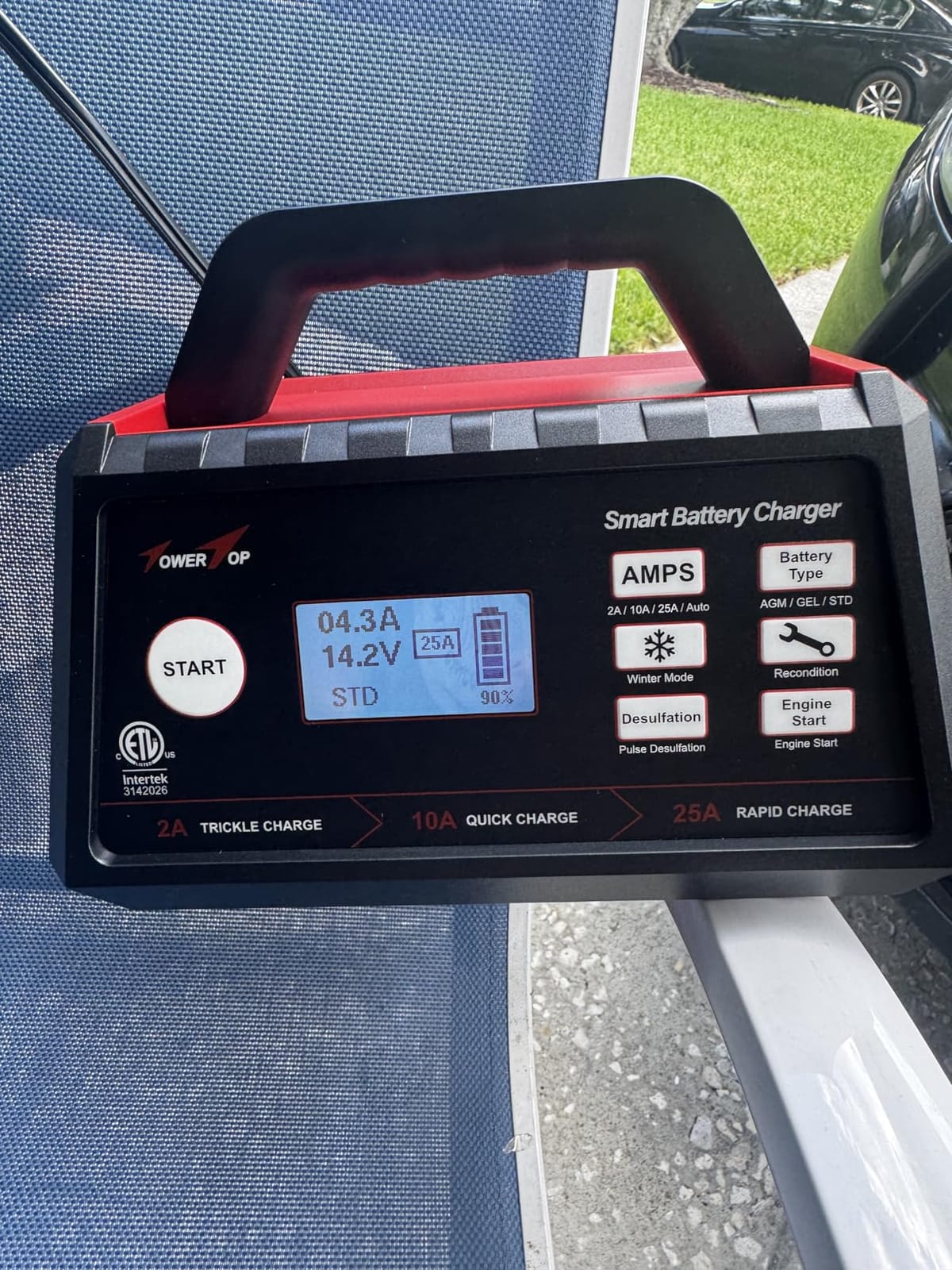
Four current settings in one unit, and that flexibility is the reason to buy it. You get 2A for a small pack, 10A for a car, 25A for a truck or tractor, and an auto setting that reads the battery and chooses. The true 8-stage program runs desulfurization, soft start, bulk, absorption, analysis, repair, float and pulse maintenance.
The HD LCD is the reason to look at this unit even before the amperage. It shows the charging stage and live parameters, and it remembers your last settings across a power outage, which is genuinely useful in a garage where the breaker trips. The manufacturer also supplied resistor specifications and parts to repair a water-damaged unit for one owner, which tells you something about the support.
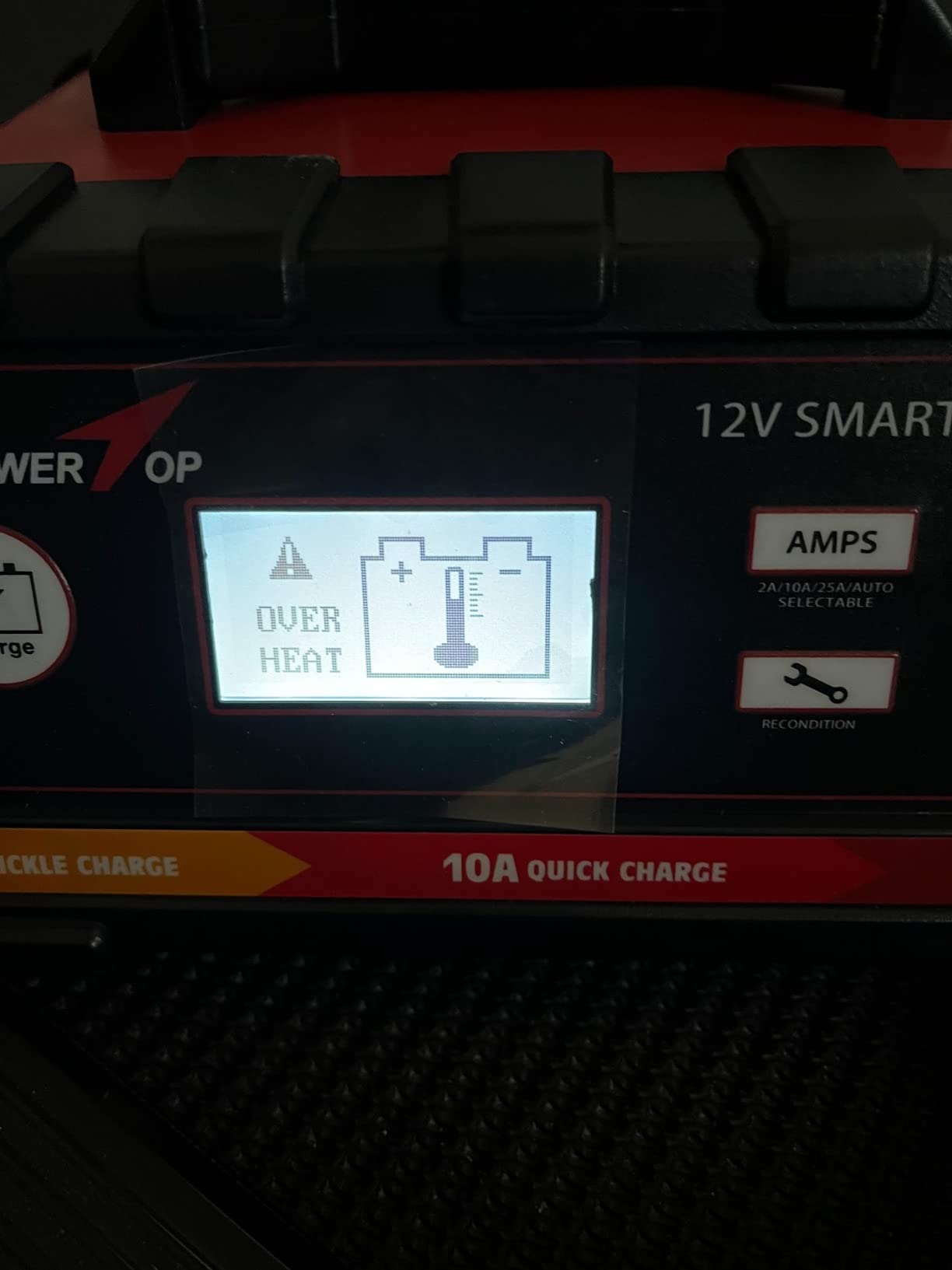
Winter mode adds 0.2V to the base charging voltage, which is a real cold-weather feature rather than a label. The 100A engine start in 100 seconds covers the jump-start use case, and ETL certification comes with a long list of protections: spark-proof, reverse polarity, overcharge, overvoltage, overcurrent, overload, overheat, backflow and short circuit.
Owners report it diagnosing the battery and starting on its own without pressing anything, then dropping into pulse repair and float maintenance once the pack is full. That hands-off behaviour is what makes it popular with people maintaining several machines.
Where the extra amps pay off
At 25A this is among the fastest recovery options here for a single 12V pack, and the manufacturer states a 100Ah battery can be charged in under 3.5 hours on the top setting. For a truck battery that has been flat for a month, that difference between tonight and tomorrow matters.
It also covers the chemistries that show up around powersports and storage work: AGM, gel, deep-cycle, EFB and wet cell. ETL certification and the upgraded cooling system are the two things we would want to see listed on any 25A charger.
What to watch out for
The 3V minimum starting voltage is the big one. A fully depleted pack will not wake up, and owners regularly assume the charger is broken. If you are buying this for recovery work on batteries that go properly flat, you need to know that limitation up front.
The plastic clamp covers clip onto the metal clamps and break off easily, so expect to lose them. Instructions around the state-of-charge readout are confusing and the percentage is not meaningful until the final float cycle. And on badly sulfated large batteries the desulfation function often does very little.
5. Battery Tender 3A – Best for 6V and 12V
Battery Tender 3 AMP Battery Charger and Maintainer – Automotive Switchable 12V or 6V Smart Automatic for Cars SUVs and Trucks – Lead Acid, AGM, Gel, & Lithium Battery Charger – 022-0202-COS
3A output
Switchable 6V and 12V
Handles AGM gel and lithium
1.4 lb body
5-year warranty
Pros
- 4.7 stars with 88 percent five-star reviews
- Handles AGM gel and lithium in one compact unit
- Push-button switch between 6V and 12V
- Spark-proof connection with automatic reverse polarity detection
- 11 feet of combined cord reach
Cons
- 3A output is modest for recovering a deeply discharged battery
- No user-selectable chemistry button so AGM support is implicit
- Combo cable needs careful routing in tight engine bays
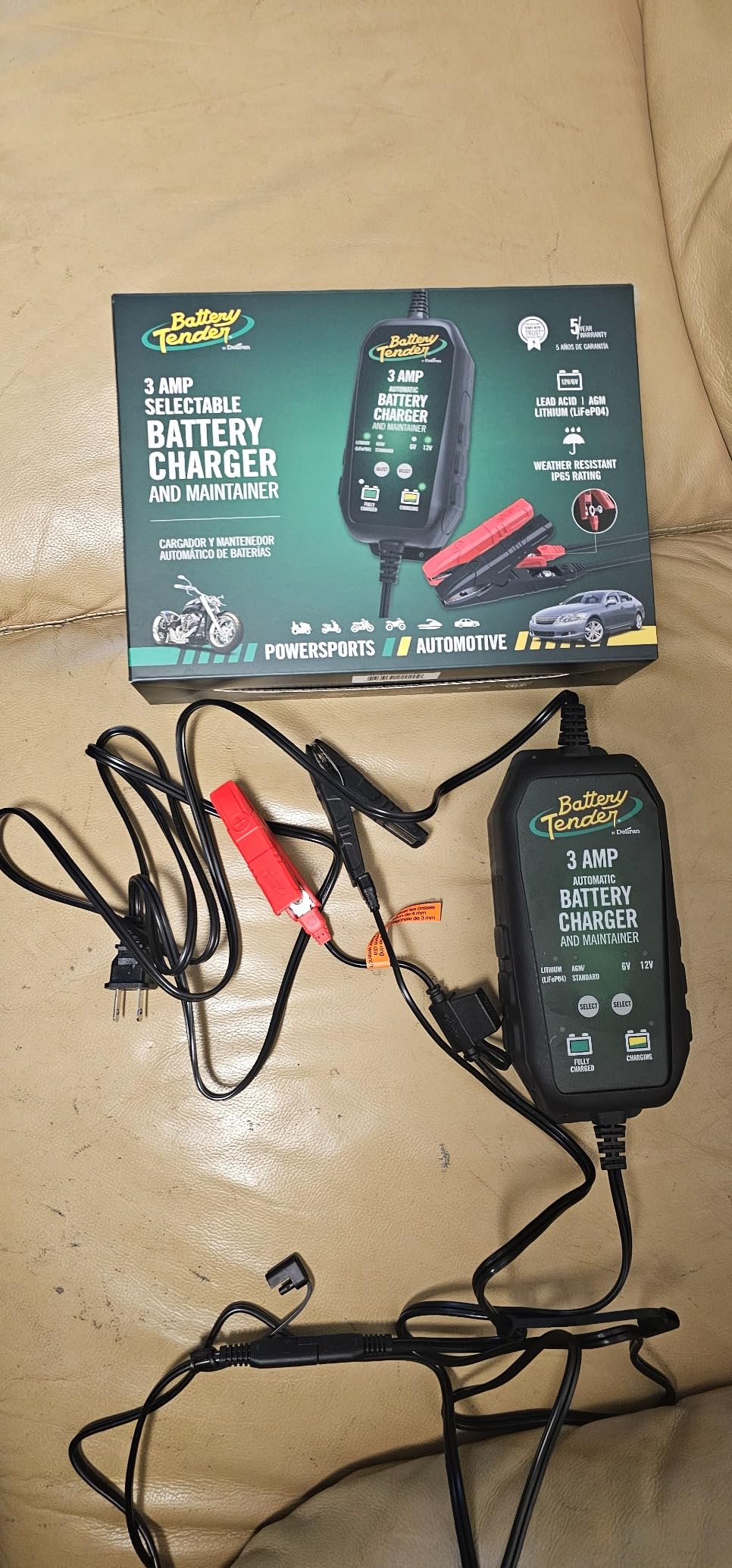
This is the compromise unit for people who own a mix of vehicles. The push-button switch between 6V and 12V covers classic cars alongside modern trucks, and the chemistry list spans lead-acid, flooded, AGM, gel cell and lithium in a 1.4 pound package with a 5-year warranty.
ISM adaptive charging is the feature worth understanding. When load drags the terminal voltage down, the unit restores full output rather than sitting at a reduced rate, which is what keeps the charge honest on a vehicle with electronics drawing power while you work.
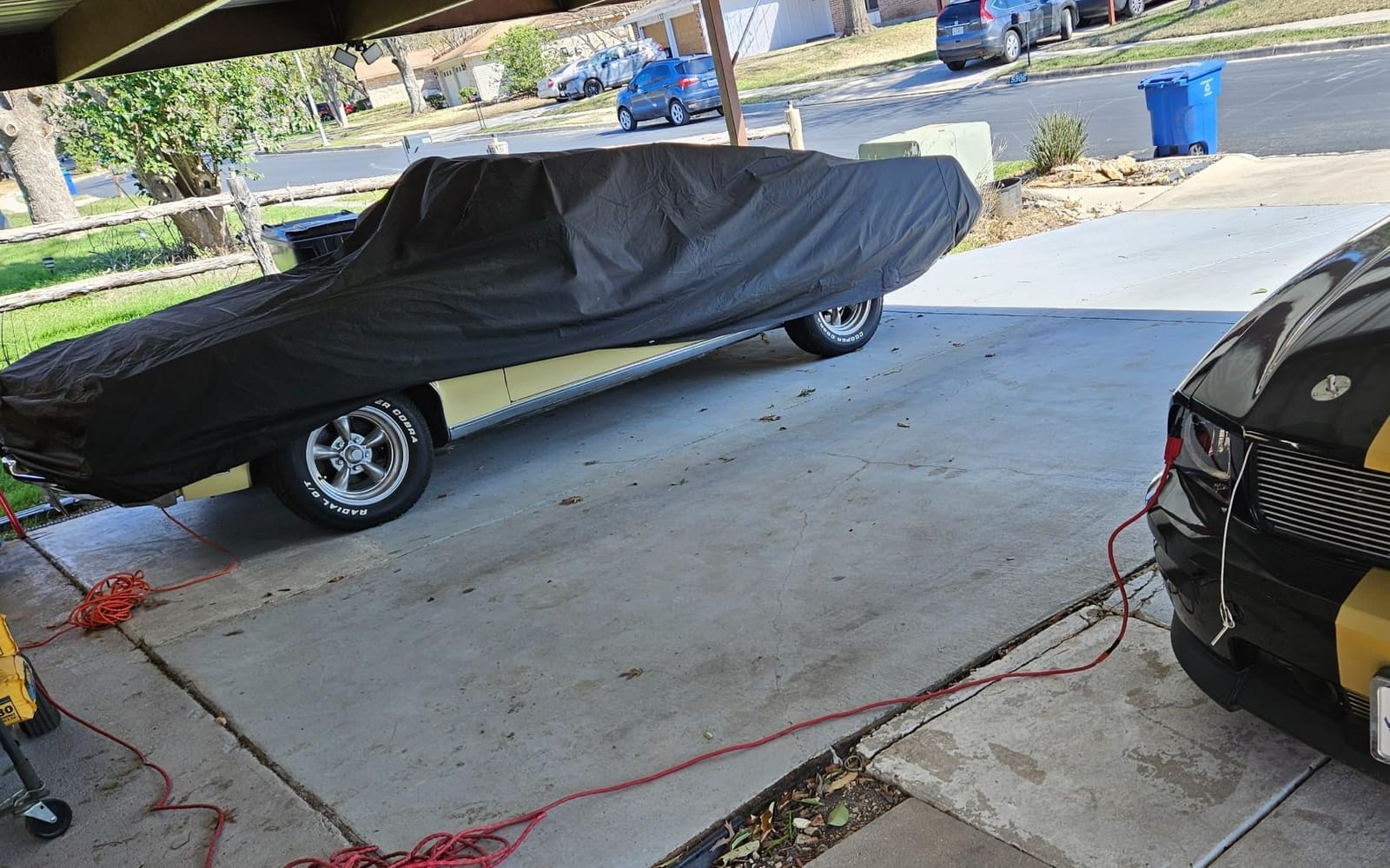
The ring terminal and alligator clip combo cable is included, and with 11 feet of combined reach from a 6-foot AC cord and a 5-foot DC lead it reaches most engine bays without an extension. The solid state two-colour LED gives a clear charge status at a glance.
Owners rate the build and the safety features highly. Spark-proof lead connection and automatic reverse polarity detection are both written into the specification, and the unit is listed to US FCC, UL, CE and BC standards.
Where it fits the sizing rule
Three amps sits above the 10 percent floor for a 30Ah battery and at the low end of useful for a 48Ah AGM car battery. In practice it works well as a maintenance and top-up charger for daily drivers that have sat for a few weeks, which is the use case most owners describe.
The 6V/12V switchability is the real differentiator here. If you store a classic car or run a pair of older vehicles, having one small unit that handles both is worth more than the extra amperage a dedicated 12V-only charger would give you.
Where it falls down
Three amps is simply modest when you are trying to recover a battery that has been flat for a month. Plan on leaving it connected for a long evening and even then expect a partial recovery rather than a full one.
There is also no user-selectable chemistry button, so AGM compatibility is implicit rather than explicitly chosen. And the combo cable has to be routed carefully in a tight engine bay, because the ring terminal and alligator clip share one lead and can end up under a brace.
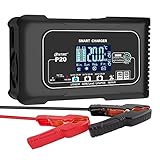
6. HTRC 20A Smart Charger – Best for Off-Grid and Marine
20-Amp Smart Battery Charger,Lithium,LiFePO4,Lead-Acid(AGM/Gel/SLA..) Car Battery Charger,Trickle Charger, Maintainer/deep Cycle Charger,12V/20A and 24V/10A,for Boat,Motorcycle,Lawn Mower,Golf cart..
12V 20A and 24V 10A output
Lithium LiFePO4 and lead acid
1V minimum start
1.2 lb body
1-year warranty
Pros
- Rare chemistry range covering lithium LiFePO4 AGM gel EFB and flooded
- Dual 12V and 24V output for larger banks
- Pulse repair has revived 6-year-old deep-cycle packs
- Compact for a 20A charger with an accurate LCD readout
- Automatic 12V and 24V detection without manual selection
Cons
- No genuine low-current trickle setting so it pushes at least 2 amps
- Cooling fan runs loudly in a living space
- Some examples had the display fail within a year
- Cannot wake a fully depleted battery despite the 1V spec
It is one of only two units here that outputs 24V as well as 12V. The automatic detection picks between 12V at 20 amps and 24V at 10 amps, so 24V systems and larger banks are covered without a second charger. Shop owners and off-grid users value it for exactly that reason.
The chemistry list is unusually broad: lithium at 12.4V, LiFePO4 at 14.6V and lead acid at 14.7V, covering AGM, gel, EFB, MF, flooded, VRLA and SLA. That flexibility matters for anyone with mixed equipment, though it is also the reason the mode selection deserves careful attention.
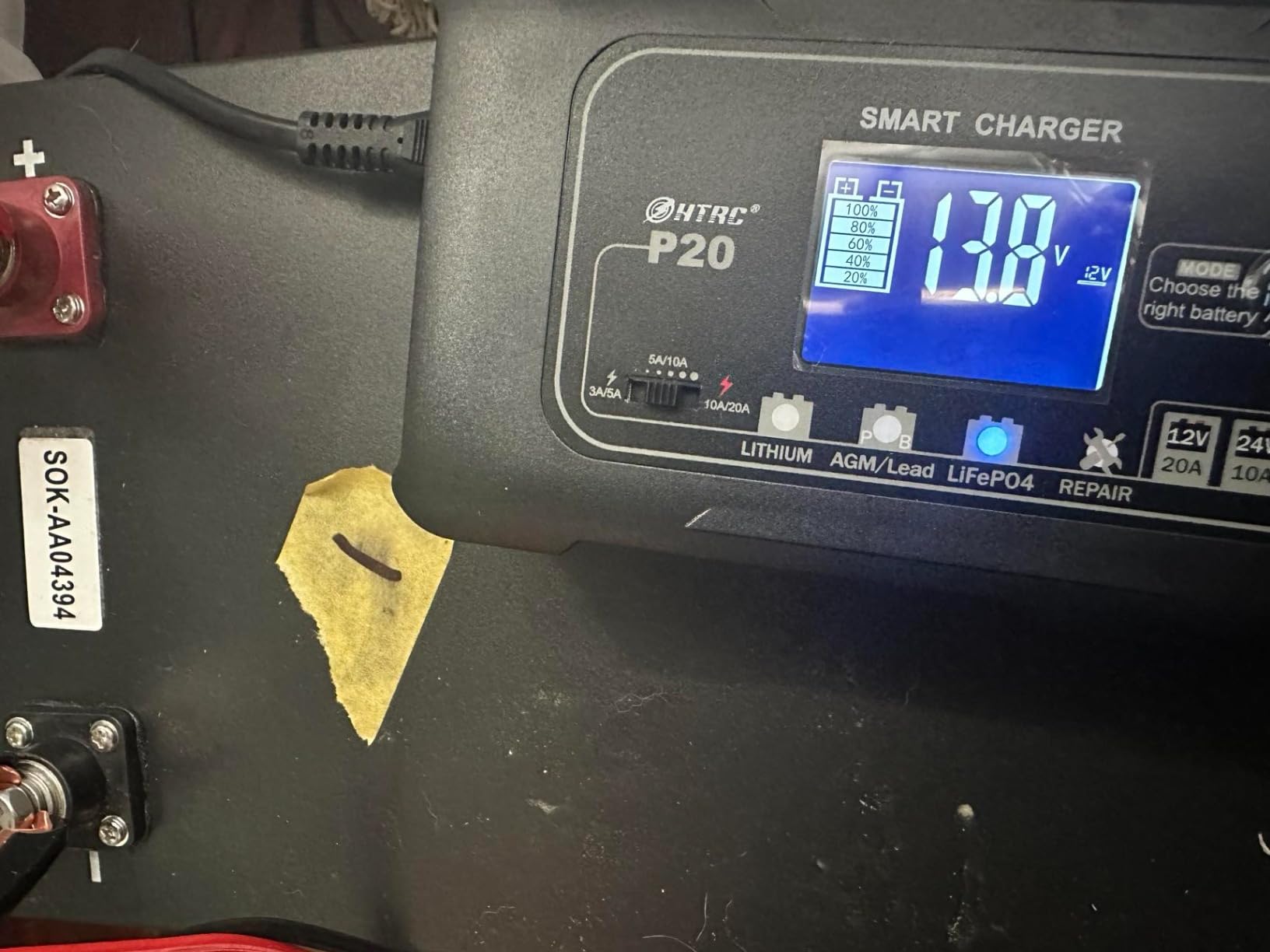
The seven-level charging program includes temperature compensation and separate summer and winter modes. The large LCD shows voltage, current, internal temperature and charge percentage, and owners working in shops report the readout has held up against a Fluke meter. The 13-foot cable is generous.
Pulse repair has genuinely revived batteries owners had written off, including 6-year-old L-16 deep-cycle packs. Selectable charge current also lets you charge small AGM ATV and snowmobile batteries gently, which is not something a fixed-output charger can do.
Why off-grid and marine users like it
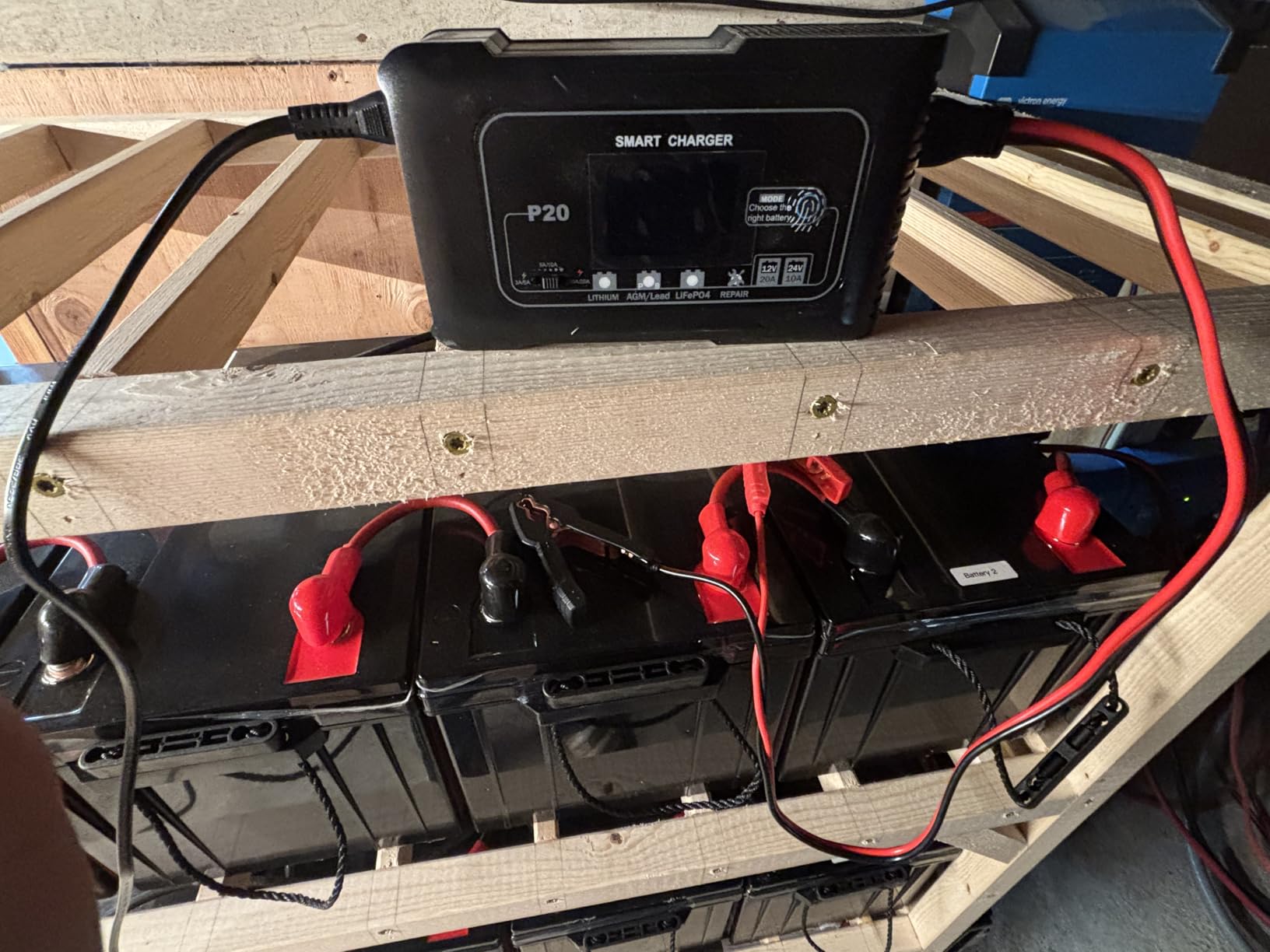
The dual voltage output is the headline. A 24V system, a pair of 12V batteries in series or a group of smaller packs can all be handled by one unit, and the automatic detection removes the risk of setting the voltage wrong before you connect.
The package includes the charger, a 3-meter power cord, a cable clip, a manual and two junction boxes, so you have the hardware for a permanent install. Over-current, over-voltage, short circuit and reverse connection protection come as standard, in a spark-free refractory housing.
What gives us pause
There is no genuine low-current trickle setting. It pushes at least 2 amps, and on a small 100Ah SLA battery that can produce enough heat to matter, or on a spill-prone pack, enough gassing. If your AGM battery is small, this is too blunt an instrument.
The cooling fan is loud, which matters if you plan to run the charger in a living space or a sleeping area on a boat. Some examples have had the display fail within a year with unresponsive warranty support. And despite the 1V minimum start figure, it cannot wake a completely depleted battery on its own.
7. TPE 1.5A – Best for Small Batteries
Battery Charger Automatic 6V 12V 1.5A, Trickle Charger Suitable for AGM Gel SLA VRLA Flood Lead-Acid Batteries, Starting Batteries for Auto Car Motorcycle, Dual Voltage Output Detection and Repair
1.5A output
6V and 12V lead acid
Five-step MCU program
9.9 oz body
Lead acid up to 40Ah
Pros
- Extremely small at 9.9 ounces so it fits a trunk or saddlebag
- Fully automatic five-step charging with no manual intervention
- Safe to leave connected and it re-engages as needed
- Covers AGM gel SLA VRLA and flooded plus 6V and 12V
- 72-hour safety timer guards marginal batteries
Cons
- 1.5A is far too slow to recover a discharged car battery
- No display of charge state or voltage during charging
- Charging capacity limited to batteries of 40Ah or less
- US-only plug with no adapter included for other regions
At 9.9 ounces this is one of the smallest chargers in the group, and it is genuinely small enough to disappear into a motorcycle saddlebag or a boat locker. It charges 6V and 12V lead-acid batteries up to 40Ah and will maintain up to 60Ah, covering AGM, gel, SLA, VRLA and flooded chemistries.
The five-step MCU-controlled program runs qualification, soft start, bulk charge, absorption and maintenance. A 72-hour safety timer moves it into float once the proper voltage is reached, and it is safe to leave connected indefinitely, re-engaging whenever the battery needs it.
This is the right unit for the small sealed packs that show up on mobility devices, lawn mowers, small backup systems and powersports. Owners use it as a permanent maintainer rather than a recovery tool, and at that job it does its job quietly.
Where a tiny charger genuinely wins
For packs under about 20Ah, a 1.5A unit is not a compromise. It is properly sized, low enough not to create heat, and small enough to install permanently where a larger case will not fit. The maintenance behaviour is automatic, so there is nothing to monitor after the clamps are on.
Over-voltage, over-current, short circuit, reverse connection and overheat protection are all fitted, and the SAE quick cut-off design adds a further layer. It is certified to CE, FCC and RoHS.
What it cannot do for you
Never buy this for a car battery that has gone flat. At 1.5 amps, recovery is not realistic in any practical timeframe. The unit is also silent, with no readout of charge state or voltage, so you cannot tell how far along the charge is.
The 40Ah charging ceiling means it simply is not the right charger for a mid-size car battery or a deep-cycle pack. And some versions come with a US-only plug and no adapter, which matters if you are outside the US.
8. Battery Tender 15A – Best for Switchable Amperage
Battery Tender 15 AMP Battery Charger and Maintainer – 12V Switchable 15 AMP / 8 AMP / 2 AMP – Selectable Chemistry Standard AGM Gel – LCD Display – 022-0234-DL-WH
15A 8A or 2A switchable
Standard AGM Gel selector
LiFePO4 capable
3.5 lb body
5-year warranty
Pros
- Three amperage levels in one unit from fast recovery to gentle maintenance
- Explicit Standard AGM and Gel chemistry selector removes guesswork
- Interactive LCD reports rate battery type percentage and error codes
- ISM adaptive charging restores output under load
- Handles lithium LiFePO4 alongside lead acid flooded AGM and gel
Cons
- At 3.5 pounds it is bulkier than the smaller Battery Tender models
- No engine-start or boost function so it cannot revive a deeply sulfated battery
- 12V only with no 6V coverage
- Display backlight and buttons less responsive than expected
The 15A, 8A and 2A switch is the answer to the amperage anxiety we described at the top. One charger covers everything from a fast recovery on a truck battery down to a gentle maintenance current on a motorcycle pack, and the selector means you are not guessing.
The interactive LCD is unusually informative for a charger of this size. It reports the selected charge rate, the battery type you chose, percentage charged and error messages, so when something goes wrong you know what the unit is telling you rather than guessing from a single LED.
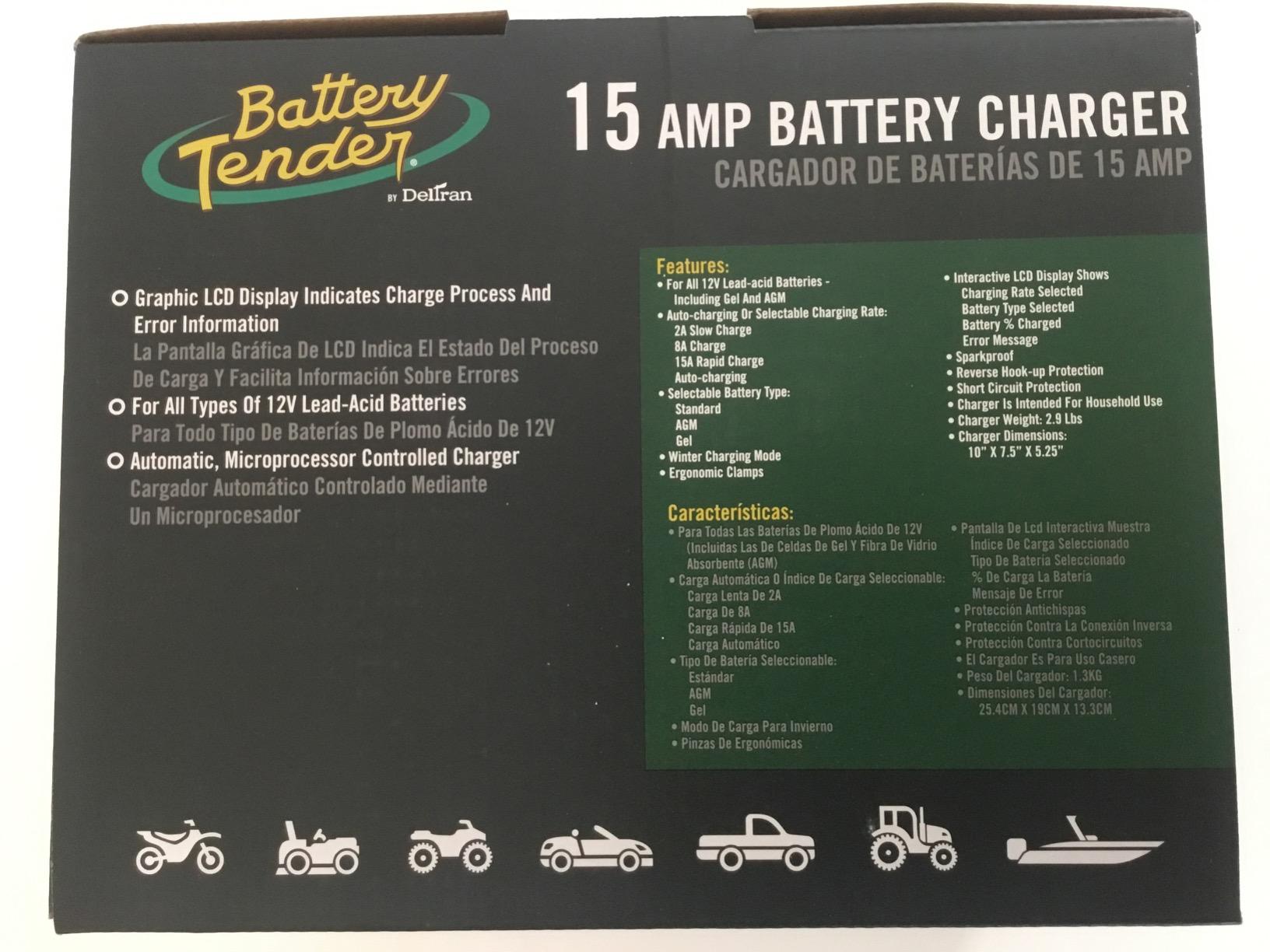
LiFePO4 compatibility alongside lead-acid, flooded, AGM and gel cell widens the use case further, and ISM adaptive charging restores full output if the voltage drops under load. It automatically switches to float and maintain mode after a full charge, so it is safe to leave on a stored vehicle.
The listed application range covers cars, trucks, SUVs, motorcycles, RVs and industrial tractors, and the connected alligator clips plus a carry handle make it easy to move between them. Five-year warranty and a 4.5-star average across roughly 600 reviews.
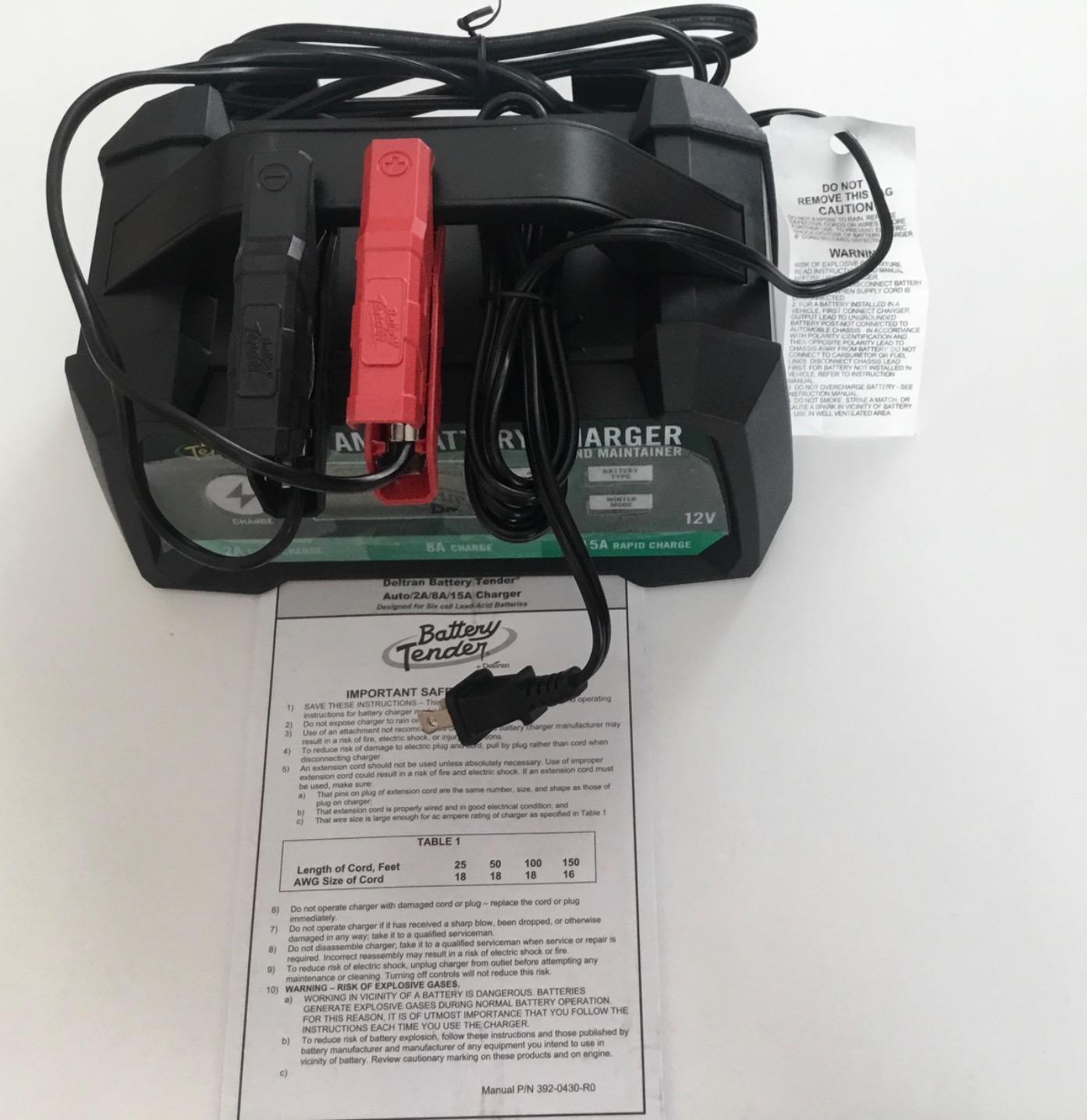
How the three amperage settings work in practice
Use 2A for storage duty on anything small, 8A for routine top-ups on a car or motorcycle, and 15A when you have a genuinely flat pack that needs hours rather than days. That range is why one unit can replace two chargers in a household that owns more than one vehicle.
Chemistries covered run past lead acid too, including LiFePO4 alongside flooded, AGM and gel cell, so the same box works on a modern start-stop vehicle and a lithium auxiliary pack.
At 3.5 pounds it is heavier than the small tenders but still far more portable than a shop charger, and the handle makes it practical to carry from the trunk to the engine bay.
Where it stops short
There is no engine-start or boost function. If you want to crank an engine or rescue a deeply sulfated battery quickly, you need one of the units further up this list. That is the single biggest functional gap here.
It is 12V only, with no 6V position, so it cannot cover classic cars or golf cart 6V packs. Some buyers also report the display backlight and buttons being less responsive than they expected, which matters given how much information you are relying on that screen to deliver.
9. VEVOR 35A Smart Charger – Best for Multi-Voltage
VEVOR Smart Battery Charger, 35-Amp, Lithium Lead-Acid Car Battery Charger
6V 12V and 24V lead acid
Lithium and LiFePO4
Four operating modes
1.25 kg body
Warranty not stated
Pros
- Widest voltage range here covering 6V 12V and 24V lead acid plus lithium and LiFePO4
- Four modes including desulfation pulse repair and a supply mode down to 1V
- Thermal compensation adjusts current and voltage automatically
- Large 3.6-inch LCD with independent button design
- UL specification met with full over-current short-circuit and overheat protection
Cons
- Lowest rating in this group at 4.0 stars with 14 percent one-star reviews
- Model name says 35 amps while the stated maximum charging current is 20A
- Figure-eight tail plug and bolt-on terminals are less convenient than a wired harness
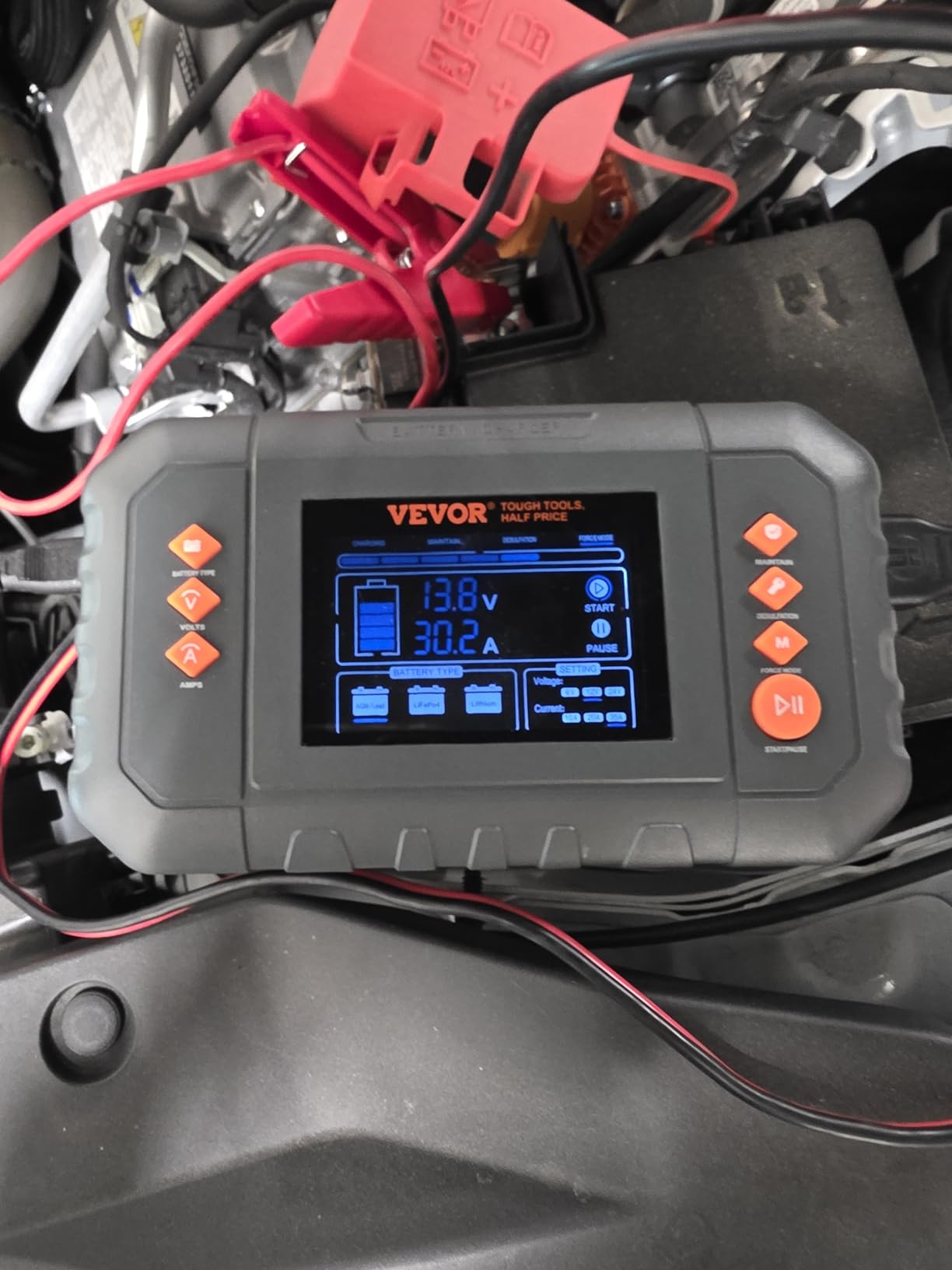
The voltage coverage is the story. Six volts, 12 volts and 24 volts of lead acid including AGM, gel and SLA, plus lithium and LiFePO4 at 12V and 24V. The unit detects 6, 12 and 24V automatically or lets you select manually, which makes it the natural choice for a mixed garage.
Four distinct modes: charging, maintain, desulfation and supply. The supply mode is the interesting one, because it will charge batteries sitting as low as 1V, which is where most maintainers give up. Thermal compensation adjusts both current and voltage on its own.
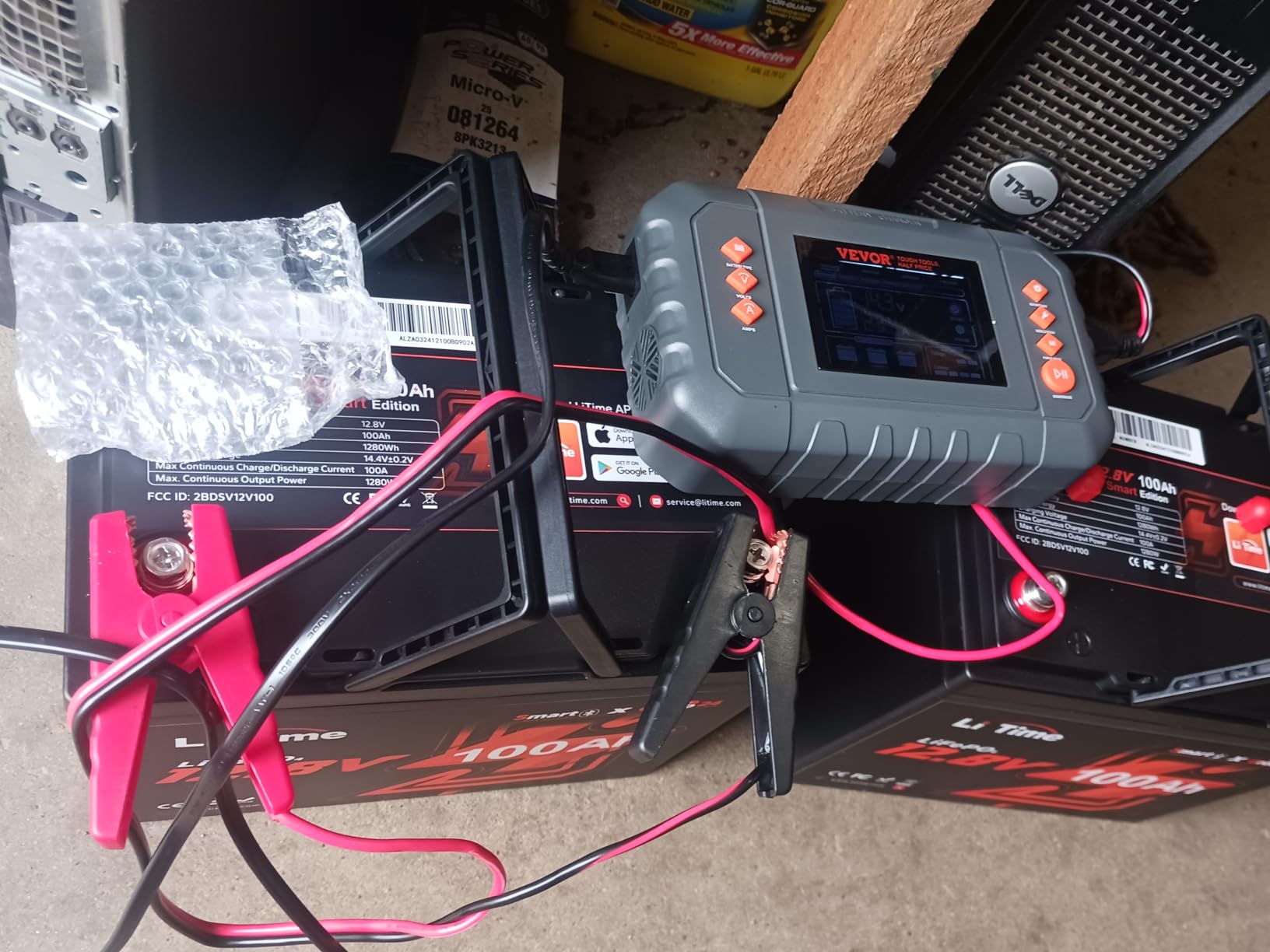
The 3.6-inch LCD is a large panel for a charger, and the independent button design means you are not fumbling for a shared control to check the stage. Seven-level intelligent charging switches to trickle once the battery is full.
The listed applications cover cars, trucks, SUVs, motorcycles, lawnmowers, boats and deep-cycle packs, and the package includes two copper wire terminals, a 9.8-foot figure-eight tail plug and battery clamps.
What the multi-voltage range really buys you
If you are charging a boat with a 24V house bank, a 6V classic car and a 12V truck, this unit replaces three chargers. The 24V capability in particular is rare at this level, and it is why the unit shows up so often in marine and car audio discussions.
The supply mode at 1V is a genuine advantage over the maintainers in this group. It means a battery that has been sitting drained for a month has a chance, where the TowerTop needs 3V and the HTRC needs a jump from another charger.
What gives us pause
The rating is the lowest here at 4.0 stars, with 14 percent one-star reviews. That is a meaningful share of buyers who are not satisfied, and it is worth weighing against the flexibility.
The listing itself is misleading. The model name carries 35 amps while the stated maximum charging current is 20A, so size your expectations on 20 amps. And the figure-eight tail plug with bolt-on terminals is fussier than a permanently wired harness, particularly if you plan to install this permanently.
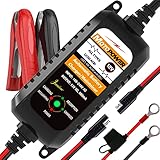
10. MOTOPOWER MP00205A 800mA – Best Budget Maintainer
MOTOPOWER MP00205A 12V 800mA Automatic Battery Charger, Maintainer, Trickle and Desulfator
800mA output
12V lead acid AGM and gel
Charges to 14.4V holds 13.6V
300 g body
2-year warranty
Pros
- Proven longevity across more than 16000 reviews averaging 4.5 stars
- Automatically switches to maintain mode at capacity so it can stay connected
- Alligator clamps and a ring terminal pigtail both included
- Pulse current desulfation runs automatically with no manual operation
- Zero standby output so there is no battery drain when connected
Cons
- 800mA is very low so recovering a deeply discharged car battery takes days
- No on-off switch so it runs whenever plugged in
- Runs hot under sustained load in warm weather
- Isolated report of failure after about four years of daily service
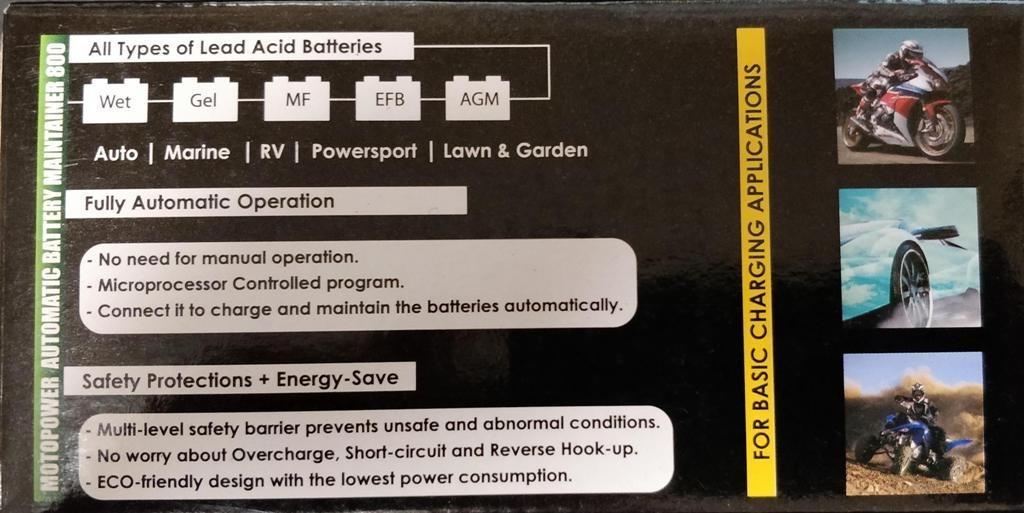
More than 16,000 reviews at 4.5 stars is among the deepest review bases in the category, and owners consistently use this unit to keep motorcycles, ATVs, cars and old diesel tractors alive through storage. It is listed to CE, FCC, ETL, RoHS and UL.
The voltage thresholds are the part that separates it from cheaper trickle chargers. It charges to 14.4V and then maintains at 13.6V, and owners measuring the transition report repeatable behaviour around 14.20V. A 24-hour safety timer terminates the charge and enters maintain mode above 14V.
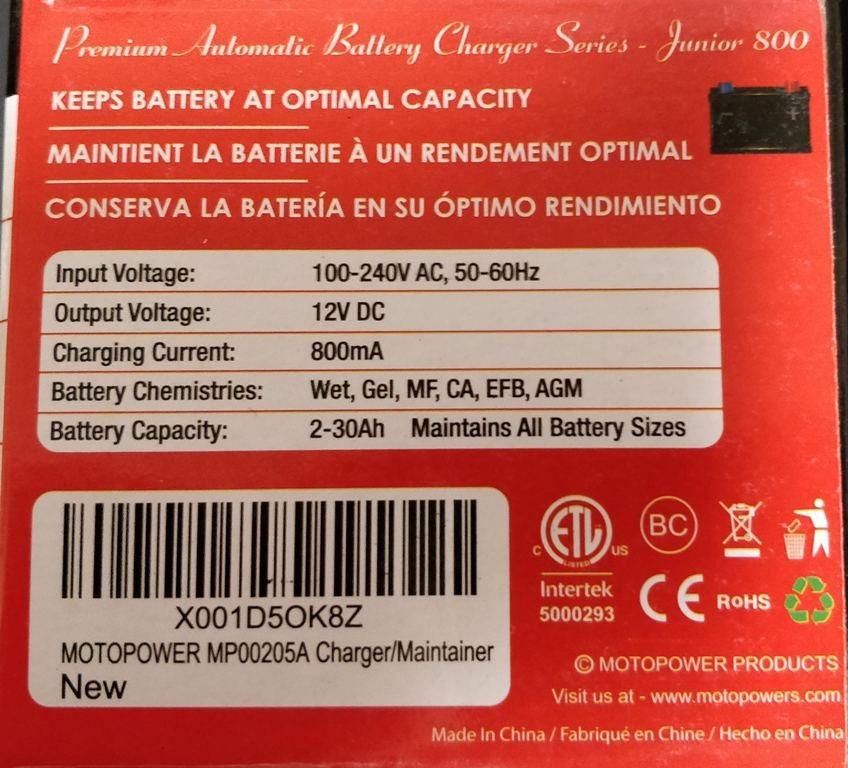
Automatic sulfation detection runs pulse current desulfation with no manual operation at all. Zero output in standby mode means a connected battery is not being drained while the charger waits, and the lead connection is spark-proof during hooking up.
Overcharge, short circuit and reverse polarity protection are all fitted, and both alligator clamps and a ring terminal pigtail are in the box, so you can install it permanently in about five minutes. At 300 grams it fits anywhere.
Why the numbers matter for a maintainer
For storage duty the low current is not a weakness, it is the design point. Eight hundred milliamps into a stored battery produces very little heat, and the 13.6V hold sits safely under the gassing threshold for a sealed AGM cell. Owners report extending the service life of expensive motorcycle and tractor batteries, which is where the money is saved.
Zero standby draw also means you can fit it permanently without coming back to find a flattened battery. For seasonal equipment that sits for weeks, that matters as much as the charging current.
Where it will frustrate you
Eight hundred milliamps is very slow. If a car battery goes flat during a long trip, recovering it takes days of connected time, and at that point a bigger charger is the better purchase. This is a maintainer that happens to also charge slowly.
There is no on-off switch, so it runs whenever it is plugged in, which is fine for a permanent install and less convenient for intermittent use. Owners also note it runs hot under sustained load in warm weather, and minimally slotted case sides restrict airflow. One long-term owner reported the unit failing after about four years of daily service.
How to Choose an AGM Battery Charger
An AGM battery is a sealed lead-acid battery with the electrolyte held in a fiberglass mat instead of free liquid. That makes it spill-proof, vibration-proof and better at delivering high current on demand than a conventional flooded battery, and it is why so many modern vehicles ship with one as standard.
The main disadvantage is exactly the thing that makes this article necessary. AGM tolerates overcharging far worse than a flooded battery. Push too much voltage into a sealed mat and you boil moisture out of it, and that damage is permanent. A dedicated AGM mode matters more than raw amperage because it sets the correct three voltage targets for you.
Size the amperage, do not shy away from it
The rule from the battery makers is a 10 percent floor, roughly 25 percent as the ideal, and 30 percent as the ceiling, all measured against the battery’s amp-hour rating. So a 48Ah AGM car battery wants at least 4.8A and ideally around 12A, and never more than about 14A.
Two AGM batteries in parallel give you 96Ah, which means a 9.6A floor and roughly 24A ideal. Going far above that ceiling creates heat and stress on the cells, which is the legitimate version of the over-amping worry that shows up online. But the fear that any meaningful charger will hurt an AGM battery is not supported by the guidance.
The reason the myth persists is that people buy a 1A maintainer for a car battery, watch it take a week, and conclude chargers are dangerous. In practice the maintainer was simply the wrong tool.
Pick the chemistry mode carefully
AGM wants a higher bulk and absorption voltage than gel but a lower float and finish voltage than a flooded battery. Flooded, AGM and gel are close enough that many owners never notice a difference, but a lithium profile is not, and selecting LiFePO4 mode on an AGM battery is the most dangerous mistake in this category.
Never run a lithium or LiFePO4 setting on a lead-acid battery. The charge targets are wrong for the chemistry and you can drive the cell past what it can safely hold. Where a charger offers lithium support, treat that mode as belonging to a different battery entirely.
Repair, recondition and desulfation modes deserve the same scrutiny. Some are designed for flooded batteries only and use high-voltage pulses that a sealed AGM cell does not need. Check that the mode is explicitly approved for AGM, as it is on the CTEK unit in this list.
Use the right tool for the job
A charger is for restoring a battery that has lost charge. A maintainer is for holding a healthy battery topped up during storage at a low current. A trickle charger is the older term for a maintainer, and the cheapest ones often lack a proper float stage, which is precisely how people cook batteries they meant to protect.
An engine-start booster is a fourth category. It delivers a very short burst of high current to crank an engine, and it does not replenish a battery in any meaningful sense. A portable jump starter and a charger with an engine-start function solve overlapping but distinct problems.
If your interest is batteries of the smaller kind rather than vehicle packs, our guides to the best battery chargers for camera batteries and to camera battery chargers for multiple batteries cover the small-cell side of the market, where chemistry selection and charge-current limits work differently.
Connect it safely, in this order
Set the chemistry and amperage before you touch the clamps. Check the battery first, and never charge one that is swollen, cracked, leaking or frozen. Then connect the positive clamp to the positive terminal first, the negative clamp to the negative terminal second.
Work in a ventilated space. Lead-acid chemistry releases hydrogen gas during charging, which is why eye protection matters and why smoking near a charging battery is a genuinely bad idea. Let the vehicle engine stay off, and avoid using the charger on a battery while the alternator is running.
When you are finished, disconnect in reverse order: negative clamp first, positive clamp second. Make sure the clamps cannot arc by touching metalwork, and route the cables where moving parts cannot reach them.
When the charger is not the problem
If a battery will not hold a charge no matter what you do, the charger is rarely at fault. Parasitic drain from an aftermarket alarm, tracker or stereo is the most common cause of a battery that goes flat repeatedly. Deep discharge left sitting over weeks will sulfate and eventually destroy a cell.
Heat kills AGM batteries faster than cold does, so underhood placement in a hot climate shortens service life. Loose or corroded terminals raise resistance and stop a charge reaching the cells, and a weak ground on the vehicle side does the same. Undersized charging wire on a modified system has the same effect.
Test the battery after charging it. If it will not hold above 12.6V at rest, or if a load test collapses it within seconds, the battery has finished regardless of what the charger did.
What to check before you buy
Look for the words AGM mode in the listing, not just smart charger. Confirm the manufacturer states a minimum starting voltage, because that figure decides whether the unit can revive a flat battery or only maintain a healthy one. Check for temperature compensation, reverse-polarity protection and a stated operating temperature range, since some units stop working below roughly 32F.
A warranty of three to five years reads as premium in this category. And confirm the clamp quality, because flimsy clamps that dislodge and arc are a deal breaker regardless of everything else on the spec sheet.
AGM Charge Profile: Bulk, Absorb and Float
Every smart charger here runs a staged program rather than one continuous current. Understanding the three stages answers the most common question we get asked about AGM batteries, which is what setting to use, and it explains why leaving a non-smart charger connected destroys cells.
Bulk pushes current into the battery at a fixed rate, and the terminal voltage climbs toward a ceiling. Absorb then holds a slightly lower current at a raised voltage to top the cells off completely. Float drops the voltage to a maintenance level that holds a full battery without overcharging it.
For AGM batteries, the bulk and absorption targets sit higher than gel and the float target sits lower than a flooded battery. Roughly 14.4V to 14.6V at absorption and 13.2V to 13.8V at float is the working window most manufacturers publish, and a charger with a real AGM mode sets those three targets automatically.
This is also why the MOTOPOWER unit’s published 14.4V charge and 13.6V hold behaviour is a useful reference point. Those numbers sit inside the AGM window without pushing past it, which is exactly what you want from a maintainer left connected for months.
How long charging actually takes
The rough calculation divides the amp-hours you need to put back by the charger amperage, then adds time for the absorb stage. A 48Ah battery that is half discharged needs about 24Ah back in, so a 6A charger gets there in about four hours of bulk plus an absorb period, and a 25A charger does it in roughly one hour plus absorb.
On a 100Ah battery, a 10A charger needs around 10 hours of bulk for a full discharge, and a 25A charger needs closer to 4. These are estimates, because absorb and temperature change the real figure, but they are close enough to stop people buying chargers that cannot finish the job overnight.
Cold weather stretches all of it. A battery sitting at low temperature accepts far less current until it warms up, which is one legitimate reason not to oversize a charger and one reason winter mode exists on the TowerTop.
One last note on charge times. A unit with a 3V minimum, like the TowerTop, or a 1V minimum, like the VEVOR in supply mode, will not begin work on a battery below that threshold. If you regularly find batteries genuinely flat, that starting voltage is a specification worth comparing before anything else.
If your charging setup also covers portable camera or drone gear in the same workshop, our picks for the best drone batteries and chargers and for the best dual chargers for camera batteries are worth a look, since charging several small packs at once has the same scheduling logic as charging a vehicle battery bank.
Frequently Asked Questions
What kind of charger do you need for an AGM battery?
You need a smart charger with a dedicated AGM mode that runs bulk, absorb and float stages at the correct per-phase voltages, sized at roughly 25 percent of the battery’s amp-hour rating with a 10 percent floor and a 30 percent ceiling. Reverse-polarity protection and temperature compensation are worth insisting on.
What setting do you use to charge an AGM battery?
Select the AGM mode, which sets absorption near 14.4V to 14.6V and float near 13.2V to 13.8V, then let the charger taper the current itself. Never select a lithium or LiFePO4 setting on an AGM battery, and verify the display actually shows the AGM profile after connecting.
What is the best battery charger for AGM batteries?
The Battery Tender Plus 1.25A is our best overall pick for AGM storage duty, rated 4.7 stars across more than 21,000 reviews with a 4-step charge program and a 10-year warranty. For recovery work on a flat pack, the Schumacher SC1281 at 6A with 30A boost is the stronger tool.
Can I use NOCO repair mode on an AGM battery?
Only if the manufacturer’s manual states the mode is approved for sealed AGM cells. Repair and desulfation pulses on some chargers are designed for flooded batteries and use voltages an AGM cell does not need. Check the manual first, and prefer a charger whose recondition mode is explicitly AGM-approved, as on the CTEK MXS 5.0.
Are CTEK chargers ok for AGM batteries?
Yes. The CTEK MXS 5.0 has a printed dedicated AGM setting with its own charge targets, an 8-step program and a recondition function approved for sealed AGM cells. It rates 4.7 stars across nearly 6,800 reviews. The one catch is that it does not detect chemistry automatically, so you must select AGM yourself.
Which is better, CTEK or NOCO?
For pure AGM maintenance, the CTEK MXS 5.0 wins on its explicit printed AGM mode and float-pulse storage behaviour. NOCO Genius units are more often named by owners for recovering genuinely dead batteries and for handling several chemistries including lithium. If you need one charger for everything, a NOCO unit is the more forgiving choice.
Which brand is better, Noco or Schumacher?
NOCO is better for reviving a deeply discharged battery, and owners frequently name Genius units as impressive on dead cells and on lithium alongside lead acid. Schumacher is better when you also need engine-start boost, battery testing and high boost current, which is why the SC1281 suits trucks, boats and equipment.
What kills AGM batteries?
The usual culprits are parasitic drain from aftermarket electronics, repeated deep discharge, sustained heat under the hood, loose or corroded terminals, weak grounds and undersized charging wire. Leaving a non-smart trickle charger connected without a proper float stage also kills cells by boiling moisture out of the mat.
What is the main disadvantage of an AGM battery?
Lower tolerance of overcharging. An AGM battery cannot be topped off repeatedly with a high-voltage charger the way a flooded battery can, so a charger without a real AGM mode and a proper float stage can permanently damage it. They also cost more up front and benefit from periodic maintenance charging during storage.
Can you charge an AGM battery with a regular charger?
Yes, but only reliably if that charger has a genuine AGM charge profile with a float stage. A constant-voltage trickle charger left connected indefinitely will boil moisture out of the mat and ruin the cells. For a one-off rescue an ordinary charger will bring the voltage up, but it is not safe to leave on.
How long can you leave a charger on an AGM battery?
Indefinitely, provided the charger steps down to a proper float stage, which the CTEK MXS 5.0 float-pulse mode and the MOTOPOWER 13.6V hold both do. Check that the manufacturer states it is safe to leave connected, and never leave a non-smart trickle charger attached.
What are some common issues with Schumacher battery chargers?
Owners most often report the 12.7-pound weight, a power-up default that starts at 30 amps on AGM so settings must be changed manually, only three chemistry selections with no explicit deep-cycle option, and a US-only plug. Storage hooks on the case are also too small to hold the clamps properly.
The Verdict
The Battery Tender Plus 1.25A takes our Editor’s Choice for the best battery chargers for AGM batteries because it does one job without drama. The 4-step adaptive program never overcharges, the quick-disconnect harness makes it safe to leave connected for months, and a 4.7-star average across more than 21,000 reviews is the deepest evidence base in this category.
Pick it for storage duty on motorcycles, ATVs, boats, classics and daily drivers that sit for weeks at a time. If you need to bring a battery back from genuinely flat, step up to the Schumacher SC1281 for 6 amps, 30 amps of boost and 100 amps of engine start, or the Battery Tender 15A if you want switchable amperage and an explicit AGM selector in one box.
Whatever you choose, select the AGM mode deliberately, size the amperage to your amp-hour rating rather than to caution, and confirm the float stage exists before you leave it connected through 2026 winter.