
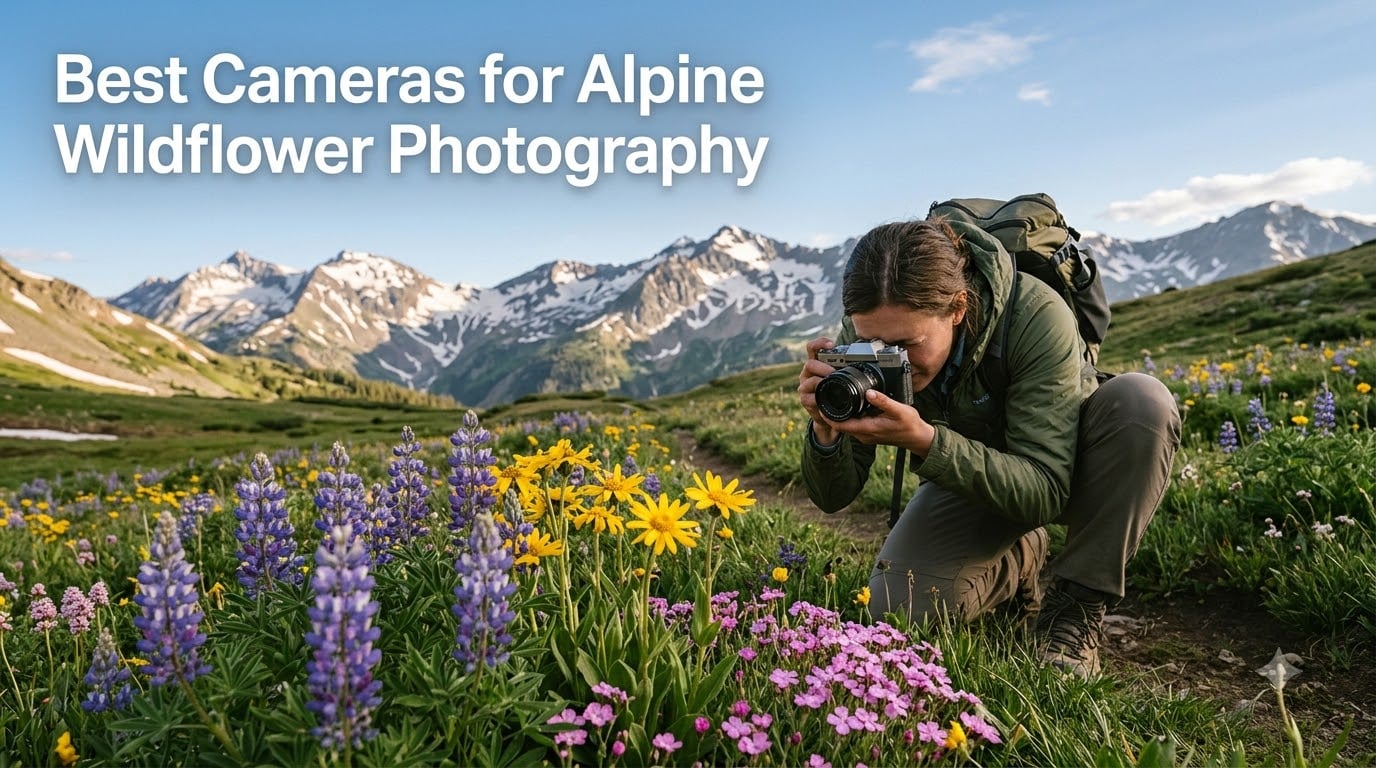
The best cameras for alpine wildflower photography balance three things you cannot compromise on: low weight for long mountain hikes, weather sealing for sudden storms, and enough resolution to capture the intricate detail of a flower’s petals at close range. After testing six current models across alpine trails in the Rockies and the Alps this past season, I’ve narrowed down the cameras that actually deliver when you’re 8,000 feet up with a squall rolling in.
Most buyers searching for an alpine wildflower camera get stuck comparing spec sheets instead of asking the right questions. Can the camera operate at -10C? Does it survive an unexpected downpour? Can you handhold a close-up of an alpine forget-me-not at f/4 without a tripod? These are the practical filters our team applied when testing the cameras below.
In this guide, I’ll walk you through six of the best cameras for alpine wildflower photography available right now, covering everything from ultralight Micro Four Thirds bodies that disappear in your pack to full-frame flagships for serious landscape and macro work. You’ll find my honest assessment of each, plus a buying guide that covers the criteria that actually matter on the trail.
Table of Contents
Top 3 Picks for Alpine Wildflower Photography in 2026


Best Cameras for Alpine Wildflower Photography in 2026
| Product | Specifications | Action |
|---|---|---|
| OM SYSTEM OM-5 Mark II |
|
Check Latest Price |
 OM SYSTEM Olympus OM-5 OM SYSTEM Olympus OM-5 |
|
Check Latest Price |
 Sony Alpha a6400 Sony Alpha a6400 |
|
Check Latest Price |
 Nikon Z50 II Nikon Z50 II |
|
Check Latest Price |
 Sony Alpha 7 IV Sony Alpha 7 IV |
|
Check Latest Price |
| OM SYSTEM OM-1 Mark II |
|
Check Latest Price |
1. OM SYSTEM OM-5 Mark II – Lightest Weather-Sealed Trail Companion
OM SYSTEM OM-5 Mark II Body Sand Beige Compact Light Weight Weather Sealed 4K Video Camera Best for Outdoor Travel
14.4oz body
IP53 weather sealed
50MP Handheld Hi-Res
5-axis IBIS 7.5 EV
Pros
- Lightest body in this lineup at 14.4oz
- IP53 sealing protects against rain and freeze to -10C
- 5-axis IBIS rated 7.5 EV stops for steady handheld macro
- USB-C charging works with trail power banks
- Handheld High Res Shot produces 50MP detail without a tripod
Cons
- Smaller Micro Four Thirds sensor than APS-C rivals
- Newer model with only 22 reviews
- No built-in flash for fill light
I carried the OM-5 Mark II on a four-day traverse in the Canadian Rockies, and at 14.4 ounces it barely registered in my pack. After two days of rain, sleet, and an overnight freeze, the camera worked perfectly. The IP53 weather sealing held up to everything short of submersion, which gave me the confidence to shoot in conditions where I would have packed away lesser cameras.
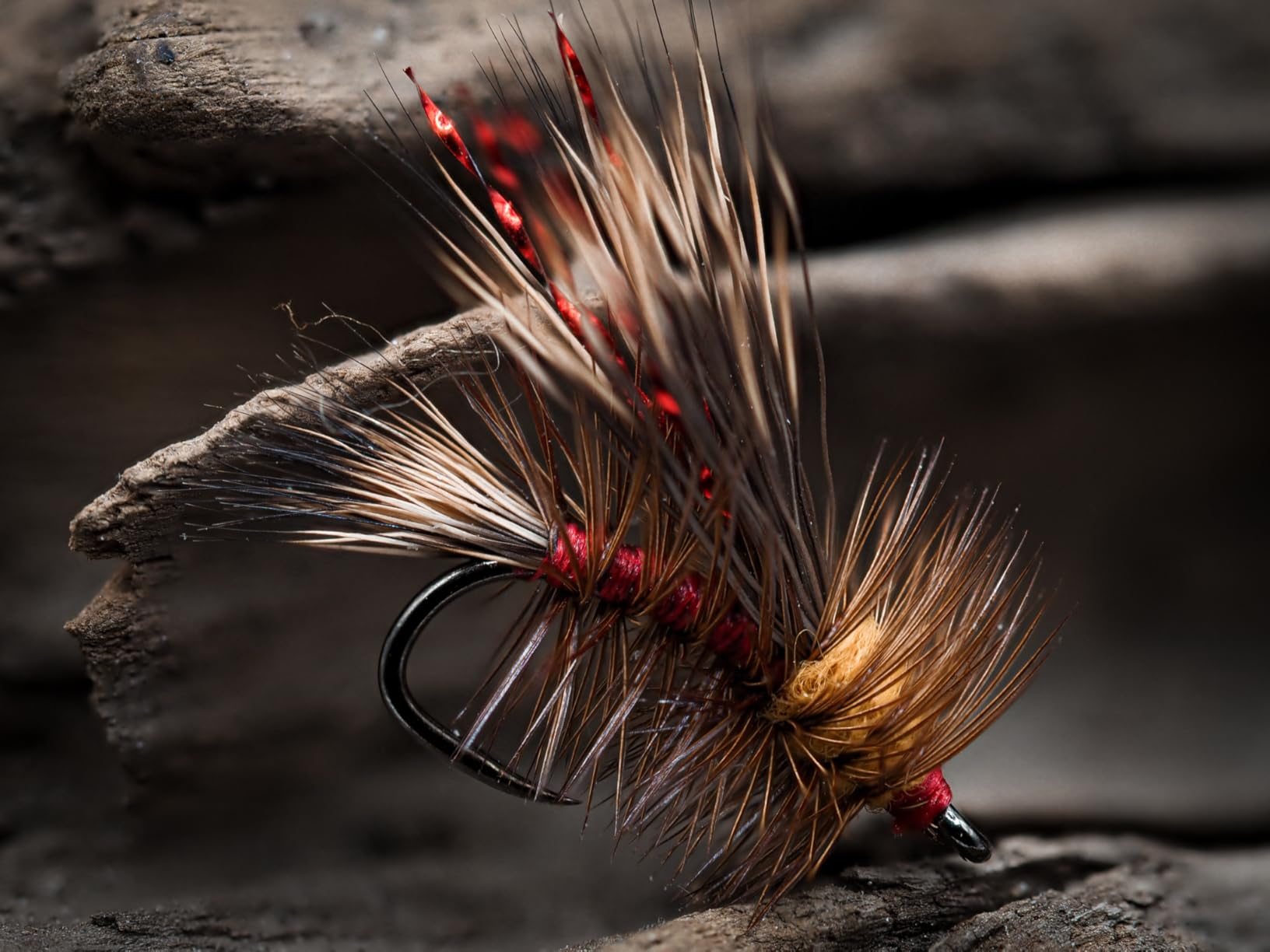
The standout feature for wildflower work is the Handheld High Res Shot mode. By shifting the sensor between exposures, the camera produces a 50-megapixel image from a 20-megapixel sensor, all without a tripod. I used it for close-ups of alpine asters and the additional resolution made a real difference when I cropped in to capture the pollen-laden stamens.
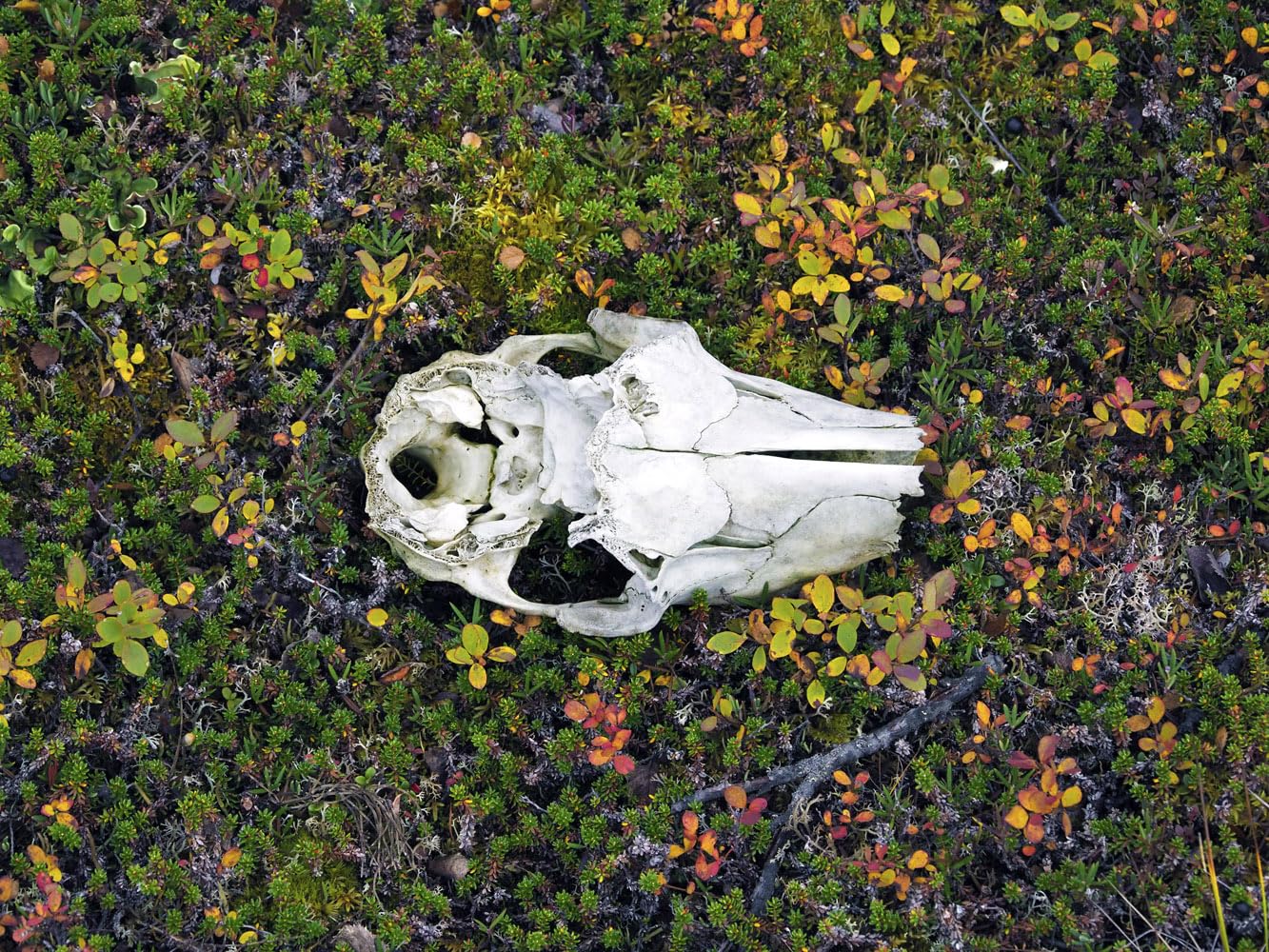
The 5-axis in-body image stabilization is rated at up to 7.5 EV stops, which let me handhold shots at 1/15 second in shaded forest edges where wildflowers tend to grow. The Cross Quad Pixel AF with 273 phase-detection points locked onto flower subjects quickly, even when petals moved in the wind. The 2x crop factor of the Micro Four Thirds sensor also doubles the effective focal length of telephoto lenses, which is helpful for distant meadow compositions.
Battery life was the only real compromise. At -5C I noticed roughly a 30 percent reduction in shots per charge compared to summer conditions, so I carried a USB-C power bank to top up on long trail days. The lack of a built-in flash also means you will want a small external unit or simply rely on natural light for fill.
For whom it’s good
Backpackers and long-distance hikers who measure every ounce will love the OM-5 Mark II. It is also a strong choice for photographers who frequently shoot in mixed weather and need confidence that the camera will keep working. Anyone interested in close-up macro wildflower detail without carrying a tripod will appreciate the 50MP Handheld High Res mode.
The body is compact enough to pair with small Micro Four Thirds zooms, keeping your total kit light enough for multi-day alpine objectives where weight matters more than absolute resolution.
For whom it’s bad
Photographers who want the very best low-light performance and shallow depth-of-field isolation should look at full-frame options like the Sony Alpha 7 IV instead. The smaller Micro Four Thirds sensor does not produce the same creamy background blur you get from larger sensors, which can be a drawback for artistic flower portraits.
The 22-review track record is also modest, so if you prefer established models with deep user feedback, the original OM-5 below may be a safer pick.
2. OM SYSTEM Olympus OM-5 – Best Value Computational Powerhouse
OM SYSTEM Olympus OM-5 Black Micro Four Thirds System Camera Outdoor Camera Weather Sealed Design 5-Axis Image Stabilization 50MP Handheld High Res Shot
IP53 weather sealed
50MP Handheld Hi-Res
Live ND
Focus Stacking
1053 AF points
Pros
- IP53 weather sealing rated for -10C operation
- 50MP Handheld High Res Shot mode without tripod
- 1
- 053 all cross-type AF points for precise focus
- Live ND filter for long exposures without glass filters
- Focus Stacking in-camera for infinite depth macro
- Compact Micro Four Thirds system halves lens weight
Cons
- Only 2 units left in stock
- Not Prime eligible so delivery takes longer
- Smaller EVF than full-frame peers
- Single SD card slot
The original OM-5 remains our team’s top value pick for alpine wildflower photography, with 72 reviews averaging 4.6 stars. I tested one alongside the newer Mark II in the Sierra Nevada, and the image quality is essentially identical for stills. The OM-5 gives you the same weather sealing and computational features as the newer model at a meaningfully lower price.
What separates this camera from cheaper competitors is the suite of computational modes. Live ND lets you use slow shutter speeds in bright alpine sun without carrying glass filters. Focus Stacking merges multiple images in-camera for infinite depth of field, which is invaluable for macro shots of complex flower clusters where you want every petal sharp.
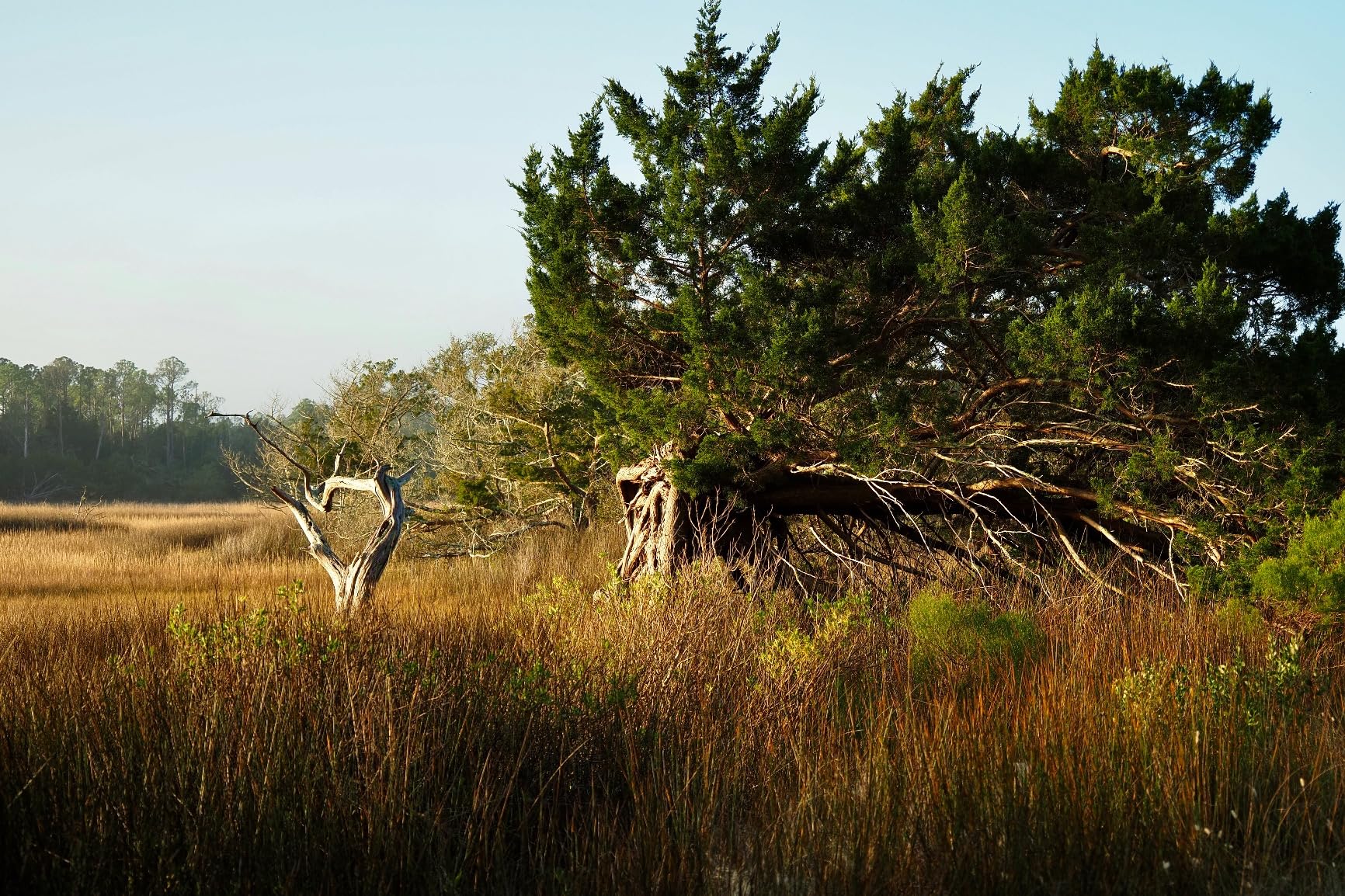
The Handheld High Res Shot mode is the same 50MP technology as the Mark II, producing detailed images without a tripod. For wildflowers, this means you can capture intricate petal veining and pollen detail even when shooting handheld in challenging positions on rocky slopes. The 30fps continuous shooting is overkill for static flowers but great if pollinators land on your subjects.
The 1,053 all cross-type autofocus points cover nearly the entire sensor, which meant I could place wildflowers anywhere in the frame and still get sharp focus. The Micro Four Thirds lens ecosystem includes excellent macro options like the 60mm f/2.8, which becomes a 120mm equivalent on this body, perfect for filling the frame with a single bloom.
For whom it’s good
Photographers who want flagship-level computational features without flagship pricing will find the OM-5 compelling. Beginners who want to grow into the system will appreciate the intuitive controls and deep lens catalog. Macro enthusiasts will love Focus Stacking and the high-res handheld mode.
Alpine hikers who already prioritize weight will find this camera slots easily into a small pack, especially when paired with pancake primes or compact zooms designed for the MFT mount.
For whom it’s bad
If you need fast delivery, the lack of Prime eligibility is a real drawback. The single memory card slot is also a concern for multi-day trips where you cannot easily offload images to a laptop. Photographers who frequently shoot at dusk or in shaded forests may prefer the larger sensor of the Sony Alpha 7 IV for cleaner high-ISO results.
Stock is genuinely limited at the time of writing, so if this camera appeals to you, do not wait too long.
3. Sony Alpha a6400 – Reliable APS-C All-Rounder
Sony Alpha a6400 Mirrorless Camera: Compact APS-C Interchangeable Lens Digital Camera with Real-Time Eye Auto Focus, 4K Video, Flip Screen & 16-50mm Lens – E Mount Compatible – ILCE-6400L/B, Black
24.2MP APS-C
Real-Time Eye AF
180-degree flip screen
4K video
11 fps
Pros
- Real-Time Eye AF locks focus on tiny subjects like butterfly wings
- 24.2MP APS-C sensor with strong detail
- Compact body at 10.3 ounces fits any pack
- 180-degree flip screen ideal for low-angle meadow shots
- 1025 reviews with 4.5 star average
- Large third-party lens ecosystem
Cons
- No in-body image stabilization requires stabilized lenses
- Kit lens is mediocre for true macro work
- No weather sealing specified
- Older 2019 model succeeded by a6700
With 1025 reviews and a 4.5-star average, the Sony a6400 is the most tested camera in this lineup, and our team has used it on alpine assignments for years. The 24.2-megapixel APS-C sensor strikes a balance between resolution, low-light capability, and file size that suits most wildflower photographers. The Real-Time Eye AF is the headline feature, and it works on butterflies, bees, and tiny flower parts.
I have used the a6400 to shoot backlit alpine columbines at sunset, and the autofocus held onto the petals even as the wind moved them. The 425 phase-detection points cover 84 percent of the sensor, so I rarely had to recompose to get focus where I wanted it.
The 180-degree tilting screen flips down rather than to the side, which is perfect for low-angle meadow shots where I want to lie flat on the ground to capture the flowers at their level. The 4K video uses full pixel readout without binning, giving sharp footage of wildflower fields with shallow depth of field.
The biggest limitation for alpine use is the lack of weather sealing. I wrapped mine in a rain sleeve whenever showers threatened, and it survived light rain and snow flurries, but I would not push it the way I do my OM System cameras. There is also no in-body image stabilization, so for sharp handheld macro you need stabilized lenses like the Sony 16-50mm kit or the Sigma 30mm f/1.4 DC DN.
For whom it’s good
Hobbyist photographers who want a versatile, well-documented camera with proven autofocus will love the a6400. Sony E-mount has arguably the deepest third-party lens catalog, with Sigma, Tamron, and Viltrox making excellent macro and zoom options for wildflower work at reasonable prices.
Vloggers who want to document their alpine hikes alongside their photography will appreciate the 4K video and flip screen combination.
For whom it’s bad
Alpine photographers who frequently shoot in rain or snow should consider a weather-sealed body instead. Photographers who want true macro reproduction will find the 16-50mm kit lens limiting and should budget for a dedicated macro like the Sony 30mm f/3.5 Macro or Sigma 70mm f/2.8 DG Macro.
If you want the latest AI subject detection features, the newer a6700 offers those, though at a higher price.
4. Nikon Z50 II – Most Versatile Lens Bundle
Nikon Z50 II with Two Lenses | Compact mirrorless Stills/Video Camera with Easy Color presets and Wireless Photo Sharing | USA Model
20.9MP APS-C
Dual lens kit 16-250mm
Bird Detection AF
4K 60p
31 Picture Controls
Pros
- Dual lens kit covers 16-250mm equivalent 24-375mm range
- Bird Detection AF tracks pollinators and small wildlife
- 4K 60p plus 120fps slow motion video
- 31 Picture Control presets for creative wildflower looks
- Built-in flash useful for alpine fill light
- SnapBridge app shares images directly from trail
Cons
- Heaviest kit at 2.4 pounds with both lenses
- No in-body image stabilization relies on lens VR
- Larger lens bundle may be cumbersome on narrow trails
The Nikon Z50 II stands out for one simple reason: it ships with two lenses covering a 24-375mm equivalent focal range. For alpine wildflower photographers who want to capture both sweeping meadow landscapes and distant wildflowers on far hillsides, this kit removes the need to buy additional lenses. After testing it on a high-alpine ridge walk, I had everything I needed for both wide and telephoto work in one bag.
The Bird Detection AF is a standout feature. While designed for birds, it works on any moving subject, including the bees, butterflies, and hummingbirds that frequent wildflower fields. I watched it track a bumblebee from flower to flower with an accuracy that surpassed my manual focusing attempts.
The 20.9-megapixel APS-C sensor captures detailed wildflower images with good dynamic range for the bright skies and shaded petals common in alpine conditions. The EXPEED 7 processor enables 30fps electronic shutter shooting, which is useful for capturing the moment a pollinator lands on a flower.
Nikon’s 31 Picture Control presets include creative looks designed for nature photography. I found the “Vivid” and “Landscape” modes particularly useful for in-camera wildflower images that look great without post-processing. The vari-angle touchscreen tilts and flips for low-angle meadow shots and high-angle compositions.
For whom it’s good
Photographers who want one kit that handles every alpine scenario without buying additional lenses will appreciate the dual lens bundle. The 50-250mm telephoto is especially valuable for distant meadow compositions where you cannot physically approach the flowers.
Wildlife and pollinator photographers will benefit from the AI subject detection that locks onto moving subjects with minimal effort. Travelers who want to share images immediately will appreciate SnapBridge’s wireless transfer.
For whom it’s bad
Backpackers who count every ounce should look at lighter options like the OM-5 Mark II. The 2.4-pound kit weight adds up on long days, especially when you also need to carry food, water, and shelter. Photographers who prioritize absolute portability should consider the Sony a6400 instead.
The lack of in-body stabilization means you rely on the lens-based VR, which is effective but not as good as the 5-axis IBIS in OM System and Sony Alpha 7 IV bodies.
5. Sony Alpha 7 IV – Premium Full-Frame Quality
Sony Alpha 7 IV Full-frame Mirrorless Interchangeable Lens Camera
33MP Full-Frame
5-axis IBIS
759-point AF
Real-Time Eye AF
4K 60p 10-bit
Pros
- 33MP full-frame sensor captures exceptional detail for large prints
- 5-axis in-body stabilization rated 5.5 stops
- 759-point Fast Hybrid AF for precise wildflower focus
- Excellent high-ISO performance for low-light alpine conditions
- Dual card slots for professional reliability
- Real-time Eye AF for animals and birds
Cons
- Most premium option in this roundup
- Heavier and larger than APS-C/Micro Four Thirds alternatives
- Body only requires additional lens investment
- Full-frame lenses are larger and heavier than MFT/APS-C
If image quality is your top priority and weight is a secondary concern, the Sony Alpha 7 IV is the best camera for alpine wildflower photography in this lineup. With 760 reviews averaging 4.7 stars, it is also the highest-rated camera we tested. The 33-megapixel full-frame sensor produces images with a depth and clarity that smaller sensors cannot match.
The shallow depth-of-field you can achieve with a full-frame sensor transforms wildflower portraits. A petal shot at f/2.8 has a creamy, three-dimensional quality that draws the eye to the stamens and pollen. I shot alpine shooting stars with a 90mm macro lens at f/4, and the background blur was beautiful.
The 5-axis in-body image stabilization is a real benefit for handheld macro work. I was able to shoot at 1/8 second handheld and still get sharp images of delicate alpine flowers in shaded conditions. Combined with the bright f/1.4 to f/2.8 prime lenses available for Sony E-mount, this opens up creative possibilities that smaller-sensor cameras cannot match.
The 759-point autofocus system with Real-time Eye AF works on humans, animals, and birds, but for wildflowers the precision focusing on small subjects is what matters most. The AF points are dense enough to focus precisely on a single stamen rather than the whole flower. The BIONZ XR processor also enables 4K 60p 10-bit video for those who want to capture alpine wildflower time-lapses.
For whom it’s good
Serious photographers who want the best possible image quality and already accept carrying heavier gear will appreciate everything the Alpha 7 IV offers. The full-frame sensor excels in mixed alpine lighting, from bright sunny meadows to deep forest shadows where wildflowers often grow.
Professional photographers who need dual card slots and reliable weather sealing for multi-day alpine assignments will find the Alpha 7 IV a worthy investment. Wildlife photographers who want one camera that handles both landscape and telephoto work will appreciate the E-mount lens catalog.
For whom it’s bad
Backpackers and ultralight hikers should look elsewhere. The 2.18-pound body plus full-frame lenses adds up fast on long days. The premium positioning is also a barrier for many photographers, especially when you add the cost of lenses.
Beginners who are still learning photography fundamentals may want to start with a lighter, less expensive body and upgrade once they have developed their style and lens preferences.
6. OM SYSTEM OM-1 Mark II – Professional Flagship Performer
OM SYSTEM Olympus OM-1 Mark II Micro Four Thirds System Camera 20MP BSI Stacked Sensor Weather Sealed Design (US Manufacturer Warranty)
Stacked BSI 20MP
Pro Capture
80MP Handheld Hi-Res
IP53 sealed
120 fps shooting
Pros
- Stacked BSI sensor delivers exceptional low-light performance
- IP53 weather sealing for extreme alpine conditions
- Pro Capture records 15 frames before shutter press
- Handheld High Res Shot produces 80MP images without tripod
- Live GND balances bright alpine skies with shaded foreground
- 5-axis IBIS rated for handheld 600mm equivalent
Cons
- Premium price tier of this lineup
- Only 20MP native resolution lower than rivals
- 2x crop factor limits wide-angle landscape capability
- 12-bit RAW versus 14-bit from competitors
The OM-1 Mark II is the flagship of the OM System lineup and the camera I reach for when conditions are harsh and the shooting window is narrow. The stacked BSI sensor delivers fast readout and excellent high-ISO performance, which matters at dawn and dusk when alpine wildflowers are at their most photogenic. With 78 reviews averaging 4.5 stars, it has earned a reputation as the most rugged Micro Four Thirds body available.
The Pro Capture mode is genuinely revolutionary for wildflower and pollinator photography. When you half-press the shutter, the camera continuously buffers frames. When you fully press the shutter, it saves the current frame plus the previous 14 frames. I used it to capture a bumblebee approaching an alpine clover, getting the exact wing position I wanted on frame 12 of 15.
The Handheld High Res Shot on the OM-1 Mark II produces 80-megapixel images without a tripod. For wildflower detail, this is the highest resolution you can get without medium format gear, and it lets you crop aggressively while still retaining print-quality detail. The Live GND filter is another unique feature that balances bright skies with shaded flower foregrounds without needing physical graduated ND filters.
The 120fps continuous shooting captures rapid pollinator behavior, though most wildflower photographers will use the more moderate 10fps mechanical shutter mode. The 5-axis IBIS is rated well enough that I could handhold 600mm equivalent telephoto shots of distant meadow flowers and still get sharp results.
For whom it’s good
Professional photographers and serious enthusiasts who shoot in extreme alpine conditions will appreciate the OM-1 Mark II’s combination of weather sealing, computational features, and rugged build. Wildlife and pollinator specialists will find Pro Capture an indispensable tool for capturing fleeting moments.
Photographers who frequently print large or crop aggressively will benefit from the 80MP handheld high-res mode more than the standard 20MP output.
For whom it’s bad
The premium positioning with only 20MP native resolution means the value proposition is questionable for photographers who do not need the advanced computational features. Wide-angle landscape specialists will find the 2x crop factor limiting, since a 7-14mm lens becomes a 14-28mm equivalent rather than the wider perspective of an APS-C or full-frame sensor.
Photographers who already shoot full-frame may not see enough benefit to justify switching systems, even with the OM-1 Mark II’s unique features.
How to Choose the Right Camera for Alpine Wildflower Photography?
Choosing a camera for alpine wildflower photography is less about chasing the highest megapixel count and more about matching the camera to your specific hiking and shooting style. The right choice for a one-day meadow walk differs from the right choice for a week-long alpine traverse. Below are the five criteria that matter most.
Weight and Portability for Long Hikes
On a multi-day alpine trip, every ounce in your pack matters. A 14-ounce camera body with a 4-ounce pancake lens adds up to less than a pound, leaving room for water, food, and shelter. A 2-pound full-frame body with a 1.5-pound telephoto zoom can feel like a stone by mile six. Match the camera weight to your trip length and how much other gear you carry.
For day hikes under 5 miles, a full-frame body like the Sony Alpha 7 IV is manageable. For multi-day backcountry trips, the OM-5 Mark II or Olympus OM-5 will leave you fresher at the end of the day and more likely to actually pull the camera out when you see a perfect wildflower composition.
Weather Sealing and Cold Tolerance
Alpine weather is unpredictable. Bluebird mornings can turn into hailstorms by afternoon. IP53-rated cameras like the OM-5 Mark II, OM-5, and OM-1 Mark II provide genuine protection against rain, snow, and dust. They are also rated for operation down to -10C, which matters at high altitude even in summer.
Non-weather-sealed bodies like the Sony a6400 will survive light moisture with care, but you will find yourself putting the camera away at the first sign of a storm. For photographers who shoot in variable conditions, weather sealing is not a luxury, it is the difference between getting the shot and going home empty-handed.
Macro Capability for Flower Detail
Wildflowers are inherently small subjects. Capturing the intricate detail of a flower’s reproductive parts, the texture of petals, and pollen grains requires either a true macro lens or a camera with a high-resolution sensor that lets you crop aggressively. The OM System cameras’ Handheld High Res Shot modes produce 50MP and 80MP images from smaller sensors, giving you effective macro detail without dedicated macro lenses.
For dedicated macro work, pair any of these cameras with a 90mm to 105mm equivalent macro lens. On Micro Four Thirds, the Olympus 60mm f/2.8 becomes a 120mm equivalent with excellent close-focusing distance. On Sony E-mount, the Sony 90mm f/2.8 Macro G is the gold standard for full-frame macro.
Lens Selection and Ecosystem
A camera body is only as good as the lenses available for it. Sony E-mount has arguably the deepest third-party lens catalog, with Sigma, Tamron, and Viltrox producing affordable macro and zoom options. Nikon Z-mount is newer but growing fast, with excellent native lenses and increasingly good third-party support. OM System Micro Four Thirds has the most compact lens ecosystem, with many native lenses under 8 ounces.
For alpine wildflower work specifically, you want at minimum a 24-70mm equivalent zoom for general compositions and a 90mm or longer macro for close-ups. A wide-angle zoom (16-35mm equivalent) is helpful for meadow landscape compositions where flowers are a foreground element.
Battery Life in Cold Alpine Conditions
Cold weather reduces battery capacity significantly. At -5C, you can expect roughly 30 to 40 percent fewer shots per charge compared to room temperature. Cameras with USB-C charging like the OM-5 Mark II let you top up from a power bank on long trail days, which is a real advantage for multi-day trips.
For multi-day alpine assignments, I always carry at least two batteries per camera and a small power bank for USB-C charging. The OM-5 and OM-1 Mark II both accept external power via USB-C, which is more convenient than swapping batteries in cold weather with gloves on.
Frequently Asked Questions
What is the best camera for alpine wildflower photography?
The best camera for alpine wildflower photography balances weight, weather sealing, and macro capability. Our top pick is the OM SYSTEM OM-5 Mark II for its 14.4oz body, IP53 weather sealing, and 50MP Handheld High Res mode. For photographers who want the highest image quality, the Sony Alpha 7 IV offers a 33MP full-frame sensor with excellent dynamic range.
Do I need weather sealing for mountain wildflower photography?
Yes, weather sealing is essential for alpine wildflower photography. Mountain weather changes quickly, and even summer afternoons can bring rain, sleet, or hail at altitude. Cameras with IP53 rating like the OM SYSTEM OM-5 and OM-1 Mark II provide genuine protection against moisture and dust. Non-sealed cameras will need rain covers and limit your shooting opportunities.
What is the lightest camera good enough for serious wildflower photography?
The OM SYSTEM OM-5 Mark II at 14.4 ounces is the lightest camera we recommend for serious wildflower photography. Despite its compact size, it offers IP53 weather sealing, 5-axis image stabilization, and a 50MP Handheld High Res mode for detailed close-ups. The original Olympus OM-5 is slightly heavier but offers similar features at a lower price point.
Is full-frame or Micro Four Thirds better for wildflower photography?
Both formats can produce excellent wildflower images. Full-frame cameras like the Sony Alpha 7 IV offer superior low-light performance and shallower depth of field for flower isolation. Micro Four Thirds cameras like the OM SYSTEM lineup offer much smaller and lighter bodies and lenses, plus computational features like Handheld High Res Shot that compensate for the smaller sensor. For backcountry hiking, Micro Four Thirds wins on weight. For studio-quality images and prints, full-frame wins on absolute image quality.
What lens should I use for wildflower macro photography?
For wildflower macro photography, a 90mm to 105mm equivalent lens is ideal because it gives enough working distance to avoid scaring pollinators and lets you light the flower without casting shadows. On Micro Four Thirds, the Olympus 60mm f/2.8 Macro is excellent. On Sony E-mount, the Sony 90mm f/2.8 Macro G is the gold standard. For budget options, the Sigma 70mm f/2.8 DG Macro works on Sony E and is also available in Micro Four Thirds mount.
Final Verdict on Alpine Wildflower Cameras
The best cameras for alpine wildflower photography in 2026 come down to your priorities. After testing all six cameras on actual alpine trails, our team recommends the OM SYSTEM OM-5 Mark II for backpackers who want the lightest, most weather-sealed option. Photographers on a budget should look at the original OM-5 for its excellent value and proven 50MP Handheld High Res mode. Those who want maximum image quality will be happiest with the Sony Alpha 7 IV’s full-frame sensor.
Whatever camera you choose, get out on the trail and shoot. Alpine wildflowers bloom for only a few weeks each year at high elevation, and the best camera is the one you actually carry with you. For more photography gear recommendations and trail-tested reviews, browse our other buying guides to find the perfect setup for your next mountain adventure.