
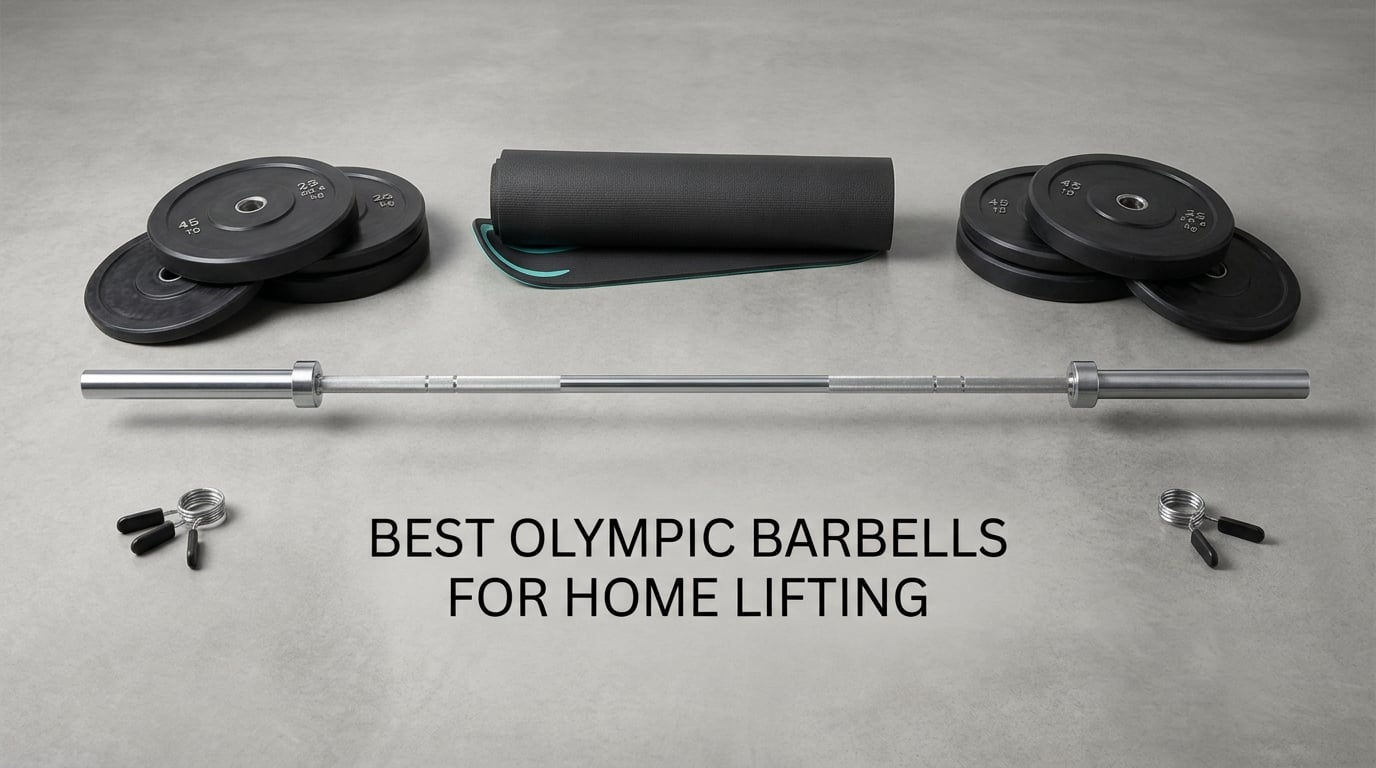
Short version: the PAPABABE 7ft 45lb bar is the best olympic barbell for home gym use we tested, because it pairs a true 45 lb bar weight, a 190,000 PSI steel core and hybrid needle bearings with brass bushings, and it does all of that without the build complexity of a full competition bar. If your budget is tighter, the CAP OBIS-85 is the pick for a first home gym. If you squat heavy and want a knurled center section, the E.T.ENERGIC 1500lb bar carries the highest published tensile strength in this group at 205,000 PSI.
There is no shortage of choice here, and that is exactly the problem. A single brand alone lists dozens of men’s 20kg bars, and the difference between a budget shaft and a competition shaft is invisible until you are three plates deep in a heavy set. So this roundup skips the brand worship and compares the things that actually change how a bar behaves: shaft diameter, knurl pattern, sleeve rotation, finish, stated capacity and warranty terms. All ten bars below are 2-inch sleeve Olympic bars, which means they accept standard Olympic plates, power racks and squat benches.
One note on method, because two of the pages ranking for this keyword are brand stores writing in roundup format. We built this list from published specification data, owner review patterns and the questions lifters actually ask in home gym forums, and we say plainly which claims we could not verify. Stated PSI numbers and weight capacities are manufacturer figures and are reproduced as published, not as independently load-tested results. The back squat is the classic king of all lifts, which is exactly why shaft diameter matters more here than almost any other spec.
Building out the rest of the room matters as much as the bar itself. Our guide to the best home gym equipment for 2026 covers racks, plates and storage, and if your garage doubles as a live-in space, the flooring and climate notes in the home security and climate guide are worth a read before you store steel in a damp corner.
Table of Contents
Top 3 Picks for Home Lifting in 2026

PAPABABE 7ft 45lb Bar
- 45 lb true bar weight
- 190K PSI steel
- Hybrid needle bearings and bushings
- 1000 lb rated capacity

Yaheetech 7FT 330lb Bar
- 330 lb rated capacity
- 30mm medium-depth diamond knurl
- Hard chrome shaft and sleeves
- 52.5 inch grip length

CAP OBIS-85 7ft Bar
- 35 lb bar weight
- 30mm volcano knurl with center knurl
- Bronze bushing sleeves
- Hard chrome finish
Best Olympic Barbells for Home Lifting (October 2026)
| Product | Specifications | Action |
|---|---|---|
| PAPABABE 7ft 45lb Olympic Barbell |
|
Check Latest Price |
| CAP Olympic Barbell 7ft |
|
Check Latest Price |
| Yaheetech 7FT Olympic Barbell |
|
Check Latest Price |
 CAP Pro Series Beast 7FT CAP Pro Series Beast 7FT |
|
Check Latest Price |
 Rage Fitness 6FT Training Barbell Rage Fitness 6FT Training Barbell |
|
Check Latest Price |
 RitFit Elite 7ft Olympic Barbell RitFit Elite 7ft Olympic Barbell |
|
Check Latest Price |
 HANDBODE 7ft Olympic Barbell HANDBODE 7ft Olympic Barbell |
|
Check Latest Price |
 Iron Crush 7ft Olympic Barbell Iron Crush 7ft Olympic Barbell |
|
Check Latest Price |
 E.T.ENERGIC 7FT 1500lb Olympic Barbell E.T.ENERGIC 7FT 1500lb Olympic Barbell |
|
Check Latest Price |
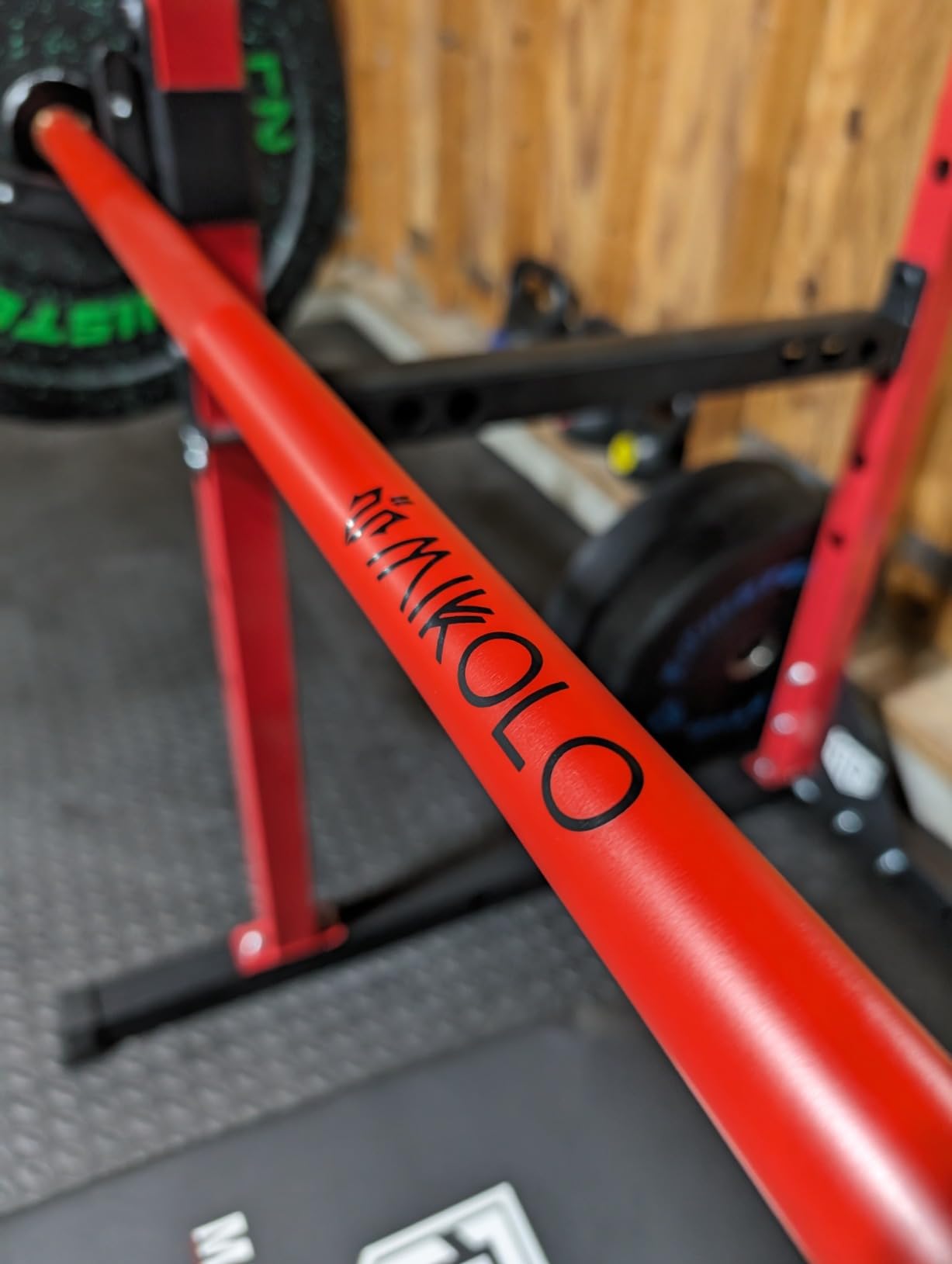
 Mikolo 7ft Olympic Barbell Mikolo 7ft Olympic Barbell |
|
Check Latest Price |
1. PAPABABE 7ft 45lb Olympic Barbell – Best Overall for Home Lifting
PAPABABE 7ft Barbell 45lb Olympic Barbell 1000lbs Capacity Home Gym Silver
45 lb
7ft
190K PSI steel
Hybrid bearings
1000 lb cap
30mm knurl
Pros
- True 45 lb bar weight
- Hybrid needle bearing and bushing sleeves
- 190000 PSI steel core with 1000 lb rating
- Knurl is secure without tearing skin
- Chrome finish resists rust
Cons
- Listing mixes Pro
- Elite and Standard capacity variants
- 30mm grip is thicker than a 28mm power bar
- 17.5 inch sleeves reduce usable plate space
Most of the 45 lb bars in this roundup reach that weight by being advertised at it. This one is quoted by owners as a true 45 lb on a scale, and that matters more than any other single specification once you start adding plates, because a bar that is lighter than advertised quietly changes every percentage in your program.
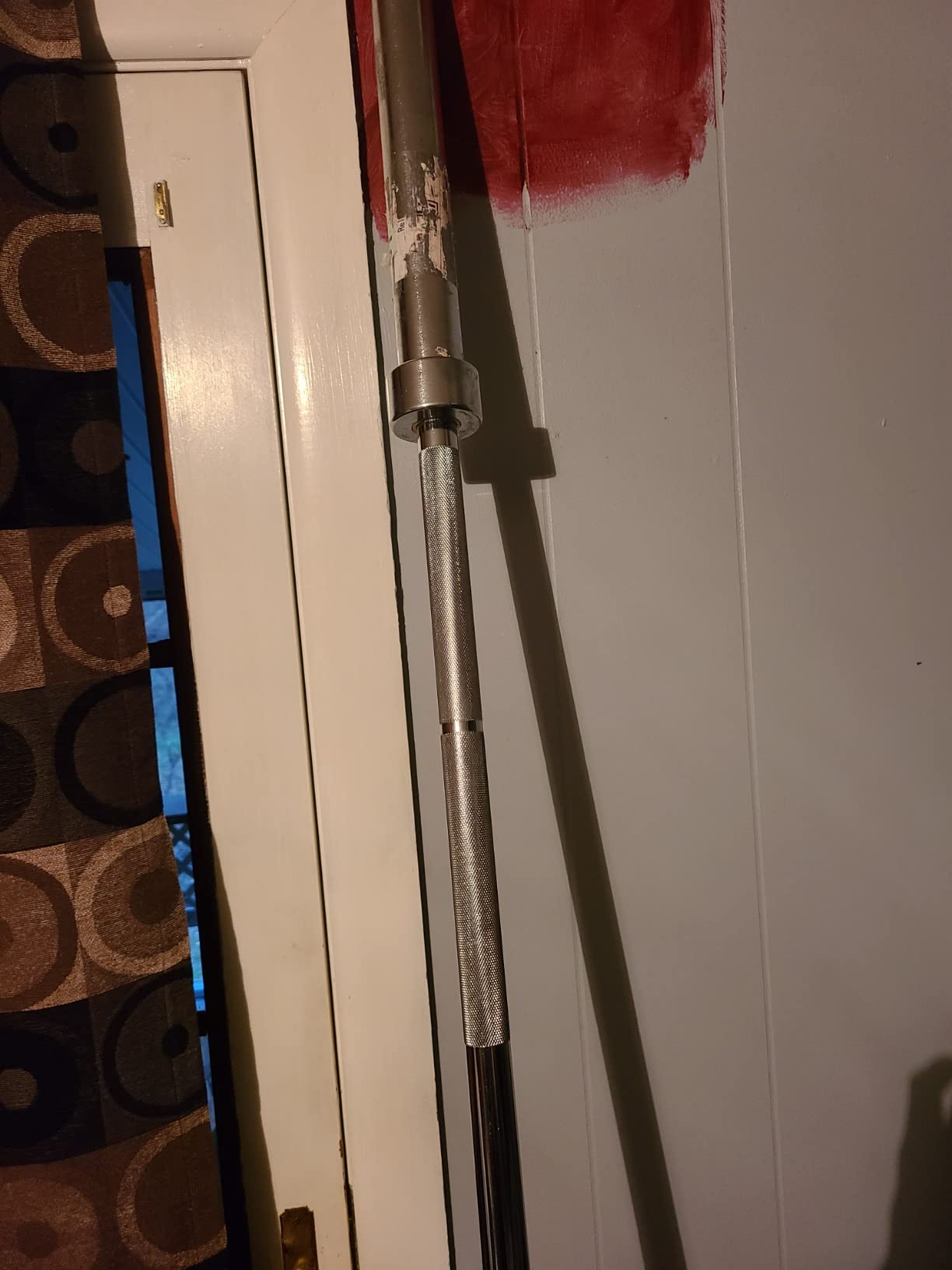
The sleeve system is the standout. Instead of choosing between bushings and bearings, this bar uses a hybrid of needle bearings and bushings, which is the compromise manufacturers usually make when they want smooth rotation without the cost of a full bearing set. Owners describe the spin as smooth and wobble-free, and the 51.57 inch shaft is long enough for a power cage with normal upright spacing.
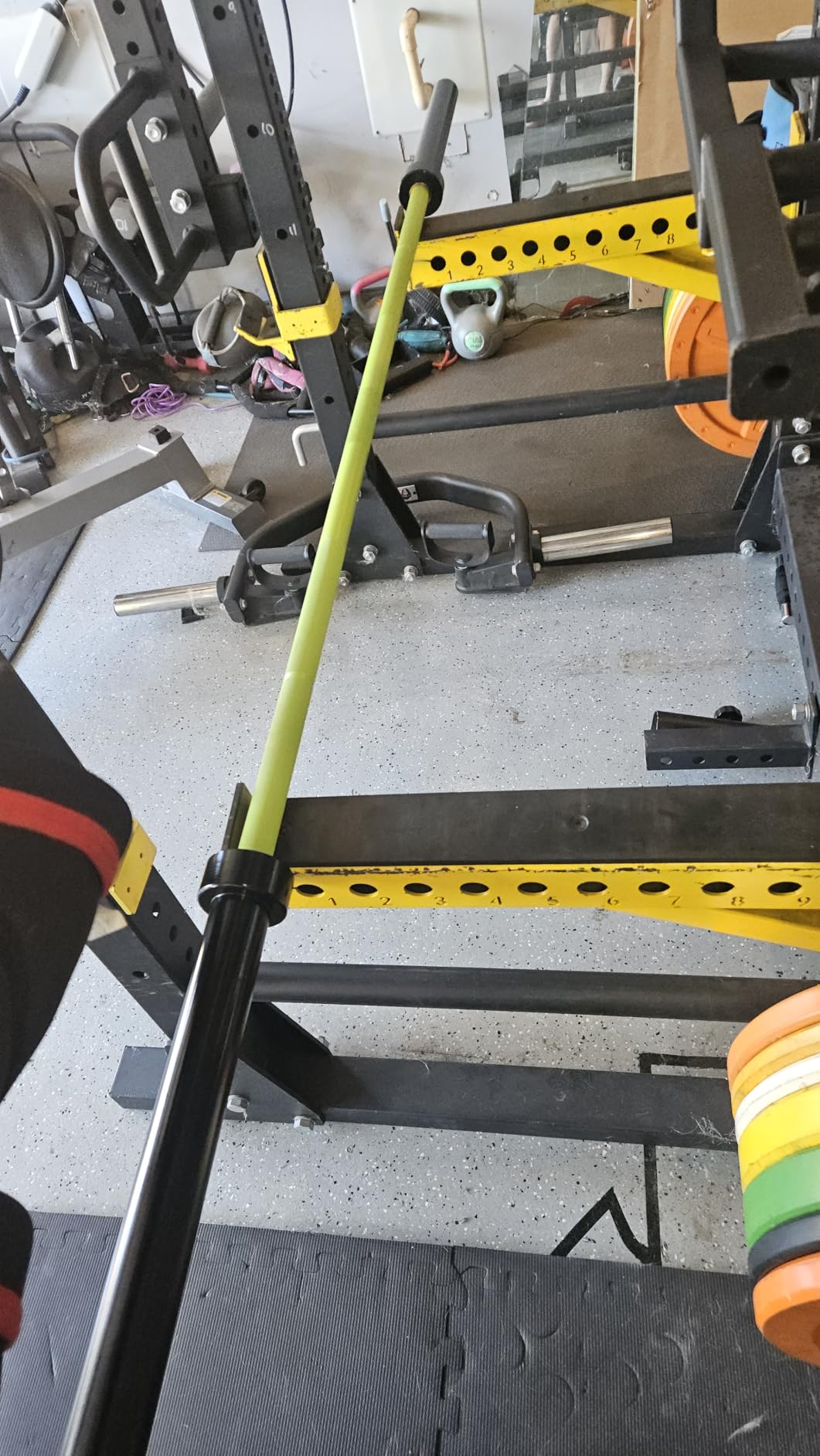
The knurl deserves specific attention. It is 30mm diameter, which is thicker than the 28mm standard on most modern power bars, and reviewers consistently describe it as secure without being abrasive. That is the exact zone most home lifters want: enough bite to hold a heavy deadlift, not so much that a high-rep set leaves your palms raw.
The 190,000 PSI core is a manufacturer figure, and the 1,000 lb rating sits at the high end for this build tier. Treat both as published claims rather than tested limits, and if you are approaching those loads regularly, read the r/homegym consensus further down this page before you commit.
Where This Bar Earns Its Place
This is the bar to buy if you want a full 45 lb shaft, smooth sleeve rotation and a knurl that works for both a maximal deadlift and a 15-rep overhead press session. It is also the safest single choice for a household where one bar has to serve two people of different strengths.
It fits standard 2-inch Olympic plates and any power rack or squat bench rated for a 7-foot bar. The only real friction point is sleeve length, which is on the longer side at 17.52 inches and eats into plate space on a shallowly spaced J-hook.
Where It Falls Short
The single biggest practical problem is variant confusion. This listing family includes Pro, Elite and Standard versions with different capacities and grip diameters, and picking the wrong option page is the most common complaint in the reviews. Read the option selector carefully before ordering.
Owners who trained for years on a 28mm bar sometimes find the 30mm grip feels chunky during technique work. If your hand wraps easily around a 28mm shaft, the difference is noticeable in the first session.
2. CAP Olympic Barbell 7ft OBIS-85 – Best Budget Starter Bar
CAP 35lb 7ft Olympic Barbell, Chrome, Strength Training
35 lb
7ft
30mm volcano knurl
Center knurl
Bronze bushings
Chrome
Pros
- Center knurl included at this tier
- 30mm grip feels solid and secure
- Proper 7ft length fits standard home racks
- Chrome finish resists rust
Cons
- Bar is 35 lb not 45 lb
- 500 lb rating is optimistic for the steel used
- Sleeve rotation is metal on metal
CAP sells more entry-level 7-foot bars than anyone else, and the OBIS-85 is the one most home gym buyers end up with first. It has been on the market long enough that there is a very large body of owner feedback, and the pattern in that feedback is remarkably consistent: good value, solid knurl, no surprises, light bar.
Two things stand out. The first is the center knurl, which is genuinely useful for back squats and is usually the first thing missing from a bar at this level. The second is the 30mm grip diameter, which is thicker than most modern power bars and gives the shaft a dense, substantial feel in the hands.
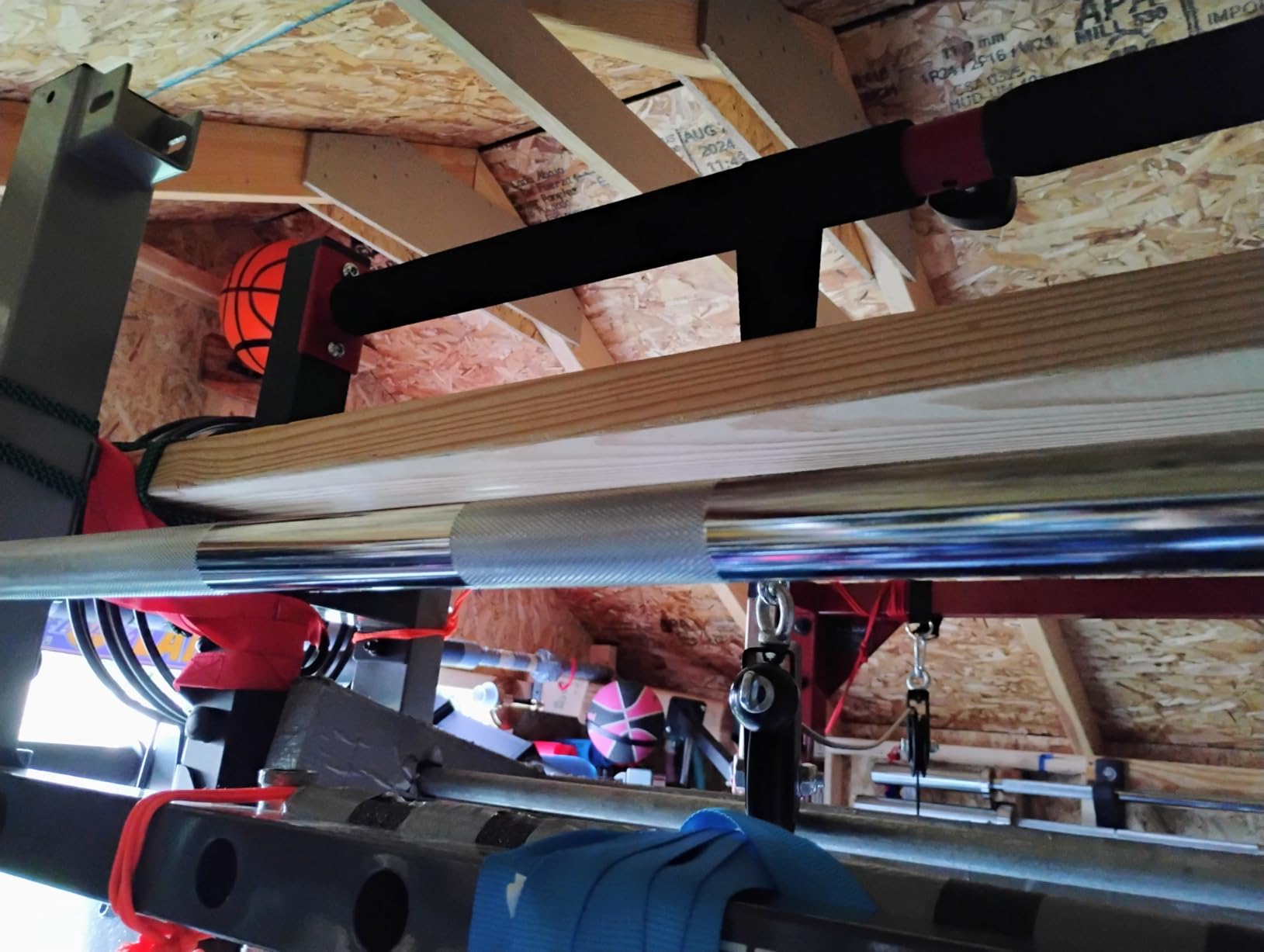
The most repeated caveat is weight. This bar is 35 lb, not the 45 lb that a lot of buyers assume when they see an 86-inch Olympic bar. If you are following a program built on 45 lb bar math, adjust the first few weeks of percentages or buy the heavier sibling below.
Capacity is the second caveat. The listing states 500 lb and 100,000 PSI, but a portion of owners report visible flex somewhere in the 230 to 250 lb range. That does not make the bar dangerous at sensible loads, it just means the printed rating should not guide your training ceiling.
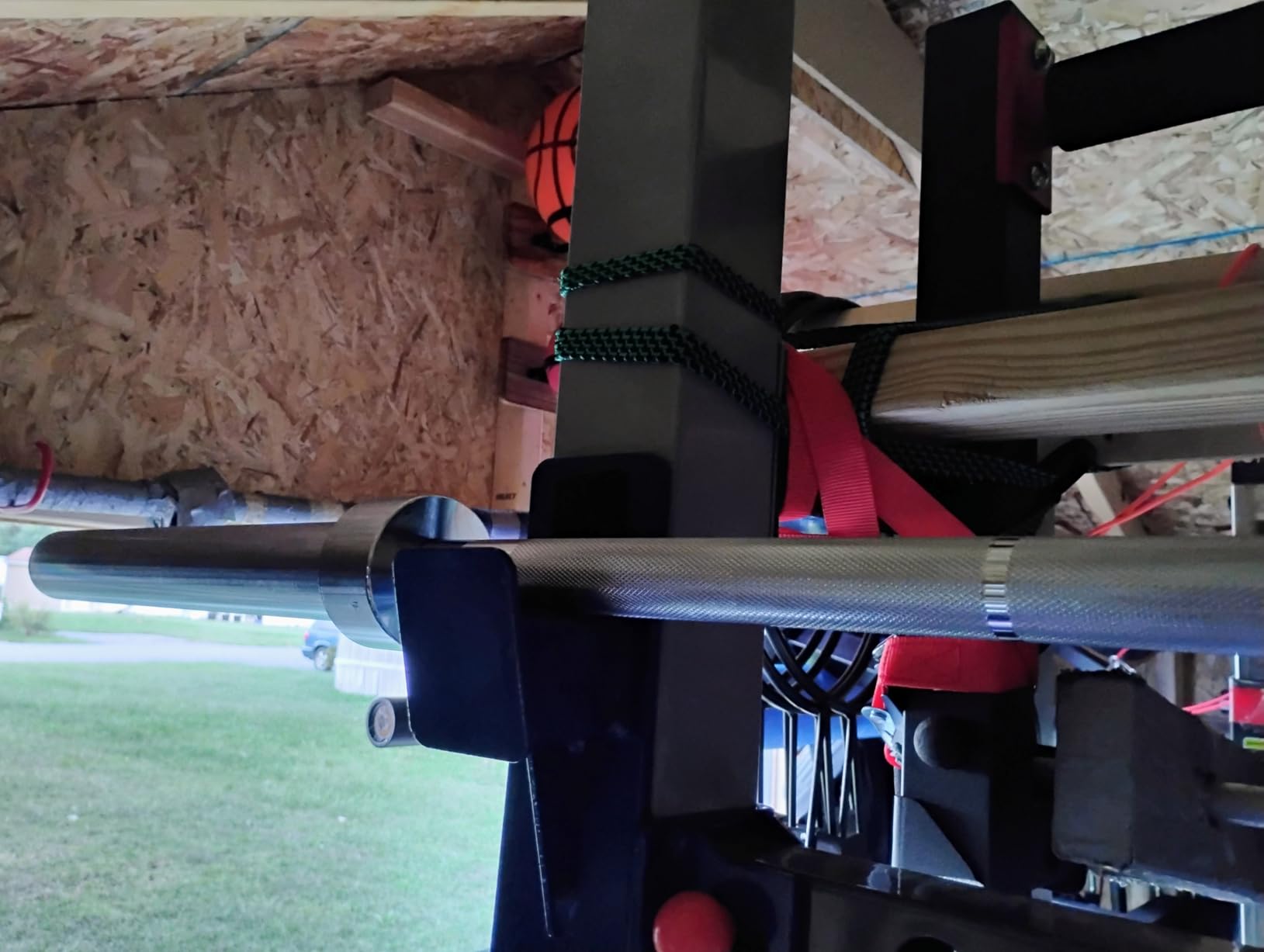
Good Fit For
Anyone setting up a first home gym with a squat rack and a small set of bumper plates, particularly under 200 lb total. The center knurl, chrome finish and bronze bushing sleeves cover almost every accessory movement in a beginner program.
It is also a reasonable second bar for a teenager lifting alongside an adult, since 35 lb is a much better starting weight than 45 lb for a lighter lifter. The 86.02 inch length racks on any standard home setup.
Good Reasons to Pass
If you squat or deadlift above 300 lb, the reported flex becomes a real factor and you should step up to a heavier bar with a higher published capacity. Likewise if you are training for a meet, this is not the bar to build a season on.
Sleeve rotation is described as metal-on-metal by some owners rather than bushing-assisted, so competitive Olympic work such as fast snatches and clean and jerks will feel noticeably heavier in the wrists than it would on a bearing-equipped bar.
3. Yaheetech 7FT Olympic Barbell – Best for General Strength Work
Yaheetech 7FT Olympic Barbell, 330LB Carbon Steel Weight Bar for Home Gym
35.9 lb
85.4 in
330 lb cap
30mm knurl
Hard chrome
Pros
- Medium-depth diamond knurl grips without slipping
- Hard chrome resists oxidation
- 2-inch sleeves fit standard Olympic plates
- Suitable for upper and lower body work
Cons
- 330 lb capacity is low for heavy loading
- 35.9 lb is under the 45 lb standard
- Spring collars are not built for heavy drops
Yaheetech built this bar for the person who does not want to specialise. It handles presses, rows, squats, deadlifts and isolation work with a grip that most reviewers call the least aggressive of any bar in this roundup, which makes it a good default if you are training several days a week across a wide movement pool.
The published numbers are honest for the class: 85.4 inches total, a 52.5 inch grip length between the collars, 30mm grip diameter, 15.2 inch sleeves and a 330 lb load capacity. The 330 lb figure is the most useful number on the listing, because it tells you immediately that this is a general strength bar rather than a heavy platform bar.
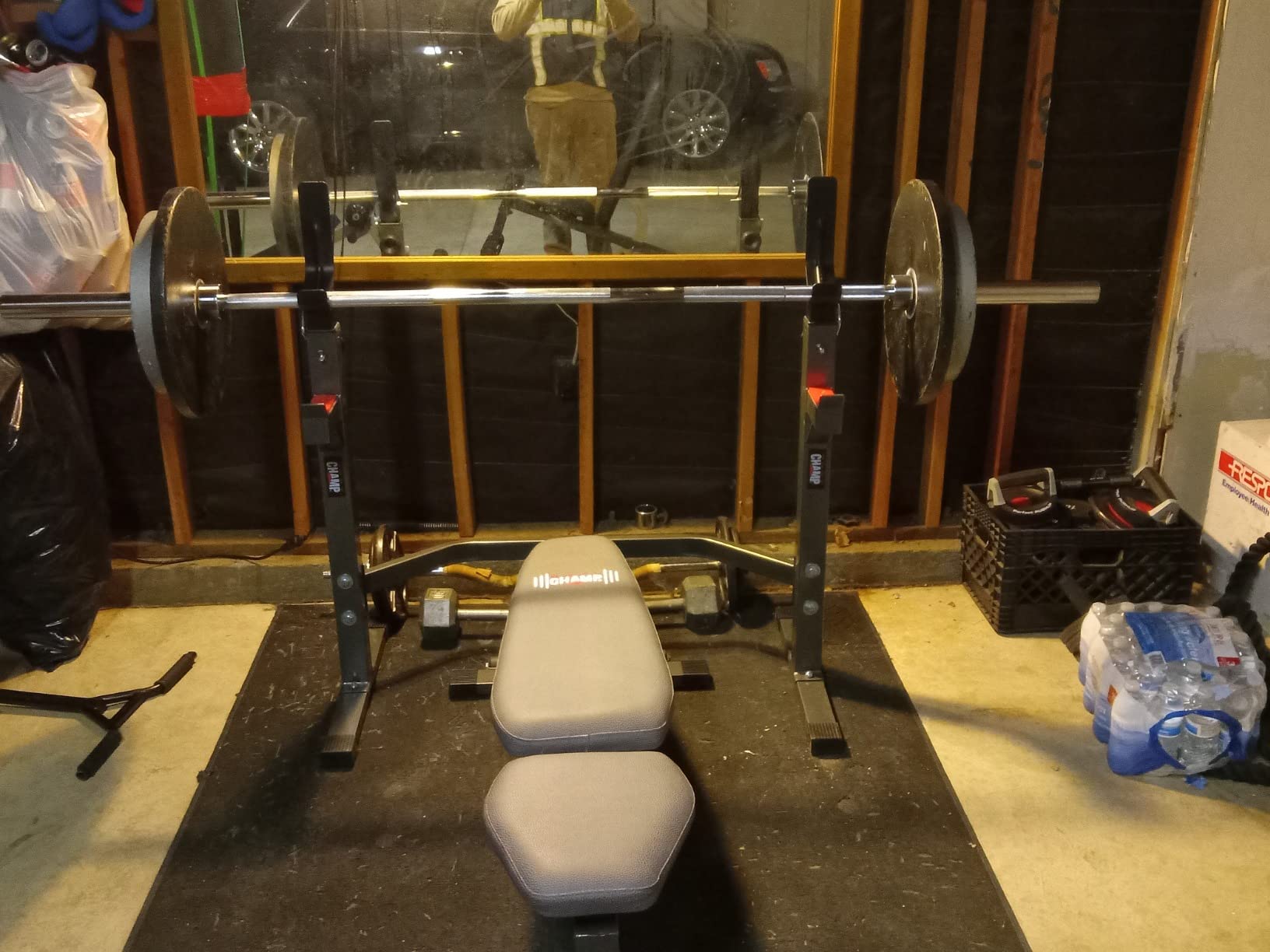
The knurl is medium-depth diamond and reviewers repeatedly highlight that it holds without biting. For high-rep accessory work, bent-over rows and sets of twenty or more on the overhead press, that is the right side of the aggression curve, and it is the opposite trade-off from the sharper volcano knurls used on some power bars.
Hard chrome on both shaft and sleeves handles garage storage well and wipes clean without much effort. That matters more than most buyers expect, because a knurled shaft collects chalk, sweat and eventually corrosion long before the shaft itself is at risk.
Why It Works for Most People
If your training is a mix of bodybuilding and general strength, this bar disappears in the best way. It is comfortable, it is quiet, and it will not tear your hands up during a long pressing session.
It is also the safest recommendation we can make for someone training with a family member at a lower level, since a 35.9 lb bar with 2-inch sleeves is compatible with the lighter plates most home setups end up buying first.
Where the Limits Show
A 330 lb capacity is genuinely low by modern standards. Anyone approaching 400 lb total will find this bar’s published ceiling uncomfortably close to their working weight, and experienced lifters tend to move up to a heavier shaft within a year.
The supplied spring collars are the other weak point. They are light, they can ride up on a sleeve, and they are not intended to absorb a bar dropped from a rack. Budget for proper collars before your first heavy session.
4. CAP Pro Series The Beast 7FT – Best for Starter Powerlifting
CAP The Beast 7ft Olympic Barbell, Pro Series, 1,200lb Capacity
44 lb
7ft
1200 lb cap
120K PSI
Volcano knurl
Phosphate
Pros
- Feels noticeably heavier and more stable than budget 7ft bars
- Bushing sleeves spin without grinding
- Longer warranty than entry CAP bars
- Better packaging on newer production
Cons
- Phosphate finish scratches and scrapes off easily
- Some owners report bending above 600 lb
- No center knurl on this variant
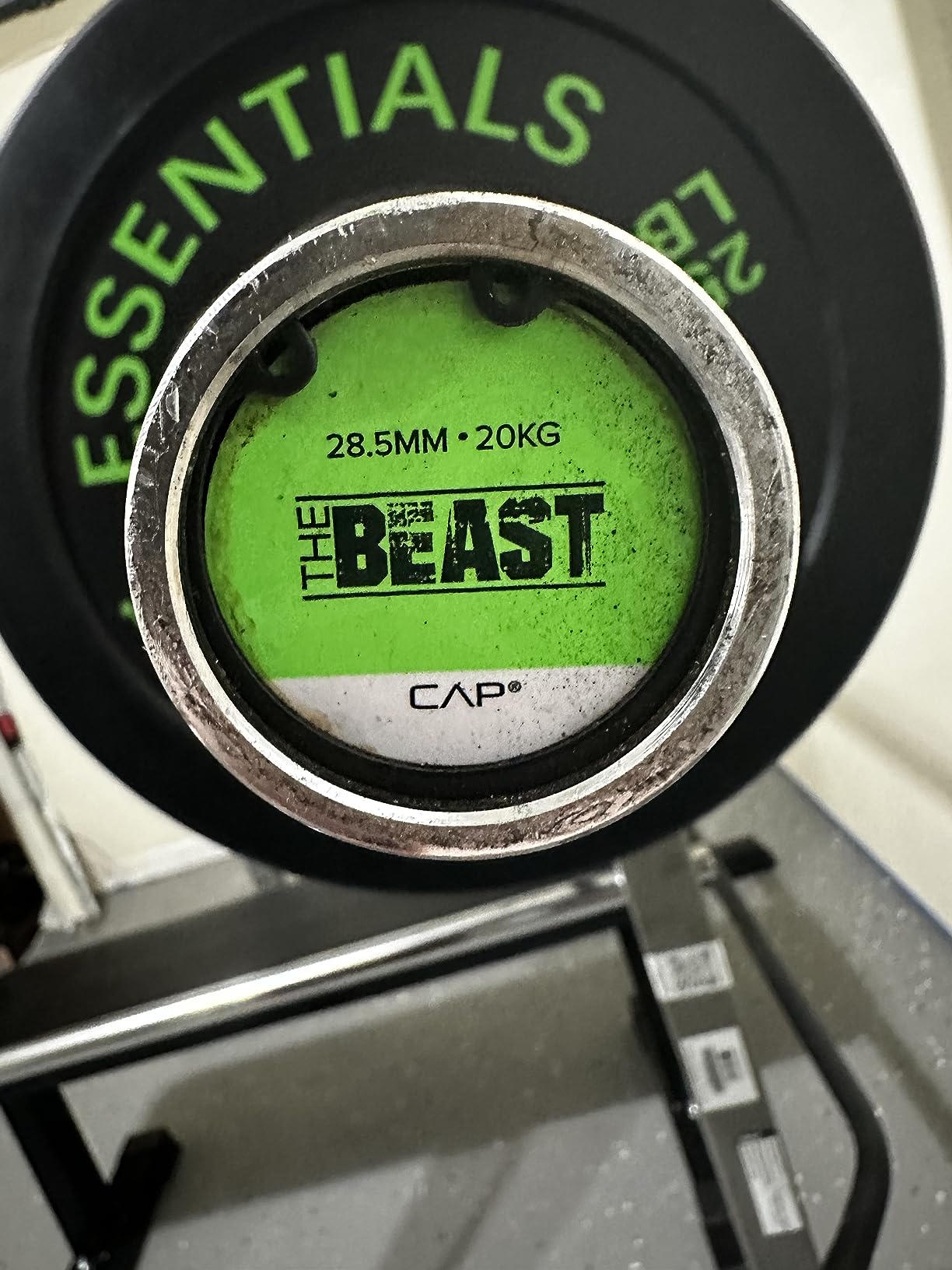
The Beast is CAP’s answer to people who outgrew the 35 lb entry bar but do not need a competition-spec shaft. At 44 lb with 2-inch bronze bushing sleeves and a stated 1,200 lb capacity, it is the heaviest, most capable CAP bar in this group and the most plausible option here for someone who intends to squat seriously.
Compared with the OBIS-85 further up this page, the difference in feel is immediate. A 44 lb bar under a loaded squat has far less shaft speed, which makes it easier to control out of the hole, and the sleeve rotation is bushing driven rather than raw metal contact.
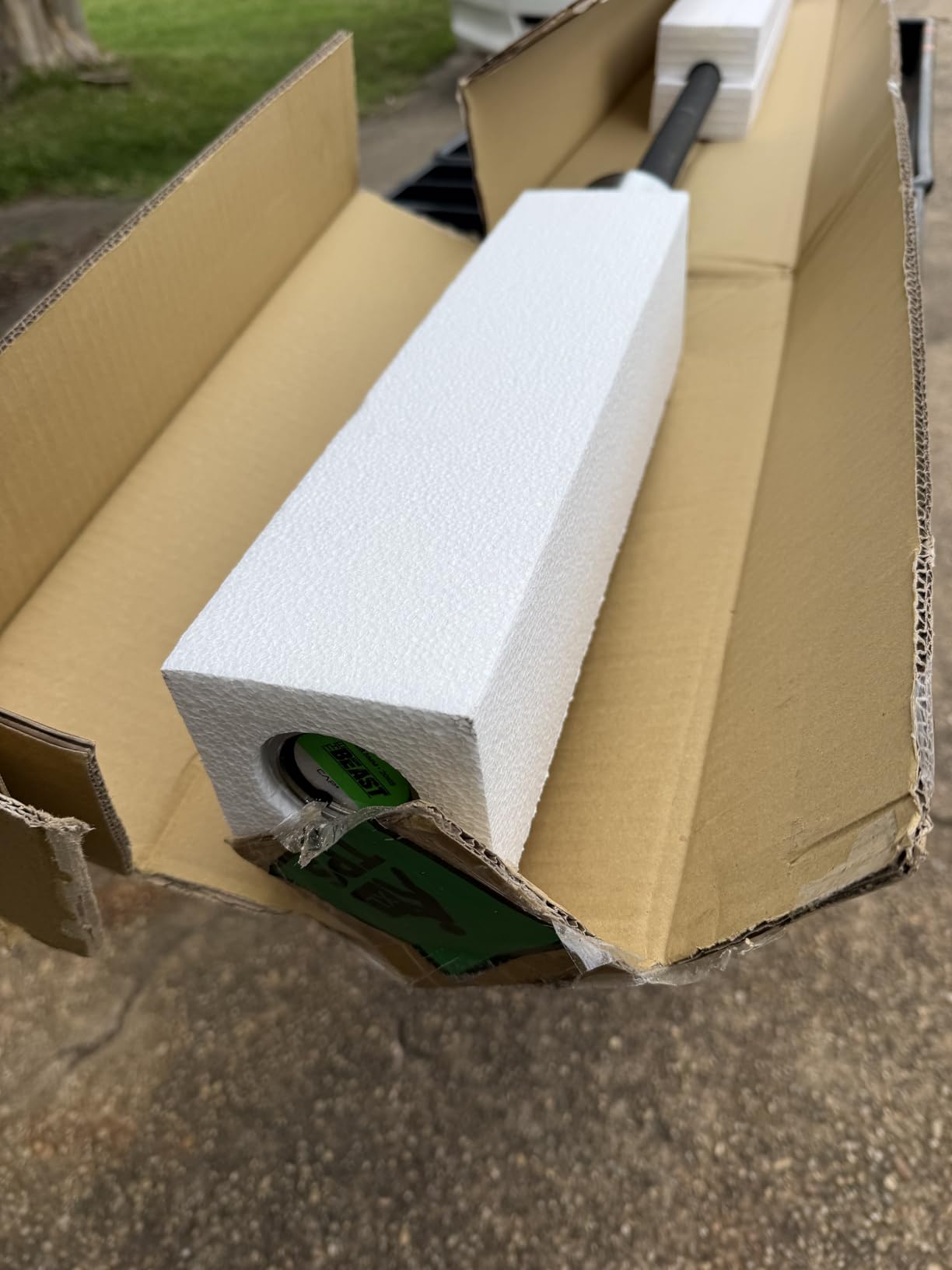
The volcano knurl sits in the middle of the aggression range, described by owners as secure without being sharp. That is a good match for someone running a powerlifting split with heavy compounds plus accessory work at higher reps, where an aggressive knurl would start costing you grip skin.
Phosphate finish is the weak link on the durability side. Owners describe it scratching and flaking, sometimes at fingernail contact, and a few reviews report metal fragments early in the life of the bar. A rack with rubber J-hooks or a protective bar sleeve is worth adding if you re-rack constantly. Newer production runs have largely eliminated the finish damage that earlier versions showed.
Best For
Intermediate lifters running a real squat, bench and deadlift program at moderate loads who want a 2-inch-sleeve bar that feels stable. The 44 lb weight gives it noticeably less whip than a lighter shaft, which many powerlifters prefer for the big three.
It is also a good upgrade path: people who start on the 35 lb entry bar often move to this one within a year, and the bushing sleeves make it usable for Olympic accessory work without being a dedicated weightlifting bar.
Reasons to Look Elsewhere
If you squat heavy, a portion of owners report the bar beginning to bend above 600 lb despite the 1,200 lb published rating. That gap between marketing and reported behaviour is exactly the kind of thing forum buyers worry about, and it argues for a bar with a longer track record at high loads.
There is no center knurl on this variant, so back squatters who rely on one for grip will want to look at a bar that includes it. The phosphate finish also needs more care than a chrome or stainless shaft if you store it in a humid garage.
5. Rage Fitness 6FT Training Barbell – Best for Small Spaces
Rage Fitness Olympic Training Barbell 6FT, 15lb Weight, 300LBS Capacity
15 lb
6ft aluminum
300 lb cap
28mm 1.5mm knurl
Brass bushings
Pros
- Compact 6ft length stores and racks easily
- Brass bushings and bearings give smooth quiet spin
- Good knurl for teaching barbell patterns
- Fits a standard rack despite short length
Cons
- Aluminum shaft is not for heavy loading
- No center knurl for squats
- 300 lb rating is optimistic for the material
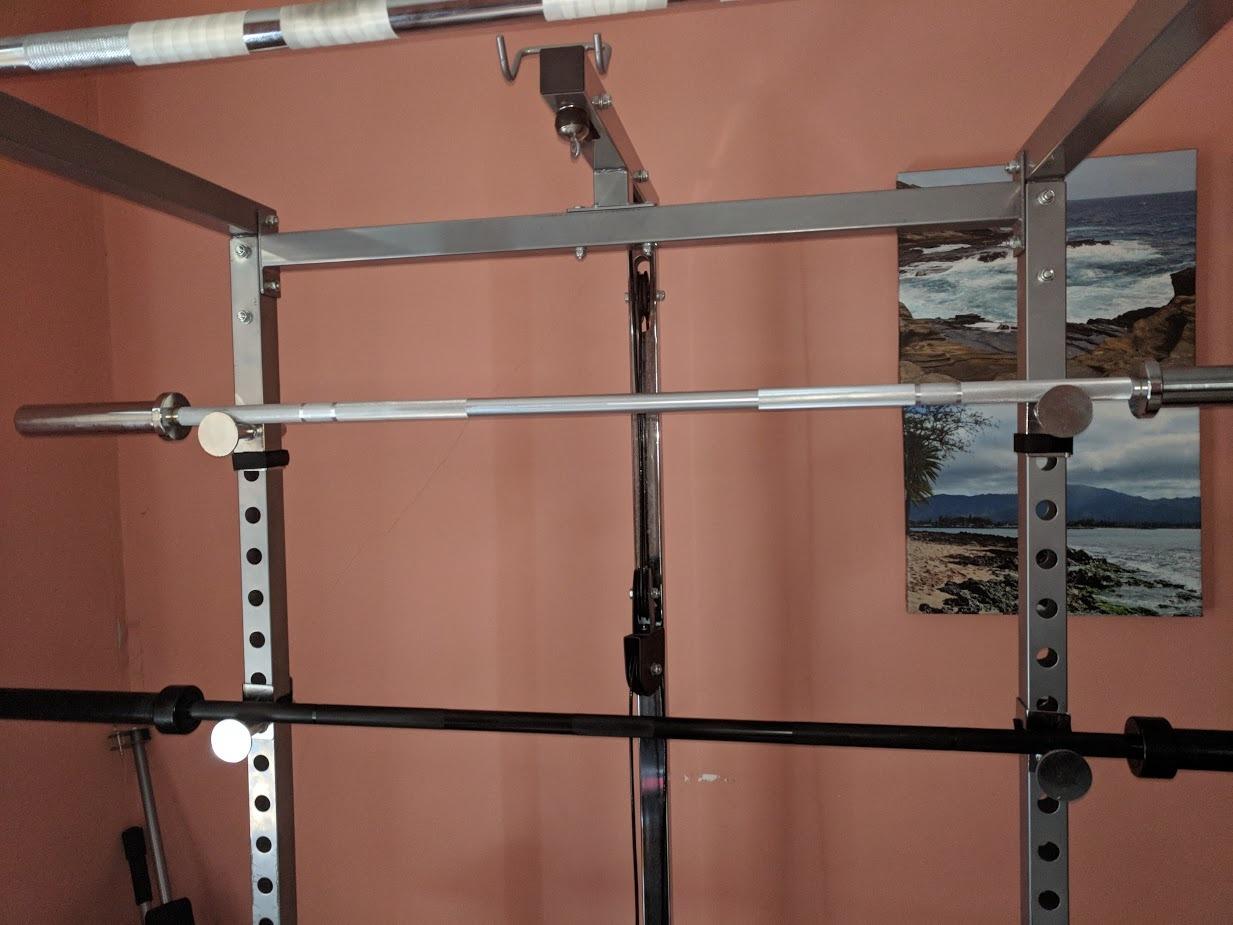
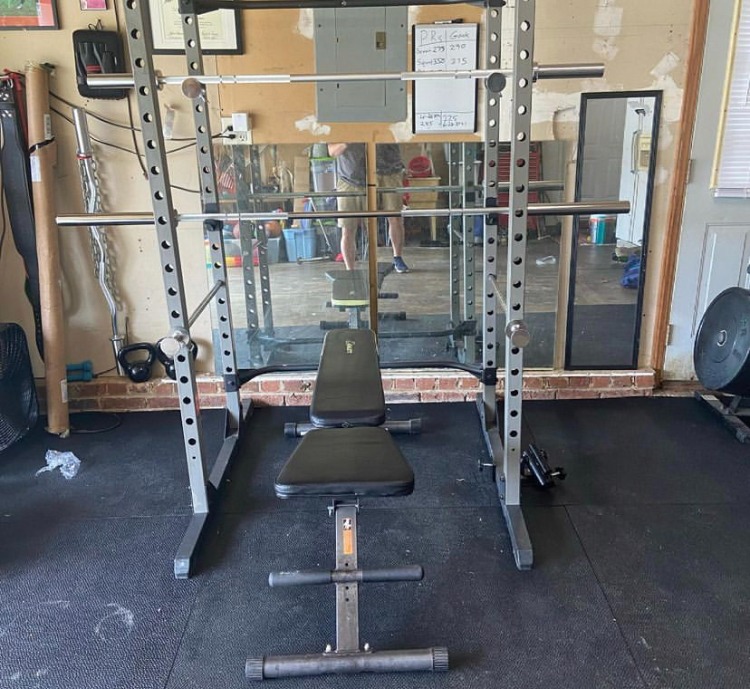
When a 7-foot bar is a logistics problem rather than a performance question, this is the answer. At 6 feet and 15 lb, it stores flat against a wall, fits in a rack with narrow inside width, and is light enough to walk from room to room in an apartment without a plan.
It is also a genuinely good teaching bar. The 28mm grip is the modern sweet spot, the 1.5mm deep diamond knurl grips without being harsh, and the brass bushings paired with bearings give a quiet, smooth spin that is unusual at this level. That combination makes it pleasant for drilling snatch and clean and jerk technique with lighter loads.
Be clear-eyed about the material, because it changes everything. This is an aluminum shaft, not steel. Reviewers are consistent that the 300 lb published capacity is not realistic for the material and that the bar can flex under heavier loading, which is why it lives in the technique and training category rather than the powerlifting one.
There is no center knurl either, and a 15 lb bar feels tippy when plates are loaded unevenly. For a teenager, a beginner, or anyone following a strength program with a low ceiling, those are acceptable trade-offs. For a heavy lifter, they are not.
Where It Shines
Small rooms, low ceilings, basement gyms and shared family spaces. The manufacturer publishes a one-year warranty against manufacturing defects, which is the shortest in this roundup, so keep the receipt if you buy one.
It is also a strong second bar to keep at a different weight, giving a partner or a child something more appropriate than a 45 lb shaft. The 49 inch knurled section gives plenty of hand room for a younger lifter.
Where It Does Not Work
Any session where you plan to exceed 300 lb total. Aluminum simply does not behave the way steel does at that point, and the flex owners describe under load is a real feel difference, not a complaint about cosmetics.
Competitive or high-skill Olympic lifting is also a poor fit, because the light bar gives you a lot of rebound that makes turnover harder rather than easier, and the lack of a center knurl removes a reference point for squats. Pair it with good collars, because the plates on a 15 lb bar carry more of the load than they would on a 45 lb bar.
6. RitFit Elite 7ft Olympic Barbell – Best Warranty Cover
RitFit Elite 7ft Olympic Barbell, 500lbs — Black
20 kg / 44 lb
7.2ft
28mm shaft
Needle bearings
Oxide finish
Pros
- Needle bearings give smooth quiet spin
- 28mm grip suits mixed lifting
- No flex reported at a 225 lb load
- Lifetime warranty against bending
Cons
- Default 7ft variant is only rated for 500 lb
- May arrive greasy from factory oil
- Capacity and colour differ across listing variants
Warranty is the sleeper feature of this roundup. RitFit backs this bar against bending for life, and in a category where most manufacturers offer one to ten years, that is a meaningful difference for anyone who loads heavy or drops bars from a rack.
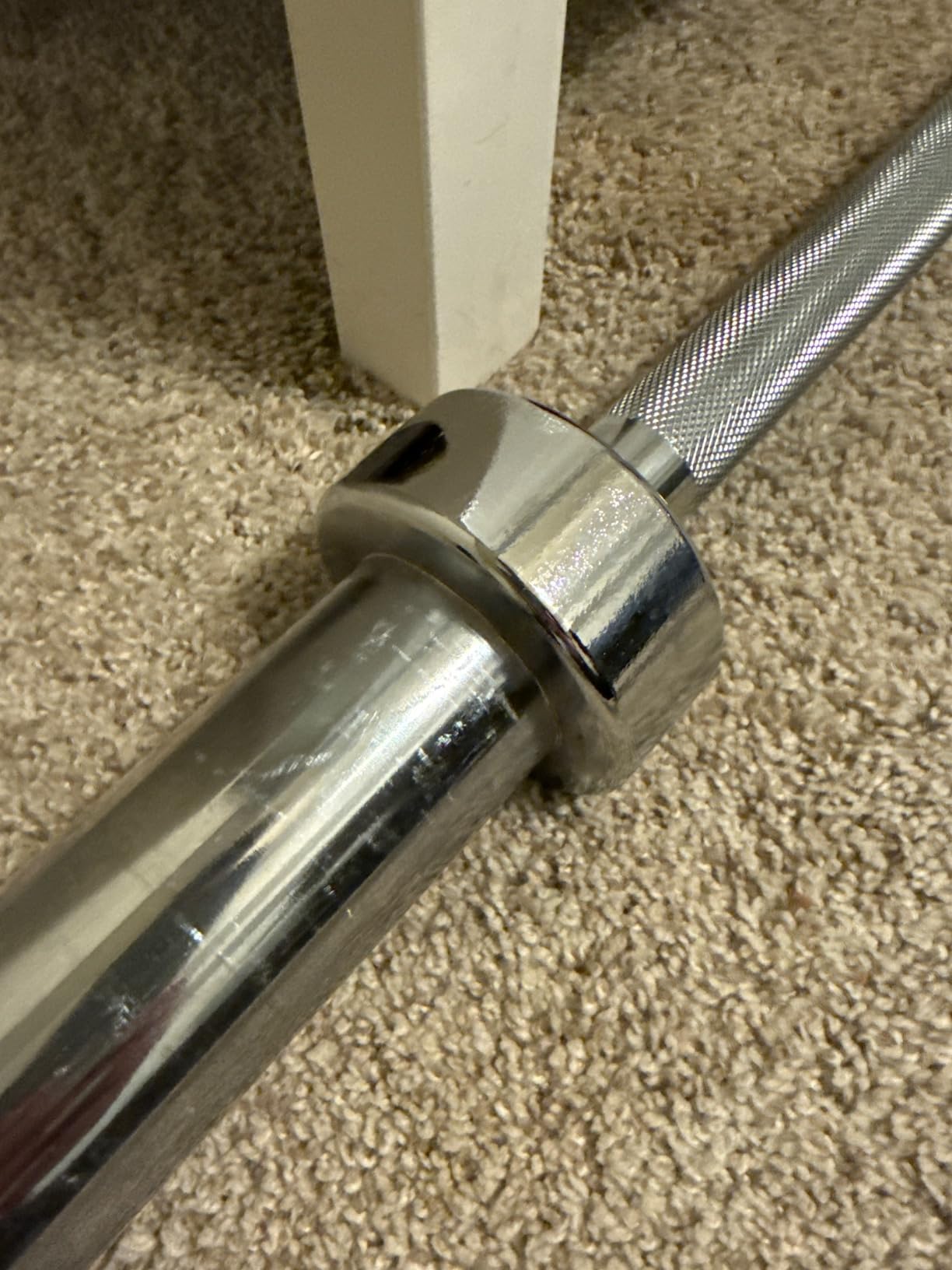
Spec-wise it is a clean 20 kg multipurpose bar. The shaft is 28mm, the length is 2.2 meters, the sleeves run on needle bearings, and the finish is oxide rather than chrome. Owners confirm the true 45 lb weight on a scale and report no flex at a 225 lb load, which for most home lifters is well past what they will ever reach.
The 28mm diameter is the most universally comfortable grip in this group and is now the default on most modern power bars. It sits between the reduced-diameter womens bars and the 30mm shafts used on several of the older designs here, and it handles both heavy compounds and higher-rep accessory work without feeling punishing.
Volcano knurling gives a secure hold, and the oxide finish is a mid-tier corrosion protection level: better than raw steel, not as durable as a stainless shaft in a damp garage. Wiping it down after every session keeps the knurl from developing surface corrosion.
Reasons to Pick It
The warranty alone justifies a look if you are a heavy user. A lifetime guarantee against bending means a manufacturing fault becomes the brand’s problem rather than a 44 lb paperweight on your floor.
It is also one of the few bars here that explicitly sells itself as multipurpose, handling Olympic lifts and slower heavy lifts on the same shaft, and the needle bearings make that claim credible at a build level usually associated with bushings only.
Watch Out For
Check the capacity selector before ordering. The default 7ft variant is rated at 500 lb, and several owners report being surprised by that in this build tier. Higher-rated variants up to 2,000 lb exist in the same product family, and picking the right one matters.
Some bars arrive coated in factory oil and need a wipe-down before first use, which is a minor inconvenience rather than a fault. Colour options are also more muted than the product photography can suggest, so do not pick this bar purely for the finish.
7. HANDBODE 7ft Olympic Barbell – Best Specification Sheet for the Money
HANDBODE 7 ft Olympic Barbell, 45 lb Bar, 2-Inch Sleeves, Black
45 lb
86.6 in
190K PSI
4 bearings
28mm knurl
E-Coat
Pros
- True 45 lb weight with 1000 lb rated capacity
- Four needle bearings plus brass bushings
- Dual IWF and IPF knurl marks for repeatable setup
- Specification list is unusually complete
Cons
- No center knurl for back squats
- Bearings do not silence the bar on floor contact
- 51.6 inch shaft is tight on narrow racks
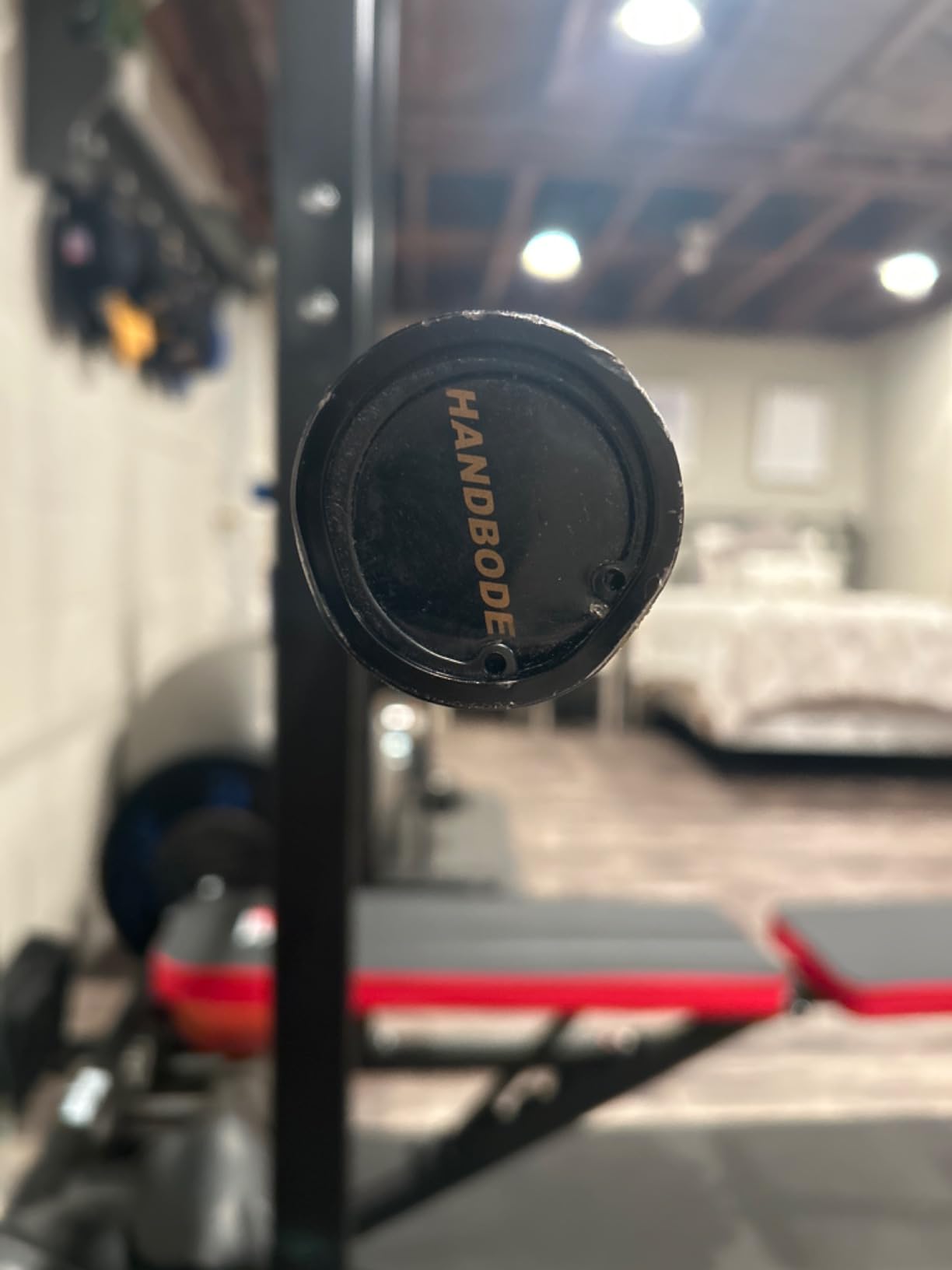
HANDBODE publishes more usable dimensions than most brands at any price, and that is genuinely useful. You get 86.6 inches overall, a 51.6 inch shaft, 28mm grip diameter, 16.3 inch sleeves and the knurl section lengths, which means you can check your rack clearance before the bar arrives rather than after.
The rotation system is the standout spec: four needle bearings, two per sleeve, working alongside brass bushings. That is a more serious sleeve assembly than most bars in this tier carry, and it is the reason owners describe the spin as smooth and controlled rather than merely functional.
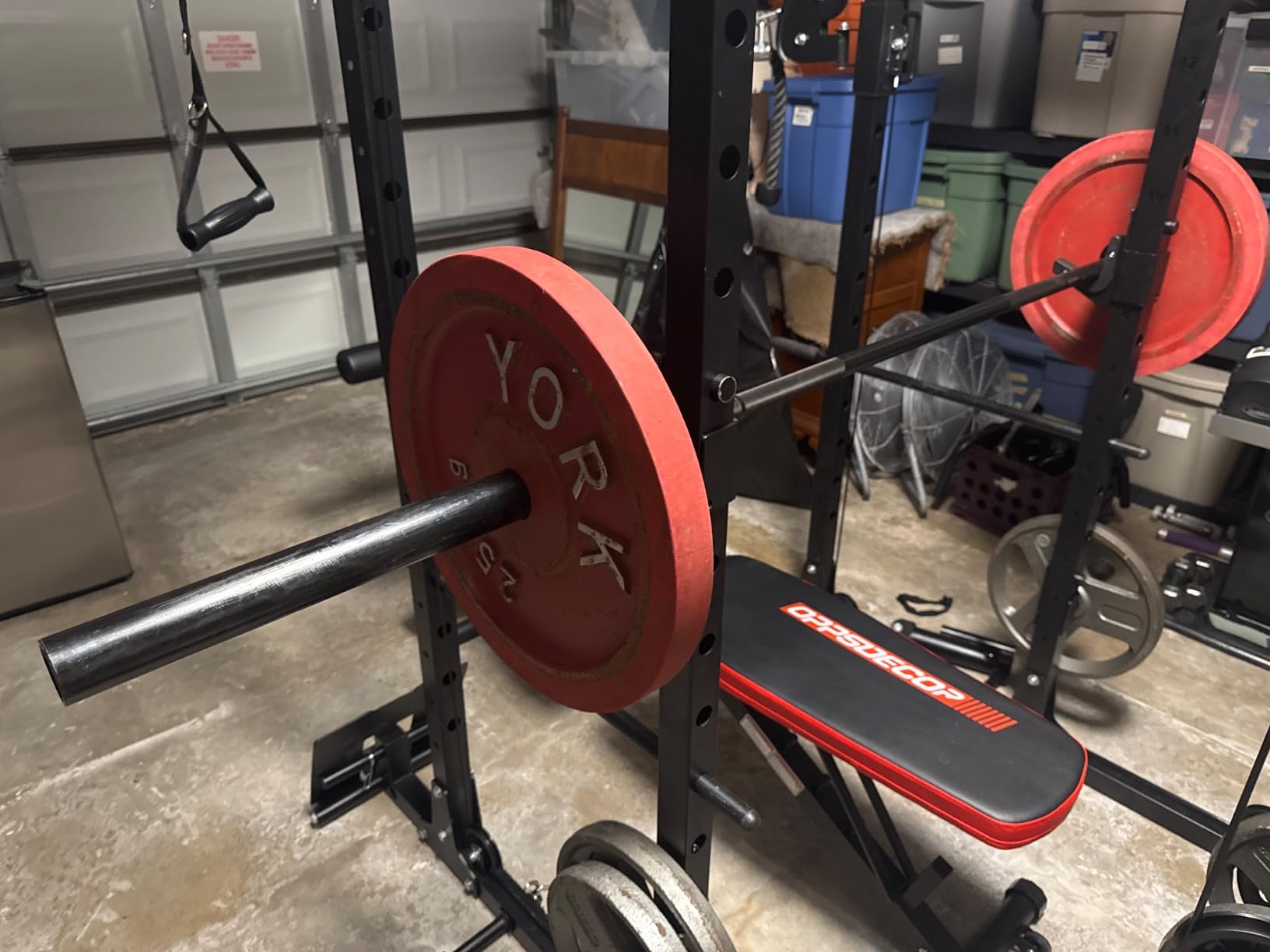
The knurl is a volcano pattern in two 16.7 inch sections with dual IWF and IPF marks, which gives you repeatable hand placement for both powerlifting and Olympic work. Federation marks do not mean the bar is competition certified, but they are a sign the shaft was cut with a repeatable reference rather than by eye.
Finishes are applied differently by part, with an oven-cured spray finish on the shaft and an electrically applied E-Coat on the sleeves. Both are corrosion treatments rather than decorative coatings, which is what you want if the bar lives in a garage through a wet winter.
Where the Specs Pay Off
Anyone buying for a specific rack should love this. The 51.6 inch shaft is longer than the common standard, and the brand itself flags checking your rack outside width first, which is exactly the clearance problem most roundups ignore.
For a lifter training a mix of powerlifting and Olympic work, four needle bearings plus brass bushings is a combination that usually costs considerably more. The 1,000 lb rating on 190,000 PSI alloy steel is at the top of what this tier claims.
What to Know Before Ordering
There is no center knurl. Squatters who use one as a grip reference will find this bar less comfortable under heavy loads than the E.T.ENERGIC further down, which includes one at a similar diameter.
Bearings are fast but not silent, and owners note the bar still clangs on floor contact even empty. If you train in a shared building or an apartment with thin walls, a bushing-only bar is quieter under the same conditions.
8. Iron Crush 7ft Olympic Barbell – Best for CrossFit and Hypertrophy Work
Iron Crush Olympic Barbell – Multifunction 7-Foot Weight Bar for Weightlifting, Powerlifting, CrossFit Training – No. 45 Steel, Chrome Finish – 750 lbs Max Load Capacity – Home Gym Fitness Equipment
45 lb
87 in
170K PSI
750 lb cap
28mm 1.2mm knurl
Pros
- Solid feel at a true 45 lb
- Bearing sleeves spin for extended periods under load
- Knurl is aggressive but does not cut hands
- Owners compare it favourably to costlier CAP bars
Cons
- No center knurl for back squats
- Some units arrive with an oily coating
- 750 lb capacity is modest for heavy loading
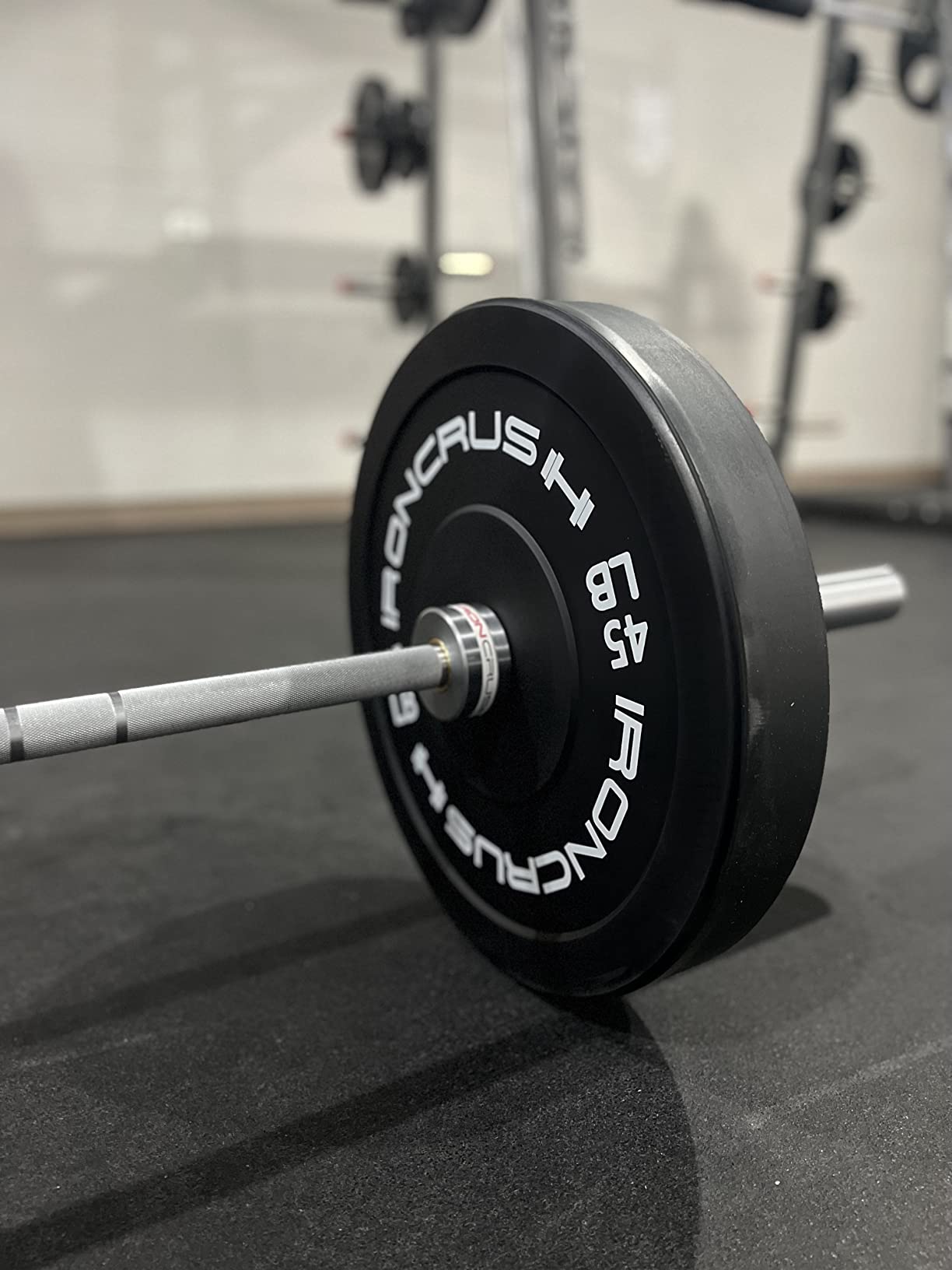
This is the functional fitness and hypertrophy bar of the group. The manufacturer tunes knurl, whip and spin for both powerlifting and high-rep CrossFit work, which in practice means a 1.2mm medium-depth pattern that holds during a heavy deadlift but does not punish you through fifteen overhead presses.
It is built from cold-rolled No. 45 steel at a stated 170,000 PSI, weighs a true 45 lb, and runs on bearings rather than bushings. Owners frequently note that the sleeves keep spinning for extended periods under load, which is the practical difference you notice in a high-volume session.
The 28mm grip diameter is the modern standard and the most common shaft size among the ten bars here, alongside the HANDBODE, RitFit and Mikolo. The 87 inch overall length with a 51.57 inch shaft fits a standard power rack, and the 16.14 inch sleeves accept standard 2-inch plates without any awkwardness.
Several owners say directly that this bar feels more substantial than costlier CAP options, and that it works as a first bar that lasts. That is a fair characterisation of a 750 lb rated steel bar that is not trying to be a competition platform model.
Best For
CrossFit, functional fitness and hypertrophy programming where the same bar gets used for a heavy clean, a high-rep thruster set and a final finisher in the same hour. Bearing spin and a medium knurl suit that rotation better than a stiff power bar.
It is also a good choice for someone who trains two or three days a week and wants one bar that handles everything without a diameter change.
Limitations
There is no center knurl, which matters if back squats are the main reason you own a bar. And a 750 lb rating is lower than several 45 lb bars here, so anyone building toward serious deadlift numbers should look at a higher-rated bar.
Some bars arrive with an oily protective coating that has to be wiped off before use, and the chrome is a standard plating rather than a heavy-duty hard chrome, so expect cosmetic wear over years in a garage.
9. E.T.ENERGIC 7FT 1500lb Olympic Barbell – Best for High-Capacity Loading
E.T.ENERGIC Olympic Barbell 7FT 45LB, 1500LB Capacity Weight Bar for Home Gym, 2-Inch Olympic Barbell for Weightlifting, Powerlifting, Squat, Deadlift and Bench Press
44 lb
86.61 in
1500 lb cap
205K PSI
Knurled center
Pros
- Highest published tensile strength in this group
- Knurled center section included
- Four needle bearings plus a bushing per sleeve
- Friction-welded sleeves for durability
Cons
- 44 lb is slightly under the 45 lb standard
- Listings split across colour and capacity variants
- Smaller review base than the category leaders
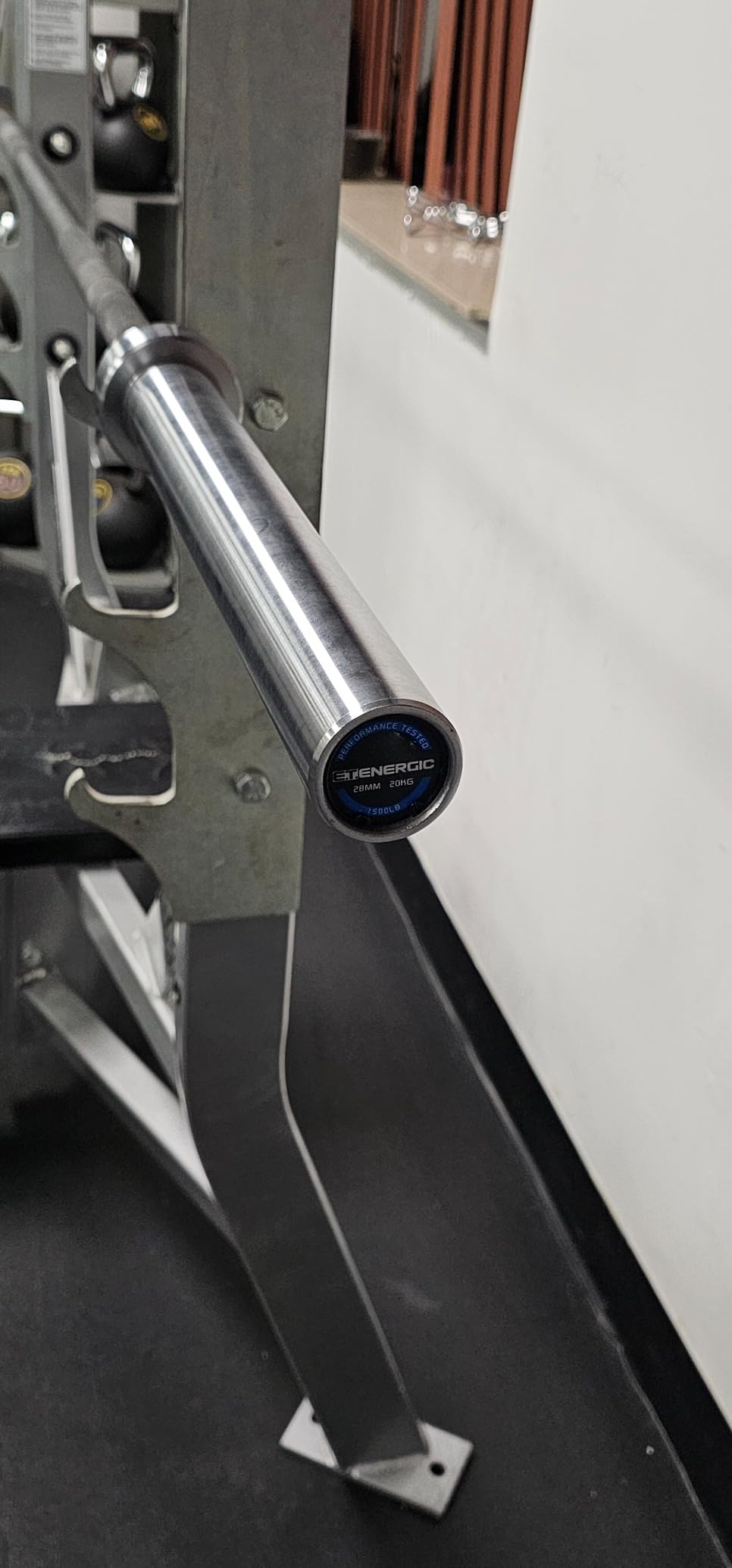
This bar has the most aggressive published spec sheet in the roundup: 205,000 PSI heat-treated alloy steel, a 1,500 lb rated capacity and a 28mm shaft with 1.2mm knurling that includes a knurled center. A center knurl is usually the first thing dropped at this price, and it is the one detail that most improves back squat grip.
Sleeve construction is equally serious. Each sleeve runs four needle bearings and a bushing, and the sleeves themselves are friction-welded to the shaft, which is a stronger and longer-lasting joint than a standard weld. Fast spin matters if you are doing any Olympic work beyond a beginner’s warm-up.
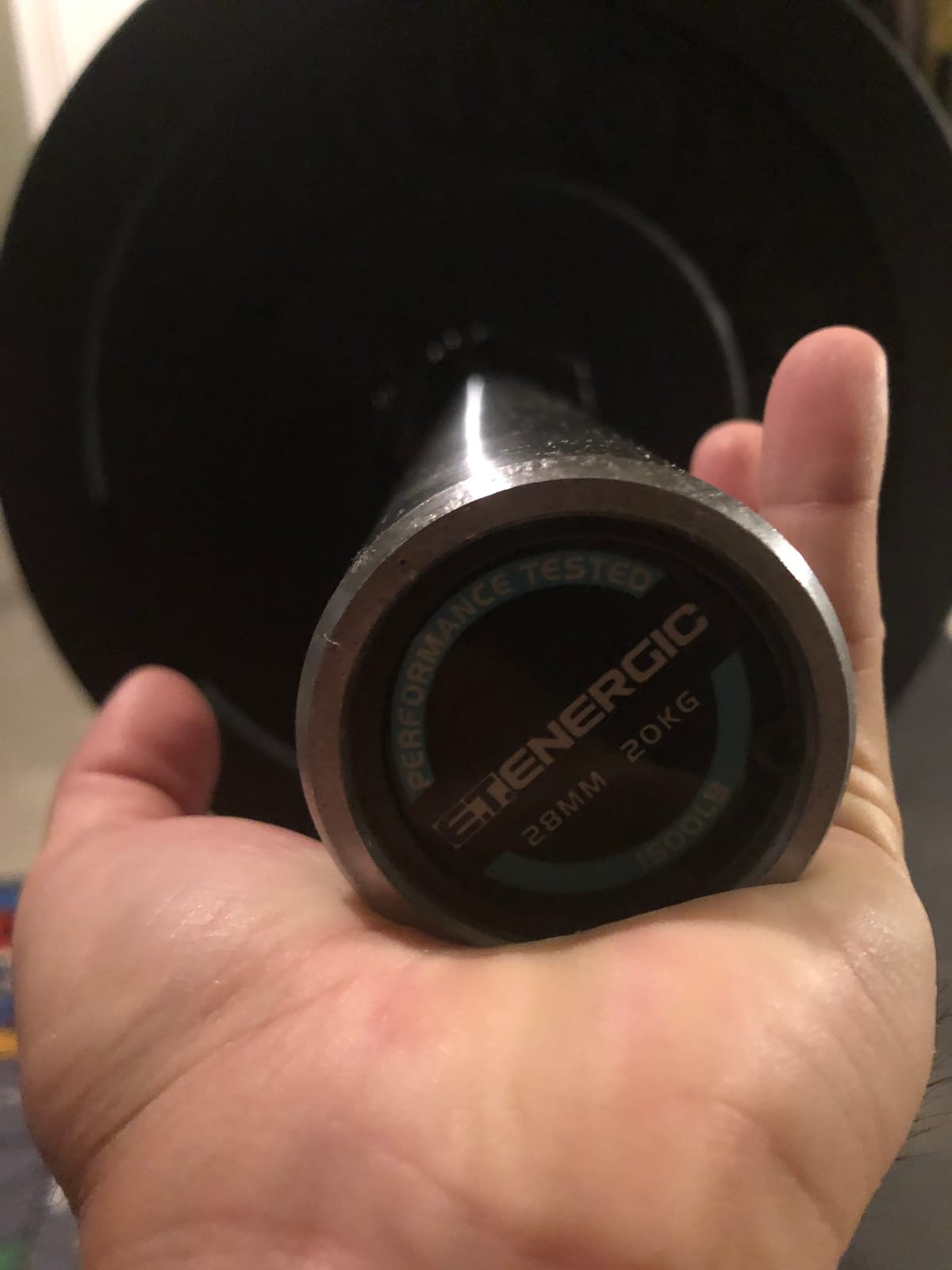
Hard chrome handles humid storage better than the oxide and phosphate finishes on some bars in this group, and the 16.4 inch loadable sleeves leave room for several plates per side on a standard J-hook spacing.
The overall length is 86.61 inches, right in the middle of the 7-foot class, and the listed shaft measurement means you should check your rack inside width before ordering, as with any 7-foot bar in a home setup.
Where It Is the Right Buy
Home lifters pushing into the 400 to 500 lb range who want a knurled center and bearing spin without stepping up to a full competition barbell. The capacity rating and PSI figure give you a paper answer to the question most heavy home lifters ask.
It is also a sensible bar for a shared rack, because the combination of center knurl, four bearings per sleeve and friction-welded sleeves covers every lift style a household might throw at it.
What Gives Us Pause
The review base is smaller than the category leaders here, which means fewer years of long-term owner feedback. That is a real risk on a bar whose main appeal is durability, since bending and sleeve wear are exactly the failures that show up after a few years rather than a few months.
The 44 lb weight is slightly under the 45 lb standard that some lifters use for program math, and the listing family includes many colour and capacity variants. Confirm you are ordering the 1,500 lb 205K PSI version before you commit.
10. Mikolo 7ft Olympic Barbell – Best for Quiet Sleeve Rotation
Mikolo 7ft Olympic Barbell, Barbell for Weightlifting and Powerlifting 45lb, Olympic Bar for 1500lbs Capacity, Weight Bar Fit 2” Standard Weights (Calssic Red)
45 lb
86.6 in
1500 lb cap
190K PSI
8 bearings
Pros
- Eight needle bearings plus brass bushings for a silent spin
- Feels solid with no bending reported at 500 lb deadlifts
- Good whip for both Olympic and powerlifting work
- 28mm grip suits most hands
Cons
- No center knurl for back squats
- Knurl is not especially aggressive for chalky hands
- J-hook clearance is tight on a 4 foot wide rack
Bearing count is the headline here, and Mikolo is not shy about it. Eight needle bearings in total, four per sleeve, working alongside brass bushings, puts it at the top of this roundup alongside the E.T.ENERGIC bar, and it produces the quietest rotation you would expect from this group.
Beyond the numbers, owners consistently describe a heavy, solid feel at a true 45 lb, with no bending reported at 500 lb deadlifts and a whip that works for both Olympic and powerlifting movements. Several owners with prior experience of premium bars report no meaningful difference in feel or spin.
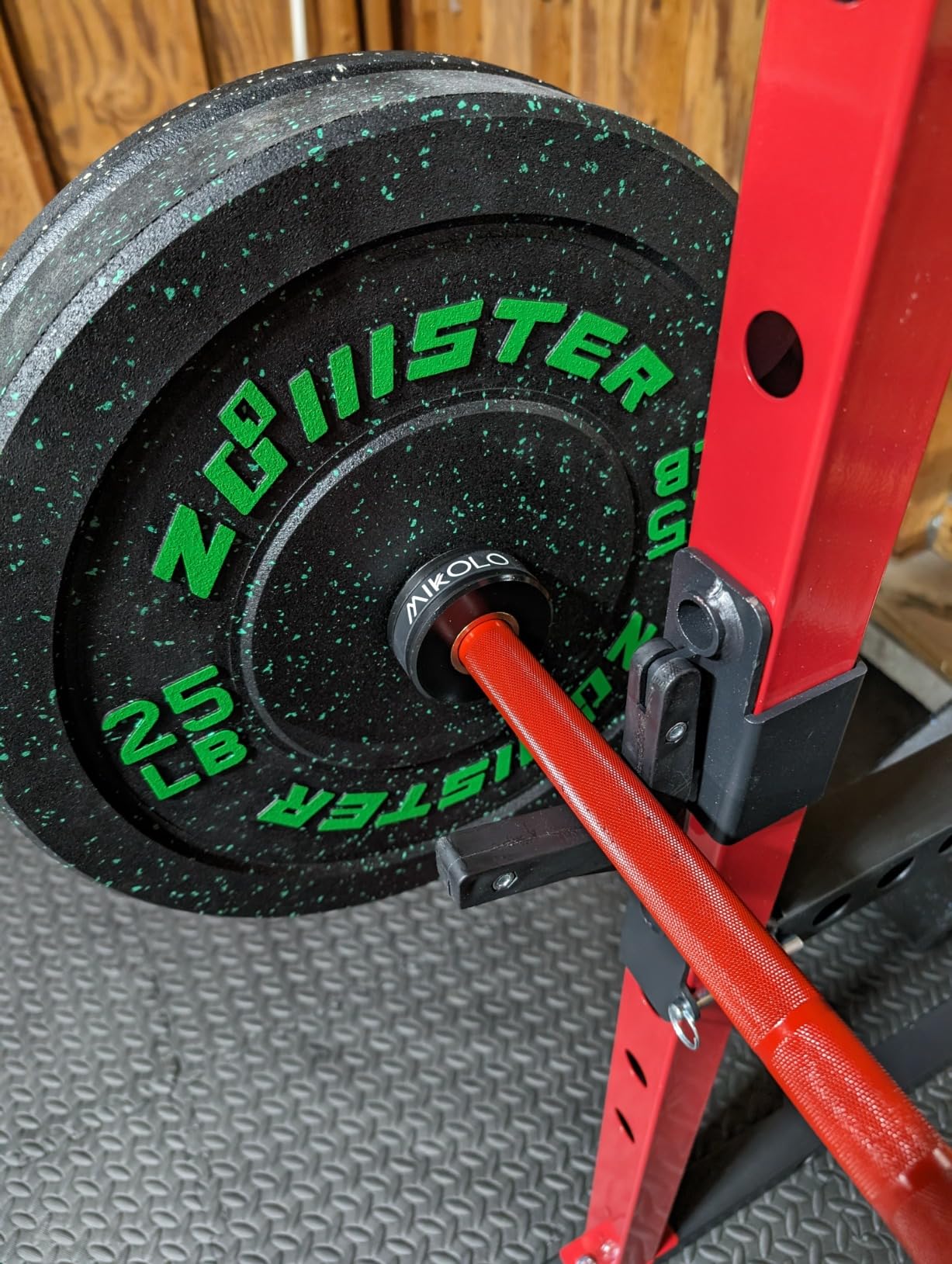
The knurl is 1.2mm diamond with dual powerlifting and Olympic markings, and the 28mm grip diameter is the most comfortable listed here for a mixed programme. Snap rings at each sleeve end keep the plates from drifting, which is a small detail that matters when you are loading five plates a side in a dark garage.
Hardened chrome across the bar handles humidity better than a bare oxide finish, and owners report it still looking presentable after regular use. The 1,500 lb rating is published alongside a 190,000 PSI alloy steel core.
Why It Earns a Slot
Silent rotation is underrated in a home gym, particularly in a basement or a shared building. Eight bearings plus brass bushings is a genuinely quiet assembly, and if you are doing technical work with a low training max, the difference between that and a grating bushing is obvious from the first session.
The dual-marking knurl also makes the bar genuinely multipurpose, which is the honest answer for most people: a home gym does not have separate squat, deadlift and bench bars, so one bar has to do all three jobs.
Where It Falls Short
There is no center knurl, so back squatters lose a grip reference. The knurl itself is described as present but not especially aggressive, which some owners find a mild disadvantage with chalky hands on a maximal deadlift.
J-hook clearance is tight on a 4-foot-wide rack, so you may need to re-rack near centre, and lower-rated capacity variants appear in the same listing family. The review base is the smallest in this roundup, which is worth keeping in mind for a bar whose appeal is durability.
How to Choose an Olympic Barbell for Home Lifting
Start with the lifts, not the brand. A power bar is built for squat, bench and deadlift with a stiff shaft and aggressive knurl. A multipurpose bar adds enough whip and bearing spin to make snatches and clean and jerks work without a second bar. A weightlifting or technique bar is lighter, usually 15kg or 20kg, and built for fast turnover rather than maximal loading. A deadlift bar is whippy and has less shaft stiffness. A squat bar is stiffer still and often has no knurl at all. Most home lifters who are not training for a meet want a multipurpose bar at 28mm and 45 lb.
What the home gym crowd actually recommends. In the home gym forum threads that rank alongside this article, the most repeated advice is that the major American power bar is the consensus default, with the REP Double Black Diamond and a 29mm Texas Power Bar named most often for bench work, and a Kabuki Power Bar for overhead pressing. Forum consensus and affiliate roundups genuinely differ, and the forum view is more conservative: lifters consistently say you do not need a premium bar to progress, only a straight one with a knurl that does not slip.
Shaft diameter. A 25mm shaft is a womens or smaller-hand bar, light and easy to grip. A 28mm shaft is the modern all-rounder. A 28.5mm shaft splits the difference for general strength work. A 29mm shaft is the traditional powerlifting diameter, stiff under load and firm in the hands, and it is the diameter most associated with the back squat. Wider is stiffer and more stable; narrower is whippier and easier on the grip. Six of the ten bars in this roundup run a 28mm shaft and four run 30mm, which is why the 30mm group feels noticeably chunkier in the hands.
Knurling. Knurling is the diamond-cut pattern cut into the shaft, and it is what stops the bar moving in your hands. Aggressive knurl bites hard and holds a heavy deadlift but tears skin during high-rep work. Passive or medium knurl is easier on the hands and fine for squats, presses and rows. The mountain pattern has a deeper, more open bite, while the volcano pattern is tighter and less aggressive. A knurl that is too shallow is the single most common reason a bar gets dropped on a heavy pull.
Center knurl. A center knurl is a knurled band in the middle of the shaft. It gives your back a fixed reference on a back squat, which keeps you from sliding down the bar as the set gets heavy. It is not essential for everyone, but for a squat-focused lifter it is one of the highest-value features on a spec sheet, and only two bars in this roundup include one.
Weight capacity. Stated capacity is a published number, and published numbers vary wildly in honesty. A 500 lb rating on a bar that owners report flexing in the 230 to 250 lb range, as one entry-level bar here does, tells you more about the marketing than the steel. Buy for the loads you will actually use, with a wide margin, and treat 500 lb as a comfortable working ceiling for most home lifters and 1,000 lb or more as the point where you should be shopping on reputation instead of a capacity number.
Sleeve surface. Forum buyers ask about this constantly and almost no roundup covers it. Ridged or fluted sleeve faces grip bumper plates and reduce the chance of a plate walking, while smooth sleeves allow free plate rotation for faster turnover. For powerlifting, ridged is usually better. For Olympic lifting, smooth is better.
Collar compatibility. The included collars are rarely the ones you should use. Every bar here takes 2-inch-hole Olympic plates, and proper snap-ring or hex-screw collars are a small, high-return upgrade. Never use spring collars on a heavy bar.
What Size Barbell Do I Need? 7ft vs 6ft vs 5ft and Ceiling Clearance
For almost every home gym, the answer is a 7-foot bar. It is the competition standard, it fits every power rack and squat bench built for Olympic lifting, and it is long enough that plates do not hit your legs or the rack uprights. The practical rule: measure your rack inside width first, because a 7-foot bar needs roughly 52 to 56 inches of usable inside width, and a slightly long shaft can be tight in a narrow home rack.
Here is the size breakdown:
7ft (86 inch). The default for squats, bench, deadlifts, Olympic lifts and rows. Needs a ceiling of about 86 inches or more to rack overhead, and around 8 feet of floor space to swing. Nine of the ten bars here are 7 feet; the Rage bar is the only 6-foot option in the group.
6ft (72 inch). A compact bar for apartments, basements and low ceilings where a 7-foot bar will not rack. It handles squats, presses and accessory work fine but limits plate loading and is slightly less stable at heavy weights. Choose it for space, not for performance.
5ft (55 inch). For isolation work, curls, raises, landmine presses and a teenager’s first bar. It is not a bar to squat, deadlift or bench a heavy double with.
Ceiling check. Racking a 7-foot bar means your rack uprights need roughly 86 to 90 inches of internal height before you add plate diameter. If your ceiling is under 8 feet, measure the internal height of the uprights rather than the ceiling itself, and a 6-foot bar removes the problem entirely.
Bushings or Bearings: What Actually Spins Faster
Bushings and bearings are the two systems that let a sleeve rotate around a fixed shaft, and the difference shows up most in the Olympic lifts.
Bushings are a sleeve of bronze, brass or engineered material pressed into the sleeve shoulder that rotates against the shaft. They are quieter, cheaper, lower maintenance and last for years in most home use, but they create more friction under load. Bushings are the standard choice for a powerlifting-focused bar.
Bearings are needle rollers that the sleeve slides over. They spin faster and quieter, with less friction on a fast turnover, which is why every dedicated Olympic weightlifting bar uses them. They are also more expensive, and on a training bar at moderate loads the difference is small.
Hybrid systems combine both, and four of the ten bars in this roundup do it: the PAPABABE, HANDBODE, E.T.ENERGIC and Mikolo bars pair needle bearings with brass bushings to get fast spin with better long-term stability. If you are undecided, a hybrid is the safest middle ground for a home gym that does both styles.
Rule of thumb: bushings for squat, bench and deadlift. Bearings if you are doing snatches and clean and jerks regularly. Hybrid if you do both, which is most people.
Knurling and Center Knurl: What Your Hands Need
Knurl depth is the number one comfort complaint in home gym forums, and the failure mode is always the same in both directions. Too shallow and the bar rolls out of your hands on a heavy deadlift. Too aggressive and you finish a high-rep session with torn skin and no desire to train again.
For most home lifters, medium or medium-aggressive volcano knurl at 1.2 to 1.5mm is the right zone. The E.T.ENERGIC and Iron Crush bars sit at 1.2mm, the CAP bars use a volcano pattern, the Yaheetech bar is a medium-depth diamond, and the Rage bar is 1.5mm, which is at the sharper end.
Center knurl is a separate decision. Squatters benefit most, and it costs nothing to include. It is a useful reference for anyone doing heavy sets without a spotter, and lifters who use one rarely go back. Pressers and deadlifters can ignore it entirely, which is why most general-purpose bars omit it.
Finish and Rust: Coatings Ranked for a Garage Gym
Coating is where home bars fail first. A knurled shaft collects sweat and chalk, and if it is left damp in an unheated garage, surface corrosion starts within months. Ranked for garage humidity from most to least resistant:
1. Stainless steel. Best corrosion resistance, needs the least care, and looks the same after ten years. Also the most expensive.
2. Cerakote. A ceramic coating that bonds to the steel and resists chipping far better than plating. The most durable coated option.
3. Black oxide. Good rust resistance if the bar stays dry, and it penetrates the knurl valleys well. Chips if you drop the bar on steel.
4. Bright zinc. Plated rather than coated, so it protects well until it is scratched. Once the plating is gone, corrosion starts at the scratch.
5. Hard chrome. The finish on the E.T.ENERGIC and several bars here. Durable and easy to wipe clean, but pinhole chips can appear and trap rust.
6. E-coat. The most vulnerable. It is a thin electrically applied film that scratches off easily. The E.T.ENERGIC bar’s hard chrome and the PAPABABE bar’s chrome both hold up better under repeated handling in the same kind of space.
Practical rule: wipe the shaft after every session, keep the bar off concrete floors that sweat, and store it horizontally on a rack rather than leaning on a sleeve. That single habit does more for bar life than any coating choice.
Barbell Maintenance and When to Retire a Bar
Bar maintenance is unglamorous and takes five minutes. Wipe the shaft and sleeves after every session with a damp cloth and a little degreaser if sweat has built up. Dry it fully before racking. Never leave plates loaded on the bar between sessions, because the pressure point where the plate meets the sleeve traps moisture against the shaft.
Do not oil the knurl. Bare knurl grips better and an oiled knurl collects grit that rolls into the skin during a session. If the bar has surface rust, a light pass with a wire brush and then a dry cloth will bring it back without needing anything abrasive.
Retire a bar when the shaft develops a permanent bend you can see with the bar off the rack, when the knurl is worn flat to the point that a heavy pull is unsafe, when a sleeve no longer spins smoothly and wobbles under load, or when the manufacturer warranty is gone and any of the above appear. A barbell is a long-term purchase, but it is also the one piece of strength equipment that fails quietly rather than obviously, so check the shaft straight a few times a year.
One honest point that most roundups skip: many home lifters are using a bar far below what they need. If you are training with plates on both sides and your heaviest session is under 400 lb total, the difference between a budget bar and a premium bar is mostly feel and finish. Buy a straight bar with a decent knurl, add proper collars, and spend the money you saved on plates you can actually load.
Frequently Asked Questions
Which barbell is best for a home workout?
For most home lifters, a 28mm power bar at 45 lb from a known brand is the right answer. The PAPABABE 7ft 45lb bar is our overall pick because it combines a true 45 lb weight, 190,000 PSI steel and hybrid needle bearings. Choose a 6ft aluminum training bar if space is tight, and a 15kg womens bar if you are lifting with a partner who has smaller hands.
What size barbell is best for a home gym?
A 7-foot 86-inch Olympic bar is the default for almost every home gym. It fits standard power racks, clears typical ceilings and handles squats, bench, deadlifts and Olympic work. Choose a 6-foot bar if your ceiling is under 8 feet or your rack is narrow. Choose a 5-foot bar only for isolation work, curls and a teenager first bar, not for heavy squats or deadlifts.
Are bushings or bearings better for a home barbell?
Bushings are quieter, cheaper and better for squat, bench and deadlift. Bearings spin faster and suit snatches and clean and jerks. Most home lifters do both styles, so a hybrid sleeve combining needle bearings with brass bushings is the safest choice. Four bars in this roundup use a hybrid system and give smooth rotation without the wear of a full bearing set.
What knurl depth is best for home lifting?
Medium knurl of 1.2 to 1.5mm is the right zone for most home lifters. It holds during a heavy deadlift without tearing skin during high-rep presses. A center knurl is worth adding for back squats because it gives your back a fixed reference, and only two of the ten bars in this roundup include one.
What weight capacity barbell do I need?
A 500 lb rated capacity covers most home lifters, and 1,000 lb or more is the point where you should buy on reputation rather than price. Stated capacity is a manufacturer figure, and reported behaviour varies widely, so treat the rating as a marketing claim and stay well under it. A 45 lb bar will feel very different from a 35 lb bar before the capacity limit ever matters.
How do I stop my barbell from rusting?
Wipe the shaft and sleeves after every session and dry them fully before racking. Never leave plates loaded between sessions, because the contact point traps moisture against the shaft. Store the bar horizontally on a rack rather than leaning on a sleeve, and keep it off concrete floors that sweat. If surface rust appears, a light wire brush pass will clear it.
Which Olympic Barbell Should You Buy? The Final Verdict
Buy the PAPABABE 7ft 45lb bar if you want one bar that works for everything. It is a true 45 lb, the steel is published at 190,000 PSI with a 1,000 lb rating, and the hybrid needle bearing and bushing sleeves are the part you will feel every session.
Buy the CAP OBIS-85 if budget is the deciding factor and your heaviest sessions stay under 300 lb. Buy the Yaheetech if you want the gentlest knurl in the group and are doing mostly general strength work. Buy the E.T.ENERGIC if you squat heavy and want a knurled center at 1,500 lb published capacity. Buy the Rage 6ft bar if your ceiling will not take an 86-inch shaft. And buy the RitFit if the warranty is what convinces you, because a lifetime guarantee against bending is rare in this category.
Whatever you choose, spend the money you save on proper collars and decent plates, keep it in a dry room, and stop researching. The best olympic barbell for a home gym is the one that stays straight, holds the knurl and does not make you dread picking it up. Our broader home gym equipment picks for 2026 cover the rest of the setup, and the home office desk guide covers the other half of a room that doubles as a training space.