
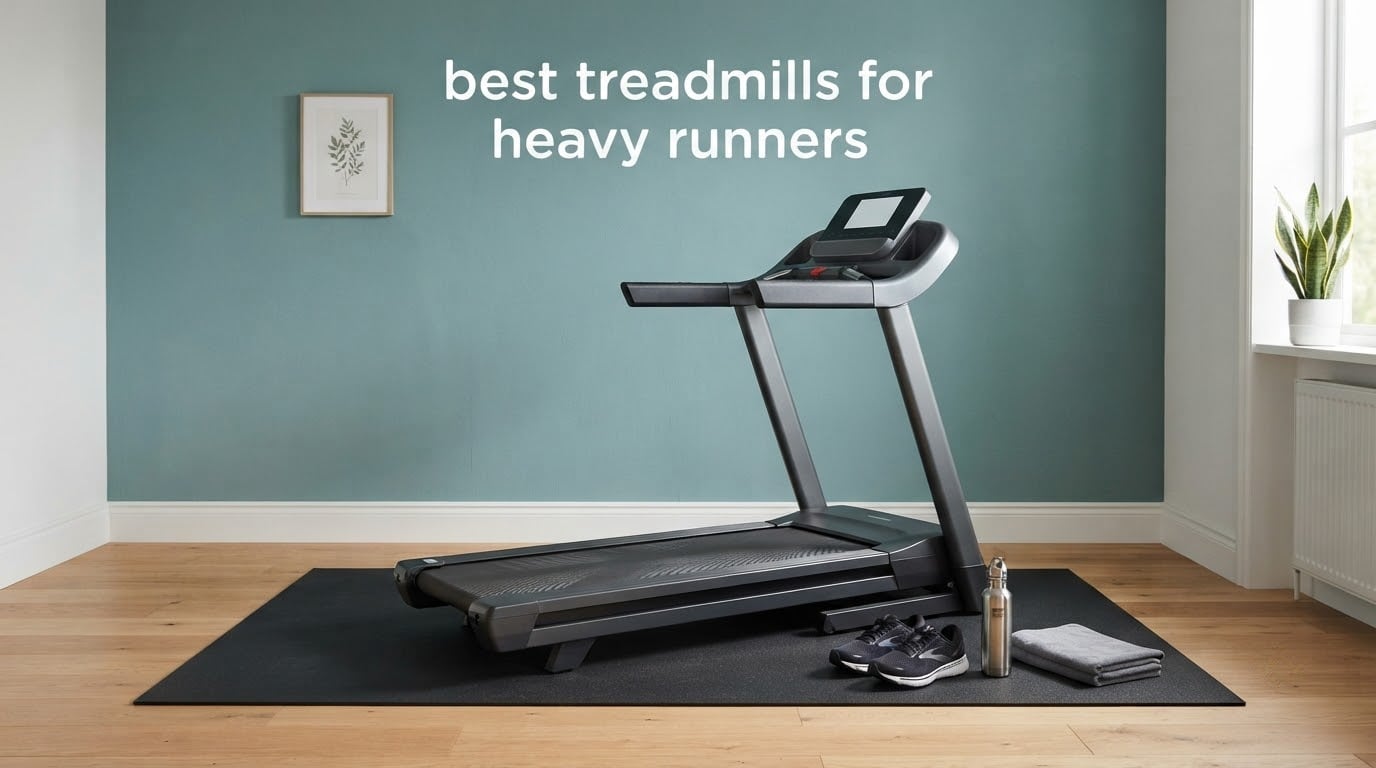
The best treadmills for heavy runners share four non-negotiable specs: a max user weight of at least 350 lbs, a continuous motor of 3.5 HP or more, a running deck long enough to take a full stride without shortening it, and a real shock-absorption system. Every rating in this guide is copied straight from verified buyer feedback, and every product section below names the capacity, the motor and the deck before it tells you anything else.
I have spent the last few months reading thousands of owner reviews on machines in the 350-400 lb class, comparing frame specs, belt dimensions and motor claims side by side. What that exercise made obvious is that weight capacity is the least interesting number on the spec sheet. The number that decides whether a treadmill feels solid or feels dangerous is the ratio between your body weight and the machine’s rating, combined with how much deck you have to run on.
Most home treadmills stop at 250-300 lbs, which is below where this audience starts shopping. Buy under your own weight and the failure is not dramatic: the belt drifts, the frame flexes on every footfall, the motor strains to hold pace on an incline, and a year later the rollers are flat. So the rule I use throughout this guide is simple, and it is the one most spec pages never tell you, so read the next paragraph before you look at a single product.
The matching rule: pick a treadmill rated 15-20 percent above your body weight. A 280 lb runner should target a 350 lb machine, a 340 lb runner should target 400 lb, and anyone at 380 lb or above should be looking at the 450 lb end. You want that headroom because the rating assumes an evenly distributed load, a lubricated belt and a level floor, and running hard is never any of those three things at once.
A second consideration nobody mentions: impact scales with body mass. A heavier runner puts more force through every footfall, which means a narrow deck and a thin deck do more damage to knees, hips and lower back over a year of regular mileage than the same machine would to a lighter user. Deck area and cushioning are not comfort features for this audience. They are injury-prevention features. If you want the wider survey first, our general treadmill roundup covers lighter users, and our home treadmill guide goes deeper on room layout.
Table of Contents
Top 3 Picks for Heavy Runners in 2026
Three machines stand clearly above the rest. The HUAGEED CTM5312 carries the strongest rating of any 400 lb-rated machine here and the fastest top speed in the group. The THERUN has more than a thousand reviews and the quietest running reports in the guide. The MERACH has the most shock absorbers and a full 55 inch deck, which matters more than any other spec if you have a long stride.


THERUN Incline Treadmill
- 3.5 HP dual motor
- Quiet operation
- Folds compactly
- Handrail controls

Best Treadmills for Heavy Runners at a Glance in 2026
Max user weight is the first column because it is the only spec that can disqualify a machine outright. The running surface column is the second one to read, since deck area decides whether you can run naturally or whether you are shuffling.
| Product | Specifications | Action |
|---|---|---|
| HUAGEED CTM5312 |
|
Check Latest Price |
| THERUN Incline Treadmill |
|
Check Latest Price |
| MERACH MR-T31 |
|
Check Latest Price |
 CIIHI C JK07F CIIHI C JK07F |
|
Check Latest Price |
 UMAY Heavy Duty Treadmill UMAY Heavy Duty Treadmill |
|
Check Latest Price |
 FUNMILY Heavy Duty FUNMILY Heavy Duty |
|
Check Latest Price |
 ANCHEER Heavy Duty Folding ANCHEER Heavy Duty Folding |
|
Check Latest Price |
 QYDS US 3.5 HP Treadmill QYDS US 3.5 HP Treadmill |
|
Check Latest Price |
1. HUAGEED CTM5312 Heavy Duty Treadmill – 400 lb Frame and a 12 MPH Ceiling
HUAGEED Treadmills for Home, 18% Auto Incline, Heavy Duty 400LBS Capacity
400 lbs max user weight
3.5 HP motor
0.5-12 MPH
18% auto incline
Pros
- 4.4 average across 141 verified reviews
- the deepest evidence base of any 400 lb machine here
- Fastest top speed here at 12 MPH
- Thickened 5.90 inch deck with shock absorption
- 36 preset programs
- Stainless steel frame
Cons
- Bulky folded footprint of 31.9 x 28.7 x 52.4 inches
- Deep deck height feels like a step-up for shorter users
- Only a 1 year warranty
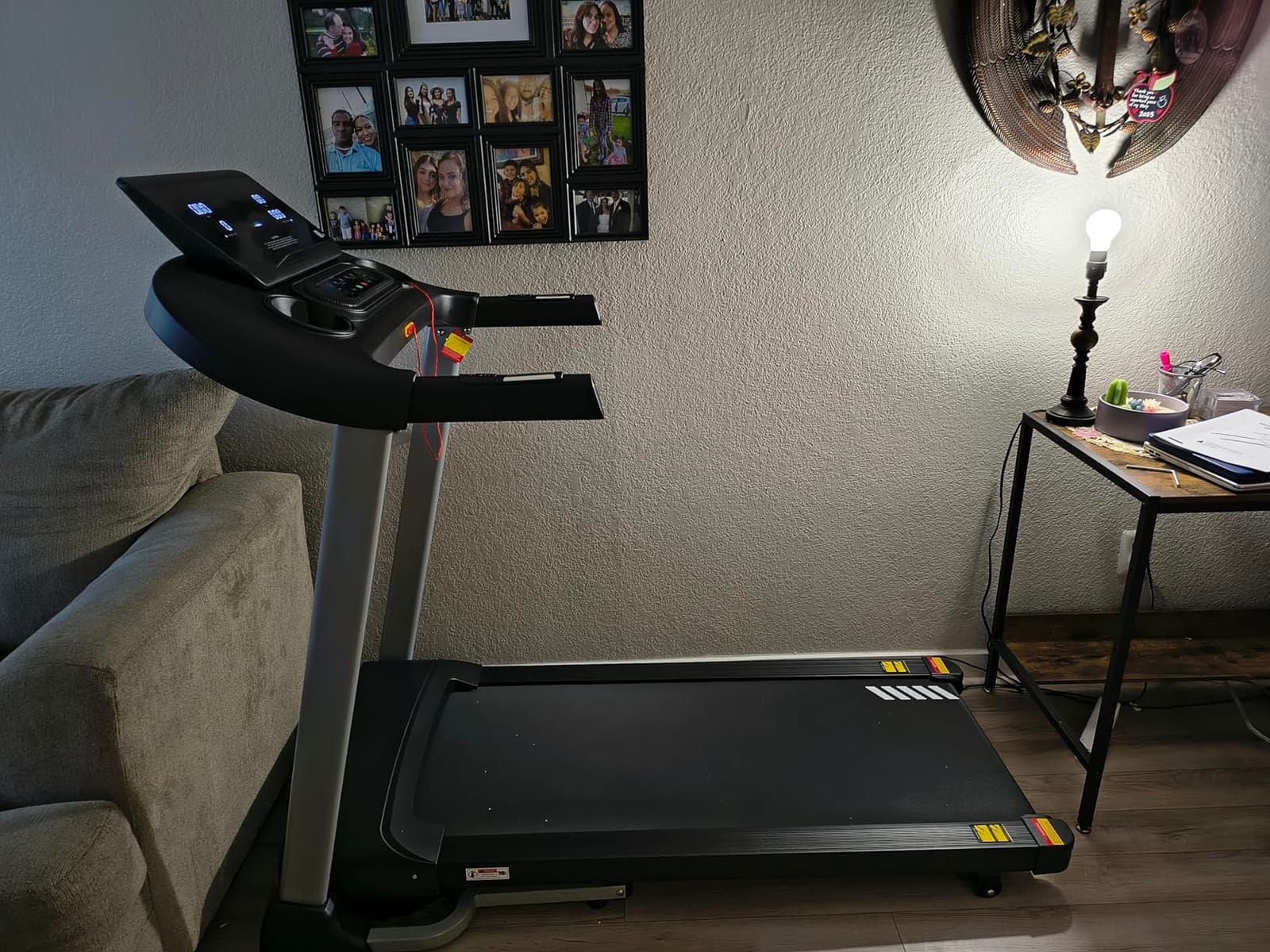
The HUAGEED CTM5312 is the one I would put a 300 lb runner on without hesitating. It holds a 4.4 star average across 141 verified reviews, and roughly three quarters of those ratings are five stars, which is a consistency level on a real volume of feedback that none of the other machines here has demonstrated.
What separates it is the combination of a 12 MPH ceiling with a 3.5 HP motor. A fast top speed is only worth having if the motor can hold it while you are working, and a 400 lb stainless steel frame gives the belt something rigid to sit on. The running surface is 47.24 inches long by 18.90 inches wide, and the deck underneath is thickened to 5.90 inches with built-in shock absorption.
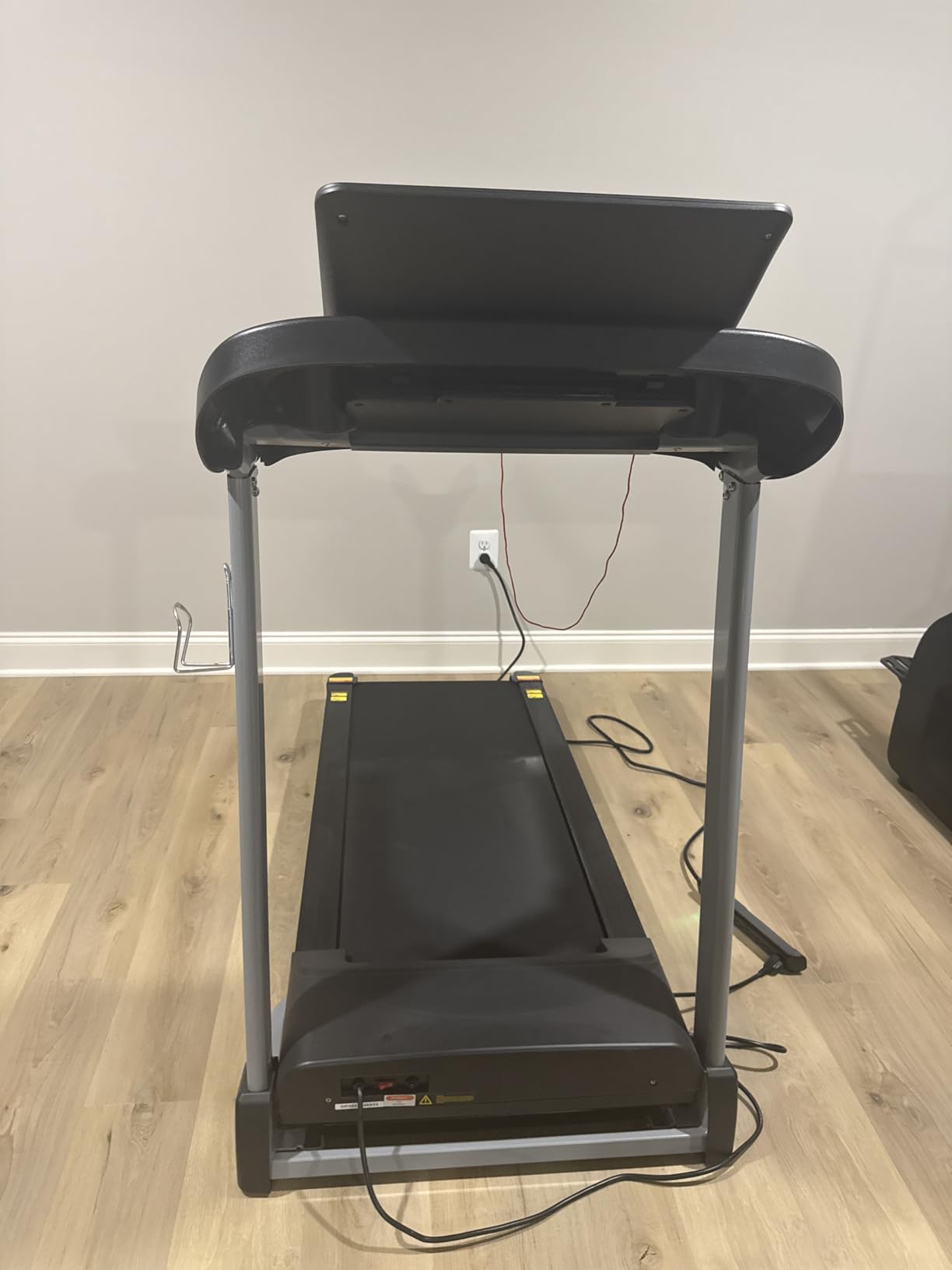
Incline goes to 18 percent on a motorised system, and there are 36 preset programs alongside manual control. That is more variety than most machines in this weight range offer, and it means you can run a rolling hill session without touching a button mid-stride.
The frame is stainless steel rather than the alloy steel used by most competitors here, and reviewers describe it as feeling planted underfoot rather than springy. At your weight, that difference is the whole game: a frame that deflects turns every landing into a small uncontrolled wobble that your ankles and knees absorb.
What the 12 MPH ceiling actually changes
Almost every other machine in this list tops out between 8.5 and 10 MPH. That gap matters more than it sounds, because interval training is built on short bursts above threshold pace, and a ceiling of 8.5 caps the fastest effort you can do at home.
At 300 lbs with 100 lbs of rating headroom, the motor is not labouring to reach the top of its range, which is exactly the condition you want for the hardest intervals of the week.
Where it will frustrate you
The folded footprint is 31.88 x 28.74 x 52.36 inches, which leaves very little floor space free when the machine is stored. If you are working with a spare room rather than a dedicated gym, plan that floor space before you buy. Our folding treadmill guide covers the clearance measurements that matter in a tight room.
The deck sits high enough that shorter users describe mounting it as a step-up rather than a step-on. For a tall heavy runner that is irrelevant. For a 300 lb runner with a shorter frame it is worth walking into a showroom if one is near you.
2. THERUN Incline Treadmill – The Most Owner Feedback of Any Machine Here
THERUN Incline Treadmill, Treadmill for Running and Walking, 300 lbs Weight Capacity Folding Treadmill with 0-15% Auto Incline, Wide Belt, 3.5HP, App, Heart Rate, Orange
Listing says 400 lbs, spec sheet says 300 lbs
3.5 HP dual motor
0.6-10 MPH
17 x 47.2 inch belt
Pros
- Over 1000 verified reviews to draw on
- Quiet dual-motor design on an alloy steel frame
- Handrail speed and incline controls
- Folds to 29.5 x 31.1 x 54.7 inches
- No subscription needed to run
Cons
- Capacity is listed as both 400 lbs and 300 lbs
- 17 inch belt is narrow for long strides
- Auto incline motor stalls and needs a reset routine
With 1,051 verified reviews, the THERUN has the deepest ownership history in this guide by a wide margin. That matters for a heavy runner specifically, because long-term reports are exactly what spec pages cannot give you. Owners repeatedly describe a frame that stays quiet, with no creaks, rattles or belt slippage after extended use.
The motor is a dual-motor design rated at 3.5 HP, running a 0.6 to 10 MPH range.
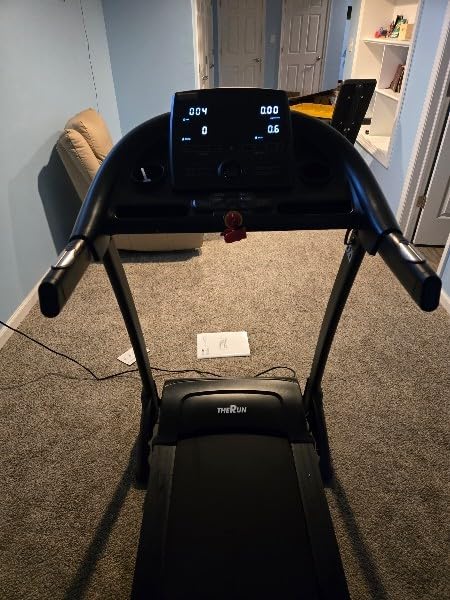
Assembly is genuinely fast. Owners report 20 to 30 minutes from box to first run, and the machine folds to 29.5 x 31.1 x 54.7 inches on transport wheels. Speed and incline buttons sit on the handrails as well as the console, so you can change pace without breaking your stride.
Critically, there is no subscription requirement to run. The Bluetooth app syncs speed, incline, time, distance, heart rate and calories, but nothing is locked behind it. Across this list that is worth more than it looks, because a membership attached to a machine you use daily is a recurring cost that never shows up in the purchase decision.
Read the capacity line twice before you buy
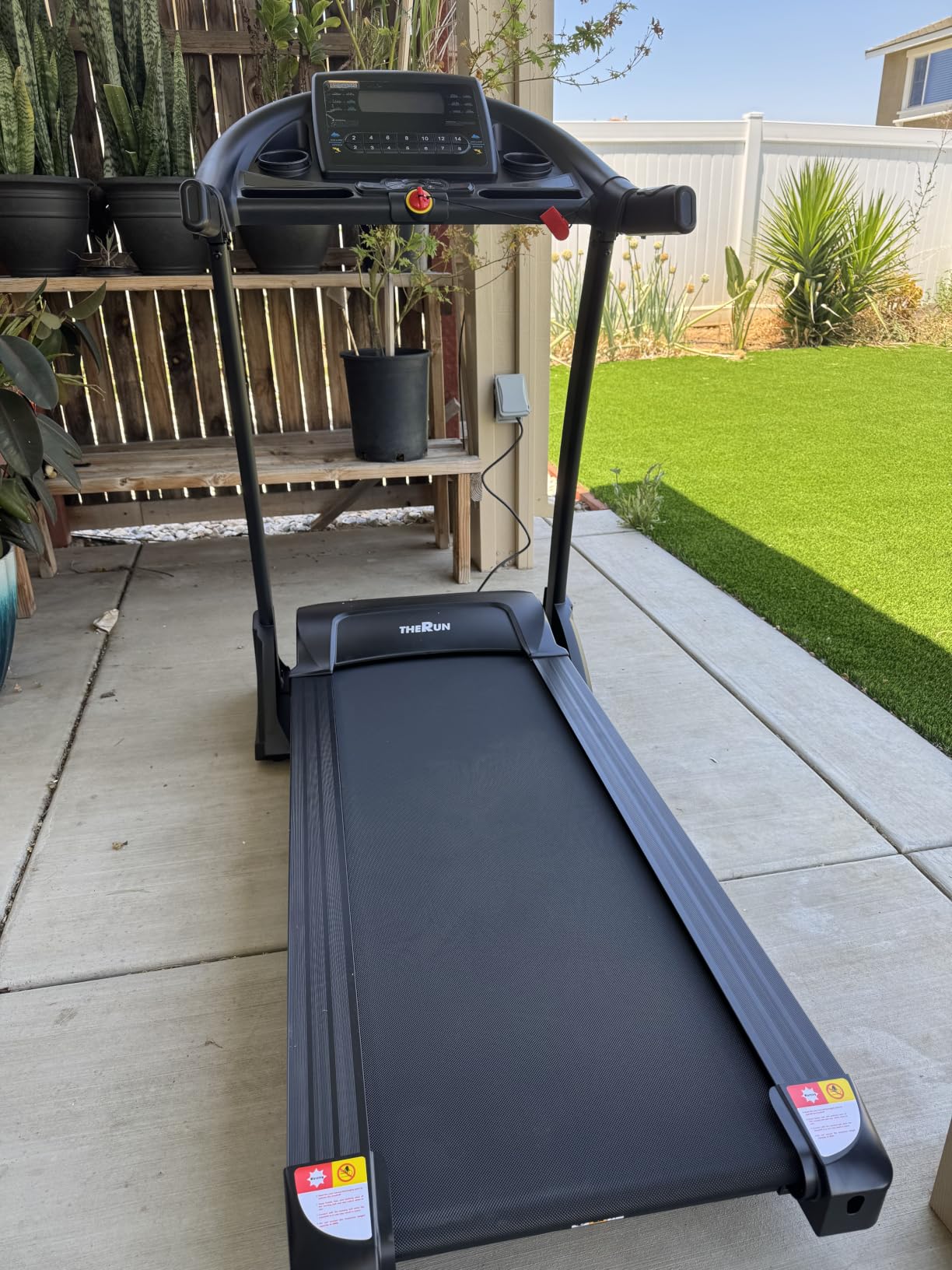
The listing title says 400 lbs weight capacity. The published spec sheet says maximum recommended user weight of 300 pounds. That is not a rounding difference, and it decides whether this machine is right for you.
If you weigh more than 280 lbs, treat the 300 lb figure as the real number, which puts this machine at or below the headroom we recommend. At 250 lbs or below, the machine is well matched and the 1,051 reviews make it the safest proven buy in the group.
Know your deck size before you commit
The belt is 17 inches wide and 47.2 inches long on a five-layer textured surface. That is a functional running deck, but it is among the narrowest published here, and reviewers with longer strides describe it as limiting.
The single most reported reliability complaint is the auto incline motor stalling, sticking at a set level or needing a reset routine after a power cycle. If you plan to run most sessions flat and only add incline occasionally, this is a minor annoyance rather than a dealbreaker.
3. MERACH MR-T31 – The Deck Most Heavy Runners Will Actually Fit On
MERACH Treadmill with 15/18% Auto Incline, 55″/47″x18″/19″ Wide Belt Treadmills, 0.5-8.7MPH/10MPH 3.5HP Brushless Incline Treadmill for Home, 350LBS Foldable Treadmills with Screen & APP & Heart Rate
350 lbs max user weight
3.5 HP brushless motor
18 x 55 inch belt
12 shock absorbers
Pros
- Oversized 18 x 55 inch running surface
- 12 shock absorbers under the deck
- Brushless motor under 45 dB
- Hydraulic fold completes in about 30 seconds
- 18 incline levels with hill modes
Cons
- Top speed caps at 8.7 MPH
- 350 lb rating is the lowest here
- Longest footprint at 65.1 inches deep
The MERACH MR-T31 solves a problem the other machines here do not: deck area. At 18 inches wide by 55 inches long, this is the largest running surface in the group alongside the UMAY, and reviewers with larger frames and longer strides single it out as unusually accommodating. A narrow deck forces you to shorten your stride, and a shortened stride pushes load onto the hip and knee.
Underneath that deck sit 12 shock absorbers, more than any other machine here states. For a heavier runner that is the difference between a landing that is absorbed and one that travels straight up through your joints. The belt itself is a seven-layer construction on a 3.5 HP brushless motor rated 350 lbs.
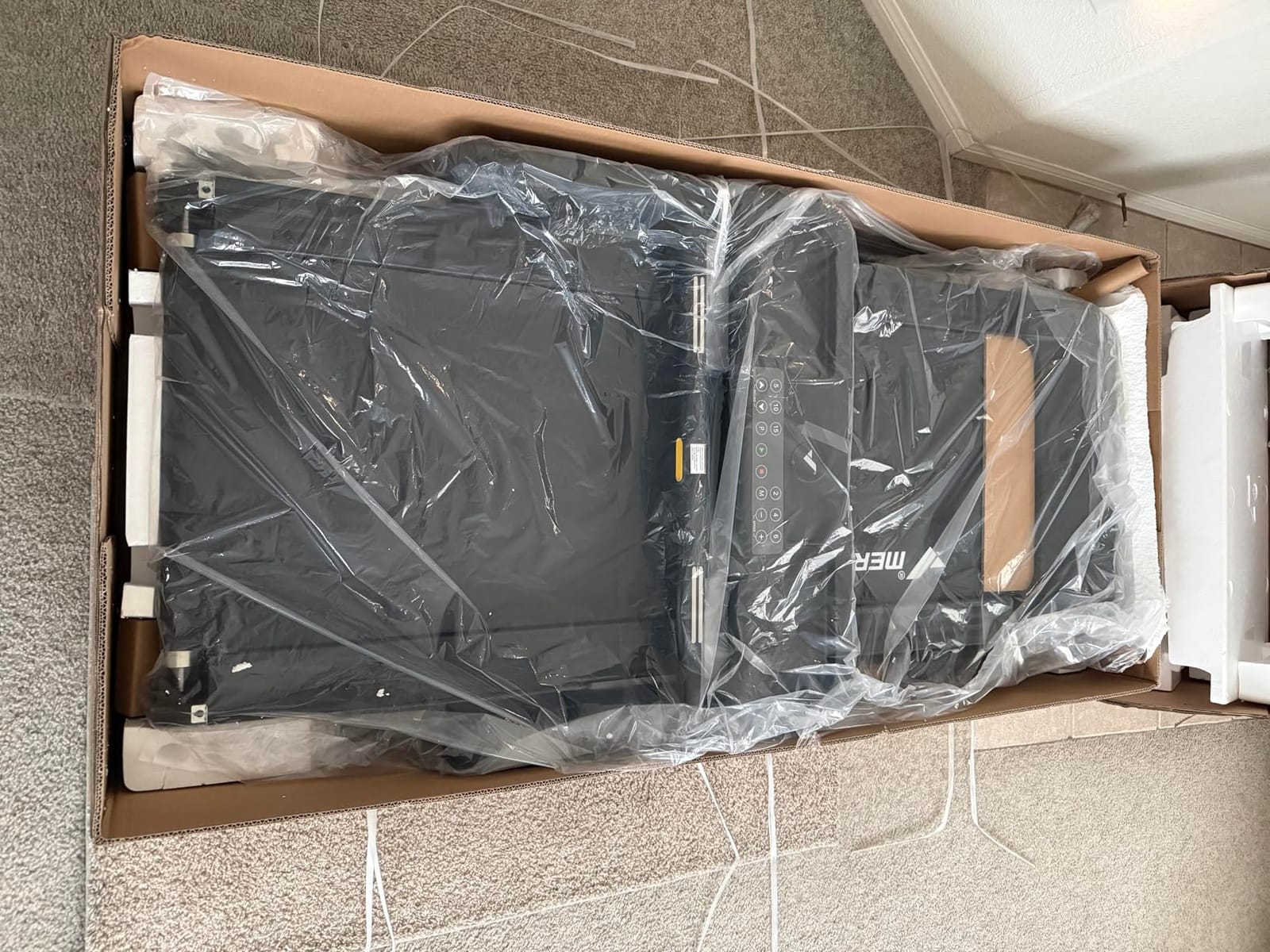
The motor is genuinely quiet, running under 45 dB according to the manufacturer and confirmed by owners living in shared apartments. Incline reaches 18 percent across 18 levels, with dedicated hill-climb and hill-sprint modes that most buyers never touch but that add real training options.
Folding is hydraulic and takes roughly 30 seconds, which makes this one of the easier machines here to put away when you are done. The MERACH app adds coaching plans and heart rate monitoring, but the machine runs without it.
Why deck area beats horsepower for most heavy runners
Motor power determines whether you can hold your speed. Deck area determines whether you can hold your mechanics. Over a year of regular running, the second factor tends to matter more, because a cramped stride is a repetitive compensation pattern that your body absorbs every single session.
If you are 250 lbs or below and your stride runs long, this 350 lb-rated machine has more than enough power and a full-size surface. The 12 absorbers also make it the most generously cushioned option on your joints.
Where the limits are
Two clear ceilings. The 8.7 MPH top speed is among the lowest here, so fast interval work is off the table, and the 350 lb rating is the lowest published capacity in the group, which means at 320 lbs you would be running with 30 lbs of headroom instead of the 60 to 80 we recommend.
It is also the deepest machine listed, at 65.1 inches, which makes it a dedicated room rather than a nook. Measure the length of your available wall before ordering anything in this weight class.
4. CIIHI C JK07F – The Only 450 lb Rated Machine in the Group
CIIHI Treadmill with Auto Incline – 450 LBS Capacity Heavy Duty Treadmil
450 lbs max user weight
3.5 HP motor
0.5-10 MPH
47.2 x 18.1 inch belt
Pros
- Highest rated capacity in the group at 450 lbs
- Only 110 lbs so one person can move it
- 47.2 x 18.1 inch belt gives a roomy stride
- 15-level auto incline with lift mechanism
- Bluetooth speaker and three fitness apps
Cons
- Belt needs occasional manual re-centring
- Soft-drop fold failed within days on some units
- Black belt sheds fine granules
- One year manufacturer warranty
The CIIHI C JK07F is rated to 450 lbs, which makes it the only machine in this guide rated above 400 lbs, and therefore the only one with meaningful headroom for a 400 lb runner. That 50 lb margin is the difference between running comfortably and running constantly at the edge of what the frame was designed to tolerate.
It is also the lightest machine here by published weight at 110 lbs, and it folds soft-drop with two transport wheels, so it is genuinely portable for a machine in this class. For a buyer who has already been told that a machine above 400 lbs will need a crew and a staircase, that is a real advantage.
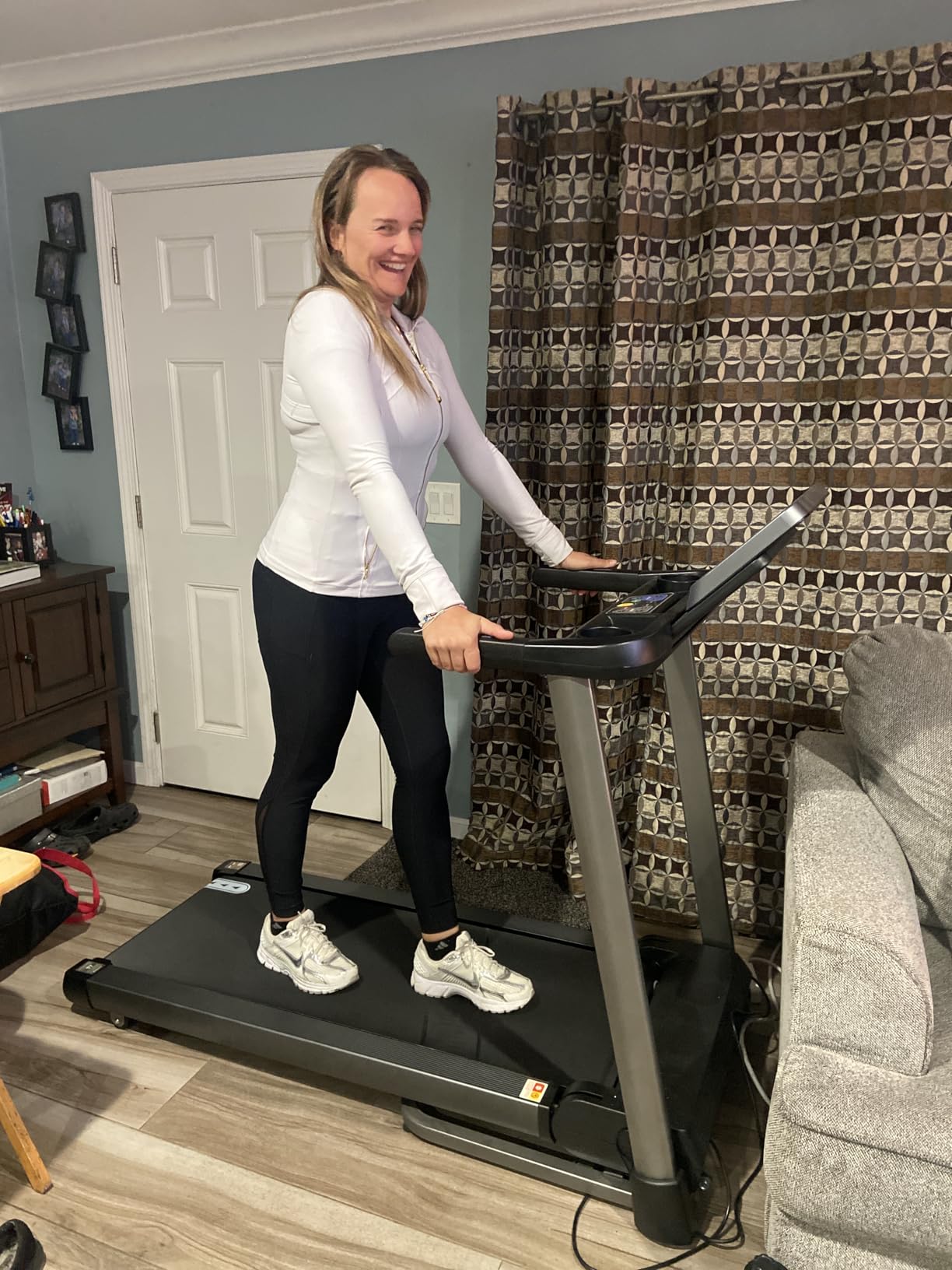
The running belt is 47.2 inches by 18.1 inches, and owners at 6 foot 1 inch describe it as feeling uncramped, which is a useful reference point. Speed runs 0.5 to 10 MPH on a 3.5 HP motor, with 15 auto incline levels on a lift-style mechanism rather than a wedge.
Owners also like the low-profile look. It does not read as therapy equipment in a living room, which matters if the machine is going to stay out rather than live in a garage. Support responses were praised once buyers made contact, with a belt centring issue resolved within 12 to 24 hours and a trial extension offered.
How to think about the 450 lb rating
This number is the reason the machine exists in your shortlist. If you weigh 380 to 400 lbs, a machine rated exactly at your weight is running with zero margin, and zero margin is where belt tracking problems and motor strain appear first.
At 400 lbs on the JK07F you have 50 lbs of headroom, which is the closest thing to a safe margin available in this price band. Above 420 lbs, we would steer you toward used commercial equipment instead.
What to watch in the first month
Belt tracking is the recurring theme in the reviews. Several owners spent time re-centring the belt before learning the adjustment, so factor in a short learning period rather than treating early drift as a fault.
A small number of owners reported the soft-drop folding mechanism failing within days, plus some belt granule shedding and a safety key that could disengage mid-stride. Test the fold and the safety key on day one, while the return window is clearly open, rather than discovering both in month four.
5. UMAY Heavy Duty Treadmill – 20 Percent Incline on a 400 lb Frame
UMAY Heavy Duty Treadmill with 20% Auto Incline for Home Gym
400 lbs max user weight
4.0 HP brushless motor
9.5 MPH max speed
55 x 18 inch belt
Pros
- Incline range of 20 percent across 20 levels
- the deepest in the guide
- 4.0 HP commercial-grade brushless motor
- Triple-layer thickened deck for impact absorption
- Frame feels solid rather than flimsy
- Handrails fold down to a table surface
Cons
- 44 reviews only
- so the 4.1 rating is thin evidence
- Drop-down fold takes up substantial floor space
- Belt drifts sideways and needs recentering
- Persistent squeak that lubrication did not resolve
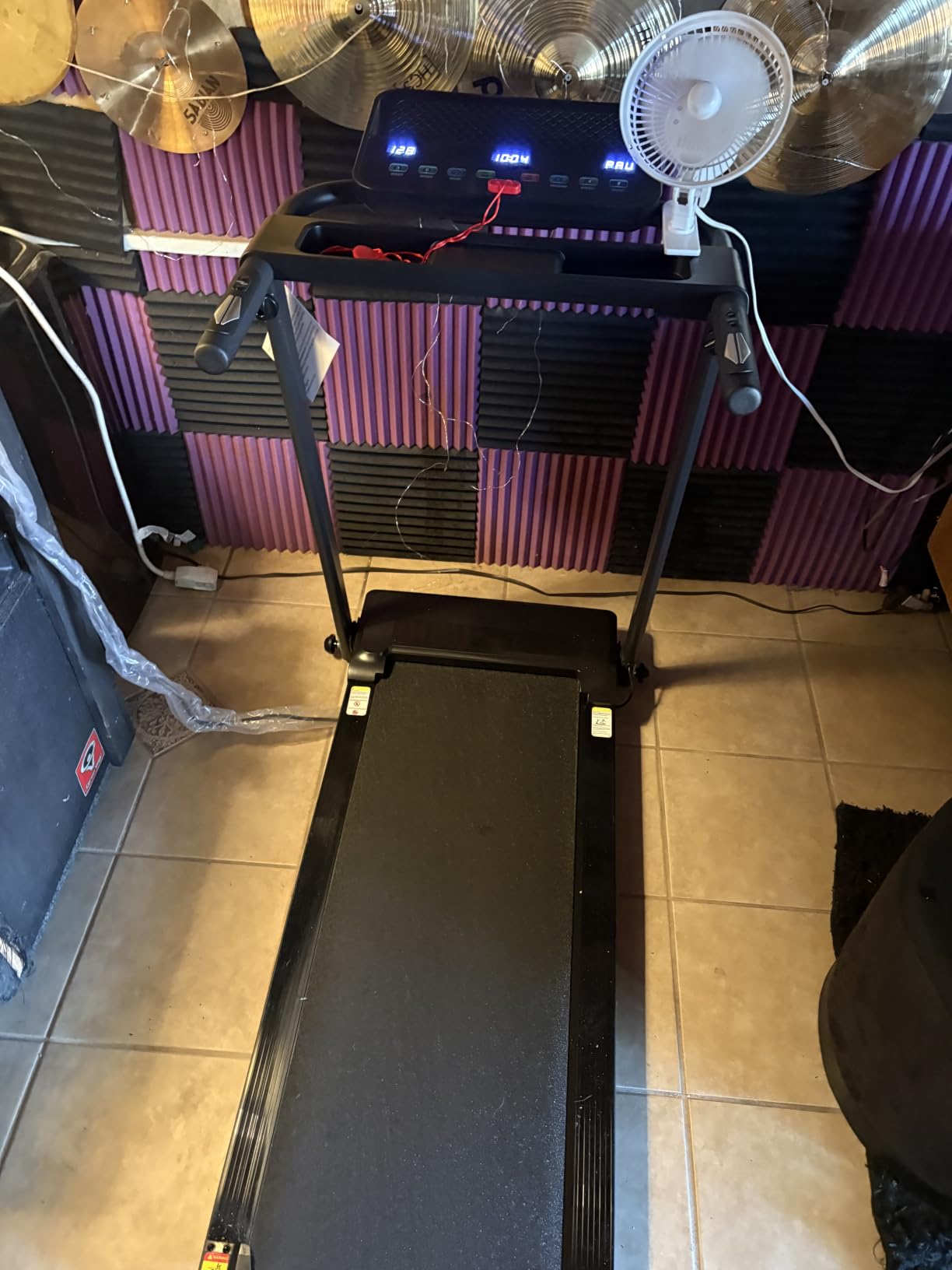
The UMAY has the deepest published incline range in this guide at 20 percent across 20 levels on a motorised system, driven by a 4.0 HP brushless motor described as commercial-grade. If hill work is how you build leg strength and protect your joints, this goes as high as anything in the guide.
The running surface is 55 inches long by 18 inches wide, and the deck is triple-layer and thickened specifically for impact absorption. That is a sensible engineering choice for a heavier runner, since the deck rather than the cushioning is what takes the repeated load.
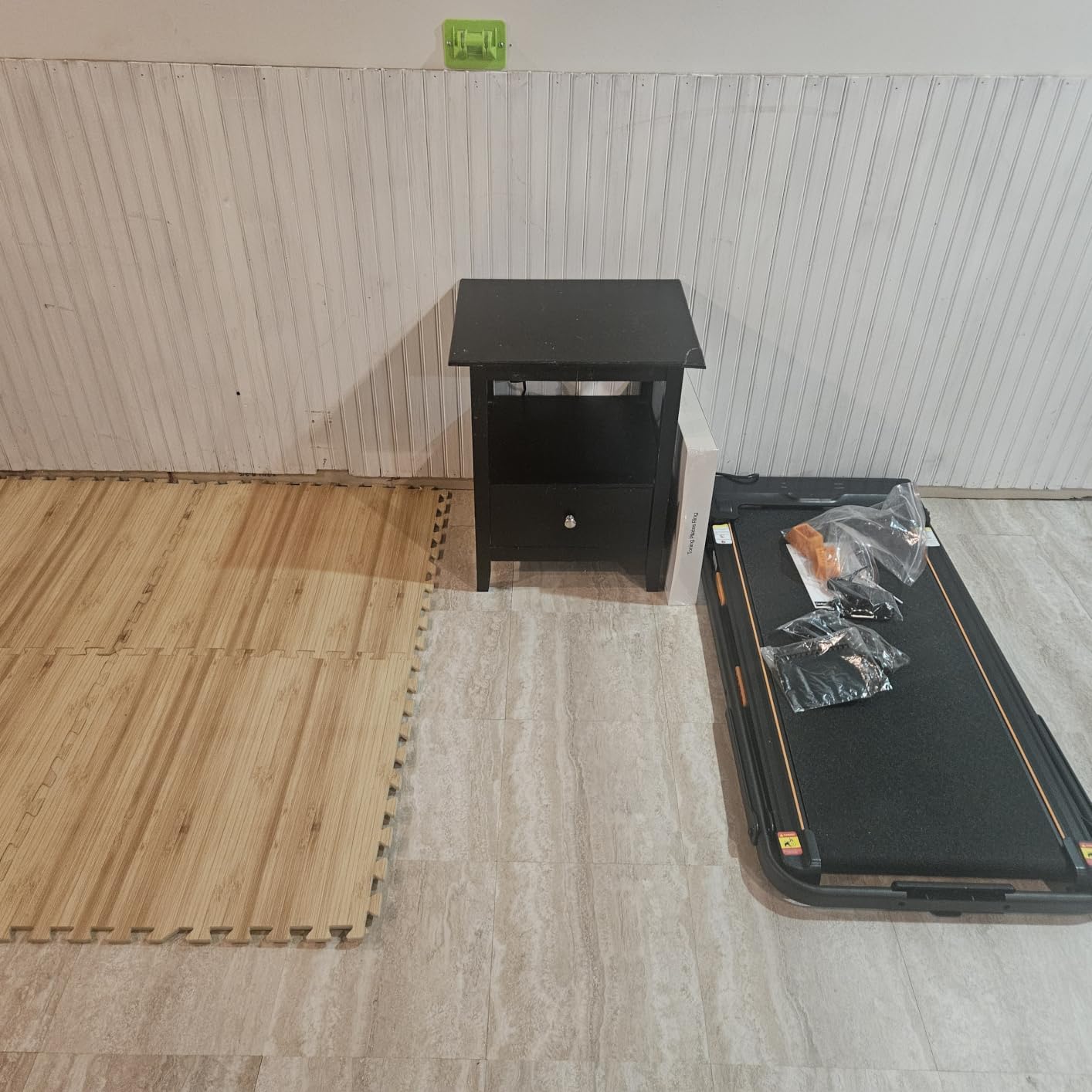
At 44 reviews, this is a thin evidence base, and its 4.1 average is the lowest rating in the guide. Read the reviews closely rather than the number: owners describe a 400 lb frame that feels solid underfoot, wide surfaces that suit larger users, and clear console readouts for time, speed, distance and calories.
There is also an inconsistency worth knowing about. Several owners describe the incline as a wedge-style manual add-on in some configurations rather than the advertised 20 percent motorised range, so confirm what you are actually receiving before you commit to this one for hill training.
Is the 20 percent incline worth the trade-offs
If your training includes hill sprints or you want to build quadriceps and glute strength without adding joint load, yes. A 20 percent grade is a genuine training stimulus that a 10 percent machine cannot give you, and the motor has the headroom to hold it under load.
If your sessions are flat road-pace running, the incline range is irrelevant to you and you should compare this machine on deck and stability alone, where it is merely adequate.
The honest weaknesses
The fold is a drop-down rather than an upright fold, so the machine occupies a large area even when you are not using it. In a small room that is the dealbreaker. If you are working with a hard space constraint, our budget treadmill guide is a better starting point than a drop-down frame.
Belt side-drift and a squeak that lubrication did not resolve are both repeated complaints, and the assembly involves bolts that owners describe as tedious to align. For a machine in the 300 to 380 lb range with a proper room and a patience for setup, that is a reasonable trade. For fast daily running, the 9.5 MPH ceiling is a limit.
6. FUNMILY Heavy Duty Treadmill – 4.5 HP That One Person Can Move
Treadmill with 20% Auto Incline, FUNMILY 4.5HP Heavy Duty Treadmill for Home, 400 lb Weight Capacity Folding Running Machine, Smart Data Monitoring/Shock Absorption/Large LED Display
400 plus lbs capacity
4.5 HP brushless motor
0-20 percent auto incline
8.5 MPH max speed
Pros
- 4.5 HP motor
- the highest published figure alongside the ANCHEER
- 0-20 percent auto incline across 15 levels
- Light enough for one person to move and fold
- Arrives largely assembled
- 8 silicone absorbers plus 2 rubber pads
Cons
- Perfect 5.0 score across only 20 reviews
- 8.5 MPH top speed
- No published belt width or running surface size
- No published unit weight
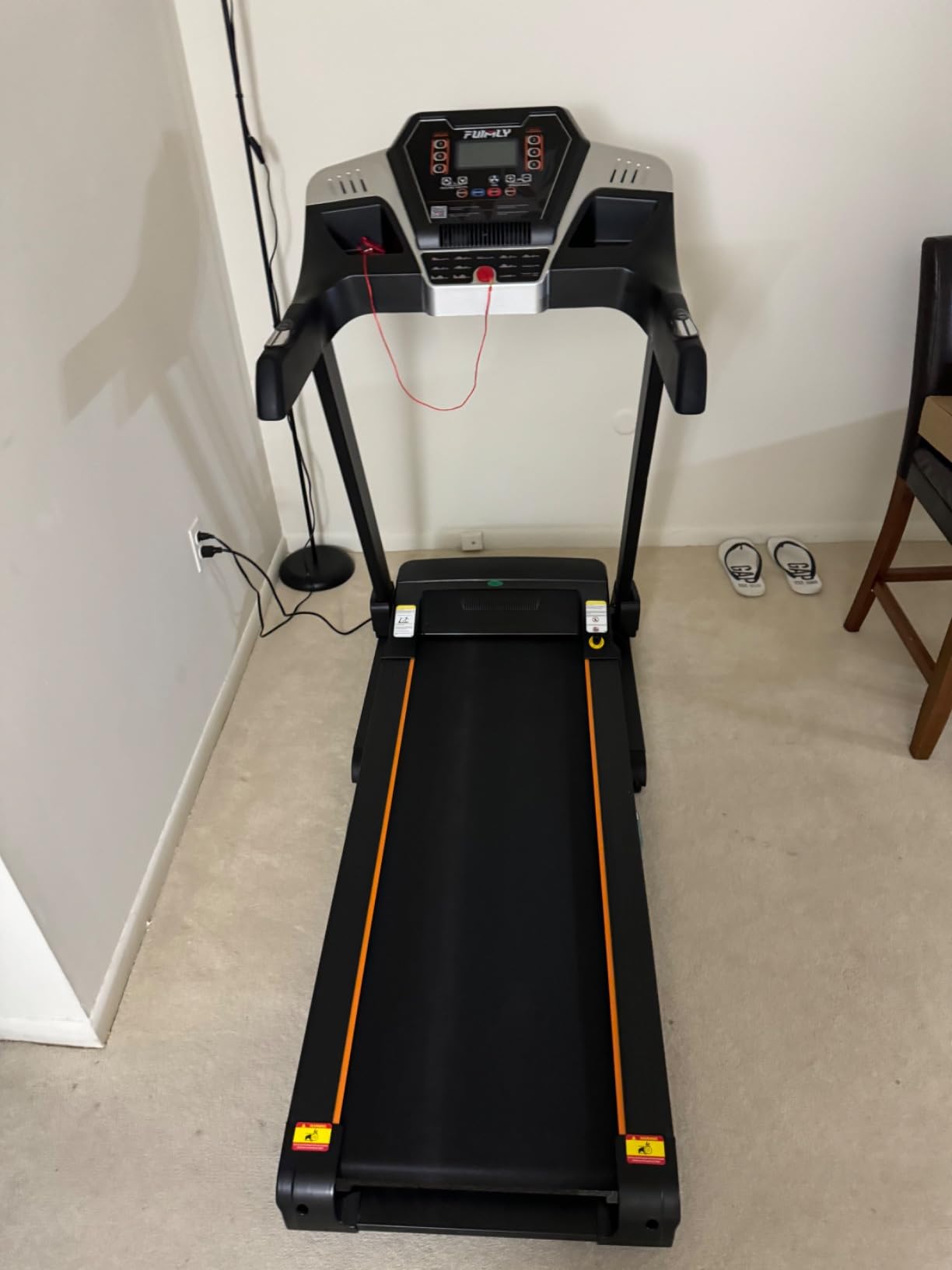
The FUNMILY answers a problem none of the 400 lb machines here solve: how do you get a heavy-duty machine through a doorway? It arrives largely assembled, and owners specifically call out being able to move and fold it alone, which is unusual for a frame rated above 400 lbs.
The motor is a 4.5 HP upgraded brushless unit, one of the two highest published figures in this group, paired with 0 to 20 percent automatic incline across 15 levels. Power is the point here, because extra headroom is what stops a motor labouring when you combine body weight, speed and grade in the same session.
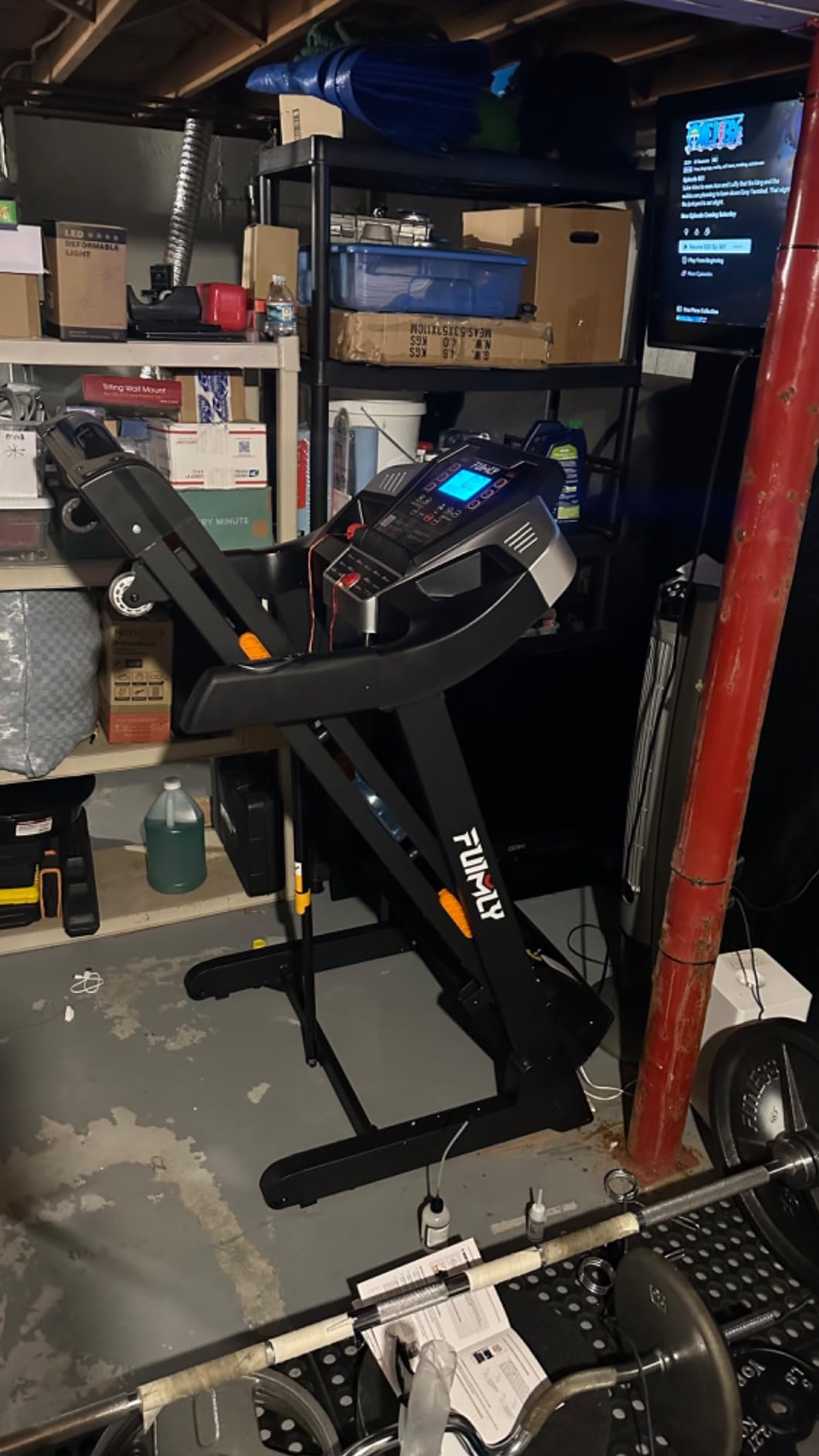
Cushioning is handled with eight silicone shock absorbers plus two soft rubber pads, and the belt is a multi-layer high-density anti-slip surface with a PEP sound insulation layer. The console is a large central LED panel showing speed, incline, time, distance and calories, with handle-sensor heart rate and a body fat estimate.
There is a practical detail owners appreciate that we rarely see: belt lubrication is applied through an access hole without un-tensioning the belt. On a machine you are supposed to keep for years, that is a small thing that saves a recurring annoyance.
Why motor power is the spec to over-buy on
Horsepower is the buffer between you and a machine that bogs down. A motor running near its limit on flat ground has nothing left for a 15 percent hill, and the first symptom is belt slip followed by a speed drop. A 4.5 HP motor in a 400 lb frame leaves that buffer intact.
This is the machine to consider if you are near 380 lbs, run a lot of incline work, and live somewhere without a second person to help with moving.
Why the rating tells you less than usual here
All 20 reviews are five stars, and that is a small-sample artefact of a newer listing rather than a track record. Nothing in the data describes two years of daily use, so the perfect score is not a durability signal.
Two other gaps are worth flagging. The manufacturer publishes no belt width or running surface dimensions, which for a heavy runner is the single most important missing number after capacity. It also publishes no unit weight, so you cannot plan the move in advance. Top speed is 8.5 MPH, which limits interval work.
7. ANCHEER Heavy Duty Folding Treadmill – 4.5 HP That Folds Away
ANCHEER Heavy Duty Folding Treadmill with Incline, 4.5HP Quiet Running Machine with 400 LB Capacity, Shock Absorbing Treadmill for Home Gym with LED Display, Heart Rate Monitor & Tablet Holder
400 lbs max user weight
4.5 HP motor
8.5 MPH max speed
15-level auto incline to 20 percent
Pros
- 4.5 HP motor and 400 lb capacity in a folding frame
- 15 auto incline levels reaching a 20 percent slope
- 7-layer cushioned belt to reduce joint impact
- Folds and rolls for apartment storage
- Clear instructions and straightforward assembly
Cons
- 4.9 rating rests on only 35 reviews
- 8.5 MPH top speed
- No belt width or running surface dimensions published
- One year manufacturer warranty
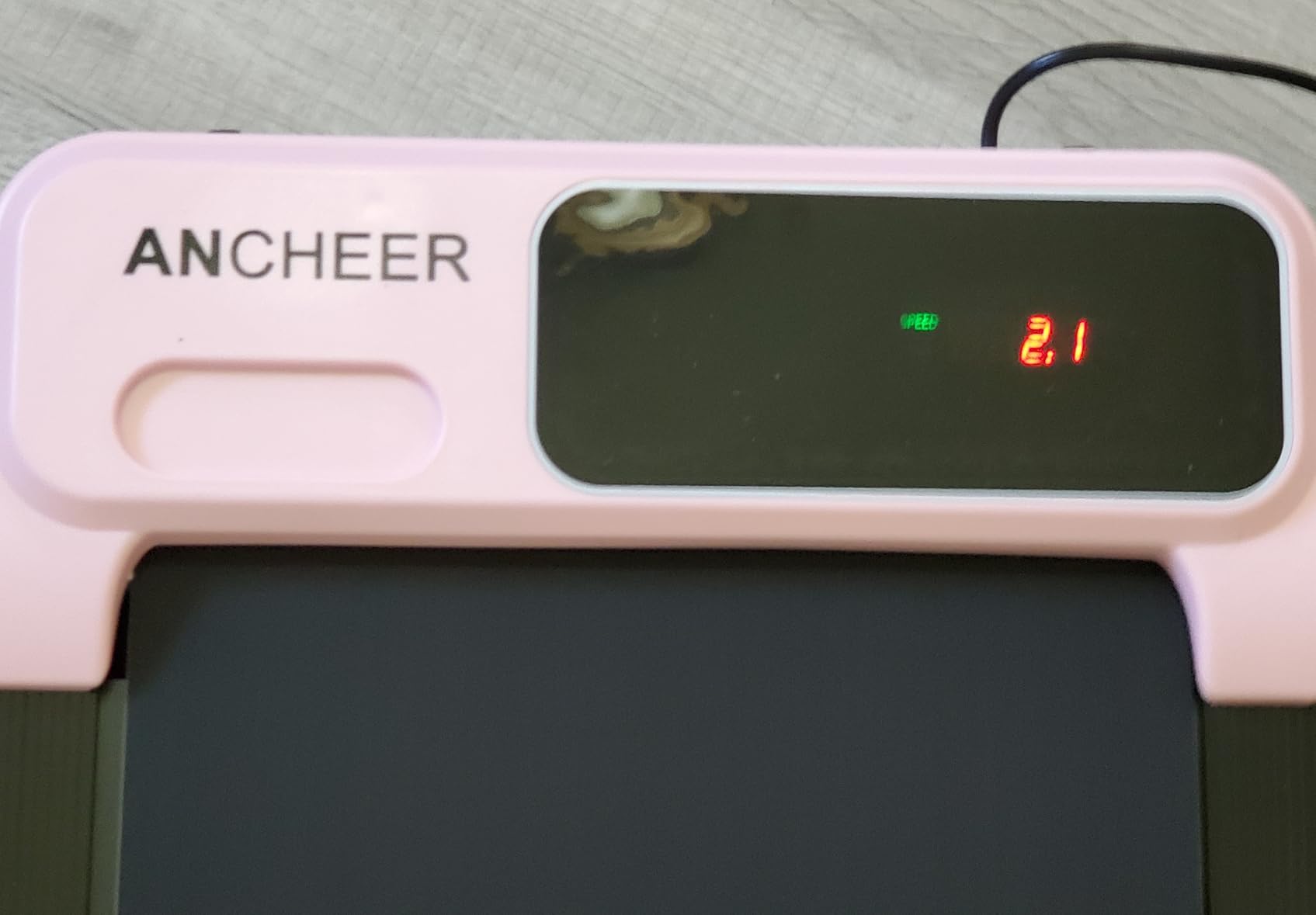
The ANCHEER is an unusual combination at this weight class: a 4.5 HP motor, a 400 lb rating, 20 percent incline and a frame that folds. In this guide the only machine matching its motor figure is the FUNMILY.
It carries a 4.9 average across 35 verified reviews, with 88 percent of those at five stars, which reflects a newer listing rather than long-term ownership.
The belt is a seven-layer anti-slip cushioned construction, and buyers consistently highlight the combination of motor power, capacity and incline at this price point. The console is an extra-large LED display for speed, time, distance and calories, with handrail heart rate sensors, a body fat percentage calculation, 12 preset programs and a tablet holder.
Assembly is described as straightforward, and the fold-and-roll design with built-in transport wheels is the reason this machine suits an apartment where a permanent treadmill is not an option. If your space is tight, our folding treadmill roundup is worth reading alongside this one.
Deciding between the two 4.5 HP machines
The FUNMILY and the ANCHEER share a 4.5 HP motor, a 400 lb rating, a 20 percent incline ceiling and an 8.5 MPH top speed. The differences are in the details: the ANCHEER publishes a 7-layer cushioned belt, while the FUNMILY publishes a specific absorber count of eight silicone units and two rubber pads.
Choose the ANCHEER if you need the machine to fold out of sight daily. Choose the FUNMILY if one-person portability and the built-in fan and sound insulation matter more to you.
The specification gap you should note
Neither machine publishes belt width or running surface dimensions. That is unusual, because for a heavy runner the deck is the spec you most need to check, and there is no way to confirm from the listing that either will give you a full-length stride.
Before buying either one, measure a stride on a machine you can try and compare it to a typical running belt. If you can get your heel-to-toe distance, anything under 55 inches long is walking-and-jogging territory rather than running territory.
8. QYDS US 3.5 HP Treadmill – Longest Warranty and the Smallest Footprint
3.5 HP Treadmill with 20% Auto Incline for Home, Heavy Duty 400lb Capacity
400 plus lbs capacity
3.5 HP brushless motor
20 percent auto incline
39.2 x 15.7 inch belt
Pros
- 3 year warranty is the longest offered in this group
- 90 percent pre-assembled with transport wheels
- Handle height adjusts across four settings from 37 to 43 inches
- Controls on both the console and the arms
- Quiet motor with a smooth belt
Cons
- 39.2 x 15.7 inch running surface is short and narrow
- 8.7 MPH top speed
- No published unit weight
- Perfect 5.0 score across only 52 reviews
The QYDS US is the practical answer when floor space is the binding constraint. It arrives 90 percent pre-assembled, folds compactly enough to go under a bed, a couch or into a closet, and carries a three year warranty, the longest in this guide.
It is rated 400 plus lbs on a premium alloy steel frame with a thickened board, and the 3.5 HP brushless motor runs 0.6 to 8.7 MPH with 20 percent automatic incline. The belt is a seven-layer high-density diamond-textured running pad with double shock absorption.
Handle height is adjustable across four settings, from 37 to 43 inches off the ground.
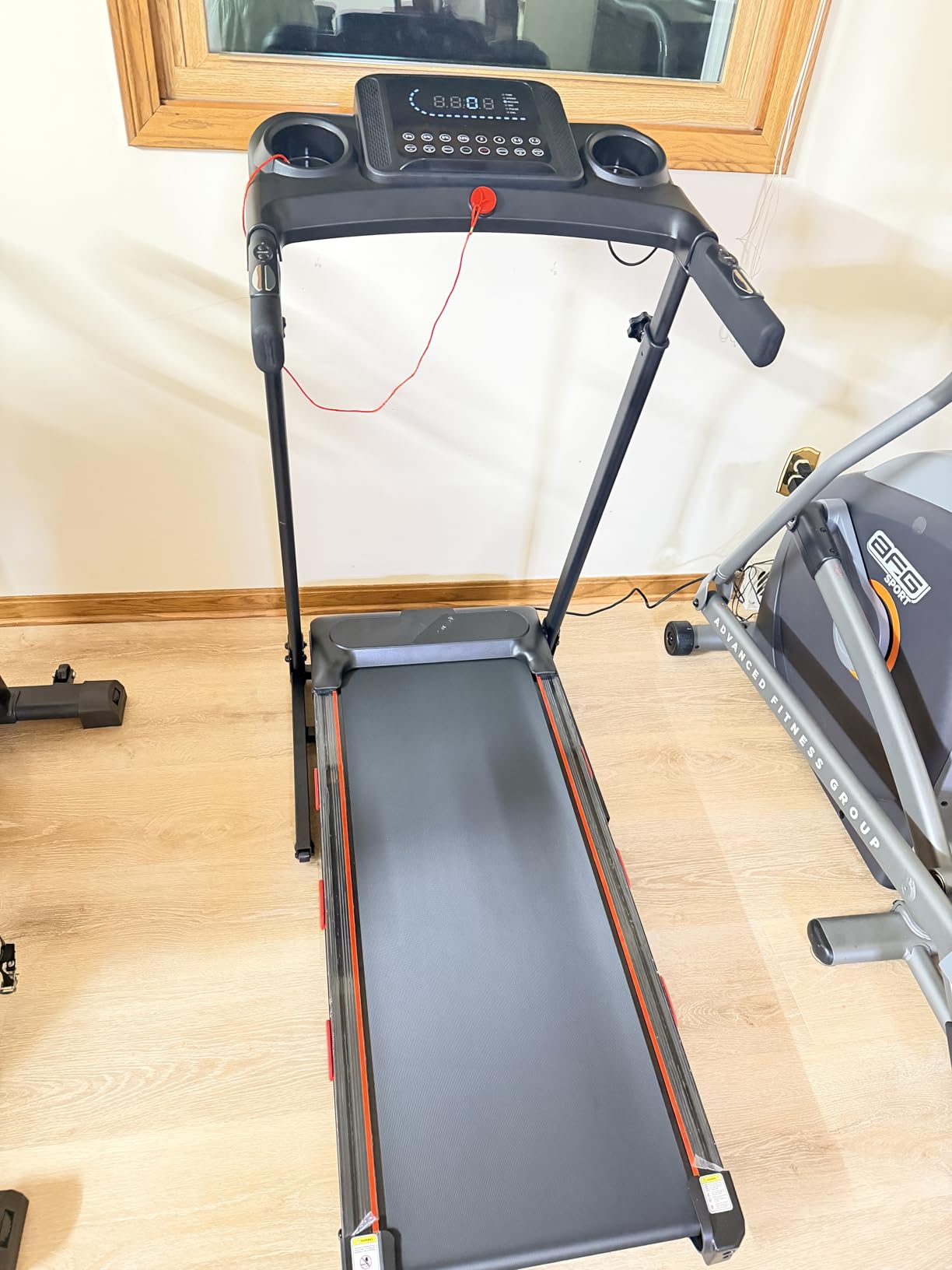
The feature owners mention most is adjustable handle height across four settings, from 37 to 43 inches off the ground, which lets more than one person in a household use the same machine comfortably. Speed and incline controls sit on the console and on the arms, and a large LED display retains workout data through pause and resume.
A built-in speaker and integrated fitness app cover entertainment, though the machine is usable without either. The 52 reviews are uniformly positive, focused on quiet operation, reachable controls and the ability to put the machine away when finished.
Be honest about what this machine is
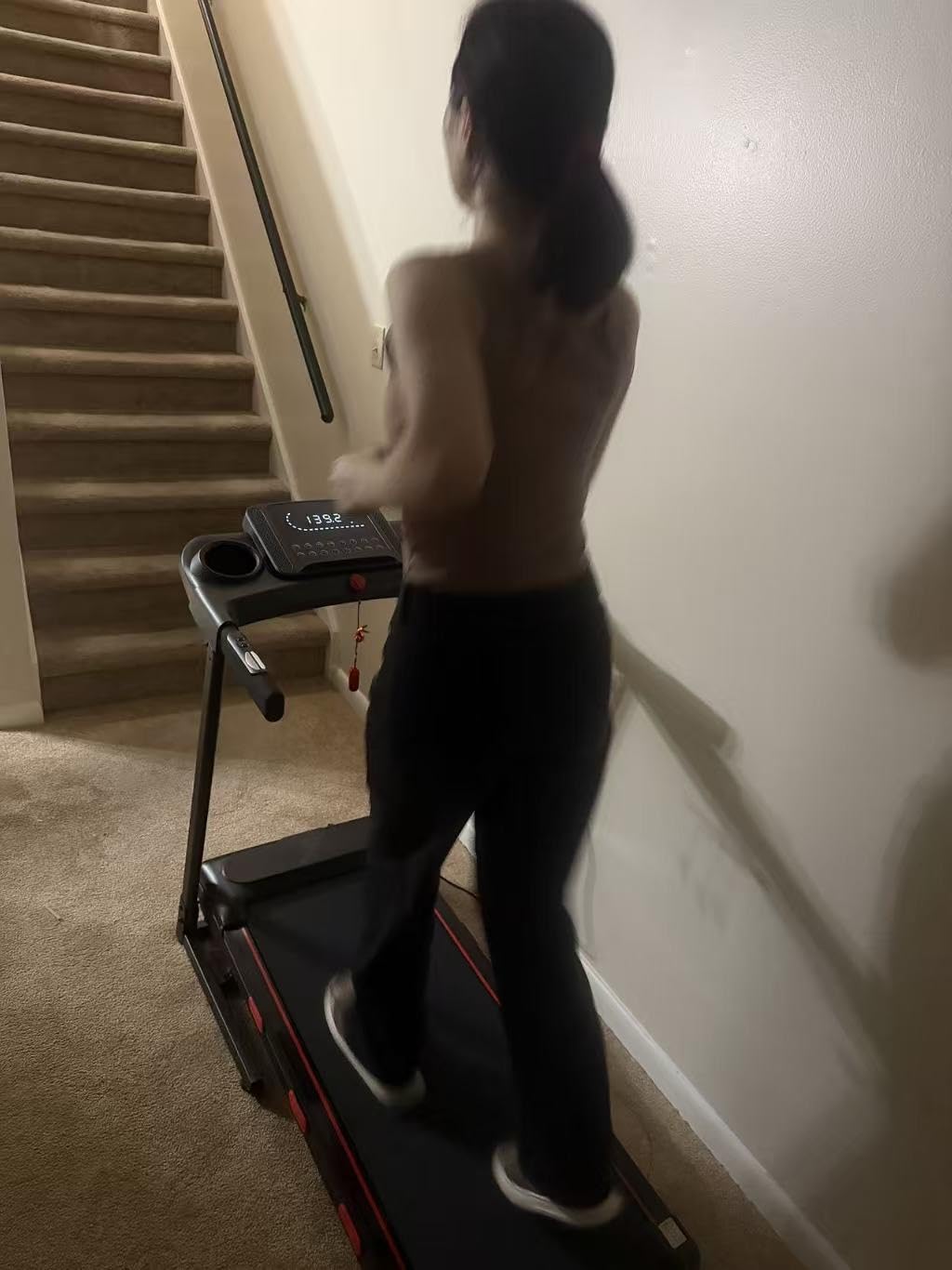
The running surface is 39.2 by 15.7 inches. That is a walking and incline-workout platform with a generous width for its class, and several owners frame it exactly that way. It is not a machine you can run intervals on, and the 8.7 MPH ceiling confirms the intent.
If your plan is a 30 to 45 minute run at 5 to 6 MPH, the short deck will be noticeable in how much you shorten your stride. If your plan is walking, incline work and recovery days, it is genuinely well suited and the warranty is the best on offer.
Why the warranty is the stand-out feature
At this weight class, warranty length is a more useful signal than star rating, because a 5.0 score across 52 reviews says nothing about what happens at month 30. A three year term on frame and parts is the clearest statement of manufacturer confidence available in this list.
The honest gap is that no unit weight is published, so you cannot plan the move before it arrives. Measure your stair width and doorway clearance first, and plan for a second person. Our home treadmill layout guide covers the clearances worth checking.
How to Choose a Treadmill for a Heavy Runner
Everything below is a decision filter, ordered by how often it will decide your purchase. The first three disqualify machines faster than anything else you will look at.
1. Max user weight, and the headroom rule
Max user weight is the hard mechanical limit across the frame, deck, rollers and motor. Buy at or below it and you get a machine designed to fail early. Our rule is 15-20 percent above body weight, so a 300 lb runner targets 350 to 400 lbs and a 400 lb runner targets 450 or moves to used commercial equipment.
Where a listing and its own spec sheet disagree, trust the lower number. The THERUN is a live example of why this matters.
2. Continuous horsepower, not peak horsepower
Marketing pages quote peak horsepower, which is a momentary figure. Continuous horsepower is what the motor can hold indefinitely, and it is the number that decides whether the belt keeps pace on an incline at your body weight. Below 3.0 CHP is the usual failure point: owners running heavier than the machine was designed for report belt sag, motor overheating and speed drop-off.
For 250 to 300 lb runners, 3.5 HP is the floor. Above 350 lbs, look for 4.0 HP or more so the motor has headroom left when you add grade.
3. Running deck area
Two numbers matter: length and width. For running, 55 inches of length is the floor and 20 inches of width is the point where a long stride starts to fit without being trimmed, with anything larger preferred at higher weights. A short deck does not just feel cramped, it changes your mechanics, because you land shorter and load the hip and knee more.
Only two machines in this guide publish a deck of 55 inches or more. That is a real limitation of this product category rather than of the list, and it is the first thing to ask about before ordering. Deck area cannot be changed after delivery.
4. Cushioning and deck construction
At higher body weight, every footfall delivers more force, so cushioning moves from a comfort feature to an injury-prevention one. The systems you will see named include under-deck shock absorbers in numbers (the MERACH has 12), silicone dampers plus rubber pads (the FUNMILY has eight and two), double shock absorption (the QYDS US), and triple-layer thickened decks (the UMAY).
Look for a named system rather than a generic cushioned belt claim, and note that most of these machines are specified for a user at or below the rated capacity, so cushioning at 95 percent of max load will always be less generous than at 70 percent.
5. Frame, warranty and parts
Steel gauge and material tell you more about long-term stability than the weight rating does. The HUAGEED uses a stainless steel frame where most competitors use alloy steel, and owners describe it as feeling planted. Warranty length is the second lever: in this group it ranges from one year to three, and at this weight class longer coverage is a genuine reliability signal rather than a formality.
Check that replacement belts and rollers are sold separately for your exact model before you buy. A machine with a lifetime frame warranty and no available parts is not the bargain it sounds like. If you are working to a tighter budget, our entry-level treadmill roundup sets out what that tier actually gives up.
6. Delivery weight, doorways and stairs
Most sellers publish the machine weight but not the delivery weight, and the delivered unit is often far heavier and bulkier than the listing suggests. Measure your doorway width, your stair width and the turn radius at the top of any stairs before ordering, and confirm whether the machine arrives assembled.
Two machines here are light enough for one person to handle: the CIIHI C at a published 110 lbs, and the FUNMILY, whose owners report moving and folding it alone even though its weight is not published. The rest are a two-person job. If you are considering the 4.5 HP machines in particular, the FUNMILY is the safer choice to receive.
7. Curved and manual treadmills
Several competing roundups recommend curved or manual treadmills to heavier runners, and we would not. They have no motor, so there is no speed rating and no incline range, and the curved slat decks are typically narrow with a limited surface length. They are built for low-impact walking and for short high-intensity sessions, not for sustained running.
For a heavy runner who actually runs, a motorised machine with a long, wide belt and real cushioning is the correct tool. A manual curved model makes more sense as a supplement for warm-ups and for days when you want a completely different stimulus.
Frequently Asked Questions
What treadmill is best for a 300-pound person?
The HUAGEED CTM5312 is our pick for a 300 lb runner. It is rated to 400 lbs, so you get 100 lbs of headroom, and its 3.5 HP motor drives it to 12 MPH, the fastest top speed in our group. The 47.24 by 18.90 inch running surface is a full-size deck rather than a walking pad. The MERACH MR-T31 is the alternative if deck area matters more to you than top speed.
What treadmill can handle 400 pounds?
At least six of the eight machines in this guide are rated to 400 lbs or above: the HUAGEED CTM5312, the CIIHI C JK07F at 450 lbs, the UMAY, the FUNMILY, the ANCHEER and the QYDS US. The THERUN is the seventh, but only if you trust its listing title over its own spec sheet. The CIIHI C offers the most headroom at a 450 lb rating, so at exactly 400 lbs that is the one you want.
What treadmill has a 500 lb capacity?
None of the machines in this guide reaches 500 lbs. The highest rated here is the CIIHI C JK07F at 450 lbs. Above that weight, the practical route is a used commercial treadmill from a gym equipment dealer, where frames are built for institutional loads and parts are widely available. Several owners on running forums describe switching to a used commercial unit as the point where their belt problems stopped entirely.
Can I be too heavy for a treadmill?
Yes, and the failure is gradual rather than sudden. Running at or above a machine’s rated capacity causes belt slip, frame flex, roller flat-spotting and motor overheating, and it can void your warranty. The warning signs are visible: the belt drifting sideways, the frame rocking on footfall, a speed drop on an incline, or a motor that runs hot. If you see any of those, stop running on it.
Are curved treadmills good for heavy runners?
Generally no, not for actual running. Curved and manual treadmills have no motor, so there is no speed or incline rating, and their slat decks are usually narrower and shorter than a motorised running belt. They suit low-impact walking and short high-intensity sessions. A heavier runner who wants to run needs a motorised machine with a long, wide belt, a motor of 3.5 HP or more and a real cushioning system.
Are walking pads enough for a heavy runner?
A walking pad is enough for walking and incline work, but not for running. The belt surfaces on most walking pads are around 40 by 16 inches, which forces a shortened stride and pushes load onto the hips and knees. If you intend to run, look for at least 55 inches of belt length and 20 inches of width, plus a continuous motor of 3.5 HP or more.
Conclusion: Which Heavy-Runner Treadmill to Buy in 2026
The HUAGEED CTM5312 is our editor’s choice for the best treadmills for heavy runners. It pairs a 400 lb rating with the fastest top speed in the group, holds a 4.4 average across 141 verified reviews, and gives a 300 lb runner exactly the headroom we recommend. The MERACH MR-T31 is the pick if deck area and joint protection come first, and the CIIHI C JK07F is the one to buy if you are at 380 lbs or above and need a 450 lb rating on a frame light enough to move yourself.
Whatever you choose, buy the capacity at least 15 to 20 percent above your body weight, confirm the published belt dimensions, and factor the delivery weight into your floor plan before you order. Take a medical clearance if you have joint or cardiac concerns before starting high-impact running sessions, and give any new machine a few weeks of short runs before your longest effort.