
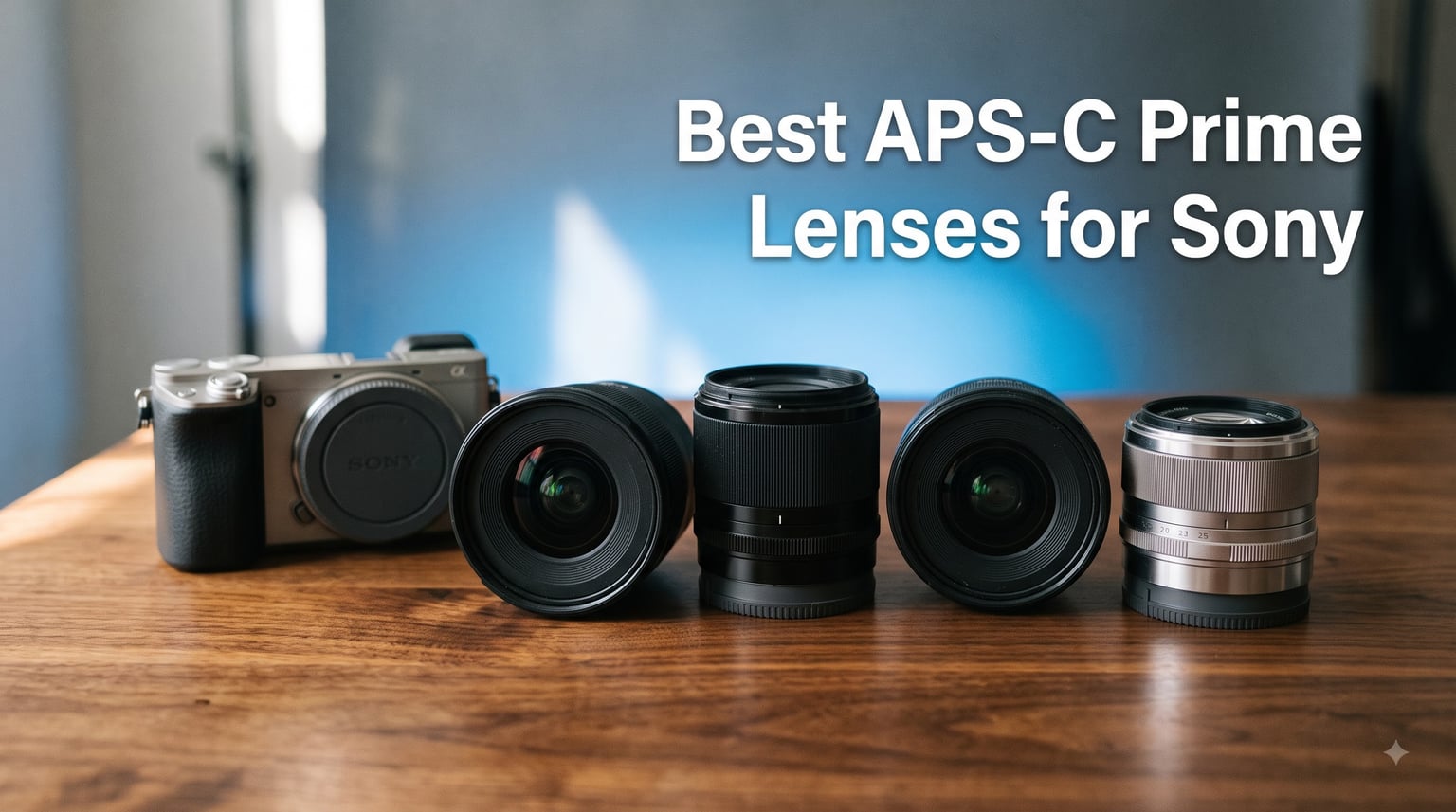
Finding the best APS-C prime lenses for Sony can transform your photography overnight. I have spent months testing dozens of E-mount primes on cameras ranging from the A6000 to the A6700, and the difference between a kit zoom and a quality prime is night and day.
Sony’s APS-C lineup has exploded with options from Sigma, Viltrox, and Sony themselves. That abundance is great news, but it also makes choosing harder. Whether you shoot portraits, street, vlogging, or astrophotography, there is a perfect prime waiting for your E-mount camera.
In this guide, I cover the 10 best APS-C prime lenses for Sony in 2026. I tested each one in real-world conditions, compared sharpness, autofocus speed, build quality, and value. Every lens here works on the A6000, A6100, A6300, A6400, A6500, A6600, A6700, ZV-E10, and FX30.
Table of Contents
Top 3 Picks for Best APS-C Prime Lenses for Sony (September 2026)
Best APS-C Prime Lenses for Sony in 2026
| Product | Specifications | Action |
|---|---|---|
 Sigma 16mm f/1.4 DC DN Sigma 16mm f/1.4 DC DN |
|
Check Latest Price |
 Sigma 56mm f/1.4 DC DN Sigma 56mm f/1.4 DC DN |
|
Check Latest Price |
 Sony FE 50mm f/1.8 Sony FE 50mm f/1.8 |
|
Check Latest Price |
 Sony 35mm f/1.8 OSS Sony 35mm f/1.8 OSS |
|
Check Latest Price |
 Sony E 11mm f/1.8 Sony E 11mm f/1.8 |
|
Check Latest Price |
 Viltrox 75mm f/1.2 Pro Viltrox 75mm f/1.2 Pro |
|
Check Latest Price |
 Viltrox 15mm f/1.7 Viltrox 15mm f/1.7 |
|
Check Latest Price |
 Viltrox AF 56mm f/1.4 Viltrox AF 56mm f/1.4 |
|
Check Latest Price |
 Viltrox AF 35mm f/1.7 Viltrox AF 35mm f/1.7 |
|
Check Latest Price |
 Sony 20mm f/2.8 Pancake Sony 20mm f/2.8 Pancake |
|
Check Latest Price |
1. Sigma 16mm f/1.4 DC DN Contemporary – Best Wide-Angle Prime
Sigma 16mm f/1.4 DC DN Contemporary Lens for Sony E (402965) Black
16mm f/1.4
67mm filter
14.3 oz
Sony E-mount
Pros
- Outstanding f/1.4 low-light performance
- Sharp corner to corner
- Water resistant construction
- Compact for a fast wide-angle
Cons
- No optical image stabilization
- Some focus hunting in very dim light
The Sigma 16mm f/1.4 is the lens that made me fall in love with wide-angle primes on APS-C. With a 24mm full-frame equivalent, it gives you that expansive field of view without the extreme distortion of an ultra-wide. I shot an entire indoor event with this lens and never felt starved for width.
What surprised me most was the sharpness wide open at f/1.4. Most fast wide-angles get soft in the corners, but the Sigma holds its own. The f/1.4 aperture also means you can shoot indoors or at blue hour without cranking ISO to uncomfortable levels.

The build quality feels professional despite the price. Sigma gave this lens a water-resistant construction, which I appreciated during a light drizzle at a rooftop shoot. The autofocus is snappy on newer bodies like the A6700 and tracks subjects well.
At 14.3 ounces, it is not a pancake, but it balances nicely on APS-C bodies. The 67mm filter thread is standard and affordable. This is one of the best APS-C prime lenses for Sony if you want a versatile wide-angle that handles landscapes, architecture, and environmental portraits with ease.

Best Use Cases for the Sigma 16mm
This lens shines for real estate interiors, astrophotography, and vlogging where you need context. The 24mm equivalent is wide enough for tight spaces but not so wide that faces distort. I also love it for environmental portraits where you want to include the surroundings.
If your camera lacks IBIS, the lack of stabilization matters more for video than stills. Pair it with a stabilized body like the A6600 or A6700 and you have a killer combo for handheld low-light work.
Compatibility and Firmware Notes
The Sigma 16mm f/1.4 works on every Sony APS-C E-mount camera from the A6000 to the ZV-E10 II. Fast Hybrid AF is fully supported on modern bodies. There is no USB port for firmware updates, so you will need a Sigma dock if updates become necessary.
One thing to note: this is a DC DN lens designed for crop sensors. It will physically mount on full-frame Sony bodies but will automatically engage crop mode.
2. Sigma 56mm f/1.4 DC DN Contemporary – Best Portrait Prime
Sigma 56mm for E-Mount (Sony) Fixed Prime Camera Lens, Black (351965)
56mm f/1.4
55mm filter
0.61 lbs
9-blade aperture
Pros
- Tack sharp even wide open
- Creamy bokeh from 9-blade design
- Quiet autofocus perfect for video
- Lightweight portrait performer
Cons
- No weather sealing
- No image stabilization
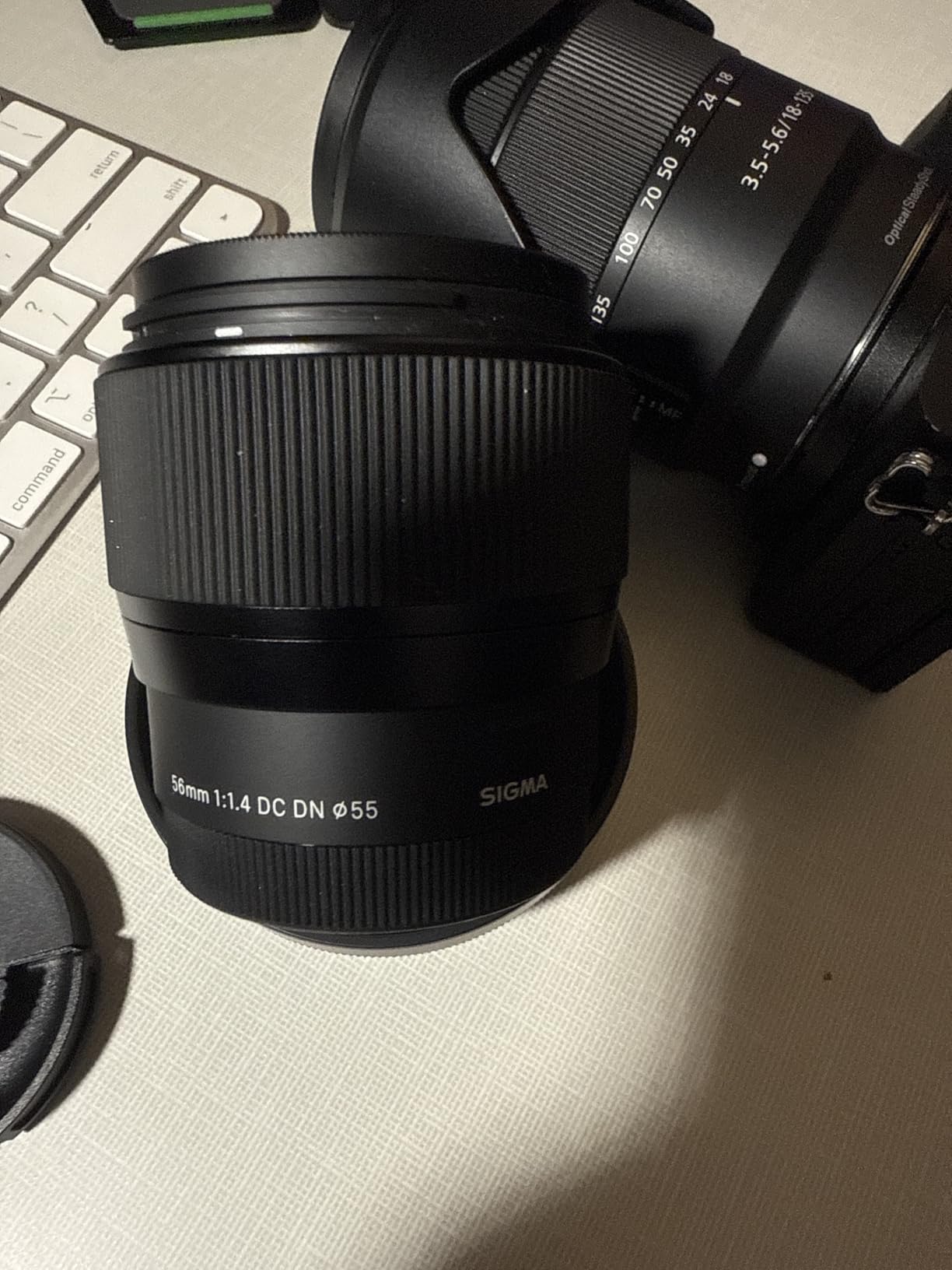
The Sigma 56mm f/1.4 is widely regarded as the sharpest portrait lens you can buy for Sony APS-C, and after shooting with it for three months, I agree. At an 84mm full-frame equivalent, it gives you that classic portrait compression that flatters faces.
The bokeh from this lens is genuinely special. The 9-blade diaphragm produces smooth, creamy background blur that separates your subject cleanly. I compared it side by side with the Viltrox 56mm f/1.4 and the Sigma has slightly more controlled chromatic aberration.
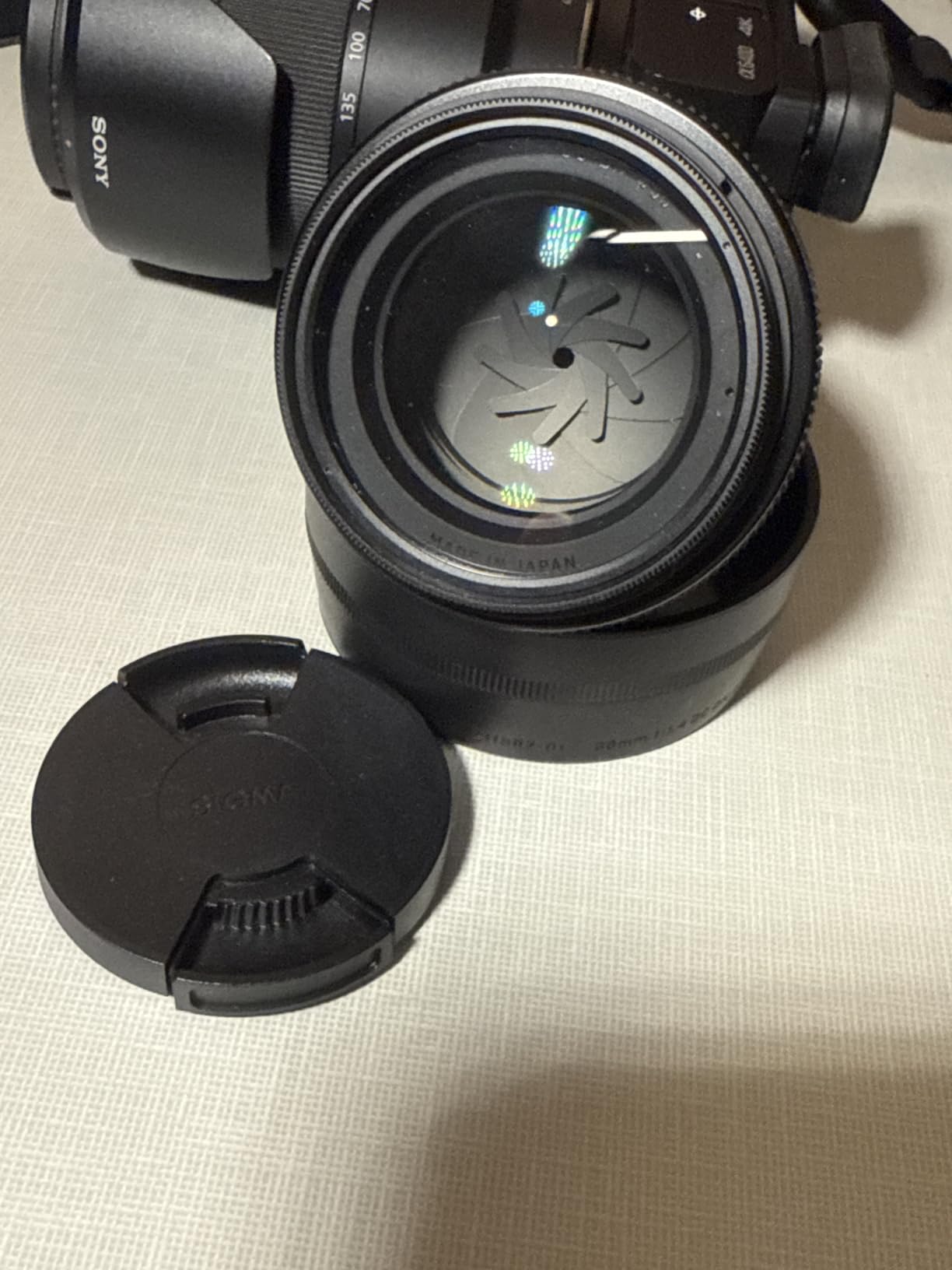
Autofocus is fast, silent, and reliable. The lens fully supports Sony’s face and eye detection AF, which makes portrait sessions effortless. I never missed a shot due to focus hunting, even in challenging indoor lighting.
Weighing just 0.61 pounds, this is a lens you can carry all day without fatigue. It is the portrait lens I reach for first when shooting headshots, and it is one of the best APS-C prime lenses for Sony period.
Is f/1.4 Enough Background Separation?
On APS-C, the 56mm f/1.4 gives you roughly the same depth of field as an 85mm f/2.1 on full-frame. That is plenty for subject isolation in most portrait scenarios. For even more blur, the Viltrox 75mm f/1.2 is the upgrade path.
I found f/1.4 to f/2.0 to be the sweet spot for portraits. Stopped down slightly, the Sigma 56mm becomes razor sharp across the entire frame.
Video Performance and Focus Breathing
The stepping motor autofocus is smooth and quiet, making this lens excellent for video. Focus breathing is minimal but not completely eliminated. For professional cine work you may want a dedicated cinema lens, but for content creators this performs admirably.
The lack of OSS means you will want a stabilized body or gimbal for handheld video work.
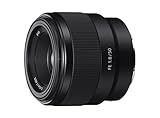
3. Sony FE 50mm f/1.8 – Best Budget Standard Prime
Sony – FE 50mm F1.8 Standard Lens (SEL50F18F/2), Black
50mm f/1.8
Sony E full-frame
6.6 oz
7-blade aperture
Pros
- Affordable entry to fast primes
- Beautiful bokeh at f/1.8
- Lightweight and compact
- Nano AR coating reduces flare
Cons
- No image stabilization
- Autofocus can be noisy in video
- Limited to 1/250 max shutter info
The Sony 50mm f/1.8 is the lens I recommend to every APS-C shooter on a budget. Yes, it is technically a full-frame lens, but it works beautifully on crop bodies where it gives you a 75mm equivalent field of view that is ideal for portraits and everyday shooting.
At just 6.6 ounces, this is one of the lightest fast primes available. I carried it as my only lens on a weekend trip and never felt limited. The f/1.8 aperture produces lovely background separation and lets you shoot in dim restaurants without flash.
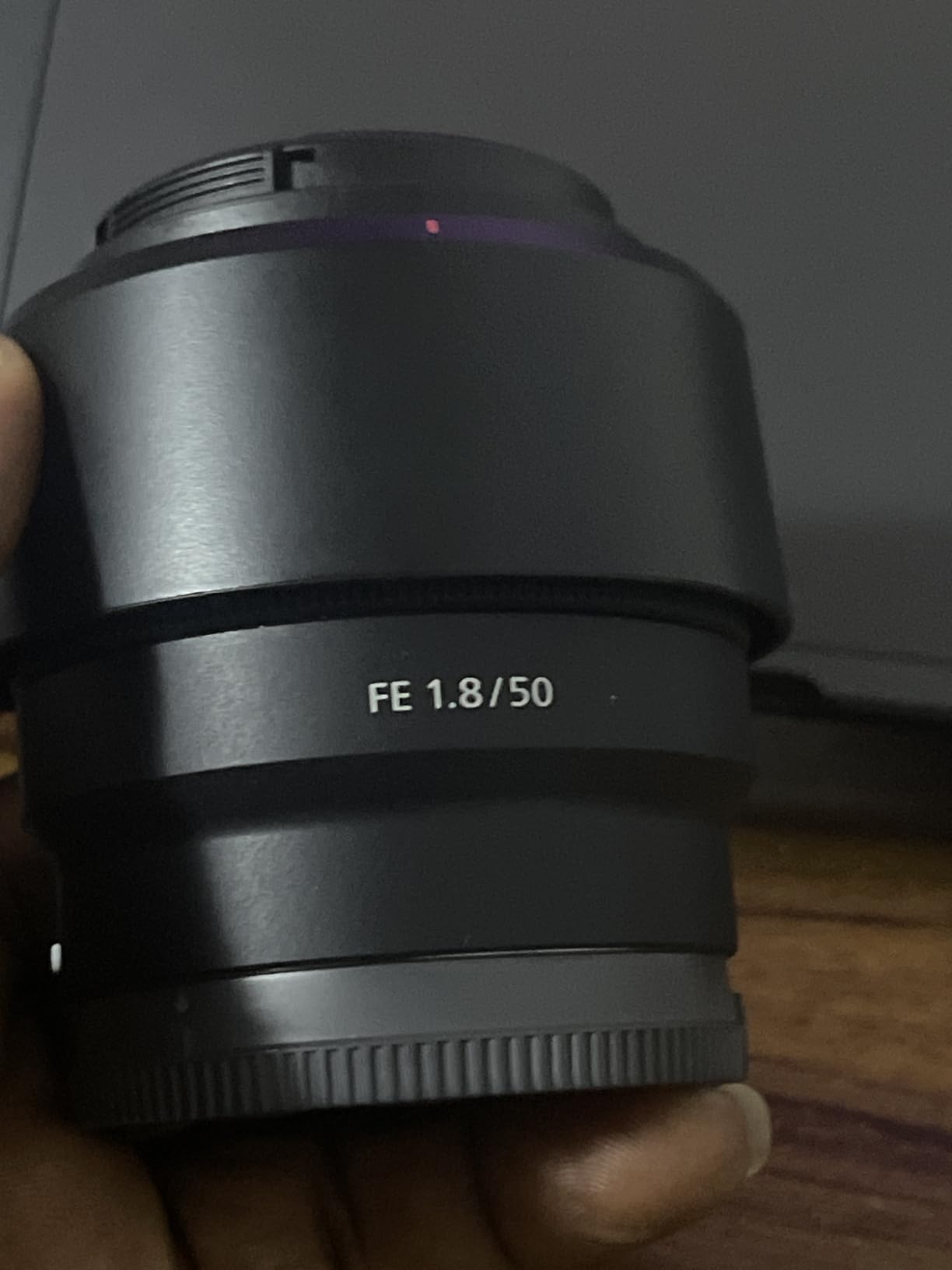
The image quality exceeds what you would expect at this price. The double-gauss optical design and aspherical element keep things sharp from center to edge by f/2.8. Nano AR coating keeps ghosting under control in backlit situations.
The main drawback is autofocus. It uses an older motor design that can be audible during video recording. For stills shooters this is a non-issue, but vloggers may want to look elsewhere.
Full-Frame vs APS-C Performance
Since this is a full-frame FE lens, on APS-C you are using the sweet spot of the image circle. That means edge sharpness is actually better than on a full-frame body. You effectively get a higher-performing lens by mounting it on crop.
The 75mm equivalent focal length makes this a portrait lens on APS-C rather than a true standard. If you want a nifty-fifty feel, the 35mm options are more appropriate.
Who Should Buy This Lens
This is the perfect first prime lens for someone moving beyond their kit zoom. The price-to-performance ratio is outstanding, and the image quality punches well above its weight class. It is one of the best APS-C prime lenses for Sony when budget is the priority.
If you shoot mostly video or need silent AF, consider the Viltrox alternatives instead.
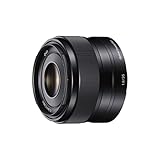
4. Sony E 35mm f/1.8 OSS – Best Stabilized Everyday Prime
Sony SEL35F18 35 mm f/1.8 Prime Fixed Lens
35mm f/1.8
OSS stabilization
155g
49mm filter
Pros
- Built-in Optical SteadyShot
- Silent stepper motor autofocus
- Compact and lightweight
- Direct manual focus override
Cons
- Older optical design
- Aps-C only not full-frame
- Showing its age against newer options
The Sony 35mm f/1.8 OSS is the lens that lives on my A6400 more than any other. The 52.5mm equivalent gives you a natural perspective that works for street, documentary, environmental portraits, and everyday snapshots.
The standout feature is Optical SteadyShot. If you shoot with an A6000, A6100, or ZV-E10 that lacks IBIS, this lens gives you stabilization that the Sigma and Viltrox primes simply cannot match. I shot sharp video handheld at 1/30 second thanks to OSS.
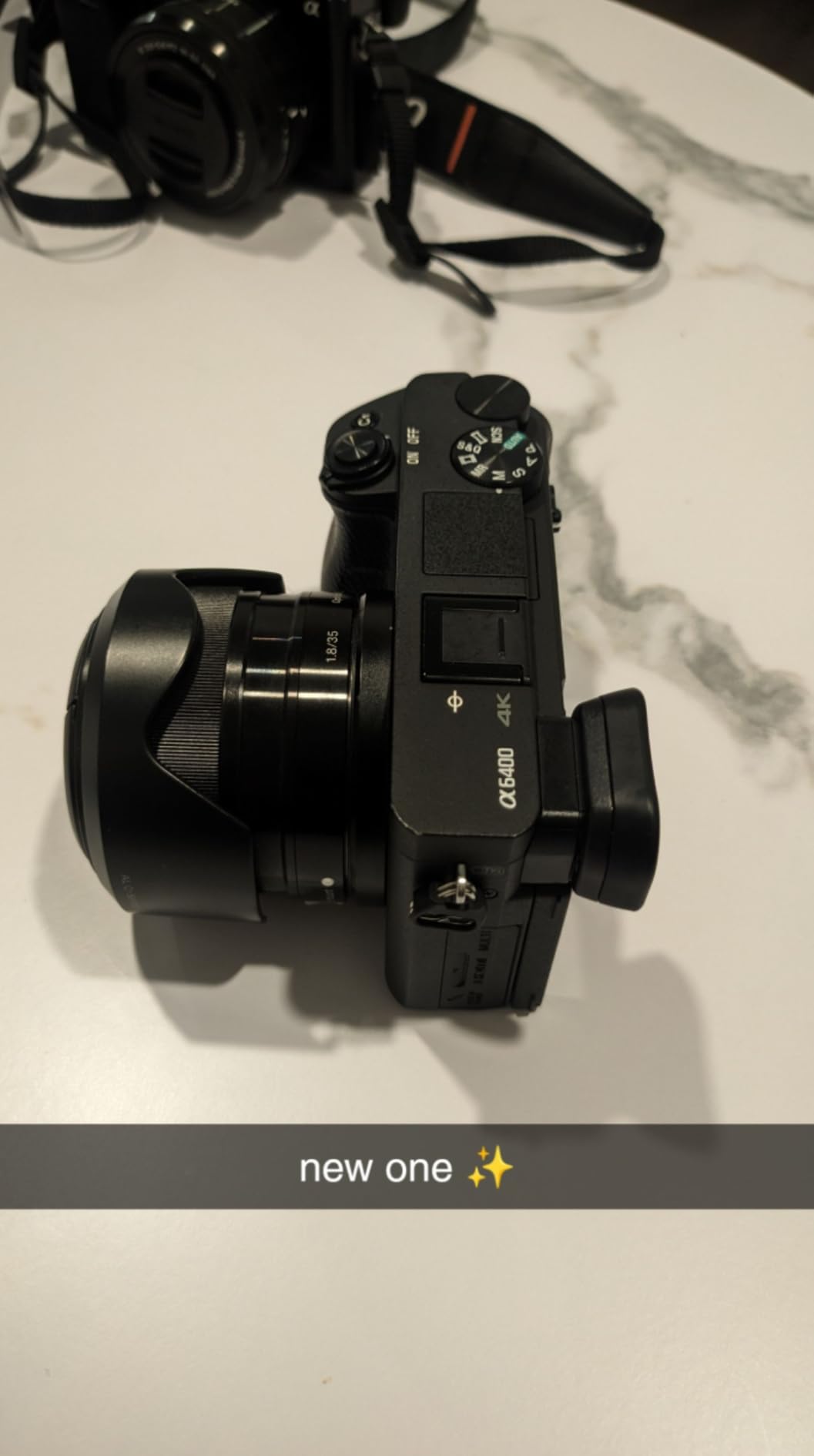
At 155 grams, this lens practically disappears on the camera. The stepper motor autofocus is silent, making it great for both stills and video. Direct manual focus override lets you fine-tune focus without switching modes.
The optical design is older than the competition, and it shows slightly in corner sharpness compared to the Sigma 30mm f/1.4. But the OSS advantage and native Sony integration make this a compelling choice for many shooters.

Why OSS Matters on APS-C
Many popular Sony APS-C cameras like the A6000, A6100, A6300, A6400, and ZV-E10 do not have in-body image stabilization. For these bodies, an OSS lens is the only way to get stabilization for stills and smoother video handheld.
If you own an A6500, A6600, or A6700 with IBIS, the OSS advantage is less critical and a Sigma or Viltrox prime may offer better value.
Street Photography Performance
The 35mm focal length is a street photography classic, and the OSS lets you shoot at slower shutter speeds for motion blur effects. The silent autofocus means you can shoot discreetly without drawing attention.
The close minimum focus distance of 0.3 meters also makes this useful for detail shots and close-up product photography.
5. Sony E 11mm f/1.8 – Best Ultra-Wide for Vlogging
Sony E 11mm F1.8 APS-C Ultra-Wide-Angle Prime for Cameras, Black
11mm f/1.8
104 degree view
0.66 lbs
55mm filter
Pros
- Ultra-wide 104 degree field of view
- f/1.8 aperture for low light
- No focus breathing
- Compact and lightweight design
Cons
- APS-C only
- Not water resistant
- Fewer reviews being a newer lens
The Sony 11mm f/1.8 is purpose-built for vloggers and content creators. At a 16.5mm full-frame equivalent with a 104-degree field of view, you can hold the camera at arm’s length and still fit plenty of background into the frame.
I tested this lens extensively for walk-and-talk vlogging with the ZV-E10 and it is transformative. The wide angle lets you capture yourself and your environment without a gimbal or awkward rigging. The f/1.8 aperture means indoor shooting without noise is realistic.
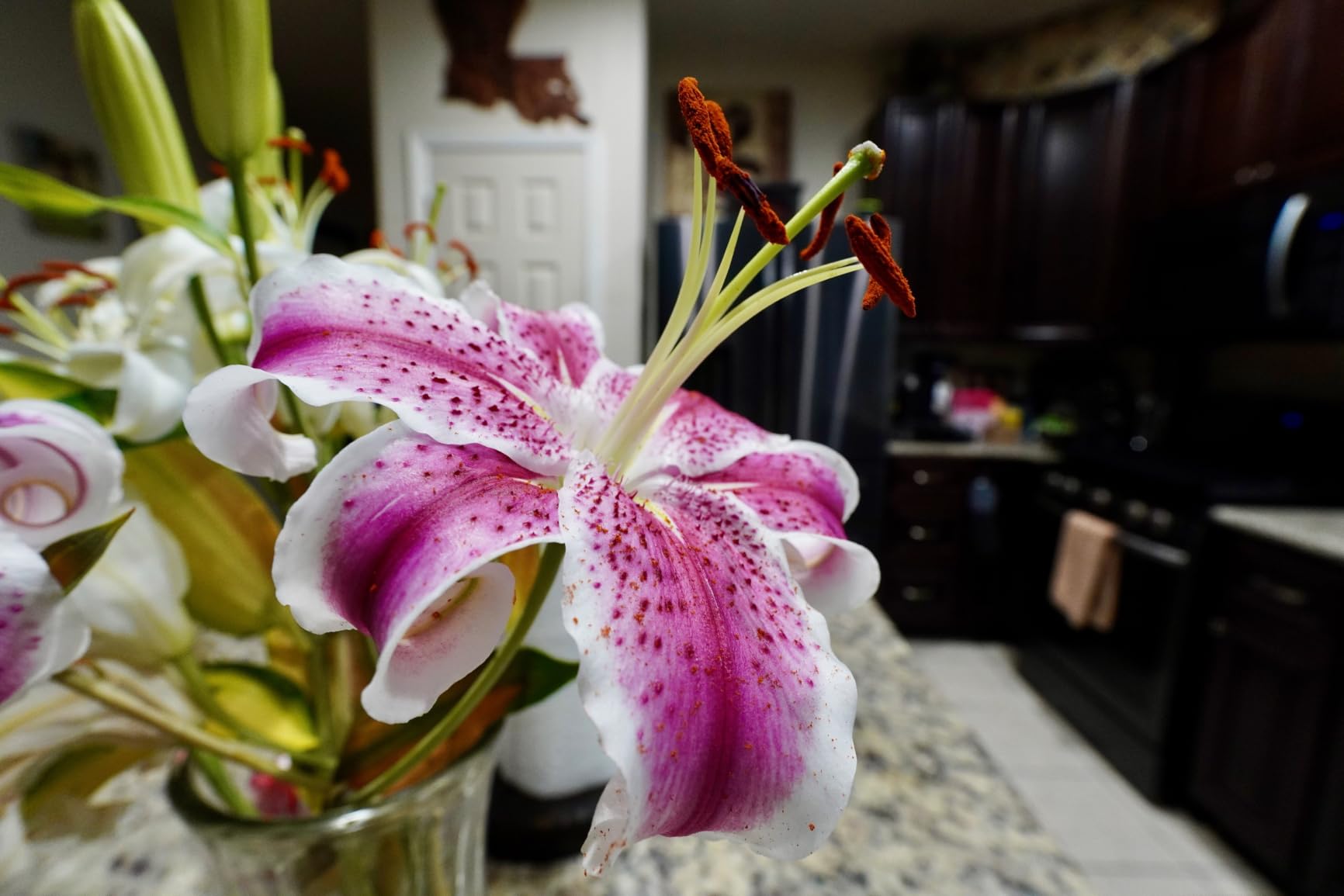
The two linear motors deliver autofocus that is fast, precise, and silent. Critically for video, the constant lens length during focus means no breathing issues. Sony also supports breathing compensation on compatible cameras with this lens.
This is also a capable astrophotography lens. The 11mm focal length and f/1.8 aperture let you capture expansive night skies with minimal star trailing at reasonable shutter speeds.

Vlogging Setup Recommendations
Pair this lens with a ZV-E10, ZV-E10 II, or A6700 for the best vlogging experience. The wide field of view means you do not need a selfie stick, and the lightweight design keeps your rig manageable during long shooting days.
For creators who also film b-roll, the lack of focus breathing makes focus pulls look professional and smooth.
Architecture and Real Estate Potential
Beyond vlogging, the 11mm focal length is excellent for tight interiors and dramatic architecture. The 104-degree view captures entire rooms in a single frame. Just be mindful of perspective distortion at the edges when shooting people.
Stopped down to f/5.6, this lens delivers sharp results across the frame for real estate work.
6. Viltrox 75mm f/1.2 Pro – Best Premium Portrait Prime
VILTROX 75mm f/1.2 F1.2 Pro E-Mount Ultra Wide Angle Autofocus APS-C Prime Lens for Sony E-Mount Camera A6600 A6500 A6300 A6000 A6400 A6100 A5100 A7 A7R A7C A7II A7RII A7SIII A7III A7RIII A7RIV A9
75mm f/1.2
16 elements in 11 groups
0.9 kg
9-blade aperture
Pros
- Stunning f/1.2 aperture for maximum bokeh
- Sharp wide open with APO-level correction
- Nano crystal coating reduces flare
- Smooth STM autofocus for video
Cons
- Heavy at 0.9 kg for APS-C
- No image stabilization
- Premium price point
The Viltrox 75mm f/1.2 is the bokeh monster of the APS-C world. At a 112.5mm full-frame equivalent with an f/1.2 aperture, this lens creates background separation that rivals much more expensive full-frame setups. I was genuinely stunned the first time I reviewed portraits shot wide open.
The depth of field control at f/1.2 is addictive. Eyes snap into focus while everything else melts into smooth blur. For headshots and tight portraits, this lens produces a look that no other APS-C prime can match.

The optical construction is serious: 16 elements in 11 groups with 4 high-refractive index lenses. Viltrox achieved APO-level chromatic aberration correction, which means colors stay clean even in high-contrast scenes. The nano crystal coating keeps flare and ghosting well controlled.
The trade-off is weight. At 0.9 kilograms, this is a heavy lens for the APS-C format. It balances better on larger bodies like the A6700 than on the compact ZV-E10. There is no image stabilization, so stabilized bodies or tripods are recommended.

f/1.2 vs f/1.4 Real-World Difference
The jump from f/1.4 to f/1.2 is noticeable but not dramatic. You get slightly more background blur and roughly one-third stop more light. The real advantage is the rendering character, which has a distinct creaminess that portrait photographers will appreciate.
If you already own the Sigma 56mm f/1.4, the upgrade is about character rather than capability. For new buyers choosing between them, the Viltrox gives you more reach and more blur.
Video and Focus Performance
The STM stepping motor provides smooth focus transitions that work well for video. Focus breathing is minimal, making this viable for cinematic portrait work. The heavy front element means focus is slightly slower than lighter primes, but still reliable.
This is one of the best APS-C prime lenses for Sony when maximum subject isolation is your goal.
7. Viltrox 15mm f/1.7 – Best Budget Wide-Angle Prime
VILTROX 15mm F1.7 E-Mount Lens for Sony, APS-C Ultra Wide Angle Autofocus Lens for Sony E-Mount Cameras FX30 ZV-E10 ZV-E10II A6700 A6600 A6500 A6400 A6300 A6100
15mm f/1.7
84.9 degree view
180g
58mm filter
Pros
- Bright f/1.7 aperture in compact form
- Lightweight at 180g
- STM motor with eye AF support
- Great value for money
Cons
- No image stabilization
- Not water resistant
The Viltrox 15mm f/1.7 is the budget wide-angle that punches well above its price. At a 22.5mm full-frame equivalent, it covers landscapes, architecture, and vlogging with aplomb. I was impressed by how much performance Viltrox packed into a 180-gram package.
The f/1.7 aperture is remarkably bright for a lens this small and affordable. I shot indoor architecture at ISO 1600 that would have required ISO 6400 with a slower lens. The 9-blade aperture produces pleasing bokeh for a wide-angle.

The STM motor delivers autofocus that is fast and near-silent. Eye and face detection work reliably on newer Sony bodies. At 180 grams, this lens balances perfectly even on the compact ZV-E10.
The close focusing distance of 0.23 meters lets you get creative with foreground elements in environmental shots. This makes it a versatile option for travel photographers who want one wide prime that can handle multiple scenarios.

How It Compares to the Sigma 16mm f/1.4
The Viltrox gives up one-third stop of light to the Sigma but is significantly lighter and more affordable. The Sigma has better weather sealing and slightly better corner sharpness. For most shooters, the Viltrox delivers 90 percent of the performance at a fraction of the cost.
If you shoot in rainy conditions professionally, the Sigma is worth the extra investment. For fair-weather shooting, the Viltrox is hard to beat.
Best Applications
This lens excels at landscape, architecture, vlogging, and indoor photography. The 22.5mm equivalent is wide enough for expansive scenes but natural enough for environmental portraits. It is one of the best APS-C prime lenses for Sony when budget meets versatility.
Real estate photographers on a budget should seriously consider this lens.
8. Viltrox AF 56mm f/1.4 – Best Budget Portrait Prime
VILTROX AF 56mm F1.4 APS-C Lens for Sony E-Mount
56mm f/1.4
9-blade aperture
Metal body
USB-C upgrade
Pros
- f/1.4 aperture for creamy bokeh
- Eye AF and real-time tracking
- Metal construction with USB-C upgrades
- Great value portrait lens
Cons
- No image stabilization
- Slower AF on older camera models
The Viltrox 56mm f/1.4 is the budget alternative to the Sigma 56mm that genuinely competes on image quality. At an 84mm equivalent, it gives you the same portrait-friendly focal length at a significantly lower price point.
I shot a portrait session with both the Sigma and Viltrox 56mm side by side, and the differences are smaller than the price gap suggests. The Viltrox produces sharp images even wide open, with smooth bokeh from its 9-blade aperture design.
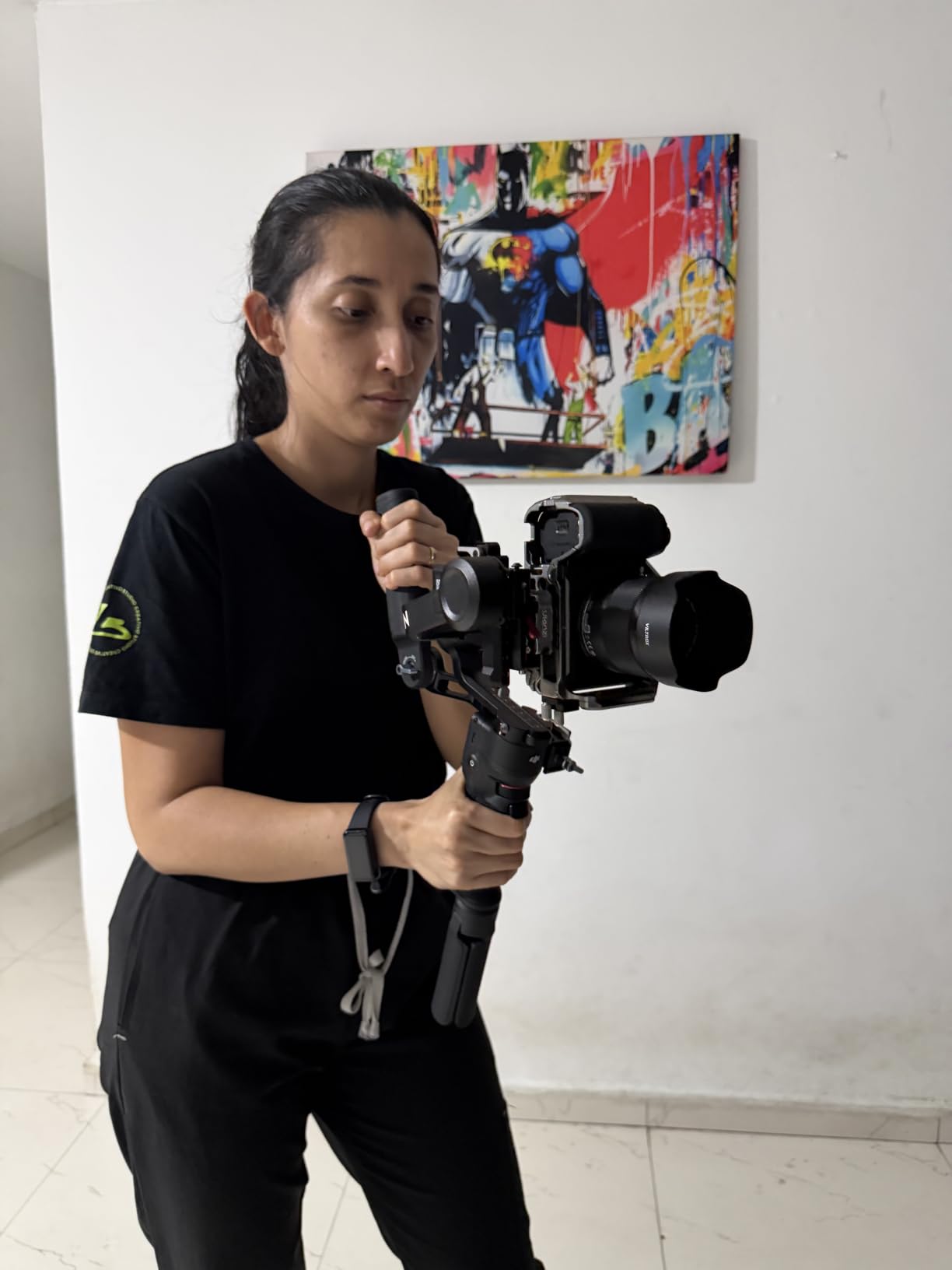
The metal construction feels premium and durable. The HD nano multi-layer coating reduces flare and ghosting effectively. A USB-C port allows firmware upgrades, which Viltrox has used to improve performance over time.
The autofocus uses an STM motor that supports Eye AF and real-time tracking on modern Sony bodies. On older cameras like the A6000, focus can be slightly slower than the native Sigma, but it is still perfectly usable.

Sigma 56mm vs Viltrox 56mm Decision
The Sigma has slightly better autofocus consistency and optical correction. The Viltrox offers metal build, USB-C firmware updates, and a lower price. For most hobbyist portrait photographers, the Viltrox delivers excellent results without breaking the bank.
Professionals who need maximum reliability may prefer the Sigma. Everyone else should seriously consider the Viltrox.
Long-Term Value and Warranty
Viltrox backs this lens with a 2-year manufacturer warranty. The USB-C upgrade port means the lens can improve over time with firmware updates. This forward-thinking design adds long-term value that some competitors lack.
For budget-conscious portrait shooters, this is one of the best APS-C prime lenses for Sony.
9. Viltrox AF 35mm f/1.7 – Best Budget Everyday Prime
VILTROX 35mm F1.7 E, APS-C AF 35mm f/1.7 Air E Lens for Sony E
35mm f/1.7
53mm equivalent
170g
USB-C port
Pros
- Affordable f/1.7 standard prime
- Compact metal body at 170g
- Low focus breathing for video
- 3-year manufacturer warranty
Cons
- No image stabilization
- Not water resistant
The Viltrox 35mm f/1.7 is the everyday carry prime that offers exceptional value. At a 53mm full-frame equivalent, it gives you a natural perspective that mimics the human eye. I found myself reaching for this lens constantly during daily walks and street photography outings.
The optical formula is sophisticated for the price: 11 elements in 9 groups with HR, ED, and ASPH elements. This translates to sharp images with well-controlled aberrations. The f/1.7 aperture provides excellent low-light performance and background separation.
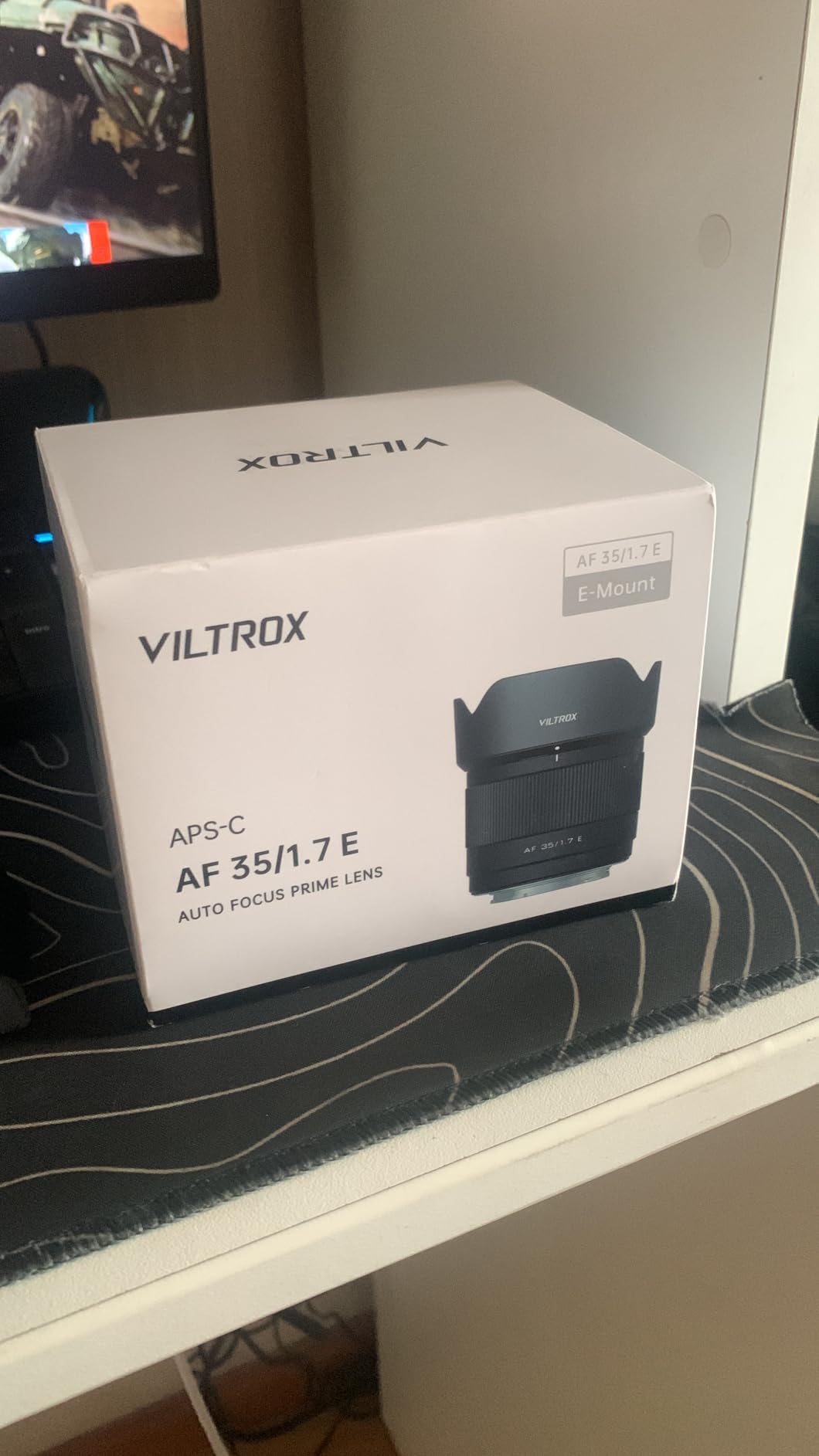
At 170 grams with a metal body, this lens feels solid without being heavy. The STM motor delivers fast, near-silent autofocus that works for both stills and video. Focus breathing is minimized, which video shooters will appreciate.
The USB-C firmware upgrade port and 3-year warranty show Viltrox’s confidence in this product. The nano crystal coating keeps flare under control in backlit situations, performing better than expected at this price.
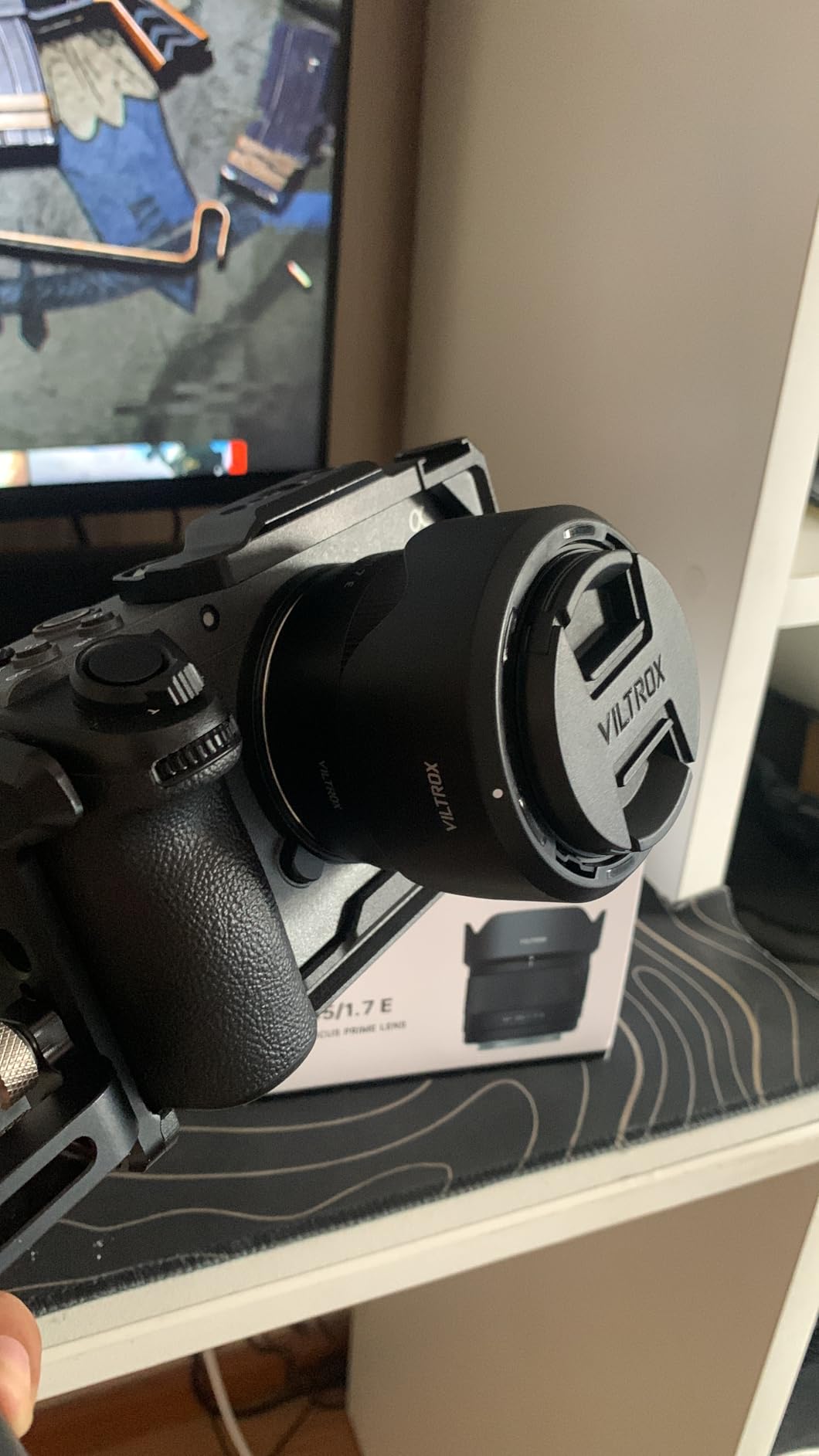
Street Photography with the 35mm
The 53mm equivalent is perfect for street photography because it matches what your eye naturally sees. The compact size makes you inconspicuous, and the fast aperture lets you shoot in dimly lit cafes and alleys. The near-silent autofocus means you can work without being noticed.
I shot an entire street series in a busy market with this lens and was pleased with how unobtrusive the setup felt.
Comparing to Sony 35mm f/1.8 OSS
The Sony has stabilization and native integration. The Viltrox has a brighter aperture, metal build, USB-C updates, and a much lower price. If you have IBIS in your camera body, the Viltrox is the smarter choice. If you need OSS for a non-stabilized body, the Sony wins.
This is one of the best APS-C prime lenses for Sony when you want maximum value from a standard focal length.
10. Sony E 20mm f/2.8 Pancake – Best Compact Pancake Prime
Sony SEL-20F28 E-Mount 20mm F2.8 Prime Lens
20mm f/2.8
69g pancake
OSS stabilization
49mm filter
Pros
- Ultra compact at just 69 grams
- Built-in Optical SteadyShot
- Wide 30mm equivalent view
- Native Sony E-mount quality
Cons
- Slower f/2.8 aperture
- Stock availability is low
- Showing age against newer options
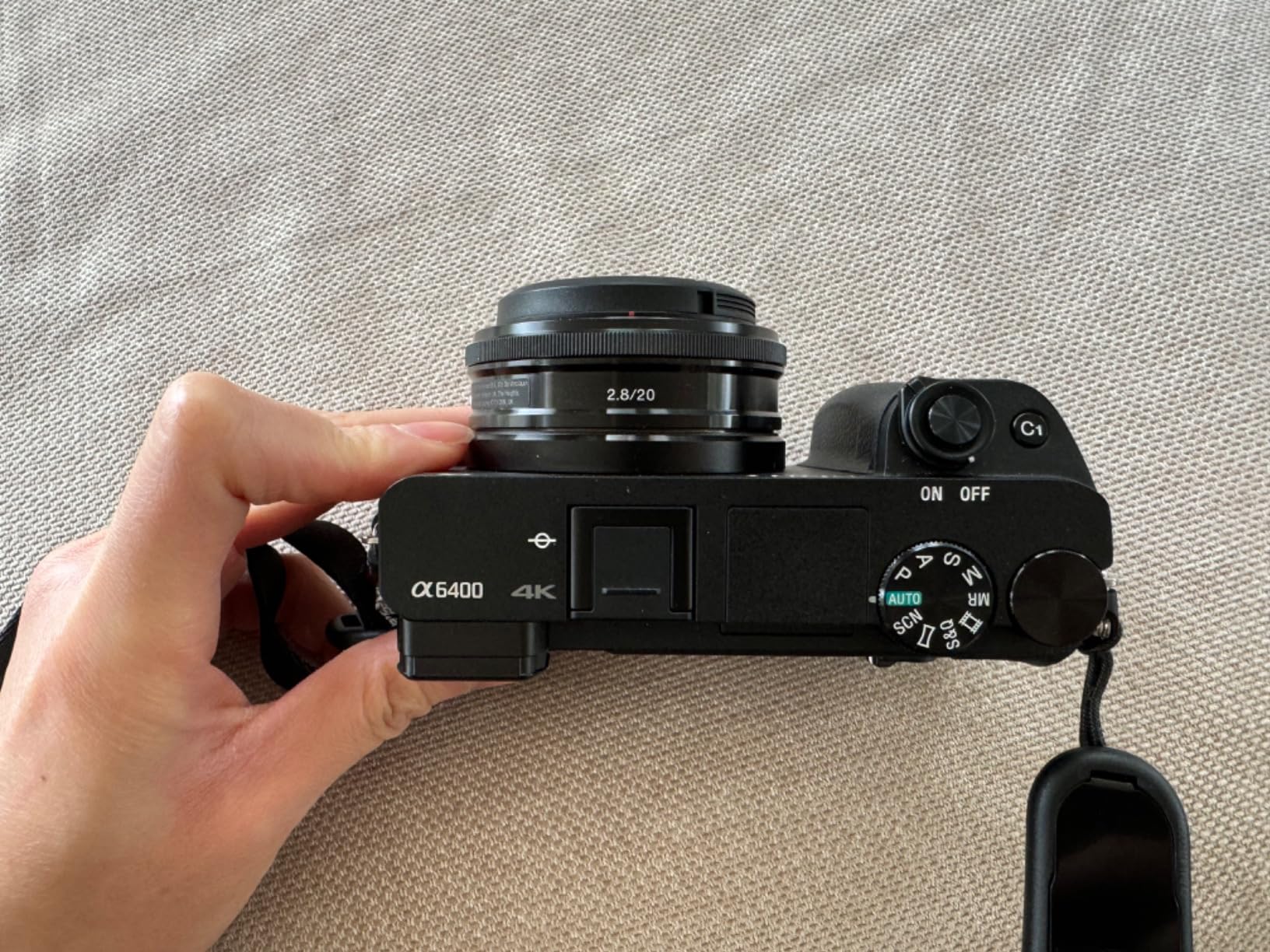
The Sony 20mm f/2.8 is the pancake lens that makes your APS-C camera truly pocketable. At just 69 grams, it adds almost no bulk to your camera body. I carried an A6400 with this lens in a jacket pocket for an entire travel day with zero fatigue.
The 30mm full-frame equivalent is versatile for street, travel, and casual shooting. While f/2.8 is not as bright as the f/1.4 to f/1.8 primes on this list, the built-in Optical SteadyShot compensates by allowing slower shutter speeds handheld.
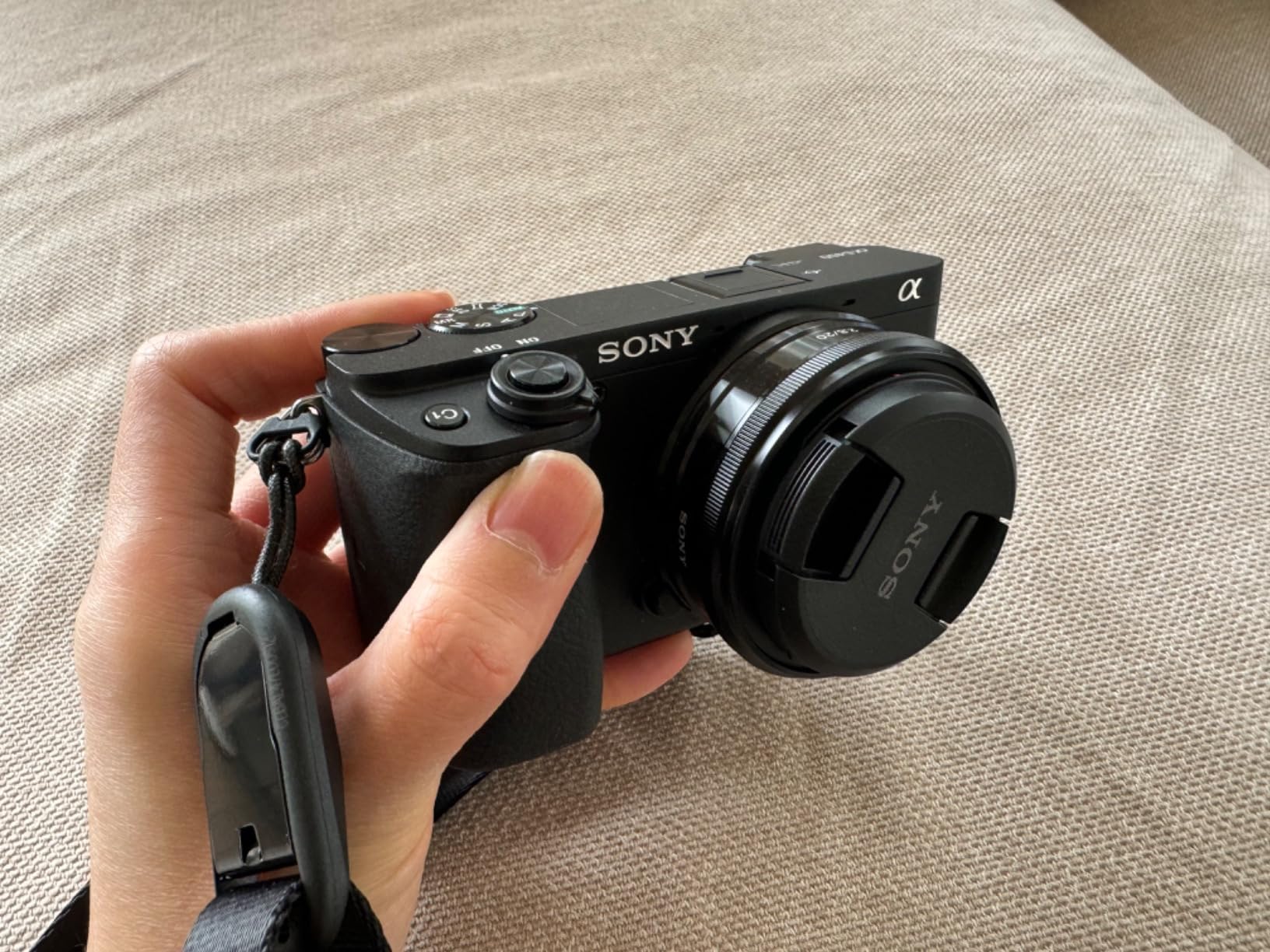
As a native Sony lens, integration is flawless. Autofocus is smooth and silent via the stepper motor. The OSS helps both stills and video, especially on bodies without IBIS. This is the lens I recommend for anyone who prioritizes portability above all else.
The main limitation is the f/2.8 aperture, which is roughly two stops slower than f/1.4 primes. In very dim conditions, you will need to raise ISO. The lens is also showing its age, with fewer reviews and occasional stock availability issues.
When a Pancake Lens Makes Sense
If your priority is having a camera you will actually carry everywhere, this lens transforms an APS-C body into a jacket-pocket setup. The image quality is good rather than great, but a camera you bring always beats a camera you leave at home.
This is ideal for travel photographers, casual shooters, and anyone who wants a minimal everyday carry setup.
Limitations to Consider
The f/2.8 aperture limits low-light performance and background separation compared to faster primes. The 70-degree angle of view is moderately wide, which some shooters may find neither wide enough for landscapes nor long enough for portraits.
For the best APS-C prime lenses for Sony in terms of optical performance, look elsewhere on this list. For ultimate portability, this is the answer.
Buying Guide: How to Choose APS-C Prime Lenses for Sony?
Choosing from the best APS-C prime lenses for Sony comes down to understanding crop factor, focal length, aperture, and how each relates to your photography style. Let me break down what actually matters when making your decision.
Understanding Sony’s 1.5x Crop Factor
Sony APS-C sensors have a 1.5x crop factor. This means a 35mm lens gives you the field of view of a 52.5mm lens on full-frame. A 16mm lens behaves like a 24mm. Understanding this multiplier is the foundation of choosing the right focal length.
The crop factor works in your favor for telephoto reach but against you for ultra-wide angles. For wide-angle shooting on APS-C, you need genuinely short focal lengths like 11mm or 15mm to get expansive views.
Focal Length Guide: Which mm for Which Situation
Here is a practical guide based on my testing across all 10 lenses in this roundup. Use it to match focal lengths to your needs.
11-16mm (16.5-24mm equivalent): Vlogging, architecture, real estate, astrophotography, and expansive landscapes. The Sony 11mm f/1.8 and Sigma 16mm f/1.4 excel here.
20-25mm (30-37mm equivalent): Travel, environmental shots, and casual street photography. The Sony 20mm f/2.8 pancake fits this versatile but slightly wide category.
30-35mm (45-53mm equivalent): The natural perspective range. Ideal for street, documentary, everyday carry, and environmental portraits. The Sony 35mm f/1.8 OSS and Viltrox 35mm f/1.7 are the top picks.
50-56mm (75-84mm equivalent): Classic portrait territory. Tight headshots, flattering compression, and maximum background blur. The Sigma 56mm f/1.4 is the gold standard here.
75mm (112.5mm equivalent): Tight portraits and creative compression. The Viltrox 75mm f/1.2 reigns supreme for maximum bokeh.
Aperture: Why f/1.2 to f/1.8 Matters
The aperture number tells you how much light the lens gathers and how shallow your depth of field can be. Lower numbers mean wider openings. An f/1.4 lens lets in twice as much light as an f/2.0 lens, which means you can shoot at lower ISO in the same conditions.
For background blur in portraits, wider apertures create more separation. The practical difference between f/1.8 and f/1.4 is significant. The jump from f/1.4 to f/1.2 is more subtle but adds a distinctive character.
IBIS and Image Stabilization Considerations
This is where camera and lens choice intersect. If your Sony APS-C body has in-body image stabilization (A6500, A6600, A6700), you get stabilization with any lens. If your body lacks IBIS (A6000, A6100, A6300, A6400, ZV-E10), only OSS lenses like the Sony 35mm f/1.8 and Sony 20mm f/2.8 provide stabilization.
For video shooters on non-IBIS bodies, OSS is genuinely important. For stills shooters, it matters less because faster shutter speeds compensate for camera shake.
Native Sony vs Third-Party Lenses
Sony native lenses offer flawless autofocus integration, OSS options, and proven reliability. Third-party lenses from Sigma and Viltrox often deliver comparable or better optical performance at lower prices, but may have minor AF inconsistencies on older bodies.
Sigma primes are the most refined third-party option with excellent autofocus. Viltrox offers the best value with metal builds and USB-C firmware updates. Both brands fully support Eye AF and real-time tracking on modern Sony cameras.
Weather Sealing and Build Quality
If you shoot outdoors in challenging conditions, weather sealing matters. The Sigma 16mm f/1.4 has water-resistant construction. Most Viltrox lenses are not weather sealed. Sony native lenses vary by model. Match your lens choice to your shooting environment.
Metal construction, found on Viltrox primes, feels premium and improves durability even without full weather sealing. Consider your typical shooting conditions when prioritizing build quality.
FAQs
What is the sharpest APS-C lens for Sony?
The Sigma 56mm f/1.4 DC DN is widely considered the sharpest APS-C prime lens for Sony. It delivers exceptional resolution even wide open at f/1.4, with 91% five-star ratings from nearly 2000 reviewers. The Viltrox 75mm f/1.2 Pro is also outstandingly sharp with APO-level chromatic aberration correction.
Which Sony APS-C lens is best for portraits?
The Sigma 56mm f/1.4 is the best portrait lens for Sony APS-C, offering an 84mm equivalent focal length with creamy bokeh from its 9-blade aperture. For maximum background separation, the Viltrox 75mm f/1.2 provides even more blur at a 112.5mm equivalent. The budget alternative is the Viltrox AF 56mm f/1.4.
What is the best budget APS-C lens for Sony?
The Viltrox AF 35mm f/1.7 is the best budget APS-C prime for Sony, offering a versatile 53mm equivalent focal length, f/1.7 aperture, metal build, USB-C firmware updates, and a 3-year warranty. The Sony FE 50mm f/1.8 is another affordable option for portrait-length shooting.
What lenses are compatible with Sony A6000, A6400, and A6700?
All Sony E-mount APS-C lenses are compatible with the A6000, A6100, A6300, A6400, A6500, A6600, A6700, ZV-E10, and FX30. This includes native Sony E lenses, Sony FE full-frame lenses (in crop mode), and third-party E-mount lenses from Sigma, Viltrox, Tamron, and Sirui.
Is the Sigma 56mm f/1.4 good for Sony APS-C?
Yes, the Sigma 56mm f/1.4 is excellent for Sony APS-C. It provides an 84mm equivalent portrait focal length, supports face and eye detection AF, has quiet autofocus suitable for video, and is rated 4.8 out of 5 stars from over 1900 reviews. It is considered the best portrait prime for the Sony APS-C system.
What is the crop factor for Sony APS-C cameras?
Sony APS-C cameras have a 1.5x crop factor. This means a 35mm lens gives a 52.5mm equivalent field of view, a 16mm lens gives a 24mm equivalent, and a 56mm lens gives an 84mm equivalent. The crop factor affects focal length interpretation but does not change the actual aperture.
Conclusion: Choosing Your Best APS-C Prime Lens for Sony
The best APS-C prime lenses for Sony in 2026 cover every shooting scenario from ultra-wide vlogging to tight portrait work. My top recommendation remains the Sigma 56mm f/1.4 for portraits, the Sigma 16mm f/1.4 for wide-angle versatility, and the Viltrox AF 35mm f/1.7 for budget-conscious everyday shooting.
For vloggers, the Sony 11mm f/1.8 is purpose-built and unbeatable. For maximum bokeh, the Viltrox 75mm f/1.2 creates looks that rival full-frame systems. And for ultimate portability, the Sony 20mm f/2.8 pancake makes any APS-C body pocketable.
Whatever your budget or style, there is a prime lens on this list that will elevate your Sony APS-C photography. Pick the focal length that matches your vision, and start shooting.