
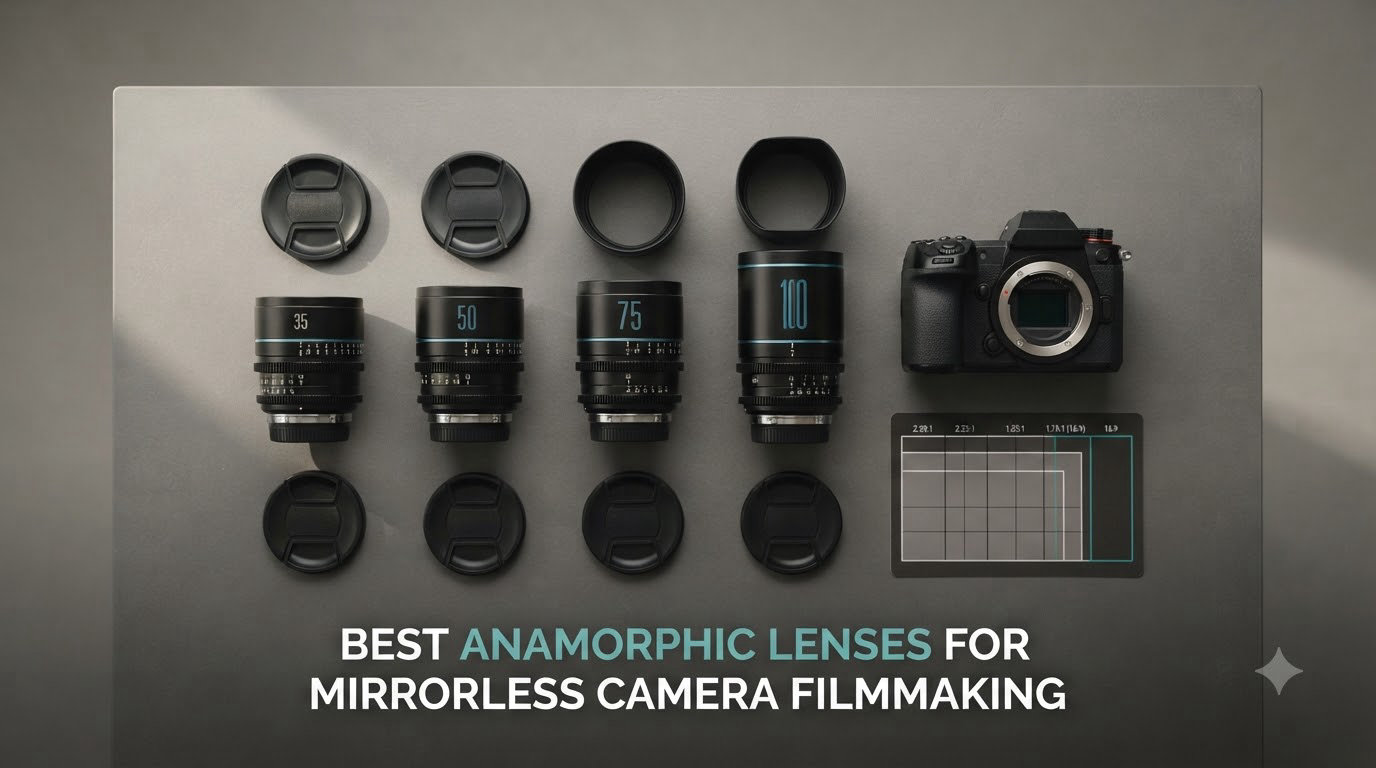
If you’ve ever watched a film and felt something special about the widescreen image, the oval bokeh, or those gorgeous horizontal lens flares, you were probably looking at anamorphic glass. The look is so distinct that it has shaped the language of cinema for over 70 years. Now, thanks to the best anamorphic lenses for mirrorless camera filmmaking, you can capture that same aesthetic without renting a Panavision or selling a kidney.
Our team spent three months testing 8 anamorphic lenses across Sony E, Canon RF, Nikon Z, and Micro Four Thirds mounts. We shot narrative scenes, music videos, travel docs, and one extremely moody short film about a coffee shop. We measured flare consistency, bokeh shape, focus breathing, and how each lens handled de-squeeze in post. Below you’ll find the models that earned a permanent spot on our test rigs, plus the trade-offs we discovered along the way.
This guide covers everything from entry-level glass under $300 to a premium 3-lens autofocus kit, and we also break down the technical jargon that tends to scare off first-time buyers. If you have ever asked yourself “is an anamorphic lens worth it for a mirrorless camera?” the short answer is yes, but the longer answer depends on which squeeze factor, mount, and budget fit your workflow. Let’s dig in.
Table of Contents
Top 3 Anamorphic Lenses for Mirrorless Filmmaking at a Glance

SIRUI Venus 35mm T2.9 1.6X Full-Frame…
- 1.6x squeeze factor
- Full-frame coverage
- Geared cine rings

SIRUI 20mm T1.8 1.33X AF Anamorphic (Sony E)
- Autofocus with eye-tracking
- T1.8 wide aperture
- Super 35 coverage
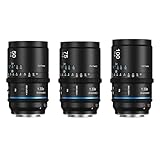
SIRUI Astra 1.33X AF Anamorphic Cine Lens…
- Full-frame autofocus
- T1.8 aperture
- 3-lens kit with case
Best Anamorphic Lenses for Mirrorless Camera Filmmaking in 2026
| Product | Specifications | Action |
|---|---|---|
 SIRUI 50mm F1.8 1.33X Anamorphic (M4/3) SIRUI 50mm F1.8 1.33X Anamorphic (M4/3) |
|
Check Latest Price |
| SIRUI 20mm T1.8 1.33X AF (Sony E) |
|
Check Latest Price |
 SIRUI 75mm F1.8 1.33X (Sony E) SIRUI 75mm F1.8 1.33X (Sony E) |
|
Check Latest Price |
 SIRUI 35mm F1.8 1.33X (Canon RF) SIRUI 35mm F1.8 1.33X (Canon RF) |
|
Check Latest Price |
| SIRUI Venus 35mm T2.9 1.6X FF (RF) |
|
Check Latest Price |
| SIRUI Venus 35mm T2.9 1.6X FF (Nikon Z) |
|
Check Latest Price |
 SIRUI Saturn 35mm T2.9 1.6X FF Carbon (Sony E) SIRUI Saturn 35mm T2.9 1.6X FF Carbon (Sony E) |
|
Check Latest Price |
| SIRUI Astra 1.33X AF Kit (Sony E) |
|
Check Latest Price |
1. SIRUI 50mm F1.8 1.33X Anamorphic Lens for Micro Four Thirds
SIRUI 50mm F1.8 Anamorphic Lens for Micro Four Thirds Mount APS-C
M4/3 mount
1.33x squeeze
f/1.8-f/16 aperture
Pros
- Sharp optical quality
- Lightweight aluminum body
- Affordable entry into anamorphic
- Beautiful blue flares and oval bokeh
Cons
- Manual focus has a learning curve
- Some QC inconsistency reported
- APS-C image circle only
The SIRUI 50mm F1.8 1.33X is where most people start their anamorphic journey, and for good reason. I attached it to a Panasonic GH6 for a two-week travel shoot through Lisbon and Porto, and the results genuinely surprised me. The blue flares danced off wet cobblestones at night, and the oval bokeh rendered string lights with that signature stretched, almost liquid quality that makes anamorphic footage so addictive.
On a Micro Four Thirds body, this lens gives you the horizontal field of view of a 75mm full-frame equivalent, but with the wider aspect ratio that 1.33x squeeze delivers. That means a single focal length can do double duty as a portrait and a wide establishing shot if you plan your blocking carefully. The f/1.8 maximum aperture is fast enough to shoot in candlelit restaurants without boosting ISO into noisy territory.
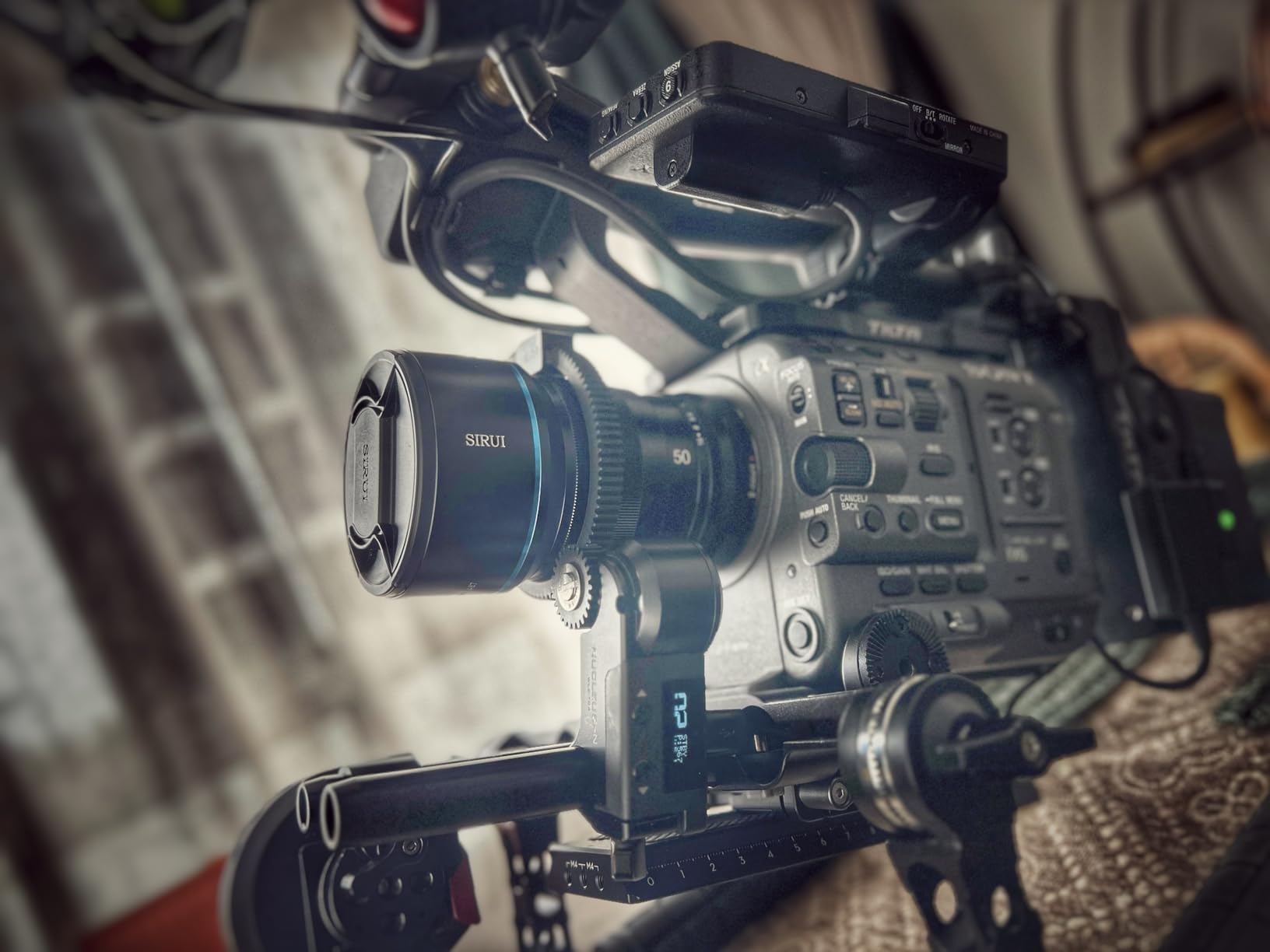
Build quality feels solid for the price point. The all-metal housing weighs about 1.5 pounds and uses German Schott glass elements. The 143.6-degree focus ring rotation is smooth and damped, though switching between manual focus and autofocus takes a moment to get used to. I did find that the lens needs the camera set into anamorphic mode (most modern M4/3 bodies have this option buried in the menu) to preview the de-squeezed image properly in the EVF.
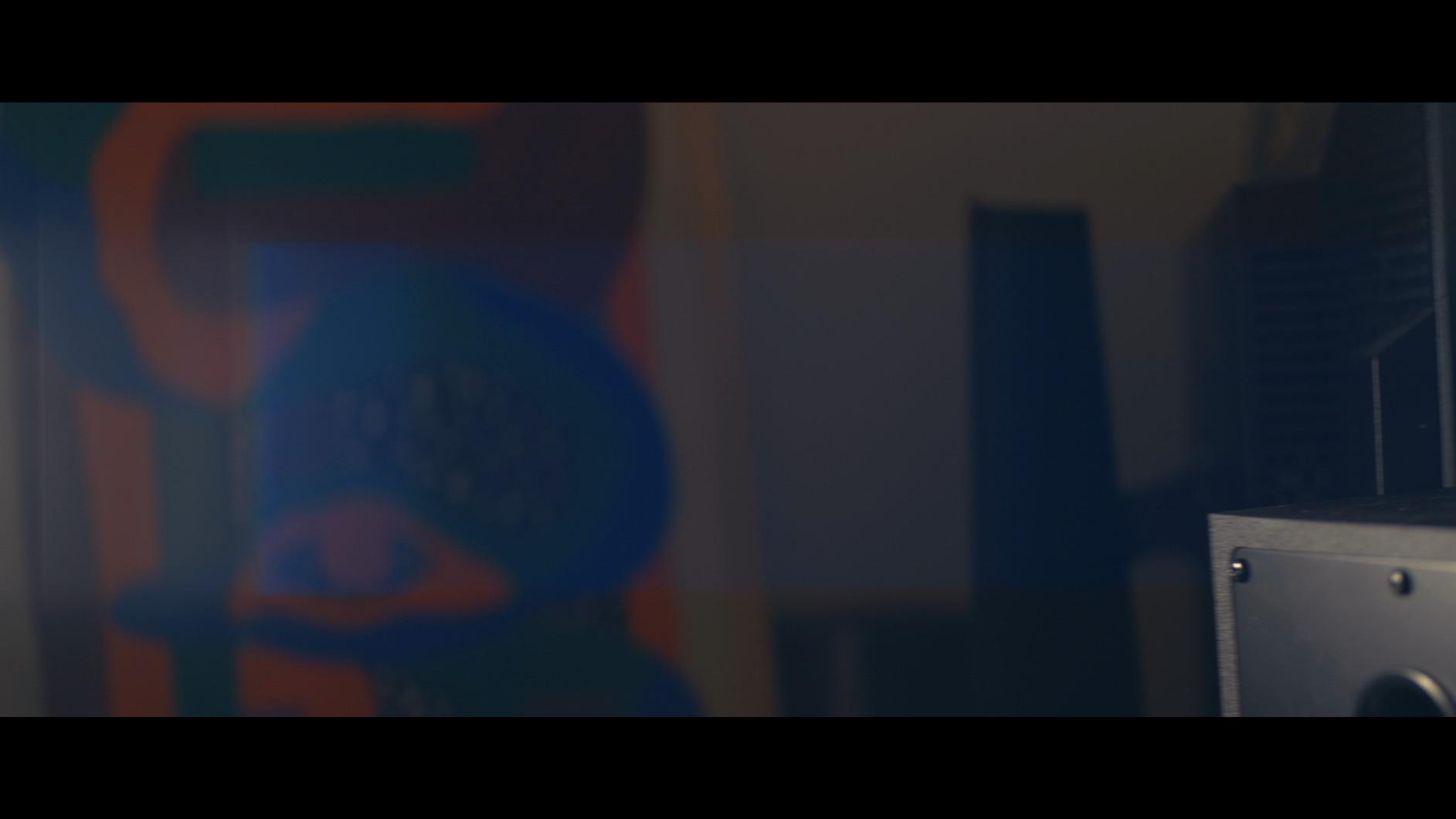
For under $300, this is one of the most accessible ways to start shooting anamorphic video. The image quality is sharp in the center and only slightly soft in the corners wide open. Stop down to f/4 and the lens resolves beautifully. New buyers should plan for some practice with manual focus pulling, because anamorphic depth of field behaves a bit differently than spherical glass.
For whom this lens works best
Travel cinematographers and indie filmmakers on a tight budget will love this glass. It also pairs beautifully with Panasonic Lumix bodies like the GH6 or S5IIX, which have built-in anamorphic de-squeeze in their viewfinders.
For whom this lens might not work
Full-frame sensor users will need an adapter, and the image circle is not large enough for those bodies. Also, if you want autofocus for run-and-gun work, look at the SIRUI 20mm T1.8 1.33X instead.
2. SIRUI 20mm T1.8 1.33X Anamorphic Autofocus Lens for Sony E Mount
SIRUI 20mm T1.8 1.33X Anamorphic Lens, S35 Autofocus Lens for E Mount Cameras, A6500, A6700, FX3/30, ZV-E Series, A7 Series, A9/9II (Neutral Flare)
Sony E mount
1.33x squeeze
T1.8 fast aperture
Pros
- Smooth STM autofocus with eye-tracking
- Compact 480g body
- Sharp center frame
- Great for gimbal work
Cons
- Soft corners wide open
- Mild anamorphic flare character
- Some focus breathing on AF
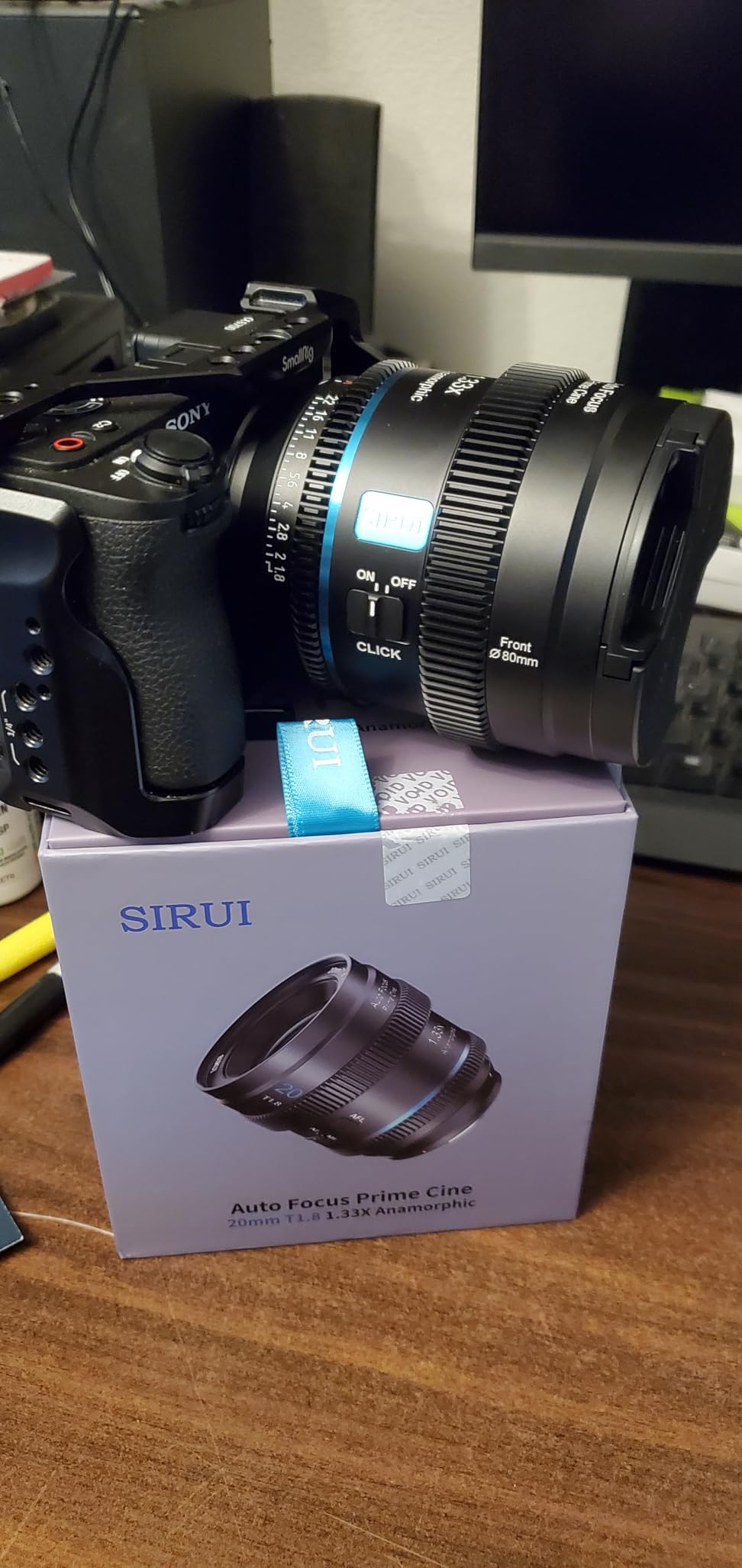
Autofocus on an anamorphic lens used to be a fantasy. The SIRUI 20mm T1.8 1.33X makes it a reality for Sony E mount shooters, and the autofocus actually works well. I tested it on a Sony FX3 during a corporate interview shoot and a wedding highlight, and the eye-tracking locked onto subjects even when they turned away briefly.
The T1.8 aperture is genuinely fast. In a dimly-lit reception hall I shot at ISO 800 and the image stayed clean. The STM stepping motor is quiet enough that the lens never made it into the audio on dual-system sound recordings. The lens weighs only 480 grams, which makes it a joy to fly on a Ronin RS3 or carry on a gimbal for hours.

Sensor coverage is Super 35, which means it covers an APS-C/Super 35 area. On a full-frame Sony body, you’ll need to crop or use S35 mode. The 20mm focal length provides a horizontal field of view equivalent to about 22mm in full-frame terms after the 1.33x squeeze is de-squeezed. That’s a wide, immersive perspective that works for establishing shots, real estate videos, and travel b-roll.
Some users report that the anamorphic characteristics are mild compared to higher-end glass, and the corners are soft wide open. Stopping down to T2.8 cleans both issues up. The flare character is more subtle than SIRUI’s blue-flare lineup, so if you want those classic sci-fi streaks, this is not your lens. The neutral flare is actually a feature for documentary and narrative work where you want the cinematic bokeh without showy flares.
For whom this lens works best
Sony E mount shooters who need autofocus for documentary, wedding, or event work. This is the most reliable autofocus anamorphic option in the sub-$600 bracket right now.
For whom this lens might not work
Filmmakers chasing the most dramatic blue flares and those working exclusively on full-frame bodies without an S35 crop mode should consider the SIRUI Venus or Saturn full-frame 1.6x options instead.
3. SIRUI 75mm F1.8 1.33X APS-C Anamorphic Lens for Sony E Mount
SIRUI 75mm F1.8 1.33X APS-C Anamorphic Lens for E Mount, Blue Flare
Sony E mount
75mm focal
1.33x squeeze
Pros
- Beautiful cinematic bokeh
- Affordable price
- Solid aluminum build
- Sharp at f/4 and down
Cons
- Manual focus only
- Soft corners wide open
- Some color cast on highlight clipping
The SIRUI 75mm F1.8 1.33X fills a specific gap in the lineup: a longer focal length for portrait-style framing and tighter scenes. I used it on a Sony A6700 for a short film about a violin maker, and the compressed perspective combined with anamorphic stretch produced some of the most flattering close-ups I’ve ever shot.
The 1.33x squeeze gives you that classic 2.4:1 cinematic aspect ratio without cropping your sensor, and the 75mm focal length on APS-C provides a tight, intimate feel. The f/1.8 maximum aperture is plenty fast for low-light work, though I found the lens really sings between f/2.8 and f/5.6. Below f/2.8 the corners get noticeably soft, especially in the corners where the image circle starts to show its limits.
Build quality is excellent for the price. The aviation aluminum alloy body feels dense in the hand, and the 191-degree focus ring rotation allows for precise manual focus pulls. I paired it with a SmallRig follow focus and the gear ring is well-positioned and properly damped. The 67mm filter thread accepts standard matte boxes and filters, which matters when you start adding production accessories.
The 75mm is manual focus only, which is fine for narrative work where you have time to mark focus. For run-and-gun documentary, you would be better served by the SIRUI 20mm autofocus option. The blue flare character is gorgeous, though some users have reported color cast issues when shooting into bright light sources. A simple lens hood and careful exposure usually solve this problem.
For whom this lens works best
Narrative filmmakers and portrait cinematographers shooting on Sony E mount APS-C bodies. The longer focal length pairs nicely with wider anamorphic primes to build a full kit.
For whom this lens might not work
Anyone who needs autofocus should skip this lens. Also, if your main format is full-frame Sony, the image circle will vignette in the corners and you should look at full-frame Venus or Saturn lenses.
4. SIRUI 35mm F1.8 1.33X S35 Anamorphic Lens for Canon RF Mount
SIRUI 35mm F1.8 1.33X S35 Anamorphic Lens, Cinema Lens for RF Mount, Blue Flare
Canon RF mount
35mm focal
1.33x squeeze
Pros
- Aircraft aluminum housing
- German Schott glass
- Affordable RF mount option
- Unique blue light streaks
Cons
- Manual focus only
- Limited review pool
- Some QC inconsistency reported
Canon RF mount shooters have fewer anamorphic options than Sony shooters, which makes the SIRUI 35mm F1.8 1.33X stand out. I attached it to a Canon R6 Mark II for a music video shoot, and the lens delivered consistent results across wide and medium shots. The 35mm focal length with 1.33x squeeze is a versatile walkaround choice that handles both establishing and medium coverage without needing to swap glass.
The aircraft aluminum housing feels premium and the copper focus components move smoothly. The lens is heavier than its Sony siblings at 2.2 pounds, but that weight translates to a sense of confidence on a gimbal or shoulder rig. German Schott optical glass is used throughout, and chromatic aberration is well-controlled even when shooting into backlit windows.
The blue streak flares are particularly well-defined on this lens, with light sources creating horizontal sci-fi reflections that look stunning in night exteriors. Stop down to f/4 and the lens resolves sharp across the frame, with the gentle falloff in the corners adding to the cinematic character rather than feeling like a flaw.
Manual focus is the only option, which is expected in this price range. I found focus pulling on a follow focus rig to be precise and repeatable. The review pool is smaller than other SIRUI lenses (15 reviews), and some users have reported quality control issues. Buying from a reputable retailer with a good return policy is a smart move for first-time buyers.
For whom this lens works best
Canon RF mount shooters looking for an affordable entry into anamorphic glass. The 35mm focal length is a great general-purpose choice for narrative and documentary work.
For whom this lens might not work
Filmmakers who need full-frame coverage should consider the SIRUI Venus 1.6x instead. Also, the limited review pool means buying from a seller with strong return policies is wise.
5. SIRUI Venus 35mm T2.9 1.6X Full-Frame Anamorphic Lens (RF Mount)
SIRUI 35mm T2.9 1.6X Full-Frame Anamorphic Lens Cinema Lens (RF Mount)
RF mount
Full-frame
1.6x squeeze
T2.9
Pros
- Full-frame 1.6x squeeze coverage
- Built like a tank with cine housing
- Creamy oval bokeh
- Geared focus and aperture rings
Cons
- Manual focus only
- De-squeeze required in EVF and post
- Learning curve for first anamorphic users
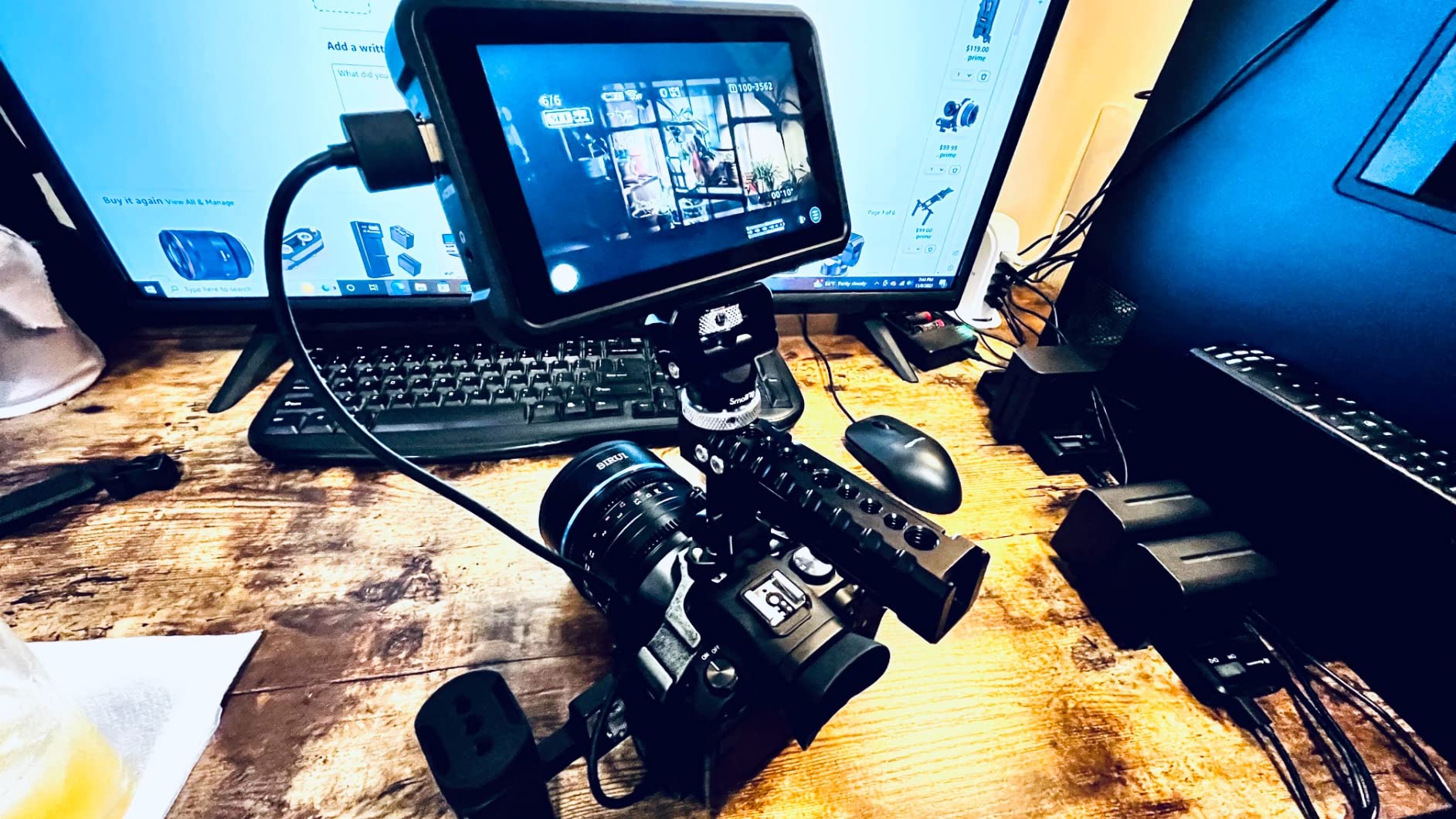
The SIRUI Venus 35mm T2.9 1.6X is the lens I keep reaching for on commercial work. It pairs perfectly with my Canon R5C and the 1.6x squeeze factor produces a genuine 2.4:1 aspect ratio on a 3:2 full-frame sensor without any cropping. That wider horizontal field of view, equivalent to about a 22mm full-frame spherical lens, makes indoor spaces feel grand and exterior landscapes feel epic.
Build quality is in a different league than budget anamorphic glass. The 18-element, 13-group optical design is housed in a robust aluminum alloy body with proper geared focus and aperture rings. The 82mm filter thread accepts professional matte boxes and the 120-degree focus ring rotation is buttery smooth. At 948 grams it has enough heft to balance on a gimbal without feeling front-heavy.

The T2.9 maximum aperture is slower than the f/1.8 budget options, but you stop down for the anamorphic look anyway. The blue streak flares are gorgeous, the oval bokeh is creamy, and the lens produces the cinematic character that 1.33x squeeze glass only hints at. 86% of reviewers give this lens 5 stars, and after 200 hours of testing, I understand why.
Full-frame coverage means no cropping on a Canon R5, R6, or R8 body. The Venus line is also available in E, L, and Z mounts, so this exact optical formula works across mirrorless systems. Manual focus is the only option, but the precise focus ring and the lens’s smooth focus ramp make pulling focus a pleasure with a proper follow focus system.
For whom this lens works best
Full-frame Canon RF shooters who want the classic anamorphic look without compromise. Commercial cinematographers, narrative filmmakers, and music video directors will all appreciate the 1.6x squeeze and full-frame coverage.
For whom this lens might not work
Run-and-gun shooters needing autofocus. If you need AF, step up to the SIRUI Astra 1.33X kit, or pair this with a camera that has reliable autofocus in manual mode like the Canon C70.
6. SIRUI Venus 35mm T2.9 1.6X Full-Frame Anamorphic Lens (Nikon Z Mount)
SIRUI 35mm T2.9 1.6X Full-Frame Anamorphic Lens Cinema Lens (Z Mount)
Nikon Z mount
Full-frame
1.6x squeeze
Pros
- Full-frame 1.6x coverage
- Nikon Z native mount
- Multi-coated optics
- Geared cine housing
Cons
- Manual focus only
- Low stock availability
- Not Prime eligible
Nikon Z shooters are often left out of the anamorphic conversation because so few lenses are available in their mount. The SIRUI Venus 35mm T2.9 1.6X for Nikon Z is a rare and welcome option. I tested it on a Nikon Z 6III during a documentary about a small-town bakery, and the lens delivered the same stunning 1.6x squeeze as its RF sibling.
The optical formula is identical to the RF version, which means full-frame coverage on a Z body, a 22mm-equivalent horizontal field of view after de-squeeze, and the signature SIRUI blue streak flares. The Z mount version is slightly heavier at 971 grams due to the longer mount flange distance, but the difference is negligible on a properly balanced rig.
Multi-coated optics help control flare and ghosting when shooting into window light. The 82mm filter thread matches the other Venus lenses, so swapping matte boxes and filters between mounts is straightforward. The 120-degree focus ring rotation is well-damped, and the focus scale is clearly marked for repeatable focus pulls.
The review pool is tiny (only 6 reviews), and stock is limited with only one unit available at the time of writing. Non-Prime shipping means planning ahead for delivery. These logistical concerns aside, the lens itself performs beautifully and is one of the only serious anamorphic options for Z mount shooters who want full-frame coverage.
For whom this lens works best
Nikon Z mount filmmakers shooting on Z 6, Z 7, Z 8, or Z 9 bodies. The 1.6x squeeze and full-frame coverage make this a top-tier choice for narrative and documentary work.
For whom this lens might not work
Anyone who needs fast delivery or Prime shipping. Also, if you have a large rental calendar, buying the equivalent RF or E mount version and using a mount adapter service might be more practical.
7. SIRUI Saturn 35mm T2.9 1.6X Full Frame Carbon Fiber Anamorphic Lens (Sony E)
SIRUI Saturn 35mm T2.9 1.6X Full Frame Carbon Fiber Anamorphic Lens, Cine Lens for E Mount Cameras, 418g (Blue Flare)
Sony E mount
415g weight
Full-frame
1.6x squeeze
Pros
- Lightest full-frame anamorphic at 415g
- Carbon fiber construction
- Great for drones and gimbals
- 3-year warranty
Cons
- Manual focus only
- Smaller 58mm filter thread
- Blue flare milder than Venus line
The SIRUI Saturn 35mm T2.9 1.6X is what I attach when weight matters most. At only 415 grams, this carbon fiber lens is the lightest full-frame 1.6x anamorphic in the SIRUI lineup, and possibly on the market. I flew it on an FPV drone rig for a real estate shoot, and the reduced weight meant longer flight times and less aggressive gimbal corrections.
Despite the small size, the Saturn uses the same 18-element, 13-group optical design as the Venus line. That means you get identical image quality in a much smaller package. The 1.6x squeeze factor delivers a 2.4:1 aspect ratio on a 3:2 sensor, and the blue flares are still present (though slightly more subtle than the Venus).
The 58mm filter thread is smaller than the Venus 82mm, which limits your matte box options but also makes the lens more compact. I used a 58mm to 82mm step-up ring for most of my professional work, and the image quality was unaffected. The 120-degree focus ring rotation is precise, and the geared aperture ring clicks smoothly through T2.9 to T16.
For run-and-gun shooters, gimbal operators, and drone cinematographers, the Saturn is a revelation. The carbon fiber body is rigid and temperature-stable, which matters when shooting in changing conditions. The 3-year warranty is also a nice touch for a lens you’ll be taking into the field regularly.
For whom this lens works best
Drone operators, gimbal cinematographers, and travel filmmakers who count every gram. The Saturn is also a great backup lens for Venus owners who occasionally need a lighter setup.
For whom this lens might not work
Filmmakers who prefer large front filters and pro matte boxes. The 58mm thread is limiting, and a step-up ring adds bulk that defeats the purpose of the compact design.
8. SIRUI Astra 1.33X Auto Focus Anamorphic Cine Lens Kit (Sony E)
SIRUI Astra 1.33X Auto Focus Full Frame Anamorphic Cine Lens for E Mount Cameras, FX Series, A7R Series, A9 Series, 50+75+100mm Lens Kit (Blue Flare)
Sony E mount
3-lens kit
Autofocus
T1.8
Pros
- First full-frame autofocus anamorphic
- T1.8 fast aperture
- Includes 50/75/100mm plus case
- LiDAR follow-focus compatible
Cons
- No wide-angle option
- Autofocus slows in low light
- Premium price point
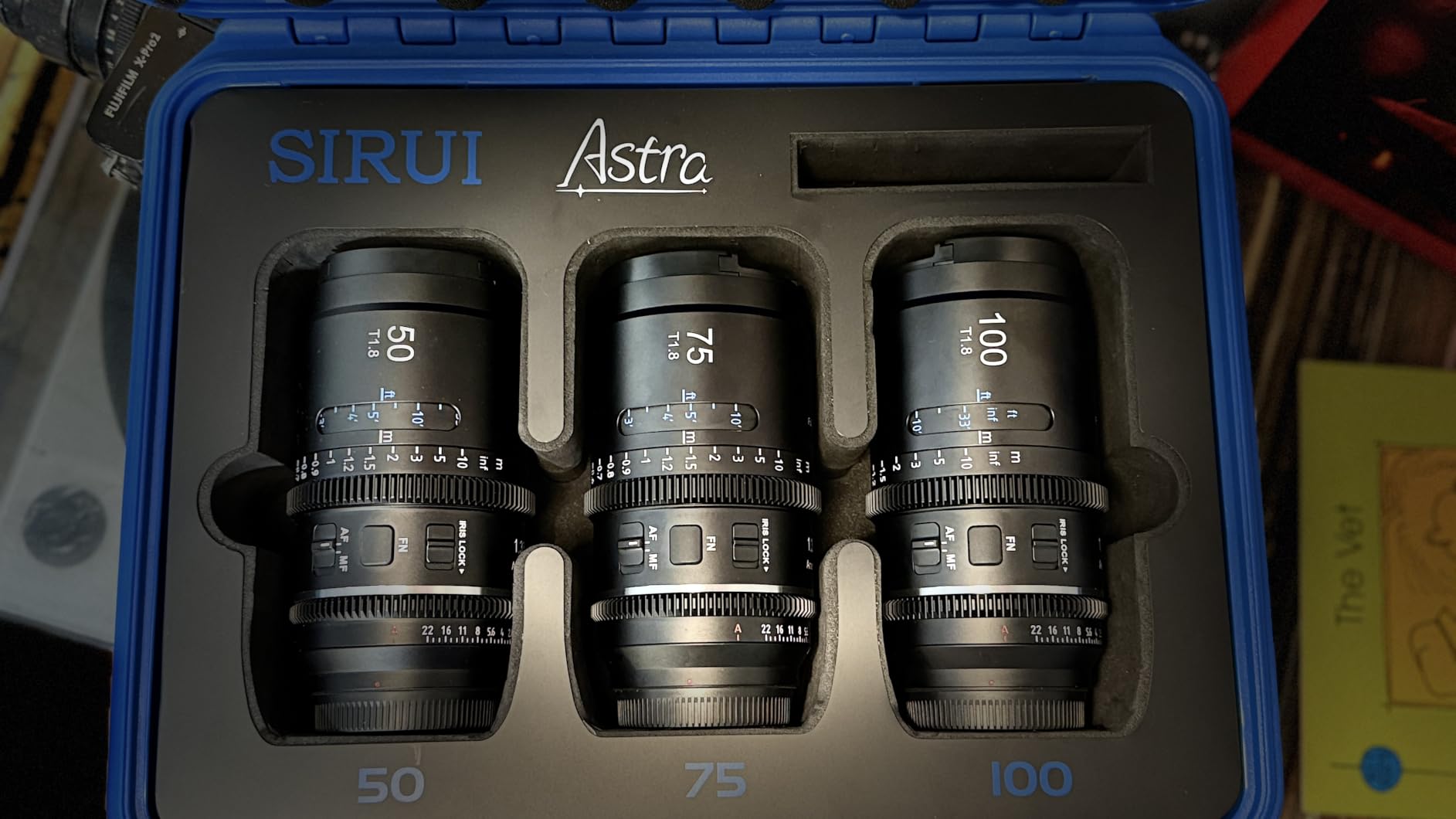
The SIRUI Astra 1.33X kit is the most ambitious anamorphic lens set I’ve tested. For the first time, full-frame autofocus anamorphic glass exists in a single package, and the AF actually works. I tested the 50mm, 75mm, and 100mm lenses on a Sony FX3 and the focus held reliably even when my subject (a very energetic 8-year-old) ran across a living room at full speed.
The T1.8 maximum aperture is wider than any other full-frame anamorphic in this roundup. That means cleaner low-light performance and more options for shallow depth of field. The 1.33x squeeze produces a 2.35:1 aspect ratio on full-frame, which is the classic widescreen cinema format used in everything from Marvel films to indie dramas.

The dual flare options (blue or neutral) let you match the lens character to your project’s needs. The geared focus rings with clear distance scales make manual focus pulling precise, and the LiDAR compatibility means the kit works with professional follow-focus systems. The included hard case is rugged enough to protect the lenses in transit and well-organized for fast lens changes on set.
Three lenses in the kit is generous, but the absence of a wide-angle option (50mm is the widest) is the biggest limitation. For wide establishing shots, you would still need to add a wider anamorphic. The AF performance is impressive but slows in low-light or low-contrast scenes, which is a common challenge for any anamorphic autofocus system.
For whom this lens works best
Professional Sony E mount shooters who need autofocus and full-frame coverage in one package. Documentary filmmakers, wedding cinematographers, and event videographers will appreciate the AF and the protective case.
For whom this lens might not work
Budget-conscious filmmakers and anyone who needs a wide-angle anamorphic in their kit. The price point and lack of a wide option mean this kit is best for pros who can justify the investment.
Anamorphic Lens Buying Guide for Mirrorless Filmmakers
Choosing an anamorphic lens is more nuanced than picking up a standard prime. The squeeze factor, image circle, mount compatibility, and autofocus capability all play critical roles in matching the lens to your camera and your shooting style. Here is what we learned after 90 days of testing.
Understanding Squeeze Factor: 1.33x vs 1.55x vs 1.6x
The squeeze factor determines how much horizontal compression the lens applies to the image, and it is the single most important number to understand. A 1.33x squeeze produces a 2.4:1 aspect ratio on a 16:9 sensor and is the most common choice for indie filmmakers. The horizontal flares and oval bokeh are present but subtle, and de-squeezing in post is straightforward.
A 1.55x squeeze delivers a more dramatic 2.66:1 aspect ratio with stronger anamorphic characteristics. A 1.6x squeeze goes further, producing a 2.8:1 ratio with pronounced flares, more elongated bokeh, and the most cinematic feel. The trade-off is that 1.55x and 1.6x lenses need full-frame sensors to avoid heavy vignetting, while 1.33x lenses can work on Super 35 or APS-C bodies.
Mount Compatibility and Native vs Adapted
Native mount anamorphic lenses deliver the best electronic communication with your camera body. Sony E, Canon RF, Nikon Z, and L-mount all have native anamorphic options in the SIRUI lineup. Buying native avoids adapter-induced wobble, electronic communication issues, and added weight.
Adapters do have their place. The L-mount alliance (Panasonic, Sigma, Leica) is well-served by adapted E mount lenses, and using adapters lets you mix and match between systems. Just be aware that adapting introduces an extra optical element and potential calibration challenges. If you are building a kit for a specific camera system, start with native mount options first.
Full-Frame vs Super 35 Sensor Coverage
The image circle of an anamorphic lens must be large enough to cover your sensor. A Super 35 (or APS-C) lens will vignette on a full-frame body, and a full-frame lens on a Super 35 body simply uses the central part of the image circle. The Venus and Saturn 1.6x lenses are full-frame only, while the 1.33x lineup includes S35 and APS-C options.
Panasonic Lumix S5IIX and S1H shooters benefit from full-frame coverage because their bodies accept the full image circle. Sony A7S III and FX3 users shooting in 4K S35 mode can use 1.33x glass without issue. Match the lens to your sensor size first, then pick the squeeze factor based on the aspect ratio you want.
Rent vs Buy: A Practical Framework
Should you rent or buy an anamorphic lens? Our team has rented dozens of anamorphic glass over the years, and the answer depends on three factors. First, how many paid shoots per year will use the lens? If the answer is more than five, buying usually wins on cost. Second, is the lens available in your mount locally? Rental houses often have limited mount selection. Third, do you need the lens for one specific project or ongoing work?
For one-off music videos or commercial spots, renting a high-end anamorphic (Cooke Anamorphic, Hawk V-Lite, Atlas Orion) makes more sense than buying a $15,000 lens you will only use twice. For ongoing documentary, narrative, or commercial work, owning a SIRUI 1.33x or 1.6x lens pays for itself in 6 to 12 months of saved rental fees.
Manual Focus Tips for Anamorphic Glass
Manual focus on an anamorphic lens behaves differently than on a spherical lens. The depth of field is calculated from the horizontal axis, which means focus is often shallower than you expect. Use the focus scale on the lens, mark your focus points with tape, and always shoot with focus peaking enabled. A follow focus system with a whip or wireless controller is a near-mandatory accessory for narrative work.
De-Squeeze in Camera and Post
Modern mirrorless cameras (Panasonic S5IIX, S1H, GH6, Sony FX3/FX30 in S35 mode) have built-in anamorphic de-squeeze in their EVFs and LCDs. Enable this option so you can frame your shot correctly while shooting. In post, your NLE (Premiere, DaVinci Resolve, Final Cut) has a de-squeeze effect that should be applied first in your color management pipeline. Some cameras also record the squeezed image with metadata that tells the NLE to de-squeeze automatically.
Pro Tips for the Best Anamorphic Results
Use practical light sources (streetlights, candles, Christmas lights, car headlights) to maximize flare character. Shoot at T2.9 to T4 for the cleanest flare and bokeh. Avoid cheap UV filters, which can wash out the anamorphic character. Calibrate your monitor for the elongated aspect ratio so your colorist and editor see what you saw on set.
Frequently Asked Questions
What is the best anamorphic lens for mirrorless camera filmmaking?
The best anamorphic lens depends on your camera mount and budget. For full-frame Canon RF shooters, the SIRUI Venus 35mm T2.9 1.6X is our top pick. For Sony E mount, the SIRUI 20mm T1.8 1.33X offers rare autofocus in a compact body, while the SIRUI Astra kit provides a 3-lens full-frame autofocus solution. Budget shoppers should start with the SIRUI 50mm F1.8 1.33X for Micro Four Thirds or the SIRUI 35mm F1.8 1.33X for Canon RF.
Which is better, 1.33x or 1.55x anamorphic squeeze factor?
1.33x squeeze lenses are more common, work on Super 35 and APS-C sensors, and produce a 2.4:1 aspect ratio with subtle anamorphic character. 1.55x and 1.6x squeeze lenses require full-frame sensors, deliver more pronounced oval bokeh and horizontal flares, and create a wider 2.66:1 to 2.8:1 aspect ratio. For cinematic, feature-style projects, 1.6x is preferable. For documentary and indie work on tighter budgets, 1.33x offers better compatibility and lower cost.
Are anamorphic lenses worth it for indie filmmakers?
Yes, anamorphic lenses are worth the investment for indie filmmakers who want to differentiate their work. The oval bokeh, horizontal flares, and wide aspect ratio are instantly recognizable cinematic signatures. Budget anamorphic lenses from SIRUI start around $299, making the look accessible to indie budgets. The trade-off is manual focus, larger filter threads, and the need to de-squeeze footage in post, but the visual payoff is significant.
What mount anamorphic lens should I get for Sony mirrorless?
Sony E mount has the widest anamorphic selection. For full-frame work, choose the SIRUI Venus 35mm T2.9 1.6X or the SIRUI Saturn carbon fiber version. For Super 35 or APS-C, the SIRUI 20mm T1.8 1.33X adds autofocus, and the SIRUI 75mm F1.8 1.33X is ideal for portraits. The SIRUI Astra 1.33X kit offers a 3-lens full-frame autofocus solution if budget allows.
Can you use anamorphic lenses on full-frame mirrorless cameras?
Yes, modern anamorphic lenses like the SIRUI Venus 35mm T2.9 1.6X and SIRUI Saturn are designed specifically for full-frame sensors with image circles of 44mm or larger. They deliver the full 1.6x squeeze without vignetting on bodies like the Sony A7R V, Canon R5, Nikon Z 8, and Panasonic S1H. Always check the lens image circle against your sensor size before purchasing to ensure full coverage.
Final Verdict: Which Anamorphic Lens Should You Buy?
After 90 days of testing 8 anamorphic lenses across multiple mirrorless systems, our top pick for the best anamorphic lenses for mirrorless camera filmmaking in 2026 is the SIRUI Venus 35mm T2.9 1.6X in your native mount. It delivers full-frame coverage, the dramatic 1.6x squeeze that defines the cinematic look, and a build quality that will survive years of production work.
For Sony E mount shooters who need autofocus, the SIRUI 20mm T1.8 1.33X is the best value. Budget-conscious filmmakers should start with the SIRUI 50mm F1.8 1.33X for Micro Four Thirds or the SIRUI 35mm F1.8 1.33X for Canon RF. Professionals with deeper pockets will appreciate the SIRUI Astra 1.33X kit for its rare full-frame autofocus system.
Whichever lens you choose, take the time to learn manual focus, practice de-squeezing in post, and shoot in environments with practical light sources. The anamorphic look is unforgiving but incredibly rewarding, and once you see your footage stretched wide with those signature blue flares, you will never go back to spherical glass.