
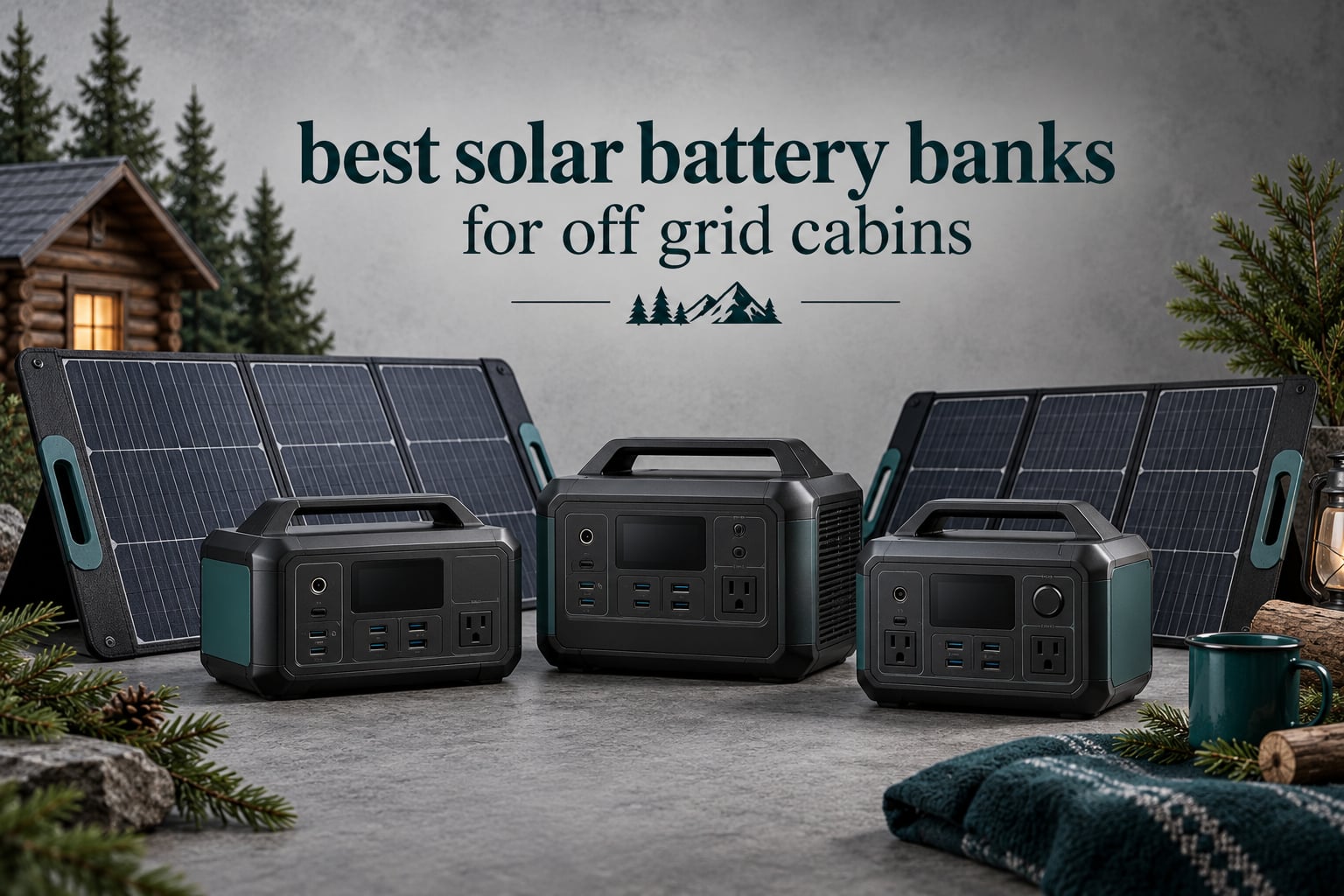
A cabin without a grid connection lives or dies by its battery bank. The panels only decide how fast you refill; the bank decides whether you still have lights, a running refrigerator and a charged phone at midnight when the clouds close in for three days. Choosing wrong means rationing by candlelight, or replacing a lead-acid stack every few winters.
That is why we put the best solar battery banks for off grid cabins through a detailed comparison, weighing usable capacity, continuous and surge output, solar input limits, cycle life, cold-weather behaviour and warranty length against what a cabin actually runs. Every unit below carries a LiFePO4 battery and a built-in inverter, so you can pick one up, charge it from a panel, and run a household circuit the same day it arrives.
One note before we start. The twelve models here are all-in-one power stations rather than component-level banks, because that is what dominates this category right now. That format suits a lot of cabins beautifully and suits none of them cheaply, so we explain in detail where a fixed 48V server rack bank or a 12V LiFePO4 stack is the better answer, and what else your system needs either way. If you are still outfitting the cabin itself, our picks for wood stoves for small cabins cover the heat side of the same equation.
Table of Contents
Top 3 Picks for Off-Grid Cabins in 2026
The AC200PL leads because 2304Wh with 2400W of continuous output covers a real weekend load without doubling up on batteries, and its solar input accepts a proper array rather than a single panel. The C1000 Gen 2 earns its spot for recharge speed and a 4.7 rating across more than 1600 reviews, while the Elite 100 V2 pairs a bundled 200W panel with a 4000-cycle cell. All three run quietly indoors, which matters in a cabin where the unit ends up in the living space.
The Best Solar Battery Banks for Off-Grid Cabins at a Glance in 2026
| Product | Specifications | Action |
|---|---|---|
 BLUETTI AC200PL 2304Wh 2400W BLUETTI AC200PL 2304Wh 2400W |
|
Check Latest Price |
 EcoFlow RIVER 2 Pro with 220W Panel EcoFlow RIVER 2 Pro with 220W Panel |
|
Check Latest Price |
 BLUETTI Elite 100 V2 with 200W Panel BLUETTI Elite 100 V2 with 200W Panel |
|
Check Latest Price |
 Anker SOLIX C1000 Gen 2 Anker SOLIX C1000 Gen 2 |
|
Check Latest Price |
 Jackery Solar Generator 1000 v2 Jackery Solar Generator 1000 v2 |
|
Check Latest Price |
 OUPES Mega 1 1024Wh 2000W OUPES Mega 1 1024Wh 2000W |
|
Check Latest Price |
 BLUETTI Elite 200 V2 2073.6Wh BLUETTI Elite 200 V2 2073.6Wh |
|
Check Latest Price |
 EcoFlow DELTA Pro 3600Wh EcoFlow DELTA Pro 3600Wh |
|
Check Latest Price |
 EBL 2400W Portable Power Station EBL 2400W Portable Power Station |
|
Check Latest Price |
 Anker SOLIX S2000 2010Wh Anker SOLIX S2000 2010Wh |
|
Check Latest Price |
 Jackery Explorer 2000 v2 Twin Panel Kit Jackery Explorer 2000 v2 Twin Panel Kit |
|
Check Latest Price |
 EcoFlow Delta 3 Classic with 220W Panel EcoFlow Delta 3 Classic with 220W Panel |
|
Check Latest Price |
Every model below stores between 768Wh and 3600Wh and delivers between 800W and 3600W of continuous AC power. The last three columns of a real buying decision are quieter than the headline wattage: how fast the unit accepts solar input, whether it can be expanded later, and how long the warranty runs when the property sits empty for months.
1. BLUETTI AC200PL 2304Wh – Best All-Round Bank for a Real Cabin Load
BLUETTI AC200PL Portable Power Station 2304Wh 2400W LiFePO4 Solar Generator
2304Wh LiFePO4
2400W continuous AC, 3600W lifting
3000+ cycles
72 pounds, 16.5 x 11 x 14.4 inches
Pros
- Large 2304Wh capacity with a 3000+ cycle LiFePO4 bank
- Recharges 0-80 percent in about 60 minutes on AC
- Eleven output ports including four AC outlets and a 48V RV port
- Expands to 8448Wh with B300 B210P or B230 packs
- Sub-10ms UPS keeps routers and freezers running
Cons
- Heavy at 72 pounds for anyone moving it often
- Large footprint for a 2304Wh class unit
This is the unit we keep coming back to for a cabin that gets real use. At 2304Wh it holds roughly 80 percent of that as usable energy, which is around 1.8kWh after depth-of-discharge limits and inverter losses. In our reading of owner reports, that covers a refrigerator, a few LED circuits, a laptop and a router comfortably through an overnight, and it recovers on a mid-size panel array the next morning.
The 2400W continuous rating handles the loads that trip up smaller stations. A microwave, a hair dryer, a small power tool or a coffee maker will start without the inverter browning out. Twelve outlets in total mean you rarely need an extension strip, and the 48V RV port is a nice touch if you also charge a battery inside a trailer parked on site.
Expansion is where this unit separates itself from the pack-sized options. Add B300, B210P or B230 packs and the bank grows to 8448Wh, which is a meaningful upgrade path if you start with a weekend cabin and end up living there. Nothing else in this list gives you that much headroom for the same footprint.
The honest drawback is weight. At 72 pounds this does not move casually, and buyers repeatedly say exactly that. Our advice is to plan its final home first, ideally on a concrete pad or a sturdy shelf in a dry utility area, and treat it as installed equipment rather than gear you carry to the lake. For a fixed cabin site, that is rarely a problem.
How it handles a weekend without a generator
Two nights of moderate use with no sun on day one is the realistic test, and 2304Wh absorbs it with room to spare. Add a generator as backup and you can bring the bank back to full without stressing the cells, which matters more in cold months when charge acceptance is already reduced.
At a 3000-cycle rating, daily cycling still leaves roughly a decade of service life before capacity fades enough to matter. For a property that only draws power on weekends, the bank will spend most of its life near a moderate state of charge, which is the easiest place for lithium chemistry to sit.
Where it falls short
Solar input tops out at 1200W, so filling the bank from empty on solar alone takes a couple of clear days even with good panels. If your site is heavily wooded and produces poorly, you will want a small generator or a much larger array behind it.
It is also a large box for a cabin with a small generator closet. Measure the shelf before you commit, and remember the unit needs ventilation rather than being boxed in on all sides.
2. EcoFlow RIVER 2 Pro 768Wh with 220W Panel – Lightest Kit for a Small Cabin
EF ECOFLOW Solar Generator RIVER 2 Pro & 220W Portable Solar Panel, 768Wh
768Wh LFP battery
800W AC, up to 1600W with X-Boost
Bundled 220W bifacial panel
17.2 lb unit, 39 lb kit
Pros
- Includes a 220W bifacial IP68 panel that recharges in about 4.3 hours
- LFP battery rated 3000+ cycles with an advanced BMS
- Eleven outlets including four 800W AC sockets
- Runs silently with no fumes so it can live indoors
Cons
- 768Wh runs a typical refrigerator only about 5 hours
- Non-US 50 hertz frequency rating on the unit
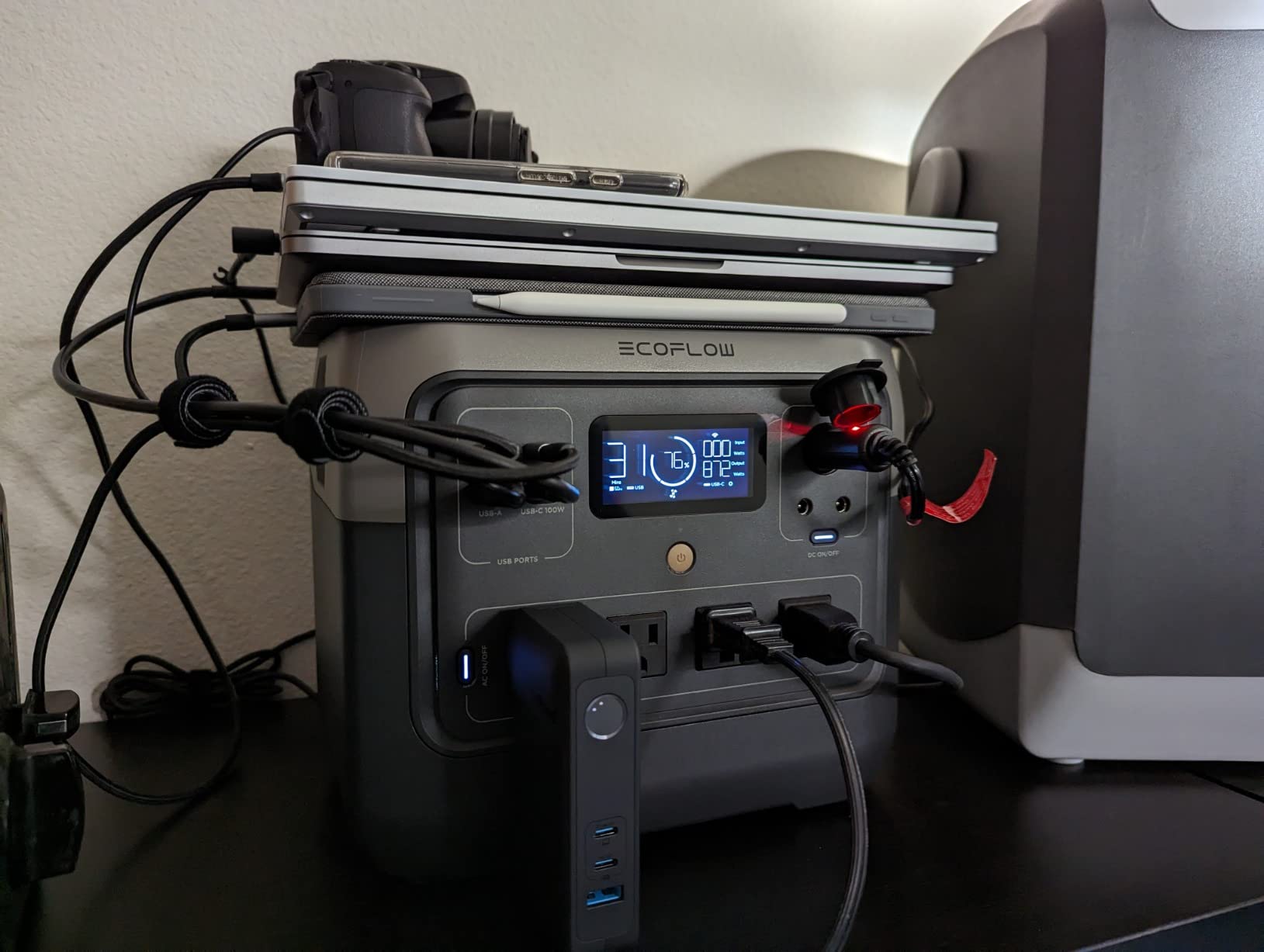
Not every cabin needs multiple kilowatt-hours. If yours is a single-room shelter with a small refrigerator, a couple of lights and a phone charger, the RIVER 2 Pro kit is the tidiest complete package we looked at: station, 220W bifacial panel, cables and a kickstand case in one box. The station itself weighs 17.2 pounds, so moving it between rooms or taking it to a fire pit is realistic.
The bifacial panel earns its place at a wooded site because it collects from the back face as well, which softens the penalty of partial shade. Reviewers report around 190 to 200W from it in imperfect conditions, and the whole kit recharges in roughly 4.3 hours on a good day.
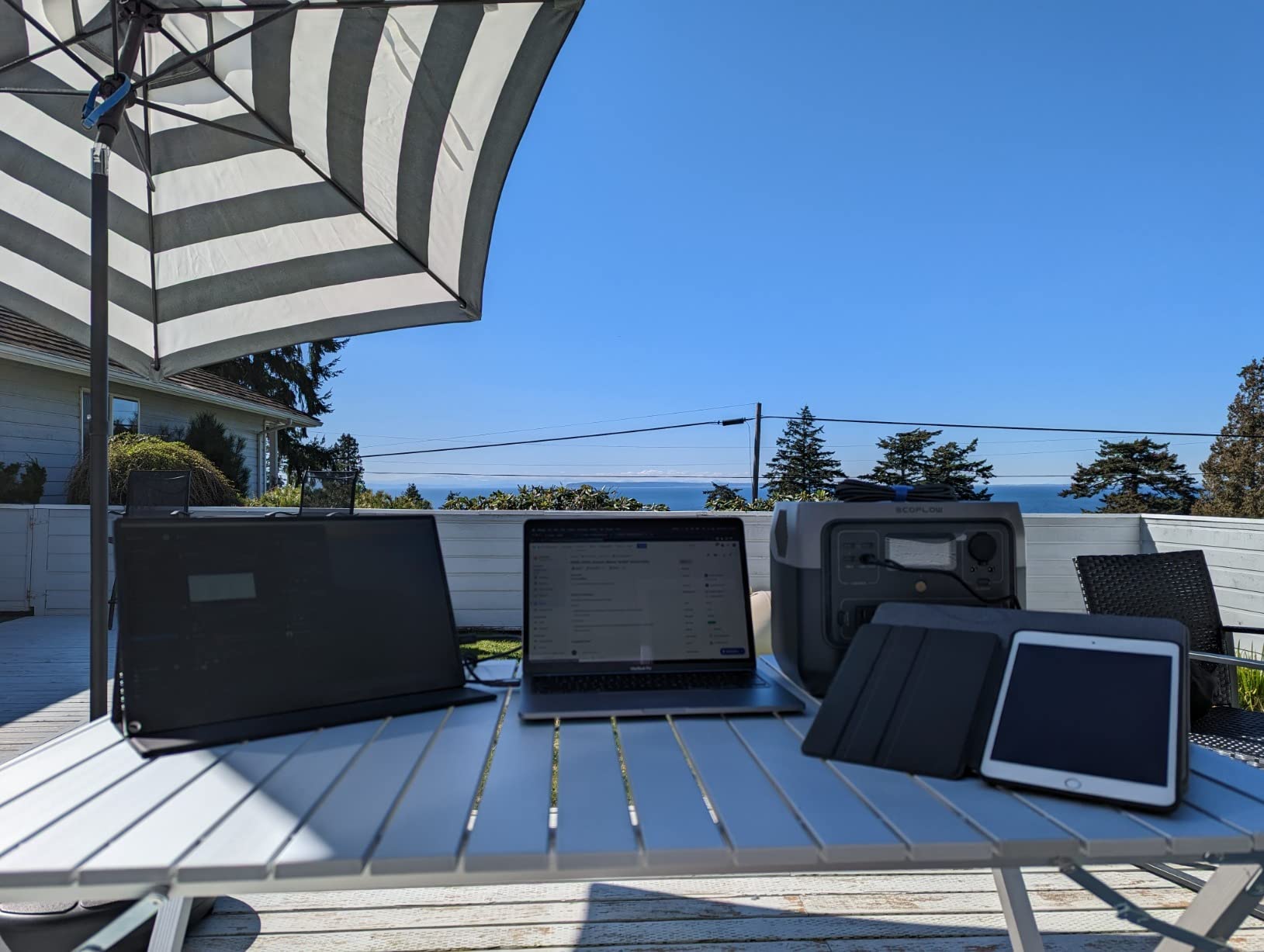
Owners consistently note that running DC loads directly saves real energy. A CPAP machine, a laptop and a phone on the DC and USB ports avoid the inverter step entirely, which is the single most effective way to stretch a bank this size. The advanced BMS handles cell balancing and protection without you thinking about it.
There is no battery expansion path here, so treat the 768Wh as all you will ever have. That is fine for a small cabin and a poor fit the moment someone adds a microwave or a second appliance that draws real power.
Best use for this size
Think of it as a reliable weekend cabin rather than a small home. One to two nights of lights, a fridge and electronics, recharged by a single panel during the day, is the sweet spot. Beyond that you are running the bank flat and hoping for sunshine.
Because it operates silently with no exhaust, it can sit inside a cabin without the ventilation a fuel generator demands. For a first build or a backup station at a place you visit rarely, that simplicity is worth a lot.
Where it falls short
Refrigeration is the honest limit. A typical compressor cycling fridge draws around 100W running, and after inverter losses you will see roughly five hours of runtime from this bank alone. Anyone planning on a fridge plus anything else needs the next size up.
The listed 50 hertz frequency rating and the added panel weight in the box also mean this is a kit rather than a bare station. Expect to be carrying two heavy objects instead of one.
3. BLUETTI Elite 100 V2 1024Wh – Best Panel-to-Power Ratio in a Small Case
BLUETTI Solar Generator Elite 100 V2 with 200W Solar Panel Included, 1024Wh
1024Wh LiFePO4
1800W AC with 3600W surge
4000+ cycle battery
25 pounds, 12.6 x 8.5 x 9.8 inches
Pros
- Bundled 200W panel plus 1000W solar input for the class
- 0-80 percent in about 45 minutes on AC
- 30dB silent mode keeps it usable indoors
- 10ms UPS protects routers and medical devices
- 4000+ cycle battery for roughly a 10-year life
Cons
- Power lifting mode drains the bank faster on heavy loads
- Only two AC outlets
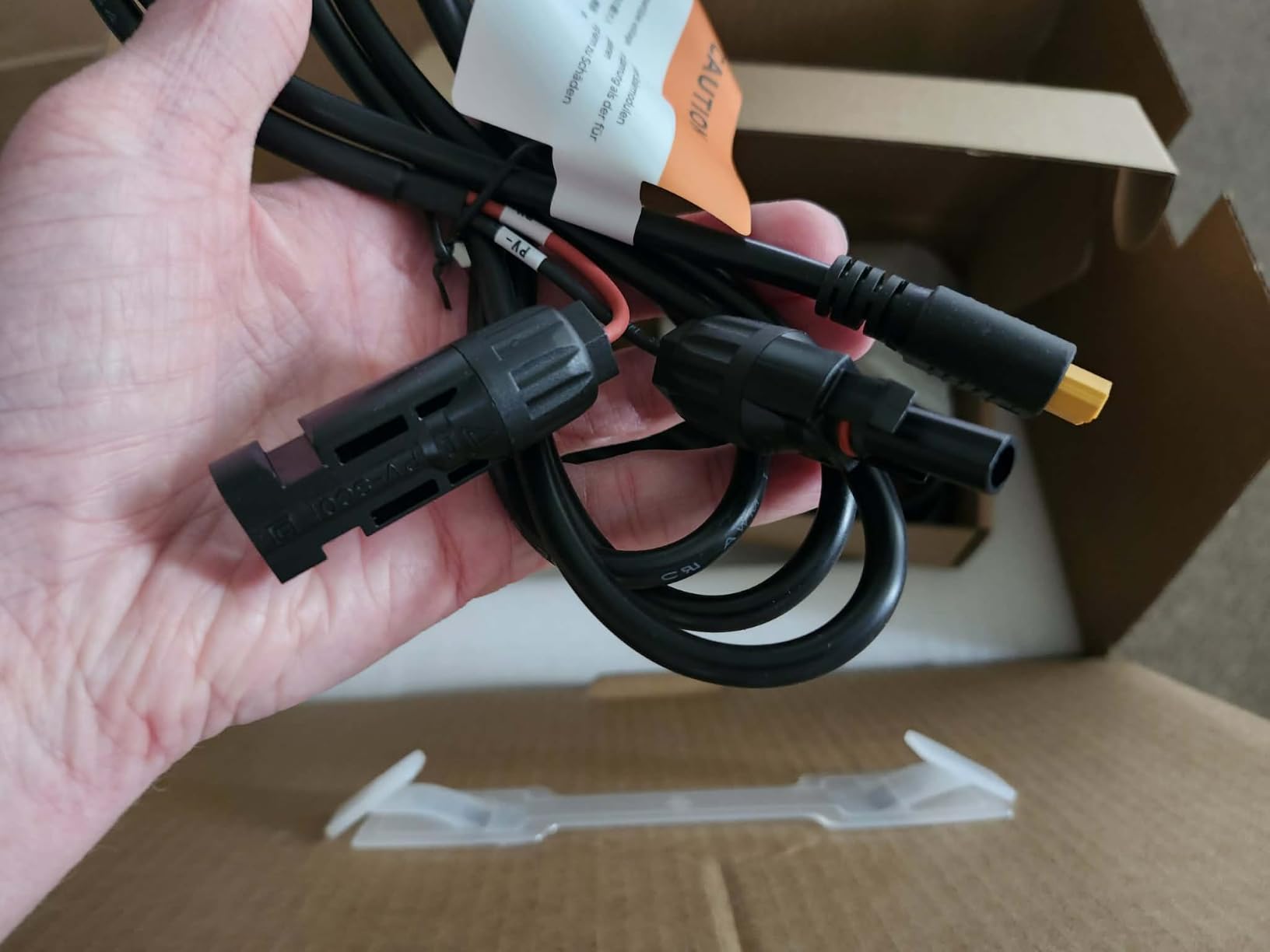
The Elite 100 V2 solved a problem the earlier 1kWh units had: they accepted solar slowly, so a small bank spent all day topping up. With 1000W of solar input, the included 200W panel fills it in about four hours from empty to 80 percent, and if you later add more panels you still have headroom to use them.
At 25 pounds with a 1800W rating, this is the sweet spot between carrying weight and inverter capability. Two people can lift it, and the 1800W continuous output starts most kitchen appliances without strain.

Reviewers frequently describe using this unit as the core of an off-grid build rather than a campsite toy. The Wi-Fi and Bluetooth app with over-the-air updates lets you check state of charge from inside the cabin, and the 30dB silent mode means a charging session at night will not wake the house.
One of the most detailed owner reviews makes a fair technical point: power lifting mode gives you extra wattage for brief surges but pulls the bank down noticeably faster. Use it for the startup kick on a pump, not as a normal operating mode.
How it performs as a permanent installation
Performing as a permanent install is not really its design, but people do it, and it holds up as long as the panel output matches the load. The 4000-cycle rating means daily use still lands you around a decade of service before capacity fade becomes noticeable.
Because there are only two AC outlets, plan your circuits carefully or add a small surge protector. Everything else can run off USB and DC, which is cheaper in energy anyway.
Where it falls short
The DC output tops out around 30A, which limits high-amperage DC loads if you ever add a heavier 12V device. And with two AC outlets you will feel the shortage on any weekend where several appliances run at once.
It is also not expandable, so the 1024Wh ceiling is fixed for the life of the unit. Owners upgrading from a larger BLUETTI model should weigh that before buying a second one.
4. Anker SOLIX C1000 Gen 2 1024Wh – Fastest Recharge in the Class
Anker SOLIX C1000 Gen 2 Portable Power Station
1024Wh LiFePO4
2000W continuous, 3000W peak
49-minute AC recharge
11.3 kg, 15.1 x 8.2 x 9.6 inches
Pros
- Full recharge in about 49 minutes at 1600W AC input
- 2000W continuous output across 10 ports
- 600W solar input recharges in about 1.8 hours
- 10ms UPS switchover keeps sensitive electronics running
- Retains 80 percent capacity after 4000 cycles
Cons
- No battery expansion option on the Gen 2 model
- Protective storage case is not included
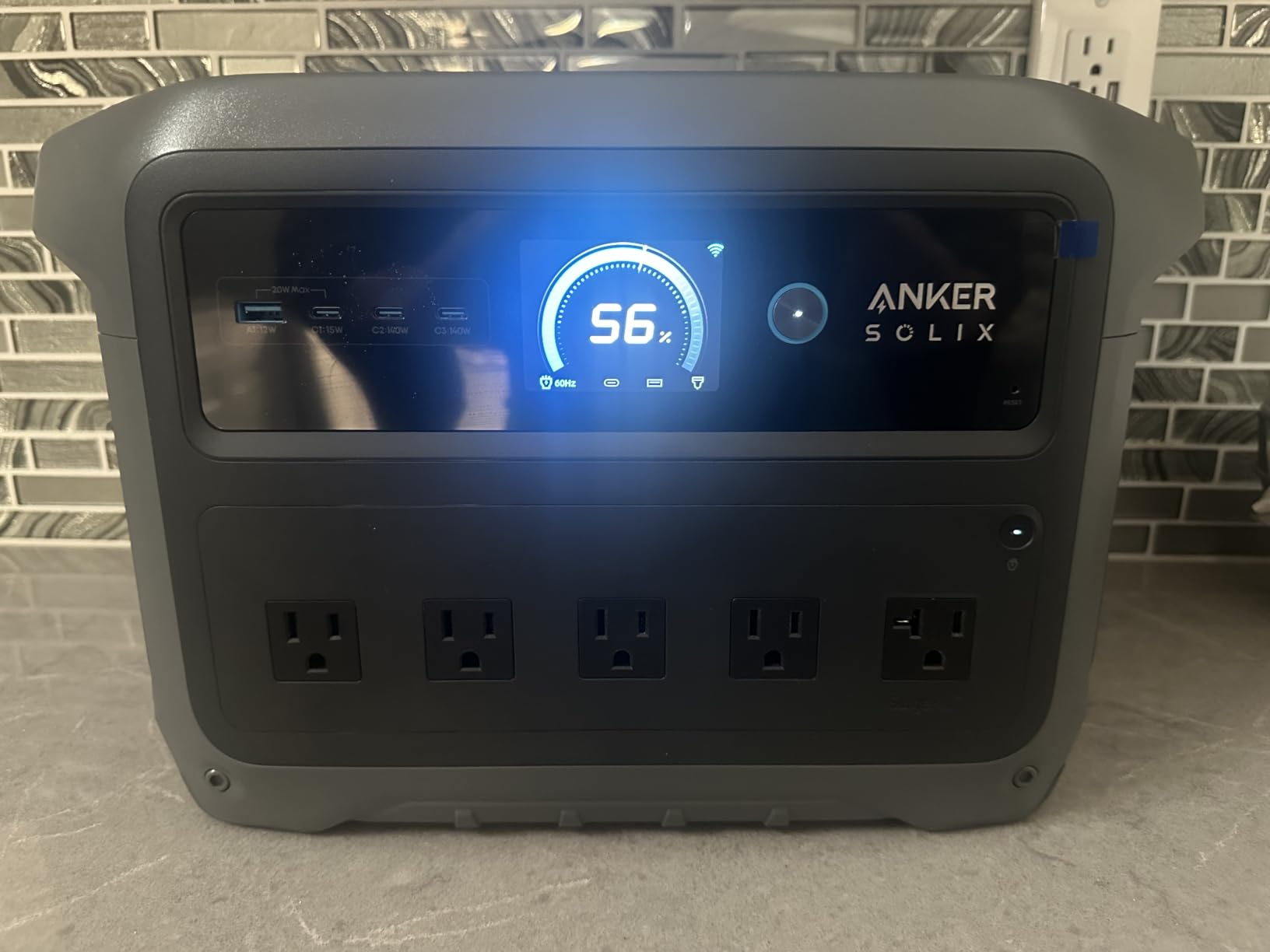
Recharge speed is the reason to look at this one first. A full refill in roughly 49 minutes means a cabin that draws down heavily in the morning can be back to full before lunch, which makes cloudy days far less stressful. Very few 1kWh-class units get close to that on a wall outlet.
The 2000W continuous and 3000W peak output also edges out most of its class. Ten ports cover AC, USB-C, USB-A and a car socket, so you rarely juggle adapters, and the frame uses metals where competing cases are pure plastic.
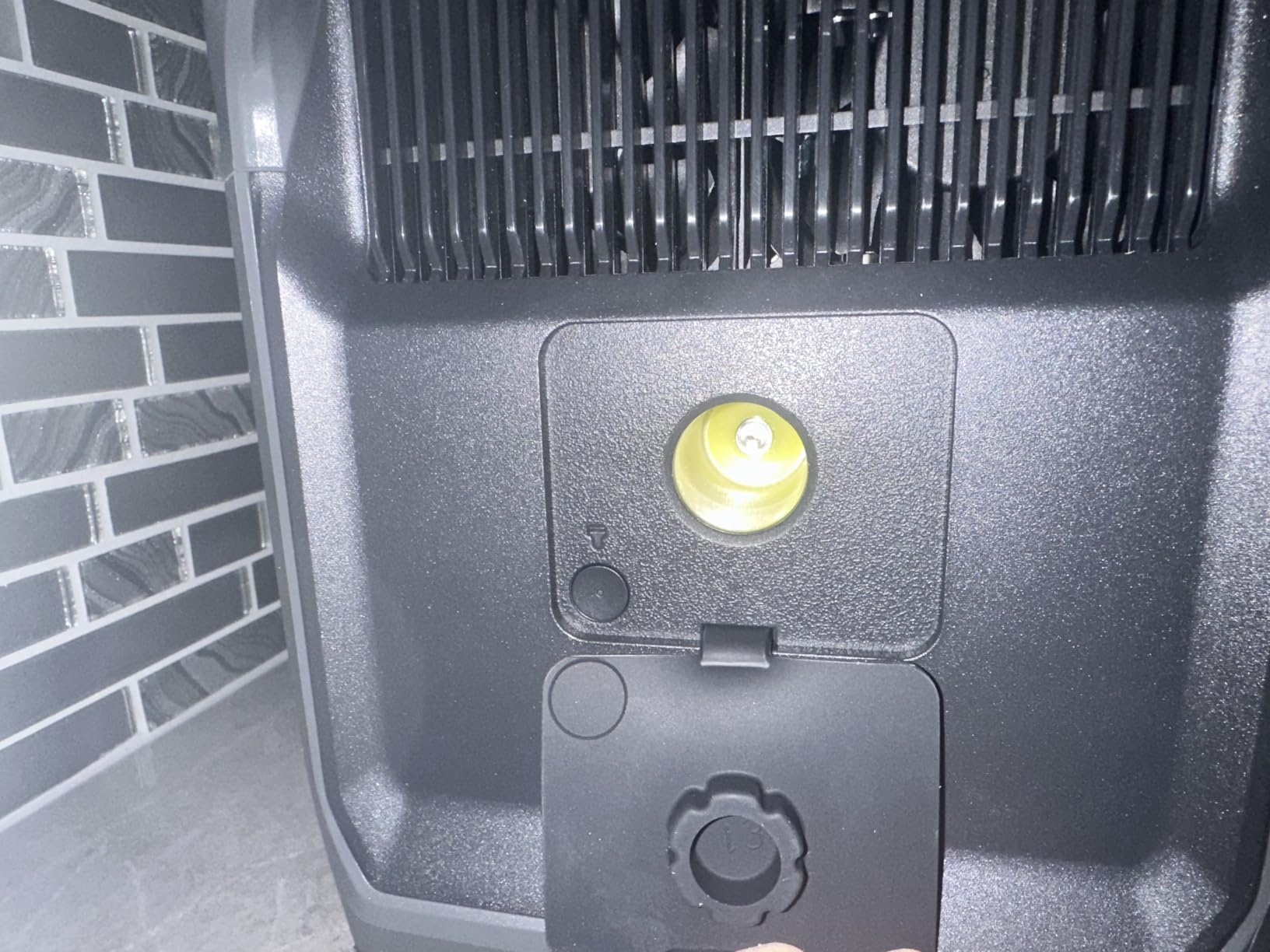
Owners lead with fridge backup, CPAP machines and off-grid truck camping, and the 10ms UPS switchover is genuinely useful for anything that will crash when power blinks. A few reviewers measured mild inverter wave distortion on microwave loads, which is worth knowing if you plan to run a microwave often.
The app includes a time-of-use power management mode that lets you schedule charging around cheap or available energy. It is a small feature that matters if you also charge from a generator during a long cloudy stretch.
Why the recharge speed changes cabin life
A bank that fills quickly gives you a second chance every day. If a storm knocks production down, a fast AC refill from a generator or even an extended wall-outage window can restore full capacity before you go to bed, instead of stretching thin across the next three days.
At 600W of solar input, panels can also refill it faster than most rivals, though the figure is lower than the 1000W the BLUETTI Elite 100 V2 accepts.
Where it falls short
The Gen 2 removed the battery expansion option that earlier versions offered. If you think you will grow past 1024Wh, this is the wrong unit to start with, and there is no official way to add capacity later.
Also plan for cable clutter. Owners point out that a protective case with cable pockets is not included, which matters in a cabin where everything is packed tight.
5. Jackery Solar Generator 1000 v2 1070Wh – Best for Multi-Day Weather Events
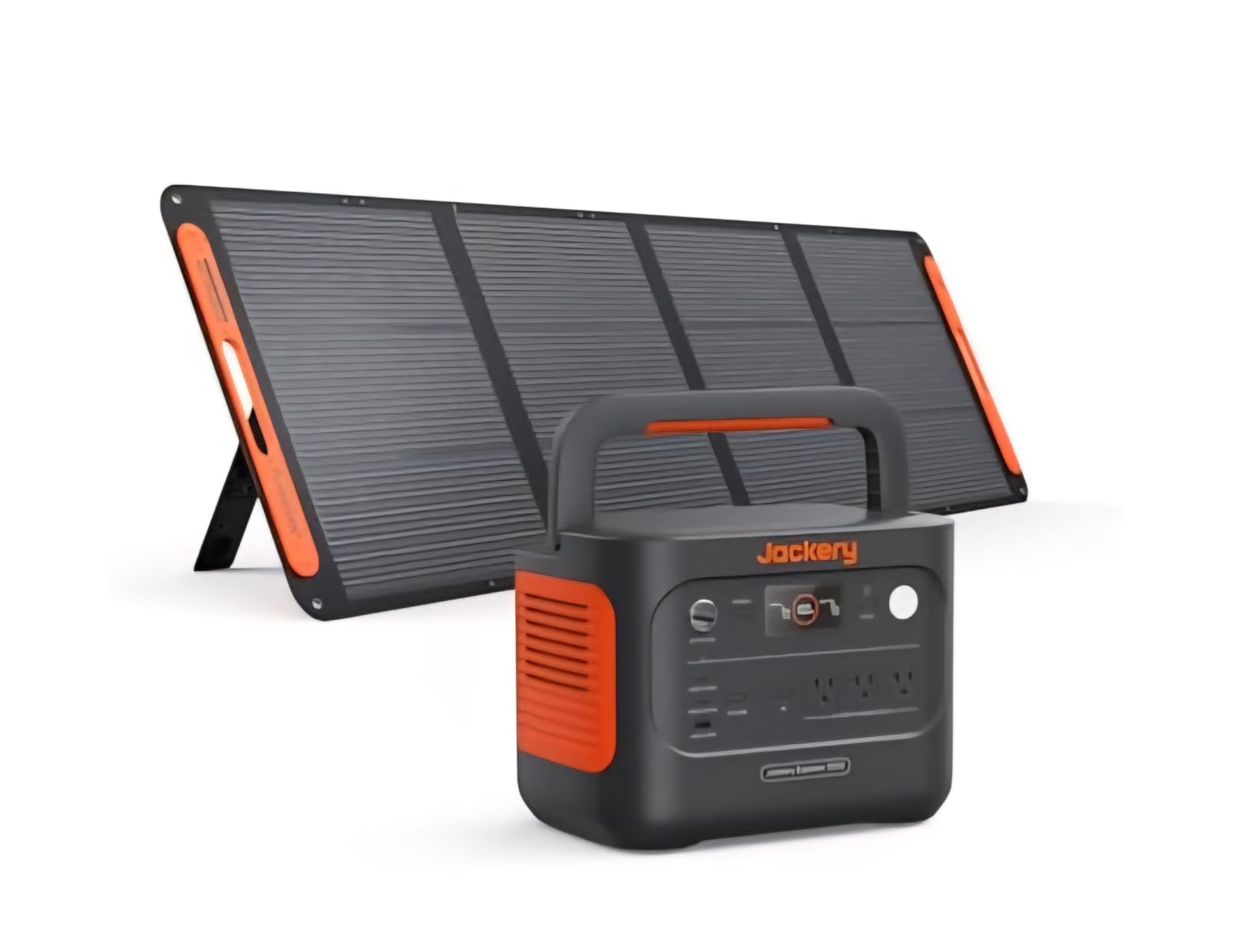
Jackery Solar Generator 1000 v2 and 200W Solar Panel,1070Wh,1500W AC
1070Wh LiFePO4
1500W AC with 3000W surge
23.8 pounds
Bundled 200W solar panel
Pros
- One-hour emergency charging through the Jackery app
- LiFePO4 battery holding over 70 percent after 4000 cycles
- Light at 23.8 pounds with a foldable handle
- Three pure sine wave AC outlets plus 100W USB-C
- 30dB quiet charging mode for overnight use
Cons
- Bundled 200W panel is bulky and needs repositioning
- Short panel cable forces the unit to sit in direct sun
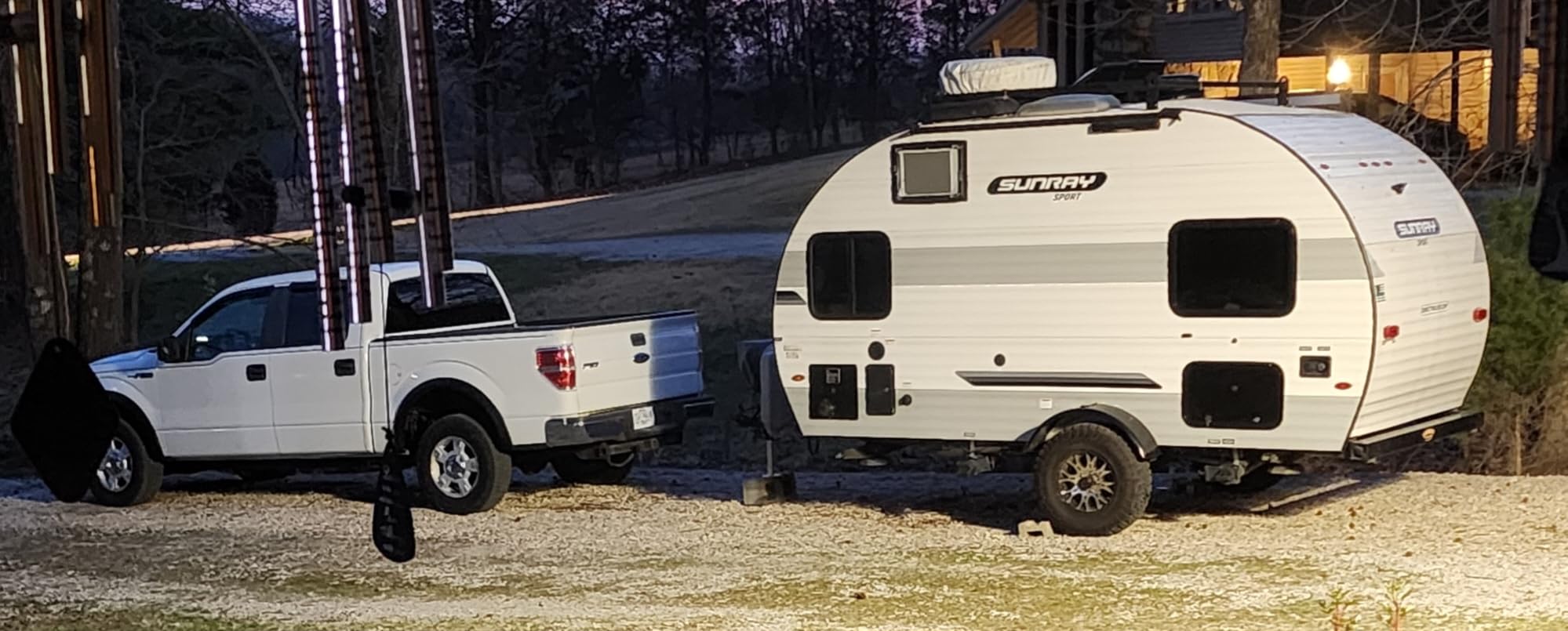
Owners report running full-size refrigerators, amateur radio gear and household appliances through multi-day outages on this unit, which is the behaviour you want from a cabin bank. At 1070Wh it sits just above the 1kWh class, and the 1500W continuous output with 3000W surge covers everything short of a space heater on a circuit.
The battery holds over 70 percent of capacity after 4000 cycles, so a decade of daily use is realistic. At 23.8 pounds with a foldable handle, it is also one of the easier units in this list to reposition when you need the fridge space back.
The pure sine wave AC outlets matter more than the spec sheet implies. Appliances with motors and compressors behave better on a clean waveform, and that is exactly the load profile of a cabin: fridge, freezer, small pump, fan.
The 30dB quiet charging mode is genuinely useful in a quiet setting. Charging overnight while you sleep will not drown out the cabin, and the app lets you set the mode rather than hunting for a button.
How much storm cover you actually get
Roughly two to three nights of typical cabin load without sun, which is the window most storms fall inside. Add the 200W panel and you recover most of a day of consumption on a clear morning, which is what keeps the balance from tipping.
For a longer stretch, a small generator charging the bank for an hour or two will restore most capacity without any special adapter. The 600W alternator charger option is a cleaner path if you drive in regularly.
Where it falls short
The bundled 200W panel is the weak point. It is bulky, it needs frequent repositioning to catch the best sun, and the short cable means the unit itself has to sit in direct sun, which you may not want indoors.
Also note the one-hour charge claim only applies with emergency mode enabled in the app; the default takes about 1.7 hours. Read the detail before you plan around it.
6. OUPES Mega 1 1024Wh 2000W – Best Value for Output per Watt
OUPES Mega 1 Portable Power Station 1024Wh 2000W (4500W Surge)
1024Wh LiFePO4
2000W continuous, 4500W surge
0-80 percent in 36 minutes
27.8 pounds
Pros
- 0-80 percent in about 36 minutes on AC and 26 minutes combining inputs
- 2000W pure sine wave continuous output in the 1kWh class
- Expands to 5120Wh with two extra batteries
- Sub-20ms UPS transfer protects servers and medical gear
- Built-in MPPT and bypass charging support
Cons
- Built-in app is basic and Wi-Fi connectivity is unreliable
- Charging fan runs continuously during charging
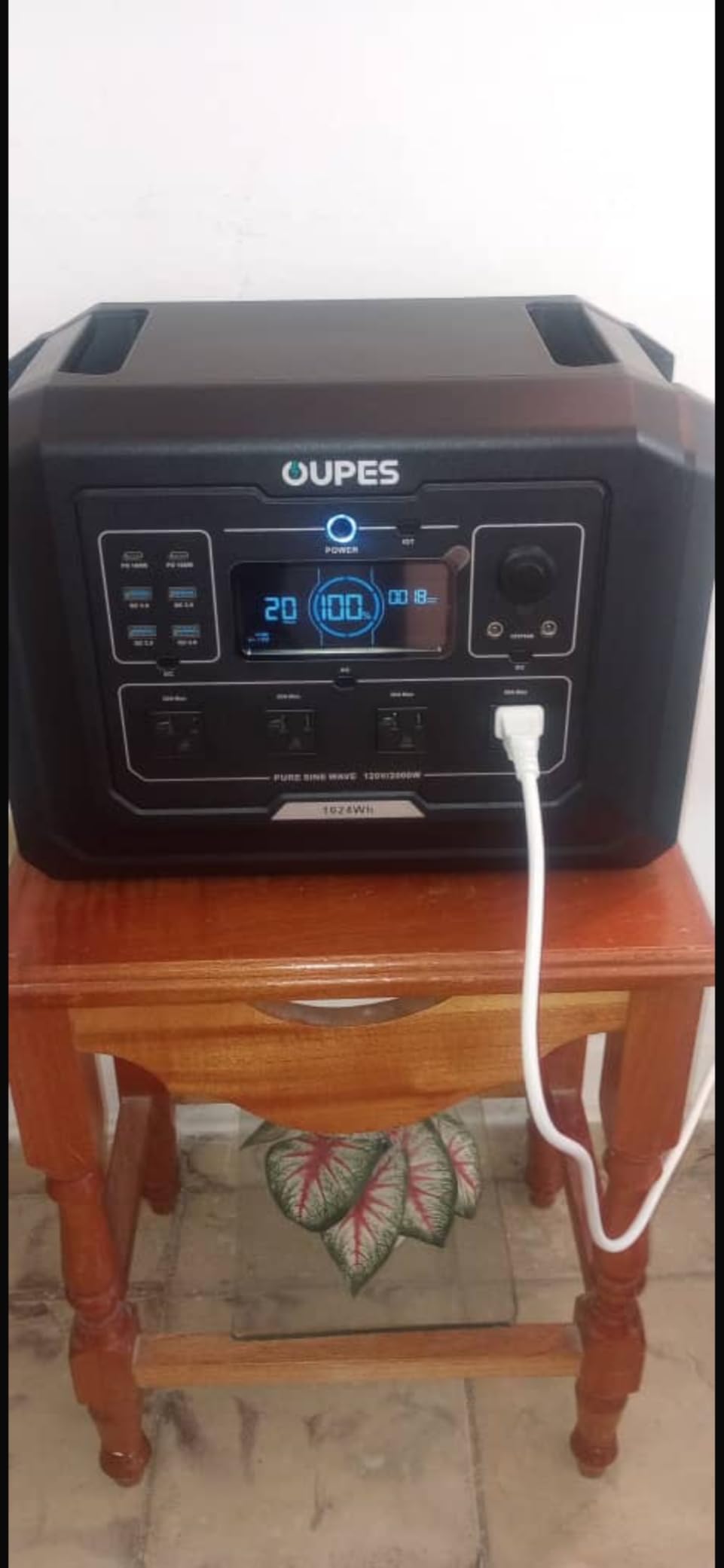
What stands out here is output relative to the rest of the field. A 2000W pure sine wave continuous rating is normally reserved for units well above this capacity, so if your cabin runs a kettle, a heater or a power tool, this is the one to look at first in the 1kWh class.
Charging is fast too, hitting 80 percent in about 36 minutes on AC and around 26 minutes when you combine sources. That puts it in the same recharge territory as the Anker unit while costing noticeably less.
Buyers consistently frame this as a power-per-dollar pick, and the 4500W surge figure gives you room for compressor startup on a pump or fridge. The dual 100W USB-C ports, four QC3.0 USB-A ports and 12V DC outputs cover small loads efficiently.
Expansion to 5120Wh with two extra batteries is the feature most buyers overlook, and it turns a weekend unit into a capable full-time one without buying a second station.
Where the raw output actually matters
Continuous wattage is what determines whether a load starts and stays running, not peak. A 1500W kettle, a hair dryer, or a small electric heater will run on this unit without tripping anything, which several 1kWh rivals will refuse.
That makes it a good fit for a cabin used as a workshop as well as a retreat. If your power tools are part of the plan, the 2000W rating is worth more than extra capacity you never use.
Where it falls short
The app is the weak point. Owners describe it as basic, with Wi-Fi connectivity less reliable than a straight Bluetooth connection, and the charging fan runs continuously during charging including at the low input setting.
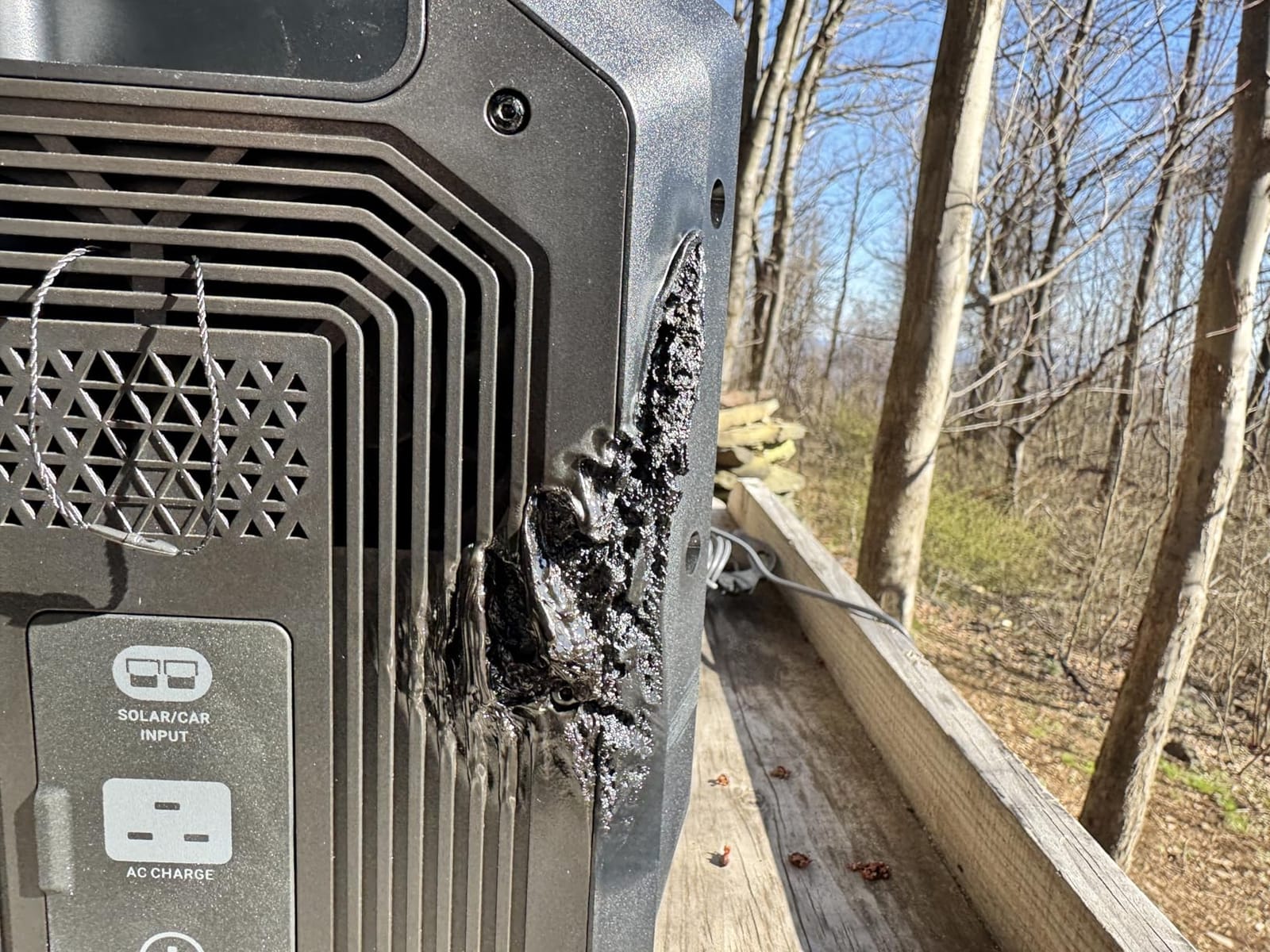
Some owners also report that the plastics feel light and unlikely to be weather resistant, and that the bundled charging cables are proprietary and hard to replace. Keep spares.
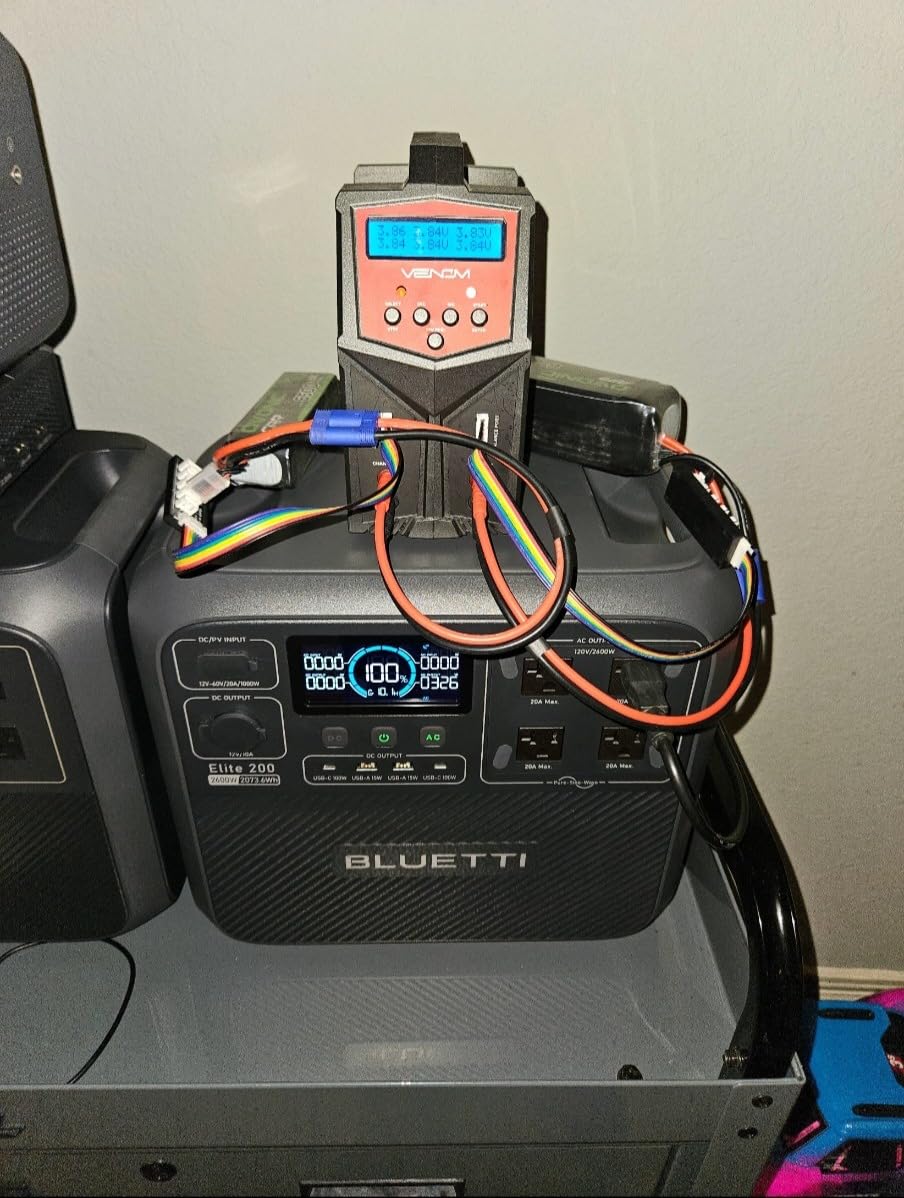
7. BLUETTI Elite 200 V2 2073.6Wh – Longest Cycle Life in This Roundup
BLUETTI Elite 200 V2 Portable Power Station 2073.6Wh 2600W Solar Generator
2073.6Wh LiFePO4
2600W AC with 3900W lifting
6000+ cycle cells
53.4 pounds, 10W standby
Pros
- Automotive-grade LiFePO4 cells rated 6000+ cycles for a 17-year life
- 2600W continuous output with 3900W power lifting
- 10W standby draw roughly three times lower than comparable stations
- Inverter efficiency measured around 92 percent at a 650W load
- 40 percent smaller footprint than the previous generation
Cons
- Solar MPPT input capped at 60V limiting array wiring options
- Firmware lacks user-settable state-of-charge limits
Users running permanent off-grid solar arrays and refrigerator backup consistently report excellent efficiency and silent operation from this unit. The measured inverter efficiency around 92 percent at a 650W load is the kind of number that only shows up in units built with serious attention to the internals.
The cycle rating is the headline number here. At 6000+ cycles against a stated 17-year lifespan, this is the bank that stays usable longest in our list, and the low 10W standby draw means it can sit monitoring an empty cabin for weeks without eating the bank.
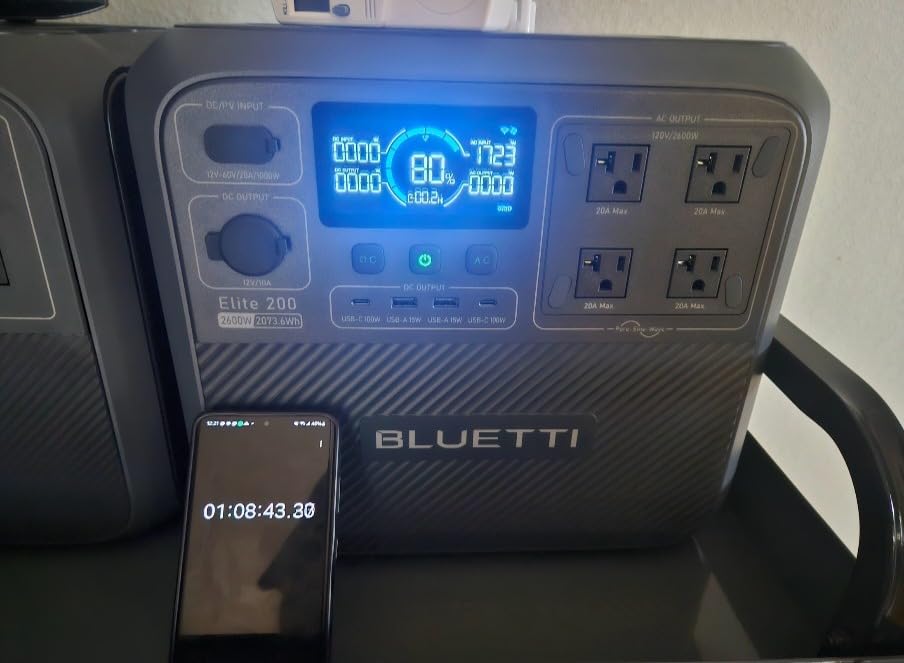
Recharge performance is strong, reaching 80 percent in about 50 minutes with dual AC and DC charging and a full solar charge in roughly 2.4 hours with 1000W of panels. It also carries four AC outlets plus USB-C, USB-A and a 12V car port.
One of the most technically detailed reviews makes a fair criticism: the firmware does not offer user-settable state-of-charge limits for solar charging, which arguably undercuts the long-cycle claim on a partial daily float schedule. BLUETTI has resolved a separate MPPT solar dropout through firmware updates, which shows the support channel works.
Why standby draw matters at an unattended cabin
A cabin that sits empty for a week is the hardest case for any battery. A unit drawing 10W in standby loses far less to self-consumption than one drawing 30W, and over a long unattended stretch that difference decides whether you come home to a charged bank or a flat one.
The same applies to the quiet operation claim. Owners running this unit indoors overnight report that it never becomes the reason you cannot sleep, which matters more in a small space than in a garage.
Where it falls short
The 60V solar MPPT input ceiling is the real limitation for anyone planning a large array. Longer strings need more panels in series, and this unit caps that compared with models accepting higher input voltages.
It also cannot be expanded with external battery modules, so the 2073.6Wh figure is a hard ceiling. There is no 30A 12V output either, which rules out some high-current DC loads.
8. EcoFlow DELTA Pro 3600Wh – Most Storm Cover in This Roundup
EF ECOFLOW Portable Power Station 3600Wh DELTA Pro, 120V 3600W AC Output
3600Wh LFP battery
3600W AC, 4500W with X-Boost
Expandable to 25kWh
99 pounds, 25 x 11.2 x 16.4 inches
Pros
- 3600Wh capacity expandable to 25kWh with extra batteries
- Full recharge in 1.8 hours from a 240V outlet
- Fifteen output methods including five AC outlets and two 100W USB-C ports
- Runs quietly and cleanly with no fumes for indoor use
- Reliable on sustained commercial loads such as heat presses
Cons
- Very heavy at 99 pounds requiring the wheeled handle
- Solar input limited to about 15 amps capping array size
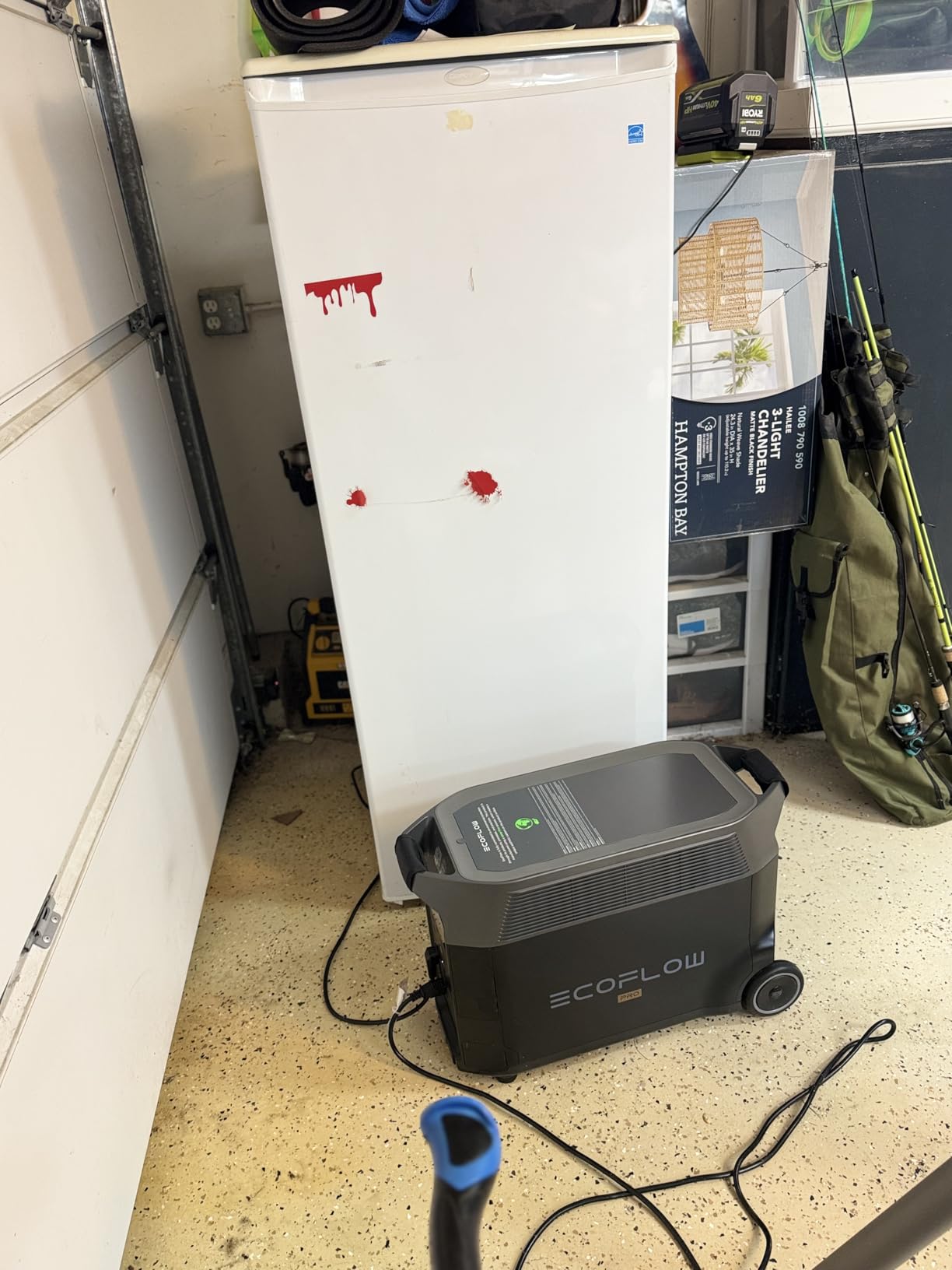
This is the only unit in the list that meaningfully changes the conversation about a multi-day storm. At 3600Wh it holds roughly three kilowatt-hours of usable energy, which is enough to carry a normal cabin load for several nights before the array has to make up the difference, and it expands to 25kWh if you ever need a small house.
Recharge is fast in every direction. A full refill takes about 1.8 hours from a 240V outlet, and roughly 2.8 hours on solar with four 400W panels. That flexibility is what lets it serve as the emergency station for a property that also has grid access sometimes.
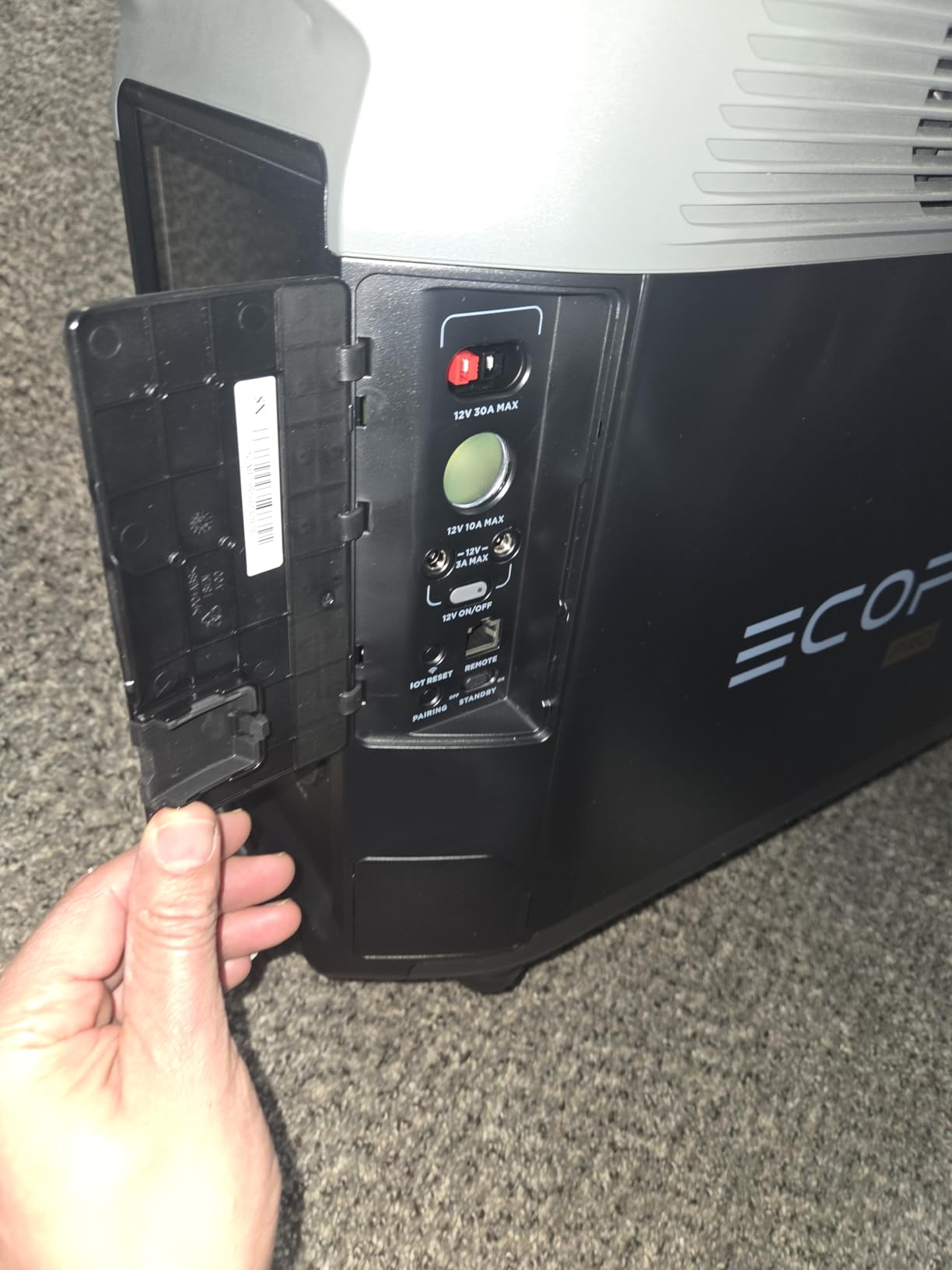
Owners in areas with frequent multi-day outages describe it as eliminating the need to run a gas generator at all, which is a genuine quality-of-life change in winter. Small business users also report running commercial equipment off it reliably, including heat presses.
It operates quietly and cleanly with no fumes, so it can live inside the cabin rather than in an unheated shed where it might be too cold to charge properly.
When the big capacity earns its keep
The value shows up in exactly one scenario: a long run of bad weather. At 3600Wh you can ride out a four or five day storm at normal consumption, where a 1kWh unit would be flat by the second night. That is the difference between a weekend cabin that works most of the year and one that works all of it.
Expansion is the other reason. Moving from 3600Wh to 25kWh keeps the same inverter family, so a growing homestead does not mean starting over.
Where it falls short
Ninety-nine pounds is genuinely heavy and needs the extendable wheeled handle to move at all. Plan a permanent location before it arrives, because this does not go on a high shelf.
The roughly 15-amp solar input ceiling is the more serious constraint for off-grid use, since it caps how large an array you can actually connect. A handful of owners also report error codes and overload faults that needed service under warranty.
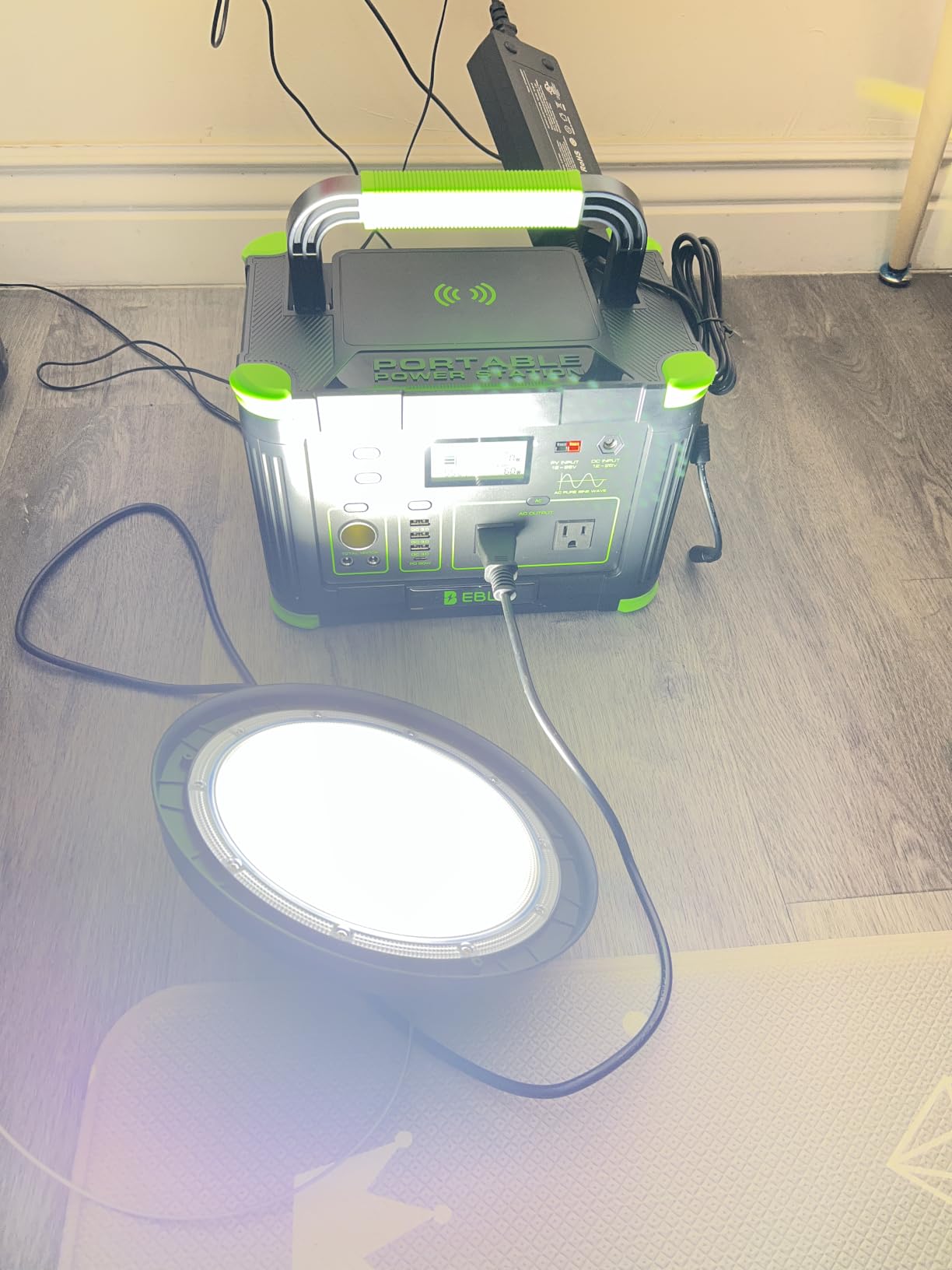
9. EBL 2400W Power Station 1843.2Wh – Widest Outlet Selection in the Class
EBL 2400W Portable Power Station LiFePO4 Battery for Home Use
1843.2Wh LiFePO4
2400W maximum output
Grey, 54 pounds
2-year manufacturer warranty
Pros
- 1843.2Wh with 2400W output for kettles
- hair dryers and power tools
- Charges up to 12 devices at once across a wide port selection
- Emergency mode switches to battery in 0.1 seconds
- LiFePO4 chemistry rated 3500+ cycles for 10+ years
- 4-mode LED light and clear remaining-battery display
Cons
- Only a 2-year manufacturer warranty
- the shortest in this list
- 54 pounds is heavy for a unit marketed as portable
The port selection is what sets this apart. Four AC outlets, two USB-A, two fast USB-C, a car port, two DC ports and a wireless charging panel means you can leave a whole weekend of devices connected at once without hunting for a multi-adapter, which matters in a cabin where outlets are scarce.
The 0.1-second emergency transfer is quick enough to protect a computer from data loss, and the 2400W output comfortably runs kettles, hair dryers, coffee makers and light power tools.
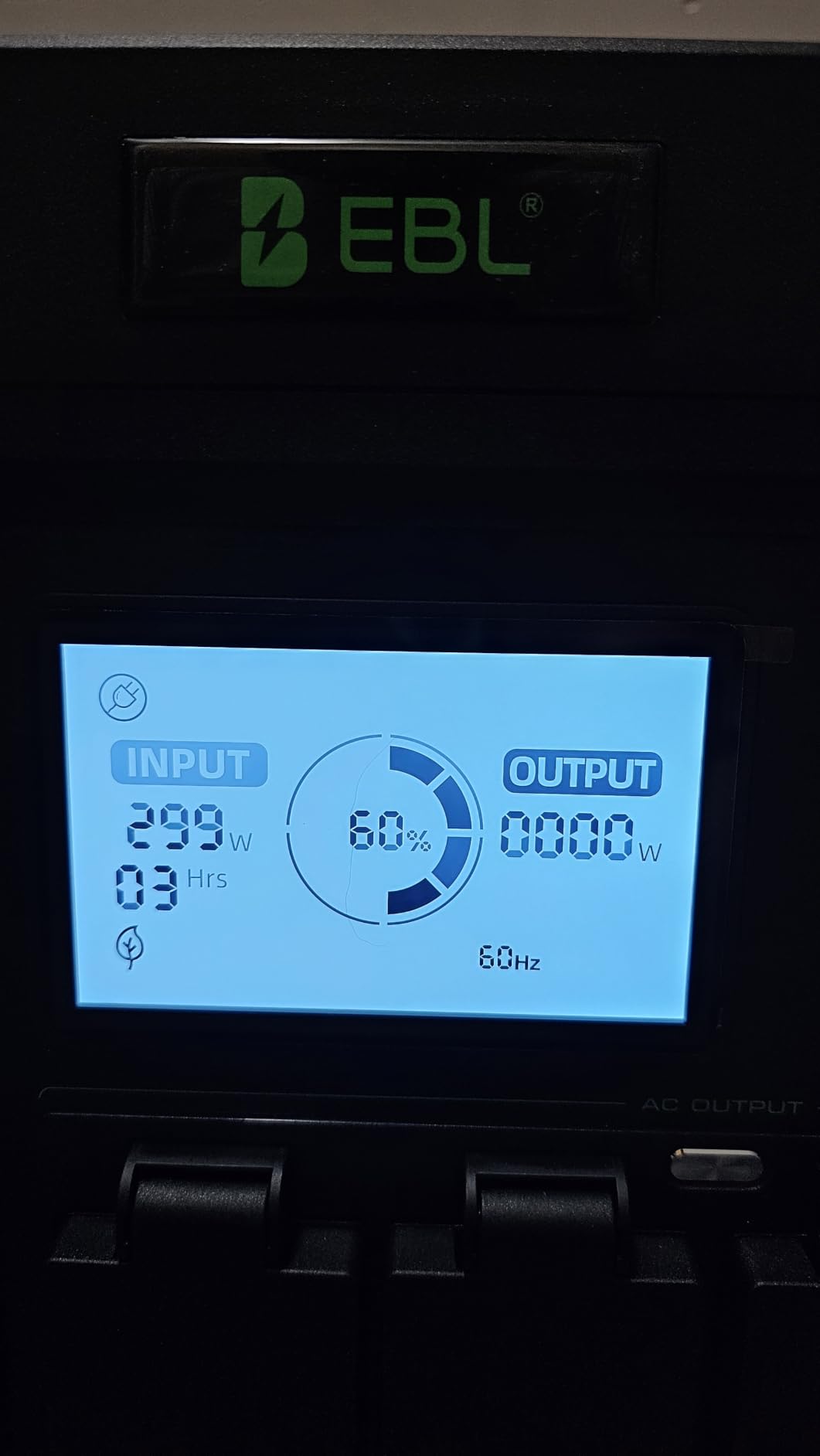
Built-in protection covers overcharging, over-discharging, short circuits and high temperature, and the housing is shock-resistant and flame-retardant. The 4-mode LED light is a genuinely useful cabin feature that most competitors leave out.
Owners also mention dual-side handles, which make it easier to carry than the single-grip designs even at 54 pounds. The clear status display is readable in daylight.
How the warranty changes the math
This is the one factor that gives us pause. At a 2-year manufacturer warranty, it is the shortest in this roundup, while most rivals run five years. For an unattended cabin where you may not visit for months, a short warranty is a real exposure, and owners in our research consistently treat anything under five years as a deal breaker.
The battery chemistry itself is not the concern. At 3500+ cycles and a 10+ year service life claim, the cells are specified in line with the competition.
Where it falls short
Besides warranty length, this model has the highest share of one-star ratings in the group, which suggests more mixed experiences than the premium alternatives. Reviewers report lower overall satisfaction than the leading portable power station brands.
It is also not expandable, so 1843.2Wh is fixed, and 54 pounds is heavy for something marketed as portable.
10. Anker SOLIX S2000 2010Wh – Built for Fridge Backup
Anker SOLIX S2000 Portable Power Station, 2,010Wh, 1,500W
2010Wh LFP capacity
1500W continuous, 3000W peak
314Ah cells, 10000 cycles
35.7 pounds, black
Pros
- Runs a standard refrigerator up to 35 hours on a 6W idle draw
- 10000-cycle LFP battery with a stated 15-year lifespan
- 30 percent smaller and 25 percent lighter than average 2kWh units
- Eight outlets split between front and rear panels
- Sub-10ms UPS switchover drawing about 3 watts
Cons
- No 12V DC port
- 1500W continuous output is modest for a 2kWh unit
- Cooling fan is noticeably loud during 1200W charging
This is the unit to buy if your cabin has one non-negotiable load: the refrigerator. Owners report up to 35 hours on a standard fridge, which comes from a 6W idle draw and inverter efficiency roughly 10 percent better than average. That number covers a weekend-plus outage without any solar contribution.
The cell specification is also the strongest on paper in this list, with 314Ah LFP cells rated for 10000 cycles and a stated 15-year lifespan. At 35.7 pounds it is lighter than most 2kWh units, and the dual-sided outlet layout keeps the front panel clean.
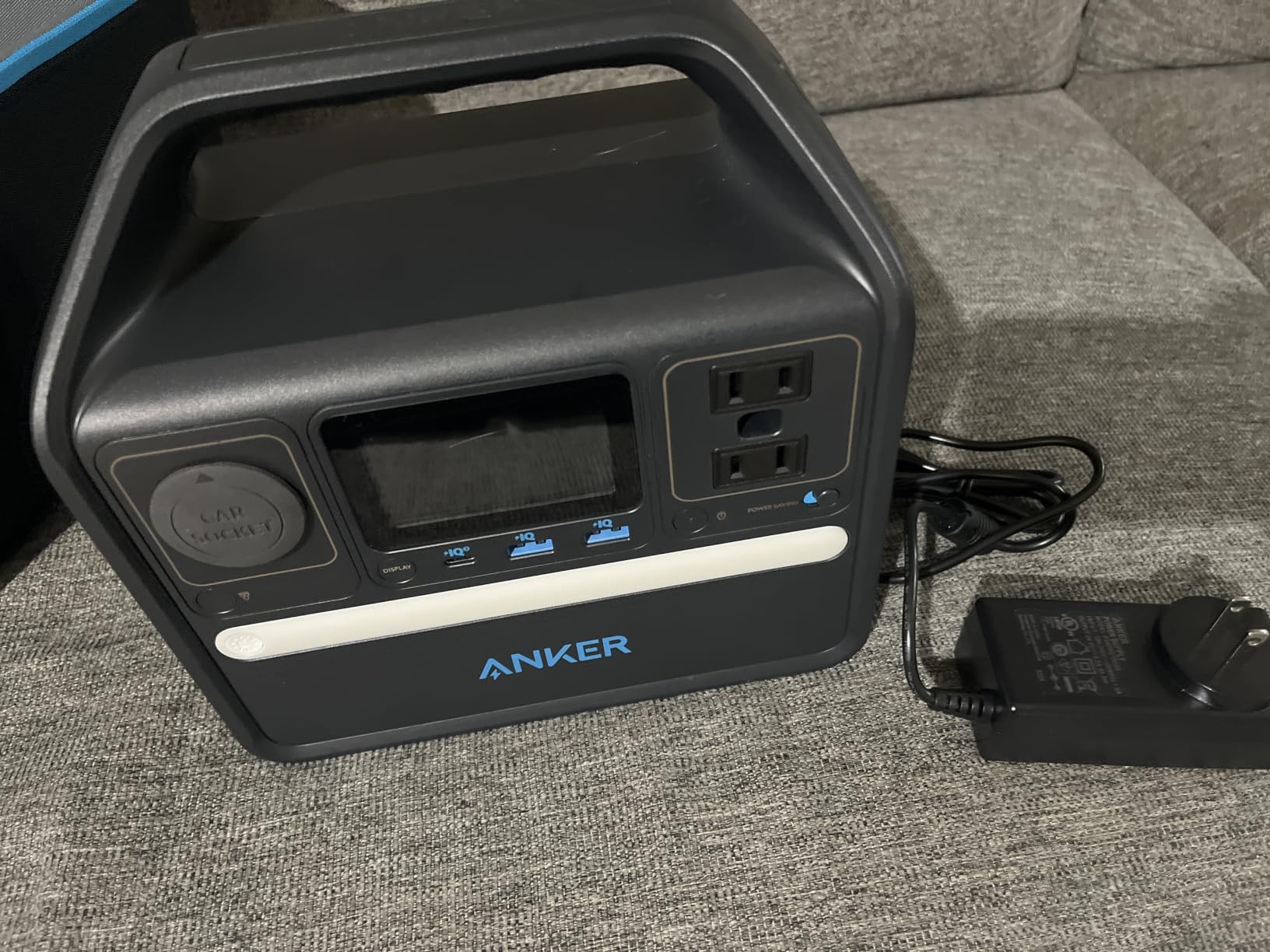
Buyers overwhelmingly use it as a UPS and fridge or freezer backup, citing silent operation, compact size and app configurability. Adjustable charge rates through the app let you slow charging down if you are topping off from a small panel, which is kinder to the cells.
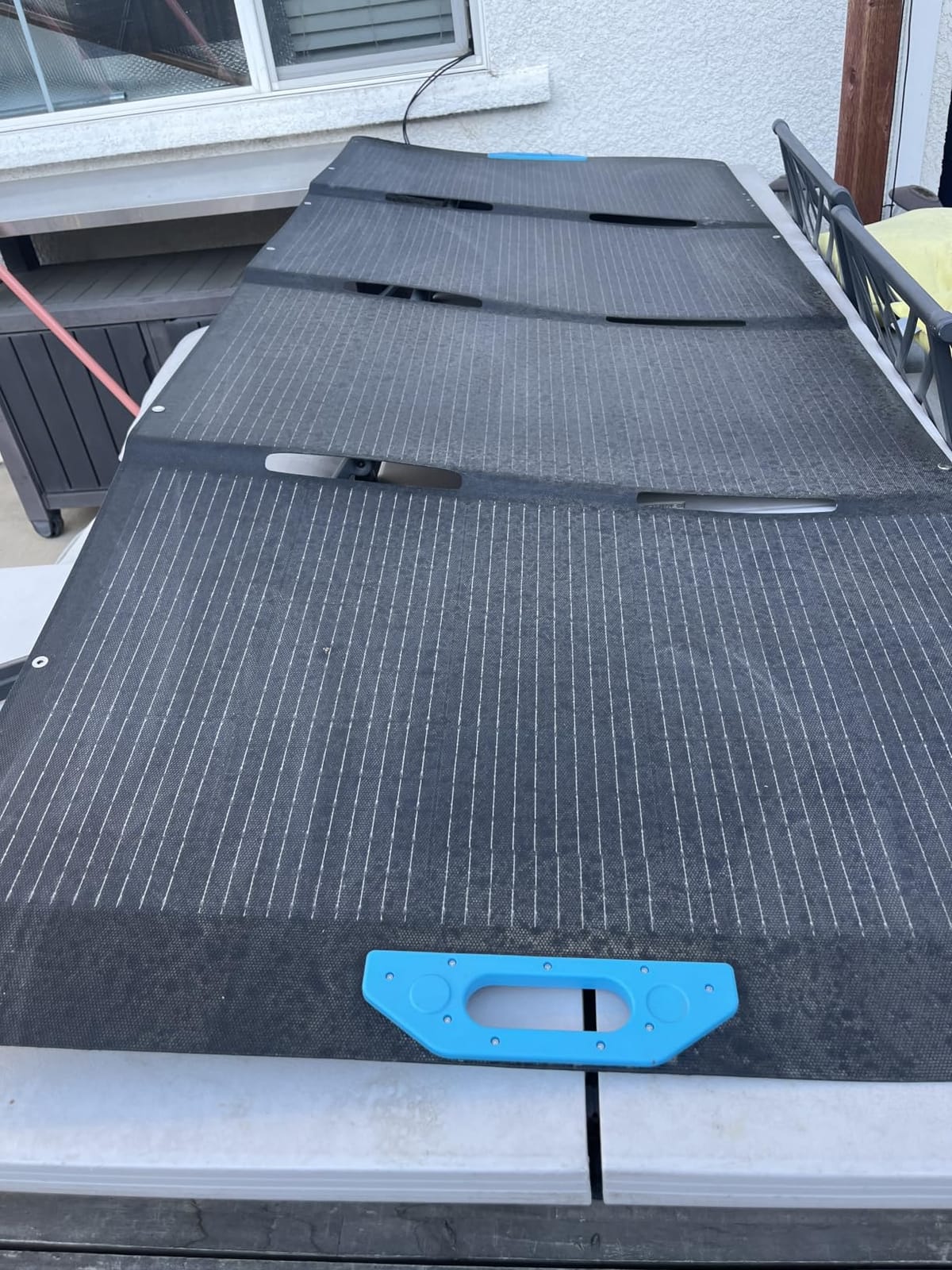
Six recharge options are offered, including up to 400W of solar, AC, generator, alternator and car, so topping up on the drive in works fine.
Why it beats bigger banks on refrigeration
Runtime on a fridge is a function of efficiency, not capacity alone. A 2kWh bank that wastes energy in a poor inverter loses to a smaller, cleaner one. This unit’s low idle draw and higher conversion efficiency are the reason it outlasts several larger models in the most common cabin scenario.
Sub-10ms UPS switchover drawing about 3 watts also means leaving it plugged in as a permanent fridge protector costs almost nothing in standby energy.
Where it falls short
At 1500W continuous, output is modest for a 2010Wh unit, so kettles and power tools will trip it faster than the capacity suggests. There is also no 12V DC port at all, which rules out 12V accessories.
Owners report the cooling fan is noticeably loud during high-rate charging, and the unit has only edge grips rather than a proper carry handle. Some also mention a strong chemical burn-off odour during the first charge, so ventilate the space for that first cycle.
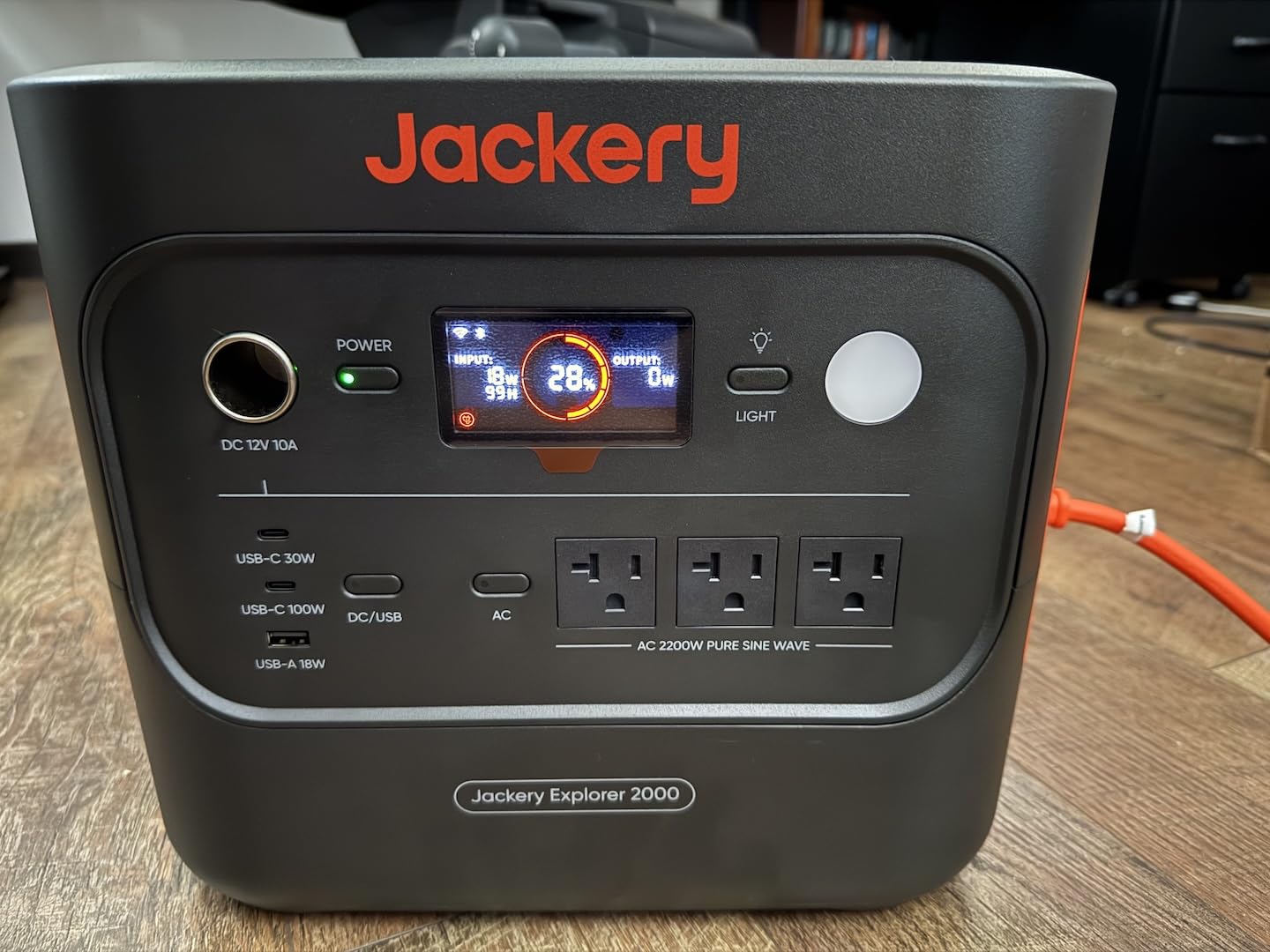
11. Jackery Explorer 2000 v2 Twin Panel Kit – Most Complete Turnkey Package
Jackery Explorer 2000 v2 and 2x200W Solar Panels, 2042Wh, 2200W AC Output
2042Wh LiFePO4
2200W AC output
Two 200W solar panels included
66.8 pounds for the full kit
Pros
- 2042Wh with 2200W AC output across three AC ports
- 41 percent lighter and 34 percent smaller than conventional 2kWh stations
- 0-80 percent in about 66 minutes on AC
- Full solar charge in about 6 hours with the two included panels
- 20ms seamless UPS switching with UL1778 test certification
Cons
- Kit is heavy at 66.8 pounds including both panels
- Solar input needs a connector swap after setup
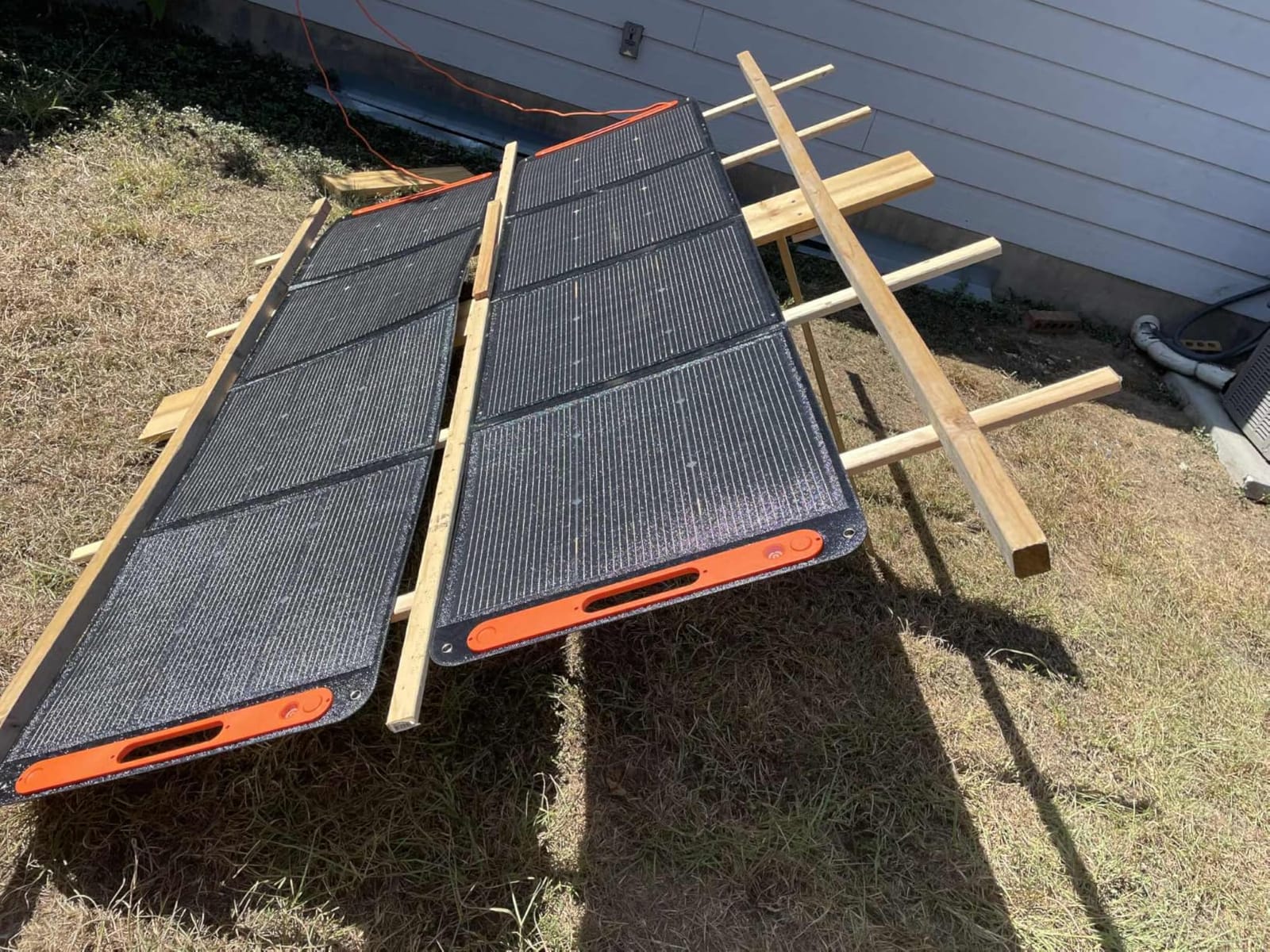
If you want everything in one purchase decision, this is the cleanest path. You get a 2042Wh station with 2200W of continuous output plus two 200W panels, which is 400W of generation and a full solar recharge in about six hours with reasonable sun.
The physical design is the quiet advantage. Cell-to-Body technology makes it 41 percent lighter and 34 percent smaller than a conventional 2kWh lithium station, which in a small cabin with limited floor space is worth more than a spec-sheet line.
Charging is quick, hitting 80 percent in about 66 minutes on AC and a full charge in 102 minutes with app-activated emergency super charging. The 30dB silent charging mode and temperature-controlled fan keep it civilised indoors.
It is UL1778 test certified for uninterruptible power systems, which matters if you plan to wire it in as a backup source rather than just carry it around.
What two panels actually buy you
Four hundred watts of panel is real generation, not a token accessory. On a clear day that is roughly 1.6kWh of harvest, which covers most of a modest cabin’s daily consumption. The catch is placement, and both panels need unobstructed midday sun to produce that.
If your cabin sits in partial tree cover, budget for a proper roof or ground mount rather than relying on the bundled panels alone. Pairing with more of our portable power bank picks is another way to smooth short trips.
Where it falls short
The combined kit weight of 66.8 pounds means you are lifting two objects plus panels, so plan the mounting and storage space for both before the kit arrives.
There is also a fiddly connector detail: solar input uses the straight DC8020 plug after you remove the L-shaped DC7909 connector. Get it wrong on first setup and charging simply will not start.
12. EcoFlow Delta 3 Classic 1024Wh with 220W Panel – Best Fit for Shaded Sites
EF ECOFLOW Solar Generator Delta 3 Classic with 220W Solar Panel, 1024Wh
1024Wh LiFePO4
1800W pure sine wave, 2600W X-Boost
Bundled 220W bifacial N-Type panel
7.9 x 11.1 x 15.7 inches
Pros
- 1800W pure sine wave output expandable to 2600W with X-Boost
- 0-80 percent recharge in about 45 minutes with X-Stream
- 220W N-Type bifacial panel delivering 190-200W in partial shade
- Sub-10ms UPS switchover for computers and servers
- App control with adjustable AC charge rates and firmware updates
Cons
- Solar input capped at 15 amps limiting array current
- Basic DC port selection with one USB-A and one 30W USB-C
Shading is the most common complaint from wooded cabin sites, and this bundle addresses it on the generation side rather than the storage side. The included 220W bifacial panel uses N-Type cells at up to 25 percent conversion efficiency, and reviewers measure 190 to 200W from it even in partial shade, which is a real improvement over a conventional monofacial panel in the same spot.
The Delta 3 Classic also has one of the deeper apps in this category, with adjustable AC charge rates that let you balance recharge speed against long-term battery health. Owners using it for travel and camping note the build quality holds up.
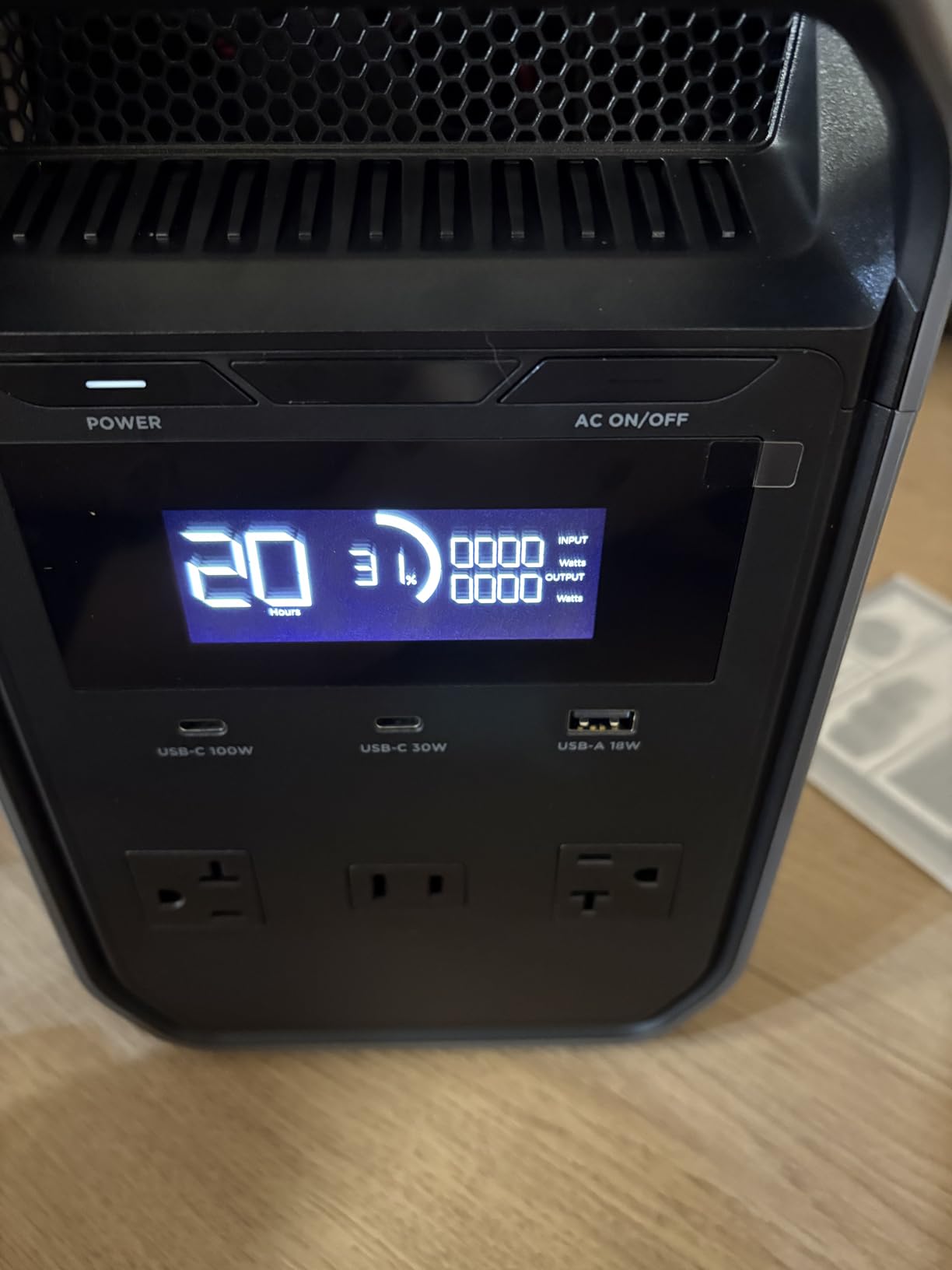
At 1800W of pure sine wave output, expandable to 2600W with X-Boost, it covers normal cabin loads without strain. Sub-10ms UPS switching keeps computers, servers and medical devices running through a switch.
Remember the useful window on a wooded site. Morning-only sun does not make a viable array, and the productive hours are roughly 10am to 4pm, so a bigger unshaded panel often beats a better battery.
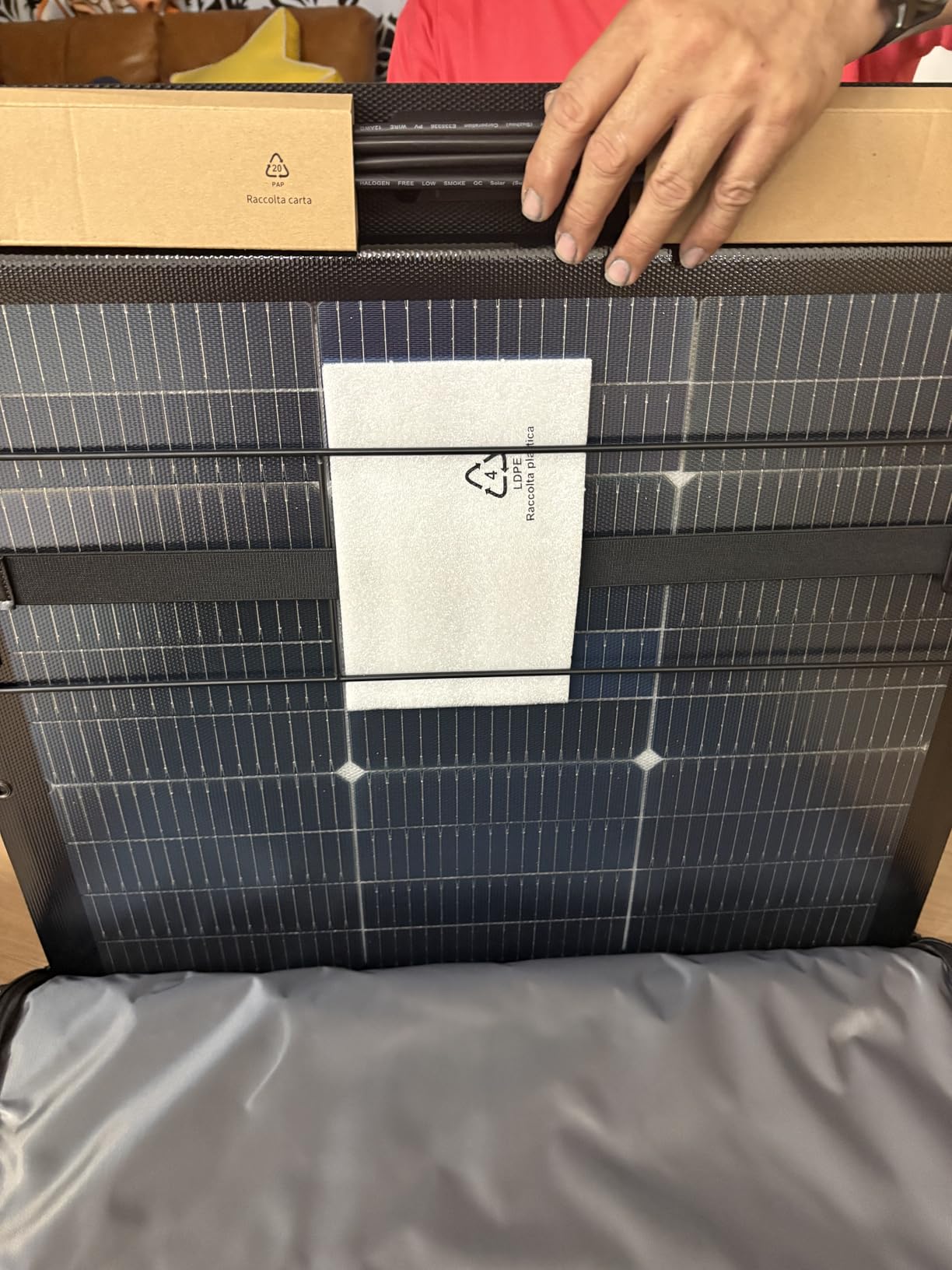
Why panel choice matters more than bank size at a wooded site
When production is the constraint, adding storage does not help. A bank that is never refilled is just a bigger disappointment, so at a shaded site the sensible order of operations is: unshade the array, then size the bank. The bifacial panel here is a cheaper way to gain yield than buying a second battery.
If your cabin sits under heavy canopy, plan on a remote panel mount on a pole or roof clear of the trees rather than a ground array in dappled light.
Where it falls short
The 15-amp solar input ceiling is the limitation reviewers keep flagging, since it current-limits arrays below about 33V DC even though the nominal maximum is higher. That constrains how much panel you can attach later.
DC port selection is also basic: one USB-A, one 30W USB-C and one 100W USB-C. The panel rows also need a secure mount, so budget time for proper setup on a roof or ground frame.
How to Size a Battery Bank for Your Cabin
What size solar battery you need to be off-grid depends on one number: your daily consumption in watt-hours. Add up the watts each appliance draws times the hours you run it, multiply that total by your days of autonomy, then divide by the usable share of your bank, which is roughly 80 percent for LiFePO4 after depth-of-discharge limits and inverter losses.
The working formula is simple: daily watt-hours times days of autonomy, divided by 0.8. A cabin using 1500Wh a day with two days of autonomy needs 3000Wh divided by 0.8, which is about 3.75kWh of nameplate capacity. Round up to the next real product.
Start with a load list rather than a guess. A refrigerator compressor cycling is often the single biggest draw, followed by lighting, a well pump if you have one, electronics, and any power tools. Multiply each by hours of use, then add roughly 20 percent headroom for growth, since owners on DIY solar forums consistently recommend sizing for where you will be in five years rather than minimum viable today.
Days of autonomy is the variable people get wrong. A weekend cabin that can reach a road can run on one day of autonomy plus a generator. A four-season cabin nobody can easily reach needs three to five days, and that is where the difference between a 2kWh and a 5kWh bank decides whether a storm is an inconvenience or a problem.
Watch the surge numbers too. Anything with a motor, a compressor or a pump draws a startup spike well above its running draw, and an inverter that cannot deliver the surge will simply reset. Check both continuous and surge figures before you commit to a smaller bank.
Battery Bank or Portable Power Station: Which One Fits Your Cabin?
An all-in-one portable power station wins on speed and simplicity. It arrives with the battery, BMS, inverter and charge controller already matched, so you can be running a circuit the same day, and any unit in this roundup will do that without a single electrician.
A fixed battery bank wins on capacity growth and lifespan. A 48V server rack LiFePO4 stack or a set of 12V batteries wired in parallel can be expanded indefinitely, costs less per kilowatt-hour at larger sizes, and can be sized to whatever an inverter can accept. Long-time builders on DIY forums consistently move in this direction once a cabin becomes permanent.
There is a third option for very small loads. If you want phone charging and lighting rather than a household circuit, a conventional power bank does the job for a fraction of the cost and weight, and leaves your solar budget for panels instead.
The honest tradeoff is serviceability. A portable station is a sealed appliance; when it fails you generally send it away. A fixed bank with matched batteries can be replaced one module at a time, which is the argument that eventually wins for anyone living there full time.
LiFePO4 vs Lead-Acid for Off-Grid Cabins
LiFePO4 is the best battery type for an off-grid solar system, and for one specific reason above all others: maintenance. A lead-acid bank in a cabin you visit a few times a year means checking water, equalising charge and replacing cells every three to five years, which usually means a drive you were trying to avoid.
The numbers favour lithium as well. Lithium banks hold roughly 80 percent of nameplate capacity as usable energy against about 50 percent for lead-acid, and they tolerate far more cycles. Cycle life figures across the units in this roundup run from 3000 to 10000 cycles, where a typical AGM bank manages a fraction of that.
Round-trip efficiency matters too, and it works quietly in your favour. Lithium runs around 95 percent versus roughly 80 percent for lead-acid, so you need fewer panels to put the same energy into the bank, and less of your harvest is lost as heat in an unattended shed.
Weight is the last argument, and it is a big one. Lead-acid banks need to be carried into place and carried out again for service; lithium modules generally get rolled or lifted with two people. Over a fifteen-year life, that difference in labour is substantial.
Cold Weather: Why It Matters More for a Cabin Than for a House
Cold weather matters more at a cabin because you cannot simply go and warm the battery closet. Charging a lithium cell below freezing risks lithium plating, where lithium deposits inside the cell and permanently reduces capacity. Every quality BMS cuts charging off at a low-temperature cutoff for exactly this reason.
Charge rate is the number experienced owners watch. Forum consensus from people running real installations lands around 0.2C as a recommended charge rate in cold conditions and about 0.5C as acceptable in mild weather. On a 100Ah bank that means roughly 20A in winter and up to 50A when the temperature is not the constraint.
Self-heating is the feature that removes the worry entirely, and in a four-season cabin it moves from nice-to-have to effectively mandatory. An internal heater draws a small amount of energy to bring the pack above freezing before charging begins. Confirm the unit you buy actually has it rather than assuming, because the spec sheets bury that line.
The other cold-weather reality is production, not storage. Winter brings shorter days and lower sun angles, so a cabin needs more days of autonomy in January than in July for the same consumption. Sizing for the worst month, not the average, is the mistake that strands people in December.
What You Need Besides the Battery
A solar battery bank is the storage half of a system, not the whole kit. A complete off-grid cabin solar setup needs panels, a charge controller, an inverter, and the wiring and protection between them, whether you buy them inside one case or separately.
All-in-one units bundle the inverter and controller, so your remaining shopping list is panels sized to your daily load, proper cabling, a disconnect and fusing, and a place for the whole assembly that stays dry and ventilated. Expansion batteries, where the model supports them, come later rather than on day one.
Fixed banks need an MPPT charge controller matched to your array and a hybrid inverter sized for both continuous and surge loads. This is where people spend more than they expected on the balance of system: the charge controller, a combiner box and proper fusing can rival the cost of the batteries themselves.
Generator backup is worth planning for even if you hope never to use it. Running a small inverter generator for an hour or two restores most of a bank quickly, and every unit here accepts generator charging. Watch your voltage headroom too, because putting too many panels in series on a controller with a low maximum input voltage will fail in cold weather when open-circuit voltage rises.
Monitoring is the last piece and the easiest to skip. App control lets you check state of charge, confirm the bank is actually charging and catch a fault before you drive out to the cabin. For a property you visit rarely, that is worth more than any single spec line.
Installation and Safety Basics Before You Energize the Bank
Installers and forum regulars share one rule about parallel banks: use identical batteries of the same brand and age. Mixing brands or ages in a parallel string drags the whole bank toward the weakest cell, and while you may get away with it for a season, the underperforming unit sets the ceiling for everything else.
Connect batteries diagonally across opposite corners rather than daisy-chaining positive to negative. Users on DIY solar forums recommend this consistently because it keeps current shared evenly between the units and reduces the strain on each connection.
Fuse every conductor, not just the main. A parallel bank with one shared breaker can feed a fault into every battery at once, which is exactly the failure mode that turns a small problem into a burned bank.
Think about temperature before placement. Keep the unit away from a wood stove or a hot water heater, keep it ventilated, and avoid an unheated enclosed porch in winter if you expect to charge through the cold months. A battery in a cold room that never charges is the same as no battery.
Finally, if you are visiting a cabin infrequently, store the bank around 50 to 60 percent charge rather than empty or full. Lithium self-discharge is slow, but a bank stored at full in a hot shed all summer will age faster than one stored at a moderate level.
Frequently Asked Questions
What type of battery is best for an off-grid solar system?
LiFePO4 is the best choice for an off-grid solar system, mainly because it needs no maintenance between visits. It holds about 80 percent of nameplate capacity as usable energy, tolerates thousands of deep cycles, and loses far less energy to conversion losses than lead-acid. For a cabin nobody visits monthly, a lithium bank avoids water checks, equalising charges and replacement every few years.
What size solar battery do I need to be off-grid?
Work out your daily consumption in watt-hours by multiplying each appliance’s watts by its daily hours of use. Multiply that by your days of autonomy, then divide by 0.8 to account for depth-of-discharge limits and inverter losses. A cabin drawing 1500Wh a day with two days of autonomy needs roughly 3.75kWh of nameplate capacity.
What is the best off-grid power bank?
For most cabins the best off-grid power banks are the all-in-one LiFePO4 power stations in this roundup, because they bundle the battery, inverter and charge controller and work the day they arrive. Our top pick is the BLUETTI AC200PL at 2304Wh and 2400W. If you need far more capacity, the EcoFlow DELTA Pro at 3600Wh expands to 25kWh.
What is the best solar kit for an off-grid cabin?
The best solar kit for an off-grid cabin is a matched set of panels sized to your daily load, a charge controller, an inverter and a battery bank. The all-in-one power stations here already contain the controller and inverter, so you mainly need panels, cabling and proper fusing. Bundled kits such as the Jackery Explorer 2000 v2 package two 200W panels with the station.
Can I mix different brands of lithium batteries in one bank?
No. Use batteries of the same brand, model and age in a single parallel bank. Mixing pulls the bank toward the weakest unit and reduces the usable capacity of every other battery. If you need more capacity later, add matching modules to the original bank rather than introducing a different unit.
Can I charge a lithium battery bank with a generator?
Yes. All the units in this roundup accept generator charging, and an hour or two of running a small inverter generator restores most of a bank’s capacity without stressing the cells. Keep the charge rate modest in cold weather, since experienced owners recommend about 0.2C in winter and up to 0.5C when the temperature is not a constraint.
Which Solar Battery Bank Should You Buy for Your Cabin?
The BLUETTI AC200PL is our pick for the best solar battery banks for off grid cabins in 2026. At 2304Wh with 2400W of continuous output, 3000+ cycles and expansion to 8448Wh, it covers a real weekend load with room to grow, and it runs quietly enough to live inside the cabin.
For smaller shelters, the EcoFlow RIVER 2 Pro kit handles a fridge and a few lights with a panel included. The BLUETTI Elite 100 V2 gives you the fastest solar refill in the 1kWh class, and the Anker SOLIX C1000 Gen 2 refills in under an hour on a wall outlet. When the weather turns serious, the EcoFlow DELTA Pro at 3600Wh buys you the most days of autonomy in this group.
Whichever you choose, size the bank for your worst month rather than your average one, check that the charge controller accepts your array’s cold-weather voltage, and remember that a cabin’s other systems still need power and heat. Our guides to cellular security cameras for remote cabins and wood stoves for small cabins cover the rest of the build.