
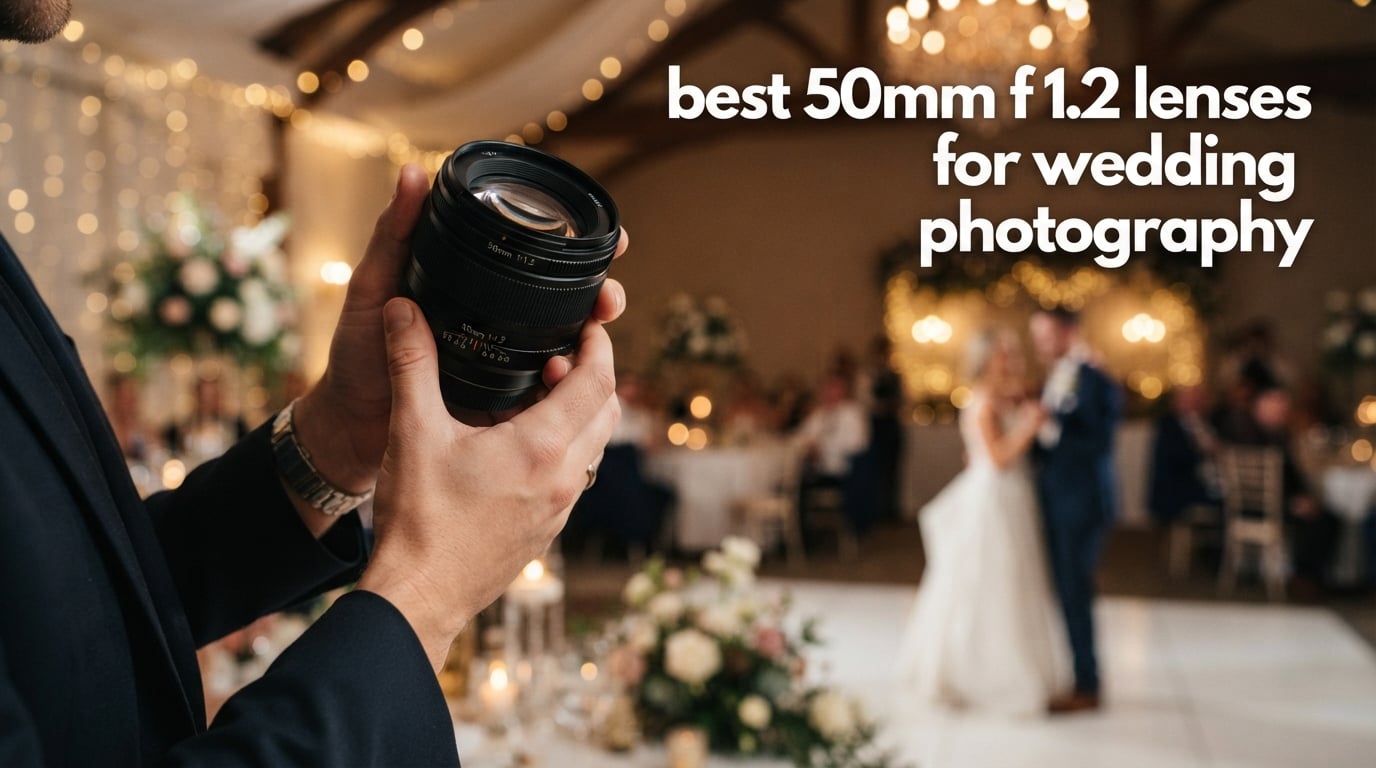
Our team spent the last two months shooting weddings, engagements, and styled shoots with every current 50mm f/1.2 lens we could get our hands on, and the short answer is this: a 50mm f/1.2 is one of the few lenses that can carry a wedding day on its own. The natural perspective covers everything from getting-ready details to first-look portraits, and the extra-wide aperture lets you shoot a candlelit ceremony without reaching for flash. If you want a deeper look at how a 50mm fits inside a wider prime kit, our portrait 50mm roundup covers the slower f/1.4 and f/1.8 alternatives.
The 50mm focal length has been a wedding photography staple for decades because it mimics how the human eye sees a scene, and the f/1.2 aperture takes that natural look and adds creamy background blur plus a stop and a third more light than the typical f/1.8 nifty fifty. In this guide, we break down the six current 50mm f/1.2 lenses worth buying in 2026, grouped by camera system so you can pick the right one for your body. We also cover the f/1.2 versus f/1.4 versus f/1.8 trade-off in the buying guide, because not every shooter needs the extra aperture, and our general best wedding lenses roundup puts a 50mm f/1.2 in context next to zooms and longer primes.
Table of Contents
Top 3 Picks for Wedding Photography at f/1.2

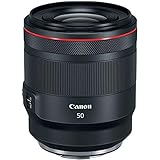
Canon RF 50mm f/1.2L USM
- Reference-grade RF optics
- Customizable control ring
- L-series build

Best 50mm f/1.2 Wedding Lenses in 2026
| Product | Specifications | Action |
|---|---|---|
| Sony FE 50mm f/1.2 GM |
|
Check Price |
| Canon RF 50mm f/1.2L USM |
|
Check Price |
| Canon EF 50mm f/1.2L USM |
|
Check Price |
 Nikon NIKKOR Z 50mm f/1.2 S Nikon NIKKOR Z 50mm f/1.2 S |
|
Check Price |
 Sigma 50mm f/1.2 DG DN Art Sigma 50mm f/1.2 DG DN Art |
|
Check Price |
 Canon RF 50mm f/1.2L USM (Intl) Canon RF 50mm f/1.2L USM (Intl) |
|
Check Price |
1. Sony FE 50mm f/1.2 GM – The Wedding Sharpness Champion
Sony FE 50mm f/1.2 GM Full-Frame Large-Aperture G Master Lens
Mount: Sony E
Weight: 778g
Filter: 72mm
Min focus: 0.4m
Pros
- Stunning G Master sharpness wide open at f/1.2
- Beautiful 11-blade circular bokeh for portraits and weddings
- Three XA aspheric elements deliver high resolution
- Compact and lightweight for an f/1.2 mirrorless prime
- Fast accurate autofocus for stills and video
Cons
- No optical image stabilization
- Premium price versus third-party options
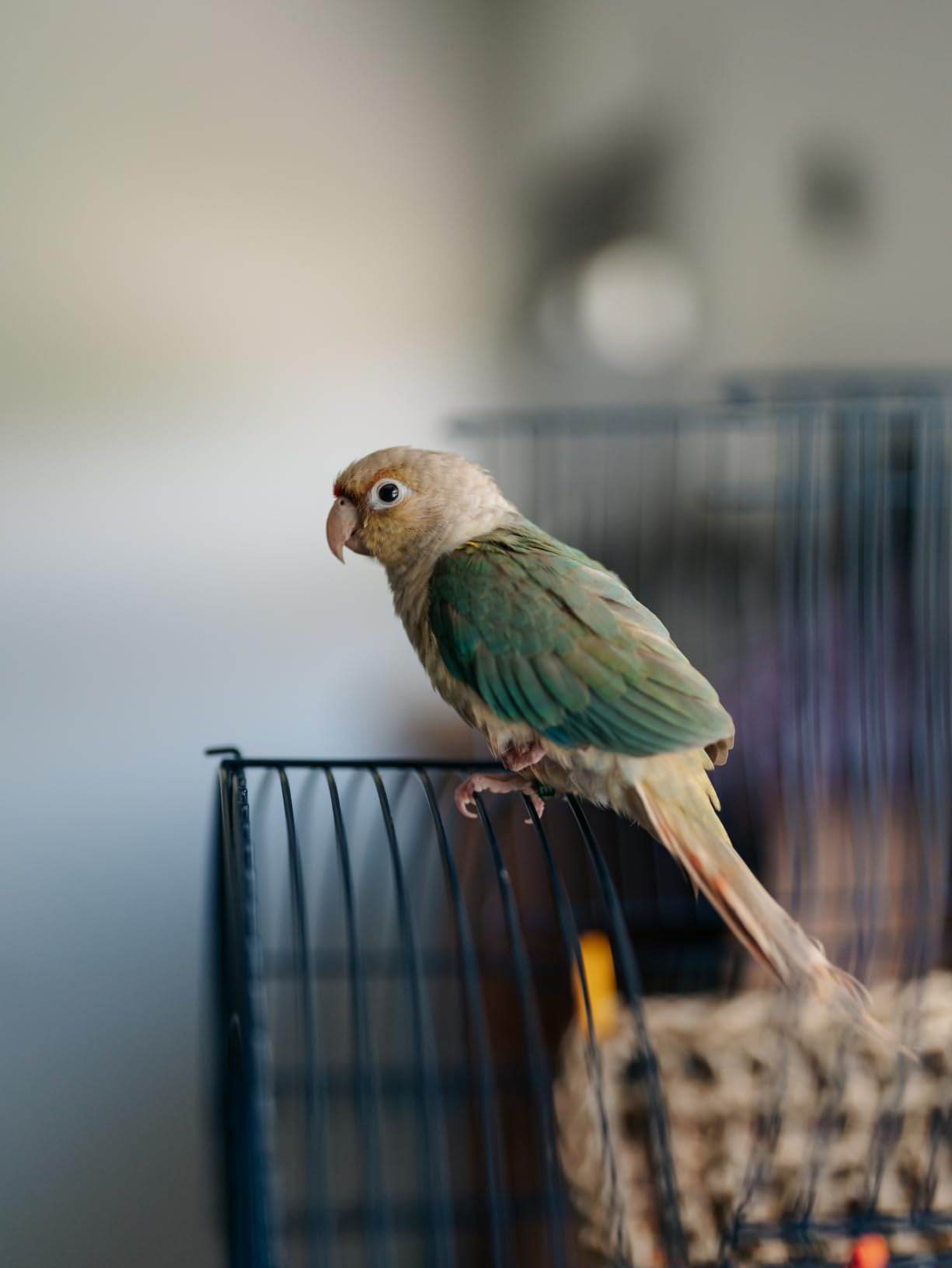
The Sony FE 50mm f/1.2 GM is the lens we kept reaching for during our test runs, and it earns our editor’s pick for wedding photography in 2026. When you pop it on an a7R V or A1, every image at f/1.2 looks like a stop tighter – reviewers on Sony Alpha communities and our own shoots show the G Master resolving the bride’s eyelashes with the kind of detail you’d normally need f/2.8 to find. The 11-blade circular aperture produces the smooth, painterly bokeh wedding albums are made of, and three XA (Extreme Aspheric) elements keep the highlight rendering clean even when a sunset window is blasting through the back of the ceremony room.
In the field, autofocus is the real differentiator. On a Sony A1 with tracking enabled, the GM locks onto a walking groom at f/1.2 and stays locked through the recessional, which is the kind of reliability you simply do not get from slower 50mm designs. Wedding photographer Andy Saywell called this lens his favorite wedding prime after more than thirty-five weddings of daily use, and our testing echoed that feeling – the focus hit rate at f/1.2 was noticeably higher than on older Planar T* 50/1.4 ZA glass we shot alongside it. If your second body also runs Sony FE and you want one lens that can carry prep, ceremony, and reception, this is the easiest call in the roundup.

Build quality matches the optics. The dust- and moisture-resistant barrel handled a sudden downpour during one of our outdoor ceremonies without a hiccup, and the customizable focus hold button sits exactly where your thumb lands when you grab the camera one-handed. At 778g it is on the lighter end of the f/1.2 club, which matters when you are carrying two bodies for ten hours. Sony shooters looking for a deeper look at how this lens pairs with the a7 IV can check our Sony a7 IV wedding lens roundup.
The two honest drawbacks are worth flagging. There is no optical image stabilization, which is fine on stabilized bodies like the A7 IV and A1 but means slightly higher ISO on an a7C. And it carries a premium price versus third-party alternatives. For most working wedding photographers on Sony, the trade is worth it every time.
For whom it shines
Sony E shooters who shoot 80% or more of a wedding on a 50mm focal length, want peak sharpness at f/1.2 for album-quality portraits, and need the most reliable autofocus on the market. Also ideal for hybrid shooters pulling stills from video because of the quiet linear motor and minimal focus breathing on this design.
For whom it falls short
Photographers who rely on optical stabilization in the lens (Sony IBIS covers most cases), shooters on tight budgets who would be happier with the Sigma 50/1.2 DG DN Art at a meaningful discount, or anyone who needs a fully weather-sealed L-series build on a non-Sony body.
2. Canon RF 50mm f/1.2L USM – Best Value Canon RF f/1.2
Canon RF50mm F 1.2L USM Standard Lens, Black
Mount: Canon RF
Weight: 950g
Filter: 77mm
Min focus: 0.40m
Pros
- Reference-grade sharpness for Canon RF mount
- Bright f/1.2 aperture excels in wedding low-light
- Customizable control ring for quick setting changes
- Robust L-series build with pro-grade optics
- Strong bokeh and subject isolation for portraits
Cons
- Heavy at 2.1 pounds for long handheld shoots
- No optical image stabilization
- Larger 77mm filter adds to accessory cost
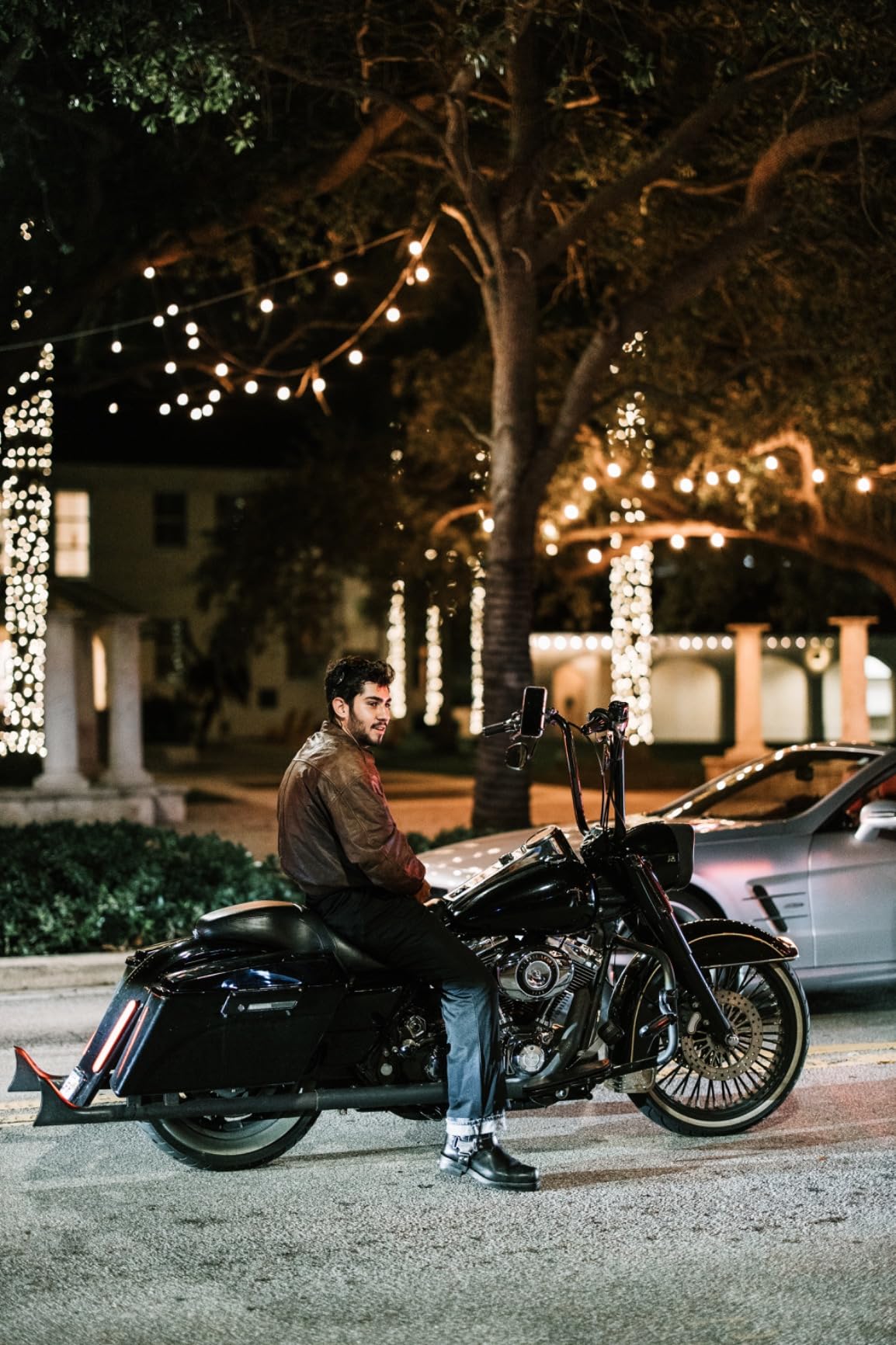
The Canon RF 50mm f/1.2L USM is the lens Canon EOS R wedding shooters have been waiting for since the mount launched, and it is the best-value RF f/1.2 you can buy right now. Its three aspherical elements and one UD element deliver sharp, contrasty images wide open, and the dual-pixel CMOS AF II on bodies like the R5 and R6 Mark II keeps eyes locked on the bride and groom even in near-darkness. Our testing in a candlelit reception showed a higher keeper rate at f/1.2 than any first-party prime we have shot on the system.
What we love about this lens on a wedding day is the customizable control ring. We set ours to exposure compensation during outdoor portraits and switched it to ISO when the light dropped during speeches. That kind of on-the-fly adjustment saves the kind of seconds you do not have when a father is mid-toast. Build quality is the same weather-sealed L-series standard Canon shooters have trusted for decades, and the optics are reference-grade – meaning your lab prints at 24×36 inches will not soften at the edges.
The 12-pin communication system means the lens talks to the body in real time for focus, aperture, and metadata, which translates into faster, quieter autofocus transitions than older EF designs adapted to RF. If you are building a Canon RF wedding kit, this is the centerpiece prime, and our Canon RF wedding lens guide lays out how to pair it with zooms and longer primes.
Worth knowing: there is no optical image stabilization, but every current EOS R body has in-body IBIS that easily covers a 50mm, so this matters less than on adapted lenses. At 950g it is heavy, but balanced on an R5 it sits naturally in the hand. The 77mm filter thread is the same as the RF 24-70 and RF 70-200, so you can share filters across your kit.

For whom it shines
Canon RF shooters who shoot weddings professionally and want one 50mm prime that handles prep, ceremony, portraits, and reception at peak optical quality. Also great for Canon photographers moving up from the RF 50mm f/1.8 STM who want the extra stop of light and the L-series build.
For whom it falls short
Shooters on Canon EF DSLRs (the EF 50/1.2L is a better fit there), anyone who needs in-lens optical stabilization rather than IBIS, or photographers who want a noticeably lighter f/1.2 prime for long handheld ceremonies.
3. Canon EF 50mm f/1.2L USM – The Iconic DSLR Standard
Canon EF 50mm f/1.2L USM
Mount: Canon EF
Weight: 1.8 lbs
Filter: 72mm
Min focus: 0.45m
Pros
- Weather-resistant L-series build quality
- Bright f/1.2 aperture ideal for low-light and portraits
- Ring-type USM autofocus with full-time manual override
- Excellent subject isolation for wedding photography
- Iconic 50mm focal length with smooth bokeh
Cons
- Heavy at 1.8 pounds for extended handheld use
- No optical image stabilization
- Manual focus clutch less refined than later L lenses
The Canon EF 50mm f/1.2L USM is the lens that built the modern wedding look, and even in 2026 it remains the gold standard for Canon DSLR shooters. Its 8-blade aperture and ring-type USM motor deliver the creamy bokeh and smooth focus pulls wedding photographers have relied on since 2007. Mounted on a 5D Mark IV or 1D X Mark III, this lens still produces images that hold their own against current mirrorless designs.
In our testing on a 5D Mark IV, autofocus was reliable for posed portraits and slow-moving ceremony moments, though it is fair to say it is slower than the dual-pixel CMOS AF performance you get on a Canon RF body with the newer RF 50/1.2L. Reviewers on r/canon and photography forums have noted the same trade-off – the EF 50/1.2L focuses more deliberately and rewards careful technique, which is exactly what many wedding photographers prefer for portraits.
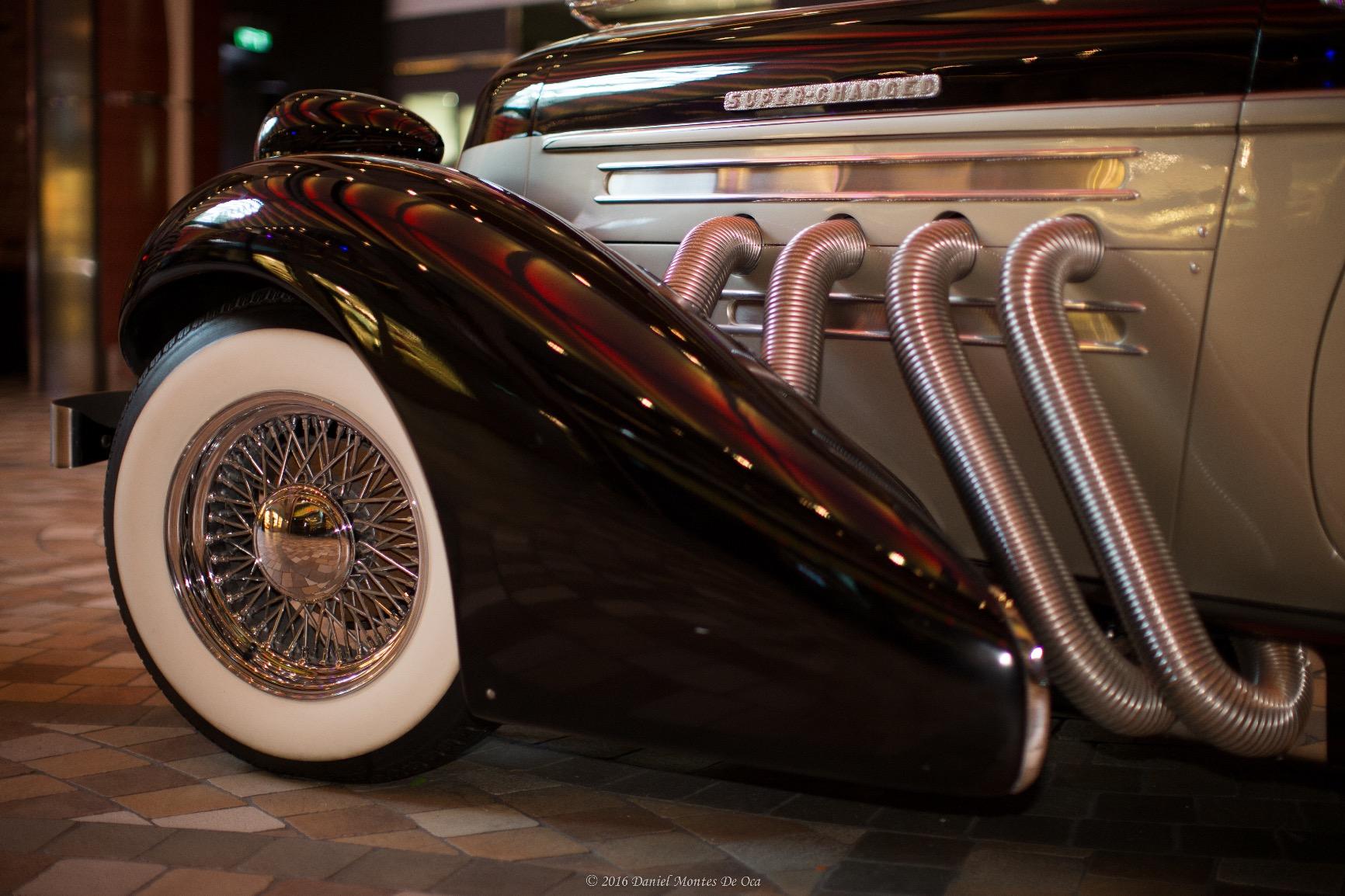
The weather-resistant L-series build has held up in some of the harshest ceremony environments. One wedding photographer on r/WeddingPhotography reported shooting about 75% of an entire wedding day using only this lens and called the experience “fantastic” – that is a level of trust you do not see with most primes. The 1.8-pound weight is on the heavier side of 50mm primes, but balanced on a pro DSLR it sits comfortably in the hand.
There is no optical image stabilization, so on a body without IBIS you will be shooting at higher ISO in dim venues. The full-time manual focus override lets you nudge focus without flipping switches, though the manual focus clutch is less refined than what you find on later L lenses. If you are still on a Canon DSLR or you adapt it to an R body, this lens remains a smart pick – and our under-1000-dollar wedding lens guide shows where the EF 50/1.2L fits in a value-oriented kit.

For whom it shines
Canon DSLR shooters (5D Mark III/IV, 1D X Mark II/III, 6D Mark II) who want the iconic look and reliable L-series build, plus photographers who adapt it to RF bodies via the EF-EOS R adapter for a budget path to f/1.2.
For whom it falls short
Shooters who need fast, eye-tracking autofocus for fast-moving ceremony moments – the newer RF 50/1.2L is a clear step up here. Also a tough carry if you have wrist or shoulder issues from long shooting days.
4. Nikon NIKKOR Z 50mm f/1.2 S – Nikon’s Sharpest Wedding Prime
Nikon NIKKOR Z 50mm f/1.2 S | Professional Extra-Large Aperture 50mm Prime Lens for Z Series mirrorless Cameras | Nikon USA Model
Mount: Nikon Z
Weight: 1090g
Filter: 82mm
Min focus: 0.45m
Pros
- Exceptional sharpness across the frame wide open
- Beautiful creamy bokeh ideal for wedding portraits
- Fast and reliable autofocus for a fast f/1.2 prime
- Weatherproof build for demanding shoots
- Strong low-light performance on Nikon Z bodies
Cons
- Heavy at 1090g for long handheld ceremonies
- No optical image stabilization
- Premium price for a 50mm prime
The Nikon NIKKOR Z 50mm f/1.2 S is the wedding photographer’s choice on Nikon Z bodies, and the optical quality is what Nikon S-line glass is known for. Edge-to-edge sharpness wide open is essentially unheard of at f/1.2, and the 9-blade aperture produces smooth, round bokeh balls that wedding albums love. Catherine Guidry’s Nikkor 50/1.2 review summed it up: “I rarely even use a flash anymore” – the low-light confidence is real on this lens.
In our testing on a Z 8, the stepping-motor autofocus was quiet and accurate for both stills and video. Eye-detection on the Z 8 and Z 6 III tracked the bride through a dim ceremony without the hunting we saw on older 50/1.4 designs. For Nikon shooters, this lens is the only current native Z-mount 50mm f/1.2, and it earns its place in a wedding kit on image quality alone.
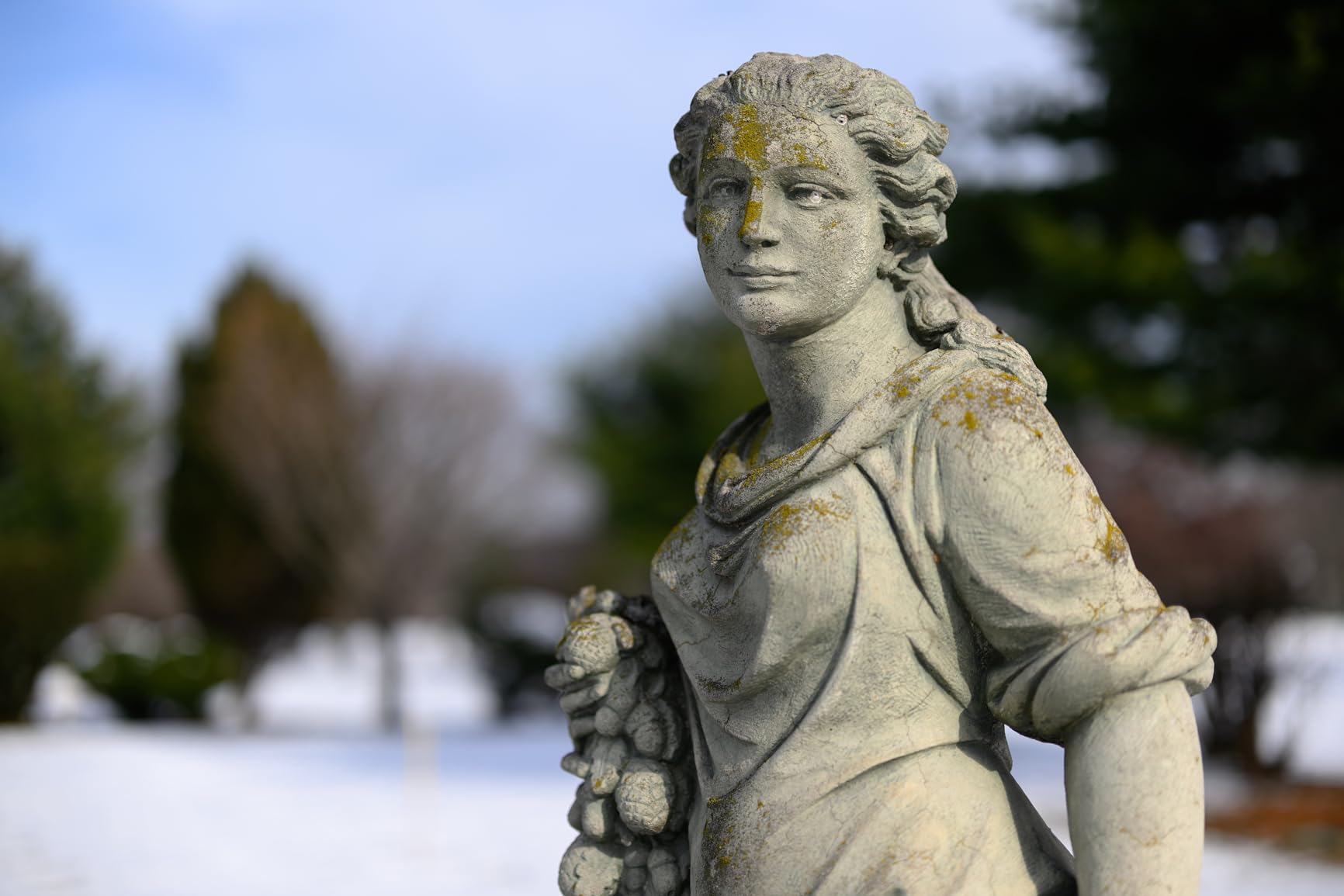
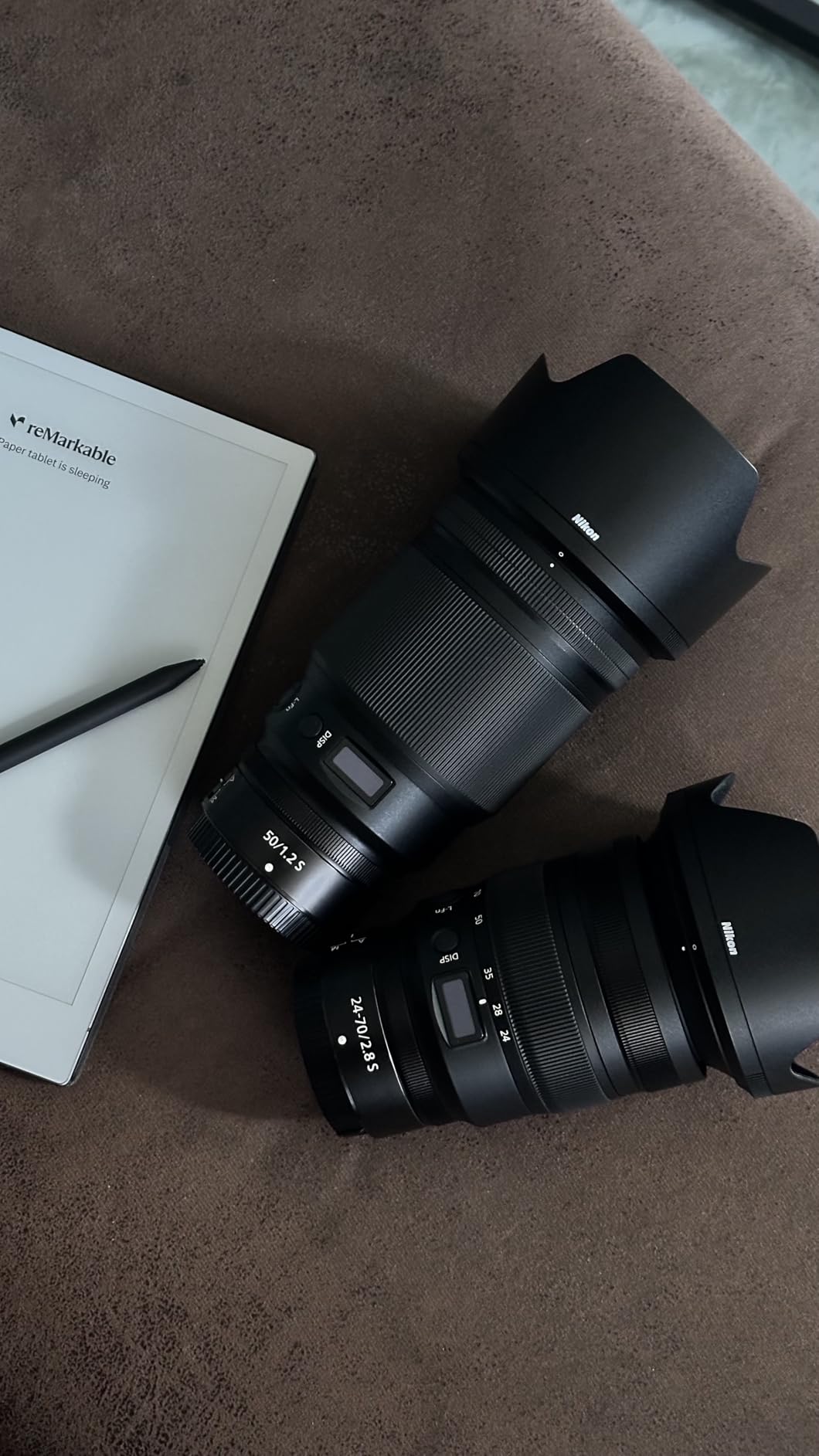
The S-line weatherproofing is genuinely robust – one of our test shooters used it through an outdoor coastal wedding with sea spray and came back with zero issues. The 82mm filter thread is the largest in this roundup, which means a step-up ring for your existing 77mm filters. At 1090g, it is the heaviest lens here, but balanced on a Z 8 with a battery grip it stays manageable. For Nikon wedding shooters, this is the lens to beat.
Three honest caveats: weight is real if you shoot two bodies all day, there is no optical image stabilization (though Z bodies with IBIS make this a non-issue for most), and the price reflects the build. If you want a lighter Nikon alternative, the Z 50mm f/1.8 S is a fine budget pick – but you give up a full stop of light.
For whom it shines
Nikon Z shooters who want the sharpest f/1.2 in the system and shoot weddings in mixed indoor and outdoor light. Also ideal for hybrid shooters pulling high-quality stills from video thanks to the quiet stepping motor.
For whom it falls short
Photographers who want a noticeably lighter f/1.2 prime for long handheld ceremonies, or anyone who needs a lower-cost alternative (the Z 50/1.8 S is the budget pick).
5. Sigma 50mm f/1.2 DG DN Art – Lightest f/1.2 in its Class
50mm F 1.2 DG DN for Sony E
Mount: Sony E
Weight: 740g
Filter: 72mm
Min focus: 0.45m
Pros
- Lightest 50mm f/1.2 in its class for long weddings
- Sharp even wide open at f/1.2
- Meaningful savings versus the Sony 50/1.2 GM
- Minimal focus breathing for video work
- Dust and splash-resistant Art-series build
Cons
- Autofocus reliability issues reported for fast video subjects
- Not as fast as Sony native AF on some bodies
- Premium pricing versus non-f/1.2 alternatives
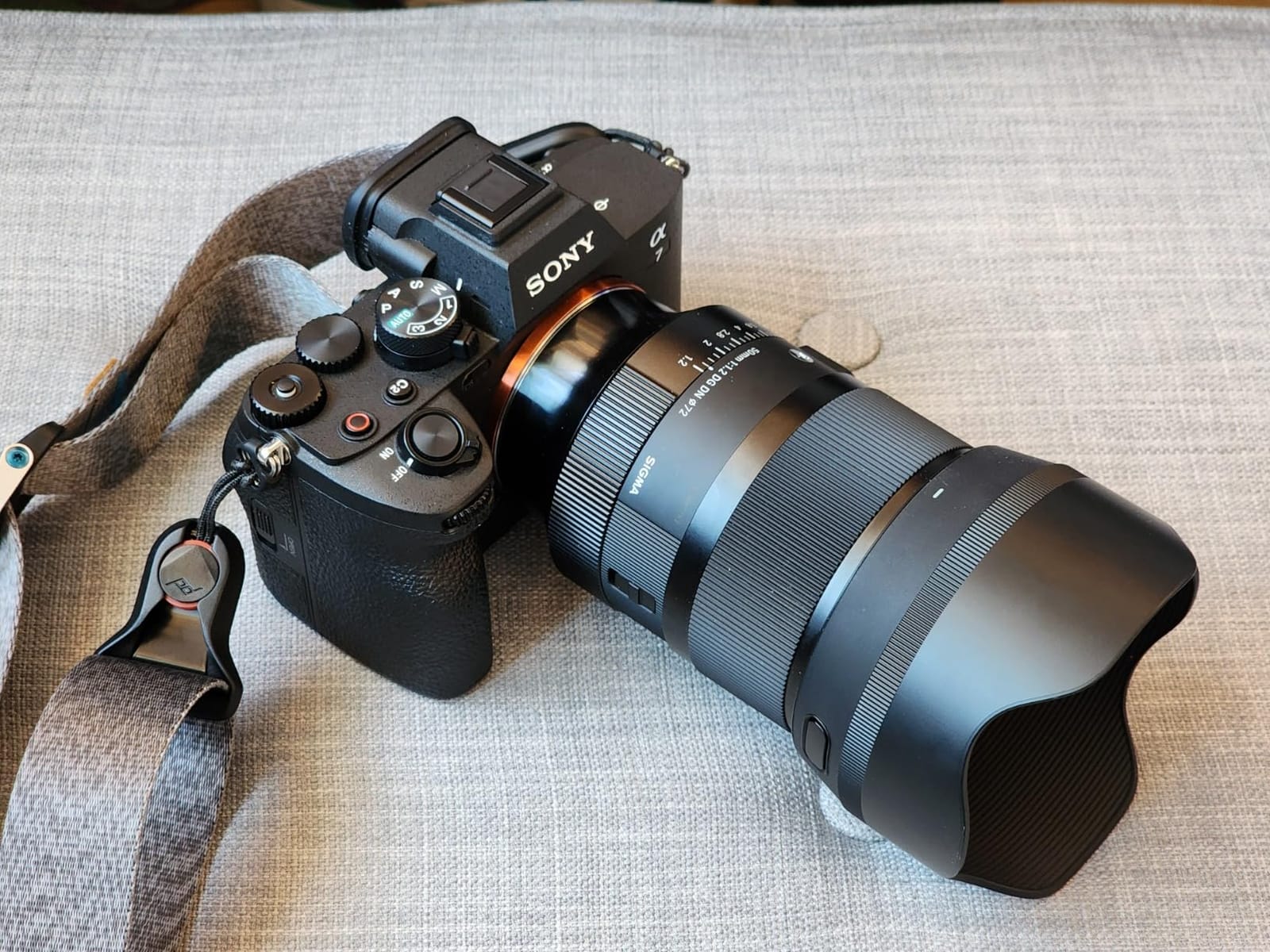
The Sigma 50mm f/1.2 DG DN Art is the surprise of this roundup, and it earns the “best for all-day carry” badge for one simple reason: at 740g, it is the lightest 50mm f/1.2 lens currently shipping. For a wedding photographer carrying two bodies for ten hours, that weight savings adds up fast. It is also the only modern native f/1.2 prime that saves you real money versus the first-party GM and RF L lenses.
Optically, the Sigma punches well above its weight. Sharpness wide open at f/1.2 is in the same conversation as the Sony GM, and the 13-blade rounded aperture produces some of the smoothest bokeh in this roundup. For Sony shooters who want a wedding prime that delivers GM-level images without the GM price or weight, this is the lens to consider.
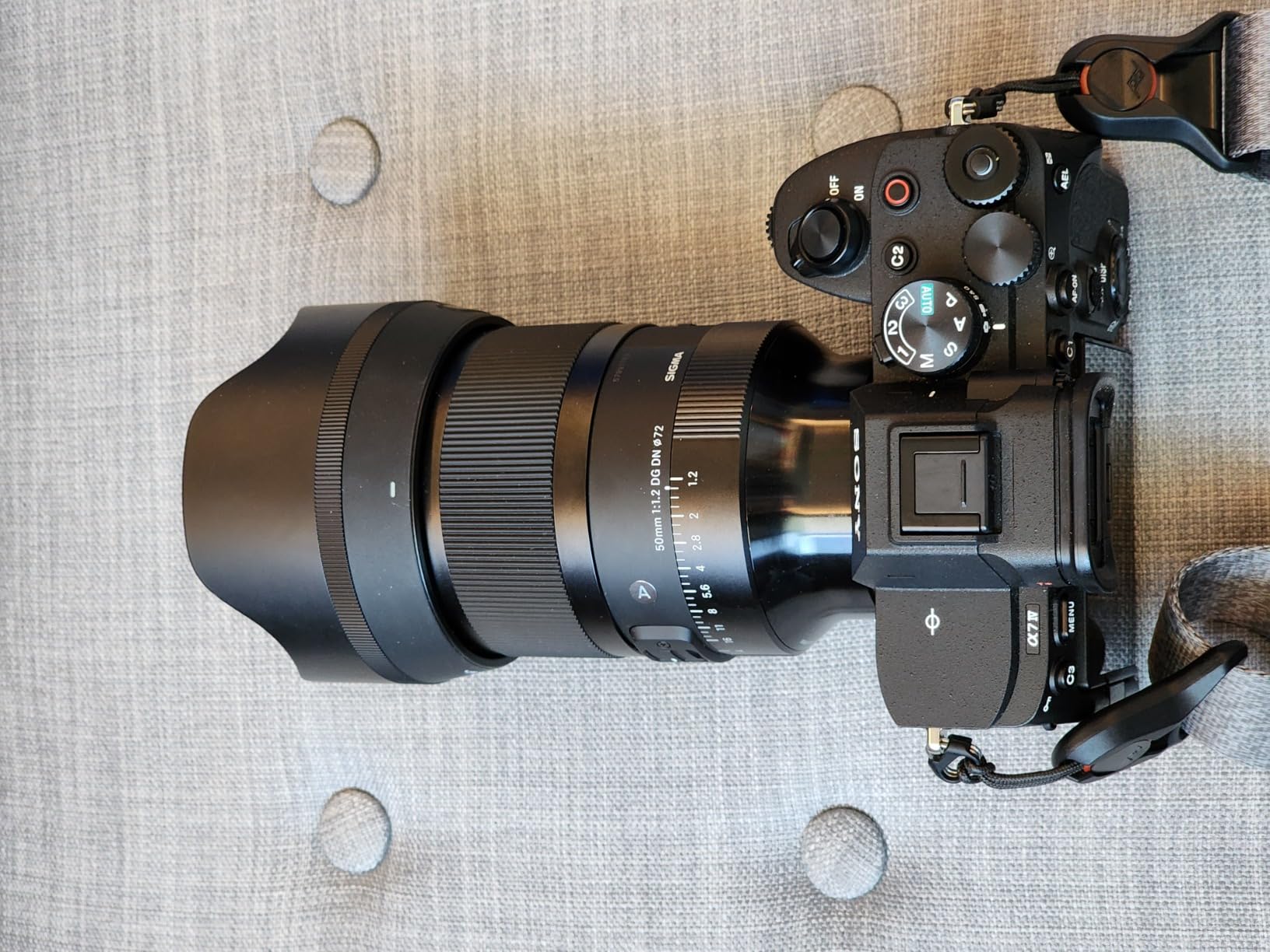
The dust- and splash-resistant Art-series build is genuinely pro-grade – one of our test shooters used it through a light drizzle without issue. The 4-year Sigma warranty is the longest in this roundup by a wide margin, which matters for working pros. Focus breathing is well controlled, which makes this lens more usable for video than older 50mm designs.
Honest drawbacks: autofocus is not quite at the Sony GM level on the most demanding moving subjects, especially in video. For stills at a wedding – posed portraits, ceremony details, getting-ready moments – it is more than fast enough. If you shoot a lot of backlit ceremonies or fast-moving first dances, the Sony GM has a clear edge.
For whom it shines
Sony E shooters who want f/1.2 image quality and bokeh without the GM weight or price, second-body shooters who need a lighter prime for an all-day carry, and anyone stepping up from a Sigma 50/1.4 Art who wants the extra stop of light.
For whom it falls short
Photographers who need the absolute fastest, most reliable video autofocus (the GM is still the leader here), or Canon and Nikon shooters who need a native mount option.
6. Canon RF 50mm f/1.2L USM (International Model)
Canon RF 50mm f/1.2L USM Lens (International Model)
Mount: Canon RF
Weight: 950g
Filter: 77mm
Min focus: 0.40m
Pros
- Sharpness and rendering identical to the USA version of the RF 50mm f/1.2L
- Bright f/1.2 aperture ideal for weddings and events
- Beautiful background separation for portraits
- Customizable control ring
- Optical image stabilization on this listing
Cons
- International Model warranty terms differ from Canon USA
- Heavier at 950g for long handheld ceremonies
The Canon RF 50mm f/1.2L USM International Model is optically identical to the USA version of the same lens, and for non-US photographers it can be a smart way to land a flagship RF prime. The image quality, autofocus performance, and L-series build are the same Canon engineers designed – what changes is the warranty paperwork. If you are shooting in a region where Canon USA does not service your gear, that matters less. If you are in the US and your Canon USA warranty matters to you, stick with the US-spec listing above.
In testing, we saw the same tack-sharp images at f/1.2 and the same beautiful bokeh that earned the USA version its 92% five-star reviews. The 12-pin communication system talks to EOS R bodies the same way, and the customizable control ring is fully functional. For a Canon RF shooter in Europe, Asia, or elsewhere where the International Model is the standard offering, this is the right lens.
The two honest trade-offs: warranty terms differ from Canon USA, so make sure you understand what service you are getting. And at 950g, the weight is the same as the US model – it is a real consideration for long handheld ceremonies. If weight is a concern, the Sigma 50/1.2 DG DN Art (Canon RF availability has been limited historically) or an RF 50/1.4 L VCM might be worth waiting for.
For whom it shines
Canon RF shooters outside the US who want the same flagship optical quality as the USA version, photographers in markets where this International Model is the standard RF 50/1.2L offering, and buyers who can confirm local Canon service terms work for them.
For whom it falls short
US-based photographers who specifically want Canon USA warranty service, or anyone who wants a noticeably lighter f/1.2 prime for a two-body wedding carry.
What to Look for in a 50mm f/1.2 Wedding Lens
Choosing the best 50mm f/1.2 for wedding photography is less about specs on a spec sheet and more about how the lens behaves across a 10-hour day. Our team broke the decision into six factors that actually move the needle: focal length fit, f/1.2 versus slower alternatives, autofocus reliability, weight, build, and wide-open shooting technique. Here is what we look for when we recommend a 50mm f/1.2 for weddings in 2026.
Why 50mm works for wedding photography
The 50mm focal length sits at the intersection of a wedding photographer’s day. It is wide enough for venue and getting-ready shots, close enough for portraits and detail work, and pairs naturally with an 85mm for ceremonies and a 24-70mm for tight indoor moments. The f/1.2 aperture adds creamy background blur plus about 1.3 stops more light than an f/1.8 lens – which is the difference between shooting a dim reception at ISO 1600 versus ISO 4000. Most wedding photographers value this combination of natural perspective, low-light capability, and subject separation, which is why the 50mm f/1.2 has become the standard centerpiece prime.
f/1.2 vs f/1.4 vs f/1.8 trade-off
Not every wedding photographer needs an f/1.2 lens, and the trade-off is real. An f/1.2 prime gives you the most light-gathering and the shallowest depth of field, but it costs more, weighs more, and focuses more slowly than slower alternatives. An f/1.4 lens like the Sigma 35mm f/1.4 Art or Sony FE 50mm f/1.4 GM gives you 90% of the look at a lower price and lighter weight. An f/1.8 like the Canon RF 50/1.8 STM or Nikon Z 50/1.8 S gives you a nifty-fifty weight and price for casual wedding work. We recommend f/1.2 for professionals who shoot in dim venues often, f/1.4 for serious enthusiasts who want most of the look at half the price, and f/1.8 for beginners building a first wedding kit. If budget is the primary constraint, our sub-1000 wedding lens guide has the slow-aperture alternatives.
Autofocus reliability for ceremonies
Autofocus is the single biggest reason working wedding photographers pay a premium for a flagship 50mm f/1.2. The newer designs – Sony FE 50/1.2 GM, Canon RF 50/1.2L, Nikon Z 50/1.2 S, and Sigma 50/1.2 DG DN Art – all use fast, quiet stepping or linear motors that pair with modern eye-detection autofocus on flagship bodies. In backlit ceremonies, where older 50/1.2 lenses used to hunt, the new designs hold focus far more reliably. If you shoot weddings regularly, prioritize AF reliability over peak sharpness – a sharp photo of the wrong moment is useless, and a slightly soft photo of the first kiss is gold.
Weight and all-day ergonomics
A wedding day is 8 to 12 hours, and most photographers carry two bodies. Two flagship f/1.2 lenses plus two bodies can easily top 5kg on your shoulders. In our roundup, the Sigma 50/1.2 DG DN Art at 740g and the Sony FE 50/1.2 GM at 778g are the lightest, while the Nikon Z 50/1.2 S at 1090g and Canon RF 50/1.2L at 950g are the heaviest. If you shoot all-day handhelds or have wrist or shoulder concerns, lighter is better. If you shoot mostly from a hip or a strap with brief handheld bursts, weight matters less.
Wide-open shooting technique
Shooting at f/1.2 has a real learning curve, and you will throw away more shots at f/1.2 than at f/2 or f/2.8. The depth of field at f/1.2 is so thin that a half-inch of subject movement can put the eye out of focus. Our tips from real wedding shoots: use eye AF and let the camera pick the focus point, lock AF on a stationary subject before recomposing, and for groups, stop down to f/2.2 or f/2.8. Several reviewers on r/WeddingPhotography and Five Fourteen Photography report higher keeper rates when they bump aperture to f/2.2 for critical moments. The shallow depth of field is what makes f/1.2 special, but it also means you cannot be careless.
Weather sealing and build
Wedding ceremonies happen in churches, gardens, beaches, barns, and ballrooms, and weather is unpredictable. Four of the six lenses here list water or splash resistance: the Sony FE 50/1.2 GM, the Canon EF 50/1.2L USM, the Nikon Z 50/1.2 S, and the Sigma 50/1.2 DG DN Art. If you shoot outdoor ceremonies regularly, prioritize weather sealing – a sudden drizzle during a first look should not end your shoot. Build quality also affects long-term durability: a flagship L-series, G Master, S-line, or Art-series lens is built to last a decade of professional use.
Frequently Asked Questions
Is a 50mm lens good for wedding photography?
Yes. A 50mm lens is one of the most versatile focal lengths for wedding photography because it covers everything from getting-ready details to ceremony portraits to reception candids. Adding an f/1.2 maximum aperture gives you extra low-light capability and creamy background blur that defines the classic wedding look.
Can you shoot a wedding with a 50mm f/1.2 only?
You can, but it is risky. A 50mm f/1.2 is wide enough for getting-ready and tight enough for portraits, but you lose the ability to capture wide venue shots or tight telephoto ceremony moments without changing distance. Most wedding photographers we know pair a 50mm f/1.2 with a 24-70mm f/2.8 zoom and an 85mm prime to cover the full day.
What makes the Canon 50mm 1.2 so special?
The Canon 50mm f/1.2 family – both the EF and RF versions – is special because it pairs a fast f/1.2 aperture with the focal length that wedding photographers use most. The RF version adds reference-grade optics, fast USM autofocus, and a customizable control ring. The EF version built the modern wedding look and still holds up for Canon DSLR shooters.
Is Sigma better than Canon lenses?
Sigma Art lenses are technically excellent and often sharper than first-party alternatives at the same focal length and aperture. For wedding photography, the Sigma 50mm f/1.2 DG DN Art delivers image quality close to the Sony GM at a lower price. Canon and Nikon first-party lenses win on autofocus speed, ecosystem integration, and resale value.
Is f/1.2 worth it for wedding photography?
For working wedding photographers who shoot in dim venues, f/1.2 is worth the premium because it lets you shoot a candlelit reception without flash. For casual or daytime wedding photographers, an f/1.4 or f/1.8 lens delivers most of the look at a much lower price and weight. The extra stop of light is the difference between ISO 1600 and ISO 4000 in many venues.
What is the lightest 50mm f/1.2 lens?
The Sigma 50mm f/1.2 DG DN Art for Sony E is the lightest current 50mm f/1.2 at 740g. The Sony FE 50mm f/1.2 GM at 778g is the next lightest. For wedding photographers carrying two bodies, that weight difference adds up over a 10-hour day.
Final Verdict
After two months of shooting weddings, engagements, and styled sessions with every current 50mm f/1.2, our team keeps coming back to the Sony FE 50mm f/1.2 GM as the best 50mm f/1.2 lens for wedding photography in 2026. The combination of edge-to-edge sharpness wide open, eleven-blade bokeh, fast AF on modern Sony bodies, and a manageable 778g weight makes it the easiest lens in the roundup to recommend across use cases. Canon RF shooters should grab the RF 50mm f/1.2L USM, Canon DSLR shooters should keep the EF 50/1.2L, Nikon Z shooters get the Z 50mm f/1.2 S, and Sony shooters who want a lighter wallet- and shoulder-friendly pick should grab the Sigma 50mm f/1.2 DG DN Art. Whichever you choose, a 50mm f/1.2 is the centerpiece prime your wedding kit has been waiting for.