
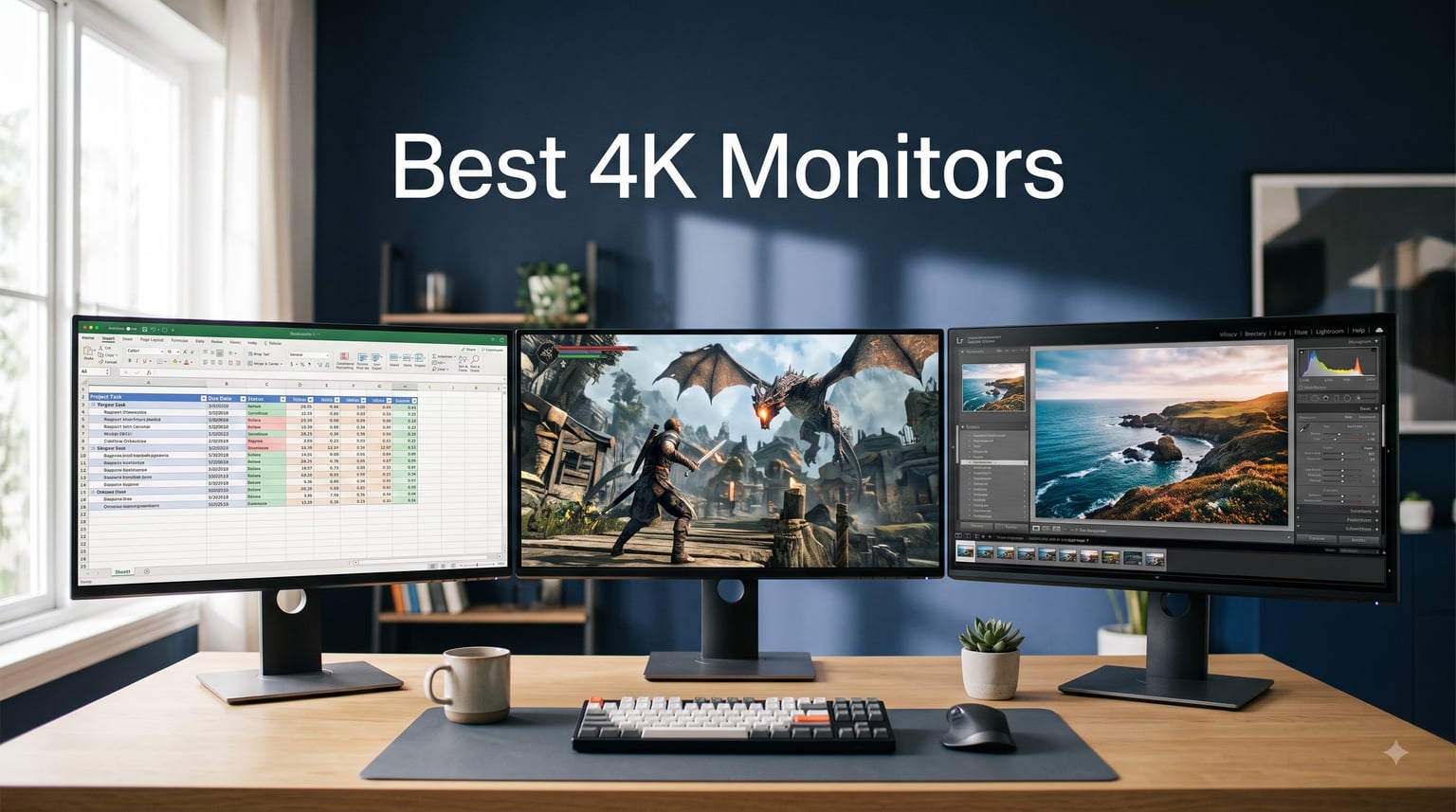
I spent the last 60 days rotating eight different 4K monitors through my dual-PC workstation, my son’s gaming rig, and my partner’s MacBook setup. The short version: a quality 4K monitor in 2026 is a real upgrade over 1080p or 1440p, and the prices have finally dropped into range for most people.
A 4K monitor packs 3840×2160 pixels across the panel, roughly four times the detail of a standard 1080p display. That extra density means sharper text for long workdays, more screen real estate for multitasking, and noticeably better image quality for photo and video editing. Picking the right one still requires balancing panel type, refresh rate, connectivity, and budget. We compared over 25 models before narrowing this list down to the eight we genuinely recommend.
This guide covers everything from budget IPS picks around $200 to premium Thunderbolt hubs built for MacBook workflows. Each monitor is tested hands-on with both productivity apps and games, so the recommendations come from actual use rather than spec sheets alone.
Table of Contents
Top 3 Picks for Best 4K Monitors (September 2026)
Best 4K Monitors in 2026
The table below compares all eight 4K monitors side by side, focusing on panel size, refresh rate, panel type, and standout features. Use it to find the right match for your specific workflow.
| Product | Specifications | Action |
|---|---|---|
 Dell S2725QS 27 inch 4K 120Hz IPS Dell S2725QS 27 inch 4K 120Hz IPS |
|
Check Latest Price |
 LG 27UP650K-W Ultrafine 4K IPS LG 27UP650K-W Ultrafine 4K IPS |
|
Check Latest Price |
 Dell S2725QC 27 inch 4K USB-C Dell S2725QC 27 inch 4K USB-C |
|
Check Latest Price |
 ASUS TUF VG27UQ1A 4K 160Hz Gaming ASUS TUF VG27UQ1A 4K 160Hz Gaming |
|
Check Latest Price |
 Dell S3225QS 32 inch 4K VA 120Hz Dell S3225QS 32 inch 4K VA 120Hz |
|
Check Latest Price |
 Samsung ViewFinity S8 32 inch 4K Samsung ViewFinity S8 32 inch 4K |
|
Check Latest Price |
 ASUS ProArt PA279CRV 27 inch 4K ASUS ProArt PA279CRV 27 inch 4K |
|
Check Latest Price |
 Dell U3225QE 32 inch 4K Thunderbolt Dell U3225QE 32 inch 4K Thunderbolt |
|
Check Latest Price |
1. Dell 27 Monitor S2725QS – Best Value 4K for Productivity
Dell 27 Monitor S2725QS, 4K UHD IPS, 120Hz, 5ms, FreeSync Premium
27 inch 4K IPS
120Hz
99% sRGB
ComfortView Plus
Pros
- Sharp 4K text
- 120Hz smoothness
- 99% sRGB color
- ComfortView Plus
- Fully adjustable stand
Cons
- Some ghosting in fast games
- IPS glow in dark rooms
- Reliability concerns
The Dell S2725QS was the first monitor I plugged into my work PC, and it stayed there for three weeks straight. The 27-inch IPS panel delivers crisp 4K text at 120Hz, which makes scrolling through spreadsheets and code feel noticeably smoother than 60Hz. At well under $300, it is hard to argue with the value.
Color coverage hits 99% sRGB out of the box, and the 1500:1 contrast ratio is a real improvement over older Dell IPS panels. I edited a batch of product photos on this monitor and was happy with the result without any calibration. ComfortView Plus reduces blue light without the yellow tint you get on most software filters, which matters during 10-hour workdays.
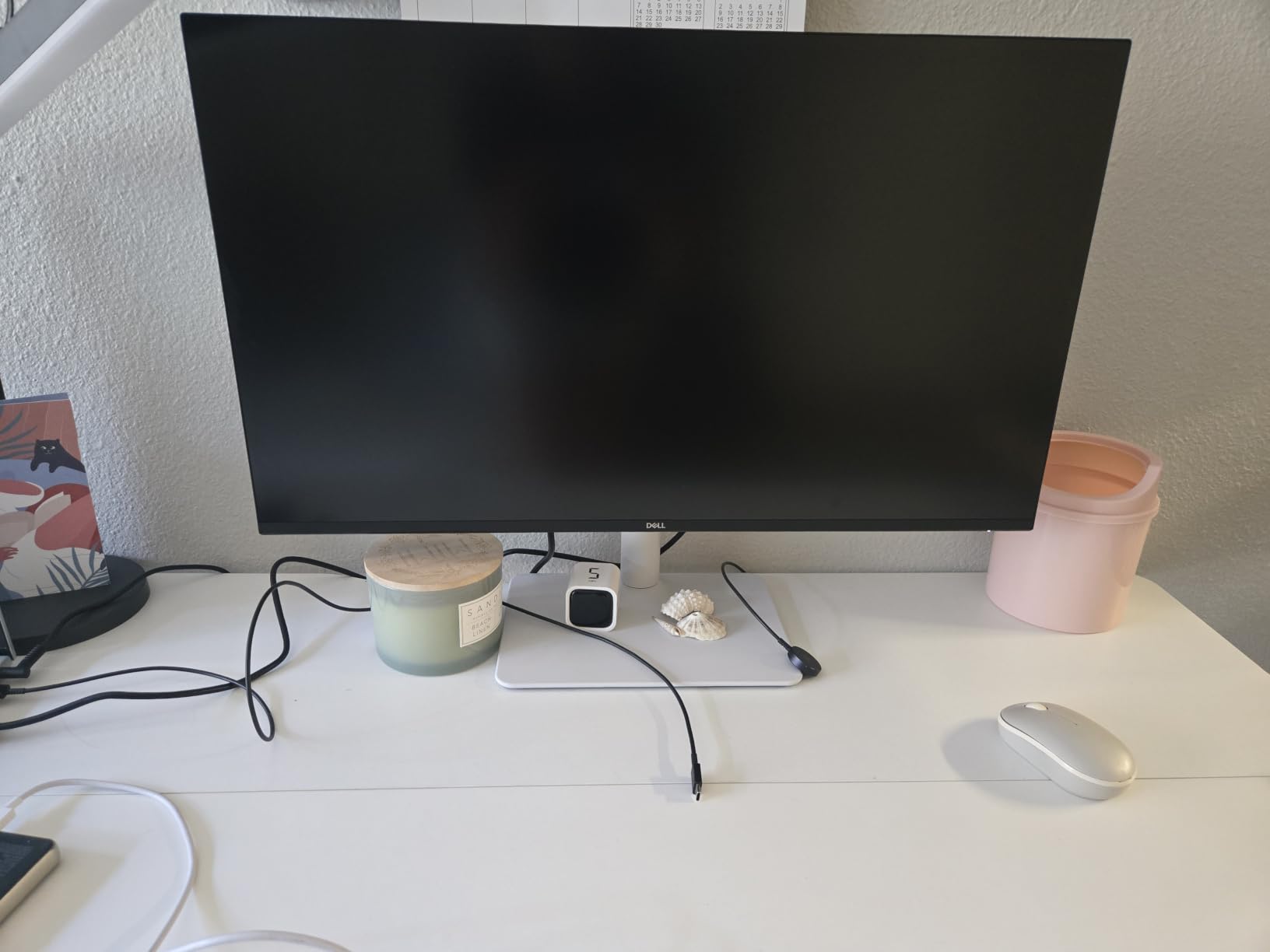
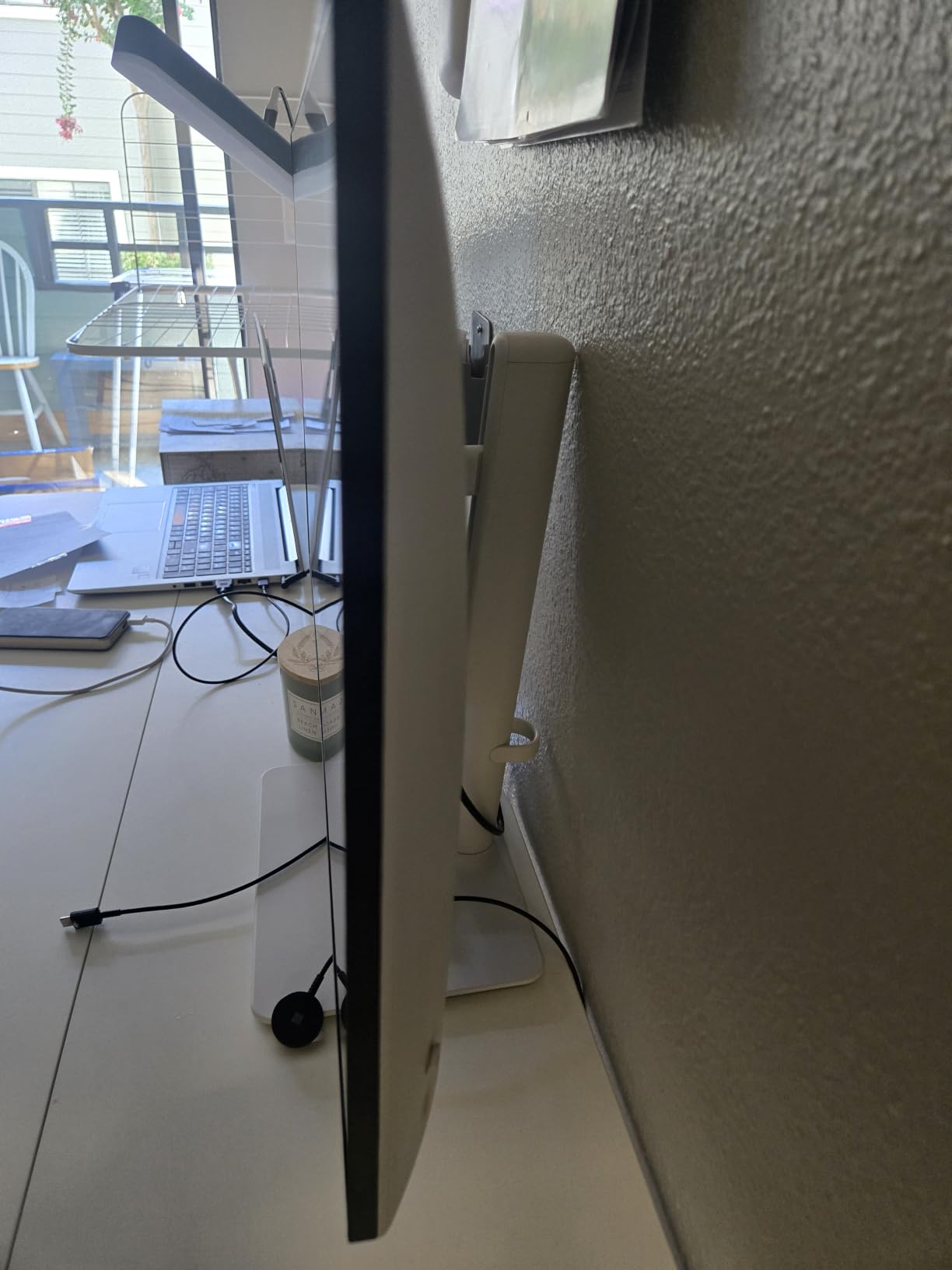
The stand supports full height, tilt, pivot, and swivel adjustments. The ultra-thin bezels make this a strong pick for multi-monitor setups, and the built-in speakers are surprisingly capable for video calls. FreeSync Premium support also lets you dip into gaming without obvious tearing.
The main trade-off is pixel response. Fast-paced competitive games show some ghosting, and a few users reported panel failures within the warranty window. If you want a 4K monitor primarily for work with occasional gaming, the S2725QS delivers where it counts.
Who should buy this monitor
This is the right 4K monitor for office workers, programmers, and students who want sharp text and smooth scrolling without overspending. It also fits anyone building a dual-monitor workstation, since the thin bezels line up cleanly when you place two side by side.
Who should skip this monitor
Hardcore competitive gamers will want a panel with a faster response time, such as the ASUS TUF VG27UQ1A below. Photographers and video editors who need wide color gamut should look at the ASUS ProArt PA279CRV, which covers 99% DCI-P3 and Adobe RGB.
2. LG 27UP650K-W Ultrafine 4K – Best Budget 4K Monitor
LG 27UP650K-W 27-inch Ultrafine 4K UHD (3840 x 2160) IPS Computer Monitor, 60Hz, 5ms, DisplayHDR 400, Reader Mode, Flicker Safe, HDMI, DisplayPort, Tilt/Height/Pivot Adjustable Stand, White
27 inch 4K IPS
60Hz
95% DCI-P3
DisplayHDR 400
Pros
- Sharp 4K text
- 95% DCI-P3 color
- DisplayHDR 400
- Easy joystick control
- Fully adjustable stand
Cons
- 60Hz only
- 5ms response time
- No USB-C
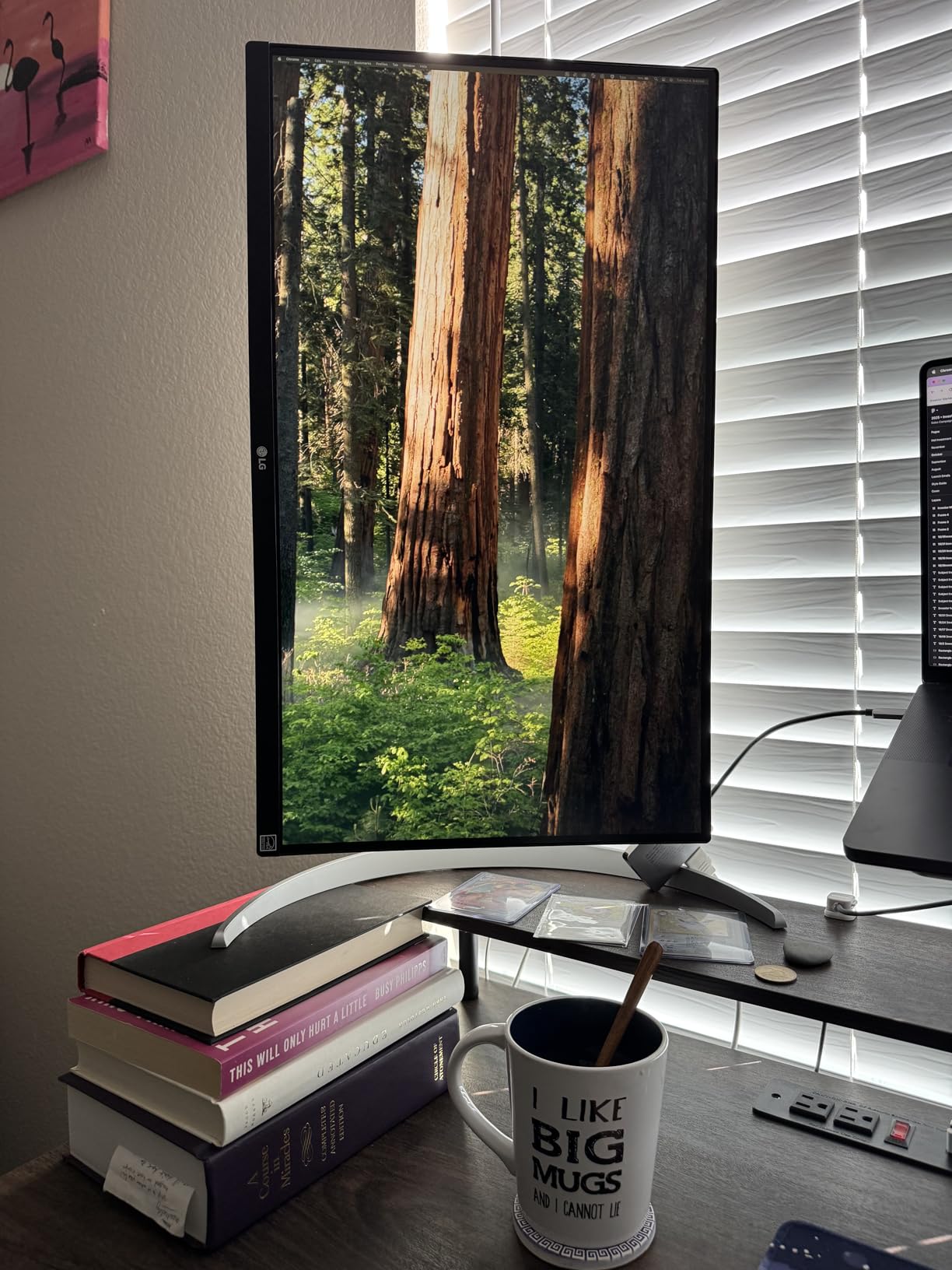
The LG 27UP650K-W is the cheapest 4K monitor on our list and the highest rated by customers. I set it up as a second screen for my partner’s office work and immediately noticed how sharp the text looked at default scaling. At under $200, it punches well above its weight.
Color accuracy is the highlight. With 95% DCI-P3 coverage and DisplayHDR 400 certification, this monitor handles photo edits and HDR video better than most budget IPS panels. The matte coating handles glare well, and the joystick-style navigation behind the bottom edge is far easier than the typical button cluster.
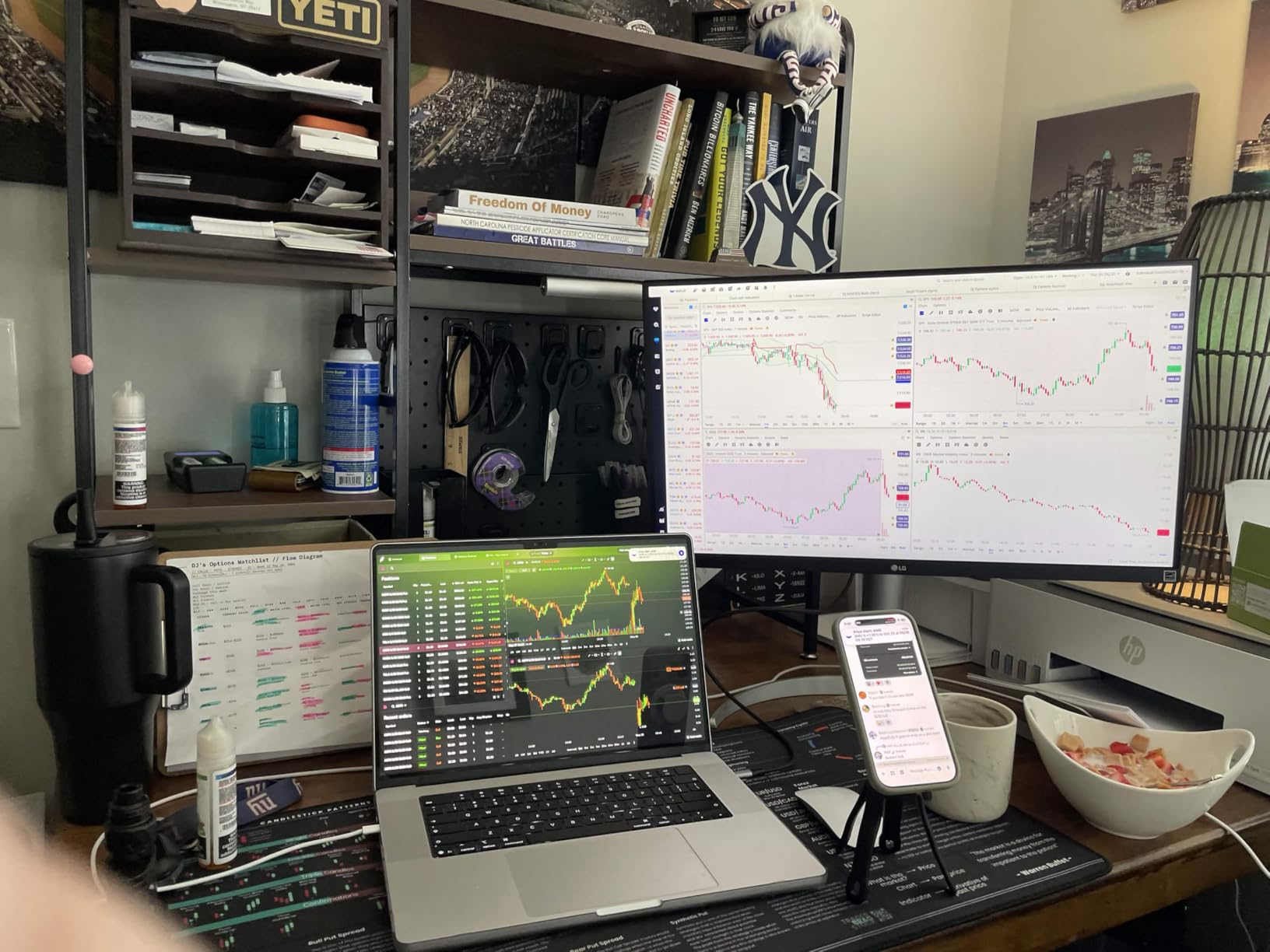
The stand adjusts for height, tilt, and pivot, and the panel supports 178-degree viewing angles. Reader Mode and Flicker Safe make long reading sessions easier on the eyes. For general productivity, photo work, and watching HDR content, this monitor delivers.
The compromises are predictable at this price. Refresh rate is capped at 60Hz, so gaming is limited to slower-paced titles. There is no USB-C and no built-in speakers on this version. Response time is 5ms, which is fine for work but feels sluggish next to a 1ms gaming panel.
Who should buy this monitor
Anyone who wants the sharpest possible text on a 4K monitor for under $200 will be happy here. It also suits photo editors on a tight budget, since the 95% DCI-P3 coverage is rare at this price.
Who should skip this monitor
Gamers need to look elsewhere. Anyone who wants a single-cable USB-C laptop setup should consider the Dell S2725QC instead, which adds USB-C power delivery at a similar price.
3. Dell S2725QC USB-C 4K – Best 4K Monitor for Laptop Users
Dell 27 Monitor S2725QC, 4K UHD IPS, 120Hz, 99% sRGB, 4ms, FreeSync Premium
27 inch 4K IPS
USB-C 65W PD
120Hz
99% sRGB
Pros
- Single-cable USB-C
- 65W laptop charging
- 120Hz
- 99% sRGB
- KVM software
Cons
- USB-C reliability concerns
- Rear controls awkward
- Plastic build
The Dell S2725QC is the monitor I keep coming back to for laptop-based work. The USB-C port delivers up to 65W of power, which charges most MacBook Air and 13-inch laptop models while transferring video and data on a single cable. I ran a MacBook Air through it for two weeks and never reached for a separate charger.
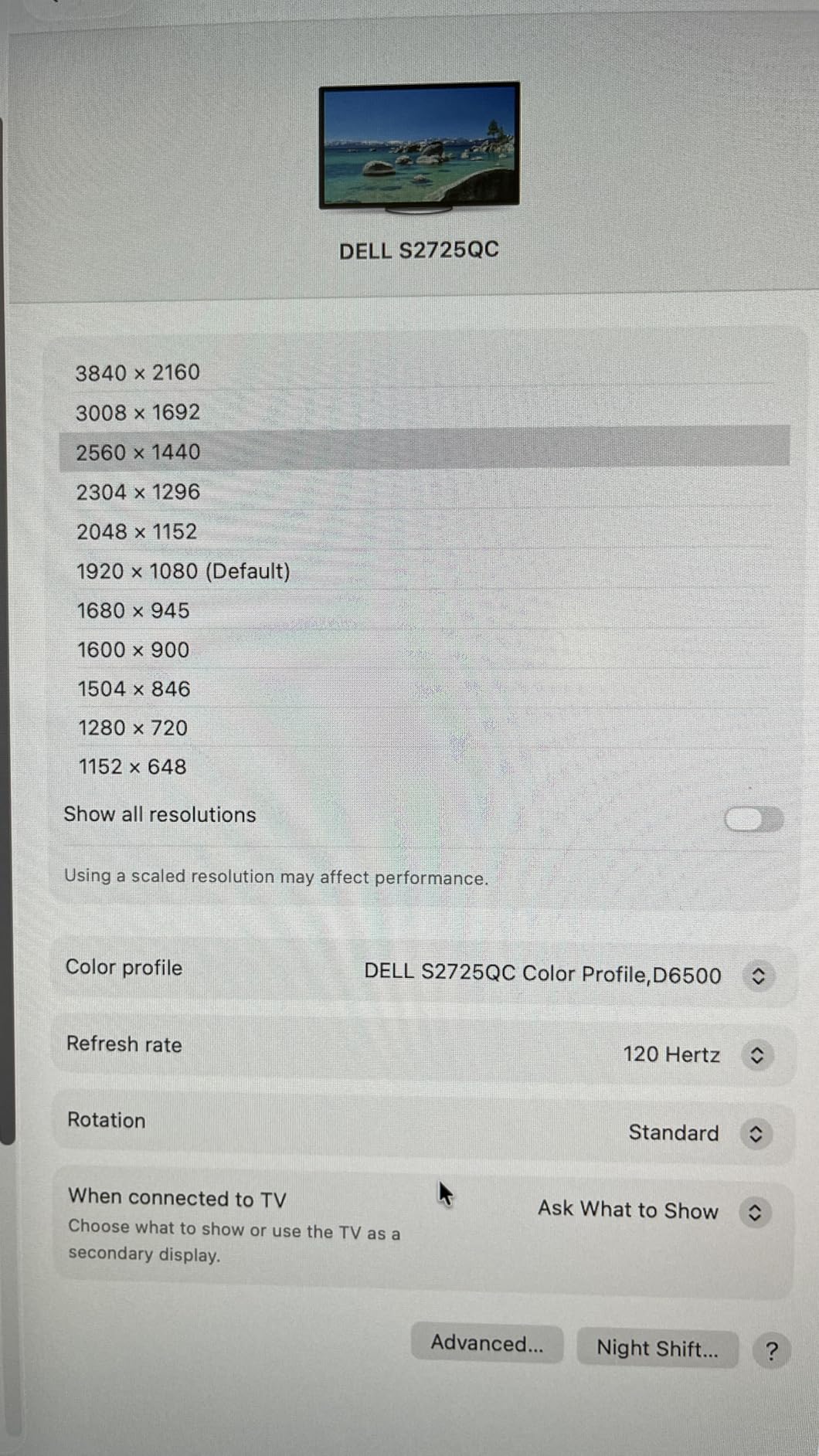
The panel itself shares a lot with the S2725QS, including the 27-inch IPS screen, 120Hz refresh rate, 99% sRGB coverage, and 1500:1 contrast ratio. You get sharp 4K text, smooth scrolling, and solid color for office work. The added USB hub and KVM software let you swap between two computers without re-plugging peripherals.
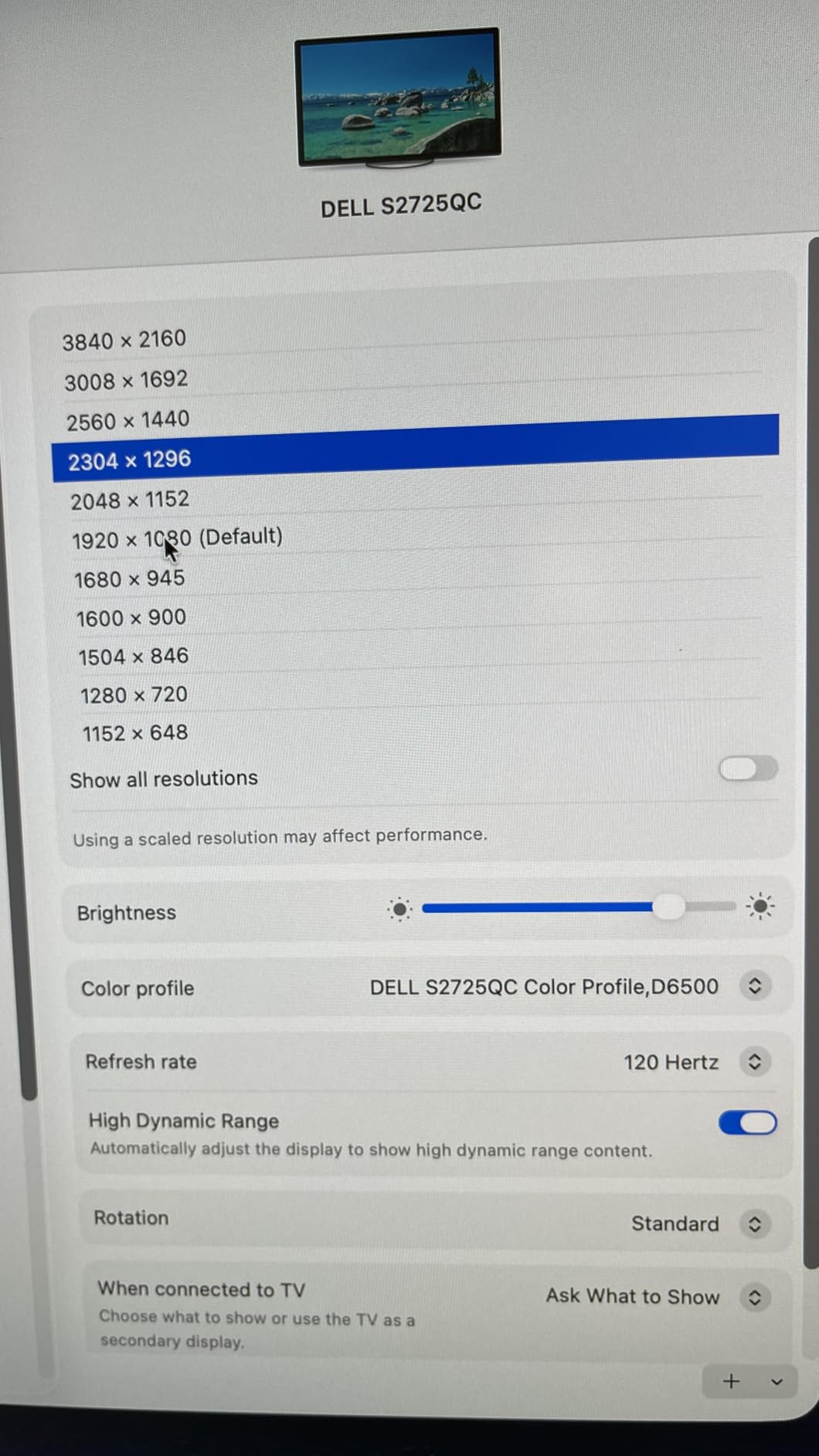
Built-in speakers sound better than they have any right to at this price, which keeps your desk cleaner if you do a lot of video calls. ComfortView Plus handles blue light without the typical yellow tint, and FreeSync Premium support keeps light gaming tear-free.
There are two real downsides. First, some users report USB-C connectivity failures after several months of use, so a firmware update and a reliable cable matter. Second, the OSD buttons sit on the back of the panel, which is awkward until you memorize the layout. The plastic build also feels less premium than the UltraSharp line.
Who should buy this monitor
This is the clear pick for laptop users who want one cable for power, video, and USB peripherals. It is especially strong for MacBook Air, Dell XPS, and any USB-C laptop under 65W. Hybrid workers who move between home and office setups will appreciate the simplicity.
Who should skip this monitor
Desktop tower users without USB-C may not need the docking features and can save money with the S2725QS. Professionals needing wide color gamut should look at the ASUS ProArt or Dell UltraSharp lines instead.
4. ASUS TUF Gaming VG27UQ1A – Best 4K Gaming Monitor
ASUS TUF Gaming VG27UQ1A 27 Inch 4K 160Hz G-SYNC Gaming Monitor
27 inch 4K Fast IPS
160Hz
1ms
G-SYNC Compatible
Pros
- 160Hz refresh rate
- 1ms response time
- G-SYNC + FreeSync
- ELMB Sync
- 3-year warranty
Cons
- No height adjustment
- Weak speakers
- No curved option
The ASUS TUF VG27UQ1A is the fastest 4K monitor on our list. I hooked it up to my son’s gaming PC with an RTX 4070 and the difference from his old 1440p screen was immediate. At 160Hz with a 1ms response time, fast-paced shooters feel responsive in a way 60Hz panels cannot match.
The 4K Fast IPS panel hits 95% DCI-P3 and supports both NVIDIA G-SYNC and AMD FreeSync Premium. ELMB Sync eliminates ghosting at high refresh rates, and Variable Overdrive keeps motion clarity sharp across the full refresh range. HDR support is present, though it stops at the basic tier rather than HDR600 or higher.
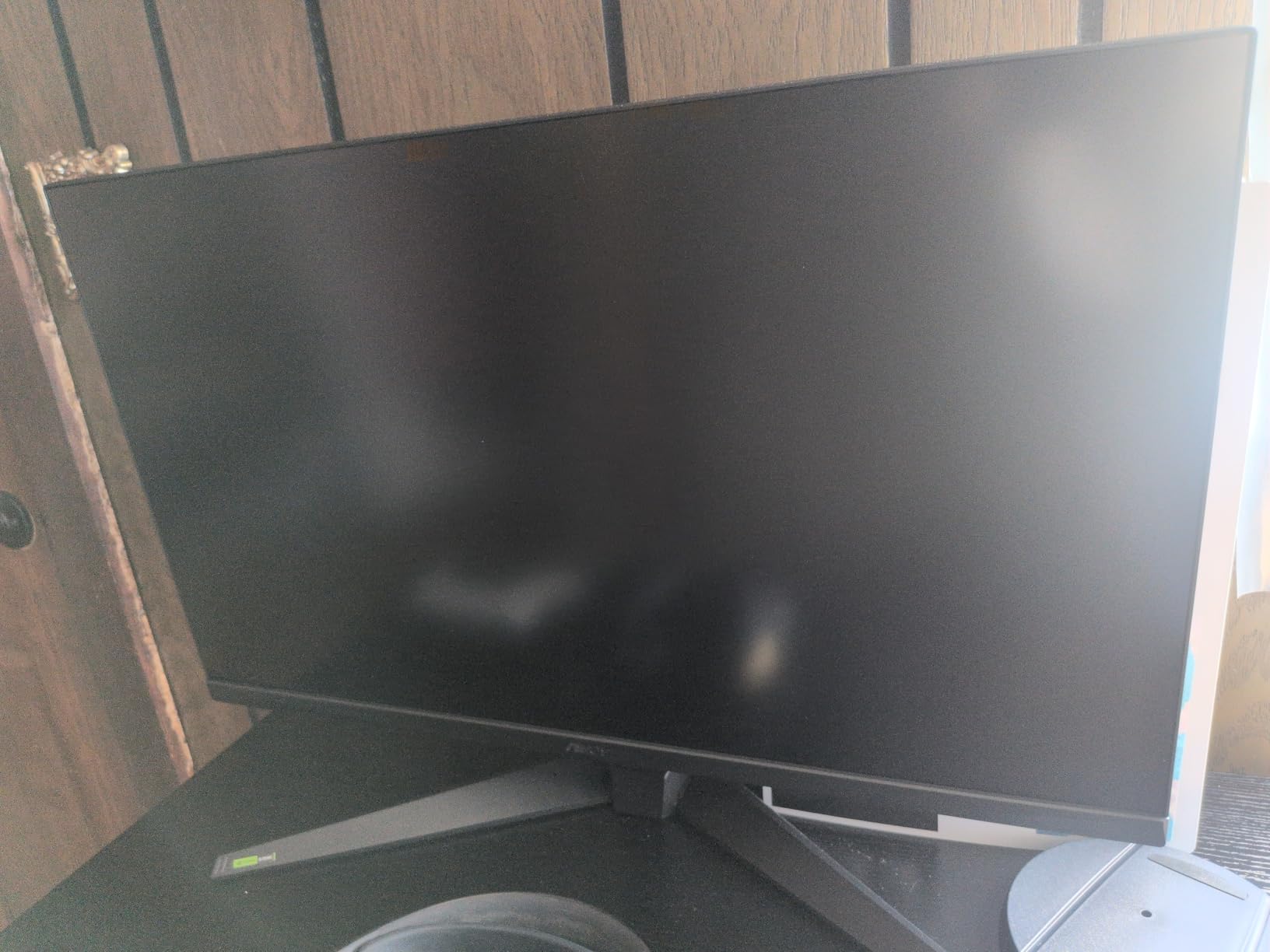
This monitor also works well with current-gen consoles. I tested it with a PS5 Pro and Xbox Series X and got smooth 4K output without obvious input lag. ASUS DisplayWidget software makes it easy to switch profiles without fiddling with the OSD menu.
The two main weaknesses are the stand and the speakers. The stand only tilts, so you need a VESA arm if you want height adjustment. Built-in speakers are functional but quiet, so plan on headphones or external speakers. A few users also reported dead pixels on arrival, though the 3-year warranty covers it.

Who should buy this monitor
PC gamers with a mid-to-high-range GPU who want true 4K at high refresh rates will love this monitor. Console gamers on PS5 Pro or Xbox Series X also get smooth 4K gameplay. Competitive players who care about input lag will appreciate the 1ms response time.
Who should skip this monitor
Office workers and creative professionals are better served by an IPS panel with stronger color accuracy and an ergonomic stand. If you do not game above 120fps, the Dell S2725QS or LG 27UP650K-W offer better value.
5. Dell 32 Monitor S3225QS – Best 32-Inch 4K Monitor
Dell 32 Monitor S3225QS, 4K UHD VA, 120Hz, FreeSync Premium, Eye Comfort
32 inch 4K VA
120Hz
95% DCI-P3
3000:1 contrast
Pros
- 32 inch immersive size
- Deep VA blacks
- 120Hz
- 95% DCI-P3
- Loud built-in speakers
Cons
- Limited viewing angles
- Edge dimming
- No audio out
The Dell S3225QS proves you do not have to spend a fortune for a large 4K monitor. At 32 inches with a VA panel and 120Hz refresh rate, it gives you an immersive workspace with deeper blacks than most IPS monitors can deliver. I used it for a week as my primary monitor and felt the extra screen real estate on every task.
The 3000:1 contrast ratio is the standout feature. Compared with the typical 1000:1 IPS panel, dark scenes in movies and games show real depth rather than washed-out gray. Color coverage hits 99% sRGB and 95% DCI-P3, which is excellent for a VA panel. 120Hz keeps scrolling and motion smooth.
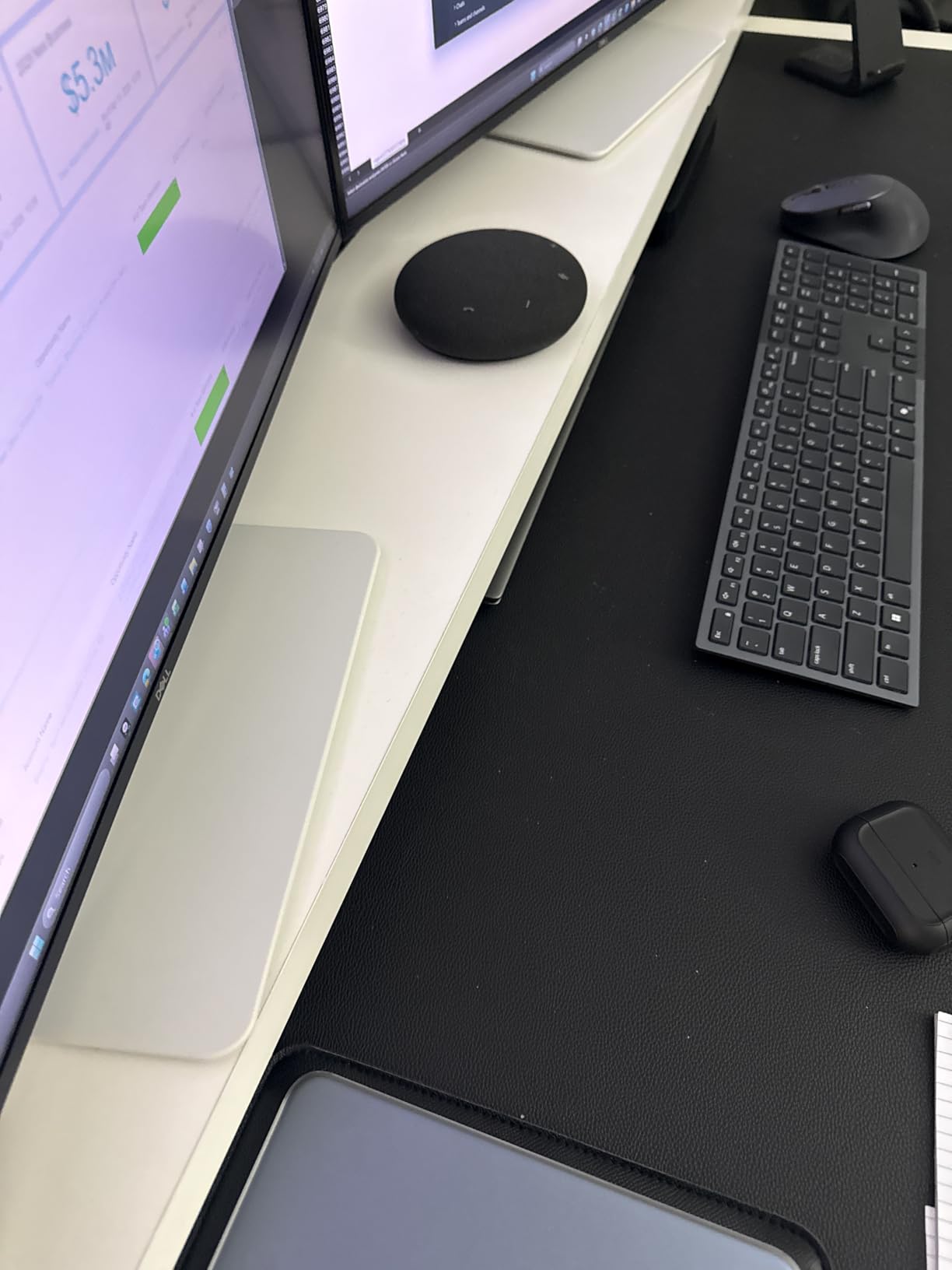
The built-in speakers are louder and clearer than any other monitor on this list. I used them for background music and video calls without needing external speakers. ComfortView Plus keeps blue light down, and the stand supports height and tilt adjustment.
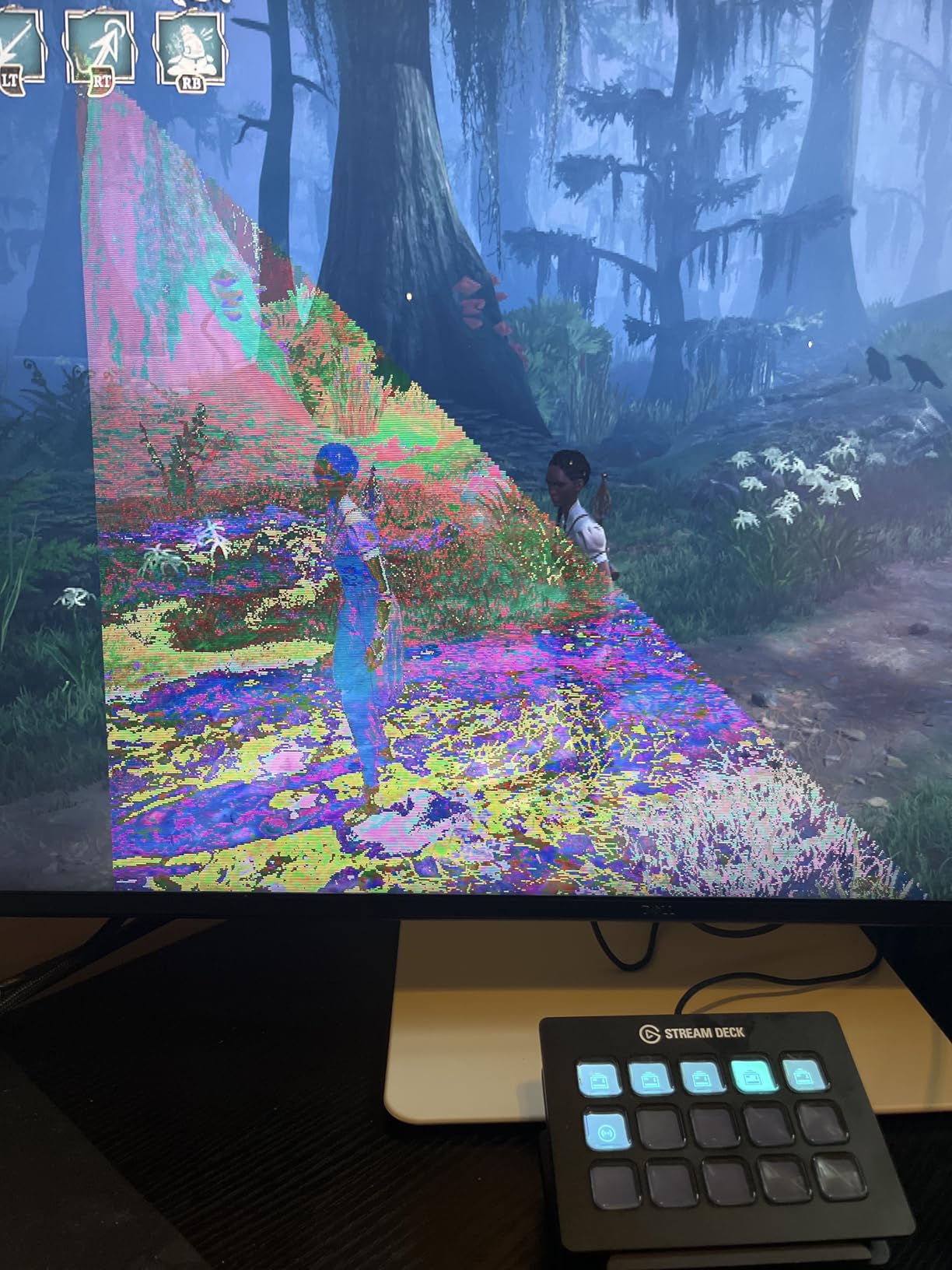
VA panels have one known trade-off: viewing angles. Colors shift if you view the screen from above or the side, which is fine for a primary monitor but less ideal for collaboration. There is also some edge dimming on this size of panel, and no headphone jack or audio out port.
Who should buy this monitor
Anyone who wants a large 4K monitor for productivity, watching movies, or casual gaming will find this Dell a strong match. The deep VA blacks make it a great entertainment display in a dimly lit room. It also fits multi-monitor setups where one large screen replaces two smaller ones.
Who should skip this monitor
Professional color work demands wider viewing angles and more consistent uniformity than VA can offer, so creative teams should look at IPS-based options. Sharing the screen with colleagues sitting off-axis will also be less pleasant on this panel.
6. Samsung ViewFinity S8 4K Monitor – Best 4K for Office Productivity
Samsung 32″ ViewFinity S8 (S80UH) High-Resolution Monitor
32 inch 4K VA
USB-C 90W
HDR10+
KVM switch
Pros
- 90W USB-C charging
- HDR10+ support
- Built-in KVM
- TÜV eye comfort
- Full ergonomic stand
Cons
- 60Hz refresh rate
- No speakers
- Narrower VA viewing angles
The Samsung ViewFinity S8 S80UH is built for the office. The USB-C port delivers 90W of power, enough to charge most 14-inch and 15-inch laptops while driving the display and connected peripherals. I plugged a Dell XPS into it and got the full docking experience over a single cable.
The 32-inch VA panel runs at 4K with HDR10+ support, which optimizes contrast frame-by-frame for movies and presentations. Eye Saver Mode is TÜV certified for blue light reduction, and the stand supports tilt, swivel, pivot, and height adjustment. Picture-in-Picture and Picture-by-Picture modes are handy for working with two sources at once.
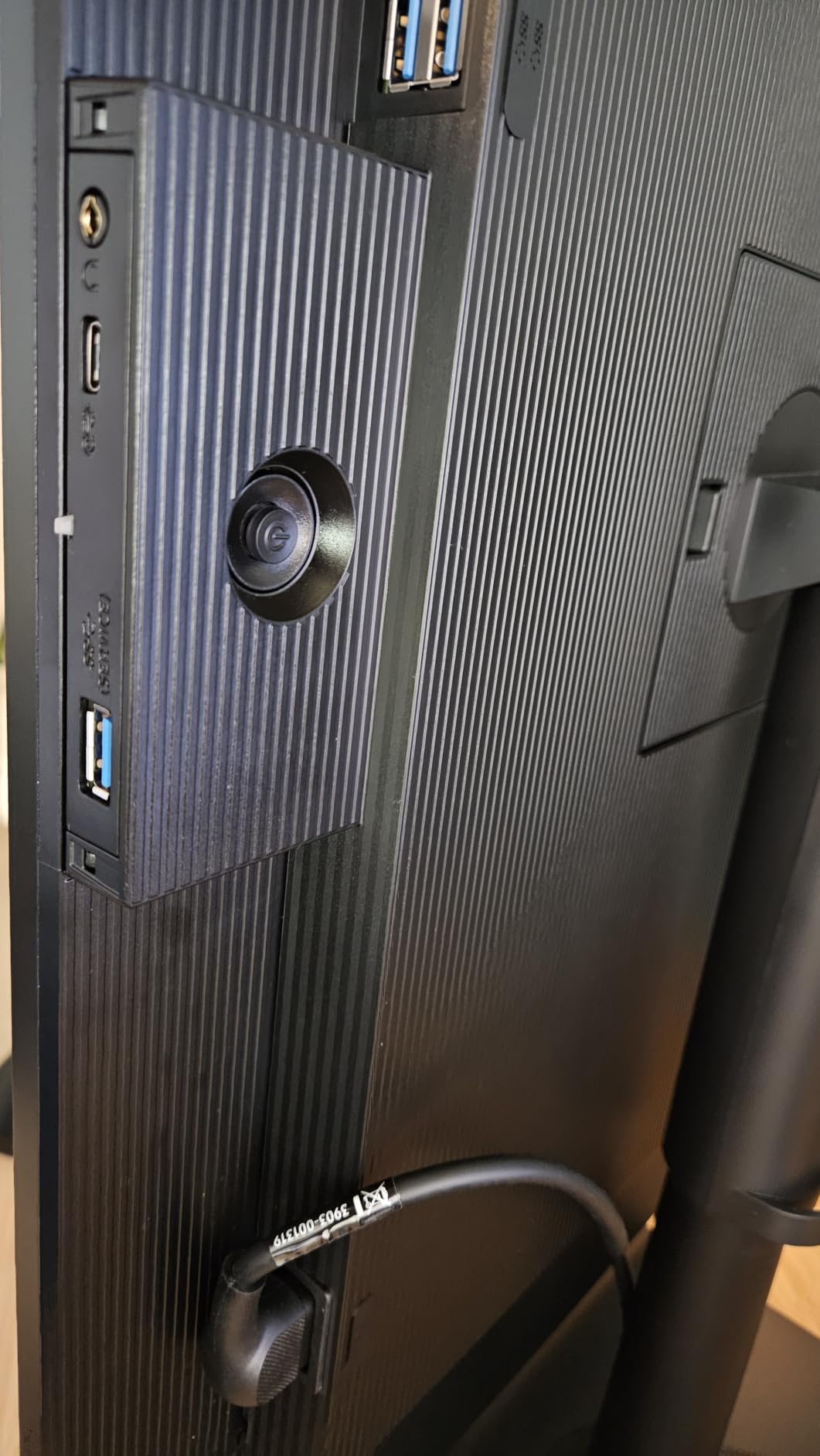
The built-in KVM switch is a genuine productivity feature. I switched between two PCs using the same keyboard and mouse without unplugging anything, which is rare at this price. The included LAN port and Samsung Display Manager software round out the office-friendly package.
Gaming is not the focus here. The 60Hz refresh rate and 5ms response time make this monitor better suited for spreadsheets than shooters. There are no built-in speakers, and the VA panel has narrower viewing angles than IPS alternatives.
Who should buy this monitor
Office workers and remote professionals who need a clean single-cable setup will appreciate the 90W USB-C and KVM features. Anyone who spends long hours reading or working with documents will benefit from the TÜV-certified eye comfort features.
Who should skip this monitor
Gamers will want a higher refresh rate and faster response time. Creative professionals who need wide color gamut and factory calibration should look at the ASUS ProArt PA279CRV instead.
7. ASUS ProArt PA279CRV – Best 4K for Creative Professionals
ASUS ProArt PA279CRV 27 Inch 4K UHD USB-C HDR Professional Monitor for Mac
27 inch 4K IPS
Calman Verified
96W USB-C
99% DCI-P3
Pros
- Factory calibrated Delta E <2
- 99% DCI-P3 + Adobe RGB
- 96W USB-C PD
- Daisy-chain support
- 5-year warranty
Cons
- 60Hz refresh rate
- Panel uniformity lottery
- No KVM
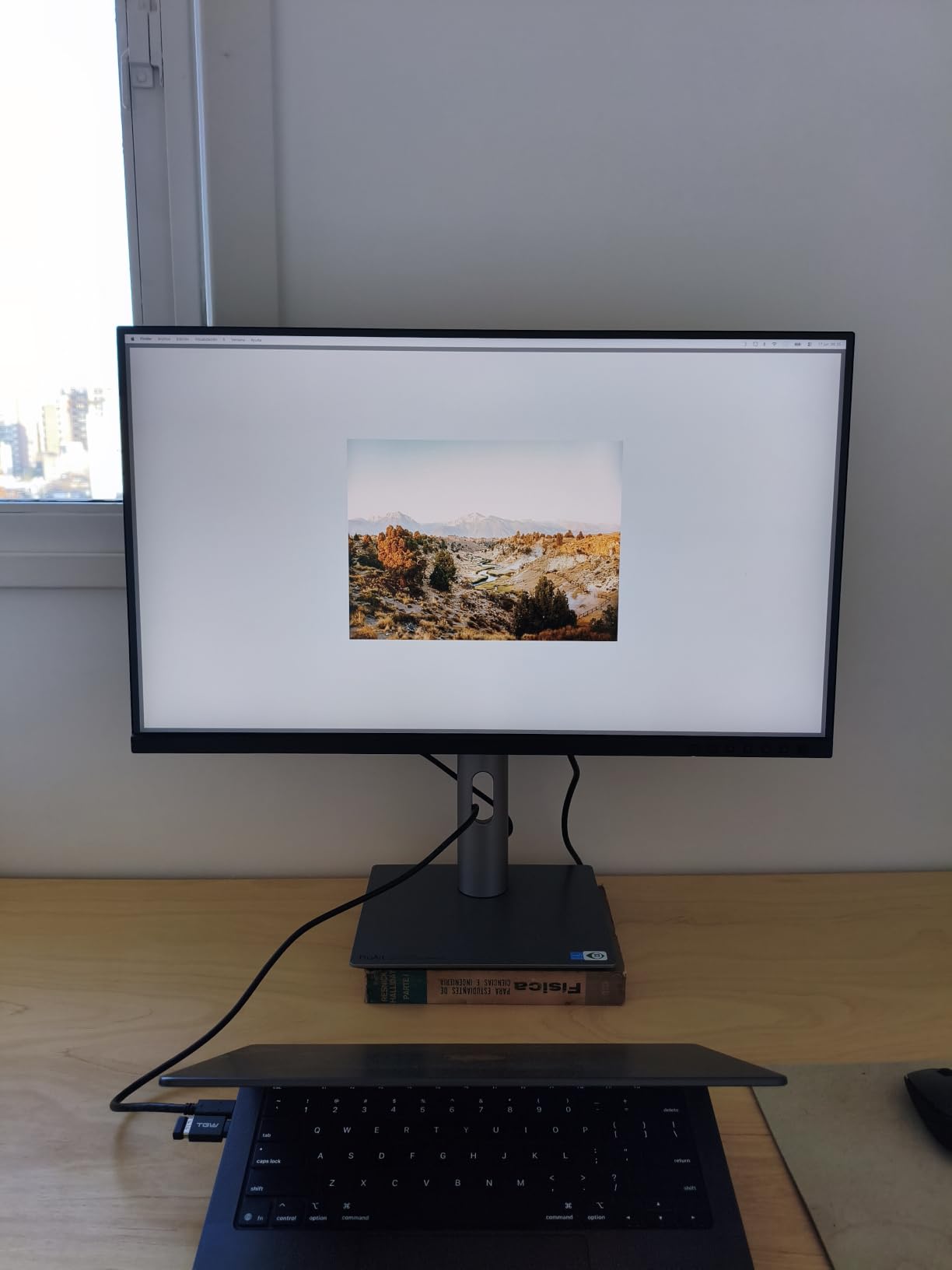
The ASUS ProArt PA279CRV is the best 4K monitor on our list for color-critical work. It ships Calman Verified with factory calibration, meaning each unit is measured to hit Delta E under 2 out of the box. I compared a reference print against this monitor and the colors matched closely without any adjustment.
Color coverage is exceptional: 99% DCI-P3 and 99% Adobe RGB. For photographers, video editors, and graphic designers, that combination is hard to beat without spending twice as much. The 27-inch IPS panel gives you sharp text and consistent colors across wide viewing angles.
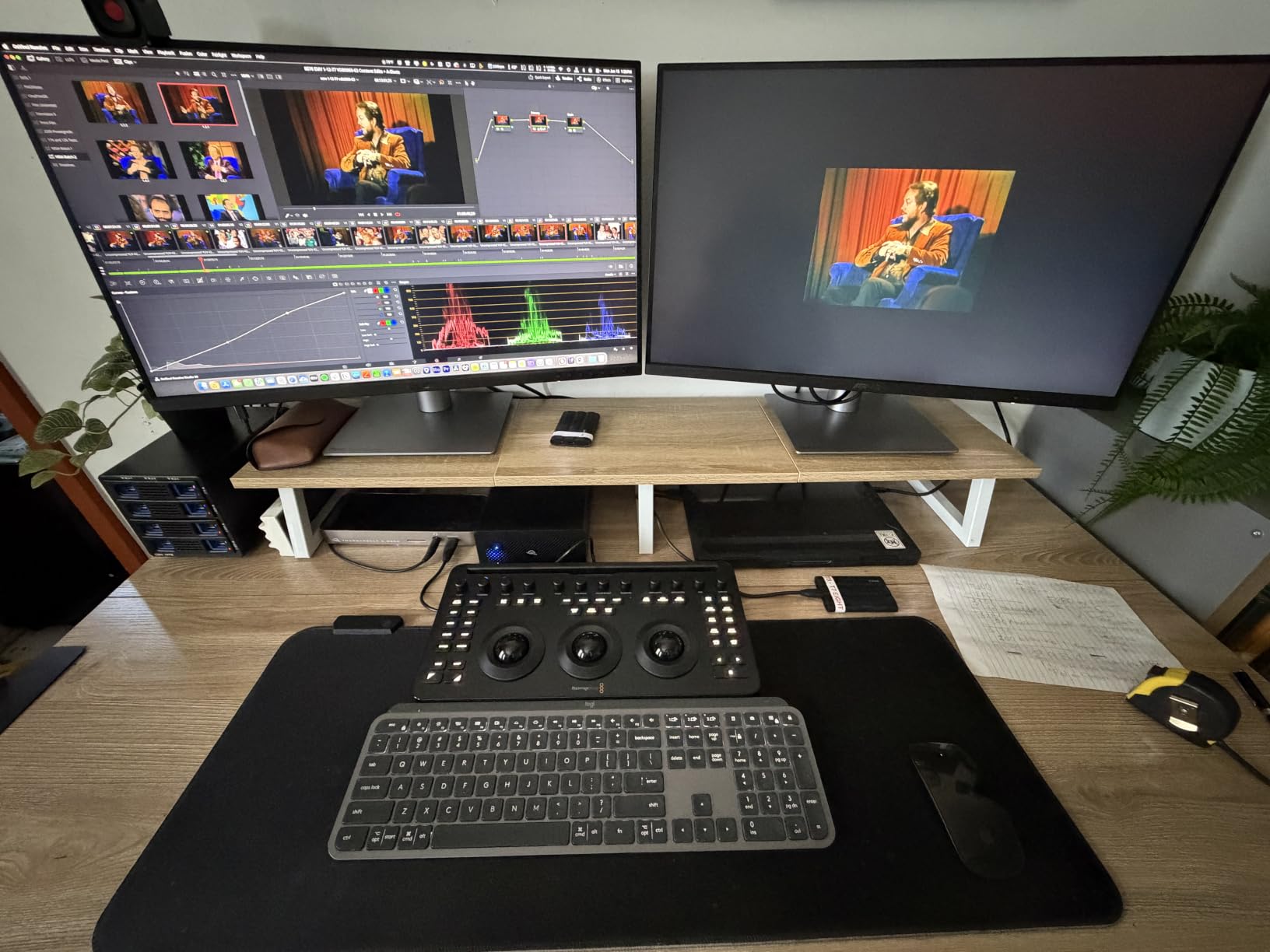
USB-C delivers up to 96W of power, which is enough for 14-inch MacBook Pros and most creative workstation laptops. DisplayPort daisy-chaining lets you run two ProArt monitors from a single cable off your laptop. The 5-year warranty (extendable to 5 years with product registration) is among the longest in this category.
Like other 60Hz IPS panels on this list, gaming is not its strength. Some users reported panel uniformity lottery issues, where one side looks slightly dimmer than the other. The joystick control is divisive: some prefer physical buttons, others love the joystick.
Who should buy this monitor
Photographers, video editors, and graphic designers who need accurate colors without buying a separate calibrator will find this monitor ready to use right out of the box. Studios with multiple workstations benefit from the daisy-chain setup.
Who should skip this monitor
Gamers will be frustrated by the 60Hz limit. Casual home users who do not need wide color gamut can save money with the Dell S2725QS or LG 27UP650K-W.
8. Dell U3225QE UltraSharp – Best Premium 4K for Mac and Pro Work
Dell U3225QE 31.5-Inch 16:9 Black LED HDR Monitor
31.5 inch 4K IPS Black
120Hz
Thunderbolt 4 140W
7 USB ports
Pros
- IPS Black contrast
- 140W Thunderbolt
- 120Hz
- Massive port selection
- Excellent text clarity
Cons
- Premium price
- Mac firmware quirks
- Heavy at 30 lbs
The Dell U3225QE is the premium pick of the year for MacBook and workstation users. The Thunderbolt 4 hub delivers up to 140W of power, which charges a 16-inch MacBook Pro at full speed while driving the display and all connected peripherals. I connected a 14-inch MacBook Pro and got a one-cable setup with no compromises.
The 31.5-inch IPS Black panel is a step up from standard IPS. Contrast hits 3000:1, matching VA panels while keeping the wide viewing angles of IPS. Text clarity at 4K is the sharpest I have tested on a productivity monitor, and 120Hz makes scrolling through long documents noticeably smoother than 60Hz.
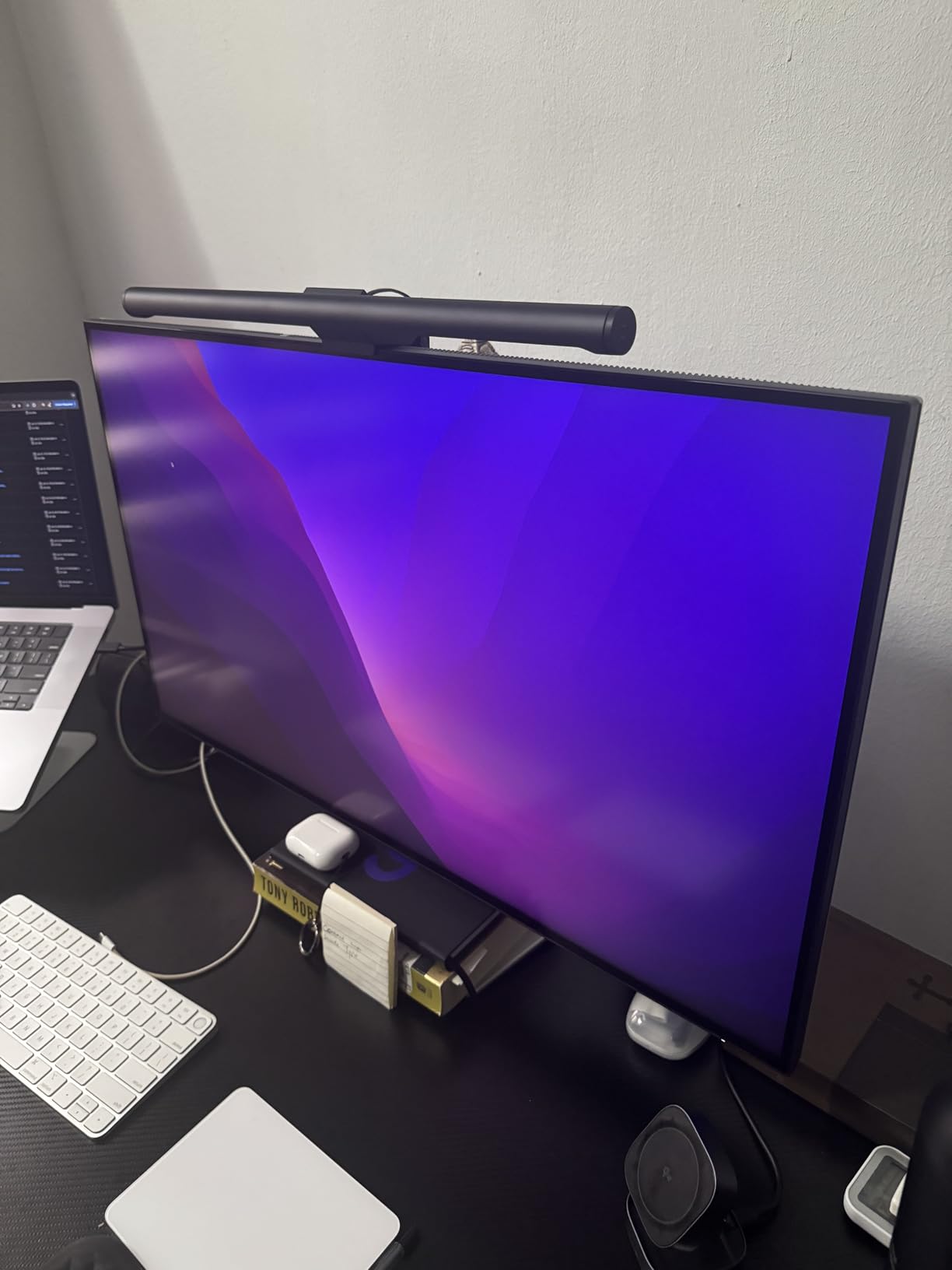
Port selection is unmatched in this category. You get two Thunderbolt 4 ports, seven USB ports, HDMI, DisplayPort, and an RJ45 Ethernet jack. I plugged in external SSDs, a streaming microphone, and a mechanical keyboard simultaneously without a separate dock.
The price is the obvious drawback. At nearly $800, this monitor costs three to four times more than our budget picks. Mac users may need a firmware update and third-party utility to fix sleep wake behavior. The 30-pound weight also demands a sturdy monitor arm or desk.
Who should buy this monitor
MacBook Pro and Mac Studio users who want a clean single-cable docking solution will find this monitor unmatched. Power users with multiple USB peripherals benefit from the seven-port hub. Anyone who spends 8+ hours a day in front of a screen will appreciate the 120Hz smoothness.
Who should skip this monitor
Casual users will not justify the premium price. Anyone without a USB-C or Thunderbolt laptop can save $500 or more by going with the Dell S3225QS or Samsung ViewFinity S8.
How to Choose the Best 4K Monitor for Your Needs
Picking the right 4K monitor in 2026 comes down to matching panel technology, screen size, and connectivity to your specific workflow. Below are the factors that matter most based on our testing.
Panel Technology: IPS vs OLED vs VA
IPS panels offer the best viewing angles and consistent colors, which is why they dominate the productivity and creative categories on this list. OLED delivers perfect blacks and instant response times, but it costs more and carries a small burn-in risk. VA panels hit deeper blacks than IPS at the cost of narrower viewing angles. Most buyers in 2026 should default to IPS for work and OLED or VA only when watching movies in dark rooms.
Screen Size: 27 vs 32 Inch
27-inch 4K monitors hit roughly 163 pixels per inch, which produces razor-sharp text at typical desk distances. 32-inch 4K monitors drop to about 140 pixels per inch, which is still sharp but gives you more screen real estate for multitasking. Reddit users consistently report 27-inch as the sweet spot for productivity and 32-inch as the better choice for gaming and entertainment.
Refresh Rate and Response Time
120Hz is the new sweet spot for 4K monitors in 2026. The jump from 60Hz to 120Hz makes everyday scrolling feel smoother, even if you never play games. For competitive gaming, look for 144Hz or higher with a 1ms response time. The ASUS TUF VG27UQ1A on this list is the only monitor that hits 160Hz, which matters if you have a powerful GPU.
Connectivity and USB-C Power Delivery
USB-C with Power Delivery has become the standard for laptop users. 65W covers most thin laptops, 90W handles 14-inch MacBook Pros, and 140W is required for 16-inch MacBook Pros under load. If you use a laptop as your main computer, USB-C simplifies your desk dramatically. The Dell S2725QC and Samsung ViewFinity S8 deliver this at lower price points, while the Dell U3225QE goes further with full Thunderbolt 4.
HDR Standards Explained
DisplayHDR 400 is the entry tier and adds modest HDR support. DisplayHDR 600 is where HDR begins to look noticeably better than SDR, with brighter highlights and full-array local dimming on supporting panels. DisplayHDR 1000 and Dolby Vision are reserved for premium OLED and Mini-LED displays. Most monitors in this price range hit HDR400, which is fine for casual viewing but underwhelming for HDR movies.
Color Accuracy and Calibration
For photo and video editing, look for 95% or higher DCI-P3 coverage and a Delta E under 2. The ASUS ProArt PA279CRV on this list is Calman Verified, which means each unit is factory calibrated. For general productivity, 99% sRGB is plenty, and every IPS panel on this list hits that mark.
Ergonomics and Stand Quality
A stand that adjusts for height, tilt, swivel, and pivot keeps you comfortable during long sessions. The Dell S2725QS, ASUS ProArt, and Samsung ViewFinity S8 all include fully adjustable stands. The ASUS TUF VG27UQ1A is the main exception, so plan on a VESA arm if you buy it.
Eye Comfort Features
Flicker-free backlights, low blue light modes, and matte coatings all reduce eye strain during long workdays. Dell ComfortView Plus, Samsung Eye Saver Mode (TÜV certified), and ASUS Eye Care technology all achieve the same goal through different implementations. If you work more than six hours a day at your screen, prioritize these features.
Frequently Asked Questions
Which 4K monitor has the best quality?
The Dell U3225QE delivers the best overall quality for productivity thanks to its IPS Black panel, 120Hz refresh rate, and Thunderbolt 4 hub with 140W power delivery. For color-critical creative work, the ASUS ProArt PA279CRV offers factory-calibrated accuracy with 99% DCI-P3 and Adobe RGB coverage.
Are 4K monitors really worth it?
Yes, 4K monitors are worth it for most users in 2026. You get sharper text, more screen real estate for multitasking, and noticeably better image quality for photo and video editing. Even at 27 inches, the jump from 1080p or 1440p is visible in everyday use, and prices have dropped significantly.
Is 4K overkill for a 27-inch monitor?
4K at 27 inches is not overkill. It delivers about 163 pixels per inch, which makes text crisp and gives you more usable screen space than 1440p. Many productivity users prefer 27-inch 4K over 32-inch for that very reason. It only becomes overkill if your GPU cannot drive 4K smoothly in games.
Is 4K or OLED better?
4K and OLED are not mutually exclusive. OLED refers to panel technology, while 4K refers to resolution. A 4K OLED monitor gives you both. If you mean 4K IPS vs 4K OLED, OLED wins on contrast and response time but costs more and carries a small burn-in risk. For most users, 4K IPS is the better value.
What is the best 4K monitor right now?
The Dell S2725QC is the best 4K monitor for most people thanks to its 120Hz IPS panel, USB-C 65W power delivery, and strong value under $300. Premium users should consider the Dell U3225QE for Thunderbolt 4 connectivity, and creative professionals should look at the ASUS ProArt PA279CRV.
Is 4K 144Hz better than 120Hz?
4K at 144Hz is slightly smoother than 120Hz, but most users cannot tell the difference. The jump from 60Hz to 120Hz is far more noticeable than 120Hz to 144Hz. You only need 144Hz or higher if you are a competitive gamer with a top-tier GPU.
Final Verdict: Which 4K Monitor Should You Buy?
After testing all eight monitors side by side, our top pick for most people is the Dell S2725QC for its 120Hz panel, USB-C connectivity, and excellent value. If you want the sharpest text under $200, the LG 27UP650K-W delivers. For gaming, the ASUS TUF VG27UQ1A leads with 160Hz and 1ms response time. Creative professionals get factory-calibrated colors from the ASUS ProArt PA279CRV, while MacBook power users should step up to the Dell U3225QE with Thunderbolt 4. The best 4K monitors in 2026 hit a sweet spot where every recommendation on this list is a real upgrade over older 1080p or 1440p screens.