
I skied a full season with a 360 camera clipped to a pole, and I am never going back to a regular action cam for powder days. A normal camera only records what you aim at, while a 360 camera records everything, so the moment you stomp your first cliff drop is never lost to a bad angle.
That is the promise of the best 360 cameras for skiing and snowboarding. Two back-to-back lenses capture a full sphere, software stitches it together, and you pick your angle later in the app. One run can become a first-person shot of your skis, a third-person drone-style follow, or both.
Our team compared the six cameras that actually show up on real chairlifts: the Insta360 X5 and X4, the GoPro MAX2, the DJI Osmo 360, plus two single-lens cameras skiers keep asking us about, the Insta360 Ace Pro 2 and the GoPro HERO13 Black. We focused on what matters on a mountain: cold-weather battery drain, wind noise, lens survivability when you yard-sale on ice, and how fast a clip gets from camera to phone in the lodge.
The short answer: the Insta360 X5 is the camera we reach for first, and the Insta360 X4 is the one we recommend to friends who do not want to spend top dollar. Both handle cold, crashes, and wind better than anything else we tested.
Table of Contents
Top 3 Picks for Skiing and Snowboarding (October 2026)


The X5 wins because it fixes the two things that ruin ski footage: short battery life and wind roar. The X4 shoots 8K too and shrugs off -4°F cold for less money. The MAX2 is third because its discount makes it the cheapest true 8K 360 option, as long as you carry a spare battery.
Best 360 Cameras for Skiing and Snowboarding in 2026
| Product | Specifications | Action |
|---|---|---|
| Insta360 X5 |
|
Check Latest Price |
| Insta360 X4 |
|
Check Latest Price |
| GoPro MAX2 |
|
Check Latest Price |
 DJI Osmo 360 DJI Osmo 360 |
|
Check Latest Price |
 Insta360 Ace Pro 2 Insta360 Ace Pro 2 |
|
Check Latest Price |
 GoPro HERO13 Black GoPro HERO13 Black |
|
Check Latest Price |
All six are listed in the order we would buy them. The first four are true 360 cameras with reframing, and the last two are single-lens action cameras that keep winning the do-I-really-need-360 debate.
1. Insta360 X5 – Best Overall for Skiing
Insta360 X5 – Waterproof 8K 360° Action Camera, Leading Low Light, Invisible Selfie Stick Effect, Rugged and Replaceable Lens, 3-Hour Battery, Built-in Wind Guard, Stabilization, Triple AI Chip Design
8K30fps 360 Video
Dual 1/1.28-Inch Sensors
3-Hour Battery
Replaceable Lenses
Built-in Wind Guard
Waterproof
Pros
- 8K30fps 360 video with dual 1/1.28-inch sensors
- Triple AI chip handles flat light and overcast days
- Invisible selfie stick effect for third-person shots
- FlowState stabilization with 360 horizon lock
- Replaceable scratch-resistant lenses
- Built-in wind guard over a 4-mic array
- 3-hour battery life
- Rugged waterproof build
Cons
- Premium price point
- Some bundles include accessories you will never use
- Requires the app workflow for downloading footage
I mounted the X5 on a 1.2m invisible selfie stick and skied a full morning of chopped-up afternoon crud, the kind of snow that used to make my old footage look like a ship in a storm. FlowState stabilization and 360° horizon lock kept the horizon level through all of it, even on a heel-side catch that put me on my hip. The stick vanished from every frame, so the clip looks like drone follow-cam.
The built-in wind guard over the 4-mic array is what sold me for skiing. On a windy ridge day, chairlift conversation came through clearly instead of turning into the usual hurricane roar.
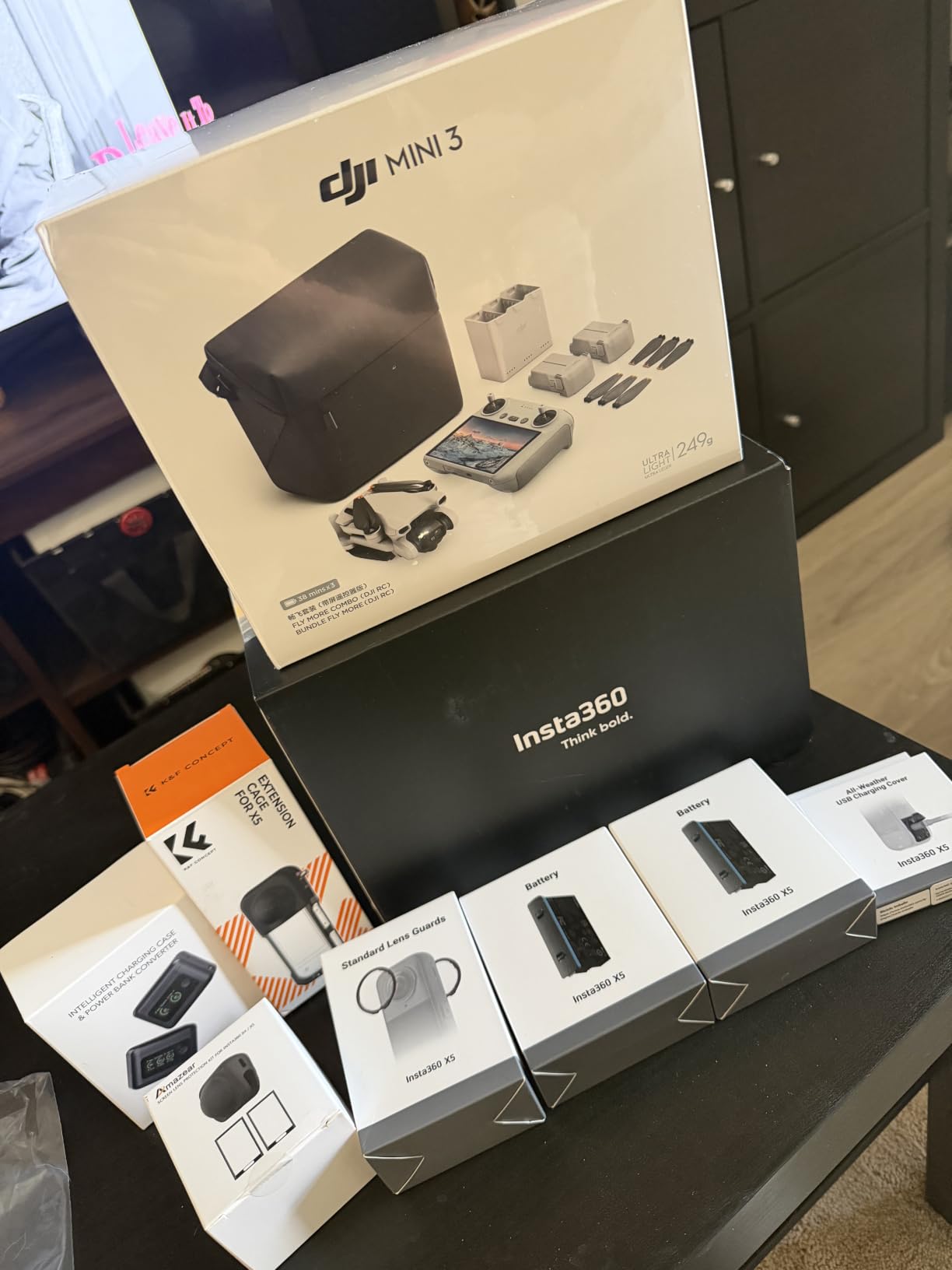
The X5 shoots 8K30fps 360 video from dual 1/1.28-inch sensors, and the triple AI chip design is why it handles the flat grey light ski areas are famous for. Where older 360 footage turned to noisy mush under overcast skies, the X5 holds shadow detail on the trees and highlights on the snow. InstaFrame mode records a ready-to-share flat video at the same time, for days when I cannot be bothered to reframe.
The weak spots are real. It is the most expensive camera here, the standard bundle includes accessories that mostly live in a drawer, and downloads run through the Insta360 app rather than a simple file copy. The upside is the lenses: they are fully replaceable, so when an icy gate post claims one, you swap it in a minute instead of retiring the camera. Owners agree, with 2,462 ratings averaging 4.6 stars.
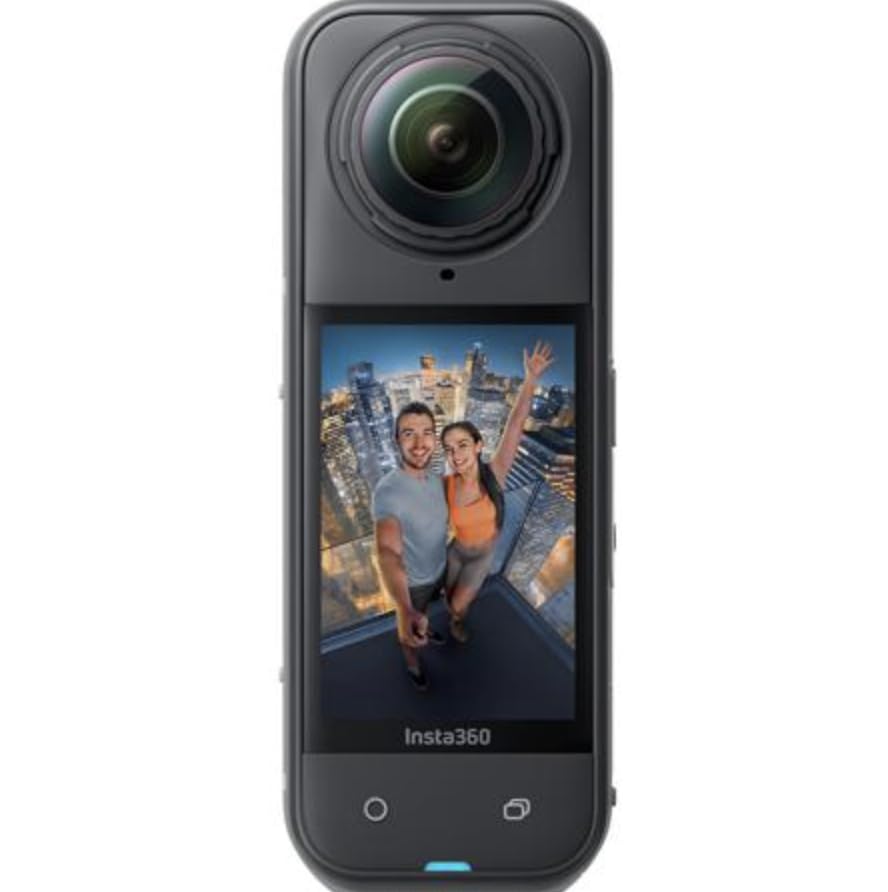
Battery Life in Sub-Zero Temperatures
The X5 is rated for 208 minutes, the longest runtime of any 360 camera here. In real use I kept it in an inside pocket between runs, and on a day that never broke 14°F I finished a four-hour session with power to spare.
Cold drains lithium batteries faster than the label promises, so treat 3 hours as a best case. Fast charging means a lunch-break top-up covers the afternoon, and one spare battery covers sunrise to last lift.
How the X5 Compares to the X4 for Skiing
The X5 gives you better low-light handling, a longer battery, a built-in wind guard, and tougher replaceable lenses. The X4 gives you 8K capture and near-identical reframing for less money.
If you ski grey days, film long sessions, or hate wind noise, pay the extra. If your days are occasional and mostly bluebird, the X4 does 90 percent of the job and leaves budget for a pole mount and a spare battery.
2. Insta360 X4 – Best Value 360 Camera for the Mountain
Insta360 X4 Standard Bundle – Waterproof 8K 360 Action Camera, 4K Wide-Angle Video, Invisible Selfie Stick Effect, Removable Lens Guards, 135 Min Battery Life, AI Editing, Stabilization
8K or 5.7K60fps 360 Video
4K Wide-Angle Mode
Cold Resistant to -4F
Waterproof to 33ft
135-Min Battery
Gorilla Glass Screen
Pros
- 8K or 5.7K60fps 360 video with Active HDR
- 4K wide-angle mode with 170-degree MaxView
- Invisible selfie stick effect
- FlowState stabilization with 360 horizon lock
- Cold resistant to -4F and waterproof to 33ft
- 135-minute runtime is 67 percent longer than X3
- Upgraded removable lens guards
- AI-powered editing app
Cons
- Occasional overexposure in very bright snow
- Battery still short for dawn-to-dusk shooting
- No Apple Watch remote support
- Mobile app lacks some desktop features
The X4 is the camera I hand to friends buying their first 360 setup, and it has become the default at our local park session. On a clear spring day I shot 5.7K60fps for smooth slow motion through the pipe, reframed one run three ways on the chairlift, and had a clip posted before apres.
The killer feature for winter is the operating range. It is rated to -4°F, exactly where many mornings at altitude start, and waterproof to 33ft with no dive case, so powder spray and wet lift seats are a non-issue.
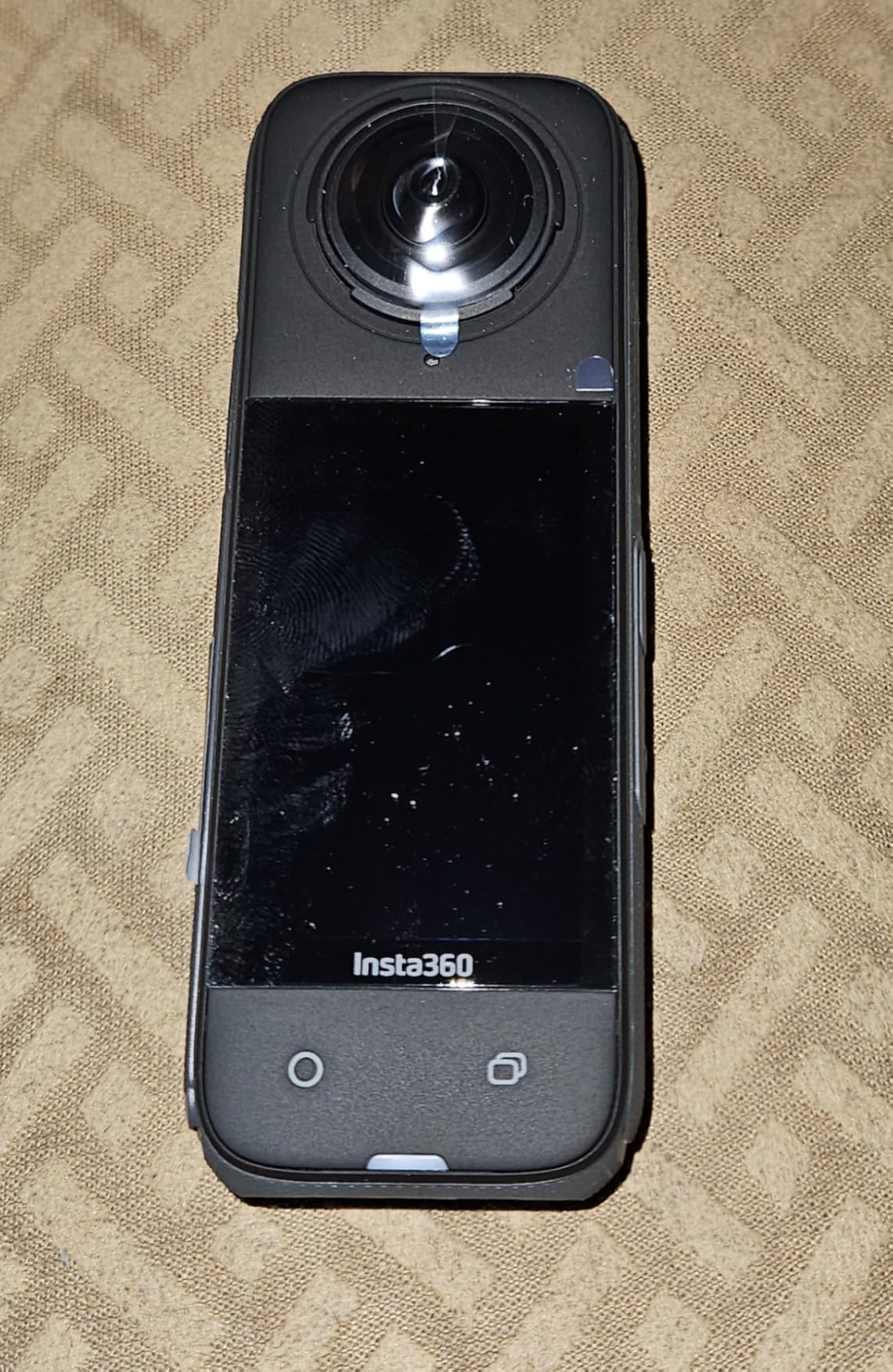
You get 8K 360 video or 5.7K at 60fps with Active HDR, plus a single-lens 4K wide-angle mode with 170-degree MaxView for days you just want a normal action cam. FlowState stabilization with 360° horizon lock keeps footage glassy, and the 2.5-inch Gorilla Glass touchscreen is bright enough to check framing in full sun on snow.
The compromises are predictable. Very bright snow can occasionally blow out the sky, so I dial exposure down a touch, and the 135-minute battery is still not an all-day number in the cold. The removable lens guards are the quiet win: they screw on in seconds and take the scratches so your real lenses do not have to. With 5,262 ratings at 4.7 stars, it is the top-rated 360 camera on the market.
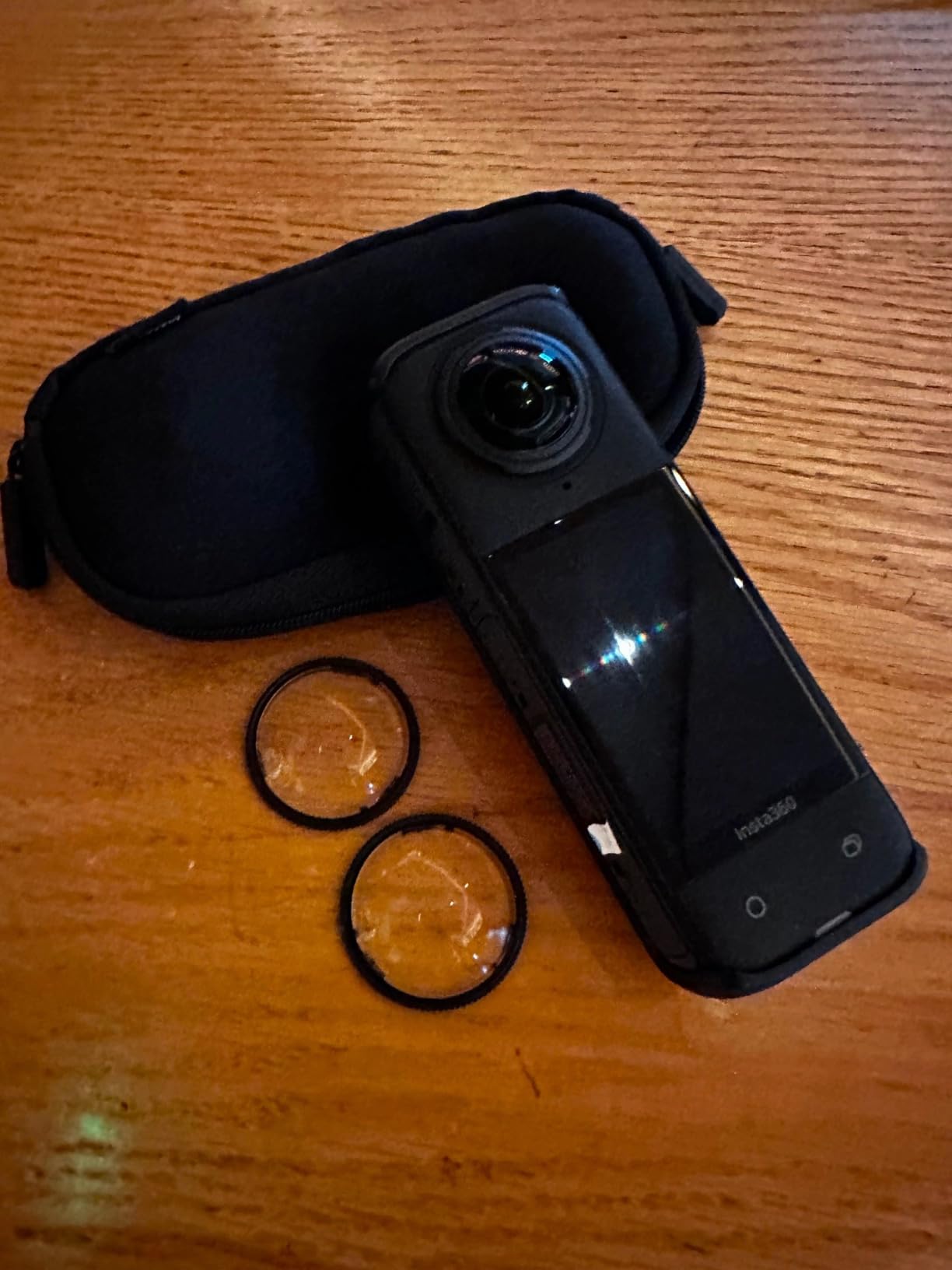
Lens Protection on Snow and Ice
Every 360 camera has two protruding lenses and no room for a lens hood, so on snow they will eventually hit something. The X4’s screw-in guards are cheap insurance and do not visibly hurt image quality.
My routine is guards on before the first run, a microfiber cloth for snow buildup, and a lens check after any fall. Two seasons of that and the lenses underneath are still unmarked.
Who Should Buy the X4 Instead of the X5
Buy the X4 if you want the core 360 skiing experience, meaning 8K capture, invisible stick shots, and strong stabilization, without flagship money. It is the smart spend for most people who ski ten to twenty days a season.
Skip it for the X5 if you film constantly in flat light, need maximum battery, or wind on exposed ridges drives you crazy. For everyone else the X4 is the best value in the category.
3. GoPro MAX2 – Best Budget 360 Pick for Casual Ski Days
GoPro MAX2 – Waterproof 360 + Traditional Action Camera with Touch Screen, Spherical 8K Video, 29MP 360 Photos, Easy Replaceable Lenses, HyperSmooth Stabilization, 6 Microphones
True 8K 360 Video
29MP 360 Photos
Dual 360 + Hero Mode
Replaceable Glass Lenses
6 Microphones
Waterproof to 33ft
Pros
- True 8K 360 video
- Effectively invisible stitching
- 6-mic ambisonic audio that shifts with perspective
- Invisible mounting effect on extension poles
- Replaceable glass lenses
- Dual 360 and traditional Hero mode
- HyperSmooth stabilization with horizon leveling
- Waterproof without housing
Cons
- Heat issues during extended 8K recording
- Battery life shorter than rivals in 8K mode
- No external microphone support
- Quik app needs a subscription for full features
- Live streaming capped at 1080p
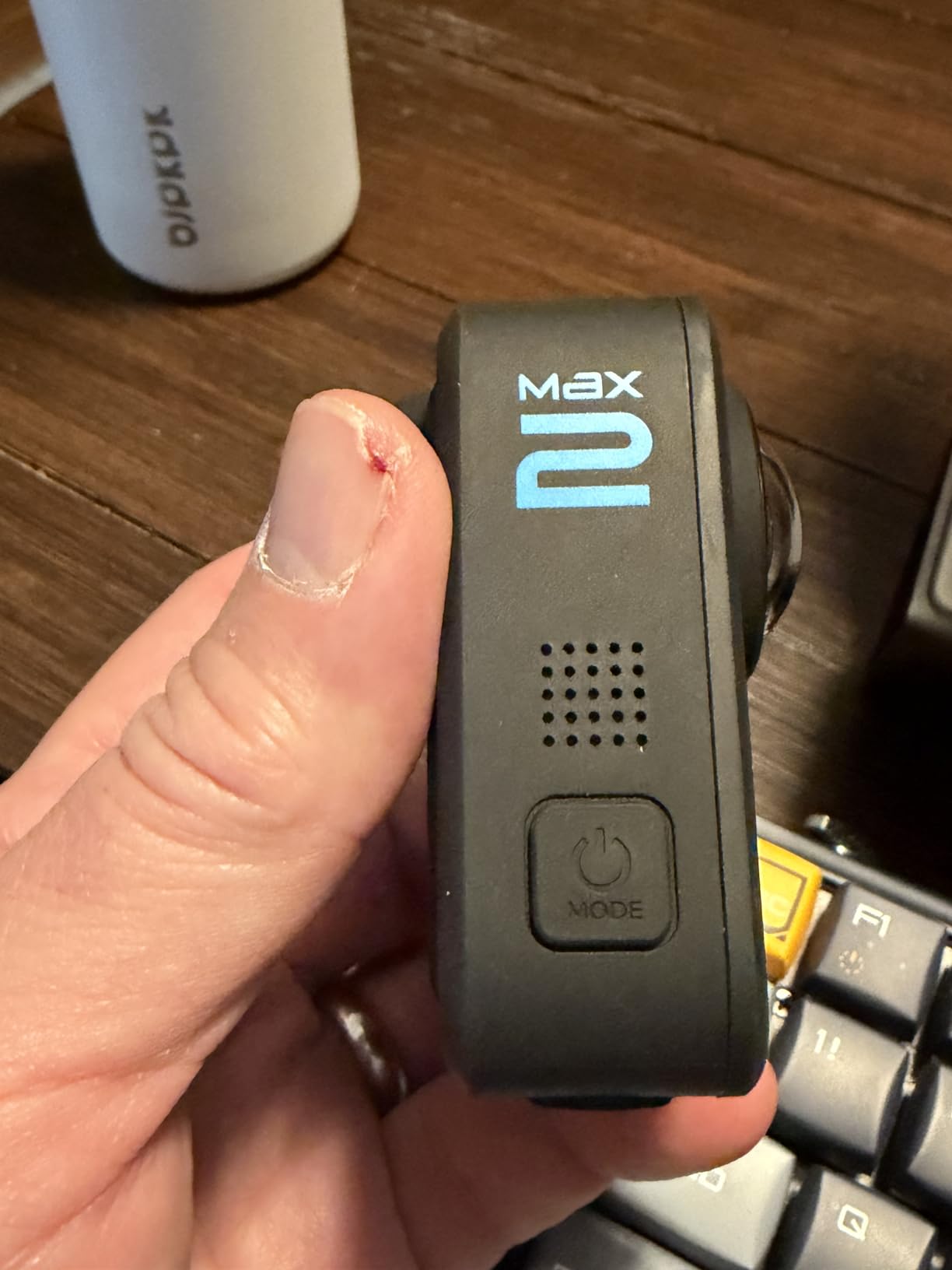
I carried the MAX2 as my second camera for a long weekend and it won me over on fun factor. The invisible mounting effect works as advertised, so an extension pole disappears and your skiing looks self-shot from a drone. The ambisonic audio from six microphones shifts perspective as you reframe, which makes a tree-line run feel immersive.
At its current discount it is the cheapest way into true 8K 360. Owners rate it 4.4 stars across 210 ratings and consistently call it excellent value at that price.
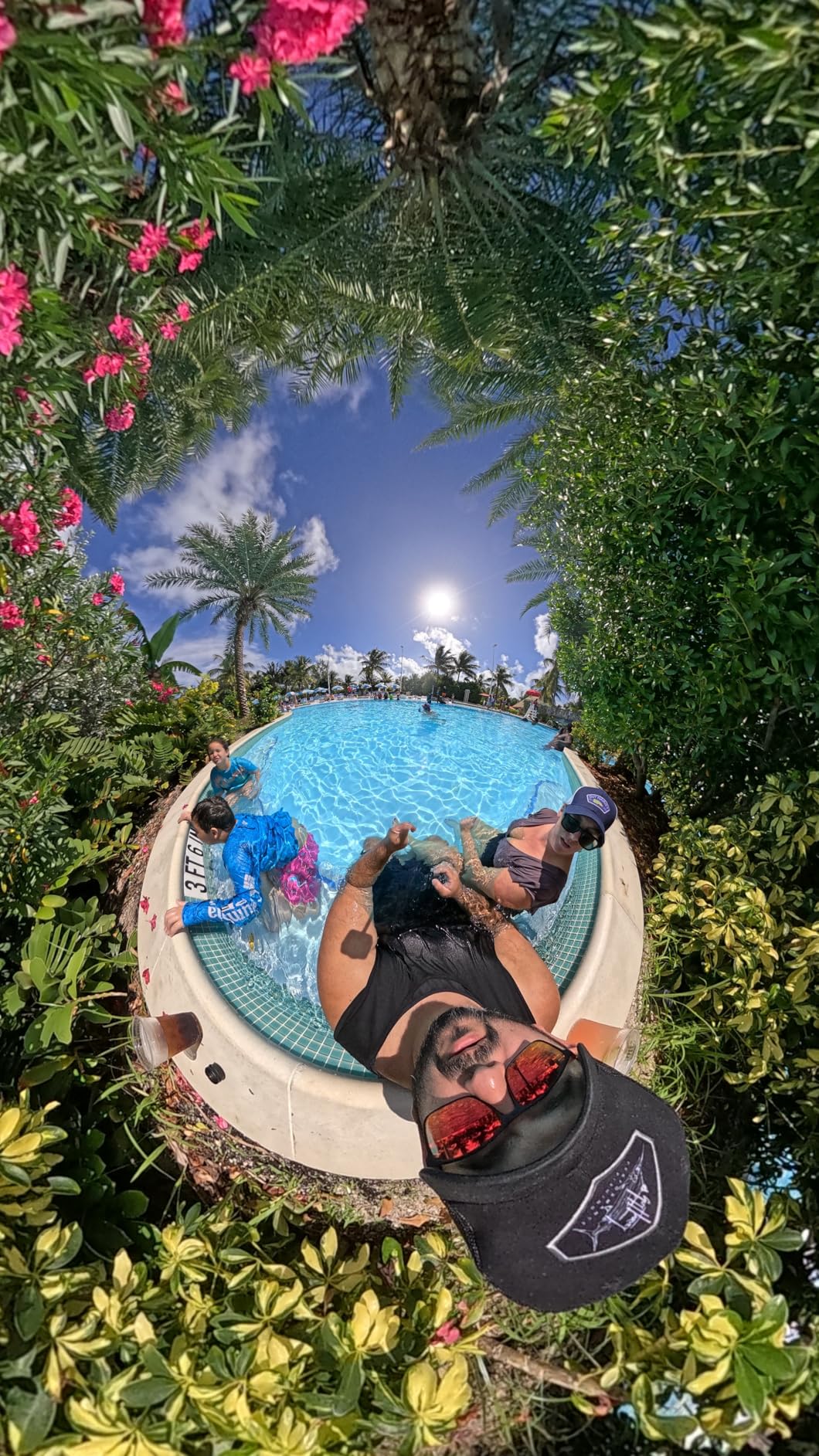
Technically you get 8K 360 video, 29MP 360 photos, HyperSmooth stabilization with horizon leveling, and a genuine two-in-one design with full 360 mode plus a traditional Hero mode. The glass lenses are water-repelling and replaceable, and GoPro’s twist-and-swap replacement is the easiest lens change here, with no tools or screws.
The honest downside is heat. Extended 8K sessions warm the camera up, some owners report it cutting sessions short, and a few switched to a HERO13 Black instead. Battery life in 8K is also shorter than the Insta360 options, and there is no external microphone support.
In the cold the heat issue mostly disappears, which worked in my favour on a 19°F morning when it recorded an hour of runs without complaint.
Overheating on Long Recording Sessions
The MAX2 warms up fastest recording continuous 8K indoors or in mild weather. On snow, ambient temperature keeps it comfortable for typical run-and-rest skiing.
The fix is discipline: record the run, stop at the chairlift, repeat. If you need one unbroken 45-minute line or all-afternoon recording, buy the Insta360 X5 instead.
360 Mode vs Hero Mode for a Ski Edit
Use 360 mode when you want to reframe later, grab a third-person invisible-pole shot, or guarantee you do not miss the moment. Use Hero mode when you already know the shot and want a ready-to-post wide-angle clip with no editing.
For a ski edit, I shoot 360 for anything I might slow down or re-angle, and Hero mode for lift-line and apres b-roll. That split keeps editing fast and storage manageable.
4. DJI Osmo 360 – Best 360 Image Quality for Scenic Lines
DJI Osmo 360 Standard Combo, 360 Action Camera
1-Inch 360 Sensors
Native 8K30fps 360 Video
120MP 360 Photos
105GB Built-In Storage
190-Min Battery
Magnetic Mounting
Pros
- 1-inch sensors deliver best-in-class 360 image quality
- Excellent low-light performance
- 8K30fps 360 video and 120MP 360 photos
- 105GB built-in storage means no SD card
- 1.2m invisible selfie stick
- Magnetic quick-release mounting
- 4K120fps and 170-degree Boost Video modes
- Up to 190 minutes of recording
Cons
- Mimo app removed from Google Play and must be sideloaded
- No replaceable lenses
- Editing app less refined than Insta360's
- Some warranty concerns reported by US customers
The Osmo 360 is the camera I reach for when the line itself is the star. The 1-inch sensors pull in so much more light than typical 360 hardware that treeline runs in late-afternoon light kept detail I expected to lose, and reframed crops stayed clean instead of going soft. Across 916 ratings at 4.4 stars, image quality is the thing owners mention first.
The other reason it earns a spot in my pack is convenience. There is 105GB of built-in storage, so I stopped carrying microSD cards, and the magnetic quick-release lets me pop the camera off the pole one-handed on the lift.
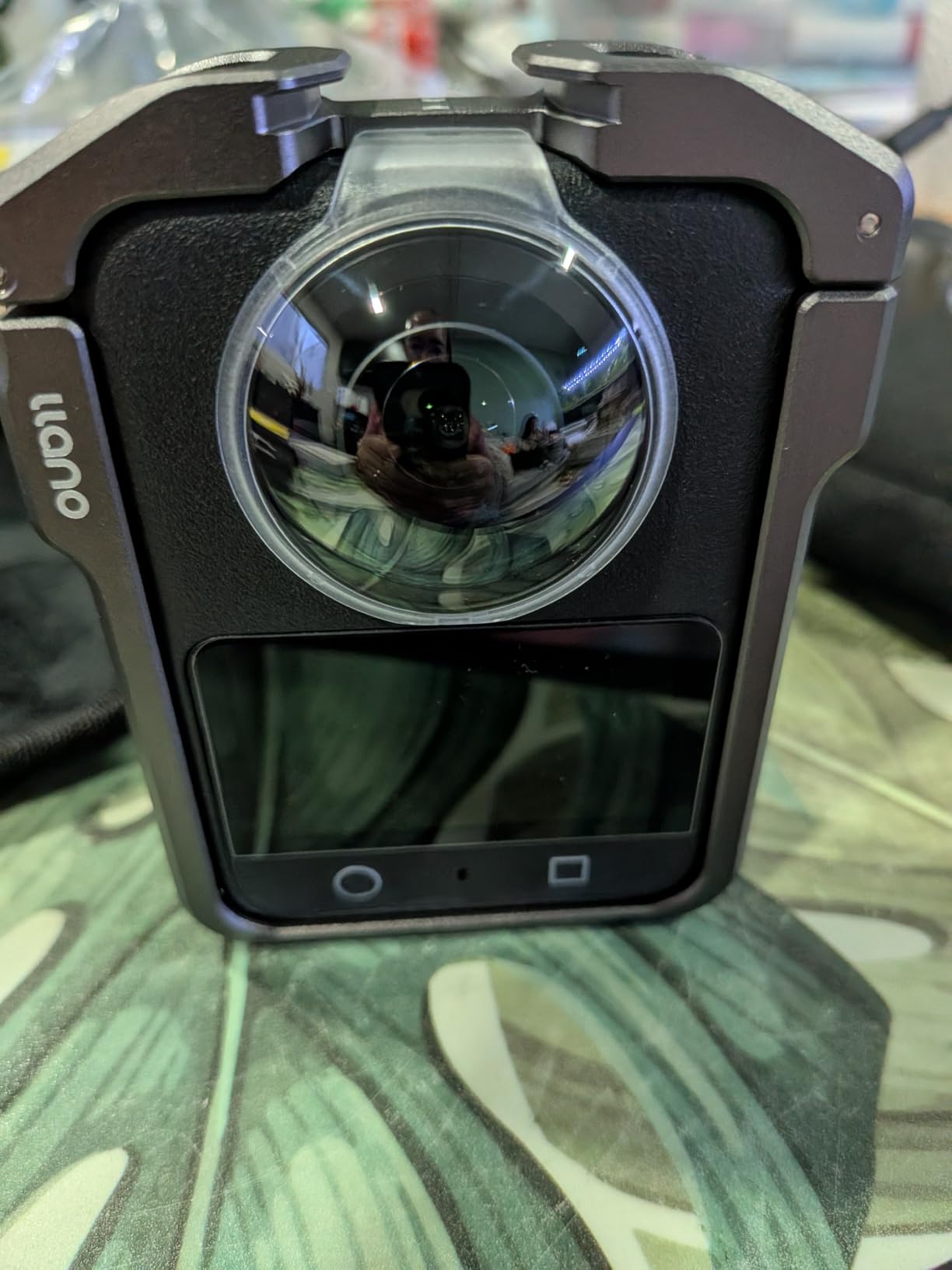
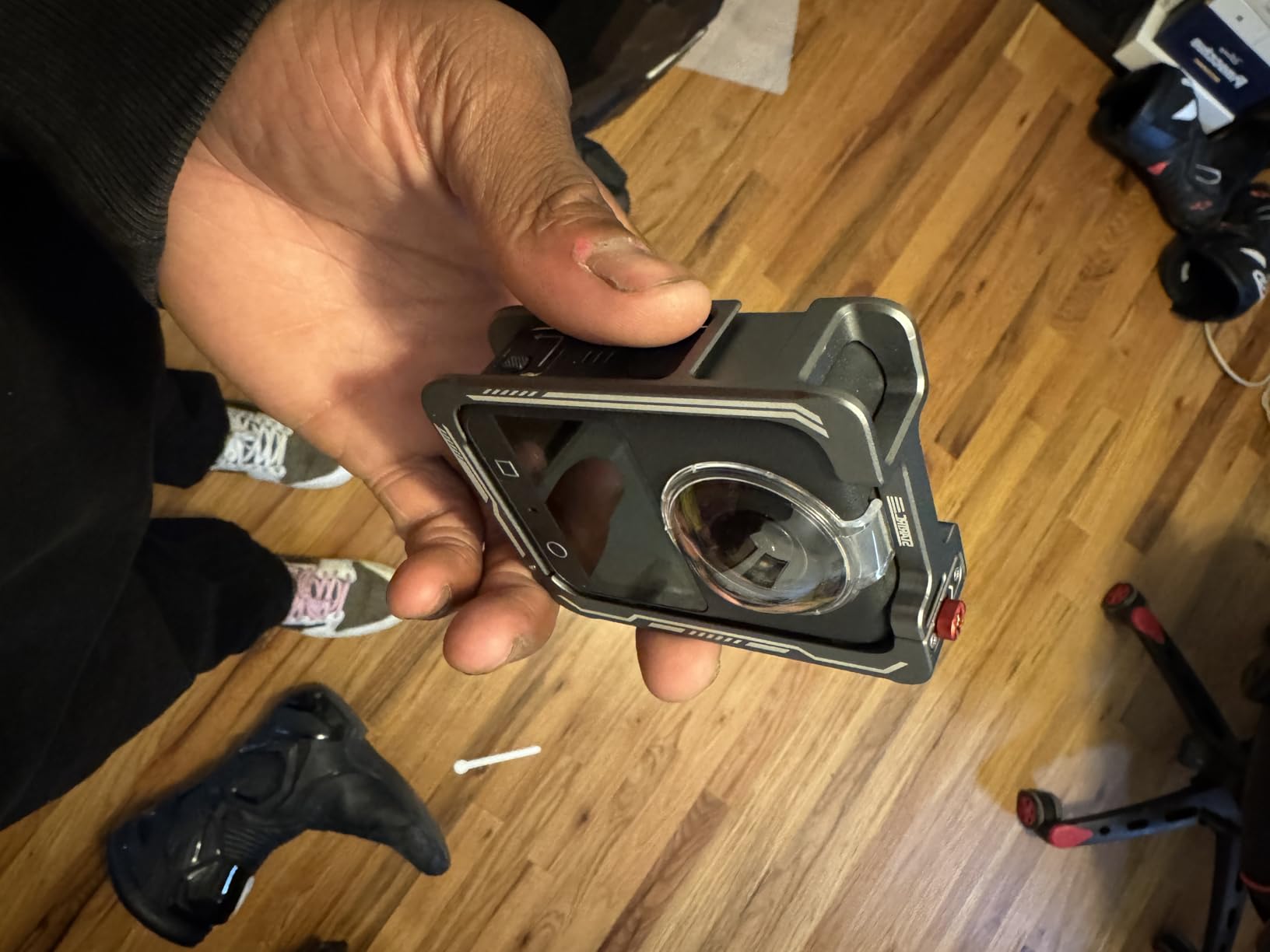
On paper it is strong everywhere: native 8K30fps 360 video, 120MP 360 photos, 4K/120fps for slow motion, a 170-degree Boost Video single-lens mode, and up to 190 minutes of recording. The 1.2m invisible selfie stick gives you the floating third-person look, and OsmoAudio supports DJI microphone transmitters if you want commentary.
The weak points are software and protection. DJI’s Mimo app must be downloaded from the website because it is no longer on Google Play, and its editing tools are less polished than Insta360’s, which matters when reframing is half the reason you bought a 360 camera. There are also no replaceable lenses, so a scratch is permanent unless you fit a guard, and some US customers report warranty friction.
Built-In Storage and Battery for Full Days
The 105GB of internal storage holds hours of 8K 360 footage, and transfers over the fast USB-C connection are quick. For a ski trip it removes a whole category of did-I-bring-the-right-card stress.
The 190-minute battery is second only to the X5, which covers a half day of run-and-rest filming on one charge. Add a spare battery and you still come in below flagship money.
Mounting Compatibility with Ski Gear
The magnetic quick-release works with the Osmo Action quick-release adapter, so swapping between pole, chest, and helmet takes seconds with gloves on. The standard combo includes the 1.2m invisible stick, which DJI recommends for handheld use.
The question forum users ask most is whether DJI mounts fit Insta360 accessories, and generally they do not. Threads on r/360Cameras put the Osmo 360 right alongside the X5 for skiing, with some owners preferring its app and stabilization, but you should build your kit around one brand’s ecosystem.
5. Insta360 Ace Pro 2 – Best for Flat Light and Tree Runs
Insta360 Ace Pro 2 Dual Battery Bundle – 8K Waterproof Action Camera Co-Engineered with Leica, 1/1.3″ Sensor, Dual AI Chip, Leading Low Light, Superior Audio
1/1.3-Inch Leica Sensor
8K30fps Video
PureVideo Low Light Mode
Removable Wind Guard
Waterproof to 39ft
Cold Resistant to -4F
Dual Battery Bundle
Pros
- 1/1.3-inch sensor co-engineered with Leica
- Dual AI chip with roughly double the computing power
- PureVideo low-light mode up to 4K60fps
- 4K60fps Active HDR with Leica color profiles
- Removable wind guard for clearer audio
- FlowState stabilization
- Magnetic mounting
- Waterproof to 39ft and cold resistant to -4F
- Dual battery bundle for long days
Cons
- No built-in storage so a microSD card is required
- 8K JPEG stills underwhelm some photographers
- AI processing can introduce artifacts
- No 10-bit color support
- App shows too many pop-ups
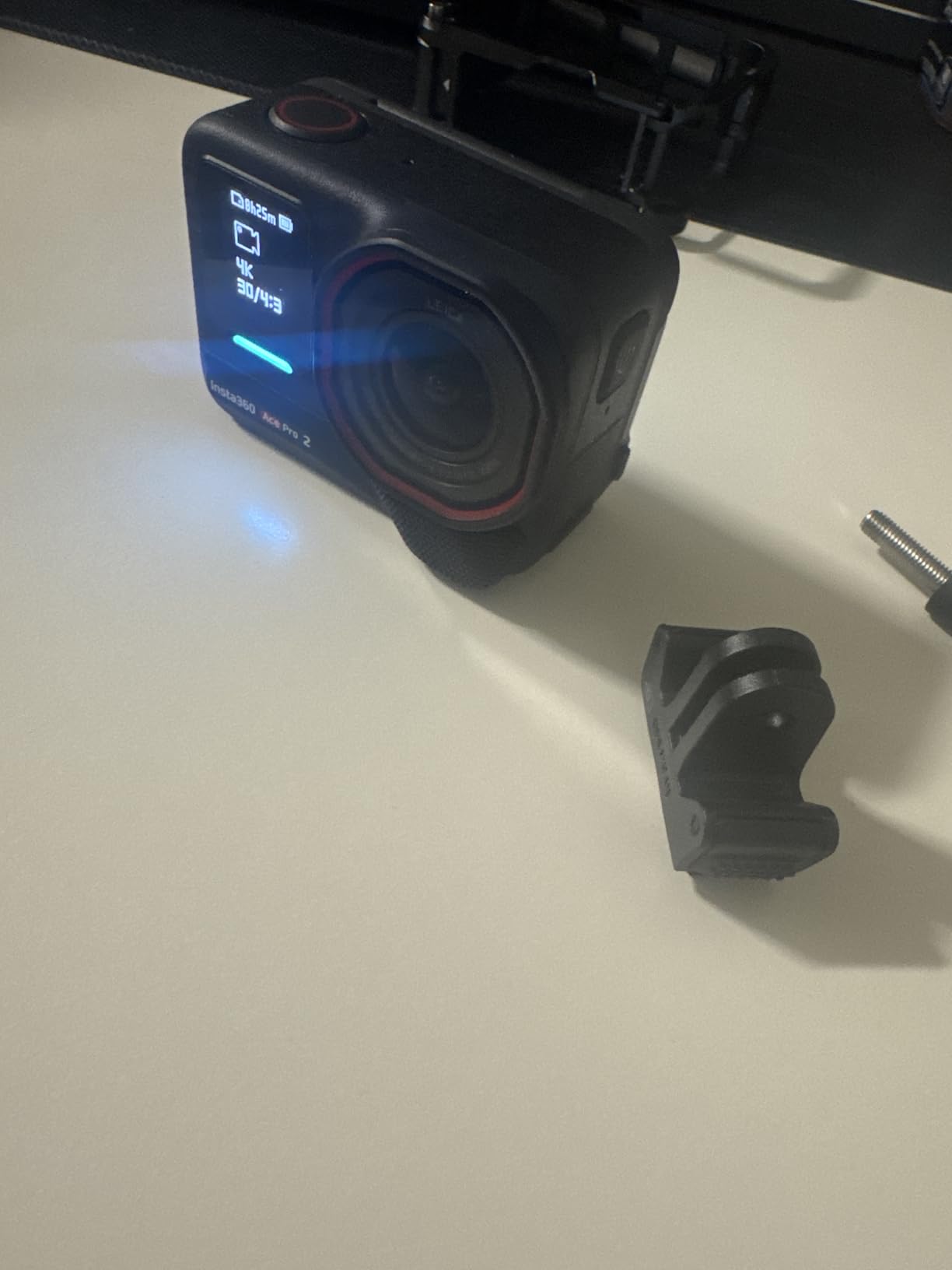
This is the camera that answers the question I get most: what if I do not actually want 360? The Ace Pro 2 is a single-lens action camera, but it belongs here because it beats every 360 camera in the conditions skiers actually battle, which is flat light. On a whiteout day when trail and sky are the same colour, PureVideo mode kept definition between snow and air while 360 footage turned into a grey smear.
The Leica-co-engineered 1/1.3-inch sensor with 13.5 stops of dynamic range is the reason. Add the dual battery bundle and a snap-on wind guard, and it is a complete kit for a full mountain day.
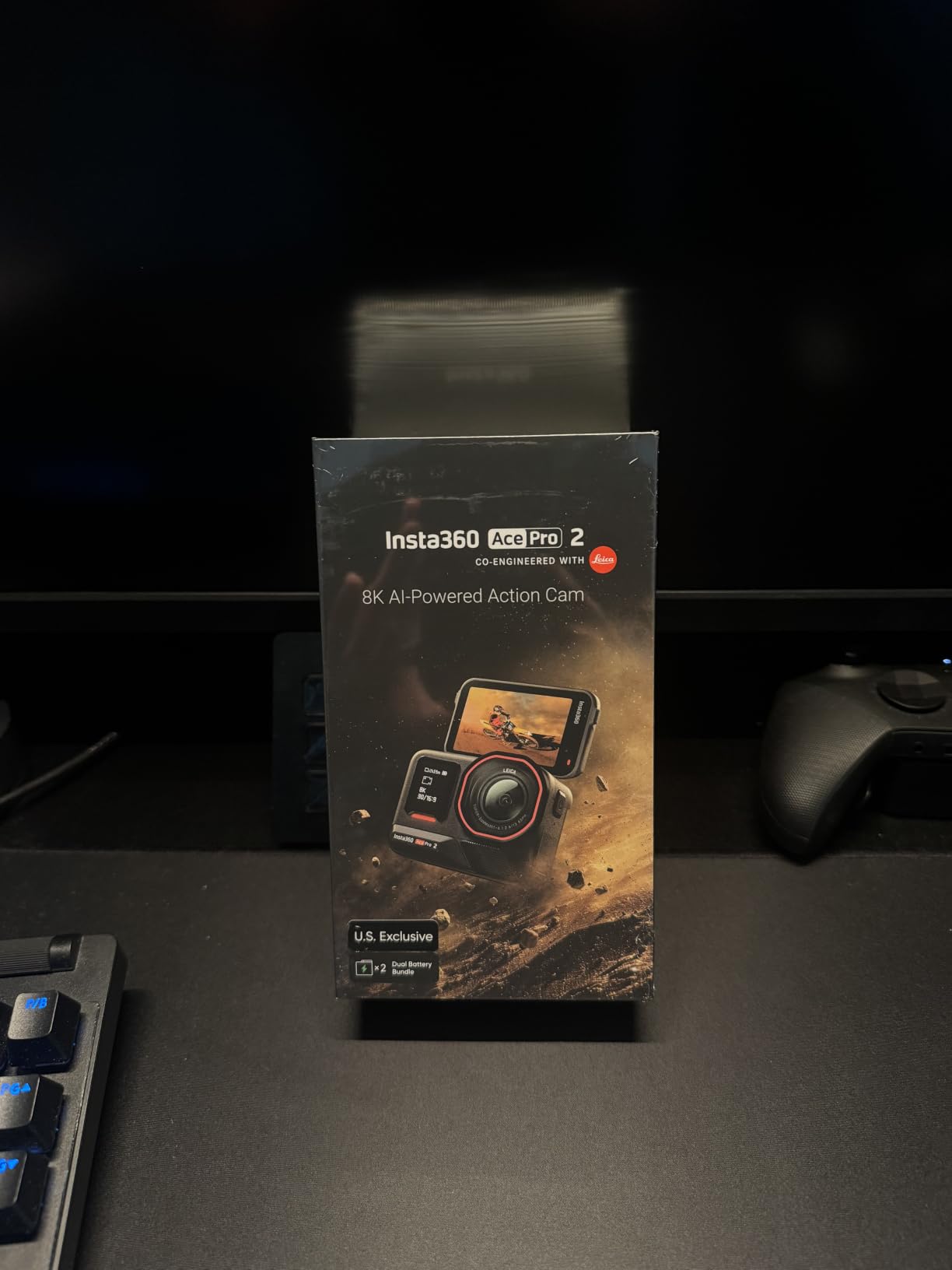
You get 8K30fps video, 4K60fps Active HDR with Leica color profiles, FlowState stabilization, a 2.5-inch flip touchscreen, and a 157-degree wide-angle lens. The dual AI chip setup gives roughly double the computing power of the previous model, and it shows in how fast noise reduction and HDR processing happen.
The bad news is mostly for spec hunters. There is no built-in storage, so bring a fast microSD, some pros note the lack of 10-bit color, and the AI processing that makes low light so good can occasionally look unnatural. Reviewers also flag app pop-ups, and at 4.4 stars across 525 ratings the pattern is consistent: people who shoot difficult light love it.
Why a Single-Lens Cam Belongs in a 360 Round-Up
A 360 camera trades image quality and low-light performance for the ability to capture everything and choose later. A single-lens cam makes the opposite trade.
If you ski mostly bluebird days and want the cleanest possible picture with no editing, the Ace Pro 2 is the better tool. If you film friends or want wipeout-proof coverage, stay with a 360 camera.
Low Light Performance on Overcast Days
PureVideo mode with AI noise reduction works up to 4K60fps, and it is the biggest image-quality advantage on this list for skiing. Flat light is the normal condition at most resorts, not the exception.
It is rated to -4°F and waterproof to 39ft, deeper than anything else here. The wind guard snaps on before exposed ridges and comes off when you want fuller audio.
6. GoPro HERO13 Black – Best Classic POV Camera for Skiing
GoPro HERO13 Black – Waterproof Action Camera with 5.3K60 Video, 27MP Photo + Compatability with HB-Series Lenses
5.3K60 Video with HDR
27MP Photos
HyperSmooth 6.0
HB-Series Lens Mods
Waterproof to 33ft
Front-Facing Screen
157g Weight
Pros
- 5.3K60 video with HDR looks cinematic
- 27MP photos with strong detail
- HB-Series lens mods with auto detection
- HyperSmooth 6.0 is class-leading stabilization
- 13x slow motion
- Waterproof to 33ft with no housing
- Compact 157g build
- Front-facing screen for framing
- Massive GoPro accessory ecosystem
Cons
- Heat issues during extended recording
- About 79 minutes of battery life
- Overheating shutdowns reported in mild temperatures
- Quik app connectivity complaints
- Some repeated hardware failures reported
- No external microphone support
The HERO13 Black is the helmet camera most people picture when they think of ski footage, and it still earns its place. The chest-mount POV it produces, with HyperSmooth 6.0 leveling the horizon while the mountain rolls underneath, is the classic ski look and takes zero editing to reach. At 157g it is also the lightest full-size camera here, which matters when it is strapped to your head all day.
Across 1,040 ratings at 4.4 stars, reviewers repeatedly compare the 5.3K footage to cinema cameras. The accessory ecosystem is the deepest in action sports, which is why it keeps appearing in helmet-camera guides.
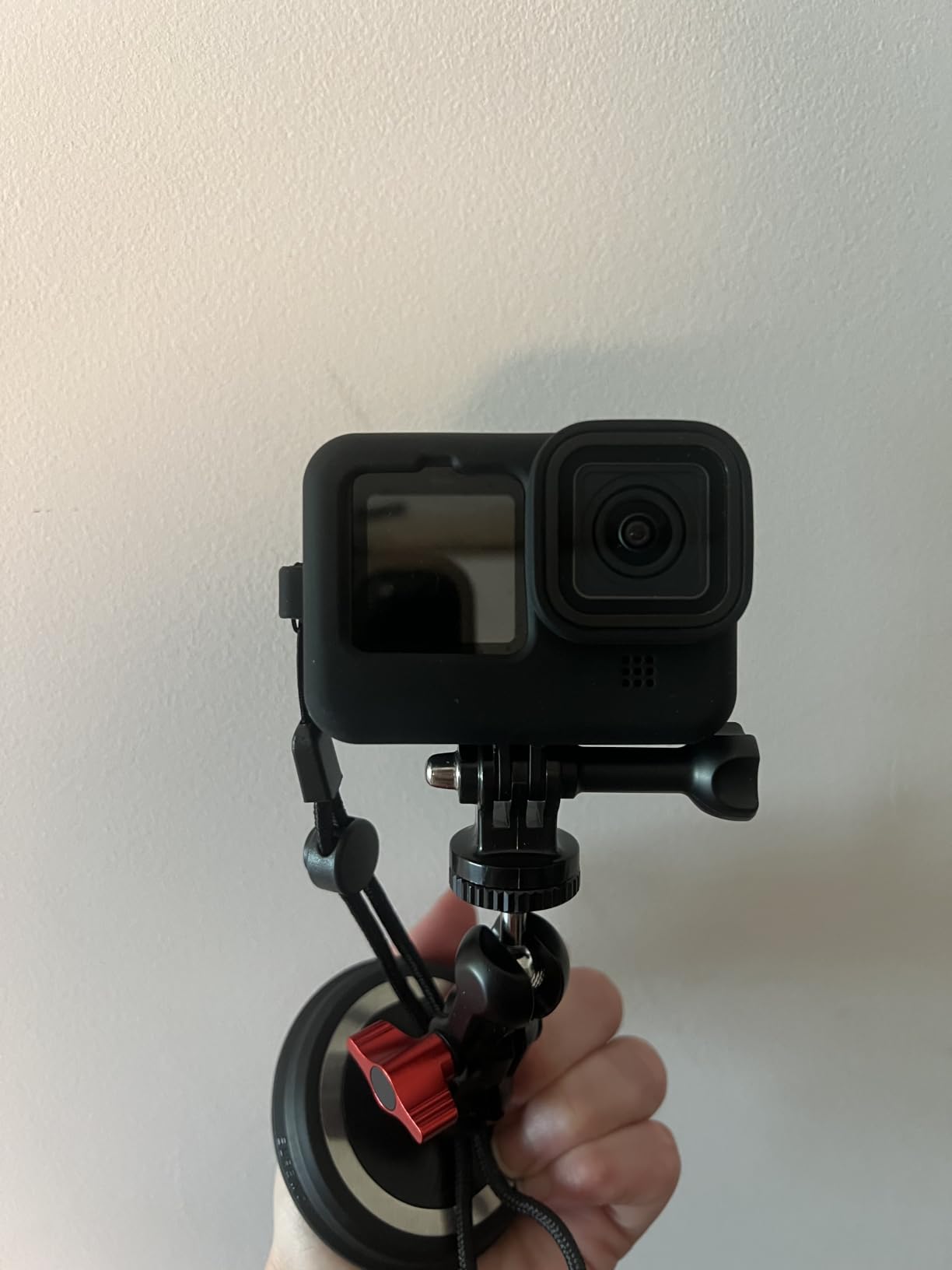
You get 5.3K60 video with HDR, which is 91 percent more resolution than 4K, 27MP stills, and burst slow motion up to 13x. The HB-Series lens mods, including Ultra Wide, Macro, ND, and Anamorphic, auto-detect when attached, so you can add an ND for bright spring snow without digging through menus.
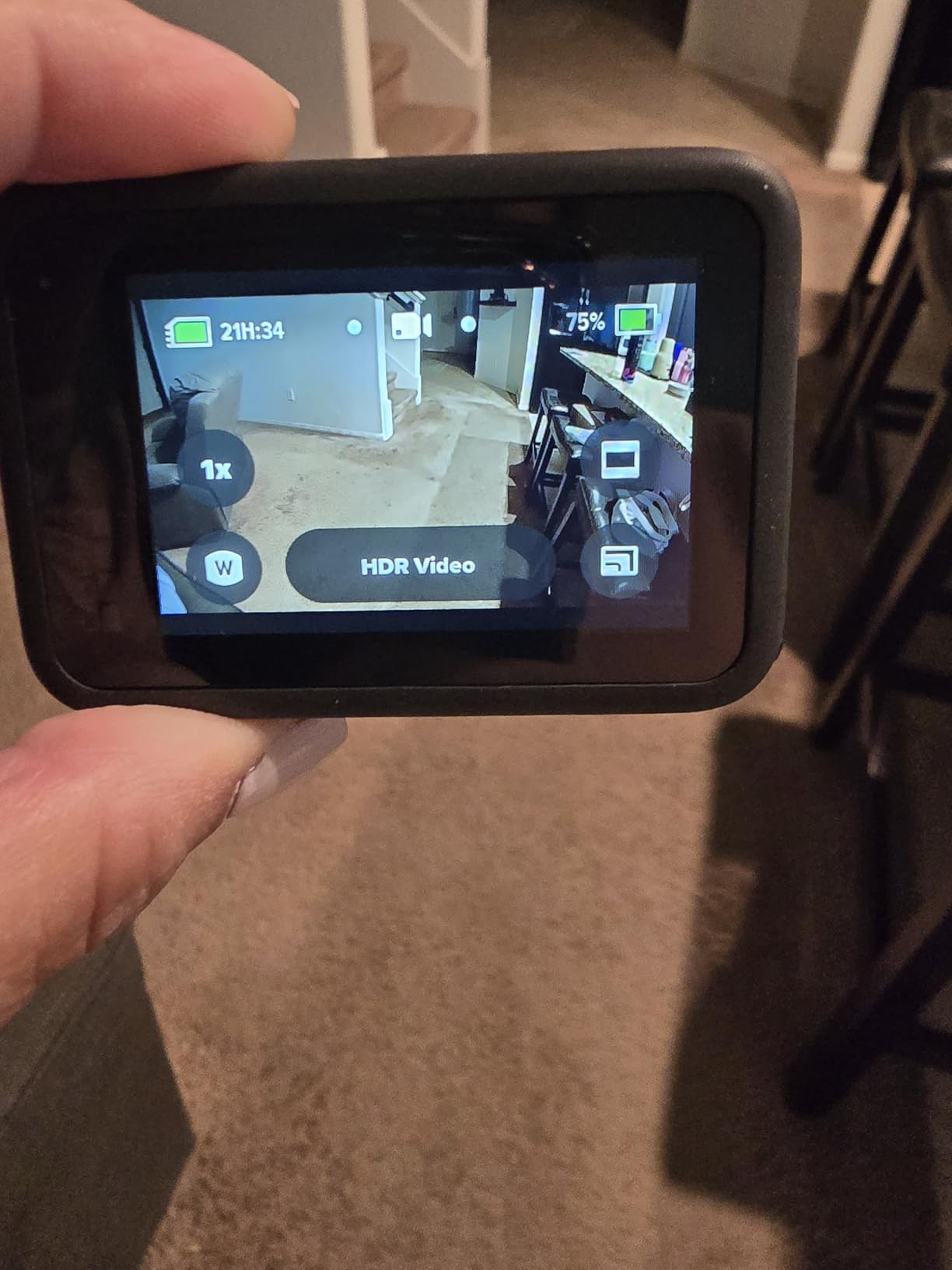
The problems are well documented. Battery life lands around 79 minutes, the shortest here, some users report overheating shutdowns even in mild temperatures, and the Quik app draws connectivity complaints. There is no external microphone support, and a minority of owners report repeated touchscreen failures.
Battery and Heat Management in the Cold
Cold helps the heat problem on snow, but the 79-minute runtime does not improve, it usually gets worse. Plan on two charged Enduro batteries for a normal day, and keep spares in a warm inside pocket.
Recording run by run rather than continuously stretches battery considerably and matches how most people film. For set-and-forget coverage, a 360 camera with a longer runtime is the better call.
Which Lens Mods Matter for Skiing
The Ultra Wide mod is the one I use most for tight tree lines, because it exaggerates speed and makes glades feel bigger. ND filters are second, letting you keep a natural shutter speed on bright days so snow does not strobe.
Macro and Anamorphic rarely earn their pack weight on a mountain. Buy the body first, ski it, then add mods based on what you actually miss.
Buying Guide: What to Look For in a Ski 360 Camera?
Here is what separates a great winter 360 camera from a mediocre one, based on a season of testing and hundreds of owner reviews. Work down the list in order.
Resolution and Reframing Headroom
360 resolution is not like normal camera resolution, because the pixels get spread across an entire sphere. When you reframe to a flat 1080p clip from 8K footage, you are cropping a small window out of a huge image, and that crop still looks sharp.
From 5.7K source footage the same crop looks noticeably softer, especially if you zoom further into the frame. For skiing, where you often reframe to follow a rider across the sphere, 8K capture is the difference between a crisp edit and a soft one.
Stabilization and Horizon Lock
Skiing is constant vibration, edge chatter, and sudden impacts, so stabilization is non-negotiable. FlowState, HyperSmooth, and DJI’s stabilization are all excellent in current generations.
Horizon lock matters more than raw smoothing on a mountain, because it keeps the treeline level while your body rotates through a turn or takes a hit. Every 360 camera here has some version of it.
Waterproofing and Cold Weather Rating
Check the cold rating, not just the waterproof rating. The Insta360 X4, X5, and Ace Pro 2 handle temperatures down to -4°F, which covers almost every resort day, and waterproofing to 33ft or more makes wet snow and lift drizzle irrelevant.
Saltwater is the harshest test and a few HERO13 owners report seal issues there, but every camera here is well inside its limits for freshwater snow sports. Just dry the ports before charging.
Battery Life in Sub-Zero Temperatures
Lithium batteries lose capacity in the cold, so treat every manufacturer number as a warm-weather best case and expect 20 to 40 percent less on a freezing morning. The X5 leads at 208 minutes, the Osmo 360 follows at 190, the X4 manages 135, and the HERO13 sits around 79.
Three habits fix most battery pain: keep the camera in an inside pocket between runs, carry a charged spare kept warm, and record in run-length chunks instead of leaving the camera rolling. A lunchtime charge in the lodge covers the afternoon on most models.
Mounting Positions: Pole, Helmet, or Chest
The invisible selfie stick is the most popular mount in skiing for a reason. It gives you that floating third-person follow-cam look, keeps the camera away from your body for a cleaner perspective, and doubles as a pole you can plant.
Forum skiers consistently recommend chest mounts over helmet mounts for more stable footage, because your torso absorbs vibration that your head transmits directly. The counter-argument is that a camera on top of a helmet can hit the chairlift safety bar, so check your clearance before you commit.
Whichever you choose, buy into one brand’s mount ecosystem. Cross-brand mounts generally do not fit without adapters, which is one of the most common questions we see from first-time buyers.
Wind Noise and Audio
Exposed ridges and high-speed runs destroy audio. The X5’s built-in wind guard and the Ace Pro 2’s snap-on guard are the two best solutions here, and the MAX2’s six-microphone array does well for a different reason, because audio that shifts with your reframing keeps the edit feeling alive.
If commentary matters, the Osmo 360 stands alone in supporting external DJI microphone transmitters. Otherwise, plan to lay music over most ski footage and treat wind days as a visual-only affair.
App and Editing Workflow
Half the value of a 360 camera is the software. Insta360’s app is the most polished for reframing, with AI edits that build a shareable cut in a few taps, while DJI’s Mimo app is capable but less refined and currently has to be sideloaded on Android.
The workflow that works: import on the chairlift, reframe with keyframes so the view pans to follow the action, export at 1080p vertical for social, and keep the full 360 file in case you want to re-edit later. Beginners tell us this shoot-now-aim-later approach is exactly why 360 cameras feel easier than traditional action cams.
Insta360 vs GoPro vs DJI for Winter Sports
Insta360 wins the overall 360 skiing package: the best reframing app, replaceable lenses on the X5, cold ratings down to -4°F, and the longest battery in the category. It is the brand most forum skiers recommend first, which is why our top two picks are both Insta360.
GoPro wins the traditional action-cam side. HyperSmooth is still the stabilization benchmark, the accessory ecosystem is unmatched, and the MAX2 is the cheapest true 8K 360 entry when discounted. Its weaknesses are battery life and heat during long recordings.
DJI wins on raw image quality thanks to 1-inch sensors, plus conveniences like built-in storage and magnetic mounting. The trade-offs are a less polished app that must be sideloaded on Android and no replaceable lenses.
The shortest version we can give: for 360 skiing, choose Insta360. For classic POV, choose GoPro. For image quality above all, choose DJI.
Frequently Asked Questions
Can I use a 360 camera while skiing?
Yes, 360 cameras are well suited to skiing because they capture everything around you without aiming, so you never miss a turn or wipeout. Look for a model rated to at least -4°F, waterproofing for wet snow, horizon lock stabilization, and a mount that clears the chairlift safety bar.
What is the best camera for filming skiing?
The Insta360 X5 is the best overall camera for filming skiing, thanks to 8K30fps 360 video, a 3-hour battery, replaceable lenses, and a built-in wind guard for windy ridges. The Insta360 X4 is the best value alternative with the same 8K capture and a -4°F cold rating.
What is the best camera to record snowboarding?
The same cameras work for both skiing and snowboarding, since both sports need cold resistance, strong stabilization, and crash-proof lenses. Snowboarders who want third-person follow shots tend to prefer the Insta360 X5 or DJI Osmo 360 with an invisible selfie stick, while the GoPro HERO13 Black remains the top classic POV choice.
What is better, a GoPro or Insta360?
Insta360 is better for 360 skiing because its reframing app is more polished, its batteries last longer, and its lenses are replaceable. GoPro is better for traditional POV footage, with the strongest accessory ecosystem and class-leading HyperSmooth stabilization. If you want one camera that does both, the GoPro MAX2 offers 360 mode and a standard Hero mode in one body.
Do 360 cameras work in cold weather?
Yes, the models in this guide are rated to temperatures as low as -4°F (-20°C), including the Insta360 X4, X5, and Ace Pro 2. Expect 20 to 40 percent shorter battery life in deep cold, so keep the camera in an inside pocket between runs and carry a warm charged spare.
Final Verdict: Choosing the Best 360 Cameras for Skiing and Snowboarding
For 2026, the Insta360 X5 is the best 360 camera for skiing and snowboarding, with the longest battery, replaceable lenses, a wind guard, and 8K footage that survives flat light. The Insta360 X4 is the smart buy for most people at a lower price with the same 8K capture, and the GoPro MAX2 is the cheapest true 8K 360 entry when it is on sale.
Pick the DJI Osmo 360 if image quality is your top priority, the Ace Pro 2 if you fight flat light more than anything else, and the HERO13 Black if you just want classic chest-mount POV. Whichever you choose, add a spare battery, a lens guard, and an invisible selfie stick, because those three accessories do more for your footage than any spec sheet line ever will.