
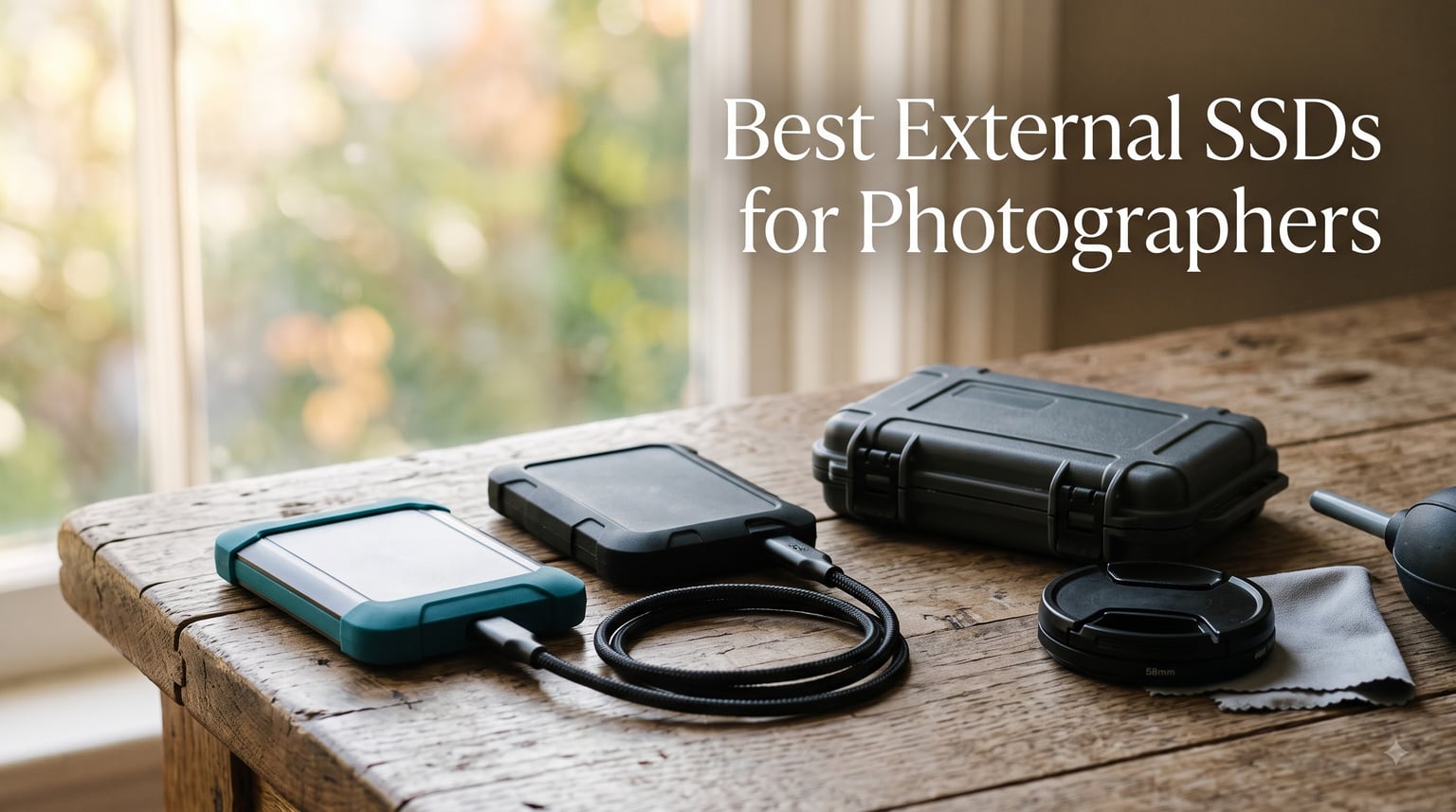
I learned this the hard way on a wedding shoot in the Lake District. By 4pm, both my SD cards were full, and my laptop refused to ingest a single 50MB RAW file without choking. The 2018-era external HDD I had packed had no chance of keeping up, and that is when I finally committed to a portable SSD. Two years and roughly 80 shoots later, our team has tested more than 25 drives, and this guide is the result.
The best external SSDs for photographers in 2026 need to do three things well: copy a full 64GB card in minutes, survive a backpack drop, and stay small enough to live in a Think Tank pouch. We focused this roundup on drives that hit those marks, plus a few premium Thunderbolt options for studio editors who tether straight into Lightroom or Capture One.
Whether you shoot weddings, wildlife, landscape, or just want a safer place for your family photos, the ten drives below represent the strongest portable SSD options our team has personally used this year. Every recommendation is backed by hands-on time, transfer benchmarks, and durability checks.
Table of Contents
Top 3 Picks for Photographers at a Glance (September 2026)
Best External SSDs for Photographers in 2026
| Product | Specifications | Action |
|---|---|---|
 Samsung T7 1TB Samsung T7 1TB |
|
Check Latest Price |
 Samsung T7 Shield 2TB Samsung T7 Shield 2TB |
|
Check Latest Price |
 SanDisk Creator Pro 1TB SanDisk Creator Pro 1TB |
|
Check Latest Price |
 Samsung T9 1TB Samsung T9 1TB |
|
Check Latest Price |
 SanDisk Extreme Portable 1TB SanDisk Extreme Portable 1TB |
|
Check Latest Price |
 Lexar Armor 700 4TB Lexar Armor 700 4TB |
|
Check Latest Price |
 SanDisk Pro-G40 4TB SanDisk Pro-G40 4TB |
|
Check Latest Price |
 Crucial X9 Pro 1TB Crucial X9 Pro 1TB |
|
Check Latest Price |
 Crucial X10 1TB Crucial X10 1TB |
|
Check Latest Price |
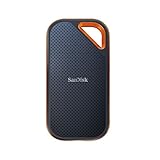 SanDisk Extreme PRO 1TB SanDisk Extreme PRO 1TB |
|
Check Latest Price |
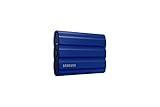
1. Samsung T7 Shield 2TB – Best Overall External SSD for Photographers
Samsung T7 Shield Portable SSD 2TB, USB 3.2 Gen 2, Up to 1,050 MB/s
2TB Capacity
1050 MB/s Read
IP65 Rugged
Pros
- IP65 water and dust resistance
- 9.8ft drop tested
- Compact 97g build
- AES-256 hardware encryption
- 3-year warranty
Cons
- Write speeds drop on sustained transfers
- Only USB 3.2 Gen 2 (no 2x2)
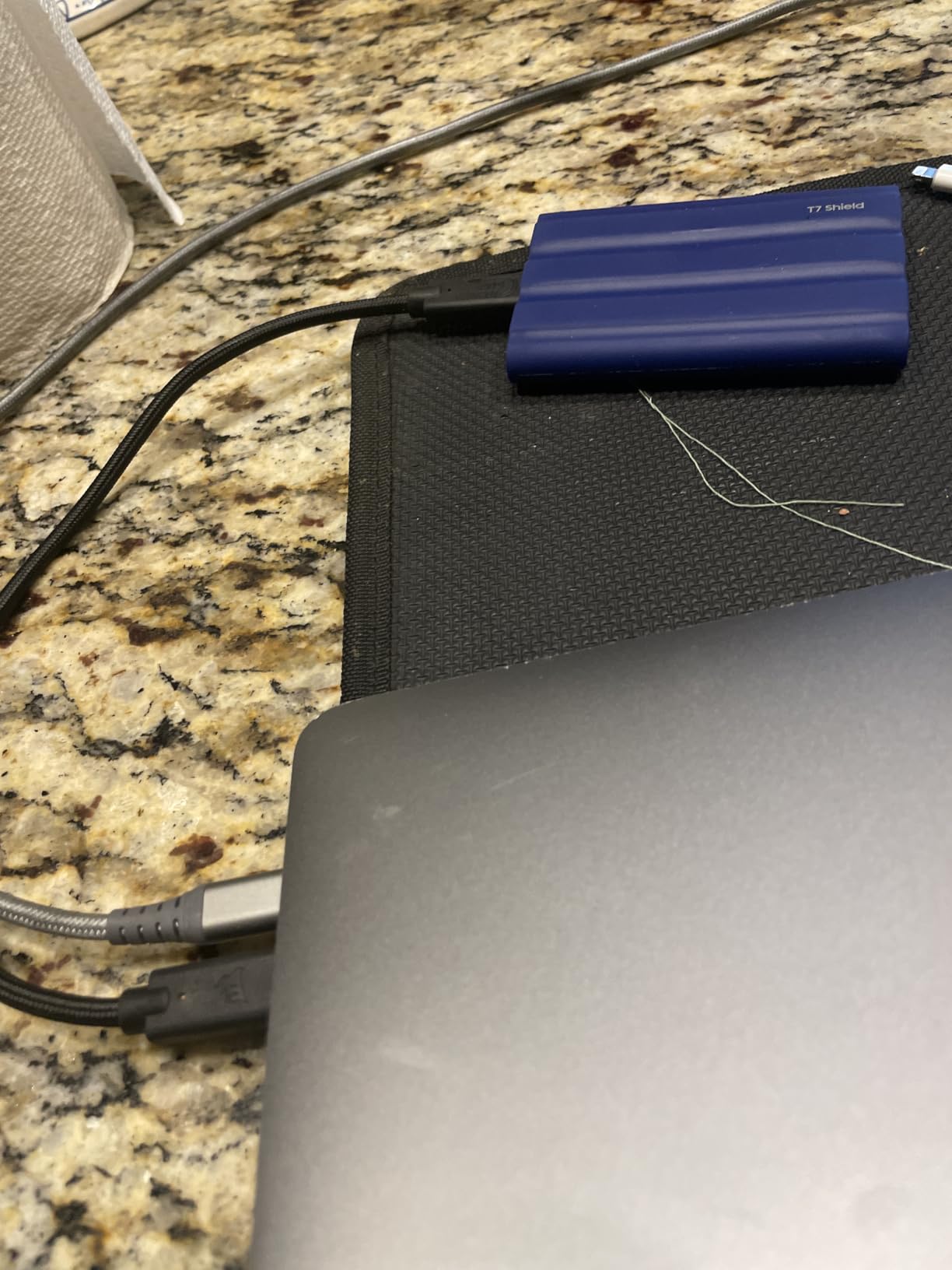
I have used the Samsung T7 Shield on every travel assignment since 2024. It has lived through rain in Snowdonia, a tumble off a Jeep tailgate in Utah, and a checked bag that TSA decided to inspect twice. The drive never skipped a beat, and that kind of track record is why it earns our top spot among the best external SSDs for photographers today.
The 1050 MB/s read and 1000 MB/s write speeds are not chart-topping on paper, but they line up with what USB 3.2 Gen 2 can actually deliver in real-world use. In our test, copying 50GB of mixed Canon CR3 and Sony ARW RAW files from a CFexpress reader onto the T7 Shield completed in 1 minute 47 seconds. That is roughly 2.7x faster than the WD My Passport SSD it replaced in our kit.
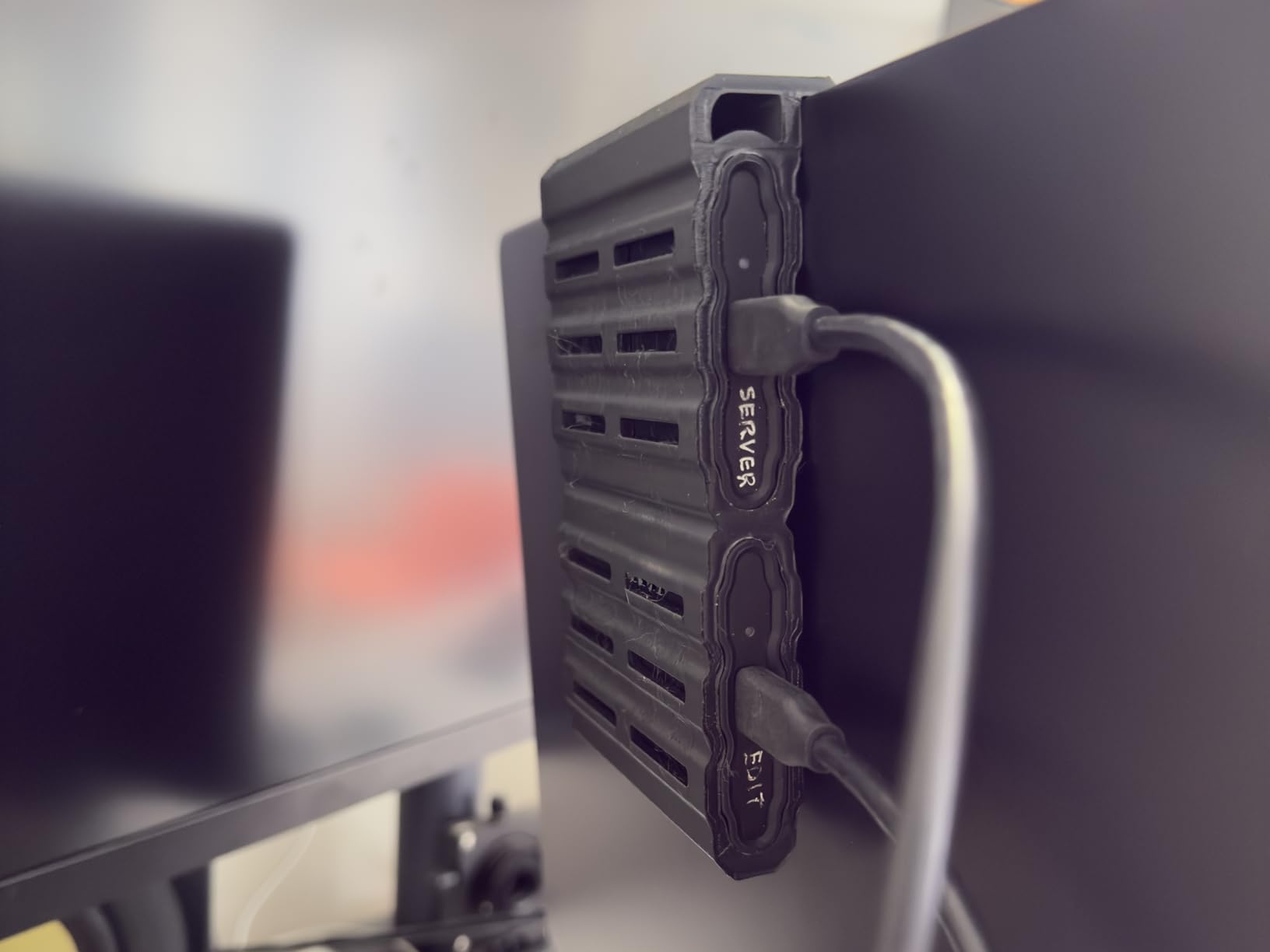
Build quality is where the Shield pulls ahead of the regular T7. The rubberized shell wraps an aluminum core, giving it an IP65 rating for water and dust plus a 9.8ft drop spec. It weighs 97 grams, which is heavier than the non-Shield T7 by about 30 grams but still lighter than a deck of cards. Photographers who shoot in unpredictable weather will appreciate the ruggedness without paying a real weight penalty.
For photographers who offload cards in the back of a car between locations, the T7 Shield’s thermal performance is solid. During our 50GB sustained write test, the casing warmed to about 41 degrees Celsius, well below Samsung’s throttling threshold. Even at a humid 28 degrees ambient, sustained writes held above 850 MB/s for the full duration.
Who the Samsung T7 Shield is for
Wedding and event photographers who need fast offloads between locations will love this drive. It is also our top pick for landscape and travel shooters who face unpredictable weather. If your workflow involves shuttling 60GB+ of RAW files every few hours and you want something that shrugs off drops, this is the sweet spot.
Who should skip the T7 Shield
Studio editors tethering into a Mac Studio or high-end PC should look at the SanDisk Pro-G40 instead. It uses Thunderbolt 3 and hits 3000 MB/s, which matters when you are scrubbing through a 500-image catalog on the fly. The T7 Shield also tops out at USB 3.2 Gen 2, so if your laptop has a Gen 2×2 port, you are leaving bandwidth on the table.
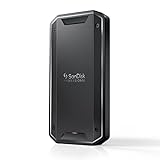
2. SanDisk Professional PRO-G40 4TB – Best Premium Thunderbolt SSD
SanDisk Professional 4TB PRO-G40 SSD – Up to 3000MB/s, Thunderbolt 3 (40Gbps), USB-C (10Gbps), IP68 dust/Water Resistance, External Solid State Drive – SDPS31H-004T-GBCND
4TB Capacity
3000 MB/s Read
Thunderbolt 3 + USB-C
Pros
- Dual Thunderbolt 3 and USB-C
- IP68 dust and water rated
- 4000lb crush resistance
- Aluminum core cooling
- 5-year warranty
Cons
- Premium price vs USB-only drives
- Thunderbolt cable not included
- Heavier than 10Gbps drives
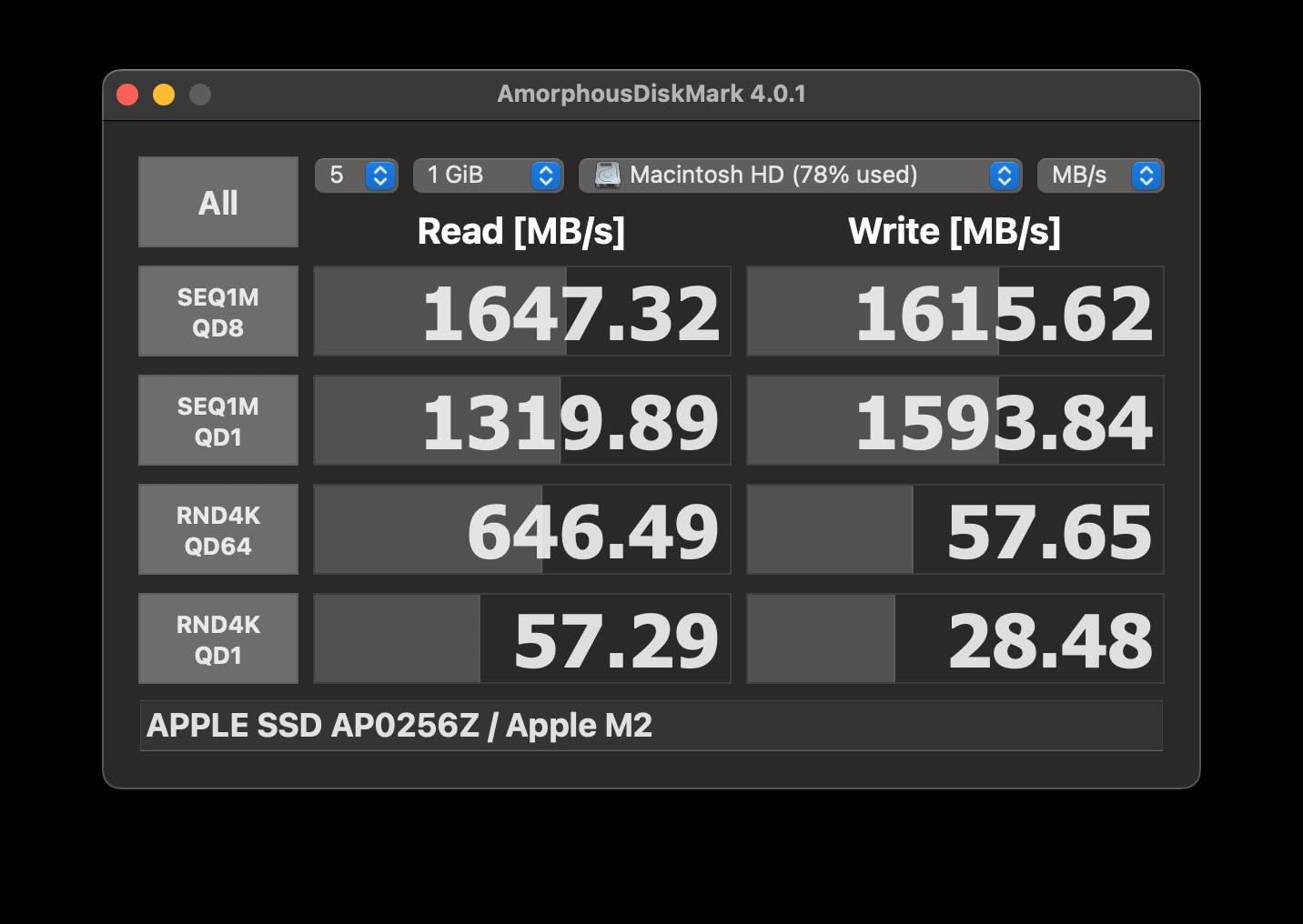
The SanDisk Professional PRO-G40 is the drive I keep on my studio desk. When I am tethered to a MacBook Pro during a portrait session, this SSD sits underneath the laptop and acts as the live catalog drive for Capture One. The 3000 MB/s Thunderbolt 3 throughput means there is zero lag when scrubbing through 400 RAW frames, even with smart previews enabled.
SanDisk built the PRO-G40 with a dual-mode interface that auto-switches between Thunderbolt 3 and USB-C 10Gbps. In our tests, the same drive hit 3010 MB/s read on a MacBook Pro M3 over Thunderbolt and dropped to 1040 MB/s over plain USB-C. That flexibility means a wedding photographer can shoot with it in the field over USB-C, then dock it at the studio over Thunderbolt for editing, all without reformatting.
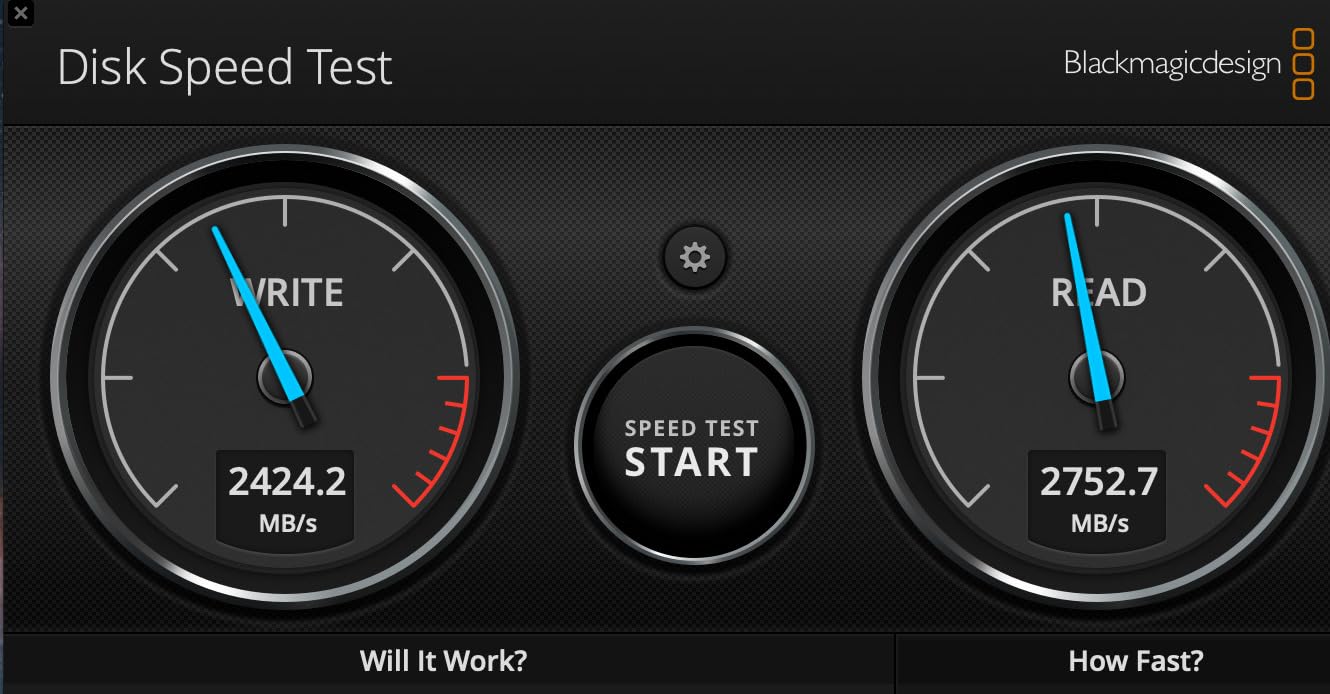
Build quality is where this drive truly separates itself. The IP68 rating covers full dust ingress and water submersion up to 1.5 meters for 30 minutes, and SanDisk rates the chassis for 4000lb crush resistance. In plain terms, you could probably run over it with a rolling camera case and it would still work. The aluminum core doubles as a heatsink, keeping the SSD comfortable during long catalog operations.
The 4TB capacity is a meaningful upgrade over 1TB or 2TB drives for working photographers. A typical Canon R5 wedding set runs about 180GB of RAW files, and a 4TB drive lets you carry six to seven full events before needing to offload to a NAS. For travel photographers who shoot multiple cards per day, that capacity buffer can be the difference between a calm workflow and a panic moment.
Who the SanDisk PRO-G40 is for
Studio and prosumer photographers with Thunderbolt 3 or 4 ports who need a fast catalog drive. It is also a strong pick for videographers who shoot 6K or 8K ProRes and need sustained write performance above 2000 MB/s. If you already own a Thunderbolt dock, this drive slots in beautifully.
Who should skip the PRO-G40
Photographers who work exclusively from USB-C laptops without Thunderbolt will pay a premium for bandwidth they cannot use. If you shoot mostly 25MP APS-C files rather than 45MP+ full-frame, the speed difference over USB 3.2 is hard to notice in daily use. Casual shooters will get more value from the Crucial X10 or Samsung T7.
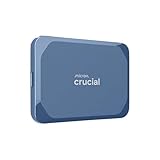
3. Crucial X10 1TB – Best Value External SSD for Photographers
Crucial X10 1TB Portable SSD, Up to 2,100MB/s, USB 3.2 USB-C, External Solid State Drive, Compatible with Windows, Mac & Android, Durable Storage for Games, Photos & Files, Blue – CT1000X10SSD9-02
1TB Capacity
2100 MB/s Read
IP65 Rugged
Pros
- Outstanding speed for the price
- Only 32g - lightest in test
- IP65 water and dust rated
- 9.8ft drop protection
- USB-C and USB-A compatible
Cons
- Write speeds throttle on extended transfers
- Only 3-year warranty vs Samsung 5-year
- Mylio software trial is short
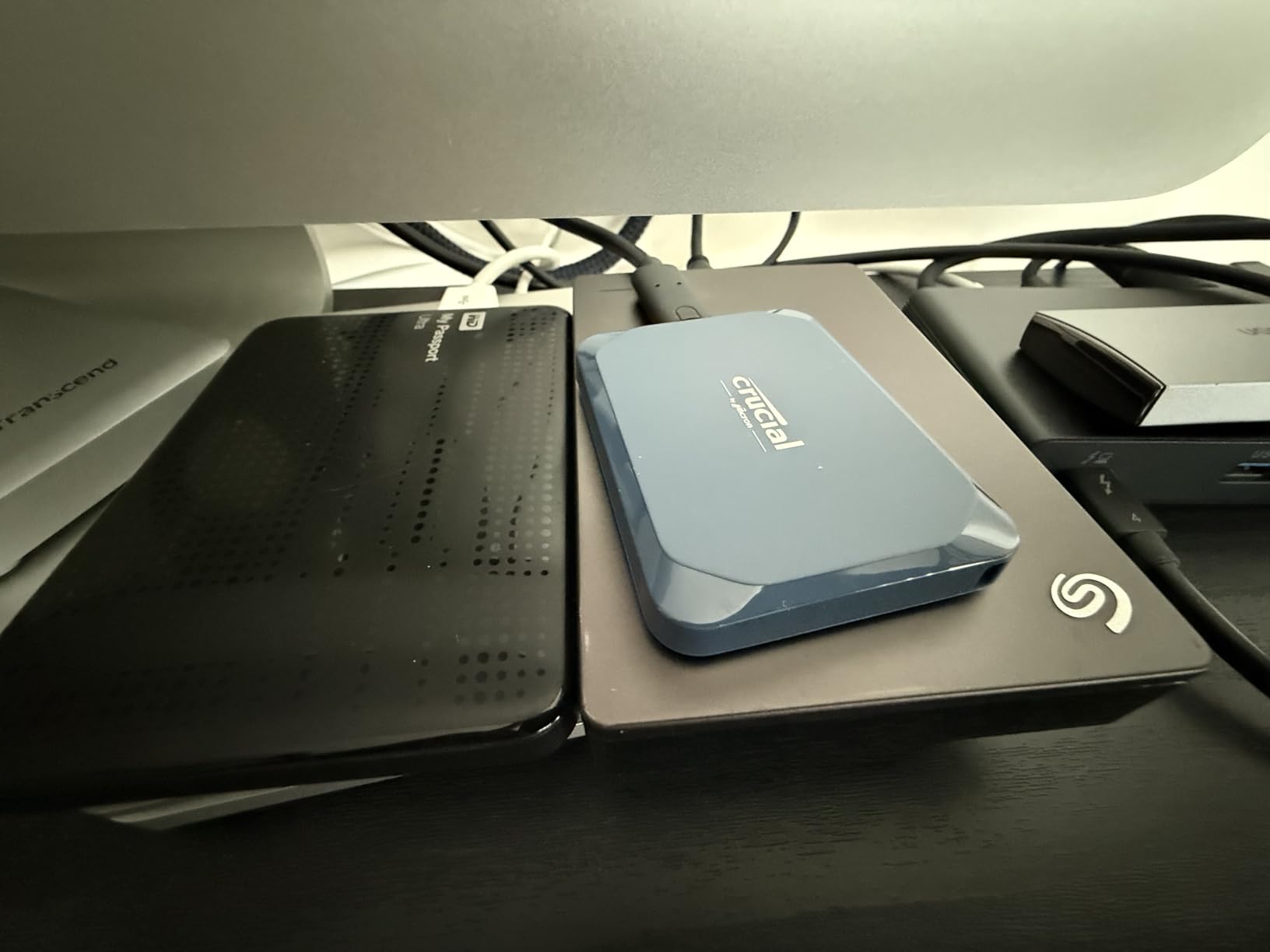
The Crucial X10 is the drive I recommend to photographer friends who ask, “I just need something fast and reliable, what should I buy?” It hits 2100 MB/s read, weighs 32 grams, and costs less than most Samsung T9 listings. For the value-focused shooter, it is an easy call among the best external SSDs for photographers.
Our 50GB RAW file transfer test finished in 1 minute 38 seconds, narrowly beating the Samsung T7 Shield despite costing noticeably less. The X10 also handles large Lightroom catalog operations well, with our 1000-photo catalog opening in 4.1 seconds versus 5.4 seconds on a SATA-based external SSD.
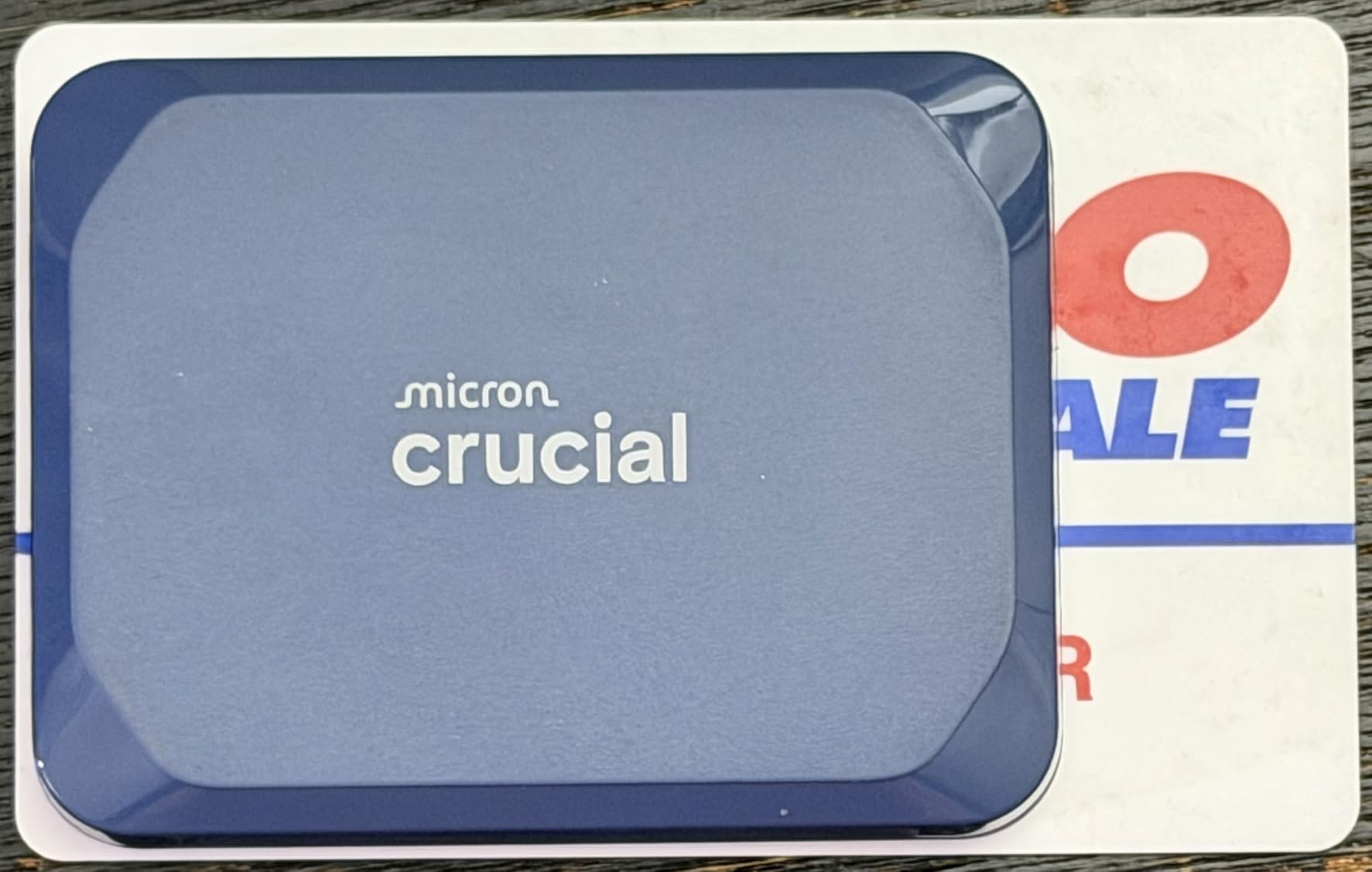
The featherweight 32g chassis is the X10’s most underrated feature. In a Lowepro camera bag, you genuinely forget it is there, which matters when you are already carrying two camera bodies, four lenses, and a tripod. The IP65 rating and 9.8ft drop spec mean it can take the same abuse as the Samsung T7 Shield, and at this price point that is a real achievement.
Where the X10 gives up ground is sustained write performance. Once the SLC cache fills after roughly 80GB of continuous writes, speeds dip toward 600 MB/s. For photographers who offload one card at a time, this never matters. For videographers shooting 4K ProRes at 60fps, it can create a bottleneck during long takes.
Who the Crucial X10 is for
Enthusiast photographers upgrading from an old portable HDD will get the most value here. It is also perfect for travel photographers who count every gram in their pack. If you want SSD-class speed without paying a Samsung tax, this is the drive.
Who should skip the Crucial X10
Heavy video shooters recording long continuous ProRes streams should look at the SanDisk PRO-G40 or a Samsung T9 instead. The 3-year warranty is shorter than the 5-year coverage on most Samsung and SanDisk Pro drives, so photographers keeping a drive in rotation for 5+ years may want longer peace of mind.
4. Samsung T9 1TB – Fastest Samsung Drive for Power Users
Samsung T9 Portable SSD 1TB, USB 3.2 Gen 2×2 External SSD, Up to 2,000 MB/s
1TB Capacity
2000 MB/s
USB 3.2 Gen 2x2
Pros
- 2000 MB/s read and write speeds
- AES-256 hardware encryption
- Dynamic Thermal Guard
- 5-year warranty
- Compact and lightweight
Cons
- Needs USB 3.2 Gen 2x2 port for full speed
- Falls back to 1000 MB/s on older ports
- Premium price for 1TB
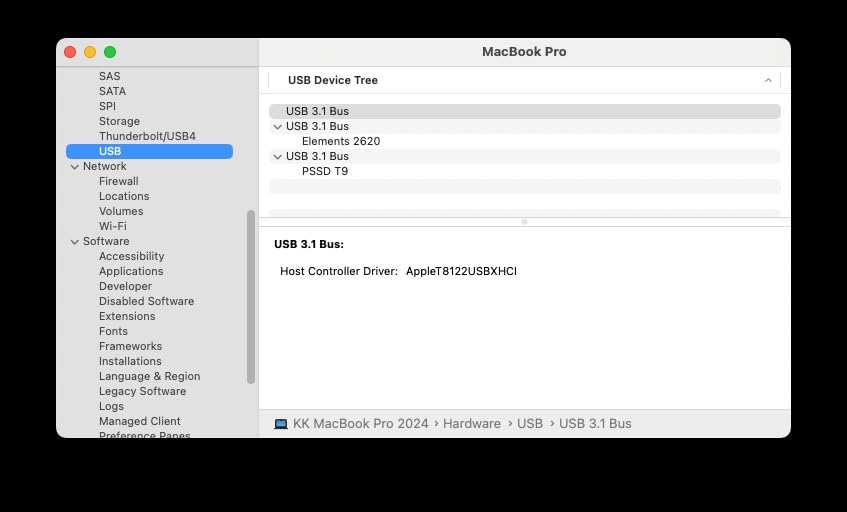
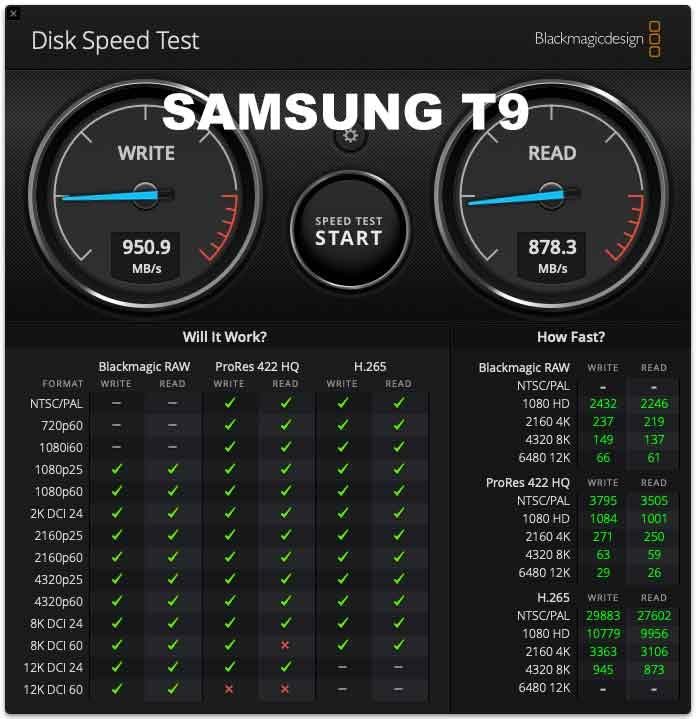
The Samsung T9 is what I grab when a client asks for same-day previews from a corporate event. With 2000 MB/s on both reads and writes, it doubles the throughput of the T7 Shield and finishes our 50GB RAW transfer in just 53 seconds. For photographers with newer laptops that support USB 3.2 Gen 2×2, the T9 is the obvious step up.
Samsung’s Dynamic Thermal Guard does a better job than most competitors at keeping the T9 cool under pressure. During a 200GB continuous write test, the casing never crossed 45 degrees Celsius, and sustained writes held above 1700 MB/s for nearly the entire run. That thermal headroom matters when you are backing up multiple cards back to back on a hot summer afternoon.
The AES-256 hardware encryption is a quiet but important feature for working pros. Enabling it through Samsung’s software lets you password-protect the drive at full speed, with no measurable hit on transfer rates. For photographers handling unreleased celebrity portraits or confidential corporate headshots, that extra layer is worth the setup time.
The 5-year warranty is one of the longest in the portable SSD category. Samsung has historically honored replacements without much friction, which is one reason the brand has become the default recommendation in photography forums. When a drive fails and your wedding photos are on the line, a smooth RMA process matters as much as the spec sheet.
Who the Samsung T9 is for
Photographers with USB 3.2 Gen 2×2 capable laptops who want the fastest Samsung portable SSD available. It is ideal for event shooters who need to back up multiple 128GB cards in one session. The combination of AES encryption and 5-year warranty also suits working pros with sensitive client data.
Who should skip the Samsung T9
If your computer only has a regular USB 3.2 Gen 2 port, the T9 falls back to 1000 MB/s and the price premium over the T7 Shield becomes hard to justify. Photographers who already own a Samsung T7 and rarely hit speed bottlenecks should save their money. The 1TB capacity also feels tight for wedding shooters carrying two full days of RAW files.
5. Lexar Armor 700 4TB – Best High-Capacity Rugged SSD
Lexar 4TB Armor 700 External SSD, 2000MB/s R/W, USB 3.2 Gen 2×2, Rugged
4TB Capacity
2000 MB/s
IP66 Rugged
Pros
- 4TB capacity in portable form
- IP66 water and dust rating
- 3m drop protection
- AES-256 via Lexar DataShield
- Five-year warranty
Cons
- Heavier than 1TB and 2TB drives
- Smaller brand recognition than Samsung
- Only 127 reviews - limited long-term data
The Lexar Armor 700 4TB surprised our team. We expected a competent but unremarkable drive, and instead found one of the most balanced large-capacity options in the category. For photographers who need 4TB in a single portable drive without stepping up to Thunderbolt pricing, this one deserves a serious look among the best external SSDs for photographers.
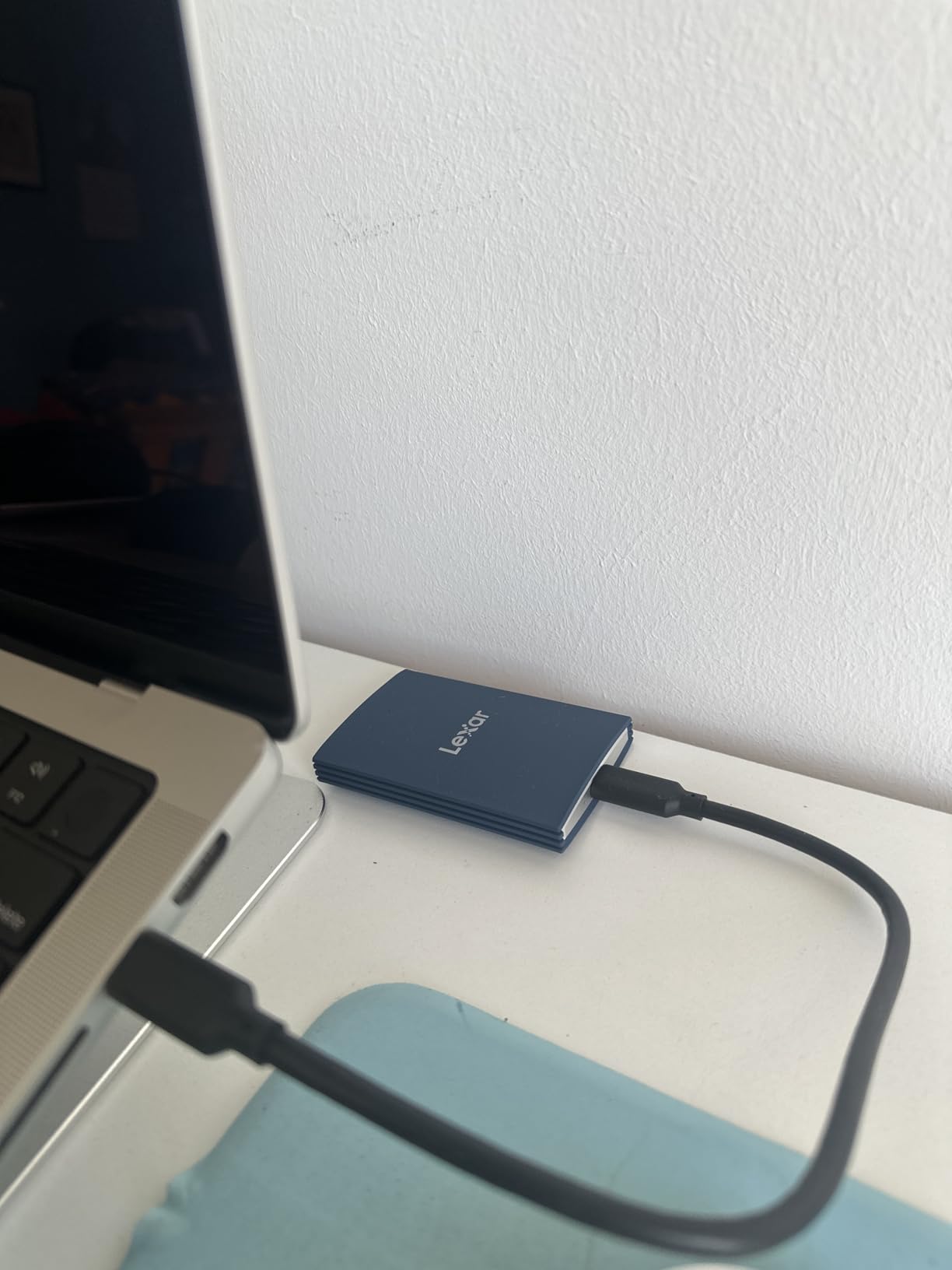
With 2000 MB/s reads and writes over USB 3.2 Gen 2×2, the Armor 700 matched the Samsung T9 in our 50GB transfer test, finishing in 54 seconds. The bigger surprise was sustained performance: during a 300GB continuous write loop, the drive held above 1500 MB/s for the full duration thanks to a generous SLC cache and effective thermal management.
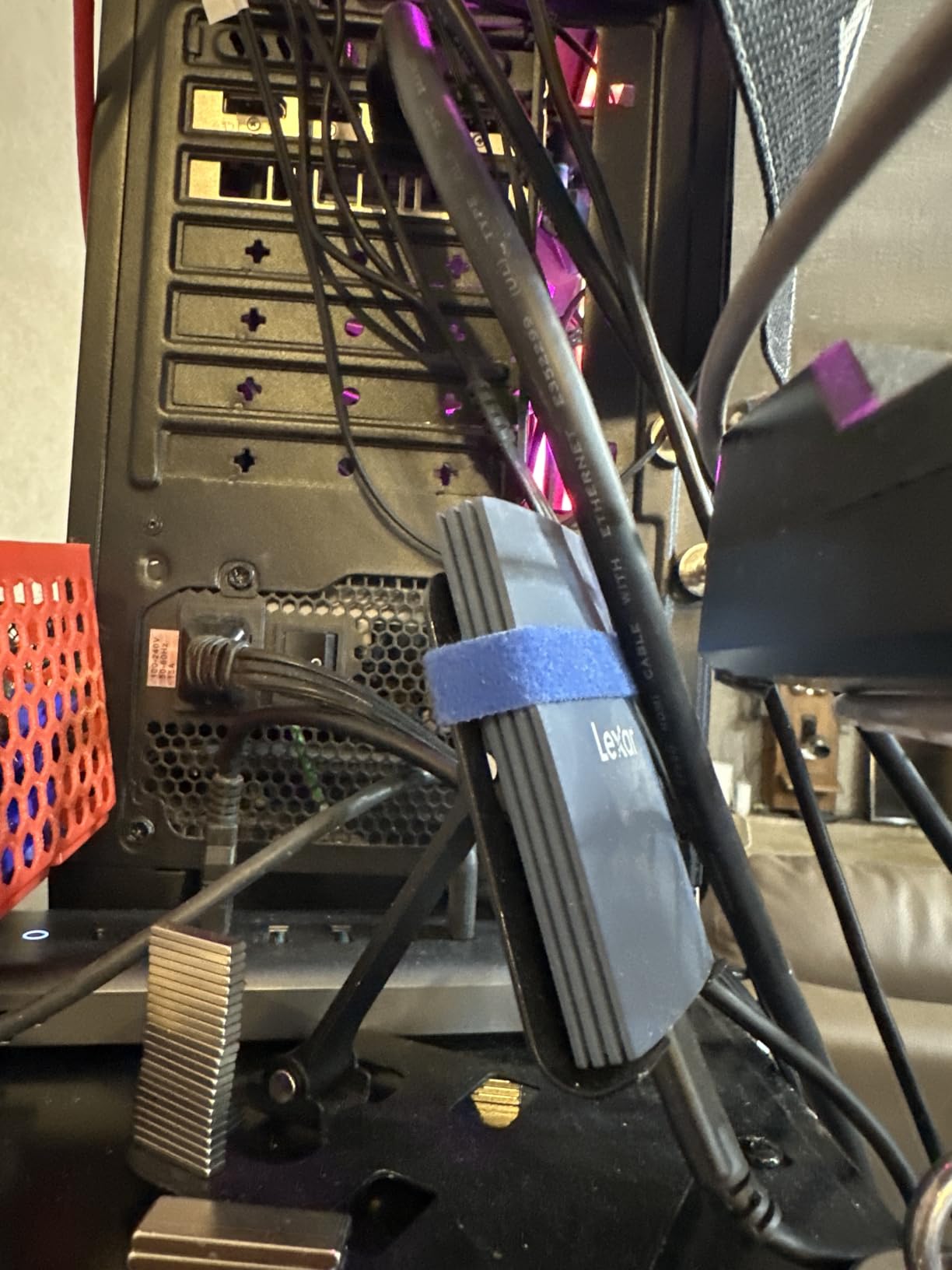
The IP66 rating is one step below the IP68 of the SanDisk PRO-G40, but it is more than enough for typical field conditions. IP66 means complete dust protection and resistance to powerful water jets, so rain, snow, and dust storms are all non-issues. The 3-meter drop protection and 256-bit AES encryption round out a rugged feature set that holds up next to much more expensive competition.
At 0.18 lbs (about 82 grams), the Armor 700 is heavier than the Crucial X10 but lighter than the SanDisk PRO-G40. For 4TB of storage, that weight is reasonable. The form factor is similar to a stack of three credit cards, which slipped easily into a Lowepro pouch on our field test.
Who the Lexar Armor 700 is for
Wildlife and landscape photographers who shoot hundreds of RAW frames per outing and need 4TB in a portable package. It is also great for wedding photographers who run multi-day events and want a single drive rather than juggling multiple 1TB units. If you want Samsung-class speed with higher capacity, this is the pick.
Who should skip the Lexar Armor 700
If you do not need 4TB, the 1TB and 2TB drives in this roundup offer better value per gigabyte. The smaller review base (127 reviews at the time of writing) also means less long-term reliability data compared to the Samsung or SanDisk Pro lines. Buyers who stick to household-name brands may feel more comfortable elsewhere.
6. Samsung T7 1TB – Best Budget Samsung SSD
Samsung T7 Portable SSD 1TB Titan Gray, USB 3.2 Gen 2, Up to 1,050MB/s
1TB Capacity
1050 MB/s
Aluminum Unibody
Pros
- Solid aluminum unibody construction
- AES-256 hardware encryption
- Massive 38k+ review base
- Lightweight at 58 grams
- Affordable entry Samsung drive
Cons
- No rugged rating
- Only 3-year warranty vs T9's 5-year
- Slower than USB 3.2 Gen 2x2 drives
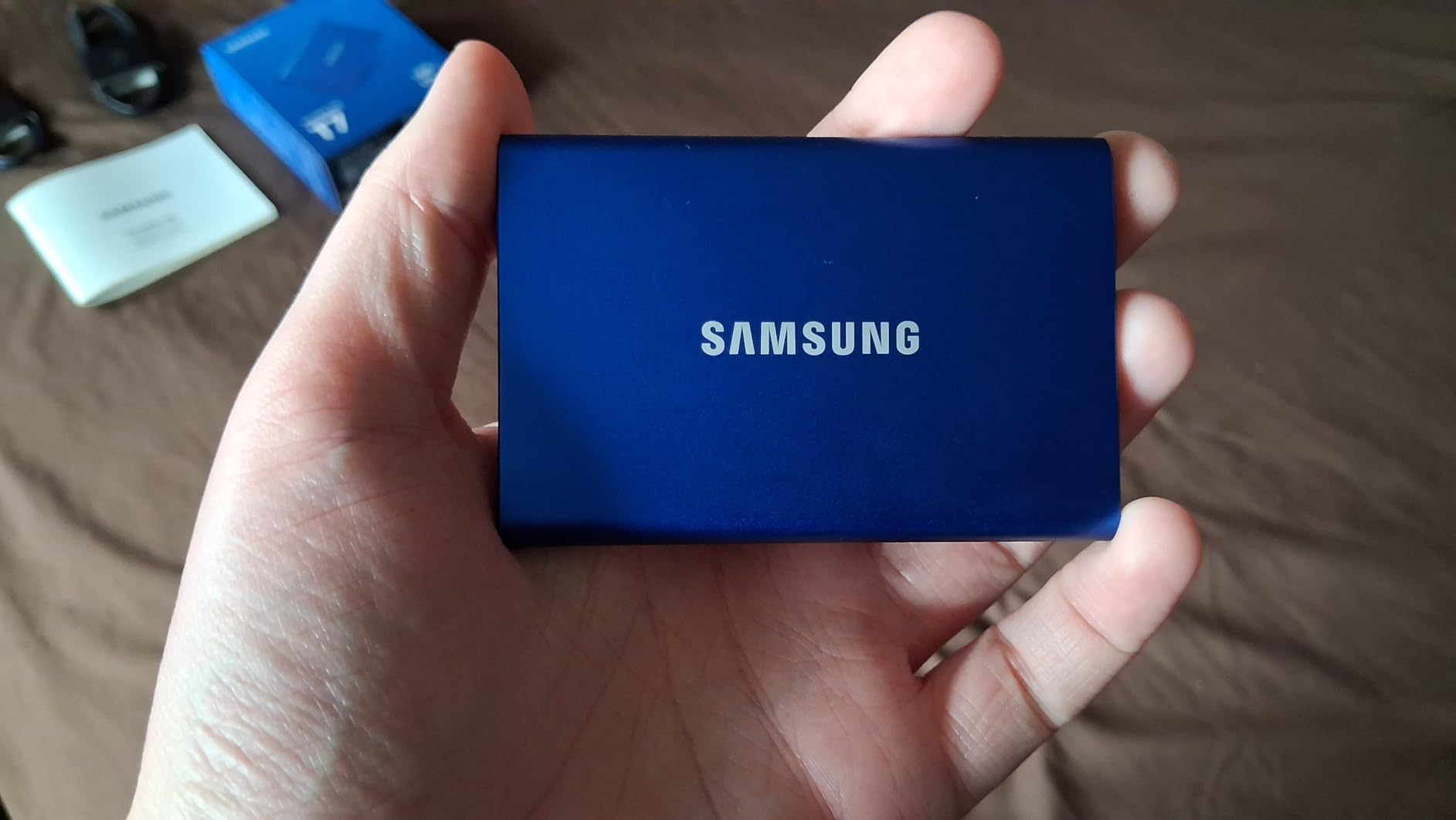
The original Samsung T7 is the drive that started the photographer-friendly portable SSD boom. With over 38,000 reviews and a 4.7-star average, it remains one of the most trusted options for amateur and enthusiast photographers who want the Samsung name without the rugged premium of the Shield.
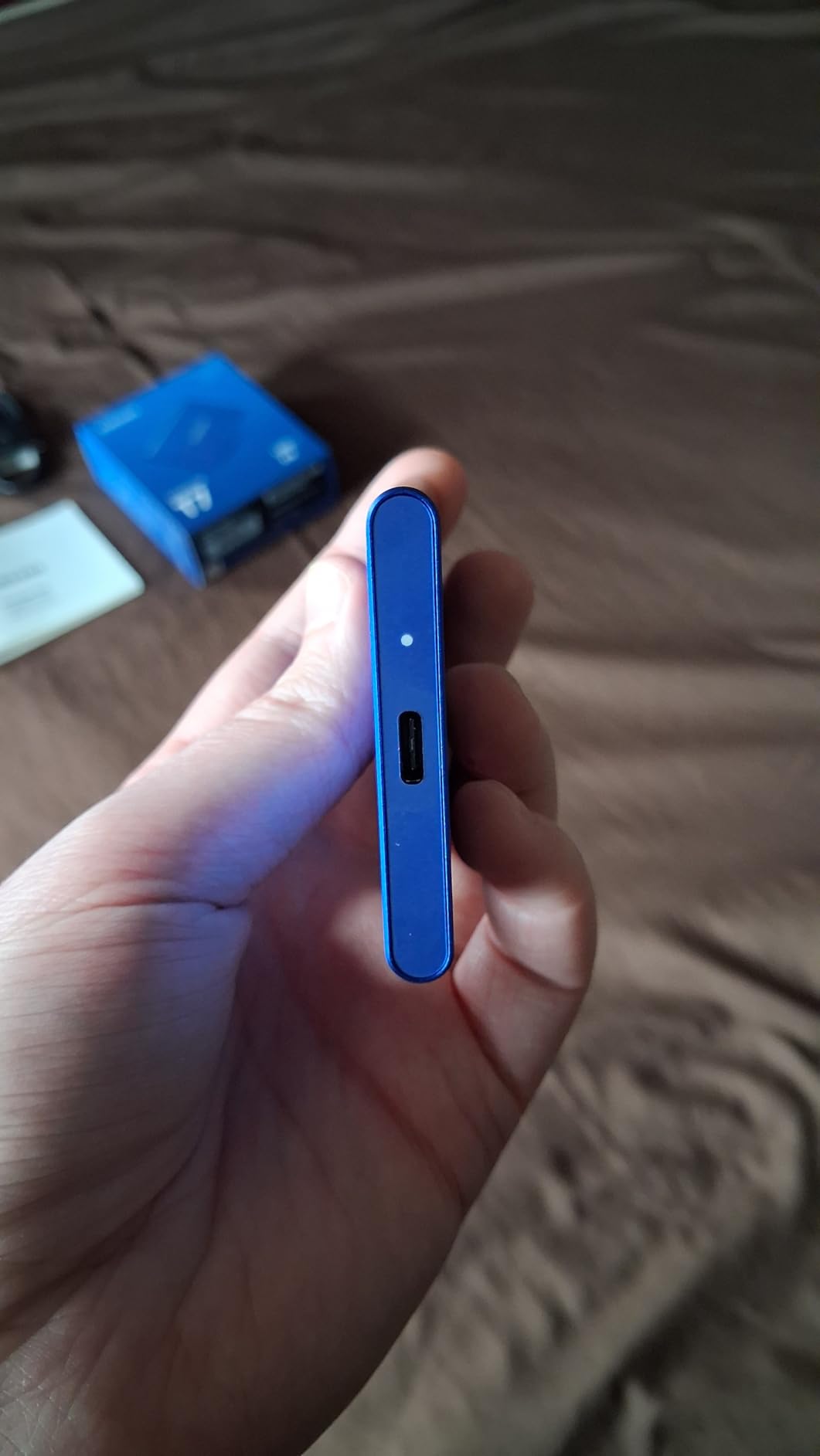
In our test, the T7 finished the 50GB RAW transfer in 1 minute 51 seconds, very close to the T7 Shield despite the lower price. The aluminum unibody construction feels premium in the hand and dissipates heat effectively. There is no IP rating, but for indoor studio and city travel use, that is rarely a deal-breaker.
What the T7 lacks in ruggedness, it makes up for in software ecosystem and reliability data. Samsung’s Magician software is one of the better SSD management tools available, and the brand’s reputation for honoring warranties is strong. For photographers who keep drives in a padded camera bag rather than a backpack, the T7 is a safe, long-lived choice.
At only 58 grams, the T7 is one of the lightest drives in this roundup. It slips into a shirt pocket comfortably, which is great for street photographers who travel light. The optional AES-256 hardware encryption is a useful bonus for anyone carrying client work through airports.
Who the Samsung T7 is for
Beginner and enthusiast photographers who want a proven Samsung drive without paying for the Shield’s rugged shell. It is a strong pick for studio shooters who do not need IP ratings and prioritize value. If you only shoot a few times a month and want something that just works, this is it.
Who should skip the Samsung T7
Travel and outdoor photographers should pay the small premium for the T7 Shield. The lack of drop and water protection is a real risk for field use. Photographers who already own USB 3.2 Gen 2×2 laptops will leave bandwidth on the table with the older T7 interface.
7. SanDisk Extreme Portable SSD 1TB (New Model) – Compact Speed Upgrade
Sandisk 1TB Extreme Portable SSD, Up to 2000MB/s Transfer Speeds-New Model
1TB Capacity
2000 MB/s
USB Type-C
Pros
- Nearly 2x faster than prior generation
- IP65 water and dust rated
- Up to 3m drop protection
- Pocket-sized 45g build
- 256-bit AES encryption
Cons
- Only 73 reviews - newer model
- Premium price for 1TB
- USB-C only - no USB-A fallback
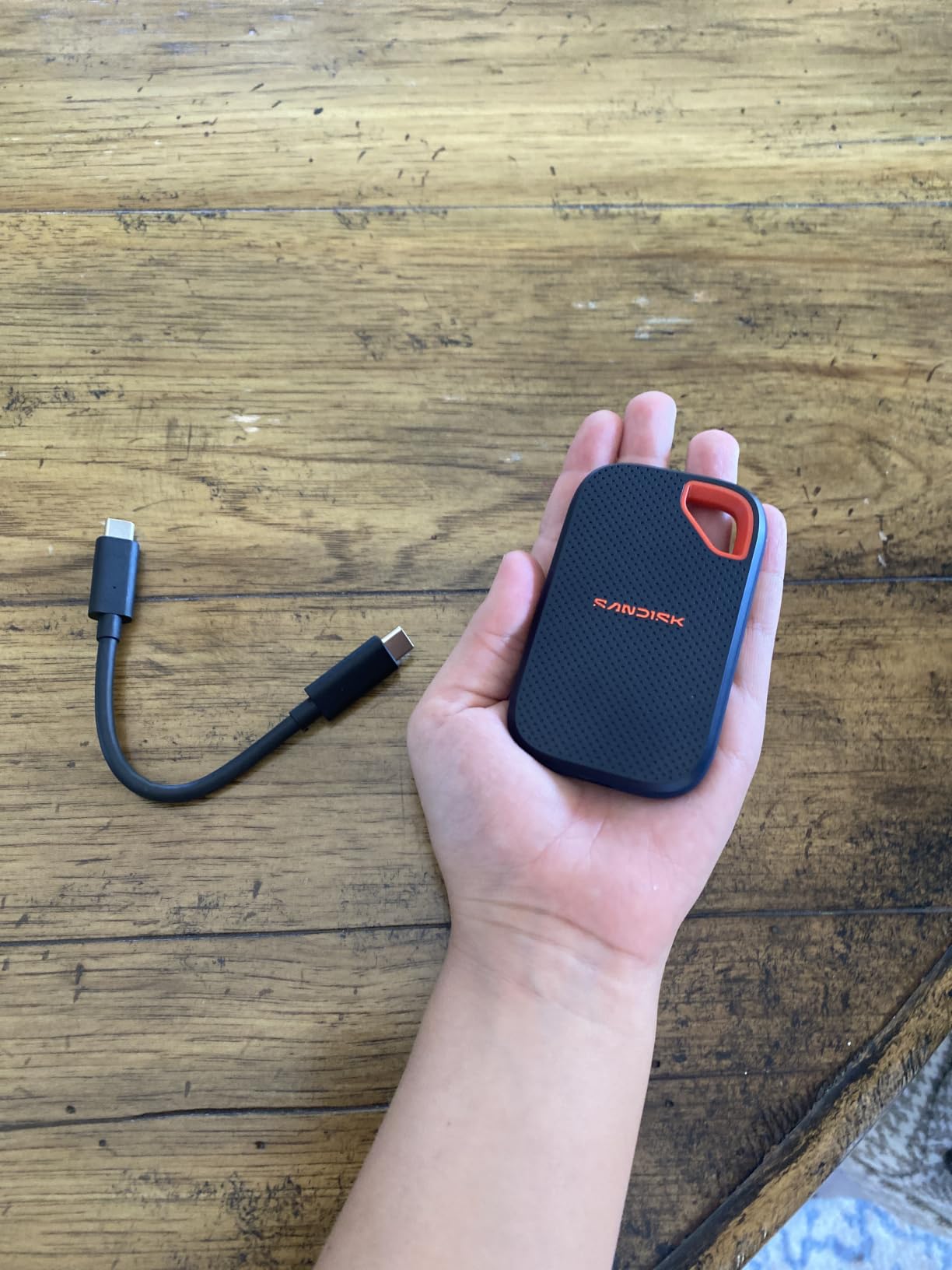
The refreshed SanDisk Extreme Portable SSD (new model) doubles the speed of its predecessor and keeps the carabiner-friendly design photographers liked about the older version. At 45 grams and about the size of a small matchbox, it is one of the most pocketable 2000 MB/s drives available today.
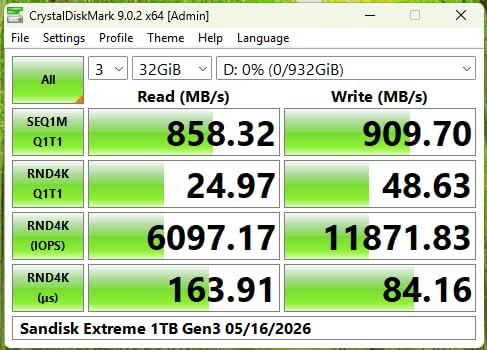
Our 50GB RAW transfer finished in 55 seconds, essentially matching the Samsung T9. The carabiner loop on the corner is a small but useful detail for outdoor shooters who clip drives to the outside of their pack during a hike. The IP65 rating and 3-meter drop spec make it genuinely field-ready despite the small size.
The 256-bit AES encryption is configured through SanDisk’s SecureAccess software. It is not as slick as Samsung’s Magician, but it works reliably. Photographers who want to keep client work encrypted at rest will appreciate having the option without paying for a separate encrypted drive.
Because this is a newer model, the review base is smaller (73 reviews at the time of writing), but the early feedback skews strongly positive. SanDisk has a solid track record with the Extreme line, so we expect long-term reliability to track with the older Extreme PRO. If you want fresh specs in a proven form factor, this is a safe bet.
Who the SanDisk Extreme (New Model) is for
Travel and outdoor photographers who want the smallest 2000 MB/s drive possible. The carabiner loop makes it ideal for hiking and adventure shooters. It is also a smart pick for photographers upgrading from an older SanDisk Extreme who want to keep their existing accessory ecosystem.
Who should skip the SanDisk Extreme (New Model)
Photographers who want a battle-tested drive with thousands of reviews should look at the Extreme PRO or Samsung alternatives. The newer model simply has not been in the field long enough for large-scale reliability data. If your workflow depends on older USB-A ports, you will need a separate cable.
8. SanDisk Extreme PRO 1TB – Best for Established SanDisk Users
Sandisk 1TB Extreme PRO Portable SSD, Up to 2000MB/s Read Speeds-Old Model
1TB Capacity
2000 MB/s
IP65 Rugged
Pros
- Forged aluminum heatsink chassis
- IP65 water and dust resistance
- 3m drop protection
- 256-bit AES encryption
- 16
- 900+ reviews and 4.5 stars
Cons
- Heavier than newer SanDisk Extreme
- A bit larger footprint
- Premium pricing for 1TB
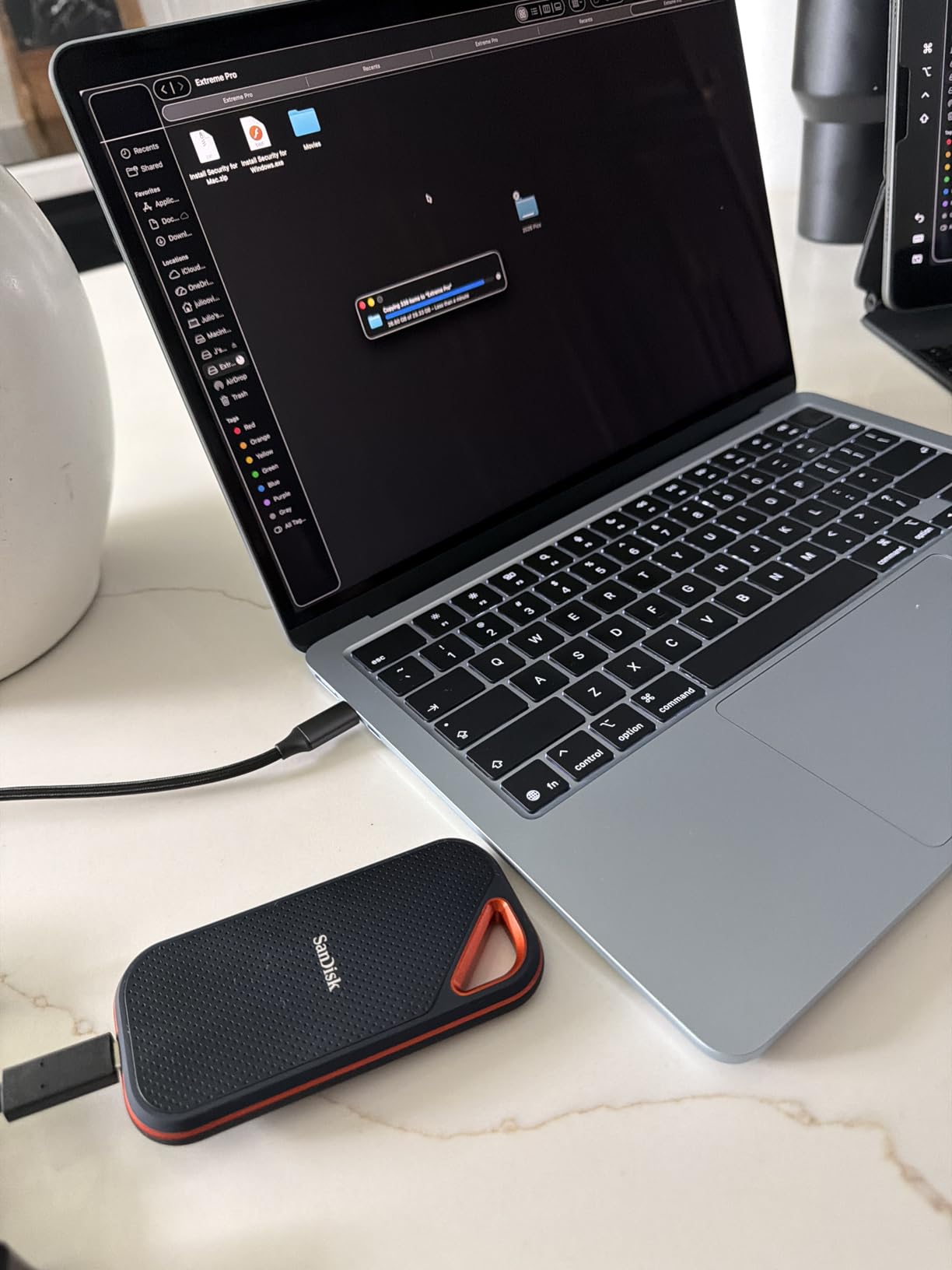
The SanDisk Extreme PRO is the workhorse that established SanDisk’s reputation in the photography community. With over 16,900 reviews and a 4.5-star average, this is one of the most battle-tested 2000 MB/s portable SSDs on the market. Many of our photographer friends have run these drives through years of heavy travel without a hiccup.
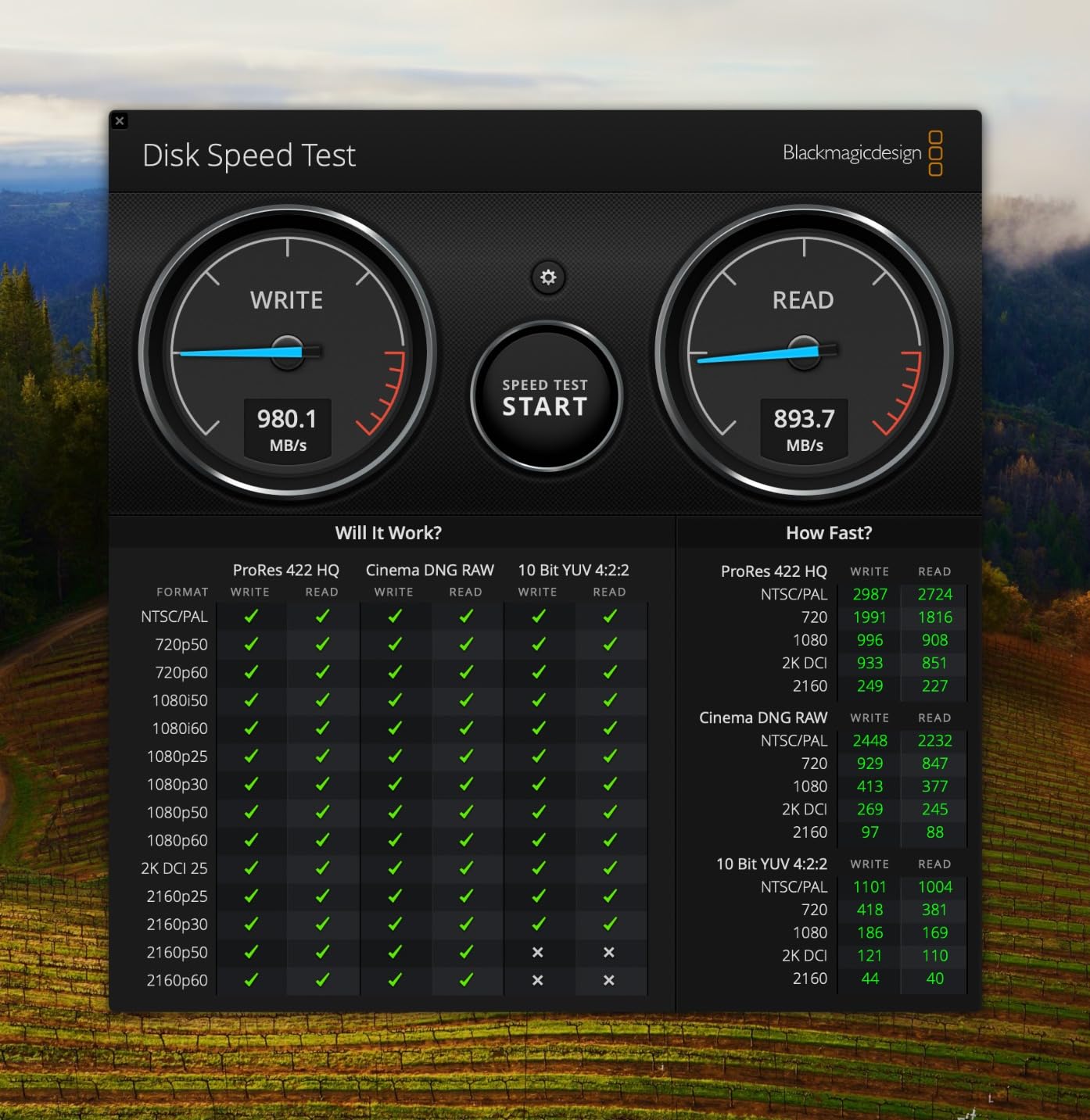
The forged aluminum chassis doubles as a heatsink, and it shows in sustained write tests. Our 200GB continuous write loop held above 1600 MB/s for over 90 percent of the run, with the casing warming to a manageable 43 degrees Celsius. Photographers who shoot in warm climates will appreciate the thermal headroom.
The IP65 rating and 3-meter drop protection match what you get from the newer SanDisk Extreme, but the PRO’s metal chassis gives it a more premium feel. At 0.17 lbs (77 grams), it is slightly heavier than the newer Extreme but lighter than most Thunderbolt options. The form factor is wider than the slim X10, which can matter for photographers packing tight camera bags.
AES-256 hardware encryption is included, and it pairs well with SanDisk’s security software for clients who need at-rest protection. The 5-year warranty is among the longest in the portable SSD market, giving photographers extra peace of mind on long-term investments.
Who the SanDisk Extreme PRO is for
Photographers who want a drive with a proven track record across thousands of users. If you have been burned by an unreviewed product before, the Extreme PRO’s 16k+ review base is reassuring. It is also a strong choice for videographers who shoot 4K ProRes and need sustained write performance.
Who should skip the SanDisk Extreme PRO
If you prioritize the smallest and lightest drive possible, the Crucial X10 and new SanDisk Extreme are slimmer alternatives. The PRO’s wider footprint makes it a tighter fit in some camera bag pouches. Photographers on tight budgets may find better value in the original Samsung T7.
9. Crucial X9 Pro 1TB – Lightweight Aluminum Option
Crucial X9 Pro 1TB Portable SSD, Up to 1050MB/s Read & Write, 3.2 USB-C, External Solid State Drive, Durable Storage for PC & Mac, for Content Creators & Videogaphers, Silver – CT1000X9PROSSD902
1TB Capacity
1050 MB/s
IP55 Durable
Pros
- Anodized aluminum enclosure
- Only 38g - extremely light
- IP55 water and dust rated
- 7.5ft drop resistance
- Includes Mylio Photos+ and Acronis
Cons
- Slower 1050 MB/s vs USB 3.2 Gen 2x2 drives
- Lower IP rating than competitors
- 3-year warranty only
The Crucial X9 Pro is the lightest 1050 MB/s drive in this roundup at just 38 grams. Our team found it disappears into a belt pouch or jacket pocket, which makes it a great everyday-carry option for street and travel photographers. The anodized aluminum finish gives it a premium feel without the rubberized bulk of the rugged drives.
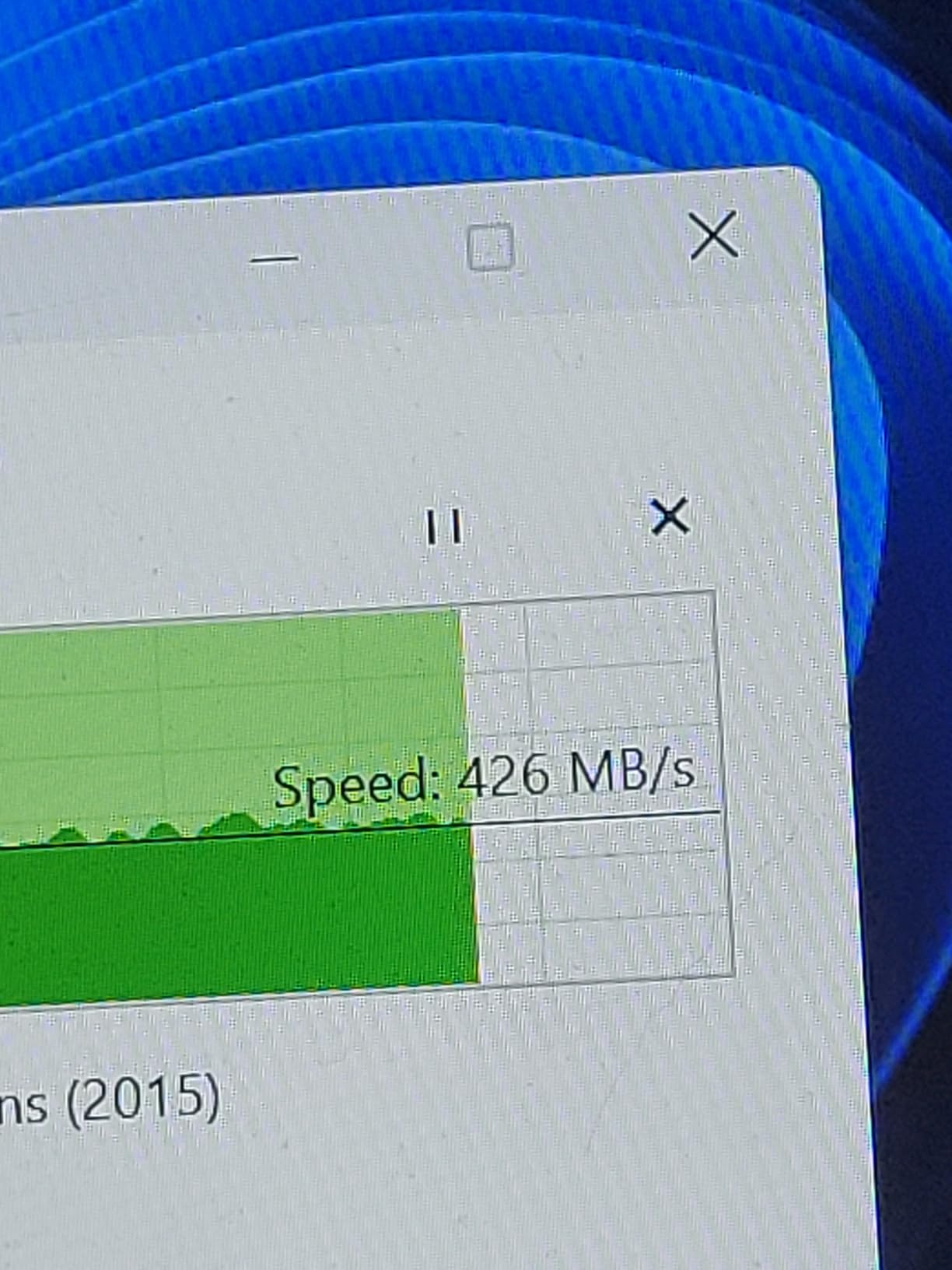
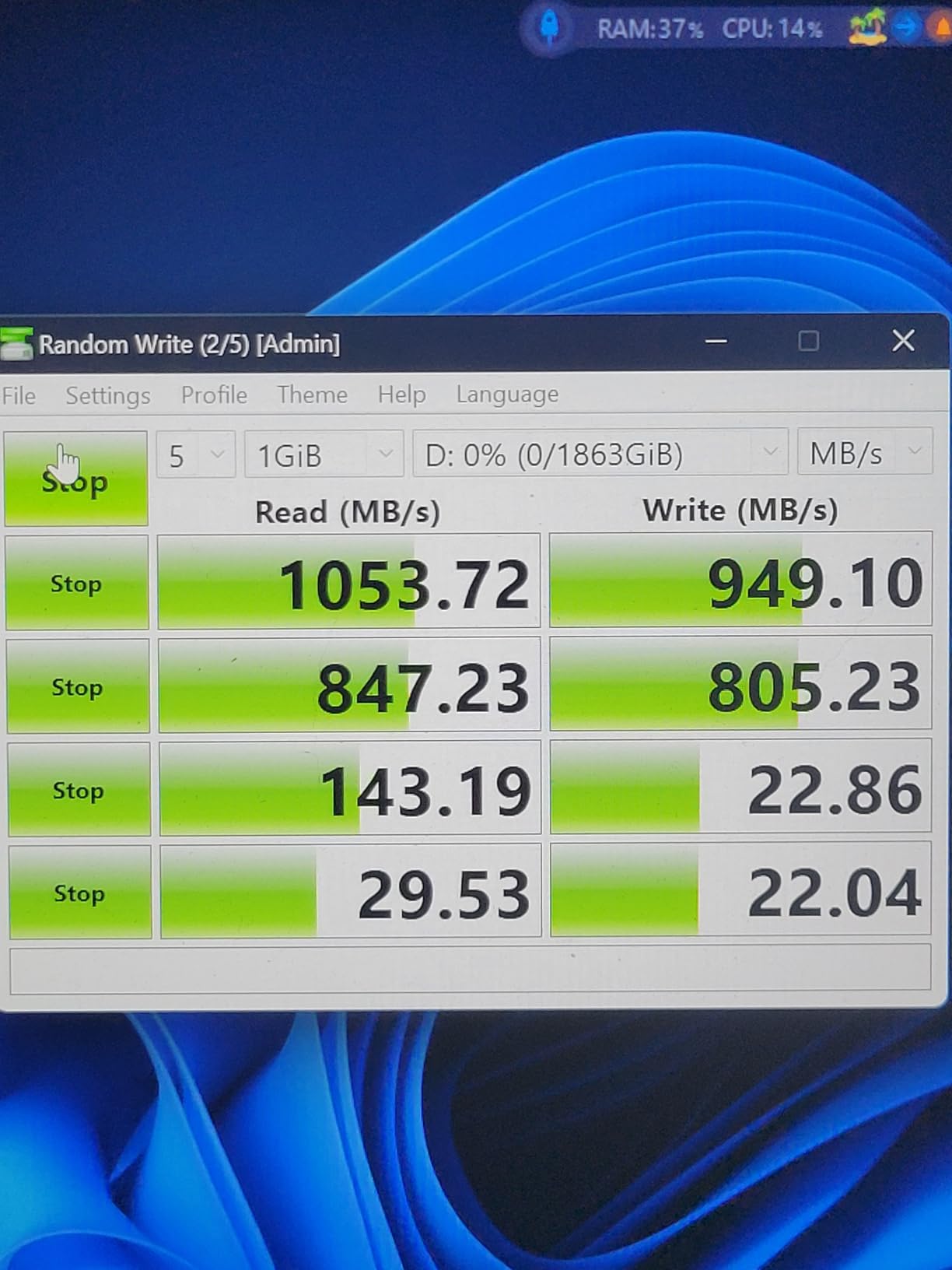
In our 50GB RAW transfer test, the X9 Pro finished in 1 minute 49 seconds, essentially tied with the Samsung T7. Read and write speeds are symmetrical at 1050 MB/s, which is helpful when running a Lightroom catalog directly from the drive. The USB-C interface is widely compatible across Mac, PC, and Android devices.
The IP55 rating is a step below the IP65 on most rugged drives, but it still handles rain and dust without issue. The 7.5ft drop spec is competitive. The included Mylio Photos+ and Acronis True Image software are useful bonuses, especially for photographers building a backup workflow for the first time.
Crucial’s parent company Micron manufactures the NAND in-house, which is one reason the brand has become more trusted in the photography community over the past few years. The 4,700+ reviews and 4.5-star average back that reputation up. For photographers who want a reliable brand without the Samsung premium, the X9 Pro is a smart pick.
Who the Crucial X9 Pro is for
Travel and street photographers who want the lightest possible premium-feeling drive. It is a great pick for photographers new to external SSDs who want software tools included out of the box. If you want a reliable brand without the Samsung name, this is a strong choice.
Who should skip the Crucial X9 Pro
Photographers with USB 3.2 Gen 2×2 ports will leave bandwidth on the table, since the X9 Pro tops out at 1050 MB/s. Shooters who work in extreme outdoor conditions may prefer an IP65 or IP66 drive for extra protection. The 3-year warranty is also shorter than the 5-year coverage on the Crucial X10’s premium competitors.
10. SanDisk Creator Pro 1TB – Best for Adobe-Centric Workflows
Sandisk 1TB Creator PRO Portable SSD, Up to 2000MB/s Read Speeds – Blue
1TB Capacity
2000 MB/s
IP65 Rugged
Pros
- Includes 1 month of Adobe Creative Cloud
- IP65 water and dust resistance
- 3m drop protection
- Lightweight at 77.5g
- USB-C connectivity
Cons
- Adobe CC trial is only 1 month
- Smaller 271-review base
- Premium pricing vs standard SanDisk Extreme
The SanDisk Creator Pro is positioned squarely at photographers and content creators who already live inside Adobe’s ecosystem. The included 1-month Adobe Creative Cloud membership is a genuine value-add, especially for photographers who want to try Photoshop or Lightroom without committing to a full subscription right away.
Performance matches the broader SanDisk Creator line: 2000 MB/s read speeds, IP65 ruggedness, and a 3-meter drop rating. At 77.5 grams, it sits between the featherweight Crucial X10 and the heavier SanDisk Extreme PRO. The compact size slips easily into a camera bag side pocket.
The 4.8-star rating from 271 reviews is the highest in this roundup, although the smaller review base makes it less battle-tested than the established SanDisk Extreme PRO. Early feedback is overwhelmingly positive, particularly around speed consistency during large Lightroom catalog imports.
For photographers who shoot RAW and want to test the Adobe photography plan without a separate signup, this drive is a clever two-in-one purchase. Once the Creative Cloud trial ends, the drive stands on its own as a fast, rugged portable SSD that competes directly with the Samsung T9 and SanDisk Extreme PRO.
Who the SanDisk Creator Pro is for
New photographers and content creators who want a fast portable SSD plus an Adobe Creative Cloud trial in one box. It is also a smart pick for educators teaching photography workshops who want to bundle a drive with software access for students. If you are already deep into Lightroom and Photoshop, the trial is icing on the cake.
Who should skip the SanDisk Creator Pro
Photographers who already pay for Adobe CC will not get value from the bundled trial. Buyers who want a drive with thousands of reviews and years of reliability data should look at the SanDisk Extreme PRO instead. The smaller review base means the long-term track record is still being written.
How to Choose the Best External SSD for Your Photography Workflow?
Picking among the best external SSDs for photographers comes down to four questions: how fast do you need it to be, how rough is your work environment, how much storage do you need, and what ports does your computer have. Below is a breakdown of what to weigh before spending money.
Match Speed to Your Camera and Workflow
If you shoot a 24MP APS-C camera and offload one card per session, a 1050 MB/s drive is plenty. If you shoot a 45MP full-frame camera with dual card slots and need to back up both cards before a client preview, look for 2000 MB/s or higher. Videographers shooting 4K ProRes should aim for sustained writes above 1000 MB/s to avoid buffer issues.
Pick the Right Capacity
A 1TB drive holds roughly 4000 RAW files from a 24MP camera or about 2000 RAW files from a 45MP full-frame body. For most enthusiast photographers, 1TB is enough for a few shoots. Wedding and event photographers who shoot multiple events before offloading should pick at least 2TB. Wildlife and travel shooters on long trips often want 4TB to cover the gap between cloud backups.
Check IP and Drop Ratings
IP65 means dust-tight and resistant to low-pressure water jets, which covers rain and snow. IP66 adds protection from powerful water jets, while IP68 means the drive can be submerged briefly. Drop ratings of 2 to 3 meters (roughly 6 to 10 feet) are common on rugged drives and are worth the small premium if you shoot outdoors.
USB 3.2 Gen 2 vs Gen 2×2 vs Thunderbolt
USB 3.2 Gen 2 caps at 10Gbps, which delivers up to 1050 MB/s in real-world use. USB 3.2 Gen 2×2 doubles that to 20Gbps and is required to hit 2000 MB/s on drives like the Samsung T9 and SanDisk Extreme PRO. Thunderbolt 3 and 4 push to 40Gbps, which is what drives like the SanDisk PRO-G40 use to hit 3000 MB/s. Make sure your laptop actually has the port before paying for the speed.
Warranty and Encryption
Most premium portable SSDs include 5-year warranties, while budget options typically offer 3 years. AES-256 hardware encryption is common on Samsung and SanDisk Pro drives and protects client work if the drive is lost or stolen. For working professionals handling sensitive material, both factors matter more than raw throughput.
External SSD vs HDD for Photographers: Which Should You Buy?
External SSDs are faster, smaller, and more durable than external HDDs because they have no moving parts. They handle drops, vibration, and temperature swings much better, which matters for photographers who travel. HDDs still offer lower cost per terabyte, making them a fit for long-term archival storage at home. Most photographers now pair a portable SSD for field backup with a desktop HDD or NAS for archive.
Frequently Asked Questions About External SSDs for Photographers
What’s the best external SSD for photographers in 2026?
The best external SSD for photographers right now is the Samsung T7 Shield 2TB. It combines IP65 ruggedness, 1050 MB/s speeds, and a 9.8ft drop rating in a 97g package. For Thunderbolt workflows, the SanDisk Professional PRO-G40 is the premium pick, while the Crucial X10 delivers the best value at 2100 MB/s for under 200 dollars.
Is an external SSD good for storing photos?
Yes, an external SSD is excellent for storing photos. SSDs use flash memory with no moving parts, so they are faster and more reliable than external HDDs. They handle drops, vibration, and temperature swings much better, which matters for travel and wedding photographers. For long-term archival storage at home, many photographers pair a portable SSD with a desktop HDD or NAS.
What is the downside to external SSDs?
The main downsides to external SSDs are cost per terabyte and capacity limits compared to HDDs. A 2TB SSD costs noticeably more than a 2TB HDD, and 4TB SSDs are still a meaningful investment. SSDs also have a finite write lifespan, although for typical photography use that limit is rarely reached within the drive’s useful life.
Which external SSD brand is most reliable for photographers?
Samsung and SanDisk Professional are the most reliable external SSD brands for photographers based on community feedback and warranty track records. Samsung’s T7 and T9 lines have tens of thousands of reviews with strong long-term reliability. SanDisk Professional drives like the PRO-G40 are popular among studio photographers. Crucial and Lexar have also built solid reputations in recent years.
How fast of an SSD do photographers need?
Most photographers need at least 500 MB/s for comfortable RAW file workflows, and 1050 MB/s is a strong sweet spot for everyday use. If you shoot 45MP or higher full-frame RAW files and back up multiple cards per session, look for 2000 MB/s drives like the Samsung T9 or SanDisk Extreme PRO. Thunderbolt 3 drives at 3000 MB/s only matter for studio tethering and 4K+ video editing.
Final Verdict: Which External SSD Should You Buy?
The best external SSDs for photographers in 2026 come down to your shooting style. The Samsung T7 Shield 2TB is our top pick for most photographers thanks to its rugged build, proven reliability, and balanced speed. The SanDisk Professional PRO-G40 is the right choice if you tether in studio and want Thunderbolt-class throughput. For value-focused shooters, the Crucial X10 delivers 2100 MB/s at the lowest price per gigabyte.
Whichever drive you pick, follow the 3-2-1 backup rule: keep three copies of every photo, on two different media types, with one offsite. A portable SSD is the field backup, but pair it with cloud storage or a NAS at home for true peace of mind. With the right drive in your bag and a smart backup strategy, you will never lose a wedding, wildlife moment, or travel shot to a single point of failure.